A Shelf of Promises: My Starter Library

A recent episode of The Mookse and the Gripes podcast got me thinking. Hosts Trevor and Paul were joined by John Williams of the Washington Post (mensches one and all). John had proposed a fascinating topic: starter libraries. The idea was to imagine your response to someone who asked you for ten titles they absolutely had to have in their collection. Probably this person is someone new to literature, a teenager or a student, but maybe they are someone who used to read more than they do now and are looking to get back to that part of their life. What would you recommend?

The important part of the assignment, as I understand it, is that the person is asking you. They know you well enough (parasocially or otherwise) to trust your taste. They respect you enough to be curious about anything you recommend. But they’re not asking for your ten favourite books. Presumably you like the titles on your list. But you’re not just offering them out of personal predilection. You think of them as representative for aspects of literature that matter to you.

Personal but not only personal, might be one way of putting it. Or, in the words of the episode’s subtitle, your choices could be thought of as a shelf full of promises.

Do listen to the episode, it’s terrific. Great lists, fascinating insights into the recommenders. And sure to get you thinking about your own answer. That’s what happened to me: I set aside the laundry I was folding and jotted some notes on my phone, which I’ve now expanded into this list, complete with categories (and alternate choices, because ten books is not many books).

Candida Höfer, Bibliothèque Nationale de France Paris XXI 1998

Books to grow into but also to love when you’re young:

George Eliot, Middlemarch

The only novel in English for adults, Virginia Woolf famously said. Not sure what she meant, but doesn’t it sound good? Having reread it recently, I think you need to be middle aged (and thus an adult… hmm well never mind) to get the most from this story of English provincial life around 1830. But having first read it in college, I can also attest that Middlemarch hits for young people. As with any rich text, what you pay attention to and who you sympathize with shifts each time you read it.

Eliot is known for moral seriousness (maybe that’s why as stylistically different a writer as D. H. Lawrence was a fan), but Middlemarch is also surprisingly funny. Mostly, it’s supremely moving. It covers so much of life, and asks the big questions. What makes a good life? How can we live with purpose? How can we think of ourselves in relation to everyone else? Where do we fit into the web of life?

[Alternate choice: Leo Tolstoy, War & Peace. Never read it until about five years ago, but feel confident it dazzles as much at 20 as at 50. You want novelistic sweep? This one’s as big as Russia… Freemasons and wolf hunts and returns from the dead and slow-burning love affairs lasting across the decades: everything, really.]

Books that master close third-person perspective

Nella Larsen, Passing

Set in Harlem and Chicago in the late 1920s among a set of well-to-do light-skinned Black women who can pass as white, Passing is a great novel of queer frenemies. It hews closely to the perspective of a single character, Irene, whose orderly life as the mother of two boys and wife to a (dissatisfied) doctor falls apart when she runs into a childhood friend, the brave and dangerous Clare. Unless we attend to how events are only offered through Irene’s perspective, we are likely to miss how much the book asks us to question the judgments it only seems to offer.

[Alternate choice: Henry James, What Maisie Knew. In book after book, James wrote about people behaving badly. Yet even among this vast canvas of cruelty, this novel stands out: the people doing the harm are parents who use their young child to hurt each other and, of course, the child. In the preface to the New York Edition James explained that he chose to narrate the book in third person but to limit the perspective to Maisie’s often baffled but also wondering sense of the world in order to offer readers the extra pathos of being able to understand what she could not. It’s quite a trick.]

Books about the Holocaust

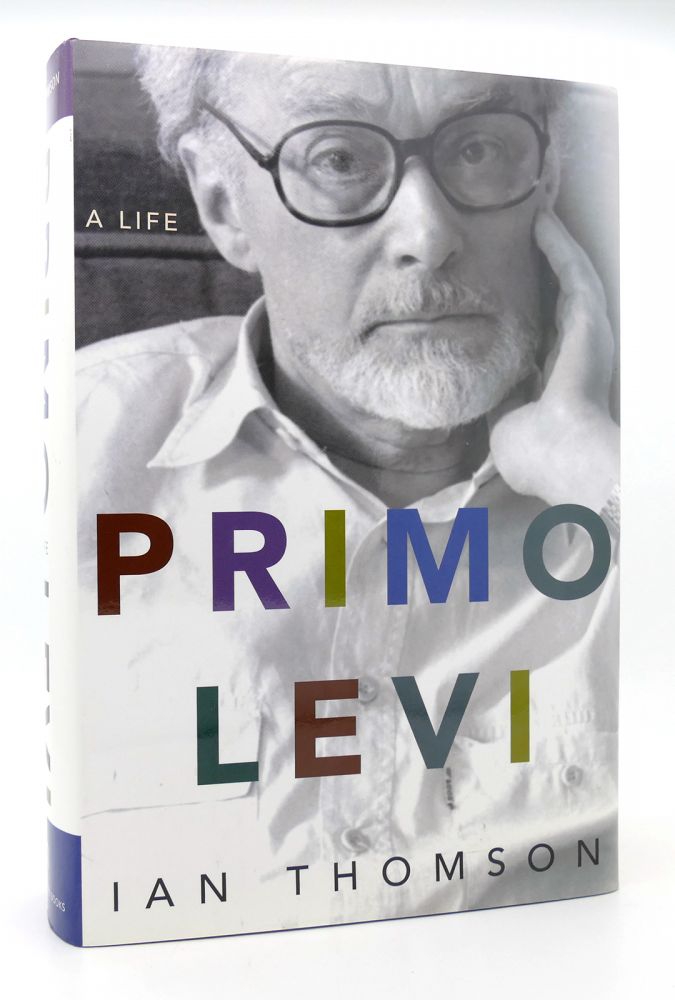
Primo Levi, If This Is a Man

If someone is asking me what books they simply must own, they’re absolutely gonna get one about the Holocaust. Hell, I could make them a whole list. But knowing that not everyone shares my fascination, I’ll stick to one of the earliest and most famous instances of Holocaust literature. (Levi composed part of it already while in the camps.) Like all memoirs, If This is a Man (known in the US under the travesty title Survival in Auschwitz) details its author’s particular experience—which took the form it did by his having had “the great good fortune” to have been deported only in 1944, when the turning tide of the war and subsequent internal battle among top Nazis meant that more deportees were selected for slave labour. That phrasing gives you a sense of Levi’s matter-of-fact irony. But something that distinguishes If This Is a Man is Levi’s decision to use “we” even more than “I”: he aims to give a sense of the structure and meaning of the collective victim experience, at least within a subcamp of Auschwitz.

[Alternate choice: Ida Fink, A Scrap of Time and Other Stories. Too little known among English speakers, but, happily, available in a terrific translation by Madeline Levine and Francine Prose, Fink’s heartbreaking stories depict part of the Holocaust most people don’t know about: the mass murder performed by the Einsatzgruppen in Galicia in the summer and fall of 1941. Fink couldn’t find a publisher for these stories until the 1980s; they were deemed of no interest. Another devastating failure on the part of literary opinion. Fink has been called the Chekhov of the Holocaust. Grotesque as this sounds, it’s accurate. Quiet and heartbreaking.]

Members of YIVO New York examine crates of books rescued from the Vilna Ghetto

Books about how to read books:

Roland Barthes, S/Z

Barthes spent a year reading Balzac’s story “Sarrasine” with some students. (Oh to have been in that seminar!) That labour resulted in this extraordinary book, organized around line-by-line readings of the source text, not, as critics usually do, to figure out what it means, but rather how it means. To do so, Barthes offers five “codes”—fundamental elements of realist fiction, of which “Sarrasine” is considered only as a representative example—that readers unconsciously rely on (typically by having imbibed many examples of the genre) in making the text intelligible. The codes are things like references to historical events, people, and places, or attributes and actions that cohere into what we call characters and, in the case of realist literature, think of as if they were people. Barthes Intersperses his step-by-step redescription of the Balzac story with theoretical meditations on the operation of the codes, which readers can extrapolate to other texts.

S/Z is tough. I probably taught it five or six times before I felt I had a real handle on it. But as Barthes says, it’s valuable to be able to distinguish between real and superficial ideas of difference. We might think that the best way to know about books is to read a lot of them. But if we do so without thinking about what underlies their intelligibility (i.e. what we need to be able to read them), then we are mere consumers, doomed to reading the same thing over and over. Only by reading one text over and over can real difference, that is the difference within the text, show itself—which in turn will make our other reading more meaningful. All of which is to say, the effort of tackling Barthes’s analysis offers big rewards.

[No alternate choice. S/Z for everyone.]

Books with pictures:

Alison Bechdel, Fun Home

Comics, graphic novels, whatever you want to call them are important to me, and I think any reader needs at least one example in their library. Such a rich form, so many gorgeous and moving texts to choose from. As with my Holocaust choice, I resisted the temptation to go niche here. Bechdel’s memoir of her relationship with her closeted, self-destructive, talented father deserves its fame. Probably more than any book I regularly taught, Fun Home elicited the strongest positive reactions in the widest range of students. Family disfunction runs deep. A great book about how books can connect people who can’t otherwise open up to each other—and how they can further separate them too. Funny, ominous, bittersweet.

[Alternate choice: Nick Drnaso, Sabrina. Dark, powerful. Reading it gave me a bit of the ick. And yet its subject matter just seems more relevant. I guess this is about the manosphere, except no one was using that hideous term at the time.]

Books of ideas [fiction]

Thomas Mann, The Magic Mountain

Sometimes I want a book that dramatizes the back and forth of thinking. In The Magic Mountain, Mann literalizes this by surrounding his protagonist, the well-meaning, hearty Hans Castorp, with some of the most indefatigable talkers ever to appear in a novel. The whole intellectual landscape of pre-WWI Europe is here (liberal humanist, communist, militarist, hedonist, you name it), and everyone battles for Hans’s soul, even as the former engineer mostly wants to desire a woman from afar, a woman who reminds him of a boy from his schooldays…

The other great thing about this book is how well it depicts Davos and environs. I’m a sucker for mountains and mountains in books. Bring on the snow!

[Alternate choice: Proust. Honestly, if you can only put one book in your starter library, choose this one. I assume it’s already there, but if not then get stuck into this deeply philosophical book, which has so much to say about perception, time, cruelty, and control over others.]

Books of ideas [nonfiction]

W. E. B. DuBois, The Souls of Black Folk

Every American should read it. But non-Americans should too. The idea of double-consciousness—the way a minority must measure themselves by the tape of the majority, as DuBois so memorably puts it in his first pages—explains so much of our contemporary sense of identity.

In addition to its ideas, Souls is a fascinatingly hybrid book, presumably stranger in 1903 than today. Each chapter is prefaced by a bar of music, often from the sorrow songs. Most chapters are essayistic, but some are fictional. Each is written in resonant cadence. Hasn’t dated much. Alas.

[Alternate choice: Hannah Arendt’s The Origins of Totalitarianism. Explains how Nazism and Stalinism came to be so accepted and do so much harm. Especially interesting for (1) its “boomerang” theory of imperial violence, in which what the metropole does in the colony comes back to bite it at home, and (2) its argument that modern antisemitism arose from the waning of Empire and the rise of nationalism. Hasn’t dated much. Alas.]

Monomaniac books

The strand from writers like Kafka, Knut Hamsun, or Robert Walser to someone like Lydia Davis, via the high point of Thomas Bernhard, has been enormously influential in the Anglo-American sphere. At this point, annoyingly so. (And weird, too, given that none of the most important precursors wrote in English.) But I get it because literature excels at tracing the vagaries of a mind, especially one spinning through reversals, paradoxes, and hobby-horses. A starter library should have an example of this sort of thing, and Bernhard might be the best. When the only thing that stands between a psyche adrift or worse is the chance that someone might respond to its voice—that’s when you’re in Bernhard territory. I’ve chosen The Voice Imitator because the title says it all. Read these 104 short texts to get a sense of Bernhard’s bitter, misanthropic, and, oddly, funny vibe.

[Alternate choice: I just named like five other writers!]

Funny books

P. G. Wodehouse, The Code of the Woosters

As implied in what I said about Bernhard, voice-driven books don’t have to be grim. They can make us laugh, whether from the gap between what the narrator claims and what we know, or the sheer verve of their style. The fun only increases when those narrators get embroiled in elegant plots. Wodehouse is the master of this terrirtory and everyone’s library is the better for including him. (I feel like he’s fading a bit from memory? Sad.) You can jump in anywhere—my entry point was the distinctly not-famous-but oh-so-representatively-titled Eggs, Beans, and Crumpets which baffled and delighted me at age 12—but if you’re at a loss start with this wonderful episode in the Jeeves and Bertie series, which Tim Waltz would enjoy, since it’s an early example of the “I condemn the fascists by unflinchingly stating how weird they are” school of responding to authoritarianism. (As Bertie says, appalled by the realization that the Saviours of Britain are simply grown men marching in black shorts: “how perfectly foul!”)

[Alternate choice: for an American version of this phenomenon, reach for Charles Portis, especially the marvelous True Grit.]

Books about crime

Dolores Hitchens, Sleep with Strangers & Sleep with Slander

Since at least Oedipus Rex, literature has used crime to understand fundamental concerns like identity, political organization, and moral value. Crime fiction can be smart, is what I’m saying. And it can also carry us away by inciting our desire to have enigmas explained. (Interestingly, it often makes us realize how much more compelling it is to ask a question than to answer it.) Like any genre, then, crime fiction satisfies at both the intellectual and emotional level. Having stayed with well-known titles so far, I’m diving deep for this last category. Not enough readers, even lovers of crime fiction, have read the mid-century American writer Dolores Hitchens. She wrote a lot of books under a lot of names. But only two about a PI named Jim Spader. Which is sad—but also good because they’re even more special. These make for pretty despairing reading, even for noir. So be warned. But you won’t regret seeking them out.

[Alternate choice: Hundreds! Thousands! Sticking with mid-century American women writers, I’ll plump for Dorothy B. Hughes’s The Expendable Man. Don’t read anything about it beforehand!]
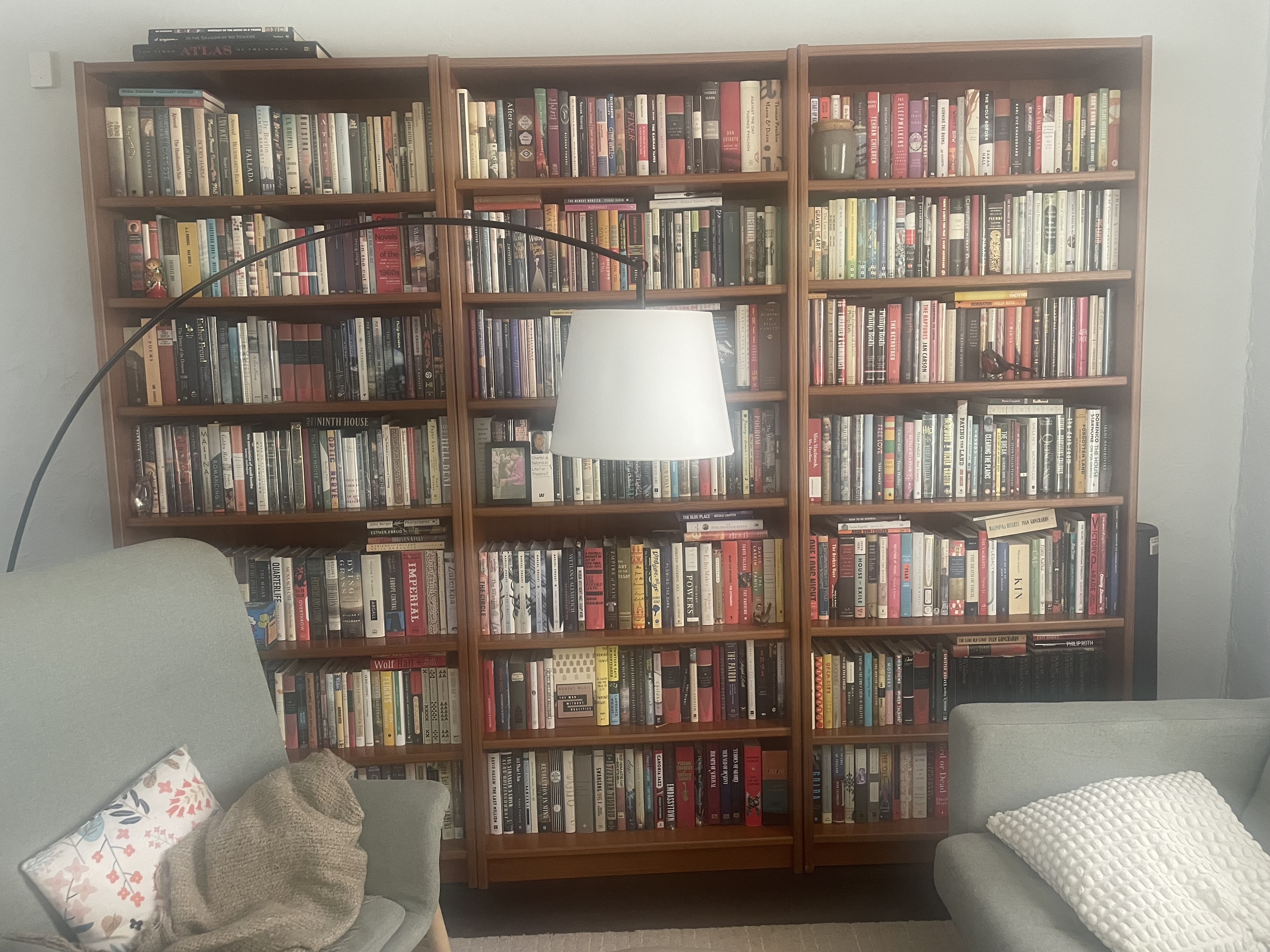
I tried not to think too long in coming up with my choices. Next month or next year I’d choose differently. And I’m aware of some big lapses. No poetry?? No plays?? No Torah?? (Everyone should read the Five Books of Moses.) But that’s ok. Gives you all the more room to think about how you’d create a starter library of your own. What would be on your shelf of promises?

Nat Leach’s Year in Reading, 2024

Excited to once again present reading reviews from some of my favourite readers. Today’s installment, his sixth, is by my longtime friend Nat Leach. Nat is a nineteenth-century scholar turned college administrator who has spent the last 7 years reading the books on his shelves in alphabetical order. He lives in Ontario.

Saul Leiter, 1961

After complaining about my reading in 2023 in this space last year, 2024 was, on the surface, a much better year. I read 30 books as opposed to 20 in the previous year, and was on pace for an even higher total before hitting a wall at the end of the year (of which more anon). However, if we get into what the sports statisticians call “advanced metrics,” the numerical advantage is diminished; 6 of those books were either less than 100 pages or only slightly more, and 9 were works of theory, criticism, and/or anthologies that I had been working on for years and just completed this year. So, probably my actual reading for 2024 was not much better than 2023 in terms of quantity, but the quality was high, and that’s what really matters, right? [Ed. – Right!]

As for my overall reading project of working through my unread books alphabetically, now in its 7th year, I once again only progressed by one letter of the alphabet, finishing “L” and making a very small start on “M”. If I’m able to get through “M” in 2025 (a big if- it’s a pretty immense shelf), I will hit the halfway point of the alphabet and surely it’s gotta be downhill after that, right? [Ed. – Surely! Well, probably. Possibly?] The second half of the alphabet has the likes of “Q”, “X” and “Z” so there is hope! [Ed. – Insert Zola side-eye gif here.] In fact, of the 298 books on my list, exactly 200 are “A-M” so I’m actually closing in on the 2/3 mark of my project (although that list keeps growing every year, so who really knows?)

More importantly, for the purposes of this piece, I actually found some time, in the early part of the year at least, to write capsules for each book that I finished as I went along. Which is just as well, because I can scarcely remember what I read last January right now, and as I write this opening, I’m just as curious as you to see what comes next (probably more so).

Larsen, Nella – Passing (1929)

I had seen this book recommended so widely, I couldn’t resist adding it to this project, and it certainly does live up to the hype. The book is about the tensions in racial ideologies in early 20th century America, and seems no less relevant today. Clare Kendry “passes” as white despite a mixed-race bloodline that would see her excluded from white society. The very fact that she is able to do this so successfully mocks the white supremacist ideology that believes that racial differences are fixed and self-evident. The book’s focus also demonstrates the problematic intersection of these racial tensions with similarly oppressive gender expectations. Irene Redfield’s love/hate relationship with Clare is at the core of the book, so that it demonstrates also the ways in which expectations around “racial purity” are particularly focused on women. In this respect, Passing reminds me of another book I wrote about on here some years ago, Morley Callaghan’s The Loved and the Lost; although that book focuses on a white woman who circulates in black society in Montreal, the similarly tragic outcomes both speak to the violence and panic produced in white society by such blurring of racial lines. [Ed. – About to teach this tomorrow for the nth time: it’s an all-timer!]

Laski, Marghanita – The Victorian Chaise-Longue (1953)

When I received this book as a gift (in a lovely Persephone Books edition), I assumed, because of the title, that it was because of my academic interest in the nineteenth century. It didn’t take long for me to realize that it was in fact because of my academic interest in the Gothic. The plot itself smacks of the absurd: a tubercular new mother is transported back in time to the Victorian period while lying on the titular piece of furniture during her recovery. But this does not do justice to the book, which explores (as so many Gothic texts do) the relationship between mind and body, and the nature of identity. A fascinating read. [Ed. – Sounds great!]

Lathom, Francis – Italian Mysteries (1820) and The Midnight Bell (1797)

These days, Francis Lathom is little more than an answer to a literary trivia question (Name the authors of the 7 “horrid novels” on the reading list of Isabella Thorpe and Catherine Morland in Jane Austen’s Northanger Abbey!) but he was a successful novelist and playwright in his time. The Midnight Bell is the book mentioned in Austen’s novel, while Italian Mysteries was written considerably later. Both make extensive use of the Gothic conventions popularized by Ann Radcliffe in The Mysteries of Udolpho (and spoofed in Northanger Abbey), including apparently supernatural activity explained by natural means, banditti inhabiting abandoned castles [Ed. – They do be inhabiting the abandoned castles, the banditti], and lustful noblemen pursuing innocent heroines, who invariably faint whenever captured (By my count, Lauretta, heroine of The Midnight Bell, faints five times in the course of a single abduction!) [Ed. – Maybe some iron pills for that girl?] Lathom’s use of these conventions is, at least, skillful and coherent, which is more than can be said of many Radcliffe imitators of this period. As David Punter points out in his fascinating introduction to the Valancourt Books edition of The Midnight Bell, Lathom’s works are heavy on events, to the exclusion of character development, and his plots are so extensive and intricate that they invariably require quite elaborate explanations—indeed, the entirety of the 3rd and final volume of Italian Mysteries is essentially an extensive explanation of all the mysteries developed of the first two volumes. While both books owe much to Radcliffe, there are certain predilections of Lathom’s own that show through as well; for example, his books include many siblings who function as doubles of each other, and are usually moral opposites of one another. The books are a pleasure to read, though not, perhaps, especially notable examples of the genre. [Ed. – Look, you’re not getting this kind of content anywhere else, are you?]

Laurence, Margaret – This Side Jordan (1960)

Like every good Canadian of my generation, my literary education was steeped in Margaret Laurence; I read The Stone Angel in high school, and The Diviners in university. [Ed. – Same! I wonder what they read now?] And if that weren’t enough, I now find myself living just 15 minutes away from the small town of Lakefield, Ontario, where Laurence spent the last years of her life, and wrote The Diviners. All that being said, I really didn’t know what to expect from this book, Laurence’s first novel, which is much less recognizable in the canon of CanLit, not least because of its foreign setting. Laurence’s husband was an engineer who worked in Africa in the 1950s, so she spent some years living in what was then called the “Gold Coast” but was soon to become the independent country of Ghana. The book is largely about the difficulties posed by this transition, both for the British colonizers and for the people of Ghana, equally caught between a past they cannot return to and a future in which they cannot yet find their place (hence the biblical allusion of the book’s title; the characters are all looking ahead to a “promised land” they cannot enter). The book focuses on Johnnie Kestoe, a British accountant in a textile company; Miranda Kestoe, his well-meaning but sometimes clueless wife; and Nathaniel Amegbe, a struggling Ghanaian schoolteacher. Johnnie, following Miranda’s advice, tries to get ahead by supporting the company’s “Africanization” of its workforce, which his racist bosses refuse to accept, while Nathaniel tries to modernize his family and move away from the tribal customs that he sees as belonging to the past. The future, though, is not easy for any of them to grasp. It’s a strong debut novel, though it does not entirely show the brilliance that was yet to come from Laurence. As an aside, this book also scores points for having a main character named Nathaniel, a literary feature notable by its absence in all the other books on this list. [Ed. – Ha! Justice for Nathaniels!]

Le Fanu, Sheridan – Carmilla (1872) and “A Chapter in the History of a Tyrone Family” (1839)

There are not many classic Gothic texts of the 19th century that I have not read, so it was time that I finally read Carmilla. All I knew about it was that it was about a lesbian vampire and, yeah, it’s pretty much what it says on the tin, using the familiar conventions of the genre, with that added twist. As for “A Chapter in the History of a Tyrone Family,” my first thought upon reading it was “was this written before or after Jane Eyre?” There are many parallels, including a bigamous marriage and a potentially murderous first wife being kept in concealment. Turns out the answer is “before”. This story apparently influenced Brontë’s novel, and in turn, after the success of Jane Eyre, Le Fanu developed this story into a longer work in order to capitalize on it.

Le Guin, Ursula K. – The Left Hand of Darkness (1969)

Another book that I added because of a large number of recommendations, I must admit that I went back and forth on this one a bit. The author’s preface is one of the smartest things I have read about science fiction (or about fiction full stop!), but then the first chapter seemed so replete with science fiction clichés that I started to question what all the fuss was about. I also wonder if science fiction just isn’t my genre, or if I am just overly picky about the details of world-building; much as I admire the carefully prepared appendix on the “Gethenian Calendar and Clock,” which differ significantly from those of Earth, I also find it slightly off-putting that this entirely foreign world not only measures temperature in degrees (in itself not necessarily natural), but it uses a scale that seems strikingly similar to the Fahrenheit scale (with no additional context or explanation). [Ed. – Fahrenheit sucks!] Nevertheless, the book certainly grew on me as it increasingly developed the more philosophical implications of its sf premise. Le Guin claims not to be attempting to predict the future, but this book from 1969 is quite prescient in exploring the idea of gender fluidity, as the inhabitants of the planet on which the book is set share male and female characteristics and can transform into either. Less prescient than oddly coincidental is the fact that the narrator’s name is Genly Ai; it occurs to me that it would be impossible to include a character of that name in a book written today without readers assuming that he was some kind of embodied form of generative artificial intelligence. [Ed. – AI sucks! Like, a lot more than Fahrenheit. Which sucks, to be clear.]

Levi, Primo – Moments of Reprieve (1981) Trans. Ruth Feldman

Levi’s American publishers have been consistent, at least, in their dogged attempts to make his books sound as optimistic as possible; If This is a Man becomes Survival in Auschwitz, The Truce becomes The Reawakening, and Lilith, and other Stories becomes Moments of Reprieve. While it is true that to a certain extent, the stories recounted in this book have a lighter tone than his earlier memoirs, there is really very little “reprieve” to be had here. [Ed. – Yup. That piece about the Roma inmate he meets? Dark.] The book consists of descriptions of people and incidents from Levi’s time in Auschwitz which had not been included in the two earlier memoirs, as well as narratives that follow up on the post-war experiences of individuals who are mentioned in those books. And certainly, all of the qualities that make the earlier books so great are still on display here, especially Levi’s keen eye for character and his deep understanding of moral complexity. And yet, everybody seems to want more optimism, from the publishers to Chumbawamba, who recorded a song based on one of the most optimistic anecdotes herein, “Rappoport’s Testament” about a man who uses a very philosophical theory of life to endure Auschwitz, arguing that his previous pleasures in life are simply being counter-balanced by the horrors of the camp, and therefore he has nothing to complain about in the grand scheme of things. [Ed. – I did not know this!!!!] An admirable perspective, perhaps, but just one of the many that Levi explores—yet the only one to get a song written about it, with an incessant chorus of “I never gave up” as though this were the only praiseworthy, or even acceptable, attitude. (Having said that, I have to admit that I actually love this song. I mean, how critical can you be about a rousing anti-Nazi anthem? Look it up.)

Lindsay, Joan – Picnic at Hanging Rock (1967)

I was already very familiar with Peter Weir’s 1975 film adaptation of this novel, so I fully expected this book to be as good as it is. I found that Weir adapted the book quite faithfully; in both the book and the film, the plot about the uncanny disappearance of Australian boarding school girls is perhaps secondary to the reflections on the connectedness of people and things that are triggered by this incident. The most significant differences come from the fact that the novel is able to demonstrate more links in this web of inter-connectedness; from my perspective of having seen the film first, I was quite fascinated to see how Lindsay connects some of the more minor characters to each other and to the mysterious themes of the book in ways not shown in the film. Ultimately, what makes both book and film work so well is how expertly they manage the fantastic in Tzvetan Todorov’s sense of the term, hesitating between rational and supernatural responses to the mystery, but never fully embracing either perspective. [Ed. – Now I want to read this and see the movie again.]

Lively, Penelope – Moon Tiger (1987)

I’m at a bit of a loss as to how to describe this fascinating tour through both world history and the personal history of a dying historian, Claudia Hampton. These histories are linked and predictably (and unpredictably!) take many twists and turns along the way. But the most interesting thing about the novel is the way it plays with point of view, emphasizing that history depends on perspective as we move between Claudia’s first-person perspective, a more “objective” narrative voice, and the points of view of other characters. It may defy description, but it really works.

Lodge, David – Changing Places (1975), Small World (1984), Nice Work (1988)

I must admit that I felt that I had missed the cultural moment in which I should have read this trilogy. After all, any satirical work on academia these days would surely have to focus on the absurdities of governmental policies and the excesses of administrative oversight rather than the hijinks of carefree globetrotting academics (seriously, is there even any such thing as a carefree, globetrotting academic any more?) [Ed. – There is not.] Not to mention the fact that cultural values have shifted significantly in ways that make these books somewhat uncomfortable to read at times (thinking especially of the distressingly casual way that the idea of professors sleeping with their students is treated in these books). Despite all this, though, there is something enduring about these books, not only for their humour—based in the first book on the incongruities between Morris Zapp, brilliant but obnoxious American professor, and Philip Swallow, reserved English lecturer, and developed in many different directions from there—but also for their satisfying use of the conventions of comic narrative. Lodge is particularly knowing about this, and all three novels are highly self-referential (or “meta” as the kids say). [Ed. – I fear they do not actually say this anymore, at least judging from the blank stares I get…] Changing Places features a number of quotations from a (fictional) textbook that Swallow wants to use for his course on novel-writing, and which provides rules for writing a good novel—rules that Lodge himself proceeds to break in every instance. Small World (subtitled “an academic romance”) employs the conventions of the grail quest romance, adapted comically to the academic context. And Nice Work is an adaptation of, and contains frequent references to, the genre of the Victorian industrial novel. Moreover, in each book, the threads are pulled together in improbable but highly satisfying ways, as if Lodge is acknowledging both the artificiality of the conventions and the fact that we still desire such conclusions despite our awareness of their artifice. I learned recently that Lodge passed away on New Year’s Day, 2025, so I guess there was indeed some timeliness to my reading of these books. I also learned in the course of my reading that Lodge had been at the University of Birmingham while my parents were graduate students there. It really is a small world, I guess.

MacIntyre, Linden – The Bishop’s Man (2009)

Having lived on Cape Breton Island for 15 years, I found that this book resonated with me, not because of the plot about the sexual abuse scandal in the Catholic church, but because of the settings, the feelings of isolation brought about by the landscape and the weather, and the descriptions of tightly-knit but also highly insular communities. All very familiar to me. The plot that unfolds against this backdrop revolves around the titular character, Father Duncan MacAskill, who acts on behalf of his Bishop to address situations involving abuse committed by priests. He initially believes that he is helping to rehabilitate perpetrators and support victims, but struggles with his conscience as he increasingly realizes that he is just the front line of an extensive cover up operation. MacIntyre is a native of Cape Breton, and a prominent journalist so perhaps not surprisingly his fictionalization of these real situations and characters is believable and powerful.

WOMEN IN TRANSLATION MONTH

I always try to set aside two books for Women in Translation month in August (given that 2 is pretty much my monthly average, this makes sense to me). However, since my reading project as a whole has slowed down, I’m finding that I’m reaching further forward on my shelves each year. This year, I read a couple of books from further along the “M” shelf.

Millu, Liana – Smoke Over Birkenau (1947) Trans. Lynne Sharon Schwartz

Dorian recommended this book a few years ago and of course he is right about what a tremendous book it is. [Ed. – Damn right he is. That guy really knows a thing or two.] Millu recounts the stories of six women whom she encountered in the women’s camps at Auschwitz. In many ways, the content of these tales is not unlike other Holocaust testimonies in the brutality, suffering and impossible moral situations that they depict, but it is also quite different in its specific focus on female experience in the camps. It must also be said that the stories are well crafted as stories. In both respects, the book reminded me in a strange way of the stories of Ida Fink, even though the latter are fictional. [Ed. – Absolutely!] Both writers provide keen observations of the brutality and suffering caused by Nazi oppression, particularly as it affects women. There is probably something more to be said about the relationship between the fictional and the non-fictional here, but that’s more Dorian’s territory. [Ed. – Certainly true that Millu uses an overtly narrative style in these pieces. Maybe Sara Horowitz’s idea about the Fink stories—that we sometimes need fiction to tell us what nonfiction can’t (it’s smarter than that, but that’s the gist)—might be useful here.]

Müller, Herta – The Passport (1986) Trans. Martin Chalmers

I had never read Müller before, so I didn’t really know what to expect, nor do I really know how to describe the experience of reading this book but here goes: it is a series of dark prose poems that build a feeling much more than they build the plot, which is ostensibly about the efforts of a miller to emigrate to West Germany. The images, though, vividly construct a picture of a hostile natural world, and the tensions of living amongst a foreign people. I commented earlier on the changes of Levi’s titles for an English-speaking audience; in this case, the effect of calling the book The Passport seems to be a rather banal attempt to focus on the plot, unlike the original German title, Der Mensch ist ein großer Fasan auf der Welt (“Man is a Great Pheasant in the World”) which better captures the poetic feel and the tension between the human and the natural world developed throughout the book.

IN PROGRESS

So, about that wall I mentioned… things were going swimmingly (yes, for me, the above is what swimmingly looks like) until the end of October/beginning of November. In the space of a fateful week, I began three new books. Little did I know that 2 ½ months later, despite putting almost all of my reading time and energy into them, all three would remain unfinished. Anyway, here’s a brief report on the books I didn’t quite finish in 2024 (with up to date completion percentages as of early 2025)

Lessing, Doris – The Golden Notebook (1962) Completed: 26%

First, not having included Doris Lessing in my original project, I was tempted to join a readalong of The Golden Notebook organized by the ever-encouraging @paperpills10.bsky.social. However, a combination of my usual lack of time, my inability to get my hands on a good physical copy of the book, and my struggles with the book itself led to my dismal failure to keep up. As for the book itself, it seems to me very original in terms of form (3rd person narration combined with 1st person in the form of notebooks kept by one of the characters) while seeming quite mundane (thus far) in terms of content and style. Perhaps that is what I’m struggling with, though I also wonder if it is part of the point (this is what notebooks are like). I will persist with this, but I have quite a way to go yet. [Ed. – Hmm I like this one: not sure you’re going to change your mind if you aren’t into it yet.]

Mann, Thomas – Doctor Faustus (1948) Trans. H.T. Lowe-Porter Completed: 73%

At about the same time, I was starting this book, which I had bought at a time when I was collecting Faust stories, but I had only managed to read the first few chapters at that time. I have done better this time, and what I have learned from this experience is that 1) I need to read more of Mann’s novels and 2) I may not have enough years left in me to read them all. This is a tremendous book, but one that requires much time and focus. I have been making slow but consistent progress, and there is now at least some light at the end of the tunnel. Despite the title, the Faustian theme is more an undercurrent than the book’s focus, which has more to do with reflections on the nature of art and its relation to culture. But what has perhaps most struck me about this book is its descriptions of the rise of Nazism and the psychology behind it, all of which feel chillingly contemporary.

Márai, Sandor – Embers (1942) Trans. Carol Brown Janeway Completed: 67%

Now this wonderful little (at least, comparatively) book is one that I would have finished long ago, had I not been saving it to cleanse my palate after working on the previous two books (gotta respect the alphabetical order after all). It is a much quicker, and highly engaging read. Last year, I commented on how my reading system often provides me with strange and unexpected correlations, and it has been somewhat strange reading this book alongside Doctor Faustus. Both books are written in the 1940’s but make use of a dual time frame split between the narrative present and a past in the late 19th and early 20th centuries. Both are set in central Europe and are thus framed against the background of the wars in these time periods, and both focus heavily on the relationship of a pair of male friends, one of whom is musical and artistic, the other more material and practical. But they are of course very different books; Embers tells the story of a friendship broken in youth that comes to a reckoning in old age. I’m still not sure what this reckoning is going to look like, but the suspense is building. So far, this is pretty great.

James Whistler, View across the Lagoon (1879 – 80)

LOOKING AHEAD TO 2025

My one final comment on all of the above is that one of the benefits of writing these entries shortly after finishing the books is that I can look back and see how my immediate response to the book varies from what my memory of it is now. For example, despite the lukewarm write-up, I thought about the Le Guin a lot after I finished it, and despite really loving the Lively, I haven’t really thought about it at all since then. I’m not sure that this is necessarily a measure of a book’s quality, but it is a measure of something. [Ed. – Yes! But what? I think about this a lot too.]

As for next year, I did have a fleeting desire to join a Proust reading group, since that is probably the book that I am most looking forward to on my remaining list, but my recent track record with group reads and the fact that I am probably not in the right head space at the moment has caused me to hold off (it’ll probably be a couple of years before I get to “P”)

So, my goal will be to try to get through “M” this year, although as I said, it’s a pretty formidable letter. I will at least see the benefits of having participated in group reads of some of the chunkier books on this shelf over the past few years (The Balkan Trilogy, The Levant Trilogy, Moby Dick, The Man Without Qualities) but I still have a lot to look forward to, from Gabriel Garcia Marquez to Cormac McCarthy to Brian Moore to Toni Morrison to Iris Murdoch and many more in between. Wish me luck, and let me know if there are any indispensable M authors that you think I need to make sure I read this year. [Ed. – Thank you as always, Nat!]

Ivan Kenneally’s Year in Reading, 2021

Today’s reflection on a year in reading is by Ivan Kenneally (@IvanKeneally). Ivan is a writer who lives in California. He taught philosophy for many years at several universities, and his articles have appeared in the LA Review of Books, Open Letters Monthly, and The New Atlantis.

Look for more reflections from a wonderful assortment of readers every day this week. Remember, you can always add your thoughts to the mix. Just let me know, either in the comments or on Twitter (@ds228).

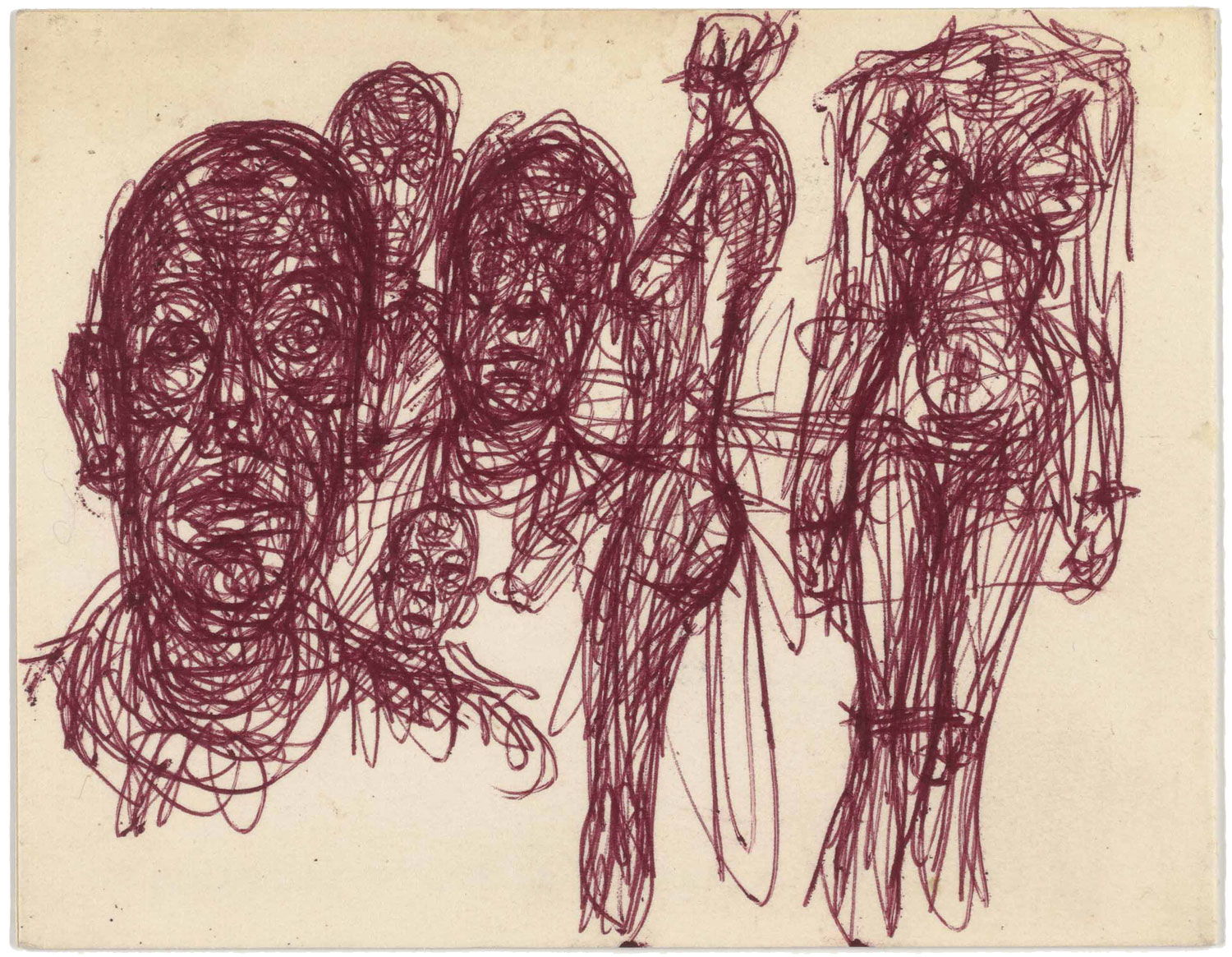
Alberto Giacometti, Five Heads of Men, One Face and One Woman Face on, One Woman in Profile, 1965

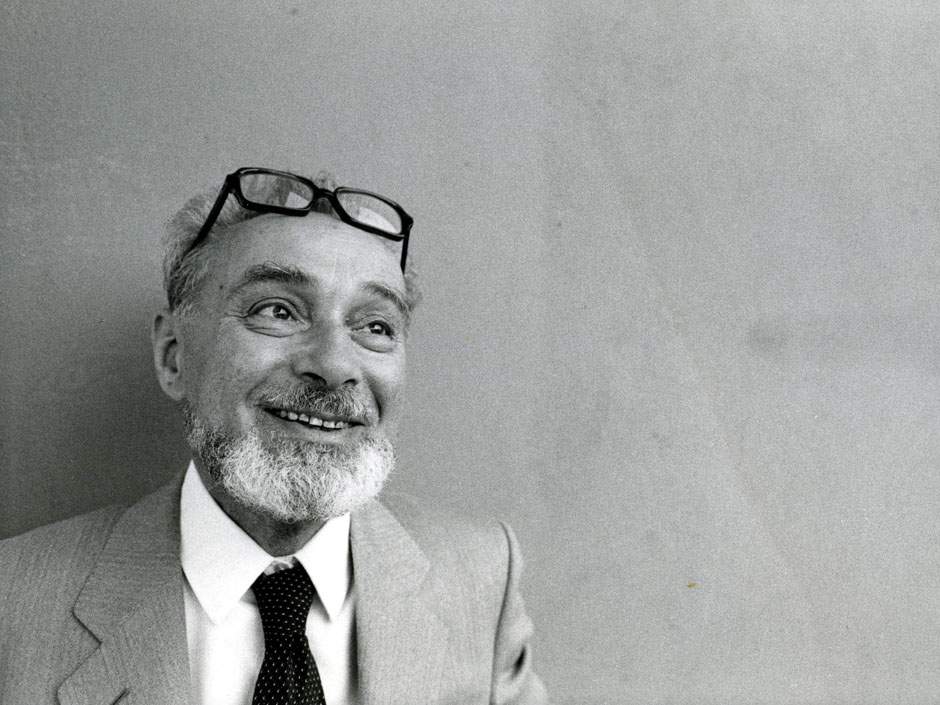
The first time I read Primo Levi’s If This is a Man, I was a high school senior encountering a memoir of a concentration-camp survivor for the first time; I lacked the context, historical and literary, to appreciate the uncommon power of the work, its peculiar alloy of moral indictment and scientific objectivity. I had that experience so common in adolescence—I was profoundly affected, but unable to adequately articulate the sources of my response, an untidy tangle of excitement and distemper.

This year I couldn’t resist the enthusiastic endorsement issued by Tina (@theesteemedfox) of Levi’s sequel to his remembrance of Auschwitz, The Truce—Tina is an infinitely cheerful advocate of infinitely sepulcher literature. [Ed. – And thank God for that!] I saw this as an opportunity to revisit If This is a Man, and after finishing both books I was so besotted by Levi’s writing, I ordered an edition of his complete works in English, a mammoth collection, three thousand words delivered in three hefty volumes, published by Liveright in 2015. [Ed. – Appreciate you giving the correct/accurate titles: American readers might know them as Survival in Auschwitz and The Reawakening, respectively.]

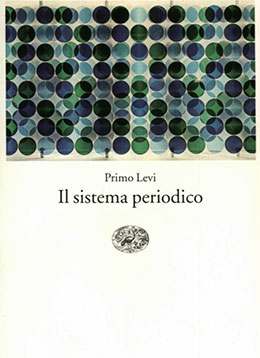
Before finally pausing, I read the two memoirs in quick succession, and then The Periodic Table, The Monkey’s Wrench, Other People’s Trades, If Not Now, When?, The Drowned and the Saved, and Natural Histories. I was immersed in Levi’s work for the better part of two months, simultaneously invigorated by his indefatigable clarity and exhausted by his increasingly disheartened worldview. [Ed. – It’s true. He was so depressed, angry, and suffering at the end of his life.] Two uncharacteristic works served as reprieves of a sort—Other People’s Trades is a collection of newspaper articles that peripatetically meander from discussions of butterflies to Italian etymology: it displays both the range of Levi’s intellectual curiosity and his inclination toward an exacting pedantry. [Ed. – Interesting. And well put.] In Natural Histories one finds a series of sci-fi short stories at least partly inspired Italo Calvino’s Cosmicomics—for a time, Calvino was Levi’s editor. Both books are a departure from Levi’s more familiar work not only for the subject matter, but also the tenor of the prose—absent is his signature moral urgency, the tensile cord of fury and descriptive restraint that typifies the memoirs.

The last book Levi ever wrote is a collection of essays, The Drowned and the Saved, a return to the subject of the Holocaust. It is the angriest of his works, the one in which his livid indignation comes closest to overwhelming his heroic attempts at philosophical discipline. One can see this especially in the last essay, “Letters from Germans,” a reflection on the correspondence he received from German readers after If This is a Man was translated into their language. One epistle from a doctor from Hamburg infuriated Levi—it featured a rehearsal of increasingly familiar exculpations focusing on how little the Germans understood of Hitler’s mad depravity. Levi’s response is as devastating as it is “irate,” as he called it, but one detects no sense of triumphalism in it, no smirk of victory. The doctor’s arguments were defeated, but not the general attitude Levi believed they represented, an inclination to erase a morbid history through mealy-mouthed self-acquittal.

In The Periodic Table, Levi tells another story of a German doctor incapable of countenancing his own guilt—this time one he had first encountered while at Auschwitz working in a laboratory. In 1967, Levi stumbled upon the man’s name again in the course of his work as a chemist at an industrial paint-manufacturing plant: Dr. Muller, once the manager of slave labor at Auschwitz, now returned decades later to the responsibilities of quotidian life. Levi sends him a letter and a copy of If This is a Man, and in return receives yet another manifesto of blinkered self-absolution. He writes a rejoinder, but before he can send it he discovers Dr. Muller has suddenly died. Here, Levi recounts a portion of the letter he never sent, which can be counted as a precis of his understanding of German guilt:

As to the specific judgment on his behavior, which Muller implicitly asked of me, I tactfully cited two cases known to me of his German colleagues who in their actions toward us had done something much more courageous than what he claimed to have done. I admitted that we are not all born heroes, and that a world in which everyone would be like him, that is honest and unarmed, would be tolerable, but this is an unreal world. In the real world, the armed exist, they build Auschwitz, and the honest and unarmed clear the road for them; therefore every German must answer for Auschwitz, indeed every man, and after Auschwitz it is no longer permissible to be unarmed.

Levi’s one and only conventionally structured novel—If Not Now, When?—is a literary elaboration of this declaration; a band of Jewish partisans in Russia, armed and brimful of vengeance, roam the countryside in search of opportunities to sabotage German forces. Levi had no penchant for violence—he makes this clear in an essay on Jean Amery in The Drowned and the Saved. “I demand justice, but I am not able, personally, to trade punches or blows.” However, he didn’t aggrandize his personal distaste into a universal prohibition—he believed that after Auschwitz, physical vulnerability could no longer be suffered.

Levi killed himself shortly after writing The Drowned and the Saved, joining a grim club of writers who survived the Holocaust only to die at their own hand, a membership which includes Paul Celan, Jean Améry, and Tadeusz Borowski. [Ed. – Well, it’s complicated. In Levi’s case—though the evidence suggests similar ambiguity about Borowski’s death—it’s unclear if it was suicide or accident.] Like Améry, he despaired of the possibility that as the generation of witnesses perished so would the vivid memory and meaning of their torment; Amery believed that in some nontrivial sense this would constitute the final vindication of the Nazi guards who taunted him with the reminder that the stories of the victims would never be told. Levi might be obliquely referencing this possibility in The Monkey’s Wrench when discussing the art of listening to stories:

In fact, just as there is an art of story-telling, strictly codified through a thousand trials and errors, so there is an art of listening, equally ancient and noble, but as far as I know, it has never been given any norm.

Levi experimented with a broad spectrum of writing forms, but his life’s work was bearing witness to what he considered a historically unique catastrophe. However, one cannot bear witness without a receptive audience, and he worried that the same will to oblivion that made Auschwitz possible would make equally possible the evaporation of its memory, rending his work futile. Levi’s exasperation at this prospect crackles thoughout The Drowned and the Saved, which Cynthia Ozick considered a suicide note. “The composition of the last Lager manuscript was complete, the heart burned out; there was no more to tell.” [Ed. – Ozick’s is a compelling formulation, though I bristle at its retrospection. Had Levi found a medication that worked for him, for example, (admittedly difficult at the time) he might have lived to write many other works.]

The Hungarian novelist Imre Kertész didn’t share this particular anxiety of Levi, a point he makes in The Holocaust as Culture, a book that collects a lecture he delivered of the same name with a lengthy interview, published by Seagull Books: “Auschwitz casts a long shadow over European civilization and is still the vital question of our culture.” Moreover, he believes a full reckoning of the Holocaust transcends the question of German guilt:

But this is not something peculiar to German history. We speak of collective guilt, the collective guilt of the German nation. But Auschwitz is the collective crime of the entire world, not just of the German nation. If we think of the Holocaust as a war between Germans and Jews then we will never understand it. [Ed. – True.]

Levi sometimes expresses hope in the rational lucidity of science, and the possibility that the scientific extension of human knowledge can redound to the moral and cultural improvement of mankind. In fact, he refuses to brook any polarity between science and the humanities. As he puts it in Other People’s Trades: “I have frequently set foot on bridges that join (or ought to join) scientific culture with literary culture, crossing a crevasse that has always struck me as absurd.” In the same book, he conveys an idealism so unbounded it inspires credulity: “I believe that what is being discovered about the infinitely large and infinitely small is enough to absolve this end of the century and the millennium.”

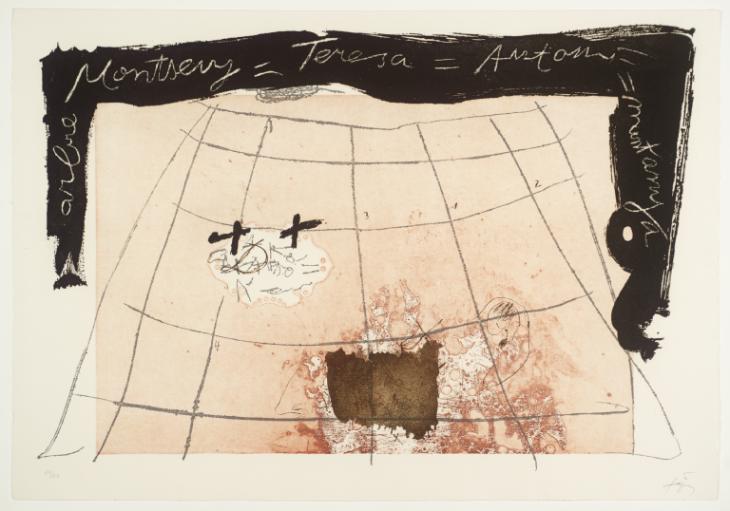
Cartography 1976 Antoni Tapies 1923-2012 Purchased 1981 http://www.tate.org.uk/art/work/P07571

By contrast, Kertész places his own hopes in the birth of a new literary culture that can potentially shake the Western world out of a decadent slumber:

If preserved, the tragic insight into the world of the morality that survived the Holocaust may yet enrich European consciousness, now best with crisis, much as the Greek genius, faced with barbarism and fighting the Persian War, created the antique tragedies that serve as an eternal model. If the Holocaust today has created a culture, and it undeniably has and continues to do, its literature may draw inspiration from the two sources of European culture, the Bible and Greek tragedy, so that irredeemable reality may give rise to redemption: the spirit, catharsis.

I think Levi was attempting to contribute to something like this, though in his version the result would be a matrimony of literature and science, a rational elucidation of the soul. One despairs to think he lost faith in his work, which would seem to entail losing faith in the world. I couldn’t help thinking of Levi when I read the last line of Kertész’s lecture:

As I said in the beginning, we live in the context of a culture, and in this context the dead body of Jean Améry is to be found in the monument—still under construction—to the Holocaust, where he himself laid it down, like a blood-soaked flower.

Tina K.’s Year in Reading, 2021

Today’s reflection on a year in reading is by Tina K. (@TheEsteemedFox). When I asked Tina what I should write about her, she wrote: “Tina K. went into an existential tailspin when Dorian asked her for a short bio. “Oh my god… who am I?” She’s a freelance editor that everyone should hire, wildlife photographer, middling athlete, rapacious reader, and a silly little fool, in Hamilton, Ontario.”

Look for more reflections from a wonderful assortment of readers every day this week and next. Remember, you can always add your thoughts to the mix. Just let me know, either in the comments or on Twitter (@ds228).

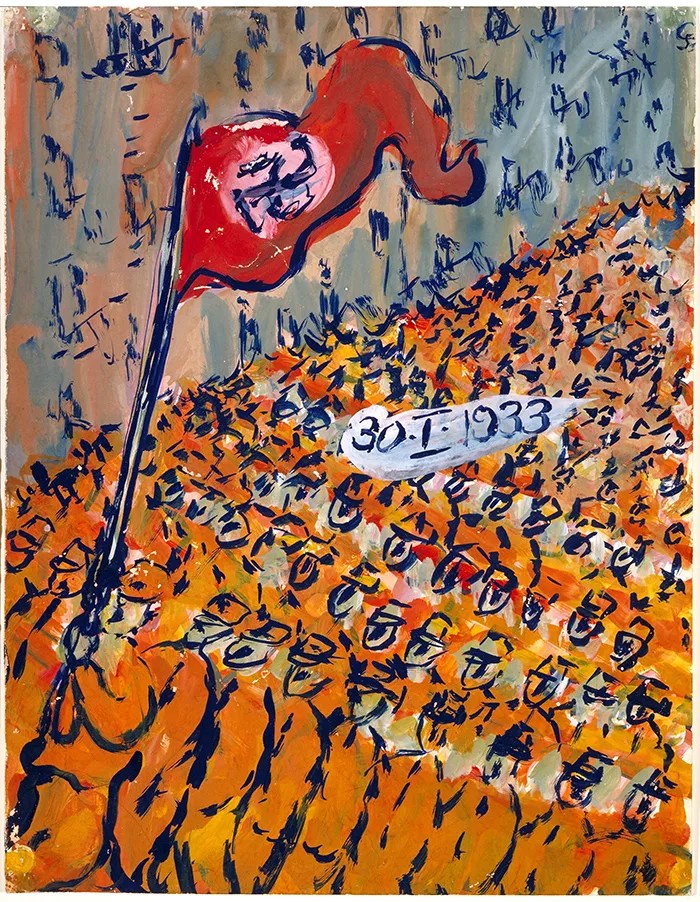
Charlotte Salomon, from Life? Or Theatre?

A Little Fiction

I like to switch up my reading between fiction and history, and since I can’t get enough of war as a subject and all the weird and horrific things it entails I thought I’d pump the brakes this year and do something different, maybe choose only some stuff about or related to the First and Second World Wars, but it seemed like no matter what I bought or borrowed the wars showed up anyway in the best books I read in 2021. It’s tough to avoid this topic, WWI and II still pulse hardily through our arts and history, you can’t throw a stick in a library or a bookstore without nicking a war vein, and so I was caught off guard by Rogue Male (1939) by Geoffrey Household, which turned out to be not only a WWII manhunt story but THE MOST entertaining fiction I read all year. In many years, frankly. It takes off like a rocket and doesn’t let up: you’ve got a failed assassination attempt on Hitler, you’ve got globetrotting, you’ve got the superlatively resourceful English gentleman of means and fame and disguise, you’ve got an enemy of equal cunning and fortitude, you’ve got love, loss, hiding underground like a wild animal — and bless us all, there’s a cat! — and none of it is corny, none of it cliché. The prose is clever, personal, polished, a joy to get caught up in, and for a novel with significant violence it has a way of eliding the violent act to leave you instead with its gruesome outcome. After being left for dead, the narrator says about his ordeal only, “My nails are growing back but my left eye is still pretty useless.” This is how Household treats all violence: he doesn’t walk you through it, there’s no point-aim-fire, no descriptions of knives plunging into flesh, you only see the effect of violence after the fact, which is a genius technique. There is so much technique in this novel and it THRILLS me. It boggles my mind that Geoffrey Household isn’t a… what do you call it again when a person’s name is well known by the public? 

Then there’s The Transit of Venus (1980) by Shirley Hazzard. I love Shirley Hazzard so I married her earlier this year after reading her book [Ed. – But she’s…], we’re very happy, it’s not a delusion [Ed. – But she’s…], I’m totally normal, shut up [Ed. – I’ll shut up.]. As the NY Times review of this book so aptly puts it, this novel lives in “the long shadow of World War I… [which] darkens almost every page” (which, again, I wasn’t expecting) and ends in either long-anticipated reunion or tragedy, depending on how much attention you paid to one itty bitty yet pivotal detail somewhere in the last half of the novel. (I’m a big endings person, they can make a so-so book or break a great book for me.) Put plainly, Transit is men and women with a lot of pain and complicated feelings/living situations, either chasing or running away from love, but Hazzard is one of those people you read for her great sentences — like Geoffrey Household she’s a master of technique — so the novel’s most heavenly attribute is its style, which I’ve described over and over again like an evangelist lunatic obsessive as “the perfect economy of every paragraph”. Each page has something that makes you go How tf did Hazzard just do that? as you read her doing it, and this is why Transit is so damned good. Look at this: “His hand rotated on her breast, but from force of kindly habit, absently fondling a domestic pet. On the coverlet her own hand lay open, upturned, extended to a fortune-teller. She watched him with love that was like a loss of consciousness.” And this: “His tweeds were the colour and texture of fine sand. Beige and granular, he stood on an asphalted platform in a blaze of Sunday-afternoon tedium.” (Honestly Shirley, you’re just showing off now.) She was a dark horse for me this year, and I would recommend this novel even if she weren’t my wife (which she is). [Ed. – She definitely is.]

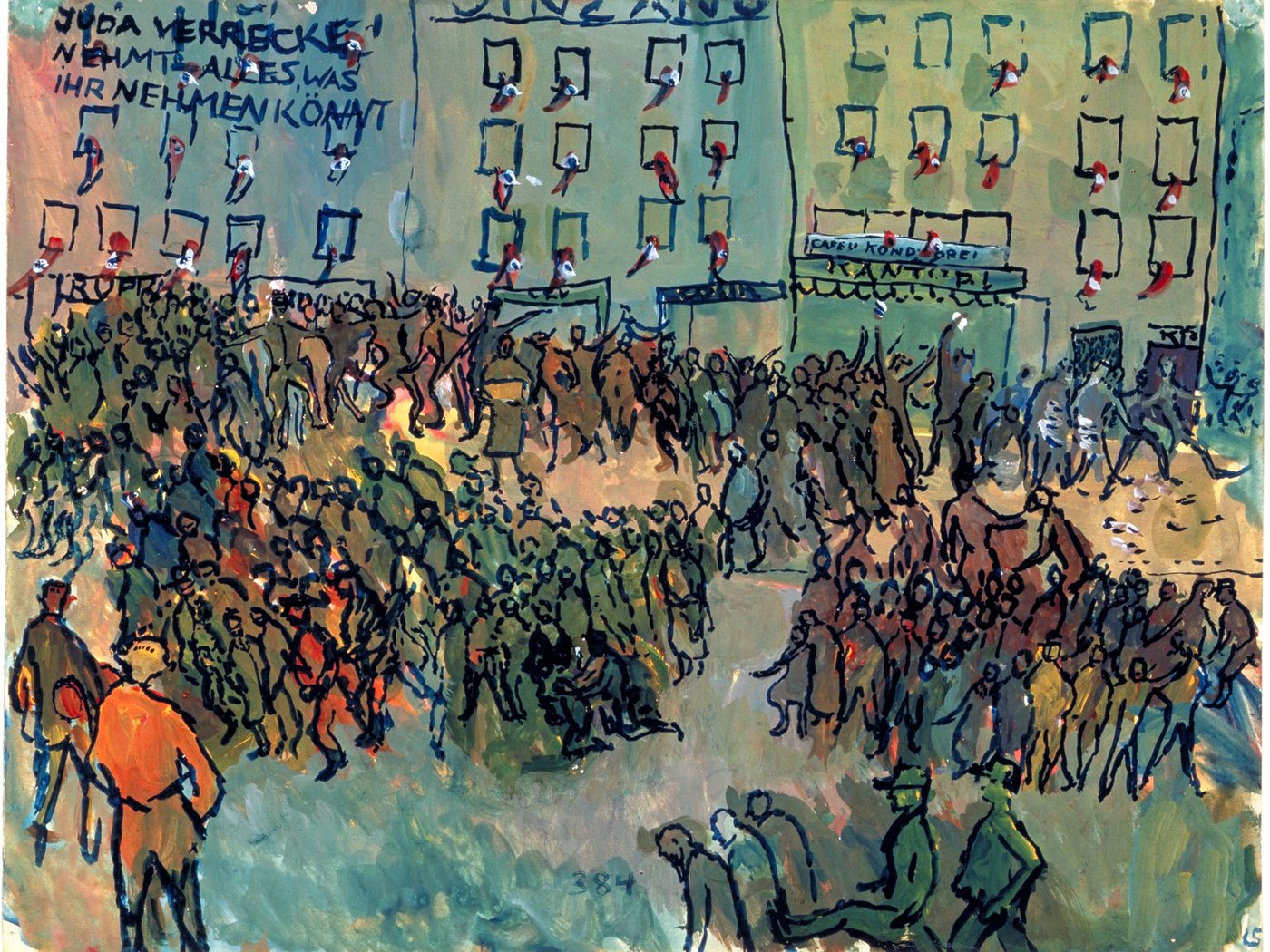
Charlotte Salomon, from Life? Or Theatre?

A Little History

Indulging your anger is often considered unvirtuous, which is why the “restrained fury” of Primo Levi (as Ivan Kenneally [@IvanKenneally] put it to me) is so bracing and engrossing. Survivors of the Holocaust seemed to sort themselves into two groups, those who talked about their experience and those who wouldn’t, and Levi talked about it, he raged about it, with a gripping candor that you just won’t find in anyone else who writes autobiographically about the Holocaust. This year I read The Reawakening (1965) and The Periodic Table (1975), both written in Levi’s signature vignette style, both funny yet sorrowful, and unrelenting about what he endured, witnessed, and morally wrestled with until his death. The Reawakening recounts Levi’s months-long journey back to Italy immediately after his liberation from the camp, and is an excellent companion to Keith Lowe’s Savage Continent: Europe in the Aftermath of WWII (2012) if, like me, you want to know how Europeans got by in 1945 as the continent was reduced to little more than rubble and revenge. Levi’s revenge was his refusal to stay silent, whereas so many others took their revenge by doing to Germans what the Nazis had done to everyone else (and yes, that does mean camps for Germans and killing, lots of retaliatory killing). Savage Continent will give you a near-forensic accounting of revenge, and Levi, too, accounts for it in his own way in The Reawakening when, after he’s freed, he’s warned by a Polish policeman not to speak German because: 

with an eloquent gesture, passing his index and middle fingers, like a knife, between his chin and larynx… [he] add[ed] very cheerfully, Tonight all Germans kaputt… The next day we passed a long train of cattle-trucks, closed from the outside; they were going east, and from the slits one could see many human mouths gaping for air. This spectacle, strongly evocative, aroused in me a mixture of confused and contradictory feelings, which even today I have difficulty in disentangling. 

The settling of scores is appalling, but not surprising. And oh, there were scores, scores I still can’t wrap my head around after reading Sarah Helm’s Ravensbrück: Life and Death in Hitler’s Concentration Camp for Women (2014), an insanely good history on the rise and fall of Nazi Germany from the perspective of the thousands and thousands of “useless mouths” interned and killed in Ravensbrück, where prisoners were only valued as disposable industrial slaves, medical testing “rabbits”, or for hostage diplomacy in the rare case of a French, English, or Dutch prisoners. I can’t lie: I Googled several of the Nazi guards and doctors before the book told me what happened to them after the war because I wanted the pleasure of knowing that they’d met their fate at the gallows before I read on. It’s not so hard to imagine the motivation 75+ years later for quick retribution against an enemy, especially when the foundations of European law and order were in absolute ruins, and no one, if there even was anyone, who cared to stop it was looking.

What I Read, January 2021

A few days of quiet, lingering feelings of winter break. (Eat the extra chocolate, have a glass of wine at dinner.) Then the fear and anger at the insurrection. Later the bated breath about the inauguration, the mixed feelings about applying for an American passport, the horror at the passport photos. Then calm: the relief, the joy at not having to hear a certain name. And then malaise, something like despair, exhaustion, ennui: no energy, writing difficult. Finally, the amazingly good fortune at being able to get vaccinated, thanks to Arkansas state policy of including teachers in the second group.

Among all this, of course there was reading, including a long book I’d long wanted to read.

Jean-Claude Grumberg, The Most Precious of Cargoes (2018) Trans. Frank Wynne (2020)

Strange little book that tells in fairy tale-fashion—it is subtitled “A Tale”— the story of a husband and wife and their twin infants who are deported from Drancy to some ominous point in the East. On the train, the woman’s milk has dried up; the hungry babies scream inconsolably; the others in the sealed railway car glower when they aren’t staring dejectedly into space. In a forest somewhere in Poland the man makes an abrupt, terrible decision. He rips one of the children—the little girl—from his wife’s breast, wraps it in his prayer shawl, and squeezes the parcel through the barred window. He cannot know that a peasant, a woman who has prayed for a child that has never come, will find the baby and raise her, over the objections of her husband and at risk to her own survival. How she loves the child, barters for milk, runs away when someone informs the occupying forces about the Jew Child—these descriptions make up the bulk of the novella, which is told in a quaint, implausible style. Even more impossible is the story of the father, who, unlike his wife and son, having survived the camps, stumbles into a village where a woman and her young daughter are selling cheese in the local market. Yes, it’s her, his daughter, he’s beside himself—his plan worked—but with a suppressed cry he leaves without a backward glance. And nobody knows, the narrator concludes, if they ever met again.

Preposterous and kitschy, monstrous even, this story. Yet Grumbach (b. 1939)—many of whose relatives were murdered in the Shoah and who himself survived as a hidden child—has a trick up his sleeve. In an epilogue he addresses an imagined reader who wants to know whether this is “a true story.” Over three pages he arraigns the question—why challenge the veracity of the story when so many question the veracity of the events?—concluding that fiction can tell a truth that history cannot. I happen to agree, but I’m unconvinced by Grumbach’s example. It lacks the sophistication of, say, Ida Fink, whose own short works incisively probe the limitations of the historical record, limitations that fiction can redress. I appreciate how Grumbach pulls the rug out from the heartwarming story many readers might have been moved by—but he’s too self-congratulatory and not all that smart about what his rug-pulling means.

Yishai Sarid, The Memory Monster (2017) Trans. Yardenne Greenspan (2020)

Novella about an Israeli academic who is groomed by the head of Yad Vashem—to whom the book is written as a letter after an eventually specified moment of disgrace; a conceit I’m unconvinced is effective—to lead Israeli tour groups through Holocaust sites in Poland. At first he works with school groups, but his self-loathing and contempt for/fear of the young people becomes too much, and he starts working with dignitaries, who care about photo ops instead of information. He knows too much, is the problem, and he needs to tell it all. But no one wants, or is in position, to hear it. The narrator begins to disintegrate, a process mimicked in the text’s ambiguous syntax. Here, for example, he is with his flock at Birkenau:

I stood before them over the underground undressing hall with the shaved roof, like a picked-over scab, underneath all rot.

Do the last clauses describe the roof, or the narrator? For he has become a memory monster, and as such must be banished. But it is equally true that memory itself is the monster. What is memory for? Does it cause more harm than good? Why do the visitors he ferries around—students, teachers, and politicians alike—say, with varying degrees of explicitness, that “to survive we need to be a little bit Nazi, too”? Sarid is excellent at skewering complacencies and false piety, whether Israeli or Polish. I agreed with so much in this book, was made nervous by the parts of myself I could see in the narrator. And yet The Memory Monster has not stayed with me. Maybe I’d need to read it again. For now, at least, I much prefer David Albahari’s Götz and Meyer, which covers some similar ground, but which has more to say than this book about teaching traumatic history.

Primo Levi, Moments of Reprieve: A Memoir of Auschwitz (1981) Trans. Ruth Feldman (1986)

Late work by the Italian master, a collection in which each essay focuses on someone Levi encountered in his eleven-month incarceration in the Monowitz subcamp of the Auschwitz complex. To call this a memoir as the English-language publisher does might seem misleading, but Levi was always more interested in others than himself. At first blush these pieces are primarily anecdotal, but they use obliquity and juxtaposition to create their own arguments. And Levi does open up about himself a little, although always indirectly, as we see in particular in his portrait of Lorenzo Perrone (the Piedmontese forced labourer who regularly slipped Levi extra rations), and in general in the fascinated way the essays return to allegorical stand-ins for the writer (conjurors, carpenters, violinists). I read this slim collection with some students and we agreed it packs a punch far beyond its size. If you’ve never read Levi, start with his classic first book, If This Is a Man but don’t sleep on this one. Underrated.

A weird thing: I don’t know whether the collection was conceived as such by Levi—as best I can tell, most of the pieces included here were in the original Italian, but one or two others have been added to this edition—a shame the Complete Works published in English a few years ago has such a terrible critical apparatus. Does anyone know?

Étienne Davodeau, The Initiates: A Comic Artist and a Wine Artisan Exchange Jobs (2011) Trans. Joe Johnson (2013)

Keith tipped me off to this in his year-end review, and I’m glad he did. The subtitle tells the story, mostly: Davodeau helps his friend, Richard Leroy, a biodynamic wine producer in the Anjou, prune, harvest, decan tinker, while Leroy reads the comics Davodeau assigns him, visits a publisher, other artists, a comics con, even the press where the books are printed. Each learns to appreciate the labour that goes into the other’s work, and to think about what it means to be creative, have a passion, challenge expectations, respond to failure. It’s a generous book (it helps that people are always drinking wine, though a running joke is how few wines Leroy will agree to drink—not because they’re not famous enough, but because they aren’t interesting enough for him). Oddly, the winemaking comes across as much the more interesting of the two enterprises. Maybe that’s not odd at all: Davodeau is a realist and realism has always shone at explaining how to do things. You’d think a book like this would be plenty meta, but because that’s not Davodeau’s approach (he’s no Art Spiegelman, though he rightly admires him) his own métier comes across as a bit dull.

Anyway, lovely conceit, beautiful drawing. My only complaints: (1) the translation seems awkward (a typical sentence: “Marc-Antoine’s garden juxtaposes the deep blacks and sharp whites of his books by the moving affability of its shadows”—moving affability??) and (2) it’s so overwhelmingly guy. The book includes almost no female characters, and doesn’t find this as ridiculous as it should. Maybe the idea of métier is gendered in ways Davodeau misses the chance to explore. Indeed, the whole idea of métier could be complicated in relation to capitalism. Is the idea of vocation one that capitalism promulgates to further enslave us? Or is it a challenge to capitalism? There’s more to be said here.


Peg Kehret, Escaping the Giant Wave (2003)

My daughter was assigned this for school, and we read it together. It’s a lot worse than Hatchet. A teenage boy and his irritatingly quirky little sister accompany their parents on a working vacation to the Oregon coast. (The parents are in real estate; their firm is holding a retreat for its best agents.) Everything would be great except the lodge is under construction and they have to stay instead in a rickety old place, also there’s a tsunami warning out for the coast. No bigs. Oh yeah, Kyle’s nemesis, the school bully, comes along too. (His parents also being ace realtors.) Thalia and I agreed that the chapters describing the tsunami are by far the best. Kyle and his sister, who have been separated from their parents for reasons of plot rather than plausibility, run inland and uphill, just as they have been told. Even so they barely escape. Who knows what happened to the bully, who predictably poo-pooed the safety instructions. Afterward I asked Thalia if she wasn’t bothered that none of the books she’d read for school this year were about female characters, but she ignored my righteous indignation, concentrating on the fact that the book was finished and she could now read something else. Escaping the Wave isn’t entirely pointless—I’d no idea tsunamis ever hit Oregon. But yeah I don’t recommend this book.

Caroline Moorehead, A Train in Winter: A Story of Resistance, Friendship, and Survival (2011)

On January 24, 1943, a convoy left the internment/transit camp at Compiègne for Auschwitz-Birkenau. Among those deported were 230 French women, all associated with the resistance in some way, almost none of them Jewish. It was the only transport of its kind to leave occupied France. Moorehead has written a popular history of these women, the best known of which was the writer Charlotte Delbo. It’s a big task—that’s a lot of people to keep track of—and Moorehead doesn’t really succeed. She wants to do justice to these women, fair enough, but it’s hard to write a group portrait when you’re beholden to an idea of narrative history centered on the individual.

I read A Train in Winter with four students and we agreed we couldn’t keep anyone straight. Perhaps more importantly, we were frustrated both by the book’s structure and its lack of analysis. The first half considers Vichy France, the activities of the resistance, and the deplorably avid willingness of the French security apparatus to do the Germans’ dirty work for them; useful enough background, but nothing Moorehead has to say here is new, and into this general material she has to shoehorn the clandestine experiences (sabotage, resistance, betrayal, arrest) of her protagonists. The second half shifts to the women of the convoy and their experiences in the concentration camp system (first Auschwitz, then Ravensbrück). It is more focused, more dramatic, and more successful.

Yet here the failures of analyses become most apparent. Moorehead asserts—to be fair, on the testimony of the surviving women themselves, whether in the interviews she was able to perform with the handful still alive at the time of writing or in written documents (Delbo’s books again playing an outsized role)—that women experienced the camps differently than men. There’s plenty of evidence to support this idea, but exactly how and why is more complicated than Moorehead admits. She relies instead on gender essentialism, though she vacillates on whether she’s quoting the women themselves or affirming the idea herself: “Their own particular skills as women, caring for others and being practical, made them, as they told themselves, less vulnerable than men to harsh conditions and despair” (that “as they told themselves” reads like a hedge—Moorehead cites no source here; impossible to know if she’s speculating or transcribing). She similarly makes general statements about group solidarity without telling us why they might be true:

those who came from recognized groups—the communists, the Catholic Bretons, the intellectual bourgeoisie—were team players … the French, as a national group, were more cohesive than the other nationalities, more prone to look after their own.

“Recognized groups” is doing a hell of a lot of work here. (The part in the ellipsis disparages rich Parisians as the most selfish of the prisoners—isn’t that a “recognized group” too?) And Moorehead conveniently leaves out the fact that as political prisoners, these women had a better (though still terrible) experience than Jewish ones, which surely contributed to their “national” solidarity. In fact, the whole idea of nationalism verges uncomfortably on the longstanding rootlessness canard of antisemites everywhere, not least the Nazis. As if that wasn’t enough, Moorehead too often implies that survival was a matter of willpower (“Even as the French women reached Birkenau, it was clear that not all would, or could, or would choose, to survive”—I’m allergic to this language).

I’m glad to know about the existence of this convoy, am impelled to finally read Delbo, and was fascinated to learn about the experimental farm at Raisko/Rajsko, a subcamp run by I. G. Farben where inmates (including some of the French women) cultivated an Asian dandelion whose roots the Nazis hoped to synthesize into rubber. (Conditions on the farm were positively human compared to Birkenau: the women slept in beds with sheets, were able to wash regularly, ate meals rather than watery cabbage soup.) But all told I regret the time I spent reading A Train in Winter. Moorehead has written three other books about fascism in France and Italy, styling them into a loose quartet. After this one I’m in no hurry to read the others.

Georges Simenon, Night at the Crossroads (1931) Trans. Linda Coverdale (2014)

Maigret is called to Arpajon, about an hour south of Paris, to investigate a strange crime. The location is a busy crossroads just outside town, uninhabited except for a gas station, the villa of a parvenu insurance salesman, and a cottage that a reclusive Danish designer and his sister have recently rented. A man has been found dead in the salesman’s car—but the car is parked at the designer’s house. His, meanwhile, has been moved to the salesman’s. The foggy, bleak atmosphere is good, but there’s not enough eating and drinking to make it a top-notch Maigret. Throughout, the inspector seems unaccountably weary—an emotion that might be ascribed to the near-ridiculousness of the plot. Maigret’s response to a kerfuffle between two suspects could describe the book as a whole:

For some strange reason, this entire episode had not risen to the level of tragedy, or even drama. It was more like buffoonery.

Mary Kelly, The Spoilt Kill (1961)


I had been spying on Corinna for two weeks; spying on her for pay.

Good first line, right? The narrator is a PI specializing in industrial espionage. Corinna is a designer at a Staffordshire pottery firm called Shentall. Its owner hires the narrator to find out who is passing on the company’s designs to an American competitor. As the opening makes clear, though, the narrator might not mind spying on the woman. Indeed, in a manner beguilingly at once sinister and generous, he soon falls for Corinna.

In Staffordshire, centre of the British pottery industry for two centuries, kiln is pronounced kill. A “spoilt kill” is a firing that’s gone wrong, preserving some blemish immutably, such that the product can only be smashed and thrown away. A spoilt kill is an expensive mistake.

There are expensive mistakes aplenty in this excellent crime novel, especially in the narrator’s mishandling of his relationship to Corinna, who doubles as the prime suspect and his love interest. Kelly uses the plasticity of clay—the way shaping and heating turns brute material into beautiful but fragile pottery—as a metaphor for the hardening of human relationships. In a typical passage, the narrator dissects a heightened moment with the object of his desire and suspicion:

The look she gave me then. Joyful, triumphant, and aghast, How can a look be all that at once? I don’t know. I know nothing, nothing. These moments, these glances, flash past too quickly for analysis. Besides, I turned away. One always turns away. If one didn’t, all would be well.

This is real Ishiguro stuff: a narrator trying but failing to understand other people, and, in the process, failing to understand himself. In so doing, he reveals to readers things he himself doesn’t know. We read “against” him, even if doing so doesn’t eventuate into any clear understanding. In this example, the tell is the narrator’s recourse to “one”—a failed attempt to universalize his own failure.

Here’s another unwittingly offered revelation, this time about the narrator’s snobbery. His cover at the factory—he’s meant to be writing a history of the firm—means he’s welcomed into the social life of its tightly knit workers. Invited to a party by a hale, conventional, but kind and lively young man, a favourite at work, the narrator is surprised by the man’s home:

The house was in good repair, spotless, decorated throughout in slightly off-key colours, startling, unusual and weak: ‘contemporary’ intentions, diluted by time and democracy, and even then imperfectly grasped.

Unpleasant, right? Interestingly, though, Kelly holds back from making him thoroughly disagreeable. For me, much of the power of the book comes from a female author writing a male character. Not that Kelly is breaking new ground here or anything, but I was struck by several moments I doubt a male writer would have included. Here, the narrator, who has been married before, takes Corinna back to her flat. She doesn’t feel well because she’s getting her period. The narrator settles her for the night:

How strange, yet how mustily familiar, like coming home after a long holiday, to light the geyser, run the bath, fill the hot water bottle, put on the gas fire, turn down the bed—to do these things for a menstruating woman was the fabric of marriage, one of its few memories that was not unhappy but quiet, neutral, steadying in its ordinariness.

I’m not sure, exactly, that this response is nice. (Maybe a little self-satisfied? What do you think?) But I’m fascinated by its inclusion. All in all, The Spoilt Kill is suspenseful, well-written, and interesting. (You’ll learn a lot—but not too much—about making pottery.) An unusual, and unusually successful, book. Kelly didn’t write much, but I look forward to reading more. Fortunately, the British Crime Classics series, edited by Martin Edwards, is reissuing another one later this year.

Leo Tolstoy, War and Peace (1869) Trans. Louise and Aylmer Maude, Revised Amy Mandelker (2010)


This one needs a post or two of its own. For now I’ll tell the story of my previous attempts to read it—and my fantasy of how I thought I eventually would.

First attempt, late 1990s, twenty-hour train-ride from Toronto to Halifax. I bought a lovely Everyman Library hardcover of the Garnett translation, with a forbiddingly unvarnished, minimalist dust-jacket. Like Charlie Brown in the tv special, I dragged it around a whole winter’s vacation (my girlfriend and I were spending Christmas with her family). I abandoned it pretty soon after arriving—in fact, there is still a bookmark at p 186 (Pierre has just been nudged into convincing himself he loves Hélène)—but I guess I read it on the train. I say I guess because the only thing I remember about the trip—something I do remember quite often, it was so remarkable—is waking up in the early morning, the train chugging through New Brunswick, along the Miramachi, I think, with absolute piles of snow flanking the tracks. More snow than I’d ever seen before (which is saying something). Snow towering on the rooftops, snow drifting almost up the rooftops, that kind of thing. It was sunny and cold, that sunshine-y cold that is marvelous and crisp but also really fucking cold—and just magical. We had breakfast in the dining car and my girlfriend persuaded me to order fishcakes and a pot of tea and it was absolutely delicious. Maybe I gave up on the book because I had the Russian winter of my dreams right outside the window.

Years later, now living in a different country, married, a father (I think, I actually can’t remember if this was before or after we had T—an event that destroyed my memory, possibly for good), I made my second attempt. Now I had a different hardcover, the Peaver & Volokhonsky translation, an even bigger, more unwieldy book—its size being, I maintain, the main reason I didn’t persist past the first few dozen pages. Not that I wasn’t enjoying it, but it was kind of hard keeping everyone straight, and it was the winter vacation (I associate the book strongly with winter, even after having read it), and so I quietly set it aside.

I’d see them on the shelf, though, those War & Peaces, and they just kept forbiddingly insisting themselves on me. I’d sometimes lugubriously think that if I were diagnosed with cancer or something I would immediately take them up again to be spared the indignity and wasted life of dying without having read War and Peace. (Of course when I did later have a cancer scare that was the last thing on my mind.) But as time passed and my current sabbatical crept into view, I concocted a plan, the kind that keeps you going in tough times, like when you’re grinding up a hill into a headwind late in a run. I would spend a week all by myself in the Canadian Rockies. It would be fall, late September maybe, the most glorious time in the mountains but one I never get to experience anymore because of the academic calendar. I would take only War and Peace, so I wouldn’t be tempted to read anything else. I’d live without internet in a bee-loud glade. I’d hike every day, admiring the turning larches, while also finishing the novel, I saw no problem there. I pictured myself reading late into the night after a simple but satisfying supper of all the things no one else in my family likes to eat, sipping scotch. (This is how I know this scenario was pure fantasy, I do not much care for scotch, it just seems like something I should like.) How this was all going to work in reality was of no concern—and when the pandemic arrived it became clear that I wouldn’t have to worry about turning fantasy into reality.

In the end, reality was less triumphant than imagination—but it had the benefit of being real. I did, once again in winter, though not in a single immersive burst but instead over eight weeks, sometimes more intensively sometimes less, what with all the bits of daily family life to manage, actually read War and Peace. And it’s terrific.

Paraic O’Donnell, The House on Vesper Sands (2018)

Enjoyable 19th-century pastiche, bit of a Wilkie Collins vibe. Unusually, it’s as interested in the supernatural as in crime—I guess you’d call it urban magic—though its alternate-reality, speculative aspects aren’t as developed as they could be. In O’Donnell’s Victorian London, certain women emanate a kind of half-physical, half-psychological vibrancy that select others can perceive. And now someone is killing them. It’s up to Inspector Cutter, a gruff genius with a nice line in cursing the limitations of his juniors; Gideon Bliss, a disillusioned divinity student with a personal investment in the situation; and Octavia Hillingdon, a tyro journalist, to solve the case. The House on Vesper Sands is that rarest of books: one I wish had been longer, so that it could have fleshed out the implications of its scenario. As it is, it has strong characters, who exceed the caricatures they initially seem to fall into and whom I can absolutely imagine carrying a long-running series, and excellent writing, which never feels forced and is often genuinely arresting. A mournful Ben Aaronovitch, a fantastical Sarah Waters: take your pick.

Georges Simenon, The Yellow Dog (1931) Trans. Linda Asher (1987, revised 2013)

In a small town in Brittany, a man on his way home from a night out with the boys at the local café is shot while stopping in a doorway to light his cigar. A mysterious yellow dog is spotted at the scene of the crime. The next day it shows up in the café itself. Before long—everything happens fast in a Simenon—bad things befall the man’s friends: one turns up dead, one narrowly escapes poisoning, one disappears leaving only a bloodstained car. And that animal keeps showing up: is the yellow dog a red herring? Maigret sorts things out, which mostly means avoiding reporters and telling the mayor to shut up. Great opening scene, decent ending: absolutely serviceable.

On the whole, an underwhelming reading month—except for War and Peace. Genuinely titanic, worth every minute. That Mary Kelly’s good too, though. See you next month.

Nat Leach’s 2019 Year in Reading

I invited my friend and sometime EMJ contributor, Nat Leach, to write about the highlights of his year in reading. Not only did he write about his favourites, he also described his idiosyncratic reading project. Enjoy! (I couldn’t help but add a few editorial comments along the way.)

When Dorian suggested that I consider writing a review post on my reading for the year, I was keen to share some of my thoughts, but also felt the need to preface it with a confession of sorts, so here goes:

Candida_Hofer_Philip_Johnson_Library_New_Canaan

I have never been the sort of person who could read just one book at a time. When I was an undergraduate student, I kept a pile of books beside my bed. I would read a chapter from the top book, place it in a new pile beside the first one and repeat until the pile was empty. Then, I would repeat the same process in reverse. This had the benefit of keeping my reading fresh, never getting bogged down in one thing, and allowing me to continually be surprised. It took me a little longer to finish books, but I quite enjoyed this too; when I really liked them, I wanted to savour them, and when I didn’t like them, I was soon able to switch to something else.

The problem came when I entered graduate school, moved to a city with excellent used book stores (London, Ontario) [have to say, this does not correlate to my memory of London! – DS] and started to become more broadly curious about literature, theory, philosophy, and just about everything else, than I ever had been before. One pile became two, then three, and eventually I had a long coffee table covered with nothing but book piles. My system became more sophisticated, but the basic principle of moving from one book to the next did not change. Over the years, I made compromises (my wife insisted on bookshelves to replace that coffee table, for example) but I never changed my ways. I continued to enjoy picking up books with no preconceived decision-making process in mind. Thomas de Quincey’s excellent essay on sortilege and astrology influenced my thinking on this point; he accepts that connections exist between things that cannot be rationally understood, so sees value in allowing chance to bring them to light. And indeed, I have often felt that I was reading just the right book at just the right time, some kind of synchronicity between my reading and my life, or between two books I happened to be reading at the same time.

It wasn’t until I joined Twitter two years ago that I began to take stock of my reading life. For one thing, I joined Twitter to participate in the great book conversations that I discovered there, but it’s hard to join in conversations when you have only read parts of so many books. How many times can you say “Oh yeah, I read the first quarter of that book! It’s really good!”? For another thing, I realized that I’m not as young as I used to be, and in the face of inevitable mortality, I’d rather die having finished a few good books as opposed to having started a whole bunch.

It was at this point that I realized that the only way to overcome the negative effects of an absurd and ill-advised reading strategy, I was going to need another absurd and ill-advised reading strategy. I hit on the idea of methodically working my way through all of those never-completed books one at a time from A to Z (from Achebe to Zola, if you will). I already tended to arrange my reading alphabetically, so this simply built in the requirement that I had to finish a book before moving on to the next one.

Of course, this doesn’t mean that I now read only one book at a time. But at least I’m now cycling between 20-30 books rather than hundreds, and focusing primarily on a single book. Nor does it mean that I am entirely rigid in my system; it initially intended to involve only books that I had already started, but gradually I have allowed alluring new books to slip into their place in the alphabetical queue. I have also made exceptions for borrowed/library books and communal Twitter events, all of which slow my progress somewhat, but since the pleasure is in the journey, I also enjoy these diversions and side-trips.

All of which is to explain why most of my reading for the year falls within a fairly small alphabetical range. In 2018, I got through A, B and most of C. This year, I finished C and got through D, E and most of F. If I keep this pace of almost 3 letters per year, I’ll be done this project by 2027 (and then I’ll probably just start again). Statistically speaking, I completed 39 books last year and 31 this year; not huge totals, but since I hadn’t even cracked 30 since 2000, I think I can say my new system is showing progress. Also, 9 of the 31 were over 500 pages, which partly accounts for the slower pace. These 31 books were written by authors from 15 different countries, which I thought was a pretty remarkable ratio considering the arbitrariness of my system, although this diversity primarily comes from various countries in Europe; I may need to work on exploring other continents. I read 18 books by men and 13 by women.

0067


Having said all that, I present thumbnail sketches of my 2019 reading:

Couperus, Louis- Eline Vere

Technically, my last book of 2018, but I finished it on January 3, and it’s so good, I’m including it. It’s a book with a personal connection for me, since my Dutch grandmother had numerous figurines of the title character around her house in The Hague; she explained that because this book was so famous, Eline had become a sort of figure of pride for the city. Once I finished the book, this puzzled me a little, since Eline is not exactly the heroic sort of character one would expect to be commemorated in this way, but the book is fantastic in its depiction both of its social world and Eline’s disaffection and alienation from it. [I really love this book too, and wish it were better known! — DS]

Crummey, Michael- Galore

A magical realist novel set in Newfoundland (think One Hundred Years of Solitude but with a whole lot more ice). Crummey incorporates the folklore and history of the island into a compelling and fantastical multi-generational narrative (this is one of those novels where you are very grateful that there is a family tree included at the beginning of the book). It also features that rarest of things, an ending that is totally unexpected and yet a perfectly appropriate way of resolving the narrative.

Dante- The Divine Comedy

There’s not much new that I can say about Dante, but I do think that reading this book is an experience that everyone should have at least once in their life. Even a lapsed Unitarian like me has to appreciate the thoroughness of his cosmology, even if I’d be very afraid of someone who actually believed all of it. It does inevitably suffer from Milton’s problem, that what happens in Hell is so much more interesting than what happens in Heaven.

David, Filip- The House of Remembering and Forgetting

I had high hopes for this book after reading some early reviews, but in the end was disappointed with it. There are some powerful moments, but it ultimately reads as an awkward mishmash of Holocaust narrative and mysticism (two things that, frankly, do not go together). [Might explain why I never finished this book. — DS]

DeLillo, Don- Falling Man

I count White Noise among my favourite novels of all time, and it didn’t seem surprising that the author of a book that depicts mundane American life being punctured by disaster would choose to write a novel about 9/11. DeLillo represents the traumatic aftermath of the event on one man and his family in a thoughtful and nuanced way. This narrative is juxtaposed with a number of scenes focalized through one of the hijackers which seem to offer a broader perspective, though these segments seem rather under-developed compared to the main plot. I enjoyed the book, although in the end, I found myself wondering if it had really gone anywhere (but maybe I shouldn’t have expected it to?)

Dickens, Charles- Hard Times

This is a book that my younger self didn’t get on with very well because of its overt didacticism, but this time I enjoyed it a great deal, having a better sense of its context. Still not my favourite Dickens, but that’s not really a criticism.

Dostoevsky, Fyodor- Crime and Punishment

Another literary experience that I think everyone should undergo, harrowing though it is. I was already about halfway through the book, having read the crime and was awaiting the punishment. I was somewhat surprised by how long I had to wait, as the book seems quite digressive, but that may also be the point, that the consequences of the crime infiltrate every aspect of Raskolnikov’s life.

Drndic, Dasa- Belladonna

Another book I was very much looking forward to, and this one did not disappoint; it’s fiercely written and utterly compelling. Andreas Ban’s body is deteriorating in a way that mirrors the corruption he sees in his country, Croatia, and his memories and experiences frame the book’s reflections on history, politics, theory, and culture. Much of the book recounts Nazi and Ustase persecution of Jews in WWII and condemns the post-independence government of Croatia for its complicity in rehabilitating war criminals (both from WWII and from the Balkan genocides). Its attacks include a lengthy screed that will cure you of ever wanting to read Jonathan Littel’s The Kindly Ones. [I’m a big fan of Littel’s novel, so now I’ve got to read this. — DS]

Du Maurier, Daphne- My Cousin Rachel

This is a perfect book of its kind. Is Rachel a kindly relative or a cynical gold-digger? Is Philip a paranoid misogynist or a potential victim? Du Maurier keeps the pendulum swinging between these options, building suspense and cultivating uncertainty so that we’re never entirely sure of the truth, but compelled to keep reading. So good it sent me on a Du Maurier book-buying binge after finishing it. [And rightly so! I too loved this one. — DS]

Duncan, Sara Jeanette- The Imperialist

This Canadian classic from 1904 begins as a domestic drama about the Murchison family in a small town in Ontario, but widens into tackling broader economic and political issues. The family’s eldest son, Lorne, becomes an advocate for a preferential trade agreement with Great Britain, and runs for political office on that platform. The novel does get a bit bogged down in economic minutiae of a past era, but its concerns with British isolationism, election fraud, and the exploitation of Canada’s Indigenous people all seem disturbingly current.

Duncker, Patricia- Hallucinating Foucault

In the 1990’s, I think this was an obligatory book for theory-heads like me, but despite touching on Foucaultian themes such as madness and incarceration, it doesn’t really have much to do with him. The book starts with an interesting academic mystery, a graduate student searching for a French author with an oblique connection to Foucault, but fizzles out once he actually finds him. It just feels like the book tries too hard, culminating with an overtly symbolic character death that I couldn’t help laughing at. [Wow, now I need to re-read it. I loved it when I read it as the theory-head graduate student Nat describes, and have always wondered what happened to Duncker. Could I have been so wrong? (Yes.) — DS]

Edgeworth, Maria- Ormond

Edgeworth was much admired by Jane Austen, but her books have not achieved as wide a readership as Austen’s. The perceived regionalism of her Irish settings is no doubt one cause, but this book is at its strongest in its early scenes depicting the tension between Irish and Anglo-Irish ways of life. This novel begins in a picaresque mode, with Harry Ormond sent to live with an Irish relative after nearly killing a man in a quarrel and aspiring to become “an Irish Tom Jones”.  Ormond does improve morally, and the narrative loses some of its energy in the later scenes in Paris which demonstrate his reformed character. Perhaps this didacticism is another reason for Edgeworth’s neglect, but it does not negate this book’s many charms.

Eliot, George- Daniel Deronda

This one was quite a commitment, but was definitely the best book I read all year. From its in medias res opening that takes hundreds of pages to untangle to its swerve in the second half of the book away from concerns with individual relationships towards larger cultural, religious and moral issues, I found it thoroughly compelling both in narrative terms and in ethical ones.

Esquivel, Laura- Like Water for Chocolate

This is as close to light vacation reading as I get; magic realism with a feminist kick. Tita is expected by family tradition to remain unmarried in order to take care of her mother until her death, and the narrative is about overcoming the weight of these expectations. Tita’s creative energies are channeled into cooking, and a recipe accompanies each chapter, making this a potentially very tasty read (although most of them seemed too advanced for my culinary abilities).

Fallada, Hans- Every Man Dies Alone

This book about one couple’s small acts of resistance against Nazism drew me in from the very start and the ensuing cat and mouse narrative raises ethical questions about the obligation and the capacity to resist injustice. These questions become more ponderous as the book goes on, and the stakes are raised, but we never lose sight of the message that each individual must make these choices in ways both big and small. [So, so good! — DS]

Farrell, M.J. (Molly Keane)- Young Entry

I didn’t know whether to file this under F (for the author’s pen name) or K (for her real name), but chose the former simply because I was keen to read it. One of my favourites of the year for sheer reading pleasure; much as the plot about teenage girls coming of age against the backdrop of hunting culture in early 20th century Ireland sometimes bewildered me as I lack the vocabulary for hunting, horse riding and ladies’ underthings, the writing is so sharp and witty, I just went along for the ride. There are, for example, some wonderful passages presented from the point of view of the dog, or take this description of a runaway bicycle: “As the slope grew steeper, and consequently their progress faster, Prudence made the interesting discovery that Mr. Bennet’s bicycle entirely lacked brakes.”

Findley, Timothy- Headhunter

I remember wanting to read this book when it was first published (1993) because I had just read Heart of Darkness and was intrigued by the book’s initial premise, that Mr. Kurtz escapes from the pages of the book and terrorizes Toronto. That is quickly revealed as the delusion of a mentally ill character (Kurtz and Marlow are, coincidentally, the names of two psychologists), however, and what is depicted in this book is actually more horrifying (as readers of Findley might well expect.) Exploitation of the mentally ill, a child pornography ring, graphic violence against humans and animals: it’s not a book for the squeamish. In the end, I’m not sure it really holds together, as it tries to do way too much (and is already over 600 pages), but it sure is prescient on topics such as fake news and climate change denial.

Fink, Ida- A Scrap of Time

I read this book on Dorian’s recommendation, and he’s much better equipped than I am to explain the brilliance of these Holocaust stories. What impresses me most about them is the way that Fink dramatizes the complex dimensions of impossible moral situations. By showing, for example, a father remembering his attempt to hide while his children are being taken away (“Crazy”), or a woman being asked to suppress her past in order to keep a new lover (“Night of Surrender”), Fink makes us see the horrifying ways in which the persecutions of the Holocaust are perpetuated and internalized by survivors. [Yes, these stories are indispensable. — DS]

Flaubert, Gustave- Sentimental Education

When I mentioned on Twitter that I was reading this book, I got about as wide a range of responses as possible; some people love the book, others hate it, and some feel completely indifferent about it. Upon reading it, I can understand all those responses; it’s a chaotic novel that challenges readerly expectations in ways that might seem exhilarating, annoying, or tedious depending on the reader. I liked the book for the most part; even though the protagonist, Frédéric is often quite obnoxious, and his desire for the unattainable Madame Arnoux so excessive, I was still interested in him as a somewhat exaggerated exemplar of the human condition. His single-minded commitment to the object of his passion and his vacillation on every other desire seem painful, but typical human weaknesses. [Oh man, do I have mixed feelings about this one. — DS]

Fleming, Ian- You Only Live Twice

This was the first Bond novel I had ever read, and was not at all what I expected; the first half reads as a travelogue of Japan, and only in the second half do we get into some (fairly tame) spy stuff. The villain’s diabolical plan is somewhat limited in scope, but his “suicide garden” of toxic plants is evocative and terrifying. I liked it much better than the film, which used almost no material from the book, aside from some character names.

Gaskell, Elizabeth- Cranford

I must confess that I read this one out of order because it was the next book up on my e-reader while I was on vacation. I already knew that I loved Gaskell’s writing, her perceptive analysis of human character and her ability to produce powerfully emotional scenes. What I learned from this book is that she can also be laugh-out-loud funny. These vignettes about women in an English village are sweet, heartbreaking, and humourous by turns; my favourite moment is when a rather hyperbolic panic caused by a suspected wave of break-ins sweeps the town.

Best of the rest:

Levi, Primo- The Monkey’s Wrench

I re-read (and wrote about) The Periodic Table in commemoration of Levi’s centenary, and had intended to write about it in conjunction with The Monkey’s Wrench, but realized it would have been too much. The two books have much in common, including Levi’s characteristically keen eye for the nuances of human character, and a belief in the ennobling power of work. Where The Periodic Table celebrates the chemist’s ability to solve mental challenges, The Monkey’s Wrench often celebrates the more physical aspects of work in stories told by Libertino Faussone, a fictional character whom Levi identifies as a composite of many real men, and the narrator, a version of Levi himself. The most interesting parts of the book, though, are the many places where this manual labour is compared to, and aligned with, the act of story-telling itself.

Pontoppidan, Henrik- Lucky Per

This book intrigued me and frustrated me by turns, but it certainly did make me think. Most of my frustrations came from the book’s seeming uncertainty about how it felt about the protagonist. I enjoyed the beginning of the book, in which Per is a rebel against the soul-destroying form of Christianity practiced by his family, but as Per’s behaviour becomes more reprehensible, the book seems to lack a critical distance from him so that it’s not clear how we are supposed to react to his egotism. This book inspired me to re-read Ibsen’s Peer Gynt, a favourite of mine which seemed a clear model for this novel, although the possibility of redemption is handled very differently in the two works. Despite my frustrations, this is a book that has stuck with me.

Vermette, Katerina- The Break

I read this fantastic, troubling book because Dorian told me to and you should too!

2019 Year in Reading

Looking back, I see that January to June was much better to me than July to December. I read all but one of the nine books that meant the most to me in 2019 in the first half of the year. It could be they’ve had the longest to marinate. It could be I was more tired, distracted, and at times distraught in the second half of the year (I was). It could just be the luck of the Book Gods.

Whatever the reason, I’ve a better record of my reading than ever before because 2019 was the year I started to write monthly reflection pieces. To my own surprise, I was able to keep this strategy up, which means I wrote at least a sentence or two about everything I read this year. Links to the monthly roundups are at the end of this post. If you want to know more about any of the texts I reference below you can always search by author. If you want to see previous year-end reviews, you can find them here: 2014, 2015, 2016, 2017 & 2018.

For those who like that kind of thing, a few stats: I read 136 books in 2019. 74 (54%) were by women; 62 (46%) were by men. 104 (76%) were originally written in English; 32 (24%) were translated. 16 were audiobooks. 7 were re-reads. (I include books I re-read for teaching in my list only if I re-read the whole thing, not if I dip into, skim, or speed re-read it.)

And now some thoughts on the books that made a particular impression on me, for good or ill.

1024px-1877-winslow-homer-the-new-novel

Best of the Bunch

Katherena Vermette, The Break. My Book of the Year. I think about The Break all the time, especially now that I am learning about the violence and injustice perpetrated on Indigenous Canadians, not just in the distant past, but in my own lifetime. I’ve spent my whole life thinking that Canada was a Good Place that has mostly been on the right side of history. It is in ways a good place. But the way its colonial violence (itself inexcusable) continues into the present, the way that violence was happening all around me in my childhood, the way that I was nevertheless able to remain blissfully ignorant—that really gets to me. (I know, I know, “Thanks a lot, privileged White Dude, for all your well-meaning soul-searching.”)

Anyway, I love how Vermette takes my favourite genre, crime fiction, opens it up and turning it inside out, enabling her to write about systemic racism and (sexual) violence while still using fictional conventions (such as strongly developed characters and a keen sense of place) that were developed to propagate ideas of individuality and willpower—ideas that largely shunted the people who experience structural violence to the margins.

I love too that Vermette is able to imagine an affirmative, even joyful ending to her story.

Sarah Moss, Ghost Wall. On first reading I actually wasn’t sure how well this worked, but fortunately I’d been given the chance to write about it for The Mookse & the Gripse, so I read it another couple of times. (It’s really more novella than novel.) And now like everyone else I recognize its brilliance. Timely—it addresses climate change, misogyny, fantasies of national purity—but not didactic. Plausibly harrowing without being a total downer. A book that will last.

Yiyun Li, Where Reasons End. So smart and so sad. Parents in particular might find this tough going. But I also found it joyous. Li isn’t showy, but her style is so compelling.

Virginie Despentes Vernon Subutex I/II. Didn’t think these would be my thing (being into neither pop music nor post 68 radicalism curdled into conservatism), but I fell for them in a big way. I’ll be ordering the third volume from the UK when it’s published there later this year. An indictment of neo-liberalism with the pleasures of a soap opera.

Miriam Toews, Women Talking. Another super-smart book that sneaks up on you. Dramatic events—the women of a Mennonite community in Bolivia find out that for years many of the men they live with have been drugging them at night and raping them—play second fiddle to the attempt to come to a collective response to trauma. The genius of the book lies in its narration: the largely illiterate women recruit the local schoolteacher, a man who grew up in the community but lived apart from it for years, to record their deliberations. Toews shows us, however, that every description is also an interpretation (recording isn’t just a neutral act), leading us to wonder how the self-understanding of an oppressed group (and the efforts of those not in that group to understand them) is affected by disparities in privilege.

Daphne Du Maurier, The House on the Strand. Fascinating and suspenseful story of time-traveler. Postulates that identity is a form of addiction. As in Rule Britannia, her final novel, written just a few years after House, Du Maurier here questions the continuity of Englishness.

María Gainza, Optic Nerve (Translated by Thomas Bunstead). Fragmentary essayistic auto-fiction-type thing of the sort I usually admire more than like. But Gainza’s book won me over, particularly her use of ekphrasis to connect representation and political violence.

 Philip Marsden, The Spirit-Wrestlers: A Russian Journey. The most joyful book I read last year concerns Marsden’s journey through the Caucasus in the early to middle 1990s, a place that fascinates him as a historical refuge for dissenters and schismatics of all sorts. Marsden is a good traveler, respectful of those he meets and their beliefs. But in the endless battle between idealism (which always curdles, murderously, into ideology) and humble materialism (the struggles and pleasures of surviving everyday life) he’s always on the side of the latter.

Sally Rooney, Conversations with Friends. Thoroughly enjoyable and really funny story of two young women in Dublin, best friends, and the older and much richer married couple they get involved with. Great dialogue. Doesn’t go where you think it will. Lots of darkness at its heart, mostly concerning the narrator’s fraught relationship to her own body.

Other Awards

Best backlist deep dive: I read six novels by Esther Freud, all great. I think I still love her first, Hideous Kinky, best, but the next six were all good, some of them excellent, especially Summer at Gaglow and The Wild. Whether she is writing about the late 19th or early 20th centuries or about the 1970s and 80s, Freud always creates characters who know that they don’t know as much as they need to. She reminds me of Anita Brookner, who is really only now getting her due. Will Freud have to die to achieve similar respect? More pressingly, will she write another novel? (It’s been a while.)

Best ending: Henrik Pantoppidan, Lucky Per (Translated by Naomi Lebowitz). The only big 19th century novel I read in 2019 was actually written in the early 20th century. Per is a frustrating, vacillating character (even more than Pantoppidan knew, I think), but what happens to him, the kind of person he becomes, in the book’s final chapters is really moving. Don’t give up on it, is what I’m saying.

Most indelible: Helen Dunmore, The Siege. Literary critics are always saying that books are haunting. But Dunmore’s depiction of the cold and hunger suffered by the people of Leningrad during WWII might actually qualify. Dunmore’s painstaking descriptions are almost physically painful to read, so vivid are they. Turns out, if you boil leather shoes for a really long time you’ll get “broth” with a little nutritional value. Dunmore was a really good writer and I’m glad I have plenty more of her books left to read.

Best portrayal of parenting a small child: Yuko Tsushima, Territory of Light. First published in the 1970s, this book is having its moment in the English-speaking world. And deservedly so. I appreciated Tsushima’s willingness to admit that parenting toddlers in particular can be terrible & enraging.

Most important classic in my field that I only just read: Christopher R. Browning, Ordinary Men: Reserve Police Battalion 101 and the Final Solution in Poland. Browning uses the example of one particular battalion of the Order Police (the Orpo—not members of the SS, but often sent to work alongside them during the eastern campaign) to draw far-reaching conclusions about what makes men do terrible things. Many have found those conclusions too far-reaching, but to me it seems that history offers corroborating examples all the time. Important evidence for challenging the still-prevalent idea that perpetrators must be monsters.

Book that most influenced my teaching: John Warner, Why They Can’t Write: Killing the Five-Paragraph Essay and Other Necessities. Music to my ears. I was already a convert to Warner’s way of thinking before reading his book, but he phrases his objections to conventional writing pedagogy so well that I gained lots of new ammunition for my beliefs. More importantly he offers practical ways to break free of old teaching habits. That’s what made this book so important to me. When we challenge students to write about things that matter to them we let them take the first step to realizing that for writing to be good at all, no matter the genre, the writer needs to have a stake in it. Students need to become thinkers. To do so they need to become writers. To be writers they need to be thinkers. We can make this recursive loop productive by teaching writing as a process. Even readers who are not teachers will gain a lot from this book.

Books I forgot about but when I saw them on my list again I thought, Oh yeah, that was really good: Samantha Harvey, The Western Wind; Vivek Shanbhag, Ghachar Ghochar.

Book Twitter loved it but I didn’t: Sayaka Murata, Convenience Store Woman; Lauren Wilkinson, American Spy, Bart van Es, The Cut Out Girl.

Most irritating: Luce D’Eramo, Deviation; John Williams, Stoner (Hello! He rapes her!).

Creepiest: Michelle McNamara, I’ll Be Gone in the Dark: One Woman’s Obsessive Search for the Golden State Killer (true crime is weird); Georges Simenon, Strangers in the House (finally a Simenon that totally worked for me).

Lousy: Cay Rademacher, The Murderer in Ruins; C. J. Tudor, The Chalk Man, Colin Dexter, Last Bus to Woodstock; Günter Ohnemus, The Russian Passenger.

Tawdry (felt gross for being as drawn into it as I was): Adrian McKinty, The Chain

Best comics: James Sturm, Off Season; Gengoroh Tagame, My Brother’s Husband (sweet, gentle).

Best crime: Jane Harper, The Lost Man (sometimes it pays to stick with an author: Harper’s third book a huge leap forward, an indelible story of the outback; would read again); Dervla McTiernan (best new procedurals I read this year); Laura Lippman, The Lady in the Lake (Lippman goes from strength to strength); Steph Cha, Your House Will Pay (can wrongs ever be made right?). Men, step up your crime game!

Reliable pleasure: Philip Kerr’s Bernie Guenther series is my jam: my preferred historical period (about which Kerr has taught me a lot), my preferred tone (ironic, a little despairing). I only have three Bernies left and am feeling sad about it.

Best surprise: Brantley Hargrove, The Man Who Caught the Storm: The Life of Legendary Tornado Chaser Tim Samaras. Would never have read this had it not been assigned me as part of my duties for the Arkansas Literary Festival. Learned a lot about tornadoes—of which I am especially mindful today, as Arkansas sits under a tornado watch—and was gripped by Hargrove’s description of how the best storm chaser of them all lost his life.

Had its moments: Chia-Chia Lin, The Unpassing (a couple of scenes have stayed with me, but it’s a bit self-consciously “literary novel” for me).

Disappointing: Anthony Horowitz, The Sentence is Death (fine, but without the magic of its predecessor); Marlen Haushofer, The Loft (The Wall is an all-time fave; this one was ok, but I struggled to finish: too dour, I missed the earlier novel’s joy); James Gregor, Going Dutch (could have been in the lousy category TBH; one great character, but a preposterous view of graduate school); Tayari Jones, An American Marriage (better as an essay).

Best spy novel: Len Deighton, Berlin Game (pleasant surprise—nice take on grimy 70s/80s Berlin, which it avoids romanticizing). Honorable mention: Helen MacInnes, Decision at Delphi (Starts off like Highsmith, turns into Lionel Davidson). Plan to read more of both in 2020.

Light reading discovery: Robert Harris (have listened to three so far, all winners).

Best book nobody’s ever read: Hans Eichner, Kahn & Engelmann.

Best memoirs: Fierce Attachments (not my favourite Gornick, but, hey, it’s Gornick, she’s a genius); Tara Westover, Educated (believe the hype); Laura Cumming, Five Days Gone: The Mystery of My Mother’s Disappearance as a Child (family history with a surprise ending); Helen Macdonald, H is for Hawk (believe the hype II). Men, step up your memoir game!

Best Holocaust books (memoirs): Primo Levi, The Reawakening (a.k.a. The Truce) (didn’t expect a picaresque from Levi, but there you go); Max Eisen, By Chance Alone (more people should take heed of the sentiment expressed in Eisen’s title); Solomon Perel, Europa, Europa (every Holocaust survival story is implausible, but this one might take the cake).

Best Holocaust books (history): David E. Fishman, The Book Smugglers: Partisans, Poets, and the Race to Save Jewish Treasures from the Nazis. The publisher must have wanted crossover success, but the attempts to narrate from the viewpoint of the historical figures flop; fortunately, they make up a small part of the book, which details the remarkable efforts of Jewish prisoners to rescue sacred and profane texts from the Vilnius ghetto. I started a post on this last summer and really should finish it.

Best Holocaust books (for children): Esther Hautzig, The Endless Steppe; Judith Kerr, When Hitler Stole Pink Rabbit (plus Rabbit’s two sequels, which aren’t really for children but are fantastic and really deserve to be in print; we lost a giant, not to mention an amazing human being, when Kerr died last May).

Books I wrote about elsewhere: Sarah Moss, Ghost Wall; Margarita Liberaki, Three Summers; Mihail Sebastian, Women.

Classic that revealed itself to me in a totally new way on re-reading: Joseph Roth, The Radetzky March. Thanks to Caroline and Lizzy for the impetus.

Monthly Review Posts

January, February, March, April, May,  June, July/August, September, October, November, December

Coming in 2020

More of the same, probably. These days, with blogging seemingly on the wane, just keeping the lights on feels like an accomplishment. I think the monthly posts worked well, and I plan to keep them. When it comes down to it, I prefer the deep dive (basically: posts that involve close reading), but that takes a lot of time and effort. At least this way I have some kind of record of my responses.

In the spring, I’ll be reading Henri Bosco’s Malicroix, suggested by its publisher as being perfect for fans of Jean Giono. That made me want to get back together the group who read Giono’s Hill a few years ago. Most everyone is enthusiastic, so look for that in May. I welcome all readers to join us, whether you blog or not. In general, I’m always keen to post pieces by other writers, so if you’re looking for somewhere to share your work hit me up.

One of the pleasures of last year was finding a set of kind and thoughtful German book folks on Twitter. Thanks to them, I may find the courage to start reading more in German in again. I’ll definitely keep reading Holocaust literature; and I’ll definitely keep writing about my teaching.

As to what else I’ll be reading, I suspect I will continue to want to be a person who reads only difficult, demanding, and serious books, but who in fact is someone who reads a few of those and lots of relatively undemanding (but still engaging and valuable) ones. I’ll aim to read more widely, in more genres and from more languages, and I probably won’t. I’ll chip away at the frighteningly large number of unread books filling my little house, and undo that good work with new purchases. (Though I did rein my book-buying in a lot last year.) I’m aiming to be less drawn to new or newly published books and concentrate on older titles. But in the end, as always, I’ll go wherever my fancy takes me.

And thanks to all of you who have read my posts and engaged me in dialogue about them I will continue to write about those readerly peregrinations. I wish you all a good year in these dangerous times. From the bottom of my heart, I thank you for helping to sustain me.

July & August 2019 in Review

Been a long time since I wrote anything here, and two months since my last reading update. What have I been doing? Took a long vacation back home the end of July and early August. Then school started up again. (We’re through the first two weeks: I’m surviving, but the whole thing doesn’t feel quite real yet. The entering class seems sharp, though, which is heartening.) And my wife and I finally gave in to our daughter’s pleas: we got a puppy (exhausting, even though our older dog is doing a lot of the work). I’ve found it hard to make time to write, but I did do a fair bit of reading, especially on holiday, mostly light stuff. Much of it was enjoyable, but I’m not sure too much here will be on the end of the year list.

D8E6Ho8XoAAH0m1

July

Ian Thomson, Primo Levi: A Life (2002) Not especially captivating (the writing was surprisingly pedestrian), but a great way to learn a lot about Levi. He could be joyful, caring, and inquisitive, but the older he grew the more those sides of him struggled to get out from under serious depression. At the end of his life he despaired about the resurgence of fascism. This was in the mid 80s. Think how unhappy he’d be today.

As part of my centenary celebration of Levi’s life and work, I made a list of Levi facts.

Esther Freud, Lucky Break (2011) My summer project to make it through Freud’s backlist (see May and June’s posts) continued with this, her second-most-recent novel. It begins at an acting school in London in the late 70s, early 80s, almost certainly modelled on the one Freud herself attended. (She’s written about this milieu before, most notably in Peerless Flats.) What’s different here is that Freud continues past the adolescent/early-adult years and tracks the fates of several characters into middle age. She moves between perspectives, showing us who makes it, who doesn’t, who never gets over that formative drama school experience, who brushes it off or takes it in stride in becoming their mature self. What is a lucky break? When you get what you want? When you make a narrow escape? Not Freud’s best, but I don’t think she has a bad book in her.

Margarita Liberaki, Three Summers (1946) Trans. Karen van Dyck (1995) You can read my thoughts here. Short version: good!

Inge Auerbach, I Am a Star: Child of the Holocaust (1986) Illustrations Israel Bernbaum A Holocaust memoir for young readers (I’d say maybe 9-12). For me, the primary appeal was the unusualness of the writer’s circumstances. Auerbach grew up in a small town near the Black Forest, surprising because Germany had a Jewish population of only half a million before the war, and few lived in the south-west. Auerbach was deported to Theresienstadt, a former military barrack turned Potemkin village, from which she was fortunate not to have been deported to Auschwitz. She was there at the time of the infamous Red Cross visit (the Germans spruced the place up to show the world how much they had the interests of Jews at heart) and she clearly remembered the production of the children’s opera Brundibar. I Am a Star would be a good introduction to the Holocaust (unusually for a book of its time it is not centered on a Gentile child who witnesses events at second hand), but I must confess it hasn’t particularly stayed with me. (I had to look up most of these details.) What is vivid is a scene in which the six-year-old Auerbach has to take the train, all alone, to the not-so-nearby city of Stuttgart in order to go to the only school in the area for Jews. She’s wearing the star, which I believe was instituted in Germany proper only in 1941, which means this was happening when preparations for the full implementation of the “Final Solution” were gaining speed rapidly; the adults around her are hostile, indifferent, or mutely embarrassed.

I’ve just learned I’m going to get to meet her this fall. It will be an honour.

Vivian Gornick, Fierce Attachments (1987) Impelled to read this by the NYT poll that listed it as the best memoir of the past 50 years. Well, who knows about that, but it’s definitely great. Personally, I found it less fascinating than her much more recent The Odd Woman (crazily underrated), but I still liked it a lot. Even if you’re less fascinated than I am by American (aka Jewish) communism of the 1930s and its long, mostly sad aftermath you’re bound to find much to love here. Who doesn’t love a great tale of generational conflict? Gornick’s mother is a monster, and a delight, and a show-stealer. (Gornick has the grace not to begrudge this.) The book moves between memories of Gornick’s childhood and descriptions of the long walks she takes with her mother in the present (now long past) day. These walks are the venues for a life-long argument about how women should understand their lives. As Gornick explains so usefully in the first half of her book The Situation and the Story (I teach it all the time), good writing doesn’t so much depend on what you’re writing about (the situation) as it does how you frame it, how you tell it, how you organize it (the story). Fierce Attachments gives an old situation (which is why people from all kinds of backgrounds will likely relate to it) a killer story.

Ross Macdonald, The Moving Target (1949) The first Archer novel, notable mostly for showing how much Macdonald improved as a writer over his career. The book has its moments—Macdonald was always terrific with California geography (here best expressed in two harrowing drives, one along the coast in thick fog and one through the mountains at night), and his fascination with misunderstandings between generations is already evident—but on the whole it’s fairly thin. For completists only.

Georges Simenon, The Strangers in the House (1940) Trans. Geoffrey Sainsbury w. David Watson & others (1951) I’ve read a few Simenons (a couple Maigrets, a couple romans durs), but I’ve never really got on with him. My attention wanders, even though they’re so short. But everyone loves them, so I keep trying. With The Strangers in the House everything finally clicked. Hector Loursat has given up: he holes up in his crumbling house, whole floors of which are boarded up, where he lives alone except for some servants and his adult daughter, Nicole, emerging from his room only for meals and trips to the cellar for more Burgundy. Drinking and reading is all that’s left in his life. (Honestly, is that so bad?) His law career is abandoned, his reputation in tatters (not that he cares). But one day he hears a gunshot from inside the house. He investigates: there’s a dead man upstairs. Nicole admits that she and some friends had run over a man during a drunken late-night joyride. Her boyfriend, Emile, was the one driving the car, but the young couple insist they didn’t kill him. In fact, they’d brought him into the house and tended to him in the hopes he would heal. The police don’t believe a word of it, and they arrest Emile. To everyone’s surprise, even his own, Hector decides to defend the boy, which brings him closer to his daughter than he’d been for years.

I loved three things about this book: its atmosphere (perennially foggy, drizzly, and grey); its refusal of redemption (it teases us with the possibility before foreclosing it abruptly); and its hair-raising depiction of a man who just wants to be left alone being brought out into the world. A frightening parable for introverts everywhere.

Alex Beer, The Second Rider (2017) Trans. Tim Mohr (2018) Had high hopes for this Viennese crime novel set in the immediate aftermath of WWI, but, although diverting enough for a plane ride, it’s disappointingly clunky. The series might improve (at least two installments remain untranslated), but doubt I’ll follow up. The more historical crime fiction I read, the more I realize no one can touch Philip Kerr.

Dorothy Baker, Cassandra at the Wedding (1962) They don’t write them like this anymore. I don’t really know what I mean by that. Maybe it’s the tone—kind of old-fashioned, but not in a bad way. Maybe it’s the self-confidence of the world it depicts (Berkley and a ranch in rural California), even though the main character has no such assurance. Ingeniously narrated in three parts, the first and last by the eponymous Cassandra, and the middle by her twin sister, Judith, the book is set in the days before Judith is to be married. Cassandra doesn’t want her to. She wants to be with Judith forever. Baker’s trying to do something really complex. We have to be drawn to Cassandra, but we have to see that there’s something monstrous about her, too. Yet if we demonize her we risk capitulating to some pretty conventional ideas of what life should be like, especially for women. But we also have to recognize that someone could desire to be conventional without being in bad faith. Baker pulls it off—always keeping us off balance, always make us think further. She ends with a beautiful, vivid, and enigmatic image, a shoe spiraling from the Golden Gate bridge into the water. Intimation of release or premonition of bad things to come? Jacqui has a good review. Please link to others in the comments.

Sally Rooney, Conversations with Friends (2017) I confess I started this as a hate-read. A number of readers I trust had disparaged it (thin gruel, overrated, the kids today). But I loved it. And not just the book, but the reading of the book. Sometimes reading feels like work, or like something I steal from the rest of life. But every once in a while it’s pure pleasure and amazement. I stayed up much too late, as compelled to read just one more chapter as if it had been the most suspenseful thriller. Although initially unimpressive at the level of the sentence—an impression I increasingly questioned and that I look forward to revising when I read it again, as I’m sure I will—the novel really impresses in its depiction of new models of relationships. (I was reminded of Women in Love, which is pretty much the highest praise I can give!) As soon as I finished I started thinking about how well it would fit at the end of my 20th Century Experimental British Fiction course. Rooney’s depiction of relationships would complement Lawrence and Ballard, while her use of narrative voice could be juxtaposed to Woolf (in The Waves) and Beckett (in Molloy). Conversations with Friends is contemporary without being topical. (It’s not the inclusion of text message strings that makes it of our moment.) By all means read this essay by Claire Jarvis: she has so many interesting things to say about Rooney. For example: “She is baring her teeth at the group of female writers she closely resembles. Masochistic elements run through her fiction, not exactly as fully fledged fetishes or desires, more as evidence of the baseline structure of heterosexuality.”

Can’t wait to read Normal People (after three months on the library waiting list I’ve finally cracked the top 20!).

John Le Carré, Tinker, Tailor, Soldier, Spy (1974) I didn’t love this book, but I did come to admire it. Le Carré tells his story with impressive vagueness. Imagine a spy novel in which all the action is told second or third hand. (In this way, Le Carré is the anti-Lionel Davidson.) As I read I kept seeing Smiley as Alec Guiness—but, since I dozed through most of that lengthy British mini-series when my wife and I watched it years ago (she loved it; I recognized it was good but found it a powerful soporific), the ending hadn’t been ruined for me. And as the book went on (it’s not short) I grew increasingly invested in who the mole in the British service might be, and how Smiley’s duel with Soviet string-puller Karla would turn out. Probably spy stories are not my preferred genre (I’m too stupid—all the double and triple crossing confuses me), but I can see that this is good stuff. And I’m interested enough to read more Le Carré, especially the rest of the Karla trilogy. But not so interested that I’m dropping everything to do so.

D9mfDf8WsAI6K9t

August

Kit Pearson, The Sky is Falling (1989) While on vacation I read three books by the Canadian children’s writer Kit Pearson. They were perfect choices. (I hadn’t read her before; I was just too old for her books when she started writing.) Pearson doesn’t seem well known in the US. (Or in the UK?) But she should be. The Sky is Falling is the first of The Guests of War trilogy, which focuses on child evacuees from England to Canada during WWII. Norah and Gavin Stokes, ten and five years old in this first book, are sent along with hundreds of other English children in a convoy across the North Atlantic to safety in Canada. Especially for Norah, through whose eyes we experience events, the journey is a mixed blessing. She misses her friends and family, she fears she has been made by her parents to be a coward, and she resents the superiority of the Canadians she meets (she resents their security). The Stokes children are taken in by the old-moneyed Ogilvies, who live in Toronto’s tony Rosedale neighbourhood. Florence Ogilvie, the family’s matriarch, is bossy, used to getting her way, and blinded by grief at the death of her son in WWI. Florence’s chief victim is her gentle but cowed daughter, Mary—that is, until she shifts her attention to trying to rein in Norah. I was impressed by the profound moral dilemma Pearson considers here: what happens when learning to make your way in a new life comes at the cost of losing the old one? What do children and parents owe each other? Lots to chew on here: I recommend for readers of all ages 10 and up.

Vivek Shanbhag, Ghachar Chochar (2013) Trans. Srinath Perur (2017) Wonderful novella about a family in Bangalore who are much richer than they used to be, but who aren’t willing to acknowledge what they had to do to get there. Shanbhag doesn’t judge them for it, but he makes the cost clear. He’s a genius at suggesting something’s wrong without telling us what exactly (like Ishiguro, but less mystical). A friend of mine, talking about college donors, says there’s no clean money. More books today should be about money. If I were Fredric Jameson I might say something about how only a so-called Third World country—only a country that has the particular vexed relationship to capitalism that so-called emerging economies have—could take up the mantle of the 19th century European realists. I’m most left haunted by the untranslated title, an expression made up by a family peripheral to the story to describe something tangled beyond repair. A beautiful, mysterious book. Read Joe’s review for a more detailed take.

Kit Pearson, Looking at the Moon (1991) The second volume of the Guests of War trilogy is set at the Ogilvies’ summer place in Muskoka, the genteelly shabby Gairloch. A couple of years have passed since the first book (it’s now 1943), and Norah is becoming a teenager. The war is more in the backdrop here than in the previous book, but it matters all the same, especially when a cousin of the family, dashing 19-year-old Andrew, arrives for summer vacation. Norah has her first crush, but she can’t understand why he is terrified of enlisting. Even in this perfect summer book—if you want to know about a certain kind of Old Canadian life, real Group of Seven stuff, sort of New England patrician transported to the Canadian shield, complete with lots of canoeing and sailing and fishing and blueberry pies, this is the book for you—difficult problems arise.

Kit Pearson, A Handful of Time (1987) Not part of the trilogy (the last book was checked out at the library: now that I’m back in the States I’ll have to track it down via interlibrary loan), but another enjoyable read from Pearson. Twelve-year-old Patricia’s parents are getting divorced, and her brittle, accomplished mother (a news anchor) sends her West for the summer. Leaving Toronto—where she is used to cooking sophisticated meals with her father and going to art classes she doesn’t particularly enjoy—Patricia arrives in Edmonton and is immediately taken to a nearby lake where her relatives summer. As she fears, Patricia (a more immediately likeable character than Norah) is scorned by her outdoorsy cousins; taking refuge in a disused cabin she finds an old watch that takes her back to the 1950s, and the summer when her mother was twelve. Another terrific summer read.

Marlen Haushofer, The Loft (1969) Trans. Amanda Prantera (2011) Last year I read Haushofer’s The Wall for Women in Translation month. I loved it, and thought I’d follow up with The Loft, Haushofer’s final novel. (She died of cancer shortly before her 50th birthday, leaving only a handful of works.) Maybe it wasn’t the right book to read on holiday. Maybe the translation isn’t quite up to snuff. (Shaun Whiteside did a wonderful job with The Wall; not sure I can say the same for Amanda Prantera here. The book felt awkward to me in ways the earlier one didn’t. The syntax is straightforward enough that I could have a go at the original, just to see.) But in the end, I think it’s that The Wall, despite its post-apocalyptic setting, is simply a more generous book. Haushofer’s subject is the crippling conformity of post-war Austria (she’s a less histrionic Bernhard).

The loft of the title is the narrator’s atelier, where she works on her drawings of insects for children’s books, and pursues her endless quest to draw a bird that doesn’t look as though it is the only one in the world. Mostly, though, it’s the place where she hides away to read entries from her own diaries, which begin arriving mysteriously by post. The diaries are from a two-year period in her life, shortly after the war, when she was sent away by her husband to recuperate in the countryside (with only the company of two differently vexing and surly men, nursemaids and confidantes of a sort) from an unnamed traumatic event and sudden attendant deafness. (Hysterical in the true sense of the term: that is, her deafness is a way to express in bodily form feelings that can’t otherwise come out.) Pleasingly, the arrival of the diaries is just as non-cathartic as the event is undescribed. (It presumably has something to do with the legacy of the war, but I appreciate Haushofer’s unwillingness to spell that out.) Yet the book feels cramped and airless in a way The Wall doesn’t. Which makes sense of course: the conceit of the earlier work is that it would take a vast destructive event (an event even more traumatic than a war) to liberate women. (And even that liberation would be on temporary, on sufferance). In this regard, The Loft is the kind of book it has to be. I just like the kind of book The Wall is better.

Daphne Du Maurier, The Glass-Blowers (1963) Pretty different from the other Du Mauriers I’ve read. Historical, yes, but neither a romance nor Gothic. Written apparently in a fallow time in Du Maurier’s life, when she decided to spend time in France researching the origins of her mother’s family. (While there she became inspired to write The Scapegoat, one of her best books. It’s unclear if Du Maurier really understood what it was to be fallow.) At any rate, this is a book about the years before, during, and after the French revolution centered on a family of glass-blowers. It has always been a shame of mine how poorly I understand the revolution. I’ve never read Tale of Two Cities or The Scarlet Pimpernel or even Mantel’s A Place of Greater Safety. In her excellent introduction to this recent Virago edition, Michelle de Kretser (I loved The Lost Dog) uses the term “dutiful” to describe parts of the book. Accurate, but as de Kretser says, not because Du Maurier has written a bad book. Rather, Du Maurier’s interestingly taking on herself here—aiming to write a realist novel different in tone, style, and premise from the books that made her famous. De Kretser suggests that the best parts of the book are the ones in which Du Maurier can’t hold herself to her task, or, to say it another way, when she can’t help but be her herself. (I was particularly struck by the book’s ambivalent exploration—part condemnation, part fascination—with rumour-mongering as a political tactic. Rumours and gossip are presented as monstrous, taking on a life of their own with grim results.) The Glass-Blowers isn’t Du Maurier’s best book, and I’d never suggest anyone start with it, but it’s never dull. It’s more muted than her other work, but still highly readable. I do wish there’d been more actual discussion of glass blowing, though. Du Maurier uses it as a metaphor for shape- and sense-making more generally. Which, when a society moves from a time when meaning is monarchical (fixed and guaranteed) to one in which it is arbitrary (arbitrary and relational), is no small matter.

Adrian McKinty, The Chain (2019) High-concept crime novel that starts fabulously but fades badly. The idea is pretty genius: a shadowy cabal creates a demonic chain letter. The parents of a kidnapped child don’t get their child back until they kidnap another child, and so on down the list. The idea is terrifying, and almost plausible. But the resolution is antic and overdrawn. By the end of the day—yes, I read it in a single day, almost against my own wishes—I felt tawdry and bloated, as if I’d eaten nothing but junk food.

Dervla McTiernan, The Ruin (2018) By contrast, a much quieter and more successful crime novel, an old-fashioned procedural, with echoes of Tana French (partly from the Irish setting, partly from the mistrust among members of the murder squad). A pleasant surprise.

Philip Kerr, Prague Fatale (2010) Not the best Bernie Guenther, but solid nonetheless. Kerr has always included historical figures in the series, but usually in walk-on parts. Here Reinhard Heydrich, known as the Blond Beast, the primary architect of the Final Solution, takes center stage, and this seems to hamper Kerr. The Guenther books are always despairing, but they’re usually leavened with laugh-out loud humour. Here things felt sour.

Dervla McTiernan, The Scholar (2019) The second in the Cormac Reilly series isn’t quite as good as the first, but it’s still better than your average procedural. McTiernan is fleshing out the other members of the murder squad admirably, which promises even better things from the third installment, due next year. (One of the things that made Mankell’s Wallander series so good—aside from their suspense—is that the other cops mattered too.)

Laura Lippman, Lady in the Lake (2019) The first audiobook of the semester was a doozy. I loved last year’s Sunburn (still think about it all the time), but Lippman has outdone herself here. True, I’ve only read four or five of her many books, so my sample size isn’t huge, but I can easily imagine this is her best book. Like all her work, it’s set in Baltimore. But it’s also about Baltimore, and, by extension, plenty of other cities that are in fact really more like small towns. She’s so good at showing how various parts of the city—journalism, politics, the police—and various groups, especially Jews and Blacks, intertwine. There’s a sociological or anthropological quality, fascinating in itself, but even better in that it serves a suspenseful and moving plot, about a 30-something Jewish woman in 1966 who leaves married life and sets out to become a newspaper reporter. Added bonus: Lippman writes sex really well.

Georges Simenon, The Train (1958? 1961?) Trans. Robert Baldick (1964) Strange book, from the bibliographic information on down. (The copyright page of my edition has no original pub date, and an online search revealed conflicting information. Any ideas, people?) After enjoying Strangers so much (see above), I thought I’d make my way through some more of my Simenon backlog. (I own a lot of books by him, considering how lukewarm I am on him.) This started promisingly, another quasi-everyman (but maybe a bit of a wrong un) dropped into extreme circumstances. But the circumstance here is the German invasion of France. In June 1940 Marcel Féron escapes his northern French town for points south together with his pregnant wife and small child. But they are soon separated, and his convoy, mostly filled with Belgian refugees, becomes a version of the transports taking Jews to death in the East. Marcel meets a woman on the train, they get involved, they live for a while in a refugee camp in the south. Their relationship ends as suddenly as it began: Marcel gets word of his family’s whereabouts and returns to them. He sees the woman once more, and only then do we learn her full name, Anna Kupfer, and her particular war work. The idea is that’s she’s Jewish, and Marcel’s unwillingness to get involved with her or her resistance work is perhaps a metaphor for French quietism. But the book works neither on its own terms nor as a political allegory. And so my interest in Simenon has waned once again. Maybe we’re just not meant to be.

There you have it. The highlights were Baker, Liberaki, Gornick, Shanbhag, the McTiernans and, above all, Sally Rooney. How was your summer, reading or otherwise?


A Centenary of Levi Facts

As part of my efforts to celebrate Primo Levi’s centenary, I read Ian Thomson’s biography. Primo Levi: A Life (2002) is thorough, chilly, occasionally a little plodding. But it’s full of fascinating material. Here are 105 things that struck with me. (Tried to keep it to a round hundred, but the effort defeated me.) After the list I offer brief thoughts on the biography itself.

119451

1. Bartolo Mascarello, apparently the maker of the best Barolo in Piedmont, described Levi this way:

Primo was a sort of owl, you know, extremely intelligent and observant—but at the same time apparently quite ordinary. Primo had a kind face, laughing eyes, extraordinary eyes—penetrating and sagacious. He struck me then and much later as un uomo allegro, a happy man. He was very measured but not in an aristocratic way, in a human way.

2. Levi was “raised on a mixture of coddling and bourgeois stiffness”

3. His mother, Ester, was formal, reserved, cautious, prudish, fastidious. Passed on many of these traits to her son. His father, Cesare, trained as engineer, sold machinery, fancied himself man about town, a sophisticated roué. In fact, claims Thomson, he was an autodidact and a bit of a bumpkin.

4. Cesare grudgingly joined Fascist party (like so many Italian Jews, though many were enthusiastic); Primo joined fascist youth movement in 1924, as a five-year-old.

5. Levi was a frail boy who grew up determined to overcome this frailty. As a teenager (and for the rest of his life) he was an avid mountaineer.

6. The Torinese have an expression for the fatigue that comes from a strenuous mountain hike, la grande fatica.

7. In August 1932 Levi observed his Bar Mitzvah—later in life he described his religious education as entirely perfunctory: in the milieu he grew up in, boys could read Hebrew just well enough that their family could be congratulated.

8. Levi was drawn to study of science because other learning (especially of classics) was done by rote. Fascist regime valued humanities; devalued science.

9. Entered university in October 1937. His first professor told the entering students, “Chemistry is a bricks-and-mortar trade and you lot are brick-layers. Don’t expect to discover the meaning of life around here.” Levi would eventually set his sights on just that grandiose aim, but he always appreciated the brick-layer role. Nonetheless he Later wished he had studied physics.

10. In 1938 Levi narrowly avoided being thrown out of university along with most Jewish students as Mussolini’s regime acceded to Hitler’s demands for anti-Semitic Nuremberg-style laws. At the last minute, it was decided that those who were already in their second year of study could complete their education.

11. The assimilated Jews of Turin and throughout Italy were blindsided by new anti-Semitic laws. Couldn’t believe they would really be affected.

12. Like so many young European Jews, Levi was intrigued by Zionism, especially its secularism. Encouraged by his English tutor (many Italian Jews belated prepared to leave the country), he even translated the British White Paper of 1939 (which reduced number of Jewish refugees to Mandate Palestine). But the Levis would never have been persuaded to leave Turin: 95% Italian, 5% Jewish, they said.

13. Indeed, Levi had no interest in the Jewish refugees arriving in Turin and other parts of Italy from Eastern Europe.

14. Levi wrote his dissertation on what would eventually be called quantum chemistry, specifically the idea that asymmetry is central to the make-up of the universe: the carbon atom is asymmetrical.

15. In summer 1941, Levi graduated with first class-honours—only the second such degree in 25 years. He was a Dottore, but as a Jew had no career prospects.

16. In summer 1942 Levi was hired by a Swiss film in Milan. His project: to extract anti-diabetes medication from burdock root. Swiss firms could hire Jews but needed to keep them on the down low. Levi was taken on as Doctor Primo.

17. In Milan Levi ate at canteen across from the main newspaper. There he met reporters and editors who knew the paper’s Russia correspondent Curzio Malaparte (Kaputt, The Skin). All of them, Thomson says, knew what was happening in the East.

18. By 1942, when Levi’s father died, Italian Jews were no longer allowed to place obituaries in the newspaper.

19. At this time, Levi began to be involved with the Resistance: wrote slogans (LONG LIVE PEACE) on Lira notes and smuggled propaganda into provinces from Milan.

20. 1 December 1943, Salò regime decrees Jews of all nationalities be arrested & placed in special camps.

21. Levi joined Partisans in the mountains in the high valleys above Turin. His ragtag group was soon infiltrated by fascist spies; he and the others were arrested on December 13, 1943.

22. The night before the arrest, Levi spent the evening discussing the famous Lippizaner horses of Slovenia, said to be able to spell words with their hooves.

23. Levi spent 39 days in jail before being transferred to a transit camp at Fossoli.

24. Life in Fossoli under its corrupt Commissar Avitabile (he demanded sexual favours from women, for example) was relatively good: communal living, packages allowed in, sharing of food and clothes. “Primo is well,” one of his fellow prisoners wrote to her relatives.

25. A minimum number of prisoners was needed for a deportation train: to meet this quota, Italian officials raided a Jewish old folks home. Numbers in the camp began to swell. On February 22, 1944, Levi and the other prisoners in Fossoli were deported to Auschwitz.

26. Levi later described the assimilated Italian Jews who arrived with him at Auschwitz as “eggs without a shell.”

27. Levi sent as slave labour to a sub-camp of Auschwitz, Monowitz-Buna, run by the chemical company IG Farben. The rubber-producing plants at Buna, which came online in mid-1944, consumed as much electricity as all of Berlin. It gave Levi satisfaction that the plants never produced any useable rubber.

28. Buna was short for Butadiene and Natrium (Latin for sodium).

29. The SS & I. G. Farben sabotaged each other: former wanted to kill prisoners as quickly as possible; latter needed them for labour. SS ordered Jews to bring back 40 bricks every day from Buna to delay construction; Farben allowed Levi to sell blankets he stole from barracks.

30. In Buna Levi met Alberto Dall Volta, also an Italian chemist—Alberto spoke German well, and was a genius at “organizing” (finding ways to steal and otherwise get ahead in the camps). He and Levi became inseparable—eventually dividing their rations. Alberto died in the so-called Death March just before liberation.

31. Levi also met Lorenzo Perrone, a Piedmontese mason, a volunteer worker in the Third Reich (i.e, he was not Jewish), who smuggled an extra soup ration to Levi every day for six months. His help contributed immeasurably to Levi’s survival. As a civilian, Perrone received packages from home and had a reasonable ration. The soup wasn’t pleasant—it “might contain a sparrow’s wing, prune stones, salami rind, even bits of La Stampa newsprint reduced to pulp”—but it gave Levi an extra 500 calories a day. Perrone suffered upon returning home; he became an alcoholic, which Levi understood as a form of suicide. He died in April 1952.

32. Thanks to his training, Levi was conscripted into a work commando in the lab at Buna. It was in the relative warmth of the lab during the winter 44-45 that Levi began to secretly record his experiences. His notes never amounted to 20 lines, and he destroyed them after committing them to memory. But If this is a Man born already in camp.

33. Caught scarlet fever in January 1945. When admitted to Infektionsabteilung (the camp infirmary) on January 11th, Levi weighed 80 lbs.

34. In the weeks before and after liberation, Levi formed a close friendship with Leonardo De Benedetti, a Turinese doctor who was appointed head of surgery by the Russians after they took over the camp. Benedetti: “I’m like a beggar who has lost everything—except life.” They would be lifelong friends, although they never quite recovered from an argument over Israel late in their lives.

35. On June 6, 1945, Levi—at this point halfway through the six months it took him to make the journey home—wrote a letter to his mother and sister. Here is the PS, which Thomson rightly calls extraordinary:

Maybe I’ll come home shoeless, but in compensation for my ragged state I’ve learned German and a bit of Russian and Polish, I also kjow how to get out of many situations without losing my nerve, and how to withstand moral and physical suffering. To economise on the barber I’m sporting a beard. I know how to make a cauliflower or turnip soup, cook potatoes in a hundred different ways (all without seasoning). I know, too, how to assemble, light, and clean stoves. And I’ve been through an incredibly variety of careers: assistant bricklayer, navy, sweep, porter, grave-digger, interpreter, cyclist, tailor, thief, nurse, fence, stone-breaker. I’ve even been a chemist!

36. Levi reached Turin 19 October 1945. Of the 650 Jews on the transport from Fossoli, 24 returned.

37. At the end of 1945, beginning of ‘46 Levi began buttonholing strangers on trams and on the street to tell them of his experiences. He was in the grip of a compulsion.

38. At Rosh Hoshanah 1945, Levi met Lucia Morpurgo, who would become his wife. A coup de foudre, but although their marriage was lifelong, it wasn’t especially happy. A big reason was the fact that they lived with Levi’s mother for their entire marriage.

39. In January 1946 Levi began to work at a paint factory (DUCO) near Turin. Train service was still so poor that Levi roomed there during week. That’s when he began writing If this is a Man.

40. He began with the last chapter, “The Story of Ten Days.” The famous and brilliant “Canto of Ulysses” chapter was composed in a single half-hour lunchbreak!

41. That chapter describes an experience with a fellow prisoner, the Alsatian Jean Samuel. He also survived, and the two men stayed in touch for the rest of their lives. Levi to Samuel: “Whether we like it or not, we are witnesses and we bear the weight of it.”

42. The hardest thing for Levi to deal with in writing If this is a Man was his anger.

43. Lucia was an exacting editor of the manuscript.

44. The book was turned down by Little, Brown in 1946 on recommendation of a well-known American Rabbi.

45. Even earlier, it had been turned down by Einaudi, the most prestigious Italian publisher. A huge blow to Levi. The novelist Natalia Ginzburg, a reader at the publisher, liked it but thought it not right for their list. Rejected by 5 other Italian publishers too.

46. Levi’s classical style was paradoxically a reminder of Fascist times.

47. Franco Antonicelli, a former leader of the Resistance, agreed to publish the manuscript with his (valiant but small) press. The working title was In the Abyss. Then Drowned and Saved. Antonicelli decided on the final title.

48. Levi was asked to testify at the trial of Rudolf Höss, the infamous commandant of Auschwitz, but couldn’t get the time off work.

49. Levi married Lucia Morpurgo 8 September 1947; on 11 October If this is a Man was published.

50. Levi frustrated by being labelled as a witness. Thought of himself as writer first, witness second.

51. This now canonical book was indifferently reviewed (except by the writer Italo Calvino). Sold less than 1500 copies.

52. The Levis’ daughter, Lisa Lorenza, born 31 October 1948; their son, Renzo Caesare, born 2 July 1957.

53. SIVA (the paint and varnish company Levi moved to in the late 1940s and spent the rest of his career at) moved to new head office about 20 miles from Turin. Levi would choose the wines for the canteen. Employees enjoyed a 2-hour break, complete with, depending on season, snowball fights and bicycles rides.

54. Levi received a reparation payment from I. G. Farben worth about $12 000 today.

55. In 1955 Einaudi agreed to republish If this is a Man but the press’s financial problems meant it wouldn’t appear until 1958. In meantime, Levi revised and added a new chapter (“Initiation”). He also changed the opening sentence, added the section on the WWI vet he names Steinlauf. Steinlauf was modelled on a man named Eugenio Gluecksmann, but also, apparently, on Otto Frank, who Levi had seen at Auschwitz and then met later in Turin (1952 or 53). He also added material on Alberto, but misrepresented him, saying, for example, that he couldn’t speak German.

56. Einaudi’s first printing sold out; Levi began to become a spokesman of the Holocaust.

57. Met Stuart Woolf, who would translate If this is a Man into English. Levi worked closely with him. One day, Woolf gave Levi Tolkien to read. He hated it, returning it the next day.

58. Samuel Fischer bought German rights, with Heinz Riedt as translator: remarkable man who had grown up in Italy where his father was consul in Palermo, got himself exempted from Wehrmacht, fought with partisans in Padua. His father-in-law imprisoned in Auschwitz as a political prisoner. “Perfect collaboration” between two.

59. US reviews middling; UK better.Germany different: 20,000 sold immediately. Levi spoke to Germany’s young.

60. Began writing The Truce in 1961—important moment in his writing career because it was the first time Levi consciously turned his experience into literature. Published in 1963, it was an immediate success in Italy—but more with ordinary readers than critics. Where If This is a Man had not been neo-realist enough in 1947, The Truce in 1963 was criticized as too neo-realist.

61. At the end of 1963 Levi suffered his first serious depression. He feared he had said all he had to say about his experiences and that he was finished as a writer. This fear reappeared regularly for the rest of his life.

62. In April 1965 Levi returned to Auschwitz for 20th anniversary of the end of the war. Felt nothing at Auschwitz. Saw Birkenau for the first time (!). Amazingly, the plant at Buna was still operational.

63. Levi published two collections of science fiction. Neither was a success. Later he would virtually disown them.

64. Levi wouldn’t tolerate anyone who made fun of others, even children playing together: “The moment the defenceless are derided is the moment Nazism is born.”

65. In late 1966, entered into what would become sixteen-year correspondence with Hety Schmidt-Maas, a German who came from an exemplary anti-Nazi family. As a child, she had refused to join the League of German Women (v unusual). Her ex-husband had been a chemist for I. G. Farben. Schmidt-Maas was on a one-woman mission to understand Germany’s recent past. Levi asked Hety if she had any contact information for the German chemists he had worked under at Auschwitz. Most were dead or had disappeared. But Ferdinand Meyer, who had treated Levi as an equal more than anyone else, was still alive—she offered to put them in touch. Meyer wrote to Levi in 1967. Levi was wary, especially of Meyer’s platitudes of working through past.

66. Meyer (wrongly) saw in If this is a Man the spirit of forgiveness. (Surprisingly, the survivor and philosopher Jean Amery also saw this trait in Levi.)

67. Levi decided not to meet Meyer. He didn’t want the responsibility of forgiving him: not his place. The survivor and historian Hermann Langbein called Meyer a “spineless grey creature.”

68. Later in 1967 went to visit Hety. Successful visit. She called Meyer while Levi was there; the two men spoke by phone. It is not known what they said. Levi confessed to Hety his great fear of seeing Meyer again. Meyer died in December 1967. Thomson’s verdict: “Meyer was less infamous than inadequate.”

69. In 1968 Levi made his only trip to Israel. Not a success. Levi couldn’t square Israel with his preference for the diaspora. Levi was only published in Hebrew in 1988, after his death.

70. In late 1971 Levi wrote to Hety about his depression:

We are not masters of our mood, of our reactions, of our very personality: a slight disturbance in one’s hormonic [sic] balance, and you are turned into somebody else; and you are liable to revert to this obnoxious state again and again, and each time you will stubbornly be persuaded that this is your ral and final condition, that you will have no future…

71. Neither of his children wanted to hear of his past experiences. Thomson concludes Levi had neighbourly but not affectionate relationships with them.

72. In early 1973 Levi began writing The Periodic Table.

73. This was a time of serious neo-fascist violence in Turin: gangs prowled the streets with knuckledusters. Later in the decade, businessmen would take tourniquets with them when going to work in case of being shot.

74. Levi retired from SIVA on December 1, 1974. Had long wanted to do so. Not a good manager, the responsibility tormented him. He felt like a Kapo. At his retirement party, the staff urged him to make a speech. He said, in full: “I believe I have always tried not to get on anyone’s nerves.”

75. Both he and Lucia’s mothers were in poor health. Levi walked his mother around the block twice a day. The only time in their life they were separated for any length of time was the 22 months he was deported.

76. The Periodic Table published in 1975—big hit, much feted, Levi by now a literary legend in Italy. The book expresses the tension between the writer he was becoming and the writer he was taken to be (invention v documentation).

77. Hety visited the notorious Nazi Albert Speer in prison and gave him If this is a Man. Speer didn’t read it, saying he didn’t want to “disturb” Levi by reading it (?!?!)

78. In the late 70s, Levi was indicted on two counts of ‘personal injury’ for causing involuntary injury to workers at the SIVO plant. In the end, no evidence was found and he never stood trial. But the incident shook Levi. The investigating magistrate did find Levi to have been careless of others’ safety—perhaps, Thomson speculates, because of his Auschwitz experience.

79. After retiring, Levi took German lessons diligently for several years at Turin’s Goethe Institut: enjoyed being “their oldest student.”

80. Levi’s literary taste was conservative: found Proust boring, Beckett “annoys me terribly.”

81. In 1979 Levi began to research what would become If Not Now, When. Thomson thinks it a bad book, embarrassing even. (Crude rhetoric, schematic, mouthpieces, over-researched: that was the US critical consensus too.) Began writing in October 1980—wrote the novel quickly in what he called eleven blissful months.

82. On 7 November 1980, the remains of the Holy Virgin St Lucy stolen in Levi’s name from a church in Venice. The thieves left an anonymous ransom note: “St Lucy will be returned on condition that a page of If this is a Man be read each day in all secondary schools and lycèes in the Veneto area.” A local criminal eventually claimed responsibility.

83. Levi thought the natural world was inimical to language, not a human phenomenon like Auschwitz.

84. In 1982 Levi accepted a commission to translate The Trial. He didn’t like the book—“revived his disquiet about Jews and Judaism.”

85. Levi met regularly with students who were writing about him. He was very patient. One student telephoned him about his school essay on If this is a Man, which he hadn’t read: “I promise to read all your books soon,” he told the bemused Levi. (See under: chutzpah)

86. Visited Auschwitz again in summer 1981. Flinched at the sound of a passing freight train.

87. Levi: “Sometimes I wonder if I belong to the Jewish people at all.”

88. The US had been largely uninterested in Levi. If Not Now, When published only reluctantly. The Periodic Table had been published only when Saul Bellow offered a rave blurb. But when Levi met Bellow on his US tour in 1985 Bellow snubbed him.

89. Levi met Elie Wiesel in summer 1981. He had no fondness for Wiesel. The latter had claimed to have had a friendship with Levi in Buna. Levi denied this, saying he had no memory of him.

90. In the fall of 1981, the doctor and survivor Leonardo de Benedetti Nardo died. Levi, as he put it, “became a lonely survivor.” De Benedetti’s maid claimed she never saw Levi smile again.

91. In summer 1984 Levi bought a personal computer. Became a “Mac bore”—convinced the American translator of Italian William Weaver to buy one. Talked about it all the time.

92. The Periodic Table published in the US in the fall of 1984. Finally, Levi received praise and recognition in the US, and he accepted his publisher’s request for a US tour the following year. In America, Levi was always a survivor first and a writer second. Indiana UP had accepted Periodic Table in 1981 but on the condition that only the Holocaust parts be published. (Levi declined.)

93. Einaudi had shorthand for his two Levi writers, Primo and Carlo: “Levi Man’ and “Levi Christ” (Carlo Levi’s most famous book is Christ Stopped at Eboli.)

94. The US trip was a mixed success at best. When Levi met Nahum Glatzer, the publisher of Schocken Books, he left his prosciutto and melon untouched; he didn’t want to offend the observant Glatzer. Thomson claims Levi was puzzled by how much Americans emphasized his Jewishness, complaining that they had “pinned a Star of David” on him. Yet he was very glad to have the US market open to him; his publishers thought he would be back within a year.

95. At the end of June 1985, Esther Levi turned 90. Levi felt increasingly imprisoned by her. He even likened her to “the drowned” of his famous Holocaust metaphor.

96. Jean Samuel visited in the fall and found his friend in very low spirits. In particular, Levi worried about the rise of revisionism; feared all his writing would one day fall on deaf ears.

97. Writing to an Englishwoman who thought she had recognized her uncle in The Periodic Table (it turns out she was right), Levi said “I preserve absurdly precise memories of that period.”

98. In response to an interviewer who asked if he ever dreamed of Auschwitz, Levi told of a dream he occasionally had. He was being driven back into the camp, but protested: “Gentlemen, I have already been here. It is not my turn.”

99. In April 1986 Levi met Philip Roth in London. The two men got on very well: “With some people you just unlock—and Levi was one of them,” Roth later said. In the fall, Roth and his then-wife Claire Bloom visited the Levis in Turin. Roth insisted Levi take him to the paint factory. They shared an emotional farewell: both men cried. Levi: “I don’t know which of us is the older brother, and which is the younger brother.”

100. In an interview, Levi rejected the interviewer’s claim that he wrote from the experience of an underdog:

Levi: I was never an underdog.

Interviewer: But you were in Auschwitz…

Levi: The ones below me were the underdogs. I kept my human abilities. I never sank that far. Underdogs lose the capacity to speak, to articulate. An underdog would never be likely to write anything.

101. Levi’s essay collection The Drowned and the Saved was published in June 1986. Levi planned to write a sequel investigating the German industries involved in the camps. Would that this had come to fruition.

102. Levi’s “unidentified antagonist” in his last book was Bruno Vaari, survivor of Mauthausen, who believed ex-deportees survived thanks to their virtue.

103. Levi fell into a particularly dark depression in the winter of 1987. In February he wrote to a friend: “I know that this phase will pass, just as others have done, but I’m aware of this only at the rational level; my overriding impression is that it will last for ever and that I will never find an exit out.”

104. On the morning of Saturday, April 11, 1987, Levi fell from the landing of the stairwell in front of his third (in the US, fourth) floor apartment. He died immeditely. Ever since, people have debated whether he jumped or fell. (He was on medication that made him dizzy.) Thomson plumps for suicide. To my mind, it doesn’t matter. What is more instructive is our desire to want to make sense of the event. At any rate, news spread quickly in Turin and respectful crowds gathered in front of the building.

105. Levi had said he wanted words Homer uses to describe Odysseus, pollà plankté, much erring, driven to wander far and wide, as his epigraph.

italy-literature-primo_levi_23904106

I don’t read biographies much, so it’s hard to say how good this one. My sense is it’s ok. Thomson is a pretty pedestrian writer, which surprised me, as I read a fabulous essay about his father’s death in the TLS a couple of years ago. The last third of the book feels like a grim, plodding forced march, but, then, Levi’s last years were not easy.

Thomson doesn’t seem to know much about Jewishness. And he has the attitudes of the time regarding depression and mental health. (I gather he did most of the research in the 1990s). He’s not exactly judgmental, but says, for example, that Levi “abandoned himself to black moods.” Just a little dubious, and unsympathetic.

He’ll also occasionally say something silly, as when he writes, apparently with a straitght face, that in Los Angeles Levi “saw no evidence of the murderous gunplay that defines the City of Angels.”

But Thomson, who knew Levi and interviewed him, knows Italian well, and seems very sound on the politics of the 30s and 40s as well as the terror of the Years of Lead in the 1970s. Most importantly, I learned a lot about Levi from this book, which is the point. It reaffirmed by love of him, but also usefully tempered it. Levi wasn’t a saint, and he didn’t want to be one. He was endlessly frustrated at being known as a witness first and a writer second. But witnessing matters. And he can rest assured that he is both a great witness and a great writer.


“Antidote to Fascism”: Primo Levi, Chemist and Writer (Guest Post, Nathaniel Leach)

“Ah, yes, you’re the fellow who wrote a book,” a customer tells Primo Levi in The Periodic Table, Levi’s third memoir, a book about his first career, chemistry. Levi stifles his annoyance at this comment under his professional exterior in a way that reminds us that Levi, too, sees his career as a writer as secondary, a historical accident that sometimes either interferes with or assists his professional endeavours. Despite these occasional self-deprecatory references, The Periodic Table invites us to see connections between his two “careers,” both of which require careful observation and an inquiring mind that is willing to revise its initial hypotheses about the world.

primo-levi-sitema-periodico260px

Of course, the book being referred to is his first memoir, Se questo è un uomo, notoriously translated in the U.S. as Survival in Auschwitz, but literally If this is a Man. Levi notes that if it had not been for his deportation to Auschwitz, he may never have become a writer in the first place, but the book’s careful descriptions, thoughtful analyses and avoidance of simplistic explanations or judgments anticipate a long writing career that would only gradually start to supplant his life as a chemist. The title of this first book, in fact, provides an appropriate orientation towards The Periodic Table; the question posed by Auschwitz, Levi suggests, is whether its victims (or its perpetrators) have been completely dehumanized, reduced to the level of mere physical matter, or whether something ennobling or redeeming persists in the midst of such horror. In The Periodic Table, this question is taken up in its descriptions of the human attempt to come to terms with the materiality of the world.

In each chapter of The Periodic Table Levi presents this struggle via an anecdote related to one of the elements of the periodic table. The chapters are arranged in a loose chronological order, starting with Argon, the “inert” or “noble” gas used as a metaphor for Levi’s Jewish-Italian ancestors and ending with Carbon, a seemingly whimsical “micro-history” of an atom of carbon. In between, most chapters are autobiographical, describing an incident in the life of Levi, the chemist, although he includes two short stories written in his youth and two brief stories in which Levi does not appear (and which therefore seem to be fictional). In describing these experiences, Levi suggests resonances between the rulebound world of chemical interactions and the less predictable world of human interactions. At the heart of these parallels lies the question of Levi’s earlier book, the question of humanity; are human beings simply physical matter composed of the chemical elements discussed in the book, or something more? And in what might that something more consist?

It is characteristic of Levi that there are no simple answers offered; from the outset of the book, he calls attention to the complexity of the “human condition, since man is a centaur, a tangle of flesh and mind, divine inspiration and dust”. Chemistry itself becomes emblematic of this division, as Levi’s chapters illustrate both the human desire for scientific knowledge, mastery and overcoming of the physical world and the recalcitrance of matter to even the most inspired human stratagems. As an example of the former, the chapter on “Chromium” is structured much like a detective story in which a problem (the production of faulty paint) presents itself and Levi must use his powers of deduction to solve it. In this case, Levi does indeed come up with an ingenious solution, but many other chapters describe dismal failures—explosions, escaped rabbits, chicken shit that refuses to give up its valuable chemicals, to name a few—that remind us of the limits of human science.

While Levi describes his younger self’s attraction to chemistry as idealistic (if confused), the book’s seemingly disconnected chapters illustrate many different perspectives on this science. His initial attraction to chemistry, Levi says, came from a sense “That the nobility of Man, acquired in a hundred centuries of trial and error, lay in making himself the conqueror of matter, and that I had enrolled in chemistry because I wanted to remain faithful to this nobility. That conquering matter is to understand it, and understanding matter is necessary to understanding the universe and ourselves…” And later, in the “Chromium” chapter, he asks: “It is the spirit that dominates matter, is that not so? Was it not this that they had hammered into my head in the Fascist and Gentile liceo? I threw myself into the work with the same intensity that, at not so distant a period, we had attacked a rock wall; and the adversary was still the same, the not-I, the Button-Molder, the hyle: stupid matter, slothfully hostile as human stupidity is hostile, and like it strong because of its obtuse passivity.”

Levi himself points out the fascist undertones of this rhetoric of conquering and domination, which is perhaps softened by his equation of “conquering” with “understanding,” but the book raises the question of whether understanding can take place in a way that does not equate to such a violent metaphor. As his schooling progresses, he changes his position: “Matter was our ally precisely because the Spirit, dear to Fascism, was our enemy; but, having reached the fourth year of Pure Chemistry, I could no longer ignore the fact that chemistry itself, or at least that which we were being administered, did not answer my questions.” Levi criticizes the apparent alliance between the fascist and the scientific spirit, but also holds out hope that science may be thought of in other terms by noting that it is “that which we were being administered” that is harmful, not chemistry in itself. Indeed, Levi’s book presents the sciences as tentative, speculative pursuits, often quixotic in their aims, and alternately satisfying and disappointing.

In fact, one of the dominant threads that can be traced through this book is the idea that chemistry is fundamentally anti-fascist both in its humbling of the human spirit and in its illumination of the disproof the material world offers to fascist rhetoric. He notes that the sciences may be seen as an “antidote to Fascism… because they were clear and distinct and verifiable at every step, and not a tissue of lies and emptiness, like the radio and newspapers”. Chemistry, above all, is not “fake news”; its results will always reveal truth at an elemental level, even if this truth is not the desired result.

But Levi values chemistry for reasons beyond its factuality; in an early passage describing his study of chemistry in fascist Italy, he suggests that the lesson we can learn from chemistry is that the natural world itself resists the simplistic, uniform ideals that fascism stands for: “In order for the wheel to turn, for life to be lived, impurities are needed… Dissension, diversity, the grain of salt and mustard are needed: Fascism does not want them, forbids them, and that’s why you’re not a Fascist; it wants everybody to be the same, and you are not. But immaculate virtue does not exist either, or if it exists it is detestable.” Levi uses chemistry to form a positive metaphor for “impurity”; rather than the Nazi metaphors drawn from the field of biology that compared Jews to a virus or to vermin, he identifies his own otherness with the catalysts in a chemical reaction. In this metaphor, difference and diversity are needed in order to propel progress forward.

=FFAML_L00003

Levi (foreground, right) during his study of chemistry at the university in Turin, 1940

From this point of view, then, perhaps it is most useful to see The Periodic Table as the place where Levi’s two careers collide, and produce something original. Levi describes his early, idealistic self as feeling that “Mendeleev’s Periodic Table, which just during those weeks we were laboriously learning to unravel, was poetry, loftier and more solemn than all the poetry we had swallowed down in liceo; and come to think of it, it even rhymed! That if one looked for the bridge, the missing link, between the world of words and the world of things, one did not have to look far: it was there in our Autenrieth [textbook], in our smoke-filled labs, and in our future trade.” Chemistry, like writing, Levi suggests, is the transformation of the material world into a communicable form, a means of making some kind of harmony or understanding out of the raw “world of things”. In The Periodic Table, Levi is both a chemist who writes, as in “Chromium,” and a writer who uses chemistry as a metaphor, as in “Argon,” or to examine minutely the nature of the world, as in “Carbon,” which ends the book on a point that quite literally fuses the fields of chemistry and writing.

Or, as in the case of “Vanadium,” the penultimate chapter, to explore the complex relationships between Levi’s lives as professional chemist and author, and between his present and his past. Levi’s professional activities bring him into contact with a Dr. Müller, whom he confirms that he met in Auschwitz. Levi assesses him with his characteristic clarity of vision: “Neither infamous nor a hero: after filtering off the rhetoric and the lies in good or bad faith there remained a typically gray human specimen, one of the not so few one-eyed men in the kingdom of the blind.” Levi is reluctantly drawn into a personal correspondence while trying to resolve a professional problem, and the chapter suggests both the power and the limitations of writing as a means of making human connections and resolving the issues of the past. As with chemistry, so with human relations; imperfections and failed connections are an inherent part of the process.

Levi suggests towards the end of the book that “matter is matter, neither noble nor vile, infinitely transformable, and its proximate origin is of no importance whatever.” This is what much of the book, and especially the final chapter on “Carbon” seems to suggest; the power of the chemist, like that of the writer, is to transform things, change them from one state to another without ascribing to them a single stable value. This, perhaps, is the great skill exhibited by Levi in both his careers: the power to transform matter into meaning without the hubris of claiming to have ever spoken the final word.