We devoted Episode 45 of One Bright Book to Alive Munro’s Open Secrets. I wrote these remarks to introduce our conversation.
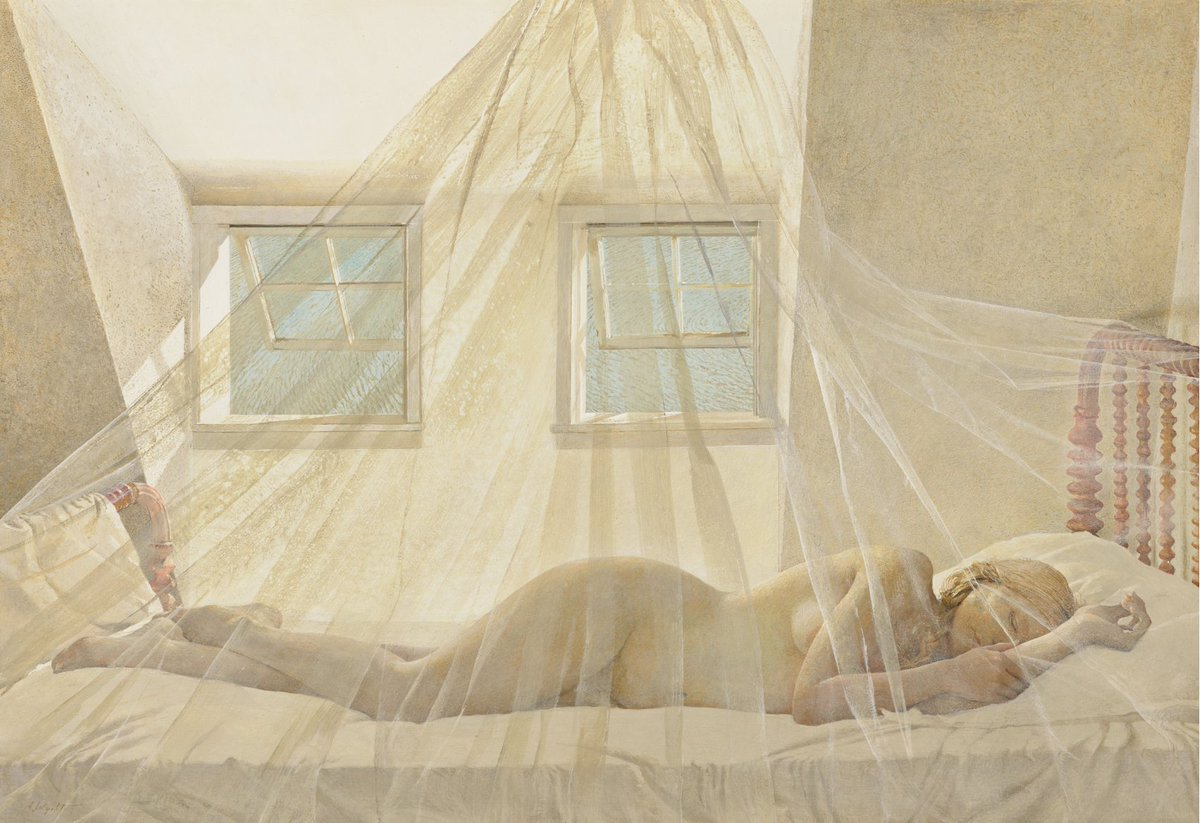
Andrew Wyeth, Day Dream, 1980
Hello and welcome to One Bright Book, the podcast where three friends real ALL the books, taking it one book at a time. My name is Dorian Stuber and I’m here as always with Rebecca Hussey and Frances Evangelista, this time to discuss Alice Munro’s short story collection Open Secrets, first published in 1994.
Before we go any further, I want to give an important content warning. Today’s episode will contain discussions of sexual violence, abuse, and rape, specially the sexual abuse of children.
Our podcast has always been focused closely on whatever book we’ve chosen to talk about. We bring biography and critical reception and historical context into the conversation, but usually only as secondary approaches to our encounter with the text.
Today, I suspect, will be different.
The outlines of Munro’s career are well-known. Born in 1931 in southwestern Ontario, near Lake Huron, the setting of so many of her stories, Munro went to university on a scholarship but left after two years to move to British Columbia with her husband, James Munro. The couple started a bookstore which is still in business. The couple had three children, but the marriage was difficult and they divorced in 1972. Four years later, Munro married a man named Gerald Fremlin, a retired geographer who had served in the Air Force in WWII and with whom she lived on a farm in rural Ontario. Munro had started writing already in university; as a young mother on the west coast she focused on short stories, claiming it was the only form she had time for. That may be true, but it’s also the case that from the start she was preoccupied by the possibilities of the form. How much time can be contained in something “short”? How many points of view can it offer? How many different ways can it be constructed? Beginning with Dance of the Happy Shades in 1968, Munro published 14 short story collections. As the years passed and the books accumulated, so too did her literary fame. The stories were published in places like The Paris Review, The Atlantic, and Harper’s, but above all in The New Yorker, where more than 60 first appeared.
She won many prizes, both in Canada and internationally, capped off by the Nobel Prize for Literature in 2013. In her last years, she suffered from dementia, a fate prefigured by her mother’s experience with Parkinson’s and the subject of one of her most famous stories, “The Bear Came Over the Mountain.” At her death in 2024 she had settled into a position as a writer both lauded and loved: a grandmotherly figure whose stories were psychologically sharp and brilliantly structured.
That status was shattered a few months after her death when Munro’s youngest daughter, Andrea Skinner, revealed that Gerald Fremlin, her stepfather, had sexually abused her starting in 1976, the year he married Munro: Skinner was 9 years old at the time. The abuse continued for several years. Skinner told Munro about it in 1992: after briefly separating from Fremlin, Munro returned to him, effectively choosing her husband over her child. In 2005, Fremlin pleaded guilty to sexual assault and received a suspended sentence. The rest of the family, as well as others in Munro’s close personal and professional circle, including her Canadian publisher, knew what had happened to Skinner but kept quiet. Nobody knew, but a lot of people knew. It was an open secret.
I wanted to discuss Munro on the podcast because, as a Canadian and a reader, she has been in my life for a long time. The revelations of her failure as a parent adds so much complexity to what was, for me, already a complicated relationship. I first encountered her in junior high when we read her famous story “Boys and Girls,” from her debut collection. It’s about a girl whose father raises foxes for their pelts and whose ability to help with that work is curtailed by expectations of what a girl should be or do once she reaches puberty. I remember a note in our textbook, something about how the girl is like the foxes, how their pens symbolize the narrator’s own imprisonment. That interpretation, though in retrospect pretty obvious, made a big impression on me. It was one of the first times I thought of a story as something made, the first inkling I had of the truth that each text teaches its readers how to read it.
Later I would veer away from Munro. The more famous she got, the more she became a Canadian writer loved around the world, the more I looked at her askance. That’s just my own pigheaded personality, but I did find her, on the occasions when I read one of her stories, such a chilly writer, a bit heartless really. She seemed to me to epitomize the emotional detachment, even stuntedness of the white Anglo Protestant settler Canadian class. (Even though, in stories like “The Wilderness Station” in the collection we’ll be talking about, she is also a critic of that mindset, the more powerful for being of that world.) In her Nobel address she talks about growing up among Scots-Irish immigrants and their descendants, a world in which it was considered poor form to have an emotional life and even worse to admit to any accomplishments. The title of her collection Who Do You Think You Are summarized that world.
In more recent years I would often teach some of Munro’s stories and came increasingly to admire their richness and strangeness. They are made to be re-read, in my opinion. Then Andrea Skinner told her story. For me, there is no way to separate this part of Munro’s life from her work. After all, the stories are so often about bad things—moral wrong, pain, hurt, betrayal—lurking in plain sight. I chose Open Secrets as the collection for us to talk about because that phrase seems to be the motto of her whole work. And I was genuinely shocked when I read the last story in the book. It’s called “Vandals,” and it’s about a man who abuses two young children and his partner, the woman who failed to care for them. It’s probably useless to speculate on a writer’s motivations, but I really wonder what Munro was thinking when she wrote it. Was she processing? Gloating? Apologizing? Was she not thinking at all? It’s past time for me to finish this introduction, so I’ll only say that despite what we know now and without excusing her in any way, I find myself captivated by the stories. I don’t know what that says about me or how I feel about that. I do think it’s important that we talk about them and about her, even at the risk of causing further hurt to Andrea Skinner and the legions of other child victims. For if we don’t—if we stop reading Alice Munro or if we separate art from artist—then we are back in the world of half-told truths. We are back in that dangerous world of open secrets.
In May I puttered along, running my runs, doing my little jobs, seeing a movie or two. And drinking my coffees. I haven’t said this yet, it’s so hopelessly dad-coded, but in January I bought a Mokka pot and I’m not sure any object has ever given me such joy. Once I’ve fussily brewed my very small, very strong coffee I make it a rule to sit somewhere without music or phone or book and drink it mindfully. Ridiculous, right??? Anyway, I also read these books.
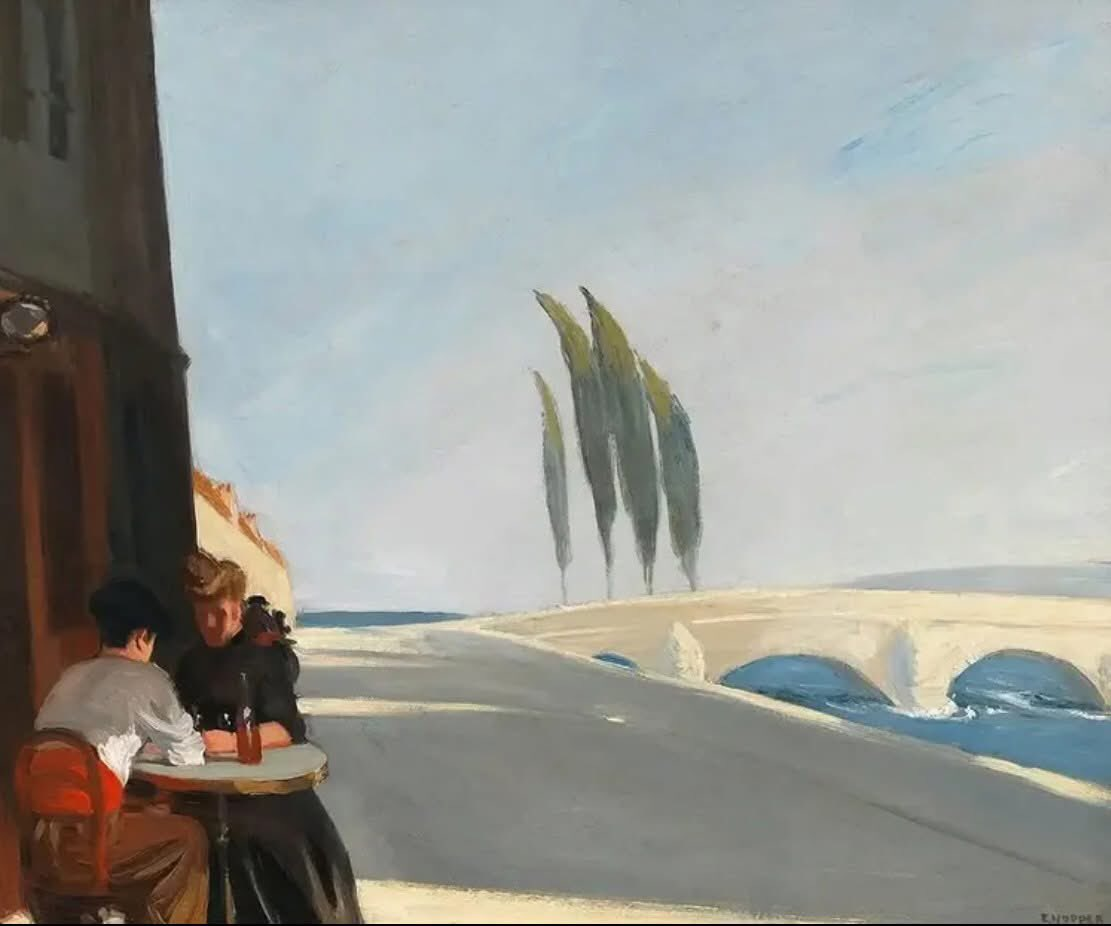
Edward Hopper, Le Bistro aka The Wine Shop, 1909
Artem Chapeye, The Weathering (2021) Trans. Daisy Gibbons (2026)
Written the year before Russia’s full-scale invasion, The Weathering references the occupation of the Donetsk, the gangsterism of the 1990s, and other events in recent Ukrainian history. But Chapeye’s engrossing novel mostly concerns an imagined future. A young couple escape their jobs in Kyiv for a well-earned holiday off-grid in the Carpathians. Weeks pass: first blissful, then ominous. Why haven’t they seen any locals? Why can’t they bring themselves to come off the mountain? And once they do, where the hell is everyone? In the seemingly abandoned capital, they are met by men with guns, guys from the neighborhood whose militia cosplaying soon turns deadly. As philosophical as it is action-packed, The Weathering asks what it means to live with violence: “How should you act when facing an armed man and still preserve your dignity? And the dignity of others? How?” Many of the novel’s pleasures stem from its being so Ukrainian, but those anguished questions pertain to us all.
James Baldwin, Giovanni’s Room (1956)
I read this with an eye to assigning it to my future 11th graders. Well, I abandoned that idea quickly. Its sentences—so gorgeous, so thorny—too hard. Its sexual politics too complex. Now that I’m almost finished Another Country (more on that in next month’s installment) and planning to get through as much of his work as I can this summer, I see that widespread self-loathing is a part of Baldwin’s work more generally. I don’t mean his own self-loathing; I don’t know enough to diagnose him that way. I mean something like cultural self-loathing, the ways minorities are hated such that they internalize that hatred.
Once I gave up hoping it would be suitable for my classroom, I sunk into the novel, amazed at how it could be so lovely and so ugly. (It’s about David, an American in 1950s Paris, who falls into a passionate affair with Giovanni, an Italian immigrant. Neither man is willing to admit he is gay in the way present day readers might demand. David and Giovanni are able to be together only in the confines of Giovanni’s shabby rented room, less bower than foxhole. There’s one glorious scene in which the pair, going home together for the first time, walk along the Seine through early-morning Paris. (Giovanni works nights at a bar owned by a miserable queen.) Otherwise, though, the book is a litany of hatred, shame, and disgust. Its depictions of homosexuality are so regressive. And yet the book is so good. What gives? Thank god Garth Greenwell pointed me to his essay about just this problem. As you would expect from Greenwell, it’s as gorgeously written as Baldwin’s novel. And smart and helpful about what one can take from works of art that don’t align with our sensibilities the way we might want them to.
Sally Carson, The Prisoner (1936)
Sequel to Crooked Cross, which Persephone has reissued in the UK to general acclaim, and which Vintage will publish in the US this fall. Carson spent some time in Bavaria in the early 30s—exactly how much and whether it was more than a holiday I don’t know for sure—and used that experience to write a trilogy about an ordinary German family in the first months of Nazi rule. The Prisoner is the second book in the series; I went into it with excitement and trepidation, the latter after Rohan’s post got me wondering if whether I liked Crooked Cross as something more than a historical document. You can read my comment if you’re so inclined.
In comparison to Crooked Cross, The Prisoner is heavy weather. The first book ended dramatically; the second picks up just weeks after those events. It would be wrong to say nothing happens: the family moves to Munich, for example, to literally distance itself from the tragedy of the first book, but, perhaps unsurprisingly, the strategy doesn’t work. But The Prisoner is more about emotional fallout than anything else. It’s an interior book, and Carson, not always the nimblest writer, relentlessly keeps her characters turning over their emotions. Sometimes I felt the influence of Lawrence, but without the latter’s regular ability to astonish and make language strange.
The best part of the book comes near the end when a subplot from the previous novel returns in surprising, eventful, and heartbreaking form. Here Carson dramatizes both the appeal and the horror of Nazism in a manner that feels fresh because it’s written from the moment, without hindsight to govern the presentation of events. There’s no ominous foreshadowing—Dachau exists, but Sobibor is as yet unimagined—and few of the clichés that structure our depictions of Nazi rule. I won’t say Carson is more accurate historically than a writer today would be. In some ways, she is more blinded, less aware of the scope of things. She has the freedom and helplessness of anyone writing about their own moment.
It would be wrong to say that I loved this book. And yet I powered through it in a long weekend, and I’ll be first in line when the third volume is reissued. I suspect that one will be more like the first.
Mahmud El Sayed, The Republic of Memory (2026)
Engrossing multigenerational starship novel from British Egyptian writer El Sayed, clearly a talent to watch. Halfway through its 400-year-long journey to a new world, the city-ship Safina sails on amid rising discontent from its citizens, even as the ship’s “ancestors”—scientists and military leaders from Earth frozen until they can guide the settlement of the new world—slumber on in one of the lower decks. A revolt thirty years into the voyage disabled the ship’s AI and replaced its autocratic government with a republic. Generations later, the promise of that revolution has stalled. Upward mobility is a thing of the past, the ship’s resources can barely satisfy the increased population, and the attempt to replace ethnic and religious differences with language has been foiled by a self-interested translator caste.
After a dangerous power outage, a long-awaited revolution (modelled in part on the Arab Spring) promises to change everything. But while the ship limped along on minimal power, the decision was made to awaken the ancestors. And they want to quell the uprising. This book has it all: terrific world-building, well-developed ensemble cast, and even an invented language. The only problem is that we’ll have to wait a year to find out what happens in the last part of this promised duology.
Tim Sullivan, The Dentist (2020)
A bad book I couldn’t stop reading.
The protagonist, DS Cross, is autistic: his neuroatypicality makes him both an excellent detective and a trying colleague. He spends a lot of time deciphering the equivocations, half-lies, and body language that comprise so much of daily life for neurotypical folks. The book doesn’t make fun of or fetishize Cross, but it also acknowledges that his condition can exasperate those who know him and bewilder those who don’t. It seems, in other words, even handed. I had assumed that Sullivan must be autistic himself, but turns out he’s not. And that changed my feelings about the book. I wouldn’t call it exploitative, but I also don’t understand why Sullivan felt emboldened to write from this perspective. Surely there are autistic writers who could tell a story like this themselves.
Before writing the Cross novels—apparently a big hit in the UK—Sullivan wrote and directed films and television. (Surely a series is in development.) The prose is accordingly serviceable and pacey. At least it’s not overwritten. The mystery was solid enough, and I wouldn’t be surprised if the plots get better further into the series. (Each installment is named after the profession of the victim.) The supporting characters are good, especially Cross’s father, a retired engineer who helped build the Concord. His willingness to take his son in stride is heartwarming, and I imagine Sullivan might do a lot with the character.
I dunno, I got the second book from the library. We’ll see if I read it.
Edith Wharton, Twilight Sleep (1927)
Read this with the group organized by Sean Breathes Books. (Six books into what has turned into a project to discuss all of her books, we now have a name, The Edith Wharthogs, and a spiffy logo, designed by James.) Regular readers will recall that I was underwhelmed by her memoir, A Backward Glance, our previous text, but our latest was a tremendous surprise. I hadn’t heard of it until Smith & Taylor included it in their first batch of reissues. In the afterword, Brendon Taylor rightly calls this a more compelling Gatsby. (I’m talking through my hat a bit, not having read Fitzgerald in over 30 years, but boy I sure will be familiar with his most famous novel soon: it’s a set text at my new job.) Wharton’s novel is uncannily attuned to our present moment: it features addiction, self-actualization, influencer culture, and the joyless pursuit of rest.
Pauline Manford, the character at the heart of this investigation of life in the previous century’s Twenties, has a lot on her plate, so much that her day is scheduled in fifteen-minute increments. There’s her philanthropic and charitable work. (No matter if the causes are at odds: she chairs both a league in support of birth control and a society for the furtherance of motherhood.) There’s her support of—some would say victimization at the hands of—a rotating series of gurus, healers, and self-proclaimed wise men who help her lose weight, worry less, and find inner fulfillment. And there’s her family: two husbands (current: accomplished lawyer; former: neurasthenic invalid) and two children (Jim, son by first marriage, doggedly pursuing a career in the law that he doesn’t much care for; Nona, daughter by the second, something of a younger, female Newland Archer, amused at the society in which she has been raised but more dedicated to its mores than she might like, having renounced her chance at happiness in allegiance to ideals she doesn’t believe in). The husbands and siblings all get along, especially now that their collective concern is focused on Jim’s wife, Lita, as ruthlessly devoted to pleasure and rejecting societal expectations as she is beautiful. Lita matter-of-factly wants to leave Jim (and poor Baby, never named and largely ignored) to be in the movies. And the movies want her. A producer (Jewish, grasping, natch), terrifically named Klawhammer, has his eye on her. How could Pauline and the family ever survive such shame? Can they keep Lita and Jim together? More troublingly, what designs does Arthur Manford have on his step-daughter-in-law? How many nervous breakdowns will feature before the end of the book?
A busy novel, as you can see. (A mere 230 pages in the Smith & Taylor edition.) And a tremendously entertaining and thoughtful one. The title comes from a much-touted new anesthetic given to mothers in the delivery room. But it refers more generally to the fugue state of modern life: those regular hits of excitement that are as necessary to our ability to make it through the day as they are enervating. For me, it’s as though Wharton had described, already a century ago, that helpless fugue state I fall into when I just can’t stop scrolling.
In case you can’t tell, I loved this book. It’s filled with Wharton’s terrific prose too. Let me end by sharing the opening:
Miss Bruss, the perfect secretary, received Nona Manford at the door of her mother’s boudoir (“the office,” Mrs. Manford’s children called it) with a gesture of the kindliest denial.
There’s a sentence doing some work! So much information yet so little action. Three characters are introduced (four, really, though we don’t yet know how many children Mrs. Manford has). Two qualifying clauses impede our syntactical progress even as they grant us a lot of information. Will Miss Bruss’s (the brusqueness hinted at in her name is forced on her by her employer) epithet prove to be accurate or ironic? Where does the description of the qualifying phrase come from? Is “the perfect secretary” an instance of omniscience or of free indirect discourse? Speaking of irony, do we hear grudging admiration along with the gentle dismissal of their mother’s work in that description of boudoir as office? What would “a gesture of kindliest denial” look like? However we picture it, we’ll encounter it a lot in the novel: resolve softened by good manners, but no less steely for that.
This is a beginning that has me raring to keep reading. Hope it entices you as well.
Garry Disher, Mischance Creek (2025)
I’ve written before about how much I enjoy Disher’sHirsch books, about a cop in rural far western Australia. By his own admission, Hirsch is as much social worker as policeman, and most of the time he’s checking in on people, some of whom go days, even weeks without seeing anyone outside their household.
This installment begins with him doing the rounds of his annual firearms audit. Everyone in this district has a gun or two. Are they locked up? Are the bullets stored separately? These questions are important, but they’re also a pretext for a more pressing one: How are you doing? (Are you going to use that gun on someone else or yourself?) The answers are mostly a resounding no. A brutal drought has pushed farmers and ranchers to the brink. Starving sheep are being shot en masse. Banks are repossessing farms. People are angrier with each other than ever, eager to vent grievances. These bad feelings are the kind of thing that led to the resounding failure of the Australian Indigenous Voices referendum, referenced more than once. Nominally, Mischance Creek centers on a cold case (the deaths of a husband and wife, found separately in the bush, where they liked to go rockhounding; seven years later their adult daughter thinks she has found new evidence.) But that’s not especially important. Disher succeeds, as usual, in keeping many balls in the air: some of these plot elements are satisfyingly minor. I appreciate his refusal to tie everything to the main case the way most crime writers do.
But really the book is about the question of how good liberals can respond to contemporary authoritarianism. The previous book in the series, concerning the aftermath of Covid restrictions, was the weakest so far because it seemed completely at a loss in this regard. Mischance Creek does better, not because it has a solution, but because it’s at least aware of the cluelessness of the institutions it’s centered on (not least the institution of the procedural). In the past, Disher skated past the chasm between cops and social workers (sometimes their roles overlap, but fundamentally their philosophies are totally different). Now he’s got a larger problem: a lot of characters—and people in the world this book represents—don’t believe in either of the roles, or the philosophies for that matter.
Mischance Creek taught me about the sovereign citizen movement, which I didn’t realize was a thing. (We’d have a lot more of that kind of thing in the US if “sovereign citizens” hadn’t coopted the government and other institutions of the state.) “Sovereign citizens” blithely deny that they are members of a larger politic (they aren’t Australians, say); they answer to no one but themselves. Hard to see how this doesn’t eventually lead to fascism. Hirsch and his colleagues in the district, along with the teachers and doctors who make up the social system of this vast, remote area, are, in Disher’s view, tragic figures, emblematic of a lost world—but, and this is what Disher doesn’t seem to get, that very world did nothing to stop its loss.
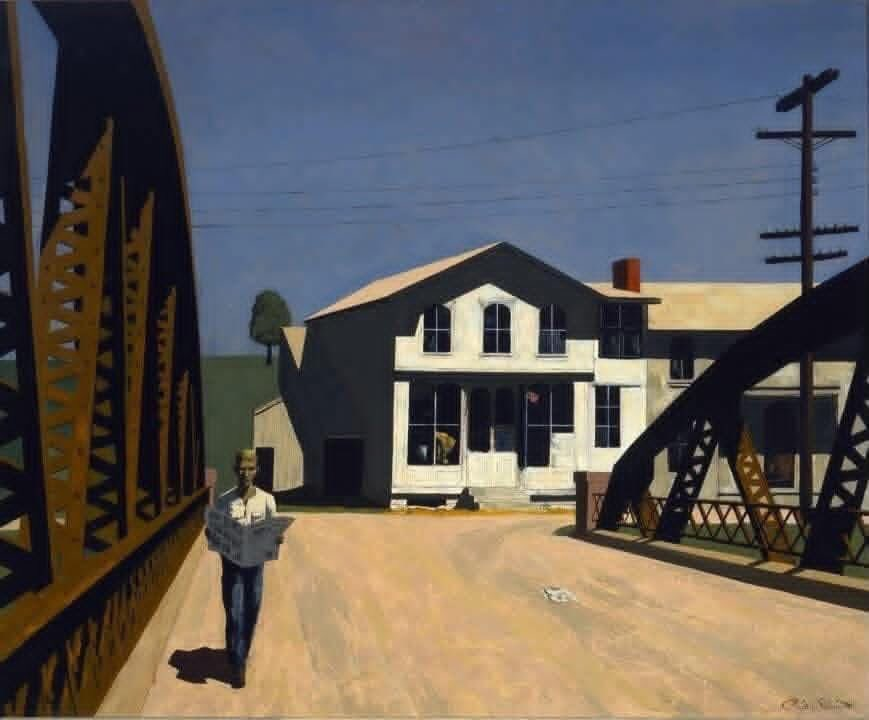
Philip Clarkson Elliott, Shelocta, PA, 1943
Good month! Aside from the Sullivan, I have no regrets. What about you? How was your reading month?
“You really are a character,” Annie Marantz said. Annie was a wiry woman, barely five feet tall; at thirty, she was only four years older than Rhoda, but she was sinewy all over; she looked as though someone had chewed on her like an orange.
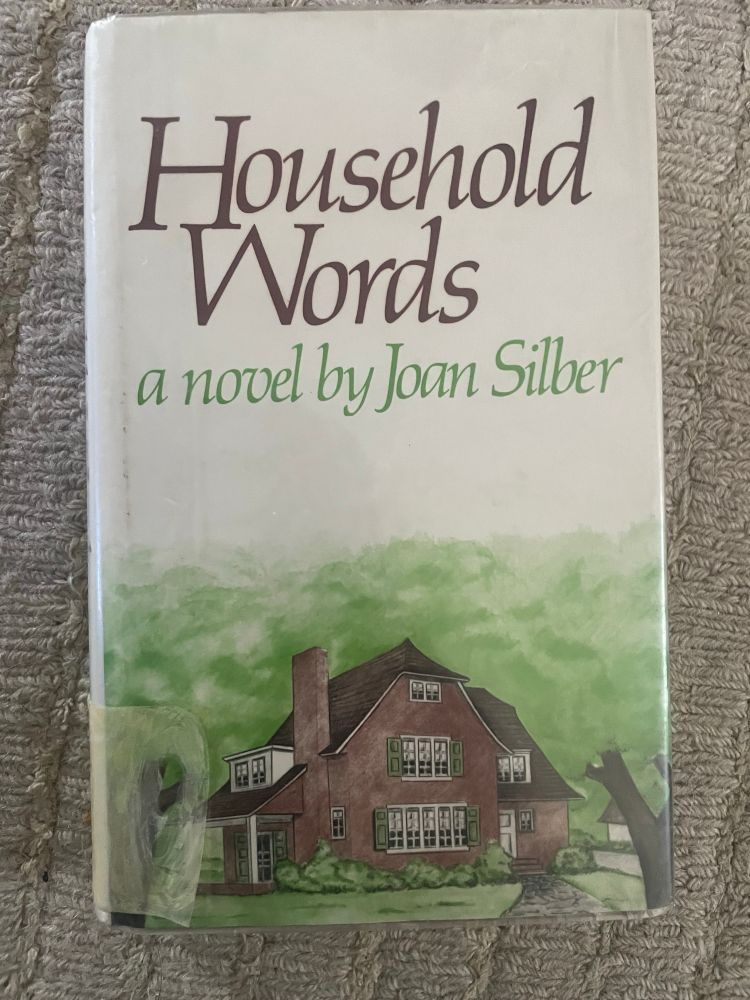
This passage from the beginning of Joan Silber’s debut novel, Household Words (1980), struck me as the kind of thing you don’t see much anymore. Feels like novels rooted in descriptions of the world, and told in third-person past tense (glorious past tense, how I miss it) have become rare, even old-fashioned. Of course, Silber might have had that sense herself: after all, she titled her first novel, as the jacket copy of the first edition puts it, after the magazine published by Charles Dickens.
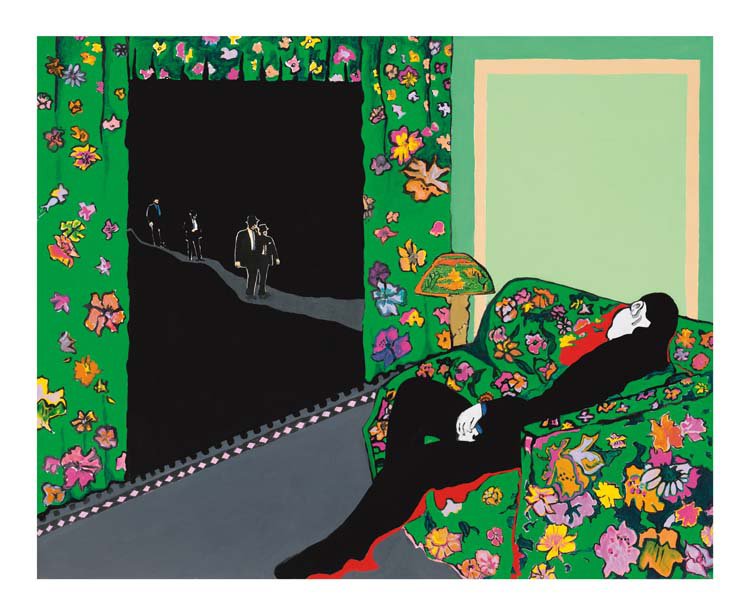
Rosalyn Drexler, Night Visitors (1988)
Silber, as I am starting to learn, having fallen into a deep dive of her works, is an unshowy and excellent writer. Look at what she does in these two sentences. She knows how to use a semi-colon, for one thing. The three clauses of the second sentence move briskly from description to judgment: “Annie was a wiry woman, barely five feet tall; at thirty, she was only four years older than Rhoda, but she was sinewy all over; she looked as though someone had chewed on her like an orange.” To be wiry is not necessarily to be small, but Silber implies that this is the case by mentioning Annie’s height, a seemingly unnecessary qualifier of the first independent clause. “Wiry” sometimes connotes toughness, but at this point in the sentence, we don’t yet have any indication that the adjective is meant to elucidate personality rather than merely describe physical appearance.
The second clause refines our thinking, though. From size we move to age (indirectly learning Rhoda’s). I kind of love the little storm of numbers in this sentence. Annie is thirty: not old by our lights today but older then than now. And older than Rhoda. But what matters to Silber is how the years show themselves on the body. Annie is “sinewy all over”: tough, indigestible. “Sinewy” made me return to “wiry,” forced me to think about the difference between these near synonyms. In this case, it seems worse to be sinewy than wiry. We’re not talking about Annie’s muscles. This isn’t a description of her fortitude. We’re talking about someone whose vitality has been squeezed out. Annie is pulp. She seems to have taken a licking from life already. This is all made clear in the third clause, the simile that compares the woman to a chewed-on orange. Juicy oranges don’t need much chewing. They go down easy. But when they dry out and their pith thickens, they’re harder to enjoy. I picture Annie with a bad tan: probably a fanciful association sparked by the colour orange.
Annie is a recurrent character, but not an especially important one. Even here she serves mostly to help us see Rhoda more clearly. Let’s not forget what Annie says before she’s described: “You really are a character.” It’s not just Annie who thinks so. The novel thinks about Rhoda this way. While Annie seems to speak half-admiringly, half-condescendingly, something like “Oh, Rhoda, you are just not like any of the women in our circle, and frankly that makes me a little uneasy,” the text offers the claim as a simple statement of fact. Rhoda really is a character—the character. We follow her through twenty eventful years, focusing on her experiences and responses, even as we never get fully inside her head. And yet the novel is being more than matter of fact here. Not just describing, but prescribing. It’s saying that Rhoda is worthy of being a character, of being the main character. Coming at the end of several decades of flourishing Jewish American literature, much of it written by men and famously invested in that point of view, Silber gives us something new. After Herzog and Augie March and Zuckerman and Alexander Portnoy Silber offers Rhoda Taber, a housewife living through the first stages of postwar American Jewish assimilation and suburban living.
Rhoda, who speaks Yiddish with her father and English with her social set and thoroughly Americanized daughters, is fascinatingly contradictory. She leaves her job as a schoolteacher when she has children, but her time as a teacher of French shapes her whole life, symbolizing her difference. [Careful, spoiler incoming!] After her husband’s untimely death, she returns to work, even though she doesn’t need the money. Nor does she remarry, even though friends fall over themselves to set her up, and even though she meets a man she enters a longish relationship with. She won’t sleep with him, though, because he’s not desirable to her. Not physically, but emotionally. She thinks of him as uncouth, even violent when she witnesses him doing business.
But this doesn’t mean Rhoda rejects conventions. She’s not like her friend Harriet, an unmarried no-fucks-to-give woman who encourages Rhoda to take art classes with her, even though she has no illusions about her abilities. (“Let’s face it,” Harriet says flatly, about her efforts to sculpt a dog, “it looks like a turd.”) Harriet and Rhoda vacation in the Catskills. Is Harriet gay? We never get the chance to find out. Despite her homophobia (she worries about her older daughter’s friendships in unpleasant ways) Rhoda feels queer to me. Don’t get me wrong, she’s conformist. But only superficially. In the things that matter, she’s out of step with everyone around her. Rhoda has an ugly side, for sure. She responds with disgust to the rumor that her neighbor has been having it off with a delivery boy: not because of the age discrepancy (though we don’t know how old he is) or the class difference, but because she cannot countenance the woman’s sexual desire. She struggles with her daughters, never abusing them outright, but picking fights or welcoming the fights they pick, despairing at the older one’s inability or unwillingness to follow Rhoda’s own life path and contemptuous of the younger’s need to make others like her. At the same time, she admires their independence, their unwillingness to be forced, by men in particular, into situations they don’t want to be in. The book I thought of most as I read Household Words was Vivian Gornick’s Fierce Attachments, another important Jewish book od the1980s. Silber’s novel feels like the fictional version of Gornick’s memoir of postwar American Jewish female rebellion, but in this case written from the mother’s side.
In the end, it’s not family life or economic success or cultural assimilation that Rhoda struggles most with but her own body: she spends the last years of the 1950s, and thus the last sections of the book, increasingly ill and at the mercy of the medical establishment. We leave her as she is leaving everything she knows. It’s a stark ending—and fitting. Rhoda Taber is not a nice woman. Nor a shrewish or disagreeable one. An interesting one. A real character.