James Morrison’s Year in Reading, 2025

Regular readers will know that for the last several years I’ve solicited Year in Reading reflections from friends and trusted readers. As we’re well into February, I’ve scaled the project back considerably this time, but quality takes quantity every time… Today’s installment, his fifth, is by James Morrison, reader extraordinaire. James lives and works in Adelaide, on unceded Kaurna territory.
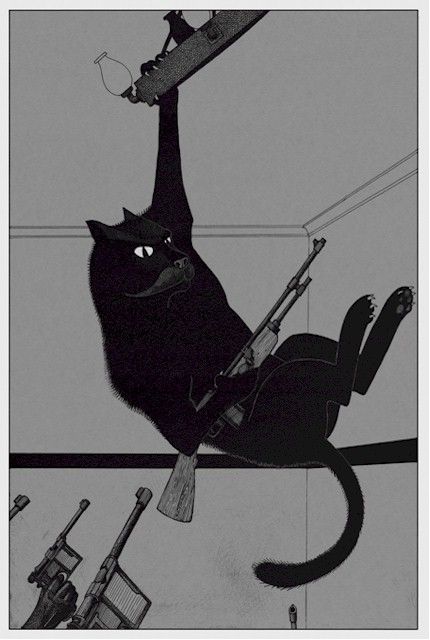
Charlie Stone, Behemoth from ‘The Master & Margarita’ (1999)

Working out which books to write about for these discussions is always fraught—there are easily another twenty great books I could have raved about, but neither you nor I are made of infinite time. I’ve tried to narrow things down to a few broad categories, but even then a few books would not be restrained by such, so they’re tacked on at the end.

In a couple of other people’s year-end reading round-ups on Bluesky, they talked not about what they’d read, but why they’d read it—what had prompted them to buy or pick up the books they ended up reading. It was strangely interesting, at least to a big horrible nerd like me, so I’m including that here for my own choices. Feel free to pass over it with glazed eyes. [Ed. – No way! I think people love that stuff. I know I do.]

RAMUZ

My most compelling new-to-me writer discovery of the year was Swiss novelist Charles Ferdinand Ramuz (1878–1947). The three of his books that I read all have the same basic premise—Something Horrible Happening in the High Alps—but go off in very different directions. Great Fear on the Mountain (translated by Bill Johnston) was what got me hooked first: a historical novel where a group of men set off to take the village’s flock up through a mountain pass to find feed, and then everything goes to hell. It has all the rhythms of an 1980s horror movie, but is beautifully written and was first published in 1926. Derborence [When the Devils Came Down] (translated by Laura Spinney) features an avalanche and its spooky survivor, while Into the Sun (translated by Olivia Baes and Emma Ramadan) is an impressionistic, atmospheric early climate change novel. As the Earth slowly falls into the sun, the snows melt, the mountain lakes boil, and society collapses into violence and despair.

Why: Nathaniel Rich’s splendid overview of Ramuz’s work in the NYRB.

BIG FAT EPICS

For some reason 2025 became a year in which I started, and sometimes finished, a number of big fat epics. [Ed. — Always big and fat, the epics.] Look at me, aren’t I tough?

Miklós Bánffy, The Transylvanian Trilogy/The Writing on the Wall (translated by Katalin Banffy-Jelen and Patrick Thursfield): I had actually read this massive Hungarian modern classic before, some quarter-century ago, but remembered very little other than it was hugely enjoyable. If anything it was even better this time around, now that I am older and theoretically wiser. Aristocratic Hungarians in Transylvania scheme and gamble and party and fuck, fighting for their rights as a minority in the Habsburg Empire while simultaneously being unable (for the most part) to see how they are simultaneously repressing and neglecting the Transylvanians whose land they rule. And all the politicking and manoeuvring takes place as the Great War draws closer, ready to sweep their whole world away. It’s like a vastly more incident-packed counterpoint, set at the other end of the Empire, to one of my other favourite books, Musil’s The Man Without Qualities. [Ed. – James and I as always on the same wavelength…]

Why: Over recent years I’ve been going back to a number of books I remember as brilliant, to see if they actually are. For the most part, fortunately, they have been.

Solvej Balle, On the Calculation of Volume (translated by Barbara J. Haveland, Sophia Hersi Smith and Jennifer Russell): Happy to say I fell for the hype and read the three books of this septology so far available in English. It’s a closely observed and beautifully written variation on the “Groundhog Day” premise of being stuck reliving the same day endlessly, but adding more and more wrinkles and complexities as the looping time passes. Fortunately this seems to be doing extremely well in English, so there’s every chance that, assuming Balle finishes the series, we’ll get to see all of it in translation. If she doesn’t, you’ll see me frothing blood in a tempest of rage.

Why: Though not original, the premise is fascinating, and I fell for the hype.

Dorothy Richardson, Pilgrimage: I read the first four books of this 13-volume modernist masterpiece, and while each book individually was excellent, the cumulative effect of this subtle, witty and awkward fictionalised autobiography is even more impressive. I hope to read the rest of this massive thing in 2026.

Why: I’ve wanted to read this for decades, but Virago’s treatment of their Modern Classics heritage being what it is, it’s never been possible to get all four volumes of the collected edition. Fortunately, Brad Bigelow of Neglected Books published his own edition, and I finally got my disgusting paws on it.

Len Deighton, the Bernard Sampson series: In terms of pure, sardonic, exciting and bleak reading pleasure, it’s hard to go past this trilogy of trilogies about the much put-upon spy Sampson, his extremely complicated wife, and his infuriating superiors. I still have the last three books to go, so that’s another treat in store for 2026, assuming any of us live. [Ed. – James. A little less truth-telling, please. As to these books, I’ve only read the first three so far, but they are terrific.]

Why: I’d only ever read a couple of Deightons in the past, and they were excellent, so why it took me until now to realise just how good he is and just how pleasingly extensive his back catalogue is must stand as a testament to my general dimwittedness.

C. J. Cherryh, The Morgaine Saga: Extremely futuristic science-fiction masquerading as swords-and-magic fantasy, this trilogy of novels (there’s a fourth, published much later, which I have yet to get) is so richly imagined, and so cleverly paced and written, that it makes you despair about how crap most of its genre competition remains. Outcast prince, magical witch queen, brutal politics, war, extremely difficult moral choices, aliens; the whole shebang.

Why: Every now and then I get the urge to read some fantasy to recapture the kick it used to carry when I was a teenager. Sadly I am no longer a teenager with a teenager’s standards, and almost every time I give up on whatever overpraised nonsense I’ve been tricked into reading. This was one of the rare exceptions.

Homer, The Odyssey (translated by Emily Wilson): Only a single (big fat) book this time, but one I haven’t read in 20 years, and the newish Wilson translation was calling to me. And it’s great! I’d forgotten just how oddly structured the book is (the famously interminable journey home of the hero taking up a relatively small part of the story), and how mental some of the developments. And apparently, she’s going to retranslate it and publish a whole new version? [Ed. – Seriously???] Seems like sheer madness to me, but I guess that’s what working in academia does to someone. [Ed. — Laughs bitterly]

KILL ALL NAZIS

Why: All the worst people seemed to be enraged by Wilson’s translation, and her gender, so I could not resist. [Ed. – Yeah, those guys suck.]
Charlotte Mano, From the Mythologies series (2021)

All Nazis must fuck off and die. Here are some books about what they were like, and how they were dealt with, first time round…

Marie Chaix, The Laurels of Lake Constance (translated by Harry Mathews): Astonishingly good in English, and the French original is apparently even better? How can this be? An autobiographical novel from the point of view of the daughter of an enthusiastic French Nazi and traitor before and during WW2. Unsensationalised, elliptical, and marvellous.

Why: It looked both pretty and interesting in the bookshop, and that’s all I needed to see.

Uwe Wittstock, Marseille 1940: The Flight of Literature (translated by Daniel Bowles): A day-by-day, sometimes hour-by-hour, account of the lives, desperation, plots and betrayals of the huge array of German and Austrian writers and artists who fled the Nazis to France, only to have France fall soon afterwards. Lucid and utterly fascinating.

Why: Wittstock’s previous book, February 1933: The Winter of Literature, did the same thing for the month the Nazis came to power, so there was no way I was not going to read this follow-up when it appeared.

Grete Weil, Last Trolley from Beethovenstraat (translated by John Barrett): An obsession with a lost friend taken by the Gestapo in Amsterdam spills into the post-war life of a man now living in Germany. He marries the man’s sister in a confused, guilt-fuelled attempt to try to bring him back to life. Complications ensue, as you might expect. Rich and compact, and highly recommended. [Ed. – More on Weil here…]

Why: If I see a book in the Verba Mundi series, I buy it. It’s an eclectic but extremely well-selected library of translated literature from all over the world.

Lorenza Mazzetti, The Sky is Falling (translated by Livia Franchini): Another fictionalised memoir, about a pair of sisters sent to stay with Jewish relatives in Tuscany—relatives then slaughtered by the Germans in 1944 (Mazzetti always believed they were killed for the Nazi-perceived crime of being related to Albert Einstein). The beautifully observed child’s viewpoint contrasts with the horrors of the confused world she inhabits, and the book’s brevity gives it the intense kick of all the best novellas. [Ed. – Fascinating! Ordering now…]

Why: This was the first book released by a new feminist publisher, Another Gaze Editions, whose output focuses on the work of women filmmakers like Mazzetti. It’s a hell of a promising way to kick things off.

Niaz Uddin, Airplane Home in Hillsboro, Oregon'(2017?)

HOPELESS FUTURES

Jane Rawson, Human/Nature: Rawson is a fine and unusual Australian novelist whose first book was a manual on climate change survival. In this non-fiction return she takes a simultaneously despairing and bleakly funny look at the horrible state of things, what it all means, and where it’s all leading. None of it’s good, but at least it’s wonderfully written. We still have good prose, if nothing else.

Why: I love the author and would buy anything she wrote.

Jack Womack, Random Acts of Senseless Violence: Somehow I missed this in 1993 when it first came out, more fool me. In the convincing form of a young girl’s diary over several months in (then) near-future New York as everything falls apart under gun-wielding late-stage capitalism, it’s amazing how much this gets right, yet it’s also a strangely analogue vision of the future. It also posits a series of successful US presidential assassinations, and sadly the real world seems unable to provide any of those.

Why: It’s now an established science-fiction classic and I needed to read it.

Bradley Somer, Extinction: A ranger tries to protect the last living bear in North America from poachers. Gripping and downbeat and all-too believable. [Ed. – Why are these all so depressing???? *re-reads section heading* Oh.]

Why: Impulse remainder purchase that panned out extremely well.
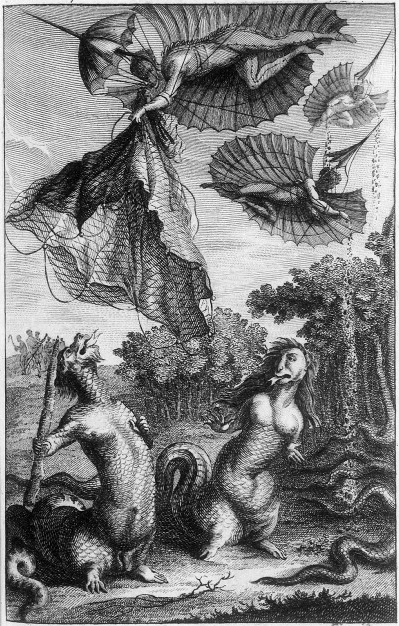
Nicolas-Edmé Restif de la Bretonne, ‘The Serpent-People’ from ‘Découverte Australe par un Homme Volant, ou Le Dédale Français’ (1781)

PARENTS AND OUR MYRIAD FAILURES

Krystelle Bamford, Idle Grounds: Astonishingly good debut in the collective first person, told by a group of unmonitored children at a family party as they get bored, muck around, encounter something wrong in the garden, and go searching for one of their number who vanishes. Spooky, funny, original stuff. I couldn’t recommend this book more highly, to be honest.

Why: The cover of the UK edition, with a picture of roped-together monochrome children lost in a field of fluorescent green, was enough to convince me. [Ed. – I wish more people talked about how book covers influence their buying.]

Violette Leduc, Asphyxia (translated by Derek Coltman): A well-named book if ever there was one, this dense little novella details the suffocated life of a young girl with an unloving mother in rural pre-War France. But, flinty matriarchs aside, it’s also a richly drawn world of natural wonders and discoveries.

Why: I only discovered Leduc in the last few years, and she was such an extraordinary writer. This was published as part of a very small collection of French classics by female writers by Gallic Books.

Adrian Nathan West, My Father’s Diet:  A wonderful book that takes some well-known signifiers of modern American fiction (hollowed-out suburbs, emptying malls, masculinity in crisis, etc etc) and does new and strange things with them. A depressed son learns his father has, out of nowhere, become an obsessive bodybuilder, determined to win the Body You Choose competition. The characters are never caricatures, and it’s extremely funny despite the quiet desperation of it all.

Why: One of the many excellent books put out by And Other Stories, and this is from before they went for their current ugly typographic covers. [Ed. – James! I love those covers!]

GRAPHIC NOVELS

Lee Lai, Stone Fruit and Cannon: Australian (but now based in Canada) artist Lai’s two graphic novels are both minor masterpieces, and genuinely full novels in complexity and subtlety. Sad and perceptive dissections of failing relationships, parenthood, faltering elders, exploitative friendship, and being part of the Chinese diaspora.

Why: This review in Meanjin, an 85-year-old Australian literary magazine currently being put to death by the witless timid bureaucrats who cower in terror of angry letters from the Zionist lobby and who are ruining pretty much all the arts in Australia at the moment.

Emily Carroll, A Guest in the House: A seriously Gothic tale of madness, downtrodden femininity and hapless stepmotherhood, drawn with Carroll’s usual visual flair and attention to detail.

Why: I’ve raved about Carroll before, and love all her work. Somehow, to my annoyance, I didn’t even know this book, published in 2023, existed until I saw a copy a couple of months ago. My spies failed me. [Ed. – Maybe they were busy failing to assassinate US Presidents.]

VOYAGER 2 – Europa (1979)

UNCATEGORIS[ED/ABLE]

Mariette Navarro, Ultramarine (translated by Eve Hill-Agnus): Wonderfully unsettling novel about a woman captaining a cargo ship with a male crew. In the middle of the Atlantic they stop for everyone to have an illicit swim—and when everyone climbs back on board there’s one extra person.

Why: The Deep Vellum edition (already a recommendation) has a great cover with a vast cube of ocean on it, and I am only weak flesh.

Li Qingzhao, The Magpie at Night (translated by Wendy Chen): A beautiful collection of the complete surviving poetry by one of China’s greats, from the Twelfth Century. I mean, get a load of her perfect description of a lazy, drunken evening, from ‘As in a Dream’:

Remember that day

spent on the stream,

watching the sunset glaze

the pavilion.

So drunk, we could not find

our way back.

It was late when we had enough.

We turned the boat around

and were caught, accidentally, in the deep

tangle of lotus roots.

Rowing through, rowing through –

startling, from the banks,

herons.

Why: Having only read a couple of her poems in anthologies, it was a pleasure to find her complete works available in English.

J.M. Coetzee & Mariana Dimópulos, Speaking in Tongues: If you’re at all interested in translated literature, and in the process of translation itself, this is a very rewarding book. Two novelists and literary translators discuss what translation is, what it does, how it works, and a peculiar but intriguing project they undertook (and which was foiled by commercially minded publishers) to make the translated Spanish text of one of Coetzee’s novellas the “original” version of the book.

Why: If the topic is this interesting and the two writers involved this good, what sort of a fool would I be to not read it, I ask you?

[Ed. — A fool indeed. As is anyone who reads this and doesn’t head to their local bookstore or library ASAP on the hunt for some of these recs. Thanks, James!]
What I Read, May 2022

May finally brought the end of the semester. Man, that was a tough one. As always, I thought it would be a relatively easy month, now that I no longer needed to have something to say in the classroom every day. As always, I forgot how much energy it takes to get through the final administrative tasks. Squeezed in a little reading on the side, though.

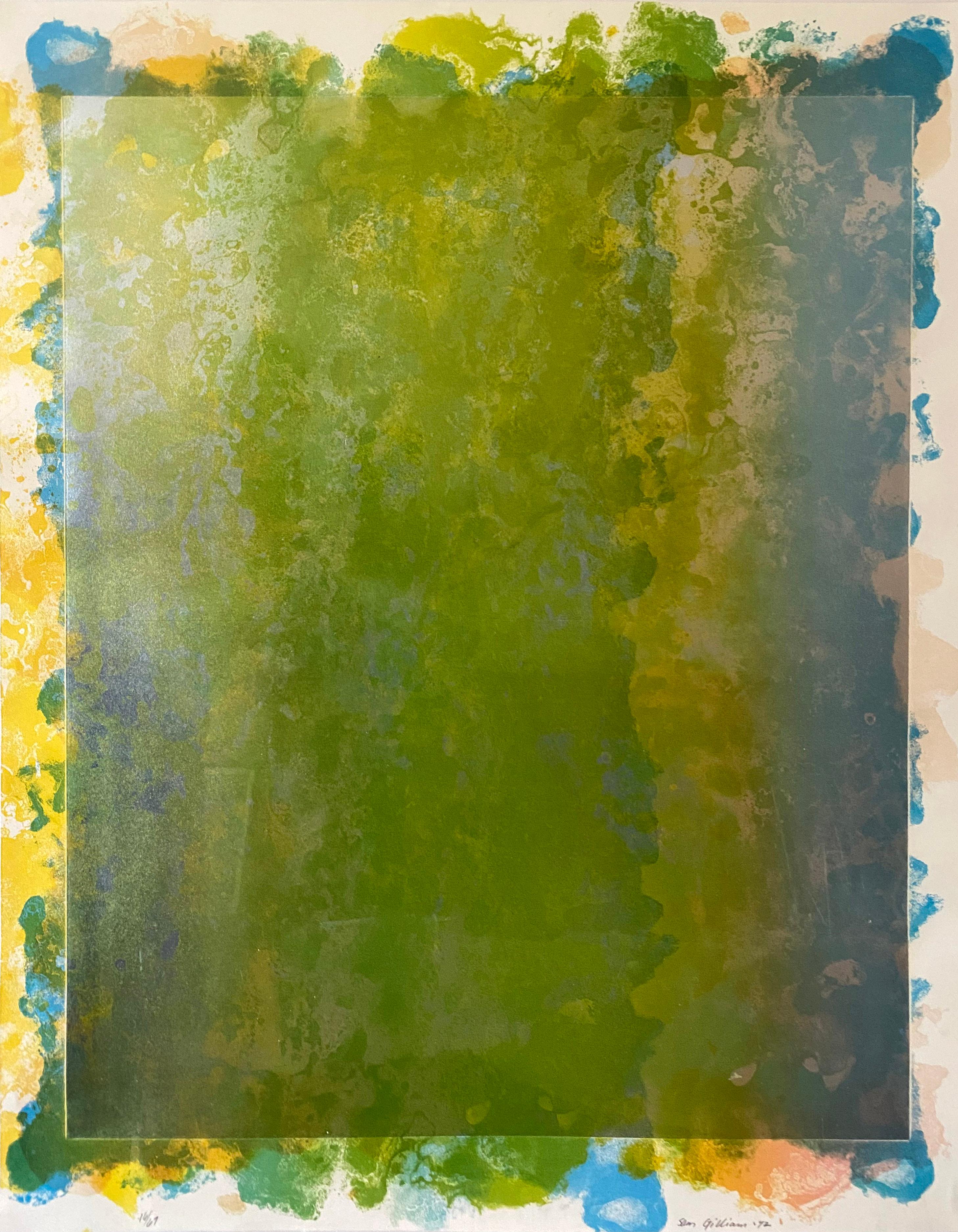
Sam Gilliam, Wave, 1972

Abdulrazak Gurnah, The Last Gift (2011)

Sometimes I’m struck with amazement when I consider exactly how I have found myself here. But then I suppose many people can say that about their lives. It may be that events constantly take us by surprise, or perhaps traces of what is to become of us are present in our past, and we only need to look behind us to see what we have become, and there is really no need for amazement.

An elderly man, arrived from Uganda in England in 1960 to study journalism, reflects on his experiences to thee young man who has moved in next door. The young man, Jamal, is himself the son of an immigrant, who came from Zanzibar at around the same time, literally coming ashore as a sailor before meeting his soon-to-be-English wife. But Jamal’s father, Abbas, has told his family almost nothing about his life before England. Now Abbas, weakened by a series of strokes, begins to reveal the past that has gnawed at him in silence for years.

It is typical of the novel’s structure that the son is more easily able to have a conversation about immigration with someone other than his father. This is a book of echoes and doublings, of stories told circumspectly and in layers. That indirection fits with the dislocation that comes from making a new life in a strange place, even when that rupture has been freely chosen.

And while Harun, the retired journalist, implies that choice may be overrated—perhaps in looking back we will see intimations of what was to come, though if that is true it is strange to use the word “traces,” implying as it does that those causes are themselves effects—elsewhere the book reminds us of something irrepressible in life, something that resists order and control, which appears in moments both great and small. Take Abbas’s reflections on his schooldays in Zanzibar:

The teachers worked so hard to keep them [he and his fellow students] quiet and obedient, like it was a point of honour for them to do so. Sometimes it was as if they failed as teachers if the children so much as twisted or scratched themselves. How their teachers loved that deep submissive silence. But they could not make that silence endure. They could not quite keep the children in check. Something always happened, some small insurrection, irrepressible laughter, an undaunted boy whose cheek could not be suppressed.

The two Gurnahs I’ve read—and I’ll read them all, eventually—seem to me to be about the difference between insurrections that oppress and insurrections that free: the latter are minor, like irrepressible laughter, but vital, subversive.

Abdulrazak Gurnah, Gravel Heart (2017)

Had plenty to say about this on Episode 4 of One Bright Book. Suffice it say, I liked it a lot, and it’s only grown on me since. Nobel committee did something right for a change.

Martha Wells, All Systems Red (The Murderbot Diaries) (2017)

Murderbot is a cyborg SecUnit (Security Unit) that has hacked itself to override its governance programming. What Murderbot wants to do is watch tv (soap operas, basically); what it finds itself having to do, thanks to an inconveniently developing conscience and self-awareness, is help humans who are too stupid and frail not to get into trouble. The second-best thing about All Systems Red is Wells’s insistence that the need comes from the desire, awareness from soaps: these books are smart about the power of representation to shape consciousness. The first-best thing is Murderbot’s wry narration. A few examples:

I needed to a) keep them here or b) kill them. Let’s go with option b.

Oh right, I often have complex emotional reactions which I can’t easily interpret.

I thought I had gotten good at controlling my expression, but apparently only when I wasn’t feeling actual emotions.

(The lesson was: if you’re going to fuck with something bigger and meaner than you, use a quick targeted attack and then run away really fast. This is the way I always try to operate, too.) [Wells is good with the parentheses.]

Having returned the book to the library, I have taken these examples—not all from the first book—from the Twitter account @MurderBotBot. Give it a follow!

I already named two best things, but I could also have talked about the books’ depiction of being autistic—which is basically how Murderbot experiences the world. Its anxiety around humans and their complex demands for emotional interaction is movingly depicted. Reading Murderbot’s sighs of relief when it can lower its face shield, or engage with people via mirrors or screens gave me new insight into this mode of experiencing the world.

There’s a plot, too, about a corporation intent on regaining control over its intellectual property (aka Murderbot) and some terrible things Murderbot may have done in its past thanks to that corporation. The events are compelling enough, especially since Wells has gone on to draw out their consequences in subsequent books, but the narrative voice is the real appeal. (And props to sff writers & publishers for embracing the novella form.)

Thanks to Elle and Liz and the other Murderbot fans who came out of the woodwork to champion the series.

Jeremy Denk, Every Good Boy Does Fine: A Love Story, in Music Lessons (2022)

Jeremy Denk is a classical pianist known for his wide-ranging repertoire, including 20th and 21st century music. He is also something of a genius: MacArthur and Avery Fisher prize winner, a soloist who travels the world playing recitals and concerts, the holder of a doctorate and a liberal arts degree, a one-time science and mathematics prodigy, and, on the basis of his thoughtful references to Roland Barthes and Herman Melville, a hell of a reader too. Every Good Boy Does Fine—a mnemonic for the lines on the treble clef—is a midlife memoir that takes us from his childhood in New Jersey through his upbringing in New Mexico and on to Oberlin, Indiana, Julliard, and other exalted spots of American musical life.

I loved Denk’s attention to his many teachers—his piano teachers, of course, but also those who alternately inspired, coached, and browbeat him in his official and unofficial life as a student. Denk, now himself a teacher and not, he admits, at least at first a good one, shows how important it is to be taught by lots of different people. Everyone offers him something different, and most of those approaches contradict each other, leading to much insecurity but also eventually a sense of self. Although open-hearted, though, the book is more realistic and idealistic about teaching. Denk shows how the things a teacher offers come at the cost of something they can’t. (Paul de Man: every moment of insight carries with it a corresponding area of blindness.) The same is true of learning. Denk doesn’t shy from showing his own failures as a student: lessons he refused to take until it was (almost) too late, obstinacies that got in his own way, needs (for praise mostly) that set him back.

Of the many remarkable teachers Denk has had the privilege to work with, the greatest was his mentor at Indiana, the Hungarian pianist György Sebók. A prodigy who like Denk excelled in many fields, Sebók entered the conservatory in pre-war Budapest already as a teenager and studied with an extraordinary array of musicians. As a Jew Sebók could not fight in the army but still had to serve: he did road work and was interned in what was basically a concentration camp, from which he escaped in 1944 after which he spent the rest of the war under the protection of the Swiss embassy. (Lucky for him, given what happened to half a million Hungarian Jews in the summer and fall of that year.) After the war he remained in Budapest, keeping up a concert career in Eastern Europe, but he left in 1957 after the Revolution, first for Paris and then, in 1962, for Indiana, where his countrymen, friend, and musical partner, Janos Starker, had invited him. Sebók is like a character from a Lubitsch or Wilder film and his world-weary, urbane Mitteleuropean outlook both captivated and bewildered the American provincial Denk.

Denk’s portrait of Sebók—and indeed all his teachers—is generous and forgiving. Unfortunately, his self-portrayal is murkier. He admits he can be difficult, especially when it comes to hurting other people, mostly thanks to his years-long inability to admit his sexuality, and he presents plenty of evidence for how his family, his father in particular, damaged him. But he offers no comprehensive reckoning re: those harms. Maybe because the book isn’t really about that, it’s about music. But it also sort of is. Denk bypasses the question of whether you need to be self-obsessed to be a success in a field as rarified, competitive, and unforgiving as music. But he shows us enough of himself, sometimes unwittingly, to let us see that Denk can be a bit of a dink.

Denk reads the audiobook himself, and while I would not call his narration distinctive (he seems to take perverse pleasure in barely stopping between chapters), he is a dab hand at an accent. I learned about Every Good Boy from this thoughtful review, and I’m glad I did. I learned a lot—I haven’t even mentioned the theoretical interludes on rhythm, harmony, and melody. These are fascinating—at once metaphorical, lyrical, and conceptual.

Martha Wells, Artificial Condition (The Murderbot Diaries) (2018)

Murderbot is also good on audio.

Martha Wells, Rogue Protocol (The Murderbot Diaries) (2018)

There can never be a love interest, can there? Like, Murderbot is never gonna get with Dr. Mensah. Right? Right?

Judith McCormack, The Singing Forest (2021)

More on this elsewhere.

Nina Stibbe, One Day I Shall Astonish the World (2022)

The title is the motto of the university that Susan, the narrator of Stibbe’s latest novel, ends up working at—not as a professor, which is what she imagined before she dropped out of college after getting pregnant, but as the indispensable and indefatigably cheerful PA to the Vice Chancellor. Instead it’s her best friend, Norma, whom Susan once coached in English literature, back when they first met and Norma was a science major who had tired of geology, who gets the job she once dreamed of.

That’s the way things go between them. Susan is a puzzle—easy to dismiss but shrewder than we are likely to credit. Life—by which I mean the most important people in her life—always seems to be pulling one over on her, and it’s true Susan does not always see what is in front of her. But we dismiss her at our peril. Here’s Susan thinking about how someone she’s known for a long time but not intimately wouldn’t make a good friend:

You’d never know what she was really thinking which is what I dislike about nice people: having to wonder if they secretly despise you or feel bitterly jealous, or just think you common but want someone to go to the cinema with or need help with their computer or for you to befriend their child.

Reading this, we realize, ah, perhaps Susan does know how terrible Norma is to her. (I’m not sure Norma quite works, as a character, her motivations are too opaque.) Maybe Susan’s a “devil you know” kind of person. But she’s nice—she’s the sort of person people are always asking favours of, expecting help from, unthinkingly demanding time of. Does she dislike herself? Or is she perhaps not as nice as she seems? Is her agreeableness—which, no question, keeps a torrent of despair at bay—fake?

Maybe because of this unexpected complexity, One Day I Shall Astonish the World made me think of Gwendoline Riley’s My Phantoms. Weird comparison, I know: an arty darling and a seemingly determinedly middlebrow book club novel. But both demand that we read against their female narrators, revising our initial opinions. Unlike Riley, Stibbe makes us like her narrator more. Riley’s is the more vivid novel, the one I will remember better in a year. But I appreciated how Stibbe reminded of my tendency to disparage someone whose default mode is not irony or skepticism. These days, especially, Stibbe’s generosity feels like a gift.

One Day I Shall Astonish the World is occasionally laugh-out loud funny, but only occasionally, a surprise given Stibbe was once responsible for getting me kicked out of the bedroom for laughing too much. I’m doing my best not to be like the people in Woody Allen’s Stardust Memories who want the director character to leave off his arthouse aspirations and get back to his early, funny stuff (God those movies meant a lot to me, and now I can’t imagine watching a single one); I’m trying not to wish Stibbe would just keep doing what she’s always done. And yet, and yet—this book could have been funnier.

Jacqueline Winspear, A Sunlit Weapon (2022)

Prissy, self-satisfied.

Ken Krimstein, When I Grow Up: The Lost Autobiographies of Six Yiddish Teenagers (2021) Trans. by Ellen Cassedy

In 2017, 180,000 pages worth of documents were found by a construction crew in a decommissioned cathedral in Vilnius, Lithuania. The pages, written in Yiddish, had been through a lot: collected by YIVO, the institute for the study of Yiddish language and culture; plundered by the Nazis; rescued by Jewish forced labourers who hid them in the ghetto; disinterred after the arrival of the Red Army; stored in the newly created Vilna Jewish Museum; and eventually walled up in the cathedral by a non-Jewish Lithuanian librarian who refused Stalin’s order to pulp them. (This was in 1949, after Stalin had ratcheted up his antisemitic attacks once the State of Israel turned to the West rather than to the USSR.)

Ken Krimstein tells this story in the opening pages of his fascinating graphic nonfiction narrative. The book comprises six excerpts from diaries written by young people across Yiddish speaking Eastern Europe. The diaries were among the more than 700 entered into a competition sponsored by YIVO in the 1930s (first prize: 150 Zlotys; about US $1000 today). The contest aimed to generate an ethnographic study of Yiddish youth: their hopes, dreams, fears, resentments. To ensure truthfulness, entries were anonymous. (An elaborate system ensured that winners could receive their prizes.) In a fittingly Jewish irony, the grand prize was to be awarded on September 1, 1939.

Krimstein’s book brings these stories to light for the first time since they were submitted almost a century ago. The writers and their lives are so vivid. A girl cannot help but love her father, despite his terrible behaviour (he drank away the family’s money, stole from the children’s mother, abandoned his family, and remarried a non-Jew after converting to Russian Orthodoxy). A boy enters yeshiva because he thinks it will impress a girl (she has deemed him not serious enough), only for her to get together with his best friend. Another girl sees her dreams of attending the gymnasium foiled by a faux pas; she quits school, becomes a nanny and only finds freedom on her weekly evening off, when she goes skating. We meet Bundists and Zionists and religious Jews. In addition to failed marriages and broken families we hear of foiled attempts to get a visa to America. So much failure—yet so much life.

The stories are briskly told, offered in Krimstein’s spindly lettering and illustrated by almost abstract, spidery black and white drawings enlivened with splashes of an odd orange colour. They are not beautiful, but the book is lovely nonetheless.

What isn’t lovely—downright sketchy, actually—is Krimstein’s lack of clarity re: the texts. Has he abridged or edited them? He never says. (He does annotate references to the period and to Jewish ritual, often wittily.) Worse, he only names the translator in the acknowledgements page at the end. Shame on Bloomsbury for presenting the book as though Ellen Cassedy doesn’t exist.

Ruth Minsky Sender, The Cage (1986)

Memoir for teens about the author’s Holocaust experiences. Born Rifkele Riva Minska in Lodz in 1926, Sender was the fourth of seven children. When Germany invaded Poland, her older siblings fled to Russia (happily, she would be reunited with them after the war), while Sender, her younger siblings, and her mother were interned in the Lodz ghetto. (Her father had died when she was just a child.) After her mother was deported in September 1942, Sender looked after her younger brothers, especially the gentle Laibele, who had contracted tuberculosis. Despite heroic efforts, notably adopting her brothers so they wouldn’t be dispersed into orphanages or other families, Sender can neither save Laibele, who dies of his illness (the fate of so many in the ghetto), nor ward off deportation for herself. Together with most of the rest the Jews of Lodz, Sender and her remaining brothers are sent to Auschwitz, where they are separated; she never sees them again. After a week in camp, Sender is selected for labour at Mittelsteine, an all-female subcamp of Gross-Rosen in the mountains of southern Silesia. There she continues the habit she had begun in the ghetto of recording her experience, writing poems that she whispers to the other inmates. She becomes a sort of camp mascot, a status that rescues her: the camp doctor persuades the commandant to send the teenager, who has contracted blood poisoning from an infected cut, to the civilian hospital in a nearby town because her poetry is good for camp morale and therefore productivity. Sender recovers from the near-fatal sepsis and survives a subsequent deportation further west, where she is liberated in March 1945. She returns to Lodz, but the family home has been taken over (the new occupants threaten her), and, like so many Polish survivors, she departs Poland for a DP camp in the American sector.

I appreciated the extraordinary aspects of Sender’s story, but The Cage (her name for the various locations of her suffering) didn’t do much for me. Sender hits the “where there’s life there’s hope” note hard and strains for uplift. Arriving at her final place of internment, a camp named Grafenort, she is informed by a fellow inmate that the name means “a place for nobles.” Stroking Sender’s face, the woman adds: “We are nobles, broken in body but still alive.” Maybe this happened, but the book’s insistence on values that the experience itself was daily destroying rings false.

I read The Cage because one of my better recently graduated students had been assigned it in high school. I’m not convinced it’s the best choice for those readers—I’d go with Tec’s Dry Tears, which contextualizes its events more clearly and doesn’t insist on human uplift—but it’s better than a lot of things my students have read. (Looking at you, Striped Pajama Boy.)

Len Deighton, Mexico Set (1984)

Thinking Deighton might be the spy writer for me. Not so twisty or circumlocutionary that I can’t tell what’s happening, but stylish, clever, exciting, as good on character as on plot. Mexico Set is the second Bernie Sampson book—I listened to the first one a while ago, and now I’m thinking it’s time to go on a binge. (There’s 9 all told, I think.) Here Sampson—under suspicion after the bombshell revelation at the end of Berlin Game—is tasked with turning a Soviet agent. As the title implies, the book is partly set in Mexico, and those scenes were much less exoticizing than I’d feared. But Deighton, like Sampson, likes Berlin best, and the book kicked into gear when it returned to the coal-fired atmosphere of the muttering, shabby heart of the 20th century. (That’s me being flowery, the books aren’t like that.) The cliché that the middle part of a trilogy is the weakest doesn’t hold here. Porch reading at its finest.

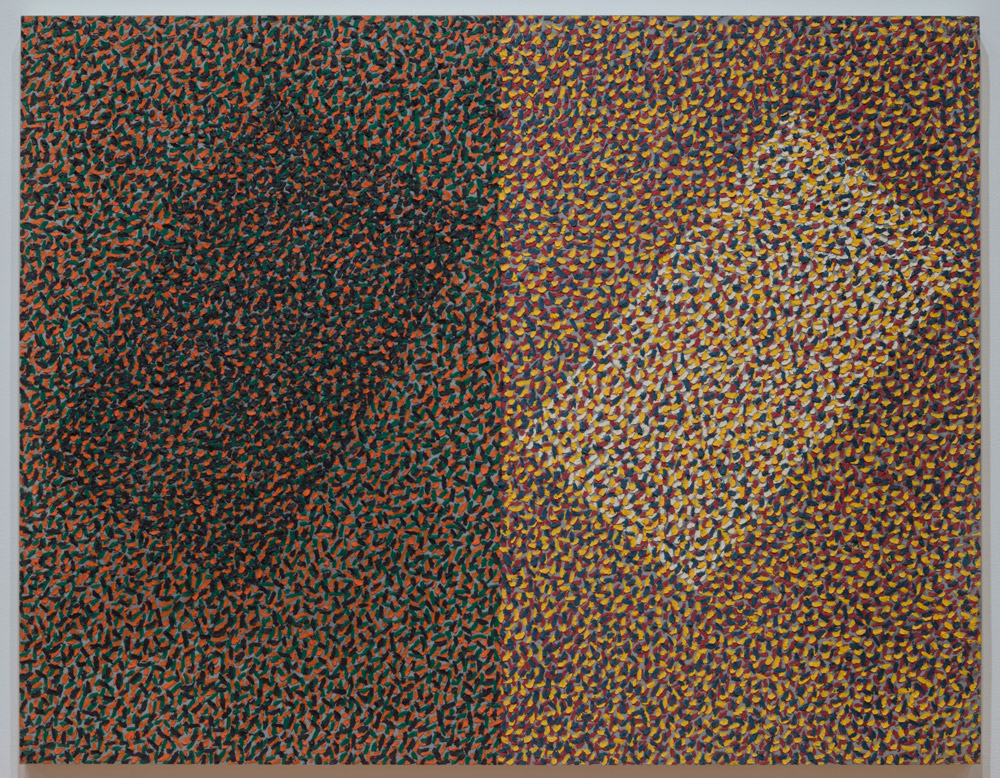
McArthur Binion, History of Application: Talking to You, 1977

 As you can see, light reading ruled the day—much that was enjoyable, nothing too heavy. (The Gurnahs the richest of the lot, by far.) But that’s what I needed in bringing the semester to a close, and I set myself up for a pretty stellar June. More on that soon. In the meantime, thoughts on any of these?

2019 Year in Reading

Looking back, I see that January to June was much better to me than July to December. I read all but one of the nine books that meant the most to me in 2019 in the first half of the year. It could be they’ve had the longest to marinate. It could be I was more tired, distracted, and at times distraught in the second half of the year (I was). It could just be the luck of the Book Gods.

Whatever the reason, I’ve a better record of my reading than ever before because 2019 was the year I started to write monthly reflection pieces. To my own surprise, I was able to keep this strategy up, which means I wrote at least a sentence or two about everything I read this year. Links to the monthly roundups are at the end of this post. If you want to know more about any of the texts I reference below you can always search by author. If you want to see previous year-end reviews, you can find them here: 2014, 2015, 2016, 2017 & 2018.

For those who like that kind of thing, a few stats: I read 136 books in 2019. 74 (54%) were by women; 62 (46%) were by men. 104 (76%) were originally written in English; 32 (24%) were translated. 16 were audiobooks. 7 were re-reads. (I include books I re-read for teaching in my list only if I re-read the whole thing, not if I dip into, skim, or speed re-read it.)

And now some thoughts on the books that made a particular impression on me, for good or ill.

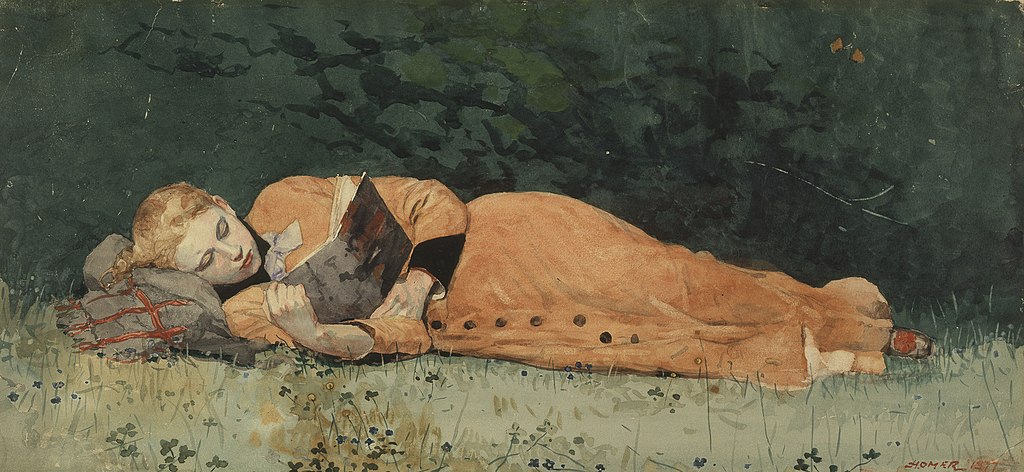
1024px-1877-winslow-homer-the-new-novel

Best of the Bunch

Katherena Vermette, The Break. My Book of the Year. I think about The Break all the time, especially now that I am learning about the violence and injustice perpetrated on Indigenous Canadians, not just in the distant past, but in my own lifetime. I’ve spent my whole life thinking that Canada was a Good Place that has mostly been on the right side of history. It is in ways a good place. But the way its colonial violence (itself inexcusable) continues into the present, the way that violence was happening all around me in my childhood, the way that I was nevertheless able to remain blissfully ignorant—that really gets to me. (I know, I know, “Thanks a lot, privileged White Dude, for all your well-meaning soul-searching.”)

Anyway, I love how Vermette takes my favourite genre, crime fiction, opens it up and turning it inside out, enabling her to write about systemic racism and (sexual) violence while still using fictional conventions (such as strongly developed characters and a keen sense of place) that were developed to propagate ideas of individuality and willpower—ideas that largely shunted the people who experience structural violence to the margins.

I love too that Vermette is able to imagine an affirmative, even joyful ending to her story.

Sarah Moss, Ghost Wall. On first reading I actually wasn’t sure how well this worked, but fortunately I’d been given the chance to write about it for The Mookse & the Gripse, so I read it another couple of times. (It’s really more novella than novel.) And now like everyone else I recognize its brilliance. Timely—it addresses climate change, misogyny, fantasies of national purity—but not didactic. Plausibly harrowing without being a total downer. A book that will last.

Yiyun Li, Where Reasons End. So smart and so sad. Parents in particular might find this tough going. But I also found it joyous. Li isn’t showy, but her style is so compelling.

Virginie Despentes Vernon Subutex I/II. Didn’t think these would be my thing (being into neither pop music nor post 68 radicalism curdled into conservatism), but I fell for them in a big way. I’ll be ordering the third volume from the UK when it’s published there later this year. An indictment of neo-liberalism with the pleasures of a soap opera.

Miriam Toews, Women Talking. Another super-smart book that sneaks up on you. Dramatic events—the women of a Mennonite community in Bolivia find out that for years many of the men they live with have been drugging them at night and raping them—play second fiddle to the attempt to come to a collective response to trauma. The genius of the book lies in its narration: the largely illiterate women recruit the local schoolteacher, a man who grew up in the community but lived apart from it for years, to record their deliberations. Toews shows us, however, that every description is also an interpretation (recording isn’t just a neutral act), leading us to wonder how the self-understanding of an oppressed group (and the efforts of those not in that group to understand them) is affected by disparities in privilege.

Daphne Du Maurier, The House on the Strand. Fascinating and suspenseful story of time-traveler. Postulates that identity is a form of addiction. As in Rule Britannia, her final novel, written just a few years after House, Du Maurier here questions the continuity of Englishness.

María Gainza, Optic Nerve (Translated by Thomas Bunstead). Fragmentary essayistic auto-fiction-type thing of the sort I usually admire more than like. But Gainza’s book won me over, particularly her use of ekphrasis to connect representation and political violence.

 Philip Marsden, The Spirit-Wrestlers: A Russian Journey. The most joyful book I read last year concerns Marsden’s journey through the Caucasus in the early to middle 1990s, a place that fascinates him as a historical refuge for dissenters and schismatics of all sorts. Marsden is a good traveler, respectful of those he meets and their beliefs. But in the endless battle between idealism (which always curdles, murderously, into ideology) and humble materialism (the struggles and pleasures of surviving everyday life) he’s always on the side of the latter.

Sally Rooney, Conversations with Friends. Thoroughly enjoyable and really funny story of two young women in Dublin, best friends, and the older and much richer married couple they get involved with. Great dialogue. Doesn’t go where you think it will. Lots of darkness at its heart, mostly concerning the narrator’s fraught relationship to her own body.

Other Awards

Best backlist deep dive: I read six novels by Esther Freud, all great. I think I still love her first, Hideous Kinky, best, but the next six were all good, some of them excellent, especially Summer at Gaglow and The Wild. Whether she is writing about the late 19th or early 20th centuries or about the 1970s and 80s, Freud always creates characters who know that they don’t know as much as they need to. She reminds me of Anita Brookner, who is really only now getting her due. Will Freud have to die to achieve similar respect? More pressingly, will she write another novel? (It’s been a while.)

Best ending: Henrik Pantoppidan, Lucky Per (Translated by Naomi Lebowitz). The only big 19th century novel I read in 2019 was actually written in the early 20th century. Per is a frustrating, vacillating character (even more than Pantoppidan knew, I think), but what happens to him, the kind of person he becomes, in the book’s final chapters is really moving. Don’t give up on it, is what I’m saying.

Most indelible: Helen Dunmore, The Siege. Literary critics are always saying that books are haunting. But Dunmore’s depiction of the cold and hunger suffered by the people of Leningrad during WWII might actually qualify. Dunmore’s painstaking descriptions are almost physically painful to read, so vivid are they. Turns out, if you boil leather shoes for a really long time you’ll get “broth” with a little nutritional value. Dunmore was a really good writer and I’m glad I have plenty more of her books left to read.

Best portrayal of parenting a small child: Yuko Tsushima, Territory of Light. First published in the 1970s, this book is having its moment in the English-speaking world. And deservedly so. I appreciated Tsushima’s willingness to admit that parenting toddlers in particular can be terrible & enraging.

Most important classic in my field that I only just read: Christopher R. Browning, Ordinary Men: Reserve Police Battalion 101 and the Final Solution in Poland. Browning uses the example of one particular battalion of the Order Police (the Orpo—not members of the SS, but often sent to work alongside them during the eastern campaign) to draw far-reaching conclusions about what makes men do terrible things. Many have found those conclusions too far-reaching, but to me it seems that history offers corroborating examples all the time. Important evidence for challenging the still-prevalent idea that perpetrators must be monsters.

Book that most influenced my teaching: John Warner, Why They Can’t Write: Killing the Five-Paragraph Essay and Other Necessities. Music to my ears. I was already a convert to Warner’s way of thinking before reading his book, but he phrases his objections to conventional writing pedagogy so well that I gained lots of new ammunition for my beliefs. More importantly he offers practical ways to break free of old teaching habits. That’s what made this book so important to me. When we challenge students to write about things that matter to them we let them take the first step to realizing that for writing to be good at all, no matter the genre, the writer needs to have a stake in it. Students need to become thinkers. To do so they need to become writers. To be writers they need to be thinkers. We can make this recursive loop productive by teaching writing as a process. Even readers who are not teachers will gain a lot from this book.

Books I forgot about but when I saw them on my list again I thought, Oh yeah, that was really good: Samantha Harvey, The Western Wind; Vivek Shanbhag, Ghachar Ghochar.

Book Twitter loved it but I didn’t: Sayaka Murata, Convenience Store Woman; Lauren Wilkinson, American Spy, Bart van Es, The Cut Out Girl.

Most irritating: Luce D’Eramo, Deviation; John Williams, Stoner (Hello! He rapes her!).

Creepiest: Michelle McNamara, I’ll Be Gone in the Dark: One Woman’s Obsessive Search for the Golden State Killer (true crime is weird); Georges Simenon, Strangers in the House (finally a Simenon that totally worked for me).

Lousy: Cay Rademacher, The Murderer in Ruins; C. J. Tudor, The Chalk Man, Colin Dexter, Last Bus to Woodstock; Günter Ohnemus, The Russian Passenger.

Tawdry (felt gross for being as drawn into it as I was): Adrian McKinty, The Chain

Best comics: James Sturm, Off Season; Gengoroh Tagame, My Brother’s Husband (sweet, gentle).

Best crime: Jane Harper, The Lost Man (sometimes it pays to stick with an author: Harper’s third book a huge leap forward, an indelible story of the outback; would read again); Dervla McTiernan (best new procedurals I read this year); Laura Lippman, The Lady in the Lake (Lippman goes from strength to strength); Steph Cha, Your House Will Pay (can wrongs ever be made right?). Men, step up your crime game!

Reliable pleasure: Philip Kerr’s Bernie Guenther series is my jam: my preferred historical period (about which Kerr has taught me a lot), my preferred tone (ironic, a little despairing). I only have three Bernies left and am feeling sad about it.

Best surprise: Brantley Hargrove, The Man Who Caught the Storm: The Life of Legendary Tornado Chaser Tim Samaras. Would never have read this had it not been assigned me as part of my duties for the Arkansas Literary Festival. Learned a lot about tornadoes—of which I am especially mindful today, as Arkansas sits under a tornado watch—and was gripped by Hargrove’s description of how the best storm chaser of them all lost his life.

Had its moments: Chia-Chia Lin, The Unpassing (a couple of scenes have stayed with me, but it’s a bit self-consciously “literary novel” for me).

Disappointing: Anthony Horowitz, The Sentence is Death (fine, but without the magic of its predecessor); Marlen Haushofer, The Loft (The Wall is an all-time fave; this one was ok, but I struggled to finish: too dour, I missed the earlier novel’s joy); James Gregor, Going Dutch (could have been in the lousy category TBH; one great character, but a preposterous view of graduate school); Tayari Jones, An American Marriage (better as an essay).

Best spy novel: Len Deighton, Berlin Game (pleasant surprise—nice take on grimy 70s/80s Berlin, which it avoids romanticizing). Honorable mention: Helen MacInnes, Decision at Delphi (Starts off like Highsmith, turns into Lionel Davidson). Plan to read more of both in 2020.

Light reading discovery: Robert Harris (have listened to three so far, all winners).

Best book nobody’s ever read: Hans Eichner, Kahn & Engelmann.

Best memoirs: Fierce Attachments (not my favourite Gornick, but, hey, it’s Gornick, she’s a genius); Tara Westover, Educated (believe the hype); Laura Cumming, Five Days Gone: The Mystery of My Mother’s Disappearance as a Child (family history with a surprise ending); Helen Macdonald, H is for Hawk (believe the hype II). Men, step up your memoir game!

Best Holocaust books (memoirs): Primo Levi, The Reawakening (a.k.a. The Truce) (didn’t expect a picaresque from Levi, but there you go); Max Eisen, By Chance Alone (more people should take heed of the sentiment expressed in Eisen’s title); Solomon Perel, Europa, Europa (every Holocaust survival story is implausible, but this one might take the cake).

Best Holocaust books (history): David E. Fishman, The Book Smugglers: Partisans, Poets, and the Race to Save Jewish Treasures from the Nazis. The publisher must have wanted crossover success, but the attempts to narrate from the viewpoint of the historical figures flop; fortunately, they make up a small part of the book, which details the remarkable efforts of Jewish prisoners to rescue sacred and profane texts from the Vilnius ghetto. I started a post on this last summer and really should finish it.

Best Holocaust books (for children): Esther Hautzig, The Endless Steppe; Judith Kerr, When Hitler Stole Pink Rabbit (plus Rabbit’s two sequels, which aren’t really for children but are fantastic and really deserve to be in print; we lost a giant, not to mention an amazing human being, when Kerr died last May).

Books I wrote about elsewhere: Sarah Moss, Ghost Wall; Margarita Liberaki, Three Summers; Mihail Sebastian, Women.

Classic that revealed itself to me in a totally new way on re-reading: Joseph Roth, The Radetzky March. Thanks to Caroline and Lizzy for the impetus.

Monthly Review Posts

January, February, March, April, May,  June, July/August, September, October, November, December

Coming in 2020

More of the same, probably. These days, with blogging seemingly on the wane, just keeping the lights on feels like an accomplishment. I think the monthly posts worked well, and I plan to keep them. When it comes down to it, I prefer the deep dive (basically: posts that involve close reading), but that takes a lot of time and effort. At least this way I have some kind of record of my responses.

In the spring, I’ll be reading Henri Bosco’s Malicroix, suggested by its publisher as being perfect for fans of Jean Giono. That made me want to get back together the group who read Giono’s Hill a few years ago. Most everyone is enthusiastic, so look for that in May. I welcome all readers to join us, whether you blog or not. In general, I’m always keen to post pieces by other writers, so if you’re looking for somewhere to share your work hit me up.

One of the pleasures of last year was finding a set of kind and thoughtful German book folks on Twitter. Thanks to them, I may find the courage to start reading more in German in again. I’ll definitely keep reading Holocaust literature; and I’ll definitely keep writing about my teaching.

As to what else I’ll be reading, I suspect I will continue to want to be a person who reads only difficult, demanding, and serious books, but who in fact is someone who reads a few of those and lots of relatively undemanding (but still engaging and valuable) ones. I’ll aim to read more widely, in more genres and from more languages, and I probably won’t. I’ll chip away at the frighteningly large number of unread books filling my little house, and undo that good work with new purchases. (Though I did rein my book-buying in a lot last year.) I’m aiming to be less drawn to new or newly published books and concentrate on older titles. But in the end, as always, I’ll go wherever my fancy takes me.

And thanks to all of you who have read my posts and engaged me in dialogue about them I will continue to write about those readerly peregrinations. I wish you all a good year in these dangerous times. From the bottom of my heart, I thank you for helping to sustain me.

September 2019 in Review

Enervating month. Endless heat, relentless bullshit in the news cycle, demanding semester, various personal and professional irritants. And hardly any time to read, as you’ll see in this meagre list.

D9c_0rGWwAEhRkS

James Gregor, Going Dutch (2019) Recommended to me as literary fiction written in both third person and past tense—increasingly rare!—Gregor’s debut is a strange one. I often said to myself, Why am I still reading this, I don’t really like it. But then I’d read another chapter. Going Dutch is about Richard, a grad student studying Italian Renaissance literature at Columbia whose personal and academic lives are a mess. He’s completely blocked in his writing, and all the guys he meets disappoint him. Then he falls in with a brilliant fellow grad student, Anne, who coaxes him back into academic life (by basically writing his papers for him) just as Blake, a lawyer he’d had a disastrous first date with, comes back into his life. Pretty soon Richard is intimate with both, while trying to keep each secret from the other. I found this scenario crazily stressful. And although the sense of ennui and diffuse anxiety rang totally true, in general the novel’s depiction of grad school is ludicrous. Anne is a great character—I wanted a book about her. Not for me, then, but YMMV.

Colin Dexter, Last Bus to Woodstock (1975) I love Endeavour as much as the next PBS-loving, Viking Cruise-aspirer. Watching the latest series this summer, I thought I would give the books that gave us Morse a try. Big disappointment! The first in the series is tolerable enough as a procedural, I guess (nothing fancy: Morse is irascible without being endearing, which could in theory be interestingly against type but didn’t read that way to me), but its casual misogyny is icky and disheartening. Many series start slowly, so I suppose I could always give Dexter another chance. I see no real reason why I should—Last Bus likely my last Dexter—but let me know if you have strong feelings.

Len Deighton, Berlin Game (1983) This summer, a question I asked on Twitter about what books to take on vacation sparked an interesting discussion about Deighton and Le Carré. The verdict is in: I’m Team Deighton. Berlin Game was my first Deighton since adoring SS-GB as a teenager in the 80s. And it’s so good! I loved its evocation of late 70s, early 80s Berlin (and London for that matter). (Funny how the 80s now seem like the 60s—so old fashioned.) The spy story is suitably but not overly complicated. (That’s my rap on most spy fiction—I’m not smart enough to keep all the double agents and moles straight.) The final explanation didn’t completely surprise me, but Deighton’s chutzpah in going through with it did. I listened to an old audiobook, enjoyably narrated by someone whose name I’ve forgotten: a perfect commute book. Pity my library only has the sequels in print form. Let the Deighton revival begin!

Kit Pearson, The Lights Go on Again (1993) This summer I enjoyed the first two books in Kit Pearson’s trilogy about two English children sent to Canada during WWII. Since my public library didn’t have the third, I figured I’d either have to wait until my next trip home or find it via ILL. Imagine my delight, then, when my daughter and I, finally tackling the long overdue job of cleaning her room, found this on her shelf! (I think my mom bought it at a garage sale or something.) Anyway, I devoured it that same day, particularly appreciating Pearson’s decision to switch focus from Norah (the elder sibling) to Gavin (the younger). In the final volume, the war is in its last weeks, and a series of terrible events and big decisions make for anxious times for the Stoakes children and their guardians. I was genuinely surprised by the ending, which I imagine the publishers might have resisted. Suitably ambivalent. Can’t recommend this series enough, either for children (probably 10+) or adults.

Liana Millu, Smoke over Birkenau (1947) Trans. Lynne Sharon Schwartz (1991) I’ve written about this Holocaust memoir before. Fifth or sixth time I’ve read it; with this last reading I feel confident I won’t have to re-read it every semester any more. (Though I see I wrote that last semester too.) Millu’s been a fabulous addition to my class. Students love her, and I keep finding new things to say about her. Of interest to anyone who wants to know more about the female experience of the camp system—and anyone interested in a memoir that has the pacing, structure, and textual grain of a fine short story.

Ngaio Marsh, Death at the Bar (1940) I had this lying around, I’d enjoyed the first couple of books in the series when I read them three or four years ago, and the first pages grabbed me. But before long I was finding it a slog. Not enough Alleyn. Could it be that the only “Golden Age” crime writer I like is Josephine Tey?

Robert Harris, The Conclave (2016) The inimitable Jenny Davidson recommended Harris to me; I started with this one because my local library had a copy of the audiobook. I’ve rarely given the mechanics of how Pope’s come to power a second’s thought; it is one of my failings that I find books on Jewish topics engrossing, but books on Christian topics irritating or, at best, alienating. But I was caught up in this book from the start. It helps that it’s more about politics (gossip, ambition, the use, even manipulation of procedures to get something done) than about religion. But I also appreciated that Harris takes the faith of his characters seriously. He helped me imagined how someone could devote their lives to God in what to a Jew is such an unusual, even off-putting way (cloistering the self from the world, I just don’t get that). But where Harris really excels is in telling a suspenseful story. The Conclave follows Cardinal Lomelli, Dean of the College of Cardinals, (as such, responsible for running Papal elections), from the time he receives the news of the death of the Holy Father until white smoke finally ascends through the Vatican chimney. It should tell you everything you need to know about how much I enjoyed this book that for the week and a half it took me to listen to it, I eagerly awaited my daily commute. No idea whether Harris is always this good, but I’m definitely going to find out.

Andrea Camilleri, The Other End of the Line (2016) Trans. Stephen Sartarelli (2019) My first Montalbano since Camilleri’s death, which lent the whole thing extra poignancy: the number of this reliably pleasing series is now finite. This is an especially good installment. It includes the usual shenanigans (great food, amusing banter, clueless supervisors), but an important subplot about the nightly arrival of hundreds of desperate refugees on Sicilian shores lends the book unusual gravitas. Montalbano and his colleagues find themselves on the front lines, working almost every night, in addition to their day jobs, to “process” exhausted and frightened people.

Tony Judt, The Memory Chalet (2010) Amazing that we even have the essays collected in this volume, as Judt wrote them (via, I gather, a difficult process of dictation, having composed them in his mind during many sleepless hours) while his body was inexorably overtaken by ALS. I’ve had his huge history Postwar on my shelves for a long time; I’m daunted just looking up at the thing. These essays were a much more manageable introduction to his work. But I’m guessing a not particularly representative one. Judt is a good memoirist, but not a great one. For understandable reasons, the book is quite fragmented, and some essays are better than others. Being of Swiss background, I appreciated his defense of Switzerland (a small hotel in the Berner Oberland, site of a memorable childhood family vacation, gives the book its title). I especially liked his piece on public transportation, and how much he loved it as a child. Judt rightly marvels that his parents thought nothing of his setting out for day-long journeys across and around London as a child of only 10 or so. And I admired his midlife decision to learn Czech (a language he had no previous familiarity with), thereby launching himself on his way to becoming, in mid-career, an expert on Central and Eastern Europe. But I’m never that impressed by academics who don’t seem to like teaching (which, judging by its almost total absence here, would seem to include Judt). And some of his chapters criticizing the kids today for their snowflake tendencies are downright irritating. Might be hard pressed to remember this one in a year’s time.

7e15e7a6d142867be34547b84bf769ac

There you have it. Deighton and Harris win the light reading sweepstakes. Millu is a writer for the ages. October’s gotta be better, right?