Excited to once again present reading reviews from some of my favourite readers. Today’s installment, her fourth, is by Hope Coulter, (@hopester99), whom I’m lucky to call a colleague. A fiction writer and poet, Hope directs the Hendrix-Murphy Foundation at Hendrix College.
Eveelyn Hofer, Girl with Bicycle, Dublin, 1966
2023 may have been my Year of the Binge. A quarter of the books I read were by a single author, Michael Connelly, as I continued a 2022 obsession and chowed through the rest of his Harry Bosch and Lincoln Lawyer series. Now I’m left with the dregs of the feast and plenty of questions. Has Bosch retired for good? Is cancer going to polish him off? And how am I going to get by without a steady intake of seedy murder scenes, sandwich shop tips, and Bosch’s saturnine musings floating over the lights of L.A. from his cantilevered deck? Sigh. No regrets for this gluttonous spree; I only wish I could find another such homicide cop to devour.
Speaking of, Robert Galbraith’s majorly enjoyable detective novels continued strong for me last year. I read The Ink-Black Heart via audiobook, parceling it to myself morsel by morsel so as not to rip through it too fast. Much of the novel unfolds through tweets, which are hard to follow either by ear or on the page, so that one wasn’t my favorite, but the series is overall terrific. If Strike and Robin settle into domestic tranquility and draw the curtain of privacy over their agency door (please no spoilers; I’m still finishing up Book Seven), I’ll be in a bad way indeed. [Ed. – I loved the first few of these books, but I must confess I had to give up on them, the author’s politics having so soured me…]
I went on a lesser bender with John Boyne, starting with The Heart’s Invisible Furies, which I happened to read while traveling in Dublin and southwest Ireland—moving through some of the very settings of the novel in a pleasurable kind of Binx Bolling-esque rotation. That sent me to a handful of other Boyne books. All the Broken Places, The House of Special Purpose, and The Absolutist were highlights, though none of them surpassed the dark, funny, moving experience of Furies.
Completing previous years’ jags, I knew I had to get hold of Paulette Jiles’s latest, Chenneville, reviewed here by Dorian late last year. All Jiles’s books have won me over. This one wrapped up too fast for my taste, but like her other works, it flares a light onto regional history with convincing detail and taut storytelling. [Ed. – Agree, especially re: the ending.]
Eh, maybe here my conceit ends. Although I regularly teach Zadie Smith’s “The Embassy of Cambodia” and have read several of her novels, I can’t really call that a tear. Even so, I was intrigued to hear that Smith had turned to historical fiction and couldn’t wait to check out The Fraud, which is based on a 19th-century trial, little known now but sensational in its time. The book gripped me in unexpected ways. Every character was so believable, so not-a-type, so idiosyncratically shaped by their history and personality—supremely so in the case of the main character, Eliza Touchet. Mrs Touchet’s epiphanies in the course of the novel involve -isms of race, class, and sex that quietly echo our own era. At the same time her keen intelligence, her self-understanding, her fierceness and restraint, and her willingness to examine the tangles within her own heart are quintessentially Victorian.
As I read I found myself marking passages the way I do in my old copy of Middlemarch, quotes with a similar sage quality. (Even though Dickens and Thackeray feature as characters in the book, the sensibility that saturates it is really Eliot’s.) Here Eliza considers her long, complicated relationship with her cousin: “Theirs was a fellowship in time, and this, in the view of Mrs Touchet, was among the closest relations possible in this fallen world. Bookended by two infinities of nothing, she and William had shared almost identical expanses of being. They had known each other such a long time. She still saw his young face. He still saw hers, thank God.” And here she ponders how women often can’t see their own beauty for what it is at the time, not appreciating their appearance until looking back on a younger stage after a lapse of years: “But it is the perverse business of mirrors never to inform women of their beauty in the present moment, preferring instead to operate on a system of cruel delay.” Introspective moments like these, combined with the unspooling action of the trial plot, place this book at the top of the literary heap for my year’s reading.
Other newish novels that I loved last year were Donal Ryan’s The Queen of Dirt Island—a multigenerational saga of tough Irish women, inspired by the kitchen storytelling of his mother and grandmother—and Gabrielle Zevin’s Tomorrow, and Tomorrow, and Tomorrow, about a love triangle that arises and devolves in unpredictable ways. I also enjoyed Jeanine Cummins’s American Dirt. I had steered clear after hearing critics call it appropriative, but when a friend told me it held up well for her I gave it a try. I found the story compelling and plausible. Cummins addresses the criticism directly in her afterword, and I’m persuaded by her account of the writing and her authentic connection to the material.
I also read, and loved, Viet Tranh Nguyen’s short story collection The Refugees, tales of Vietnamese migrants resettled in southern California: this is art on a level with Lahiri’s Interpreter of Maladies and Unaccustomed Earth. And I returned to some old favorites that thankfully not only proved to hold up over time but blew me away all over again: Gabriel García Marquez’s Love in the Time of Cholera; Willa Cather’s O Pioneers and A Lost Lady; Evan S. Connell’s Mrs. Bridge (which Donal Ryan mentioned as inspiration for the super-short chapters in The Queen of Dirt Island), and Robert Crichton’s The Secret of Santa Vittoria.
Then the nonfiction. Oh, the nonfiction. Fiction is great when it’s great, but it disappoints so often and in so many different ways—by trying too hard, being too earnest, too arch or too tough-guy, or showing something nobody would say or do (on the human level I mean, not that it’s surreal or fantastic), or just plain old getting on my nerves. For some reason nonfiction is less prey to these faults. More and more I find myself turning to nonfiction for that “ah” of relief when I can settle into a writer’s style and voice and relax into the story at hand, losing the awareness that I’m reading. Last year I took in some wonderful memoirs. There was Javier Zamora’s Solito, about his experiences as a nine-year-old traveling solo from El Salvador to the United States (it’s like the nonfiction version of American Dirt). There was Monica Potts’s The Forgotten Girls: A Memoir of Friendship and Lost Promise in Rural America, which looks at the deterioration of American small towns based on her growing-up in Clinton, Arkansas, not many miles from where I teach. [Ed. – Definitely on my list. Heard her read at the Lit Fest last year and I still remember the opening scene.] Tracing the divergent life stories of herself, her sister, and her close friend, Potts narrates a tale of narrowing prospects for many young women in this climate. There was Jane Ferguson’s No Ordinary Assignment, chronicling her life as a reporter in the war zones of the Middle East (no forgotten girl she, determined as she was to get out of Dodge after an emotionally deprived childhood in northern Ireland).
I’m chagrined that I had never read the slender Narrative of the Life of Frederick Douglass, an American Slave until this year. As many have said, it’s profound: unforgettable not only for its first-person testimony to the horrors of the slave system in its heyday but also the candor, economy, and precision of the writing. Acquiring even baseline literacy was a miracle in that context—and an interesting story within the story—but Douglass’s literary prowess vaults so far beyond that initial limit, and is so supremely suited to relaying his experiences, that it’s humbling to take in his words.
A mid-year bookshelf cleanout led me to another, far different memoir that I’d somehow missed before, J.R. Moehringer’s The Tender Bar, about the New Jersey barflies who were his surrogate family growing up (and including one of the funniest sexual initiation scenes I’ve ever read). My enjoyment of that book sent me back to current times and a brand-new book that Moehringer ghost-wrote: Prince Harry’s memoir Spare. Come for the royals’ dirty laundry; stay for the Shakespeare allusions that, alas, are probably attributable to Moehringer rather than Harry.
In the realm of general nonfiction, meaning not memoir, there were three standouts this year, two by 30-something Irish writers whom I heard in person at the West Cork Literary Festival last summer (thank you, Hendrix College and the Hendrix-Murphy Foundation). In My Fourth Time, We Drowned: Seeking Refuge on the World’s Deadliest Migration Route, the Irish journalist Sally Hayden details the grim migration sagas happening in the seas north of Libya and makes a case for the EU’s complicity in perpetuating devastating outcomes. Cal Flyn turns to a different crisis, that of environmental havoc and habitat destruction, in Islands of Abandonment: Nature Rebounding in a Post-Human World. The book examines many sites around the globe that toxic damage of various kinds has rendered uninhabitable—or at least not prey to further human disturbance—and where, curiously, plant and animal forms are rapidly speciating. It’s probably too much to call the book hopeful; as Flyn says, it’s not like she’s advocating for toxic damage in order to foster speciation. Still, I can’t think of another environmental book in recent years that has left me with a flicker of optimism. [Ed. – Agreed!]
Edward Burtynsky, Sawmills #1, Lagos, Nigeria, 2016
Poets and poetry fans who have borne with me this far may be wondering, what about verse? I tend to read poetry less systematically and don’t track it as I do prose. With that said, a number of poetry books meant a lot to me as I spent time with them this year, including works by Garrett Hongo, Sharon Olds, Katie Farris, Ilya Kaminsky, A. Van Jordan, Phillip Howerton, and Ada Limón. Dorian’s comments on Wisława Szymborska here, as well as his fellow podcasters’ insights, sent me back to her work with pleasure. Individual poems sometimes linger with me for days.
My final read of 2023 was Claire Dederer’s Monsters: A Fan’s Dilemma. In it she takes up the question of what we as readers, moviegoers, concertgoers, and art audiences do with the knowledge that makers of works we love have committed terrible deeds. Starting with Roman Polanski, she touches on artist wrongdoers of many times and places, along the way considering art theory, cancel culture, liberalism, men, childcare, consumerism, celebrity and fandom, asshole-osity, motherhood, beauty, effort, and love. [Ed. – the asshole-osity is really going around these days.] She inventories her own aesthetic and emotional responses and reckons with the old biography-versus-art-alone conundrum. Dederer does not land in a simple place or tie this all up neatly. As much as her conclusion, I like her forthrightness, the searching quality of her mind, her unwillingness to rest with skewed or kneejerk reactions. Worthy of Eliza Touchet, you might say.
Alex Prager, Applause, 2016
Thank you for reading this—I welcome your opinions on any of these books and writers!—and to Dorian for inviting me to share. This virtual alp of books is something I enjoy throughout the year. [Ed. – Thnk you, Hope: always a pleasure to have you here.]
I wouldn’t say I had a great reading year. I was on my phone too much, I was being anguished or avoiding being anguished about the myriad injustices of the world, which I knew too much and could do too little about. I travelled—maybe not too much but an awful lot, for me—which was often energizing and enjoyable, but also got in the way of reading.
I felt, in other words, that I had frittered away my one wild and precious reading life. I bottomed out in the middle of the year, regularly tossing aside books unfinished after having spent more time with them than they deserved or that I could find patience for. A querulous reading year, you could say.
And yet some things stood out. Links to previous posts, if I managed to write about it.
A rare heist novel where the heist, though satisfying, isn’t the main attraction. I loved this stylish, smart, funny tale of a man who has put his Ivy League law degree to use in taking over the family business: giving new identities to guys on the run and getting them the hell over the border. A great book of off-season resort towns.
I’m still getting my bearing in contemporary sff so take these comments for what they’re worth, but it seems rare to me that a book takes as many swerves as this one: the narrative moves back and forward in time and all over the place, from a near-future nearly uninhabitable earth to a galaxy far-away in space and time. You get invested in a storyline and then it ends but sometimes it comes back. But even more than the structure I loved this book for its emotional seriousness: its many relationships are doomed to fail because of their constitutive circumstances. For example: a man ages fifteen years between each meeting with his beloved, while she, thanks to intricacies of stellar time travel, has only aged a few months. The emotions might be bigger than the ideas, but I was totally okay with that.
One of the greatest working Canadian writers. This year, fresh off the thrill of teaching The Break to smart, appreciative students, I read The Strangers and The Circle, a bleak and beautiful trilogy of indigenous life in the aftermath of the cultural trauma of the residential school system.
Four novels by Kent Haruf
It should tell you something that in early April, one of the worst times in the academic year, I read four novels by Kent Haruf in just over a week. I loved Plainsong the most but enjoyed Eventide, Benediction, and Ours Souls at Night almost as much. Easy reading, sure: plain syntax rising to gentle arias, nothing fancy, maybe a little sentimental. But these books are so warm and kind. Each is set in Holt, Colorado, out on the eastern plains, where the mountains are a smudge on the western horizon and it’s sometimes hot and sometimes cold but always dry. The people are ranchers and school teachers and social workers and hardware store owners and ne’er-do-wells and retirees. Everyone is white and no one thinks that’s worth noticing. The time is hard to pin down. Sometimes I thought the 70s or early 80s but we’re probably talking the 90s. Things were different before the internet. The characters’ lives are modest and they seem fine with that. They go about their business, do their work, make good choices and bad ones. People look out for each other, but they judge each other, too. Little kids get lost biking, but they come home again. It’s not all roses, though. High school boys bully girls into having sex, over in that abandoned house just down from where the math teacher lives. People get sick, go hungry, lose jobs. Some characters get what the preacher will call a good death, some die unreconciled to their kin, some without warning, too soon. Life just keeps happening, you know?
Some readers will call this hokum, but I ate it up. Haruf won my heart. I thought him especially good on second chances and unexpected turns of fate. Of all the stories that weave through these loosely connected novels, the best concerns two brothers, old bachelors, ranchers, who agree to take in a pregnant teenage girl and who, to everyone’s surprise, not least their own, form a new family with her. That scene where they take into the next town over to get things for the baby and insist on buying the best crib in the store? Magic.
Smart, sexy, stylish books about how we relate to bodies privately and publically, and whether we can recast the narratives that have shaped aka deformed our understanding of what it is to live in those bodies. Greenwell’s Substack is worth subscribing too; he makes me curious about whatever he’s curious about. Can’t wait for the essay collection he’s writing.
Emeric Pressburger, The Glass Pearls
Yep, that Pressburger. Closer to Michael Powell’s Peeping Tom than any of the (indelible) films they made together. Karl Braun, a German émigré, arrives at a boarding house in Pimlico on a summer morning in 1965. A piano tuner who never misses a concert, a cultured man, a fine suitor for the English girl he meets through work. I’m not spoiling anything to say that Karl isn’t just quiet: he’s haunted—and hunted. For Karl Braun is really Otto Reitmüller, a former Nazi doctor who performed terrible experiments, a past he does not regret even as he mourns the death of his wife and child in the Hamburg air raids. Now the noose is tightening and Otto/Karl goes on the run… Suspenseful stuff; most interesting in this play with our sympathies. Not that we cheer for the man. But his present raises our blood pressure as much as his past.
A short book that covers as much ground as an epic; a historical novel that feels true to the differences of the past but that is clearly about the present; a classic modernist Morrison text, where the first page tells you everything that’s going to happen except that it makes no sense at the time and the rest of the reading experience clarifies, expands, revises. Such beauty and mystery in so few pages.
Cheating a bit since I read the first one in December 2022. I’m a huge fan of these novels about a family and the remote Norwegian island they call home from 1900 to 1950. I like books where people do things with their hands, maybe because I can’t do much with mine. The characters bring sheep into the upper field, fish with nets and line, salt cod, keep the stove burning all through the year, row through a storm, carry an unconscious man through sleet. It’s all a little nostalgic, a little sentimental, but not too much. Just how I like it.
Fresh on my mind so it’s possible I’ve overvalued them but I don’t think so. All for Nothing, especially, is something special.
George Eliot, Middlemarch
Last read in college—under the expert tutelage of Rohan Maitzen, this can only be called one of the highlights of my undergraduate experience. This time I listened to Juliet Stevenson’s recording, which perfectly filled a semester’s commuting. True, Arkansas traffic is not the ideal venue for some of Eliot’s more complex formulations, but Stevenson (as much a genius as everyone says, she do the police in different voices, etc.) clarifies the novel’s elegant syntax and famous images. The book’s the same, but I’m not; a whole new experience this time around. Much funnier, especially its early sections. (Celia is a triumph.) More filled with surprising events: that whole Laure episode (a Wilkie Collins novel in miniature), it was as if I’d never read it. And more heartbreaking: in 1997, I hated Rosamond, and I admit I still felt for Lydgate this time around, but I had so much sympathy for her, a character I’d only been able to see as grasping and venal. Speaking of sympathy, one of the glories of English literature lies in watching Dorothea as she matures from excitable near-prig to wiser and sadder philanthropist. Amidst all this change, though, some things stayed the same. Mary Garth still won my heart; the suspense at the reading of Featherstone’s will gripped me just as much.
It’s good to read Middlemarch in college. It’s better to re-read Middlemarch in middle age. It’s best to read Middlemarch early and often.
Konstantin Paustovsky, The Story of a Life (translated by Douglas Smith)
Six-volume autobiography of Soviet writer and war correspondent Paustovsky, a Moscow-born, Ukrainian-raised enthusiast of the Revolution who somehow made it through Stalinism to become a feted figure of the 1960s. The new edition from NYRB Classics contains the first three volumes. I only read the first two, not because I didn’t enjoy them (I loved them) but because I set the book down to read something else and the next thing I knew it was a year later. Paustovsky had something of a charmed life. His childhood was largely downwardly mobile, and he lived through so much terror and upheaval. And yet he always seems to have landed on his feet. Maybe as a result—of maybe as a cause—he looks at the world with appreciation. He can sketch a memorable character in a few lines. He writes as well about ephemera (lilacs in bloom) as about terror (I won’t soon forget his time as an orderly on an undersupplied hospital train in WWI). He can do old-world extravagance (the opening scene is about a desperate carriage ride across a river raging in spate to the otherwise inaccessible island where his grandfather lies dying) and the brittle glamour of the modern (for a while he drives a tram in Moscow). Trevor Barrett, of Mookse & Gripes fame, said it best: Paustovsky is good company. I really ought to read that third book.
Read with dread and mounting desperation, don’t get me wrong it’s a banger, but couldn’t in good conscience call it a pleasure to read:Ann Petry, The Street. Barry Jenkins adaptation when?
Book the excellence of which is confirmed by having taught it: Bryan Washington, Lot. Maybe the great Houston book. I get that novels sell but I wish he’d write more stories.
Planned on loving it, but couldn’t quite get there: Julia Armfield, Our Wives Under the Sea. Sold as metaphysical body horror, this novel about a woman who goes to pieces when her wife returns from an undersea voyage gone catastrophically wrong as a kind of sea creature didn’t give me enough of the metaphysics or the horror. I figured it would be perfect for my course Bodies in Trouble but I couldn’t find my way to assigning it. Possibly a mistake: teaching it might have revealed the things I’d missed. Gonna trust my instincts on this one, tho.
The year in crime (or adjacent) fiction:
Disappointments: new ones from Garry Disher, Walter Mosley, and S. A. Cosby (this last was decent, but not IMO the triumph so many others deemed it; he’s a force, but I prefer his earlier stuff).
Maigrets: Of the six I read this year, I liked Maigret and the Tramp best. Unexpectedly humane.
Giants: Two Japanese crime novels towered above the rest this year. I didn’t write about volume 2 of Kaoru Takamura’s Lady Joker (translated by Marie Iida and Allison Markin Powell) but maybe my thoughts on volume 1 will give you a sense. Do you need a 1000+ page book in which a strip of tape on a telephone poll plays a key role? Yes, yes you do. (Also, it has one of the most satisfying endings of any crime novel I’ve ever read.) More on Hideo Yokoyama’s Six Four (translated by Jonathan Lloyd-Davies) here. Do you need an 800+ page book in which phone booths play a key role? Yes, yes you do.
The year in horror:
Victor LaValle, Lone Woman: horror Western with a Black female lead and not-so-metaphorical demon, enjoyable if a bit forgettable; Jessica Johns, Bad Cree: standout Indigenous tale, also with demons; Leigh Bardugo, Hell Bent: serious middle-volume-of-trilogy syndrome. Many demons, tho.
The year in sff:
In addition to Simon Jimenez, I liked Ann Leckie’s Translation State, Nick Harkaway’s Titanium Noir, and, above all, the three novels by Guy Gavriel Kay I read this summer, which gave me so much joy and which I still think about all the time.
The year in poetry:
Well, I read some, so that’s already a change. Only two collections, but both great: Wisława Szymborska’s Map: Collected and Last Poems (Translated by Clare Cavanaugh and Stanislaw Baranczak), filled with joy and sadness and wit, these poems made a big impression, and Ilya Kaminsky’s Deaf Republic (fortunate to have met him, a mensch; even more fortunate to have heard his indelible performance).
The year in German books: I read two, liked them both. Helga Schubert, Vom Aufstehen: Ein Leben in Geschichten (On Getting Up: A Life in Stories), vignettes by an octogenarian former East German psychotherapist who had fallen into oblivion until this book hit a nerve, most impressive for the depiction of her relationship to her mother, which reminded me of the one shared by Ruth Kluger in her memoir; Dana Vowinckel, Gewässer im Ziplock (Liquids go in a Ziplock Bag): buzzy novel from a young Jewish writer that flits between Berlin, Jerusalem, and Chicago. The American scenes failed to convince me, and the whole thing now feels like an artefact from another time, given November 7 and its aftermath. I gulped it down on the plan ride home, though. Could imagine it getting translated.
Everyone loved it; what’s wrong with me? (literary fiction edition):
Made it about 200 pages into Elsa Morante’s 800-page Lies and Sorcery, newly translated by Jenny McPhee. Some of those pages I read raptly. Others I pushed through exhaustedly. And then I just… stopped. The publisher says it’s a book “in the grand tradition of Stendhal, Tolstoy, and Proust,” and I love those writers. (Well, I’ve yet to read Stendahl, but based on my feelings for the other two I’m sure I’ll love him too.) Seemed like my social media feeds were filled with people losing it over this book. Increasingly, I see that—for me, no universal judgment here—such arias of praise do more harm than good; I experience them as exhortations, even demands that just make me feel bad or inadequate. Increasingly, too, I realize how little mental energy I have for even mildly demanding books during the semester. (A problem, since that’s ¾ of the year…) I might love this book in other circumstances —I plan to find out.
Everyone loved it; what’s wrong with me? (genre edition):
Billed as True Grit set on Mars in alternate version of the 1930s, Nathan Ballingrud’s The Strange indeed features a young female protagonist on a quest to avenge the destruction of her family, but Ballingrud is no Portis when it comes to voice. True, I was in the deepest, grumpiest depths of my slough of despondent reading when I gave this a try, so I wasn’t doing it any favours. But that’s a nope from me.
Other failures:
Mine, not the books. Once again, I read the first hundred or so pages of Anniversaries. It’s terrific. Why can’t I stick with it? I read even more hundreds of pages of Joseph and His Brothers, as part of a wonderful group of smart readers, most of whom made it to the end of Thomas Mann’s 1500-page tetralogy. I loved the beginning: fascinating to see Mann’s take on the stories of Genesis; interesting to speculate on why Mann would write about this subject at that time. (For me, Mann is in dialogue with Freud’s Moses and Monotheism, another oblique response to fascism through stories from Torah.) My friends tell me it got a lot more boring shortly after I left off (the end of volume 2), but that’s not why I gave up. Turns out, I don’t do well if I’m supposed to read something in regular, little bits. I need to tear into books—and I wasn’t willing to make the time for this chunkster. Sorry, guys.
Odds & Ends:
A few albums that stood out: Roy Brooks, Understanding (reissued in 2022, but I’m not over it: this quintet, man, unfuckingbelievable); Taylor Swift, Midnights (I love her, haters go away); Sitkovetsky Trio, Beethoven’s Piano Trios [volume 2] (a late addition, but pretty much listened to it nonstop in December and now January).
After a decade hiatus, I started watching movies again. Might do more of that this year!
I was lucky enough to travel to Germany in late spring with a wonderful set of students. While there, I met so many people from German Book Twitter who have become important to me, including the group chat that got me through covid and beyond. (Anja and Jules, y’all are the best.) All these folks were lovely and generous, but I want to give special thanks to Till Raether and his (extremely tolerant) family, who took me in and showed me around Hamburg. (Great town!) Have you ever met someone you hardly know only to realize they are in fact a soulmate? That’s Till for me. What a mensch. Cross fingers his books make it into English soon. In the meantime, follow him on the socials!
Reading plans for 2024? None! I need fewer plans. I can’t read that way, turns out, and maybe I’ll avoid disappointment by committing less. Gonna be plenty of other disappointments this year, I figure. No need to add any self-inflicted ones. At the end of last year, I joined a bunch of groups and readalongs, because I want to hang with all the cool kids, but I can already see I need to extricate myself from most of them. One good thing I did for myself in 2023, though, was to stop counting how many books I read. I was paying too much attention to that number. Fewer statistics in 2024!
Piet Mondrian, Oranges and Decorated Plate, 1900
Finally, to everyone who’s read the blog, left a comment or a like, and generally supported my little enterprise (which turns 10 in a week or two…), my heartfelt. I do not know many readers in real life. You all are a lifeline.
It might have been in the first week of October, after another spirited conversation in my Holocaust Literature class, that I had to marvel at how far along we were in the semester for the students to still be bringing it like that every day. A special group. Good thing the classroom was giving me joy, because not much else was. The horrific terrorist attack by Hamas, the nightmarish Israeli response. Nothing but suffering, rage, self-righteousness, and apologetics. I found myself alienated from many of my communities. And then embroiled in a frustrating situation on campus (triggered by events in the Middle East but ultimately having nothing to do with it). Given all the bullshit it’s a wonder I got anything read at all.
Tom Thompson, Silver Birches (1915 – 16)
Paulette Jiles, Chenneville (2023)
John Chenneville—scion of old French family whose estate, Temps Clair, lies north of St Louis in the fertile lands where the Missouri meets the Mississippi—returns from the Civil War after having spent nearly a year in hospital recovering from a terrible head wound. He finds his home in disarray: fields unplanted, animals untended, rooms empty. The only remaining servant gravely explains that Chenneville’s sister has been murdered along with her husband and their infant child at their home downriver at St Genevieve. From that moment, Chenneville devotes his life to avenging this loss (the subtitle states the case plainly: “A Novel of Murder, Loss, and Vengeance”).
The hero visits the scene of the crime (the bloodlands of the Missouri Ozarks that formed the setting of her novel Enemy Women), quickly learns who did it, and then chases the man, a sociopathic former sheriff named Dodd, across Arkansas, the Indian Territory, and into Texas. I know a lot of these landscapes, which was part of the book’s appeal for me, but I think Jiles’s descriptions are objectively lovely: evocative but spare. Nothing fancy, but clear as the sky on a frosty morning. Here’s Chenneville making camp after almost 24 hours on the go:
The wind was becoming sharp and hard; it bit at his lips and ears, his hands. It was bringing rain. To the south of the road he saw a motte of post oaks, great thick-trunked trees, and what looked like a declination of the earth toward a streambed. On that side he could build a fire and the smoke would blow away south and not alert any traveler coming down the road.
Remembering the advice of a sergeant, an older Mainer, he strips himself almost naked, putting the clothes under the blankets to keep them warm. Then come this lovely reflection:
For a few moments he felt again that suspended, almost magical feeling of being out in the wilderness and the weather and yet safe against it. Here was rest and a respite against bereavement because the world was going on without him in its deep rhythms, deeper than he could see.
I love this kind of thing. Chenneville has it all: a love story, a key subplot involving telegraphy, and a satisfyingly minor-key ending. (A final flurry of events, almost comically bathetic, renders vengeance unnecessary, and you can almost hear the protagonist sigh in relief.) The physical book is gorgeous, too, especially the stately maps on its endpapers. I almost regretted having checked it out of the library.
Wisława Szymborska, Map: Collected and Last Poems Trans. Claire Cavanaugh & Stanislaw Barańczak (2015)
So pleased I chose this as a selection for One Bright Book. I need to be encouraged to read poetry (too enslaved to the demon narrative); being accountable to Frances and Rebecca ensured I made my way through this collection of the Polish writer and Nobel laureate Wisława Syzmborska. To think what I would have missed out on otherwise!
Here’s some of what I said in my introduction to the episode:
Szymborska’s first poems were in the accepted socialist realist style; she later repudiated most of them, just as she rejected the doctrinaire communism she had espoused when younger. (From the 1960s on she was part of the Polish dissident movement.) Repudiation more generally was central to her artistic process: her published work runs only to about 350 poems. Asked about this, she said “It’s because I have a trash can.”
That dry, self-deprecating response seems typical of Szymborska’s personality—and indeed her poetry. A Polish friend tells me that her letters “fizz with joie de vivre” and I can see that quality in the poems too, even though they are often plenty melancholy. Despite that sadness, her poems are often funny, which makes me wonder what it’s like to read her work in Polish, since slyness or jokiness can be so hard to translate.
It’s said that the writer Czeslaw Miloz, himself a Nobel laureate (1980), was anxious when Szymborska won the prize, fearing she would experience it as a terrible burden, given her shy and retiring nature. Indeed, she didn’t publish any poetry for several years after the award. To me her later work is as strong as her middle period, so I certainly didn’t feel any loss in quality after the Nobel; I’m curious if you both agree.
Whether she felt the burden or not, I can’t say, but I can say that Szymborska’s Nobel Prize address is terrific: modest, humourous, but also totally on point. She writes, among other things, about how poets, like all people fortunate enough to do work they care about, are propelled by the phrase “I don’t know.” She adds, “I sometimes dream of situations that can’t possibly come true.” That made me laugh because she’s always doing that in her poems. Some of them even start with the word “if: if angels exist, would they care about human culture (she concludes they would only like early Hollywood slapstick). Some of them see the remarkable in ordinary situations, as in these lines:
A miracle that’s lost on us:
the hand actually has fewer than six fingers
but still it’s got more than four.
Or how with “a few minor changes” her parents might have married other people and then where would she be?
Other poems consider scenarios we don’t usually dwell upon—one imagines a baby photo of Hitler (“And who’s this little fellow in his itty-bitty robe?”); another speculates how many in a hundred people do or feel one thing or another, in the process humanizing the field of statistics; a third poem, called “Cat in an Empty Apartment,” concerns a cat whose owner has died. (Apparently, she told her partner, the writer Kornel Filipowicz, that “no living being has as good a life as the life your cat lives”—I suspect she wrote the poem in the aftermath of Filipowicz’s death in 1990. Heartbreaking lines: “someone was always, always here,/then suddenly disappeared/and stubbornly stays disappeared.”) The phrase “I don’t know” matters so much because it propels us to think and do more—specifically, to ask more questions. Szymborska adds, “any knowledge that doesn’t lead to new questions quickly dies out: it fails to maintain the temperature required for sustaining life.”
This phrasing too seems quintessential Szymborska. She was fascinated by life in its literal, biological sense: she writes about the specks of dust that make up meteors, about foraminifera, which, it turns out, are microscopic single celled organisms that build shells around themselves from the minerals in sea water, and about what she calls “our one-sided acquaintance” with plants: we think we know about them: our monologue with them is essential for us but never reciprocated; they don’t care about us.
We each chose a poem to close read. Here are some of my notes on my choice, “Allegro ma Non Troppo” (1972).
Kay recommended this to me, and I can’t improve on her review, which chimes perfectly with my experience of the book. In brief: two women, Iris Sparks and Gwendolyn Bainbridge, set up a marriage agency in London in the immediate aftermath of WWII. They know each other only slightly, it turns out, and as Kay notes, Montclair uses the opposites-attract and slow-burn tropes of romance fiction to explore their growing friendship and business partnership. The book begins with the eventual victim arriving at their office in search of a husband. Next thing you know, the woman turns up dead and suspicion falls on the client Sparks and Bainbridge have set her up with. (It doesn’t help that the murder weapon is found under his mattress.) The women set out to prove his innocence—and save their suddenly cratering business. The actual mystery is a little slight; I bet Montclair gets better at suspense as the series goes on. (I plan to find out.) Besides, as Kay also explains, the real interest here lies in the book’s melding of crime and romance. In addition to the leads, Montclair fills her book with strong minor characters: a heavy who just wants to be a playwright, a mobster who falls for Sparks, and a working-class guy who upper-crust Bainbridge meets while undercover. Part of me really wants these guys to come back, but part of me worries the series might fall risk to the whole “it takes 300 pages just to keep up with the antics of the growing cast of recurring characters” problem.
Prime light reading.
Giorgio Bassani, The Heron (1968) Trans. William Weaver (1970)
Dour novel of postwar Italian life, centering on Edgardo Limentani, a Jewish landowner who, having married out of the tradition, finds himself alienated by a political landscape comprised of communists that threaten his privileges and old fascists that respond to his continued existence with servility that fails to conceal their hatred of his continued existence.
On a damp day in late fall, Limentani goes hunting for waterfowl in the Po marshes. He dithers about going at all, finds himself waylaid, arriving too late for any good shooting, even, in the final account, unable to shoot at all, leaving it to his guide to bring down a trunkful of birds, which he later passes off as his own. On the way back he stops for coffees in a bar where he wrestles with whether to call the cousin he’s been estranged from for years, eats a meal in the restaurant of a hotel owned by one of those unctuous fascists, sleeps heavily and unsoundly in one of the upstairs rooms, and puts off returning home until his wife, whom he can no longer stand, will be sure to have gone to bed. From the time he starts awake in the pre-dawn dark until the time he returns to the study he uses as a makeshift bedroom, the protagonist thinks dark thoughts that give him no satisfaction. He sees no good way out of this life.
Having only read The Garden of the Finzi-Continis—a sad book, yes, but not a despairing one—I was shocked by this novel’s grimness. I’ve no idea about Bassani’s state of mind at this stage in his life, but The Heron (the title refers to a bird shot along with the ducks, no good for eating, pure waste) reads like the book of an unhappy and discouraged man. Maybe Weaver’s translation, getting on now in years, contributes to the novel’s heaviness. There’s a newish translation: anyone read it?
Billy-Ray Belcourt, A Minor Chorus (2022)
Score one for the “don’t give up on a book too soon” camp: I almost ditched poet and essayist Belcourt’s first novel after about twenty pages, annoyed at the clunky dialogue and risible self-righteousness (similar vibes to a book I really hated), but once the narrator leaves his graduate program in Edmonton and returns to his home community in way northern Alberta I started picking up what Belcourt was putting down. The narrator (an obvious stand-in for the writer) mines his community for stories to weave into the novel he’s writing: we hear from an older gay man, who unlike the narrator has chosen (or been made to choose) to stay closeted and both admires and disparages the narrator’s different decisions; an old friend who has disentangled herself from an abusive relationship; and his great-aunt, who worries over the fate of the boy she raised as her own, the narrator’s cousin, two boys who were once inseparable, but whose paths diverged (the cousin is in jail). In other words, when the narrator stops wringing his hands over whether his academic work can be meaningful in a world where so much injustice needs to be redressed and starts telling the stories of others as his way of doing that work, the book becomes moving and interesting.
I loved Belcourt’s descriptions of my home province, even though the part he’s from is about as far away from mine as Little Rock is from St Louis). This bit hit home:
The farther one veered from Main Street, a single stretch of highway on which sat most of the town’s businesses, schools, and amenities, the older the infrastructure became. Behind the dilapidated building ran train tracks that were less like sutures and more like wounds. It all looked so ordinary and Canadian and, because of this, haunted.
That passage gets better—more pointed—as it goes along. The workmanlike first sentence, as unvarnished as the buildings it references, gives way to a metaphor that asks us to return to the seemingly bland and official term at the end of the previous one. Who is the infrastructure that makes this place possible—improbable that people could live anywhere, but especially so in that northern clime—for? The things that link some people might separate others. (Who lives on the other side of the tracks?) The things that give some people meaning might just hurt others. Everything here leads to that last sentence: the ordinariness that many Canadians take pride in (unspectacular, solid, self-avowedly decent) is built on a foundation of dispossession and expropriation. And what of those who don’t see themselves in the mirror of that self-description? Those who are showy, marginalized, far from the main drag, maybe queer or nonbinary or indigenous. Is their only role to haunt Main Street?
James Morrison, Gibbons or One Bloody Thing After Another (2023)
I’m always nervous reading books by friends, but here I needn’t have feared: the debut novel by James “Caustic Cover Critic” Morrison is smart and engaging. It tracks the history of the Gibbons family from the late 1800s to an apocalyptic near-future in a series of chapters that work as stand-alone stories but gain in heft when the lines of familial affiliation come through.
Along the way, Gibbons serves as an alternative history of Australia in the modern era, referencing institutions and events ranging from the Native Police Force to the Snapshots from Home program to the devastating 1974 cyclone that nearly destroyed Darwin. I say “alternative” not because these things are made up but because the novel demands that we consider fabulation and creation necessary to any attempt to document the past. The first line, “A shelf of eyes, polished and unblinking,” alludes to the ability to see and record, even as it undermines these faculties: these eyes are fake, made of glass. Throughout the novel. James values the power of artificiality: not only are the pages filled with photographers and pulp writers and pornographers, but the chapters are separated by his own charming illustrations (and one by his daughter!).
The title of this engaging debut crime novel refers to the place journalists are willing to send anyone who comes in the path of a good story—and to the place they themselves are thrown when they go undercover. Cassie and her friend Miranda cover a specialized beat: the nexus of moral impropriety, tech bro/financial CEO untouchability, and third world suffering. Which makes a rumour that falls into their laps irresistible: somewhere someone is taking rich men to hunt people. Where? Like everything in the story, the location is obscure. A preserve, maybe. A prison. Or, as turns out to be the case, refugee camp. Through investigative reporting that Watt, a journalist herself, depicts plausibly and compellingly, the pair learn that the shadowy operation, though based in London, centers on a camp in lawless Libya, not too far across the border from a remote part of Algeria, where a private jet drops off the financiers, titled sons, and adventurers willing to pay a hell of a lot of money to do something whose repulsiveness makes them feel alive. To get the full story, though, the women need to catch someone in the act. A complicated undercover operation ensues, filled with menace (I’ve rarely been so scared for a character.) Watt plays with readers’ fascination with the lurid, which sometimes makes the book preachy, but mostly it’s just exciting. Not quite the usual thing, then, though it’s hard for me to see how Watt sustains her premise through the other books of the series. Just how many stories of this ilk can Cassie uncover?
Mary McCarthy, Memories of a Catholic Girlhood (1957)
Rebecca’s choice for One Bright Book; you can hear our conversation here. I was glad to have read this once-but-perhaps-no-longer-famous memoir, though I can’t say I loved it. I found it a desperately sad book about a family filled with people unable to communicate with each other. So many silences, so much heartache, so much harmful propriety. To my surprise, Rebecca and Frances found it funny and biting, a book filled with readerly pleasures. We didn’t convince each other, but I appreciated the chance to articulate my response. Many readers have admired the sections between chapters in which McCarthy explains what she later learned about the family stories she tells, pointing out inconsistences or outright falsehoods. Such self-awareness might have felt innovative at the time, but to me they didn’t add much. I think none of us expects memoir to be complete truth. Anyway, I will never forget the story of an uncle by marriage who sets out to show nine or ten-year-old McCarthy in the worst possible light, just so he and his wife could beat her black and blue with a hairbrush. Terrible, terrible stuff.
Gabriele Münter, Green House (1912)
A wide-ranging reading month, with plenty to appreciate. Only Map really stood out for me, though. Any takes on these selections?
I feel bad saying it, it is a mark of my privilege and comfort, but 2020 was not the most terrible year of my life. In many ways, it was even a good year. I have secure employment, about as secure as can be found these days, and what’s more I spent half the year on sabbatical, and even before then I was working from home from mid-March and didn’t miss my commute for a minute. Thanks to the sabbatical, I avoided the scramble to shift my teaching to a fully online schedule—watching colleagues both at Hendrix and elsewhere do this work I was keenly aware of how luck I’d been to have avoided so much work. I do worry, however, that I’m hopelessly behind the curve, clueless about various technologies and best practices; I expect elements of the shift to virtual will persist.
My family spent a lot of time together last year; among other things, I watched my daughter grow into someone who edits YouTube videos with aplomb. (At not-quite ten she is already the house IT person.) As an introvert, I found staying home all the time the opposite of a burden. (Last week I had to be somewhere relatively crowded, for the first time in months, and boy am I going to be in for a rude awakening when this is all over.) I missed seeing friends, but honestly my social circle here is small, and I continued to connect with readers from all over the world on BookTwitter. Most excitingly, I had a lot of time to read. I’ve heard many people say their concentration was shot last year, and understandably, but that wasn’t my experience. For good or for ill my response to bad times is the same as to good—to escape this world and its demands into a book.
But sometimes, usually on my run, I’ll wonder if I’m mistaken in my assessment of the year. I suspect a deep sadness inside me hasn’t come out yet: sadness at not seeing my parents for over a year; at not being able to visit Canada (I became a US citizen at the end of the year, but Canada will always be home; more importantly, our annual Alberta vacations are the glue that keep our little family together); at all the lives lost and suffering inflicted by a refusal to imagine anything like the common good; at all the bullying and cruelty and general bullshit that the former US President, his lackeys, and devoted supporters exacted, seldom on me personally, but on so many vulnerable and undeserving victims, which so coarsened life in this country.
I think back to the hope I sometimes felt in the first days of the pandemic that we might change our ways of living—I mean, we will, in more or less minor ways, but not, it seems, in big ones. I feel hopelessness at the ongoingness of the pandemic, the sense that we may still be closer to the beginning than the end. And a despair fills me, affecting even such minor matters, in the grand scheme of things, as this manuscript I’m working on—could it possibly interest anyone?
I suppose what most concerns me when I say that 2020 was not a terrible year is my fear of how much more terrible years might soon become. My anxiety about the climate-change-inspired upheavals to come sent me to books, too, more in search of hope than distraction. A few of the titles below helped with that. Mostly, though, reading books is just what I do. I am reader more than anything else, and I expect to be for as long as that’s humanly possible.
For the second straight year, I managed to write briefly about every book I read. You can catch up on my monthly review posts here:
All told, I finished 133 books in 2020, almost the same as the year before (though, since some of these were real doorstoppers, no doubt I read more pages all told). Of these 45 (34%) were by men, and 88 (66%) by women. 35 were nonfiction (26%), and 98 (74%) were fiction. Sadly—if predictably—I read no collections of poetry or plays last year. I didn’t read much translated stuff: only 30 (23%) were not originally written in English. Only 4 were re-reads; no surprise, given how little I was teaching.
Highlights:
These are the books that leap to mind, the ones I don’t need to consult my list to remember, the ones that, for whatever reason, I needed at this time in my life, the ones that left me with a bittersweet feeling of regret and joy when I ran my hands consolingly over the cover, as I find I do when much moved. These are the books a reader reads for.
Larry McMurtry, Lonesome Dove
My book of the year. A road novel about a cattle-drive from the Mexican border to Montana around 1870. Thrilling, funny, epic, homely. Characters to love and hate and roll your eyes at and cry over and pound your fists in frustration at. And landscapes to swoon over, described in language that is never fussy or mannered or deliberately poetic, and all the better able to capture grandeur for that. I think about the river crossings all the time. And those last scenes in wintry Montana. Lonesome Dove is good for people who love Westerns. It’s good for people who don’t love Westerns. Recently someone asked me to recommend a 20th century Middlemarch. Crazy, I know, but I immediately thought of this book, which, albeit in a different register and in a different location, is similarly fascinated by the webs that form community, and why we might want to be enmeshed in them. (A goal for 2021 is to re-read Eliot’s masterpiece to see if this comparison has any merit.) If you read novels for character, plot, and atmosphere—if you are, in other words, as unsophisticated a reader as me—then Lonesome Dove will captivate you, maybe even take you back to the days when you loved Saturdays because you could get up early and read and read before anyone asked you to do anything.
Kapka Kassabova, To the Lake
I loved Kassabova’s previous book, Border, and was thrilled that my high expectations for its follow-up were met. Lake Ohrid and Lake Prespa, connected by underground rivers, straddle the borders of Greece, Albania, and the newly-independent North Macedonia. This book is about these places, but as the singular noun in the title suggests, “lake” here primarily concerns a mindset, one organized around the way place draws together different peoples. Like Border, To the Lake is at first blush a travelogue, with frequent forays into history, but closer inspection reveals it to be an essayistic meditation on the different experiences provoked by natural versus political boundaries. Unlike Border, To the Lake is more personal: Kassabova vacationed here as a child growing up in 1970s Bulgaria, as her maternal family had done for generations. But Kassabova seems more comfortable when the spotlight is on others, and the people she encounters are fascinating—especially as there is always the possibility that they might be harmful, or themselves have been so harmed that they cannot help but exert that pain on others. In Kassabova’s depiction, violence and restitution are fundamental, competing elements of our psyche. One way that struggle manifests is through the relationships between men and women. As a woman from the Balkans who no longer lives there, as a woman travelling alone, as an unmarried woman without children, Kassabova is keenly aware of how uncomfortable people are with her refusal of categorization, how insistently they want to pigeonhole her. (No one writes ill-defined, menacing encounters with men like she does.) People have been taking the waters in these lakes for centuries—the need for such spaces of healing is prompted by seemingly inescapable violence. I’ve heard that Kassabova is at work on a book about spas and other places of healing, and it’s easy to see how the forthcoming project stems from To the Lake. I can’t wait.
Kate Clanchy, Some Kids I Taught and What They Taught Me & Antigona and Me
Clanchy first earned a place in my heart with her book based on her life as a teacher, Some Kids I Taught and What They Taught Me. She is particularly good on how we might teach poetry writing—not by airily invoking “inspiration” but by offering students the chance to imitate good poems. These models will inspire students to write amazing poems of their own, and offer students whose background is from outside the UK (where Clanchy lives) the chance to refract their own experiences into art. Clanchy is committed to the idea that students have things to gain from their education, if they are allowed to pursue one. But she is equally adamant that students have things to give to the institutions where they spend so much of their lives. Thinking about what a child might bring to her school reminds us that education is a public good first and not just a credentialing factory or a warehouse to be pillaged on the way to some later material success. It’s an idea that might begin to redistribute the social and economic inequalities attendant in neoliberalism.
I’m sure I liked Some Kids as much as I did because I’m also a teacher. Which doesn’t mean I don’t think non-teachers (and non-parents) will enjoy it too. But I do think Clanchy’s earlier book Antigona and Me is an even greater accomplishment, with perhaps wider appeal. Antigona is Clanchy’s pseudonym for a Kosovan refugee who became her housekeeper and nanny in the early 2000s. The two women’s lives became as intertwined as their different backgrounds, classes, and values allowed them. Yet for all their differences, they are linked by the shame that governs their lives as women. Antigona’s shame—her escape from the code of conduct that governed her life in the remote mountains of Kosovo, and the suffering that escape brought onto her female relatives—is different from Clanchy’s—her realization that her own flourishing as a woman requires the backbreaking labour of another—and it wouldn’t be right to say that they have more in common than not. What makes the book so great is what fascinating an complex characters both Antigona and Clanchy are. Riveting.
Andrew Miller, Now We Shall Be Entirely Free
A brilliant historical novel. My knowledge of the Napoleonic wars is thin—though having just finished War and Peace I can say it is less thin than it used to be—and I appreciated learning about both the campaign on the Iberian peninsula and the various milieu in England, ranging from medicine to communal living, that were both far removed from and developed in response to that war. (Miller has Penelope Fitzgerald’s touch with the telling detail, conjuring up the mud and blood-spattered viscera of the past while also showing its estrangement from the present.) But what has really stayed with me in this book about a traumatized soldier on the run from both his memories and, more immediately, a pair of contract killers hired to silence the man before he can reveal a wartime atrocity is its suggestion that the past might be mastered, or at least set aside. Reading the last fifty pages, I felt my heart in my throat. Such anxiety, such poignancy. This book really needs to be better known.
Helen Garner, The Spare Room
Garner is a more stylistically graceful Doris Lessing, fizzing with ideas, fearless when it comes to forbidden female emotions. Old friends Helen and Nicola meet again when Helen agrees to host Nicola, who has come to Melbourne to try out an alternative therapy for her incurable, advanced cancer. Garner brilliantly presents Helen’s rage at the obviously bogus nature of the therapy—and Nicola’s blithe (which is to say, deeply terrified) unwillingness to acknowledge that reality. Helen is resentful, too, about the demanding and disgusting job of taking care of Nicola (seldom have sheets been stripped, washed, and remade as often as in this novel). Emotions about which of course she also feels guilty. Nicola expresses her own rage, in her case of the dying person when faced with the healthy. In the end, Nicola has to be tricked into accepting her death; the novel lets us ask whether this really is a trick. Has Nicola gained enlightenment? Is false enlightenment, if it gets the job of accepting reality still enlightenment? What does enlightenment have to do with the failure of the body, anyway? I loved the novella’s intellectual and emotional punch.
Robin Wall Kimmerer, Braiding Sweetgrass: Indigenous Wisdom, Scientific Knowledge, and the Teachings of Plants
Kathleen Jamie, Surfacing
Kim Stanley Robinson, The Ministry for the Future
I’ve grouped these titles together, not because they’re interchangeable or individually deficient, but because the Venn diagram of their concerns centers on their conviction that being attuned to the world might save it and our place on it. These are great books about paying attention. Whether describing summer days clearing a pond of algae or noting the cycles nut trees follow in producing their energy-laden crop, Kimmerer reminds us that “all flourishing is mutual.” We are only as vibrant, healthy, and alive as the most vulnerable among us. The past year has taught us the truth of this claim—even though so far we have failed to live its truth. Jamie observes a moth trapped on the surface of the water as clearly as an Alaskan indigenous community whose past is being brought to light by the very climactic forces that threaten its sustainability. Robinson imagines a scenario in which dedicated bureaucrats, attentive to procedure and respectful of experts, bring the amount of carbon in the atmosphere down to levels not seen since the 19th century. Even though Robinson writes fiction, he shares with Kimmerer and Jamie an interest in the essay. We need essayistic thinking—with its associative leaps and rhizomatic structure—more than ever. These generous books made me feel hopeful, a feeling I clung to more than ever this year.
Best of the rest:
Stone cold modern classics: Sybille Bedford’s Jigsaw (autofiction before it was a thing, but with the texture of a great realist novel, complete with extraordinary events and powerful mother-daughter drama—this book could easily have won the Booker); Anita Brookner’s Look at Me (Brookner’s breakout: like Bowen with clearer syntax and even more damaged—and damaging—characters); William Maxwell, They Came Like Swallows (a sensitive boy, abruptly faced with loss; a loving mother and a distant father; a close community that is more dangerous than it lets on: we’ve read this story before, but Maxwell makes it fresh and wondering).
Stone cold classic classics:Buddenbrooks (not as heavy as it sounds), Howells’s Indian Summer (expatriate heartache, rue, wit).
Thoroughly enjoyed, learned a lot (especially about hair): Chimamanda Ngozi Adichie’s Americanah
Best deep dive: I read four novels by Tessa Hadley this year, two early ones and the two most recent. Since I’ve read a few of her books before I now only have two more to go before I’ve finished them all. That will be a sad day, though with luck we will get a new one before too long. Hadley has been good from the start, but The Past and Late in the Day show her hitting new heights of wisdom and economy. Her characters are arty types or professionals who learn things they don’t always like about what they desire, especially since those desires they are so convinced by often turn out later to have been wrongheaded (like Proust’s Swann, they spend their lives running after women who are not their types, except “women” here includes men, friends, careers, family life, their very sense of self). I can imagine the future day when young literary hipsters rediscover Hadley’s books and wonder why she wasn’t one of the most famous writers of her time.
Did not totally love at the time, but bits and pieces of which would not quite let me alone: Tim Maugham’s Infinite Detail (struck especially by the plight of people joined by contemporary technology when that technology fails: what is online love when the internet disappears?); Henri Bosco’s Malicroix translated by Joyce Zonana (so glad this is finally in English; even if I was not head-over-heels with it, I’ll never forget its descriptions of weather. Do you like wind? Have I got a book for you!).
Loved at the time but then a conversation with a friend made me rethink: Paulette Jiles’s The News of the World. I was a big fan of this book back in the spring—and its rendering on audio book, beautifully rendered by a gravelly-voiced Grover Gardner—and I still think on it fondly. But a Twitter friend argued that its portrayal of a girl “rescued” from the Kiowa who had taken her, years earlier, in a raid is racist. I responded that the novel is aware of the pitfalls of its scenario, but now I’m not so sure.
Maybe not earth-shattering, but deeply satisfying: Lissa Evans’s V for Victory, Clare Chambers’s Small Pleasures, two novels that deserve more readers, especially in the US, where, as far as I know, neither has yet been published.
Most joyful, biggest belly laughs: Rónán Hession’s Leonard and Hungry Paul. That bit in the supermarket! Priceless.
Best Parul Seghal recommendation: Seghal elicits some of the feelings in middle-aged me that Sontag did to my 20-year-old self, with the difference that I now have the wherewithal to read Seghal’s recommendations in a way I did not with Sontag’s. Anyway, I’ll follow her pretty much anywhere, which sometimes leads me to writers I would otherwise have passed on. Exhibit A in 2020 was Barbara Demnick, whose Eat the Buddha is about heartrending resistance, often involving self-immolation, bred by China’s oppression of Tibetans. In addition to its political and historical material, this is an excellent book about landscape and about modern surveillance technology.
Ones to watch out for (best debuts): Naoisie Dolan’s Exciting Times; Megha Majumdar’s A Burning; and Hilary Leichter’s Temporary. Have I ever mentioned that Leichter was once my student?
Longest book: Vikram Seth’s A Suitable Boy. Almost 1500 pages of easy reading pleasure that I look on with affection (perhaps more than when I first finished it) rather than love. Although now that I have finished War & Peace I see that Seth frequently nods to it. Wolf hunts!
Longest book (runner up): Dickens’s Our Mutual Friend A mere 900-pager. As I said back in November, “I read it mostly with pleasure and always with interest, but not avidly or joyfully.” Most interesting as a story about “revenants and ghosts, about corpses that don’t stay hidden, about material (junk, trash, ordure, tidal gunk, or whatever the hell “dust” is supposed to be) that never comes to the end of its life, being neither waste nor useful, or, rather, both.” Happy to have read it, but don’t foresee reading it again anytime soon.
Slow burn: Magda Szabó, Abigail (translated by Len Rix). Bit irritated by this at first but then realized the joke was on me—the narrator’s self-absorption is a function of her ignorance. All-too soon ignorance becomes experience. Not as gloriously defiant as The Door, but worth your time.
Frustrating: Carys Davies, West. Ostensibly revisionist western that disappoints in its hackneyed indigenous characters. I do still think of bits of it almost a year later, though, so it’s not all bad.
Left me cold: James Alan McPherson, Hue and Cry; Fleur Jaeggy, These Possible Lives (translated by Minna Zallman Procter); Ricarda Huch, The Last Summer (translated by Jamie Bulloch) (the last is almost parodically my perfect book title, which might have heightened my disappointment).
Not for me, this time around (stalled out maybe 100 pages into each):The Corner That Held Them; Justine; The Raj Quartet; Antal Szerb’s Journey by Moonlight. Promise to try these again another time.
Stinkers: Géraldine Schwarz, Those Who Forget: My Family’s Story in Nazi Europe—A Memoir, a History, a Warning (translated by Laura Marris); Jessica Moor, The Keeper; Patrick DeWitt, French Exit; Ian Rankin, A Song for the Dark Times
Writer I read a lot of, mostly very much enjoying and yet whose books do not stay with me: Annie Ernaux. I suspect to really take her measure I would need to re-read her, or, better yet, teach her, which I might do next year, using Happening. As I said in regards to the latest Sigrid Nunez, I think I do not have the right critical training to fully appreciate autofiction. I enjoy reading it, but I cannot fix on it, somehow.
Good crime fiction: Above all, Liz Moore’s Long Bright River, an impressive inversion of the procedural. Honorable mentions: Susie Steiner; Marcie R. Rendon; Ann Cleeves, The Long Call (awaiting the sequel impatiently); Tana French, The Searcher; Simenon’s The Flemish House (the atmosphere, the ending: good stuff). In spy fiction, I enjoyed three books by Charles Cumming, and will read more. In general, though, this was an off-year for crime fiction for me. What I read mostly seemed dull, average. Maybe I’ve read too much the last decade or so?
Inspiring for my work in progress: Daniel Mendelsohn’s Three Rings: A Tale of Exile, Narrative, and Fate. Mendelsohn excels at structure—and in these three linked lectures he tackles the subject head on.
Best Holocaust books (primary sources): I was taken by two memoirs of Jewish women who hid in Berlin during the war: Marie Jalowicz Simon’s Underground in Berlin (translated by Anthea Bell) and Inge Deutschkron’s Outcast: A Jewish Girl in Wartime Berlin (translated by Jean Steinberg). Gerda Weissmann Klein’s memoir All But my Life is worthwhile, with a relatively rare emphasis on forced labour camps. In her novel Other People’s Houses, closely based on her own experience as a child brought from Vienna to England on the Kindertransport, Lore Segal takes no prisoners. Uri Shulevitz’s illustrated memoir, Chance: Escape from the Holocaust, is thoroughly engrossing, plus it shines a spotlight on the experience of Jewish refugees in Central Asia. Of all these documents, I was perhaps most moved by the life of Lilli Jahn, a promising doctor abandoned in the early war years by her non-Jewish husband, as told by her grandson Martin Doerry through copious use of family letters. My Wounded Heart: The Life of Lilli Jahn, 1900 – 1944 (translated by John Brownjohn) uses those documents to powerful effect, showing how gamely her children fended for themselves and how movingly Jahn, arrested by an official with a grudge, contrary to Nazi law that excepted Jewish parents of non or half-Jewish children from deportation, hid her suffering from them.
Best Holocaust books (secondary sources): I was bowled over by Mark Roseman’s Lives Reclaimed: A Story of Rescue and Resistance in Nazi Germany. Fascinating material, elegantly presented, striking the perfect balance between historical detail and theoretical reflection. To read is to think differently about our misguided ideas of what rescue and resistance meant both in the time of National Socialism and also today. His earlier work, A Past in Hiding: Memory and Survival in Nazi Germany, which focuses on a part of the larger story told in the new book, is also excellent. Omer Bartov’s Anatomy of a Genocide: The Life and Death of a Town Called Buczacz is another fine example of the particular used to generate general conclusions. Considering the fate of the Galician town of his ancestors in the first half of the 20th century, Bartov uses the history of Buczacz, as I put it back in January, “to show the intimacy of violence in the so-called Bloodlands of Eastern Europe in the 20th century. In his telling there was a seemingly ineluctable drive on the part of almost every group to reduce the region’s cultural diversity, and that much of the violence required to do so was perpetrated by one neighbour against another.” Dan Stone’s Concentration Camps: A Very Short Introduction does exactly what the title offers. It covers an impressive amount of material—Nazi and Stalinist camps feature most prominently, no surprise, but they are by no means the sole focus—in only a few pages. Rebecca Clifford’s Survivors: Children’s Lives after the Holocaust skillfully combines archival and anthropological material (interviews with twenty child survivors) to show how much effort postwar helpers, despite their best intentions, put into taking away the agency of these young people.
Because my sense of how long things will take me to do is so terrible (it’s terrible), I’m always making plans I can’t keep. I should either stop or become more of a time realist. I do have a couple of group readings lined up for the first part of the year: Minae Mizumura’s A True Novel in February, and L. P. Hartley’s Eustace and Hilda trilogy in March. I’ve enjoyed, these past months, having a long classic on the go, and will keep that up until the end of my sabbatical. Having just completed War and Peace—guaranteed to be on this list in a year’s time—I might read more Russians. We’ll see. I want to read more Spanish-language literature—though I’ve been saying that for years and mostly not doing it. I want to read more writers of colour, especially African American writers. I took a course in college but have so many gaps to fill. I’m reading more nonfiction with greater pleasure than ever before—the surest sign of middle age I know; I’m sure that will continue in 2021. I read almost no comics/graphic novels last year, unusual for me, but I’m already rectifying that omission. I’ll read more science fiction in 2021, I suspect; it feels vital in a way crime fiction hasn’t much, lately. My two prime candidates for “deep dives” this year are Edith Wharton and Toni Morrison. Now that I am an American I should know the literature better!
What I’ll probably do, though, is butterfly my way through the reading year, getting distracted by shiny new books and genre fiction and things that aren’t yet even on my radar. No matter what, though, I’ll keep talking about it with you. That is, I’ll put my thoughts out here, and hope you’ll find something useful in them, and maybe even that you’ll be moved to share your own with me. Thanks to all my readers. Your comments and reactions and opinions—that connection—means everything to me.
In the next week or so I’ll be writing up my reflections on my 2020 reading year. In the meantime, I’ve solicited guest posts from friends and fellow book lovers about their own literary highlights. I’m always looking for new contributors; let me know here or on Twitter (@ds228) if you have something you want to share.
The sixth post is by Hope Coulter (@hopester99), who I’m lucky to work with. A fiction writer and poet, Hope directs the Hendrix-Murphy Foundation at Hendrix College.
2020 stole a lot of things from us. One thing it didn’t steal—the Tiffany box sitting in plain sight on the dresser, which the burglar miraculously forgot to swipe into his pillowcase—was reading. When the pandemic struck and life was suddenly curtailed to the home front, a number of factors that normally compete with reading in my waking day, such as daily commutes and shopping, disappeared. The news was one competitor for my attention that remained, but if I wrenched myself away from updates on the latest case numbers and chaos I could turn, with more time and greater relief than usual, to books. And so the weeks went by and I read: through nights where an uncanny stillness muted my neighborhood, in corners of the house (and the day) that were newly open for visitation, on dog walks with earbuds jammed in my ears.
I discovered several fiction writers last year who were new to me. Dorian had tipped me off to Paulette Jiles, whose gritty historical fiction is a delight. Mostly set in the U.S. Midsouth and West, her novels feature authentic dialogue, grainy characters, galloping plots, and accurately rendered settings (at least as far as my own knowledge of horses and birds can confirm). Her News of the World has been made into a movie starring Tom Hanks that just came out. I started with that book and followed up with Simon the Fiddler, Enemy Women, The Color of Lightning, and Stormy Weather.
Another new pleasure was Maggie O’Farrell. I ran into her memoir I Am, I Am, I Am: Seventeen Brushes with Death, which may be my favorite—especially with the twist that the final section puts upon the whole. While I was devouring her Instructions for a Heatwave, set in London in 1976, I happened to hear an NPR interview of O’Farrell discussing her new book, Hamnet, which came out last year to lots of accolades: it’s a fictionalization of Shakespeare’s family life. I dipped into more O’Farrell through online samples and wasn’t as taken by them as I was with these three books, but I’ll probably try again with other works of hers.
Curtis Sittenfeld is a fiction writer a friend had mentioned in the context of her novel Rodham, about Hillary Clinton. At the time I didn’t follow up. Then late one night, when I was prowling the spotty “available now” shelves of my Libby app, embarrassingly like an addict knocking on doors for a fix, I came across Sittenfeld’s Eligible. The title rang a bell, and I remembered that a favorite podcaster, Liz Craft, had also touted this author. I saw that the book was an adaptation of Pride and Prejudice and inwardly rolled my eyes, because I’m often not a fan of Austen adaptations, either books or movies (why not just go back and reread the real thing?). But I was desperate for a hit, and as soon as I plunged into the sample I was hooked. Eligible was my best 2020 read for sheer fun. Set in contemporary Cincinnati, the book reimagines the Bennet family in ways that are both clever and true to our times, and its fidelity to the story of Elizabeth and Mr. Darcy should please even the most stringent of Jane devotees. It’s funny, raunchy, and thoughtful—a romp with depth. I wish I could have made myself enjoy it more slowly, but I couldn’t help racing through.
After that I turned to Sittenfeld’s story collection you think it: i’ll say it, and was underwhelmed. Still hopeful of reexperiencing the Eligible high, I turned to Rodham. Again, I was suspicious: was this book going to be a polemical feminist rant? (Well, kind of.) Was it going to misrepresent Arkansas and Arkansans? (To my surprise, it didn’t.) And the big question: would it shed light on my own complicated opinions of Hillary and Bill; could it embody these two individuals persuasively and give me new insight into their relationship? (Resoundingly, no.) This book receives my Dorothy Parker “not a book to be tossed aside lightly—it should be thrown with great force” Award for 2020. The first part was curiously engrossing, if uncomfortably so, as it nailed Hillary’s voice with cringeworthy persuasiveness and dramatized details about Bill and Hillary’s dating and sex life that only they should know. (Okay, I’ll admit I haven’t read either of their enormous memoirs, and maybe Sittenfeld drew her torrid-romance imagery from their own words—but I doubt it.) The minute that fictional Hillary breaks off with fictional Bill and returns to the East Coast for a solo career, the novel becomes a huge yawn, and I couldn’t make myself finish it. The book could contribute, if tediously, to such eternal questions as the line between fiction and nonfiction, the obligations of the author, whether it’s ethical (or even a good idea aesthetically) to render first-person fiction about a still-living person… but, warning: if you want to use this novel to flog such issues, you may just end up feeling icky.
Other stand-out fiction that I read this year, on the positive side, includes Edwidge Danticat’s Everything Inside; Amor Towles’s A Gentleman in Moscow; Elizabeth Strout’s Olive, Again (yes! more about truculent Olive!);and Gail Honeyman’s haunting Eleanor Oliphant Is Completely Fine. I reread Milan Kundera’s The Unbearable Lightness of Being and—while waiting for the fifth in the series—re-listened to two of Robert Galbraith’s utterly satisfying Cormoran Strike books. Less happily, I buzzed through Carl Hiassen’s Squeeze Me, which is crummy even for a guilty-pleasure book, and finished off my last four books in Henning Mankell’s Kurt Wallander series with the absent-minded “why am I doing this” of someone swallowing stale potato chips. [Ed.–What?? Who could be unmoved by the last book in the series?]
At Hendrix, where Dorian and I are colleagues, I teach only one course a semester, because I also have administrative duties. As it happened, this year I taught the same course back-to-back in spring and fall: a tutorial on Irish short stories. The rereading I did for teaching was that wonderful kind of deep, slow reading that opens window after window into the text. My selection spanned from 1894 to 2017, from folk legends recast into stories by W.B. Yeats and J.M. Synge to modern love fables by Lucy Caldwell and Sally Rooney. Along the way we read some dark jewels by James Joyce, Edna O’Brien, and Frank O’Connor; Roddy Doyle’s delicious “The Pram”; and Seumas O’Kelly’s one-hit wonder, “The Weaver’s Grave.” Discussing these works with the students was a rich experience, even in the online format that had so unexpectedly become a norm. I’ll be returning to these stories, and gladly, in future semesters.
In nonfiction, my reading year’s unexpected highlight was Mark Vanhoenacker’s Skyfaring: A Journey with a Pilot. As a 747 pilot for British Airways, Vanhoenacker wrote columns for a number of magazines and newspapers, including The New Yorker and The New York Times. In lyrical, exact prose he serves up a cockpit’s-eye view of what it’s like to fly these elegant machines around the globe. Much of the book is terrific description of cloud formations, land patterns, and celestial sights observed on his long flights; I plan to use it as a teaching model. There is also lots of information about the pilot life—what it’s like to cross vast time zones so routinely; how a long-distance crew prepares for flight; and how this long-distance flying affects pilots’ friendships and their outlook on the world. This book was especially good to read during a time when I longed for travel, and when its absence made me see it in a new light. In the long summer hours of 2020 as my husband and I sat on our deck, noticing the planes crossing the sky and speculating as to their destinations, Vanhoenacker’s perspective often came to mind.
Less ecstatically, 2020 prompted me to read on the troubling fronts of race and inequity. Isabel Wilkerson’s Caste: The Origins of Our Discontents is a masterpiece, compellingly written and somber. It permanently shifted the way I view systemic racism in the United States. Natasha Trethewey’s memoir, Memorial Drive, is—true to her poet’s nature—much briefer, and evocative in its own way of the caste-based divide in this country. I also read Matthew Desmond’s Evicted, which gave me new understandings of the housing crisis and how deeply it’s enmeshed with other social problems. (I hope Biden and Harris have read it.)
Susan Orlean’s The Library Book has, as Rossini or somebody said about Wagner, wonderful moments and dreadful quarters of an hour. Orlean herself reads the audio version; when will authors learn that, no matter how skilled they are with the pen, they are not trained voice actors? It was only by turning the speed up to 1.5x that I managed to push through her slow, grating voice to the end. Still, the tome includes memorable anecdotes about the history of libraries and L.A. that make it worth the slog.
Early in the pandemic, The American Scholar published a list of recommended food writing from its archives. In our desperation to entertain ourselves my husband and I, like so many others, were lavishing new attention on cooking, so I thought it would be fun to try some of these cookery classics in my reading. Turned out I wasn’t in the mood for How To Cook a Wolf by M.F.K. Fisher or The Alice B. Toklas Cook Book. James and Kay Salter’s Life Is Meals: A Food Lover’s Book of Days had flashes of fun but, as can happen with food writing, the fussiness became downright shrill—This is how you make a martini! This and only this is what the cool people do with the chicken! By contrast, I absolutely loved Ruth Reichl’s Garlic and Sapphires: the story of how she became the New York Times food editor, complete with droll—and insightful—accounts of doing restaurant reviews in disguise.
Well, I’ll stop for now. Thanks, Dorian, for giving me the chance to share. It’s an honor to step into this venue: I’ve added so many recommendations to my to-read list from books mentioned here, both in the main blog and in the guest posts and comments. If any of y’all ever come to Little Rock, post-pandemic, let’s grab a drink and fill in the gaps. I want to hear more about what you think and what’s on your nightstand. The plague will be over and the question will still be germane: Read any good books lately?
The reading month was a tale of two parts: a blissful vacation week, non-stop reading, each book as strong as the last, followed by two weeks teaching a workshop on writing personal statements. Fun, but tons of work and although I read a lot it was all med school and Fulbright applications. In non-reading life, the weather remained surprisingly agreeable, and the COVID situation in Arkansas hadn’t yet deteriorated as it has since (though the mask-less signs were there). I was doing okay at the time, but now that feels like a century ago. I worry about my job, my health, my loved ones’ health, the planet’s health. Let’s talk books instead.
Tessa Hadley, The Master Bedroom (2007)
Not as terrific as Late in the Day but still pretty damn terrific. Kate Flynn leaves London and her academic career behind and returns home to Wales. Cardiff is small—it’s not long before she runs into the brother of a childhood friend and falls for him. David’s marriage is not falling apart exactly, but something’s going on, his wife has new friends, disappears for days at a time. David is drawn to Kate—or maybe to her childhood home, a ramshackle mansion grandiosely named La Firenze where Kate’s delightful, increasingly senile mother potters about while Kate practices chamber music. Before long, Kate meets Jamie, David’s 17-year-old son from his first marriage, and before she knows it finds herself involved, in different, complicated ways, with both men.
This could be a farce, but poignancy is more Hadley’s thing. But so is passion, with its messy and violent challenge to decorum. By the end of the novel, a lot of things get broken; some new things get made from the pieces. Hadley’s really doing it for me at this stage in my life.
Sarah Moss, Signs for Lost Children (2015)
I’m usually impatient with novels that switch between two perspectives. Just when I’ve fallen into scenario or point of view, I’m jarred by having to return to the other. And I’m usually more interested in one of the stories. But Moss, really hitting her stride as a writer in this, her fourth novel, a sequel to the very fine Bodies of Light, avoids these traps. At the end of the previous novel, Ally Moberley, one of Britain’s first female doctors in the 1880s, married an engineer named Tom Cavendish. Here the newlyweds find themselves separated when she takes on a job as a doctor in an insane asylum in Falmouth and he travels to Japan to build lighthouses. We learn a lot about Ally’s work and almost nothing about Tom’s—the sections in Japan focus on his secondary task of buying fabric and art objects for an English collector (this makes him basically a personal shopper, and part of the way the novel feminizes him, to use Moss’s own description). Moss’s research is impeccable but lightly worn, even oblique—I think Rohan said something about these being modernist Victorian novels. Moss evokes with equal skill Tom’s feelings of foreignness (which turn to admiration for Japanese society) and Ally’s struggles to challenge the norms of a medical world in which she is as much on sufferance as her mentally-ill patients. There’s even an intriguing plot element: will the couple survive the geographic and psychological distance between them?
Above all, though, Signs for Lost Children, like its predecessor, is Ally’s book. For Moss’s main subject is how easily, terribly, and insidiously we internalize the bad emotions other people, often those closest to us, direct at us: whether jealousy, anger, disparagement or contempt. Ally’s struggles to overcome those voices hit me in the gut.
Tanya Talaga, Seven Fallen Feathers: Racism, Deaths, and Hard Truths in a Northern City (2017)
The northern city of Toronto Star reporter Talaga’s title is Thunder Bay, Ontario, but it could be almost anywhere in Canada, a country where indigenous lives matter less than anyone else’s. Which isn’t to deny the particularity of Talaga’s subject. The fallen feathers are seven indigenous teenagers who went missing and were later found dead, mostly pulled from one of the city’s many waterways. The police, Talaga shows, were never too interested in investigating: another missing Indian, probably drunk and careless. In fact it’s likely some of these young people were murdered—indigenous people are regularly attacked and abused in Thunder Bay: the podcast Canadaland, in a powerful series(featuring Talaga), explored this possibility—but Talaga’s interest here is on a whole system built on broken promises, especially when it comes to education. After the terrible legacy of the residential school system, indigenous people were supposed to have more say in their children’s education, and more money to help them build a new system. But if young people in small northern settlements want to continue to high school they need to fly south, which, in Ontario anyway, usually means going to Thunder Bay. Billeted with foster families paid to take them—some good, some not—living in a place many times bigger than anywhere they’ve known before, missing loved ones themselves damaged by generations of abuse, they struggle. Even though organizations, some indigenous-led, exist to help them, resources and cultural will are lacking.
Talaga’s prose is workmanlike, and her choices in structuring the book sometimes confused me. (A moving section on residential schools could have been the basis of a separate book.) But this powerful book should be read by all Canadians, and everyone who idealizes the place. I cried reading the last pages. The prejudices instilled in me growing up white on the prairies in the 1970s an 80s haven’t been uprooted from reading this book, but they’re more obvious to me now.
Anita Brookner, Look at Me (1983)
Justly famous. This novel provoked many responses when I tweeted my love for it, mostly similarly enthusiastic. Many readers seem to think this, Brookner’s third novel, is her first great one. (Her debut was pretty terrific; I’ve yet to read her second.) Frances Hinton works in a medical library, the kind of sleepy, not especially oppressive job that doesn’t seem to exist anymore (and maybe never did, outside books). She lives with her mother’s former servant in a sepulchral apartment she inherited on her parents’ death. She writes, a little, a story is published and admired. Her life is quiet without being desperate. Yet desperation runs through Frances, as suggested by Brookner’s marvelous title, a phrase Frances regularly howls onto the page. “Look at me” could be self-deprecatory, or coquettish, or rebuking. But in France’s narration it’s a demand—for visibility, legibility, intelligibility. A demand kindled when she is taken up by the dashing physician Nick Fraser and his glamorous wife, Alix. Suddenly Frances is eating out and meeting people, including a kindly doctor whom she gets involved with, but in a detached way, until the relationship that blows up in a surprising way. The WASPs are horrible, it’s the beginning of the rise of the City and all that 80s excessive consumption stuff, the kindliest character is a disabled Jew. All strange and marvelous, and offered to us in less than 200-pages. The most marvelous bit of all, the scene everyone on Twitter mentioned, is a hallucinatory walk through nighttime London, incredibly menacing. There’s a lot of menace in this book, in fact (Frances’s previous lover has been cruel, perpetrated some Jamesian obscure hurt alluded to darkly but firmly.) Brookner is often compared to James or Bowen, but the novel’s last line reminded me of the end of Beckett’s Molloy. Brookner is icier, though, and less funny. Icy domesticity? Yes, please! I’m going to read the rest of her books on my sabbatical.
Sybille Bedford, Jigsaw: An Unsentimental Education (1989)
Book of the month! The year? The century?!? Oh who knows but damn this is good. I saw it was shortlisted for the Booker and, amazed that it didn’t win, took a look at what did. (Remains of the Day: worthy for sure and hard to pick but might take Jigsaw.) Clearly some people appreciated it at the time, but I think it reads less strangely now than it might have then—reviews could call it autofiction and have a way to pigeonhole it. Although pigeonholing is everything this book is not. A fictionalized version of Bedford’s extraordinary life, what she called her unsentimental education. From her first memory (being wheeled in a too-small pram through the streets of Copenhagen, then parked outside the apartment of a writer her mother had come to seduce) through her childhood with her father in a chateau in Baden (which sounds amazing, but post WWI the once-noble family was so poor that father and daughter nearly froze to death in the place, with hardly any clothes and little to eat, only a fabulous cellar to console them), on through life with her mother and her mother’s kind younger lover, first in Italy and then on the Côte d’Azur, with interregna in England, all on her own, a teenager making her way in the world, and back to France where she ran with a crowd that included Aldous and Maria Huxley—the whole thing is so incredible. Not glamorous, mostly she was poor and hard done-by, but amazing.
The book belongs to Bedford’s mother: titanic, careless, insecure, lordly, in the end tragic. But there are a ton of other great characters too. Most delightful of all, though, is Bedford’s narrative voice. You get aperçus:
Are all young children unregenerate creatures? Incapable of moral responses? responses of the heart? Can these be awakened? Mine were not. I was unregenerate and self-absorbed.
You get loose-limbed syntax:
He [her grandfather] had died in his nineties at Voss Strasse before the end of the war – I was there: a death in the house.
And you get both at once:
When I am trying to think of those years in NW1, and I haven’t thought of them for a very long time, they seem to have been all of a piece, a uniform round. It can’t have been wholly like that. There must have been some process of growing up, at whatever rate; life does widen and not only by visits to the British museum, the Tate and Winchester Cathedral. Yet the only thing that remains vivid is the physical feel of living in London, young and on very little though sufficient money. The buses—one was always running after, catching or just missing a last bus; the queuing for a play in Shaftesbury Avenue; the Lyons’ Corner House afterwards (poached egg on toast); Bovril at a coffee stall very late at night; the elegance of Mayfair streets at lunch time; how splendid the men, how pretty the girls, how well dressed everyone was, how en fête; the smell of the cheaper Soho restaurants (upholstery, grease, spice, trapped air); my digs.
Read it!
Susie Steiner, Remain Silent (2020)
Third Manon Bradshaw novel isn’t as suspenseful as the first, but its character development is even better. Such a range of registers: I laughed aloud and wanted to cry. An Eastern European subplot is handled with much more thoroughness than usual. But more important than the book is the news that Steiner is gravely, perhaps terminally ill. It is so terrible, I send a prayer for her healing.
James Alan McPherson, Hue and Cry (1968)
McPherson’s debut includes two terrific stories—“A Matter of Vocabulary” and “A Solo Song: For Doc,” the former about brothers who pick up after-school jobs at a grocery store and learn how much they differ (it’s going straight onto my short fiction syllabus); the latter about the end of the Pullman porter era—a couple of satisfactory ones, and several joyless and unpleasant ones. There’s not a single sensitively portrayed female character in the book and, although the scenarios occasionally reminded of Malamud I missed the sympathy that attends even Malamud’s most miserable characters. Sometimes I think the 60s were a happier time than our own unhappy one, but then I read something like this and think, nope, at least not for everybody. Even Edward P. Jones’s introduction—which I looked forward to, he’s a favourite of mine—feels dutiful. Did McPherson get better?
Dola de Jong, The Tree and the Vine (1954) Trans. Kristen Gehrman (2020)
More curiosity than masterpiece, de Jong’s novel of unconsummated lesbian love in 1930s Holland is given a sprightly translation by Kristen Gehrman. Bea meets Erica, they move in together as friends, Bea is more and more obsessed with her, to the point that her boyfriend leaves her, which Bea isn’t sad about, in part because she’s so sad or conflicted or unsure or something by Erica, who isn’t especially nice to her. Unhappy lesbian stories are pretty common in the first half of the 20th century, though this one has an intriguing frame in which Bea, writing from postwar life in the US, intimates that she has found happiness or at least contentment. But de Jong is pretty haphazard with that retrospection. I dunno, the book didn’t quite work for me; I wanted to like it more than I did. I’ve a hunch, though, that I might appreciate it more on a second reading.
Megha Majumdar, A Burning (2020)
Ostensibly about the aftermath of a sectarian terrorist attack in Kolkata (fictional, but modelled on a real one in Bangladesh), A Burning is really about how money and a sense of belonging and counting as a human being are connected—in other words, about the reality for most people in the world right now. The novel is structured around different first-person points of view. (Surely some Jameson-inspired critics are writing about how different-walks-of-life-that-get-connected narratives reflect our economic and social ties under late capitalism.) A young woman—who might have abetted the terrorists—posts a mild criticism of the government on Facebook and is arrested. Her former PE teacher happens upon a demonstration organized by a nationalistic political party—drawn there in the first place by the chance to see a movie star speak—and finds himself more valued than at the girls’ school where he has worked, even if that means becoming a fixer and a perjurer (he ends up a Minister, so who’s to say he was wrong?). A hijira—an intersex and/or transgender person—who had been tutored by the arrested woman overcomes obstacles on their way to stardom.
The teacher—called by his classroom nickname, PT Sir—is the most compelling character, but maybe that’s just because he is most developed according to the codes of realism (he does the most doing, incites the most complicated feelings, has the most developed interiority—he reminded me a little of the lead in Daniyal Mueenuddin’s story “Nawab Electrician”). But PT, like Lovely, the hijira, and Jivan, the accused woman, live in a world in which public spectacle and outcry drive success. Individuals only have meaning in relation to the mass (a more fitting term for the world of this novel than public or citizenry IMO). But this reality poses a dilemma for Majumdar. Because novels rely on individual agency, in a world in which such agency (fancy word for willpower), novels have to turn on themselves. Accordingly, the most compelling moments in A Burning are when characters both do and don’t decide something. Its most representative scene, then, shows Jivan’s lawyer being bribed to abandon his client. Gobind—note the suggestion of blindness in his name; to say nothing of the bind he is in—agrees to drop the case. The narration adds, “He is unsure if he chooses this.”
Reading A Burning I was reminded of Vivek Shanbhag’s Ghachar Ghochar, a better because less schematic, more oneiric book, but similarly concerned with the compromises of success in contemporary India. Majumdar’s is a formidable debut; I’ll read the followup with interest.
Paulette Jiles, Simon the Fiddler (2020)
After News of the World I was eager to read Jiles’s new novel, which centers on Simon Boudin, a character who featured briefly in the earlier book. (Because I listened to an audiobook from the library I couldn’t go back to read that scene again—a source of repeated frustration to me as I read Fiddler.) In Texas in the last months of the Civil War, Boudin is conscripted into the Confederate Army, a fate the slight young man had avoided by pretending he was only a teenager. But he is a musician, not a fighter and at the end of the hostilities finds himself playing at a garden party for officers of both sides, a reconciliation event that is unsuccessful—except for Simon, who spots a beautiful young woman and immediately falls in love with her.
The object of his affection, Doris Dillon, an immigrant from Ireland, is an indentured servant to a Union Captain who is posted to San Antonio where he is meant to bring order to the lawless city when in fact he spends most of his time creeping on Doris. Simon the Fiddler is half love story, half picaresque, as Simon and some charmingly idiosyncratic fellow musicians form a scratch band and play their way across Texas. No, it’s not as great a book as News of the World, but Jiles’s descriptions are evocative and you get a happy ending despite some terrible events along the way. This won’t be on my end of year list, but I enjoyed every minute of it.
There you have it. The year’s more than half over (I’d say good riddance except I’m scared of what’s coming after it). Maybe I’ll look back on the first half, which, reading-wise, hasn’t been too bad, a damn sight better than everything else. Stay safe, friends.
The month began in full mid-semester throttle. I taught a colleague’s class at a university at the other end of the State—preparing for that was a lot of work. Then I organized a visit to campus from a friend who presented on his work in progress. And almost the minute I dropped him at the airport, things started being canceled: our daughter’s school; then mine; then we were hunkering down for the foreseeable. And the month kept on going, stretching out endlessly, a disorienting expanse of fear and stress and, strangely, intimacy and, oh I don’t know, not languor or relaxation, but time. (To be able to experience is a sign of our privilege.) During all of it, I was reading, I hear a lot about people being unable to read at the moment. I get that, but since reading, for me, is a way to keep the world at bay I’ve been struggling with the opposite problem. I need reading even more than usual, but life (switching to remote teaching, figuring out how to handle our daughter’s homeschooling) is making that harder. Still, my family and I are safe, we’re mostly enjoying our time together, our dogs think this is the best thing that’s ever happened.
Louise Erdrich, The Round House (2012)
The narrator of Erdrich’s novel, thirteen-year-old Joe Coutts, lives on a rez in North Dakota in the late 80s. At the beginning of the summer during which the book is set, Joe’s mother is violently attacked and raped, plunging the family into a tailspin from which it recovers only at great cost. Frustrated at the lack of progress in finding and arresting the perpetrator—a frustration that has much to do with the disparity between Federal and Tribal law, and the insufficiencies of the latter as enshrined by the callousness of the former: a frustration felt even more strongly by Joe’s father, a judge on the rez—Joe and his best friends try to solve the crime. That could sound cute, but although often funny and filled with a large and sometimes larger than life cast of characters, the novel is sorrowful, especially when two more instances of unexpected violence bring matters to a chastened conclusion. I was surprised at Erdrich’s decision to narrate this story of violence against indigenous women from the point of view of a teenage boy, but one of her points, I think, is that such violence is everyone’s problem. I listened to the audiobook—the last of this semester’s commuting, as it turned out—and another pleasure was the actor Gary Farmer’s reading: I loved his cadence and emphases. My first Erdrich, but not my last.
Paulette Jiles, Enemy Women (2002)
You may remember me rhapsodizing over Jiles’s News of the World. I didn’t quite like this earlier novel as much, but I still liked it a lot. I’m so ignorant about the Civil War (I’m Canadian, sue me), but I bet even many American readers might not know that women from Confederate families (or even families who supported neither side) were jailed for (supposedly) abetting the enemy. Enemy Women is set in Missouri, especially the hills between Rolla and the Bootheel, land I’ve driven through plenty of times on my way from Little Rock to St. Louis, which I’ll now never think of in the same way. (Usually I try not to think of it, finding it incredibly dull. It certainly wasn’t in the 1860s.) Missouri wasn’t just swept across by the Union and Confederate Armies; it was also ravaged by militia on both sides. The women of Jiles’s title were mostly arrested by the Missouri Union Militia. As The New York Times reviewer resonantly put it, “the Ozarks became a wilderness of free-floating entrepreneurs of violence.” 18-year-old Adair Colley is arrested and sent to a jail in St. Louis after her family’s farm is burned, her father taken away, and her siblings scattered. In prison Adair draws the attention of her interrogator, Major William Neumann. The two begin a romance but are soon separated: Neumann is reassigned to Alabama while Adair escapes and tries to return to what’s left of her farm. Jiles switches between the storylines: Neumann is interesting, but Adair is the star. I found the first part of the novel slow, but I read the last third in a long rush that left me tired (but unrepentant!) the next morning. (There’s a bit in which she shakes off a dangerous pursuer that’s real heart-in-the-throat stuff.) This was Jiles’s first novel (she had published several books of poetry before that) and she’s certainly improved a lot since then. Even so Enemy Women is definitely worth your time.
Rennie Airth, The Decent Inn of Death (2020)
Latest installment of a crime series that (a) does not have too many books in it and (b) is worth reading even though later books don’t reach the heights of the first ones. Interestingly, Airth has let the characters age: their inabilities are central to this case, which riffs on the classic country-house murder.
Friedrich Gorenstein, Redemption (1967) Trans. Andrew Bromfield (2018)
The last text I taught in person before we switched to remote learning. A few months ago, I worried students might find this novel of postwar Russia difficult and off-putting. Proving once again that even twenty years into the gig I know nothing about teaching, they loved it. Many said it was their favourite text so far. (And we’d read Ruth Kluger and Art Spiegelman!) Students were rightly fascinated by Gorenstein’s ambivalent portrayal of his teenage protagonist, Sashenka, who veers between cruelty and kindness and isn’t sure what she wants, just that she feels everything a lot. (The word the book most often uses about her is “spite.”) Gorenstein veers between realism and religious/philosophical abstraction; to me, he’s more compelling when writing in the former mode. What’s hard to figure out is how Gorenstein would have us reconcile psychology with sociology. His presentation of the Holocaust is strikingly non-ideological. On the one hand, he acknowledges the murder of Jews (rare in Soviet literature); on the other, he presents those murders as personal and local rather than systematic and genocidal. He’s good, though, on the terrible intimacy and physicality of such killing.
Attica Locke, Bluebird, Bluebird (2017)
Set on and around Highway 59 in east Texas—the very route we were planning to take on a canceled Spring Break trip to Houston—the first in a new series for Locke is atmospheric and interesting. (She’s writing about Texas, but it could easily be Arkansas. Normally I’m allergic to all things Southern/Arkansan, even though I’ve landed here; that Locke kept me engaged with this material says something.) Darren Mathews, her hero, is a black Texas Ranger who grew up in east Texas, left as soon as he could, but was drawn home again. He’s got a complicated family background that Locke uses to good effect and a predictably failing marriage that is less interesting. The book is best on race relations in the South (less straightforward than many non-Southerners like to imagine). It is weakest in hewing to conventions of the procedural (renegade cop, troubles with alcohol). According to her bio, Locke has been writing for TV a lot. More power to her—it’s where the money is—but the book manifests a certain sheen or glibness, an unwillingness to let scenes linger, that smacks of the more disappointing qualities of television pacing. I found Steph Cha’s recent take on how to write crime fiction that challenges the institutional racism of policing more compelling.
Attica Locke, Heaven, My Home (2019)
Sequel to Bluebird (they could be read as a single novel). Competent, but I’m not convinced Locke has yet figured out what she wants to do with the series. Most interesting when it addresses how quickly life changed for minorities—including those in the police—after Trump got elected.
Ruth Prawer Jhabvala, Heat and Dust (1975)
Cool, even icy, novel about a woman who travels to India to learn about her grandfather’s first wife, who left him for an Indian prince in the 1920s. I didn’t care for it, but Tom’s review made me appreciate it more. He really helped me think about the novel’s narration. The 1970s material takes the form of the narrator’s diary; the 1920s material is in third person. Where’s it coming from? Is the narrator writing it? If so, why/how does it include material the narrator surely couldn’t have known? Or is it omniscient? If so, what’s the relationship between the two timelines? What information should we trust? Is the narrator any different than the hippies surging through India on the hunt for spiritual enlightenment? Is she any different than her not-quite grandmother? What does it mean that her life begins to imitate her ancestor’s? These are interesting questions, but they’re more interesting than the novel itself. You certainly can’t accuse it of romanticizing India. If anything, it dislikes the place. In that sense, it’s still a colonial text—India observed from the outside. And I found the willingness of both female characters to have sex with men despite having no real interest in doing so troubling. (Quite a strange aspect of the novel: sex isn’t about liberation or pleasure or, conversely, violence or trauma. It’s a blank.) In the end, Heat and Dust gave off more dust than heat—I like my fiction warmer. But those with different tastes might feel differently. Not sure I’d try any of Prawer Jhabvala’s other novels. Are they all like this?
Kathleen Jamie, Surfacing (2019)
I loved this essay collection, which Stephen Sparks of Point Reyes Books, who sold it to me, said is not even her best. (Naturally, I ordered her first two from him immediately.) I read most of it outside on the back porch in those days after face-to-face teaching stopped and before remote learning started—a dead, anxious, weird time that happened to coincide with that short time in Arkansas when the weather is gorgeous, the humidity low, and the mosquitoes not yet swarming. With less traffic on the roads (but not that much less: shamefully, Arkansas still does not have a Stay at Home order), the birds were louder and more frolicsome than usual. The azaleas in full bloom, the irises coming out, the redbuds just moving from that gorgeous pink blossom to their ordinary ugly leaves. I mention all this because Jamie is so attuned to place; reading her essays helped me be more so too. What made this an especially good book to read now is that many of its essays are about sojourns Jamie made to remote, isolated places that are nonetheless characterized by strong senses of community. We see that in a remembrance of travelling to the Chinese border with Tibet during the time of Tiananmen, a three-part piece on the excavation of a Neolithic settlement in the Orkneys, and, especially, in a long, magnificent essay about a summer spent in a Yup’ik village on the Alaskan coast, where the thawing tundra is bringing forth revelations about the area’s ancient hunter gatherer culture. (I am a sucker for all things northern, dream of traveling north of 60, so this essay was Extremely My Shit, but I also think it’s just objectively gorgeous and moving.) In all cases, Jamie shows that for things to surface, change has to happen, and that change isn’t always good. In the case of climate change, it’s terrifying. But these are hopeful, not hopeless essays. Not naïve, but sustaining. And boy that is what I need right now.
Sarah Kofman, Rue Ordener, Rue Labat (1994) Trans. Ann Smock (1996)
A book I’ve read many times. Even though I stand by most of the things I say here, my sense of the memoir has evolved over the years. And it changed yet again this month: students always like it, but this was the best experience I’d had with it, all the more astonishing because we studied it together remotely. This group helped me see how obviously Rue Ordener is a traumatized text, so different, for example, from self-reflective Holocaust texts like Kluger’s Still Alive or Spiegelman’s Maus. Kofman forgoes retrospection, making it hard to decide how she feels about her experiences, especially what it was like to be torn between her mother and the casually antisemitic Frenchwoman who hid her in occupied Paris. Yet as a student pointed out the very raw, unprocessed, or traumatized quality of the text might itself be an illusion, a stealth way of exerting control by challenging us not to interpret. Highly recommended.
Surfacing was my book of the month, followed by Enemy Women and The Round House. Rue Ordener I know so well I can’t even rank it here. Maybe I’ll read a little more in April. Or maybe not. At any rate, I’ve finished a very long cowboy novel that’s been keeping me entertained. Let me know what you’ve been reading during the pandemic, if you’ve been reading at all. And most importantly stay well, friends.
February. When was that? Oh yeah, when we were stressed and run into the ground by daily cares. Part of me wants that life back so much. But part of me thinks the world that generated those cares wasn’t all that great. I swing between terror (about illness and death, about financial and economic collapse, about those lines around the block at the gun shop) and hope (maybe things could be different on the other side of this). Mostly I feel paralyzed, with many things to do but little incentive to do them.
So what was happening in that long-ago time? The treadmill of the semester, mostly. Rumblings of the disease. (Would my students and I be able to take our trip to Europe? Long since canceled, of course.) The hockey playoffs drawing ever nearer. (Amazing how much time I spent on that stuff.) And, of course, some reading. To wit:
Ruth Kluger, Still Alive: A Holocaust Girlhood Remembered (2001) One of thegreatest Holocaust memoirs, no, a fucking great book, period. Ruth Kluger is one of the original badasses. Unlike many Holocaust memoirs, Still Alive (even the title is a spit in the face of her persecutors) focuses as much on postwar as prewar and wartime life. Kluger’s persecutors are legion: the Nazis, of course, and all the silent Germans who acquiesced to them. But also all those who insist on minimizing or relativizing her experiences. And then there are the oppressive systems she’s had to live under, not least racism and patriarchy. (Kluger was one of the first to insist that the experience of the Holocaust was thoroughly gendered.) And, most painfully, the people closest to her: her first husband; an old friend (the well-known German writer Martin Walser); a great-aunt who, in prewar Vienna, took away Kluger’s streetcar ticket collection from her, deeming it dirty and vulgar; the distant familial connections in America who wanted little to do with her when she and her mother landed there in the late 1940s. (Kluger is a great hater and knows how to hold a grudge.) But of all these persecutors the greatest is her mother, the woman with whom she experienced the Anschluss, the depredations and degradations of Nazi Vienna, Theresienstadt, Auschwitz, Christianstadt, a death march, the DP camps, and finally postwar life in America. A woman who saved her and protected her, yet also tormented her, dismissed her, ignored her, even, it’s fair to say, hated her.
The more times I read Still Alive the more towering I find its achievement. I think this might be the fourth time I’ve taught it. Plus, I did the best job I’ve done with it yet, which was satisfying and solidified my love for the book. I sense readers are catching up to it. In the past, students have felt intimidated by it, even a little shocked. The new generation, angrier, eats it up.
Paulette Jiles, News of the World (2016) Charming without being cloying. News of the World is one of my finds of the year, and I’m pretty sure it’ll be on my end-of-year list. (Look at me with the optimism.) I’d never read Jiles before, only vaguely been aware of her, but now I’m making my way through the backlist.
News of the World centers on one Captain Jefferson Kidd, who travels through post-Civil War Texas offering readings from a collection of newspapers that he periodically replenishes whenever he reaches a larger town. (Audience members drop their dimes into an old paint can.) He’s a performer, knowing just how much political news he can offer before tempers flare (Texas in these days is roiled by animosity between those supporting the current governor and those opposed) and offering enough news of far-off explorers and technological inventions to soothe, even entrance the crowds. At one such gig near the Oklahoma border an old friend begs him to take charge of a ten-year-old girl who had been stolen from her family by the Kiowa four years earlier and has now been retaken by the US Army. Kidd is prevailed upon to take the girl to her nearest relations, in the country near San Antonio, four hundred dangerous miles south.
Johanna has forgotten English, has no memory of her parents, is devastated by the loss of her Kiowa family and its culture. The novel considers such matters as cultural difference (which it is much more sensitive about than most of the Westerns I’ve been reading lately) and U.S. history (the Captain has fought in three wars, going back to the war of 1812—he’s in his 70s and his great age is part of the story’s poignancy) and the question of whether law can take root in the wake of years of lawlessness. It’s an adventure story and a guide to the Texas landscape. But mostly it’s the story of the bond that arises between the old man and the young girl. And all of this in less than 250 pages. The Captain becomes ever fonder of the child (not in a creepy way, it’s totally above board in that regard), but the feeling hurts him. He senses nothing but heartbreak can come of the situation, and his heart doesn’t feel up to it. I was moved and delighted and recommend it without reservation—could be just the ticket when you’re stuck inside feeling anxious.
Apparently they’ve made a movie and it stars Tom Hanks and probably everyone’s going to love it but I bet it’ll be as saccharine as shit.
Philip Kerr, Prussian Blue (2017) Regular readers know I’m marching though Kerr’s series. This one is especially despairing and cynical, which for this series is saying something. Moving between 1938 and 1956, it finds Bernie Guenther on the run and reminded of an old case in which he was dragooned into finding out who shot a flunky on the balcony of Hitler’s retreat at Bechtesgaden. Set as they are amid the Third Reich, all of these novels are about corruption, but the stink is especially pervasive here. Not the series’ best, though as always Kerr is great at dramatizing history: in this case he particularly nails the Nazi reliance on amphetamines.
Sarah Gailey, Upright Women Wanted (2020) “Are you a coward or are you a librarian?” Tell me you don’t want to read the book that accompanies this tagline. Yet the problem is that the former seems the product of the latter instead of the other way around. Gailey’s novel of a future run on Handmaid’s Tale lines is engaging but slight. Gailey doesn’t much go in for world-building: it’s unclear what happened to make the former western US states technologically poor, violently misogynistic, hardscrabble and suspicious (not really a stretch). Instead, she focuses on the role of the librarians who make their way by wagon-train through the western desert, officially bringing state-sanctioned propaganda to fortified settlements but unofficially acting as couriers for a fledgling resistance. The librarians are women who get to shoot and ride and swear and live, enticing exceptions to the rigidly prescribed gender roles of the times. Upright Women Wanted is a queer western that includes a non-binary character; its most lasting legacy might be its contribution to normalizing they/them/their pronouns. In the end it was too casual/slapdash for me, but I enjoyed reading it well enough for the hour or two it demanded of me.
Eric Ambler, Epitaph for a Spy (1938) Apparently the amateur who falls into an espionage plot is Ambler’s stock in trade. I’ve actually read one or two of his books, but so long ago that I’d forgotten this description, if I ever knew it. Anyway, the machinery of this formula hums along at high efficiency in this finely executed story of a schoolteacher who gets mistaken for a spy and then has only days to find out who among the guests at his Mediterranean pension is the real culprit. The way states use the precariousness of statelessness (the fate of many of the book’s characters) remains painfully timely. For more, read Jacqui’s review. (I know other bloggers have reviewed this too. Please tag yourself in the comments.)
Magda Szabó, Abigail (1970) Trans. Len Rix (2020) The back cover of this new translation of Hungarian writer Szabó’s most popular novel hits the Jane Austen comparisons hard. At first I found this idea both implausible and annoying (it used to be that publishers and reviewers compared books to Austen when they meant “this is set in the 19th century and includes a love plot” but now it seems to have expanded to mean “this book is by a woman”), but as I read on I started to see the point. For Abigail, like Emma, is focalized through a young woman who thinks she knows more than she does. Yet where Austen’s protagonist misunderstands love, Szabó’s misunderstands politics. Gina is the willful teenage daughter of a general in the Hungarian Army during WWII. She is baffled and hurt when her father abruptly sends her to a convent school far from Budapest. The first half of the book is classic boarding school story—Gina is a haughty outsider, she alienates the other girls, she struggles to become part of their cliques—but, after a failed escape attempt, as the political situation in Hungary changes drastically (the Germans take over their client state in early 1944; Adolf Eichmann is sent to Budapest to oversee the deportation of what was at that point the largest intact Jewish community in Europe), Gina learns how much more is at stake than her personal happiness. That realization is marked in her changed understanding of the book’s titular character, which is, in fact, not a person but a statue on the school grounds with whom the girls leave notes asking for help or advice. Eventually it becomes clear that Abigail—the person who answers those notes—is a member of the resistance, and in real danger. But who is it? Throughout Szabó juxtaposes our knowledge with her heroine’s ignorance—in the end, the effect is like that of her countryman Imre Kertesz’s in his masterpiece Fatelessness. Both novels challenge our reliance on what psychologists call “hindsight bias” (reading the past in light of the future).
Téa Obrecht, Inland (2019) Another one for my little project of westerns written by women (specifically, ones I can get on audiobook from my library). Like a lot of literary fiction today Obrecht’s novel goes all in on voice. She alternates between two first person narrators. Lurie, the son of a Muslim immigrant from the Ottoman Empire, ends up after a picaresque childhood on the lam and is rescued from lawlessness by joining the United States camel corps (a failed but surprisingly long-lasting attempt to use camels as pack animals in the American west). Nora, a homesteader in the Arizona Territory whose husband has gone missing when he went in search of a delayed water delivery, teeters on the verge of succumbing to thirst-induced delirium exacerbated by her guilt over the death of a daughter, some years before, from heat exhaustion. Lurie tells his story to Burke, and it takes a long time before we figure out that Burke is his camel. (I confirmed with some other readers that this wasn’t just an effect of my listening to the audiobook, which, I find, makes it easy to miss important details.) Nora tells her story ostensibly to herself but really to the ghost of her daughter. So the stories—which of course ultimately intersect in a surprising way—are similarly structured as confessions. Nora’s is the more successful—her combination of intelligence and wit and hurt and delusion comes through powerfully. She’s just a great character. Lurie has his moments, too, especially near the end, but I was always a little disappointed when we left Nora for him. The book has a hallucinatory quality—in this it reminded me a bit of Jim Jarmusch’s wonderful film Dead Man—that works the hysterical realism angle more successfully than most. I don’t regret listening to the book and by the end I was pretty moved by it, but I also found it too long and too unsure of itself. In her excellent piece, Rohan really gets the book’s betwixt and betweenness. But boy if you want to feel anxious and thirsty, Obrecht is your woman. Never has the watery juice of a can of tomatoes seemed such a horrible relief.
Vivian Gornick, Unfinished Business: Notes of a Chronic Re-Reader (2020) In this short book about re-reading, Gornick presents re-reading as a way of thinking about our self over time. Unfinished Business begins with an autobiographical chapter about Gornick’s life as a reader, which riffs on and is itself an example of the distinction between situation and story she articulated in a brilliant book of that title several years ago (situation is something like experience, the raw material of our lives; story is the way we articulate that experience, the way we transform it through reflection/writing: I use this distinction in my writing classes all the time). The book then offers several case studies of writers who have meant a lot to Gornick. I found the chapters on D. H. Lawrence and Elizabeth Bowen especially good; not coincidentally these are writers I’ve very familiar with (which bodes well for her readings of writers I don’t know, like Colette and Natalia Ginzburg). Gornick combines the history of her own reading (what she first loved in Sons and Lovers only later to disavow as misguided, what she emphasized in her second reading, and so on) with succinct summaries of what makes each writer tick.
Here she is, having re-read Adrienne Rich’s conclusion about Dickinson—that extreme psychological states can be put into language, but only language that has been forged, never in the words that first come to us—thinking about Bowen:
She had created stories and novels meant to acquaint the reader with the power of the one thing—the extreme psychological state—that she deeply understood: namely, that fear of feeling that makes us inflict on one another the little murders of the soul that anesthetize the spirit and shrivel the heart; stifle desire and humiliate sentiment; make war electrifying and peace dreary.
On Duras:
For years this [buried events, hidden feelings] was Duras’s mesmerizing subject, inscribed repeatedly in those small, tight abstractions she called novels, and written in an associative prose that knifed steadily down through the outer layers of being to the part of oneself forever intent on animal retreat into the primal, where the desire to be at once overtaken by and freed of formative memory is all-enveloping; in fact, etherizing.
On Ginzburg:
Ginzburg’s abiding concern, like that of any serious writer, has always been with identifying the conflicts within us that keep us from acting decently toward one another.
If what Gornick calls the Freudian century is not for you, then give this book a pass. But if the idea that the self we so identify with is only a small part of what we are rings true to you, you’ll find Gornick’s readings sympathetic. I loved the short final chapter describing her shame and bewilderment, on taking up a favourite (unnamed) book, at the passages she had marked in earlier readings. How could that have interested her? Didn’t she see how obvious or trite or embarrassing this aspect of the text was? But then: “My eyes drifted to a sentence on the page opposite where nothing was underlined, and I thought, Now here’s something really interesting, how come this didn’t attract your attention all those years ago.”
May such a life of reading be given to us all.
Robin Wall Kimmerer, Braiding Sweetgrass: Indigenous Wisdom, Scientific Knowledge, and the Teachings of Plants (2013) A book about reciprocity and solidarity; a book for every time, but especially this time.
In sum, a good month: Kluger, Jiles, Szabó, Gornick, and Kimmerer all excellent. Which is good because so far, social distancing is not given me the promised bump in reading time. Until next time I send you all strength, health, and courage in our new times.


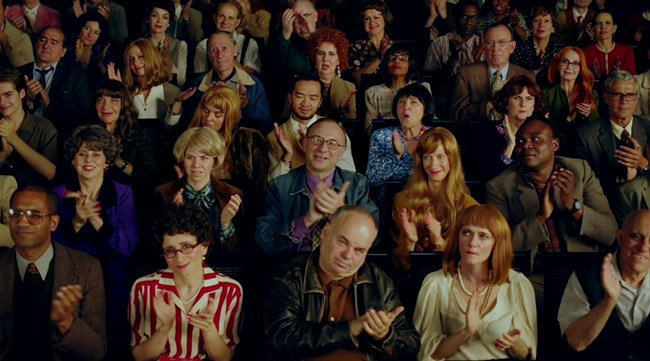
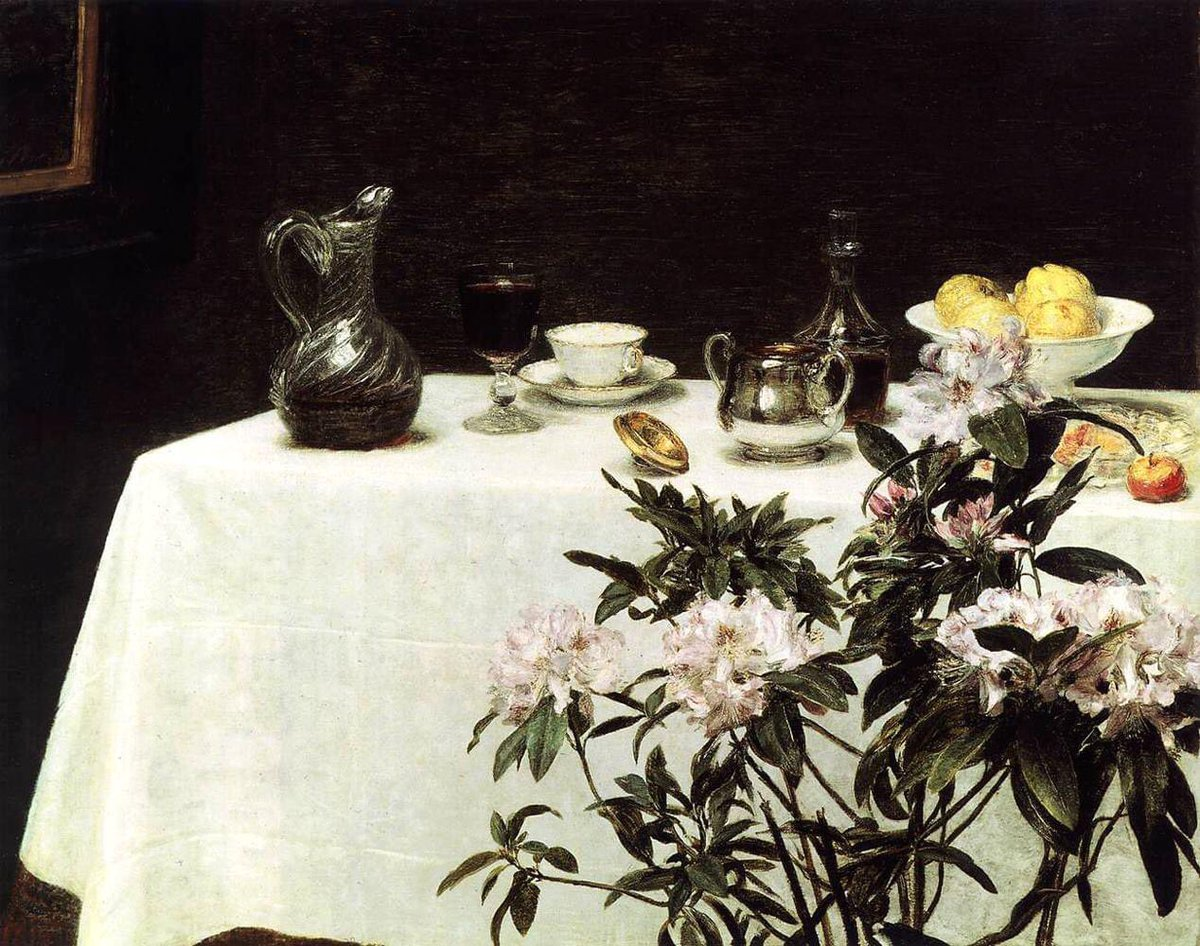


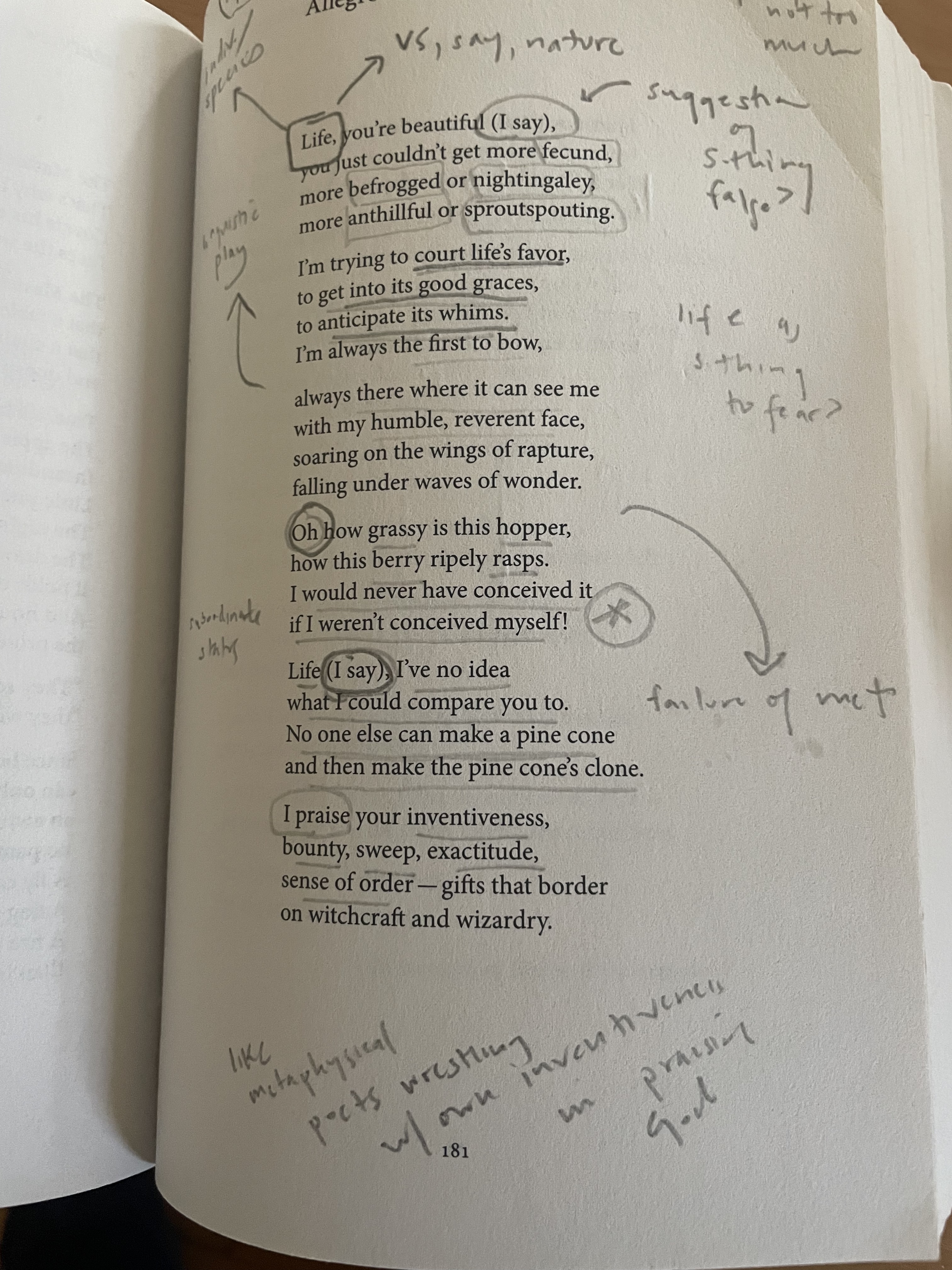


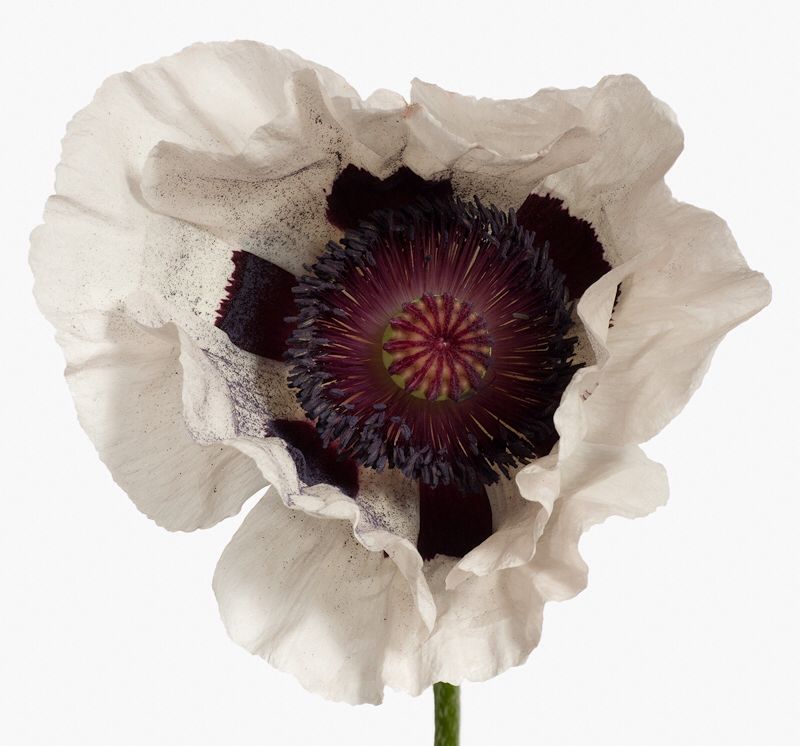


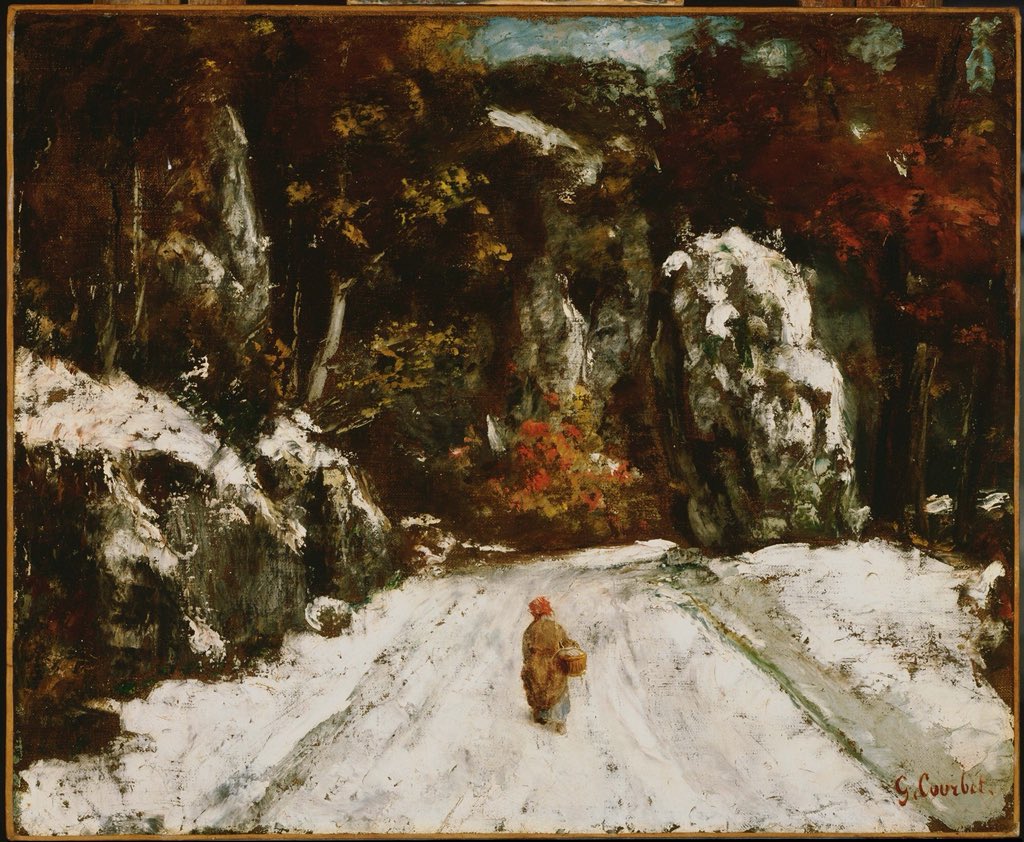
 Eiger, Mönch & Jungfrau