Scott Walters’s Year in Reading, 2024

Pleased to once again present reading reviews from some of my favourite readers. Today’s installment, his fourth, is by Scott Walters. Scott launched the much-lamented blog seraillon in 2010, and expects to return to it one of these days. He largely follows Primo Levi’s model of “occasional and erratic reading, reading out of curiosity, impulse or vice, and not by profession.” He lives with his partner in San Francisco.

Barring surprises, here ends the 2024 edition of the EMJ Year in Reading series: except, I hope, for my own. (Gotta write that…) Thanks to everyone who contributed–and all who read these engaging lists.

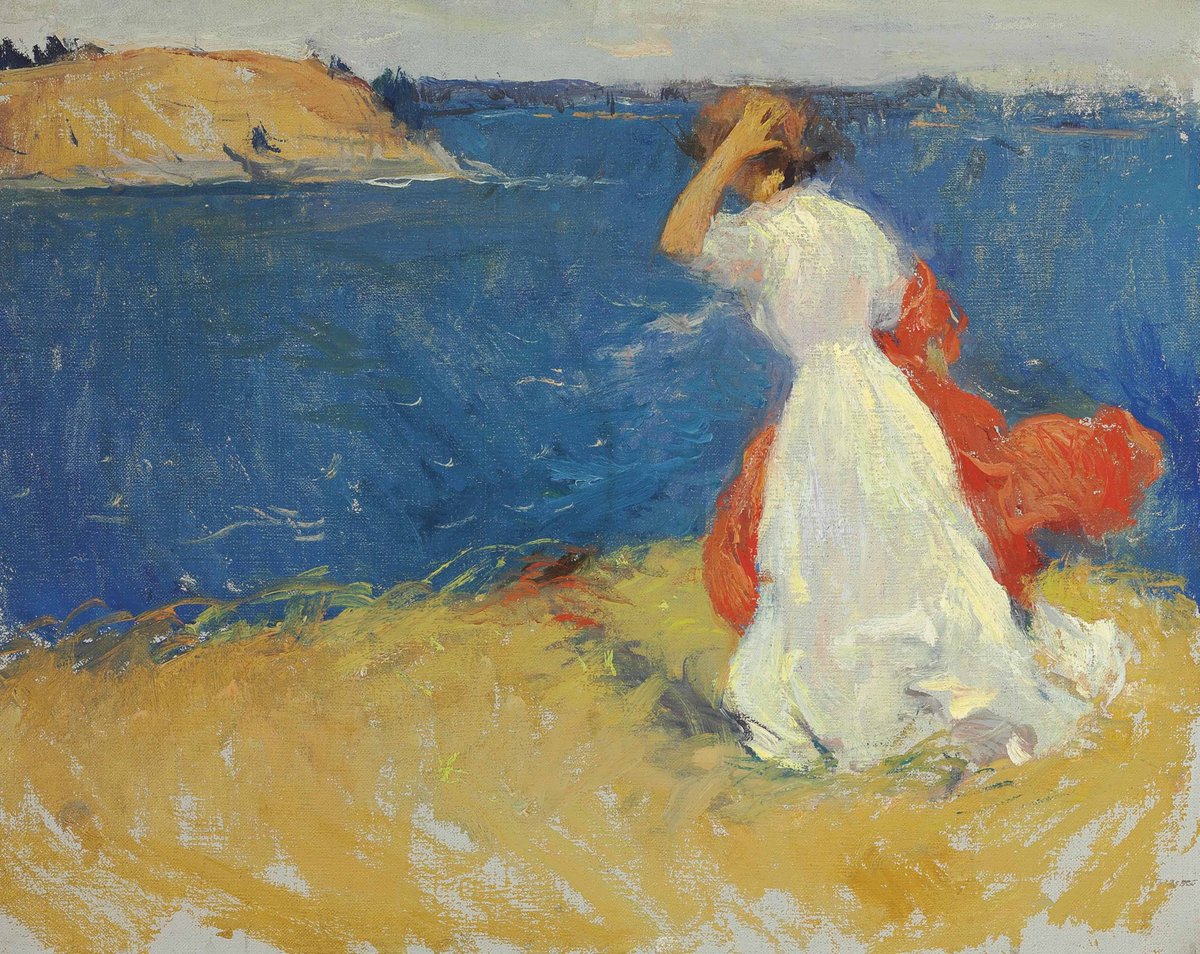
Balthus, The Passage of Commerce Saint-Andre (1954)

Thank you, Dorian, for inviting me again to participate in The Year in Reading. [Ed. – Pleasure all mine, Scott!] Mine meandered mostly pleasurably through some 60 books. I abandoned others, was surprised to have read fewer Italian works than in previous years, and experienced a number of unpremeditated pairings, reading two works each by a dozen authors plus more thematic linkages. I’ll get straight to 2024’s highlights:

The Woman in White, Wilkie Collins (1860)

I nearly lost my head when I interrupted my spouse’s reading of the final pages of The Woman in White, but her abrupt “Ssh!” made total sense as I plunged into the book myself the next day. Abstracted, the “detective-ish” book’s nutty plot—starting with its mysterious woman in white and moving to family secrets, confused identities, unlikely coincidences, shady interlopers, and convoluted inheritances—would hardly seem encouraging. But over 650 pages Collins never lets drop any of the knots of intrigue he has in the air, a master class in plotting with the ending so neatly and satisfyingly resolving the novel’s myriad conflicts that the book should have come tied up with a pretty bow. I found equally impressive his crafting of splendid characters, including the flamboyantly louche and unforgettable Count Fosco and Marian Holcombe, the novel’s moral center, surely one of the great characters in English literature. [Ed. – Now read No Name!]

[Paired with Collins’s The Moonstone].

The Purple Cloud, M. P. Shiel (1901)

If The Woman in White stands at the peak of the Victorian era, Shiel’s The Purple Cloud levels the period to the ground: an apocalyptic horror story, to be sure, with a body count beyond reckoning, but also an existential tale that takes Jules Verne’s brand of adventure in the direction of Lovecraft (and maybe even Kafka and Beckett). Into the tale of the sole-surviving member of a polar expedition returning to find worldwide catastrophe, Shiel mixes dazzling epic catalogues with itinerant wanderings—by dogsled, boat, rail, and on foot—that make Odysseus seem nearly an armchair tourist. A magnificently macabre tour of England unfolds from the coasts to the moors to the mines to the vacant house of Arthur Machen (to pay a literary debt) before the novel’s agonist traverses the infernal hellscape as far as Tokyo and San Francisco. Adding to the panorama of ghastliness is the misogynistic unpleasantness of the narrator himself, though having a murderer inherit such a lonely place is certainly a twist on the “last man” genre. Shiel lightens his grotesqueries by upscaling his inventiveness and gallows humor, even taking a few swipes at the Empire’s Victorian sensibilities. His idiosyncratic, nimble writing prompted me to mark down passages, though left me wondering whether the “purple” in his title may have referenced florid elements infecting his sheer writing bravura. Half-way through I wondered why the book didn’t regularly appear on English literature reading lists. Two-thirds of the way through, an abrupt turn sent the tone spiraling from Brueghel’s Triumph of Death into the schmalz of W. H. Hudson’s Green Mansions, underscoring a built-in problem of last man narratives: how to bring things to a close, what with destruction being so easy and rebuilding such a struggle. Shiel regained his footing towards the end but stumbled again on his way out the door. Maybe some goody-two-shoes editor had stuck their nose in. Still, The Purple Cloud’s grandiose conception and relentlessly ghastly anti-pleasures made it a singular reading experience—and fitting B-side to Collins.

Bel-Ami, Guy de Maupassant (1885)

At age 4, my French goddaughter presented me with a paper “cootie-catcher” featuring appealing green designs on three sides and a frightening mess of scribbled red and black on the fourth. I inquired. “This is a flower, and this is a tree, and this is grass, and this is a vampire.” [Ed. – Reasonable.] Now that she’s 21 I’ve come to expect this kind of thing regularly, but when she insisted that I read Guy de Maupassant’s Bel-Ami, I fell right into her trap. The story of a down-on-his-luck former soldier, Georges Duroy, whose life is transformed by a chance meeting with a war buddy who helps get him into journalism, is a superb depiction of the writing life; an existential examination of class, morality and gender relations; and one of the most sordid narratives I’ve come across. Duroy is a terrific antagonist, an arriviste with attractive qualities tinged by inexperience and raw ambition, not above prevarication and cruelty when it suits him. Maupassant manages the story so skillfully that I naively believed it to be heading towards a treatment of the subject of friendship between men and women, the source of Duroy’s “Bel-Ami” nickname—an ironic one, I was soon to realize, as what Maupassant does with Duroy makes Zola’s take on human debauchery look like a Sunday school picnic. [Ed. — !] The novel contains great set pieces, including a drawn-out death scene where a post-mortem odor drifts off the page like something out of D’Annunzio, and a party in a mansion on the Champs-Elysée that contrasts with the grim lives of Duroy’s rentier parents rotting away in Rennes. Maupassant levels the world of journalism too, its appetite for influencing public opinion, its writers seeking short-cuts to fame—a subject altogether too relevant today. Duroy’s talent, which emerges bit by bit, takes flight in social situations, where during one visit with a group of women he extemporizes on the writing of the French Academy. Maupassant, of course, was writing against the Academy grain, and few writers have woven a French of such sublime beauty from a tissue of such splendid decadence. [Ed. – Well, damn!]

[Paired with Manon Lescaut (1731), by the Abbé de Prevost].

Dark Back of Time, Javier Marías (1998) (Esther Allen, translator)

It would be unjust to pigeonhole Dark Back of Time –“a book of digressions”—as a campus novel, and equally unjust to separate it from its co-joined twin, All Souls (1992). But taken together as a campus novel, these two works, set at Oxford, slay all comers. Someone once quipped that the campus novel was about settling scores. Dark Back of Time seems aimed at undoing any barbs present in All Souls and even any notion of that book’s having been a roman à clef (this too, of course, may be a fiction). While the first part of Dark Back of Time engages weighty questions about fictional representation of real people, the joyousness of the novel’s explorations often had me in stitches, including a scene in which an academic negotiates with the narrator/author how he will be represented in the new novel, and another in which the narrator/author, timidly attempting to clarify for owners of an Oxford bookshop that what he’d written in All Souls was not about them, finds that the couple revel in their fame and petition to be included as themselves in a film version. It seems fitting in these books that Marías, Spain’s late greatest novelist, has evoked echoes of the most iconic of Spanish fictions, for, like the first and second books of Don Quixote, the two novels form an essential unit in which one could read only the first volume and miss out dramatically on what the second volume does with the first. (I’d love one day to see All Souls and Dark Back of Time boxed as a set; Cervantes would approve.) I don’t think it’s an exaggeration to suggest that these volumes, taken together, may be the finest contemporary literary work to address the question, “What is fiction?” Two other elements to recommend the book: The first is Marías’s inclusion of the fascinating story of Redonda, the “literary” nation of which Marías served as most recent and presumably final King (M. P. Shiel had been the first). [Ed. – Wait, that dude you just wrote about?? Is this real? Am I being punked??] The second is that Dark Back of Time contains some of Marías’s most exhilarating writing; I think immediately of a moving passage about the dawn crepuscule and streetlights that persist for a time into the day. Time having ever been one of Marías’s great preoccupations, I also winced at his narrator imagining life at age 85—a full 15 years past the premature end of Marías’s own. Unconscionably, The New York Times left Marías off of its recent list of the 100 Best Books of the 21st Century to date, but it is certain that the lamp of Marías’s work will live on to see its day.

[Paired with Marías’s short travel book, Venice: An Interior (2016)].

The Charwoman’s Shadow, Lord Dunsany (1926)

Fantasy is not among my favorite genres, but I’ve been fond of everything I’ve read by Edward Morton John Dax Plunkett, a.k.a. Lord Dunsany. Dunsany’s stories seem more like a new model of fairy tales, exploring interstices between reality and the imagination and dealing with moral issues without being moralizing. The Charwoman’s Shadow features a young Spaniard sent by his family to learn alchemy from a woodland magician, and exhibits Dunsany qualities in abundance: a deep gratitude for the richness of life, where nothing can be taken for granted; a genial wit and wordplay; a careful attention to nuance. The centerpiece of the novel is the value of one’s own shadow, the disappearance of which, through a Faustian bargain, produces unexpectedly dire consequences. Another Dunsany treasure is the lyrical quality of his writing, for example when he takes on that most magical of hours, l’heure bleue:

bright over the lingering twilight the first star appeared. It was the hour when Earth has most reverence, the hour when her mystery reaches out and touches the hearts of her children at such a time if at all one might guess her strange old story; such a time she might choose at which to show herself, in the splendour that decked her then, to passing comet or spirit, or whatever stranger would travel across the paths of the planets.

And then there is the book’s splendid ending, which I will not spoil other than to say that with no apparent thought of producing endless sequels like some contemporary writers of fantasy fiction, Dunsany gently places his chief protagonist off stage and sweeps into a realm of wistfulness drenched in the glow of a glorious sun setting at the height of Spain’s Golden Age.

[Paired with Dunsany’s The King of Elfland’s Daughter (1924)].

Fulgentius, César Aira (2017) (Christopher Andrews, translator)

At 163 pages, Aira’s Fulgentius straddles novella and novel, and not simply as matter of length. Aira’s intimate, vividly imagined tale of a Legate of the Roman Empire who also happens to be a playwright expands as it follows the aging Fulgentius and his 6,000 soldiers from Rome to reconquer Pannonia. Along the way, Fulgentius mounts performances of his sole work, a tragedy written when he was an adolescent, starring himself as tragic hero—and most important audience member. As Fulgentius has already written—or thinks he has already written—the tragic outcome of his own story, the plot tension is carried by a familiar Aira conceit around the entwining of fiction and reality. As a prime example one of Aira’s works that graft a fictional character onto history, Fulgentius offers a vivid sense of what such a march must have been like for the soldiers, the general, and the populations in their path. Deviating from the author’s more typical surrealist gymnastics, the language here takes on an unusually elegant lyrical register.

[Paired with Aira’s Alexandra Pizarnik (2001), an appreciation of the Argentine poet].

The Catherine Wheel, Jean Stafford (1952)

I found a copy of Jean Stafford’s The Catherine Wheel when I was 18. Had I read it then, I doubt I would have fully appreciated its adult nature—for it really is an adult book, dealing with adult things, things terrifying enough that I approached the novel’s final pages with a shudder of complete dread (completely vindicated). But in The Catherine Wheel Stafford also reckons with youth, entwining her two main characters, 38-year-old Katherine Congreve and her 12-year-old cousin Andrew Shipley. Devastated in love at an earlier age when Andrew’s father John married her sister Maeve, Katherine now occupies a position as the town’s most prominent unmarried curiosity, but also a magnet to John and Maeve’s children, left behind while the parents “summer” in Europe. Twin betrayals connected to this departure have set both cousins spinning: John’s surprise declaration of love for Katherine and determination to divorce Maeve while abroad, and the disappearance of Andrew’s playmate of previous summers, Victor, now entirely occupied with the post-war return of an older brother. Dually abandoned, the cousins shift focus to one another. Stafford thus sets up an unusual device in which youth attempts to divine the mysteries of adulthood while adulthood frets over the crises of youth, in a marriage story focused on impacts beyond the absent couple’s own strife. [Ed. – This feels like some Henry James-level melodrama!] A kind of third eye—that of the people of Hawthorne, who notice when Katherine’s light stays on into the wee hours—levies its own social pressure on the house’s inhabitants. Stafford’s densely poetic sentences frequently had me reading her aloud, relishing her words, marveling at the perfect limning of some little thing or creation of a resonance that rippled out towards subjects beyond the proximate ones. Though rooted in a realist, formalist literature that prioritized and exalted language, the novel still felt raw and new, bursting out of old molds, totally unsettling. Not a novel for the squeamish, but certainly one for any reader ready to appreciate some of the finest American writing of the period.

[Paired with Stafford’s The Mountain Lion (1947)].  

whose names are unknown, Sanora Babb (1936/2004)

Sanora Babb’s novel has been highlighted in recent articles recounting editor Bennett Cerf’s decision that two Dust Bowl novels in a single year would not stand. The other, of course, was The Grapes of Wrath, allegedly constructed in part on notes Babb had collected concerning hardscrabble farmers in her native Oklahoma, and which Cerf provided to Steinbeck. Though Babb published other well-received works, her Dust Bowl novel languished unpublished for nearly 70 years. whose names are unknown borrows its title from an eviction notice served on a family of Oklahoma farmers. What the novel may lack compared to Steinbeck’s elegant structure and majestic sweep, it makes up for in granularity of detail and visceral impact relating the farmers’ desperation and poverty, with particular attention to the lives of women, whose interactions give the work some of its strongest scenes. Babb’s direct, declarative sentences come across as hard as the land worked by her characters. She describes the knife-edge on which her people live, where even small luxuries—such as butter for the biscuits—must be used sparingly “so that it will last until the next churning.” Where Steinbeck set his novel on the back of hope for a better life in California, Babb spends a long time in Oklahoma before heading west, zeroing in on the encroachment of the Dust Bowl, poor farming practices colliding with a change in climate and the shifts within and without people as they try to wrestle with such environmental change. Babb’s powerful novel deserves at least to be taught alongside Steinbeck’s, or rather, as the debt is all his, the other way around. [Ed. – Pretty telling/damning that I’d never heard of it.]

Écoute, Boris Razon (2018)

It’s clear from which chapter of French journalist Boris Razon’s novel Écoute (“Listen”) Jacques Audiard plucked the seed for his film Emilia Perez, but Écoute differs almost entirely from the film. As the book’s title suggests, Razon focuses here on listening, various forms of which coalesce the book’s entwined stories and capture the complex, fraught texture of contemporary communications. Set mostly on a single block near Place d’Italie in Paris (with detours to Mexico City and Lisbon), and with the November 2015 terror attacks continuing to resonate, the novel touches on the surveillance state by encompassing listener, the listened-to, privacy, and identity (here’s where Emilia Perez came in, but so, to my surprise, did Fernando Pessoa). In conveying the rapid-fire chatter and laconic banality of so many electronic communications, Razon employs a good deal of verlan, texts and texting abbreviations, and emoticons, prompting one character to muse on the absence of a dictionary adequate to capture today’s modes of information sharing. Running beneath this surface noise is a current of desire to disappear from a world in which privacy has all but vanished. The stunning first chapter presents a scene of the Paris street that surely ranks among the richest in that city’s literature, an “audioscape” as experienced from the inside of a police surveillance van by an officer quietly being undone by his job of attempting to cull signal from the noise and by the uncanny valley between electronic input and what he perceives with his own senses. [Not yet available in English translation, though that may well change should Emilia Perez win the Oscar for best film].

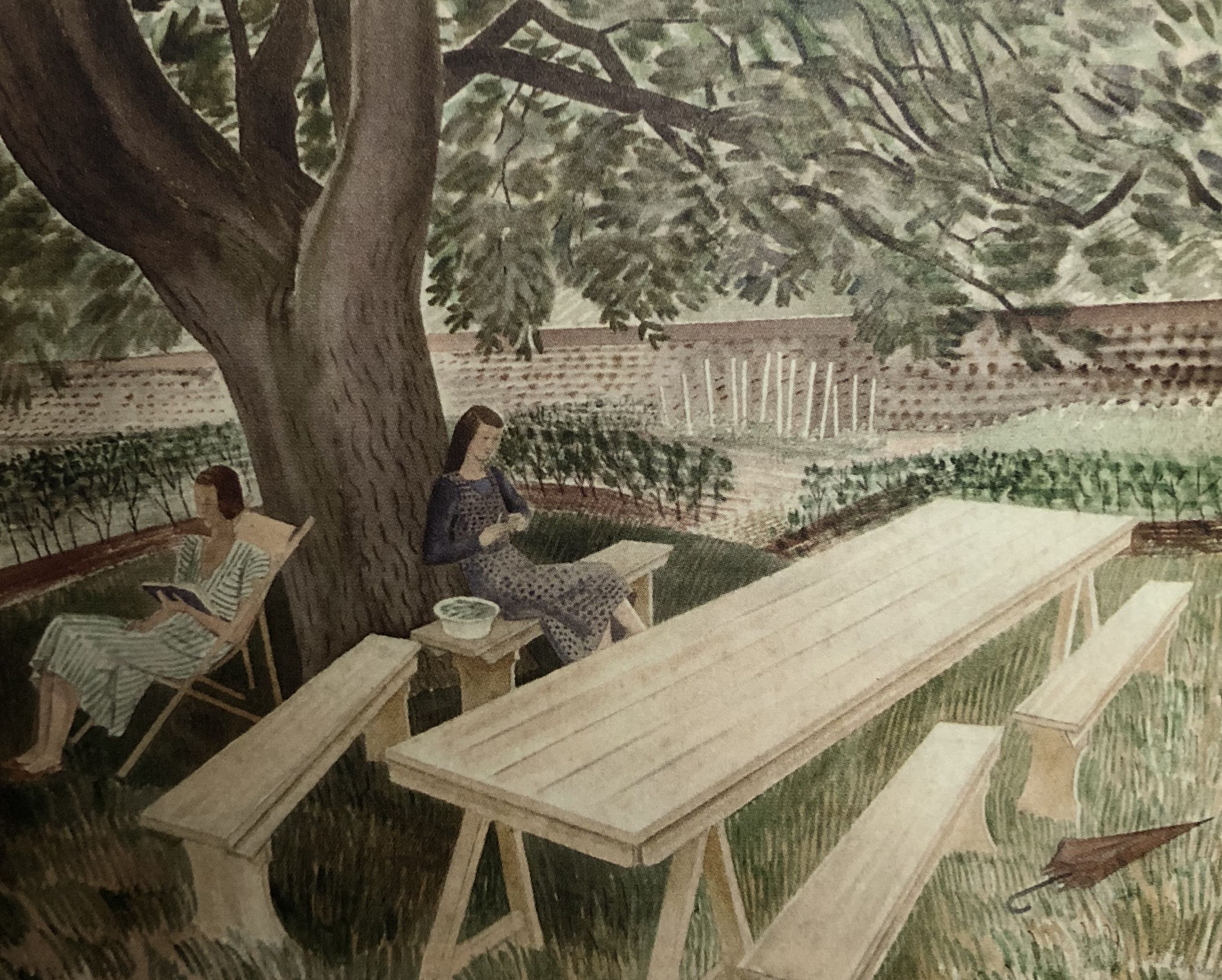
Edward Hopper, Solitary Figure in a Theater (1903)

Oak Flat: A Fight for Sacred Land (2020) and Thunder and Lightning: Weather Past, Present and Future (2015), Lauren Redniss

2024 was the year I came late to Lauren Redniss’s party, pairing her powerful Oak Flat with her larger format Thunder and Lightning. The former explores the fight around the proposed Resolution mine on tribal lands in Arizona, while the latter treats weather phenomena both straightforwardly (i.e. Rain, Heat, Wind) and in more abstract terms (i.e. Chaos, Dominion, Profit, War). Using an anecdotal approach, Redniss displays in both books a knack for ferreting out the most interesting possible interviewees and unearthing fascinating hidden tales. But what makes the work of this MacArthur award winner stand out is its exploration of text and image. Using full page illustrations, Redniss skillfully advances her story through images of such impact that I found myself gasping at turning a page and being confronted with an image perfectly tuned to the tone she had set. The large format of Thunder and Lightning lends itself particularly well to her subject. In Fog, the text crawls along the bottom of pages of vast gray. Redniss’s deliberateness in matching image to text and letting the image carry the narrative feels like a new form of text/image interaction. In a section about cloud seeding, she describes a proposal to use weather balloons to heft a pipe with multiple nozzles to spray chemicals that could help cool the planet. I could not help see this as a metaphor for the way her illustrations lift her text in air. These images, easily mistaken for colored pencil washes, are in fact mostly acid etchings in black and white that Redniss has hand-colored (Thunder and Lightning includes a description of her processes). I read Redness not long after finishing James Elkins’s novel, Weak in Comparison to Dreams, another work that relies heavily on images, by a leading theorist of text/image interaction, no less, and now find myself dreaming of a Redniss/Elkins collaboration. Come on, you two. Make it so. [Ed. – Either way, I’m tracking down these Redniss books!]

Moonlight Elk, Christie Green (2024)

I know Christie Green but was wholly unprepared for her first book. Each time I put Moonlight Elk aside, I could not wait to get back out into it. That awkward prepositional formulation feels apt, as Moonlight Elk, a book framed around Green’s experiences in across New Mexico hunting wild game, largely for sustenance, takes one to wild spaces in an intensely intimate manner. Exploring the borders between interiority and exteriority, animal and human, life and death, the book’s dozen interlocking pieces, indexed to a hand-drawn map of the state, might well be the New Mexico state book of the year (if such a thing exists). With solid research behind her narrative, Green leverages her experience as hunter, mother, landscape architect, land use expert, designer, naturalist, activist, and writer to traverse territory of essay, short story, meditation, and what one might call an anthropology of relationship. Memoir might also come to mind, but resistant to definability, Moonlight Elk seems more like an exorcism, a courageous self-interrogation in quest of a “free range” existence that refutes facile answers, upends convention, moves into spaces predominantly occupied by men, and attempts to rid the cultural body of a toxic detachment from nature. Hunting—particularly as a woman alone—foregrounds the narrative, but Green is after larger game. She inhabits the lives of animals, their cycles and patterns, how they move, what they sense, how they see her. The mysterious, miraculous complexity of bodies, not least Green’s own, forms the beating heart of the book: details of muscular structure and bone, of blood and feathers and sex, the quickness of eyes, the sharp sense of smell. Her hunts force self-reckoning, as when she discovers a fetus moving within the abdomen of a cow elk she has shot, or when she ends the suffering of another cow that comes to her after being gruesomely wounded by poachers. Green, who grew up in Alaska, integrates into her experiences a wealth of issues impacting the American West, from private vs. public land and water use to tribal and border concerns (in the boot heel of New Mexico, a quail hunt collides with Border Patrol conducting their own kind of hunting). Only at the narrative’s end did I grasp the extent of the subjects Green had covered. More personally affecting, as she moves through forest, desert and chapparal, shadowed by cliffs and trees, illuminated by dreams and the changes of the moon, she offers, with keen animal sense and without escapism, an orthogonal, conscientious response to received ideas, convenient consumerism, and mediated experience. Hyper-alert, alive, intuitively creating her path, Green renders wilderness almost otherworldly. I emerged from Moonlight Elk seeing this world anew, as though a physical alteration had taken place. [Ed. – Sold! Might pair well with Joanna Pocock’s Surrender.]

Gallery of Clouds, Rachel Eisendrath (2024)

The title: irresistible. The cover too, a fresco of clouds at sunrise or sunset from the ceiling of the Rose Main Reading Room in the New York Public Library. And the opening especially, the author recounting a dream of carrying her manuscript through heaven and meeting: Virginia Woolf. Both ostensibly and in fact, the subject of Gallery of Clouds is Sir Philip Sidney’s 16th century, 900-page pastoral romance, Arcadia, about which I knew nothing and which overwhelms even Eisendrath, a Sidney scholar: “I find that my memory of the plot has already started to dim, to blur…I can no longer keep track of the basics…” I say “ostensibly” because Eisendrath uses the obstacle, Arcadia serving here as a nexus to send her fertile mind wandering down winding paths, from observations on the genre of Romance to the use of images, Shakespeare to Little Nemo, Poussin to Walter Benjamin, Montaigne to manicules (!), the marriage of hunting with desire to the cat dozing on Eisendrath’s bed.

But these seemingly inexhaustible spin-offs never seem gratuitous. Eisendrath subtly constructs an Arcadia of our own era, her black & white photos echoing the pastoral romance’s means of advancing its airy infinities through “images in words,” her “clouds” of thought (which she pointedly distinguishes from mere fragments) paralleling the episodic nature of the romance, her grounding her observations on Sidney in a relatable contemporary manner underscoring the genre as a response to grim realities. At the same time, Eisendrath engages proliferating modes in contemporary writing, such as the use of the fragmentary, the merging of the academic and the personal, the punctuation of text with images, the grappling, through a need to say, with an unraveling world. Though she is writing about a 16th century romance, her small, enthralling, sui generis book has volumes to say about how we read and write. And in Eisendrath’s few references to her own teaching, Gallery of Clouds, more than anything I have read in decades, has me wanting to be a student again.

The Waves, Virginia Woolf (1931)

Rereading The Waves 40+ years after I first read it and in the same copy I’d used then, my margin notes served to measure the distance between that young reader and this old one. I experienced pride regarding the young stranger’s underlining of particular lines; I noted too that he’d missed a lot. Passages of time of this sort span The Waves, entwined temporal arcs that longitudinally capture Woolf’s six characters through alternating interior soliloquies as they move from childhood to university [ed. – well, some of them get to go to university…] to the workplace to middle age and beyond, while brief impressionistic pieces preface each chapter and, over the course of the novel, trace the sun’s path across the sky during a single day at the shore. Here as in many of her works, Woolf, the great writer of immediacy, obsesses over capturing sensations, gestures, glances, discreet moments, the wave at the point of breaking, of ebbing. Rafts of glorious sentences ride Woolf’s exquisite phrasing, as she simultaneously questions the inadequacies of language, frustration with these limits reaching a crescendo as mortality nears for her characters, and a voice longs for:

some little language such as lovers use, broken words, inarticulate words, like the shuffling of feet on the pavement. I begin to seek some design more in accordance with those moments of humiliation and triumph that come now and then undeniably. Lying in a ditch on a stormy day, when it has been raining, then enormous clouds come marching over the sky, tattered clouds, wisps of cloud. What delights me then is the confusion, the height, the indifference and the fury. Great clouds always changing, and movement; something sulphurous and sinister, bowled up, helter-skelter; towering, trailing, broken off, lost, and I forgotten, minute, in a ditch. Of story, of design I do not see a trace then.

[Ed. – Is this Bernard? Sounds like Bernard.] Woolf described The Waves as a “playpoem,” but its approach to polyphony is unusual. In the first chapter, she goes inside the heads of her characters as young children while at the same time supplying them a vocabulary beyond their years, a device through which they speak both as themselves and as the writer, the latter’s presence made manifest when the children catch a glimpse through a window of a woman writing. Throughout the novel, her six characters’ voices float like spheres governed by gravity, now apart, now coalescing, as waves gather force and crash, exploding in spray and froth. But her characters also serve to question the nature of identity: clearly creations of the writer and facets of her circle (the roman à clef aspects interested me little), they are also beings in whom a “self” is merged inextricably with other selves. For all of its prose-poeminess, The Waves stands as a remarkable and grounded philosophical inquiry into what constitutes a self—and whether it even makes sense to speak of a “self.” [Ed. – Yes, the latter especially!]

In my first reading, I scarcely noticed the centrality to the novel of the death of Percival, a “seventh” character never given a voice. But in Paris shortly after finishing The Waves, I caught director Elise Vigneron’s theatrical adaptation of the novel, an extraordinary work employing both live actors and corresponding marionettes made of ice, such that as the play progressed, these figures melted, with much of the later action occurring in a resulting pool center stage. [Ed. — !] The physical presence of these characters and their doubles rendered Percival’s invisible presence powerful, a black center in Woolf’s “six-sided flower; made of six lives.” As with the shell-shocked Septimus Smith in Mrs. Dalloway, Percival represents a generation of young people damaged or lost to conflict and war. The cumulative effect of Woolf’s meditation on loss, whether through ordinary aging or via the injustice of an early death—and a palpable sense of darkness again descending upon Europe—left me overwhelmed by emotion at the story’s close.

What attracted me to Woolf at age 18 held firm: her sumptuous sentences; the tension between a love of people and aloof solitariness; the desperation of time passing fused with the fever to glean something lasting from the fleeting and ineffable. Also: recognition at last of Woolf’s lament for life lost at an early age, for the unshakable impact on those left behind, pushing The Waves into a work far greater than I’d registered the first time around. I’ve been thrilled, moved, and humbled by revisiting this extraordinary novel while the sun sinks toward a darkening horizon, so many years after I first read it, when the sun still mounted the sky. [Ed. – Beautifully put, Scott.]

[Paired with Woolf’s final novel, Between the Acts (1941)].

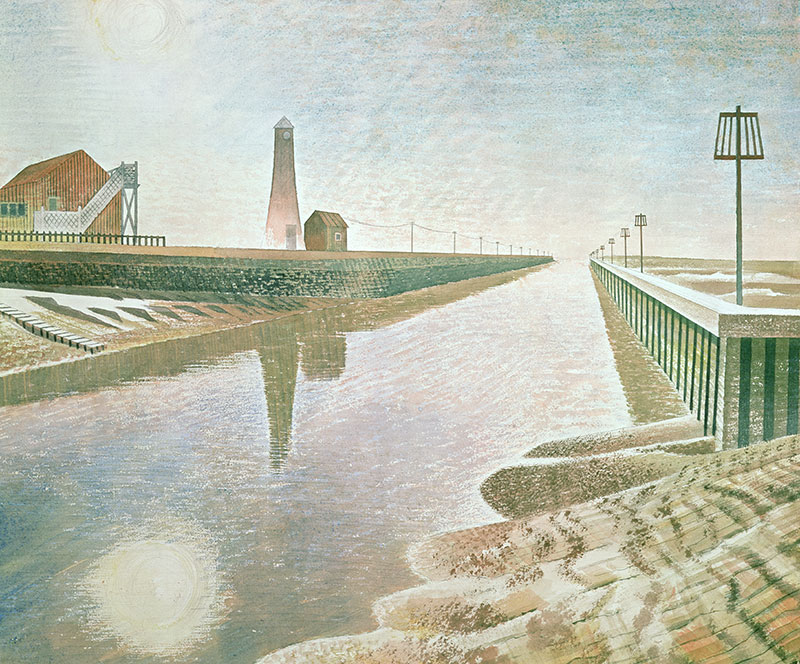
Felix Edouard Vallotton,The Sunny Street (1922)

Others works I could have included: D. H. Lawrence’s powerful Sons and Lovers [Ed. – Ph hell yeah]; Italian critic Cristina Campo’s The Unforgiveable;  the Strugatsky brothers’ The Snail on the Slope; Georges Simenon’s Arizona noir La Fond de la Bouteille; Shakespeare’s The Winter’s Tale; a pair of short books by Helen DeWitt (may she please complete her novel-in-progress set in Flin Flon, Manitoba) [Ed. – Wait what now]; Andrés Barba’s Two Small Hands and Andrés Neuman’s The Things We Don’t Do; poet Susan Nguyen’s second gen take on the American South in Dear Diaspora and other of her poems on-line; and, Most Unexpected Literary Object, the first volume of Ahmed Fāris Al-Shidyāq’s Leg Over Leg, a daring four-volume novel completed in 1885 with the modest ambition of catapulting the whole of Arabic language and literature into the modern age. In sum, a Year in Reading that elicited joy, snark, bon courage, resolve, humility, and defiance for challenging times ahead.

[Ed. – To which I can only summon both the raised fist and the thank you hand emojis: this is wonderful, Scott. May we draw on those good emotions in 2025!]

What I Read, June 2023

I know, I wasn’t sure if I’d be back either! The first half of the year kind of sucked. Writing here would have helped my mood, but I didn’t have the energy. The classic conundrum. Here’s hoping for better things in the fall semester. As to June, well, it feels like a long time ago, but here’s what I’ve reconstructed. Not my most enjoyable reading month ever, but considering that I spent almost two weeks in Newfoundland (it’s amazing, go if you can, take sweaters) I’m impressed I got through as much as I did.

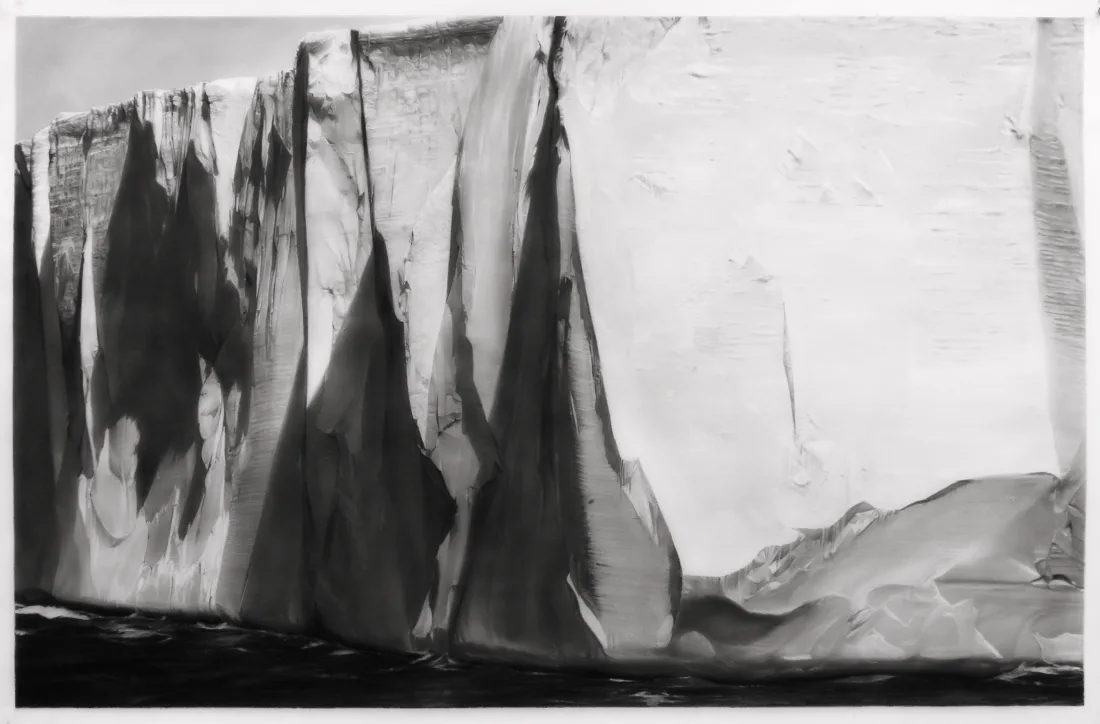
Robert Longo, Study of Greenland Iceberg, 2020

Ursula K. LeGuin, The Space Crone Eds. So Meyer and Sarah Shin (2023)

Can you believe I’ve never read LeGuin? She must be pretty terrific, because I enjoyed this collection of essays, addresses, and stories even though I doubt it’s the best way into her work. Ranging from the 1970s to the mid 2010s, these pieces cover a lot of ground, but they return to the topic of women’s writing. LeGuin surprised me by writing about Woolf, Mrs. Oliphant, and Margaret Drabble rather than female sf or fantasy writers; I bet she’d say that realism, modernism, and fantasy are equally relevant modes of representing experience. Which isn’t to say that she ignores the fantastic: there’s a fun Borgesian story about an all-female polar expedition, and the title piece convincingly argues that the person best suited to head off into space to represent humanity would be an older woman (crones have seen and done it all, are (too) modest, and, because they best represent the experience of change, represent the best of us). As she writes in the essay’s immortal closing line, “Into the space ship, Granny.”

LeGuin wrote that when she was only 47—hardly a crone, except perhaps by temperament, and of course that’s what counts. But maybe she knew she was on her way to being one. This volume shows her to be wise, witty, and angry. Definitely a “no fucks to give” vibe to this collection. I haven’t even mentioned the piece I liked best, “What It was Like”, about the need to protect the right to abortion. How painful to read this memoir of life before Roe post Dobbs.

You can hear more on episode 15 of One Bright Book.

This book is published by Silver Press out of the UK and they do make a fine-looking book.

Susanna Moore, The Lost Wife (2023)

Moore’s novel concerns Sarah Brinton, who abandons her abusive husband in Rhode Island in 1855 and heads west in search of a childhood friend. In a matter of pages, Moore sketches out a long and unpleasant journey to Minnesota by train, line-boat (a barge pulled by mules), steamboat, wagon train, and riverboat. The opening of this novella is brief but not cursory; Moore’s descriptions of deprivation are sharp and evocative. Here’s Sarah describing her passage along the Galena River to the Mississippi:

The boat is meant for stock rather than passengers, and freight rather than stock. I sleep in a slatted chair in the bow, the hem of my dress stiff with dried mud, which has the advantage of keeping my legs warm at night. My cape covers the rest of me, including my head. Even so, my face and hands are swollen with mosquito bites. There are rats too, and I keep my feet tucked under me. The cattle, trapped in their sodden pens, moan through the night.

Unpleasantness, even misery all around, not least in those moaning cows. And things get worse before they get better: Sarah’s friend has died, likely of cholera. The man from the riverboat authority speculates she was buried in a sandbank; with malicious pleasure, he warns Sarah, “You won’t want the river to drop too low this summer.”

She must find a way to pull herself out of her grief and make a new life, always in fear that her husband might arrive to take her home. Before long meets a Yale-educated, laudanum-addicted doctor, John Brinton. Keeping her bigamy to herself, she marries the doctor and has two more children. The family moves west to the settlement of Yellow Medicine, where John has been hired by the Indian Agency to serve the adjoining Sioux (Dakota) reservation. Unlike the handful of other white women in Yellow Medicine, Sarah invites indigenous women into her home, befriends them, learns Dakota, even smokes a pipe. In this way, Sarah is like the protagonist of Moore’s otherwise totally different best-known novel, the sort-of-terrible but also fascinating quasi-noir In the Cut: a woman who is always “too much.”

 You can imagine how she is looked at askance, especially as tensions rise between the Sioux and the settlers. By the summer of 1862, the Sioux are starving, increased hunting having reduced the available game. Then comes word that the annuity promised by the US government has failed to arrive. (The money only enriches the white settlers, from whom the natives were forced to buy food.) Thousands of Dakota descend on the settlement, demanding provisions, but the Major in charge releases only the bare minimum. Several weeks later, Dakota attack settlers throughout the region, ultimately killing more than 350 and taking a similar number hostage. Some months later, the uprising is stopped by government troops, who kill an unknown number of Sioux and arrest hundreds more, mostly non-combatants. A military commission sentences 300 to death; 38 are hanged after Lincoln himself reviews the charges.

Sarah’s experience is the vehicle for this history lesson: she is briefly taken hostage but then rescued by a warrior whose mother had been treated by her husband. Chaksa, the warrior, hides Sarah and her children; Sarah, although terrified much of the time, rather likes living with Dakota. She especially likes Chaksa himself, not only for his kindness but for his strong, beautiful body. The exact nature of their relationship remains opaque, but at the end of the book, after so many of the people who cared for her have been killed or arrested, when she has been released and reunited with John, and nothing is as it was before, Sarah says that she has three husbands.

Moore handles this terrible historical moment with grace, sorrow, and irony. (For example, in his abolitionist zeal, John longs to join the Union Army, even as he is unable to see the oppression around him; and all of this despite his appreciation for indigenous medicine, which he even incorporates into his own practice.) I learned a lot from the book without feeling lectured to. Moore describes the landscape, especially its birds and plants, with pleasure and anguish at its increasing destruction. And she sympathizes with the Dakotas’ situation without taking on their perspective. It’s about as deft a story of settler-indigenous conflict that one could imagine being written by a white person. But I can’t say that we really need this particular story, told from this particular point of view.

The Lost Wife is based on Sarah F. Wakefield’s account of her abduction by Mdewakanton warriors in 1862, Six Weeks in the Sioux Teepees: A Narrative of Indian Captivity. Anyone read it?

Katherena Vermette, The Strangers (2021)

Vermette’s follow-up to her brilliant first novel, The Break (a book I loved when I first read it and which I love even more now that I’ve started teaching it), is named after an extended Indigenous family, one of whose characters plays a central role in the earlier book. The Strangers are aptly-named: strangers to white settler society, to each other, and to themselves, estrangement compounded by the neglect, disregard, and abuse they’ve suffered from the institutions that have forced themselves upon their lives.

People don’t seem to like The Strangers much—if they’re even reading it. I haven’t heard it discussed much (I don’t think it’s had US or UK release, which doesn’t help). The most compelling response I’ve read is this one by Rohan. I always appreciate her interpretations, but my experience of this book was so different to hers. It’s tough reading, no question—from its opening white-knuckle description of a female prisoner transferred to hospital where she gives birth to a child must immediately give into custody (where nurses and prison guards negotiate whether she should be handcuffed) to its repeated depiction of women whose anger and pain make them unable to keep hurting themselves. In that sense, it’s relentless. The Strangers is bleaker than The Break: whereas the members of its central family had the emotional resources to look out for each other, despite everything the world threw at them, here the characters have been so damaged by hurt, shame, and pain that their emotional ties are terribly frayed. And the institutions meant to help them (peopled in the book by social workers, guidance counsellors, law professors, and others) mostly hurt them more. Not everything is awful: a man reaches out to a woman in prison, bringing her a little out of herself; a girl reconnects with her birth father and finds a new, imperfect, but stable family which leads to a grace note in the final pages, where she begins a new chapter in life by going off to university where her roommate is someone readers of The Break will remember. But damage far outweighs repair.

And yet I was captivated by the book. As I thought about Rohan’s criticism that the book “just plods unhappily along,” I wondered if that was the point: after all, it was one of Freud’s early insights that trauma destroys narrative; victims of trauma can’t tell the story of their lives because trauma, as compulsive repetition and reliving, is the antithesis of narrative ordering. The Strangers is full of incident, but not much change. I found this sad and enraging, but not artless. I’m so curious to see what Vermette does next. I’m not done with these characters; I hope she isn’t either.

Richard Osman, The Thursday Murder Club (2020)

When I first learned the premise of British television personality Osman’s foray into crime fiction I rolled my eyes: four friends in a posh retirement complex meet on Thursdays to put skills honed in their past professional lives (psychiatrist, labour leader, nurse, and, it would seem, spy) to use in solving cold cases. How could that possibly be any good? Well, when the writing is tight, the jokes actually funny, and the plots both twisty and suspenseful anything works. But as the four characters move from cold cases to a very live one, Osman does something surprising: he makes us feel the pathos of regret, loss, and increasing debility, even as he shows his characters to be unstoppable.

I’m grateful to my daughter for tipping me off to this book. Since then both my wife and I have devoured it. I enjoyed the book even more because we all enjoyed it so much. Highly recommended!

Richard Osman, The Man Who Died Twice (2021)

Just as good as the first. Ibrahim forever!

Minae Mizumura, An I-Novel (1995) Trans Juliet Winters Carpenter (2021)

I love Mizumura and even though this early work isn’t as memorable as Inheritance from Mother or A True Novel I still liked it a lot. If you listen to our discussion on One Bright Book you’ll see that Frances and Rebecca agreed. As English-speaking readers we lost some of the force of the book (famous in Japan for its liberal inclusion of English words and horizontal typesetting, as well as its renovation of the confessional form of the I-Novel, a kind of precursor to today’s autofiction), but we appreciated its reflections on loneliness, nationality, and identity.

A great novel of the pleasures of old-school telephone conversations.

S. A. Cosby, All the Sinners Bleed (2023)

Less extravagant than its two immediate predecessors, but still plenty violent and gory, Cosby’s most recent novel blends horror tropes with contemporary race politics. This is the first of his books that I’ve read that focus on law enforcement—surprising, perhaps, for someone who’s been drawn to ordinary guys led by circumstance to become outlaws. Titus Crown, the first Black Sheriff in his rural Virginia County, is a strong character: committed to his home but despairing of its ability to change. All the Sinners Bleed joins other recent crime novels that challenge the genre’s tendency to value law and order. In other words, this is mature Cosby, and I liked the book just fine. But I missed the humour and orneriness of Razorblade Tears and Blacktop Wasteland. More a sideways step than a leap forward.

Larry McMurtry, Horseman, Pass By (1961)

A grave disappointment. How could the author of that warm and wise wonder, Lonesome Dove, have started with this bitter, disagreeable work? A teenage boy, Lonnie, works his grandfather’s ranch in 1950s Texas: he fantasizes unpleasantly about the family’s Black maid, and looks on with fear and fascination at his step-uncle, who’d rather race around in his roadster than help with the cattle. This short book is filled with terrible things, most notably two extended scenes of violence: a rape described at excruciating length and with too much covert interest to make its overt disapproval convincing, and the liquidation of the ranch’s herd due to an epidemic of Foot and Mouth disease, described at even greater length. The cattle are herded into a series of pits before being shot:

The biggest old cows fell like they had been sledge-hammered; they kicked a time or two, belched blood into the dust, lay still. Not one in my pit got up. A calf dashed toward us and the man swung the gun and knocked it back on the body of a horned cow, its hind legs jerking. The old cows rolled their eyes and spun around and around. Not for a minute did the dust or the noise settle. Finally the last animal in the pit stood facing us, a big heifer. She was half hemmed in by the sprawled carcasses. She took one step toward us, head up, and the man fired, slamming her backward like a telephone pole had bashed her between the eyes. She lay on her side, one foreleg high in the air. The man took out his clip and went quickly to another pit, to help. I was as tight as my horse; I was sick of the heat, and of the dust smells and gunpowder and thin manure. I tried to spit the putrid taste out of my mouth, and couldn’t.

The first-person narration might explain that clumsy metaphor (the telephone pole), but I’m not buying it: a lot of it is just not that well written. Which is fine, most books aren’t. But what I really didn’t like is how its pretense at telling the hard facts of life is a cover for lurid excess.

In the end villainy disguised as grim reality carries the day. Lonnie, distraught, lights out of the territory. Demystifying the West is well and good, but the pleasure this novel takes in hurt made me feel sullied. Is all early McMurtry like this?

Robert Longo, Untitled (The Crown), 2021

Despite Vermette and Mizumura and some top-quality light reading in the Osmans, I wouldn’t call this a banner reading month. Tune in to find out if I got out of the slump in July!

What I Read, November 2021

Ah, November, we hardly knew ye. Wait—November?! What about October? Well spotted, eagle-eyed reader—I know you and many others have been refreshing this page daily in the hopes of getting your EMJ fix. Sorry to disappoint. Trust me, I feel bad about it. A two-year streak of monthly reading reviews broken, just like that. Still hope to catch up, but what can I say, October was a cluster. November was better, which is surprising since it’s usually one of the worst months of the academic calendar. This semester has been one of my lightest ever, though, a blessing since it’s allowed me to keep the rest of my life ticking along, just barely. I had a lot going on. My mother visited, the first time we’d seen each other in two years. There was Thanksgiving to celebrate. And leaves piled up steadily on our tree-lined corner lot, those things don’t rake themselves. But I read some stuff too.

Camille Pissarro, The Path at Basincourt, 1884

Sarah Hall, Burntcoat (2021)

Preordered this even though the idea of “pandemic novels” doesn’t appeal because I’m a Hall fan. Burntcoat is narrated by Edith Harkness, a sculptor—the resonant title is the name of her studio—who, after studying the Japanese art of shou sugi ban (charred or burned wood) has become one of the UK’s premier landscape artists. Some short flashbacks describe an apprenticeship in Japan, but these moments are underdeveloped, serving more as a metaphor—the technique is counterintuitive, “damaging wood to protect it”—than as detailed reality. There are many damaged people in the novel, mostly those infected by a virulent disease, much worse than a coronavirus, that either kills quickly or lies dormant for years after infection. But the most important damaged person in the novel, certainly one who has been protected by that harm, is Edith’s mother, a writer felled by a brain disease that transforms her personality and, for a time, makes her unable to speak or write. She recovers from the trauma to become an outsider artist, whose experimental works are underappreciated until after her death. Before that she had taken her young daughter, Edith, to live in the Cumbrian fells. As always, Hall is great with northern landscapes, but where Burntcoat really shines is in her other area of descriptive specialty. Hall writes great (cishet) sex scenes—exciting, never cringe-y, hot. Quite a feat. The sex in this novel is between Edith and her lover Halit, a migrant from Turkey who works as a chef in a middle eastern restaurant. Their relationship has no sooner begun, though, than the pandemic hits and Halit gets sick. Burntcoat is about making and healing, about losing and grieving, about the depredations and losses of time’s passing that can also become transformations and developments. It’s a good if not great novel, a bit suggestive, sometimes more a sketch of something than the thing itself. Curious how it will fit in her body of work twenty years on.

Nastassja Martin, In the Eye of the Wild (2019) Trans. Sophie R. Lewis (2021)

In 2015, Martin, a French anthropologist with deep knowledge of the indigenous people of Kamchatka, was mauled by a bear while conducting field work. After initial treatment in Russia, she is flown back to France, and suffers from further, supposedly superior, operations and treatments, one of which almost kills her. She suffers, physically and emotionally. Eventually she decides she must return to Siberia, to learn, as the jacket copy of the newly released English-language translation has it, “what it means to have become, as the Even people call it, medka, a person who is half human, half bear.”

From the time Magda first told me about this book, I’ve been psyched to read it, devoted fan that I am of another book about a woman and a bear. (In that one, incidentally, the main character, a librarian cataloguing the books in a great house in northern Ontario, learns that Kamchatkans use the sharpened shoulder blade of a bear as a scythe.) Nathan Goldman brings the two books together in his terrific essay on In the Eye of the Wild. Even more valuably, he points out the central tension in Martin’s memoir/essay: on the one hand, she resists attempts to explain or understand her experience, whether the lens be therapeutic, medical, or cultural (one of Martin’s Evenk friends, for example says the bear left her, the friend, a gift by keeping Martin alive); on the other, she writes in a language of abstraction that feels quintessentially French, especially that of post-Hegelian (i.e. post-Kojève) philosophy: structuralism, poststructuralism, deconstruction, etc., language that values nothing more than explanation and understanding, even if only to resist those very concepts. Take this passage for example:

To be the human who sees the bear (or to be the bear who sees the human) is to embody reversibility: it is to describe a face-to-face encounter in which a necessarily radical alterity is actually revealed as the greatest proximity.

Let’s just say I recognize several tics of my own writing in this sentence. (And, yes, Nathan quotes the same line, but I swear I marked it in my copy before reading his piece!) I was trained as a theorist in the 90s, and I still have a lot of time for its insights, if not always its language (though I’m mindful of what Barthes said: between jargon and platitude, take jargon every time). All of which is to say I think I’d have loved In the Eye of the Wild even more had I been able to read it twenty years ago. The whole books isn’t as abstract as that quote, but it’s pretty abstract. I kept waiting for a description of the attack—the encounter as she styles it—but it never happens, not even indirectly, Grizzly Man style.

Some of Martin’s resistance to explanation stems from her experience on the land: “In the heart of these frozen woods, you don’t ‘find’ answers: first you learn to suspend your reasoning and allow yourself to be caught up in the rhythms of an existence entirely organized around staying alive in a forest in winter.” Some of it comes from her anthropological training. Elaborating on her friend’s idea that the bear gave her a gift of Martin’s survival, Martin writes:

I know that this encounter was planned. I had marked out the path that would lead me into the bear’s mouth, to his kiss, long ago. I think: who knows, perhaps he had too.

That “kiss,” I dunno. Maybe I’m just irredeemably Canadian, and want my bear kisses to be literal, or, like Lou, the librarian in Bear, to realize that however necessary the fantasy has been, when bears get kissed things have gone too far. Kiss feels a little dramatic to me. (Lacan: the word kills the thing. Kills it?) I’ve been presenting In the Eye of the Wild and Bear as opposites, and in their representational strategies and general MO they are. But they agree, fundamentally, that, as Martin puts it, “a bear and a woman is too big an event.” The challenges posed by the female-ursine conjunction aren’t the same in each text—which after all were written in different circumstances and in different genres—but both Engel and Martin consider what it means to be a self, and whether one sealed off from the world is worth anything at all.

Dervla McTiernan, The Good Turn (2020)

The third book in Australian McTiernan’s Irish-based Cormac Reilly detective series is skillfully done—less engrossing as the first but absolutely engaging. (I spent a happy Saturday on the couch with it.) Yet the police procedural is a genre in crisis—books about heroic inspectors and their harried, money-conscious superiors just don’t cut it any more for readers faced with the violence and racism of the police-incarceration complex. McTiernan isn’t immune to this crisis. She circumvents it by placing the two investigations at the forefront of the book against the backdrop of a larger narrative arc concerning police corruption. But then a wise and trustworthy superintendent of police has to step in last minute to save the day, which keeps intact the myth of rogue agents within a sound system.

Charles Portis, The Dog of the South (1979)

Ray Midge leaves Little Rock, Arkansas for Mexico, on the trail of his wife, Norma, and her ex-husband, with whom she has taken up again. Before she split, Norma palmed Ray’s credit card. Using the receipts, he tracks the pair south of the border all the way to Belize, which at the time had only recently changed its name from British Honduras. (I’d no idea.) Along the way Ray meets Dr. Reo Symes, a hard-luck case/charlatan whose medical license has been revoked for fraud and who has since poured his energies into grandiose dreams of developing an island in the Mississippi owned by mother. All he needs is for her to give him the deed. To this end, he’s on his way to Belize, where the woman runs a Christian charity, but the old school bus he commandeered somewhere along the way has broken down, and Ray is his only hope for completing the journey. Classic odd couple stuff: unlike the disreputable and excitable conman Symes, Ray is a pedant with strong opinions about Civil War strategy and plenty of observations about human behaviour (“Most children are close with their money”); the men squabble about most everything, including, hilariously, who invented the clamp—a guy from Louisiana or the Sumerians? Finally they fetch up in Belize, where a lot of dramatic things happen quite suddenly before events trail off meekly, in the way of many foolhardy adventures.

The Dog of the South is not a long book, but maybe because the quest itself never feels urgent (we get little sense of Norma until the end, except that she is both long-suffering and careless—the Midges are anything but a match made in heaven) the book drags at times. The first third is comic gold, though, real laugh-out-loud stuff, including some loving disparagement of Little Rock. Plus, Portis’s way with bit characters is unbeatable. My favourite was Melba, a friend of Symes’s mother who helps run the orphanage. A real hoot, that Melba. An insufferable Canadian hippie in Mexico runs a close second.

I listened to the audio book narrated by Edward Lewis (which is different from the version on Audible, FYI), and his intonations and pacing were perfect. Really hits that strange note between smart aleck and stick-up-the-ass that characterizes Ray. I only wish Lewis’s accent were more Arkansan. He avoids generic Southern (it feels specific, though I can’t pin-point it) but that weird Arkansan combination of flatness and drawl escapes him.

Andrea Camilleri, The Cook of the Halcyon (2019) Trans. Stephen Sartarelli (2021)

Preposterous.

Grete Weil, Aftershocks (1992) Trans. John S. Barrett (2008)

Grete Weil née Dispeker was born to a privileged bourgeois intellectual household near Munich in 1906. Her father was a well-known lawyer, her elder brother a hero of the Great War; the family believed profoundly, tenaciously, unrequitedly in German-Jewish togetherness. As a Young Person, Grete palled around with Erika and Klaus Mann, Thomas Mann’s children, and climbed a lot of mountains. In 1932 she married the dramaturg Erich Weil; he was arrested shortly after the Nazi takeover and fled to Holland on his release to found a branch of his father’s chemical company. Grete followed in 1935: the couple settled in Amsterdam, where Grete opened a photography studio. Their circle included fellow émigrés Max Beckmann and Bruno Walter. After Holland was occupied, the Weils tried but failed to get to England. They turned their efforts to Cuba. The night before Edgar was to pick up their visas, he was arrested in a roundup and deported to KZ Mauthausen, where he was murdered in September 1941.

Weil was forced to give up her business—she lent her photography skills to the underground, helping to forge documents—and took a job in the Dutch Jewish Council, which helped her evade deportation. When her notice finally came, in summer 1943, she and her mother, who had been with all this time. went into hiding. For almost a year and half they lived on a mattress in a small space behind a bookshelf in a friend’s apartment. There Weil took up writing again—it had been one of the passions of her childhood. After the war, she felt comfortable neither in Holland nor in England, where her brother had settled. To the consternation of Klaus Mann, who tried to talk her out of it, she returned to Germany in 1946. She received her husband’s family’s pharmaceutical company as restitution (one of the only instances I know of in which that process actually did anyone any good) and devoted herself to writing, including opera libretti and translations from the English (including John Hawkes). She published various novels, collections of short prose, and memoirs in the years before her death in 1999.

Before coming across this book, I’d never heard of Weil, which surprises me, given my research and teaching interests, plus the fact that Godine published three of her books in the early 2000s. Aftershocks is the third, a collection of stories and memoiristic pieces about the long afterlife of the Shoah. I was not always gripped by the book, Weil does not seem the most graceful writer (that may be down to Barrett, the translator, not sure), but I admired her unwillingness to ingratiate herself with her audience. In this she reminded me of Ruth Kluger, a writer I also did not fall in love with straight away but who has since become a lodestar. I plan to keep reading Weil, not to mention (the ultimate test) teaching her, so look for a more informed opinion in several years.

Like Kluger, Weil was willing to think the Holocaust together with American state-sponsored racism. In a text called “The House in the Desert,” the narrator, a figure much like Weil herself, arrives in Los Angeles to visit an aunt and uncle who, having settled in America, are determined to laud the place as the land of milk and honey. Walking through the city—her first mistake—she thinks that if she were Black she would rather live in the desert. Even if the chances of getting away “if things really got bad” were slim, they would be better than in LA itself; the desert would be an easier place to run from. For she is an expert in running away. Even though the war’s been over for years she isn’t likely to ever forget:

As if you could simply put aside a habit that had gotten into your very fiber. Once a body’s picked up momentum, it doesn’t just stop suddenly. It doesn’t matter that there are no more Gestapo agents asking for your papers, that no trucks are driving through the streets to pick up people [her husband’s fate]; that no one’s ringing your doorbell at night, that the concentration camps have been turned into museums where cut-off hair and knocked-out teeth are displayed in glass cases, that there’s no reason to run away any more. The running away goes on. Running away from the name. when Auschwitz wasn’t yet a name, you didn’t need to run away, but who’s going to take the name back? Who’s going to tell me it’s not my hair, my teeth. They meant it for me.

She proceeds to eviscerate the white people, her relatives among them, who inform her, with useless regret, that “it’s not possible to solve the race problem from one day to the next.” Weil is nothing if not clearsighted, speculating, in a final text, almost an afterword, which is clearly about her own experiences, that “maybe I’ve remained alive simply because I didn’t witness enough. I witnessed the persecution, but not the deportations, really, let alone the horrors of the concentration camps.”  

I’ve got another of Weil’s books here, and I’m on the lookout for her (as-yet-untranslated) autobiography.

Wallace Stegner, Crossing to Safety (1987)

Two couples arrive in 1930s Madison where the men, an aspiring poet from money and a newly-minted scholar from nowhere, have landed jobs at the university; the women meet and the four become lifelong friends. The framing action takes place in the 70s, when they gather in Vermont, as they regularly did for many years, to say farewell to one of their number, who is dying, furiously, of cancer, though that hasn’t stopped her from orchestrating their time together the way she always has. The narrator, Larry Morgan, the scholar, though he has left that behind and become a novelist, moves between the present and the past, unfolding the story of the couples’ lives together.

I read Crossing to Safety because Paul spoke of it so enticingly on The Mookse and Gripes podcast. I’m afraid I didn’t love it as much as he does (though I love how much he loves it) but I did appreciate a lot of things about it. The book really is about both couples, the women as important as the men (though I wanted more about Larry’s wife, Sally). Each marriage matters on its own, of course—maybe the most moving thing in the novel is the disconnect between what the poet’s wife wants for her husband and what he wants for himself, compounded by his deeply held wish not to disappoint anyone, her most importantly—but it’s really a novel about friendship: between two men, two women, and between two couples. As Larry notes (he talks to us, his readers, regularly), you’d expect a situation like this to get derailed by sexual desire: by someone falling in love with someone else, maybe an affair, a great smash of hurt and regret. But that’s not what happens: the book is much quieter, though there are plenty of things to grieve amid the joy they take in each other’s company. Stegner is good on the rituals of comfortable WASP American life. He’s even better on the natural world: though he is known as a writer of the West, he must have spent a lot of time in Vermont; he clearly loved the place. And he can do a fine dramatic set-piece: a difficult birth; a boat-ride in the Wisconsin winter that almost ends in tragedy; a last family bonfire, with delightedly screeching children sheering in packs through the summer night.

Why then, after offering such praise, do I say I didn’t love the novel? (I read it over a weekend, after all: it definitely kept my interest.) Not sure, but it might have something to do with the WASPs I mentioned earlier. Despite its insistence on maintaining connection and husbanding memory—the title comes from a Frost poem in which the speaker exults in protecting the things that “while the Customs slept/I have crossed to Safety with”—the novel felt remote. The characters tend to be arch and gay with each other—in this world, to be heartfelt is to be vulnerable, and being vulnerable for these characters is never good. I think it’s the complacent assumption of how life is supposed to work for (certain kinds of) Americans that grated on me, though this isn’t a Boomer novel, the characters are a generation older. And I definitely did not love the depiction of Jewishness (part and parcel of its chilliness IMO). There’s a disturbing scene early on where a striving Jewish husband and wife embarrass themselves at a faculty party—reflecting on how he and the others treated Marvin Ehrlich, Larry says, “Maybe we were all anti-Semitic in some sneaky residual way, but I don’t think so.” Well I do! Especially when he adds, “I think we simply felt that the Ehrlichs didn’t permit themselves to be part of the company.” I don’t see the novel putting much distance between itself and Larry here. Later there’s a Jewish son-in-law, a kind economist (natch) who stutters, literally tripping over himself to ingratiate himself into the family. Not crazy about any of that.

This was the second Stegner that left me ambivalent: he might just not be my guy. Haven’t tried Angle of Repose yet, though, which I gather is the masterpiece, so if I do go back to the Stegner well, that’ll be the one.

Garry Disher, Bitter Wash Road (2013)

Constable Paul Hirschhausen, known to all as Hirsch, has been demoted and sent to the middle of nowhere, three-hours’ drive from Adelaide, because he blew the whistle on some corrupt cops. No one likes him for having done this, himself included. Now he’s enduring the petty hazing of his new colleagues and keeping an eye on a mysterious person who is trying to frame him as bent. Then there’s a crime to solve, a murder made to look like a hit-and-run. That’s on top of the regular work he does: stopping desperate farmers from beating their wives and children, checking in on invalids, keeping the town quiet on football nights. Hirsch is a pleasingly ambivalent figure (he gets nicer toward the end: disappointing); Disher’s prose better than serviceable, with plenty of great Australianisms. He’s no Peter Temple, but who is? Recommended.

Natasha Brown, Assembly (2021)

The writer Olivia Sudjic bizarrely describes this debut novel as Mrs. Dalloway mixed with Citizen. The Rankine, yes, definitely (the poet is cited in the novel’s end notes—yes, you read that right). But the Woolf? Makes no sense. The action does not take place over a single day, various characters do not intersect by passing one another, the narration is not even in close third person (with the exception of a short initial section). Who cares about blurbs, I know, but my reaction to this description was like my reaction to the novel itself: I don’t get it. Bits of Assembly are really good: the descriptions of aggressions, some micro, some decidedly not, faced by people of colour will make you wince; the narrator’s boyfriend, able to be dedicated to a meaningful life thanks to great wealth, inherited wealth, wealth that comes in part from England’s colonization of places like Jamaica, which to the consternation even of immigrants the narrator is not from, knows only from family stories, is perfectly delineated: that foppish, well-meaning, smart-but-mustn’t-be-too-obviously-smart, knows-his-way-about-a-wine list insouciance that characterizes many English men of a certain class. The narrator, though, who works hard in finance, doing things with data, making a lot of money, more money than her boyfriend, he likes to joke—she is harder to pin down. She’s just been promoted, an event she has to share with another member of the firm, a white man, who is spiteful about it, muttering about “diversity.” Not even he can tarnish the good news completely, though, and she allows herself a moment to take a break from the endless climb up the ladder, a brief respite from the fear of having nothing beneath her. But only for a moment: even when she receives some lifechanging news, she can’t stop doing and worrying and putting her head down. Most immediately, there’s a party to attend, it’s not hers, though, she isn’t Clarissa, it’s a party being given by a Clarissa, her boyfriend’s parents, who are grudgingly tolerant in a way, I suppose, not dissimilar to the Peter Walshes and the Richard Dalloways.

Assembly is fine, interesting enough, but too short to make a real impression, not nearly as formally innovative as critics are making out.

Susanna Clarke, Piranesi (2020)

Most everybody loves this book, and most everybody is right. Or, I am like most everybody. My experience matches Rohan’s almost exactly: failed at reading Jonathan Norrell and Mr. Strange, donated it to the library sale, gave the new book a whirl, was captivated by it and convinced I should try her doorstopper again. As to Piranesi, I won’t say much about the plot, for that would ruin it, but I will say how much I loved the descriptions of the world inhabited by the narrator—called by The Other, the only other person he knows, Piranesi, a name he has adopted for himself, even though he is convinced it is not really his—a lonely place of sea and stone and shrieking seabirds that felt joyful and sustaining rather than bleak and damp (though it’s those things too).

In its unraveling of unraveled minds, Piranesi reminded me of Beckett’s Molloy but the better, if at first glance stranger, comparison might be to J. G. Ballard’s wonderful little story “The Autobiography of J.G.B.” (which you can read here if you can get the damn New Yorker site to work). Ballard’s text and Clarke’s novel are happy Robinson Crusoe stories, in which solitude is pleasurable and plenitude rules the day. Piranesi’s plenitude takes the form not of the physical things that wash ashore, as in Defoe, but of experiential connection: he speaks to his world and his world speaks to him. In the end, this communing is, indirectly, what does eventually bring loss into the story.

I’m not explaining this well, you really have to read the book for yourself. Piranesi lends itself to allegorizing, but it warns readers against doing so. It challenges the separation of human and world enacted by science qua knowing without romanticizing the numinous. It describes the life of those, like its author, who are shut off from the world (Clarke suffers from a chronic illness), yet who have gained something from that experience even if it doesn’t mitigate what they have lost. Mostly, though, it tells the story of a man who is alone but not lonely, a distinction it preserves even when the man’s life is, once again, turned inside-out.

Georges Simenon, My Friend Maigret (1949) Trans. Shaun Whiteside (2016)

Getting the hang of these Maigrets. The crime hardly matters, the outcome certainly doesn’t. Mostly Maigret just vibes. My Friend Maigret is pleasingly meta about this state of affairs. Maigret is tasked with showing an English colleague how he solves crimes, which incites some embarrassment on his part—he doesn’t actually want to conduct any interviews, or do any deducting, he just wants to hang out on the island in the Mediterranean he has escaped rainy and cold springtime Paris for on the flimsiest of rationales. For a while he does what he thinks the Scotland Yard inspector would want him to. But he quickly realizes that guy just wants to swim and drink and vibe too. It’s all very entertaining, and I am thankful to John Wilson for recommending it to me as an especially good installment in the series.

Charles Cumming, The Moroccan Girl (aka The Man Between) (2018)

Cumming takes on Eric Ambler’s favourite gambit—ordinary guy tumbles into espionage—and gives it a twist: his ordinary guy, C. K. (Kit) Carradine, is a successful spy novelist who is recruited to run an errand for the Service. All he has to do is pass an envelope to a woman while he attends a literary festival in Marrakesh. Of course, Kit gets more than he bargained for, and proves himself, in his naïve way, good at spying. Cumming has fun with the differences between espionage in fiction and in fact. At its best. The Moroccan Girl is pleasantly dizzying and self-referential while still offering the thrills and other pleasures of the genre. I’ve noted before that Cumming is great with tradecraft; I love how exciting his action scenes are without being flashy. (Every car chase takes place in a taxi.) Without being heavy-handed about it, Cumming makes us think about what we do when we read spy stories: Kit is never sure if what’s happening to him is ordinary or suspicious, whether an event is coincidental or conspiratorial. He’s an endless reader of events, just as spy novels ask us to be. Unfortunately, not everything succeeds in this stand-alone (though Cumming leaves himself the chance to write more if he chooses: this would be a mistake). The woman Cumming meets—and of course falls in love in, though at least that’s discreetly and non-cringingly handled—has been involved in an anarchist leftist Occupy-type group called Resurrection, which leads to a number of tedious scenes in which characters debate whether violence is ever necessary. In the end, the novel is ploddingly middle-of-the-road liberal, aghast at “excesses.”

Kiku Hughes, Displacement (2020)

YA comic about a teenager, Kiku, who travels back in time, finding herself interned in a camp in Utah. One of the other prisoners is her grandmother. Before this Kiku had known almost nothing about what her relatives had gone through—which means readers learn a lot, too: I now know where the expression “no-no boy/girl” comes from, for example. In the book’s most interesting development, Kiku tells her mother about her experience, expecting to be disbelieved, only to learn that the same thing happened to her. The mother calls them “displacements,” and thinks of them as a way to correct the shame and silence experienced by Japanese Americans in the decades after the war, responses displaced into the dive to become “a model minority.” (The book is good at explaining intergenerational trauma.) The comic is beautiful, evocatively illustrated—a cloud of cigarette smoke as enervated as the man who’s breathed it out; Kiku’s mother, eyes glued to the television as Trump stampedes to the Republican nomination, a study in disdain, all crossed arms and silent judgment. I must admit that even as I devoured Displacement I did say to myself, well this is all well and good but it’s no Kindred, only to be chagrined when I read Hughes’s hymn to Butler in her acknowledgements. Anyway, worth reading, even if you’re no longer a young adult.

Isaac Levitan, Autumn, 1899

Some perfectly good things this month, but not many standouts. Piranesi was the winner, I’d say. Here’s hoping for a more memorable December. I have several exciting things lined up, including some group reads. How about you? Did your November reading make an impression?

“The Bully, Destiny”: Still More of The Old Wives’ Tale

After an unexpected and busy vacation across parts of the American West in which reading time was in short supply I returned home to The Old Wives’ Tale. Took me a minute to get my groove back, but I eventually found myself unable to stop and read straight through to the end. I promise not to reference the final chapters so that Rohan can have her say. (I will note, though, that I might have enjoyed writing about the book more if we’d finished it first, but I also realize I wouldn’t have paid attention to the earlier parts as much had we done so.) Anyway, I have a long section to cover, and I’ll just scrape the surface, so please add to the conversation in the comments.

Jean Béraud, Paris Kiosk, ca. 1880 – 1884

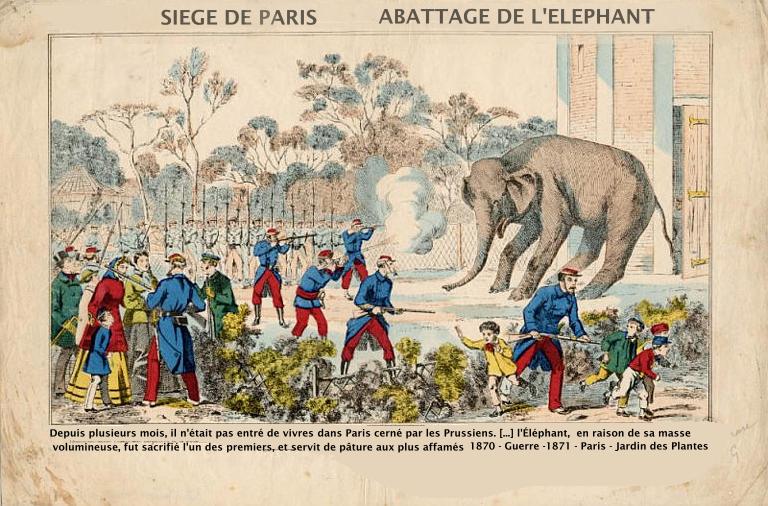
As I read about Sophia’s life after Gerald—how good that she has a life after Gerald, and what an interesting one it is!—I found myself struck by one passage in particular. Not an exciting one: no hoarding of food stuffs, no balloon rides to escape a besieged city, no business or sexual propositions, nothing like that. But to me it got at a central concern. It comes after Sophia—now proprietress and landlady of a successful boarding-house catering to English tourists in Paris, known to her guests as Mrs. Frensham, after the previous owner—has been approached by Matthew Peel-Swynnerton, scion of a Five Towns family and friend to Sophia’s nephew, Cyril Povey. Sophia suspects that Matthew has recognized her as the woman who ran away from Bursley thirty years ago. In the time it takes for each to twig to the other, the routines of years are overturned. Sophia retires to bed early, leaving her second-in-command to deal with the thousand details that must be managed for an establishment like Frensham’s to keep ticking along. Alone in her room, Sophia wonders if the elegant young man could really be acquainted with her family. He’s too young to know her sister’s husband. More to the point, isn’t he far too wealthy, far too important, far too socially-prestigious to have anything to do with the likes of the Poveys? Even the illness of her beloved poodle, Fossette (the novel’s greatest character) takes second place to the thoughts whirling through her head:

Moreover – a detail of which she had at first unaccountably failed to mark the significance – this Peel-Swynnerton was a friend of the Mr. Povey as to whom he had inquired … In that case it could not be the same Povey. Impossible that the Peels should be on terms of friendship with Samuel Povey or his connexions! But supposing after all they were! Supposing something utterly unanticipated and revolutionary had happened in the Five Towns!

Copying this passage now I notice the awkward syntax of the first sentence—mimicking, perhaps, Sophia’s flustered state. I realize too how typical it is that I would seize on a moment that references significance, and the failure of a first reading: fits the struggle I’ve been having to know what matters most in this book, what kind of significance it aims at. But what snagged me at the time, and what, reading on, I returned to again and again as a way to make sense of the novel’s concerns, was the word “revolutionary.” My first posts were preoccupied by the novel’s unstable tone, so I won’t belabor that topic here, but much hinges on how ironic we take that adjective to be.

The word choice could be a sign of Sophia’s irreducible Baines-ness, her provincialism, her lifelong alignment with the values of her childhood. When she returns to Staffordshire she herself broods over these concepts: both consciously kicking against the small-mindedness of a world that seems to her unchanged, and unconsciously manifesting similar traits by having lived in a small and unchanging Paris that has nothing to do with the elegance or cultural avant-gardism that intrigues someone like Doctor Stirling, whose love of Zola, for example, is not reciprocated by the woman who lived the events of his novels without really noticing them. On this reading, “revolutionary” would have to be ironic, the narrator poking fun at Sophia’s misguided sense of what counts as radical or extraordinary. We’d have to conclude that a social order in which Peels consort with Poveys would be a change, yes, but hardly a revolution.

And yet—for Peels to know Poveys is a big deal, even if the circumstance happened gradually, undramatically, such that one could never point to a single moment and say “then, that’s when this happened.” To demonstrate that change is inexorable—evolution in the strictly Darwinian sense, with no telos, no moral judgment: neither progress nor regression—becomes increasingly important to the novel as it comes to its conclusion. All of which is to say that I think we should take “revolutionary” straight: heartfelt on Sophia’s part and endorsed by the narrator.

As I thought more about it, I became convinced the word mattered a whole lot. The big question posed by Bennett in this novel is nothing less than: What is the meaning of revolution? A subset of related questions follows: Could the idea of a gradual revolution be anything other than an oxymoron? Is revolution a concept worth hanging on to, or should we discard it in favor of something else, perhaps simply change? What, in the end, changes in our lives? How much do we remain the people we always were? How much do we reinvent ourselves? How much do we slide into lives that our younger selves could never have imagined? It seems to me now that when Sophia, in that crucial encounter I wrote about earlier, drawing on the values of her upbringing and inflecting them with her own personality, first rejected and then accepted Gerald at the site of the old mine and the new railway (these standing as examples, and critiques, of progress), the novel was already staging a scene by which we could begin to ask such questions.

I snagged on the reference to revolution because I was surprised by the oblique, even casual way Bennett dealt with the Franco-Prussian War and the Commune. I had guessed these would feature as prominently as the execution of the criminal that Rohan wrote about last time. But I see now that it makes sense that this relatively minor event would be of larger importance to this novel than the big ones of public history. The execution matters less for questions of justice and more for Gerald’s rather pathetic response, for the final wedge it drives between him and Sophia, for her realization that no one will take care of her but herself. Thus the war with Prussia and the subsequent insurrection appear as the stuff of rumours, fantasies, and speculation—the latter in two senses of the term, since Sophia begins making her fortune by scrounging the shops in order to buy low and sell high. I wouldn’t say the novel is dismissive of these events—the material struggle, pain, and loss is real—but it’s convinced that for most people (or at least for Sophia and the world she operates in) their effects are muffled, reduced to the pressing but local questions of where to sleep and what to eat. At times, Bennett employs an almost Flaubertian irony in the bathos by which History appears. Sophia notes the end of the Second Empire, for example, only in the “mechanical” observation that it is a lot easier for women to sit in a carriage now that crinolines have gone out of fashion.

But Bennett doesn’t just give us the “ordinary person’s” perspective on momentous events. He gives us Sophia’s. Which is governed by her upbringing and the Baines values that she never shakes, even as she seems to build a life so different from anything her family can understand. She, unlike her husband or like Chirac when he clings to the false rumour that the French have scored a decisive victory over Pussian forces, has no truck with the idea of sudden reversals, coups de théâtre that reverse a bad situation (whether in politics or in household finances). For Sophia, such thinking could only be a fantasy (which contributes to my sense that the book is imagining alternate ideas of revolution). Sophia doesn’t flee Paris when the Prussians encircle the city—not from her love for her adopted home but from beliefs that come straight from Staffordshire:

She ardently wished to be independent, to utilize on her own behalf the gifts of organization, foresight, common sense, and tenacity which she knew she possessed and which had lain idle. And she hated the idea of flight.

Ironic, that last line, given her absconding with Gerald, but the point of this section of the novel is that she never flew from anything, really. She is happy during the siege because “she had a purpose in life and was depending upon herself.” That self-reliance, which kicks into overdrive after her collapse and illness—and it’s fascinating how much she struggles to recognize what she owes to the women who saved her, whose life choices she cannot respect and whom she ultimately displaces—is her greatest strength. She names it “pride”, and it is the most noted continuity with her sister, her upbringing, and the whole world of the first part of the novel. Yet it is also a weakness, in that it keeps her from life, prevents her from getting entangled with others, which is often to the good (hard to see what would be gained from agreeing to the advances of men like Niepce or Carlier, and life with Chirac might well have been a less awful but still subordinating version of life with Gerald) but ultimately makes her somewhat brittle and self-satisfied. I need to hold my tongue and wait until Rohan writes about the very end before commenting more on how we’re asked to evaluate Sophia, when all is said and done, but confining myself to what we’ve read so far, I think the New Year’s scene with Chirac was brilliantly handled, delicately describing the pleasant fug of sensual pleasure to which Sophia might have succumbed/given herself, and her ultimate inability to do so. The right thing to do, but still a missed opportunity, a complication we are more permitted to see than Sophia is herself. (So interesting, just as an aside, how few good/decent men there are in this book. Maybe only Povey? What do you all think?)

Rejecting Chirac allows Sophia to accept a new career. But running a pension, especially one as big as Frensham’s, means a life of endless labour. Like the domestic labour that it transposes to the business realm, the work of organizing the cleaning and cooking and managing of dozens of tourists involves constant running just to stay still. (Teaching, the career Sophia was set on and regrets the loss of, constitutes a similar treadmill, though it offers more gratification in the sense that teachers see pupils develop and move on to other things.) The end result of all the changes in Sophia’s life—escaping Gerald via her interregnum as a landlady to owning Frenshams—is an odd kind of stasis. Which brings me again to the idea of change, and what it means in this novel. I don’t want to foreclose the idea of revolution, but I think Bennett is pointing to an idiosyncratic, gradual meaning of the term, in which the gradual abrasions of daily life lead to changes we can see, let alone understand, only in retrospect. Could one reason Woolf had it out for him was that, like her modernist fellows, she believed in the more conventional sense of revolution: rupture, trauma, human nature changing on or about a certain date?

I’ll end with a point of continuity in the novel that surprised me—and that might also speak to my uncertainty of what change means or does in this novel. Elephants! That first one who comes to an untimely end at the Fair was not just a bizarre one-off. The landlord of the restaurant where Chirac and Sophia have their New Year’s feast proudly tells them of a friend, a butcher, “who has bought the three elephants of the Jardin des Planes for twenty-seven thousand francs.” (Two really were killed for their meat.) Seventy pages later, Sophia, returned to England and reunited with Constance, looks out the train window and is surprised to see “two camels and an elephant in a field close to the line,” which her sister tells her is the central depot of Barnum’s circus, a source of civic pride because the location, so close to Bursley, is in the very middle of England (and “there can be only one middle”). It is fanciful, but I think elephants will return one more time, a mere echo, to be sure, but a striking one, late in the novel (this is the only forward glance I’ll allow myself) when a shock to Sophia is described as a “crude, spectacular shame… that the gallant creature should be so maltreated by the bully, destiny.” Sounds to me like all the poor elephants in this novel. And that resonant phrase, “the bully, destiny,” returns us to the question of change. Will the end of the novel vitiate the very possibility? Or will it ask us to redefine what we mean by it? Stay tuned for the moving conclusion of The Old Wives’ Tale

The Old Wives’ Tale Reading Group

Gwen John, “The Convalescent” (1918 – 19), detail

I’ve long wanted to read something together with Rohan. (She was my professor, long ago–when she was very young, I might add–and so I have read a number of things at her behest, but that’s different…) We traded ideas and decided on Arnold Bennett’s The Old Wives’ Tale (1908). And I hope you will consider joining us!

As Rohan wrote in her post introducing the project, we chose Bennett because he bridges the periods we study and teach (Victorianism for her, modernism for me), and because we’re curious to actually read him, rather than about him. Although Bennett was popular with both critics and ordinary readers, his reputation, at least in literary studies, suffered a blow from which it’s yet to recover when Virginia Woolf wrote an essay savaging him (and his Edwardian confreres H. G. Wells and John Galsworthy) for writing books that failed to respond to the changes in life Woolf somewhat facetiously dates to December 1910. (To be fair to Woolf–and the essay’s fascinating, well worth reading, she was responding to a review Bennett wrote of her third novel, Jacob’s Room, which he spectacularly failed to get.)

I’ve heard it said that The Old Wives’ Tale is Bennett’s masterpiece. It’s certainly hefty: its story of two sisters from Staffordshire, one of whom stays tied to their father’s drapery shop and one of whom elopes to Paris, runs to 600 pages in my old Penguin edition. But we’ve spaced the reading out over six weeks and the chapters look manageable, so I hope you won’t be daunted!

Rohan’s even designed a schedule to keep us on track. As you can see, we’ll alternate posting, offering reflections, asking questions, and soliciting your ideas. We hope for lively comment sections, but you can also post at your own blog or newsletter, or share thoughts on Twitter (#OldWivesTale21). If you feel ambitious and want to write a guest post, I will be delighted to host it.

Drapery shop vs. Paris: one of these sounds better than the other. Yet I suspect Bennett will play with my expectations. How different will these destinies prove to be? This piece–admittedly, I’ve only skimmed it, to avoid spoilers–enticingly suggests the novel will be anything but staid. “No English novelist ever suggested more unspeakable things, and got away without being understood, than me in that book,” Bennett later claimed. I say, bring it on, Arnold! Who wants to join me to see if he does?

“It Screamed in its Own Blood”: Poems by Henia and Ilona Karmel

Henia and Ilona Karmel grew up in a cultured bourgeois family in Kraków. Photos show them together, always touching: an arm around the shoulders, a hand clasped. In one from 1938 Ilona, wearing a polka-dotted top and flowers in her hair that almost obscure the braid tied around her head, kisses Henia on the cheek, a full-on “come here, you” kiss that Henia responds to with a frozen smile that combines pleasure at the experience with irritation at the camera.

Ceija Stojka, “Los, Los, weitergehen! Damals 1943-1944. Auschwitz ist kein(e) Lüge. (Move, move, keep moving! In the years 1943–44. Auschwitz is not a lie),” 2006

I don’t know enough about them to say that they lived with an “us against the world” mentality—Henia remains a complete mystery; this remembrance offers insight into Ilona—but I can certainly say they went through an awful lot together. In 1940, the sisters, 18 and 14, travelled with their parents to eastern Poland, now held by the Soviet Union, in search of relatives who might take them in. But their mother, Mita, got cold feet, saying she would rather be killed by the Germans than saved by the Russians. (Regrettably prophetic.) In the end, she got her wish.) The family returned to Kraków, which meant German rule but also familiar faces. One of these would prove to be consequential. One day Henia ran into Leon Wolfe, a young man with whom she had begun a short, intense relationship at a resort in the Tatra mountains the year before; before long they were together again. When the Germans established the ghetto in early 1941, Leon insisted they move to a nearby village; Henia persuaded her family to join them. For a short time, life seemed about to improve—Henia and Leon were able to get married in June 1941—but the idyll didn’t last. The Karmels were forced out of the village, lived for a time in the forest and then on a farm where they narrowly escaped death after being mistaken for partisans (only the last-minute intervention of a relative in the local Jewish Council saved them), before making the difficult decision to split up. Leon accompanied the women back to Kraków; the girls’ father, Hirsch, went elsewhere. (Unclear where or why, but Ilona blamed herself for her father’s decision for the rest of her life. All that is known of Hirsch Karmel after that moment is that he was murdered at Treblinka.)

In the ghetto, Leon and Henia worked at a paper company, Mita nursed typhus patients, and fifteen-year-old Ilona joined a Zionist resistance movement, gathering information and passing messages. In March 1943 all four were sent to Plaszow, the camp depicted in Schindler’s List, which had been built on the grounds of a Jewish cemetery. (If you’ve seen the film, you might remember the car taking Commandant Amon Goeth to his villa along a road paved with headstones.) After a few months, the family underwent another separation. The sisters and their mother were sent, away from Leon, to a forced labour camp at Skarzysko-Kamienna. There the Germans had taken over an existing ammunitions plant, which they contracted out to a company called HASAG. Mostly the factory produced bullets, but one section—where the Karmels ended up—made underwater mines. These were filled with picric acid, a terrible chemical that poisoned many of the workers after turning their skin yellow.

Yet Skarzysko-Kamienna, like all camps, especially forced labour camps, was also a site of resistance—sometimes political but more often cultural. Prisoners prayed, danced, drew, and sang. The Karmel sisters began writing poetry, using bits of paper and pencil stubs slipped to them by a non-Jewish worker. In the summer of 1944, as the Germans began to retreat from the Red Army, the Karmels were shipped to another HASAG factory, a satellite camp in the Buchenwald system. The poems accompanied them, sewn into the hem of their clothing. (In later years survivors would remember the girls reciting their texts.) The poems were still there when, along with thousands of other prisoners, Ilona and Henia were sent on a forced march through the forests and fields of Germany in the catastrophic final days of the war. Along the way many prisoners died, killed by shooting, hunger, disease, or exhaustion. Some were deliberately run over by tanks and left for dead. This was the fate of the Karmels. As the woman lay in a pile of victims, the dead mingled with the nearly-dead, Henia saw a cousin march by in another set of prisoners. She managed to hand off the poems, begging the woman to pass them on to Leon, who would surely return to Kraków if he had survived. The next day—the last day of the war in Europe—the Karmels were rescued and taken to a field hospital. The women were barely alive, so badly had they been mutilated. Henia and Ilona each lost a leg; their mother did not survive.

Eventually the sisters were taken to a proper hospital in Leipzig, though given how ruinous conditions were in Germany at the end of the war, care was erratic, even dangerous. Henia and Ilona lay there for six months. Amazingly, Leon had survived the war (how I do not know, but I’m sure his story is equally remarkable) and duly returned to Kraków. More amazingly, he met the cousin who had been entrusted with the poems. Most amazingly of all, word of a memorial service held for the girls in late September (Leon, convinced they were still alive, had given only grudging consent) reached Leipzig. A man who knew the Karmels sent word to a refugee commission, which sent a telegram to Leon (still extant), who drove the 500 dangerous miles to Leipzig to be reunited with the Karmels in a scene that I imagine was similar to the emotional one depicted at the end of Art Spiegelman’s Maus.

Although they had survived, the sisters were in poor health and badly needed reconstructive surgery. Leon desperately searched for help. Back in Kraków he happened to meet a Swedish naval officer attached to the Red Cross. After learning of their predicament, the man, who was on the point of returning to Sweden, promised to arrange visas. In the final amazing turn of the story, he kept his word and before long the sisters were in Stockholm, where they found themselves in one of the best rehabilitation facilities in the world.

In 1948, Henia and Leon immigrated to New York. Ilona, whose injuries had been more serious, remained behind, but joined them the following year. She enrolled at Radcliffe, met her future husband Francis Zucker, a philosopher and physicist, and even moved with him to Germany for a number of years during which she worked at an orphanage and wrote the novel that would make her name, An Estate of Memory. Later the couple returned to the US; Ilona taught writing at MIT for years. Henia wrote two novels herself and many short stories. The poems were forgotten, although they had in fact been published by a Polish organization in New York in 1947 under the title Song Behind Barbed Wire.

After Ilona’s death in 2000 the manuscript passed to the poet Fanny Howe, a longtime friend of Ilona’s, who began the process of bringing the poems into English. As she notes in her introduction to a volume called A Wall of Two—from which I have taken these biographical details—the task grew into a complex creative endeavor. Translators Arie A. Galles and Warren Nieschłuchowski rendered the texts into English; Howe selected her favourites and adapted them, aiming to remain true to the originals while also shaping them for more powerful effect. The Karmels, she observes, were young and living in conditions of extreme duress when they wrote these texts, which she describes as awkward and unpolished. The versification drew on a culture that was being destroyed along with the writers; Howe sought to make the poems more modern, never adding but cutting repetition and avoiding poems “that used high and archaic language.” She sent her versions back to the translators whose comments inspired her final versions. A bold but also fraught strategy, which risks implying that the sisters did not quite know what they were doing. Leon Wolfe, who gave his blessing to the project, suggests something similar when he writes that “the essence [Howe] conveyed was truer than the original poems.”

Howe argues that the art made in the camps took two forms: it either looked back to the lost world of its makers or it depicted their new one. In making her selections, Howe concentrated on the latter. She gets a little high-flown explaining this decision, explaining that she avoided using the word “death” because it is “the end of language.” (I’m reminded of Poe’s remark that grammar can do what reason cannot, allowing us to write the impossible sentence “I am dead.”) But Howe has earned our good will: her project is a great success. Her versions are generous and generative. In an afterword, she considers three of the poems, comparing her adaptations to the originals. In each case, hers is indeed more powerful.

That’s especially true of my favourite poem, “Procession,” written by Henia. (The sisters later decided that Henia was the better poet and Ilona the better prose writer; although I’ve yet to read their prose, I agree about Henia as poet.)

Procession

By Henia Karmel, translated by Arie A. Galles, adapted by Fanny Howe

Two marched by

in striped prison garb

then two more in rags.

After them came four

on stretchers.

Their bodies jerked up

comically at the night sky.

Half-naked with broken legs.

A frozen cadaver and then

just beside the prison gate

came four more stretchers.

One pressed a blood-soaked cloth

across his face.

The parade went on

while we watched in dread.

The rag man on the litter was dying.

And at the end, four from a nightmare

lugged on their heavy shoulders

a bundled body.

They couldn’t cope and let it drop.

It screamed in its own blood.

“Procession,” a word that doesn’t appear in the poem, connotes something more stately, more subdued, and, aptly, more funereal, than a word that does, the ironic “parade.” A procession is solemn. (I’m reminded of Woolf’s “procession of the sons of educated men” from Three Guineas, her passionate condemnation of masculinity, violence, and fascism, that is, the things the Karmels would suffer.) But the title puzzles me, because I don’t think this is a solemn poem. It is more terrible than that. At first it seems flatly descriptive: here is a typical camp scene, probably from the end of the day, when the work details would return to barracks. It is observed by some unknown group, a “we” presumably comprised of other inmates, though as readers we too watch the scene in dread. But as it goes on, the poem becomes less observational and more expressionist. More hallucinatory. More pointed. The final, terrible image, in particular, belies the affectlessness of the opening. (Of course, any Holocaust representation is bound to show horror as inextricable from description.)

In some sense “Procession”—preceded by no article, neither definite or indefinite, as if the event described here were unending or, worse, coterminous with the world—is an account. I mean this literally. It counts victims. Two, then two, then four (although these, on stretchers, must surely be carried by others), then one, then four more, then a final four that carry one. Eighteen in all. In Hebrew, eighteen is lucky; it shares a name with the word for “life.” But there is more than easy irony here. The eighteen are a mix of the living and the dead. And they aren’t just eighteen, either. They must be accompanied by some shadowy, unknown carriers, to say nothing of the numberless, observing “we.” Perhaps Karmel is offering her own account, in order to challenge the counting that prisoners suffered each evening, the nightly roll call that sometimes went on for hours.

That challenge mingles precision with confusion, which befits the world of the Lager, which was at once regimented and chaotic. A similar, but even more consequential blurring concerns the relationship between the living and the dead. Are the bodies on the stretchers alive or dead? Presumably alive, otherwise why would the speaker describe a cadaver in the next lines? (Unless the difference is that one is frozen and the others aren’t, yet. What, incidentally, is the difference between a “cadaver” and a “corpse,” which is the word I would expect in this context? Will this cadaver be used for some kind of experiment? Does cadaver connote death more fully than “corpse”? Or does it imply, via its future utility, something less completely dead?) But if those stretchered bodies aren’t dead, how alive are they? “Their bodies jerked up/comically at the night sky”: the phrase “jerked up” is, to me, really strange. Presumably this is an adjective phrase not an action—it’s not that the bodies are convulsing (right?), but that their limbs, perhaps, are akimbo. This gruesome scene is made even worse, in my opinion, by that distressing adverb “comically,” which intimates the onlookers the speaker hasn’t yet referred to. After all, someone has to find their state comical. But what the hell does that mean? Are the bodies funny? Surely only despairingly so. But maybe we shouldn’t foreclose the possibility of humour so quickly. We wouldn’t want to enforce our pious sense of how the experience should be understood.

Besides, the poem soon leaves humour far behind. Horror is coming soon enough for those onlookers. Their distance from the procession only increases as the poem ends. What they see is awful. “The rag man” is dying; note the difference between this description, which seems to speak to his essence, and the more idiomatic “the man in rags.” Howe’s choice of “litter” is inspired. We can’t help but hear the implications of waste—in keeping with the language of the perpetrators, which routinely called the victims Figuren (puppets), Stücke (pieces) or Schmatte (rags).

And then comes the worst part, the final horror, the “four from a nightmare.” (Again, the implication is that these figures are themselves fundamentally nightmarish, although the reference is most likely to their situation.) Is the “bundled body” dead or alive? Dropped, it “scream[s] in its own blood.” So that means alive, right?  It screamed in its own blood. This vivid, terrible expression makes me think of someone screaming through a mouthful of blood, though I admit I’m influenced by the earlier image of another victim pressing “a blood-soaked cloth/across his face.” (That “across” subtly implies the face itself is bloody, some injury more devastating than the one the more idiomatic “to” would suggest.) But screaming in the blood is hard to imagine. If the victim is not in fact gurgling from a bloodied mouth—and could they really be screaming if their mouth were so full?—then maybe the description is metaphorical. (Even if yes, this poem is remarkable at evoking bodily pain.) Maybe to scream in the blood is to scream inside? From the depths of one’s being? How would the onlookers know, though? The end of “Procession” seems less psychological than existential. Beyond an individual who suffers at least twice-over—in addition to their initial injuries they are dropped by their fellows—this final line offers a howl of despair, pain, and abandonment. One that is decidedly not universal, but perhaps the unhappy fate of all the camp’s victims.

The cover image shows Ilona (in the wheelchair) and Henia in the garden of the clinic in Stockholm, 1946

Descriptions and judgments. Living and dead bodies. Physical and psychological pain. Observers and participants. “Procession” makes us wonder whether any of these oppositions stand. Fanny Howe has done English speakers a service bringing it and the other poems collected in A Wall of Two to our ears. I hope they will find many readers.

What I Read, March 2021

The daffodils came and went. Then the quince bushes and spiraea (some call it meadowsweets, apparently, which I like better). Next the plum, the dogwood, and the redbuds. Most spectacularly, the cherry. Some days were cold, most were warm, no bugs yet. Good sitting-outside weather. Our daughter went back to in-person school. I wrote some things, though not my book. And as always I was reading.

Alena Schröder, Junge Frau, am Fenster stehend, Abendlicht, blaues Kleid (2021)

The title is something like “Young Woman, Standing at the Window, Evening Light, Blue Dress.” It’s a description of a Vermeer meant to have been expropriated from a Jewish art dealer in 1930s Berlin but perhaps saved for his descendants although more likely lost in the turmoil of WWII. The protagonist of Schröder’s engaging debut novel—I read it in less than a week, which should tell you something, as I am not exactly a speed-reader in German; just couldn’t put it down—is Hannah, a wry if rudderless graduate student whose sole anchor is her weekly visit to Evelyn, her maternal grandmother and only living relative. At her swish retirement home, the proud and irascible old woman instructs (read: yells at) her granddaughter: how to water the orchids, how to arrange the blinds, how to do everything the right way. The two love each other, but they also can’t be close, too much is between them, especially Hannah’s mother, who died of cancer a few years earlier but whom Evelyn could never find it in her heart to love.

When Hannah finds a letter from an Israeli lawyer explaining that Evelyn might be eligible for reparations from an art restitution case—a letter Evelyn refuses to say a word about—Hannah uses this sudden interruption of an inexplicable family past (they aren’t Jewish—how can the Nazis have stolen from them?) as a pretext to further a disastrous affair with her dissertation advisor. The novel moves between the present-day and 1920s/30s Berlin, so that we are always one step ahead of Hannah, and in fact end up knowing more than she does, but the search, although in some respects futile, is hardly a failure: Hannah changes her life, mostly, but in ways that readers will cheer on, she is so likeable.

Schröder handles the Weimar/Nazi-era sections well, they never seem like a pastiche. Her female characters are especially good; they struggle with feelings of inadequacy when they cannot live up to the impossible demand that their personal and professional lives be equally perfect. Even minor characters are vivid—a woman named Rubi comes in and steals the show in the last quarter; I begged Schröder to write a novel just about her but nothing doing. More importantly, in its modest way (this is not a stuffy or self-important book), the novel says something interesting about German-Jewish relations. By emphasizing the non-biological familiar relations that link its main characters, Schröder argues that Jews and Germans (at least for assimilated German Jews, which is a big caveat) were so intertwined that the Nazis’ murderous efforts to distinguish them passed down intergenerational trauma that only hurt everyone (though of course not equally). In a wonderful subplot, Schröder satirizes the ghoulish fetishization of the Jewish past—Hannah is pressganged into attending a meeting of a group bent on maintaining Jewish life in Berlin (no one in the group is Jewish)—which is an easier way to respond to the past than mourning the interconnectedness that was lost.

Junge Frau is funny, smart, and suspenseful. I think English-language readers would eat it up and I hope it will be translated soon. Thanks, Magda, for giving me a copy.

Philippe Sands, The Ratline: The Exalted Life and Mysterious Death of a Nazi Fugitive (2020)

I had mixed feelings.

Miriam Katin, We Are on Our Own: A Memoir (2006)

Memoir in comic form about the author’s year in hiding with her mother in the Hungarian countryside in 1944 – 45 when she was a very young child. Thanks to the Horthy regime’s relatively lax attitude to Jews, Hungary had the largest intact Jewish population in Europe at this late stage of the war. Tired of their ally’s foot-dragging, the Nazis deposed Horthy and sent Eichmann to deport Jews en masse (100,000 were gassed at Birkenau that summer). When Katin’s mother, Esther, receives a deportation notice, she contacts a blackmarketeer from whom she buys a false identity. Thanks to the connivance of her devoted non-Jewish maid, who agrees to lie to the SS, Esther fakes her death and escapes to the countryside, first to the uncle of the man who sold her the papers. The man and his wife have no idea who she is, but they take her in; the elegant city woman quickly becomes a farm girl. She suffers the unwanted attentions of a German officer (rape disguised by chocolates and declarations of love), survives Allied bombing raids, and lives to be liberated by the Russians, an event greeted by the locals with fear. To be sure the drunken Ivans who take over the uncle’s farm are dangerous—when one of them dies while trying to slip into Esther’s bed she is again forced to go on the run—but others are helpful, including some kindly officers who direct her to a refugee center. An old family friend takes the woman and her small child into his own home, a villa he rattles around in, after the deportation of his parents, with only his old governess for company. The old woman, who lives in a prewar Paris of the mind, teaches little Miriam to plié while her former charge falls in love with Esther. Esther’s husband, who has been in the army this whole time (I am hazy on how a Jew, assuming he was one, could have served with the Hungarians) and through a combination of luck and effort has retraced his wife’s journey, miraculously arrives at the same refugee center. The reunification of the family is more successful than most—certainly more so than the one depicted in Art Spiegelman’s Maus, the text that inspired Katin, who spent her career as a graphic artist, to take up comic making in her 60s.

I’ve read many Holocaust memoirs, but I always learn something new. Across Europe, Jews were forbidden to own pets: I knew this, but somehow hadn’t realized they had to abandon the ones they already had. In a heartbreaking scene, Esther leaves Miriam with a trusted friend and slips off to bring their beloved Schnauzer, Rexy, to a central depot, where a German officer eyes him with greedy appreciation.

Publisher Drawn & Quarterly has produced We Are on Our Own with their usual care. At first glance, the cover looks stark and ill-designed. The boards are stiff cardboard, the pages thick and creamy. It looks, I realized, like a homemade scrapbook—a perfect fit for the contents. Scraps, a frequent trope in Holocaust literature, are an apt way to think about victim experience. Scraps are waste or refuse that, through care and work—like the alchemical work of literature—can be transmuted into meaning and value.

Although some of the events might be confusing to readers without background in the subject (Katin is chary with context), this memoir is worth your time.

Ida Jessen, A Change of Time (2015) Trans. Martin Aitken (2019)

Novel about a schoolteacher in a remote part of Denmark in the late 1920s whose husband, a doctor, has just died. The husband was not a bad man—devoted to medicine and insistent upon improving the living conditions of his patients, even the ones he didn’t like. But he was so austere, so contemptuous of the world, so spartan in his affection that being married to him was a trial the cost of which Lilly—almost always known by her married name, Fru Bagge—had not even realized. And yet she still grieves his death. With the passing of time, she allows herself to process these feelings—and to open herself to new ones.

To me, the title refers more to “the change that time is” than to “a specific change over months or years.” Nothing stays the same, not the fruit trees that slowly take root in the region’s sandy soil, not the children she once taught, not Lily’s sense of herself. This is a short, gentle, careful book, beautifully translated by Marin Aitken. It reminded me of J. L. Carr’s A Month in the Country. Perfect if you like wistful, quiet books that are sort of sad and sort of happy and make you sigh at the end. A source at Archipelago Books tells me another book by Jessen is forthcoming. Happy (but moderate, restrained, melancholic) news.

Narine Abgaryan, Three Apples Fell from the Sky (2015) Trans. Lisa C. Hayden (2020)

Under the guidance of the indefatigable Reem, I read this novel as part of a group on Twitter. (A group read I actually completed, amazing!) Of particular joy was the participation of the book’s translator, Lisa Hayden, whose love for the text is obvious. Abgaryan is Armenian, though the book was written in Russian, which is interesting given the role Armenia has played in the Russian literary imaginary: several members of the group were able to instruct me on this. Three Apples is set in a fictional mountain village called Maran. As the novel begins, the main character, Anatolia, prepares for death: she lays out her best outfit so that those who find her will be able to dress her for the funeral, she makes sure her house is spotless, she feeds the chickens. At 58, Anatolia is the village’s youngest resident. Maran used to be home to 500 people. Now there are 23 households clinging to a mountainside that was devastated by an earthquake (almost as devastating as the earthquake of modernity that has taken away the young people). But what promises to be an elegy takes a sudden swerve. Anatolia doesn’t die; nor does Maran, at least not quite. I agree with Olga Zilberbourg’s argument, in this excellent review, that Maran is “Abgaryan’s attempt to if not bypass imperial history altogether, then to find a way out of imperialism’s cycle of violence and destruction.” In this sense it is a fantasy—but an enabling one.

Those of us in the reading group spent a fair bit of time wondering when the novel is set—there are some historical markers, but other events aren’t readily identifiable. The novel is both in time and outside it. As one reader thoughtfully put it, “there is history and there is tradition and though the two do not necessarily match, they are both true.” This double quality is also evident in the novel’s style, which has fantastical elements but is also rooted in realism. The opening chapter about Anatolia’s preparation is followed by dozens of marvelous descriptions of how to do the things that make life go on: cooking, cleaning, finding and preparing herbs, building fences and coops, shoeing horses, the list goes on. I loved this material, enjoyed the book a lot, and hope for more Abgaryan in English.

Myron Levoy, Alan and Naomi (1977)

1944. Queens. Alan Silverman, 12, is busy with stickball, model airplanes, and his new friend Shaun (Catholic and thus a source of unease to Alan’s mother). He has no time for or interest in helping that weird girl upstairs—Crazy Cat, Frenchie-the-nut, the kids call her—the one who moved in with the Liebmans. Naomi Kirshenbaum is a refugee: her father, a member of the resistance, was murdered in front of her; together wither her mother she escaped Paris for Switzerland and then America. Ever since she’s been traumatized, barely speaking, starting at every noise, prone to tearing maps into tiny shreds. Her psychologist—Levoy shrewdly keeps the doctor off stage, filtering their suggestions through the adults in Alan’s life—thinks it would be good for Naomi to spend time with someone her own age. Alan, threatened with failing to be a mensch if he refuses, grudgingly does so. Their slowly developing friendship is deftly handled; the neighbourhood near the abandoned Homes airfield lovingly evoked. A good (Jewish) boy, Alan berates himself for not being able to help Naomi better or faster, and he reacts with fascinating touchiness when adults coo over how lovely and kind he is. Things are best when he can simply acknowledge how much he likes spending time with her. But what will his friends think? Has Alan misunderstood them as much as he once did Naomi? Everything seems to be heading to a predictable if satisfying ending when Levoy offers a devastating final swerve that changes everything—and which I suspect would not be published today. After beginning by distinguishing the fates of American and European Jews, Levoy ends by equating them: no place is safe. Such an interesting book: obliquely about the Holocaust, directly about trauma, and quite a challenge to the feeling, ascendant in the 1970s, that American Jews were Americans first.

I can’t remember who recommended this book to me—pretty sure I didn’t stumble across it myself. If it was you, make yourself be heard so I can thank you! [Edit: Turns out this was Magda, too. I owe her even more this month than usual!]

Miriam Katin, Letting It Go (2013)

This follow-up of sorts to We Are on Our Own jumps to the present day. Katin’s son—he was a little kid in her earlier book—has grown up and moved to Berlin, fallen in love, and wants Katin to get him EU citizenship by virtue of her birth in Hungary. She is reluctant, and even more so to visit Germany. What she comes to realize, though, is that even though you have to hold on to the past, you can’t let it strangle you. It all feels a bit pat, a sort of whirlwind tour of German memory culture circa 2010.

Simon Wiesenthal, Max and Helen (1981) Trans. Catherine Hutter (1982)

The Ratline got me interested in Simon Wiesenthal; I’d heard of the “Nazi hunter” before, of course, but I knew hardly anything about him. I started with Max and Helen because Sands listed it in his annotated bibliography as a work he recommended for a better sense of the atmosphere in and around wartime Lviv/Lvow/Lemberg, especially the camps in which the Nazis interned the slave labour they used to build Durchgangsstrasse 4 (DG 4), a highway through the Ukraine. (The same milieu is memorably evoked in Rachel Seiffert’s excellent novel A Boy in Winter.) I certainly learned more about Galicia in 1941 – 43 (an especially terrible place to be Jewish). But I got something else too, something closer to “the remarkable true love story” promised on the terrific cover of the US first edition I checked out of the library.

In Max and Helen Wiesenthal hunts the commandant of one such camp, a man notorious for his brutality, who after the war has become a manager at a prospering West German firm. To make his charge stick, Wiesenthal needs witnesses, but almost no one survived the DG 4 camps. Eventually he is led to a man, the Max of the title, now a doctor in Paris. Max puts him off but eventually agrees to an interview—but only to explain why even though Wiesenthal’s information is correct, the industrialist and the Nazi are indeed the same man, Max cannot testify against him. In a long, almost hallucinatory encounter in Switzerland, Max tells Wiesenthal how he and his fiancée, Helen, were imprisoned together; how, thanks to certain privileges accrued from being the camp “doctor” (he had no supplies worthy of the name), he was able escape and join the partisans hiding out in the nearby marshes (alone, because despite his pleading Helen refused to leave her disabled sister behind); how he spent a decade in a Soviet gulag before being repatriated to Poland in 1958. Upon his return Max searched tirelessly for Helen; a chance encounter led him to discover she was living under a different name in West Germany. He made the trip, tracked down the address, rang the bell. The door opened—only to reveal… well, I won’t say, though it’s fairly dramatic. The revelation leads Wiesenthal to visit Helen himself, to learn her side of the story, and to see for himself why Max said he couldn’t testify. An epilogue brings the story of the tragic pair to the present (that is, the early 80s).

Max and Helen is short, but even if it had been twice as long I would have read it as raptly. The story fascinated and moved me. I resolved to read more Wiesenthal, and immediately checked his autobiography out of the library. Paging through the front matter my eye fell on a list of titles, divided into fiction and nonfiction. There, under fiction, stood Max and Helen! I was astonished—and then chagrined. Googling the Nazi’s name revealed a general in the Wehrmacht, who had never been in the SS; searching for the camp drew a similar blank. Some of the narrative longeurs, in which Wiesenthal presses Max on the importance of Wiesenthal’s self-imposed task of meting out justice to former perpetrators, now made more sense. Still, if the book is intended as an advertisement for his project, it’s a funny one. Because justice isn’t done. Unless we take Wiesenthal’s point to be that justice is more complicated than we might like to think. In which case his book proves that admirably.

I still don’t know the relation of fact to fiction in this tale—do you? I’ll be taking a look at Tom Segev’s fairly recent biography in hopes of learning more.

David Downing, Wedding Station (2021)

I’m a fan of Downing’s series about John Russell, an English-American journalist in 1930s – 40s Berlin who becomes a spy (for various agencies, it gets complicated) in order to protect his German son, and his girlfriend, Effi Koenen, a film actress on the outs after the Nazis take power. The Station books (each is named for a train station in Berlin or elsewhere in Europe) are less dazzling than Philip Kerr’s Bernie Guenther novels, which detail the same period, but they are also less cynical. (Less misogynist too; Effi becomes a major character.) Downing has written several books since ending the series, but I don’t think I’m the only one who missed Russell and Koenen. Seems Downing has too, because he’s done what seems de rigeur for crime novelists and written a prequel. It’s good! In fact, it’s better written than usual (Downing is not flashy) while still being just as well researched (always his strong point). Newcomers could start here; fans will enjoy learning the background of favourite characters. Wedding Station (the title refers to a working-class, pro-Communist neighbourhood) is set in the immediate weeks after the Nazis take power and ably conveys how quickly the new rulers chilled dissent and attacked their enemies, especially socialists and communists.

Vigdis Hjorth, Long Live the Post Horn! (2013) Trans. Charlotte Barslund (2020)

Sad to say, my favourite part of Long Live the Post Horn! was the passage from Kierkegaard from which it takes its title. (The post horn never sounds the same twice; no one who blows into it will ever be guilty of repetition; it is a symbol of authenticity.) The idea of a “good old-fashioned letter,” as the text somewhat ironically, somewhat earnestly calls it, is dear to my heart. Which meant I was drawn to the premise of this novel in which a PR consultant is lifted out of a general ennui when she throws herself into the fight by the Norwegian postal workers union to challenge an EU-directive deregulating delivery service. More novels about arcana, bureaucracy, and politics, please! Too bad the details of the battle, which surprisingly becomes a hot topic at the annual Labour Party congress, are passed over pretty hastily.

At first I found the main character’s flat affect irritating—I kept comparing it to the much more devastating portrayals of female despair in Jean Rhys—and almost put the book aside but I was glad I stuck around long enough to see her wary transformation. In the end, though, Hjorth is better at naming values than at making us feel them. Here’s Ellinor watching through a lit window as a man paces his office with his phone to his ear: “It was a comforting sight. If I had kept a diary, I would have written about it. About the working human being, the committed human being, about people trying to change things, people investing their energy, talking to one another and coming together.” Later this sentiment turns into a full-blown encomium for “a language that didn’t seek to spin or obfuscate, but to open and elevate, a language that had helped me to greater clarity, which had pulled me from the mire.” Ellinor herself never experiences that kind of language, and I’m unclear Hjorth knows it. But a lot of smart readers like this book; for a much more positive take, read Grant’s piece.

Jane Harper, The Survivors (2020)

Crime novel set on the southern coast of Tasmania. A local boy who survived a terrible storm ten years before (his brother did not) returns home with wife and newborn to help his mother pack up before his father is moved into a facility for dementia patients. Shortly after, a seasonal worker, an art student from the mainland, is found dead on the beach. The events of the past intertwine with the present; small-town rivalries, pent-up hostilities, and long-buried secrets come to light. The police investigate, but they are at the periphery of the book. In sum, The Survivors is structured very much like Harper’s previous book, The Lost Man. It’s not as good, but it’s definitely diverting.

Monica Hesse, They Went Left (2020)

I was skeptical about this book even though it featured on the NYT’s list of best YA books for 2020. A novel about an eighteen-year-old girl in the months after liberation? I feared Holocaust porn. (Not actual porn: I mean using the Holocaust for grisly, unwarranted thrills.) Although Zofia Lederman, the girl in question, sounds at times like a 21st century teenager, They Went Left is a gripping and intelligent read. I enjoyed the focus on life after liberation: yes, we get glimpses of Zofia’s Holocaust experiences and gradually learn a more complete story of what happened to her, but such moments are important not in themselves but to show how someone so victimized might go about putting a life back together.

Most of the novel is set in the DP camp at Föhrenwald, in Bavaria, where Zofia ends up in search of her younger brother, whom she hopes against hope has survived. The camp allows Hesse to depict different responses to the gift/curse/fate of having survived: ardent Zionists, determined to get to Palestine by any means possible; survivors who just want to return to their former homes; people eager to leave the past behind; people hoping they can resurrect that past.

In addition to being, as best I can tell, carefully researched and historically accurate, the novel also offers some dramatic (even melodramatic) plot twists, and weighs in on big questions: what does family mean, in the wake of genocide? can people who suffered different persecutions come together? Some scenes are especially vivid: a joyful wedding in the DP camp; the arrival of a pile of cast-off clothes that survivors desperately paw through; a night between two lovers whose bodies are marked by past suffering. Some striking moments are sensitively presented: when her lover asks if he needs to use protection, Zofia says he needn’t worry—she hasn’t menstruated in years.

In sum, a visceral and thoughtful novel. I’ll read more by Hesse, who has two other WWII-era YA novels.

Ariana Franklin, City of Shadows (2006)

Readers of this blog—hell, of this post—will know that I am a suck for all things Berlin. Which is probably why I crammed this book into my nightstand when my wife, who bought it on vacation in Canada years ago, was ready to get rid of it. For some reason—probably because I had agreed to read several other books, which is a surefire way to get me not read them—I decided that now was the time to give it a go. I was prepared to be dismissive—it’s about a lost Romanov—but I was won over by the book’s strong characterization and plot.

Esther is a Russian Jew who, like so many other refugees, washes up in 1920s Berlin, in her case after being mutilated in a pogrom in the Pale of Settlement. She becomes the secretary to a Russian nightclub impresario who has stumbled upon what he thinks will be his ticket to fame and fortune—he’s been given a tip that Anna Anderson, a nearly silent woman locked up in an asylum on the outskirts of Berlin, is in fact the Grand Duchess Anastasia Romanov. Anna looks like Anastasia. She has the peremptoriness and carelessness of a Royal. But she seems to have forgotten Russian. And although she knows details of Romanov family life she might just have read about them somewhere. The nightclub owner is convinced, though—mostly, he’s convinced that Esther can coach/bully the woman into satisfying the distant Romanov relatives scattered across Europe that Anna is the real deal. But before that can happen a terrifying man tries to attack her. Anna insists it’s the Cheka, the Russian secret police, looking to finish what the Bolsheviks started but apparently failed to do in Yekaterinburg. But Esther thinks the threat concerns Anna’s non-Royal past. Together with a sympathetic police officer, she sets out to learn the truth. Split between 1923 (the worst year of Weimar-era hyperinflation) and 1933, the book covers a lot of ground. Franklin plays a little fast and loose with the history of the first months of the Nazi regime, but she acknowledges this and in general her history is sound. At one point her inspector thinks that “political violence was unleashing individual savagery,” and City of Shadows does a fine job thinking through the intersection of structural and psychological violence. No book for the ages, but totally worth tracking down. In fact, you can have mine if you like.

Sarah Krasnostein, The Trauma Cleaner: One Woman’s Extraordinary Life in the Business of Death, Decay, and Disaster (2017)

I do not like dirt. Or clutter. (I will pause here so that readers who have been to my house can finish laughing. I used to protest that books are not clutter, but have since bowed to reality.) Anyway, dirt especially, I’m not phobic about it, exactly, but definitely a little grossed out by it. And yet fascinated, too. Same with squalor. That long section about cleaning up the alcoholic father’s house in volume I of My Struggle? Couldn’t get enough. “Time Passes”? My favourite part of To the Lighthouse. The business of cleaning up otherwise unlivable squats? That’s why The Good Terrorist is Lessing’s underrated masterpiece.

In other words, I’m an ideal reader for The Trauma Cleaner. The title refers to Sandra Pankhurst, who has been many things in her eventful life: an adopted and abused child, a young married father and husband, a drag queen, a sex worker (including at a mining town in central Australia that sounds terrifying), a wife and homemaker, a businesswoman, and, in her latest and perhaps most triumphant incarnation, the owner of a business that cleans up after violent deaths, acts of nature, meth lab explosions, and hoarding cases. Somehow I always assumed someone official, the police or emergency services or something, was responsible for these unpleasant situations, but not true, at least in Australia, and I’m guessing the US too.

It is Sarah Krasnostein’s genius to show how the accumulated weight of Pankhurst’s experiences—mostly traumatic: as an unloved child, for example, she was relegated to a shed in the back garden of her working-class Melbourne home, allowed inside to eat with the rest of the family only once a week—has made her so adept at managing the people and situations her business remediates. Sandra leads her team through work that most of us would balk at, despite being almost constantly out of breath (she suffers from COPD, probably brought on from the combination of past recreational drug use and zealous hormone therapy), all while maintaining perfect makeup, hair, and nails. Pankhurst is remarkably non-judgmental. She’s not interested how her clients, whether living or dead, ended up in their situations. She’s interested in results. (I’m fascinated by how this trans woman encapsulates the unruffled non-introspective competency enshrined in at least a cliched idea of Australian masculinity.) Krasnostein notes, poignantly, that Pankhurst’s acceptance stems from her insistence that everyone deserves to life their life. Everyone fits into “the order of things, even those who most of us would exclude from it.

Krasnostein’s intelligence is evident throughout The Trauma Cleaner. Sometimes she’s even epigrammatic; reflecting on abuse and neglect she writes: “In the taxonomy of pain there is only the pain inflicted by touching and the pain inflicted by not touching.” She’s up front about her love for Pankhurst, and how difficult that love can be. (The flip side of Pankhurst’s equanimity is her ability to erase unpleasant parts of her past, like the wife and children she abandoned in penury.) It’s not a perfect book: Krasnostein’s metaphors sometimes get away from her, and the sections about Pankhurst’s clients are better than the ones about her biography. (I liked seeing Pankhurst in action more than hearing about her.) But I think even people less fastidious/compulsive about clearing away clutter, dirt, mold, dust, blood, shit, and pus than I am will find this book deeply interesting. Decay comes to us all—and the only thing that mitigates it even temporarily is love. Sandra Pankhurst’s gift is to love those whom others would rather not.

Thanks to Tali Lavi for the recommendation (seconded by other Australian book friends). Looking forward to the US release of Krasnostein’s second book—it’s called The Believers and, as such, promises to be about something else I have a fascinated yet ambivalent relationship to. Bring it on!

That was March. Plenty of decent reading, especially the Schröder, Jessen, Abgaryan, Levoy, and Krasnostein. Onward into the fullness of Arkansas spring!

Anja Willner’s Year in Reading, 2020

In the next week or so I’ll be writing up my reflections on my 2020 reading year. In the meantime, I’ve solicited guest posts from friends and fellow book lovers about their own literary highlights. I’m always looking for new contributors; let me know here or on Twitter (@ds228) if you have something you want to share.

The fifth post is by Anja Willner (@WillnerAnja). Anja lives in Munich, where she has a running argument with herself about what she likes best: reading books, hunting after books, or talking about both.

In 2020, I read 70 books, which is quite a lot for me and certainly more than in recent years. Probably due to less work-related stress and more inspiration by Twitter folks (thank you, Book Twitter)! As I’m German, I’ve got quite a few German books or books translated into German on my list. I tried to provide the English title whenever possible, but some books unfortunately aren’t (yet?) available in English. I hope you’ll bear with me nonetheless!

•           Toni Morrison: Love

What is there to say about Toni Morrison you do not already know? Not much probably, so I’Il just say I’ve yet to pick up a Morrison novel that is not good.

•           Elizabeth Taylor: Blick auf den Hafen (translator: Bettina Ababarnell) [English original, A View of the Harbour]

Pretty much the same goes for Elizabeth Taylor: how in the world did she manage to write such impeccable novels? It is and probably will remain a mystery to me. Anyway, my plan for the years to come is to read all of her work.

           Angie Thomas: On the Come Up

Great writing here, especially the dialogues. Also, I learned a lot about hip hop and feel I appreciate this genre of music more now. Love her!

•           Marcelle Sauvageot: Fast ganz die Deine (translator: Claudia Kalscheuer; English title, Commentary)

Kudos to Asal Dardan (@asallime) for pointing me towards Marcelle Sauvageot! I’m always thankful for suggestions of female authors to rediscover. In case you are not familiar with this little gem (I hadn’t heard of it until a year ago), the backstory here is quite interesting. It’s Sauvageot’s only published literary work as she died very young. Fast ganz die Deine is a letter to a man that left her – the story goes that it circulated among friends who persuaded Sauvageot to have it published. No wonder everyone who read it was enchanted by this work, given its perfection. (Good book to start your reading year off, if you ask me. Far better than the Bely dungeon I’ve locked myself into this January. Got out recently and will brag about it for years, so there’s that.)

•           Annie Ernaux: Erinnerung eines Mädchens (translator: Sonja Finck; English title, A Girl’s Story)

Okay, no surprises here: everybody seems to read and love Ernaux and indulge in autobiographical/pseudo-autobiographical writing at the moment (the “moment” stretching back several years, I guess?), and I’m no exception.

The reason why I’ve long avoided Ernaux’s works is simply I’m so ashamed of my practically non-existent French that I haven’t read many (translated) French books recently. I remember struggling with French pronunciation and comprehension, but some part of me insists it might be the language of my heart. (Probably not true at all and sorry, Russian. We’re still dating, right?)

•           Chris Kraus: I Love Dick

Forever gender-confused here as there is a German (male, cis) filmmaker who goes by the same name. Similarly, I felt confused at times by I Love Dick, but largely liked it very much. Also, I made a lot of screenshots of the text I will probably never look at again.

•           Павел Санаев: Похороните меня за плинтусом (Pavel Sanaev: Bury me behind the baseboard)

There are some rules in my life. For example, I’ll read anything recommended by my lovely and witty Russian teacher, Rita. If you’re into Soviet culture, especially the films, this small novel will particularly interest you, for the author is the son of the actress Elena Sanaeva and the stepson of famous actor Rolan Bykov.

If you’re not into Soviet culture and the personal dramas between actors and actresses (I learned to care, it’s so interesting once you start), don’t worry: It’s sufficient to be a human being to care for this little book. Bury me behind the baseboard is as heartbreaking as it is autobiographical.

The author, Pavel Sanaev, spent most of his childhood with his grandparents–here comes the heartbreaking part—against his mother’s will. The grandparents simply refused for years to give him back to his mother, while persuading the child his mother, Elena, had abandoned and forgotten him. I really cannot describe the feelings I have about how his grandmother treated him, a then small child. I don’t have kids, but the sheer thought anybody could be like that to a kid makes me sick. (There is no physical abuse, though.)

Everything is told from the perspective of the child. Okay, we’re all familiar with this trick, I guess. And maybe we can agree that telling a story from a child’s perspective can either add strength to your story or make it extra cringy. Here, the former is the case. Have I already said how heartbreaking all this is? It is—but it’s also a very funny and sad and wise book.

•           George Eliot: Middlemarch

I know a thing or two about literature written in German and quite a lot less about 19th century Russian literature, but apart from that, my reading biography consists of gaps I sometimes find hard to forgive in myself. To catch up on classic English literature, one has to start somewhere, so I started here and did not regret it. What a rich book, and so funny! Huge thanks to author, translator, and literature lover Nicole Seifert (@nachtundtagblog) whose enthusiasm made me pick it up.

•           Marlen Haushofer: Die Wand (The Wall)

Should you really recommend a novel about near-total isolation in the wilderness to anyone in a pandemic? Not sure, but it worked for me. One of the greatest texts about nature and the question of what it means to be a human being I’ve come across so far. Also, finally a writer who really, really gets cats! But be warned, cat lovers, you will come across some gruesome scenes. 

•           Marlen Haushofer: Wir töten Stella (We Murder Stella)

Great novella by the same author which sadly doesn’t seem to have been translated yet. The casual seduction and destruction of a young girl is not a new motif in literature, but here it shows post-war Austria (could have taken place in Germany as well in my opinion) at its coldest. The non-communication of the family and the cool tone of the narrator were killing me.

•           Andy Miller: The Year of Reading Dangerously

I’m so thankful for book twitter and about twice as thankful for Andy Miller still/again being on Twitter, because I rely on “Backlisted Pod” recommendations so much. And well, I knew even before I picked it up that there was no way I wouldn’t love The Year of Reading Dangerously!

Personally, I’m a fan of tackling the classics no matter what. They are not being stored in some holy shrine, they are for everyone. Maybe not for everyone to enjoy, but, for me, that’s another matter: one has to learn to appreciate literature as an art. The more you read and think about what you read, the more you get out of your reading. And if you don’t understand everything, what’s the matter with that if you’re enjoying yourself? I’m all for critical debates on how a canon is established and how we can include works by women, people of Color and other marginalized groups better. At the same time, I enjoy discovering the classics and reading them (often this is a critical look back, but mostly it’s enjoyable).

Andy’s book was so much fun to read for me and inspired me to make even more lists of books I love to talk about reading someday. Great inspiration!

•           Theodor Fontane: Der Stechlin (The Stechlin; reread)

I come from Brandenburg, in Eastern Germany, the region Fontane wrote so often about; his works were always around when I was a kid (most households there own at least one book by him). I guess that makes Fontane the most admired and unread author of that part of Germany.

Fontane himself used to joke that in this novel, not much happens. It’s true, at least if you’re reading for the plot, of which there is not much. Der Stechlin really is a novel that for me is the perfect fit for the landscape of Brandenburg. Not much there to entertain the eye. Until you learn what to look out for.

           Olivia Wenzel: 1000 Serpentinen Angst (A Thousand Coils of Fear)

Really strong debut novel dealing with problems such as racism. I liked the novel’s experimental form: at first, the reader doesn’t always get who is talking und what’s going on, but it’s not an annoying l’art pour l’art thing. Just a very fresh approach. I noticed some parts (really not many!) I would have wanted edited in a slightly different way, but that is a matter of taste. Overall, I’d advise everyone interested in contemporary German literature to read this novel and follow the work of Olivia Wenzel closely. (I hope there will be a translation soon!)

           Deborah Levy: Was das Leben kostet (translator: Barbara Schaden; English title: The Cost of Living)

Another “late to the party” entry. I like Levy’s writing a lot; I’m not so sure about some of her political beliefs, but nothing I couldn’t live with. Will probably need to read a lot more by her!

•           Rachel Cusk: Lebenswerk (translator: Eva Bonné; English title: Motherhood)

Until a few years ago, I couldn’t be bothered reading new fiction. I was busy with the classics and my work schedule—at least this is my excuse for having never heard about Rachel Cusk until Asal Dardan recommended her works to me (maybe two years ago?). Since then, I have read nearly everything by Cusk. Yes, she is fashionable, but for good reasons.

I had circled around Motherhood for a while and 2020 was the year I finally got around to it. My hunger for books about having children has been irritating for me initially as I don’t have kids and don’t feel particularly drawn to them. (It’s such a difficult topic.) I just feel that these kinds of stories have been marginalized and silenced for so long I have some catching up to do.

What I loved about Motherhood was how honest it felt to me. I remember sending screenshots to my sister (mother to one of the few exceptions I make when it comes to engaging with children), who agreed with almost everything Cusk wrote, allowing us to share a few socially very-distanced chuckles. (We live more than 300 miles apart.)

•           Simone Hirth: Bananama

The author Saša Stanišić (@sasa_s) recommended this book on Twitter and I’m so happy I didn’t just make a screenshot of the book cover and then forget about it. Instead, I put the author’s name on a list of books of interest on my smartphone (I later discovered I took down her name and the novel’s title about three times), checked it out from my local library and – here it comes! – actually read it!

In the book, a small girl lives a super eco-friendly lifestyle with her parents, with the latter taking things clearly too far. I liked the topic, but what I liked even more is what is hardest to describe: what a writer Simone Hirth is! She builds a world you follow her into, even though you maybe don’t completely understand where she is heading, because understanding is just not what matters. Just stunning, sometimes funny.

•           Marlene Streeruwitz: Verführungen (Seductions)

There don’t seem to be any translations of Streeruwitz’s work into English which is a shame if true. Verführungen was her debut novel and it’s a strong one! At first, I struggled a bit with the “Streeruwitz sound”: she uses a lot of really short sentences. As an editor, I usually tell writers off for this sort of thing, but here it is art and it achieves something. Once you let the text lead you, it’s like a maelstrom and pulls and drags you with it, letting go only after you have turned the last page.

When it first came out, the novel was criticized by some as concentrating too much on “trivial” aspects of a woman’s live: caring for children, menstruation, and so on. One doesn’t have to be a genius to understand at least some of this criticism was fueled by underlying misogyny.

There is a very insightful interview with Streeruwitz (in German, sorry) on Nicole Seifert’s blog. If you read German and are interested in overlooked female authors, I would really advise you to follow Nicole on Twitter (@nachtundtagblog)! (I’m aware I mentioned her before, can’t stop, won’t stop.)

Oh, one more thing about Streeruwitz: she recently compared measures for containing Covid-19 with the “Nuremberg Laws” of the Nazis. It goes without saying I find this comparison as historically inaccurate as it is disgusting. Let’s hope she’ll recognize her mistake and apologize – it really hurts to lose a Feminist icon and brilliant writer to the Corona deniers.

•           Bernadine Evaristo: Girl, Woman, Other

Very late to the party, I know. But yet: a well written novel offering interesting perspectives – I’d recommend it to (not only) male white friends. Yep, multiperspective narration has been in fashion for ages, but you have to be a really good writer to give it a fresh feeling. Evaristo certainly delivers here.

•           Benjamin Quaderer: Für immer die Alpen (The Alps Forever)

I think this is one of the strongest first novels I’ve read in recent years. Daring and funny, with a narrator that plays around with you. Also, you’ll learn a lot about the tiny, tiny kingdom of Liechtenstein! Minor disadvantage: there are some graphic descriptions of violence I found hard to stomach, but you can easily omit those few pages.

More books I enjoyed a lot in 2020:

  • Franziska Gräfin zu Reventlow: Von Paul zu Pedro
  • Ruth Klüger: weiter leben (English title: Still Alive), unterwegs verloren, Frauen lesen anders
  • Brigitte Reimann: Franziska Linkerhand (reread)
  • Antonia White: Frost in May
  • Fran Ross: Oreo (translator: Pieke Biermann)
  • Marguerite Anderson: Ich, eine schlechte Mutter (translator: Patricia Klobusiczky; English title: A Bad Mother)
  • Candice Carty-Williams: Queenie
  • Inge Deutschkron: Ich trug den gelben Stern (English title: Outcast: A Jewish Girl in Wartime Berlin)
  • Sarah Moss: Ghost Wall
  • Sjón: Schattenfuchs (translator: Victoria Cribb; English title: The Blue Fox)
  • Marguerite Duras: Der Liebhaber (translator: Ilma Rakusa; English title: The Lover)
  • Virginia Woolf: To the Lighthouse
  • Mary Wesley: A Sensible Life

“A wing’s beat and it’s gone”: Kathleen Jamie’s Sightlines

Sightlines is the second collection by the Scottish writer Kathleen Jamie I’ve read recently. Jamie would be an essayist even if she didn’t write essays—she has the temperament. She approvingly cites a friend, an addiction specialist, who tells her his job “isn’t to provide answers, only more questions.” In Sightlines Jamie’s fundamental question, arising again and again in different guises, is, “What is that we’re just not seeing?”

(This particular formulation comes from a fascinating description of what she learns after spending time with pathologists, who share with her the terrible beauty of the tiny pathogens that unwittingly enact such mighty change.)

EX1nr_4XYAAFQMT

Asking herself what she might not be seeing allows Jamie to undo some longstanding oppositions. Chief among these are the distinctions between what’s remote and what’s central, and what’s wild and what’s cultivated. Jamie visits St. Kilda, Rona, and various other Shetland and Hebridean specks on the map: like so many others she is drawn to their isolation, but she soon begins to wonder why we don’t think of, say, Central London as isolated and remote. (I’ve often felt that way, coming down from the mountains to Banff, Canmore, and finally Calgary: not returning to civilization but rather leaving something vital behind.) Meditating on the corpse of a storm petrel and the metal birding-ring adorning its leg (the glint of which first caught her eye), Jamie argues that only a naïve belief in “a pristine natural world” would find it intrusive to catch a bird and make it wear such a ring. Instead, the man-made object only illuminates the bird’s startling life:

When I got the chart out, traced the route, measured the distance, and understood that yes, of course, on a southwest bearing, you could swoop via certain channels from the North Sea through to the Atlantic, on small dark wings, it was because this one ringed bird had extended my imagination. The ring showed only that it was wedded to the sea and, if anything, the scale of its journeyings made it seem even wilder than before.

This moment exemplifies the conclusions Jamie comes to on the basis of her attentiveness to detail. In this regard, a sentence from the opening essay is emblematic of Jamie’s method:

Once everyone is settled, the guide makes a suggestion: why don’t we keep silent, just for a few minutes, sit still and keep quiet, just listen?

The guide here has taken a group of travelers onshore in Greenland, but it could refer to Jamie herself. Perhaps what it means to be a guide at all is to be in a position to offer to gift of attention. Jamie differs from the tour guide only in that her preferred mode of paying attention is seeing, not listening. After I finished the collection I started to wonder about its title. What exactly is a sightline? An imaginary line from a person’s eye to an object, apparently, especially from the eye of a theatre spectator to the edge of the stage. But also the line representing the horizon in a perspective drawing. In both definitions seeing is connected to representing, to depicting the given, phenomenal world, to imitating it. I was reminded of an aperçu from an essay on observing a lunar eclipse:

Isn’t that what great paintings tell us? That to take the form of flesh, the form of a body, is difficult, vulnerable, and yet—partly because of that—sweetly enviable.

Notice again the importance of having a sightline, a point of view. How do we learn that being embodied is at once risky and desirable? By turning to art. Not because art is greater than nature, but because both partake of the same essence, which, paradoxically, is changeableness. The moon herself is described as “undergoing some Ovidian metamorphosis,” as if “she were one of those gods who want to stop looking down on us all, and instead participate, at least for a while; who want to taste the mutability of earthly existence.”

Mutability—and its accompanying fragility—is again evident in an amazing little essay called “Magpie Moth,” in which Jamie comes across a moth pinned down by the surface tension of the water of a lochan. Jamie decides to intervene, with mixed results, at least for the moth, but with the reminder, for herself, that even on a barren moor millions of tiny creatures are on about their business: “It’s all happening out there, and all you have to do, girl, is get your foot out of your eye.” “Magpie Moth” is Jamie’s contribution to that small but vital genre, the moth essay. In her decision to free the moth, she alludes to but counters the decisions made by Virginia Woolf and, later, Annie Dillard in essays each titled “The Death of the Moth.” Like these predecessors, Jamie begins from an encounter with this evanescent life form (moths seem, in Woolf’s work in particular, to stand in for the idea of the minimal—the basic threshold of intelligibility). And like them she moves from particular observation to abstract comment. Yet she pulls up short—“get your foot out of your eye”—never taking herself too seriously. I’m tempted to think of this down-to-earth quality as particularly Scottish, but I’ve no idea really.

Yet lightness is important to Jamie. It means more than self-deprecation or modesty or piss-taking. In “La Cueva,” an essay on a visit to a complex of caves in Spain filled with Paleolithic and Neolithic drawings, Jamie is led to think about fundamental human tendencies, as expressed in the way we talk about the cave art: “When we distinguish and segregate, we are serious-minded. When we make connections, when we say look, this is like a dress, like an owl, I am like you—then we laugh.”

(This could be John Berger, though, happily, less solemn.)

To make a connection is to acknowledge transience. In an essay on that topic, written in 1915, Freud, spurred by a memory of a walking excursion with the poet Rilke, broods on how constitutionally unable we are to recognize our mortality. Yet unconsciously we are aware of it, for otherwise we would not take such otherwise perverse pleasure in times of death and suffering. We would not find ourselves so stimulated by circumstances that remind us of our finitude. (Freud wrote the essay as the Great War lurched into its first full year.)

EYBchoGXkAEStL_

As noted in the essay on the eclipse, mutability is Jamie’s great theme. The landscapes we admire didn’t always look the way they do now: nor will they persist. Even whalebone—the subject of two wonderful essays—is mutable, no matter how carefully preserved. A naturalist friend debunks the idea of natural harmony—catastrophes happen, people, places, species get wiped out. It is fitting that a book most consistently set along windswept coastlines ends by finding consistency in only two things, themselves of course emblematic of ceaseless change: “The wind and the sea. Everything else is provisional. A wing’s beat and it’s gone.”


October 2019 in Review

A busy month, the semester grinding away, an invited lecture to prepare and deliver, the puppy growing more Clifford-like by the day. Yet also, finally, some relief from the heat. Unseasonably cool, even; some of the best fall weather I can remember in Arkansas. And along with it some decent reading.

b6bcfe645b912607d81ca0905c9cffa8Nechama Tec, Dry Tears: The Story of a Lost Childhood (1982/84) I’ve written before about this memoir of the author’s time in hiding in Poland during WWII. I re-read it because I’ve added it to my Holocaust Lit syllabus. Although I missed Imre Kertesz’s brilliant Fatelessness, which I had to cut in order to fit Dry Tears in, I’m glad I made the switch. It was useful for students to read about a Holocaust victim who avoided the camps (plus it gave them a glimpse into life in the ghettos, although Tec and her family did not spend long there). It’s leading nicely into our current discussion of Agnieszka Holland’s film Europa, Europa. And it’s a great book pure and simple. Tec’s style is low-key, but that just heightens the impact of the psychological abuse she suffered. Pretty sure I’ll keep this memoir in my teaching rotation for a while.
Andrew Taylor, The Fire Court (2018) Second volume in Taylor’s series set in the aftermath of the Great Fire of London, featuring James Marwood, a Whitehall clerk whose father supported Cromwell and is now is disgrace, and Cat Lovett, similarly at odds with the new Court and her family as well, who is beginning to pursue her dream of becoming an architect. The books are nominally crime stories, but more interestingly they are about rebuilding: London itself, and the lives destroyed by both the fire and the Restoration. This one was better than the first, and I look forward to future installments.

Yoko Ogawa, Hotel Iris (1996) Trans. Stephen Snyder (2010) A few days before the awarding of the Nobel Prize, someone on Twitter was speculating that Ogawa might win. This piqued my interest and reminded me I had one of her books on my shelves. At first, I was engrossed in this story of a teenage girl, Mari, who helps her domineering mother manage a down-at-heel hotel in a Japanese seaside resort. One night they have to kick out a man who becomes violent with a woman he’s hired for sex. Mari is unaccountably intrigued by the man, and when they later meet on a ferry to a nearby island—where the man, who is a translator from the Russian, lives in regimented solitude—they begin a relationship that at once frees and imprisons the girl. In ordinary life, the translator is courtly, snobbish, a little nebbish-y. In his sex life, he is violent, abusive, domineering. Mari, it turns out, perhaps to her surprise, it’s hard to tell, loves it.

Hotel Iris made me uncomfortable because, even though narrated from Mari’s point of view, it’s unforthcoming about what Mari might be getting out of the affair. Eventually it’s hard to see it as anything other than abusive. Yet the novel offers no clear signals that it wants us to see things this way. There’s a subplot about a nephew of the translator, rendered mute after a childhood accident: also enigmatic, but in a way that felt clumsy rather than intriguing. In the end the book left a sour taste in my mouth. I could feel quite differently on another reading—it’s clear Ogawa is a writer of interest: she’s brilliant on atmosphere—but I don’t really feel like visiting that world again. Any thoughts, hive mind?

Tayari Jones, An American Marriage (2018) Much fêted, but in the end forgettable novel about an African American couple who seems to have it made—recent graduates from terrific HBCs, they have interesting jobs and a nice life in Atlanta—until one night everything they know is overturned. Roy is falsely accused of raping a woman; he’s convicted and begins a lengthy sentence. Celestial supports him, but her need to forge her own life, and the distance between them (both literal—he’s in jail in Louisiana—and figurative—they can’t imagine each other’s lives) drives them apart. And yet not quite apart. A bond between them persists.

Mass incarceration is one of the issues in the US today—I’ve been heartened by how strongly students now feel about this, many of them rejecting the idea of incarceration tout court, thinking of it (rightly IMO) as just a form of torture: I’m reminded of how strongly students 5-10 years ago felt about LGBTQ issues, especially gay marriage. Jones ably depicts the psychological brutalization that incarceration is deigned to cause. And she makes you feel strongly for all of the major characters, even when their desires conflict. But in the end, I was annoyed by how “literary fiction-y” the book was. This is the kind of book that feels the need to introduce, apropos of nothing, ¾ of the way through, Roy’s childhood hobby: collecting keys. A lyrical aria on Roy’s keys follows, what they look like, where he found them, what he did with them. But keys, get it? He’s in prison. (Celestial’s career—she makes dolls, all of which are uncanny variations of Roy, that become collectors’ items—is similarly freighted, though at least Jones develops it more than the key business.) Give me an essay or non-fiction study of incarceration instead, thanks.

Waubgeshig Rice, Moon of the Crusted Snow (2018) The second Canadian Indigenous post-apocalyptic novel I’ve read in the last year or so. This one isn’t a patch on Cherie Dimaline’s The Marrow Thieves—the writing clunkier, the characterization blunter, the idea that Indigenous people have resources to survive dark times that Whites don’t less developed—but Rice has a nice hand with suspense, and he offers a pleasingly enigmatic ending My wife read it before me and, as she predicted, once I’d read the first 30 pages or so I had to read the rest with as few breaks as possible. Pretty sure this is a first novel; curious to see how Rice develops as a writer. He’s got potential.

Jane Gardam, Old Filth (2004) Late to this party, but better late than never. A really fine and moving novel, a bit old fashioned, but so well done. You have to write for a lifetime to write a novel like this, I think. I pretty much agree with Daniel Polansky’s take entirely. (His reading log is pure joy. So punchy. Check it out.) Old Filth—as every review will tell you, the name stands for “Failed in London, Try Hong Kong”—is Edward Feathers, a Raj Child (a history totally unknown to me: fascinating and sad) who has, in fact, never failed at anything, except perhaps making emotional connections with others, yet even this judgment, which comes from the ways his childhood failed him, proves to be premature. I was captivated by the book from the beginning, in which an old man locks himself out of his house on a snowy Christmas day and is forced to ask his neighbour, also his oldest enemy, for help.

Dangerous-Work-At-Low-Tide1

Virginia Woolf, Three Guineas (1938) I’ve read Woolf’s extended essay on violence and gender many times: it never gets easier or less thrilling. A difficult book to master—the conceit is that Woolf is responding to a letter from a man asking her how we can best prevent war, but there are letters within the letters, imagined responses to an imagined response, so it’s hard to stay oriented—Three Guineas always seems relevant, especially in its gender and class politics. As always, I was fascinated by the violence of Woolf’s own rhetoric, as if to suggest that violence cannot be expunged even in an investigation into its dangers. But this time I was particularly struck by how cynical (realistic?) my students were about how far their own college is from the ideal (women’s) college Woolf imagines in the second letter. The shift from Millenials to Gen Z has happened.

Max Eisen, By Chance Alone (2016) Even though it won a big recent prize in Canada I had no great expectations for By Chance Alone. Yes, it’s my personal mission to read every Holocaust memoir, but sometimes the ones written many years after the event can be forced or pious. But even though Eisen is by his own admission no stylist, the book is fascinating, of interest to specialist and general readers alike. Eisen’s experience was amazingly wide-ranging: he lived through almost every facet of the Holocaust.

Born in Czechoslovakia in 1929 in a small town near the Hungarian border—in territory which was in fact given to Hungary in 1939, a fact which played a part in his survival—Eisen grew up in a close-knit family under almost idyllic circumstances. But in August 1942, together with his mother and siblings (his father has already been conscripted into forced labour), Eisen was deported to the Ukraine where he miraculously escaped death in the infamous killing fields near Kamenets-Podolsky (their transport was turned back at the last minute). Because after this short series of deportations Hungary dragged its feet in persecuting its Jewish population (at least from the Nazis’ perspective), after that narrow escape Eisen was able to live in relative freedom under Passover 1944, at which time he was deported to Auschwitz-Birkenau.  There another extraordinary turn of events led him to get a (coveted) position in the medical unit at Auschwitz I, where he became the assistant of the remarkable Polish surgeon Tadeusz Orzeszko.

Many Holocaust memoirs speed up at the end, stopping at liberation and alluding only vaguely to the difficulties that came afterward. But Eisen describes at length his experience on one of the notorious Death Marches in the freezing winter of 1945, and his long odyssey through a series of work and displaced persons camps in Austria, his journey home to Slovakia, and the events leading to his emigration to Canada in 1949. Eisen is an appealing character; I was moved by and engrossed in his book. (And it has great maps—something most Holocaust texts lack.)

Jane Gardam, The Man in the Wooden Hat (2009) More about Filth and friends, this time focusing on Filth’s wife, Betty. On Twitter, Teresa suggested that the second and third volumes are good but not quite as good as the first, and I agree. But Gardam has a nice line in revelation, managing to keep surprising us without seeming manipulative.

Jane Gardam, Last Friends (2013) In some ways, the slightest of the trilogy, but Gardam has tricks up her sleeve even here. Here she focuses on Filth’s rival and Betty’s lover Edward Veneering, whose upbringing is, as the publisher rightly says, as Dickensian as his name. But two minor characters from the other volumes end up stealing the show: the trilogy ends with on a ramshackle but joyous note. Gardam knows what she’s about, and I’m curious to try some of her other stuff.

Tara Westover, Educated (2018) I confess that when I saw this on several best-of lists last year my not-so-secret-inner-snob thought, “Not for me.” But a couple of colleagues recommended it, and when I was looking for a new audiobook there it was on the New Shelf. And now I’m so glad I got over myself. By now probably everyone knows the deal: Westover grew up in a survivalist Mormon family in Idaho. Like most of her six siblings, real didn’t go to school. Now way was she going to succumb to the godless socialism of the Government. Westover wasn’t immunized, visit doctors (charlatans all, at best, according to her father), own a birth certificate, or participate in any of the milestones of middle-class American life.

Instead she spent her childhood working in her father’s junkyard and, later, on his crew building barns. Dangerous work. One of the many extraordinary things in this book is its description of bodily harm. Westover herself narrowly escapes falling into a crusher. One of her brothers burns his legs terribly, and her father nearly dies (suffering permanent disfiguration) from burns suffered while preparing a car for the crusher. (He’s removing the gas tank with a welding torch but he’s forgotten to drain it.) Another brother falls off a roof on to his head and later smashes it again in a motorcycle accident. Her mother suffers a traumatic head injury in a car crash. Westover is regularly abused, even tortured by one of her brothers, who bends her wrists until they threaten (and once, actually do) snap. I winced many times while listening to the book. I was struck by Westover’s depiction of the head as the vital part of the human being: the damage to the brain is juxtaposed to the development of the mind.

In some ways the arc of the book is conventional: Westover escapes her upbringing and thrives; she seems to be amazingly good at almost everything she tries, from musical theater to writing a dissertation; after getting into BYU by scoring well on the ACT, she attends Cambridge on a Gates Fellowship (insanely hard to get) and scores a fellowship to Harvard. Yet in other ways, she is permanently damaged by her upbringing: unable to accept help, ungrateful to the people who go out of their way to help her, terrified of being ostracized by her family to the point of being willing to recant what she knows to be true. She is abused in so many ways. Yet she never makes fun of her family. I wasn’t left thinking, Wow, what a bunch of nuts. Westover’s mother, in particular, is a compelling, complicated, even tragic figure, at once highly competent (she is a midwife and herbalist who grows her kitchen business into a million-dollar concern) and terribly deluded about the abuse perpetrated in the family.

As a teacher, I was struck by how relatively little time Westover spends talking about the kind of learning that goes on in and around a classroom. Which suggests how many different ways to learn there are. And Educated was a salutary reminder that we don’t know and shouldn’t take for granted what our students have experienced before they come to us. It would be interesting to compare Educated to Rousseau and Mill’s autobiographies (Westover ends up specializing in social thinkers like Locke, Mill, Smith, and Bentham, so she is undoubtedly referencing those texts in ways I missed).

One scene in particular I’ll want to come back to. (Almost every piece on the book seems to refer to it: I want to think more about why.) In her first semester at college, Westover takes an Art History class. She sees an unfamiliar word in the textbook and raises her hand to ask about it. The room falls silent. The Professor winces and cuttingly says, “Well, thanks for that.” The girl who sat next to her, with whom she has struck a tentative friendship, berates her at the end of class: “Some things you don’t joke about.” No one in the class speaks to her again. At the end of the period she runs to the library and searches for this mysterious word: Holocaust.

Laura Cumming, Five Days Gone: The Mystery of My Mother’s Disappearance as a Child (2019) (a.k.a. On Chapel Sands: My Mother and Other Missing Persons) The US title isn’t a patch on the UK original, a much better reflection of this slow-burning memoir centered on the author’s mother, who was taken from a Lincolnshire beach in 1929 before being returned to her adopted parents five days later, unharmed. (Though there is plenty of harm in this story.) At first, I wasn’t sure how much it was working for me. (Reading it right after Educated was probably unwise: the former so brash, the latter so muted.) But the more I read, the more I appreciated, and by the end, which is amazing, I was well under its spell. Cumming is an art critic (her book on Velasquez awaits me on the library hold shelf) and she folds interpretations of various images into the story of her mother to surprisingly good effect. She’s a brilliant close reader: the book particularly comes alive when she considers family photographs. And she’s just really smart. I’ll close with a few choice quotes:

  • What is my mother’s own true nature, and what is the life she has been dealt, the tide of daily events that knocked her back and forth, that she swims in, or tries to swim in?
  • In the great democracy of family albums we all have photographs upon which, disastrously, nothing is written. Identities drift in a sea of unknowing. We have no idea who they were, these people smiling, frowning, or resisting the camera’s tyrannical hold. Each may be somebody, or nobody, of importance to the past or future story.
  • The lives of even quite recent generations might almost disappear from our understanding if we did not think of their aspirations.
  • Home is where nobody ever says anything by way of explanation about loss, death, or tragedy; where it is possible for George and Veda [her mother’s parents] to explain nothing about anything, for a whole childhood to pass, with all its racing school weeks and Sunday longeurs, its endless summer holidays and cyclical autumns, without anyone ever telling her anything—for the secret of her own origins to be kept entirely from her. The catastrophe is happening and everyone is looking away.

Ravilious-Rye-Harbour

There you have it, another month gone. Of the books new to me, the Gardams were satisfying, but a trio of memoirs, by Eisen, Westover, and Cumming, carried the day.