A Shelf of Promises: My Starter Library

A recent episode of The Mookse and the Gripes podcast got me thinking. Hosts Trevor and Paul were joined by John Williams of the Washington Post (mensches one and all). John had proposed a fascinating topic: starter libraries. The idea was to imagine your response to someone who asked you for ten titles they absolutely had to have in their collection. Probably this person is someone new to literature, a teenager or a student, but maybe they are someone who used to read more than they do now and are looking to get back to that part of their life. What would you recommend?

The important part of the assignment, as I understand it, is that the person is asking you. They know you well enough (parasocially or otherwise) to trust your taste. They respect you enough to be curious about anything you recommend. But they’re not asking for your ten favourite books. Presumably you like the titles on your list. But you’re not just offering them out of personal predilection. You think of them as representative for aspects of literature that matter to you.

Personal but not only personal, might be one way of putting it. Or, in the words of the episode’s subtitle, your choices could be thought of as a shelf full of promises.

Do listen to the episode, it’s terrific. Great lists, fascinating insights into the recommenders. And sure to get you thinking about your own answer. That’s what happened to me: I set aside the laundry I was folding and jotted some notes on my phone, which I’ve now expanded into this list, complete with categories (and alternate choices, because ten books is not many books).

Candida Höfer, Bibliothèque Nationale de France Paris XXI 1998

Books to grow into but also to love when you’re young:

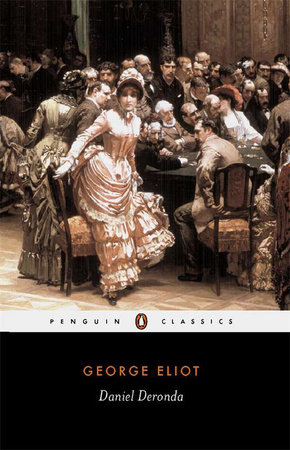
George Eliot, Middlemarch

The only novel in English for adults, Virginia Woolf famously said. Not sure what she meant, but doesn’t it sound good? Having reread it recently, I think you need to be middle aged (and thus an adult… hmm well never mind) to get the most from this story of English provincial life around 1830. But having first read it in college, I can also attest that Middlemarch hits for young people. As with any rich text, what you pay attention to and who you sympathize with shifts each time you read it.

Eliot is known for moral seriousness (maybe that’s why as stylistically different a writer as D. H. Lawrence was a fan), but Middlemarch is also surprisingly funny. Mostly, it’s supremely moving. It covers so much of life, and asks the big questions. What makes a good life? How can we live with purpose? How can we think of ourselves in relation to everyone else? Where do we fit into the web of life?

[Alternate choice: Leo Tolstoy, War & Peace. Never read it until about five years ago, but feel confident it dazzles as much at 20 as at 50. You want novelistic sweep? This one’s as big as Russia… Freemasons and wolf hunts and returns from the dead and slow-burning love affairs lasting across the decades: everything, really.]

Books that master close third-person perspective

Nella Larsen, Passing

Set in Harlem and Chicago in the late 1920s among a set of well-to-do light-skinned Black women who can pass as white, Passing is a great novel of queer frenemies. It hews closely to the perspective of a single character, Irene, whose orderly life as the mother of two boys and wife to a (dissatisfied) doctor falls apart when she runs into a childhood friend, the brave and dangerous Clare. Unless we attend to how events are only offered through Irene’s perspective, we are likely to miss how much the book asks us to question the judgments it only seems to offer.

[Alternate choice: Henry James, What Maisie Knew. In book after book, James wrote about people behaving badly. Yet even among this vast canvas of cruelty, this novel stands out: the people doing the harm are parents who use their young child to hurt each other and, of course, the child. In the preface to the New York Edition James explained that he chose to narrate the book in third person but to limit the perspective to Maisie’s often baffled but also wondering sense of the world in order to offer readers the extra pathos of being able to understand what she could not. It’s quite a trick.]

Books about the Holocaust

Primo Levi, If This Is a Man

If someone is asking me what books they simply must own, they’re absolutely gonna get one about the Holocaust. Hell, I could make them a whole list. But knowing that not everyone shares my fascination, I’ll stick to one of the earliest and most famous instances of Holocaust literature. (Levi composed part of it already while in the camps.) Like all memoirs, If This is a Man (known in the US under the travesty title Survival in Auschwitz) details its author’s particular experience—which took the form it did by his having had “the great good fortune” to have been deported only in 1944, when the turning tide of the war and subsequent internal battle among top Nazis meant that more deportees were selected for slave labour. That phrasing gives you a sense of Levi’s matter-of-fact irony. But something that distinguishes If This Is a Man is Levi’s decision to use “we” even more than “I”: he aims to give a sense of the structure and meaning of the collective victim experience, at least within a subcamp of Auschwitz.

[Alternate choice: Ida Fink, A Scrap of Time and Other Stories. Too little known among English speakers, but, happily, available in a terrific translation by Madeline Levine and Francine Prose, Fink’s heartbreaking stories depict part of the Holocaust most people don’t know about: the mass murder performed by the Einsatzgruppen in Galicia in the summer and fall of 1941. Fink couldn’t find a publisher for these stories until the 1980s; they were deemed of no interest. Another devastating failure on the part of literary opinion. Fink has been called the Chekhov of the Holocaust. Grotesque as this sounds, it’s accurate. Quiet and heartbreaking.]

Members of YIVO New York examine crates of books rescued from the Vilna Ghetto

Books about how to read books:

Roland Barthes, S/Z

Barthes spent a year reading Balzac’s story “Sarrasine” with some students. (Oh to have been in that seminar!) That labour resulted in this extraordinary book, organized around line-by-line readings of the source text, not, as critics usually do, to figure out what it means, but rather how it means. To do so, Barthes offers five “codes”—fundamental elements of realist fiction, of which “Sarrasine” is considered only as a representative example—that readers unconsciously rely on (typically by having imbibed many examples of the genre) in making the text intelligible. The codes are things like references to historical events, people, and places, or attributes and actions that cohere into what we call characters and, in the case of realist literature, think of as if they were people. Barthes Intersperses his step-by-step redescription of the Balzac story with theoretical meditations on the operation of the codes, which readers can extrapolate to other texts.

S/Z is tough. I probably taught it five or six times before I felt I had a real handle on it. But as Barthes says, it’s valuable to be able to distinguish between real and superficial ideas of difference. We might think that the best way to know about books is to read a lot of them. But if we do so without thinking about what underlies their intelligibility (i.e. what we need to be able to read them), then we are mere consumers, doomed to reading the same thing over and over. Only by reading one text over and over can real difference, that is the difference within the text, show itself—which in turn will make our other reading more meaningful. All of which is to say, the effort of tackling Barthes’s analysis offers big rewards.

[No alternate choice. S/Z for everyone.]

Books with pictures:

Alison Bechdel, Fun Home

Comics, graphic novels, whatever you want to call them are important to me, and I think any reader needs at least one example in their library. Such a rich form, so many gorgeous and moving texts to choose from. As with my Holocaust choice, I resisted the temptation to go niche here. Bechdel’s memoir of her relationship with her closeted, self-destructive, talented father deserves its fame. Probably more than any book I regularly taught, Fun Home elicited the strongest positive reactions in the widest range of students. Family disfunction runs deep. A great book about how books can connect people who can’t otherwise open up to each other—and how they can further separate them too. Funny, ominous, bittersweet.

[Alternate choice: Nick Drnaso, Sabrina. Dark, powerful. Reading it gave me a bit of the ick. And yet its subject matter just seems more relevant. I guess this is about the manosphere, except no one was using that hideous term at the time.]

Books of ideas [fiction]

Thomas Mann, The Magic Mountain

Sometimes I want a book that dramatizes the back and forth of thinking. In The Magic Mountain, Mann literalizes this by surrounding his protagonist, the well-meaning, hearty Hans Castorp, with some of the most indefatigable talkers ever to appear in a novel. The whole intellectual landscape of pre-WWI Europe is here (liberal humanist, communist, militarist, hedonist, you name it), and everyone battles for Hans’s soul, even as the former engineer mostly wants to desire a woman from afar, a woman who reminds him of a boy from his schooldays…

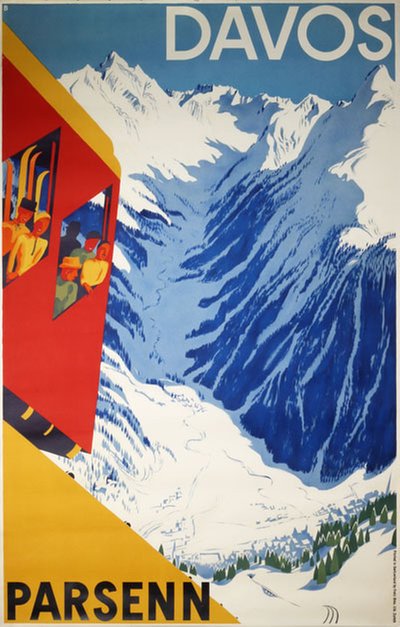
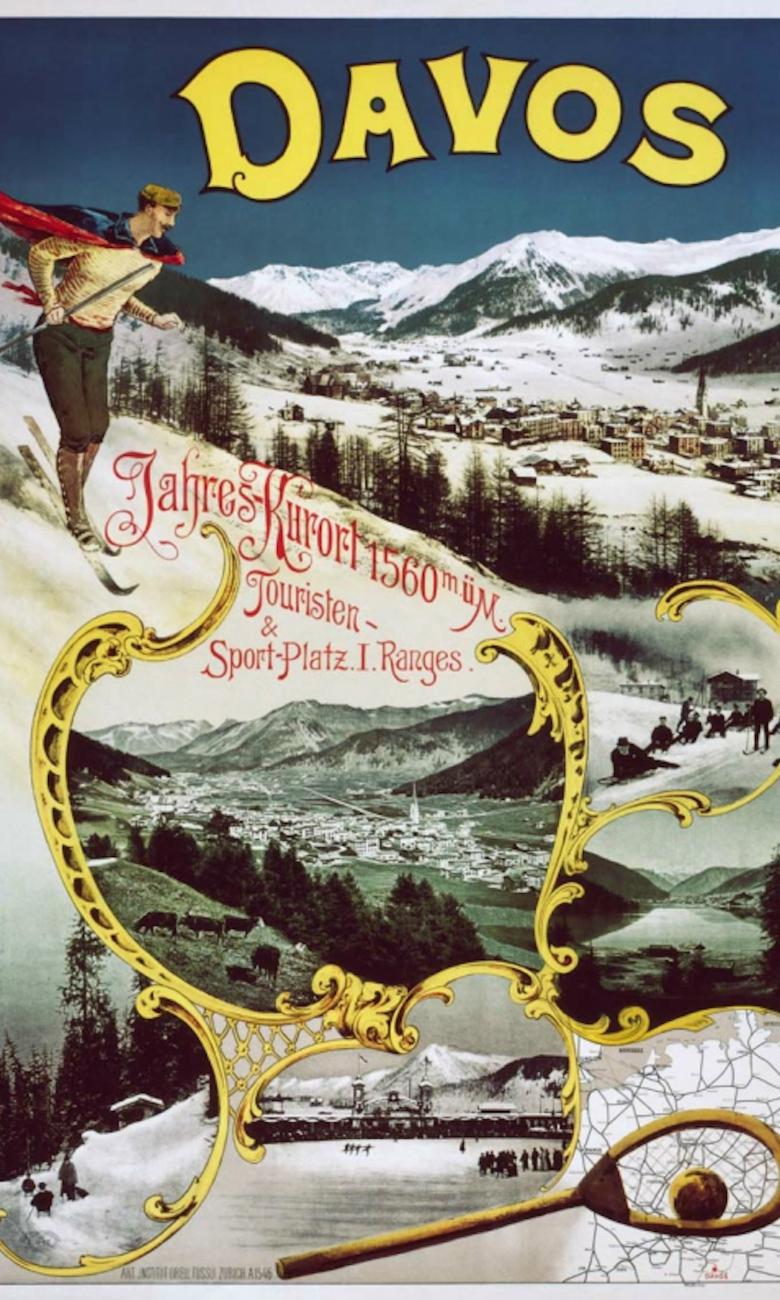
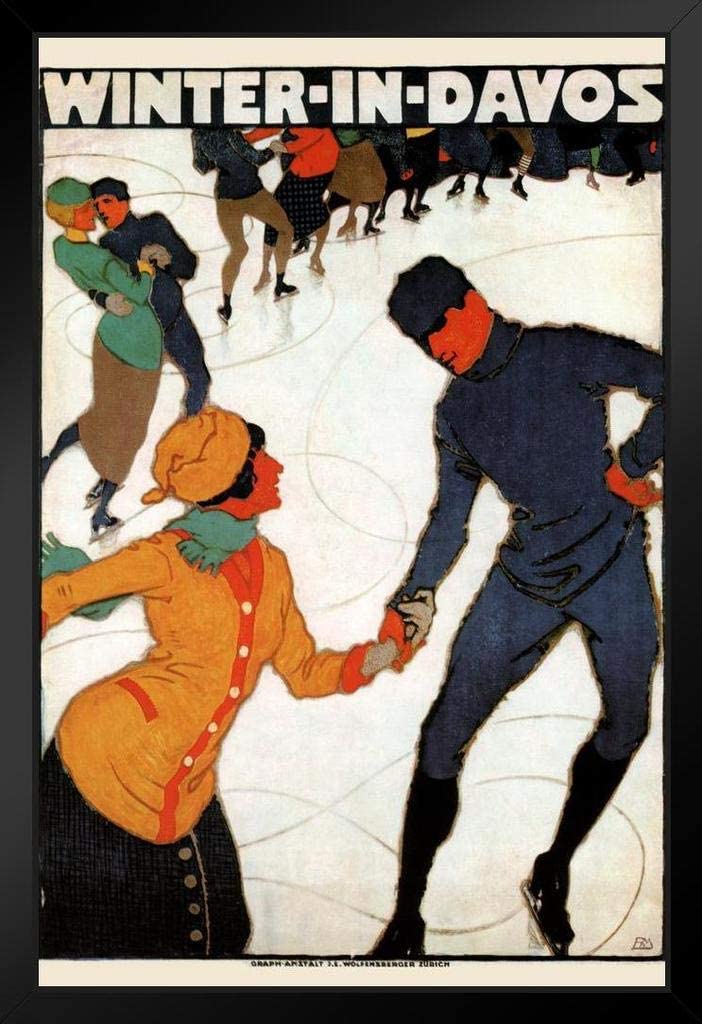
The other great thing about this book is how well it depicts Davos and environs. I’m a sucker for mountains and mountains in books. Bring on the snow!

[Alternate choice: Proust. Honestly, if you can only put one book in your starter library, choose this one. I assume it’s already there, but if not then get stuck into this deeply philosophical book, which has so much to say about perception, time, cruelty, and control over others.]

Books of ideas [nonfiction]

W. E. B. DuBois, The Souls of Black Folk

Every American should read it. But non-Americans should too. The idea of double-consciousness—the way a minority must measure themselves by the tape of the majority, as DuBois so memorably puts it in his first pages—explains so much of our contemporary sense of identity.

In addition to its ideas, Souls is a fascinatingly hybrid book, presumably stranger in 1903 than today. Each chapter is prefaced by a bar of music, often from the sorrow songs. Most chapters are essayistic, but some are fictional. Each is written in resonant cadence. Hasn’t dated much. Alas.

[Alternate choice: Hannah Arendt’s The Origins of Totalitarianism. Explains how Nazism and Stalinism came to be so accepted and do so much harm. Especially interesting for (1) its “boomerang” theory of imperial violence, in which what the metropole does in the colony comes back to bite it at home, and (2) its argument that modern antisemitism arose from the waning of Empire and the rise of nationalism. Hasn’t dated much. Alas.]

Monomaniac books

The strand from writers like Kafka, Knut Hamsun, or Robert Walser to someone like Lydia Davis, via the high point of Thomas Bernhard, has been enormously influential in the Anglo-American sphere. At this point, annoyingly so. (And weird, too, given that none of the most important precursors wrote in English.) But I get it because literature excels at tracing the vagaries of a mind, especially one spinning through reversals, paradoxes, and hobby-horses. A starter library should have an example of this sort of thing, and Bernhard might be the best. When the only thing that stands between a psyche adrift or worse is the chance that someone might respond to its voice—that’s when you’re in Bernhard territory. I’ve chosen The Voice Imitator because the title says it all. Read these 104 short texts to get a sense of Bernhard’s bitter, misanthropic, and, oddly, funny vibe.

[Alternate choice: I just named like five other writers!]

Funny books

P. G. Wodehouse, The Code of the Woosters

As implied in what I said about Bernhard, voice-driven books don’t have to be grim. They can make us laugh, whether from the gap between what the narrator claims and what we know, or the sheer verve of their style. The fun only increases when those narrators get embroiled in elegant plots. Wodehouse is the master of this terrirtory and everyone’s library is the better for including him. (I feel like he’s fading a bit from memory? Sad.) You can jump in anywhere—my entry point was the distinctly not-famous-but oh-so-representatively-titled Eggs, Beans, and Crumpets which baffled and delighted me at age 12—but if you’re at a loss start with this wonderful episode in the Jeeves and Bertie series, which Tim Waltz would enjoy, since it’s an early example of the “I condemn the fascists by unflinchingly stating how weird they are” school of responding to authoritarianism. (As Bertie says, appalled by the realization that the Saviours of Britain are simply grown men marching in black shorts: “how perfectly foul!”)

[Alternate choice: for an American version of this phenomenon, reach for Charles Portis, especially the marvelous True Grit.]

Books about crime

Dolores Hitchens, Sleep with Strangers & Sleep with Slander

Since at least Oedipus Rex, literature has used crime to understand fundamental concerns like identity, political organization, and moral value. Crime fiction can be smart, is what I’m saying. And it can also carry us away by inciting our desire to have enigmas explained. (Interestingly, it often makes us realize how much more compelling it is to ask a question than to answer it.) Like any genre, then, crime fiction satisfies at both the intellectual and emotional level. Having stayed with well-known titles so far, I’m diving deep for this last category. Not enough readers, even lovers of crime fiction, have read the mid-century American writer Dolores Hitchens. She wrote a lot of books under a lot of names. But only two about a PI named Jim Spader. Which is sad—but also good because they’re even more special. These make for pretty despairing reading, even for noir. So be warned. But you won’t regret seeking them out.

[Alternate choice: Hundreds! Thousands! Sticking with mid-century American women writers, I’ll plump for Dorothy B. Hughes’s The Expendable Man. Don’t read anything about it beforehand!]
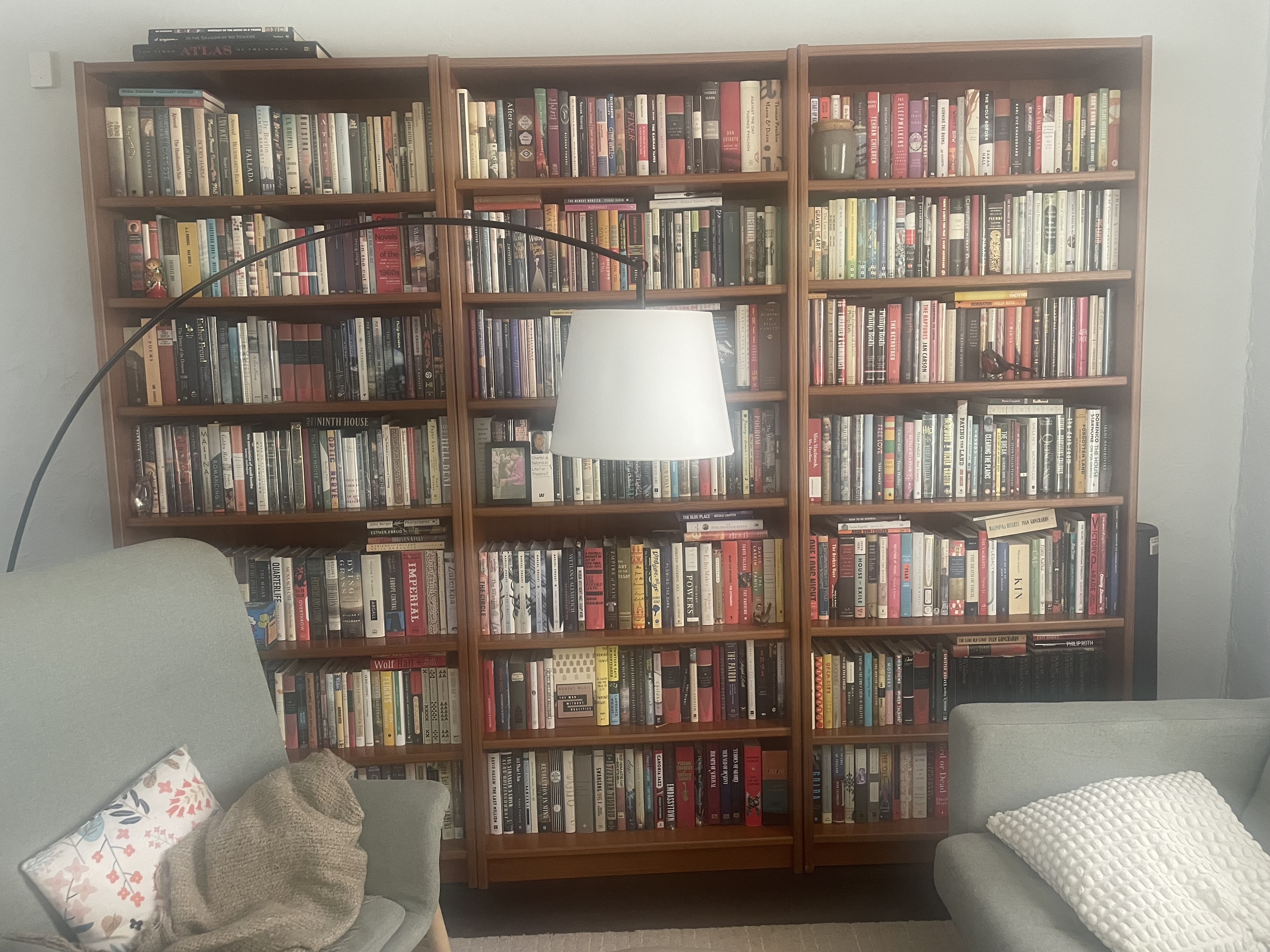
I tried not to think too long in coming up with my choices. Next month or next year I’d choose differently. And I’m aware of some big lapses. No poetry?? No plays?? No Torah?? (Everyone should read the Five Books of Moses.) But that’s ok. Gives you all the more room to think about how you’d create a starter library of your own. What would be on your shelf of promises?

Nat Leach’s Year in Reading, 2024

Excited to once again present reading reviews from some of my favourite readers. Today’s installment, his sixth, is by my longtime friend Nat Leach. Nat is a nineteenth-century scholar turned college administrator who has spent the last 7 years reading the books on his shelves in alphabetical order. He lives in Ontario.

Saul Leiter, 1961

After complaining about my reading in 2023 in this space last year, 2024 was, on the surface, a much better year. I read 30 books as opposed to 20 in the previous year, and was on pace for an even higher total before hitting a wall at the end of the year (of which more anon). However, if we get into what the sports statisticians call “advanced metrics,” the numerical advantage is diminished; 6 of those books were either less than 100 pages or only slightly more, and 9 were works of theory, criticism, and/or anthologies that I had been working on for years and just completed this year. So, probably my actual reading for 2024 was not much better than 2023 in terms of quantity, but the quality was high, and that’s what really matters, right? [Ed. – Right!]

As for my overall reading project of working through my unread books alphabetically, now in its 7th year, I once again only progressed by one letter of the alphabet, finishing “L” and making a very small start on “M”. If I’m able to get through “M” in 2025 (a big if- it’s a pretty immense shelf), I will hit the halfway point of the alphabet and surely it’s gotta be downhill after that, right? [Ed. – Surely! Well, probably. Possibly?] The second half of the alphabet has the likes of “Q”, “X” and “Z” so there is hope! [Ed. – Insert Zola side-eye gif here.] In fact, of the 298 books on my list, exactly 200 are “A-M” so I’m actually closing in on the 2/3 mark of my project (although that list keeps growing every year, so who really knows?)

More importantly, for the purposes of this piece, I actually found some time, in the early part of the year at least, to write capsules for each book that I finished as I went along. Which is just as well, because I can scarcely remember what I read last January right now, and as I write this opening, I’m just as curious as you to see what comes next (probably more so).

Larsen, Nella – Passing (1929)

I had seen this book recommended so widely, I couldn’t resist adding it to this project, and it certainly does live up to the hype. The book is about the tensions in racial ideologies in early 20th century America, and seems no less relevant today. Clare Kendry “passes” as white despite a mixed-race bloodline that would see her excluded from white society. The very fact that she is able to do this so successfully mocks the white supremacist ideology that believes that racial differences are fixed and self-evident. The book’s focus also demonstrates the problematic intersection of these racial tensions with similarly oppressive gender expectations. Irene Redfield’s love/hate relationship with Clare is at the core of the book, so that it demonstrates also the ways in which expectations around “racial purity” are particularly focused on women. In this respect, Passing reminds me of another book I wrote about on here some years ago, Morley Callaghan’s The Loved and the Lost; although that book focuses on a white woman who circulates in black society in Montreal, the similarly tragic outcomes both speak to the violence and panic produced in white society by such blurring of racial lines. [Ed. – About to teach this tomorrow for the nth time: it’s an all-timer!]

Laski, Marghanita – The Victorian Chaise-Longue (1953)

When I received this book as a gift (in a lovely Persephone Books edition), I assumed, because of the title, that it was because of my academic interest in the nineteenth century. It didn’t take long for me to realize that it was in fact because of my academic interest in the Gothic. The plot itself smacks of the absurd: a tubercular new mother is transported back in time to the Victorian period while lying on the titular piece of furniture during her recovery. But this does not do justice to the book, which explores (as so many Gothic texts do) the relationship between mind and body, and the nature of identity. A fascinating read. [Ed. – Sounds great!]

Lathom, Francis – Italian Mysteries (1820) and The Midnight Bell (1797)

These days, Francis Lathom is little more than an answer to a literary trivia question (Name the authors of the 7 “horrid novels” on the reading list of Isabella Thorpe and Catherine Morland in Jane Austen’s Northanger Abbey!) but he was a successful novelist and playwright in his time. The Midnight Bell is the book mentioned in Austen’s novel, while Italian Mysteries was written considerably later. Both make extensive use of the Gothic conventions popularized by Ann Radcliffe in The Mysteries of Udolpho (and spoofed in Northanger Abbey), including apparently supernatural activity explained by natural means, banditti inhabiting abandoned castles [Ed. – They do be inhabiting the abandoned castles, the banditti], and lustful noblemen pursuing innocent heroines, who invariably faint whenever captured (By my count, Lauretta, heroine of The Midnight Bell, faints five times in the course of a single abduction!) [Ed. – Maybe some iron pills for that girl?] Lathom’s use of these conventions is, at least, skillful and coherent, which is more than can be said of many Radcliffe imitators of this period. As David Punter points out in his fascinating introduction to the Valancourt Books edition of The Midnight Bell, Lathom’s works are heavy on events, to the exclusion of character development, and his plots are so extensive and intricate that they invariably require quite elaborate explanations—indeed, the entirety of the 3rd and final volume of Italian Mysteries is essentially an extensive explanation of all the mysteries developed of the first two volumes. While both books owe much to Radcliffe, there are certain predilections of Lathom’s own that show through as well; for example, his books include many siblings who function as doubles of each other, and are usually moral opposites of one another. The books are a pleasure to read, though not, perhaps, especially notable examples of the genre. [Ed. – Look, you’re not getting this kind of content anywhere else, are you?]

Laurence, Margaret – This Side Jordan (1960)

Like every good Canadian of my generation, my literary education was steeped in Margaret Laurence; I read The Stone Angel in high school, and The Diviners in university. [Ed. – Same! I wonder what they read now?] And if that weren’t enough, I now find myself living just 15 minutes away from the small town of Lakefield, Ontario, where Laurence spent the last years of her life, and wrote The Diviners. All that being said, I really didn’t know what to expect from this book, Laurence’s first novel, which is much less recognizable in the canon of CanLit, not least because of its foreign setting. Laurence’s husband was an engineer who worked in Africa in the 1950s, so she spent some years living in what was then called the “Gold Coast” but was soon to become the independent country of Ghana. The book is largely about the difficulties posed by this transition, both for the British colonizers and for the people of Ghana, equally caught between a past they cannot return to and a future in which they cannot yet find their place (hence the biblical allusion of the book’s title; the characters are all looking ahead to a “promised land” they cannot enter). The book focuses on Johnnie Kestoe, a British accountant in a textile company; Miranda Kestoe, his well-meaning but sometimes clueless wife; and Nathaniel Amegbe, a struggling Ghanaian schoolteacher. Johnnie, following Miranda’s advice, tries to get ahead by supporting the company’s “Africanization” of its workforce, which his racist bosses refuse to accept, while Nathaniel tries to modernize his family and move away from the tribal customs that he sees as belonging to the past. The future, though, is not easy for any of them to grasp. It’s a strong debut novel, though it does not entirely show the brilliance that was yet to come from Laurence. As an aside, this book also scores points for having a main character named Nathaniel, a literary feature notable by its absence in all the other books on this list. [Ed. – Ha! Justice for Nathaniels!]

Le Fanu, Sheridan – Carmilla (1872) and “A Chapter in the History of a Tyrone Family” (1839)

There are not many classic Gothic texts of the 19th century that I have not read, so it was time that I finally read Carmilla. All I knew about it was that it was about a lesbian vampire and, yeah, it’s pretty much what it says on the tin, using the familiar conventions of the genre, with that added twist. As for “A Chapter in the History of a Tyrone Family,” my first thought upon reading it was “was this written before or after Jane Eyre?” There are many parallels, including a bigamous marriage and a potentially murderous first wife being kept in concealment. Turns out the answer is “before”. This story apparently influenced Brontë’s novel, and in turn, after the success of Jane Eyre, Le Fanu developed this story into a longer work in order to capitalize on it.

Le Guin, Ursula K. – The Left Hand of Darkness (1969)

Another book that I added because of a large number of recommendations, I must admit that I went back and forth on this one a bit. The author’s preface is one of the smartest things I have read about science fiction (or about fiction full stop!), but then the first chapter seemed so replete with science fiction clichés that I started to question what all the fuss was about. I also wonder if science fiction just isn’t my genre, or if I am just overly picky about the details of world-building; much as I admire the carefully prepared appendix on the “Gethenian Calendar and Clock,” which differ significantly from those of Earth, I also find it slightly off-putting that this entirely foreign world not only measures temperature in degrees (in itself not necessarily natural), but it uses a scale that seems strikingly similar to the Fahrenheit scale (with no additional context or explanation). [Ed. – Fahrenheit sucks!] Nevertheless, the book certainly grew on me as it increasingly developed the more philosophical implications of its sf premise. Le Guin claims not to be attempting to predict the future, but this book from 1969 is quite prescient in exploring the idea of gender fluidity, as the inhabitants of the planet on which the book is set share male and female characteristics and can transform into either. Less prescient than oddly coincidental is the fact that the narrator’s name is Genly Ai; it occurs to me that it would be impossible to include a character of that name in a book written today without readers assuming that he was some kind of embodied form of generative artificial intelligence. [Ed. – AI sucks! Like, a lot more than Fahrenheit. Which sucks, to be clear.]

Levi, Primo – Moments of Reprieve (1981) Trans. Ruth Feldman

Levi’s American publishers have been consistent, at least, in their dogged attempts to make his books sound as optimistic as possible; If This is a Man becomes Survival in Auschwitz, The Truce becomes The Reawakening, and Lilith, and other Stories becomes Moments of Reprieve. While it is true that to a certain extent, the stories recounted in this book have a lighter tone than his earlier memoirs, there is really very little “reprieve” to be had here. [Ed. – Yup. That piece about the Roma inmate he meets? Dark.] The book consists of descriptions of people and incidents from Levi’s time in Auschwitz which had not been included in the two earlier memoirs, as well as narratives that follow up on the post-war experiences of individuals who are mentioned in those books. And certainly, all of the qualities that make the earlier books so great are still on display here, especially Levi’s keen eye for character and his deep understanding of moral complexity. And yet, everybody seems to want more optimism, from the publishers to Chumbawamba, who recorded a song based on one of the most optimistic anecdotes herein, “Rappoport’s Testament” about a man who uses a very philosophical theory of life to endure Auschwitz, arguing that his previous pleasures in life are simply being counter-balanced by the horrors of the camp, and therefore he has nothing to complain about in the grand scheme of things. [Ed. – I did not know this!!!!] An admirable perspective, perhaps, but just one of the many that Levi explores—yet the only one to get a song written about it, with an incessant chorus of “I never gave up” as though this were the only praiseworthy, or even acceptable, attitude. (Having said that, I have to admit that I actually love this song. I mean, how critical can you be about a rousing anti-Nazi anthem? Look it up.)

Lindsay, Joan – Picnic at Hanging Rock (1967)

I was already very familiar with Peter Weir’s 1975 film adaptation of this novel, so I fully expected this book to be as good as it is. I found that Weir adapted the book quite faithfully; in both the book and the film, the plot about the uncanny disappearance of Australian boarding school girls is perhaps secondary to the reflections on the connectedness of people and things that are triggered by this incident. The most significant differences come from the fact that the novel is able to demonstrate more links in this web of inter-connectedness; from my perspective of having seen the film first, I was quite fascinated to see how Lindsay connects some of the more minor characters to each other and to the mysterious themes of the book in ways not shown in the film. Ultimately, what makes both book and film work so well is how expertly they manage the fantastic in Tzvetan Todorov’s sense of the term, hesitating between rational and supernatural responses to the mystery, but never fully embracing either perspective. [Ed. – Now I want to read this and see the movie again.]

Lively, Penelope – Moon Tiger (1987)

I’m at a bit of a loss as to how to describe this fascinating tour through both world history and the personal history of a dying historian, Claudia Hampton. These histories are linked and predictably (and unpredictably!) take many twists and turns along the way. But the most interesting thing about the novel is the way it plays with point of view, emphasizing that history depends on perspective as we move between Claudia’s first-person perspective, a more “objective” narrative voice, and the points of view of other characters. It may defy description, but it really works.

Lodge, David – Changing Places (1975), Small World (1984), Nice Work (1988)

I must admit that I felt that I had missed the cultural moment in which I should have read this trilogy. After all, any satirical work on academia these days would surely have to focus on the absurdities of governmental policies and the excesses of administrative oversight rather than the hijinks of carefree globetrotting academics (seriously, is there even any such thing as a carefree, globetrotting academic any more?) [Ed. – There is not.] Not to mention the fact that cultural values have shifted significantly in ways that make these books somewhat uncomfortable to read at times (thinking especially of the distressingly casual way that the idea of professors sleeping with their students is treated in these books). Despite all this, though, there is something enduring about these books, not only for their humour—based in the first book on the incongruities between Morris Zapp, brilliant but obnoxious American professor, and Philip Swallow, reserved English lecturer, and developed in many different directions from there—but also for their satisfying use of the conventions of comic narrative. Lodge is particularly knowing about this, and all three novels are highly self-referential (or “meta” as the kids say). [Ed. – I fear they do not actually say this anymore, at least judging from the blank stares I get…] Changing Places features a number of quotations from a (fictional) textbook that Swallow wants to use for his course on novel-writing, and which provides rules for writing a good novel—rules that Lodge himself proceeds to break in every instance. Small World (subtitled “an academic romance”) employs the conventions of the grail quest romance, adapted comically to the academic context. And Nice Work is an adaptation of, and contains frequent references to, the genre of the Victorian industrial novel. Moreover, in each book, the threads are pulled together in improbable but highly satisfying ways, as if Lodge is acknowledging both the artificiality of the conventions and the fact that we still desire such conclusions despite our awareness of their artifice. I learned recently that Lodge passed away on New Year’s Day, 2025, so I guess there was indeed some timeliness to my reading of these books. I also learned in the course of my reading that Lodge had been at the University of Birmingham while my parents were graduate students there. It really is a small world, I guess.

MacIntyre, Linden – The Bishop’s Man (2009)

Having lived on Cape Breton Island for 15 years, I found that this book resonated with me, not because of the plot about the sexual abuse scandal in the Catholic church, but because of the settings, the feelings of isolation brought about by the landscape and the weather, and the descriptions of tightly-knit but also highly insular communities. All very familiar to me. The plot that unfolds against this backdrop revolves around the titular character, Father Duncan MacAskill, who acts on behalf of his Bishop to address situations involving abuse committed by priests. He initially believes that he is helping to rehabilitate perpetrators and support victims, but struggles with his conscience as he increasingly realizes that he is just the front line of an extensive cover up operation. MacIntyre is a native of Cape Breton, and a prominent journalist so perhaps not surprisingly his fictionalization of these real situations and characters is believable and powerful.

WOMEN IN TRANSLATION MONTH

I always try to set aside two books for Women in Translation month in August (given that 2 is pretty much my monthly average, this makes sense to me). However, since my reading project as a whole has slowed down, I’m finding that I’m reaching further forward on my shelves each year. This year, I read a couple of books from further along the “M” shelf.

Millu, Liana – Smoke Over Birkenau (1947) Trans. Lynne Sharon Schwartz

Dorian recommended this book a few years ago and of course he is right about what a tremendous book it is. [Ed. – Damn right he is. That guy really knows a thing or two.] Millu recounts the stories of six women whom she encountered in the women’s camps at Auschwitz. In many ways, the content of these tales is not unlike other Holocaust testimonies in the brutality, suffering and impossible moral situations that they depict, but it is also quite different in its specific focus on female experience in the camps. It must also be said that the stories are well crafted as stories. In both respects, the book reminded me in a strange way of the stories of Ida Fink, even though the latter are fictional. [Ed. – Absolutely!] Both writers provide keen observations of the brutality and suffering caused by Nazi oppression, particularly as it affects women. There is probably something more to be said about the relationship between the fictional and the non-fictional here, but that’s more Dorian’s territory. [Ed. – Certainly true that Millu uses an overtly narrative style in these pieces. Maybe Sara Horowitz’s idea about the Fink stories—that we sometimes need fiction to tell us what nonfiction can’t (it’s smarter than that, but that’s the gist)—might be useful here.]

Müller, Herta – The Passport (1986) Trans. Martin Chalmers

I had never read Müller before, so I didn’t really know what to expect, nor do I really know how to describe the experience of reading this book but here goes: it is a series of dark prose poems that build a feeling much more than they build the plot, which is ostensibly about the efforts of a miller to emigrate to West Germany. The images, though, vividly construct a picture of a hostile natural world, and the tensions of living amongst a foreign people. I commented earlier on the changes of Levi’s titles for an English-speaking audience; in this case, the effect of calling the book The Passport seems to be a rather banal attempt to focus on the plot, unlike the original German title, Der Mensch ist ein großer Fasan auf der Welt (“Man is a Great Pheasant in the World”) which better captures the poetic feel and the tension between the human and the natural world developed throughout the book.

IN PROGRESS

So, about that wall I mentioned… things were going swimmingly (yes, for me, the above is what swimmingly looks like) until the end of October/beginning of November. In the space of a fateful week, I began three new books. Little did I know that 2 ½ months later, despite putting almost all of my reading time and energy into them, all three would remain unfinished. Anyway, here’s a brief report on the books I didn’t quite finish in 2024 (with up to date completion percentages as of early 2025)

Lessing, Doris – The Golden Notebook (1962) Completed: 26%

First, not having included Doris Lessing in my original project, I was tempted to join a readalong of The Golden Notebook organized by the ever-encouraging @paperpills10.bsky.social. However, a combination of my usual lack of time, my inability to get my hands on a good physical copy of the book, and my struggles with the book itself led to my dismal failure to keep up. As for the book itself, it seems to me very original in terms of form (3rd person narration combined with 1st person in the form of notebooks kept by one of the characters) while seeming quite mundane (thus far) in terms of content and style. Perhaps that is what I’m struggling with, though I also wonder if it is part of the point (this is what notebooks are like). I will persist with this, but I have quite a way to go yet. [Ed. – Hmm I like this one: not sure you’re going to change your mind if you aren’t into it yet.]

Mann, Thomas – Doctor Faustus (1948) Trans. H.T. Lowe-Porter Completed: 73%

At about the same time, I was starting this book, which I had bought at a time when I was collecting Faust stories, but I had only managed to read the first few chapters at that time. I have done better this time, and what I have learned from this experience is that 1) I need to read more of Mann’s novels and 2) I may not have enough years left in me to read them all. This is a tremendous book, but one that requires much time and focus. I have been making slow but consistent progress, and there is now at least some light at the end of the tunnel. Despite the title, the Faustian theme is more an undercurrent than the book’s focus, which has more to do with reflections on the nature of art and its relation to culture. But what has perhaps most struck me about this book is its descriptions of the rise of Nazism and the psychology behind it, all of which feel chillingly contemporary.

Márai, Sandor – Embers (1942) Trans. Carol Brown Janeway Completed: 67%

Now this wonderful little (at least, comparatively) book is one that I would have finished long ago, had I not been saving it to cleanse my palate after working on the previous two books (gotta respect the alphabetical order after all). It is a much quicker, and highly engaging read. Last year, I commented on how my reading system often provides me with strange and unexpected correlations, and it has been somewhat strange reading this book alongside Doctor Faustus. Both books are written in the 1940’s but make use of a dual time frame split between the narrative present and a past in the late 19th and early 20th centuries. Both are set in central Europe and are thus framed against the background of the wars in these time periods, and both focus heavily on the relationship of a pair of male friends, one of whom is musical and artistic, the other more material and practical. But they are of course very different books; Embers tells the story of a friendship broken in youth that comes to a reckoning in old age. I’m still not sure what this reckoning is going to look like, but the suspense is building. So far, this is pretty great.

James Whistler, View across the Lagoon (1879 – 80)

LOOKING AHEAD TO 2025

My one final comment on all of the above is that one of the benefits of writing these entries shortly after finishing the books is that I can look back and see how my immediate response to the book varies from what my memory of it is now. For example, despite the lukewarm write-up, I thought about the Le Guin a lot after I finished it, and despite really loving the Lively, I haven’t really thought about it at all since then. I’m not sure that this is necessarily a measure of a book’s quality, but it is a measure of something. [Ed. – Yes! But what? I think about this a lot too.]

As for next year, I did have a fleeting desire to join a Proust reading group, since that is probably the book that I am most looking forward to on my remaining list, but my recent track record with group reads and the fact that I am probably not in the right head space at the moment has caused me to hold off (it’ll probably be a couple of years before I get to “P”)

So, my goal will be to try to get through “M” this year, although as I said, it’s a pretty formidable letter. I will at least see the benefits of having participated in group reads of some of the chunkier books on this shelf over the past few years (The Balkan Trilogy, The Levant Trilogy, Moby Dick, The Man Without Qualities) but I still have a lot to look forward to, from Gabriel Garcia Marquez to Cormac McCarthy to Brian Moore to Toni Morrison to Iris Murdoch and many more in between. Wish me luck, and let me know if there are any indispensable M authors that you think I need to make sure I read this year. [Ed. – Thank you as always, Nat!]

My Year in Reading, 2023

I wouldn’t say I had a great reading year. I was on my phone too much, I was being anguished or avoiding being anguished about the myriad injustices of the world, which I knew too much and could do too little about. I travelled—maybe not too much but an awful lot, for me—which was often energizing and enjoyable, but also got in the way of reading.

I felt, in other words, that I had frittered away my one wild and precious reading life. I bottomed out in the middle of the year, regularly tossing aside books unfinished after having spent more time with them than they deserved or that I could find patience for. A querulous reading year, you could say.

And yet some things stood out. Links to previous posts, if I managed to write about it.

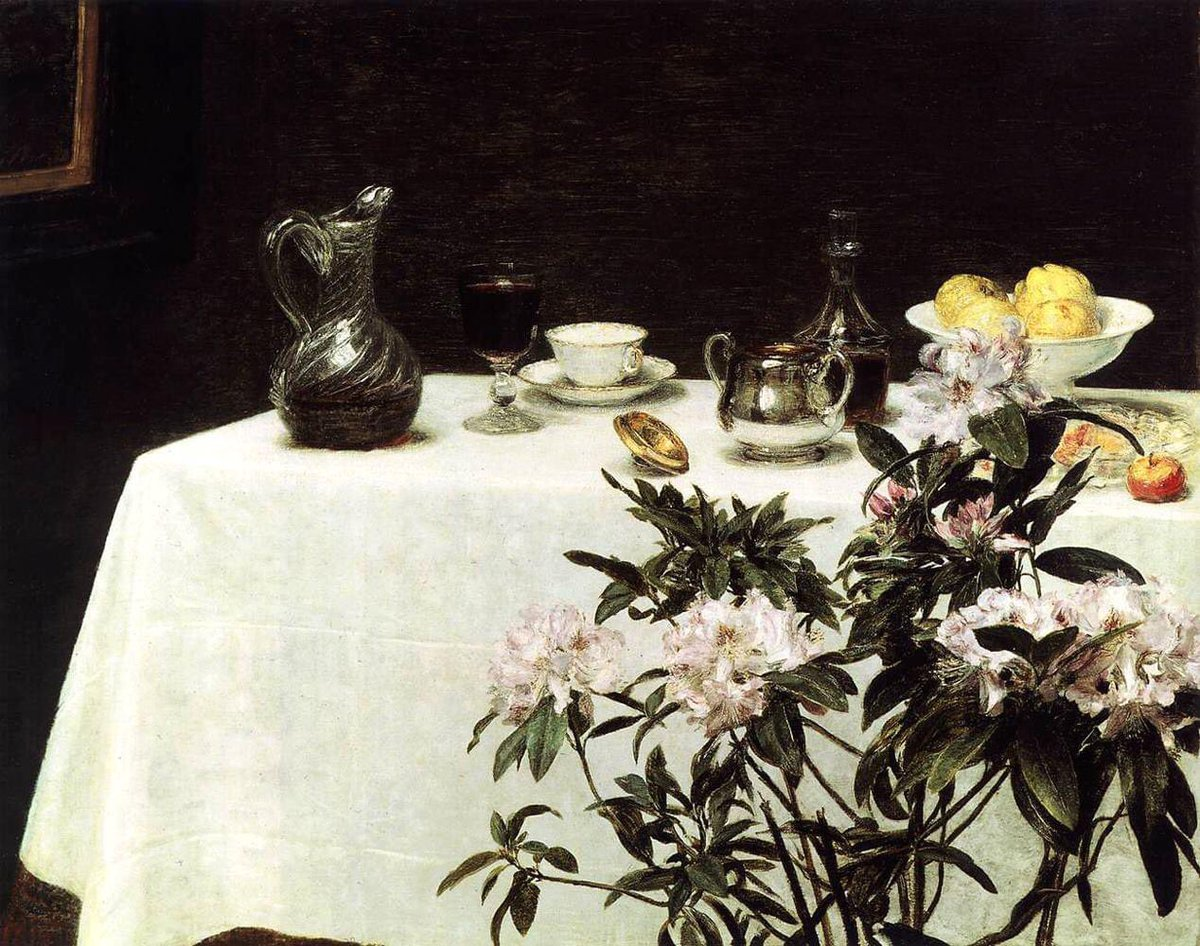
Henri Fantin-Latour, Le coin de la table (1872)

Dwyer Murphy, The Stolen Coast

A rare heist novel where the heist, though satisfying, isn’t the main attraction. I loved this stylish, smart, funny tale of a man who has put his Ivy League law degree to use in taking over the family business: giving new identities to guys on the run and getting them the hell over the border. A great book of off-season resort towns.

Simon Jimenez, The Vanished Birds

I’m still getting my bearing in contemporary sff so take these comments for what they’re worth, but it seems rare to me that a book takes as many swerves as this one: the narrative moves back and forward in time and all over the place, from a near-future nearly uninhabitable earth to a galaxy far-away in space and time. You get invested in a storyline and then it ends but sometimes it comes back. But even more than the structure I loved this book for its emotional seriousness: its many relationships are doomed to fail because of their constitutive circumstances. For example: a man ages fifteen years between each meeting with his beloved, while she, thanks to intricacies of stellar time travel, has only aged a few months. The emotions might be bigger than the ideas, but I was totally okay with that.

Two novels by Katherena Vermette

One of the greatest working Canadian writers. This year, fresh off the thrill of teaching The Break to smart, appreciative students, I read The Strangers and The Circle, a bleak and beautiful trilogy of indigenous life in the aftermath of the cultural trauma of the residential school system.

Four novels by Kent Haruf

It should tell you something that in early April, one of the worst times in the academic year, I read four novels by Kent Haruf in just over a week. I loved Plainsong the most but enjoyed Eventide, Benediction, and Ours Souls at Night almost as much. Easy reading, sure: plain syntax rising to gentle arias, nothing fancy, maybe a little sentimental. But these books are so warm and kind. Each is set in Holt, Colorado, out on the eastern plains, where the mountains are a smudge on the western horizon and it’s sometimes hot and sometimes cold but always dry. The people are ranchers and school teachers and social workers and hardware store owners and ne’er-do-wells and retirees. Everyone is white and no one thinks that’s worth noticing. The time is hard to pin down. Sometimes I thought the 70s or early 80s but we’re probably talking the 90s. Things were different before the internet. The characters’ lives are modest and they seem fine with that. They go about their business, do their work, make good choices and bad ones. People look out for each other, but they judge each other, too. Little kids get lost biking, but they come home again. It’s not all roses, though. High school boys bully girls into having sex, over in that abandoned house just down from where the math teacher lives. People get sick, go hungry, lose jobs. Some characters get what the preacher will call a good death, some die unreconciled to their kin, some without warning, too soon. Life just keeps happening, you know?

Some readers will call this hokum, but I ate it up. Haruf won my heart. I thought him especially good on second chances and unexpected turns of fate. Of all the stories that weave through these loosely connected novels, the best concerns two brothers, old bachelors, ranchers, who agree to take in a pregnant teenage girl and who, to everyone’s surprise, not least their own, form a new family with her. That scene where they take into the next town over to get things for the baby and insist on buying the best crib in the store? Magic.

Garth Greenwell, Cleanness

Smart, sexy, stylish books about how we relate to bodies privately and publically, and whether we can recast the narratives that have shaped aka deformed our understanding of what it is to live in those bodies. Greenwell’s Substack is worth subscribing too; he makes me curious about whatever he’s curious about. Can’t wait for the essay collection he’s writing.

Emeric Pressburger, The Glass Pearls

Yep, that Pressburger. Closer to Michael Powell’s Peeping Tom than any of the (indelible) films they made together. Karl Braun, a German émigré, arrives at a boarding house in Pimlico on a summer morning in 1965. A piano tuner who never misses a concert, a cultured man, a fine suitor for the English girl he meets through work. I’m not spoiling anything to say that Karl isn’t just quiet: he’s haunted—and hunted. For Karl Braun is really Otto Reitmüller, a former Nazi doctor who performed terrible experiments, a past he does not regret even as he mourns the death of his wife and child in the Hamburg air raids. Now the noose is tightening and Otto/Karl goes on the run… Suspenseful stuff; most interesting in this play with our sympathies. Not that we cheer for the man. But his present raises our blood pressure as much as his past.

Toni Morrison, A Mercy

A short book that covers as much ground as an epic; a historical novel that feels true to the differences of the past but that is clearly about the present; a classic modernist Morrison text, where the first page tells you everything that’s going to happen except that it makes no sense at the time and the rest of the reading experience clarifies, expands, revises. Such beauty and mystery in so few pages.

Roy Jacobsen’s Barrøy series (Translated by Don Bartlett and Don Shaw)

Cheating a bit since I read the first one in December 2022. I’m a huge fan of these novels about a family and the remote Norwegian island they call home from 1900 to 1950. I like books where people do things with their hands, maybe because I can’t do much with mine. The characters bring sheep into the upper field, fish with nets and line, salt cod, keep the stove burning all through the year, row through a storm, carry an unconscious man through sleet. It’s all a little nostalgic, a little sentimental, but not too much. Just how I like it.

Two Books by Walter Kempowski (Translated, respectively, by Michael Lipkin and Anthea Bell)

Fresh on my mind so it’s possible I’ve overvalued them but I don’t think so. All for Nothing, especially, is something special.

George Eliot, Middlemarch

Last read in college—under the expert tutelage of Rohan Maitzen, this can only be called one of the highlights of my undergraduate experience. This time I listened to Juliet Stevenson’s recording, which perfectly filled a semester’s commuting. True, Arkansas traffic is not the ideal venue for some of Eliot’s more complex formulations, but Stevenson (as much a genius as everyone says, she do the police in different voices, etc.) clarifies the novel’s elegant syntax and famous images. The book’s the same, but I’m not; a whole new experience this time around. Much funnier, especially its early sections. (Celia is a triumph.) More filled with surprising events: that whole Laure episode (a Wilkie Collins novel in miniature), it was as if I’d never read it. And more heartbreaking: in 1997, I hated Rosamond, and I admit I still felt for Lydgate this time around, but I had so much sympathy for her, a character I’d only been able to see as grasping and venal. Speaking of sympathy, one of the glories of English literature lies in watching Dorothea as she matures from excitable near-prig to wiser and sadder philanthropist. Amidst all this change, though, some things stayed the same. Mary Garth still won my heart; the suspense at the reading of Featherstone’s will gripped me just as much.

It’s good to read Middlemarch in college. It’s better to re-read Middlemarch in middle age. It’s best to read Middlemarch early and often.

Konstantin Paustovsky, The Story of a Life (translated by Douglas Smith)

Six-volume autobiography of Soviet writer and war correspondent Paustovsky, a Moscow-born, Ukrainian-raised enthusiast of the Revolution who somehow made it through Stalinism to become a feted figure of the 1960s. The new edition from NYRB Classics contains the first three volumes. I only read the first two, not because I didn’t enjoy them (I loved them) but because I set the book down to read something else and the next thing I knew it was a year later. Paustovsky had something of a charmed life. His childhood was largely downwardly mobile, and he lived through so much terror and upheaval. And yet he always seems to have landed on his feet. Maybe as a result—of maybe as a cause—he looks at the world with appreciation. He can sketch a memorable character in a few lines. He writes as well about ephemera (lilacs in bloom) as about terror (I won’t soon forget his time as an orderly on an undersupplied hospital train in WWI). He can do old-world extravagance (the opening scene is about a desperate carriage ride across a river raging in spate to the otherwise inaccessible island where his grandfather lies dying) and the brittle glamour of the modern (for a while he drives a tram in Moscow). Trevor Barrett, of Mookse & Gripes fame, said it best: Paustovsky is good company. I really ought to read that third book.

Félix Vallotton, Still Life with Flowers, 1925

A few other categories:

Didn’t quite make the top, but such pleasurable reading experiences: Adania Shibli, Minor Detail; Paulette Jiles, Chenneville; Abdulrazek Gurnah, By the Sea; Jamil Jan Kochai, The Haunting of Hajji Hotak and Other Stories (teaching “Return to Sender” was a revelation: fascinating how even students who had seemed immune to literature shook themselves awake for this one).

Read with dread and mounting desperation, don’t get me wrong it’s a banger, but couldn’t in good conscience call it a pleasure to read: Ann Petry, The Street. Barry Jenkins adaptation when?

Maybe not standouts, but totally enjoyable: Margaret Drabble, The Millstone; K Patrick, Mrs. S; Yiyun Li, The Vagrants; Elif Batuman, Either/Or

Best dip into the Can-con vaults: Margaret Laurence, The Stone Angel. Got more about of this now than I did in high school, lemme tell you.

Best book by a friend: James Morrison, Gibbons or One Bloody Thing After Another: Not damning by faint praise. It’s terrific!

Book the excellence of which is confirmed by having taught it: Bryan Washington, Lot. Maybe the great Houston book. I get that novels sell but I wish he’d write more stories.

Grim, do not recommend: Larry McMurtry, Horseman, Pass By; Girogio Bassani, The Heron

Not for me: Jenny Offill, Weather; Annie Ernaux, Happening; Yiyun Li, The Book of Goose

Planned on loving it, but couldn’t quite get there: Julia Armfield, Our Wives Under the Sea. Sold as metaphysical body horror, this novel about a woman who goes to pieces when her wife returns from an undersea voyage gone catastrophically wrong as a kind of sea creature didn’t give me enough of the metaphysics or the horror. I figured it would be perfect for my course Bodies in Trouble but I couldn’t find my way to assigning it. Possibly a mistake: teaching it might have revealed the things I’d missed. Gonna trust my instincts on this one, tho.

The year in crime (or adjacent) fiction:

Disappointments: new ones from Garry Disher, Walter Mosley, and S. A. Cosby (this last was decent, but not IMO the triumph so many others deemed it; he’s a force, but I prefer his earlier stuff).

Standouts: Celia Dale, A Helping Hand: evil and delightful, can’t wait to read more Dale; Lawrence Osborne, On Java Road: moody, underappreciated; Christine Mangan, The Continental Affair: moody, underappreciated; Allison Montclair, The Right Sort of Man: fun; Joseph Hansen: wonderful to have the Dave Brandsetter books back in print, hope to get to more in 2024; Richard Osman: as charming, funny, and moving as everyone says.

Maigrets: Of the six I read this year, I liked Maigret and the Tramp best. Unexpectedly humane.

Giants: Two Japanese crime novels towered above the rest this year. I didn’t write about volume 2 of Kaoru Takamura’s Lady Joker (translated by Marie Iida and Allison Markin Powell) but maybe my thoughts on volume 1 will give you a sense. Do you need a 1000+ page book in which a strip of tape on a telephone poll plays a key role? Yes, yes you do. (Also, it has one of the most satisfying endings of any crime novel I’ve ever read.) More on Hideo Yokoyama’s Six Four (translated by Jonathan Lloyd-Davies) here. Do you need an 800+ page book in which phone booths play a key role? Yes, yes you do.

The year in horror:

Victor LaValle, Lone Woman: horror Western with a Black female lead and not-so-metaphorical demon, enjoyable if a bit forgettable; Jessica Johns, Bad Cree: standout Indigenous tale, also with demons; Leigh Bardugo, Hell Bent: serious middle-volume-of-trilogy syndrome. Many demons, tho.

The year in sff:

In addition to Simon Jimenez, I liked Ann Leckie’s Translation State, Nick Harkaway’s Titanium Noir, and, above all, the three novels by Guy Gavriel Kay I read this summer, which gave me so much joy and which I still think about all the time.

The year in poetry:

Well, I read some, so that’s already a change. Only two collections, but both great: Wisława Szymborska’s Map: Collected and Last Poems (Translated by Clare Cavanaugh and Stanislaw Baranczak), filled with joy and sadness and wit, these poems made a big impression, and Ilya Kaminsky’s Deaf Republic (fortunate to have met him, a mensch; even more fortunate to have heard his indelible performance).

The year in German books: I read two, liked them both. Helga Schubert, Vom Aufstehen: Ein Leben in Geschichten (On Getting Up: A Life in Stories), vignettes by an octogenarian former East German psychotherapist who had fallen into oblivion until this book hit a nerve, most impressive for the depiction of her relationship to her mother, which reminded me of the one shared by Ruth Kluger in her memoir; Dana Vowinckel, Gewässer im Ziplock (Liquids go in a Ziplock Bag): buzzy novel from a young Jewish writer that flits between Berlin, Jerusalem, and Chicago. The American scenes failed to convince me, and the whole thing now feels like an artefact from another time, given November 7 and its aftermath. I gulped it down on the plan ride home, though. Could imagine it getting translated.

Everyone loved it; what’s wrong with me? (literary fiction edition):

Made it about 200 pages into Elsa Morante’s 800-page Lies and Sorcery, newly translated by Jenny McPhee. Some of those pages I read raptly. Others I pushed through exhaustedly. And then I just… stopped. The publisher says it’s a book “in the grand tradition of Stendhal, Tolstoy, and Proust,” and I love those writers. (Well, I’ve yet to read Stendahl, but based on my feelings for the other two I’m sure I’ll love him too.) Seemed like my social media feeds were filled with people losing it over this book. Increasingly, I see that—for me, no universal judgment here—such arias of praise do more harm than good; I experience them as exhortations, even demands that just make me feel bad or inadequate. Increasingly, too, I realize how little mental energy I have for even mildly demanding books during the semester. (A problem, since that’s ¾ of the year…) I might love this book in other circumstances —I plan to find out.

Everyone loved it; what’s wrong with me? (genre edition):

Billed as True Grit set on Mars in alternate version of the 1930s, Nathan Ballingrud’s The Strange indeed features a young female protagonist on a quest to avenge the destruction of her family, but Ballingrud is no Portis when it comes to voice. True, I was in the deepest, grumpiest depths of my slough of despondent reading when I gave this a try, so I wasn’t doing it any favours. But that’s a nope from me.

Other failures:

Mine, not the books. Once again, I read the first hundred or so pages of Anniversaries. It’s terrific. Why can’t I stick with it? I read even more hundreds of pages of Joseph and His Brothers, as part of a wonderful group of smart readers, most of whom made it to the end of Thomas Mann’s 1500-page tetralogy. I loved the beginning: fascinating to see Mann’s take on the stories of Genesis; interesting to speculate on why Mann would write about this subject at that time. (For me, Mann is in dialogue with Freud’s Moses and Monotheism, another oblique response to fascism through stories from Torah.) My friends tell me it got a lot more boring shortly after I left off (the end of volume 2), but that’s not why I gave up. Turns out, I don’t do well if I’m supposed to read something in regular, little bits. I need to tear into books—and I wasn’t willing to make the time for this chunkster. Sorry, guys.

Odds & Ends:

A few albums that stood out: Roy Brooks, Understanding (reissued in 2022, but I’m not over it: this quintet, man, unfuckingbelievable); Taylor Swift, Midnights (I love her, haters go away); Sitkovetsky Trio, Beethoven’s Piano Trios [volume 2] (a late addition, but pretty much listened to it nonstop in December and now January).

After a decade hiatus, I started watching movies again. Might do more of that this year!

I was lucky enough to travel to Germany in late spring with a wonderful set of students. While there, I met so many people from German Book Twitter who have become important to me, including the group chat that got me through covid and beyond. (Anja and Jules, y’all are the best.) All these folks were lovely and generous, but I want to give special thanks to Till Raether and his (extremely tolerant) family, who took me in and showed me around Hamburg. (Great town!) Have you ever met someone you hardly know only to realize they are in fact a soulmate? That’s Till for me. What a mensch. Cross fingers his books make it into English soon. In the meantime, follow him on the socials!

Reading plans for 2024? None! I need fewer plans. I can’t read that way, turns out, and maybe I’ll avoid disappointment by committing less. Gonna be plenty of other disappointments this year, I figure. No need to add any self-inflicted ones. At the end of last year, I joined a bunch of groups and readalongs, because I want to hang with all the cool kids, but I can already see I need to extricate myself from most of them. One good thing I did for myself in 2023, though, was to stop counting how many books I read. I was paying too much attention to that number. Fewer statistics in 2024!

Piet Mondrian, Oranges and Decorated Plate, 1900

Finally, to everyone who’s read the blog, left a comment or a like, and generally supported my little enterprise (which turns 10 in a week or two…), my heartfelt. I do not know many readers in real life. You all are a lifeline.

Paul Wilson’s Year in Reading, 2021

Today’s reflection on a year in reading, his second annual contribution, is by Paul Wilson (@bibliopaul). Paul lives in Colorado with his wife, two sons and lots of books. He also co-hosts The Mookse and the Gripes podcast.

Look for more reflections from a wonderful assortment of readers every day this week and next. Remember, you can always add your thoughts to the mix. Just let me know, either in the comments or on Twitter (@ds228).

I’m happy to say that coming up with a list of my favorite books read in 2021 was no easy task. For one thing, I read more books this year than I ever have before. Why? My best guess is a combination of the ongoing impacts of a quieter pandemic life, the fact that my wife and I now share our house with two teenage boys who are often doing their own things, and a conscious effort on my part to simply spend more time reading. 

Creating my list was made even more tricky by countless recommendations from so many wonderful and generous friends on Twitter and elsewhere. It’s like I have a team of top-notch curators sending me a constant stream of great books. I started with a stack of around 30 titles that could have made the list, but here are 10 favorites.  

Tomás González, Difficult Light, translated from the Spanish by Andrea Rosenberg 

This is a mesmerizing and melancholy book about time and memory. The narration often jumps across decades, sometimes within a single paragraph or even sentence, creating fascinating and often somber insights into aging and the far-reaching effects of our pasts. A quiet reflection on art, loss and family that offers yet another example of why Archipelago Books remains one of the most exciting and important publishers out there. 

I am surprised once more by how supple words are—how all by themselves, or practically by themselves, they can express the ambiguity, the changeability, the fickleness of things. And yet I long for the aroma of oils or the powdery feel of charcoal in my fingers, and I miss the pang—like the pang of love—that you feel when you sense you have touched infinity; captured an elusive light, a difficult light, with a bit of oil mixed with ground-up metals or stones.

Nathalie Léger, Suite For Barbara Loden, translated from the French by Natasha Lehrer 

Can it really be true that I hadn’t heard of Nathalie Léger before 2021? In a year filled with wonderful literary discoveries, she was one of my very favorites. I read her triptych of novels all in a row and loved each of them, but, to me, Suite for Barbara Loden was the standout.Ostensibly about the film Wanda, its creator Barbara Loden, and Léger’s attempt to write a short entry for a film encyclopedia, this book becomes a mesmerizing blend of biography, autofiction, film analysis, and Dyer-esque reflections on the slippery process of creation. 

I find myself increasingly drawn to books that are hard to pin down or define and this one certainly fits that description in all the best ways. If you’re looking for a project for 2022, I would highly recommend spending some time with Wanda and Léger. I think about them both often. 

“How difficult can it be to tell a story simply?” my mother asks again. I have to stay calm, slow down and lower my voice: what does it mean, “to tell a story simply”? … You think that you’re dealing with pure formalities, footnotes, short texts, table, prefaces, indexes or annexes—an orderly organized abundance of works that you just need to spend a morning assembling into a few sentences; a straightforward administration of language—and then somehow you end up with endless decisions to make, with abandoned hopes and collapsed hypotheses.

Jhumpa Lahiri, Whereabouts, translated from the Italian by the author

Lahiri has long been one of my very favorite writers, so when I heard she had a new book coming out, I went through the usual blend of anticipation and anxiety that precedes a highly anticipated work by a beloved author. I needn’t have worried. 

The unnamed narrator is a prickly, unmarried writer and lit professor who has lived in the same Italian city for her entire life. Through a series of episodes that take place over the course of a year, she shares her meditative and sometimes melancholy perspectives on isolation, solitude and the movement of time. Although a dramatic departure in many ways from the subject and style of Lahiri’s previous works, Whereabouts is an example of a master at the top of her game. I can’t wait to see what she does next. 

Solitude: it’s become my trade. As it requires a certain discipline, it’s a condition I try to perfect. And yet it plagues me, it weighs on me in spite of my knowing it so well.

Robert Walser, The Tanners, translated from the Swiss German by Susan Bernofsky

After years of sitting unread on my shelves, this book was becoming one of the spines my eyes unconsciously skipped over while I scanned for my next read [Ed. – that is a thing, isn’t it?]. Fortunately, my good friend Trevor (@mookse) saved it from obscurity by sharing his contagious love of Walser during our conversations this year. Tragedy averted! 

This was my first foray into Walser’s work, but it certainly won’t be my last. Reading him is like jumping into a raging river—you can fight it and become overwhelmed, or you can relax, let it carry you along and just enjoy the ride. This was the most exuberant and joyful thing I read this year. 

I must find myself a life, a new life, even if all of life consists only of an endless search for life. What is respect compared to this other thing: being happy and having satisfied the heart’s pride. Even being unhappy is better than being respected. I am unhappy despite the respect I enjoy; and so in my own eyes I don’t deserve this respect; for I consider only happiness worthy of respect. Therefore I must try whether it is possible to be happy without insisting on respect.

T. J. Clark, The Sight Of Death

I never would have discovered this gem if I hadn’t stumbled across a tweet by Lauren Groff: “I’m so broken down by isolation that I can’t get four pages into T.J. Clark’s The Sight of Death without weeping. Just—the patience and persistence and love it takes to visit the same painting day after day and see new things, better things, how the light changes, it’s so moving.”

In 2000, two paintings by Poussin were hung in a room in the Getty Museum. Clark found himself hypnotically drawn to them, returning day after day to sit quietly in the room and record his observations in a series of journals. His subtle blend of passion and patience is fascinating and contagious. I read it back in March and still think about it almost every day. Its laser focus on obsession, solitude, and time haunt me. 

I believe the distance of visual imagery from verbal discourse is the most precious thing about it. It represents one possibility of resistance in a world saturated by slogans, labels, sales pitches, little marketable meaning-motifs.

Olivia Manning, Balkan Levant Trilogies

When I think about the books that gave me the most pleasure in 2021, there’s no way I could leave Olivia Manning off the list. [Ed. – The man speaks truth.] I joined my first ever Twitter reading groups this year while making my way through her two trilogies: I had a blast, connected with many great readers, and had so much fun seeing the various historical images everyone shared and reading their reactions and insights about these wonderful books. The experience was a reminder of how art and literature foster community and conversation. 

On top of all that, Manning’s trilogies are incredibly compelling, masterfully balancing the epic scope and horror of war with the countless ways it impacts the individual lives caught up in its wake. 

For several nights, Simon was worried not only by the lack of cover but the intrusive magnificence of the Egyptian night. The stars were too many and too bright. They were like eyes: waking in mid-sleep, finding them staring down on him, he was unnerved, imagining they questioned what he was doing there. 

David Albahari, Götz and Meyer, translated from the Serbian by Ellen Elias-Bursać

This book came very highly recommended by Mark Haber and, yes, Dorian Stuber. [Ed. – Paul, you seem to have omitted “the one and only” before my name. Imma put that back in.] I’m so grateful to them both for bringing it to my attention. An unnamed narrator seeks information about his extended family, almost all of whom were killed in gas vans near Belgrade back in 1942. During the course of his research, he comes across the names of two drivers of the truck in which his family was likely put to death: Götz and Meyer. 

The narrator becomes increasingly fixated on these men; his obsession is reflected in the convoluted way in which the story is told. The fictional lives he creates for the two men, along with the book’s increasingly unreliable narrative style, create a growing tension and make the reader less certain about which parts are true and which are invented.

How is this book not better known? I will happily join Mark and Dorian in spreading the word about this slim and haunting masterpiece. [Ed. – It really is fantastic; wrote about it a little more here.]

I must say here that it is entirely possible in the case of Götz , or possibly Meyer, that God was more present than one usually thinks, because Götz, or possibly Meyer, survived the explosion of a bomb that killed at least nine soldiers from his company, thanks only, as he often said, to God’s will, somewhere on the Eastern Front. Because of that Götz, or possibly Meyer, thanked God everyday for his goodness, especially while they were jouncing along in the truck on their way to Jajinci, while in the same truck, in the back Jews were screaming at God with their last breath, asking him why why he wasn’t there, why he wasn’t there yet, why he was never there?

William Faulkner, Absalom, Absalom!

Like Götz and Meyer, this book concerns the fallibility of memory and the impossible task of trying to make sense of horrific and violent events from the past. 

A multigenerational story touching on myth, memory and truth, it features multiple narrators sharing their interpretations of a tragedy. Like much of Faulkner’s work, it reflects the strong cultural ideas of the American South, where the past is still an indelible part of the present that is continually being revised and rewritten through stories told and retold. 

The narrative consists almost entirely of flashbacks that shift in time and between various points of view, creating a fragmented and often disorienting experience. I know many readers have come to think of Faulkner as an academic chore that they’re happy to have left behind, but I would urge anyone who feels that way to reconsider. This is storytelling on a grand scale. A magical book. 

“We have a few old mouth-to-mouth tales, we exhume from old trunks and boxes and drawers letters without salutation or signature, in which men and women who once lived and breathed are now merely initials or nicknames out of some now incomprehensible affection which sound to us like Sanskrit or Chocktaw; we see dimly people, the people in whose living blood and seed we ourselves lay dormant and waiting, in this shadowy attenuation of time possessing now heroic proportions, performing their acts of simple passion and simple violence, impervious to time and inexplicable … They are there, yet something is missing; they are like a chemical formula exhumed along with the letters from that forgotten chest, carefully, the paper old and faded and falling to pieces, the writing faded, almost indecipherable, yet meaningful, familiar in shape and sense, the name and presence of volatile and sentient forces; you bring them together in the proportions called for, but nothing happens; you re-read, tedious and intent, poring, making sure that you have forgotten nothing, made no miscalculation; you bring them together again and again nothing happens: just the words, the symbols, the shapes themselves, shadowy inscrutable and serene, against that turgid background of a horrible and bloody mischancing of human affairs.”

Miguel De Cervantes, Don Quixote, translated from the Spanish by Edith Grossman

Last year’s top reads for me were Proust’s In Search Of Lost Time and Joyce’s Ulysses. Both joined a short list of the very best books I’ve ever read. I found it incredibly rewarding to engage with these masterpieces and wanted to keep that momentum going this year by reading Don Quixote. I’m happy to report that Cervantes has now taken his rightful place with Proust and Joyce on my all-time list. [Ed. – In so doing, Paul earned himself the nickname DQ, and I encourage you all to call him that.]

As Harold Bloom puts it, “This great book contains within itself all the novels that have followed in its sublime wake. Like Shakespeare, Cervantes is inescapable for all writers who have come after him. Dickens and Flaubert, Joyce and Proust reflect the narrative procedures of Cervantes, and their glories of characterisation mingle strains of Shakespeare and Cervantes. Don Quixote may not be scripture, but it so contains us that, as with Shakespeare, we cannot get out of it to achieve perspectivism. We are inside the vast book, privileged to hear the superb conversations between the knight and his squire, Sancho Panza. Sometimes we are fused with Cervantes, but more often we are invisible wanderers who accompany the sublime pair in their adventures and debacles.” I couldn’t have put it better myself.

A work I was expecting to require patience and hard work instead turned out to be a hilarious and compelling page turner, and a perfect holiday companion to close out the year. It’s amazing how modern this book is, and Edith Grossman’s stellar translation is a masterpiece of its own. As the pages flew by, I could hardly believe it was written 500 years ago. If you’re on the fence, I would urge you to give it a try. My guess is you’ll quickly find yourself immersed, impatiently awaiting the next time you can pick it up and once again take your place beside Don Quixote and Sancho Panza.

When life itself seems lunatic, who knows where madness lies? Perhaps to be too practical is madness. To surrender dreams — this may be madness. Too much sanity may be madness — and maddest of all: to see life as it is, and not as it should be!

Thomas Mann, The Magic Mountain, translated from the German by H.T. Lowe-Porter

Each year, when I look back over all the titles I’ve read, it’s always fascinating to see which ones stand out. I loved The Magic Mountain when I was reading it, but the intervening months solidified the enormous impression it made on me. I read most of this wintry book in our backyard hammock during the height of summer, creating some of my favorite memories of the entire year in the process. [Ed. – Love it!]

The plot is relatively straightforward: Hans Castorp is about to start a career as a shipbuilder in Hamburg, but first, he plans a short trip to a sanatorium in the Swiss Alps to visit his tubercular cousin. But as he is drawn into the strange insular world of the hospital and its strange patterns and people, he begins to subscribe to the same rituals and treatment as the patients. Meanwhile, time just keeps slipping away. 

I loved the ambiguity and the fact that I never knew exactly how to think or feel. Mann recommended that those who wished to understand it should read it twice. And even though it’s a huge book that took up a significant part of my reading year, I already find myself drawn back to it and ready to be lost again. 

Time drowns in the unmeasured monotony of space. Where uniformity reigns, movement from point to point is no longer movement; and where movement is no longer movement, there is no time.

My Year in Reading, 2020

I feel bad saying it, it is a mark of my privilege and comfort, but 2020 was not the most terrible year of my life. In many ways, it was even a good year. I have secure employment, about as secure as can be found these days, and what’s more I spent half the year on sabbatical, and even before then I was working from home from mid-March and didn’t miss my commute for a minute. Thanks to the sabbatical, I avoided the scramble to shift my teaching to a fully online schedule—watching colleagues both at Hendrix and elsewhere do this work I was keenly aware of how luck I’d been to have avoided so much work. I do worry, however, that I’m hopelessly behind the curve, clueless about various technologies and best practices; I expect elements of the shift to virtual will persist.

My family spent a lot of time together last year; among other things, I watched my daughter grow into someone who edits YouTube videos with aplomb. (At not-quite ten she is already the house IT person.) As an introvert, I found staying home all the time the opposite of a burden. (Last week I had to be somewhere relatively crowded, for the first time in months, and boy am I going to be in for a rude awakening when this is all over.) I missed seeing friends, but honestly my social circle here is small, and I continued to connect with readers from all over the world on BookTwitter. Most excitingly, I had a lot of time to read. I’ve heard many people say their concentration was shot last year, and understandably, but that wasn’t my experience. For good or for ill my response to bad times is the same as to good—to escape this world and its demands into a book.

But sometimes, usually on my run, I’ll wonder if I’m mistaken in my assessment of the year. I suspect a deep sadness inside me hasn’t come out yet: sadness at not seeing my parents for over a year; at not being able to visit Canada (I became a US citizen at the end of the year, but Canada will always be home; more importantly, our annual Alberta vacations are the glue that keep our little family together); at all the lives lost and suffering inflicted by a refusal to imagine anything like the common good; at all the bullying and cruelty and general bullshit that the former US President, his lackeys, and devoted supporters exacted, seldom on me personally, but on so many vulnerable and undeserving victims, which so coarsened life in this country.

I think back to the hope I sometimes felt in the first days of the pandemic that we might change our ways of living—I mean, we will, in more or less minor ways, but not, it seems, in big ones. I feel hopelessness at the ongoingness of the pandemic, the sense that we may still be closer to the beginning than the end. And a despair fills me, affecting even such minor matters, in the grand scheme of things, as this manuscript I’m working on—could it possibly interest anyone?

I suppose what most concerns me when I say that 2020 was not a terrible year is my fear of how much more terrible years might soon become. My anxiety about the climate-change-inspired upheavals to come sent me to books, too, more in search of hope than distraction. A few of the titles below helped with that. Mostly, though, reading books is just what I do. I am reader more than anything else, and I expect to be for as long as that’s humanly possible.

For the second straight year, I managed to write briefly about every book I read. You can catch up on my monthly review posts here:

January February March April May June July August September October November December

All told, I finished 133 books in 2020, almost the same as the year before (though, since some of these were real doorstoppers, no doubt I read more pages all told). Of these 45 (34%) were by men, and 88 (66%) by women. 35 were nonfiction (26%), and 98 (74%) were fiction. Sadly—if predictably—I read no collections of poetry or plays last year. I didn’t read much translated stuff: only 30 (23%) were not originally written in English. Only 4 were re-reads; no surprise, given how little I was teaching.

Highlights:

These are the books that leap to mind, the ones I don’t need to consult my list to remember, the ones that, for whatever reason, I needed at this time in my life, the ones that left me with a bittersweet feeling of regret and joy when I ran my hands consolingly over the cover, as I find I do when much moved. These are the books a reader reads for.

Larry McMurtry, Lonesome Dove

My book of the year. A road novel about a cattle-drive from the Mexican border to Montana around 1870. Thrilling, funny, epic, homely. Characters to love and hate and roll your eyes at and cry over and pound your fists in frustration at. And landscapes to swoon over, described in language that is never fussy or mannered or deliberately poetic, and all the better able to capture grandeur for that. I think about the river crossings all the time. And those last scenes in wintry Montana. Lonesome Dove is good for people who love Westerns. It’s good for people who don’t love Westerns. Recently someone asked me to recommend a 20th century Middlemarch. Crazy, I know, but I immediately thought of this book, which, albeit in a different register and in a different location, is similarly fascinated by the webs that form community, and why we might want to be enmeshed in them. (A goal for 2021 is to re-read Eliot’s masterpiece to see if this comparison has any merit.) If you read novels for character, plot, and atmosphere—if you are, in other words, as unsophisticated a reader as me—then Lonesome Dove will captivate you, maybe even take you back to the days when you loved Saturdays because you could get up early and read and read before anyone asked you to do anything.

Kapka Kassabova, To the Lake

I loved Kassabova’s previous book, Border, and was thrilled that my high expectations for its follow-up were met. Lake Ohrid and Lake Prespa, connected by underground rivers, straddle the borders of Greece, Albania, and the newly-independent North Macedonia. This book is about these places, but as the singular noun in the title suggests, “lake” here primarily concerns a mindset, one organized around the way place draws together different peoples. Like Border, To the Lake is at first blush a travelogue, with frequent forays into history, but closer inspection reveals it to be an essayistic meditation on the different experiences provoked by natural versus political boundaries. Unlike Border, To the Lake is more personal: Kassabova vacationed here as a child growing up in 1970s Bulgaria, as her maternal family had done for generations. But Kassabova seems more comfortable when the spotlight is on others, and the people she encounters are fascinating—especially as there is always the possibility that they might be harmful, or themselves have been so harmed that they cannot help but exert that pain on others. In Kassabova’s depiction, violence and restitution are fundamental, competing elements of our psyche. One way that struggle manifests is through the relationships between men and women. As a woman from the Balkans who no longer lives there, as a woman travelling alone, as an unmarried woman without children, Kassabova is keenly aware of how uncomfortable people are with her refusal of categorization, how insistently they want to pigeonhole her. (No one writes ill-defined, menacing encounters with men like she does.) People have been taking the waters in these lakes for centuries—the need for such spaces of healing is prompted by seemingly inescapable violence. I’ve heard that Kassabova is at work on a book about spas and other places of healing, and it’s easy to see how the forthcoming project stems from To the Lake. I can’t wait.

Kate Clanchy, Some Kids I Taught and What They Taught Me & Antigona and Me

Clanchy first earned a place in my heart with her book based on her life as a teacher, Some Kids I Taught and What They Taught Me. She is particularly good on how we might teach poetry writing—not by airily invoking “inspiration” but by offering students the chance to imitate good poems. These models will inspire students to write amazing poems of their own, and offer students whose background is from outside the UK (where Clanchy lives) the chance to refract their own experiences into art. Clanchy is committed to the idea that students have things to gain from their education, if they are allowed to pursue one. But she is equally adamant that students have things to give to the institutions where they spend so much of their lives. Thinking about what a child might bring to her school reminds us that education is a public good first and not just a credentialing factory or a warehouse to be pillaged on the way to some later material success. It’s an idea that might begin to redistribute the social and economic inequalities attendant in neoliberalism.

I’m sure I liked Some Kids as much as I did because I’m also a teacher. Which doesn’t mean I don’t think non-teachers (and non-parents) will enjoy it too. But I do think Clanchy’s earlier book Antigona and Me is an even greater accomplishment, with perhaps wider appeal. Antigona is Clanchy’s pseudonym for a Kosovan refugee who became her housekeeper and nanny in the early 2000s. The two women’s lives became as intertwined as their different backgrounds, classes, and values allowed them. Yet for all their differences, they are linked by the shame that governs their lives as women. Antigona’s shame—her escape from the code of conduct that governed her life in the remote mountains of Kosovo, and the suffering that escape brought onto her female relatives—is different from Clanchy’s—her realization that her own flourishing as a woman requires the backbreaking labour of another—and it wouldn’t be right to say that they have more in common than not. What makes the book so great is what fascinating an complex characters both Antigona and Clanchy are. Riveting.

Andrew Miller, Now We Shall Be Entirely Free

A brilliant historical novel. My knowledge of the Napoleonic wars is thin—though having just finished War and Peace I can say it is less thin than it used to be—and I appreciated learning about both the campaign on the Iberian peninsula and the various milieu in England, ranging from medicine to communal living, that were both far removed from and developed in response to that war. (Miller has Penelope Fitzgerald’s touch with the telling detail, conjuring up the mud and blood-spattered viscera of the past while also showing its estrangement from the present.) But what has really stayed with me in this book about a traumatized soldier on the run from both his memories and, more immediately, a pair of contract killers hired to silence the man before he can reveal a wartime atrocity is its suggestion that the past might be mastered, or at least set aside. Reading the last fifty pages, I felt my heart in my throat. Such anxiety, such poignancy. This book really needs to be better known.

Helen Garner, The Spare Room

Garner is a more stylistically graceful Doris Lessing, fizzing with ideas, fearless when it comes to forbidden female emotions. Old friends Helen and Nicola meet again when Helen agrees to host Nicola, who has come to Melbourne to try out an alternative therapy for her incurable, advanced cancer. Garner brilliantly presents Helen’s rage at the obviously bogus nature of the therapy—and Nicola’s blithe (which is to say, deeply terrified) unwillingness to acknowledge that reality. Helen is resentful, too, about the demanding and disgusting job of taking care of Nicola (seldom have sheets been stripped, washed, and remade as often as in this novel). Emotions about which of course she also feels guilty. Nicola expresses her own rage, in her case of the dying person when faced with the healthy. In the end, Nicola has to be tricked into accepting her death; the novel lets us ask whether this really is a trick. Has Nicola gained enlightenment? Is false enlightenment, if it gets the job of accepting reality still enlightenment? What does enlightenment have to do with the failure of the body, anyway? I loved the novella’s intellectual and emotional punch.

Robin Wall Kimmerer, Braiding Sweetgrass: Indigenous Wisdom, Scientific Knowledge, and the Teachings of Plants

Kathleen Jamie, Surfacing

Kim Stanley Robinson, The Ministry for the Future

I’ve grouped these titles together, not because they’re interchangeable or individually deficient, but because the Venn diagram of their concerns centers on their conviction that being attuned to the world might save it and our place on it. These are great books about paying attention. Whether describing summer days clearing a pond of algae or noting the cycles nut trees follow in producing their energy-laden crop, Kimmerer reminds us that “all flourishing is mutual.” We are only as vibrant, healthy, and alive as the most vulnerable among us. The past year has taught us the truth of this claim—even though so far we have failed to live its truth. Jamie observes a moth trapped on the surface of the water as clearly as an Alaskan indigenous community whose past is being brought to light by the very climactic forces that threaten its sustainability. Robinson imagines a scenario in which dedicated bureaucrats, attentive to procedure and respectful of experts, bring the amount of carbon in the atmosphere down to levels not seen since the 19th century. Even though Robinson writes fiction, he shares with Kimmerer and Jamie an interest in the essay. We need essayistic thinking—with its associative leaps and rhizomatic structure—more than ever. These generous books made me feel hopeful, a feeling I clung to more than ever this year.

Best of the rest:

Stone cold modern classics: Sybille Bedford’s Jigsaw (autofiction before it was a thing, but with the texture of a great realist novel, complete with extraordinary events and powerful mother-daughter drama—this book could easily have won the Booker); Anita Brookner’s Look at Me (Brookner’s breakout: like Bowen with clearer syntax and even more damaged—and damaging—characters); William Maxwell, They Came Like Swallows (a sensitive boy, abruptly faced with loss; a loving mother and a distant father; a close community that is more dangerous than it lets on: we’ve read this story before, but Maxwell makes it fresh and wondering).

Stone cold classic classics: Buddenbrooks (not as heavy as it sounds), Howells’s Indian Summer (expatriate heartache, rue, wit).

Thoroughly enjoyed, learned a lot (especially about hair): Chimamanda Ngozi Adichie’s Americanah

Best deep dive: I read four novels by Tessa Hadley this year, two early ones and the two most recent. Since I’ve read a few of her books before I now only have two more to go before I’ve finished them all. That will be a sad day, though with luck we will get a new one before too long. Hadley has been good from the start, but The Past and Late in the Day show her hitting new heights of wisdom and economy. Her characters are arty types or professionals who learn things they don’t always like about what they desire, especially since those desires they are so convinced by often turn out later to have been wrongheaded (like Proust’s Swann, they spend their lives running after women who are not their types, except “women” here includes men, friends, careers, family life, their very sense of self). I can imagine the future day when young literary hipsters rediscover Hadley’s books and wonder why she wasn’t one of the most famous writers of her time.

Did not totally love at the time, but bits and pieces of which would not quite let me alone: Tim Maugham’s Infinite Detail (struck especially by the plight of people joined by contemporary technology when that technology fails: what is online love when the internet disappears?); Henri Bosco’s Malicroix translated by Joyce Zonana (so glad this is finally in English; even if I was not head-over-heels with it, I’ll never forget its descriptions of weather. Do you like wind? Have I got a book for you!).

Loved at the time but then a conversation with a friend made me rethink: Paulette Jiles’s The News of the World. I was a big fan of this book back in the spring—and its rendering on audio book, beautifully rendered by a gravelly-voiced Grover Gardner—and I still think on it fondly. But a Twitter friend argued that its portrayal of a girl “rescued” from the Kiowa who had taken her, years earlier, in a raid is racist. I responded that the novel is aware of the pitfalls of its scenario, but now I’m not so sure.

Maybe not earth-shattering, but deeply satisfying: Lissa Evans’s V for Victory, Clare Chambers’s Small Pleasures, two novels that deserve more readers, especially in the US, where, as far as I know, neither has yet been published.

Most joyful, biggest belly laughs: Rónán Hession’s Leonard and Hungry Paul. That bit in the supermarket! Priceless.

Best Parul Seghal recommendation: Seghal elicits some of the feelings in middle-aged me that Sontag did to my 20-year-old self, with the difference that I now have the wherewithal to read Seghal’s recommendations in a way I did not with Sontag’s. Anyway, I’ll follow her pretty much anywhere, which sometimes leads me to writers I would otherwise have passed on. Exhibit A in 2020 was Barbara Demnick, whose Eat the Buddha is about heartrending resistance, often involving self-immolation, bred by China’s oppression of Tibetans. In addition to its political and historical material, this is an excellent book about landscape and about modern surveillance technology.

Ones to watch out for (best debuts): Naoisie Dolan’s Exciting Times; Megha Majumdar’s A Burning; and Hilary Leichter’s Temporary. Have I ever mentioned that Leichter was once my student?

Longest book: Vikram Seth’s A Suitable Boy. Almost 1500 pages of easy reading pleasure that I look on with affection (perhaps more than when I first finished it) rather than love. Although now that I have finished War & Peace I see that Seth frequently nods to it. Wolf hunts!

Longest book (runner up): Dickens’s Our Mutual Friend A mere 900-pager. As I said back in November, “I read it mostly with pleasure and always with interest, but not avidly or joyfully.” Most interesting as a story about “revenants and ghosts, about corpses that don’t stay hidden, about material (junk, trash, ordure, tidal gunk, or whatever the hell “dust” is supposed to be) that never comes to the end of its life, being neither waste nor useful, or, rather, both.” Happy to have read it, but don’t foresee reading it again anytime soon.

Slow burn: Magda Szabó, Abigail (translated by Len Rix). Bit irritated by this at first but then realized the joke was on me—the narrator’s self-absorption is a function of her ignorance. All-too soon ignorance becomes experience. Not as gloriously defiant as The Door, but worth your time.

Frustrating: Carys Davies, West. Ostensibly revisionist western that disappoints in its hackneyed indigenous characters. I do still think of bits of it almost a year later, though, so it’s not all bad.

Left me cold: James Alan McPherson, Hue and Cry; Fleur Jaeggy, These Possible Lives (translated by Minna Zallman Procter); Ricarda Huch, The Last Summer (translated by Jamie Bulloch) (the last is almost parodically my perfect book title, which might have heightened my disappointment).

Not for me, this time around (stalled out maybe 100 pages into each): The Corner That Held Them; Justine; The Raj Quartet; Antal Szerb’s Journey by Moonlight. Promise to try these again another time.

Stinkers: Géraldine Schwarz, Those Who Forget: My Family’s Story in Nazi Europe—A Memoir, a History, a Warning (translated by Laura Marris); Jessica Moor, The Keeper; Patrick DeWitt, French Exit; Ian Rankin, A Song for the Dark Times

Writer I read a lot of, mostly very much enjoying and yet whose books do not stay with me: Annie Ernaux. I suspect to really take her measure I would need to re-read her, or, better yet, teach her, which I might do next year, using Happening. As I said in regards to the latest Sigrid Nunez, I think I do not have the right critical training to fully appreciate autofiction. I enjoy reading it, but I cannot fix on it, somehow.

Good crime fiction: Above all, Liz Moore’s Long Bright River, an impressive inversion of the procedural. Honorable mentions: Susie Steiner; Marcie R. Rendon; Ann Cleeves, The Long Call (awaiting the sequel impatiently); Tana French, The Searcher; Simenon’s The Flemish House (the atmosphere, the ending: good stuff). In spy fiction, I enjoyed three books by Charles Cumming, and will read more. In general, though, this was an off-year for crime fiction for me. What I read mostly seemed dull, average. Maybe I’ve read too much the last decade or so?

Inspiring for my work in progress: Daniel Mendelsohn’s Three Rings: A Tale of Exile, Narrative, and Fate. Mendelsohn excels at structure—and in these three linked lectures he tackles the subject head on.

Best Holocaust books (primary sources): I was taken by two memoirs of Jewish women who hid in Berlin during the war: Marie Jalowicz Simon’s Underground in Berlin (translated by Anthea Bell) and Inge Deutschkron’s Outcast: A Jewish Girl in Wartime Berlin (translated by Jean Steinberg). Gerda Weissmann Klein’s memoir All But my Life is worthwhile, with a relatively rare emphasis on forced labour camps. In her novel Other People’s Houses, closely based on her own experience as a child brought from Vienna to England on the Kindertransport, Lore Segal takes no prisoners. Uri Shulevitz’s illustrated memoir, Chance: Escape from the Holocaust, is thoroughly engrossing, plus it shines a spotlight on the experience of Jewish refugees in Central Asia. Of all these documents, I was perhaps most moved by the life of Lilli Jahn, a promising doctor abandoned in the early war years by her non-Jewish husband, as told by her grandson Martin Doerry through copious use of family letters. My Wounded Heart: The Life of Lilli Jahn, 1900 – 1944 (translated by John Brownjohn) uses those documents to powerful effect, showing how gamely her children fended for themselves and how movingly Jahn, arrested by an official with a grudge, contrary to Nazi law that excepted Jewish parents of non or half-Jewish children from deportation, hid her suffering from them.

Best Holocaust books (secondary sources): I was bowled over by Mark Roseman’s Lives Reclaimed: A Story of Rescue and Resistance in Nazi Germany. Fascinating material, elegantly presented, striking the perfect balance between historical detail and theoretical reflection. To read is to think differently about our misguided ideas of what rescue and resistance meant both in the time of National Socialism and also today. His earlier work, A Past in Hiding: Memory and Survival in Nazi Germany, which focuses on a part of the larger story told in the new book, is also excellent. Omer Bartov’s Anatomy of a Genocide: The Life and Death of a Town Called Buczacz is another fine example of the particular used to generate general conclusions. Considering the fate of the Galician town of his ancestors in the first half of the 20th century, Bartov uses the history of Buczacz, as I put it back in January, “to show the intimacy of violence in the so-called Bloodlands of Eastern Europe in the 20th century. In his telling there was a seemingly ineluctable drive on the part of almost every group to reduce the region’s cultural diversity, and that much of the violence required to do so was perpetrated by one neighbour against another.” Dan Stone’s Concentration Camps: A Very Short Introduction does exactly what the title offers. It covers an impressive amount of material—Nazi and Stalinist camps feature most prominently, no surprise, but they are by no means the sole focus—in only a few pages. Rebecca Clifford’s Survivors: Children’s Lives after the Holocaust skillfully combines archival and anthropological material (interviews with twenty child survivors) to show how much effort postwar helpers, despite their best intentions, put into taking away the agency of these young people.

In addition to reviews of the things I read, I wrote a couple of personal things last year that I’m pleased with: an essay about my paternal grandmother, and another about my love for the NYRB Classics imprint.

You can find my reflections on years past here:
2019 2018 2017 2016 2015 2014

Coming in 2021:

Because my sense of how long things will take me to do is so terrible (it’s terrible), I’m always making plans I can’t keep. I should either stop or become more of a time realist. I do have a couple of group readings lined up for the first part of the year: Minae Mizumura’s A True Novel in February, and L. P. Hartley’s Eustace and Hilda trilogy in March. I’ve enjoyed, these past months, having a long classic on the go, and will keep that up until the end of my sabbatical. Having just completed War and Peace—guaranteed to be on this list in a year’s time—I might read more Russians. We’ll see. I want to read more Spanish-language literature—though I’ve been saying that for years and mostly not doing it. I want to read more writers of colour, especially African American writers. I took a course in college but have so many gaps to fill. I’m reading more nonfiction with greater pleasure than ever before—the surest sign of middle age I know; I’m sure that will continue in 2021. I read almost no comics/graphic novels last year, unusual for me, but I’m already rectifying that omission. I’ll read more science fiction in 2021, I suspect; it feels vital in a way crime fiction hasn’t much, lately. My two prime candidates for “deep dives” this year are Edith Wharton and Toni Morrison. Now that I am an American I should know the literature better!

What I’ll probably do, though, is butterfly my way through the reading year, getting distracted by shiny new books and genre fiction and things that aren’t yet even on my radar. No matter what, though, I’ll keep talking about it with you. That is, I’ll put my thoughts out here, and hope you’ll find something useful in them, and maybe even that you’ll be moved to share your own with me. Thanks to all my readers. Your comments and reactions and opinions—that connection—means everything to me.

What I Read, September 2020

After initial discontent—how will I write anything when I’m always asking my kid if she’s done her math, especially since I hate writing anyway?—the month turned better, better than better, actually, really good, in fact, like those crisp, perfect days in the Rockies after the first brief snowfall. And to fair, that rise in spirits came about because of Corona-time. Since we’re all working remotely we were able to visit my in-laws for the Jewish High Holidays. Spending those important, soulful, introspective days with family (especially family who will cook for you) was meaningful, even joyous. The joy of seeing our daughter spend time with her grandparents was exceeded, for me, only by the joy of having a lot of extra time to read. Here’s what I got through this month:

Annie Ernaux, Happening (2000) Trans. Tanya Leslie (2001)

Perhaps my favourite Ernaux so far, despite the disturbing subject matter. The writer remembers how she found herself, age 23, pregnant. She didn’t want the child; the father, who was no longer in the picture, expressed neither interest nor responsibility. Fearing her life will end before it has begun, though having to rouse herself from initial paralysis, Ernaux sought out an abortion—then illegal in France. (This was 1963.) The abortion is as terrible and dangerous as Ernaux’s reflections about it are cool and acute. A worthy autofictional accompaniment to Jean Rhys’s classic novel Voyage in the Dark.

Barbara Demick, Eat the Buddha: Life and Death in a Tibetan Town (2020)

I’m ashamed to admit I’ve never paid attention to China’s occupation of Tibet, beyond vaguely registering it as wrong. Demick—a journalist who has been based in the Balkans, Korea, and, latterly, China—moves between the dangerous present and the bleak history of the 20th Century in describing the experience of Tibetans under Chinese rule. I’m currently reading her first book, about the siege of Sarajevo, so I know that the technique in evidence here—telling a big story by focusing on a handful of individuals—is one she has used from the beginning of her career. (Both Parul Sehgal and Anne Fadiman in their reviews of the book—both good, but if you only have time to read one choose Sehgal’s—note that John Hersey pioneered this form of reportage in Hiroshima.) Eat the Buddha—a reference to how the starving Chinese Communists ravaged Tibet in the 1930s, eating even votive offerings made of barley flour and butter, and thus also a metaphor for what Han Chinese have done to Tibetans—follows a similar path, concentrating above all on a woman whose father was one of the last Tibetan kings and whose subsequent life has been a via dolorosa orchestrated by the Chinese communist party to punish her for those origins.

Demick focuses her study on Ngaba, a city in the eastern plateau of Sichuan, which in the last decade has become a center of Tibetan resistance, most dramatically and tragically by the self-immolation of several monks. (Most Tibetans live not in the Tibet Autonomous Region but in four Chinese provinces.) Reporting there is largely prohibited; Demick is understandably cagey about how she managed to spend as much time there as she did, but I would have liked to hear more about those efforts, which must have been substantial. Security may be tighter in this one-stoplight town than anywhere else on earth: 50,000 officers watch over 15,000 people. Demick ranges beyond Ngaba, as well, offering glimpses into Tibet proper, specifically Lhasa, and Dharamshala, India, where the current Dalai Lama and many other Tibetans live in exile.

I learned so much from Demick’s careful book. Did you know, for example, that traditional Tibetan society had evolved a delicate, necessary balance between those who farmed (barley, mostly, as not much else will grow at that altitude) and those who herded? People needed both skills to survive the harsh climate, and marriages were designed to ensure families included people who could do both. Communism and planned economy destroyed that balance—climate change, exacerbated by rampant capitalism, has put it further at risk.

Finishing the book, I felt even more anger than usual the companies and citizens (i.e. us) so eager for money they readily overlook China’s human rights abuses.

Charles Cumming, A Foreign Country (2012)

Better than average spy novel, more Lionel Davidson (lots of action; interest in the details of how spies do their job) than John Le Carré (more interest in the telling than in the told; labyrinthine).

Stephan Talty, The Good Assassin: How a Mossad Agent and a Band of Survivors Hunted Down the Butcher of Latvia (2020)

The Butcher of Latvia was Herbert Cukurs, an internationally renowned aviator revered in his native Latvia. As late as 1939 his speaking tours included a sold-out event at Riga’s Jewish Club. Two years later, though, Cukurs was one of the most notorious members of the bands of roving Latvian nationalists who gleefully did the Nazis’ bidding after they occupied the country in the summer of 1941. Talty observes that this fury stemmed less from deep-seated antisemitism, though he doesn’t discount that either, and more from hatred of the Soviets who had brutally occupied the country as part of the Hitler-Stalin pact. Jews were equated with Bolshevism; Cukurs and his ilk saw no contradiction between this claim and the wealth of Latvia’s Jewish bourgeoisie.

Talty’s book purports to explore Cukurs’s about-face, but it’s in fact more interested in the plot the Mossad organized in 1965 to assassinate him. Like many perpetrators, Cukurs fled to Brazil after the war but, unlike them, he lived under his own name. Why the Israelis didn’t kidnap him and bring him to trial, as they had done three years previously with Adolf Eichmann, is never made clear, though the answer seems to be that there was less evidence against Cukurs. There was still plenty, though, some of it recorded by a woman named Zelma Shepshelovich, a Jewish woman hidden in Riga by a Latvian officer. Kept to an apartment the officer shared with two other men, who bragged about the atrocities they had committed, she spent her time committing names, places, and deeds to memory. Escaping to Sweden after a dangerous journey across the Baltic in 1944, Zelma wrote a 50-page memo detailing this information and gave it to the Americans and British, neither of whom wanted anything to do with it.

As you can see, this short book is about many things: Cukurs’s life before the war; the atrocities in Latvia after the German invasion; the plot to kill Cukurs, which took months and required an agent to survive a lengthy, tense cat-and-mouse game with the paranoid and violent Cukurs, who even at age 64 remained a sharpshooter; and Zelma’s life during and after the war, when she and her protector suffered terribly at the hands of the Soviets (the latter was sent to the Gulag; Zelma didn’t know peace until she was able to emigrate to Israel in 1979). Talty tries hard to tie it all together, but it’s tricky because the Mossad team knew nothing of Zelma (her role in the book is to be an exemplary victim).

As if this wasn’t enough, the most interesting part of the book is something else altogether: the reason the Israelis were so keen on getting to Cukurs when they did. The statute of limitations on Nazi perpetrators was about to expire in mid-1965. Two men, one of them famed Nazi hunter Simon Wiesenthal, led an international campaign to convince the West German parliament to extend the period under which Nazis could be brought to trial. Many Germans wanted to let the statute expire—as one politician put it, “We have to accept living among a few murderers.” But the tide turned, punctuated by a stirring surprise speech in the Bundestag by the Social Democrat Adolf Arndt, who shocked the country by insisting that everyone in Germany had known what was going on in their name.

Talty suggests the assassination of Cukurs turned the tide (Arndt’s speech referenced details that can be connected to Cukurs’s actions), but the connection is strained. The Good Assassin isn’t perfect—at once overstuffed and thin (much of what he presents has been published elsewhere)—but it contains some gripping material, even if a bit breathlessly presented.

Hadley Freeman, House of Glass: The Story and Secrets of a Twentieth-Century Jewish Family (2020)

Another third-generation Holocaust memoir, in which a writer uncovers the experiences of their grandparents. I read these obsessively, for professional reasons, but also, I’ve realized, out of an obscure and unfair resentment: I have no similar story, and sometimes I wish I did (which I realize is insane in many ways). It would give me an easy answer to a question I struggle with: why do you study/teach/have such interest in the Holocaust.

House of Glass is like most of these books: the story of the past is fascinating, always heartbreaking and usually unputdownable, but the story of the telling is weak, clunky, uninteresting. The reason that Daniel Mendelsohn’s The Lost is the ne plus ultra of this genre is that he’s a scholar of narrative, so he knows how to structure a book, making comparisons if not equivalences between the two narrative levels. Holocaust stories, after all, are always as much about finding out what happened as telling what happened.

Freeman, a British-based journalist who has written a lot on fashion, which serves her well in a family story that revolves to a surprising degree on that industry, tells the story of her paternal grandmother Sarah Glass, born Sala Glahs in early 20th-century Galicia. Sala’s three brothers, Jehuda, Jakob, and Sender immigrated to Paris after WWI and the death of their father. There the brothers became Henri, Jacques, and Alex, and to varying degrees assimilated to French culture. Two of the brothers survived the war, one having pioneered a photoimaging technology that the Allies used in fighting the war, and the other having launched himself through sheer force of will into a career in fashion that saw him become friends with Christian Dior and, late in life, Picasso. The third was murdered at Auschwitz. Sarah, as Sala became known, was married off to an American and spent a life of quiet desperation on Long Island.

I really did not care for Freeman’s clunky insertions re: the rise of antisemitism in Europe and America today (as if it ever went away, and as if today’s antisemitism had the same roots and causes as it did in the 1930s); I did, however, liked that she at least imagines why the brother who was deported did not take the opportunities that, in retrospect, could have saved him. (I say “imagine” because she is not immune to the language of passivity that is so often used to blame victims.)

Jacqui liked this book a lot; her take is worth listening to, especially if you are not a grumpy scholar of Holocaust lit!

Candice Carty-Williams, Queenie (2019)

Breezy, enjoyable, but also sad novel about a young black British woman looking for love while clinging to a journalism career. I especially liked the group texts with her friends. Various kinds of male shittiness, mostly sexual, are exposed in ways that may or may not have hit home with this reader. Thanks to Berlin bookseller Magda Birkmann for the recommendation.

Thomas Mann, Buddenbrooks (1901) Trans. John E. Woods (1995)

It’s a classic for a reason.

Ricarda Huch, The Last Summer (1910) Trans. Jamie Bulloch (2017)

After Buddenbrooks, I thought I would stay in the Baltic, though this time further east, in the countryside near Saint Petersburg. I like epistolary novels, I’m fascinated by the end Czarist Russia, and I like suspense, so Huch’s novella should have been just my thing. But I found the story—about a family that retreats to their dacha after death threats have been made against the father, the minister for education, only to be infiltrated by an anarchist—thin and dull. I couldn’t understand why all the letters sounded the same, despite ostensibly being from different characters, and I don’t know if the author or the translator is to blame. Bulloch’s translation feels pedestrian, and I know Huch is much loved in her native Germany, so maybe the problem is his. Regardless, the book left basically no impression on me.

Aharon Appelfeld, Badenheim 1939 (1978) Trans. Dalya Bilu (1980)

I don’t like Aharon Appelfeld, and I didn’t want to read this, his most famous novel, in which Jews find themselves willingly marooned in a fictional Austrian spa town in the months leading up to their final destruction. I realize this is the worst possible, least charitable reading mindset. I expected to dislike it, and I did, but I thought it would give me material for something I’m writing, and it did, so I guess it was worth it. Nothing about it changed my verdict: Appelfeld’s dream-like style (cod Kafka) irritates me, but his victim-judging is what really pisses me off.

Tessa Hadley, Accidents in the Home (2002)

Hadley’s first novel, and, although it occasionally falters (as in the title, just a little too cute), her particular magic is already evident. We get the complicated families she loves so much, with plenty of step-siblings and remarriages; we get the sudden life upheavals, which people gamely try to surmount, sometimes successfully, sometimes not, but always without making too much of a fuss; we get that satisfying sense of someone capturing ordinary bits of middle-class life. Catching up with Hadley—only three left to go now—has been a highlight of my reading year.

Martin Doerry (ed), My Wounded Heart: The Life of Lilli Jahn, 1900 – 1944 (2002) Trans. John Brownjohn (2004)

David Cesarani is bullish on this text in his invaluable history of the Holocaust, and now I see why. Lilli Jahn’s life and fate is both unusual and typical, and terribly moving. Jahn, née Schlüchterer, was born in Köln 1900 to an assimilated, middle-class family. She studied medicine and received her medical degree in 1924. During this time, she fell in love with a fellow medical student, Ernst Jahn, neither Jewish nor, it seems, as gifted a doctor as she. Plus, he couldn’t quite abandon a former girlfriend (my sense from the letters between them is that he liked Lilli a lot but didn’t find her hot). Lilli, a singularly kind soul, babied Ernst through his cold feet; the two married in 1926. The letters between them and between him and his future father-in-law regarding the marriage are fascinating; her parents had understandable reservations, and mixed marriages, though not unheard of, were still not terribly common in Germany.

Impossible to read the book and not wonder what might have happened had Lilli given up on Ernst. Maybe she would have gone to England with her younger sister, a chemist. Instead, the couple settled in a town near Kassel, where Ernst had taken a practice. (Lilli gave up a much better opportunity to do so.) They briefly practiced together but soon the first of their five children arrived and that was the end of Lilli’s medical career.

Life for the growing family wasn’t always easy, but they were close, and we get the full panoply of German (Jewish) bourgeois life: hiking holidays, evenings with the one or two educated families in town, an almost painful belief in the power of literature and culture more generally. Lilli suffered from being apart from her family, and from city life. The children were raised Lutheran, but as National Socialism took hold life even for them became more complicated. They couldn’t, for example, join the Hitler Youth or the League of German Girls.

Although Lilli was more protected than most German Jews, thanks to her marriage, by the late 1930s she rarely left the house. Her life got even worse when Ernst fell in love with the female doctor who become his locum in the summer of 1939. For a while the three lived unhappily together, but eventually the woman became pregnant and Ernst travelled back and forth between two households. In 1942 he asked Lilli for a divorce, which she granted despite the risks it opened her too. By now she was the only Jew left in the town, and the Nazi mayor, who had long wanted her gone, took her divorced status as an opportunity to kick her out. She and the children found an apartment in Kassel, where she put up a visiting card next to the doorbell stating “Dr. med. Lilli Jahn.” This contravened laws requiring all Jewish women take the middle name Sara and prohibiting Jews from calling themselves doctor. Someone reported her to Gestapo and in late August 1943 Lilli was arrested and sent to a corrective labour camp in a former Benedictine monastery called Breitenau, about 45 minutes away. Most of her fellow prisoners were Eastern European labour conscripts or else Germans who had violated Nazi laws of decency (usually by having affairs with Jews or so-called Slavs). Breitenau was no concentration camp, but it was harsh and unpleasant. The inmates worked hard, usually in nearby fields, had little to eat, and were often sick.

For the rest of the war, Lilli’s children were left to fend for themselves (their father had been called up and was busy with his new family). This was hard on them all—the youngest was only three—but especially on the eldest daughter, fifteen-year-old Ilse. (Her older brother was manning anti-aircraft stations.) Most of the book consists of heartbreaking letters between Lilli and her children, in which both sides tried to hide the reality of their situations; Lilli was reduced to asking the children for food parcels and advising them how to keep the home together. Ilse and her siblings had to combine school with finding enough to eat—all of this before the allied air raids started in the fall. Eventually the children were bombed out of their house; it was all poor Ilse could do to keep the siblings together.

Lilli, her friends, and the children begged Ernst to work on obtaining her release. It is unclear that he did anything; as always, he equivocated, and if he did make any efforts they were unsuccessful. In March 1944 Lilli was deported to Auschwitz-Birkenau. She managed to write a letter to the children while her convoy changed trains at Dresden, and later, already sick and weak, to dictate one from the camp itself. She died sometime in June.

Martin Doerry, the editor—really, the writer: he hasn’t just compiled the letters reproduced here but written the engrossing text that links them—is one of Jahn’s grandchildren; he keeps himself and the rest of the third generation out of the picture, making his approach quite different to Freeman’s (see above). Historians like Cesarani value the book for its glimpse into the period, specifically its wealth of primary documents unencumbered by retrospection (though even here, as Doerry frequently notes, letter writers were often softening the reality of their situation to protect their addressee). It’s a shame that this book, another of the millions of fascinating stories of persecution under the Third Reich, is out of print.

Rónán Hession, Leonard and Hungry Paul (2019)

Balm for the soul. See my reviews here and here.

William Dean Howells, Indian Summer (1886)

I took this off the shelf thinking it would be perfect for the end of September, but the title is metaphorical not seasonal, so it’s perfect for any time of year.

Theodore Colville, in his early 40s, has sold his midwestern newspaper and returned to Florence, a city where he spent some formative years in his twenties. And by formative I mean he longed for a girl who rejected him; back in Italy he bumps into Lina Bowen, the girl’s former best friend. Lina, now widowed, is accompanied by her nine-year-old daughter, Effie (how I loved this character) and her charge, “the incandescently beautiful, slightly dense Imogene Graham,” as Wendy Lesser puts it in her introduction to the edition I read. Imogene is twenty years old and not stupid, as Lesser’s “dense” implies, but emotionally immature, even if well-meaning. One way to read the book, in fact, is as a warning about meaning well, especially when that’s motivated by dishonesty about one’s feelings. Colville is funny, the narration is witty (even making a joke about its author), Lina is extraordinary, the dialogue is sparkling (the whole thing is just waiting to be made into a movie). There’s a wonderful New England cleric who’s not really interested in anyone’s shit. So good!

Indian Summer is a novel that is, although not dismissive towards youth, unimpressed by it: music to my middle-aged ears. For a time, it looks as though things will end terribly, but then they don’t, but Howells reminds us that some wrongs can’t ever be quite righted, persistently irritating grains of sand: “It was a thing that happened, but one would rather it had not happened.”

I’d never read Howells before—I’m shockingly ill-read in 19th-century American literature—but I already have The Rise of Silas Lapham lined up for November. Let me know if you enjoyed any of his 35 other novels.

I usually end these reports by singling out some reading favourites, but that’s hard to do this month. Buddenbrooks, I suppose, but the Howells, the Hadley, the Demick, Doerry’s book about Lilli Jahn were all excellent too. 5780 ended strong, book-wise (though not in any other, unless you’re a coronavirus); here’s to more good reading, and more good things generally, in 5781.

Slackened: Thomas Mann’s Buddenbrooks

It’s all there in the title: Buddenbrooks: The Decline of a Family (1901). Impressive, then, that Thomas Mann—who wrote this book in his early 20s, which is really amazing, it does not feel like a young person’s book—keeps things as suspenseful as he does. Buddenbrooks is a page-turner, especially if you are someone whose response to growing up with the values of work, thrift, responsibility, and shame was to flee into hysteria (i.e. me).

Mann is the novelist of hysteria (see Death in Venice and The Magic Mountain for further examples). I mean hysteria in the Freudian sense, not the ordinary one of shrillness or lack of control. Freud defined hysteria as one of three kinds of neuroses (along with phobias and obsessions). Neuroses arise from the contradiction between what we unconsciously want and what we consciously know (through acculturation) we should not want. Neuroses are psychological conflicts. Every “normal” functioning person is neurotic to some extent; neuroses are not psychoses, Freud’s name for severe mental disturbances like schizophrenia in which the sense of a conscious self is gravely threatened or even absent. Neuroses aren’t for “crazy people”; they’re for us.

Neuroses make themselves felt in various symptoms. The hysteric’s symptoms are bodily, unlike those of the phobic or the obsessive; theirs, by contrast, are mental, for example, a compulsion to count to a certain number before doing something, or the need to berate one’s self after thinking something, as if thoughts were actions. The hysteric is plagued, above all, by anxieties over bodily integrity. Hysterical symptoms—to name just a few: otherwise inexplicable loss of voice, loss of feeling in limbs, phantom pains, the conviction that one is having a heart attack—are compromise formulations. They are ways of speaking that circumvent more straightforward but prohibited/dangerous speaking.

One of the aims of psychoanalysis or Freudian-inspired psychotherapy is to turn body into language. When we can tell a story to ourselves about ourselves—when we can acknowledge what previously felt shameful or unavowable—our hysterical symptoms disappear. You can say a lot of things against Freud, but you have to credit that he took hysterical symptoms seriously. Where other (mostly male) physicians said to these (mostly female) patients, “There is nothing wrong with you, snap out of it, stop malingering,” Freud said, “There is nothing wrong in the patient’s physical reality. But there is something wrong in their mental or psychic reality.” Distinguishing these two kinds of reality is perhaps the most consequential idea of psychoanalysis. Hysterical symptoms are real—a sign of great unhappiness, of desires so unavowable to the person and her society that they can only come out in damaging form.

Why am I talking about Freud so much? Mann loved his German intellectual tradition, and Freud is part of the background of his breakthrough book, though less obviously so than Schopenhauer (referenced directly), Wagner, and the Nietzsche who first adored and then repudiated Wagner. Mann’s later books would grapple with this tradition even more obviously: I think Doctor Faustus is the ultimate example, though I’ve never been brave enough to read it. (The musical sections of Buddenbrooks were quite enough for me.) Freud is the least overt of Mann’s intellectual inspirations in his debut novel, but the more intriguing for that, plus he’s the one who means the most to me.

Strikingly, the novel’s hysterics are all men (in the language of the period they would have been called neurasthenics, hysteria being then, as, alas, now, characterized as a “female malady”). Who are these men? They compose four generations of a grain merchant family in an unnamed north German city that everyone knows is Lübeck, in the years 1835 – 1877. Politics matters in Buddenbrooks, but it’s kept to the background—the failed revolution of 1848 is presented as a joke, the unification of Germany under Bismarck is important only for how it affects business and the changes it brings to state education. Instead, the novel foregrounds mental and physical health. Importantly, both are governed by rigid ideas of duty and propriety. (Buddenbrooks is the most Lutheran novel I know.) The first patriarch is Johann Jr.: that suffix denoting unbroken lineage, though the novel in fact begins with a significant change: newly wealthy, Johann and his ménage move into a home that used to belong to a powerful but now bankrupt merchant family, a scenario that will return when a more unscrupulous, energetic, and prosperous merchant eventually takes over the home from the disintegrated and dispersed Buddenbrooks. (Mann, never light with his symbolism, has the new occupant renovate the crumbling outbuildings that had once housed the Buddenbrook firm into a successful retail development. The only thing that never declines in this book is oligarchic capitalism.) Johann, Jr. of course never learns of these events: he unproblematically carries off his belief in the family’s probity and success—these being synonyms in the novel’s worldview—even cutting off his son from a first marriage because he disapproves of the young man’s way of life.

Johann, Jr.’s son by his second marriage, naturally also named Johann, but known to everyone as Jean, a nod to the elder generation’s Enlightenment-inspired Francophilia, is the most conventionally successful figure in the book. Together with his wife Elizabeth, he raises four children: Thomas, Christian, Klara, and Antoinette, known as Toni. As a leader of the community, Jean soothes the brief unrest of 1848 and thrives in business. He grooms Thomas to take over the firm, ignores the niggling reality that he has no idea what to make of “feckless” Christian, vaguely approves of but mostly ignores Klara’s piety, and pushes Toni into marriage with a promising businessman she does not particularly care for by reminding her of her duty to the family. He later regrets this decision, if not the beliefs behind it: the man proves a fraud, and Jean extricates Toni from the marriage (allowing Mann to showcase the northern German states’ comparatively liberal divorce laws), though at the cost of public shame Toni will spend the rest of her life combatting. Always preoccupied with his appearance—something that matters so much in the novel: it is paramount to these characters that they look presentable and decent—Jean dies of a stroke that fells him while he completes his morning toilette.

As the novel turns its attention to the third generation, it ramps up its theory that hysteria is the primary evidence for societal decline. Christian, who cannot settle to work, and might have been an actor or artist of some kind had he lived in a different family (he is a raconteur par excellence and either a good sport or a ne’er-do-well depending on your take), suffers life-long phantom pains that he talks about at length to anyone who will listen (always concluding that they can’t be described), before ending up in a sanatorium. (He’s “like someone delirious with fever … He has a regular mania for dragging up the most insignificant things from deep within him and talking about them—things that a reasonable man doesn’t even think about, doesn’t want to know about, for the very simple reason that he is too embarrassed to share them with anyone else.”) Klara, always frail and increasingly pious, marries a preacher from Riga; their brief marriage seems happy enough, but she dies of TB before having any children (worse, from the family’s point of view, the preacher keeps the dowry). Thomas, the “good son,” leads the family firm, works nonstop, becomes a macher (the high point of which is his election to Senator), and makes a good living, though never quite to his father’s heights. He encourages Toni to remarry to a Bavarian businessman, an amiable drunk from whom Toni recoils after she, almost at once, delivers a stillborn child and discovers her husband sexually assaulting the maid, leading her to a second divorce. Thomas’s own marriage, to a Dutch schoolfriend of Toni’s—the imperturbable and musical Gerda Arnoldsen, my favourite character, surely symbolically though not actually Jewish—is meant to assert his independence from his milieu (the Buddenbrooks are resolutely unmusical), but he is too in thrall to that world to know what to do with her. She cheats on him, if not with a lieutenant she plays duets with then with music itself.

Thomas doesn’t particularly care about his wife’s literal or metaphorical infidelity: he is preoccupied—obsessed, really—with surviving his responsibilities. Mann’s descriptions of the mask Thomas puts on when he goes out into the world, and the slackness that comes over his body and mind when he can be alone, are harrowing:

How almost unrecognizable his face became when he was alone. The muscles of his mouth and cheeks, usually so disciplined and obedient to his will, relaxed and slackened; the alert, prudent, kind, energetic look, which he had preserved for so long now only with great effort, fell away like a mask and reverted to a state of anguished weariness; his dull, somber eyes would fix on some object without seeing it, would redden and begin to water—and, lacking the courage to deceive even himself, he could hold fast to only one of the many heavy, confused, restless thoughts that filled his mind.

Thomas dies after a disastrous visit to the dentist (there are some terrible scenes in this book with the incompetent Dr. Brecht, who needs to talk himself into the terrors he inflicts on people’s mouths); he his only 48, but had become an old man, increasingly an object of scorn in the community.

Toni’s daughter, Erica, comes to an unhappy end, too: her own marriage ends in shame when her husband is imprisoned for insurance fraud (it is suggested that he has only done what others do all the time but has been made an example of because he is a parvenu). Thomas and Gerda’s only child—the family line’s increasing effeteness indicated by how few children are produced by the third generation—is at the center of the book’s final chapters. Hanno is a delicate child. His teeth, in particular, are always giving him trouble, causing fevers and having, excruciatingly, to be pulled. I take the novel’s depictions of bad teeth as a symbol of the family’s increasing inability to consume, to prey, to swallow—to be businessmen, in other words. Hanno loves music, though he’s no prodigy. What he loves is wallowing in neo-Wagnerian improvisation, a further indication of effete inability. Not only is he artistically inclined—a sure sign of decline, in this novel—but he cannot master that either. There are, however, no prodigies or geniuses in the book; the only “healthy” models of artistry it offers is to treat it as a joke, like a friend of Johann, Jr, who is no poet, but rather a versifier, good for a tasteful toast to a hostess. Poor Hanno is abruptly dispatched by typhoid, an all-too physical disease that nonetheless has a psychological component, for the feverish teen is happy to give up the fight and be taken into a beyond that he has always longed for.

At its end, the novel leaves us with its women—not Gerda (she glides back to Amsterdam to play music with the only man she has really ever loved, her father), but Toni and Erika, and some cousins, and a wonderful bit character, Theresa Weichbrodt, Toni’s former teacher who has remained a family friend, a retainer of sorts, all these years. This ending makes sense, because although the novel focuses on male characters I think it is really a novel about women—the most interesting characters are female, even though they are all minor. On the one hand, the novel denigrates femaleness—the men are increasingly effeminate and hysterical, and that’s a sign of their decline. But on the other, it almost unwillingly upholds femaleness—the women are the ones left standing, and even though their roles are limited, they are the ones who actually uphold the core Buddenbrook values of decency and duty.

There is of course an irony here, since those values have killed the male characters. Of course, women have plenty of experience of living under values that confine, oppress, even kill them; no wonder, then, that they survive, if not thrive. Buddenbrooks made me think about Lauren Berlant’s idea of “cruel optimism”—what happens when something you desire harms you, gets in the way of your flourishing. (Freud made a similar argument, but emphasized the individual over society; Berlant thinks cruel optimism is characteristic of neoliberal precarity, like the internship you want so badly even though it pays you nothing.) Mann’s characters live under the sway of an ideology of probity that both gives them their meaning in life but also kills them.

Mann—or at least his narrator—relishes the irony. In “Against Interpretation,” Susan Sontag fulminated against the “obstreperous irony” of books like Buddenbrooks, which she described as impossible, even embarrassing to the contemporary (1960s) moment. This critique hit me hard when, as an impressionable Young Person, I fell under Sontag’s sway. I agreed, too, with her later claim that irony can lead to laughter so unbridled it leaves one gasping. Now, as a middle-aged reader, I have more time for Mann’s irony. But I’m still not sure what to do with it. It’s easy to see what Buddenbrooks is critiquing: the straightjacket of decorum; ideas of psychological, physical, and financial “health.” But what does the novel value? What is its critique for? When, at the end, the remaining characters wonder if they will be rewarded in the next life with the chance to see their lost loved ones, Theresa Weichbrodt, the former teacher, insists it will be so:

There she stood, victorious in the good fight that she had waged all her life against the onslaughts of reason. There she stood, hunchbacked and tiny, trembling with certainty—an inspired, scolding little prophet.

I can only read this as an at-best bemused dismissal of the woman—her victory against “the onslaughts of reason,” her physical smallness (hinting at fallibility or inconsequence), her similar metaphorical diminution. The “little prophet” can only scold, not thunder. But if the novel makes fun of this viewpoint, while also ending with it, what’s left? I see no Nietzschean transvaluation of values here, no indication that, since all values are contingent, we should abandon the very idea and simply see who and what succeeds. Similarly, returning to Freud, there is no position here that matches the analyst, the one whose task is to help the patient to health (the alleviation of physical suffering by getting to the psychological root of the problem) by helping them to see why they act as they do.

In short, there’s nobody to look to as an alternative point of view, no one who successfully challenges the Protestant merchant ethos. Toni’s second husband, the Bavarian, decides to quit business for a life of leisure, but his physical and emotional grotesqueness (he’s fat and ugly and a lech, if also kind, though I think the latter results more from laziness than genuine feeling) makes him hard to identify with. Toni’s first love, a working-class medical student named Morton Schwarzkopf, at first seems a viable candidate—I definitely wanted him to return and hoped for a late-in-life, gentle reconciliation with Toni—but Mann shrewdly denies this end: it would muck up his portrait of the family as locked into a way of life; there is no synthesis of classes here, no bringing in of new blood to revitalize the old. The novel leaves us at an impasse: the way of life it examines is as impossible as any alternative to it.

This is already too long, so I’ll only mention one of Mann’s most notable ways of representing that impasse lies in his use of leitmotifs, a nod to Wagner, presumably. Epithets and phrases are attached to characters—most often, used by characters themselves. There’s Morton’s phrase “I’ll just go sit back there on those stones,” his way of acknowledging he is not of Toni’s social class, but a kind of passive-aggressive way of marking his absence. There’s Toni’s term “silly goose,” which she describes herself always as having been.

I’ve a hunch these phrases are linked to another of the novel’s interests: pronunciation. Time and again, we are told how characters pronounce their words and expressions, often as indicators of social class, or provincial origin, or of modishness. Perhaps this interest is related to German unification/nationalism, as the novel is set in the decades when Germany becomes a nation and becomes a little more homogenous. But I’m really not sure what to do with this aspect of the novel. It does strike me, though, that the epithets or leitmotifs imply stasis—as if no one ever changes or learns anything. They project consistent identities. Yet this idea contradicts the theory of change, specifically decline and degeneration.

Maybe this contradiction fits a novel poised between realism, even naturalism, and modernism, which might be the kind of novel I like best. Reading Buddenbrooks I thought a few times of D. H. Lawrence’s Sons and Lovers, a book published about ten years later. The description of Thomas and Toni’s mother—lingering, horrifying—reminded me of Gertrude Morel’s. As engaged as I was in Buddenbrooks, though, I think it’s a lesser novel that Sons and Lovers. Lawrence’s breakthrough is messier, no question, and its focus is narrower (in some ways, The Rainbow might be a more apt comparison). But it is consistently more interesting at the level of the sentence. (No slight against the translator, John E. Woods; he’s done fine work, except in turning Bavarian dialect into southern American English, that didn’t work for me.) Mann is more about the big picture, about ideas.

It was that philosophical sweep that captivated me the first time I read the book (in the Lowe-Porter translation). I was only 19 or 20; it was one of the longest, most serious books I’d ever read. I remember loving it, but other than the scene of Thomas’s death I remembered almost nothing about it. Thinking back on it now, though, I believe I was in thrall to the novel’s theories—sensitivity is a sign of degeneration; the failure to work hard and thriftily is a sign of moral failure; such failure will first appear through the body; a weak body is the sign of a weak soul. These beliefs were my family’s, too. Thirty years later, I’m still drawn to these claims, but better able to see what is so damaging about them.

Does the novel see it, though? Even after having spent some happy weeks with it, I can’t tell.

Not Sleeping, Speculating: Hans Eichner’s Kahn & Engelmann

Longtime readers will know how much the stories of Central and Eastern European Jews in the years from 1880-1945 mean to me. (In addition to my posts on Holocaust-related topics, too numerous to link to here, you might look at this piece on Roth’s Radetzky March or this one on Eleanor Perényi’s More Was Lost.) Less clear might be how seduced I am by literary late bloomers, but as an inveterate late bloomer in all things I confess: it is so.

Imagine my delight, then, when I plucked from my shelves Hans Eichner’s novel Kahn & Engelmann. I’ve had this book—published in a nice-looking edition by the outstanding folks at the Canadian publisher Biblioasis—lying around for ages; I can’t even remember where I first learned of it. Not only is Kahn & Engelmann an absorbing saga of a family of Hungarian Jews who make their way to Vienna in the late 19th century and succeed in the clothing business as much as the vicissitudes of antisemitism allow them to, but it was also published when its author was 79 years old. Eichner was born in Vienna in 1921 and escaped to England after the Anschluss (that escape didn’t exempt him from being interned as an enemy alien in a camp in Australia). He taught at various Canadian universities for many years, and wrote the novel in his first language, German, in his retirement. It was about to be published in this English translation (nicely rendered by Jean M. Snook) when Eichner died in 2009 at age 87: the first copies arrived from the publisher just days after his death.

W1siZiIsIjI1NjA0MiJdLFsicCIsImNvbnZlcnQiLCItcmVzaXplIDIwMDB4MjAwMFx1MDAzZSJdXQ

I have the feeling no one knows this book (I’ve never heard anyone mention it). But they should! Kahn & Engelmann offers both the immersive pleasures of a 19th century family saga and the self-reflection of the modernist reaction against that kind of storytelling. Reading it, I was frequently reminded of Roth’s The Emperor’s Tomb, which offers a similar balancing act, though Eichner is more sweeping. As he mentions in an afterward, the novel is based on his own experiences, yet everything is modified: “there is little that didn’t actually happen, but also little that happened as it is reported here.”

Eichner was born in Vienna, in the predominantly Jewish district of Leopoldstadt; he was of that generation of Viennese Jews who felt particularly betrayed by Austria’s greedy embrace of Nazism. (Ruth Kluger would be another such writer, though she was ten years younger.) It is said that Eichner, who spent his career teaching German literature and philosophy, was tormented by the fact that he made his living through the language and culture of those who had tried to murder him, his family, and his people.

The novel begins with the narrator, Peter Engelmann, rummaging through a box of photographs. He alights on one of the oldest, from 1880, which shows his grandmother wearing a pair of beautiful boots made for her by the shoemaker she would soon marry against her family’s wishes. This is in Talpoca, near Lake Balaton in Hungary. Sidonie Róth persuades her mild, unambitious, but loving husband Jószef Kahn to move to Vienna; after various trials, their children become established in the garment industry, but not without many quarrels, the most consequential and long-running of which is between the narrator’s uncle Jenö (the Kahn of the title) and his father, Sandor (the Engelmann). We learn too of the narrator’s escape from Europe and a little about how he established his postwar life, which eventually leads him to Israel. Eichner does not, however, relate these stories chronologically: the logic is much more associative, even essayistic (“since the chronology of this account is any case completely confused, I’m going to leave telling about my childhood years for another time, and continue now with how it really was in 1938.”).

I read somewhere a review that rightly observed how the Holocaust hangs over the text like a terrible threat. Interestingly, though, the characters largely manage to avoid it, whether through intermarriage, emigration, or death. The reckoning with its devastation doesn’t come until later. Unfortunately, that belated recognition is the least compelling part of the book; Peter (unlike his creator) gives up his academic career as a result of a crisis over teaching the language of his culture’s oppressors, and makes Aliyah, becoming a veterinarian in Haifa, but the decision is presented hastily; indeed, the scenes of Peter as an adult are the weakest in the book, filled with tedious womanizing. Luckily, they occupy only a few pages.

In one sense, then, the novel is less dire than it might seem. (It’s not a Holocaust text by any means.) Yet in another, it is surprisingly dark. The richly textured depiction of Peter’s ancestors, especially the generation of his parents and their siblings, is larded with hostility, petty aggression, and misunderstanding, the regular bullshit of family life which, as is so often the case, is more consequential than its usual minor beginnings suggest it should be. At the heart of the novel are a series of exquisitely polite but increasingly bitter business letters between the narrator’s father and uncle, leading to the former’s suicide, an action surely modeled on Eichner’s father’s similar fate.

All of which is to say, yes, opera and Sachertorte make obligatory appearances, but the novel is more than just kitsch. Especially fascinating are its descriptions of how to make clothes into fashions, how to arrange space to get customers to buy, how to turn soiled or poorly cut outfits into pieces people are eager to wear. Without making a big deal of it, the novel makes an implicit comparison between the coaxing, dealing, and passing off of one thing as another needed to succeed in the shmatte business and the similar contortions forced upon Jews even in the openness of the last decades of the Hapsburg Empire.

bell_255_wr_bellmer_photograph2797

I would say the novel’s tone is best mirrored in the Jewish jokes it’s so in love with. How you get on with the novel can be predicted by how you feel about this sort of thing:

If a Jewish peasant gets chicken to eat, either he is sick, or the chicken is.

Or this, in which a rabbi and a priest are alone in a carriage:

The priest asked, “Tell me, Colleague, have you ever eaten pork?”

“To tell the truth, yes,” said the rabbi.

“Good, isn’t it?” said the priest.

“Tell me, colleague,” asked the rabbi, “have you ever slept with a girl?”

“To tell the truth, yes,” said the priest.

“Better than pork, isn’t it?” said the rabbi.

Or this, probably my favourite, about the rabbi of Tarnopol and the trip he made to Warsaw in 1782. Halfway home, he stops at an inn for lunch while the coachman Moische keeps an eye on the horses:

After a while the rabbi looked out the door, which was standing open because of the early onset of summer weather, and noticed that Moische was asleep.

“Moische, are you asleep?” called the rabbi.

“I’m not asleep, I’m speculating.”

“Moische, what are you speculating?” asked the rabbi.

“I’m speculating, if you drive a stake into the earth, where does the earth go?”

“Moische, don’t sleep, so the horses won’t be stolen.”

A while later, when the rabbi had just finished eating his borsht, he looked out the door again and saw that the coachman was doxing.

“Moische, are you asleep?”

“I’m not sleeping, I’m speculating.”

“Moische, what are you speculating?”

“I’m speculating, if you drive a stake into the earth, where does the earth go?”

“Moische, don’t sleep, so the horses won’t be stolen.”

When the rabbi was finishing up his meal with his coffee, the coachman had already shut his eyes again.

“Moische, are you asleep?”

“I’m not asleep, I’m speculating.”

“Moische, what are you speculating?”

“Rabbi, I’m speculating how we can get to Tarnopol without a horse.”

It’s all a bit Leo Rosen’s Hooray for Yiddish, but I’ve a very high tolerance for this sort of thing. If you do too, and if you want something unsung but good, something part Proust, part Roth, part Mann, then you’ll like Kahn & Engelmann as much as I did.

FCDAEDB6-1BAA-4A57-8AA2-DA576B8CF582

I read Kahn & Engelmann as a contribution to German Literature Month. Thanks to Lizzy and Caroline for hosting for the ninth (!) year running.

Reminder! Lucky Per Readalong

Tomorrow is US pub day for the Everyman Library edition of Henrik Pontoppian’s Lucky Per (1904) in Naomi Lebowitz’s translation.

9781101908099

A while ago I wrote about why I want to read it, and how much I hope others will join me. At the time, lots of you said yes. Here’s hoping you’re still interested! Whether you’re drawn to canal building, Jews, the influence of Thomas Mann on Danish literature, or the sheer delight of saying (and typing) “Pontoppian,” I encourage you to read and share your thoughts.

As a reminder, here’s what the publisher has to say about it:

Lucky Per is a bildungsroman about the ambitious son of a clergyman who rejects his faith and flees his restricted life in the Danish countryside for the capital city. Per is a gifted young man who arrives in Copenhagen believing that “you had to hunt down luck as if it were a wild creature, a crooked-fanged beast . . . and capture and bind it.” Per’s love interest, a Jewish heiress, is both the strongest character in the book and one of the greatest Jewish heroines of European literature. Per becomes obsessed with a grand engineering scheme that he believes will reshape both Denmark’s landscape and its minor place in the world; eventually, both his personal and his career ambitions come to grief. At its heart, the story revolves around the question of the relationship of “luck” to “happiness” (the Danish word in the title can have both meanings), a relationship Per comes to see differently by the end of his life.

Given the exigencies of the end of the semester, I’ll have to wait until next month to encounter Per.

So the plan is to read and write about Lucky Per anytime in May. Do join in. Write one post or several. As short or as long as you like. I’ll gladly run guest posts from anyone who doesn’t have a blog. Or you can make your contributions in the comments.

Let’s use the hashtag #LuckyPer2019 for Twitter conversations. Maybe I’ll even figure out how to make one of those emblem things participants can add to their posts.

Lucky Per (May 2019 Readalong)

9781101908099

The only thing I do more than read–and honestly I do it much more–is to trawl the internet looking for new books to read. This is insane, because I have hundreds of unread books. And more are coming into and through the house all the time. My problem, I’ve recently learned, is that I am a time fantasist. I have a poor sense of how long things will take or what I can reasonably accomplish. (My wife, by contrast, is a space fantasist: for example, she thinks there’s always room for everything in the house, her car, etc. Luckily, she is a time realist and I am a space realist. Of such balances are happy marriages made.)

Anyway, one way I’ve found to commit to a reading project is to invite others to join me, so that I’m accountable to them. The strategy doesn’t always work: I’ve flaked out on plenty of group readings. But sometimes it does.

All of which is to say that I recently learned that Everyman’s Library will be publishing what I think might be the first English translation of Henrik Pontoppidan’s Lucky Per. Published in installments between 1898 — 1904 (which seems a long time; there must be a story there), the novel was lauded by the likes of Thomas Mann and Ernst Bloch. Naomi Lebowitz has brought it to English; I gather a film version was recently made, though I’ve no idea if it was released in the US/UK.

Here’s what the publisher has to say:

Lucky Per is a bildungsroman about the ambitious son of a clergyman who rejects his faith and flees his restricted life in the Danish countryside for the capital city. Per is a gifted young man who arrives in Copenhagen believing that “you had to hunt down luck as if it were a wild creature, a crooked-fanged beast . . . and capture and bind it.” Per’s love interest, a Jewish heiress, is both the strongest character in the book and one of the greatest Jewish heroines of European literature. Per becomes obsessed with a grand engineering scheme that he believes will reshape both Denmark’s landscape and its minor place in the world; eventually, both his personal and his career ambitions come to grief. At its heart, the story revolves around the question of the relationship of “luck” to “happiness” (the Danish word in the title can have both meanings), a relationship Per comes to see differently by the end of his life.

I’m always intrigued by what the philosophers Gilles Deleuze and Felix Guattari called “minor literature,” whether that be literature from less well-known languages or languages written by minorities within a well-known language (their example is Kafka’s German, inflected by Yiddish and written in a predominantly Czech-speaking city). And the idea of a doorstop always appeals to me (it’s almost 700 pages). But mostly I am curious about the (lamentably unnamed) love interest, the Jewish heiress. I’m especially curious to compare Pontoppidan’s portrayal of Jewishness to George Eliot’s in Daniel Deronda, which I read about ten years ago.

9780140434279

Why am I telling you all this? Because I want you to join in! If you have experience with and knowledge of 19th century literature, Danish culture, Jewishness, novels of development, or either luck or happiness, so much the better. But no worries if you don’t!

The book comes out in April; I plan to read it once my semester ends in early May, with a view to discussing it in late May. So check your calendar. Are you game? Are you free? Can you help me a time realist here? Let me know in the comments!