My Year in Reading, 2024

If you’re reading this, you are faithful indeed. And I am grateful. Long silence here, I know. As my adopted country tumbles into authoritarianism, things have also been changing, though more positively, chez EMJ.

Igor Razdrogin, Book Bazar (1975)

My wife, daughter, and I are moving to St Louis in a month’s time! We’ve spent quite a bit of time there these past few years, and we like it a lot. We’ll have a little more space in our new home (which, combined with some collective efforts to tame my unruly library, might mean that our house will at least briefly not be overflowing with books), and, best of all, we’ll be living in a walkable neighbourhood with sidewalks, which is something we’ve been missing these past 18 years in Little Rock.

The other big transition concerns my career. I’m leaving my job at Hendrix, of course, but I’m also leaving academia in general. People keep asking how I’m feeling about this and I keep saying: Terrific! I was pretty burned out and starting to get a little Old Man Yells at Clouds about All the Changes that affected the classroom experience: the pervasiveness of AI and LLMs (something no one, as far as I know, ever asked for), and, more distressingly, the difficulty even the best-prepared students are having reading sustained works of literature, by which I mean, an entire book, no matter how straightforward the prose. This isn’t about their intelligence, or even their phones. It’s about the strictures placed on secondary school teachers. As instruction moves ever more toward preparing for testing centered on multiple choice reading comprehension questions about utterly decontextualized chunks of texts, teachers aren’t assigning much reading, which means students simply don’t have much practice at it.

(I also have a pet theory that for all its flaws Harry Potter (to be clear: it sucks) helped Millennials think of reading as both exciting and habitual, and Gen Z hasn’t had anything like that. The Harry Potter to Jane Austen to English Major pipeline kept our department afloat for a lot of years. These days, students dislike both Rowling and Austen…)

I still love many things about teaching, and it’s possible I’ll miss it so much that I’ll return to it in some fashion. (I’m never getting another job like this one, though. Those don’t exist anymore.) But for now, I feel relief, and curiosity—along with a lot of trepidation—about the chance to try something new. For now, it feels a bit unreal. Because the academic year is cyclical—summer is always a time of collapse and, if lucky, regeneration—I don’t yet feel as a though I’ve made much of a change. Talk to me in the fall, or next spring, or five years from now.

Luckily—and this is another reason for the silence around here—I’ve been working as a consultant for the Educator Programs arm of the William Levine Family Institute of Holocaust Education at the United States Holocaust Memorial Museum in DC. The people I work with are absolutely fabulous: smart, funny, kind, devoted to their work without having delusions of grandeur about it. It’s eye-opening—and fun—to work as part of a team, after decades of the isolation of academic life. I’ve helped them create resources for K – 12 English Language Arts classrooms, and have taken great satisfaction in the work.

I’ll need full-time work sooner rather than later, though, so if you have any ideas or leads, hit me up! Like, what are some jobs people do? What do y’all do all day? I need advice!

What I’m saying is, I had a lot going on these last months. But I did manage to keep reading. Maybe not as much as usual, but whenever I could make time. I get that it’s ridiculous to offer a 2024 reflection halfway through 2025, but FWIW here are the things that stuck with me last year.

Eight standouts

Francis Spufford, Cahokia Jazz (2023)

So much to love in this novel about an alternate 1920s in which a sizeable indigenous population thrives in a nation called Deseret centered on the bustling city of Cahokia. Spufford weaves his world-building throughout a procedural, in which our hero, a cop who moonlights as a jazz pianist, investigates a murder with vast political implications, to the point of threatening Deseret’s independence.

Cahokia Jazz is the most referenced title in the Year in 2024 Reading pieces I posted earlier this year, which means either that everybody loves this book, or that people like me love this book. Anyway, given my upcoming move to Missouri, it won’t surprise you to hear that the scene that most sticks in my mind is when Barrow pursues a lead in a village at the end of the Cahokia streetcar line, a fly-swept place he can’t wait to leave. Its name? St Louis…

I look forward to visiting the ruins of the actual Cahokia, once the biggest city north of Mexico City.

Katrina Carrasco, The Best Bad Things (2019)

Fabulous and underrated crime novel set in 1880s Port Townsend, where the most valuable commodity passing through the busy port is opium smuggled in from north of the border. Alma Rosales, who once worked for the now-shuttered Woman’s Bureau of the Pinkerton Detective Agency, has left San Francisco for Washington Territory to work for the seductive, brilliant, coolly calculating Delphine Beaumond, who runs most of the drug smuggling on the west coast.

When product goes missing, Delphine puts Alma on the case. Alma goes undercover as a dockworker—not a problem, because Alma is also Jack Camp, a slight yet wiry man who can hold their liquor and likes ladies and men equally. Did I mention that Alma and Delphine are lovers? Or that Jack starts a torrid affair with the man they’re investigating? Or that they’re also still working as a Pinkerton agent—in a desperate attempt to get their old job back?

Cue double-, triple-, even quadruple-crossing; witty repartee; and some pretty hot sex. Most crime novels are let down by their endings, but this one… let me tell you, friends, I literally gasped. A brilliant debut. I want everyone to read it.

Émile Zola, La Bête Humaine (1890, translated by Roger Pearson) and The Assommoir (1877) Trans Brian Nelson (2021)

Even by Zola’s lofty standards, these two are bangers. Push comes to shove, I guess I’d choose Bête over Assommoir, just because I love the crime story trappings, but the latter might be the more impressive accomplishment, especially if you could read it in French to see what Zola does with the argot of his lumpenprotelariat characters. They’re equally—which is to say, tremendously—depressing, but also viciously alive. Zola’s naturalist doom is regularly leavened by his prose, which zips from one brilliant set-piece to another. I’m talking about stuff like the bruising fight between two laundresses in front of an audience of delighted, shouting onlookers in the opening scene of The Assommoir, or the berserk vision of a driverless train, filled with drunk soldiers in full war frenzy heading to their doom at the hands of the Prussians, in the last pages of La Bête Humaine. Feels like a good time to study Zola’s fascinated descriptions of all things irrational.

Hernán Diaz, In the Distance (2017)

Quasi-Western in which the protagonist—a hulking, nearly mute Swede named Håkan whose only goal is to find the brother he was separated from on the voyage to the New World, and whose body and psyche seem to be able to take any amount of suffering—travels east, south, and north as much as west. This is a brainy book: Diaz riffs on Frankenstein, and probably a lot of other stuff I missed. But its allegories are always concrete. In this novel of a man stubbornly going against the westward direction of Manifest Destiny, I most remember the section in which, after suffering a terrible loss, Håkan literally burrows into the ground, eventually building a maze-like underground shelter where he lives in ambivalent isolation for years.

I read Diaz’s Trust last year too: also great. Probably not telling you anything you don’t know. But if like me you are late to Diaz, move him up your list. Smart guy and beautiful writer.

Leah Hagar Cohen, To & Fro (2024)

Last year I served as a judge for the US Republic of Consciousness Prize, which honors literature published by small presses. Yes, I tossed aside some duds and waded through many competent but unexceptional novels, but I also discovered some terrific stuff I wouldn’t have otherwise read. My favourite was this delightful and thoughtful literary experiment, a novel written in two halves that can be read in either order. You can start with “To” and flip the book over halfway through to read “Fro,” or do the reverse. You could call this a Jewish Alice in Wonderland (I love how deeply and unapologetically Jewish the book is: it takes such pleasure in asking questions), but that wouldn’t give you the sense of how the book is both realist and fantastic, a genre-bender that sometimes reads like a middle-grade book and sometimes like a historical “what if” novel, if those were written by someone whose lodestar was Maimonides. Magic!

Thanks to Lori Feathers, the genius behind this award, and to my fellow judges, who always brought it. Serving on this panel was time well spent.

Elizabeth Bowen, The House in Paris (1935)

A book of arrivals and departures, whether longed-for, dreaded, or uncertain. It feels both constricted and expansive: a neat trick. Bowen often gets called Jamesian. That is true not in style but only in a shared preoccupation with cruelty. Hard to say which fictional universe is meaner. Another thing I liked about The House in Paris is that it offers further evidence for my theory that British modernism is just another name for Gothic literature about children.  

Martin MacInnes, In Ascension (2023)

Here we have two sisters. One becomes a scientist who explores the depths of the ocean floor and the vastness of space (she develops nutrition-dense and fast-growing algae for interstellar travel); the other sets aside her career as an international lawyer to find out what happened to the first. I can’t remember everything that happened in the book, but I do remember being enthralled from start to finish. (This is another long book that never felt slow.) The final scene, set in the remotest place on earth, Ascension Island, foregrounds another kind of foreign place: our memories. “A family”, MacInnes writes, showcasing his epigrammatic mode, “is a group of strangers with a destructive desire for common nostalgia.” MacInnes’s big question, asked as much of a sibling relationship as of humanity’s ability to inhabit the stars, is whether the only way to get beyond the destructiveness of the human species is to destroy the individual self Beejay Silcox, one of my favourite critics, gets it right when she calls the book “a primer to marvel.”

Sally Michel Avery, Father and Daughter, 1963

Thoughts on the rest

Ones I keep thinking about: Manjula Martin’s The Last Fire Season (2024): I still haven’t prepped a go-bag—how foolish is that? Catherine Leroux’s The Future (2020, translated by Susan Ouriou): What if the French had never lost Detroit? What if climate change and resultant socioeconomic crises meant that most of the trappings of a functioning state had fallen away? And what if bands of roving children built hardscrabble lives in overgrown parks? Peter Heller’s The Last Ranger (2023): Conventional but satisfying novel about a ranger in Yellowstone, filled with scenes in which the hero drinks early morning coffee on the porch of his cabin: Heller knows the landscape and describes it beautifully. (Given what the chuckleheads at DOGE did, this title resonates differently now…) Jill Ciment’s Consent (2024): Revelatory memoir in which the author reassesses her decades-long marriage to her now deceased husband, with whom she took a painting class when she was 17 and he was 47. Can the relationship really have been good given that they met when she was a child?

Best study of xenophobia, told in an atmosphere of creeping dread: Georges Simenon’s The Little Man from Archangel (1956, translated by Sian Reynolds).

A Russian Jew, brought to rural France as a child, French in every way, has his life turned upside down because of a casual remark. Chilling. Best Simenon I’ve read.

Best study of deprogramming: Emily Tesh, Some Desperate Glory (2023).

Maybe useful these days.

Best case of “it’s not you, it’s me”: Nisi Shawl’s Everfair (2016)

Steampunk set in an alternate late 19th century in which the Fabians buy tracts of land from King Leopold to protect refugees fleeting the horrors of Belgium’s rule in the Congo. At first, this new nation—Everfair—prospers. European benefactors and missionaries work with Africans to create trade networks based on clean airship technology. They develop intelligence networks to navigate the region’s politics. They promote or at least allow social experiments concerning family structure, marriage, and sexual politics. But the internal tensions become too much, and the utopia falls apart. Even as I’m writing this I’m thinking, Honestly this sounds pretty good, maybe I’ve misjudged the book. And at the level of idea it’s intriguing. The execution, though: that’s the problem. The prose is leaden, the relation between action and exposition awkward. Maybe the book actually needed to be longer? A strange thing to say since I felt like it was never going to end. This book is a darling to many (Jo Walton loves it, for example). Probably just the wrong time for me. Can’t imagine giving it another try, though.

Best (and most) coffee: Mark Haber’s Lesser Ruins (2024).

Things are not going well for the narrator of this Bernhardian novel, ever since his wife died and he lost his job. That’s a tough spot. And he tries to do the right thing, sometimes. He reaches out to his son, whose passion for house music means he will dilate on the perfect set list for as long as his father will hold the phone near his ear. Like so many of us (me, anyway), he struggles to surmount the gap between idea and execution, endlessly trying to write something good. You’d think we might like the guy. But… He’s a terrible snob. He lambastes his students, neglecting his work to the point of installing an espresso machine under the desk in classroom. (That an instructor at a community college would have a dedicated classroom is the book’s only false note.) His unfinished, maybe unfinshable, book on Montaigne is probably not really going to be all that. So he ain’t easy to like.

All of this is beside the point, though, because this novel is about the way sentences can mimic the swerves and circles of a mind endlessly thinking. One of the things our narrator thinks about most is coffee. He drinks a lot of coffee. Long sections concern the various roasts, the preparation, the anticipation, the enjoyment. I’m not a coffee snob on his level, but I found nothing to ironize or criticize in the man’s love for the perfectly pulled shot. Lesser Ruins is great for other reasons, too (it’s Haber’s best IMO), but if you like coffee at all, you gotta read this.

Most ingenious conceit: Kenneth Fearing’s The Big Clock (1946)

A drudge at a magazine publisher modelled on Time-Life is tasked with finding—for purposes of eliminating—a witness to a crime. Only thing is, he is that witness…

Dark and boozy. This is the good stuff.

Best crime fiction: Carrasco, obviously. Also obviously, the latest Tana French. (At least I can say I was alive while Tana French was writing novels that will be read in a hundred years…) The latest Garry Disher, Sanctuary (2023), is a satisfying standalone about theft and friendship. I read a couple of Gary Phillips’s books about a Black Korean-war vet turned crime-scene photographer: good stuff. (I learned a lot about Watts.) Start with One-Shot Harry (2022). Years ago I devoured Scandinavian crime novels: seemed like the most exciting thing in the genre. Bloom’s been off that rose for a while, but Cristoffer Carlsson’s Blaze Me a Sun (2021, translated by Rachel Wilson-Broyles) took me back. Marcie R. Rendon’s Where They Last Saw Her (2024) is her first book set in the present, and much as I love the Cash Blackbear series, probably her best. How nice to read a book about an indigenous woman who has a good man in her life. I regularly think about the scenes of women jogging through the snowy Minnesota woods.

Best sff: In addition to MacInnes and Tesh, I most enjoyed Ann Leckie’s Ancillary Justice (2013), Shelley Parker-Chan’s She Who Became the Sun (2021), and various works by Guy Gavriel Kay, who continues to be a source of reliable pleasure, even if no one would call his books cutting edge. (So humane, though! I need that right now.) Alas, I am not yet a dedicated enough sff reader to have figured out how to overcome the “stalling out in a series because I didn’t get to the next one right away and then forgetting what happened” problem.

Best poetry: Louise Glück’s The Wild Iris (1992). Ok, the only poetry collection I read, but I liked it enough to assign it this past semester and the students loved it. Teaching it made me both appreciate it more and notice its limitations (it hoes rather a narrow furrow). I ought to read some of her later stuff: I bet it’s even better.

Best book of the kind I could imagine myself writing and yet am mostly allergic to reading: A tie between Jakuta Alikavazovic’s Like a Sky Inside (published 2021 and translated by Daniel Levin Becker) and Chris Bachelder & Jennifer Habel’s Dayswork (2023).

The whole quasi-essay, quasi-memoir with novelistic elements thrown in for good measure—mostly that stuff leaves me cold. But these two won my heart. Alikavozovic describes a night she spent in the Louvre, a place that she often visited with her father, a ne’er-do-well from the former Yugoslavia. After each excursion, her father would ask, How would you go about stealing the Mona Lisa? This question, and the reflections on her father’s life of petty crime and her own experience growing up in a culture and language that he never perfected, lies at the heart of this beautiful little book.

Bachelder and Habel have done something remarkable: written a book together, about themselves as a couple, that feels written in a single voice. The text centers on the Habel character’s fascination with Herman Melville: it’s about his life, and their lives, and what it means to write a life, with copious references to the man they call The Biographer, Herschel Parker, who seems to have been really something. And by that I mean kind of a dogged genius, but also a pain in the ass.

Best literary fiction:

Laurie Colwin’s Shine On, Bright and Dangerous Object (1975) is sad and delightful, filled with loving anger. A splendid beginning to a marvelous though much too short career. William Maxwell’s So Long, See You Tomorrow (1980) is famous for good reason. Audacious structure and play with time, heartbreaking story, even a section told from the point of view of a dog. Joan Chase’s During the Reign of the Queen of Persia (1983) deserves its resurrection thanks to the good people at NYRB. Another story of childhood in the American Heartland, at once bucolic and traumatic.

You can see I am deep into the “my favourite artworks are the ones created while I was a child and too young to experience at the time” years. I read new things too, though, and the best of these was Kaliane Bradley’s The Ministry of Time (2024), which I finished in a cabin at the Grand Canyon during a thunderstorm that had the rain pounding on the metal roof. The book is as memorable as the setting of my reading: an experiment in time travel, in which a 19th century Arctic explorer is brought to a near-future UK and given to a handler from the titular government agency whose background happens to be Cambodian. In addition to its speculative elements, and a terrific love story, the novel considers differing cultural responses to trauma. More Bradley soon, please!  

Henri Matisse, Woman Reading in a Violet Dress, 1898

Short story collection: Only read one, but it was a good one. I liked all the stories in Jamel Brinkley’s Witness (2023), but “At Barstow Station” is an all-timer. Even a class full of students who did not care much for reading agreed.

Most unexpected page-turner: Karl Ove Knausgaard’s The Morning Star (2020, translated by Martin Aitken) blends his signature interest in mundane middle-class life with some weird shit (a blazing star that no one can explain, a ritual murder, shenanigans at a mental institution). I raced through it and bee-lined for the bookstore to but the next one (in an expensive and gigantic hardcover edition), only to ignore it for the rest of the year. Honestly, the hardcover might be the problem. Most of the time I’m a “give me the paperback” guy. Anyway, will read the others in this series.

Most fun: The audiobook of Jesse Q. Sutanto’s Vera Wong’s Unsolicited Advice for Murderers (2023), read with obvious affection by Eunice Wong, made me laugh aloud. As I feared, the strains of keeping the conceit going already show in the second book, which I listened to a couple of months ago. But I’ll stick with Vera a while longer; she’s a treat.

Best sequel: Waubgeshig Rice’s Moon of the Turning Leaves (2023) is a big advance over its predecessor, Moon of the Crusted Snow. A rare case of a longer book being better. It’s ten years since the mysterious event down south that sent the grid down. The small indigenous community at the heart of the first book has been thriving, but its inhabitants realize they have reached the limit of the resources in their immediate area. After painful debate, they send a search party to find out if anyone else is out there—specifically, anyone indigenous. Exciting, well-drawn, and smart about the cost of giving up part of your identity to gain the benefits of joining something. (a community, a culture) larger.

Grimmest ending: Edith Wharton’s Summer (1917), really a hell of a book. Even if you haven’t read Wharton before you know things aren’t going to end well. But I at least did not anticipate them to end quite that dispiritingly. Thanks to Shawn Mooney and the rest of the Wharton gang for the invitation to read.

Hurts so good: Elliott Chaze, Black Wings Has My Angel (1953)

Liked at the time, but has now faded from memory:

Jean Giono’s Fragments of a Paradise (1944/48 and newly translated by Paul Éprile); Suzumi Suzuki’s Gifted (2022, translated by Allison Markham Powell); Ariane Koch’s Overstaying (2021, translated by Damion Searls);and Jón Kalman Stefansson’s Your Absence is Darkness (2020, translated by Philip Roughton). Don’t get me wrong: these are all good books (especially the Giono). I don’t regret reading any of them. Just not top-notch, for me.

Meh:

These did nothing for me, and even left me a little grumpy. Ari Richter’s Never Again Will I Visit Auschwitz: A Graphic Family Memoir of Trauma & Inheritance (2024): you’d think I’d be the perfect reader for this, but honestly I did not think this book was very smart. Dorothy West’s The Wedding (1995): I get it, she was old when she wrote this. Plus, the existence of a Black elite on Martha’s Vineyard was news to me: interesting stuff. But this felt wispy, and not in that good Belle and Sebastian way. Two crime novels by Arnaldur Indridason: sometimes you just want to turn pages and remember your Iceland vacation but at the same time you know you’ll never get these hours back.

Most ambivalent toward:

Tried to explain why I felt this way about Lily Tuck’s The Rest is Memory in The Washington Post.

It wouldn’t be an end-of-year list from me without some thoughts on Holocaust-related books, which I’ve divided into categories:

History: Dan Stone’s The Holocaust: An Unfinished History (2023). All due respect to Doris Bergen, this is the best single-volume history of the event I know, and it’s pretty short too. I went long on it for On the Seawall. Honorable mentions: Linda Kinstler’s Come to this Court and Cry: How the Holocaust Ends (2022), and Rebecca Donner’s All the Frequent Troubles of Our Days (2021). The latter admittedly not a Holocaust book, but rather a resistance to the Third Reich book. Pretty damn good tho.

Memoir: József Debreczeni’s Cold Crematorium: Reporting from the Land of Auschwitz (1950, translated by Paul Olchváry). If I could legislate that people had to read one Holocaust book, I’d choose this one. Indelible. You think the Holocaust was bad? You don’t know from. Honorable mention: Michael Frank’s One Hundred Saturdays: Stella Levi and the Search for a Lost World (2022), which I wrote about in 2023 but read again for a book group last fall. If anything, it was even better the second time. To read about Stella is to love her.

YA: Elana K. Arnold’s The Blood Years (2023). Gonna do what I can to see that this one gets more traction.

Comic: Emil Ferris’s My Favorite Thing is Monsters [Vol 1] (2017). What an accomplishment! Your heart will hurt but you won’t be able to stop turning the pages. Ten-year-old Karen Reyes lives in Chicago in the late 1960s. She adores her brother, who is sometimes a gentle artistic soul but sometimes a man pushed to violence by racism and poverty, almost as much as she loves monsters. (She draws herself as a werewolf.) She’s fallen in love with her best friend, Missy, who now shuns her at school while being drawn to her in private. Her mother is diagnosed with cancer, leaving the family’s fortunes ever more precarious. When Karen’s upstairs neighbour, Anka Silverberg, a married Holocaust survivor with whom her brother had been having an affair, is found dead under mysterious circumstances, Karen takes it upon herself to investigate. She stumbles on some cassette tapes, in which the woman tells her life story, a lurid and painful one: Anka was brought up in a brothel by her abusive mother, a sex worker, and then sold into a child prostitution ring from which she is “rescued” by a client who later abandons her when she gets too old for him. After the fall of the Weimar Republic and the rise to power of the Nazis, Anka is persecuted for her Jewishness and eventually deported to the camps. How she survived, how she made her way to America, and what led to her death—these questions are presumably answered in volume 2, which was released last fall. Volume 1 is 400 pages, with plenty of tiny lettering. It would be an effort to read it even without its distressing subject matter. But it’s damn good and deserves more attention than it’s got. Ferris uses dense cross-hatching to give her images texture: I don’t how else to say it other than the images seem tense. Amazingly the book is drawn almost entirely with Bic ballpoints. The whole story of its creation, which took six years, is remarkable, starting with Ferris’s partial paralysis after contracting West Nile disease.

Holocaust-adjacent text: Svetlana Alexievich”s Last Witnesses: An Oral History of the Children of World War II (1985, translated by Richard Peaver and Larissa Volokhonsky) impressed me with the pathos of its subject matter (children, many orphaned either permanently or temporarily when Germany invaded the USSR in 1941) and the success of its method (her now well-known quasi-anthropological style, in which witnesses speak for themselves, with seemingly little input or shaping from Alexievich herself, other than the ordering and structuring, not to mention the selecting of excerpts from what are presumably much longer testimonies: which is to say, thoroughly shaped…)

Book I Never Expected to Spend This Much Time With:

Lois Lowry’s Number the Stars (1989), the classic middle-grade novel about the (anomalous) experience of Danish Jews during the Holocaust. I created a lot of materials about this book for teachers. Yes, it has certain limitations, but I’m honestly impressed by how much richness I’ve found in this text. It seems to be fading a bit from the classroom—but not anymore, if I can help it!

Edouard Vuillard, Madame Losse Hessel in Vuillard’s Studio (1915)

There you have it. I don’t know what my life is going to look like going forward—but I hope at least in the short term to have more time for this poor little blog. Thanks as always for reading! I would love to hear your thoughts on anything I wrote about here.
What I Read, September 2022

September was so long ago, I can’t remember what was going on, except a tough semester that began as it meant to go on, and the beginning of the High Holidays. I was back and forth between Little Rock and St Louis a couple of times. Squeezed some of these in as audio books.

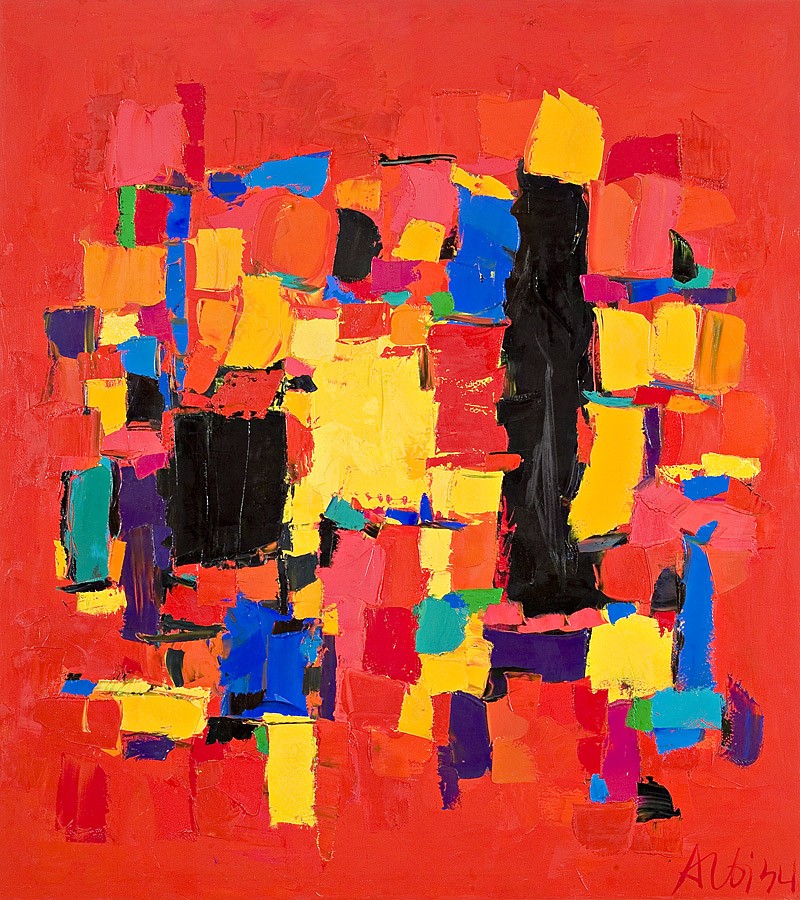
Olga Albizu, “Red 103” (n.d.)

Lilliam Rivera, Never Look Back (2020)

Audacious and entertaining YA retelling of Orpheus and Eurydice, set in the Bronx with a mostly Puerto Rican cast. Rivera melds the Greek story with Taino mythology (the goddess Guabancek features prominently), adding Catholicism and the musical tradition/genre of bachata as significant elements. Pheus, a bit of a playa but at heart a good kid, and (natch) a brilliant musician, has come to spend the summer with his father in the Bronx. A friend lives downstairs—she introduces him to her cousin, who has been sent to the city from Florida to recuperate. Something bad happened to Eury, which started even before they left PR in the wake of hurricane Maria. Only Pheus believes her when she finally explains about Ato, a demon who insinuated himself into her life after her father left the family when she was a baby. Ato claims to love her but he is jealous, and wants to take her away to what initially seems like a paradise. Only Pheus has the ability to try to win her back.

I read this for a faculty-staff book group, and I’m so glad I did: I’d never have come across it otherwise. Rivera manages to hold her blend of cultures together; similarly, she balances psychological explanations (Eury has PTSD) with magical ones (she has been captured by a demon). And she plays with our knowledge of the classical myth, following it closely but upending it in important ways. With the exception perhaps of Pheus’s mother—almost entirely offstage, but unsympathetic nonetheless—the characters are presented with kindness, rising above types. (Pheus’s on-again, off-again girlfriend is a great example.) Neve Look Back is a generous novel about terrible things (climate change, sexual abuse, gaslighting, racism). Worth your time.

Hanif Abdurraqib, A Little Devil in America: Notes in Praise of Black Performance (2021)

Like all great nonfiction writers, Abdurraqib makes me care for things I thought I had no interest in: his essay on Whitney Houston in this collection on Black performance is a revelation. The book’s range is impressive. Even more so is its cohesion. These aren’t just a bunch of disconnected riffs on a topic. The book itself is a performance, linked by the writer’s reflection on his own abilities and inabilities. And it taught me so much. I knew nothing about Depression-era dance marathons, Buster Douglas’s upset of Mike Tyson, Merry Clayton’s essential but tragic part in “Gimme Shelter,” or Beyoncé’s Super Bowl performance. (What can I say, I’m pretty clueless.) And without this book I’d never have discovered Aretha Franklin’s Amazing Grace—for that alone I would be grateful.

I listened to this one; no surprise that a book about performance is great on audio?. My only regret is that I wasn’t able to underline the author’s many aphorisms; I really ought to buy a copy. Abdurraqib read at my college this fall: so smart, so funny.

Nadine Fresco, On the Death of Jews: Photographs and History (2008) Trans. Sarah Clift (2021)

Fresco close-reads the Liepaja photos (eight images of Jewish women and children being shot by a Nazi death squad and local collaborators on a beach in Latvia in December 1941), explains the erratic journey of these images in the postwar era, and reflects on atrocity photography more generally. Since I’d spent part of the summer studying Holocaust photography, I wasn’t as overwhelmed by the book as I might have otherwise been. (Cursory research suggests this book was taken from a larger collection published in France: maybe it’s more impressive in context.) But things take a surprising and moving turn in the last pages, when Fresco reveals a familial connection to the photos (a relative interned in a nearby ghetto helped preserve the negatives). In the end, though, it falls between two stools: perhaps too specialized for general readers, but too cursory for specialists.

Jane Austen, Persuasion (1818)

What can I say? It’s terrific! Anne Elliot is a champ. Jane Austen dug the Navy and makes it seem A-OK. The Musgroves are a delight. Lyme Regis can be dangerous. The Crofts anticipate Dickens, every scene with them is a joy. Sir Walter is a pain in the ass. Penelope Clay does what she has to do. You’ve probably read this book, but if not, get on it. Who doesn’t love a second chance?

Marcie R. Rendon, Sinister Graves (2022)

Regular readers will know how much I like the Cash Blackbear series. Now with a larger publisher, Rendon is back with the third installment of this terrific series set in North Dakota and Minnesota in the early 1970s. As usual, Cash stumbles on a crime—literally (?) demonic, a turn I initially resisted until I realized how apt that metaphor is for white settler actions towards indigenous children—but mostly she drives around in her truck, drinks beer, and shoots pool. I can’t get enough of that lonely aimlessness—though Cash makes two friends I suspect we’ll hear more about in future. I was lucky enough to meet Rendon this fall—she’s lovely—and she confirmed there’ll be at least two more books in the series. Woot!

Norton Juster, The Phantom Tollbooth (1961) Illus. Jules Feiffer

When he was in school he longed to be out, and when he was out he longed to be in. On the way he thought about coming home, and coming home he thought about going. Wherever he was he wished he were somewhere else, and when he got there he wondered why he’d bothered. Nothing really interested him — least of all the things that should have. …
As he and his unhappy thoughts hurried along (for while he was never anxious to be where he was going, he liked to get there as quickly as possible) it seemed a great wonder that the world, which was so large, could sometimes feel so small and empty.

Can you believe I’d never read this before? Grateful to Frances for choosing it for One Bright Book. Listen to the episode for more, including my undigested thoughts about how Jewish this book is. I mean, how neurotic is Milo? Never anxious to be where he’s going but wanting to get there as quickly as possible: I feel you, kid, I feel you.

Dwyer Murphy, An Honest Living (2022)

Satisfying quasi-crime novel about a lawyer who has left corporate law (in the most satisfying way) and become the legal version of a PI, to supplement his shifts at night court. Murphy apparently was a lawyer, he knows that world, and I could have used even more detail about it. The main story, though, is about a book dealer and his much younger wife, a reclusive but renowned novelist. She hires the narrator to help her divorce him, which he does, but then a strange woman shows up at his door, claiming to be the novelist and wanting to know what the hell he’s done. The plot is capably done—with plenty of references to how he has stumbled into a low-rent Chinatown—but the real thing about the book is it’s hymn to pre-financial crisis New York.

An Honest Living is like Paul Auster if he were actually as good as I thought he was in my early 20s, or, better, like the first novel of his second wife (the man has good taste in wives, I’ll give him that), Siri Hustvedt’s The Blindfold. Grateful to Levi Stahl for the rec—this one doesn’t seem to be getting the attention it deserves. (But just today I read Marisa Greizenko’s take—you subscribe to her newsletter, right?—and it is spot on. I love how she compares it to mumblecore.)

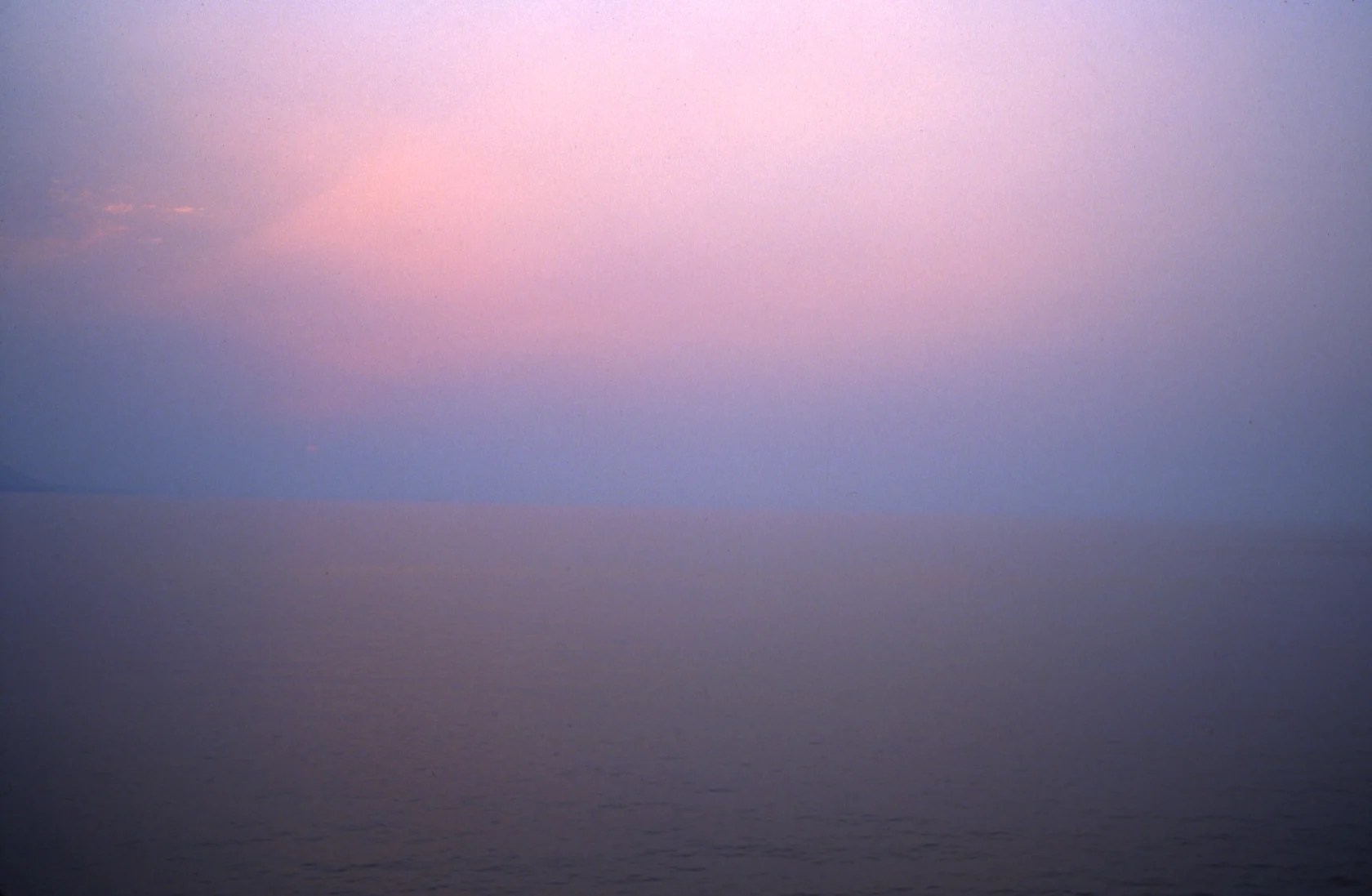
Nan Goldin, Seascape at sunset, Camogli, Italy, 2000

A light month, but not a bad one. Don’t sleep on that Austen lady. I think she could be big.

My Year in Reading, 2020

I feel bad saying it, it is a mark of my privilege and comfort, but 2020 was not the most terrible year of my life. In many ways, it was even a good year. I have secure employment, about as secure as can be found these days, and what’s more I spent half the year on sabbatical, and even before then I was working from home from mid-March and didn’t miss my commute for a minute. Thanks to the sabbatical, I avoided the scramble to shift my teaching to a fully online schedule—watching colleagues both at Hendrix and elsewhere do this work I was keenly aware of how luck I’d been to have avoided so much work. I do worry, however, that I’m hopelessly behind the curve, clueless about various technologies and best practices; I expect elements of the shift to virtual will persist.

My family spent a lot of time together last year; among other things, I watched my daughter grow into someone who edits YouTube videos with aplomb. (At not-quite ten she is already the house IT person.) As an introvert, I found staying home all the time the opposite of a burden. (Last week I had to be somewhere relatively crowded, for the first time in months, and boy am I going to be in for a rude awakening when this is all over.) I missed seeing friends, but honestly my social circle here is small, and I continued to connect with readers from all over the world on BookTwitter. Most excitingly, I had a lot of time to read. I’ve heard many people say their concentration was shot last year, and understandably, but that wasn’t my experience. For good or for ill my response to bad times is the same as to good—to escape this world and its demands into a book.

But sometimes, usually on my run, I’ll wonder if I’m mistaken in my assessment of the year. I suspect a deep sadness inside me hasn’t come out yet: sadness at not seeing my parents for over a year; at not being able to visit Canada (I became a US citizen at the end of the year, but Canada will always be home; more importantly, our annual Alberta vacations are the glue that keep our little family together); at all the lives lost and suffering inflicted by a refusal to imagine anything like the common good; at all the bullying and cruelty and general bullshit that the former US President, his lackeys, and devoted supporters exacted, seldom on me personally, but on so many vulnerable and undeserving victims, which so coarsened life in this country.

I think back to the hope I sometimes felt in the first days of the pandemic that we might change our ways of living—I mean, we will, in more or less minor ways, but not, it seems, in big ones. I feel hopelessness at the ongoingness of the pandemic, the sense that we may still be closer to the beginning than the end. And a despair fills me, affecting even such minor matters, in the grand scheme of things, as this manuscript I’m working on—could it possibly interest anyone?

I suppose what most concerns me when I say that 2020 was not a terrible year is my fear of how much more terrible years might soon become. My anxiety about the climate-change-inspired upheavals to come sent me to books, too, more in search of hope than distraction. A few of the titles below helped with that. Mostly, though, reading books is just what I do. I am reader more than anything else, and I expect to be for as long as that’s humanly possible.

For the second straight year, I managed to write briefly about every book I read. You can catch up on my monthly review posts here:

January February March April May June July August September October November December

All told, I finished 133 books in 2020, almost the same as the year before (though, since some of these were real doorstoppers, no doubt I read more pages all told). Of these 45 (34%) were by men, and 88 (66%) by women. 35 were nonfiction (26%), and 98 (74%) were fiction. Sadly—if predictably—I read no collections of poetry or plays last year. I didn’t read much translated stuff: only 30 (23%) were not originally written in English. Only 4 were re-reads; no surprise, given how little I was teaching.

Highlights:

These are the books that leap to mind, the ones I don’t need to consult my list to remember, the ones that, for whatever reason, I needed at this time in my life, the ones that left me with a bittersweet feeling of regret and joy when I ran my hands consolingly over the cover, as I find I do when much moved. These are the books a reader reads for.

Larry McMurtry, Lonesome Dove

My book of the year. A road novel about a cattle-drive from the Mexican border to Montana around 1870. Thrilling, funny, epic, homely. Characters to love and hate and roll your eyes at and cry over and pound your fists in frustration at. And landscapes to swoon over, described in language that is never fussy or mannered or deliberately poetic, and all the better able to capture grandeur for that. I think about the river crossings all the time. And those last scenes in wintry Montana. Lonesome Dove is good for people who love Westerns. It’s good for people who don’t love Westerns. Recently someone asked me to recommend a 20th century Middlemarch. Crazy, I know, but I immediately thought of this book, which, albeit in a different register and in a different location, is similarly fascinated by the webs that form community, and why we might want to be enmeshed in them. (A goal for 2021 is to re-read Eliot’s masterpiece to see if this comparison has any merit.) If you read novels for character, plot, and atmosphere—if you are, in other words, as unsophisticated a reader as me—then Lonesome Dove will captivate you, maybe even take you back to the days when you loved Saturdays because you could get up early and read and read before anyone asked you to do anything.

Kapka Kassabova, To the Lake

I loved Kassabova’s previous book, Border, and was thrilled that my high expectations for its follow-up were met. Lake Ohrid and Lake Prespa, connected by underground rivers, straddle the borders of Greece, Albania, and the newly-independent North Macedonia. This book is about these places, but as the singular noun in the title suggests, “lake” here primarily concerns a mindset, one organized around the way place draws together different peoples. Like Border, To the Lake is at first blush a travelogue, with frequent forays into history, but closer inspection reveals it to be an essayistic meditation on the different experiences provoked by natural versus political boundaries. Unlike Border, To the Lake is more personal: Kassabova vacationed here as a child growing up in 1970s Bulgaria, as her maternal family had done for generations. But Kassabova seems more comfortable when the spotlight is on others, and the people she encounters are fascinating—especially as there is always the possibility that they might be harmful, or themselves have been so harmed that they cannot help but exert that pain on others. In Kassabova’s depiction, violence and restitution are fundamental, competing elements of our psyche. One way that struggle manifests is through the relationships between men and women. As a woman from the Balkans who no longer lives there, as a woman travelling alone, as an unmarried woman without children, Kassabova is keenly aware of how uncomfortable people are with her refusal of categorization, how insistently they want to pigeonhole her. (No one writes ill-defined, menacing encounters with men like she does.) People have been taking the waters in these lakes for centuries—the need for such spaces of healing is prompted by seemingly inescapable violence. I’ve heard that Kassabova is at work on a book about spas and other places of healing, and it’s easy to see how the forthcoming project stems from To the Lake. I can’t wait.

Kate Clanchy, Some Kids I Taught and What They Taught Me & Antigona and Me

Clanchy first earned a place in my heart with her book based on her life as a teacher, Some Kids I Taught and What They Taught Me. She is particularly good on how we might teach poetry writing—not by airily invoking “inspiration” but by offering students the chance to imitate good poems. These models will inspire students to write amazing poems of their own, and offer students whose background is from outside the UK (where Clanchy lives) the chance to refract their own experiences into art. Clanchy is committed to the idea that students have things to gain from their education, if they are allowed to pursue one. But she is equally adamant that students have things to give to the institutions where they spend so much of their lives. Thinking about what a child might bring to her school reminds us that education is a public good first and not just a credentialing factory or a warehouse to be pillaged on the way to some later material success. It’s an idea that might begin to redistribute the social and economic inequalities attendant in neoliberalism.

I’m sure I liked Some Kids as much as I did because I’m also a teacher. Which doesn’t mean I don’t think non-teachers (and non-parents) will enjoy it too. But I do think Clanchy’s earlier book Antigona and Me is an even greater accomplishment, with perhaps wider appeal. Antigona is Clanchy’s pseudonym for a Kosovan refugee who became her housekeeper and nanny in the early 2000s. The two women’s lives became as intertwined as their different backgrounds, classes, and values allowed them. Yet for all their differences, they are linked by the shame that governs their lives as women. Antigona’s shame—her escape from the code of conduct that governed her life in the remote mountains of Kosovo, and the suffering that escape brought onto her female relatives—is different from Clanchy’s—her realization that her own flourishing as a woman requires the backbreaking labour of another—and it wouldn’t be right to say that they have more in common than not. What makes the book so great is what fascinating an complex characters both Antigona and Clanchy are. Riveting.

Andrew Miller, Now We Shall Be Entirely Free

A brilliant historical novel. My knowledge of the Napoleonic wars is thin—though having just finished War and Peace I can say it is less thin than it used to be—and I appreciated learning about both the campaign on the Iberian peninsula and the various milieu in England, ranging from medicine to communal living, that were both far removed from and developed in response to that war. (Miller has Penelope Fitzgerald’s touch with the telling detail, conjuring up the mud and blood-spattered viscera of the past while also showing its estrangement from the present.) But what has really stayed with me in this book about a traumatized soldier on the run from both his memories and, more immediately, a pair of contract killers hired to silence the man before he can reveal a wartime atrocity is its suggestion that the past might be mastered, or at least set aside. Reading the last fifty pages, I felt my heart in my throat. Such anxiety, such poignancy. This book really needs to be better known.

Helen Garner, The Spare Room

Garner is a more stylistically graceful Doris Lessing, fizzing with ideas, fearless when it comes to forbidden female emotions. Old friends Helen and Nicola meet again when Helen agrees to host Nicola, who has come to Melbourne to try out an alternative therapy for her incurable, advanced cancer. Garner brilliantly presents Helen’s rage at the obviously bogus nature of the therapy—and Nicola’s blithe (which is to say, deeply terrified) unwillingness to acknowledge that reality. Helen is resentful, too, about the demanding and disgusting job of taking care of Nicola (seldom have sheets been stripped, washed, and remade as often as in this novel). Emotions about which of course she also feels guilty. Nicola expresses her own rage, in her case of the dying person when faced with the healthy. In the end, Nicola has to be tricked into accepting her death; the novel lets us ask whether this really is a trick. Has Nicola gained enlightenment? Is false enlightenment, if it gets the job of accepting reality still enlightenment? What does enlightenment have to do with the failure of the body, anyway? I loved the novella’s intellectual and emotional punch.

Robin Wall Kimmerer, Braiding Sweetgrass: Indigenous Wisdom, Scientific Knowledge, and the Teachings of Plants

Kathleen Jamie, Surfacing

Kim Stanley Robinson, The Ministry for the Future

I’ve grouped these titles together, not because they’re interchangeable or individually deficient, but because the Venn diagram of their concerns centers on their conviction that being attuned to the world might save it and our place on it. These are great books about paying attention. Whether describing summer days clearing a pond of algae or noting the cycles nut trees follow in producing their energy-laden crop, Kimmerer reminds us that “all flourishing is mutual.” We are only as vibrant, healthy, and alive as the most vulnerable among us. The past year has taught us the truth of this claim—even though so far we have failed to live its truth. Jamie observes a moth trapped on the surface of the water as clearly as an Alaskan indigenous community whose past is being brought to light by the very climactic forces that threaten its sustainability. Robinson imagines a scenario in which dedicated bureaucrats, attentive to procedure and respectful of experts, bring the amount of carbon in the atmosphere down to levels not seen since the 19th century. Even though Robinson writes fiction, he shares with Kimmerer and Jamie an interest in the essay. We need essayistic thinking—with its associative leaps and rhizomatic structure—more than ever. These generous books made me feel hopeful, a feeling I clung to more than ever this year.

Best of the rest:

Stone cold modern classics: Sybille Bedford’s Jigsaw (autofiction before it was a thing, but with the texture of a great realist novel, complete with extraordinary events and powerful mother-daughter drama—this book could easily have won the Booker); Anita Brookner’s Look at Me (Brookner’s breakout: like Bowen with clearer syntax and even more damaged—and damaging—characters); William Maxwell, They Came Like Swallows (a sensitive boy, abruptly faced with loss; a loving mother and a distant father; a close community that is more dangerous than it lets on: we’ve read this story before, but Maxwell makes it fresh and wondering).

Stone cold classic classics: Buddenbrooks (not as heavy as it sounds), Howells’s Indian Summer (expatriate heartache, rue, wit).

Thoroughly enjoyed, learned a lot (especially about hair): Chimamanda Ngozi Adichie’s Americanah

Best deep dive: I read four novels by Tessa Hadley this year, two early ones and the two most recent. Since I’ve read a few of her books before I now only have two more to go before I’ve finished them all. That will be a sad day, though with luck we will get a new one before too long. Hadley has been good from the start, but The Past and Late in the Day show her hitting new heights of wisdom and economy. Her characters are arty types or professionals who learn things they don’t always like about what they desire, especially since those desires they are so convinced by often turn out later to have been wrongheaded (like Proust’s Swann, they spend their lives running after women who are not their types, except “women” here includes men, friends, careers, family life, their very sense of self). I can imagine the future day when young literary hipsters rediscover Hadley’s books and wonder why she wasn’t one of the most famous writers of her time.

Did not totally love at the time, but bits and pieces of which would not quite let me alone: Tim Maugham’s Infinite Detail (struck especially by the plight of people joined by contemporary technology when that technology fails: what is online love when the internet disappears?); Henri Bosco’s Malicroix translated by Joyce Zonana (so glad this is finally in English; even if I was not head-over-heels with it, I’ll never forget its descriptions of weather. Do you like wind? Have I got a book for you!).

Loved at the time but then a conversation with a friend made me rethink: Paulette Jiles’s The News of the World. I was a big fan of this book back in the spring—and its rendering on audio book, beautifully rendered by a gravelly-voiced Grover Gardner—and I still think on it fondly. But a Twitter friend argued that its portrayal of a girl “rescued” from the Kiowa who had taken her, years earlier, in a raid is racist. I responded that the novel is aware of the pitfalls of its scenario, but now I’m not so sure.

Maybe not earth-shattering, but deeply satisfying: Lissa Evans’s V for Victory, Clare Chambers’s Small Pleasures, two novels that deserve more readers, especially in the US, where, as far as I know, neither has yet been published.

Most joyful, biggest belly laughs: Rónán Hession’s Leonard and Hungry Paul. That bit in the supermarket! Priceless.

Best Parul Seghal recommendation: Seghal elicits some of the feelings in middle-aged me that Sontag did to my 20-year-old self, with the difference that I now have the wherewithal to read Seghal’s recommendations in a way I did not with Sontag’s. Anyway, I’ll follow her pretty much anywhere, which sometimes leads me to writers I would otherwise have passed on. Exhibit A in 2020 was Barbara Demnick, whose Eat the Buddha is about heartrending resistance, often involving self-immolation, bred by China’s oppression of Tibetans. In addition to its political and historical material, this is an excellent book about landscape and about modern surveillance technology.

Ones to watch out for (best debuts): Naoisie Dolan’s Exciting Times; Megha Majumdar’s A Burning; and Hilary Leichter’s Temporary. Have I ever mentioned that Leichter was once my student?

Longest book: Vikram Seth’s A Suitable Boy. Almost 1500 pages of easy reading pleasure that I look on with affection (perhaps more than when I first finished it) rather than love. Although now that I have finished War & Peace I see that Seth frequently nods to it. Wolf hunts!

Longest book (runner up): Dickens’s Our Mutual Friend A mere 900-pager. As I said back in November, “I read it mostly with pleasure and always with interest, but not avidly or joyfully.” Most interesting as a story about “revenants and ghosts, about corpses that don’t stay hidden, about material (junk, trash, ordure, tidal gunk, or whatever the hell “dust” is supposed to be) that never comes to the end of its life, being neither waste nor useful, or, rather, both.” Happy to have read it, but don’t foresee reading it again anytime soon.

Slow burn: Magda Szabó, Abigail (translated by Len Rix). Bit irritated by this at first but then realized the joke was on me—the narrator’s self-absorption is a function of her ignorance. All-too soon ignorance becomes experience. Not as gloriously defiant as The Door, but worth your time.

Frustrating: Carys Davies, West. Ostensibly revisionist western that disappoints in its hackneyed indigenous characters. I do still think of bits of it almost a year later, though, so it’s not all bad.

Left me cold: James Alan McPherson, Hue and Cry; Fleur Jaeggy, These Possible Lives (translated by Minna Zallman Procter); Ricarda Huch, The Last Summer (translated by Jamie Bulloch) (the last is almost parodically my perfect book title, which might have heightened my disappointment).

Not for me, this time around (stalled out maybe 100 pages into each): The Corner That Held Them; Justine; The Raj Quartet; Antal Szerb’s Journey by Moonlight. Promise to try these again another time.

Stinkers: Géraldine Schwarz, Those Who Forget: My Family’s Story in Nazi Europe—A Memoir, a History, a Warning (translated by Laura Marris); Jessica Moor, The Keeper; Patrick DeWitt, French Exit; Ian Rankin, A Song for the Dark Times

Writer I read a lot of, mostly very much enjoying and yet whose books do not stay with me: Annie Ernaux. I suspect to really take her measure I would need to re-read her, or, better yet, teach her, which I might do next year, using Happening. As I said in regards to the latest Sigrid Nunez, I think I do not have the right critical training to fully appreciate autofiction. I enjoy reading it, but I cannot fix on it, somehow.

Good crime fiction: Above all, Liz Moore’s Long Bright River, an impressive inversion of the procedural. Honorable mentions: Susie Steiner; Marcie R. Rendon; Ann Cleeves, The Long Call (awaiting the sequel impatiently); Tana French, The Searcher; Simenon’s The Flemish House (the atmosphere, the ending: good stuff). In spy fiction, I enjoyed three books by Charles Cumming, and will read more. In general, though, this was an off-year for crime fiction for me. What I read mostly seemed dull, average. Maybe I’ve read too much the last decade or so?

Inspiring for my work in progress: Daniel Mendelsohn’s Three Rings: A Tale of Exile, Narrative, and Fate. Mendelsohn excels at structure—and in these three linked lectures he tackles the subject head on.

Best Holocaust books (primary sources): I was taken by two memoirs of Jewish women who hid in Berlin during the war: Marie Jalowicz Simon’s Underground in Berlin (translated by Anthea Bell) and Inge Deutschkron’s Outcast: A Jewish Girl in Wartime Berlin (translated by Jean Steinberg). Gerda Weissmann Klein’s memoir All But my Life is worthwhile, with a relatively rare emphasis on forced labour camps. In her novel Other People’s Houses, closely based on her own experience as a child brought from Vienna to England on the Kindertransport, Lore Segal takes no prisoners. Uri Shulevitz’s illustrated memoir, Chance: Escape from the Holocaust, is thoroughly engrossing, plus it shines a spotlight on the experience of Jewish refugees in Central Asia. Of all these documents, I was perhaps most moved by the life of Lilli Jahn, a promising doctor abandoned in the early war years by her non-Jewish husband, as told by her grandson Martin Doerry through copious use of family letters. My Wounded Heart: The Life of Lilli Jahn, 1900 – 1944 (translated by John Brownjohn) uses those documents to powerful effect, showing how gamely her children fended for themselves and how movingly Jahn, arrested by an official with a grudge, contrary to Nazi law that excepted Jewish parents of non or half-Jewish children from deportation, hid her suffering from them.

Best Holocaust books (secondary sources): I was bowled over by Mark Roseman’s Lives Reclaimed: A Story of Rescue and Resistance in Nazi Germany. Fascinating material, elegantly presented, striking the perfect balance between historical detail and theoretical reflection. To read is to think differently about our misguided ideas of what rescue and resistance meant both in the time of National Socialism and also today. His earlier work, A Past in Hiding: Memory and Survival in Nazi Germany, which focuses on a part of the larger story told in the new book, is also excellent. Omer Bartov’s Anatomy of a Genocide: The Life and Death of a Town Called Buczacz is another fine example of the particular used to generate general conclusions. Considering the fate of the Galician town of his ancestors in the first half of the 20th century, Bartov uses the history of Buczacz, as I put it back in January, “to show the intimacy of violence in the so-called Bloodlands of Eastern Europe in the 20th century. In his telling there was a seemingly ineluctable drive on the part of almost every group to reduce the region’s cultural diversity, and that much of the violence required to do so was perpetrated by one neighbour against another.” Dan Stone’s Concentration Camps: A Very Short Introduction does exactly what the title offers. It covers an impressive amount of material—Nazi and Stalinist camps feature most prominently, no surprise, but they are by no means the sole focus—in only a few pages. Rebecca Clifford’s Survivors: Children’s Lives after the Holocaust skillfully combines archival and anthropological material (interviews with twenty child survivors) to show how much effort postwar helpers, despite their best intentions, put into taking away the agency of these young people.

In addition to reviews of the things I read, I wrote a couple of personal things last year that I’m pleased with: an essay about my paternal grandmother, and another about my love for the NYRB Classics imprint.

You can find my reflections on years past here:
2019 2018 2017 2016 2015 2014

Coming in 2021:

Because my sense of how long things will take me to do is so terrible (it’s terrible), I’m always making plans I can’t keep. I should either stop or become more of a time realist. I do have a couple of group readings lined up for the first part of the year: Minae Mizumura’s A True Novel in February, and L. P. Hartley’s Eustace and Hilda trilogy in March. I’ve enjoyed, these past months, having a long classic on the go, and will keep that up until the end of my sabbatical. Having just completed War and Peace—guaranteed to be on this list in a year’s time—I might read more Russians. We’ll see. I want to read more Spanish-language literature—though I’ve been saying that for years and mostly not doing it. I want to read more writers of colour, especially African American writers. I took a course in college but have so many gaps to fill. I’m reading more nonfiction with greater pleasure than ever before—the surest sign of middle age I know; I’m sure that will continue in 2021. I read almost no comics/graphic novels last year, unusual for me, but I’m already rectifying that omission. I’ll read more science fiction in 2021, I suspect; it feels vital in a way crime fiction hasn’t much, lately. My two prime candidates for “deep dives” this year are Edith Wharton and Toni Morrison. Now that I am an American I should know the literature better!

What I’ll probably do, though, is butterfly my way through the reading year, getting distracted by shiny new books and genre fiction and things that aren’t yet even on my radar. No matter what, though, I’ll keep talking about it with you. That is, I’ll put my thoughts out here, and hope you’ll find something useful in them, and maybe even that you’ll be moved to share your own with me. Thanks to all my readers. Your comments and reactions and opinions—that connection—means everything to me.

What I Read, December 2020

I’m slow at the best of times, but the lag between now and December seems especially long. That was before there was an armed insurrection in the US Capitol, for example. Anyway, December was in large part a slow month, which is really always a good thing but especially now. I wrote steadily, then took time off at the end of the year. The days drew in, the temperature dropped a little, running conditions were good. Inveterate grasshopper, I turned to a series of short, light books, but mostly I was reading a long, serious one. Yes, on my third try I am finally reading War and Peace, and I know now it’s a book I’ll want to return to again. I only made it about 2/3 through in December, so for now I’ll stick with the rest of the month’s reading.

Helen MacInnes, Above Suspicion (1941)

I closed out 2019 with MacInnes’s Decision at Delphi and liked it enough to promise myself I’d keep reading her. So when I saw some titles in one of the recent Harvard Bookstore Warehouse sales, I snapped them up. I started with this, her first, one of those “ordinary people get caught up in espionage” scenarios that seem to have been popular in the 30s and 40s (Ambler, Dorothy Hughes). Here the ordinary people are a young married couple—he an Oxford don, she his intelligent and fashionable partner—who are persuaded by an old friend to use their annual summer hiking holiday in the Alps to test the strength of a ring of British agents in the Reich. After successful rendezvous in Nuremberg and Innsbruck, the couple run into problems in the Austrian Alps.

I wanted to like Above Suspicion, but in the end I did not. It seems to have been written to encourage Americans to get into the war—like Casablanca, from the same year, only not nearly as good. A laudable goal, but one that makes for heavy going today, especially in the conversations between the English couple and an isolationist American journalist whom they befriend and eventually convert to the antifascist cause, though not without dialogue like this:

“I’ll become accustomed to the idea that man is born in pain, lives in struggle, dies in suffering.”

“Well, that’s a better defense against the new Middle Ages than the nice ideas you got from your liberal education.”

MacInnes obviously became a good writer—who can tell me when that happened?

Gary Paulsen, Hatchet (1987)

Now classic middle-grade novel that I am old enough to have missed the first time around. It was assigned to my daughter for school, and we read it aloud together. Brian, whose parents have recently separated, flies to Alaska to spend the summer with his engineer father. On the way, though, the pilot dies of a heart attack. (This happens in the first chapter, so I’m not spoiling anything.) The prop plane crashes on the shores of a lake somewhere in northern Canada. Brian is banged up but, miraculously, alive. Now he has to stay that way. His ingenious efforts at doing so and his diminishing hopes of being rescued comprise the rest of the book. Basically, it’s Robinson Crusoe for fourth-graders. My daughter found the crash really scary, but then she got into the survival story. I enjoyed it too, though I found Paulson’s love of sentence fragments grating, his cod-existential philosophy a Bit Much, and his depiction of Brian’s mother unduly harsh. But he’s good at depicting dramatic events and the painstaking work required to live off the land. A vivid scene with turtle eggs might stay with me forever. Hatchet readers, you know what I mean.

David Heska Wanbli Weiden, Winter Counts (2020)

Crime novel set on a Lakota reservation in South Dakota. Virgil Wounded Horse is an enforcer on the rez (people hire him to give wrongdoers a doing over when the police won’t deal with them—which is most of the time). He’s also guardian to his 14-year-old nephew, Nathan. Virgil is still grieving the deaths of his mother and sister, and trying to keep things together. But when Nathan nearly dies from an OD Virgil becomes determined to find out who is bringing drugs onto the rez. Some things in the book are conventional (Virgil reunites with an old girlfriend, for whom he tries to clean up his act; he has a funny, goofy friend as his sidekick). Others are not, like the attention paid to what people on the rez eat, versus what other people think they should. Or like the title—winter counts are historical records that use pictographs to convey important events. Personally, I think the events of this particular year make a satisfying arc. But the end of the book clearly sets us up for more of Virgil Wounded Horse. Which, fine, I’ll totally read them. For me, Marcie R. Rendon’s Cash Blackbear books are more interesting, but I’m always here for more crime fiction by indigenous writers.

Naoise Dolan, Exciting Times (2020)

Ava arrives in Hong Kong from Dublin to teach English. She meets Julian, a rich English banker, and enters into a wary, minefield-laden relationship with him. Both are desperate not to show their emotions, channeling that energy into plenty of sex and (genuinely funny) arch conversational volleys. When Julian is sent home for a while by his firm, Ava meets Edith, a Hong Kong-born, English-educated lawyer. They fall in love. What will Ava—who is living in Julian’s posh flat and has been more than cagey with Edith about him—do when Julian comes back?

The characters are good: Ava frustrated and delighted me in equal parts. Edith is a mensch. Even Julian is in his rubbishy upper-class English way sympathetic. The book is smart: Dolan uses Hong Kong to think about Irish colonialism—primarily through the way both places absorb and inflect the English language. And it’s funny: I started noting passages that amused me but gave up after a while, there were so many. I can’t resist sharing a few examples, though.

Here’s Ava performing some of the mental gymnastics she’s so good at:

I googled the salary range for junior vice presidents at his bank: 137,000 to E217,000 a year, plus bonus and housing allowance. I tried to take heart from this. That he could have that many zeroes and not consider himself wealthy surely showed that material lucre would not make me happy, ergo that I needn’t find a real job. But if money wouldn’t improve my life, I couldn’t think of anything likelier to.

Here’s Ava at the end of one of her regular phone calls with her formidable mother:

She didn’t want me to agree that it was good her younger son no longer needed her. Equally, she didn’t want me conforming that she should feel defunct because he was leaving before he’d finished college. Mam dealt in conversational quicksands where moving would only trap you more.

Here’s Ava with some on-point life thoughts:

You had to pretend to feel sad if you’d been single too long. I hated doing that because there were other things I was actually sad about.

Here’s Ava and Edith reflecting on the British. (Dolan does reported speech/Ava’s conclusions about conversations so well):

We agreed also that the British obsession with dogs was creepy, both because of the volume of animals they ate and in light of their historic and contemporary level of regard for humans.

Here’s Edith offering Ava a home truth:

 “You keep describing yourself as this uniquely damaged person, when a lot of it is completely normal. I think you want to feel special—which is fair, who doesn’t—but you won’t allow yourself to feel special in a good way, so you tell yourself your especially bad.”

And finally here’s a bit from Ava’s class. I loved these sections; they reminded me of Elif Batuman’s The Idiot, another funny and smart novel about young women teaching abroad. Here Ava is teaching the difference between category nouns (vegetable) and exact nouns (broccoli, carrots).

“It was better to use exact nouns because this made your writing more precise and interesting.”

[Ava sets an exercise in which students are to provide three corresponding exact nouns for each category noun.]

Cynthia Mak asked what to say for ‘people.’ Did it mean ‘sister,’ ‘brother,’ ‘father,’ or ‘teacher,’ ‘doctor,’ ‘artist,’ or—

‘They’re all okay,’ I said.

‘But if I put ‘sister,’ ‘father,’ ‘brother’ in ‘people,’ then what about here?’ She pointed to the box marked ‘family.’

‘Okay, don’t do those. Do ‘teacher’ or something.’

‘But what about here?’—signalling the ‘professions’ row.

‘Okay, something else for “people.”’

‘Happy people, sad people?’

‘“Happy people” isn’t an exact noun—it’s an adjective plus a category noun.’

‘So what should I write?’

We looked at each other. It was indeed a challenge to describe people in a way not immediately related to how they earned money or their position in the family unit. I said, ‘How about ‘friend,’ ‘boyfriend,’ ‘colleague’?’

‘I don’t want to write ‘boyfriend.’’

I couldn’t blame her for questioning the exercise. ‘Friend,’ ‘enemy,’ and ‘colleague’ didn’t seem like ways of narrowing down ‘people’ in the way ‘apple’ did for ‘fruit.’ An apple would still be a fruit if it didn’t have any others in its vicinity, but you couldn’t be someone’s nemesis without their hanging around to complete the definition. The same issue cropped up with my earlier suggestions. ‘Family’ was relational, and ‘profession’ was created and given meaning by external structures. Admittedly, ‘adult,’ ‘child,’ and ‘teenager’ could stand on their own. But I still found it depressing that the way we specified ourselves—the way we made ourselves precise and interesting—was by pinpointing our developmental stage and likely distance from mortality. Fruit didn’t have that problem.

I promised myself I’d write this review without mentioning Sally Rooney. Every piece I’ve seen about Exciting Times, not to mention the jacket copy, does. Hell, Rooney first published Dolan in Stinging Fly. Dunno what to say, though. They do remind me of each other. But, good news, there’s room for both in my reading heart.

Uri Shulevitz, Chance: Escape from the Holocaust (2020)

Uri Shulevitz’s father named him for “the biblical Uri, father of Bezalel, the first artist of the Bible,” after he noticed the infant, just home from the hospital, staring intently at the flowers on the wallpaper. Indeed the boy loved nothing more than drawing, which Shulevitz presents as an allegory for understanding the complexity of the world, detailing, for example, his amazement when his mother teaches him how to draw his stick figures in profile and not just head-on. Even before he grew to be a teenager, Shulevitz—author and illustrator of dozens of children’s books—would need to shift his mindset many times.

When the Germans invaded Poland, Shulevitz père left his wife and four-year-old son behind in Warsaw and fled eastward, managing to find work painting slogans for the Soviets in Bialystok. Despite this success, fear for his loved ones in Nazi-occupied Poland made him determined to return home. Taking a train to the Soviet-Polish border, he was on the point of crawling through the hole in an abandoned warehouse that served as a makeshift conduit between the two countries, when a man came through in the other direction. In horrified amazement, he ordered Shulevitz’s father to turn back. To return to the Nazis was suicide; he should concentrate on getting his wife and child out. Eighty years later, Shulevitz reflects on this chance encounter. What would have happened had his father ignored the man, or arrived just fifteen minutes later? The same thing that happened to the rest of Shulevitz’s relatives, probably: death in camps or ghettos. Was his family’s escape providence? If so, why did his devout grandfather perish, when his non-religious parents did not? Now an old man, Shulevitz can only conclude, “I have no answers.”

The historian Raul Hilberg famously said he never began with big questions about the Holocaust, because he was scared of arriving at small answers. Better instead to begin with the small things—such as, in this case, a lively and moving account of what one child experienced. Shulevitz even sees the absurd humour in his experiences, like the ridiculous pieties he and his parents encounter in their first months in the Soviet Union. My favourite instance is when a soldier tells a group of refugees about the wonders of their new land:

He said, ‘In the Soviet Union, we have plenty of everything. We have tea and we even have sugar.’

Both were such luxuries in those days.

When one of us asked, ‘Do you have lemons for tea?’ he declared, ‘Sure we do. They’re just now building a lemon factory.’

Even as a small child, Shulevitz was learning that nothing was quite as it appeared—perhaps another reason why he would be so fascinated by art, which at least was honest about being fake.

As Jews, Shukevitz and his parents were refused Soviet citizenship, which meant they could only live in certain areas. When Shulevitz’s father lost his job as a sign-painter, he found one with a theater company. Accompanying his father to work, Shulevitz was amazed by the differences between the sets seen up close—so flimsy—and their splendid appearance from the stalls. Life proved itself similarly unsteady when, in the summer of 1940, the family was suddenly deported with other stateless refugees, almost all Jewish, to a settlement called Yura near the White Sea. (Shulevitz’s experiences there were similar to the ones described by Esther Hautzig in her marvelous autobiographical children’s novel, The Endless Steppe.) 2400 km from Warsaw, the family began a new, hard life: the men cut timber in the forest; the women prepared what little food they could grow or gather. The children played in the snow and loved it, but death lurked all around—the first thing the overseer pointed to when the refugees arrived was a cemetery: “That will be your last resting place.” And it almost was for Shulevitz’s mother, who became dangerously ill and was saved only after an arduous journey to the regional hospital.

She survived, much weakened, and the family’s next piece of luck came with the dissolution of the Hitler-Stalin pact in the summer of 1941. Overnight the refugees were no longer spies or saboteurs but instead victims of a common enemy. Eventually, in 1942, Shulevitz and his parents were allowed to travel to the Soviet republics in central Asia. Two months later, the family arrived in Turkestan in the Kazakh Republic. Shulevitz was finally safe—and yet his troubles were only beginning. His father vanished—to join the Polish army being formed in Iran, it transpired, but he and his mother did not know this until he returned months later, having been rejected for service—his mother had to take any work she could get, and Uri himself fell seriously ill. Even after his recovery he and his mother were hungry all the time. Matters hardly improved after the father’s return: an impractical man, his money-making schemes (building a loom for weaving carpets, smuggling tobacco) came to nothing. Eventually he eked out a living at a shoe repair kiosk in the central market. Shulevitz loved nothing more than coming to work with his father; he describes this part of his life vividly: the mix of Russians, Chechans, Jews, Kazakhs, and other peoples fascinated the boy. And always he found art: a scrap of an old map, a strip of film that he and his friends pored over with the devotion of film students, a copy of The Wonderful Wizard of Oz in Russian.

Shulevitz never finished the book, though. The war ended and the kid who owned the book vanished with his family from one day to the next. Besides, Uri was on his own adventure now, an odyssey to return home, via Moscow, L’vov, and Kraków, where Shulevitz’s parents soon learned that they, along with other Jewish survivors of the war, were not wanted. The family thus diverted course and made their way into Czechoslovakia illegally before eventually arriving at a DP camp in Bavaria. In December 1946 the family made it to Paris, where they reunited with the father’s brother and his family. Their two-and-a-half-year stay was a mixed blessing for Uri—he hated being a “dirty foreigner,” but he fell in love with the movies and the novels of Dumas. In 1949 the family left for Israel; ten years later, Shulevitz, now a young man, accepted an offer to study art in New York, where he has lived ever since, still drawing.

When Shulevitz says that art saved his life, he doesn’t mean it metaphorically. He and his parents were refused Soviet passports in 1940 because the official who adjudicated their case believed, despite the parents’ protests, that the boy had been named after the Zionist writer Uri Zvi Greenberg, which must mean the parents were anti-Soviet reactionaries. At the time this refusal was a terrible blow, leading to their exile in Yura. But had they stayed in Grodno they would likely have been murdered by the Einsatzgruppen that swept through in 1941/42. A baby fixated on flowered wallpaper; a fanciful father who knew some Torah; a rejection that led, indirectly and dangerously, to safety: no wonder Shulevitz concludes, “It was blind chance deciding our fate.” It is for this clear-sightedness—this refusal to sugar-coat his survival as a function of heroism or cleverness or chutzpah—even more than for its illuminating depiction of the refugee experience in Soviet Central Asia, that sets Chance: Escape from the Holocaust apart from other Holocaust memoirs, whether for children or adults.

In fact, it was difficult for me to tell, as I read the book raptly in a single evening, who the book was for. Although marketed for children—my local library is shelving it in juvenile nonfiction—it never condescends to them, and would in fact, I suspect, be difficult for those under age 10 to follow. For me, this uncertainty was a plus; I love that teenagers and adults can both enjoy it. The book’s illustrations are similarly pleasing, and similarly uninterested in being only one thing. They include photos, maps, and dozens of Shulevitz’s charcoal drawings, in a variety of styles, from comic-book caricature to Käthe Kollwitz-inspired expressionist. Really an excellent book, highly recommended.

Marie Jalowicz Simon, Underground in Berlin (2014) Trans. Anthea Bell (2015) [compiled by Hermann Simon and Irene Stratenwerth]

Fascinating memoir describing Marie Jalowicz Simon’s years living under an assumed identity in wartime Berlin. At one point, an abortionist who has been helping her and other Jews in hiding sends her to a supposed rescuer, a barmaid who sells Jalowicz Simon to a syphilitic Nazi for 15 Marks. You can’t make stuff like this up. I wrote about my experience reading it with students.

Rebecca Clifford, Survivors: Children’s Lives after the Holocaust (2020)

Writing about this for another venue, so will only say for now that this study of child survivors of the Holocaust is excellent. Clifford cogently argues that these children—ranging in age from two or three to twelve to fifteen at the time—were continually used and abused by the adults who took charge of them after the war, sometimes stripping them from the families who had cared for them lovingly during the war, projecting on them their anxieties and hopes, and even disputing that they were survivors at all. At times, the children were despaired of as savages whose humanity had been destroyed by their experiences. At others, they were heralded as the vanguard of a virile Jewish future. Using untapped archival records and interviews with twenty survivors, Clifford emphasizes the children’s own wishes and desires, something that none of the (mostly well-intentioned) adults in their lives had ever done for them.

Eva Ibbotson, The Morning Gift (1993)

I was about a third of the way through this novel when I glanced at the copyright page, curious whether it was from the 1940s or the 1950s. Imagine my shock when I learned it was published the same year I started college. I admit this knowledge made the book sink a little in my estimation—what felt sweet and innocent coming from another age felt naïve, even misguided when written with so much hindsight. But its author was from another age—Ibbotson was born in Vienna in 1925 to talented parents (her father was a fertility doctor, her mother a writer whose work has in recent years been rediscovered). She arrived in England in 1934, landing with her mother in Belsize Park, a London neighbourhood then filled with down on their luck refugees from Hitler.

The Morning Gift draws on that background. Ruth, a young woman from an accomplished, loving, slightly eccentric Jewish Viennese family, escapes to England after a hasty marriage to a brilliant British professor of vertebrate zoology. Quin turns out to be one of the most eligible aristocratic bachelors in England. (Think Cary Grant’s character in Bringing Up Baby except this guy always knows where his intercostal clavicle is.) That is, everyone thinks he’s eligible, because Quin and Ruth keep the marriage secret so they can dissolve it without fuss—but of course the real secret (to themselves, not to readers) is that they’re actually crazy about each other. Will they figure that shit out before they pull a relationship Gift of the Magi?

Imagine, if you can, a mash-up of When Hitler Stole Pink Rabbit and a less sinister work Daphne DuMaurier—that’s The Morning Gift. (In her introduction to this reissue, Sarra Manning calls it “the missing link between I Capture the Castle and Jilly Cooper’s early romances.”) Ibbotson apparently said she wrote books for intelligent women who have the flu. I’m no intelligent woman, sadly (actually, not sadly, as then my ideas would get stolen by inferior men and my drycleaning would be more expensive), and, touch wood, I haven’t the flu. But I raced through this romance, despairing at setbacks and cheering for a happy ending. I wouldn’t have minded, though, if the book had been a little less insubstantial. Which has left me of two minds about whether to try Ibbotson again. I will take your advice in the comments.

Nora Ephron, Heartburn (1983)

Enduring yet also dated novel (in an interesting, not bad way: group therapy, was that really a thing?) about a woman responding to her feckless husband’s infidelity. Strong Laurie Colwin vibes (though the master remains unsurpassed in the “young woman for whom cooking is important makes her way in New York” genre). Lots of good lines, sometimes laugh out loud funny. Would have left more of an impression, I suspect, had I not been reading War and Peace at the same time.

Patrick DeWitt, French Exit (2018)

Someone praised this on Twitter and, feeling the need for a break from the Russian soul, I took a quick spin through it. To make a French exit is apparently to leave without saying goodbye—to ghost someone, basically. In DeWitt’s novel a mother and her thirtysomething son, who live together in disquieting intimacy (they don’t sleep together or anything, it’s not like that, instead they make fun of people in the same mean way) escape Manhattan, after their finances finally collapse. (The woman’s late husband made a fortune as a litigator defending exclusively terrible causes, but the money’s been squandered.) They take refuge in a friend’s Parisian apartment, blithely spending the last of their funds on marvelous food and wine and gathering an assortment of characters around them. The vibe is part Arrested Development, part Wes Anderson. Indeed, at first I thought, “This is like a Wes Anderson film in which all the characters are mean.” (Like those awful twins in Rushmore.) By the end, French Exit became like an ordinary Wes Anderson film, complete with celebrations of full-blown idiosyncrasy and plenty of winsome ruefulness. I didn’t feel the transformation was earned, though. DeWitt can turn a phrase, but I don’t see the point of this book. It wants to have it both ways: nasty zingers and hugging and learning. I think DeWitt—whose Robert Walser pastiche I couldn’t finish—is just not for me.

Holocaust stories were December’s winners: the Clifford, the Jalowicz Simon, and, especially, the Shulevitz are moving, valuable works. The light reading was mostly a let-down, and the literary fiction a mixed bag (yay Dolan, boo DeWitt). But everything was overshadowed by the book on which my attention was mostly fixed. (Hint: it’s about Russia.) More about that next month!

What I Read, May 2020

Finished the semester, was sad about not getting to see students graduate. Hair grew. Won a teaching award, finally something unequivocally good, a helpful validation. Made occasional trips to pick up groceries and the like, and to drive the car a little so my already temperamental battery didn’t complete die, was bewildered by the apparent alternate reality outside my door: no masks, no distancing, no cares. Hair grew longer. Thought about my upcoming sabbatical, worried over how to use this gift of time. Feared failure more than usual. Read too much news, was despondent, angry, grief-stricken. Hair reached crisis point. And, as always, read, quite a lot, most of it pretty undemanding.

EZIlJ48XYAA-tuGSusie Steiner, Missing, Presumed (2016)

When Lissa Evans and Nina Stibbe tell you to read a book, you don’t fuck about. Happily, this was as delightful and engrossing as promised. Manon Bradshaw is getting on for 40. She’s a bit lonely, but she’s a good cop, she’s funny and sarcastic, and she is just ordinarily neurotic, not hell-bent on self-destruction. Steiner manages the trick of putting the investigator’s personal life front and center and writing a suspenseful plot. Above all, Missing, Presumed is a properly female-centered crime novel (there’s more than one important female character, they don’t hate each other, they aren’t pitted against each other by men). Mostly what I took away from the book is that women’s clothes are often extremely uncomfortable. There’s lots of strap-tugging and pushing and pulling.

Israel Gutman, Resistance: The Warsaw Ghetto Uprising (1994) Trans. Ethel Broido (1994)

Twenty-five years on, Gutman’s history of the Warsaw Ghetto uprising feels dated. It’s filled with detailed information about an extraordinary moment, and is especially good on the various Jewish political and social groups in both pre-war and wartime Poland. But it has a narrow definition of resistance—namely, the use of force, especially the taking up of arms. I don’t reject this in principle—the power of violent resistance is on display across America as I write—and I get that Gutman is presenting events as the actors experienced them (he quotes various documents in which the handful of Jews left after the ghetto’s liquidation in late 1942 exulted in finally feeling human again, once they were able to shoot a gun or set an explosion, etc.). But Gutman also implicitly validates these statements, in part by underplaying other forms of resistance (he has surprisingly little to say about the Ringelblum archive, for example). His take makes sense when you learn that Gutman actually fought in the uprising himself. But you won’t learn that from his book. In fact, I’d no idea of his role until the students I was reading the book with told me. I can’t imagine a book written today that wouldn’t acknowledge the writer’s involvement in the material. Time for a new history of this moment, I say. One more thing bothered me: I’ve never before seen a book that acknowledged its translated status in a brief aside in the acknowledgements. Reprehensible!

Susie Steiner, Persons Unknown (2017)

DI Bradshaw is back, and her life has become more complicated, more exasperating, more fraught, and more joyful. Part Laurie Colwin, part Tana French, these books are terrific. Forgot to mention that Steiner is worth reading in paperback, because each of the two books so far includes a bonus chapter that bridges the current book to the next. I’ve not seen that before.

Maryla Szymiczkowa, Mrs. Mohr Goes Missing (2015) Trans. Antonia Lloyd-Jones (2020)

Maryla Szymiczkowa is the pseudonym of a young Polish gay couple. This is the first of what I imagine has become a series centered on Zofia Turbotynska, a society woman in Cracow in 1893, who feels herself coming alive when she inadvertently begins investigating a series of murders at an almshouse. The novel doesn’t quite avoid the pitfalls involved in stories of amateur detectives, but if like me you can’t get enough of late-19th, early 20th century Galicia, or if you just appreciate a well-drawn character (Zofia isn’t entirely likable, a bit self-satisfied and prim, but we are asked through her to think about our own fascination with investigation, which makes us like her more and ourselves less) you should give this a try. Props to Houghton Mifflin for bringing Szymiczkowa to the US, and to East Bay Books, who put their inventory online for online browsing by section, which is how I stumbled across this.

Kathleen Jamie, Sightlines (2012)

Wonderful essays.

Emiliano Monge, The Arid Sky (2012) Trans. Thomas Bunstead (2018)

Young Mexican novelist plays with temporal order and the relation between narrator and character in telling key events (dire or violent or, most often, both) in the life of a criminal turned priest turned criminal. (At least, I think that’s what’s going on; it’s not always easy and I read it in snatches, when immersion would probably be better, given the style.) Bunstead, I sense, is a great translator (I thought his translation of María Gainza’s Optic Nerve was terrific), and there are some resonant, Bernhardian sentences here. My sample size is small, to be sure, but so much Latin American literature seems to come out of Faulkner, who I don’t much care for. Are there Spanish-language equivalents of Barbara Pym or Tessa Hadley, or is that simply a misguided/stupid question?

Marcie R. Rendon, Murder on the Red River (2017)

Don’t sleep on this one. Jenny Davidson recommended it as the best crime fiction she’d read this year. Cash Blackbear is a nineteen-year-old Anishinabe woman in the Red River Valley in the early 1970s. (The war in Vietnam is a repeated touchstone.) Cash does farm work, mostly driving grain trucks. She adds to that income by hustling pool. And she drinks pretty steadily. She has a close relationship to the local sheriff, who watched over her when she was taken into care as a child, keeping her away from the worst of the foster parents. (They were all pretty bad, and Rendon slips in glimpses of those microaggressions throughout the book.) Cash has an ability to listen to the dead (this dreaming isn’t particularly well-developed, and I’d have liked to hear more about it). So when a native man is found stabbed to death, the sheriff brings Cash in to give him a hand. The resolution of the crime is anticlimactic; suspense is not the reason to read the book. Cash, though, is a great character, dogged and smart and torn apart by her love of a place that has no love for her. As an indigenous woman, Cash has suffered a lot, but the suffering is more constant low-level trauma rather than singular overwhelming moment. When I complained to my wife, who’d already read the book, that the hard-drinking investigator was a cliché, she pointed out that what Cash was doing was medicating. Rendon is good with action scenes (and I appreciate how modest those are—this is not Jack Reacher stuff). The reason they’re so good is that Rendon’s descriptions of Cash’s actions are fascinatingly detailed (yet the book is a short, quick read). We learn about every bath Cash takes in futile attempt to rid herself of wheat chaff, every trip to the bar, every cigarette she smokes, every meal she eats (when she remembers to), every route she takes through the isolated towns of the valley. I wondered about this, and finally it dawned on me that the prose was mimicking Cash’s need to control what she can in life. The repetition, the circumscribed life—these are the analogues of a person always at risk of losing a sense of self.

Cornelia Funke, Inkheart (2003) Trans. Anthea Bell (2003)

My daughter and I read this together over a couple of months (it’s like 500 pages), and I’ve been badgering her to write a review, but so far without luck. Inkheart has a good premise—what if you could read yourself into a book?—and then complicates it by adding the caveat that, every time you did, something from the world of the book came into our own. Meggie lives with her father, Mo, a bookbinder; when a stranger arrives at their door one night and Mo becomes shifty, even frightened, Meggie learns a lot of things, including, eventually, what really happened to her mother. Bell’s translation of Funke’s German text is excellent, and although I didn’t find this as breathtaking as, say, The Golden Compass, I loved how much my daughter loved it. It was too scary for her to read alone, but manageable with me reading it. It’s the first of a trilogy and we’re on the second book now—seeing my daughter’s joy and fascination with the map at the front of the second volume has been a joy in itself.

Daphne Du Maurier, The Flight of the Falcon (1965)

Even second-tier Du Maurier is worth reading.

Marcie R. Rendon, Girl Gone Missing (2019)

Cash returns, and the big development from the end of the first book means her life is different—that change is both an opportunity and a challenge to her always fragile stability. When several young women from different farming communities go missing, Cash follows the trail to Minneapolis, where she has never been before. In my favourite scene she visits the Grain Exchange, walking around the imposing stone building, amazed to find that this name, from which the all-important commodity prices come through farmers’ radios each day, is attached to a physical place where people actually work. Rendon brings Cash into contact with the American Indian Movement (AIM), which allows her explore the idea of whether a loner like Cash, at once attached to her native identity and frustrated by it, can find any meaning in an identity-based movement. A significant hanging thread from the first volume is reintroduced, which I appreciated. Rendon’s going to have to step up the crime aspects of these novels (the plots are thin), but I want many more books about Cash. Great midwestern farm neepery, too. During beet season, the local roads develop “a sheen of mud. This close to the Red River, the mud was mixed with river clay that was slicker than ice if a rainfall or early frost or, god forbid, an early snow coated the road.”

Tessa Hadley, Late in the Day (2019)

It’d been a while since I’d read Hadley, a writer I’ve always liked, but who has exceeded herself here. Late in the Day tells the story of four friends whose lives have been connected since student days. It begins with the death of one of them and goes both forward and backward from this traumatic beginning. Hadley is great with character—she sketches them so clearly (they are among the few literary characters I can actually picture) and lets them change and surprise us. She’s also adept with narrative voice, changing perspective regularly and using omniscience to its potential. There’s a scene when the four friends, drunk and high after celebrating a big accomplishment, almost exchange sexual partners, only to have the moment interrupted by one of the children, who can’t sleep; later, that child, now grown up, tells a sibling about a dream—which we know was real. I found this misunderstanding moving, somehow.

What does it mean to create something? Is a relationship or a friendship a kind of creation? Is middle age the time when creation is most fruitful? These are Hadley’s questions; in her answers I got a strong To the Lighthouse vibe. Hadley is warm, almost fond of her characters, but never indulgent with them. Fittingly, I stayed up late with the book, willing myself to the end but sad to reach the final page. Read Catherine Taylor’s piece in The Financial Times, it’s very good.

Dan Stone, Concentration Camps: A Very Short Introduction (2019)

Historian Stone has written an amazingly lucid and useful book, which covers much historical ground and asks big theoretical questions, all in only a little more than 100 pages. Stone looks at late 19th-early 20th century camps in South Africa, Cuba, and the Philippines, noting how they were designed for non-combatants. He of course considers the camps of the Third Reich (his own area of expertise), which clearly distinguishes the various Nazi camps and, even more interesting, compares them to the institutions set up to create and validate the Volksgemeinschaft (Hitler Youth camps and the like). Camps, Stone argues, were for the Nazis as necessary to those “drilled into” the community as to those excluded from it, given that the regime’s aim was a society modelled on the barracks. To that end, “inclusion and exclusion went hand in hand.” Stone adds a chapter on the Gulag (really helpful to someone like me who knows too little about it), and on camps around the word (in colonial scenarios, within so-called liberal-democracies, under Communism). He concludes by casting a critical but not unsympathetic eye on theorists who make the camp a metaphor for modernity, and then tackles the difficult issue of comparison. In the end, although he says there is no clear line between camps and other sites of incarceration, Stone doesn’t think, for example, the migrant camps at the US border are concentration camps because they offer at least the possibility of the rule of law. I disagree, but I think he’s absolutely right in concluding, “Concentration camps are the compressed and condensed values of the state when it feels itself most threatened.” As if this wasn’t enough, his bibliography is excellent. The book’s a keeper, and I plan to start assigning it in all my Holocaust-related courses.

Ariana Neumann, When Time Stopped: A Memoir of My Father’s War and What Remains (2020)

A frustrating book that tells a gripping story in undistinguished prose. Neumann grew up in Venezuela in the 1970s and 80s with a father, Hans Neumann, who was a magnate of industry, a patron of the arts, and a general force of nature. Hans had a past in Europe—specifically in Czechoslovakia—that he rarely addressed. As a child, Neumann once found a box of papers that included what looked like a passport written in a language she couldn’t read. It had a photo of a man who was clearly her father at a much younger age. But the name underneath the photo was someone else’s. When she asked about it, her parents put her off. The box disappeared. But it came to her after her father’s death, along with some other family papers, which launched Neumann on a years-long project to uncover her father’s story, and to relate what she discovered to otherwise unexplained moments in her past—like when a fellow student in college asserted that she must be Jewish (first Neumann ever heard of it), or when she accompanied her father on a trip back to Prague after the fall of the Wall, a trip in which he refused to visit places from his past. When Time Stopped, in other words, belongs to the genre of the second-generation Holocaust memoir, like Maus or Daniel Mendelsohn’s The Lost (third generation, actually) or Bart van Es’s The Cut-Out Girl.

Neumann’s book is better than van Es’s and not as good as Mendelsohn’s. (No one’s as good as Spiegelman.) I was so irritated by the laxness of Neumann’s descriptions of her own life (I especially wanted to know more about Venezuela) and her trite meditations (on receiving an important letter, for example, she writes, “There is a moment of connection in receiving an object, a physical link, that is lacking in the virtual instantaneity of email”). But if you can get through this stuff, the story Neumann tells about her father and his family is incredible. Plus the book is well-structured, the slow unfolding of the story deftly and engagingly arranged.

Hans was one of only nine people in an extended family of 34 to have survived the war. He did so by having papers that declared him an essential worker at his father’s expropriated paint factory as well as a network of friends who risked their lives for him. The two most incredible stories involve clandestine forays into the world of the perpetrator. His brother’s sister smuggled herself into the ghetto-camp of Theresienstadt twice in order to bring packages to her in-laws. (Neither survived the war.) And Hans himself, once it was clear that no Jew, no matter how “essential,” would be permitted to live in Prague after a certain date, hatched an insanely audacious plan to use a friend’s passport to travel to Berlin in the fall of 1943, where he posed as a Gentile Czech willing to offer his services as a foreign worker. He obtained an identity card and work permit under the assumed name of Jan Sebesta and was hired at a paint factory that made protective polymer coating for German warplanes. It is amazing that Hans was never found out (fortunately for him, he had not been circumcised); it is amazing he did not die in the Allied bombing raids, especially as he was conscripted into the civilian firefighting service; it is especially amazing that he did not go crazy from cognitive dissonance. Except that he kind of did—as is true in so many second-generation stories (Maus again being the great example), “survival” is shown to be an ongoing project that is often incomensurate with a “happy ending.”

Laurie R. King, Justice Hall (2002)

I blow hot and cold on the Mary Russell—Sherlock Holmes series. Not sure what brought me back after not particularly enjoying the previous installment, but this one is better. Russell and Holmes are tasked with finding out what happened to the heir of a grand family fortune in the Great War. It’s an open secret he was court-martialled and executed by firing squad for disobeying an order, but what led to that terrible moment has been a secret until now. Jacqueline Winspear wrote a book on the same topic at about the same time; I wish I’d read King’s first, as she’s a better writer. Anyway, diverting enough, especially if you’re into English country houses, but nothing spectacular.

William Trevor, After Rain (1996)

My first collection of Trevor stories, and, yes, he is as good as everyone says. There are two kinds of stories in this book—New Yorker stories (resonant, rueful, wise, maybe a bit perfect) and uglier ones, which remind me of early Ian McEwan (grubby, a bit horrible). A couple of these stories mix both modes—I liked those best, especially “A Friendship,” which I found shocking (a man discovers his wife’s infidelity: he forgives her but forces her to break with the lifelong friend who had helped her arrange the logistics of the affair) and “Lost Ground,” set in a Protestant farming family in rural Ireland in the 1980s, which I at first took to be an ingenious reworking of Chekhov’s “The Kiss,” but which takes a darker turn. Friends extoled “The Piano Tuner’s Wives” and “The Potato Dealer,” both excellent. I could imagine teaching any number of these stories and learning much more about them that way. (Just great: the last thing I need is another white guy to teach.) I thought Trevor would be nicer than he is. He reminded me a bit of Alice Munro. Both are cold writers, and I can’t warm to them, much as I admire them. For a sense of the whole collection, Jacqui’s overview is really good.ETrQo6eWAAITlxPIn summary: Trevor’s good—no surprise there—and I’ll be reading more of him in the next few months. Jamie is a brilliant essayist; I’m finding her especially enlivening in these times when distancing is our reality rather than our fantasy. Neumann’s book is at once clunky and captivating. But the pick of the month was Hadley’s Late in the Day; a great book of middle age. I hope June brings more good reading, but events being what they are right now—I don’t know if I’m more thrilled or scared that people are finally saying enough is enough—I’ll settle for any reading at all.