Philippe Sands first met Horst Wächter in 2012 as a result of his first book, the acclaimed East West Street. This hybrid of history and memoir centered on the city of Lviv (also Lvov, Lwow, and Lemberg) in the former Austro-Hungarian province of Galicia, where Sands’s own (Jewish) ancestors had lived, and where the two (Jewish) men who gave the world the contrasting concepts of genocide (Rafael Lemkin) and crimes against humanity (Hersch Lauterpacht) also grew up. A big part of that story was Hans Frank, the Nazi ruler of Galicia, responsible for the murder of hundreds of thousands of Jews. In writing his book, Sands became friendly with Hans’s son, Niklas Frank, who had written a memoir condemning his father. Niklas told him about Otto Wächter, Frank’s second-in-command, and about Horst, the fourth of Otto’s six children, whom he knew slightly. Horst, Niklas warned, had a friendly view of his father—but he added that Sands would like him.
Horst Wächter, at his home (the Scholss Haggenberg) in 2013
Niklas was right—an initial meeting with Horst led to a public discussion with the two sons of prominent Nazis, which was made into a film. As Sands continued to learn more about Otto, he turned his findings into a podcast for the BBC, using Otto’s post-war experiences to discuss the so-called Ratline, the help the Vatican provided former Nazis in fleeing Europe to the Middle East and South America.
The podcast in turn led to further discoveries (as listeners wrote in with information) and to a sharpening of the tension between Sands and Horst. The Ratline: The Exalted Life and Mysterious Death of a Nazi Fugitive thus necessarily focuses on the many layers of its coming to be; alas, Sands is not always a good enough writer to pull off the complicated structure required by a story about the telling of a story. Many of the turns in his investigation are introduced awkwardly. Chapters regularly end with clunky “cliffhangers” like this one: “Who was Bishop Hudal, and what exactly was his relationship to Otto? It was to that question that I would now turn.”
Still, Sands (and his team of researchers and assistants) is a good investigator. He describes Otto’s early days in the (then-banned) Austrian Nazi party, his role in the attempt to assassinate the Chancellor Dollfuss, his years in exile/hiding in Germany, followed by a triumphant return to Austria after the Anschluss, and meteoric rise in the apparatus of the Final Solution, first as a state secretary in Vienna (he fired hundreds of civil servants for being Jews, Mischlinge, or otherwise “politically unsound”), then as Frank’s number 2 in Kraków, and finally as governor of the District of Galicia, based in Lemberg.
Yet for Sands Otto’s wartime record matters primarily because of what happened afterward. In May 1945, Otto went underground; Sands finds out where he was, who he was with, and how he managed it. He tracks his movements in the years from 1945 – 49 (sussing out all his hiding spots in the Austrian Alps, including secret conjugal visits) and learns his daily routines after making his way to Italy in the last year of his life. He knows where Otto hid in Rome, under what name, and who he saw. To do so, he relies on Otto’s address book (cracking its rudimentary code), but mostly relies on his wife Charlotte’s papers, all of which Horst lets him see. (They are extensive: almost 9,000 pages of letters alone.) Charlotte destroyed her husband’s papers at the end of the war, which of course frustrates Sands, but he makes good use of this seeming obstacle by making the book as much about Charlotte as Otto. The portrait of their marriage is fascinating: Charlotte was tormented by her playboy husband’s many affairs, yet she was also his staunchest defender. She had been a committed Nazi from the early days; students in the ramshackle language school she ran decades after the war testify to Sands that she was not shy with her opinions.
Sands really homes in on Otto’s last days, in July 1950, when he suddenly fell ill and died from a mysterious illness. Horst, after a lifetime of hearing it from his mother, believes his father was poisoned. By whom? Maybe the Americans, maybe the Soviets, maybe the Jews. (That phrasing tells you everything you need to know.) Horst knows from his mother that the corpse, which she saw shortly after death, turned mysteriously black. How could a man like Otto—fit, a keen sportsman, who exercised every morning and swam in the Tiber—suddenly fall deathly ill? Surely it means something that he wrote to Charlotte about the enemies he suspected were following him. Horst is convinced that his father was murdered, and that he didn’t deserve it. After all, he was “a fine and decent man,” as a Ukrainian veteran of the Waffen-SS Galicia Divisions says, at a reunion attended by Sands, Niklas Franks, and a “beaming” Host.
At the very last stage of his lengthy investigation, on a visit to Rome to see the places Otto frequented in his last months, Sands is joined by another friend, a Spanish writer of nonfiction novels about the repercussions of the war. It’s pretty clear this must be Javier Cercas, and I don’t know why Sands is so coy about it, since he cites Cercas by name in one of his epigraphs, right below a typically forbidding passage from Isiah about the way violence will be passed down to the children of those who perpetrate it. Sands asks his friend why he came along. Why has he made Sands’s obsession his own? “It is more important to understand the butcher than the victim.”
Sands’s gloss—“A pretty phrase, and one that seemed true”—is evasive in a way belied by the doggedness of his investigation. He clearly believes in understanding the butchers, and I don’t know why he feels the need to hedge. Me, well, I think Cercas and Sands are full of shit. It’s sentiments like this, usually accompanied by a dutiful nostrum about knowing the past to avoid its repetition, that have led to our culture’s insatiable Nazi thirst.
Besides, Sands learns almost nothing about Otto’s motives. The villain of the story remains opaque. We learn as clearly as we can what Otto did during the war, how he came to his conviction in the cause, and how he spent his years on the run. But what he was thinking of when he organized the ghetto in Lemberg and oversaw the deportations and murder of so many thousands of Galician Jews is a mystery. Did he believe what he said to Charlotte and what she said to Horst, that he felt a duty to handle the situation he was entrusted with as efficiently and humanely as possible? Is this nonsense self-delusion or cynicism? Sands understands what a butcher can do, but not why they did so.
Otto Wächter with his wife Charlotte and their children, late 1940s. Otto was in hiding and visited as an Uncle. Horst is on the left.
The person whose motivations we do know something about is Horst, who comes across as a riveting and exhausting combination of reasonableness and monomania. He deplores the genocide, and he is willing to look into his family’s past, to the point of being shunned by his siblings and cousins. But he doesn’t deplore it that much. What he really hates is his father’s being lumped in with obvious criminals like Frank, Himmler or Arthur Seyss-Inquart (Reichskommissar of Occupied Holland, and Horst’s godfather). Horst is boring the way only someone who cannot come unstuck from a belief system can be. He insists that his father was a different kind of Nazi, who never had anything to do with the unpleasant aspects of genocide (and merely accepted the benefits that accrued to him from it as compensation for his mission) and sought only to make life more bearable for those terrible sufferers. To his credit, Sands is infuriated by this equivocation, and his portrait of Horst, who can’t help but come back to Sands every time he has pushed him away, is fascinating. Every time we think he is deserving of sympathy, Sands shows that he is not.
His portrayal of the Vatican is less compelling. Clearly Bishop Hudal, who befriended Otto and helped various other Nazis escape Europe, was at best a disreputable figure. And the Vatican’s stonewalling of Sands’s request to consult Hudal’s papers does not inspire confidence that it is willing to deal with its past in good faith. Sands never makes a blanket statement about the Vatican’s relation to Nazism—possibly because there isn’t one to make, and possibly (rightly) because doing so would result in a different kind of book. Sands has more to say about the Vatican’s ambiguous postwar relationship to American intelligence than about what the Church did or didn’t do during the war. Otto, it turns out, was spying for the Americans, through the intermediary of Hudal, further evidence of America’s immediate post-1945 pivot to the Cold War. In those first years after WWII, being anti-Soviet (and Otto was more enraged by communism than by anything else) was a lot more important to the US than having been a Nazi.
I appreciate what Sands has found out about Otto’s life and death. But I did weary of Sands himself. Although I read The Ratline avidly—it is as suspenseful as John Le Carré suggests in his blurb—I was irritated by the privileged world Sands inhabits, which he flaunts at every occasion. He gains access to every institution, consults with every kind of specialist, finds every door open to him. All in a good cause of course. But it’s all very Davos, if you know what I mean; it got to the point where I wondered about the patients the various liver specialists Sands consults weren’t seeing when they were being interviewed by him about the body’s metabolism of poisons. Put it this way: Le Carré doesn’t just blurb the book; he was Sands’s neighbour, too. I started to find the British and European elites of Sands’s milieu uncomfortably similar to the Nazi elites that had such a marvelous time enjoying the best of all things and thinking the best of all thoughts. Not that Sands and his peers are fascists. They definitely are not; I recognize that I am doing him an injustice here. But they too have drunk the Kool-Aid of their own specialness, it seems to me. Had I sensed that Sands had any self-awareness about this possibility I would have felt better about the dark fascination—the consumption of atrocity; the butcher love—that The Ratline too often incites.
Strange little month. Epic snow storm (20 inches!) and record cold snap (below freezing for a week, pretty intense for these parts) kept us busy frolicking in the snow and dealing with burst pipes. A week later 70 degree temps reminded us of the hot weather coming. I flailed in my writing, though I did manage to publish this piece I was proud of. As pleased to get my second shot as frustrated that my parents, in Canada, have yet to have even the first. Our daughter turned 10, a happy-making and bewildering occurrence. And of course I read a few books.
Georges Simenon, The Hanged Man of Saint-Pholien (1931) Trans. Linda Coverdale (2014)
A group of men, friends since their student days, are haunted by past misdeeds. Maigret traipses around Europe to solve the case. You can’t expect me to remember more than that, it’s been four weeks!
David Shneer, Grief: The Biography of a Holocaust Picture (2020)
Dmitri Baltermants (1912—1990) was a Jewish Soviet photojournalist who took iconic pictures at Stalingrad and in newly liberated Berlin, edited a prestigious photography magazine, and successfully navigated life under Stalin and Khrushchev. Despite a long and storied career, he is best known for one photograph, which came to be known as “Grief.” Sent to the Crimea in January 1942 after its initial liberation from German occupation, Baltermants photographed relatives grieving over the corpses of their loved ones on the site of a mass grave near Kerch. These were victims of Nazi reprisals, shot when the Germans retreated from the city in late December. (They would retake Kerch in May 1942, before the Soviets expelled them for the last time in April 1944.) In the six weeks of this first occupation, the Germans executed about 7000 Jews, both locals and refugees from Poland and elsewhere in the Ukraine, turning a Soviet anti-tank trench near the city into a five-kilometer-long mass grave.
As Shneer (z”l) shows, Baltermants took several striking photos that cold January day. But state media seized on one in particular and made it central to Soviet commemoration of Nazi atrocities. In keeping with Soviet refusal to recognize the Holocaust as a Jewish tragedy, “Grief” depicts non-Jewish survivors and victims. (Jewishness is literally the photo’s invisible substrate: by the time it was taken, the region’s Jewish victims were already buried in the mass grave, with no one left to search for them.) Yet it was increasingly marketed and understood as a Holocaust photo, especially once it was exhibited around the world in the 1960s and 70s, where it segued from historical document to artistic commodity.
The photo that impressed so many curators and art lovers was not the one Baltermants first took. As he prepared his work for exhibition he was increasingly bothered by blemishes in the sky on the original negative. In keeping with the norms of Soviet photojournalism—in which montage and editing was an accepted, even admired way to tell a greater truth—he revised the image, producing a new one “by overlaying a second negative with an undamaged sky to replace the flaw in the exposure” and then retouching the composite. What this means is: the dramatic clouds, so central to the power of the image as it has come to be known, are from somewhere else altogether. (The actual day of Baltermants’s visit was overcast: leaden rather than anguished.) This needn’t be understood as falsification or ideology. In the conclusion to his book, Shneer argues:
the tension between documentation and aestheticization demonstrates why Grief is the ideal image to serve as an iconic Holocaust photograph. … Its inclusion in the icons of Holocaust photographs broadens what we mean by the Holocaust and chips away at the term’s parochialism and nationalism.
Shneer comments intriguingly on the Kerch memorial today, caught up in Russia’s annexation of Crimea, arguing that the memorial to the atrocities has both been reclaimed as a public Jewish space while still being embedded in a broader pan-Soviet context (Jews finally get to be recognized as a victim group, but only so much). But his conclusions about contesting Holocaust parochialism remain entirely suggestive. He never develops what this would mean and how to navigate the ethics of using a photo without any Jews in it to comemmorate a primarily Jewish genocide.
Grief: The Biography of a Holocaust Photograph is frustrating and disappointing, from its subtitle onward. (How can a photograph have a biography?) It flirts with being many things—a biography of Baltermants, a history of Soviet photography, a disquisition on the Russian art market after the collapse of the USSR—without actually becoming any of them. And cultural history/cultural studies, Shneer’s preferred methodologies, are not for me. I wanted to blame the publishers for falsely marketing the book as Holocaust scholarship, but the final chapter proves that Shneer wants to own the designation But he simply never convinces.
I feel bad saying this, as Shneer, who I met once and found delightful, as I think did everyone who knew him, was ill with brain cancer as he completed the book. He died weeks after its publication. But I also don’t think he’d want readers to give him a pass. So I’ll say it again: this book is a mess.
Dominique Goblet, Pretending is Lying (2007) Trans. Sophie Yanow in collaboration with the author (2017)
After many years, Belgian comic artist Dominique Goblet (or at least the version of herself featured in this brilliant comic) takes her daughter to visit her father and his second wife. While the father finds ways to disparage Goblet and insult his wife, the little girl amuses herself by drawing a picture of her friend. The step-grandmother—drawn by Goblet as half alien, half Edvard Munch Scream figure—remarks on the friend’s long hair.
She doesn’t have long hair, little Nikita offhandedly remarks.
But look at the picture, replies the woman, already disproportionately angered. In the picture she has long hair.
Oh, that’s just a character, says the child. (Precocious!)
Which prompts the woman, in a fit of Platonist totalitarianism, to rage: “PRETENDING IS LYING, IT’S LYING! PRETENDING IS LYING!”
Aside from making it chillingly clear how messed up the father’s household is, this scene also alerts us to the text’s interest in creation. That self-awareness isn’t cerebral, though. Or if so then only as a necessary, self-preserving response to strong, often violent emotions.
Pretending is Lying considers various moments in Goblet’s life, from her childhood with her blustering, abusive father and her creative yet fragile and, in her own way, punishing mother to her own life as a parent via the story of a once-promising but soon-floundering love affair. Although the father takes up the most oxygen, I found the mother more interesting. The same person who, by a magical sleight of hand, diverts young Goblet from a meltdown when she trips on the sidewalk and rips her tights (she whips them off the sobbing child and puts them on backwards—the child, none the wiser, is amazed) later locks her daughter in the attic on a rainy day when the restless child won’t settle to anything. This traumatic experience is juxtaposed to the father’s absorption in the 1973 Dutch Grand Prix, in which Roger Williams’s car overturned and burst into flame: only one other driver, David Purley, stopped and tried to rescue him almost by himself, to no avail. Apparently, Purley and the ineffectual race marshals could hear Williams screaming as he burned alive. The event is horrible, both in Goblet’s remarkable rendering and in this video, mawkish music aside.
The terrified child, the crazed mother, the raging father (a fire-fighter, he is convinced he could have saved the day): everything’s going wrong at once; the scene is one of the most harrowing things I’ve read in a while. And yet there is also so much tenderness in the book: in one scene, Goblet’s daughter is scared to sleep in a strange bedroom, mostly because it has a giant graffiti of a snarling man on the wall. Goblet tells Nikita, “You have to laugh at the things that scare you, you’ll see, it works with everything!” What follows is a lovely row of panels in which the little girl tentatively thumbs her nose at the image, giggles to herself, and falls asleep smiling.
As befits the book’s emotional scope, Goblet draws in all kinds of styles, from careful line drawings to expressionist exaggeration to washes of abstraction; she accompanies these images with gorgeously varied and expressive lettering (she hand-lettered the English translation herself). The result is beautiful; a book you could read many times and keep finding new things to notice, a triumphant rebuke to the argument that imitation is dangerous because it falsifies.
Andrea Camilleri, The Safety Net (2017) Trans. Stephen Sartarelli (2020)
After reading almost 20 of these, I’ve finally noticed how often the Montalbano books begin with the detective surfacing from a dead sleep. That struggle seems to be harder to overcome as he ages, as if Camilleri had been preparing for his detective to die. (I gather he deposited a final installment with his publisher before his own death in 2019.) The Safety Net offers more of the usual complicated to-ing and fro-ing and mixing of cases, all of which is mere background to Camilleri’s specialties: describing food and fulminating against Italian governments. In this investigation, Montalbano has to spend time with teenagers and that could have gone badly, but Camilleri gracefully lets his character value what contemporary technology allows rather than bemoan the hell it consigns us to.
Andrea Camilleri, The Sicilian Method (2017) Trans. Stephen Sartarelli (2020)
A meatier plot than usual, which turns on the similarity of dramaturgy to detection. What, Montalbano wonders, does it mean to be the one pulling the strings? And who is doing the pulling? The detective/director, or the suspects/actors? And where is the audience in all of this? Ends with a surprise; curious to see if this development is followed through on in the remainder of the series.
Rachel Howzell Hall, And Now She’s Gone (2020)
PI novel with a twist. Rader Consulting has a secret mission: most of the time its agents look for missing people, but sometimes they help people go missing, specifically women who are escaping abusive partners. Grayson Skye, newly promoted to investigator from desk work, is herself one of those women. (That explains the preposterous name.) Still recovering from a burst appendicitis (not to mention some pretty serious PTSD) Grayson suddenly has even more on her plate: her first case proves more complicated than she’d like (the woman she is supposed to find begs to be left alone—but is she telling the truth?) and the worst part of her past catches up with her. Very busy, this novel, too much so. The jagged chronology is more irritating than effective. Yet I still devoured it over a weekend, especially enjoying its depiction of some unglamorous neighbourhoods in LA and Las Vegas.
Brilliant retelling of Wuthering Heights replete with unreliable narrators in the Ishiguro mode. (At least three main ones, not counting many small instances of gossip and storytelling along the way.) The outermost of these nested tellers is Mizumura herself. At one point she considers the Japanese tradition of an “I Novel,” comparing it to the invisible, omniscient narrator more prominent in Europe. (I summarize badly.) The main thing I disagree with in this fine summary of the novel is the reviewer’s suggestion that this digression is dull. To my mind, it’s central to the book’s project. Are writers supposed to tell us about themselves or about others? To tell what they know (the truth, their own perspective) or what they surmise, imagine, make up (the novel)? If the latter, how do we do justice to others? Can we overcome our prejudices toward them? These are the big questions of narrative, art, and politics that A True Novel explores. The main prejudices in evidence in the story concern family background and economic status. What happens when those don’t align, as is the case of the Heathcliff figure, Taro Azuma, who is born poor and of “mixed stock” in Manchuria but who becomes hugely wealthy?
I know I’m not doing A True Novel justice. Suffice it to say: I adored the book, raced through it (even though it’s 850 pages), and was sad when it ended. In fact, I haven’t found anything to match it, even though I’ve read a fair few good things since. It was even more fun reading alongside some smart, knowledgeable, and generous Twitter friends. Shout out to translator Juliet Winters Carpenter, too, who has done amazing work here, as best I can tell. I’ll be reading more Mizumura soon, that’s for sure.
Joan Silber, Improvement (2017)
A novel with as many strands as a Turkish kilim, one which belongs to one of the characters at its center. (The point, though, is that there isn’t a center to either rug or novel but rather a web of relationships, some clear and some glimpsed only in passing.) The story moves from New York to Turkey to Berlin: the mish-mash of locales could have been a mess, but it works. Or at least it did for me as I was reading it. I was reminded of Tessa Hadley, Esther Freud, a little of Laurie Colwin, and talked it up on social media. But now, a couple of weeks later, I can hardly remember a thing about it. (There’s a good bit about a woman who visits a man in prison, I remember that.) I’d been keen to read Silber’s backlist but now… *looks at piles of unread books climbing like mould spores up the walls * probably not.
Francis Bennett, Making Enemies (1998)
Terrific spy novel set in 1947, when the West begins to realize how different the Soviets’ beliefs and methods are from their own. The rest of the great powers are trying to catch up to the Americans and create a hydrogen bomb. Britain, though, is broke and would really prefer not to devote resources it doesn’t have to the project. What if the Russians felt the same? Is someone in the government sending them coded olive branches to this effect? The novel has two plot lines: one following a widowed atomic physicist in Moscow; the other concerning a young British political influencer, recently returned, disillusioned, from Berlin. These characters turn out to be connected; Bennett convincingly melds personal and political.
This thriller is more chess-game/byzantine bureaucracy than cool gadgets/explosions. The best part of the book, though, is a section set in Finland, featuring a thrilling chase on skis. In general, Finland comes across very appealingly. As does Making Enemies. Well written without drawing attention to itself; complicated without being ridiculous. (Impressive for a spy novel, in my experience.)
In keeping with his debut’s ethos of modesty, Bennett only wrote three novels. I’ve managed to track down used copies of the other two (together they form a trilogy) and can’t wait for them to show up. Thanks to Retroculturati for the tip.
Sarah Moss, Summerwater (2020)
Summerwater is not as good as Moss’s two historical novels, Signs for List Children (2014) and Bodies of Light (2016), or 2018’s Ghost Wall (with which it pairs nicely), but it’s really good. The setting is a holiday resort on a loch in Scotland. (But because UK “resort” means some not especially amazing cabins in the middle of nowhere.) It’s the beginning of summer: the day is long, but not bright, in fact cold, rainy, and thoroughly miserable. The holidaymakers are questioning their decision. In a series of short sections, we move among several perspectives—a husband and wife with young children, a husband and wife with really young children, the teenage daughter and son of an older couple, an elderly couple who are the only ones to actually own their cottage. At one point each thinks, usually darkly, about the extended family of foreigners whose nightly parties torment, or bemuse, them. (The foreigners are variously described as Romanians and Bulgarians, but at least one of them is from nowhere more glamorous/threatening than Glasgow.) These sections are interspersed with even shorter ones written from the perspective of trees, birds, and animals. Even more than the human characters, these nonhuman beings experience the deluge as dangerous; the possibility of starving to death recurs.
As usual in Moss, violence—threatened and actual; physical, emotional, and sexual; hidden and open—is everywhere, not least in a dramatic conclusion. There are also many more ordinary events: the effort required to shepherd bored or fretful children through a wet day, the various negotiations couples navigate at various life stages, the secrets people keep from each other, especially regarding their fantasies. (A minor thesis of the book is that the older women get the fewer fucks they give that their men know their fantasies don’t include them.) I love how Moss leaves things unsaid: how exactly did a child’s shoe end up on the shore? What will happen to Justine’s health? What’s the deal with that guy in the tent?
My only criticism is that Moss’s control over the various voices felt uneven. The free indirect discourse changes to match each character, as it should, and yet the prose mostly feels the same. It sounds more like Moss than like any of her characters. I mean, that’s a contradiction built into free indirect discourse, but at times Summerwater exhibits a lack of control in a writer who otherwise feels fully in control of her descriptions of how little control we have over our lives. (I wouldn’t mind if Moss were a little wilder, honestly.)
A final word: the jacket of the US edition is gorgeous, a scene wrapping across front and back covers of a black loch against even blacker mountains with only an initially puzzling scrawl of red in the center of the image. The design is by June Pak, who I have now followed on Instagram. The image doesn’t reproduce well and I had to return my copy to the library anyway, and for some reason I can’t find the whole thing on line, but here is the front bit anyway.
Marga Minco, An Empty House (1966) Trans. Margaret Clegg (1990)
Moving and effective novel about the aftermath of the Holocaust, even better than Minco’s quasi-autobiography Bitter Herbs. Set on three days—June 28, 1945; March 25, 1947; April 21, 1950—it follows Sepha, who, alone of her family, has survived the war in hiding, and who falls into a hasty marriage with a man she meets in the resistance. He plunges into a career in journalism, she flounders except for an interlude in the south of France, entering into various affairs that she enjoys but not enough to keep up for long. Throughout she visits with her friend Yolanda, another survivor. Yolanda is tormented by guilt at surviving; Sepha is sympathetic but unmoved. Readers, however, will be moved by their relationship—especially its ending—for Minco manages to keep their disagreement from feeling schematic. To that end, she deftly uses motifs and time shifts, which challenge the idea of continuous experience without making a big deal about it. As its title suggests, the novel is filled with empty houses—whether the various places in hiding Sepha recalls, a cherished bolt hole in France, the new house she and her husband are set to move into at the novel’s end, or, most powerfully, her childhood home, now inhabited by someone else, to which she returns like a criminal to the scene of the crime—only the crime, as she reminds Yolanda, was perpetrated by others on the likes of them.
Hans Keilson, Da steht mein Haus: Errinerungen [There Stands My House: Memories; alternatively, My House is There: Memoirs] (2011) Hrsg. Heinrich Detering
Keilson began this collection of autobiographical fragments in the 1990s, when he was in his 80s and beginning to wind down his long-running psychoanalytic practice. He’d written three novels and some poetry, but that was long ago. A decade later, now almost blind, he returned to the pieces, pruning and ordering them for publication. With the help of the literary scholar Heinrich Detering—whose conversation with Keilson ends the volume—the book was released soon after Keilson turned 100 and had become the subject of renewed interest in both Germany and the US. (I wrote about Keilson’s wartime diary a few years ago; that book too is worth reading.)
In short sketches that make full use of the roving quality allowed by German-language syntax, Keilson describes his childhood in Freienwalde an der Oder, a town near the Polish border where lumber and small-time health spas were the main industries. Keilson’s father managed a store (his wife ran it ably, maybe better than he did when he served on the western Front in WWI). Keilson’s parents were active in the local Jewish community, although her education, in her hometown at the foot of the Silesian mountains, a place now in Poland, was much stronger than his. (Keilson recalls her prompting him for the weekly Shabbat prayers and describes his ambivalent feelings about her unselfconscious voice in the women’s choir.) Keilson was a sporty kid—there are some great passages on ice skating—and also musical. Both experiences came in handy later, when he taught at a Jewish sports club in Berlin and paid his way through medical school by playing trumpet in a jazz band.
Despite his late success as a doctor and therapist, Keilson had never been particularly scholarly, though he vividly remembers presenting a Heine poem only to have a classmate student object: a Jewish student reciting a Jewish poet was “fouling the nest.” That moment, in the late 1920s, marked the first time Keilson sensed the change that would envelope him, his family, and his community. The memoir is filled with little but telling moments like this. By contrast, Keilson says little about his flight to Holland in 1936, at the urging of his non-Jewish wife, and his time living under a false identity during the war, where he first encountered the orphans he would make his postwar analytic reputation helping. He does describe how he managed to get his parents to Holland right before the war and how they decided against going underground, citing age, ill-health, and general exhaustion at a world that had so betrayed them. They were murdered in Birkenau.
In the afterword, Detering asks Keilson if he ever thought of going back to Germany. He did, after all, continue to write in the language. Keilson answers that he couldn’t. The moment he learned of his parents’ murder, he stopped being a German. Moreover, he knew he couldn’t work as an analyst for German patients. Regardless of their personal culpability they would always feel too guilty towards him; that would be fatal for successful therapy. At which point Detering expostulates, “Das klingt alles so vernünftig” [That sounds so reasonable]. Keilson responds: “Aber ich bin so vernünftig, Heinrich, sonst hätte ich nicht überlebt! [“But I am reasonable, Heinrich, I wouldn’t have survived otherwise.”] Reason was a gift, a talent [eine Begabung] that he used to help himself.
This exchange gives a good sense of Keilson: a similar calmness and wisdom, maybe evenhandedness is the best description, colours these reminiscences. He writes about his parents as if they were people he had known long ago—not that he is distant to them, his whole life was ruled by their loss, but he is so fair to them, so loving in his equanimity, presenting their kindnesses and their cruelties (especially on the father’s part). Even a brief scene describing a time when, aged 10, he caught a glimpse of his mother’s half-naked body is anything but prurient. He and Detering talk a lot about what it’s like to be so old, so close to death. Keilson knows he had a good life, despite everything; knows too what he did to further that sense of satisfaction.
In the last section of the memoir, Keilson describes an encounter on his daily walk—he was 91 at the time and could still get around. Only a few hundred meters from his house he meets a child playing in the street. The boy says to him, matter of factly, You are very old. Keilson agrees. And how old are you? Three, the boy proudly responds. Without warning, he picks up his toy to run home, but not before pausing to yell, Where do you live?
Right near here, Keilson shouts back.
Where?
Just straight ahead, then turn left and go up the street. My house is right at the intersection.
The boy is satisfied. In the distance a woman’s voice calls him home.
Keilson walks straight ahead, turns left, and, at the intersection, finds his house, here, in Holland.
A lovely end to a lovely book of a lovely life.
I didn’t mean to read two books by Dutch survivors preoccupied by houses back-to-back: sometimes the reading life has its reasons of which reason knows nothing. An English translation of the memoirs was published in Australia, but I couldn’t get it: no library in North America either had it or was willing to lend it to my college’s library. Shame.
Barbara Yelin, Irmina (2014) Trans. Michael Waaler (2016)
Nineteen-year-old Irmina von Behdinger arrives in London in 1934, thrilled to escape her stultifying home in Stuttgart and excited to study typing. For a while, she lives with a host family. Later she is taken on by an eccentric Countess, a former Suffragette who buys her a bicycle and takes her to various Labour party events. One day, a distant relative takes her to a cocktail party, where she’s prickly and bored stiff until she meets Howard, a student from Barbados on a full scholarship to Oxford. They become friends—punting on the Cherwell, strolling through Hyde Park (where, as a mixed-race couple, they narrowly escape a gang of Blackshirts)—and inch toward becoming lovers. But then the Countess asks Irmina to find somewhere else to live—she feels obliged to take in a Jewish refugee—and Irmina has no choice but to return home. She settles in Berlin, putting her English to use as a translator in the Reich Ministry of War. All the while she writes to Howard, dodges the advances of ardent fascists, and angles for a posting in England.
A series of events conspire to keep her in Germany, where she eventually marries one of the ardent fascists, has a child, looks the other way at things she doesn’t want to deal with, and enjoys the advantages that come from having a husband in the SS. By 1942 she is a single mother (her husband is on the Eastern Front) seeking refuge from bombing raids and roughly answering her son’s questions about an impromptu auction in the street over the goods from an expropriated house (What are they doing? What is a Jew?) with Nazi vitriol: “The Jews are our misfortune.”
Decades later, in the early 1980s, Irmina, now widowed, receives an official letter from Barbados. The secretary to the Governor General, Sir Howard Green, writes on behalf of his employer: would the esteemed Mrs. von Behdinger consider visiting? The trip—centered on a birthday party for Howard’s adult daughter, herself named Irmina—is a mixed success. The past can’t be overcome, but old ties still mean something. Everywhere she goes the now grey-haired woman, in her sensible outfits, is introduced as “the brave Irina.” Howard has described her that way for decades, partly because he doesn’t know what became of her life and partly because he can’t let himself think about that life.
Hamburg-based bookseller Buchi, as she is known on Twitter, recommended Irmina to me, and I’m so glad she did. It’s smart, beautiful, moving: really impressive. Yelin’s delicate lines, and subdued palette (all greys, blues, and sepia yellows) demand that we linger on her images, even as the story pulls us forward. The panels create alternating rhythms, with regular small boxes interspersed with gorgeous two-page spreads. A fine afterword by the Holocaust and genocide scholar Alexander Korb fills in some of the historical background. (Irmina is based on Yelin’s grandmother, though it’s unclear how closely.) An excellent book for anyone who has ever wondered, How could so many ordinary Germans be drawn to National Socialism? Yelin’s answer is particular rather than general; it has no sweeping thesis. She never gives Irmina a pass, never lets us think, Well, she’s just an old woman now, no harm done. But she also has sympathy for roads not taken, missed encounters, and wrongs that can’t be apologized for. Check out Yelin’s site for more of her work: I especially enjoyed this short film about her current project, illustrating a Holocaust survivor’s memories.
A good reading month. A True Novel was the best, no question. That will be on my end of year list, I’m sure. But Yelin and Goblet, the two graphic memoirs, were great. Keilson, Minco, Bennett, and Moss too.
A few days of quiet, lingering feelings of winter break. (Eat the extra chocolate, have a glass of wine at dinner.) Then the fear and anger at the insurrection. Later the bated breath about the inauguration, the mixed feelings about applying for an American passport, the horror at the passport photos. Then calm: the relief, the joy at not having to hear a certain name. And then malaise, something like despair, exhaustion, ennui: no energy, writing difficult. Finally, the amazingly good fortune at being able to get vaccinated, thanks to Arkansas state policy of including teachers in the second group.
Among all this, of course there was reading, including a long book I’d long wanted to read.
Jean-Claude Grumberg, The Most Precious of Cargoes (2018) Trans. Frank Wynne (2020)
Strange little book that tells in fairy tale-fashion—it is subtitled “A Tale”— the story of a husband and wife and their twin infants who are deported from Drancy to some ominous point in the East. On the train, the woman’s milk has dried up; the hungry babies scream inconsolably; the others in the sealed railway car glower when they aren’t staring dejectedly into space. In a forest somewhere in Poland the man makes an abrupt, terrible decision. He rips one of the children—the little girl—from his wife’s breast, wraps it in his prayer shawl, and squeezes the parcel through the barred window. He cannot know that a peasant, a woman who has prayed for a child that has never come, will find the baby and raise her, over the objections of her husband and at risk to her own survival. How she loves the child, barters for milk, runs away when someone informs the occupying forces about the Jew Child—these descriptions make up the bulk of the novella, which is told in a quaint, implausible style. Even more impossible is the story of the father, who, unlike his wife and son, having survived the camps, stumbles into a village where a woman and her young daughter are selling cheese in the local market. Yes, it’s her, his daughter, he’s beside himself—his plan worked—but with a suppressed cry he leaves without a backward glance. And nobody knows, the narrator concludes, if they ever met again.
Preposterous and kitschy, monstrous even, this story. Yet Grumbach (b. 1939)—many of whose relatives were murdered in the Shoah and who himself survived as a hidden child—has a trick up his sleeve. In an epilogue he addresses an imagined reader who wants to know whether this is “a true story.” Over three pages he arraigns the question—why challenge the veracity of the story when so many question the veracity of the events?—concluding that fiction can tell a truth that history cannot. I happen to agree, but I’m unconvinced by Grumbach’s example. It lacks the sophistication of, say, Ida Fink, whose own short works incisively probe the limitations of the historical record, limitations that fiction can redress. I appreciate how Grumbach pulls the rug out from the heartwarming story many readers might have been moved by—but he’s too self-congratulatory and not all that smart about what his rug-pulling means.
Yishai Sarid, The Memory Monster (2017) Trans. Yardenne Greenspan (2020)
Novella about an Israeli academic who is groomed by the head of Yad Vashem—to whom the book is written as a letter after an eventually specified moment of disgrace; a conceit I’m unconvinced is effective—to lead Israeli tour groups through Holocaust sites in Poland. At first he works with school groups, but his self-loathing and contempt for/fear of the young people becomes too much, and he starts working with dignitaries, who care about photo ops instead of information. He knows too much, is the problem, and he needs to tell it all. But no one wants, or is in position, to hear it. The narrator begins to disintegrate, a process mimicked in the text’s ambiguous syntax. Here, for example, he is with his flock at Birkenau:
I stood before them over the underground undressing hall with the shaved roof, like a picked-over scab, underneath all rot.
Do the last clauses describe the roof, or the narrator? For he has become a memory monster, and as such must be banished. But it is equally true that memory itself is the monster. What is memory for? Does it cause more harm than good? Why do the visitors he ferries around—students, teachers, and politicians alike—say, with varying degrees of explicitness, that “to survive we need to be a little bit Nazi, too”? Sarid is excellent at skewering complacencies and false piety, whether Israeli or Polish. I agreed with so much in this book, was made nervous by the parts of myself I could see in the narrator. And yet The Memory Monster has not stayed with me. Maybe I’d need to read it again. For now, at least, I much prefer David Albahari’s Götz and Meyer, which covers some similar ground, but which has more to say than this book about teaching traumatic history.
Primo Levi, Moments of Reprieve: A Memoir of Auschwitz (1981) Trans. Ruth Feldman (1986)
Late work by the Italian master, a collection in which each essay focuses on someone Levi encountered in his eleven-month incarceration in the Monowitz subcamp of the Auschwitz complex. To call this a memoir as the English-language publisher does might seem misleading, but Levi was always more interested in others than himself. At first blush these pieces are primarily anecdotal, but they use obliquity and juxtaposition to create their own arguments. And Levi does open up about himself a little, although always indirectly, as we see in particular in his portrait of Lorenzo Perrone (the Piedmontese forced labourer who regularly slipped Levi extra rations), and in general in the fascinated way the essays return to allegorical stand-ins for the writer (conjurors, carpenters, violinists). I read this slim collection with some students and we agreed it packs a punch far beyond its size. If you’ve never read Levi, start with his classic first book, If This Is a Man but don’t sleep on this one. Underrated.
A weird thing: I don’t know whether the collection was conceived as such by Levi—as best I can tell, most of the pieces included here were in the original Italian, but one or two others have been added to this edition—a shame the Complete Works published in English a few years ago has such a terrible critical apparatus. Does anyone know?
Étienne Davodeau, The Initiates: A Comic Artist and a Wine Artisan Exchange Jobs (2011) Trans. Joe Johnson (2013)
Keith tipped me off to this in his year-end review, and I’m glad he did. The subtitle tells the story, mostly: Davodeau helps his friend, Richard Leroy, a biodynamic wine producer in the Anjou, prune, harvest, decan tinker, while Leroy reads the comics Davodeau assigns him, visits a publisher, other artists, a comics con, even the press where the books are printed. Each learns to appreciate the labour that goes into the other’s work, and to think about what it means to be creative, have a passion, challenge expectations, respond to failure. It’s a generous book (it helps that people are always drinking wine, though a running joke is how few wines Leroy will agree to drink—not because they’re not famous enough, but because they aren’t interesting enough for him). Oddly, the winemaking comes across as much the more interesting of the two enterprises. Maybe that’s not odd at all: Davodeau is a realist and realism has always shone at explaining how to do things. You’d think a book like this would be plenty meta, but because that’s not Davodeau’s approach (he’s no Art Spiegelman, though he rightly admires him) his own métier comes across as a bit dull.
Anyway, lovely conceit, beautiful drawing. My only complaints: (1) the translation seems awkward (a typical sentence: “Marc-Antoine’s garden juxtaposes the deep blacks and sharp whites of his books by the moving affability of its shadows”—moving affability??) and (2) it’s so overwhelmingly guy. The book includes almost no female characters, and doesn’t find this as ridiculous as it should. Maybe the idea of métier is gendered in ways Davodeau misses the chance to explore. Indeed, the whole idea of métier could be complicated in relation to capitalism. Is the idea of vocation one that capitalism promulgates to further enslave us? Or is it a challenge to capitalism? There’s more to be said here.
Peg Kehret, Escaping the Giant Wave (2003)
My daughter was assigned this for school, and we read it together. It’s a lot worse than Hatchet. A teenage boy and his irritatingly quirky little sister accompany their parents on a working vacation to the Oregon coast. (The parents are in real estate; their firm is holding a retreat for its best agents.) Everything would be great except the lodge is under construction and they have to stay instead in a rickety old place, also there’s a tsunami warning out for the coast. No bigs. Oh yeah, Kyle’s nemesis, the school bully, comes along too. (His parents also being ace realtors.) Thalia and I agreed that the chapters describing the tsunami are by far the best. Kyle and his sister, who have been separated from their parents for reasons of plot rather than plausibility, run inland and uphill, just as they have been told. Even so they barely escape. Who knows what happened to the bully, who predictably poo-pooed the safety instructions. Afterward I asked Thalia if she wasn’t bothered that none of the books she’d read for school this year were about female characters, but she ignored my righteous indignation, concentrating on the fact that the book was finished and she could now read something else. Escaping the Wave isn’t entirely pointless—I’d no idea tsunamis ever hit Oregon. But yeah I don’t recommend this book.
Caroline Moorehead, A Train in Winter: A Story of Resistance, Friendship, and Survival (2011)
On January 24, 1943, a convoy left the internment/transit camp at Compiègne for Auschwitz-Birkenau. Among those deported were 230 French women, all associated with the resistance in some way, almost none of them Jewish. It was the only transport of its kind to leave occupied France. Moorehead has written a popular history of these women, the best known of which was the writer Charlotte Delbo. It’s a big task—that’s a lot of people to keep track of—and Moorehead doesn’t really succeed. She wants to do justice to these women, fair enough, but it’s hard to write a group portrait when you’re beholden to an idea of narrative history centered on the individual.
I read A Train in Winter with four students and we agreed we couldn’t keep anyone straight. Perhaps more importantly, we were frustrated both by the book’s structure and its lack of analysis. The first half considers Vichy France, the activities of the resistance, and the deplorably avid willingness of the French security apparatus to do the Germans’ dirty work for them; useful enough background, but nothing Moorehead has to say here is new, and into this general material she has to shoehorn the clandestine experiences (sabotage, resistance, betrayal, arrest) of her protagonists. The second half shifts to the women of the convoy and their experiences in the concentration camp system (first Auschwitz, then Ravensbrück). It is more focused, more dramatic, and more successful.
Yet here the failures of analyses become most apparent. Moorehead asserts—to be fair, on the testimony of the surviving women themselves, whether in the interviews she was able to perform with the handful still alive at the time of writing or in written documents (Delbo’s books again playing an outsized role)—that women experienced the camps differently than men. There’s plenty of evidence to support this idea, but exactly how and why is more complicated than Moorehead admits. She relies instead on gender essentialism, though she vacillates on whether she’s quoting the women themselves or affirming the idea herself: “Their own particular skills as women, caring for others and being practical, made them, as they told themselves, less vulnerable than men to harsh conditions and despair” (that “as they told themselves” reads like a hedge—Moorehead cites no source here; impossible to know if she’s speculating or transcribing). She similarly makes general statements about group solidarity without telling us why they might be true:
those who came from recognized groups—the communists, the Catholic Bretons, the intellectual bourgeoisie—were team players … the French, as a national group, were more cohesive than the other nationalities, more prone to look after their own.
“Recognized groups” is doing a hell of a lot of work here. (The part in the ellipsis disparages rich Parisians as the most selfish of the prisoners—isn’t that a “recognized group” too?) And Moorehead conveniently leaves out the fact that as political prisoners, these women had a better (though still terrible) experience than Jewish ones, which surely contributed to their “national” solidarity. In fact, the whole idea of nationalism verges uncomfortably on the longstanding rootlessness canard of antisemites everywhere, not least the Nazis. As if that wasn’t enough, Moorehead too often implies that survival was a matter of willpower (“Even as the French women reached Birkenau, it was clear that not all would, or could, or would choose, to survive”—I’m allergic to this language).
I’m glad to know about the existence of this convoy, am impelled to finally read Delbo, and was fascinated to learn about the experimental farm at Raisko/Rajsko, a subcamp run by I. G. Farben where inmates (including some of the French women) cultivated an Asian dandelion whose roots the Nazis hoped to synthesize into rubber. (Conditions on the farm were positively human compared to Birkenau: the women slept in beds with sheets, were able to wash regularly, ate meals rather than watery cabbage soup.) But all told I regret the time I spent reading A Train in Winter. Moorehead has written three other books about fascism in France and Italy, styling them into a loose quartet. After this one I’m in no hurry to read the others.
Georges Simenon, Night at the Crossroads (1931) Trans. Linda Coverdale (2014)
Maigret is called to Arpajon, about an hour south of Paris, to investigate a strange crime. The location is a busy crossroads just outside town, uninhabited except for a gas station, the villa of a parvenu insurance salesman, and a cottage that a reclusive Danish designer and his sister have recently rented. A man has been found dead in the salesman’s car—but the car is parked at the designer’s house. His, meanwhile, has been moved to the salesman’s. The foggy, bleak atmosphere is good, but there’s not enough eating and drinking to make it a top-notch Maigret. Throughout, the inspector seems unaccountably weary—an emotion that might be ascribed to the near-ridiculousness of the plot. Maigret’s response to a kerfuffle between two suspects could describe the book as a whole:
For some strange reason, this entire episode had not risen to the level of tragedy, or even drama. It was more like buffoonery.
Mary Kelly, The Spoilt Kill (1961)
I had been spying on Corinna for two weeks; spying on her for pay.
Good first line, right? The narrator is a PI specializing in industrial espionage. Corinna is a designer at a Staffordshire pottery firm called Shentall. Its owner hires the narrator to find out who is passing on the company’s designs to an American competitor. As the opening makes clear, though, the narrator might not mind spying on the woman. Indeed, in a manner beguilingly at once sinister and generous, he soon falls for Corinna.
In Staffordshire, centre of the British pottery industry for two centuries, kiln is pronounced kill. A “spoilt kill” is a firing that’s gone wrong, preserving some blemish immutably, such that the product can only be smashed and thrown away. A spoilt kill is an expensive mistake.
There are expensive mistakes aplenty in this excellent crime novel, especially in the narrator’s mishandling of his relationship to Corinna, who doubles as the prime suspect and his love interest. Kelly uses the plasticity of clay—the way shaping and heating turns brute material into beautiful but fragile pottery—as a metaphor for the hardening of human relationships. In a typical passage, the narrator dissects a heightened moment with the object of his desire and suspicion:
The look she gave me then. Joyful, triumphant, and aghast, How can a look be all that at once? I don’t know. I know nothing, nothing. These moments, these glances, flash past too quickly for analysis. Besides, I turned away. One always turns away. If one didn’t, all would be well.
This is real Ishiguro stuff: a narrator trying but failing to understand other people, and, in the process, failing to understand himself. In so doing, he reveals to readers things he himself doesn’t know. We read “against” him, even if doing so doesn’t eventuate into any clear understanding. In this example, the tell is the narrator’s recourse to “one”—a failed attempt to universalize his own failure.
Here’s another unwittingly offered revelation, this time about the narrator’s snobbery. His cover at the factory—he’s meant to be writing a history of the firm—means he’s welcomed into the social life of its tightly knit workers. Invited to a party by a hale, conventional, but kind and lively young man, a favourite at work, the narrator is surprised by the man’s home:
The house was in good repair, spotless, decorated throughout in slightly off-key colours, startling, unusual and weak: ‘contemporary’ intentions, diluted by time and democracy, and even then imperfectly grasped.
Unpleasant, right? Interestingly, though, Kelly holds back from making him thoroughly disagreeable. For me, much of the power of the book comes from a female author writing a male character. Not that Kelly is breaking new ground here or anything, but I was struck by several moments I doubt a male writer would have included. Here, the narrator, who has been married before, takes Corinna back to her flat. She doesn’t feel well because she’s getting her period. The narrator settles her for the night:
How strange, yet how mustily familiar, like coming home after a long holiday, to light the geyser, run the bath, fill the hot water bottle, put on the gas fire, turn down the bed—to do these things for a menstruating woman was the fabric of marriage, one of its few memories that was not unhappy but quiet, neutral, steadying in its ordinariness.
I’m not sure, exactly, that this response is nice. (Maybe a little self-satisfied? What do you think?) But I’m fascinated by its inclusion. All in all, The Spoilt Kill is suspenseful, well-written, and interesting. (You’ll learn a lot—but not too much—about making pottery.) An unusual, and unusually successful, book. Kelly didn’t write much, but I look forward to reading more. Fortunately, the British Crime Classics series, edited by Martin Edwards, is reissuing another one later this year.
Leo Tolstoy, War and Peace (1869) Trans. Louise and Aylmer Maude, Revised Amy Mandelker (2010)
This one needs a post or two of its own. For now I’ll tell the story of my previous attempts to read it—and my fantasy of how I thought I eventually would.
First attempt, late 1990s, twenty-hour train-ride from Toronto to Halifax. I bought a lovely Everyman Library hardcover of the Garnett translation, with a forbiddingly unvarnished, minimalist dust-jacket. Like Charlie Brown in the tv special, I dragged it around a whole winter’s vacation (my girlfriend and I were spending Christmas with her family). I abandoned it pretty soon after arriving—in fact, there is still a bookmark at p 186 (Pierre has just been nudged into convincing himself he loves Hélène)—but I guess I read it on the train. I say I guess because the only thing I remember about the trip—something I do remember quite often, it was so remarkable—is waking up in the early morning, the train chugging through New Brunswick, along the Miramachi, I think, with absolute piles of snow flanking the tracks. More snow than I’d ever seen before (which is saying something). Snow towering on the rooftops, snow drifting almost up the rooftops, that kind of thing. It was sunny and cold, that sunshine-y cold that is marvelous and crisp but also really fucking cold—and just magical. We had breakfast in the dining car and my girlfriend persuaded me to order fishcakes and a pot of tea and it was absolutely delicious. Maybe I gave up on the book because I had the Russian winter of my dreams right outside the window.
Years later, now living in a different country, married, a father (I think, I actually can’t remember if this was before or after we had T—an event that destroyed my memory, possibly for good), I made my second attempt. Now I had a different hardcover, the Peaver & Volokhonsky translation, an even bigger, more unwieldy book—its size being, I maintain, the main reason I didn’t persist past the first few dozen pages. Not that I wasn’t enjoying it, but it was kind of hard keeping everyone straight, and it was the winter vacation (I associate the book strongly with winter, even after having read it), and so I quietly set it aside.
I’d see them on the shelf, though, those War & Peaces, and they just kept forbiddingly insisting themselves on me. I’d sometimes lugubriously think that if I were diagnosed with cancer or something I would immediately take them up again to be spared the indignity and wasted life of dying without having read War and Peace. (Of course when I did later have a cancer scare that was the last thing on my mind.) But as time passed and my current sabbatical crept into view, I concocted a plan, the kind that keeps you going in tough times, like when you’re grinding up a hill into a headwind late in a run. I would spend a week all by myself in the Canadian Rockies. It would be fall, late September maybe, the most glorious time in the mountains but one I never get to experience anymore because of the academic calendar. I would take only War and Peace, so I wouldn’t be tempted to read anything else. I’d live without internet in a bee-loud glade. I’d hike every day, admiring the turning larches, while also finishing the novel, I saw no problem there. I pictured myself reading late into the night after a simple but satisfying supper of all the things no one else in my family likes to eat, sipping scotch. (This is how I know this scenario was pure fantasy, I do not much care for scotch, it just seems like something I should like.) How this was all going to work in reality was of no concern—and when the pandemic arrived it became clear that I wouldn’t have to worry about turning fantasy into reality.
In the end, reality was less triumphant than imagination—but it had the benefit of being real. I did, once again in winter, though not in a single immersive burst but instead over eight weeks, sometimes more intensively sometimes less, what with all the bits of daily family life to manage, actually read War and Peace. And it’s terrific.
Paraic O’Donnell, The House on Vesper Sands (2018)
Enjoyable 19th-century pastiche, bit of a Wilkie Collins vibe. Unusually, it’s as interested in the supernatural as in crime—I guess you’d call it urban magic—though its alternate-reality, speculative aspects aren’t as developed as they could be. In O’Donnell’s Victorian London, certain women emanate a kind of half-physical, half-psychological vibrancy that select others can perceive. And now someone is killing them. It’s up to Inspector Cutter, a gruff genius with a nice line in cursing the limitations of his juniors; Gideon Bliss, a disillusioned divinity student with a personal investment in the situation; and Octavia Hillingdon, a tyro journalist, to solve the case. The House on Vesper Sands is that rarest of books: one I wish had been longer, so that it could have fleshed out the implications of its scenario. As it is, it has strong characters, who exceed the caricatures they initially seem to fall into and whom I can absolutely imagine carrying a long-running series, and excellent writing, which never feels forced and is often genuinely arresting. A mournful Ben Aaronovitch, a fantastical Sarah Waters: take your pick.
Georges Simenon, The Yellow Dog (1931) Trans. Linda Asher (1987, revised 2013)
In a small town in Brittany, a man on his way home from a night out with the boys at the local café is shot while stopping in a doorway to light his cigar. A mysterious yellow dog is spotted at the scene of the crime. The next day it shows up in the café itself. Before long—everything happens fast in a Simenon—bad things befall the man’s friends: one turns up dead, one narrowly escapes poisoning, one disappears leaving only a bloodstained car. And that animal keeps showing up: is the yellow dog a red herring? Maigret sorts things out, which mostly means avoiding reporters and telling the mayor to shut up. Great opening scene, decent ending: absolutely serviceable.
On the whole, an underwhelming reading month—except for War and Peace. Genuinely titanic, worth every minute. That Mary Kelly’s good too, though. See you next month.
I feel bad saying it, it is a mark of my privilege and comfort, but 2020 was not the most terrible year of my life. In many ways, it was even a good year. I have secure employment, about as secure as can be found these days, and what’s more I spent half the year on sabbatical, and even before then I was working from home from mid-March and didn’t miss my commute for a minute. Thanks to the sabbatical, I avoided the scramble to shift my teaching to a fully online schedule—watching colleagues both at Hendrix and elsewhere do this work I was keenly aware of how luck I’d been to have avoided so much work. I do worry, however, that I’m hopelessly behind the curve, clueless about various technologies and best practices; I expect elements of the shift to virtual will persist.
My family spent a lot of time together last year; among other things, I watched my daughter grow into someone who edits YouTube videos with aplomb. (At not-quite ten she is already the house IT person.) As an introvert, I found staying home all the time the opposite of a burden. (Last week I had to be somewhere relatively crowded, for the first time in months, and boy am I going to be in for a rude awakening when this is all over.) I missed seeing friends, but honestly my social circle here is small, and I continued to connect with readers from all over the world on BookTwitter. Most excitingly, I had a lot of time to read. I’ve heard many people say their concentration was shot last year, and understandably, but that wasn’t my experience. For good or for ill my response to bad times is the same as to good—to escape this world and its demands into a book.
But sometimes, usually on my run, I’ll wonder if I’m mistaken in my assessment of the year. I suspect a deep sadness inside me hasn’t come out yet: sadness at not seeing my parents for over a year; at not being able to visit Canada (I became a US citizen at the end of the year, but Canada will always be home; more importantly, our annual Alberta vacations are the glue that keep our little family together); at all the lives lost and suffering inflicted by a refusal to imagine anything like the common good; at all the bullying and cruelty and general bullshit that the former US President, his lackeys, and devoted supporters exacted, seldom on me personally, but on so many vulnerable and undeserving victims, which so coarsened life in this country.
I think back to the hope I sometimes felt in the first days of the pandemic that we might change our ways of living—I mean, we will, in more or less minor ways, but not, it seems, in big ones. I feel hopelessness at the ongoingness of the pandemic, the sense that we may still be closer to the beginning than the end. And a despair fills me, affecting even such minor matters, in the grand scheme of things, as this manuscript I’m working on—could it possibly interest anyone?
I suppose what most concerns me when I say that 2020 was not a terrible year is my fear of how much more terrible years might soon become. My anxiety about the climate-change-inspired upheavals to come sent me to books, too, more in search of hope than distraction. A few of the titles below helped with that. Mostly, though, reading books is just what I do. I am reader more than anything else, and I expect to be for as long as that’s humanly possible.
For the second straight year, I managed to write briefly about every book I read. You can catch up on my monthly review posts here:
All told, I finished 133 books in 2020, almost the same as the year before (though, since some of these were real doorstoppers, no doubt I read more pages all told). Of these 45 (34%) were by men, and 88 (66%) by women. 35 were nonfiction (26%), and 98 (74%) were fiction. Sadly—if predictably—I read no collections of poetry or plays last year. I didn’t read much translated stuff: only 30 (23%) were not originally written in English. Only 4 were re-reads; no surprise, given how little I was teaching.
Highlights:
These are the books that leap to mind, the ones I don’t need to consult my list to remember, the ones that, for whatever reason, I needed at this time in my life, the ones that left me with a bittersweet feeling of regret and joy when I ran my hands consolingly over the cover, as I find I do when much moved. These are the books a reader reads for.
Larry McMurtry, Lonesome Dove
My book of the year. A road novel about a cattle-drive from the Mexican border to Montana around 1870. Thrilling, funny, epic, homely. Characters to love and hate and roll your eyes at and cry over and pound your fists in frustration at. And landscapes to swoon over, described in language that is never fussy or mannered or deliberately poetic, and all the better able to capture grandeur for that. I think about the river crossings all the time. And those last scenes in wintry Montana. Lonesome Dove is good for people who love Westerns. It’s good for people who don’t love Westerns. Recently someone asked me to recommend a 20th century Middlemarch. Crazy, I know, but I immediately thought of this book, which, albeit in a different register and in a different location, is similarly fascinated by the webs that form community, and why we might want to be enmeshed in them. (A goal for 2021 is to re-read Eliot’s masterpiece to see if this comparison has any merit.) If you read novels for character, plot, and atmosphere—if you are, in other words, as unsophisticated a reader as me—then Lonesome Dove will captivate you, maybe even take you back to the days when you loved Saturdays because you could get up early and read and read before anyone asked you to do anything.
Kapka Kassabova, To the Lake
I loved Kassabova’s previous book, Border, and was thrilled that my high expectations for its follow-up were met. Lake Ohrid and Lake Prespa, connected by underground rivers, straddle the borders of Greece, Albania, and the newly-independent North Macedonia. This book is about these places, but as the singular noun in the title suggests, “lake” here primarily concerns a mindset, one organized around the way place draws together different peoples. Like Border, To the Lake is at first blush a travelogue, with frequent forays into history, but closer inspection reveals it to be an essayistic meditation on the different experiences provoked by natural versus political boundaries. Unlike Border, To the Lake is more personal: Kassabova vacationed here as a child growing up in 1970s Bulgaria, as her maternal family had done for generations. But Kassabova seems more comfortable when the spotlight is on others, and the people she encounters are fascinating—especially as there is always the possibility that they might be harmful, or themselves have been so harmed that they cannot help but exert that pain on others. In Kassabova’s depiction, violence and restitution are fundamental, competing elements of our psyche. One way that struggle manifests is through the relationships between men and women. As a woman from the Balkans who no longer lives there, as a woman travelling alone, as an unmarried woman without children, Kassabova is keenly aware of how uncomfortable people are with her refusal of categorization, how insistently they want to pigeonhole her. (No one writes ill-defined, menacing encounters with men like she does.) People have been taking the waters in these lakes for centuries—the need for such spaces of healing is prompted by seemingly inescapable violence. I’ve heard that Kassabova is at work on a book about spas and other places of healing, and it’s easy to see how the forthcoming project stems from To the Lake. I can’t wait.
Kate Clanchy, Some Kids I Taught and What They Taught Me & Antigona and Me
Clanchy first earned a place in my heart with her book based on her life as a teacher, Some Kids I Taught and What They Taught Me. She is particularly good on how we might teach poetry writing—not by airily invoking “inspiration” but by offering students the chance to imitate good poems. These models will inspire students to write amazing poems of their own, and offer students whose background is from outside the UK (where Clanchy lives) the chance to refract their own experiences into art. Clanchy is committed to the idea that students have things to gain from their education, if they are allowed to pursue one. But she is equally adamant that students have things to give to the institutions where they spend so much of their lives. Thinking about what a child might bring to her school reminds us that education is a public good first and not just a credentialing factory or a warehouse to be pillaged on the way to some later material success. It’s an idea that might begin to redistribute the social and economic inequalities attendant in neoliberalism.
I’m sure I liked Some Kids as much as I did because I’m also a teacher. Which doesn’t mean I don’t think non-teachers (and non-parents) will enjoy it too. But I do think Clanchy’s earlier book Antigona and Me is an even greater accomplishment, with perhaps wider appeal. Antigona is Clanchy’s pseudonym for a Kosovan refugee who became her housekeeper and nanny in the early 2000s. The two women’s lives became as intertwined as their different backgrounds, classes, and values allowed them. Yet for all their differences, they are linked by the shame that governs their lives as women. Antigona’s shame—her escape from the code of conduct that governed her life in the remote mountains of Kosovo, and the suffering that escape brought onto her female relatives—is different from Clanchy’s—her realization that her own flourishing as a woman requires the backbreaking labour of another—and it wouldn’t be right to say that they have more in common than not. What makes the book so great is what fascinating an complex characters both Antigona and Clanchy are. Riveting.
Andrew Miller, Now We Shall Be Entirely Free
A brilliant historical novel. My knowledge of the Napoleonic wars is thin—though having just finished War and Peace I can say it is less thin than it used to be—and I appreciated learning about both the campaign on the Iberian peninsula and the various milieu in England, ranging from medicine to communal living, that were both far removed from and developed in response to that war. (Miller has Penelope Fitzgerald’s touch with the telling detail, conjuring up the mud and blood-spattered viscera of the past while also showing its estrangement from the present.) But what has really stayed with me in this book about a traumatized soldier on the run from both his memories and, more immediately, a pair of contract killers hired to silence the man before he can reveal a wartime atrocity is its suggestion that the past might be mastered, or at least set aside. Reading the last fifty pages, I felt my heart in my throat. Such anxiety, such poignancy. This book really needs to be better known.
Helen Garner, The Spare Room
Garner is a more stylistically graceful Doris Lessing, fizzing with ideas, fearless when it comes to forbidden female emotions. Old friends Helen and Nicola meet again when Helen agrees to host Nicola, who has come to Melbourne to try out an alternative therapy for her incurable, advanced cancer. Garner brilliantly presents Helen’s rage at the obviously bogus nature of the therapy—and Nicola’s blithe (which is to say, deeply terrified) unwillingness to acknowledge that reality. Helen is resentful, too, about the demanding and disgusting job of taking care of Nicola (seldom have sheets been stripped, washed, and remade as often as in this novel). Emotions about which of course she also feels guilty. Nicola expresses her own rage, in her case of the dying person when faced with the healthy. In the end, Nicola has to be tricked into accepting her death; the novel lets us ask whether this really is a trick. Has Nicola gained enlightenment? Is false enlightenment, if it gets the job of accepting reality still enlightenment? What does enlightenment have to do with the failure of the body, anyway? I loved the novella’s intellectual and emotional punch.
Robin Wall Kimmerer, Braiding Sweetgrass: Indigenous Wisdom, Scientific Knowledge, and the Teachings of Plants
Kathleen Jamie, Surfacing
Kim Stanley Robinson, The Ministry for the Future
I’ve grouped these titles together, not because they’re interchangeable or individually deficient, but because the Venn diagram of their concerns centers on their conviction that being attuned to the world might save it and our place on it. These are great books about paying attention. Whether describing summer days clearing a pond of algae or noting the cycles nut trees follow in producing their energy-laden crop, Kimmerer reminds us that “all flourishing is mutual.” We are only as vibrant, healthy, and alive as the most vulnerable among us. The past year has taught us the truth of this claim—even though so far we have failed to live its truth. Jamie observes a moth trapped on the surface of the water as clearly as an Alaskan indigenous community whose past is being brought to light by the very climactic forces that threaten its sustainability. Robinson imagines a scenario in which dedicated bureaucrats, attentive to procedure and respectful of experts, bring the amount of carbon in the atmosphere down to levels not seen since the 19th century. Even though Robinson writes fiction, he shares with Kimmerer and Jamie an interest in the essay. We need essayistic thinking—with its associative leaps and rhizomatic structure—more than ever. These generous books made me feel hopeful, a feeling I clung to more than ever this year.
Best of the rest:
Stone cold modern classics: Sybille Bedford’s Jigsaw (autofiction before it was a thing, but with the texture of a great realist novel, complete with extraordinary events and powerful mother-daughter drama—this book could easily have won the Booker); Anita Brookner’s Look at Me (Brookner’s breakout: like Bowen with clearer syntax and even more damaged—and damaging—characters); William Maxwell, They Came Like Swallows (a sensitive boy, abruptly faced with loss; a loving mother and a distant father; a close community that is more dangerous than it lets on: we’ve read this story before, but Maxwell makes it fresh and wondering).
Stone cold classic classics:Buddenbrooks (not as heavy as it sounds), Howells’s Indian Summer (expatriate heartache, rue, wit).
Thoroughly enjoyed, learned a lot (especially about hair): Chimamanda Ngozi Adichie’s Americanah
Best deep dive: I read four novels by Tessa Hadley this year, two early ones and the two most recent. Since I’ve read a few of her books before I now only have two more to go before I’ve finished them all. That will be a sad day, though with luck we will get a new one before too long. Hadley has been good from the start, but The Past and Late in the Day show her hitting new heights of wisdom and economy. Her characters are arty types or professionals who learn things they don’t always like about what they desire, especially since those desires they are so convinced by often turn out later to have been wrongheaded (like Proust’s Swann, they spend their lives running after women who are not their types, except “women” here includes men, friends, careers, family life, their very sense of self). I can imagine the future day when young literary hipsters rediscover Hadley’s books and wonder why she wasn’t one of the most famous writers of her time.
Did not totally love at the time, but bits and pieces of which would not quite let me alone: Tim Maugham’s Infinite Detail (struck especially by the plight of people joined by contemporary technology when that technology fails: what is online love when the internet disappears?); Henri Bosco’s Malicroix translated by Joyce Zonana (so glad this is finally in English; even if I was not head-over-heels with it, I’ll never forget its descriptions of weather. Do you like wind? Have I got a book for you!).
Loved at the time but then a conversation with a friend made me rethink: Paulette Jiles’s The News of the World. I was a big fan of this book back in the spring—and its rendering on audio book, beautifully rendered by a gravelly-voiced Grover Gardner—and I still think on it fondly. But a Twitter friend argued that its portrayal of a girl “rescued” from the Kiowa who had taken her, years earlier, in a raid is racist. I responded that the novel is aware of the pitfalls of its scenario, but now I’m not so sure.
Maybe not earth-shattering, but deeply satisfying: Lissa Evans’s V for Victory, Clare Chambers’s Small Pleasures, two novels that deserve more readers, especially in the US, where, as far as I know, neither has yet been published.
Most joyful, biggest belly laughs: Rónán Hession’s Leonard and Hungry Paul. That bit in the supermarket! Priceless.
Best Parul Seghal recommendation: Seghal elicits some of the feelings in middle-aged me that Sontag did to my 20-year-old self, with the difference that I now have the wherewithal to read Seghal’s recommendations in a way I did not with Sontag’s. Anyway, I’ll follow her pretty much anywhere, which sometimes leads me to writers I would otherwise have passed on. Exhibit A in 2020 was Barbara Demnick, whose Eat the Buddha is about heartrending resistance, often involving self-immolation, bred by China’s oppression of Tibetans. In addition to its political and historical material, this is an excellent book about landscape and about modern surveillance technology.
Ones to watch out for (best debuts): Naoisie Dolan’s Exciting Times; Megha Majumdar’s A Burning; and Hilary Leichter’s Temporary. Have I ever mentioned that Leichter was once my student?
Longest book: Vikram Seth’s A Suitable Boy. Almost 1500 pages of easy reading pleasure that I look on with affection (perhaps more than when I first finished it) rather than love. Although now that I have finished War & Peace I see that Seth frequently nods to it. Wolf hunts!
Longest book (runner up): Dickens’s Our Mutual Friend A mere 900-pager. As I said back in November, “I read it mostly with pleasure and always with interest, but not avidly or joyfully.” Most interesting as a story about “revenants and ghosts, about corpses that don’t stay hidden, about material (junk, trash, ordure, tidal gunk, or whatever the hell “dust” is supposed to be) that never comes to the end of its life, being neither waste nor useful, or, rather, both.” Happy to have read it, but don’t foresee reading it again anytime soon.
Slow burn: Magda Szabó, Abigail (translated by Len Rix). Bit irritated by this at first but then realized the joke was on me—the narrator’s self-absorption is a function of her ignorance. All-too soon ignorance becomes experience. Not as gloriously defiant as The Door, but worth your time.
Frustrating: Carys Davies, West. Ostensibly revisionist western that disappoints in its hackneyed indigenous characters. I do still think of bits of it almost a year later, though, so it’s not all bad.
Left me cold: James Alan McPherson, Hue and Cry; Fleur Jaeggy, These Possible Lives (translated by Minna Zallman Procter); Ricarda Huch, The Last Summer (translated by Jamie Bulloch) (the last is almost parodically my perfect book title, which might have heightened my disappointment).
Not for me, this time around (stalled out maybe 100 pages into each):The Corner That Held Them; Justine; The Raj Quartet; Antal Szerb’s Journey by Moonlight. Promise to try these again another time.
Stinkers: Géraldine Schwarz, Those Who Forget: My Family’s Story in Nazi Europe—A Memoir, a History, a Warning (translated by Laura Marris); Jessica Moor, The Keeper; Patrick DeWitt, French Exit; Ian Rankin, A Song for the Dark Times
Writer I read a lot of, mostly very much enjoying and yet whose books do not stay with me: Annie Ernaux. I suspect to really take her measure I would need to re-read her, or, better yet, teach her, which I might do next year, using Happening. As I said in regards to the latest Sigrid Nunez, I think I do not have the right critical training to fully appreciate autofiction. I enjoy reading it, but I cannot fix on it, somehow.
Good crime fiction: Above all, Liz Moore’s Long Bright River, an impressive inversion of the procedural. Honorable mentions: Susie Steiner; Marcie R. Rendon; Ann Cleeves, The Long Call (awaiting the sequel impatiently); Tana French, The Searcher; Simenon’s The Flemish House (the atmosphere, the ending: good stuff). In spy fiction, I enjoyed three books by Charles Cumming, and will read more. In general, though, this was an off-year for crime fiction for me. What I read mostly seemed dull, average. Maybe I’ve read too much the last decade or so?
Inspiring for my work in progress: Daniel Mendelsohn’s Three Rings: A Tale of Exile, Narrative, and Fate. Mendelsohn excels at structure—and in these three linked lectures he tackles the subject head on.
Best Holocaust books (primary sources): I was taken by two memoirs of Jewish women who hid in Berlin during the war: Marie Jalowicz Simon’s Underground in Berlin (translated by Anthea Bell) and Inge Deutschkron’s Outcast: A Jewish Girl in Wartime Berlin (translated by Jean Steinberg). Gerda Weissmann Klein’s memoir All But my Life is worthwhile, with a relatively rare emphasis on forced labour camps. In her novel Other People’s Houses, closely based on her own experience as a child brought from Vienna to England on the Kindertransport, Lore Segal takes no prisoners. Uri Shulevitz’s illustrated memoir, Chance: Escape from the Holocaust, is thoroughly engrossing, plus it shines a spotlight on the experience of Jewish refugees in Central Asia. Of all these documents, I was perhaps most moved by the life of Lilli Jahn, a promising doctor abandoned in the early war years by her non-Jewish husband, as told by her grandson Martin Doerry through copious use of family letters. My Wounded Heart: The Life of Lilli Jahn, 1900 – 1944 (translated by John Brownjohn) uses those documents to powerful effect, showing how gamely her children fended for themselves and how movingly Jahn, arrested by an official with a grudge, contrary to Nazi law that excepted Jewish parents of non or half-Jewish children from deportation, hid her suffering from them.
Best Holocaust books (secondary sources): I was bowled over by Mark Roseman’s Lives Reclaimed: A Story of Rescue and Resistance in Nazi Germany. Fascinating material, elegantly presented, striking the perfect balance between historical detail and theoretical reflection. To read is to think differently about our misguided ideas of what rescue and resistance meant both in the time of National Socialism and also today. His earlier work, A Past in Hiding: Memory and Survival in Nazi Germany, which focuses on a part of the larger story told in the new book, is also excellent. Omer Bartov’s Anatomy of a Genocide: The Life and Death of a Town Called Buczacz is another fine example of the particular used to generate general conclusions. Considering the fate of the Galician town of his ancestors in the first half of the 20th century, Bartov uses the history of Buczacz, as I put it back in January, “to show the intimacy of violence in the so-called Bloodlands of Eastern Europe in the 20th century. In his telling there was a seemingly ineluctable drive on the part of almost every group to reduce the region’s cultural diversity, and that much of the violence required to do so was perpetrated by one neighbour against another.” Dan Stone’s Concentration Camps: A Very Short Introduction does exactly what the title offers. It covers an impressive amount of material—Nazi and Stalinist camps feature most prominently, no surprise, but they are by no means the sole focus—in only a few pages. Rebecca Clifford’s Survivors: Children’s Lives after the Holocaust skillfully combines archival and anthropological material (interviews with twenty child survivors) to show how much effort postwar helpers, despite their best intentions, put into taking away the agency of these young people.
Because my sense of how long things will take me to do is so terrible (it’s terrible), I’m always making plans I can’t keep. I should either stop or become more of a time realist. I do have a couple of group readings lined up for the first part of the year: Minae Mizumura’s A True Novel in February, and L. P. Hartley’s Eustace and Hilda trilogy in March. I’ve enjoyed, these past months, having a long classic on the go, and will keep that up until the end of my sabbatical. Having just completed War and Peace—guaranteed to be on this list in a year’s time—I might read more Russians. We’ll see. I want to read more Spanish-language literature—though I’ve been saying that for years and mostly not doing it. I want to read more writers of colour, especially African American writers. I took a course in college but have so many gaps to fill. I’m reading more nonfiction with greater pleasure than ever before—the surest sign of middle age I know; I’m sure that will continue in 2021. I read almost no comics/graphic novels last year, unusual for me, but I’m already rectifying that omission. I’ll read more science fiction in 2021, I suspect; it feels vital in a way crime fiction hasn’t much, lately. My two prime candidates for “deep dives” this year are Edith Wharton and Toni Morrison. Now that I am an American I should know the literature better!
What I’ll probably do, though, is butterfly my way through the reading year, getting distracted by shiny new books and genre fiction and things that aren’t yet even on my radar. No matter what, though, I’ll keep talking about it with you. That is, I’ll put my thoughts out here, and hope you’ll find something useful in them, and maybe even that you’ll be moved to share your own with me. Thanks to all my readers. Your comments and reactions and opinions—that connection—means everything to me.
I’ll soon be writing up my reflections on my 2020 reading year. In the meantime, I’ve solicited guest posts from friends and fellow book lovers about their own literary highlights. I’m always looking for new contributors; let me know here or on Twitter (@ds228) if you have something you want to share.
The ninth post is by Catherine Eaton (@sparrowpost), who blogs at sparrowpost.com. Catherine Eaton is a writer and editor living near Chicago with her partner, two cats, and six houseplants..
Even now in January of 2021, it’s hard to make sense of everything that happened in March when it was finally recognized that COVID was here. Life suddenly became much stranger and far more difficult. Grocery shopping had always been my time to linger over and admire fresh fruits and vegetables, pick out a few that looked good, and then head on over to the soup aisle. Suddenly and without any sort of mental preparation, that old slow life was gone. It became intensely draining and plain difficult to navigate the store. Everyone who shopped was afraid and they tried to soothe this fear by buying everything in sight.
Small, little pieces of the old life kept dissolving: I was glad when my library closed to protect the patrons but at the same time, it meant no library. I hadn’t realized how much I depended on them, not only books, but for a safe and quiet place to relax and read.
The library soon sent out an email, telling me not to return the books I had checked out, so I put them in a small stack in the living room. The three books became a symbol of life before the pandemic: The Wind in the Willows by Kenneth Grahame, Optic Nerve by María Gainza, and Isolde by Irina Odoevtseva. I read through the stack slowly and they became worlds where I could find space to breathe, places unaffected by the pandemic.
Books have always been a refuge for me, but in this last year my appreciation deepened. I read not just for entertainment but also to examine the craftsmanship in each book, and I was not let down. Studying story development, character arcs, and sentence structures became for me an act of sanity.
I read more books in 2020 than I have in other years; the list below includes some of my favorites.
I read The Wind in the Willows first. I had tried reading it a few times over the years without much luck but this time I reveled in it. My copy had the illustrations by Inga Moore, which are warm and homey. The story is set in the river and woods, and centers on three animals living there, Ratty, Mole, and Toad. They have adventures, get into messes, but everything works out in the end.
From that point on, I realized that reading children’s books let me find a small measure of peace during the pandemic. I joined a friend’s book club and we read The Secret Garden together. I had read it as a teenager, but now as an adult I was surprised to find how much I admired Frances Hodgson Burnett’s craft. She knew how to set a scene, weave an enticing mystery, and create bad-tempered yet sympathetic characters.
Later in the summer, I picked up another book I read as a teenager, Emily of New Moon by L.M. Montgomery. The novel chronicles the early life of Emily Murray, a budding author and fiercely independent soul. I highly recommend it and the next books that subsequently follow, Emily Climbs and Emily’s Quest. Emily’s fight to write and be true to herself has inspired many writers, including Carol Shields, Alice Munro, and Margaret Atwood.
The next library book I read was Optic Nerve by María Gainza, one of my favorite reads of the year. Each chapter is a complete story of its own and centers on a different painting. The narrator contemplates art and painters, her family and child, and the anxiety of living in the present day.
One of the great pleasures is how flawlessly Gainza weaves the narrator’s daily life with her contemplation on art. The moments set in art museums were especially poignant to me as the Art Institute in Chicago was closed and I was struggling with the deep desire to see artwork in-person, a source of delight and comfort that had suddenly been whisked away.
Another novel that struggles to make sense of an ever-changing world is Renee Gladman’s Event Factory. The narrator, a “linguist traveler,” visits city of Ravicka. She struggles to learn the local language and communicate with those around her. The city ebbs and flows around her, streets shifting while she walks, and a noxious yellow fog (that the citizens refuse to acknowledge) slowly envelops everything. Event Factory, bewildering yet familiar, felt like the diary of a fellow passenger during the early days of the pandemic. Another poignant similarity with the present is how Ravickan time does not move linearly which affects the art of narration:
To say that though—that I have not been on my own very long—would mean that I have been following a linear path…this linearity could only form if there had been no events in between. I am saying things have happened that have not been reported, and it is in virtue of those missing things that I was here. Had I spoken of them, at this point of the story, I would be elsewhere.
Czelaw Milosz’s autobiography, Native Realm, is another tale of rapidly shifting worlds, set during the first half of the 20th century. Beginning with his birth in present-day Lithuania, Milosz follows his family’s fortunes as they traveled through Russia, and then to Poland, arriving there shortly after WWI. He recounts learning Russian and Polish, the teachers and friends that influenced him as he came of age before WWII, and the writing endeavors that he undertook while somehow miraculously surviving WWII. His autobiography is not just a record of family, learning, and friends, but it is also a delicate tracing of the life of the mind and how he arrived to the ideas and thoughts that underpin his work.
I was unable to finish Native Realm before it was due back to the library, and after I returned it COVID hit. It wasn’t until months later that I was able to check it out again, and surprisingly enough, I hadn’t lost any of the threads. When I finished Native Realm and returned to Milosz’s poetry, his concepts shown clear and bright in a way they hadn’t before. I highly recommend this book to anyone who would like deeper insight into Milosz’s poetry and life.
The Book of Delights by Ross Gay was another library book I was separated from in the early days of the pandemic. Like Native Realm, I had read about half of it when it was due back. I returned it, COVID struck, and I did not see it again until June. I thought the long pause might affect my enjoyment of it but that wasn’t the case at all. The book is collection of essays on the small joys that Gay encounters over the course of a year, and when the book returned to me in the summer, I had a deeper appreciation of his insights into our difficult world.
In many ways, Gay’s deep belief in the beauty of a life well-observed became a touchstone during this last year. Watching a downy woodpecker climb the sugar maple outside my window became a way to enter the present when it was otherwise unendurable. Enjoying good food, connecting with friends, and reading excellent books became ways to go forward and with gratitude. Since then, I’ve been slowly reading Gay’s poetry in his Catalogue of Unabashed Gratitude and it feels like a continuation of the thoughts running through his essays. We are lucky to have Gay writing to us.
Another bright light in a grim year was Girl, Women, Other by Bernadine Evaristo. It won the Booker Prize back in 2019 and immediately sold out everywhere. I patiently waited until one day when my local bookstore had a stack of copies sitting on the front desk, and nabbed one. Looking back, I’m grateful I grabbed a copy before the pandemic hit because it was the read I needed later on. The novel concerns a large group of women, each section told from a different viewpoint. Their lives and years weave in and out of each other’s; each woman is splendidly alive and Evaristo’s playfulness with punctuation and sentence structure creates a vivacity and immediacy I hadn’t encountered before in a novel.
After Girl, Woman, Other, I picked up Three Summers by Margarita Liberaki. Set in Athens before WWII, it centers on three sisters’ lives over three summers. While their days seem quiet on the outside, the sisters live passionate and dramatic internal lives. They struggle to understand those around them (including animals and nature) and the direction their adult lives will take.
The lavender bloomed. It happened suddenly, one morning. The evening before we had stroked the buds, which were still green and hard. We had begged them to open that night, and the next day from the window we saw six bushy rows of purple playing with the sun and hundreds of white newborn butterflies fluttering around, chasing each other, making love, only to die the same night.
Maria began to cry. She went and embraced the stems, burying herself in their aroma.
The sisters find their way, each one in a way that suits only her. Some readers have struggled with this book, but I wish there were more novels like it. Liberaki’s lush descriptions of nature and the sisters’ inner lives left me wanting to read more of her work.
The True History of the First Mrs. Meredith and Other Lesser Lives by Diane Johnson is about a real woman who challenged her role in life and sought to carve out her own path as a British woman in the mid-1800’s. Mary Ellen Peacock Meredith was the first wife of the writer George Meredith; after eight years of marriage she left him for the painter Henry Wallis. Not much is known about her life (aside from Meredith’s massive grudge against her) but Johnson has taken what remains and woven it into a story, part factual and part fiction. Mary Ellen was a writer in her own right, an exhilarating conversationalist, and a gourmet cook. She was considered an outcast after fleeing her husband but of course she didn’t view herself that way. She had many plans for herself and her children but unfortunately died at age 40 from kidney disease. With sensitivity and sympathy, Johnson recreates her life and those that surrounded her; what emerges are living beings, forgotten by time but worthy of being considered. I first came across the book after listening to a delightful conversation between Diane Johnson and NYRB Classics editor Edwin Frank and I highly recommend their talk.
Isolde by Irina Odoyevtseva was the last library book from my small pre-pandemic stack. First published in 1929, I read the new Pushkin Press edition, translated by Brian Karentyck. At the heart of Isolde is the beautiful Liza, a young teenager and White émigré from Russia. She crosses path with Cromwell, a wealthy British boy, while vacationing in Biarritz. The pair might as well be protagonists from a F. Scott Fitzgerald novel as they race around in cars, bounce through dance halls, and swim out in the ocean. He names her Isolde after the doomed, legendary queen and from that moment on, there’s no doubt where the novel is headed.
Liza is a woman without a country and though she has a brother and mother, she is essentially abandoned due to their self-centeredness and desperation. As I read the book my sense of foreboding climbed higher and higher and when I finished the last page I heaved a heavy sigh. I won’t forget Isolde or Odoyevtseva for a long time. Odoyevtseva achieves a level of loneliness, separation, danger, and impending disaster that Fitzgerald’s writing aspired to.
A King Alone by Jean Giono will also stay with me for a while. I don’t want to give anything away but it’s one of the more shocking novels I’ve read in some time. The tale is set high up in the Alps and the opening description of a beech tree drew me in:
It’s on the side of the road, exactly at the hairpin bend. There’s a beech tree there; I’m sure there’s none more magnificent anywhere. It’s the Apollo Citharoedus of beech trees. There cannot possibly be another beech, anywhere at all, with skin so smooth and so beautiful a color, a more flawless build, more perfect proportions, with such nobility, grace, and eternal youth. Definitely ‘Apollo’ is what you say the instant you catch sight of it, and you say it again and again for as long as you look at it. What is extraordinary is that it’s both beautiful and so simple. No question about it: it knows itself and judges itself.
A series of puzzling and frightening disappearances occur in a nearby village, and a police captain is called in to sort out the mess. Langlois arrives in the dead of winter and begins the hunt. The narrative shifts between different viewpoints (though never Langlois’s) and the result is a tracking of Langlois himself as he travels through the mountain ranges, surrounding towns, and the village itself, searching for the abductor. Nature is a strong presence throughout, a main character watching and overshadowing the human dramas enacted within it. After reading A King Alone, I’m looking forward to reading more of Giono’s novels and discovering his poetics.
There’s no way I could go through my best reads of 2020 list without mentioning War and Peace. A Public Space announced their readalong of War and Peace in early March with Yiyun Li leading the daily discussion. I was drawn to the idea of reading an epic novel during an epic time and I picked up Anthony Briggs’s translation. I kept up with the daily readings for the first third of the novel but then fell behind. Tolstoy’s ruminations on the Napoleonic Wars and the causes of war in general slowed my speed but I was determined to see the book through. And I’m glad I did because while Tolstoy’s theories and beliefs about war have somewhat dimmed in my mind, the lives of Pierre, Natasha, and Andrei, along with a huge cast of family members and servants, have not. It’s a novel well worth reading during this time.
The final three books hold a special place in my heart: I read them in the fall and each created a sanctuary before and during the US elections (which was and is a terrifying time). It was hard to know which way my country would go and I needed the reassuring cadences of these master writers to help me through the nerve-wracking days.
The first is Maud Martha by Gwendolyn Brooks. I hadn’t known that Brooks wrote a novel until a friend mentioned it in a passing conversation and I knew I had to find this book. I ordered it from the library in early March before the pandemic struck and it eventually arrived in the fall. I was so happy to see it. It felt like the continuation of an earlier life.
The novel is broken into thirty-four vignettes, concerning the life of Maud Martha; they often read like prose poems. Each vignette follows Maud Martha as she deals with the difficulties of family, growing up, falling in love, contemplating beauty, raising a family, and racism.
One of my favorite chapters centers around her struggle over whether to kill a mouse that’s been invading her kitchen and taking off with morsels of food. She envisions the mouse’s huge family and its on-going struggle to feed so many children. In the end, she can’t set out poison and they go on living together. There is a special sweetness in the book that focuses on everyday joys despite the senseless cruelty of racism and other struggles in life. It’s a short read and I sighed deeply when I read the last page. I would have been happy to read more about Maud Martha’s daily life and her ongoing views of the world.
The Prime of Miss Jean Brodie by Muriel Spark came into my life a month before the election. A Public Space was doing another read along, this time on Spark’s book, and while I was reading through the book, I was working on a class assignment to map a novel. Since I was already half way through the novel and completely caught up in it, I decided to make a map of it. I was curious how Spark dealt with time, the revelation of mysteries, and different points of view.
While I was mapping, it became clear that Spark flashes forward in time only when she’s revealing important information. She divulges tragedies and betrayals early on but saves the “how” for the end. Her story centers on an Edinburgh schoolteacher, Miss Jean Brodie, and the student that eventually betrays her.
Spark in the New Yorker: “Well, suspense isn’t just holding it back from the reader. Suspense is created even more by telling people what’s going to happen. Because they want to know how. Wanting to know what happened is not so strong as wanting to know how.”
There’s a clean, crisp assertiveness to Sparks’ prose that I quickly became addicted to. It’s not surprising that she began her writing career as a poet. The New York Times critic Parul Seghal notes that, “[Spark] loves reminding us that every word—this phrase, that comma—was brought together by human hands, for your pleasure.”
During the election itself, I turned to The Makioka Sistersby Jun’ichirō Tanizaki. The four sisters are from a well-to-do Osaka family, but by the time the novel opens, the family’s heyday has passed and their fortunes are in slow decay.
The original Japanese title, Sasameyuki (細雪), means lightly falling snow and is a poetical allusion to lightly falling cherry blossoms in the spring. It contains the word “yuki,” which refers to the third sister, Yukiko, and suggests that she is the focus of the novel. Much of the story revolves around the family’s quest to find her a suitable husband.
The novel spans 1936 to 1941 and throughout there’s a heavy contemplation of past. This isn’t surprising, as the past (along with decline and decay) is among of Tanizaki’s great themes and permeates his work.
The past lingers in the Makiokas’ clothes, homes, thoughts, and traditions but it performs a balancing act with Western culture that continues to encroach on more traditional lifestyles. The sisters wear light Western clothes on the hottest days of the summer and resume wearing kimonos when the heat passes. They watch Greta Garbo in a film one night and attend the Kabuki theater to see a favorite performer on the next. They learn French, practice the koto and shamisen, visit the cherry trees blooming in Kyoto and Nara, and get their hair done every week at the salon. Amid family squabbles and health issues, they survey and survive everything the decade throws at them which includes a great flood, typhoon winds, and a world war.
Newspaper installations of The Makioka Sisters began appearing during the height of WWII, but the censor board pulled it, denouncing it for its “feminine character.” That didn’t stop Tanizaki from continuing his novel and in 1944, he published the first section and gave copies to friends. The complete novel came out after the war, was heralded as a great achievement, and has been read ever since.
While I haven’t lived through a war, the current pandemic has given me a more immediate understanding of what can happen when everyone’s lives are drastically and suddenly changed. Tanizaki’s fortitude in writing about four sisters throughout WWII, not even stopping when the government forbade his work from being published, speaks to me deeply.
A few honorable mentions:
Most people read Madame Bovary in high school but since I missed high school (long story), I missed the book as well. Despite knowing the storyline, the novel drew me along and by the end, there was no doubt in my mind that, had she had lived today, Emma would have been a wildly popular Instagram influencer.
Mathilda by Mary Shelley is a typical Romantic novel, full of long passages about feelings and nature. There’s also the usual shocking subject matter–in this case, incest and suicide. Shelley wrote this after Frankenstein and as a former Goth, I enjoyed every moment of it.
The Maytrees by Annie Dillard follows the lives of Toby and Lou Maytree, from courtship to old age. They live in Provincetown, MA, and the sea and its moods permeates their lives. As always, Dillard’s writing on nature is both beautiful and brutal.
It’s been an extremely difficult year, but books have helped make it a little more bearable. Here’s to another year of good book reading, discovering new and old authors, and taking care of one another. May this new year be better than the last.
I’ll soon be writing up my reflections on my 2020 reading year. In the meantime, I’ve solicited guest posts from friends and fellow book lovers about their own literary highlights. I’m always looking for new contributors; let me know here or on Twitter (@ds228) if you have something you want to share.
The eighth post is by Bonnie Nickol, on behalf of her long-running Little Rock book club. An artist, political activist, and founder of the Single Parent Scholarship Fund of Pulaski County, AR, Bonnie was a Clinton delegate to the ’92 convention and served in the first Clinton administration. She is a wife, mother of two, and grandmother of 4.
Our 50+ years book club, the Julie Herman Tuesday Morning Book Club (JHTMBC) seems to have read it all. We would met on Tuesday mornings, once a month, but not in the summer. The school calendar defined the club’s year because we were “stay-at-home” mothers, all of us, during the 1970’s. Our husbands earned and we maintained the Southern-voiced norm: wives belonged at home.
With no Starbucks or other venues where we could gather, these very young women with our first babies at home rotated as hostesses to offset our sometimes uncomfortable isolation. It wasn’t a European coffee shop, but it provided what we needed: new friends who read, replenished intellectual needs. We solved many local, parenting and world problems. The club was our own salon.
We read it all, every theme ever explored in fiction and nonfiction through narratives of the past and present. What did we refuse to read for discussion? We “ran off” one member who urged us to read Classics! We told her that JHTMBC was not a university. We missed her brain, but refused her professorial standards.
For the past year we’ve met together, distanced, as covid forced these proud septuagenarians to Zoom. We had already switched our evenings of sharing the comforts of wine, cheese, cake and decaf to afternoons still light enriched, when driving after dark became a passenger’s nightmare.
Discussion leaders bring the group together with challenging ideas posed by (now) mostly unfamiliar authors; the more difficult challenge is choosing a book we’ve not read.
Three recent choices are reviewed below, one by Nan Selz, one by Marge Schueck, and one by myself.
Nan chose Night Boat to Tangier by Kevin Barry (2019):
This slim book about two old men waiting for someone in a ferry terminal manages to combine humor and melancholy. Barry’s language conveys a sense of place that, in a very few words, tells the reader just how each setting looks, smells, and feels, whether dingy ferry waiting room or dodgy waterfront bar. Barry’s characters are brought to life through their dialogue, written in Irish brogue, and their life stories which unwind as flashbacks throughout the book.
Barry’s talent is to combine opposites with ease. The book is set in both the present and the past. The prose is both lyrical and, at times, obscene. The plot includes themes of love and betrayal, innocence and guilt, brutality and tenderness, hope and despair. But it is the language which most enchants the reader, so much so that it is almost impossible to write about this book without a quote or two:
• Describing the ferry terminal itself, “Oh, and this is as awful a place as you could muster—you’d want the eyes sideways in your head.”
• Describing the main characters, “There is old weather on their faces, on the hard lines of their jaws, on their chaotic mouths. But they retain—just about—a rakish air.”
If you love language, you are sure to love Night Boat to Tangier.
Marge chose The Art of Racing in the Rain by Garth Stein (2008):
Garth Stein has given us a gift. His The Art of Racing in the Rain will warm your heart and touch your soul. You will learn, you will laugh, and oh yes you will cry.
The narrator is a dog named Enzo who believes he will be reincarnated as a person… complete with opposable thumbs and a tongue that isn’t “a horribly ineffective tool for …making clever and complicated polysyllabic sounds that can be linked together to form sentences.” He is a loyal loving protector to the Swift family as they face heartbreaking challenges.
Denny Swift is a semi-professional race car driver trying to juggle his passion for the sport with his obligations to his family. His racing serves as an apt metaphor for life. He tells aspiring young racers “the car goes where the eyes go”, and through it all his eyes never look behind.
The book ends somewhat predictably in a beautiful scene that ties up all the loose ends in a neat little package. Just the way I like my endings!
I chose Tender at the Bone: Growing Up at the Table by Ruth Reichl (1998):
During the early months of covid shutdowns, I saw a Zoom program featuring Ruth Reichl as she discussed Jewish cooking and recipes. I knew some of her professional background, but I was unaware of her humor and her struggles to survive a family that could be a psychiatric model of dysfunction.
Tender at the Bone, Reichl’s 7th book, which I expected to be nothing more than a collection of recipes bound together by vignettes of her life, is the autobiography of a lonely child living in a household ruled by her bipolar mother and ignored by her emotionally absent and complicit father.
Food was always an important factor in her life as she learned to guide dinner guests away from concoctions her mother served—dishes that often sent them to the hospital with food poisoning. Cooking became her strength, it taught her flexibility and a path to love as the housekeeper/cook brought Ruth into the kitchen to help prepare meals. Mrs. Peavey “proved her mettle the day she tripped coming through the kitchen door, dropping the beef Wellington two feet from where my mother stood waiting to serve it. ‘I’ll just go and get the other one, Mrs. Reichl’… “One minute later Mrs. Peavey reappeared, bearing a new beef Wellington…”
When Mrs. Peavey resigned, she left Ruth with three pieces of advice”: “The first is not to let other people tell you how to live your life.” She continued, “The second is that you have to look after yourself.” When Ruth asked for the third, Mrs Peavey reminded Ruth, “Don’t forget the extra pastry when you make beef Wellington.”
As a preteen, Ruth’s mother sent her to “Mars”—to boarding school in Paris where Reichl (who spoke no French) was miserable. “For as long as she lived my mother asked, at least once a year, ‘Aren’t you glad you speak French?…Total immersion is the only way to learn a language’…”
Beatrice, a derisive and dismissive schoolmate, soon became a friendly conspirator and invited Ruth for a weekend visit to the chateau that was home to these regal friends of Charles de Gaulle. Beatrice’s father was so delighted by Ruth’s unique love of French specialties, he began to spend time discussing gourmet foods with her though he had rarely had conversations with his daughter. Beatrice loved his newfound attention and with Ruth’s help baked him a lemon soufflé (recipe included). She admitted to Ruth she thought it was his favorite gift from her. Ruth “thought about her mother’s moods and poisonous messes” and returned to Paris for three more years.
Reichl’s pairings of recipes and stories detail her triumphs and her release from her mother’s illness. An adult friend says, “Nobody knows why some of us get better and others don’t.” Throughout her life cooking was Reichl’s strength, a way to bring her success, caring and warmth, close friendships and love. Reichl writes, “I thought of my mother. And then, suddenly, she seemed very far away.”
She was praised and admired as she moved from the little girl cooking for family and friends, growing to sous chef to chef, organic foodie to secret restaurant critic for the New York Times. Her writing pulled me into her life just as her descriptions of meals and the plated delicacies are so good the reader will read to the conclusion, starving for a taste and the smell of sweet aromas.
JHTMBC members are fewer now. This band of women—most of whom would otherwise not have met—miss the voices and reactions of those who have moved or died.
One loss we can’t bring back is Julie Herman; she and her young family moved within a year of her gathering the initial group. Even in today’s world of digital knowledge, we have never been able to locate her. Perhaps Julie started dozens more book clubs in other towns where other aging women are still reading and discussing and solving problems older than themselves. I like to think so, anyway.
the next week or so I’ll be writing up my reflections on my 2020 reading year. In the meantime, I’ve solicited guest posts from friends and fellow book lovers about their own literary highlights. I’m always looking for new contributors; let me know here or on Twitter (@ds228) if you have something you want to share.
The seventh post is by Magda Birkmann (@Magdarine). Magda is a full-time bookseller in Berlin and spends all of her free time talking about books on Twitter.
Books have kept me sane during this pandemic (so far), so even by my personal standards as a professional reader (I’m a full-time bookseller) I really read A LOT in 2020—in fact, with 171 books finished, I’ve reached my absolute personal best. Most of those books I enjoyed very much, so it’s hard to come up with a general Best-Of list. But here are ten very good German books (5 new, 5 old) I read during the past year that haven’t been translated to English yet (or if they were, they’re out of print), but definitely should be. Who knows, if enough of you people pester the right indie publishers about it, maybe some of them eventually will be.
Anne Weber, Annette, ein Heldinnenepos (Annette, a Heroine’s Epic, 2020)
This book won one of the most important German literary prizes in 2020, and justly so. In it, Anne Weber—in the form of an epic poem—tells the real-life story of Annette Beaumanoir, a neurophysiologist and heroine of the French communist resistance during WW2 who later received a ten-year prison sentence for her support of the FLN in the Algerian War. It took around 30 pages for me to get used to the unusual form (unlike in English-language YA fiction, novels-in-verse aren’t really “a thing” in Germany), but once I got it, I was completely hooked and often moved to tears by this factual story that Weber (who based her book on several interviews she conducted with Beaumanoir) has transformed into a beautiful piece of literature.
Olivia Wenzel, 1000 serpentinen angst (1000 Coils of Fear, 2020)
The debut novel by Olivia Wenzel, a Black Eastern German writer who has worked in theater for years, should have won all the important German literary prizes but didn’t, which just goes to show how rotten this whole prize business is. The novel, inspired by Wenzel’s own background, switches between a first-person narrative (the protagonist is a young mixed-race German woman who was raised in the GDR alongside her twin brother by a white single mother) and interview-style passages in which the protagonist seems to be both asking and answering the questions, tackling topics like race, sexuality, feminism, motherhood, nationality, and grief. For those familiar with mainstream contemporary German fiction, the book’s innovative style (which clearly betrays Wenzel’s theatrical background) is a much-needed breath of fresh air.
[As far as I can tell, English translation rights to this novel have actually been sold, but I don’t have any information on where and when an English version will be published.]
Deniz Ohde, Streulicht (Scattered Light, 2020)
Deniz Ohde’s debut follows a young woman who, after having moved far away to attend university, returns to her industrial hometown for the wedding of two childhood friends. During her short weekend stay she reflects on her working-class childhood and the rocky road towards a formal education she was forced to follow, all the while struggling to (re)connect with her father, an alcoholic and compulsive hoarder. Ohde’s novel is reminiscent of the work of Annie Ernaux (but in an industrial Western German 90s setting) and since the latter is one of my favorite writers of all time, it’s no wonder that I absolutely loved Streulicht too.
Simone Hirth, Das Loch (The Hole, 2020)
Simone Hirth’s Das Loch is an epistolary novel about a writer trying to confront the mental and physical isolation she’s been suffering from ever since becoming a mother. The protagonist feels like she’s fallen into the eponymous hole because all the reproductive work she has had to do since the birth of her son (her husband rarely being home) leaves her no time or energy for her literary endeavours. In lieu of those, she begins, in what little spare time she has, to write letters to Jesus, Buddha, the Chancellor, Madonna, Snow White, a frog, Ulrike Meinhoff (of Baader-Meinhof Gang fame) and a handful of other addressees. Those little missives are by turns angry, sarcastic, desperate, optimistic and incredibly funny while also offering a sharp analysis of the unfair double load that working mothers, in particular, have to carry in our society. As someone who doesn’t have (or want) children, I found the book eye-opening.
Samira El-Maawi, In der Heimat meines Vaters riecht die Erde wie der Himmel (In My Father’s Homeland The Earth Smells Like The Sky, 2020)
“I know more about the history of Nelson Mandela than I know about my father’s history.” This sentence runs like a chorus through this beautiful debut novel by the Black Swiss author Samira El-Maawi. The book is told from the point of view of a ten-year-old girl who grows up in Switzerland in the 80s as the child of a white Swiss Christian mother and a Black Muslim father from Zanzibar and who tries to assert her own identity amidst everyday racism, family crises, and conflicts of loyalty. El-Maawi, who has used both her own experiences (she herself is bi-racial) and the experiences and life stories of other Black Swiss people in her book, writes very clear and befittingly simple (considering that the narrator is a child) prose that is spiced up by occasional lyrical passages that read like little poems. I hadn’t really read very many Swiss authors before, but this novel definitely made me want to explore that literature further.
Gisela Elsner, Das Berührungsverbot (Prohibition of Contact, 1970)
Contemporary critics called Gisela Elsner’s 1970 novel an “anti-porno,” a Swiss journal that had been printing excerpts was seized by the authorities, and Austrian media attacked it as harmful to children. In truth, though, this caustic satire by an outspokenly communist writer is a ruthless, oftentimes screamingly funny reckoning with both the uptight sexual mores of the 50s and the compulsive promiscuity of the 60s. Admittedly, it’s also a book about several German heterosexual couples engaging in group sex orgies. Most importantly, it lays bare the enduring patriarchal and authoritarian structures of post-war German society. This was my first novel by Elsner, but after I finished it, I immediately went and bought her complete backlist, the devouring of which is going to be one of several big reading projects I have lined up for 2021.
[Although this particular book has yet to appear in English, two of Elsner’s other novels, Die Riesenzwerge (The Giant Dwarfs, 1964) and Abseits (Offside, 1982) were translated into English by Joel Carmichael in 1965 and Anthea Bell in 1985, respectively (although both translations appear to be long out of print).]
Helen Wolff, Hintergrund für Liebe (Background for Love, written 1932, first published 2020)
Helen Wolff, who together with her husband Kurt Wolff had to flee Nazi Germany and in 1942 founded Pantheon Books during their American exile, is mostly known for her work in publishing, bringing some of the most well-known European writers to American readers. Only after her death in 1994 did her descendants find out that she had been quite an accomplished writer in her own right.
Her little autobiographical novel Hintergrund für Liebe, which was written in 1932/1933, was posthumously published for the first time in 2020. Inspired by her own travels to France with her husband, the book tells a slow, gentle (although a sense of foreboding of the sinister things to come runs through the tale), summerly story about the emancipation of a young woman who finally starts standing up for her own wants and needs and finds love along the way. The novel is accompanied by a long and fascinating biographical essay by Wolff’s great-niece, and if this book doesn’t sound like perfect NYRB Classics fare, I don’t know what does. They should really get to it! [Ed.—Amen!]
Lida Winiewicz, Späte Gegend (Late Region, 1986)
Lida Winiewicz was an Austrian writer and translator of Jewish heritage who wrote prose, plays and film scripts and translated works by writers like Graham Greene, Colette, and Georgette Heyer from English, French, Italian, and Spanish into German. Späte Gegend, her first prose work, originally appeared in 1986 and was republished in German only weeks before Winiewicz’s death at the age of 92 in October 2020. The book purports to be a transcript of the oral recollections of an 80-year-old farmer’s wife who describes the arduous life on a farmstead in the Mühlviertel (a region of Austria that lies north of the river Danube) during the 20th century. While it is never made clear which are the actual words of the narrator and which are literary embellishments by Winiewicz, this look at a long-forgotten way of life is gloriously curt and trenchant, but with an underlying melancholy that I found deeply moving.
Margaret Goldsmith, Patience geht vorüber (Patience Passes, 1931)
When Margaret Goldsmith’s novel first came out in 1931, it barely received any critical attention and before its “rediscovery” in 2020 it had never been reprinted. Its protagonist Patience von Zimmern, daughter of a Prussian doctor and an English aristocrat and a thoroughly “modern” woman, fits right in with the heroines of other recently “rediscovered” 1920s/1930s writers like Vicki Baum, Gabriele Tergit, and Irmgard Keun. The book follows its heroine through the great and small woes of everyday life: it tells of her first love and relationship with her (female) best friend, her rash marriage to a young soldier who, against all odds, survives his time at the front during WW1, her challenging work in journalism and later, her second career in medicine, and, most importantly, the conflict in loyalty that she feels as the daughter of two enemy nations. None of Goldsmith’s other books (she wrote both in English and in German) remain in print and even second-hand copies are pretty hard to come by, which is a great shame, because after reading this very entertaining novel I am very much intrigued by her work and life. (Virginia Woolf apparently could not stand her because Goldsmith once had an affair with Vita Sackville-West.) [Ed.—More prime NYRB material!]
When the debut novel by Austrian writer and playwright Marlene Streeruwitz first came out in 1996, the thing a famous German literary critic found most worth mentioning was how much the book talked about menstruation (too much, in his not very humble opinion). In fact, the question of the book’s literary merit was at the center of a heated argument during one episode of the long-running literary talk show Das literarische Quartett (which was broadcast monthly on German TV from 1988 to 2001), with the male critic refusing to accord it any. Knowledge of that fact alone was enough to make me want to read it, and I was not disappointed. Verführungen is told from the point of view of a woman in her 30s, mother of two, who has recently been left by her husband and now strains to make ends meet with a part-time job in a PR agency while pursuing an affair with a flaky musician. There’s no real plot, the book sort of meanders along following the protagonist’s everyday struggles, but through its close look at what some might deem banalities and through Streeruwitz’s staccato style, a horrifying picture of female lives in a modern patriarchal society slowly emerges. For me, at least, this book was a true punch in the gut and I’m afraid that not all that much has changed in the 24 years since its initial publication.
[An English translation by Katharina Rout was apparently published by Oolichan Books in 1998, but it appears to be out of print.]
In the next week or so I’ll be writing up my reflections on my 2020 reading year. In the meantime, I’ve solicited guest posts from friends and fellow book lovers about their own literary highlights. I’m always looking for new contributors; let me know here or on Twitter (@ds228) if you have something you want to share.
The sixth post is by Hope Coulter (@hopester99), who I’m lucky to work with. A fiction writer and poet, Hope directs the Hendrix-Murphy Foundation at Hendrix College.
2020 stole a lot of things from us. One thing it didn’t steal—the Tiffany box sitting in plain sight on the dresser, which the burglar miraculously forgot to swipe into his pillowcase—was reading. When the pandemic struck and life was suddenly curtailed to the home front, a number of factors that normally compete with reading in my waking day, such as daily commutes and shopping, disappeared. The news was one competitor for my attention that remained, but if I wrenched myself away from updates on the latest case numbers and chaos I could turn, with more time and greater relief than usual, to books. And so the weeks went by and I read: through nights where an uncanny stillness muted my neighborhood, in corners of the house (and the day) that were newly open for visitation, on dog walks with earbuds jammed in my ears.
I discovered several fiction writers last year who were new to me. Dorian had tipped me off to Paulette Jiles, whose gritty historical fiction is a delight. Mostly set in the U.S. Midsouth and West, her novels feature authentic dialogue, grainy characters, galloping plots, and accurately rendered settings (at least as far as my own knowledge of horses and birds can confirm). Her News of the World has been made into a movie starring Tom Hanks that just came out. I started with that book and followed up with Simon the Fiddler, Enemy Women, The Color of Lightning, and Stormy Weather.
Another new pleasure was Maggie O’Farrell. I ran into her memoir I Am, I Am, I Am: Seventeen Brushes with Death, which may be my favorite—especially with the twist that the final section puts upon the whole. While I was devouring her Instructions for a Heatwave, set in London in 1976, I happened to hear an NPR interview of O’Farrell discussing her new book, Hamnet, which came out last year to lots of accolades: it’s a fictionalization of Shakespeare’s family life. I dipped into more O’Farrell through online samples and wasn’t as taken by them as I was with these three books, but I’ll probably try again with other works of hers.
Curtis Sittenfeld is a fiction writer a friend had mentioned in the context of her novel Rodham, about Hillary Clinton. At the time I didn’t follow up. Then late one night, when I was prowling the spotty “available now” shelves of my Libby app, embarrassingly like an addict knocking on doors for a fix, I came across Sittenfeld’s Eligible. The title rang a bell, and I remembered that a favorite podcaster, Liz Craft, had also touted this author. I saw that the book was an adaptation of Pride and Prejudice and inwardly rolled my eyes, because I’m often not a fan of Austen adaptations, either books or movies (why not just go back and reread the real thing?). But I was desperate for a hit, and as soon as I plunged into the sample I was hooked. Eligible was my best 2020 read for sheer fun. Set in contemporary Cincinnati, the book reimagines the Bennet family in ways that are both clever and true to our times, and its fidelity to the story of Elizabeth and Mr. Darcy should please even the most stringent of Jane devotees. It’s funny, raunchy, and thoughtful—a romp with depth. I wish I could have made myself enjoy it more slowly, but I couldn’t help racing through.
After that I turned to Sittenfeld’s story collection you think it: i’ll say it, and was underwhelmed. Still hopeful of reexperiencing the Eligible high, I turned to Rodham. Again, I was suspicious: was this book going to be a polemical feminist rant? (Well, kind of.) Was it going to misrepresent Arkansas and Arkansans? (To my surprise, it didn’t.) And the big question: would it shed light on my own complicated opinions of Hillary and Bill; could it embody these two individuals persuasively and give me new insight into their relationship? (Resoundingly, no.) This book receives my Dorothy Parker “not a book to be tossed aside lightly—it should be thrown with great force” Award for 2020. The first part was curiously engrossing, if uncomfortably so, as it nailed Hillary’s voice with cringeworthy persuasiveness and dramatized details about Bill and Hillary’s dating and sex life that only they should know. (Okay, I’ll admit I haven’t read either of their enormous memoirs, and maybe Sittenfeld drew her torrid-romance imagery from their own words—but I doubt it.) The minute that fictional Hillary breaks off with fictional Bill and returns to the East Coast for a solo career, the novel becomes a huge yawn, and I couldn’t make myself finish it. The book could contribute, if tediously, to such eternal questions as the line between fiction and nonfiction, the obligations of the author, whether it’s ethical (or even a good idea aesthetically) to render first-person fiction about a still-living person… but, warning: if you want to use this novel to flog such issues, you may just end up feeling icky.
Other stand-out fiction that I read this year, on the positive side, includes Edwidge Danticat’s Everything Inside; Amor Towles’s A Gentleman in Moscow; Elizabeth Strout’s Olive, Again (yes! more about truculent Olive!);and Gail Honeyman’s haunting Eleanor Oliphant Is Completely Fine. I reread Milan Kundera’s The Unbearable Lightness of Being and—while waiting for the fifth in the series—re-listened to two of Robert Galbraith’s utterly satisfying Cormoran Strike books. Less happily, I buzzed through Carl Hiassen’s Squeeze Me, which is crummy even for a guilty-pleasure book, and finished off my last four books in Henning Mankell’s Kurt Wallander series with the absent-minded “why am I doing this” of someone swallowing stale potato chips. [Ed.–What?? Who could be unmoved by the last book in the series?]
At Hendrix, where Dorian and I are colleagues, I teach only one course a semester, because I also have administrative duties. As it happened, this year I taught the same course back-to-back in spring and fall: a tutorial on Irish short stories. The rereading I did for teaching was that wonderful kind of deep, slow reading that opens window after window into the text. My selection spanned from 1894 to 2017, from folk legends recast into stories by W.B. Yeats and J.M. Synge to modern love fables by Lucy Caldwell and Sally Rooney. Along the way we read some dark jewels by James Joyce, Edna O’Brien, and Frank O’Connor; Roddy Doyle’s delicious “The Pram”; and Seumas O’Kelly’s one-hit wonder, “The Weaver’s Grave.” Discussing these works with the students was a rich experience, even in the online format that had so unexpectedly become a norm. I’ll be returning to these stories, and gladly, in future semesters.
In nonfiction, my reading year’s unexpected highlight was Mark Vanhoenacker’s Skyfaring: A Journey with a Pilot. As a 747 pilot for British Airways, Vanhoenacker wrote columns for a number of magazines and newspapers, including The New Yorker and The New York Times. In lyrical, exact prose he serves up a cockpit’s-eye view of what it’s like to fly these elegant machines around the globe. Much of the book is terrific description of cloud formations, land patterns, and celestial sights observed on his long flights; I plan to use it as a teaching model. There is also lots of information about the pilot life—what it’s like to cross vast time zones so routinely; how a long-distance crew prepares for flight; and how this long-distance flying affects pilots’ friendships and their outlook on the world. This book was especially good to read during a time when I longed for travel, and when its absence made me see it in a new light. In the long summer hours of 2020 as my husband and I sat on our deck, noticing the planes crossing the sky and speculating as to their destinations, Vanhoenacker’s perspective often came to mind.
Less ecstatically, 2020 prompted me to read on the troubling fronts of race and inequity. Isabel Wilkerson’s Caste: The Origins of Our Discontents is a masterpiece, compellingly written and somber. It permanently shifted the way I view systemic racism in the United States. Natasha Trethewey’s memoir, Memorial Drive, is—true to her poet’s nature—much briefer, and evocative in its own way of the caste-based divide in this country. I also read Matthew Desmond’s Evicted, which gave me new understandings of the housing crisis and how deeply it’s enmeshed with other social problems. (I hope Biden and Harris have read it.)
Susan Orlean’s The Library Book has, as Rossini or somebody said about Wagner, wonderful moments and dreadful quarters of an hour. Orlean herself reads the audio version; when will authors learn that, no matter how skilled they are with the pen, they are not trained voice actors? It was only by turning the speed up to 1.5x that I managed to push through her slow, grating voice to the end. Still, the tome includes memorable anecdotes about the history of libraries and L.A. that make it worth the slog.
Early in the pandemic, The American Scholar published a list of recommended food writing from its archives. In our desperation to entertain ourselves my husband and I, like so many others, were lavishing new attention on cooking, so I thought it would be fun to try some of these cookery classics in my reading. Turned out I wasn’t in the mood for How To Cook a Wolf by M.F.K. Fisher or The Alice B. Toklas Cook Book. James and Kay Salter’s Life Is Meals: A Food Lover’s Book of Days had flashes of fun but, as can happen with food writing, the fussiness became downright shrill—This is how you make a martini! This and only this is what the cool people do with the chicken! By contrast, I absolutely loved Ruth Reichl’s Garlic and Sapphires: the story of how she became the New York Times food editor, complete with droll—and insightful—accounts of doing restaurant reviews in disguise.
Well, I’ll stop for now. Thanks, Dorian, for giving me the chance to share. It’s an honor to step into this venue: I’ve added so many recommendations to my to-read list from books mentioned here, both in the main blog and in the guest posts and comments. If any of y’all ever come to Little Rock, post-pandemic, let’s grab a drink and fill in the gaps. I want to hear more about what you think and what’s on your nightstand. The plague will be over and the question will still be germane: Read any good books lately?
I’m slow at the best of times, but the lag between now and December seems especially long. That was before there was an armed insurrection in the US Capitol, for example. Anyway, December was in large part a slow month, which is really always a good thing but especially now. I wrote steadily, then took time off at the end of the year. The days drew in, the temperature dropped a little, running conditions were good. Inveterate grasshopper, I turned to a series of short, light books, but mostly I was reading a long, serious one. Yes, on my third try I am finally reading War and Peace, and I know now it’s a book I’ll want to return to again. I only made it about 2/3 through in December, so for now I’ll stick with the rest of the month’s reading.
Helen MacInnes, Above Suspicion (1941)
I closed out 2019 with MacInnes’s Decision at Delphi and liked it enough to promise myself I’d keep reading her. So when I saw some titles in one of the recent Harvard Bookstore Warehouse sales, I snapped them up. I started with this, her first, one of those “ordinary people get caught up in espionage” scenarios that seem to have been popular in the 30s and 40s (Ambler, Dorothy Hughes). Here the ordinary people are a young married couple—he an Oxford don, she his intelligent and fashionable partner—who are persuaded by an old friend to use their annual summer hiking holiday in the Alps to test the strength of a ring of British agents in the Reich. After successful rendezvous in Nuremberg and Innsbruck, the couple run into problems in the Austrian Alps.
I wanted to like Above Suspicion, but in the end I did not. It seems to have been written to encourage Americans to get into the war—like Casablanca, from the same year, only not nearly as good. A laudable goal, but one that makes for heavy going today, especially in the conversations between the English couple and an isolationist American journalist whom they befriend and eventually convert to the antifascist cause, though not without dialogue like this:
“I’ll become accustomed to the idea that man is born in pain, lives in struggle, dies in suffering.”
“Well, that’s a better defense against the new Middle Ages than the nice ideas you got from your liberal education.”
MacInnes obviously became a good writer—who can tell me when that happened?
Gary Paulsen, Hatchet (1987)
Now classic middle-grade novel that I am old enough to have missed the first time around. It was assigned to my daughter for school, and we read it aloud together. Brian, whose parents have recently separated, flies to Alaska to spend the summer with his engineer father. On the way, though, the pilot dies of a heart attack. (This happens in the first chapter, so I’m not spoiling anything.) The prop plane crashes on the shores of a lake somewhere in northern Canada. Brian is banged up but, miraculously, alive. Now he has to stay that way. His ingenious efforts at doing so and his diminishing hopes of being rescued comprise the rest of the book. Basically, it’s Robinson Crusoe for fourth-graders. My daughter found the crash really scary, but then she got into the survival story. I enjoyed it too, though I found Paulson’s love of sentence fragments grating, his cod-existential philosophy a Bit Much, and his depiction of Brian’s mother unduly harsh. But he’s good at depicting dramatic events and the painstaking work required to live off the land. A vivid scene with turtle eggs might stay with me forever. Hatchet readers, you know what I mean.
David Heska Wanbli Weiden, Winter Counts (2020)
Crime novel set on a Lakota reservation in South Dakota. Virgil Wounded Horse is an enforcer on the rez (people hire him to give wrongdoers a doing over when the police won’t deal with them—which is most of the time). He’s also guardian to his 14-year-old nephew, Nathan. Virgil is still grieving the deaths of his mother and sister, and trying to keep things together. But when Nathan nearly dies from an OD Virgil becomes determined to find out who is bringing drugs onto the rez. Some things in the book are conventional (Virgil reunites with an old girlfriend, for whom he tries to clean up his act; he has a funny, goofy friend as his sidekick). Others are not, like the attention paid to what people on the rez eat, versus what other people think they should. Or like the title—winter counts are historical records that use pictographs to convey important events. Personally, I think the events of this particular year make a satisfying arc. But the end of the book clearly sets us up for more of Virgil Wounded Horse. Which, fine, I’ll totally read them. For me, Marcie R. Rendon’s Cash Blackbear books are more interesting, but I’m always here for more crime fiction by indigenous writers.
Naoise Dolan, Exciting Times (2020)
Ava arrives in Hong Kong from Dublin to teach English. She meets Julian, a rich English banker, and enters into a wary, minefield-laden relationship with him. Both are desperate not to show their emotions, channeling that energy into plenty of sex and (genuinely funny) arch conversational volleys. When Julian is sent home for a while by his firm, Ava meets Edith, a Hong Kong-born, English-educated lawyer. They fall in love. What will Ava—who is living in Julian’s posh flat and has been more than cagey with Edith about him—do when Julian comes back?
The characters are good: Ava frustrated and delighted me in equal parts. Edith is a mensch. Even Julian is in his rubbishy upper-class English way sympathetic. The book is smart: Dolan uses Hong Kong to think about Irish colonialism—primarily through the way both places absorb and inflect the English language. And it’s funny: I started noting passages that amused me but gave up after a while, there were so many. I can’t resist sharing a few examples, though.
Here’s Ava performing some of the mental gymnastics she’s so good at:
I googled the salary range for junior vice presidents at his bank: 137,000 to E217,000 a year, plus bonus and housing allowance. I tried to take heart from this. That he could have that many zeroes and not consider himself wealthy surely showed that material lucre would not make me happy, ergo that I needn’t find a real job. But if money wouldn’t improve my life, I couldn’t think of anything likelier to.
Here’s Ava at the end of one of her regular phone calls with her formidable mother:
She didn’t want me to agree that it was good her younger son no longer needed her. Equally, she didn’t want me conforming that she should feel defunct because he was leaving before he’d finished college. Mam dealt in conversational quicksands where moving would only trap you more.
Here’s Ava with some on-point life thoughts:
You had to pretend to feel sad if you’d been single too long. I hated doing that because there were other things I was actually sad about.
Here’s Ava and Edith reflecting on the British. (Dolan does reported speech/Ava’s conclusions about conversations so well):
We agreed also that the British obsession with dogs was creepy, both because of the volume of animals they ate and in light of their historic and contemporary level of regard for humans.
Here’s Edith offering Ava a home truth:
“You keep describing yourself as this uniquely damaged person, when a lot of it is completely normal. I think you want to feel special—which is fair, who doesn’t—but you won’t allow yourself to feel special in a good way, so you tell yourself your especially bad.”
And finally here’s a bit from Ava’s class. I loved these sections; they reminded me of Elif Batuman’s The Idiot, another funny and smart novel about young women teaching abroad. Here Ava is teaching the difference between category nouns (vegetable) and exact nouns (broccoli, carrots).
“It was better to use exact nouns because this made your writing more precise and interesting.”
[Ava sets an exercise in which students are to provide three corresponding exact nouns for each category noun.]
Cynthia Mak asked what to say for ‘people.’ Did it mean ‘sister,’ ‘brother,’ ‘father,’ or ‘teacher,’ ‘doctor,’ ‘artist,’ or—
‘They’re all okay,’ I said.
‘But if I put ‘sister,’ ‘father,’ ‘brother’ in ‘people,’ then what about here?’ She pointed to the box marked ‘family.’
‘Okay, don’t do those. Do ‘teacher’ or something.’
‘But what about here?’—signalling the ‘professions’ row.
‘Okay, something else for “people.”’
‘Happy people, sad people?’
‘“Happy people” isn’t an exact noun—it’s an adjective plus a category noun.’
‘So what should I write?’
We looked at each other. It was indeed a challenge to describe people in a way not immediately related to how they earned money or their position in the family unit. I said, ‘How about ‘friend,’ ‘boyfriend,’ ‘colleague’?’
‘I don’t want to write ‘boyfriend.’’
I couldn’t blame her for questioning the exercise. ‘Friend,’ ‘enemy,’ and ‘colleague’ didn’t seem like ways of narrowing down ‘people’ in the way ‘apple’ did for ‘fruit.’ An apple would still be a fruit if it didn’t have any others in its vicinity, but you couldn’t be someone’s nemesis without their hanging around to complete the definition. The same issue cropped up with my earlier suggestions. ‘Family’ was relational, and ‘profession’ was created and given meaning by external structures. Admittedly, ‘adult,’ ‘child,’ and ‘teenager’ could stand on their own. But I still found it depressing that the way we specified ourselves—the way we made ourselves precise and interesting—was by pinpointing our developmental stage and likely distance from mortality. Fruit didn’t have that problem.
I promised myself I’d write this review without mentioning Sally Rooney. Every piece I’ve seen about Exciting Times, not to mention the jacket copy, does. Hell, Rooney first published Dolan in Stinging Fly. Dunno what to say, though. They do remind me of each other. But, good news, there’s room for both in my reading heart.
Uri Shulevitz, Chance: Escape from the Holocaust (2020)
Uri Shulevitz’s father named him for “the biblical Uri, father of Bezalel, the first artist of the Bible,” after he noticed the infant, just home from the hospital, staring intently at the flowers on the wallpaper. Indeed the boy loved nothing more than drawing, which Shulevitz presents as an allegory for understanding the complexity of the world, detailing, for example, his amazement when his mother teaches him how to draw his stick figures in profile and not just head-on. Even before he grew to be a teenager, Shulevitz—author and illustrator of dozens of children’s books—would need to shift his mindset many times.
When the Germans invaded Poland, Shulevitz père left his wife and four-year-old son behind in Warsaw and fled eastward, managing to find work painting slogans for the Soviets in Bialystok. Despite this success, fear for his loved ones in Nazi-occupied Poland made him determined to return home. Taking a train to the Soviet-Polish border, he was on the point of crawling through the hole in an abandoned warehouse that served as a makeshift conduit between the two countries, when a man came through in the other direction. In horrified amazement, he ordered Shulevitz’s father to turn back. To return to the Nazis was suicide; he should concentrate on getting his wife and child out. Eighty years later, Shulevitz reflects on this chance encounter. What would have happened had his father ignored the man, or arrived just fifteen minutes later? The same thing that happened to the rest of Shulevitz’s relatives, probably: death in camps or ghettos. Was his family’s escape providence? If so, why did his devout grandfather perish, when his non-religious parents did not? Now an old man, Shulevitz can only conclude, “I have no answers.”
The historian Raul Hilberg famously said he never began with big questions about the Holocaust, because he was scared of arriving at small answers. Better instead to begin with the small things—such as, in this case, a lively and moving account of what one child experienced. Shulevitz even sees the absurd humour in his experiences, like the ridiculous pieties he and his parents encounter in their first months in the Soviet Union. My favourite instance is when a soldier tells a group of refugees about the wonders of their new land:
He said, ‘In the Soviet Union, we have plenty of everything. We have tea and we even have sugar.’
Both were such luxuries in those days.
When one of us asked, ‘Do you have lemons for tea?’ he declared, ‘Sure we do. They’re just now building a lemon factory.’
Even as a small child, Shulevitz was learning that nothing was quite as it appeared—perhaps another reason why he would be so fascinated by art, which at least was honest about being fake.
As Jews, Shukevitz and his parents were refused Soviet citizenship, which meant they could only live in certain areas. When Shulevitz’s father lost his job as a sign-painter, he found one with a theater company. Accompanying his father to work, Shulevitz was amazed by the differences between the sets seen up close—so flimsy—and their splendid appearance from the stalls. Life proved itself similarly unsteady when, in the summer of 1940, the family was suddenly deported with other stateless refugees, almost all Jewish, to a settlement called Yura near the White Sea. (Shulevitz’s experiences there were similar to the ones described by Esther Hautzig in her marvelous autobiographical children’s novel, The Endless Steppe.) 2400 km from Warsaw, the family began a new, hard life: the men cut timber in the forest; the women prepared what little food they could grow or gather. The children played in the snow and loved it, but death lurked all around—the first thing the overseer pointed to when the refugees arrived was a cemetery: “That will be your last resting place.” And it almost was for Shulevitz’s mother, who became dangerously ill and was saved only after an arduous journey to the regional hospital.
She survived, much weakened, and the family’s next piece of luck came with the dissolution of the Hitler-Stalin pact in the summer of 1941. Overnight the refugees were no longer spies or saboteurs but instead victims of a common enemy. Eventually, in 1942, Shulevitz and his parents were allowed to travel to the Soviet republics in central Asia. Two months later, the family arrived in Turkestan in the Kazakh Republic. Shulevitz was finally safe—and yet his troubles were only beginning. His father vanished—to join the Polish army being formed in Iran, it transpired, but he and his mother did not know this until he returned months later, having been rejected for service—his mother had to take any work she could get, and Uri himself fell seriously ill. Even after his recovery he and his mother were hungry all the time. Matters hardly improved after the father’s return: an impractical man, his money-making schemes (building a loom for weaving carpets, smuggling tobacco) came to nothing. Eventually he eked out a living at a shoe repair kiosk in the central market. Shulevitz loved nothing more than coming to work with his father; he describes this part of his life vividly: the mix of Russians, Chechans, Jews, Kazakhs, and other peoples fascinated the boy. And always he found art: a scrap of an old map, a strip of film that he and his friends pored over with the devotion of film students, a copy of The Wonderful Wizard of Oz in Russian.
Shulevitz never finished the book, though. The war ended and the kid who owned the book vanished with his family from one day to the next. Besides, Uri was on his own adventure now, an odyssey to return home, via Moscow, L’vov, and Kraków, where Shulevitz’s parents soon learned that they, along with other Jewish survivors of the war, were not wanted. The family thus diverted course and made their way into Czechoslovakia illegally before eventually arriving at a DP camp in Bavaria. In December 1946 the family made it to Paris, where they reunited with the father’s brother and his family. Their two-and-a-half-year stay was a mixed blessing for Uri—he hated being a “dirty foreigner,” but he fell in love with the movies and the novels of Dumas. In 1949 the family left for Israel; ten years later, Shulevitz, now a young man, accepted an offer to study art in New York, where he has lived ever since, still drawing.
When Shulevitz says that art saved his life, he doesn’t mean it metaphorically. He and his parents were refused Soviet passports in 1940 because the official who adjudicated their case believed, despite the parents’ protests, that the boy had been named after the Zionist writer Uri Zvi Greenberg, which must mean the parents were anti-Soviet reactionaries. At the time this refusal was a terrible blow, leading to their exile in Yura. But had they stayed in Grodno they would likely have been murdered by the Einsatzgruppen that swept through in 1941/42. A baby fixated on flowered wallpaper; a fanciful father who knew some Torah; a rejection that led, indirectly and dangerously, to safety: no wonder Shulevitz concludes, “It was blind chance deciding our fate.” It is for this clear-sightedness—this refusal to sugar-coat his survival as a function of heroism or cleverness or chutzpah—even more than for its illuminating depiction of the refugee experience in Soviet Central Asia, that sets Chance: Escape from the Holocaust apart from other Holocaust memoirs, whether for children or adults.
In fact, it was difficult for me to tell, as I read the book raptly in a single evening, who the book was for. Although marketed for children—my local library is shelving it in juvenile nonfiction—it never condescends to them, and would in fact, I suspect, be difficult for those under age 10 to follow. For me, this uncertainty was a plus; I love that teenagers and adults can both enjoy it. The book’s illustrations are similarly pleasing, and similarly uninterested in being only one thing. They include photos, maps, and dozens of Shulevitz’s charcoal drawings, in a variety of styles, from comic-book caricature to Käthe Kollwitz-inspired expressionist. Really an excellent book, highly recommended.
Marie Jalowicz Simon, Underground in Berlin (2014) Trans. Anthea Bell (2015) [compiled by Hermann Simon and Irene Stratenwerth]
Fascinating memoir describing Marie Jalowicz Simon’s years living under an assumed identity in wartime Berlin. At one point, an abortionist who has been helping her and other Jews in hiding sends her to a supposed rescuer, a barmaid who sells Jalowicz Simon to a syphilitic Nazi for 15 Marks. You can’t make stuff like this up. I wrote about my experience reading it with students.
Rebecca Clifford, Survivors: Children’s Lives after the Holocaust (2020)
Writing about this for another venue, so will only say for now that this study of child survivors of the Holocaust is excellent. Clifford cogently argues that these children—ranging in age from two or three to twelve to fifteen at the time—were continually used and abused by the adults who took charge of them after the war, sometimes stripping them from the families who had cared for them lovingly during the war, projecting on them their anxieties and hopes, and even disputing that they were survivors at all. At times, the children were despaired of as savages whose humanity had been destroyed by their experiences. At others, they were heralded as the vanguard of a virile Jewish future. Using untapped archival records and interviews with twenty survivors, Clifford emphasizes the children’s own wishes and desires, something that none of the (mostly well-intentioned) adults in their lives had ever done for them.
Eva Ibbotson, The Morning Gift (1993)
I was about a third of the way through this novel when I glanced at the copyright page, curious whether it was from the 1940s or the 1950s. Imagine my shock when I learned it was published the same year I started college. I admit this knowledge made the book sink a little in my estimation—what felt sweet and innocent coming from another age felt naïve, even misguided when written with so much hindsight. But its author was from another age—Ibbotson was born in Vienna in 1925 to talented parents (her father was a fertility doctor, her mother a writer whose work has in recent years been rediscovered). She arrived in England in 1934, landing with her mother in Belsize Park, a London neighbourhood then filled with down on their luck refugees from Hitler.
The Morning Gift draws on that background. Ruth, a young woman from an accomplished, loving, slightly eccentric Jewish Viennese family, escapes to England after a hasty marriage to a brilliant British professor of vertebrate zoology. Quin turns out to be one of the most eligible aristocratic bachelors in England. (Think Cary Grant’s character in Bringing Up Baby except this guy always knows where his intercostal clavicle is.) That is, everyone thinks he’s eligible, because Quin and Ruth keep the marriage secret so they can dissolve it without fuss—but of course the real secret (to themselves, not to readers) is that they’re actually crazy about each other. Will they figure that shit out before they pull a relationship Gift of the Magi?
Imagine, if you can, a mash-up of When Hitler Stole Pink Rabbit and a less sinister work Daphne DuMaurier—that’s The Morning Gift. (In her introduction to this reissue, Sarra Manning calls it “the missing link between I Capture the Castle and Jilly Cooper’s early romances.”) Ibbotson apparently said she wrote books for intelligent women who have the flu. I’m no intelligent woman, sadly (actually, not sadly, as then my ideas would get stolen by inferior men and my drycleaning would be more expensive), and, touch wood, I haven’t the flu. But I raced through this romance, despairing at setbacks and cheering for a happy ending. I wouldn’t have minded, though, if the book had been a little less insubstantial. Which has left me of two minds about whether to try Ibbotson again. I will take your advice in the comments.
Nora Ephron, Heartburn (1983)
Enduring yet also dated novel (in an interesting, not bad way: group therapy, was that really a thing?) about a woman responding to her feckless husband’s infidelity. Strong Laurie Colwin vibes (though the master remains unsurpassed in the “young woman for whom cooking is important makes her way in New York” genre). Lots of good lines, sometimes laugh out loud funny. Would have left more of an impression, I suspect, had I not been reading War and Peace at the same time.
Patrick DeWitt, French Exit (2018)
Someone praised this on Twitter and, feeling the need for a break from the Russian soul, I took a quick spin through it. To make a French exit is apparently to leave without saying goodbye—to ghost someone, basically. In DeWitt’s novel a mother and her thirtysomething son, who live together in disquieting intimacy (they don’t sleep together or anything, it’s not like that, instead they make fun of people in the same mean way) escape Manhattan, after their finances finally collapse. (The woman’s late husband made a fortune as a litigator defending exclusively terrible causes, but the money’s been squandered.) They take refuge in a friend’s Parisian apartment, blithely spending the last of their funds on marvelous food and wine and gathering an assortment of characters around them. The vibe is part Arrested Development, part Wes Anderson. Indeed, at first I thought, “This is like a Wes Anderson film in which all the characters are mean.” (Like those awful twins in Rushmore.) By the end, French Exit became like an ordinary Wes Anderson film, complete with celebrations of full-blown idiosyncrasy and plenty of winsome ruefulness. I didn’t feel the transformation was earned, though. DeWitt can turn a phrase, but I don’t see the point of this book. It wants to have it both ways: nasty zingers and hugging and learning. I think DeWitt—whose Robert Walser pastiche I couldn’t finish—is just not for me.
Holocaust stories were December’s winners: the Clifford, the Jalowicz Simon, and, especially, the Shulevitz are moving, valuable works. The light reading was mostly a let-down, and the literary fiction a mixed bag (yay Dolan, boo DeWitt). But everything was overshadowed by the book on which my attention was mostly fixed. (Hint: it’s about Russia.) More about that next month!
In the next week or so I’ll be writing up my reflections on my 2020 reading year. In the meantime, I’ve solicited guest posts from friends and fellow book lovers about their own literary highlights. I’m always looking for new contributors; let me know here or on Twitter (@ds228) if you have something you want to share.
The fifth post is by Anja Willner (@WillnerAnja). Anja lives in Munich, where she has a running argument with herself about what she likes best: reading books, hunting after books, or talking about both.
In 2020, I read 70 books, which is quite a lot for me and certainly more than in recent years. Probably due to less work-related stress and more inspiration by Twitter folks (thank you, Book Twitter)! As I’m German, I’ve got quite a few German books or books translated into German on my list. I tried to provide the English title whenever possible, but some books unfortunately aren’t (yet?) available in English. I hope you’ll bear with me nonetheless!
• Toni Morrison: Love
What is there to say about Toni Morrison you do not already know? Not much probably, so I’Il just say I’ve yet to pick up a Morrison novel that is not good.
• Elizabeth Taylor: Blick auf den Hafen (translator: Bettina Ababarnell) [English original, A View of the Harbour]
Pretty much the same goes for Elizabeth Taylor: how in the world did she manage to write such impeccable novels? It is and probably will remain a mystery to me. Anyway, my plan for the years to come is to read all of her work.
• Angie Thomas: On the Come Up
Great writing here, especially the dialogues. Also, I learned a lot about hip hop and feel I appreciate this genre of music more now. Love her!
• Marcelle Sauvageot: Fast ganz die Deine (translator: Claudia Kalscheuer; English title, Commentary)
Kudos to Asal Dardan (@asallime) for pointing me towards Marcelle Sauvageot! I’m always thankful for suggestions of female authors to rediscover. In case you are not familiar with this little gem (I hadn’t heard of it until a year ago), the backstory here is quite interesting. It’s Sauvageot’s only published literary work as she died very young. Fast ganz die Deine is a letter to a man that left her – the story goes that it circulated among friends who persuaded Sauvageot to have it published. No wonder everyone who read it was enchanted by this work, given its perfection. (Good book to start your reading year off, if you ask me. Far better than the Bely dungeon I’ve locked myself into this January. Got out recently and will brag about it for years, so there’s that.)
• Annie Ernaux: Erinnerung eines Mädchens (translator: Sonja Finck; English title, A Girl’s Story)
Okay, no surprises here: everybody seems to read and love Ernaux and indulge in autobiographical/pseudo-autobiographical writing at the moment (the “moment” stretching back several years, I guess?), and I’m no exception.
The reason why I’ve long avoided Ernaux’s works is simply I’m so ashamed of my practically non-existent French that I haven’t read many (translated) French books recently. I remember struggling with French pronunciation and comprehension, but some part of me insists it might be the language of my heart. (Probably not true at all and sorry, Russian. We’re still dating, right?)
• Chris Kraus: I Love Dick
Forever gender-confused here as there is a German (male, cis) filmmaker who goes by the same name. Similarly, I felt confused at times by I Love Dick, but largely liked it very much. Also, I made a lot of screenshots of the text I will probably never look at again.
• Павел Санаев: Похороните меня за плинтусом (Pavel Sanaev: Bury me behind the baseboard)
There are some rules in my life. For example, I’ll read anything recommended by my lovely and witty Russian teacher, Rita. If you’re into Soviet culture, especially the films, this small novel will particularly interest you, for the author is the son of the actress Elena Sanaeva and the stepson of famous actor Rolan Bykov.
If you’re not into Soviet culture and the personal dramas between actors and actresses (I learned to care, it’s so interesting once you start), don’t worry: It’s sufficient to be a human being to care for this little book. Bury me behind the baseboard is as heartbreaking as it is autobiographical.
The author, Pavel Sanaev, spent most of his childhood with his grandparents–here comes the heartbreaking part—against his mother’s will. The grandparents simply refused for years to give him back to his mother, while persuading the child his mother, Elena, had abandoned and forgotten him. I really cannot describe the feelings I have about how his grandmother treated him, a then small child. I don’t have kids, but the sheer thought anybody could be like that to a kid makes me sick. (There is no physical abuse, though.)
Everything is told from the perspective of the child. Okay, we’re all familiar with this trick, I guess. And maybe we can agree that telling a story from a child’s perspective can either add strength to your story or make it extra cringy. Here, the former is the case. Have I already said how heartbreaking all this is? It is—but it’s also a very funny and sad and wise book.
• George Eliot: Middlemarch
I know a thing or two about literature written in German and quite a lot less about 19th century Russian literature, but apart from that, my reading biography consists of gaps I sometimes find hard to forgive in myself. To catch up on classic English literature, one has to start somewhere, so I started here and did not regret it. What a rich book, and so funny! Huge thanks to author, translator, and literature lover Nicole Seifert (@nachtundtagblog) whose enthusiasm made me pick it up.
• Marlen Haushofer: Die Wand (The Wall)
Should you really recommend a novel about near-total isolation in the wilderness to anyone in a pandemic? Not sure, but it worked for me. One of the greatest texts about nature and the question of what it means to be a human being I’ve come across so far. Also, finally a writer who really, really gets cats! But be warned, cat lovers, you will come across some gruesome scenes.
• Marlen Haushofer: Wir töten Stella (We Murder Stella)
Great novella by the same author which sadly doesn’t seem to have been translated yet. The casual seduction and destruction of a young girl is not a new motif in literature, but here it shows post-war Austria (could have taken place in Germany as well in my opinion) at its coldest. The non-communication of the family and the cool tone of the narrator were killing me.
• Andy Miller: The Year of Reading Dangerously
I’m so thankful for book twitter and about twice as thankful for Andy Miller still/again being on Twitter, because I rely on “Backlisted Pod” recommendations so much. And well, I knew even before I picked it up that there was no way I wouldn’t love The Year of Reading Dangerously!
Personally, I’m a fan of tackling the classics no matter what. They are not being stored in some holy shrine, they are for everyone. Maybe not for everyone to enjoy, but, for me, that’s another matter: one has to learn to appreciate literature as an art. The more you read and think about what you read, the more you get out of your reading. And if you don’t understand everything, what’s the matter with that if you’re enjoying yourself? I’m all for critical debates on how a canon is established and how we can include works by women, people of Color and other marginalized groups better. At the same time, I enjoy discovering the classics and reading them (often this is a critical look back, but mostly it’s enjoyable).
Andy’s book was so much fun to read for me and inspired me to make even more lists of books I love to talk about reading someday. Great inspiration!
• Theodor Fontane: Der Stechlin (The Stechlin; reread)
I come from Brandenburg, in Eastern Germany, the region Fontane wrote so often about; his works were always around when I was a kid (most households there own at least one book by him). I guess that makes Fontane the most admired and unread author of that part of Germany.
Fontane himself used to joke that in this novel, not much happens. It’s true, at least if you’re reading for the plot, of which there is not much. Der Stechlin really is a novel that for me is the perfect fit for the landscape of Brandenburg. Not much there to entertain the eye. Until you learn what to look out for.
• Olivia Wenzel: 1000 Serpentinen Angst (A Thousand Coils of Fear)
Really strong debut novel dealing with problems such as racism. I liked the novel’s experimental form: at first, the reader doesn’t always get who is talking und what’s going on, but it’s not an annoying l’art pour l’art thing. Just a very fresh approach. I noticed some parts (really not many!) I would have wanted edited in a slightly different way, but that is a matter of taste. Overall, I’d advise everyone interested in contemporary German literature to read this novel and follow the work of Olivia Wenzel closely. (I hope there will be a translation soon!)
• Deborah Levy: Was das Leben kostet (translator: Barbara Schaden; English title: The Cost of Living)
Another “late to the party” entry. I like Levy’s writing a lot; I’m not so sure about some of her political beliefs, but nothing I couldn’t live with. Will probably need to read a lot more by her!
• Rachel Cusk: Lebenswerk (translator: Eva Bonné; English title: Motherhood)
Until a few years ago, I couldn’t be bothered reading new fiction. I was busy with the classics and my work schedule—at least this is my excuse for having never heard about Rachel Cusk until Asal Dardan recommended her works to me (maybe two years ago?). Since then, I have read nearly everything by Cusk. Yes, she is fashionable, but for good reasons.
I had circled around Motherhood for a while and 2020 was the year I finally got around to it. My hunger for books about having children has been irritating for me initially as I don’t have kids and don’t feel particularly drawn to them. (It’s such a difficult topic.) I just feel that these kinds of stories have been marginalized and silenced for so long I have some catching up to do.
What I loved about Motherhood was how honest it felt to me. I remember sending screenshots to my sister (mother to one of the few exceptions I make when it comes to engaging with children), who agreed with almost everything Cusk wrote, allowing us to share a few socially very-distanced chuckles. (We live more than 300 miles apart.)
• Simone Hirth: Bananama
The author Saša Stanišić (@sasa_s) recommended this book on Twitter and I’m so happy I didn’t just make a screenshot of the book cover and then forget about it. Instead, I put the author’s name on a list of books of interest on my smartphone (I later discovered I took down her name and the novel’s title about three times), checked it out from my local library and – here it comes! – actually read it!
In the book, a small girl lives a super eco-friendly lifestyle with her parents, with the latter taking things clearly too far. I liked the topic, but what I liked even more is what is hardest to describe: what a writer Simone Hirth is! She builds a world you follow her into, even though you maybe don’t completely understand where she is heading, because understanding is just not what matters. Just stunning, sometimes funny.
• Marlene Streeruwitz: Verführungen(Seductions)
There don’t seem to be any translations of Streeruwitz’s work into English which is a shame if true. Verführungen was her debut novel and it’s a strong one! At first, I struggled a bit with the “Streeruwitz sound”: she uses a lot of really short sentences. As an editor, I usually tell writers off for this sort of thing, but here it is art and it achieves something. Once you let the text lead you, it’s like a maelstrom and pulls and drags you with it, letting go only after you have turned the last page.
When it first came out, the novel was criticized by some as concentrating too much on “trivial” aspects of a woman’s live: caring for children, menstruation, and so on. One doesn’t have to be a genius to understand at least some of this criticism was fueled by underlying misogyny.
There is a very insightful interview with Streeruwitz (in German, sorry) on Nicole Seifert’s blog. If you read German and are interested in overlooked female authors, I would really advise you to follow Nicole on Twitter (@nachtundtagblog)! (I’m aware I mentioned her before, can’t stop, won’t stop.)
Oh, one more thing about Streeruwitz: she recently compared measures for containing Covid-19 with the “Nuremberg Laws” of the Nazis. It goes without saying I find this comparison as historically inaccurate as it is disgusting. Let’s hope she’ll recognize her mistake and apologize – it really hurts to lose a Feminist icon and brilliant writer to the Corona deniers.
• Bernadine Evaristo: Girl, Woman, Other
Very late to the party, I know. But yet: a well written novel offering interesting perspectives – I’d recommend it to (not only) male white friends. Yep, multiperspective narration has been in fashion for ages, but you have to be a really good writer to give it a fresh feeling. Evaristo certainly delivers here.
• Benjamin Quaderer: Für immer die Alpen(The Alps Forever)
I think this is one of the strongest first novels I’ve read in recent years. Daring and funny, with a narrator that plays around with you. Also, you’ll learn a lot about the tiny, tiny kingdom of Liechtenstein! Minor disadvantage: there are some graphic descriptions of violence I found hard to stomach, but you can easily omit those few pages.
More books I enjoyed a lot in 2020:
Franziska Gräfin zu Reventlow: Von Paul zu Pedro
Ruth Klüger: weiter leben (English title: Still Alive), unterwegs verloren, Frauen lesen anders
Brigitte Reimann: Franziska Linkerhand (reread)
Antonia White: Frost in May
Fran Ross: Oreo (translator: Pieke Biermann)
Marguerite Anderson: Ich, eine schlechte Mutter (translator: Patricia Klobusiczky; English title: A Bad Mother)
Candice Carty-Williams: Queenie
Inge Deutschkron: Ich trug den gelben Stern (English title: Outcast: A Jewish Girl in Wartime Berlin)
Sarah Moss: Ghost Wall
Sjón: Schattenfuchs (translator: Victoria Cribb; English title: The Blue Fox)
Marguerite Duras: Der Liebhaber (translator: Ilma Rakusa; English title: The Lover)

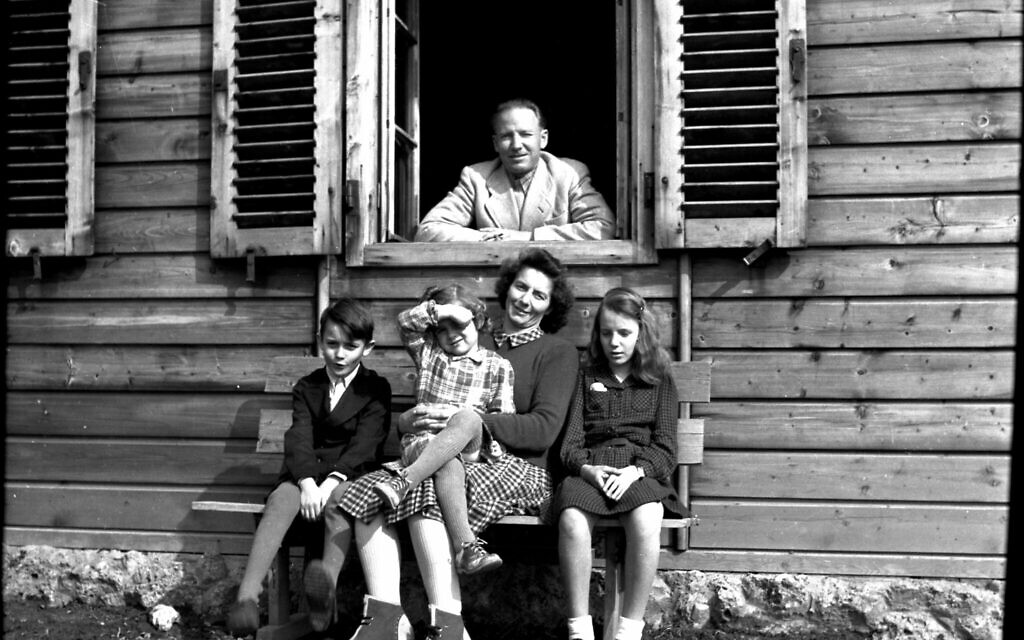
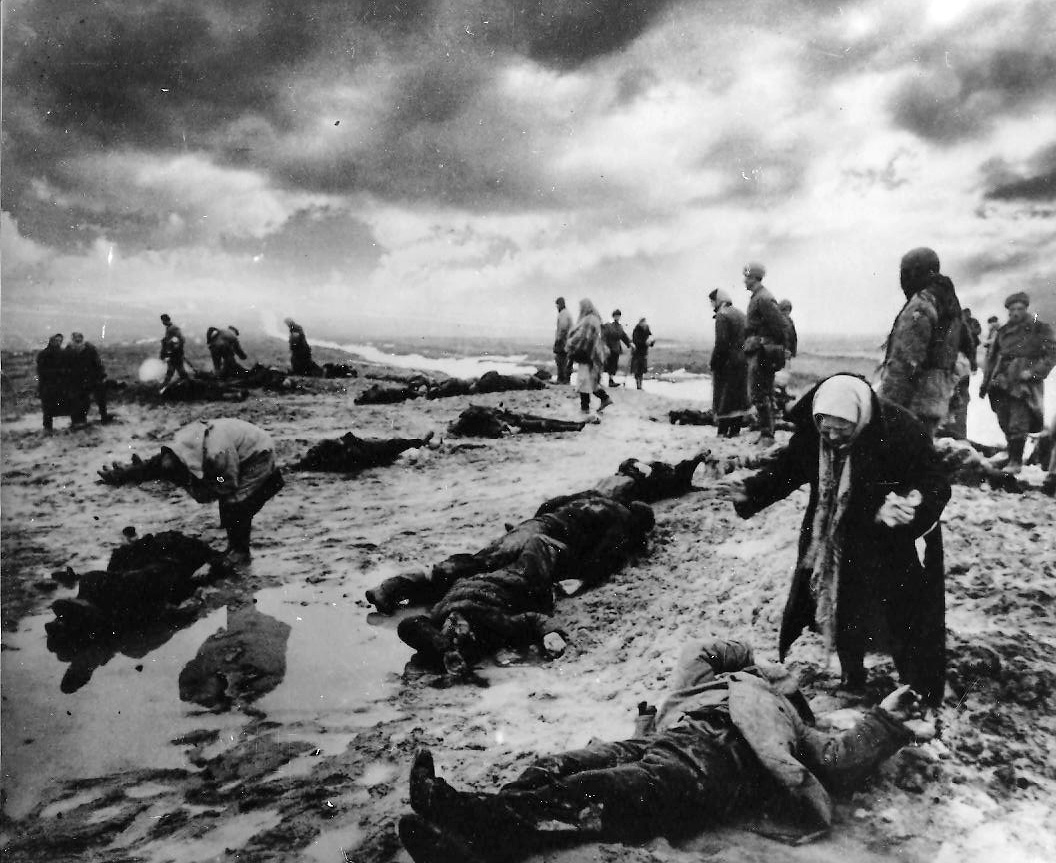


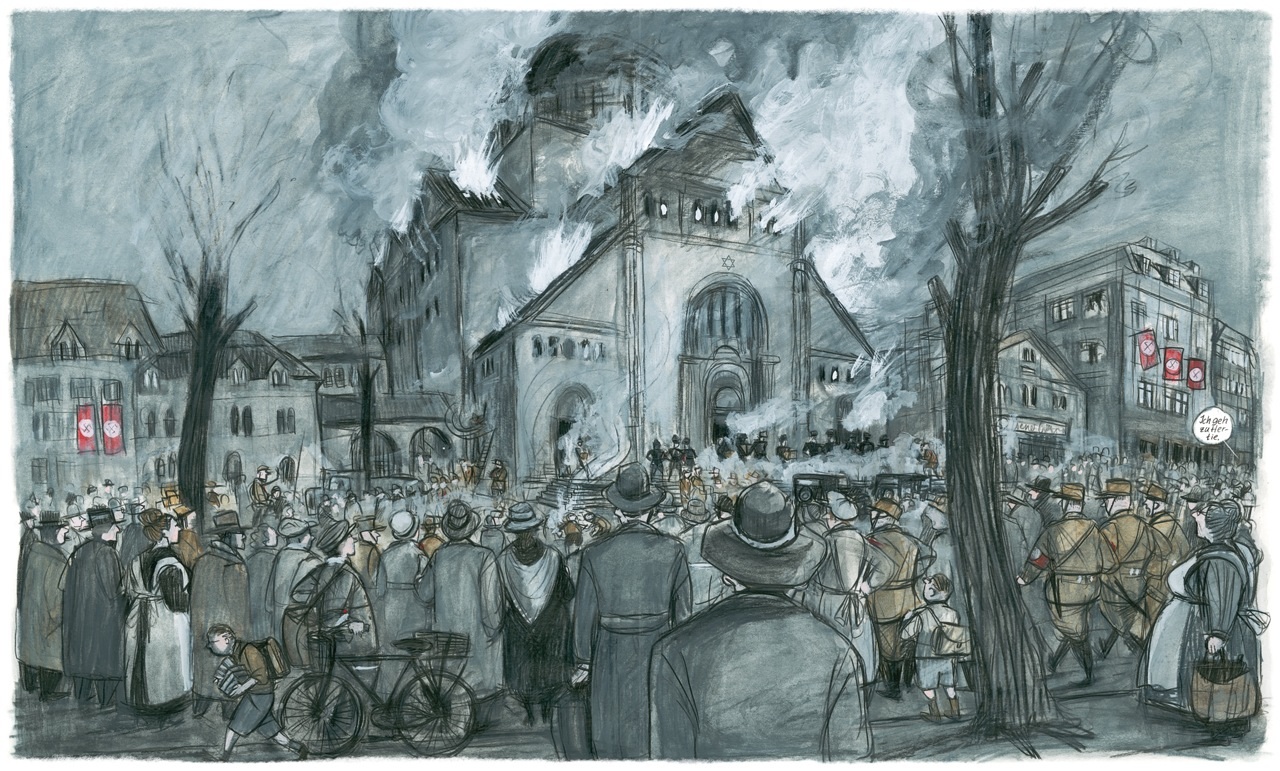




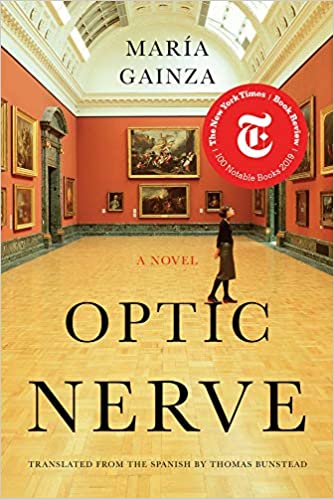




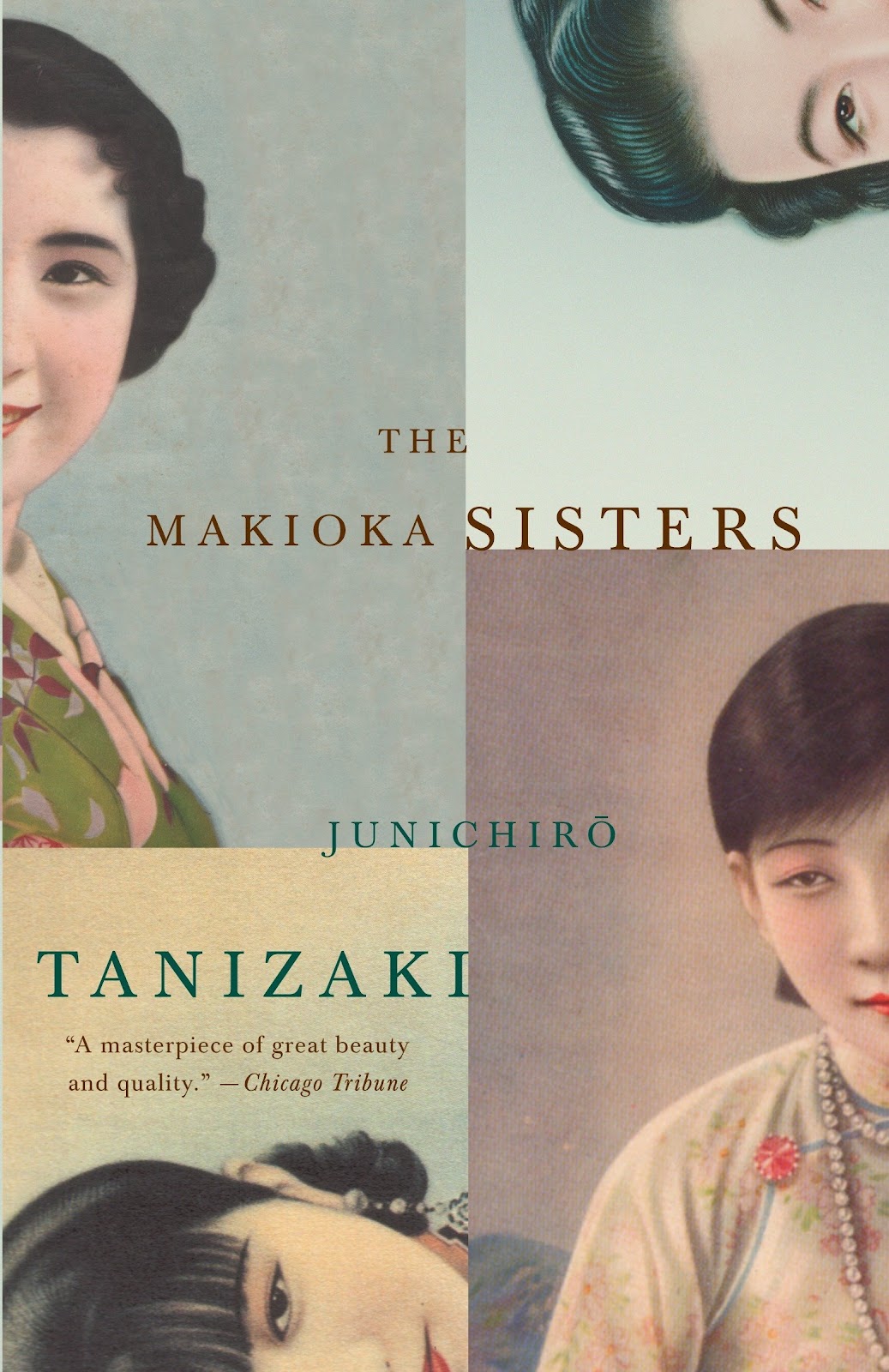







 Eiger, Mönch & Jungfrau