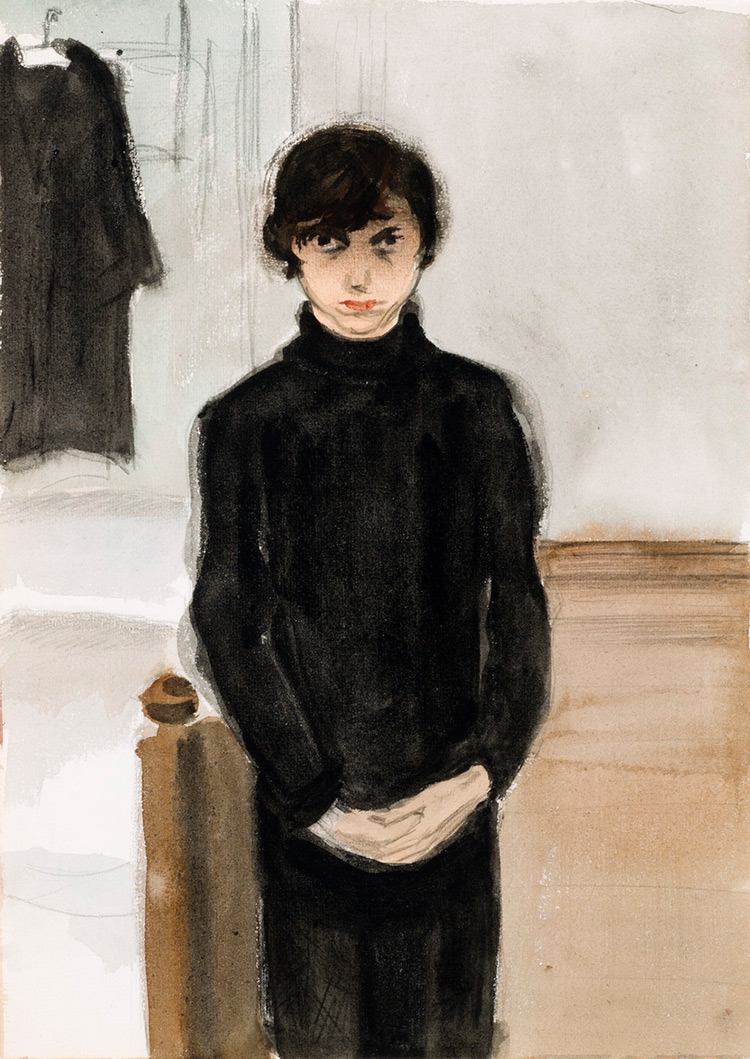
Isaac Zisman’s Year in Reading, 2022

Today’s reflection on a year in reading, poetic and stormy, is by Isaac Zisman. Isaac is a writer and editor based in Oakland, CA. Find him on all socials @octopus_grigori and at http://isaaczisman.com.

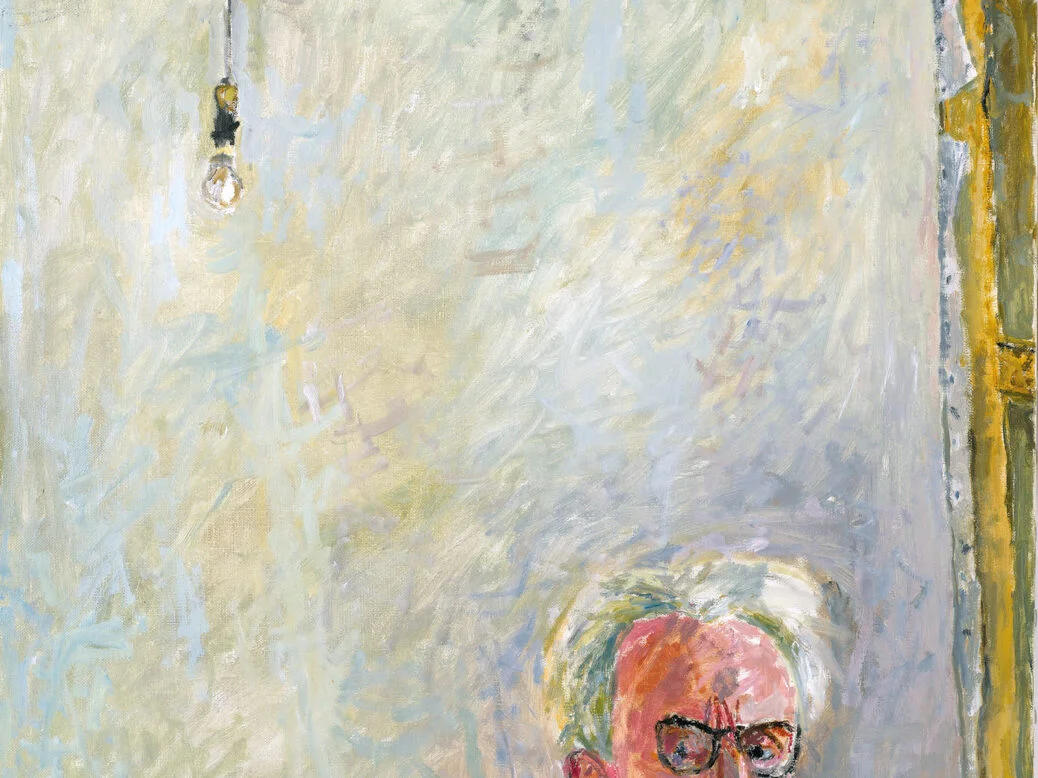
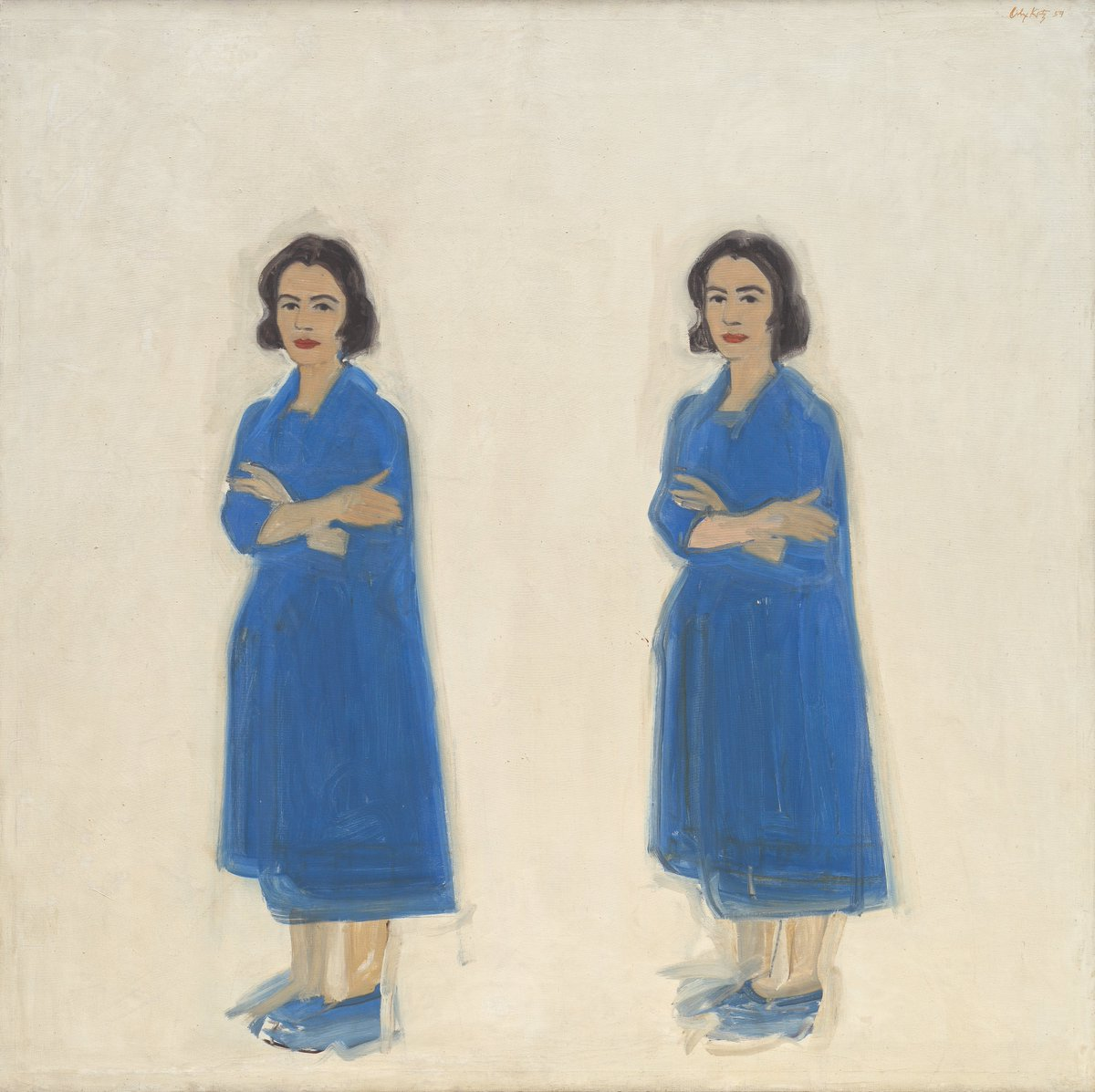
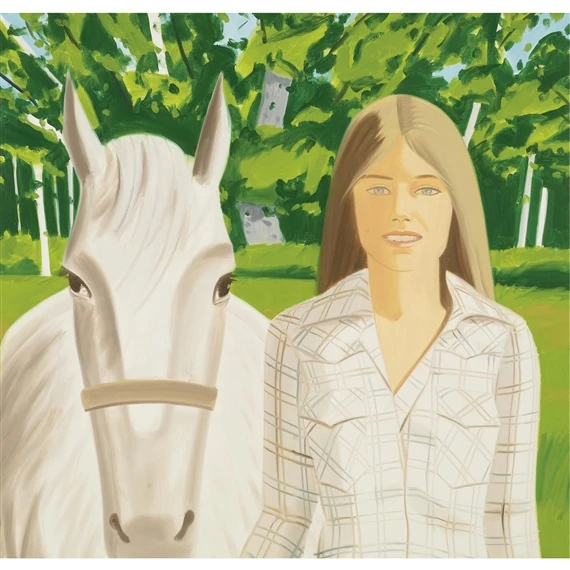
Ori Sherman, from The Creation (1986)

I confess to having a reticent memory. I keep few records. I should be more organized. Twenty-twenty-two was a year of reading—haven’t they all been? as well as I can recall—and yet I’m not sure it was a year of overmuch finishing. The year began in an overheated apartment in Manhattan. It could’ve been storming. Maybe lightning struck the tall building that everyone knows, everyone sees, the most witnessed building in history, perhaps, but whose name I here elide. A website I’ve never come across before says it was 55 degrees and raining at noon. It says nothing about thunder. I had Covid then, which meant I was on the couch under an old blanket. My partner prepared a small bite of caviar on toast the night before and I remember it only as texture.

I type in “books” into my phone’s camera roll and 534 images pop up. I add “2022” and the number drops to 136. Tapping “see all” brings them up in chronological order and so I can see I began the year with a small stack, my hand gripping the three books together above the sloping parquet of the apartment’s floor.

The first is I am writing you from afar: a novel graphic, by moyna pam dick, a gift from my friend Jared Fagen, a writer and the publisher of Black Sun Lit, the press who released the novel. My favorite page was one of four artful squiggles that appear to have been drawn with a weak Bic pen. Next in my hand is the Pevear and Volokhonsky translation of The Brothers Karamazov by Dostoevsky. I don’t think I made it past Father Zosima this go around. My copy of Crime and Punishment, ibid. trans. etc., sits next to it on the shelf now and I recall that in high school I thought it was a minor victory to take to the cover with a sharpie in order to change FYODOR DOSTOEVSKY into ODOR TOE. [Ed. – Big D would have been proud.] Thank god I left the spine clean. The third book is Janet Malcolm’s In the Freud Archives, in which a post-it note roughly lodged suggests I didn’t progress very far at all. [Ed. – Shame, it’s terrific!] I have the faint impression of a war between critics for mantle of Freud’s inheritance. I remember laughing at that.

Scrolling forward, my phone offers up mostly domestic scenes in which books appear. My partner eating soup at our little table next to the bookcase; the dog sprawled out beneath the same, his toys arranged on top of him in what was probably my idea of a joke; a giant pile of nachos at a friend’s apartment next to an edition of the Hokusai Manga, the astonishing book of figuration, expression, and Edo period garments by the painter of “The Great Wave Off Kanagawa.” In the background, the Los Angeles Rams square off against the Cincinnati Bengals, projected to nearly life size on the far wall. [Ed. – Ah, sportsball!]

On Feburary 2nd, I took a photo of single page of Ulysses (p. 489 in the Gabler edition, I discover, pulling down the book now from a high shelf). I’ve highlighted a name: “Isaac Butt.” [Ed. – Heh.]

Two weeks later I took a picture of String of Beginnings, the memoir of Michael Hamburger, translator of Paul Celan and basis of the character Michael Hamburger in Sebald’s The Rings of Saturn—for no representation can claim more than resemblance. I strikes me that I could steal the title for this little essay.

In March, friends online directed me to Guy Davenport—I’m sure you know these friends, perhaps you can count yourself among them. I picked up a copy of the guy davenport reader, primarily for the story “The Aeroplanes at Bescia,” a glorious assemblage of the fictional lives of Franz Kafka, the brothers Otto and Max Brod, and an atmospherically distant Ludwig Wittgenstein. For some reason, my hardback copy came wrapped in four identical dust jackets. I read around in Questioning Minds, Davenport’s lifetime of correspondence with the critic Hugh Kenner. My used edition of Apples and Pears, purchased later,contains a clipping—the author’s obituary in the Washington Post.

Late May found me in a strange version of a doctor’s office, a sort of wellness situation that goes beyond the purview of this text that I am writing now. The walls are adorned in a garish wallpaper and in my hand is a copy of the Zohar, though I can’t read Hebrew beyond sounding out the letters. I remember we spoke of being and becoming and that the doctor gave an impression of someone coming to poetry for the first time, his mind rigid with math and chemistry suddenly loosened at the core by the concept of metaphor. He liked to imagine beneficent angels, he told me.

On June 5th I bought another bookcase and took the stacks off the floor.

On June 10th I received a copy of Gordon Lish’s Peru from a seller on eBay. It smelled so rank I couldn’t bear to open it.

On June 16th I took a photo of an epigraph. “The first memory is of memory itself” –GIORGIO AGAMBEN. I have no idea to which book this quote attends.

In late June, we spent a week at a rental, a house on the New York State historic registry as it was once the home of Lincoln Barnett, a science journalist and editor for Life Magazine and the first to write a popular account of Einstein’s relativity for an American audience. It is possible that the great man, Einstein himself may have sat in this house, I thought as I leaned, head in hands at the old desk with its view of Lake Champlain and the sweet mildew smell of old books. Next to me sat my stack of Romanians—Mihail Sebastian, Dumitru Tsepeneag, Norman Manea, translations by Philip Ó Ceallaigh, Alistair Ian Blyth, Linda Coverdale. I composed half a chapter of my own book, adrift down a Dâmbovița of the mind.

By August I was reading Fosse again, this time Morning and Evening, trans. Damion Searls. I could not yet return to the Septology, also via Searls, the first volume of which had been my companion in the first weeks of the pandemic. If for Merve Emre reading Jon Fosse’s Septology was “the closest I have come to feeling the presence of God here on earth,” for me it was something different. The particular had exploded into the particulate. I have only been able to open it again now, but that is a reflection for next year. I am reminded, too, of the great Jewish mystic painter Ori Sherman and his series The Creation which depicts the seven days of Genesis. The last image is of the verdancy of the world, fecundity in potentia. God is at rest and emerging from the algal depths, from the swirling mass of green and blue signifying life and growth and wildness and all that is to come, ascends a radiant sphere. But it is neither the sun, nor the light of the world, nor of God, nor the gnostic light of secret knowledge. It is a crowned sphere inchoate, a virus. [Ed. — !]

Finding myself one of the few remaining residents at the end of a writing conference later that month, I laid claim to a stack of books abandoned by the side of a path. One of the novels was The Hundred Year House by Rebecca Makkai, who taught at the conference. At that moment, I saw her boarding a van to the airport and rushed over to greet her. I asked for an inscription, something I’ve rarely done. “To Isaac,” she obliged, “who stole this book!”

I returned to Lincoln Barnett’s house on the lake where I read Samantha Hunt’s mysterious essay collection, The Unwritten Book: An Investigation. Two days later, a cyclone descended, its epicenter the little spit of rock and soil on which the house perches above the lake. The windows blew in off their frames. Trees fell. Power lines draped across the road. The event lasted less than a minute, but we were trapped for days. We played scrabble and drank whisky and ate grilled hot dogs, the dented Weber, which the storm had flung across the yard and tipped to the edge of the small cliff at the far edge of the property, being our only method for cooking. I read Amit Chaudhuri’s Sojurn and dreamed of Berlin.

September was spent reading apartment listings. The Covid deals were gone. Rents had doubled, tripled. Our building had sold and was to become condos. We left Manhattan under a brilliant sky and headed back to California. In my backpack came a copy of Javier Marías’s A Heart So White, trans. Margaret Jull Costa, and as we drove toward the west, the smell of wildfire and dry grass, terrible and familiar, returned.

We arrived back in Oakland at the beginning of October, to the place where we’d lived before moving to New York, to the plague house of the first of the Covid years, and, before that, to nearly a decade of our lives. I returned to Bolaño and he carried me through the fall.

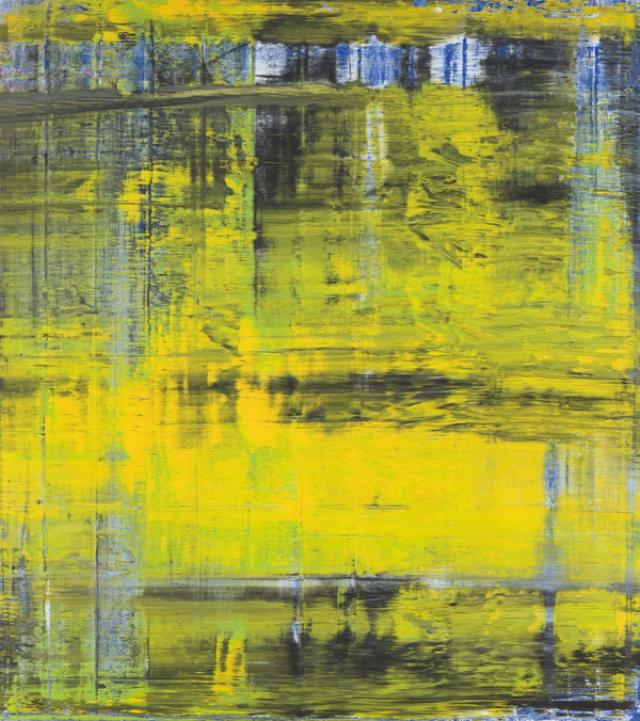
Gerhard Richter, Abstraktes Bild (1994)

There were other things read, I’m sure, though the question of when exactly eludes me. I know, for instance, that I loved Emily Hall’s The Longcut, Jessica Au’s Cold Enough for Snow, Sublunary Edition’s magisterial edition of Marguerite Young’s Collected Poems. That I reread swaths of Hans Magnus Enzenberger’s Tumult, trans. Mike Mitchell, after his passing. That I read a long-travelled copy of Grimmish by Michael Winkler, sat enthralled by Sergio Chejfec’s My Two Worlds, trans. Margaret B. Carson, inhaled December by Alexander Kluge and Gerhard Richter, translation by Martin Chalmers. That I read the fictions of friends, sworn to secrecy until their much deserving publication. That I read essays and poems, criticism, lists of albums, cookbooks, articles, manuals, comics, menus, books of photography, road signs. The work of my new, online companions—how good it feels to have such talented peers. [Ed. – heart emoji] I see the silvered spines of the New Directions Storybook editions on the shelf beside me, I see the bookmark wedged somewhere in the first third of Mircea Cărtărescu’s Solenoid, trans. Sean Cotter—the image of twine emerging from the narrator’s belly button producing a shudder once again. On my desk the piles begin to grow once more—the books I pulled off the shelf to remember, the two translations of Clarice Lispector’s The Hour of the Star, Giovanni Pontiero and Benjamin Moser, respectively, the copy of Annie Ernaux’s Happening, trans. Tanye Leslie, that I read breathless in a single sitting as December closed. And the Septology, arriving again to start anew. It was a messy year, but edifying. What emerges next, I’m not sure.

Hope Coulter’s Year in Reading, 2022

Today’s reflection on a year in reading, her third, is by Hope Coulter(@hopester99), whom I’m lucky to call a colleague. A fiction writer and poet, Hope directs the Hendrix-Murphy Foundation at Hendrix College.

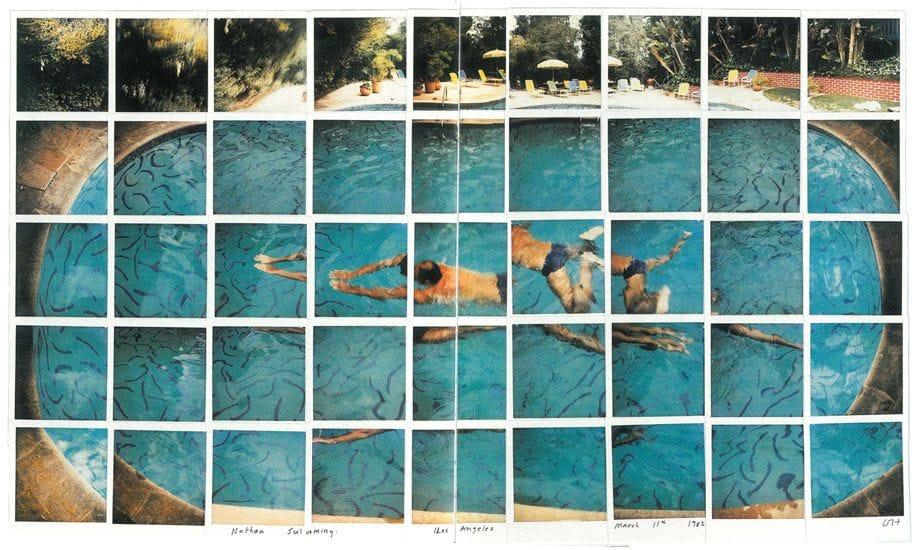
David Hockney, Nathan Swimming Los Angeles, 1982

2022 turned out to be a good reading year. I got a wider shot at e-book availability by joining a second public library in the adjacent city. [Ed. – “city.”] Then, by pecking through recommendation lists and hopping from screen to screen, I was able to keep my library hold shelves reassuringly filled—staving off that dire malady known as Running Out of Something Good To Read. [Ed. – Extremely bad. Jenny Davidson writes about some psychological studies done on this phenomenon in Reading Style.] Along the way I ran across some new obsessions.

Starting with nonfiction, I enjoyed and was moved by Suleika Jaouad’s Between Two Kingdoms: A Memoir of a Life Interrupted. It’s a cancer narrative that stands out on account of Jaouad’s youth, frankness, and writing chops, as well as the fact that the second half becomes a road-trip book. Jaouad discovered her cancer right after graduating from Princeton. In the flash of an eye the promising, carefree prospect of her twenties became a hellish ordeal. She’s still fighting cancer, and I wish her all the best for recovery. This book is a gift.

Thinking of memoirs by feisty young women, Crying in H-Mart, by Michelle Zauner got a lot of attention this year. For me it was an okay read, but not as memorable as Jaouad’s book. On the other hand, I recommend Lynne Cox’s Swimming to Antarctica: Tales of a Long-Distance Swimmer not for any particular magic in the telling but for the extraordinary nature of Cox herself—her athletic prowess, her ability to connect with people around the world, the cheerful way she greets challenges of all kinds.

Another thoroughly satisfying memoir was Marcus Samuelsson’s Yes, Chef, ghostwritten by Veronica Chambers. Samuelsson is the Ethiopian-born, Swedish-raised culinary phenom who co-founded the Red Rooster restaurant in Harlem. His account of his Scandinavian upbringing; his rise through some of the most demanding restaurant kitchens in Europe, under despotic chefs; and his lifelong love affair with food and culture make this a book to relish on many levels. [Ed. – I see what you did there!]

George Saunders’s A Swim in the Pond in the Rain: In Which Four Russians Give a Master Class on Writing, Reading, and Life is a terrific read for anyone who wants to dive deep into the craft minutiae of great short fiction. What questions does a story ask, and how do they pull us along? Is it what’s left in or what’s left out that makes a masterpiece? Of the analyses Saunders offers, his take on three of Chekhov’s stories were my favorite. On the other hand, if you’re not minutely interested in the technical and creative decisions behind a narrative—the tied-off loops on the back of the tapestry—you might as well just read the stories themelves.

Last but not least in nonfiction, fans of Skyfaring: A Journey with a Pilot by Mark Vanhoenacker, won’t want to miss his latest, Imagine a City: A Pilot’s Journey across an Urban World. Imagine a City includes lots of the lyrical, novel description that makes Skyfaring wonderful, this time swirled into memoir and a flâneur’s takes on cities around the world. By the nature of his work as a long-distance commercial pilot, Vanhoenacker often finds himself with two days to spend near any metropolitan destination that he flies. He bides the mandatory rests in exploration and writing. This book not only features slices of such urban-scapes, but recurring takes on the author’s growing-up in Pittsfield, Massachusetts: the town, his family, his coming-out, and the globe-spinning reveries that led to his vocation.

Now to fiction. One novel that blew me away this year was Julie Otsuka’s The Swimmers. As someone who loves pools and water I was initially attracted to the title and cover (I know, I know, like buying wine for the label; I confess). [Ed. – I strongly support buying books for their covers.] Then when I started to read, I fell hard for the voice. Exactly who is speaking with such quiet authority, unspooling list after list about the lap swimmers with such close, cool knowledge? A crack appears in the bottom of their pool, and it’s like Jane Alison’s Nine Island meets Tim O’Brien’s The Things They Carried… The novel suddenly widens into a more familiar and pain-steeped story that I won’t spoil; sprint [Ed. – missed metaphor opportunity!] to your nearest book source and see for yourself.

My enthusiasm for The Swimmers sent me to Otsuka’s earlier novels, When the Emperor Was Divine and Buddha in the Attic, which in different ways chronicle the experiences of Japanese American immigrants. They’re well worth the read, though to me not consummate in their artistry like The Swimmers.

Way different stylistically from The Swimmers was a book at least as magnificent: Anna Burns’s Milkman, the densest and strangest novel I read last year. A student in my Irish short stories tutorial recommended it, and I’m so glad she did: this book made me understand as never before what it was like to live in the middle of the Troubles, no, to live the Troubles, to contain their gaslighting and violence in one’s marrow. The narrator has one of those unforgettable voices—drenched in idiom, funny, idiosyncratic—that at first seems impossible to understand. There are few paragraph changes, and few characters are called by actual names. All these might put you off, might seem like obstructions to grasping the story… and yet. Somehow it galvanizes a world as you read, a world that tumbles around you and into you, changing you.

Another surprise and pleasure was Mrs. Palfrey at the Claremont, by Elizabeth Taylor, first published in 1971.It opens on a rainy Sunday in January (is there anything more depressing?) in a London lodging hotel just affordable and respectable enough for old folks not yet decrepit or destitute. You might judge this an unpromising start—till you find yourself immersed, riveted by Mrs. Palfrey and her fortunes: the aches, yearnings, miscues, and irritations of ordinary human life, rendered with nothing less than mastery.

Also of seventies vintage was Marian Engel’s Bear (1976), which Dorian has touted for years. I loved it: the boreal setting, the understated tone, a fusion of real with surreal that’s so seamless I question “surreal” even as I type it. The book is alluring and disconcerting at once—shoving me into uncomfortable encounters with my own relationships to sex, animals, and self—and resists interpretation at every turn. In fact, it’s highly entertaining to browse through reader takes on this book anywhere from Amazon to scholarly platforms. What is this thing: feminist text, postcolonial critique, an ursine-Canadian Lady Chatterley’s Lover, or a portrait of a “phallic mother”? Don’t miss Dorian’s delightful conversation with Shawn and James on Shawn the Book Maniac, which includes a clip from an interview with Engel herself. Mind you, as the interviewer admonishes, “This is no kinky, porno Pooh-Bear!” so prepare yourself for . . . something else thereof. [Ed. – Music to my ears, natch. But really 70s books are the best books…]

Thanks again to Dorian I reread Lonesome Dove, by Larry McMurtry, and was relieved to find that it still has its magic: it had been so long (or my memory so bad) that the plot twists surprised me all over again. This big novel is good for what ails you, a bracing tonic, just like the big skies and open roads out West. [Ed. – So glad it held up! Every time I see it on my shelf I brighten up a little.]

Jonathan Evison’s Lawn Boy is about Mike Muñoz, a southern California guy who can’t seem to catch the brass ring. His voice is canny, believable, often funny, and a little hoarse with pain, and there’s never a false note or a missed beat narrating his adventures through emotional and economic labyrinths. This is a fresh take on the American dream, as broken down for disillusioned 21st century folks, and it deserves to endure. Highly recommend.

Mercy Street by Jennifer Haigh is a gritty novel that revolves around a Boston abortion clinic where the protagonist works and various other characters who intersect there. I read it before the mid-year overturn of Roe, but it’s at least as relevant now: it remains on my mind for its multidimensional treatment of people on different sides of the abortion issue. Creepy, scary, and all too credible, in the case of a couple of anti-abortionist characters; but as I said, granting a multidimensionality that at least seeks to understand the sources of the venom that animates them. As Mohsin Hamid says, one thing literature does is “recomplicate what has been oversimplified,” and a novelist’s nuance is too often missing from the violent discord around this issue.

Elizabeth Strout’s Lucy by the Sea brings her Oh William! characters forward through the first year of the coronavirus pandemic—moving those inveterate New Yorkers up to Maine. Anyone who has liked Strout’s earlier novels won’t be disappointed.

Speaking of disappointments, even though Emily St. John Mandel’s Sea of Tranquillity made a lot of people’s best-of lists last year, for me it was pretty forgettable—way less gripping than Station Eleven, the post-pandemic novel she wrote a few years before Covid struck. I was likewise underwhelmed by The Flight of Gemma Hardy, Margot Livesy’s attempt at a modern retelling of Jane Eyre. I did finish it, but it annoyingly lacked a couple of key plot underpinnings as well as some of the major elements that make Bronte’s novel so great.

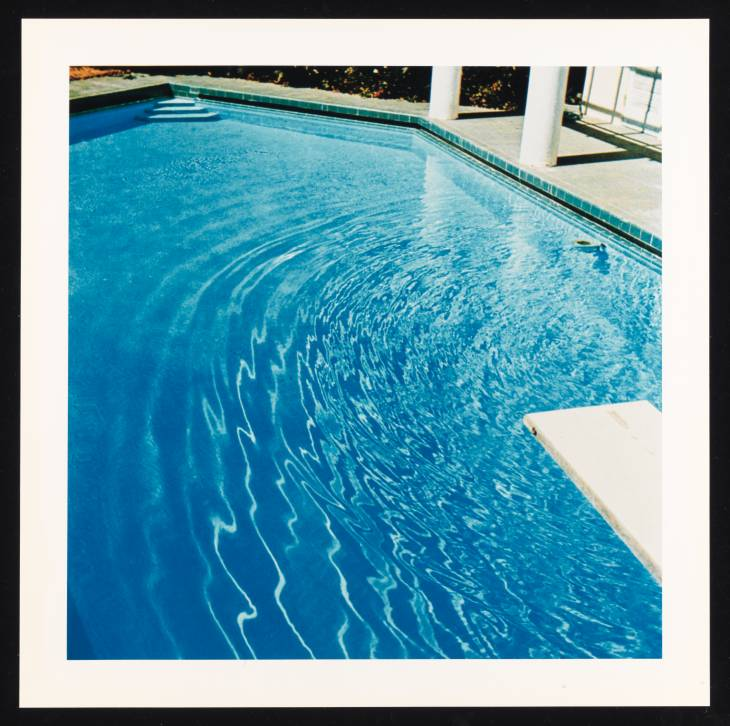
Edward Ruscha, Pool # 9, 1968

Last, and monumentally, I come to a series that dominated the last half of my reading year—and which I’m still devouring as we move into 2023: Michael Connelly’s Harry Bosch novels, which chronicle the LAPD detective’s cases across more than twenty years in L.A. Formerly a reporter, including a last stint on the crime beat at the Los Angeles Times, Connelly is steeped in knowledge of the criminal legal system, LAPD culture, and police-reporter relations—not to mention southern California history and culture in general. So the books take place against a backdrop studded not only with physical landmarks but landmark events, O.J. to Rodney King to Robert Blake to COVID. Oh, and there’s also the iconic food of the greater L.A. area—specific BLTs and tacos and martinis that may have you keeping notes for the next time you make it out to the Golden State with an appetite.

In Heironymous (yes, named after the painter by his mother) Bosch, Connelly has created a laconic, jazz-listening, relationship-tending-to-screw-up hero in the best noir tradition: a SoCal Don Quixote perpetually battling the forces of darkness on his quest to put the bad guys (and women) behind bars. Fortunately, uh, but only for us as readers I mean, in the sweep of the sprawling metropolis there’s no shortage of evil out there for him to take on—from its crumbling bungalows to its gated MCM mansions, from seaside to outlying deserts, and sometimes within the halls of justice and press rooms and inter-warring police precinct headquarters themselves. The writing is spot-on: tough, perfectly paced, with lots of plot and action, of course, and salted just right with description and character. I’ve consumed these books the way I used to read beloved series as a kid, binge-reading with abandon, and now I see with dread that I’m closing in on the end of even the prolific Connelly’s output. [Ed. – Ah, that feeling! It’s really a thing, isn’t it?] He’s written several spinoff books involving sometime partners of Bosch, and a shorter series about a criminal defense lawyer who works from the back seat of his Lincoln, and those are good as well—but alas, they too are finite.

For what it’s worth, I read the series completely out of order, and it wasn’t a problem. When I did make my way back to the first couple of Bosch books, I found them a little stilted and trying too hard on the tough-guy front, in contrast to the grace and understatement of the later ones. In a way, though, the fact that the writing wasn’t impeccable was heartening: it showed that not even Connelly came to fiction-writing already with his skill set complete, but built his command over time. [Ed. — Glad to hear this, because I was underwhelmed by the first when I read it many years ago. Maybe I’ll grab one from later in the series.]

No, I haven’t watched the TV version of the Bosch books, and I doubt that I will; my mind’s-eye picture of the characters is too strong for me to want to sully it with a screen version, even though the author did consult on set. But next time I’m in L.A. I do plan to drive Mulholland Drive, and I’ll be looking for #7203, the modest cantilevered house with the deck on the back, where Bosch gazes down on the lights of the city in pensive moments. I have more to say on this topic, but excuse me, I’d rather go read now. We’re about to find out where the bodies are buried.

Benita Berthmann’s Year in Reading, 2022

Today’s post is from Benita Berthmann (@moodboardultra). Benita studies literature in Marburg, Germany, where she is a full time book enthusiast, part time smoker and occasional existentialist.

Balthus, The Game of Patience, 1954

Once again, Dorian was gracious enough to allow me to write about My Year in Reading 2022, thank you, Dorian, nothing I love more than talking about books!

First of all, the hard facts: In the past year, I’ve managed to read 158 books, which is a bit less than the year before, but in terms of pages, I’ve gone up a bit, having read a whopping 51,308 pages over the course of 365 days. [Ed. – JFC, B!]  I’m glad I was able to spend that much time on my favorite hobby and thankful for always being able to find distraction, solace, amusement and everything else I need in books. That is a great gift, methinks. [Ed. – Amen.]

Enough of the boring statistics, which I track via TheStorygraph by the way, on to the more interesting stuff. It is impossible to talk about all the books I’ve read, so I’ve selected a handful of extraordinary texts to talk about.

Dorian and Magda, you are chiefly responsible for this one: BEAR by Marian Engel, which, apart from being a story about loneliness, nature, and Canadian history, features a female archivist having intercourse with, you might have guessed it, a bear. No, that’s not a metaphor. Consequently, Magda (@theruraljuror) coined the hashtag #bärensexbuch on German twitter which means, literally, book about having sex with a bear. God bless German compound words. [Ed. – I only wish English had a handy noun for this important concept.] Apart from our protagonist having sex with a bear, I enjoyed the atmosphere that I’d deem far more important than the plot. It is calm, yet unhinged, something is lurking in the dark, but for now, we’re lingering on a remote island, pleasantly detached from normalcy. Thank you, D and M, for being so adamant about BEAR, it was the perfect read for a hot and hazy afternoon in late July. [Ed. – I love to hear it.]

In 2022, I have also discovered an author that is right on track to become a new favorite of mine: Haruki Murakami. Yeah, I know, totally basic of me, but from the very first page of KILLING COMMENDATORE (German translation by Ursula Gräfe, English by Philipp Gabriel and Ted Goosen), I was hooked. The story about an unnamed painter trying to figure out what to do with his life after having been left by his wife has everything I love: magical realism, mystery and suspense, obscurity, art and culture. The title refers to a painting that plays a major role in the novel and I physically couldn’t stop reading until I knew what would happen. A novel to fall in love with reading and the magic of storytelling if there ever was one.

At university, I took part in a seminar dealing with literature that has been subject to judicial conflict. One of the books we talked about was ESRA by Maxim Biller, which deals with the relationship and subsequent breakup of Adam, a Jewish writer, and Esra, a German-Turkish actress, troubled and traumatized. None of the characters are particularly likeable, nor is the story itself innovative. [Ed. – Really selling this…] What makes the novel interesting, though, is that one can easily draw parallels between Maxim Biller and his alter ego Adam, not least because of the court case following a lawsuit filed by the woman who was clearly the model for Esra and her mother, both of whom claimed that Biller had violated their privacy rights. In the seminar, we talked about to what degree literature can take inspiration from real life, how German courts have decided these questions, and how they came to their decisions, the discrepancy between scholars of literature and of law and, of course, the question whether it was the lawsuit itself that drew attention to an otherwise rather mediocre novel, whether it is – Streisand effect – at least partly the plaintiffs’ fault that they found themselves subject to public scrutiny. To this day, the novel remains forbidden in Germany, a decision made by the highest German court, and it is nearly impossible to get one’s hand on a copy – except if you’re reading it “for scientific reasons” as we did in class. Unfortunately, I am not allowed to pass on the text, sorry, folks. [Ed. – Fascinating!]

One of the authors I revere most is Simone de Beauvoir, ever since I read The Mandarins almost five years ago. This year, I finally managed to read the second part of her autobiography, THE PRIME OF LIFE (German translation by Rolf Soellner, English by Peter Green). The story begins right where the previous volume, Memoirs of a Dutiful Daughter, left us: It’s the late 1920s, de Beauvoir studies philosophy, hangs out with Sartre, they become the founders of existentialism and important public figures in France after having made their respective debuts as writers. They survive the war; the book ends in 1944. I loved reading about the extraordinary life of an absolute fucking legend, an intelligent woman; her philosophy and clever wit allowed my thoughts to flourish while reading and I felt incredibly enriched afterwards. Not just from an intellectual perspective, either. Fun and the absurd aren’t neglected either. For example, the book involves an incident where Beauvoir and Sartre encounter a woman smoking a cigarette with her vagina during their travels. [Ed. – But how is that…] Oh, how I long to be THAT cool. [Ed. – Still struggling with this one, B.] In 2023, I really need to read the two remaining volumes of her autobiography.

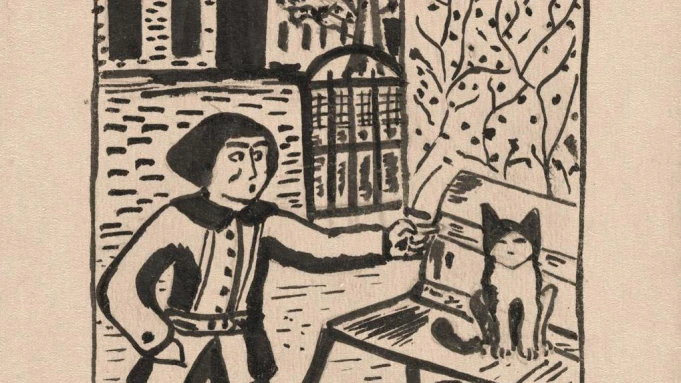
Balthus, from the series Mitsou, 1919

Even though I’m too lazy to write about them in detail, a couple of books and authors that deserve at least an honorable mention:

First and foremost, Thomas Bernhard, my most-read author 2022, and also my favorite rage-mode Austrian. [Ed. – Hell yeah!] If you need the healing powers of incandescent rage, Bernhard is your man. I’d especially recommend the drama HELDENPLATZ (English translation by Gitta Honneger) that talks about the Austrian Nazi past kept secret.

ON EARTH WE’RE BRIEFLY GORGEOUS by Ocean Vuong. Has queer prose ever been more thoughtful, more touching, more well-written? I doubt it.

LAPVONA by Ottessa Moshfeg wins the prize for the most disgusting book in 2022. Not much else to say except steer clear of it if gore, organs and cannibalism upset your stomach.

EMPIRE OF PAIN: THE SECRET HISTORY OF THE SACKLER DYNASTY. I am pretty sure that Patrick Radden Keefe is the best contemporary non-fiction writer there is.

Marlene Streeruwitz, an Austrian feminist writer. When will her work finally be translated? Looks like I need to take care of that. [Ed. – Yes you do! That would be a real service.]

The PERCY JACKSON series by Rick Riordan, he is sort of an unproblematic JKR.

Last but not least, Julia Kristeva’s REVOLUTION IN POETIC LANGUAGE (English translation by Margaret Waller, German by Reinhold Werner) deserves the final spot on my list, even though I have not fully finished it in 2022, just because she made me lose my mind. [Ed. – Do Powers of Horror next!]

For 2023, I hope we will all make enough time for reading and find new favorites. Never stop reading. Let’s hope Dorian continues this series for many more years to come so that we have an excuse to create never ending TBR stacks. [Ed. I don’t think anyone reading this needs my say-so to create a giant TBR… Thank you, Benita!]

James Morrison’s Year in Reading, 2022

I still hope to write up my reflections on my 2022 reading year. (Though look how well that worked last year…) In the meantime, I’ve solicited guest posts from friends and fellow book lovers about their own literary highlights. First up is James Morrison, an Australian reader and editor (sadly, not of books) who tweets at @unwise_trousers and blogs (increasingly infrequently) at http://causticcovercritic.blogspot.com. His novel Gibbons, Or One Bloody Thing After Another will be published later this year by Orbis Tertius Press

Look for more reflections from a wonderful assortment of readers in the days to come. And remember, you can always add your thoughts to the comments.

Woman committing suicide by jumping off of a bridge – George Cruikshank [1848]

First, a bit of throat-clearing. When I started to try to work out what my favourite books that I had read in 2022 were, I had a list 84 books long, out of nearly 300 read. This is obviously insane, possibly even psychopathic, so I have winnowed it down a bit. Secondly, I have now learned that two of my favourite books were also on Barack Obama’s list, which means after this I presumably need to become a boring centrist and do some war crimes. In any case, I’ve tried to force things into various fairly elastic categories in order to give this article the illusion of clarity.

[Audience: Get on with it!]

THE BIG BASTARDS

I finally joined the people-who-have-read-James-Joyce’s-Ulysses club this year, something which was ridiculously overdue. And what can I usefully say about this astonishing, hilarious, brilliant, occasionally tedious (hello, ‘Oxen of the Sun’) and quietly heartbreaking book? “It’s great!” I could tell you, unhelpfully, but you already knew that. It’s also one of the most amazing evocations of being embodied, of living a human fleshy existence with all its joys and ills and excrescences, that has ever been written. I also read Terence Killeen’s Ulysses Unbound, and found it to be a hugely welcoming, informative, and wise companion.

Another massive tome was Jon Fosse’s Septology (translated by Damion Searls), which the publishers and many reviews will tell you is really seven short novels, which is, in turn, a lie (though one which makes tackling such a big book seem much more approachable). It’s more accurately described as seven periods of minutely annotated consciousness, from waking to prayerful drowsiness, full of repetitions and art and small acts of kindness and weirdly commingling parallel universes and a (frankly bonkers) girlfriend. I didn’t find it to be the transformative work of art that many others did, but I did enjoy it tremendously.

The third giant was Osebol: Voices from a Swedish Village, by Marit Kapla (translated by Peter Graves), a polyphonic oral history in prose-poem form of a dying Swedish village, drawn from interviews with every inhabitant. It’s a book that takes a simple idea that somehow has never been had before, and applies it perfectly.

GINZBURG & CO.

More than any other writer, Natalia Ginzburg was the one I kept returning to this year. She is just phenomenal, and I devoured a bunch of her shorter books like popcorn. The Road to the City (translated by Frances Frenaye), Voices in the Evening (translated by DM Low), Valentino and Sagittarius (both translated by Avril Bardoni) are all near-as-damnit perfect novellas, mostly about Italy during or just after World War II, full of frustrating families, political activism and romantic fuck-ups. 

Two other writers I read multiple books by were Maylis de Kerangal and Gwendoline Riley. De Kerangal’s Birth of a Bridge is something like an Arthur Hailey blockbuster condensed to 300 pages and written by a genius [Ed. – sold!]: an exploration of all the people and organisations and objects involved in the construction of a massive bridge project, while Eastbound is a compact novella about a fraught encounter between a Russian fleeing conscription and a French tourist on the Trans-Siberian Railway. Both these books were translated by Jessica Moore. Riley’s most recent novels, First Love and My Phantoms, are perfect, hilarious [Ed. – uh that is uh weird, James] examinations of the awfulness of families and relationships.

Self Portrait on Statue, Gouges – Polly Penrose [2020]

MY BODY BETRAYED ME

Anna Deforest’s A History of the Present Illness is a startling novel about grief and the terrible things that can happen to a human body, told from the point of view of a student doctor. Szilvia Molnar’s The Nursery (due this coming March) is a fine addition to the ‘new mothers who may be losing their minds’ library. What Are You Going Through by Sigrid Nunez is a brilliant, telegraphic novel about helping and failing to help a dying friend have a good death. Imogen Binnie’s Nevada is a simultaneously hilarious and dispiriting book about gender dysphoria and about being a well-meaning but really terrible wise elder trying to help someone else deal with their trans-ness. Abi Palmer’s Sanatorium is a fascinating diary/essay about her experiences dealing with physical rehab in both a Budapest thermal bath and a crappy inflatable pool in London

And then there’s Naben Ruthnum’s Helpmeet. If Edith Wharton had started one of her excellent wintry ghost stories, but then been overcome by the body-horror vibes of a time-travelling David Cronenberg without losing any of her prose style or piercing insights, this is the novella she might have written. [Ed. – Hell to the yeah!] Strange but true.

IMAGINED WORLDS, FUCKED-UP PHYSICS

Writing a high-concept science-fiction airport thriller is not something you expect a President of the Oulipo group to do, but that’s exactly what we have in The Anomaly by Hervé Le Tellier (translated by Adriana Hunter). And it’s really good! A passenger jet survives a storm and lands safely. Then, months later, the exact same jet (and all its passengers) lands safely again, introducing hundreds of duplicate people to the world. The weirdness spirals from there, but Le Tellier plays it dead straight.

Simon (or S. J.) Morden is a British science-fiction writer quietly producing a fascinating body of work. His newest novel, The Flight of the Aphrodite, is an excellent dark tale of an exploratory ship crew going to pieces in the face of the possibility of First Contact, and an older book, Bright Morning Star, is a moving novel about an autonomous alien AI drone landing in the middle of a Ukraine forest as Russians invade [Ed. — !].

I was predisposed to ignore the work of ‘qntm’ because, let’s face it, that pseudonym is extremely irritating. Annoyingly, I have to report that There Is No Antimemetics Division is kind of brilliant: a group of specialists are charged with stopping malignant alien antimemes, which are ideas and concepts and things which by their very nature cannot be communicated or remembered.

Julia Armfield’s Our Wives Under the Sea is a scary, absorbing story of loving someone who is going through a very horrible change after suffering an accident on an exploratory deep-sea dive. Humidly, damply intense. And finally, there’s Audrey Schulman’s The Dolphin House, which is fiction about science being done, rather than science-fiction, and both completely convincing and compelling.

THE TUMOUR AT THE HEART OF HUMAN HISTORY

The Investigation: Oratorio in Eleven Cantos by Peter Weiss (translated by Alexander Gross) is a play based on the testimony Weiss observed at the Frankfurt Auschwitz trials in the mid-1960s. Riveting and horrifying and an excellent one-book summary should you ever need to rustle up evidence for use in damning the entire human race. Ernst Weiss’s The Eyewitness (translated by Ella R. W. McKee) is a posthumous novel about a psychiatrist called in to treat a young Austrian ex-soldier, initials A.H., which seems to have been based on Hitler’s actual psychiatric reports, which Weiss had brief access to.

James Kestrel’s Five Decembers is, despite its pulpy cover, an unexpected and thoughtful crime novel about regret and missed opportunities, through the prism of the attacks by and on Japan during World War Two. Clouds Over Paris by Felix Hartlaub (translated by Simon Beattie) is perhaps the most self-effacing diary ever, as well as being beautifully written. Hartlaub was a reluctant and mildly embarrassed Nazi stationed in newly Occupied Paris. He was still a Nazi, though, despite the prose quality, so let’s shed no tears over his death and disappearance in 1945.

Lacertilia [Lizards] – Ernst Haeckel [1904]

[Audience: He does fucking go on, doesn’t he?]

GRAPHIC!

The fact that several of the best graphic novels I read this year were about adolescents having much more interesting times than I ever did should not be taken as an indicator that I am having a mid-life crisis or am extremely boring. [Ed. – Ah good that you said that, because I was thinking _exactly* that…] Skim by Gillian and Mariko Tamaki is about a Japanese-Canadian Goth failing to fit in at a Catholic School. Giulia Sagramola’s Summer Fires (translated by Brahm Revel) is about a group of teenagers connected to a pair of fractious sisters in a Spanish summer where the landscape keeps bursting into flames. And Andi Watson and Simon Gane’s Sunburn perfectly captures being old enough to be involved in adult’s relationship game-playing, but not old enough to know what the hell you’re doing.

Sara Del Giudice’s Behind the Curtain (translated by M.B. Valente) is a gorgeously rendered story, all pale colours and intricate fabric textures, about Jewish sisters in Paris as the Nazis take over, with a nasty kick in the guts at the end. And last of all there’s Ducks by Kate Beaton, her big, funny and moving memoir of working in the Canadian oil sands, with all the awful sexual pressure and violence that involved.

From ‘A.C.2020’ – Mirko Ilic [2020]

POEMS THAT MOSTLY DON’T RHYME

Verse novels, baby, that’s where it’s at with the cool kids these days! If you want to fit in at the top table, why not read Sickle by Ruth Lillegraven (translated by May-Brit Akerholt), a tiny family saga about inheritance, books and change set in nineteenth-century Norway. Or for something far more depressing [Ed. – pretty rich, given this list so far], let me recommend Greg McLaren’s Camping Underground, in which a former undercover political provocateur gives her fragmented testimony about the terrible things that have reduced a future Australia into a scavenger-economy wasteland. It has some really good jokes!

Lisa Robertson’s The Baudelaire Fractal is a prose-poem-novel-something about a woman who wakes up one day to find she’s the author of Baudelaire’s collected works. Body Braille by Beth Gylys is a beautiful collection about how bloody hard it is to live in a body, with sections for each of the senses.

And then there’s The Lascaux Notebooks, ostensibly by Jean-Luc Champerret and translated by Philip Terry, which claim to be a series of translations of Lascaux cave paintings into poetry. It’s mad and clever and fun and I fell for it for much longer than I should have.

TINY WEE HUNGARIANS [Ed. – That’s nice, isn’t it? They don’t get much, the wee Hungarians.]

The three best books from the literary wonderland that is Hungary that I read this year were all tiny. Agota Kristof’s The Illiterate (translated by Nina Bogin) is a compressed, bleak and reliably brilliant memoir of moving from Hungary to France and trying to learn a new and unrelated language. The Manhattan Project (translated by John Batki) is a slender but oversized thing of beauty, full of photos by Ornan Rotem, in which László Krasznahorkai meanders through the work and worlds of Melville, Lowry, and Lebbeus Woods. And In a Bucolic Land by Szilárd Borbély (translated by Ottilie Mulzet) is a brilliant and autobiographical posthumous collection of poems describing the author’s childhood as part of a despised family, being raised by parents who would later be violently murdered. 

MEDIUMN-SIZED JAPANESE

The book I was looking forward to most in 2022 was Woman Running in the Mountains by Yūko Tsushima (translated by Geraldine Harcourt), which takes the Tsushima constants (young single Japanese mother, awful mother, vanished father, deadbeat ex) and yet again spins them into gold. Her ability to get infinite artistic variety from the same initial ingredients remains amazing.

Mieko Kawakami continues her series of novels about Japanese misfits with All the Lovers in the Night (translated by Sam Bett and David Boyd), which manages the rare feat of making the story of a withdrawn person with an uneventful life absolutely compelling.

[Audience: Sweet fancy Moses, shut up!]

(REACHING DESPERATELY) UM, BOOKS WITH PLANES ON THE COVER [Ed. – Oh come on!]

Gertrude Trevelyan is one of those nearly lost writers I had never read before, but on the basis of Two Thousand Million Man-Power I am now seeking out the rest of her work: this novel is told in an experimental/modernist-yet-highly-readable voice, swooping from the frenetic global to the low-key personal, sometimes multiple times a sentence, with vertiginous ease. And Elleston Trevor’s Squadron Airborne is a quietly impressive and downbeat novel about the RAF in WW2, a spiritual forerunner to the work of the still-alive but still-neglected Derek Robinson. No Churchillian Imperialistic bullshit to be found here.

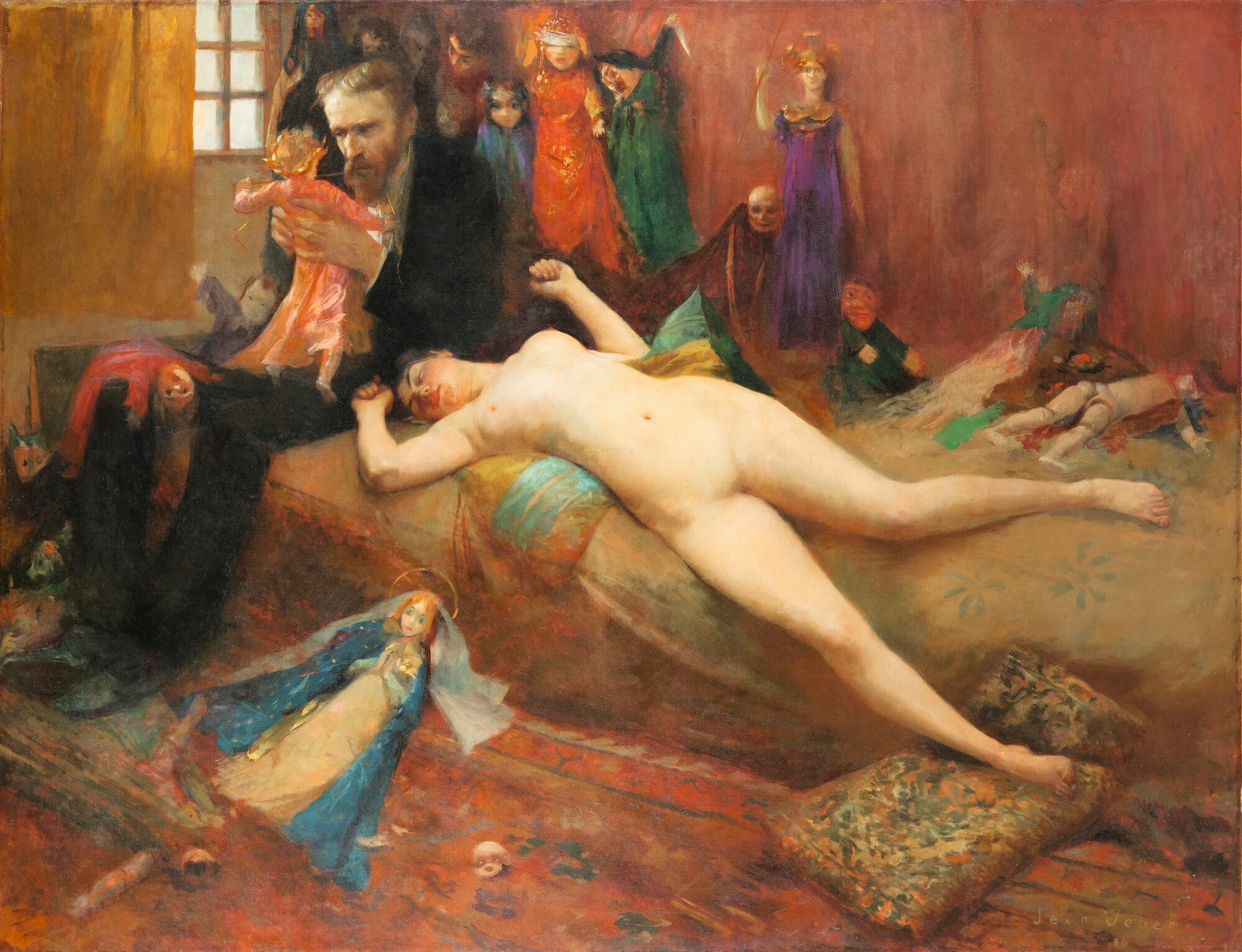
The Doll Man – Jean Veber [1896]

WON’T FIT INTO ANY ARBITRARY CATEGORY WITH EACH OTHER [Ed. – At least that’s honest.]

Squarely in the Olivia Manning/Elizabeth Jane Howard sweet spot is the Good Daughters trilogy by Mary Hocking (Good Daughters, Indifferent Heroes, Welcome Strangers), following three sisters from the 1930s to the years after WW2. They’re basically Platonic ideal books for people like me who reflexively buy the old green-spined Virago Modern Classics on sight.

The Friendly Young Ladies by Mary Renault was delightful: a wonderful 1930s summery sexy atmosphere, beautifully written, and nobody was punished by the plot for being gay. (In fact, someone wrecked their life by not being gay enough.) [Ed. — *nodding sagely * seen it happen many a time.]

Keith Ridgway’s A Shock is brilliant and sui generis; a sporadically sinister set of linked stories in multiple styles—a worthy follow-up to his Hawthorn & Child, though shooting out in completely different directions.

Awake by Harald Voetmann (translated by Johanne Sorgenfri Ottosen) is fragmented, which I have seen some people complain about, saying it doesn’t add up to a story. I guess that’s true, but I really didn’t care. A novel about Pliny the Elder, his nephew, and his slave, it’s great on the sentence level, and so interesting. And deeply, deeply horrible.

Hagar Olsson’s Chitambo (translated by Sarah Death) deserves to be much better known: a modernist Finnish masterpiece about a young girl whose life is wrecked by a father who is at first her ally in an imaginative world, and who then loses interest in her as he moves on to other, madder utopian schemes.

[Audience: GET HIM OFF! GET HIM OFF!]

The Trouble with Happiness is a collection of short stories by Tove Ditlevsen (translated by Michael Favala Goldman), and is as good as you’d hope from the author of the Copenhagen Trilogy. The Devastation of Silence by João Reis (translated by Adrian Minckley) is an exemplary example of one of my favourite genres of novel—the mildly unhinged monologue from a monomaniacal narrator, in this case a Portuguese POW in a German camp in WW1. Helen DeWitt’s The English Understand Wool is a really funny novella of subverted expectations. And Ed Yong’s An Immense World is a brilliantly and subtly written survey of the latest science in animal perception, including senses that humans cannot even begin to rival. OK, OK, I’m going, what is that thing, a crook, you do know they don’t actually use them to haul people off the stage anym–

[Ed. — Don’t tell James, but I could have read even more from him!]

Scott Walters’s Year in Reading, 2021

Today‘s reflection on a year in reading, I’m delighted to say, is by Scott Walters. Scott launched a litblog, seraillon, in 2010, and expects to return to it one of these days. He largely follows Primo Levi’s model of “occasional and erratic reading, reading out of curiosity, impulse or vice, and not by profession” (profession in his own case being academic administration). He lives with his partner in San Francisco and tries to visit family in France as often as possible.

seraillon has long been a favourite blog: in the past year or so I’ve checked in regularly, half disconsolate, half hopeful, looking for new content. You can imagine, then, how happy I am to feature Scott here in his return to blogging. I hear rumours that more may be afoot at the site!

With Scott’s post, this run of Year in Reading posts comes to an end–except, of course, for my own, which I hope to write soon… The project grew into something bigger than I’d ever imagined; it’s been a delight to showcase the work of so many thoughtful readers. Thanks to everyone who wrote, read, and commented on these pieces. (If you’d talked with me about writing a piece but haven’t sent it to me yet, it’s not too late. Just be in touch and we’ll make a plan.)

Milton Avery, Green Sea, 1954

How gracious of Dorian to invite me to submit an end-of-year post! I have been avidly following the others he’s posted, which now have my to-be-read list runnething over. So thank you Dorian, and everyone, and hello. [Ed. – Such a pleasure!]

I’ve written nothing on the seraillon blog for more than two years—”hellacious times and I’ve slipped between the cracks,” as a character says in David Greenberg’s play, The Assembled Parties. But I have been reading, finishing 42 books in 2021. Though about half my typical yearly volume, I also read much more in books, most of which I intend to finish: The astounding Autobiography of Benvenuto Cellini. Milton’s “Paradise Lost.” Chateaubriand’s Mémoires d’outre tombe (to be continued in the original French, no knock on Anka Muhlstein’s translation). A re-read of Wuthering Heights. Franz Werfel’s monumental novel of resistance against the Armenian genocide, The Forty Days of Musa Dagh. Gaston Bachelard’s The Poetics of Space, following an interest in Henri Bosco. Henri Bosco himself, in his novels Le Mas Théotime and Sabinus. A book about book designer Robert Massin, who designed these French Bosco editions. There are others, down other rabbit holes.

Here are ten highlights of works I did finish in 2021, plus honorable mentions:

The Ministry for the Future, by Kim Stanley Robinson

Hugo and Nebula Award winner Robinson has shouldered a massive responsibility: digesting everything we know about climate change as well as everything we know about how we might address it, then packing it into a stunningly wide-ranging geopolitical thriller interspersed with chapters that concretize climate change’s multivarious, cascading impacts. The novel is also one of few I’ve encountered (Vincent McHugh’s 1943 pandemic novel I Am Thinking of My Darling being another) that explore competent administration of a crisis. [Ed. – Yes! This is a book about competency. Maybe that’s why it feels so comforting.] Robinson’s book appeared in October 2020, a date to fix precisely given the furious pace of change as regards the book’s subject. In fact, the novel seemed a kind of sundial around which shadows spun and deepened rapidly as I read, some elements already obsolete as others swam into view. This is no criticism; I marveled at the real-time context while reading as well as at Robinson’s courage in being able to place a period on his final sentence, and I’ve been pushing the work on everyone for its articulation of the enormity of the challenges facing us, some lovely conceits such as the return of airships, and a bracing radicalism that makes Edward Abbey’s The Monkey Wrench Gang seem like a Sunday School picnic. Despite offering a path forward, Robinson eschews easy answers and offers little in the way of reassurance, seeming to have taken as the novel’s departure point Greta Thunberg’s memorable warning: “I don’t want you to feel hopeful. I want you to panic.” [Ed. – On my 2020 list; still think about it daily.]

Last Summer in the City, by Gianfranco Calligarich (translation by Howard Curtis)

The cover blurbs’ promise of a resurrected 20th century Italian classic certainly delivered; Calligarich’s short, tight, engaging 1973 novel of dissolution in 1960’s Rome seems to pick up where Alberto Moravia left off in depicting modern Italian existential malaise. The story follows the peripatetic wanderings around Rome of Leo Gazzara, an impecunious, alcoholic, bookish young Roman who becomes embroiled in a tumultuous on-again/off-again love affair. The energy of Calligarich’s automobile-driven narrative and the drifting yet fascinating tour he offers of Rome—the city itself a “particular intoxication that wipes out memory”—help balance out the novel’s bleakness, and a frequent invocation of books provides both literary diversion and dark warning of Bovary-esque entrapment in fictions. One might easily envision a film version by an Italian neo-realist director such as Dino Rossi or Antonio Pietrangeli.

Norwood, by Charles Portis

Considerably brightening a dark year, Norwood (1966) edged out Portis’s True Grit and The Dog of the South as the funniest book I read all year [Ed. – Arkansas, represent!], and even topped W. E. Bow’s The Ascent of Rum Doodle and Patrick Dennis’s Genius. A howling road trip and love story that begins when Norwood Pratt of Ralph, Arkansas gets a job tandem-towing a couple of hot cars to Brooklyn, Norwood limns the seedy, grifty, free-wheeling side of American life with caustic, irreverent humor; splendid dialogue; and unforgettable characters. I have Jacqui to thank for this introduction to Portis and will certainly read his remaining two novels and collection of short pieces, a literary cornucopia inversely proportional to the author’s small output, and no doubt as delicious as a biscuit and Bre’r Rabbit Syrup sandwich.

Stories With Pictures, by Antonio Tabucchi (translation by Elizabeth Harris)

“From image to voice, the way is brief, if the senses respond,” writes Antonio Tabucchi in his preface to 2011’s Stories with Pictures, a collection of 30-some short pieces sparked by a particular painting or drawing. Inspired by his having spent an entire day in the Prado (I did the same thing on the one day I spent in Madrid), Tabucchi writes at an angle about the pictures, riffing on them in a dazzling range of ways, from mediations to letters to what seem at times multi-page, arabesque-like captions. As in much of Tabucchi’s work, motifs connected to Fernando Pessoa abound. Most of the artworks come from 20th century Italian or Portuguese artists, all but a few new to me. As if the posthumous appearance in English of a Tabucchi work wasn’t reason enough to celebrate, the Archipelago Books edition, featuring color plates of each picture, make this a volume with a presentation as lovely as the author’s concept.

Bear, by Marion Engel

“Is a life that can now be considered an absence a life?” Marion Engel’s Bear (1976) has made so many end-of-year lists here and elsewhere that Dorian should get a medal for this revival of interest. [Ed. – Aw shucks. No medal, though. I want cash.] Thanks to a new edition from London’s Daunt Books, I finally got in on Engel’s singularly odd tale of Lou, an archivist cataloging the contents of a deceased eccentric’s isolated mansion in Ontario’s remote north—and falling maw over claws for its resident bear. [Ed. – Ha! Maw over claws! That’s good! Gonna steal that.] Literally going wild in shaking herself loose of “the flaws in her plodding private world” and the various civilized confines that have entrapped her, Lou exults in a rebirth as liberating as it is perturbing. Bear’s atmosphere of isolation made it seem readymade for pandemic reading; I suspect that most of us are more than ready to go a little wild ourselves. [Ed. – Sounds pretty good to me!]

Dissipation H. G., by Guido Morselli (translation by Frederika Randall)

My terrific excitement at seeing another Morselli novel appear in English received an abrupt check upon my learning that Frederika Randall, one of the finest of Italian to English translators, had died shortly after finishing the translation. Readers of seraillon may know of my interest in Morselli; this short novel, his last, takes a common theme in which a person suddenly discovers that they are alone on earth. Morselli spins the conceit into a bittersweet, moving and darkly humorous exploration of isolation and the need for human contact. The “H. G.” in the title refers to humani generis and the dissipation “not in the moral sense” but rather from “the third and fourth century Latin dissipatio,” meaning “evaporation, nebulization, some physical process like that.”  In other words, Dissipation H. G. turned out to be another work suited for pandemic reading—if perhaps in the manner of providing solace through affirmation of one’s sense of reality.

Malacarne, by Giosué Caliciura (French translation by Lise Chapuis)

Sicilian writer Giosué Caliciura has yet to be translated into English, a pity, as his fierce, inventive, densely baroque novels, delving into the lives of those on society’s margins, are among the most original and powerful I’ve found in contemporary Italian literature. Malacarne (1999) presents a ferocious testimonial from a Sicilian malacarne (literally “bad flesh”), one of the young hoods employed to do the Mafia’s dirty work.  Palermo—and at the same time a vaguely defined post-mortem space—provide the setting(s) for the malacarne’s reckoning, before a judge, with the brutal details of a violent, savage life. Caliciura’s use of a deliberately impossible narrative voice, an articulation both belonging to and channeled through the late malacarne, adds to the novel’s otherworldly, underworld atmosphere. But the story the malacarne relates is as worldly, gripping and linguistically spectacular as a story could be, a profound exploration of the forces that perpetuate organized crime and engulf the youth it attracts, manipulates, and destroys.

Giorgio Morandi. Paesaggio Levico, 1957.

Okla Hannali, by R. A. Lafferty

I did not know of R. A. Lafferty (apparently revered in science fiction circles), nor had I heard of this novel (not a work of science fiction), and so little suspected what I was about to get into. I found Okla Hannali (1972) astonishing. The author called its initial appearance “a torturous undertaking even though it wasn’t much more than an overflowing of crammed notebooks.” Something of the “crammed notebooks” quality seems to remain in this revised, shaggy final version, but small matter: why this vastly-larger-than-life legend of fictional Choctaw “mingo” (king) Hannali Innominee isn’t a standard feature of the American literary canon is beyond me. Lafferty turns the historical telescope around, viewing early 19th century frontier history from the Choctaw perspective. We know we’re in the realm of legend when the novel begins with a creation myth, which swiftly moves to the early life of Hannali, a “big man who would fill almost a century” and who, during one of the several forced resettlements of the Choctaw, abruptly picks out a plot of land in what is today eastern Oklahoma, “a place less no damn good than other land.”  At this nexus where many elements of 19th century American history converged, the reader witnesses, through Hannali, the westward European expansion, the enactment of genocidal policies towards indigenous populations, the flight of escaped slaves (some of whom become slaves of the Choctaw and/or members of the tribe), the lingering resonances of the Louisiana Purchase, the inauguration of new states, the misunderstood “Jacksonian Revolution” that amounted to little more than “a war of the rich against the poor,” and finally the American Civil War and the grim destruction of the Choctaw republic. Hannali is a magnificent character: defiant, stubborn, courageous, wise, irreverent, a folk hero of magnitudes. Big, boisterous, hilarious, indignant, heart-breaking tales like this don’t come along often; one mourns the unrealized project Lafferty intended to call “Chapters in American History,” of which Okla Hannli, his “Indian [sic] chapter,” is the only one he completed. [Ed. – Wow! Sounds amazing!]

The Transit of Venus, by Shirley Hazzard

“The calculations were hopelessly out…Calculations about Venus often are.” Australian writer Shirley Hazzard and Graham Greene were close friends, and I thrilled to find Greene-like elements in this exceptional, elegant, psychologically penetrating work. But The Transit of Venus (1980) is something all its own, a dense, intimate, furiously compelling narrative tracing the life trajectories and romantic entanglements of two Australian sisters orphaned at a young age. Tracking the sisters’ moves to England (and one to New York), with events of the tumultuous 20th century backgrounding their stories, Hazzard describes, in exacting prose, the psychological nuances of human interactions. Henry James, another obvious influence here, seems constricted by comparison [Ed. – hmm]; The Transit of Venus did more to put in perspective James’s limitations with regard to women characters than any other work I’ve read [Ed. – hmm]. Hazzard’s antecedents range from Greek tragedies to Goethe to 19th century Realism, resulting in a story almost classical in form and style, yet palpably burning with a sense of lived experience—from a writer who led an utterly improbable life. I’ll be reading more.

A True Novel, by Minae Mizumura (translation by Juliet Winters Carpenter)

“…I still could not feel at home, either in the new country or in the new language,” states the narrator on the first page of Mizumura’s 2002 novel (to which I was steered by Dorian – thank you, Dorian!). [Ed. – So welcome! Delighted to see this here.] This might be a line from any work addressing displacement, but it scarcely begins to hint at the extraordinary directions Mizumura will take over the ensuing 853 pages. I harbored some doubts about descriptions of the novel as a Japanese Wuthering Heights, but Mizumura evinces little interest in simply grafting Emily Bronte’s work onto a Japanese setting. Instead, her ambitions aim broadly and deeply. Taking the coinciding of the 19th century western novel’s golden age with Japan’s opening to western influence as her beginning, Mizumura then uses her own transnational experience (with formative years spent in the US before a permanent return to Japan) to explore, through both western and Japanese literary and linguistic lenses, multiple questions of transnational identity, cultural cross-pollination, Japanese post-war history, and – through her mysterious character Taro, a kind of Japanese Heathcliff/Gatsby amalgam – issues of class and otherness. A True Novel takes its title from a prevailing style of Japanese literature in which works like Wuthering Heights were held up as an ideal form, “where the author sought to create an independent fictional world outside his own life.” But meta-fictional elements in Mizumura’s narrative also link it to the later Japanese style of the “I-Novel” (also the title of another, more personal Mizumura work), close to memoir and hewing to the author’s personal experience. Through concatenations of narrative (the prologue alone to A True Novel goes on for 165 pages) and using black and white photographs to heighten sense of place in the mountainous Karuizawa area where much of the story unfolds, Mizumura aligns the substrate of the Japanese literary enzyme with that of its Western counterpart, sparking a catalysis that creates something strikingly original. While it’s rare enough to find something that seems new in fiction, it’s more unusual still to find a work also incorporating something old and familiar and—by means of steady, crystalline, superbly atmospheric prose—so completely absorbing. Re-reading this true novel, my favorite book of 2021, will be a goal for 2022.

Milton Avery, Offshore Island, 1958

Honorable mentions:

  • Isak Dinesen’s Winter’s Tales;
  • Miklós Bánffy’s The Enchanted Night, an excellent collection of short stories that aligned surprisingly with Dinesen (great to see more of Bánffy’s work emerging in translation);
  • Federico Fellini’s The Journey of G. Mastorna, the director’s screenplay for what many consider to be the greatest film never made;
  • N. Scott Momaday’s House Made of Dawn, an American classic, gorgeous and heartbreaking;
  • Claire Keegan’s Small Things Like These, a marvel of concision concerning Ireland’s Magdalen laundries;
  • Henri Bosco’s Le Trestoulas, affirming Bosco as a writer I will certainly keep reading;
  • Joseph Roth’s The Radetzky March.

(And in the noir/polar/mystery realm):

  • Georges Simenon’s Chez Krull [Ed. – So good!];
  • Eric Ambler’s Journey into Fear and A Coffin for Demetrios;
  • Seishi Yokomizo’s The Inagumi Curse, terrific to read directly after Mizumura so as to linger a bit in a Japanese mountain atmosphere.

Thanks for reading, and felicitous reading to all in 2022!

Sarah Raich’s Year in Reading, 2021

Today‘s reflection on a year in reading is by Sarah Raich (@geraeuschbar). Sarah is a writer who studied comparative literature, North American studies, and criminal law. A volume of short stories, dieses makellose Blau, was published by mikrotext and the dystopian YA novel All that’s left by Piper. Two of her stories have appeared in English translation by Eilidh Johnstone in https://no-mans-land.org/article/that-i. She lives in Munich.

Look for more reflections from a wonderful assortment of readers every day this week. Remember, you can always add your thoughts to the mix. Just let me know, either in the comments or on Twitter (@ds228).

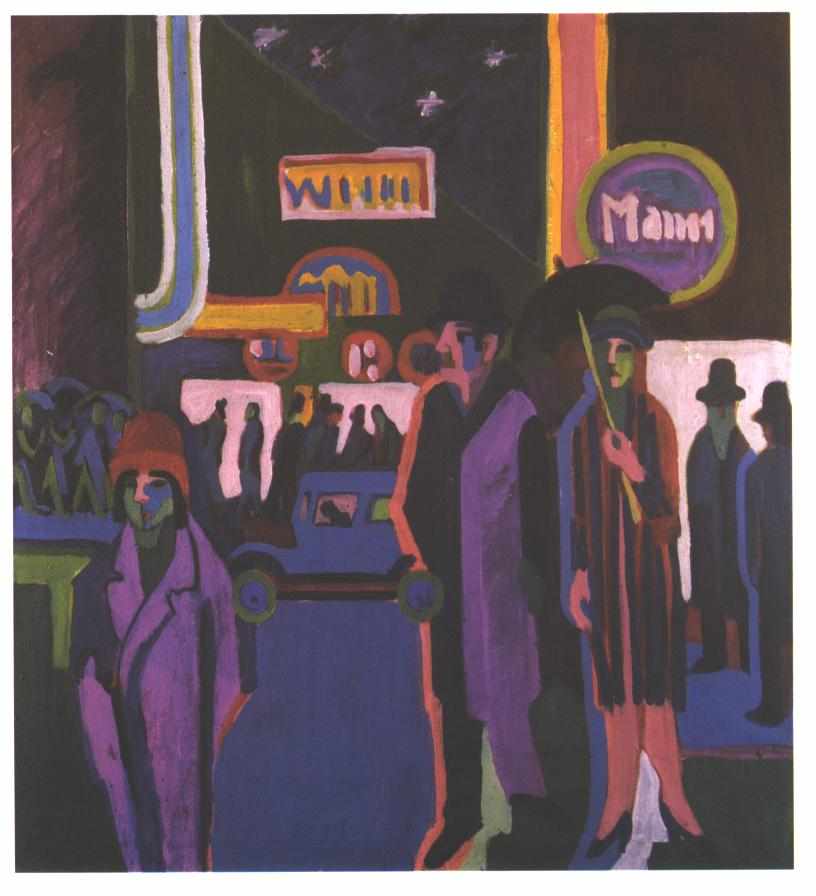
Ernst Ludwig Kirchner, Street Scene at Night, 1926-7

2021 was a special year for me as a reader, because it was the first year my own books—ones I’d written and published–were being read. Not just by my doting husband and proud parents – but by real readers. [Ed. – Ouch! Tough on that “fake reader” husband!] And, yes, that changed things for my reading. I became gentler in my judgement. And yes, sometimes I was envious while reading as a published writer.

2021 also was the year I tried to read more diversely, meaning less white, and that is how I came across my favorite book of the year: Tsitsi Dangarembga’s This Mournable Body. I don’t know if I would have read this if I hadn’t made the conscious decision to diversify my reading. I remember buying the book in Cologne at the event Insert Female Artist, a little reluctantly because I found the cover so unappealing (yeah, I’m superficial). [Ed. – Same!] And then I started reading it and couldn’t stop because it was like being severely punched and gently caressed at the same time. And to me those are the very best books. The story is set in Zimbabwe and has in Tambudzai one absolutely loathsome protagonist. [Ed. – So interesting! I’ve only read Nervous Conditions, where Tambu is not loathsome, IMO, but certainly hard to like…] And Dangarembga manages the magic trick of showing the very many dark sides of her character—and still making the reader feel for her. Suffering didn’t make Tambudzai good. It made her selfish and greedy and needy. And the story doesn’t end well: how could it? Dangarembga tells this story in such fierce language in an unusual second person account that my brain got rattled in a way only brilliant books can do. (That her work appears in Germany from a niche publishing house speaks volumes by the way.)

What This Mournable Body shared with many books I read this year is its dark humor. And maybe that was just the right thing for the sobering and dragging experience of living through a second year of a global pandemic. Take for example Sarah Moss’s Ghost Wall, which I read in the supreme translation by Nicole Seifert, which describes severe physical and psychological abuse – and yet I laughed so hard. Because the most brutal things contain humor and patriarchs are clowns with bloody swords and dirty underwear they need to have washed. [Ed. – Ah to be a patriarch! Seriously, though, this really gets at an important aspect of the book.]

For me, Bear by Marian Engel also falls in this category. [Ed. – Hell to the yeah!] A book that was wildly discussed and promoted on Twitter—to a considerable extent by the owner of this blog. [Ed. – “To a considerable extent” = German for “What a fucking nut that guy is, always banging on about that book!] I liked the unforgiving yet loving eye Engel casts on the protagonist which also leads to weirdly comical passages while the librarian stumbles through her life in a “molelike existence”, a phrasing I will never forget. In a way this librarian has a lot in common with the heroine in Ghost Wall. They both live a life they haven’t chosen, pushed around and overseen—and view this miserable situation with an acidic view on themselves and the world, and then one of them (Silvie in Ghost Wall) finds friends, the other one (the librarian in Bear) finds, well, Bear.

And yes, while writing this down, I realize my taste for this kind of book grew strong during this year of reading. Books that intertwine the horrible with the comical. One of those books was Adas Raum by Sharon Dodua Otoo who has the admirable audacity to throw her mostly German readers into a whirlwind of perspectives, places, and times. Ranging from rebirth and gods and eternal entities that hope for liberation from earthly existence while quarreling with God, into the overburdened subjects of the Shoah, racism, and colonialism, Otoo blasts established narrative boundaries and writes down the shiny pieces. Which left many German critics profoundly confused. I enjoyed the ride very much and I am very curious how the English-speaking audience will respond to this text.

The book contains my favorite quote of the year 2021:

Gott rollte als Steppenpflanze an mir vorbei.

(Einfach so.)

(Als wäre ich gar nicht da.)

(Eine Frechheit.)

Ich ließ alles –  no fee no [im Original in phonetischen Alphabet] – auf mich einwirken, in der Hoffnung, dass diese Sensation aller abendländlichen Farben zeitnah nachlassen würde. Hinter meiner Hoffnung steckte ein Hauch Erwartung. Ich gestand es mir aber selbst nicht ein. Ich wollte solchen banalen Gefühle längst hinter mir gelassen haben. Ich wartete.

God rolled past me as a tumbleweed.

(Just like that.)

(As if I was not even there.)

(The nerve.)

I allowed myself to be moved by everything—nɔ fɛɛ nɔ—hoping that the sensation of these occidental colors would soon wane. A breath of expectation cowered behind my hope. But I could not admit it to myself. I had wanted to leave such banal feelings far behind me. I waited.

(Translated by Jon Cho-Polizzi; translation forthcoming)

One more theme flows through my 2021 reading year, now that I look at it: the difference between serious and entertaining literature, as we put it in German. A difference which part of the cultural establishment in Germany seems obsessed by.

It affects my own writing, as I‘ve published one book of short stories, which some consider one of the intellectual forms of writing, and a second book that’s a dystopian YA novel, which the same people consider a rather grimy genre (unless Margaret Atwood writes it—then it’s different). As a very nice and slightly drunk person from the literary establishment told me once: the problem is, your book doesn’t really fit in anywhere.

Maybe being in this position has made me more sensitive to writers writing books that are misfits. But this feeling was also influenced by the work of Nicole Seifert, especially as expressed in her book Frauen Literatur, published in 2021. In it she describes so many books by female writers being belittled and shoved aside. Seifert’s book was eye-opening, even though I had already read so much of her blog posts, articles, and tweets. And the most important thing I learned from this superb work is how systemic the degradation of female writing is.

One of my most precious serendipities of books being labeled pure entertainment was the writing of Shirley Jackson, starting with Hangsaman. In Germany, Jackson has been considered a horror genre writer, which she is, but through this genre she writes pure literature. [Ed. – Hmm this does seem to uphold that literature/entertainment binary…] Jackson died without experiencing the literary appreciation she should have received. I don’t know why, but this realization really got to me. That a woman of her abilities got overlooked so brutally during her life time. (I rejoiced at the Wikipedia article describing how her otherwise shitty husband fought for her recognition and ranted ferociously against the literary establishment unwilling to give Jackson credit for her genius.)

But the list of undervalued writers goes on, leading to the books of Vicki Baum, whom I had always considered easy entertainment. But when I read them they proved to be epic. I cherished Hotel Shanghai: the vastness of the tableau she created leaves me awestruck.

Jeanne Mammen, Self-portrait, ca. 1926

So this is what I will carry into my year of reading 2022: a thirst for misfits and dark humor. Very dark.

Victoria Stewart’s Year in Reading, 2021

Today‘s reflection on a year in reading is by Victoria Stewart (@verbivorial). Victoria is a university lecturer in English literature, with special interests in Holocaust writing and interwar detective fiction (she’s like me, only more successful), but this post focuses on some of what she read for pleasure in 2021.

Look for more reflections from a wonderful assortment of readers every day this week. Remember, you can always add your thoughts to the mix. Just let me know, either in the comments or on Twitter (@ds228).

Rachel Whiteread, Line Up, 2007-2008

Reading Maria Stepanova’s The Memory of Memory,translated by Sasha Dugdale, I wasn’t sure whether to be gratified or not to recognise myself as this ‘type of person’:

Notebooks are an essential daily activity for a certain type of person, loose-woven mesh on which they hang their clinging faith in reality and its continuing nature. Such texts have only one reader in mind, but this reader is utterly implicated. Break open a notebook at any point and be reminded of your own reality, because a notebook is a series of proofs that life had continuity and history and (this is most important) that any point in your own past is still within your reach.

In any case, my ‘reading notebook’ came in useful, or finally justified its existence, when Dorian kindly invited me to write this post. Looking through the list of what I read in 2021, I see that what might broadly be called ‘autofiction’ figured quite heavily. I’ve always been drawn to realist fiction, and the idea of writing a novel that could be mistaken for a factual text is one logical extension of that, I suppose. Whether The Memory of Memory, an exploration of Russian/Soviet family history, steps over the line from fiction into essay maybe only Stepanova herself can tell, though for me it demanded the kind of attention that I associate with reading nonfiction.

I started 2021 by re-reading Emmanual Carrère’s The Adversary, translated by Linda Coverdale, an account of an act of criminal deception that formed the basis for the 2002 film of the same name [Ed. – I believe it also inspired Laurent Cantet’s excellent Time Out (L’Emploi du Temps), 2001], but which, like many classic true-crime texts, weaves the story of the author’s ‘investigation’ into their account of the crime. I must have first read this soon after it was published in the early 2000s, and only belatedly realised that Carrère was the author of Limonov, translated by John Lambert, an experiment in biography that’s also intertwined with autofictional elements. I read for the first time Carrère’s nasty, brutish and short Class Trip, translated by Linda Coverdale, which, told from a child’s perspective, forms a sort of distorted mirror image of The Adversary. My Life as a Russian Novel, another Coverdale translation, is probably the one I’d be least inclined to return to. [Ed. – Of course that’s the one I own…] The story of Carrère’s quest to find out about his grandfather, who was (probably) executed at the end of the Second World War as a collaborator, gets submerged under other strands that, to me, were less engaging.

I’d resisted reading both Tove Ditlevsen’s trilogy, Childhood, Youth, Dependency, translated by Michael Favala Goldman, and Vigdis Hjorth’s Will and Testament, translated by Charlotte Barslund, as I’m not generally keen on texts dealing with traumatic childhoods or addiction, but I was glad that recommendations from other readers persuaded me to get over that resistance. The first two volumes of Ditlevsen have a black humour that I hadn’t expected, though I found Dependency much tougher, and Hjorth’s reflections on family dynamics and being a grown-up child struck a chord:

Sybille Bedford writes somewhere that when you’re young you don’t feel that you’re a part of the whole, of the fundamental premise for humanity, that when you’re young you try out lots of things because life is just a rehearsal, an exercise to be put right when the curtain finally goes up. And then one day you realise that the curtain was up all along. That it was the actual performance.

During the pandemic lockdown, which went on for an extended period in the part of the UK where I was living in 2020-21, I probably did more re-reading than I had previously: more time at home led me to scan the bookshelves and, in some cases, acknowledge that I could remember very little about volumes had been sitting on my shelves since being bought and read maybe twenty years ago. Sometimes that re-reading turned up forgotten gems (like Elke Schmitter’s creepy Mrs Sartoris, translated by Carol Brown Janeway). On other occasions, I didn’t get past the first page, and the local charity shops got the benefit when they eventually re-opened. I’m not sure what prompted me to start re-reading Alan Hollinghurst’s novels in 2021, but I’m glad I did. I went more or less in order of publication, and I particularly enjoyed the leaps in time that structure his later novels, especially The Stranger’s Child and The Sparsholt Affair, the brief disorientation that comes from figuring out how the protagonists in the current section relate to those of the previous one.

Another author I binged on, though I think with one or two exceptions I was reading his novels for the first time, was Brian Moore, whose centenary fell in 2021. [Ed. – So good!] Born in Belfast, Moore relocated first to Canada and then to the USA as an adult. I enjoyed the awful embarrassment of school-teacher Dev’s attempt at courtship in the Belfast-set The Feast of Lupercal. That novel was published in 1958, prior to the launch of the IRA campaign which forms the backdrop for Lies of Silence. Though the politics are much more explicit here, as in Lupercal matters of political choice can’t be separated from apparently more personal ethical and moral decisions. The Doctor’s Wife, about a married woman’s relationship with a younger man, has aged less well, andMoore’s non-fiction novel The Revolution Script didn’t quite work for me, though it did bring into focus a moment in Canadian history of which I knew very little, the ‘October Crisis’. [Ed. – That was a big deal, all right. Curious about this now.]

Several other novels I read this year also took the tropes of the thriller and gave them an interesting twist. Chris Power’s A Lonely Man places Robert, its Berlin-based author protagonist, in a moral dilemma after he becomes entangled with Jonathan, a ghostwriter. Ben, the narrator of Kevin Power’s White City (the two Powers aren’t related) has a voice that one reviewer found reminiscent of Martin Amis’s early work. Perhaps they were thinking of Ben’s reflections on abandoning his PhD on James Joyce:

Now I regarded my old underlined Penguin Popular Classics copy of A Portrait as a kind of embarrassing ex-girlfriend to whom I was still attracted but with whom things had not really worked out. [Ed. – Hmm…]

But the payoff is serious, and the switch in tone subtle. I heard about Katie Kitamura’s A Separation via reviews of her most recent novel Intimacies. Like Chris Power’s novel, A Separation uses a disappearance to open up to view a disintegrating relationship. The action of Kitamura’s novel takes place on a Greek island; Alison Moore’s The Retreat has an invented island off the coast of England as the setting for what becomes a nightmarish artists’ retreat, its interlocking narratives connecting in ways that reveal the whole narrative to be as carefully constructed as a piece of origami.

I don’t generally read much science fiction or speculative fiction, but Isabel Wohl’s Cold New Climate, goes stealthily in that direction. Lydia is shocked when, after what she intended as a temporary break from her older lover, she returns to find he is ending their relationship. Her reaction seems designed to be self-destructive and to inflict the maximum amount of pain on those around her, but the ending confronts the reader with destruction of a different kind. [Ed. – Anyone know if this is getting US release?] Rosa Rankin-Gee’s Dreamland was an all-too believable dystopia that conveyed the urgency of its political concerns without ever becoming shrill. M. John Harrison’s The Sunken Land begins to Rise Again intertwines the stories of former lovers Shaw and Victoria, moving between Shaw’s life in London and Victoria’s relocation to a house she’s inherited in Shropshire. Victoria’s new neighbours are not quite what they seem, and the watery theme manifests itself in ways that veer between the fairy tale and the horror story.

Where non-fiction is concerned, it was mainly artists’ biographies that caught my eye in 2021, maybe because visiting exhibitions was more challenging than usual. Andy Friend’s biography of John Nash was so beautifully illustrated it almost made up for not being able to get to the exhibition at Compton Verney in Warwickshire that prompted it. Friend’s handling of the death of Nash’s son was especially sensitive. I was lucky enough to see a small exhibition of John Craxton’s work at the Fitzwilliam in Cambridge in 2013, and Ian Collins’s biography was another gorgeous volume, benefitting from the author’s personal connection with the long-lived Craxton. And Jenny Uglow’s Sybil and Cyril was a dual biography of the unusual artistic partnership between Sybil Andrews and Cyril Power that gave a new slant on mid-twentieth century commercial art: among much else, they designed a number of posters for the London Underground.

Rachel Whiteread, Wall (Door) 2017

Next up, I’m waiting for an excuse to treat myself to Alex Danchev’s biography of Rene Magritte, and Tessa Hadley’s new novel Free Love is high on my list for 2022. [Ed. – Just finished it this morning, and it is terrific.]

Scott Lambridis’s Year in Reading, 2021

Today‘s reflection on a year in reading is by Scott Lambridis (@slambridis). Scott’s story “Blind Sticks” is nominated for a 2021 Pushcart award. Before completing his MFA, he earned a degree in neurobiology, and co-founded Omnibucket.com, through which he co-hosts the Action Fiction! performance series. Read more at scottlambridis.com.

Look for more reflections from a wonderful assortment of readers every day this week. Remember, you can always add your thoughts to the mix. Just let me know, either in the comments or on Twitter (@ds228).

Helen Frankenthaler, Radius, 1993

Each year I have a goal of reading 52 books. In 2021, I read 87. Here are the top ten! 

The Organs of Sense by Adam Ehrlich Sachs

This book was on the top ten after the very first chapter. In 1666, the philosopher/mathematician Leibniz tracks down a blind astronomer who’s predicted an eclipse that will darken Europe for exactly 4 seconds. A blind astronomer? Naturally Leibniz attempts to decide whether he’s a brilliant soothsayer or just an absurd quack, and the astronomer indulges him in a long and meandering tale of how he came to his prediction while they wait for the eclipse itself to make the final determination. Along the way we hear of the astronomer’s life, arguments over the composition of art (one scene about a bunch of faces made up of fishes especially sticks in my mind), the utility of science, the way to gauge truth, all of which unveil the mysteries and absurdities of philosophical searches, while revealing the narrative’s own. The story keeps you guessing if it’s going to actually go anywhere, and then it does, beautifully and surprisingly. The true delight, though, the part that affixed it in the top ten immediately, is the tone. As my dear friend Ben put it, “It has something rare these days, and from this country: a terrific sense of play, a lightness as Italo Calvino would say [in his Memos for the New Millenium]. There’s always playfulness even in his most serious subjects.” Calvino would be proud, amused, and maybe a bit enlightened too. [Ed. – Sold!]

At Night all Blood is Black by David Diop (Translated by Anna Moschovakis)

This short novel from Senegal about a “chocolat” soldier fighting with the French in the trenches of WWI gripped me and wouldn’t let go. The narrator battles with the guilt of being unable to put his dying friend out of his misery, which transmutes into the hunt for forgiveness through atrocity: he becomes a “soul-eater” who hunts down Germans so that he can retain and collect their severed hands. Diop uses shocking violence and horror to unfold the narrator’s humanity, even as the character doubts it himself. The narration is a fever dream: at once intense, lyrical, dark, violent, tender, visceral, and poetic. That dream picks up in the second half in a hospital amidst delusions and confusions of identity. This half has less visceral presence, but the questions are still interesting, and the prose’s rhythm of repetition carries it forward to an ending both mysteriously dissonant and triumphant.

The End of the Alphabet by C. S. Richardson

This is the sweetest and saddest love story I’ve ever read, all wrapped up in under 100 pages. In his fiftieth year, a devoted husband finds out he has just a month to live, then whisks his wife off on a world tour of cities in alphabetical order, from Amsterdam to Zanzibar—but they never make it past F (I believe it’s F, but can’t be sure, since I don’t own the book anymore; you’ll see why). The prose is spare, the story sweet, the characters adorable and tragic, the ending heartbreaking and beautiful. It’s both straightforward in its telling and slippery in its tone, and I’ve been compelled to give it at least three times now to other friend-couples. How could it not make the top ten? 

Lifespan of a Fact by John D’Agata and Jim Ringal

This year was chock full of non-fiction books about the challenges of writing non-fiction (how to accurately tell the truth, how much the writer plays a part) and this was the crowning jewel, a totally metafictional narrative. On the surface, it’s a long-form article about a boy’s suicide in Las Vegas, and the socioeconomic factors of the city that contributed to and were revealed by that event. The portrait of Las Vegas is fascinating on its own, but the heart and delight is in the marginalia—the fact checker’s feedback to the editor and author about the draft article, and the author’s responses. What arises is a frustrated argument between the two over what counts as truth and where the journalist’s obligations lie in relation to capturing it. The personalities of both author and fact-checker are wonderfully revealed. You’ll never think of non-fiction as innocent again. 

The Old Woman and the River by Ismail Fahd Ismail (Translated by Sophia Vasalou)

Some books get to the top ten not by wowing me in the moment, but by sticking with me for months and months. [Ed. – Yep, and sometimes those are the best ones.] This short novel from Kuwait follows a feisty old lady and her faithful and equally feisty mule on a critical errand: to carry her husband’s unearthed bones back to his hometown for a proper burial. Unfortunately she arrives to find the town in a war zone (the Iran-Iraq War), governed by an outpost of soldiers who neither let her accomplish her errand nor leave. During her stay, she manages to sabotage a military operation by bombing a dam, and restoring fertility to barren lands on the fringes of the desert. It was an enjoyable read at the time, in particular the tough-but-tender old lady’s conversations with her mule, her husband’s ghost, and her captors, but the lingering effect of the old woman’s righteous persistence has persisted long enough to elevate it into the top ten. I just can’t stop thinking about it.

97,196 Words by Emannuel Carrèrre (Translated by John Lambert)

I love a good essay, no matter the subject, and this collection is as varied as they come; I loved every one. There are so many I can’t even recall them all. A lengthy, poignant study of an AIDS victim. An obscure but shocking suburban murderer of a man’s entire family (which referenced and later caused me to read Janet Malcolm’s fantastic The Journalist and the Murderer). A day on the town with the French president Macron. A visit to the secretive Davos conference. Russia’s anti-Putin youth. The enduring spell of H.P. Lovecraft. Tracking down the pseudonym of a subversive writer who popularized a chance-based way of living that became a cult lifestyle. Some obscure Russian writer. Sex columns Carrèrre was forced to write. Oh, and the homecoming of the last prisoner to be released from the Gulag, how could I forget that one? This is what happens. I start remembering one, and then they just pop back into place: Oh and that one, that was great, Oh, and that one, that was great too. Each is captivating, which probably hasn’t happened since I read Weinberger. Hence: top ten

Earth and Ashes by Atiq Rahimi (Translated by Erdag M. Göknar)

A fantastic novella from Afghanistan! After his village is bombed and most of his family killed, an old man goes on a journey to the remote mine where his son works to tell him the awful news. In tow is his grandson, who has been deafened by the bomb but is too young to understand yet what’s happened to him. [Ed. – Uh this is exactly what Ben said… not sure who’s paying homage to whom here, but, anyway…] Much of the book is spent sitting and waiting for a ride at a gas station in the middle of the desert where a bus will supposedly arrive, a waiting characterized by drifts in and out of time and place, fantasies into the mind of his grandson, and playing out versions of how he’ll share the terrible news with his son, all punctuated by the feisty but concerned station agent waking the old man to check on him. Taut and dreamy, concise and spare, heartbreaking and yet not without humor. But it’s really the final twenty pages that dazzle, the ultimate meeting of father and son and what follows. These pages are such a rollercoaster of heartbreaking twists and turns, dashed expectations and unfathomably complex emotions—they left me breathless.

Sapiens by Yuval Noah Harari

Sapiens is a fascinating reexamination of what makes humans tick, and how the major tides of history and society have been shaped and driven by our unique ability to organize ourselves through invented stories. Harari’s thesis is that there’s a pretty small limit (about a hundred or so if I recall) to how large a society can be based purely on cooperation within the material world; it’s the ability to create fictional entities and shared beliefs about them that allowed us to surge to great collective numbers. (And subsequently wreak the havoc we’ve wreaked, first on other human species, then on the world’s fauna, and ever since on each other). Religion, agriculture, currency, language, politics and government, social structures in general—shared agreements in invented fictions, all. Though the book is not that long, it took me nearly a full year to read because each chapter is so juicy and rich I needed a break after each. Rarely has non-narrative non-fiction left so strong an impression of the delightful flimsiness of all we take for granted in daily life. The interview with the author at the end also inspired me to start a daily practice of Vapassana meditation (he said he couldn’t have written the book without it). I’ve kept with the practice ever since (4-5 months). You never know what a book will bring to you! 

HhHH by Laurent Binet (Translated by Sam Taylor)

HhHH stands for “Himmlers Hirn heisst Heydrich,” or “Himmler’s brain is called Heydrich.” This gem of historical fiction tells the story of Reinhard Heydrich, the most ruthless Nazi you’ve never heard of, and of the two parachuting Czechs, Jozef Gabcík and Jan Kubiš, who assassinated him in broad daylight, in arguably the bravest and singularly practical act of the war. Who was Heydrich? Himmler’s right-hand man. The one who first recognized a young Eichmann as a “man of talents.” The man Hitler called “the perfect Nazi,” the man he feared and therefore valued most for his extensive information networks. The real brains behind the nuts and bolts of the Anschluss, the forming of the Czech protectorate, the subjugation of Prague, the meticulous architect of the Holocaust. [Ed. – That last statement overstates things, overlooks Himmler, etc.] Heydrich’s rise is fascinating and terrifying, paralleled with the tension of the two Czech parachutists planning and pulling off their secret mission, then going on the run, holding out for days against a battalion of hundreds of Gestapo in a church before finally meeting their brutal demise. It’s a riveting story, but what elevates the book is the meta-narrative struggle of the author to divine truth from his tale, to determine what to put in and how to stay focused, given all the astonishing horror he could include. This struggle adds an extra personality, an intellectual struggle beyond the body of an already striking historical account. It gave the book just enough extra oomph to edge out Èric Vuillard’s Order of the Day, another terrifying account of the rise of the Third Reich.  

Ice by Anna Kavan

An unnamed narrator chases a vaguely beautiful girl across crumbling apocalyptic landscapes of crumbling ice and snow, under the menacing shadow of her entitled protector. This strange novel made the list not for the actual enjoyment of the reading but for the totally mysterious and otherworldly atmosphere it creates. Moment to moment, the writing is so rich and tense and unique, and whenever the chapter changes it zooms out a bit to an even more unsettling sense of aimlessness, a glimpse into a wider eternity that saps it of momentum, round and round and never going anywhere. Ice can be frustrating. [Ed. – Indeed.] But it sticks with you. It’s absolutely chillingly gorgeous and perplexing. There’s nothing else like it, and I immediately purchased all her short stories. ‘Nuff said. [Ed. – My dissenting, admittedly minority, take is here.]

Helen Frankenthaler, Skywriting, 1996

Some honorable mentions. Great books that didn’t quite make the cut!

  • The Order of the Day, by Éric Vuillard
  • The Weight of Temptation, by Ana María Shua
  • H is for Hawk, by Helen Macdonald
  • Vano and Niko, by Erlom Akhvlediani
  • Ghost Soldiers, by James Tate
  • The Journalist and the Murderer, by Janet Malcolm 

Stephen Sparks’s Year in Reading, 2021

Today‘s reflection on a year in reading is by Stephen Sparks (@rs_sparks). Stephen owns Point Reyes Books in Northern California.

Look for more reflections from a wonderful assortment of readers every day this week. Remember, you can always add your thoughts to the mix. Just let me know, either in the comments or on Twitter (@ds228).

Wynn Bullock, The Pilings, 1958

I am a professional bookseller and an amateur reader. It is perhaps in reaction to my professional obligations and a pervasive (and growing) ickiness about being a cog in the publishing industry’s all-consuming marketing machine that, for several years running, I stubbornly compiled a list of books I hadn’t read in the previous year, instead of those I had. I haven’t gotten to Proust or returned to Bleak House; I had no intention of reading that splashy soon-to-be-optioned debut.

My amateur status (or ambition) hasn’t, perhaps, kept up with reality: my reading life has over the past decade been increasingly determined by obligation. Books sent by editors, writers, publicists, awards committees, and others in the industry accumulate quickly, fast outpacing my—or I would guess, anyone’s—ability to keep up. And so, I am forced to skim and scan and dip and peruse. [Ed. – Must admit, this does seem dispiriting.]

So, for the most part, I don’t care much for professional reading, not because it can often feel aimless—after all, as an amateur, I delight in chance encounters, coincidences, and unexpected threads. I don’t like it because it isn’t conducive to the depth of experience that characterizes true reading. Not to mention that a diet consisting almost exclusively of contemporary work diminishes a sense of what literature can do.

Below, then, are a handful of books I read because I wanted to, or in the case of the last two, because it was demanded of me by someone whose imperatives are impossible to ignore. [Ed. – Ooh, suspense!]

One of the best experiences I had reading in 2021 was the evening I picked up Cody-Rose Clevidence’s Listen, My Friend; This is the Dream I Dreamed Last Night, published by the Song Cave. This glorious and hypnotically captivating unspooling of thought is too tightly controlled to be considered stream-of-consciousness and too sui generis to be pinned down into any other form. This book-length monologue, prayer, love letter, prose poem, confession, riveted me. It’s compelling, vulnerable, and brimming with life.

I have a list of sixteen books I jotted down while reading Jeffrey Kripal’s The Flip: Epiphanies of Mind and the Future of Knowledge (Bellevue Literary Press), a marvelously generative study of human and cosmic consciousness. A flip, Kripal argues, is often the result of an anomalous experience that reveals to us the inextricable mutuality of matter and mind. In his theory, matter is imbued with mind and we are all but manifestations of a deeper universal consciousness. Though this may sound a little woo-woo (have I owned a bookstore in Marin County for too long?) [Ed. – Nope, it sounds a little woo-woo], the underpinning of Kripal’s arguments are nothing if not Spinozan and lead to a rousing defense of the humanities.

Though her book was published after Kripal’s and therefore not among the sixteen books on my list, essayist Meghan O’Gieblyn’s God, Human, Animal, Machine (Doubleday) is concerned with the same questions: what is consciousness and what is its value? Braiding memoir and philosophical meditation on the nature of the self, intelligence, and design, O’Gieblyn doesn’t engage in polemics, but essentially lands in the same place as Kripal: there are currently few satisfying theories of consciousness. As any good novelist knows, a fundamental mystery lies at the heart of awareness.

The novel I read in 2021 that best grappled with this mystery won’t be published for another few months: Irene Solà’s When I Sing, the Mountains Dance, translated from the Catalan by Mara Faye Lethem (Graywolf Press). The novel plumbs the deep interconnectedness of a remote village with the natural world high in the Pyrenees. In it, Solà gives voice to black chanterelles, lightning, and ghosts as well as human beings in an invigorating attempt to reinhabit a mode of being that feels as vitally urgent as it does archetypally timeless. [Ed. – Attention, readers, attention! If Nicie Panetta is in the room, please come to the front desk to collect your book.]

HOLY SHIT

Finally, since I spent many enjoyable hours reading picture books to our toddler this year, I’d like to mention a few that seem to me exemplary of the genre: Jon Klassen’s The Rock from the Sky (Candlewick), a deadpan and bleakly funny story that several reviewers aptly refer to as Beckettian; and Phoebe Wahl’s collection of seasonal tales, Little Witch Hazel (Tundra Books), much warmer than Klassen, and brimming with magic, wonder, and gentle humor. It’s led our toddler to knock on trees asking if anyone is home. [Ed. – Heart brims over!] If only more books had such consequences.

Emmett Stinson’s Year in Reading, 2021

Today‘s reflection on a year in reading is by Emmett Stinson (@EmmettStinson). Emmett is a writer and literary critic who is taking up a position as a Lecturer in Literary Cultures at the University of Tasmania in 2022..

Look for more reflections from a wonderful assortment of readers every day this week. Remember, you can always add your thoughts to the mix. Just let me know, either in the comments or on Twitter (@ds228).

J. S. G. Boggs

I’ll be honest [Ed. – Hadn’t occurred to me you wouldn’t be–until now…]: I had to look at my Goodreads account to remember what books I read in 2022. Not because my memory is failing (I hope), but because it’s hard to separate 2021 from 2020: they feel like one long year spent mostly in my lounge, often working, often caring for children, sometimes briefly on furlough from those activities but still in the same room. My reading, as a fact, has been rarely undistracted: our small house has been full of sounds of children playing, blaring devices, zoom meetings, google meets for primary school, complaints about maths homework…probably no-one’s ideal conditions for a life of the mind, but I’d take it over a too-quiet library most of the time. [Ed. – Absolutely agree.] Finding a few quiet hours in the evening usually involves a trade-off between reading and sleep. I am not complaining—I wouldn’t have it any other way. But I think many people still think of reading as something that’s silent or solitary, and that’s often not my experience.

I enjoyed most of what I read last year, but most of the books I enjoyed most were not ‘new’ novels. My favourite was Christa Stead’s long House of All Nations(1938), which is about the goings-on in a Parisian bank that may or may not be a Ponzi scheme. It’s amazing to me that there wasn’t more interest in this book in the wake of the Global Financial Crisis. It’s a fascinating account of the way money manipulates markets (or tries to). It’s full of dryly satirical portraits of pretentious bankers and includes a massive cast of unusual characters. Stead is as technically accomplished a writer as the more famous modernists, but her writing is more restrained. When she does suddenly let loose with a perfect, rhetorically complex sentence, the effect is even more powerful. House of All Nations does have an often-compelling plot, but it is told in a serial way, and many of the details are highly technical (my favourite section is about the manipulation of the international wheat trade!). [Ed. – Neepery!] It’s an encyclopedic novel that should be more widely read, and the rare encyclopedic work that could probably be turned into a (inferior, obviously) modern television series.

I also loved Jen Craig’s out-of-print first novel, Since the Accident (2009). Her second novel, Panthers and the Museum of Fire, is a multivalent Bernhardian rant that has rightly attracted international attention, but the first book is impossible to find (it was sent to me by the author via her literary agent, Martin Shaw). It’s an exceptional work that anticipates Cusk’s Trilogy. The novel is narrated by an Australian woman just returned from Europe who visits her sister, Trude. Trude has partially recovered from a terrible car accident, but has recently decided to leave the man she was living with (Murray, who helped save her from the accident) and moves into a room in a run-down suburban Sydney pub. In order to explain this decision, Trude recounts a series of conversations between herself and other participants at an artist’s retreat she recently attended. The entire novel takes place during this conversation in the pub, which is a tense and sometimes menacing scene. Trude and her sister are estranged, and both dislike their controlling, manipulative mother, who has is responsible for the visit in the first place. It’s a layered, indirect work, technically accomplished, beautifully written, but also very human.

Two other Australian novels I really enjoyed were Michael Winkler’s Grimmish and Louis Armand’s The Combinations. I have already written about the self-published(!) Grimmish at length. It’s a hilariously funny novel that everyone should read. [Ed. – If they can get their hands on it!] Armand’s The Combinations is a bizarre baggy encyclopedic novel that is 888 pages long. Its structure is based on a chess board (an obvious nod to Perec), and the book is very much a novel about Prague, where Armand has lived since the 1990s, but it’s written in a recognizably Australian idiom. [Ed. — !]  It does have a plot involving the Voynich Manuscript and the provenance of its orphaned protagonist {Ed. — !!], but this is a maximalist book whose pleasures are to be found from page to page in its many jokes, complex sentences, and inventive textual strategies. It’s the kind of book that will cause some readers to run screaming (I mean this as a compliment?), but it’s an intense technical, conceptual, and literary achievement. As far as I can tell, it’s gone almost entirely undiscussed in Australia, which seems absolutely bonkers. More people should read and write about this novel. It’s too smart to go unread.

Most of the other books I read this year were from book twitter recommendations—and there have been very few misses in this regard. I loved Mauro Javier Cardenas’ Aphasia, which is certainly my favourite ‘new’ book I read in 2021. I read the massive recent Krasznahorkai (a lot of fun if you have enjoyed his other work), Enard’s enjoyably excessive Compass. I read Gass’s Middle C (a book that has stayed with me and which I hope to reread) and Theroux’s cult-favourite novel, Darconville’s Cat, which I found equally extraordinary and confounding. I loved the relentless accrual of that long sentence in Ducks, Newburyport up until its too-resolute ending.I particularly loved Pierre Senges’ The Major Refutation, a novel comprising a (fictional) historical treatise that refutes the existence of the new world after Columbus’ ‘discovery’ of it. It is a novel written as a joke that is carried too far and then goes for another hundred pages beyond that, and I loved every second of it. Tsypkin’s Summer in Baden-Baden is a novella about Dostoyevsky that is effectively a literary panic attack. [Ed. – Did someone say “panic attack”??] It’s brutal, painful, and funny in equal measure, but even thinking about the book makes me feel weirdly uneasy. I reread Clarice Lispector’s Collected Stories, which remains my favourite of her books. Domenico Starnone’s Truth is perhaps not quite as good as his recent Ties and Trick, but it is a fascinating account of an author who is worried about his reputation being destroyed by the revelation of a ruinous secret. Exactly the kind of book you’d probably not want to write if you were an author suspected of harboring a large and potentially career-ruining secret… [Ed. – Ha!]

I was also surprised to find myself beguiled by two better-known novels. I had just assumed that I was not the right reader for Patricia Highsmith’s The Talented Mr. Ripley. I was wrong: it’s funny and I loved the way that Highsmith makes Ripley both repugnant and compelling. I also like how it (correctly) portrays the intergenerationally wealthy upper-classes of the USA as basically boring and dim people whose only extraordinary quality is their wealth. I also laughed all the way through Rachel Cusk’s Second Place. I know some readers have complained that it’s too close to its source material, but it’s such a strange, comic novel that is full of awkward and mildly unpleasant humour (and which jokes in various ways about its own unoriginality). Give me more unoriginal books like this one!

Sophie Taeuber-Arp, Échelonnement désaxé, 1934

I am currently packing all of my books in the process of moving from regional, mainland Australia (Ballarat) to the island state of Tasmania. [Ed. – Tasmania! What the devil?! I’m sorry, I don’t know what came over me…] As a result, my reading will be a bit more limited for the moment and largely digital. I am about 1/4 of the way through Marguerite Young’s sprawling, discursive Miss Macintosh, My Darling, which is being reprinted by Dalkey Archive Press in 2022, and I suspect this is likely to be one of my favourite novels of this year.