We devoted Episode 45 of One Bright Book to Alive Munro’s Open Secrets. I wrote these remarks to introduce our conversation.
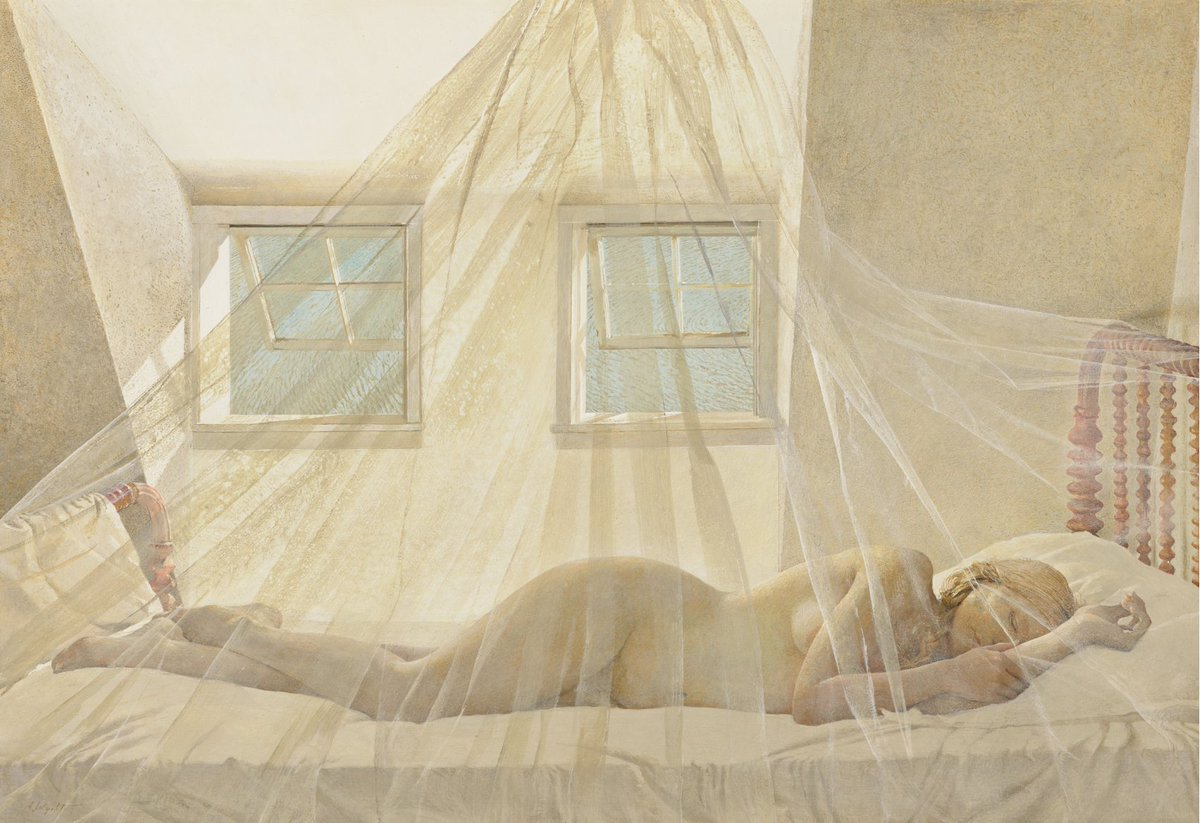
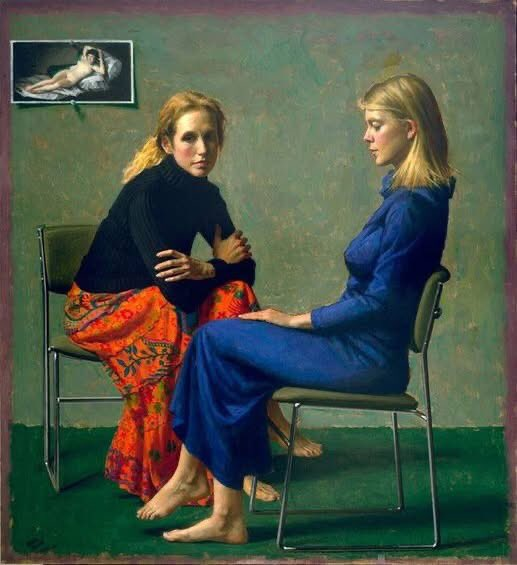
Andrew Wyeth, Day Dream, 1980
Hello and welcome to One Bright Book, the podcast where three friends real ALL the books, taking it one book at a time. My name is Dorian Stuber and I’m here as always with Rebecca Hussey and Frances Evangelista, this time to discuss Alice Munro’s short story collection Open Secrets, first published in 1994.
Before we go any further, I want to give an important content warning. Today’s episode will contain discussions of sexual violence, abuse, and rape, specially the sexual abuse of children.
Our podcast has always been focused closely on whatever book we’ve chosen to talk about. We bring biography and critical reception and historical context into the conversation, but usually only as secondary approaches to our encounter with the text.
Today, I suspect, will be different.
The outlines of Munro’s career are well-known. Born in 1931 in southwestern Ontario, near Lake Huron, the setting of so many of her stories, Munro went to university on a scholarship but left after two years to move to British Columbia with her husband, James Munro. The couple started a bookstore which is still in business. The couple had three children, but the marriage was difficult and they divorced in 1972. Four years later, Munro married a man named Gerald Fremlin, a retired geographer who had served in the Air Force in WWII and with whom she lived on a farm in rural Ontario. Munro had started writing already in university; as a young mother on the west coast she focused on short stories, claiming it was the only form she had time for. That may be true, but it’s also the case that from the start she was preoccupied by the possibilities of the form. How much time can be contained in something “short”? How many points of view can it offer? How many different ways can it be constructed? Beginning with Dance of the Happy Shades in 1968, Munro published 14 short story collections. As the years passed and the books accumulated, so too did her literary fame. The stories were published in places like The Paris Review, The Atlantic, and Harper’s, but above all in The New Yorker, where more than 60 first appeared.
She won many prizes, both in Canada and internationally, capped off by the Nobel Prize for Literature in 2013. In her last years, she suffered from dementia, a fate prefigured by her mother’s experience with Parkinson’s and the subject of one of her most famous stories, “The Bear Came Over the Mountain.” At her death in 2024 she had settled into a position as a writer both lauded and loved: a grandmotherly figure whose stories were psychologically sharp and brilliantly structured.
That status was shattered a few months after her death when Munro’s youngest daughter, Andrea Skinner, revealed that Gerald Fremlin, her stepfather, had sexually abused her starting in 1976, the year he married Munro: Skinner was 9 years old at the time. The abuse continued for several years. Skinner told Munro about it in 1992: after briefly separating from Fremlin, Munro returned to him, effectively choosing her husband over her child. In 2005, Fremlin pleaded guilty to sexual assault and received a suspended sentence. The rest of the family, as well as others in Munro’s close personal and professional circle, including her Canadian publisher, knew what had happened to Skinner but kept quiet. Nobody knew, but a lot of people knew. It was an open secret.
I wanted to discuss Munro on the podcast because, as a Canadian and a reader, she has been in my life for a long time. The revelations of her failure as a parent adds so much complexity to what was, for me, already a complicated relationship. I first encountered her in junior high when we read her famous story “Boys and Girls,” from her debut collection. It’s about a girl whose father raises foxes for their pelts and whose ability to help with that work is curtailed by expectations of what a girl should be or do once she reaches puberty. I remember a note in our textbook, something about how the girl is like the foxes, how their pens symbolize the narrator’s own imprisonment. That interpretation, though in retrospect pretty obvious, made a big impression on me. It was one of the first times I thought of a story as something made, the first inkling I had of the truth that each text teaches its readers how to read it.
Later I would veer away from Munro. The more famous she got, the more she became a Canadian writer loved around the world, the more I looked at her askance. That’s just my own pigheaded personality, but I did find her, on the occasions when I read one of her stories, such a chilly writer, a bit heartless really. She seemed to me to epitomize the emotional detachment, even stuntedness of the white Anglo Protestant settler Canadian class. (Even though, in stories like “The Wilderness Station” in the collection we’ll be talking about, she is also a critic of that mindset, the more powerful for being of that world.) In her Nobel address she talks about growing up among Scots-Irish immigrants and their descendants, a world in which it was considered poor form to have an emotional life and even worse to admit to any accomplishments. The title of her collection Who Do You Think You Are summarized that world.
In more recent years I would often teach some of Munro’s stories and came increasingly to admire their richness and strangeness. They are made to be re-read, in my opinion. Then Andrea Skinner told her story. For me, there is no way to separate this part of Munro’s life from her work. After all, the stories are so often about bad things—moral wrong, pain, hurt, betrayal—lurking in plain sight. I chose Open Secrets as the collection for us to talk about because that phrase seems to be the motto of her whole work. And I was genuinely shocked when I read the last story in the book. It’s called “Vandals,” and it’s about a man who abuses two young children and his partner, the woman who failed to care for them. It’s probably useless to speculate on a writer’s motivations, but I really wonder what Munro was thinking when she wrote it. Was she processing? Gloating? Apologizing? Was she not thinking at all? It’s past time for me to finish this introduction, so I’ll only say that despite what we know now and without excusing her in any way, I find myself captivated by the stories. I don’t know what that says about me or how I feel about that. I do think it’s important that we talk about them and about her, even at the risk of causing further hurt to Andrea Skinner and the legions of other child victims. For if we don’t—if we stop reading Alice Munro or if we separate art from artist—then we are back in the world of half-told truths. We are back in that dangerous world of open secrets.
In May I puttered along, running my runs, doing my little jobs, seeing a movie or two. And drinking my coffees. I haven’t said this yet, it’s so hopelessly dad-coded, but in January I bought a Mokka pot and I’m not sure any object has ever given me such joy. Once I’ve fussily brewed my very small, very strong coffee I make it a rule to sit somewhere without music or phone or book and drink it mindfully. Ridiculous, right??? Anyway, I also read these books.
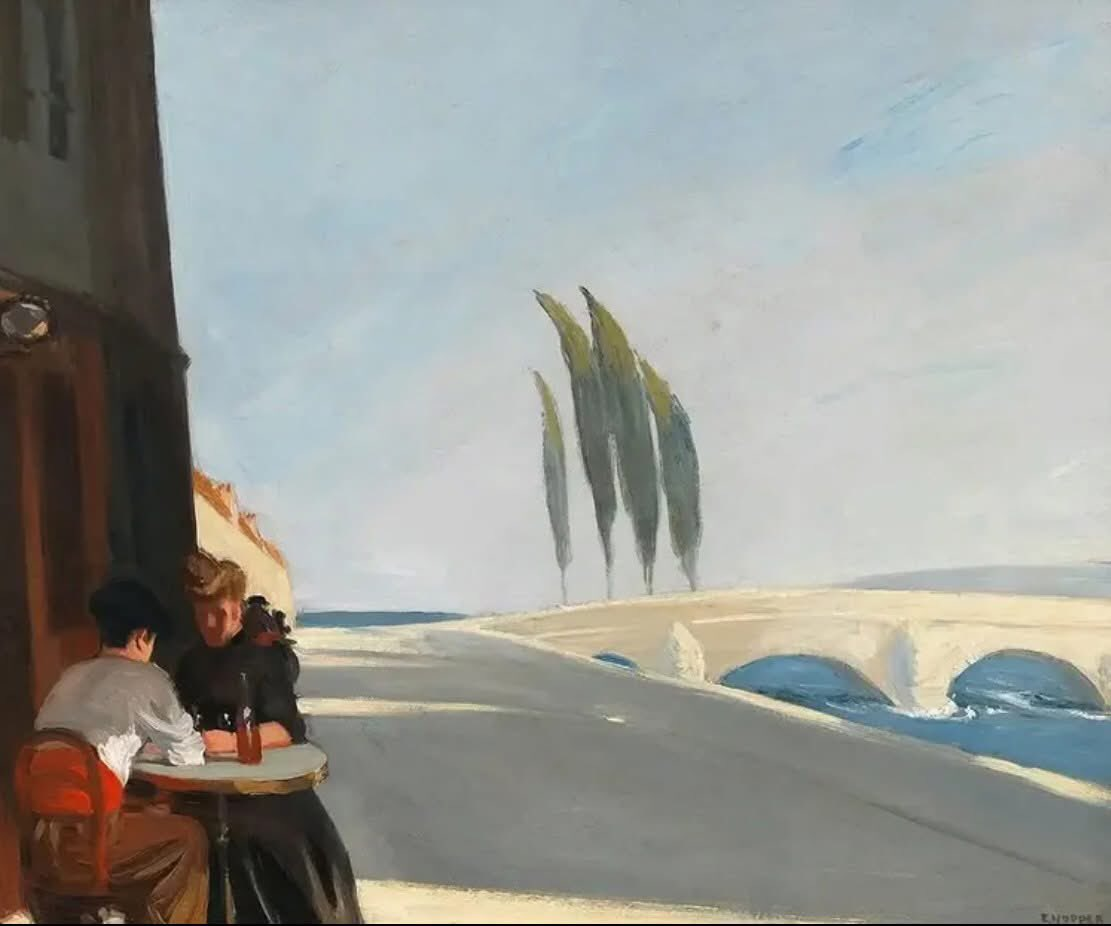
Edward Hopper, Le Bistro aka The Wine Shop, 1909
Artem Chapeye, The Weathering (2021) Trans. Daisy Gibbons (2026)
Written the year before Russia’s full-scale invasion, The Weathering references the occupation of the Donetsk, the gangsterism of the 1990s, and other events in recent Ukrainian history. But Chapeye’s engrossing novel mostly concerns an imagined future. A young couple escape their jobs in Kyiv for a well-earned holiday off-grid in the Carpathians. Weeks pass: first blissful, then ominous. Why haven’t they seen any locals? Why can’t they bring themselves to come off the mountain? And once they do, where the hell is everyone? In the seemingly abandoned capital, they are met by men with guns, guys from the neighborhood whose militia cosplaying soon turns deadly. As philosophical as it is action-packed, The Weathering asks what it means to live with violence: “How should you act when facing an armed man and still preserve your dignity? And the dignity of others? How?” Many of the novel’s pleasures stem from its being so Ukrainian, but those anguished questions pertain to us all.
James Baldwin, Giovanni’s Room (1956)
I read this with an eye to assigning it to my future 11th graders. Well, I abandoned that idea quickly. Its sentences—so gorgeous, so thorny—too hard. Its sexual politics too complex. Now that I’m almost finished Another Country (more on that in next month’s installment) and planning to get through as much of his work as I can this summer, I see that widespread self-loathing is a part of Baldwin’s work more generally. I don’t mean his own self-loathing; I don’t know enough to diagnose him that way. I mean something like cultural self-loathing, the ways minorities are hated such that they internalize that hatred.
Once I gave up hoping it would be suitable for my classroom, I sunk into the novel, amazed at how it could be so lovely and so ugly. (It’s about David, an American in 1950s Paris, who falls into a passionate affair with Giovanni, an Italian immigrant. Neither man is willing to admit he is gay in the way present day readers might demand. David and Giovanni are able to be together only in the confines of Giovanni’s shabby rented room, less bower than foxhole. There’s one glorious scene in which the pair, going home together for the first time, walk along the Seine through early-morning Paris. (Giovanni works nights at a bar owned by a miserable queen.) Otherwise, though, the book is a litany of hatred, shame, and disgust. Its depictions of homosexuality are so regressive. And yet the book is so good. What gives? Thank god Garth Greenwell pointed me to his essay about just this problem. As you would expect from Greenwell, it’s as gorgeously written as Baldwin’s novel. And smart and helpful about what one can take from works of art that don’t align with our sensibilities the way we might want them to.
Sally Carson, The Prisoner (1936)
Sequel to Crooked Cross, which Persephone has reissued in the UK to general acclaim, and which Vintage will publish in the US this fall. Carson spent some time in Bavaria in the early 30s—exactly how much and whether it was more than a holiday I don’t know for sure—and used that experience to write a trilogy about an ordinary German family in the first months of Nazi rule. The Prisoner is the second book in the series; I went into it with excitement and trepidation, the latter after Rohan’s post got me wondering if whether I liked Crooked Cross as something more than a historical document. You can read my comment if you’re so inclined.
In comparison to Crooked Cross, The Prisoner is heavy weather. The first book ended dramatically; the second picks up just weeks after those events. It would be wrong to say nothing happens: the family moves to Munich, for example, to literally distance itself from the tragedy of the first book, but, perhaps unsurprisingly, the strategy doesn’t work. But The Prisoner is more about emotional fallout than anything else. It’s an interior book, and Carson, not always the nimblest writer, relentlessly keeps her characters turning over their emotions. Sometimes I felt the influence of Lawrence, but without the latter’s regular ability to astonish and make language strange.
The best part of the book comes near the end when a subplot from the previous novel returns in surprising, eventful, and heartbreaking form. Here Carson dramatizes both the appeal and the horror of Nazism in a manner that feels fresh because it’s written from the moment, without hindsight to govern the presentation of events. There’s no ominous foreshadowing—Dachau exists, but Sobibor is as yet unimagined—and few of the clichés that structure our depictions of Nazi rule. I won’t say Carson is more accurate historically than a writer today would be. In some ways, she is more blinded, less aware of the scope of things. She has the freedom and helplessness of anyone writing about their own moment.
It would be wrong to say that I loved this book. And yet I powered through it in a long weekend, and I’ll be first in line when the third volume is reissued. I suspect that one will be more like the first.
Mahmud El Sayed, The Republic of Memory (2026)
Engrossing multigenerational starship novel from British Egyptian writer El Sayed, clearly a talent to watch. Halfway through its 400-year-long journey to a new world, the city-ship Safina sails on amid rising discontent from its citizens, even as the ship’s “ancestors”—scientists and military leaders from Earth frozen until they can guide the settlement of the new world—slumber on in one of the lower decks. A revolt thirty years into the voyage disabled the ship’s AI and replaced its autocratic government with a republic. Generations later, the promise of that revolution has stalled. Upward mobility is a thing of the past, the ship’s resources can barely satisfy the increased population, and the attempt to replace ethnic and religious differences with language has been foiled by a self-interested translator caste.
After a dangerous power outage, a long-awaited revolution (modelled in part on the Arab Spring) promises to change everything. But while the ship limped along on minimal power, the decision was made to awaken the ancestors. And they want to quell the uprising. This book has it all: terrific world-building, well-developed ensemble cast, and even an invented language. The only problem is that we’ll have to wait a year to find out what happens in the last part of this promised duology.
Tim Sullivan, The Dentist (2020)
A bad book I couldn’t stop reading.
The protagonist, DS Cross, is autistic: his neuroatypicality makes him both an excellent detective and a trying colleague. He spends a lot of time deciphering the equivocations, half-lies, and body language that comprise so much of daily life for neurotypical folks. The book doesn’t make fun of or fetishize Cross, but it also acknowledges that his condition can exasperate those who know him and bewilder those who don’t. It seems, in other words, even handed. I had assumed that Sullivan must be autistic himself, but turns out he’s not. And that changed my feelings about the book. I wouldn’t call it exploitative, but I also don’t understand why Sullivan felt emboldened to write from this perspective. Surely there are autistic writers who could tell a story like this themselves.
Before writing the Cross novels—apparently a big hit in the UK—Sullivan wrote and directed films and television. (Surely a series is in development.) The prose is accordingly serviceable and pacey. At least it’s not overwritten. The mystery was solid enough, and I wouldn’t be surprised if the plots get better further into the series. (Each installment is named after the profession of the victim.) The supporting characters are good, especially Cross’s father, a retired engineer who helped build the Concord. His willingness to take his son in stride is heartwarming, and I imagine Sullivan might do a lot with the character.
I dunno, I got the second book from the library. We’ll see if I read it.
Edith Wharton, Twilight Sleep (1927)
Read this with the group organized by Sean Breathes Books. (Six books into what has turned into a project to discuss all of her books, we now have a name, The Edith Wharthogs, and a spiffy logo, designed by James.) Regular readers will recall that I was underwhelmed by her memoir, A Backward Glance, our previous text, but our latest was a tremendous surprise. I hadn’t heard of it until Smith & Taylor included it in their first batch of reissues. In the afterword, Brendon Taylor rightly calls this a more compelling Gatsby. (I’m talking through my hat a bit, not having read Fitzgerald in over 30 years, but boy I sure will be familiar with his most famous novel soon: it’s a set text at my new job.) Wharton’s novel is uncannily attuned to our present moment: it features addiction, self-actualization, influencer culture, and the joyless pursuit of rest.
Pauline Manford, the character at the heart of this investigation of life in the previous century’s Twenties, has a lot on her plate, so much that her day is scheduled in fifteen-minute increments. There’s her philanthropic and charitable work. (No matter if the causes are at odds: she chairs both a league in support of birth control and a society for the furtherance of motherhood.) There’s her support of—some would say victimization at the hands of—a rotating series of gurus, healers, and self-proclaimed wise men who help her lose weight, worry less, and find inner fulfillment. And there’s her family: two husbands (current: accomplished lawyer; former: neurasthenic invalid) and two children (Jim, son by first marriage, doggedly pursuing a career in the law that he doesn’t much care for; Nona, daughter by the second, something of a younger, female Newland Archer, amused at the society in which she has been raised but more dedicated to its mores than she might like, having renounced her chance at happiness in allegiance to ideals she doesn’t believe in). The husbands and siblings all get along, especially now that their collective concern is focused on Jim’s wife, Lita, as ruthlessly devoted to pleasure and rejecting societal expectations as she is beautiful. Lita matter-of-factly wants to leave Jim (and poor Baby, never named and largely ignored) to be in the movies. And the movies want her. A producer (Jewish, grasping, natch), terrifically named Klawhammer, has his eye on her. How could Pauline and the family ever survive such shame? Can they keep Lita and Jim together? More troublingly, what designs does Arthur Manford have on his step-daughter-in-law? How many nervous breakdowns will feature before the end of the book?
A busy novel, as you can see. (A mere 230 pages in the Smith & Taylor edition.) And a tremendously entertaining and thoughtful one. The title comes from a much-touted new anesthetic given to mothers in the delivery room. But it refers more generally to the fugue state of modern life: those regular hits of excitement that are as necessary to our ability to make it through the day as they are enervating. For me, it’s as though Wharton had described, already a century ago, that helpless fugue state I fall into when I just can’t stop scrolling.
In case you can’t tell, I loved this book. It’s filled with Wharton’s terrific prose too. Let me end by sharing the opening:
Miss Bruss, the perfect secretary, received Nona Manford at the door of her mother’s boudoir (“the office,” Mrs. Manford’s children called it) with a gesture of the kindliest denial.
There’s a sentence doing some work! So much information yet so little action. Three characters are introduced (four, really, though we don’t yet know how many children Mrs. Manford has). Two qualifying clauses impede our syntactical progress even as they grant us a lot of information. Will Miss Bruss’s (the brusqueness hinted at in her name is forced on her by her employer) epithet prove to be accurate or ironic? Where does the description of the qualifying phrase come from? Is “the perfect secretary” an instance of omniscience or of free indirect discourse? Speaking of irony, do we hear grudging admiration along with the gentle dismissal of their mother’s work in that description of boudoir as office? What would “a gesture of kindliest denial” look like? However we picture it, we’ll encounter it a lot in the novel: resolve softened by good manners, but no less steely for that.
This is a beginning that has me raring to keep reading. Hope it entices you as well.
Garry Disher, Mischance Creek (2025)
I’ve written before about how much I enjoy Disher’sHirsch books, about a cop in rural far western Australia. By his own admission, Hirsch is as much social worker as policeman, and most of the time he’s checking in on people, some of whom go days, even weeks without seeing anyone outside their household.
This installment begins with him doing the rounds of his annual firearms audit. Everyone in this district has a gun or two. Are they locked up? Are the bullets stored separately? These questions are important, but they’re also a pretext for a more pressing one: How are you doing? (Are you going to use that gun on someone else or yourself?) The answers are mostly a resounding no. A brutal drought has pushed farmers and ranchers to the brink. Starving sheep are being shot en masse. Banks are repossessing farms. People are angrier with each other than ever, eager to vent grievances. These bad feelings are the kind of thing that led to the resounding failure of the Australian Indigenous Voices referendum, referenced more than once. Nominally, Mischance Creek centers on a cold case (the deaths of a husband and wife, found separately in the bush, where they liked to go rockhounding; seven years later their adult daughter thinks she has found new evidence.) But that’s not especially important. Disher succeeds, as usual, in keeping many balls in the air: some of these plot elements are satisfyingly minor. I appreciate his refusal to tie everything to the main case the way most crime writers do.
But really the book is about the question of how good liberals can respond to contemporary authoritarianism. The previous book in the series, concerning the aftermath of Covid restrictions, was the weakest so far because it seemed completely at a loss in this regard. Mischance Creek does better, not because it has a solution, but because it’s at least aware of the cluelessness of the institutions it’s centered on (not least the institution of the procedural). In the past, Disher skated past the chasm between cops and social workers (sometimes their roles overlap, but fundamentally their philosophies are totally different). Now he’s got a larger problem: a lot of characters—and people in the world this book represents—don’t believe in either of the roles, or the philosophies for that matter.
Mischance Creek taught me about the sovereign citizen movement, which I didn’t realize was a thing. (We’d have a lot more of that kind of thing in the US if “sovereign citizens” hadn’t coopted the government and other institutions of the state.) “Sovereign citizens” blithely deny that they are members of a larger politic (they aren’t Australians, say); they answer to no one but themselves. Hard to see how this doesn’t eventually lead to fascism. Hirsch and his colleagues in the district, along with the teachers and doctors who make up the social system of this vast, remote area, are, in Disher’s view, tragic figures, emblematic of a lost world—but, and this is what Disher doesn’t seem to get, that very world did nothing to stop its loss.
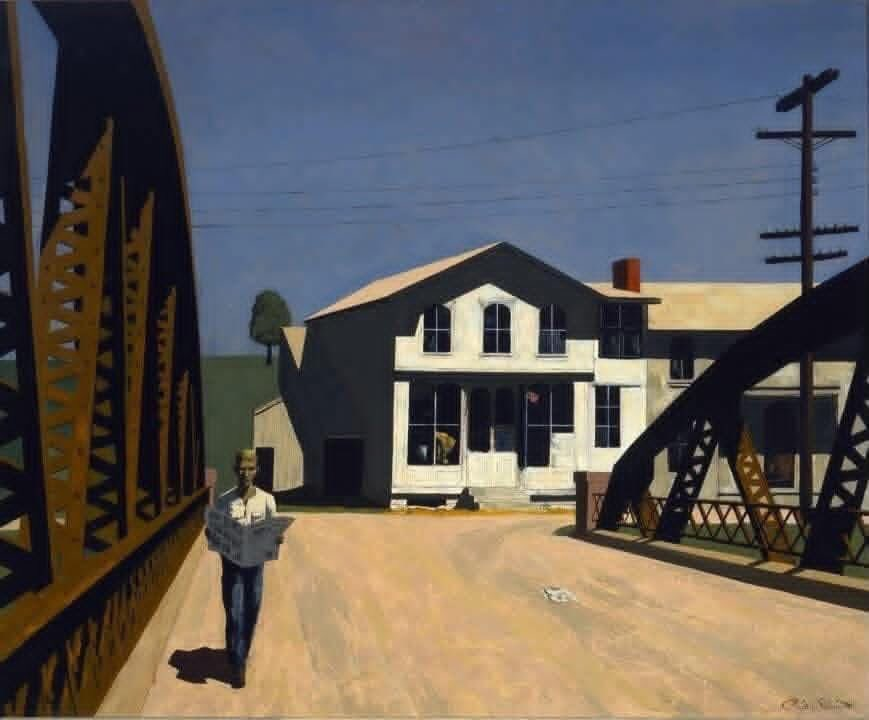
Philip Clarkson Elliott, Shelocta, PA, 1943
Good month! Aside from the Sullivan, I have no regrets. What about you? How was your reading month?
I really buried the lede in my description of March. Forgot to mention the most important thing. I got a job! I’ll be teaching 8th and 11th grade English at an independent school just ten minutes from home. (This seems to be St Louis-speak for what I always knew as “a private school.”) I’m excited for the opportunity—though also quite anxious, never having taught anyone younger than a college freshman.
I spent April beavering away at various jobs: consulting, editing, working my shifts at the bookstore, and, this month, working with two theater productions. I served as the dramaturgue for the New Jewish Theater’s excellent production of Joshua Harmon’s Prayer for the French Republic and participated in a panel on Upstream Theater’s delightful production, in Phillip Boehm’s translation and adaption, of Jura Soyfer’sEnd of the World Cabaret. Maybe you know as little about Soyfer as I did. Check out the link to his Wikipedia entry. A fascinating but all-too-short life. It was genuinely thrilling to watch a production from its very first table reading to final performance. Theater people are truly amazing! And St Louis seems to be a great theater town.
I was busy and didn’t read as much as usual, but here’s what I did make time for.
Rebecca chose this novel-in-linked-stories about seven women living in a tenement building in an unnamed American city, and I’m glad she did. It has all the things. Struggle, resilience, community as sustenance and as suffocation. Joy, despair, sex, death. The use of real estate and domestic spaces to tell the story of 20th Century American racial uplift. Tellingly, doesn’t feel dated. Would pair well with Ann Petry’s The Street, though Brewster is slightly less committed to realism. Reminded me too of Bryan Washington’s story “Alif,” which is also about a neighbourhood where everyone is all up in each other’s business. This book was around a fair bit in my 1990s bookselling days, but I’d never read it or indeed anything by Naylor. I’m glad I did, and I plan to read more.
Francis Spufford, Nonesuch (2026)
Iris Hawkins wants to be rich. Not for the comfort that money can buy, though that’s nice too. But because she wants “to be part of the way the world works… to be in the room where decisions are taken… to make things happen… to see the angles.” She wants men to have to see her and not be able to ignore her.
At first this is difficult because she’s a secretary at a financial firm in the City in 1939. But with the advent of the war she’s able to take on more responsibility. Men are deployed. Her boss has checked out from worry about his son, a POW of the Germans. He distractedly acquiesces to her plan to short the market, a plan that pays dividends. She even impresses John Maynard Keynes when she unknowingly meets him at a country house party.
It’s impressive that Iris can do all this, because the rest of her life is more than a little busy. A one-night stand with an engineer in the still-fledgling industry of television turns serious, not least when the man’s father, a charming, helpless old coot in thrall to the study of the occult, turns out to know what he’s talking about. Iris is soon being pursued by magical creatures and in a race with another young woman, the aristocratic golden child of the British fascist movement, to unlock angels that have been entombed in London sculptures. Oh yeah, she also needs to foil a plot to assassinate Churchill and replace him the pro-German Lord Halifax.
This is all as busy as it sounds, and frankly I can’t work out how Spufford wants to connect the secret systems of finance and the occult. Maybe this will become clearer before long. Turns out that Nonesuch is the first of the duology. On Bluesky, Spufford said the second book is due next summer. Better be because Nonesuch ends on a real cliffhanger!
Christoffer Carlsson, The Living and the Dead (2023) Trans. Rachel Wilson-Broyles (2025)
Crime novel set in the same region of western Sweden and featuring some of the same characters as Blaze Me a Sun, which I enjoyed a couple of years ago. Less interesting than its predecessor, unfortunately. Similar structure (a crime in the past, hitherto unsolved, leads to a new crime in the present), similar themes (young people become middle-aged people who find their lives haven’t had as much in store for them as they expected). All done just a little less compellingly. Diverting enough—the audio got me through a long drive—but nothing special.
Tana French, The Keeper (2026)
Wrote about this here. An ongoing conversation with Elle has me wondering if it’s more pro-vigilante than I had credited. I loved the book, though: what does this say about me?
Penelope Fitzgerald, Human Voices (1980)
The second selection for Leviathan’s Women of a Certain Age book club. Another rousing discussion of another terrific book. Hadn’t read it in more than ten years: happily, a joy to revisit. We considered the novel’s structure, its cast of characters, the difficulty of discerning a protagonist, the relation of these obliquities to the historical period in which it is set, namely, the period in 1940 from Dunkirk to the beginnings of the Blitz when the war, as far as Britain was concerned, was both all-consuming and distant. We thought about the novel as a portrait of an institution—someone mentioned Shirley Hazzard’s book about the UN as a comparison—in this case, the BBC, and the flattening of any distinction between the employees’ personal and professional lives. The higher-ups, in particular, basically live in Broadcast House, but eventually the building’s theater, previously used for orchestral recordings, is turned into a dormitory for all employees. Convenient and safe, but also frustrating in that the room’s excellent acoustics make every snore, sigh, or groan crisply audible. This is an example of Fitzgerald’s inimical tone, which veers suddenly from humor to heartbreak. The ever-present possibility of death turns monomania from a joke to a noble enterprise: I’m thinking of the example Dr. Vogel, a German émigré and expert in recorded sound, whose perfectionist tendencies see him record several hours’ worth of church doors squeaking, only a few seconds of which will feature in a planned “Sounds of Britain” program. We might find Vogel’s obsession annoying or even irresponsible in the face of larger dangers. But we are bound to feel differently when he is killed by a piece of flying drainpipe in the aftermath of a raid, as he is patiently explaining to an air raid warden on behalf of a stranger that English law allowed the man to enter his bombed-out building twice, once to get his mattress and once to take any other personal effects. Suddenly pedantry seems less persnickety and more the foundation of the rule of law.
Dozens of moments like this fill the pages of this terrific short book.
I didn’t plan to read two Blitz novels in such short order, and I don’t have anything smart to say about the differences. I can only note that when memory becomes history—as it has in the 45 years between the publication of these two novels—then literary modes other than realism seem reasonable in a way they might not have before.
Robert Jackson Bennett, City of Stairs (2014)
First novel in Bennett’s first fantasy trilogy, which I bought because it’s been reissued in a spiffy new edition. I’d have never looked twice at the old one. I’m shallow that way. Which would have been bad, since the premise is good. Bulikov (vaguely Russian or Eastern European) was once the continent of gods. Magic ruled the day. The place was wealthy and powerful. It colonized the rest of the world, all the places the gods did not favour. That was especially true of the island of Saypur, whose people suffered greatly at Bulikov’s hands. But then everything changed. New technology allowed little Saypur (vaguely Islamic or Mughal Indian) to kill and/or sequester the gods and now once-mighty Bulikov is an impoverished vassal state of the highly militarized Saypur. When a famous Saypuri academic, a specialist in the old gods, is found murdered in Bulikov’s former capital, a city whose geography has been rearranged by the technology that killed the gods (an event known as The Blink), a Saypuri diplomat is sent to investigate. It’s not long before she, along with her very cool sidekick, finds that those murdered gods might not be so dead.
City of Stairs is often great (premise, world-building, characterization) and sometimes not great (too long, slow start). But I got so into it that even before I finished I’d bought the other two. I moved on to the second book right away, but before long I got stuck. It has a bad case of “middle novel” syndrome. I’ll get back to it, though.
There is a thing about Bennett, whose Ana and Din books I so much enjoyed earlier this year, that I should mention because some of you might find it disqualifying. The guy has a mania for the solecism “hence why”: it’s appeared at least once in each of the three books I’ve read, and it’s like fingernails of the chalkboard. What are the editors even doing???
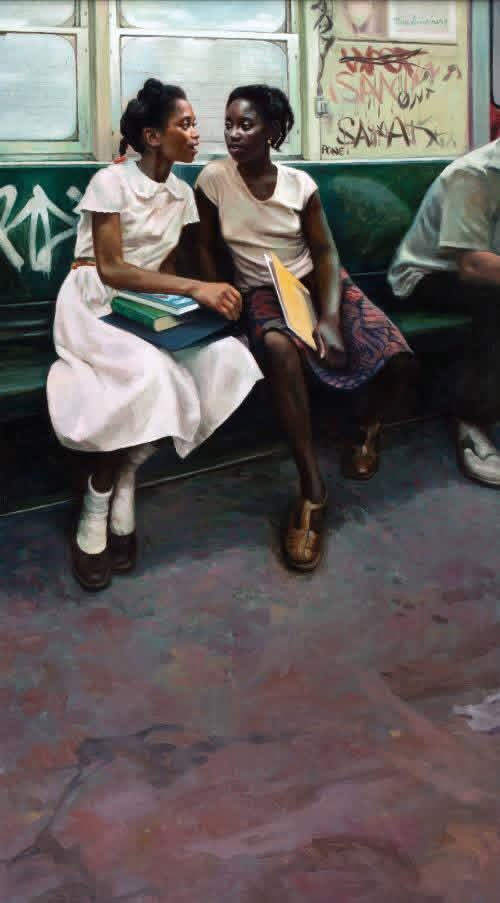
Daniel Greene, Naked Maja, 2009
Not much of a reading month, really. All that theater stuff kept me pretty busy. Fear not, May brought a better assortment.
Springtime all right. Sometimes too hot, but then suddenly too cold. The fruit trees did their best, but the New Climate was too much for them, and they weren’t as glorious as they might have been. A friend visited from Germany and we drank many cappuccinos. I experienced the St Louis church hall Lenten fish fry: a beautiful thing. I read these books.
I hadn’t read this since graduate school; I guess I’d say it’s my least favourite Woolf. (Keeping in mind I’ve yet to read The Years or Night and Day.) She clearly had a lot of fun with it, and good on her. Her idea of fun is not mine, is all. The jokes about how writers have been a pain across the centuries are well and good, and the pastiches of former literary styles impressive, but I just don’t care much for writing about writing. Still, as I said in our conversation, I was glad to have read it again. There are some marvelous moments—I especially loved the opening Elizabethan sequence: the impromptu fair on the frozen Thames is unforgettable—and it’s interesting to see Woolf’s fascination with the dialectic of continuity and discontinuity play out in another register from her most famous works.
Robin Hobb, Assassin’s Quest (1997)
Final book in a fantasy trilogy that probably felt more innovative at the time than now, but which absolutely holds up. (I read volumes 1 and 2 last fall, when I couldn’t be bothered to blog.) The books get progressively longer, especially this one, which is almost 900 pages of pretty small print. I gather their length has been held against them, and I guess this last book, especially, could have been shortened, but I was absorbed, especially because female characters become much more important in this last volume. I recommend these highly, especially to readers like me, who used to read a lot in the genre but moved away for a while, or to those curious to give the genre a try—the first book is only about 300 pages, so you aren’t making a huge initial commitment; plus the covers of the reissues won’t scare or embarrass the fantasy-averse.
As to what they’re about, I direct you to Elle’s unimprovable post. Her points about Hobb’s representation of disability and the long-term effects of physical and psychological abuse are especially good.
A couple of final thought for those who have already read these: Nighteyes is the best—imagine a whole novel centered on him! The idea of Old Blood is one I would have liked to see further developed. Maybe that happens in one of her other trilogies? And, finally, Molly and Burrich: I approve!
Thi Bui, The Best We Could Do (2017)
Bui trained herself to draw comics in order to create this graphic memoir, which took her twelve years to finish—and that’s not including the time it took her to compile the oral histories on which it’s based. The book traces her parents’ lives in Vietnam under French colonization, during the Vietnam War, and their departure, with their children, including Bui herself, who was three years old at the time, as “Boat People” on the way to an eventual new life in the US. The back-and-forth structure—Bui toggles between interviewing her parents in the present (a project given further poignancy by the birth of her own child) and depicting their past experiences—is taken from Maus, as she freely admits. The similarities between the books are uncanny, especially in their shared depiction of cross-generational trauma. Yet for whatever reason, The Best We Could Do has left little mark in my memory. I don’t regret reading it, but I thought Thien Pham’s Family Style, which covers similar territory, has a more powerful visual style.
Yosha Gunasekera, The Midnight Taxi (2026)
Novel about two South Asian women in NYC, one a taxi driver and the other a public defender, who band together when a fare turns up dead in the first woman’s cab. Fine premise, but weak writing and poor plotting make this thin gruel.
Octavia Butler, Parable of the Sower (1993)
I’m the last person to read this, which means you already know it’s great. And you’ve heard what others have rightly said about it: Butler predicted our present all too well. (The book is set mostly in 2027.) The collapse of public services, the shrinking of the United States into a set of semi-autonomous armed conclaves, the violence and despair that comes from extreme income inequality, the terrible release of powerful opiates, the climate change: it all hits. President Donner and his oligarchic-fascism is uncannily reminiscent of Trump and his coterie.
N. K. Jemisin must have been inspired when writing her Broken Earth trilogy by Butler’s creation of a condition she calls “hyper-empathy” or “sharing,” a double-edged experience that shapes the lives of some of the characters, including the protagonist. Parable of the Sower is a violent, desperate book, but not despairing. It ends with another quintessentially American phenomenon: the founding of a utopian community.
As soon as I finished, I started on Parable of the Talents, which I was also enjoying, but then I unaccountably stopped, because I’m like that.
Vivek Shanbhag, Sakina’s Kiss (2021) Trans. Srinath Perur (2023)
You know how every family has its catchphrases? Things like nonsense words (your kid’s adorable mispronunciations.) Or lines from a tv show (ours is “Bags must be properly folded!”—real ones know.) As he did in his brilliant debut, Ghachar Ghochar, Vivek Shanbhag puts this kind of language at the heart of his new book. The two examples in Sakina’s Kiss couldn’t be more different. One is cute: a father’s magical incantation to his child. The other is tragic: a misunderstood phrase with terrible consequences. But gradually they reveal themselves to be versions of the same thing. After all, they come from the mouth of the same character, the novel’s narrator, a middlingly successful professional in the tech hub of Bengaluru. This man, we learn, is a master at using language to conceal truth. And Shanbhag is even more adept at helping us to see things his narrator cannot. He crams as much incident—violence, rebellion, stolen inheritances—into his two hundred pages as a 19th century doorstopper. Don’t miss this one.
Kim Fay, Kate and Frida (2025)
Another from the “James recommends books to me” file. In the 1990s, two women become best friends when one, living the American in Paris gap year dream, writes to a bookstore back home requesting a copy of Martha Gelhorn’s The Face of War. The other suggests she might also like Penelope Lively’s Moon Tiger, and so begins an epistolary relationship filled with recommendations of books, music, and food. The pair form a mutual hype club, encouraging each other re: work and love lives. At first I found Fay’s writing too earnest and twee, even for me, and almost stopped reading. But I kept on because I remember those days fondly, and next thing you know I was up after midnight finishing the thing. Every time the book threatens to go wrong—one character finagles her way to Sarajevo during the siege with a woefully underprepared idea of becoming a stringer—it surprises by handling the moment more interestingly than you’d expect. Not an all-timer, but a charmer, especially for my fellow Gen Xers.
Gwendoline Riley, The Palm House (2026)
When I paged through the opening of the copy that NYRB kindly sent me, as I like to do, I soon found myself engrossed and before you know it I’d read pretty much the whole thing. (It’s a quick read.) I wouldn’t mind reading it again; I’ve a hunch it would repay that attention. I loved that this is an oblique, slightly peculiar novel that, happily, is about stuff, not least the London housing market, without ever aiming to report on “the state of the nation.”
It’s mostly about the narrator’s friendship with the editor of a highbrow publication for which she has freelanced in the past. The editor has been pushed out, replaced by a bro who talks big but knows nothing (his “philosophy” is to move fast and break things) and indeed does not last long in this new job. The former editor claims to be taking it in stride, but really he’s not. He and the narrator have drinks and meals and walk along the river. They never sleep with each other or fall in love or anything. It’s a real friendship. They are careful with each other. Close but not too close. Riley does this thing where she presents successive pieces of dialogue as separate when they are actually from the same character, and it has a pleasingly slippery effect. I dunno, it’s good.
Miklós Bánffy, They Were Divided [The Transylvanian Trilogy: Volume III] (1940) Trans. Patrick Thursfield and Katalin Bánffy-Jelen (2000)
Most of the time I’m so haunted by the enormity of everything I want to read that I race through books, often starting another one the minute I’ve finished. (I’m aware this is no way to live, thank you very much.) But once in a while I get so immersed in the world of a book that I’m sad rather than glad about the shrinking number of pages. Such was the case with the third volume of Bánffy’s trilogy.
Things become even more sour and unhappy in this final volume—and why not: the reader has known from the beginning that WWI is coming to destroy the marvelous, terrible Hapsburg Empire. But by the end of They Were Divided, even the characters know it, though of course they do not yet know what that will mean. (It ends as our hero, the would-be progressive landowner Bálint Abády, drives to the mustering point for his regiment.) The sadness within the book became tangled with my own feelings as a reader. I started most mornings over the past months reading my daily pages of Bánffy, and that will be a reading memory I cherish for years.
One last thought, neither here nor there: I don’t think I’ve read a novel from this time and place in which Jews feature so infrequently. Striking!
Irene N Watts and Kathryn E. Shoemaker, Good-bye Marianne (2008)
Illustrated adaptation of Watts’s middle grade novel of the same name. The latter is the first in a trilogy modeled on the author’s own experiences: loving childhood in Berlin in a middle-class German Jewish home; increasing persecution, most painfully being expelled from school in the days after Kristallnacht; a fortunate but difficult escape on a Kindertransport, leading to a new life in England and, later, Canada. I plan to track the novels down at some point, not least because I’m curious how they compare to Judith Kerr’s similar novels.
At the heart of the book is Marianne’s friendship, in the weeks between being forced out of school and leaving the country, with a non-Jewish boy who is visiting his aunt, the landlady of the building in which Marianne lives with her mother. (Her father has had to go into hiding.) Ernest is good fun. Like Marianne, he loves Erich Kästner’s Emil and the Detectives, and inventing games inspired by its scenarios. He’s always up for exploring the city. But he belongs to the Hitler Youth and is matter of fact about Jewish inferiority. He says something hateful—but also has the wherewithal to consider what that means. Shoemaker’s lovely pencil drawings soften the harshness of the story, without every downplaying anything, making this book suitable for readers from 5th grade on up.
Funny story: my wife spells her name the same way as the character, and when she saw this on the dining table she said, “Anything you want to tell me???”