Excited to once again present reading reviews from some of my favourite readers. Today’s installment, her third, is by Benita Berthman (@moodboardultra). Benita studies literature in Marburg, Germany, where she is a full-time book enthusiast, part-time smoker, and occasional existentialist.
Enikő Katalin Eged (b. 1992) – Black Cat White Cat
Anyone who knows me knows that there is nothing I love more than talking everyone’s ear off about books, reading, my favorite authors and how I never find enough time for literature because I’m too busy doomscrolling. [Ed. – Benita, we are the same person.] Nonetheless, I did read quite a lot last year and I’m so thankful to Dorian for once again letting my write about some of the stuff I’ve read in 2023. [Ed. – It’s my pleasure!]
First things first, the statistics (I just love diagrams and numbers, I’m sorry): I managed to read a whopping 160 books with 51,299 pages in total (which is, coincidentally, almost exactly the same as the year before lol). I’ve read three quarters of these books in German, the remaining quarter in English. Storygraph, the app I use for tracking, also tells me that an overwhelming number of books I’ve read are set in a reflective mood, whatever that means. [Ed. – It means, Holy shit that’s a lot of books, I need to sit and process that.]
Enough of the numbers, most of you find them boring, I’m sure, so I’ll bore you no longer and move on to the interesting stuff.
I’m currently writing my master’s thesis on Bob Dylan and the Nobel Prize and in preparation I’ve read quite a few texts that are considered ‘canonical’ among literary scholars and, believe it or not, I’ve actually discovered I like pushing through texts that seem enigmatic, impenetrable at first and require you to really work through and with them to get even the semblance of having an idea what the authors are talking about. Enduring difficult sections, slowly getting the gist, and being able to connect the dots just a little bit better—all of this is incredibly rewarding to me.
One of the most important texts of the 20th century, I believe, is Sigmund Freud’s Interpretation of Dreams (different translations available, I read it in the original German): I am interested in psychoanalysis not just as a therapeutic approach but also with regards to the interpretation of literature. Freud, by relying heavily on classical literature, synthesizes the conscious, the unconscious, dreams and their symbolism and both medical/psychoanalytical as well as literary aspects of dreams and how to work with them, dreaming, and interpretation. Even though this might not have been what Freud intended with his seminal work, I do feel like reading it can help you understand yourself and all that might be hidden in your mind and soul just a bit better. Just as an afterthought: of course there are certain thoughts and opinions given by Freud that have long been overruled by now, but I personally believe it is more fruitful to actually engage with these (especially patriarchal) thoughts and work with them, confront them with more accurate and more modern research than to flat out refuse to even read about them. [Ed. – Amen, sister. You’ll get no complaints from this card-carrying Freudian!]
I also started delving into Foucault’s work. The Archaeology of Knowledge (English translation by A.M. Sheridan Smith; I read the German version by Ulrich Köppen) was the first of his seminal works that I read last year. For me, it was the perfect starting point to get into Foucault’s way of thinking, to understand what he is referring to when he is speaking of a discourse or a discursive meaning and how and why knowledge and language are important when it comes to understanding concepts of power. And, not to forget, I simply like how Foucault writes – to me, it seems way more literary than, say, Pierre Bourdieu whom I have come to know as a very sterile writer (sorry, Pierre!). I’m looking forward to exploring more of his work in 2024. [Ed. – Just wait for The History of Sexuality! I also agree re: Foucault’s style.]
As a Herta Müller stan I need to feature one of her books in my review, that much is for sure, and how lucky was I that I got to read a new essay collection of hers in the summer! Eine Fliege kam durch einen halben Wald [Ed. – A Fly Came Through Half a Forest?] has not yet been translated into English, unfortunately, but a number of Müller’s essays have been published by Granta under the title Cristina and Her Double, translated by Geoffrey Mulligan, and I highly suggest you check them out if you’re interested in getting a deeper understanding of Müller’s works. She writes mainly about the traumatic experiences of having grown up in communist Romania and being oppressed by the Government and the Secret Service, all in a highly metaphorical and touching poetic language. Sometimes her novels are a bit enigmatic for those who, thankfully, haven’t had her experiences, but her essays offer a more straightforward glimpse into her life, her way of thinking, and how she understands her own writing and literature. I do hope these essays will be translated into English as well, also because they highlight Müller’s commitment to the planned Museum of Exile in Berlin (and, on a personal note, I get to give a presentation on said commitment at a conference in London in April, woohoo).
I share my aforementioned interest in psychoanalysis with Siri Hustvedt whose book The Shaking Woman or A History of My Nerves investigates a seizure the author experiences at a memorial service for her father. Essentially, she can’t stop shaking; her seizures become a more or less recurring phenomenon. She starts looking into reasons why and how she loses control and fearlessly questions both her own psyche as well as the status quo of psychoanalytical and neurological research. What made the book so very gripping for me was that Hustvedt is relentlessly honest with herself, not afraid to look into the abyss that a human being can be, honest and precise in her writing, sharp-witted with every sentence. I’m glad there are still quite a few of her books to explore. [Ed. – I liked her debut, The Blindfoldway back in the day.]
Last but not least, a few honorable mentions:
Asako Yuzuki – Butter (German translation by Ursula Gräfe, no English translation yet afaik) [Ed. – Insert that eye emoji thing I’m still not sure I’m using right.]
Taylor Jenkins Reid – The Seven Husbands of Evelyn Hugo (a true page turner if there ever was one, the TikTok kids were right for once) [Ed. — They’re always right]
Ellie Eaton – The Divines (teenagers scare me) [Ed. – So scary]
Yasmina Reza – Serge (German translation by Frank Heibert and Hinrich Schmidt-Henkel, apparently, there’s no English translation yet, which seems weird to me, considering Reza’s critical acclaim)
Dorothy L. Sayers – Gaudy Night (love me a good campus novel)
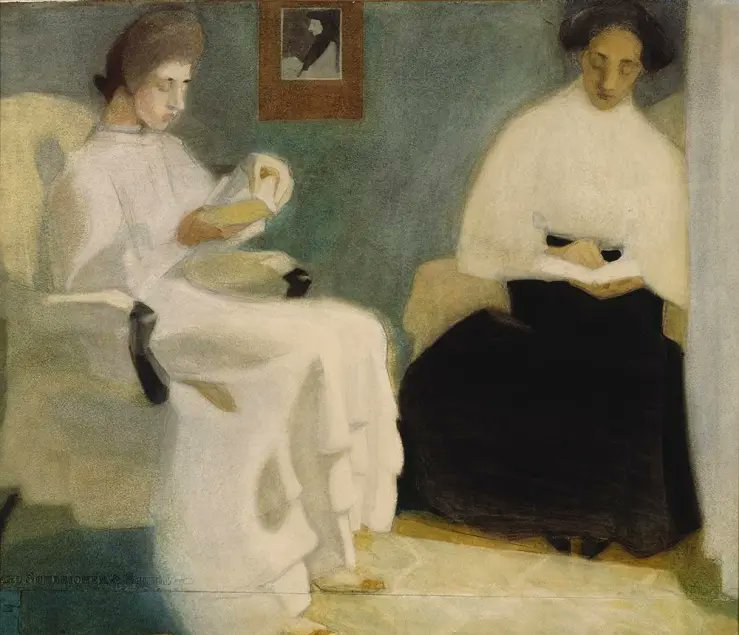
Helene Schjerfbeck, Lukevat tytöt (Reading Girls), 1907
I could probably name at least twenty more books, but I don’t want to be responsible if y’all break your book buying ban or you never finish your TBR stacks. [Ed. – You clearly do not understand the demographic of this blog’s readership, B…] My reading year 2024 has been off to a good start already and I am excited to tell you about it in a year! [Ed. – Imma hold you to it! Thanks, Benita!]
Excited to once again present reading reviews from some of my favourite readers. Today’s installment, his fifth, is bymy longtime friendNat Leach. Nat is a nineteenth-century scholar turned college administrator who has spent the last 6 years reading the books on his shelves in alphabetical order. He has recently doubled his social media presence by becoming mostly inactive on not one but two platforms, posting occasionally as @gnatleech on Twitter and @gnatleech.bsky.social on Blue Sky.
Berthe Morrisot, Hide and Seek, 1873
For reasons not worth going into, 2023 was actually a pretty rotten reading year for me. I read sporadically, finished only 20 books, and only progressed through one letter in my alphabetical reading project, finishing K, and making a brief start on L (so, after 6 years, I’m not even halfway through the alphabet; my 10-year plan, which was originally a 5-year plan, is looking like it will become a 15-year plan). [Ed. – Very Stalinist of you, Nat.] I wasn’t even able to write entries for each book as I went along, as I’ve done in the past, and was considering foregoing my annual post, but Dorian threatened to sue for breach of contract, so here we are. [Ed. – Look, a deal’s a deal. You want the glory, you gotta write the post.]
One meaningful reflection I was able to draw from my year’s reading is a better understanding of why I enjoy reading the way that I do, progressing alphabetically through my shelves rather than making conscious decisions about where my reading should take me. Thomas de Quincey, in a wonderful essay on “Sortilege and Astrology,” explains that he believes in astrology, but not in astrologers; there is indeed a pattern connecting all events in the world, but anyone who claims to know it is a charlatan. And yet, practices such as sortilege (the opening of a book at random and putting one’s finger on a passage as a means of divining the future) entail putting ourselves in the hands of this unknowable force of fate. [Ed. – Ah, finally I have a name for what my students do when I throw out a question in class.] My reading practice is then a kind of sortilege in which I trust that fate will put in my hands the right book at the right time. And very often, as I discovered this year, I’m able to trace out patterns and connections that I may not have been exposed to had I more rigorously organized my reading.
I often found myself reading two books at the same time—books that offered unexpected congruences, and paths leading from one to the other. And thus, since I did not manage to write entries for individual books this year, I present my reading by category, which often means: by categories I would not always have chosen to adopt in advance, but discovered while reading.
Books Written in 1989 that Challenge Canonical Western Conventions of Storytelling:Thomas King – Medicine River and Maxine Hong Kingston – Tripmaster Monkey
A super-specific first category, but these are two very different books. For many years, my office was just around the corner from a poster with a quotation from Thomas King: “the truth about stories is that that’s all we are.” The narrative structure of Medicine River seems to be an illustration of that axiom. Each chapter cuts (in a way that feels very cinematic) between an action in the narrative present and one in the past. We thus gradually learn how the past of the protagonist, Will, shapes the person he’s become in the present. The book also suggests how this is true at a deeper cultural level, referring to significant events in Indigenous history such as the battle of Little Bighorn and the occupation of Wounded Knee, but for the most part the focus is personal and the tone is lightly comic, but also somewhat melancholic.
Kingston’s novel, on the other hand, is much more explicitly disruptive of literary expectations in its use of Chinese legends and stories to revise American literary and cultural norms. The novel’s protagonist is a Chinese-American hippie whose hybrid status is reflected in his name, Wittman Ah Sing (geddit?) and whose life in 1960s San Francisco is inflected with wild imaginings that superimpose figures of Chinese legend onto the American present, culminating with the performance of an extravagant play that ends with a chaotic collapse of the distinction between actor and audience. [Ed. — !] Like King’s novel, we see how stories create, and do not simply reflect, identities.
Kingston’s book segued nicely into the next book I read, Rudyard Kipling’s Kim. At one point, Kingston includes an extensive quotation from Kipling’s narrative of his visit to the United States. In that book, Kipling becomes a spokesperson for a racist past whose perspective persists in the present, a tendency that can certainly be seen in Kim, the story of a boy who gets caught up in the political intrigue of maintaining English power in the Indian sub-continent. It still works as an adventure story, though Kipling’s colonial perspective on India is consistent with the account of the Chinese inhabitants of San Francisco that Kingston critiques.
Holocaust Memoirs and Diaries: Gerda Weissman Klein – All But My Life, Victor Klemperer – I Will Bear Witness 1942-1945, Ruth Kluger – Still Alive
These were sitting next to each other on my alphabetically ordered shelves. I have much less experience with Holocaust texts than Dorian, so I will not pretend to any expertise here, but in the small teaching experience I have had, my approach has been to encourage students to notice differences—the atrocities of the Nazis took many forms, and were experienced differently based on a whole range of factors including location, age, gender et cet.—but also to notice significant similarities and patterns. [Ed. – Nat is too modest: I still use a terrific assignment he designed on the topic of Holocaust diarists.] Each of these texts describes some distinctive aspect of Nazi terror: Klein was part of one of the infamous “death marches,” which she describes more thoroughly than any account I had previously read [Ed. – absolutely agree], Klemperer describes the everyday psychological tortures endured by Jews living in Germany, as well as the horrors of the fire-bombing of Dresden, while Kluger’s account spans a range of locations and forms of violence from Vienna to Theresienstadt to Auschwitz. Looking for patterns, it is evident that each also benefits from a number of timely pieces of good fortune that contribute to their survival: for example, Klein was able to live through most of the war in the relatively protected confines of a weaving factory, Klemperer avoided deportation because his wife was Aryan, and the bombing of Dresden in fact provided him with an opportunity to remove the yellow star from his clothing and escape from the city, and Kluger benefited from timely advice to lie about her age at Auschwitz, and a well-timed decision to escape from a death march. A somewhat more curious parallel is that both Klemperer and Kluger fled to Bavaria, and both would have been in fairly close proximity when the war ended. [Ed. – Good point! A function of how the regime decided to compress this remaining pool of slave labour into a central, contiguous section of the Reich: the Sudetenland, x, y, and Bavaria.] In short, three very different books, with some similar lessons, including an awareness of the very narrow line between survival and destruction.
Classic postmodern novels from when it was still OK to use the word “postmodern”: Robert Kroetsch – The Words of My Roaring, Milan Kundera – The Unbearable Lightness of Being
Yeah, I know it’s cool to dump on the word “postmodern” in our enlightened 21st century, but I still find it a useful way to speak about texts that reflect on, and engage critically with, their own status as text. Both books use postmodern strategies to explore the construction of individual identity and that of a national past. Kroetsch’s book experiments with the genre of the folk tale, and is narrated by Johnny Backstrom, a political candidate in Alberta during the Depression who promises the voters—all farmers struggling with drought conditions—that it will rain. Kundera’s novel reflects more philosophically on the nature of chance and coincidence (coincidentally all the stuff I wrote about in my introduction) against the backdrop of Czechoslovakia in the Communist era. As with King and Kingston, these are books that think about how stories create identities.
Books set in the 1970’s (but written later): Hanif Kureishi- The Buddha of Suburbia and Rachel Kushner – The Flamethrowers
I was reading these at the same time, and all the ‘70s cultural references kept getting me confused as to which one I was reading. But the easy way to tell the difference was that one of these books harnesses that cultural anxiety/nostalgia in an interesting way, and the other… not so much. Kureishi’s book is great, exploring his familiar territory of cosmopolitan London and the racial and political tensions of the period. It moves deliberately from the idealism of the hippies to the backlash of punk, and ends with the election of “the new Prime Minister,” unnamed but obviously Thatcher, as represented in the striking images at the conclusion of the BBC miniseries. Things would never be the same again…
As for The Flamethrowers, if I were being charitable, I would say that the book wasn’t for me, as I simply didn’t find the subject matter interesting. If I were being uncharitable, I would say that the book cobbles together a whole bunch of supposedly “cool” images and events of the ‘70s just because they are cool, not because they serve any narrative logic. And the author’s Afterword kind of confirms that hypothesis in describing her process of starting with striking images.
Books set against the backdrop of 17th/18th century nationalist revolutions: Lady Caroline Lamb – Glenarvon and Giuseppe di Lampedusa – The Leopard
Again, a category that features one very good book, and one very bad book. Lamb’s novel was really written only as an attempt to avenge herself on Lord Byron, with whom she had a scandalous affair before he unceremoniously dumped her. The structure of the novel is bizarre, as the description of the affair between Glenarvon (Byron) and Calantha (Lamb) is sandwiched between a Gothic narrative that seems to make very little sense (the explanation provided at the end doesn’t seem to match with the beginning, but I have no desire to try to figure it all out). And, oh yeah, Glenarvon is made into an Irish patriot leader in the 1798 rebellion. For some reason. [Ed. – Very moody, the Irish. Just like Byron.]
The Leopard, on the other hand, is a fantastic book, often hailed as one of the great historical novels of the 20th century. What makes it great, I would argue, is that it represents a moment of critical historical change from a multivalent perspective that shows just how complex change is. Don Fabrizio is essentially the last in a long line of Sicilian nobility. His time is coming to an end, he knows that it is coming to an end, and he even recognizes that in some ways it is right that it is coming to an end. But we also see that good things are being lost along with the bad, and that a different form of badness is ascending. In short, Lampedusa shows historical change in all its ambivalence, as well as the conflicting emotions that it gives rise to. [Ed. – I gotta read this again: been far too long.]
Books read for Women in Translation month: Svenja Leiber- The Last Country and Clarice Lispector – Agua Viva
Well, in my case it was Women in Translation two and a half months, but that’s OK. I was hoping that the Leiber book would be the one to break me out of my slump of disliking 21st century novels, but it was not to be. It hooked me at first, but this is a book with an epic scope (the life of a musician through the vicissitudes of 20th century Germany) but an episodic structure, which I grew to find infuriating more than anything. The prose also felt very abstract—there were many moments when I honestly couldn’t tell whether a sentence was meant to be literal or metaphorical—but I’m not sure if this was a translation effect or inherent in the original. As for the Lispector, it was my first experience with her, and seemed to me an interesting cross between literary and theoretical prose; she reminded me of nobody more than Maurice Blanchot. Which, if you know me, is a compliment. [Ed. – He’s understating things. That’s like his highest compliment. Well, maybe if he’d said it reminded him of Levinas.]
Books read with the #NYRBWomen23 Group: Eleanor Perenyi – More Was Lost, Elizabeth Taylor – A View of the Harbour
I wish I’d had more time to participate in this wonderful series choreographed by @joiedevivre9 but these were the two that were on my shelves already (and hey, I’m going to get to “P” and “T” eventually, right?). Two very different books, Perenyi’s a non-fictional account of her life and marriage to a Hungarian nobleman before and during World War II, and Taylor’s an account of lives of quiet desperation in an English seaside town. Both excellent. [Ed. – So excellent]
A few classics: Honoré de Balzac – Le Père Goriot, Heinrich von Kleist – The Prince of Homburg, D. H. Lawrence – Sons and Lovers
Kleist’s play (like much of his work) is ahead of his time, a proto-Freudian reflection on dreams, reality, desire and death. This was a re-read for me, and confirmed its greatness.
OK, I haven’t actually finished the Lawrence yet (2 chapters left), but I figured mentioning it would score me points with Dorian. [Ed. – It does. You now have 7,967.] Lawrence’s prose is utterly compelling, and even though I find that most of the characters fall into the literary-critical category of “big idiots,” I am absolutely glued to the book. [Ed. – Ha! Accurate!] I’m also enamored of the fact that the book is set in the area of Derbyshire/Nottinghamshire that my grandparents used to live in, and I recognize many of the places mentioned from visits in my youth. When the characters go to Alfreton or Crich Tower, I internally cheer as if a rock band has just casually mentioned how great it is to be in <insert your city here>.
Saving the best for last, I started the Balzac shortly after joining Twitter some 6 years ago, and read it in French, which made it slow going for me. Appropriate then, that I finally finished it in 2023, the year of Twitter’s demise (or whatever you want to call the transformation it has undergone). In any case, this is such a wonderful book about the perils and temptations of society and money, and the challenges of maintaining a moral compass in the face of them. Apparently, I now have a whole lot of Balzac that I’m going to need to read. [Ed. – Hell yeah lfg!!!!!]
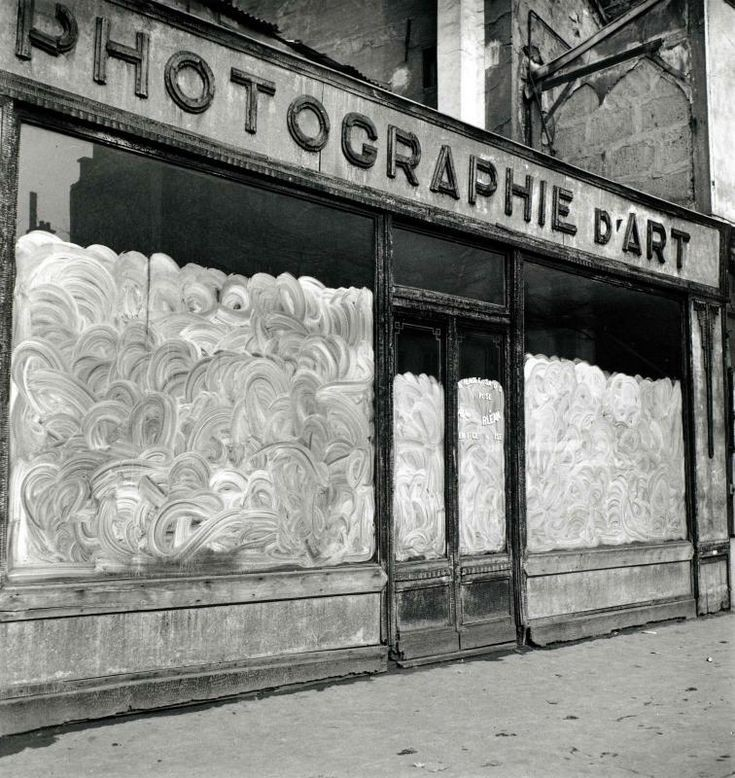
Felix Nussbaum, Shore at Rapallo, 1934
That’s about it. Will 2024 be a better year? Who knows how far I’ll get through the L shelf, and who knows how long it’ll take to get through that monstrously large stack of M’s (now is the time that joining those recent group reads of The Balkan Trilogy, The Levant Trilogy, Moby Dick, and The Man Without Qualities is really going to pay off!). But with Nella Larsen, Margaret Laurence and Ursula Le Guin among the next authors on my list, I am guaranteed some treats in the coming year. [Ed. – You sure are. Thanks as always, Nat.]
Excited to once again present reading reviews from some of my favourite readers. Today’s installment, her fourth, is by Hope Coulter, (@hopester99), whom I’m lucky to call a colleague. A fiction writer and poet, Hope directs the Hendrix-Murphy Foundation at Hendrix College.
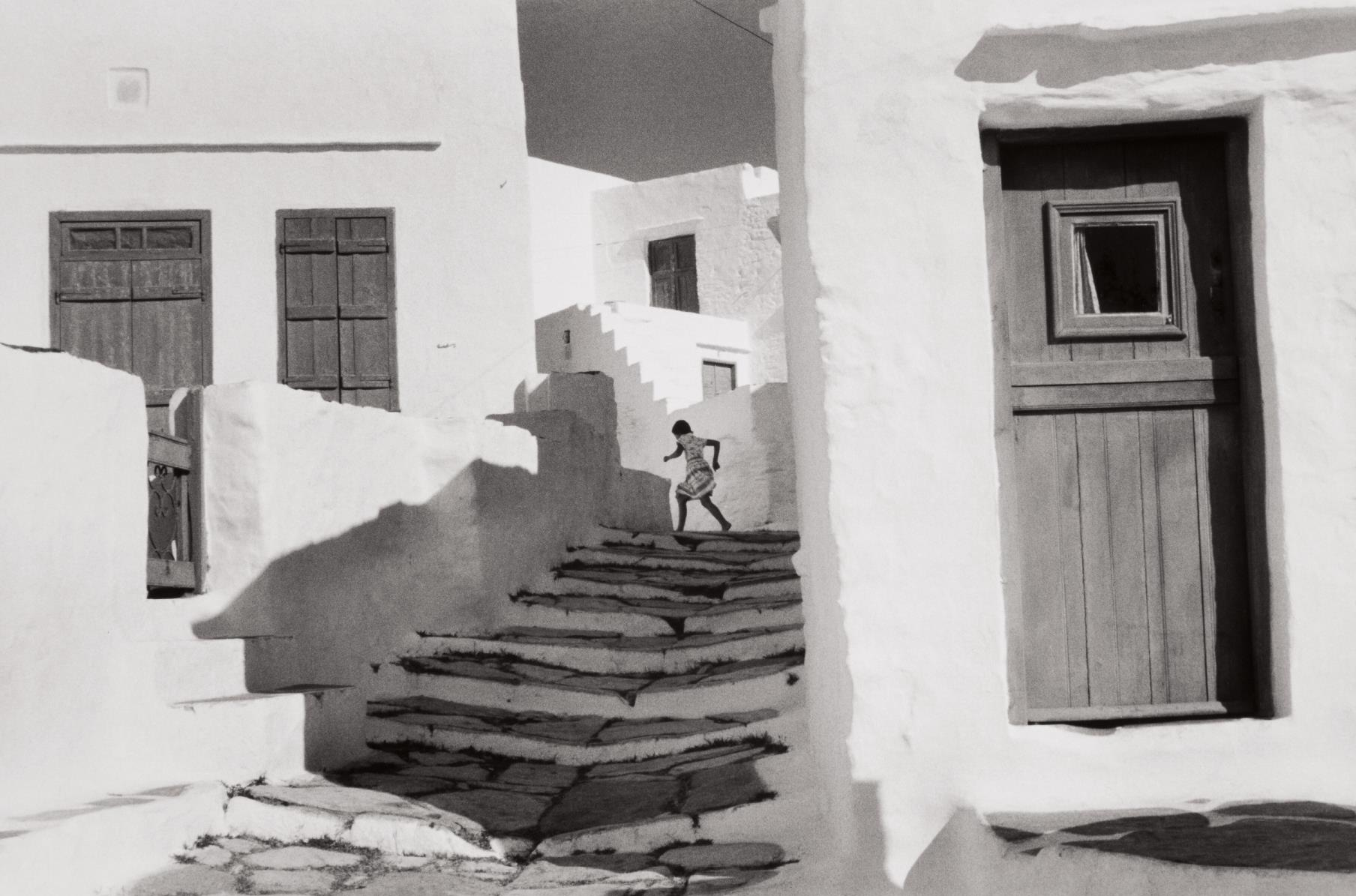
Eveelyn Hofer, Girl with Bicycle, Dublin, 1966
2023 may have been my Year of the Binge. A quarter of the books I read were by a single author, Michael Connelly, as I continued a 2022 obsession and chowed through the rest of his Harry Bosch and Lincoln Lawyer series. Now I’m left with the dregs of the feast and plenty of questions. Has Bosch retired for good? Is cancer going to polish him off? And how am I going to get by without a steady intake of seedy murder scenes, sandwich shop tips, and Bosch’s saturnine musings floating over the lights of L.A. from his cantilevered deck? Sigh. No regrets for this gluttonous spree; I only wish I could find another such homicide cop to devour.
Speaking of, Robert Galbraith’s majorly enjoyable detective novels continued strong for me last year. I read The Ink-Black Heart via audiobook, parceling it to myself morsel by morsel so as not to rip through it too fast. Much of the novel unfolds through tweets, which are hard to follow either by ear or on the page, so that one wasn’t my favorite, but the series is overall terrific. If Strike and Robin settle into domestic tranquility and draw the curtain of privacy over their agency door (please no spoilers; I’m still finishing up Book Seven), I’ll be in a bad way indeed. [Ed. – I loved the first few of these books, but I must confess I had to give up on them, the author’s politics having so soured me…]
I went on a lesser bender with John Boyne, starting with The Heart’s Invisible Furies, which I happened to read while traveling in Dublin and southwest Ireland—moving through some of the very settings of the novel in a pleasurable kind of Binx Bolling-esque rotation. That sent me to a handful of other Boyne books. All the Broken Places, The House of Special Purpose, and The Absolutist were highlights, though none of them surpassed the dark, funny, moving experience of Furies.
Completing previous years’ jags, I knew I had to get hold of Paulette Jiles’s latest, Chenneville, reviewed here by Dorian late last year. All Jiles’s books have won me over. This one wrapped up too fast for my taste, but like her other works, it flares a light onto regional history with convincing detail and taut storytelling. [Ed. – Agree, especially re: the ending.]
Eh, maybe here my conceit ends. Although I regularly teach Zadie Smith’s “The Embassy of Cambodia” and have read several of her novels, I can’t really call that a tear. Even so, I was intrigued to hear that Smith had turned to historical fiction and couldn’t wait to check out The Fraud, which is based on a 19th-century trial, little known now but sensational in its time. The book gripped me in unexpected ways. Every character was so believable, so not-a-type, so idiosyncratically shaped by their history and personality—supremely so in the case of the main character, Eliza Touchet. Mrs Touchet’s epiphanies in the course of the novel involve -isms of race, class, and sex that quietly echo our own era. At the same time her keen intelligence, her self-understanding, her fierceness and restraint, and her willingness to examine the tangles within her own heart are quintessentially Victorian.
As I read I found myself marking passages the way I do in my old copy of Middlemarch, quotes with a similar sage quality. (Even though Dickens and Thackeray feature as characters in the book, the sensibility that saturates it is really Eliot’s.) Here Eliza considers her long, complicated relationship with her cousin: “Theirs was a fellowship in time, and this, in the view of Mrs Touchet, was among the closest relations possible in this fallen world. Bookended by two infinities of nothing, she and William had shared almost identical expanses of being. They had known each other such a long time. She still saw his young face. He still saw hers, thank God.” And here she ponders how women often can’t see their own beauty for what it is at the time, not appreciating their appearance until looking back on a younger stage after a lapse of years: “But it is the perverse business of mirrors never to inform women of their beauty in the present moment, preferring instead to operate on a system of cruel delay.” Introspective moments like these, combined with the unspooling action of the trial plot, place this book at the top of the literary heap for my year’s reading.
Other newish novels that I loved last year were Donal Ryan’s The Queen of Dirt Island—a multigenerational saga of tough Irish women, inspired by the kitchen storytelling of his mother and grandmother—and Gabrielle Zevin’s Tomorrow, and Tomorrow, and Tomorrow, about a love triangle that arises and devolves in unpredictable ways. I also enjoyed Jeanine Cummins’s American Dirt. I had steered clear after hearing critics call it appropriative, but when a friend told me it held up well for her I gave it a try. I found the story compelling and plausible. Cummins addresses the criticism directly in her afterword, and I’m persuaded by her account of the writing and her authentic connection to the material.
I also read, and loved, Viet Tranh Nguyen’s short story collection The Refugees, tales of Vietnamese migrants resettled in southern California: this is art on a level with Lahiri’s Interpreter of Maladies and Unaccustomed Earth. And I returned to some old favorites that thankfully not only proved to hold up over time but blew me away all over again: Gabriel García Marquez’s Love in the Time of Cholera; Willa Cather’s O Pioneers and A Lost Lady; Evan S. Connell’s Mrs. Bridge (which Donal Ryan mentioned as inspiration for the super-short chapters in The Queen of Dirt Island), and Robert Crichton’s The Secret of Santa Vittoria.
Then the nonfiction. Oh, the nonfiction. Fiction is great when it’s great, but it disappoints so often and in so many different ways—by trying too hard, being too earnest, too arch or too tough-guy, or showing something nobody would say or do (on the human level I mean, not that it’s surreal or fantastic), or just plain old getting on my nerves. For some reason nonfiction is less prey to these faults. More and more I find myself turning to nonfiction for that “ah” of relief when I can settle into a writer’s style and voice and relax into the story at hand, losing the awareness that I’m reading. Last year I took in some wonderful memoirs. There was Javier Zamora’s Solito, about his experiences as a nine-year-old traveling solo from El Salvador to the United States (it’s like the nonfiction version of American Dirt). There was Monica Potts’s The Forgotten Girls: A Memoir of Friendship and Lost Promise in Rural America, which looks at the deterioration of American small towns based on her growing-up in Clinton, Arkansas, not many miles from where I teach. [Ed. – Definitely on my list. Heard her read at the Lit Fest last year and I still remember the opening scene.] Tracing the divergent life stories of herself, her sister, and her close friend, Potts narrates a tale of narrowing prospects for many young women in this climate. There was Jane Ferguson’s No Ordinary Assignment, chronicling her life as a reporter in the war zones of the Middle East (no forgotten girl she, determined as she was to get out of Dodge after an emotionally deprived childhood in northern Ireland).
I’m chagrined that I had never read the slender Narrative of the Life of Frederick Douglass, an American Slave until this year. As many have said, it’s profound: unforgettable not only for its first-person testimony to the horrors of the slave system in its heyday but also the candor, economy, and precision of the writing. Acquiring even baseline literacy was a miracle in that context—and an interesting story within the story—but Douglass’s literary prowess vaults so far beyond that initial limit, and is so supremely suited to relaying his experiences, that it’s humbling to take in his words.
A mid-year bookshelf cleanout led me to another, far different memoir that I’d somehow missed before, J.R. Moehringer’s The Tender Bar, about the New Jersey barflies who were his surrogate family growing up (and including one of the funniest sexual initiation scenes I’ve ever read). My enjoyment of that book sent me back to current times and a brand-new book that Moehringer ghost-wrote: Prince Harry’s memoir Spare. Come for the royals’ dirty laundry; stay for the Shakespeare allusions that, alas, are probably attributable to Moehringer rather than Harry.
In the realm of general nonfiction, meaning not memoir, there were three standouts this year, two by 30-something Irish writers whom I heard in person at the West Cork Literary Festival last summer (thank you, Hendrix College and the Hendrix-Murphy Foundation). In My Fourth Time, We Drowned: Seeking Refuge on the World’s Deadliest Migration Route, the Irish journalist Sally Hayden details the grim migration sagas happening in the seas north of Libya and makes a case for the EU’s complicity in perpetuating devastating outcomes. Cal Flyn turns to a different crisis, that of environmental havoc and habitat destruction, in Islands of Abandonment: Nature Rebounding in a Post-Human World. The book examines many sites around the globe that toxic damage of various kinds has rendered uninhabitable—or at least not prey to further human disturbance—and where, curiously, plant and animal forms are rapidly speciating. It’s probably too much to call the book hopeful; as Flyn says, it’s not like she’s advocating for toxic damage in order to foster speciation. Still, I can’t think of another environmental book in recent years that has left me with a flicker of optimism. [Ed. – Agreed!]
Edward Burtynsky, Sawmills #1, Lagos, Nigeria, 2016
Poets and poetry fans who have borne with me this far may be wondering, what about verse? I tend to read poetry less systematically and don’t track it as I do prose. With that said, a number of poetry books meant a lot to me as I spent time with them this year, including works by Garrett Hongo, Sharon Olds, Katie Farris, Ilya Kaminsky, A. Van Jordan, Phillip Howerton, and Ada Limón. Dorian’s comments on Wisława Szymborska here, as well as his fellow podcasters’ insights, sent me back to her work with pleasure. Individual poems sometimes linger with me for days.
My final read of 2023 was Claire Dederer’s Monsters: A Fan’s Dilemma. In it she takes up the question of what we as readers, moviegoers, concertgoers, and art audiences do with the knowledge that makers of works we love have committed terrible deeds. Starting with Roman Polanski, she touches on artist wrongdoers of many times and places, along the way considering art theory, cancel culture, liberalism, men, childcare, consumerism, celebrity and fandom, asshole-osity, motherhood, beauty, effort, and love. [Ed. – the asshole-osity is really going around these days.] She inventories her own aesthetic and emotional responses and reckons with the old biography-versus-art-alone conundrum. Dederer does not land in a simple place or tie this all up neatly. As much as her conclusion, I like her forthrightness, the searching quality of her mind, her unwillingness to rest with skewed or kneejerk reactions. Worthy of Eliza Touchet, you might say.
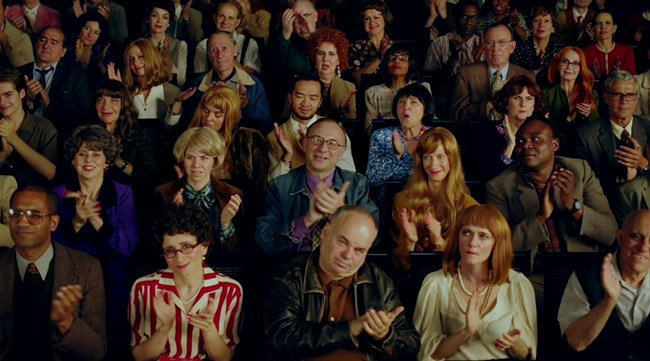
Alex Prager, Applause, 2016
Thank you for reading this—I welcome your opinions on any of these books and writers!—and to Dorian for inviting me to share. This virtual alp of books is something I enjoy throughout the year. [Ed. – Thnk you, Hope: always a pleasure to have you here.]
Excited to once again present reading reviews from some of my favourite readers. Kicking things off is the one and only James Morrison, back for his thirdinstallment. James lives and works in Adelaide, Australia, on unceded Kaurna Country. For many years he has written about book design as the Caustic Cover Critic. He has too many books. He’s online at @Unwise_Trousers (Twitter) or @causticcovercritic.bsky.social (Bluesky). His first novel, Gibbons, or One Bloody Thing After Another, was published in 2023 by Orbis Tertius Press.
‘Tonight too / does my woman’s pitch-black hair / trail upon the floor / where she sleeps without me?’ Masayuki Miyata
[We push through the crowded train station and step up into the carriage, compulsively checking you have your ticket several times in the process. You find a seat and open your mouth to speak, but I suddenly launch into a monologue.]
So, yes, it was a tremendously crappy year, both personally and globally, but at least I got some books read. Indeed, that’s pretty much all I did. I scythed through 296 books, and only a few of them were terrible, so that’s some sort of achievement right there. Right? Right??? [Ed. – Holy shit yes.]
DENSE SLICES OF TIME
Two of the most fascinating non-fiction books I read this year both took the same approach—densely researched group portraits of the lives of interconnected writers and artists over the period of a month or so—applied to two very different eras. Alethea Hayter’s A Sultry Month (1965) covers the world of literary London in June 1846, from Robert Browning and Elizabeth Barrett planning their elopement to Jane and Thomas Carlyle driving each other round the bend, all joined together by the last acts of now-forgotten artist Benjamin Robert Haydon as he prepares his suicide. Uwe Wittstock’s February 1933: The Winter of Literature, translated by Daniel Bowles (2021/23), uses the same close focus on the writers, filmmakers, dancers and actors of Germany in the first month of Hitler’s power, from Joseph Roth wisely fleeing, via Thomas Mann being unbelievably naïve, to Gottfried Benn enthusiastically Nazifying himself. It’s chilling and depressing in equal measures, what with [points helplessly at everything]. [Ed. – *nods glumly *]
As a pendant to the Wittstock, Lion Feuchtwanger’s The Oppermanns (1933), translated by James Cleugh, is hard to beat, detailing the rise of the Nazis through the story of a successful Jewish Berlin family. Written when the events it details were still ongoing, and with much worse to come, it is a perceptive and still timely book. [Ed. – Amen]
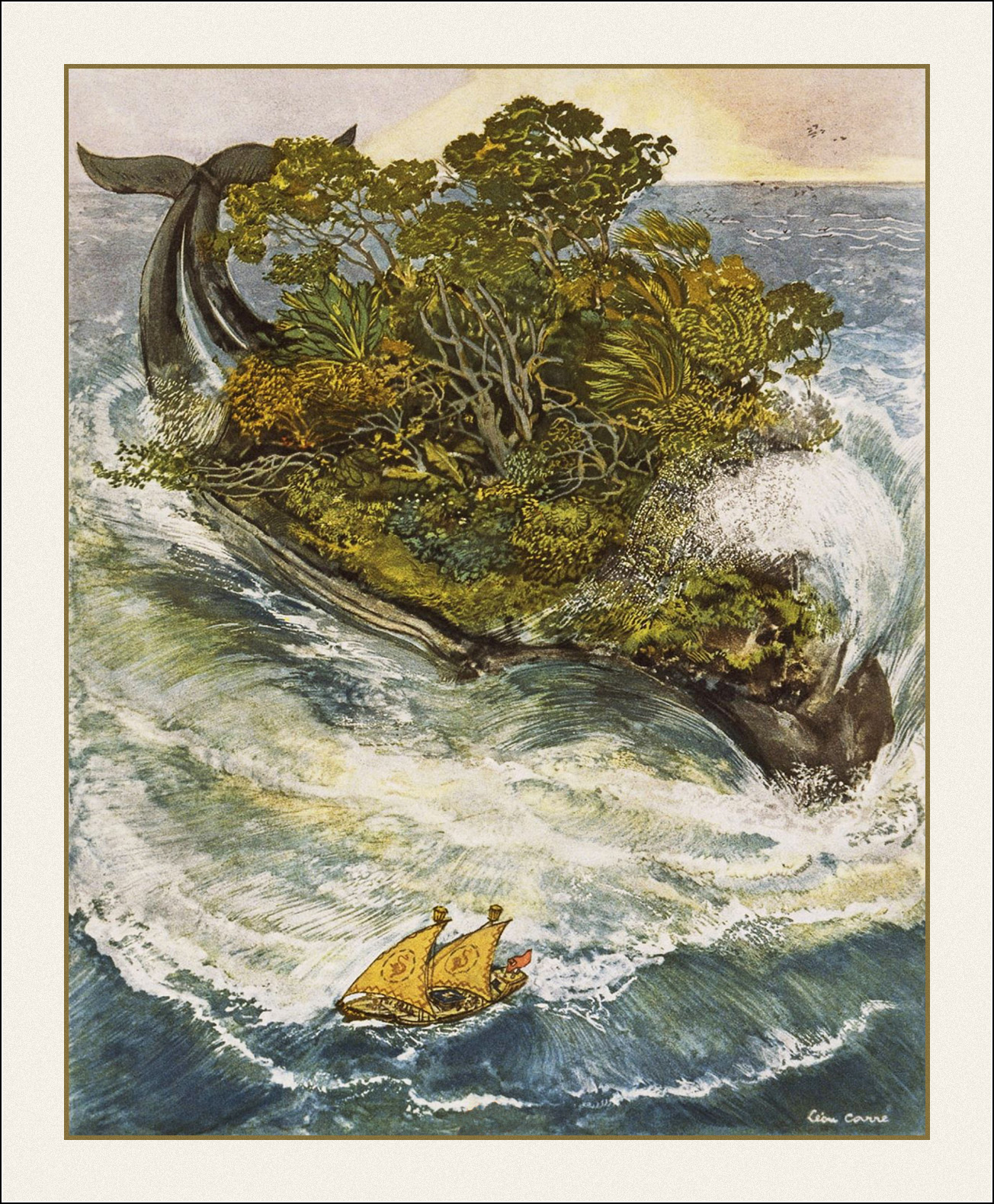
From ‘The adventures of Sindbad’ Leon Carre
AUSTRALIANS
It’s wonderful to have been one of the many readers who finally got hold of the books of Jen Craig this year, and fell in love with them. Intensely, almost claustrophobically, looping narratives of communication breakdowns, troublesome families, injuries, art, eating disorders, and the irritation of being named Jenny Craig when that’s the name of the country’s most famous dieting pyramid scheme. The experience of reading each book—Since the Accident (2013) and Panthers and the Museum of Fire (2015)—is something like peering closely at the back of an incredibly detailed tapestry, trying to guess at the structure, and then with the last few pages suddenly flipping it over to discover a masterpiece. I also read her third novel, Wall (2023), but that was earlier this month so just imagine me saying something similar in 12 months about that.
Susan McCreery’s All the Unloved (2023) is a wonderful novella about the inhabitants of a block of flats in 1990s beachside Sydney, centred on a teenaged girl’s coming of age. Amanda Lohrey’s Vertigo (2009) is another small gem, the story of a traumatised couple fleeing to a new home on the rural coast, and ending in bushfire and terror, told in an engagingly odd way. The two most recent collections of Greg Egan’s short stories, Instantiation (2020) and Sleep and the Soul (2023), demonstrate with impressive depth just why he is widely regarded as one of the world’s best science-fiction writers, especially at this length—story after story will use an amazing idea that a lesser writer would spend a 1200p trilogy on, and then move on to something else even more mind-boggling in just a couple of dozen pages.
Adam Ouston’s Waypoints (2022) is a splendid example of one of my favourite genres of book—an obsessive monologue by an unreliable narrator, in this case somewhat pinned to reality through the disappearance of airliner MH370 in 2014 and Harry Houdini’s attempts to be the first person to fly an airplane over Australia in 1910. Finally, Tommi Parrish’s newest graphic novel, Men I Trust (2023), is a drably beautiful exploration of parasitic friendship, and I really am trying to get over the fact that they mistakenly include a Walmart in an Australian setting. [Ed. – Oh I just picked this up—had no idea it was Australian!]
[The conductor passes down the corridor, bellowing in a monotone. “This train is about to depart, all visitors please leave! Ticketholders only!” A small, relieved smile passes over your face as I step down from the carriage onto the platform, still talking.]
HUNGARIANS
Anyone who has read one of my year-in-readings before knows how I go on about the Hungarians. And here I am doing it again. The best Hungarian literature I read this year was Magda Szabó’s The Fawn (1959/2023), translated by Len Rix, the story of the career and personal life of increasingly enraged actress through Hungary’s tumultuous mid-twentieth Century. Spadework for a Palace by László Krasznahorkai (2018/2022), translated by John Batki, is another tremendous example of the obsessive monologue/unreliable narrator mentioned above. And Ágota Kristóf’s Yesterday (1995/2019), translated by David Watson, was sadly the last book of hers I had left unread: an illegitimate small-town child flees his past by moving to the city, but the reappearance of his now-married childhood love throws everything into chaos.
‘Hare 2’ Jan Pypers
OUTER SPACE, INNER SPACE
Samantha Harvey’s Orbital was just my cup of tea, a quiet and thoughtful 24-hour slice of the lives of six people at work, where said work is in the International Space Station in its final days. In Ascension by Martin MacInnes goes further afield, from the ocean depths to the Oort Cloud, in search of First Contact, strange dreams, and the dawn of life. I loved it, but not unreservedly—there were occasional weird glitches, like MacInnes’s childlike idea that as you travel through the Solar System you pass the planets one by one in a neat line, the way they are drawn in a kids’ encyclopaedia. [Ed. – Wait, that’s not what they’re like???]
The This (2022) by the always interesting, and ludicrously underrated, Adam Roberts, is a hugely entertaining extrapolation from the near into the far future, taking us from the Next Big Thing in social media to humanity as a hive mind. And an end-of-year treat was the new collection Selected Nonfiction 1962-2007 (2023) by J. G. Ballard, a chunky and tremendously entertaining mix of reviews, articles, memoirs, lists and rants.
[The train begins to move, very slowly at first. I’m standing at your carriage window, still talking, and I begin to walk along the platform, keeping pace with the train. You glance at your fellow passengers, blushing.] [Ed. – Ugh shit like this is sooo embarrassing… What a weirdo right I don’t even know that guy!]
ENDS
There were lots of excellent cataclysms in this year’s reading. How I’d taken this long to read David Markson’s Wittgenstein’s Mistress is both mysterious and an indictment on me, but this beautiful book from the point of view of possibly the last woman on Earth is full of gorgeous writing and vivid images. [Ed. – Is she thrilled to be free of bros at long last?] I absolutely loved it. I also loved Oana Aristide’s Under the Blue, a particularly well-done plague-and-after novel, so I was very sad to get in a fight and end up blocking the author online because of her being an anti-trans bigot. Why are authors all so unpleasant?
Pink Slime (2020/2023) is an Uruguayan novel of toxic miasma and slow societal collapse by Fernanda Trías, translated by Heather Cleary, another weird case of a book being written pre-COVID that foreshadows and refracts the weirdness we all then went through. Rebecca Campbell’s Arboreality (2022) is a Canadian novel in stories that takes us further and further into our future of rising waters and collapsing ecosystems, offering no cheap false hope but still providing a glimpse of something worth being alive for. [Ed. – I keep hearing about this book. Gotta check that out.]
And turning from global to personal cataclysm, there was Lorrie Moore’s I Am Homeless If This Is Not My Home (2023), where one of the two main characters is very, very dead. But readers of Anagrams will know well that a character doesn’t have to exist for them to be vividly, hilariously rendered by Moore.
STORIES
There were so many resurrections and collections of great short story writers this year. Among the best were Rattlebone (1994) by Maxine Clair and Lover Man (1959) by Alston Anderson, both beautifully observed interconnected collections about Black American communities. No Love Lost (2023) collects the incredible novellas of Rachel Ingalls, and if there’s a richer, stranger book than this out there, send it to me now!
Jean Stafford’s Children Are Bored on Sunday (1945) is as brilliant as the title promises. [Ed. – Great fucking title.] I also read her novel The Mountain Lion (1947), and fucking hell could she write. Weird misfit children, unhappy loves, badly behaved artists. Have at it!
Tessa Yang’s The Runaway Restaurant (2022) and Madeline Cash’s Earth Angel (2023) were two of the best new story collections I came across this year. Both are peculiar and fizzing with ideas, completely happy to depart reality for the depths of weirdness at the drop of a hat, and very moving—imagine George Saunders if he was actually as good as everyone thinks he is. [Ed. – Heh, you’re not wrong, James…]
And then there was The Collected Works of Jo Ann Beard (2023), which was an absolute revelation. Stories, autofiction, memoir, reportage, not of it conventional, all of it astonishing in its quality and death-haunted eccentric brilliance.
[The train accelerates. You try to pretend the man running along at the window, now bellowing, has nothing to do with you. Not paying attention to where I’m going, I run full-tilt into a metal bin with a resounding clang.] [Ed. — *snort *]
‘Nature Takes Over’ Thomas Strogalski
RANDOM OTHERS
Some books you just can’t shoehorn awkwardly into a category, and there are still too many good ones left to mention. In brief:
Elspeth Barker’s O Caledonia (1991) pairs perfectly with The Mountain Lion, a black comedy about a strange and unloved daughter.
James Hannaham’s Didn’t Nobody Give a Shit What Happened to Carlotta (2022) is a delicious exercise in capturing a voice, in which a trans woman gets out of prison and tries to reconnect with her family and normal life.
Szilvia Molnar’s The Nursery (2023) is an unnerving and convincing novel of fear-of-everything from the point-of-view of a new mother.
Nigel Balchin’s Simple Life (1935) starts off like a mild comedy mocking get-back-to-the-land types, but quickly turns into a fascinating and alarming study of a fraught ménage à trois in a cottage in the middle of nowhere.
And finally, the complete Diaries of Franz Kafka, translated by Ross Benjamin (2023): a monolith of a book, a treasure trove, a heartbreaking testament.
From ‘L’Ange’ Patrick Bokanowski
[You glance back, caught between relief and embarrassment, as I leap to my feet and charge like a maniac after the repeating train, still yelling. Then I reach the end of the platform and plunge into the shrubbery, vanishing from sight. You exhale, and pull out your book to start reading in blessed peace.] [Ed. – Not true, I’d do almost anything to spend a train ride talking books with you, James!]
Today‘s reflection on a year in reading, his second for the blog, is by Scott Walters. Scott launched a litblog, seraillon, in 2010, and expects to return to it one of these days. He largely follows Primo Levi’s model of “occasional and erratic reading, reading out of curiosity, impulse or vice, and not by profession” (profession in his own case being academic administration). He lives with his partner in San Francisco and tries to visit family in France as often as possible.
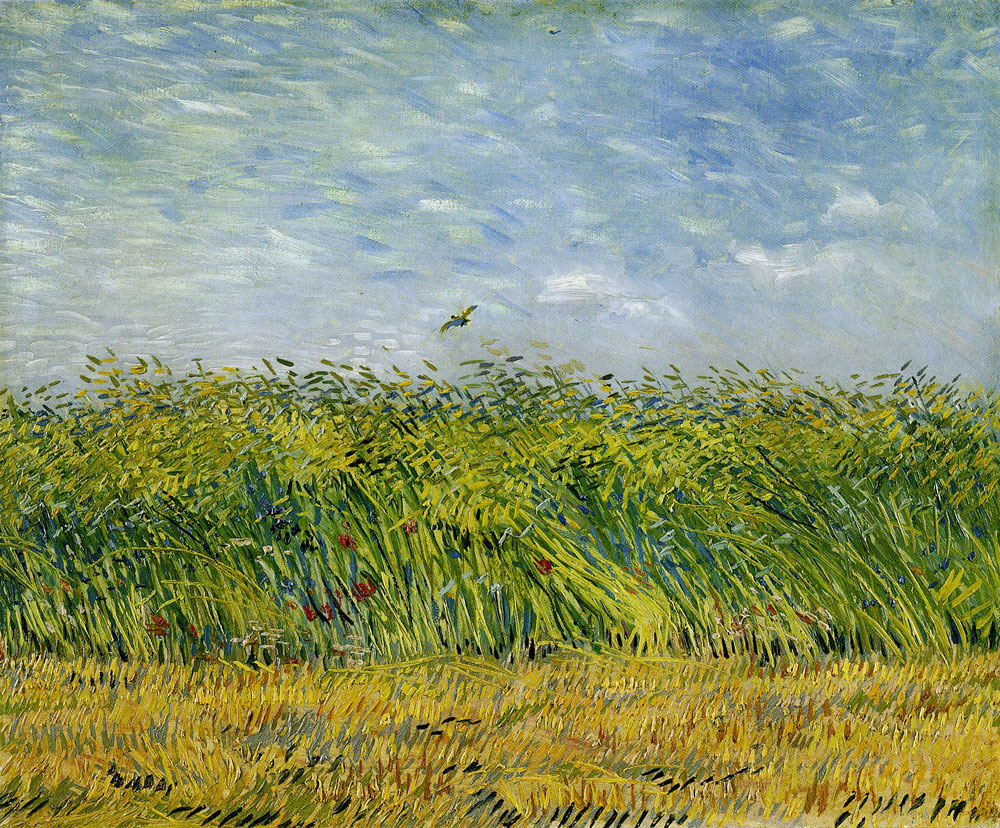
Vincent van Gogh, Wheat Field with a Lark, 1887
Hello everyone. I had a terrific year of reading in 2022. I wrote very little, so I hope you’ll forgive the absurd length of this piece. [Ed. – Already forgiven.] I’m not sure reading without writing is really reading, but with few exceptions I greatly appreciated the 85 books I read. My reading once again followed little discernible pattern. Here are some favorites and some more favorites.
Victor Hugo’s Quatrevingt-trieze (1874) was my book of the year. Hugo’s portrayal of “this bloody date,” “this hemorrhage,” “the great revolutionary year” of the French Revolution, starts off with a bang: a rag-tag group of Parisian revolutionaries, expecting ambush in a forest in Bretagne, instead comes across a young woman breastfeeding an infant while two other children stand nearby. The woman’s feet are bloodied. She is terrified. An older woman responsible for the soldiers’ provisions serves as buffer between the young woman and a commander intent on probing her political loyalties, setting a tone of political tension that runs for 500 pages. An ensuing Dumas-like adventure characterizing this first part of the novel abruptly loses its head when the blade of the second part falls, plunging the reader into a stunning eight-page “cyclorama” of the chaos in the streets of revolutionary Paris. Much of the action, however, focuses on the civil war in the west of France. With a frequent employment of pastiche, 93’s many epic catalogs include an elaborate list of the Convention’s participants paired with their signature bons mots, some so good I copied them for future deployment. The Revolution in 93 is heavily fictionalized, including an improbable discussion between Danton, Marat and Robespierre in the back of a dark café. But Hugo’s astonishing feat of research serves as rock-solid substratum. I found 93 a spectacular model of historical fiction. [Ed. – Sold! Where is the goddamn Penguin edition???]
In the introduction to Eve Babitz’s Eve’s Hollywood (1974), Rolling Stone Records’ Earl McGrath is quoted: “In every young man’s life there is an Eve Babitz. It is usually Eve Babitz.” I wish I’d encountered Babitz as a young man in Los Angeles. To my roaring delight, she limns everything about the city that falls under her gaze; her piercing way of getting to the heart of some L.A. quality might have made Eve’s Hollywood a Bible for managing life there. Babitz labeled the book a novel, but it seems more non-linear memoir, composed in sketches, episodes, observations, wandering across the Southern California landscape for some 300 exhilarating, hilarious, sobering, fascinating pages, filled with lines to savor (even a simple description of the local skating rink: “The shadows of the rafters of the Polar Palace were knocked out by the noonday sun, which fell around us like a moat”). I initially wondered whether the appeal would depend upon one’s familiarity with L.A., but Babitz knows she’s in a bubble, and slyly invites us to look inside. And despite the book’s title, Babitz is less concerned with the movies than with L.A. life. When the book’s eight-page dedication included a nod “to the sand dabs at Musso’s,” I knew I was home.
In Ismail Kadare’s The File on H, ethnographers travel to Albania to seek out the last practitioners of the Homeric oral tradition. Something similar, a hidden world of the past miraculously vibrant in the present, reveals itself in Romanian novelist Panait Istrati’s Présentation des haïdoucs (1925), a work in which iterative storytelling reaches back to legends hundreds, even thousands of years old:
“What does that signify: haïdouc?”
“You don’t know? Well! It’s one who tolerates neither oppression nor domesticity, who lives in the forest, kills the cruel gospodars and protects the poor.”
Five bandits gathered in hiding in a bear cave take turns relating how they became haïdoucs. What an exquisite pleasure to read Istrati again, to be immersed in his singular universe of outlaw peasant dignity, heroism, pleasure, passion, sense of justice, and vengeance against those who perpetrate injustice, chiefly the gospodars (landowners). Most notable of these accounts is that of Floarea Codrilor, the woman leading the group and whose own startling tale seems organically to rework elements of Longus’s Daphnis and Chloe. In this volume from Istrati’s 14-novel cycle, “Les recits d’Adrian Zograffi,” Zograffi appears only in the first line, listening to a haïdouc tell the story of this night of tales, continuing a grand, uninterrupted line of storytelling.
Speaking of iterations, Antonio Manetti’s The Fat Woodworker (mid-1400’s, Robert and Valerie Martone, translators) reads like an anecdote out of Benvenuto Cellini’s riotous autobiography from a century later. Florentine luminaries including Brunelleschi, Donatello and Luca della Robia, regular dinner companions, recognize one evening that one of their number, Manetto the Fat Woodworker, is absent. Perceiving a snub, the artists, with Brunelleschi as chief architect [Ed. – Heh], concoct an elaborate prank. Enlisting multiple accomplices, they convince Manetto that he is in fact a certain “Matteo.” A cascade of comical situations follows as Manetto/Matteo questions his identity and seeks to extricate himself from confusion. The introduction identifies The Fat Woodworker as perhaps the literary pinnacle of the beffe, a humorous early modern style found in numerous works of this high age of mischievous wit. The prank itself is hardly innocent fun; poor Manetto spends time in prison and loses his mind for a time. But his existential crisis might be taken for something closer to Ionesco or Beckett than to the designer of Florence’s Duomo. The charming ending, crediting the anonymous originator of the joke and its variations over time, is as generous a recognition of literary precedent as one is likely to find.
A box containing 27 pamphlets ranging from one to 12 pages, B. S. Johnson’s The Unfortunates (1969) invites readers to choose their narrative order, aside from sections marked “First” and “Last.” Conceived when Johnson traveled as a sportswriter, the work finds his narrator covering a football match in a city he suddenly recognizes as that where he’d known his late friend Tony, the jolt setting off recollections of Tony’s terrible death from cancer. The form could seem gimmicky, but I found it devastatingly suited to its subject. The act of reading—trying to keep track of the pamphlets, shuffling them in one’s hands, taking them out of the box (coffer/coffin) and putting them back in—mirrors memory’s unpredictable eruptions: “The mind is confused, was it this visit, or another, the mind has telescoped time here, runs events near to one another in place, into one another in time.” The word “time” tick-tocks across the narrative; the 1 – 12-page sections hint at clock numerals. In one virtuoso section, staccato play-by-play reporting on a match vies with flashbacks to Tony’s suffering. I doubt Johnson’s narrator and I would have gotten along. He can be self-absorbed, insensitive, annoying even. But these qualities underscore his raw and conflicted anguish in witnessing the demise of a person with whom he had differences, who was distant in many ways: “how the fact of his death influences every memory of everything connected with him.” The Unfortunates left me shaken for days. “and I said, it was all I had, what else could I do, I said, I’ll get it all down, mate It’ll be very little he said, after a while, very slowly, still those eyes That’s all anyone has done, very little, I said.”
The east end of Paris’s Rue Ordener, which arcs across the 18th arrondissement, is today largely African, but in 1942 was heavily Jewish. That was the year seven-year-old Sarah Kofman saw her father taken from their home and deported to Auschwitz. Her récitRue Ordener, Rue Labat(1994) (thanks Dorian!) focuses not on her father’s story, but on her own. The title’s street names represent poles of her existence during the occupation: on one her mother’s home, on the other that of a beloved teacher with whom she hid. Kofman subtly evokes the claustrophobia of this life, the transformation of the neighborhood into a ghetto. She expertly melds normal tensions of childhood with their extreme amplification under threat, retrospectively examining the confusing division of allegiances between mother and teacher, Jew and Non-Jew, disentangling present self from past in tight, analytical prose not dissimilar to Annie Ernaux’s dissections of family. [Ed. – Interesting, had not thought of that comp. Ernaux’s sentences are much more sinuous, though.] The book had personal resonance: my goddaughter, having since an early age taken a deeply serious interest in the Holocaust, has spent her 19 years in the neighborhood, on the same street where Kofman’s family first lived.
Italian critic Roberto Bazlen led me to some terrific works these last two years, including to Jeremias Gotthelf’s The Black Spider (1842, Jolyon Timothy Hughes, translator). Bazlen had proclaimed Goffhelf “the (at least in some respects) GREATEST European novelist of the last century.” Though he wasn’t referring to this book, his pronouncement seemed borne out in The Black Spider’s 150 pages, which begin in a village in the Bernese Oberland, where a baptism is taking place:
Now, every head was exposed, each pair of hands folded and everyone prayed long and solemnly to the provider of every blessing. Then, each slowly grabbed the metal spoon and wiped the same on the beautiful, fine tablecloth and began to eat the soup. And many a wish was expressed out loud that if he were to have such fare every day, he would desire nothing else. Once one had finished with the soup, he again wiped his spoon on the tablecloth. The Zupfe [Ed. — braided soft bread, super delicious] was passed around and each cut himself a piece and watched as the appetizers of saffron soup, brains, mutton, and marinated liver, were served. When they were consumed the beef was brought in, fresh and smoked, whichever one preferred, came with deliberate swiftness stacked high in bowls. Then came the durre Bohnen [Ed. — overcooked green beans, god I ate way too much of that in my childhood], Kannenbiresnschintze, thick bacon and splendid loin roasts from three-hundred weight pigs, so beautifully red, white and juicy.
This richly detailed framing story culminates in a question about an “ugly black center post” in the house, then shifts two centuries past, when a merciless feudal lord orders the villagers to perform an impossible task, which they only achieve by making a deal with the devil. They pay, of course—Gotthelf is as much preacher as novelist—and their punishment comes in the form of plague, “the black spider.” In the tale that follows, reality, superstition, deep religious conviction, and atonement blend together in a micro-study of the village’s people, of the confrontation of the religious mind with hardship.
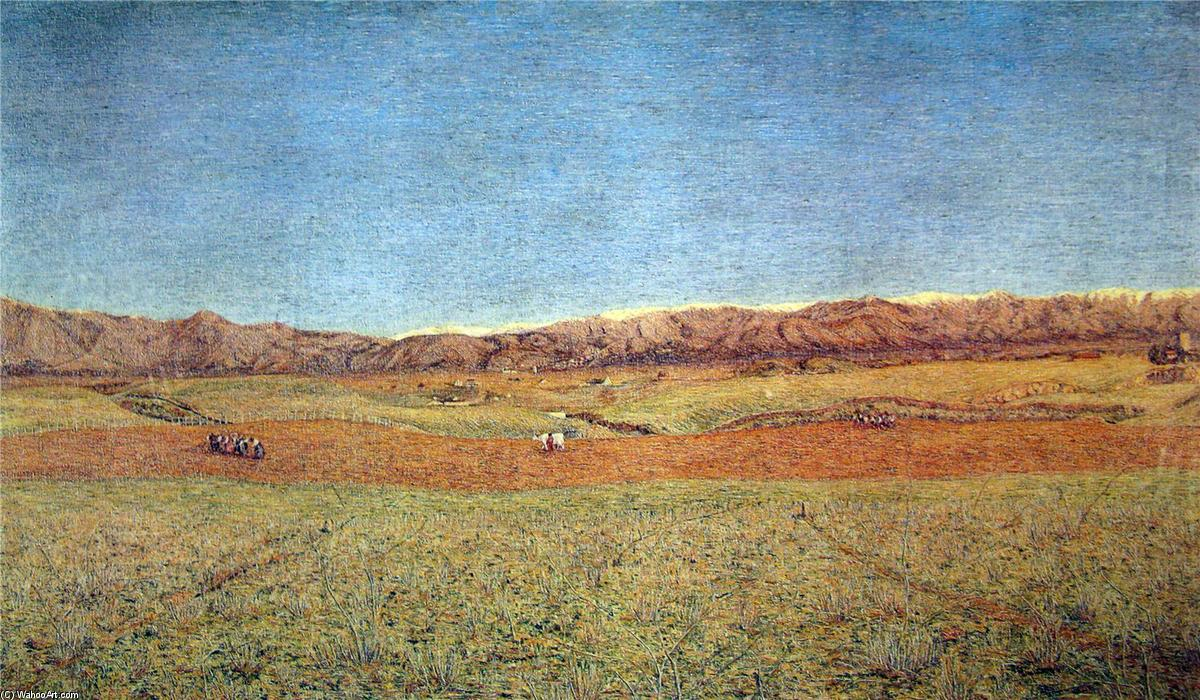
Giovanni Segantini, Landscape, 1896
Asturian writer Juliàn Ayesta’sHelena, or the Sea in Summer (1952, Margaret Jull Costa, translator), one of the finest short novels I’ve read in years, went straight onto a shelf I keep of cherished paperbacks. Its world swirls with reminiscences of annual seaside vacations its young narrator passed with his cousin Helena. Drenched in sun and sea, filled with family idiosyncrasies and redolent of youthful vulnerability, Helena explores the developing love between these two young people, deliberately evoking Daphnis and Chloe (again!), with a similar sweetness and freshness.
I’d loved Solitude by Victor Català (Catarina Albert i Paradis), so was thrilled to find Peter Bush’s translation of A Film: 3,000 Meters (at a reading in 2015, Bush lamented the book’s unavailability in English). A Film (1920) at first seems to fit the realist mold of Eça de Queiros or Gustave Flaubert, relating the story of Ramon Nonat, an orphan in Girona who sets out to find his parents—or rather, to find his place in the glitzy rich world he imagines they occupied. Apprenticed to a locksmith, the talented, handsome boy quickly gains competence and respect, then shoves off for Barcelona to pursue his fantasy of belonging among the elite. As the unusual title suggests, the narrative takes a cinematic approach; nearly everything occurs at street level, as though the narrator were moving about the city with a camera—a remarkable attempt to adapt an emerging narrative form to literature.
Set just uphill in the Pyrenees, Irene Solà’s When I Sing, Mountains Dance (thanks Stephen Sparks!) features a polyphonic group of narrators, including a cloud and black chanterelle mushrooms. Montage-style, Solà builds a portrait of the region in precise, deeply lyrical, earthy to the taproot prose, everything burning with life, even the geology of the place (given its own narrative). This is no mere novelty; Solà deftly uses signifiers linking characters, generations, and locations, situating passages in time relative to other passages, forming a map of the region, hinting at its history of revolt and suppression of revolt, and confronting shifting tensions between the villagers and outsiders. Among these last are tourists, urban refugees from Barcelona, and a writer—Solà’s stand-in, one might surmise—questioning her place, a subject amply worthy of interest given such arresting, commanding and nuanced writing.
In non-fiction, I put two works above the rest. Gisèle Halimi’s Une Farouche liberté (2020), constructed from interviews just prior to Halimi’s death, traces her trajectory from a Jewish-Berber Tunisian family where life promised little but domestic servitude to her emergence as one of the great judicial and feminist figures of post-war France. The young Halimi’s defense of political prisoner Djamila Boupatcha was instrumental in shifting French attitudes towards the war in Algeria. With Simone de Beauvoir, Halimi persuaded 343 women—including Catherine Deneuve, Ariane Mnouchkine, Françoise Sagan, and Marguerite Duras—to sign a letter admitting to having had an illegal abortion (the group later proudly adopted Charlie Hebdo’s satirical moniker, “Les 343 Salopes”). The letter, along with Halimi’s exoneration of 16-year-old Marie-Claire Chevalier, imprisoned after the classmate who raped her turned her in for having an abortion, led to the 1973 reversal of France’s abortion ban. Halimi served in the French Assemblé Nationale, as UNESCO ambassador, and as an advocate for a united Europe. Her innovative ideas for organizing make Une Farouche liberté an invaluable book – and a timely one – for anyone concerned with justice.
Sebastian Haffner’s Defying Hitler, my non-fiction book of the year, caused a sensation when published in Germany in 2000. Haffner (pseudonym for Raimund Pretzel, whose son Otto here serves as translator) dissects in precise terms the forces that allowed Hitler to come to power. The book begins on August 1, 1914, when the seven-year-old boy’s treasured summer vacation is abruptly cut short by war. He then traces his growth into adulthood with a steady eye attuned to political developments, unpacking the missed opportunities and fatally unwise accommodations; the cultural, economic, social, and psychological weaknesses of his country; the cultural rejection of pleasure, intellectualism and humor; the violence and assassinations (chiefly that of Walter Rathenau) that propelled his country into fascism. Not a word seems out of place in this chilling narrative—a foreboding warning of Europe’s future and of the fascist movements so prevalent today.
When it came to mysteries, I had the most fun re-reading Eric Ambler’s The Light of Day (1962), but I went nuts over Masako Togawa’s The Master Key (1982). Set in the K Apartments for Ladies in an outlying part of Tokyo, the plot involves a missing master key, a buried child, an eerie religious cult, and Japan’s search for stability and rebirth after WWII. But the master key Togawa uses to open a door onto the lives of the building’s unmarried women—the elderly, the young office workers, the building’s staff, all with “secret lives apart from the real world”—makes the “mystery” nearly incidental. I’m on to more from this iconic, revered figure in Japan. [Ed. – Sold!]
I read a lot of plays in 2022. Magical realist Massimo Bontempelli’sWatching the Moon and Other Plays proved the highlight and included a haunting tale of loss of a child; a visit by a surreal, murderous cloud (NOPE!); and a delightful take on Cinderella, who bypasses the prince to run off with a member of the orchestra. Heidi Shreck’s What the Constitution Means to Me should be performed regularly in the U.S. Congress. Other highlights were Franz Wedekind’s Spring’s Awakening and David Murphy’s Conversations on a Homecoming.
As for poetry, I loved Virgil’s The Georgics (“the working of the earth”), a kind of bucolic verse farmers’ almanac on agriculture and animal husbandry that belongs on sustainability reading lists. A. Van Jordan’s M-A-C-N-O-L-I-A brilliantly uses its 50+ poems to recount the life of MacNolia Cox, who at 16 in 1936 would have been the first Black winner of the National Spelling Bee but for machinations of racist judges. I fell deeply into the poems of Frederick Seidel: nimble, coarse, fun, musical, offensive, inoffensive, explosive, moving, provocative, an axe to break up paralyzed discourse, like nothing I’ve encountered in American poetry. Finally, poem-shaped unidentified flying object Deep Wheel Orcadia, byHarry Josephine Giles, wins as most unusual book of the year. Set on a space station whirling beside a gas giant, Giles’s poems, written in Orkney dialect and accompanied by his own peculiar English translations, create a space opera romance that left me entranced, almost literally suspended in indeterminate space, time and language. [Ed. — !]
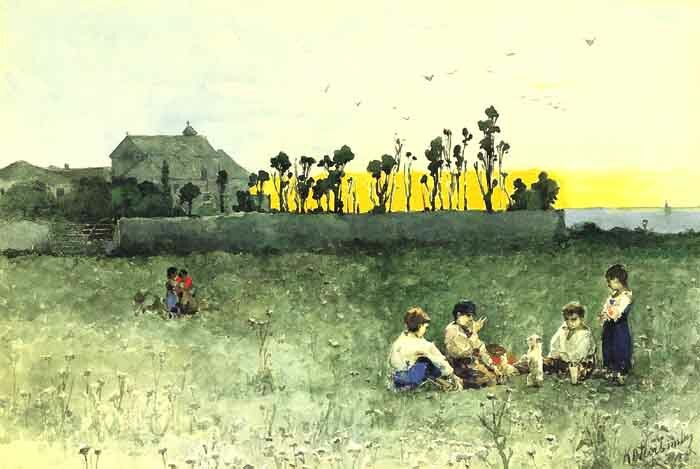
Wilhelm Kotarbinski, The Setting Sun, date unknown
It was tough whittling down the list to the works above, so I’ll leave off with an incomplete list of those that might have made the cut: Johann von Goethe’s Elective Affinities; Vercors (Jean Bruller)’s Le Silence de la mer; Shirley Hazzard’s The Great Fire; Franz Werfel’s The Forty Days of Musa Dagh, the novel of the Armenian genocide; Yasushi Inoue’s Tun-Huang; Iris Origo’s A Chill in the Air and War in Val d’Orcia; Alberto Moravia’s Roman Stories; Gilbert Adair’s The Dreamers, the novel of May 1968 France (even if it is written by a Brit); James Baldwin’s Go Tell It on the Mountain; Bora Chung’s Cursed Bunny [Ed. – Paging Frances Evangelista!]; Maria Judite de Carvalho’s Empty Wardrobes; Yuko Tsushima’s Woman Running in the Mountains [Ed. – Boo yeah!]; Nikolai Gogol’s Mirgorod; Gianfranco Baruchello’s How to Imagine: A Narrative of Art, Agriculture and Creativity; Faith Baldwin’s Enchanted Oasis, the romance novel of Palm Springs; and Herman Melville’s Moby Dick, my re-read of the year, grand and startling and surprisingly funny three decades past the last time I read it.
Thank you for reading and thank you Dorian for inviting me to do a little writing.
[Ed. – Anytime, Scott. I mean it. seraillon is much missed.]
That’s it, friends—I’m calling a wrap on 2022 year in reading pieces. Except maybe for my own. What’s the over under that I’ll actually write one?
Today’s reflection on a year in reading, her second for the blog, is by the inimitable Alina Stefanescu (@aliner). Alina was born in Romania and lives in Birmingham, Alabama with her partner and several intense mammals. Recent books include a creative nonfiction chapbook, Ribald(Bull City Press Inch Series, Nov. 2020) and Dor, which won the Wandering Aengus Press Prize (September, 2021).She is currently working on a novel-like creature. More at www.alinastefanescuwriter.com.
Hervé Guibert, Self-portrait, in front of the Christ mirror
Imagine Michel Foucault and Maurice Blanchot sitting down to portrait the silences in each other’s texts. [Ed. – Lowly editor finds “portrait” an… odd verb here; writer prefers to be a “terrible poet” and keep it. Editor concedes that she’s the artist. P.S. terrible poet as in poete terrible…] Imagine Foucault smoothing his plaid pants and typing:
In ancient times, this simple assertion was enough to shake the foundations of Greek truth: “I lie.” “I speak,” on the other hand, puts the whole of modern fiction to the test.
Speech about speech, or speaking, leads us to what Foucault calls “the outside in which the speaking subject disappears.” In trying to explain why Blanchot’s fiction is indiscernible from his essays and reviews, Foucault also probes what exactly it is that fiction does differently. He locates the “peril” of fiction’s vocabulary in its reliance on familiarity, or its evocation of meanings that “stitch the old fabric of interiority back together in the form of an imagined outside.”
The window is the problem here. Like his description of Blanchot, it is language that speaks around its frame. Although Monoskop gives us Foucault’s part of the book, Blanchot’s is hidden. One could mine this for metaphors or resort to buying the print version, as I did. Either way, this book gives us both thinkers at their best—at their most exposed, visceral, and dangerous.
This poetry collection felt like riding an abandoned rollercoaster in a desert haunted by Edmond Jabes’s silences and Rosmarie Waldrop’s close attention to language. I lingered over it, and marked how it circles the question of silence as in the Foucault-Blanchot book, where Foucault wrote: “Literature is not language approaching itself until it reaches the point of its fiery manifestation; it is rather language getting as far away from itself as possible.”
To “reverse engineer” is to study by deconstructing, or to take apart a finished object in order to build it back and understand how it is made. Is the book the reverse engineer – or is it the poet?
The title poem, “Reverse Engineer,” rubs the definition, or the act of defining, in order to draw closer to meaning and language. Borrowing apophatic strategies from mystical theology, Kate Colby approaches the real by negation, by speaking only of what cannot be said. Each word is a mystery, and attempting to speak of the human condition leads to this sort of repetitive negation. The mode of defining by undoing is visible in “Integer,” for example, where an asterisk in the poem (“*a thing complete in itself “) doesn’t designate a note at the bottom of the page. Here, the asterisk is the thing complete in itself, rather than serving its usual referential role. The asterisk signals something, but gives us nothing. I still can’t get over it.
Joshua Cohen’s acuity finally gives us a compilation of Elias Canetti’s extensive opus in small form. His introduction to Canetti’s work is wickedly well-written and engaging. To quote, to note, to invoke:
I might take counsel from Canetti’s wife Veza, herself a novelist of high accomplishment, who once wrote in a letter to Canetti’s brother Georg: “No document that gives access to Canetti’s inmost being must be allowed to survive.”
Or I might take counsel from Georg, who, when Veza asked him to destroy that letter—to destroy all her letters—did not.
And that, I’m realizing, is the best approach: to address myself to the destructions that did happen, to address myself to the burnings.
Included are various excerpts from Canetti’s memoirs, his meditations on family, friends and frenemies—Hermann Broch, Karl Kraus (“a master of accusing people with their own words”), Thomas Mann, Robert Musil—as well as his previously untranslated aphorisms addressed to death.
At one point, Canetti describes his growing awareness of what he called the “acoustic masks” of each person’s voice and way of seeing, particularly their repetitions, intonation, relationship to language. He sits in a bar with his face to a wall and listened as voices moved around him, as they withdrew and returned and misunderstood each other. [Ed. – Sounds like Henry Green, who might have been in the same pub. They were in London at the same time, right?] The solipsism of subjectivity surrounds us at high volume. “It all depends on this: with whom we confuse ourselves,” Canetti whispers.
“The world cannot be captured by a net,” Alla Gorbunova told Alexandra Tkacheva in an interview in Punctured Lines. Like the world, Gorbunova’s recent book and its surreal St. Petersburg, refuses to be classified or captured. Haunted by folklore, baba-energy, apparatchiks, nomenbratura [ed. – Had to look that one up!], and freshly-minted billionaires, the speakers lose the thread of their thoughts only to find them in the mouth of another. Humor, malice, and agony are indistinguishably betrothed in these linked tales. One senses the chaos of the postsocialist period in Russia in the sheer opportunism and magical thinking of the female speakers. There is no distance between the past and present, Gorbunova seems to insist, the costumes have changed but the lies are the same, as in “Treasures in Heaven: A Tale of God and the Billionaire,” where God drops by to ask the billionaire for a loan. “A story unfolds, often retold,” Gorbunova writes:
“Like this,” said the billionaire, “in my heart there is a needle, it has an eye, in the eye is the gate to heaven.” As soon as the billionaire’s wife heard this, she decided that she wanted to live in heaven, thinking that everything is expensive there, they have all kinds of things, and she climbed into the billionaire’s heart, found the needle, and tried to pass through, but she couldn’t.
Narrative tension builds from the impossible hope to escape the past. One is struck by the eternal pageant of misogyny, and the extent to which no ideology has managed to improve life for Russian women. Elina Alter’s translation brings these defamiliarized scenes to life.
I could see Daniil Kharms grinning at what Gorbunova has wrought, for, as it is written in the final paragraph of “Lord of the Hurricane”:
We don’t know what goes on in the apartment upstairs. We’ve never known. We walk around our apartment in little tin-foil hats. There’s a tornado in Moscow. Our neighbor is a bastard.
Nothing is clarified or explained. We paint our bodies blue to protect ourselves from the curse of whatever comes next in the ashes of failed religion and ideologies. We are all mad, somehow. What does it mean to survive or thrive under such circumstances? What sort of human can be successful as the world ends?
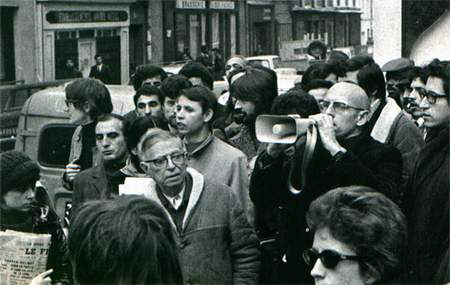
Michel Foucault, with a bullhorn
Foucault in Warsaw by Remigiusz Ryziński, trans. Sean Gasper Bye (Open Letter Books, 2021)
Obsession authors extraordinary literature. In 1959, French theorist Michel Foucault was mysteriously expelled from Poland. The archival silence, the absence of documents explaining Foucault’s Polish chapter, so obsessed Remigiusz Ryziński that he wrote a book about it. Foucault in Warsaw is driven by this search for what, if anything, the Polish government had on Foucault. [Eed. – He was ordered to leave Poland in 1958 after possibly having been entrapped by a Polish secret agent; homosexuality was technically legal in Poland at the time, but much condemned.] Shifting between intellectual history and descriptions of his search on the ground, Ryziński chases the mystery of Foucault’s secrecy regarding the Warsaw chapter, when he wrote most of his doctoral dissertation (though it was published in France in 1961). In the preface to the first French edition of The History of Madness, Foucault described the dissertation as beginning on a “a Swedish night” and being “finished in the stubborn bright sun of Polish liberty.” Like Ryziński, Foucault was doing archival research for this book which developed into his first poststructuralist work. To know, for Foucault, is to study, to subject to rigorous, microscopic examination. “Madness is the lack of knowledge,” writes Ryziński, which he takes as central to understanding why Foucault’s dissertation doesn’t provide a history of madness or knowledge—since neither really exists—but focuses instead on “the archaeology of silence,” the articulation of the unspeakable. Gaining knowledge of that which defies knowledge (or unreason) exposes the tension between reason and madness, which is to say, the “normal” cannot “know madness, and so madness remains unthinkable, and light shed on it cannot dispel ignorance.” [Ed. – He had a big fight about Derrida over what the latter took as Foucault’s romantic idea of madness. Anyway, this book sounds great!]
Ryziński knows that Foucault was gay. And he knows that homosexuality was not welcomed by the Polish communist state. Although he suspects that this is the reason for Foucault’s disgrace, he wants evidence—the sort of knowledge that enables the past to become part of what we call history. He finds that homosexuality wasn’t technically a criminal offense, but sex work and prostitution were crimes punishable by law. The writer’s education transpires in this intellectual kinship which leads a reader to hide the archives for a missing history (I don’t want to give away the ending). Foucault’s attention to “conspicuous silences” troubled the balance between binaries—madness or sanity, female or male, heterosexual or gay—and the ontology of freedom, I think, which can only exist alongside prisons, slavery, and repression. The theorist deconstructs and builds nothing to replace what has been ruined, but there is no prescriptive menu, the normative states as the handmaiden of power.
“Knowledge about madness is the illusion of knowledge about anything,” Ryziński argues. This reflects on Foucault’s amoral and limited idea of freedom. At some point, Foucault went to Gdańsk and Krakow to lecture on Apollinaire. The handwritten draft of this lecture, currently housed in Foucault’s archives, is one of the few things he brought back from Poland. It has never been published. Ryziński’s relentless fascination becomes one’s own.
Only the sky can save us, I thought after reading Inhuman Land: Searching for the Truth in Soviet Russia, 1941-1942 byJozef Czapski, a Polish painter, committed pacifist, and involuntary witness who survived incarceration in a Soviet prison camp and lived long enough to look back on a life between prisons, borders, and 20th century horrors. With Proust in one hand and Gide in another, Czapski details the kindness of strangers, the friendships that bloomed in carceral spaces, the devastation of war. While fighting to defend Poland, Czapski was captured by the Soviets. He was one of the few officers to survive the Katyn massacre of 1940. To forget would be a crime against those whose mouths had been frozen shut by death.
The Inhuman Land was translated into English in 1951 because, to quote the dread wiki, this “first-hand account of contemporaneous negotiations with the Soviets over the missing Polish officers . . . became an important document until Russian guilt for the massacres was acknowledged.” Czapski also testified before the US Congress on what Soviet troops had done. This documentary record traces his journey through Soviet Russia trying to find out what happened to the officers of his former regiment. The faces of the living and dead torment Czapski. He remembers; he looks for documents; he takes notes; he gets sick. There is a part where his recollections pause near the hospital window, in the room where he almost died, roiled by fevers and excruciating pain—there, in that room, lacking a metaphysic, he longs for nothing except to exist at less agonized pitch. How is it, Czapski wondered, that respected humans are capable of egotism and self-protection? What does it mean to exist without feeling for others?
One can teach oneself self protective egoism by being standoffish for years on end, and if not egoism, then perhaps to be more detached toward fragile personal affections, more abstract. But what use is that, if I have never been able to see things other than through people. Even Poland has always been embodied for me by a few faces of the living and the dead.
As Czapski convalesced in that hospital room, “the cream white window frame against a pure blue, almost always cloudless sky, very bright in the mornings, then gradually darker, then brightening again, taking on a greenish hue.” [Ed. – I’m reminded of Sebald’s description of the sky outside his hospital window at the beginning of The Rings of Saturn.] This “evocation of a pure blue sky with objects set against it” segues to a recollection of Matisse’s paintings of southern Morocco, and then Gordi’s Piazza San Marco, a sort of mental gallery exhibit provoked by memories of colors and hues. There is a gallery in his mind. Czapski thought about “how a painter could pick out the “sound of that perfect blue, the shout of the white window frame against the azure sky.” From there, in that hospital bed, the remembered world appeared “totally unattainable,” yet it is these moments, gathered into vignettes and vistas, that form the material of the writer’s mind. It was the painter’s eye that saved him, the words on the brush, and the window with a view of the sky. [Ed. – OMG you put this so well; I gotta move this up Mount TBR.]
Although Czapski was intensely Catholic, his commitment to living in conscience was complicated by his religious affiliation. He doesn’t mention, for example, his love affair with Vladimir Nabokov’s younger brother, the poet Sergey Nabokov, from 1924 to 1926, which ended when Czapski went to London seeking medical assistance with his typhoid fever. (One wonders how hospital windows coincide in reverie, in silence, in commemoration.) [Ed. – Sergey died in Neuengammen in 1945, murdered by the Nazis.] When World War II began, Czapski was living in Józefów with the writer Ludwik Hering. The war separated them, and then Czapski moved to Paris, but their love affair continued by correspondence, and one wishes that this epistolary existence would be translated as well.
Irene Nemirovsky’s novel, David Golder, came out in 1929. She had left Russia to live in France with her husband. While living in France, Nemirovsky was arrested by the Gestapo when her daughter was five. She was deported to her death at Auschwitz in July 1942. (Her husband, Michael Epstein, died on the same Nazi transit in November of that year.)
The orphaned daughter, Elisabeth Gille, published The Mirador: Dreamed Memoirs of Irene Nemirovsky By Her Daughter as a biography of her mother, narrated by the mother in first-person, as dreamt or imagined by Gille. In recording her mother’s memoirs as she imagined them, the daughter creates the child, Irene, raised in Kyiv who becomes a writer that refuses to identify as Jewish. There is a direct correspondence between Nemirovsky’s own letters and writings and the character “created” by Gille’s assiduous study of her mother.
Central to these imaginings is the tension between Nemirovsky’s literary dreams and her own mother’s lavish lifestyle-hunger. Nemirovsky’s mother (who is technically Gille’s grandmother) pouted when she wasn’t gifted jewels. [Ed. — I mean, same…] In her daughter’s imagined memoirs, the young Nemirovsky scorns the Russian exiles of 1924 who gather in Paris like nihilistic, pleasure-seeking teenagers living for the moment, refusing to imagine the future. The Whites don’t believe the worst can happen—reality hovers, over-aerated, somewhere in the motion between floating and fleeting. The exiles ignore “the monuments, columns, steles, cenotaphs, each more pompous than the last, that were being erected everywhere, even in the smallest village.” Her glamorous mother, the status-seeking socialite, represents the world of the exiled elite to her; whose extravagant displays of luxury could not read the room. Nostrodamus prophesied that the end of the diaspora’s troubles would come in 1944, but the troubles continue.
World War I taught the young that their elders had died for nothing: “There was nothing left of them but the path of extremism,” according to Gille’s Nemirovsky. The bourgeoisie had nothing to believe in apart from war, domination, and fear. One hears the auspices of Canetti’s later work on crowds when Gille writes that the schoolboy “prefers to be oppressed by a single bully rather than have complete freedom” and be abandoned to the unclear hierarchy of “the crowd.” The dreams written from the author’s longing to know her mother have not aged; the syntax skips across space and time seamlessly. One senses a “lever of love” (Vladimir Nabokov’s neologism for “the diabolical method of tying a rebel to his wretched country by his own twisted heartstrings”) wrestling within the portrayal of Nemirovsky. The heart aches for—and admires—the portrait a daughter creates of her defiant mother, in dialogue with her mother’s rejection of 19th-century high-status femininity which we consume in the present via Hollywood’s latest glam.
The Mirador was published in French in 1992, several years before Irene Nemirovsky’s own Suite Française (which existed in manuscript form) was finally published posthumously in 2004. Unfortunately, Gille did not live to see her mother’s literary reputation secured. But she left a portrait that testifies to love’s studious imaginings and faithfulness.
Baxter’s Wonderlands is a craft book that doesn’t read like a craft book. The range is profound and immediate, as in the section where Baxter discusses how the lies of politicians affect us when they become narratives which guide lives. The concept of deniability is political but also functions to normalize ignorance or subterfuge. (Gertrude Stein’s references to the thrill of unsubstantiated generalities apply.)
Baxter takes the absence of accountability in fiction as a contribution to conspiracy theory (I’d bracket this with an insistence on religion’s role in privileging belief as a form of knowledge that eschews evidence). Defining the “dysfunctional narrative” as a sort of key to the psyche in the novel where everything is caused by past trauma, Baxter observes that the story isn’t about the story but about the therapy that didn’t happen. The “political culture of disavowals” leads to the “fiction of finger-pointing.” Thus, the responsibility for therapy becomes part of the narrative task, and some of us feel this is too much to ask.
Why is the character unhappy? This matters to us because today happiness is an expectation. Since we can’t blame the abstract corporation, we blame the family who lived and labored under the myth of consumerism. We laugh at them as we consume ourselves. To Baxter, fictions which lack an antagonist “tend to formally mirror the protagonist’s unhappiness and confusion.” Daytime television, particularly talk-shows, make it seem as if family can carry the burden of individual unhappiness, Baxter observes. In their “therapeutic narration… no verdict ever comes in “and no one has the right to judge.” But what about the “poetry of a mistake,” the action’s meaning in time, “its sordid origin, its obscenity,” Baxter wonders. Not for him the glib shrug of Shit happens. Not for him the evasive structural gesture or the “moralizing” which has replaced ethics and self-reflexivity. The therapeutic narrative (or the “already moralized story”) steps in to relieve us from thinking while simultaneously depriving the characters’ actions of meaning. “The injury takes for itself all the meaning”; the injury claims the centerfold. Are we interested in victimization because we are ambivalent about our own desires for power and unequipped to acknowledge them? Error. Baxter suggests, is as true as success.
I relished Baxter’s discussion of performance anxiety in modern life, and how the pressure to perform an appropriate grief, joy, gratitude, etc., corrugates the scene of family reunions, weddings, funerals, etc. Is everyone at the reunion taking notes for their therapist? How do we navigate the extraordinary anxiety of being alive at a time when so much media and language purports to deliver variations on the correct script, the right thing to say when someone dies, the best, the ideal? Is one playing a role on a stage rather than living—is one waiting for the clap or the thunderous clap-back? Nothing anyone says can kill my mother more, but it’s easier for me to be furious at you for saying the wrong thing than to rage against the anonymity and haphazard injustice of loss. What Romanian writer Norman Manaea called “compulsory happiness” is similar to what Charles Baxter calls “compulsory sincerity,” the requirement that one feel a certain way and display it physically and verbally. Maybe even the interpreters are exhausted. Certainly, the literature could use a cold shower and a refresh.
Czapski’s lecture notes on Proust
In conclusion, a few books I found to be profoundly intriguing— and which I feel compelled to mention because critical attention often leapfrogs the intriguing in order to focus on the historically significant, the aesthetically attractive, or the well-marketed.
My Manservant and Me by Hervé Guibert, trans. by Jeffrey Zuckerman (Nightboat Books, 2022) for Zuckerman’s splendid translation of Guibert’s controversial book, and for the controversy that Guibert made of writing, personhood, and literary genre.
Disembodied by Christina Tudor-Sideri (Sublunary Editions, 2022) for the unique forests of Tudor-Sideri’s language, and the radical, interstitial resonances of her disembodied writing at a time when embodiment seems to be trending.
Chimerasby Daniella Cascella (Sublunary Editions, 2022) for reasons I’ve given elsewhere. [Ed. – I dunno, google it.]
Dead Souls by Sam Riviere (Catapult, 2021) for its Bernhardian self-implication and provocations, and for its thorough dethroning of the poet’s heroic self-mythos. “A fever of commemoration activity ensued,” the protagonist says— and the poets posed for selfies. For who is more commemorated in contemporary poetics than the poets, themselves? I appreciate being dragged through the mud by Riviere.
Death by Landscape: Essays by Elvia Elk (Soft Skull Press, 2019) for its rigorous interrogation of trauma and self-help bootstraps in the contemporary landscape.
Suicide by Édouard Levé, trans. by Jan Steyn (Dalkey Archive, 2011) because I cannot stop thinking about how epistolarity tangles with fiction, or how the last book we write before dying may be our suicide note. Levé is formidable, heart-breaking, and deeply beloved by this human.
Paradiso by Gillian Rose (Shearsman, 2015) for its vigorous beauty and painstaking attention to mortality, or what it means to live a thinking life.
Lost Time: Lectures on Proust in a Soviet Prison Camp by Józef Czapski, trans. by Eric Karpeles (NYRB Classics, 2018) for the tenderness of encountering Proust in a carceral environment, and for the reminder that carceral systems remain spaces in which literature has the potential to save lives.
Falling Hourby Geoffrey Morrison (Coach House, 2023) [Ed. — Imma let a 2023 title on a 2022 year in review because it’s Alina and because this book is Canadian.] This was one of the most luscious, immersive, and mind-blowing literary journeys of my adult life. Morrison begins with poetry and wanders through globalization’s alienations in this lyrical, disembodied novel to which I return often, in a somewhat futile though diligent effort to uncover its multiple mysteries.
Today‘s reflection on a year in reading, his second for the blog, is by Scott Lambridis (@slambridis). Scott’s story “Blind Sticks” was nominated for a 2021 Pushcart award. Before completing his MFA, he earned a degree in neurobiology, and co-founded Omnibucket.com, through which he co-hosts the Action Fiction! performance series. Read more at scottlambridis.com.
Fantišek Kupka, The Guy, 1910
Every year I have a goal of reading 52 books. This year I read 111. Here’s the top 10, in the order I finished them.
1. Civilizations, by Laurent Binet (trans. Sam Taylor)
I finished Civilizations in the first week of 2022, on the heels of last year’s top 10 winner, HHhH, by the same author, wondering if his narrative magic would translate from a true story about an architect of the Holocaust to the boundlessness of invented history. Civilizations focuses on five key moments in Western civilization, and in particular the Spanish defeat of the Inca, and turns them on their heads. The Inca survive then defeat the Spanish, come to Europe, usurp the Holy Roman Empire and strip power from the Habsburgs, and became the dominant force of the Western world. The Incan leader Atahualpa worships Machiavelli, dismisses the Christian god as “not a serious being” (compared to the Incan sun god), bans the Inquisition, and leads Europe towards a more tolerant and agrarian society, only to be ultimately thwarted by the Aztec, who’ve made their way across the Atlantic too. In a coda tale, Quixote tilts at Aztec pyramids.
My favorite falsely remembered (as usual) moment is the Inca rejecting Luther’s nailed treatises; the actual scene is of Thomas More and Erasmus exchanging letters about the nailing of the “Ninety-Five Theses of the Sun” to the wooden doors of a German Incan temple instead of Luther’s. In either case, the Reformation is canceled, and Henry’s VIII decides to become a sun worshipper. It’s hilarious, deadly serious, and riveting. There’s something special about a well-done historical reimagining, like watching your favorite books turned into films that match the artistry. There’s a joy enough in recognition; but a secondary joy in watching a new artwork created before your eyes from the pieces of the old. I’m not great at retaining history, so it was hard for me to tell what was based on fact and what was made up, but it didn’t matter. It’s on the list because, like a friend once said of the timeless Borges, Binet’s non-fiction reads like a great tale, while the more implausible the fiction the more true it seems.
2. When We Cease To Understand the World, by Benjamín Labatut (trans. Adrian Nathan West)
In writing these reviews I discovered a theme: reimaginings! Lives, events, artworks reimagined, sometimes attempting to stick close to “fact,” sometimes not at all. When We Cease To Understand the World is the former (mostly), in which Labatut imagines critical scientific discoveries of the 20th century that had tragic effects on either society, or the discoverer. The opening essay/story (the line is blurry here) is the hook, a breakneck tracking of the invention of Prussian blue as a novel paint color prized by Van Gogh and a host of luminaries to the deaths wracked by industrialization of nitrogen-based fertilizers, and ultimately to the cyanide pills hoarded by Nazi soldiers. The remaining stories are more portraits than compressed timeline, but no less impressive, in particular the trials of Heisenberger (uncertainty!) and Schrödinger (the cat!), and the conflict of each’s mad grandeur at having faced, in their own way, the terrible ambiguity of the quantum lying at the void upon which all reality is said to stand. We stare, with these poor trifling geniuses, into the void not above, but within. There’s a Lovecraftian effect of the seers describing the indescribable horrors of mathematical infinity, but, as with W.G. Sebald, it is less these abstractions and more the nuts-and-bolts details of the mundane that captivate and disturb. Labatut takes his time to add flesh and blood to characters known principally through textbooks, and it doesn’t matter what is real or invented (as I’ve argued to my other book club members): truth remains.
3. Parable of the Blind, by Gert Hofmann (trans. Chritopher Middleton)
Some books shine just by making you giggle from start to finish. Here Hofmann dramatizes the famous painting of the blind leading the blind, following a group of sightless paupers who must make their way to the site where a mysterious artist awaits to paint them in the act of tumbling, one after another, into a ditch.
I read this on a ski trip with my dad and 7-year-old daughter, right at the point of maximum friction between my desire to make him proud of the daughter he rarely saw, and my desire to be free of needing his approval for how I was raising her. I welcomed Parable as pure absurdist comedy, which is all it would be in anyone’s else’s hands. In Hofmann’s hands though, our empathy is not so easily incited; we must wrestle, page after excruciating page, between pity and desire, with the question of whether we actually want this senseless gaggle to fulfill their humiliation, and only now do I see that it offered far more to me in those few days with my scowling father and crying child than simply escape—an exercise in compassion for all of us who walk the line between our pride and our shame. [Ed. – Nicely put!]
4. The Employees, by Olga Ravn (trans. Martin Aitken)
This, this is just what I want from science fiction—and yet it’s hard to explain why, or even what it is. Let’s list the facts. Novella-thin, tiny chapters, a collection of interviews, not necessarily in the correct order, with workers (both human and android) on a spaceship. Each chapter is such a strange jewel, it’s almost like a collection of connected flash fiction. The narrative thread that holds them together is as inscrutable as the objects the employees describe, those they’ve collected in their travels and are attempting to study. The objects are never described directly, only in relief, and mostly by their effects, creating a creeping unease as the objects begin to inspire profound emotional reactions. Everyone seems to slowly go mad, though why is unclear, particularly without even chronology to rely on. A lesser book would lose its way without clear trajectory, but The Employees creeps ever forward to existential disaster, held taut by the hope of uncovering the nature of its mysteries (objects, events, participants, interviewers). The sensation is of being an alien observer looking down through a microscope on a world we know we’ll never understand, without being able to look away. Is that enough to get you to read it? [Ed. – Yep.]
5. In the Time of the Butterflies, by Julia Álvarez
The first entry on this year’s list that’s part of my three-year literary globetrotting trek in which I’m reading a book by an author from every country of the world [Ed. – Hmm born in NY tho…], this dramatization of true events during Trujillo’s dictatorship in the Dominican Republic tells the story of the Mirabal Sisters, whose murders helped strengthen the resistance. The story is told through the Mirabals’ points of view: activist Minerva who joins the resistance, naive Maria Therese who follows without really knowing what she’s doing, tragically devout Patria who can’t escape her fate, and anxious homebody Dedé who ultimately carries the guilt of survival and the hollow responsibility of her prescience. Butterflies offers what I expected to find when setting off to read authors from countries whose voices I don’t usually hear: a glimpse into the mundane particulars of a culture’s life, and an authentic account of its myths and histories. What I should probably also have expected is that the literature beyond the US/European borders centers on the effects of colonialism, dictatorships, or both. Butterflies is no exception, but it is an exemplar. The narrative gives voice to each of the Mirabals as it advances across their lives, shifting deftly at moments of tension between their perspectives as they negotiate their obligations to survival, family, resistance, and each other. It is a rich telling of a heartbreaking story of a fascinating family suffering in the attempt to thrive under oppression: a story we seem to need to hear again and again. And the cherry on top is a film version with Salma Hayek and Edward James Olmos, which sticks to just one butterfly’s perspective, but is lovely and at least faithful enough to let you relive their story one more time.
6. Temporary People, by Deepak Unnikrishnan
In the inscription I wrote on the inside flap of this book, a Christmas gift to my dad’s girlfriend Valerie, a Jewish French-Moroccan who first won me over years ago by giving me the gift of a t-shirt featuring Camus’s The Stranger, I described this collection of linked short stories as what Kafka might have written if he’d been a blue-collar immigrant in the United Arab Emirates, and had a bit more humor. [Ed. – More humour?!?]
Unnikrishnan’s temporary people are the gig workers of the Arabian peninsula, making up the majority of the UAE’s population, imported with oil wealth to build the infrastructure of nouveau royal white-collar civilization, though without any hope of citizenship or reprieve from the fear of deportation, and Unnikrishnan explores their temporariness in all its literal forms and magical transmogrifications.
Observe: workers are literal tools tossed from construction sites when broken or unneeded or just by accident, while a young woman attempts to put what she can back together. A sultan harvests crops of perfect laborers, only to have them die off twelve years in. A tongue flees its body and verbs flee their sentences into lives of their own. There’s a sexually abusive elevator. My greedy dad must’ve stolen Valerie’s book since he texted me one night: “life of cockroaches, one decides 2 walk on 2 legs and talk… while boy sprays bug killer” and a string of ROTFLs. The invention never tapers: no clunkers here. Each story is a world of its own, full of sarcasm, playfulness, satire, anger, and love.
7. An African in Greenland, by Tete-Michel Kpomassie (trans. James Kirkup)
In April we sold our 40-acre olive farm in California [Ed. — !] and spent the summer homeless and traveling in the US and Europe, finally landing further north in the PNW in September. I read this bizarre memoir at the start of those travels, snapping pics of passages highlighting the delightfully absurd but endearing travels of the first African to arrive in Greenland and experience Inuit culture. As a child in Togo, Kpomassie encounters in a library a book on Greenland, and the idea of such a stark icy landscape so fascinates him in contrast with the oppressive heat and dust of his native Africa that he begins a lifelong mission to travel there, no matter how long or by what means it takes, and after making his way, year by year, from Northern Africa to Scandinavia, one odd job at a time, he finally steps off the boat on its shores, much to the shock of the locals.
What follows is not just a fascinating account of local culture, and history of (no surprise here) Arctic colonialism, or a collection of small town conflicts, hilariously endearing personalities, and environmental trials as Kpomassie floor-surfs from family to family while learning to ice fish, dogsled, navigate a featureless landscape, cook ice, survive on raw skin and fat, and avoid death by freezing in a much wider variety of forms than I expected (snapping a frozen spinal cord?!), but also a tense existential journey of an unlikely and joyful narrator absolutely in love with all of it and needing more, needing more cold (!!), even more cold, desiring nothing but to move ever northward, into deeper and deeper desolation, without any clear explanation of why. And all the while Kpomassie’s natural sense of rhythm and movement keeps the pages turning.
I enjoyed this book so much that after I turned its last page and tucked it into my suitcase I felt a growing longing to return to it that grew stronger with each temporary destination—not necessarily to the hilarious little social hierarchies enacted by the Danes and native Greenlanders, or to the phantasmagoria of ice survival techniques—but perhaps just to get a little bit closer to that single-minded calling of where home is, so that it might rub off and guide me too.
8. Saint Sebastian’s Abyss, by Mark Haber
“My job as a critic was to lay waste to the work and when the work survived, when the work was resurrected despite my attacks, when the work prevailed despite my many attempts on its life, then I had succeeded as a critic.”
I loved this book the moment I received that text-messaged quote from my friend who always discovers books before me. Abyss is at the nexus of two of my favorite micro-genres—hate lit, in which characters unleash a torrent of lushly articulated venom; and art fictions, in which we’re thoroughly convinced of the merits (or lack) of artworks that don’t exist.
The plot is simple: two academics are obsessed with a marginally famous painting, claiming it is the greatest artwork ever completed or conceived, only they differ—grossly—in their reasons why. What follows is a 200-page argument, tracking the divergence of their careers through an escalating rivalry, culminating in a deathbed scene that does everything you want it to, without offering even a little bit of what you wanted from it. [Ed. – Good way to put it.] The telling of it, though, is half the fun, a rhythmically hypnotic repetitive syntax that aids in the forgetting that this brilliantly divisive painting and its painter do not actually exist. It’s so convincing that I was fooled yet again when I started writing these reviews, thinking it was yet another historical reimagining, like the feuds in Janet Malcolm’s In the Freud Archives instead of a novel.
Their feud’s finale is, like all great endings, unexpected but inevitable, mysterious but complete. Haber strips away all semblance of dramatic irony, leaving the reading wondering alongside the narrator what was actually true in the life of his rival, and more importantly, what that truth means for his own hate, his love, his career, his entire life. By the end we’re as spun as that tragic narrator, but at least we can close the book. And in my case at least, instigate an argument with my own literary rival [Ed. – You… have a literary rival??] about its greatest merits that continues to this day.
Alla Horska, Taras Shevchenko, 1960
9. Trust, by Domenico Starnone (trans. Jhumpa Lahiri)
Trust tracks a pair of relationships: a couple make a pact to keep each other’s darkest secret, only to break up soon after; then he marries another, has a family, a career, etc., all while wondering if his secret has been kept and whether he should ask his ex-girlfriend about it.
I didn’t think Trust would make the top ten. It was the last one in, edging past new books by two favorite authors, Samanta Schweblin and Werner Herzog. How? Why?! There’s no literary fireworks here, and it’s not particularly weird or even unique. Yes, I couldn’t stop reading it, gobbling it down in 3 days, and was sad to finish, and yes, there’s plenty of narrative tension in finding out what our protagonist’s terrible secret is (spoiler: you don’t), wondering if he’ll confront her and potentially cause their agreement to unravel, and sure, there are a couple interesting shifts of point of view towards the end, but that’s not it.
It’s tempting to invoke relatability, that terrible term I try so hard to reject in fiction. I couldn’t help but recognize familiar patterns of dialogue, invocations and accusations that were eerily familiar in the long dark journey to reestablish harmony in my own marriage this past year, and I admit I wondered throughout whether I was only really enthralled because of how crisply he tracked the nuances of growing resentment in the relationships, and the erosion of, well, trust. It is not the relatability though, I promise (partially to myself), but the precision. Relatability is an excuse for liking something for the ease in which you can enter into the world. What’s rare and astonishing for books like Trust is how they unexpectedly linger in your mind, long after you finish them, and even enlarge. You can’t stop thinking about them because, as Peter Orner once described the best of fiction, these characters have so much flesh and blood it hurts to even call them characters, and when they’re gone it feels like something died.
10. Death of Somoza, by Claribel Alegría (trans. Darwin J. Flakoll)
Native Nicaraguan Alegría does the unthinkable in this thin volume by connecting (via fav Cortazar!) with a group of real-life assassins in order to tell a behind-the-scenes account of political revolt. Through interviews with the anonymized assassins, we’re handed a vivid thriller about the year-long planning and executing of the murder of brutal Nicaraguan dictator Anastasio Somoza Debayle after he flees to Asunción, Paraguay in 1980.
The group moves across South and Central American borders coordinating, training, supplying, surveilling, establishing temporary identities, and eventually, after bazooka-ing Somoza, escaping. It’s an insider view of the socio-political climate of the time, connecting the countries, dictatorships, revolutions and counter-revolutions, which also managed to enrich the effect of related South/Central American books on my around-the-world tour, adding context to all (special shout-out to the bizarrely accomplished Stroessner regime in Paraguay).
Reading Death of Somoza feels taboo, as if the CIA is about to knock on your door for possessing a how-to on political assassination. During the opening pages, moral questions arise of what rights this group had to “bring Somoza to justice,” acting, as they did, as judge, jury, and executioner, but as commando members’ personalities emerge alongside their humanity, those questions become insignificant. Instead, you take your place alongside Ramón and the rest of his crew feeling the same inescapable need to wipe Somoza off the earth, and the terrible anxiety of responsibility—each burdened to care more for success than survival.
Today’s reflection on a year in reading, her second for the blog, is by Anne Cohen (@aecnyc). Anne is a lifelong reader (preferably stretched out on couch or bed), retired lawyer, and former reporter. She lives in New York City with part of her family and two dogs, and continues to believe that the existence of Book Twitter saves her from homicidal and other anti-social behavior.
Man Ray, Glass Tears, 1932
I first got my glasses in the second grade, at almost the beginning of my reading life, and for the next 60 years, couldn’t function without them. A year ago, after repeatedly misreading price tags and after having lost several years of ophthalmologist appointments to the pandemic, I had cataract surgery in March and April, followed by several months of significant light sensitivity.
So when I looked back at my reading, I shouldn’t have been surprised (but was) that 2022 was a year of audiobooks.
These included the Anthony Trollope Barsetshire books (except Framley Parsonage, yet to be started), as well as Can You Forgive Her? and The Eustace Diamonds from the Palliser series, all read by Timothy West; Olivia Manning’s Balkan Trilogy, read by Harriet Walter; Elizabeth Gaskell, Cranford; Anne Tyler, French Braid; Amy Bloom, In Love; Fintan O’Toole, We Don’t Know Ourselves; Ferdinand Mount, Kiss Myself Goodbye; and Richard Osman, The Bullet That Missed.
Barsetshire and Palliser. Loving the Trollope was perhaps the biggest surprise of my year (or second biggest, after the realization, right after the first cataract was removed, that the trim around my bathroom mirror was actually white and not a yellowy cream). I had slogged partway through Phineas Finn for a book group several years ago and was bored stiff and, worse, annoyed.
My experience of the Barsetshire novels was entirely different, and I would often find myself grabbing print versions when I couldn’t wait to get to the rest of a chapter (and even when I already knew what happened, I still wanted to find out now how Trollope got his characters there).
I had not expected the novels to be so wryly funny and spot on, even in apparently throwaway descriptions of barely-named characters, especially but not only members of the gentry and Parliament:
Sir Cosmo had a little party [i.e., a following] of his own in the House, consisting of four or five other respectable country gentlemen, who troubled themselves little with thinking, and who mostly had bald heads. [Ed. – The hair keeps the head warm enough to think, you see.]
Nor did I expect the characters to be so richly drawn, with even the least sympathetic of them humanly presented.
“It cannot be said that she was a bad woman, though she had in her time done an indescribable amount of evil,” Trollope writes of Mrs. Proudie, the bishop’s wife. Bad things happen in Trollope but not so much outright evil, and so his word choice here—not misfortune, or unhappiness, or even disaster—is meaningful.
But even as Trollope demonstrates this woman has been an engine of ruin in the lives of others, he also shows Mrs. Proudie’s realization that her own life is among the debris: “At the bottom of her heart she knew that she had been a bad wife. And yet she had meant to be a pattern wife! She had meant to be a good Christion; but she had so exercised her Christianity that not a soul in the world loved her, or would endure her presence if it could be avoided!”
The unapologetic havoc Mrs. Proudie causes may make her an outlier in Barsetshire, but at least so far as I’ve read all the novels are about characters coming to grips with their limitations—whether of birth (ancestry, gender, class, nationality, education, family dynamics); money (having, getting, losing, and the manner of doing either); and personal characteristics (intelligence, pride, diffidence, physical and mental health).
While I’m looking forward to finishing The Prime Minister and onward, I still find both Phineas Finn and Phineas Redux tedious and unfinishable, maybe because the books focus so completely on a single character, without the switches within a skein of stories that, for example, makes The Rev. Josiah Crawley’s continual self-abnegation in The Last Chronicle of Barset less tedious.
The Balkan and Levant Trilogies. Olivia Manning’s account of a young married-but-hardly-know-themselves-let-alone-each-other couple during World War II supposedly mirrors much of her own life, which makes one wonder about her marriage. [Ed. – She married Guy, no question.] Harriet Walter’s reading of the first trilogy (alas, she hasn’t recorded the second) is remarkable; thinking back, I had to remind myself that she voiced all the characters, who are richly drawn and deeply flawed. I enjoyed both trilogies, despite a deep desire to smack most of the characters upside the head; I even missed Prince Yakimov. [Ed. – Yaki! One of the great characters in 20th Century British literature!]
Other audiobooks. I’m a big Amy Bloom fan, especially her short stories, which I’ve always thought of as small jewels. In Love recounts her mid-life marriage to Brian Ameche, a terrific guy who develops early onset Alzheimer’s, and his determination to end his life while he’s still competent to make the decision to do so. Two points I keep turning back to—that Brian Ameche died at Dignitas in Switzerland on January 30, 2020, just before the world shut down, and that a relatively early Bloom short story is about a woman whose married lover has Parkinson’s and wants her to promise to help him die when the time comes. Bloom reads In Love herself, and it’s funny and angry and heartbreaking.
We Don’t Know Ourselves, although non-fiction, is great story-telling. Using his own life as a hook, O’Toole goes year-by-year through recent Irish history, starting in 1958. Highly recommend.
Cranford was non-superficial fun (and led me to order Mrs. Gaskell’s letters, which I’ve not yet started); French Braid was fine if not memorable; and The Thursday Murder Club books are made for audiobook (in a good way).
Some other novels. Miriam Toews, All My Puny Sorrows (another potential trip to Dignitas, but blackly funny all the same); Barbara Comyns, Who Was Changed and Who was Dead and The Vet’s Daughter; Margery Sharp, Harlequin House (always entertaining but I don’t remember a single detail); Georgette Heyer, The Grand Sophy; Rivka Galchen, Atmospheric Conditions; Herve Le Tellier, The Anomaly; Haldor Laxness, Fish Can Sing; Nina Stibbe, One Day I Shall Astonish the World (don’t bother—sorry Dorian) [Ed. – No worries]; Gwendoline Riley, My Phantoms (well-written but sterile and mean—sorry again, DS) [Ed. – Definitely mean. Not sterile, IMO, but I get where you’re coming from]; Willa Cather, The Lost Lady; and Kate Atkinson, Shrines of Gaiety (lacks the gut punch how-did-I-miss-that moment of her best, but her “not best” beats out the best of a lot of others).
And speaking of gut punches, the best single novel of my year was probably Beyond Black by Hilary Mantel, about an overweight psychic named Alison and her relationships with others, especially her non-psychic assistant, Collette, and nasty spirit guide, Morris. (Thank you again, Backlisted.)
There’s a lot going on here, as in much of Mantel’s work, about memory and the interplay of the living and the dead. Especially interesting were Alison’s musings about the connection of her physical size and her psychic work and whether they might echo the novelist’s sense of how her own body. “I try my best with the diets, she said to herself; but I have to house so many people. My flesh is so capacious; I am a settlement, a place of safety, a bombproof shelter.” Alison’s size is also a form of self-protection against Morris and his ilk. “What the doctors fail to realize is you need some beef, you need some heft, you need some solid substance to put up against the demons.”
This is one I’ll read again.
Mysteries. I’m always taken aback at how many mysteries I’ve read in a given year. (A lot.)
As I was finishing this, Dorian and his One Bright Book podcast colleagues were talking about how hard it sometimes can be to settle into a new novel; to become used to the rhythm of that specific universe. For me, a pleasure of mysteries, and mystery series in particular, is the absence of some of that acclimatization. [Ed. – Nicely put! Helps me see why genre fiction can be so comforting.] Mysteries are like sonnets—the typicality or transparency of their framework makes it fun to see how well a writer sets up character and plot; the bad or lazy writing can be howlingly obvious and the clever more enjoyable. [Ed. – Absolutely!]
This year, I read bunch of books by: Francis Vivian (Inspector Knollis); E. C. R. Lorac (always a treat); Margo Bennett; Brian Flynn (Anthony Bathhurst); John Dickson Carr (Gideon Fell—meh, am not a locked room person); Martin Walker (Bruno Courrèges, sadly not improving with age); Anthony Horowitz (Magpie Murders, not nearly as well-told as TV series); Christopher Bush (Ludovic Travers); Derek Miller (Sheldon Horowitz); and Rosalie Knecht (Vera Kelly). [Dorian, there’s one more, with a name a can’t remember about a gay guy in Scotland] [Ed. – Ann Cleves’s The Long Call?] [Ed. — We figured it out! Louise Welsh’s The Cutting Room!]
Two very different series stood out for me, both written from the 1930s through the 50’s: Nicholas Blake (pen name for Cecil Day-Lewis, former British Poet Laureate), featuring Oxford-educated Nigel Strangeways, and Stuart Palmer’s series featuring middle-aged school teacher “spinster” Hildegarde Withers, working with NYPD homicide Inspector Oscar Piper. The Blake books are arguably “better” written, but the Withers are more fun, and she gains in wisdom as the books progress.
Four Lost Ladies, published in 1949, could have been a standard bad-guy-preys-on-vulnerable women, but Palmer (in Hildegarde’s voice) imbues the story with a deeper meaning, about women who “haven’t importance enough to be missed, they haven’t any close friends or near relatives, so nothing is ever done about it.” Everything starts with a former neighbor from whom Hildegarde did not receive an annual Christmas card:
Miss Withers began absently to fold and refold her napkin. “Oscar, do you happen to know just how many lonely, middle-aged, unattached women disappear right here in this city every year?”
She let that one go by. “More than three thousand, according to recent estimates by the YWCA and the Travelers Aid Society.” …
He put a breadstick in his mouth. . . .”Relax, Hildegarde. … [W]e don’t get three thousand unidentified female stiffs in the city morgues in the course of a year—no, nor a tenth that number. Almost all the ones we do get are victims of accident, disease, or suicide. No, you’re barking up the wrong tree again. Those women you’re so worried about, they probably just got bored with the big city and went home. Or else they wanted to skip out on a husband or boy-friend, or beat some bills.”
Hildegarde, no big spoiler alert necessary, of course is right. (Check out the movies made about Hildegarde and Oscar, which unfortunately don’t include Four Last Ladies; available on Internet Archive.)
Diaries, letters and memoirs. Sylvia Townsend Warner diaries and correspondence with David Garnett; James Lees-Milnes early diaries; Paul Theroux, Kingdom by The Sea; Natalia Ginzburg, Family Lexicon; and Dervla Murphy, Full Tilt, Wheels Within Wheels, and A Place Apart: Northern Ireland in 1970’s; and the first two volumes of Diary of A Wimpy Kid, which helped prepare me for my 50th high school reunion. [Ed. — !]
Diaries of Chips Channon. Last year, I wrote about the first two volumes of the interminable but somehow addictive Diaries of Chips Channon, a snobbish, American-born, royalty-and-luxury loving, anti-almost-everyone-else Member of Parliament, who was close to power in the late 1930s and early 1940s.
In addition to an antisemitism barely tempered by knowledge of the Holocaust (to say nothing of people of color, whom he doesn’t even begin to notice), the Channon diaries are filled with hateful invective towards ‘my enemies,’ who seem to be legion.
The third and last volume was released this year, and Chips is largely unchanged, except for more frankly (but still obliquely) writing about his sex life; homosexual activity was illegal in Britain until a decade after Channon’s death, and the diaries suggest a mixture of discretion and bravado in his public conduct.
Bob Collins, The Morning Rush Hour, Victoria Station, 1960
Nella Last’s War and The Diaries of Nella Last. Channon wrote for a posterity he assumed would be interested in the placement and menus at his dinner parties, the trinkets he gave to and received from royalty, and his conviction that Neville Chamberlain was right.
Nella Last, on the other hand, was a housewife from the northwest of England; her diary was created in response to a request for volunteers from Mass-Observation, the groundbreaking social research project which sought information about the lives of ‘ordinary’ Britons. She could not have known her submissions to M-O would have a life beyond the study’s archive.
Reading the two in tandem was disorienting. It’s hard to believe—except for a few references by Channon to scarcity of turkeys and competent household staff and an occasional trip by train rather than in his Rolls—that he and Nella Last lived through and wrote about the same war and post-conflict austerity.
Her journals are filled with descriptions of eking out a supply of eggs or cream and the most useful cuts of whatever meat was available, of making rag dolls to sell at the Women’s Voluntary Service shop to raise Red Cross funds or to donate to local hospitals, of being unable for years of fuel rationing to make simple Sunday drives to a nearby lake.
Beyond their historical value, the diaries record someone once plagued by depression and self-doubt (“the rather retiring woman who had such headaches and used to lie down so many afternoons”) blossoming with her wartime volunteer work and with the incentive to record not just her observations of the world around her but of the changes in herself and her relationships. “After all these peaceful years, I discover I’ve a militant suffragette streak in me” and “[I] peel off the layers of ‘patience,’ ‘tact,’ ‘cheerfulness and sweetness’ that smother me like layers of unwanted clothes.”
Nella’s tolerance for almost anything but hypocrites and bullies was particularly welcome after Channon’s spitefulness. She refused to shun unwed mothers, and while she’s not thrilled to see ‘conchies’ (conscientious objectors) on work teams who come to her volunteer canteen, she recognizes their humanity. Despite a single reference to “the ‘Jewish’ stamp’” of dresses gotten off-coupon while clothes were rationed, she describes her religion as “a mixture of wishful thinking and nature worship and a stern belief that God is Jewish” [Ed. — !] and is “astonished at the mistrust and real hatred of Jews, in quite ordinary men on the street.”
Nella was also aware of, and abashed by, what she recognized as her own biases. The local medical community includes several Africans, and she is surprised but pleased to see “chummy” interaction among the nurses of different backgrounds, “as if colour and race were one.” But after a pleasant chat on the street with one of the African nurses, who knows Nella from her hospital volunteer work, “my little happy feeling seemed to sour” at the sight of the white wife and biracial children of the local African eye doctor:
“Whatever the views I hold of ‘some day, one colour, one creed,’ the sight of half-caste children seems to strike at something deep down in me. I say I’ve no ‘colour bar,’ but wonder if I’ve a very deep rooted one. I could work with coloured people, enjoy their society, attend their wants in canteen, fully admit them to positions of trust and service, but know, finally, I’d have died before I could have married one, or borne coloured children. So perhaps I have a colour bar.” [Ed. – Oof, impressive attempt at self-knowledge; also, gross.]
I hope—wherever she is—that she’s not appalled at being read so intently; I would have liked the chance to know her better. [Ed. – A woman worth knowing. Just like you, Anne. Thanks!]
Today’s reflection on a year in reading is by Melanie (Mel) Nicholls. Mel is a bookseller at Barnes and Noble from Georgia. You can follow her on Twitter @nichollsm86 where she often tweets about…books!
I was pleased when Dorian asked to do a write up of my 2022 reading, as I enjoyed reading the entries from last year. My reading in 2022 was mainly fiction in translation and short stories. When choosing what to read I mostly pick up books I think I’ll enjoy. And this past year I definitely succeeded! Here are some of the standouts.
January started strong with two books that are new favorites. The haunting Ganbare! Workshops on Dying is by Katarzyna Boni (tr. Mark Ordon). Boni reports on the March 11, 2011 earthquake and tsunami in the Tōhoku region of Japan and its aftermath. She offers accounts of the effects on survivors such as learning to scuba dive to help find bodies, a gripping account of the Fukushima nuclear disaster, and stories of other devastating earthquakes in Japan’s history. A heartbreaking and timely work. I followed this with the NYRB Classics edition of Edith Wharton’s ghost stories, unsettling and eerily quiet hauntings. A book I could read every year. The novel Written on the Body by Jeanette Winterson and the stories in Cars on Fire by Mónica Ramón Ríos (tr. Robin Myers), continued my excellent streak of reading for the first month of the year.
In February I began the readalong of Dorothy Richardson’s thirteen book sequence Pilgrimage. I really started to click with Miriam’s journey with book three and my top reading goal in 2023 is to finish the sequence. Other highlights include the classic Passing by Nella Larsen [Ed. – GOAT!] and the absolute gem Byobu by Ida Vitale (tr. Sean Manning), two books I’m sure I’ll find new meaning in each time I read them.
In March I read another top book of 2022, Blood Feast: The Complete Short Stories of Malika Moustadraf. These stories about gender and class in society are expertly translated by Alice Guthrie. The outstanding translator’s notes make this a book I hope to study more and highly recommend. April was another strong month with the beautiful novel When I Sing, Mountains Dance by Irene Solà (tr. Mara Faye Lethem) and the terrific History of a Disappearance: The Forgotten Story of a Polish Town by Filip Springer (tr. Sean Gasper Bye). I ended this month with the masterpiece Woman Running in the Mountains by Yūko Tsushima (tr. Geraldine Harcourt) which I often think of with Lolly Willowes by Sylvia Townsend Warner. Both novels portray a woman’s yearning for freedom and Dorian’s podcast One Bright Pod has superb episodes for both books. [Ed. – Thank you! Of course, Frances and Rebecca are the really important members of the team.]
May and June were the months of absolute banger short books:
Yesterday by Juan Emar (tr. Megan McDowell)
They by Kay Dick
Cold Enough for Snow by Jessica Au
Spear by Nicola Griffith [Ed. – Curious to check this one out.]
An Ideal Presence by Eduardo Berti (tr. Daniel Levin Becker)
Permafrost by Eva Baltasar (tr. Julia Sanches)
Violets by Kyung-Sook Shin (tr. Anton Hur)
Pollak’s Arm by Hans von Trotha (tr. Elisabeth Lauffer)
The Employees: A Workplace Novel of the 22nd Century by Olga Ravn. (tr. Martin Aitken)
July’s standout is A Month in the Country by J.L. Carr, a perfect novel. [Ed. – Absolutely agree.] August is one I look forward to every year because it is Women in Translation month. I continued this year with four writers whose translated work I am slowly making my way through: Annie Ernaux, Yoko Tawada, Natalia Ginzburg, and Banana Yoshimoto. Another highlight was the collection Panics by Barbara Molinard (tr. Emma Ramada). Molinard was a close friend of Marguerite Duras and would destroy most of her writing. [Ed. – Thanks, uh, “friend”…] These bizarre and grotesque stories are a must read. Two books translated from Croatian, Call Me Esteban by Lejla Kalamujic (tr. Jennifer Zoble) and Divine Child by Tatjana Gromača (tr. Will Firth) from the new small press of translated fiction Sandorf Passage, were also excellent.
Gerty Simon, Renée Sintenis ca. 1929 – 32
The last few months of the year offered standouts in nonfiction. I love Elaine Castillo’s debut novel America is Not the Heart and she delivers again with the essays in How to Read Now. This book, along with A Ghost in the Throat by Doireann Ní Ghríofa, This Little Art by Kate Briggs, The Missing Pieces by Henri Lefebvre (tr. David L. Sweet), and Voice of the Fish by Lars Horn, left me with a new appreciation for reading, translation, writing, and art. All are books I will come back to often. Other wonders at the end of the year include some short-but-mighty translated novellas: Space Invaders by Nona Fernández (tr. Natasha Wilmer), Baron Bagge by Alexander Lernet-Holenia (trs. Richard and Clara Winston), A Woman’s Battles and Transformation by Édouard Louis (trs. Tash Aw) and Rogomelec by Leonor Fini (trs. William Kulik and Serena Shanken Skwersky). I’ll close with Nettleblack by Nat Reeves, a playful novel of queer awakening among strange crimes in a Victorian rural town.The most fun I had reading in a while, just a joy to read. [Ed. – Sounds great!] My reading has changed over the last couple of years as I have discovered more translated fiction, small press, and Book Twitter. I am excited to see where my 2023 reading will take me and to share the wonders. [Ed. – You’re welcome back next year, Mel!]
Today’s reflection on a year in reading is by Brad Bigelow. Brad writes http://NeglectedBooks.com and edits the Recovered Books series for Boiler House Press.
Charlotte Salomon, No. 134 from Life? Or Theater? (1941 – 42)
When I finished college forty-some years ago, I started writing down every book I read in a little spiral notebook. I kept up this habit for over twenty years and then stopped for some forgotten reason. Since starting The Neglected Books Page, most of my reading has been of long-forgotten books and most of these I’ve recorded by writing about them on the site. But as time goes on, I’m falling ever further behind in this writing. And to make matters worse for the purposes of this piece, I keep no record of my non-neglected reading. So, this is a fairly unreliable review of my reading in 2022, but I hope it’s worth your time nonetheless.
(It’s a good thing I never went into marketing.) [Ed. – No kidding!]
Among my neglected reads, easily the most memorable was Charlotte Salomon’s Life or Theater? Although Salomon told her life through paintings, it operates at an unforgettable level of intensity. There are at least three narratives winding through the hundreds of paintings in this book: the psychological breakdown of her family; her own troubled emotional development; and the trauma of Germany, and of German Jews in particular, with the rise of Nazism and Hitler. As I wrote back in April, “the book is presented as an art book – large and very heavy with its hundreds of pages of full-color images. But I think this does the book as a book some disservice. For it can also be seen as a graphic novel.” And I think it would benefit from being repackaged as a graphic novel, since today’s readers are now so accustomed not just to the language of graphic novels but to the very idea of considering them as literature. [Ed. – Absolutely. Her drawings look like they come from a graphic novel, too, as your post with its generous illustrations suggests.]
Easily the most enjoyable was Madeleine Masson’s memoir, I Never Kissed Paris Goodbye.Though we know from its opening line—“It was a beautiful day in June 1940”—that this story will have a sad ending, most of Masson’s account of Paris in the 1930s is as frothy and delightful as a glass of champagne. It’s full of the infidelity, excess, and manic energy of Jean Renoir’s classic film The Rules of the Game, and highly recommended to anyone who loves that film. [Ed. – You’re trying to tell me there are people who don’t love that film? Nonsense! This book sounds excellent, BTW.]
My deepest archaeological dig of the year was locating a copy of Carola Ernst’s Silhouettes crèpusclaires, and then dusting off my French to read it, based on nothing more than a brief reference in a magazine from 1921. This modest account of the journey Ernst took in the Fall of 1914 to return a French officer blinded in an early battle of the First World War to his family is a touching portrait of a world in the midst of a radical transformation. The pair are able to travel via Belgium, Germany, Switzerland, and France thanks more than anything to a spirit of chivalry that had not yet been destroyed in the industrial machinery of the war.
Another highlight was the chance to spend several weeks with some of the many volumes of poetry penned by Raymond Souster, the bard of Toronto. Souster’s longevity and disciplined dedication to his art enabled him to amass an account of one city’s life that may be unparalleled in the 20th century. Souster lived and wrote to the age of 91, worked in the same bank for over 40 years, was married to the same woman for over 60 years, and, as their only child, cared for his parents until they died in their late nineties. Though Souster claims he never wrote any great work (“I’m not sure I’m ready for epics/there are far too many little songs/the rest have left unsung”), the body of his work is sort of an epic in itself. [Ed. – Fascinating! I’ve even lived in Toronto and have never heard of Souster.] Someone needs to go through the thousands of pages of Souster’s poetry and distill it into an autobiography along the lines of what Ruth Limmer did with Louise Bogan’s work in Journey Around My Room.
Finally, I must mention Nina Warner Hooke’s Biff and Netta trilogy: Striplings (1934); Close of Play (1936); and Own Wilderness (1938). These novels follow a half-brother and sister, Biff and Netta, from their early to mid-teens, as their already unconventional and decaying family collapses completely. The first volume received tremendous critical praise and was most commonly compared to the work of P. G. Wodehouse. Warner Hooke said she had no plans for further books at first, but when you finish the trilogy, its narrative arc seems almost predestined. She could no more leave off her story than you could get off a rollercoaster after the first drop. It is deeply strange, not solely because of its theme of incest, and deserves much closer examination than I was able to give it in my post. At 900-some pages, it’s far too long to expect anyone to ever reissue it unless some editor finds the courage to do some substantial posthumous abridgement, but it’s a work that I continue to process months after finishing it.
I tend to rely on audiobooks for my non-neglected reading. For years, I had a daily commute of over an hour each way and I racked up thousands of hours of listening, which enabled me to catch up on many classics I’d skipped. Now, my commute is just a staircase [Ed. – Bliss!], but I still get in an hour or so of listening each day. One of my projects was to go back through the works of Thornton Wilder, who is arguably both recognized and neglected. Aside from “Our Town”, most folks have only a vague notion of what he did, and even the once-ubiquitous The Bridge of San Luis Rey is not a familiar title. Wilder is the only writer to have received a Pulitzer in two genres, fiction and drama, has several volumes in the Library of America, and most of his work never falls out of print for long. I wrote about The Eighth Day, his most ambitious—and, to be honest, most flawed—novel years ago, and loved Heaven’s My Destination and Theophilus North when I first read them. This year, I went back and listened to all his novels in chronological order (an exercise I highly recommend for novelists who particularly interest you), starting with The Cabala.
The experience was both a revelation and a disappointment. I found several of the books suffered from an earnestness that became particularly apparent when considered back-to-back. On the other hand, I was astonished at the innovation of The Ides of March, his novel of Caesar’s last months. It’s a collage of fictional letters, excerpts from actual Latin texts, and even graffiti from the streets of Rome in the first century BC. Why is this book not acclaimed as a milestone in the fictional form? [Ed. – Sounds like time for a reissue?]
Aside from Wilder, most of my listening has been focused on Russian history and literature. I’ve long been fascinated by Russia, even though I’ve deliberately avoided my few opportunities to visit there. There’s something about the darkness of so much of the Russian experience that seems to reassure me that my own life really isn’t all that bad. This might be one of the reasons that I read so many books about Stalin when I was working for the two worst bosses I’ve had to suffer. I listened to two historical surveys by Orlando Figes: A People’s Tragedy, about the Russian Revolution, which occasionally bogged down in the minutiae of political infighting, and Natasha’s Dance, which I would recommend to anyone looking for a historical context to much of the Russian art, literature, and music of the last 200+ years. There were also several biographies—Alex Christofi’s Dostoevsky in Love, Alexandra Popoff’s book on Vasily Grossman, Donald Rayfield’s Chekhov—all richly illuminating. But by far the most enjoyable and impressive listen was Nabokov’s The Gift, which managed to weave so many of the threads from these other books together and remind me yet again of the fact that Nabokov worked at a level miles above so many of the 20th century’s greats.
Of the more recently-published books I’ve read, few really stand out. I found a number of the more acclaimed ones forgettable and will skip over them. Although I’ve read that it’s not the place to start, I loved Annie Ernaux’s The Years, in part because it described a world very familiar to me after 18 years of living in Belgium and working closely with many French men and women. And Gwendolyn Riley’s My Phantoms could have described some of our neighbors on the little street in Norwich where my wife and I lived for two years. [Ed. – Yikes!] I wish I could say that the books I’ve read by American writers were half as evocative, but I guess I’m still getting used to a country that’s so different from the one we left just before 9-11.
Dod Procter, Lydia, ca. 1926
And it would be remiss of me not to mention the brightest highlight of 2022, which was the #PilgrimageTogether reading group. Starting in January, a group of us worked our way through the thirteen “chapter-volumes” of Dorothy Richardson’s masterpiece, Pilgrimage, aided by a wonderful cast of Richardson scholars who agreed to take part in our monthly discussions. I first read Pilgrimage in 2016 as part of a two-year project of reading only the work of neglected women writers (complemented by two years of only listening to audiobooks by women) and ever since have been an evangelist on its behalf. Not to denigrate Proust, but I find it astonishing that thousands of people read Remembrance of Things Past each year while Pilgrimage, which speaks directly to so many aspects of life that are still part of our everyday world today, is barely known and even less read. Like others in the group, I found Pilgrimage both so challenging and so rewarding that other books seem somehow diminished in comparison. It’s a novel I know I’ll be returning to again — and, I hope, with another group of readers. [Ed. – This is good to hear, since I regret not joining in. It would be great if you could time it with my next sabbatical, thanks.] Until then, I encourage folks to take up Pilgrimage and spend some months with Dorothy Richardson’s insistently individualistic Miriam Henderson, aided by the Reading Pilgrimage website. [Ed. – Thanks for the post, Brad, and congratulations on that site. What a resource!]