Regular readers will know that for the last several years I’ve solicited Year in Reading reflections from friends and trusted readers. Here, belatedly, is the last entry in this series. It comes from friend of the blog and reader extraordinaire, Scott Walters. The tardiness is all mine: I’ve been sitting on this, unconscionably, for months. I think you will agree, though, that some things are worth the wait. Scott, whose piece here is his fifth, launched the much-lamented blog seraillon in 2010, and expects to return to it one of these days. He largely follows Primo Levi’s model of “occasional and erratic reading, reading out of curiosity, impulse or vice, and not by profession.” He lives with his partner in San Francisco.
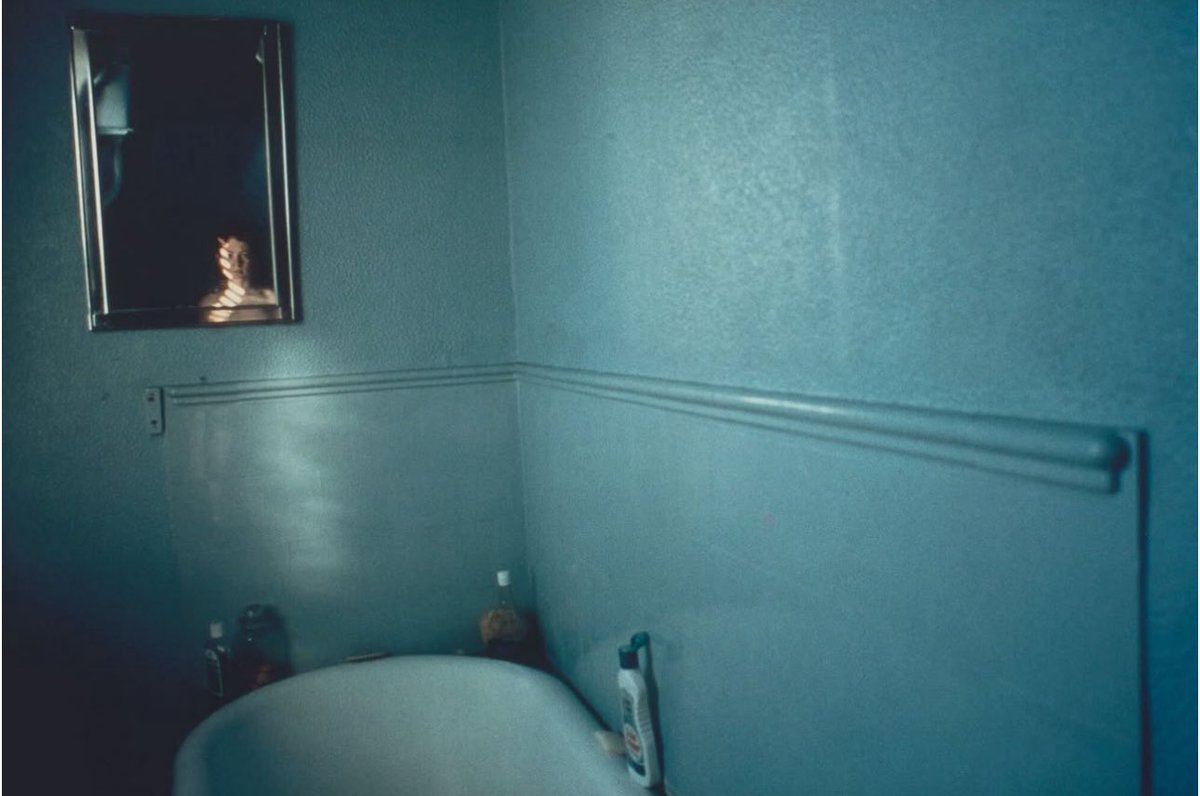
Nan Goldin, Self-Portrait in Blue Bathroom, London (1980)
Though I’m becoming increasingly picky about my reading choices, that didn’t stop me in 2025 from mostly following my nose – and allowing for books to choose me rather than the other way around. I made no concrete plans but still managed to read some books that had long been on my list and some marvelous new surprises. Highlights and more below.
Three Big Books
Three fat tomes structured my reading year. First was Thomas Mann’s The Magic Mountain (1924, trans. John E. Woods), the tale of the young Hans Castorp, whose brief visit to a tubercular relative in a sanitarium in the Swiss Alps turns into a long-term stay when he is trapped there after his own diagnosis. To read this book is to go on a long journey, arduous at times and tested by low oxygen, but offering spectacular views, inner alpenglow, and snowy literary heights nothing short of thrilling (okay, okay, enough of that). It is a deeply strange book, which Mann refers to it in his preface as a kind of fairy tale, and also a great one, borrowing freely from other models but prescient regarding both history and literary form. The near linear narrative, obsessed with time, teeters on boring the reader, breaks into a few background chapters, devotes 200 pages to three weeks, takes 500 to speed through the next seven years, then abruptly leap-frogs more years, indulges in dialectical (even trialectical) philosophical conversations, and near the end keeps introducing important characters into this European antechamber on the eve of World War I. An unnamed omniscient narrator occasionally interrupts to use the royal “we” and reference his own anxieties, which readers may share, Mann’s anticipatory novel serving as a kind of measuring stick between its time and our own. [Ed. – Yes, it is a truly great book.]
Little of the Dickens I had read prepared me for Bleak House (1853). This grand conception, capacious and constantly surprising, forming an indignant portrait of a city and country, roars for something to be done about poverty and injustice, pleads for beginning the world anew. Bleak House also seems a kind of spring, irrigating the literature that would follow it, anticipating modernism and some of the later movements of 20th century literature (the influence on Joyce, for example, is clear). [Ed. – Say more!] Even the often dismissed-as-novelty instance of human combustion, near the exact center of the book, comes across as exploding the hinges. To the right and left are human splatter, the human stain and residue, presented in a gem of literary black comedy. Joining a friend’s book club when I learned that Bleak House was on the menu, I was dismayed to find some who viewed Esther Summerson as merely a saccharine goody two-shoes. Is she not one of the great characters in literature? [Ed. – She is.]
A reader acquaintance in town for an evening mentioned Jon Fosse’s Septology (2019-2021, trans. Damion Searls). I’d read one Fosse work and had no intention of reading more, but Septology had other ideas: from a box of books I spied on the sidewalk the following morning, a pristine copy offered itself up, and I quickly found myself needing to read it each evening. Septology’s three novels form a triptych, the three sections of the central book flanked by two sections in each in the first and third novels. “The Other Name” in the first novel’s title is the same as the first name, Asle, held by both the narrator, a painter, and another Asle, a despondent alcoholic, both living alone near Bergen, one with his paintings and memories and the other with his bottles and memories. One scarcely knows where one Asle ends and the other begins, these doppelgängers, manifestations perhaps of divergent and not-so-divergent paths in the same life. It’s a nifty narrative device: the reader wanders in and about the one and/or two Asles and even more variations on the name, including Ales, the painter’s late wife, and Asleik, his neighbor. Past and present mingle. The discursive repetitions of Asle’s narrative seemed like the looping curlicues in a Cy Twombly painting: thoughts turn back on themselves, run on the same tracks for pages, return like waves, new and familiar. The frequent absence of page and paragraph breaks and the total absence of periods further a narrative relentlessness, as though we’re listening to an extended monologue, even when two people speak. [Ed. – Gotta say, that sounds dismayingly hard!] Ruminations range freely, from quotidian minutiae to explorations of art and faith, from meditations on social responsibility to the virtues and vices of solitude. A Nordic coldness blows through Fosse, but I came away from Septology knowing I’d encountered something new, unforgettable, and, in another iteration of hazy identities, now a part of me.
Playing with History
I was surprised to find so much historical fiction—not a genre I often deliberately seek out—among my standout works from 2025. Here they are, each approaching history in its own inimitable way.
Manuel Mujica-Lainez’s Mysterieuse Buenos Aires (1950, French trans. Catherine Ballestero) uses 42 fictional vignettes, in chronological order, to relate the history of Argentina’s largest city. A well-known translator from Spanish to English once said Mujica-Lainez was the author whose works they most wanted to see in English, and as a fan of Bomarzo (recently republished by New York Review Books for the first time since it appeared in English in 1969), I was thrilled to find another of his works, even if in French. Mujica-Lainez daringly pushes borders by fusing fact and fantasy, relying largely on figures from history’s margins, never passing up the opportunity to make a scene flourish in a dense riot of glorious language. The book opens in 1536 with a Boschian hellscape of famine and guerilla ambushes as the native population greets the Spanish invaders and continues through to 1904. I especially loved the longest tale, an “autobiography” by a tattered edition of Bernardin de Saint-Pierre’s roman à l’eau de rose, Paul et Virginie, as it gets passed along from Europe to the New World.
Anja Wilner’s 2024 Year in Reading post sent me to Christoph Ransmayr’s The Terrors of Ice and Darkness (1984, trans. John E. Woods), in which fiction and historical documents relating to an ill-fated 1872 Arctic expedition [Ed. – is there any other kind?] merge into an obsessive account of explorers confronting the elements. A parallel narrative follows the story of a young Italian fixated enough on the 1872 effort to book passage on an Arctic research ship in 1981, only to vanish mysteriously once back on Spitzbergen. The unnamed narrator is himself obsessed with the Italian’s disappearance. Various texts propel the narrative – logs, letters, lists, diary excerpts, tales of other expeditions, failures, vanishings – accompanied by black & white images. The overall effect is bewitching, as Ransmayr uses the explorers’ own words to probe their motivations, as shifting as the ice: a try for the pole, discovery of new lands, fame for the homeland, a promised payout. But the terrors of ice and darkness surge forth everywhere. Frostbitten-hands-down the most affecting work I’ve ever read on polar exploration.
A past Year in Reading post by Brad Bigelow led me to Thornton Wilder’s The Ides of March (1948), as superb as Brad had promised, standing above most contemporary American novels in its densely researched, inventive treatment of historical material that expands the epistolary form to incorporate everything from mandates by Caesar to clandestine notes passed between conspirators to graffiti on a Roman wall.
Adam and Eve in Paradise, by Eça de Queiros (1897). What a treasure, this 55-page novella by the wonderful de Queiros, translated into English for the first time by the wonderful Margaret Jull Costa. De Queiros’s take on Genesis has ape-like Adam sliding down from a branch “on the twenty-eighth day of October at two o’clock in the afternoon,” and had me laughing throughout, astonished that no one else seems to have approached such an absurd creation myth in such an inside-out, satirical manner. I gave out copies to friends like candy.
My Italian discovery of the year was Sicilian writer Annie Messina in The Myrtle and the Rose (1982, trans. Jessie Bright)and Le Palmier de Rusafa (1989, French trans. Jocelyne Sephord, unavailable in English), two of three novels Messina wrote, all towards the end of her long life (the third remains untranslated). Though the characters and locales differ, the novels tell similar tales of a Middle Eastern warlord developing an intense relationship with a rescued slave boy. The rather spare Myrtle seems almost a draft, sowing seeds that in Rusafa blossom into an extravagantly exotic baroque masterpiece. This is extraordinary, riveting fiction, fiercely red in tooth and claw and shrinking from nothing. [Ed. – Intriguing!]
Other Italian Journeys
You, Bleeding Childhood, by Michele Mari (2009, trans. Brian Moore) left me embarrassed that I’d never before heard of Mari, apparently among Italy’s living literary treasures. The 13 tales here center on characters who encounter literature at a young age. In “The Black Arrow,” the narrator steals his father’s copy of Stevenson’s novel of the same name, then is thrust into a moral conundrum when his father returns from a trip bearing another copy of the book as a gift. The child’s discovery of textual differences due to the gift being a different translation opens a world. In “Eight Writers,” the child’s obsession with sea adventures by eight famous authors encounters a case of mal-de-mer when he begins to mark their stylistic and thematic differences. In a favorite piece, “The Covers of Urantia,” Mari considers the impact of cover art, as his young reader reminisces on the covers of a popular series of horror magazines. Never let it be said that you can’t judge a book by its cover. Terrific stuff.
L’Île des âmes (The Island of Souls), by Piergiorgio Pulixi (2019, French trans. Anatole Pons-Reumaux):a mystery of the “Sardinian Giallo” genre, concerning the reopening of a couple of cold cases involving ritualistic murders of two women following the more recent disappearance of another. The twist is that the cases are now being investigated by two women detectives, seemingly as an effort to sideline them. One might suspect the author of trying to be Sardinia’s answer to Sicily’s Andrea Camillieri, but Pulixi seems after something different: I was transfixed by his panorama of Sardinian culture, geography, and centuries-old mysteries – a great introduction to the island as well as the first novel in a series.
Other Italian gems: Behind Closed Doors: Her Father’s House and Other Stories of Sicily, by Maria Messina (Annie’s aunt) (1909-1928, trans. Elise Magistro), memorable tales of the rough lives of Sicilian village women in the early 20th century; Ignazio Silone’s Fontamara (1933, trans. William Weaver) featuring impoverished villagers wrestling defiantly with a Fascist landowner diverting their water for his own uses; a timely reread of Silone’s The School for Dictators (1939, trans. William Weaver), a quasi-novel/political treatise in which an American Presidential aspirant travels to Mussolini’s Italy to learn how to import fascism to the U.S.; Vincenzo Latronico’s bestseller Perfection (2022, trans. Sophie Hughes), a biting treatment of today’s digital nomads which, as a portrayal of work culture, brought to mind Arthur Miller’s Death of a Salesman; the first volume of self-described “leader of strange dolts” Ser Giovanni Fiorentino’s Il Pecorone (The Big Sheep, 1378, trans. W. H. Waters), a Boccaccio impersonation with infectiously fun tales stitched together by the dopiest of framing stories: two young lovers meet each day, tell one another a story, then slink off after this literary foreplay; the metafictional delights of Giorgio Manganelli’s To Those Gods Beyond (1989, trans. Marvin McLaughlin), from which I learned that while fiction is a prison, one can always invent a horse to make one’s escape; and finally Daniele del Giudice’s A Fictional Inquiry (1983, trans. Anne Appel), which I discovered the day after dreaming about an earlier del Giudice novel I’d read years ago only to find this one later in the day in a bookshop. [Ed. — !] To my further astonishment, A Fictional Inquiry pursues Italian critic Roberto Bazlen in a clever exploration of how one might have an outsized influence on literature without ever having published a thing.
“American” Literature
After all these decades I finally got to another Wilder in addition to Thornton above: Laura Ingalls, in Little House on the Prairie (1935). [Ed. – Genuinely curious how you managed to miss them in childhood, Scott!] I admired Wilder’s knack for creating limpid scenes using only the briefest descriptive sentences, as when the family reaches the grassland and young Laura sees that “In a perfect circle, the sky curved down to the level land, and the wagon was in the circle’s exact middle.” For all the mockery generated by the related TV series, Little House struck me as practical and even “woke” to an extent that a lot of reactionary parents might miss (to the benefit of their bookworm children). [Ed. – Now read Eula Biss’s essay “No Man’s Land.”]
U.S.A., A Dramatic Review, by Paul Shyre and John Dos Passos (1960): I read John Dos Passos’s U.S.A. Trilogy decades ago, completely oblivious to the existence of this stage adaptation that compresses 1,000 pages into a mere 75. This small marvel of theatrical writing nonetheless manages to convey the sound and sense of the trilogy, including newsreel footage in the performance, and features several striking scenes, in particular a magnificent monologue by Isabella Duncan.
Thanks to Alta magazine’s assessment of 25 great works of California fiction, I read two that were new to me. Mecca, by Susan Straight (2022) was an especially welcome discovery, its entwined stories linking diverse communities of Southern California around the nexus where Los Angeles, Orange and San Bernardino counties meet. The Alta piece also prompted me to take down from the shelf an unread copy of Thomas Pynchon’s Vineland (1990), discovering only after finishing that it had inspired One Battle After Another. It’s easy to see why this narrative would resonate today; Vineland’s outlandish tale of a young woman coming to terms with her vanished mother, a radical activist from the 1960s, takes a long view of the competing tensions between American democracy and the forces of reaction taking aim at it. I also enjoyed Christopher Tradowsky’s Midnight in the Cinema Palace (2025), a solid contribution to literature about San Francisco in its glimpse into the culture of the Castro neighborhood in the 1990’s.
Passing, by Nella Larsen (1929): How had I missed the boat on this unexpected window into the world of Black women able to “pass” for white? Reading it made me feel a gaping hole in my knowledge of American literature had begun to be filled. Indispensable. Thanks, Dorian! [Ed. – Another satisfied customer!]
The most compelling American fiction I read last year was, um, British: Cahokia Jazz, by Francis Spufford (2023). Spufford’s stunning conception is the star in this speculative allo-historical thriller in which First Nations people govern a semi-autonomous U.S. state located around the city of Cahokia, today ruins of what was once the largest city in North America, but in Spufford’s vision an important 20th-century metropolis eclipsing the tiny village of St. Louis across the river. The book brilliantly uses a popular genre to explore race, religion, and the construction of history, and adds to an expanding list of great works about the United States not written by U.S. authors. Thanks again, Dorian! Iksho Itala! [Ed. – A pleasure!]
Odds and Ends
Aside from scattered poems, Raymond Radiguet’s two novels, Le Bal de Comte Orgel and Le Diable au corps, comprise his entire literary output. But what an output! His death at 20 drew thousands to his funeral; his patron, Jean Cocteau, was said to be inconsolable for years. These two tales, each involving a transgressive love affair between an adolescent boy and a married woman, burn with life, wit, insight, and defiant assertion of youth. Le Diable au corps, with its betrayed husband a French soldier, so affronted French nationalists after World War I that even a film version of it appearing decades later was met with indignation.
Someone here last year mentioned Sally Rooney’s Conversations with Friends, so I picked it up and read this class-conscious dissection of an affair with admiration of her keen ability to needle in under people’s rationalizations and excuses and – like her occasionally self-mutilating narrator Frances – get under the skin and draw blood. [Ed. – Good description!]
The Prague Coup (2018), by Jean-Luc Fromenthal and Miles Hyman (trans. Lara Vergnaud), the only graphic novel on my list, recounts the story of Graham Greene’s trip to Vienna in 1948, ostensibly to consult on Carol Reed’s film The Third Man. Fromenthal unveils the story of Greene’s involvement in intelligence work and reframes The Third Man in its intelligence context as in part a coded message from Greene to double-agent Kim Philby. Bonus: the end pages sent me down a deep rabbit hole to learn about fascinating figure Elizabeth Montagu, Greene’s guide in Vienna, and to the remarkable film Four Men in a Jeep, shot in a Vienna still under rotating command by the U.S., U.K., France and the Soviet Union. [Ed. – This sounds great! First time I’m hearing of it.]
Perhaps my most moving re-read of last year was of Leo Tolstoy’s The Death of Ivan Ilyich, this time in the magnificent Peter Carson translation (Carson died a mere two days after finishing it).
Vivian Maier, Jul, 1953
Odder Odds and Ends
I’m not sure where I draw the line between books I consider odd and those I don’t. I read the first book of Solvej Balle’s On the Calculation of Volume (2020, trans. Barbara J. Haveland), about a woman trapped in a single day that endlessly repeats, and did not think to put it in this category. But Quebecoise writer Gabrielle Filteau-Chiba’s feminist eco-thriller Sauvagines (2022, available in English translation as Feral) swept me up into discomfiting aspects of an otherwise straightforward tale of a young woman serving a season as game warden in remote Kamouraska and finding herself squared off against a vicious, likely murderous, poacher. [Ed. – Ordering now!]
The Gardener Who Saw God, by Edward James (1937), stuck out no doubt because its author did. This too-hefty work by one of the patrons of Surrealism, a British lord who ended up in the jungles of Michoacan where he built his own surreal folly garden, Las Pozas [Ed. – This sentence has already contained many improbable things—where will it go next?], may not be stellar as literature, but it contains at least two major attractions: a fictionally-tweaked glimpse into the early world of Surrealism (Magritte, Dalí and others were guests at James’s estate), and a stunning spiritual conversion scene with the force of a Blake painting. I learned of the novel’s existence from Eve Babitz, perhaps one reason the book proved nearly impossible to find.
More solidly in the oddities category, Poe’s The Narrative of Arthur Gordon Pym of Nantucket (1838) had trailed me since university, when those who had read it seemed dismissive. My expectations were not high, but I ended up deliriously checking off the oddities of this bizarre, messy tale of a ship stowaway’s adventures. One lengthy passage takes place entirely in the dark of a ship’s hold (I kept trying to imagine it on a stage). There is a magnificent description of water that evokes all the magic water can evoke. But with its frequent alterations of black and white seeming to anticipate Melville’s Moby Dick and a disturbing set of scenes pitting the ship’s crew against “savages,” the novel’s treatment of race makes it one of the strangest literary artifacts of American slavery and racial phobia.
Perhaps the oddest book I’ve ever encountered [Ed. — !], David Lindsey’s A Voyage to Arcturus (1920) begins in sordid circumstances on Earth and moves to other such circumstances on Terra, a planet orbiting the binary system of Arcturus. In a confusing sort of pilgrimage, its louche main character sets out across the planet in search of illumination (think: the quest in Mount Analogue meets the ghastliness of M. P. Shiel’s The Purple Cloud), encountering surprising planetscapes, a plethora of strange beings, several impossible colors to which Lindsey gives names, and even a population of creatures who use gender-neutral pronouns. The violence of the book, however, came as a shock; I could not help but think of it as an oblique reaction to World War I. [Ed. – Readers, this is the kind of content you don’t get just anywhere.]
Good Trouble
Several works resonated more directly with the challenges of our times and served to ground and put into perspective whatever else I read.
Vasily Grossman’s Everything Flows(unfinished, last worked on in 1964, trans. Robert and Elizabeth Chandler), concerning Stalin’s purges and the incarceration of millions, may be less powerful than his two-volume World War II magnum opus, Stalingrad and Life and Fate, but incisively depicts the paranoid totalitarian state that resulted in informers and victims, seen through the lens of one such victim upon his release after 30 years in the gulag.
Étienne de la Boétie’s Discours de la servitude volontière (Discourse on Voluntary Servitude – 1548), a brief disquisition on why human beings voluntarily surrender agency to accept the tyrants who oppress them, seemed as timely as ever. Moreover, it contains some of the most lucid prose I have read in French, especially impressive given that de la Boétie, bosom friend of Michel de Montaigne, wrote it between the ages of 16 and 18.
Finally, Crooked Cross (1934) by British writer Sally Carson, who lived in Germany during the beginning of the Third Reich, unfurls as though in real time. Carson zooms in on the Kluger family of Kranach, an alpine village above Munich, the novel playing out like a granular study of how quickly and corrosively Nazi fanaticism took hold: the novel takes place entirely within the six months following Hitler’s assumption of power. Popular upon its publication, the book vanished until the recent discovery of a single extant copy. Thanks to Persephone Books, Carson’s novel contrasting acquiescence and resistance to totalitarianism has been revived – and at the right moment. [Ed. – I have dallied so long in putting up this post that Persephone’s reissue of the sequel is now available…]
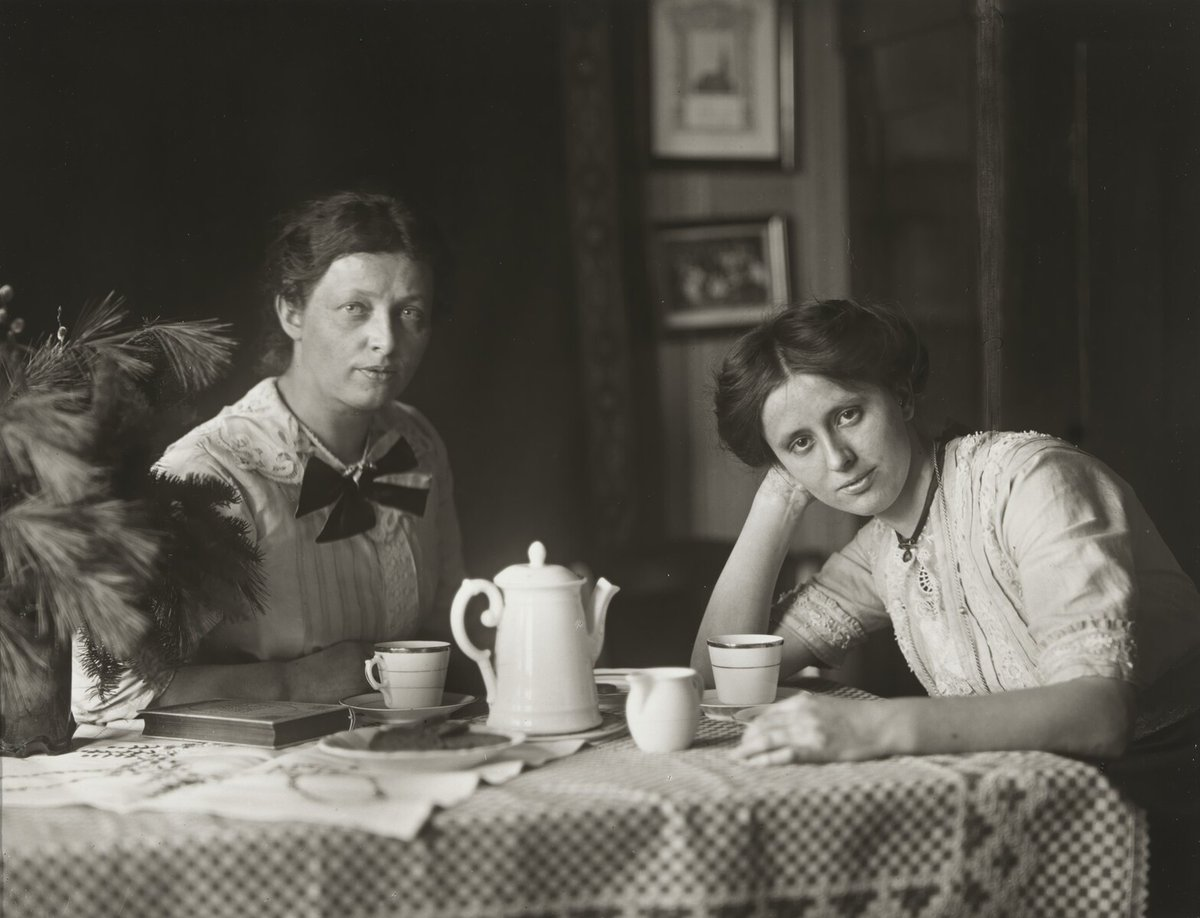
August Sander, Small-Town Women (ca. 1913)
Thank you for reading, safe passage and felicitous literary adventures to all in 2026. [Ed. – Thank you, Scott! So many riches here.]
Regular readers will know that for the last several years I’ve solicited Year in Reading reflections from friends and trusted readers. As we’re well into February, I’ve scaled the project back considerably this time, but quality takes quantity every time… Today’s installment,his fifth, is by James Morrison, reader extraordinaire. James lives and works in Adelaide, on unceded Kaurna territory.
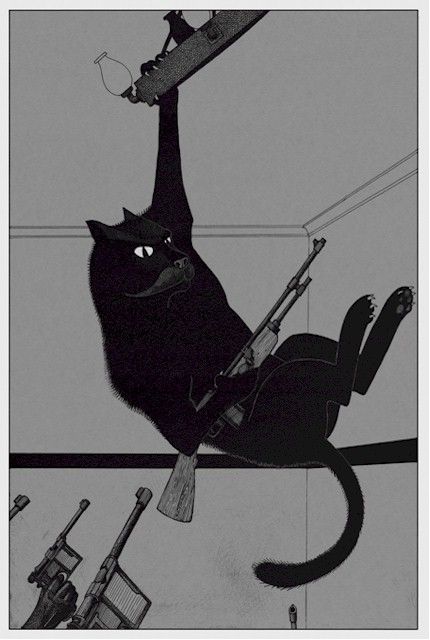
Charlie Stone, Behemoth from ‘The Master & Margarita’ (1999)
Working out which books to write about for these discussions is always fraught—there are easily another twenty great books I could have raved about, but neither you nor I are made of infinite time. I’ve tried to narrow things down to a few broad categories, but even then a few books would not be restrained by such, so they’re tacked on at the end.
In a couple of other people’s year-end reading round-ups on Bluesky, they talked not about what they’d read, but why they’d read it—what had prompted them to buy or pick up the books they ended up reading. It was strangely interesting, at least to a big horrible nerd like me, so I’m including that here for my own choices. Feel free to pass over it with glazed eyes. [Ed. – No way! I think people love that stuff. I know I do.]
RAMUZ
My most compelling new-to-me writer discovery of the year was Swiss novelist Charles Ferdinand Ramuz (1878–1947). The three of his books that I read all have the same basic premise—Something Horrible Happening in the High Alps—but go off in very different directions. Great Fear on the Mountain (translated by Bill Johnston) was what got me hooked first: a historical novel where a group of men set off to take the village’s flock up through a mountain pass to find feed, and then everything goes to hell. It has all the rhythms of an 1980s horror movie, but is beautifully written and was first published in 1926. Derborence [When the Devils Came Down] (translated by Laura Spinney) features an avalanche and its spooky survivor, while Into the Sun (translated by Olivia Baes and Emma Ramadan) is an impressionistic, atmospheric early climate change novel. As the Earth slowly falls into the sun, the snows melt, the mountain lakes boil, and society collapses into violence and despair.
For some reason 2025 became a year in which I started, and sometimes finished, a number of big fat epics. [Ed. — Always big and fat, the epics.] Look at me, aren’t I tough?
Miklós Bánffy, The Transylvanian Trilogy/The Writing on the Wall (translated by Katalin Banffy-Jelen and Patrick Thursfield): I had actually read this massive Hungarian modern classic before, some quarter-century ago, but remembered very little other than it was hugely enjoyable. If anything it was even better this time around, now that I am older and theoretically wiser. Aristocratic Hungarians in Transylvania scheme and gamble and party and fuck, fighting for their rights as a minority in the Habsburg Empire while simultaneously being unable (for the most part) to see how they are simultaneously repressing and neglecting the Transylvanians whose land they rule. And all the politicking and manoeuvring takes place as the Great War draws closer, ready to sweep their whole world away. It’s like a vastly more incident-packed counterpoint, set at the other end of the Empire, to one of my other favourite books, Musil’s The Man Without Qualities. [Ed. – James and I as always on the same wavelength…]
Why: Over recent years I’ve been going back to a number of books I remember as brilliant, to see if they actually are. For the most part, fortunately, they have been.
Solvej Balle, On the Calculation of Volume (translated by Barbara J. Haveland, Sophia Hersi Smith and Jennifer Russell): Happy to say I fell for the hype and read the three books of this septology so far available in English. It’s a closely observed and beautifully written variation on the “Groundhog Day” premise of being stuck reliving the same day endlessly, but adding more and more wrinkles and complexities as the looping time passes. Fortunately this seems to be doing extremely well in English, so there’s every chance that, assuming Balle finishes the series, we’ll get to see all of it in translation. If she doesn’t, you’ll see me frothing blood in a tempest of rage.
Why: Though not original, the premise is fascinating, and I fell for the hype.
Dorothy Richardson, Pilgrimage: I read the first four books of this 13-volume modernist masterpiece, and while each book individually was excellent, the cumulative effect of this subtle, witty and awkward fictionalised autobiography is even more impressive. I hope to read the rest of this massive thing in 2026.
Why: I’ve wanted to read this for decades, but Virago’s treatment of their Modern Classics heritage being what it is, it’s never been possible to get all four volumes of the collected edition. Fortunately, Brad Bigelow of Neglected Books published his own edition, and I finally got my disgusting paws on it.
Len Deighton, the Bernard Sampson series: In terms of pure, sardonic, exciting and bleak reading pleasure, it’s hard to go past this trilogy of trilogies about the much put-upon spy Sampson, his extremely complicated wife, and his infuriating superiors. I still have the last three books to go, so that’s another treat in store for 2026, assuming any of us live. [Ed. – James. A little less truth-telling, please. As to these books, I’ve only read the first three so far, but they are terrific.]
Why: I’d only ever read a couple of Deightons in the past, and they were excellent, so why it took me until now to realise just how good he is and just how pleasingly extensive his back catalogue is must stand as a testament to my general dimwittedness.
C. J. Cherryh, The Morgaine Saga: Extremely futuristic science-fiction masquerading as swords-and-magic fantasy, this trilogy of novels (there’s a fourth, published much later, which I have yet to get) is so richly imagined, and so cleverly paced and written, that it makes you despair about how crap most of its genre competition remains. Outcast prince, magical witch queen, brutal politics, war, extremely difficult moral choices, aliens; the whole shebang.
Why: Every now and then I get the urge to read some fantasy to recapture the kick it used to carry when I was a teenager. Sadly I am no longer a teenager with a teenager’s standards, and almost every time I give up on whatever overpraised nonsense I’ve been tricked into reading. This was one of the rare exceptions.
Homer, The Odyssey (translated by Emily Wilson): Only a single (big fat) book this time, but one I haven’t read in 20 years, and the newish Wilson translation was calling to me. And it’s great! I’d forgotten just how oddly structured the book is (the famously interminable journey home of the hero taking up a relatively small part of the story), and how mental some of the developments. And apparently, she’s going to retranslate it and publish a whole new version? [Ed. – Seriously???] Seems like sheer madness to me, but I guess that’s what working in academia does to someone. [Ed. — Laughs bitterly]
KILL ALL NAZIS
Why: All the worst people seemed to be enraged by Wilson’s translation, and her gender, so I could not resist. [Ed. – Yeah, those guys suck.]
Charlotte Mano, From the Mythologies series (2021)
All Nazis must fuck off and die. Here are some books about what they were like, and how they were dealt with, first time round…
Marie Chaix, The Laurels of Lake Constance (translated by Harry Mathews): Astonishingly good in English, and the French original is apparently even better? How can this be? An autobiographical novel from the point of view of the daughter of an enthusiastic French Nazi and traitor before and during WW2. Unsensationalised, elliptical, and marvellous.
Why: It looked both pretty and interesting in the bookshop, and that’s all I needed to see.
Uwe Wittstock, Marseille 1940: The Flight of Literature (translated by Daniel Bowles): A day-by-day, sometimes hour-by-hour, account of the lives, desperation, plots and betrayals of the huge array of German and Austrian writers and artists who fled the Nazis to France, only to have France fall soon afterwards. Lucid and utterly fascinating.
Why: Wittstock’s previous book, February 1933: The Winter of Literature, did the same thing for the month the Nazis came to power, so there was no way I was not going to read this follow-up when it appeared.
Grete Weil, Last Trolley from Beethovenstraat (translated by John Barrett): An obsession with a lost friend taken by the Gestapo in Amsterdam spills into the post-war life of a man now living in Germany. He marries the man’s sister in a confused, guilt-fuelled attempt to try to bring him back to life. Complications ensue, as you might expect. Rich and compact, and highly recommended. [Ed. – More on Weil here…]
Why: If I see a book in the Verba Mundi series, I buy it. It’s an eclectic but extremely well-selected library of translated literature from all over the world.
Lorenza Mazzetti, The Sky is Falling (translated by Livia Franchini): Another fictionalised memoir, about a pair of sisters sent to stay with Jewish relatives in Tuscany—relatives then slaughtered by the Germans in 1944 (Mazzetti always believed they were killed for the Nazi-perceived crime of being related to Albert Einstein). The beautifully observed child’s viewpoint contrasts with the horrors of the confused world she inhabits, and the book’s brevity gives it the intense kick of all the best novellas. [Ed. – Fascinating! Ordering now…]
Why: This was the first book released by a new feminist publisher, Another Gaze Editions, whose output focuses on the work of women filmmakers like Mazzetti. It’s a hell of a promising way to kick things off.
Niaz Uddin, Airplane Home in Hillsboro, Oregon'(2017?)
HOPELESS FUTURES
Jane Rawson, Human/Nature: Rawson is a fine and unusual Australian novelist whose first book was a manual on climate change survival. In this non-fiction return she takes a simultaneously despairing and bleakly funny look at the horrible state of things, what it all means, and where it’s all leading. None of it’s good, but at least it’s wonderfully written. We still have good prose, if nothing else.
Why: I love the author and would buy anything she wrote.
Jack Womack, Random Acts of Senseless Violence: Somehow I missed this in 1993 when it first came out, more fool me. In the convincing form of a young girl’s diary over several months in (then) near-future New York as everything falls apart under gun-wielding late-stage capitalism, it’s amazing how much this gets right, yet it’s also a strangely analogue vision of the future. It also posits a series of successful US presidential assassinations, and sadly the real world seems unable to provide any of those.
Why: It’s now an established science-fiction classic and I needed to read it.
Bradley Somer, Extinction: A ranger tries to protect the last living bear in North America from poachers. Gripping and downbeat and all-too believable. [Ed. – Why are these all so depressing???? *re-reads section heading* Oh.]
Why: Impulse remainder purchase that panned out extremely well.
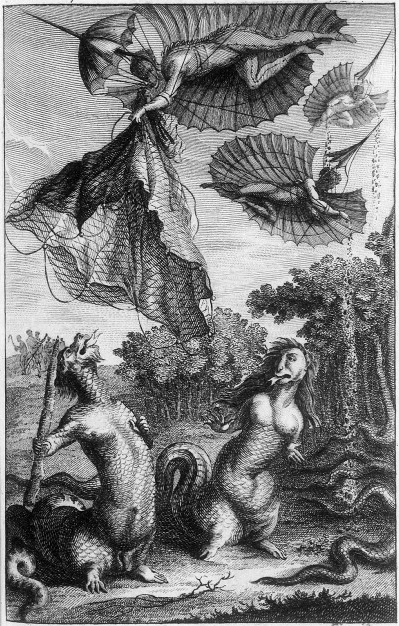
Nicolas-Edmé Restif de la Bretonne, ‘The Serpent-People’ from ‘Découverte Australe par un Homme Volant, ou Le Dédale Français’ (1781)
PARENTS AND OUR MYRIAD FAILURES
Krystelle Bamford, Idle Grounds: Astonishingly good debut in the collective first person, told by a group of unmonitored children at a family party as they get bored, muck around, encounter something wrong in the garden, and go searching for one of their number who vanishes. Spooky, funny, original stuff. I couldn’t recommend this book more highly, to be honest.
Why: The cover of the UK edition, with a picture of roped-together monochrome children lost in a field of fluorescent green, was enough to convince me. [Ed. – I wish more people talked about how book covers influence their buying.]
Violette Leduc, Asphyxia (translated by Derek Coltman): A well-named book if ever there was one, this dense little novella details the suffocated life of a young girl with an unloving mother in rural pre-War France. But, flinty matriarchs aside, it’s also a richly drawn world of natural wonders and discoveries.
Why: I only discovered Leduc in the last few years, and she was such an extraordinary writer. This was published as part of a very small collection of French classics by female writers by Gallic Books.
Adrian Nathan West, My Father’s Diet: A wonderful book that takes some well-known signifiers of modern American fiction (hollowed-out suburbs, emptying malls, masculinity in crisis, etc etc) and does new and strange things with them. A depressed son learns his father has, out of nowhere, become an obsessive bodybuilder, determined to win the Body You Choose competition. The characters are never caricatures, and it’s extremely funny despite the quiet desperation of it all.
Why: One of the many excellent books put out by And Other Stories, and this is from before they went for their current ugly typographic covers. [Ed. – James! I love those covers!]
GRAPHIC NOVELS
Lee Lai, Stone Fruit and Cannon: Australian (but now based in Canada) artist Lai’s two graphic novels are both minor masterpieces, and genuinely full novels in complexity and subtlety. Sad and perceptive dissections of failing relationships, parenthood, faltering elders, exploitative friendship, and being part of the Chinese diaspora.
Why: This review in Meanjin, an 85-year-old Australian literary magazine currently being put to death by the witless timid bureaucrats who cower in terror of angry letters from the Zionist lobby and who are ruining pretty much all the arts in Australia at the moment.
Emily Carroll, A Guest in the House: A seriously Gothic tale of madness, downtrodden femininity and hapless stepmotherhood, drawn with Carroll’s usual visual flair and attention to detail.
Why: I’ve raved about Carroll before, and love all her work. Somehow, to my annoyance, I didn’t even know this book, published in 2023, existed until I saw a copy a couple of months ago. My spies failed me. [Ed. – Maybe they were busy failing to assassinate US Presidents.]
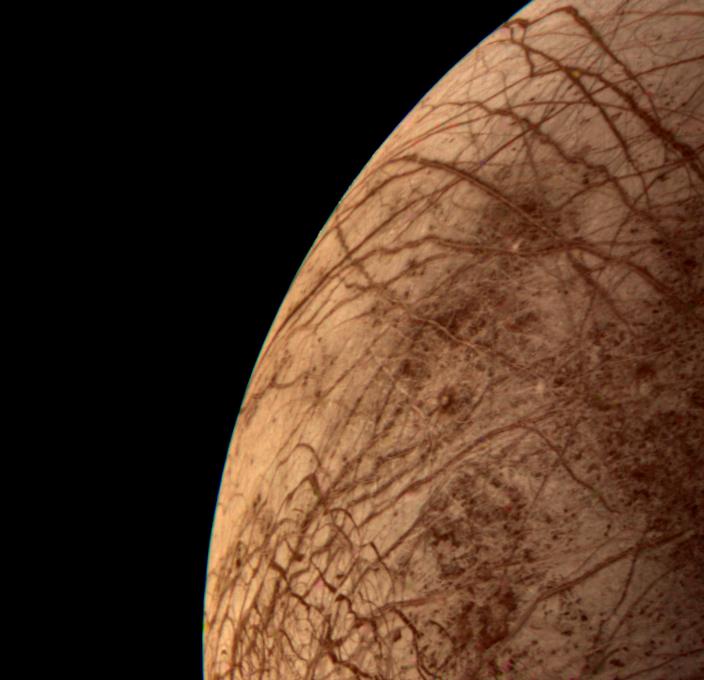
VOYAGER 2 – Europa (1979)
UNCATEGORIS[ED/ABLE]
Mariette Navarro, Ultramarine (translated by Eve Hill-Agnus): Wonderfully unsettling novel about a woman captaining a cargo ship with a male crew. In the middle of the Atlantic they stop for everyone to have an illicit swim—and when everyone climbs back on board there’s one extra person.
Why: The Deep Vellum edition (already a recommendation) has a great cover with a vast cube of ocean on it, and I am only weak flesh.
Li Qingzhao, The Magpie at Night (translated by Wendy Chen): A beautiful collection of the complete surviving poetry by one of China’s greats, from the Twelfth Century. I mean, get a load of her perfect description of a lazy, drunken evening, from ‘As in a Dream’:
Remember that day
spent on the stream,
watching the sunset glaze
the pavilion.
So drunk, we could not find
our way back.
It was late when we had enough.
We turned the boat around
and were caught, accidentally, in the deep
tangle of lotus roots.
Rowing through, rowing through –
startling, from the banks,
herons.
Why: Having only read a couple of her poems in anthologies, it was a pleasure to find her complete works available in English.
J.M. Coetzee & Mariana Dimópulos, Speaking in Tongues: If you’re at all interested in translated literature, and in the process of translation itself, this is a very rewarding book. Two novelists and literary translators discuss what translation is, what it does, how it works, and a peculiar but intriguing project they undertook (and which was foiled by commercially minded publishers) to make the translated Spanish text of one of Coetzee’s novellas the “original” version of the book.
Why: If the topic is this interesting and the two writers involved this good, what sort of a fool would I be to not read it, I ask you?
[Ed. — A fool indeed. As is anyone who reads this and doesn’t head to their local bookstore or library ASAP on the hunt for some of these recs. Thanks, James!]