A Shelf of Promises: My Starter Library

A recent episode of The Mookse and the Gripes podcast got me thinking. Hosts Trevor and Paul were joined by John Williams of the Washington Post (mensches one and all). John had proposed a fascinating topic: starter libraries. The idea was to imagine your response to someone who asked you for ten titles they absolutely had to have in their collection. Probably this person is someone new to literature, a teenager or a student, but maybe they are someone who used to read more than they do now and are looking to get back to that part of their life. What would you recommend?

The important part of the assignment, as I understand it, is that the person is asking you. They know you well enough (parasocially or otherwise) to trust your taste. They respect you enough to be curious about anything you recommend. But they’re not asking for your ten favourite books. Presumably you like the titles on your list. But you’re not just offering them out of personal predilection. You think of them as representative for aspects of literature that matter to you.

Personal but not only personal, might be one way of putting it. Or, in the words of the episode’s subtitle, your choices could be thought of as a shelf full of promises.

Do listen to the episode, it’s terrific. Great lists, fascinating insights into the recommenders. And sure to get you thinking about your own answer. That’s what happened to me: I set aside the laundry I was folding and jotted some notes on my phone, which I’ve now expanded into this list, complete with categories (and alternate choices, because ten books is not many books).

Candida Höfer, Bibliothèque Nationale de France Paris XXI 1998

Books to grow into but also to love when you’re young:

George Eliot, Middlemarch

The only novel in English for adults, Virginia Woolf famously said. Not sure what she meant, but doesn’t it sound good? Having reread it recently, I think you need to be middle aged (and thus an adult… hmm well never mind) to get the most from this story of English provincial life around 1830. But having first read it in college, I can also attest that Middlemarch hits for young people. As with any rich text, what you pay attention to and who you sympathize with shifts each time you read it.

Eliot is known for moral seriousness (maybe that’s why as stylistically different a writer as D. H. Lawrence was a fan), but Middlemarch is also surprisingly funny. Mostly, it’s supremely moving. It covers so much of life, and asks the big questions. What makes a good life? How can we live with purpose? How can we think of ourselves in relation to everyone else? Where do we fit into the web of life?

[Alternate choice: Leo Tolstoy, War & Peace. Never read it until about five years ago, but feel confident it dazzles as much at 20 as at 50. You want novelistic sweep? This one’s as big as Russia… Freemasons and wolf hunts and returns from the dead and slow-burning love affairs lasting across the decades: everything, really.]

Books that master close third-person perspective

Nella Larsen, Passing

Set in Harlem and Chicago in the late 1920s among a set of well-to-do light-skinned Black women who can pass as white, Passing is a great novel of queer frenemies. It hews closely to the perspective of a single character, Irene, whose orderly life as the mother of two boys and wife to a (dissatisfied) doctor falls apart when she runs into a childhood friend, the brave and dangerous Clare. Unless we attend to how events are only offered through Irene’s perspective, we are likely to miss how much the book asks us to question the judgments it only seems to offer.

[Alternate choice: Henry James, What Maisie Knew. In book after book, James wrote about people behaving badly. Yet even among this vast canvas of cruelty, this novel stands out: the people doing the harm are parents who use their young child to hurt each other and, of course, the child. In the preface to the New York Edition James explained that he chose to narrate the book in third person but to limit the perspective to Maisie’s often baffled but also wondering sense of the world in order to offer readers the extra pathos of being able to understand what she could not. It’s quite a trick.]

Books about the Holocaust

Primo Levi, If This Is a Man

If someone is asking me what books they simply must own, they’re absolutely gonna get one about the Holocaust. Hell, I could make them a whole list. But knowing that not everyone shares my fascination, I’ll stick to one of the earliest and most famous instances of Holocaust literature. (Levi composed part of it already while in the camps.) Like all memoirs, If This is a Man (known in the US under the travesty title Survival in Auschwitz) details its author’s particular experience—which took the form it did by his having had “the great good fortune” to have been deported only in 1944, when the turning tide of the war and subsequent internal battle among top Nazis meant that more deportees were selected for slave labour. That phrasing gives you a sense of Levi’s matter-of-fact irony. But something that distinguishes If This Is a Man is Levi’s decision to use “we” even more than “I”: he aims to give a sense of the structure and meaning of the collective victim experience, at least within a subcamp of Auschwitz.

[Alternate choice: Ida Fink, A Scrap of Time and Other Stories. Too little known among English speakers, but, happily, available in a terrific translation by Madeline Levine and Francine Prose, Fink’s heartbreaking stories depict part of the Holocaust most people don’t know about: the mass murder performed by the Einsatzgruppen in Galicia in the summer and fall of 1941. Fink couldn’t find a publisher for these stories until the 1980s; they were deemed of no interest. Another devastating failure on the part of literary opinion. Fink has been called the Chekhov of the Holocaust. Grotesque as this sounds, it’s accurate. Quiet and heartbreaking.]

Members of YIVO New York examine crates of books rescued from the Vilna Ghetto

Books about how to read books:

Roland Barthes, S/Z

Barthes spent a year reading Balzac’s story “Sarrasine” with some students. (Oh to have been in that seminar!) That labour resulted in this extraordinary book, organized around line-by-line readings of the source text, not, as critics usually do, to figure out what it means, but rather how it means. To do so, Barthes offers five “codes”—fundamental elements of realist fiction, of which “Sarrasine” is considered only as a representative example—that readers unconsciously rely on (typically by having imbibed many examples of the genre) in making the text intelligible. The codes are things like references to historical events, people, and places, or attributes and actions that cohere into what we call characters and, in the case of realist literature, think of as if they were people. Barthes Intersperses his step-by-step redescription of the Balzac story with theoretical meditations on the operation of the codes, which readers can extrapolate to other texts.

S/Z is tough. I probably taught it five or six times before I felt I had a real handle on it. But as Barthes says, it’s valuable to be able to distinguish between real and superficial ideas of difference. We might think that the best way to know about books is to read a lot of them. But if we do so without thinking about what underlies their intelligibility (i.e. what we need to be able to read them), then we are mere consumers, doomed to reading the same thing over and over. Only by reading one text over and over can real difference, that is the difference within the text, show itself—which in turn will make our other reading more meaningful. All of which is to say, the effort of tackling Barthes’s analysis offers big rewards.

[No alternate choice. S/Z for everyone.]

Books with pictures:

Alison Bechdel, Fun Home

Comics, graphic novels, whatever you want to call them are important to me, and I think any reader needs at least one example in their library. Such a rich form, so many gorgeous and moving texts to choose from. As with my Holocaust choice, I resisted the temptation to go niche here. Bechdel’s memoir of her relationship with her closeted, self-destructive, talented father deserves its fame. Probably more than any book I regularly taught, Fun Home elicited the strongest positive reactions in the widest range of students. Family disfunction runs deep. A great book about how books can connect people who can’t otherwise open up to each other—and how they can further separate them too. Funny, ominous, bittersweet.

[Alternate choice: Nick Drnaso, Sabrina. Dark, powerful. Reading it gave me a bit of the ick. And yet its subject matter just seems more relevant. I guess this is about the manosphere, except no one was using that hideous term at the time.]

Books of ideas [fiction]

Thomas Mann, The Magic Mountain

Sometimes I want a book that dramatizes the back and forth of thinking. In The Magic Mountain, Mann literalizes this by surrounding his protagonist, the well-meaning, hearty Hans Castorp, with some of the most indefatigable talkers ever to appear in a novel. The whole intellectual landscape of pre-WWI Europe is here (liberal humanist, communist, militarist, hedonist, you name it), and everyone battles for Hans’s soul, even as the former engineer mostly wants to desire a woman from afar, a woman who reminds him of a boy from his schooldays…

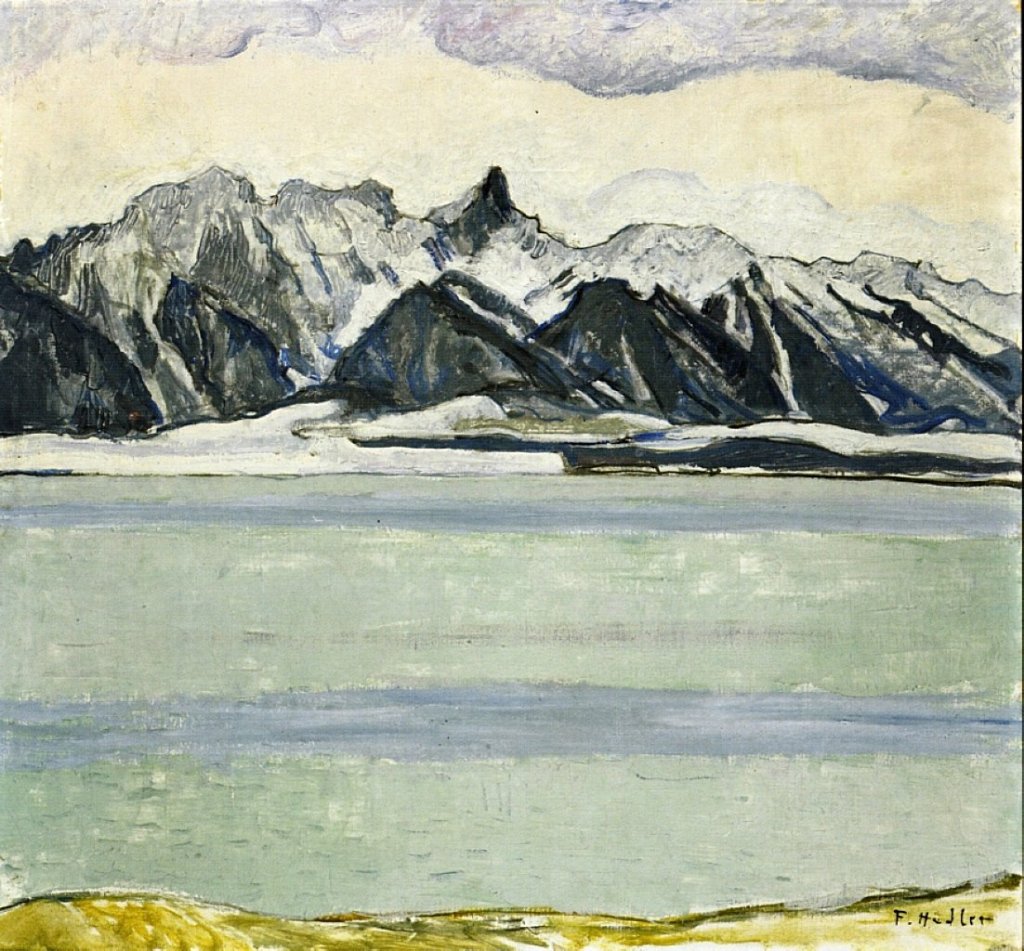
The other great thing about this book is how well it depicts Davos and environs. I’m a sucker for mountains and mountains in books. Bring on the snow!

[Alternate choice: Proust. Honestly, if you can only put one book in your starter library, choose this one. I assume it’s already there, but if not then get stuck into this deeply philosophical book, which has so much to say about perception, time, cruelty, and control over others.]

Books of ideas [nonfiction]

W. E. B. DuBois, The Souls of Black Folk

Every American should read it. But non-Americans should too. The idea of double-consciousness—the way a minority must measure themselves by the tape of the majority, as DuBois so memorably puts it in his first pages—explains so much of our contemporary sense of identity.

In addition to its ideas, Souls is a fascinatingly hybrid book, presumably stranger in 1903 than today. Each chapter is prefaced by a bar of music, often from the sorrow songs. Most chapters are essayistic, but some are fictional. Each is written in resonant cadence. Hasn’t dated much. Alas.

[Alternate choice: Hannah Arendt’s The Origins of Totalitarianism. Explains how Nazism and Stalinism came to be so accepted and do so much harm. Especially interesting for (1) its “boomerang” theory of imperial violence, in which what the metropole does in the colony comes back to bite it at home, and (2) its argument that modern antisemitism arose from the waning of Empire and the rise of nationalism. Hasn’t dated much. Alas.]

Monomaniac books

The strand from writers like Kafka, Knut Hamsun, or Robert Walser to someone like Lydia Davis, via the high point of Thomas Bernhard, has been enormously influential in the Anglo-American sphere. At this point, annoyingly so. (And weird, too, given that none of the most important precursors wrote in English.) But I get it because literature excels at tracing the vagaries of a mind, especially one spinning through reversals, paradoxes, and hobby-horses. A starter library should have an example of this sort of thing, and Bernhard might be the best. When the only thing that stands between a psyche adrift or worse is the chance that someone might respond to its voice—that’s when you’re in Bernhard territory. I’ve chosen The Voice Imitator because the title says it all. Read these 104 short texts to get a sense of Bernhard’s bitter, misanthropic, and, oddly, funny vibe.

[Alternate choice: I just named like five other writers!]

Funny books

P. G. Wodehouse, The Code of the Woosters

As implied in what I said about Bernhard, voice-driven books don’t have to be grim. They can make us laugh, whether from the gap between what the narrator claims and what we know, or the sheer verve of their style. The fun only increases when those narrators get embroiled in elegant plots. Wodehouse is the master of this terrirtory and everyone’s library is the better for including him. (I feel like he’s fading a bit from memory? Sad.) You can jump in anywhere—my entry point was the distinctly not-famous-but oh-so-representatively-titled Eggs, Beans, and Crumpets which baffled and delighted me at age 12—but if you’re at a loss start with this wonderful episode in the Jeeves and Bertie series, which Tim Waltz would enjoy, since it’s an early example of the “I condemn the fascists by unflinchingly stating how weird they are” school of responding to authoritarianism. (As Bertie says, appalled by the realization that the Saviours of Britain are simply grown men marching in black shorts: “how perfectly foul!”)

[Alternate choice: for an American version of this phenomenon, reach for Charles Portis, especially the marvelous True Grit.]

Books about crime

Dolores Hitchens, Sleep with Strangers & Sleep with Slander

Since at least Oedipus Rex, literature has used crime to understand fundamental concerns like identity, political organization, and moral value. Crime fiction can be smart, is what I’m saying. And it can also carry us away by inciting our desire to have enigmas explained. (Interestingly, it often makes us realize how much more compelling it is to ask a question than to answer it.) Like any genre, then, crime fiction satisfies at both the intellectual and emotional level. Having stayed with well-known titles so far, I’m diving deep for this last category. Not enough readers, even lovers of crime fiction, have read the mid-century American writer Dolores Hitchens. She wrote a lot of books under a lot of names. But only two about a PI named Jim Spader. Which is sad—but also good because they’re even more special. These make for pretty despairing reading, even for noir. So be warned. But you won’t regret seeking them out.

[Alternate choice: Hundreds! Thousands! Sticking with mid-century American women writers, I’ll plump for Dorothy B. Hughes’s The Expendable Man. Don’t read anything about it beforehand!]
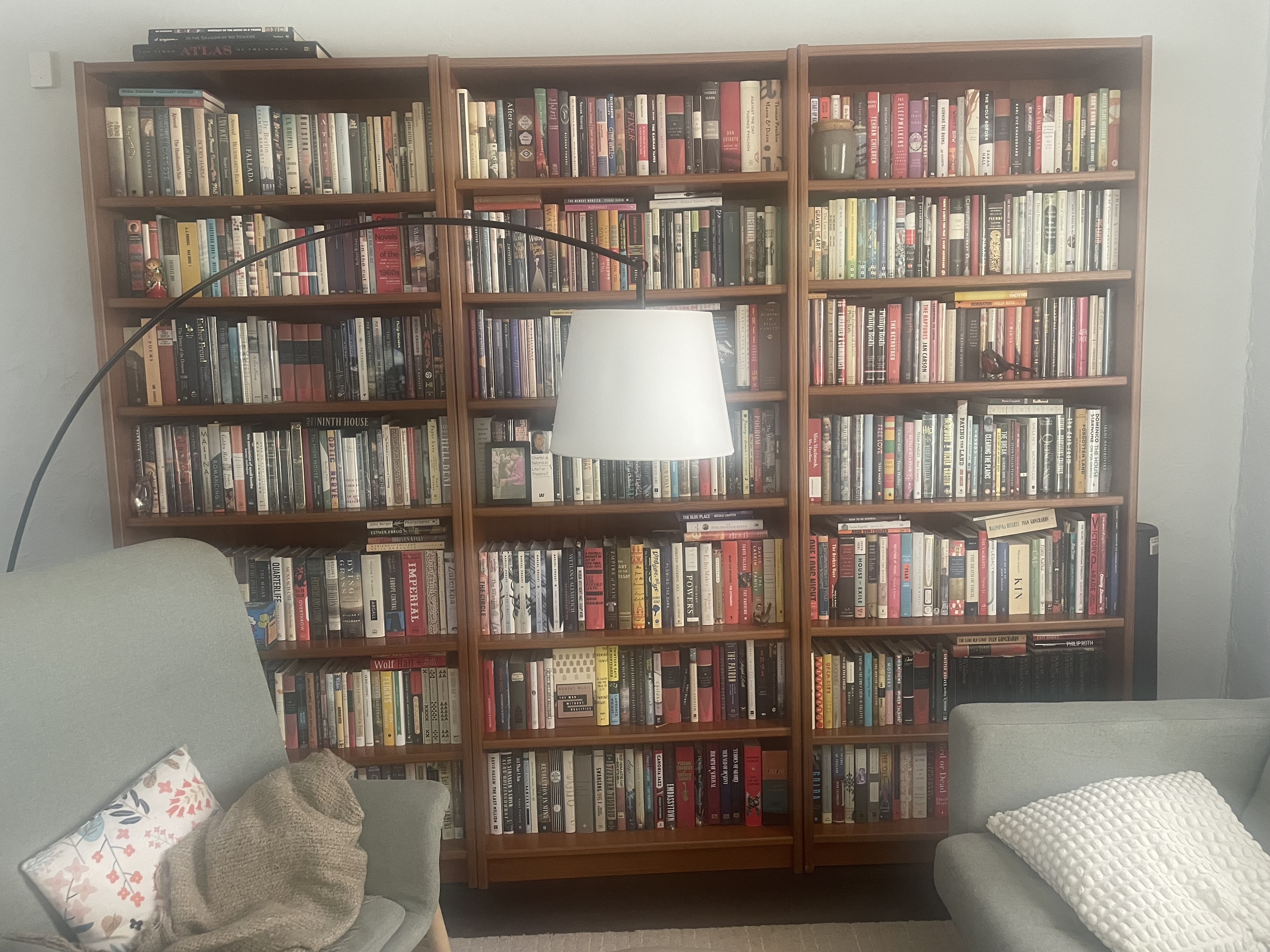
I tried not to think too long in coming up with my choices. Next month or next year I’d choose differently. And I’m aware of some big lapses. No poetry?? No plays?? No Torah?? (Everyone should read the Five Books of Moses.) But that’s ok. Gives you all the more room to think about how you’d create a starter library of your own. What would be on your shelf of promises?

Nat Leach’s Year in Reading, 2024

Excited to once again present reading reviews from some of my favourite readers. Today’s installment, his sixth, is by my longtime friend Nat Leach. Nat is a nineteenth-century scholar turned college administrator who has spent the last 7 years reading the books on his shelves in alphabetical order. He lives in Ontario.

Saul Leiter, 1961

After complaining about my reading in 2023 in this space last year, 2024 was, on the surface, a much better year. I read 30 books as opposed to 20 in the previous year, and was on pace for an even higher total before hitting a wall at the end of the year (of which more anon). However, if we get into what the sports statisticians call “advanced metrics,” the numerical advantage is diminished; 6 of those books were either less than 100 pages or only slightly more, and 9 were works of theory, criticism, and/or anthologies that I had been working on for years and just completed this year. So, probably my actual reading for 2024 was not much better than 2023 in terms of quantity, but the quality was high, and that’s what really matters, right? [Ed. – Right!]

As for my overall reading project of working through my unread books alphabetically, now in its 7th year, I once again only progressed by one letter of the alphabet, finishing “L” and making a very small start on “M”. If I’m able to get through “M” in 2025 (a big if- it’s a pretty immense shelf), I will hit the halfway point of the alphabet and surely it’s gotta be downhill after that, right? [Ed. – Surely! Well, probably. Possibly?] The second half of the alphabet has the likes of “Q”, “X” and “Z” so there is hope! [Ed. – Insert Zola side-eye gif here.] In fact, of the 298 books on my list, exactly 200 are “A-M” so I’m actually closing in on the 2/3 mark of my project (although that list keeps growing every year, so who really knows?)

More importantly, for the purposes of this piece, I actually found some time, in the early part of the year at least, to write capsules for each book that I finished as I went along. Which is just as well, because I can scarcely remember what I read last January right now, and as I write this opening, I’m just as curious as you to see what comes next (probably more so).

Larsen, Nella – Passing (1929)

I had seen this book recommended so widely, I couldn’t resist adding it to this project, and it certainly does live up to the hype. The book is about the tensions in racial ideologies in early 20th century America, and seems no less relevant today. Clare Kendry “passes” as white despite a mixed-race bloodline that would see her excluded from white society. The very fact that she is able to do this so successfully mocks the white supremacist ideology that believes that racial differences are fixed and self-evident. The book’s focus also demonstrates the problematic intersection of these racial tensions with similarly oppressive gender expectations. Irene Redfield’s love/hate relationship with Clare is at the core of the book, so that it demonstrates also the ways in which expectations around “racial purity” are particularly focused on women. In this respect, Passing reminds me of another book I wrote about on here some years ago, Morley Callaghan’s The Loved and the Lost; although that book focuses on a white woman who circulates in black society in Montreal, the similarly tragic outcomes both speak to the violence and panic produced in white society by such blurring of racial lines. [Ed. – About to teach this tomorrow for the nth time: it’s an all-timer!]

Laski, Marghanita – The Victorian Chaise-Longue (1953)

When I received this book as a gift (in a lovely Persephone Books edition), I assumed, because of the title, that it was because of my academic interest in the nineteenth century. It didn’t take long for me to realize that it was in fact because of my academic interest in the Gothic. The plot itself smacks of the absurd: a tubercular new mother is transported back in time to the Victorian period while lying on the titular piece of furniture during her recovery. But this does not do justice to the book, which explores (as so many Gothic texts do) the relationship between mind and body, and the nature of identity. A fascinating read. [Ed. – Sounds great!]

Lathom, Francis – Italian Mysteries (1820) and The Midnight Bell (1797)

These days, Francis Lathom is little more than an answer to a literary trivia question (Name the authors of the 7 “horrid novels” on the reading list of Isabella Thorpe and Catherine Morland in Jane Austen’s Northanger Abbey!) but he was a successful novelist and playwright in his time. The Midnight Bell is the book mentioned in Austen’s novel, while Italian Mysteries was written considerably later. Both make extensive use of the Gothic conventions popularized by Ann Radcliffe in The Mysteries of Udolpho (and spoofed in Northanger Abbey), including apparently supernatural activity explained by natural means, banditti inhabiting abandoned castles [Ed. – They do be inhabiting the abandoned castles, the banditti], and lustful noblemen pursuing innocent heroines, who invariably faint whenever captured (By my count, Lauretta, heroine of The Midnight Bell, faints five times in the course of a single abduction!) [Ed. – Maybe some iron pills for that girl?] Lathom’s use of these conventions is, at least, skillful and coherent, which is more than can be said of many Radcliffe imitators of this period. As David Punter points out in his fascinating introduction to the Valancourt Books edition of The Midnight Bell, Lathom’s works are heavy on events, to the exclusion of character development, and his plots are so extensive and intricate that they invariably require quite elaborate explanations—indeed, the entirety of the 3rd and final volume of Italian Mysteries is essentially an extensive explanation of all the mysteries developed of the first two volumes. While both books owe much to Radcliffe, there are certain predilections of Lathom’s own that show through as well; for example, his books include many siblings who function as doubles of each other, and are usually moral opposites of one another. The books are a pleasure to read, though not, perhaps, especially notable examples of the genre. [Ed. – Look, you’re not getting this kind of content anywhere else, are you?]

Laurence, Margaret – This Side Jordan (1960)

Like every good Canadian of my generation, my literary education was steeped in Margaret Laurence; I read The Stone Angel in high school, and The Diviners in university. [Ed. – Same! I wonder what they read now?] And if that weren’t enough, I now find myself living just 15 minutes away from the small town of Lakefield, Ontario, where Laurence spent the last years of her life, and wrote The Diviners. All that being said, I really didn’t know what to expect from this book, Laurence’s first novel, which is much less recognizable in the canon of CanLit, not least because of its foreign setting. Laurence’s husband was an engineer who worked in Africa in the 1950s, so she spent some years living in what was then called the “Gold Coast” but was soon to become the independent country of Ghana. The book is largely about the difficulties posed by this transition, both for the British colonizers and for the people of Ghana, equally caught between a past they cannot return to and a future in which they cannot yet find their place (hence the biblical allusion of the book’s title; the characters are all looking ahead to a “promised land” they cannot enter). The book focuses on Johnnie Kestoe, a British accountant in a textile company; Miranda Kestoe, his well-meaning but sometimes clueless wife; and Nathaniel Amegbe, a struggling Ghanaian schoolteacher. Johnnie, following Miranda’s advice, tries to get ahead by supporting the company’s “Africanization” of its workforce, which his racist bosses refuse to accept, while Nathaniel tries to modernize his family and move away from the tribal customs that he sees as belonging to the past. The future, though, is not easy for any of them to grasp. It’s a strong debut novel, though it does not entirely show the brilliance that was yet to come from Laurence. As an aside, this book also scores points for having a main character named Nathaniel, a literary feature notable by its absence in all the other books on this list. [Ed. – Ha! Justice for Nathaniels!]

Le Fanu, Sheridan – Carmilla (1872) and “A Chapter in the History of a Tyrone Family” (1839)

There are not many classic Gothic texts of the 19th century that I have not read, so it was time that I finally read Carmilla. All I knew about it was that it was about a lesbian vampire and, yeah, it’s pretty much what it says on the tin, using the familiar conventions of the genre, with that added twist. As for “A Chapter in the History of a Tyrone Family,” my first thought upon reading it was “was this written before or after Jane Eyre?” There are many parallels, including a bigamous marriage and a potentially murderous first wife being kept in concealment. Turns out the answer is “before”. This story apparently influenced Brontë’s novel, and in turn, after the success of Jane Eyre, Le Fanu developed this story into a longer work in order to capitalize on it.

Le Guin, Ursula K. – The Left Hand of Darkness (1969)

Another book that I added because of a large number of recommendations, I must admit that I went back and forth on this one a bit. The author’s preface is one of the smartest things I have read about science fiction (or about fiction full stop!), but then the first chapter seemed so replete with science fiction clichés that I started to question what all the fuss was about. I also wonder if science fiction just isn’t my genre, or if I am just overly picky about the details of world-building; much as I admire the carefully prepared appendix on the “Gethenian Calendar and Clock,” which differ significantly from those of Earth, I also find it slightly off-putting that this entirely foreign world not only measures temperature in degrees (in itself not necessarily natural), but it uses a scale that seems strikingly similar to the Fahrenheit scale (with no additional context or explanation). [Ed. – Fahrenheit sucks!] Nevertheless, the book certainly grew on me as it increasingly developed the more philosophical implications of its sf premise. Le Guin claims not to be attempting to predict the future, but this book from 1969 is quite prescient in exploring the idea of gender fluidity, as the inhabitants of the planet on which the book is set share male and female characteristics and can transform into either. Less prescient than oddly coincidental is the fact that the narrator’s name is Genly Ai; it occurs to me that it would be impossible to include a character of that name in a book written today without readers assuming that he was some kind of embodied form of generative artificial intelligence. [Ed. – AI sucks! Like, a lot more than Fahrenheit. Which sucks, to be clear.]

Levi, Primo – Moments of Reprieve (1981) Trans. Ruth Feldman

Levi’s American publishers have been consistent, at least, in their dogged attempts to make his books sound as optimistic as possible; If This is a Man becomes Survival in Auschwitz, The Truce becomes The Reawakening, and Lilith, and other Stories becomes Moments of Reprieve. While it is true that to a certain extent, the stories recounted in this book have a lighter tone than his earlier memoirs, there is really very little “reprieve” to be had here. [Ed. – Yup. That piece about the Roma inmate he meets? Dark.] The book consists of descriptions of people and incidents from Levi’s time in Auschwitz which had not been included in the two earlier memoirs, as well as narratives that follow up on the post-war experiences of individuals who are mentioned in those books. And certainly, all of the qualities that make the earlier books so great are still on display here, especially Levi’s keen eye for character and his deep understanding of moral complexity. And yet, everybody seems to want more optimism, from the publishers to Chumbawamba, who recorded a song based on one of the most optimistic anecdotes herein, “Rappoport’s Testament” about a man who uses a very philosophical theory of life to endure Auschwitz, arguing that his previous pleasures in life are simply being counter-balanced by the horrors of the camp, and therefore he has nothing to complain about in the grand scheme of things. [Ed. – I did not know this!!!!] An admirable perspective, perhaps, but just one of the many that Levi explores—yet the only one to get a song written about it, with an incessant chorus of “I never gave up” as though this were the only praiseworthy, or even acceptable, attitude. (Having said that, I have to admit that I actually love this song. I mean, how critical can you be about a rousing anti-Nazi anthem? Look it up.)

Lindsay, Joan – Picnic at Hanging Rock (1967)

I was already very familiar with Peter Weir’s 1975 film adaptation of this novel, so I fully expected this book to be as good as it is. I found that Weir adapted the book quite faithfully; in both the book and the film, the plot about the uncanny disappearance of Australian boarding school girls is perhaps secondary to the reflections on the connectedness of people and things that are triggered by this incident. The most significant differences come from the fact that the novel is able to demonstrate more links in this web of inter-connectedness; from my perspective of having seen the film first, I was quite fascinated to see how Lindsay connects some of the more minor characters to each other and to the mysterious themes of the book in ways not shown in the film. Ultimately, what makes both book and film work so well is how expertly they manage the fantastic in Tzvetan Todorov’s sense of the term, hesitating between rational and supernatural responses to the mystery, but never fully embracing either perspective. [Ed. – Now I want to read this and see the movie again.]

Lively, Penelope – Moon Tiger (1987)

I’m at a bit of a loss as to how to describe this fascinating tour through both world history and the personal history of a dying historian, Claudia Hampton. These histories are linked and predictably (and unpredictably!) take many twists and turns along the way. But the most interesting thing about the novel is the way it plays with point of view, emphasizing that history depends on perspective as we move between Claudia’s first-person perspective, a more “objective” narrative voice, and the points of view of other characters. It may defy description, but it really works.

Lodge, David – Changing Places (1975), Small World (1984), Nice Work (1988)

I must admit that I felt that I had missed the cultural moment in which I should have read this trilogy. After all, any satirical work on academia these days would surely have to focus on the absurdities of governmental policies and the excesses of administrative oversight rather than the hijinks of carefree globetrotting academics (seriously, is there even any such thing as a carefree, globetrotting academic any more?) [Ed. – There is not.] Not to mention the fact that cultural values have shifted significantly in ways that make these books somewhat uncomfortable to read at times (thinking especially of the distressingly casual way that the idea of professors sleeping with their students is treated in these books). Despite all this, though, there is something enduring about these books, not only for their humour—based in the first book on the incongruities between Morris Zapp, brilliant but obnoxious American professor, and Philip Swallow, reserved English lecturer, and developed in many different directions from there—but also for their satisfying use of the conventions of comic narrative. Lodge is particularly knowing about this, and all three novels are highly self-referential (or “meta” as the kids say). [Ed. – I fear they do not actually say this anymore, at least judging from the blank stares I get…] Changing Places features a number of quotations from a (fictional) textbook that Swallow wants to use for his course on novel-writing, and which provides rules for writing a good novel—rules that Lodge himself proceeds to break in every instance. Small World (subtitled “an academic romance”) employs the conventions of the grail quest romance, adapted comically to the academic context. And Nice Work is an adaptation of, and contains frequent references to, the genre of the Victorian industrial novel. Moreover, in each book, the threads are pulled together in improbable but highly satisfying ways, as if Lodge is acknowledging both the artificiality of the conventions and the fact that we still desire such conclusions despite our awareness of their artifice. I learned recently that Lodge passed away on New Year’s Day, 2025, so I guess there was indeed some timeliness to my reading of these books. I also learned in the course of my reading that Lodge had been at the University of Birmingham while my parents were graduate students there. It really is a small world, I guess.

MacIntyre, Linden – The Bishop’s Man (2009)

Having lived on Cape Breton Island for 15 years, I found that this book resonated with me, not because of the plot about the sexual abuse scandal in the Catholic church, but because of the settings, the feelings of isolation brought about by the landscape and the weather, and the descriptions of tightly-knit but also highly insular communities. All very familiar to me. The plot that unfolds against this backdrop revolves around the titular character, Father Duncan MacAskill, who acts on behalf of his Bishop to address situations involving abuse committed by priests. He initially believes that he is helping to rehabilitate perpetrators and support victims, but struggles with his conscience as he increasingly realizes that he is just the front line of an extensive cover up operation. MacIntyre is a native of Cape Breton, and a prominent journalist so perhaps not surprisingly his fictionalization of these real situations and characters is believable and powerful.

WOMEN IN TRANSLATION MONTH

I always try to set aside two books for Women in Translation month in August (given that 2 is pretty much my monthly average, this makes sense to me). However, since my reading project as a whole has slowed down, I’m finding that I’m reaching further forward on my shelves each year. This year, I read a couple of books from further along the “M” shelf.

Millu, Liana – Smoke Over Birkenau (1947) Trans. Lynne Sharon Schwartz

Dorian recommended this book a few years ago and of course he is right about what a tremendous book it is. [Ed. – Damn right he is. That guy really knows a thing or two.] Millu recounts the stories of six women whom she encountered in the women’s camps at Auschwitz. In many ways, the content of these tales is not unlike other Holocaust testimonies in the brutality, suffering and impossible moral situations that they depict, but it is also quite different in its specific focus on female experience in the camps. It must also be said that the stories are well crafted as stories. In both respects, the book reminded me in a strange way of the stories of Ida Fink, even though the latter are fictional. [Ed. – Absolutely!] Both writers provide keen observations of the brutality and suffering caused by Nazi oppression, particularly as it affects women. There is probably something more to be said about the relationship between the fictional and the non-fictional here, but that’s more Dorian’s territory. [Ed. – Certainly true that Millu uses an overtly narrative style in these pieces. Maybe Sara Horowitz’s idea about the Fink stories—that we sometimes need fiction to tell us what nonfiction can’t (it’s smarter than that, but that’s the gist)—might be useful here.]

Müller, Herta – The Passport (1986) Trans. Martin Chalmers

I had never read Müller before, so I didn’t really know what to expect, nor do I really know how to describe the experience of reading this book but here goes: it is a series of dark prose poems that build a feeling much more than they build the plot, which is ostensibly about the efforts of a miller to emigrate to West Germany. The images, though, vividly construct a picture of a hostile natural world, and the tensions of living amongst a foreign people. I commented earlier on the changes of Levi’s titles for an English-speaking audience; in this case, the effect of calling the book The Passport seems to be a rather banal attempt to focus on the plot, unlike the original German title, Der Mensch ist ein großer Fasan auf der Welt (“Man is a Great Pheasant in the World”) which better captures the poetic feel and the tension between the human and the natural world developed throughout the book.

IN PROGRESS

So, about that wall I mentioned… things were going swimmingly (yes, for me, the above is what swimmingly looks like) until the end of October/beginning of November. In the space of a fateful week, I began three new books. Little did I know that 2 ½ months later, despite putting almost all of my reading time and energy into them, all three would remain unfinished. Anyway, here’s a brief report on the books I didn’t quite finish in 2024 (with up to date completion percentages as of early 2025)

Lessing, Doris – The Golden Notebook (1962) Completed: 26%

First, not having included Doris Lessing in my original project, I was tempted to join a readalong of The Golden Notebook organized by the ever-encouraging @paperpills10.bsky.social. However, a combination of my usual lack of time, my inability to get my hands on a good physical copy of the book, and my struggles with the book itself led to my dismal failure to keep up. As for the book itself, it seems to me very original in terms of form (3rd person narration combined with 1st person in the form of notebooks kept by one of the characters) while seeming quite mundane (thus far) in terms of content and style. Perhaps that is what I’m struggling with, though I also wonder if it is part of the point (this is what notebooks are like). I will persist with this, but I have quite a way to go yet. [Ed. – Hmm I like this one: not sure you’re going to change your mind if you aren’t into it yet.]

Mann, Thomas – Doctor Faustus (1948) Trans. H.T. Lowe-Porter Completed: 73%

At about the same time, I was starting this book, which I had bought at a time when I was collecting Faust stories, but I had only managed to read the first few chapters at that time. I have done better this time, and what I have learned from this experience is that 1) I need to read more of Mann’s novels and 2) I may not have enough years left in me to read them all. This is a tremendous book, but one that requires much time and focus. I have been making slow but consistent progress, and there is now at least some light at the end of the tunnel. Despite the title, the Faustian theme is more an undercurrent than the book’s focus, which has more to do with reflections on the nature of art and its relation to culture. But what has perhaps most struck me about this book is its descriptions of the rise of Nazism and the psychology behind it, all of which feel chillingly contemporary.

Márai, Sandor – Embers (1942) Trans. Carol Brown Janeway Completed: 67%

Now this wonderful little (at least, comparatively) book is one that I would have finished long ago, had I not been saving it to cleanse my palate after working on the previous two books (gotta respect the alphabetical order after all). It is a much quicker, and highly engaging read. Last year, I commented on how my reading system often provides me with strange and unexpected correlations, and it has been somewhat strange reading this book alongside Doctor Faustus. Both books are written in the 1940’s but make use of a dual time frame split between the narrative present and a past in the late 19th and early 20th centuries. Both are set in central Europe and are thus framed against the background of the wars in these time periods, and both focus heavily on the relationship of a pair of male friends, one of whom is musical and artistic, the other more material and practical. But they are of course very different books; Embers tells the story of a friendship broken in youth that comes to a reckoning in old age. I’m still not sure what this reckoning is going to look like, but the suspense is building. So far, this is pretty great.

James Whistler, View across the Lagoon (1879 – 80)

LOOKING AHEAD TO 2025

My one final comment on all of the above is that one of the benefits of writing these entries shortly after finishing the books is that I can look back and see how my immediate response to the book varies from what my memory of it is now. For example, despite the lukewarm write-up, I thought about the Le Guin a lot after I finished it, and despite really loving the Lively, I haven’t really thought about it at all since then. I’m not sure that this is necessarily a measure of a book’s quality, but it is a measure of something. [Ed. – Yes! But what? I think about this a lot too.]

As for next year, I did have a fleeting desire to join a Proust reading group, since that is probably the book that I am most looking forward to on my remaining list, but my recent track record with group reads and the fact that I am probably not in the right head space at the moment has caused me to hold off (it’ll probably be a couple of years before I get to “P”)

So, my goal will be to try to get through “M” this year, although as I said, it’s a pretty formidable letter. I will at least see the benefits of having participated in group reads of some of the chunkier books on this shelf over the past few years (The Balkan Trilogy, The Levant Trilogy, Moby Dick, The Man Without Qualities) but I still have a lot to look forward to, from Gabriel Garcia Marquez to Cormac McCarthy to Brian Moore to Toni Morrison to Iris Murdoch and many more in between. Wish me luck, and let me know if there are any indispensable M authors that you think I need to make sure I read this year. [Ed. – Thank you as always, Nat!]

Nat Leach’s Year in Reading, 2023

Excited to once again present reading reviews from some of my favourite readers. Today’s installment, his fifth, is by my longtime friend Nat Leach. Nat is a nineteenth-century scholar turned college administrator who has spent the last 6 years reading the books on his shelves in alphabetical order. He has recently doubled his social media presence by becoming mostly inactive on not one but two platforms, posting occasionally as @gnatleech on Twitter and @gnatleech.bsky.social on Blue Sky.

Berthe Morrisot, Hide and Seek, 1873

For reasons not worth going into, 2023 was actually a pretty rotten reading year for me. I read sporadically, finished only 20 books, and only progressed through one letter in my alphabetical reading project, finishing K, and making a brief start on L (so, after 6 years, I’m not even halfway through the alphabet; my 10-year plan, which was originally a 5-year plan, is looking like it will become a 15-year plan). [Ed. – Very Stalinist of you, Nat.] I wasn’t even able to write entries for each book as I went along, as I’ve done in the past, and was considering foregoing my annual post, but Dorian threatened to sue for breach of contract, so here we are. [Ed. – Look, a deal’s a deal. You want the glory, you gotta write the post.]

One meaningful reflection I was able to draw from my year’s reading is a better understanding of why I enjoy reading the way that I do, progressing alphabetically through my shelves rather than making conscious decisions about where my reading should take me. Thomas de Quincey, in a wonderful essay on “Sortilege and Astrology,” explains that he believes in astrology, but not in astrologers; there is indeed a pattern connecting all events in the world, but anyone who claims to know it is a charlatan. And yet, practices such as sortilege (the opening of a book at random and putting one’s finger on a passage as a means of divining the future) entail putting ourselves in the hands of this unknowable force of fate. [Ed. – Ah, finally I have a name for what my students do when I throw out a question in class.] My reading practice is then a kind of sortilege in which I trust that fate will put in my hands the right book at the right time. And very often, as I discovered this year, I’m able to trace out patterns and connections that I may not have been exposed to had I more rigorously organized my reading.

 I often found myself reading two books at the same time—books that offered unexpected congruences, and paths leading from one to the other. And thus, since I did not manage to write entries for individual books this year, I present my reading by category, which often means: by categories I would not always have chosen to adopt in advance, but discovered while reading.

Books Written in 1989 that Challenge Canonical Western Conventions of Storytelling: Thomas King – Medicine River and Maxine Hong Kingston – Tripmaster Monkey

A super-specific first category, but these are two very different books. For many years, my office was just around the corner from a poster with a quotation from Thomas King: “the truth about stories is that that’s all we are.” The narrative structure of Medicine River seems to be an illustration of that axiom. Each chapter cuts (in a way that feels very cinematic) between an action in the narrative present and one in the past. We thus gradually learn how the past of the protagonist, Will, shapes the person he’s become in the present. The book also suggests how this is true at a deeper cultural level, referring to significant events in Indigenous history such as the battle of Little Bighorn and the occupation of Wounded Knee, but for the most part the focus is personal and the tone is lightly comic, but also somewhat melancholic.

Kingston’s novel, on the other hand, is much more explicitly disruptive of literary expectations in its use of Chinese legends and stories to revise American literary and cultural norms. The novel’s protagonist is a Chinese-American hippie whose hybrid status is reflected in his name, Wittman Ah Sing (geddit?) and whose life in 1960s San Francisco is inflected with wild imaginings that superimpose figures of Chinese legend onto the American present, culminating with the performance of an extravagant play that ends with a chaotic collapse of the distinction between actor and audience. [Ed. — !] Like King’s novel, we see how stories create, and do not simply reflect, identities.

Kingston’s book segued nicely into the next book I read, Rudyard Kipling’s Kim. At one point, Kingston includes an extensive quotation from Kipling’s narrative of his visit to the United States. In that book, Kipling becomes a spokesperson for a racist past whose perspective persists in the present, a tendency that can certainly be seen in Kim, the story of a boy who gets caught up in the political intrigue of maintaining English power in the Indian sub-continent. It still works as an adventure story, though Kipling’s colonial perspective on India is consistent with the account of the Chinese inhabitants of San Francisco that Kingston critiques.

Holocaust Memoirs and Diaries: Gerda Weissman Klein – All But My Life, Victor Klemperer – I Will Bear Witness 1942-1945, Ruth Kluger – Still Alive

These were sitting next to each other on my alphabetically ordered shelves. I have much less experience with Holocaust texts than Dorian, so I will not pretend to any expertise here, but in the small teaching experience I have had, my approach has been to encourage students to notice differences—the atrocities of the Nazis took many forms, and were experienced differently based on a whole range of factors including location, age, gender et cet.—but also to notice significant similarities and patterns. [Ed. – Nat is too modest: I still use a terrific assignment he designed on the topic of Holocaust diarists.] Each of these texts describes some distinctive aspect of Nazi terror: Klein was part of one of the infamous “death marches,” which she describes more thoroughly than any account I had previously read [Ed. – absolutely agree], Klemperer describes the everyday psychological tortures endured by Jews living in Germany, as well as the horrors of the fire-bombing of Dresden, while Kluger’s account spans a range of locations and forms of violence from Vienna to Theresienstadt to Auschwitz. Looking for patterns, it is evident that each also benefits from a number of timely pieces of good fortune that contribute to their survival: for example, Klein was able to live through most of the war in the relatively protected confines of a weaving factory, Klemperer avoided deportation because his wife was Aryan, and the bombing of Dresden in fact provided him with an opportunity to remove the yellow star from his clothing and escape from the city, and Kluger benefited from timely advice to lie about her age at Auschwitz, and a well-timed decision to escape from a death march. A somewhat more curious parallel is that both Klemperer and Kluger fled to Bavaria, and both would have been in fairly close proximity when the war ended. [Ed. – Good point! A function of how the regime decided to compress this remaining pool of slave labour into a central, contiguous section of the Reich: the Sudetenland, x, y, and Bavaria.] In short, three very different books, with some similar lessons, including an awareness of the very narrow line between survival and destruction.

Classic postmodern novels from when it was still OK to use the word “postmodern”: Robert Kroetsch – The Words of My Roaring, Milan Kundera – The Unbearable Lightness of Being

Yeah, I know it’s cool to dump on the word “postmodern” in our enlightened 21st century, but I still find it a useful way to speak about texts that reflect on, and engage critically with, their own status as text. Both books use postmodern strategies to explore the construction of individual identity and that of a national past. Kroetsch’s book experiments with the genre of the folk tale, and is narrated by Johnny Backstrom, a political candidate in Alberta during the Depression who promises the voters—all farmers struggling with drought conditions—that it will rain. Kundera’s novel reflects more philosophically on the nature of chance and coincidence (coincidentally all the stuff I wrote about in my introduction) against the backdrop of Czechoslovakia in the Communist era. As with King and Kingston, these are books that think about how stories create identities.

Books set in the 1970’s (but written later): Hanif Kureishi- The Buddha of Suburbia and Rachel Kushner – The Flamethrowers

I was reading these at the same time, and all the ‘70s cultural references kept getting me confused as to which one I was reading. But the easy way to tell the difference was that one of these books harnesses that cultural anxiety/nostalgia in an interesting way, and the other… not so much. Kureishi’s book is great, exploring his familiar territory of cosmopolitan London and the racial and political tensions of the period. It moves deliberately from the idealism of the hippies to the backlash of punk, and ends with the election of “the new Prime Minister,” unnamed but obviously Thatcher, as represented in the striking images at the conclusion of the BBC miniseries. Things would never be the same again…

As for The Flamethrowers, if I were being charitable, I would say that the book wasn’t for me, as I simply didn’t find the subject matter interesting. If I were being uncharitable, I would say that the book cobbles together a whole bunch of supposedly “cool” images and events of the ‘70s just because they are cool, not because they serve any narrative logic. And the author’s Afterword kind of confirms that hypothesis in describing her process of starting with striking images.

Books set against the backdrop of 17th/18th century nationalist revolutions: Lady Caroline Lamb – Glenarvon and Giuseppe di Lampedusa – The Leopard

Again, a category that features one very good book, and one very bad book. Lamb’s novel was really written only as an attempt to avenge herself on Lord Byron, with whom she had a scandalous affair before he unceremoniously dumped her. The structure of the novel is bizarre, as the description of the affair between Glenarvon (Byron) and Calantha (Lamb) is sandwiched between a Gothic narrative that seems to make very little sense (the explanation provided at the end doesn’t seem to match with the beginning, but I have no desire to try to figure it all out). And, oh yeah, Glenarvon is made into an Irish patriot leader in the 1798 rebellion. For some reason. [Ed. – Very moody, the Irish. Just like Byron.]

The Leopard, on the other hand, is a fantastic book, often hailed as one of the great historical novels of the 20th century. What makes it great, I would argue, is that it represents a moment of critical historical change from a multivalent perspective that shows just how complex change is. Don Fabrizio is essentially the last in a long line of Sicilian nobility. His time is coming to an end, he knows that it is coming to an end, and he even recognizes that in some ways it is right that it is coming to an end. But we also see that good things are being lost along with the bad, and that a different form of badness is ascending. In short, Lampedusa shows historical change in all its ambivalence, as well as the conflicting emotions that it gives rise to. [Ed. – I gotta read this again: been far too long.]

Books read for Women in Translation month: Svenja Leiber- The Last Country and Clarice Lispector – Agua Viva

Well, in my case it was Women in Translation two and a half months, but that’s OK. I was hoping that the Leiber book would be the one to break me out of my slump of disliking 21st century novels, but it was not to be. It hooked me at first, but this is a book with an epic scope (the life of a musician through the vicissitudes of 20th century Germany) but an episodic structure, which I grew to find infuriating more than anything. The prose also felt very abstract—there were many moments when I honestly couldn’t tell whether a sentence was meant to be literal or metaphorical—but I’m not sure if this was a translation effect or inherent in the original. As for the Lispector, it was my first experience with her, and seemed to me an interesting cross between literary and theoretical prose; she reminded me of nobody more than Maurice Blanchot. Which, if you know me, is a compliment. [Ed. – He’s understating things. That’s like his highest compliment. Well, maybe if he’d said it reminded him of Levinas.]

Books read with the #NYRBWomen23 Group: Eleanor Perenyi – More Was Lost, Elizabeth Taylor – A View of the Harbour

I wish I’d had more time to participate in this wonderful series choreographed by @joiedevivre9 but these were the two that were on my shelves already (and hey, I’m going to get to “P” and “T” eventually, right?). Two very different books, Perenyi’s a non-fictional account of her life and marriage to a Hungarian nobleman before and during World War II, and Taylor’s an account of lives of quiet desperation in an English seaside town. Both excellent. [Ed. – So excellent]

A few classics: Honoré de Balzac – Le Père Goriot, Heinrich von Kleist – The Prince of Homburg, D. H. Lawrence – Sons and Lovers

Kleist’s play (like much of his work) is ahead of his time, a proto-Freudian reflection on dreams, reality, desire and death. This was a re-read for me, and confirmed its greatness.

OK, I haven’t actually finished the Lawrence yet (2 chapters left), but I figured mentioning it would score me points with Dorian. [Ed. – It does. You now have 7,967.] Lawrence’s prose is utterly compelling, and even though I find that most of the characters fall into the literary-critical category of “big idiots,” I am absolutely glued to the book. [Ed. – Ha! Accurate!] I’m also enamored of the fact that the book is set in the area of Derbyshire/Nottinghamshire that my grandparents used to live in, and I recognize many of the places mentioned from visits in my youth. When the characters go to Alfreton or Crich Tower, I internally cheer as if a rock band has just casually mentioned how great it is to be in <insert your city here>.

Saving the best for last, I started the Balzac shortly after joining Twitter some 6 years ago, and read it in French, which made it slow going for me. Appropriate then, that I finally finished it in 2023, the year of Twitter’s demise (or whatever you want to call the transformation it has undergone). In any case, this is such a wonderful book about the perils and temptations of society and money, and the challenges of maintaining a moral compass in the face of them. Apparently, I now have a whole lot of Balzac that I’m going to need to read. [Ed. – Hell yeah lfg!!!!!]

Felix Nussbaum, Shore at Rapallo, 1934

That’s about it. Will 2024 be a better year? Who knows how far I’ll get through the L shelf, and who knows how long it’ll take to get through that monstrously large stack of M’s (now is the time that joining those recent group reads of The Balkan Trilogy, The Levant Trilogy, Moby Dick, and The Man Without Qualities is really going to pay off!). But with Nella Larsen, Margaret Laurence and Ursula Le Guin among the next authors on my list, I am guaranteed some treats in the coming year. [Ed. – You sure are. Thanks as always, Nat.]

Melanie Nicholls’s Year in Readng, 2022

Today’s reflection on a year in reading is by Melanie (Mel) Nicholls. Mel is a bookseller at Barnes and Noble from Georgia. You can follow her on Twitter @nichollsm86 where she often tweets about…books!

Rineke Dijkstra, Self portrait, Marnixbad, Amsterdam, 1991

I was pleased when Dorian asked to do a write up of my 2022 reading, as I enjoyed reading the entries from last year. My reading in 2022 was mainly fiction in translation and short stories. When choosing what to read I mostly pick up books I think I’ll enjoy. And this past year I definitely succeeded! Here are some of the standouts.

January started strong with two books that are new favorites. The haunting Ganbare! Workshops on Dying is by Katarzyna Boni (tr. Mark Ordon). Boni reports on the March 11, 2011 earthquake and tsunami in the Tōhoku region of Japan and its aftermath. She offers accounts of the effects on survivors such as learning to scuba dive to help find bodies, a gripping account of the Fukushima nuclear disaster, and stories of other devastating earthquakes in Japan’s history. A heartbreaking and timely work. I followed this with the NYRB Classics edition of Edith Wharton’s ghost stories, unsettling and eerily quiet hauntings. A book I could read every year. The novel Written on the Body by Jeanette Winterson and the stories in Cars on Fire by Mónica Ramón Ríos (tr. Robin Myers), continued my excellent streak of reading for the first month of the year. 

In February I began the readalong of Dorothy Richardson’s thirteen book sequence Pilgrimage. I really started to click with Miriam’s journey with book three and my top reading goal in 2023 is to finish the sequence. Other highlights include the classic Passing by Nella Larsen [Ed. – GOAT!] and the absolute gem Byobu by Ida Vitale (tr. Sean Manning), two books I’m sure I’ll find new meaning in each time I read them. 

In March I read another top book of 2022, Blood Feast: The Complete Short Stories of Malika Moustadraf. These stories about gender and class in society are expertly translated by Alice Guthrie. The outstanding translator’s notes make this a book I hope to study more and highly recommend. April was another strong month with the beautiful novel When I Sing, Mountains Dance by Irene Solà (tr. Mara Faye Lethem) and the terrific History of a Disappearance: The Forgotten Story of a Polish Town by Filip Springer (tr. Sean Gasper Bye). I ended this month with the masterpiece Woman Running in the Mountains by Yūko Tsushima (tr. Geraldine Harcourt) which I often think of with Lolly Willowes by Sylvia Townsend Warner. Both novels portray a woman’s yearning for freedom and Dorian’s podcast One Bright Pod has superb episodes for both books. [Ed. – Thank you! Of course, Frances and Rebecca are the really important members of the team.]

May and June were the months of absolute banger short books: 

Yesterday by Juan Emar (tr. Megan McDowell)

They by Kay Dick

Cold Enough for Snow by Jessica Au

Spear by Nicola Griffith [Ed. – Curious to check this one out.]

An Ideal Presence by Eduardo Berti (tr. Daniel Levin Becker)

Permafrost by Eva Baltasar (tr. Julia Sanches)

Violets by Kyung-Sook Shin (tr. Anton Hur)

Pollak’s Arm by Hans von Trotha (tr. Elisabeth Lauffer)

The Employees: A Workplace Novel of the 22nd Century by Olga Ravn. (tr. Martin Aitken)

July’s standout is A Month in the Country by J.L. Carr, a perfect novel. [Ed. – Absolutely agree.] August is one I look forward to every year because it is Women in Translation month. I continued this year with four writers whose translated work I am slowly making my way through: Annie Ernaux, Yoko Tawada, Natalia Ginzburg, and Banana Yoshimoto. Another highlight was the collection Panics by Barbara Molinard (tr. Emma Ramada). Molinard was a close friend of Marguerite Duras and would destroy most of her writing. [Ed. – Thanks, uh, “friend”…] These bizarre and grotesque stories are a must read. Two books translated from Croatian, Call Me Esteban by Lejla Kalamujic (tr. Jennifer Zoble) and Divine Child by Tatjana Gromača (tr. Will Firth) from the new small press of translated fiction Sandorf Passage, were also excellent. 

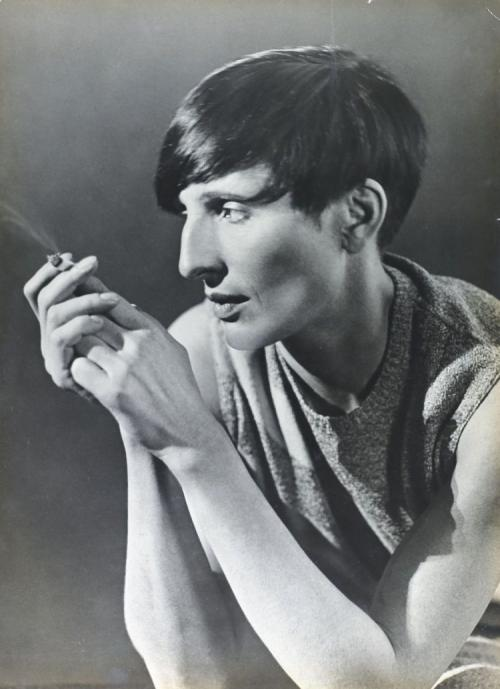
Gerty Simon, Renée Sintenis ca. 1929 – 32

The last few months of the year offered standouts in nonfiction. I love Elaine Castillo’s debut novel America is Not the Heart and she delivers again with the essays in How to Read Now. This book, along with A Ghost in the Throat by Doireann Ní Ghríofa, This Little Art by Kate Briggs, The Missing Pieces by Henri Lefebvre (tr. David L. Sweet), and Voice of the Fish by Lars Horn, left me with a new appreciation for reading, translation, writing, and art. All are books I will come back to often. Other wonders at the end of the year include some short-but-mighty translated novellas: Space Invaders by Nona Fernández (tr. Natasha Wilmer), Baron Bagge by Alexander Lernet-Holenia (trs. Richard and Clara Winston), A Woman’s Battles and Transformation by Édouard Louis (trs. Tash Aw) and Rogomelec by Leonor Fini (trs. William Kulik and Serena Shanken Skwersky). I’ll close with Nettleblack by Nat Reeves, a playful novel of queer awakening among strange crimes in a Victorian rural town.The most fun I had reading in a while, just a joy to read. [Ed. – Sounds great!] My reading has changed over the last couple of years as I have discovered more translated fiction, small press, and Book Twitter. I am excited to see where my 2023 reading will take me and to share the wonders. [Ed. – You’re welcome back next year, Mel!]

What I Read, August 2020

August. Well, it was better than July. After much hand-wringing over safety and ethics, we took a short vacation to Colorado, to assuage some of our sadness at missing our time in the Canadian Rockies. We were amazed at how different Colorado is from Alberta, alternately enjoyed and suffered the long drive from Missouri (where we’d been staying), got in some good hiking, and marveled at how much cheaper holidays are when you don’t go out to eat or buy any souvenirs. Immediately after returning, though, it was right into a new routine: both my wife and my daughter are attending school remotely (Zoom rules our lives); I’m trying to write a little each day and not be too cruel to myself about the quality or quantity or even the topic. Some days I simmer in rage at the needlessness of this all (we didn’t have to experience this pandemic this way); on others I make the best of it. And I get my reading time in whenever I can.

Vikram Seth, A Suitable Boy (1993)

Possibly the longest single-volume novel I have ever read (almost 1500 pages, sometimes I laughed just at the size of it). I did not read it all in August. In fact, I’ve been working on it since March or April. I could have read faster, no doubt—I set it aside for long stretches—and that might have made me a better reader. But the book lends itself to slowness—its many parts, divided into short chapters, provide plenty of places to pause, even as they also offer a reason to keep going (“I can read ten more pages”).

The setting is India in the early 1950s, mostly in the cities of Brahmpur and Calcutta (only the latter of which is real), but with forays into the countryside. Lata Mehra needs to be married—at least according to her mother, Mrs. Rupa Mehra (as she is typically named by the gently teasing omniscient narrative voice). But which boy will be suitable? Focused on four interlocking families, the novel offers plenty of possible choices. (The resolution surprised me, but after a moment’s reflection I accepted its rightness.) Sensible, intelligent Lata is perhaps the most sympathetic character in a book filled with them. (I did like its kindness.) A few are caricatures, but most are well-rounded and interestingly changeable. Seth’s vision is heavy on the “foibles of human nature”—if this isn’t your thing, this book isn’t for you. It’s old fashioned, dipping occasionally into free indirect discourse, but more often relying on a wise, almost arch omniscience. That retro quality feels a bit stagey—I’m not sure it has the convictions of its 19th century heart—but that could just be because the 90s now feel a little impossible. (To me, they are what the 70s were to the 90s: embarrassing. Since the 70s now seem amazing, the book, like the decade in which it was published, may age well.)

Something A Suitable Boy does share with Victorian triple-deckers is a delight in instruction. I learned so much from this book, from all kinds of Indian vocabulary (mostly Hindi but sometimes Urdu words) to the structure of the Zamindari system, the abolition of which forms one of the important subplots.

If I think about it more, I could probably draw a connection between newly-independent India and self-made men, at least one of which is important to the novel’s plot, but A Suitable Boy is not a book that asks us to think much. It kept me pleasantly diverted through the first months of the pandemic; I felt fondness for it and its characters. I didn’t quite shed a tear at the end, but I definitely let out an almost risibly satisfied sigh on reading the final pages. A month later, though, I rarely think of it (much less than I do Lonesome Dove, the other chunkster I’ve read this year), so I can’t say it’s a book for the ages. Apparently, Seth has been working for decades on a sequel, A Suitable Girl. I’ll read it, if it ever comes to pass.

Jessica Moor, The Keeper (2020)

The title, a nice pun suggesting how little separates the ideal man from Bluebeard, is the best thing about this book. A procedural centered on a domestic abuse shelter is a good idea. The slick trick the book plays at the end is not.

Kapka Kassabova, To the Lake: A Balkan Journey of War and Peace (2020)

Ever since I fell in love with Kassabova’s travelogue, Border—you can read my rave here—I’ve been eager for her next book. To the Lake didn’t disappoint. The earlier book was about Thrace, the lands where, today, Greece, Turkey, and Bulgaria meet. The new one is about another place that borders both do and do not separate. Lake Ohrid and Lake Prespa—joined by underground rivers—lie at the intersection of Albania, Greece, and the newly-independent Republic of North Macedonia, where, back when it was Yugoslavia, Kassabova summered as a child. Because it is about the Balkans, the book is about history, specifically, about violence. It is also about the possibility of overcoming that violence (as symbolized by the tentative rapprochement between Greece and North Macedonia). To that end, Kassabova considers the lakes as a place of healing—people have taken their waters for centuries, for both physiological and psychological relief.

But as dialed into a century’s worth of political upheavals as Kassabova is, she is even more interested in war and peace, violence and restitution as fundamental human qualities, as competing elements of our psyche. One way that struggle manifests is through the relationships between men and women. As a woman from the Balkans who no longer lives there, as a woman travelling alone, as an unmarried woman without children, Kassabova is keenly aware of how uncomfortable people are with her refusal of categorization, how insistently they want to pigeonhole her. (No one writes ill-defined, menacing encounters with men like she does.) The personal parts of To the Lake concern her mother’s family, and certain unhappy psychological traits that seem to have been passed down through it. These might, however, be social rather than genetic. As she writes:

Like many ambitious women in a patriarchy where they don’t have full expression in society but absolute power in the family, [Kassabova’s great-grandmother] Ljubitsa inhabited the destructive shadow archetype of the mother-queen: needing everyone to remain small and needy, looking up to her and infusing her with importance (after all her sacrifices, it’s the least they could do). Like a poisoned mantle, this psychological imprint was taken on by my grandmother and then by my mother, and sometimes I feel it creeping up behind me too, ready to enshroud me and make me mean.

As you can see here, Kassabova is really smart (no one gets off lightly in that passage), which is what I love best about her, even more than descriptions of outings to the lakeshore to pick cherries. (Though I am a sucker for that Chekovian shit too.) I gather Kassabova is working on a book about healing more broadly. I’ll miss the Balkans, but I can’t wait.

Incidentally, To the Lake pairs terrifically with Antigona and Me; interesting, how two of the best books I’ve read this year are about women from the Balkans.

Annie Ernaux, The Years (2008) Trans. Alison L. Strayer (2013)

I finally read Annie Ernaux! Even though it is the surest way to jinx myself, I want to write an essay about her, so won’t say too much about either this book or the other three I read this month. (They are very short.) Many readers seem to think this is Ernaux’s masterpiece. That is wrong. In fact, I thought about abandoning this book a couple of times. I didn’t because I sensed Ernaux’s intelligence. And I’m glad I didn’t; her other work is more to my taste.

Ernaux is upfront about her challenge in The Years—she wanted to write about herself as part of a generation. But what voice to use? “I” wasn’t right—first-person legitimates or values the individual in a way she didn’t want. (Intriguing, given her masterly use of it in her other books.) But “she” wasn’t right either: third-person coalesces phrases and descriptions into character (Barthes wrote brilliantly about this in S/Z). She turned to “we” to write the story of French Boomers. (Technically, she is an earlier generation, having been born in 1941, but still.) My decades-long feud with Boomers is surely influencing me here, but I didn’t think Ernaux was as careful as she should have been (and that she is in her other work) to note how her “we” is the story of a particular class. I mean, I get that the upper-middle class of intellectuals or other white-collar worker—the generation that turned conservative after 68 and, having benefitted from the thirty glorious years made possible by the destruction of WWII, proceeded to dismantle all its good things, specifically its attempts to undo inequality—think that their experience simply is experience. But I didn’t sense that Ernaux was critiquing that tendency. I dunno, The Years feels a little smug to me—which her writing otherwise never seems to be. Read Ernaux, but start somewhere else.

Georges Simenon, The Flemish House (1932) Trans. Shaun Whiteside (2014)

Finally, a Maigret that worked for me! (Admittedly, I’ve only read four.) Some Maigret-loving friends suggested many of the best books in the series send the detective out of Paris. Maybe that’s the trick. Here Maigret travels to the border with Belgium, called by a young woman who wants him to save her brother, who is under suspicion when the woman who fathered his child is found dead. Lots of rain, lots of barges, lots of hot toddies, and a damn good ending.

Laura Shepherd-Robinson, Blood and Sugar (2019)

Historical crime fiction centered on the British slave trade, set in one of its hubs, Deptford, in the 1780s. Unexceptionable but forgettable.

Annie Ernaux, A Man’s Place (1983) Trans. Tanya Leslie (1992)

Concerns the life and death of Ernaux’s father, a man unsure what to do with his daughter’s life, so different from his own.

Annie Ernaux, Simple Passion (1991) Trans. Tanya Leslie (1993)

Concerns an affair Ernaux carried out with a younger, Eastern European man. Begins with a description that might be familiar to people who remember the 80s, of watching a scrambled porno on TV. As so often, Ernaux is brilliant at creating metaphors for what she wants her writing to do without writing texts that are tediously metafictional.

Norman Ohler, Bohemians: The Lovers Who Led Germany’s Resistance Against the Nazis (2020) Trans. Tim Mohr and Marshall Yarborough (2020)

Fascinating.

Justus Rosenberg, The Art of Resistance: My Four Years in the French Underground (2020)

Incredible, the things that happened to Justus Rosenberg as a young man during the war. Strange, how little he says about what those things mean.

Annie Ernaux, The Possession (2002) Trans. Anna Moschovakis (2008)

Concerns the dual meaning of possession. Does the lover own the beloved? Or is she owned by him?

Bessora, Alpha: Abidjan to the Gare du Nord (2014) Trans. Sarah Ardizzone (2018) Illus. Barroux

I learned so much from this beautiful and sad comic, not least how huge Mali is, to say nothing of Algeria. Alpha Coulibaly, a cabinet maker in Abidjan, the biggest city in the Côte d’Ivoire, has heard nothing from his wife and son since they set off to Europe. They hoped to make it to her sister, who has a hair salon near Paris’s Gare du Nord. In search of them, he sells up and heads north, an epic journey first to Mali, then to Algeria, and then 1800 miles across the desert to the Spanish enclave at Ceuta, where he fails to gain EU entry, forcing him to try a dangerous voyage to the Canary Islands. Along the way, he is guided/abused by smugglers, and even becomes one himself: it’s the only way to make the money he needs. He meets many fellow migrants, all of whom are well aware of the dangers—though some, like an extended family that has pooled all its resources to send a young man to Spain, where they are convinced he will play for FC Barcelona, are more naïve than others. All know, however, that there is nothing for them at home. The desperation is as real as the risks they confront trying to escape it. Alpha and the others are both physically and psychologically damaged: this is not a book with a happy ending. Paradoxically, it’s a beautiful one: Barroux’s illustrations are washes of greys, whites, blacks, and reds.

Laurie R. King, The Game (2004)

It felt like time for another episode of Mary Russell’s adventures with Holmes, so I pulled this one from the shelf. In The Game Mycroft sends the pair to India, near the border with Afghanistan (this is in the 1920s), where the Russians, newly Soviets, are threatening Britain’s prize colony. I might have enjoyed this more had I read Kim—Kipling’s hero is a minor but important character—but I liked it anyway. As always, King is better at setting up her scenarios than in resolving them. The books always feel both slow and rushed at the same time, it’s weird, but I find enough in the series to keep plugging along.

Brit Bennett, The Vanishing Half (2020)

Deserving of its current popularity. The Vanishing Half is a novel about identical twin sisters, Desiree and Stella Vignes, who grow up in rural Louisiana in a town founded by a freed slave (the girls’ great-great-great grandfather) as an enclave for Blacks as light-skinned as himself. When they turn sixteen, in 1952, the sisters abscond to New Orleans to begin a new life. It’s hard to find work that isn’t badly paying and dangerous, so Desiree convinces Stella to take a secretarial job—which requires her to pass as white. Soon their paths diverge. Stella abruptly disappears, leaving Desiree bereft, her belief that she and her sister shared everything shattered. Stella marries her white boss—who has no idea of her background—which locks her into a life of both material privilege and constant anxiety over her secret. Desiree flees to DC, where she eventually marries the darkest man she can find, but returns to her hometown with her small daughter to escape his domestic abuse.

Years later, that daughter, Jude, moves to Los Angeles to attend college on a track scholarship. On a catering job she sees a woman she knows immediately must be her aunt. She becomes close to Stella’s daughter, an aspiring actress. Family secrets are revealed, to ambiguous ends.

Stories of racial passing often take the form of melodrama—Sirk’s film Imitation of Life is a classic example—and Bennett embraces that quality. In fact, I think she could have made more of it. The Vanishing Half is fascinated by acting-pretending-dissembling: both the many forms they can take and their consequences. For example, there’s a great trans subplot, and another important minor character is enmeshed in the 1970s/80s LA drag scene. But the book is about acting more than itself an example of it. I sometimes wanted Bennet to do more than depict impersonation; I wanted her to perform it through her style. Although, even as I write this, I wonder whether Bennett’s straightforward prose is itself a kind of acting—a way for her novel to pass as “respectable” literary fiction. (Hmm, the novel may be savvier than I credit!)

My favourite novel about racial passing is Nella Larsen’s Harlem Renaissance masterpiece, a real literary touchstone for me. And for Bennett, too, who references Larsen in shrewd ways (a smashed wine bottle echoes a smashed teacup from an important scene in Passing; the queer subplot gestures to the unavowed love between Larsen’s female protagonists). I loved how lovingly Bennett responded to Larsen’s novel. (If you haven’t read either, I recommend reading Larsen first.) And I admired her portrait of Stella, whose consciousness we often inhabit, in a way we don’t with the analogous figure in Passing. Bennett leaves unanswered whether Stella suffers from false consciousness or whether she simply wants the anonymity that white people can take for granted in a world that sets them as the default. This line haunts me: “She could think of nothing more horrifying than not being able to hide what she wanted.”

Ernaux’s works are an elegant rabbit-hole, and Ohler’s book taught me a lot. But this month’s winner was without question Kassabova’s terrific essay-travelogue. We’re lurching to the middle of September already, but if you had good reading in August, let me know. Lately my reading has taken me to north Germany in the 19th century, among other places. More on that in a few weeks. In the meantime, stay as safe and well as you can, everybody.

Secretly Canadian

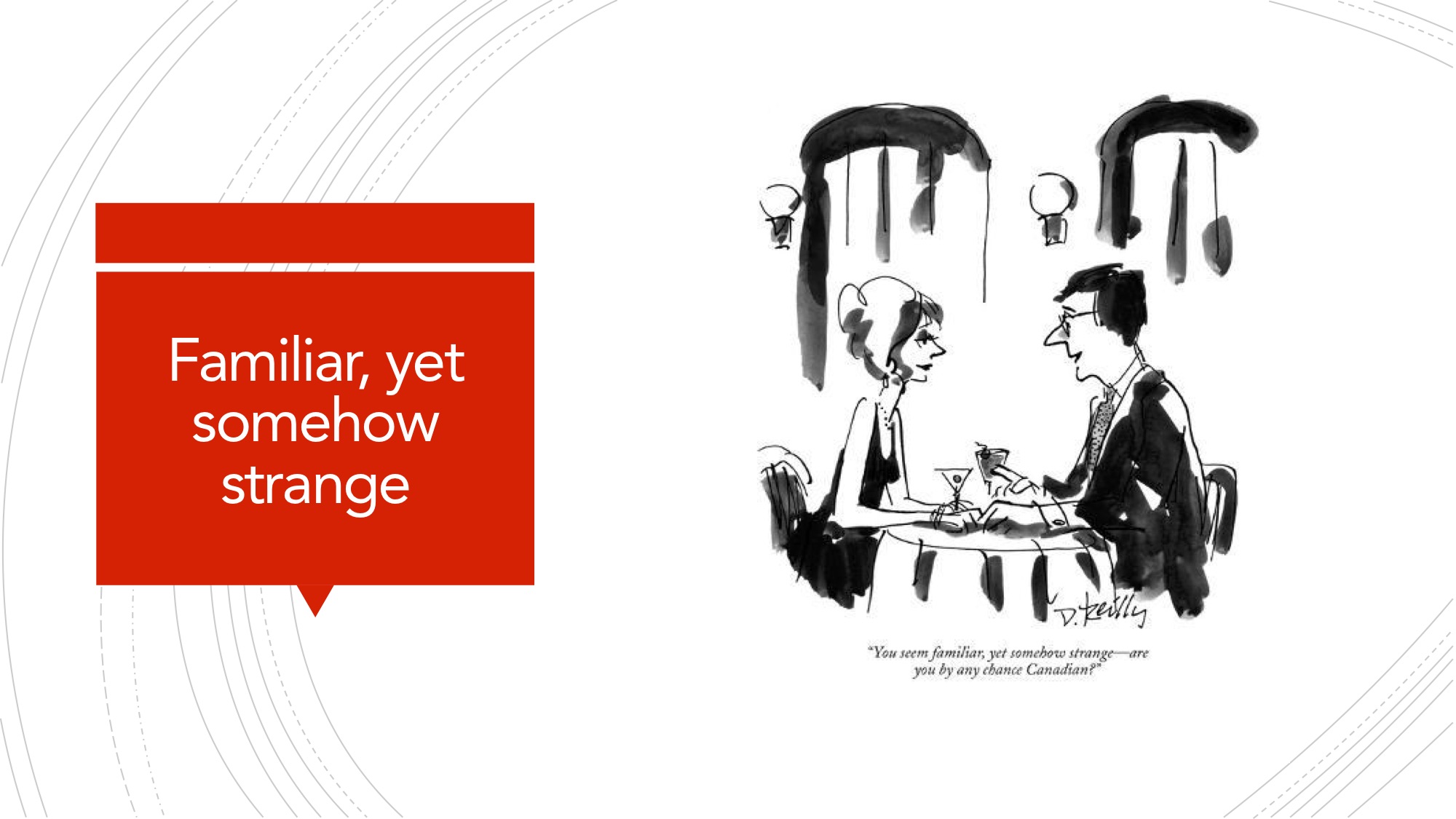
Dr. Dionne Jackson, head of the Office for Diversity and Inclusion at Hendrix College, where I teach, asked me to give a lunchtime talk in their monthly series on identity. I chose to write about being a Canadian in the US. Here’s a slightly cleaned-up version. It’s stilted–half speech, half notes. I ad-libbed somewhat; I think it sounded better than it reads. But I offer it here in case anyone’s interested, along with my powerpoint slides.
secretlyc1

I chose this title as a joke, because if you know anything about me you probably know that I’m Canadian. It’s not exactly something I hide. Many people at Hendrix have probably heard more than enough from me about Canadian awesomeness.

But I chose it for other reasons too.

One reason is the suggestion that someone—maybe some American— in their heart of hearts might wish to be Canadian. They are secretly Canadian. Of course, a Canadian would say that. Despite our irritating sense of superiority, Canadians have a total inferiority complex in regards to the US. All we want is to be acknowledged by you—and you don’t even know that we exist! (Except for weather—all those cold fronts coming down from Canada.)

Another reason is the suggestion that one could practice one’s Canadian-ness secretly. This is often the experience of Canadians abroad, especially in the US. We can pass, for the most part. Even though people make fun of me when I say “about.”

I like this idea of a kind of stealth existence. It feels subversive.

Yet it’s not enough to just hide out—at least not for me, and, I suspect, for many Canadians. Otherwise how can you can explain Canadians’ inescapable need to point out famous Canadians. (Seth Rogen… Canadian. Leonard Cohen… Canadian. Joni Mitchell… Canadian. Ellen Page… Canadian. Feist… Canadian.)

[Jews do this too BTW. So imagine how bad Canadian Jews are! (Drake!)]

Canadians even do this weird pointing-out-asking-for-affirmation thing when Americans aren’t listening. I remember when I was a kid every time the space shuttle was launched [explain space shuttle to students], the news back home would say, “The Space Shuttle Endeavour, with its Canadian-built Canadarm, launched from Cape Canaveral this morning…”

Today I’m going to say more about this paradoxical hiding in plain sight—this sense of being secretive, of being hidden, of being overlooked, all while simultaneously wanting to be acknowledged—and how it’s affected my own life.

Here for example is a well-known New Yorker cartoon from 2001:

secretlyc2

The implication here is that the guy isn’t Canadian. He’s probably American. He is the dominant against which the other he is faced with seems different, though, reassuringly, not too different: familiar yet somehow strange. In this sense, Canadians are queer; Americans are straight.

Notice, though, that the guy seems only mildly, even politely interested. Maybe a little bemused. Nothing in his phrasing suggests that he is obsessed with the woman’s Canadian identity.

What about her? What’s she thinking? Who knows. But if she is anything like the Canadians I grew up with, during the 70s and 80s, then she cares a lot. Then (and still to some extent now) Canadians spent a lot of time thinking about their identity. What did it mean to be Canadian? On the radio, in the newspaper: you’d here this question all the time.

This was a time when the country was threatened by Quebec separatism. There was the very real possibility the country could break up, even no longer exist. My sense is that we are lot less anxious as a nation than we used to be, but it is striking to me that Americans never spend any time worrying about what it is to be American. They just know. Rich, free, morally good. (White Americans anyway.)

You have life, liberty, and the pursuit of happiness. We have peace, order, and good government.

In 1972, the great Canadian radio host Peter Gzowski organized a little competition. He was thinking about the phrase “As American as apple pie” (my crack online research reveals the phrase was apparently already in use in 1860s but gained traction during and shortly after WWII – “as American as motherhood and apple pie—at some point motherhood dropped out).

Anyway, Gzowski wondered what the Canadian version would be. What is the quintessential Canadian simile? So he asked listeners to complete the phrase. As Canadian as…

secretlyc3

What do you think the winning entry was?

[I canvassed the audience—various answers were mooted: “as poutine,” “as maple syrup,” “winter,” “hockey.”]

Nope, nope, nope. All plausible answers, but the actual answer is much stranger, much more delightful. The winner was: “As Canadian as possible under the circumstances

secretlyc4

Heather Scott was a 17-year-old student at the time. I could not find a photo of her; the image is a reproduction of a painting by the great Quebecois artist Jean Paul Lemieux.

[I counted on laughter; fortunately, there was laughter.]

Why is this funny?

  • Modesty, almost hapless
  • Dayeinu, good enough
  • passive aggressive?

[These were my ideas. The audience had better ones: the suggestion that one might have to work (perhaps quite hard) to be Canadian; the sense that being Canadian in some full sense is impossible; the sense that circumstances might work against being Canadian.]

1972 happens to be the year I was born: I am as Canadian as possible under the circumstances.

This is the kind of avowal I can get behind. An ironic patriotism. The patriotism of peacekeeping.

When I was growing the US was always equated with brashness, vulgarity, and aggression.

(All Canadians are familiar with some marginal American town/city where the US TV channels came from: in my case, it was Spokane, WA and Coeur d’Alene, ID. I can still probably tell you the names of the used-car dealerships in both those places in the mid-80s. Always shouting—that was my sense of American TV as a kid. Why are they always shouting?)

I’m not sure Americans know how many parts of the world perceive their flag as a sign of aggression, even warmongering. That’s how it felt in my childhood, and it took me many years of living in the US to get over that feeling.

[Driving from Canada to Ithaca, NY for grad school—on a trip in summer to find an apartment—every little upstate NY town littered with flags. I was freaking out. Later learned it was Flag Day…]

When Canadians ask who they are, their first answer is always, Well we’re not American.

You are so much bigger than us, you set the terms of our own self-understanding.

I’m always reminded of the famous comparison offered by former PM Pierre Elliott Trudeau:

secretlyc5

So snarky: that “beast”! He said this at the Washington Press Club!

In the metaphor, you are blissfully—though also apparently quite restlessly—asleep. Ignorant of us. But we are highly aware of you.

The Canadian mice are troubled by the elephant, but they also kind of love it.

For a certain generation of Canadians making it in the US was the ultimate goal. Again, I think that’s changing now. But I think it’s true for my generation. Or at least for me. When I applied for PhD programs in the late 1990s I really wanted to go to the US. I did not love the US. In fact, I kind of scorned it. But I felt that was where the best programs were. The best libraries. The most famous faculty. If I could make it there I could make it anywhere.

And I did come to the US. It was 20 years ago this year. August 20, 1999. I remember the date vividly because it is on all my immigration documents. I need to know it, not to celebrate anniversaries, but to keep the authorities happy.

And I got my education, and I met my amazing wife, and I got this job, and my wife and I had our daughter. I have wonderful American in-laws and they have taught me to love baseball. In seven more years, I’ll have lived as long in the US as in Canada.

It’s quite possible I’ll spend the rest of my life here.

But I’m still not a citizen, even though I’ve been eligible to become one for years.

Even with the election of Trump, when so many people in this country, immigrants and would-be immigrants especially, became more vulnerable, and as my wife and in-laws started pressing me more and more to get citizenship, I’ve kept dragging my heels. (I’ve been “getting to it” for almost a decade.)

(I recognize I am much safer than most immigrants: white male, Canadian, have Green Card, could stay on it forever, but…)

Friends sometimes ask me, more or less nicely: What’s my problem? Why haven’t you got citizenship yet? Don’t you want to vote?

The answer, I must confess, is that deep down I really don’t want to become American, even symbolically.

Every year my family spends part of the summer in Canada, and we always ask ourselves, Why don’t we live here?

I miss:

  • Sidewalks
  • Public transportation
  • Health care not tied to job
  • Politics not equal to sports—two party system turns everything into a horse race
  • Gun laws
  • Most of all, sense of public space/common good—that government can do things for you, not just ruin your life

Of course, there are wonderful things about the US:

  • Generosity
  • Can-do-spirit
  • Liberal arts colleges—America’s great gift to civilization

And terrible things about Canada:

  • Parochial
  • Chilly (I mean the people, not the weather: “old” WASP Canada)
  • Shameful destruction of indigenous communities
  • Passive aggressive
  • Smug

But my real stumbling block is internal. It has to do with me, with who I am.

As I was preparing for this talk, I realized I am governed by twin fears:

  • Fear of joining (have to take a side, stand out, which in my family = be a spectacle)
  • Fear of being lonely (not quite same as alone, but similar)

It’s almost physically painful for me to join in a group movement: I am fundamentally a-political. Partly because I am deeply introverted. And partly because I am scared of rejection. Having to ask for what I want is very hard for me. I’d rather people ask me to join than me having to ask them.

At the same time, I hate to be left out, I want to know the gossip, I have FOMO. Warhol anecdote: I don’t want to go to any parties; I just want to see what happens at all of them.

So in the end I think my situation—being a resident alien—is the response I’ve found to these competing imperatives. It suits me to be neither here nor there. Were I ever to move back home (and no one has ever shown signs of wanting to hire me…), I would probably quickly become frustrated. As it is, by being the Canadian in the US, I can assert my difference, but quietly. And I don’t have to take the risk of putting myself out there.

I ask myself: is this a critical position, a way to use the power of the minority position? Or is it paralysis, a kind of fence-sitting?

As I was writing this talk realized that maybe the reason I love Nella Larsen’s Passing so much is because that’s what my current situation allows me to do: to pass, to hide in plain sight, to be familiar yet strange.

And yet I am always avowing that hiding. Hiding itself is not enough for me. Of course, to be able to do so is a sign of privilege. Most of time passing happens, as it does in Larsen’s novel, for much more desperate motives.

And increasingly I think this privilege is something to give up. I love being betwixt and between. But I worry that maybe it is cowardly in some fashion.

What, I wonder, would it mean for me to be as American as possible under the circumstances?