A recent episode of The Mookse and the Gripes podcast got me thinking. Hosts Trevor and Paul were joined by John Williams of the Washington Post (mensches one and all). John had proposed a fascinating topic: starter libraries. The idea was to imagine your response to someone who asked you for ten titles they absolutely had to have in their collection. Probably this person is someone new to literature, a teenager or a student, but maybe they are someone who used to read more than they do now and are looking to get back to that part of their life. What would you recommend?
The important part of the assignment, as I understand it, is that the person is asking you. They know you well enough (parasocially or otherwise) to trust your taste. They respect you enough to be curious about anything you recommend. But they’re not asking for your ten favourite books. Presumably you like the titles on your list. But you’re not just offering them out of personal predilection. You think of them as representative for aspects of literature that matter to you.
Personal but not only personal, might be one way of putting it. Or, in the words of the episode’s subtitle, your choices could be thought of as a shelf full of promises.
Do listen to the episode, it’s terrific. Great lists, fascinating insights into the recommenders. And sure to get you thinking about your own answer. That’s what happened to me: I set aside the laundry I was folding and jotted some notes on my phone, which I’ve now expanded into this list, complete with categories (and alternate choices, because ten books is not many books).
Candida Höfer, Bibliothèque Nationale de France Paris XXI 1998
Books to grow into but also to love when you’re young:
George Eliot, Middlemarch
The only novel in English for adults, Virginia Woolf famously said. Not sure what she meant, but doesn’t it sound good? Having reread it recently, I think you need to be middle aged (and thus an adult… hmm well never mind) to get the most from this story of English provincial life around 1830. But having first read it in college, I can also attest that Middlemarch hits for young people. As with any rich text, what you pay attention to and who you sympathize with shifts each time you read it.
Eliot is known for moral seriousness (maybe that’s why as stylistically different a writer as D. H. Lawrence was a fan), but Middlemarch is also surprisingly funny. Mostly, it’s supremely moving. It covers so much of life, and asks the big questions. What makes a good life? How can we live with purpose? How can we think of ourselves in relation to everyone else? Where do we fit into the web of life?
[Alternate choice: Leo Tolstoy, War & Peace. Never read it until about five years ago, but feel confident it dazzles as much at 20 as at 50. You want novelistic sweep? This one’s as big as Russia… Freemasons and wolf hunts and returns from the dead and slow-burning love affairs lasting across the decades: everything, really.]
Books that master close third-person perspective
Nella Larsen, Passing
Set in Harlem and Chicago in the late 1920s among a set of well-to-do light-skinned Black women who can pass as white, Passing is a great novel of queer frenemies. It hews closely to the perspective of a single character, Irene, whose orderly life as the mother of two boys and wife to a (dissatisfied) doctor falls apart when she runs into a childhood friend, the brave and dangerous Clare. Unless we attend to how events are only offered through Irene’s perspective, we are likely to miss how much the book asks us to question the judgments it only seems to offer.
[Alternate choice: Henry James, What Maisie Knew. In book after book, James wrote about people behaving badly. Yet even among this vast canvas of cruelty, this novel stands out: the people doing the harm are parents who use their young child to hurt each other and, of course, the child. In the preface to the New York Edition James explained that he chose to narrate the book in third person but to limit the perspective to Maisie’s often baffled but also wondering sense of the world in order to offer readers the extra pathos of being able to understand what she could not. It’s quite a trick.]
Books about the Holocaust
Primo Levi, If This Is a Man
If someone is asking me what books they simply must own, they’re absolutely gonna get one about the Holocaust. Hell, I could make them a whole list. But knowing that not everyone shares my fascination, I’ll stick to one of the earliest and most famous instances of Holocaust literature. (Levi composed part of it already while in the camps.) Like all memoirs, If This is a Man (known in the US under the travesty title Survival in Auschwitz) details its author’s particular experience—which took the form it did by his having had “the great good fortune” to have been deported only in 1944, when the turning tide of the war and subsequent internal battle among top Nazis meant that more deportees were selected for slave labour. That phrasing gives you a sense of Levi’s matter-of-fact irony. But something that distinguishes If This Is a Man is Levi’s decision to use “we” even more than “I”: he aims to give a sense of the structure and meaning of the collective victim experience, at least within a subcamp of Auschwitz.
[Alternate choice: Ida Fink, A Scrap of Time and Other Stories. Too little known among English speakers, but, happily, available in a terrific translation by Madeline Levine and Francine Prose, Fink’s heartbreaking stories depict part of the Holocaust most people don’t know about: the mass murder performed by the Einsatzgruppen in Galicia in the summer and fall of 1941. Fink couldn’t find a publisher for these stories until the 1980s; they were deemed of no interest. Another devastating failure on the part of literary opinion. Fink has been called the Chekhov of the Holocaust. Grotesque as this sounds, it’s accurate. Quiet and heartbreaking.]
Members of YIVO New York examine crates of books rescued from the Vilna Ghetto
Books about how to read books:
Roland Barthes, S/Z
Barthes spent a year reading Balzac’s story “Sarrasine” with some students. (Oh to have been in that seminar!) That labour resulted in this extraordinary book, organized around line-by-line readings of the source text, not, as critics usually do, to figure out what it means, but rather how it means. To do so, Barthes offers five “codes”—fundamental elements of realist fiction, of which “Sarrasine” is considered only as a representative example—that readers unconsciously rely on (typically by having imbibed many examples of the genre) in making the text intelligible. The codes are things like references to historical events, people, and places, or attributes and actions that cohere into what we call characters and, in the case of realist literature, think of as if they were people. Barthes Intersperses his step-by-step redescription of the Balzac story with theoretical meditations on the operation of the codes, which readers can extrapolate to other texts.
S/Z is tough. I probably taught it five or six times before I felt I had a real handle on it. But as Barthes says, it’s valuable to be able to distinguish between real and superficial ideas of difference. We might think that the best way to know about books is to read a lot of them. But if we do so without thinking about what underlies their intelligibility (i.e. what we need to be able to read them), then we are mere consumers, doomed to reading the same thing over and over. Only by reading one text over and over can real difference, that is the difference within the text, show itself—which in turn will make our other reading more meaningful. All of which is to say, the effort of tackling Barthes’s analysis offers big rewards.
[No alternate choice. S/Z for everyone.]
Books with pictures:
Alison Bechdel, Fun Home
Comics, graphic novels, whatever you want to call them are important to me, and I think any reader needs at least one example in their library. Such a rich form, so many gorgeous and moving texts to choose from. As with my Holocaust choice, I resisted the temptation to go niche here. Bechdel’s memoir of her relationship with her closeted, self-destructive, talented father deserves its fame. Probably more than any book I regularly taught, Fun Home elicited the strongest positive reactions in the widest range of students. Family disfunction runs deep. A great book about how books can connect people who can’t otherwise open up to each other—and how they can further separate them too. Funny, ominous, bittersweet.
[Alternate choice: Nick Drnaso, Sabrina. Dark, powerful. Reading it gave me a bit of the ick. And yet its subject matter just seems more relevant. I guess this is about the manosphere, except no one was using that hideous term at the time.]
Books of ideas [fiction]
Thomas Mann, The Magic Mountain
Sometimes I want a book that dramatizes the back and forth of thinking. In The Magic Mountain, Mann literalizes this by surrounding his protagonist, the well-meaning, hearty Hans Castorp, with some of the most indefatigable talkers ever to appear in a novel. The whole intellectual landscape of pre-WWI Europe is here (liberal humanist, communist, militarist, hedonist, you name it), and everyone battles for Hans’s soul, even as the former engineer mostly wants to desire a woman from afar, a woman who reminds him of a boy from his schooldays…
The other great thing about this book is how well it depicts Davos and environs. I’m a sucker for mountains and mountains in books. Bring on the snow!
[Alternate choice: Proust. Honestly, if you can only put one book in your starter library, choose this one. I assume it’s already there, but if not then get stuck into this deeply philosophical book, which has so much to say about perception, time, cruelty, and control over others.]
Books of ideas [nonfiction]
W. E. B. DuBois, The Souls of Black Folk
Every American should read it. But non-Americans should too. The idea of double-consciousness—the way a minority must measure themselves by the tape of the majority, as DuBois so memorably puts it in his first pages—explains so much of our contemporary sense of identity.
In addition to its ideas, Souls is a fascinatingly hybrid book, presumably stranger in 1903 than today. Each chapter is prefaced by a bar of music, often from the sorrow songs. Most chapters are essayistic, but some are fictional. Each is written in resonant cadence. Hasn’t dated much. Alas.
[Alternate choice: Hannah Arendt’s The Origins of Totalitarianism. Explains how Nazism and Stalinism came to be so accepted and do so much harm. Especially interesting for (1) its “boomerang” theory of imperial violence, in which what the metropole does in the colony comes back to bite it at home, and (2) its argument that modern antisemitism arose from the waning of Empire and the rise of nationalism. Hasn’t dated much. Alas.]
Monomaniac books
The strand from writers like Kafka, Knut Hamsun, or Robert Walser to someone like Lydia Davis, via the high point of Thomas Bernhard, has been enormously influential in the Anglo-American sphere. At this point, annoyingly so. (And weird, too, given that none of the most important precursors wrote in English.) But I get it because literature excels at tracing the vagaries of a mind, especially one spinning through reversals, paradoxes, and hobby-horses. A starter library should have an example of this sort of thing, and Bernhard might be the best. When the only thing that stands between a psyche adrift or worse is the chance that someone might respond to its voice—that’s when you’re in Bernhard territory. I’ve chosen The Voice Imitator because the title says it all. Read these 104 short texts to get a sense of Bernhard’s bitter, misanthropic, and, oddly, funny vibe.
[Alternate choice: I just named like five other writers!]
Funny books
P. G. Wodehouse, The Code of the Woosters
As implied in what I said about Bernhard, voice-driven books don’t have to be grim. They can make us laugh, whether from the gap between what the narrator claims and what we know, or the sheer verve of their style. The fun only increases when those narrators get embroiled in elegant plots. Wodehouse is the master of this terrirtory and everyone’s library is the better for including him. (I feel like he’s fading a bit from memory? Sad.) You can jump in anywhere—my entry point was the distinctly not-famous-but oh-so-representatively-titled Eggs, Beans, and Crumpets which baffled and delighted me at age 12—but if you’re at a loss start with this wonderful episode in the Jeeves and Bertie series, which Tim Waltz would enjoy, since it’s an early example of the “I condemn the fascists by unflinchingly stating how weird they are” school of responding to authoritarianism. (As Bertie says, appalled by the realization that the Saviours of Britain are simply grown men marching in black shorts: “how perfectly foul!”)
[Alternate choice: for an American version of this phenomenon, reach for Charles Portis, especially the marvelous True Grit.]
Books about crime
Dolores Hitchens, Sleep with Strangers & Sleep with Slander
Since at least Oedipus Rex, literature has used crime to understand fundamental concerns like identity, political organization, and moral value. Crime fiction can be smart, is what I’m saying. And it can also carry us away by inciting our desire to have enigmas explained. (Interestingly, it often makes us realize how much more compelling it is to ask a question than to answer it.) Like any genre, then, crime fiction satisfies at both the intellectual and emotional level. Having stayed with well-known titles so far, I’m diving deep for this last category. Not enough readers, even lovers of crime fiction, have read the mid-century American writer Dolores Hitchens. She wrote a lot of books under a lot of names. But only two about a PI named Jim Spader. Which is sad—but also good because they’re even more special. These make for pretty despairing reading, even for noir. So be warned. But you won’t regret seeking them out.
[Alternate choice: Hundreds! Thousands! Sticking with mid-century American women writers, I’ll plump for Dorothy B. Hughes’s The Expendable Man. Don’t read anything about it beforehand!]
I tried not to think too long in coming up with my choices. Next month or next year I’d choose differently. And I’m aware of some big lapses. No poetry?? No plays?? No Torah?? (Everyone should read the Five Books of Moses.) But that’s ok. Gives you all the more room to think about how you’d create a starter library of your own. What would be on your shelf of promises?
Pleased to once again present reading reviews from some of my favourite readers. Today’s installment, her third, is bymy friendAnja Willner. Anja lives and works in Berlin.
Lizzie Borden (no, not that one), Agnes Martin (1970s)
I’ve been logging my reading for seven years now. (A fairy-tale number, seven. I can’t name any other thing I’ve been doing for that long.)
2024 was different because burnout and depression ate up most of my year. [Ed. – So sorry to hear it, Anja. Lots of things to be depressed about and burned out by.] But thank god there’s always a but: And that’s the books that made it through the mind fog (doesn’t that make a great blurb) and stood out for me:
Christoph Ransmayr: The Terrors of Ice and Darkness (Die Schrecken des Eises und der Finsternis, 1984)
A great book about the price of discovery and adventure. The title is accurate, and if after reading it you still feel like starting your day with an icy shower or in a barrel filled with ice, I cannot help you. [Ed. – Ha! No fear there on my part!]
So you have this story about the Austro-Hungarian North Pole expedition going terribly wrong (skip this book if you feel strongly about dogs…) and getting almost no viable results, strung together with the story of a young Italian who goes missing while researching the same expedition more than a hundred years later. Some nice playing around with what is fact and what is fiction included.
(If you read this in winter, and your winters are still cold, make sure your heating works so you don’t get too authentic a reading experience.)
“Quiet” heroes
Something that almost always gets me is what you might call a “third row” hero: The protagonist is, at least on the surface, some ordinary person leading an uneventful life.
Of course, this only works if two requirements are met: First, the protagonist not really being dull (or so dull it’s already entertaining), and second, the writer is skillful enough to carry off this kind of story.
Claire Keegan’s Small Things Like These was such a read for me. A quiet hero, a quiet life, but so much going on under the surface it’s almost impossible to lay the book aside. [Ed. – You hear people say „I read this book in one sitting a lot, and I feel like that must mostly be exaggeration, but I actually did that with this one!]
I’m also a sucker for narrators looking back on things not said or done in the right time. For me, J.L. Carr’s A Month in the Country is a gem full of wistfulness and melancholy (without self-pity), and musings about craftsmanship and memory, art and history. (It’s not so widely read here in Germany as it probably is in English-speaking countries.) [Ed. – Just going to leave this here…]
But hey, I don’t want this to sound dull (depression and books with hardly any plot, duh!) or as if I don’t like action-packed novels.
There was also my first Henry James! I had planned that ages ago, but I also wanted to read 300 hundred other things, and then… umm… life. [Ed. – We all know how that goes!]
Anyway, Portrait of a Lady. Wow. So many twisted marriage offers turned down in queer ways. So many plot turns, so many multi-layered characters (and the super creepy girl)! [Ed. – An action-packed novel indeed! So good, so pulpy, in its own way.]
I can’t help thinking James would have been great at scripting reality shows, and he’d also have to be in charge of the casting. Just imagine, a reality dating show written and produced by Henry James! I’d be so addicted I’d hardly get anything else done.
But back to supposedly “dull” books and on to one of my private reading obsessions: Anita Brookner novels. Despite crying for two days after reading my first Brookner in 2022, I’ve been sticking with her strange books.
Strange because often, they read like an abstract summarizing a novel or like a construction plan rather than like a novel in the flesh. Not to speak of her heroines (and occasionally heroes) whose rigidly organized lonely lives are so similar to one another I’m not always sure what happened in which book (not that it would matter very much, it’s not Henry James). Yet somehow, it works out great – at least for me. [Ed. – Amen!]
In 2024, I added three more Brookner novels to my reading log: Lewis Percy, Bay of Angels, and A Friend from England. Of those three, I liked Bay of Angels best (presumably the Brookner with the most sun, but that’s just the weather). Of course not as much as Look at Me, my all-time favourite of hers. [Ed. — Look at Me is hard to top!]
Gwen John, Self Portrait with Letter (1907)
And finally, out of the brain fog emerges Nicole Seifert’s book about the women writers of “Gruppe 47” (group 47), an influential post-war German literary coterie. I already was familiar with some of the female members of “Gruppe 47”, but so many of them I was taught not to take as seriously as the alpha males who were the stars of the group, like Günter Grass.
In my reading log, I wrote down a single word about Seifert’s Einige Herren sagten etwas dazu (“Some gentlemen said something about it”): Brilliant. And I’ll stick with that. And boy, this book has led to some serious running after backlisted books! Meaning that I can never* buy a book again because I’ve still got two packages of literature waiting to be rediscovered standing around in my apartment. [Ed. — Tell us what they are in the comments, Anja!!!!!]
*never = not before the end of February 2025 or something like that [Ed. – That is modest indeed. I mean, it’s almost the end of February now! You can probably start reordering… Thanks for this lovely piece, Anja!]
still hope to write up my reflections on my 2022 reading year. (Though look how well that worked last year…) In the meantime, I’ve solicited guest posts from friends and fellow book lovers about their own literary highlights. Today’s post is from Nat Leach, who used to be a specialist in 19th century literature, but now writes exclusively for this blog (exactly once a year). [Ed. – Exclusive content, y’all!] He lives and works in Peterborough, Ontario, and tweets sporadically about literature and film @GnatLeech
Look for more reflections from a wonderful assortment of readers in the days to come. And remember, you can always add your thoughts to the comments.
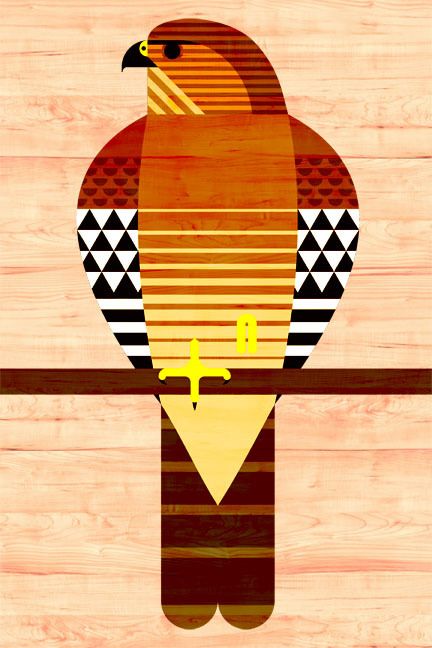
Charley Harper, Red-tailed Hawk
Regular readers of my yearly round-ups (if any such there be) [Ed. – hell yeah!] will recall that shortly after joining Twitter, my new year’s resolution in 2018 was to complete all the partially-read books on my shelves by proceeding through them in alphabetical order. At the time, I thought of this as a five-year plan, but exactly five years later, I find myself only about halfway through, as the plan has expanded to include a good many newly purchased books as well, though my original alphabetical progression continues. So my five-year plan is now a ten-year plan, but the main thing is that I’m still reading a lot of good books, and making headway through those books that have been staring reproachfully at me from the shelves for many long years. For those keeping score at home, I have now completed 158 of the 289 books currently on my list (but of course, the list keeps growing).
Despite the arbitrariness of my system, each year gives me something to reflect on regarding my reading tendencies. In this case, my most significant reflection is simply that, when it comes to reading, I am who I thought I was: a reader of classics and obscure older texts who frequently struggles to get on with more contemporary fiction. My most inspiring reading experiences of the year were re-reads of The Iliad, The Odyssey and Moby-Dick, while, under the influence of the many good people of Book Twitter, I experimented with more contemporary fiction that I usually do, with mixed results. There were a couple of big winners (Ishiguro’s Never Let Me Go and Kertész’s Fatelessness) but I found that many other highly-recommended late-twentieth/early-twenty-first century books just didn’t do much for me. So, it’s not exactly a revelation, and I’m not complaining; after all, it’s not entirely a bad thing to have one’s choice of lane confirmed, and it’s probably too late to change myself anyway. Even so, I don’t see myself shying away from contemporary literature altogether; I do value my Twitter interactions, as there are many wonderful authors I probably wouldn’t have found on my own, although I may now take a closer look before plunging into anything written within the last 50 years or so. [Ed. – Honestly, this seems wise…]
In terms of the bigger picture of my project, after two years of spending an entire year on a single letter (who knew that G and H would be so much work?), this year, I finished off H, flew through I and J (mercifully short shelves!) and got started on K. Here are synopses of what I read:
Hines, Barry – A Kestrel for a Knave (1968)
I picked up this book after watching Ken Loach’s film adaptation, Kes, for the fourth or fifth time and wondering why I had never read the source novel. I discovered, unsurprisingly, that the book is equally great, and that the film is quite a faithful adaptation. Both tell the story of Billy, a working-class Yorkshire youth with an abusive brother, an absentee father, and a neglectful mother, who captures and trains a young bird of prey. The one significant difference I would note between the novel and the film is that the protagonist has slightly more agency, resourcefulness, and expertise in the book than in the film. Loach’s intention seems to be to show that Billy’s victimization by the social structure—embodied especially in the bullying he suffers at school, both from other students and the teachers—is essentially an inescapable result of his class position, while Hines shows some very brief glimmers of hope for challenging the oppressions of the system. The book’s ending, which includes a somewhat surprising (given the gritty realism of the rest of the book) fantasy sequence, also differentiates it from the film.
Holcroft, Thomas – Hugh Trevor (1794-97)
I went on a bit about Holcroft last year, when I read his Anna St. Ives. Hugh Trevor is another didactic novel clearly intended to illustrate Holcroft’s theories about human perfectibility. The book is a bildungsroman that draws in parts on Holcroft’s own life and career, including his experience as a playwright and his imprisonment on charges of sedition. The protagonist goes through a series of adventures, incidentally touching on just about all the careers thought appropriate for a gentlemen at that time (the church, law, politics—only the military is missing, rejected from the start as too barbaric), each of which is exposed as corrupt. Trevor learns the necessity of controlling his passions and exerting his reason. One of the great scenes in the novel is a riff on the Gothic, as Trevor and his companion, wandering in a stormy night, believe themselves to have stumbled on a den of murderous bandits, only to discover they are very mistaken. Enjoyable for the most part, although Holcroft’s invention seems to fail him at times, as Trevor is coincidentally in the right place at the right time to come to the rescue of the heroine on three separate, but very similar occasions involving runaway horses and imperiled carriages.
Holtby, Winifred – Anderby Wold (1923)
Holtby’s first novel anticipates her posthumously published masterpiece, South Riding, in interesting ways. Most significantly, they are connected by her detached representations of social class; we see all her characters as rounded individuals, not as representatives of a particular class position. Mary Robson, the protagonist, is a farm-owner with a very maternal—and proprietary—attitude to the townsfolk, an attitude that some, like Michael O’Brien, whom she nursed in sickness, reciprocate with unthinking obedience, and others, like Coast, the schoolmaster, whose career growth she stunted, strongly resent. David Rossitur is a young socialist who strikes up a friendship with Mary but warns her that he will have to rouse the villagers against the values she represents, which he proceeds to do. Holtby invites us to like both characters, but also to see their flaws. Mary is dissatisfied at heart and using the love of the villagers as a crutch, while David is schooled in Marx, but lacks any concrete understanding of farming or the men whose minds he is trying to change. By the end of the novel, we get some hints of Holtby’s own sentiments, but we never feel that Holtby is didactically steering us towards a particular conclusion, which is perhaps why the book feels so satisfyingly ambiguous in the end. [Ed. – Well, this sounds good!]
Homer- The Iliad and The Odyssey (trans. Robert Fagles)
I hadn’t read Homer’s epics since I was a child, so I thought it was about time to revisit them. There’s not much I can add in terms of praise of The Iliad’s literary merits, classic as it is, but I sure did learn a great deal about the ancient arts of hand-to-hand combat, such as:
If you defeat your opponent, just stop in the middle of the battlefield and strip his armour from him; sure, there’s a really good chance you’re going to get picked off by a spear or arrow while you’re doing it, but you can’t just let the shiny bronze breastplate go. [Ed. – I mean, that shit doesn’t just grow on trees.]
Even if you’re carrying around powerful weapons specifically designed to optimize your attack on the enemy, sometimes you’ve just got to pick up a big honking boulder and throw it at someone. You wouldn’t think that would work very often, but apparently it does. [Ed. – BHB FTW!]
Before engaging in hand-to-hand combat with your enemy, be sure to tell him your entire life story. There’s absolutely no way something bad could happen to you while you’re doing that. [Ed. – Reasonable.]
The Odyssey, of course, presents its violence in a very different way; by the time I reached the inevitable bloodbath at the end, I was rooting for it to happen. Much of that has to do with the narrative brilliance of the work. While reading Bernard Knox’s impressive introduction to my edition, which touches on so many of the important events and themes of the poem, my main thought was: “how on earth is Homer going to cram all of those many, many events into a book that is actually 100 pages shorter than the Iliad?” But somehow, it does not feel rushed, the narrative switches smoothly between the parallel narratives of Odysseus and Telemachus, with multiple time frames and stories within stories all driving towards the necessary conclusion that we know is coming but is still so thoroughly satisfying. It’s just sheer narrative pleasure.
Hornby, Nick – About a Boy (1998)
Having read High Fidelity last year, I had a pretty good idea of what I was getting into: another book about a male protagonist approaching middle age without a clue about how to maintain a stable relationship. There’s even a cheeky Hornby-verse cross-over towards the beginning of the book when this book’s protagonist, Will, meets a woman in Championship Vinyl, the record shop owned by Rob, the protagonist of High Fidelity. In the end, I’m not sure if I enjoyed this book quite as much as the previous one; for one thing, Will comes off as less redeemable than Rob—the book’s premise is that he invents an imaginary child to help him pick up women at a single parents’ support group—and for another, the book’s third person narration distances us from Will in a way that makes it harder to root for the redemption of his flawed masculinity in the same way that Rob’s first-person narration does in the earlier book. In the end, though, Hornby has a wonderful, sardonic sense of humour, especially apparent in the dialogue sequences between Will and Marcus, the awkward 12-year-old boy who challenges Will’s world view.
Hugo, Victor – Hernani (1830) Trans. Camila Crossland
According to the introduction of my edition, every play that Hugo wrote has been adapted into an opera. Reading Hernani, it’s not hard to see why; every plot development, every emotion, is huge, theatrical, and melodramatic. The plot revolves around three men—a king, an outlaw, and an aged nobleman—who love the same woman. The plot twists and turns are endless, and the circulation of debts of honour and their transference, deferral, and repayment, culminating in suitably excessive climax, is quite dizzying. In short, it is all a wonderfully grand spectacle; not, perhaps, for everyone, but bound to satisfy lovers of opera, melodrama, and spectacle.
Ibsen, Henrik – Peer Gynt (1867), The Wild Duck (1884), The Master Builder (1892) Trans. Rolf Fjelde
It may be banal to say that a work of literature changed one’s life, but the performance of Peer Gynt that I attended at Brock University when I was a teenager was certainly one of the most influential artistic experiences I have ever had. [Ed. – Same thing happened to me with Glass Menagerie, though it’s surely the lesser work.] Possibly, I was just the right age for it, but even re-reading it now, there is something enduringly powerful about Ibsen’s attack on the Romantic cult of selfhood. So, maybe it’s not a coincidence that I have spent my academic career studying theories that challenge conventional ideas about how the “self” is understood and represented.
As for the other plays, the rather random selection I dipped into suggests something about the development of Ibsen’s dominant themes from the early Peer Gynt through to the later period of The Master Builder. In the earlier play, Ibsen satirizes the Romantic ego through a parable that connects this obsession with “being oneself” with destructive (troll-like) masculinity which both supports and struggles with the strictures of a repressively moralistic society. As Ibsen moves from parable to realism, in The Wild Duck, these themes become embodied in the titular animal, a wild creature that is shot, but not killed, because of the failing eyesight of the flawed patriarch, and cared for by the young daughter of the man who has been married off to the patriarch’s former mistress. Within the realist context of the play, virtually every character is at some point likened to this multi-layered symbol: victim of patriarchy, survivor of misfortune, helpless dependent, enabler of fantasy, et cet. Finally, The Master Builder, while not devoid of this level of metaphor and fantasy (the trolls make a comeback!) reads as a much more complex exploration of the abnormal psychology of its characters. Hilda, the woman who comes to visit the master builder and his family, comes across as almost an analyst figure, bringing the neuroses of the family to the fore and precipitating the final crisis of the play. It feels like a very Freudian play, written just before the rise of Freudianism.
Imlay, Gilbert – The Emigrants (1793)
This one had been on my shelf for a long time—I remember picking it up the year of my first real teaching gig—and I’m sure I was mostly attracted by Imlay’s notoriety as the American who fathered a child with Mary Wollstonecraft [Ed. — !], then abandoned her [Ed. — !!], causing her to attempt suicide twice [Ed. — !!!]. This is an epistolary novel with a clear ideological point; England, the “old country,” is a place of corrupted values while the settlers of America embody a utopian opportunity to reconstruct relationships and communities. England’s backwardness is especially seen in the near impossibility for women to obtain a divorce, and the double standards that bind women to worthless men. [Ed. – Sounds like dude knew what he was talking about.] The plot provides numerous examples of the injustice of England’s laws, as opposed to the freedom of America. The problem, though, is that the book really isn’t very good; the plot events are perfunctory, related with very little sense of dramatic action, and the epistolary structure feels very contrived—to the point where one letter-writer tells his story not all at once, but in a series of letters… not unlike the chapters of a novel. Moreover, even Imlay’s attempt at some kind of early feminist point falls flat; the women of his novel are still prizes to be won and objects to be rescued. I’m sure Wollstonecraft was not impressed. Still, it was interesting to read during a tumultuous year for women’s rights in the U.S.A., especially with much rhetoric flying about what the founding fathers intended in creating the country’s Constitution. Imlay’s point in this novel is that America represents the potential for change and freedom, and freedom is defined as not being ruled by the outdated laws of the past (i.e. those of England). Ironic, then, that many Americans are citing the very people who rejected the idea that the past should be allowed to impose laws upon the present in order to justify doing precisely that.
Ionesco, Eugene – The Killer (1957)
I read this as a student and loved it. Revisiting it, I found that it has not lost any of its power. The plot—such as it is—revolves around Berenger (Ionesco’s perpetual everyman figure) visiting a “radiant district” in the city, a wonder of modern urban planning, only to discover that a killer has been luring its inhabitants to their deaths and drowning them in a fountain. The play is both absurdist and grim, leading towards a harrowing, existential conclusion. The dystopian world of this play feels as relevant as when it was written—if not more so.
Ishiguro, Kazuo – Never Let Me Go (2005)
Having never read Ishiguro before, I was uncertain what to make of the science-fiction sounding plot synopsis of this book, but by the end of the book, I realized what a clever ruse it is; you keep turning the pages in hopes of understanding the thing, the sci-fi concept that finally explains the truth behind the characters’ lives, only to run aground on an explanation that is anti-climactic (to the characters as well) and even slightly ludicrous (our very curious protagonists spend years in the outside world without learning some very basic information about themselves that appears to be generally well known to the public). In short, it’s a textbook example of what Hitchcock would call a “MacGuffin.” Because then you realize that none of that actually matters very much; even the moral questions characteristic of the science fiction genre, while pertinent, are not the point. Rather, what you get is a finely crafted narrative about the nuances of human relationships and a low-key reflection on the human condition and the inevitability of mortality. In the end, probably my favourite book of the year.
Henry James – The Tragic Muse (1890)
I originally picked up this book at a time when every book I was reading seemed to have some variety of “tragedy” or “tragic” in the title. I realize it’s one of the lesser-read James novels, but given my ongoing interest in 19th century theatre, it continued to hold an interest for me. Picking it up again, I struggled to figure out exactly why it has been so maligned over the years; the rap against it is that it is “un-Jamesian,” and I’m not sufficiently familiar with his oeuvre to be a great judge of that, but I also wonder whether its lack of popularity has something to do with the way it treats art. For one thing, 19th century theatre was largely seen as a form of popular culture rather than art, and its practitioners were considered socially “low” (a problem that the novel itself engages with, but still could have prejudiced many contemporary readers). For another, characters in the book debate questions of art directly and at length; James even includes a character—Gabriel Nash—who comes off as a stand-in for Oscar Wilde, and who makes the case for a thoroughly aesthetic view of life. But for the most part, the life/art debate is played out amongst the novel’s three main characters: Nick Dormer is torn between wanting to be a painter and to follow in his father’s political footsteps. His cousin, Peter Sherringham, is a diplomat with a love of the theatre. Miriam Rooth is an aspiring actress who attracts both of them, and becomes the subject of the titular portrait, posing for Nick as the “tragic muse”. Each character is pulled between their artistic aspirations and their worldly realities and duties in ways that are not always tragic, but certainly involve the necessity of finding an appropriate compromise between them. Meanwhile, the discussion of “art” is further nuanced by the differences between Nick’s painting—a solitary, peaceful, but largely unprofitable pursuit—and Miriam’s acting—a communal, chaotic, and very public process that nevertheless brings her fame and money.
Jansson, Tove – The Summer Book (1972) trans. Thomas Teal
Perhaps the most unanimous opinion I have ever seen expressed on Book Twitter is a love for this book (although outrage over Bob Dylan’s Nobel Prize might run a close second). Superlatives abound, with nary a dissenting voice, which almost made me feel guilty that I didn’t like it more than I did. Which isn’t to say that I didn’t like it—I really did—just that for me it didn’t quite live up to the high bar of praise that it was given. And maybe I’m missing the point; part of what is great about the book is how unassuming it is in its simple vignettes about a young girl and her grandmother living on a small Scandinavian island. [Ed – Totally!] This scenario could produce a book that is excessively sweet and idyllic (and frankly, these days, the prospect of living on a remote Scandinavian island sounds pretty darn idyllic) but, as Kathryn Davis points out in her astute introduction to the NYRB Classics edition, the crucial fact, easily neglected as it is only mentioned once in passing, is that the girl’s mother has died. The book is very quietly about the act of mourning and working through, with the grandmother and the island itself both supporting and frustrating those efforts. There is always a darker side to the relationships described. [Ed. – Ok, I thought we were heading for a smashup in our friendship, but all is well now.]
Jerome, Jerome K. – Three Men in a Boat (1889)
By contrast, this is one of the most divisive books I’ve ever seen discussed on Book Twitter; some declare it the funniest thing they’ve ever read, others are unable to get past the first few chapters, and still others declare that it is good, but the sequel (Three Men on the Bummel) is even better. After reading it, I can understand the extreme variance of points of view; while I did find it very funny, I can see how the “shaggy dog” style of narrative could frustrate some readers. For one thing, Jerome seems unable to tell a joke just once. To wit: the narrator says, “I like work; it fascinates me. I can sit and look at it for hours.” This pithy, almost Wildean epigraph made me laugh, but the narrator proceeds to riff for three paragraphs, saying things like “And I am careful of my work, too. Why some of the work that I have by me now has been in possession for years and years, and there isn’t a finger-mark on it.” Still funny, but by the law of diminishing returns, it loses some of its impact. Nevertheless, there are some wonderful comic bits; the story about the fish on the wall of an inn that every local who comes in claims to have caught, is my favourite. I should also add that the book works quite well as travel literature too; even though my edition of the book did not have a map (boo!), I found myself compelled to get one out and trace the journey taken by the three men (and a dog) up the Thames from Kingston to Oxford. [Ed. – ALL books should have maps. God, I love a map.]
Jin, Ha – Waiting (1999)
This is another book that came highly recommended but got a very mixed reaction from me. The premise is engaging; a doctor in China’s revolutionary army is married to one woman (a loveless marriage driven by family obligation) but in love with another. His attempts to get a divorce are continually deferred (hence the title). I had no trouble getting into the book, and I found the characters convincingly drawn for the most part, although the good-natured long-suffering wife felt like a stereotype. But the deeper I got into it, the less convincing it felt, and the end was hugely disappointing. It seemed to me that there was much potential for the book to develop this basic situation in many different directions; for example, the opposition between the traditional wife from the protagonist’s rural village and the urban modern woman he loves seemed to be setting up some kind of reflection on China’s changing cultural landscape, but the book didn’t explore the topic. More significantly, I expected the book to reflect on the nature of human desire; how does the protagonists’ relationship alter over this extensive period of waiting? While it does show the answer to this question, the conclusions it comes to feel over-simplistic and inconsistent with what has come before. The ending left me feeling grumpy, and as time has gone by, the grumpiness has increased rather than decreased, which I think is a telling sign.
Jones, Lewis – We Live (1939)
As a graduate student, I read Jones’ Cwmardy, a semi-autobiographical novel about a youth, Len Roberts, growing up in a mining town in south Wales in the early 20th century. I liked it a lot, and was inspired to seek out its sequel, which tells of Len’s involvement in the labour struggles of the 1920’s and 1930’s. The book interestingly traces out the ideological complexity of these times; Len joins the Communist Party, and clashes with Ezra Jones, his wife’s father, a long-time leader of the miners, who nevertheless adopts a more conciliatory attitude towards the mining company. Like its predecessor, We Live interweaves the lives of the people with their political struggles in a way that drives home the point that these are inseparable facets of the workers’ lives. I only wish that I hadn’t waited 20 years between reading the two books.
Jones, Lloyd – Mister Pip (2006)
Although this is the most recent book I read this year, having been written only 15 years ago, it did make me think about how values have changed even in that short time. In particular, I can’t help wondering whether a book by a white man with a black, teenaged girl as the narrator and protagonist would be heralded as much as this book was if it had been written today, although I would also hasten to add that the possibilities and limitations of such imaginative engagements with an “other” are precisely the theme of the book. The narrator, Matilda, lives on Bougainville Island in the South Pacific, and details her encounters with the only white man on the island, Mr. Watts. When the island is cut off from the outside world by civil war, Mr. Watts takes charge of the school, but, not being a teacher by trade, mostly just reads Great Expectations to the children. [Ed. – I mean, could be worse…] Matilda’s attempt to understand Mr. Watts now expands to include an attempt to understand the protagonist of that novel, Pip, and the world of Victorian London in which he lives. The beginning interestingly explores Matilda’s fascination with Mr. Watts and with Pip, even as her efforts meet with limited success and lead to increased complications for all the inhabitants of her village. To my mind, though, subsequent developments are much less interesting, as Pip ceases to be a challenge for Matilda, and simply becomes a model for her own life story, which is a much less satisfying, over-simplistic flattening out of cultural differences.
Jonson, Ben – The Alchemist (1610) and Bartholomew Fair (1614)
Comparisons between Jonson and Shakespeare are as unfair as they are inevitable. Both can be very funny in their comedic works, but their scope is entirely different, with Jonson’s plays largely set in the time and place in which the author lived—London in the early 17th century—while Shakespeare’s comedies mostly based on source material from the past and set in other European countries. Because of this, Shakespeare’s plays have been attributed a “universal” applicability (but that’s a debate too long for this space) while Jonson’s world has been considered narrow. While it is true that a great deal of Jonson’s humour in these two plays hinges on in-jokes (in particular, the Puritans do not come off well) [Ed. – Do they ever?], but part of Jonson’s genius is the detailed range of characters he is able to accommodate within this narrow space. Sure, he’s not as readable today as Shakespeare is, but he’s worth the effort.
Keane, Molly – The Rising Tide (1937)
I liked my first Molly Keane book, Young Entry, enough to cheat and add another one to my list (having read Young Entry under “F” as it was published under the pseudonym of M.J. Farrell). While Young Entry was one of Keane’s early books, The Rising Tide demonstrates a more mature style and carefully crafted structure. And yet, in the end, I liked it less; the energy, chaos, and irreverence that appealed to me in the earlier book are more subdued here. The scope is grander, essentially focusing on the changes in lives and fashion in an Irish house, Garonlea, from 1900 to the 1930s, as it passes from its ancestral mistress, Lady Charlotte French-McGrath, to her free-spirited daughter-in-law Cynthia, to Cynthia’s disapproving son, Simon. Keane outlines the decline of the aristocracy and the decadence of the nouveau riche, but largely ignores the bigger political issues of Ireland at this time. In the end, the book felt somewhat limited and restrained, in much the same way that its protagonists themselves are unable to escape their narrow perspectives of the world.
Kenneally, Thomas – Schindler’s List (Schindler’s Ark) (1982)
In my past life, I wrote a critique of Spielberg’s film, and have since felt the need to finish reading the book on which it is based. The book’s largely objective, journalistic account of Oskar Schindler’s rescue of Jews from Nazi concentration camps presumably inspired Spielberg’s imitation of documentary representational strategies and careful replication of historical detail in the film. But where Spielberg uses this illusion of documentary realism to manipulate emotional reactions in his audience, Keneally shows quite directly how the facts he reports disable simplistic emotional responses and moral judgments. To confine myself to one example, I wrote about a scene in the film where melodramatic tension is wrought around the rescue from Auschwitz of a group of women who are specifically important to Schindler—and therefore to the viewer—even as it is clear that others will suffer in their place. [Ed. – That scene, ughhhh…] The rescue of a few specific individuals creates an emotional reaction that overshadows the destruction of the many. In the book, by contrast, Keneally frames this, and other incidents with an acknowledgment of the limited scope possible for Schindler’s actions. For example, he is referred to as a “minor god of rescue” at one point when he manages to rescue 30 Jewish prisoners from a death march that started out with 10 000. The point here is not to minimize Schindler’s actions—which were indeed remarkable—but to understand them within a wider context that complicates the simplistic emotional responses encouraged by Spielberg’s film.
Kertész, Imre – Fatelessness (trans. Tim Wilkinson) (1975)
By contrast, Kertész’s novel takes an opposite, highly subjective approach, presenting the first-person account of György, a Jewish teenager from Hungary who is deported to Auschwitz and then Buchenwald. This narrative approach emphasizes the contingency and singularity of his experience, which is not contextualized by more objective historical information that could be used to minimize the details of the experience in the name of some larger explanation. This, it seems to me, is the point of the book’s title, which alludes to the fact that none of what happens to him necessarily had to happen; it is the product of choices made by many people, and of sheer arbitrariness, and therefore cannot be made to conform to the rationalizations and justifications that the narrator meets with upon his return home. [Ed. – Exactly!] This idea of “fatelessness,” emphasizes both that the events of the Holocaust were the responsibility of individuals—perpetrators and bystanders who did nothing—and did not simply “come about” (a phrase that György finds in common use upon his return, and the hypocrisy of which he objects to) and that individual lives could be lost or saved by the slightest of causes, not controlled by some overarching plan or structure. I initially picked up this book after reading Dorian’s post about teaching it, which addresses all this far better than I can, especially that very interesting final chapter. [Ed. – Thank you, good sir!] It is notable that Kertész extends the narrative beyond the end of the war, demonstrating that release from the camps is not the end, and challenging conventional notions of “survival” or “liberation.” As with Keneally, there are no simple answers.
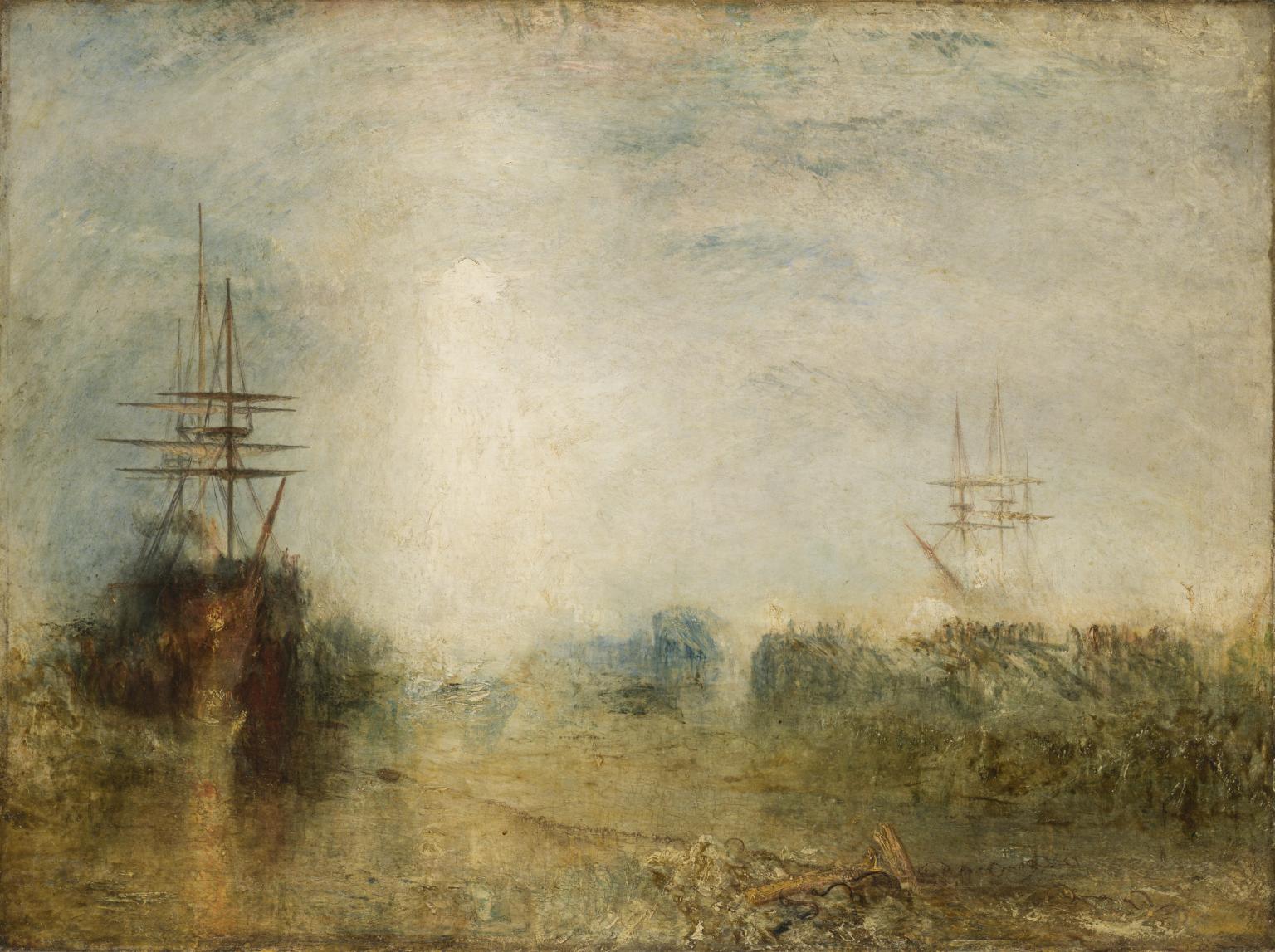
J M W Turner, Whalers (Boiling Blubber) Entangled in Flaw Ice, Endeavouring to Extricate Themselves (1846)
Melville, Herman – Moby-Dick (1851)
This was my one out-of-sequence read for the year, as I joined a Twitter group read of this book, which, like The Iliad and The Odyssey, I had not read since my precocious childhood. (I note also that, having read The Man Without Qualities, The Balkan Trilogy, and The Levant Trilogy in recent years, I have relieved some of the pressure that will inevitably brought to bear when I reach the M shelf.) I remembered the book as mostly the story of Ahab’s obsession with the white whale, but had forgotten that the book is a strange and wonderful mixture of psychological exploration of human nature, allegorical tale, shaggy dog story and detailed account of the workings and history of the whaling industry. The latter part, I must admit, I found strangely compelling; as abhorrent as the idea of the killing of whales may be, the intricacies of the process are quite astonishing, but no more so than the sheer scope of the book. As I said at the outset, I am a reader of the classics, but if the word “classic” has come to refer to a predictable and stable literary form, this book is a reminder that classics became classics not by following the rules, but by rewriting them. [Ed. – So well put! Thanks, Nat. Same place next year?]
Today‘s reflection on a year in reading, I’m delighted to say, is by Scott Walters. Scott launched a litblog, seraillon, in 2010, and expects to return to it one of these days. He largely follows Primo Levi’s model of “occasional and erratic reading, reading out of curiosity, impulse or vice, and not by profession” (profession in his own case being academic administration). He lives with his partner in San Francisco and tries to visit family in France as often as possible.
seraillon has long been a favourite blog: in the past year or so I’ve checked in regularly, half disconsolate, half hopeful, looking for new content. You can imagine, then, how happy I am to feature Scott here in his return to blogging. I hear rumours that more may be afoot at the site!
With Scott’s post, this run of Year in Reading posts comes to an end–except, of course, for my own, which I hope to write soon… The project grew into something bigger than I’d ever imagined; it’s been a delight to showcase the work of so many thoughtful readers. Thanks to everyone who wrote, read, and commented on these pieces. (If you’d talked with me about writing a piece but haven’t sent it to me yet, it’s not too late. Just be in touch and we’ll make a plan.)
Milton Avery, Green Sea, 1954
How gracious of Dorian to invite me to submit an end-of-year post! I have been avidly following the others he’s posted, which now have my to-be-read list runnething over. So thank you Dorian, and everyone, and hello. [Ed. – Such a pleasure!]
I’ve written nothing on the seraillon blog for more than two years—”hellacious times and I’ve slipped between the cracks,” as a character says in David Greenberg’s play, The Assembled Parties. But I have been reading, finishing 42 books in 2021. Though about half my typical yearly volume, I also read much more in books, most of which I intend to finish: The astounding Autobiography of Benvenuto Cellini. Milton’s “Paradise Lost.”Chateaubriand’s Mémoires d’outre tombe (to be continued in the original French, no knock on Anka Muhlstein’s translation). A re-read of Wuthering Heights. Franz Werfel’s monumental novel of resistance against the Armenian genocide, The Forty Days of Musa Dagh. Gaston Bachelard’s The Poetics of Space, following an interest in Henri Bosco. Henri Bosco himself, in his novels Le Mas Théotimeand Sabinus. A book about book designer Robert Massin, who designed these French Bosco editions. There are others, down other rabbit holes.
Here are ten highlights of works I did finish in 2021, plus honorable mentions:
The Ministry for the Future, by Kim Stanley Robinson
Hugo and Nebula Award winner Robinson has shouldered a massive responsibility: digesting everything we know about climate change as well as everything we know about how we might address it, then packing it into a stunningly wide-ranging geopolitical thriller interspersed with chapters that concretize climate change’s multivarious, cascading impacts. The novel is also one of few I’ve encountered (Vincent McHugh’s 1943 pandemic novel I Am Thinking of My Darling being another) that explore competent administration of a crisis. [Ed. – Yes! This is a book about competency. Maybe that’s why it feels so comforting.] Robinson’s book appeared in October 2020, a date to fix precisely given the furious pace of change as regards the book’s subject. In fact, the novel seemed a kind of sundial around which shadows spun and deepened rapidly as I read, some elements already obsolete as others swam into view. This is no criticism; I marveled at the real-time context while reading as well as at Robinson’s courage in being able to place a period on his final sentence, and I’ve been pushing the work on everyone for its articulation of the enormity of the challenges facing us, some lovely conceits such as the return of airships, and a bracing radicalism that makes Edward Abbey’s The Monkey Wrench Gang seem like a Sunday School picnic. Despite offering a path forward, Robinson eschews easy answers and offers little in the way of reassurance, seeming to have taken as the novel’s departure point Greta Thunberg’s memorable warning: “I don’t want you to feel hopeful. I want you to panic.” [Ed. – On my 2020 list; still think about it daily.]
Last Summer in the City, by Gianfranco Calligarich (translation by Howard Curtis)
The cover blurbs’ promise of a resurrected 20th century Italian classic certainly delivered; Calligarich’s short, tight, engaging 1973 novel of dissolution in 1960’s Rome seems to pick up where Alberto Moravia left off in depicting modern Italian existential malaise. The story follows the peripatetic wanderings around Rome of Leo Gazzara, an impecunious, alcoholic, bookish young Roman who becomes embroiled in a tumultuous on-again/off-again love affair. The energy of Calligarich’s automobile-driven narrative and the drifting yet fascinating tour he offers of Rome—the city itself a “particular intoxication that wipes out memory”—help balance out the novel’s bleakness, and a frequent invocation of books provides both literary diversion and dark warning of Bovary-esque entrapment in fictions. One might easily envision a film version by an Italian neo-realist director such as Dino Rossi or Antonio Pietrangeli.
Norwood, by Charles Portis
Considerably brightening a dark year, Norwood (1966) edged out Portis’s True Grit and The Dog of the South as the funniest book I read all year [Ed. – Arkansas, represent!], and even topped W. E. Bow’s The Ascent of Rum Doodle and Patrick Dennis’s Genius. A howling road trip and love story that begins when Norwood Pratt of Ralph, Arkansas gets a job tandem-towing a couple of hot cars to Brooklyn, Norwood limns the seedy, grifty, free-wheeling side of American life with caustic, irreverent humor; splendid dialogue; and unforgettable characters. I have Jacqui to thank for this introduction to Portis and will certainly read his remaining two novels and collection of short pieces, a literary cornucopia inversely proportional to the author’s small output, and no doubt as delicious as a biscuit and Bre’r Rabbit Syrup sandwich.
Stories With Pictures, by Antonio Tabucchi (translation by Elizabeth Harris)
“From image to voice, the way is brief, if the senses respond,” writes Antonio Tabucchi in his preface to 2011’s Stories with Pictures, a collection of 30-some short pieces sparked by a particular painting or drawing. Inspired by his having spent an entire day in the Prado (I did the same thing on the one day I spent in Madrid), Tabucchi writes at an angle about the pictures, riffing on them in a dazzling range of ways, from mediations to letters to what seem at times multi-page, arabesque-like captions. As in much of Tabucchi’s work, motifs connected to Fernando Pessoa abound. Most of the artworks come from 20th century Italian or Portuguese artists, all but a few new to me. As if the posthumous appearance in English of a Tabucchi work wasn’t reason enough to celebrate, the Archipelago Books edition, featuring color plates of each picture, make this a volume with a presentation as lovely as the author’s concept.
Bear, by Marion Engel
“Is a life that can now be considered an absence a life?” Marion Engel’s Bear (1976) has made so many end-of-year lists here and elsewhere that Dorian should get a medal for this revival of interest. [Ed. – Aw shucks. No medal, though. I want cash.] Thanks to a new edition from London’s Daunt Books, I finally got in on Engel’s singularly odd tale of Lou, an archivist cataloging the contents of a deceased eccentric’s isolated mansion in Ontario’s remote north—and falling maw over claws for its resident bear. [Ed. – Ha! Maw over claws! That’s good! Gonna steal that.] Literally going wild in shaking herself loose of “the flaws in her plodding private world” and the various civilized confines that have entrapped her, Lou exults in a rebirth as liberating as it is perturbing. Bear’s atmosphere of isolation made it seem readymade for pandemic reading; I suspect that most of us are more than ready to go a little wild ourselves. [Ed. – Sounds pretty good to me!]
Dissipation H. G., by Guido Morselli (translation by Frederika Randall)
My terrific excitement at seeing another Morselli novel appear in English received an abrupt check upon my learning that Frederika Randall, one of the finest of Italian to English translators, had died shortly after finishing the translation. Readers of seraillon may know of my interest in Morselli; this short novel, his last, takes a common theme in which a person suddenly discovers that they are alone on earth. Morselli spins the conceit into a bittersweet, moving and darkly humorous exploration of isolation and the need for human contact. The “H. G.” in the title refers to humani generis and the dissipation “not in the moral sense” but rather from “the third and fourth century Latin dissipatio,” meaning “evaporation, nebulization, some physical process like that.” In other words, Dissipation H. G. turned out to be another work suited for pandemic reading—if perhaps in the manner of providing solace through affirmation of one’s sense of reality.
Malacarne, by Giosué Caliciura (French translation by Lise Chapuis)
Sicilian writer Giosué Caliciura has yet to be translated into English, a pity, as his fierce, inventive, densely baroque novels, delving into the lives of those on society’s margins, are among the most original and powerful I’ve found in contemporary Italian literature. Malacarne (1999) presents a ferocious testimonial from a Sicilian malacarne (literally “bad flesh”), one of the young hoods employed to do the Mafia’s dirty work. Palermo—and at the same time a vaguely defined post-mortem space—provide the setting(s) for the malacarne’s reckoning, before a judge, with the brutal details of a violent, savage life. Caliciura’s use of a deliberately impossible narrative voice, an articulation both belonging to and channeled through the late malacarne, adds to the novel’s otherworldly, underworld atmosphere. But the story the malacarne relates is as worldly, gripping and linguistically spectacular as a story could be, a profound exploration of the forces that perpetuate organized crime and engulf the youth it attracts, manipulates, and destroys.
Giorgio Morandi. Paesaggio Levico, 1957.
Okla Hannali, by R. A. Lafferty
I did not know of R. A. Lafferty (apparently revered in science fiction circles), nor had I heard of this novel (not a work of science fiction), and so little suspected what I was about to get into. I found Okla Hannali (1972) astonishing. The author called its initial appearance “a torturous undertaking even though it wasn’t much more than an overflowing of crammed notebooks.” Something of the “crammed notebooks” quality seems to remain in this revised, shaggy final version, but small matter: why this vastly-larger-than-life legend of fictional Choctaw “mingo” (king) Hannali Innominee isn’t a standard feature of the American literary canon is beyond me. Lafferty turns the historical telescope around, viewing early 19th century frontier history from the Choctaw perspective. We know we’re in the realm of legend when the novel begins with a creation myth, which swiftly moves to the early life of Hannali, a “big man who would fill almost a century” and who, during one of the several forced resettlements of the Choctaw, abruptly picks out a plot of land in what is today eastern Oklahoma, “a place less no damn good than other land.” At this nexus where many elements of 19th century American history converged, the reader witnesses, through Hannali, the westward European expansion, the enactment of genocidal policies towards indigenous populations, the flight of escaped slaves (some of whom become slaves of the Choctaw and/or members of the tribe), the lingering resonances of the Louisiana Purchase, the inauguration of new states, the misunderstood “Jacksonian Revolution” that amounted to little more than “a war of the rich against the poor,” and finally the American Civil War and the grim destruction of the Choctaw republic. Hannali is a magnificent character: defiant, stubborn, courageous, wise, irreverent, a folk hero of magnitudes. Big, boisterous, hilarious, indignant, heart-breaking tales like this don’t come along often; one mourns the unrealized project Lafferty intended to call “Chapters in American History,” of which Okla Hannli, his “Indian [sic] chapter,” is the only one he completed. [Ed. – Wow! Sounds amazing!]
The Transit of Venus, by Shirley Hazzard
“The calculations were hopelessly out…Calculations about Venus often are.” Australian writer Shirley Hazzard and Graham Greene were close friends, and I thrilled to find Greene-like elements in this exceptional, elegant, psychologically penetrating work. But The Transit of Venus (1980) is something all its own, a dense, intimate, furiously compelling narrative tracing the life trajectories and romantic entanglements of two Australian sisters orphaned at a young age. Tracking the sisters’ moves to England (and one to New York), with events of the tumultuous 20th century backgrounding their stories, Hazzard describes, in exacting prose, the psychological nuances of human interactions. Henry James, another obvious influence here, seems constricted by comparison [Ed. – hmm]; The Transit of Venus did more to put in perspective James’s limitations with regard to women characters than any other work I’ve read [Ed. – hmm]. Hazzard’s antecedents range from Greek tragedies to Goethe to 19th century Realism, resulting in a story almost classical in form and style, yet palpably burning with a sense of lived experience—from a writer who led an utterly improbable life. I’ll be reading more.
A True Novel, by Minae Mizumura (translation by Juliet Winters Carpenter)
“…I still could not feel at home, either in the new country or in the new language,” states the narrator on the first page of Mizumura’s 2002 novel (to which I was steered by Dorian – thank you, Dorian!). [Ed. – So welcome! Delighted to see this here.] This might be a line from any work addressing displacement, but it scarcely begins to hint at the extraordinary directions Mizumura will take over the ensuing 853 pages. I harbored some doubts about descriptions of the novel as a Japanese Wuthering Heights, but Mizumura evinces little interest in simply grafting Emily Bronte’s work onto a Japanese setting. Instead, her ambitions aim broadly and deeply. Taking the coinciding of the 19th century western novel’s golden age with Japan’s opening to western influence as her beginning, Mizumura then uses her own transnational experience (with formative years spent in the US before a permanent return to Japan) to explore, through both western and Japanese literary and linguistic lenses, multiple questions of transnational identity, cultural cross-pollination, Japanese post-war history, and – through her mysterious character Taro, a kind of Japanese Heathcliff/Gatsby amalgam – issues of class and otherness. A True Novel takes its title from a prevailing style of Japanese literature in which works like Wuthering Heights were held up as an ideal form, “where the author sought to create an independent fictional world outside his own life.” But meta-fictional elements in Mizumura’s narrative also link it to the later Japanese style of the “I-Novel” (also the title of another, more personal Mizumura work), close to memoir and hewing to the author’s personal experience. Through concatenations of narrative (the prologue alone to A True Novel goes on for 165 pages) and using black and white photographs to heighten sense of place in the mountainous Karuizawa area where much of the story unfolds, Mizumura aligns the substrate of the Japanese literary enzyme with that of its Western counterpart, sparking a catalysis that creates something strikingly original. While it’s rare enough to find something that seems new in fiction, it’s more unusual still to find a work also incorporating something old and familiar and—by means of steady, crystalline, superbly atmospheric prose—so completely absorbing. Re-reading this true novel, my favorite book of 2021, will be a goal for 2022.
Milton Avery, Offshore Island, 1958
Honorable mentions:
Isak Dinesen’s Winter’s Tales;
Miklós Bánffy’s The Enchanted Night, an excellent collection of short stories that aligned surprisingly with Dinesen (great to see more of Bánffy’s work emerging in translation);
Federico Fellini’s The Journey of G. Mastorna, the director’s screenplay for what many consider to be the greatest film never made;
N. Scott Momaday’s House Made of Dawn, an American classic, gorgeous and heartbreaking;
Claire Keegan’s Small Things Like These, a marvel of concision concerning Ireland’s Magdalen laundries;
Henri Bosco’s Le Trestoulas, affirming Bosco as a writer I will certainly keep reading;
Joseph Roth’s The Radetzky March.
(And in the noir/polar/mystery realm):
Georges Simenon’s Chez Krull [Ed. – So good!];
Eric Ambler’s Journey into Fear and A Coffin for Demetrios;
Seishi Yokomizo’s The Inagumi Curse, terrific to read directly after Mizumura so as to linger a bit in a Japanese mountain atmosphere.
Thanks for reading, and felicitous reading to all in 2022!
In the next week or so I’ll be writing up my reflections on my 2020 reading year. In the meantime, I’ve solicited guest posts from friends and fellow book lovers about their own literary highlights. I’m always looking for new contributors; let me know here or on Twitter (@ds228) if you have something you want to share.
The third post is by NancyKay Shapiro (@NancyKayShapiro), who blogs at Reading Up. NancyKay has terrific taste, and I’m not just saying that because we agree on most everything. She lives and reads in New York City.
Reading is (a huge part of) my life. My choices are always spontaneous, and always include new books, old books, and revisits to books I’ve read before. More and more in recent years I’ve loved audiobooks, initially as a way to reread old favorites in a fresh way, then as a way to read books such as long histories that in printed form would end up sliding away from me. My intention at the start of the year, before the epidemic was thought of, was, amidst whatever else appealed to me, to tackle Proust.
Strong influences on my books choices in 2020 were: A) The Backlisted Podcast, and B) Book Twitter. At any event, the part of book twitter that I found mainly through following the Backlisted people and then following the people they follow, etc. I’m very susceptible to the enthusiasm of friendly enthusiasts. (That said, DO NOT bother trying to recruit me, Scientology.)
In 2020 between reading and listening, I read 105 books, which for me, may be a record, but doesn’t feel like much of one given how high and dry I was all year. I completed 87 books in ’19, and 91 in ’18. About 20% of the 2020 books were rereads. (I almost always finish books I begin, because I tend to reject a book very quickly; if I read more than 50 pages, I’m going to see it through even if I’m not in love with it.)
Looking over my list to pull out the things that I liked most, I’m struck by the sense, unique to this year, that a lot of stuff just rolled through me; I read these terrific books, one after the other, and at the same time I was emotionally kind of flat. I’m sure NO ONE ELSE knows what I’m talking about, so let’s leave that there.
A few fiction standouts in 2020:
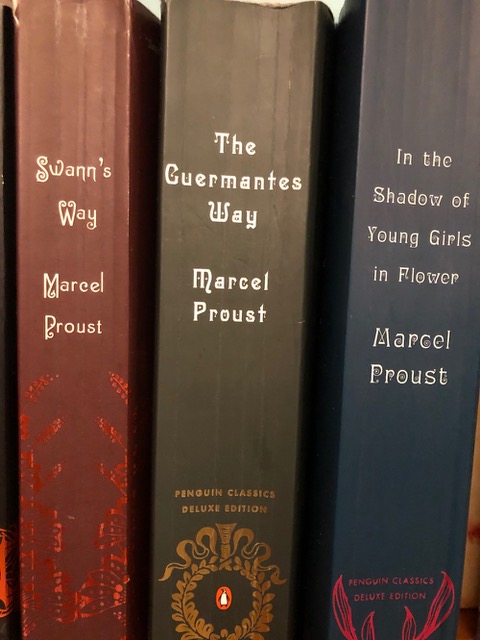
Proust—I read volumes 1, 2 and 3 (Swann’s Way, In the Shadow of Young Girls in Flower, The Guermantes Way). When the lockdown began, I’d just started Vol 2, and I put it down for a few months, because though my life didn’t change very much, especially compared to a lot of other people, my emotional tenor did, and there was a while when it felt like what had been going on had to stop and other things take their place. Anyway I was delighted with Proust, whom I’d tried a few times before but felt now, in my late fifties, I was really ready for, in terms of the patience I could bring to reading him, my ability to appreciate rather than endure, and all the training I’d had from repeat readings of Henry James to deal with huge paragraphs, digressions, insanely long sonorous sentences, and so on. Sometimes I found myself feeling sorry for the narrator for how obsessed he was with people who really weren’t … uh, very worthwhile.
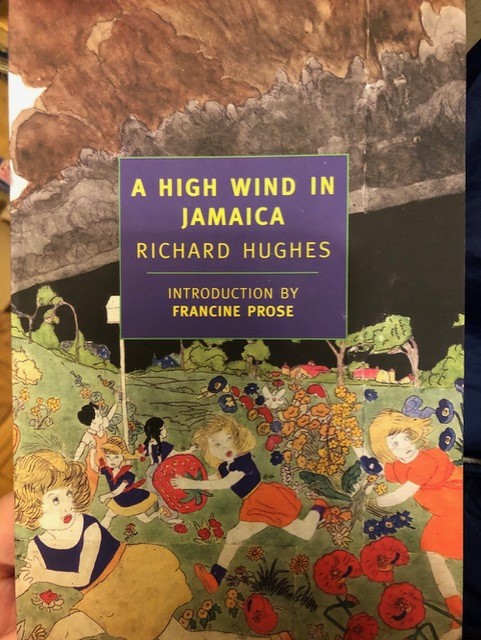
High Wind In Jamaica by Richard Hughes. I’m not sure what prompted me to read this; I’d read one of Hughes’ other novels a year ago, and I had this one, but it must’ve been something from a podcast or writer interview that made it suddenly needful to grab it. An English child and her siblings are sent by their parents from Jamaica towards England for boarding school in the late 1800s; along the way they are, by misadventure, transferred to a pirate ship, where they spend many months in the custody of rather hapless pirates who aren’t having a splendid time of it. Our little girl, who has a large sensibility and ability to accept circumstances, experiences it all with curiosity and an admirable lack of concern for how her parents’ plans have been overturned: through her eyes the extraordinary things that happen before the children return to civilization are never extraordinary in the way the staid adult reader believes them to be. (Though there are strong hints that her older sister, who doesn’t enjoy the immunity of pre-adolescence, is having a much darker shipboard experience.)
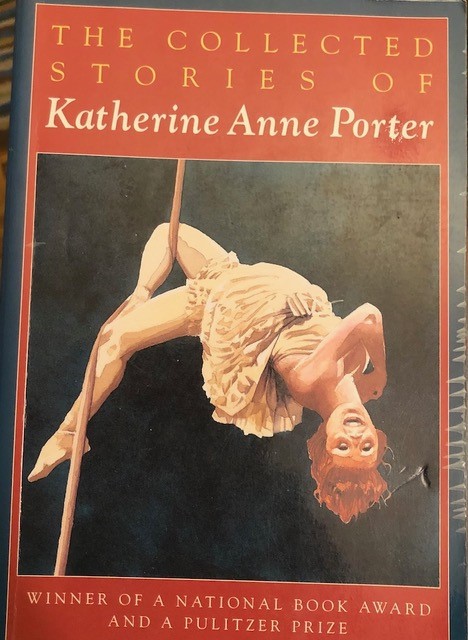
I was reminded that Katharine Anne Porter’s story about the 1918 Spanish Flu epidemic was timely again, and so good was “Pale Horse, Pale Rider” that it led me to read her entire collected stories. Her profile should be higher. Marvelous writer.
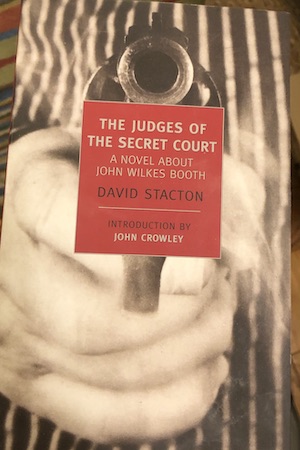
The Judges of the Secret Court: A Novel About John Wilkes Booth by David Stacton. What it says on the tin. The lead-up to the Lincoln assassination from the point of view of, among others, Booth’s older brother, a noted stage actor whose difficult career wasn’t made any easier by his kid brother being a white supremacist terrorist.
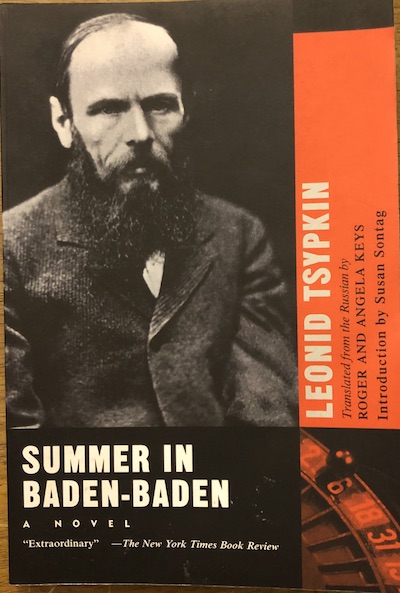
Summer in Baden-Baden by Leonid Tsypkin, which is a novel about Dostoyevsky. After initially finding Dostoyevsky baffling and off-putting in my young adulthood, I’ve come to revere and spend a lot of time with him, with accompanying interest in his life as well as the work. This small novel written by another D enthusiast, is a little gem of the sui generis variety, using the occasion of D’s travels to the gambling spa with his second wife, and their other adventures abroad, to both tell his story and invoke, very powerfully, the mood of his writings and what it feels like to read him. (Honorable mention to JM Coetzee’s novel The Master of Petersburg, which I also read this year, another fictional take on the Great D, but found not so rich and strange, for me, anyway.)
Other novels I read that I won’t elucidate but would push into your hands if your hands were here to be pushed into:
The New House, by Lettice Cooper, Troy Chimneys by Margaret Kennedy, A Pin To See the Peepshow by J Tennyson Jesse, A Wreath for the Enemy by Pamela Frankau. The latter are all green Virago Modern Classics, which I collect, shelve for years and years, and then occasionally rediscover and read. One Last Look by Susanna Moore; The Good Terrorist by Doris Lessing (thanks to Dorian Stuber for that tip); Days Without End and its sequel A Thousand Moons by Sebastian Barry; Disappearing Earth by Julia Philips
Authors I reread this year include: Lore Segal, Shirley Ann Jackson, Colette, Carson McCullers, Henry James, JD Salinger (entirely due to Backlisted’s sudden craze for; I was glad to be prodded back to a writer whom I’d thought myself entirely done with 25 years ago).
Novels I read that everybody seemed to adore but which I did not: Shuggie Bain by Douglas Stuart, and Leonard and Hungry Paul, by Rónán Hession [Ed–harumph]. Not telling you not to read these. Just if you did and also didn’t like them, come sit by me.
A few nonfiction standouts:
Hidden Valley Road: Inside the Mind of An American Family by Richard Kolker, in which an American family of some 10 children has 5 of them succumb to galloping schizophrenia.
Time Song: Journeys in Search of a Submerged Land by Julia Blackburn, in which the author explores the old Doggerland, or Heligoland, the part of England now submerged beneath the North Sea.
American Oligarchs: The Kushners, the Trumps and the Marriage of Money and Power by Andrea Bernstein, a reporter for WNYC radio whose extraordinary work I’ve followed by 2 decades.
Lakota America by Pekka Hämäläinen, a history that positions the Native Americans as a powerful preexisting nation dealing with global politics and an influx of aggressive white settlers.
The Google spreadsheet of all 105 of my 2020 reads (and all my annual reads for the last 11 years) is available here: https://bit.ly/3njPjah






 Eiger, Mönch & Jungfrau