What I Read, February 2026

February in St Louis was warmish but not dismayingly so. We could still pretend winter is a thing. Lots of good running weather. I beavered away at my various gigs. I probably saw some movies but now I can’t remember. I should start writing those down. My review of Gabriele Tergit’s Effingers was published in The Wall Street Journal. Canada lost both gold medal Olympic hockey games, and that really hurt. I also read some books.
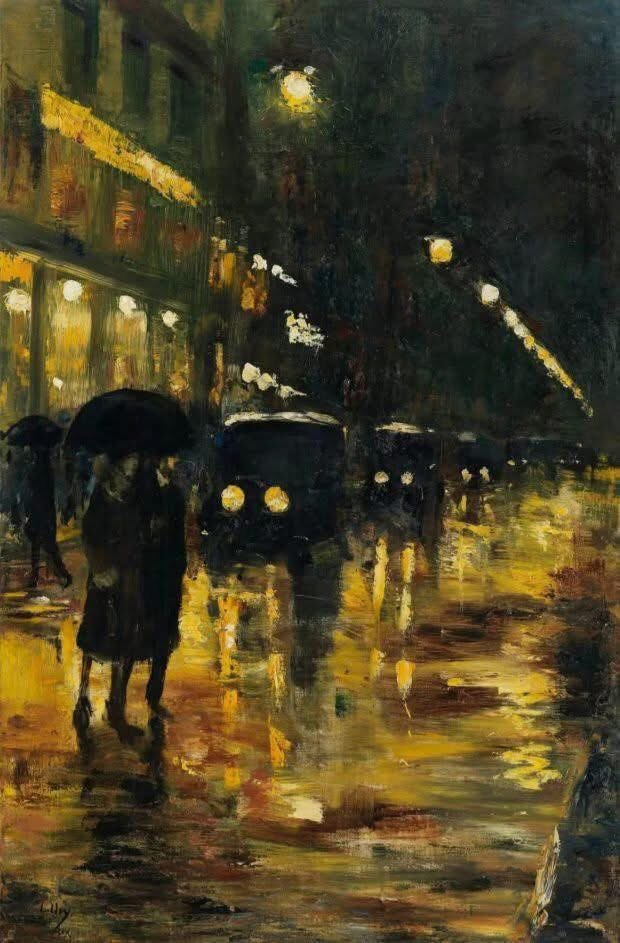
Leo Lesser Ury, Cafe König at Night, 1925

Qntm, There is no Antimemetics Division (2025)

We live in a world of memes. Internet jokes, catch phrases, bits of culture that spread with the persistence of an earworm. But what if there were such things as antimemes? Ideas, cultish beliefs, even malevolent forces that circulate with similar force except that they have the power of being forgotten, such that we are unable to recall their effect on us. And what if a governmental organization had been set up to protect us from these antimemes, which seek to crush us with their own dark virality?

That’s the premise of this brilliant novel, which broke my brain in all the best ways. The scientists and operatives in the Antimemtic Division routinely forget everything they’ve done, requiring elaborate protocols and dangerous actions to make sure that the world is kept safe from REDACTED and REDACTED. Author qntm, pronounced “quantum,” the pen name of British writer Sam Hughes, concludes that the human ability to forget anything is both what keeps us going and our greatest vulnerability.

Robert Jackson Bennett, A Drop of Corruption (2024)

Ana and Din are back! This time they venture into the most forbidding and dangerous place in the Empire: the Shroud. In this floating station off the coast (part oil derrick, part Pequod), a handful of Alchemists process leviathan corpses, harvesting the raw material from which all-powerful bodily modifications stem. In addition to avoiding the dreaded “middle volume sag” and offering another satisfying tale of detection, A Drop of Corruption picks up the hints in the first volume about stakes larger than this one case, which will presumably be developed in the third book in the series, due later this year.

Lea Ypi, Indignity: A Life Reimagined (2025)

It starts with a photo.

A young couple enjoy the snow and sunshine of the Italian Dolomites. They look at the camera with quite different expressions. He seems wary: eyes narrowed, perhaps against the glare, two furrows etched on his forehead; she, nestled in a fur, smiles broadly. It’s early 1941. These newlyweds are on their honeymoon. How could they be enjoying themselves while the war rages and the Balkans, including Albania, where they have made their home, has been plunged into factionalism? And why hadn’t Yea Lpi, professor of philosophy and the subjects’ granddaughter, ever seen this picture before? As the photo circulates online, people make all sorts of claims. Her grandmother was a communist spy; she was a fascist collaborator. Is any of this true?

The photo turns out to be a red herring—Ypi doesn’t even reproduce it in the book, save in highly cropped form on the (beautiful) cover of the US edition. (It’s easy to find online, though.) Instead, her book reconstructs her grandmother Leman’s life, from her childhood in an Albanian family long devoted to the Ottoman Empire in Greek Salonica, through her decision, as a young woman of 18, to move to Tirana, where she found a career and, briefly, a husband, a man recently returned from studying law in Paris where he knew, though did not particularly like, another expatriate, a young striver named Enver Hoxha. Ypi’s grandfather’s decency and reformist leftist tendencies put him at odds with the postwar Communist government. He was branded an enemy of the state and imprisoned for 15 years, during which time Leman and their young son (Ypi’s father) were forced to work at manual labour far from their home in the capital

Central to the story are the documents in Leman’s secret service file at the formidably named Authority for Information Concerning Documentation of the Former State Security Service. As always, documents turn out to be fundamentally inconclusive, especially when a late revelation prompts Ypi to wonder if anything in them is at all trustworthy. It doesn’t help that Ypi is researching her grandmother (as opposed to her grandfather or any other male relative). As a fellow scholar puts it, women and archives don’t go together: when woman appear at all, it is almost always with their husband’s name. Better, the man tells Ypi, to write a novel.

Which Ypi has done, sort of. Her treatment of Leman’s life is novelistic: filled with thoughts and feelings she could have had no access to, even though Leman was a beloved figure in her upbringing in Communist Albania in the 1980s and 90s. Most impressive is her glorious evocation of the multicultural world of early 20th century Thrace, tragically destroyed by successive waves of ethnic cleansing, from forced population transfers between Greece and Turkey in the wake of WWI to the Nazi eradication of Jewish Salonica.

Beneath this personal and political history is a philosophical investigation. From its epigraphs, citing Kant and Schiller, to its closing pages, the book considers the idea of dignity and its titular opposite. Dignity is the drive to “rule over adversity with moral force,” a tendency that Ypi argues, following Schiller, is fundamentally human. Dignity is what allows a person to decide to suffer, rather than instinctively to seek to free themselves from pain. And people most suffer, Ypi concludes, when they want to acknowledge both that the meaning of their lives both incorporates and exceeds the larger identities of family and nation and gender and religion of which they are part. (Ypi is a modern day Kanitian.) In this way, Ypi has given us a way to think not just about her grandmother but all the ordinary people who live through history, as she puts it, the first time as tragedy and the second time as even greater tragedy.

Ray Nayler, Palaces of the Crows (2026)

After enjoying Where the Axe is Buried last month, I was excited to get my hands on an advanced copy of Nayler’s forthcoming novel. And when I learned it was set in the forests of Lithuania (or perhaps Belarus) in WWII I was even more intrigued. Why had the sff writer Nayler chosen to write historical fiction? The answer is that he has found another way to investigate the animating question of his fiction: what kinds of relationships can exist between human and non-human animal societies? His first book considered octopuses. His second, elephants and mastodons. Here it’s crows.

Four teenagers—one Jewish, one Roma, one a Pole who has enlisted in the Red Army to help his family survive their forced exile in Siberia, and one a mute boy whose origins are uncertain—find each other in the chaos of the German advance into the Soviet Union in summer 1941. The Jewish girl, Neriya, whose family has always, in the years before he war, left their home in Vilnius each summer to vacation in a country village, and whose doctor parents have encouraged her to read Darwin and von Uexhüll, has over the years befriended a crow she names Buster. Buster is smart, even for a crow. He remembers Neriya from year to year, and masters the various games and puzzles she sets for him. He introduces her to other crows, each of whom has their own personalities. When she hides from the Germans in the forest, the birds appear at times of trouble, helping her and the other teens survive. For although the forest is vast, it is peopled with all sorts of threats: partisans, Germans, Russians who have gone AWOL, and others who, like our protagonists, are simply trying to survive. These other people are dangerous—though not as much as the terrible winters. The teens need all the help they can get.

The crows have created an avian city in the heart of the forest—more than a city, a real society, in which they look out for the most vulnerable members, much more than humans do. Chapters set during the war are interspersed with others from the 1970s, when the teens, now adults, each of whom has navigated life in the USSR in a different way, return to the forest. How can they protect the descendants of the crows who once protected them? Palace of the Crows might wrongfoot or disappoint some of Nayler’s earlier readers, especially those expecting a book a set in the future, but those who persist will see that this book, too, is about how we tell the stories of who we are, both within and between species. I hope Nayler keeps up his current writing pace!

Beryl Bainbridge, An Awfully Big Adventure (1989)

Stella Bradshaw is a working-class teenager in Liverpool in 1950. Her dream is to be in the theater, so she’s pleased in her closemouthed way when she is hired as an assistant stage manager in a regional playhouse. As the troupe prepares for a production of Peter Pan (the novel’s title comes from that play’s description of what death is sure to be), Stella becomes embroiled in its complicated relationships. She falls for the director, oblivious to what is obvious to readers: he’s gay. What at least this reader was oblivious to—surprising, because I’d seen the film, though admittedly not since it was in theaters in the late 90s—was the novel’s turn from comedy to tragedy. That ending! (And, yes, it’s all explained on the first page, Toni Morrison-style, but I’m slow.) Excellent stuff. Could have taken the Booker from A. S. Byatt if you ask me.

I’ll be reading this again soon: it’s the June title for the Leviathan book club. If you’re in St Louis, please join!

Miklós Bánffy, They Were Found Wanting [The Transylvanian Trilogy: Volume II] (1937) Trans. Patrick Thursfield and Katalin Bánffy-Jelen (2000)

See my thoughts on volume I. This continued to be excellent. Plenty of heartbreak, though. Things not going great for Laszlo.

Barbara Pym, The Sweet Dove Died (1977)

A moment ago, I mentioned a forthcoming meeting of the Leviathan book club. Pym’s late, great novel was our first selection. And what a terrific choice that turned out to be! I was thrilled to lead a discussion with such a smart and energetic group. I’d actually read this last August (one of those months I never got around to writing about) when NYRB released its beautiful edition. My first Pym, and from what I gather not the most representative, but absolutely terrific. I would say it even improved on re-reading. A woman coming up on 50—cool, elegant, manipulative, as Jacqui puts it in her review—meets an antique dealer and his 24-year-old nephew, who he’s training in the business. The antique dealer imagines a future with the woman, but she has designs (of what sort is never quite clear, even to herself) on the younger man. People behave badly—but, also, everyone has their reasons. The title, from Keats, is about the anguish—or is it the thrill?—of loving something to death. I would call The Sweet Dove Died Jamesian in the sense of being a study in cruelty. And an object lesson for any of us obsessed with the idea that the surroundings and events of our lives must be just so.

Isabel Cañas, Vampires of El Norte (2023)

Historical romance and vampire story set in the early part of the Mexican – American War (aka the US invasion of Mexico). As children, Nena and Néstor are inseparable, even though she’s the daughter of the patrón of a hacienda and he’s the son of a vaquero. Everything changes one night, when their expedition in search of buried Spanish silver coins goes terribly awry. Something, some creature, eyeless, all teeth and silent destruction, attacks Nena. The boy fights off the beast and carries the girl to the main house, but convinced he is responsible for her death he runs away never to be seen again. Until ten years later, that is, when he returns to join the forces the local ranchers are putting together to fight the Yanquis. When he sets eyes on Nena—who eventually recovered from her mysterious wounds—he freaks out. As does she, but for a different reason. She’s furious that he never wrote and can’t understand that he thought she was dead. This sets off an enemies-to-lovers story during a desperate mission in the wilds of northern Mexico: conveniently, the two become separated from the rest of the auxiliary cavalry during a battle. (Nena is there because in the intervening years and under the tutelage of Néstor’s grandmother she has become a curandera or healer.) Can the two overcome their differences to admit their love for each other? If so, what will happen when they return to the rigidly stratified world of the hacienda? And what are the terrible creatures the Yanquis have captured and forced to fight for them? You can probably guess the answers to all these questions. Vampires of El Norte doesn’t ever surprise, but it’s plenty satisfying. I do think Cańas needed to get a better handle on her allegory: those damn Yanquis are indeed vampiric but in the book’s most interesting moments the vampires are literal creatures, not just symbols. Just where did these vampires come from, anyway? It’s all a bit fast and loose. Still, I enjoyed this enough to seek out Cańas’s other books. Thanks to Hope for putting this on my radar.
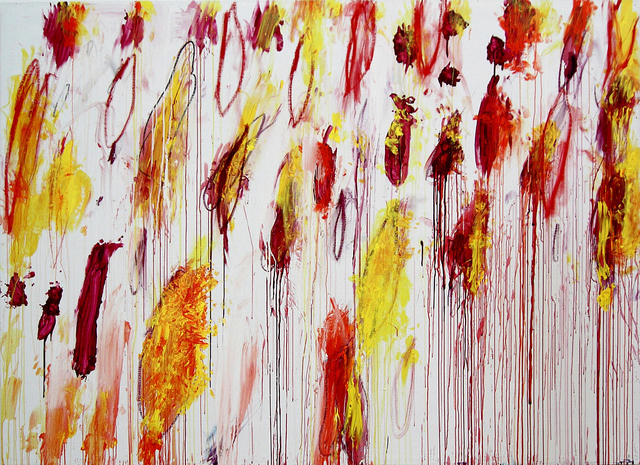
Cy Twombly, Lepanto Part IV (2001)

March roundup coming soon!

Martin Schneider’s Year in Reading, 2021

Today’s reflection on a year in reading is by Martin Schneider, a freelance copyeditor (of books!) who lives in Cleveland, tweets at @wovenstrap, and used to write for Dangerous Minds. He’s part-Austrian and can occasionally can be found in that country.

Look for more reflections from a wonderful assortment of readers every day this week and next. Remember, you can always add your thoughts to the mix. Just let me know, either in the comments or on Twitter (@ds228).

Charles E. Martin

The global pandemic has been very good for my reading life.

I’ve read novels my entire adult life but the raw totals in any given year might not have been very high, maybe 30 per year. When COVID-19 arrived, I had an empty work patch in my freelance schedule and I responded by attempting to read one novel per day for 30 days (!) as a way of distracting myself from the fact that I might have a hard time finding freelance work. I made it to Day 19 but some work came in, thank god, and I didn’t get to Day 30. That stretch sparked a period of high novel consumption: I read 72 novels in 2020 and 70 novels in 2021. Those are very high totals for me.

I’m grateful for the particular cluster on Twitter that orbits around Caustic Cover Critic and Damian Kelleher and of course Dorian for improving my general experience on Twitter as well as giving me inspiration for new books and a community of like-minded people, etc. I should also say a word about the Backlisted podcast as additional inspiration (obviously that also overlaps with Twitter in some ways). I appreciate the monthly bookstack photographs and other visual ephemera that Book Twitter is always providing me with.

I’m a volume whore, by which I mean I favor reading short novels so that the raw book count stays as high as possible and I don’t get stuck for a month reading Moby-Dick or whatever. [Ed. — Ah, but what a month it would be!] 275 pages already begins to seem a high total to me, my sweet spot is about 191. ABC, always be churning. [Ed. – Hahaha!]

It goes without saying that 2021 was a very good reading year for me, cycling through 70 books in a calendar year is pretty close to an ideal way for me to spend my free time.

OK, here are about 20 books I wanted to say something about, listed in chronological order except where books are joined.

Michaela Roessner, Vanishing Point

The first read of the year for me, and one of the year’s finest. Vanishing Point is hard to track down but this exemplar of heady, sinuous ’80s sci-fi is worthwhile for those who like that kind of thing. The setup has much in common with Tom Perrotta’s The Leftovers — it also came first — which most likely is what drew me to seek it out. I don’t want to divulge too much about it, but I greatly enjoyed this intelligent, immersive book, and I think about it often.

Josephine Tey, The Franchise Affair

I’ve never been much enamored of The Daughter of Time, which has always seemed implausible and overbaked. This left me unprepared for the astonishing authorial control of The Franchise Affair. I think you’d be hard-pressed to find a better representation of midcentury England than this book; the sheer exuberance of the jolly/obliging/diffident/snappish voices — literally, speaking voices — is tough to top. What’s the cricket equivalent of “a home run”? [Ed. – Knocked it out of the oval here, my friend: such a good book.]

Gilbert Adair, Love and Death on Long Island

Quite simply, my #1 read of 2021. I adore thinking about this book. Every page is a treat. I would urge those who like their fiction subtle and incisive to consume this immediately. Adair’s performance — and it is definitely a performance — feels thoroughly under-heralded. I had seen bits of the movie years ago and had always found the central predicament original and delicious and rich. Who can fail to relate to the sorrows/joys of being a bookish hideaway in a world that produces, almost unthinkingly, Hotpants College II?? [Ed. – Admittedly, not a patch on Hotpants I.] The ways Giles and Ronnie fail to comprehend each other are a wellspring of comedy that will never stop nourishing me. I never reread books but will likely return to this “jewel-like” 1930s-type book set in the age of the vulgar teenage sex farce (rented from the local video shop, natch); those 1980s details are decisively additive, at least for me. I sorely crave books like this but alas, strong comps are surely thin on the ground…… [Ed. – Ooh, a challenge: do your best, Team. Whatcha got for Martin?]

Colson Whitehead, The Underground Railroad

I am a fan of Whitehead’s, but I was disappointed by The Underground Railroad. It seems unusually weak for a Pulitzer winner (then again, there is The Goldfinch, oof). I appreciated the comparative tour of antebellum contexts, but the failure to develop the literalized choo-choos nagged at me. Does that metaphor explain anything to anybody? I can’t see how. It’s such a great idea but also a massive missed opportunity. This is the rare case of a book that needs another 200 pages, I think. I also worry that Whitehead has bought into the hype surrounding him. Give me another John Henry Days, man — please!

C.S. Forester, The African Queen

In 2020 I read The Good Shepherd and found it utterly compelling. Then dang if the same thing didn’t happen all over again with The African Queen. I am a little leery of the Hornblower books — I prefer the 20th century, thanks — but Forester’s way of imparting information really does it for me.

Patricia Lockwood, No One Is Talking About This

Jonathan Lethem, The Arrest

No One Is Talking About This is a relatively celebrated recent novel that I cluster together with the works of Jenny Offill and Rachel Khong, and not in a positive way. I think of all of these books as jammed with clever, postmodern witticisms/jokes that you could rearrange in any order and it wouldn’t make much difference to the narrative. That’s a little unfair to No One Is Talking About This, which Lockwood does take pains to instill with an Act I/Act II structure, but I still found it a complete failure in terms of ordinary novel-building. Meanwhile, Lethem is not much in fashion lately, especially after The Feral Detective, which did not work. I suspect there was scant interest in his stab at Post-Apocalypse, but I still found The Arrest as intelligent, engaging, and sharp as much of his stuff — I admire Chronic City particularly. His books don’t always hang together, but on the paragraph and thematic levels, Lethem seems to me the equal of anyone out there right now and, as such, under-appreciated.

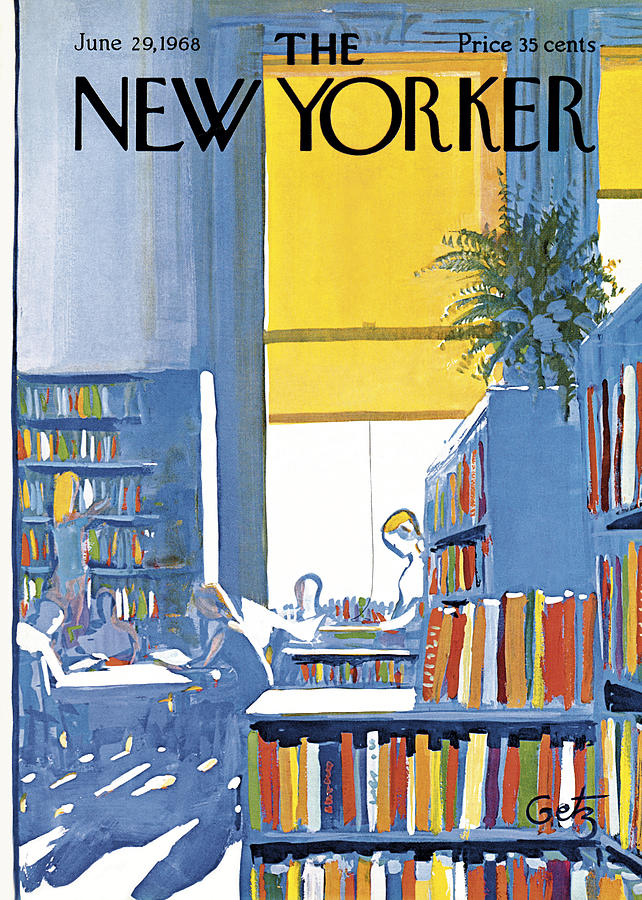
Arthur Getz

Margaret Drabble, The Millstone

Oh, boy. I was more than a little surprised how conventional and bourgeois (and therefore tiresome) I found this book, which in 1965 represented such a brave “new” perspective — or did it? From the perspective of 2021 it reads as so much more aligned to Drabble’s (presumably) hated predecessors than to us. To the reader of today, I submit, so many of Rosamund’s choices are unintelligible, particularly that of concealing the existence of her child from her parents. Rosamund’s whole setup (enormous apartment, rent-free) is so contrived and refuses to serve as the societal basis for anything (as I think was intended or at least was regarded). Jerusalem the Golden, a humble tale of growth about a woman from humble origins I read and esteemed decades ago, seems the antithesis of this. Drabble really leans into her privilege here, thus undoing the point. Next! [Ed. – *popcorn gif *]

Quentin Tarantino, Once Upon a Time in Hollywood

The last few years I have found myself increasingly disenchanted with the MFA-influenced “well-crafted” masterpieces that dominate (say) the Tournament of Books. The writing is frequently too tidy and pristine and there’s too much overlap/groupthink in the authors. In my mind, these books are not composed by individuals; too many of the nasty, idiosyncratic details have been sanded off. An antidote to this is Once Upon a Time in Hollywood, far from a great book but I found its termite-ish perambulations entirely refreshing and (am I crazy for believing this?) an explicit callback to the shaggy-dog ways of Dickens. I do suspect that Tarantino thought of this “novelization” (a favorite form of his) as an attack on all the bloodless hifalutin volumes that get adopted by reading groups. I’m ready to sign on to this agenda; modern fiction could surely stand to ingest the unkempt, untoward essence of this book.

Elena Ferrante, The Lost Daughter

I admire the guts it took to be so unflinching about the unvirtuous aspects of shirked motherhood. The Lost Daughter dares you to dislike its protagonist, which I did not — or not very much; Ferrante works in the class signifiers to make her readers side with her heroine over the swinish, unreaderly family that intrudes on her interlude — and then forces those same readers to think about that. It’s encouraging that a writer of Ferrante’s gifts has found such widespread success.

Susanna Clarke, Piranesi

Everybody’s favorite recent puzzle box, it seems. The first half of this book constituted one of the reading high points of the year for me. Nothing wrong with the second half, to be sure, but you just can’t top the sheer blazing WTF “where is this going?” quality of this book’s setup. [Ed. – Yeah, can’t argue with that.] As with Love and Death on Long Island, I desperately want to find books with this vibe, but I doubt that any are out there (I did think of David Mitchell’s Slade House, however).

Joseph Hansen, Fadeout

One of my top reads of 2021. I learn from the internet that Hansen was a pioneer of the gay detective novel. This book introduced Dave Brandstetter, Hansen’s recurring hero of a dozen or so mysteries. The gay angle functions as the lever that furnishes Hansen’s situation/solution with complexity, but it wasn’t just that; Hansen also had the ability and the interest to write textured, complex thrillers. That’s the kind of shit I live for! This was published in 1970, but I thought it stood up dazzlingly well today.

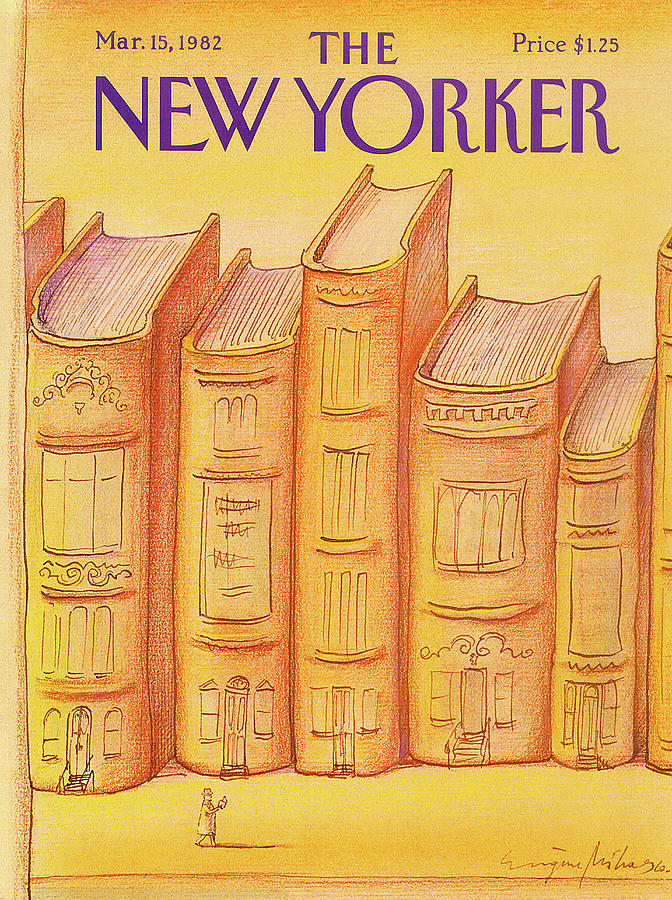
Eugene Mihaesco

Percival Everett, Cutting Lisa

This somehow pairs with The Lost Daughter in the author seeking out, nay, embracing unpleasantness to spectacular effect. This was on my shortlist of reading experiences for the year, a strikingly original work that forthrightly countenanced negativity while resisting the impulse to pin everything on a villain. Every character has corners; every situation is layered. My first Everett, Cutting Lisa has a chewiness I associate with the finest output of the 80s, and I can’t wait to read more by him.

William Maxwell, So Long, See You Tomorrow

Katherine Anne Porter, Noon Wine

So Long, See You Tomorrow is one of those “writerly” novellas that hit me entirely the wrong way. Maxwell was a smalltown escapee who later found tenure at The New Yorker and thereby invested himself of the power to imbue these “simple midwestern people” (yuck) with meaning. If ever a narrative should have dispensed with the pretentious framing device of the events filtered through the memories of a child, it’s this one. I guess I can see why people admire this book, but for me it was just a succession of false notes. [Ed. – Ooh, fighting words!] Noon Wine reveals the falsity of Maxwell’s methods; another short novel — Porter, it seems, detested the term novella — but in this case authentically empathetic towards its figures, in contrast to Maxwell’s self-serving projections/lies. Noon Wine has the guts to put real people on the page — and real stakes.

William Lindsay Gresham, Nightmare Alley

One of the much-mentioned texts of 2021, due to the Guillermo del Toro adaptation that landed late in the year. Later on, I found it significant that Gresham is not celebrated for any other work. This book is certainly adept and not devoid of virtues, but I found it labored and tiresome, every point underlined in every paragraph, nothing allowed to breathe, as a real novelist would do it. I resorted to a new strategy: just grind through 10 pages per day until done, just to get it behind me (while starting a different novel, I seldom double dip). I should go back and finish Geek Love as an antidote (not that Dunn let things breathe, either).

Louise Erdrich, The Sentence

Simply put, I cannot think of another novel as generous-minded as this.

Other books I enjoyed:

Powers of Attorney by Louis Auchincloss

Asylum by Patrick McGrath

Mrs. Caliban by Rachel Ingalls

Trustee from the Toolroom by Nevil Shute

The Mosquito Coast by Paul Theroux

Figures in a Landscape by Barry England

The Small Back Room by Nigel Balchin

The Blessing by Nancy Mitford

A Favourite of the Gods by Sybille Bedford

Excellent Women by Barbara Pym

After Leaving Mr. Mackenzie by Jean Rhys

Voyage in the Dark by Jean Rhys

The Easter Parade by Richard Yates

Two Serious Ladies by Jane Bowles

The Country Girls by Edna O’Brien

The Last Policeman by Ben H. Winters

Rose Under Glass by Elizabeth Berridge

The Quiet American by Graham Greene

On the Beach by Nevil Shute

An Unsuitable Job for a Woman by P.D. James

The Power of the Dog by Thomas Savage

Black Wings Has My Angel by Elliott Chaze

Amigo, Amigo by Francis Clifford

Something in Disguise by Elizabeth Jane Howard

Five Decembers by James Kestrel

A Disorder Peculiar to the Country by Ken Kalfus

Paul Wilson’s Year in Reading, 2020

In the next week or so I’ll be writing up my reflections on my 2020 reading year. In the meantime, I’ve solicited guest posts from friends and fellow book lovers about their own literary highlights. I’m always looking for new contributors; let me know here or on Twitter (@ds228) if you have something you want to share.

The second post is by Paul Wilson (@bibliopaul), one of the nicest folks on Book Twitter. (Which is saying something.) Paul lives with his wife in a small house in Colorado filled with boys, books and a Basset.

In spite of everything, 2020 turned out to be a great reading year for me. I’ve been fortunate enough to come across some books this year that will stick with me for a long time. Here are my favorite reads of 2020.

Some Tame Gazelle – Barbara Pym

Barbara Pym has become one of my favorite authors in recent years and her first novel, detailing the lives of two sisters in a small village in post-war England, was a perfect read amidst the chaos and uncertainty of 2020.

Sons And Lovers – D.H. Lawrence

Lawrence’s ability to capture the complicated tides and eddies of family lives and relationships is staggering. I read and admired Lady Chatterley’s Lover a few years ago, but this book is on a whole different level. I’m already contemplating which of his books I’ll read next. Perhaps The Rainbow? [Ed—yes!]

My Ántonia – Willa Cather

I wish I could travel back in time and tell my slacker high school self to actually read this instead of skimming the CliffsNotes version. Then again, given its wide lens on the cycles of nature and of human lives, maybe this is one of those books you only truly appreciate with age. [Ed–Makes sense.] I plan to read it often in the coming years and I’m sure I’ll discover something new every time.

The Go-Between – L.P. Hartley       

In the wrong hands, a child narrator can be disastrous. But when done well, as in The Go-Between, it can perfectly capture the magic, mystery and confusion of being young in a world you don’t fully understand. I’ve heard people rave about this book for years, and now it’s my turn to join the chorus. Don’t ignore it any longer.

The Mountain Lion – Jean Stafford

Speaking of stunning childhood narrators… A pair of siblings get a reprieve from their cloistered routines and protective mother when they spend a summer in the backcountry of Colorado. The descriptions of landscape and pitch perfect immersion into the tenderness and brutality of childhood blew me away. This book is devastating.

Weather – Jenny Offill

There’s always a mix of excitement and foreboding when one of my favorite authors comes out with a new book. For years now, I have recommended Offill’s Dept. Of Speculation as often as any other book I can think of, so I wasn’t sure what to expect from her follow up. Let’s just say I’m now more of an Offill evangelist than ever. Have you heard the good news?

Piranesi – Susanna Clarke

Few books have made a larger impact on me than Susanna Clarke’s first novel, Jonathan Strange & Mr. Norrell. I still remember certain scenes and images I read 10+ years ago far more vividly than those from books I’ve read in the past few months. As with Offill, I was both thrilled and a bit queasy when I heard Clarke had a new one on the way. Again, I needn’t have worried. Piranesi is very much its own book, but it contains the magic, mystery, and spectacular settings that are everything I could have hoped for. It was definitely worth the wait.

The Unreality Of Memory – Elisa Gabbert

I’ve found myself reading more essays in recent years, and this is one of the best collections I’ve come across. Given the subject matter—“disaster culture, climate anxiety, and our mounting collective sense of doom”—I was afraid that 2020 might be the wrong time to pick this one up. Instead, it was strangely cathartic to stare directly into the sun, guided by Gabbert’s masterful hand.

Winter Morning Walks – Ted Kooser

I first came across Kooser through Braided Creek, a wonderful “conversation in poetry” between Kooser and author Jim Harrison that often left me feeling like I was eavesdropping on an intimate conversation between friends. Winter Morning Walks is made up of 100 poems that Kooser sent to Harrison on postcards after Kooser developed cancer in the late 90s. Written and sent over the course of 12 months, these early morning ruminations are by turns elegiac, humorous, and contemplative. Accompanying Kooser during his year of doubt, fear, and hope made for perfect 2020 reading.

Sightlines – Kathleen Jamie

Over the past 10 years, I’ve begun to collect a handful of treasured nature writers: Robert Macfarlane, Terry Tempest Williams, Barry Lopez, Edward Abbey, Rebecca Solnit. This year, I added Kathleen Jamie to the list. This collection displays an impressive range, focusing on everything from microscopic cellular landscapes to mammoth whale skeletons hanging in the rafters of museums. As with the other authors on my list, I plan to slowly parcel out Jamie’s remaining books to make them last, despite the strong temptation to gobble them up as quickly as I can. 

Hurricane Season – Fernanda Melchor

This is one of several books I read this year that felt like jumping into a raging river and holding on for dear life. Dark, grimy, violent and incredibly compulsive, it refuses to provide the reader with any relief, even once you’ve turned the last page.

Ulysses – James Joyce

As I get older, I am increasingly drawn toward what Roberto Bolaño describes as “the great, imperfect, torrential works, books that blaze a path into the unknown.” Ulysses is all of those things and more. What can I say? It’s breathtaking. I highly recommend reading it while simultaneously listening to Jim Norton’s incredible narration.

Ducks, Newburyport – Lucy Ellman

How can a book that has received so much attention and hype still deserve more? I have never read anything like it. Even after nearly 1,000 pages, I didn’t want to leave the narrator’s troubled, compulsive, and familiar head. She was a much-needed companion during the darkest parts of this year. The fact that I can’t stop thinking about this book. The fact that I may just read it again in 2021. The fact that you should, too.

In Search Of Lost Time – Marcel Proust

Like many others, I’ve spent years warily circling Proust’s masterpiece, simultaneously fascinated and intimidated. I should have started sooner. Spending the last few months making my way through the first four books of In Search Of Lost Time has been wonderfully immersive. As I make my way through the last two volumes, I find myself slowing down, savoring every word, reluctant to see it end.