Brad Bigelow’s Year in Reading, 2022

Today’s reflection on a year in reading is by Brad Bigelow. Brad writes http://NeglectedBooks.com and edits the Recovered Books series for Boiler House Press.
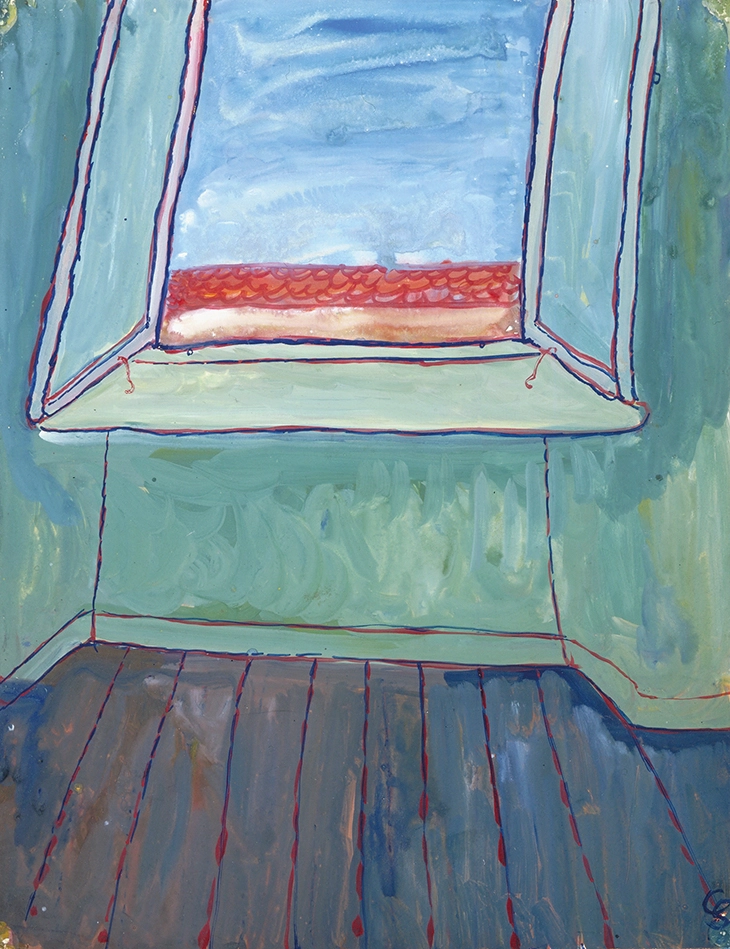
Charlotte Salomon, No. 134 from Life? Or Theater? (1941 – 42)

When I finished college forty-some years ago, I started writing down every book I read in a little spiral notebook. I kept up this habit for over twenty years and then stopped for some forgotten reason. Since starting The Neglected Books Page, most of my reading has been of long-forgotten books and most of these I’ve recorded by writing about them on the site. But as time goes on, I’m falling ever further behind in this writing. And to make matters worse for the purposes of this piece, I keep no record of my non-neglected reading. So, this is a fairly unreliable review of my reading in 2022, but I hope it’s worth your time nonetheless.

(It’s a good thing I never went into marketing.) [Ed. – No kidding!]

Among my neglected reads, easily the most memorable was Charlotte Salomon’s Life or Theater? Although Salomon told her life through paintings, it operates at an unforgettable level of intensity. There are at least three narratives winding through the hundreds of paintings in this book: the psychological breakdown of her family; her own troubled emotional development; and the trauma of Germany, and of German Jews in particular, with the rise of Nazism and Hitler. As I wrote back in April, “the book is presented as an art book – large and very heavy with its hundreds of pages of full-color images. But I think this does the book as a book some disservice. For it can also be seen as a graphic novel.” And I think it would benefit from being repackaged as a graphic novel, since today’s readers are now so accustomed not just to the language of graphic novels but to the very idea of considering them as literature. [Ed. – Absolutely. Her drawings look like they come from a graphic novel, too, as your post with its generous illustrations suggests.]

Easily the most enjoyable was Madeleine Masson’s memoir, I Never Kissed Paris Goodbye.Though we know from its opening line—“It was a beautiful day in June 1940”—that this story will have a sad ending, most of Masson’s account of Paris in the 1930s is as frothy and delightful as a glass of champagne. It’s full of the infidelity, excess, and manic energy of Jean Renoir’s classic film The Rules of the Game, and highly recommended to anyone who loves that film. [Ed. – You’re trying to tell me there are people who don’t love that film? Nonsense! This book sounds excellent, BTW.]

My deepest archaeological dig of the year was locating a copy of Carola Ernst’s Silhouettes crèpusclaires, and then dusting off my French to read it, based on nothing more than a brief reference in a magazine from 1921. This modest account of the journey Ernst took in the Fall of 1914 to return a French officer blinded in an early battle of the First World War to his family is a touching portrait of a world in the midst of a radical transformation. The pair are able to travel via Belgium, Germany, Switzerland, and France thanks more than anything to a spirit of chivalry that had not yet been destroyed in the industrial machinery of the war.

Another highlight was the chance to spend several weeks with some of the many volumes of poetry penned by Raymond Souster, the bard of Toronto. Souster’s longevity and disciplined dedication to his art enabled him to amass an account of one city’s life that may be unparalleled in the 20th century. Souster lived and wrote to the age of 91, worked in the same bank for over 40 years, was married to the same woman for over 60 years, and, as their only child, cared for his parents until they died in their late nineties. Though Souster claims he never wrote any great work (“I’m not sure I’m ready for epics/there are far too many little songs/the rest have left unsung”), the body of his work is sort of an epic in itself. [Ed. – Fascinating! I’ve even lived in Toronto and have never heard of Souster.] Someone needs to go through the thousands of pages of Souster’s poetry and distill it into an autobiography along the lines of what Ruth Limmer did with Louise Bogan’s work in Journey Around My Room.  

Finally, I must mention Nina Warner Hooke’s Biff and Netta trilogy: Striplings (1934); Close of Play (1936); and Own Wilderness (1938). These novels follow a half-brother and sister, Biff and Netta, from their early to mid-teens, as their already unconventional and decaying family collapses completely. The first volume received tremendous critical praise and was most commonly compared to the work of P. G. Wodehouse. Warner Hooke said she had no plans for further books at first, but when you finish the trilogy, its narrative arc seems almost predestined. She could no more leave off her story than you could get off a rollercoaster after the first drop. It is deeply strange, not solely because of its theme of incest, and deserves much closer examination than I was able to give it in my post. At 900-some pages, it’s far too long to expect anyone to ever reissue it unless some editor finds the courage to do some substantial posthumous abridgement, but it’s a work that I continue to process months after finishing it.

I tend to rely on audiobooks for my non-neglected reading. For years, I had a daily commute of over an hour each way and I racked up thousands of hours of listening, which enabled me to catch up on many classics I’d skipped. Now, my commute is just a staircase [Ed. – Bliss!], but I still get in an hour or so of listening each day. One of my projects was to go back through the works of Thornton Wilder, who is arguably both recognized and neglected. Aside from “Our Town”, most folks have only a vague notion of what he did, and even the once-ubiquitous The Bridge of San Luis Rey is not a familiar title. Wilder is the only writer to have received a Pulitzer in two genres, fiction and drama, has several volumes in the Library of America, and most of his work never falls out of print for long. I wrote about The Eighth Day, his most ambitious—and, to be honest, most flawed—novel years ago, and loved Heaven’s My Destination and Theophilus North when I first read them. This year, I went back and listened to all his novels in chronological order (an exercise I highly recommend for novelists who particularly interest you), starting with The Cabala.

The experience was both a revelation and a disappointment. I found several of the books suffered from an earnestness that became particularly apparent when considered back-to-back. On the other hand, I was astonished at the innovation of The Ides of March, his novel of Caesar’s last months. It’s a collage of fictional letters, excerpts from actual Latin texts, and even graffiti from the streets of Rome in the first century BC. Why is this book not acclaimed as a milestone in the fictional form? [Ed. – Sounds like time for a reissue?]

Aside from Wilder, most of my listening has been focused on Russian history and literature. I’ve long been fascinated by Russia, even though I’ve deliberately avoided my few opportunities to visit there. There’s something about the darkness of so much of the Russian experience that seems to reassure me that my own life really isn’t all that bad. This might be one of the reasons that I read so many books about Stalin when I was working for the two worst bosses I’ve had to suffer. I listened to two historical surveys by Orlando Figes: A People’s Tragedy, about the Russian Revolution, which occasionally bogged down in the minutiae of political infighting, and Natasha’s Dance, which I would recommend to anyone looking for a historical context to much of the Russian art, literature, and music of the last 200+ years. There were also several biographies—Alex Christofi’s Dostoevsky in Love, Alexandra Popoff’s book on Vasily Grossman, Donald Rayfield’s Chekhov—all richly illuminating. But by far the most enjoyable and impressive listen was Nabokov’s The Gift, which managed to weave so many of the threads from these other books together and remind me yet again of the fact that Nabokov worked at a level miles above so many of the 20th century’s greats.

Of the more recently-published books I’ve read, few really stand out. I found a number of the more acclaimed ones forgettable and will skip over them. Although I’ve read that it’s not the place to start, I loved Annie Ernaux’s The Years, in part because it described a world very familiar to me after 18 years of living in Belgium and working closely with many French men and women. And Gwendolyn Riley’s My Phantoms could have described some of our neighbors on the little street in Norwich where my wife and I lived for two years. [Ed. – Yikes!] I wish I could say that the books I’ve read by American writers were half as evocative, but I guess I’m still getting used to a country that’s so different from the one we left just before 9-11.
Dod Procter, Lydia, ca. 1926

And it would be remiss of me not to mention the brightest highlight of 2022, which was the #PilgrimageTogether reading group. Starting in January, a group of us worked our way through the thirteen “chapter-volumes” of Dorothy Richardson’s masterpiece, Pilgrimage, aided by a wonderful cast of Richardson scholars who agreed to take part in our monthly discussions. I first read Pilgrimage in 2016 as part of a two-year project of reading only the work of neglected women writers (complemented by two years of only listening to audiobooks by women) and ever since have been an evangelist on its behalf. Not to denigrate Proust, but I find it astonishing that thousands of people read Remembrance of Things Past each year while Pilgrimage, which speaks directly to so many aspects of life that are still part of our everyday world today, is barely known and even less read. Like others in the group, I found Pilgrimage both so challenging and so rewarding that other books seem somehow diminished in comparison. It’s a novel I know I’ll be returning to again — and, I hope, with another group of readers. [Ed. – This is good to hear, since I regret not joining in. It would be great if you could time it with my next sabbatical, thanks.] Until then, I encourage folks to take up Pilgrimage and spend some months with Dorothy Richardson’s insistently individualistic Miriam Henderson, aided by the Reading Pilgrimage website. [Ed. – Thanks for the post, Brad, and congratulations on that site. What a resource!]
Hope Coulter’s Year in Reading, 2022

Today’s reflection on a year in reading, her third, is by Hope Coulter(@hopester99), whom I’m lucky to call a colleague. A fiction writer and poet, Hope directs the Hendrix-Murphy Foundation at Hendrix College.

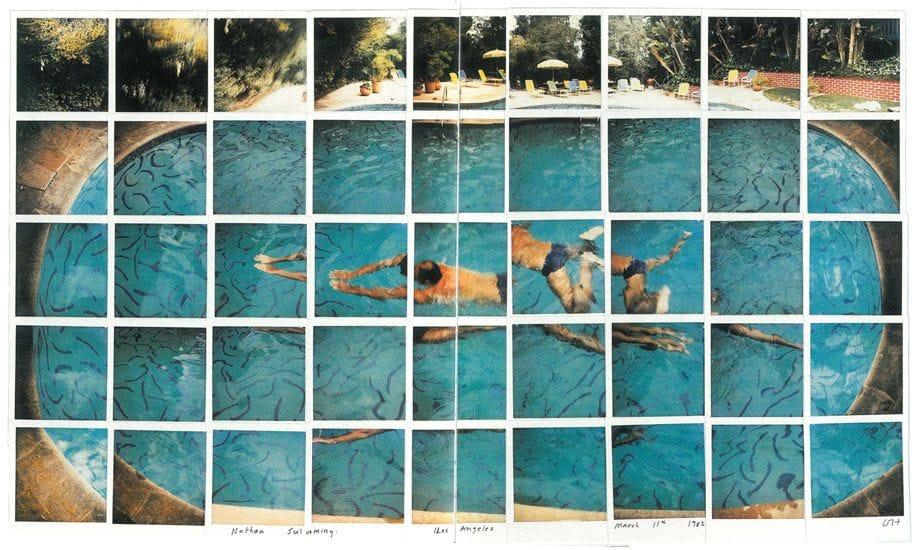
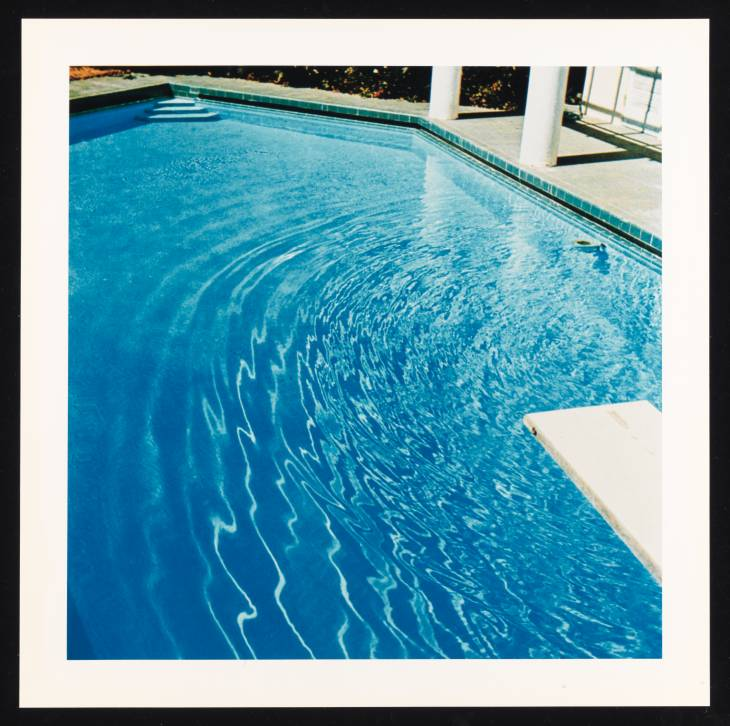
David Hockney, Nathan Swimming Los Angeles, 1982

2022 turned out to be a good reading year. I got a wider shot at e-book availability by joining a second public library in the adjacent city. [Ed. – “city.”] Then, by pecking through recommendation lists and hopping from screen to screen, I was able to keep my library hold shelves reassuringly filled—staving off that dire malady known as Running Out of Something Good To Read. [Ed. – Extremely bad. Jenny Davidson writes about some psychological studies done on this phenomenon in Reading Style.] Along the way I ran across some new obsessions.

Starting with nonfiction, I enjoyed and was moved by Suleika Jaouad’s Between Two Kingdoms: A Memoir of a Life Interrupted. It’s a cancer narrative that stands out on account of Jaouad’s youth, frankness, and writing chops, as well as the fact that the second half becomes a road-trip book. Jaouad discovered her cancer right after graduating from Princeton. In the flash of an eye the promising, carefree prospect of her twenties became a hellish ordeal. She’s still fighting cancer, and I wish her all the best for recovery. This book is a gift.

Thinking of memoirs by feisty young women, Crying in H-Mart, by Michelle Zauner got a lot of attention this year. For me it was an okay read, but not as memorable as Jaouad’s book. On the other hand, I recommend Lynne Cox’s Swimming to Antarctica: Tales of a Long-Distance Swimmer not for any particular magic in the telling but for the extraordinary nature of Cox herself—her athletic prowess, her ability to connect with people around the world, the cheerful way she greets challenges of all kinds.

Another thoroughly satisfying memoir was Marcus Samuelsson’s Yes, Chef, ghostwritten by Veronica Chambers. Samuelsson is the Ethiopian-born, Swedish-raised culinary phenom who co-founded the Red Rooster restaurant in Harlem. His account of his Scandinavian upbringing; his rise through some of the most demanding restaurant kitchens in Europe, under despotic chefs; and his lifelong love affair with food and culture make this a book to relish on many levels. [Ed. – I see what you did there!]

George Saunders’s A Swim in the Pond in the Rain: In Which Four Russians Give a Master Class on Writing, Reading, and Life is a terrific read for anyone who wants to dive deep into the craft minutiae of great short fiction. What questions does a story ask, and how do they pull us along? Is it what’s left in or what’s left out that makes a masterpiece? Of the analyses Saunders offers, his take on three of Chekhov’s stories were my favorite. On the other hand, if you’re not minutely interested in the technical and creative decisions behind a narrative—the tied-off loops on the back of the tapestry—you might as well just read the stories themelves.

Last but not least in nonfiction, fans of Skyfaring: A Journey with a Pilot by Mark Vanhoenacker, won’t want to miss his latest, Imagine a City: A Pilot’s Journey across an Urban World. Imagine a City includes lots of the lyrical, novel description that makes Skyfaring wonderful, this time swirled into memoir and a flâneur’s takes on cities around the world. By the nature of his work as a long-distance commercial pilot, Vanhoenacker often finds himself with two days to spend near any metropolitan destination that he flies. He bides the mandatory rests in exploration and writing. This book not only features slices of such urban-scapes, but recurring takes on the author’s growing-up in Pittsfield, Massachusetts: the town, his family, his coming-out, and the globe-spinning reveries that led to his vocation.

Now to fiction. One novel that blew me away this year was Julie Otsuka’s The Swimmers. As someone who loves pools and water I was initially attracted to the title and cover (I know, I know, like buying wine for the label; I confess). [Ed. – I strongly support buying books for their covers.] Then when I started to read, I fell hard for the voice. Exactly who is speaking with such quiet authority, unspooling list after list about the lap swimmers with such close, cool knowledge? A crack appears in the bottom of their pool, and it’s like Jane Alison’s Nine Island meets Tim O’Brien’s The Things They Carried… The novel suddenly widens into a more familiar and pain-steeped story that I won’t spoil; sprint [Ed. – missed metaphor opportunity!] to your nearest book source and see for yourself.

My enthusiasm for The Swimmers sent me to Otsuka’s earlier novels, When the Emperor Was Divine and Buddha in the Attic, which in different ways chronicle the experiences of Japanese American immigrants. They’re well worth the read, though to me not consummate in their artistry like The Swimmers.

Way different stylistically from The Swimmers was a book at least as magnificent: Anna Burns’s Milkman, the densest and strangest novel I read last year. A student in my Irish short stories tutorial recommended it, and I’m so glad she did: this book made me understand as never before what it was like to live in the middle of the Troubles, no, to live the Troubles, to contain their gaslighting and violence in one’s marrow. The narrator has one of those unforgettable voices—drenched in idiom, funny, idiosyncratic—that at first seems impossible to understand. There are few paragraph changes, and few characters are called by actual names. All these might put you off, might seem like obstructions to grasping the story… and yet. Somehow it galvanizes a world as you read, a world that tumbles around you and into you, changing you.

Another surprise and pleasure was Mrs. Palfrey at the Claremont, by Elizabeth Taylor, first published in 1971.It opens on a rainy Sunday in January (is there anything more depressing?) in a London lodging hotel just affordable and respectable enough for old folks not yet decrepit or destitute. You might judge this an unpromising start—till you find yourself immersed, riveted by Mrs. Palfrey and her fortunes: the aches, yearnings, miscues, and irritations of ordinary human life, rendered with nothing less than mastery.

Also of seventies vintage was Marian Engel’s Bear (1976), which Dorian has touted for years. I loved it: the boreal setting, the understated tone, a fusion of real with surreal that’s so seamless I question “surreal” even as I type it. The book is alluring and disconcerting at once—shoving me into uncomfortable encounters with my own relationships to sex, animals, and self—and resists interpretation at every turn. In fact, it’s highly entertaining to browse through reader takes on this book anywhere from Amazon to scholarly platforms. What is this thing: feminist text, postcolonial critique, an ursine-Canadian Lady Chatterley’s Lover, or a portrait of a “phallic mother”? Don’t miss Dorian’s delightful conversation with Shawn and James on Shawn the Book Maniac, which includes a clip from an interview with Engel herself. Mind you, as the interviewer admonishes, “This is no kinky, porno Pooh-Bear!” so prepare yourself for . . . something else thereof. [Ed. – Music to my ears, natch. But really 70s books are the best books…]

Thanks again to Dorian I reread Lonesome Dove, by Larry McMurtry, and was relieved to find that it still has its magic: it had been so long (or my memory so bad) that the plot twists surprised me all over again. This big novel is good for what ails you, a bracing tonic, just like the big skies and open roads out West. [Ed. – So glad it held up! Every time I see it on my shelf I brighten up a little.]

Jonathan Evison’s Lawn Boy is about Mike Muñoz, a southern California guy who can’t seem to catch the brass ring. His voice is canny, believable, often funny, and a little hoarse with pain, and there’s never a false note or a missed beat narrating his adventures through emotional and economic labyrinths. This is a fresh take on the American dream, as broken down for disillusioned 21st century folks, and it deserves to endure. Highly recommend.

Mercy Street by Jennifer Haigh is a gritty novel that revolves around a Boston abortion clinic where the protagonist works and various other characters who intersect there. I read it before the mid-year overturn of Roe, but it’s at least as relevant now: it remains on my mind for its multidimensional treatment of people on different sides of the abortion issue. Creepy, scary, and all too credible, in the case of a couple of anti-abortionist characters; but as I said, granting a multidimensionality that at least seeks to understand the sources of the venom that animates them. As Mohsin Hamid says, one thing literature does is “recomplicate what has been oversimplified,” and a novelist’s nuance is too often missing from the violent discord around this issue.

Elizabeth Strout’s Lucy by the Sea brings her Oh William! characters forward through the first year of the coronavirus pandemic—moving those inveterate New Yorkers up to Maine. Anyone who has liked Strout’s earlier novels won’t be disappointed.

Speaking of disappointments, even though Emily St. John Mandel’s Sea of Tranquillity made a lot of people’s best-of lists last year, for me it was pretty forgettable—way less gripping than Station Eleven, the post-pandemic novel she wrote a few years before Covid struck. I was likewise underwhelmed by The Flight of Gemma Hardy, Margot Livesy’s attempt at a modern retelling of Jane Eyre. I did finish it, but it annoyingly lacked a couple of key plot underpinnings as well as some of the major elements that make Bronte’s novel so great.

Edward Ruscha, Pool # 9, 1968

Last, and monumentally, I come to a series that dominated the last half of my reading year—and which I’m still devouring as we move into 2023: Michael Connelly’s Harry Bosch novels, which chronicle the LAPD detective’s cases across more than twenty years in L.A. Formerly a reporter, including a last stint on the crime beat at the Los Angeles Times, Connelly is steeped in knowledge of the criminal legal system, LAPD culture, and police-reporter relations—not to mention southern California history and culture in general. So the books take place against a backdrop studded not only with physical landmarks but landmark events, O.J. to Rodney King to Robert Blake to COVID. Oh, and there’s also the iconic food of the greater L.A. area—specific BLTs and tacos and martinis that may have you keeping notes for the next time you make it out to the Golden State with an appetite.

In Heironymous (yes, named after the painter by his mother) Bosch, Connelly has created a laconic, jazz-listening, relationship-tending-to-screw-up hero in the best noir tradition: a SoCal Don Quixote perpetually battling the forces of darkness on his quest to put the bad guys (and women) behind bars. Fortunately, uh, but only for us as readers I mean, in the sweep of the sprawling metropolis there’s no shortage of evil out there for him to take on—from its crumbling bungalows to its gated MCM mansions, from seaside to outlying deserts, and sometimes within the halls of justice and press rooms and inter-warring police precinct headquarters themselves. The writing is spot-on: tough, perfectly paced, with lots of plot and action, of course, and salted just right with description and character. I’ve consumed these books the way I used to read beloved series as a kid, binge-reading with abandon, and now I see with dread that I’m closing in on the end of even the prolific Connelly’s output. [Ed. – Ah, that feeling! It’s really a thing, isn’t it?] He’s written several spinoff books involving sometime partners of Bosch, and a shorter series about a criminal defense lawyer who works from the back seat of his Lincoln, and those are good as well—but alas, they too are finite.

For what it’s worth, I read the series completely out of order, and it wasn’t a problem. When I did make my way back to the first couple of Bosch books, I found them a little stilted and trying too hard on the tough-guy front, in contrast to the grace and understatement of the later ones. In a way, though, the fact that the writing wasn’t impeccable was heartening: it showed that not even Connelly came to fiction-writing already with his skill set complete, but built his command over time. [Ed. — Glad to hear this, because I was underwhelmed by the first when I read it many years ago. Maybe I’ll grab one from later in the series.]

No, I haven’t watched the TV version of the Bosch books, and I doubt that I will; my mind’s-eye picture of the characters is too strong for me to want to sully it with a screen version, even though the author did consult on set. But next time I’m in L.A. I do plan to drive Mulholland Drive, and I’ll be looking for #7203, the modest cantilevered house with the deck on the back, where Bosch gazes down on the lights of the city in pensive moments. I have more to say on this topic, but excuse me, I’d rather go read now. We’re about to find out where the bodies are buried.

NancyKay Shapiro’s Year in Reading, 2021

Today’s reflection on her year in reading, her second annual contribution, is by NancyKay Shapiro (@NancyKayShapiro). NancyKay lives in New York, and reads a whole shit-ton.

Look for more reflections from a wonderful assortment of readers every day this week and into next. It’s a stellar lineup. Remember, you can always add your thoughts to the mix. Just let me know, either in the comments or on Twitter (@ds228).

Edward Hopper, New York Corner (Corner Saloon), 1913

The notorious year, the second of the Big Pandemic here in New York City, was, for me, the year I really settled into the idea of being retired from my freelance ad biz career (which I’d declared at the beginning of ’20 in a wishful fingers-crossed kind of way), found other things to do than work, got my elderly mom vaccinated twice, myself vaccinated three times, counted lots of blessings, lost said elderly mom at age 89 (not to Covid), and busied myself then grieving and dealing with her estate.

I read or listened to 84 books. Looking back over the list, I find that very little has stuck with me with especial vividness, probably because there was a flatness to my emotional life for most of the year, and then, when Mom passed in early September, the whole emotional tenor changed, and everything leading up to the day of her death seemed like a decade rather than a handful of days and weeks ago.

So, having said that, let’s see which books I want to recommend from those 84.

The first book I read in 2021 was The Last Samurai by Helen DeWitt, which I only picked up because of Book Twitter, and which I hated and kept telling Dorian I was going to chuck, because it seemed to be about an overly academically precocious child and an overly clever but useless-at-life mother. I thought I saw where it was going and that was to an ever-more annoying place. I would have chucked it if not for his encouragement, and I only appreciated it when I got to the last fourth or so of the text and could see what the whole thing was amounting to. [Ed. – Let this be a lesson to you all.] In the end I was glad I’d read it, breaking a habit I have of not persevering with books that, a hundred pages in, aren’t giving me much reading pleasure. The pleasure was retroactive.

Rob Sheffield, the music critic, wrote a book called Dreaming The Beatles: A Love Story of One Band and The Whole World. I’m a lifelong fan, but hadn’t thought about them much in recent years; this book delighted me because it wasn’t so much a band bio as a story of how the Beatles are perceived, and adored, across time, by their admirers. Lots of fun, gave me some new perspectives on these old favorites that sent me back to the music; a sprightly winter time read.

Quenching my desire to read dark books about grim and squalid Northern British things was Alma Cogan, a novel by Gordon Burn, in which he writes a fictional autobiography of Cogan, a singer popular in England in the 50s and early 60s, whose career was steamrollered by rock’n’roll, and who died young. In this novel she doesn’t die young, and she spills all the tea. Great and ghastly.

No One Is Talking About This by Patricia Lockwood really lit me up when I was reading it. It had an air of sui generis-icity about it that was exciting; its emotional roller-coaster effects were earned. Lockwood is very clever in the good ways of being clever, and this novel, which starts out being about online-ness, ends up being about emotions of great tenderness and subtlety. Full of surprise. A must. Just read it without reading anything about it first.

Over the summer I got into the way of wanting short stories by Anton Chekhov and William Trevor, and read great gobs of them, in the form of The Portable Chekhov and Trevor’s Collected Stories. I feel, looking back, as if I sat through hundreds of hand-wringing playlets, each story totally absorbing, a world in itself in a way that even the best novels are not, because you’re not reading them in a single sitting.

Also over the summer I had an urge to reread John O’Hara, and revisited Butterfield 8, Appointment in Samara, and 10 North Frederick. O’Hara’s merciless dissection of the manners and mores of upper-class Americans in the late 19th and 20th century is a genre unto itself for me. I can’t get enough of his snobs and tragically unself-aware nobs, all floating in cold martinis.

A wonderful discovery was the Chinese writer Eileen Chang, whose books are reprinted by the wonderful New York Review Books. I read Little Reunions for a class at the Center For Fiction, then went on to Love In A Fallen City. She writes about romance and family life in Hong Kong and Shanghai in the mid 20th century, with the political restrictions of these places hidden beneath the carefully articulated actions and thoughts of her heroines.

At the end of 2021 I listened to the audio of a new biography of poet Sylvia Plath, Red Comet: The Short Life and Blazing Art of Sylvia Plath by Heather Clark, an exhaustive but never exhausting account of the accomplishments and anxieties of Plath’s amazing life, which lasted just 30 years. I’m always fascinated by the lives of writers. Plath was, though a genius, also exemplary of all the things society puts in the way of young women—the pressures to be pretty, nice, quiet, maternal, agreeable, nurturing. This bio impressed me afresh with her struggle to be both a great artist and a successful woman, by the standards of mid-century America and Britain.

Finally, my least-liked—really, flat-out disliked, book of 2021: The Wind-Up Bird Chronicle by Haruki Murakami. The first novel by him I’ve read, and it’ll be the last. I only finished it because I’d been taught by The Last Samurai that things might turn around in the final third, but in this case, not so much. I know a few people who adore him and this book, but I can’t see it. [Ed. – I did not recommend this book, just FYI.]

Edward Hopper, Blackwell’s Island, 1928

Other stand-out books I read:

  1. Mayflies by Andrew O’Hagan
  2. Piranesi by Susannah Clarke
  3. Broken Greek: A Story of Chip Shops and Pop Songs by Pete Paphides
  4. Odd Girl Out by Elizabeth Jane Howard
  5. Harlem Shuffle by Colson Whitehead
  6. Alec by William DiCanzio
  7. How To Hide An Empire by Daniel Immerwahr
  8. Bosnian Chronicle by Ivo Andric
  9. Life of a Klansman: A Family History In White Supremacy by Edward Ball
  10. Box Hill by Adam Mars-Jones

Every book I’ve read since 2008: https://bit.ly/3njPjah

What I Read, May 2020

Finished the semester, was sad about not getting to see students graduate. Hair grew. Won a teaching award, finally something unequivocally good, a helpful validation. Made occasional trips to pick up groceries and the like, and to drive the car a little so my already temperamental battery didn’t complete die, was bewildered by the apparent alternate reality outside my door: no masks, no distancing, no cares. Hair grew longer. Thought about my upcoming sabbatical, worried over how to use this gift of time. Feared failure more than usual. Read too much news, was despondent, angry, grief-stricken. Hair reached crisis point. And, as always, read, quite a lot, most of it pretty undemanding.

EZIlJ48XYAA-tuGSusie Steiner, Missing, Presumed (2016)

When Lissa Evans and Nina Stibbe tell you to read a book, you don’t fuck about. Happily, this was as delightful and engrossing as promised. Manon Bradshaw is getting on for 40. She’s a bit lonely, but she’s a good cop, she’s funny and sarcastic, and she is just ordinarily neurotic, not hell-bent on self-destruction. Steiner manages the trick of putting the investigator’s personal life front and center and writing a suspenseful plot. Above all, Missing, Presumed is a properly female-centered crime novel (there’s more than one important female character, they don’t hate each other, they aren’t pitted against each other by men). Mostly what I took away from the book is that women’s clothes are often extremely uncomfortable. There’s lots of strap-tugging and pushing and pulling.

Israel Gutman, Resistance: The Warsaw Ghetto Uprising (1994) Trans. Ethel Broido (1994)

Twenty-five years on, Gutman’s history of the Warsaw Ghetto uprising feels dated. It’s filled with detailed information about an extraordinary moment, and is especially good on the various Jewish political and social groups in both pre-war and wartime Poland. But it has a narrow definition of resistance—namely, the use of force, especially the taking up of arms. I don’t reject this in principle—the power of violent resistance is on display across America as I write—and I get that Gutman is presenting events as the actors experienced them (he quotes various documents in which the handful of Jews left after the ghetto’s liquidation in late 1942 exulted in finally feeling human again, once they were able to shoot a gun or set an explosion, etc.). But Gutman also implicitly validates these statements, in part by underplaying other forms of resistance (he has surprisingly little to say about the Ringelblum archive, for example). His take makes sense when you learn that Gutman actually fought in the uprising himself. But you won’t learn that from his book. In fact, I’d no idea of his role until the students I was reading the book with told me. I can’t imagine a book written today that wouldn’t acknowledge the writer’s involvement in the material. Time for a new history of this moment, I say. One more thing bothered me: I’ve never before seen a book that acknowledged its translated status in a brief aside in the acknowledgements. Reprehensible!

Susie Steiner, Persons Unknown (2017)

DI Bradshaw is back, and her life has become more complicated, more exasperating, more fraught, and more joyful. Part Laurie Colwin, part Tana French, these books are terrific. Forgot to mention that Steiner is worth reading in paperback, because each of the two books so far includes a bonus chapter that bridges the current book to the next. I’ve not seen that before.

Maryla Szymiczkowa, Mrs. Mohr Goes Missing (2015) Trans. Antonia Lloyd-Jones (2020)

Maryla Szymiczkowa is the pseudonym of a young Polish gay couple. This is the first of what I imagine has become a series centered on Zofia Turbotynska, a society woman in Cracow in 1893, who feels herself coming alive when she inadvertently begins investigating a series of murders at an almshouse. The novel doesn’t quite avoid the pitfalls involved in stories of amateur detectives, but if like me you can’t get enough of late-19th, early 20th century Galicia, or if you just appreciate a well-drawn character (Zofia isn’t entirely likable, a bit self-satisfied and prim, but we are asked through her to think about our own fascination with investigation, which makes us like her more and ourselves less) you should give this a try. Props to Houghton Mifflin for bringing Szymiczkowa to the US, and to East Bay Books, who put their inventory online for online browsing by section, which is how I stumbled across this.

Kathleen Jamie, Sightlines (2012)

Wonderful essays.

Emiliano Monge, The Arid Sky (2012) Trans. Thomas Bunstead (2018)

Young Mexican novelist plays with temporal order and the relation between narrator and character in telling key events (dire or violent or, most often, both) in the life of a criminal turned priest turned criminal. (At least, I think that’s what’s going on; it’s not always easy and I read it in snatches, when immersion would probably be better, given the style.) Bunstead, I sense, is a great translator (I thought his translation of María Gainza’s Optic Nerve was terrific), and there are some resonant, Bernhardian sentences here. My sample size is small, to be sure, but so much Latin American literature seems to come out of Faulkner, who I don’t much care for. Are there Spanish-language equivalents of Barbara Pym or Tessa Hadley, or is that simply a misguided/stupid question?

Marcie R. Rendon, Murder on the Red River (2017)

Don’t sleep on this one. Jenny Davidson recommended it as the best crime fiction she’d read this year. Cash Blackbear is a nineteen-year-old Anishinabe woman in the Red River Valley in the early 1970s. (The war in Vietnam is a repeated touchstone.) Cash does farm work, mostly driving grain trucks. She adds to that income by hustling pool. And she drinks pretty steadily. She has a close relationship to the local sheriff, who watched over her when she was taken into care as a child, keeping her away from the worst of the foster parents. (They were all pretty bad, and Rendon slips in glimpses of those microaggressions throughout the book.) Cash has an ability to listen to the dead (this dreaming isn’t particularly well-developed, and I’d have liked to hear more about it). So when a native man is found stabbed to death, the sheriff brings Cash in to give him a hand. The resolution of the crime is anticlimactic; suspense is not the reason to read the book. Cash, though, is a great character, dogged and smart and torn apart by her love of a place that has no love for her. As an indigenous woman, Cash has suffered a lot, but the suffering is more constant low-level trauma rather than singular overwhelming moment. When I complained to my wife, who’d already read the book, that the hard-drinking investigator was a cliché, she pointed out that what Cash was doing was medicating. Rendon is good with action scenes (and I appreciate how modest those are—this is not Jack Reacher stuff). The reason they’re so good is that Rendon’s descriptions of Cash’s actions are fascinatingly detailed (yet the book is a short, quick read). We learn about every bath Cash takes in futile attempt to rid herself of wheat chaff, every trip to the bar, every cigarette she smokes, every meal she eats (when she remembers to), every route she takes through the isolated towns of the valley. I wondered about this, and finally it dawned on me that the prose was mimicking Cash’s need to control what she can in life. The repetition, the circumscribed life—these are the analogues of a person always at risk of losing a sense of self.

Cornelia Funke, Inkheart (2003) Trans. Anthea Bell (2003)

My daughter and I read this together over a couple of months (it’s like 500 pages), and I’ve been badgering her to write a review, but so far without luck. Inkheart has a good premise—what if you could read yourself into a book?—and then complicates it by adding the caveat that, every time you did, something from the world of the book came into our own. Meggie lives with her father, Mo, a bookbinder; when a stranger arrives at their door one night and Mo becomes shifty, even frightened, Meggie learns a lot of things, including, eventually, what really happened to her mother. Bell’s translation of Funke’s German text is excellent, and although I didn’t find this as breathtaking as, say, The Golden Compass, I loved how much my daughter loved it. It was too scary for her to read alone, but manageable with me reading it. It’s the first of a trilogy and we’re on the second book now—seeing my daughter’s joy and fascination with the map at the front of the second volume has been a joy in itself.

Daphne Du Maurier, The Flight of the Falcon (1965)

Even second-tier Du Maurier is worth reading.

Marcie R. Rendon, Girl Gone Missing (2019)

Cash returns, and the big development from the end of the first book means her life is different—that change is both an opportunity and a challenge to her always fragile stability. When several young women from different farming communities go missing, Cash follows the trail to Minneapolis, where she has never been before. In my favourite scene she visits the Grain Exchange, walking around the imposing stone building, amazed to find that this name, from which the all-important commodity prices come through farmers’ radios each day, is attached to a physical place where people actually work. Rendon brings Cash into contact with the American Indian Movement (AIM), which allows her explore the idea of whether a loner like Cash, at once attached to her native identity and frustrated by it, can find any meaning in an identity-based movement. A significant hanging thread from the first volume is reintroduced, which I appreciated. Rendon’s going to have to step up the crime aspects of these novels (the plots are thin), but I want many more books about Cash. Great midwestern farm neepery, too. During beet season, the local roads develop “a sheen of mud. This close to the Red River, the mud was mixed with river clay that was slicker than ice if a rainfall or early frost or, god forbid, an early snow coated the road.”

Tessa Hadley, Late in the Day (2019)

It’d been a while since I’d read Hadley, a writer I’ve always liked, but who has exceeded herself here. Late in the Day tells the story of four friends whose lives have been connected since student days. It begins with the death of one of them and goes both forward and backward from this traumatic beginning. Hadley is great with character—she sketches them so clearly (they are among the few literary characters I can actually picture) and lets them change and surprise us. She’s also adept with narrative voice, changing perspective regularly and using omniscience to its potential. There’s a scene when the four friends, drunk and high after celebrating a big accomplishment, almost exchange sexual partners, only to have the moment interrupted by one of the children, who can’t sleep; later, that child, now grown up, tells a sibling about a dream—which we know was real. I found this misunderstanding moving, somehow.

What does it mean to create something? Is a relationship or a friendship a kind of creation? Is middle age the time when creation is most fruitful? These are Hadley’s questions; in her answers I got a strong To the Lighthouse vibe. Hadley is warm, almost fond of her characters, but never indulgent with them. Fittingly, I stayed up late with the book, willing myself to the end but sad to reach the final page. Read Catherine Taylor’s piece in The Financial Times, it’s very good.

Dan Stone, Concentration Camps: A Very Short Introduction (2019)

Historian Stone has written an amazingly lucid and useful book, which covers much historical ground and asks big theoretical questions, all in only a little more than 100 pages. Stone looks at late 19th-early 20th century camps in South Africa, Cuba, and the Philippines, noting how they were designed for non-combatants. He of course considers the camps of the Third Reich (his own area of expertise), which clearly distinguishes the various Nazi camps and, even more interesting, compares them to the institutions set up to create and validate the Volksgemeinschaft (Hitler Youth camps and the like). Camps, Stone argues, were for the Nazis as necessary to those “drilled into” the community as to those excluded from it, given that the regime’s aim was a society modelled on the barracks. To that end, “inclusion and exclusion went hand in hand.” Stone adds a chapter on the Gulag (really helpful to someone like me who knows too little about it), and on camps around the word (in colonial scenarios, within so-called liberal-democracies, under Communism). He concludes by casting a critical but not unsympathetic eye on theorists who make the camp a metaphor for modernity, and then tackles the difficult issue of comparison. In the end, although he says there is no clear line between camps and other sites of incarceration, Stone doesn’t think, for example, the migrant camps at the US border are concentration camps because they offer at least the possibility of the rule of law. I disagree, but I think he’s absolutely right in concluding, “Concentration camps are the compressed and condensed values of the state when it feels itself most threatened.” As if this wasn’t enough, his bibliography is excellent. The book’s a keeper, and I plan to start assigning it in all my Holocaust-related courses.

Ariana Neumann, When Time Stopped: A Memoir of My Father’s War and What Remains (2020)

A frustrating book that tells a gripping story in undistinguished prose. Neumann grew up in Venezuela in the 1970s and 80s with a father, Hans Neumann, who was a magnate of industry, a patron of the arts, and a general force of nature. Hans had a past in Europe—specifically in Czechoslovakia—that he rarely addressed. As a child, Neumann once found a box of papers that included what looked like a passport written in a language she couldn’t read. It had a photo of a man who was clearly her father at a much younger age. But the name underneath the photo was someone else’s. When she asked about it, her parents put her off. The box disappeared. But it came to her after her father’s death, along with some other family papers, which launched Neumann on a years-long project to uncover her father’s story, and to relate what she discovered to otherwise unexplained moments in her past—like when a fellow student in college asserted that she must be Jewish (first Neumann ever heard of it), or when she accompanied her father on a trip back to Prague after the fall of the Wall, a trip in which he refused to visit places from his past. When Time Stopped, in other words, belongs to the genre of the second-generation Holocaust memoir, like Maus or Daniel Mendelsohn’s The Lost (third generation, actually) or Bart van Es’s The Cut-Out Girl.

Neumann’s book is better than van Es’s and not as good as Mendelsohn’s. (No one’s as good as Spiegelman.) I was so irritated by the laxness of Neumann’s descriptions of her own life (I especially wanted to know more about Venezuela) and her trite meditations (on receiving an important letter, for example, she writes, “There is a moment of connection in receiving an object, a physical link, that is lacking in the virtual instantaneity of email”). But if you can get through this stuff, the story Neumann tells about her father and his family is incredible. Plus the book is well-structured, the slow unfolding of the story deftly and engagingly arranged.

Hans was one of only nine people in an extended family of 34 to have survived the war. He did so by having papers that declared him an essential worker at his father’s expropriated paint factory as well as a network of friends who risked their lives for him. The two most incredible stories involve clandestine forays into the world of the perpetrator. His brother’s sister smuggled herself into the ghetto-camp of Theresienstadt twice in order to bring packages to her in-laws. (Neither survived the war.) And Hans himself, once it was clear that no Jew, no matter how “essential,” would be permitted to live in Prague after a certain date, hatched an insanely audacious plan to use a friend’s passport to travel to Berlin in the fall of 1943, where he posed as a Gentile Czech willing to offer his services as a foreign worker. He obtained an identity card and work permit under the assumed name of Jan Sebesta and was hired at a paint factory that made protective polymer coating for German warplanes. It is amazing that Hans was never found out (fortunately for him, he had not been circumcised); it is amazing he did not die in the Allied bombing raids, especially as he was conscripted into the civilian firefighting service; it is especially amazing that he did not go crazy from cognitive dissonance. Except that he kind of did—as is true in so many second-generation stories (Maus again being the great example), “survival” is shown to be an ongoing project that is often incomensurate with a “happy ending.”

Laurie R. King, Justice Hall (2002)

I blow hot and cold on the Mary Russell—Sherlock Holmes series. Not sure what brought me back after not particularly enjoying the previous installment, but this one is better. Russell and Holmes are tasked with finding out what happened to the heir of a grand family fortune in the Great War. It’s an open secret he was court-martialled and executed by firing squad for disobeying an order, but what led to that terrible moment has been a secret until now. Jacqueline Winspear wrote a book on the same topic at about the same time; I wish I’d read King’s first, as she’s a better writer. Anyway, diverting enough, especially if you’re into English country houses, but nothing spectacular.

William Trevor, After Rain (1996)

My first collection of Trevor stories, and, yes, he is as good as everyone says. There are two kinds of stories in this book—New Yorker stories (resonant, rueful, wise, maybe a bit perfect) and uglier ones, which remind me of early Ian McEwan (grubby, a bit horrible). A couple of these stories mix both modes—I liked those best, especially “A Friendship,” which I found shocking (a man discovers his wife’s infidelity: he forgives her but forces her to break with the lifelong friend who had helped her arrange the logistics of the affair) and “Lost Ground,” set in a Protestant farming family in rural Ireland in the 1980s, which I at first took to be an ingenious reworking of Chekhov’s “The Kiss,” but which takes a darker turn. Friends extoled “The Piano Tuner’s Wives” and “The Potato Dealer,” both excellent. I could imagine teaching any number of these stories and learning much more about them that way. (Just great: the last thing I need is another white guy to teach.) I thought Trevor would be nicer than he is. He reminded me a bit of Alice Munro. Both are cold writers, and I can’t warm to them, much as I admire them. For a sense of the whole collection, Jacqui’s overview is really good.ETrQo6eWAAITlxPIn summary: Trevor’s good—no surprise there—and I’ll be reading more of him in the next few months. Jamie is a brilliant essayist; I’m finding her especially enlivening in these times when distancing is our reality rather than our fantasy. Neumann’s book is at once clunky and captivating. But the pick of the month was Hadley’s Late in the Day; a great book of middle age. I hope June brings more good reading, but events being what they are right now—I don’t know if I’m more thrilled or scared that people are finally saying enough is enough—I’ll settle for any reading at all.