“An Extraordinary Warmth”: Vasily Grossman’s Life and Fate

I spent the first part of June reading Vasily Grossman’s extraordinary WWII epic Life and Fate and ever since I’ve been in a reading slump. It’s hard to match Grossman’s accomplishment, especially his way of combining big picture and small details.

Before this I’d only read Grossman’s essay “The Hell of Treblinka,” which I teach regularly. It’s a fascinating, impassioned, and beautiful text. But Life and Fate is of a different order of magnitude. By any measure, it must be reckoned one of the great books of the twentieth century.

IMG_0627

That we even have this book at all is amazing. As translator Robert Chandler writes in his informative introduction, Grossman spent much of the late 1950s writing Life and Fate, eventually submitting it for publication in October 1960. Friends had warned him not to, fearing its critique of the Soviet system was too challenging to authorities. But Grossman thought it would find favour in the changed political climate after Stalin’s death. He was wrong. The KGB came to Grossman’s apartment to confiscate the manuscript and anything related to it, including typewriter ribbons. Fortunately, Grossman had already given copies to various friends, including one who had no connections to the Soviet literary scene. Eventually, in the early 1970s, one of these copies was smuggled to the West, where it was eventually published, in France, about a decade later. It took even longer for it to appear in Russian. Sadly, Grossman didn’t live to see any of these editions. He died of stomach cancer in 1964.

So the story of the book’s creation is almost as epic as the story it tells. Set during the pivotal months of late 1942 and early 1943, Life and Fate is centered on the Battle of Stalingrad. The Soviet point of view predominates, but we sometimes see events from the German viewpoint. Indeed, the worst aspects of both regimes—their totalitarian tendencies instantiated in their respective systems of labour and concentration camps—are depicted in detail.

Although the book has dozens of marvelous and vivid scenes—scenes set in a power station at Stalingrad; in an otherwise abandoned factory building in Stalingrad where a group of Russian soldiers hold out against the German onslaught in the deep cellars; in the notorious Lubyanka prison in Moscow; in Kazan, Tartarstan, where whole laboratories of scientists are evacuated as the Germans close in on the capital; and even on the Kalymlk steppe—its real accomplishment lies in putting the scenes together, in giving us the big picture. In doing so, it makes its main ideological point (surely the most contentious things about the book at the time it was written): that Nazism and Stalinism were, if not identical, then not so different.


I’ve been struggling with how to write about Life and Fate. It’s so big that a lot of it escaped me on a first reading. And I’m not sure how to organize the things that did strike me. My plan is to write a series of haphazard posts touching on the aspects that most impressed me. Today, a few words about structure and warmth.

*

Life and Fate models itself on Tolstoy’s War and Peace. Not having read the Tolstoy, I can’t say anything useful about the comparison, though I bet knowing the earlier book would have made reading the Grossman an even richer experience. If you’ve read them both, feel free to elaborate.

Life and Fate puts a single family, the Shaposhnikovs, at its center, but it’s anything but a domestic story. Rather, it’s a story that expands the idea of domesticity or familial life, showing these things to be inseparable from their opposites, history and politics. Sometimes we are zooming in and sometimes we are zooming out. Yet this cinematic metaphor doesn’t seem quite right. I’m not sure what a better one would be. Of a carpet, where the disparate strands weave together to form a whole? Or maybe physics gives us a clue. Viktor Shtrum, who might be said to be the main character and who is apparently modeled on Grossman himself, is a particle physicist. Early in the novel he considers how physics has changed in the new century. He imagines 19th century physicists as “men in suits… crowded around a billiard table.” Whereas the older physics “measured speeds and accelerations and determined the masses of the resilient spheres which filled a universe of green cloth,” modern quantum physics thinks about probability, “the laws of a special statistics that rejected the concept of an individual entity and acknowledged only aggregates.”

Could this comparison help us read the novel? As we’ll see there are plenty of individuals in Life and Fate. And I don’t think they are meaningless in themselves. That is, I don’t think Grossman only cares about “aggregates.” (Indeed, aggregates might be what socialist realism cares about, with its interest in types and classes.) But at the same time, Grossman also doesn’t believe that individuals are simply in control of their own destiny. Rather, they’re buffeted by forces much larger and more powerful than themselves. Shtrum notes that physics considers the very smallest units of meaning (subatomic particles, for example) as a way to explain the very largest (the structure of the universe). Just as physicists explain the very big by the very small, and vice versa, so too Grossman oscillates among these differing registers.

trapped-in-stalingrad-marshal-georgi-zhukovs-operation-uranus-03

Take, for example, a scene in which a commander of a tank unit looks over his men who are preparing to depart for the front. They’re all the same—the system they live in has made them that way, and the war they’re being sent to fight is about to reduce them even further. And yet they’re all different, even if the differences are quotidian, even banal. But the commander can’t see this difference. Only readers can, thanks to the text’s shifts in narrative point of view:

My God… What a lot of them there were, all wearing black overalls with wide belts. They had been chosen for their broad shoulders and short stature—so they could climb through the hatches and move about inside the tanks. How similar the answers on their forms had been—to questions about their fathers and mothers, their date of birth, the number of years they had completed at school, their experience as tractor drivers. The shiny green T-34s, hatches open, tarpulins strapped to their armour-plating, seemed to blend into one.

One soldier was singing; another, his eyes half-closed, was full of dire forebodings; a third was thinking about home; a fourth was chewing some bread and sausage and thinking about the sausage; a fifth, his mouth wide open, was trying to identify a bird on a tree; a sixth was worrying about whether he’d offended his mate by searing at him the previous night; a seventh, still furious, was dreaming of giving his enemy—the commander of the tank in front—a good punch on the jaw; an eighth was composing a farewell poem to the autumn forest; a ninth was thinking about a girl’s breasts; a tenth was thinking about his dog—sensing that she was about to be abandoned among the bunkers, she had jumped up onto the armour-plating, pathetically wagging her tail in an attempt to win him over; an eleventh was thinking how good it would be to live alone in a hut in the forest, drinking spring-water, eating berries and going about barefoot; a twelfth was wondering whether to feign sickness and have a rest in the hospital; a thirteenth was remembering a fairy-tale he had heard as a child; a fourteenth was remembering the last time he had talked to his girl—he felt glad they had now separated for ever; a fifteenth was thinking about the future—after the war he would like to run a canteen.

Notice how complicated these different registers are here. We move from exterior to interior, from undifferentiated mass, where the men are nothing more than updated canon-fodder, to individuated specificity, and yet although we know something important, if not necessarily surprising or striking about each of these men, we don’t really know them as individuals. They never re-appear in the novel as such, are never further developed. The individual revolves into something like its opposite—or maybe it would be better to say that we have a paradoxical epic of individuality here.

*

Considering that we met fifteen characters in a single passage, you can only imagine how many there are in the novel as a whole. The Shaposhnikovs have some connection, however tangential, to most of the subplots. But even though we keep coming back to a single family, Grossman also wants to give an overview of Soviet society. Which means lots of characters. Eight pages worth, in the list at the back. (The tank soldiers don’t make the list.) It’s not always easy to keep everyone straight. But even though I had to keep flipping to the list to keep track of who was who, not always successfully, it didn’t matter.

I soon learned it was okay to be disoriented; it didn’t matter if I’d forgotten who someone was or how they were related to everyone else. I just had to immerse myself in the book and let myself plunge into its stream.

What Life and Fate has in spades is flow, momentum, energy. It has life. I found it a real page-turner, even though it’s not really suspenseful: we know how the battle will turn out, we know the tide is turning against the Nazis, we know the Red Army will win a great yet terribly costly victory that it would use as justification for the superiority of its system. Yet something about seeing these events play out is riveting.

Grossman’s style contributes to that sense of pace and movement. Edwin Frank, the editor of the New York Review of Books Classics series, which has published Life and Fate in the US, has said, “Vasily Grossman is not a writer of particularly brilliant sentences. They are pretty flat and functional sentences.” (He adds: “He’s a writer, though, with an incredible empathy for human beings and an incredible troubled sense of history.”) On the whole I think this is true, though it’s worth looking at some of these sentences in more detail. (Subject for another post.) For now, suffice it to say that the straightforwardness of the syntax keeps us moving along.

But we aren’t simply shunted along, like the railway cars approaching a German concentration camp with which the novel begins. We aren’t forced marched to our destination, as if in the corridor of some vast prison. If we were we would be succumbing to fate rather than holding fast to life. As one character, a former apparatchik who finds his life turned upside down when he is denounced as a traitor to the cause, notes on being interned in the very prison to which he once blithely condemned people: “Life itself was so confusing—with all its winding paths, its bogs, streams and ravines, its dust-covered steppes, its unharvested corn… You squeezed your way through or made long detours—but fate ran straight as an arrow. Just corridors and corridors and doors in corridors.”

In squeezing our way or making long detours through the winding paths of this novel we find ourselves drawn to the characters we encounter.Grossman’s style might be plain, even simple, but its emotional power is tremendous. It’s a tremendously warm book.

On the Sofa circa 1916 by Leonid Pasternak 1862-1945

A few hundred pages into the novel, I started to notice how often Grossman uses the term “warmth.” Sometimes this is literal—it’s winter, the notorious winter of 1942-43 in which so many of the soldiers at Stalingrad froze to death—but more often it’s metaphorical. Warmth is connected to life, to being human, to everything that’s important in this book. Ordinary people, says an Old Tolstoyan, imprisoned by the Germans, “prefer the warmth of the hearth to a bonfire in the public square.”

Here are two scenes where the emotional warmth I’m talking about is important. These are anything but important scenes, almost throwaways. (On the other hand, Grossman is a genius with throwaway scenes; they end up making the novel what it is. I’ll try to mention a few such moments in another post.)

In the first scene, a man finds his lover after they’ve been separated:

He rang; the door opened and he felt the closeness inside. Then, in a corridor littered with trunks and broken baskets, he caught sight of Yvgenia Nikolaevna. He saw her, but he didn’t see her black dress or the white scarf round her head, he didn’t even see her eyes and face, her hands and her shoulders. It was as though he saw her not with his eyes but with his heart. … He walked towards her, his eyes closed. He felt happy; at the same time he felt ready to die then and there. He sensed the warmth of her body.

Warmth eventually becomes literal in this passage, but I think it’s more importantly figurative, a quality that the prose itself generates. Grossman is a genius of emotion. I love how the man enacts what his (or the narrator’s) reflections have already suggested: he closes his eyes, after realizing that he has already had them closed in some important way (when he has seen Yvgenia with his heart). I also love the detail of the trunks and broken baskets—amidst signs of impermanence, one glance at (which is to say, one intuition of) his lover is all it takes to assure him of the permanence and certainty of his feelings.

In the second scene, the Shaposhnikovs, prompted by news of the fate of a family member who’s been held in a labour camp, turn on each in a series of increasingly painful recriminations that mix politics with personal foibles. As the narrator puts it: “Everything that lies half-buried in almost every family, stirring up now and then only to be smoothed over by love and trust, had now come to the surface.”

Suddenly, Alexandra Vladimirovna, the family matriarch, collapses with her head in hands. The whole feeling in the room changes:

Viktor looked at his wife’s somber face. He went over to Alexandra Vladimirovna, took her hands and kissed them. Then he bent down to stroke [his daughter’s] head.

To an outsider it would seem as though nothing had changed in those few moments; the same people were in the same room, oppressed by the same grief and led by the same destiny. Only they knew what an extraordinary warmth had suddenly filled their embittered hearts….

Over and over in this extraordinary novel, Grossman makes us feel this extraordinary warmth.

Tomorrow I’ll talk about lists. Or maybe about minor characters. Two more ways that Grossman’s warmth comes through.
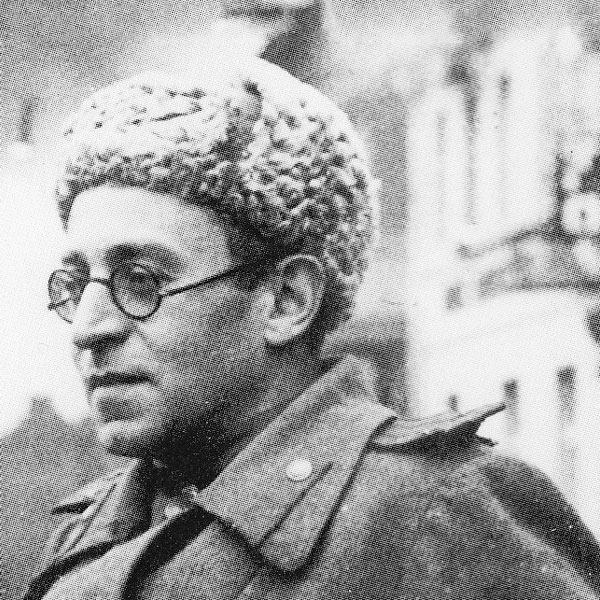
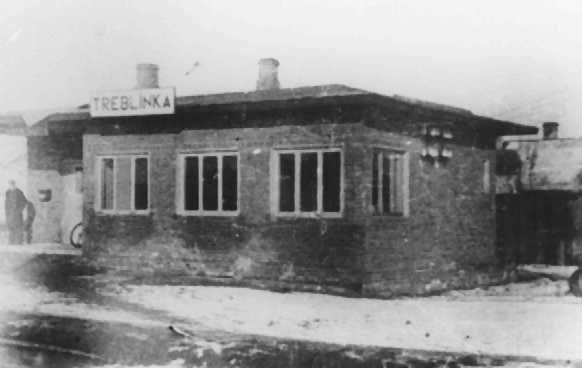
Holocaust Literature Week 2: Vasily Grossman’s “The Hell of Treblinka”

This semester I’m blogging about my class on Holocaust literature. Here is the first installment.

Vasily Grossman (1905-64), who we studied at the beginning of Week 2 of the course, is not nearly as well known in the canon of Holocaust literature as someone like last week’s author, Primo Levi (or some of the other writers we’ll study this semester, like Elie Wiesel and Tadeusz Borowski).

I can think of at least two reasons why. First, the reception of Holocaust literature in North America has been biased towards texts written in Western European languages. At least in part, this preference was a function of the inaccessibility of documents and archival material in Soviet-occupied Europe during the Cold War. Second, Grossman was not a survivor, per se, though his mother was murdered by the Nazis along with more than 20,000 other Jews in the family’s hometown of Berdichev in the Ukraine.

Grossman was born to an assimilated Jewish family. He did not have a Jewish education. It is unlikely he knew Yiddish. Berdichev, an important banking center, had one of Europe’s largest Jewish communities in the late 19th and early 20th centuries. This was a prosperous, cosmopolitan world quite unlike the shtetl world made famous in Sholem Aleichem’s work and depicted in the early parts of Wiesel’s Night.

Grossman studied to be an engineer, but turned to writing in the 1930s. When Hitler invaded the Soviet Union in the summer of 1941, Grossman was assigned to the Red Army newspaper. He became one of the most famous Soviet war correspondents, taking on many dangerous assignments, including a posting in Stalingrad. He accompanied the Red Army on its march westwards, where he reported on what has been called “the Shoah by bullets” (the death meted out by the Einsatzgruppen—mobile units or death squads—across Eastern Europe, especially the Ukraine. These firing squads murdered approximately tow million people in the years 1941-44, 1.3 million of them Jews, among them Grossman’s mother). Later, in 1944, he also reported on “the Shoah by gas.” He was with the Red Army when it arrived at the extermination camp Treblinka in August 1944.

Immediately he set about writing an essay called “The Hell of Treblinka.” Published in November 1944, it is one of the earliest accounts of the death camps. After the war, it was submitted as evidence by the prosecution during the Nuremberg trials. This extraordinary work is readily available—translated by Robert and Elizabeth Chandler together with Olga Mukovnikova—in an invaluable collection of Grossman’s essays, stories, and journalism called The Road (New York Review Books).

pic_related_091314_sm_-vasily-grossman

I began by asking the class to recall the question I’d given them at the end of the previous meeting as a way to guide their reading: What does Grossman value?

Hands shot up. I was relieved to see it, since, on the face of it at least, this is an easy question. Grossman is a passionate writer, not shy to render judgment and lay blame. And since that is what students want to do too, at least when it comes to the Holocaust, they take to him immediately. Of course, Grossman also gives us the tools to complicate what seem like straightforward categorizations.

Life, people, humanity, came the answers. Each student who spoke—and I reminded students that if they hadn’t yet said anything in class this was absolutely the day to chime in because soon, maybe already by the next class, their identity would be sealed: they would be a person who doesn’t talk in class—had to point to a specific passage to support their claim. “The most precious valuable in the world—human life.” “The epitaph history will write for [the victim] is: Here Lies a Human Being.” “Killing turned out to be supremely easy… This must be unflinchingly borne in mind by everyone who truly values honor, freedom, and the life of all nations, the life of humanity.”

These were all good examples. I pointed to another quintessentially Grossman-ian formulation: the victims, he says,

were caught up in a single flood, a flood that swallowed up reason, and splendid human science, and maidenly love, and childish wonder, and the coughing of the old, and the human heart.

The list of attributes and qualities here is typical; Grossman loves lists. (At one point in the essay he simply names, for almost ten lines, the belongings the new arrivals would have left scattered on the ground, commenting only, tartly, “It requires real skill to sort out, in the course of only a few minutes, all these thousands of objects.”) This particular list is a strange one. Ranging from physiology (the coughing) to emotion (love and wonder) to human accomplishment (reason and science), it seems to want to encompass everything that might go under the name the human condition in a single sentence.

Grossman absolutely believes in the idea of the human condition. This emphasis on common humanity is at least in part a political and ideological choice. In the course of this forty page essay, Grossman only mentions once that most of the victims were Jewish. That decision is a function of the Soviet insistence that only the suffering of Mother Russia rather than any individual group of people be commemorated. Grossman’s insistence on a kind of universal brotherhood of mankind is also evident in his insistence that the victims looked out for each other. Solidarity of this sort did exist in the camps, but so too did its opposite. Many of the course texts, I noted, will offer a quite different view of affairs.

Grossman was no doctrinaire Marxist—in the essay he even obliquely criticizes Stalinism; after the war he fell into disfavour and his great masterpieces Life and Fate and Everything Flows were written “for the desk drawer” and only survived because they were smuggled to the West in the Krushchev period. But he also insists in classic Marxist fashion that “what engenders a particular regime is the material and ideological relations existing among a country’s citizens… the nature of these relations is what should appall us.”

Yet Grossman never interprets Nazi Germany this way. Instead, as the students noted, he regularly describes them as demonic monsters, purveyors of “bestial madness.” They are refused any redeeming qualities; indeed, they aren’t even human: “The beast that triumphantly kills a man remains a beast.” What, I asked the class, is the effect of Grossman’s rhetoric? What is implied by this way of thinking and talking? (To offer compelling interpretations, students need to be able to draw out the implications of their observations, so I wanted them to practice drawing out the consequences of their ideas.) It’s like they’re not real people, someone said. Exactly, I responded. And why does that matter? Well, they were people, said another. Yes, I added, people like us.

It’s easy for us to imagine that these events have nothing to do with us. It allows us to approach the Holocaust as a kind of macabre spectator sport. But if we treat the Nazis as monsters, we effectively let ourselves off the hook. We don’t need to think of ourselves as in any way implicated in their way of viewing the world. In this way, Grossman risks devaluing the idea of humanity he values so much. In an oblique way, this risk is evident too in his treatment of what the historian Raul Hilberg would later call bystanders, in this case the local Poles who Grossman uses as mere neutral evidence for German actions. He doesn’t’ consider more complicated questions of implication or degrees of guilt, concepts that someone like Primo Levi would develop in his essay “The Grey Zone,” which we’ll read in a week or so.

35274

Whenever I teach “The Hell of Treblinka,” I work towards a close reading of a single passage. This time, I left it too late and we didn’t have the time to really do justice to it. But that’s okay. The work the class did in pointing to specific passages to support each claim, although time-consuming, was worth it. I want students to see that they can’t just go with their gut, can’t just offer a vague sense of what the text is saying (which often amounts to what they wish it were saying). They have to work with what’s there. Only then will their readings convince.

At any rate, here’s the passage that to my mind gets to the heart of Grossman’s enterprise. Having described the chaos new victims would have experienced on arrival—separated from loved ones and possessions, shaved and otherwise physically humiliated, herded along a path lined by high fences towards an imposing brick building—Grossman explains what would have happened next:

The door of the concrete chamber slammed shut […] Can we find within us the strength to imagine what the people in these chambers felt, what they experienced during their last minutes of life? All we know is that they cannot speak now… Covered by a last clammy mortal sweat, packed so tight that their bones cracked and their crushed rib cages were barely able to breathe, they stood pressed against one another; they stood as if they were a single human being. Someone, perhaps some wise old man, makes the effort to say, “Patience now—this is the end.” Someone shouts out some terrible curse. A holy curse—surely this curse must be fulfilled? With a superhuman effort a mother tries to make a little more space for her child: may her child’s dying breaths be eased, however infinitesimally, by a last act of maternal care. A young woman, her tongue going numb, asks, “Why am I being suffocated? Why can’t I love and have children?” Heads spin. Throats choke. What are the pictures now passing before people’s glassy dying eyes? Pictures of childhood? Of the happy days of peace? Of the last terrible journey? OF the mocking face of the SS man in that first square by the station: “Ah, so that’s why he was laughing…” Consciousness dims. It is the moment of the last agony… No, what happened in that chamber cannot be imagined. The dead bodies stand there, gradually turning cold. (Ellipses in original unless bracketed)

Here Grossman imagines the ground zero of the Holocaust, the centre of what the French political prisoner David Rousset, a survivor of Neuengamme and Buchenwald, called l’univers concentrationnaire. He takes us into the gas chamber. What happened there? Historians and forensic researchers can tell us a lot: we know that people were so desperate to escape that they clawed at the walls. We know from the evidence of the piles of corpses that those who were bigger and stronger climbed over those who were smaller and weaker to get the last bit of air. But the desire to enter into that scene—to turn it into a scene—is both taboo and inescapable in Holocaust literature.

Remember this passage, I told the students, when we read Maus: we’ll see how self-consciously Spiegelman points to the limits of eyewitness testimony. Remember this scene when we watch Schindler’s List: we’ll see how dubiously Spielberg flirts with exploiting our dark compulsion to enter into this space.

For now, I want us to see that when Grossman wonders whether we can “find the strength to imagine what the people in these chambers felt” he is asking a real question. This vivid passage aims to make us feel present—we see that most clearly in its use of physical and corporeal details: the clammy sweat, cracked bones, and crushed rib cages.

It even imagines how people might have acted and thought in those final moments. What kind of actions are these, I asked the students. They’re kind actions, caring. An old man shouts “Patience,” a mother seeks to make space for her child. The people evoked are vulnerable: that old man, that woman with her child, the young woman who wants to live. There’s even the intimation of revenge and resistance—someone, the only person here who isn’t described in any way, shouts out “a holy curse,” which he or she, as well perhaps as Grossman himself, insists, which is to say, hopes, must be fulfilled. These aren’t just victims; they are also resisters, not least in their staunch avowal of basic human dignity. They resist by maintaining solidarity with each other: “they stood as if they were a single human being.” Here we have Grossman’s credo in a phrase.

With only a minute or two left, I asked the class to tell me what happens in the passage between the sentence starting “Covered by a last clammy mortal sweat” and the one starting “Someone, perhaps some wise old man.” A moment’s silence: the students were tired but still game. They hadn’t packed up their stuff yet. But they knew there was an answer I was looking for and it made them wary.

Look at the verbs, I prompted. They shift from past tense to present, someone said, half-hesitantly, half-triumphantly. Yes, I said, pointing out examples: someone makes an effort; a mother tries to make more room for her child; heads spin; throats choke. What’s the effect of this shift? It’s like replacing statistics with stories, one student said. Yes, but that doesn’t explain this particular choice on Grossman’s part. What does the shift to present tense suggest? It makes it more intense, another said. Normally, I would have payed out this suggestion further, getting the student to expand on what she meant by intensity. But I was in a hurry, so I finished the thought. Right, it makes the scene immediate, vivid. In a way, it undoes what happened in the chamber, bringing the dead to life.

And yet, I concluded, these attempts at immediacy fail. The dead don’t live. Even if the passage returns to present in the final sentence (suggesting an ongoing duration—these bodies are in some way still standing there) the penultimate sentence, like the rest of the essay, is in past tense. In that sense, the key statement here is: “No, what happened in the that chamber cannot be imagined.” We are left only with a statement of absence: “All we know is that they cannot speak now.” Grossman has tried to do that for them, but ultimately refuses the possibility.

Grossman’s passionate desire to do justice to the victims and his equally ardent disgust for the perpetrators is matched by his modesty and reserve. He speaks for them only inasmuch as he rejects that speaking.

We’re returning to Primo Levi next class, I said, as the clock showed two minutes past the hour and the next group of students milled around outside the room. Think about Grossman’s humanism as you read Survival in Auschwitz. Will Levi’s humanism look like Grossman’s?

Class dismissed.