What I Read, December 2025

I came down from the high of my first months as a former professor. Not because I longed for my old job (though I do miss being around students and in the classroom), but because I had to face the uncertainty of how to keep body and soul together going forward. I kept hustling, buckled down to my various gigs, including, this month, a number of hours at a local bookstore. It felt so good to be back in that environment again. That excitement buoyed me as the days grew short; psychologically, I kept my head above water, which has not always been the case in Decembers past. And I read a few books, some of them excellent.

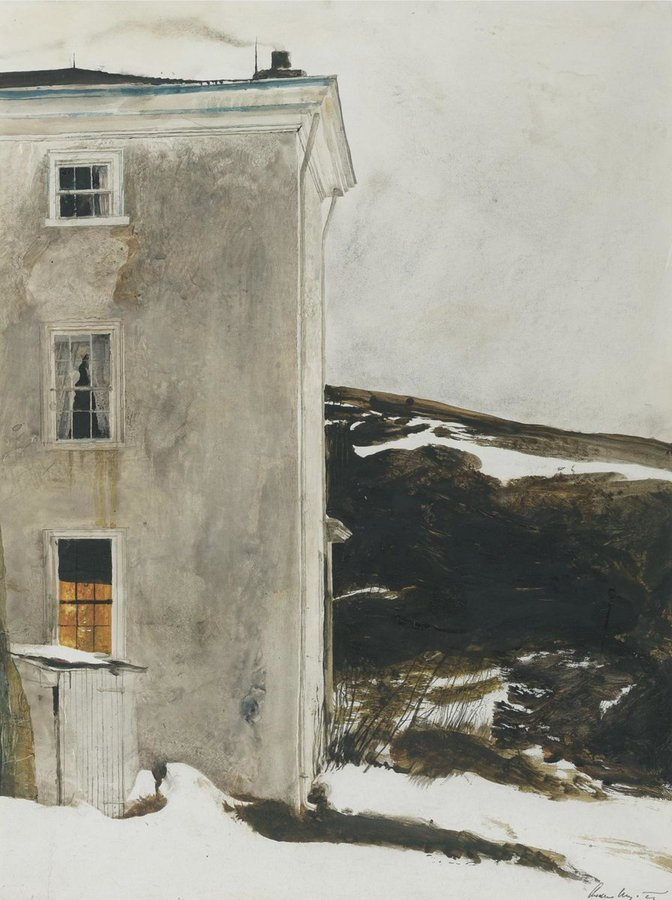
Andrew Wyeth, Dusk (1978)

Sarah Campion, Makeshift (1940)

Now this is interesting. A novel from the early part of WWII set in desperate early Weimar Germany; racially-divided South Africa; and puritan New Zealand, about a German Jewish woman who escapes the Nazis in body but not in mind, written by a non-Jewish British writer. Campion (the pen name of Mary Rose Alpers; no relation, as I briefly hoped, to Jane Campion) spent most of the 1930s teaching English in Berlin, where many of her students were Jews. She was forced out of the country in 1937 when she refused to identify those students—part of a long life of progressive political activism, including later protesting the Vietnam War.

Charlotte Herz, her protagonist—smart, funny, neurotic, judgmental, flinty when she needs to be—is not an easy character to like. (The novel is bracingly uninterested in this idea.) Charlotte does some things—one thing in particular—that are pretty terrible, but also maybe the things that needed to be done to survive. She casts aspersions on most of the people she meets. She is an ungrateful exile. These facts, combined with the disconnect between author and character, have led some to dismiss the book as appropriative. One such reader is Sarah Shieff, who wrote the afterword to this new reissue. I have to say, as a Jew, I don’t find this to be the case. In fact, I have beef with Shieff, who misreads the book badly, in my opinion, showing herself to be unable to distinguish Herz’s voicing of antisemitic views from her belief in them. And having read a lot about German Jews in the 1920s and 30s I found Makeshift thoroughly compelling and plausible, including its first-person voice. That said, the writer Campion most reminds me of is also non-Jewish, another woman who had a lot to say about the treatment of minorities in the British Empire: Doris Lessing. Campion shares Lessing’s frankness about female sexual desire and how psychologically damaging it was to express in a period when male domination was even more overt than today.

Brad Bigelow, of the Neglected Books account on Bluesky, rescued Makeshift from near-total oblivion (I think there were only a handful of copies left in the world when he found it), and has published it in his invaluable Recovered Books series. I’m grateful to him for sending me a copy. May it not sink without a trace this time around.

Rosalyn Drexler, To Smithereens (1972)

“I shout, ‘I’d do anything for you, you Glamazon!’ And she says, ‘Anything? Well then, suck my pussy.’ And I’d have to do it, because she’s the champ, the winner, the goddess, the diva who makes me dive.”

Do you want to read this 1970s novel about women wrestlers and the men who love them, written by the painter, sculptor, playwright, novelist, nightclub singer, and yes, wrestler Rosalyn Drexler, gloriously resurrected by the new reprint press Hagfish Books? Hell yeah you do!

Daniel Elkind, Dr Chizhevsky’s Chandelier: The Decline of the USSR and other Heresies of the Twentieth Century (2025)

My friend James, owner of the mighty Leviathan Books here in St Louis, lent me his copy of this Sebaldesque mediation on some of, in the author’s words, “the undesirables” of 20th century history. It’s a short book, sometimes funny, always engrossing. Yet ultimately a little thin. Maybe I read it too quickly, but sitting here now, just a few weeks later, I can’t remember what Elkind concludes about his cast of characters. The strongest parts of the book are the autobiographical sections on his coming of age as a newly arrived immigrant to the US after the collapse of the Soviet Union and, especially, his memories of his parents and grandparents. Like so many in his generation who grew up in the aftermath of the disappearance of a seemingly unshakable social, political, and cultural world—will this be my daughter???—Elkind has a keen sense for history’s inescapable contingency. There are always so many paths not taken.

Alexander Chizhevsky, by the way, was born in what is now Poland in the Russian Empire and died in the USSR. A biophysicist, he founded a discipline he called “heliobiology,” the study of the effect of the sun’s cycles on plant life and human activity alike. For example, he linked the ebb and flow of battle that he experienced on the Eastern Front in WWI to solar flares. Much later, in 1940, Stalin got wind of this theory (never a good thing) and demanded Chizhevsky recant (it being inimical to Marxist-Leninist theories of history). When Chizhevksy refused, he was sent to the gulag and, after eight terrible years, to a “rehabilitation” program in Kazakhstan. His “chandelier” is an ionizer—a tool still in use, even though no one can agree whether it promotes health.

Undesirables, it seems, stick around in unexpected ways—especially when they have someone like Elkind to memorialize them.

Joan Silber, Secrets of Happiness (2021)

Came home from the library; sat down to read the first page or two, as one does; next looked up to find that an hour had passed; realized I would have to set other reading aside until I finished, which I did the next morning. Like most of Silber’s recent work, Secrets of Happiness uses ring structure: each chapter follows a character referenced, however fleetingly, in the previous. It begins with a middle-aged woman who learns that her husband has children with a woman he met on his travels in Asia and that he’s helped bring them all to the US. She kicks him out, files for divorce, travels overseas, sends cryptic messages to her grown children, who reluctantly meet their half-siblings. Lots of drama, but no melodrama. Laurie Colwin vibes. I liked this a lot.

Martin Lemelman, Mendel’s Daughter: A Memoir (2006)

Illustration of the author’s mother’s experiences during the Nazi occupation of eastern Poland (today Ukraine), compiled from a video testimony he had her make when she suffered a broken foot in the late 1980s and needed to be occupied. It’s hard to compete with Art Spiegelman’s MAUS, and Lemelman doesn’t try. He keeps his interactions with his mother to a minimum, and draws in a beautiful, almost gentle pen and ink style that is decidedly not cartoonish or abstract. Despite these differences, Mendel’s Daughter had to have been overshadowed by the earlier book, since I hadn’t heard of it until recently, and I’ve read a lot of Holocaust graphic novels. That is a shame, because it’s absolutely worth reading. The story of how Gusta Lemelman (née Schaechter) survived the war is, as so often in such stories, remarkable, harrowing, miraculous. Together with three of her siblings, Gusta hid in “graves,” deep pits dug into the forests near their hometown of Germakivka. Of great interest is her description of prewar life, especially the mingling of Jews and non-Jews, and how this diversity both fell apart but also persisted during the Nazi occupation, as some of the locals were instrumental in keeping Gusta and her siblings alive during their time in hiding.

Joan Silber, Household Words (1980)

Wrote about this here. A blend of Vivian Gornick and Elaine Kraf. Satisfying and interesting. I want to write about Silber at length. (Like, for money and with the help of an editor.) Anyone interested? Where should I pitch?

Ulrich Alexander Boschwitz, Berlin Shuffle (1937/2019) Trans. Philip Boehm (2025)

If you haven’t read Boschwitz’s Passenger, start there. If you have, then you’ll also enjoy this, his first novel. I had more to say about it here. Tl; dr: solid end-of-Weimar novel, if at times unsure quite what it wants to do. Considering the conditions under which it was written, an accomplishment.

Mason Coile, Exiles (2025)

A locked-room mystery set on Mars, Exiles has the pacing of a thriller and the uncanniness of a horror novel alongside the fascination with otherness that characterizes sff. The first three humans to make it to Mars arrive to find their mission compromised from the start. The bots who have been sent ahead to build a research station have taken human names, genders, and personalities. Plus, they changed the door entry codes. Oh, and one of them is missing, and might have destroyed the station’s lab. Unless someone—or something—creepier did it… Coile’s absorbing novella proves that humans might be able to leave Earth, but they can never escape themselves.

Nicola Griffith, Stay (2002)

Earlier last year, I read The Blue Place (1998), the first of Griffith’s Aud Torvingen crime trilogy, recently reissued in attractive new editions. Aud (rhymes with “crowd”) was born in Norway, grew up at various embassy posts with her ice queen diplomat mother, and now lives in Atlanta. She was a cop for a while, but now she’s independently wealthy (seems good, why don’t more people do this?) and a sometime PI. Lee Child himself said that if Reacher had a sister, she’d by Aud. She is indeed utterly competent, both in creating (she renovates houses, builds furniture, cooks like a pro) and destroying (she beats up a lot of bad guys and enjoys it).

The Blue Place is terrific, despite its heartbreaking ending. Stay finds Aud licking her wounds in the mountains of North Carolina, able to get out of her head only because an old friend begs her to find his missing girlfriend. Aud reluctantly heads to New York, on what she assumes will be a day-long mission. And she does in fact find the girlfriend. But turns out there’s more at stake, which leads Aud on a chase that ends, much to my surprise, in Arkansas. The scenes there are pretty well handled. (I doubt Griffith has spent much time there.) Stay is baggier than its predecessor, and a final plot development suggests a new turn for the third and final book, the library copy of which is sitting on the desk beside me. As best I can tell, disability will factor in that book (Griffith has MS and is a prominent disability rights activist). I didn’t even mention that Aud is queer, a fact central to the series. Today she would probably overtly identify as neurodivergent, too. All of which makes me curious to see what will happen to Aud.

These books seem to have made no impact on first release, as judged by the fact that each book was published by a different press. It would be nice if these reissues brought more them more readers.

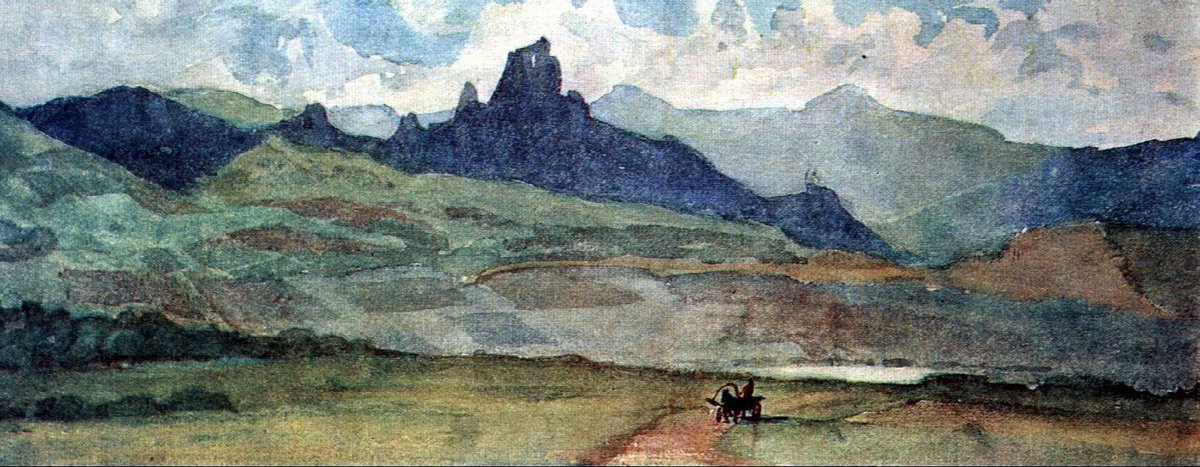
Vasily Surikov, Minusinsk steppe (1873)

Ken Liu, All That We See or Seem (2025)

Got this from the library after seeing it on some sort of best sff list. Maybe one by Lisa Tuttle? Could that be right? Anyway, this is the beginning of a new series about a hacker named Julia Z, whose back story is interesting. Her mother, an immigrant from China, was a famous activist determined to hold America to its ideals. But her parenting was a disaster—imagine a razor-focused Mrs. Jellyby—leading her daughter, our protagonist, into the hands of an anarchist group with its own ideas of keeping America accountable. That’s where Julia learned her tech prowess—but also experienced bitter disappointment when the group’s idea of retributive justice turns out to be a sham. At the beginning of All That We See or Seem, she’s been in hiding for a long time, until a lawyer digs her out and begs her to find his wife, a famous “oneirofex” or dream weaver who has gone missing. As best I understand it, these artists use AI to tap into and personalize mass longings to create updated 60s-type “happenings” that cater to people’s hunger to be together in person while still being isolated.

I didn’t know there was a genre called “tech-thriller” but all the reviews I looked at online use it, so I guess that’s a thing. Seems like readers are divided on the book—fair bit of love but also a lot of hate—which doesn’t surprise me, given the book’s inconsistencies, and supports my view that this is an interesting and flawed work. Liu apparently is or has been a lawyer and a software engineer in addition to a writer and translator, and these experiences are brought to bear in the confidence of the story’s tech and legal aspects. Too bad that much of this material—reflections on identity politics, political resistance, surveillance culture, and the ethics of AI—are awkwardly dumped into the text.  Even more obviously than most sf, this is a book about America today, and I’m not convinced a novel was the best way for Liu to say what he wanted to say. Still, I’ll give the next one a try. I hope that someone has sent a copy to David Cronenberg: he could do a lot with this material.

Paul Cornell, Witches of Lychford (2015)

Novella about a flyspeck English village that, unknown to most of its inhabitants, sits at the fault-lines of the ordinary world and magical realms, both good and evil. Even if the good people of Lychford knew the truth, they probably wouldn’t pay attention anyway, preoccupied as they are with a big decision. Should they allow a Walmart-type supermarket to open in town? Opinions are split; feelings run high. No matter what side they take, though, everyone admits there’s something about the guy the company has sent to convince the locals. He’s kind of… demonic. The joke being, of course, that he really is. Only an unlikely trio—a grumpy old woman who is in fact a witch; the new priest, posted to her childhood home, where no one knows that she’s lost her faith; and the priest’s former best friend, an atheist who has started a shop selling wiccan paraphernalia—can save the day.

Cornell has written several sequels, and I get the feeling the series might amount to something. And yet I haven’t checked them out of the library yet. Has anyone read these? Should I carry on?

Georges Simenon, The Dancer at the Gai-Moulin (1931) Trans. Siân Reynolds (2014)

Two kids in provincial Belgium—one spoiled and rich, one poor and susceptible—scheme to knock over the bar where they spend evenings pretending they’re adults and trying to make it with a female employee, the dancer of the title. But when they break in after closing time, they find a body on the floor. They freak out, do all the wrong things, eventually get arrested. But surely they’re not guilty. Right? And where is Maigret? This is the one where he doesn’t show up until about 2/3 of the way through, and the way Simenon pulls it off is ingenuous.

Miklós Bánffy, They Were Counted [The Transylvanian Trilogy: Volume I] (1934) Trans. Patrick Thursfield and Katalin Bánffy-Jelen (1999)

In my past life I lived on an estate at the foot of the Carpathians, shooting, attending balls, shaking my head at hotheaded fellows who love nothing more than a duel, checking in at the casino when in town during the winter season, watching the woman of my dreams ice-skating with a hated rival, tending to my peasants (sometimes assiduously, sometimes with dereliction), etc., etc. For this reason, I couldn’t get enough of Banffy’s novel, the first part of a trilogy that has been giving me the most reading pleasure I’ve had in a long while.

Although Bánffy wrote the books in the 1930s and 40s, in increasingly perilous financial and bodily straits, he set them in the first decade of the 20th century, the end days of the Austro-Hungarian Empire. (I’m taking part in a year-long reading of Musil’s The Man Without Qualities, and it is almost comical how different in style and ideology these texts are, even as both consider, one with regret, one with irony, the dissolution of the same state.)

There are many books about this time and place. In my experience, most focus on the Austrian part of the Dual Monarchy. One of the many interests of this book, then, is that it shows English-language readers a lesser-known world. Yet it is similar to other late 19th century novels. Like War and Peace, They Were Counted toggles between the personal and the political. The two main characters are cousins. One, having recently been elected to parliament, takes on the difficult task of reforming the family estates (bringing new scientific theories to the harvesting of timber, founding an agricultural cooperative), in part to distract himself from his seemingly hopeless love affair with a married woman. The other, a promising composer, slides into dissipation when he is unable to marry the woman of his dreams (another cousin—which sounds weird, but tbh pretty much all of the characters are related in some way). Some readers seem to find the details about the Hungarian parliament’s bitter, uneasy relationship to Vienna dull, but those people probably don’t like the historical excurses in Tolstoy either. As best I can tell—and I ought to know, given my past life, but, you know, details get hazy with the transmigration of a soul—Transylvania was at once the hinterland of Hungary and its beating, symbolic heart. Losing it to Romania in the Treaty of Trianon was a loss Hungarians never got over. Anyway, the novel is much interested in what it means to be part of a ruling elite that is both dominant (over the Romanian-speaking majority) and subordinate (to the Austrians) and part of a large, precarious multiethnic political entity. Its politics are as hard to pin down as you might expect from that description. (Imagine if the Anglo-Irish were part of the European Union, maybe.)

Did I mention there are also a lot of balls, duels, hunts, and love affairs in this book? SO GOOD.

BTW, this is neither here nor there, but I am reading these in the Everyman Library editions, which are lovely and even have that charming though in my opinion fairly useless sewn ribbon, but which include the most useless map I’ve ever encountered. Regular readers know that I love a map, and wish for them in every novel, regardless of subject matter. But this one includes none of the estates that form most of the locations and almost none of the towns. So frustrating!

There are many ways in which America under T***p II echoes 1930s Germany, but more and more I think that the self-immolation of Austro-Hungary is the better comparison. Which is to say that you can read these books (or at least this one: I’m not finished volume 2 yet) to get perspective on the present—and to escape it altogether.

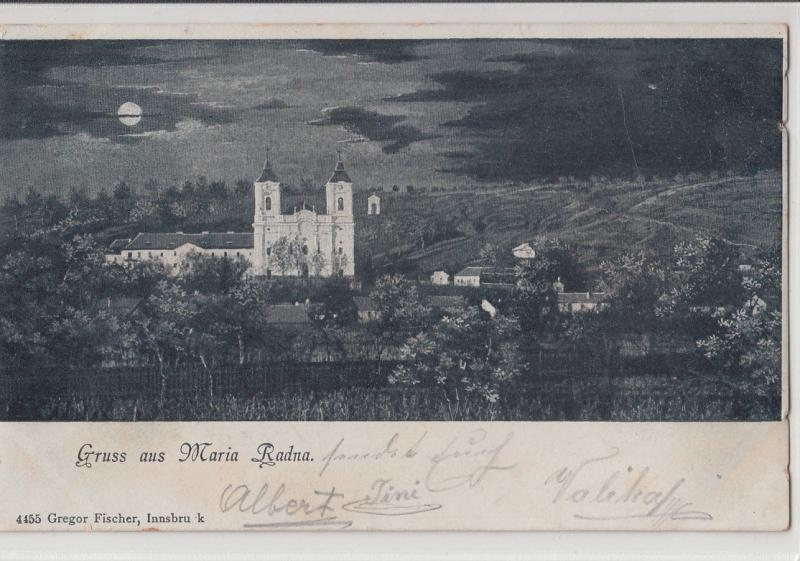
Monastery in Radna, Transylvania circa 1900

How about you? Where did you live in a past life? And have you read any of these books?

Scott Walters’s Year in Reading, 2021

Today‘s reflection on a year in reading, I’m delighted to say, is by Scott Walters. Scott launched a litblog, seraillon, in 2010, and expects to return to it one of these days. He largely follows Primo Levi’s model of “occasional and erratic reading, reading out of curiosity, impulse or vice, and not by profession” (profession in his own case being academic administration). He lives with his partner in San Francisco and tries to visit family in France as often as possible.

seraillon has long been a favourite blog: in the past year or so I’ve checked in regularly, half disconsolate, half hopeful, looking for new content. You can imagine, then, how happy I am to feature Scott here in his return to blogging. I hear rumours that more may be afoot at the site!

With Scott’s post, this run of Year in Reading posts comes to an end–except, of course, for my own, which I hope to write soon… The project grew into something bigger than I’d ever imagined; it’s been a delight to showcase the work of so many thoughtful readers. Thanks to everyone who wrote, read, and commented on these pieces. (If you’d talked with me about writing a piece but haven’t sent it to me yet, it’s not too late. Just be in touch and we’ll make a plan.)

Milton Avery, Green Sea, 1954

How gracious of Dorian to invite me to submit an end-of-year post! I have been avidly following the others he’s posted, which now have my to-be-read list runnething over. So thank you Dorian, and everyone, and hello. [Ed. – Such a pleasure!]

I’ve written nothing on the seraillon blog for more than two years—”hellacious times and I’ve slipped between the cracks,” as a character says in David Greenberg’s play, The Assembled Parties. But I have been reading, finishing 42 books in 2021. Though about half my typical yearly volume, I also read much more in books, most of which I intend to finish: The astounding Autobiography of Benvenuto Cellini. Milton’s “Paradise Lost.” Chateaubriand’s Mémoires d’outre tombe (to be continued in the original French, no knock on Anka Muhlstein’s translation). A re-read of Wuthering Heights. Franz Werfel’s monumental novel of resistance against the Armenian genocide, The Forty Days of Musa Dagh. Gaston Bachelard’s The Poetics of Space, following an interest in Henri Bosco. Henri Bosco himself, in his novels Le Mas Théotime and Sabinus. A book about book designer Robert Massin, who designed these French Bosco editions. There are others, down other rabbit holes.

Here are ten highlights of works I did finish in 2021, plus honorable mentions:

The Ministry for the Future, by Kim Stanley Robinson

Hugo and Nebula Award winner Robinson has shouldered a massive responsibility: digesting everything we know about climate change as well as everything we know about how we might address it, then packing it into a stunningly wide-ranging geopolitical thriller interspersed with chapters that concretize climate change’s multivarious, cascading impacts. The novel is also one of few I’ve encountered (Vincent McHugh’s 1943 pandemic novel I Am Thinking of My Darling being another) that explore competent administration of a crisis. [Ed. – Yes! This is a book about competency. Maybe that’s why it feels so comforting.] Robinson’s book appeared in October 2020, a date to fix precisely given the furious pace of change as regards the book’s subject. In fact, the novel seemed a kind of sundial around which shadows spun and deepened rapidly as I read, some elements already obsolete as others swam into view. This is no criticism; I marveled at the real-time context while reading as well as at Robinson’s courage in being able to place a period on his final sentence, and I’ve been pushing the work on everyone for its articulation of the enormity of the challenges facing us, some lovely conceits such as the return of airships, and a bracing radicalism that makes Edward Abbey’s The Monkey Wrench Gang seem like a Sunday School picnic. Despite offering a path forward, Robinson eschews easy answers and offers little in the way of reassurance, seeming to have taken as the novel’s departure point Greta Thunberg’s memorable warning: “I don’t want you to feel hopeful. I want you to panic.” [Ed. – On my 2020 list; still think about it daily.]

Last Summer in the City, by Gianfranco Calligarich (translation by Howard Curtis)

The cover blurbs’ promise of a resurrected 20th century Italian classic certainly delivered; Calligarich’s short, tight, engaging 1973 novel of dissolution in 1960’s Rome seems to pick up where Alberto Moravia left off in depicting modern Italian existential malaise. The story follows the peripatetic wanderings around Rome of Leo Gazzara, an impecunious, alcoholic, bookish young Roman who becomes embroiled in a tumultuous on-again/off-again love affair. The energy of Calligarich’s automobile-driven narrative and the drifting yet fascinating tour he offers of Rome—the city itself a “particular intoxication that wipes out memory”—help balance out the novel’s bleakness, and a frequent invocation of books provides both literary diversion and dark warning of Bovary-esque entrapment in fictions. One might easily envision a film version by an Italian neo-realist director such as Dino Rossi or Antonio Pietrangeli.

Norwood, by Charles Portis

Considerably brightening a dark year, Norwood (1966) edged out Portis’s True Grit and The Dog of the South as the funniest book I read all year [Ed. – Arkansas, represent!], and even topped W. E. Bow’s The Ascent of Rum Doodle and Patrick Dennis’s Genius. A howling road trip and love story that begins when Norwood Pratt of Ralph, Arkansas gets a job tandem-towing a couple of hot cars to Brooklyn, Norwood limns the seedy, grifty, free-wheeling side of American life with caustic, irreverent humor; splendid dialogue; and unforgettable characters. I have Jacqui to thank for this introduction to Portis and will certainly read his remaining two novels and collection of short pieces, a literary cornucopia inversely proportional to the author’s small output, and no doubt as delicious as a biscuit and Bre’r Rabbit Syrup sandwich.

Stories With Pictures, by Antonio Tabucchi (translation by Elizabeth Harris)

“From image to voice, the way is brief, if the senses respond,” writes Antonio Tabucchi in his preface to 2011’s Stories with Pictures, a collection of 30-some short pieces sparked by a particular painting or drawing. Inspired by his having spent an entire day in the Prado (I did the same thing on the one day I spent in Madrid), Tabucchi writes at an angle about the pictures, riffing on them in a dazzling range of ways, from mediations to letters to what seem at times multi-page, arabesque-like captions. As in much of Tabucchi’s work, motifs connected to Fernando Pessoa abound. Most of the artworks come from 20th century Italian or Portuguese artists, all but a few new to me. As if the posthumous appearance in English of a Tabucchi work wasn’t reason enough to celebrate, the Archipelago Books edition, featuring color plates of each picture, make this a volume with a presentation as lovely as the author’s concept.

Bear, by Marion Engel

“Is a life that can now be considered an absence a life?” Marion Engel’s Bear (1976) has made so many end-of-year lists here and elsewhere that Dorian should get a medal for this revival of interest. [Ed. – Aw shucks. No medal, though. I want cash.] Thanks to a new edition from London’s Daunt Books, I finally got in on Engel’s singularly odd tale of Lou, an archivist cataloging the contents of a deceased eccentric’s isolated mansion in Ontario’s remote north—and falling maw over claws for its resident bear. [Ed. – Ha! Maw over claws! That’s good! Gonna steal that.] Literally going wild in shaking herself loose of “the flaws in her plodding private world” and the various civilized confines that have entrapped her, Lou exults in a rebirth as liberating as it is perturbing. Bear’s atmosphere of isolation made it seem readymade for pandemic reading; I suspect that most of us are more than ready to go a little wild ourselves. [Ed. – Sounds pretty good to me!]

Dissipation H. G., by Guido Morselli (translation by Frederika Randall)

My terrific excitement at seeing another Morselli novel appear in English received an abrupt check upon my learning that Frederika Randall, one of the finest of Italian to English translators, had died shortly after finishing the translation. Readers of seraillon may know of my interest in Morselli; this short novel, his last, takes a common theme in which a person suddenly discovers that they are alone on earth. Morselli spins the conceit into a bittersweet, moving and darkly humorous exploration of isolation and the need for human contact. The “H. G.” in the title refers to humani generis and the dissipation “not in the moral sense” but rather from “the third and fourth century Latin dissipatio,” meaning “evaporation, nebulization, some physical process like that.”  In other words, Dissipation H. G. turned out to be another work suited for pandemic reading—if perhaps in the manner of providing solace through affirmation of one’s sense of reality.

Malacarne, by Giosué Caliciura (French translation by Lise Chapuis)

Sicilian writer Giosué Caliciura has yet to be translated into English, a pity, as his fierce, inventive, densely baroque novels, delving into the lives of those on society’s margins, are among the most original and powerful I’ve found in contemporary Italian literature. Malacarne (1999) presents a ferocious testimonial from a Sicilian malacarne (literally “bad flesh”), one of the young hoods employed to do the Mafia’s dirty work.  Palermo—and at the same time a vaguely defined post-mortem space—provide the setting(s) for the malacarne’s reckoning, before a judge, with the brutal details of a violent, savage life. Caliciura’s use of a deliberately impossible narrative voice, an articulation both belonging to and channeled through the late malacarne, adds to the novel’s otherworldly, underworld atmosphere. But the story the malacarne relates is as worldly, gripping and linguistically spectacular as a story could be, a profound exploration of the forces that perpetuate organized crime and engulf the youth it attracts, manipulates, and destroys.

Giorgio Morandi. Paesaggio Levico, 1957.

Okla Hannali, by R. A. Lafferty

I did not know of R. A. Lafferty (apparently revered in science fiction circles), nor had I heard of this novel (not a work of science fiction), and so little suspected what I was about to get into. I found Okla Hannali (1972) astonishing. The author called its initial appearance “a torturous undertaking even though it wasn’t much more than an overflowing of crammed notebooks.” Something of the “crammed notebooks” quality seems to remain in this revised, shaggy final version, but small matter: why this vastly-larger-than-life legend of fictional Choctaw “mingo” (king) Hannali Innominee isn’t a standard feature of the American literary canon is beyond me. Lafferty turns the historical telescope around, viewing early 19th century frontier history from the Choctaw perspective. We know we’re in the realm of legend when the novel begins with a creation myth, which swiftly moves to the early life of Hannali, a “big man who would fill almost a century” and who, during one of the several forced resettlements of the Choctaw, abruptly picks out a plot of land in what is today eastern Oklahoma, “a place less no damn good than other land.”  At this nexus where many elements of 19th century American history converged, the reader witnesses, through Hannali, the westward European expansion, the enactment of genocidal policies towards indigenous populations, the flight of escaped slaves (some of whom become slaves of the Choctaw and/or members of the tribe), the lingering resonances of the Louisiana Purchase, the inauguration of new states, the misunderstood “Jacksonian Revolution” that amounted to little more than “a war of the rich against the poor,” and finally the American Civil War and the grim destruction of the Choctaw republic. Hannali is a magnificent character: defiant, stubborn, courageous, wise, irreverent, a folk hero of magnitudes. Big, boisterous, hilarious, indignant, heart-breaking tales like this don’t come along often; one mourns the unrealized project Lafferty intended to call “Chapters in American History,” of which Okla Hannli, his “Indian [sic] chapter,” is the only one he completed. [Ed. – Wow! Sounds amazing!]

The Transit of Venus, by Shirley Hazzard

“The calculations were hopelessly out…Calculations about Venus often are.” Australian writer Shirley Hazzard and Graham Greene were close friends, and I thrilled to find Greene-like elements in this exceptional, elegant, psychologically penetrating work. But The Transit of Venus (1980) is something all its own, a dense, intimate, furiously compelling narrative tracing the life trajectories and romantic entanglements of two Australian sisters orphaned at a young age. Tracking the sisters’ moves to England (and one to New York), with events of the tumultuous 20th century backgrounding their stories, Hazzard describes, in exacting prose, the psychological nuances of human interactions. Henry James, another obvious influence here, seems constricted by comparison [Ed. – hmm]; The Transit of Venus did more to put in perspective James’s limitations with regard to women characters than any other work I’ve read [Ed. – hmm]. Hazzard’s antecedents range from Greek tragedies to Goethe to 19th century Realism, resulting in a story almost classical in form and style, yet palpably burning with a sense of lived experience—from a writer who led an utterly improbable life. I’ll be reading more.

A True Novel, by Minae Mizumura (translation by Juliet Winters Carpenter)

“…I still could not feel at home, either in the new country or in the new language,” states the narrator on the first page of Mizumura’s 2002 novel (to which I was steered by Dorian – thank you, Dorian!). [Ed. – So welcome! Delighted to see this here.] This might be a line from any work addressing displacement, but it scarcely begins to hint at the extraordinary directions Mizumura will take over the ensuing 853 pages. I harbored some doubts about descriptions of the novel as a Japanese Wuthering Heights, but Mizumura evinces little interest in simply grafting Emily Bronte’s work onto a Japanese setting. Instead, her ambitions aim broadly and deeply. Taking the coinciding of the 19th century western novel’s golden age with Japan’s opening to western influence as her beginning, Mizumura then uses her own transnational experience (with formative years spent in the US before a permanent return to Japan) to explore, through both western and Japanese literary and linguistic lenses, multiple questions of transnational identity, cultural cross-pollination, Japanese post-war history, and – through her mysterious character Taro, a kind of Japanese Heathcliff/Gatsby amalgam – issues of class and otherness. A True Novel takes its title from a prevailing style of Japanese literature in which works like Wuthering Heights were held up as an ideal form, “where the author sought to create an independent fictional world outside his own life.” But meta-fictional elements in Mizumura’s narrative also link it to the later Japanese style of the “I-Novel” (also the title of another, more personal Mizumura work), close to memoir and hewing to the author’s personal experience. Through concatenations of narrative (the prologue alone to A True Novel goes on for 165 pages) and using black and white photographs to heighten sense of place in the mountainous Karuizawa area where much of the story unfolds, Mizumura aligns the substrate of the Japanese literary enzyme with that of its Western counterpart, sparking a catalysis that creates something strikingly original. While it’s rare enough to find something that seems new in fiction, it’s more unusual still to find a work also incorporating something old and familiar and—by means of steady, crystalline, superbly atmospheric prose—so completely absorbing. Re-reading this true novel, my favorite book of 2021, will be a goal for 2022.

Milton Avery, Offshore Island, 1958

Honorable mentions:

  • Isak Dinesen’s Winter’s Tales;
  • Miklós Bánffy’s The Enchanted Night, an excellent collection of short stories that aligned surprisingly with Dinesen (great to see more of Bánffy’s work emerging in translation);
  • Federico Fellini’s The Journey of G. Mastorna, the director’s screenplay for what many consider to be the greatest film never made;
  • N. Scott Momaday’s House Made of Dawn, an American classic, gorgeous and heartbreaking;
  • Claire Keegan’s Small Things Like These, a marvel of concision concerning Ireland’s Magdalen laundries;
  • Henri Bosco’s Le Trestoulas, affirming Bosco as a writer I will certainly keep reading;
  • Joseph Roth’s The Radetzky March.

(And in the noir/polar/mystery realm):

  • Georges Simenon’s Chez Krull [Ed. – So good!];
  • Eric Ambler’s Journey into Fear and A Coffin for Demetrios;
  • Seishi Yokomizo’s The Inagumi Curse, terrific to read directly after Mizumura so as to linger a bit in a Japanese mountain atmosphere.

Thanks for reading, and felicitous reading to all in 2022!

James Morrison’s Year in Reading, 2021

Today’s reflection on a year in reading is by James Morrison, an Australian reader and editor (sadly, not of books) who tweets at @unwise_trousers and blogs (increasingly infrequently) at http://causticcovercritic.blogspot.com.

Look for more reflections from a wonderful assortment of readers every day this week and into next. It’s a stellar lineup. Remember, you can always add your thoughts to the mix. Just let me know, either in the comments or on Twitter (@ds228).

Francesa Woodman, Untitled, Rome, Italy 1977 – 78

2021 was like much of the rest of my life: I didn’t accomplish much, but I did read a shitload of books. If you take as true the dubious proposition that literature makes us better people, then virtue must positively drip from my pores. Sadly, the behaviour of nearly every great writer shows instead that constant contact with great literature makes you absolutely repellent.

Reading a lot can mean that when you look back on what you’ve read over the course of a year there are a number of surprises. I read that this year? It feels like a lifetime ago. What book is that? I have no memory of it at all. I only gave that three stars on Goodreads? It’s really hung around in my brain, more so than some of the obvious winners.

Some people have reading plans they stick to. I have no plans, or at least none that last more than a day or two in the face of the constant deluge of new and old books that keep yelling out for attention. I’m also a sucker for pretty books—I will absolutely fall for a book with a clever or beautiful cover design, knowing nothing else about it. [Ed. – Hard same, I’ll often ignore a book with an ugly cover and then decide I have to have it if it’s released in a better design.] Despite this, I will pretend not to be shallow as I talk about some of the things I read last year, in loosely thematic clumps.

Magyars

One of my favourite literary sources is Hungary. Little Hungarian writing gets translated compared to that from most other European countries, but the main reason I like it is that the general quality of what does get translated into English is astonishingly high. Three books from Hungary particularly struck me this year.

Progressive Transylvanian aristocrat Count Miklós Bánffy is best remembered for his massive They Were Counted/Divided/Found Wanting trilogy, but was also excellent on a small scale; and two collections of his short stories came out at roughly the same time from two different publishers, with some overlap. Probably the better of the two is The Enchanted Night, translated by Len Rix, full of elusive stories that range from brutal military realism to strange and spooky Transylvanian folktales.

The selected short stories of Tibor Déry, who was imprisoned for political reasons both before and during the Communist regime, are collected in Love, translated by George Szirtes. Life in Budapest under the Nazis and the Stalinists is beautifully, if bleakly, rendered.

László Krasznahorkai is easily the best-known Hungarian writer on the world stage today, and his novella-with-music (each chapter has a QR code you can scan to summon the accompanying track) Chasing Homer is a compressed marvel of paranoia, pursuit and weapons-grade bile. Surely one day they’ll run out of overrated Sixties singers and lovers of war criminals and give him the Nobel. [Ed. – Could be a while though; spoilt for choice there.]

Egon Schiele, Seated Woman with Bent Knee, 1917

Poets

Speaking of the Nobel, I finally read Louise Glück for the first time, and her Averno is genuinely wonderful, so I suppose they don’t only give the prize to the undeserving. Even more marvellous and long-neglected by me was Inger Christensen’s Alphabet, translated from the Danish by Susanna Nied, a book in which the poetry really does attain the qualities of music, pure and wise and breathtaking.

Homecoming by Magda Isanos, translated from Romanian by Christina Tudor-Sideri, was another small revelation, full of the fog and ghosts and forests of interwar Central Europe. And then there was Notes on the Sonnets by Luke Kennard: if you’re not intrigued by a collection of funny/sad prose poems, each set at the same deranged house party and each taking as its launching point one of Shakespeare’s sonnets, then I can’t help you.

Novels in verse are one of my many obsessions, and there were two that stood out. Fighting Is Like a Wife by Eloisa Amezcua (due out in April) uses as raw material the life and marriage of a historical boxing champion and his wife in formally clever and emotionally moving ways. And then there is Deep Wheel Orcadia by Harry Josephine Giles. How a major publishing house was persuaded to take a gamble on a hard science-fiction verse novel written in the Scottish-Norse hybrid Orkney dialect is a mystery to me, but that it happened shows this is not yet an entirely fallen world.

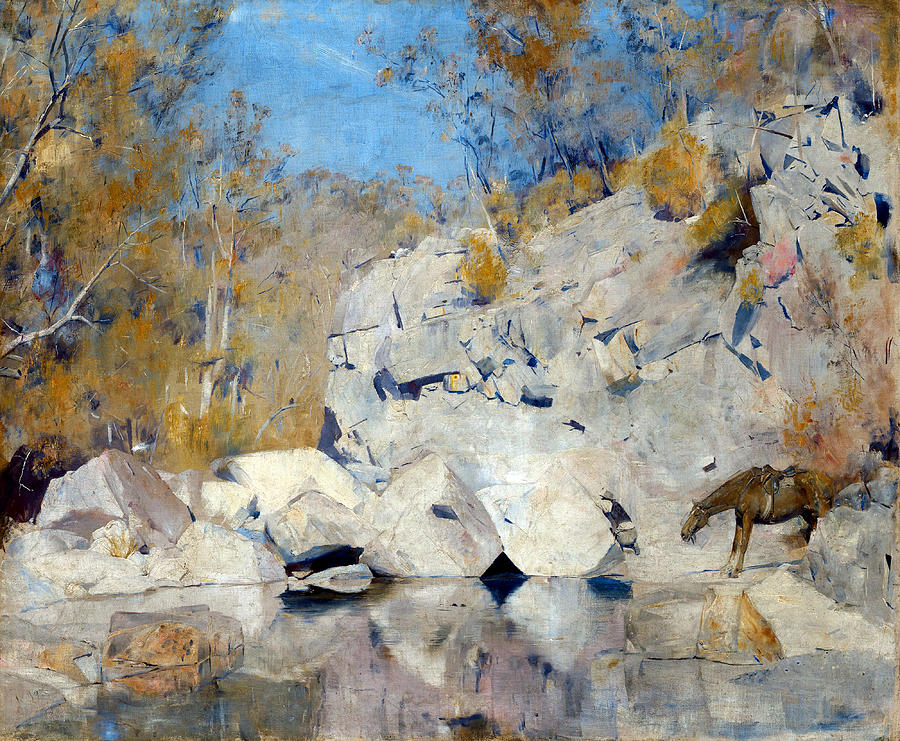
Tom Roberts, In a Corner on the Macintyre, 1895

Space

The host of this blog doesn’t give a shit about space [Ed. – correct], because he is Wrong [Ed. – possibly correct], but I’m going to talk about it a bit here anyway because Dorian made the mistake of giving me the microphone [Ed. – absolutely incorrect; no mistake was made]. Continuing the astro-poetry theme we have Ken Hunt’s The Lost Cosmonauts, a collection about the accidents and deaths of the Space Race, much of it constructed from the texts of official reports and radio transcripts. Then there’s Omon Ra by Victor Pelevin, a bleak black comedy about the Soviet space program.

Pushing further into the future was the story collection Terminal Boredom by Izumi Suzuki (multiple translators), a downbeat set of 1970s/1980s Japanese countercultural tales of sexual and pharmaceutical weirdness. Further still takes us to Olga Ravn’s The Employees, translated from Danish by Martin Aitken, a genuine little masterpiece of a “workplace novel” set on a Generation Starship.

Finally, the biggest thing I read in 2021 was XX by Rian Hughes, a 1000-page monster about first contact and artificial intelligence. It’s a beautifully designed book in which the spirit of the 19th Century talks in multi-typeface pamphlets and that of the 20th in Futurist broadsides, which includes an entire pulp SF novella serialised in magazines that never existed, and which is the first book I have ever seen with a reversible dustjacket designed to make it look like a shelf of the fictional publications contained within the text [Ed. — !].

World War Two

Dutch genius Willem Frederik Hermans is having something of a revival, and A Guardian Angel Recalls (translated by David Colmer) is a great book new to English: a public prosecutor, weak and lovelorn, races around Holland as the Nazis invade, wreaking inadvertent havoc as he tries to save himself, protected and frustrated in equal measure by his similarly flawed guardian angel.

The Passenger by Ulrich Alexander Boschwitz (translated from German by Philip Boehm) is from 1938: perhaps too late to be called prescient, but even years later people were denying its truths. Otto Silbermann is a Jewish German who fought for his country in World War One, too slow to realise that what is happening to other Jews will happen to him too. Finally he has to go on the run, trying to find a way to escape across the border to safety.

Marga Minco’s The Glass Bridge (translated by Stacey Knecht) is another Dutch novel, a tangential look at the Holocaust in fragments from the life of Stella, a Jewish artist hiding out under a dead woman’s name, moving from safe house to safe house, fending off the advances of a sexually predatory ‘protector’.

David Piper’s Trial by Battle (originally published in 1959 as by Peter Towry) is a deeply anti-triumphalist novel about Britain in Asia during World War Two, outclassed and outfought, living on a faltering diet of nationalistic smugness. Frances Faviell’s A Chelsea Concerto is a fascinating memoir of the first few months of the Blitz in London. Finally, Donald Henderson’s 1943 novel Mister Bowling Buys a Newspaper, despite its religiose ending, is a fine black comedy about a polite serial killer for people who have read all of Patrick Hamilton and now have a sad void in their lives.

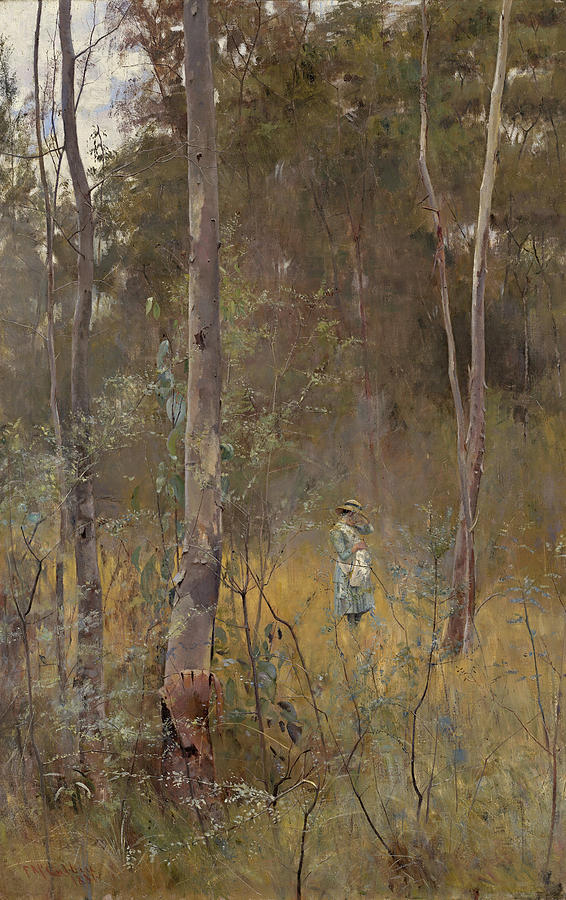
Frederick McCubbin, Lost, 1907

Random Others

Marian Engel’s Bear has no greater champion than the management of this blog, so I shall say nothing other than that Dorian is absolutely right about it in every way, despite the ludicrousness of the premise. [Ed. – THANK YOU! Another satisfied customer! You can watch James admit this truth to me here.] Another weirdly charged masterpiece is Denton Welch’s In Youth is Pleasure, a strange and astonishing novel about a boy helpless in the grip of his aesthetic and sensual needs.

I don’t even like boxing, yet Michael Winkler’s Grimmish is the second boxing novel on this list: a wonderful and weird book about masculinity and physical pain, full of great jokes which I have stolen: There are two types of people: those who can extrapolate from incomplete data. [Ed. – But that’s only one… ohhh…] Checkout 19 by Claire-Louise Bennett, which is sort of about the disparity between literature and life but also about everything else, is a genuine marvel. Minae Mizumura’s An I-Novel (translated by Juliet Winters Carpenter) is the story of two Japanese sisters transplanted to New York, a deep and rich and perceptive work enriched by numerous photographs. It’s not quite the equal of her A True Novel, but then what is?

Jeffrey Smart, Cahill Expressway, 1962

[DISTANT, MUFFLED NOISE]

The Surprise Party Complex by Ramona Stewart, criminally out of print for decades, is a beautiful and hilarious bit of work about a group of neglected and eccentric teenagers at a loose end in Hollywood. The deeply weird Mount Analogue: A Novel of Symbolically Authentic Non-Euclidean Adventures in Mountain Climbing by René Daumal (translated by Roger Shattuck) was never finished, but what we do have is a surrealist masterpiece. Flesh by Brigid Brophy is a near-as-damnit perfect novel about appetites, both sexual and gastronomic. And everybody who enjoys the atmosphere of a good grotty 1950s London boarding house needs to read Babel Itself by Sam Youd (better known as science-fiction writer John Christopher), another unjustly forgotten bit of comic brilliance about a group of lodgers running spiritualist experiments, having affairs and betraying each other.

[SOUND OF SECURITY FORCES BANGING ON DOOR, YELLS OF ‘YOUR TIME IS UP!’]

Then there’s the Patricia Lockwood’s No One is Talking About This, which really is as good as everyone says, and Jim Shepard’s Phase Six, an unfortunately timed global pandemic novel that’s also a splendidly moving look at female friendship, and Hilma Wolitzer’s career-summary story collection Today a Woman Went Mad in the Supermarket, and…

[DOOR BREAKS DOWN]

..and Nathalie Sarraute’s Tropisms, which I finally read years after everybody else, and Giorgio Bassani’s The Heron, the only book of his I’d never read, and…

[MUFFLED SHOUTING, SOUNDS OF SOMEONE BEING DRAGGED AWAY]