Hope Coulter’s Year in Reading, 2023

Excited to once again present reading reviews from some of my favourite readers. Today’s installment, her fourth, is by Hope Coulter, (@hopester99), whom I’m lucky to call a colleague. A fiction writer and poet, Hope directs the Hendrix-Murphy Foundation at Hendrix College.

Eveelyn Hofer, Girl with Bicycle, Dublin, 1966

2023 may have been my Year of the Binge. A quarter of the books I read were by a single author, Michael Connelly, as I continued a 2022 obsession and chowed through the rest of his Harry Bosch and Lincoln Lawyer series. Now I’m left with the dregs of the feast and plenty of questions. Has Bosch retired for good? Is cancer going to polish him off? And how am I going to get by without a steady intake of seedy murder scenes, sandwich shop tips, and Bosch’s saturnine musings floating over the lights of L.A. from his cantilevered deck? Sigh. No regrets for this gluttonous spree; I only wish I could find another such homicide cop to devour.

Speaking of, Robert Galbraith’s majorly enjoyable detective novels continued strong for me last year. I read The Ink-Black Heart via audiobook, parceling it to myself morsel by morsel so as not to rip through it too fast. Much of the novel unfolds through tweets, which are hard to follow either by ear or on the page, so that one wasn’t my favorite, but the series is overall terrific. If Strike and Robin settle into domestic tranquility and draw the curtain of privacy over their agency door (please no spoilers; I’m still finishing up Book Seven), I’ll be in a bad way indeed. [Ed. – I loved the first few of these books, but I must confess I had to give up on them, the author’s politics having so soured me…]

I went on a lesser bender with John Boyne, starting with The Heart’s Invisible Furies, which I happened to read while traveling in Dublin and southwest Ireland—moving through some of the very settings of the novel in a pleasurable kind of Binx Bolling-esque rotation. That sent me to a handful of other Boyne books. All the Broken Places, The House of Special Purpose, and The Absolutist were highlights, though none of them surpassed the dark, funny, moving experience of Furies.

Completing previous years’ jags, I knew I had to get hold of Paulette Jiles’s latest, Chenneville, reviewed here by Dorian late last year. All Jiles’s books have won me over. This one wrapped up too fast for my taste, but like her other works, it flares a light onto regional history with convincing detail and taut storytelling. [Ed. – Agree, especially re: the ending.]

Eh, maybe here my conceit ends. Although I regularly teach Zadie Smith’s “The Embassy of Cambodia” and have read several of her novels, I can’t really call that a tear. Even so, I was intrigued to hear that Smith had turned to historical fiction and couldn’t wait to check out The Fraud, which is based on a 19th-century trial, little known now but sensational in its time. The book gripped me in unexpected ways. Every character was so believable, so not-a-type, so idiosyncratically shaped by their history and personality—supremely so in the case of the main character, Eliza Touchet. Mrs Touchet’s epiphanies in the course of the novel involve -isms of race, class, and sex that quietly echo our own era. At the same time her keen intelligence, her self-understanding, her fierceness and restraint, and her willingness to examine the tangles within her own heart are quintessentially Victorian.

As I read I found myself marking passages the way I do in my old copy of Middlemarch, quotes with a similar sage quality. (Even though Dickens and Thackeray feature as characters in the book, the sensibility that saturates it is really Eliot’s.) Here Eliza considers her long, complicated relationship with her cousin: “Theirs was a fellowship in time, and this, in the view of Mrs Touchet, was among the closest relations possible in this fallen world. Bookended by two infinities of nothing, she and William had shared almost identical expanses of being. They had known each other such a long time. She still saw his young face. He still saw hers, thank God.” And here she ponders how women often can’t see their own beauty for what it is at the time, not appreciating their appearance until looking back on a younger stage after a lapse of years: “But it is the perverse business of mirrors never to inform women of their beauty in the present moment, preferring instead to operate on a system of cruel delay.” Introspective moments like these, combined with the unspooling action of the trial plot, place this book at the top of the literary heap for my year’s reading.

Other newish novels that I loved last year were Donal Ryan’s The Queen of Dirt Island—a multigenerational saga of tough Irish women, inspired by the kitchen storytelling of his mother and grandmother—and Gabrielle Zevin’s Tomorrow, and Tomorrow, and Tomorrow, about a love triangle that arises and devolves in unpredictable ways. I also enjoyed Jeanine Cummins’s American Dirt. I had steered clear after hearing critics call it appropriative, but when a friend told me it held up well for her I gave it a try. I found the story compelling and plausible. Cummins addresses the criticism directly in her afterword, and I’m persuaded by her account of the writing and her authentic connection to the material.

I also read, and loved, Viet Tranh Nguyen’s short story collection The Refugees, tales of Vietnamese migrants resettled in southern California: this is art on a level with Lahiri’s Interpreter of Maladies and Unaccustomed Earth. And I returned to some old favorites that thankfully not only proved to hold up over time but blew me away all over again: Gabriel García Marquez’s Love in the Time of Cholera; Willa Cather’s O Pioneers and A Lost Lady; Evan S. Connell’s Mrs. Bridge (which Donal Ryan mentioned as inspiration for the super-short chapters in The Queen of Dirt Island), and Robert Crichton’s The Secret of Santa Vittoria.

Then the nonfiction. Oh, the nonfiction. Fiction is great when it’s great, but it disappoints so often and in so many different ways—by trying too hard, being too earnest, too arch or too tough-guy, or showing something nobody would say or do (on the human level I mean, not that it’s surreal or fantastic), or just plain old getting on my nerves. For some reason nonfiction is less prey to these faults. More and more I find myself turning to nonfiction for that “ah” of relief when I can settle into a writer’s style and voice and relax into the story at hand, losing the awareness that I’m reading. Last year I took in some wonderful memoirs. There was Javier Zamora’s Solito, about his experiences as a nine-year-old traveling solo from El Salvador to the United States (it’s like the nonfiction version of American Dirt). There was Monica Potts’s The Forgotten Girls: A Memoir of Friendship and Lost Promise in Rural America, which looks at the deterioration of American small towns based on her growing-up in Clinton, Arkansas, not many miles from where I teach. [Ed. – Definitely on my list. Heard her read at the Lit Fest last year and I still remember the opening scene.] Tracing the divergent life stories of herself, her sister, and her close friend, Potts narrates a tale of narrowing prospects for many young women in this climate. There was Jane Ferguson’s No Ordinary Assignment, chronicling her life as a reporter in the war zones of the Middle East (no forgotten girl she, determined as she was to get out of Dodge after an emotionally deprived childhood in northern Ireland).

I’m chagrined that I had never read the slender Narrative of the Life of Frederick Douglass, an American Slave until this year. As many have said, it’s profound: unforgettable not only for its first-person testimony to the horrors of the slave system in its heyday but also the candor, economy, and precision of the writing. Acquiring even baseline literacy was a miracle in that context—and an interesting story within the story—but Douglass’s literary prowess vaults so far beyond that initial limit, and is so supremely suited to relaying his experiences, that it’s humbling to take in his words. 

A mid-year bookshelf cleanout led me to another, far different memoir that I’d somehow missed before, J.R. Moehringer’s The Tender Bar, about the New Jersey barflies who were his surrogate family growing up (and including one of the funniest sexual initiation scenes I’ve ever read). My enjoyment of that book sent me back to current times and a brand-new book that Moehringer ghost-wrote: Prince Harry’s memoir Spare. Come for the royals’ dirty laundry; stay for the Shakespeare allusions that, alas, are probably attributable to Moehringer rather than Harry.

In the realm of general nonfiction, meaning not memoir, there were three standouts this year, two by 30-something Irish writers whom I heard in person at the West Cork Literary Festival last summer (thank you, Hendrix College and the Hendrix-Murphy Foundation). In My Fourth Time, We Drowned: Seeking Refuge on the World’s Deadliest Migration Route, the Irish journalist Sally Hayden details the grim migration sagas happening in the seas north of Libya and makes a case for the EU’s complicity in perpetuating devastating outcomes. Cal Flyn turns to a different crisis, that of environmental havoc and habitat destruction, in Islands of Abandonment: Nature Rebounding in a Post-Human World. The book examines many sites around the globe that toxic damage of various kinds has rendered uninhabitable—or at least not prey to further human disturbance—and where, curiously, plant and animal forms are rapidly speciating. It’s probably too much to call the book hopeful; as Flyn says, it’s not like she’s advocating for toxic damage in order to foster speciation. Still, I can’t think of another environmental book in recent years that has left me with a flicker of optimism. [Ed. – Agreed!]

Edward Burtynsky, Sawmills #1, Lagos, Nigeria, 2016

Poets and poetry fans who have borne with me this far may be wondering, what about verse? I tend to read poetry less systematically and don’t track it as I do prose. With that said, a number of poetry books meant a lot to me as I spent time with them this year, including works by Garrett Hongo, Sharon Olds, Katie Farris, Ilya Kaminsky, A. Van Jordan, Phillip Howerton, and Ada Limón. Dorian’s comments on Wisława Szymborska here, as well as his fellow podcasters’ insights, sent me back to her work with pleasure. Individual poems sometimes linger with me for days.

My final read of 2023 was Claire Dederer’s Monsters: A Fan’s Dilemma. In it she takes up the question of what we as readers, moviegoers, concertgoers, and art audiences do with the knowledge that makers of works we love have committed terrible deeds. Starting with Roman Polanski, she touches on artist wrongdoers of many times and places, along the way considering art theory, cancel culture, liberalism, men, childcare, consumerism, celebrity and fandom, asshole-osity, motherhood, beauty, effort, and love. [Ed. – the asshole-osity is really going around these days.] She inventories her own aesthetic and emotional responses and reckons with the old biography-versus-art-alone conundrum. Dederer does not land in a simple place or tie this all up neatly. As much as her conclusion, I like her forthrightness, the searching quality of her mind, her unwillingness to rest with skewed or kneejerk reactions. Worthy of Eliza Touchet, you might say.

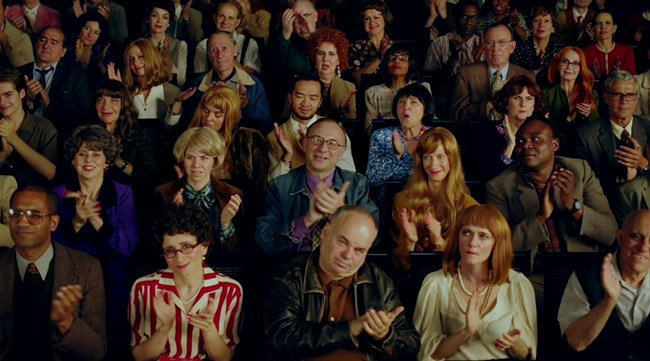
Alex Prager, Applause, 2016

Thank you for reading this—I welcome your opinions on any of these books and writers!—and to Dorian for inviting me to share. This virtual alp of books is something I enjoy throughout the year. [Ed. – Thnk you, Hope: always a pleasure to have you here.]

Hope Coulter’s Year in Reading, 2022

Today’s reflection on a year in reading, her third, is by Hope Coulter(@hopester99), whom I’m lucky to call a colleague. A fiction writer and poet, Hope directs the Hendrix-Murphy Foundation at Hendrix College.

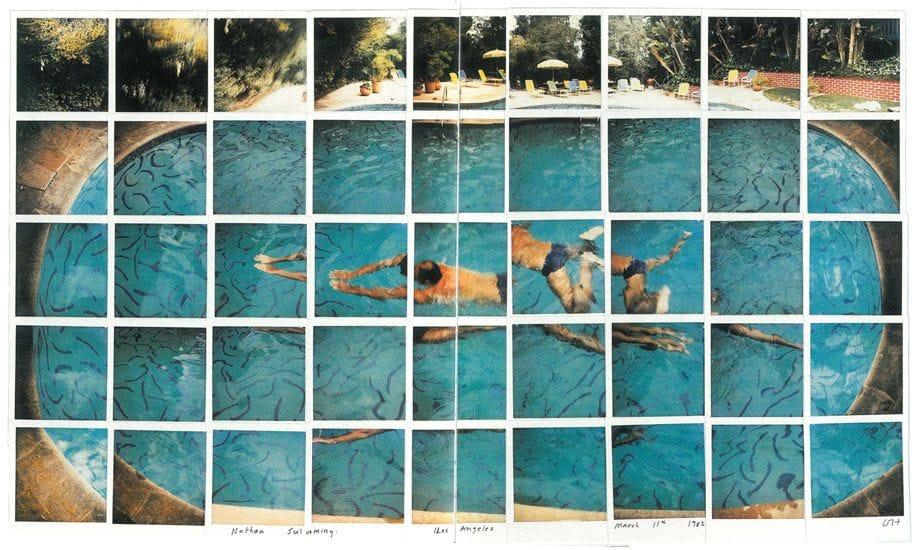
David Hockney, Nathan Swimming Los Angeles, 1982

2022 turned out to be a good reading year. I got a wider shot at e-book availability by joining a second public library in the adjacent city. [Ed. – “city.”] Then, by pecking through recommendation lists and hopping from screen to screen, I was able to keep my library hold shelves reassuringly filled—staving off that dire malady known as Running Out of Something Good To Read. [Ed. – Extremely bad. Jenny Davidson writes about some psychological studies done on this phenomenon in Reading Style.] Along the way I ran across some new obsessions.

Starting with nonfiction, I enjoyed and was moved by Suleika Jaouad’s Between Two Kingdoms: A Memoir of a Life Interrupted. It’s a cancer narrative that stands out on account of Jaouad’s youth, frankness, and writing chops, as well as the fact that the second half becomes a road-trip book. Jaouad discovered her cancer right after graduating from Princeton. In the flash of an eye the promising, carefree prospect of her twenties became a hellish ordeal. She’s still fighting cancer, and I wish her all the best for recovery. This book is a gift.

Thinking of memoirs by feisty young women, Crying in H-Mart, by Michelle Zauner got a lot of attention this year. For me it was an okay read, but not as memorable as Jaouad’s book. On the other hand, I recommend Lynne Cox’s Swimming to Antarctica: Tales of a Long-Distance Swimmer not for any particular magic in the telling but for the extraordinary nature of Cox herself—her athletic prowess, her ability to connect with people around the world, the cheerful way she greets challenges of all kinds.

Another thoroughly satisfying memoir was Marcus Samuelsson’s Yes, Chef, ghostwritten by Veronica Chambers. Samuelsson is the Ethiopian-born, Swedish-raised culinary phenom who co-founded the Red Rooster restaurant in Harlem. His account of his Scandinavian upbringing; his rise through some of the most demanding restaurant kitchens in Europe, under despotic chefs; and his lifelong love affair with food and culture make this a book to relish on many levels. [Ed. – I see what you did there!]

George Saunders’s A Swim in the Pond in the Rain: In Which Four Russians Give a Master Class on Writing, Reading, and Life is a terrific read for anyone who wants to dive deep into the craft minutiae of great short fiction. What questions does a story ask, and how do they pull us along? Is it what’s left in or what’s left out that makes a masterpiece? Of the analyses Saunders offers, his take on three of Chekhov’s stories were my favorite. On the other hand, if you’re not minutely interested in the technical and creative decisions behind a narrative—the tied-off loops on the back of the tapestry—you might as well just read the stories themelves.

Last but not least in nonfiction, fans of Skyfaring: A Journey with a Pilot by Mark Vanhoenacker, won’t want to miss his latest, Imagine a City: A Pilot’s Journey across an Urban World. Imagine a City includes lots of the lyrical, novel description that makes Skyfaring wonderful, this time swirled into memoir and a flâneur’s takes on cities around the world. By the nature of his work as a long-distance commercial pilot, Vanhoenacker often finds himself with two days to spend near any metropolitan destination that he flies. He bides the mandatory rests in exploration and writing. This book not only features slices of such urban-scapes, but recurring takes on the author’s growing-up in Pittsfield, Massachusetts: the town, his family, his coming-out, and the globe-spinning reveries that led to his vocation.

Now to fiction. One novel that blew me away this year was Julie Otsuka’s The Swimmers. As someone who loves pools and water I was initially attracted to the title and cover (I know, I know, like buying wine for the label; I confess). [Ed. – I strongly support buying books for their covers.] Then when I started to read, I fell hard for the voice. Exactly who is speaking with such quiet authority, unspooling list after list about the lap swimmers with such close, cool knowledge? A crack appears in the bottom of their pool, and it’s like Jane Alison’s Nine Island meets Tim O’Brien’s The Things They Carried… The novel suddenly widens into a more familiar and pain-steeped story that I won’t spoil; sprint [Ed. – missed metaphor opportunity!] to your nearest book source and see for yourself.

My enthusiasm for The Swimmers sent me to Otsuka’s earlier novels, When the Emperor Was Divine and Buddha in the Attic, which in different ways chronicle the experiences of Japanese American immigrants. They’re well worth the read, though to me not consummate in their artistry like The Swimmers.

Way different stylistically from The Swimmers was a book at least as magnificent: Anna Burns’s Milkman, the densest and strangest novel I read last year. A student in my Irish short stories tutorial recommended it, and I’m so glad she did: this book made me understand as never before what it was like to live in the middle of the Troubles, no, to live the Troubles, to contain their gaslighting and violence in one’s marrow. The narrator has one of those unforgettable voices—drenched in idiom, funny, idiosyncratic—that at first seems impossible to understand. There are few paragraph changes, and few characters are called by actual names. All these might put you off, might seem like obstructions to grasping the story… and yet. Somehow it galvanizes a world as you read, a world that tumbles around you and into you, changing you.

Another surprise and pleasure was Mrs. Palfrey at the Claremont, by Elizabeth Taylor, first published in 1971.It opens on a rainy Sunday in January (is there anything more depressing?) in a London lodging hotel just affordable and respectable enough for old folks not yet decrepit or destitute. You might judge this an unpromising start—till you find yourself immersed, riveted by Mrs. Palfrey and her fortunes: the aches, yearnings, miscues, and irritations of ordinary human life, rendered with nothing less than mastery.

Also of seventies vintage was Marian Engel’s Bear (1976), which Dorian has touted for years. I loved it: the boreal setting, the understated tone, a fusion of real with surreal that’s so seamless I question “surreal” even as I type it. The book is alluring and disconcerting at once—shoving me into uncomfortable encounters with my own relationships to sex, animals, and self—and resists interpretation at every turn. In fact, it’s highly entertaining to browse through reader takes on this book anywhere from Amazon to scholarly platforms. What is this thing: feminist text, postcolonial critique, an ursine-Canadian Lady Chatterley’s Lover, or a portrait of a “phallic mother”? Don’t miss Dorian’s delightful conversation with Shawn and James on Shawn the Book Maniac, which includes a clip from an interview with Engel herself. Mind you, as the interviewer admonishes, “This is no kinky, porno Pooh-Bear!” so prepare yourself for . . . something else thereof. [Ed. – Music to my ears, natch. But really 70s books are the best books…]

Thanks again to Dorian I reread Lonesome Dove, by Larry McMurtry, and was relieved to find that it still has its magic: it had been so long (or my memory so bad) that the plot twists surprised me all over again. This big novel is good for what ails you, a bracing tonic, just like the big skies and open roads out West. [Ed. – So glad it held up! Every time I see it on my shelf I brighten up a little.]

Jonathan Evison’s Lawn Boy is about Mike Muñoz, a southern California guy who can’t seem to catch the brass ring. His voice is canny, believable, often funny, and a little hoarse with pain, and there’s never a false note or a missed beat narrating his adventures through emotional and economic labyrinths. This is a fresh take on the American dream, as broken down for disillusioned 21st century folks, and it deserves to endure. Highly recommend.

Mercy Street by Jennifer Haigh is a gritty novel that revolves around a Boston abortion clinic where the protagonist works and various other characters who intersect there. I read it before the mid-year overturn of Roe, but it’s at least as relevant now: it remains on my mind for its multidimensional treatment of people on different sides of the abortion issue. Creepy, scary, and all too credible, in the case of a couple of anti-abortionist characters; but as I said, granting a multidimensionality that at least seeks to understand the sources of the venom that animates them. As Mohsin Hamid says, one thing literature does is “recomplicate what has been oversimplified,” and a novelist’s nuance is too often missing from the violent discord around this issue.

Elizabeth Strout’s Lucy by the Sea brings her Oh William! characters forward through the first year of the coronavirus pandemic—moving those inveterate New Yorkers up to Maine. Anyone who has liked Strout’s earlier novels won’t be disappointed.

Speaking of disappointments, even though Emily St. John Mandel’s Sea of Tranquillity made a lot of people’s best-of lists last year, for me it was pretty forgettable—way less gripping than Station Eleven, the post-pandemic novel she wrote a few years before Covid struck. I was likewise underwhelmed by The Flight of Gemma Hardy, Margot Livesy’s attempt at a modern retelling of Jane Eyre. I did finish it, but it annoyingly lacked a couple of key plot underpinnings as well as some of the major elements that make Bronte’s novel so great.

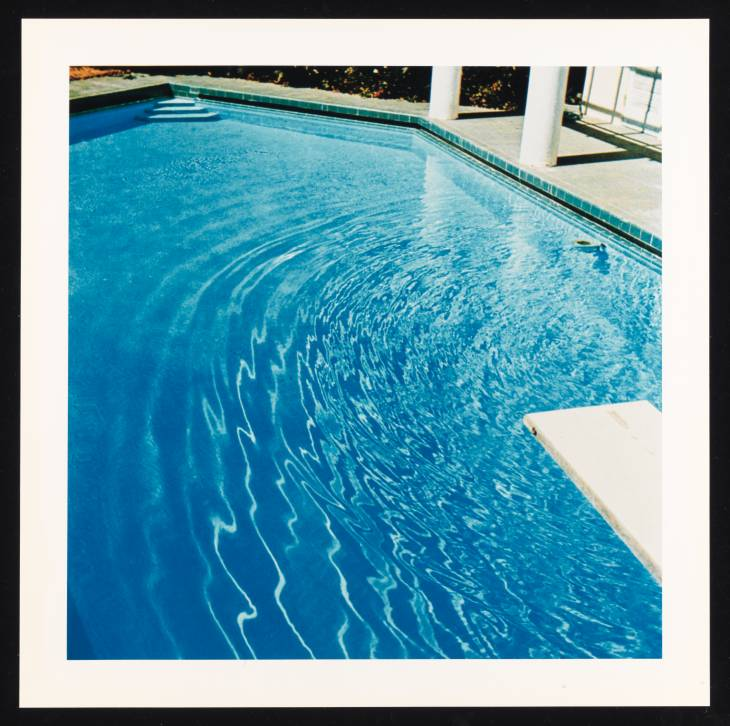
Edward Ruscha, Pool # 9, 1968

Last, and monumentally, I come to a series that dominated the last half of my reading year—and which I’m still devouring as we move into 2023: Michael Connelly’s Harry Bosch novels, which chronicle the LAPD detective’s cases across more than twenty years in L.A. Formerly a reporter, including a last stint on the crime beat at the Los Angeles Times, Connelly is steeped in knowledge of the criminal legal system, LAPD culture, and police-reporter relations—not to mention southern California history and culture in general. So the books take place against a backdrop studded not only with physical landmarks but landmark events, O.J. to Rodney King to Robert Blake to COVID. Oh, and there’s also the iconic food of the greater L.A. area—specific BLTs and tacos and martinis that may have you keeping notes for the next time you make it out to the Golden State with an appetite.

In Heironymous (yes, named after the painter by his mother) Bosch, Connelly has created a laconic, jazz-listening, relationship-tending-to-screw-up hero in the best noir tradition: a SoCal Don Quixote perpetually battling the forces of darkness on his quest to put the bad guys (and women) behind bars. Fortunately, uh, but only for us as readers I mean, in the sweep of the sprawling metropolis there’s no shortage of evil out there for him to take on—from its crumbling bungalows to its gated MCM mansions, from seaside to outlying deserts, and sometimes within the halls of justice and press rooms and inter-warring police precinct headquarters themselves. The writing is spot-on: tough, perfectly paced, with lots of plot and action, of course, and salted just right with description and character. I’ve consumed these books the way I used to read beloved series as a kid, binge-reading with abandon, and now I see with dread that I’m closing in on the end of even the prolific Connelly’s output. [Ed. – Ah, that feeling! It’s really a thing, isn’t it?] He’s written several spinoff books involving sometime partners of Bosch, and a shorter series about a criminal defense lawyer who works from the back seat of his Lincoln, and those are good as well—but alas, they too are finite.

For what it’s worth, I read the series completely out of order, and it wasn’t a problem. When I did make my way back to the first couple of Bosch books, I found them a little stilted and trying too hard on the tough-guy front, in contrast to the grace and understatement of the later ones. In a way, though, the fact that the writing wasn’t impeccable was heartening: it showed that not even Connelly came to fiction-writing already with his skill set complete, but built his command over time. [Ed. — Glad to hear this, because I was underwhelmed by the first when I read it many years ago. Maybe I’ll grab one from later in the series.]

No, I haven’t watched the TV version of the Bosch books, and I doubt that I will; my mind’s-eye picture of the characters is too strong for me to want to sully it with a screen version, even though the author did consult on set. But next time I’m in L.A. I do plan to drive Mulholland Drive, and I’ll be looking for #7203, the modest cantilevered house with the deck on the back, where Bosch gazes down on the lights of the city in pensive moments. I have more to say on this topic, but excuse me, I’d rather go read now. We’re about to find out where the bodies are buried.