What I Read, December 2025

I came down from the high of my first months as a former professor. Not because I longed for my old job (though I do miss being around students and in the classroom), but because I had to face the uncertainty of how to keep body and soul together going forward. I kept hustling, buckled down to my various gigs, including, this month, a number of hours at a local bookstore. It felt so good to be back in that environment again. That excitement buoyed me as the days grew short; psychologically, I kept my head above water, which has not always been the case in Decembers past. And I read a few books, some of them excellent.
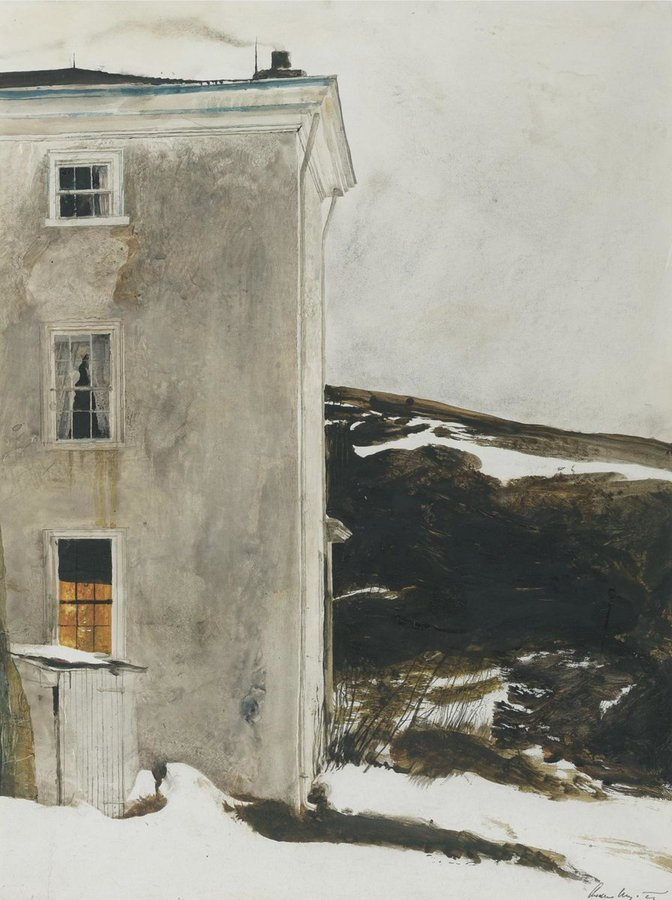
Andrew Wyeth, Dusk (1978)

Sarah Campion, Makeshift (1940)

Now this is interesting. A novel from the early part of WWII set in desperate early Weimar Germany; racially-divided South Africa; and puritan New Zealand, about a German Jewish woman who escapes the Nazis in body but not in mind, written by a non-Jewish British writer. Campion (the pen name of Mary Rose Alpers; no relation, as I briefly hoped, to Jane Campion) spent most of the 1930s teaching English in Berlin, where many of her students were Jews. She was forced out of the country in 1937 when she refused to identify those students—part of a long life of progressive political activism, including later protesting the Vietnam War.

Charlotte Herz, her protagonist—smart, funny, neurotic, judgmental, flinty when she needs to be—is not an easy character to like. (The novel is bracingly uninterested in this idea.) Charlotte does some things—one thing in particular—that are pretty terrible, but also maybe the things that needed to be done to survive. She casts aspersions on most of the people she meets. She is an ungrateful exile. These facts, combined with the disconnect between author and character, have led some to dismiss the book as appropriative. One such reader is Sarah Shieff, who wrote the afterword to this new reissue. I have to say, as a Jew, I don’t find this to be the case. In fact, I have beef with Shieff, who misreads the book badly, in my opinion, showing herself to be unable to distinguish Herz’s voicing of antisemitic views from her belief in them. And having read a lot about German Jews in the 1920s and 30s I found Makeshift thoroughly compelling and plausible, including its first-person voice. That said, the writer Campion most reminds me of is also non-Jewish, another woman who had a lot to say about the treatment of minorities in the British Empire: Doris Lessing. Campion shares Lessing’s frankness about female sexual desire and how psychologically damaging it was to express in a period when male domination was even more overt than today.

Brad Bigelow, of the Neglected Books account on Bluesky, rescued Makeshift from near-total oblivion (I think there were only a handful of copies left in the world when he found it), and has published it in his invaluable Recovered Books series. I’m grateful to him for sending me a copy. May it not sink without a trace this time around.

Rosalyn Drexler, To Smithereens (1972)

“I shout, ‘I’d do anything for you, you Glamazon!’ And she says, ‘Anything? Well then, suck my pussy.’ And I’d have to do it, because she’s the champ, the winner, the goddess, the diva who makes me dive.”

Do you want to read this 1970s novel about women wrestlers and the men who love them, written by the painter, sculptor, playwright, novelist, nightclub singer, and yes, wrestler Rosalyn Drexler, gloriously resurrected by the new reprint press Hagfish Books? Hell yeah you do!

Daniel Elkind, Dr Chizhevsky’s Chandelier: The Decline of the USSR and other Heresies of the Twentieth Century (2025)

My friend James, owner of the mighty Leviathan Books here in St Louis, lent me his copy of this Sebaldesque mediation on some of, in the author’s words, “the undesirables” of 20th century history. It’s a short book, sometimes funny, always engrossing. Yet ultimately a little thin. Maybe I read it too quickly, but sitting here now, just a few weeks later, I can’t remember what Elkind concludes about his cast of characters. The strongest parts of the book are the autobiographical sections on his coming of age as a newly arrived immigrant to the US after the collapse of the Soviet Union and, especially, his memories of his parents and grandparents. Like so many in his generation who grew up in the aftermath of the disappearance of a seemingly unshakable social, political, and cultural world—will this be my daughter???—Elkind has a keen sense for history’s inescapable contingency. There are always so many paths not taken.

Alexander Chizhevsky, by the way, was born in what is now Poland in the Russian Empire and died in the USSR. A biophysicist, he founded a discipline he called “heliobiology,” the study of the effect of the sun’s cycles on plant life and human activity alike. For example, he linked the ebb and flow of battle that he experienced on the Eastern Front in WWI to solar flares. Much later, in 1940, Stalin got wind of this theory (never a good thing) and demanded Chizhevsky recant (it being inimical to Marxist-Leninist theories of history). When Chizhevksy refused, he was sent to the gulag and, after eight terrible years, to a “rehabilitation” program in Kazakhstan. His “chandelier” is an ionizer—a tool still in use, even though no one can agree whether it promotes health.

Undesirables, it seems, stick around in unexpected ways—especially when they have someone like Elkind to memorialize them.

Joan Silber, Secrets of Happiness (2021)

Came home from the library; sat down to read the first page or two, as one does; next looked up to find that an hour had passed; realized I would have to set other reading aside until I finished, which I did the next morning. Like most of Silber’s recent work, Secrets of Happiness uses ring structure: each chapter follows a character referenced, however fleetingly, in the previous. It begins with a middle-aged woman who learns that her husband has children with a woman he met on his travels in Asia and that he’s helped bring them all to the US. She kicks him out, files for divorce, travels overseas, sends cryptic messages to her grown children, who reluctantly meet their half-siblings. Lots of drama, but no melodrama. Laurie Colwin vibes. I liked this a lot.

Martin Lemelman, Mendel’s Daughter: A Memoir (2006)

Illustration of the author’s mother’s experiences during the Nazi occupation of eastern Poland (today Ukraine), compiled from a video testimony he had her make when she suffered a broken foot in the late 1980s and needed to be occupied. It’s hard to compete with Art Spiegelman’s MAUS, and Lemelman doesn’t try. He keeps his interactions with his mother to a minimum, and draws in a beautiful, almost gentle pen and ink style that is decidedly not cartoonish or abstract. Despite these differences, Mendel’s Daughter had to have been overshadowed by the earlier book, since I hadn’t heard of it until recently, and I’ve read a lot of Holocaust graphic novels. That is a shame, because it’s absolutely worth reading. The story of how Gusta Lemelman (née Schaechter) survived the war is, as so often in such stories, remarkable, harrowing, miraculous. Together with three of her siblings, Gusta hid in “graves,” deep pits dug into the forests near their hometown of Germakivka. Of great interest is her description of prewar life, especially the mingling of Jews and non-Jews, and how this diversity both fell apart but also persisted during the Nazi occupation, as some of the locals were instrumental in keeping Gusta and her siblings alive during their time in hiding.

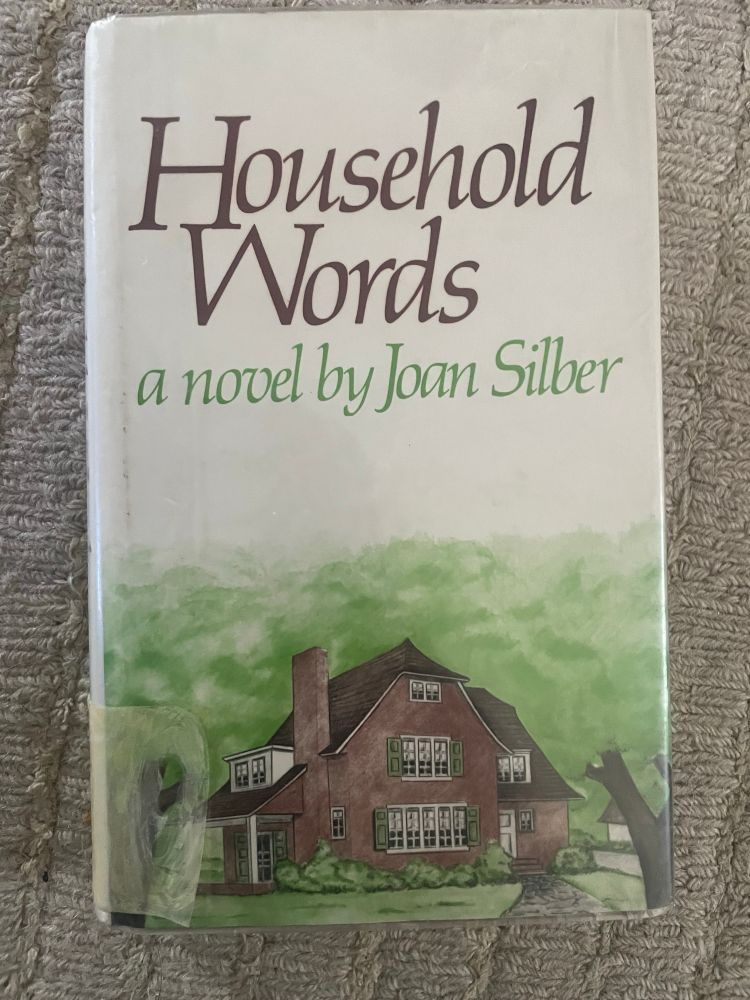
Joan Silber, Household Words (1980)

Wrote about this here. A blend of Vivian Gornick and Elaine Kraf. Satisfying and interesting. I want to write about Silber at length. (Like, for money and with the help of an editor.) Anyone interested? Where should I pitch?

Ulrich Alexander Boschwitz, Berlin Shuffle (1937/2019) Trans. Philip Boehm (2025)

If you haven’t read Boschwitz’s Passenger, start there. If you have, then you’ll also enjoy this, his first novel. I had more to say about it here. Tl; dr: solid end-of-Weimar novel, if at times unsure quite what it wants to do. Considering the conditions under which it was written, an accomplishment.

Mason Coile, Exiles (2025)

A locked-room mystery set on Mars, Exiles has the pacing of a thriller and the uncanniness of a horror novel alongside the fascination with otherness that characterizes sff. The first three humans to make it to Mars arrive to find their mission compromised from the start. The bots who have been sent ahead to build a research station have taken human names, genders, and personalities. Plus, they changed the door entry codes. Oh, and one of them is missing, and might have destroyed the station’s lab. Unless someone—or something—creepier did it… Coile’s absorbing novella proves that humans might be able to leave Earth, but they can never escape themselves.

Nicola Griffith, Stay (2002)

Earlier last year, I read The Blue Place (1998), the first of Griffith’s Aud Torvingen crime trilogy, recently reissued in attractive new editions. Aud (rhymes with “crowd”) was born in Norway, grew up at various embassy posts with her ice queen diplomat mother, and now lives in Atlanta. She was a cop for a while, but now she’s independently wealthy (seems good, why don’t more people do this?) and a sometime PI. Lee Child himself said that if Reacher had a sister, she’d by Aud. She is indeed utterly competent, both in creating (she renovates houses, builds furniture, cooks like a pro) and destroying (she beats up a lot of bad guys and enjoys it).

The Blue Place is terrific, despite its heartbreaking ending. Stay finds Aud licking her wounds in the mountains of North Carolina, able to get out of her head only because an old friend begs her to find his missing girlfriend. Aud reluctantly heads to New York, on what she assumes will be a day-long mission. And she does in fact find the girlfriend. But turns out there’s more at stake, which leads Aud on a chase that ends, much to my surprise, in Arkansas. The scenes there are pretty well handled. (I doubt Griffith has spent much time there.) Stay is baggier than its predecessor, and a final plot development suggests a new turn for the third and final book, the library copy of which is sitting on the desk beside me. As best I can tell, disability will factor in that book (Griffith has MS and is a prominent disability rights activist). I didn’t even mention that Aud is queer, a fact central to the series. Today she would probably overtly identify as neurodivergent, too. All of which makes me curious to see what will happen to Aud.

These books seem to have made no impact on first release, as judged by the fact that each book was published by a different press. It would be nice if these reissues brought more them more readers.
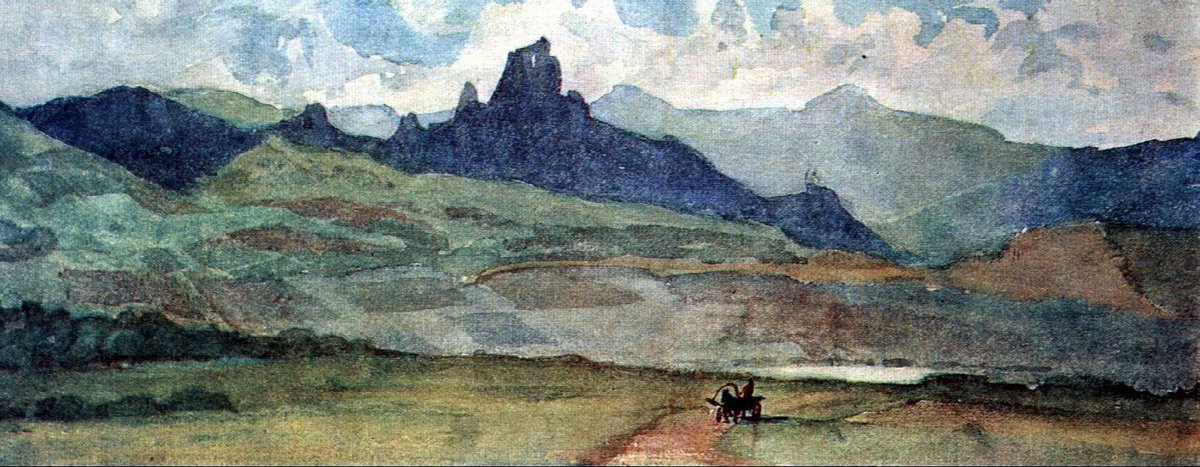
Vasily Surikov, Minusinsk steppe (1873)

Ken Liu, All That We See or Seem (2025)

Got this from the library after seeing it on some sort of best sff list. Maybe one by Lisa Tuttle? Could that be right? Anyway, this is the beginning of a new series about a hacker named Julia Z, whose back story is interesting. Her mother, an immigrant from China, was a famous activist determined to hold America to its ideals. But her parenting was a disaster—imagine a razor-focused Mrs. Jellyby—leading her daughter, our protagonist, into the hands of an anarchist group with its own ideas of keeping America accountable. That’s where Julia learned her tech prowess—but also experienced bitter disappointment when the group’s idea of retributive justice turns out to be a sham. At the beginning of All That We See or Seem, she’s been in hiding for a long time, until a lawyer digs her out and begs her to find his wife, a famous “oneirofex” or dream weaver who has gone missing. As best I understand it, these artists use AI to tap into and personalize mass longings to create updated 60s-type “happenings” that cater to people’s hunger to be together in person while still being isolated.

I didn’t know there was a genre called “tech-thriller” but all the reviews I looked at online use it, so I guess that’s a thing. Seems like readers are divided on the book—fair bit of love but also a lot of hate—which doesn’t surprise me, given the book’s inconsistencies, and supports my view that this is an interesting and flawed work. Liu apparently is or has been a lawyer and a software engineer in addition to a writer and translator, and these experiences are brought to bear in the confidence of the story’s tech and legal aspects. Too bad that much of this material—reflections on identity politics, political resistance, surveillance culture, and the ethics of AI—are awkwardly dumped into the text.  Even more obviously than most sf, this is a book about America today, and I’m not convinced a novel was the best way for Liu to say what he wanted to say. Still, I’ll give the next one a try. I hope that someone has sent a copy to David Cronenberg: he could do a lot with this material.

Paul Cornell, Witches of Lychford (2015)

Novella about a flyspeck English village that, unknown to most of its inhabitants, sits at the fault-lines of the ordinary world and magical realms, both good and evil. Even if the good people of Lychford knew the truth, they probably wouldn’t pay attention anyway, preoccupied as they are with a big decision. Should they allow a Walmart-type supermarket to open in town? Opinions are split; feelings run high. No matter what side they take, though, everyone admits there’s something about the guy the company has sent to convince the locals. He’s kind of… demonic. The joke being, of course, that he really is. Only an unlikely trio—a grumpy old woman who is in fact a witch; the new priest, posted to her childhood home, where no one knows that she’s lost her faith; and the priest’s former best friend, an atheist who has started a shop selling wiccan paraphernalia—can save the day.

Cornell has written several sequels, and I get the feeling the series might amount to something. And yet I haven’t checked them out of the library yet. Has anyone read these? Should I carry on?

Georges Simenon, The Dancer at the Gai-Moulin (1931) Trans. Siân Reynolds (2014)

Two kids in provincial Belgium—one spoiled and rich, one poor and susceptible—scheme to knock over the bar where they spend evenings pretending they’re adults and trying to make it with a female employee, the dancer of the title. But when they break in after closing time, they find a body on the floor. They freak out, do all the wrong things, eventually get arrested. But surely they’re not guilty. Right? And where is Maigret? This is the one where he doesn’t show up until about 2/3 of the way through, and the way Simenon pulls it off is ingenuous.

Miklós Bánffy, They Were Counted [The Transylvanian Trilogy: Volume I] (1934) Trans. Patrick Thursfield and Katalin Bánffy-Jelen (1999)

In my past life I lived on an estate at the foot of the Carpathians, shooting, attending balls, shaking my head at hotheaded fellows who love nothing more than a duel, checking in at the casino when in town during the winter season, watching the woman of my dreams ice-skating with a hated rival, tending to my peasants (sometimes assiduously, sometimes with dereliction), etc., etc. For this reason, I couldn’t get enough of Banffy’s novel, the first part of a trilogy that has been giving me the most reading pleasure I’ve had in a long while.

Although Bánffy wrote the books in the 1930s and 40s, in increasingly perilous financial and bodily straits, he set them in the first decade of the 20th century, the end days of the Austro-Hungarian Empire. (I’m taking part in a year-long reading of Musil’s The Man Without Qualities, and it is almost comical how different in style and ideology these texts are, even as both consider, one with regret, one with irony, the dissolution of the same state.)

There are many books about this time and place. In my experience, most focus on the Austrian part of the Dual Monarchy. One of the many interests of this book, then, is that it shows English-language readers a lesser-known world. Yet it is similar to other late 19th century novels. Like War and Peace, They Were Counted toggles between the personal and the political. The two main characters are cousins. One, having recently been elected to parliament, takes on the difficult task of reforming the family estates (bringing new scientific theories to the harvesting of timber, founding an agricultural cooperative), in part to distract himself from his seemingly hopeless love affair with a married woman. The other, a promising composer, slides into dissipation when he is unable to marry the woman of his dreams (another cousin—which sounds weird, but tbh pretty much all of the characters are related in some way). Some readers seem to find the details about the Hungarian parliament’s bitter, uneasy relationship to Vienna dull, but those people probably don’t like the historical excurses in Tolstoy either. As best I can tell—and I ought to know, given my past life, but, you know, details get hazy with the transmigration of a soul—Transylvania was at once the hinterland of Hungary and its beating, symbolic heart. Losing it to Romania in the Treaty of Trianon was a loss Hungarians never got over. Anyway, the novel is much interested in what it means to be part of a ruling elite that is both dominant (over the Romanian-speaking majority) and subordinate (to the Austrians) and part of a large, precarious multiethnic political entity. Its politics are as hard to pin down as you might expect from that description. (Imagine if the Anglo-Irish were part of the European Union, maybe.)

Did I mention there are also a lot of balls, duels, hunts, and love affairs in this book? SO GOOD.

BTW, this is neither here nor there, but I am reading these in the Everyman Library editions, which are lovely and even have that charming though in my opinion fairly useless sewn ribbon, but which include the most useless map I’ve ever encountered. Regular readers know that I love a map, and wish for them in every novel, regardless of subject matter. But this one includes none of the estates that form most of the locations and almost none of the towns. So frustrating!

There are many ways in which America under T***p II echoes 1930s Germany, but more and more I think that the self-immolation of Austro-Hungary is the better comparison. Which is to say that you can read these books (or at least this one: I’m not finished volume 2 yet) to get perspective on the present—and to escape it altogether.
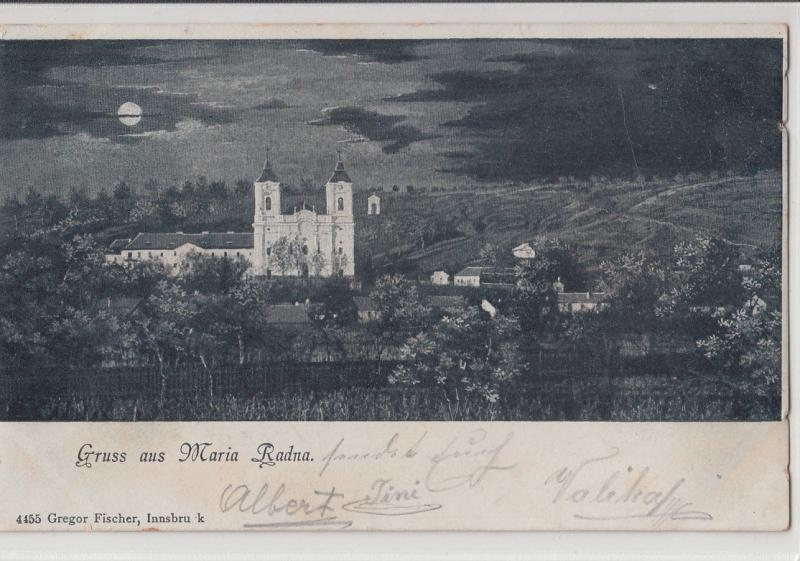
Monastery in Radna, Transylvania circa 1900

How about you? Where did you live in a past life? And have you read any of these books?
“A Real Character”: On Joan Silber’s Household Words

“You really are a character,” Annie Marantz said. Annie was a wiry woman, barely five feet tall; at thirty, she was only four years older than Rhoda, but she was sinewy all over; she looked as though someone had chewed on her like an orange.

This passage from the beginning of Joan Silber’s debut novel, Household Words (1980), struck me as the kind of thing you don’t see much anymore. Feels like novels rooted in descriptions of the world, and told in third-person past tense (glorious past tense, how I miss it) have become rare, even old-fashioned. Of course, Silber might have had that sense herself: after all, she titled her first novel, as the jacket copy of the first edition puts it, after the magazine published by Charles Dickens.  

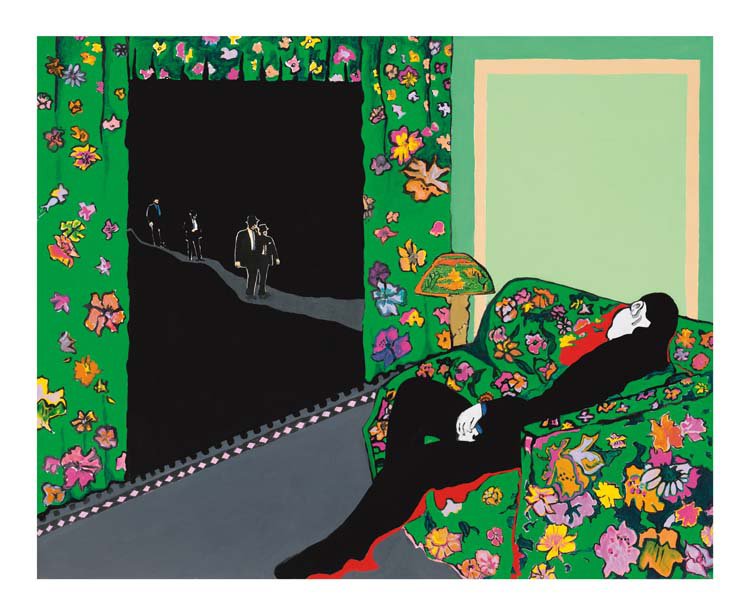
Rosalyn Drexler, Night Visitors (1988)

Silber, as I am starting to learn, having fallen into a deep dive of her works, is an unshowy and excellent writer. Look at what she does in these two sentences. She knows how to use a semi-colon, for one thing. The three clauses of the second sentence move briskly from description to judgment: “Annie was a wiry woman, barely five feet tall; at thirty, she was only four years older than Rhoda, but she was sinewy all over; she looked as though someone had chewed on her like an orange.” To be wiry is not necessarily to be small, but Silber implies that this is the case by mentioning Annie’s height, a seemingly unnecessary qualifier of the first independent clause. “Wiry” sometimes connotes toughness, but at this point in the sentence, we don’t yet have any indication that the adjective is meant to elucidate personality rather than merely describe physical appearance.

The second clause refines our thinking, though. From size we move to age (indirectly learning Rhoda’s). I kind of love the little storm of numbers in this sentence. Annie is thirty: not old by our lights today but older then than now. And older than Rhoda. But what matters to Silber is how the years show themselves on the body. Annie is “sinewy all over”: tough, indigestible. “Sinewy” made me return to “wiry,” forced me to think about the difference between these near synonyms. In this case, it seems worse to be sinewy than wiry. We’re not talking about Annie’s muscles. This isn’t a description of her fortitude. We’re talking about someone whose vitality has been squeezed out. Annie is pulp. She seems to have taken a licking from life already. This is all made clear in the third clause, the simile that compares the woman to a chewed-on orange. Juicy oranges don’t need much chewing. They go down easy. But when they dry out and their pith thickens, they’re harder to enjoy. I picture Annie with a bad tan: probably a fanciful association sparked by the colour orange.

Annie is a recurrent character, but not an especially important one. Even here she serves mostly to help us see Rhoda more clearly. Let’s not forget what Annie says before she’s described: “You really are a character.” It’s not just Annie who thinks so. The novel thinks about Rhoda this way. While Annie seems to speak half-admiringly, half-condescendingly, something like “Oh, Rhoda, you are just not like any of the women in our circle, and frankly that makes me a little uneasy,” the text offers the claim as a simple statement of fact. Rhoda really is a character—the character. We follow her through twenty eventful years, focusing on her experiences and responses, even as we never get fully inside her head. And yet the novel is being more than matter of fact here. Not just describing, but prescribing. It’s saying that Rhoda is worthy of being a character, of being the main character. Coming at the end of several decades of flourishing Jewish American literature, much of it written by men and famously invested in that point of view, Silber gives us something new. After Herzog and Augie March and Zuckerman and Alexander Portnoy Silber offers Rhoda Taber, a housewife living through the first stages of postwar American Jewish assimilation and suburban living.

Rhoda, who speaks Yiddish with her father and English with her social set and thoroughly Americanized daughters, is fascinatingly contradictory. She leaves her job as a schoolteacher when she has children, but her time as a teacher of French shapes her whole life, symbolizing her difference. [Careful, spoiler incoming!] After her husband’s untimely death, she returns to work, even though she doesn’t need the money. Nor does she remarry, even though friends fall over themselves to set her up, and even though she meets a man she enters a longish relationship with. She won’t sleep with him, though, because he’s not desirable to her. Not physically, but emotionally. She thinks of him as uncouth, even violent when she witnesses him doing business.

But this doesn’t mean Rhoda rejects conventions. She’s not like her friend Harriet, an unmarried no-fucks-to-give woman who encourages Rhoda to take art classes with her, even though she has no illusions about her abilities. (“Let’s face it,” Harriet says flatly, about her efforts to sculpt a dog, “it looks like a turd.”) Harriet and Rhoda vacation in the Catskills. Is Harriet gay? We never get the chance to find out. Despite her homophobia (she worries about her older daughter’s friendships in unpleasant ways) Rhoda feels queer to me. Don’t get me wrong, she’s conformist. But only superficially. In the things that matter, she’s out of step with everyone around her. Rhoda has an ugly side, for sure. She responds with disgust to the rumor that her neighbor has been having it off with a delivery boy: not because of the age discrepancy (though we don’t know how old he is) or the class difference, but because she cannot countenance the woman’s sexual desire. She struggles with her daughters, never abusing them outright, but picking fights or welcoming the fights they pick, despairing at the older one’s inability or unwillingness to follow Rhoda’s own life path and contemptuous of the younger’s need to make others like her. At the same time, she admires their independence, their unwillingness to be forced, by men in particular, into situations they don’t want to be in. The book I thought of most as I read Household Words was Vivian Gornick’s Fierce Attachments, another important Jewish book od the1980s. Silber’s novel feels like the fictional version of Gornick’s memoir of postwar American Jewish female rebellion, but in this case written from the mother’s side.

In the end, it’s not family life or economic success or cultural assimilation that Rhoda struggles most with but her own body: she spends the last years of the 1950s, and thus the last sections of the book, increasingly ill and at the mercy of the medical establishment. We leave her as she is leaving everything she knows. It’s a stark ending—and fitting. Rhoda Taber is not a nice woman. Nor a shrewish or disagreeable one. An interesting one. A real character.

What I Read, February 2021

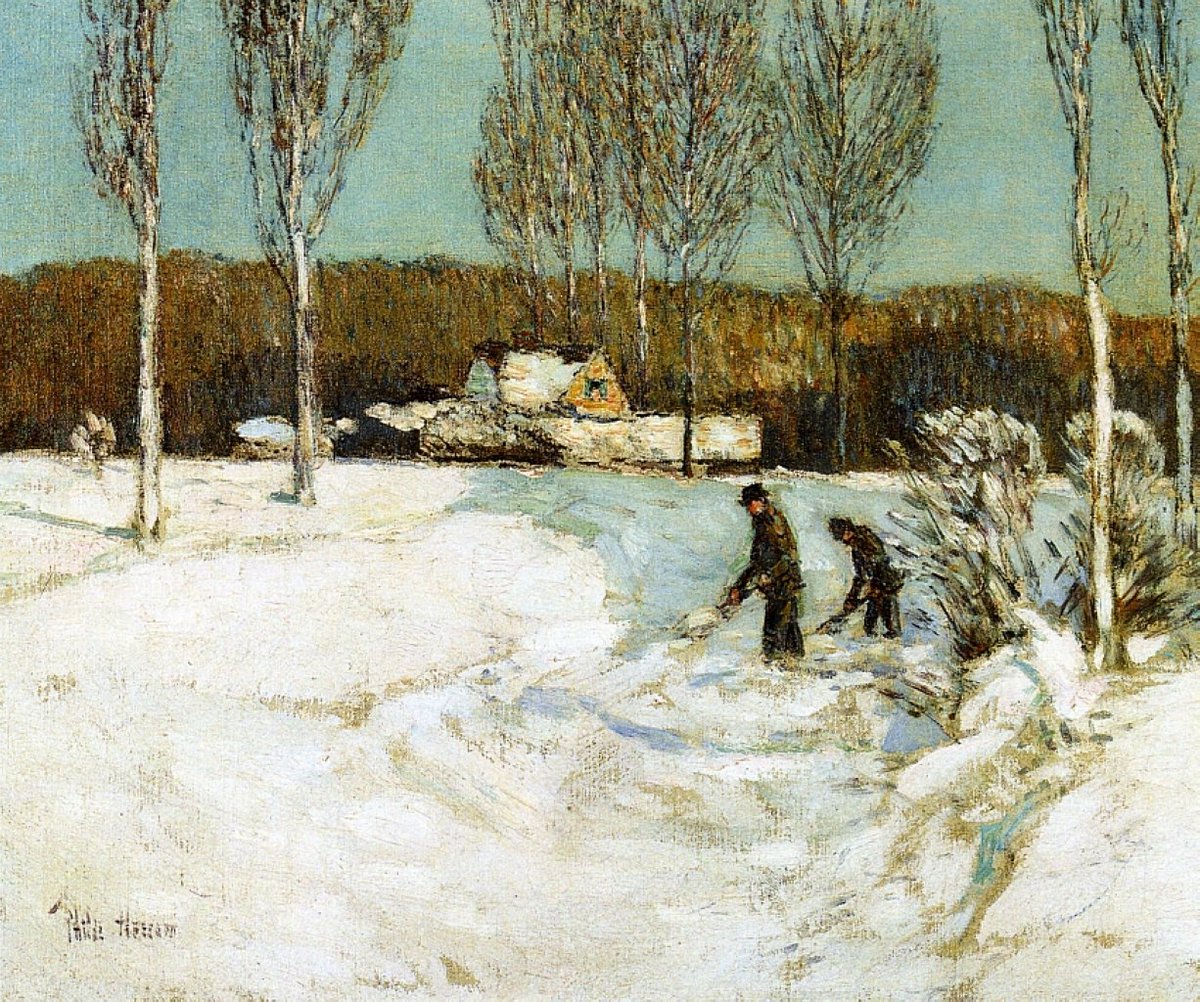
Strange little month. Epic snow storm (20 inches!) and record cold snap (below freezing for a week, pretty intense for these parts) kept us busy frolicking in the snow and dealing with burst pipes. A week later 70 degree temps reminded us of the hot weather coming. I flailed in my writing, though I did manage to publish this piece I was proud of. As pleased to get my second shot as frustrated that my parents, in Canada, have yet to have even the first. Our daughter turned 10, a happy-making and bewildering occurrence. And of course I read a few books.

Georges Simenon, The Hanged Man of Saint-Pholien (1931) Trans. Linda Coverdale (2014)

A group of men, friends since their student days, are haunted by past misdeeds. Maigret traipses around Europe to solve the case. You can’t expect me to remember more than that, it’s been four weeks!

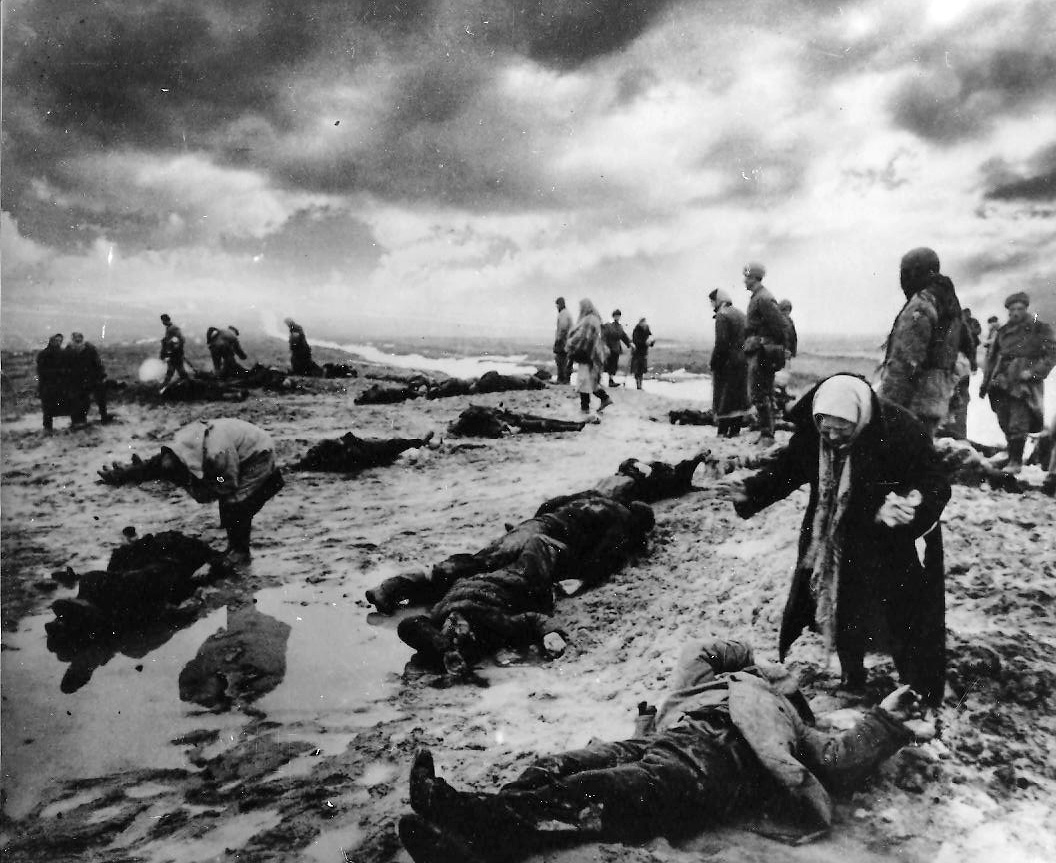
David Shneer, Grief: The Biography of a Holocaust Picture (2020)

Dmitri Baltermants (1912—1990) was a Jewish Soviet photojournalist who took iconic pictures at Stalingrad and in newly liberated Berlin, edited a prestigious photography magazine, and successfully navigated life under Stalin and Khrushchev. Despite a long and storied career, he is best known for one photograph, which came to be known as “Grief.” Sent to the Crimea in January 1942 after its initial liberation from German occupation, Baltermants photographed relatives grieving over the corpses of their loved ones on the site of a mass grave near Kerch. These were victims of Nazi reprisals, shot when the Germans retreated from the city in late December. (They would retake Kerch in May 1942, before the Soviets expelled them for the last time in April 1944.) In the six weeks of this first occupation, the Germans executed about 7000 Jews, both locals and refugees from Poland and elsewhere in the Ukraine, turning a Soviet anti-tank trench near the city into a five-kilometer-long mass grave.

As Shneer (z”l) shows, Baltermants took several striking photos that cold January day. But state media seized on one in particular and made it central to Soviet commemoration of Nazi atrocities. In keeping with Soviet refusal to recognize the Holocaust as a Jewish tragedy, “Grief” depicts non-Jewish survivors and victims. (Jewishness is literally the photo’s invisible substrate: by the time it was taken, the region’s Jewish victims were already buried in the mass grave, with no one left to search for them.) Yet it was increasingly marketed and understood as a Holocaust photo, especially once it was exhibited around the world in the 1960s and 70s, where it segued from historical document to artistic commodity.

The photo that impressed so many curators and art lovers was not the one Baltermants first took. As he prepared his work for exhibition he was increasingly bothered by blemishes in the sky on the original negative. In keeping with the norms of Soviet photojournalism—in which montage and editing was an accepted, even admired way to tell a greater truth—he revised the image, producing a new one “by overlaying a second negative with an undamaged sky to replace the flaw in the exposure” and then retouching the composite. What this means is: the dramatic clouds, so central to the power of the image as it has come to be known, are from somewhere else altogether. (The actual day of Baltermants’s visit was overcast: leaden rather than anguished.) This needn’t be understood as falsification or ideology. In the conclusion to his book, Shneer argues:

the tension between documentation and aestheticization demonstrates why Grief is the ideal image to serve as an iconic Holocaust photograph. … Its inclusion in the icons of Holocaust photographs broadens what we mean by the Holocaust and chips away at the term’s parochialism and nationalism.

Shneer comments intriguingly on the Kerch memorial today, caught up in Russia’s annexation of Crimea, arguing that the memorial to the atrocities has both been reclaimed as a public Jewish space while still being embedded in a broader pan-Soviet context (Jews finally get to be recognized as a victim group, but only so much). But his conclusions about contesting Holocaust parochialism remain entirely suggestive. He never develops what this would mean and how to navigate the ethics of using a photo without any Jews in it to comemmorate a primarily Jewish genocide.

Grief: The Biography of a Holocaust Photograph is frustrating and disappointing, from its subtitle onward. (How can a photograph have a biography?) It flirts with being many things—a biography of Baltermants, a history of Soviet photography, a disquisition on the Russian art market after the collapse of the USSR—without actually becoming any of them. And cultural history/cultural studies, Shneer’s preferred methodologies, are not for me. I wanted to blame the publishers for falsely marketing the book as Holocaust scholarship, but the final chapter proves that Shneer wants to own the designation But he simply never convinces.

I feel bad saying this, as Shneer, who I met once and found delightful, as I think did everyone who knew him, was ill with brain cancer as he completed the book. He died weeks after its publication. But I also don’t think he’d want readers to give him a pass. So I’ll say it again: this book is a mess.

Dominique Goblet, Pretending is Lying (2007) Trans. Sophie Yanow in collaboration with the author (2017)

After many years, Belgian comic artist Dominique Goblet (or at least the version of herself featured in this brilliant comic) takes her daughter to visit her father and his second wife. While the father finds ways to disparage Goblet and insult his wife, the little girl amuses herself by drawing a picture of her friend. The step-grandmother—drawn by Goblet as half alien, half Edvard Munch Scream figure—remarks on the friend’s long hair.

She doesn’t have long hair, little Nikita offhandedly remarks.

But look at the picture, replies the woman, already disproportionately angered. In the picture she has long hair.

Oh, that’s just a character, says the child. (Precocious!)

Which prompts the woman, in a fit of Platonist totalitarianism, to rage: “PRETENDING IS LYING, IT’S LYING! PRETENDING IS LYING!”

Aside from making it chillingly clear how messed up the father’s household is, this scene also alerts us to the text’s interest in creation. That self-awareness isn’t cerebral, though. Or if so then only as a necessary, self-preserving response to strong, often violent emotions.  

Pretending is Lying considers various moments in Goblet’s life, from her childhood with her blustering, abusive father and her creative yet fragile and, in her own way, punishing mother to her own life as a parent via the story of a once-promising but soon-floundering love affair. Although the father takes up the most oxygen, I found the mother more interesting. The same person who, by a magical sleight of hand, diverts young Goblet from a meltdown when she trips on the sidewalk and rips her tights (she whips them off the sobbing child and puts them on backwards—the child, none the wiser, is amazed) later locks her daughter in the attic on a rainy day when the restless child won’t settle to anything. This traumatic experience is juxtaposed to the father’s absorption in the 1973 Dutch Grand Prix, in which Roger Williams’s car overturned and burst into flame: only one other driver, David Purley, stopped and tried to rescue him almost by himself, to no avail. Apparently, Purley and the ineffectual race marshals could hear Williams screaming as he burned alive. The event is horrible, both in Goblet’s remarkable rendering and in this video, mawkish music aside.

The terrified child, the crazed mother, the raging father (a fire-fighter, he is convinced he could have saved the day): everything’s going wrong at once; the scene is one of the most harrowing things I’ve read in a while. And yet there is also so much tenderness in the book: in one scene, Goblet’s daughter is scared to sleep in a strange bedroom, mostly because it has a giant graffiti of a snarling man on the wall. Goblet tells Nikita, “You have to laugh at the things that scare you, you’ll see, it works with everything!” What follows is a lovely row of panels in which the little girl tentatively thumbs her nose at the image, giggles to herself, and falls asleep smiling.

As befits the book’s emotional scope, Goblet draws in all kinds of styles, from careful line drawings to expressionist exaggeration to washes of abstraction; she accompanies these images with gorgeously varied and expressive lettering (she hand-lettered the English translation herself). The result is beautiful; a book you could read many times and keep finding new things to notice, a triumphant rebuke to the argument that imitation is dangerous because it falsifies.

Andrea Camilleri, The Safety Net (2017) Trans. Stephen Sartarelli (2020)

After reading almost 20 of these, I’ve finally noticed how often the Montalbano books begin with the detective surfacing from a dead sleep. That struggle seems to be harder to overcome as he ages, as if Camilleri had been preparing for his detective to die. (I gather he deposited a final installment with his publisher before his own death in 2019.) The Safety Net offers more of the usual complicated to-ing and fro-ing and mixing of cases, all of which is mere background to Camilleri’s specialties: describing food and fulminating against Italian governments. In this investigation, Montalbano has to spend time with teenagers and that could have gone badly, but Camilleri gracefully lets his character value what contemporary technology allows rather than bemoan the hell it consigns us to.

Andrea Camilleri, The Sicilian Method (2017) Trans. Stephen Sartarelli (2020)

A meatier plot than usual, which turns on the similarity of dramaturgy to detection. What, Montalbano wonders, does it mean to be the one pulling the strings? And who is doing the pulling? The detective/director, or the suspects/actors? And where is the audience in all of this? Ends with a surprise; curious to see if this development is followed through on in the remainder of the series.

Rachel Howzell Hall, And Now She’s Gone (2020)

PI novel with a twist. Rader Consulting has a secret mission: most of the time its agents look for missing people, but sometimes they help people go missing, specifically women who are escaping abusive partners. Grayson Skye, newly promoted to investigator from desk work, is herself one of those women. (That explains the preposterous name.) Still recovering from a burst appendicitis (not to mention some pretty serious PTSD) Grayson suddenly has even more on her plate: her first case proves more complicated than she’d like (the woman she is supposed to find begs to be left alone—but is she telling the truth?) and the worst part of her past catches up with her. Very busy, this novel, too much so. The jagged chronology is more irritating than effective. Yet I still devoured it over a weekend, especially enjoying its depiction of some unglamorous neighbourhoods in LA and Las Vegas.

Minae Mizumura, A True Novel (2002) Trans. Juliet Winters Carpenter (2013)

Brilliant retelling of Wuthering Heights replete with unreliable narrators in the Ishiguro mode. (At least three main ones, not counting many small instances of gossip and storytelling along the way.) The outermost of these nested tellers is Mizumura herself. At one point she considers the Japanese tradition of an “I Novel,” comparing it to the invisible, omniscient narrator more prominent in Europe. (I summarize badly.) The main thing I disagree with in this fine summary of the novel is the reviewer’s suggestion that this digression is dull. To my mind, it’s central to the book’s project. Are writers supposed to tell us about themselves or about others? To tell what they know (the truth, their own perspective) or what they surmise, imagine, make up (the novel)? If the latter, how do we do justice to others? Can we overcome our prejudices toward them? These are the big questions of narrative, art, and politics that A True Novel explores. The main prejudices in evidence in the story concern family background and economic status. What happens when those don’t align, as is the case of the Heathcliff figure, Taro Azuma, who is born poor and of “mixed stock” in Manchuria but who becomes hugely wealthy?

I know I’m not doing A True Novel justice. Suffice it to say: I adored the book, raced through it (even though it’s 850 pages), and was sad when it ended. In fact, I haven’t found anything to match it, even though I’ve read a fair few good things since. It was even more fun reading alongside some smart, knowledgeable, and generous Twitter friends. Shout out to translator Juliet Winters Carpenter, too, who has done amazing work here, as best I can tell. I’ll be reading more Mizumura soon, that’s for sure.

Joan Silber, Improvement (2017)

A novel with as many strands as a Turkish kilim, one which belongs to one of the characters at its center. (The point, though, is that there isn’t a center to either rug or novel but rather a web of relationships, some clear and some glimpsed only in passing.) The story moves from New York to Turkey to Berlin: the mish-mash of locales could have been a mess, but it works. Or at least it did for me as I was reading it. I was reminded of Tessa Hadley, Esther Freud, a little of Laurie Colwin, and talked it up on social media. But now, a couple of weeks later, I can hardly remember a thing about it. (There’s a good bit about a woman who visits a man in prison, I remember that.) I’d been keen to read Silber’s backlist but now… *looks at piles of unread books climbing like mould spores up the walls * probably not.

Francis Bennett, Making Enemies (1998)

Terrific spy novel set in 1947, when the West begins to realize how different the Soviets’ beliefs and methods are from their own. The rest of the great powers are trying to catch up to the Americans and create a hydrogen bomb. Britain, though, is broke and would really prefer not to devote resources it doesn’t have to the project. What if the Russians felt the same? Is someone in the government sending them coded olive branches to this effect? The novel has two plot lines: one following a widowed atomic physicist in Moscow; the other concerning a young British political influencer, recently returned, disillusioned, from Berlin. These characters turn out to be connected; Bennett convincingly melds personal and political.   

This thriller is more chess-game/byzantine bureaucracy than cool gadgets/explosions. The best part of the book, though, is a section set in Finland, featuring a thrilling chase on skis. In general, Finland comes across very appealingly. As does Making Enemies. Well written without drawing attention to itself; complicated without being ridiculous. (Impressive for a spy novel, in my experience.)

In keeping with his debut’s ethos of modesty, Bennett only wrote three novels. I’ve managed to track down used copies of the other two (together they form a trilogy) and can’t wait for them to show up. Thanks to Retroculturati for the tip.

Sarah Moss, Summerwater (2020)

Summerwater is not as good as Moss’s two historical novels, Signs for List Children (2014) and Bodies of Light (2016), or 2018’s Ghost Wall (with which it pairs nicely), but it’s really good. The setting is a holiday resort on a loch in Scotland. (But because UK “resort” means some not especially amazing cabins in the middle of nowhere.) It’s the beginning of summer: the day is long, but not bright, in fact cold, rainy, and thoroughly miserable. The holidaymakers are questioning their decision. In a series of short sections, we move among several perspectives—a husband and wife with young children, a husband and wife with really young children, the teenage daughter and son of an older couple, an elderly couple who are the only ones to actually own their cottage. At one point each thinks, usually darkly, about the extended family of foreigners whose nightly parties torment, or bemuse, them. (The foreigners are variously described as Romanians and Bulgarians, but at least one of them is from nowhere more glamorous/threatening than Glasgow.) These sections are interspersed with even shorter ones written from the perspective of trees, birds, and animals. Even more than the human characters, these nonhuman beings experience the deluge as dangerous; the possibility of starving to death recurs.

As usual in Moss, violence—threatened and actual; physical, emotional, and sexual; hidden and open—is everywhere, not least in a dramatic conclusion. There are also many more ordinary events: the effort required to shepherd bored or fretful children through a wet day, the various negotiations couples navigate at various life stages, the secrets people keep from each other, especially regarding their fantasies. (A minor thesis of the book is that the older women get the fewer fucks they give that their men know their fantasies don’t include them.) I love how Moss leaves things unsaid: how exactly did a child’s shoe end up on the shore? What will happen to Justine’s health? What’s the deal with that guy in the tent?

My only criticism is that Moss’s control over the various voices felt uneven. The free indirect discourse changes to match each character, as it should, and yet the prose mostly feels the same. It sounds more like Moss than like any of her characters. I mean, that’s a contradiction built into free indirect discourse, but at times Summerwater exhibits a lack of control in a writer who otherwise feels fully in control of her descriptions of how little control we have over our lives. (I wouldn’t mind if Moss were a little wilder, honestly.)

A final word: the jacket of the US edition is gorgeous, a scene wrapping across front and back covers of a black loch against even blacker mountains with only an initially puzzling scrawl of red in the center of the image. The design is by June Pak, who I have now followed on Instagram. The image doesn’t reproduce well and I had to return my copy to the library anyway, and for some reason I can’t find the whole thing on line, but here is the front bit anyway.

Marga Minco, An Empty House (1966) Trans. Margaret Clegg (1990)

Moving and effective novel about the aftermath of the Holocaust, even better than Minco’s quasi-autobiography Bitter Herbs. Set on three days—June 28, 1945; March 25, 1947; April 21, 1950—it follows Sepha, who, alone of her family, has survived the war in hiding, and who falls into a hasty marriage with a man she meets in the resistance. He plunges into a career in journalism, she flounders except for an interlude in the south of France, entering into various affairs that she enjoys but not enough to keep up for long. Throughout she visits with her friend Yolanda, another survivor. Yolanda is tormented by guilt at surviving; Sepha is sympathetic but unmoved. Readers, however, will be moved by their relationship—especially its ending—for Minco manages to keep their disagreement from feeling schematic. To that end, she deftly uses motifs and time shifts, which challenge the idea of continuous experience without making a big deal about it. As its title suggests, the novel is filled with empty houses—whether the various places in hiding Sepha recalls, a cherished bolt hole in France, the new house she and her husband are set to move into at the novel’s end, or, most powerfully, her childhood home, now inhabited by someone else, to which she returns like a criminal to the scene of the crime—only the crime, as she reminds Yolanda, was perpetrated by others on the likes of them.

Hans Keilson, Da steht mein Haus: Errinerungen [There Stands My House: Memories; alternatively, My House is There: Memoirs] (2011) Hrsg. Heinrich Detering

Keilson began this collection of autobiographical fragments in the 1990s, when he was in his 80s and beginning to wind down his long-running psychoanalytic practice. He’d written three novels and some poetry, but that was long ago. A decade later, now almost blind, he returned to the pieces, pruning and ordering them for publication. With the help of the literary scholar Heinrich Detering—whose conversation with Keilson ends the volume—the book was released soon after Keilson turned 100 and had become the subject of renewed interest in both Germany and the US. (I wrote about Keilson’s wartime diary a few years ago; that book too is worth reading.)

In short sketches that make full use of the roving quality allowed by German-language syntax, Keilson describes his childhood in Freienwalde an der Oder, a town near the Polish border where lumber and small-time health spas were the main industries. Keilson’s father managed a store (his wife ran it ably, maybe better than he did when he served on the western Front in WWI). Keilson’s parents were active in the local Jewish community, although her education, in her hometown at the foot of the Silesian mountains, a place now in Poland, was much stronger than his. (Keilson recalls her prompting him for the weekly Shabbat prayers and describes his ambivalent feelings about her unselfconscious voice in the women’s choir.) Keilson was a sporty kid—there are some great passages on ice skating—and also musical. Both experiences came in handy later, when he taught at a Jewish sports club in Berlin and paid his way through medical school by playing trumpet in a jazz band.

Despite his late success as a doctor and therapist, Keilson had never been particularly scholarly, though he vividly remembers presenting a Heine poem only to have a classmate student object: a Jewish student reciting a Jewish poet was “fouling the nest.” That moment, in the late 1920s, marked the first time Keilson sensed the change that would envelope him, his family, and his community. The memoir is filled with little but telling moments like this. By contrast, Keilson says little about his flight to Holland in 1936, at the urging of his non-Jewish wife, and his time living under a false identity during the war, where he first encountered the orphans he would make his postwar analytic reputation helping. He does describe how he managed to get his parents to Holland right before the war and how they decided against going underground, citing age, ill-health, and general exhaustion at a world that had so betrayed them. They were murdered in Birkenau.

In the afterword, Detering asks Keilson if he ever thought of going back to Germany. He did, after all, continue to write in the language. Keilson answers that he couldn’t. The moment he learned of his parents’ murder, he stopped being a German. Moreover, he knew he couldn’t work as an analyst for German patients. Regardless of their personal culpability they would always feel too guilty towards him; that would be fatal for successful therapy. At which point Detering expostulates, “Das klingt alles so vernünftig” [That sounds so reasonable]. Keilson responds: “Aber ich bin so vernünftig, Heinrich, sonst hätte ich nicht überlebt! [“But I am reasonable, Heinrich, I wouldn’t have survived otherwise.”] Reason was a gift, a talent [eine Begabung] that he used to help himself.

This exchange gives a good sense of Keilson: a similar calmness and wisdom, maybe evenhandedness is the best description, colours these reminiscences. He writes about his parents as if they were people he had known long ago—not that he is distant to them, his whole life was ruled by their loss, but he is so fair to them, so loving in his equanimity, presenting their kindnesses and their cruelties (especially on the father’s part). Even a brief scene describing a time when, aged 10, he caught a glimpse of his mother’s half-naked body is anything but prurient. He and Detering talk a lot about what it’s like to be so old, so close to death. Keilson knows he had a good life, despite everything; knows too what he did to further that sense of satisfaction.

In the last section of the memoir, Keilson describes an encounter on his daily walk—he was 91 at the time and could still get around. Only a few hundred meters from his house he meets a child playing in the street. The boy says to him, matter of factly, You are very old. Keilson agrees. And how old are you? Three, the boy proudly responds. Without warning, he picks up his toy to run home, but not before pausing to yell, Where do you live?

Right near here, Keilson shouts back.

Where?

Just straight ahead, then turn left and go up the street. My house is right at the intersection.

The boy is satisfied. In the distance a woman’s voice calls him home.

Keilson walks straight ahead, turns left, and, at the intersection, finds his house, here, in Holland.

A lovely end to a lovely book of a lovely life.

I didn’t mean to read two books by Dutch survivors preoccupied by houses back-to-back: sometimes the reading life has its reasons of which reason knows nothing. An English translation of the memoirs was published in Australia, but I couldn’t get it: no library in North America either had it or was willing to lend it to my college’s library. Shame.

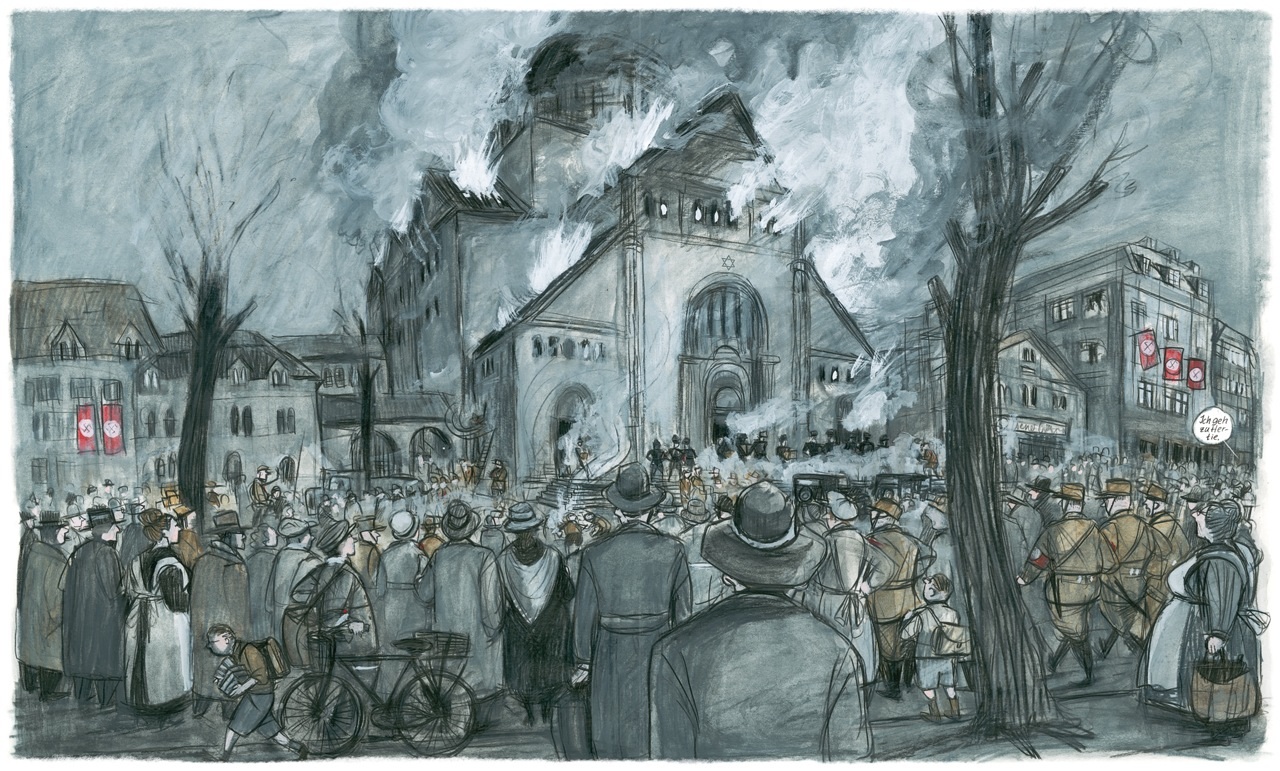
Barbara Yelin, Irmina (2014) Trans. Michael Waaler (2016)

Nineteen-year-old Irmina von Behdinger arrives in London in 1934, thrilled to escape her stultifying home in Stuttgart and excited to study typing. For a while, she lives with a host family. Later she is taken on by an eccentric Countess, a former Suffragette who buys her a bicycle and takes her to various Labour party events. One day, a distant relative takes her to a cocktail party, where she’s prickly and bored stiff until she meets Howard, a student from Barbados on a full scholarship to Oxford. They become friends—punting on the Cherwell, strolling through Hyde Park (where, as a mixed-race couple, they narrowly escape a gang of Blackshirts)—and inch toward becoming lovers. But then the Countess asks Irmina to find somewhere else to live—she feels obliged to take in a Jewish refugee—and Irmina has no choice but to return home. She settles in Berlin, putting her English to use as a translator in the Reich Ministry of War. All the while she writes to Howard, dodges the advances of ardent fascists, and angles for a posting in England.

A series of events conspire to keep her in Germany, where she eventually marries one of the ardent fascists, has a child, looks the other way at things she doesn’t want to deal with, and enjoys the advantages that come from having a husband in the SS. By 1942 she is a single mother (her husband is on the Eastern Front) seeking refuge from bombing raids and roughly answering her son’s questions about an impromptu auction in the street over the goods from an expropriated house (What are they doing? What is a Jew?) with Nazi vitriol: “The Jews are our misfortune.”

Decades later, in the early 1980s, Irmina, now widowed, receives an official letter from Barbados. The secretary to the Governor General, Sir Howard Green, writes on behalf of his employer: would the esteemed Mrs. von Behdinger consider visiting? The trip—centered on a birthday party for Howard’s adult daughter, herself named Irmina—is a mixed success. The past can’t be overcome, but old ties still mean something. Everywhere she goes the now grey-haired woman, in her sensible outfits, is introduced as “the brave Irina.” Howard has described her that way for decades, partly because he doesn’t know what became of her life and partly because he can’t let himself think about that life.

Hamburg-based bookseller Buchi, as she is known on Twitter, recommended Irmina to me, and I’m so glad she did. It’s smart, beautiful, moving: really impressive. Yelin’s delicate lines, and subdued palette (all greys, blues, and sepia yellows) demand that we linger on her images, even as the story pulls us forward. The panels create alternating rhythms, with regular small boxes interspersed with gorgeous two-page spreads. A fine afterword by the Holocaust and genocide scholar Alexander Korb fills in some of the historical background. (Irmina is based on Yelin’s grandmother, though it’s unclear how closely.) An excellent book for anyone who has ever wondered, How could so many ordinary Germans be drawn to National Socialism? Yelin’s answer is particular rather than general; it has no sweeping thesis. She never gives Irmina a pass, never lets us think, Well, she’s just an old woman now, no harm done. But she also has sympathy for roads not taken, missed encounters, and wrongs that can’t be apologized for. Check out Yelin’s site for more of her work: I especially enjoyed this short film about her current project, illustrating a Holocaust survivor’s memories.

A good reading month. A True Novel was the best, no question. That will be on my end of year list, I’m sure. But Yelin and Goblet, the two graphic memoirs, were great. Keilson, Minco, Bennett, and Moss too.