Today‘s reflection on a year in reading, his second for the blog, is by Scott Walters. Scott launched a litblog, seraillon, in 2010, and expects to return to it one of these days. He largely follows Primo Levi’s model of “occasional and erratic reading, reading out of curiosity, impulse or vice, and not by profession” (profession in his own case being academic administration). He lives with his partner in San Francisco and tries to visit family in France as often as possible.
Hello everyone. I had a terrific year of reading in 2022. I wrote very little, so I hope you’ll forgive the absurd length of this piece. [Ed. – Already forgiven.] I’m not sure reading without writing is really reading, but with few exceptions I greatly appreciated the 85 books I read. My reading once again followed little discernible pattern. Here are some favorites and some more favorites.
Victor Hugo’s Quatrevingt-trieze (1874) was my book of the year. Hugo’s portrayal of “this bloody date,” “this hemorrhage,” “the great revolutionary year” of the French Revolution, starts off with a bang: a rag-tag group of Parisian revolutionaries, expecting ambush in a forest in Bretagne, instead comes across a young woman breastfeeding an infant while two other children stand nearby. The woman’s feet are bloodied. She is terrified. An older woman responsible for the soldiers’ provisions serves as buffer between the young woman and a commander intent on probing her political loyalties, setting a tone of political tension that runs for 500 pages. An ensuing Dumas-like adventure characterizing this first part of the novel abruptly loses its head when the blade of the second part falls, plunging the reader into a stunning eight-page “cyclorama” of the chaos in the streets of revolutionary Paris. Much of the action, however, focuses on the civil war in the west of France. With a frequent employment of pastiche, 93’s many epic catalogs include an elaborate list of the Convention’s participants paired with their signature bons mots, some so good I copied them for future deployment. The Revolution in 93 is heavily fictionalized, including an improbable discussion between Danton, Marat and Robespierre in the back of a dark café. But Hugo’s astonishing feat of research serves as rock-solid substratum. I found 93 a spectacular model of historical fiction. [Ed. – Sold! Where is the goddamn Penguin edition???]
In the introduction to Eve Babitz’s Eve’s Hollywood (1974), Rolling Stone Records’ Earl McGrath is quoted: “In every young man’s life there is an Eve Babitz. It is usually Eve Babitz.” I wish I’d encountered Babitz as a young man in Los Angeles. To my roaring delight, she limns everything about the city that falls under her gaze; her piercing way of getting to the heart of some L.A. quality might have made Eve’s Hollywood a Bible for managing life there. Babitz labeled the book a novel, but it seems more non-linear memoir, composed in sketches, episodes, observations, wandering across the Southern California landscape for some 300 exhilarating, hilarious, sobering, fascinating pages, filled with lines to savor (even a simple description of the local skating rink: “The shadows of the rafters of the Polar Palace were knocked out by the noonday sun, which fell around us like a moat”). I initially wondered whether the appeal would depend upon one’s familiarity with L.A., but Babitz knows she’s in a bubble, and slyly invites us to look inside. And despite the book’s title, Babitz is less concerned with the movies than with L.A. life. When the book’s eight-page dedication included a nod “to the sand dabs at Musso’s,” I knew I was home.
In Ismail Kadare’s The File on H, ethnographers travel to Albania to seek out the last practitioners of the Homeric oral tradition. Something similar, a hidden world of the past miraculously vibrant in the present, reveals itself in Romanian novelist Panait Istrati’s Présentation des haïdoucs (1925), a work in which iterative storytelling reaches back to legends hundreds, even thousands of years old:
“What does that signify: haïdouc?”
“You don’t know? Well! It’s one who tolerates neither oppression nor domesticity, who lives in the forest, kills the cruel gospodars and protects the poor.”
Five bandits gathered in hiding in a bear cave take turns relating how they became haïdoucs. What an exquisite pleasure to read Istrati again, to be immersed in his singular universe of outlaw peasant dignity, heroism, pleasure, passion, sense of justice, and vengeance against those who perpetrate injustice, chiefly the gospodars (landowners). Most notable of these accounts is that of Floarea Codrilor, the woman leading the group and whose own startling tale seems organically to rework elements of Longus’s Daphnis and Chloe. In this volume from Istrati’s 14-novel cycle, “Les recits d’Adrian Zograffi,” Zograffi appears only in the first line, listening to a haïdouc tell the story of this night of tales, continuing a grand, uninterrupted line of storytelling.
Speaking of iterations, Antonio Manetti’s The Fat Woodworker (mid-1400’s, Robert and Valerie Martone, translators) reads like an anecdote out of Benvenuto Cellini’s riotous autobiography from a century later. Florentine luminaries including Brunelleschi, Donatello and Luca della Robia, regular dinner companions, recognize one evening that one of their number, Manetto the Fat Woodworker, is absent. Perceiving a snub, the artists, with Brunelleschi as chief architect [Ed. – Heh], concoct an elaborate prank. Enlisting multiple accomplices, they convince Manetto that he is in fact a certain “Matteo.” A cascade of comical situations follows as Manetto/Matteo questions his identity and seeks to extricate himself from confusion. The introduction identifies The Fat Woodworker as perhaps the literary pinnacle of the beffe, a humorous early modern style found in numerous works of this high age of mischievous wit. The prank itself is hardly innocent fun; poor Manetto spends time in prison and loses his mind for a time. But his existential crisis might be taken for something closer to Ionesco or Beckett than to the designer of Florence’s Duomo. The charming ending, crediting the anonymous originator of the joke and its variations over time, is as generous a recognition of literary precedent as one is likely to find.
A box containing 27 pamphlets ranging from one to 12 pages, B. S. Johnson’s The Unfortunates (1969) invites readers to choose their narrative order, aside from sections marked “First” and “Last.” Conceived when Johnson traveled as a sportswriter, the work finds his narrator covering a football match in a city he suddenly recognizes as that where he’d known his late friend Tony, the jolt setting off recollections of Tony’s terrible death from cancer. The form could seem gimmicky, but I found it devastatingly suited to its subject. The act of reading—trying to keep track of the pamphlets, shuffling them in one’s hands, taking them out of the box (coffer/coffin) and putting them back in—mirrors memory’s unpredictable eruptions: “The mind is confused, was it this visit, or another, the mind has telescoped time here, runs events near to one another in place, into one another in time.” The word “time” tick-tocks across the narrative; the 1 – 12-page sections hint at clock numerals. In one virtuoso section, staccato play-by-play reporting on a match vies with flashbacks to Tony’s suffering. I doubt Johnson’s narrator and I would have gotten along. He can be self-absorbed, insensitive, annoying even. But these qualities underscore his raw and conflicted anguish in witnessing the demise of a person with whom he had differences, who was distant in many ways: “how the fact of his death influences every memory of everything connected with him.” The Unfortunates left me shaken for days. “and I said, it was all I had, what else could I do, I said, I’ll get it all down, mate It’ll be very little he said, after a while, very slowly, still those eyes That’s all anyone has done, very little, I said.”
The east end of Paris’s Rue Ordener, which arcs across the 18th arrondissement, is today largely African, but in 1942 was heavily Jewish. That was the year seven-year-old Sarah Kofman saw her father taken from their home and deported to Auschwitz. Her récit Rue Ordener, Rue Labat (1994) (thanks Dorian!) focuses not on her father’s story, but on her own. The title’s street names represent poles of her existence during the occupation: on one her mother’s home, on the other that of a beloved teacher with whom she hid. Kofman subtly evokes the claustrophobia of this life, the transformation of the neighborhood into a ghetto. She expertly melds normal tensions of childhood with their extreme amplification under threat, retrospectively examining the confusing division of allegiances between mother and teacher, Jew and Non-Jew, disentangling present self from past in tight, analytical prose not dissimilar to Annie Ernaux’s dissections of family. [Ed. – Interesting, had not thought of that comp. Ernaux’s sentences are much more sinuous, though.] The book had personal resonance: my goddaughter, having since an early age taken a deeply serious interest in the Holocaust, has spent her 19 years in the neighborhood, on the same street where Kofman’s family first lived.
Italian critic Roberto Bazlen led me to some terrific works these last two years, including to Jeremias Gotthelf’s The Black Spider (1842, Jolyon Timothy Hughes, translator). Bazlen had proclaimed Goffhelf “the (at least in some respects) GREATEST European novelist of the last century.” Though he wasn’t referring to this book, his pronouncement seemed borne out in The Black Spider’s 150 pages, which begin in a village in the Bernese Oberland, where a baptism is taking place:
Now, every head was exposed, each pair of hands folded and everyone prayed long and solemnly to the provider of every blessing. Then, each slowly grabbed the metal spoon and wiped the same on the beautiful, fine tablecloth and began to eat the soup. And many a wish was expressed out loud that if he were to have such fare every day, he would desire nothing else. Once one had finished with the soup, he again wiped his spoon on the tablecloth. The Zupfe [Ed. — braided soft bread, super delicious] was passed around and each cut himself a piece and watched as the appetizers of saffron soup, brains, mutton, and marinated liver, were served. When they were consumed the beef was brought in, fresh and smoked, whichever one preferred, came with deliberate swiftness stacked high in bowls. Then came the durre Bohnen [Ed. — overcooked green beans, god I ate way too much of that in my childhood], Kannenbiresnschintze, thick bacon and splendid loin roasts from three-hundred weight pigs, so beautifully red, white and juicy.
This richly detailed framing story culminates in a question about an “ugly black center post” in the house, then shifts two centuries past, when a merciless feudal lord orders the villagers to perform an impossible task, which they only achieve by making a deal with the devil. They pay, of course—Gotthelf is as much preacher as novelist—and their punishment comes in the form of plague, “the black spider.” In the tale that follows, reality, superstition, deep religious conviction, and atonement blend together in a micro-study of the village’s people, of the confrontation of the religious mind with hardship.
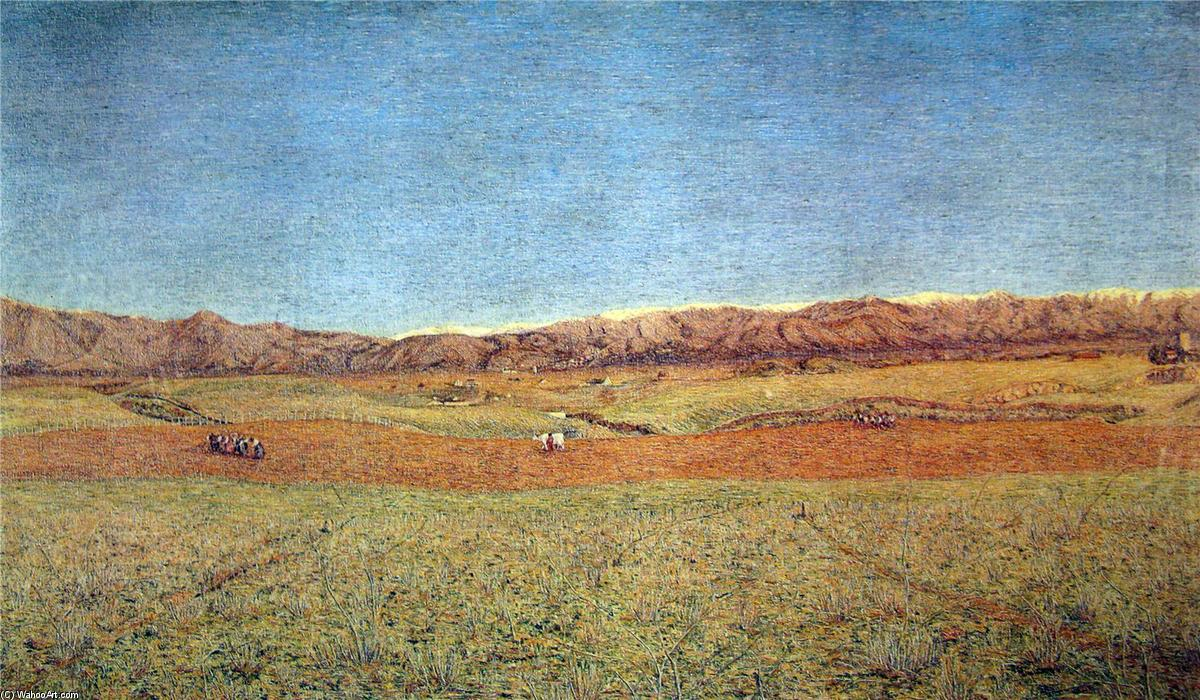
Asturian writer Juliàn Ayesta’s Helena, or the Sea in Summer (1952, Margaret Jull Costa, translator), one of the finest short novels I’ve read in years, went straight onto a shelf I keep of cherished paperbacks. Its world swirls with reminiscences of annual seaside vacations its young narrator passed with his cousin Helena. Drenched in sun and sea, filled with family idiosyncrasies and redolent of youthful vulnerability, Helena explores the developing love between these two young people, deliberately evoking Daphnis and Chloe (again!), with a similar sweetness and freshness.
I’d loved Solitude by Victor Català (Catarina Albert i Paradis), so was thrilled to find Peter Bush’s translation of A Film: 3,000 Meters (at a reading in 2015, Bush lamented the book’s unavailability in English). A Film (1920) at first seems to fit the realist mold of Eça de Queiros or Gustave Flaubert, relating the story of Ramon Nonat, an orphan in Girona who sets out to find his parents—or rather, to find his place in the glitzy rich world he imagines they occupied. Apprenticed to a locksmith, the talented, handsome boy quickly gains competence and respect, then shoves off for Barcelona to pursue his fantasy of belonging among the elite. As the unusual title suggests, the narrative takes a cinematic approach; nearly everything occurs at street level, as though the narrator were moving about the city with a camera—a remarkable attempt to adapt an emerging narrative form to literature.
Set just uphill in the Pyrenees, Irene Solà’s When I Sing, Mountains Dance (thanks Stephen Sparks!) features a polyphonic group of narrators, including a cloud and black chanterelle mushrooms. Montage-style, Solà builds a portrait of the region in precise, deeply lyrical, earthy to the taproot prose, everything burning with life, even the geology of the place (given its own narrative). This is no mere novelty; Solà deftly uses signifiers linking characters, generations, and locations, situating passages in time relative to other passages, forming a map of the region, hinting at its history of revolt and suppression of revolt, and confronting shifting tensions between the villagers and outsiders. Among these last are tourists, urban refugees from Barcelona, and a writer—Solà’s stand-in, one might surmise—questioning her place, a subject amply worthy of interest given such arresting, commanding and nuanced writing.
In non-fiction, I put two works above the rest. Gisèle Halimi’s Une Farouche liberté (2020), constructed from interviews just prior to Halimi’s death, traces her trajectory from a Jewish-Berber Tunisian family where life promised little but domestic servitude to her emergence as one of the great judicial and feminist figures of post-war France. The young Halimi’s defense of political prisoner Djamila Boupatcha was instrumental in shifting French attitudes towards the war in Algeria. With Simone de Beauvoir, Halimi persuaded 343 women—including Catherine Deneuve, Ariane Mnouchkine, Françoise Sagan, and Marguerite Duras—to sign a letter admitting to having had an illegal abortion (the group later proudly adopted Charlie Hebdo’s satirical moniker, “Les 343 Salopes”). The letter, along with Halimi’s exoneration of 16-year-old Marie-Claire Chevalier, imprisoned after the classmate who raped her turned her in for having an abortion, led to the 1973 reversal of France’s abortion ban. Halimi served in the French Assemblé Nationale, as UNESCO ambassador, and as an advocate for a united Europe. Her innovative ideas for organizing make Une Farouche liberté an invaluable book – and a timely one – for anyone concerned with justice.
Sebastian Haffner’s Defying Hitler, my non-fiction book of the year, caused a sensation when published in Germany in 2000. Haffner (pseudonym for Raimund Pretzel, whose son Otto here serves as translator) dissects in precise terms the forces that allowed Hitler to come to power. The book begins on August 1, 1914, when the seven-year-old boy’s treasured summer vacation is abruptly cut short by war. He then traces his growth into adulthood with a steady eye attuned to political developments, unpacking the missed opportunities and fatally unwise accommodations; the cultural, economic, social, and psychological weaknesses of his country; the cultural rejection of pleasure, intellectualism and humor; the violence and assassinations (chiefly that of Walter Rathenau) that propelled his country into fascism. Not a word seems out of place in this chilling narrative—a foreboding warning of Europe’s future and of the fascist movements so prevalent today.
When it came to mysteries, I had the most fun re-reading Eric Ambler’s The Light of Day (1962), but I went nuts over Masako Togawa’s The Master Key (1982). Set in the K Apartments for Ladies in an outlying part of Tokyo, the plot involves a missing master key, a buried child, an eerie religious cult, and Japan’s search for stability and rebirth after WWII. But the master key Togawa uses to open a door onto the lives of the building’s unmarried women—the elderly, the young office workers, the building’s staff, all with “secret lives apart from the real world”—makes the “mystery” nearly incidental. I’m on to more from this iconic, revered figure in Japan. [Ed. – Sold!]
I read a lot of plays in 2022. Magical realist Massimo Bontempelli’s Watching the Moon and Other Plays proved the highlight and included a haunting tale of loss of a child; a visit by a surreal, murderous cloud (NOPE!); and a delightful take on Cinderella, who bypasses the prince to run off with a member of the orchestra. Heidi Shreck’s What the Constitution Means to Me should be performed regularly in the U.S. Congress. Other highlights were Franz Wedekind’s Spring’s Awakening and David Murphy’s Conversations on a Homecoming.
As for poetry, I loved Virgil’s The Georgics (“the working of the earth”), a kind of bucolic verse farmers’ almanac on agriculture and animal husbandry that belongs on sustainability reading lists. A. Van Jordan’s M-A-C-N-O-L-I-A brilliantly uses its 50+ poems to recount the life of MacNolia Cox, who at 16 in 1936 would have been the first Black winner of the National Spelling Bee but for machinations of racist judges. I fell deeply into the poems of Frederick Seidel: nimble, coarse, fun, musical, offensive, inoffensive, explosive, moving, provocative, an axe to break up paralyzed discourse, like nothing I’ve encountered in American poetry. Finally, poem-shaped unidentified flying object Deep Wheel Orcadia, by Harry Josephine Giles, wins as most unusual book of the year. Set on a space station whirling beside a gas giant, Giles’s poems, written in Orkney dialect and accompanied by his own peculiar English translations, create a space opera romance that left me entranced, almost literally suspended in indeterminate space, time and language. [Ed. — !]
It was tough whittling down the list to the works above, so I’ll leave off with an incomplete list of those that might have made the cut: Johann von Goethe’s Elective Affinities; Vercors (Jean Bruller)’s Le Silence de la mer; Shirley Hazzard’s The Great Fire; Franz Werfel’s The Forty Days of Musa Dagh, the novel of the Armenian genocide; Yasushi Inoue’s Tun-Huang; Iris Origo’s A Chill in the Air and War in Val d’Orcia; Alberto Moravia’s Roman Stories; Gilbert Adair’s The Dreamers, the novel of May 1968 France (even if it is written by a Brit); James Baldwin’s Go Tell It on the Mountain; Bora Chung’s Cursed Bunny [Ed. – Paging Frances Evangelista!]; Maria Judite de Carvalho’s Empty Wardrobes; Yuko Tsushima’s Woman Running in the Mountains [Ed. – Boo yeah!]; Nikolai Gogol’s Mirgorod; Gianfranco Baruchello’s How to Imagine: A Narrative of Art, Agriculture and Creativity; Faith Baldwin’s Enchanted Oasis, the romance novel of Palm Springs; and Herman Melville’s Moby Dick, my re-read of the year, grand and startling and surprisingly funny three decades past the last time I read it.
Thank you for reading and thank you Dorian for inviting me to do a little writing.
[Ed. – Anytime, Scott. I mean it. seraillon is much missed.]
That’s it, friends—I’m calling a wrap on 2022 year in reading pieces. Except maybe for my own. What’s the over under that I’ll actually write one?


 Eiger, Mönch & Jungfrau