My Year in Reading, 2024

If you’re reading this, you are faithful indeed. And I am grateful. Long silence here, I know. As my adopted country tumbles into authoritarianism, things have also been changing, though more positively, chez EMJ.

Igor Razdrogin, Book Bazar (1975)

My wife, daughter, and I are moving to St Louis in a month’s time! We’ve spent quite a bit of time there these past few years, and we like it a lot. We’ll have a little more space in our new home (which, combined with some collective efforts to tame my unruly library, might mean that our house will at least briefly not be overflowing with books), and, best of all, we’ll be living in a walkable neighbourhood with sidewalks, which is something we’ve been missing these past 18 years in Little Rock.

The other big transition concerns my career. I’m leaving my job at Hendrix, of course, but I’m also leaving academia in general. People keep asking how I’m feeling about this and I keep saying: Terrific! I was pretty burned out and starting to get a little Old Man Yells at Clouds about All the Changes that affected the classroom experience: the pervasiveness of AI and LLMs (something no one, as far as I know, ever asked for), and, more distressingly, the difficulty even the best-prepared students are having reading sustained works of literature, by which I mean, an entire book, no matter how straightforward the prose. This isn’t about their intelligence, or even their phones. It’s about the strictures placed on secondary school teachers. As instruction moves ever more toward preparing for testing centered on multiple choice reading comprehension questions about utterly decontextualized chunks of texts, teachers aren’t assigning much reading, which means students simply don’t have much practice at it.

(I also have a pet theory that for all its flaws Harry Potter (to be clear: it sucks) helped Millennials think of reading as both exciting and habitual, and Gen Z hasn’t had anything like that. The Harry Potter to Jane Austen to English Major pipeline kept our department afloat for a lot of years. These days, students dislike both Rowling and Austen…)

I still love many things about teaching, and it’s possible I’ll miss it so much that I’ll return to it in some fashion. (I’m never getting another job like this one, though. Those don’t exist anymore.) But for now, I feel relief, and curiosity—along with a lot of trepidation—about the chance to try something new. For now, it feels a bit unreal. Because the academic year is cyclical—summer is always a time of collapse and, if lucky, regeneration—I don’t yet feel as a though I’ve made much of a change. Talk to me in the fall, or next spring, or five years from now.

Luckily—and this is another reason for the silence around here—I’ve been working as a consultant for the Educator Programs arm of the William Levine Family Institute of Holocaust Education at the United States Holocaust Memorial Museum in DC. The people I work with are absolutely fabulous: smart, funny, kind, devoted to their work without having delusions of grandeur about it. It’s eye-opening—and fun—to work as part of a team, after decades of the isolation of academic life. I’ve helped them create resources for K – 12 English Language Arts classrooms, and have taken great satisfaction in the work.

I’ll need full-time work sooner rather than later, though, so if you have any ideas or leads, hit me up! Like, what are some jobs people do? What do y’all do all day? I need advice!

What I’m saying is, I had a lot going on these last months. But I did manage to keep reading. Maybe not as much as usual, but whenever I could make time. I get that it’s ridiculous to offer a 2024 reflection halfway through 2025, but FWIW here are the things that stuck with me last year.

Eight standouts

Francis Spufford, Cahokia Jazz (2023)

So much to love in this novel about an alternate 1920s in which a sizeable indigenous population thrives in a nation called Deseret centered on the bustling city of Cahokia. Spufford weaves his world-building throughout a procedural, in which our hero, a cop who moonlights as a jazz pianist, investigates a murder with vast political implications, to the point of threatening Deseret’s independence.

Cahokia Jazz is the most referenced title in the Year in 2024 Reading pieces I posted earlier this year, which means either that everybody loves this book, or that people like me love this book. Anyway, given my upcoming move to Missouri, it won’t surprise you to hear that the scene that most sticks in my mind is when Barrow pursues a lead in a village at the end of the Cahokia streetcar line, a fly-swept place he can’t wait to leave. Its name? St Louis…

I look forward to visiting the ruins of the actual Cahokia, once the biggest city north of Mexico City.

Katrina Carrasco, The Best Bad Things (2019)

Fabulous and underrated crime novel set in 1880s Port Townsend, where the most valuable commodity passing through the busy port is opium smuggled in from north of the border. Alma Rosales, who once worked for the now-shuttered Woman’s Bureau of the Pinkerton Detective Agency, has left San Francisco for Washington Territory to work for the seductive, brilliant, coolly calculating Delphine Beaumond, who runs most of the drug smuggling on the west coast.

When product goes missing, Delphine puts Alma on the case. Alma goes undercover as a dockworker—not a problem, because Alma is also Jack Camp, a slight yet wiry man who can hold their liquor and likes ladies and men equally. Did I mention that Alma and Delphine are lovers? Or that Jack starts a torrid affair with the man they’re investigating? Or that they’re also still working as a Pinkerton agent—in a desperate attempt to get their old job back?

Cue double-, triple-, even quadruple-crossing; witty repartee; and some pretty hot sex. Most crime novels are let down by their endings, but this one… let me tell you, friends, I literally gasped. A brilliant debut. I want everyone to read it.

Émile Zola, La Bête Humaine (1890, translated by Roger Pearson) and The Assommoir (1877) Trans Brian Nelson (2021)

Even by Zola’s lofty standards, these two are bangers. Push comes to shove, I guess I’d choose Bête over Assommoir, just because I love the crime story trappings, but the latter might be the more impressive accomplishment, especially if you could read it in French to see what Zola does with the argot of his lumpenprotelariat characters. They’re equally—which is to say, tremendously—depressing, but also viciously alive. Zola’s naturalist doom is regularly leavened by his prose, which zips from one brilliant set-piece to another. I’m talking about stuff like the bruising fight between two laundresses in front of an audience of delighted, shouting onlookers in the opening scene of The Assommoir, or the berserk vision of a driverless train, filled with drunk soldiers in full war frenzy heading to their doom at the hands of the Prussians, in the last pages of La Bête Humaine. Feels like a good time to study Zola’s fascinated descriptions of all things irrational.

Hernán Diaz, In the Distance (2017)

Quasi-Western in which the protagonist—a hulking, nearly mute Swede named Håkan whose only goal is to find the brother he was separated from on the voyage to the New World, and whose body and psyche seem to be able to take any amount of suffering—travels east, south, and north as much as west. This is a brainy book: Diaz riffs on Frankenstein, and probably a lot of other stuff I missed. But its allegories are always concrete. In this novel of a man stubbornly going against the westward direction of Manifest Destiny, I most remember the section in which, after suffering a terrible loss, Håkan literally burrows into the ground, eventually building a maze-like underground shelter where he lives in ambivalent isolation for years.

I read Diaz’s Trust last year too: also great. Probably not telling you anything you don’t know. But if like me you are late to Diaz, move him up your list. Smart guy and beautiful writer.

Leah Hagar Cohen, To & Fro (2024)

Last year I served as a judge for the US Republic of Consciousness Prize, which honors literature published by small presses. Yes, I tossed aside some duds and waded through many competent but unexceptional novels, but I also discovered some terrific stuff I wouldn’t have otherwise read. My favourite was this delightful and thoughtful literary experiment, a novel written in two halves that can be read in either order. You can start with “To” and flip the book over halfway through to read “Fro,” or do the reverse. You could call this a Jewish Alice in Wonderland (I love how deeply and unapologetically Jewish the book is: it takes such pleasure in asking questions), but that wouldn’t give you the sense of how the book is both realist and fantastic, a genre-bender that sometimes reads like a middle-grade book and sometimes like a historical “what if” novel, if those were written by someone whose lodestar was Maimonides. Magic!

Thanks to Lori Feathers, the genius behind this award, and to my fellow judges, who always brought it. Serving on this panel was time well spent.

Elizabeth Bowen, The House in Paris (1935)

A book of arrivals and departures, whether longed-for, dreaded, or uncertain. It feels both constricted and expansive: a neat trick. Bowen often gets called Jamesian. That is true not in style but only in a shared preoccupation with cruelty. Hard to say which fictional universe is meaner. Another thing I liked about The House in Paris is that it offers further evidence for my theory that British modernism is just another name for Gothic literature about children.  

Martin MacInnes, In Ascension (2023)

Here we have two sisters. One becomes a scientist who explores the depths of the ocean floor and the vastness of space (she develops nutrition-dense and fast-growing algae for interstellar travel); the other sets aside her career as an international lawyer to find out what happened to the first. I can’t remember everything that happened in the book, but I do remember being enthralled from start to finish. (This is another long book that never felt slow.) The final scene, set in the remotest place on earth, Ascension Island, foregrounds another kind of foreign place: our memories. “A family”, MacInnes writes, showcasing his epigrammatic mode, “is a group of strangers with a destructive desire for common nostalgia.” MacInnes’s big question, asked as much of a sibling relationship as of humanity’s ability to inhabit the stars, is whether the only way to get beyond the destructiveness of the human species is to destroy the individual self Beejay Silcox, one of my favourite critics, gets it right when she calls the book “a primer to marvel.”

Sally Michel Avery, Father and Daughter, 1963

Thoughts on the rest

Ones I keep thinking about: Manjula Martin’s The Last Fire Season (2024): I still haven’t prepped a go-bag—how foolish is that? Catherine Leroux’s The Future (2020, translated by Susan Ouriou): What if the French had never lost Detroit? What if climate change and resultant socioeconomic crises meant that most of the trappings of a functioning state had fallen away? And what if bands of roving children built hardscrabble lives in overgrown parks? Peter Heller’s The Last Ranger (2023): Conventional but satisfying novel about a ranger in Yellowstone, filled with scenes in which the hero drinks early morning coffee on the porch of his cabin: Heller knows the landscape and describes it beautifully. (Given what the chuckleheads at DOGE did, this title resonates differently now…) Jill Ciment’s Consent (2024): Revelatory memoir in which the author reassesses her decades-long marriage to her now deceased husband, with whom she took a painting class when she was 17 and he was 47. Can the relationship really have been good given that they met when she was a child?

Best study of xenophobia, told in an atmosphere of creeping dread: Georges Simenon’s The Little Man from Archangel (1956, translated by Sian Reynolds).

A Russian Jew, brought to rural France as a child, French in every way, has his life turned upside down because of a casual remark. Chilling. Best Simenon I’ve read.

Best study of deprogramming: Emily Tesh, Some Desperate Glory (2023).

Maybe useful these days.

Best case of “it’s not you, it’s me”: Nisi Shawl’s Everfair (2016)

Steampunk set in an alternate late 19th century in which the Fabians buy tracts of land from King Leopold to protect refugees fleeting the horrors of Belgium’s rule in the Congo. At first, this new nation—Everfair—prospers. European benefactors and missionaries work with Africans to create trade networks based on clean airship technology. They develop intelligence networks to navigate the region’s politics. They promote or at least allow social experiments concerning family structure, marriage, and sexual politics. But the internal tensions become too much, and the utopia falls apart. Even as I’m writing this I’m thinking, Honestly this sounds pretty good, maybe I’ve misjudged the book. And at the level of idea it’s intriguing. The execution, though: that’s the problem. The prose is leaden, the relation between action and exposition awkward. Maybe the book actually needed to be longer? A strange thing to say since I felt like it was never going to end. This book is a darling to many (Jo Walton loves it, for example). Probably just the wrong time for me. Can’t imagine giving it another try, though.

Best (and most) coffee: Mark Haber’s Lesser Ruins (2024).

Things are not going well for the narrator of this Bernhardian novel, ever since his wife died and he lost his job. That’s a tough spot. And he tries to do the right thing, sometimes. He reaches out to his son, whose passion for house music means he will dilate on the perfect set list for as long as his father will hold the phone near his ear. Like so many of us (me, anyway), he struggles to surmount the gap between idea and execution, endlessly trying to write something good. You’d think we might like the guy. But… He’s a terrible snob. He lambastes his students, neglecting his work to the point of installing an espresso machine under the desk in classroom. (That an instructor at a community college would have a dedicated classroom is the book’s only false note.) His unfinished, maybe unfinshable, book on Montaigne is probably not really going to be all that. So he ain’t easy to like.

All of this is beside the point, though, because this novel is about the way sentences can mimic the swerves and circles of a mind endlessly thinking. One of the things our narrator thinks about most is coffee. He drinks a lot of coffee. Long sections concern the various roasts, the preparation, the anticipation, the enjoyment. I’m not a coffee snob on his level, but I found nothing to ironize or criticize in the man’s love for the perfectly pulled shot. Lesser Ruins is great for other reasons, too (it’s Haber’s best IMO), but if you like coffee at all, you gotta read this.

Most ingenious conceit: Kenneth Fearing’s The Big Clock (1946)

A drudge at a magazine publisher modelled on Time-Life is tasked with finding—for purposes of eliminating—a witness to a crime. Only thing is, he is that witness…

Dark and boozy. This is the good stuff.

Best crime fiction: Carrasco, obviously. Also obviously, the latest Tana French. (At least I can say I was alive while Tana French was writing novels that will be read in a hundred years…) The latest Garry Disher, Sanctuary (2023), is a satisfying standalone about theft and friendship. I read a couple of Gary Phillips’s books about a Black Korean-war vet turned crime-scene photographer: good stuff. (I learned a lot about Watts.) Start with One-Shot Harry (2022). Years ago I devoured Scandinavian crime novels: seemed like the most exciting thing in the genre. Bloom’s been off that rose for a while, but Cristoffer Carlsson’s Blaze Me a Sun (2021, translated by Rachel Wilson-Broyles) took me back. Marcie R. Rendon’s Where They Last Saw Her (2024) is her first book set in the present, and much as I love the Cash Blackbear series, probably her best. How nice to read a book about an indigenous woman who has a good man in her life. I regularly think about the scenes of women jogging through the snowy Minnesota woods.

Best sff: In addition to MacInnes and Tesh, I most enjoyed Ann Leckie’s Ancillary Justice (2013), Shelley Parker-Chan’s She Who Became the Sun (2021), and various works by Guy Gavriel Kay, who continues to be a source of reliable pleasure, even if no one would call his books cutting edge. (So humane, though! I need that right now.) Alas, I am not yet a dedicated enough sff reader to have figured out how to overcome the “stalling out in a series because I didn’t get to the next one right away and then forgetting what happened” problem.

Best poetry: Louise Glück’s The Wild Iris (1992). Ok, the only poetry collection I read, but I liked it enough to assign it this past semester and the students loved it. Teaching it made me both appreciate it more and notice its limitations (it hoes rather a narrow furrow). I ought to read some of her later stuff: I bet it’s even better.

Best book of the kind I could imagine myself writing and yet am mostly allergic to reading: A tie between Jakuta Alikavazovic’s Like a Sky Inside (published 2021 and translated by Daniel Levin Becker) and Chris Bachelder & Jennifer Habel’s Dayswork (2023).

The whole quasi-essay, quasi-memoir with novelistic elements thrown in for good measure—mostly that stuff leaves me cold. But these two won my heart. Alikavozovic describes a night she spent in the Louvre, a place that she often visited with her father, a ne’er-do-well from the former Yugoslavia. After each excursion, her father would ask, How would you go about stealing the Mona Lisa? This question, and the reflections on her father’s life of petty crime and her own experience growing up in a culture and language that he never perfected, lies at the heart of this beautiful little book.

Bachelder and Habel have done something remarkable: written a book together, about themselves as a couple, that feels written in a single voice. The text centers on the Habel character’s fascination with Herman Melville: it’s about his life, and their lives, and what it means to write a life, with copious references to the man they call The Biographer, Herschel Parker, who seems to have been really something. And by that I mean kind of a dogged genius, but also a pain in the ass.

Best literary fiction:

Laurie Colwin’s Shine On, Bright and Dangerous Object (1975) is sad and delightful, filled with loving anger. A splendid beginning to a marvelous though much too short career. William Maxwell’s So Long, See You Tomorrow (1980) is famous for good reason. Audacious structure and play with time, heartbreaking story, even a section told from the point of view of a dog. Joan Chase’s During the Reign of the Queen of Persia (1983) deserves its resurrection thanks to the good people at NYRB. Another story of childhood in the American Heartland, at once bucolic and traumatic.

You can see I am deep into the “my favourite artworks are the ones created while I was a child and too young to experience at the time” years. I read new things too, though, and the best of these was Kaliane Bradley’s The Ministry of Time (2024), which I finished in a cabin at the Grand Canyon during a thunderstorm that had the rain pounding on the metal roof. The book is as memorable as the setting of my reading: an experiment in time travel, in which a 19th century Arctic explorer is brought to a near-future UK and given to a handler from the titular government agency whose background happens to be Cambodian. In addition to its speculative elements, and a terrific love story, the novel considers differing cultural responses to trauma. More Bradley soon, please!  

Henri Matisse, Woman Reading in a Violet Dress, 1898

Short story collection: Only read one, but it was a good one. I liked all the stories in Jamel Brinkley’s Witness (2023), but “At Barstow Station” is an all-timer. Even a class full of students who did not care much for reading agreed.

Most unexpected page-turner: Karl Ove Knausgaard’s The Morning Star (2020, translated by Martin Aitken) blends his signature interest in mundane middle-class life with some weird shit (a blazing star that no one can explain, a ritual murder, shenanigans at a mental institution). I raced through it and bee-lined for the bookstore to but the next one (in an expensive and gigantic hardcover edition), only to ignore it for the rest of the year. Honestly, the hardcover might be the problem. Most of the time I’m a “give me the paperback” guy. Anyway, will read the others in this series.

Most fun: The audiobook of Jesse Q. Sutanto’s Vera Wong’s Unsolicited Advice for Murderers (2023), read with obvious affection by Eunice Wong, made me laugh aloud. As I feared, the strains of keeping the conceit going already show in the second book, which I listened to a couple of months ago. But I’ll stick with Vera a while longer; she’s a treat.

Best sequel: Waubgeshig Rice’s Moon of the Turning Leaves (2023) is a big advance over its predecessor, Moon of the Crusted Snow. A rare case of a longer book being better. It’s ten years since the mysterious event down south that sent the grid down. The small indigenous community at the heart of the first book has been thriving, but its inhabitants realize they have reached the limit of the resources in their immediate area. After painful debate, they send a search party to find out if anyone else is out there—specifically, anyone indigenous. Exciting, well-drawn, and smart about the cost of giving up part of your identity to gain the benefits of joining something. (a community, a culture) larger.

Grimmest ending: Edith Wharton’s Summer (1917), really a hell of a book. Even if you haven’t read Wharton before you know things aren’t going to end well. But I at least did not anticipate them to end quite that dispiritingly. Thanks to Shawn Mooney and the rest of the Wharton gang for the invitation to read.

Hurts so good: Elliott Chaze, Black Wings Has My Angel (1953)

Liked at the time, but has now faded from memory:

Jean Giono’s Fragments of a Paradise (1944/48 and newly translated by Paul Éprile); Suzumi Suzuki’s Gifted (2022, translated by Allison Markham Powell); Ariane Koch’s Overstaying (2021, translated by Damion Searls);and Jón Kalman Stefansson’s Your Absence is Darkness (2020, translated by Philip Roughton). Don’t get me wrong: these are all good books (especially the Giono). I don’t regret reading any of them. Just not top-notch, for me.

Meh:

These did nothing for me, and even left me a little grumpy. Ari Richter’s Never Again Will I Visit Auschwitz: A Graphic Family Memoir of Trauma & Inheritance (2024): you’d think I’d be the perfect reader for this, but honestly I did not think this book was very smart. Dorothy West’s The Wedding (1995): I get it, she was old when she wrote this. Plus, the existence of a Black elite on Martha’s Vineyard was news to me: interesting stuff. But this felt wispy, and not in that good Belle and Sebastian way. Two crime novels by Arnaldur Indridason: sometimes you just want to turn pages and remember your Iceland vacation but at the same time you know you’ll never get these hours back.

Most ambivalent toward:

Tried to explain why I felt this way about Lily Tuck’s The Rest is Memory in The Washington Post.

It wouldn’t be an end-of-year list from me without some thoughts on Holocaust-related books, which I’ve divided into categories:

History: Dan Stone’s The Holocaust: An Unfinished History (2023). All due respect to Doris Bergen, this is the best single-volume history of the event I know, and it’s pretty short too. I went long on it for On the Seawall. Honorable mentions: Linda Kinstler’s Come to this Court and Cry: How the Holocaust Ends (2022), and Rebecca Donner’s All the Frequent Troubles of Our Days (2021). The latter admittedly not a Holocaust book, but rather a resistance to the Third Reich book. Pretty damn good tho.

Memoir: József Debreczeni’s Cold Crematorium: Reporting from the Land of Auschwitz (1950, translated by Paul Olchváry). If I could legislate that people had to read one Holocaust book, I’d choose this one. Indelible. You think the Holocaust was bad? You don’t know from. Honorable mention: Michael Frank’s One Hundred Saturdays: Stella Levi and the Search for a Lost World (2022), which I wrote about in 2023 but read again for a book group last fall. If anything, it was even better the second time. To read about Stella is to love her.

YA: Elana K. Arnold’s The Blood Years (2023). Gonna do what I can to see that this one gets more traction.

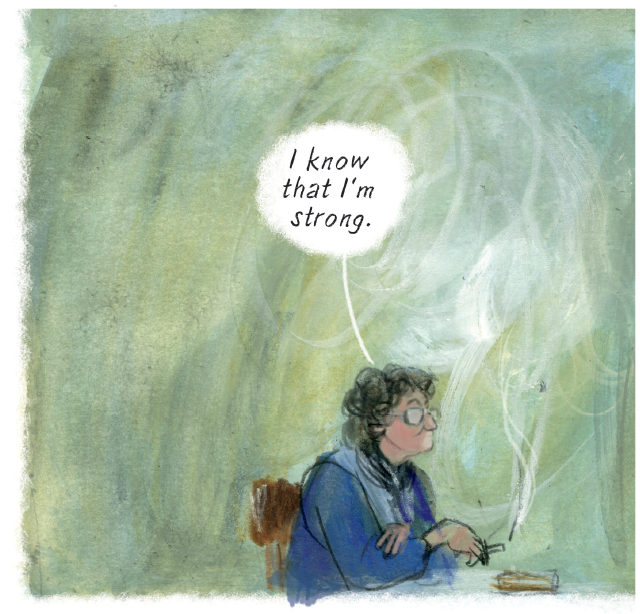
Comic: Emil Ferris’s My Favorite Thing is Monsters [Vol 1] (2017). What an accomplishment! Your heart will hurt but you won’t be able to stop turning the pages. Ten-year-old Karen Reyes lives in Chicago in the late 1960s. She adores her brother, who is sometimes a gentle artistic soul but sometimes a man pushed to violence by racism and poverty, almost as much as she loves monsters. (She draws herself as a werewolf.) She’s fallen in love with her best friend, Missy, who now shuns her at school while being drawn to her in private. Her mother is diagnosed with cancer, leaving the family’s fortunes ever more precarious. When Karen’s upstairs neighbour, Anka Silverberg, a married Holocaust survivor with whom her brother had been having an affair, is found dead under mysterious circumstances, Karen takes it upon herself to investigate. She stumbles on some cassette tapes, in which the woman tells her life story, a lurid and painful one: Anka was brought up in a brothel by her abusive mother, a sex worker, and then sold into a child prostitution ring from which she is “rescued” by a client who later abandons her when she gets too old for him. After the fall of the Weimar Republic and the rise to power of the Nazis, Anka is persecuted for her Jewishness and eventually deported to the camps. How she survived, how she made her way to America, and what led to her death—these questions are presumably answered in volume 2, which was released last fall. Volume 1 is 400 pages, with plenty of tiny lettering. It would be an effort to read it even without its distressing subject matter. But it’s damn good and deserves more attention than it’s got. Ferris uses dense cross-hatching to give her images texture: I don’t how else to say it other than the images seem tense. Amazingly the book is drawn almost entirely with Bic ballpoints. The whole story of its creation, which took six years, is remarkable, starting with Ferris’s partial paralysis after contracting West Nile disease.

Holocaust-adjacent text: Svetlana Alexievich”s Last Witnesses: An Oral History of the Children of World War II (1985, translated by Richard Peaver and Larissa Volokhonsky) impressed me with the pathos of its subject matter (children, many orphaned either permanently or temporarily when Germany invaded the USSR in 1941) and the success of its method (her now well-known quasi-anthropological style, in which witnesses speak for themselves, with seemingly little input or shaping from Alexievich herself, other than the ordering and structuring, not to mention the selecting of excerpts from what are presumably much longer testimonies: which is to say, thoroughly shaped…)

Book I Never Expected to Spend This Much Time With:

Lois Lowry’s Number the Stars (1989), the classic middle-grade novel about the (anomalous) experience of Danish Jews during the Holocaust. I created a lot of materials about this book for teachers. Yes, it has certain limitations, but I’m honestly impressed by how much richness I’ve found in this text. It seems to be fading a bit from the classroom—but not anymore, if I can help it!

Edouard Vuillard, Madame Losse Hessel in Vuillard’s Studio (1915)

There you have it. I don’t know what my life is going to look like going forward—but I hope at least in the short term to have more time for this poor little blog. Thanks as always for reading! I would love to hear your thoughts on anything I wrote about here.


What I Read, February 2024

Fell behind on these updates during the semester, as usual. Hard to remember that month beyond the usual—the semester taking hold, mostly warm days from the ever-earlier Arkansas spring—but I do know that mostly we were busy getting ready for my daughter’s bat mitzvah in early March. Along the way I squeezed in these books.

Richard Serra (2001)

Thien Pham, Family Style: Memories of an American from Vietnam (2023)

Autobiographical comic about Pham’s family’s journey from Vietnam to the US in the early 1980s via a Thai refugee camp. Each chapter is named after an important dish, ranging from the ball of rice and fish his mother saves for him on their flight from Vietnam to the baffling Salisbury steak of the school cafeteria to the co’m tâm dac biêt (a combo plate, as best I can tell) that he eats with his high school friends.

The palette is somber, mostly browns and greens, but the tone is lively: this is the classic story of American immigrant success, a story none of us can take for granted, which explains, I’d say, why the final chapter concerns the then-41-year-old author’s decision, in 2016, to finally take citizenship, prompted by Trump’s increasingly hostile anti-immigrant rhetoric. Thien and his family go through a lot of hard things: bureaucratic delays, poverty, language barriers, exhausting work that nearly tears the parents apart, and, most of all, at the very beginning of their journey, a harrowing attack by pirates on the way to Thailand, starkly presented by Pham in a series of black pages containing only the sentences his mother whispered into his ears, “It will be ok,” “I’m here,” “I’m right here with you.” But the Phams do more than survive; they thrive. I was delighted to see the haggard, exhausted, frightened yet determined young parents of the opening chapters settle into the gently bickering, food-pushing older couple of the last ones. Pham finishes with “end notes,” in which he answers questions readers are likely to have, like “What do you parents think of this story?”. In his answer, Pham draws his mother popping her head from another room into his studio and shouting (accurately) “I am the hero!”

Samantha Shannon, The Priory of the Orange Tree (2019)

Epic fantasy of two worlds, one based on medieval Europe, one on ancient China and Japan. In the former, dragons are abhorred; in the latter, they are venerated. Those dragons are beautiful and wise creatures of air and sea, nothing like the monsters that nearly destroyed civilization centuries ago before being bound into an endless chasm. The spell that cast the bad dragons there, however, is reaching its thousand-year-end, and they’re determined not to be defeated this time. Can our heroes convince the leaders of the kingdoms and free states and empires to band together to defeat the enemy? (Yes.)

Priory has a satisfying heft. The first 2/3 especially move with satisfying deliberateness; the end, alas, is rushed. I loved falling into the world of the book, though, and was grumpy any time I had to set it aside for anything else.

Herta Müller, The Passport (1986) Trans. Martin Chalmers (1989)

I enjoyed this angular little book about the German-speaking minority in Romanian under Ceausescu, but I hardly remember a thing about it. Does this happen to you? What I remember: 80s rural Romania is grim; men are bad to women; people who leave come home to lord it over those left behind, to compensate for how hard it is in the new land.

Jesse Q. Sutanto, Vera Wong’s Unsolicited Advice for Murderers (2023)

Vera Wong gets up early. Really early. She takes a brisk long walk, being sure to protect her skin from that harmful sun. She makes breakfast and texts her son to ask why he’s still in bed. (Tilly is a layer, very accomplished, but he doesn’t seem to understand how fast life passes you by.) Then, the day well advanced (it must be almost 8), she walks downstairs to open her business, Vera Wang’s World-Famous Teahouse. (She named it after the designer because people love a famous name—Vera is smart like that.) She tends to her sole regular customer, a man whose wife has Alzheimer’s, meaning he can never stay as long as Vera would like, and then settles into long, quiet hours that weigh on her, almost forcing her to recognize that the shop is failing.

Then one morning she comes down to find a man dead on the shop floor. He’s clutching a flash drive, which she takes (for safekeeping, what you think???) before outlining the body, just like on CSI. She uses a sharpie so it will be nice and clear. The police are oddly unhappy about this. Misadventure, the police declare. But Vera knows: this is murder. In the next days four people come by the tea house—very suspicious. Vera slyly gets into conversation with them and learns they all knew the victim, Marshall Chan, who turns out to have been a bad man. Through a combination of bullying, passive-aggressiveness, sheer chutzpah, and plying them with food, Vera gathers what she insists on calling her suspects, forming them into an unlikely friend group and insinuating herself into their lives. She hasn’t had so much fun in years. They are all so nice—but they really need her help getting their lives together. Still, that doesn’t stop Vera from being clear-sighted: one of them is killer!

Vera Wong’s Unsolicited Advice for Murderers is funny, sweet, moving, and even a bit suspenseful. Vera is your classic delightful piece of parental work. Sutanto lets her share her wisdom while also admitting she could be a bit less… intense. I loved this book. My daughter loved this book. Maybe my wife will love this book (she is reading it next). The audio, read by Eunice Wong, is a delight. Don’t sleep on this perfect piece of light reading.

The temptation for a series must be immense. Sutanto should resist, but I hope she doesn’t.

Elana K. Arnold, The Blood Years (2023)

Impressive YA Holocaust novel for young adults that I would recommend to readers of all ages.

What happened to the Jews of Romania is one of the most significant stories of the Holocaust, sadly still too seldom told. The Blood Years, based on the life of the author’s grandmother, begins to rectify that. This is a novel of Czernowitz, that former Austro-Hungarian center of Jewish life in Bukovina. Frederike Teitler and her older sister Astra live a cossetted life: yes, their father left them, plunging their mother into a deep depression that led their grandfather to take the women into his apartment, but things have since settled down. Although Astra increasingly gets up to things her sister knows nothing about, life for the young women still revolves around daily ballet lessons and evocatively rendered summer vacations in the Carpathians. But then comes the war. The antisemitism that had been mostly a hurtful annoyance turns virulent, especially after the interregnum of Soviet rule in 1940 – 41, when Jews were briefly given full rights. When the Germans take over the city in the first wave of Hitler’s war in the east, with the enthusiastic support of most of the locals, Jews suffer pogroms and dispossession. The family is briefly forced into a ghetto and narrowly avoids deportation to Transnistria—a territory across the Dniester that was a hellhole for Jews even by the standards of the Holocaust—only because Astra’s doctor husband, whom she has married against everyone’s will, is deemed an essential worker. Arnold vividly evokes the hunger, illness, and terror of the following years. She organizes the book, as her title implies, around differing instances of blood, from a first period to violence in the streets to tubercular coughing.

I read The Blood Years in a day: it’s well-written, dramatic, sensitive, and, perhaps most importantly, unwilling to sugarcoat its story of survival. The iconography of the Holocaust, which mostly comes from a reductive idea of what happened to the Jews of Poland and western Europe, doesn’t apply to the Romanian story. For this reason alone, I hope lots of people read this book. High school teachers, please consider assigning it!

Binjamin Wilkomirski, Fragments: Memories of a Wartime Childhood (1995) Trans. Carol Brown Janeway (1996)

Infamous text, unsurprisingly now out of print, purporting to be a memoir of the author’s experiences as a very young child during the Holocaust, primarily in Majdenk. Except that Binjamin Wilkomirski is really Bruno Grosjean, whose unwed mother was forced to give up her child to the Swiss foster system in the 1940s. Wilkomirski—that’s the name he’s taken, so I’ll use it too: we are dealing with something other than a pseudonym here—is not Jewish, never lived in Poland, did not survive the Holocaust. When the book was first published—by an imprint of the prestigious Suhrkamp Verlag and by Schocken, the most prominent Jewish American publisher—it received notices that can only be called rapturous. The NYT rave is typical: Wilkomirski “recalls the Holocaust with the powerful immediacy of innocence, injecting well-documented events with fresh terror and poignancy.”

A year or two after its release, Daniel Ganzfried, a Swiss journalist, read Fragments and felt something was amiss. Ganzfried interviewed friends and family of the author, trawled through Holocaust repositories and Swiss archives. He published his findings—a (self) righteous condemnation of Wilkomirski as a fraud—in a prominent Swiss weekly. The German publisher responded by hiring a researcher, Stefan Maechler, to follow up on Ganzfried’s discoveries. Two years later, Maechler, agreed with the allegations, adding even more proof to that already collected. The book was withdrawn; scholars and ordinary readers felt shame and disappointment; no one talked about it anymore.

I was one of those early readers. This was before my interest in the Holocaust turned into my livelihood. I followed the ruckus with interest—I read the flurry of pieces (an especially good one by Elena Lappin ran in Granta) that speculated on why someone would do such a thing—but I was perfectly willing to put the book out of my mind.

Come twenty-five years later to find one of my best students wanting to write her senior thesis on the book, after having read it in a class she took while studying abroad. The student was fascinated by the text, intrigued by the silence surrounding it, and curious about what we might learn from that silence and from reading the text, even knowing it to be fake. I knew I would be teaching a course on the afterlife of the Holocaust this semester, and we decided she should take the opportunity to teach the text. Abroad, her instructor had prefaced the reading by explaining the background. After much discussion, my student and I decided not to tell the students in my class the truth beforehand. This experiment proved fruitful, even if some of the students were rightly un-thrilled by our decision. (We explained the rationale, which allayed most concerns.) Fascinating to see how strongly the text resonated with students, and, concomitantly, how betrayed they felt when they learned the truth. The first day’s conversation about how Wilkomirski represented trauma pivoted, the second day, to an impassioned discussion of whether anyone should ever read this book, and, most importantly, to my mind, how neatly the text matches our expectations of what trauma means.

(On the course feedback forms I asked whether I should teach this again, and, if so, whether I should spill the beans beforehand. They all said I should and no I shouldn’t. Not what I expected.)

Jona Oberski, Childhood (1978) Trans. Ralph Mannheim (1983)

Moving and angry Holocaust story, presented as fiction but closely modeled on the author’s life. (I wrote about it here.) I was interested to compare Wilkomirski’s grotesque exaggerations of Oberski’s reality, and assigned it this semester for the first time, but less obsessed readers can appreciate it all on its own.

James Buchan, Heart’s Journey in Winter (1995)

Baffling, weird spy novel set in West Germany in 1983 amid the furor and fear incited by the decision to place Pershing missiles on German soil.

Buchan’s novel is as thorny in its syntax and structure as a poem. The interlingual pun of the title references Goethe’s “Harzreise im Winter” (A Journey through the Harz Mountains in Winter), playing on the near euphony of Harz and Herz, meaning heart. Readers who struggle to understand what’s going on are just following the lead of the characters. Secret meetings in secluded hunting lodges, cryptic conversations where people tell each other things without saying anything outright, lovers on the run, adultery as a metaphor for spycraft: Buchan uses many of the tropes of the genre, but slantwise, ruthlessly excising exposition. No heroes or resolution here. Imagine a Len Deighton novel, with its sympathy for cold war German seediness, but stripped of the belief that the rules of the game must be followed, however exhaustedly or ironically, and instead replaced with the feverishness of a lieder cycle.

I often forget plots soon after reading; in the case of Heart’s Journey in Winter I forgot it while reading. Like, I mostly had no clue what was going on. I remember instead the descriptions of trout fishing, and evenings at a country inn, where couples drive up from Bonn to sit in mismatched chairs in a newly mown field drinking cold local Riesling. Is this a good book? No idea! Should you read it? No clue!

Svetlana Alexievich, Last Witnesses: An Oral History of the Children of World War II (1985) Trans. Richard Peaver and Larissa Volokhonsky (2019)

Y’all, this book! Finally read Alexievich, and I get the hype. Last Witnesses is a series of vignettes: each chapter the story, told from the position of middle or late age and in their own words with only the lightest editorial commentary, of what the tellers experienced as children during the German invasion of the Soviet Union in WWII. Most begin with that quiet unassuming day in late June 1941 when the country found itself under attack. They begin with the essentials of their family: how many siblings, maybe their ages, sometimes a father (though these are often already away or soon to be called up), and almost always a mother. The mothers leave too, more often than not, whether through death or the choice to join the war effort. Last Witnesses is about loss: families broken apart, loved ones murdered by tank, by gun-shot, by bombs from the air, by hanging. To a lesser degree it’s about resilience: roles and responsibilities taken on much earlier than anyone would ever have expected. But above all it’s about trauma. Decades later, the story-tellers break down, or trail off, or acknowledge how much they suffered from the rupture of their world. The cumulative effect feels important to the project, but it’s not easy on the reader. So much heartbreak. For that reason, it would be weird to say I loved this book, but I sure was impressed. And I was fascinated by a recurring subplot, if you will: the events here narrated are also the story of the Holocaust in Belarus, but in the best Soviet tradition that’s never acknowledged.

Cristoffer Carlsson, Blaze Me a Sun (2021) Trans. Rachel Wilson-Broyles (2023)

Superior Swedish crime fiction. Time was I couldn’t get enough of that stuff: I remember some pleasant weeks in graduate school plowing through Mankell. (A few of those Wallander books are hard to beat for suspense.) But eventually the Scandi-noir boom became a glut: most things are mediocre, after all, and with seemingly every crime writer from Rejkavik to Helsinki available in English I oughtn’t to have been surprised that a lot of it wasn’t that great. But this one made Sarah Weinman’s best of 2023 list and the audiobook was available at the library, so I gave it a try. And I’m glad I did. The structure, pacing, and ambition of the book quickly won me over, and I looked forward to my commute each day. (The narrator seems to know Swedish—judging from his pronunciation of names and places anyway—which compensated for his decision to voice female characters in falsetto. That always makes me crazy.)

The still-unsolved assassination of Olaf Palme seems a trauma from which Sweden has not recovered, so often does it figure in the country’s crime fiction. Carlsson’s novel, set in rural western Sweden, far from Stockholm, concerns a violent crime that takes place on the night of the Palme killings. To his credit, Carlsson keeps the “what has happened to our decent country” hand-wringing/sociological soul searching to a minimum, emphasizing instead how the drive to understand can cascade through generations. Using three narrative levels, the outermost one about a writer who returns from the capital to his hometown in midlife and finds himself drawn to that unsolved crime from the mid 80s, Carlsson pays as much attention to the narration as the discourse. And I didn’t figure out who did it until right before the big reveal. Win all round.

Georgia O’Keeffe, Light Coming Over the Plains, No. II (1917)

Good month, right? (Wilkomirski aside—that’s a special case.) That Buchan tho. What the hell? Anyone ever read that? Other than John Self, I mean.

What I Read, June 2022

Plenty busy chez EMJ last month. Two weeks studying Holocaust photographs in a faculty seminar (inspiring, transformative, draining). One week teaching an online class (enjoyable, tiring). One week doing absolutely nothing but reading and chilling (bliss). And one week trying to catch up on all the things (I know this makes for five weeks, not sure what to tell you).

Although much of my reading concerned the history of atrocity photographs, I made time for a number of other things. I got into a good rhythm: get up early, read something demanding for an hour or so; crash in the afternoon and evening, read fluff. Spent much of the month in St Louis: nice to be somewhere where you can sit outside in the summer. Also: Ted Drewes FTW!

Gilad Seliktar, from But I Live

Richard Wright, Black Boy (American Hunger) (1945/1991)

In the first pages of his autobiography, Wright, a bored four-year-old, almost burns his grandmother’s house down, and the rest of the book is seldom less incendiary. Amazing that Wright survived not just that errant moment but his childhood at all. So much abuse, contempt, despair. Wright wanted to call the book American Hunger, a resonant title that suggests not just the hunger that African Americans have felt to belong to their country but also the hunger with which America has devoured them. Most of all, though, the title is literal: Wright was seriously undernourished much of his life, even into adulthood. (He was turned down for a good job with the post office because he didn’t weight enough.) In one indelible scene, Wright, who has been deposited in an orphanage because his mother temporarily can’t take care of him, is dizzy with hunger. He and the other children were fed only twice a day—before bed they received a thin slice of bread with a smear of molasses—but that didn’t save them from having to work. For example, they had to “mow” the orphanage’s grounds: a herd of children on their hands and knees, pulling the grass out in clumps, often too lightheaded to make any headway.

Wright changed the title to Black Boy after the Book of the Month club, which had selected the title—as it had done some years before with Native Son—declined to publish the manuscript’s second half, which describes Wright’s experiences after escaping the South for Chicago, specifically his involvement with the communist party. (I gather the party pressured the BMOC to make the changes, which suggests an America so different from the one we live in I don’t even know what to say.) I sort of agree that the parts about Wright’s childhood and early adulthood in Mississippi, Arkansas, and Tennessee are more compelling. They’re certainly more reducible to a narrative of suffering that makes sense to (white) readers. (And ending with the train ride to Chicago implies an overcoming that the rest of the book belies.) But I found the cruel political machinations described in the second half engrossing—excommunication, quasi-Stalinist show trials, oof. Wright believes there is something essential to communism that cannot be quashed by its instantiation, whether in the Soviet Union or south side Chicago. It emphasized self-sacrifice in a way his own life had prepared him to understand.

What stands out to me about Black Boy is its almost complete lack of joy. Wright’s life was hard, his upbringing mean, in both senses of the world, his horizons cramped by racism and the strict religion of his family. There’s nothing here to compare, for example, to the meaningful pleasures described in Henry Louis Gates, Jr.’s Colored People. (Admittedly, Gates was of a different class and writing about the 1950s not the 20s and 30s.) The funniest scene concerns his job as a janitor at a Chicago hospital. Not that this was a good time. Together with three other men, all Black, Wright worked without thanks and almost without recompense: his description of mopping stairs that people immediately muck up, offering what they think is an amusing quip about how work is never done or, as is more often the case, not even seeing him at all will make your blood boil. The basement of the hospital contained a lab where white scientists performed experiments on animals (afflicting mice with diabetes and other horrors). One day, two of the janitors, who hate each other, get into a fight that turns into a brawl—the cages are knocked to the floor, and most of the animals escape. With only minutes to go before the scientists are due back from lunch, Wright and the others chase the animals, tossing the animals into cages willy-nilly. Who knows, Wright wryly speculates, what medical advances were made that day. Yet this scene, which in another writer’s hands could be laugh out loud funny, is tense, terrifying. The consequences of discovery for Wright and the others are simply too great.

Poverty is corrosive, yet Wright’s escape carries with it regret, loss, sorrow, and rage. In a riff on Du Bois’s idea of double consciousness, Wright describes his literary self-education—he used the library card of a sympathetic white co-worker to check out books—as a mixed blessing:

In buoying me up, reading also cast me down, made me see what was possible, what I had missed. My tension returned, new, terrible, bitter, surging, almost too great to be contained. I no longer felt that the world about me was hostile, killing; I knew it. A million times I asked myself what I could do to save myself, and there were no answers. I seemed forever condemned, ringed by walls.

Communist party meddling or no, I can see why white publishers were wary of the book’s refusal of uplift. To me, the characteristic Wright note here is that added “killing”—Wright suffers plenty of physical violence, but his mental anguish is even worse.

Audrey Magee, The Colony (2022)

In the summer of 1979, two men arrive on an island off the west coast of Ireland. One, an English painter, is running away from a failing marriage and doubts about his artistic relevance, and in search of fabled light. The other, a French academic, is returning to complete the field work for his anthropological and linguistic dissertation on Gaelic. The story of how their competing presences—expressed in dinner-table arguments about whether English and the modernity it is the vehicle for is ruinous—shape the lives of the family that has rented them their rooms is interspersed by short chapters that detail, in neutral language, killings perpetrated by Protestant and Catholic paramilitaries back on the mainland.

I’m a sucker for windswept northern landscapes, and any story in which the making of tea is a repeated and central element will always be meat and drink to me. But I liked Colony for other reasons too. It’s a think-y book that never feels plodding. Magee argues that the depredations of colonialism take many forms—the fantasy of linguistic purity as harmful as airy invocations of progress. The latter, so Magee, always require someone be exploited. She tackles a lot here, and I wasn’t always convinced by the juggling act (a backstory about the Frenchman’s childhood as the son of a pied noir needed to be better integrated), but I appreciated her ambition.

Thanks to John Self for turning me on to this one.

Sylvia Townsend Warner, Lolly Willowes , or The Loving Huntsman (1926)

An unmarried woman in England between the wars becomes a witch. Or decides to live as the witch she has always been. Frances, Rebecca, and I talk about this on Episode 5 of One Bright Book—I loved it less than they did, was not quite swept away with it as I’d hoped, but I definitely recommend. Warner is perhaps a little chilly for me, and I do wonder about the implications of emphasizing (only?) a magical solution to a political problem—what will it take for women to be left alone? Prefer Comyns’s The Vet’s Daughter, for a not dissimilar English magic-realist admixture.

Check out these pieces by Rebecca and Rohan for more thoughts on what Warner is up to.

Garry Disher, The Way It Is Now (2021)

Diverting crime novel with good surfing scenes. The son of a cop, himself recently a cop—he fell in love with a witness and has been suspended—has never stopped trying to find out what happened to his mother, who disappeared twenty years ago. New evidence comes to light, and things look even worse than ever for his father, who has always maintained his innocence.

Not the best Disher I’ve read, but he’s so damn competent, not sure he can write a bad book.

Charlotte Schallié, Ed. But I Live: Three Stories of Child Survivors of the Holocaust (2022)

[Created by Miriam Libicki and David Schaffer; Gilad Seliktar and Nico & Rolf Kamp; Barbara Yelin and Emmie Arbel]

Beautiful & moving collaboration between child Holocaust survivors and graphic novelists, with impressive critical and historical appendices. Libicki fittingly illustrates Schaffer’s story of hiding in the forests of Transnistria—what horrible things happened in that benighted territory—in the style of an edition of the Grimms. The minimalist Seliktar (he reminds me of Manuele Fior) uses a palette of purple/blue + yellow/brown and delicate shading to accompany the story of the Kamp brothers’ time in hiding (in thirteen different lodgings, including a chicken coop) in Holland. Yelin, whose marvelous Irmina I raved about last year, tells the bleak story of Emmie Arbel’s terrifying experiences as a five-year-old in Ravensbrück and Bergen-Belsen, where she had to watch her mother starve to death as a result of dividing her meager rations among her children (all three survived, miraculously). After a long recuperation in Sweden, the siblings immigrated to Israel, where Emmie struggled again, especially in the kibbutz system of education/neglect. All three artists include their exchanges with their subjects in their comics, but Yelin’s self-reflection is the most extensive. In the process she shows how thoroughly Arbel was damaged by her experiences, to the point of passing her trauma on to her children.

The project is a triumph. Schallié deserves credit for bringing together survivors, artists, and scholars—and for securing the funding from the Social Sciences and Humanities Reseach Council of Canada that supported the collaborative project of which this book must be the centerpiece. In addition to the three comics, there’s a further comic describing the artists’ cooperation, a brief statement from each of the survivors themselves, and lucid, informative short essays expanding on the context of each survivor’s experiences by scholars. I especially appreciated Alexander Korb’s piece on the Holocaust in Transnistria.

Did I mention that But I Live is gorgeously produced and printed, too? A must read if you have any interest in the topic.

Kim Stanley Robinson, Aurora (2015)

Excellent novel about a spaceship—outfitted with twenty-four complete biomes and about two thousand people—on a mission to an earth-like moon in the Tau Ceti system. Despite having been slingshotted from Saturn at who knows how much the speed of light (Robinson does know, and goes into detail, but I can’t follow him when he gets all engineer-y), the trip takes 160 years, and so the people on board as the ship approaches Aurora are several generations removed from the ones who set off.

Two women are at the center of the novel—Devi, the ship’s de-facto chief engineer, and Freya, her daughter. (Robinson’s great theme is the power of the engineering mindset, its ingenuity and improvisation, when tied to a politics of care.) The other protagonist is Ship itself, whose AI comes to self-consciousness through long conversations with Devi, and her command that Ship write a narrative of the voyage. (The meditations of the relation of narrative to consciousness are the least successful part of the book.)

The travelers begin the process of terraforming the moon, but it turns out that it is inhabited, at minimum, by a prion that is fatal to humans. The crew faces a decision—turn their efforts to a nearby moon in the hope that it’s more hospitable, or return to earth, something Ship was not designed for. The dilemma almost leads to civil war—only Ship’s intervention as The Rule of Law permits a non-violent resolution of the situation. Most decide to return, but a large minority opt for the unknown. We never learn what happens to them. Probably nothing good, but Robinson leaves their experience as a tantalizing possibility and a symbol for all that can’t be known.

The voyage home is perilous for many reasons—the biomes are failing, the crew is starving, authorities on earth respond too late to slow Ship down, necessitating a dangerous twelve-year journey through the solar system where, theoretically, the gravitational forces of the planets create will enough drag for the crew to splash down.

Aurora is moving, suspenseful, and thought-provoking. As a book about politics and the insatiable human demand to make and do—which, Robinson suggests, ought to be confined to our own planet—it made a fascinating and unexpected pairing with the other book I was reading at the same time, namely…

Guido Morselli, The Communist (1976) Trans. Frederika Randall (2017)

Published after his death, like all his novels, Morselli’s The Communist was written in 1964 – 65. It’s set a half-decade earlier, at a time when the Communist party in Italy boasted the third-largest membership in the world, after only the USSR and China. Its success stemmed from its active role in the resistance to fascism, and translated, in the first decade or so after the war, into parliamentary success, although its members were divided about participating in the act of governing. Would that not legitimate the system they wished to overthrow? The Communist is about one of these new parliamentarians, Walter Ferranini, a man whose life has been devoted to the left, even if the left has not been devoted to him. The son of an anarchist railwayman, Ferranini served in Spain before finding his way to the US, where, despite himself, in a manner that seems to emulate the bourgeois striving he abhors, he marries the daughter of his boss and allows himself to dream of the family’s place in the country. But when his wife turns reactionary, throwing herself into a nativist movement, and with the war over, he returns to Italy and throws himself into labour activism in Reggio Emilia.

It is on the basis of his success in these practical matters, and his genuine commitment to improving the lives of the workers, that Ferranini is elected a deputy in the national parliament. Although he lives to serve, he is unhappy: his dream of introducing a bill to expand worker safety is met with hostility and derision by members of his own party; he feels increasingly unable to discipline colleagues who call out hypocrisy among party leaders; he falls afoul of party orthodoxy when he writes an article for a journal headed by Alberto Moravia; and his affair with married but separated single-mother is used by the party as an excuse to discipline him. No wonder his health is so bad. And then comes a telegram from the US—Nancy, his wife (they never divorced), is seriously ill. He gets a flight, arriving in Philadelphia in an epic snowstorm that incites the novel’s satisfying denouement.

Ferranini is a sad, lonely, and, yes, noble character (he’d despise that description, though, and the book sympathizes but never romanticizes him). Morselli writes with deep interest, if not tenderness, but entirely without sarcasm or satire about the tendency of belief systems and institutional structures to obscure the insights that sparked them. Ferranini’s article, the one that gets him in trouble with the party bosses, is about the inescapable reality of toil. Contra Marx, he argues, not even achieved socialism will be able to undo this reality. (Hannah Arendt would approve!) Workers don’t feel alienated; they feel tired. As he says:

Admit it, there are things that technology cannot achieve. There is a law that can’t be breached, a physical and biological law that says life can’t arise and survive without sweat and struggle. And especially not without struggling against the environment, the surrounding material reality, and labor is part of this.

The Communist, one of the best books I’ve read this year, so thoughtful and, oh I don’t know, solid, though never turgid, presents activism and labor organizing as real labor, less exhausting and dangerous than work in a mine or factory or agricultural cooperative, but exhausting and dangerous nonetheless. Most of the people who do that work are not dedicated to it—some are outright cynics, former fascists who became fervent communists when they saw which way the wind was blowing; Ferranini is exceptional. Morselli allows us to believe in his integrity even as he also shows us that the system the man works within ultimately holds him in contempt. It would be easy to conclude that Ferranini is a dupe. Morselli refuses that temptation. Neither does he make the man a true believer. He is something rarer: someone who does the work, because the work is good, if, as it is supposed to, it eases our exhaustion.

Nora inspired me to read this, and am I ever glad. Grateful too to the late Frederika Randall for bringing this book into such lovely English.

K. C. Constantine, The Man Who Liked to Look at Himself (1973)

The second Mario Balzic mystery is a step-down from the first—less interesting, plot-wise, and dismayingly retrograde in its use of slurs, to say nothing of its portrayal of queerness—but Constantine is good with the snappy dialogue and Balzic is shaping up to be a great character. I’ll give the series a little more rope.

Sally Rooney, Beautiful World, Where are You (2021)

Loved it! Still think Conversations with Friends is the one to beat, but I’m appreciating the maturing of Rooney’s characters as she herself ages, and I just think she gets “the whole meeting smart friends when you are young and then sticking with them for years even as your lives change” thing. Also, a great writer of sex.

Setting down to write what became The Rainbow, Lawrence said in a letter that he was going to follow the master, Eliot, and do what she did: take two couples and set them against each other. Rooney does the same here. Of her four protagonists, the non-intellectual Felix interested me the most, there’s a Mephistophelean quality there that is directed outward rather than inward (most of the bad things in her other books have involved self-harm), though I think Rooney took the easy way out at the end and tamed him, made him just curmudgeonly when he might have been something else.

This was great on audio, by the way, Rooney’s Irishness much more evident.

Kotaro Isaka, Bullet Train (2010) Trans. Sam Malissa (2021)

Extravagant thriller with more plot twists than any five books need, let alone one. The premise is cool—a bunch of assassins and other thugs are stuck on a bullet train from Tokyo to Morioka. Their various errands center on a suitcase full of money and the son of a mobster who winds up dead a few pages into the book. At first I was into it, the reversals were clever and the characters intriguing. But then the book spoils the fun by taking take itself seriously—there’s a running question of why people think it’s ok to kill other people, what makes for evil in the world, etc. Because I don’t respect myself, I finished it, all 432 pages.

Barbara Yelin, from But I Live

There you have it, folks. Began with a bang, ended with a whimper, but, really, this was the most solid reading month in ages. Almost everything was good, but special shout-outs to the Wright, Robinson, and Morselli. Three best-of-the-year candidates right there. Marginal consolation in a time of the rampaging new American illiberalism. I hope you all are well and not too disheartened.

Cutting Across Lines: Teaching Holocaust Literature in Arkansas

My personal essay on teaching Holocaust literature in the South has appeared in the Fall 2021 issue of The Oxford American.

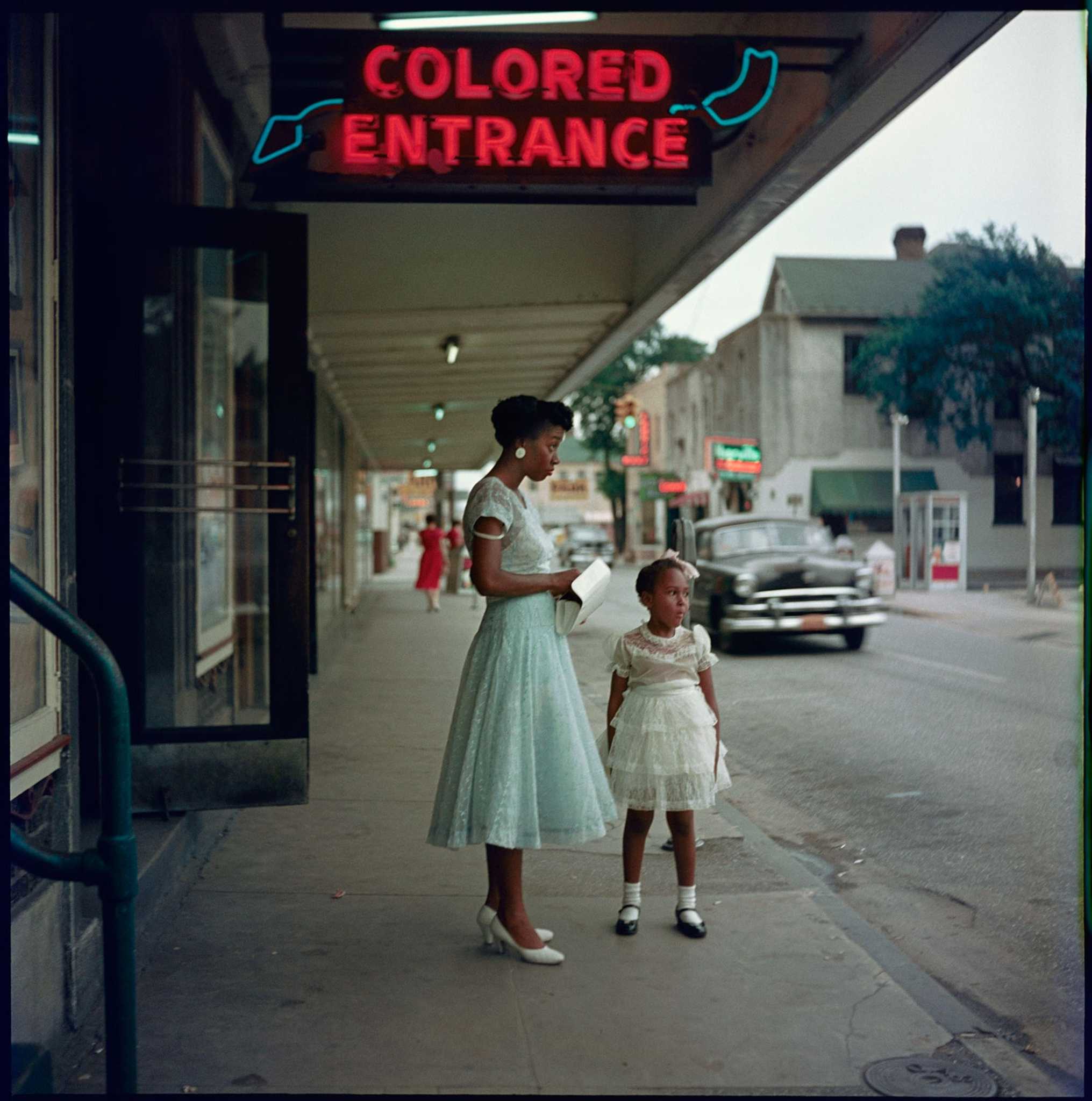
Regular readers of this blog know how much I love Ruth Kluger’s memoir Still Alive: A Holocaust Girlhood Remembered. In the essay, I begin by describing how differently Kluger’s shocked response to segregation in 1950s Texas registered for me once I started teaching her work in a classroom filled with students from Texas and across the South.

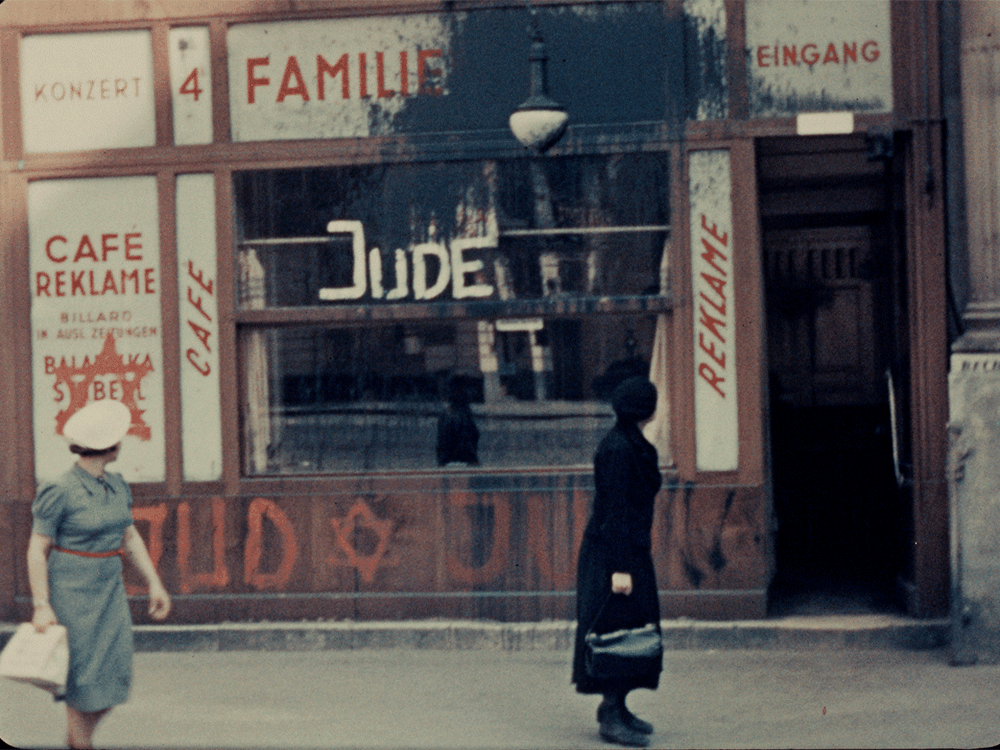
Vienna, 1938

“Cutting across Lines,” as the essay is titled, is about belonging. I consider three times and places that have shaped me–the Canada of my childhood, the Eastern and Central Europe before, during, and immediately after the Holocaust, and the South today. I reflect on how each of these worlds shapes my understanding of the others. I worked hard on the essay, helped by stellar editing from the folks at the OA and my wife, who helped me see what the essay was really about.

You can read it here, but I encourage you to subscribe to support this valuable magazine.

Gordon Parks’ “Department Store, Mobile, Alabama” (1956). Credit for all images must say: Photograph by Gordon Parks, Copyright The Gordon Parks Foundation, Courtesy Jenkins Johnson Gallery.

“It Screamed in its Own Blood”: Poems by Henia and Ilona Karmel

Henia and Ilona Karmel grew up in a cultured bourgeois family in Kraków. Photos show them together, always touching: an arm around the shoulders, a hand clasped. In one from 1938 Ilona, wearing a polka-dotted top and flowers in her hair that almost obscure the braid tied around her head, kisses Henia on the cheek, a full-on “come here, you” kiss that Henia responds to with a frozen smile that combines pleasure at the experience with irritation at the camera.

Ceija Stojka, “Los, Los, weitergehen! Damals 1943-1944. Auschwitz ist kein(e) Lüge. (Move, move, keep moving! In the years 1943–44. Auschwitz is not a lie),” 2006

I don’t know enough about them to say that they lived with an “us against the world” mentality—Henia remains a complete mystery; this remembrance offers insight into Ilona—but I can certainly say they went through an awful lot together. In 1940, the sisters, 18 and 14, travelled with their parents to eastern Poland, now held by the Soviet Union, in search of relatives who might take them in. But their mother, Mita, got cold feet, saying she would rather be killed by the Germans than saved by the Russians. (Regrettably prophetic.) In the end, she got her wish.) The family returned to Kraków, which meant German rule but also familiar faces. One of these would prove to be consequential. One day Henia ran into Leon Wolfe, a young man with whom she had begun a short, intense relationship at a resort in the Tatra mountains the year before; before long they were together again. When the Germans established the ghetto in early 1941, Leon insisted they move to a nearby village; Henia persuaded her family to join them. For a short time, life seemed about to improve—Henia and Leon were able to get married in June 1941—but the idyll didn’t last. The Karmels were forced out of the village, lived for a time in the forest and then on a farm where they narrowly escaped death after being mistaken for partisans (only the last-minute intervention of a relative in the local Jewish Council saved them), before making the difficult decision to split up. Leon accompanied the women back to Kraków; the girls’ father, Hirsch, went elsewhere. (Unclear where or why, but Ilona blamed herself for her father’s decision for the rest of her life. All that is known of Hirsch Karmel after that moment is that he was murdered at Treblinka.)

In the ghetto, Leon and Henia worked at a paper company, Mita nursed typhus patients, and fifteen-year-old Ilona joined a Zionist resistance movement, gathering information and passing messages. In March 1943 all four were sent to Plaszow, the camp depicted in Schindler’s List, which had been built on the grounds of a Jewish cemetery. (If you’ve seen the film, you might remember the car taking Commandant Amon Goeth to his villa along a road paved with headstones.) After a few months, the family underwent another separation. The sisters and their mother were sent, away from Leon, to a forced labour camp at Skarzysko-Kamienna. There the Germans had taken over an existing ammunitions plant, which they contracted out to a company called HASAG. Mostly the factory produced bullets, but one section—where the Karmels ended up—made underwater mines. These were filled with picric acid, a terrible chemical that poisoned many of the workers after turning their skin yellow.

Yet Skarzysko-Kamienna, like all camps, especially forced labour camps, was also a site of resistance—sometimes political but more often cultural. Prisoners prayed, danced, drew, and sang. The Karmel sisters began writing poetry, using bits of paper and pencil stubs slipped to them by a non-Jewish worker. In the summer of 1944, as the Germans began to retreat from the Red Army, the Karmels were shipped to another HASAG factory, a satellite camp in the Buchenwald system. The poems accompanied them, sewn into the hem of their clothing. (In later years survivors would remember the girls reciting their texts.) The poems were still there when, along with thousands of other prisoners, Ilona and Henia were sent on a forced march through the forests and fields of Germany in the catastrophic final days of the war. Along the way many prisoners died, killed by shooting, hunger, disease, or exhaustion. Some were deliberately run over by tanks and left for dead. This was the fate of the Karmels. As the woman lay in a pile of victims, the dead mingled with the nearly-dead, Henia saw a cousin march by in another set of prisoners. She managed to hand off the poems, begging the woman to pass them on to Leon, who would surely return to Kraków if he had survived. The next day—the last day of the war in Europe—the Karmels were rescued and taken to a field hospital. The women were barely alive, so badly had they been mutilated. Henia and Ilona each lost a leg; their mother did not survive.

Eventually the sisters were taken to a proper hospital in Leipzig, though given how ruinous conditions were in Germany at the end of the war, care was erratic, even dangerous. Henia and Ilona lay there for six months. Amazingly, Leon had survived the war (how I do not know, but I’m sure his story is equally remarkable) and duly returned to Kraków. More amazingly, he met the cousin who had been entrusted with the poems. Most amazingly of all, word of a memorial service held for the girls in late September (Leon, convinced they were still alive, had given only grudging consent) reached Leipzig. A man who knew the Karmels sent word to a refugee commission, which sent a telegram to Leon (still extant), who drove the 500 dangerous miles to Leipzig to be reunited with the Karmels in a scene that I imagine was similar to the emotional one depicted at the end of Art Spiegelman’s Maus.

Although they had survived, the sisters were in poor health and badly needed reconstructive surgery. Leon desperately searched for help. Back in Kraków he happened to meet a Swedish naval officer attached to the Red Cross. After learning of their predicament, the man, who was on the point of returning to Sweden, promised to arrange visas. In the final amazing turn of the story, he kept his word and before long the sisters were in Stockholm, where they found themselves in one of the best rehabilitation facilities in the world.

In 1948, Henia and Leon immigrated to New York. Ilona, whose injuries had been more serious, remained behind, but joined them the following year. She enrolled at Radcliffe, met her future husband Francis Zucker, a philosopher and physicist, and even moved with him to Germany for a number of years during which she worked at an orphanage and wrote the novel that would make her name, An Estate of Memory. Later the couple returned to the US; Ilona taught writing at MIT for years. Henia wrote two novels herself and many short stories. The poems were forgotten, although they had in fact been published by a Polish organization in New York in 1947 under the title Song Behind Barbed Wire.

After Ilona’s death in 2000 the manuscript passed to the poet Fanny Howe, a longtime friend of Ilona’s, who began the process of bringing the poems into English. As she notes in her introduction to a volume called A Wall of Two—from which I have taken these biographical details—the task grew into a complex creative endeavor. Translators Arie A. Galles and Warren Nieschłuchowski rendered the texts into English; Howe selected her favourites and adapted them, aiming to remain true to the originals while also shaping them for more powerful effect. The Karmels, she observes, were young and living in conditions of extreme duress when they wrote these texts, which she describes as awkward and unpolished. The versification drew on a culture that was being destroyed along with the writers; Howe sought to make the poems more modern, never adding but cutting repetition and avoiding poems “that used high and archaic language.” She sent her versions back to the translators whose comments inspired her final versions. A bold but also fraught strategy, which risks implying that the sisters did not quite know what they were doing. Leon Wolfe, who gave his blessing to the project, suggests something similar when he writes that “the essence [Howe] conveyed was truer than the original poems.”

Howe argues that the art made in the camps took two forms: it either looked back to the lost world of its makers or it depicted their new one. In making her selections, Howe concentrated on the latter. She gets a little high-flown explaining this decision, explaining that she avoided using the word “death” because it is “the end of language.” (I’m reminded of Poe’s remark that grammar can do what reason cannot, allowing us to write the impossible sentence “I am dead.”) But Howe has earned our good will: her project is a great success. Her versions are generous and generative. In an afterword, she considers three of the poems, comparing her adaptations to the originals. In each case, hers is indeed more powerful.

That’s especially true of my favourite poem, “Procession,” written by Henia. (The sisters later decided that Henia was the better poet and Ilona the better prose writer; although I’ve yet to read their prose, I agree about Henia as poet.)

Procession

By Henia Karmel, translated by Arie A. Galles, adapted by Fanny Howe

Two marched by

in striped prison garb

then two more in rags.

After them came four

on stretchers.

Their bodies jerked up

comically at the night sky.

Half-naked with broken legs.

A frozen cadaver and then

just beside the prison gate

came four more stretchers.

One pressed a blood-soaked cloth

across his face.

The parade went on

while we watched in dread.

The rag man on the litter was dying.

And at the end, four from a nightmare

lugged on their heavy shoulders

a bundled body.

They couldn’t cope and let it drop.

It screamed in its own blood.

“Procession,” a word that doesn’t appear in the poem, connotes something more stately, more subdued, and, aptly, more funereal, than a word that does, the ironic “parade.” A procession is solemn. (I’m reminded of Woolf’s “procession of the sons of educated men” from Three Guineas, her passionate condemnation of masculinity, violence, and fascism, that is, the things the Karmels would suffer.) But the title puzzles me, because I don’t think this is a solemn poem. It is more terrible than that. At first it seems flatly descriptive: here is a typical camp scene, probably from the end of the day, when the work details would return to barracks. It is observed by some unknown group, a “we” presumably comprised of other inmates, though as readers we too watch the scene in dread. But as it goes on, the poem becomes less observational and more expressionist. More hallucinatory. More pointed. The final, terrible image, in particular, belies the affectlessness of the opening. (Of course, any Holocaust representation is bound to show horror as inextricable from description.)

In some sense “Procession”—preceded by no article, neither definite or indefinite, as if the event described here were unending or, worse, coterminous with the world—is an account. I mean this literally. It counts victims. Two, then two, then four (although these, on stretchers, must surely be carried by others), then one, then four more, then a final four that carry one. Eighteen in all. In Hebrew, eighteen is lucky; it shares a name with the word for “life.” But there is more than easy irony here. The eighteen are a mix of the living and the dead. And they aren’t just eighteen, either. They must be accompanied by some shadowy, unknown carriers, to say nothing of the numberless, observing “we.” Perhaps Karmel is offering her own account, in order to challenge the counting that prisoners suffered each evening, the nightly roll call that sometimes went on for hours.

That challenge mingles precision with confusion, which befits the world of the Lager, which was at once regimented and chaotic. A similar, but even more consequential blurring concerns the relationship between the living and the dead. Are the bodies on the stretchers alive or dead? Presumably alive, otherwise why would the speaker describe a cadaver in the next lines? (Unless the difference is that one is frozen and the others aren’t, yet. What, incidentally, is the difference between a “cadaver” and a “corpse,” which is the word I would expect in this context? Will this cadaver be used for some kind of experiment? Does cadaver connote death more fully than “corpse”? Or does it imply, via its future utility, something less completely dead?) But if those stretchered bodies aren’t dead, how alive are they? “Their bodies jerked up/comically at the night sky”: the phrase “jerked up” is, to me, really strange. Presumably this is an adjective phrase not an action—it’s not that the bodies are convulsing (right?), but that their limbs, perhaps, are akimbo. This gruesome scene is made even worse, in my opinion, by that distressing adverb “comically,” which intimates the onlookers the speaker hasn’t yet referred to. After all, someone has to find their state comical. But what the hell does that mean? Are the bodies funny? Surely only despairingly so. But maybe we shouldn’t foreclose the possibility of humour so quickly. We wouldn’t want to enforce our pious sense of how the experience should be understood.

Besides, the poem soon leaves humour far behind. Horror is coming soon enough for those onlookers. Their distance from the procession only increases as the poem ends. What they see is awful. “The rag man” is dying; note the difference between this description, which seems to speak to his essence, and the more idiomatic “the man in rags.” Howe’s choice of “litter” is inspired. We can’t help but hear the implications of waste—in keeping with the language of the perpetrators, which routinely called the victims Figuren (puppets), Stücke (pieces) or Schmatte (rags).

And then comes the worst part, the final horror, the “four from a nightmare.” (Again, the implication is that these figures are themselves fundamentally nightmarish, although the reference is most likely to their situation.) Is the “bundled body” dead or alive? Dropped, it “scream[s] in its own blood.” So that means alive, right?  It screamed in its own blood. This vivid, terrible expression makes me think of someone screaming through a mouthful of blood, though I admit I’m influenced by the earlier image of another victim pressing “a blood-soaked cloth/across his face.” (That “across” subtly implies the face itself is bloody, some injury more devastating than the one the more idiomatic “to” would suggest.) But screaming in the blood is hard to imagine. If the victim is not in fact gurgling from a bloodied mouth—and could they really be screaming if their mouth were so full?—then maybe the description is metaphorical. (Even if yes, this poem is remarkable at evoking bodily pain.) Maybe to scream in the blood is to scream inside? From the depths of one’s being? How would the onlookers know, though? The end of “Procession” seems less psychological than existential. Beyond an individual who suffers at least twice-over—in addition to their initial injuries they are dropped by their fellows—this final line offers a howl of despair, pain, and abandonment. One that is decidedly not universal, but perhaps the unhappy fate of all the camp’s victims.

The cover image shows Ilona (in the wheelchair) and Henia in the garden of the clinic in Stockholm, 1946

Descriptions and judgments. Living and dead bodies. Physical and psychological pain. Observers and participants. “Procession” makes us wonder whether any of these oppositions stand. Fanny Howe has done English speakers a service bringing it and the other poems collected in A Wall of Two to our ears. I hope they will find many readers.

Spindle, Scissors, Thread

I wrote this essay for a Yom HaShoah (Holocaust Remembrance Day) ceremony organized by the Jewish Federation of Arkansas. For the past three years, a grant from Hendrix College has allowed me to train a small cohort of students as future Holocaust educators. As part of the commemorative programs, this year’s students and I read personal reflections about what we’ve learned studying and teaching the Holocaust.

Gerda Weissmann was 18 years old in 1942. That was the year when, having already suffered the German occupation of her hometown in southern Poland, she was deported to Bolkenhain, a subcamp in the Gross-Rosen concentration camp system. Bolkenhain was the site of a weaving mill; in a perverse way, Weissmann was lucky to end up there, as it was considered one of the best labour camps for women. Which didn’t mean it was easy or pleasant. Weissmann and her fellow internees were expected to run four looms at a time—”experts who had spent their lives weaving never handled more than three,” she later wrote, not without pride—and the work was grueling: the women were on their feet for hours, deafened by the noise of the machines, suffering from eye-strain that must have been exacerbated by the threat that any mistake would be punished as an act of sabotage.

Still, as Weissmann recounts in her memoir, All But My Life (1957, revised 1995) she came to enjoy the work: “the intricate process of weaving gave me a sense of satisfaction and accomplishment.” These were emotions she would need to hold close when, in August 1943, she was sent to another camp, the notorious Märzdorf. After she rejected a supervisor’s demand for sex, her life became a living hell. He ensured she was put on so-called flax detail, a chain of women who unloaded enormous bundles of flax from freight trains for hours at a time until their bodies were bloody from the prickly fibers.

Weissmann considered killing herself, so profound was her misery, but before she could put her head on the rails she was transferred to yet another camp where she made silk parachutes that would be used by the soldiers fighting to destroy her, her family, and her people. That was merely a brief stop, though, on the way to her penultimate destination, yet another textile mill repurposed as a camp. In the recent past, Grünberg had been a model factory, designed for the well-being of its workers. But in its terrible new incarnation, that care had become a mocking façade: “The camp was modern, well scrubbed, clean, and filled with suffering.” Most of the suffering took place in the Spinnerei, the spinning hall, where a giant machine shredded finished material into a kind of mash that was then spun into yarn. Some of the material had been donated by German civilians; but other material had been ripped from the backs of those who arrived at Auschwitz. The spinning room was a terrible place. The women who worked there were soon as destroyed as the old clothes they repurposed. Weissmann describes them as:

Living skeletons with yellowish-gray skin drawn tight over prominent cheekbones; there were gaping holes in their mouths where teeth had either been knocked out or rotted out. These girls ran to and from huge spinning machines, repairing broken threads with nimble fingers. Their tired eyes and sallow jaws seemed to belie the swiftly running feet and dexterous fingers.

This mixture of life and death horrified Weissmann—not least because it prefigured her own fate. Before long she too was a living skeleton, though not nearly to the extent she would become when, after nine months in the Spinnerei, in the freezing cold of late January 1945, she and 4,000 other prisoners were forced by the SS away from the advancing Red Army and deeper into Germany. (You can read more about the infamous Death March to Volary here.) For more than a hundred days she and the rapidly dwindling prisoners (many froze, starved, were shot by callous, anxious guards, or succumbed to illness) marched over 300 miles, eventually ending up in a town in Czechoslovakia where they were liberated by American troops on May 5, 1945. At the time, Weissmann weighed 68 pounds. Only 120 women survived the march.

*

Gerda Weissmann was just one of the millions of victims of Nazi persecution. We know some of their stories. We know little, almost nothing about many others’. Most Holocaust stories did not end as Weissmann’s did. Most ended in the mass graves of Belarus, Ukraine, and Russia; the steadily accumulating piles of corpses in the ghettos of Eastern Europe; or the gas chambers of the extermination camps. For the past 15 years I have made it my self-appointed task to read as many of these stories as I can, and to learn as much as I can about the conditions of the lives and deaths of those whose stories must go untold. I am often asked how I can spend so much time reading, thinking, and teaching about the Holocaust. Isn’t it depressing? How can you take it? Doesn’t it make you despair for humanity?

I understand these questions. In fact, a few times a year, without fail, I feel the same way. A great weariness comes over me, repugnance, sometimes even disgust. I’ll sink into depression, overwhelmed by the enormity of the event. I’ll say to myself: no more histories or novels or memoirs, not even ones as engaging and moving as Weissmann’s.

Over the years, I’ve noticed a pattern to my depression. I’ll feel it mildly in January and strongly in June. It took me a long time to realize what should have been obvious—those are the times after and between academic semesters. That, in turn, helped me realize that I seldom feel despair about the Holocaust when I’m teaching it. On the contrary, teaching the Holocaust energizes me. It’s even, and I know it is weird to say this, affirming. How can I say that? Because in doing that work I am not so different from Gerda Weissmann—my satisfaction and accomplishment comes from an analogous work of weaving, unweaving, and weaving again: placing one story next to another, juxtaposing, comparing, adding, measuring, bringing this fact together with that, paying out these threads to my students, who are themselves individual strands whose various abilities and experiences I braid into the accomplishment that is a successful class.

*

The work Gerda Weissmnan was forced to do was always dangerous, always backbreaking, destructive of her body and her spirit, but occasionally, and certainly contrary to the intentions of the perpetrators, satisfying. Remember what she said: “the intricate process of weaving gave me a sense of satisfaction and accomplishment.” That work also offers a metaphor for how we might think and teach about the Holocaust. Think about what Weissmnan did. She bound. She tied. She created. She spun yarn. She wove fabric. She brought different strands together to create something new. I’m not suggesting she should have been grateful for the work; I’m not transforming her slavery into something good. I’m suggesting that even in oppression there will be resistance, however slight or ultimately futile. And that making something new from diverse strands offers a model for such resistance, a model that we in our different time and place might emulate. “The intricate process of weaving gave me a sense of satisfaction and accomplishment.” What was true for her might be true for us.

Literary people like myself love to talk about weaving. From Homer onward, with the story of Penelope’s secret resistance to her importunate suitors, weaving has offered a powerful metaphor for creation and destruction. Literature is itself woven; in fact, the words “text” and “textile” have the same root. They both refer to tissues and webs, to the activity of tying strands together in order to make something greater than the sum of the parts. You make an essay like you make a carpet. You write a memoir like you shuttle a loom. You study the past like you stitch and unstitch and re-stitch a garment. And when you are a maker, even one persecuted by a terrible master, some Pharaoh, some Nazi, you have just the tiniest bit of control over your situation.

In the Classical tradition of Greece and Rome, in fact, the person who weaves—I should note that it is almost always a woman who weaves: I don’t have time to talk about it here but the study of the Holocaust has for decades been imbalanced when it comes to gender: that’s a story for another day—the woman who weaves is the greatest maker of all, has the greatest control of all. A similar idea struck the writer W. G. Sebald, who, at the end of his remarkable book The Emigrants (1992) recalls his time in Manchester, the city he moved to in the mid 1960s in an attempt to escape the stifling amnesia of postwar Germany, where he grew up, having been born in a village in the Alps in 1944, and which he couldn’t wait to leave. Manchester, of course, was for a long time one of the greatest manufacturing centers in the world. Mostly it manufactured fabric made from cotton and flax, which was mostly brought across the Atlantic as a result of the slave labour and indentured servitude of African Americans.

There were other manufacturing centers across Europe, of course. One was the Polish city of Lodz, which the Germans renamed Litzmannstadt when they occupied it in 1939, but which in earlier decades had been known affectionately as the Polish Manchester. That infrastructure was the reason that the Lodz ghetto—one of the most crowded places in human history, where 165,00 Jews and Roma lived in 1 1/2 square miles, a dense landscape of suffering, illness, despair, and death—became home to dozens of workshops, in which Jews made among other things uniforms for the German army.

The Lodz ghetto was a terrible, terrible place, but you wouldn’t know it from the most famous pictures of it that have come down to us. These were taken by a man named Walter Genewein, a Nazi accountant, sent to Lodz as financial manager of the German ghetto administration, and a passionate amateur photographer, perhaps as much as, across Europe, in an utterly different situation, a man named Otto Frank had been. Genewein’s ghetto photographs are tinted pale blue or green, which gives them an otherworldly air, as does the absence of crowds. His photos are staged, not state-sanctioned propaganda exactly but saturated in the Nazi worldview nonetheless. In the last lines of his book, Sebald describes a single photo taken by Genewein, one of many the accountant took of the metalwork shops, basket-weaving ateliers, and nail factories that constituted the futile hope of the Jews of Lodz that their essential labour would protect them from death. The photo Sebald fixates on is of a textile workshop. Three women, probably about 20 years old, the same age as Gerda Weissmann, sit behind a loom. Here’s how Sebald describes them, in a beautiful translation by the poet Michael Hulse:

The light falls on them from the window in the background, so I cannot make out their eyes clearly, but I sense that all three of them are looking across at me, since I am standing on the very spot where Genewein the accountant stood with his camera. The young woman in the middle is blonde and has the air of a bride about her. The weaver to her left has inclined her head a little to one side, whilst the woman on the right is looking at me with so steady and relentless a gaze that I cannot meet it for long. I wonder what the three women’s names were – Roza, Luisa and Lea, or Nona, Decuma and Morta, the daughters of the night, with spindle, scissors, and thread.

Nona, Decuma, and Morta: in Latin, the Parcae, in Greek, the Moiri, in English, the Fates, who spun the thread of life, measured its length, and cut it, thereby determining the length, time, and mode of a person’s death. Women who meted out life and death. Weavers, writers, creators. Like Gerda Weissmann, the unnamed women in the photo are victims of particular circumstances, and emblems of suffering more generally. But like Weissmann they take on at least some of the power of the Fates. They are helpless, determined, accomplished. Unknown yet not forgotten. In weaving their stories together with those of others—just as in pacing my classroom like Weissmann among her looms—just as in sending the students you heard from tonight out into the world as weavers themselves—I hope in some small way to do their example justice.

Understanding the Butcher: Philippe Sands’s The Ratline: The Exalted Life and Mysterious Death of a Nazi Fugitive

Philippe Sands first met Horst Wächter in 2012 as a result of his first book, the acclaimed East West Street. This hybrid of history and memoir centered on the city of Lviv (also Lvov, Lwow, and Lemberg) in the former Austro-Hungarian province of Galicia, where Sands’s own (Jewish) ancestors had lived, and where the two (Jewish) men who gave the world the contrasting concepts of genocide (Rafael Lemkin) and crimes against humanity (Hersch Lauterpacht) also grew up. A big part of that story was Hans Frank, the Nazi ruler of Galicia, responsible for the murder of hundreds of thousands of Jews. In writing his book, Sands became friendly with Hans’s son, Niklas Frank, who had written a memoir condemning his father. Niklas told him about Otto Wächter, Frank’s second-in-command, and about Horst, the fourth of Otto’s six children, whom he knew slightly. Horst, Niklas warned, had a friendly view of his father—but he added that Sands would like him.

Horst Wächter, at his home (the Scholss Haggenberg) in 2013

Niklas was right—an initial meeting with Horst led to a public discussion with the two sons of prominent Nazis, which was made into a film. As Sands continued to learn more about Otto, he turned his findings into a podcast for the BBC, using Otto’s post-war experiences to discuss the so-called Ratline, the help the Vatican provided former Nazis in fleeing Europe to the Middle East and South America.

The podcast in turn led to further discoveries (as listeners wrote in with information) and to a sharpening of the tension between Sands and Horst. The Ratline: The Exalted Life and Mysterious Death of a Nazi Fugitive thus necessarily focuses on the many layers of its coming to be; alas, Sands is not always a good enough writer to pull off the complicated structure required by a story about the telling of a story. Many of the turns in his investigation are introduced awkwardly. Chapters regularly end with clunky “cliffhangers” like this one: “Who was Bishop Hudal, and what exactly was his relationship to Otto? It was to that question that I would now turn.”

Still, Sands (and his team of researchers and assistants) is a good investigator. He describes Otto’s early days in the (then-banned) Austrian Nazi party, his role in the attempt to assassinate the Chancellor Dollfuss, his years in exile/hiding in Germany, followed by a triumphant return to Austria after the Anschluss, and meteoric rise in the apparatus of the Final Solution, first as a state secretary in Vienna (he fired hundreds of civil servants for being Jews, Mischlinge, or otherwise “politically unsound”), then as Frank’s number 2 in Kraków, and finally as governor of the District of Galicia, based in Lemberg.

Yet for Sands Otto’s wartime record matters primarily because of what happened afterward. In May 1945, Otto went underground; Sands finds out where he was, who he was with, and how he managed it. He tracks his movements in the years from 1945 – 49 (sussing out all his hiding spots in the Austrian Alps, including secret conjugal visits) and learns his daily routines after making his way to Italy in the last year of his life. He knows where Otto hid in Rome, under what name, and who he saw. To do so, he relies on Otto’s address book (cracking its rudimentary code), but mostly relies on his wife Charlotte’s papers, all of which Horst lets him see. (They are extensive: almost 9,000 pages of letters alone.) Charlotte destroyed her husband’s papers at the end of the war, which of course frustrates Sands, but he makes good use of this seeming obstacle by making the book as much about Charlotte as Otto. The portrait of their marriage is fascinating: Charlotte was tormented by her playboy husband’s many affairs, yet she was also his staunchest defender. She had been a committed Nazi from the early days; students in the ramshackle language school she ran decades after the war testify to Sands that she was not shy with her opinions.

Sands really homes in on Otto’s last days, in July 1950, when he suddenly fell ill and died from a mysterious illness. Horst, after a lifetime of hearing it from his mother, believes his father was poisoned. By whom? Maybe the Americans, maybe the Soviets, maybe the Jews. (That phrasing tells you everything you need to know.) Horst knows from his mother that the corpse, which she saw shortly after death, turned mysteriously black. How could a man like Otto—fit, a keen sportsman, who exercised every morning and swam in the Tiber—suddenly fall deathly ill? Surely it means something that he wrote to Charlotte about the enemies he suspected were following him. Horst is convinced that his father was murdered, and that he didn’t deserve it. After all, he was “a fine and decent man,” as a Ukrainian veteran of the Waffen-SS Galicia Divisions says, at a reunion attended by Sands, Niklas Franks, and a “beaming” Host.

At the very last stage of his lengthy investigation, on a visit to Rome to see the places Otto frequented in his last months, Sands is joined by another friend, a Spanish writer of nonfiction novels about the repercussions of the war. It’s pretty clear this must be Javier Cercas, and I don’t know why Sands is so coy about it, since he cites Cercas by name in one of his epigraphs, right below a typically forbidding passage from Isiah about the way violence will be passed down to the children of those who perpetrate it. Sands asks his friend why he came along. Why has he made Sands’s obsession his own? “It is more important to understand the butcher than the victim.”

Sands’s gloss—“A pretty phrase, and one that seemed true”—is evasive in a way belied by the doggedness of his investigation. He clearly believes in understanding the butchers, and I don’t know why he feels the need to hedge. Me, well, I think Cercas and Sands are full of shit. It’s sentiments like this, usually accompanied by a dutiful nostrum about knowing the past to avoid its repetition, that have led to our culture’s insatiable Nazi thirst.

Besides, Sands learns almost nothing about Otto’s motives. The villain of the story remains opaque. We learn as clearly as we can what Otto did during the war, how he came to his conviction in the cause, and how he spent his years on the run. But what he was thinking of when he organized the ghetto in Lemberg and oversaw the deportations and murder of so many thousands of Galician Jews is a mystery. Did he believe what he said to Charlotte and what she said to Horst, that he felt a duty to handle the situation he was entrusted with as efficiently and humanely as possible? Is this nonsense self-delusion or cynicism? Sands understands what a butcher can do, but not why they did so.

Otto Wächter with his wife Charlotte and their children, late 1940s. Otto was in hiding and visited as an Uncle. Horst is on the left.

The person whose motivations we do know something about is Horst, who comes across as a riveting and exhausting combination of reasonableness and monomania. He deplores the genocide, and he is willing to look into his family’s past, to the point of being shunned by his siblings and cousins. But he doesn’t deplore it that much. What he really hates is his father’s being lumped in with obvious criminals like Frank, Himmler or Arthur Seyss-Inquart (Reichskommissar of Occupied Holland, and Horst’s godfather). Horst is boring the way only someone who cannot come unstuck from a belief system can be. He insists that his father was a different kind of Nazi, who never had anything to do with the unpleasant aspects of genocide (and merely accepted the benefits that accrued to him from it as compensation for his mission) and sought only to make life more bearable for those terrible sufferers. To his credit, Sands is infuriated by this equivocation, and his portrait of Horst, who can’t help but come back to Sands every time he has pushed him away, is fascinating. Every time we think he is deserving of sympathy, Sands shows that he is not.

His portrayal of the Vatican is less compelling. Clearly Bishop Hudal, who befriended Otto and helped various other Nazis escape Europe, was at best a disreputable figure. And the Vatican’s stonewalling of Sands’s request to consult Hudal’s papers does not inspire confidence that it is willing to deal with its past in good faith. Sands never makes a blanket statement about the Vatican’s relation to Nazism—possibly because there isn’t one to make, and possibly (rightly) because doing so would result in a different kind of book. Sands has more to say about the Vatican’s ambiguous postwar relationship to American intelligence than about what the Church did or didn’t do during the war. Otto, it turns out, was spying for the Americans, through the intermediary of Hudal, further evidence of America’s immediate post-1945 pivot to the Cold War. In those first years after WWII, being anti-Soviet (and Otto was more enraged by communism than by anything else) was a lot more important to the US than having been a Nazi.

I appreciate what Sands has found out about Otto’s life and death. But I did weary of Sands himself. Although I read The Ratline avidly—it is as suspenseful as John Le Carré suggests in his blurb—I was irritated by the privileged world Sands inhabits, which he flaunts at every occasion. He gains access to every institution, consults with every kind of specialist, finds every door open to him. All in a good cause of course. But it’s all very Davos, if you know what I mean; it got to the point where I wondered about the patients the various liver specialists Sands consults weren’t seeing when they were being interviewed by him about the body’s metabolism of poisons. Put it this way: Le Carré doesn’t just blurb the book; he was Sands’s neighbour, too. I started to find the British and European elites of Sands’s milieu uncomfortably similar to the Nazi elites that had such a marvelous time enjoying the best of all things and thinking the best of all thoughts. Not that Sands and his peers are fascists. They definitely are not; I recognize that I am doing him an injustice here. But they too have drunk the Kool-Aid of their own specialness, it seems to me. Had I sensed that Sands had any self-awareness about this possibility I would have felt better about the dark fascination—the consumption of atrocity; the butcher love—that The Ratline too often incites.

What I Read, February 2021

Strange little month. Epic snow storm (20 inches!) and record cold snap (below freezing for a week, pretty intense for these parts) kept us busy frolicking in the snow and dealing with burst pipes. A week later 70 degree temps reminded us of the hot weather coming. I flailed in my writing, though I did manage to publish this piece I was proud of. As pleased to get my second shot as frustrated that my parents, in Canada, have yet to have even the first. Our daughter turned 10, a happy-making and bewildering occurrence. And of course I read a few books.

Georges Simenon, The Hanged Man of Saint-Pholien (1931) Trans. Linda Coverdale (2014)

A group of men, friends since their student days, are haunted by past misdeeds. Maigret traipses around Europe to solve the case. You can’t expect me to remember more than that, it’s been four weeks!

David Shneer, Grief: The Biography of a Holocaust Picture (2020)

Dmitri Baltermants (1912—1990) was a Jewish Soviet photojournalist who took iconic pictures at Stalingrad and in newly liberated Berlin, edited a prestigious photography magazine, and successfully navigated life under Stalin and Khrushchev. Despite a long and storied career, he is best known for one photograph, which came to be known as “Grief.” Sent to the Crimea in January 1942 after its initial liberation from German occupation, Baltermants photographed relatives grieving over the corpses of their loved ones on the site of a mass grave near Kerch. These were victims of Nazi reprisals, shot when the Germans retreated from the city in late December. (They would retake Kerch in May 1942, before the Soviets expelled them for the last time in April 1944.) In the six weeks of this first occupation, the Germans executed about 7000 Jews, both locals and refugees from Poland and elsewhere in the Ukraine, turning a Soviet anti-tank trench near the city into a five-kilometer-long mass grave.

As Shneer (z”l) shows, Baltermants took several striking photos that cold January day. But state media seized on one in particular and made it central to Soviet commemoration of Nazi atrocities. In keeping with Soviet refusal to recognize the Holocaust as a Jewish tragedy, “Grief” depicts non-Jewish survivors and victims. (Jewishness is literally the photo’s invisible substrate: by the time it was taken, the region’s Jewish victims were already buried in the mass grave, with no one left to search for them.) Yet it was increasingly marketed and understood as a Holocaust photo, especially once it was exhibited around the world in the 1960s and 70s, where it segued from historical document to artistic commodity.

The photo that impressed so many curators and art lovers was not the one Baltermants first took. As he prepared his work for exhibition he was increasingly bothered by blemishes in the sky on the original negative. In keeping with the norms of Soviet photojournalism—in which montage and editing was an accepted, even admired way to tell a greater truth—he revised the image, producing a new one “by overlaying a second negative with an undamaged sky to replace the flaw in the exposure” and then retouching the composite. What this means is: the dramatic clouds, so central to the power of the image as it has come to be known, are from somewhere else altogether. (The actual day of Baltermants’s visit was overcast: leaden rather than anguished.) This needn’t be understood as falsification or ideology. In the conclusion to his book, Shneer argues:

the tension between documentation and aestheticization demonstrates why Grief is the ideal image to serve as an iconic Holocaust photograph. … Its inclusion in the icons of Holocaust photographs broadens what we mean by the Holocaust and chips away at the term’s parochialism and nationalism.

Shneer comments intriguingly on the Kerch memorial today, caught up in Russia’s annexation of Crimea, arguing that the memorial to the atrocities has both been reclaimed as a public Jewish space while still being embedded in a broader pan-Soviet context (Jews finally get to be recognized as a victim group, but only so much). But his conclusions about contesting Holocaust parochialism remain entirely suggestive. He never develops what this would mean and how to navigate the ethics of using a photo without any Jews in it to comemmorate a primarily Jewish genocide.

Grief: The Biography of a Holocaust Photograph is frustrating and disappointing, from its subtitle onward. (How can a photograph have a biography?) It flirts with being many things—a biography of Baltermants, a history of Soviet photography, a disquisition on the Russian art market after the collapse of the USSR—without actually becoming any of them. And cultural history/cultural studies, Shneer’s preferred methodologies, are not for me. I wanted to blame the publishers for falsely marketing the book as Holocaust scholarship, but the final chapter proves that Shneer wants to own the designation But he simply never convinces.

I feel bad saying this, as Shneer, who I met once and found delightful, as I think did everyone who knew him, was ill with brain cancer as he completed the book. He died weeks after its publication. But I also don’t think he’d want readers to give him a pass. So I’ll say it again: this book is a mess.

Dominique Goblet, Pretending is Lying (2007) Trans. Sophie Yanow in collaboration with the author (2017)

After many years, Belgian comic artist Dominique Goblet (or at least the version of herself featured in this brilliant comic) takes her daughter to visit her father and his second wife. While the father finds ways to disparage Goblet and insult his wife, the little girl amuses herself by drawing a picture of her friend. The step-grandmother—drawn by Goblet as half alien, half Edvard Munch Scream figure—remarks on the friend’s long hair.

She doesn’t have long hair, little Nikita offhandedly remarks.

But look at the picture, replies the woman, already disproportionately angered. In the picture she has long hair.

Oh, that’s just a character, says the child. (Precocious!)

Which prompts the woman, in a fit of Platonist totalitarianism, to rage: “PRETENDING IS LYING, IT’S LYING! PRETENDING IS LYING!”

Aside from making it chillingly clear how messed up the father’s household is, this scene also alerts us to the text’s interest in creation. That self-awareness isn’t cerebral, though. Or if so then only as a necessary, self-preserving response to strong, often violent emotions.  

Pretending is Lying considers various moments in Goblet’s life, from her childhood with her blustering, abusive father and her creative yet fragile and, in her own way, punishing mother to her own life as a parent via the story of a once-promising but soon-floundering love affair. Although the father takes up the most oxygen, I found the mother more interesting. The same person who, by a magical sleight of hand, diverts young Goblet from a meltdown when she trips on the sidewalk and rips her tights (she whips them off the sobbing child and puts them on backwards—the child, none the wiser, is amazed) later locks her daughter in the attic on a rainy day when the restless child won’t settle to anything. This traumatic experience is juxtaposed to the father’s absorption in the 1973 Dutch Grand Prix, in which Roger Williams’s car overturned and burst into flame: only one other driver, David Purley, stopped and tried to rescue him almost by himself, to no avail. Apparently, Purley and the ineffectual race marshals could hear Williams screaming as he burned alive. The event is horrible, both in Goblet’s remarkable rendering and in this video, mawkish music aside.

The terrified child, the crazed mother, the raging father (a fire-fighter, he is convinced he could have saved the day): everything’s going wrong at once; the scene is one of the most harrowing things I’ve read in a while. And yet there is also so much tenderness in the book: in one scene, Goblet’s daughter is scared to sleep in a strange bedroom, mostly because it has a giant graffiti of a snarling man on the wall. Goblet tells Nikita, “You have to laugh at the things that scare you, you’ll see, it works with everything!” What follows is a lovely row of panels in which the little girl tentatively thumbs her nose at the image, giggles to herself, and falls asleep smiling.

As befits the book’s emotional scope, Goblet draws in all kinds of styles, from careful line drawings to expressionist exaggeration to washes of abstraction; she accompanies these images with gorgeously varied and expressive lettering (she hand-lettered the English translation herself). The result is beautiful; a book you could read many times and keep finding new things to notice, a triumphant rebuke to the argument that imitation is dangerous because it falsifies.

Andrea Camilleri, The Safety Net (2017) Trans. Stephen Sartarelli (2020)

After reading almost 20 of these, I’ve finally noticed how often the Montalbano books begin with the detective surfacing from a dead sleep. That struggle seems to be harder to overcome as he ages, as if Camilleri had been preparing for his detective to die. (I gather he deposited a final installment with his publisher before his own death in 2019.) The Safety Net offers more of the usual complicated to-ing and fro-ing and mixing of cases, all of which is mere background to Camilleri’s specialties: describing food and fulminating against Italian governments. In this investigation, Montalbano has to spend time with teenagers and that could have gone badly, but Camilleri gracefully lets his character value what contemporary technology allows rather than bemoan the hell it consigns us to.

Andrea Camilleri, The Sicilian Method (2017) Trans. Stephen Sartarelli (2020)

A meatier plot than usual, which turns on the similarity of dramaturgy to detection. What, Montalbano wonders, does it mean to be the one pulling the strings? And who is doing the pulling? The detective/director, or the suspects/actors? And where is the audience in all of this? Ends with a surprise; curious to see if this development is followed through on in the remainder of the series.

Rachel Howzell Hall, And Now She’s Gone (2020)

PI novel with a twist. Rader Consulting has a secret mission: most of the time its agents look for missing people, but sometimes they help people go missing, specifically women who are escaping abusive partners. Grayson Skye, newly promoted to investigator from desk work, is herself one of those women. (That explains the preposterous name.) Still recovering from a burst appendicitis (not to mention some pretty serious PTSD) Grayson suddenly has even more on her plate: her first case proves more complicated than she’d like (the woman she is supposed to find begs to be left alone—but is she telling the truth?) and the worst part of her past catches up with her. Very busy, this novel, too much so. The jagged chronology is more irritating than effective. Yet I still devoured it over a weekend, especially enjoying its depiction of some unglamorous neighbourhoods in LA and Las Vegas.

Minae Mizumura, A True Novel (2002) Trans. Juliet Winters Carpenter (2013)

Brilliant retelling of Wuthering Heights replete with unreliable narrators in the Ishiguro mode. (At least three main ones, not counting many small instances of gossip and storytelling along the way.) The outermost of these nested tellers is Mizumura herself. At one point she considers the Japanese tradition of an “I Novel,” comparing it to the invisible, omniscient narrator more prominent in Europe. (I summarize badly.) The main thing I disagree with in this fine summary of the novel is the reviewer’s suggestion that this digression is dull. To my mind, it’s central to the book’s project. Are writers supposed to tell us about themselves or about others? To tell what they know (the truth, their own perspective) or what they surmise, imagine, make up (the novel)? If the latter, how do we do justice to others? Can we overcome our prejudices toward them? These are the big questions of narrative, art, and politics that A True Novel explores. The main prejudices in evidence in the story concern family background and economic status. What happens when those don’t align, as is the case of the Heathcliff figure, Taro Azuma, who is born poor and of “mixed stock” in Manchuria but who becomes hugely wealthy?

I know I’m not doing A True Novel justice. Suffice it to say: I adored the book, raced through it (even though it’s 850 pages), and was sad when it ended. In fact, I haven’t found anything to match it, even though I’ve read a fair few good things since. It was even more fun reading alongside some smart, knowledgeable, and generous Twitter friends. Shout out to translator Juliet Winters Carpenter, too, who has done amazing work here, as best I can tell. I’ll be reading more Mizumura soon, that’s for sure.

Joan Silber, Improvement (2017)

A novel with as many strands as a Turkish kilim, one which belongs to one of the characters at its center. (The point, though, is that there isn’t a center to either rug or novel but rather a web of relationships, some clear and some glimpsed only in passing.) The story moves from New York to Turkey to Berlin: the mish-mash of locales could have been a mess, but it works. Or at least it did for me as I was reading it. I was reminded of Tessa Hadley, Esther Freud, a little of Laurie Colwin, and talked it up on social media. But now, a couple of weeks later, I can hardly remember a thing about it. (There’s a good bit about a woman who visits a man in prison, I remember that.) I’d been keen to read Silber’s backlist but now… *looks at piles of unread books climbing like mould spores up the walls * probably not.

Francis Bennett, Making Enemies (1998)

Terrific spy novel set in 1947, when the West begins to realize how different the Soviets’ beliefs and methods are from their own. The rest of the great powers are trying to catch up to the Americans and create a hydrogen bomb. Britain, though, is broke and would really prefer not to devote resources it doesn’t have to the project. What if the Russians felt the same? Is someone in the government sending them coded olive branches to this effect? The novel has two plot lines: one following a widowed atomic physicist in Moscow; the other concerning a young British political influencer, recently returned, disillusioned, from Berlin. These characters turn out to be connected; Bennett convincingly melds personal and political.   

This thriller is more chess-game/byzantine bureaucracy than cool gadgets/explosions. The best part of the book, though, is a section set in Finland, featuring a thrilling chase on skis. In general, Finland comes across very appealingly. As does Making Enemies. Well written without drawing attention to itself; complicated without being ridiculous. (Impressive for a spy novel, in my experience.)

In keeping with his debut’s ethos of modesty, Bennett only wrote three novels. I’ve managed to track down used copies of the other two (together they form a trilogy) and can’t wait for them to show up. Thanks to Retroculturati for the tip.

Sarah Moss, Summerwater (2020)

Summerwater is not as good as Moss’s two historical novels, Signs for List Children (2014) and Bodies of Light (2016), or 2018’s Ghost Wall (with which it pairs nicely), but it’s really good. The setting is a holiday resort on a loch in Scotland. (But because UK “resort” means some not especially amazing cabins in the middle of nowhere.) It’s the beginning of summer: the day is long, but not bright, in fact cold, rainy, and thoroughly miserable. The holidaymakers are questioning their decision. In a series of short sections, we move among several perspectives—a husband and wife with young children, a husband and wife with really young children, the teenage daughter and son of an older couple, an elderly couple who are the only ones to actually own their cottage. At one point each thinks, usually darkly, about the extended family of foreigners whose nightly parties torment, or bemuse, them. (The foreigners are variously described as Romanians and Bulgarians, but at least one of them is from nowhere more glamorous/threatening than Glasgow.) These sections are interspersed with even shorter ones written from the perspective of trees, birds, and animals. Even more than the human characters, these nonhuman beings experience the deluge as dangerous; the possibility of starving to death recurs.

As usual in Moss, violence—threatened and actual; physical, emotional, and sexual; hidden and open—is everywhere, not least in a dramatic conclusion. There are also many more ordinary events: the effort required to shepherd bored or fretful children through a wet day, the various negotiations couples navigate at various life stages, the secrets people keep from each other, especially regarding their fantasies. (A minor thesis of the book is that the older women get the fewer fucks they give that their men know their fantasies don’t include them.) I love how Moss leaves things unsaid: how exactly did a child’s shoe end up on the shore? What will happen to Justine’s health? What’s the deal with that guy in the tent?

My only criticism is that Moss’s control over the various voices felt uneven. The free indirect discourse changes to match each character, as it should, and yet the prose mostly feels the same. It sounds more like Moss than like any of her characters. I mean, that’s a contradiction built into free indirect discourse, but at times Summerwater exhibits a lack of control in a writer who otherwise feels fully in control of her descriptions of how little control we have over our lives. (I wouldn’t mind if Moss were a little wilder, honestly.)

A final word: the jacket of the US edition is gorgeous, a scene wrapping across front and back covers of a black loch against even blacker mountains with only an initially puzzling scrawl of red in the center of the image. The design is by June Pak, who I have now followed on Instagram. The image doesn’t reproduce well and I had to return my copy to the library anyway, and for some reason I can’t find the whole thing on line, but here is the front bit anyway.

Marga Minco, An Empty House (1966) Trans. Margaret Clegg (1990)

Moving and effective novel about the aftermath of the Holocaust, even better than Minco’s quasi-autobiography Bitter Herbs. Set on three days—June 28, 1945; March 25, 1947; April 21, 1950—it follows Sepha, who, alone of her family, has survived the war in hiding, and who falls into a hasty marriage with a man she meets in the resistance. He plunges into a career in journalism, she flounders except for an interlude in the south of France, entering into various affairs that she enjoys but not enough to keep up for long. Throughout she visits with her friend Yolanda, another survivor. Yolanda is tormented by guilt at surviving; Sepha is sympathetic but unmoved. Readers, however, will be moved by their relationship—especially its ending—for Minco manages to keep their disagreement from feeling schematic. To that end, she deftly uses motifs and time shifts, which challenge the idea of continuous experience without making a big deal about it. As its title suggests, the novel is filled with empty houses—whether the various places in hiding Sepha recalls, a cherished bolt hole in France, the new house she and her husband are set to move into at the novel’s end, or, most powerfully, her childhood home, now inhabited by someone else, to which she returns like a criminal to the scene of the crime—only the crime, as she reminds Yolanda, was perpetrated by others on the likes of them.

Hans Keilson, Da steht mein Haus: Errinerungen [There Stands My House: Memories; alternatively, My House is There: Memoirs] (2011) Hrsg. Heinrich Detering

Keilson began this collection of autobiographical fragments in the 1990s, when he was in his 80s and beginning to wind down his long-running psychoanalytic practice. He’d written three novels and some poetry, but that was long ago. A decade later, now almost blind, he returned to the pieces, pruning and ordering them for publication. With the help of the literary scholar Heinrich Detering—whose conversation with Keilson ends the volume—the book was released soon after Keilson turned 100 and had become the subject of renewed interest in both Germany and the US. (I wrote about Keilson’s wartime diary a few years ago; that book too is worth reading.)

In short sketches that make full use of the roving quality allowed by German-language syntax, Keilson describes his childhood in Freienwalde an der Oder, a town near the Polish border where lumber and small-time health spas were the main industries. Keilson’s father managed a store (his wife ran it ably, maybe better than he did when he served on the western Front in WWI). Keilson’s parents were active in the local Jewish community, although her education, in her hometown at the foot of the Silesian mountains, a place now in Poland, was much stronger than his. (Keilson recalls her prompting him for the weekly Shabbat prayers and describes his ambivalent feelings about her unselfconscious voice in the women’s choir.) Keilson was a sporty kid—there are some great passages on ice skating—and also musical. Both experiences came in handy later, when he taught at a Jewish sports club in Berlin and paid his way through medical school by playing trumpet in a jazz band.

Despite his late success as a doctor and therapist, Keilson had never been particularly scholarly, though he vividly remembers presenting a Heine poem only to have a classmate student object: a Jewish student reciting a Jewish poet was “fouling the nest.” That moment, in the late 1920s, marked the first time Keilson sensed the change that would envelope him, his family, and his community. The memoir is filled with little but telling moments like this. By contrast, Keilson says little about his flight to Holland in 1936, at the urging of his non-Jewish wife, and his time living under a false identity during the war, where he first encountered the orphans he would make his postwar analytic reputation helping. He does describe how he managed to get his parents to Holland right before the war and how they decided against going underground, citing age, ill-health, and general exhaustion at a world that had so betrayed them. They were murdered in Birkenau.

In the afterword, Detering asks Keilson if he ever thought of going back to Germany. He did, after all, continue to write in the language. Keilson answers that he couldn’t. The moment he learned of his parents’ murder, he stopped being a German. Moreover, he knew he couldn’t work as an analyst for German patients. Regardless of their personal culpability they would always feel too guilty towards him; that would be fatal for successful therapy. At which point Detering expostulates, “Das klingt alles so vernünftig” [That sounds so reasonable]. Keilson responds: “Aber ich bin so vernünftig, Heinrich, sonst hätte ich nicht überlebt! [“But I am reasonable, Heinrich, I wouldn’t have survived otherwise.”] Reason was a gift, a talent [eine Begabung] that he used to help himself.

This exchange gives a good sense of Keilson: a similar calmness and wisdom, maybe evenhandedness is the best description, colours these reminiscences. He writes about his parents as if they were people he had known long ago—not that he is distant to them, his whole life was ruled by their loss, but he is so fair to them, so loving in his equanimity, presenting their kindnesses and their cruelties (especially on the father’s part). Even a brief scene describing a time when, aged 10, he caught a glimpse of his mother’s half-naked body is anything but prurient. He and Detering talk a lot about what it’s like to be so old, so close to death. Keilson knows he had a good life, despite everything; knows too what he did to further that sense of satisfaction.

In the last section of the memoir, Keilson describes an encounter on his daily walk—he was 91 at the time and could still get around. Only a few hundred meters from his house he meets a child playing in the street. The boy says to him, matter of factly, You are very old. Keilson agrees. And how old are you? Three, the boy proudly responds. Without warning, he picks up his toy to run home, but not before pausing to yell, Where do you live?

Right near here, Keilson shouts back.

Where?

Just straight ahead, then turn left and go up the street. My house is right at the intersection.

The boy is satisfied. In the distance a woman’s voice calls him home.

Keilson walks straight ahead, turns left, and, at the intersection, finds his house, here, in Holland.

A lovely end to a lovely book of a lovely life.

I didn’t mean to read two books by Dutch survivors preoccupied by houses back-to-back: sometimes the reading life has its reasons of which reason knows nothing. An English translation of the memoirs was published in Australia, but I couldn’t get it: no library in North America either had it or was willing to lend it to my college’s library. Shame.

Barbara Yelin, Irmina (2014) Trans. Michael Waaler (2016)

Nineteen-year-old Irmina von Behdinger arrives in London in 1934, thrilled to escape her stultifying home in Stuttgart and excited to study typing. For a while, she lives with a host family. Later she is taken on by an eccentric Countess, a former Suffragette who buys her a bicycle and takes her to various Labour party events. One day, a distant relative takes her to a cocktail party, where she’s prickly and bored stiff until she meets Howard, a student from Barbados on a full scholarship to Oxford. They become friends—punting on the Cherwell, strolling through Hyde Park (where, as a mixed-race couple, they narrowly escape a gang of Blackshirts)—and inch toward becoming lovers. But then the Countess asks Irmina to find somewhere else to live—she feels obliged to take in a Jewish refugee—and Irmina has no choice but to return home. She settles in Berlin, putting her English to use as a translator in the Reich Ministry of War. All the while she writes to Howard, dodges the advances of ardent fascists, and angles for a posting in England.

A series of events conspire to keep her in Germany, where she eventually marries one of the ardent fascists, has a child, looks the other way at things she doesn’t want to deal with, and enjoys the advantages that come from having a husband in the SS. By 1942 she is a single mother (her husband is on the Eastern Front) seeking refuge from bombing raids and roughly answering her son’s questions about an impromptu auction in the street over the goods from an expropriated house (What are they doing? What is a Jew?) with Nazi vitriol: “The Jews are our misfortune.”

Decades later, in the early 1980s, Irmina, now widowed, receives an official letter from Barbados. The secretary to the Governor General, Sir Howard Green, writes on behalf of his employer: would the esteemed Mrs. von Behdinger consider visiting? The trip—centered on a birthday party for Howard’s adult daughter, herself named Irmina—is a mixed success. The past can’t be overcome, but old ties still mean something. Everywhere she goes the now grey-haired woman, in her sensible outfits, is introduced as “the brave Irina.” Howard has described her that way for decades, partly because he doesn’t know what became of her life and partly because he can’t let himself think about that life.

Hamburg-based bookseller Buchi, as she is known on Twitter, recommended Irmina to me, and I’m so glad she did. It’s smart, beautiful, moving: really impressive. Yelin’s delicate lines, and subdued palette (all greys, blues, and sepia yellows) demand that we linger on her images, even as the story pulls us forward. The panels create alternating rhythms, with regular small boxes interspersed with gorgeous two-page spreads. A fine afterword by the Holocaust and genocide scholar Alexander Korb fills in some of the historical background. (Irmina is based on Yelin’s grandmother, though it’s unclear how closely.) An excellent book for anyone who has ever wondered, How could so many ordinary Germans be drawn to National Socialism? Yelin’s answer is particular rather than general; it has no sweeping thesis. She never gives Irmina a pass, never lets us think, Well, she’s just an old woman now, no harm done. But she also has sympathy for roads not taken, missed encounters, and wrongs that can’t be apologized for. Check out Yelin’s site for more of her work: I especially enjoyed this short film about her current project, illustrating a Holocaust survivor’s memories.

A good reading month. A True Novel was the best, no question. That will be on my end of year list, I’m sure. But Yelin and Goblet, the two graphic memoirs, were great. Keilson, Minco, Bennett, and Moss too.

What I Read, January 2021

A few days of quiet, lingering feelings of winter break. (Eat the extra chocolate, have a glass of wine at dinner.) Then the fear and anger at the insurrection. Later the bated breath about the inauguration, the mixed feelings about applying for an American passport, the horror at the passport photos. Then calm: the relief, the joy at not having to hear a certain name. And then malaise, something like despair, exhaustion, ennui: no energy, writing difficult. Finally, the amazingly good fortune at being able to get vaccinated, thanks to Arkansas state policy of including teachers in the second group.

Among all this, of course there was reading, including a long book I’d long wanted to read.

Jean-Claude Grumberg, The Most Precious of Cargoes (2018) Trans. Frank Wynne (2020)

Strange little book that tells in fairy tale-fashion—it is subtitled “A Tale”— the story of a husband and wife and their twin infants who are deported from Drancy to some ominous point in the East. On the train, the woman’s milk has dried up; the hungry babies scream inconsolably; the others in the sealed railway car glower when they aren’t staring dejectedly into space. In a forest somewhere in Poland the man makes an abrupt, terrible decision. He rips one of the children—the little girl—from his wife’s breast, wraps it in his prayer shawl, and squeezes the parcel through the barred window. He cannot know that a peasant, a woman who has prayed for a child that has never come, will find the baby and raise her, over the objections of her husband and at risk to her own survival. How she loves the child, barters for milk, runs away when someone informs the occupying forces about the Jew Child—these descriptions make up the bulk of the novella, which is told in a quaint, implausible style. Even more impossible is the story of the father, who, unlike his wife and son, having survived the camps, stumbles into a village where a woman and her young daughter are selling cheese in the local market. Yes, it’s her, his daughter, he’s beside himself—his plan worked—but with a suppressed cry he leaves without a backward glance. And nobody knows, the narrator concludes, if they ever met again.

Preposterous and kitschy, monstrous even, this story. Yet Grumbach (b. 1939)—many of whose relatives were murdered in the Shoah and who himself survived as a hidden child—has a trick up his sleeve. In an epilogue he addresses an imagined reader who wants to know whether this is “a true story.” Over three pages he arraigns the question—why challenge the veracity of the story when so many question the veracity of the events?—concluding that fiction can tell a truth that history cannot. I happen to agree, but I’m unconvinced by Grumbach’s example. It lacks the sophistication of, say, Ida Fink, whose own short works incisively probe the limitations of the historical record, limitations that fiction can redress. I appreciate how Grumbach pulls the rug out from the heartwarming story many readers might have been moved by—but he’s too self-congratulatory and not all that smart about what his rug-pulling means.

Yishai Sarid, The Memory Monster (2017) Trans. Yardenne Greenspan (2020)

Novella about an Israeli academic who is groomed by the head of Yad Vashem—to whom the book is written as a letter after an eventually specified moment of disgrace; a conceit I’m unconvinced is effective—to lead Israeli tour groups through Holocaust sites in Poland. At first he works with school groups, but his self-loathing and contempt for/fear of the young people becomes too much, and he starts working with dignitaries, who care about photo ops instead of information. He knows too much, is the problem, and he needs to tell it all. But no one wants, or is in position, to hear it. The narrator begins to disintegrate, a process mimicked in the text’s ambiguous syntax. Here, for example, he is with his flock at Birkenau:

I stood before them over the underground undressing hall with the shaved roof, like a picked-over scab, underneath all rot.

Do the last clauses describe the roof, or the narrator? For he has become a memory monster, and as such must be banished. But it is equally true that memory itself is the monster. What is memory for? Does it cause more harm than good? Why do the visitors he ferries around—students, teachers, and politicians alike—say, with varying degrees of explicitness, that “to survive we need to be a little bit Nazi, too”? Sarid is excellent at skewering complacencies and false piety, whether Israeli or Polish. I agreed with so much in this book, was made nervous by the parts of myself I could see in the narrator. And yet The Memory Monster has not stayed with me. Maybe I’d need to read it again. For now, at least, I much prefer David Albahari’s Götz and Meyer, which covers some similar ground, but which has more to say than this book about teaching traumatic history.

Primo Levi, Moments of Reprieve: A Memoir of Auschwitz (1981) Trans. Ruth Feldman (1986)

Late work by the Italian master, a collection in which each essay focuses on someone Levi encountered in his eleven-month incarceration in the Monowitz subcamp of the Auschwitz complex. To call this a memoir as the English-language publisher does might seem misleading, but Levi was always more interested in others than himself. At first blush these pieces are primarily anecdotal, but they use obliquity and juxtaposition to create their own arguments. And Levi does open up about himself a little, although always indirectly, as we see in particular in his portrait of Lorenzo Perrone (the Piedmontese forced labourer who regularly slipped Levi extra rations), and in general in the fascinated way the essays return to allegorical stand-ins for the writer (conjurors, carpenters, violinists). I read this slim collection with some students and we agreed it packs a punch far beyond its size. If you’ve never read Levi, start with his classic first book, If This Is a Man but don’t sleep on this one. Underrated.

A weird thing: I don’t know whether the collection was conceived as such by Levi—as best I can tell, most of the pieces included here were in the original Italian, but one or two others have been added to this edition—a shame the Complete Works published in English a few years ago has such a terrible critical apparatus. Does anyone know?

Étienne Davodeau, The Initiates: A Comic Artist and a Wine Artisan Exchange Jobs (2011) Trans. Joe Johnson (2013)

Keith tipped me off to this in his year-end review, and I’m glad he did. The subtitle tells the story, mostly: Davodeau helps his friend, Richard Leroy, a biodynamic wine producer in the Anjou, prune, harvest, decan tinker, while Leroy reads the comics Davodeau assigns him, visits a publisher, other artists, a comics con, even the press where the books are printed. Each learns to appreciate the labour that goes into the other’s work, and to think about what it means to be creative, have a passion, challenge expectations, respond to failure. It’s a generous book (it helps that people are always drinking wine, though a running joke is how few wines Leroy will agree to drink—not because they’re not famous enough, but because they aren’t interesting enough for him). Oddly, the winemaking comes across as much the more interesting of the two enterprises. Maybe that’s not odd at all: Davodeau is a realist and realism has always shone at explaining how to do things. You’d think a book like this would be plenty meta, but because that’s not Davodeau’s approach (he’s no Art Spiegelman, though he rightly admires him) his own métier comes across as a bit dull.

Anyway, lovely conceit, beautiful drawing. My only complaints: (1) the translation seems awkward (a typical sentence: “Marc-Antoine’s garden juxtaposes the deep blacks and sharp whites of his books by the moving affability of its shadows”—moving affability??) and (2) it’s so overwhelmingly guy. The book includes almost no female characters, and doesn’t find this as ridiculous as it should. Maybe the idea of métier is gendered in ways Davodeau misses the chance to explore. Indeed, the whole idea of métier could be complicated in relation to capitalism. Is the idea of vocation one that capitalism promulgates to further enslave us? Or is it a challenge to capitalism? There’s more to be said here.


Peg Kehret, Escaping the Giant Wave (2003)

My daughter was assigned this for school, and we read it together. It’s a lot worse than Hatchet. A teenage boy and his irritatingly quirky little sister accompany their parents on a working vacation to the Oregon coast. (The parents are in real estate; their firm is holding a retreat for its best agents.) Everything would be great except the lodge is under construction and they have to stay instead in a rickety old place, also there’s a tsunami warning out for the coast. No bigs. Oh yeah, Kyle’s nemesis, the school bully, comes along too. (His parents also being ace realtors.) Thalia and I agreed that the chapters describing the tsunami are by far the best. Kyle and his sister, who have been separated from their parents for reasons of plot rather than plausibility, run inland and uphill, just as they have been told. Even so they barely escape. Who knows what happened to the bully, who predictably poo-pooed the safety instructions. Afterward I asked Thalia if she wasn’t bothered that none of the books she’d read for school this year were about female characters, but she ignored my righteous indignation, concentrating on the fact that the book was finished and she could now read something else. Escaping the Wave isn’t entirely pointless—I’d no idea tsunamis ever hit Oregon. But yeah I don’t recommend this book.

Caroline Moorehead, A Train in Winter: A Story of Resistance, Friendship, and Survival (2011)

On January 24, 1943, a convoy left the internment/transit camp at Compiègne for Auschwitz-Birkenau. Among those deported were 230 French women, all associated with the resistance in some way, almost none of them Jewish. It was the only transport of its kind to leave occupied France. Moorehead has written a popular history of these women, the best known of which was the writer Charlotte Delbo. It’s a big task—that’s a lot of people to keep track of—and Moorehead doesn’t really succeed. She wants to do justice to these women, fair enough, but it’s hard to write a group portrait when you’re beholden to an idea of narrative history centered on the individual.

I read A Train in Winter with four students and we agreed we couldn’t keep anyone straight. Perhaps more importantly, we were frustrated both by the book’s structure and its lack of analysis. The first half considers Vichy France, the activities of the resistance, and the deplorably avid willingness of the French security apparatus to do the Germans’ dirty work for them; useful enough background, but nothing Moorehead has to say here is new, and into this general material she has to shoehorn the clandestine experiences (sabotage, resistance, betrayal, arrest) of her protagonists. The second half shifts to the women of the convoy and their experiences in the concentration camp system (first Auschwitz, then Ravensbrück). It is more focused, more dramatic, and more successful.

Yet here the failures of analyses become most apparent. Moorehead asserts—to be fair, on the testimony of the surviving women themselves, whether in the interviews she was able to perform with the handful still alive at the time of writing or in written documents (Delbo’s books again playing an outsized role)—that women experienced the camps differently than men. There’s plenty of evidence to support this idea, but exactly how and why is more complicated than Moorehead admits. She relies instead on gender essentialism, though she vacillates on whether she’s quoting the women themselves or affirming the idea herself: “Their own particular skills as women, caring for others and being practical, made them, as they told themselves, less vulnerable than men to harsh conditions and despair” (that “as they told themselves” reads like a hedge—Moorehead cites no source here; impossible to know if she’s speculating or transcribing). She similarly makes general statements about group solidarity without telling us why they might be true:

those who came from recognized groups—the communists, the Catholic Bretons, the intellectual bourgeoisie—were team players … the French, as a national group, were more cohesive than the other nationalities, more prone to look after their own.

“Recognized groups” is doing a hell of a lot of work here. (The part in the ellipsis disparages rich Parisians as the most selfish of the prisoners—isn’t that a “recognized group” too?) And Moorehead conveniently leaves out the fact that as political prisoners, these women had a better (though still terrible) experience than Jewish ones, which surely contributed to their “national” solidarity. In fact, the whole idea of nationalism verges uncomfortably on the longstanding rootlessness canard of antisemites everywhere, not least the Nazis. As if that wasn’t enough, Moorehead too often implies that survival was a matter of willpower (“Even as the French women reached Birkenau, it was clear that not all would, or could, or would choose, to survive”—I’m allergic to this language).

I’m glad to know about the existence of this convoy, am impelled to finally read Delbo, and was fascinated to learn about the experimental farm at Raisko/Rajsko, a subcamp run by I. G. Farben where inmates (including some of the French women) cultivated an Asian dandelion whose roots the Nazis hoped to synthesize into rubber. (Conditions on the farm were positively human compared to Birkenau: the women slept in beds with sheets, were able to wash regularly, ate meals rather than watery cabbage soup.) But all told I regret the time I spent reading A Train in Winter. Moorehead has written three other books about fascism in France and Italy, styling them into a loose quartet. After this one I’m in no hurry to read the others.

Georges Simenon, Night at the Crossroads (1931) Trans. Linda Coverdale (2014)

Maigret is called to Arpajon, about an hour south of Paris, to investigate a strange crime. The location is a busy crossroads just outside town, uninhabited except for a gas station, the villa of a parvenu insurance salesman, and a cottage that a reclusive Danish designer and his sister have recently rented. A man has been found dead in the salesman’s car—but the car is parked at the designer’s house. His, meanwhile, has been moved to the salesman’s. The foggy, bleak atmosphere is good, but there’s not enough eating and drinking to make it a top-notch Maigret. Throughout, the inspector seems unaccountably weary—an emotion that might be ascribed to the near-ridiculousness of the plot. Maigret’s response to a kerfuffle between two suspects could describe the book as a whole:

For some strange reason, this entire episode had not risen to the level of tragedy, or even drama. It was more like buffoonery.

Mary Kelly, The Spoilt Kill (1961)


I had been spying on Corinna for two weeks; spying on her for pay.

Good first line, right? The narrator is a PI specializing in industrial espionage. Corinna is a designer at a Staffordshire pottery firm called Shentall. Its owner hires the narrator to find out who is passing on the company’s designs to an American competitor. As the opening makes clear, though, the narrator might not mind spying on the woman. Indeed, in a manner beguilingly at once sinister and generous, he soon falls for Corinna.

In Staffordshire, centre of the British pottery industry for two centuries, kiln is pronounced kill. A “spoilt kill” is a firing that’s gone wrong, preserving some blemish immutably, such that the product can only be smashed and thrown away. A spoilt kill is an expensive mistake.

There are expensive mistakes aplenty in this excellent crime novel, especially in the narrator’s mishandling of his relationship to Corinna, who doubles as the prime suspect and his love interest. Kelly uses the plasticity of clay—the way shaping and heating turns brute material into beautiful but fragile pottery—as a metaphor for the hardening of human relationships. In a typical passage, the narrator dissects a heightened moment with the object of his desire and suspicion:

The look she gave me then. Joyful, triumphant, and aghast, How can a look be all that at once? I don’t know. I know nothing, nothing. These moments, these glances, flash past too quickly for analysis. Besides, I turned away. One always turns away. If one didn’t, all would be well.

This is real Ishiguro stuff: a narrator trying but failing to understand other people, and, in the process, failing to understand himself. In so doing, he reveals to readers things he himself doesn’t know. We read “against” him, even if doing so doesn’t eventuate into any clear understanding. In this example, the tell is the narrator’s recourse to “one”—a failed attempt to universalize his own failure.

Here’s another unwittingly offered revelation, this time about the narrator’s snobbery. His cover at the factory—he’s meant to be writing a history of the firm—means he’s welcomed into the social life of its tightly knit workers. Invited to a party by a hale, conventional, but kind and lively young man, a favourite at work, the narrator is surprised by the man’s home:

The house was in good repair, spotless, decorated throughout in slightly off-key colours, startling, unusual and weak: ‘contemporary’ intentions, diluted by time and democracy, and even then imperfectly grasped.

Unpleasant, right? Interestingly, though, Kelly holds back from making him thoroughly disagreeable. For me, much of the power of the book comes from a female author writing a male character. Not that Kelly is breaking new ground here or anything, but I was struck by several moments I doubt a male writer would have included. Here, the narrator, who has been married before, takes Corinna back to her flat. She doesn’t feel well because she’s getting her period. The narrator settles her for the night:

How strange, yet how mustily familiar, like coming home after a long holiday, to light the geyser, run the bath, fill the hot water bottle, put on the gas fire, turn down the bed—to do these things for a menstruating woman was the fabric of marriage, one of its few memories that was not unhappy but quiet, neutral, steadying in its ordinariness.

I’m not sure, exactly, that this response is nice. (Maybe a little self-satisfied? What do you think?) But I’m fascinated by its inclusion. All in all, The Spoilt Kill is suspenseful, well-written, and interesting. (You’ll learn a lot—but not too much—about making pottery.) An unusual, and unusually successful, book. Kelly didn’t write much, but I look forward to reading more. Fortunately, the British Crime Classics series, edited by Martin Edwards, is reissuing another one later this year.

Leo Tolstoy, War and Peace (1869) Trans. Louise and Aylmer Maude, Revised Amy Mandelker (2010)


This one needs a post or two of its own. For now I’ll tell the story of my previous attempts to read it—and my fantasy of how I thought I eventually would.

First attempt, late 1990s, twenty-hour train-ride from Toronto to Halifax. I bought a lovely Everyman Library hardcover of the Garnett translation, with a forbiddingly unvarnished, minimalist dust-jacket. Like Charlie Brown in the tv special, I dragged it around a whole winter’s vacation (my girlfriend and I were spending Christmas with her family). I abandoned it pretty soon after arriving—in fact, there is still a bookmark at p 186 (Pierre has just been nudged into convincing himself he loves Hélène)—but I guess I read it on the train. I say I guess because the only thing I remember about the trip—something I do remember quite often, it was so remarkable—is waking up in the early morning, the train chugging through New Brunswick, along the Miramachi, I think, with absolute piles of snow flanking the tracks. More snow than I’d ever seen before (which is saying something). Snow towering on the rooftops, snow drifting almost up the rooftops, that kind of thing. It was sunny and cold, that sunshine-y cold that is marvelous and crisp but also really fucking cold—and just magical. We had breakfast in the dining car and my girlfriend persuaded me to order fishcakes and a pot of tea and it was absolutely delicious. Maybe I gave up on the book because I had the Russian winter of my dreams right outside the window.

Years later, now living in a different country, married, a father (I think, I actually can’t remember if this was before or after we had T—an event that destroyed my memory, possibly for good), I made my second attempt. Now I had a different hardcover, the Peaver & Volokhonsky translation, an even bigger, more unwieldy book—its size being, I maintain, the main reason I didn’t persist past the first few dozen pages. Not that I wasn’t enjoying it, but it was kind of hard keeping everyone straight, and it was the winter vacation (I associate the book strongly with winter, even after having read it), and so I quietly set it aside.

I’d see them on the shelf, though, those War & Peaces, and they just kept forbiddingly insisting themselves on me. I’d sometimes lugubriously think that if I were diagnosed with cancer or something I would immediately take them up again to be spared the indignity and wasted life of dying without having read War and Peace. (Of course when I did later have a cancer scare that was the last thing on my mind.) But as time passed and my current sabbatical crept into view, I concocted a plan, the kind that keeps you going in tough times, like when you’re grinding up a hill into a headwind late in a run. I would spend a week all by myself in the Canadian Rockies. It would be fall, late September maybe, the most glorious time in the mountains but one I never get to experience anymore because of the academic calendar. I would take only War and Peace, so I wouldn’t be tempted to read anything else. I’d live without internet in a bee-loud glade. I’d hike every day, admiring the turning larches, while also finishing the novel, I saw no problem there. I pictured myself reading late into the night after a simple but satisfying supper of all the things no one else in my family likes to eat, sipping scotch. (This is how I know this scenario was pure fantasy, I do not much care for scotch, it just seems like something I should like.) How this was all going to work in reality was of no concern—and when the pandemic arrived it became clear that I wouldn’t have to worry about turning fantasy into reality.

In the end, reality was less triumphant than imagination—but it had the benefit of being real. I did, once again in winter, though not in a single immersive burst but instead over eight weeks, sometimes more intensively sometimes less, what with all the bits of daily family life to manage, actually read War and Peace. And it’s terrific.

Paraic O’Donnell, The House on Vesper Sands (2018)

Enjoyable 19th-century pastiche, bit of a Wilkie Collins vibe. Unusually, it’s as interested in the supernatural as in crime—I guess you’d call it urban magic—though its alternate-reality, speculative aspects aren’t as developed as they could be. In O’Donnell’s Victorian London, certain women emanate a kind of half-physical, half-psychological vibrancy that select others can perceive. And now someone is killing them. It’s up to Inspector Cutter, a gruff genius with a nice line in cursing the limitations of his juniors; Gideon Bliss, a disillusioned divinity student with a personal investment in the situation; and Octavia Hillingdon, a tyro journalist, to solve the case. The House on Vesper Sands is that rarest of books: one I wish had been longer, so that it could have fleshed out the implications of its scenario. As it is, it has strong characters, who exceed the caricatures they initially seem to fall into and whom I can absolutely imagine carrying a long-running series, and excellent writing, which never feels forced and is often genuinely arresting. A mournful Ben Aaronovitch, a fantastical Sarah Waters: take your pick.

Georges Simenon, The Yellow Dog (1931) Trans. Linda Asher (1987, revised 2013)

In a small town in Brittany, a man on his way home from a night out with the boys at the local café is shot while stopping in a doorway to light his cigar. A mysterious yellow dog is spotted at the scene of the crime. The next day it shows up in the café itself. Before long—everything happens fast in a Simenon—bad things befall the man’s friends: one turns up dead, one narrowly escapes poisoning, one disappears leaving only a bloodstained car. And that animal keeps showing up: is the yellow dog a red herring? Maigret sorts things out, which mostly means avoiding reporters and telling the mayor to shut up. Great opening scene, decent ending: absolutely serviceable.

On the whole, an underwhelming reading month—except for War and Peace. Genuinely titanic, worth every minute. That Mary Kelly’s good too, though. See you next month.

“Life is Complicated”: Marie Jalowicz Simon’s Underground in Berlin

Marie Jalowicz Simon (1922—1998) was the only child of accomplished, elderly parents. Her father, a lawyer interested in jurisprudence but uninterested in the day-to-day aspects of being a lawyer, let his brilliant wife run the practice. Jalowicz Simon’s beloved uncle, perhaps her closest confidante, a man seriously committed to silliness, was both a communist and a deeply Orthodox Jew who basically starved to death once Nazi regulations prohibited kosher slaughtering practices. Her mother died of cancer in 1938; her father in 1941, possibly of a stroke. In the last few months of his life he had unwillingly become involved with a woman named Johanna Koch, an old family friend, who, together with her husband, Emil, would later help Jalowicz Simon survive, despite complicated mutual hate-love.

In 1940 Jalowicz Simon was sent to Siemens as a forced labourer. She became close with many of her coworkers, both Jewish and not, and was even accepted into a saboteurs’ ring at the armaments factory. She avoided deportation in 1941 by telling the postman who brought her notice that the woman under that name had disappeared, and then, in June 1942, dressed only in her petticoat, slipped past the two SS men who had been sent to pick her up. At that point she “went under,” becoming, like Inge Deutschkron and about 1500 other Berlin Jews, a so-called U-Boot.

Marie Jalowicz Simon, circa 1944

She was briefly engaged to a Chinese man (they could not speak to each other), and later went to Bulgaria with another man she had fallen in love with; in Sofia a sympathetic German official gave her a false pass to enable her to return to Berlin rather than be arrested. A family friend, a doctor who performed abortions and together with his hated wife helped out many Jews in hiding before himself disappearing in mysterious circumstances, placed her in various safe homes, but she could never stay in any of these places for long. For a time she stayed in a villa outside the city with a former circus performer. In the most grotesque and extraordinary moment of these dramatic years, she was sold for 15 Marks by a scurrilous associate of the abortionist to a syphilitic ardent Nazi who boasts of his ability to sniff out a Jew and who paid handsomely for a hair from Hitler’s dog, which he framed and hung on his walls. (Even as I write this I can’t believe what I’m saying, but it’s all true!)

Through Hannchen Koch Jalowicz Simon was introduced to an important player in the communist resistance; this woman, Trude Neuke, in turn passed her on to a Dutch volunteer worker with whom she shacked up in an apartment owned by an old woman. Jalowicz Simon came to both love and loathe this woman, a “repellent, criminal blackmailer with Nazi opinions”; as she later put it, with characteristic insouciance, “life is complicated.” Jalowicz Simon stayed in this curious ménage—the Dutchman would occasionally beat her, but she was grateful for the bruises as they helped her blend in to the neighbourhood—from late 1943 until early 1945. She spent the end of the war and the months immediately after it in far-eastern Berlin, at great risk from the Russian soldiers who had ostensibly liberated her, not to mention the increasingly paranoid fantasies of Hannchen Koch who was convinced the young woman was out to steal her husband.

After the war, Jalowicz Simon decided to stay in what became East Germany. A member of the Communist party, she became a professor at the prestigious Humboldt University, where she taught classics and the history of philosophy. She almost never spoke of her wartime experiences to her son, the historian Hermann Simon, until the very end of her life, when she recorded 77 tapes’ worth of reminiscences, which came out, her son tells us in his foreword, in elegantly phrased lectures, with almost no uncertainty. Hermann Simon was able to confirm almost everything in her story; together with the writer Irene Stratenwerth, he turned the tapes into a memoir, Underground in Berlin: A Young Woman’s Extraordinary Tale of Survival in the Heart of Nazi Germany, capably translated into English by Anthea Bell. (It has a wonderful map of the city, showing the locations of all her safe houses; I wish more books did this.) The book is particularly valuable for its frankness on sexual abuse, which is only now becoming a significant topic in Holocaust Studies.

I recently read and discussed Underground in Berlin with some students who are working with me on a Holocaust education project. Before we talked I circulated some questions about the text—which, I hope I’ve made clear, is well worth reading, both a fascinating and suspenseful narrative—and I’ve copied these here, in case they are of interest.

  • Most of you have read at least some Holocaust memoirs. How does Underground in Berlin compare? You might answer this question by thinking about material you expected to find but didn’t, or, conversely, material you didn’t expect would be included but is.
  • Jalowicz Simon grew up in mostly left-wing circles at a time when one’s political affiliations really mattered. She later spent most of her life in a communist country (East Germany). No surprise, then, that class is so important to her memoir. But what about cultural background? (I’m thinking of what the sociologist Pierre Boudieu called “cultural capital.”) What is the relation, for Jalowicz Simon, between cultural capital and class? Take a look at pp. 258 & 308 for just two examples.
  • I’m interested in Jalowicz Simon’s interest in excretion—what she with bracing directness calls shit and piss. Finding somewhere to relieve yourself is a big deal in the memoir. And on a couple of occasions, excretion is disgustingly related to eating, like the chamber pot that becomes a dish. How do such moments contribute to our understanding of the text? (Some examples: 100, 142, 151)
  • Sex is central to Jalowicz Simon’s wartime experiences. Sometimes she uses sex or its promise (flirting, etc.) to get something she needs (72, 87, 143). Sometimes sex is a price she has to pay for staying alive (25, implied on 326, the whole Galecki experience). And sometimes sex is violently forced upon her (i.e. rape on 99, 314, 323-4, or the threat on 125). Sometimes it is replaced by violence (238). When she meets a man who has no sexual interest in her she finds it noteworthy by virtue of being so unusual (192). What did you make of Jalowicz Simon’s portrayal of sex? When is she overt and when is she covert? When does she tell us straight out, and when do we need to read between the lines? What difference does this difference make?
  • You surely noticed how many places (apartments, cottages, sheds) Jalowicz Simon stayed, and, correspondingly, how many people were responsible for her survival. You also doubtless were struck by the varying motives of her helper/rescuers. (Is that even the right term?) Her experiences support the historian Mark Roseman recent claims that we like to think of rescuers as being altruistically motivated, and clearly motivated (not changing their minds, not being ambivalent); we similarly like to think of victims as being helped by a single person over a sustained period. (Think Oskar Schindler.) These fantasies are not borne out by the historical record. To save a life required a network of actors, many of whom did not know each other or think of each other as being involved in a common enterprise. What are the consequences of rethinking rescue?