A Shelf of Promises: My Starter Library

A recent episode of The Mookse and the Gripes podcast got me thinking. Hosts Trevor and Paul were joined by John Williams of the Washington Post (mensches one and all). John had proposed a fascinating topic: starter libraries. The idea was to imagine your response to someone who asked you for ten titles they absolutely had to have in their collection. Probably this person is someone new to literature, a teenager or a student, but maybe they are someone who used to read more than they do now and are looking to get back to that part of their life. What would you recommend?

The important part of the assignment, as I understand it, is that the person is asking you. They know you well enough (parasocially or otherwise) to trust your taste. They respect you enough to be curious about anything you recommend. But they’re not asking for your ten favourite books. Presumably you like the titles on your list. But you’re not just offering them out of personal predilection. You think of them as representative for aspects of literature that matter to you.

Personal but not only personal, might be one way of putting it. Or, in the words of the episode’s subtitle, your choices could be thought of as a shelf full of promises.

Do listen to the episode, it’s terrific. Great lists, fascinating insights into the recommenders. And sure to get you thinking about your own answer. That’s what happened to me: I set aside the laundry I was folding and jotted some notes on my phone, which I’ve now expanded into this list, complete with categories (and alternate choices, because ten books is not many books).

Candida Höfer, Bibliothèque Nationale de France Paris XXI 1998

Books to grow into but also to love when you’re young:

George Eliot, Middlemarch

The only novel in English for adults, Virginia Woolf famously said. Not sure what she meant, but doesn’t it sound good? Having reread it recently, I think you need to be middle aged (and thus an adult… hmm well never mind) to get the most from this story of English provincial life around 1830. But having first read it in college, I can also attest that Middlemarch hits for young people. As with any rich text, what you pay attention to and who you sympathize with shifts each time you read it.

Eliot is known for moral seriousness (maybe that’s why as stylistically different a writer as D. H. Lawrence was a fan), but Middlemarch is also surprisingly funny. Mostly, it’s supremely moving. It covers so much of life, and asks the big questions. What makes a good life? How can we live with purpose? How can we think of ourselves in relation to everyone else? Where do we fit into the web of life?

[Alternate choice: Leo Tolstoy, War & Peace. Never read it until about five years ago, but feel confident it dazzles as much at 20 as at 50. You want novelistic sweep? This one’s as big as Russia… Freemasons and wolf hunts and returns from the dead and slow-burning love affairs lasting across the decades: everything, really.]

Books that master close third-person perspective

Nella Larsen, Passing

Set in Harlem and Chicago in the late 1920s among a set of well-to-do light-skinned Black women who can pass as white, Passing is a great novel of queer frenemies. It hews closely to the perspective of a single character, Irene, whose orderly life as the mother of two boys and wife to a (dissatisfied) doctor falls apart when she runs into a childhood friend, the brave and dangerous Clare. Unless we attend to how events are only offered through Irene’s perspective, we are likely to miss how much the book asks us to question the judgments it only seems to offer.

[Alternate choice: Henry James, What Maisie Knew. In book after book, James wrote about people behaving badly. Yet even among this vast canvas of cruelty, this novel stands out: the people doing the harm are parents who use their young child to hurt each other and, of course, the child. In the preface to the New York Edition James explained that he chose to narrate the book in third person but to limit the perspective to Maisie’s often baffled but also wondering sense of the world in order to offer readers the extra pathos of being able to understand what she could not. It’s quite a trick.]

Books about the Holocaust

Primo Levi, If This Is a Man

If someone is asking me what books they simply must own, they’re absolutely gonna get one about the Holocaust. Hell, I could make them a whole list. But knowing that not everyone shares my fascination, I’ll stick to one of the earliest and most famous instances of Holocaust literature. (Levi composed part of it already while in the camps.) Like all memoirs, If This is a Man (known in the US under the travesty title Survival in Auschwitz) details its author’s particular experience—which took the form it did by his having had “the great good fortune” to have been deported only in 1944, when the turning tide of the war and subsequent internal battle among top Nazis meant that more deportees were selected for slave labour. That phrasing gives you a sense of Levi’s matter-of-fact irony. But something that distinguishes If This Is a Man is Levi’s decision to use “we” even more than “I”: he aims to give a sense of the structure and meaning of the collective victim experience, at least within a subcamp of Auschwitz.

[Alternate choice: Ida Fink, A Scrap of Time and Other Stories. Too little known among English speakers, but, happily, available in a terrific translation by Madeline Levine and Francine Prose, Fink’s heartbreaking stories depict part of the Holocaust most people don’t know about: the mass murder performed by the Einsatzgruppen in Galicia in the summer and fall of 1941. Fink couldn’t find a publisher for these stories until the 1980s; they were deemed of no interest. Another devastating failure on the part of literary opinion. Fink has been called the Chekhov of the Holocaust. Grotesque as this sounds, it’s accurate. Quiet and heartbreaking.]

Members of YIVO New York examine crates of books rescued from the Vilna Ghetto

Books about how to read books:

Roland Barthes, S/Z

Barthes spent a year reading Balzac’s story “Sarrasine” with some students. (Oh to have been in that seminar!) That labour resulted in this extraordinary book, organized around line-by-line readings of the source text, not, as critics usually do, to figure out what it means, but rather how it means. To do so, Barthes offers five “codes”—fundamental elements of realist fiction, of which “Sarrasine” is considered only as a representative example—that readers unconsciously rely on (typically by having imbibed many examples of the genre) in making the text intelligible. The codes are things like references to historical events, people, and places, or attributes and actions that cohere into what we call characters and, in the case of realist literature, think of as if they were people. Barthes Intersperses his step-by-step redescription of the Balzac story with theoretical meditations on the operation of the codes, which readers can extrapolate to other texts.

S/Z is tough. I probably taught it five or six times before I felt I had a real handle on it. But as Barthes says, it’s valuable to be able to distinguish between real and superficial ideas of difference. We might think that the best way to know about books is to read a lot of them. But if we do so without thinking about what underlies their intelligibility (i.e. what we need to be able to read them), then we are mere consumers, doomed to reading the same thing over and over. Only by reading one text over and over can real difference, that is the difference within the text, show itself—which in turn will make our other reading more meaningful. All of which is to say, the effort of tackling Barthes’s analysis offers big rewards.

[No alternate choice. S/Z for everyone.]

Books with pictures:

Alison Bechdel, Fun Home

Comics, graphic novels, whatever you want to call them are important to me, and I think any reader needs at least one example in their library. Such a rich form, so many gorgeous and moving texts to choose from. As with my Holocaust choice, I resisted the temptation to go niche here. Bechdel’s memoir of her relationship with her closeted, self-destructive, talented father deserves its fame. Probably more than any book I regularly taught, Fun Home elicited the strongest positive reactions in the widest range of students. Family disfunction runs deep. A great book about how books can connect people who can’t otherwise open up to each other—and how they can further separate them too. Funny, ominous, bittersweet.

[Alternate choice: Nick Drnaso, Sabrina. Dark, powerful. Reading it gave me a bit of the ick. And yet its subject matter just seems more relevant. I guess this is about the manosphere, except no one was using that hideous term at the time.]

Books of ideas [fiction]

Thomas Mann, The Magic Mountain

Sometimes I want a book that dramatizes the back and forth of thinking. In The Magic Mountain, Mann literalizes this by surrounding his protagonist, the well-meaning, hearty Hans Castorp, with some of the most indefatigable talkers ever to appear in a novel. The whole intellectual landscape of pre-WWI Europe is here (liberal humanist, communist, militarist, hedonist, you name it), and everyone battles for Hans’s soul, even as the former engineer mostly wants to desire a woman from afar, a woman who reminds him of a boy from his schooldays…

The other great thing about this book is how well it depicts Davos and environs. I’m a sucker for mountains and mountains in books. Bring on the snow!

[Alternate choice: Proust. Honestly, if you can only put one book in your starter library, choose this one. I assume it’s already there, but if not then get stuck into this deeply philosophical book, which has so much to say about perception, time, cruelty, and control over others.]

Books of ideas [nonfiction]

W. E. B. DuBois, The Souls of Black Folk

Every American should read it. But non-Americans should too. The idea of double-consciousness—the way a minority must measure themselves by the tape of the majority, as DuBois so memorably puts it in his first pages—explains so much of our contemporary sense of identity.

In addition to its ideas, Souls is a fascinatingly hybrid book, presumably stranger in 1903 than today. Each chapter is prefaced by a bar of music, often from the sorrow songs. Most chapters are essayistic, but some are fictional. Each is written in resonant cadence. Hasn’t dated much. Alas.

[Alternate choice: Hannah Arendt’s The Origins of Totalitarianism. Explains how Nazism and Stalinism came to be so accepted and do so much harm. Especially interesting for (1) its “boomerang” theory of imperial violence, in which what the metropole does in the colony comes back to bite it at home, and (2) its argument that modern antisemitism arose from the waning of Empire and the rise of nationalism. Hasn’t dated much. Alas.]

Monomaniac books

The strand from writers like Kafka, Knut Hamsun, or Robert Walser to someone like Lydia Davis, via the high point of Thomas Bernhard, has been enormously influential in the Anglo-American sphere. At this point, annoyingly so. (And weird, too, given that none of the most important precursors wrote in English.) But I get it because literature excels at tracing the vagaries of a mind, especially one spinning through reversals, paradoxes, and hobby-horses. A starter library should have an example of this sort of thing, and Bernhard might be the best. When the only thing that stands between a psyche adrift or worse is the chance that someone might respond to its voice—that’s when you’re in Bernhard territory. I’ve chosen The Voice Imitator because the title says it all. Read these 104 short texts to get a sense of Bernhard’s bitter, misanthropic, and, oddly, funny vibe.

[Alternate choice: I just named like five other writers!]

Funny books

P. G. Wodehouse, The Code of the Woosters

As implied in what I said about Bernhard, voice-driven books don’t have to be grim. They can make us laugh, whether from the gap between what the narrator claims and what we know, or the sheer verve of their style. The fun only increases when those narrators get embroiled in elegant plots. Wodehouse is the master of this terrirtory and everyone’s library is the better for including him. (I feel like he’s fading a bit from memory? Sad.) You can jump in anywhere—my entry point was the distinctly not-famous-but oh-so-representatively-titled Eggs, Beans, and Crumpets which baffled and delighted me at age 12—but if you’re at a loss start with this wonderful episode in the Jeeves and Bertie series, which Tim Waltz would enjoy, since it’s an early example of the “I condemn the fascists by unflinchingly stating how weird they are” school of responding to authoritarianism. (As Bertie says, appalled by the realization that the Saviours of Britain are simply grown men marching in black shorts: “how perfectly foul!”)

[Alternate choice: for an American version of this phenomenon, reach for Charles Portis, especially the marvelous True Grit.]

Books about crime

Dolores Hitchens, Sleep with Strangers & Sleep with Slander

Since at least Oedipus Rex, literature has used crime to understand fundamental concerns like identity, political organization, and moral value. Crime fiction can be smart, is what I’m saying. And it can also carry us away by inciting our desire to have enigmas explained. (Interestingly, it often makes us realize how much more compelling it is to ask a question than to answer it.) Like any genre, then, crime fiction satisfies at both the intellectual and emotional level. Having stayed with well-known titles so far, I’m diving deep for this last category. Not enough readers, even lovers of crime fiction, have read the mid-century American writer Dolores Hitchens. She wrote a lot of books under a lot of names. But only two about a PI named Jim Spader. Which is sad—but also good because they’re even more special. These make for pretty despairing reading, even for noir. So be warned. But you won’t regret seeking them out.

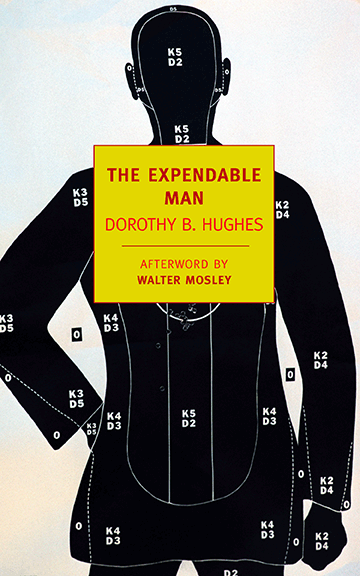
[Alternate choice: Hundreds! Thousands! Sticking with mid-century American women writers, I’ll plump for Dorothy B. Hughes’s The Expendable Man. Don’t read anything about it beforehand!]
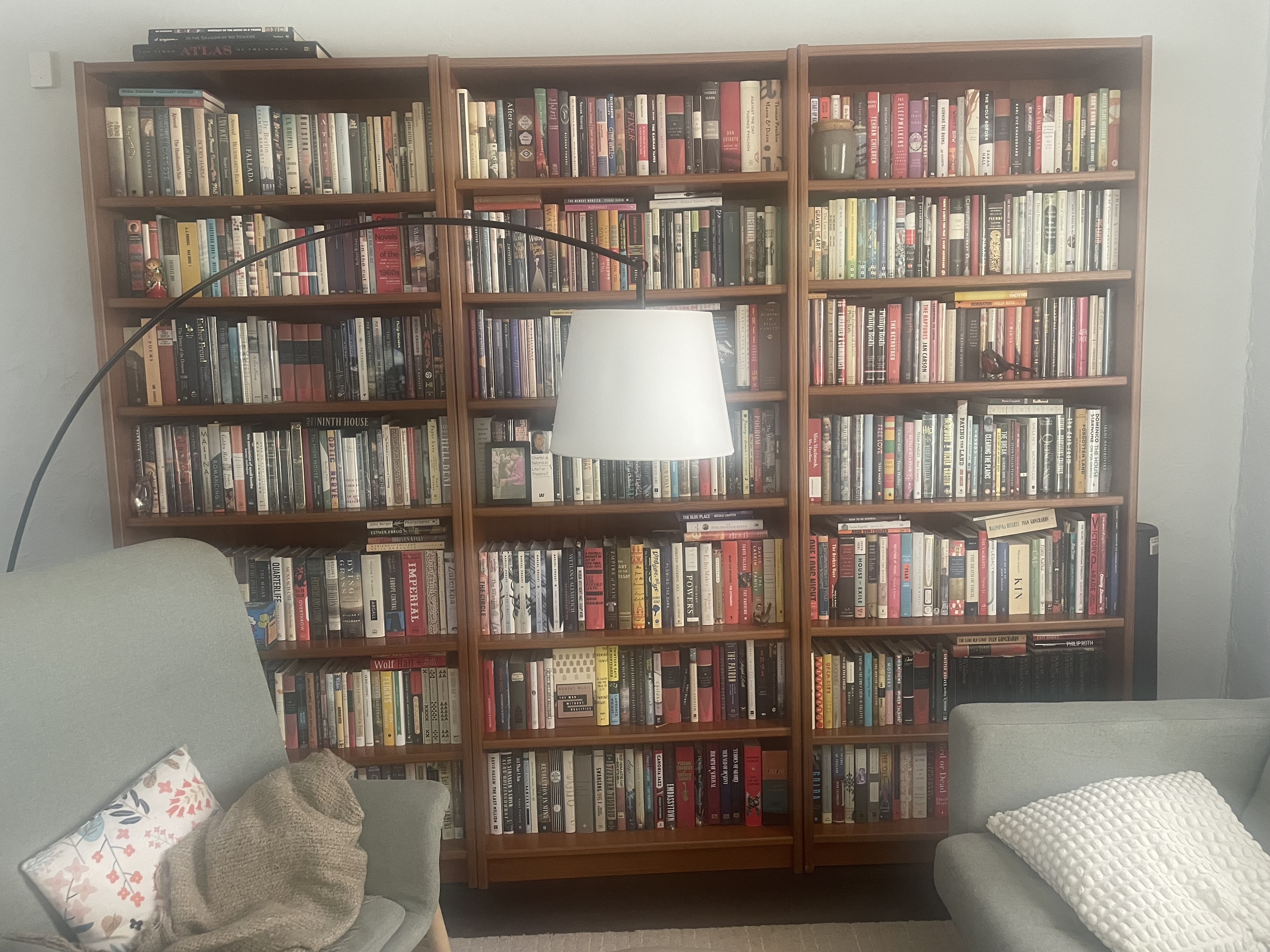
I tried not to think too long in coming up with my choices. Next month or next year I’d choose differently. And I’m aware of some big lapses. No poetry?? No plays?? No Torah?? (Everyone should read the Five Books of Moses.) But that’s ok. Gives you all the more room to think about how you’d create a starter library of your own. What would be on your shelf of promises?

Scott Walters’s Year in Reading, 2023

Excited to once again present reading reviews from some of my favourite readers. Today’s installment, his third, is by Scott Walters. Scott launched a litblog, seraillon, in 2010, and expects to return to it one of these days. He largely follows Primo Levi’s model of “occasional and erratic reading, reading out of curiosity, impulse or vice, and not by profession.” He lives with his partner in San Francisco.

Barring a couple of possible late entries, here ends the 2023 edition of the EMJ Year in Reading series. Thanks to everyone who contributed–and all who read these engaging lists.

Édouard Boubat, Paris, 1949

Year in Reading 2023: 50 Books, Fat and Thin

Like several others who have already posted about 2023, I had a less than stellar reading year, finishing a little over half the number of books I did in 2022. On the other hand, several doubled as barbells for building up my muscles. On the third hand, some were slim. And on the fourth hand, some were slim pickings; I can’t recall ever reading so many works I didn’t especially like. I’m not sure to what to attribute that deflating phenomenon, but I hardly seem to be alone.

Best Quasi-Rereading

Michael Moore’s effervescent new translation marked my fourth time reading Alessandro Manzoni’s The Betrothed (1827/1842). As Moore explained at a reading I attended, he deliberately aimed his translation at an American audience lamentably unfamiliar with this 19th century masterpiece. An ingenious framing story cocoons this long tale of Renzo and Lucia, the affianced young couple whose wedding plans are dashed by the machinations of a lascivious warlord, forcing the couple to separate and flee into spiraling trials that challenge them (and several other characters) into becoming larger than themselves. Starting a beloved book in a new translation requires adjustment, but I was won over by Moore’s energetic, nimble, vivid and playful version, almost certainly the place to start for any American reader approaching this grand work for the first time. [Ed. – This book looks at me reproachfully from the shelf…]

Other Italian Explorations

Giovanni Boccaccio: The Decameron

G. W. McWilliams’ translation of Boccaccio’s 1353 classic accompanied me throughout the year as the perfect post-pandemic [Ed. – sic] companion. You know the framing story: five young women during the Florentine plague of 1348 abandon the city and invite along five male friends to an empty villa in the hills where, each day for ten days, each tells a story to entertain the others. The depiction of the plague in the book’s opening is terrific, and the 100 stories, splendidly diverse, are by turns tender, ribald, moving, pointed. So is the warm banter between the young people as they introduce their stories and encourage one another’s efforts, the whole serving as a kind of instruction manual on storytelling (and as a model for confronting calamity). Boccaccio has become a favorite; I also spent time this year with his Famous Women and Genealogy of the Pagan Gods, the latter especially highlighting Boccaccio’s talent as a great writer of prefaces. [Ed. – Ok, you sold me on this!]

Dominic Starnone: The House on the Via Gemita (2023)

The two short Starnone Neapolitan novels I’d read had impressed me, so I was excited to discover a fat new 500-page work also set in Naples. Starnone’s narrator recounts the history of his father, digging so thoroughly into strained father/son relationship that I can’t imagine The House on the Via Gemita not taking its place as a classic of the genre. To my surprise, the book also turned out to be an excellent novel about painting, in that the son must address both his father’s abusive personality and role as a peripheral figure in mid-century Italian art, a career layered on top of a day job as a railroad worker and the family responsibilities he largely leaves to others. Starnone gives us a brief history of postwar Italian art while exploring the qualities that make paintings great or mediocre and making personal an issue of our time: disentangling (or not) an artist from their art. I also noted the geographical precision employed by Starnone as a quality common to several contemporary Neapolitan novels; one can use a map to follow the narrative’s peregrinations around the city.

Maria Attanasio: Concetta et ses femmes

Concetta et ses femmes, written in 2021 when Attanasio was 80, sets out as a documentary rescue mission to obtain the story of Concetta la Ferla, organizer in the late 1960s, in Caltagirone, Sicily, of the first women’s branch of the Italian Communist Party (then the third largest in the world). Concetta’s grassroots project develops out of frustration with the municipality’s diversion of water to its wealthiest citizens, but runs into predictable obstacles in the form of chauvinistic attitudes in the city administration, in the Party, and at home. The story would be interesting enough simply as historical artifact. But Attanasio’s structuring of her novel, the first part narrated by Maria herself from the perspective of 20 years after the effort to preserve Concetta’s tale, and the second the tale itself in Concetta’s words, plays with questions of authorship and feminist solidarity, and emphasizes the continual nature of the struggle to gain legitimacy, to advance the advances of the past, to never go back.

Other Italian/Italy-related works included an Italian/French collection of short stories (Nouvelles italiennes contemporaines), with Tomas Landolfi, Massimo Bontempelli and especially Elisabetta Rasy’s contributions as standouts. Indian-American-now-Italian writer Jhumpa Lahiri’s Roman Stories (2023) revisits Alberto Moravia’s 1959 Roman Tales (Racconti Romani in the original Italian for both books), exchanging Moravia’s focus on Roman men in recognizable neighborhoods for immigrants, ex-pats, and tourists vaguely on the city’s periphery. Renato Serra’s Examination of Conscience of a Man of Letters (1915) presents a searing treatise on the relationship of literature and war, written three months before Serra perished in battle in World War I (read in French; while the essay has never gone out of print in Italy, it has not been translated into English). I devoured Janet Abramowicz’s monograph, Giorgio Morandi: The Art of Silence (1964), a deep appreciation of the Bolognese artist into whose family Abramowicz was essentially adopted. Despite this proximity, Abramowicz treats her former teacher judiciously and even unsparingly when it comes to Morandi’s blemishes, in particular his tacit involvement with fascism. German writer Esther Kinsky’s Rombo (2022), a polyphonic novel exploring the impact of a series of earthquakes on remote villages in the north of Italy, grew on me during my reading, with its Polaroid-like narrative approach in which the lives of the villagers gradually become more vivid and saturated. Finally, in Etruscan Places (posthumous publication 1932), D. H. Lawrence and a companion identified as “B” voyage through central Italy, exploring sites of the ancient Etruscan “12 cities.” Lawrence’s incisive, infectiously enthusiastic observations about Etruscan art and life turned me into a fan of this fascinating people whose culture was absorbed/obliterated by the Roman Empire. The narrative doubles as a travelogue through Mussolini’s Italy and, adding yet another layer, Lawrence’s views lay out an entire philosophy that has me determined to revisit his fiction this year. [Ed. – I support this plan!]

Stalingrad

I came away from Vasily Grossman’s Life and Fate convinced I’d encountered one of the essential literary documents of the 20th century’s experience of fascism. I did not know that the book was but a second volume in Grossman’s monumental effort to write the great World War II novel. The first, Stalingrad (1952), with still no definitive Russian edition, has only recently been translated into English by Robert and Elizabeth Chandler. As highly as I esteem Life and Fate, I believe Stalingrad may well be the superior novel [Ed. — !] in its immediacy and the sheer grandeur of its conception (but as the books were intended to form a whole, one need not set them against one another). Grossman, present at Stalingrad as a journalist, related some of his experiences in Life and Fate, but Stalingrad sets out to capture the whole story of the war’s most decisive battle, from August 23, 1942 to February 2, 1943. Grossman’s acute consciousness of his literary precursor, Leo Tolstoy, leads him to take his main character on two pilgrimages to Tolstoy’s house, Yasnya Polynka, and to muse on Tolstoy’s accomplishments: 

Krymov looked at the wounded who had fallen by the wayside, at their grim, tormented faces, and wondered if these men would ever enter the pages of books. This was not a sight for those who wanted to clothe the war in fine robes. He remembered a night-time conversation with an elderly soldier whose face he had been unable to see. They had been lying in a gully, with only a greatcoat to cover them. The writers of future books had better avoid listening to conversations like that. It was all very well for Tolstoy – he wrote his great and splendid books decades after 1812, when the pain felt in every heart had faded and only what was wise and bright was remembered.

With Life and Fate, Stalingrad now gives us one of the great documents of World War II – and one of the greatest works of fiction about war ever written.

An Essential Holocaust Novel

The Talmudic concept of the Lamed-Vov, the 36 righteous people on whom the continuity of the world depends, fascinated me when first I read about it. Only when I started André Schwarz-Bart’s 1956 Prix Goncourt-winning novel, The Last of the Just, did I realize that the Lamed-Vov were central to the book. Schwartz-Bart takes the reader though a thousand years of Lamed-Vov succession to arrive at Germany in the 1930s, where the narrative pace slows dramatically. His restrained, almost clinically factual language provides devastating testament as much as fiction. Some of its scenes are completely indelible, and Ernie Levy, Schwarz-Bart’s protagonist for this last half of the book, struck me one of the most remarkable characters I’ve encountered in a lifetime of reading. [Ed. – It feels like a professional failing that I have not read this book!]

José Revueltas: The Hole

A tiny but shockingly powerful novella, taut and tight with not a word out of place. [Ed. – Funny, that’s how people usually describe me!] The Mexican writer and activist Revueltas’s 1969 book, based on the author’s own 12-year experience as a political prisoner, resembles a Piranesi prison drawing in narrative form, an intensely concentrated exploration of incarceration. Everything in the narrative is compressed – time, space, hope, even the reader’s attention and the size of the book itself. An absolute masterpiece of prison literature.

Mariana Yampolsky, Estación Martell, 1988

Good King Xavier, Reino de Redonda

Spanish novelist Javier Marías died at age 70 on September 11, 2022. I encountered his work four times this past year, first in his final novel Tomás Nevinson (2022) which appeared last May in Margaret Jull Costa’s translation. I had come to anticipate each new Marías translation as nearly an annual tradition, so knowing that this his last novel made reading it deeply bittersweet. Tomás Nevinson follows up 2018’s Berta Isla, but also resurrects characters from Marías’s Your Face Tomorrow trilogy, most notably Bertram Tupra. Where Your Face Tomorrow engaged Spain’s experience of Franco and of the civil war, Tomás Nevinson takes as its starting point the Basque separatist terrorist attacks of the 1990s. As Nevinson is enlisted by Tupra to come out of retirement to track down a woman involved in the most heinous of these attacks, Marías uses the narrative to explore questions about our responsibility for seeking justice, how we deal with repentance and redemption, what justice seekers owe to their own loved ones, whether there may be some informal statute of limitations on bringing the guilty to account and how long justice should be sought – time being among the most prominent fixtures in Marías’s fiction. We are fortunate to have this novel; Marías’s time having run out seems completely unjust.

When I picked up Tomás Nevinson at Point Reyes Books, the literary mecca cultivated by Molly Parent and Stephen Sparks, Sparks asked if I’d read the new book about Redonda. I must have stared at him blankly, as, having not yet read Marías’s Oxford novels, I knew nothing. Thanks to Michael Hingston’s marvelously strange Try Not to Be Strange (2023), I now know quite a lot, including the fact that Marías had been, up until his untimely death, King Xavier I, monarch of this tiny nation, which, despite having no inhabitants, does have territory, a flag, its own currency and postage stamps, and a plethora of dukes and princesses, counts and ambassadors, and multitudes of other titles held by what seems a who’s-who of 20th century writers. This was by far my most fun book of the year, uncovering a great story, offering up a charming tale of obsession (including Hingston’s own), and digging a dizzying warren of rabbit holes for one to scurry down, which led to my filling quite a bit of empty shelf space with related works. [Ed. – Well, this all seems quite insane!]

One of those works, of course, was All Souls (1992), the Marías Oxford novel in which the author first mentions Redonda. I expect to have more to say about this book after I’ve read its sequel, Dark Back of Time, on deck for 2024.

Another addition, Cuentos únicos (1996), came from Reino de Redonda, Marías’s own Spanish-language imprint.This collection of 22 translated English language short stories selected by Marías presented a way to practice my poor Spanish and get to know some writers I didn’t know. Nugent Barker? Oswell Blakeston? Percival Landon? [Ed. – Are these imaginary???] My Spanish proved inadequate to the task, but I understood enough to have made the effort – to be continued this year – worthwhile.

The Ascent of Rum Doodle Mont Analogue

My next-to-most-fun book of the year, René Daumal’s Mont Analogue (1952), tells the story of Père Solgon’s organization of an expedition aboard the ship “Impossible” to find the rumored tallest peak on earth, mysteriously as yet undiscovered due to its isolation (guesstimated to be in the vast South Pacific) as well as certain tricks of light that keep it invisible except at a certain hour and from a certain approach. With a crew including such luminaries as an American painter of alpine scenes, one Judith Pancake, the voyage is half tongue-in-cheek, half mystical imponderables (Daumal had been a follower of Gurdjieff), half Jules Verne. Yes, I know that’s three halves, but that suggests the shape and character of this delightful novel, one of the rare “unfinished” works that actually ends mid-sent-….

(Note: for French readers: a lovely new hardcover illustrated edition of Mont Analogue comes with an introduction by musician Patti Smith).

Weak in Comparison to Dreams

I got to know art historian/theorist James Elkins’s work some 25 years ago while researching text and image for a conference paper. So it came as quite a shock to discover a 600-page novel by Elkins, especially as I’d recalled his having announced in an Amazon book review his intention to stop adding to an accretion of texts. Presumably Elkins only meant Amazon reviews, because Weak in Comparison to Dreams (2023) is a welcome contribution to contemporary literature and among the most unusual novels I’ve read in a long time.  In the book’s continuation of Elkins’s explorations of text/image interactions, I felt both that I was right back where I’d left off and in a whole new world. Incorporating scores of black and white images and increasingly nutty charts and graphs, the narrative follows its narrator, Samuel Emmer, a bacterial biologist for the city of Guelph, Ontario, on a series of visits to zoos around the world to evaluate mammalian behaviors and health protocols as Guelph plans its own zoo. [Ed. – The Guelph connection is… unexpected.] A dozen interchapters present Emmer’s dreams while on this mission, these too accompanied by images that suggest an intensifying fugue state. By turns sobering and hilarious, thematically touching on everything from animal welfare and incarceration to climate change and bureaucracy, from pseudo-science to contemporary experimental music, and playing in a space similar to that occupied by conceptual artist David Wilson’s Museum of Jurassic Technology, Elkins’s absorbing novel is… not at all what it seems. A 100-page final section entitled “Notes” delivers not so much “notes” as a surprising reframing of the first narrative, much in the way a caption might reframe an image. I can’t get the book out of my head, and shouldn’t, as Elkins has completed four other novels since 2008 that form a quintet of which Weak in Comparison to Dreams, though the first to be published, is volume three. I cannot wait to see what he does in the other four. [Ed. – How the hell do you find this stuff???]

The Queen of L.A. Noir

My familiarity with Dorothy Hughes’s In a Lonely Place (1947) had been limited to Nicholas Ray’s 1950 film starring Humphrey Bogart. Finally reading the novel left me incensed about the movie, a fairly egregious desecration of its source material. Fortunately, I felt no indignation in response to Hughes’s novel, which floored me as not just a masterpiece of Southern California noir, but perhaps the masterpiece of Southern California noir. I fell for it in the first pages, which captures the foggy, seeping chill of the California coast at night in a manner precise and true. She shies away from nothing in this penetrating psychological drama in which [Ed. – SPOILER INCOMING!] the narrator himself is the killer – presumably the quality that kept the studios from allowing Humphrey Bogart to be tarnished by such a role. Hughes covers the postwar L.A. noirscape exquisitely while managing to keep her narrator entirely human, a subtle literary feat that reads like one of Freud’s case studies. Raymond Chandler might be King of L.A. Noir, but if you asked me to pick a monarch, I’d go with Hughes on the basis of this novel alone.

Other mysteries included the marvelous Margaret Millar in Stranger in my Grave, a disappointing end to the Montalbano series in Andrea Camilleri’s Riccardino, and dismay as regards Mignon Eberhart, an author I’ve liked, whose Family Affair, in this year of too many books I did not like, marked the nadir.

Poetry

Aside from individual poems here and there, I read just three books of poetry. Reginald Dwayne Betts in Felon (2019) gives us a powerful collection of poems that go well beyond the experience of incarceration to address convict life beyond prison. I found Argentine poet Alexandra Piznarik’s Removing the Stone of Madness, Poems 1962-72 (Yvette Siegert, translator), relevatory. I did not know Piznarik, who, as the collection’s title suggests, fought a terrible battle with mental illness which she chronicled in short, sui generis poems as hard-edged and clean as crystals, powerful poem-objects one could almost hold in one’s hand. Finally, I loved Greg Hewitt’s intimate, resonant poems in Blindsight, structurally based on composer Olivier Messiaen’s prime-number system and which brought to mind Frank O’Hara’s personal poetic school of “Personism” (a mutual friend sent me Greg’s book).

Odds and Ends

The rest, an unorganized, mostly enjoyable mess, included Willa Cather, more Eve Babitz, Sándor Márai, Tatsuo Hori, Euripides, Chinua Achebe, Raphael Sánchez Ferlosio, more César Aira (an annual need), Daisy Hildyard and others. Larry McMurtry’s Lonesome Dove (1985) gave me exercise, as with Stalingrad in one hand, I built up my other bicep by hefting McMurtry’s 850-page narrative in late-night installments at approximately the same pace as the Texas border to northern Montana cattle drive the story depicts. I found it terrific fun, amplified by my subsequent reading of the story of a poor Texas legislator who made the mistake of trying to ban Texas’s national novel. No one should want to be that guy. A bit further south I ate up Charles Portis’s Gringos (1991), set in the Yucatan where rumpled ex-pat Americans are involved in archeological dealings and mis-dealings. Are all of Portis’s novels his best novel? I think so. I think so.  [Ed. – Well put!] Art historian Alexander Nemerov’s The Forest (2023), a collection of essays and corresponding plates, uses forests of the American frontier to cull idiosyncratic tales of 1830’s American art and culture, rescuing some fascinating figures from historical oblivion. I finally got around to reading Maggie Nelson, in Bluets (2009) and The Argonauts (2015) – respectively, musings on the color blue (with a towel snap at William Gass’s bare cheeks), and raw meditations on sex, gender and motherhood that I sent off to goddaughter pursuing gender studies. I’d been curious for some time about Michael McDowell six-volume Blackwater, and gorgeous and affordable new French paperback editions provided an opportunity to dive in. Blackwater 1: La Crue (1983) proved a Southern Gothic slow drip horror tale peeling away the veneer of Southern gentility. For the first time since high school, I revisited J. D. Salinger, in Raise High the Roof Beam, Carpenters (1955) and Seymour: An Introduction (1959). Salinger himself may not have aged well, but these two novels were far better than I expected them to be.  I found Tove Jansson’s The True Deceiver (1982) to be a stunningly good novella about truth, trust and deceit, not necessarily in that order, set in a fishing village on the Finnish coast. There seems to have been nothing Jansson couldn’t do right. While somewhat confined in a house in the mountains, I found appropriate companionship in Count Xavier de Maistre’s A Journey Round My Room (1795), a book born of boredom, a curious meditation on escaping it, created when, following a duel, de Maistre was put under house arrest for some six weeks. Alleviating boredom, Roy Lewis’s The Evolution Man, or How I Ate My Father (1960), though clearly dated, was still pretty damned funny as comedies about pre-history go. Finally, a couple of books with which I struggled still held enough of interest for me to get through them. Justin Torres’s Blackouts (2023) relies heavily on photographs, drawings, redacted text, dialogue as film script, and other novelties that I found a bit overcooked (in a way I did not with the Elkins novel). But the story Torres unearths of a 1942 study of homosexuality, and of the lesbian couple who helped drive the project and were betrayed by it, is remarkable. I had a tougher time with Gerald Reve’s The Evenings (1947) acclaimed by some as the great 20th century Dutch novel. A disaffected young man lives with his numbed parents in 1946 Amsterdam and battles his claustrophobic life with dark, acrid humor. I admired Reve’s allowing the war to drip into the narrative bit by bit, the horrors of the recent past seeping into normal life. But I couldn’t wait for the book to end.

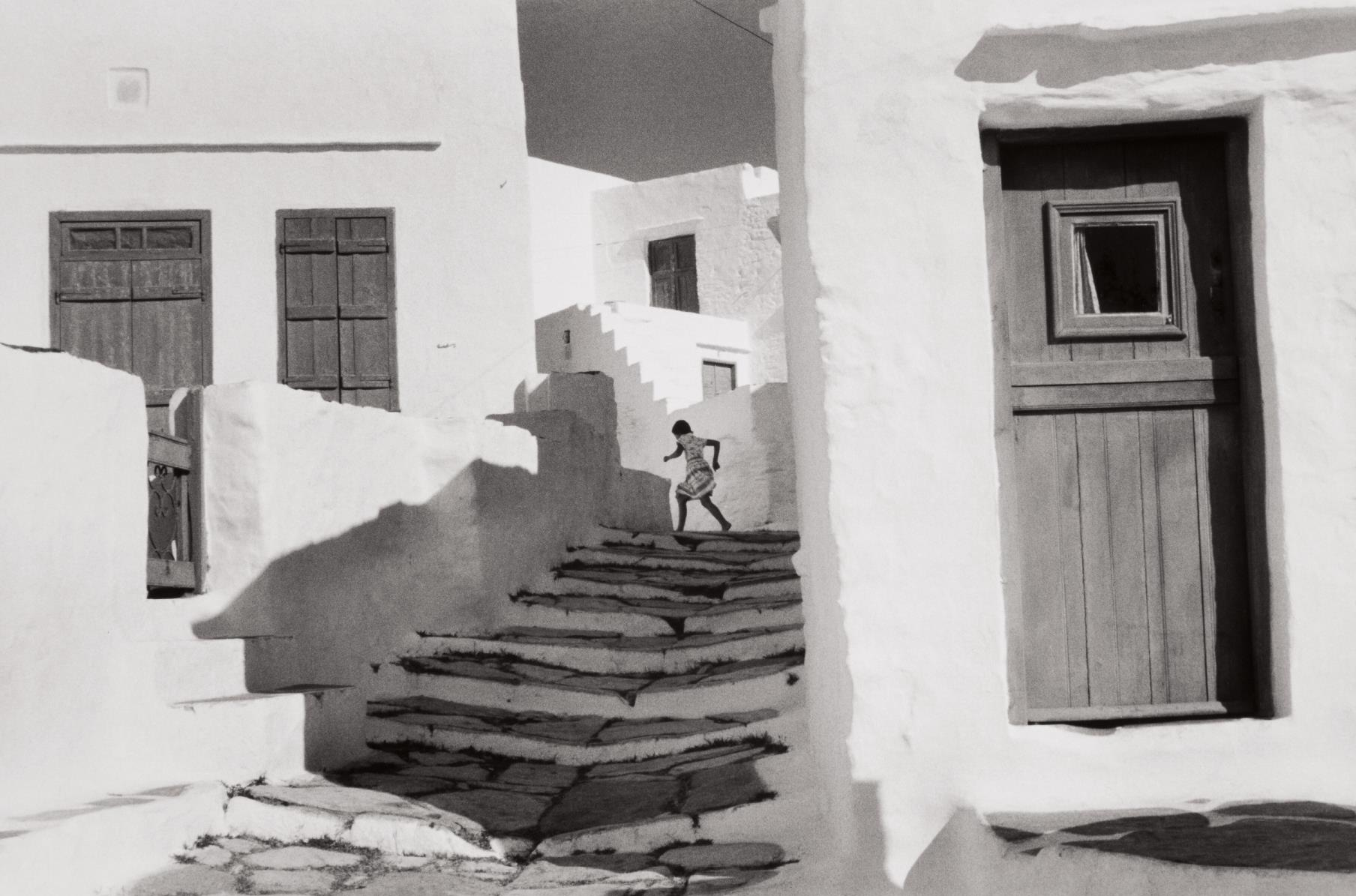
Henri Cartier-Bresson, Naples, 1960

I’ll conclude with a dream. In a cluttered bookshop, I found a tattered but astounding volume amended with striking collages, vivid watercolor sketches, and dense margin notes. The (dream) author’s name seemed familiar, so upon waking I looked up James Gould Cozzens and plunged down a trail that led me to Dwight MacDonald’s 1958 review of Cozzens’ late novel, By Love Possessed.  I did not read Cozzens. I’m not sure I will ever read Cozzens. But I’m grateful to odd dreams for having pointed me to MacDonald’s review, which takes to task a generation of critics who, with log-rolling fealty and conformity to one another’s uncritical opinions, lavished praise on the novel. Eviscerating, illuminating, even necessary, his review models close textual analysis with an eye towards criticism’s larger role, relevant today when writer-critics blurb one another’s books and award prizes to mediocre works.  A pretty good way to end the reading year, and a better way to start off a new one which, I am happy to say, as far as books go, is off to a tremendous start. Thank you for reading. [Ed. –Thanks for writing, Scott! A delight as always.]

What I Read, January 2020

Although everything else in the world was pretty much shit, January was a good reading month. I was still on break the first two weeks, which certainly helped. I’ve realized that all I need to be happy is to cut out sugar, run twice as much as usual, and not work. Simple! Here’s what the Happy Man read:

EOwvn31WAAAofRf

Vladimir Nabokov, Mary (1926) Trans. Michael Glenny in collaboration with the author (1970) Nabokov’s first novel, really more a novella, is predictably good. His strengths are evident: moments of intense lyricism, typically invoking sensory experience, and ironic reversals of conventional thinking, specifically, here, what it means to be an exile. In his introduction to the English translation (if he didn’t have such tiresome animosity toward Freud his introductions might be on par with James’s), Nabokov notes with possibly genuine surprise that the depiction of exile in this early work aligns closely with the one in the much later and more famous Speak, Memory. As is typical for Nabokov, though, his interest in social-political-material experience is more abstract than concrete. If you want to know details about émigré life in western Europe in the 20s and 30s you would be better to read Berberova, Gazdanov (I’m guessing—haven’t yet actually read him) or the wonderful and too-little known David Vogel. Still, I appreciated the ending’s sly reversal, which suggests that Nabokov was from the beginning a comic writer (not as in funny but as in a writer of texts that end happily, or with their losses repaired or made good, as opposed to tragedy).

I planned to read all of Nabokov’s Russian novels this month, but I didn’t.

Tim Maughan, Infinite Detail (2019) Novel toggling between a Before (plausible and only slightly extrapolated version of life today) and an After (post-apocalyptic), the pivot event being a sudden and seemingly irrevocable loss of the internet, and networks more generally. The story focuses on a group of hackers and activists, whose protests against nonstop surveillance and late capitalism is initially confined to a vibrant, boisterous neighbourhood in Bristol, but who, we slowly learn, become instrumental in the crash, with results none of them expected. This essayaccurately criticizes the novel’s romantic/individualistic ideology (for a book about systems and networks it spends a lot of time thinking about the power of individuals to change the world), but it ignores what I thought was the best part of the book: its nuanced portrayal of the new kinds of intimacy that online life has enabled. These aren’t just feeble versions of “real” face-to-face relationships. Infinite Detail is also optimistic about the kinds of art that survivors of a collapse of capitalism as we know it might engage in (aligning it with something like Kim Stanley Robinson’s New York 2140). The result was too much (if not quite infinite) detail about future pop music for my taste, but I appreciated the idiosyncrasy. (Also, making Bristol the center of things, that’s pretty cool.) I also wondered if Maugham was writing with J. G. Ballard in mind. Consider this passage, describing a character’s return to Bristol several years after the collapse:

She’s strangely embarrassed that part of her had imagined walking out into some huge abandoned space: a bourgeois science-fiction fantasy of a long-lost civilization where she’s the special one, the only survivor that could see past the crass commercialism of the masses and got out in time, the intrepid, educated explorer unearthing this forgotten, archaic relic of barbaric capitalism, an empty cave filled with unfamiliar, alien branding.

Andrew Miller, Now We Shall Be Entirely Free (2018) This is going to be on the end of the year list, I know it already. Now We Shall Be Entirely Free (wasn’t crazy about this title until the very end of the novel, when it became so interesting, so poignant) gave me the kind of reading experience I had more often as a child than I do now. I was enthralled, I was moved, I was anxious (for the fate of the characters), I couldn’t wait to find out what happened next, but I feared leaving the world of the book. It’s that last quality that’s so rare—mostly I’m eager to get on to the next book, but this time I wanted to linger. I would like to read this book again, even though it’s unlikely I would ever teach it, and that too is something I rarely say.

The novel follows John Lacroix, who returns, badly wounded, to England from the war against Napoleon. Something happened to him in Spain—he saw something, did something, knew something—that has damaged his mind as much as illness has damaged his body. Tentatively, almost unwillingly, he returns to life and eventually gets it into his head that he will travel to the Hebrides to gather folk music (he is a violinist in addition to having been a soldier and an aimless son of landed gentry). Two men are sent after him: I won’t say too much about it, since the plot is genuinely suspenseful, but it has been decided that Lacroix must be punished for the events in Spain. One of the men is a bad man. And bad things happen. In the Hebrides, Lacroix stumbles across a small utopian community which he sinks into with, to him, unexpected gratitude. But he is unknowingly bringing danger to those he is becoming close to.

Now We Shall Be Entirely Free concerns violence, trauma, early 19th century politics, and early 19th century medicine without ever being plodding or padded. It’s gorgeously written without striving for “poetic-ness.” In its ability to manifest the foreignness of the past, Miller’s novel reminded me of Penelope Fitzgerald. And that’s pretty much the highest praise I can offer.

Please read Rohan’s review—she says it better than I do.

Dorothy B. Hughes, Dread Journey (1945) I admire Hughes a lot, especially The Expendable Man, but she was an uneven writer. The recently reissued Dread Journey is one of her weaker ones. Set on a transcontinental train (very cool), it has a locked room vibe (less cool), but Hughes is always more interested in the why than the who. But I found the characters mostly uninteresting, even the Canadian (!) ingenue. What Hughes always excels at is creating and exploring terror, dread, fear. So many of her female characters are in a continual state of near-panic. That’s what makes her work still feel timely.

Helen Garner, The Spare Room (2008) I read this in a few hours, loving it from beginning to end. Then I spent the rest of the day following a fascinating conversation about it on Twitter. Garner, it turns out, is a polarizing writer. (Though I sometimes got the sense that the Australians, in particular, who dislike her do so because she takes up too much space in the country’s literary discourse, and that the bien pensant media has anointed her as their literary/national standard bearer. Not Garner’s fault that she’s so great, though!) Anyway, I’ll definitely read more; I’m particularly curious about her nonfiction. (Her true crime writing really divides readers.) The Spare Room reminded me of Doris Lessing, though it’s much more interesting at the sentence level. Two old friends reunite when one comes down to Melbourne from Sydney to stay with the other while she pursues what her friend at first privately and then not so privately deems a dubious (read: completely bullshit) alternative treatment for her advanced cancer. A smart and beautiful book about fear and anger.

Sandra Newman, The Heavens (2019) The strange tale of a woman who is drawn from an alternate version of the present or near-future to 16th Century England, I enjoyed this novel as I was reading it but now I can barely remember it. The more she travels between times the more the present alters, and for the worse. Eventually the world that has banded together to mitigate, even circumvent climate change becomes our own. Each time she visits the past she becomes more intimate with a young man who, in the first iterations of the past, occasionally scribbles verses and, in later ones, becomes William Shakespeare, Famous Playwright. The price of his fame is the brutalization of the world. In retrospect, this premise seems nonsensical, an odd way of asking readers to consider what it means to value individuals over collectives. All I can say is at the time I was under the book’s spell—dreamy and oblique—but now, well, the spell is broken. This review is too harsh, in my opinion, but also on to something. In the end, The Heavens is less interesting than Du Maurier’s The House on the Strand.

Nina Berberova, The Book of Happiness (1996?) Trans. Marian Schwartz (1999) A Russian novel about happiness? Surely not. It’s true, though, and although I was pitting Berberova against Nabokov a moment ago, they share a sense that exile, although enormously destructive in many ways, isn’t just about loss. The Book of Happiness begins with the suicide of Sam Adler, a Russian violinist, in a Paris hotel. He leaves behind a note addressed to a woman he hasn’t seen in years, who herself lives in Paris, and turns out to have been his best friend in childhood. After identifying the body, Vera reflects on their long acquaintance, especially their years as childhood playmates and confidantes. This is the best part of the novel—I found it magical, though it might be a bit Wes Anderson for some tastes (“I’m a violinist. What are you?” Vera replied mechanically, “I’m just me.”). The middle section, describing Vera’s ill-fated marriage and departure from Russia in the wake of the Revolution, flags a bit, but the ending, which is indeed happy, though in a low-key way, worked for me. (Berberova seems to be speaking of herself, or at least her style, when she writes that “Vera regarded everything excessively emotional with embarrassment.”) Berberova doesn’t shy from presenting the recued circumstances of exile, but to say, as a blurb on the edition I read does, that Berberova “rivals Jean Rhys in detailing the sights and smells and despairs of trying to exist as a stranger” in Paris tells me only that the reviewer has never actually read Rhys. Anyway, I read elsewhere that the translator, Marian Schwartz, finds The Book of Happiness ultimately unsuccessful, but I have to disagree.

PS I don’t know when this book was written. 1996 is the date of its publication in France, but Berberova wrote it, I believe, in the 1930s, in Russian, which is the language Schwartz has translated it from. I’m unclear if it was never published at all until the 90s or if with some small exile press or what. Anyone know?

Nate Leipciger, The Weight of Freedom (2015) This is part of the Azrieli Foundation’s extraordinary effort to collect and publish in excellent and pedagogically useful editions (good introductions, glossary of terms students might be unfamiliar with) memoirs by Holocaust survivors who settled in Canada. Leipciger’s book is perhaps best known for his frank description of his experience as a pipel (a messenger boy in the camps—typically, this role, which came with privileges like better rations, also required providing sexual favours). The sexual violence Leipciger experienced naturally left its mark on him, but exactly how is hard to say, as it’s not easy to get a read on his tone. (He is not a professional writer: the flatness of the telling sometimes seems a function of inexperience, and sometimes of (perhaps unconscious) reticence.) Yet as one of the students with whom I read the text pointed out, to single out this aspect (the sexual abuse takes up about 2 or 3 pages in a 350-page book) is to sensationalize the experience, risking further victimizing the victim. Yet sexual violence against both men and women was common during the Holocaust; this fact is not often enough acknowledged. Just as interesting for me, as a Canadian, was Leipciger’s ability to think about his suffering in relation to that experienced by indigenous people.

The Weight of Freedom covers Leipciger’s truncated childhood in Chorzów, Poland; his internment in various ghettos, including a period in hiding; his deportation to Auschwitz-Birkenau, Fünfteichen, Gross-Rosen, Flossenbürg, and eventually a sub-camp of Dachau, from where he was liberated; his time as a DP in post-war Germany (in which he pursued an active sex life that he freely admits involved an element of revenge); his eventual emigration to Canada; and the long years building up a life there, which, as the title of the memoir suggests, was by no means easy, not so much economically as psychologically. Throughout he is accompanied by his father, a man with whom he has a difficult and intense relationship (those who have read Wiesel’s Night will find similarities). In later life, Leipciger settles into a role as a Holocaust educator; one of the things I like best about him is that he loves young people, he has no scorn or distaste for them. Always a good sign if you ask me.

Omer Bartov, Anatomy of a Genocide: The Life and Death of a Town Called Buczacz (2018) Today Buczacz is a nondescript town in western Ukraine. In the past 150 years it’s also been part of the Hapsburg Empire (specifically Galicia), independent Poland, the Nazi Reich, and the Soviet Union. In the first half of the 20th century it was home to Jews, Poles, and Ukrainians (perhaps better called Ruthenians—my one criticism of this book is that Bartov sometimes uses Ruthenian as a synonym for Ukrainian, and sometimes suggests there’s a difference, and I’m still confused about the distinction, which Wikipedia has failed to clear up for me. If you can, please do!). During WWI the front passed through Buczacz several times; during WWII it was similarly occupied by different armies at different times. In this fascinating book, Bartov, whose mother’s family hailed from the town, uses the history of Buczacz to show the intimacy of violence in the so-called Bloodlands of Eastern Europe in the 20th century. In his telling there was a seemingly ineluctable drive on the part of almost every group to reduce the region’s cultural diversity, and that much of the violence required to do so was perpetrated by one neighbour against another. During the Hapsburg times, Poles and Ruthenians agitated for independence. In the wake of WWI Ukrainians chafed under Polish rule, which led them to welcome the Nazis. After WWII the Soviets upheld Ukrainian claims to the area; in one of history’s ironies, that decision furthered the Ukrainian nationalism that Russia is now contesting in its dirty war in the Donbass.

Bartov shows how everyone was at one time both a victim and a perpetrator—everyone except the Jews, who suffered no matter who was in charge (they had it best under the Hapsburgs, leading many of them to defend the Empire ardently—cf Joseph Roth; they had it worst, of course, under the Nazis). Anatomy of a Genocide is at once granular and theoretical—an amazing accomplishment; it had me asking myself why I don’t read more history.

Nina Berberova, The Ladies from St. Petersburg: Three Novellas (1995?) Trans. Marian Schwartz (1998) Uneven but mostly engaging collection, once again detailing life before, during, and after the Russian revolution. The first and second stories (to me they are too slight to be novellas) are the best—the first, set at the very beginning of what people are not yet calling a revolution, depicts a vacation in the country during which a young woman is abruptly forced out of the comforts, and limits, of the life she’d known. The second centers on a woman who has challenged the norms of her culture by leaving her husband and is trying to keep ahead of the conflict between Whites and Reds; as the translator Marian Schwartz notes in her admirable introduction, the irony is that the women of the provincial boarding house she washes up at are much less accepting of the woman’s perceived transgressions than their political sympathies would suggest. The third, an uninteresting failure, is set in what is clearly New York though it is never named. Berberova spent much of her life in the US, but maybe she was never able to write about it convincingly. Probably not the best introduction to Berberova, but worth checking out once you’ve read some of her other stuff.

Carys Davies, West (2018) Many online book friends (and a real life one, the writer Kevin Brockmeier) have extolled this novella, and I decided to make it the first audiobook of the new semester (back to the commute…). Davies is a Welsh writer, but she lived in the US for quite a while, which must have helped her with some of the book’s settings. Cy Bellman is a mule breeder in Pennsylvania in the first part of the 19th century; this reviewsays 1815; I don’t know where that date comes from, nothing in the book says so, though it’s true my knowledge of US history is shamefully hazy so I probably missed something; certainly, events take place after the Lewis & Clark expedition (1804 – 06). In the newspaper Bellman learns that giant bones have been found in Kentucky (presumably from mammoths, or maybe dinosaurs, this was also unclear to me) and becomes obsessed with the idea that the creatures must still be alive, out west, and that it is his destiny to find them. To the disdain of his sister, whom he asks to look after his ten-year-old daughter, Bess, Bellman sets off for the frontier (St. Louis) and beyond. In Missouri, a trader sets him up with a Shawnee teenager, named Old Woman, who guides Bellman as far west as the Rockies. In the meantime—two years pass, then three—Bess fends off the local librarian and the increasingly unwelcome attentions of a neighbour, all of which leads to a dramatic, slightly preposterous happy ending, in which Old Woman plays hero. I admired some things about the novel: it’s spare, and enigmatic in a pleasing enough way, and the descriptions of the landscape are lovely without being overwritten. But I couldn’t get on fully on board, because I found the Shawnee character so troubling. As one might expect of a revisionist Western (I sometimes feel all Westerns are described as revisionist), the book critiques white settler attitudes to indigenous people. And yet it also embraces those attitudes: it’s not just that Bellman and others say that Indians can be bought off with a few shiny beads, but that Old Woman indeed loves shiny beads. Towards the end of the book, Davies shifts focalization from Bellman to Old Woman. Her attempt to inhabit a different way of looking at the world goes awry—Old Woman thinks in a way that seems not foreign but reduced, childlike, naïve. I just didn’t get what she was trying to do here. Maybe an interesting failure, but a failure nonetheless.

EPYaQVXXsAAiJ-K

There you have it. Miller and Bartov were the standouts. Berberova a great discovery (for me; I know others have been reading her for a while). February has already begun promisingly, reading-wise, but I know the pace will slow down as the semester hits full-force.

I was so happy this month to post my friend Nat’s reflections on his year in reading. I know we’re well into 2020 now and maybe nobody cares about 2019 anymore, but I’m happy to post reflections and lists from anyone. (I’ve asked a few folks; no takers so far.) In general, I’d love for EMJ to become more of a salon, so if you have something bookish you want to say, hit me up.


July 2018 Vacation Reading

bhtswCEH

The Three Sisters, Canmore, AB, July 2018 Photo: Brett Buchanan


Spent much of July in Canada, lucky me, visiting friends in New Brunswick and family in Alberta. Did a lot of hiking, caught up on some television, avoided news as much as possible, enjoyed the time with my wife and daughter, and also got in a fair amount of reading.

As usual I didn’t read very many of the things I thought I would. The need to take it easy and follow the drifts of serendipity was more overpowering than ever this year. It was a joy to read so haphazardly.

Here are some capsule thoughts on the stuff I read.

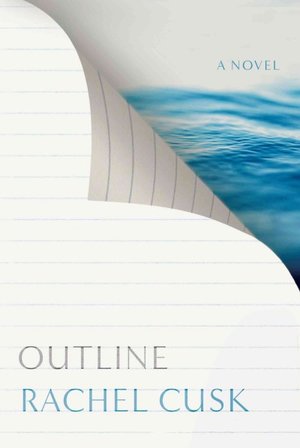
Rachel Cusk, Outline (2014)

9780374228347_custom-80670bca3c504b71b1e5d7524ad106dd781681a5-s300-c85

Late to this party, but now that I’m here, I’m staying for the whole thing. (Clumsy way of saying I will read the other two books in the trilogy, and then look into Cusk’s backlist–if anyone has suggestions about where to go first–her fiction? her nonfiction?–I’d like to know.) I’m not as over the moon about what Cusk is doing as some readers seem to have been. (I’m unconvinced this is the novel’s salvation, for example, mostly because I don’t think it needs saving.) But I found Outline engrossing and satisfying. I think it would repay re-reading more than most books. A part of me wonders if the book isn’t too perfectly devised to be interpreted in a particular way (as if it were designed for the classroom). But another part of me thinks that Cusk is likely ahead of me and has written her book in this way knowingly, to make a point about what kind of book our literary culture considers important. (I am not exactly sure what that point is, though.) I really like Cusk’s use of indirect narration–the only way, though an important one, in which she resembles Sebald, whom I suspect she is often compared to. She’s got a handle there on something significant about how we tell stories now; I look forward to thinking about this more as I read the follow-up books.

Dorothy B. Hughes, The Expendable Man (1963)

productimage-picture-the-expendable-man-257_1594f061-e62d-428e-aee3-58f81e3fa420_grande

The best book I read in July, hell, one of the best of the year. I can’t say much about it because Hughes delivers an important surprise about a quarter of the way through that shifts ours understanding of the whole thing, in a way that effectively provokes us to examine our expectations. That might sound like a trick or a gimmick, but it is totally not. Basically, all you need to know is that this is a great noir set in the American southwest. It would have been so easy for Hughes to have written this in first person. Her choice to use third makes it even more compelling. The rare thriller that demands to be re-read. (I just read another of her books and hope to write more about it soon.)

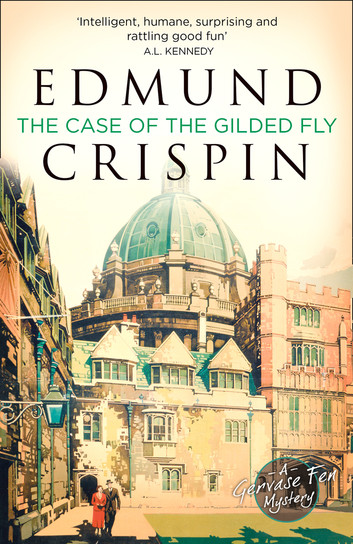
Edmund Crispin, The Case of the Gilded Fly (1944)

the-case-of-the-gilded-fly-a-gervase-fen-mystery

The only dud of the bunch. I was excited to find reissues of Crispin’s mysteries while browsing in a bookstore, but was disappointed with my choice, which I selected because it was published before any of the others sitting on the shelf. I’m guessing it’s not the first in the series, because the detective, an apparently brilliant and maddeningly insouciant Oxford don named Gervase Fen, isn’t given anything like an ordinary introduction; it’s as though we’re already supposed to know all about him. [I just looked this up, and this book is the first of the series: another strike against it!] I don’t know if amateur and professional theater companies were as big a part of actual life in early to mid 20th Century Britain as they are in crime fiction of the period, but I find theatre stories a particularly tedious sub-genre, and as Gilded Fly involves a production so far from the West End it premieres in Oxford, I’m hardly the ideal reader of the book. I finished it–mostly because it is so short–but unless someone mounts a convincing defense of the series (and promises later ones get much better) I won’t be reading any more.

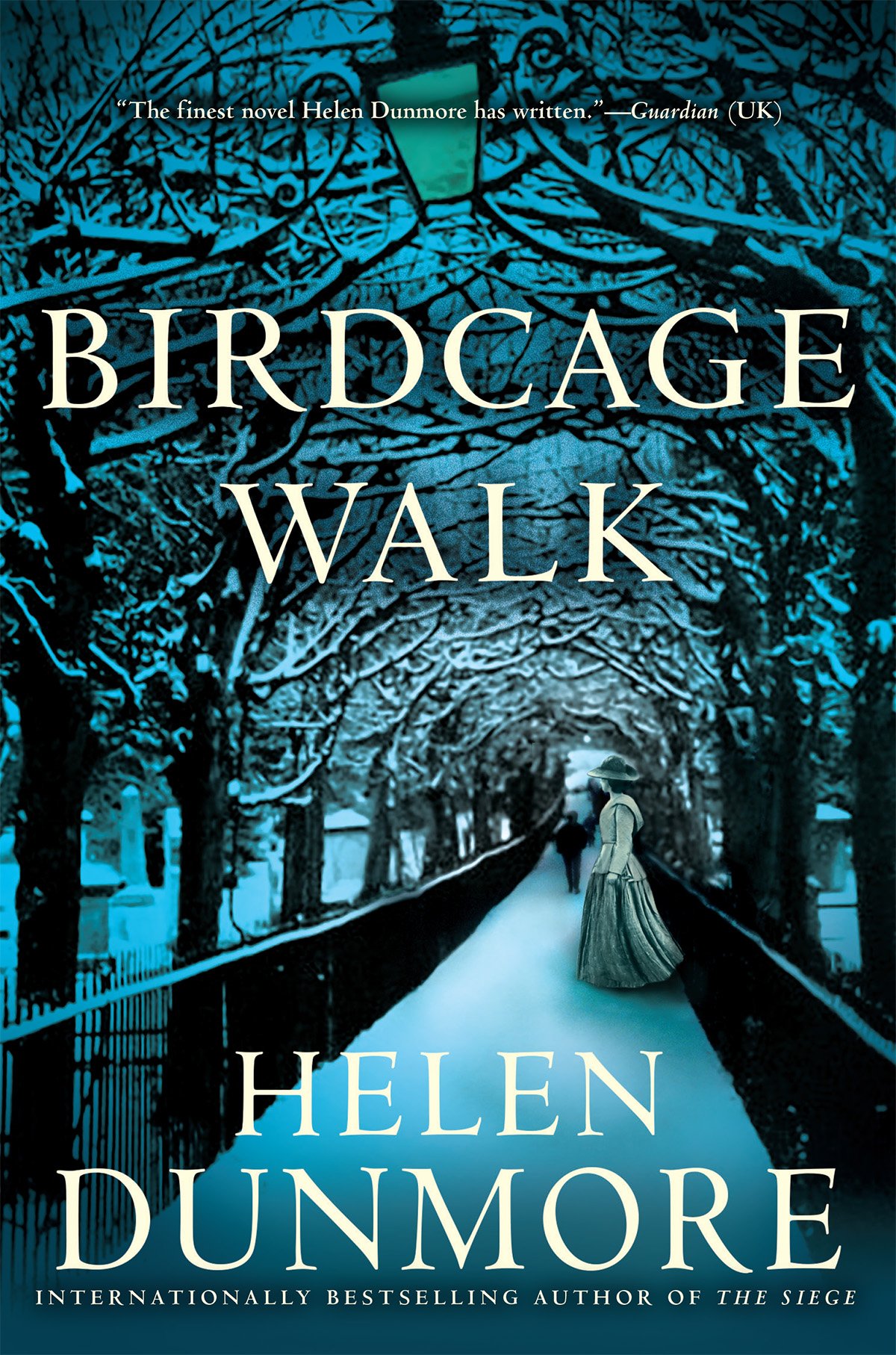
Helen Dunmore, Birdcage Walk (2017)

81HIW8yW+WL

An excellent novel by a writer who clearly knew what she was about, especially when it comes to preserving the strangeness of the past. A shame she died last year (at only 64), not long after publishing this book. Birdcage Walk is set in and around Bristol in the 1790s. It’s good with ideas–the joys and disillusionment the Revolution brings to progressive thinkers, including the protagonist’s mother, as best I can tell a sort of Mary Wollstonecraft type (though the hero is no Mary Shelley, except in being abused by men); the similarities and differences between those who build with their hands and those who create with their minds–but even better with things: it’s filled with vivid scenes of, for example, a difficult labour, the burying of a corpse, and a headlong boat ride, racing first with then against the tide. Dunmore reminds me of Penelope Fitzgerald (some of the highest praise I can offer). There’s nothing here quite as extraordinary as the wash day in The Blue Flower or the break-up of ice in The Beginning of Spring, but Dunmore’s book is definitely in that league. Although there won’t be any new books from Dunmore, she has a long and enticing backlist. I plan to start with The Siege, about the siege of Leningrad, but if anyone has other suggestions, I’m all ears.

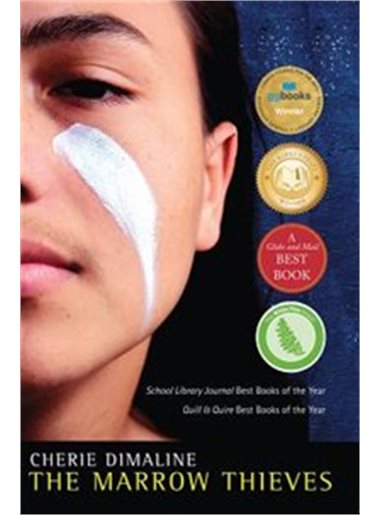
Cherie Dimaline, The Marrow Thieves (2017)

1770864865

Terrific Indigenous YA from Canada. In the dystopian world of this novel–set in Northern Ontario about forty years from now–not only has climate change made much of the world uninhabitable, but, almost as bad, something has made people unable to dream. (No doubt it has something with their inability to contrive a way of living in the world that doesn’t destroy it, but fortunately Dimaline doesn’t labour over an explanation.) If you can’t dream you go crazy, so when it’s discovered that Indigenous people have been spared the affliction it’s not long before they are being hunted and placed into facilities where the bone marrow that somehow protects them can be extracted. There are obvious resonances to the residential schools that devastated Indigenous culture in Canada, but again, Dimaline underplays the connection. A friend told me she didn’t care for the book because she thought it was so poorly written, and I agree that Dimaline (in what I believe is her first novel) too often overloads her sentences with metaphor. For example, here’s her narrator, a teenage boy named Frenchie, when he stumbles across a miraculously pristine lake: “I heard capture and release and a high whine over something that echoed off the trees growing downwards towards the brook like pious monks in all manner of fancy dress, voluminous green silks peeking out of their austere brown habits.” I’m willing to believe, just about, that the boy would make such a comparison, but what is the comparison about, exactly? The end of the sentence says that trees look like monks, but the beginning is about sound, and I find it confusing that so much description should be appended to what isn’t even the sentence’s subject. But in the end, I am both a sucker for dystopian stories (which more and more are just slight exaggerations of reality) and for the balance between hopefulness and hopelessness on which the book pivots. Bottom line: I stayed up late to finish, reading as avidly as I did as a child.

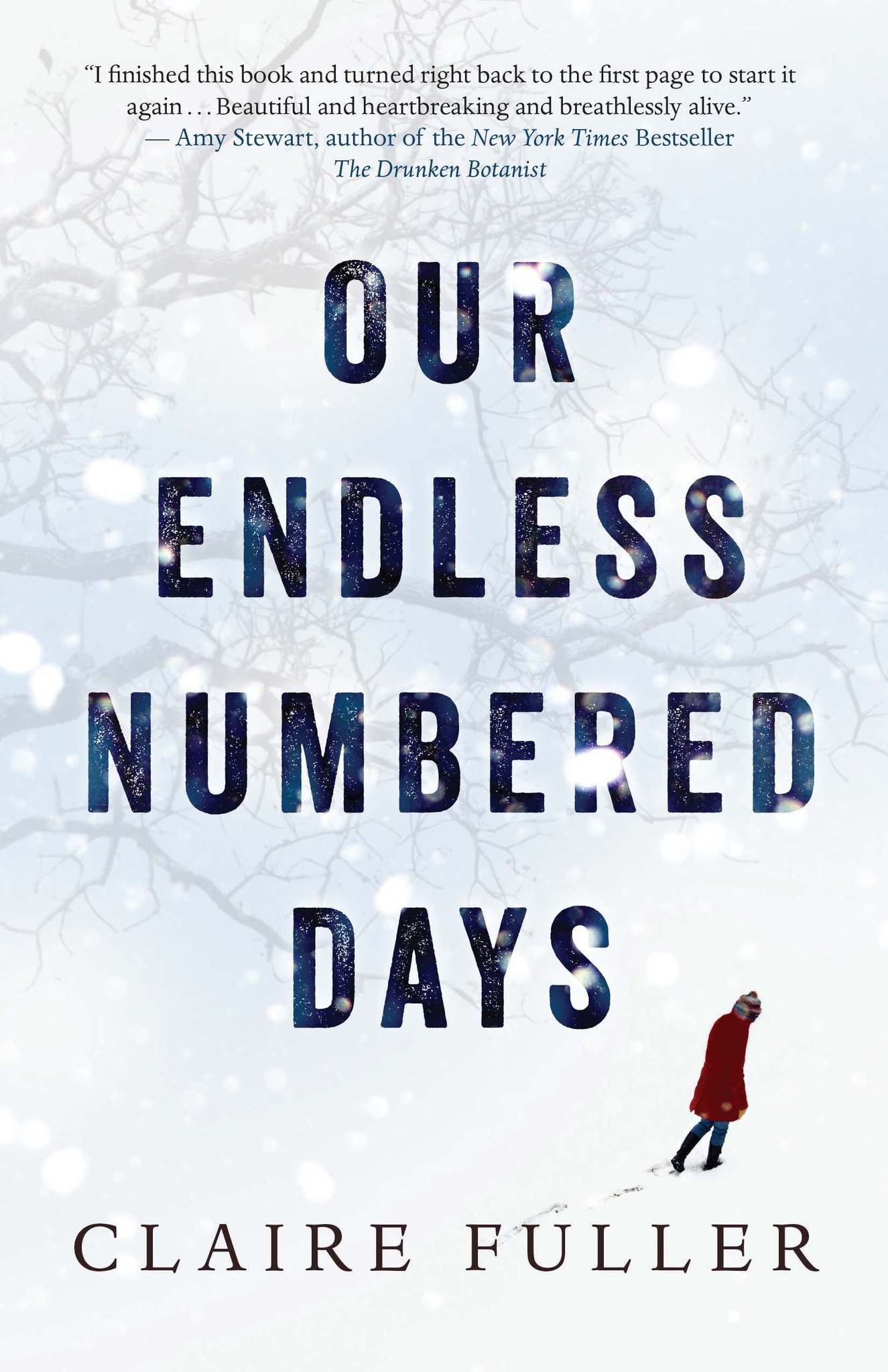
Claire Fuller, Our Endless Numbered Days (2015)

9781770898240_2c5352b1-1ec6-42e1-ab85-daaa59f967d1

This was Fuller’s first novel, and her new one (her third, I believe) is getting a lot of good buzz. I’m certainly going to read it, because this was excellent. It shouldn’t work as well as it does, and I don’t think the frame story is as engaging as the main one. (Fuller just ran out of steam, I think, but that’s okay because I’d rather the book was 300 pages that left me wanting more than 450 pages that made me want less.) In the mid-1970s, while her mother, a concert pianist, is on tour in Europe, eight-year-old Peggy is taken on vacation by her father, a survivalist and, it turns out, a crackpot (though that’s probably a redundancy). The vacation turns out to be a nine-year odyssey in a remote valley in Bavaria, where the two live without any human contact. The father convinces his daughter that the rest of the world has been destroyed and that they have only each other to rely on. (The frame story hints at the narrator’s difficulty in re-entering the ordinary world.) Fuller’s characterization, especially of the father, is careful and convincing. We see his monstrousness, his selfishness, but we also see his capability and his ability for joy. (Mostly, though, we see the former.) Fuller handles the denouement deftly, too: it’s never clear whether Peggy escapes alone or with help. The best thing of all, though, are Fuller’s descriptions of what the two do to survive: what they eat, how they collect and catch it, how they make do with what they have, and how much their “success” is twinned with delusive failure. An unspectacular but totally captivating novel.

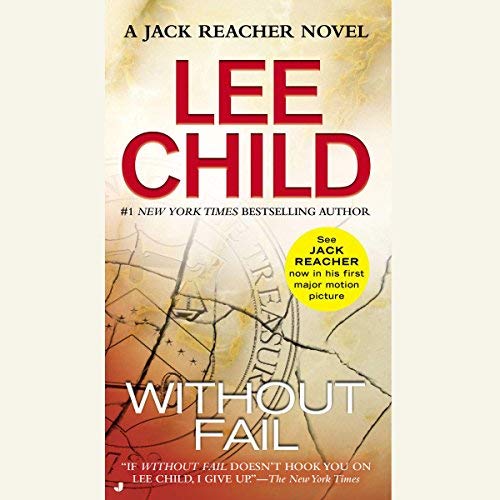
Lee Child, Without Fail (2002)

51s9OZxofoL._SL500_

A long time ago I read the first Reacher novel in the hopes of seeing what all the fuss was about, but that wasn’t a good idea, since Child hadn’t yet perfected his style. A friend gave me this installment, from much later in the series (though I think the point is they aren’t a series, each book is, I suspect, as self-contained as Reacher is supposed to be), and I plucked it off the shelf when I needed pure distraction. It was the perfect vacation read: totally undemanding and suspenseful. Child writes too much (though he’s never wordy and his syntax is as simple as possible), but the book didn’t feel padded the way a lot of thrillers do. Someone is trying to assassinate the Vice President-elect and the head of his security detail at the Secret Service calls in Reacher to help. Plenty of action, plenty of suspense, and just the right amount of neepery re: protection details. I’m not a card-carrying fan-club member just yet but I will read more for sure. My main takeaway so far, though: that Reacher, not a big eater.

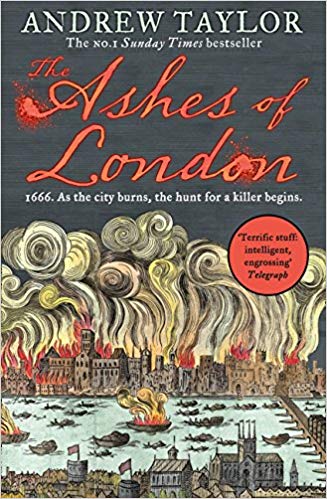
Andrew Taylor–The Ashes of London (2016)

61AwJWUmJYL._SX325_BO1,204,203,200_

Another good vacation book, this one historical fiction set in the immediate aftermath of the Great Fire of London composed of two parallel stories that of course intertwine, but mostly pretty glancingly, so the thing doesn’t feel too contrived. Plenty of historical figures have cameos, including Christopher Wren and even Charles II, and the criticisms Roland Barthes made of this technique about 40 years ago probably apply, but I know so little about Restoration England that it didn’t bother me too much. It’s both interesting and a liability that one of the protagonists is almost but not quite a detective–such a thing didn’t exist in the way we know it today, and Taylor, who is as pleasantly workmanlike a writer as one could wish in such a book (I mean that as a compliment: he’s a good writer, but he’s not trying to be something he’s not, Hilary Mantel, say), makes good use of the character’s in-between status as someone near but not of court life to take us all over London. There’s already a sequel, and I’ll read it for sure. Not a book to change anyone’s life, but totally enjoyable. Just like a vacation, maybe?

And you? What have you been reading this summer?