A Shelf of Promises: My Starter Library

A recent episode of The Mookse and the Gripes podcast got me thinking. Hosts Trevor and Paul were joined by John Williams of the Washington Post (mensches one and all). John had proposed a fascinating topic: starter libraries. The idea was to imagine your response to someone who asked you for ten titles they absolutely had to have in their collection. Probably this person is someone new to literature, a teenager or a student, but maybe they are someone who used to read more than they do now and are looking to get back to that part of their life. What would you recommend?

The important part of the assignment, as I understand it, is that the person is asking you. They know you well enough (parasocially or otherwise) to trust your taste. They respect you enough to be curious about anything you recommend. But they’re not asking for your ten favourite books. Presumably you like the titles on your list. But you’re not just offering them out of personal predilection. You think of them as representative for aspects of literature that matter to you.

Personal but not only personal, might be one way of putting it. Or, in the words of the episode’s subtitle, your choices could be thought of as a shelf full of promises.

Do listen to the episode, it’s terrific. Great lists, fascinating insights into the recommenders. And sure to get you thinking about your own answer. That’s what happened to me: I set aside the laundry I was folding and jotted some notes on my phone, which I’ve now expanded into this list, complete with categories (and alternate choices, because ten books is not many books).

Candida Höfer, Bibliothèque Nationale de France Paris XXI 1998

Books to grow into but also to love when you’re young:

George Eliot, Middlemarch

The only novel in English for adults, Virginia Woolf famously said. Not sure what she meant, but doesn’t it sound good? Having reread it recently, I think you need to be middle aged (and thus an adult… hmm well never mind) to get the most from this story of English provincial life around 1830. But having first read it in college, I can also attest that Middlemarch hits for young people. As with any rich text, what you pay attention to and who you sympathize with shifts each time you read it.

Eliot is known for moral seriousness (maybe that’s why as stylistically different a writer as D. H. Lawrence was a fan), but Middlemarch is also surprisingly funny. Mostly, it’s supremely moving. It covers so much of life, and asks the big questions. What makes a good life? How can we live with purpose? How can we think of ourselves in relation to everyone else? Where do we fit into the web of life?

[Alternate choice: Leo Tolstoy, War & Peace. Never read it until about five years ago, but feel confident it dazzles as much at 20 as at 50. You want novelistic sweep? This one’s as big as Russia… Freemasons and wolf hunts and returns from the dead and slow-burning love affairs lasting across the decades: everything, really.]

Books that master close third-person perspective

Nella Larsen, Passing

Set in Harlem and Chicago in the late 1920s among a set of well-to-do light-skinned Black women who can pass as white, Passing is a great novel of queer frenemies. It hews closely to the perspective of a single character, Irene, whose orderly life as the mother of two boys and wife to a (dissatisfied) doctor falls apart when she runs into a childhood friend, the brave and dangerous Clare. Unless we attend to how events are only offered through Irene’s perspective, we are likely to miss how much the book asks us to question the judgments it only seems to offer.

[Alternate choice: Henry James, What Maisie Knew. In book after book, James wrote about people behaving badly. Yet even among this vast canvas of cruelty, this novel stands out: the people doing the harm are parents who use their young child to hurt each other and, of course, the child. In the preface to the New York Edition James explained that he chose to narrate the book in third person but to limit the perspective to Maisie’s often baffled but also wondering sense of the world in order to offer readers the extra pathos of being able to understand what she could not. It’s quite a trick.]

Books about the Holocaust

Primo Levi, If This Is a Man

If someone is asking me what books they simply must own, they’re absolutely gonna get one about the Holocaust. Hell, I could make them a whole list. But knowing that not everyone shares my fascination, I’ll stick to one of the earliest and most famous instances of Holocaust literature. (Levi composed part of it already while in the camps.) Like all memoirs, If This is a Man (known in the US under the travesty title Survival in Auschwitz) details its author’s particular experience—which took the form it did by his having had “the great good fortune” to have been deported only in 1944, when the turning tide of the war and subsequent internal battle among top Nazis meant that more deportees were selected for slave labour. That phrasing gives you a sense of Levi’s matter-of-fact irony. But something that distinguishes If This Is a Man is Levi’s decision to use “we” even more than “I”: he aims to give a sense of the structure and meaning of the collective victim experience, at least within a subcamp of Auschwitz.

[Alternate choice: Ida Fink, A Scrap of Time and Other Stories. Too little known among English speakers, but, happily, available in a terrific translation by Madeline Levine and Francine Prose, Fink’s heartbreaking stories depict part of the Holocaust most people don’t know about: the mass murder performed by the Einsatzgruppen in Galicia in the summer and fall of 1941. Fink couldn’t find a publisher for these stories until the 1980s; they were deemed of no interest. Another devastating failure on the part of literary opinion. Fink has been called the Chekhov of the Holocaust. Grotesque as this sounds, it’s accurate. Quiet and heartbreaking.]

Members of YIVO New York examine crates of books rescued from the Vilna Ghetto

Books about how to read books:

Roland Barthes, S/Z

Barthes spent a year reading Balzac’s story “Sarrasine” with some students. (Oh to have been in that seminar!) That labour resulted in this extraordinary book, organized around line-by-line readings of the source text, not, as critics usually do, to figure out what it means, but rather how it means. To do so, Barthes offers five “codes”—fundamental elements of realist fiction, of which “Sarrasine” is considered only as a representative example—that readers unconsciously rely on (typically by having imbibed many examples of the genre) in making the text intelligible. The codes are things like references to historical events, people, and places, or attributes and actions that cohere into what we call characters and, in the case of realist literature, think of as if they were people. Barthes Intersperses his step-by-step redescription of the Balzac story with theoretical meditations on the operation of the codes, which readers can extrapolate to other texts.

S/Z is tough. I probably taught it five or six times before I felt I had a real handle on it. But as Barthes says, it’s valuable to be able to distinguish between real and superficial ideas of difference. We might think that the best way to know about books is to read a lot of them. But if we do so without thinking about what underlies their intelligibility (i.e. what we need to be able to read them), then we are mere consumers, doomed to reading the same thing over and over. Only by reading one text over and over can real difference, that is the difference within the text, show itself—which in turn will make our other reading more meaningful. All of which is to say, the effort of tackling Barthes’s analysis offers big rewards.

[No alternate choice. S/Z for everyone.]

Books with pictures:

Alison Bechdel, Fun Home

Comics, graphic novels, whatever you want to call them are important to me, and I think any reader needs at least one example in their library. Such a rich form, so many gorgeous and moving texts to choose from. As with my Holocaust choice, I resisted the temptation to go niche here. Bechdel’s memoir of her relationship with her closeted, self-destructive, talented father deserves its fame. Probably more than any book I regularly taught, Fun Home elicited the strongest positive reactions in the widest range of students. Family disfunction runs deep. A great book about how books can connect people who can’t otherwise open up to each other—and how they can further separate them too. Funny, ominous, bittersweet.

[Alternate choice: Nick Drnaso, Sabrina. Dark, powerful. Reading it gave me a bit of the ick. And yet its subject matter just seems more relevant. I guess this is about the manosphere, except no one was using that hideous term at the time.]

Books of ideas [fiction]

Thomas Mann, The Magic Mountain

Sometimes I want a book that dramatizes the back and forth of thinking. In The Magic Mountain, Mann literalizes this by surrounding his protagonist, the well-meaning, hearty Hans Castorp, with some of the most indefatigable talkers ever to appear in a novel. The whole intellectual landscape of pre-WWI Europe is here (liberal humanist, communist, militarist, hedonist, you name it), and everyone battles for Hans’s soul, even as the former engineer mostly wants to desire a woman from afar, a woman who reminds him of a boy from his schooldays…

The other great thing about this book is how well it depicts Davos and environs. I’m a sucker for mountains and mountains in books. Bring on the snow!

[Alternate choice: Proust. Honestly, if you can only put one book in your starter library, choose this one. I assume it’s already there, but if not then get stuck into this deeply philosophical book, which has so much to say about perception, time, cruelty, and control over others.]

Books of ideas [nonfiction]

W. E. B. DuBois, The Souls of Black Folk

Every American should read it. But non-Americans should too. The idea of double-consciousness—the way a minority must measure themselves by the tape of the majority, as DuBois so memorably puts it in his first pages—explains so much of our contemporary sense of identity.

In addition to its ideas, Souls is a fascinatingly hybrid book, presumably stranger in 1903 than today. Each chapter is prefaced by a bar of music, often from the sorrow songs. Most chapters are essayistic, but some are fictional. Each is written in resonant cadence. Hasn’t dated much. Alas.

[Alternate choice: Hannah Arendt’s The Origins of Totalitarianism. Explains how Nazism and Stalinism came to be so accepted and do so much harm. Especially interesting for (1) its “boomerang” theory of imperial violence, in which what the metropole does in the colony comes back to bite it at home, and (2) its argument that modern antisemitism arose from the waning of Empire and the rise of nationalism. Hasn’t dated much. Alas.]

Monomaniac books

The strand from writers like Kafka, Knut Hamsun, or Robert Walser to someone like Lydia Davis, via the high point of Thomas Bernhard, has been enormously influential in the Anglo-American sphere. At this point, annoyingly so. (And weird, too, given that none of the most important precursors wrote in English.) But I get it because literature excels at tracing the vagaries of a mind, especially one spinning through reversals, paradoxes, and hobby-horses. A starter library should have an example of this sort of thing, and Bernhard might be the best. When the only thing that stands between a psyche adrift or worse is the chance that someone might respond to its voice—that’s when you’re in Bernhard territory. I’ve chosen The Voice Imitator because the title says it all. Read these 104 short texts to get a sense of Bernhard’s bitter, misanthropic, and, oddly, funny vibe.

[Alternate choice: I just named like five other writers!]

Funny books

P. G. Wodehouse, The Code of the Woosters

As implied in what I said about Bernhard, voice-driven books don’t have to be grim. They can make us laugh, whether from the gap between what the narrator claims and what we know, or the sheer verve of their style. The fun only increases when those narrators get embroiled in elegant plots. Wodehouse is the master of this terrirtory and everyone’s library is the better for including him. (I feel like he’s fading a bit from memory? Sad.) You can jump in anywhere—my entry point was the distinctly not-famous-but oh-so-representatively-titled Eggs, Beans, and Crumpets which baffled and delighted me at age 12—but if you’re at a loss start with this wonderful episode in the Jeeves and Bertie series, which Tim Waltz would enjoy, since it’s an early example of the “I condemn the fascists by unflinchingly stating how weird they are” school of responding to authoritarianism. (As Bertie says, appalled by the realization that the Saviours of Britain are simply grown men marching in black shorts: “how perfectly foul!”)

[Alternate choice: for an American version of this phenomenon, reach for Charles Portis, especially the marvelous True Grit.]

Books about crime

Dolores Hitchens, Sleep with Strangers & Sleep with Slander

Since at least Oedipus Rex, literature has used crime to understand fundamental concerns like identity, political organization, and moral value. Crime fiction can be smart, is what I’m saying. And it can also carry us away by inciting our desire to have enigmas explained. (Interestingly, it often makes us realize how much more compelling it is to ask a question than to answer it.) Like any genre, then, crime fiction satisfies at both the intellectual and emotional level. Having stayed with well-known titles so far, I’m diving deep for this last category. Not enough readers, even lovers of crime fiction, have read the mid-century American writer Dolores Hitchens. She wrote a lot of books under a lot of names. But only two about a PI named Jim Spader. Which is sad—but also good because they’re even more special. These make for pretty despairing reading, even for noir. So be warned. But you won’t regret seeking them out.

[Alternate choice: Hundreds! Thousands! Sticking with mid-century American women writers, I’ll plump for Dorothy B. Hughes’s The Expendable Man. Don’t read anything about it beforehand!]
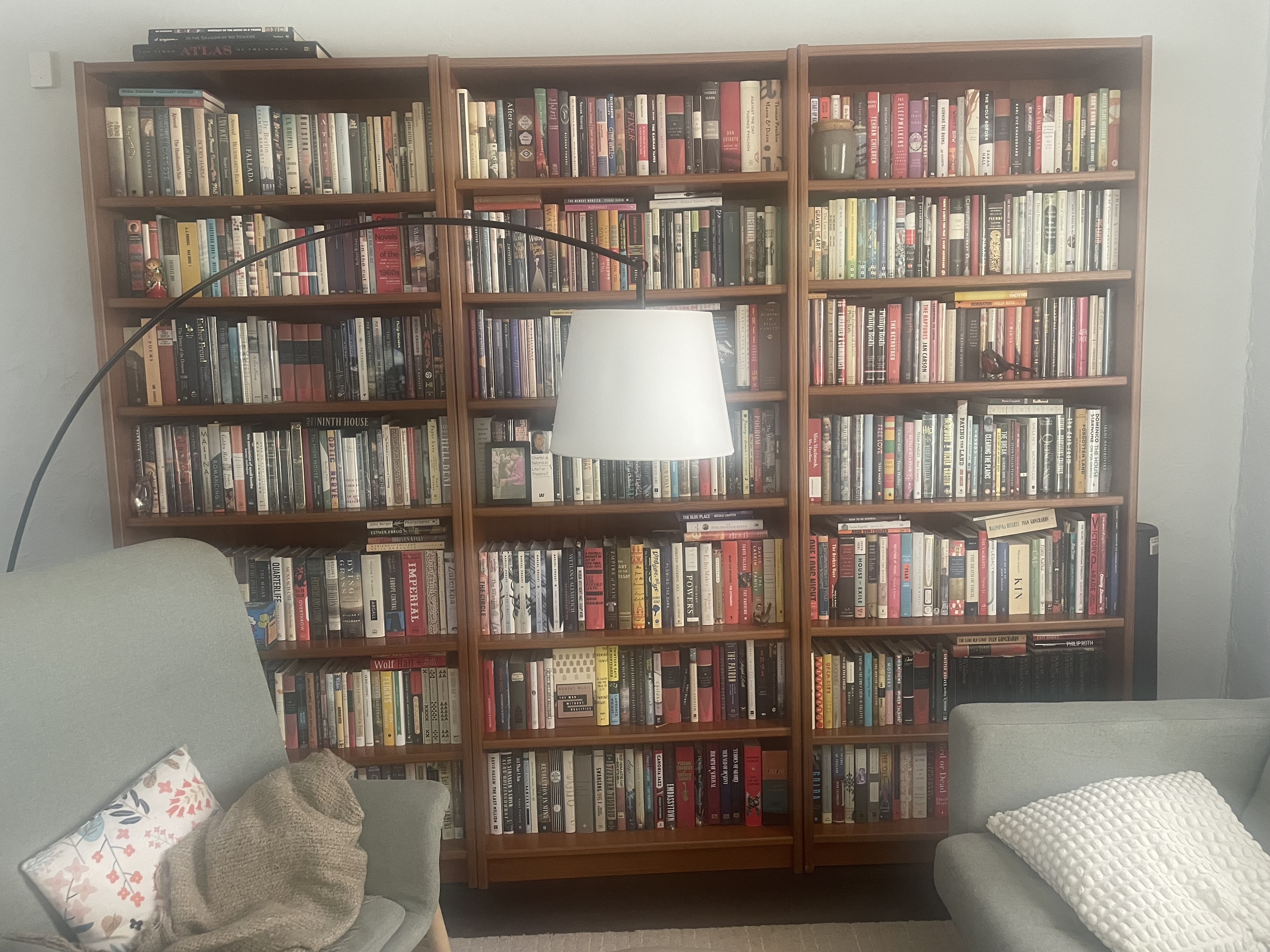
I tried not to think too long in coming up with my choices. Next month or next year I’d choose differently. And I’m aware of some big lapses. No poetry?? No plays?? No Torah?? (Everyone should read the Five Books of Moses.) But that’s ok. Gives you all the more room to think about how you’d create a starter library of your own. What would be on your shelf of promises?

What I Read, August 2021

I know, I know, this thing is late. Here it is, almost October and me still going on about August. Had a lot going on, though. Back to full-time work after a year’s sabbatical (the Sunday night of all Sunday nights, let me tell you). Plus my wife moved temporarily to St. Louis to complete an MSW degree. So August was split between setting her up in her place there—St. Louis is so great!—and starting the new academic year, for me and our daughter (last year of elementary, how did that happen?). I fit reading in where I could—I go nuts if I don’t—but it wasn’t the top priority. Here’s how that shook down.

Childe Hassam, Clouds (also known as Rain Clouds over Oregon Desert), 1908

Dolores Hitchens, Sleep with Slander (1960)

When I wrote last month about the first Jim Sader PI novel, which I liked a lot, I alluded to its sequel, in my opinion a genuine masterpiece that anyone with even a passing interest in PI novels should read. In sleep with Slander, Sader is hired to find a kidnapped child. The boy’s grandfather has received an anonymous letter explaining that the child has been taken from the people the grandfather put him with (his daughter had the child out of wedlock) and is now being abused. Things get complicated fast, as Sader runs up against one closed door after another. Unlike in some detective stories, where the complexity becomes an end in its own right (Chandler, say, even Hammett), here the plot never obscures the hurt at the heart of the matter. The book feels urgent, even more so than in Ross Macdonald, whose Archer novels Sleep with Slander shares a preoccupation with, specifically, the way families pass along their hatreds. Hitchens contributes her share to the California rhapsodies sung by generations of crime writers—when Sader turns his car from the ocean at Laguna Beach and up into a canyon “the sea wind followed, funneling through the narrow cleft in the coastal hills”; here as elsewhere Sader is more pursued than pursuer, mocked even by the elements: “he heard it whistle against the window” (it’s like he’s being cat-called by the environment)—but Hitchens really shines with her deft character portraits, even in the most minor characters. I was especially struck by a real estate man whose habit of silently beating out hymns on his empty desk strikes a plaintive note of discord with the dreams of happiness his profession traffics in. Leaving the man after a revealing interview, Sader sees him, silent, alone, “sitting with fingers poised, ready to strike an opening chord on the rim of the desk.”

Hitchens never wrote another Sader novel, though given the melancholy perfection of the ending of Sleep with Slander it’s really no surprise.

Elizabeth Jane Howard, The Light Years (1990)

Howard’s novels about the Cazalet family have been on my radar for a while, enthused over by readers I trust. I was surprised to find they were published in the 90s; I’d vaguely assumed they were from the 50s. And they are a bit old fashioned, sort of soapy, though not, I’d say melodramatic. (Not that there’s anything wrong with melodrama!) The Cazalets have made their money importing wood from the colonies. In 1937, when The Light Years begins, the business is run by the two eldest sons, Hugh (a good soul, wounded both physically and emotionally in the Great War) and Edward (jolly, lover of the good things in life, bit of a cad), even though their father, known to all by a typically ridiculous upper-class British nickname, The Brig, remains nominally in charge. In practice, though, he spends his time at their seat in Sussex, where his increasing blindness don’t stop him from advancing many improvement schemes in the neighbourhood, which require a lot of work from everyone else, especially his unmarried (and possibly gay, though she seems unsure about that) daughter, Rachel. (His wife, the family matriarch, known as the Duchy, is both steely and vague—I could read a whole book about her but she floats around the edges of this one.) Hugh and Edward’s younger brother, Rupert, a schoolteacher and artist, is being pressured to join the firm. Zoë, Rupert’s young second wife—his first having died (I think in childbirth, but maybe I made that up and I’m too lazy to look it up)—is young, beautiful, rather out of her depth, though Howard deepens her portrait satisfyingly. She feels shut out by Sybil and Villy, Hugh and Edward’s wives, who are close, though not enough for Sybil to share her ambivalence at getting pregnant again or Villy to admit her fears (barely expressed even to herself) about her husband’s affairs, and her thwarted ambitions (she was once a ballet dancer).

As good as Howard is with these adults—and she’s very good—she really shines with the children, who range in age from about 5 – 15: Hugh and Sybil’s two, Polly and Simon; Edward and Villy’s three, Louise, Teddy, and Lydia; and Rupert’s two, Clary and Neville. (I won’t even get into their cousins, Villy’s sister’s children, but they’re important, too.) Each is wonderful, though I think I like Polly and Clary best. (Clary, the would-be writer, might be Howard’s younger self. She’s funny, too. When her aunt, tucking her into bed one night, asks if she’s warm enough, the girl looks surprised: “I don’t know. How do I feel?”)

Each summer, the clan gathers in Sussex; The Light Years describes the events of two summers, 1937 and 1938, the latter governed by the specter of war, relieved at the last moment by the events of Munich. The novel is leisurely, engrossing, delightful if you like an unflashy but pleasing style and incisive psychological insight. As a co-dependent, I’m particularly compelled by Hugh and Sybil’s marriage—a good one, but spoiled a little by each partner’s desire to please each the other so much that they end up doing things neither really likes, in the mistaken belief that they’re doing a kindness to their partner:

This duel of consideration for one another that they had conducted for the last sixteen years involved shifting the truth about between them or withholding it altogether and was called good manners or affection, supposed to smooth the humdrum or prickly path of everyday married life. Its tyranny was apparent to neither.

“This duel of consideration”! Ouch!

Anyway, I’m currently stuck into volume 2 and anticipating a fruitful autumn of Cazalets.

Naomi Hirahara, Clark and Division (2021)

Frustrating crime novel: fascinating premise, mediocre execution. In 1944, the narrator, Aki, and her parents arrive in Chicago after being interned in the Manzanar War Relocation Camp. There they plan to reunite with the family’s elder daughter, Rose, who, having been deemed a loyal Nisei, had been released the year before. But Rose fails to meet the train; soon they learn she is dead, hit by a subway train at the station that gives the book its name. The official verdict is suicide; Aki is convinced it was murder. As her parents retreat into grief, Aki sets out to find the truth of her sister’s death, following in Rose’s footsteps whenever possible, but also creating a new life for herself, with a job (at the Newberry Library) and love interest.

I wanted to like Clark and Division more than I did. I appreciated the history lesson and the attention to characters who don’t usually appear in crime fiction. But the plot is creaky and the writing wooden. The book reads like mediocre YA, filled with leaden lines and obvious questions: “Pages had been ripped out [of Rose’s diary] and I couldn’t help but wonder if they had held some secrets to why my sister was now dead”; “Was I, in fact, hurting my sister’s legacy by being consumed by it?” Yeah, yeah, we get it.

Gwendoline Riley, My Phantoms (2021)

Total banger. Ostensibly a story about a woman’s terrible parents—blustering, bullying father; needy, demanding mother—but actually about the woman’s own terribleness, her contempt and lack of interest in others, her mother especially. The way Riley uses the woman’s narration against herself (she reveals herself as unpleasant only slowly) is, as the kids say, chef’s kiss.

Mick Herron, London Rules (2018)

For a thing I wrote about the Slough House series, I read two Herron novels this month. I quite liked this one, maybe because I was paying more attention to Herron’s style, trying to get a handle on how he does what he does.

Esther Freud, I Couldn’t Love You More (2021)

Huge fan of Freud, starting with her brilliant debut, Hideous Kinky, which you should read immediately. (Terrific example of a non-treacly first-person child narrator—its protagonist is only five.) She hasn’t published a novel in quite a while, so when I heard about this one I ordered it from the UK so I could have a hardcover.

I spent a pleasant weekend with it, enjoying the feeling of being in Freud’s quiet, assured hands. The new novel is a bit different from the earlier ones, which fall into two camps: stories of children at the hands of hapless, almost but not quite neglectful adults (versions of her own childhood, perhaps), and stories of early 20th century Europe and its connections via exile, war, and displacement to England (versions of her family’s history: Sigmund Freud was her great-grandfather; the painter Lucien Freud her father—though as I read around a little online to write this blurb, I learned that the new book imagines what might have happened to her mother, Bernardine Coverley, born in Brixton to Irish Catholic parents, had her own teenage pregnancy led to unhappier results).

I Couldn’t Love You More shares with the latter books an interest in the aftereffects of the past on the present; the setting is Ireland and the UK between the late 1930s and the 90s. The story moves between three generations of women: Aoife, who, sitting at the bedside of her dying husband, remembers their life together; Rosaleen, who leaves Ireland for London in the 60s and gets involved with sculptor; Kate, who, stuck in 90s London with a small child and an alcoholic husband, sets out to uncover the identity of her birth mother, a journey that takes her to Ireland and the remains of the Magdalene Asylum system.

As I said, I liked the book plenty as I was reading it. But now, a month later, I realize I don’t remember much about that. Not that it’s bad—but certainly much less vivid than her others. The Kate storyline works best—Freud is brilliant with children, and the chaos and drudgery of living with them—but I’d rank this as minor work. Not the place to start if you’ve not read Freud before. I will say, though, that the title is pretty great: its double meaning (I love you as much as it is possible to love someone; I loved you no more than I was able) captures the painful ambivalence of all the story’s relationships.

Judith Hermann, Summerhouse, Later (1998) Trans. Margot Bettauer Dembo (2001)

I really flaked out when it came to Women in Translation month. Plucking Hermann off the shelf was my nod to that fine event; sadly, I chose poorly. When my wife and I spent a fair bit of time in Germany at the beginning of the century, Hermann was talked about as a big deal, a hip, young writer who was invigorating German literature with her Carver-esque prose and her descriptions of life after die Wende. Reading it twenty-five years after publication, I didn’t understand the fuss. It’s too dated to appeal to the current moment and not dated enough to become interesting again. The stories about Wessis taking over the East interested me the most, but that socio-political material is well in the background; the focus is on lives and listless love affairs of young, vaguely arty types. If I want that, I’ll dig out my Doris Dörrie collections. Anyone remember her?

John Darnielle, Universal Harvester (2017)

Darnielle fronts The Mountain Goats, and I’ve wondered whether his book deals came from that fame as opposed to his talent. But a trusted former student raves about him, so I finally gave him a chance. Thank God I did! Universal Harvester wowed me with its combination of menace and warmth. A young man working in a video store in small-town Iowa in the late 90s—among other things, the novel sings a low-key hymn to that time before the internet changed everything—gets complaints from customers: something is on the cassette they watched, like another bit of a movie, something weird. They can’t or won’t say more, act disturbed and uneasy. The man watches the movies—and becomes disturbed and uneasy himself. Someone has spliced footage—some innocuous (an empty barn), some frightening (a hooded figure tied to a chair)—into the disposable Hollywood products of the 80s and 90s. Reluctantly, the man is drawn into an investigation of sorts, propelled by two women (one owns the store, one is a customer). He gets involved with neither, just one way Darnielle subverts expectations. Another, more striking, is by breaking the storyline off to tell the story of a woman in 1960s eastern Iowa who joins a cult and the effect her decision has on her husband and daughter. A third storyline, closer in time to the present-say, links the two earlier ones.

Raving about the book on Twitter I learned, to my delight, how many of my mutuals love this book. Someone who was prompted to read it based on our praise later tweeted something like: “Not what I expected. Thought it would be Videodrome, but it turned out to have a lot more heart.” Perfect description. As much as I like Cronenberg—Long live the new flesh!—I agree that it is Darnielle’s kindness—modest, never sappy—mixed with his rueful self-awareness of the pleasures and limitations of midwestern politeness that really made the book work for me. Darnielle knows the Midwest; his descriptions chimed with what my wife has told me about her own childhood in Missouri.

Now that I have to commute again, I’m back to listening to audio books. (Alas, during the pandemic the local library system stopped buying CDs, which I totally get, but my car is old and not Bluetooth-enabled. So I’ll be making my way through their older stuff, hopefully before they get around to deaccessioning them all…) Darnielle reads Universal Harvester himself and he is wonderful (I mean, he is also a performer, singer, and musician so I shouldn’t be surprised). I loved his voice so much, he seems so kind and gentle. I just want to be his friend! He includes some cool music—which I assume he composed—between sections, too. I’m sure the book is wonderful on its own, but experiencing it in audio form made me love it even more.

Mick Herron, Joe Country (2019)

The Slow Horses briefly leave London for Wales, which to them is as exotic as Siberia. Ends with quite the cliff-hanger.

Tommy Orange, There There (2018)

Much-fêted novel by a young indigenous writer about twelve characters converging on a powwow in Oakland, CA. Each section is told from one of their viewpoints. In addition to this dozen first-person narrators, Orange includes a prologue and interlude told in first-person plural. I liked these two sections best, actually: their essayistic and choral mode suits Orange, who’s better at letting his intelligence and cultural references loose directly than at creating a character with a similar academic background to his own. (For those who’ve read the book: Dene Oxendene is the least interesting character, IMO.) Oakland is famously the place where there’s no there there; Orange gives Oxendene an admittedly good riff on how misunderstood this passage of Gertrude Stein’s is, and how the loss invoked by the phrase is also the story of Native Americans. Orange evokes the city with love mixed with anger at its gentrification. I agree with the many readers who’ve said that it’s bracing to read a book about urban Natives. As with Esther Freud’s latest, though, I enjoyed Orange’s novel more in the reading than in the reflection. Unlike, say, The Break, Katherena Vermette’s novel of indigenous Winnipeg (which similarly splits its narrative between a set of connected characters), a book I seldom go a week without thinking about, I’ve barely thought about There There since finishing it.

Georges Seurat, Alfalfa, St. Denis, 1885-86

Maybe I’d have remembered these books more if I’d been in a better head-space, but a person can’t always be at the top of their game. Besides, between the Hitchens, the Howard, the Riley, and the Darnielle it was still a pretty good reading month. I can tell you already, September will bring more of the reading-around-the-edges same… How about you? Was your August a good month?

What I Read, July 2021

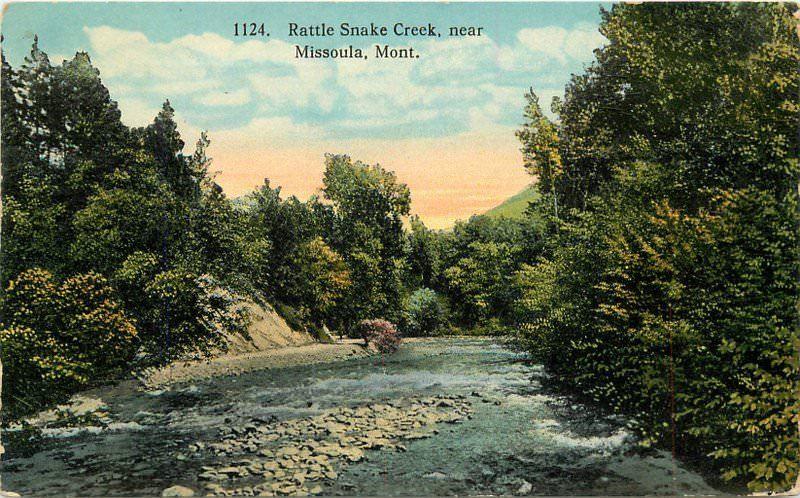
July was for roadtripping, not reading. We made an epic 4000-mile trip to Montana, Wyoming, and South Dakota and back again, a trip filled with glorious landscapes, terrible meals (I do like fry bread, though, even if a little goes a long way), and irrefutable evidence of our changed climate: heat, drought, fire. Sobering isn’t the word. Our exhilaration at being together as a family outside in wonderful places was undermined by our anxiety about masks (that is, their almost total absence) and the low-level irritation at finding ways to eat outside to keep our unvaccinated daughter safe. Anyway, those Western States are amazing—go if you ever have the chance! Sitting in a car and hiking through national parks didn’t leave much time for books—though the book shopping (in Missoula, MT and Omaha, NE) was great. Here’s what I found time for.

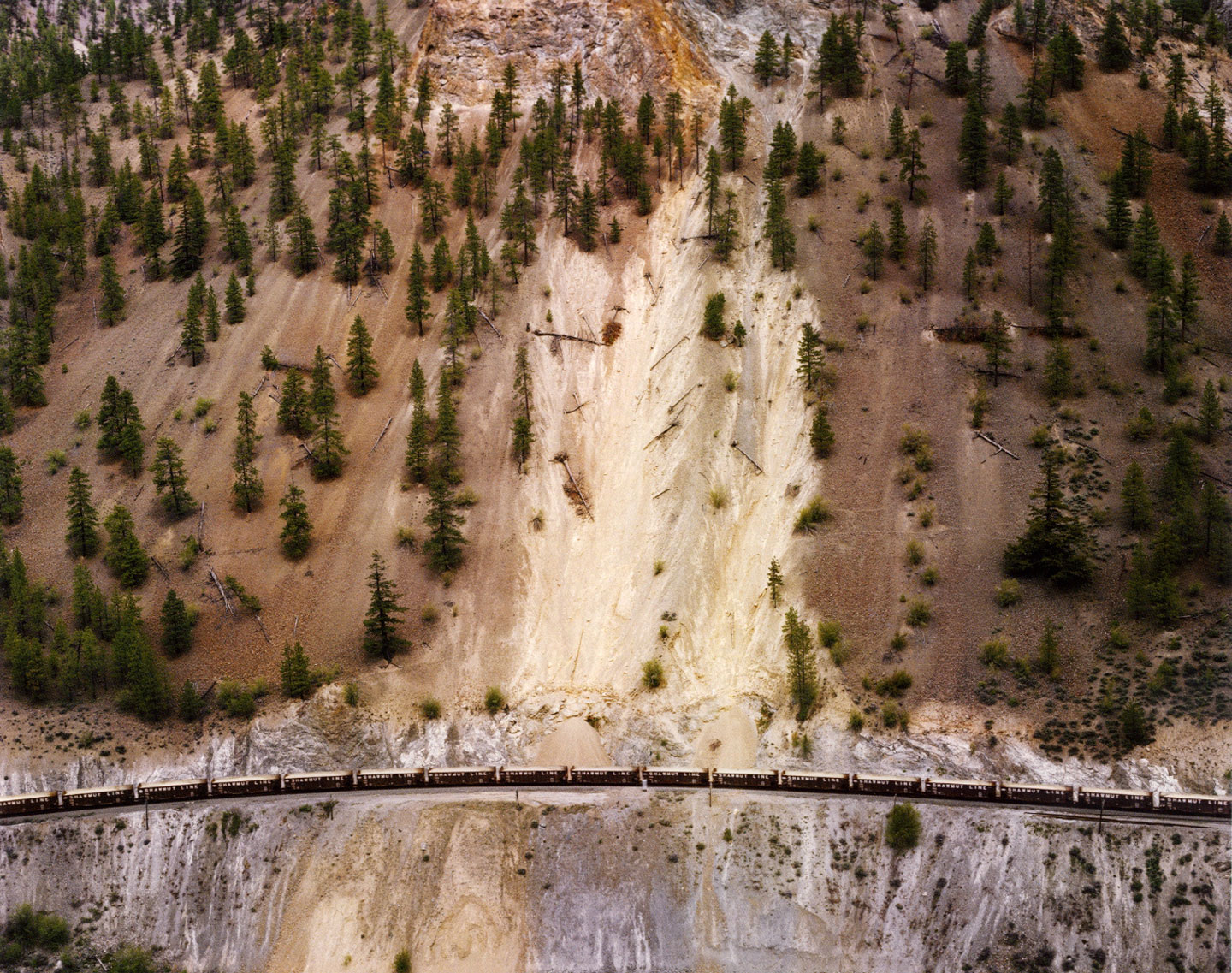
Edward Burtynsky, Railcuts #1, Canadian National track, Skihist Provincial Park, British Columbia (1980s?)

Menachem Kaiser, Plunder: A Memoir of Family Property and Nazi Treasure (2021)

Regular readers know I’m critical of third-generation Holocaust memoirs. (Memoirs written by grandchildren of survivors.) When I heard about Plunder, in which Menachem Kaiser sets out to reclaim a family apartment building in Poland, I reacted the way I always do—with skepticism mingled with resignation (I knew I’d read it) and curiosity (I only know of one other book that’s similar, Rutu Modan’s The Property). It didn’t take long, though, before I recognized the special qualities of Kaiser’s book. It’s so smart and interesting! So self-reflective—which all 3G memoirs ought to be—and, even better, without being annoying about it. It’s even funny. As Kaiser plunges into his quixotic enterprise—his extended family doesn’t know what to make of it, after all his father’s father died eight years before Kaiser was born, who is he to take up this quest, what does he expect to get from it?—things gets complicated. Does the building even exist anymore? What would you do with the people who live in it now? How do you prove to Polish authorities that someone has died?

Throughout, Kaiser’s grandfather remains an enigma, but one of the man’s cousins turns out to have written a memoir of his time in the Gros-Rosen concentration camp complex, a book that has become legendary in a surprising and surprisingly large community of treasure seekers who live to ferret out the secrets of Silesian caves. (There’s supposed to be a train full of Nazi hidden somewhere.) Next thing you know, Kaiser’s squeezing into underground tunnels hacked out by slave labour in the waning days of the war, getting drunk with weekend treasure hunters, and learning first-hand how family histories are usually litanies of error.

Basically, Plunder is brilliant from the title on. Whether as noun or verb, plunder is the perfect term to encapsulate the connotations of avarice, need, and longing that accompany any attempt to grasp the past. It’s a fantastic book, which I’ll be assigning next spring for sure.

Wendy Lower, The Ravine: A Family, a Photograph, a Holocaust Massacre Revealed (2021)

Lower’s short book—well under 200 pages before notes—manages to be both highly specific and usefully wide ranging. The specific part concerns a photograph of an execution in the Ukraine in October 1941. There are not many visual representations of what’s come to be called “the Shoah by Bullets,” and almost none that show, like this one, a Jewish family being murdered together. Lower set out to learn everything she could about the photo. Who were the victims and who the perpetrators? Who took the picture? Could she find the location of the murder? Her aim, she writes, was:

to break the frame around the crime scene, which kept the victims frozen in that awful moment. The photograph captures an event locked in time, but I knew it was part of a fluid situation. What precede that moment of death, what followed, and what happened to each person visible there?

Lower diligently answers these questions—the photo is even more poignant and terrible than initial inspection suggests—but she also has a larger agenda. Not only does she explain how the genocide was implemented, especially by the Einsatzgruppen in their push east during the invasion of the Soviet Union, but she also usefully and expansively defines collaboration. Plus, she shows us how the past is excavated, by survivors, archaeologists, and historians. All of this in lucid, accessible prose. The Ravine isn’t a comprehensive Holocaust history by any means, but there are many worse places to start learning about it. I’ll be moderating a panel with Lower at this year’s Six Bridges Literary Festival; can’t wait to see her in action.

Fonda Lee, Jade City (2017)

Enjoyable fantasy novel about a world in which only people known as Green Bones are able to harness the power of magical jade, which heightens their warrior powers. An uneasy truce among rival clans, which has held since the end of a war of independence, collapses when one group begins to traffic in a synthetic jade substitute. Jade City, the first in a trilogy that will conclude this fall, is a Godfather / martial arts mashup with juicy characters, but more than anything it’s about cartels and gangs and bureaucrats. Even if, like me, you don’t read much fantasy, you might really like this.

Joanna Pocock, Surrender: The Call of the American West (2019)

I’m working—a little too desultorily, I’m afraid—on something about this book and my trip to the American West, so maybe I’ll have more to say later, but I do want you all to know how good this perfectly titled essay/memoir is. Pocock moved from the UK to Missoula, Montana, a place that entranced her—even having spent only three days there I totally understand why—and prompted her to explore various ways of living with others and the land. The West—where land feels present in a way I’ve never experienced elsewhere—will do that to you. Pocock meets ecosexuals, foragers on “the Hoop” (a circular route around the Western US, once followed by indigenous tribes from season to season), minutemen, mining company shills, and hunters keen to hunt wolves. Mostly—cliché, I know, but she finesses it—she meets herself. Approaching midlife, to what or whom does she want to surrender? I strongly recommend.

Gil Adamson, Ridgerunner (2020)

Took this book—kindly sent me by its American publicist—on vacation because I thought it was set in Montana. In fact, it takes place mostly in Alberta, specifically in what in 1917 was still called Rocky Mountains National Park (it was renamed Banff, after its main railway station, in 1930). As someone who grew up hiking its trails, I was amazed at how much I learned: Lake Louise was once called Laggan; interned POWs, known to the locals as Germans but mostly from Austro-Hungary, specifically Galicia, built much of the road that is now the Trans-Canada highway; the Stoney Nakoda and other indigenous people were forcibly removed from the park. Adamson handles this history deftly, using it to serve her story about Jack Boulton, a twelve-year-old whose mother dies, at the beginning of the book, of an illness that almost fells him too, leading his father to make a deal with the woman who nursed the boy back to health: he will leave him with her while he handles his grief by taking off. The man, William Moreland, is a former thief (his nickname gives the novel its title); he returns to his life of genteel crime, crisscrossing the Canadian/US border, stealing from abandoned ranger cabins and planting harmless explosions in mining towns (when everyone rushes to check out the noise, he slips into hotels and mine offices to purloin jewels and cash). Moreland has a plan—to gather enough money for the boy’s future before reclaiming him. The erstwhile nurse has another—to make Jack her own. Before long Jack legs it back to the family homestead, where he gets by with help from his nearest neighbour. (I picture their cabins somewhere between Carrot Creek and Dead Man’s Flats, if you know the area: that is, the very eastern edge of the park, some of the most beautiful country in the world.)

At first I was skeptical about Ridgerunner—I thought it might be overwritten and dutiful like so much Canadian literary fiction—but I was quickly won over. Yes, the plot skirts melodrama, especially at the end. It seems Adamson decided the book needed drama, which she sandwiched into the last fifty pages; I understand the reasoning without being convinced. After all, the best bits are about how Jack survives on the land (mostly) on his own; these descriptions are compelling without being self-consciously lyrical and I didn’t need anything more. The other weakness of the book’s construction is that the Jack and Moreland sections sit uneasily together. But Adamson has an elegant, loose style (like a less earnest Ondaatje), she can be funny, and she’s damn good on horses. Ridgerunner is a sequel to Adamson’s previous novel, The Outlander, which, I gather, tells how Mary Boulton and William Moreland met. (The Frank Slide features prominently.) It holds up just fine on its own, though. Feel like this has gone totally under the radar Stateside, and that’s a shame; it deserves a better fate.

Elly Griffiths, The Crossing Places (2009)

Home from holiday and at a loose reading end, I happened upon this in the neighbourhood Little Free Library (usually a wasteland of self-help and James Patterson). It was just what I needed, a no-fuss, competently written crime novel with an engaging Norfolk setting and the feel of a romance novel in its setting up of what I am guessing will be a slow-burning “will they or won’t they” relationship between its two leads, a professor of archaeology and a cop.

Norman Maclean, A River Runs Through It and Other Stories (1976)

It’ll make some folks sad, but I did not care for this book, which I bought in Missoula, because how could I not? (As children Maclean and his brother discover that—you can read this quote all over town—“the world… was full of bastards, the number increasing rapidly the farther one gets from Missoula, Montana.”) Reading the book during and after our trip, I enjoyed recognizing its landscapes, and I appreciated the author’s love of western Montana (all the while thinking how sad he’d be at its changed climate). But mostly I found it a slog. Its attitudes to women are old-fashioned and tiresome, its humour misfires, and its detailed descriptions made me less not more interested in fly-fishing: I couldn’t square his complicated instructions with the elegant arabesques I’d seen in men and women performing in swift-running rivers across Montana. Of the book’s three stories, I enjoyed “USFS 1919” the most, because it’s about being in the woods and hiking, which I can relate to, especially since I’d walked some of the very same trails just days earlier. Yet its plot, too, fell victim to the boyish/loutish hijinks I didn’t care for in the other two. It’s all very hearty and stoic and, friends, you know that’s just not me.

Dolores Hitchens, Sleep with Strangers (1955)

Library of America has done us all a favour by reissuing this seriously good California PI novel from a prolific midcentury writer. It’s got the elements we know from Hammett and Chandler but deploys them at an angle. Jim Sader is a good guy with demons (he is a mostly sober alcoholic, he gets involved with his clients in inappropriate ways); as such he’s is a familiar character, but less macho, less hard-bitten. The plot of Sleep with Strangers is appropriately complicated, but less preposterous than, say, The Big Sleep’s. Hitchens takes her female characters, especially their motivations, much more seriously than the canonical writers of American noir. Sader’s relationship to his younger partner is unexpectedly moving (an alternate universe version of the one between Spade and Archer in The Maltese Falcon). On the basis of this novel I’d say Hitchens is a more straightforward writer than Dorothy Hughes, but she’s definitely in the same league. And the second (and sadly final) Sader novel, which I finished just too late to include in this July list, is even better: a truly excellent example of the genre.

Elly Griffiths, The Janus Stone (2010)

How quickly things change. I ran out to buy the second in the Ruth Galloway series before I’d even finished the first. Alas, my initial enthusiasm might have been misguided. The archaeology bits didn’t interest me much (big liability in these books), and the ending was silly. Will Ruth have to be rescued in every book? Unsure if I’ll persist. Sophomore slump maybe?

Arnold Bennett, The Old Wives’ Tale (1908)

Rohan and I—along with valiant readers from around the world—read this novel over several weeks. You can read my posts here, and hers here. The tl;dnr: a naturalist novel about sisters whose life paths at first seem different but ultimately aren’t. Thoughtful about the meaning of change, poignant about the frailty that afflicts us all as we age, interesting about technological and social change. It’s no Middlemarch, but Bennett didn’t deserve Woolf’s opprobrium. I’ll read more by him, even if it probably won’t be any time soon. Which ones do you recommend?

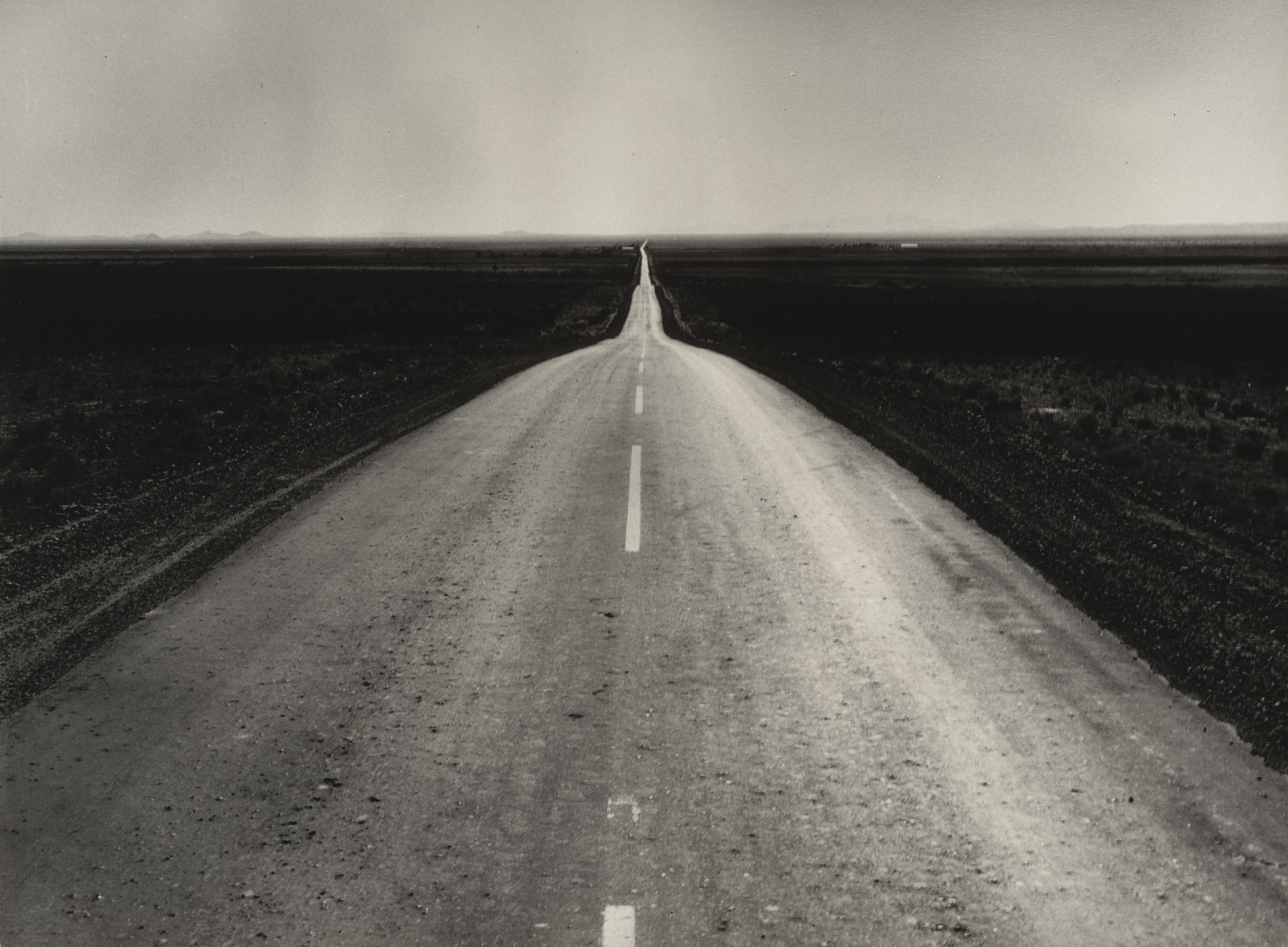
Dorothea Lange, TheRoad West, 1938

How about you? Did you read anything good last month? Hope you’re surviving whatever weather and political shenanigans are plaguing wherever you are. (I fervently wish they are better than this August in Arkansas.) As my sabbatical comes to its end, my reading time is about to plummet. In the meantime I’m trying to squeeze a few last titles in—more on that in a couple of weeks!