Today’s reflection on a year in reading, her third, is by Hope Coulter(@hopester99), whom I’m lucky to call a colleague. A fiction writer and poet, Hope directs the Hendrix-Murphy Foundation at Hendrix College.
David Hockney, Nathan Swimming Los Angeles, 1982
2022 turned out to be a good reading year. I got a wider shot at e-book availability by joining a second public library in the adjacent city. [Ed. – “city.”] Then, by pecking through recommendation lists and hopping from screen to screen, I was able to keep my library hold shelves reassuringly filled—staving off that dire malady known as Running Out of Something Good To Read. [Ed. – Extremely bad. Jenny Davidson writes about some psychological studies done on this phenomenon in Reading Style.] Along the way I ran across some new obsessions.
Starting with nonfiction, I enjoyed and was moved by Suleika Jaouad’s Between Two Kingdoms: A Memoir of a Life Interrupted. It’s a cancer narrative that stands out on account of Jaouad’s youth, frankness, and writing chops, as well as the fact that the second half becomes a road-trip book. Jaouad discovered her cancer right after graduating from Princeton. In the flash of an eye the promising, carefree prospect of her twenties became a hellish ordeal. She’s still fighting cancer, and I wish her all the best for recovery. This book is a gift.
Thinking of memoirs by feisty young women, Crying in H-Mart, by Michelle Zauner got a lot of attention this year. For me it was an okay read, but not as memorable as Jaouad’s book. On the other hand, I recommend Lynne Cox’s Swimming to Antarctica: Tales of a Long-Distance Swimmer not for any particular magic in the telling but for the extraordinary nature of Cox herself—her athletic prowess, her ability to connect with people around the world, the cheerful way she greets challenges of all kinds.
Another thoroughly satisfying memoir was Marcus Samuelsson’s Yes, Chef, ghostwritten by Veronica Chambers. Samuelsson is the Ethiopian-born, Swedish-raised culinary phenom who co-founded the Red Rooster restaurant in Harlem. His account of his Scandinavian upbringing; his rise through some of the most demanding restaurant kitchens in Europe, under despotic chefs; and his lifelong love affair with food and culture make this a book to relish on many levels. [Ed. – I see what you did there!]
George Saunders’s A Swim in the Pond in the Rain: In Which Four Russians Give a Master Class on Writing, Reading, and Life is a terrific read for anyone who wants to dive deep into the craft minutiae of great short fiction. What questions does a story ask, and how do they pull us along? Is it what’s left in or what’s left out that makes a masterpiece? Of the analyses Saunders offers, his take on three of Chekhov’s stories were my favorite. On the other hand, if you’re not minutely interested in the technical and creative decisions behind a narrative—the tied-off loops on the back of the tapestry—you might as well just read the stories themelves.
Last but not least in nonfiction, fans of Skyfaring: A Journey with a Pilot by Mark Vanhoenacker, won’t want to miss his latest, Imagine a City: A Pilot’s Journey across an Urban World.Imagine a City includes lots of the lyrical, novel description that makes Skyfaring wonderful, this time swirled into memoir and a flâneur’s takes on cities around the world. By the nature of his work as a long-distance commercial pilot, Vanhoenacker often finds himself with two days to spend near any metropolitan destination that he flies. He bides the mandatory rests in exploration and writing. This book not only features slices of such urban-scapes, but recurring takes on the author’s growing-up in Pittsfield, Massachusetts: the town, his family, his coming-out, and the globe-spinning reveries that led to his vocation.
Now to fiction. One novel that blew me away this year was Julie Otsuka’s The Swimmers. As someone who loves pools and water I was initially attracted to the title and cover (I know, I know, like buying wine for the label; I confess). [Ed. – I strongly support buying books for their covers.] Then when I started to read, I fell hard for the voice. Exactly who is speaking with such quiet authority, unspooling list after list about the lap swimmers with such close, cool knowledge? A crack appears in the bottom of their pool, and it’s like Jane Alison’s Nine Island meets Tim O’Brien’s The Things They Carried… The novel suddenly widens into a more familiar and pain-steeped story that I won’t spoil; sprint [Ed. – missed metaphor opportunity!] to your nearest book source and see for yourself.
My enthusiasm for The Swimmers sent me to Otsuka’s earlier novels, When the Emperor Was Divine and Buddha in the Attic, which in different ways chronicle the experiences of Japanese American immigrants. They’re well worth the read, though to me not consummate in their artistry like The Swimmers.
Way different stylistically from The Swimmers was a book at least as magnificent: Anna Burns’s Milkman, the densest and strangest novel I read last year. A student in my Irish short stories tutorial recommended it, and I’m so glad she did: this book made me understand as never before what it was like to live in the middle of the Troubles, no, to live the Troubles, to contain their gaslighting and violence in one’s marrow. The narrator has one of those unforgettable voices—drenched in idiom, funny, idiosyncratic—that at first seems impossible to understand. There are few paragraph changes, and few characters are called by actual names. All these might put you off, might seem like obstructions to grasping the story… and yet. Somehow it galvanizes a world as you read, a world that tumbles around you and into you, changing you.
Another surprise and pleasure was Mrs. Palfrey at the Claremont, by Elizabeth Taylor, first published in 1971.It opens on a rainy Sunday in January (is there anything more depressing?) in a London lodging hotel just affordable and respectable enough for old folks not yet decrepit or destitute. You might judge this an unpromising start—till you find yourself immersed, riveted by Mrs. Palfrey and her fortunes: the aches, yearnings, miscues, and irritations of ordinary human life, rendered with nothing less than mastery.
Also of seventies vintage was Marian Engel’sBear (1976), which Dorian has touted for years. I loved it: the boreal setting, the understated tone, a fusion of real with surreal that’s so seamless I question “surreal” even as I type it. The book is alluring and disconcerting at once—shoving me into uncomfortable encounters with my own relationships to sex, animals, and self—and resists interpretation at every turn. In fact, it’s highly entertaining to browse through reader takes on this book anywhere from Amazon to scholarly platforms. What is this thing: feminist text, postcolonial critique, an ursine-Canadian Lady Chatterley’s Lover, or a portrait of a “phallic mother”? Don’t miss Dorian’s delightful conversation with Shawn and James on Shawn the Book Maniac, which includes a clip from an interview with Engel herself. Mind you, as the interviewer admonishes, “This is no kinky, porno Pooh-Bear!” so prepare yourself for . . . something else thereof. [Ed. – Music to my ears, natch. But really 70s books are the best books…]
Thanks again to Dorian I reread Lonesome Dove, by Larry McMurtry, and was relieved to find that it still has its magic: it had been so long (or my memory so bad) that the plot twists surprised me all over again. This big novel is good for what ails you, a bracing tonic, just like the big skies and open roads out West. [Ed. – So glad it held up! Every time I see it on my shelf I brighten up a little.]
Jonathan Evison’s Lawn Boy is about Mike Muñoz, a southern California guy who can’t seem to catch the brass ring. His voice is canny, believable, often funny, and a little hoarse with pain, and there’s never a false note or a missed beat narrating his adventures through emotional and economic labyrinths. This is a fresh take on the American dream, as broken down for disillusioned 21st century folks, and it deserves to endure. Highly recommend.
Mercy Street by Jennifer Haigh is a gritty novel that revolves around a Boston abortion clinic where the protagonist works and various other characters who intersect there. I read it before the mid-year overturn of Roe, but it’s at least as relevant now: it remains on my mind for its multidimensional treatment of people on different sides of the abortion issue. Creepy, scary, and all too credible, in the case of a couple of anti-abortionist characters; but as I said, granting a multidimensionality that at least seeks to understand the sources of the venom that animates them. As Mohsin Hamid says, one thing literature does is “recomplicate what has been oversimplified,” and a novelist’s nuance is too often missing from the violent discord around this issue.
Elizabeth Strout’s Lucy by the Sea brings her Oh William! characters forward through the first year of the coronavirus pandemic—moving those inveterate New Yorkers up to Maine. Anyone who has liked Strout’s earlier novels won’t be disappointed.
Speaking of disappointments, even though Emily St. John Mandel’s Sea of Tranquillity made a lot of people’s best-of lists last year, for me it was pretty forgettable—way less gripping than Station Eleven, the post-pandemic novel she wrote a few years before Covid struck. I was likewise underwhelmed by The Flight of Gemma Hardy, Margot Livesy’s attempt at a modern retelling of Jane Eyre. I did finish it, but it annoyingly lacked a couple of key plot underpinnings as well as some of the major elements that make Bronte’s novel so great.
Edward Ruscha, Pool # 9, 1968
Last, and monumentally, I come to a series that dominated the last half of my reading year—and which I’m still devouring as we move into 2023: Michael Connelly’s Harry Bosch novels, which chronicle the LAPD detective’s cases across more than twenty years in L.A. Formerly a reporter, including a last stint on the crime beat at the Los Angeles Times, Connelly is steeped in knowledge of the criminal legal system, LAPD culture, and police-reporter relations—not to mention southern California history and culture in general. So the books take place against a backdrop studded not only with physical landmarks but landmark events, O.J. to Rodney King to Robert Blake to COVID. Oh, and there’s also the iconic food of the greater L.A. area—specific BLTs and tacos and martinis that may have you keeping notes for the next time you make it out to the Golden State with an appetite.
In Heironymous (yes, named after the painter by his mother) Bosch, Connelly has created a laconic, jazz-listening, relationship-tending-to-screw-up hero in the best noir tradition: a SoCal Don Quixote perpetually battling the forces of darkness on his quest to put the bad guys (and women) behind bars. Fortunately, uh, but only for us as readers I mean, in the sweep of the sprawling metropolis there’s no shortage of evil out there for him to take on—from its crumbling bungalows to its gated MCM mansions, from seaside to outlying deserts, and sometimes within the halls of justice and press rooms and inter-warring police precinct headquarters themselves. The writing is spot-on: tough, perfectly paced, with lots of plot and action, of course, and salted just right with description and character. I’ve consumed these books the way I used to read beloved series as a kid, binge-reading with abandon, and now I see with dread that I’m closing in on the end of even the prolific Connelly’s output. [Ed. – Ah, that feeling! It’s really a thing, isn’t it?] He’s written several spinoff books involving sometime partners of Bosch, and a shorter series about a criminal defense lawyer who works from the back seat of his Lincoln, and those are good as well—but alas, they too are finite.
For what it’s worth, I read the series completely out of order, and it wasn’t a problem. When I did make my way back to the first couple of Bosch books, I found them a little stilted and trying too hard on the tough-guy front, in contrast to the grace and understatement of the later ones. In a way, though, the fact that the writing wasn’t impeccable was heartening: it showed that not even Connelly came to fiction-writing already with his skill set complete, but built his command over time. [Ed. — Glad to hear this, because I was underwhelmed by the first when I read it many years ago. Maybe I’ll grab one from later in the series.]
No, I haven’t watched the TV version of the Bosch books, and I doubt that I will; my mind’s-eye picture of the characters is too strong for me to want to sully it with a screen version, even though the author did consult on set. But next time I’m in L.A. I do plan to drive Mulholland Drive, and I’ll be looking for #7203, the modest cantilevered house with the deck on the back, where Bosch gazes down on the lights of the city in pensive moments. I have more to say on this topic, but excuse me, I’d rather go read now. We’re about to find out where the bodies are buried.
Today’s post is from Benita Berthmann (@moodboardultra). Benita studies literature in Marburg, Germany, where she is a full time book enthusiast, part time smoker and occasional existentialist.
Balthus, The Game of Patience, 1954
Once again, Dorian was gracious enough to allow me to write about My Year in Reading 2022, thank you, Dorian, nothing I love more than talking about books!
First of all, the hard facts: In the past year, I’ve managed to read 158 books, which is a bit less than the year before, but in terms of pages, I’ve gone up a bit, having read a whopping 51,308 pages over the course of 365 days. [Ed. – JFC, B!] I’m glad I was able to spend that much time on my favorite hobby and thankful for always being able to find distraction, solace, amusement and everything else I need in books. That is a great gift, methinks. [Ed. – Amen.]
Enough of the boring statistics, which I track via TheStorygraph by the way, on to the more interesting stuff. It is impossible to talk about all the books I’ve read, so I’ve selected a handful of extraordinary texts to talk about.
Dorian and Magda, you are chiefly responsible for this one: BEAR by Marian Engel, which, apart from being a story about loneliness, nature, and Canadian history, features a female archivist having intercourse with, you might have guessed it, a bear. No, that’s not a metaphor. Consequently, Magda (@theruraljuror) coined the hashtag #bärensexbuch on German twitter which means, literally, book about having sex with a bear. God bless German compound words. [Ed. – I only wish English had a handy noun for this important concept.] Apart from our protagonist having sex with a bear, I enjoyed the atmosphere that I’d deem far more important than the plot. It is calm, yet unhinged, something is lurking in the dark, but for now, we’re lingering on a remote island, pleasantly detached from normalcy. Thank you, D and M, for being so adamant about BEAR, it was the perfect read for a hot and hazy afternoon in late July. [Ed. – I love to hear it.]
In 2022, I have also discovered an author that is right on track to become a new favorite of mine: Haruki Murakami. Yeah, I know, totally basic of me, but from the very first page of KILLING COMMENDATORE (German translation by Ursula Gräfe, English by Philipp Gabriel and Ted Goosen), I was hooked. The story about an unnamed painter trying to figure out what to do with his life after having been left by his wife has everything I love: magical realism, mystery and suspense, obscurity, art and culture. The title refers to a painting that plays a major role in the novel and I physically couldn’t stop reading until I knew what would happen. A novel to fall in love with reading and the magic of storytelling if there ever was one.
At university, I took part in a seminar dealing with literature that has been subject to judicial conflict. One of the books we talked about was ESRA by Maxim Biller, which deals with the relationship and subsequent breakup of Adam, a Jewish writer, and Esra, a German-Turkish actress, troubled and traumatized. None of the characters are particularly likeable, nor is the story itself innovative. [Ed. – Really selling this…] What makes the novel interesting, though, is that one can easily draw parallels between Maxim Biller and his alter ego Adam, not least because of the court case following a lawsuit filed by the woman who was clearly the model for Esra and her mother, both of whom claimed that Biller had violated their privacy rights. In the seminar, we talked about to what degree literature can take inspiration from real life, how German courts have decided these questions, and how they came to their decisions, the discrepancy between scholars of literature and of law and, of course, the question whether it was the lawsuit itself that drew attention to an otherwise rather mediocre novel, whether it is – Streisand effect – at least partly the plaintiffs’ fault that they found themselves subject to public scrutiny. To this day, the novel remains forbidden in Germany, a decision made by the highest German court, and it is nearly impossible to get one’s hand on a copy – except if you’re reading it “for scientific reasons” as we did in class. Unfortunately, I am not allowed to pass on the text, sorry, folks. [Ed. – Fascinating!]
One of the authors I revere most is Simone de Beauvoir, ever since I read The Mandarins almost five years ago. This year, I finally managed to read the second part of her autobiography, THE PRIME OF LIFE (German translation by Rolf Soellner, English by Peter Green). The story begins right where the previous volume, Memoirs of a Dutiful Daughter, left us: It’s the late 1920s, de Beauvoir studies philosophy, hangs out with Sartre, they become the founders of existentialism and important public figures in France after having made their respective debuts as writers. They survive the war; the book ends in 1944. I loved reading about the extraordinary life of an absolute fucking legend, an intelligent woman; her philosophy and clever wit allowed my thoughts to flourish while reading and I felt incredibly enriched afterwards. Not just from an intellectual perspective, either. Fun and the absurd aren’t neglected either. For example, the book involves an incident where Beauvoir and Sartre encounter a woman smoking a cigarette with her vagina during their travels. [Ed. – But how is that…] Oh, how I long to be THAT cool. [Ed. – Still struggling with this one, B.] In 2023, I really need to read the two remaining volumes of her autobiography.
Balthus, from the series Mitsou, 1919
Even though I’m too lazy to write about them in detail, a couple of books and authors that deserve at least an honorable mention:
First and foremost, Thomas Bernhard, my most-read author 2022, and also my favorite rage-mode Austrian. [Ed. – Hell yeah!] If you need the healing powers of incandescent rage, Bernhard is your man. I’d especially recommend the drama HELDENPLATZ (English translation by Gitta Honneger) that talks about the Austrian Nazi past kept secret.
ON EARTH WE’RE BRIEFLY GORGEOUS by Ocean Vuong. Has queer prose ever been more thoughtful, more touching, more well-written? I doubt it.
LAPVONA by Ottessa Moshfeg wins the prize for the most disgusting book in 2022. Not much else to say except steer clear of it if gore, organs and cannibalism upset your stomach.
EMPIRE OF PAIN: THE SECRET HISTORY OF THE SACKLER DYNASTY. I am pretty sure that Patrick Radden Keefe is the best contemporary non-fiction writer there is.
Marlene Streeruwitz, an Austrian feminist writer. When will her work finally be translated? Looks like I need to take care of that. [Ed. – Yes you do! That would be a real service.]
The PERCY JACKSON series by Rick Riordan, he is sort of an unproblematic JKR.
Last but not least, Julia Kristeva’s REVOLUTION IN POETIC LANGUAGE (English translation by Margaret Waller, German by Reinhold Werner) deserves the final spot on my list, even though I have not fully finished it in 2022, just because she made me lose my mind. [Ed. – Do Powers of Horror next!]
For 2023, I hope we will all make enough time for reading and find new favorites. Never stop reading. Let’s hope Dorian continues this series for many more years to come so that we have an excuse to create never ending TBR stacks. [Ed. I don’t think anyone reading this needs my say-so to create a giant TBR… Thank you, Benita!]
still hope to write up my reflections on my 2022 reading year. (Though look how well that worked last year…) In the meantime, I’ve solicited guest posts from friends and fellow book lovers about their own literary highlights. Today’s post is from Nat Leach, who used to be a specialist in 19th century literature, but now writes exclusively for this blog (exactly once a year). [Ed. – Exclusive content, y’all!] He lives and works in Peterborough, Ontario, and tweets sporadically about literature and film @GnatLeech
Look for more reflections from a wonderful assortment of readers in the days to come. And remember, you can always add your thoughts to the comments.
Charley Harper, Red-tailed Hawk
Regular readers of my yearly round-ups (if any such there be) [Ed. – hell yeah!] will recall that shortly after joining Twitter, my new year’s resolution in 2018 was to complete all the partially-read books on my shelves by proceeding through them in alphabetical order. At the time, I thought of this as a five-year plan, but exactly five years later, I find myself only about halfway through, as the plan has expanded to include a good many newly purchased books as well, though my original alphabetical progression continues. So my five-year plan is now a ten-year plan, but the main thing is that I’m still reading a lot of good books, and making headway through those books that have been staring reproachfully at me from the shelves for many long years. For those keeping score at home, I have now completed 158 of the 289 books currently on my list (but of course, the list keeps growing).
Despite the arbitrariness of my system, each year gives me something to reflect on regarding my reading tendencies. In this case, my most significant reflection is simply that, when it comes to reading, I am who I thought I was: a reader of classics and obscure older texts who frequently struggles to get on with more contemporary fiction. My most inspiring reading experiences of the year were re-reads of The Iliad, The Odyssey and Moby-Dick, while, under the influence of the many good people of Book Twitter, I experimented with more contemporary fiction that I usually do, with mixed results. There were a couple of big winners (Ishiguro’s Never Let Me Go and Kertész’s Fatelessness) but I found that many other highly-recommended late-twentieth/early-twenty-first century books just didn’t do much for me. So, it’s not exactly a revelation, and I’m not complaining; after all, it’s not entirely a bad thing to have one’s choice of lane confirmed, and it’s probably too late to change myself anyway. Even so, I don’t see myself shying away from contemporary literature altogether; I do value my Twitter interactions, as there are many wonderful authors I probably wouldn’t have found on my own, although I may now take a closer look before plunging into anything written within the last 50 years or so. [Ed. – Honestly, this seems wise…]
In terms of the bigger picture of my project, after two years of spending an entire year on a single letter (who knew that G and H would be so much work?), this year, I finished off H, flew through I and J (mercifully short shelves!) and got started on K. Here are synopses of what I read:
Hines, Barry – A Kestrel for a Knave (1968)
I picked up this book after watching Ken Loach’s film adaptation, Kes, for the fourth or fifth time and wondering why I had never read the source novel. I discovered, unsurprisingly, that the book is equally great, and that the film is quite a faithful adaptation. Both tell the story of Billy, a working-class Yorkshire youth with an abusive brother, an absentee father, and a neglectful mother, who captures and trains a young bird of prey. The one significant difference I would note between the novel and the film is that the protagonist has slightly more agency, resourcefulness, and expertise in the book than in the film. Loach’s intention seems to be to show that Billy’s victimization by the social structure—embodied especially in the bullying he suffers at school, both from other students and the teachers—is essentially an inescapable result of his class position, while Hines shows some very brief glimmers of hope for challenging the oppressions of the system. The book’s ending, which includes a somewhat surprising (given the gritty realism of the rest of the book) fantasy sequence, also differentiates it from the film.
Holcroft, Thomas – Hugh Trevor (1794-97)
I went on a bit about Holcroft last year, when I read his Anna St. Ives. Hugh Trevor is another didactic novel clearly intended to illustrate Holcroft’s theories about human perfectibility. The book is a bildungsroman that draws in parts on Holcroft’s own life and career, including his experience as a playwright and his imprisonment on charges of sedition. The protagonist goes through a series of adventures, incidentally touching on just about all the careers thought appropriate for a gentlemen at that time (the church, law, politics—only the military is missing, rejected from the start as too barbaric), each of which is exposed as corrupt. Trevor learns the necessity of controlling his passions and exerting his reason. One of the great scenes in the novel is a riff on the Gothic, as Trevor and his companion, wandering in a stormy night, believe themselves to have stumbled on a den of murderous bandits, only to discover they are very mistaken. Enjoyable for the most part, although Holcroft’s invention seems to fail him at times, as Trevor is coincidentally in the right place at the right time to come to the rescue of the heroine on three separate, but very similar occasions involving runaway horses and imperiled carriages.
Holtby, Winifred – Anderby Wold (1923)
Holtby’s first novel anticipates her posthumously published masterpiece, South Riding, in interesting ways. Most significantly, they are connected by her detached representations of social class; we see all her characters as rounded individuals, not as representatives of a particular class position. Mary Robson, the protagonist, is a farm-owner with a very maternal—and proprietary—attitude to the townsfolk, an attitude that some, like Michael O’Brien, whom she nursed in sickness, reciprocate with unthinking obedience, and others, like Coast, the schoolmaster, whose career growth she stunted, strongly resent. David Rossitur is a young socialist who strikes up a friendship with Mary but warns her that he will have to rouse the villagers against the values she represents, which he proceeds to do. Holtby invites us to like both characters, but also to see their flaws. Mary is dissatisfied at heart and using the love of the villagers as a crutch, while David is schooled in Marx, but lacks any concrete understanding of farming or the men whose minds he is trying to change. By the end of the novel, we get some hints of Holtby’s own sentiments, but we never feel that Holtby is didactically steering us towards a particular conclusion, which is perhaps why the book feels so satisfyingly ambiguous in the end. [Ed. – Well, this sounds good!]
Homer- The Iliad and The Odyssey (trans. Robert Fagles)
I hadn’t read Homer’s epics since I was a child, so I thought it was about time to revisit them. There’s not much I can add in terms of praise of The Iliad’s literary merits, classic as it is, but I sure did learn a great deal about the ancient arts of hand-to-hand combat, such as:
If you defeat your opponent, just stop in the middle of the battlefield and strip his armour from him; sure, there’s a really good chance you’re going to get picked off by a spear or arrow while you’re doing it, but you can’t just let the shiny bronze breastplate go. [Ed. – I mean, that shit doesn’t just grow on trees.]
Even if you’re carrying around powerful weapons specifically designed to optimize your attack on the enemy, sometimes you’ve just got to pick up a big honking boulder and throw it at someone. You wouldn’t think that would work very often, but apparently it does. [Ed. – BHB FTW!]
Before engaging in hand-to-hand combat with your enemy, be sure to tell him your entire life story. There’s absolutely no way something bad could happen to you while you’re doing that. [Ed. – Reasonable.]
The Odyssey, of course, presents its violence in a very different way; by the time I reached the inevitable bloodbath at the end, I was rooting for it to happen. Much of that has to do with the narrative brilliance of the work. While reading Bernard Knox’s impressive introduction to my edition, which touches on so many of the important events and themes of the poem, my main thought was: “how on earth is Homer going to cram all of those many, many events into a book that is actually 100 pages shorter than the Iliad?” But somehow, it does not feel rushed, the narrative switches smoothly between the parallel narratives of Odysseus and Telemachus, with multiple time frames and stories within stories all driving towards the necessary conclusion that we know is coming but is still so thoroughly satisfying. It’s just sheer narrative pleasure.
Hornby, Nick – About a Boy (1998)
Having read High Fidelity last year, I had a pretty good idea of what I was getting into: another book about a male protagonist approaching middle age without a clue about how to maintain a stable relationship. There’s even a cheeky Hornby-verse cross-over towards the beginning of the book when this book’s protagonist, Will, meets a woman in Championship Vinyl, the record shop owned by Rob, the protagonist of High Fidelity. In the end, I’m not sure if I enjoyed this book quite as much as the previous one; for one thing, Will comes off as less redeemable than Rob—the book’s premise is that he invents an imaginary child to help him pick up women at a single parents’ support group—and for another, the book’s third person narration distances us from Will in a way that makes it harder to root for the redemption of his flawed masculinity in the same way that Rob’s first-person narration does in the earlier book. In the end, though, Hornby has a wonderful, sardonic sense of humour, especially apparent in the dialogue sequences between Will and Marcus, the awkward 12-year-old boy who challenges Will’s world view.
Hugo, Victor – Hernani (1830) Trans. Camila Crossland
According to the introduction of my edition, every play that Hugo wrote has been adapted into an opera. Reading Hernani, it’s not hard to see why; every plot development, every emotion, is huge, theatrical, and melodramatic. The plot revolves around three men—a king, an outlaw, and an aged nobleman—who love the same woman. The plot twists and turns are endless, and the circulation of debts of honour and their transference, deferral, and repayment, culminating in suitably excessive climax, is quite dizzying. In short, it is all a wonderfully grand spectacle; not, perhaps, for everyone, but bound to satisfy lovers of opera, melodrama, and spectacle.
Ibsen, Henrik – Peer Gynt (1867), The Wild Duck (1884), The Master Builder (1892) Trans. Rolf Fjelde
It may be banal to say that a work of literature changed one’s life, but the performance of Peer Gynt that I attended at Brock University when I was a teenager was certainly one of the most influential artistic experiences I have ever had. [Ed. – Same thing happened to me with Glass Menagerie, though it’s surely the lesser work.] Possibly, I was just the right age for it, but even re-reading it now, there is something enduringly powerful about Ibsen’s attack on the Romantic cult of selfhood. So, maybe it’s not a coincidence that I have spent my academic career studying theories that challenge conventional ideas about how the “self” is understood and represented.
As for the other plays, the rather random selection I dipped into suggests something about the development of Ibsen’s dominant themes from the early Peer Gynt through to the later period of The Master Builder. In the earlier play, Ibsen satirizes the Romantic ego through a parable that connects this obsession with “being oneself” with destructive (troll-like) masculinity which both supports and struggles with the strictures of a repressively moralistic society. As Ibsen moves from parable to realism, in The Wild Duck, these themes become embodied in the titular animal, a wild creature that is shot, but not killed, because of the failing eyesight of the flawed patriarch, and cared for by the young daughter of the man who has been married off to the patriarch’s former mistress. Within the realist context of the play, virtually every character is at some point likened to this multi-layered symbol: victim of patriarchy, survivor of misfortune, helpless dependent, enabler of fantasy, et cet. Finally, The Master Builder, while not devoid of this level of metaphor and fantasy (the trolls make a comeback!) reads as a much more complex exploration of the abnormal psychology of its characters. Hilda, the woman who comes to visit the master builder and his family, comes across as almost an analyst figure, bringing the neuroses of the family to the fore and precipitating the final crisis of the play. It feels like a very Freudian play, written just before the rise of Freudianism.
Imlay, Gilbert – The Emigrants (1793)
This one had been on my shelf for a long time—I remember picking it up the year of my first real teaching gig—and I’m sure I was mostly attracted by Imlay’s notoriety as the American who fathered a child with Mary Wollstonecraft [Ed. — !], then abandoned her [Ed. — !!], causing her to attempt suicide twice [Ed. — !!!]. This is an epistolary novel with a clear ideological point; England, the “old country,” is a place of corrupted values while the settlers of America embody a utopian opportunity to reconstruct relationships and communities. England’s backwardness is especially seen in the near impossibility for women to obtain a divorce, and the double standards that bind women to worthless men. [Ed. – Sounds like dude knew what he was talking about.] The plot provides numerous examples of the injustice of England’s laws, as opposed to the freedom of America. The problem, though, is that the book really isn’t very good; the plot events are perfunctory, related with very little sense of dramatic action, and the epistolary structure feels very contrived—to the point where one letter-writer tells his story not all at once, but in a series of letters… not unlike the chapters of a novel. Moreover, even Imlay’s attempt at some kind of early feminist point falls flat; the women of his novel are still prizes to be won and objects to be rescued. I’m sure Wollstonecraft was not impressed. Still, it was interesting to read during a tumultuous year for women’s rights in the U.S.A., especially with much rhetoric flying about what the founding fathers intended in creating the country’s Constitution. Imlay’s point in this novel is that America represents the potential for change and freedom, and freedom is defined as not being ruled by the outdated laws of the past (i.e. those of England). Ironic, then, that many Americans are citing the very people who rejected the idea that the past should be allowed to impose laws upon the present in order to justify doing precisely that.
Ionesco, Eugene – The Killer (1957)
I read this as a student and loved it. Revisiting it, I found that it has not lost any of its power. The plot—such as it is—revolves around Berenger (Ionesco’s perpetual everyman figure) visiting a “radiant district” in the city, a wonder of modern urban planning, only to discover that a killer has been luring its inhabitants to their deaths and drowning them in a fountain. The play is both absurdist and grim, leading towards a harrowing, existential conclusion. The dystopian world of this play feels as relevant as when it was written—if not more so.
Ishiguro, Kazuo – Never Let Me Go (2005)
Having never read Ishiguro before, I was uncertain what to make of the science-fiction sounding plot synopsis of this book, but by the end of the book, I realized what a clever ruse it is; you keep turning the pages in hopes of understanding the thing, the sci-fi concept that finally explains the truth behind the characters’ lives, only to run aground on an explanation that is anti-climactic (to the characters as well) and even slightly ludicrous (our very curious protagonists spend years in the outside world without learning some very basic information about themselves that appears to be generally well known to the public). In short, it’s a textbook example of what Hitchcock would call a “MacGuffin.” Because then you realize that none of that actually matters very much; even the moral questions characteristic of the science fiction genre, while pertinent, are not the point. Rather, what you get is a finely crafted narrative about the nuances of human relationships and a low-key reflection on the human condition and the inevitability of mortality. In the end, probably my favourite book of the year.
Henry James – The Tragic Muse (1890)
I originally picked up this book at a time when every book I was reading seemed to have some variety of “tragedy” or “tragic” in the title. I realize it’s one of the lesser-read James novels, but given my ongoing interest in 19th century theatre, it continued to hold an interest for me. Picking it up again, I struggled to figure out exactly why it has been so maligned over the years; the rap against it is that it is “un-Jamesian,” and I’m not sufficiently familiar with his oeuvre to be a great judge of that, but I also wonder whether its lack of popularity has something to do with the way it treats art. For one thing, 19th century theatre was largely seen as a form of popular culture rather than art, and its practitioners were considered socially “low” (a problem that the novel itself engages with, but still could have prejudiced many contemporary readers). For another, characters in the book debate questions of art directly and at length; James even includes a character—Gabriel Nash—who comes off as a stand-in for Oscar Wilde, and who makes the case for a thoroughly aesthetic view of life. But for the most part, the life/art debate is played out amongst the novel’s three main characters: Nick Dormer is torn between wanting to be a painter and to follow in his father’s political footsteps. His cousin, Peter Sherringham, is a diplomat with a love of the theatre. Miriam Rooth is an aspiring actress who attracts both of them, and becomes the subject of the titular portrait, posing for Nick as the “tragic muse”. Each character is pulled between their artistic aspirations and their worldly realities and duties in ways that are not always tragic, but certainly involve the necessity of finding an appropriate compromise between them. Meanwhile, the discussion of “art” is further nuanced by the differences between Nick’s painting—a solitary, peaceful, but largely unprofitable pursuit—and Miriam’s acting—a communal, chaotic, and very public process that nevertheless brings her fame and money.
Jansson, Tove – The Summer Book (1972) trans. Thomas Teal
Perhaps the most unanimous opinion I have ever seen expressed on Book Twitter is a love for this book (although outrage over Bob Dylan’s Nobel Prize might run a close second). Superlatives abound, with nary a dissenting voice, which almost made me feel guilty that I didn’t like it more than I did. Which isn’t to say that I didn’t like it—I really did—just that for me it didn’t quite live up to the high bar of praise that it was given. And maybe I’m missing the point; part of what is great about the book is how unassuming it is in its simple vignettes about a young girl and her grandmother living on a small Scandinavian island. [Ed – Totally!] This scenario could produce a book that is excessively sweet and idyllic (and frankly, these days, the prospect of living on a remote Scandinavian island sounds pretty darn idyllic) but, as Kathryn Davis points out in her astute introduction to the NYRB Classics edition, the crucial fact, easily neglected as it is only mentioned once in passing, is that the girl’s mother has died. The book is very quietly about the act of mourning and working through, with the grandmother and the island itself both supporting and frustrating those efforts. There is always a darker side to the relationships described. [Ed. – Ok, I thought we were heading for a smashup in our friendship, but all is well now.]
Jerome, Jerome K. – Three Men in a Boat (1889)
By contrast, this is one of the most divisive books I’ve ever seen discussed on Book Twitter; some declare it the funniest thing they’ve ever read, others are unable to get past the first few chapters, and still others declare that it is good, but the sequel (Three Men on the Bummel) is even better. After reading it, I can understand the extreme variance of points of view; while I did find it very funny, I can see how the “shaggy dog” style of narrative could frustrate some readers. For one thing, Jerome seems unable to tell a joke just once. To wit: the narrator says, “I like work; it fascinates me. I can sit and look at it for hours.” This pithy, almost Wildean epigraph made me laugh, but the narrator proceeds to riff for three paragraphs, saying things like “And I am careful of my work, too. Why some of the work that I have by me now has been in possession for years and years, and there isn’t a finger-mark on it.” Still funny, but by the law of diminishing returns, it loses some of its impact. Nevertheless, there are some wonderful comic bits; the story about the fish on the wall of an inn that every local who comes in claims to have caught, is my favourite. I should also add that the book works quite well as travel literature too; even though my edition of the book did not have a map (boo!), I found myself compelled to get one out and trace the journey taken by the three men (and a dog) up the Thames from Kingston to Oxford. [Ed. – ALL books should have maps. God, I love a map.]
Jin, Ha – Waiting (1999)
This is another book that came highly recommended but got a very mixed reaction from me. The premise is engaging; a doctor in China’s revolutionary army is married to one woman (a loveless marriage driven by family obligation) but in love with another. His attempts to get a divorce are continually deferred (hence the title). I had no trouble getting into the book, and I found the characters convincingly drawn for the most part, although the good-natured long-suffering wife felt like a stereotype. But the deeper I got into it, the less convincing it felt, and the end was hugely disappointing. It seemed to me that there was much potential for the book to develop this basic situation in many different directions; for example, the opposition between the traditional wife from the protagonist’s rural village and the urban modern woman he loves seemed to be setting up some kind of reflection on China’s changing cultural landscape, but the book didn’t explore the topic. More significantly, I expected the book to reflect on the nature of human desire; how does the protagonists’ relationship alter over this extensive period of waiting? While it does show the answer to this question, the conclusions it comes to feel over-simplistic and inconsistent with what has come before. The ending left me feeling grumpy, and as time has gone by, the grumpiness has increased rather than decreased, which I think is a telling sign.
Jones, Lewis – We Live (1939)
As a graduate student, I read Jones’ Cwmardy, a semi-autobiographical novel about a youth, Len Roberts, growing up in a mining town in south Wales in the early 20th century. I liked it a lot, and was inspired to seek out its sequel, which tells of Len’s involvement in the labour struggles of the 1920’s and 1930’s. The book interestingly traces out the ideological complexity of these times; Len joins the Communist Party, and clashes with Ezra Jones, his wife’s father, a long-time leader of the miners, who nevertheless adopts a more conciliatory attitude towards the mining company. Like its predecessor, We Live interweaves the lives of the people with their political struggles in a way that drives home the point that these are inseparable facets of the workers’ lives. I only wish that I hadn’t waited 20 years between reading the two books.
Jones, Lloyd – Mister Pip (2006)
Although this is the most recent book I read this year, having been written only 15 years ago, it did make me think about how values have changed even in that short time. In particular, I can’t help wondering whether a book by a white man with a black, teenaged girl as the narrator and protagonist would be heralded as much as this book was if it had been written today, although I would also hasten to add that the possibilities and limitations of such imaginative engagements with an “other” are precisely the theme of the book. The narrator, Matilda, lives on Bougainville Island in the South Pacific, and details her encounters with the only white man on the island, Mr. Watts. When the island is cut off from the outside world by civil war, Mr. Watts takes charge of the school, but, not being a teacher by trade, mostly just reads Great Expectations to the children. [Ed. – I mean, could be worse…] Matilda’s attempt to understand Mr. Watts now expands to include an attempt to understand the protagonist of that novel, Pip, and the world of Victorian London in which he lives. The beginning interestingly explores Matilda’s fascination with Mr. Watts and with Pip, even as her efforts meet with limited success and lead to increased complications for all the inhabitants of her village. To my mind, though, subsequent developments are much less interesting, as Pip ceases to be a challenge for Matilda, and simply becomes a model for her own life story, which is a much less satisfying, over-simplistic flattening out of cultural differences.
Jonson, Ben – The Alchemist (1610) and Bartholomew Fair (1614)
Comparisons between Jonson and Shakespeare are as unfair as they are inevitable. Both can be very funny in their comedic works, but their scope is entirely different, with Jonson’s plays largely set in the time and place in which the author lived—London in the early 17th century—while Shakespeare’s comedies mostly based on source material from the past and set in other European countries. Because of this, Shakespeare’s plays have been attributed a “universal” applicability (but that’s a debate too long for this space) while Jonson’s world has been considered narrow. While it is true that a great deal of Jonson’s humour in these two plays hinges on in-jokes (in particular, the Puritans do not come off well) [Ed. – Do they ever?], but part of Jonson’s genius is the detailed range of characters he is able to accommodate within this narrow space. Sure, he’s not as readable today as Shakespeare is, but he’s worth the effort.
Keane, Molly – The Rising Tide (1937)
I liked my first Molly Keane book, Young Entry, enough to cheat and add another one to my list (having read Young Entry under “F” as it was published under the pseudonym of M.J. Farrell). While Young Entry was one of Keane’s early books, The Rising Tide demonstrates a more mature style and carefully crafted structure. And yet, in the end, I liked it less; the energy, chaos, and irreverence that appealed to me in the earlier book are more subdued here. The scope is grander, essentially focusing on the changes in lives and fashion in an Irish house, Garonlea, from 1900 to the 1930s, as it passes from its ancestral mistress, Lady Charlotte French-McGrath, to her free-spirited daughter-in-law Cynthia, to Cynthia’s disapproving son, Simon. Keane outlines the decline of the aristocracy and the decadence of the nouveau riche, but largely ignores the bigger political issues of Ireland at this time. In the end, the book felt somewhat limited and restrained, in much the same way that its protagonists themselves are unable to escape their narrow perspectives of the world.
Kenneally, Thomas – Schindler’s List (Schindler’s Ark) (1982)
In my past life, I wrote a critique of Spielberg’s film, and have since felt the need to finish reading the book on which it is based. The book’s largely objective, journalistic account of Oskar Schindler’s rescue of Jews from Nazi concentration camps presumably inspired Spielberg’s imitation of documentary representational strategies and careful replication of historical detail in the film. But where Spielberg uses this illusion of documentary realism to manipulate emotional reactions in his audience, Keneally shows quite directly how the facts he reports disable simplistic emotional responses and moral judgments. To confine myself to one example, I wrote about a scene in the film where melodramatic tension is wrought around the rescue from Auschwitz of a group of women who are specifically important to Schindler—and therefore to the viewer—even as it is clear that others will suffer in their place. [Ed. – That scene, ughhhh…] The rescue of a few specific individuals creates an emotional reaction that overshadows the destruction of the many. In the book, by contrast, Keneally frames this, and other incidents with an acknowledgment of the limited scope possible for Schindler’s actions. For example, he is referred to as a “minor god of rescue” at one point when he manages to rescue 30 Jewish prisoners from a death march that started out with 10 000. The point here is not to minimize Schindler’s actions—which were indeed remarkable—but to understand them within a wider context that complicates the simplistic emotional responses encouraged by Spielberg’s film.
Kertész, Imre – Fatelessness (trans. Tim Wilkinson) (1975)
By contrast, Kertész’s novel takes an opposite, highly subjective approach, presenting the first-person account of György, a Jewish teenager from Hungary who is deported to Auschwitz and then Buchenwald. This narrative approach emphasizes the contingency and singularity of his experience, which is not contextualized by more objective historical information that could be used to minimize the details of the experience in the name of some larger explanation. This, it seems to me, is the point of the book’s title, which alludes to the fact that none of what happens to him necessarily had to happen; it is the product of choices made by many people, and of sheer arbitrariness, and therefore cannot be made to conform to the rationalizations and justifications that the narrator meets with upon his return home. [Ed. – Exactly!] This idea of “fatelessness,” emphasizes both that the events of the Holocaust were the responsibility of individuals—perpetrators and bystanders who did nothing—and did not simply “come about” (a phrase that György finds in common use upon his return, and the hypocrisy of which he objects to) and that individual lives could be lost or saved by the slightest of causes, not controlled by some overarching plan or structure. I initially picked up this book after reading Dorian’s post about teaching it, which addresses all this far better than I can, especially that very interesting final chapter. [Ed. – Thank you, good sir!] It is notable that Kertész extends the narrative beyond the end of the war, demonstrating that release from the camps is not the end, and challenging conventional notions of “survival” or “liberation.” As with Keneally, there are no simple answers.
J M W Turner, Whalers (Boiling Blubber) Entangled in Flaw Ice, Endeavouring to Extricate Themselves (1846)
Melville, Herman – Moby-Dick (1851)
This was my one out-of-sequence read for the year, as I joined a Twitter group read of this book, which, like The Iliad and The Odyssey, I had not read since my precocious childhood. (I note also that, having read The Man Without Qualities, The Balkan Trilogy, and The Levant Trilogy in recent years, I have relieved some of the pressure that will inevitably brought to bear when I reach the M shelf.) I remembered the book as mostly the story of Ahab’s obsession with the white whale, but had forgotten that the book is a strange and wonderful mixture of psychological exploration of human nature, allegorical tale, shaggy dog story and detailed account of the workings and history of the whaling industry. The latter part, I must admit, I found strangely compelling; as abhorrent as the idea of the killing of whales may be, the intricacies of the process are quite astonishing, but no more so than the sheer scope of the book. As I said at the outset, I am a reader of the classics, but if the word “classic” has come to refer to a predictable and stable literary form, this book is a reminder that classics became classics not by following the rules, but by rewriting them. [Ed. – So well put! Thanks, Nat. Same place next year?]
This semester I’m part of a faculty learning cohort meeting regularly to “enhance courses in our teaching repertoire to better support and promote well-being in our students and in ourselves.” One of the first assignments was to write a short statement on what gives us joy in our teaching. Here’s what I turned in.
Walker Evans, Clean Hill Wooden Schoolhouse, Alabama, 1936
The psychanalyst Jacques Lacan—who never met a pun he didn’t like—said that teachers are people “who are supposed to know.” “Supposed” as in required—we’re supposed to know stuff, that’s our job. But also “supposed” as in imagined or projected—other people suppose that we know stuff and we build our identity on that belief. It’s the task of a lifetime to learn that what seems like a rule is in fact a fantasy, and a disabling one at that.
I like knowing things, and showing others that I know them, and helping them learn those things—yet “playing expert” is also the part of teaching that stresses me out the most.
How to push back against the idea of expertise as a kind of omnipotence?
Teaching is a way for me to be seen—which for reasons of temperament and family origin has always been a struggle. While teaching I feel, visible, viable, worthy. The joy of teaching thus inheres in the way that filling that role paradoxically allows me to perform myself. When I am at my best as a teacher I am my best self. I am funny and warm and generous: the joy of teaching is that it allows me to unabashedly affirm these values of care and concern toward others.
If I can’t be unabashed, if I feel constrained (if the students seem bored or hostile, or I imagine them that way) then I tighten up, I feel dried up and useless, a little mean even.
When I’m really teaching I’m sometimes expounding—being the expert makes me anxious but also fills me with a geeky thrill—but mostly I’m leading by example. If I can be loose and warm and curious and engaged then I can transmit those qualities to students, which matters to me because these qualities are the preconditions for critical learning.
So far I’ve had the classroom in mind. But everything I’ve said applies to less formal situations too: the conversation in the hall; the email exchange about a paper draft; the back-and-forth of a tutorial. These non-classroom situations make it clear to me that what I love about teaching is mentoring. The joy comes not so much explaining something, and definitely not from justifying my responses to student work, but in attending to another person and thereby allowing them to flourish. As the indigenous writer Robin Wall Kimmerer says, “all flourishing is mutual.” In such moments, there’s no supposing at all. That moment could be difficult or charged and might not be fun. But it is always a space of joy.
I still hope to write up my reflections on my 2022 reading year. (Though look how well that worked last year…) In the meantime, I’ve solicited guest posts from friends and fellow book lovers about their own literary highlights. First up is James Morrison, an Australian reader and editor (sadly, not of books) who tweets at @unwise_trousers and blogs (increasingly infrequently) at http://causticcovercritic.blogspot.com. His novel Gibbons, Or One Bloody Thing After Another will be published later this year by Orbis Tertius Press
Look for more reflections from a wonderful assortment of readers in the days to come. And remember, you can always add your thoughts to the comments.
Woman committing suicide by jumping off of a bridge – George Cruikshank [1848]
First, a bit of throat-clearing. When I started to try to work out what my favourite books that I had read in 2022 were, I had a list 84 books long, out of nearly 300 read. This is obviously insane, possibly even psychopathic, so I have winnowed it down a bit. Secondly, I have now learned that two of my favourite books were also on Barack Obama’s list, which means after this I presumably need to become a boring centrist and do some war crimes. In any case, I’ve tried to force things into various fairly elastic categories in order to give this article the illusion of clarity.
[Audience: Get on with it!]
THE BIG BASTARDS
I finally joined the people-who-have-read-James-Joyce’s-Ulysses club this year, something which was ridiculously overdue. And what can I usefully say about this astonishing, hilarious, brilliant, occasionally tedious (hello, ‘Oxen of the Sun’) and quietly heartbreaking book? “It’s great!” I could tell you, unhelpfully, but you already knew that. It’s also one of the most amazing evocations of being embodied, of living a human fleshy existence with all its joys and ills and excrescences, that has ever been written. I also read Terence Killeen’s Ulysses Unbound, and found it to be a hugely welcoming, informative, and wise companion.
Another massive tome was Jon Fosse’s Septology (translated by Damion Searls), which the publishers and many reviews will tell you is really seven short novels, which is, in turn, a lie (though one which makes tackling such a big book seem much more approachable). It’s more accurately described as seven periods of minutely annotated consciousness, from waking to prayerful drowsiness, full of repetitions and art and small acts of kindness and weirdly commingling parallel universes and a (frankly bonkers) girlfriend. I didn’t find it to be the transformative work of art that many others did, but I did enjoy it tremendously.
The third giant was Osebol: Voices from a Swedish Village, by Marit Kapla (translated by Peter Graves), a polyphonic oral history in prose-poem form of a dying Swedish village, drawn from interviews with every inhabitant. It’s a book that takes a simple idea that somehow has never been had before, and applies it perfectly.
GINZBURG & CO.
More than any other writer, Natalia Ginzburg was the one I kept returning to this year. She is just phenomenal, and I devoured a bunch of her shorter books like popcorn. The Road to the City (translated by Frances Frenaye), Voices in the Evening (translated by DM Low), Valentino and Sagittarius (both translated by Avril Bardoni) are all near-as-damnit perfect novellas, mostly about Italy during or just after World War II, full of frustrating families, political activism and romantic fuck-ups.
Two other writers I read multiple books by were Maylis de Kerangal and Gwendoline Riley. De Kerangal’s Birth of a Bridge is something like an Arthur Hailey blockbuster condensed to 300 pages and written by a genius [Ed. – sold!]: an exploration of all the people and organisations and objects involved in the construction of a massive bridge project, while Eastbound is a compact novella about a fraught encounter between a Russian fleeing conscription and a French tourist on the Trans-Siberian Railway. Both these books were translated by Jessica Moore. Riley’s most recent novels, First Love and My Phantoms, are perfect, hilarious [Ed. – uh that is uh weird, James] examinations of the awfulness of families and relationships.
Self Portrait on Statue, Gouges – Polly Penrose [2020]
MY BODY BETRAYED ME
Anna Deforest’s A History of the Present Illness is a startling novel about grief and the terrible things that can happen to a human body, told from the point of view of a student doctor. Szilvia Molnar’s The Nursery (due this coming March) is a fine addition to the ‘new mothers who may be losing their minds’ library. What Are You Going Through by Sigrid Nunez is a brilliant, telegraphic novel about helping and failing to help a dying friend have a good death. Imogen Binnie’s Nevada is a simultaneously hilarious and dispiriting book about gender dysphoria and about being a well-meaning but really terrible wise elder trying to help someone else deal with their trans-ness. Abi Palmer’s Sanatorium is a fascinating diary/essay about her experiences dealing with physical rehab in both a Budapest thermal bath and a crappy inflatable pool in London
And then there’s Naben Ruthnum’s Helpmeet. If Edith Wharton had started one of her excellent wintry ghost stories, but then been overcome by the body-horror vibes of a time-travelling David Cronenberg without losing any of her prose style or piercing insights, this is the novella she might have written. [Ed. – Hell to the yeah!] Strange but true.
IMAGINED WORLDS, FUCKED-UP PHYSICS
Writing a high-concept science-fiction airport thriller is not something you expect a President of the Oulipo group to do, but that’s exactly what we have in The Anomaly by Hervé Le Tellier (translated by Adriana Hunter). And it’s really good! A passenger jet survives a storm and lands safely. Then, months later, the exact same jet (and all its passengers) lands safely again, introducing hundreds of duplicate people to the world. The weirdness spirals from there, but Le Tellier plays it dead straight.
Simon (or S. J.) Morden is a British science-fiction writer quietly producing a fascinating body of work. His newest novel, The Flight of the Aphrodite, is an excellent dark tale of an exploratory ship crew going to pieces in the face of the possibility of First Contact, and an older book, Bright Morning Star, is a moving novel about an autonomous alien AI drone landing in the middle of a Ukraine forest as Russians invade [Ed. — !].
I was predisposed to ignore the work of ‘qntm’ because, let’s face it, that pseudonym is extremely irritating. Annoyingly, I have to report that There Is No Antimemetics Division is kind of brilliant: a group of specialists are charged with stopping malignant alien antimemes, which are ideas and concepts and things which by their very nature cannot be communicated or remembered.
Julia Armfield’s Our Wives Under the Sea is a scary, absorbing story of loving someone who is going through a very horrible change after suffering an accident on an exploratory deep-sea dive. Humidly, damply intense. And finally, there’s Audrey Schulman’s The Dolphin House, which is fiction about science being done, rather than science-fiction, and both completely convincing and compelling.
THE TUMOUR AT THE HEART OF HUMAN HISTORY
The Investigation: Oratorio in Eleven Cantos by Peter Weiss (translated by Alexander Gross) is a play based on the testimony Weiss observed at the Frankfurt Auschwitz trials in the mid-1960s. Riveting and horrifying and an excellent one-book summary should you ever need to rustle up evidence for use in damning the entire human race. Ernst Weiss’s The Eyewitness (translated by Ella R. W. McKee) is a posthumous novel about a psychiatrist called in to treat a young Austrian ex-soldier, initials A.H., which seems to have been based on Hitler’s actual psychiatric reports, which Weiss had brief access to.
James Kestrel’s Five Decembers is, despite its pulpy cover, an unexpected and thoughtful crime novel about regret and missed opportunities, through the prism of the attacks by and on Japan during World War Two. Clouds Over Paris by Felix Hartlaub (translated by Simon Beattie) is perhaps the most self-effacing diary ever, as well as being beautifully written. Hartlaub was a reluctant and mildly embarrassed Nazi stationed in newly Occupied Paris. He was still a Nazi, though, despite the prose quality, so let’s shed no tears over his death and disappearance in 1945.
Lacertilia [Lizards] – Ernst Haeckel [1904]
[Audience: He does fucking go on, doesn’t he?]
GRAPHIC!
The fact that several of the best graphic novels I read this year were about adolescents having much more interesting times than I ever did should not be taken as an indicator that I am having a mid-life crisis or am extremely boring. [Ed. – Ah good that you said that, because I was thinking _exactly* that…] Skim by Gillian and Mariko Tamaki is about a Japanese-Canadian Goth failing to fit in at a Catholic School. Giulia Sagramola’s Summer Fires (translated by Brahm Revel) is about a group of teenagers connected to a pair of fractious sisters in a Spanish summer where the landscape keeps bursting into flames. And Andi Watson and Simon Gane’s Sunburn perfectly captures being old enough to be involved in adult’s relationship game-playing, but not old enough to know what the hell you’re doing.
Sara Del Giudice’s Behind the Curtain (translated by M.B. Valente) is a gorgeously rendered story, all pale colours and intricate fabric textures, about Jewish sisters in Paris as the Nazis take over, with a nasty kick in the guts at the end. And last of all there’s Ducks by Kate Beaton, her big, funny and moving memoir of working in the Canadian oil sands, with all the awful sexual pressure and violence that involved.
From ‘A.C.2020’ – Mirko Ilic [2020]
POEMS THAT MOSTLY DON’T RHYME
Verse novels, baby, that’s where it’s at with the cool kids these days! If you want to fit in at the top table, why not read Sickle by Ruth Lillegraven (translated by May-Brit Akerholt), a tiny family saga about inheritance, books and change set in nineteenth-century Norway. Or for something far more depressing [Ed. – pretty rich, given this list so far], let me recommend Greg McLaren’s Camping Underground, in which a former undercover political provocateur gives her fragmented testimony about the terrible things that have reduced a future Australia into a scavenger-economy wasteland. It has some really good jokes!
Lisa Robertson’s The Baudelaire Fractal is a prose-poem-novel-something about a woman who wakes up one day to find she’s the author of Baudelaire’s collected works. Body Braille by Beth Gylys is a beautiful collection about how bloody hard it is to live in a body, with sections for each of the senses.
And then there’s The Lascaux Notebooks, ostensibly by Jean-Luc Champerret and translated by Philip Terry, which claim to be a series of translations of Lascaux cave paintings into poetry. It’s mad and clever and fun and I fell for it for much longer than I should have.
TINY WEE HUNGARIANS [Ed. – That’s nice, isn’t it? They don’t get much, the wee Hungarians.]
The three best books from the literary wonderland that is Hungary that I read this year were all tiny. Agota Kristof’s The Illiterate (translated by Nina Bogin) is a compressed, bleak and reliably brilliant memoir of moving from Hungary to France and trying to learn a new and unrelated language. The Manhattan Project (translated by John Batki) is a slender but oversized thing of beauty, full of photos by Ornan Rotem, in which László Krasznahorkai meanders through the work and worlds of Melville, Lowry, and Lebbeus Woods. And In a Bucolic Land by Szilárd Borbély (translated by Ottilie Mulzet) is a brilliant and autobiographical posthumous collection of poems describing the author’s childhood as part of a despised family, being raised by parents who would later be violently murdered.
MEDIUMN-SIZED JAPANESE
The book I was looking forward to most in 2022 was Woman Running in the Mountainsby Yūko Tsushima (translated by Geraldine Harcourt), which takes the Tsushima constants (young single Japanese mother, awful mother, vanished father, deadbeat ex) and yet again spins them into gold. Her ability to get infinite artistic variety from the same initial ingredients remains amazing.
Mieko Kawakami continues her series of novels about Japanese misfits with All the Lovers in the Night (translated by Sam Bett and David Boyd), which manages the rare feat of making the story of a withdrawn person with an uneventful life absolutely compelling.
[Audience: Sweet fancy Moses, shut up!]
(REACHING DESPERATELY) UM, BOOKS WITH PLANES ON THE COVER [Ed. – Oh come on!]
Gertrude Trevelyan is one of those nearly lost writers I had never read before, but on the basis of Two Thousand Million Man-Power I am now seeking out the rest of her work: this novel is told in an experimental/modernist-yet-highly-readable voice, swooping from the frenetic global to the low-key personal, sometimes multiple times a sentence, with vertiginous ease. And Elleston Trevor’s Squadron Airborne is a quietly impressive and downbeat novel about the RAF in WW2, a spiritual forerunner to the work of the still-alive but still-neglected Derek Robinson. No Churchillian Imperialistic bullshit to be found here.
The Doll Man – Jean Veber [1896]
WON’T FIT INTO ANY ARBITRARY CATEGORY WITH EACH OTHER [Ed. – At least that’s honest.]
Squarely in the Olivia Manning/Elizabeth Jane Howard sweet spot is the Good Daughters trilogy by Mary Hocking (Good Daughters, Indifferent Heroes, Welcome Strangers), following three sisters from the 1930s to the years after WW2. They’re basically Platonic ideal books for people like me who reflexively buy the old green-spined Virago Modern Classics on sight.
The Friendly Young Ladies by Mary Renault was delightful: a wonderful 1930s summery sexy atmosphere, beautifully written, and nobody was punished by the plot for being gay. (In fact, someone wrecked their life by not being gay enough.) [Ed. — *nodding sagely * seen it happen many a time.]
Keith Ridgway’s A Shock is brilliant and sui generis; a sporadically sinister set of linked stories in multiple styles—a worthy follow-up to his Hawthorn & Child, though shooting out in completely different directions.
Awake by Harald Voetmann (translated by Johanne Sorgenfri Ottosen) is fragmented, which I have seen some people complain about, saying it doesn’t add up to a story. I guess that’s true, but I really didn’t care. A novel about Pliny the Elder, his nephew, and his slave, it’s great on the sentence level, and so interesting. And deeply, deeply horrible.
Hagar Olsson’s Chitambo (translated by Sarah Death) deserves to be much better known: a modernist Finnish masterpiece about a young girl whose life is wrecked by a father who is at first her ally in an imaginative world, and who then loses interest in her as he moves on to other, madder utopian schemes.
[Audience: GET HIM OFF! GET HIM OFF!]
The Trouble with Happiness is a collection of short stories by Tove Ditlevsen (translated by Michael Favala Goldman), and is as good as you’d hope from the author of the Copenhagen Trilogy. The Devastation of Silence by João Reis (translated by Adrian Minckley) is an exemplary example of one of my favourite genres of novel—the mildly unhinged monologue from a monomaniacal narrator, in this case a Portuguese POW in a German camp in WW1. Helen DeWitt’s The English Understand Wool is a really funny novella of subverted expectations. And Ed Yong’s An Immense World is a brilliantly and subtly written survey of the latest science in animal perception, including senses that humans cannot even begin to rival. OK, OK, I’m going, what is that thing, a crook, you do know they don’t actually use them to haul people off the stage anym–
[Ed. — Don’t tell James, but I could have read even more from him!]
September was so long ago, I can’t remember what was going on, except a tough semester that began as it meant to go on, and the beginning of the High Holidays. I was back and forth between Little Rock and St Louis a couple of times. Squeezed some of these in as audio books.
Olga Albizu, “Red 103” (n.d.)
Lilliam Rivera, Never Look Back (2020)
Audacious and entertaining YA retelling of Orpheus and Eurydice, set in the Bronx with a mostly Puerto Rican cast. Rivera melds the Greek story with Taino mythology (the goddess Guabancek features prominently), adding Catholicism and the musical tradition/genre of bachata as significant elements. Pheus, a bit of a playa but at heart a good kid, and (natch) a brilliant musician, has come to spend the summer with his father in the Bronx. A friend lives downstairs—she introduces him to her cousin, who has been sent to the city from Florida to recuperate. Something bad happened to Eury, which started even before they left PR in the wake of hurricane Maria. Only Pheus believes her when she finally explains about Ato, a demon who insinuated himself into her life after her father left the family when she was a baby. Ato claims to love her but he is jealous, and wants to take her away to what initially seems like a paradise. Only Pheus has the ability to try to win her back.
I read this for a faculty-staff book group, and I’m so glad I did: I’d never have come across it otherwise. Rivera manages to hold her blend of cultures together; similarly, she balances psychological explanations (Eury has PTSD) with magical ones (she has been captured by a demon). And she plays with our knowledge of the classical myth, following it closely but upending it in important ways. With the exception perhaps of Pheus’s mother—almost entirely offstage, but unsympathetic nonetheless—the characters are presented with kindness, rising above types. (Pheus’s on-again, off-again girlfriend is a great example.) Neve Look Back is a generous novel about terrible things (climate change, sexual abuse, gaslighting, racism). Worth your time.
Hanif Abdurraqib, A Little Devil in America: Notes in Praise of Black Performance (2021)
Like all great nonfiction writers, Abdurraqib makes me care for things I thought I had no interest in: his essay on Whitney Houston in this collection on Black performance is a revelation. The book’s range is impressive. Even more so is its cohesion. These aren’t just a bunch of disconnected riffs on a topic. The book itself is a performance, linked by the writer’s reflection on his own abilities and inabilities. And it taught me so much. I knew nothing about Depression-era dance marathons, Buster Douglas’s upset of Mike Tyson, Merry Clayton’s essential but tragic part in “Gimme Shelter,” or Beyoncé’s Super Bowl performance. (What can I say, I’m pretty clueless.) And without this book I’d never have discovered Aretha Franklin’s Amazing Grace—for that alone I would be grateful.
I listened to this one; no surprise that a book about performance is great on audio?. My only regret is that I wasn’t able to underline the author’s many aphorisms; I really ought to buy a copy. Abdurraqib read at my college this fall: so smart, so funny.
Nadine Fresco, On the Death of Jews: Photographs and History (2008) Trans. Sarah Clift (2021)
Fresco close-reads the Liepaja photos (eight images of Jewish women and children being shot by a Nazi death squad and local collaborators on a beach in Latvia in December 1941), explains the erratic journey of these images in the postwar era, and reflects on atrocity photography more generally. Since I’d spent part of the summer studying Holocaust photography, I wasn’t as overwhelmed by the book as I might have otherwise been. (Cursory research suggests this book was taken from a larger collection published in France: maybe it’s more impressive in context.) But things take a surprising and moving turn in the last pages, when Fresco reveals a familial connection to the photos (a relative interned in a nearby ghetto helped preserve the negatives). In the end, though, it falls between two stools: perhaps too specialized for general readers, but too cursory for specialists.
Jane Austen, Persuasion (1818)
What can I say? It’s terrific! Anne Elliot is a champ. Jane Austen dug the Navy and makes it seem A-OK. The Musgroves are a delight. Lyme Regis can be dangerous. The Crofts anticipate Dickens, every scene with them is a joy. Sir Walter is a pain in the ass. Penelope Clay does what she has to do. You’ve probably read this book, but if not, get on it. Who doesn’t love a second chance?
Marcie R. Rendon, Sinister Graves (2022)
Regular readers will know how much I like the Cash Blackbear series. Now with a larger publisher, Rendon is back with the third installment of this terrific series set in North Dakota and Minnesota in the early 1970s. As usual, Cash stumbles on a crime—literally (?) demonic, a turn I initially resisted until I realized how apt that metaphor is for white settler actions towards indigenous children—but mostly she drives around in her truck, drinks beer, and shoots pool. I can’t get enough of that lonely aimlessness—though Cash makes two friends I suspect we’ll hear more about in future. I was lucky enough to meet Rendon this fall—she’s lovely—and she confirmed there’ll be at least two more books in the series. Woot!
Norton Juster, The Phantom Tollbooth (1961) Illus. Jules Feiffer
When he was in school he longed to be out, and when he was out he longed to be in. On the way he thought about coming home, and coming home he thought about going. Wherever he was he wished he were somewhere else, and when he got there he wondered why he’d bothered. Nothing really interested him — least of all the things that should have. … As he and his unhappy thoughts hurried along (for while he was never anxious to be where he was going, he liked to get there as quickly as possible) it seemed a great wonder that the world, which was so large, could sometimes feel so small and empty.
Can you believe I’d never read this before? Grateful to Frances for choosing it for One Bright Book. Listen to the episode for more, including my undigested thoughts about how Jewish this book is. I mean, how neurotic is Milo? Never anxious to be where he’s going but wanting to get there as quickly as possible: I feel you, kid, I feel you.
Dwyer Murphy, An Honest Living (2022)
Satisfying quasi-crime novel about a lawyer who has left corporate law (in the most satisfying way) and become the legal version of a PI, to supplement his shifts at night court. Murphy apparently was a lawyer, he knows that world, and I could have used even more detail about it. The main story, though, is about a book dealer and his much younger wife, a reclusive but renowned novelist. She hires the narrator to help her divorce him, which he does, but then a strange woman shows up at his door, claiming to be the novelist and wanting to know what the hell he’s done. The plot is capably done—with plenty of references to how he has stumbled into a low-rent Chinatown—but the real thing about the book is it’s hymn to pre-financial crisis New York.
An Honest Living is like Paul Auster if he were actually as good as I thought he was in my early 20s, or, better, like the first novel of his second wife (the man has good taste in wives, I’ll give him that), Siri Hustvedt’s The Blindfold. Grateful to Levi Stahl for the rec—this one doesn’t seem to be getting the attention it deserves. (But just today I read Marisa Greizenko’s take—you subscribe to her newsletter, right?—and it is spot on. I love how she compares it to mumblecore.)
Nan Goldin, Seascape at sunset, Camogli, Italy, 2000
A light month, but not a bad one. Don’t sleep on that Austen lady. I think she could be big.
A difficult semester finally came to an end. After all the ends were tied up (always takes longer than I expect) I sort of collapsed, emotionally and bodily. Had some tough days there, but to my surprise a family trip to Houston put me on a better keel—not least by filling my belly with good food. Through it all I was reading, to whit:
Andrew Wyeth, Winter Corn Fields (1942)
Kaoru Takamura, Lady Joker [Vol 1] (1997) Trans. Marie Iida and Allison Markin Powell (2021)
A 600-page crime novel set in 90s Japan? A positively Tolstoyan character list, covering many different institutions and social classes?? A book willing to take its time, building terrific suspense through care and attention??? And it’s only volume one, there’s a whole other 600-page second part???? (Cue that meme of the guy, I don’t even know who he is, with his eyes bugging out in increasing ecstasy.) Hell to the yeah. I spent the last part of November and the first days of December with Takamura’s opus, time that was richly rewarded.
At the heart of Lady Joker are five regulars at a racetrack: an unappreciated cop, a Zainichi banker (a descendent of Koreans who came to Japan before WWII, and much denigrated, I learned), an asocial welder, a truck driver with a disabled daughter (her nickname gives the book its title), and the owner of a drugstore whose grandson has died in mysterious circumstances that involve a story of prejudice from the past, centering on the bukaru community (an ostracized caste whose members were once allowed to practice only “unclean” or “defiled” professions: see how much you’ll learn from this book?). The men come together to commit a crime: a perfect setup because other than their weekly pastime and their resentments they have nothing in common.
At its heart, Lady Joker is simple: a bunch of misfits who happen to have specialized skills and a lot of patience get together to enact revenge on a society that deems them expendable. Their plan succeeds—at least, it seems that way: like their creator, these guys are playing the long game—but it also seems inevitable they’ll get caught. Which is gonna suck. But so is the thought that they wouldn’t. Which is a testament to how evenhandedly Takamura depicts her characters.
Lady Joker isn’t an easy read. (I might not have persevered had I not been reading it with a friend.) Its challenges are many: the painstaking depictions of the processes that make organizations, whether a company, a newspaper, or the police (as another friend whom I had pressed the book on joked, “Now I can run a brewery in 1990s Japan); the cast of characters (I had to refer back to the list at the beginning all the time); the references to Japanese history and culture. It contains at once so much exposition and none at all. Central, dramatic events are told indirectly; the greatest suspense comes from details like a missing document in a company’s archive or a changed roster during a police investigation, which unexpectedly brings two characters together. Throughout, Takamura—who apparently has written many books; may the rest be translated soon—returns to the question of whether people can find meaning in working for an organization. On the face of it, the book indicts Japanese work culture. But it also believes that work is the most meaningful thing in life. There’s basically no domestic life in this book, no love interest, no hobbies or relaxation. (Even the horse races don’t seem to give anyone much pleasure.) Do the misfits want to overthrow the system? Or do they want in? Maybe all will be revealed in volume 2!
Props to translators Iida (perhaps best known to many of us as Marie Kondo’s translator on the Netflix show) and Powell for their heroic work, and to Soho for taking a risk in publishing this book. Make it worth their while, people!
Stephen Spotswood, Fortune Favors the Dead (2020)
Lilian Pentecost is the most famous PI in New York City in the late 1940s, taking on cases that baffle the police and always looking out for the oppressed. A mind like hers needs no help—but her body, well, that’s a different story. As much as she tries to hide it, her multiple sclerosis makes some parts of her job hard. Which explains why, when she runs into a young woman at a construction site in midtown late one night, she takes her on as an assistant. It doesn’t hurt that the woman, Willowjean (Will) Parker, has just saved her life by throwing a knife into the back of the crooked foreman who was about to kill her. Where would a slip of a girl like Parker have learned to throw a knife like that? In the circus, of course, where she picked up all kinds of skills to add to the ones need to survive life as a teen on the run from an abusive father. Parker, who was at the construction site moonlighting as a watchman, is ambivalent about leaving the circus life, but the chance to work with Pentecost is too good to pass up. She intimates that her passion for justice—no, not passion, zeal; it hounds rather than inspires—can be turned to better ends.
And thus the Pentecost and Parker duo is born. I gather Spotswood is paying homage to Rex Stout (unaccountably as-yet unknown to me), but he’s also doing his own thing: showing us an America in which women have been asked to take on bigger roles while the men are at war but quickly seeing that opportunity fade as the boys come home; and emphasizing queer and disabled characters without making a big deal about it. Of course, there’s also a case to solve—and solve it they do. But doing so leads to a bigger mystery; Spotswood is setting himself up for a long arc.
Having now read all three P & P titles in quick succession, I can say these books are the real deal. Zippy writing, clever plots, heartwarming but not cloying. Why isn’t there more buzz?
Lion Feuchtwanger, The Oppermanns (1933) Trans. James Cleugh (1933) revised by Joshua Cohen (2022)
Meat and drink to me. I fell into the story of the Oppermann brothers, their name known across Germany thanks to the chain of furniture stores founded by their grandfather in the aftermath of German unification. I marveled, too, at this artistic testament created in the teeth of persecution: Feuchtwanger wrote it in only nine months, from spring to fall 1933. (In this regard, if not otherwise, I was reminded of Alexander Boschwitz’s The Passenger.) By the time it was published he could no longer live in Germany.
Between them, the brothers command respect across German society. Martin runs the business, making bourgeois furnishings available to the petit-bourgeois masses. Edgar is a surgeon, the inventor of the Oppermann technique, which has the best success rate in the world at curing an unspecified condition. And Gustav is the intellectual, the lover of women and life, who has for years been working on a biography of Gotthold Lessing, though not especially diligently. The book begins when Gustav turns 50 at the end of 1932; although it moves between the siblings, he remains its focus. (There’s a sister, too, Klara, though she’s less important than her husband, a foreign Jew who avoids the fate of the others because he happens to have American citizenship; perhaps for that reason he is the most prescient character, warning that the Nazi fever will not break any time soon.) The most significant subplot concerns Martin’s son, Berthold, who blithely resists the bullies among his schoolfriends, but can’t do so when a strident Nazi is appointed as his teacher, with tragic results.
Feuchtwanger describes the many ways German Jews responded to the first year of Nazi rule: accommodation, dismissal, betrayal, fear, highminded but ineffective refusal, despair, suicide, and exile. The latter is the tactic pursued by Gustav, who after denying that anything could happen to someone as identified with German culture as himself, is brought to reality when the SA turns over his house, something that happened to Feuchtwanger himself.
Gustav escapes to Switzerland and the south of France, living the good life in Ticino and the simple life in Provence, but he is haunted by reports smuggled out of Germany exposing the concentration camp system (quite different from the extermination centers set up in the east starting in 1941 that American readers might be most familiar with). He makes a daring, preposterous decision and returns to Germany under false papers with the aim of joining the resistance he believes must exist. In some remarkable, if also rather artificial scenes (Feuchtwanger knew the least about this material) he is arrested and deported to a camp, which he survives, but not for long. [Oops, spoiler, sorry.] As Joshua Cohen puts it in his useful introduction to this modified translation, newly released in that lovely McNally Editions series, Gustav’s noble or ridiculous decision can be understood as his attempt to live out that saying from the Talmud that is the book’s primary leitmotif, “It is on us to begin the work. It is not upon us to complete it.”
My friend Marat Grinberg has a book coming out later this year on what he calls “the Soviet Jewish bookshelf”—the books that Jews in the Soviet Union, especially post WWII, relied on to give them a sense of identity. He’s told me that Feuchtwanger in general and this book in particular had pride of place on that shelf; I can’t wait to read more about this because I can’t figure out why Oppermanns would appeal so strongly to those readers. Because its social realism and antifascism were ways to smuggle affirmations of Jewishness into a society where religion was officially forbidden and Jewishness persecuted? And yet the Jewishness of Oppermanns is so much that of assimilated German Jewry that it’s hard to imagine Soviet readers identifying with it. Not to mention that Feuchtwanger’s almost existentialist insistence on individual ability doesn’t seem in keeping with Soviet values (though maybe that was the appeal). At any rate, Cohen ably suggests how the book might resonate with contemporary readers even as he rejects facile comparisons between the fascism of the present and that of the past.
Shelley Burr, Wake (2022)
Superior Australian Outback noir—I guess that’s a thing now—that left me wondering exactly what happened at the end (in a good way). Two storylines intersect—one about a woman whose twin sister disappeared one night from the family home, and whose case became a media circus; the other about a man who solves cold cases after having had to drop out of police academy to look after his sister when their abusive father was finally put in jail. The man wants to solve the woman’s case; his motives are more complex than he at first lets on. Damn good stuff from Burr in her debut, though I take the point the brilliant Beejay Silcox makes about the limitations of the genre Wake seems to be a part of. I’m glad this was published in the US, though, and I’ll read Burr’s next book.
Stephen Spotswood, Murder Under Her Skin (2021)
Pentecost and Parker are called to rural Virginia when Parker’s mentor from the circus—the man who taught her everything she knows about how to throw a knife and more besides—is accused of murder. Along the way, a delightful new character is introduced. Maybe not as perfect as Fortune, but still light reading manna.
Michelle Hart, We Do What We Do in the Dark (2022)
Good stuff, from the title onward. Mallory is a freshman at a college on Long Island whose mother has recently died (her oblique relationship with her sad and bewildered father, though only sketched out at the margins of the story, is one of the book’s many pleasures). Mallory is lonely, always has been, it seems. And yet she finds being with others difficult—until she meets a female professor, an adjunct who teaches children’s literature and a renowned writer of children’s books. The woman, who is German, is brusque, self-possessed, worldly: everything Mallory wants to be. Startlingly to Mallory, and possibly to the woman herself, the two embark on an affair, at once torrid and composed, which ends when the woman’s husband returns from a semester at a more prestigious university. The woman sees in Mallory a kindred spirit: someone who keeps things to herself. The woman is the one who speaks the phrase that gives the book it’s title, though weeks later I’m still wondering if “what we do in the dark” is the predicate of doing or if “in the dark” modifies the seeming pleonasm “we do what we do.”
Either way, the affair takes up only a small part of this small book, but it colours Mallory’s life, shaping many of her later personal and professional decisions. There’s a pained and painful denouement, but the most interesting material concerns Mallory’s childhood best friend, Hannah, with whom she becomes a little obsessed, and Hannah’s mother, who befriends Mallory when her daughter goes off to college—though that is a poor word for their excessive, intimate, and mutually exploitative relationship—only to drop her when Hannah comes home for the summer.
For more on this novel of female (over) identification and queer desire (complete with happy ending!), I recommend Scaachi Koul’s illuminating NYT review. I especially like Koul’s point that the erotic thriller has taken on new life in contemporary lit fiction: “less about the horror of sex and romance and more about the thrill of quiet despair and ruin.” She cites Sally Rooney; I’d add Naoise Dolan. Maybe you can name others.
I would never have read this—like all the new books it has one of those totally forgettable but apparently instagrammable covers; nothing would have made me pull it off the library’s new books shelf—had it not been for Lucy Scholes’s recommendation. It won’t be on my top-ten list, as it was hers, but I liked it plenty. Hart is one to keep an eye on.
Claire Keegan, Walk the Blue Fields (2007)
A let-down compared to the magic of Small Things Like These. Each of these tales of despair and anger in rural Ireland (excepting one unaccountably set in Texas: a misfire) offers something memorable. Yet each came up short for me. “The Long and Painful Death,” about a writer who arrives for a residency at the cottage Heinrich Böll made famous in his Irish Journal (1957) where she is accosted by a hostile scholar, might be the most completely satisfying, though it becomes too cheaply meta for me at the end. I loved the title story most—it has that real Alice Munro-William Trevor-whole-lifetime-in-a-few-pages vibe—though there’s an important Chinese character that I bet Keegan would write differently now. I often like stories that are a little messy, but these ones failed to win me over. If I hadn’t been looking for new material for a course I’m teaching next semester, I probably wouldn’t have finished.
Rose Macaulay, Dangerous Ages (1921)
Having read a grand total of two of her books, I hereby pronounce Rose Macaulay to be a weird and interesting writer. I use the last adjective advisedly, after the model of Gerda, a 20-year-old poet and, lately, social reformer, who, laid up for weeks with a sprained leg, lies on the sofa and reads. Poetry, of course. Works of economics too. Both are “about something real, something that really is so. … But most novels are so queer. They’re about people, but not people as they are. They’re not interesting.” Today, it’s Dangerous Ages that seem queer: a family saga that’s only 200 pages, confines itself to a mere year or so, and ignores its male characters. No saga at all, you might say. And yet I’m not sure what else to call it.
Focusing on the women in four generations of a family in 1920s England—Gerda is in her 20s, her mother Neville in her 40s, her mother, Mrs. Hilary, in her 60s, and her mother, known to all as Grandmama, in her 80s—the novel confirms what Mrs. Hilary’s psychoanalyst says: “All ages are dangerous to all people, in this dangerous life we live.” (So interesting that it’s the hidebound Mrs. Hilary, at a loss in her widowhood with her children grown and chafing against her neediness, who finds succor in analysis, even as she rejects its language of desire, thrilled to finally be seen as important.) I struggle to place Macaulay in the writers of her period—I welcome your comps—but at times, reading this book, I was reminded of Tessa Hadley: the dramas of relationships, at once ordinary and all-encompassing; the shifting alliances over time in a family. But Macaulay is a little archer and much cooler. A book I like more in retrospect than I did reading it.
Ramona Emerson, Shutter (2022)
Rita, the lead in Emerson’ debut, is a forensic photographer for the Albuquerque police, a job that puts her at odds with many in the Navajo nation, including her grandmother, an indominable and loving woman who raised Rita and bought her first camera. All of these things are true of Emerson herself (she worked with the Albuquerque PD for 16 years). No surprise then that the book started as a memoir. But it became a novel when Emerson introduced something presumably not from her own life: Rita sees dead people, always has. Which makes her job hard, especially when one of the ghosts, a woman whose death was ruled a suicide, violently demands that Rita investigate what she insists was a murder.
Shutter moves back and forth between past and present—each chapter is tagged with the camera most important to Rita at the time—and honestly is more interesting as a coming of age story than a crime novel. The perp is obvious (even I knew it, and I never get these things right). Wouldn’t surprise me if Emerson turned this into a series, and that would be ok, since her plotting will surely improve, but I wouldn’t mind reading that memoir.
Roy Jacobsen, The Unseen (2013) Trans. Don Bartlett and Don Shaw (2016)
God, I loved this book. And it’s only been sitting on my shelf for like five years. On a little island somewhere in the way north of Norway named Barrøy lives a family named after it (or maybe the island is named for them). The time is unspecified, probably the early twentieth century: there’s a reference to a distant conflict that I take to be WWI, but the point is that such things barely impinge on life on Barrøy, which is almost entirely concerned with survival. The family is made up of Hans and Maria, their daughter Ingrid (only three when the novel begins), Hans’s sister, Barbro, and their father, Martin. Barbro is known to be “simple” but that doesn’t stop her from raising a son she (with surprising lack of scandal) conceives with a visiting Swedish labourer.
Ironically, The Unseen is mostly about the tangible, endless work of living in a harsh climate. There’s so much to do: peat to cut, eiderdown to card, cows to milk, eggs to collect, and of course fish to be caught. (In addition to line-fishing in the lee of the island, Hans, who has a share in his brother’s fishing boat, spends the first three or four months of the year even farther north, risky work that provides most of the family’s income). I do love a book that teaches me how people do things—I learned a lot about fishing nets, and loved every minute of it.
The family is at once almost brutally isolated and connected to a local network: there are other islands nearby (Maria was born on one), and a town on the mainland with a store, the church, and the school Ingrid attends for a time. (The crossing from the island is lovely in fine weather; damn near impossible in bad.) This is one of those nothing happens/everything happens books, where the everything is life itself. The characters are not especially demonstrative with each other but so lovable to readers. I was invested in them, and gasped at a couple of especially dramatic moments. (I am a great gasper.) Modernity does begin to make itself felt as the book goes on—a little tug collects milk once a week and brings mail and other news. And I suppose the wider world will come calling in the three books Jacoben has since been compelled to write about this story, especially for Ingrid. If I’m right, then The Unseen will be like the first part of Lawrence’s The Rainbow, far and away my favourite part. I’m sentimental about “timeless, simple” remote worlds—though the book, I’ll note, is not. Or maybe only a little. Anyway, I’m all in for the rest of the series. And by the way, Bartlett and Shaw have done amazing work here. In addition to all the nautical terms, they’ve had to deal with the dialogue, which is in dialect. The translators have transformed it into a version of northern English or Scots. They make no claim to authenticity but they also don’t resort to pastiche. Interesting!
I already bitched about this on Twitter, but I started this book in an attempt to read what I already own and ended up ordering three more. Dammit!
Penelope Mortimer, Daddy’s Gone A-Hunting (1958)
Good but ghastly. Mortimer’s novel of a woman pushed into a terrible marriage that has left her adrift in the Home Counties now that her daughter has gone up to Oxford and her sons are at boarding school makes Jean Rhys look positively joyful. I had Rhys on the mind because the plot of Daddy centers on unwanted pregnancy. The only reason Ruth married her husband, a tyrannical, philandering, self-pitying dentist (mercifully in London during the week), is that she got pregnant. Now that child, her daughter Angela, first glimpsed in the novel clinging to an unknown boy on the back of a motorcycle as Ruth returns from the journey to London to take the boys to school, a fitting metaphor for their cross purposes, is herself pregnant, from the boy on the bike of course, a fellow student who imagines himself sensitive but is just a small version of Ruth’s husband. Angela wants to get rid of it, but she also doesn’t want or doesn’t know how to do anything about it. Ruth is desperate for her daughter to avoid her own fate, though she’s unwilling to tell her daughter about their shared situation. The mechanics of arranging an abortion—illegal at that time in Britain—are fascinating; this makes a fascinating comparison to Annie Ernaux’s story of her own experiences a decade later in France as told in her book Happening.
I mention Rhys because her absolutely brilliant novel Voyage in the Dark centers on abortion. Rhys’s masterpiece is a cruel and despairing book—but also an enlivening one, no doubt because of the (ineffectual) self-awareness of the first-person narration. Ruth is harder to access, since her story is told in (more or less close) third-person. Which means a better comparison might be to Doris Lessing, whose novels of women finding their way in a misogynist society were in full spate by 1958. Lessing is a more intellectual writer than Mortimer, but Angela is the kind of character Lessing would often center in her writing. Admittedly, I was having a bad time mentally in the last days of the year as I read this book, so the story of a woman ground down by hypocrisy, condescension, and lack of sympathy was hard-going. Even if my mood had been more even-keeled, though, I think I would have found this a cold, distressing book. I mean, listen to Ruth’s reflection, late in the novel:
It occurred to her that dishonesty had never been unconscious, accidental; it has always, as now, been deliberate, the only way of survival. The opportunity to speak the truth, to use the language taught you in childhood, never arose.
Note the omission of the possessive before “dishonesty”—not hers but everybody’s. Are Mortimer’s other books this unhappy?
Willard Metcalf, The White Veil (1909)
Happy with what I read. Lady Joker is truly something. Feuchtwanger and Jacobsen were maybe the highlights. The Hart has really stuck with me. And those Spotswoods are good stuff. What about you all? How did your year end?
Did you miss me? Been far too long. Tough semester—they’re all tough, but any semester with extra administrative duties is especially gross—and I couldn’t make time for blogging. I hope to catch up; I’ll start with last month since I can still remember a few things about it. The whole family was laid up with a nasty virus (not that one, apparently) for the first couple of weeks; thank goodness Thanksgiving was even more restorative than usual. Here’s what I read, mostly in moments carved out from the press of things.
Paul Cézanne, The Wine Market at Jussieu, 1872
Louise Welsh, The Second Cut (2022)
Twenty years ago I chanced on Welsh’s first novel, The Cutting Room. Its hero Rilke (first name, last name, who knows) trawls Glasgow and environs, clearing out houses for an auction house, looking for gold among the dross. The gold in that book was a cache of old pornography, including photos that seemed to show a terrible crime. Half unwittingly, half enthralled (in this regard, a figure for all readers of crime fiction), Rilke plays detective and gets in over his head. He’s saved not only by his eye, but by his equanimity, which takes the form of coldness, as much to himself as others. (This thoughtful Guardian review calls him “alternately steely and compassionate.”)
The Cutting Room could have been the start of a series, but Welsh admirably moved on to other things. Her interest in genre has always been interestingly glancing. (I enjoyed her Plague Trilogy.) But she must have kept Rilke in mind, because here he is, twenty years older, hanging on to the fringes of a city that’s changed a lot (the aging trannies of the first book have been replaced by self-aware, if, to Rilke’s eyes, alarmingly naïve non-binary and trans kids). Unsurprisingly, he stumbles into another crime, pleasingly complicated, almost but not quite preposterous. The Second Cut is a sadder book than its predecessor, especially in its depiction of gay sex in the age of Grindr. Middle-aged, Rilke isn’t as desirable as he was. In one scene, he arrives at a man’s flat, only to be turned away after a moment’s inspection with the heartrending assessment: “No, I don’t think so.”
A sad book, yes, but a good one. I was damn sick the whole time I was reading this book, but that didn’t make a whit of difference. Loved it.
Elmore Leonard, Riding the Rap (1995)
Last month I decided it would be fun to listen to some Elmore Leonard, a writer I’ve somehow never read before. The library didn’t have much to choose from, so I went with Pronto, which concerns Harry Arno, a Miami bookie who decides to retire in Italy, home of his ancestors and site of his WWII service. When I say “decides” I don’t mean he’s settling into his sunset years after long reflection. I mean he has to get the hell out of town because his mobster boss has discovered he’s been skimming for decades. Complications ensure, natch, some of which are centered on US Marshall Raylan Givens, a seeming hayseed who is in fact damn competent, except when it comes to Harry, who gave him the slip twice before. Raylan is still sore about it, and decides he’ll follow Harry to Italy to bring him back, despite having no jurisdiction there. Pronto was enough fun that I continued with the second book, in which the two men, having reached détente, are brought together again when Harry is kidnapped by an addled former client.
Riding the Rap is weaker: misogynist and tonally unstable (the previous book was too, but there Leonard swerved between violence and comedy with flair). Haven’t felt compelled to listen to the last book in what is known as the Raylan Givens trilogy. Leonard fans, what are some actually good books of his?
Julietta Singh, The Breaks (2021)
Dreadful, eye-rolling stuff that I hate-read with grim, perverse satisfaction. Singh, a Canadian academic who came to the US to study Comparative Literature and now teaches in the American South (huh, who does that sound like?), has written one of those essayistic-memoir-hybrid-type things that are so big now, and that I often like, in fact even aspire to write, sort of. My response is at least in part a bad case of envy. Narcissism of small differences much? But Singh is so self-righteousness that she ruins what is objectively interesting material: she grew up a mixed-race brown kid in Winnipeg at a time when that was even harder to do than it is today; her parents were social justice warriors who cared more for others than for kin (not quite Mrs. Jellybelly-level, but you get the idea); and she’s formed a queer family with the father of her child, with whom she lives in a modified duplex, together apart. (The father is white; Singh wrestles with her own ambivalence: as a child she wanted to be white; she doesn’t want that wanting for her daughter, etc.) As I say, lots to think about here. But the child—to whom the book is addressed, in awkward second-person—is too precious, too loving and kind and special. Or maybe she is all of these things, I’m ready to believe it, most six-year-olds are pretty great, but Singh is precious about her. Get a load of her rhapsodizing over a Thanksgiving art project (the kid has sculpted a Powhatan village out of fruit):
The Powhatan people are represented by banana slices, and apple skins make up their shelters. Off to the side of the village, you have crafted colonial ships by slicing kiwis in half, gutting their insides, and attaching the skins to the little fruit boats to serve as sails. You have created rough waters out of banana peels, and a wall of carved-apple manatees that surrounds the kiwi ships on three sides.
Colonial ships? Just wait. After the description comes the analysis:
I am blown away to witness this art-making against the state, this anticolonial fruit installation that is also a fantasy of organically reversing history. What I love most is that in your historical revisioning, you move us beyond the subjugated histories of Indigenous resistance to colonial force. Instead, you turn your attention to the sea, letting it emerge as an actor in the opposition to the colonial mission. Your artwork veers me away from the anthropocentric position, carefully and imaginatively invoking what the earth might itself desire.
Seriously??? I think she is, though. I see no irony here, nor anywhere else in the book. I should have laughed at that last paragraph—sounds like comments on a particularly precious undergraduate thesis—but instead I was infuriated. And that’s on me. Anyway, hard pass.
At the beginning of this wonderful novel, Mitsuki Katsura’s mother, the stylish and dramatic, but irresponsible, even hatefu Noriko, is fading fast. After several falls leading to broken bones she agrees to go into a nursing home. But even so the burden of care falls on Mitsuki, even though her sister, Natsuki, could help, too. The latter, a musician, is kind enough but unwilling or unable to do more than the minimum. Given the book’s title, it won’t spoil much to say that before long Noriko dies, leaving a medium sized inheritance that means nothing to Natsuki, who married into money, but everything to Mitsuki—especially since she discovers her husband has been having an affair, and she needs to make some decisions.
Deciding what her future will be like entails a lot of looking back for Mitsuki. Inheritance is, unsurprisingly, as much metaphorical as literal in this book. There’s a lot of unfaithfulness in the family—it runs through the generations as if it were hereditary. Mitsuki’s grandfather left her grandmother for another woman; her mother, Noriko, fell in love with a man deemed unsuitable and from whom she was separated by her family, only to later separate her own family when she left her husband, Mitsuki’s father, for her dance instructor. To what extent is Mitsuki bound by the tendencies of her family? To what degree is she her own person? Mizumura pursues these big questions through her eventful but never cluttered plot.
The book was published serially, and was written, Mizumura explains in a note at the beginning, in homage to late 19th/early 20th serialized novels, especially Ozaki Koyo’s The Golden Demon (1893), which I do not know at all, other than what I glean from Mizumura’s references. No surprise that Noriko, an Emma Bovary type, identifies strongly with the book. Mitsuki, who had the chance to translate Flaubert’s novel, but was discouraged by her husband, loves novels in more removed fashion, as befits someone who translates for a living. Is being removed the same as being measured? This is another of the book’s questions.
I’ve said this to a few people now, but Inheritance seems to me an extremely middle-aged book. And I don’t mean that as a criticism. Its concerns—how to care for aging parents while recognizing one’s anger, guilt, sadness and fear; how to maintain a standard of living through life changes and dwindling employment opportunities; how to grasp second chances when they arise—are those of many middle-aged people. I might have liked this book twenty-five years ago, but now, well, now I felt seen by it, as they say.
Mizumura’s A True Novel was my favourite book of 2021. Inheritance from Mother might not top this year’s list, which is pretty much sewn up by an earlier Japanese novel, one referenced here, in fact, Tanizaki’s The Makioka Sisters, but it’s up there. Mizumura really does it for me, and I’m a bit sad that I’ve got so little of her left to read.
E. C. R. Lorac, These Names Make Clues (1937)
They like the zany house parties in these golden age crime novels, don’t they? Here a publisher brings together friends and luminaries, gives them false identities and a series of cryptic crossword-type puzzles, and sets them against each other. His coup is getting his friend Inspector MacDonald to attend, despite much grumbling: the idea is to see who is cleverer, the writers (most of whom are mystery novelists) or the policeman. MacDonald knows a set up when he sees it, but good thing he came along, because in the middle of the evening the power cuts out and next thing you know one of the guests is dead. (Gasp!) Turns out plenty of folks had a motive. (Shocking!) The solution is overly-ingenious in that Dorothy Sayers way, but this was still good if forgettable fun.
Alejandro Zambra, The Private Lives of Trees (2007) Trans. Megan McDowell (2010)
Took this off the shelf because I’ve been going through my books, looking to see what I can purge, and I figured it was short enough that if I read a few pages I’d have a pretty good idea if I wanted to keep it. And then I just kept going, forgetting the book even as I was reading it. A man waits for his wife to come home one evening. As the hour gets later he remembers meeting her, tries to ignore his fear that she might be deceiving him, and imagines what life would be like if he had to raise her daughter from her first marriage, whom he has tucked into bed earlier that evening. (The precious title comes from a long-running bedtime story.) The relationship between the man and the little girl is the nicest bit of the book, which otherwise fails to hit either the ominous or whimsical notes it unaccountably aims to swing between. Not for me.
Kate Beaton, Ducks: Two Years in the Oil Sands (2022)
I chose this graphic memoir of a young woman’s time in the oil fields of northern Alberta in the early 2000s for the November episode of One Bright Books. Check it out, because we had a lot of smart things to say about it. I even added a few thoughts about how it resonated for me personally, as an Albertan who spent formative years in Nova Scotia (the reverse trip to Beaton’s, though I’m ten years older). I’d like my family members and friends who work in the oil patch (mostly in corporate jobs, or adjacent fields) to read this book, though I doubt they will. Beaton is even-handed but damning: the work of extracting resources from the earth on industrial scale destroys people and land equally. Damaged people don’t always hurt others, but they often do. Beaton was certainly hurt. She tells this story with humour, warmth, and matter-of-fact conviction. (She is everything Singh is not.) Fittingly, her artwork is restrained, even sober, but not afraid of being lyrical. Amazing how gorgeous her drawings are despite the absence of colour. It’s on all the end-of-year lists for a reason.
Tabitha Lasley, Sea State (2021)
“Sea state” is the condition of an ocean’s surface (roiling, calm); it creates coastal weather conditions that can ground the men who work the North Sea drilling platforms onshore (or worse, offshore, eating into their leave) for days at a time. In Tabitha Lasley’s memoir, sea state additionally refers to the emotional whiplash those men feel when they come back to their lives, to responsibilities in homes they’re strangers to, to wives and children who barely recognize them. The book started, Lasley explains, as a portrait of these men and the dangerous work they do. She talked to more than a hundred workers, mostly in Aberdeen, where she moved after her life down south went up in flames. Bits of these interviews appear in the book. But mostly the book is about what happened to Lasley shortly after she started the project: she fell into an affair with one of the riggers, a man she calls Caden, a relationship as thrilling and pointless and dreary as all affairs. Reviewers use the world “reckless” to describe Lasley—and she does a lot of things that put her at risk. Yet that she should even be at risk is an indictment of the stunted, even vicious emotional economy of the oil industry, which is primed to create toxic masculinity in its workers.
I’d had Sea State sitting around the house for a while, but wasn’t prompted to read it until finishing Ducks. Beaton’s is the better book—clearer on the work itself, more self-aware of its creator’s feelings—but they pair so interestingly. Even more than the oil sands of Alberta, which at least are surrounded by vast boreal forest, the North Sea rigs are isolated and claustrophobic. As one of Lasley’s interviewees puts it:
A platform, he said, was like a pressure cooker. There were quantities of oil and gas on board, a cache you could never forger, since the fumes hung over the platform, got sucked into the HVAC and pumped into the cabins, so you woke up with a sore head and a churning stomach. The calm, flat days were the worst, since there was no breeze to carry them away.
More than that, the human element felt explosive. A hundred men of varying temperaments, trapped together in a steel box, miles from land … The cabins were small. The bunks were narrow. The rec room was twenty foot by twenty foot. Your quality of life was contingent on everyone observing a few tiny courtesies: wipe your spit off the taps when you clean your teeth; mop your piss off the toilet seat; rinse your stubble away, don’t leave it in a grimy ring around the sink; check with your cellmate whether he wants the late or early shower, then give him an hour alone afterward … Grievances that simmered over two weeks would come to a rolling boil, given three.
I like the parallelism of that sentence describing the courtesies these men must try to observe, pleasing in itself and for the way the man’s voice rises up into Lasley’s. Worth reading.
Georges Simenon, Maigret Goes to School (1954) Trans. Linda Coverdale (2017)
Good one. As in The Saint-Fiacre Affair, the case leads Maigret to recall his childhood, as he descends on a village near La Rochelle not so different from the one he grew up in. The former postmistress has been murdered; she was a piece of work, filled with hate and other people’s secrets. (Shades of Le Corbeau.) Maigret is caught up in the case when the prime suspect, the local school teacher, importantly not a local, flees to Paris and installs himself in Maigret’s office until the detective agrees, despite himself, to help the man avoid the worst. Everything hinges on a schoolboy’s testimony, and as always Maigret is good with the kids.
Alfred Sisley, The Flood at Port-Marley, 1878
There you have it. When I write about my December reading I can tell you about the big book I spent most of the last week of November reading. Guesses welcome below! More soon.
Yesterday I addressed Hendrix’s incoming Freshmen and their families, as part of a convocation welcoming them to the college. Here’s what I told them.
From Maus, vol 1
At the beginning of MAUS, his remarkable memoir in comic book form of growing up with parents who survived the Holocaust, Art Spiegelman tells a story about his ten-year-old self. On a summer’s day in the late 1950s, Spiegelman is rollerskating with friends in his neighbourhood in Queens when he falls and skins his knee. Tearfully he makes his way home, where his father, Vladek Spiegelman, is cutting a piece of siding in the driveway.
“Why do you cry, Artie?”, Vladek asks, continuing with his work
“I – I fell, and my friends skated away without me,” Artie sobs.
Now Vladek pauses. He looks at his son and says:
“FRIENDS? Your friends? If you lock them together in a room with no food for a week, THEN you could see what it is, friends.”
[This is where the platform party gets nervous about inviting the Holocaust guy to give the inspiring talk…]
In the several panels over which Vladek offers this pronouncement, Spiegelman pulls back the point of view: father and son get smaller; the tidy suburban neighbourhood gets bigger; Artie’s expression is unreadable. But only two pages into the book it’s already clear how much Vladek has been shaped—by which I mean, mis-shaped—by his experience of persecution, and how he inadvertently passes on that damage to his son.
Reading MAUS, with its dramatic incidents, terrible and miraculous outcomes, and shattered family dynamics, we can easily forget that the opening anecdote turns on the idea of friendship. What could friendship have to do with the Holocaust? After all, the Nazis were determined to destroy their victims as humans—to that end, they ensured that nothing like solidarity or common feeling or fellowship could exist among victims. The result, it has been said, was a situation in which selfishness was everything. As the doctor and antifascist fighter Ella Lingens-Reiner wrote about surviving Auschwitz: “My principle [was]: “I come first, second, and third. Then nothing, then again I; and then all the others.” [Pause] But reality was more complex. Yes, victims were often too hungry and afraid and sick to create any relationship approximating friendship. It was dangerous to care for others: the result was often punishment or torture, even death. And yet victim testimony is full of stories of connection, even among complete strangers. Care and friendship persisted throughout the ghettos, camps, and killing fields of Europe. (Lingens-Reiner, in fact, saved many people, both before her internment and during it, when she was pressed into service in the camp “hospital.”)
And despite what Vladek Spiegelman says to Artie—“If you lock them together in a room with no food for a week, THEN you could see what it is, friends”—his own story is full of comradeship, solidarity, care, and, yes, friendship. A Polish priest gave him, of all things, a lesson in Torah at one of his darkest moments. A Kapo (a prisoner in charge of other prisoners) agreed to pass letters from Vladek to his wife Anja when they were briefly interned in the same camp complex. And another prisoner agreed to share a clean, by which I mean a lice-free, shirt, which prisoners had to be able to show to get even the irregular rations on offer in the chaotic final days of the Third Reich.
[Pause]
I’m always struck by the presence of friendship in Holocaust testimony. Maybe that’s because friendship has always been so important in my own life. Being and having friends has always been central to my sense of self. Which is why I believe one of the most important things that will happen to you over the next few years will be making friends who help you flourish, by caring for you and allowing you to care for them. [Slight pause] I genuinely believe that many of the most important lessons you’ll take from Hendrix will come from things you learned in class, and I don’t just say that because I’m a professor. But when I reflect back to my own time in college—at a liberal arts campus in Halifax, Nova Scotia, Canada—I think above all of the friends I made there. And mostly I think of one friend, my bestie, Alan Hall.
Alan and I lived together for three years. When we moved into our apartment in downtown Halifax in the fall of our Sophomore year—in a crumbling former rooming house that had, it was said, put up Oscar Wilde on his speaking tour and Duke Ellington on his frequent sojourns north of the border—we didn’t know each other that well. Of course, I’d seen Alan around during my Freshman year, it was a small school, everybody knew everybody. But I wouldn’t have called him my friend. But when my Freshman roommate decided to transfer, I needed someone to split rent with. One morning in the caf, a guy with floppy hair and a necklace of wooden beads, smelling of Patchouli (I dunno what to tell you, it was the 90s) came up to me and said, “I hear you need a roommate. I have a great stereo.” Then he gave out the infectious high-pitched yelp-snort of a laugh that I would grow to love so much over the coming years.
That was our meet cute. We were an odd-couple: Alan so open, me so shy; Alan so outdoorsy, me so not; Alan so even-keeled, me so neurotic. I’m not sure what he saw in me, but I fell in love with the joy he took in the world. I was a child of immigrants and had the buttoned-up quality of one who has had to translate for his parents and is always anxious to fit in. Alan was from an Old Canadian family—the patriarch on his mother’s side had been a lumber baron; his great-grandfather had founded the CBC, the national radio service—and he had the confidence of belonging. One time we took the bus to the mall and on the way Alan started singing, like right there, out loud, in front of people he didn’t know! I was mortified, of course, but then I saw how others smiled, enjoying that little moment of serendipitous pleasure, and I realized, with amazement, “Huh, there are other ways to be.”
Halifax, early 90s. I remember those snowbanks.
You don’t know Alan. How could you? He’s not famous. He lives in Fredericton, New Brunswick. [5 bucks to anyone who can find that on a map.] He teaches part-time at a local college, and takes care of his three kids. He’s an all-around good guy, such a total delight, and the most important person in the world to me other than my wife and daughter. Now that we are middle-aged with all the ordinary disappointments and frustrations of that time of life, kids to schlep around, home repairs to ignore or contract out, we don’t have as much time for each other as we’d like. Plus, the trip from Little Rock to Fredericton is no picnic. But whenever we text or Zoom or, best of all, see each other in person, it’s like we never left off.
I know, I know, what do you care about these middle-aged Canadians? My point is this: find your Alan. [Slight pause] I’m not sure you can go looking for them, it just has to happen. But you can make yourself open to the possibility. Try new things this year: ask to sit next to someone in the caf; join a club, even if it makes you nervous; take someone up on their invitation to go the gym or a party or to the play they’re in. Put the word out that you’re looking for a roommate and when a guy comes up to you and says he has no furniture except a decent stereo (on which, you will learn, he only plays Joni Mitchell) maybe say, what the hell. Maybe you’ll meet the person who will stand up with you at your wedding, or give advice to your kids, or cheer you on when you write a book or take a new job or submit a photo to a contest or whatever it is you do later on that you’re proud of and want to be validated about.
Most of all, find someone to just hang out with. This feels like the moment in the speech where I humblebrag about the shenanigans Alan and I got up to. Alas we were too nerdy for shenanigans. But we cooked a lot of chickpeas together while listening to the CBC. [Is that a shenanigan? What’s that you say? No? Ok.] We wrote a humour column for the campus paper. We serenaded a girl outside her window one frigid night because she was roommates with a girl I really wanted to date and the girl I really wanted to date asked me to do it to cheer up her friend who was having a hard time and Alan agreed to come with me. [Now that’s a friend!]
And we talked about what we were reading. About this amazing book that blew our minds, a comic book, but about the Holocaust. The characters were half-animal, half-human, and the story was as much about what happened after the war as during it, and how the child of parents who survived the genocide indirectly suffered from their traumas. That book, of course, was MAUS. In the early 90s it wasn’t yet the classic it’s since become, taught in schools and colleges around the world. Though not in every school. You might have heard that a school board in Tennessee recently banned MAUS as being “too troubling.” As Spiegelman himself put it, partly incredulous and partly enraged, it was as if the board was saying “Why can’t they teach a nicer Holocaust?” I can picture Spiegelman’s expression when he said this, because I was lucky enough to spend a couple of days with him when he gave a lecture here at Hendrix about ten years ago. Spiegelman was kind and smart and wry, a real mensch, but also not one to suffer fools gladly. He reminded me, in fact, of Alan. Because Alan is sweet and gentle but he also doesn’t put up with any nonsense, especially with anyone who disparages people who are too often marginalized. I learned so much about my own prejudices, for example, when after we graduated Alan lived at a home for folks with Down’s Syndrome.
When you find your Alan, when you make the friendship that will last for decades, you’ll be finding someone to order late-night pizza with, yes, but also someone who will help you in the task of figuring out how to live, which is especially hard when you also realize, as you will in every class at Hendrix, that everything is complicated. The reason that scene at the beginning of MAUS is so painful is that Vladek wants, even needs, Artie to live the way he does. Which is understandable, maybe even well-intentioned—Vladek is convinced the next Holocaust is coming and he wants his son to be ready—but it’s also paranoid and paralyzing.
When you’re in college you’re figuring out how you want to live, and you need your friends to help you. Especially these days, when lots of people—a minority, maybe, but an increasingly vocal and vicious one—think that knowing how to live means dividing people into those who are worthy of protection and care, ultimately of being deemed a human being, and those who aren’t. It’s just that kind of thinking that destroyed Vladek Spiegelman along with so many other victims.
When you’re in search of your friends, of course you want to avoid people ruled by insecurity and fear and hate. They’ll be the ones judging and demonizing others. But, sadly, you must also approach someone like Vladek Spiegelman with care. Despite the friendships he made during his time of suffering, Vladek was too damaged not to replicate in his own life the divisive logic of his persecutors. (In an infamous scene in the book, Vladek launches a racist tirade when his son picks up an African-American hitchhiker.) Much better to find someone like Art Spiegelman, who, as far as I can tell, is an all-around good guy. He’d be a good friend, I bet. Problem is, geniuses aren’t always thick on the ground, even at Hendrix. So best of all to find someone like Alan Hall, who as I speak is probably going for a run before he has to pick his youngest up after school.
Thinking of home, no doubt
I can’t speak to what would happen if Alan and I were locked in a room for a week without food—god forbid any of us should learn what that’s like—but I know for sure that if I suffered any of life’s ordinary hurts, as of course I have, stuff like falling down while rollerskating, Alan wouldn’t—hasn’t—skated away. Which is funny because there’s a famous line in a song on Joni Mitchell’s album Blue (ask your parents about it). The line goes: “I wish I had a river I could skate away on.” The speaker, someone like Mitchell herself, who was born in Alberta but sought her fortune in California, is living in the US and pining for Canada—relatable!—but she’s also running away after having hurt the person closest to her. Lucky for me, Alan confined all his skating away to the cds he played on what turned out to be a really great stereo. He’s never left me yet. I wish similar good fortune to you all.
Plenty busy chez EMJ last month. Two weeks studying Holocaust photographs in a faculty seminar (inspiring, transformative, draining). One week teaching an online class (enjoyable, tiring). One week doing absolutely nothing but reading and chilling (bliss). And one week trying to catch up on all the things (I know this makes for five weeks, not sure what to tell you).
Although much of my reading concerned the history of atrocity photographs, I made time for a number of other things. I got into a good rhythm: get up early, read something demanding for an hour or so; crash in the afternoon and evening, read fluff. Spent much of the month in St Louis: nice to be somewhere where you can sit outside in the summer. Also: Ted Drewes FTW!
Gilad Seliktar, from But I Live
Richard Wright, Black Boy (American Hunger) (1945/1991)
In the first pages of his autobiography, Wright, a bored four-year-old, almost burns his grandmother’s house down, and the rest of the book is seldom less incendiary. Amazing that Wright survived not just that errant moment but his childhood at all. So much abuse, contempt, despair. Wright wanted to call the book American Hunger, a resonant title that suggests not just the hunger that African Americans have felt to belong to their country but also the hunger with which America has devoured them. Most of all, though, the title is literal: Wright was seriously undernourished much of his life, even into adulthood. (He was turned down for a good job with the post office because he didn’t weight enough.) In one indelible scene, Wright, who has been deposited in an orphanage because his mother temporarily can’t take care of him, is dizzy with hunger. He and the other children were fed only twice a day—before bed they received a thin slice of bread with a smear of molasses—but that didn’t save them from having to work. For example, they had to “mow” the orphanage’s grounds: a herd of children on their hands and knees, pulling the grass out in clumps, often too lightheaded to make any headway.
Wright changed the title to Black Boy after the Book of the Month club, which had selected the title—as it had done some years before with Native Son—declined to publish the manuscript’s second half, which describes Wright’s experiences after escaping the South for Chicago, specifically his involvement with the communist party. (I gather the party pressured the BMOC to make the changes, which suggests an America so different from the one we live in I don’t even know what to say.) I sort of agree that the parts about Wright’s childhood and early adulthood in Mississippi, Arkansas, and Tennessee are more compelling. They’re certainly more reducible to a narrative of suffering that makes sense to (white) readers. (And ending with the train ride to Chicago implies an overcoming that the rest of the book belies.) But I found the cruel political machinations described in the second half engrossing—excommunication, quasi-Stalinist show trials, oof. Wright believes there is something essential to communism that cannot be quashed by its instantiation, whether in the Soviet Union or south side Chicago. It emphasized self-sacrifice in a way his own life had prepared him to understand.
What stands out to me about Black Boy is its almost complete lack of joy. Wright’s life was hard, his upbringing mean, in both senses of the world, his horizons cramped by racism and the strict religion of his family. There’s nothing here to compare, for example, to the meaningful pleasures described in Henry Louis Gates, Jr.’s Colored People. (Admittedly, Gates was of a different class and writing about the 1950s not the 20s and 30s.) The funniest scene concerns his job as a janitor at a Chicago hospital. Not that this was a good time. Together with three other men, all Black, Wright worked without thanks and almost without recompense: his description of mopping stairs that people immediately muck up, offering what they think is an amusing quip about how work is never done or, as is more often the case, not even seeing him at all will make your blood boil. The basement of the hospital contained a lab where white scientists performed experiments on animals (afflicting mice with diabetes and other horrors). One day, two of the janitors, who hate each other, get into a fight that turns into a brawl—the cages are knocked to the floor, and most of the animals escape. With only minutes to go before the scientists are due back from lunch, Wright and the others chase the animals, tossing the animals into cages willy-nilly. Who knows, Wright wryly speculates, what medical advances were made that day. Yet this scene, which in another writer’s hands could be laugh out loud funny, is tense, terrifying. The consequences of discovery for Wright and the others are simply too great.
Poverty is corrosive, yet Wright’s escape carries with it regret, loss, sorrow, and rage. In a riff on Du Bois’s idea of double consciousness, Wright describes his literary self-education—he used the library card of a sympathetic white co-worker to check out books—as a mixed blessing:
In buoying me up, reading also cast me down, made me see what was possible, what I had missed. My tension returned, new, terrible, bitter, surging, almost too great to be contained. I no longer felt that the world about me was hostile, killing; I knew it. A million times I asked myself what I could do to save myself, and there were no answers. I seemed forever condemned, ringed by walls.
Communist party meddling or no, I can see why white publishers were wary of the book’s refusal of uplift. To me, the characteristic Wright note here is that added “killing”—Wright suffers plenty of physical violence, but his mental anguish is even worse.
Audrey Magee, The Colony (2022)
In the summer of 1979, two men arrive on an island off the west coast of Ireland. One, an English painter, is running away from a failing marriage and doubts about his artistic relevance, and in search of fabled light. The other, a French academic, is returning to complete the field work for his anthropological and linguistic dissertation on Gaelic. The story of how their competing presences—expressed in dinner-table arguments about whether English and the modernity it is the vehicle for is ruinous—shape the lives of the family that has rented them their rooms is interspersed by short chapters that detail, in neutral language, killings perpetrated by Protestant and Catholic paramilitaries back on the mainland.
I’m a sucker for windswept northern landscapes, and any story in which the making of tea is a repeated and central element will always be meat and drink to me. But I liked Colony for other reasons too. It’s a think-y book that never feels plodding. Magee argues that the depredations of colonialism take many forms—the fantasy of linguistic purity as harmful as airy invocations of progress. The latter, so Magee, always require someone be exploited. She tackles a lot here, and I wasn’t always convinced by the juggling act (a backstory about the Frenchman’s childhood as the son of a pied noir needed to be better integrated), but I appreciated her ambition.
Thanks to John Self for turning me on to this one.
Sylvia Townsend Warner, Lolly Willowes , or The Loving Huntsman (1926)
An unmarried woman in England between the wars becomes a witch. Or decides to live as the witch she has always been. Frances, Rebecca, and I talk about this on Episode 5 of One Bright Book—I loved it less than they did, was not quite swept away with it as I’d hoped, but I definitely recommend. Warner is perhaps a little chilly for me, and I do wonder about the implications of emphasizing (only?) a magical solution to a political problem—what will it take for women to be left alone? Prefer Comyns’s The Vet’s Daughter, for a not dissimilar English magic-realist admixture.
Check out these pieces by Rebecca and Rohan for more thoughts on what Warner is up to.
Garry Disher, The Way It Is Now (2021)
Diverting crime novel with good surfing scenes. The son of a cop, himself recently a cop—he fell in love with a witness and has been suspended—has never stopped trying to find out what happened to his mother, who disappeared twenty years ago. New evidence comes to light, and things look even worse than ever for his father, who has always maintained his innocence.
Not the best Disher I’ve read, but he’s so damn competent, not sure he can write a bad book.
Charlotte Schallié, Ed. But I Live: Three Stories of Child Survivors of the Holocaust (2022)
[Created by Miriam Libicki and David Schaffer; Gilad Seliktar and Nico & Rolf Kamp; Barbara Yelin and Emmie Arbel]
Beautiful & moving collaboration between child Holocaust survivors and graphic novelists, with impressive critical and historical appendices. Libicki fittingly illustrates Schaffer’s story of hiding in the forests of Transnistria—what horrible things happened in that benighted territory—in the style of an edition of the Grimms. The minimalist Seliktar (he reminds me of Manuele Fior) uses a palette of purple/blue + yellow/brown and delicate shading to accompany the story of the Kamp brothers’ time in hiding (in thirteen different lodgings, including a chicken coop) in Holland. Yelin, whose marvelous IrminaI raved about last year, tells the bleak story of Emmie Arbel’s terrifying experiences as a five-year-old in Ravensbrück and Bergen-Belsen, where she had to watch her mother starve to death as a result of dividing her meager rations among her children (all three survived, miraculously). After a long recuperation in Sweden, the siblings immigrated to Israel, where Emmie struggled again, especially in the kibbutz system of education/neglect. All three artists include their exchanges with their subjects in their comics, but Yelin’s self-reflection is the most extensive. In the process she shows how thoroughly Arbel was damaged by her experiences, to the point of passing her trauma on to her children.
The project is a triumph. Schallié deserves credit for bringing together survivors, artists, and scholars—and for securing the funding from the Social Sciences and Humanities Reseach Council of Canada that supported the collaborative project of which this book must be the centerpiece. In addition to the three comics, there’s a further comic describing the artists’ cooperation, a brief statement from each of the survivors themselves, and lucid, informative short essays expanding on the context of each survivor’s experiences by scholars. I especially appreciated Alexander Korb’s piece on the Holocaust in Transnistria.
Did I mention that But I Live is gorgeously produced and printed, too? A must read if you have any interest in the topic.
Kim Stanley Robinson, Aurora (2015)
Excellent novel about a spaceship—outfitted with twenty-four complete biomes and about two thousand people—on a mission to an earth-like moon in the Tau Ceti system. Despite having been slingshotted from Saturn at who knows how much the speed of light (Robinson does know, and goes into detail, but I can’t follow him when he gets all engineer-y), the trip takes 160 years, and so the people on board as the ship approaches Aurora are several generations removed from the ones who set off.
Two women are at the center of the novel—Devi, the ship’s de-facto chief engineer, and Freya, her daughter. (Robinson’s great theme is the power of the engineering mindset, its ingenuity and improvisation, when tied to a politics of care.) The other protagonist is Ship itself, whose AI comes to self-consciousness through long conversations with Devi, and her command that Ship write a narrative of the voyage. (The meditations of the relation of narrative to consciousness are the least successful part of the book.)
The travelers begin the process of terraforming the moon, but it turns out that it is inhabited, at minimum, by a prion that is fatal to humans. The crew faces a decision—turn their efforts to a nearby moon in the hope that it’s more hospitable, or return to earth, something Ship was not designed for. The dilemma almost leads to civil war—only Ship’s intervention as The Rule of Law permits a non-violent resolution of the situation. Most decide to return, but a large minority opt for the unknown. We never learn what happens to them. Probably nothing good, but Robinson leaves their experience as a tantalizing possibility and a symbol for all that can’t be known.
The voyage home is perilous for many reasons—the biomes are failing, the crew is starving, authorities on earth respond too late to slow Ship down, necessitating a dangerous twelve-year journey through the solar system where, theoretically, the gravitational forces of the planets create will enough drag for the crew to splash down.
Aurora is moving, suspenseful, and thought-provoking. As a book about politics and the insatiable human demand to make and do—which, Robinson suggests, ought to be confined to our own planet—it made a fascinating and unexpected pairing with the other book I was reading at the same time, namely…
Guido Morselli, The Communist (1976) Trans. Frederika Randall (2017)
Published after his death, like all his novels, Morselli’s The Communist was written in 1964 – 65. It’s set a half-decade earlier, at a time when the Communist party in Italy boasted the third-largest membership in the world, after only the USSR and China. Its success stemmed from its active role in the resistance to fascism, and translated, in the first decade or so after the war, into parliamentary success, although its members were divided about participating in the act of governing. Would that not legitimate the system they wished to overthrow? The Communist is about one of these new parliamentarians, Walter Ferranini, a man whose life has been devoted to the left, even if the left has not been devoted to him. The son of an anarchist railwayman, Ferranini served in Spain before finding his way to the US, where, despite himself, in a manner that seems to emulate the bourgeois striving he abhors, he marries the daughter of his boss and allows himself to dream of the family’s place in the country. But when his wife turns reactionary, throwing herself into a nativist movement, and with the war over, he returns to Italy and throws himself into labour activism in Reggio Emilia.
It is on the basis of his success in these practical matters, and his genuine commitment to improving the lives of the workers, that Ferranini is elected a deputy in the national parliament. Although he lives to serve, he is unhappy: his dream of introducing a bill to expand worker safety is met with hostility and derision by members of his own party; he feels increasingly unable to discipline colleagues who call out hypocrisy among party leaders; he falls afoul of party orthodoxy when he writes an article for a journal headed by Alberto Moravia; and his affair with married but separated single-mother is used by the party as an excuse to discipline him. No wonder his health is so bad. And then comes a telegram from the US—Nancy, his wife (they never divorced), is seriously ill. He gets a flight, arriving in Philadelphia in an epic snowstorm that incites the novel’s satisfying denouement.
Ferranini is a sad, lonely, and, yes, noble character (he’d despise that description, though, and the book sympathizes but never romanticizes him). Morselli writes with deep interest, if not tenderness, but entirely without sarcasm or satire about the tendency of belief systems and institutional structures to obscure the insights that sparked them. Ferranini’s article, the one that gets him in trouble with the party bosses, is about the inescapable reality of toil. Contra Marx, he argues, not even achieved socialism will be able to undo this reality. (Hannah Arendt would approve!) Workers don’t feel alienated; they feel tired. As he says:
Admit it, there are things that technology cannot achieve. There is a law that can’t be breached, a physical and biological law that says life can’t arise and survive without sweat and struggle. And especially not without struggling against the environment, the surrounding material reality, and labor is part of this.
The Communist, one of the best books I’ve read this year, so thoughtful and, oh I don’t know, solid, though never turgid, presents activism and labor organizing as real labor, less exhausting and dangerous than work in a mine or factory or agricultural cooperative, but exhausting and dangerous nonetheless. Most of the people who do that work are not dedicated to it—some are outright cynics, former fascists who became fervent communists when they saw which way the wind was blowing; Ferranini is exceptional. Morselli allows us to believe in his integrity even as he also shows us that the system the man works within ultimately holds him in contempt. It would be easy to conclude that Ferranini is a dupe. Morselli refuses that temptation. Neither does he make the man a true believer. He is something rarer: someone who does the work, because the work is good, if, as it is supposed to, it eases our exhaustion.
Nora inspired me to read this, and am I ever glad. Grateful too to the late Frederika Randall for bringing this book into such lovely English.
K. C. Constantine, The Man Who Liked to Look at Himself (1973)
The second Mario Balzic mystery is a step-down from the first—less interesting, plot-wise, and dismayingly retrograde in its use of slurs, to say nothing of its portrayal of queerness—but Constantine is good with the snappy dialogue and Balzic is shaping up to be a great character. I’ll give the series a little more rope.
Sally Rooney, Beautiful World, Where are You (2021)
Loved it! Still think Conversations with Friends is the one to beat, but I’m appreciating the maturing of Rooney’s characters as she herself ages, and I just think she gets “the whole meeting smart friends when you are young and then sticking with them for years even as your lives change” thing. Also, a great writer of sex.
Setting down to write what became The Rainbow, Lawrence said in a letter that he was going to follow the master, Eliot, and do what she did: take two couples and set them against each other. Rooney does the same here. Of her four protagonists, the non-intellectual Felix interested me the most, there’s a Mephistophelean quality there that is directed outward rather than inward (most of the bad things in her other books have involved self-harm), though I think Rooney took the easy way out at the end and tamed him, made him just curmudgeonly when he might have been something else.
This was great on audio, by the way, Rooney’s Irishness much more evident.
Kotaro Isaka, Bullet Train (2010) Trans. Sam Malissa (2021)
Extravagant thriller with more plot twists than any five books need, let alone one. The premise is cool—a bunch of assassins and other thugs are stuck on a bullet train from Tokyo to Morioka. Their various errands center on a suitcase full of money and the son of a mobster who winds up dead a few pages into the book. At first I was into it, the reversals were clever and the characters intriguing. But then the book spoils the fun by taking take itself seriously—there’s a running question of why people think it’s ok to kill other people, what makes for evil in the world, etc. Because I don’t respect myself, I finished it, all 432 pages.
Barbara Yelin, from But I Live
There you have it, folks. Began with a bang, ended with a whimper, but, really, this was the most solid reading month in ages. Almost everything was good, but special shout-outs to the Wright, Robinson, and Morselli. Three best-of-the-year candidates right there. Marginal consolation in a time of the rampaging new American illiberalism. I hope you all are well and not too disheartened.
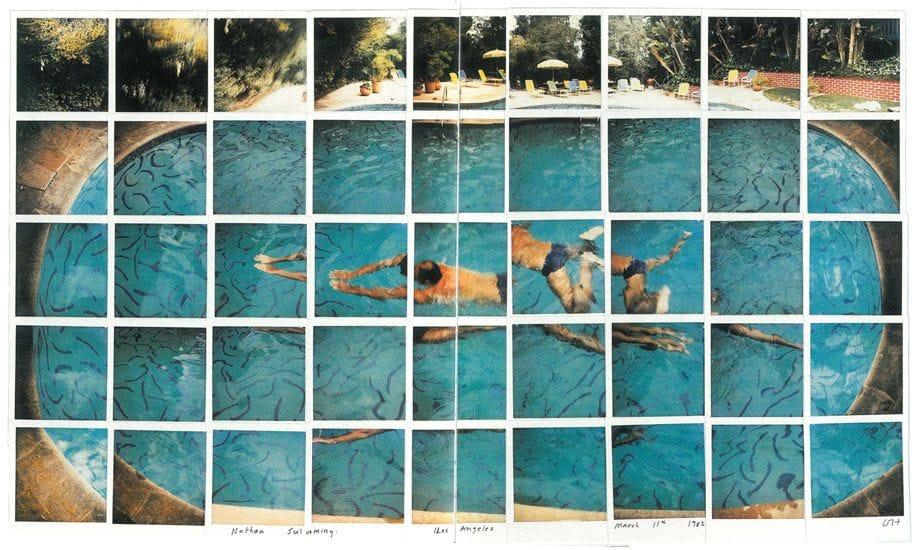


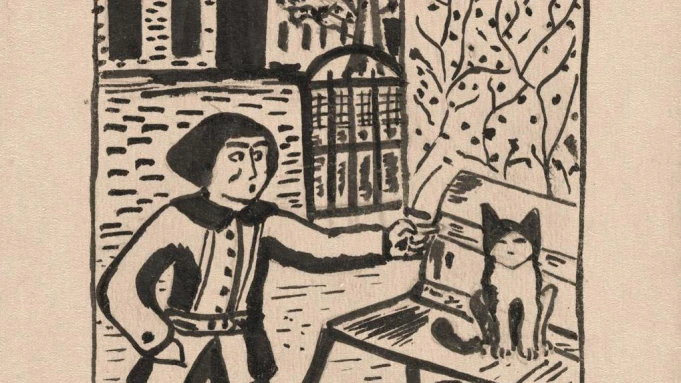
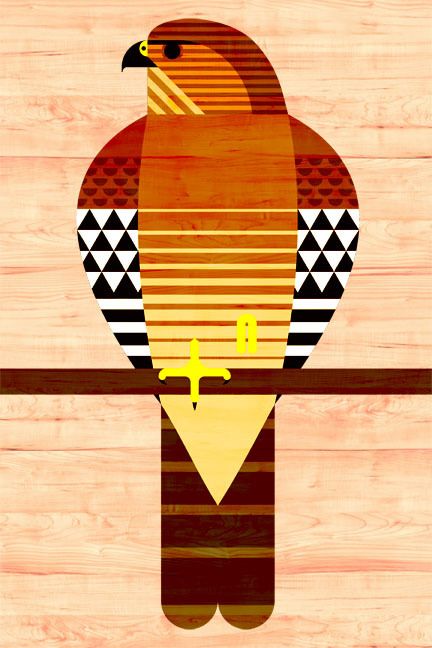
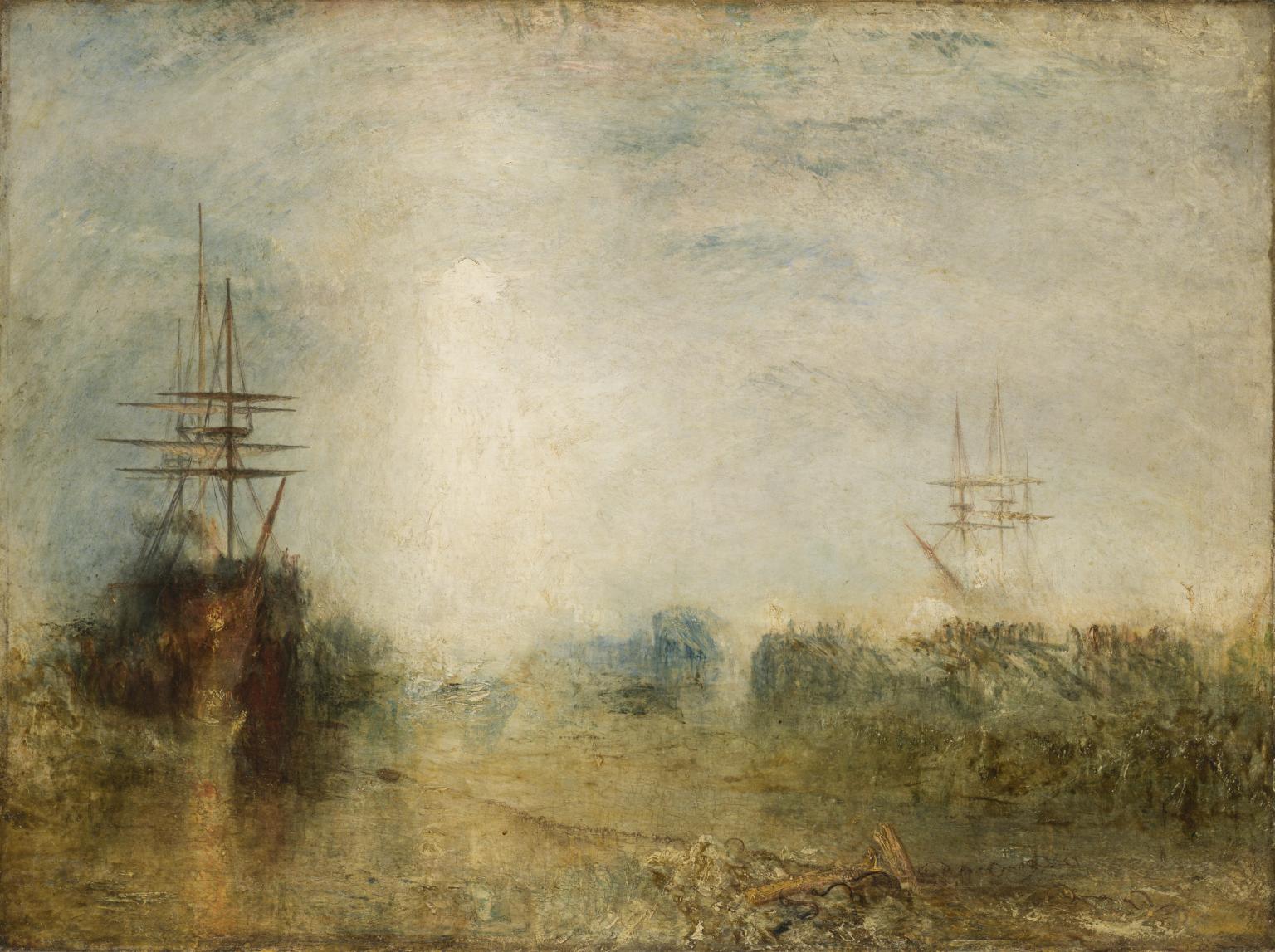



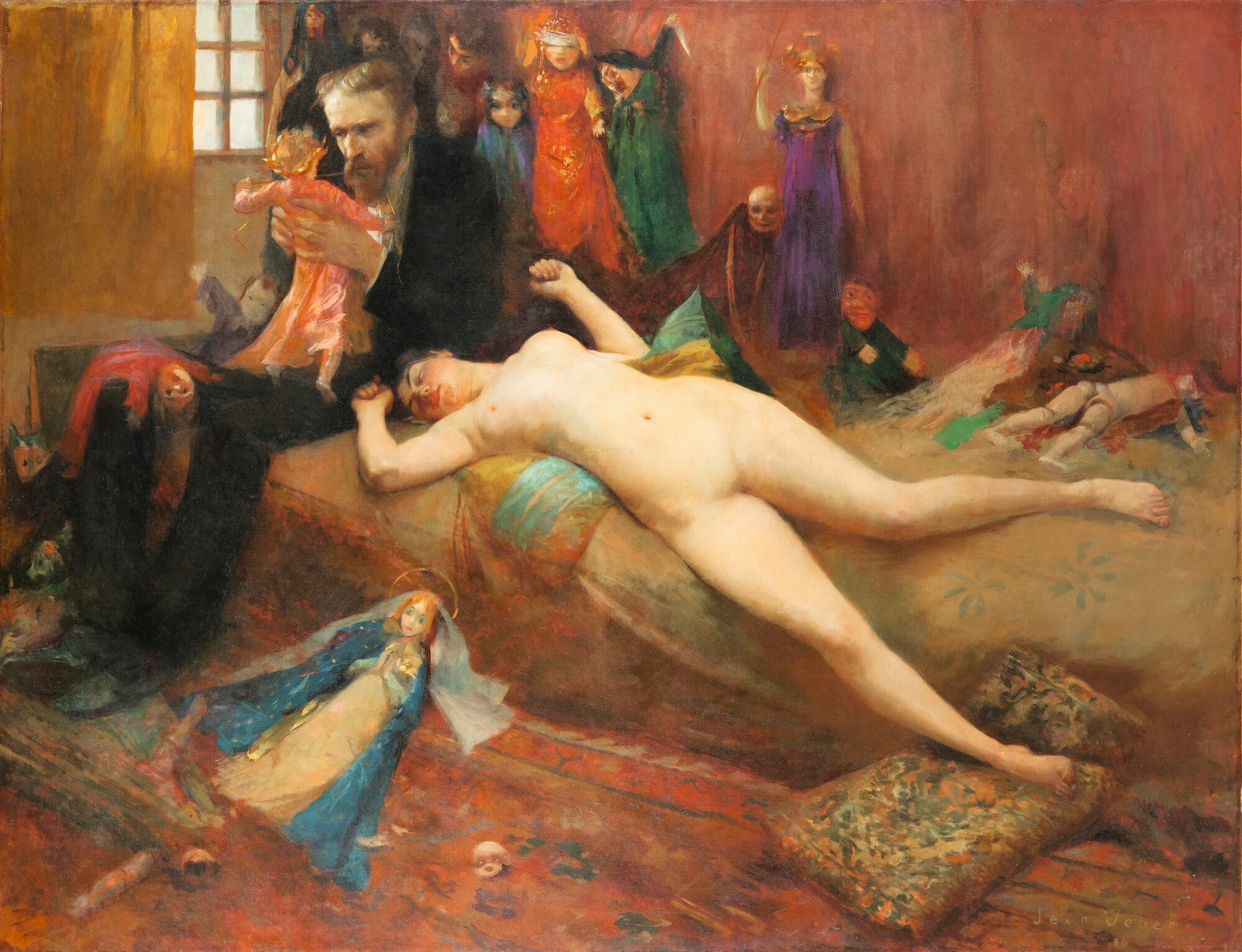
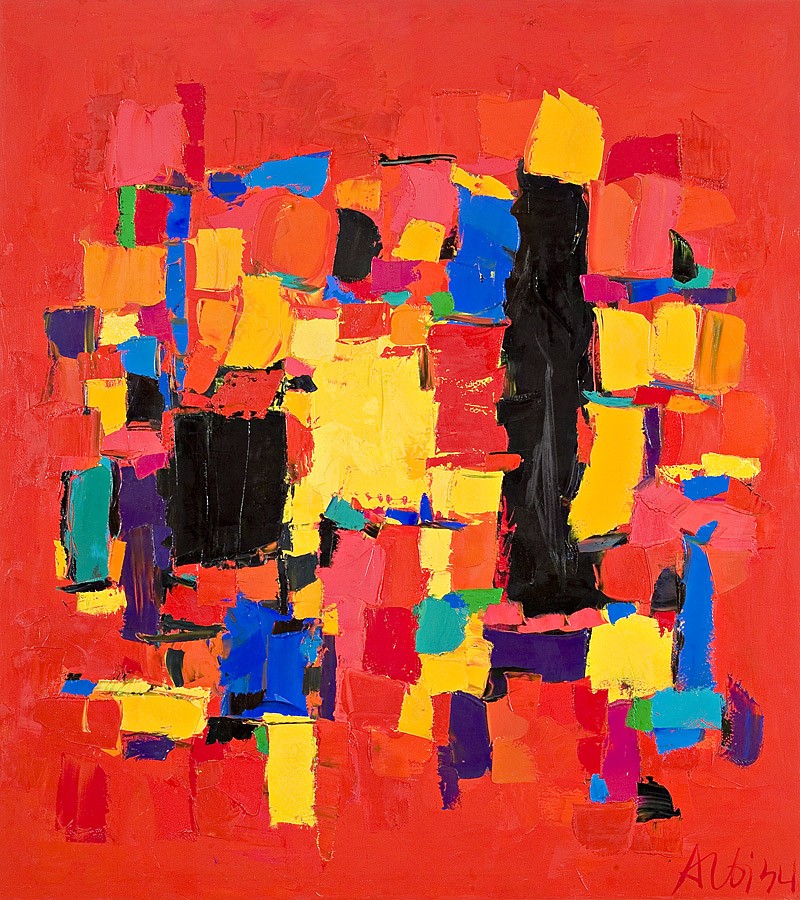

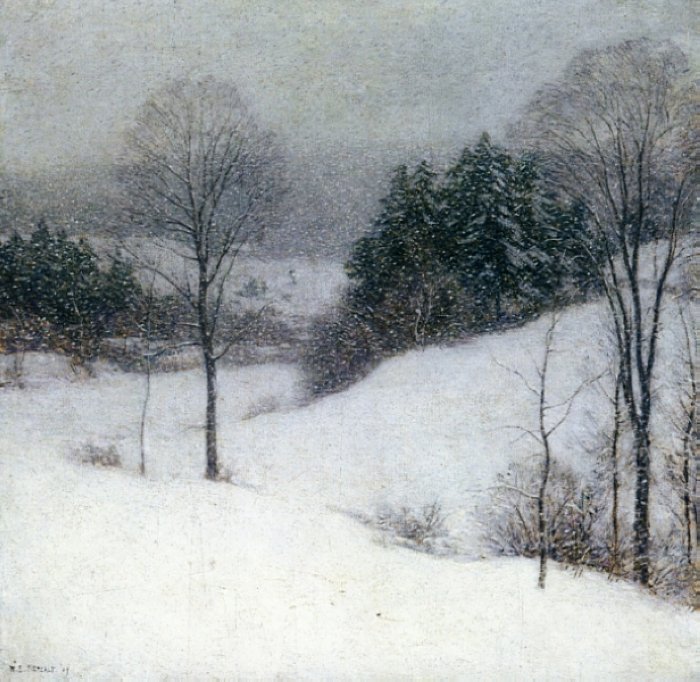
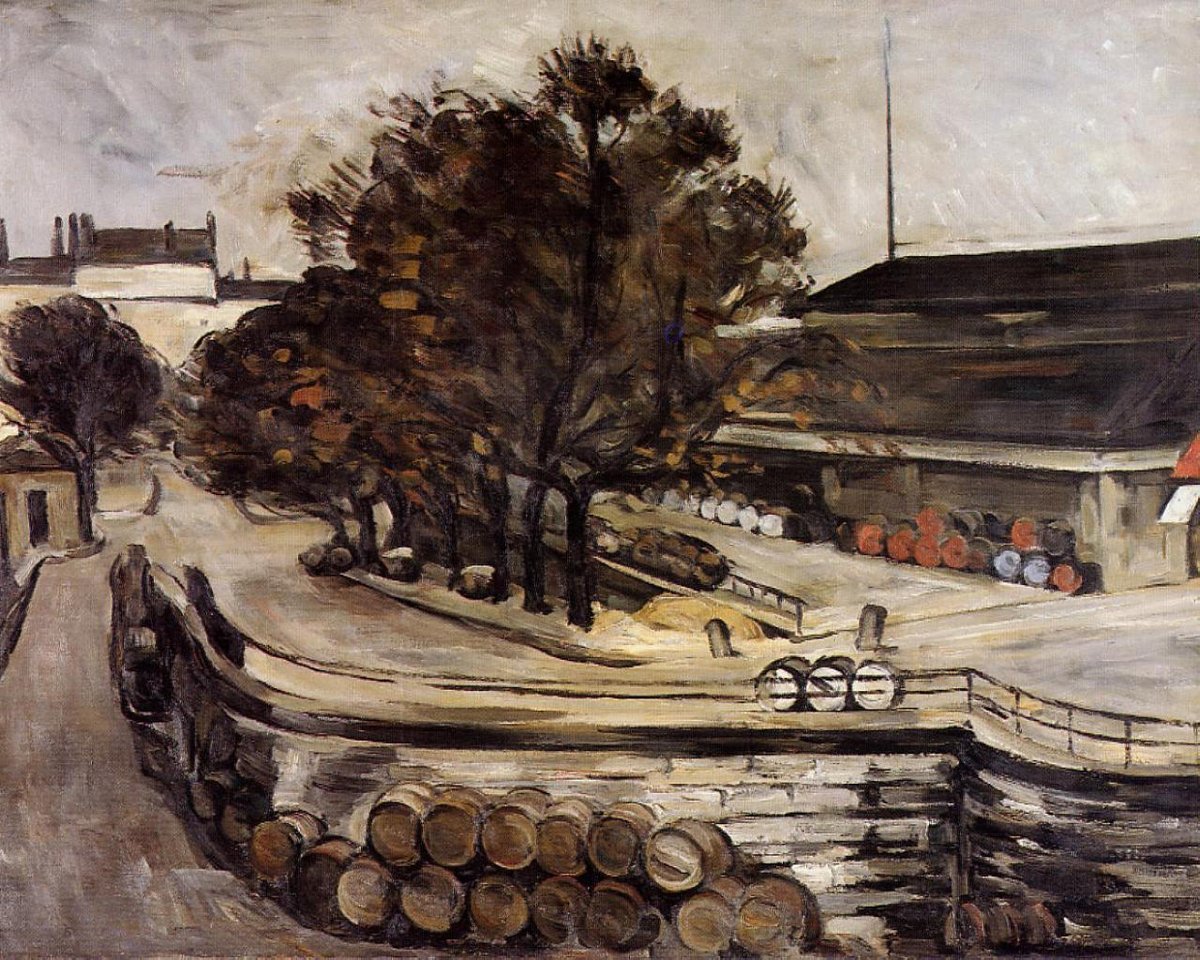
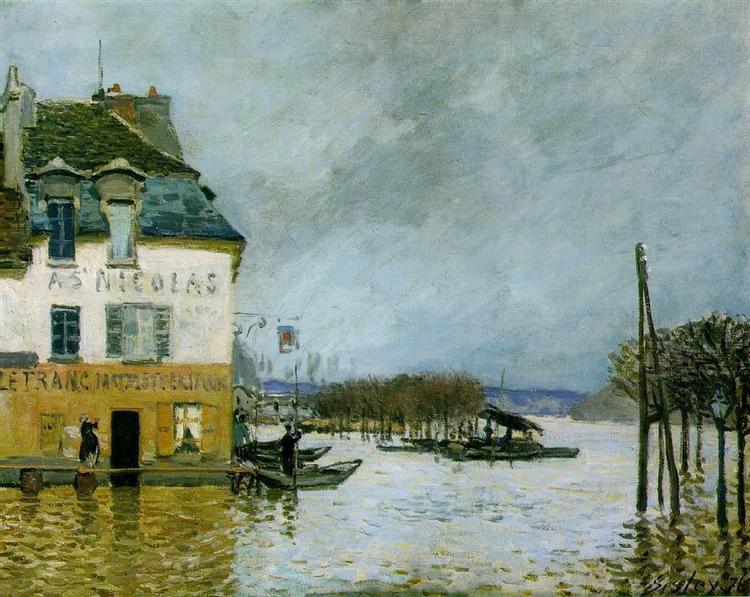




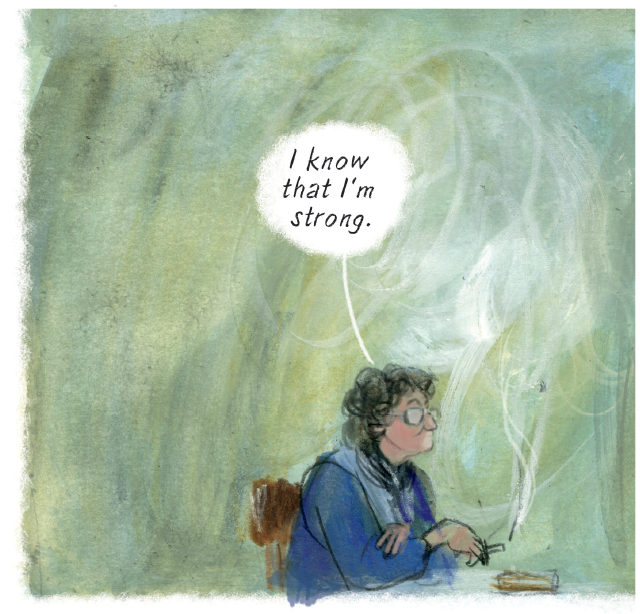
 Eiger, Mönch & Jungfrau