Today’s reflection on a year in reading is by Karen Naughton. Karen, a lifelong reader whose tastes range from popular fiction to classics across almost all genres, has a Ph.D. in British and American literature and divides her time between Texas and Maine with her husband and two dogs. She tweets @barkerforbooks.
Look for more reflections from a wonderful assortment of readers every day this week and next. Remember, you can always add your thoughts to the mix. Just let me know, either in the comments or on Twitter (@ds228).
Gabriele Münter, Woman in an Armchair, Writing, 1929
In 2021, nonfiction featured prominently in my list of favorite reads. Of these, The Path to Power, Robert Caro’s first volume in his multi-volume biography of Lyndon Johnson, stands above the rest. The work is the marriage of a master story teller with a subject who defies categorization—one of my all-time favorite biographies. I also loved discovering the writer Pam Houston, whose memoir Deep Creek inspired me with its wisdom acquired through adversity. The most memorable scene in that book involves Houston sharing with two younger women her experiences expending emotional energy on men and dating. Finally, Trent Preszler’s memoir Little and Often also impressed me. Preszler is a gay man who honors his deceased estranged father by building a canoe using hand tools his father bequeathed him. Preszler’s ability to convey affection and gratitude despite his father’s failings sets this work apart.
Three novels made my year’s best-reads list. He depiction of emotional abuse in Dorothy Whipple’s They Were Sisters is among the best I’ve read. Chimamanda Ngozi Adiche’s Half of a Yellow Sun, set during the Nigerian civil war of the late 1960s, moved me with its deft portrayal of war’s devastations. Since Houston, Texas, where I’ve lived most of my life, is home to a large community of people of Nigerian heritage, this history fascinated me. Finally, I’ve always had success with Julia Alvarez’s books and her latest, Afterlife, did not disappoint. It investigates the boundaries between what individuals owe to themselves and to their communities.
My favorite poetry collection was Shuly Xóchitl Cawood’s Trouble Can Be So Beautiful in the Beginning. Lyrical and accessible, these poems use images of domesticity to explore themes of loneliness and connection.
Two short story collections proved memorable. Mavis Gallant’s The Cost of Living [Ed. — Canada, represent!] expertly plumbs the circuitry of domestic relationships, a category of fiction that usually works for me. Somewhat in contrast, the stories in Chris Gonzalez’s I’m Not Hungry but I Could Eat focus more on loneliness than on connection. Many have a melancholy tone, but Gonzalez peppers the narratives with such wit that the book is as humorous as it is poignant.
Taking a cue from NancyKay Shapiro’s guest post, my least favorite read of the year (surprising no one, perhaps) is Outlander by Diana Gabaldon. I read it because I like to have my own opinion about popular books. I didn’t expect to love it, but I did think it would at least be a page turner. The sexualized violence was a resounding “no” for this reader… and it was long. [Ed. — And yet you finished it! Amazing fortitude.] If you loved this book (many, many people do), no shade. It’s just not for me at this point in my reading life.
To end on a more positive note, I was able to make dents in two of my reading goals for 2021. I purposely reduced my Goodreads reading goal in order to encourage me to tackle some of the larger tomes on my TBR. In addition to the lengthy books named above, I read JR by William Gaddis and The Tale of Genji by Marusaki Shikibu and translated by Royall Tyler. I cannot say I loved either of these works, but I am glad I read them and certainly feel that they have added to my literary and cultural knowledge. My favorite novelist is Thomas Hardy. My other goal this year was to get to the novels of his I hadn’t read before. I read three: Dangerous Remedies, Under the Greenwood Tree, and The Hand of Ethelberta. Reading these in order of publication, I can trace his growth as a novelist. Of them, Ethelberta is a hidden gem. It’s in no way a perfect novel, but the characterization and fate of Ethelberta gobsmacked me. I highly encourage anyone pursuing Victorian studies to check out this novel, rich for analysis.
Ben Nicholson, June 11-49 (Cornish Landscape)
Thanks to the Twitter bookish community for inspiring much of my 2021 reading year, and thanks to Dorian for inviting me to interrupt his regular programming. [Ed. – Interruption? This is the regular programming! Thank you, Karen!]
Today’s reflection on a year in reading is by Matt Keeley, a marketer and freelance editor who reads too much. He lives in Massachusetts. You can find him on Twitter at @mattkeeley.
Look for more reflections from a wonderful assortment of readers every day this week and next. Remember, you can always add your thoughts to the mix. Just let me know, either in the comments or on Twitter (@ds228).
Vija Celmins, Night Sky #2, 1991
My favorite of all the books I read in 2021 was John Crowley’s Little, Big. Like my favorite book from 2020, Sylvia Townsend Warner’s chronicle of medieval life The Corner That Held Them, I believe it to be a masterpiece but hesitate to recommend it widely. Crowley’s 1981 novel follows the fortunes of the Drinkwater family through the twentieth century and into a bleakly imagined twenty-first. The family is connected, Somehow (Crowley always capitalizes this word), to the fairies and to a mysterious Tale (again, capitalized) that may encompass more worlds than ours. While no one, the author included, would deny that it’s a fantasy novel, it’s far different from and much superior to most everything published in the genre since Tolkien. It’s a long, beautiful, stately, and oblique novel; I look forward to returning to it.
Alan Garner’s Treacle Walker was a surprise and felt like a gift: When he published his memoir Where Shall We Run To? in 2018, Garner was already in his mid-eighties, and he’s a slow writer. Although I read it in just a few hours, Treacle Walker is precisely as long as it needs to be. I wouldn’t recommend it as an introduction to Garner, but it’s a fine (apparent) capstone to his six-decade career.
I read two books by Janet Malcolm in close succession early in the year; Two Lives is about Gertrude Stein and Alice B. Toklas: their lives, their love, their art, and the mystery of their survival as Jewish lesbians in occupied France. Malcolm’s précis of Stein’s The Making of Americans is particularly wonderful; I had no idea how strange, unmannered, and unedited that pseudo-novel is. I wouldn’t want to brave its nine hundred pages of dropped plots, failed experiments, and abandoned philosophical musings, but I’m glad to know what’s in there. The other Malcolm title was Iphigenia in Forest Hills, true crime about a murder, more sad than sordid, in Queens. I don’t think either book achieves the heights of The Journalist and the Murderer, but both titles are exemplary models of craft and sympathy.
Dorothy Dunnett’s The Spring of the Ram is the second novel in the House of Niccolò series. While her books, with their dense prose, unglossed allusions, and cunningly withheld character motivations, aren’t for everyone, I’m happy to reflect that I have a whole six more books in this series to read.
I went on a minor Philip Roth kick as the pre-scandal publicity around Blake Bailey’s biography kicked into gear. The Factsand The Dying Animal were minor, but Sabbath’s Theater is a masterpiece, the most exhausting, most dyspeptic, and most sinisterly compassionate novel I read this year.
Colson Whitehead’s The Colossus of New York comprises thirteen impressionistic essays about life in New York. Although it’s a distinctly minor work by a major writer, it was a balm for me at a moment when I was missing the city I’d made my home for six pre-pandemic years.
Rachel Eisendrath’s Gallery of Cloudsis a book about, among other things, Sir Philip Sidney’s mostly forgotten sixteenth-century poetry, academic life, manuscripts, Walter Benjamin, and Virginia Woolf. I admit that I remember the book’s mood more than its matter — I had to consult the book’s publicity page to recall which writers feature in it. Perhaps that’s my failure as a reader. Or, if there really is something evanescent about Gallery of Clouds, maybe that’s only appropriate for a book of wisps and reverie and free association?
The Trial of Lady Chatterley’s Loverby Sybille Bedford is a brief account, just under a hundred pages long, of the 1960 British lawsuit against Penguin Books, which had published the unexpurgated version of D.H. Lawrence’s novel. Bedford attended the trial; sixty years on, her account remains witty and infuriating.
Odilon Redon, Buddha, 1904
Some final thoughts and suggestions:
I think Dorian told me about the Willem Frederik Hermans novella An Untouched House, which was as good as I’d been led to believe. [Ed. – Not me, sadly. It’s still on Mount TBR. Will Matt’s recommender please step forward?] I finally got around to reading Frank Herbert’s Dune, which I’d tried and failed to read when I was eleven or so.As someone who is occasionally paid to review science fiction, it’s a relief to finally cross this off my reading list. The prose isn’t great, but the novel is more than the sum of its parts. I don’t think that The Trees, Percival Everett’s comic guignol procedural about America’s history of racism, with bonus zombies,entirely succeeds, but I now have a whole stack of other Everett novels to read. Adam Mars-Jones’s Batlava Lakeis extremely funny until, on the last page, it isn’t. Anthony Doerr’s Cloud-Cuckoo Land might be too commercial for some readers of this blog, but is absolutely enthralling. [Ed. –For some maybe, but the editor is willing to try all the things.] Small Things Like These by Claire Keegan lived up to the reviewers’ unanimous praise.
Today’s reflection on a year in reading, his second annual contribution, is by Paul Wilson (@bibliopaul). Paul lives in Colorado with his wife, two sons and lots of books. He also co-hosts The Mookse and the Gripes podcast.
Look for more reflections from a wonderful assortment of readers every day this week and next. Remember, you can always add your thoughts to the mix. Just let me know, either in the comments or on Twitter (@ds228).
I’m happy to say that coming up with a list of my favorite books read in 2021 was no easy task. For one thing, I read more books this year than I ever have before. Why? My best guess is a combination of the ongoing impacts of a quieter pandemic life, the fact that my wife and I now share our house with two teenage boys who are often doing their own things, and a conscious effort on my part to simply spend more time reading.
Creating my list was made even more tricky by countless recommendations from so many wonderful and generous friends on Twitter and elsewhere. It’s like I have a team of top-notch curators sending me a constant stream of great books. I started with a stack of around 30 titles that could have made the list, but here are 10 favorites.
Tomás González, Difficult Light, translated from the Spanish by Andrea Rosenberg
This is a mesmerizing and melancholy book about time and memory. The narration often jumps across decades, sometimes within a single paragraph or even sentence, creating fascinating and often somber insights into aging and the far-reaching effects of our pasts. A quiet reflection on art, loss and family that offers yet another example of why Archipelago Books remains one of the most exciting and important publishers out there.
I am surprised once more by how supple words are—how all by themselves, or practically by themselves, they can express the ambiguity, the changeability, the fickleness of things. And yet I long for the aroma of oils or the powdery feel of charcoal in my fingers, and I miss the pang—like the pang of love—that you feel when you sense you have touched infinity; captured an elusive light, a difficult light, with a bit of oil mixed with ground-up metals or stones.
Nathalie Léger, Suite For Barbara Loden, translated from the French by Natasha Lehrer
Can it really be true that I hadn’t heard of Nathalie Léger before 2021? In a year filled with wonderful literary discoveries, she was one of my very favorites. I read her triptych of novels all in a row and loved each of them, but, to me, Suite for Barbara Loden was the standout.Ostensibly about the film Wanda, its creator Barbara Loden, and Léger’s attempt to write a short entry for a film encyclopedia, this book becomes a mesmerizing blend of biography, autofiction, film analysis, and Dyer-esque reflections on the slippery process of creation.
I find myself increasingly drawn to books that are hard to pin down or define and this one certainly fits that description in all the best ways. If you’re looking for a project for 2022, I would highly recommend spending some time with Wanda and Léger. I think about them both often.
“How difficult can it be to tell a story simply?” my mother asks again. I have to stay calm, slow down and lower my voice: what does it mean, “to tell a story simply”? … You think that you’re dealing with pure formalities, footnotes, short texts, table, prefaces, indexes or annexes—an orderly organized abundance of works that you just need to spend a morning assembling into a few sentences; a straightforward administration of language—and then somehow you end up with endless decisions to make, with abandoned hopes and collapsed hypotheses.
Jhumpa Lahiri, Whereabouts, translated from the Italian by the author
Lahiri has long been one of my very favorite writers, so when I heard she had a new book coming out, I went through the usual blend of anticipation and anxiety that precedes a highly anticipated work by a beloved author. I needn’t have worried.
The unnamed narrator is a prickly, unmarried writer and lit professor who has lived in the same Italian city for her entire life. Through a series of episodes that take place over the course of a year, she shares her meditative and sometimes melancholy perspectives on isolation, solitude and the movement of time. Although a dramatic departure in many ways from the subject and style of Lahiri’s previous works, Whereabouts is an example of a master at the top of her game. I can’t wait to see what she does next.
Solitude: it’s become my trade. As it requires a certain discipline, it’s a condition I try to perfect. And yet it plagues me, it weighs on me in spite of my knowing it so well.
Robert Walser, The Tanners, translated from the Swiss German by Susan Bernofsky
After years of sitting unread on my shelves, this book was becoming one of the spines my eyes unconsciously skipped over while I scanned for my next read [Ed. – that is a thing, isn’t it?]. Fortunately, my good friend Trevor (@mookse) saved it from obscurity by sharing his contagious love of Walser during our conversations this year. Tragedy averted!
This was my first foray into Walser’s work, but it certainly won’t be my last. Reading him is like jumping into a raging river—you can fight it and become overwhelmed, or you can relax, let it carry you along and just enjoy the ride. This was the most exuberant and joyful thing I read this year.
I must find myself a life, a new life, even if all of life consists only of an endless search for life. What is respect compared to this other thing: being happy and having satisfied the heart’s pride. Even being unhappy is better than being respected. I am unhappy despite the respect I enjoy; and so in my own eyes I don’t deserve this respect; for I consider only happiness worthy of respect. Therefore I must try whether it is possible to be happy without insisting on respect.
T. J. Clark, The Sight Of Death
I never would have discovered this gem if I hadn’t stumbled across a tweet by Lauren Groff: “I’m so broken down by isolation that I can’t get four pages into T.J. Clark’s The Sight of Death without weeping. Just—the patience and persistence and love it takes to visit the same painting day after day and see new things, better things, how the light changes, it’s so moving.”
In 2000, two paintings by Poussin were hung in a room in the Getty Museum. Clark found himself hypnotically drawn to them, returning day after day to sit quietly in the room and record his observations in a series of journals. His subtle blend of passion and patience is fascinating and contagious. I read it back in March and still think about it almost every day. Its laser focus on obsession, solitude, and time haunt me.
I believe the distance of visual imagery from verbal discourse is the most precious thing about it. It represents one possibility of resistance in a world saturated by slogans, labels, sales pitches, little marketable meaning-motifs.
Olivia Manning, Balkan Levant Trilogies
When I think about the books that gave me the most pleasure in 2021, there’s no way I could leave Olivia Manning off the list. [Ed. – The man speaks truth.] I joined my first ever Twitter reading groups this year while making my way through her two trilogies: I had a blast, connected with many great readers, and had so much fun seeing the various historical images everyone shared and reading their reactions and insights about these wonderful books. The experience was a reminder of how art and literature foster community and conversation.
On top of all that, Manning’s trilogies are incredibly compelling, masterfully balancing the epic scope and horror of war with the countless ways it impacts the individual lives caught up in its wake.
For several nights, Simon was worried not only by the lack of cover but the intrusive magnificence of the Egyptian night. The stars were too many and too bright. They were like eyes: waking in mid-sleep, finding them staring down on him, he was unnerved, imagining they questioned what he was doing there.
David Albahari, Götz and Meyer, translated from the Serbian by Ellen Elias-Bursać
This book came very highly recommended by Mark Haber and, yes, Dorian Stuber. [Ed. – Paul, you seem to have omitted “the one and only” before my name. Imma put that back in.] I’m so grateful to them both for bringing it to my attention. An unnamed narrator seeks information about his extended family, almost all of whom were killed in gas vans near Belgrade back in 1942. During the course of his research, he comes across the names of two drivers of the truck in which his family was likely put to death: Götz and Meyer.
The narrator becomes increasingly fixated on these men; his obsession is reflected in the convoluted way in which the story is told. The fictional lives he creates for the two men, along with the book’s increasingly unreliable narrative style, create a growing tension and make the reader less certain about which parts are true and which are invented.
How is this book not better known? I will happily join Mark and Dorian in spreading the word about this slim and haunting masterpiece. [Ed. – It really is fantastic; wrote about it a little more here.]
I must say here that it is entirely possible in the case of Götz , or possibly Meyer, that God was more present than one usually thinks, because Götz, or possibly Meyer, survived the explosion of a bomb that killed at least nine soldiers from his company, thanks only, as he often said, to God’s will, somewhere on the Eastern Front. Because of that Götz, or possibly Meyer, thanked God everyday for his goodness, especially while they were jouncing along in the truck on their way to Jajinci, while in the same truck, in the back Jews were screaming at God with their last breath, asking him why why he wasn’t there, why he wasn’t there yet, why he was never there?
William Faulkner, Absalom, Absalom!
Like Götz and Meyer, this book concerns the fallibility of memory and the impossible task of trying to make sense of horrific and violent events from the past.
A multigenerational story touching on myth, memory and truth, it features multiple narrators sharing their interpretations of a tragedy. Like much of Faulkner’s work, it reflects the strong cultural ideas of the American South, where the past is still an indelible part of the present that is continually being revised and rewritten through stories told and retold.
The narrative consists almost entirely of flashbacks that shift in time and between various points of view, creating a fragmented and often disorienting experience. I know many readers have come to think of Faulkner as an academic chore that they’re happy to have left behind, but I would urge anyone who feels that way to reconsider. This is storytelling on a grand scale. A magical book.
“We have a few old mouth-to-mouth tales, we exhume from old trunks and boxes and drawers letters without salutation or signature, in which men and women who once lived and breathed are now merely initials or nicknames out of some now incomprehensible affection which sound to us like Sanskrit or Chocktaw; we see dimly people, the people in whose living blood and seed we ourselves lay dormant and waiting, in this shadowy attenuation of time possessing now heroic proportions, performing their acts of simple passion and simple violence, impervious to time and inexplicable … They are there, yet something is missing; they are like a chemical formula exhumed along with the letters from that forgotten chest, carefully, the paper old and faded and falling to pieces, the writing faded, almost indecipherable, yet meaningful, familiar in shape and sense, the name and presence of volatile and sentient forces; you bring them together in the proportions called for, but nothing happens; you re-read, tedious and intent, poring, making sure that you have forgotten nothing, made no miscalculation; you bring them together again and again nothing happens: just the words, the symbols, the shapes themselves, shadowy inscrutable and serene, against that turgid background of a horrible and bloody mischancing of human affairs.”
Miguel De Cervantes, Don Quixote, translated from the Spanish by Edith Grossman
Last year’s top reads for me were Proust’s In Search Of Lost Time and Joyce’s Ulysses. Both joined a short list of the very best books I’ve ever read. I found it incredibly rewarding to engage with these masterpieces and wanted to keep that momentum going this year by reading Don Quixote. I’m happy to report that Cervantes has now taken his rightful place with Proust and Joyce on my all-time list. [Ed. – In so doing, Paul earned himself the nickname DQ, and I encourage you all to call him that.]
As Harold Bloom puts it, “This great book contains within itself all the novels that have followed in its sublime wake. Like Shakespeare, Cervantes is inescapable for all writers who have come after him. Dickens and Flaubert, Joyce and Proust reflect the narrative procedures of Cervantes, and their glories of characterisation mingle strains of Shakespeare and Cervantes. Don Quixote may not be scripture, but it so contains us that, as with Shakespeare, we cannot get out of it to achieve perspectivism. We are inside the vast book, privileged to hear the superb conversations between the knight and his squire, Sancho Panza. Sometimes we are fused with Cervantes, but more often we are invisible wanderers who accompany the sublime pair in their adventures and debacles.” I couldn’t have put it better myself.
A work I was expecting to require patience and hard work instead turned out to be a hilarious and compelling page turner, and a perfect holiday companion to close out the year. It’s amazing how modern this book is, and Edith Grossman’s stellar translation is a masterpiece of its own. As the pages flew by, I could hardly believe it was written 500 years ago. If you’re on the fence, I would urge you to give it a try. My guess is you’ll quickly find yourself immersed, impatiently awaiting the next time you can pick it up and once again take your place beside Don Quixote and Sancho Panza.
When life itself seems lunatic, who knows where madness lies? Perhaps to be too practical is madness. To surrender dreams — this may be madness. Too much sanity may be madness — and maddest of all: to see life as it is, and not as it should be!
Thomas Mann, The Magic Mountain, translated from the German by H.T. Lowe-Porter
Each year, when I look back over all the titles I’ve read, it’s always fascinating to see which ones stand out. I loved The Magic Mountain when I was reading it, but the intervening months solidified the enormous impression it made on me. I read most of this wintry book in our backyard hammock during the height of summer, creating some of my favorite memories of the entire year in the process. [Ed. – Love it!]
The plot is relatively straightforward: Hans Castorp is about to start a career as a shipbuilder in Hamburg, but first, he plans a short trip to a sanatorium in the Swiss Alps to visit his tubercular cousin. But as he is drawn into the strange insular world of the hospital and its strange patterns and people, he begins to subscribe to the same rituals and treatment as the patients. Meanwhile, time just keeps slipping away.
I loved the ambiguity and the fact that I never knew exactly how to think or feel. Mann recommended that those who wished to understand it should read it twice. And even though it’s a huge book that took up a significant part of my reading year, I already find myself drawn back to it and ready to be lost again.
Time drowns in the unmeasured monotony of space. Where uniformity reigns, movement from point to point is no longer movement; and where movement is no longer movement, there is no time.
Today’s reflection on a year in reading is by Nat Leach, a longtime friend of mine and of this blog. Nat now lives and works in Peterborough, after returning home to Ontario from Cape Breton last year. He tweets @Gnatleech.
Look for more reflections from a wonderful assortment of readers every day this week and next. Remember, you can always add your thoughts to the mix. Just let me know, either in the comments or on Twitter (@ds228).
John Henry Twachtman, Round Hill Road, ca. 1890 — 1900
Readers who may have caught my annual posts over the last couple of years know that I am trying to work through all the partially read books on my shelves and am proceeding methodically, in alphabetical order. I’ve just wrapped up my fourth year, and I must admit that I have not been entirely happy with my progress lately; I spent all last year on “G” and this year I didn’t even finish “H”. Of course, given the year that I’ve had—getting a new job, working remotely for half the year, then moving halfway across the country during a pandemic—it’s a minor miracle that I’ve read anything at all. [Ed. – The country is Canada. Halfway is like all the way across twelve ordinarily sized countries.] And indeed, when I think back to the last time I had a similarly challenging year, when my daughter was born a few months before I was made Chair of my department, I recall that at that time I really did read absolutely nothing that was not work-related, so maybe I’m not really doing too badly. [Ed. – Absolutely!]
One of the key differences between then and now is that I joined Twitter four years ago, right at the start of my project, and was able to connect with a wonderful and supportive group of readers who frequently entice me into joining in collective reading endeavours [Ed. — Please admire this correct spelling] and who tacitly encourage me to take some time—however little—out of my day to read. Even though I never keep pace with any proposed reading schedule, the idea of reading collectively keeps me going, and I do always finish eventually. So, while I may joke about Twitter distracting me from my project, feeling like part of a reading community has really helped to keep me grounded and to make sure that I take time for myself in the midst of a chaotic schedule, and for that I am very grateful.
And besides, I’m not sure that it is true that these group reads are delaying my progress; fortuitously, I was able to participate in three reads of “H” authors (Hartley, Hasek, Hrabal), and besides, as will become clear, I was also able to put a pretty large dent in my “M” shelf, which will surely save me some time later on. In total, I finished 28 books this year, 18 from the “H” shelf, in addition to sampling some 19th century poetry (Hardy, Heine, Hemans, Hogg, Hölderlin), non-fiction (Hazlitt), and drama (Ralph Hamilton, J.G. Holman), not to mention a smattering of philosophy/theory (Hegel, Heidegger, Geoffrey Hartman).
Looking ahead to next year, I still have some significant “H” books ahead of me (Homer promises to be a highlight) and hope to get through “I” and “J” as those shelves are much less populated, so if anybody has any 2022 group reads planned for that particular alphabetical neighbourhood, just let me know.
Alex Colville, Traveller, 1992
In the mean time, here is a brief summary of my 2021 reading:
A Walk through H
Hardwick, Michael – The Private Life of Dr. Watson (1983)
I was given this book as a child when I was a young Sherlock Holmes enthusiast, but it didn’t really catch my interest, as it seemed too “grown up” for me at the time. Many years later, I have come to realize that it just isn’t a very interesting book. It doesn’t flesh out Watson’s character in any meaningful way, and in fact Watson just seems a vehicle to incorporate various famous Victorian individuals (Henry Ward Beecher, Sarah Bernhardt) and contexts (gold mining in Australia, war in Afghanistan), sometimes prompted by the most minimal of hints in Conan Doyle’s stories.
Hardy, Thomas – Jude the Obscure (1894-95)
I have long cited this as my favourite Hardy novel; I read it as an undergraduate and its representation of its protagonist as an aspiring intellectual and frustrated social outsider certainly resonated with me at the time. Re-reading it in middle age, I still think it is a great book, but was slightly less satisfied with it. I couldn’t help perceiving, in the midst of Jude’s tragic fate, the web of artifice behind his sufferings. The most inconvenient things happen at the most inopportune times, and characters change their minds about things just at the moment when it will do the most damage. Such misfortunes are the nature of tragedy, of course, and Hardy writes it very effectively—it’s just that those moments where I could see him pulling the strings felt more disruptive to me this time around. Hardy gave up novel-writing after this one because he was accused of immorality after having written what he thought was a morally didactic novel, and I’m starting to think he was a little bit too right about that.
Hartley, L.P. – The Eustace and Hilda Trilogy (1944-49)
Hartley is one of the authors I’ve read the most, and when he’s good, he’s brilliant, but when he’s not, he can be infuriating. Reading this trilogy, I experienced plenty of both. Readers of The Go-Between know how good Hartley is at representing children, and the first book of the trilogy, The Shrimp and the Anemone, amply demonstrates this strength. Eustace and Hilda are brother and sister living in a seaside town in Norfolk in the early 20th century; most of the book is focalized through Eustace (who stands in for Hartley himself in this semi-autobiographical trilogy) and his anxieties and misunderstandings of the adult world are highly poignant because they ring true to the way children think (or at least to the way I thought as a child). The second two books, which deal with Eustace and Hilda as young adults, did not seem as strong to me, and I think part of the reason is that while the characters age, they do not seem to change or grow from their experience. Part of this is no doubt deliberate— Eustace receives an inheritance that shelters him from having to deal with many real-world problems— but Eustace’s thought processes no longer have the same ring of truth in a grown adult. And in the final book, Hilda’s extreme physical debilitation in reaction to a failed love affair seems so absurd (if not anti-feminist) that it strains all credulity.
Hartley, L.P. – Simonetta Perkins (1925)
In the final book of the trilogy, while vacationing in Venice, Eustace more or less accidentally writes a book (his hostess tells everyone he is a writer, so he feels obliged to write something to live up to it). [Ed. – Maybe this should be my strategy. Please help me by inviting me to Venice.] A publisher accepts the book, but warns Eustace not to expect it to sell because it’s too long to be a short story and too short to be a novel. Interestingly, this description closely fits Hartley’s own first book, Simonetta Perkins, which is also set in Venice, and is about a young American woman who becomes infatuated with a gondolier. It’s a powerful, if slight, exploration of the nature of desire, which is even suggested by the title; the woman’s name is Lavinia Johnson not Simonetta Perkins— that’s the name she makes up when she seeks advice about her situation and claims to be “asking for a friend.” The title thus gives prominence to what might otherwise have been a minor scene in the book; Simonetta is the desiring alter ego upon whom Lavinia’s suppressed sexual urges are projected.
Hašek, Jaroslav – The Good Soldier Švejk (1921-23) (Trans. Cecil Parrott)
I had not intended to read this, but a Twitter reading group was starting just after I finished Hartley, so it was alphabetical fate. The book is a satire about World War I, but its satire is wide-ranging and sometimes a bit ambiguous. Švejk is zealously patriotic, but, as his superiors incessantly point out, he is also an idiot who screws up every task he is assigned; so is he really a “good” soldier, or is that moniker ironic? Or is the implication that the qualities of a “good” soldier (mindless obedience and patriotic fervor) are inherently idiotic? Moreover, Švejk’s overzealous efforts for the cause very often have subversive effects, whether intended or not, so it can be hard to separate incompetence from sabotage; for this reason, Švejk is often suspected of being a traitor, though we have no indication that this is actually the case. As for the satire, sometimes, the joke is on Švejk, but he always manages to get out of the scrapes he gets himself into. More often, the joke is on the absurdity of military bureaucracy, which appears to be the primary target of the book’s satire; Švejk’s idiocy is nothing compared to the massive failures of logic and planning attributed to so-called “military intelligence.” It’s a pity Hašek died before he could finish the book, as it breaks off in the middle of the war, leaving me wanting more of Švejk.
Hays, Mary – The Victim of Prejudice (1799)
I first read this as an undergraduate, and was less than charitable towards it, but later read Hays’s Memoirs of Emma Courtney (a better book) and resolved to give this one another chance. The titular character, Mary, narrates her progression from a child of mysterious parentage, raised by a benevolent father figure, through a period of young love, to her persecution by a vicious and lustful landowner. It reads as a feminist take on the Richardsonian seduction narrative with a bleak vision of a victim-blaming culture that really hasn’t changed in 200+ years.
Haywood, Eliza – Eovaii (1736)
This was my first introduction to Haywood, and possibly not the best choice, since it does not seem to be characteristic of her work, but it was the only one I had. If Hays’s book is a feminist version of Richardson, this is a feminist version of Gulliver’s Travels:the titular princess loses her kingdom, is abducted by an evil magician and goes through a number of weird, magical adventures in order to return to her rightful place. It’s all meant as political satire, as the evil magician stands for Sir Robert Walpole, but most of the topical allusions are now quite obscure. Still an enjoyable, fantastical, narrative.
Hébert, Anne – Kamouraska (1970) (Trans. Norman Shapiro)
Over the years, I’ve written quite a bit about the Gothic, and the texts that interest me the most are the ones that represent the instability of human identity not just at the level of content (e.g. ghosts and monsters that disrupt our belief that the world—and our place in it—is rational) but also at the level of form. If Gothic phenomena disrupt what we think we know about our place in the world, they must also disrupt our attempts to represent that world to ourselves and to others. Hébert’s novel is exemplary in this regard. Its content is Gothic in that it represents extremes of passion and revolves centrally around a murder, but it has no supernatural trappings. Rather, it is Hébert’s narrative devices that convey the Gothic haunting that afflicts the protagonist, a woman whose first husband was murdered, and whose second husband is on his deathbed. The novel’s fluid shifts between past and present tense and between first and third person convey her struggles with her memories, which seem to come unbidden and which challenge the identity she has crafted for herself since childhood. She is haunted not by ghosts but by her past selves and the persistence of her memories. An intense and breathtaking narrative, and quite possibly my favourite book of the year.
Hession, Rónán – Leonard and Hungry Paul (2019)
I don’t read a lot of contemporary fiction, but when I do, it’s usually because Dorian has recommended a book highly, as with this one. And, as usual, I didn’t regret it; reading this was just good for my soul. [Ed. – I love to hear it!] It’s a gentle book with simple problems, heart-warming solutions and socially awkward characters that I could relate to far more than I’d like to admit. It’s also very funny, in its low-key way.
Hillesum, Etty – An Interrupted Life/Letters from Westerbork (1941-43) (Trans. Arnold J. Pomerans)
I first read Hillesum’s diary describing her life in the Nazi-occupied Netherlands when I was a graduate student, and fear I was quite uncharitable to the book at the time. (Noticing a theme yet? Student Nat was quite a mean reader.) Her philosophical approach, which involves accepting evil, forgiving Nazis, and refusing to resist, seemed infuriatingly defeatist to me at the time, and while I certainly can’t wish that more people shared this view, with age has come a greater appreciation for the moral strength required to hold this position. I had not read the letters appended to her diary before; these were written during Hillesum’s time in the Westerbork camp before being deported to Auschwitz where she was killed. These letters deal mostly with practical matters: begging friends for food, thanking them for sending it, and apologizing for being such a burden on them (she had an extensive network that helped keep her and her family alive in terrible conditions). There are, however, some surprisingly poetic moments, as Hillesum proves able to see beauty even in a concentration camp, and some predictably brutal ones; her last long letter is a harrowing description of the preparations for the transport prior to the one on which she herself was forced to leave. She tries to help where she can, but recounts commenting to a companion, in a way that is both painfully matter-of-fact and as close to violent passion as Hillesum gets: “this is what hell is like.”
Hoess, Rudolf – Commandant of Auschwitz (1946) (Trans. Constantine FitzGibbon)
By an appalling coincidence in my alphabetical system, I went from Etty Hillesum to this, the autobiography of Hoess, the Commandant of Auschwitz, written while awaiting his execution, a book that Primo Levi in his introduction describes as “filled with evil” and as having “no literary quality” and as being “agony” to read. [Ed. – Too fuckin right.] It is probably pointless to attempt to add to that description except to say that it was somehow even worse than I expected. Obviously, that’s a low bar for a book written by a Nazi, but having read some of Albert Speer’s diaries, I know that some degree of post-war self-reflection was possible. But Levi is right; the degree of disingenuousness and refusal to take responsibility for his actions is utterly appalling. The passive voice does a lot of heavy lifting in this book (things “were done” to prisoners, nobody did them) and ditto formulations involving the imperative (Hoess “had to” do the things he describes, he never has any agency). Despite his plea of loyalty to the Reich, he spends most of the book throwing his superiors under the bus; to read his account, Auschwitz would have been a model camp if he had just been given the resources to run it properly along with competent underlings who would not have behaved with such unsanctioned brutality towards prisoners (and this is not even to mention the casually awful throwaway bits he chooses to include, such as his extensive explanation of his theories about how to cure homosexuality.) [Ed. – ugh]
Holcroft, Thomas – Anna St. Ives (1792)
I certainly understand why Holcroft is no longer widely read; his novels are highly political responses to philosophical and social debates specific to the late eighteenth century. If that doesn’t put you off, though, there’s a great deal to admire in his work. Like his contemporary, William Godwin, Holcroft uses his narratives to explore the concrete implications of radical philosophical ideals, often teasing out resolutions much more complex than those of other political radicals of the time. Anna St. Ives is an epistolary novel that details a love triangle between the title character, and Frank Henley, a Godwinian idealist who believes in the perfectibility of the human species in its gradual development towards an ever-increasing level of truth, and Coke Clifton, a libertine and all-around cad. [Ed. – Those libertines, why they always gotta be cads?] That this novel is as engaging as it is, is in itself a challenge to Frank’s principles, as the truth is nowhere near as obvious as Frank hopes it should be. Like Hays, Holcroft rewrites the Richardsonian narrative didactically. Preachiness notwithstanding, the book culminates in a suspenseful and action-packed sequence that kept me on the edge of my seat. If I have a quibble, it’s with the way that characters, as so often in epistolary novels, just happen to have access to writing implements in the most unlikely of places, deciding to write their narratives even when there is nobody within the book likely to be able to read them.
Hornby, Nick – High Fidelity (1995)
I admit that I can be quite grumpy about film adaptations of good books, but I was grumpy about the film version of High Fidelity long before I ever read the book. It sounded like a great concept, was being made by a director I like a lot (Stephen Frears), but turned out to be a mess. Part of the problem, no doubt, was the Hollywood tendency to cast characters who are supposed to lack charm, charisma and good looks with Hollywood stars who embody those very qualities. It’s hard to find a character unlikeable when he’s played by John Cusack. [Ed. – Truth.] By contrast, I ended up liking the book a great deal, as it does a much better job of keeping its protagonist/narrator/second-rate record store owner/obsessive list-maker/terrible boyfriend teetering on the edge of unlikeability just enough to keep you rooting for him, not to simply get what he wants (whatever that is) but to become a better person. The book is just very smart about the flaws in conventional standards of masculinity, and about relationships more generally.
Hrabal, Bohumil – Too Loud a Solitude (1976) (Trans. Michael Henry Heim)
Although they are very different kinds of book, it really helped to have read Švejk before this, as Hrabal’s narrator echoes Švejk’s garrulity, and gossipy tone about Czech life. The book also inherits a satirical strain from Hašek, as both criticize the unthinking inefficiency of political authorities. The brief narrative reads very allegorically: it is narrated by a man who works crushing paper, and incidentally rescues much classic literature, but his manual process is ultimately supplanted by modern methods, which embody both the modern socialist state and the ephemeral nature of popular culture, both of which threaten the more enduring forms of literature and knowledge for which the narrator stands.
Christopher Pratt, Placentia Bay: A Boat in Winter, 1996
Best of the Rest
Barthes, Roland – A Lover’s Discourse (1977) (Trans. Richard Howard)
I was excited to participate in a theory-based Twitter group read, although I admit that I found it rather difficult to say something sensible about the book in that forum, needing a bit more time to process theoretical texts. I happened to be reading this book at the same time as I was revisiting Éric Rohmer’s Six Moral Tales on film, and I think I’ve come to understand this book better by opposition. Rohmer’s characters are all very discursive lovers (lots of talk, little action) but in a different way to that described by Barthes. In each of the tales, a male protagonist engages in a tentative kind of relationship with an inappropriate female partner (inappropriate because of age, disposition or worldview, but most importantly for the tautological reason that they are not the appropriate partner). By working through these relationships and avoiding the potential entanglements they entail, the protagonist in most of the films becomes free to pursue, or return to, the genuine object of his passion. Rohmer’s characters calculate and overthink their relationships in a way entirely antithetical to the discourse that Barthes writes about, which is that of the desperate, passionate lover of whom Goethe’s Werther is presented as the archetype. We do see a few moments of passion in Rohmer’s tales, but for the most part, that kind of love is the absent centre around which the action takes place. Barthes writes, “most often, I am in the very darkness of my desire” and it is from this darkness that this “lover’s discourse” originates. Barthes structures the book as a series of fragments based on various discursive positions taken by the lover (e.g. jealousy, languor, ravishment et cet.), all of which are ways of expressing in some way the maddening delusions of love. But these forms of expression do not fully enlighten the “darkness of my desire”; rather, they express the position of the lover in all its irrationality. The “lover’s discourse” is thus at the limits of language, challenging the systems of language that structure the world in a rational way, even as it cannot entirely escape those systems.
Bennett, Arnold – The Old Wives’ Tale (1908)
This book was not on my radar until Dorian & Rohan suggested it for a group read; I found it intriguing and mostly enjoyable, though not exactly what I expected. Not that I’m sure just what I expected except that the book begins in a manner reminiscent of a Victorian novel that made me feel that it was establishing some kind of moral framework through which I was supposed to read it. Hence, when the narrative diverges, telling the separate stories of two sisters, one who stays home and runs the family business in the Midlands of England, while the other runs off to Paris, I was expecting some kind of moral judgment to be attached to the two stories. In the end, though, I’m not sure that ever happened. The novel speaks to the inevitability of aging and death and to the value of the experiences that take place in the course of that process, but it doesn’t seem to reflect on the relative value of those experiences. [Ed. – Well put!] Both sisters experience happiness and sadness, successes and failures, and perhaps, despite their many differences, we are meant to see how much they actually have in common. So maybe it was just more modern than I expected? (But knowing Woolf’s hate for Bennett, maybe I shouldn’t say that.)
It wasn’t until I was halfway through this book that I realized what it was really about, and I’m not sure I grasped all of the intricacies of the plot even by the end. The book is a convoluted web of intrigues, which take to an extreme the typical Dostoyevskyian representation of characters who embody extreme challenges to conventional moral values. I probably shouldn’t be shocked by Dostoevsky any more, but the title really isn’t an exaggeration: the book is filled with unpleasant, violent, and diabolically evil characters. Moreover, I wasn’t prepared for the political angle, although it spurred me on to learn a lot about 19th century Russia along the way.
Lowry, Malcolm – Under the Volcano (1947)
As a student, I tended to avoid literature of the early 20th century, in part because I had little interest in the seemingly wide swath of canonical literature (especially American) that either romanticizes the lives of over-privileged alcoholics, or treats their sufferings as some kind of archetype of the human condition. This book falls squarely in the latter camp, and is certainly a superior example of the genre; it’s brilliantly written and cleverly plotted (in a way that calls for a reread to piece together all the details), but I just couldn’t muster up the sympathy — or even much of the interest—- that I thought I was supposed to feel for the protagonists.
Manning, Olivia – The Balkan Trilogy (1960-65) and The Levant Trilogy (1976-80)
I had read (and loved!) Manning’s School for Love, so was eager to read more by her, although I doubt that I would have had the focus to get through these six books had I not been reading in the company of an intrepid group of Twitterers, whose companionship in this journey was greatly appreciated. And quite a journey it is too, as we follow Guy and Harriet Pringle, who are forced, during the course of World War II, from Bucharest to Athens to Cairo. They are more acted upon than acting, forced to adapt to circumstances beyond their control, but because we are made to care so much about the characters, even descriptions of their everyday activities remain absolutely gripping. [Ed. – Also well put.] These books are sheer character-based narrative pleasure; we come to know the characters intimately and become entirely immersed in their world despite the general lack of highly dramatic events (which do come occasionally, and always shockingly, out of the blue). To be completely honest, I still have about 100 pages of the Levant Trilogy left to go, and I am not rushing to finish it; judging by the responses of some of my companions, I will feel quite bereft without Harriet & Co. and I’m not quite ready for that yet.
Musil, Robert – The Man Without Qualities (1930-43) (Trans. Sophie Wilkins)
After 18 months, numerous library renewals, and ultimately photographing the last 200 pages of notes and fragments, I finally finished this book. I’m not sure how to do the experience justice, though I can say it was entirely worthwhile. No plot summary would be adequate, especially as Musil died before completing the book, and the edition I read was filled with drafts which sketch out very different directions for the characters. In any case, the plot felt entirely secondary to Musil’s powerful ability to sum up the incipient crises of the emerging modern age with devastating clarity; the book feels shockingly current.
Today‘s reflection on a year in reading is by Yelena Furman, her first for the blog. Yelena (@YelenaFurman) lives in Los Angeles and teaches Russian literature at UCLA. She has published academic articles, book reviews in the Los Angeles Review of Books and The Baffler, and fiction in Narrative. She and Olga Zilberbourg (@bowlga) co-run Punctured Lines, a feminist blog on post-Soviet and diaspora literatures.
Look for more reflections from a wonderful assortment of readers every day this week and next. Remember, you can always add your thoughts to the mix. Just let me know, either in the comments or on Twitter (@ds228).
Alexander Deineka, Textile Workers, 1927
When Dorian asked me to compile my reading list for 2021, I was honored and it sounded like a lot of fun, but I did point out that everyone was going to make fun of me for how little I’d read in a year compared to how much other BookTwitter folks read in a month (including Dorian). [Ed. –Only a jerk would do this. There are jerks on Twitter, it is true. But they should at least know what they are.] I’ve always been a slow reader, and between technology, exhaustion, life in general, and now the pandemic, my concentration is shot. But as this post gives me a chance to promote works by contemporary Russian women writers that I taught this fall, the ridicule will be worth it. This list references a number of Twitter group reads in which I participated, and my sincere thanks go to their organizers, whom I hope I’ve credited correctly, and all the group members; your comments and camaraderie were wonderful parts of my reading year. Finally, there may be something I’ve left off or misremembered as having read last year, but what follows is as accurate a summary as my fried brain, and Goodreads evidence, suggest.
Marie Benedict, The Mystery of Mrs. Christie
A gift from my mom, who knows and shares my love of detective fiction and its foremost practitioner. No one would accuse it of being an intellectual work, but this fictional account of Agatha Christie’s real-life temporary disappearance was a page-turner and good escapist fun, and who couldn’t use that in an endless pandemic. [Ed. – Amen.]
Vladimir Nabokov, Adaor Ardor: A Family Chronicle
On the opposite end, this one’s beyond intellectual. I could never include Ada in my Nabokov course, not because of its theme of brother-sister incest but rather because its length and complexity make it impossible to fit into an already reading-intensive syllabus. For those not dealing with syllabi restrictions, this homage to eternal love and of course literature will give your brain a definite workout (this work’s meant to be reread) and is gorgeously written and often humorous to boot. I can’t say I love it, but as always with Nabokov’s English-language novels, I am in absolute awe of his dexterity as a writer for whom English wasn’t a native tongue.
Narine Abgaryan, S neba upali tri iabloka (Three Apples Fell from the Sky, trans. Lisa Hayden)
I read this novel as part of a Twitter group read, which was, like so many others, organized by the queen of collective Twitter readings, @ReemK10. [Ed. – All hail the Queen!] I read this in Russian, while the rest of the group had @LizoksBooks’ marvelous translation. Abgaryan is a contemporary Russian-language Armenian writer, and the novel takes place in a fictionalized remote Armenian village in an unspecified historical moment. The few villagers who are left should be dying out, but as this charming and poignant novel shows, one is never too old or too isolated for life and hope. Everyone in the group loved it, and I gifted it to one of my closest friends for her birthday.
Seishi Yokomizo, The Honjin Murders (trans. Louise Heal Kawai)
My thanks to @kaggsy59 for the review of this title on her wonderful book blog, which is where I think I first heard about it. I was dying (I know) to read it, and then it arrived as a birthday gift from the same friend to whom I gifted the Abgaryan. A locked-room mystery, The Honjin Murders is the first in Yokomizo’s series with the brilliant detective Kosuke Kindaichi, who figures things out when it seems impossible to. The murders are gruesome, the story suspenseful, and the solution fantastically done. I don’t know Japanese literature and was very glad to enter this world at least a little bit. Really looking forward to reading the other books in this series that have been translated into English.
Marcel Proust, Remembrance of Things Past (trans. C.K. Scott Moncrieff and Terence Kilmartin)
Fair warning: most of you will hate what you’re about to read; unfollow me if you have to. I started this before the pandemic and eventually found the #ProustTogether group spearheaded by @literatureSC. [Ed. – How nice!] This wonderful group was hands down the best thing about reading Proust (I’m easing everyone in slowly for what’s coming). [Ed. – Wait what?] What can be said about this book that hasn’t been said before? How about: I was bored to tears reading it? [Ed. — *sputters*] (Actually, that has been said before. By my dad, who years ago also slogged through every word. It must be genetic.) Of course, there were some strikingly beautiful images, several things the narrator said about human beings rang true, and this work’s importance in terms of literary development is undeniable. But the unbearably neurotic narrator kept saying things for thousands of pages with precious few paragraph breaks [Ed. – She seems to be saying this like it’s a bad thing??] in the amount of excruciating detail that had me screaming in my head that I don’t care what French high society wears, while wishing badly for a recognizable plot. [Ed. – But but…] The screaming was loudest with the Albertine volumes, where if I had to hear about his narcissistic obsession one more time … oh, wait. His sleep-assaulting her with his tongue didn’t help matters. [Ed. – Okay, that is genuinely awful.] Also the lack of editing, whereby characters kept dying and coming back to life in subsequent volumes. Proust’s own death before final edits is a cautionary tale for all who write. I could go on, but that would just be taking a page, or several hundred, out of Proust. During the group read, I managed to royally piss off one (several?) of the group members with my comments, as I’m sure I’m pissing off most people reading this now, but since everyone knows I have no qualms about verbalizing distaste for major male writers, so be it. [Ed. – I’m not angry, Yelena, just… need to have a quiet sit for a minute…]
Jaroslav Hašek, Pokhozhdeniia bravogo soldata Shveika (The Good SoldierŠvejk; Russian translation by Petr Bogatyrev)
Another group Twitter read, also headed by @literatureSC; reading this alongside Proust provided the best antidote! Czech was my second Slavic literature in grad school [Ed. – Let’s all just pause and savour how awesome that is], and I’m so grateful for the several Twitter group reads that led me back to this rich body of work. The most popular Czech novel and one of my dad’s favorite books, Švejk is a hilarious and poignant indictment of the brutality of war that never resolves the question whether the screwball protagonist is a simpleton or someone much more profound. The novel is illustrated by Josef Lada, and the Russian-language edition, which came with us from the Soviet Union, has his color illustrations; I had to post them in a Twitter thread because they are so wonderful. I’d started this book twice before, in both Russian and English, so I’m happy to be able to say it is finally finished, even if the book itself remains unfinished due to its author’s death, which in this case, makes it no less fantastic for that. [Ed. – Oh now it’s ok for an author to die…]
Bohumil Hrabal, I Served the King of England (trans. Paul Wilson); Too Loud a Solitude (trans. Michael Henry Heim); Closely Watched Trains (trans. Edith Pargeter)
These were all rereads, the first two with a Twitter group led by @ReemK10, the third because I had it on my bookshelf along with the other two and went for the trifecta. All feature ordinary protagonists doing not so ordinary things, in Hrabal’s blend of absurd humor and deeply human emotions. Too Loud a Solitude, a love letter to books that uses imagery from the Holocaust, is one of my favorite novels, translated by my very much missed graduate advisor, who I think would be thrilled about all the Czech group reads and BookTwitter in general.
Zdena Salivarová, Ashes, Ashes, All Fall Down (trans. Jan Drábek)
Another reread, this one on my shelf next to the Hrabals. I think I picked it both because it was written by a woman and because I needed something as physically compact as this edition to bring on my only and very short trip during the pandemic to beautiful central California. Ashes, Ashes is the doomed love story of the Czech female protagonist and a Latvian basketball player whose team comes to play in communist Czechoslovakia. A straightforward, quick read that shows how the communist system devastated people’s personal lives. Salivarová immigrated to Canada after Prague Spring, where she and her husband, writer Josef Škvorecký, founded 68 Publishers, which was instrumental in publishing Czech writers banned in their own country.
Frances Burney, Evelina
Another Twitter group read, led by @Christina5004, and a reread of a novel that threw me back to my fantastic eighteenth-century British women writers class in college. Even though Burney squarely divides characters into good and bad with no shades of gray, this epistolary novel about Evelina coming of age and learning how to be in the world is engrossing and often hilarious. Reading the notes my twenty-one-year-old self left in the margins in a bright purple pen made me nostalgic: no one will be surprised to hear that feminism has been a constant throughout my life.
J.L. Carr, A Month in the Country
I’d never heard of this novel (I know, I know) until several people talked about it on Twitter. I was especially intrigued because it has the same title as Turgenev’s play, but it actually reminded me of Chekhov’s “House with a Mezzanine.” I loved the setting of post-WWI England and the wistfulness of the writing, but most of all, I loved that I was reading a novel outside of my usual material. BookTwitter was right about how good it was. BookTwitter is fabulous. [Ed. – Amen!]
Zinaida Serebriakova, House of Cards, 1916
The rest of the titles come from the syllabus of my class on contemporary Russian women writers and writing the body; I read them in Russian alongside the students, who read the translations below. The class is based on my dissertation, which discusses the explosion of women’s writing in the late Soviet/early post-Soviet periods, writing that went radically against the patriarchy and puritanism of Soviet and Russian literature. For the first time, women writers were producing works in which female bodies burdened and engendered by sexuality, violence, disease, abortion, miscarriage, etc. were at the center of the texts. I can talk everyone’s ear off about this topic, so I’ll stop, but if anyone is interested, I’d be happy to send the syllabus and/or the pdfs of some of the harder to find titles. We also read essays by the feminist theorists associated with the theory of writing the body: Hélène Cixous’s “The Laugh of the Medusa” (trans. Keith Cohen and Paula Cohen), selections from Luce Irigaray’s This Sex Which Is Not One (trans. Catherine Porter with Carolyn Burke), and an excerpt from Trinh T. Minh-ha’s Woman, Native, Other: Writing Postcoloniality and Feminism; those are readily available.
Liudmila Petrushevskaia, The Time: Night and “Our Circle” (both trans. Sally Laird)
During Soviet times, Petrushevskaia could get very little published, not because of politics but because her texts revel in exposing the dark, awful side of human beings, which went squarely against Soviet ideology. When she started getting published after the Soviet Union’s collapse, many readers and critics were dismayed by her frankness. Things have fortunately changed, and she is now one of Russia’s most famous and critically acclaimed writers. The Time: Night is her Russian Booker-nominated masterpiece of familial dysfunction, and “Our Circle” is one of her most well-known short stories showcasing the same, but this time with alcohol. [Ed. – I refuse to believe there is no alcohol in the novel. I mean, it’s Russian, right?] One of the many things I appreciate about her is that her work goes radically against the idea, propagated by both Soviet and post-Soviet culture and literature, that women are naturally maternal. Rather, maternal bodies are prime perpetrators of abuse. In general, bodies suffer all manner of abuse and violence in Petrushevskaia. In her hands, it makes for phenomenal literature.
It wasn’t on my syllabus, but I also read Petrushevskaia’s The New Adventures of Helen (trans. Jane Bugaeva) and the collection from which this new translation comes,Nastoiashchie skazki (Real Fairy Tales), but as this was for a forthcoming review, I’ll save the discussion for then.
Marina Palei, “The Losers’ Division” (trans. Jehanne Gheith)
From St. Petersburg, Palei now lives in the Netherlands and writes in Russian. “The Losers’ Division,” an early work, is part of a four-story cycle that has a hospital setting; like Chekhov, Palei is a writer with a medical degree. This story is set in an obgyn ward handling both pregnancy and abortion in a Soviet backwater town, which should give an idea about what happens to women’s bodies in this story.
Yelena Tarasova, “She Who Bears No Ill”(trans. Masha Gessen)
At the center of Tarasova’s text is a woman whose body and mind are being ravaged by a debilitating illness. The story approaches the body/mind divide in a non-traditional way, while breaking stereotypes surrounding femininity and female attractiveness. Gruesome and powerful.
Svetlana Vasilenko, Shamara (trans. Daria A. Kirjanov and Benjamin Sutcliffe) and “Going after Goat-Antelopes” (trans. Elisabeth Jezierski)
I got to interview Vasilenko when I was doing dissertation research in Moscow; in addition to her own writing, she also spearheaded the publication of two all-women anthologies in the early 1990s when male editors wouldn’t publish these writers, thus helping to institutionalize contemporary Russian women’s literature. Shamara is the story of a woman living under unrelentingly brutal conditions with her rapist/husband who finds a way to endure, while “Going after Goat-Antelopes” starts out as a story of a married woman’s attempted tryst and then plays a complicated game with the reader about what’s actually going on. Sexuality and violence are very present in Vasilenko’s work, but hers is a unique approach in that female bodies also sometimes navigate both the physical and non-material realms.
Iuliia Voznesenskaia, excerpts from The Women’s Decameron (trans. W.B. Linton)
I’ve written both an academic article and a Punctured Lines blog post on this novel I love beyond words, so anything I say here would be repeating myself, but at the risk of repeating myself: this novel in which ten women find themselves quarantined (ahem) for ten days in a Leningrad maternity ward and tell each other stories to pass the time looks unflinchingly at violence against women and celebrates female sexuality and female friendship. It is heart-wrenching, hysterical, raunchy, and consistently beloved by students in this class. A feminist riff on Boccaccio, The Women’s Decameron is writing the body in all its glory, Soviet-style. Read it, read it, read it.
Liudmila Ulitskaia, “Gulia” (trans. Helena Goscilo)
Like Petrushevskaia, Ulitskaia is one of Russia’s most famous writers, who’s incredibly prolific; this very short story is a small but wonderful part of her oeuvre. The protagonist, Gulia, is a woman of advanced age with a body that shows it, which in no way prevents her from seducing and having a one-night stand with her best friend’s much younger son. Unique for its celebration of older women’s sexuality, this story is a delightful illustration that age is no barrier and women definitely want it.
Valeria Narbikova, In the Here and There (trans. Masha Gessen)
In the Here and There is the first part of a short three-part novel, but stands on its own. Narbikova was the other writer I interviewed during my dissertation research trip, and it was such a pleasure to meet this unique, in-her-own-world individual, even if I had my wallet stolen in the Moscow metro on the way to her apartment. When Narbikova came onto the literary scene in the late Soviet period, some called her a writer of erotica (she isn’t), and all took notice, often with dismay, of her highly experimental, stream-of-consciousness style. There’s definitely a lot of open depictions of female sexuality in her work, including In the Here and There, which has a (brief) orgasm scene, but Narbikova’s real flirtation is with the Russian language, which she twists and shapes into her own medium that’s happy to disregard the rules of orthography and punctuation. Her works often eschew chronology, traditional structure, etc. in an effort to find new ways of saying things and therefore of living, and loving, differently. I’m not usually a fan of experimental writing, but I really love her.
Jeanette Winterson, Written on the Body
There are other choices for the “token Westerner on the syllabus to show that writing the body is something women writers from many literary traditions do,” but how could I notinclude this title? The novel, which recounts the narrator’s frantic search for their cancer-stricken lover who has gone away, does not specify the narrator’s gender, thereby challenging readers’ assumptions and making them confront their own stereotypes. It’s exuberantly written, with a sharp sense of humor. A good way to end the class and this list.
Today’s reflection on a year in reading is by James Morrison, an Australian reader and editor (sadly, not of books) who tweets at @unwise_trousers and blogs (increasingly infrequently) at http://causticcovercritic.blogspot.com.
Look for more reflections from a wonderful assortment of readers every day this week and into next. It’s a stellar lineup. Remember, you can always add your thoughts to the mix. Just let me know, either in the comments or on Twitter (@ds228).
Francesa Woodman, Untitled, Rome, Italy 1977 – 78
2021 was like much of the rest of my life: I didn’t accomplish much, but I did read a shitload of books. If you take as true the dubious proposition that literature makes us better people, then virtue must positively drip from my pores. Sadly, the behaviour of nearly every great writer shows instead that constant contact with great literature makes you absolutely repellent.
Reading a lot can mean that when you look back on what you’ve read over the course of a year there are a number of surprises. I read that this year? It feels like a lifetime ago. What book is that? I have no memory of it at all. I only gave that three stars on Goodreads? It’s really hung around in my brain, more so than some of the obvious winners.
Some people have reading plans they stick to. I have no plans, or at least none that last more than a day or two in the face of the constant deluge of new and old books that keep yelling out for attention. I’m also a sucker for pretty books—I will absolutely fall for a book with a clever or beautiful cover design, knowing nothing else about it. [Ed. – Hard same, I’ll often ignore a book with an ugly cover and then decide I have to have it if it’s released in a better design.] Despite this, I will pretend not to be shallow as I talk about some of the things I read last year, in loosely thematic clumps.
Magyars
One of my favourite literary sources is Hungary. Little Hungarian writing gets translated compared to that from most other European countries, but the main reason I like it is that the general quality of what does get translated into English is astonishingly high. Three books from Hungary particularly struck me this year.
Progressive Transylvanian aristocrat Count Miklós Bánffy is best remembered for his massive They Were Counted/Divided/Found Wanting trilogy, but was also excellent on a small scale; and two collections of his short stories came out at roughly the same time from two different publishers, with some overlap. Probably the better of the two is The Enchanted Night, translated by Len Rix, full of elusive stories that range from brutal military realism to strange and spooky Transylvanian folktales.
The selected short stories of Tibor Déry, who was imprisoned for political reasons both before and during the Communist regime, are collected in Love, translated by George Szirtes. Life in Budapest under the Nazis and the Stalinists is beautifully, if bleakly, rendered.
László Krasznahorkai is easily the best-known Hungarian writer on the world stage today, and his novella-with-music (each chapter has a QR code you can scan to summon the accompanying track) Chasing Homer is a compressed marvel of paranoia, pursuit and weapons-grade bile. Surely one day they’ll run out of overrated Sixties singers and lovers of war criminals and give him the Nobel. [Ed. – Could be a while though; spoilt for choice there.]
Egon Schiele, Seated Woman with Bent Knee, 1917
Poets
Speaking of the Nobel, I finally read Louise Glück for the first time, and her Averno is genuinely wonderful, so I suppose they don’t only give the prize to the undeserving. Even more marvellous and long-neglected by me was Inger Christensen’s Alphabet, translated from the Danish by Susanna Nied, a book in which the poetry really does attain the qualities of music, pure and wise and breathtaking.
Homecoming by Magda Isanos, translated from Romanian by Christina Tudor-Sideri, was another small revelation, full of the fog and ghosts and forests of interwar Central Europe. And then there was Notes on the Sonnets by Luke Kennard: if you’re not intrigued by a collection of funny/sad prose poems, each set at the same deranged house party and each taking as its launching point one of Shakespeare’s sonnets, then I can’t help you.
Novels in verse are one of my many obsessions, and there were two that stood out. Fighting Is Like a Wife by Eloisa Amezcua (due out in April) uses as raw material the life and marriage of a historical boxing champion and his wife in formally clever and emotionally moving ways. And then there is Deep Wheel Orcadia by Harry Josephine Giles. How a major publishing house was persuaded to take a gamble on a hard science-fiction verse novel written in the Scottish-Norse hybrid Orkney dialect is a mystery to me, but that it happened shows this is not yet an entirely fallen world.
Tom Roberts, In a Corner on the Macintyre, 1895
Space
The host of this blog doesn’t give a shit about space [Ed. – correct], because he is Wrong [Ed. – possibly correct], but I’m going to talk about it a bit here anyway because Dorian made the mistake of giving me the microphone [Ed. – absolutely incorrect; no mistake was made]. Continuing the astro-poetry theme we have Ken Hunt’s The Lost Cosmonauts, a collection about the accidents and deaths of the Space Race, much of it constructed from the texts of official reports and radio transcripts. Then there’s Omon Ra by Victor Pelevin, a bleak black comedy about the Soviet space program.
Pushing further into the future was the story collection Terminal Boredom by Izumi Suzuki (multiple translators), a downbeat set of 1970s/1980s Japanese countercultural tales of sexual and pharmaceutical weirdness. Further still takes us to Olga Ravn’s The Employees, translated from Danish by Martin Aitken, a genuine little masterpiece of a “workplace novel” set on a Generation Starship.
Finally, the biggest thing I read in 2021 was XX by Rian Hughes, a 1000-page monster about first contact and artificial intelligence. It’s a beautifully designed book in which the spirit of the 19th Century talks in multi-typeface pamphlets and that of the 20th in Futurist broadsides, which includes an entire pulp SF novella serialised in magazines that never existed, and which is the first book I have ever seen with a reversible dustjacket designed to make it look like a shelf of the fictional publications contained within the text [Ed. — !].
World War Two
Dutch genius Willem Frederik Hermans is having something of a revival, and A Guardian Angel Recalls (translated by David Colmer) is a great book new to English: a public prosecutor, weak and lovelorn, races around Holland as the Nazis invade, wreaking inadvertent havoc as he tries to save himself, protected and frustrated in equal measure by his similarly flawed guardian angel.
The Passenger by Ulrich Alexander Boschwitz (translated from German by Philip Boehm) is from 1938: perhaps too late to be called prescient, but even years later people were denying its truths. Otto Silbermann is a Jewish German who fought for his country in World War One, too slow to realise that what is happening to other Jews will happen to him too. Finally he has to go on the run, trying to find a way to escape across the border to safety.
Marga Minco’s The Glass Bridge (translated by Stacey Knecht) is another Dutch novel, a tangential look at the Holocaust in fragments from the life of Stella, a Jewish artist hiding out under a dead woman’s name, moving from safe house to safe house, fending off the advances of a sexually predatory ‘protector’.
David Piper’s Trial by Battle (originally published in 1959 as by Peter Towry) is a deeply anti-triumphalist novel about Britain in Asia during World War Two, outclassed and outfought, living on a faltering diet of nationalistic smugness. Frances Faviell’s A Chelsea Concerto is a fascinating memoir of the first few months of the Blitz in London. Finally, Donald Henderson’s 1943 novel Mister Bowling Buys a Newspaper, despite its religiose ending, is a fine black comedy about a polite serial killer for people who have read all of Patrick Hamilton and now have a sad void in their lives.
Frederick McCubbin, Lost, 1907
Random Others
Marian Engel’s Bear has no greater champion than the management of this blog, so I shall say nothing other than that Dorian is absolutely right about it in every way, despite the ludicrousness of the premise. [Ed. – THANK YOU! Another satisfied customer! You can watch James admit this truth to me here.] Another weirdly charged masterpiece is Denton Welch’s In Youth is Pleasure, a strange and astonishing novel about a boy helpless in the grip of his aesthetic and sensual needs.
I don’t even like boxing, yet Michael Winkler’s Grimmish is the second boxing novel on this list: a wonderful and weird book about masculinity and physical pain, full of great jokes which I have stolen: There are two types of people: those who can extrapolate from incomplete data. [Ed. – But that’s only one… ohhh…] Checkout 19 by Claire-Louise Bennett, which is sort of about the disparity between literature and life but also about everything else, is a genuine marvel. Minae Mizumura’s An I-Novel (translated by Juliet Winters Carpenter) is the story of two Japanese sisters transplanted to New York, a deep and rich and perceptive work enriched by numerous photographs. It’s not quite the equal of her A True Novel, but then what is?
Jeffrey Smart, Cahill Expressway, 1962
[DISTANT, MUFFLED NOISE]
The Surprise Party Complex by Ramona Stewart, criminally out of print for decades, is a beautiful and hilarious bit of work about a group of neglected and eccentric teenagers at a loose end in Hollywood. The deeply weird Mount Analogue: A Novel of Symbolically Authentic Non-Euclidean Adventures in Mountain Climbing by René Daumal (translated by Roger Shattuck) was never finished, but what we do have is a surrealist masterpiece. Flesh by Brigid Brophy is a near-as-damnit perfect novel about appetites, both sexual and gastronomic. And everybody who enjoys the atmosphere of a good grotty 1950s London boarding house needs to read Babel Itself by Sam Youd (better known as science-fiction writer John Christopher), another unjustly forgotten bit of comic brilliance about a group of lodgers running spiritualist experiments, having affairs and betraying each other.
[SOUND OF SECURITY FORCES BANGING ON DOOR, YELLS OF ‘YOUR TIME IS UP!’]
Then there’s the Patricia Lockwood’s No One is Talking About This, which really is as good as everyone says, and Jim Shepard’s Phase Six, an unfortunately timed global pandemic novel that’s also a splendidly moving look at female friendship, and Hilma Wolitzer’s career-summary story collection Today a Woman Went Mad in the Supermarket, and…
[DOOR BREAKS DOWN]
..and Nathalie Sarraute’s Tropisms, which I finally read years after everybody else, and Giorgio Bassani’s The Heron, the only book of his I’d never read, and…
[MUFFLED SHOUTING, SOUNDS OF SOMEONE BEING DRAGGED AWAY]
In the next week or so I’ll be writing up my reflections on my 2021 reading year. In the meantime, I’ve solicited guest posts from friends and fellow book lovers about their own literary highlights. I’m always looking for contributors; let me know here or on Twitter (@ds228) if you have something you want to share.
First up is my old friend Keith Bresnahan (@designhist, follow him, he’s funny and awesome), who’s previously contributed severalterrificpieces on Zola. You can read his 2020 reflections here. Keith lives and works in Toronto.
2021, in a nutshell:
This year was strange, obviously. I was lucky, avoiding any serious effects of the pandemic: I kept my job, as did everyone in my family; no one I knew got seriously ill or passed away with Covid. But time and space felt flat. I didn’t go anywhere, and the repetitive sameness of days was best reflected in this popular image I kept seeing re-posted on Twitter. Perhaps this is why when Dorian initially nudged me to look back on my year of reading, I felt like I hadn’t read much at all: there was little to situate my reading in association with specific places or other things that were happening around me while I read them. As it happens, judging by my admittedly imperfect reconstruction (I have sworn to be better at keeping track this year!), I found I actually read 50-odd books for pleasure in 2021, not counting the 15 or so others I read for teaching and academic research. Not bad.
Here are a few of the more memorable ones.
Philip Marsden, The Summer Isles
I read this early in the year; details have faded, but my memory of reading it is of being carried along on gentle sea-waves; it’s that kind of book. A first-person travelogue of Marsden alone in a wooden boat, traversing waters up the west coast of Ireland toward the titular isles in northern Scotland, it also contains a good deal of reflection on historical lore, spiritual journeys, and local geographies. Much of the sailing-vocabulary was lost on me, but it didn’t seem to matter. Both learned and meditative, it was perhaps the most calming book I read this year. I passed it on to a good friend who owns a boat.
Enrique Vila-Matas, Never Any End to Paris (Trans. Anne McLean)
I found out about Vila-Matas this year, like most of the other authors I come across these days, from people I follow on “Book Twitter” (regular Twitter, just a nice corner of it populated by book-obsessed folks). A wry memoir of Vila-Matas’s youthful days in Paris as an aspiring writer and Ernest Hemingway wannabe. I loved it. He somehow rents a garret from Marguerite Duras, encounters Georges Perec and Roland Barthes, dates a woman who suggests he fling himself off the Eiffel Tower while on an acid trip, fends off parental intervention, and generally fails to write anything of substance. In a year where I couldn’t go anywhere, the descriptions of Paris were more than welcome. Looking forward to reading more by Vila-Matas soon, starting with Dublinesque, a kind of Joycean dream, apparently. Perfect for the centenary of Ulysses this year? (I’m also planning to give that one another shot)
Larry McMurtry, Lonesome Dove.
An 800-plus-page western. A western? Cowboys? A cattle drive? I left central Alberta for a reason, dude. But many folks who know better than me loved it, so I gave it a shot. Holy shit is this book great. An out-and-out masterpiece. At times it felt like magic realism – did the bull actually fight that bear? Was the cook actually back there banging the same bell with the same crowbar? Did Blue Duck fly? The book’s Indigenous characters are barely fleshed out (although McMurtry does show sympathy for their plight) — but then this is really the story of the others, the damaged settlers moving against a nascent American backcloth, seeking and grasping for any purchase with little to guide or protect them. At its heart is an emotionally blocked friendship between two former Texas rangers, and the women who speak truth to them (and whom they largely fail to understand). Plus an impressive cast of secondary characters, all memorable creations. Did I mention it’s more than 800 pages and somehow feels too short?
Marguerite Yourcenar, Memoirs of Hadrian (Trans. Grace Fick)
Another masterpiece. The best fictional evocation of the classical world I’ve ever read. Dreamlike and imagistic, with lessons on life and death to spare. I’m waiting to read more Yourcenar until the memory of this one’s brilliance fades a bit.
Ivo Andrić, Bosnian Chronicle(Trans. Celia Hawkesworth in collaboration with Bogdan Rakić)
A newish edition from Apollo Classics (Head of Zeus), this is a very long book, first published in 1945, about a French consul during the Napoleonic era living in a small Bosnian town on the extreme fringes of world events. Not much happens. I adored it.
Dominique Barbéris, A Sunday in Ville-d’Avray (Trans. John Cullen)
This was great — a short, stylish account of two sisters, one recounting to the other a past entanglement with a strange man. Felt to me at times like watching a French film from the 1970s. Enigmatic, and atmospheric as all get-out.
Three books in the “how-did-I-not-know-about-these?” category:
Margaret Kennedy, The Feast
A number of families cram into a seaside hotel in Cornwall for a week in the summer, their conflicts and idiosyncrasies build to a climax, then half of them are killed when a cliff falls on them. We know this part from the outset, though not who dies, so I’m not giving anything away. Apparently there’s a whole structure here about the 7 deadly sins, but I missed this while reading it, and it didn’t matter. Great fun. Made me want to read more Kennedy, and soon.
Elizabeth Taylor, Mrs. Palfrey at the Claremont
An older woman moves into a retirement hotel in London. The plot? Not much. But I found it utterly charming, even its descriptions of the depredations of old age, and very funny, too. Others, I’ve since learned, found it bleak. [Ed. – raises hand] Not me. Mrs. Palfrey is a plucky heroine, if a little self-deceiving (aren’t we all), and even the end, coming as it must, didn’t feel sad. I picked up a used Virago copy of this book on a whim, and then coincidentally read it the same week that it came out in a new NYRB classics edition. For once my finger was right on that pulse. More from Taylor in my near reading future.
Shirley Hazzard, The Bay of Noon
A young English woman in Naples in the 1950s falls in with a Neapolitan woman, Giaconda, and her Roman lover, Gianni. This was both evocative and restrained, with a powerful sense of the unspoken and unshown behind the minimal plot. Reminded me a bit of Antonioni, in a good way. Also made me long to revisit Naples (some strong compensatory travel-thrills in my readings this year!). My first Hazzard, won’t be my last.
Yasunari Kawabata, The Sound of the Mountain (Trans. Edward G. Seidensticker)
Junichiro Tanizaki, The Makioka Sisters (Trans. Edward G. Seidensticker)
Akimitsu Takagi, The Informer (Trans. Sadako Mizugushi)
Akimitsu Takagi, Honeymoon to Nowhere (Trans. Sadako Mizugushi)
Yuko Tsushima, Territory of Light (Trans. Geraldine Harcourt)
Kobo Abe, The Woman in the Dunes (Trans. E. Dale Saunders)
I enjoyed all the books translated from Japanese that I read this year, especially The Informer and Territory of Light. But it was Abe’s Woman in the Dunes that was the real revelation. A distressing, tense, fever-dream of a book, I’d put this existentialist fable of bizarre confinement, Sisyphean futility, and struggles of the will up against Camus any day of the week. I won’t be reading it again anytime soon, but I’m glad I did. Haven’t brought myself to watch the movie, but here’s an image from it anyway.
Raymond Chandler, The Big Sleep
Another existentialist hero, this time Philip Marlowe probing some family funny-business in sunny California. Noir perfection. I realized I’d previously conflated Chandler and Dashiell Hammett, whose hard-boiled shtick I could never really get past [Ed. – I am allowing this heresy on my blog, but I don’t like it], but this is glorious, witty stuff. The film, with Bogart and Bacall, is a deserved classic.
Muriel Spark, The Girls of Slender Means
My first Spark! I loved this small tale of young women living together and negotiating wartime, nascent loves, work, and rooftop escapes. A near-perfect short read.
Sam Selvon, The Housing Lark
Stuart Hall, Familiar Stranger
Two takes on the West Indian experience in 1950s – 60s England. The Housing Lark, by the criminally under-appreciated Sam Selvon, is a sort of sequel to his better-known The Lonely Londoners; if anything, I liked this one better. Hall’s autobiography takes him from Jamaica to Oxford to the founding of cultural studies and the New Left in the 1960s—on the one hand, a world apart from Selvon’s hustling hardscrabble immigrants, and on the other not so different, negotiating displacements and identities among the so-called Windrush generation. Suggest watching Steve McQueen’s remarkable Small Axe series alongside.
Graham Greene, The Quiet American
Ryszard Kapusćiński, Nobody Leaves: Impressions of Poland (Trans. William Brand)
Sergio Pitol, The Journey (Trans. George Henson)
Vivian Gornick, The Romance of American Communism
Amor Towles, A Gentleman in Moscow
Purely by accident, I ended up reading a number of books this year highlighting historical communism and Cold War politics seen through individual lives. Graham Greene’s The Quiet American, a scathing indictment of Western intervention in Southeast Asia, with its shockingly amoral conclusion, was among the best books I read this year. Ryszard Kapusćiński’s Nobody Leaves, a collection of short journalistic pieces from his native Poland around 1960, is episodic, strange and beautiful, and generally short on hope. Sergio Pitol’s The Journey, has the Mexican writer traveling around literary circles in Moscow, Leningrad, and Tbilisi during two weeks in 1986, just as glasnost and perestroika were starting to peek through. It was a highly personable travelogue that makes me want to read more by him (I’ve already ordered Pitol’s The Love Parade, out in translation early this year). He writes a lot about Marina Tsvetaeva, which makes me think I should read her. In non-fiction, I was taken with Vivian Gornick’s The Romance of American Communism, recently republished by Verso. Originally from 1977, it’s an oral history of American communists from the 1920s through the 1950s and their breaks with the Party following the revelations of the 1950s. Gornick’s subjects are angry and wounded, prone to self-importance, self-deception, and self-critique, and her book is wonderful at conveying how people form passionate attachments to ideological movements, and what happens when that falls apart. Amor Towles’ A Gentleman in Moscow, a cream-puff fantasy of a hotel-bound aristocrat suffering minor inconveniences during the same decades of Soviet history, which I read at a cottage just after Gornick’s bracing book, felt too tidy and cute by half. I might have enjoyed it more at another time.
James Salter, Light Years
Probably my favourite book of 2021. A couple raises two kids in a country house not far from New York City. They have affairs, they divorce, their kids grow up, they meet artists, actors, go to parties, discuss the theatre, they remarry, get ill, die. It recalled the 1970s cinematic and literary middle-class dramas I was enthralled by as a child (this was what life was, or so I thought then). Now in my own middle age, I’m both less sanguine about this stuff than I used to be, and intuitively drawn to it. Nostalgia for that insular worldview? Dunno. Whatever it was, I found it perfectly, achingly beautiful, and sad. A book I know I’ll revisit. I also read Salter’s A Sport and a Pastime, which I liked but not nearly as much as this one.
In the last days of 2021, I read three quietly resonant books:
Paul Griffiths, The Tomb Guardians
I’m not sure how to classify this short book, which shifts constantly between two conversations: in the first, two figures discuss a series of three (real-life) paintings in a museum showing the sleeping guards charged with protecting Christ’s tomb; in the second, we hear the voices of the Roman guards themselves, having woken up to find one of their party missing and the stone from the tomb entrance moved. It’s clever and light, achieved with erudition and evident skill; as a professional art historian, I wish I’d written it myself.
Louise Glück, Winter Recipes from the Collective
Nobel winner of 2020. Quiet and studious poems. Felt snowy, and cold. Some folks are saying this book shows a diminution of Glück’s energies, which bodes well for her earlier work, I’d say. I’ve just bought her first four books of poems.
Aidan Higgins, Langrishe, Go Down
Another Apollo Classics reprint, first published in 1966. A woman on the cusp of middle age, living with her unmarried sisters in a declining Irish great house, has an ill-fated affair with a German scholar of no means. Just go read it already. One of my books of the year. There’s a film, too, with Jeremy Irons and Judi Dench.
One more, for Dorian:
Marian Engel, Bear. Technically a re-read, since I first read this when I was 18. But that was some time ago, and I was 18, so let’s call it a new book for 2021. Is it the great Canadian novel? Sure. [Ed. — Hmm… this is not the expression of explosive joy I’d hoped for, but I’ll take it.]
Some predictions for 2022:
– Nature-books: I’ve got a bunch of these on the shelf, and this is the year! Birds, mountains, wild swimming, I’m your man.
– More 20th-century reprints, mostly from UK writers: I’ve gathered a small heap of books from Virago Modern Classics, Persephone, Apollo Classics and others, and am eager to dive in.
– Finishing the Penguin Maigret books. I’ve got 10 left to read in this 75-volume set, and the last one has just arrived by post.
– Following a prompt from a Twitter mutual, I’ve signed on to read all the extant plays of classical Greece. Ambitious, but they’re short, right?
I had quite a bit of free time this month, especially when I wasn’t writing the things I should be writing. But it didn’t feel especially restful: living amid the continual, not-so-slow erosion of a functioning civil society takes a toll. Plus I had a lot of leaves to rake. Like, a lot. (Corner lot, seven pin oaks.) I did read some books, though.
William Steig, New Yorker, October 14, 1967
Elizabeth Taylor, Mrs. Palfrey at the Claremont (1971)
In his odd and to my mind often unsatisfactory but certainly never dull introduction to this excellent novel, Michael Hofmann suggests that Saul Bellow struck a fatal blow to its chances at winning the Booker prize because he thought it sounded like a book with a lot of ladies sipping tea. (Apparently he hadn’t even read it? Which ugh Saul not a good look.) As Hofmann notes, almost no tea is sipped in this novel, there’s nothing cute or sweet or twee about it. It’s a late novel by a writer now finally getting her due as one of the best England produced in the 20th Century and by this point in her career Taylor really knew what she was on about.
What she’s specifically on about in this novel is death, and the loneliness that leads to it. Mrs. Palfrey, recently widowed and unwilling to stay with her daughter in Scotland, where she does not feel particularly welcome anyway, chances on an advertisement for the Claremont Hotel in London. “Reduced Winter Rates. Excellent cuisine.” Mrs. Palfrey is no dummy, she knows the latter is unlikely but she has the idea that London could be exciting and seizes the chance to strike out on her own. She arrives on a Sunday afternoon in January, and although the events take place over the course of the most of the rest of that year, it feels a wintry book to me.
Mrs. Palfrey finds the Claremont to be populated mostly by people as old as herself (rather than the bewildered, moneyed American tourists the manager much prefers), all of whom have nothing much to do other than to mark out their days and husband their dwindling resources. Mrs. Palfrey brags about her grandson, who works at the British Museum, implying he will soon visit; his failure to do so causes her much embarrassment. So when she takes a fall while on a walk (pacing out the time, duration, and direction of the daily walk being one of her important occupations) and is helped by a young man who lives in the basement flat opposite the accident, she is happy to pass him off as her grandson. The young man, Ludo (not quite as playful as his name suggests), is happy to oblige, as he is writing a novel and living on next to nothing (he writes at Harrod’s where he can sit in the warmth for nothing) and is always up for a free meal, even at a place where the cuisine is decidedly as non-excellent as the Claremont Hotel.
All the elements are in place for a farce—pretending Ludo is her grandson proves trickier than Mrs. Palfrey had anticipated, especially when the real one shows up—but the novel is dark rather than sparkling. Ludo is not a bad man, exactly, but he uses Mrs. Palfrey’s infatuation with him, not so much for financial gain as artistic material—he uses the milieu of the boarding hotel and its status as an antechamber to death for his novel and is generally more contemptuous of Mrs. P than he lets on. He’s not just a chancer, and does much more for the woman than her actual family, so it’s all interestingly complicated.
In one sense, Mrs. Palfrey at the Claremont is about the definition of family. Can the community of those who are thrown together be more powerful than the connections between blood or marital ties? The answer might not be yes, but the novel doesn’t have any nostalgia for those conventional ties, either. When one of the residents, the only man, proposes to her, Mrs. Palfrey is horrified. The most indelible scene in the novel, for me, is when the man refuses to wash his hands after using the toilet but runs the water briefly so that people will think he did. This is funny but also grim—and that gets the tone of the book, for me.
There’s a lot more to say about this novel—much more interesting than the film, which I saw many years ago and remember as cloying, an interpretation that kept me from reading the book for years, alas—which punches above its short length and too-easily dismissed subject matter (old people, especially women). Shout-out to NYRB Classics for publishing this in the US. I especially approve of their cover choice. Would have been easy to go for something with more chintz. That’s what Saul would’ve done.
Garry Disher, Peace (2019)
The second Hirsch novel is even better than the first. Disher evens out the ambivalence of Hirsch’s character, making Peace the more conventional book, but maybe I just want to be comforted—this book really worked for me. I love how Hirsch is as much social worker as cop: much of his job involves visiting shut-ins or otherwise marginalized figures who live on the out of the way farms or properties that seem to almost exclusively comprise his far-flung district. Eventually the plot coalesces into a central investigation, but this is a pleasingly loose-limbed novel.
John Le Carré, Silverview (2021)
At some point I might have to conclude I’m a Le Carré philistine. He’s just not my guy. The story of a man—a former finance guy who’s left the City and opened a bookshop in a seaside town in East Anglia—who meets and becomes entangled with another—a broken former spy offers a promising narrative structure is promising, lending itself to indirection and the juxtaposition of private and public secrets. But the bookseller character feels cursory and implausible, which means that his interest in the second man is hard to figure out. It’s a book written by someone who feels betrayed by the turn his country has taken—I read it as an anti-Brexit novel; I assume the otherwise odd extended references to Sebald’s The Rings of Saturn are meant symbolize an idea of Britain as inextricable from Europe—but the betrayal at the heart of the novel is confusing. Are we supposed to accept, even admire its consequences? In the end, Silverview left barely an impression on me.
Garry Disher, Consolation (2020)
Third Hirsch novel, best of the lot. Like most actual cops (I assume), Hirsch usually has a number of cases, many minor, barely worthy of the term, on the go at once. Consolation is a procedural, so inevitably a number of these strands end up coming together, but I like what Disher is doing in these books a lot. They’re generous, maybe a little regressive, but I prefer “cop doing his best” to “burnt-out obsessive with his demons.” Can’t we all use some generosity these days? I found the ending as satisfying as the title promises. It would be fine to end the series here, but I gather a fourth’s on the way and I’ll read it for sure.
Claire Keegan, Small Things Like These (2021)
Beautiful novella set in Ireland in 1985—I was surprised when the date was first mentioned, I thought it might be the 50s, but as a friend told me the 80s in Ireland were the 50s elsewhere—about the Magdalene Laundries. That makes it sound worthy and dour, but it’s not, it’s a quiet heartbreaker in the William Trevor or Alice Munro mold.
Bill Furlong runs a coal delivery service—I loved the details of the business scattered throughout—and in the weeks leading up to Christmas he becomes aware of something terrible at the local convent. He finds a terrified young woman hiding in the convent’s coal shed, she begs him to take her with him, he doesn’t, even bringing her back to the nuns, but as soon as he does he knows he shouldn’t have, the nuns treat her kindly and with concern but he knows something is wrong and worries about what’s happened to her once he left. When he enquires into the situation he gets messages, some subtle and some not, that he shouldn’t mix himself in the nuns’ business, it’ll only end badly for him. In a moving conclusion, Furlong has the chance to right his previous wrong and Keegan leaves us poised on a knife edge—exultant that the right thing has been done but dreading what will likely be the terrible consequences of his decision. Furlong is a magnificent creation—Gabriel Conroy with self-knowledge (maybe a fanciful comparison, but the snow storm of the final pages had me thinking of snow being general over Ireland)—but one of many extraordinary things about the book is Keegan’s facility with characters. Especially fascinating, to me, was Furlong’s upbringing, being raised by a single mother, a domestic at the local Big House, whose welfare was taken in hand by the local Protestant grandee. (It tells you how much is going on in this little book that I haven’t even mentioned what Furlong learns about his paternity.) Equally brilliant is how these events are told: the prose is so careful, so infused with the rhythms of speech, so crafted without being labored or poetic. I read somewhere that Keegan revised the book forty times, and it shows—without ever being showy.
Everyone loves Small Things Like These, it was on half of the TLS contributors’ year in review lists, and I get it. It’ll be on mine too.
Paula Fox, The Coldest Winter: A Stringer in Liberated Europe (2005)
“I knew so little, and the little I did know, I didn’t understand.” That’s how Paula Fox describes her barely adult self when she sailed for Southampton in the summer of 1946. After a few weeks in bombed-out London she finagled a gig as a stringer and headed for Paris, Prague, and then, in the snows of December, to Poland. As in the novels that would make her name, the memoir is good with telling details: a woman’s clenched knuckles appearing white through the worn cloth of her apron signifies her trauma more than anything she says; a couple struggling with their wartime losses slowly press their cheeks together, the pained ritual “more intimate… than a passionate kiss would have been.” The point of the Poland trip was to observe the first post-war election, though given the Soviet-backed communist takeover, the results were a foregone conclusion. Fox is accordingly more interested in her fellow journalists, especially Helen Grassner, a Midwestern matron sent by an American Jewish organization to see what Poland was doing for its surviving Jews. Fox is fascinated by and disparaging of Grassner, a mixture mostly born of the contempt young people have for anyone they think of as old but a smidge of antisemitism is evident too. Fox reports with respectful bewilderment Grassner’s painful despair at not having lost anyone to the Holocaust (“When they have no dead, people feel it worse, somehow,” one of her colleagues notes) and records, first with dismay but eventually with respect, the woman’s affair with a younger Czech reporter.
Fox all but admits the book is slight, an addendum to her much-better known memoir Borrowed Finery, which I plan to read soon. The Coldest Winter feels like a sketch, missing the reflection that characterizes the best memoirs. Two of its most interesting moments—a memory of seeing Paul Robeson at Grand Central Station and a description of the torment she experienced as a puzzlingly fair-haired child of Spanish immigrants in a New York public school populated by Irish Catholics—are also the most retrospective, the older, experienced writer reflecting on and therefore shaping those moments. Still, an interesting glimpse into the rubble, hunger, and cold of Europe right after the war.
David A. Robertson, The Barren Grounds (2020)
Bought this book for my daughter for Hanukkah 2020, with the idea that the whole family might read it together. Which we did, for a while, but then my daughter lost interest (I think she found it a bit scary), and so it sat on the nightstand until my wife and I decided that we would finish it.
The easy summary is that this is Narnia told through Cree traditions: two indigenous kids fostered by a white couple in Winnipeg, Manitoba, find a portal to another world populated by humanoid animals who are suffering from a curse that has turned their lands into the barren grounds of the title. I enjoyed the first half or two-thirds of this middle-grade novel: the present-day framing material is poignant (no surprise that I, a well-meaning white liberal, was drawn to the kids’ struggles with their well-meaning white liberal foster parents), and the initial description of the alternate world is enticing. (Robertson is good on cold.) I also appreciated how the author matter-of-factly sprinkles Cree words and expressions throughout. But when the inevitable quest takes center stage (which, to be fair, is pretty interesting, as the villain is, as the kids realize, just a sad little ordinary white man, which doesn’t make his damage less powerful), the book takes on the mannerisms of an action movie, most gratingly the mechanical use of quips and sarcasm to punctuate the tension. In general, everything gets hasty, as if the book were rushed to meet a deadline. I’m not the intended audience, so whatever right, but I won’t be rushing to read volume two.
Charlotte Carter, Rhode Island Red (1997)
Breezy crime novel starring Nanette Hayes, “more or less a Grace Jones lookalike in terms of coloring and body type (she has the better waist, I win for tits).” Nanette plays saxophone on the streets of New York while putting her degree in French to use by translating Verlaine and dreaming of escaping to Paris. One day she takes home a fellow busker; when she wakes up he’s dead, leading her to discover that he was an undercover cop who has left 60K in her sax: predictably Nanette is caught up in some bad shit. The mystery is implausible, but the book’s worth reading for its style. Nanette on her investigation is funny—“It didn’t make sense. But on the other hand, it didn’t make no sense”—and self-aware: “This had all the elements of a film student’s low-budget homage to Godard.”
I read Rhode Island Red in a battered, smelly 90s mass market edition from the library, but I heard about it because Vintage has reissued the three Hayes novels in stylish new editions. Since the library here doesn’t have volumes two and three, I probably need to buy them, right?
K. C. Constantine, The Rocksburg Railroad Murders (1972)
Tom convinced me to give this long-running series a try—a kind of American Sjöwall & Wahlöö set in the fictional western Pennsylvanian town of Rocksburg. Chief of Police Mario Belzic, Italian-Serbian-American, is diverted from the thankless task of directing post-Friday night football traffic and desultory hooliganism to investigate the death of a man found bludgeoned to death at the local train station. (The train station! Where passenger trains regularly come and go! The victim takes the train to work at the night shift of the nearby mill! We once had a better country!) Some series take a while to hit their stride; on the basis of The Rocksburg Railroad Murders, the Belzic books arrive fully formed. The lead is great but Belzic is joined by several good minor characters: his deputies; the head of the local detachment of the State Troopers; the DA; a crime reporter; and, best of all, his wife, Ruth, his two teenage daughters, and his infirm and lovable mother. I hope Belzic’s family life will continue to feature prominently. Ruth is especially great—it’s a treat to read a crime novel about a cop whose relationships are not only not terrible but even loving. Mario and Ruth been married a long time and still have the hots for each other. At one point, Ruth is embarrassed to kiss him first thing in the morning because her breath smells. Cute!
The most surprising thing about the book, though, is how skeptical Belzic is about the police. (I mean, Nixon was President when this thing was published!) He believes cops shouldn’t carry guns:
“Nobody thinks twice about sending out a meter maid without a gun or a school crossing guard—why the hell do guys doing practically the same job—giving tickets or directing traffic—why the hell does everybody think they need a gun?”
It’s not the same, retorts his colleague.
“The hell it’s not. You’re just brainwashed, that’s all. You just can’t picture a man cop without a gun, but you see meter maids without them, and you don’t even think about it.”
The mystery itself is more psychological than suspenseful, more why than who, and that stuff felt dated, but as the quote about taking guns away from cops shows the book’s real interest is sociological. And for me, anyway, life in a small-town largely Catholic rust-belt town in the 1970s is fascinating—one of the important characters, a good friend of Belzics, is a priest, who, along with most everyone else in the book, enjoys late night card games and plenty of drinking, though it’s more convivial than desperate and includes local wine (!). Belzic himself is a fan of a late-night snack of provolone and banana peppers washed down with a beer.
His creator seems himself to be a figure of mystery—Wikipedia speculates Constantine may have been a minor-league baseball player, which would account for the matter-of-fact way the sport threads its way through the dialogue—and so maybe he is as laconic and gimlet-eyed as his protagonist. Here’s Belzic lamenting breaking a personal rule:
“It’s one I made about six, seven years ago when I made lieutenant. I told myself that whenever I don’t know what to do, I’d never make the mistake of doing something.” Advice more of us should follow.
And here he is with a bleak one-liner:
“Well, Mario, how’s it feel to be right?”
“Shitty.”
I laughed when I read this exchange; if you did too, give these books a try. K. C. Constantine revival 2022, I say!
Leigh Bardugo, Ninth House (2019)
Fantasy novel about New Haven as a nexus of magic, the secrets of which are lorded over by Yale’s Societies—and it fucking slaps. Haven’t enjoyed a book this much in ages, so grateful to the brilliant former student who told me about it. Strong Secret History / Prep vibes, but with more social criticism and a hell of a lot more ghosts. Even if you are a person who does not read fantasy, doesn’t want to hear the word “portal,” and could care less about the idea that some people see the remnants of those who’ve died, you should try this book. The world-building is so clever, the prose is impressive, and the commentary on the way privileged classes expand who gets accepted to them only to protect themselves is spot on. That utterly rare thing, in other words, a great campus novel.
Tadeusz Borowski, Here in Our Auschwitz and Other Stories Trans. Madeline G. Levine (2021)
More on this new translation of these indispensable stories in another venue before long.
Maurice Utrillo, Winter Scene
That was December—and another year. Soon I’ll drop my Year in Review piece, but not before I present similar reflections from some other readers. If you’d like to be included, just let me know. And tell me about your December reading, please!
October 2021, the missing month! What can I say? I was busy, teaching all the things, making all the lunches, blah blah. But so many people appreciated my one-word review in the November post—I hate reading stuff too, I get it!—that I thought I would aim, not for single-word reviews (something to aspire to) but for single sentences. I’m such a wordy bastard that even that idea mostly failed (plus I had written a couple at the time, so those were already longer), but I herewith present what for me is a breezy summary of my month’s reading.
James Whistler, Nocturne in Grey and Gold: Chelsea Snow, 1876
Colson Whitehead, Harlem Shuffle (2021)
Are you a striver or a crook? That’s the question in Whitehead’s new novel, nominally a crime novel but in fact a novel about crime. “Strivers grasped for something better—maybe it existed, maybe it didn’t—and crooks schemed about how to manipulate the present system,” muses Ray Carney, the small businessman at the center of the novel. How can he, the owner of a furniture store in Harlem (Whitehead delights in midcentury furniture, and who can blame him), get that elusive better thing, in his case an apartment in a nice building on Riverside Drive, without manipulating the system? In a story told in three sections—set in 1959, 1961, and 1964, landmark years of the Civil Rights movement—Whitehead argues that strivers are just crooks in better suits, able to “give back” to the community. Ray begins by turning a blind eye to the origin of some of his merchandise and ends as a fence. But Whitehead, in this novel anyway, is no Malamud. Ray’s is not a tragic story—he hasn’t degenerated or sold his soul or become a moral bankrupt—unless you take capitalism as a tragedy. Which it is. But in Whitehead’s New York-centered vision, capitalism’s ability to turn all that is sold into air is presented as a form of irrepressible effervescence, most magnificently captured in a final set piece in which Ray visits the construction site of what will become the Twin Towers. Omari Weekes’s Bookforum review made me appreciate the book more than I first did. I’m not convinced, though, that Whitehead critiques Ray as much as Weekes thinks he does, or should. For the tone of Harlem Shuffle is as unsteady as the movement described in its title. Is Ray to be admired or condemned? The novel doesn’t seem sure. It sure loves late 50s, early 60s Harlem, though, presented with an energy and delight that undoes any sentimentalism, which is more than I can say of its soppy depiction of women and children.
Charlotte Wood, The Weekend (2019)
Three women, now in their seventies, friends for forty years, converge on a house on the Central Coast, an hour from Sydney. Jude, a former maître’d’, has been kept by a married man for decades, and lives for the moments she’s able to snatch from his life, a state of affairs she can share with no one. Wendy, an intellectual who became famous as a pioneering second-wave feminist (and apparently made plenty of money at it, the book’s one implausible note), ruminates over the germ of a new book though she spends most of her time dealing with her dog, old, deaf, shaken by some unspecified past trauma. Adele, an actor with a critically esteemed career, mostly in theater who hasn’t worked in a long time and who never made any money to begin with, has just been kicked out by her younger lover, a woman who had been supporting her. (The novel takes money seriously, which I appreciated. How do you live when you no longer want to work, or when no one any longer wants you to work?)
The weekend of the title falls over Christmas, but the women are not on holiday. They have a job to do: cleaning out the house that belonged to Sylvie, the fourth member of their little band, who died a year ago and seems to have been the glue that kept them together. (At first she’s an anodyne, if spectral, figure, but she turns out to have been as messy as the rest of them.) Now that they are three, the women find their old allegiances shifting rapidly. A novel about how things end, The Weekend implies that their friendship might be the final casualty.
In terms of novels about older women, friendship, and end of life, I liked The Weekend more than Nunez’s What Are You Going Through and less than Helen Garner’s The Spare Room, but I liked it quite a bit. A short book with heft that describes aging bodies (in all their frustrations and competencies) with, to me anyway, impressive, almost uncanny, awareness. (Wood is only in her 50s.)
Nechama Tec, Dry Tears: The Story of a Lost Childhood (1982, revised 1984)
Memoir of Tec’s childhood in wartime Poland, living at great risk to her safety, under an assumed non-Jewish identity. I’ve written about this book before: it’s a favourite of mine, and my students like it too, this year’s group being no exception. They are rightly fascinated by Tec’s guilt at the ease with which she sinks into her new identity. Tec is bewildered by the antisemitism espoused even by the Polish family who, for a lot of money, is hiding her, but she also finds herself laughing along to jokes made at her own expense. Her indictment of postwar Poland is [fire emoji], as the kids say. Reading it for the who-knows-how-many-times, I noticed that Tec’s Jewish identity is in fact identity with her nuclear family. Even before the war, she offers little sense of extended family or community. Not sure what to make of that (I said I noticed it, that’s all): could her guilt at passing have been amplified by detachment from an identity that persecution forced her to affirm? A rich, moving text, strongly recommended.
Walter Mosley, Devil in a Blue Dress (1990)
African-American PI novel, groundbreaking at the time and still pretty good. I prefer the end of the film, actually (in general, I am pro Denzel in a wifebeater), but the novel makes even more of Easy’s desire for a home of his own—a sign, I think we are meant to see, that his sacrifices in WWII weren’t in vain and that he does, in fact, belong to and in America.
Jacqueline Woodson, Another Brooklyn (2016)
Dreamy, evocative, does a lot with omission. Wouldn’t have minded if it were longer.
Benjamin Labatut, When We Cease to Understand the World (2020) Trans. Adrian Nathan West (2020)
Feels like everybody’s reading this (thanks, Obama), so you don’t need me to tell you about it. I’ll add to the chorus of praise, though: I loved these quasi-essays about scientists and the depredations they unleashed on the world and themselves. Apparently, each chapter includes at least one fictional element; it’s an indictment of my scientific education (which was not a bad one, I don’t think) that I wouldn’t have known this had Labutat not said so. I do agree with the person on Twitter—can’t remember who now, sorry—who said that the book validates a romantic idea of science as practiced by solitary, often mad or otherwise extreme geniuses, an idea completely at odds with the day-to-day practice of science, which, I’m told, is slow, often dull, and of necessity done with others. Many readers seem to dislike the last chapter, which is different in tone and subject matter. It’s also the only one set in Labutat’s native Chile. I felt differently—as brilliant as the rest of the book is, I already knew its early to mid-20th century European settings, characters, and preoccupations perfectly well—and I hope on the strength of the success of When We Cease to Understand the World his earlier books will be translated.
Miriam Toews, Fight Night (2021)
Shambling, likeable novel about three generations of women of Mennonite ancestry trying to keep it together in Toronto. It’s narrated by nine-year-old Swiv, precocious and scared and brave, ostensibly as a letter to her father, who’s run away in mysterious circumstances. Swiv’s mother, heavily pregnant, is a struggling actor (is there any other kind) who’s understandably exhausted, so the girl spends her days with her grandmother, Elvira, irrepressible lover of life and people and donuts and, above all, the Raptors. (I loved her use of basketball metaphors in teaching Swiv life lessons and her trash-talk at the tv during games.) Elvira is everything to Swiv even though she continually mortifies the girl by accosting strangers about their love lives, going about in public in her dressing gown, and forgetting her heart pills. Sound treacly? The novel isn’t, but it does have a bit of a “live, laugh, love” vibe that wasn’t working for me. I liked it okay, especially in parts—Swiv and Elvira take an impromptu trip to California to see the old woman’s cousins, and they are a hoot—but it’s not a patch on Women Talking, a book I still think about a lot. When it comes to recent novels about feisty old women who are sick and tired of being sick and tired, I prefer Bina.
Sigmund Freud, Dora: An Analysis of a Case of Hysteria (1905) Trans. James & Alix Strachey (1925)
Taught this for the nth time, and I’m still a fan, but each time Freud’s treatment of Dora is crueler and crueler.
Jonathan Petropoulos, Göring’s Man in Paris: The Story of a Nazi Art Plunderer and his World (2021)
Sordid. The art world, then and now, is sordid. Bruno Lohse, appointed by Göing to loot tens of thousands of art works from French Jews, many of which were siphoned to the personal collection of the commander-in-chief of the Luftwaffe, was really sordid. And Petropoulos’s own dealings with Lohse are, if not sordid (he seems too fundamentally decent for that, if a little nonchalant about his own privilege), then disquieting. The best chapter is about Petropoulos’s attempts to find out what happened to a Pissarro Lohse claimed for years he nothing about. Much of the book is plodding—Lohse’s life story, before and after his time in Paris, isn’t that interesting; I wish its dutiful prose and endless citations had been distilled into a crackerjack essay.
S. A. Cosby, Razorblade Tears (2021)
Violent, over the top, almost mawkish, tremendous fucking fun. Two men, one black, one white, investigate the deaths of their married sons, victims of a hate crime. Neither man had accepted his son’s sexuality; it’s too late to make good on those failures now, but they can tell themselves they can at least find justice. Smart and funny about racism, kinship, the toll of life in prison. It’s going to be a hell of a movie.
Val McDermid, 1979 (2021)
Glasgow, January 1979, snow and chilblains all around. Newspapers might rule the media landscape but it’s hard to be a female journalist, as the hero of this crime novel quickly learns. Non-professional investigators are tricky to pull off, especially in a series, which McDermid clearly has plans for this to be. (Next thing you know, you’re Jessica Fletcher, and there’s a murder in your little town every five minutes.) But McDermid, a former journalist, lived that world and her expertise shows (though I’m not sure Denise Mina’s Paddy Meehan novels, set in the same milieu in the same place at almost the same time, aren’t the better books). Can’t help but feel that the book was an excuse to riff on the music and movies of the time, though.
Wassily Kandinsky, Study for Sluice, 1901
That’s that. And what about you? Read any of these? Feel free to be as pithy—or as verbose—as you like!
Ah, November, we hardly knew ye. Wait—November?! What about October? Well spotted, eagle-eyed reader—I know you and many others have been refreshing this page daily in the hopes of getting your EMJ fix. Sorry to disappoint. Trust me, I feel bad about it. A two-year streak of monthly reading reviews broken, just like that. Still hope to catch up, but what can I say, October was a cluster. November was better, which is surprising since it’s usually one of the worst months of the academic calendar. This semester has been one of my lightest ever, though, a blessing since it’s allowed me to keep the rest of my life ticking along, just barely. I had a lot going on. My mother visited, the first time we’d seen each other in two years. There was Thanksgiving to celebrate. And leaves piled up steadily on our tree-lined corner lot, those things don’t rake themselves. But I read some stuff too.
Camille Pissarro, The Path at Basincourt, 1884
Sarah Hall, Burntcoat (2021)
Preordered this even though the idea of “pandemic novels” doesn’t appeal because I’m a Hall fan. Burntcoat is narrated by Edith Harkness, a sculptor—the resonant title is the name of her studio—who, after studying the Japanese art of shou sugi ban (charred or burned wood) has become one of the UK’s premier landscape artists. Some short flashbacks describe an apprenticeship in Japan, but these moments are underdeveloped, serving more as a metaphor—the technique is counterintuitive, “damaging wood to protect it”—than as detailed reality. There are many damaged people in the novel, mostly those infected by a virulent disease, much worse than a coronavirus, that either kills quickly or lies dormant for years after infection. But the most important damaged person in the novel, certainly one who has been protected by that harm, is Edith’s mother, a writer felled by a brain disease that transforms her personality and, for a time, makes her unable to speak or write. She recovers from the trauma to become an outsider artist, whose experimental works are underappreciated until after her death. Before that she had taken her young daughter, Edith, to live in the Cumbrian fells. As always, Hall is great with northern landscapes, but where Burntcoat really shines is in her other area of descriptive specialty. Hall writes great (cishet) sex scenes—exciting, never cringe-y, hot. Quite a feat. The sex in this novel is between Edith and her lover Halit, a migrant from Turkey who works as a chef in a middle eastern restaurant. Their relationship has no sooner begun, though, than the pandemic hits and Halit gets sick. Burntcoat is about making and healing, about losing and grieving, about the depredations and losses of time’s passing that can also become transformations and developments. It’s a good if not great novel, a bit suggestive, sometimes more a sketch of something than the thing itself. Curious how it will fit in her body of work twenty years on.
Nastassja Martin, In the Eye of the Wild (2019) Trans. Sophie R. Lewis (2021)
In 2015, Martin, a French anthropologist with deep knowledge of the indigenous people of Kamchatka, was mauled by a bear while conducting field work. After initial treatment in Russia, she is flown back to France, and suffers from further, supposedly superior, operations and treatments, one of which almost kills her. She suffers, physically and emotionally. Eventually she decides she must return to Siberia, to learn, as the jacket copy of the newly released English-language translation has it, “what it means to have become, as the Even people call it, medka, a person who is half human, half bear.”
From the time Magda first told me about this book, I’ve been psyched to read it, devoted fan that I am of another book about a woman and a bear. (In that one, incidentally, the main character, a librarian cataloguing the books in a great house in northern Ontario, learns that Kamchatkans use the sharpened shoulder blade of a bear as a scythe.) Nathan Goldman brings the two books together in his terrific essay on In the Eye of the Wild. Even more valuably, he points out the central tension in Martin’s memoir/essay: on the one hand, she resists attempts to explain or understand her experience, whether the lens be therapeutic, medical, or cultural (one of Martin’s Evenk friends, for example says the bear left her, the friend, a gift by keeping Martin alive); on the other, she writes in a language of abstraction that feels quintessentially French, especially that of post-Hegelian (i.e. post-Kojève) philosophy: structuralism, poststructuralism, deconstruction, etc., language that values nothing more than explanation and understanding, even if only to resist those very concepts. Take this passage for example:
To be the human who sees the bear (or to be the bear who sees the human) is to embody reversibility: it is to describe a face-to-face encounter in which a necessarily radical alterity is actually revealed as the greatest proximity.
Let’s just say I recognize several tics of my own writing in this sentence. (And, yes, Nathan quotes the same line, but I swear I marked it in my copy before reading his piece!) I was trained as a theorist in the 90s, and I still have a lot of time for its insights, if not always its language (though I’m mindful of what Barthes said: between jargon and platitude, take jargon every time). All of which is to say I think I’d have loved In the Eye of the Wild even more had I been able to read it twenty years ago. The whole books isn’t as abstract as that quote, but it’s pretty abstract. I kept waiting for a description of the attack—the encounter as she styles it—but it never happens, not even indirectly, Grizzly Man style.
Some of Martin’s resistance to explanation stems from her experience on the land: “In the heart of these frozen woods, you don’t ‘find’ answers: first you learn to suspend your reasoning and allow yourself to be caught up in the rhythms of an existence entirely organized around staying alive in a forest in winter.” Some of it comes from her anthropological training. Elaborating on her friend’s idea that the bear gave her a gift of Martin’s survival, Martin writes:
I know that this encounter was planned. I had marked out the path that would lead me into the bear’s mouth, to his kiss, long ago. I think: who knows, perhaps he had too.
That “kiss,” I dunno. Maybe I’m just irredeemably Canadian, and want my bear kisses to be literal, or, like Lou, the librarian in Bear, to realize that however necessary the fantasy has been, when bears get kissed things have gone too far. Kiss feels a little dramatic to me. (Lacan: the word kills the thing. Kills it?) I’ve been presenting In the Eye of the Wild and Bear as opposites, and in their representational strategies and general MO they are. But they agree, fundamentally, that, as Martin puts it, “a bear and a woman is too big an event.” The challenges posed by the female-ursine conjunction aren’t the same in each text—which after all were written in different circumstances and in different genres—but both Engel and Martin consider what it means to be a self, and whether one sealed off from the world is worth anything at all.
Dervla McTiernan, The Good Turn (2020)
The third book in Australian McTiernan’s Irish-based Cormac Reilly detective series is skillfully done—less engrossing as the first but absolutely engaging. (I spent a happy Saturday on the couch with it.) Yet the police procedural is a genre in crisis—books about heroic inspectors and their harried, money-conscious superiors just don’t cut it any more for readers faced with the violence and racism of the police-incarceration complex. McTiernan isn’t immune to this crisis. She circumvents it by placing the two investigations at the forefront of the book against the backdrop of a larger narrative arc concerning police corruption. But then a wise and trustworthy superintendent of police has to step in last minute to save the day, which keeps intact the myth of rogue agents within a sound system.
Charles Portis, The Dog of the South (1979)
Ray Midge leaves Little Rock, Arkansas for Mexico, on the trail of his wife, Norma, and her ex-husband, with whom she has taken up again. Before she split, Norma palmed Ray’s credit card. Using the receipts, he tracks the pair south of the border all the way to Belize, which at the time had only recently changed its name from British Honduras. (I’d no idea.) Along the way Ray meets Dr. Reo Symes, a hard-luck case/charlatan whose medical license has been revoked for fraud and who has since poured his energies into grandiose dreams of developing an island in the Mississippi owned by mother. All he needs is for her to give him the deed. To this end, he’s on his way to Belize, where the woman runs a Christian charity, but the old school bus he commandeered somewhere along the way has broken down, and Ray is his only hope for completing the journey. Classic odd couple stuff: unlike the disreputable and excitable conman Symes, Ray is a pedant with strong opinions about Civil War strategy and plenty of observations about human behaviour (“Most children are close with their money”); the men squabble about most everything, including, hilariously, who invented the clamp—a guy from Louisiana or the Sumerians? Finally they fetch up in Belize, where a lot of dramatic things happen quite suddenly before events trail off meekly, in the way of many foolhardy adventures.
The Dog of the South is not a long book, but maybe because the quest itself never feels urgent (we get little sense of Norma until the end, except that she is both long-suffering and careless—the Midges are anything but a match made in heaven) the book drags at times. The first third is comic gold, though, real laugh-out-loud stuff, including some loving disparagement of Little Rock. Plus, Portis’s way with bit characters is unbeatable. My favourite was Melba, a friend of Symes’s mother who helps run the orphanage. A real hoot, that Melba. An insufferable Canadian hippie in Mexico runs a close second.
I listened to the audio book narrated by Edward Lewis (which is different from the version on Audible, FYI), and his intonations and pacing were perfect. Really hits that strange note between smart aleck and stick-up-the-ass that characterizes Ray. I only wish Lewis’s accent were more Arkansan. He avoids generic Southern (it feels specific, though I can’t pin-point it) but that weird Arkansan combination of flatness and drawl escapes him.
Andrea Camilleri, The Cook of the Halcyon (2019) Trans. Stephen Sartarelli (2021)
Preposterous.
Grete Weil, Aftershocks (1992) Trans. John S. Barrett (2008)
Grete Weil née Dispeker was born to a privileged bourgeois intellectual household near Munich in 1906. Her father was a well-known lawyer, her elder brother a hero of the Great War; the family believed profoundly, tenaciously, unrequitedly in German-Jewish togetherness. As a Young Person, Grete palled around with Erika and Klaus Mann, Thomas Mann’s children, and climbed a lot of mountains. In 1932 she married the dramaturg Erich Weil; he was arrested shortly after the Nazi takeover and fled to Holland on his release to found a branch of his father’s chemical company. Grete followed in 1935: the couple settled in Amsterdam, where Grete opened a photography studio. Their circle included fellow émigrés Max Beckmann and Bruno Walter. After Holland was occupied, the Weils tried but failed to get to England. They turned their efforts to Cuba. The night before Edgar was to pick up their visas, he was arrested in a roundup and deported to KZ Mauthausen, where he was murdered in September 1941.
Weil was forced to give up her business—she lent her photography skills to the underground, helping to forge documents—and took a job in the Dutch Jewish Council, which helped her evade deportation. When her notice finally came, in summer 1943, she and her mother, who had been with all this time. went into hiding. For almost a year and half they lived on a mattress in a small space behind a bookshelf in a friend’s apartment. There Weil took up writing again—it had been one of the passions of her childhood. After the war, she felt comfortable neither in Holland nor in England, where her brother had settled. To the consternation of Klaus Mann, who tried to talk her out of it, she returned to Germany in 1946. She received her husband’s family’s pharmaceutical company as restitution (one of the only instances I know of in which that process actually did anyone any good) and devoted herself to writing, including opera libretti and translations from the English (including John Hawkes). She published various novels, collections of short prose, and memoirs in the years before her death in 1999.
Before coming across this book, I’d never heard of Weil, which surprises me, given my research and teaching interests, plus the fact that Godine published three of her books in the early 2000s. Aftershocks is the third, a collection of stories and memoiristic pieces about the long afterlife of the Shoah. I was not always gripped by the book, Weil does not seem the most graceful writer (that may be down to Barrett, the translator, not sure), but I admired her unwillingness to ingratiate herself with her audience. In this she reminded me of Ruth Kluger, a writer I also did not fall in love with straight away but who has since become a lodestar. I plan to keep reading Weil, not to mention (the ultimate test) teaching her, so look for a more informed opinion in several years.
Like Kluger, Weil was willing to think the Holocaust together with American state-sponsored racism. In a text called “The House in the Desert,” the narrator, a figure much like Weil herself, arrives in Los Angeles to visit an aunt and uncle who, having settled in America, are determined to laud the place as the land of milk and honey. Walking through the city—her first mistake—she thinks that if she were Black she would rather live in the desert. Even if the chances of getting away “if things really got bad” were slim, they would be better than in LA itself; the desert would be an easier place to run from. For she is an expert in running away. Even though the war’s been over for years she isn’t likely to ever forget:
As if you could simply put aside a habit that had gotten into your very fiber. Once a body’s picked up momentum, it doesn’t just stop suddenly. It doesn’t matter that there are no more Gestapo agents asking for your papers, that no trucks are driving through the streets to pick up people [her husband’s fate]; that no one’s ringing your doorbell at night, that the concentration camps have been turned into museums where cut-off hair and knocked-out teeth are displayed in glass cases, that there’s no reason to run away any more. The running away goes on. Running away from the name. when Auschwitz wasn’t yet a name, you didn’t need to run away, but who’s going to take the name back? Who’s going to tell me it’s not my hair, my teeth. They meant it for me.
She proceeds to eviscerate the white people, her relatives among them, who inform her, with useless regret, that “it’s not possible to solve the race problem from one day to the next.” Weil is nothing if not clearsighted, speculating, in a final text, almost an afterword, which is clearly about her own experiences, that “maybe I’ve remained alive simply because I didn’t witness enough. I witnessed the persecution, but not the deportations, really, let alone the horrors of the concentration camps.”
I’ve got another of Weil’s books here, and I’m on the lookout for her (as-yet-untranslated) autobiography.
Wallace Stegner, Crossing to Safety (1987)
Two couples arrive in 1930s Madison where the men, an aspiring poet from money and a newly-minted scholar from nowhere, have landed jobs at the university; the women meet and the four become lifelong friends. The framing action takes place in the 70s, when they gather in Vermont, as they regularly did for many years, to say farewell to one of their number, who is dying, furiously, of cancer, though that hasn’t stopped her from orchestrating their time together the way she always has. The narrator, Larry Morgan, the scholar, though he has left that behind and become a novelist, moves between the present and the past, unfolding the story of the couples’ lives together.
I read Crossing to Safety because Paul spoke of it so enticingly on The Mookse and Gripes podcast. I’m afraid I didn’t love it as much as he does (though I love how much he loves it) but I did appreciate a lot of things about it. The book really is about both couples, the women as important as the men (though I wanted more about Larry’s wife, Sally). Each marriage matters on its own, of course—maybe the most moving thing in the novel is the disconnect between what the poet’s wife wants for her husband and what he wants for himself, compounded by his deeply held wish not to disappoint anyone, her most importantly—but it’s really a novel about friendship: between two men, two women, and between two couples. As Larry notes (he talks to us, his readers, regularly), you’d expect a situation like this to get derailed by sexual desire: by someone falling in love with someone else, maybe an affair, a great smash of hurt and regret. But that’s not what happens: the book is much quieter, though there are plenty of things to grieve amid the joy they take in each other’s company. Stegner is good on the rituals of comfortable WASP American life. He’s even better on the natural world: though he is known as a writer of the West, he must have spent a lot of time in Vermont; he clearly loved the place. And he can do a fine dramatic set-piece: a difficult birth; a boat-ride in the Wisconsin winter that almost ends in tragedy; a last family bonfire, with delightedly screeching children sheering in packs through the summer night.
Why then, after offering such praise, do I say I didn’t love the novel? (I read it over a weekend, after all: it definitely kept my interest.) Not sure, but it might have something to do with the WASPs I mentioned earlier. Despite its insistence on maintaining connection and husbanding memory—the title comes from a Frost poem in which the speaker exults in protecting the things that “while the Customs slept/I have crossed to Safety with”—the novel felt remote. The characters tend to be arch and gay with each other—in this world, to be heartfelt is to be vulnerable, and being vulnerable for these characters is never good. I think it’s the complacent assumption of how life is supposed to work for (certain kinds of) Americans that grated on me, though this isn’t a Boomer novel, the characters are a generation older. And I definitely did not love the depiction of Jewishness (part and parcel of its chilliness IMO). There’s a disturbing scene early on where a striving Jewish husband and wife embarrass themselves at a faculty party—reflecting on how he and the others treated Marvin Ehrlich, Larry says, “Maybe we were all anti-Semitic in some sneaky residual way, but I don’t think so.” Well I do! Especially when he adds, “I think we simply felt that the Ehrlichs didn’t permit themselves to be part of the company.” I don’t see the novel putting much distance between itself and Larry here. Later there’s a Jewish son-in-law, a kind economist (natch) who stutters, literally tripping over himself to ingratiate himself into the family. Not crazy about any of that.
This was the second Stegner that left me ambivalent: he might just not be my guy. Haven’t tried Angle of Repose yet, though, which I gather is the masterpiece, so if I do go back to the Stegner well, that’ll be the one.
Garry Disher, Bitter Wash Road (2013)
Constable Paul Hirschhausen, known to all as Hirsch, has been demoted and sent to the middle of nowhere, three-hours’ drive from Adelaide, because he blew the whistle on some corrupt cops. No one likes him for having done this, himself included. Now he’s enduring the petty hazing of his new colleagues and keeping an eye on a mysterious person who is trying to frame him as bent. Then there’s a crime to solve, a murder made to look like a hit-and-run. That’s on top of the regular work he does: stopping desperate farmers from beating their wives and children, checking in on invalids, keeping the town quiet on football nights. Hirsch is a pleasingly ambivalent figure (he gets nicer toward the end: disappointing); Disher’s prose better than serviceable, with plenty of great Australianisms. He’s no Peter Temple, but who is? Recommended.
Natasha Brown, Assembly (2021)
The writer Olivia Sudjic bizarrely describes this debut novel as Mrs. Dalloway mixed with Citizen. The Rankine, yes, definitely (the poet is cited in the novel’s end notes—yes, you read that right). But the Woolf? Makes no sense. The action does not take place over a single day, various characters do not intersect by passing one another, the narration is not even in close third person (with the exception of a short initial section). Who cares about blurbs, I know, but my reaction to this description was like my reaction to the novel itself: I don’t get it. Bits of Assembly are really good: the descriptions of aggressions, some micro, some decidedly not, faced by people of colour will make you wince; the narrator’s boyfriend, able to be dedicated to a meaningful life thanks to great wealth, inherited wealth, wealth that comes in part from England’s colonization of places like Jamaica, which to the consternation even of immigrants the narrator is not from, knows only from family stories, is perfectly delineated: that foppish, well-meaning, smart-but-mustn’t-be-too-obviously-smart, knows-his-way-about-a-wine list insouciance that characterizes many English men of a certain class. The narrator, though, who works hard in finance, doing things with data, making a lot of money, more money than her boyfriend, he likes to joke—she is harder to pin down. She’s just been promoted, an event she has to share with another member of the firm, a white man, who is spiteful about it, muttering about “diversity.” Not even he can tarnish the good news completely, though, and she allows herself a moment to take a break from the endless climb up the ladder, a brief respite from the fear of having nothing beneath her. But only for a moment: even when she receives some lifechanging news, she can’t stop doing and worrying and putting her head down. Most immediately, there’s a party to attend, it’s not hers, though, she isn’t Clarissa, it’s a party being given by a Clarissa, her boyfriend’s parents, who are grudgingly tolerant in a way, I suppose, not dissimilar to the Peter Walshes and the Richard Dalloways.
Assembly is fine, interesting enough, but too short to make a real impression, not nearly as formally innovative as critics are making out.
Susanna Clarke, Piranesi (2020)
Most everybody loves this book, and most everybody is right. Or, I am like most everybody. My experience matches Rohan’s almost exactly: failed at reading Jonathan Norrell and Mr. Strange, donated it to the library sale, gave the new book a whirl, was captivated by it and convinced I should try her doorstopper again. As to Piranesi, I won’t say much about the plot, for that would ruin it, but I will say how much I loved the descriptions of the world inhabited by the narrator—called by The Other, the only other person he knows, Piranesi, a name he has adopted for himself, even though he is convinced it is not really his—a lonely place of sea and stone and shrieking seabirds that felt joyful and sustaining rather than bleak and damp (though it’s those things too).
In its unraveling of unraveled minds, Piranesi reminded me of Beckett’s Molloy but the better, if at first glance stranger, comparison might be to J. G. Ballard’s wonderful little story “The Autobiography of J.G.B.” (which you can read here if you can get the damn New Yorker site to work). Ballard’s text and Clarke’s novel are happy Robinson Crusoe stories, in which solitude is pleasurable and plenitude rules the day. Piranesi’s plenitude takes the form not of the physical things that wash ashore, as in Defoe, but of experiential connection: he speaks to his world and his world speaks to him. In the end, this communing is, indirectly, what does eventually bring loss into the story.
I’m not explaining this well, you really have to read the book for yourself. Piranesi lends itself to allegorizing, but it warns readers against doing so. It challenges the separation of human and world enacted by science qua knowing without romanticizing the numinous. It describes the life of those, like its author, who are shut off from the world (Clarke suffers from a chronic illness), yet who have gained something from that experience even if it doesn’t mitigate what they have lost. Mostly, though, it tells the story of a man who is alone but not lonely, a distinction it preserves even when the man’s life is, once again, turned inside-out.
Georges Simenon, My Friend Maigret (1949) Trans. Shaun Whiteside (2016)
Getting the hang of these Maigrets. The crime hardly matters, the outcome certainly doesn’t. Mostly Maigret just vibes. My Friend Maigret is pleasingly meta about this state of affairs. Maigret is tasked with showing an English colleague how he solves crimes, which incites some embarrassment on his part—he doesn’t actually want to conduct any interviews, or do any deducting, he just wants to hang out on the island in the Mediterranean he has escaped rainy and cold springtime Paris for on the flimsiest of rationales. For a while he does what he thinks the Scotland Yard inspector would want him to. But he quickly realizes that guy just wants to swim and drink and vibe too. It’s all very entertaining, and I am thankful to John Wilson for recommending it to me as an especially good installment in the series.
Charles Cumming, The Moroccan Girl (aka The Man Between) (2018)
Cumming takes on Eric Ambler’s favourite gambit—ordinary guy tumbles into espionage—and gives it a twist: his ordinary guy, C. K. (Kit) Carradine, is a successful spy novelist who is recruited to run an errand for the Service. All he has to do is pass an envelope to a woman while he attends a literary festival in Marrakesh. Of course, Kit gets more than he bargained for, and proves himself, in his naïve way, good at spying. Cumming has fun with the differences between espionage in fiction and in fact. At its best. The Moroccan Girl is pleasantly dizzying and self-referential while still offering the thrills and other pleasures of the genre. I’ve noted before that Cumming is great with tradecraft; I love how exciting his action scenes are without being flashy. (Every car chase takes place in a taxi.) Without being heavy-handed about it, Cumming makes us think about what we do when we read spy stories: Kit is never sure if what’s happening to him is ordinary or suspicious, whether an event is coincidental or conspiratorial. He’s an endless reader of events, just as spy novels ask us to be. Unfortunately, not everything succeeds in this stand-alone (though Cumming leaves himself the chance to write more if he chooses: this would be a mistake). The woman Cumming meets—and of course falls in love in, though at least that’s discreetly and non-cringingly handled—has been involved in an anarchist leftist Occupy-type group called Resurrection, which leads to a number of tedious scenes in which characters debate whether violence is ever necessary. In the end, the novel is ploddingly middle-of-the-road liberal, aghast at “excesses.”
Kiku Hughes, Displacement (2020)
YA comic about a teenager, Kiku, who travels back in time, finding herself interned in a camp in Utah. One of the other prisoners is her grandmother. Before this Kiku had known almost nothing about what her relatives had gone through—which means readers learn a lot, too: I now know where the expression “no-no boy/girl” comes from, for example. In the book’s most interesting development, Kiku tells her mother about her experience, expecting to be disbelieved, only to learn that the same thing happened to her. The mother calls them “displacements,” and thinks of them as a way to correct the shame and silence experienced by Japanese Americans in the decades after the war, responses displaced into the dive to become “a model minority.” (The book is good at explaining intergenerational trauma.) The comic is beautiful, evocatively illustrated—a cloud of cigarette smoke as enervated as the man who’s breathed it out; Kiku’s mother, eyes glued to the television as Trump stampedes to the Republican nomination, a study in disdain, all crossed arms and silent judgment. I must admit that even as I devoured Displacement I did say to myself, well this is all well and good but it’s no Kindred, only to be chagrined when I read Hughes’s hymn to Butler in her acknowledgements. Anyway, worth reading, even if you’re no longer a young adult.
Isaac Levitan, Autumn, 1899
Some perfectly good things this month, but not many standouts. Piranesi was the winner, I’d say. Here’s hoping for a more memorable December. I have several exciting things lined up, including some group reads. How about you? Did your November reading make an impression?


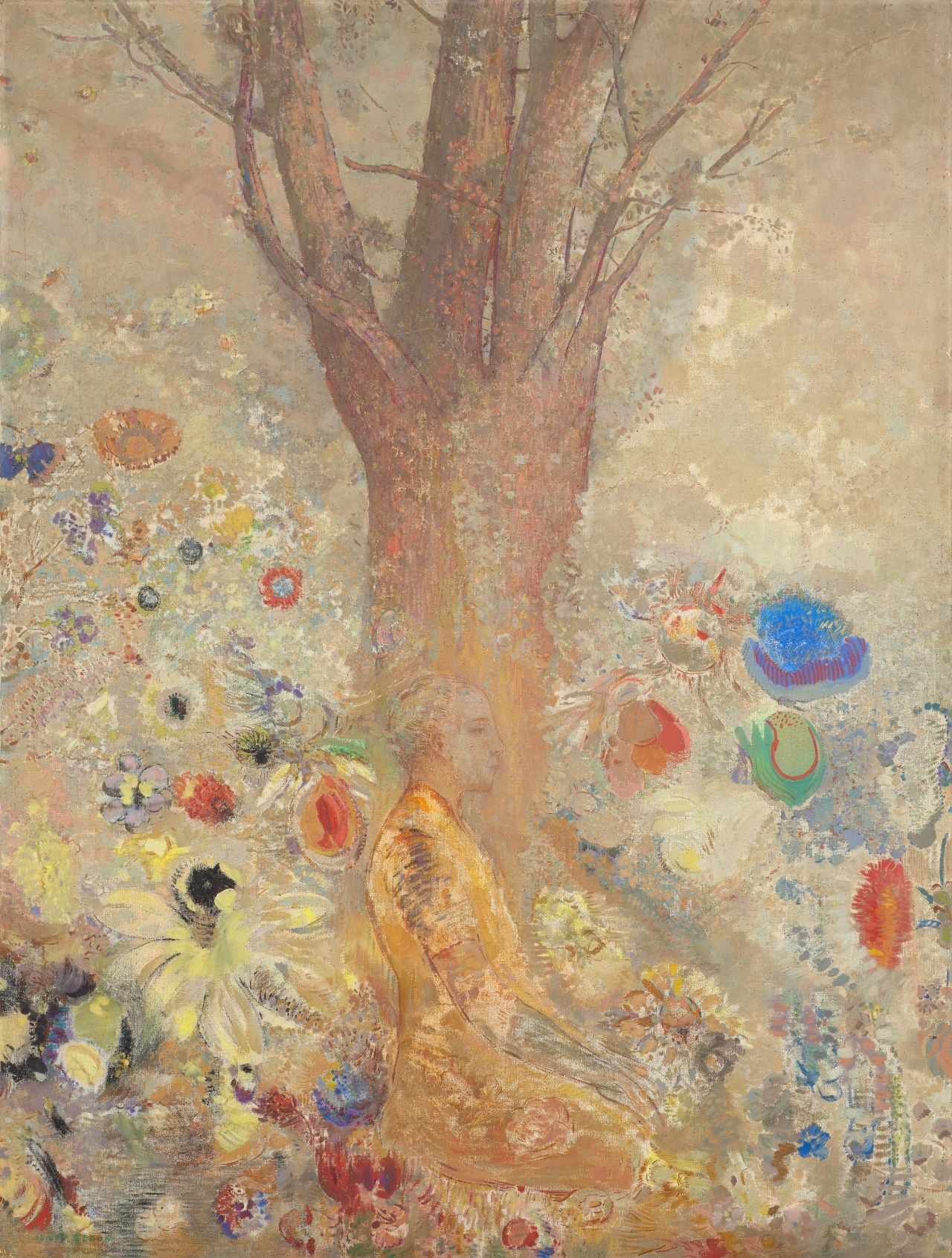




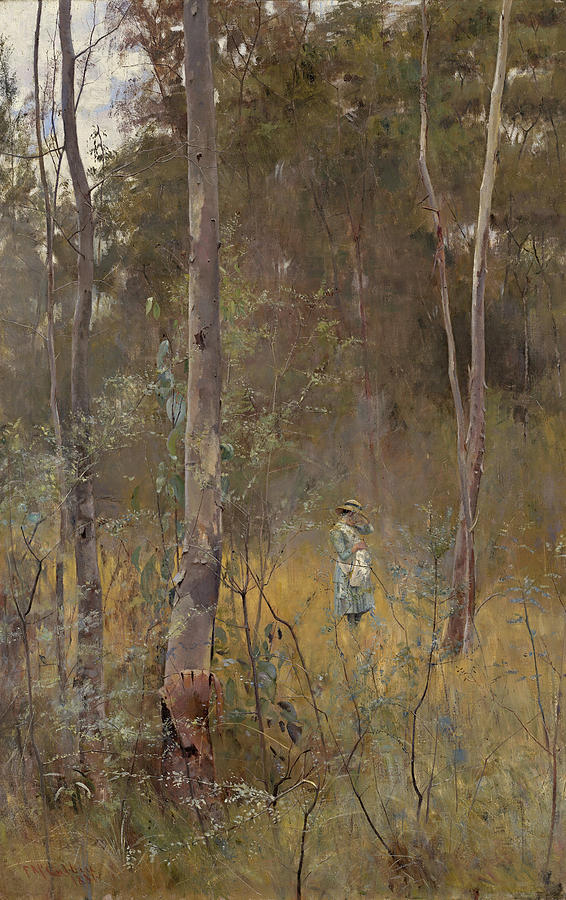


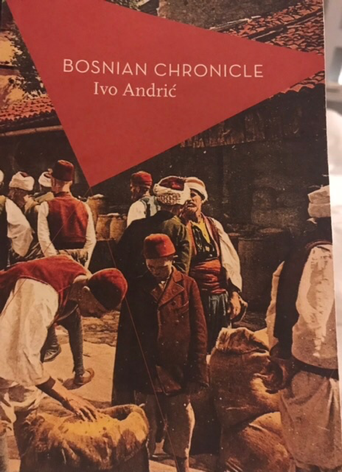
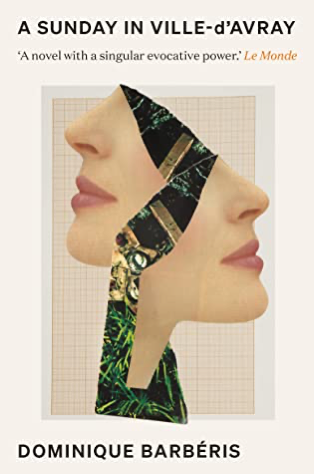
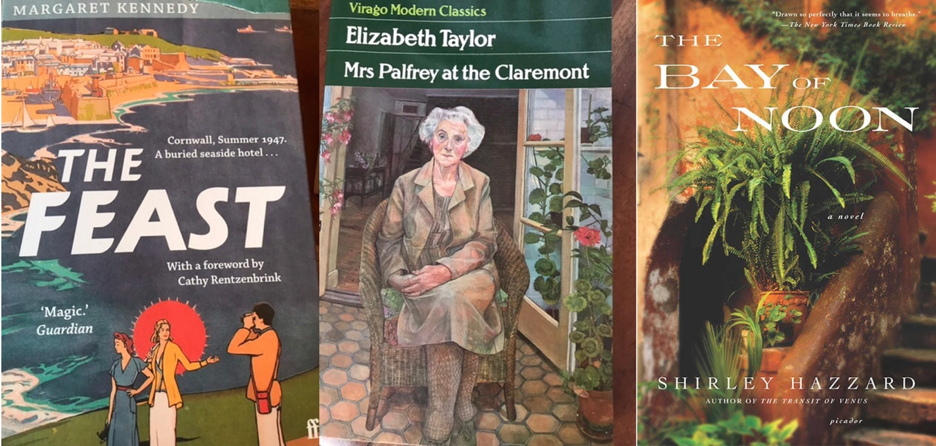
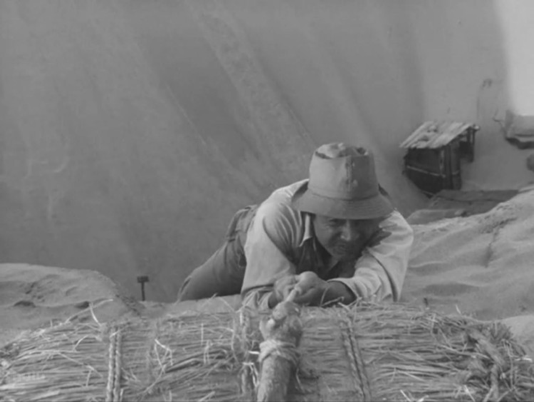
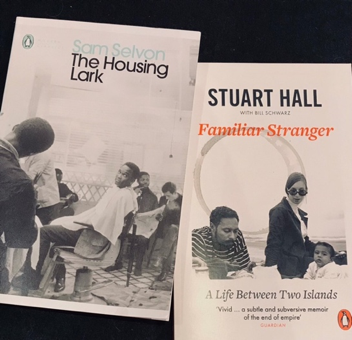
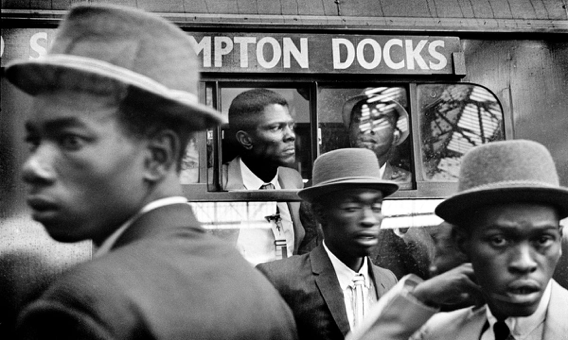
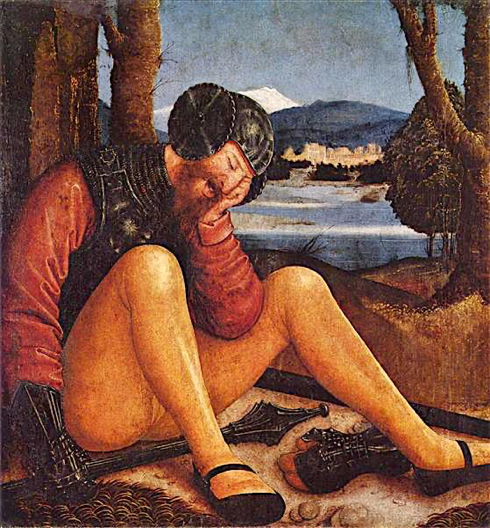
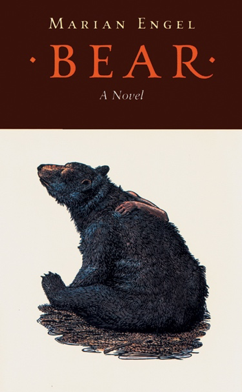

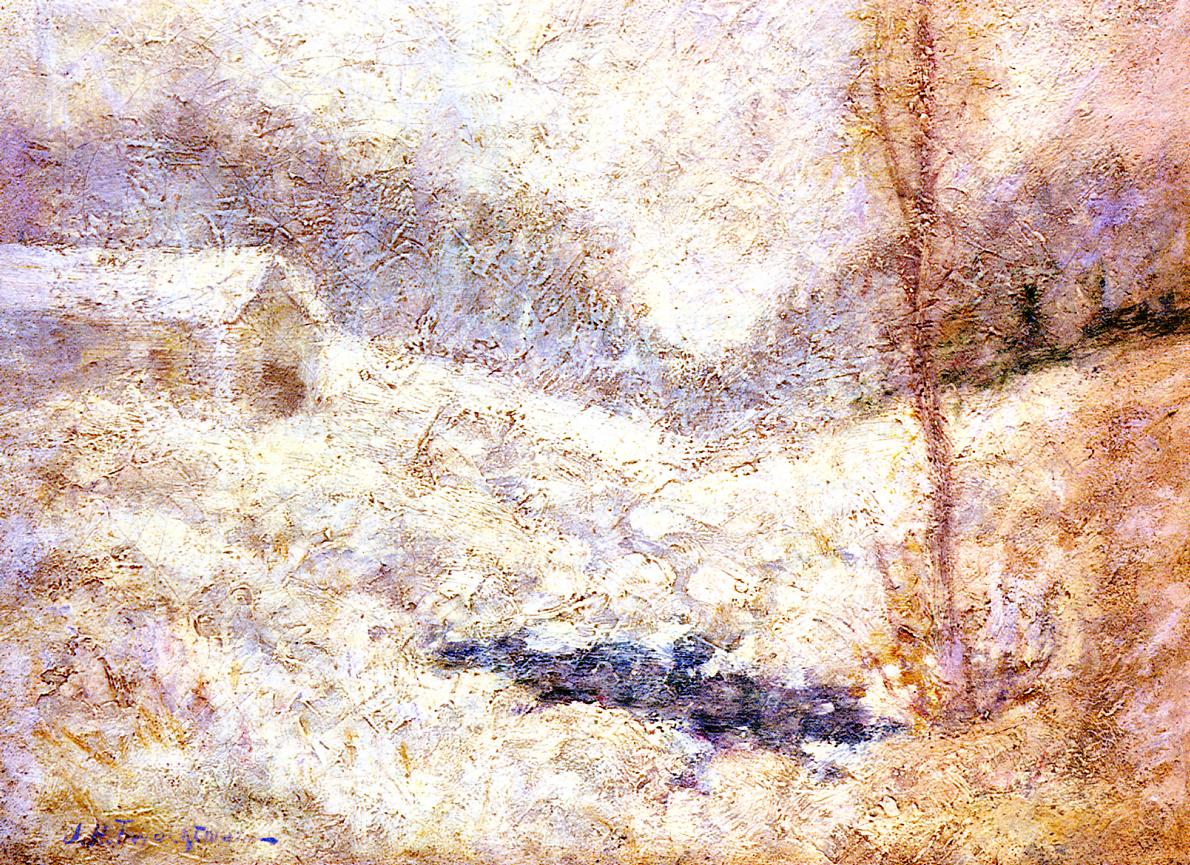

 Eiger, Mönch & Jungfrau