I didn’t forget about you all, but I did prioritize some other things (including sleep and exercise: recommend both) that left less time for other things, including this blog.
Happy to say, though, that my Year in Reading series of guest posts returns in truncated form, starting tomorrow and continuing through the next week or so. Those posts will conclude with my own 2024 reading review. Can you even remember that far back? As we hurtle into darkness, it seems a long time ago. We have a lot of work to do to resist what’s coming. And I’m still convinced reading is a part of that.
With my Year in Reading I’ll share some exciting news that will shape the coming year–and maybe let me use this space more regularly.
My mother had this self-titled Crosby, Stills, and Nash album when I was a kid. I think her brother sent it to her from Switzerland in the early 70s. However it arrived in our western Canadian home, the record was a fixture of my childhood, and I returned to it regularly, thrilling to the melodies and harmonies even if I didn’t understand all the lyrics. (You don’t want to know how old I was when I realized the roaches in “Marrakesh Express” were not bugs.) “Chestnut brown canary/ruby throated sparrow”: I loved that stuff.
Every time we pulled the record out, my mother would say how much she loved that photo. It conjured up memories of the epic road trip she and my father took from Montreal to Mexico via most of the US and eventually back to arrive, on the day of the moon landing, in a dusty windblown city called Calgary, a place she would never imagine she would spend the rest of her life.
“A couch on the porch. You’d never see that in Switzerland. God knows what’s out on the lawn.” She said this half enviously, half disparagingly. So messy! Gerümpel. Junk, trash, old lumber. A world in which keeping up appearances didn’t seem to matter. That could never be her world, but she was drawn to it anyway. As a child I associated the photo with my vague idea of the American South. So strange that I would one day live in that foreign land. Though surely the photo was actually taken in California. (That palm tree poking in the left side of the frame.) This was before I knew about Joni Mitchell or Neil Young, the Canadians at the heart of the scene.
Anyway, I didn’t come here to write any of this.
More from some great readers soon. And from me after that. I hope you’re as well as can be.
A few months, when I was too busy to do anything about it, WordPress told me I’ve been writing this blog for ten years.
André Brasilier, Blue Cavalcade, 1981
I’ve not always been the most diligent blogger, sometimes falling silent for months at a time, but I’ve always returned to it, and that’s not nothing. In fact, since I started keeping monthly logs in January 2019 (halfway through the blog’s life, which bewilders me, since surely that was just a couple of years ago) I’ve written a little something about almost every book I’ve read.
It is quite likely that some things will change in my life next year. Fear not, though, I’ve no plans to shutter the blog. I’ll probably be happy for the continuity. But I do wonder if there are other kinds of writing I might do here. Like many writers, I write best when I’m working on more than one project. I’m using part of my summer to craft a proposal for a book on teaching Holocaust literature at this moment in US history: I recently finished a course from the wonderful Anne Trubek of Belt Publishing that has given me a good start. (Agents and publishers, all my forms of communication are open lol.)
[My daughter says using lol is cringe. Sorry. But how else am I supposed to indicate “I know that is preposterous and I am kidding except that I would really love for it to happen”? Hahahahaha or something?]
I’ve been wondering how I might bring some of that writing variety to this space. When I first started EMJ, I wrote about one book at a time. No surprise to anyone who reads me, these posts were long. Often really long. They really helped me figure out what I thought of a book, though I’m not sure people wanted to read them as much as they did my still-long but shorter responses to a month’s worth of reading. I’m still fond of those early pieces, especially the first one, on a book I still think about a lot, Caleb Crain’s Necessary Errors. Here are a few more that hardly anyone read, but might be worth dusting off. On Irmgard Keun’s After Midnight. On Philip Marsden’s The Bronski House. And, way long, on A Little Life. There’s a ton more in the archives.
I have to admit, though, that the rhythm of the last five years has worked well. The monthly reviews offer a balance between breadth and depth, but would you prefer more pieces about just one book? And what about non-book topics? I’ve always shared writing created for other occasions (like becoming Jewish or reflecting to new students on old friendships). For a while I wrote regularly about my teaching, which I loved doing: I’m basing the book project on some of that stuff. Honestly, I don’t know how I wrote all that stuff, though. My daughter was young then and needed a lot more from me and my wife. Where did the time come from? I guess I was younger too. And that was all pre-covid. I think people overstate the changes between then and now (rather: they overstate the wrong things and ignore the main thing: we still live in a pandemic, we still don’t value the most important kinds of work, our way of life is killing us and the world). But I feel my working life has changed a lot. I don’t think I’m just being middle-aged when I say that it’s harder to be in a helping profession than it used to be. Anyway, I don’t know that I’ll have enough to say about teaching for me to write about it here and in the book. But who knows? Maybe writing about other kinds of art might be fun. The obvious example is film, which used to be a huge part of my life but fell away in the press of family life and career pressures. I’m returning to movies, though: slowly but ever more surely. I might write more about what I’ve been watching. (I think this is the only film-related post at the blog?) Another idea is to invite others to contribute. I’ve had many guests over the years, whether through readalongs (remember those?), shared reading projects, or year in review lists. I love hosting other views, voices, and perspectives. Maybe I could do more in that vein.
What else? Obviously, the look needs refreshing. And yet I am so lazy about that kind of thing. Is it actively off-putting? I admire M. A. Orthofer for many reasons, one being his indifference to graphic design. His site looks the way it looks, the content is what matters, and now it’s so iconic I for one would be crushed if he changed things. This place is no Literary Saloon, but maybe I am inching toward “so old-fashioned it’s actually cool” status. Thoughts?
As you can see, this post is a mixture of questions and ideas: what I wonder about and what I might do. But really what I’m writing here is both a plea for feedback and an expression of gratitude. What do you want to see here? More of the same? Something new? Like what? Whatever your answer, I want to thank you for reading. Blogs are so out of date; social media had made other kinds of communities, other forms of interaction; so many platforms share the thinking of so many smart readers and writers. That you’ve taken an interest in what I think means so much to me. As I’ve written before, I don’t know many passionate readers in real life; this community of readers around the world has meant the world to me. Thank you for everything you’ve taught me, the reading suggestions you’ve made, and the support you’ve offered. I’m filled with gratitude.
April sucked shit. I’d had it with everything: the semester grind, how hard it’s become to teach these last few years, and a lot of my colleagues, especially the administrators of my place of employment. I didn’t sleep enough, saw the height of the Arkansas spring blooms only through windows, and drank too much coffee. Gotta make some changes in my life.
Charles Rennie Mackintosh, Peonies, ca. 1920
Edith Wharton, Summer (1917)
Wharton continues to be one of my happiest discoveries of the last few years. (A personal discovery: I know everybody else already knows her.) Shawn Mooney, host of the Shawn Breathes Books YouTube channel, asked a few of his many bookish friends to read this novella from the middle of Wharton’s career. What a terrific book! Charity Royall, the adopted daughter of a lawyer and his now-late wife, might be in the upper echelon of her New England village’s society, but that doesn’t mean much. She’s bored to death. When a young architect comes up from New York to summer with a relative—to sketch the local country houses, ostensibly, but mostly to loaf—Charity is smitten by the glimpse of another world he offers. And by him, too: the book is impressively sexually frank for its time. Before long, Charity and Lucius have made a love-nest out of an abandoned house halfway up a nearby mountain. When Charity gets pregnant, a lot of troubling and surprising things happen in a short time. I won’t spoil the ending, but oof what a gut punch. Recommended!
Folks who have read this novel (others, look away): do you think Royall might be Charity’s father? Am I crazy to think so??? The circumstances around Charity’s coming to the Royalls seem… murky.
Andrey Kurkov, The Silver Bone (2020) Trans. Boris Dralyuk (2024)
Kurkov, whose delightful Death and the Penguin I laboriously read in German way back in the day and whose subsequent many, many books I have failed to keep up with, has written the first of a series set in Kyiv in 1919. The Great War might be over, but peace is nowhere to be found in Ukraine. Various factions vie for control: unaffiliated war lords, the Bolsheviks, the Whites, and the embattled Ukrainian People’s Republic, one of the first nations in Eastern Europe to deem Jews a protected minority, which didn’t stop it from countenancing a wave of pogroms under its brief rule. (I’m slowly making my way through Jeffrey Veidlinger’s history of these events, In the Midst of Civilized Europe, which is retrospectively clearing up a lot of the context.)
On the novel’s first pages, Kurkov’s protagonist, Samson Kolechko, a would-be engineer, loses his ear in an attack by Cossacks. (His father, alas, is murdered.) Samson, an upside-down low-rent version of his biblical namesake, manages to keep the ear, which turns out to have fantastical powers, allowing him to hear things he otherwise couldn’t. This comes in handy when the two Red Army soldiers who have usurped his apartment plot to kill him. He goes to police to turn them in and in a pleasingly preposterous turn of events is taken on as a detective himself. Along the way, he relies on the help of a young woman employed by the newly-established department of statistics. Kurkov vividly evokes the danger, scarcity, and uncertainty of Kyiv in this period: atmosphere is the book’s strong suit.
As for the crime element, well, let’s say it’s on the shambolic side. Perhaps more generously: it’s about what it means to investigate crime in a place where the political situation is changing so fast that the law threatens to be even more nakedly a fig leaf for power than usual.
In Boris Dralyuk, Kurkov has found a translator who gets his goofy side—and, I suspect, has even improved the book a little. He tells me the second Samson novel will be out in English next year. Count me in.
József Debreczeni, Cold Crematorium: Reporting from the Land of Auschwitz (1950) Trans. Paul Olchváry (2023)
Extraordinary. I do read a fair few Holocaust memoirs, and even though I’m interested to see how similar they are, how much they trade in the same tropes, I’m usually caught short in horrified wonder by at least one scene or detail. Cold Crematorium—now translated into English for the first time, more than 70 years after its publication in communist Yugoslavia—gave me that feeling from start to finish.
Debreczeni, the penname of József Bruner, was born in Budapest but moved to the Vojvodina, the largely Hungarian-speaking part of what is now Serbia, after WWI, where he worked as a journalist and newspaper editor. Like most Hungarian Jews he was deported to Auschwitz in 1944. Having survived the initial selection, he volunteered to be transported further west in Silesia to a camp that was then under construction. Falkenberg, as the Germans named it, was part of the vast Gross-Rosen camp system. Conditions in that archipelago of suffering were so bad that far fewer victims survived its array of satellite camps than did Auschwitz; it is much less well known today than its role in the Holocaust would demand. (Menachem Kaiser’s excellent third-generation memoir Plunder also considers this lacunae.) From there he was sent to the work camp at Fürstenberg, and finally to Dörnhau, the “hospital” ward of which was known to inmates as the cold crematorium because so many died within its frigid walls. He was liberated in May 1945, barely alive. After a lengthy recuperation, he returned to Belgrade, where he lived and worked until his death in 1978.
Indulge me as I share some of this remarkable book with you. It is the most visceral, corporeal description of the Holocaust that I know:
Here’s a passage from Fürstenberg, where Debreczeni labored, under dire conditions, to build an underground tunnel system (the so-called Project Riese, the eventual purpose of which remains a source of debate among historians):
Dysentery takes hold me of me yet again. Swelling spreads frighteningly over my entire body. Over the course of these days I am lugging sacks of cement to the mixers, and I become hopelessly dirty. The cement dust swirling nonstop in the air forms a thick layer of sediment upon my clean-shaved head. It collects on my gums and seeps into my nose, my eyes, my ears. Not even Sani Róth [former mobster who takes Debreczeni under his wing] can get his hands on soap. I hang my rags on the nail above me. The pants and tunic are literally moving from the thousands of squirming lice. Destroying them is hopeless to begin with, so lately we haven’t even been trying.
Here’s one from the “hospital” unit at Dörnhau, where Debreczeni spent eight miserable months:
The November cold pours in through the broken windows, and yet the stench is unbearable all the same. A suffocating stink oozes from the walls. Rising between the rows of bunks, several centimeters high, is an odious yellow slurry of dung. Naked skeletons are sloshing through the putrid river.
At one point, that slurry was knee height (for the few who could still walk). I will never get that detail out of my mind. This is the kind of thing I mean when I say Cold Crematorium makes other Holocaust memoirs seem tame.
And here’s another one from Dörnhau, about a man named Miklós Nagy, who scrabbled to the position of chief functionary of the medics who “treated” the patients, some with good will and others with pure cynicism, in an environment completely lacking medical supplies that was also, as we have seen, utterly unhygienic.
I once saw this lightweight man jump up and down on a patient’s chest like a rubber ball, stomping on him with bloodshot eyes until he was worn out. The victim’s crime: he’d tried conniving his way to a second helping of soup.
Remember, Nagy was a prisoner of the Nazis, too. The pitiless depiction of camp functionaries is just one of the things that makes this book such a valuable testimonial document.
I am seriously thinking about assigning this book instead of Primo Levi in my intro Holocaust Lit course. (Shouldn’t be one or the other, but syllabi are zero-sum games…) If you think you have the fortitude, I urge you to read this book.
Joan Chase, During the Reign of the Queen of Persia (1983)
I chose this novel by the hitherto unknown-to-me Joan Chase for the April episode of One Bright Book simply because it was reissued by NYRB in 2014 and I’ve had it on my shelf ever since. (I’m trying to use the podcast to get to some of the hundreds of unread books around here…) Reading it was a happy surprise: it’s excellent, although, in my opinion, awfully sad. Somehow Chase tells the well-worn story of a vanished childhood—shot through with depictions of women’s limited lives in this time and place—in a way that feels new.
During the Reign of the Queen of Persia tells the story of three generations of the Krauss family, who mostly live on a farm near an unnamed county seat in northern Ohio probably modelled on Wooster, where Chase was born. The family is made up almost entirely of women: its matriarch, Lil, known as Gram (the titular Queen, so named as a joke about her similarity to a family pony who loves to run wild), has five daughters, two of whom have two daughters each. These girls, all born within two years of each other, and now in their mid to late teens, think of themselves as a collective: their responses to the vicissitudes that life throws the family’s way make up the core of the novel’s events.
Listen to the episode for more about this terrific book. For now, I’ll just say that if you’re intrigued by a first-person plural narrator that never feels gimmicky, and you like domestic fiction that also dabbles in the Gothic, you’re going to love this.
Amy Pease, Northwoods (2024)
(Not to be confused with Daniel Mason’s North Woods; that must have annoyed Pease and her publisher…)
Set in Shaky Lake, WI (which the internet suggests is a real place???), Pease’s debut crime novel concerns a former fish and wildlife investigator, Eli North, who returns from Afghanistan with PTSD and is taken on as a charity case by his mother, the local sheriff. Eli is at the end of his rope: drinking too much, losing contact with his son (his wife threw him out of the house), scared and ashamed most of the time. When a teenage boy is found dead and the girl he’s been seeing disappears, Eli fights for the right to take on the case and maybe regain his footing. The most interesting thing about this book is that Pease has chosen to put the exasperated, anguished, loving relation between Eli and his mother at its center. How things work out between them is ultimately more compelling than the whodunit.
All told, Northwoods is totally satisfactory debut; I’ll keep an eye on Pease. I listened to the audio, and I was excited each day to catch the next installment, sometimes even forsaking my hockey podcasts. So that tells you something.
Willard Metcalf, May Pastoral, 1907
All I can say is: IT’S SUMMER BITCHES. A fuller reading slate returns in May.
Fell behind on these updates during the semester, as usual. Hard to remember that month beyond the usual—the semester taking hold, mostly warm days from the ever-earlier Arkansas spring—but I do know that mostly we were busy getting ready for my daughter’s bat mitzvah in early March. Along the way I squeezed in these books.
Richard Serra (2001)
Thien Pham, Family Style: Memories of an American fromVietnam (2023)
Autobiographical comic about Pham’s family’s journey from Vietnam to the US in the early 1980s via a Thai refugee camp. Each chapter is named after an important dish, ranging from the ball of rice and fish his mother saves for him on their flight from Vietnam to the baffling Salisbury steak of the school cafeteria to the co’m tâm dac biêt (a combo plate, as best I can tell) that he eats with his high school friends.
The palette is somber, mostly browns and greens, but the tone is lively: this is the classic story of American immigrant success, a story none of us can take for granted, which explains, I’d say, why the final chapter concerns the then-41-year-old author’s decision, in 2016, to finally take citizenship, prompted by Trump’s increasingly hostile anti-immigrant rhetoric. Thien and his family go through a lot of hard things: bureaucratic delays, poverty, language barriers, exhausting work that nearly tears the parents apart, and, most of all, at the very beginning of their journey, a harrowing attack by pirates on the way to Thailand, starkly presented by Pham in a series of black pages containing only the sentences his mother whispered into his ears, “It will be ok,” “I’m here,” “I’m right here with you.” But the Phams do more than survive; they thrive. I was delighted to see the haggard, exhausted, frightened yet determined young parents of the opening chapters settle into the gently bickering, food-pushing older couple of the last ones. Pham finishes with “end notes,” in which he answers questions readers are likely to have, like “What do you parents think of this story?”. In his answer, Pham draws his mother popping her head from another room into his studio and shouting (accurately) “I am the hero!”
Samantha Shannon, The Priory of the Orange Tree (2019)
Epic fantasy of two worlds, one based on medieval Europe, one on ancient China and Japan. In the former, dragons are abhorred; in the latter, they are venerated. Those dragons are beautiful and wise creatures of air and sea, nothing like the monsters that nearly destroyed civilization centuries ago before being bound into an endless chasm. The spell that cast the bad dragons there, however, is reaching its thousand-year-end, and they’re determined not to be defeated this time. Can our heroes convince the leaders of the kingdoms and free states and empires to band together to defeat the enemy? (Yes.)
Priory has a satisfying heft. The first 2/3 especially move with satisfying deliberateness; the end, alas, is rushed. I loved falling into the world of the book, though, and was grumpy any time I had to set it aside for anything else.
Herta Müller, The Passport (1986) Trans. Martin Chalmers (1989)
I enjoyed this angular little book about the German-speaking minority in Romanian under Ceausescu, but I hardly remember a thing about it. Does this happen to you? What I remember: 80s rural Romania is grim; men are bad to women; people who leave come home to lord it over those left behind, to compensate for how hard it is in the new land.
Jesse Q. Sutanto, Vera Wong’s Unsolicited Advice for Murderers (2023)
Vera Wong gets up early. Really early. She takes a brisk long walk, being sure to protect her skin from that harmful sun. She makes breakfast and texts her son to ask why he’s still in bed. (Tilly is a layer, very accomplished, but he doesn’t seem to understand how fast life passes you by.) Then, the day well advanced (it must be almost 8), she walks downstairs to open her business, Vera Wang’s World-Famous Teahouse. (She named it after the designer because people love a famous name—Vera is smart like that.) She tends to her sole regular customer, a man whose wife has Alzheimer’s, meaning he can never stay as long as Vera would like, and then settles into long, quiet hours that weigh on her, almost forcing her to recognize that the shop is failing.
Then one morning she comes down to find a man dead on the shop floor. He’s clutching a flash drive, which she takes (for safekeeping, what you think???) before outlining the body, just like on CSI. She uses a sharpie so it will be nice and clear. The police are oddly unhappy about this. Misadventure, the police declare. But Vera knows: this is murder. In the next days four people come by the tea house—very suspicious. Vera slyly gets into conversation with them and learns they all knew the victim, Marshall Chan, who turns out to have been a bad man. Through a combination of bullying, passive-aggressiveness, sheer chutzpah, and plying them with food, Vera gathers what she insists on calling her suspects, forming them into an unlikely friend group and insinuating herself into their lives. She hasn’t had so much fun in years. They are all so nice—but they really need her help getting their lives together. Still, that doesn’t stop Vera from being clear-sighted: one of them is killer!
Vera Wong’s Unsolicited Advice for Murderers is funny, sweet, moving, and even a bit suspenseful. Vera is your classic delightful piece of parental work. Sutanto lets her share her wisdom while also admitting she could be a bit less… intense. I loved this book. My daughter loved this book. Maybe my wife will love this book (she is reading it next). The audio, read by Eunice Wong, is a delight. Don’t sleep on this perfect piece of light reading.
The temptation for a series must be immense. Sutanto should resist, but I hope she doesn’t.
Elana K. Arnold, The Blood Years (2023)
Impressive YA Holocaust novel for young adults that I would recommend to readers of all ages.
What happened to the Jews of Romania is one of the most significant stories of the Holocaust, sadly still too seldom told. The Blood Years, based on the life of the author’s grandmother, begins to rectify that. This is a novel of Czernowitz, that former Austro-Hungarian center of Jewish life in Bukovina. Frederike Teitler and her older sister Astra live a cossetted life: yes, their father left them, plunging their mother into a deep depression that led their grandfather to take the women into his apartment, but things have since settled down. Although Astra increasingly gets up to things her sister knows nothing about, life for the young women still revolves around daily ballet lessons and evocatively rendered summer vacations in the Carpathians. But then comes the war. The antisemitism that had been mostly a hurtful annoyance turns virulent, especially after the interregnum of Soviet rule in 1940 – 41, when Jews were briefly given full rights. When the Germans take over the city in the first wave of Hitler’s war in the east, with the enthusiastic support of most of the locals, Jews suffer pogroms and dispossession. The family is briefly forced into a ghetto and narrowly avoids deportation to Transnistria—a territory across the Dniester that was a hellhole for Jews even by the standards of the Holocaust—only because Astra’s doctor husband, whom she has married against everyone’s will, is deemed an essential worker. Arnold vividly evokes the hunger, illness, and terror of the following years. She organizes the book, as her title implies, around differing instances of blood, from a first period to violence in the streets to tubercular coughing.
I read The Blood Years in a day: it’s well-written, dramatic, sensitive, and, perhaps most importantly, unwilling to sugarcoat its story of survival. The iconography of the Holocaust, which mostly comes from a reductive idea of what happened to the Jews of Poland and western Europe, doesn’t apply to the Romanian story. For this reason alone, I hope lots of people read this book. High school teachers, please consider assigning it!
Binjamin Wilkomirski, Fragments: Memories of a Wartime Childhood (1995) Trans. Carol Brown Janeway (1996)
Infamous text, unsurprisingly now out of print, purporting to be a memoir of the author’s experiences as a very young child during the Holocaust, primarily in Majdenk. Except that Binjamin Wilkomirski is really Bruno Grosjean, whose unwed mother was forced to give up her child to the Swiss foster system in the 1940s. Wilkomirski—that’s the name he’s taken, so I’ll use it too: we are dealing with something other than a pseudonym here—is not Jewish, never lived in Poland, did not survive the Holocaust. When the book was first published—by an imprint of the prestigious Suhrkamp Verlag and by Schocken, the most prominent Jewish American publisher—it received notices that can only be called rapturous. The NYT rave is typical: Wilkomirski “recalls the Holocaust with the powerful immediacy of innocence, injecting well-documented events with fresh terror and poignancy.”
A year or two after its release, Daniel Ganzfried, a Swiss journalist, read Fragments and felt something was amiss. Ganzfried interviewed friends and family of the author, trawled through Holocaust repositories and Swiss archives. He published his findings—a (self) righteous condemnation of Wilkomirski as a fraud—in a prominent Swiss weekly. The German publisher responded by hiring a researcher, Stefan Maechler, to follow up on Ganzfried’s discoveries. Two years later, Maechler, agreed with the allegations, adding even more proof to that already collected. The book was withdrawn; scholars and ordinary readers felt shame and disappointment; no one talked about it anymore.
I was one of those early readers. This was before my interest in the Holocaust turned into my livelihood. I followed the ruckus with interest—I read the flurry of pieces (an especially good one by Elena Lappin ran in Granta) that speculated on why someone would do such a thing—but I was perfectly willing to put the book out of my mind.
Come twenty-five years later to find one of my best students wanting to write her senior thesis on the book, after having read it in a class she took while studying abroad. The student was fascinated by the text, intrigued by the silence surrounding it, and curious about what we might learn from that silence and from reading the text, even knowing it to be fake. I knew I would be teaching a course on the afterlife of the Holocaust this semester, and we decided she should take the opportunity to teach the text. Abroad, her instructor had prefaced the reading by explaining the background. After much discussion, my student and I decided not to tell the students in my class the truth beforehand. This experiment proved fruitful, even if some of the students were rightly un-thrilled by our decision. (We explained the rationale, which allayed most concerns.) Fascinating to see how strongly the text resonated with students, and, concomitantly, how betrayed they felt when they learned the truth. The first day’s conversation about how Wilkomirski represented trauma pivoted, the second day, to an impassioned discussion of whether anyone should ever read this book, and, most importantly, to my mind, how neatly the text matches our expectations of what trauma means.
(On the course feedback forms I asked whether I should teach this again, and, if so, whether I should spill the beans beforehand. They all said I should and no I shouldn’t. Not what I expected.)
Jona Oberski, Childhood (1978) Trans. Ralph Mannheim (1983)
Moving and angry Holocaust story, presented as fiction but closely modeled on the author’s life. (I wrote about it here.) I was interested to compare Wilkomirski’s grotesque exaggerations of Oberski’s reality, and assigned it this semester for the first time, but less obsessed readers can appreciate it all on its own.
James Buchan, Heart’s Journey in Winter (1995)
Baffling, weird spy novel set in West Germany in 1983 amid the furor and fear incited by the decision to place Pershing missiles on German soil.
Buchan’s novel is as thorny in its syntax and structure as a poem. The interlingual pun of the title references Goethe’s “Harzreise im Winter” (A Journey through the Harz Mountains in Winter), playing on the near euphony of Harz and Herz, meaning heart. Readers who struggle to understand what’s going on are just following the lead of the characters. Secret meetings in secluded hunting lodges, cryptic conversations where people tell each other things without saying anything outright, lovers on the run, adultery as a metaphor for spycraft: Buchan uses many of the tropes of the genre, but slantwise, ruthlessly excising exposition. No heroes or resolution here. Imagine a Len Deighton novel, with its sympathy for cold war German seediness, but stripped of the belief that the rules of the game must be followed, however exhaustedly or ironically, and instead replaced with the feverishness of a lieder cycle.
I often forget plots soon after reading; in the case of Heart’s Journey in Winter I forgot it while reading. Like, I mostly had no clue what was going on. I remember instead the descriptions of trout fishing, and evenings at a country inn, where couples drive up from Bonn to sit in mismatched chairs in a newly mown field drinking cold local Riesling. Is this a good book? No idea! Should you read it? No clue!
Svetlana Alexievich, Last Witnesses: An Oral History of the Children of World War II (1985) Trans. Richard Peaver and Larissa Volokhonsky (2019)
Y’all, this book! Finally read Alexievich, and I get the hype. Last Witnesses is a series of vignettes: each chapter the story, told from the position of middle or late age and in their own words with only the lightest editorial commentary, of what the tellers experienced as children during the German invasion of the Soviet Union in WWII. Most begin with that quiet unassuming day in late June 1941 when the country found itself under attack. They begin with the essentials of their family: how many siblings, maybe their ages, sometimes a father (though these are often already away or soon to be called up), and almost always a mother. The mothers leave too, more often than not, whether through death or the choice to join the war effort. Last Witnesses is about loss: families broken apart, loved ones murdered by tank, by gun-shot, by bombs from the air, by hanging. To a lesser degree it’s about resilience: roles and responsibilities taken on much earlier than anyone would ever have expected. But above all it’s about trauma. Decades later, the story-tellers break down, or trail off, or acknowledge how much they suffered from the rupture of their world. The cumulative effect feels important to the project, but it’s not easy on the reader. So much heartbreak. For that reason, it would be weird to say I loved this book, but I sure was impressed. And I was fascinated by a recurring subplot, if you will: the events here narrated are also the story of the Holocaust in Belarus, but in the best Soviet tradition that’s never acknowledged.
Cristoffer Carlsson, Blaze Me a Sun (2021) Trans. Rachel Wilson-Broyles (2023)
Superior Swedish crime fiction. Time was I couldn’t get enough of that stuff: I remember some pleasant weeks in graduate school plowing through Mankell. (A few of those Wallander books are hard to beat for suspense.) But eventually the Scandi-noir boom became a glut: most things are mediocre, after all, and with seemingly every crime writer from Rejkavik to Helsinki available in English I oughtn’t to have been surprised that a lot of it wasn’t that great. But this one made Sarah Weinman’s best of 2023 list and the audiobook was available at the library, so I gave it a try. And I’m glad I did. The structure, pacing, and ambition of the book quickly won me over, and I looked forward to my commute each day. (The narrator seems to know Swedish—judging from his pronunciation of names and places anyway—which compensated for his decision to voice female characters in falsetto. That always makes me crazy.)
The still-unsolved assassination of Olaf Palme seems a trauma from which Sweden has not recovered, so often does it figure in the country’s crime fiction. Carlsson’s novel, set in rural western Sweden, far from Stockholm, concerns a violent crime that takes place on the night of the Palme killings. To his credit, Carlsson keeps the “what has happened to our decent country” hand-wringing/sociological soul searching to a minimum, emphasizing instead how the drive to understand can cascade through generations. Using three narrative levels, the outermost one about a writer who returns from the capital to his hometown in midlife and finds himself drawn to that unsolved crime from the mid 80s, Carlsson pays as much attention to the narration as the discourse. And I didn’t figure out who did it until right before the big reveal. Win all round.
Georgia O’Keeffe, Light Coming Over the Plains, No. II (1917)
Good month, right? (Wilkomirski aside—that’s a special case.) That Buchan tho. What the hell? Anyone ever read that? Other than John Self, I mean.
Chava Rosenfarb was born in Lodz in 1923 to parents enmeshed in the life of the Bund, a political and social justice movement that flourished in interwar Poland. In contrast to Zionists, Bundists believed that Europe could and should remain central to the future of Jewish life. Economically, they embraced socialism. (Bundism thrived in the highly Jewish, highly urbanized cities of Poland, especially Lodz, a center of textile manufacturing regularly compared to Manchester.) Linguistically, they championed Yiddish over Polish or the Hebrew that Zionists, aimed to resurrect. Spiritually, they turned Judaism’s emphasis on reparation (the messiah will not arrive until we have perfected the world) to social justice ends in their own community.
Like every other Jew her age in Poland, Rosenfarb’s education was interrupted when Germany invaded in September 1939. A few months later, she was interned with her family in Lodz’s sealed ghetto. Amazingly, she, her sister, and her parents remained together until the final liquidation of the ghetto in the late summer of 1944. Along with some friends, the family had prepared a hidden space in their apartment building; more than 20 people crammed into it in those final days. Although they escaped notice for more than three days, their luck eventually ran out and they were deported to Auschwitz. Rosenfarb’s father was separated from them at the ramp: they never saw him again; she would later learn that he died in an allied bombing raid in Germany in the last days of the war. The Rosenfarb women were sent to Sasel, a work site in a Hamburg suburb, where they rebuilt roads for several hard and cold months. Early in 1945 they were deported again, this time to Bergen-Belsen, where Rosenfarb, sick from the typhus infestation that swept that notoriously chaotic place (all camps were disaster zones in the last weeks of the war: the situation in Belsen was perhaps the most terrible of all), clung to life, more dead than alive, when the camp was liberated in April.
Remarkable experiences as a DP and an illegal alien in Belgium followed; by 1950 the Rosenfarbs, along with a man Chava had known in Lodz, reencountered in the ruins of postwar Germany, and later married, secured visas to Canada. (That man, Henry Morgenthaler would later champion the cause of legal abortion in Canada, becoming, in my 1980s childhood, a figure equally reviled and admired. My mind exploded when I learned this connection.) The refugees settled in Montreal, where Rosenfarb would spend most of the rest of her life. In this new world, along with caring for her mother and raising her children, Rosenfarb continued the writing she had begun in the Lodz ghetto. After poems came novels and short stories, her efforts culminating in her three-volume fictional chronicle of the Lodz Ghettto, The Tree of Life (1972, translated into English by her daughter, Goldie Morgenthaler).
I learned all this and more in a wonderful course offered by the Yiddish Book Center, spurred by the publication of her collected short stories (excellent, especially the dramatic “Edgia’s Revenge,” which I immediately added to my syllabus). The Center offers courses and talks regularly; check them out if you have any interest in all things Yiddish.
Jack Beder, Winter Morning, 1972
Rebecca Donner, All the Frequent Troubles of Our Days (2021)
Mildred Harnack née Fish grew up in Milwaukee to an intermittently employed father and a mother who was a stenographer. In the 1920s she attended the University of Wisconsin, where she met Arvid Harnack, an economist and jurist from Germany who could, unlike any man she had met before, match her as much in the seminar room as on the dance floor. By 1929 the young couple—they had married three years earlier—was living together in Berlin. Mildred would return home only a handful more times. Berlin was exciting, even for a poor couple like the Harnacks. All kinds of change seemed possible. But the rise of the Nazi party threatened all that. Mildred was fired from her position teaching American literature in 1932 because of her opposition to the party, even though it would not come to power until the following year. Needing to find work, Mildred took a job teaching working class students at night school. She loved her students, believed in their ability to transform their lives, and eventually recruited some of them as central figures in a resistance movement that she and her husband began building in the early years of the regime. The circle, as she called it, met to share ideas, often over book discussions, and distributed leaflets denouncing Nazi policies. It was loosely aligned with other resistance movements, including the one that included the pastor Dietrich Bonhoeffer, a cousin of Arvid’s, and the one led by Harro Schulze-Boysen and Libertas Haas-Heye, which eventually led Arvid to pass on military secrets he gained from his work in the Reich Ministry of Economics. Rebecca Donner, who happens to be Mildred’s great-great-nice, tells the story with flair and sympathy.
I found it fascinating to compare Donner’s book to Norman Ohler’s Bohemians, in which Mildred is a bit player. Donner has much less sympathy with Haas-Heye than Ohler does—which makes sense since Haas-Heye ratted Harnack and the others in the so-called Red Chapel group out. It seems she was duped by a supposedly sympathetic secretary in the jail where she was held in custody—but duped rather easily, Donner implies.
Earlier in the 1930s, Mildred befriended Martha Dodd, daughter of the US ambassador. When Dodd was replaced, she became close to the wife of the new First Secretary, whose son, nine-year-old Don Heath, Jr., acted as a courier, carrying clips of paper in his backpack from his English lessons with Mildred (whom he adored) to his father. Typically, those messages consisted only of a time and place where Mildred or Arvid could meet with Heath to pass on information in person.
This work was dangerous, of course, and it some sense it was only a matter of time before she and Arvid were found out. Had the group’s Soviet handler not been so clumsy, they may have escaped detection. When they realized their cover had been blown in September 1942, the couple tried to get to Sweden, but they were arrested in East Prussia the day before they were to set sail. Mildred’s initial six-year prison sentence was overturned by Hitler himself. A new trial sentenced her to death; she was executed by guillotine in February 1943.
As its title implies, nothing is comforting about the subject matter of All the Frequent Troubles of Our Days. It’s a sad book. In her final days Harnack was miserable: eaten by lice, beaten by guards, almost unable to speak to the fellow prisoners who admired her. But grief and despair shadowed her long before her arrest; I was moved by the cost of Harnack’s convictions. Her commitment—compounded by her inability to say anything, lest it further endanger her—destroyed her relationships with almost everyone, especially her American family. By the end, Harnack has the remarkable but unenviable distance from the world of someone like Simone Weil. Donner admires her great-great-aunt, and makes us admire her, too. But she has the guts to admit that principled resistance to injustice can lead to the calcification of so much that is human. How painful to see the erosion of that Wisconsin college girl, wide-eyed and full of the desire to teach and to learn, in love with a man and the world. How loving and patient of Donner to have resurrected her.
[An aside: Donner relies heavily on William Shirer’s diaries. That surprised me: he seems so old-fashioned. Who reads The Rise and Fall of the Nazis anymore? But Donner knows what she’s doing: based these excerpts, he was a hell of a writer.]
Emily Tesh, Some Desperate Glory (2023)
The always reliable Adam Roberts tipped me on to this in his annual sff recap in The Guardian. Then Ian Mond praised it too. The Venn diagram of their tastes is close to being a circle, but everything in it is top-notch. Roberts calls Some Desperate Glory “a blend of space opera and military SF that refreshes both modes,” which sounds exactly right to me, even if I still don’t quite know what those terms mean.
Kyr has come of age on Gaea Station, the last redoubt of humanity after earth is destroyed by alien species who have decided that humans are irredeemably violent. (I mean, not wrong.) Her seventeen years have been marked by submission, dedication, and toughness, to others but above all to one’s self. Food is fuel; rest mandated so the machinery of the body and the station can keep going; families are split apart, the children, bred to emphasize traits necessary for survival, are raised in same-sex age cohorts after they leave the nursey.
Gaea, it becomes clear, is Sparta.
And Kyr loves it.
Along with her twin brother, she is the best of the best: fast, strong, smart, zealous, loyal to the cause. Yes, her “siblings” hate her—she’s always ratting them out and pushing them to exhausted, shameful tears—but such toughness is needed for humanity to enact its revenge. As the date of her cohort’s graduation approaches, Kyr can’t wait for her assignment. She knows she’ll be named to the warrior caste. And then she’ll be able to throw off her only black mark: a family history of treachery. Ten years earlier, her older sister fled the station with her infant child, probably for a planet where the aliens let humans live on sufferance, symbolically neutered, as pathetic as lap dogs. When Kyr’s assignment comes back all wrong—her shock compounded by the news that her brother has been selected for an even more prestigious, albeit suicidal mission—she hatches a plot to follow him. The journey will eventually revise her entire sense of the universe.
I admired Tesh’s accomplishment here: she lets us to read against Kyr (we know she’s more than insufferable: the perfect fascist, really) even as we can understand her zeal for her embattled mission. (I say “we” but a quick glance at Goodreads—I remembered why I never do that—shows me that Tesh’s skill with POV is lost on some readers…) In a brief afterword, Tesh lists some of the works she consulted in writing Some Desperate Glory: books on North Korea, Paxton’s classic study of fascism, and Lawrence’s Wright expose of the handful of people who have escaped scientology. All of which allows her to pull off her greatest trick: like Kyr, readers too are deprogrammed, the “facts” of the novel’s world cast into new light as we proceed. An unpredictable quest story follows, with plenty of plot twists and heart-in-mouth moments. (I was on the verge of tears by the end.) Queer love stories, found families, alternate realities: all the things contemporary sff is known for come into play. Good stuff.
Walter Kempowski, Marrow and Bone (1992) Trans. Charlotte Collins (2018)
Marrow and Bone might be the least terrific of the three Kempowskis I’ve now read, but it’s still very good. (Don’t start here, though.) Jonathan Fabrizius is a freelance writer who, thanks to a small stipend from an uncle, lives in charming modesty in 1980s Hamburg, sharing one of those impossible German apartments (carved up willy-nilly from a grander space, bathrooms in the hall, no kitchen to speak of) with a girlfriend who has given up on him. Out of the blue, an invitation comes from, of all things, the organizers of a road rally across the former East Prussia: they want Jonathan to write about the sights attendees might enjoy as they follow the racers from east to west. Jonathan accepts with alacrity: he needs the money, but he also has ties to the region. His companions are a former racecar driver and a representative of the event organizers. Like all picaresques, Marrow and Bone shambles from one incident to another, most of which at first seem consequential, even dire, but prove to be irritants at worst, spurs to further discoveries at best. (When their car and luggage is stolen, for example, the company immediately sends another car, and the protagonists later find the luggage abandoned by the side of the road.) Jonathan, a bit of a schlemiel, need never worry about the consequences of his failures: in one moving scene, he promises to mail form the West some anxiety medication to the mother of a suffering young woman. Tragically, absurdly, he loses the address: he feels bad there’s no way to reach them, but he’s content to throw up his hands.
It’s clear that Kempowski is diagnosing the post-communist situation in this tale of the last days of divided Germany. How so and to what end are harder to say. Maybe that comes from the newness of the events (published only three years after the fall of the wall). Or maybe from Kempowski’s haziness, which can be hard to disentangle from Jonathan’s. Importantly, though, Kempowski does not think it would have been better had the Germans not lost East Prussia. He acknowledges that Poles have had opportunities and made a go of things—even if those things are sometimes muddled in the ordinary way of the world—that they might not have had under German hegemony. But he also laments a lost world—especially the mix of cultures that East Prussia, like all borderlands, once had. He’s similarly gentle with the 1980s leftist intellectual milieu to which Jonathan belongs. He pokes fun at their belief in the power of petitions and protests, but admires their conviction.
I guess I am writing myself into the position that it is not easy to tell what is mild (and therefore, possibly, generous) in the book and what is fuzzy (and therefore, possibly, lazy).
Oliver Burkeman, Four Thousand Weeks: Time Management for Mortals (2021)
If we’re lucky and live into our seventies, we spend about four thousand weeks in this life. To my numerically-hazy mind that seems lot, but it’s not. And when you’re in your 50s, you can’t help but conclude that you have hardly any weeks left at all. Burkeman’s self-help book for people who cringe at the idea of self-help gently asks us to recognize the fact that we all want to deny, the inescapable reality quantified in his title. Burkeman, a self-professed failed productivity expert, exhorts us to make those weeks count—but not by being more productive. (Some of the most amusing parts of the book concern the various productivity regimes to which he has pled fealty. As he wryly notes, work tends to beget work. Answering email is shit!) The point isn’t that we should spend our time only doing what we want—none of us have that freedom, especially those of us who aren’t independently wealthy. Rather, it’s simply that we should be intentional about our time. But what a huge “simply” that is! It means recognizing our mortality—something that I, for one, have had no interest in doing.
A short, well-written, often funny, and always accessible book (Burkeman makes even Heidegger intelligible), Four Thousand Weeks has kept its hold on me in the weeks since I read it. He demolishes the belief so many of us have that our real life will begin at some indefinite future time: as soon as I do x or figure out y, I’ll finally do z (clean the closets, commit to a relationship, write that book), when in fact our lives are nothing but the cluttered, half-hearted, scattered series of moments that we wrongly think of as garbage time before real meaning will arrive. He argues that our impatience, our “it would be funny if it weren’t so sad” drive to hurry through life, is really a sign of how strongly we deny our mortality. We feel time is wasted because we are reluctant to embrace discomfort and resistance. We don’t have to like traffic jams, checkout lines, or toddler games. But until we learn to experience them as time we will find them even more painful than they are.
Some of you might remember Emma Townsend from Twitter (I miss her). I raised an eye at her when she raved about Four Thousand Weeks; she gently encouraged me not to be so hasty. It took me a while to try the book for myself, but I’m so glad I did. Sorry for doubting you, Emma.
Rebecca West, Harriet Hume (1929)
A witchy book; I must confess, I am not much for witchy things.
West’s strange fantasia of a (non)-relationship over several decades is the subject of Episode 22 of One Bright Book—worth your time, in my opinion, especially if you want to hear smart readers wrestle with a book they don’t quite know what to make of. Fascinating for the contrast between West’s mode here and that of her gigantic Balkan travelogue, Black Lamb and Grey Falcon, which I spent some time with each day this month.
László Moholy-Nagy, 7 A.M. (New Year’s Morning) ca. 1930
I still have a few Rosenfarb stories to read, so I’ll save further comment on the collection for later other than to say how wonderful it is that these are now available in English. If I had more time—and, you know, didn’t spend my days teaching—I’d take classes like this one all the time.
Excited to once again present reading reviews from some of my favourite readers. Today’s installment, his third, is byScott Walters. Scott launched a litblog, seraillon, in 2010, and expects to return to it one of these days. He largely follows Primo Levi’s model of “occasional and erratic reading, reading out of curiosity, impulse or vice, and not by profession.” He lives with his partner in San Francisco.
Barring a couple of possible late entries, here ends the 2023 edition of the EMJ Year in Reading series. Thanks to everyone who contributed–and all who read these engaging lists.
Édouard Boubat, Paris, 1949
Year in Reading 2023: 50 Books, Fat and Thin
Like several others who have already posted about 2023, I had a less than stellar reading year, finishing a little over half the number of books I did in 2022. On the other hand, several doubled as barbells for building up my muscles. On the third hand, some were slim. And on the fourth hand, some were slim pickings; I can’t recall ever reading so many works I didn’t especially like. I’m not sure to what to attribute that deflating phenomenon, but I hardly seem to be alone.
Best Quasi-Rereading
Michael Moore’s effervescent new translation marked my fourth time reading Alessandro Manzoni’s The Betrothed (1827/1842). As Moore explained at a reading I attended, he deliberately aimed his translation at an American audience lamentably unfamiliar with this 19th century masterpiece. An ingenious framing story cocoons this long tale of Renzo and Lucia, the affianced young couple whose wedding plans are dashed by the machinations of a lascivious warlord, forcing the couple to separate and flee into spiraling trials that challenge them (and several other characters) into becoming larger than themselves. Starting a beloved book in a new translation requires adjustment, but I was won over by Moore’s energetic, nimble, vivid and playful version, almost certainly the place to start for any American reader approaching this grand work for the first time. [Ed. – This book looks at me reproachfully from the shelf…]
Other Italian Explorations
Giovanni Boccaccio: The Decameron
G. W. McWilliams’ translation of Boccaccio’s 1353 classic accompanied me throughout the year as the perfect post-pandemic [Ed. – sic] companion. You know the framing story: five young women during the Florentine plague of 1348 abandon the city and invite along five male friends to an empty villa in the hills where, each day for ten days, each tells a story to entertain the others. The depiction of the plague in the book’s opening is terrific, and the 100 stories, splendidly diverse, are by turns tender, ribald, moving, pointed. So is the warm banter between the young people as they introduce their stories and encourage one another’s efforts, the whole serving as a kind of instruction manual on storytelling (and as a model for confronting calamity). Boccaccio has become a favorite; I also spent time this year with his Famous Women and Genealogy of the Pagan Gods, the latter especially highlighting Boccaccio’s talent as a great writer of prefaces. [Ed. – Ok, you sold me on this!]
Dominic Starnone: The House on the Via Gemita (2023)
The two short Starnone Neapolitan novels I’d read had impressed me, so I was excited to discover a fat new 500-page work also set in Naples. Starnone’s narrator recounts the history of his father, digging so thoroughly into strained father/son relationship that I can’t imagine The House on the Via Gemita not taking its place as a classic of the genre. To my surprise, the book also turned out to be an excellent novel about painting, in that the son must address both his father’s abusive personality and role as a peripheral figure in mid-century Italian art, a career layered on top of a day job as a railroad worker and the family responsibilities he largely leaves to others. Starnone gives us a brief history of postwar Italian art while exploring the qualities that make paintings great or mediocre and making personal an issue of our time: disentangling (or not) an artist from their art. I also noted the geographical precision employed by Starnone as a quality common to several contemporary Neapolitan novels; one can use a map to follow the narrative’s peregrinations around the city.
Maria Attanasio: Concetta et ses femmes
Concetta et ses femmes, written in 2021 when Attanasio was 80, sets out as a documentary rescue mission to obtain the story of Concetta la Ferla, organizer in the late 1960s, in Caltagirone, Sicily, of the first women’s branch of the Italian Communist Party (then the third largest in the world). Concetta’s grassroots project develops out of frustration with the municipality’s diversion of water to its wealthiest citizens, but runs into predictable obstacles in the form of chauvinistic attitudes in the city administration, in the Party, and at home. The story would be interesting enough simply as historical artifact. But Attanasio’s structuring of her novel, the first part narrated by Maria herself from the perspective of 20 years after the effort to preserve Concetta’s tale, and the second the tale itself in Concetta’s words, plays with questions of authorship and feminist solidarity, and emphasizes the continual nature of the struggle to gain legitimacy, to advance the advances of the past, to never go back.
Other Italian/Italy-related works included an Italian/French collection of short stories (Nouvelles italiennes contemporaines), with Tomas Landolfi, Massimo Bontempelli and especially Elisabetta Rasy’s contributions as standouts. Indian-American-now-Italian writer Jhumpa Lahiri’s Roman Stories (2023) revisits Alberto Moravia’s 1959 Roman Tales (Racconti Romani in the original Italian for both books), exchanging Moravia’s focus on Roman men in recognizable neighborhoods for immigrants, ex-pats, and tourists vaguely on the city’s periphery. Renato Serra’s Examination of Conscience of a Man of Letters (1915) presents a searing treatise on the relationship of literature and war, written three months before Serra perished in battle in World War I (read in French; while the essay has never gone out of print in Italy, it has not been translated into English). I devoured Janet Abramowicz’s monograph, Giorgio Morandi: The Art of Silence (1964), a deep appreciation of the Bolognese artist into whose family Abramowicz was essentially adopted. Despite this proximity, Abramowicz treats her former teacher judiciously and even unsparingly when it comes to Morandi’s blemishes, in particular his tacit involvement with fascism. German writer Esther Kinsky’s Rombo (2022), a polyphonic novel exploring the impact of a series of earthquakes on remote villages in the north of Italy, grew on me during my reading, with its Polaroid-like narrative approach in which the lives of the villagers gradually become more vivid and saturated. Finally, in Etruscan Places (posthumous publication 1932), D. H. Lawrence and a companion identified as “B” voyage through central Italy, exploring sites of the ancient Etruscan “12 cities.” Lawrence’s incisive, infectiously enthusiastic observations about Etruscan art and life turned me into a fan of this fascinating people whose culture was absorbed/obliterated by the Roman Empire. The narrative doubles as a travelogue through Mussolini’s Italy and, adding yet another layer, Lawrence’s views lay out an entire philosophy that has me determined to revisit his fiction this year. [Ed. – I support this plan!]
Stalingrad
I came away from Vasily Grossman’s Life and Fate convinced I’d encountered one of the essential literary documents of the 20th century’s experience of fascism. I did not know that the book was but a second volume in Grossman’s monumental effort to write the great World War II novel. The first, Stalingrad (1952), with still no definitive Russian edition, has only recently been translated into English by Robert and Elizabeth Chandler. As highly as I esteem Life and Fate, I believe Stalingrad may well be the superior novel [Ed. — !] in its immediacy and the sheer grandeur of its conception (but as the books were intended to form a whole, one need not set them against one another). Grossman, present at Stalingrad as a journalist, related some of his experiences in Life and Fate, but Stalingrad sets out to capture the whole story of the war’s most decisive battle, from August 23, 1942 to February 2, 1943. Grossman’s acute consciousness of his literary precursor, Leo Tolstoy, leads him to take his main character on two pilgrimages to Tolstoy’s house, Yasnya Polynka, and to muse on Tolstoy’s accomplishments:
Krymov looked at the wounded who had fallen by the wayside, at their grim, tormented faces, and wondered if these men would ever enter the pages of books. This was not a sight for those who wanted to clothe the war in fine robes. He remembered a night-time conversation with an elderly soldier whose face he had been unable to see. They had been lying in a gully, with only a greatcoat to cover them. The writers of future books had better avoid listening to conversations like that. It was all very well for Tolstoy – he wrote his great and splendid books decades after 1812, when the pain felt in every heart had faded and only what was wise and bright was remembered.
With Life and Fate, Stalingrad now gives us one of the great documents of World War II – and one of the greatest works of fiction about war ever written.
An Essential Holocaust Novel
The Talmudic concept of the Lamed-Vov, the 36 righteous people on whom the continuity of the world depends, fascinated me when first I read about it. Only when I started André Schwarz-Bart’s 1956 Prix Goncourt-winning novel, The Last of the Just, did I realize that the Lamed-Vov were central to the book. Schwartz-Bart takes the reader though a thousand years of Lamed-Vov succession to arrive at Germany in the 1930s, where the narrative pace slows dramatically. His restrained, almost clinically factual language provides devastating testament as much as fiction. Some of its scenes are completely indelible, and Ernie Levy, Schwarz-Bart’s protagonist for this last half of the book, struck me one of the most remarkable characters I’ve encountered in a lifetime of reading. [Ed. – It feels like a professional failing that I have not read this book!]
José Revueltas: The Hole
A tiny but shockingly powerful novella, taut and tight with not a word out of place. [Ed. – Funny, that’s how people usually describe me!] The Mexican writer and activist Revueltas’s 1969 book, based on the author’s own 12-year experience as a political prisoner, resembles a Piranesi prison drawing in narrative form, an intensely concentrated exploration of incarceration. Everything in the narrative is compressed – time, space, hope, even the reader’s attention and the size of the book itself. An absolute masterpiece of prison literature.
Mariana Yampolsky, Estación Martell, 1988
Good King Xavier, Reino de Redonda
Spanish novelist Javier Marías died at age 70 on September 11, 2022. I encountered his work four times this past year, first in his final novel Tomás Nevinson (2022) which appeared last May in Margaret Jull Costa’s translation. I had come to anticipate each new Marías translation as nearly an annual tradition, so knowing that this his last novel made reading it deeply bittersweet. Tomás Nevinson follows up 2018’s Berta Isla, but also resurrects characters from Marías’s Your Face Tomorrow trilogy, most notably Bertram Tupra. Where Your Face Tomorrow engaged Spain’s experience of Franco and of the civil war, Tomás Nevinson takes as its starting point the Basque separatist terrorist attacks of the 1990s. As Nevinson is enlisted by Tupra to come out of retirement to track down a woman involved in the most heinous of these attacks, Marías uses the narrative to explore questions about our responsibility for seeking justice, how we deal with repentance and redemption, what justice seekers owe to their own loved ones, whether there may be some informal statute of limitations on bringing the guilty to account and how long justice should be sought – time being among the most prominent fixtures in Marías’s fiction. We are fortunate to have this novel; Marías’s time having run out seems completely unjust.
When I picked up Tomás Nevinson at Point Reyes Books, the literary mecca cultivated by Molly Parent and Stephen Sparks, Sparks asked if I’d read the new book about Redonda. I must have stared at him blankly, as, having not yet read Marías’s Oxford novels, I knew nothing. Thanks to Michael Hingston’s marvelously strange Try Not to Be Strange (2023), I now know quite a lot, including the fact that Marías had been, up until his untimely death, King Xavier I, monarch of this tiny nation, which, despite having no inhabitants, does have territory, a flag, its own currency and postage stamps, and a plethora of dukes and princesses, counts and ambassadors, and multitudes of other titles held by what seems a who’s-who of 20th century writers. This was by far my most fun book of the year, uncovering a great story, offering up a charming tale of obsession (including Hingston’s own), and digging a dizzying warren of rabbit holes for one to scurry down, which led to my filling quite a bit of empty shelf space with related works. [Ed. – Well, this all seems quite insane!]
One of those works, of course, was All Souls (1992), the Marías Oxford novel in which the author first mentions Redonda. I expect to have more to say about this book after I’ve read its sequel, Dark Back of Time, on deck for 2024.
Another addition, Cuentos únicos (1996), came from Reino de Redonda, Marías’s own Spanish-language imprint.This collection of 22 translated English language short stories selected by Marías presented a way to practice my poor Spanish and get to know some writers I didn’t know. Nugent Barker? Oswell Blakeston? Percival Landon? [Ed. – Are these imaginary???] My Spanish proved inadequate to the task, but I understood enough to have made the effort – to be continued this year – worthwhile.
The Ascent of Rum Doodle Mont Analogue
My next-to-most-fun book of the year, René Daumal’s Mont Analogue (1952), tells the story of Père Solgon’s organization of an expedition aboard the ship “Impossible” to find the rumored tallest peak on earth, mysteriously as yet undiscovered due to its isolation (guesstimated to be in the vast South Pacific) as well as certain tricks of light that keep it invisible except at a certain hour and from a certain approach. With a crew including such luminaries as an American painter of alpine scenes, one Judith Pancake, the voyage is half tongue-in-cheek, half mystical imponderables (Daumal had been a follower of Gurdjieff), half Jules Verne. Yes, I know that’s three halves, but that suggests the shape and character of this delightful novel, one of the rare “unfinished” works that actually ends mid-sent-….
(Note: for French readers: a lovely new hardcover illustrated edition of Mont Analogue comes with an introduction by musician Patti Smith).
Weak in Comparison to Dreams
I got to know art historian/theorist James Elkins’s work some 25 years ago while researching text and image for a conference paper. So it came as quite a shock to discover a 600-page novel by Elkins, especially as I’d recalled his having announced in an Amazon book review his intention to stop adding to an accretion of texts. Presumably Elkins only meant Amazon reviews, because Weak in Comparison to Dreams (2023) is a welcome contribution to contemporary literature and among the most unusual novels I’ve read in a long time. In the book’s continuation of Elkins’s explorations of text/image interactions, I felt both that I was right back where I’d left off and in a whole new world. Incorporating scores of black and white images and increasingly nutty charts and graphs, the narrative follows its narrator, Samuel Emmer, a bacterial biologist for the city of Guelph, Ontario, on a series of visits to zoos around the world to evaluate mammalian behaviors and health protocols as Guelph plans its own zoo. [Ed. – The Guelph connection is… unexpected.] A dozen interchapters present Emmer’s dreams while on this mission, these too accompanied by images that suggest an intensifying fugue state. By turns sobering and hilarious, thematically touching on everything from animal welfare and incarceration to climate change and bureaucracy, from pseudo-science to contemporary experimental music, and playing in a space similar to that occupied by conceptual artist David Wilson’s Museum of Jurassic Technology, Elkins’s absorbing novel is… not at all what it seems. A 100-page final section entitled “Notes” delivers not so much “notes” as a surprising reframing of the first narrative, much in the way a caption might reframe an image. I can’t get the book out of my head, and shouldn’t, as Elkins has completed four other novels since 2008 that form a quintet of which Weak in Comparison to Dreams, though the first to be published, is volume three. I cannot wait to see what he does in the other four. [Ed. – How the hell do you find this stuff???]
The Queen of L.A. Noir
My familiarity with Dorothy Hughes’s In a Lonely Place (1947) had been limited to Nicholas Ray’s 1950 film starring Humphrey Bogart. Finally reading the novel left me incensed about the movie, a fairly egregious desecration of its source material. Fortunately, I felt no indignation in response to Hughes’s novel, which floored me as not just a masterpiece of Southern California noir, but perhaps the masterpiece of Southern California noir. I fell for it in the first pages, which captures the foggy, seeping chill of the California coast at night in a manner precise and true. She shies away from nothing in this penetrating psychological drama in which [Ed. – SPOILER INCOMING!] the narrator himself is the killer – presumably the quality that kept the studios from allowing Humphrey Bogart to be tarnished by such a role. Hughes covers the postwar L.A. noirscape exquisitely while managing to keep her narrator entirely human, a subtle literary feat that reads like one of Freud’s case studies. Raymond Chandler might be King of L.A. Noir, but if you asked me to pick a monarch, I’d go with Hughes on the basis of this novel alone.
Other mysteries included the marvelous Margaret Millar in Stranger in my Grave, a disappointing end to the Montalbano series in Andrea Camilleri’s Riccardino, and dismay as regards Mignon Eberhart, an author I’ve liked, whose Family Affair, in this year of too many books I did not like, marked the nadir.
Poetry
Aside from individual poems here and there, I read just three books of poetry. Reginald Dwayne Betts in Felon (2019) gives us a powerful collection of poems that go well beyond the experience of incarceration to address convict life beyond prison. I found Argentine poet Alexandra Piznarik’s Removing the Stone of Madness, Poems 1962-72 (Yvette Siegert, translator), relevatory. I did not know Piznarik, who, as the collection’s title suggests, fought a terrible battle with mental illness which she chronicled in short, sui generis poems as hard-edged and clean as crystals, powerful poem-objects one could almost hold in one’s hand. Finally, I loved Greg Hewitt’s intimate, resonant poems in Blindsight, structurally based on composer Olivier Messiaen’s prime-number system and which brought to mind Frank O’Hara’s personal poetic school of “Personism” (a mutual friend sent me Greg’s book).
Odds and Ends
The rest, an unorganized, mostly enjoyable mess, included Willa Cather, more Eve Babitz, Sándor Márai, Tatsuo Hori, Euripides, Chinua Achebe, Raphael Sánchez Ferlosio, more César Aira (an annual need), Daisy Hildyard and others. Larry McMurtry’s Lonesome Dove (1985) gave me exercise, as with Stalingrad in one hand, I built up my other bicep by hefting McMurtry’s 850-page narrative in late-night installments at approximately the same pace as the Texas border to northern Montana cattle drive the story depicts. I found it terrific fun, amplified by my subsequent reading of the story of a poor Texas legislator who made the mistake of trying to ban Texas’s national novel. No one should want to be that guy. A bit further south I ate up Charles Portis’s Gringos (1991), set in the Yucatan where rumpled ex-pat Americans are involved in archeological dealings and mis-dealings. Are all of Portis’s novels his best novel? I think so. I think so. [Ed. – Well put!] Art historian Alexander Nemerov’s The Forest (2023), a collection of essays and corresponding plates, uses forests of the American frontier to cull idiosyncratic tales of 1830’s American art and culture, rescuing some fascinating figures from historical oblivion. I finally got around to reading Maggie Nelson, in Bluets (2009) and The Argonauts (2015) – respectively, musings on the color blue (with a towel snap at William Gass’s bare cheeks), and raw meditations on sex, gender and motherhood that I sent off to goddaughter pursuing gender studies. I’d been curious for some time about Michael McDowell six-volume Blackwater, and gorgeous and affordable new French paperback editions provided an opportunity to dive in. Blackwater 1: La Crue (1983) proved a Southern Gothic slow drip horror tale peeling away the veneer of Southern gentility. For the first time since high school, I revisited J. D. Salinger, in Raise High the Roof Beam, Carpenters (1955) and Seymour: An Introduction (1959). Salinger himself may not have aged well, but these two novels were far better than I expected them to be. I found Tove Jansson’s The True Deceiver (1982) to be a stunningly good novella about truth, trust and deceit, not necessarily in that order, set in a fishing village on the Finnish coast. There seems to have been nothing Jansson couldn’t do right. While somewhat confined in a house in the mountains, I found appropriate companionship in Count Xavier de Maistre’s A Journey Round My Room (1795), a book born of boredom, a curious meditation on escaping it, created when, following a duel, de Maistre was put under house arrest for some six weeks. Alleviating boredom, Roy Lewis’s The Evolution Man, or How I Ate My Father (1960), though clearly dated, was still pretty damned funny as comedies about pre-history go. Finally, a couple of books with which I struggled still held enough of interest for me to get through them. Justin Torres’s Blackouts (2023) relies heavily on photographs, drawings, redacted text, dialogue as film script, and other novelties that I found a bit overcooked (in a way I did not with the Elkins novel). But the story Torres unearths of a 1942 study of homosexuality, and of the lesbian couple who helped drive the project and were betrayed by it, is remarkable. I had a tougher time with Gerald Reve’s The Evenings (1947) acclaimed by some as the great 20th century Dutch novel. A disaffected young man lives with his numbed parents in 1946 Amsterdam and battles his claustrophobic life with dark, acrid humor. I admired Reve’s allowing the war to drip into the narrative bit by bit, the horrors of the recent past seeping into normal life. But I couldn’t wait for the book to end.
Henri Cartier-Bresson, Naples, 1960
I’ll conclude with a dream. In a cluttered bookshop, I found a tattered but astounding volume amended with striking collages, vivid watercolor sketches, and dense margin notes. The (dream) author’s name seemed familiar, so upon waking I looked up James Gould Cozzens and plunged down a trail that led me to Dwight MacDonald’s 1958 review of Cozzens’ late novel, By Love Possessed. I did not read Cozzens. I’m not sure I will ever read Cozzens. But I’m grateful to odd dreams for having pointed me to MacDonald’s review, which takes to task a generation of critics who, with log-rolling fealty and conformity to one another’s uncritical opinions, lavished praise on the novel. Eviscerating, illuminating, even necessary, his review models close textual analysis with an eye towards criticism’s larger role, relevant today when writer-critics blurb one another’s books and award prizes to mediocre works. A pretty good way to end the reading year, and a better way to start off a new one which, I am happy to say, as far as books go, is off to a tremendous start. Thank you for reading. [Ed. –Thanks for writing, Scott! A delight as always.]
Excited to once again present reading reviews from some of my favourite readers. Today’s installment, his third, is by Scott Lambridis (@slambridis). Before completing his MFA, Scott earned a degree in neurobiology, and co-founded Omnibucket.com, through which he co-hosts the Action Fiction! performance series. Read more at scottlambridis.com.
Each year I have a reading goal of at least 52 books. This year I read 151, including 37 new countries. Out of those, here’s the top ten, in the order in which they were read.
Edward Hopper, Tramp Steamer, 1908
1. Still No Word from You / Peter Orner (US, non-fiction)
A mix of short (often very short) stories, many centered on growing up in Chicago in a Jewish family, but Orner’s biggest gift is his ever-present love of books and reading. His soliloquys on books he loves, and his skill at tying life memories to the books and stories that resonate with him still are the most captivating and infectious. At the prose level, Orner can shatter you in a sentence. [Ed. – Sounds painful!] And yet if you listen to him talk about stories (his or others’), you’ll notice he’s laughing the entire time. How can you deny that delight?
2. The Ice Palace / Tarjei Vesaas(Norway, fiction)
A Norwegian child takes a walk in the woods after school to see a frozen waterfall, and never returns. Seems simple, but no book has immediately filled me with a sense of coldness and vague menace, and kept it going like this one. The prose is sparse and spare, the story distilled to the very essence of wonder, mystery, and heartbreak. In memory, the book feels like an ice crystal itself. [Ed. – I hear so many wonderful things about this book: keen to read it!]
3. The Summer Book / Tove Jansson(Finland, fiction)
A girl spends a summer with her grandmother, sharing little moments of wonder and delight, in this collection of interconnected stories (technically a novel, but each story is self-contained). It’s hard to explain why I love Jansson so much, but everything she touches is strange and delightful. She’s most known as the creator of the Moomins, that blob-like cast of characters for children, first appearing as a comic strip that swept through Europe and inspired not just a series of wonderful children’s novels, but the Disney-like Moominland (which I must visit some day). There’s also a great documentary on her as a “failed” artist called, simply, Tove. Her magical children’s stories can surprise you with their adult-ish realism, and her “realistic” adult stories read like fairy tales. Start anywhere: you may fall in love.
4. People from Bloomington / Budi Darma(Indonesia, fiction)
A collection of short stories based on the author’s time at Indiana University for grad school. Ho hum, you say? They’re absolutely crazy though! The utter strangeness of them, the people, the absurd human interactions, the grotesque portrayals of common human nature — I’ve never read anything like it. A simple mundane event sets off a series of events leading to completely unpredictable endings. The narrators in particular (or maybe “the” narrator, since they have similar voices) observe and make note of the most unusual things. The narrator in one story falls and smashes a cake and when he opens the box he says “it looked worse than Mrs Ellison’s face,” a face never mentioned before or after. In another: “Good thing her big ears didn’t fall off.” Hilarious and bizarre! The friend who recommended it said it best: “The book is described as a realistic world portrayed through an absurdist frame, but I would add that even the way he achieves this is unique.” This is a weird book where weird things happen to weird people, revealing the deep strangeness waiting beneath seemingly tranquil suburban life. Beware though: you’ll probably never want to visit Bloomington.
5. Treasures of The Thunder Dragon: A Portrait of Bhutan / Ashi Dorji Wangmo Wangchuck (Bhutan, non-fiction)
Written by the current Queen Mother of Bhutan! [Ed. – Probably the only book from Bhutan ever mentioned on this site—and absolutely the only book from Bhutanese royalty.] Bhutan is fascinating in its own right, as a mostly isolated piece of protected land in the Himalayas most notable for prioritizing Gross National Happiness over Gross National Product. Why is this important to them, how did they come to it, how do they legislate and realize this drive towards happiness day to day, and what does that mean for the rest of us? The Queen Mother weaves the answers to these questions as takes you along her own tour of the country, its villages, its wonders, and its people. Her love of this unique country, at once more primitive and further evolved than our own (and a great many others) is so gently omnipresent that you’ll start looking for flights before you finish.
6. Death and the Penguin / Andrey Kurkov(Ukraine, fiction)
I picked this up on the recommendation of a Russian friend just after the war in the Ukraine began. I normally don’t rank my top 10s, but I will dub this one my favorite of the year without hesitation. An aspiring writer is offered a job writing obituaries for a newspaper, for people whom it turns out aren’t dead yet. Oh and he also lives with a melancholic penguin named Misha he’s adopted from the local zoo. It’s a noir mystery in flavor, full of dark humor as the two of them are thrown into a mafia intrigue the protagonist never fully understands or even appreciates. There’s a sequel too, but this one was so good I’m scared to read it. [Ed. – Agree, terrific book. I too have had the sequel sitting here for years, unread…]
7. The English Understand Wool / Helen DeWitt(US, fiction)
What was this book? Who is this author? [Ed. – A genius!] A novella from my favorite publisher, New Directions, coming in at barely 70 pages, and dubbed a fairy tale by Google (it is not a fairy tale), it’s the story of a sassy 17-year-old girl obsessed with extreme taste and avoiding mauvais ton in all situations, who loses her family, and all her money, and must weigh her wits single-handedly against the sharks of the New York publishing world who want to sign a deal with her and sell her story. Brutal, savage, artfully heartless, absolutely precise, and with an ending that’s pure genius.
8. The Royal Game / Stefan Zweig(Austria, fiction)
RIYL The Queen’s Gambit, Zweig’s classic chess story written 80 years earlier tells the tale of an unnamed narrator who discovers a Russian chess master is traveling in the same boat from New York to Buenos Aires in the midst of WWII, and attempts to lure him into a casual game the narrator is sure to lose. He begins receiving whispered advice from a watching businessman, and what unfolds over the course of three matches that challenge the pompous Russian master’s assumptions and abilities is the parallel tale of this Austrian’s businessman’s arrest, imprisonment, and torture by the Gestapo. Memorizing chess moves in solitary confinement is his only means of survival and, as Zweig deftly describes in only 100 pages, both his triumph and undoing.
9. Every Man For Himself and God Against All / Werner Herzog(Germany, non-fiction)
The south German drawl of this prolific director of both documentaries (Grizzly Man) and features (Aguirre the Wrath of God) is legendary, narrating his films with metered precision the wondrous horror of existence (“Even the stars up here in the sky look like a mess; there is no harmony in the universe” is a classic, but my fav is the YouTube of an interview with him in which he’s shot and when asked about it simply waves the question away and remarks, “It was not a significant bullet”), so I highly recommend listening to this autobiography with Herzog reading it. [Ed. – Agreed that’s a classic, but don’t sleep on his retellings of Curious George, also on YouTube.] His films are renowned for the unique point of view of his protagonists, and the singularity of his images, but it’s challenging to have a conversation about him without addressing or succumbing to the mystique of his deeds as a filmmaker. The shit this guy puts himself through for a shot! For “truth”! So when he describes episodes from his life (filming or not), you start to wonder how much he’s nurturing his own myth. My favorite moments: nearly killing himself on skis on a dare, reading dead letters sent to the town of Northpole (it exists), and meeting a pair of identical twin diagnosed nymphomaniacs who finish each other’s sentences and stare into each other’s eyes instead of a mirror to fix their hair and makeup. The book will make you want to see every film, and imagine the ones he hasn’t gotten to make, but even more you might just find yourself envying (kinda) such a superhuman life. Enjoy it as an autobiography of an artist with a singular vision, or as a larger-than-life caricature of a man who is probably fully aware of his own mythology and how to keep it alive.
Edward Burtynsky, Shipyard #12, Qili Port, Zhejiang Province, China (2005)
10. Maniac / Benjamín Labatut(Chile, non-fiction) [Ed. – Listed by many as a novel, FWIW]
Last year, this science-loving essayist made my top 10 with When We Cease To Understand the World, his series of vignettes on famous physicists and mathematicians staring into the abyss in the act of or as a consequence of their insights and creations, each which reads more like dramatization than documentary. In Maniac, he narrows his focus and dives into one of the most singularly brilliant minds of all time, Hungarian John von Neumann, the one-man think tank behind everything from the atomic bomb to the invention of computing, game theory, genetics, and artificial intelligence, a genius coveted by the US government for his necessity in national security even more than Oppenheimer, and a guy many have heard of (including myself; there are math constants named after him), but couldn’t say much about. Heavily researched, and told through a chorus of voices, Maniac recreates a man everyone should know of, and captures with propulsive momentum the ascent of modernity alongside the decline of a mind too ineffable to endure. The last section leaps away from von Neumann and dramatizes the moment when AI categorically shifts its capabilities from chessmaster to confounding the masters of the world’s most esoteric ancient game, Go, and becomes something beyond a simple calculating machine, something new, and beyond our comprehension. Whether you believe the hype and horror of those who believed a computer could never a master the art of a game so complex as Go, it’s Labatut’s primary interest in and his ability to render our human fear of science and technology that makes this book stand out [Ed. – Thanks, Scott!]
Excited to once again present reading reviews from some of my favourite readers. Today’s installment, his first, is by Ricardo Chavira (@waryenthusiast). Ricardo is a reader, not a writer, but he thinks writers are cool. When he’s not reading, running, cooking for friends and family, building even more bookcases, or making maple syrup, he makes his living in sunny CT. Having done graduate work in philosophy, he, naturally, works in IT.
Edvard Munch, Kragero in Spring, 1929
A few years ago, I started keeping track of my reading with a detailed list. I wanted a handy list I could consult (likely on my phone) if and when a friend would ask what I’d been reading lately. Too often, my mind would freeze and I’d maybe utter one title from 3 months ago, only later kicking myself for not recalling the wonderful books I’d just read in the last few weeks. [Ed. – Relieved to know I’m not the only one. “Uh… books… I read some books.”] What started as a mental crutch has evolved into a comprehensive spreadsheet, tracking title, author name & gender, genre (fiction, non-fiction, poetry), date I finished the book (which also gets written on the last page of the book), where I finished the book (city, but often on a plane or train), whether it was an audio book, library book, read by my book group, etc.
In my non-book-reading profession, there is an adage that “what gets measured gets improved.” [Ed. – Hmm.] Perhaps that applies here as well. In recent years, I’ve sought to diversify my reading palate, reading more books written by women and persons of color, reading more non-fiction (left to my devices, it’s overwhelmingly fiction), borrowing more books from my local library, reading more from “the backlist” (as I tend to get excited by recent releases). Being aware of what I’m reading allows me to be more deliberate about what I read. It’s also fun to run the numbers each January, look for trends, chastise myself (for not reading enough poetry), feel good about myself (for reading more works in translation), and make plans for the coming year (which are never followed through completely).
My other book tradition is the annual reshelving that takes place shortly after New Year’s. Every year, I put the books I read on their own shelf. Audiobooks, library books, and books on loan are not there, of course, but it’s fun to watch that empty shelf slowly fill up and, eventually, spill over to the next. [Ed. – Wait, what did you say?? I drifted away when you said “empty shelf.”] And after the new year, the year’s reads get shelved into the general mix of the library. It’s an opportunity to reflect again on these books, but really an excuse to muck around with my library. For whatever reason, it’s a very satisfying activity and one I’ve come to look forward to. [Ed. – What a lovely tradition!]
<insert obligatory comment about how awful the year was> Yes, 2023 was a dumpster fire of a year in so many ways, but not a bad year for books and reading. The year began with anticipated titles from many of my favorite contemporary writers*, some of which are mentioned below.
(*a partial list of authors with 2023 releases that had me worked up: Nana Kwame Adjei-Brenyah, Colson Whitehead, Rebecca Makkai, Luis Alberto Urrea, Hilary Leichter, Matthew Desmond, Rebecca Solnit, Zadie Smith, Lauren Groff, Emily Wilson (trans.), Jesmyn Ward, Jhumpa Lahiri – whew!)
So let’s get on with it. Herewith, some rambling thoughts on many of the books I read. Enjoy and happy reading.
Some highlights – Loved these books, here’s why.
Chain-gang All-Stars, by Nana Kwame Adjei-Brenyah
A highlight of the year for me was Adjei-Brenyah’s follow up to Friday Black, his fantastic debut of short stories. Chain-gang is set in a near future where prisoners are given the option of joining “chain gangs,” teams that fight in gladiatorial hand-to-hand combat in exchange for a shot at freedom. These so-called “hard sports” have corporate sponsors, stadiums full of shrieking fans, and lucrative online steaming shows. Despite all this, we’re somehow given a story of love and humanity amidst the chaos. Calling it satire or dystopia only hints at Adjei-Brenyah’s brilliance, as he approaches his set-up as more than just a sendup of current society and the role of the carceral state. At a public reading, I asked him how he threads the line between plausibility and seemingly improbable exaggeration (a televised reality show with prisoners fighting to the death? no, but I can kinda see that …). [Ed. – Alas, I can totally see it.] As I recall, he said the trick is not just coming up with a dramatic story, it’s having a twist that makes it work. He’s not just stepping on the gas, exaggerating the status quo. Rather, he takes something away or adds to make the story stick. Here, the conceit is not that prisoners are being violently exploited for public/private profit. The conceit of the novel is that it’s happening out in the open, and we not only don’t care, we consume it. As terrifying as that sounds, there’s an urgency to this novel that can’t be ignored.
Crook Manifesto, by Colson Whitehead
We’re living in the age of Colson Whitehead, in case you’re wondering. A follow up to Harlem Shuffle, we get to revisit Ray Carney, the furniture store owner and erstwhile fence of stolen goods. Unable to score Jackson 5 tickets for his daughter, Ray calls in a few favors and one thing leads to another… The depiction of Harlem in the 70s is spot on; and Whitehead has such an ear for the rhythms of speech, music, and street noise that do so much to convey the bygone era. Whitehead is deft as ever in exploring matters of race and society. Musing on a performance in which a young Michael Jackson wants to talk about the blues, “Carney chuckled – the kid was ten.” But after a moment’s reflection, “Carney shouldn’t have laughed. What ten-year-old black child didn’t know about the blues?” This is the second in a projected trilogy and my arrangement with Whitehead is simple – you keep writing them, I’ll keep reading them. [Ed. – Ha, love that! Loved Shuffle; look forward to this one; excited to hear about the third.]
Lucky Jim, by Kingsley Amis
I love the campus novel and this is one of the best. I recently came across a copy of the NYRB edition, so took it as a sign to revisit an old favorite. Happily, it mostly holds up. The old school misogyny felt tired and dated (as it should). Margaret may be a manipulative drama queen (says so right there in the margins of my old copy), but it hardly justifies her treatment. Still, Amis is such a good writer, tossing off lines such as: “It was from this very bottle that Welch had, the previous evening, poured Dixon the smallest drink he’d ever been seriously offered.” On the whole, the novel still works and neither characters nor readers emerge unscathed. Coda: Happily, I received another copy for Christmas, as Hatchard’s, the venerable London bookseller, has issued a gorgeous limited edition of Lucky Jim. Anyone want an old paperback copy? [Ed. – Good offer, friends!]
Milkman, by Anna Burns
I was excited to read this book when it came out and finally got around to it (only 6 years later). I knew it was going to be good, but it’s always a thrill when a book so wildly exceeds your expectations. The psychological depth, the suffocating closeness of the tight-knit community, the deadly gossip, and the rapid-fire language make for a heady combination. So many passages were chock full twists, descriptors, and fulsome lists that I feared she’d run out of words. But she never did. So grateful.
The Netanyahus, by Joshua Cohen
On one level it’s a campus novel (and you know how I love a good campus novel), but also an incisive depiction of antisemitism, and a scathing indictment of the powers that be. It’s also a riot. Cohen guides us with such a steady hand through the myriad offenses endured by our humble protagonist, Ruben Blum, the only Jewish professor on a small upstate New York campus. Describing a note from Blum’s obtuse department chair: “’Rube,’ it read, in his characteristic mélange of the casual and turgid.” [Ed. – Heh] But Cohen also doesn’t hold back in depicting the flaws and hubris of his characters. The Jewish professor, and titular patriarch, whom Blum is asked to host is none other than the father of the current Israeli prime minister. This book should be read and appreciated despite, and because of, its association with current affairs.
The Monsters of Templeton, by Lauren Groff
The Vaster Wilds, by Lauren Groff
This is also the age of Lauren Groff. This year I read her first and latest novels to achieve my Groff completist status. [Ed. – Ooh, did you get the button??] I love how varied her writing is; she never writes the same book twice. A grad student trying to make her way in the world and learning you can’t come home again (except when you do). A young woman fleeing an early American colonial settlement and trying to survive in the wilderness. As with Whitehead, I will read everything she writes. Keep em coming. She’s also opening a bookstore! [Ed. — !]
Phantoms, by Christian Kiefer
By all accounts (viz., a scroll through his Twitter feed), Kiefer is a busy man, juggling teaching, a large family, and crazy rock & ice climbing expeditions. [Ed. – No joke, that climbing stuff is insane.] He also manages to write some wonderful novels. Phantoms tells the story of Japanese and American families torn apart by WWII and the shameful internment camps. Years later, the story is refracted by the memory of a young writer who is slowly uncovering the truth, while dealing with his own trauma as a Vietnam veteran. A story of secrets, lies, bigotry, war, and other American values, Phantoms is truthful without being cynical, and just hopeful enough without giving in to sentimentality. And Kiefer gets bonus points for having joined our book group discussion via zoom!
Found in Translation – I don’t know why translated literature is such a hard sell in this country. It’s the literary equivalent of yelling at children “eat your vegetables, they’re good for you!” With publishers such as NYRB, Europa, Charco (and many other wonderful indie presses), it’s so easy to find good translated lit. Try it, you’ll like it.
Translating Myself and Others, by Jhumpa Lahiri
I just can’t say enough good things about Lahiri, she’s the bee’s knees, the cat’s pajamas. I get giddy thinking about her work. [Ed. – Paging @bibliopaul!] Long story short for those not keeping track at home: In recent years, Jhumpa Lahiri has been writing in Italian and translating (herself and others). Never fully at home in English (the language of her upbringing) or Bengali (the language of her parents), she learns Italian in college. Years later, she returns to it by packing up the family and moving to Rome (as one does), where she immerses herself in language study. Before long, she’s hanging out with Italian writers and translating their work. And she stops writing in English as her primary language. These essays are both critical (such an ear for how other writers work) and personal (artfully exploring her technique and motivations behind her writing and translations).
Roman Stories, by Jhumpa Lahiri, translated by Jhumpa Lahiri and Todd Portnowitz
New short stories from Lahiri (her best form, in my opinion) is cause for celebration. These don’t disappoint. Set in a contemporary Rome and populated by people who look and speak differently from the locals, these stories remind us the beauty and coarseness of the human condition. And yes, she wrote them in Italian and later translated (all but two of them) into English.
Ties, by Domenico Starnone, translated by Jhumpa Lahiri
Starnone is a luminary in the Italian literary scene and not known well enough here in the States. And is translated by Lahiri. And published by Europa. What’s not to like?
The Door, by Magda Szabó, translated by Len Rix
I often saw this book cited as a favorite NYRB, so was thrilled when I found a used copy. And even more thrilled when I began to read it. Szabó gives us Emerence, a housekeeper, street sweeper, and eminence grise of a small Hungarian community. At first, Emerence seems aloof, secretive, even arrogant. She’s all of these things, but also insecure and vulnerable, as slowly emerges from her complicated relationship with Magda, her employer (and enabler). The depth of the characters and complexity of their relationships carries on to the end, giving us a stunning portrayal of people at their best, worst, and most human. [Ed. – Incredible book, now I want to read it all over again.]
A Mountain to the North, a Lake to the South, Paths to the West, a River to the East, by László Krasznahorkai, translated by Ottilie Mulzet
Krasznahorkai is a wizard. It would be too easy to say this story is like a dream. But there is an ethereal quality to this book that evokes so much thought and feeling, and yet remains just out of one’s grasp. Long, wonderful discursive passages on weather, architecture, and math that evoke sheer longing. There’s a short chapter on the wind and air that has passed through this temple that’s just a joy to read. A great way to end the year for me.
Fantastic Night, by Stefan Zweig, translated by Anthea Bell
These stories of reversals, betrayals, misunderstandings, and moral discoveries are a delight. To contemporary readers, he has a certain Old World charm, and it’s not surprising he’s come back into vogue recently as both literary and pleasure reading. I’ve been told that with Zweig’s unique voice, you’re either in or you’re out. Count me in.
At Night All Blood is Black, by David Diop, translated by Anna Moschovakis
Diop does so much in this short novel. In the trenches of World War I, our protagonist takes revenge on enemy troops after his best friend is killed. A grisly descent into madness ensues that terrifies even his fellow soldiers, making him an outcast in every way. The narrative feels like something out of Camus, but darker, and stayed with this reader for a long time.
Good Genre – Another absurdity of the reading community which I cannot abide are the knee-jerk slights often directed towards so-called genre fiction. [Ed. – We do not allow that sort of thing here at EMJ.] Here are some standouts in fantasy, sci-fi, and crime fiction.
Hell Bent, by Leigh Bardugo
In Bardugo’s world, magic is real and practiced by students at Yale University’s secret societies, such as Skull and Bones. (Campus novel alert!) A sequel to her blockbuster Ninth House, Hell Bent picks right up where the action left off and doesn’t stop. I’ll admit to a local bias that adds to my enjoyment of these books as I studied there, live nearby, and my wife is friends with the author (read the acknowledgments!). [Ed. – What?!?!?!] But even without any extraneous connections, it’s great fun. Alex Stern is part of an organization that is supposed to keep the secret societies in check, but she has a way of making things worse and/or better and pretty soon things are literally going to hell. Along the way, Bardugo gives us more esoteric history (some it speculative) and plenty of her trademark creativity in the magic, spells, and monsters that populate this world (demons and vampires, yes, but not exactly like what you’ve seen before). I always love the second part of a trilogy (what can I say, I’m a middle child), but I am eager for the next installment.
Babel: Or the Necessity of Violence: An Arcane History of the Oxford Translators’ Revolution, by R. F. Kuang
Another Yalie (along with Bardugo), Kuang has written 5 novels, is working on a PhD (to complement her Oxford and Cambridge degrees), and hasn’t bothered to turn 30 yet. Wunderkind bio aside, Babel is a lot of fun. We’re at Oxford in the 1830s, but in this version, magic is real and harnessed by scholars at the Royal Institute of Translation who manipulate silver bars inscribed with translation. The effects of this magic power the British empire and are the source of its global domination. Not all sits well with a group of young students, most of whom are foreign-born and recruited for their language skills. Plenty of action, intrigue, and wrestling with moral and political dilemmas make for an engaging read. And did I mention it’s a campus novel? [Ed. – I’m gonna give this one another try. I abandoned ship, but I think I missed something good.]
Bloodchild and Other Stories, by Octavia E. Butler
Who knew Butler also wrote short stories? Not many (stories, that is), but those collected in this volume are bangers. [Ed. – Such bangers.] Part of the fun of short stories is delivering a punch, a great insight, or deep emotion in just a few pages. And sci-fi is great at creating alternate worlds where the rules are different and you get to decode those new norms. Doing both of those things well at the same time is no small feat. Happily, Butler doesn’t skimp on her trademark thought-provoking imagination. More than once I felt equal parts excited and unsettled as I figured out the premise of each story. “Ah, so that’s what’s going on. Yikes, that’s what’s going on.” [Ed. – Well put, R]
Lessons in Birdwatching, by Honey Watson
I hadn’t read a solid sci-fi novel in a while and this one really satisfied that itch. At first, I felt out of practice, trying to decipher which way was up in this new world. “That can’t be right, is that really happening? I often said to myself. And oh, yes, it was happening. Whether it’s right or not is up to you, dear reader, to decide. In the meantime, Watson has a ball with political intrigue, war, sex, drugs, violence, resurrecting an ancient god, and giving us some really manipulative characters you can’t help feel guilty rooting for. A sequel is necessary, as I have a feeling it’s going to get worse before it gets better. And I can’t wait.
Small Mercies, by Dennis Lehane
Solid storytelling, plenty of violence, salty characters, and local color keep the pages turning. Is this a screenplay masquerading as a novel? Given Lehane’s novels’ track record, the adaptation can’t be far behind.
A Family Affair – Few things in life are more satisfying than enjoying books with your family, especially children. Scratch that, there’s nothing better.
The Handmaid’s Tale, by Margaret Atwood
This was at the top of my wife’s Leigh Bardugo’s friend’s “books I love that I can’t believe you haven’t read” list. Feel lucky to have such a great reading partner. [Ed. – Aww, love this.]
Slaughterhouse Five, by Kurt Vonnegut, Ryan North, Albert Monteys (graphic novel)
As my son continues to develop his literary tastes, his current go-to list includes Steinbeck, Murakami, and Vonnegut. He recently acquired this lovely graphic novel version of Slaughterhouse Five, one of his favorites. It’s a wonderful version with fantastic artwork, remains true to the novel, and made for great conversation.
Afterparties, by Anthony Veasna So
So was a wonderful writer whose life sadly ended far too soon. My niece loved these interconnected short stories of Cambodian Americans in California and wouldn’t rest until I read them. Loved the book and love having such passionate and discerning readers in the family. [Ed. – Lucky man!]
Kinda wacky, but good! – A very ad hoc collection of books that were unconventional in form and/or content.
The Memory Police, by Yoko Ogawa, translated by Stephen Snyder
Ogawa gives us a world where words are gradually erased from society, forbidden from use, after which their referents disappear from the world and, eventually, from memory. Birds are erased from language, then trees, then collective memory. Gradually, more and more of the world is removed from experience and memory, making even the most modest forms of resistance heroic. Haunting and imaginative in its use of language, I couldn’t stop thinking about it when I was done. It brought to mind the parts I most loved about Orwell’s 1984. More frightening than an oppressive, totalitarian government is the devious control and manipulation of language. If someone controls the words people can use, they’ve already won. Excited to hear there’s a movie adaptation in the works!
Pure Colour, by Sheila Heti
Heti gives us a world that is just a first draft, in which Mira’s love for Annie and her father give her different experiences and perspectives on being in the world. When her father dies, his spirit goes into Mira and they live as a leaf on a tree, until Mira remembers her other modes of existence. None of that really explains the novel, but that doesn’t matter, because Heti is not encumbered by conventional expectations of what a novel should do or be about. That alone is reason enough to read it. [Ed. – Plus, she spells “colour” correctly.]
Gibbons, or One Bloody Thing After Another, by James Morrison
Morrison, that irascible voice of reason on #BookTwitter, has given us a splendid book that hops across centuries and generations of a family, giving us one bloody thing after another. Such is life. Each chapter is a separate short story, all loosely interconnected and featuring glass eyes, a fake mermaid, and culminates in a Sydney Opera House set aflame. [Ed. – Indeed. So good!]
Memoirs of a Polar Bear, by Yoko Tawada, translated by Susan Bernofsky
Three generations of polar bears who are heroes of the revolution, dissidents, expats, and celebrities. These are their stories. As original as it is improbable, it was fun to let go and go along for the ride.
Make Way For Poets – Never enough poetry, but here are two I enjoyed.
Her Whole Bright Life, by Courtney LeBlanc
LeBlanc brings joy, anger, sorrow, and love into her work in ways that make you want to read, reflect, and read again. That is to say, she’s a wonderful poet. When she curses North Dakota for the difficult life it inflicted on her hard-working, dying father, her rage is palpable and as beautiful and terrifying as anything the Greeks knew. But she’s equally adept giving us tenderness, as when she describes her husband rescuing an injured bird:
He carried it to a tree at the edge of our
property, gentled it onto a branch
Love the verb “gentled”!
Poems [For, About, Because] My Friends, by Hattie Hayes
Hayes’ first collection of poems is, as the title suggests, centered around her friendships and is a wonderful evocation of the time of life when friends serve as a chosen family and are deeply pivotal to one’s life. Hayes matches those emotions with some lovely turns of phrase:
You sign every letter “yours,” as though I needed a reminder
and
I have all this faith I’d never dream of cashing in
I’m also grateful to her for introducing me to Hilary Leichter. Will keep an eye on Hayes’s work to come.
Good, But Didn’t Change My Life – These books were fine, well-written, and loved my many. I enjoyed them, but I wasn’t as overwhelmed as I’d hope to be.
Hamnet, by Maggie O’Farrell
Love the subject, the writing was great, but I somehow didn’t connect with the story for much of the book. It seemed too distant and diffuse, somehow. But the ending had such beauty and moral clarity, it seemed to make up for it.
Nocturnes, by Kazuo Ishiguro
Am working my way through Ishiguro. I enjoyed these short stories, but they didn’t bowl me over, as much of his work has done. Bonus points for the interconnected short stories. Always love that.
I Have Some Questions for You, by Rebecca Makkai
I loved The Great Believers, so was ready for more Makkai. And while it was a pleasant and enjoyable read, it just didn’t have the same depth as her previous work. To be fair, not every novel can (or should) be The Great Believers, but I was left wanting more. And yes, bonus points are awarded for another campus novel.
Didn’t Quite Work For Me – Some books that left me cold and a bit disappointed; didn’t hate them, they just didn’t work for me. These are three great writers who will continue to do just fine without my approbation, so let’s not lose any sleep here.
Birnam Wood, by Eleanor Catton
Catton is a great writer and weaves a wonderful story setting up a conflict between a scrappy, left-wing, environmental collective and a billionaire tycoon with shifty motives. The dialogue is tight and snappy, with some great bits on the shortcomings of liberalism, failures of capitalism, and dismal state of the environment. Loved those passages. The problem (ok, my problem) is that the villain is so rich and powerful, with unlimited resources, weapons, and technology, and utterly devoid of scruples, that it makes for an uneven conflict. Wait, maybe that’s the way of the world! Even so, it makes for a lopsided novel, and ultimately detracts from its enjoyment.
The Heaven & Earth Grocery Store, by James McBride
Love McBride. And there’s much to love in this novel. But it feels like three different stories, which ultimately don’t come together as a cohesive whole. The many colorful characters, the fascinating slices of history, and the clever plot twists are fun, but they seem more anecdotal and don’t really add up. Much preferred Deacon King Kong.
The Gathering, by Anne Enright
I’ve enjoyed other Enright books (esp. Yesterday’s Weather), so was glad when our book group chose this. Unfortunately, this book never took off for me. We’re introduced to a large Irish family mourning the loss of their son/brother by suicide, mostly from the perspective of a close sister. It made me feel a bit churlish, but I kept waiting for something to happen. And when the revelations were disclosed, they were late in coming and seemed so predictable as to have lost some of their moral weight. But hey, it won the Booker, so what do I know.
Quick, Fun Reads – Because sometimes you just want an easy, fun read.
Daisy Jones and the Six, by Taylor Jenkins Reid
The rise and fall of a fictional band (Fleetwood Mac, basically) is told as a series of interviews years after they collapsed at the peak of their fame and success. It’s a good rock and roll story, with the requisite amount of sex and drugs. The story breezes through the haze of the 70s and makes you care about the main characters without getting too nostalgic. The tv adaptation was also good fun, but as always, read the book first.
The Wife of Willesden, by Zadie Smith
Zadie Smith taking on a modern adaption of Chaucer’s The Wife of Bath? Yes, please! A raunchy playfulness comes through (how could it not?) and you know Smith is having fun updating the material to modern sensibilities while keep true to the source material. And the account she gives in the introduction about haphazardly falling into the assignment of writing a play is equally hilarious.
The Fraud, by Zadie Smith
OK, not quick (pretty long, actually), but since we’re talking about Smith, it was fun to read her 19th Century novel (she also narrates the audiobook). Her take on a sensational trial and its ensuing wild publicity was enjoyable. And I know she’s also making some comments on the state of the novel, but I don’t have the energy right now to unpack all that, let alone be upset by it.
Glad I Finally Got Around to Reading Them – I had heard so much about how great these books were (especially from some very ardent fans of Light) that I finally caved in and read them. Glad I did.
All the Light We Cannot See, by Anthony Doerr
Cloud Cuckoo Land, by Anthony Doerr
OK, I see what the fuss is all about. Doerr is a wonderful storyteller, especially adept at slowly weaving together seemingly disparate strands across time and place. So much fun to see him work. Also, I stupidly avoided Cloud Cuckoo Land because of the goofy title. Joke’s on me, because a novel featuring a long lost Greek story name-checked by Aristophanes is right up my alley!
Edward Hopper, Barn and Silo, Vermont, 1929
So that’s what I got. Not everything I read and not everything there is to say about what I read. But enough for now. And you? [Ed. – Thanks, Ricardo! Quite a year.]
Excited to once again present reading reviews from some of my favourite readers. Today’s installment, her third, is by Benita Berthman (@moodboardultra). Benita studies literature in Marburg, Germany, where she is a full-time book enthusiast, part-time smoker, and occasional existentialist.
Enikő Katalin Eged (b. 1992) – Black Cat White Cat
Anyone who knows me knows that there is nothing I love more than talking everyone’s ear off about books, reading, my favorite authors and how I never find enough time for literature because I’m too busy doomscrolling. [Ed. – Benita, we are the same person.] Nonetheless, I did read quite a lot last year and I’m so thankful to Dorian for once again letting my write about some of the stuff I’ve read in 2023. [Ed. – It’s my pleasure!]
First things first, the statistics (I just love diagrams and numbers, I’m sorry): I managed to read a whopping 160 books with 51,299 pages in total (which is, coincidentally, almost exactly the same as the year before lol). I’ve read three quarters of these books in German, the remaining quarter in English. Storygraph, the app I use for tracking, also tells me that an overwhelming number of books I’ve read are set in a reflective mood, whatever that means. [Ed. – It means, Holy shit that’s a lot of books, I need to sit and process that.]
Enough of the numbers, most of you find them boring, I’m sure, so I’ll bore you no longer and move on to the interesting stuff.
I’m currently writing my master’s thesis on Bob Dylan and the Nobel Prize and in preparation I’ve read quite a few texts that are considered ‘canonical’ among literary scholars and, believe it or not, I’ve actually discovered I like pushing through texts that seem enigmatic, impenetrable at first and require you to really work through and with them to get even the semblance of having an idea what the authors are talking about. Enduring difficult sections, slowly getting the gist, and being able to connect the dots just a little bit better—all of this is incredibly rewarding to me.
One of the most important texts of the 20th century, I believe, is Sigmund Freud’s Interpretation of Dreams (different translations available, I read it in the original German): I am interested in psychoanalysis not just as a therapeutic approach but also with regards to the interpretation of literature. Freud, by relying heavily on classical literature, synthesizes the conscious, the unconscious, dreams and their symbolism and both medical/psychoanalytical as well as literary aspects of dreams and how to work with them, dreaming, and interpretation. Even though this might not have been what Freud intended with his seminal work, I do feel like reading it can help you understand yourself and all that might be hidden in your mind and soul just a bit better. Just as an afterthought: of course there are certain thoughts and opinions given by Freud that have long been overruled by now, but I personally believe it is more fruitful to actually engage with these (especially patriarchal) thoughts and work with them, confront them with more accurate and more modern research than to flat out refuse to even read about them. [Ed. – Amen, sister. You’ll get no complaints from this card-carrying Freudian!]
I also started delving into Foucault’s work. The Archaeology of Knowledge (English translation by A.M. Sheridan Smith; I read the German version by Ulrich Köppen) was the first of his seminal works that I read last year. For me, it was the perfect starting point to get into Foucault’s way of thinking, to understand what he is referring to when he is speaking of a discourse or a discursive meaning and how and why knowledge and language are important when it comes to understanding concepts of power. And, not to forget, I simply like how Foucault writes – to me, it seems way more literary than, say, Pierre Bourdieu whom I have come to know as a very sterile writer (sorry, Pierre!). I’m looking forward to exploring more of his work in 2024. [Ed. – Just wait for The History of Sexuality! I also agree re: Foucault’s style.]
As a Herta Müller stan I need to feature one of her books in my review, that much is for sure, and how lucky was I that I got to read a new essay collection of hers in the summer! Eine Fliege kam durch einen halben Wald [Ed. – A Fly Came Through Half a Forest?] has not yet been translated into English, unfortunately, but a number of Müller’s essays have been published by Granta under the title Cristina and Her Double, translated by Geoffrey Mulligan, and I highly suggest you check them out if you’re interested in getting a deeper understanding of Müller’s works. She writes mainly about the traumatic experiences of having grown up in communist Romania and being oppressed by the Government and the Secret Service, all in a highly metaphorical and touching poetic language. Sometimes her novels are a bit enigmatic for those who, thankfully, haven’t had her experiences, but her essays offer a more straightforward glimpse into her life, her way of thinking, and how she understands her own writing and literature. I do hope these essays will be translated into English as well, also because they highlight Müller’s commitment to the planned Museum of Exile in Berlin (and, on a personal note, I get to give a presentation on said commitment at a conference in London in April, woohoo).
I share my aforementioned interest in psychoanalysis with Siri Hustvedt whose book The Shaking Woman or A History of My Nerves investigates a seizure the author experiences at a memorial service for her father. Essentially, she can’t stop shaking; her seizures become a more or less recurring phenomenon. She starts looking into reasons why and how she loses control and fearlessly questions both her own psyche as well as the status quo of psychoanalytical and neurological research. What made the book so very gripping for me was that Hustvedt is relentlessly honest with herself, not afraid to look into the abyss that a human being can be, honest and precise in her writing, sharp-witted with every sentence. I’m glad there are still quite a few of her books to explore. [Ed. – I liked her debut, The Blindfoldway back in the day.]
Last but not least, a few honorable mentions:
Asako Yuzuki – Butter (German translation by Ursula Gräfe, no English translation yet afaik) [Ed. – Insert that eye emoji thing I’m still not sure I’m using right.]
Taylor Jenkins Reid – The Seven Husbands of Evelyn Hugo (a true page turner if there ever was one, the TikTok kids were right for once) [Ed. — They’re always right]
Ellie Eaton – The Divines (teenagers scare me) [Ed. – So scary]
Yasmina Reza – Serge (German translation by Frank Heibert and Hinrich Schmidt-Henkel, apparently, there’s no English translation yet, which seems weird to me, considering Reza’s critical acclaim)
Dorothy L. Sayers – Gaudy Night (love me a good campus novel)
Helene Schjerfbeck, Lukevat tytöt (Reading Girls), 1907
I could probably name at least twenty more books, but I don’t want to be responsible if y’all break your book buying ban or you never finish your TBR stacks. [Ed. – You clearly do not understand the demographic of this blog’s readership, B…] My reading year 2024 has been off to a good start already and I am excited to tell you about it in a year! [Ed. – Imma hold you to it! Thanks, Benita!]
Excited to once again present reading reviews from some of my favourite readers. Today’s installment, his fifth, is bymy longtime friendNat Leach. Nat is a nineteenth-century scholar turned college administrator who has spent the last 6 years reading the books on his shelves in alphabetical order. He has recently doubled his social media presence by becoming mostly inactive on not one but two platforms, posting occasionally as @gnatleech on Twitter and @gnatleech.bsky.social on Blue Sky.
Berthe Morrisot, Hide and Seek, 1873
For reasons not worth going into, 2023 was actually a pretty rotten reading year for me. I read sporadically, finished only 20 books, and only progressed through one letter in my alphabetical reading project, finishing K, and making a brief start on L (so, after 6 years, I’m not even halfway through the alphabet; my 10-year plan, which was originally a 5-year plan, is looking like it will become a 15-year plan). [Ed. – Very Stalinist of you, Nat.] I wasn’t even able to write entries for each book as I went along, as I’ve done in the past, and was considering foregoing my annual post, but Dorian threatened to sue for breach of contract, so here we are. [Ed. – Look, a deal’s a deal. You want the glory, you gotta write the post.]
One meaningful reflection I was able to draw from my year’s reading is a better understanding of why I enjoy reading the way that I do, progressing alphabetically through my shelves rather than making conscious decisions about where my reading should take me. Thomas de Quincey, in a wonderful essay on “Sortilege and Astrology,” explains that he believes in astrology, but not in astrologers; there is indeed a pattern connecting all events in the world, but anyone who claims to know it is a charlatan. And yet, practices such as sortilege (the opening of a book at random and putting one’s finger on a passage as a means of divining the future) entail putting ourselves in the hands of this unknowable force of fate. [Ed. – Ah, finally I have a name for what my students do when I throw out a question in class.] My reading practice is then a kind of sortilege in which I trust that fate will put in my hands the right book at the right time. And very often, as I discovered this year, I’m able to trace out patterns and connections that I may not have been exposed to had I more rigorously organized my reading.
I often found myself reading two books at the same time—books that offered unexpected congruences, and paths leading from one to the other. And thus, since I did not manage to write entries for individual books this year, I present my reading by category, which often means: by categories I would not always have chosen to adopt in advance, but discovered while reading.
Books Written in 1989 that Challenge Canonical Western Conventions of Storytelling:Thomas King – Medicine River and Maxine Hong Kingston – Tripmaster Monkey
A super-specific first category, but these are two very different books. For many years, my office was just around the corner from a poster with a quotation from Thomas King: “the truth about stories is that that’s all we are.” The narrative structure of Medicine River seems to be an illustration of that axiom. Each chapter cuts (in a way that feels very cinematic) between an action in the narrative present and one in the past. We thus gradually learn how the past of the protagonist, Will, shapes the person he’s become in the present. The book also suggests how this is true at a deeper cultural level, referring to significant events in Indigenous history such as the battle of Little Bighorn and the occupation of Wounded Knee, but for the most part the focus is personal and the tone is lightly comic, but also somewhat melancholic.
Kingston’s novel, on the other hand, is much more explicitly disruptive of literary expectations in its use of Chinese legends and stories to revise American literary and cultural norms. The novel’s protagonist is a Chinese-American hippie whose hybrid status is reflected in his name, Wittman Ah Sing (geddit?) and whose life in 1960s San Francisco is inflected with wild imaginings that superimpose figures of Chinese legend onto the American present, culminating with the performance of an extravagant play that ends with a chaotic collapse of the distinction between actor and audience. [Ed. — !] Like King’s novel, we see how stories create, and do not simply reflect, identities.
Kingston’s book segued nicely into the next book I read, Rudyard Kipling’s Kim. At one point, Kingston includes an extensive quotation from Kipling’s narrative of his visit to the United States. In that book, Kipling becomes a spokesperson for a racist past whose perspective persists in the present, a tendency that can certainly be seen in Kim, the story of a boy who gets caught up in the political intrigue of maintaining English power in the Indian sub-continent. It still works as an adventure story, though Kipling’s colonial perspective on India is consistent with the account of the Chinese inhabitants of San Francisco that Kingston critiques.
Holocaust Memoirs and Diaries: Gerda Weissman Klein – All But My Life, Victor Klemperer – I Will Bear Witness 1942-1945, Ruth Kluger – Still Alive
These were sitting next to each other on my alphabetically ordered shelves. I have much less experience with Holocaust texts than Dorian, so I will not pretend to any expertise here, but in the small teaching experience I have had, my approach has been to encourage students to notice differences—the atrocities of the Nazis took many forms, and were experienced differently based on a whole range of factors including location, age, gender et cet.—but also to notice significant similarities and patterns. [Ed. – Nat is too modest: I still use a terrific assignment he designed on the topic of Holocaust diarists.] Each of these texts describes some distinctive aspect of Nazi terror: Klein was part of one of the infamous “death marches,” which she describes more thoroughly than any account I had previously read [Ed. – absolutely agree], Klemperer describes the everyday psychological tortures endured by Jews living in Germany, as well as the horrors of the fire-bombing of Dresden, while Kluger’s account spans a range of locations and forms of violence from Vienna to Theresienstadt to Auschwitz. Looking for patterns, it is evident that each also benefits from a number of timely pieces of good fortune that contribute to their survival: for example, Klein was able to live through most of the war in the relatively protected confines of a weaving factory, Klemperer avoided deportation because his wife was Aryan, and the bombing of Dresden in fact provided him with an opportunity to remove the yellow star from his clothing and escape from the city, and Kluger benefited from timely advice to lie about her age at Auschwitz, and a well-timed decision to escape from a death march. A somewhat more curious parallel is that both Klemperer and Kluger fled to Bavaria, and both would have been in fairly close proximity when the war ended. [Ed. – Good point! A function of how the regime decided to compress this remaining pool of slave labour into a central, contiguous section of the Reich: the Sudetenland, x, y, and Bavaria.] In short, three very different books, with some similar lessons, including an awareness of the very narrow line between survival and destruction.
Classic postmodern novels from when it was still OK to use the word “postmodern”: Robert Kroetsch – The Words of My Roaring, Milan Kundera – The Unbearable Lightness of Being
Yeah, I know it’s cool to dump on the word “postmodern” in our enlightened 21st century, but I still find it a useful way to speak about texts that reflect on, and engage critically with, their own status as text. Both books use postmodern strategies to explore the construction of individual identity and that of a national past. Kroetsch’s book experiments with the genre of the folk tale, and is narrated by Johnny Backstrom, a political candidate in Alberta during the Depression who promises the voters—all farmers struggling with drought conditions—that it will rain. Kundera’s novel reflects more philosophically on the nature of chance and coincidence (coincidentally all the stuff I wrote about in my introduction) against the backdrop of Czechoslovakia in the Communist era. As with King and Kingston, these are books that think about how stories create identities.
Books set in the 1970’s (but written later): Hanif Kureishi- The Buddha of Suburbia and Rachel Kushner – The Flamethrowers
I was reading these at the same time, and all the ‘70s cultural references kept getting me confused as to which one I was reading. But the easy way to tell the difference was that one of these books harnesses that cultural anxiety/nostalgia in an interesting way, and the other… not so much. Kureishi’s book is great, exploring his familiar territory of cosmopolitan London and the racial and political tensions of the period. It moves deliberately from the idealism of the hippies to the backlash of punk, and ends with the election of “the new Prime Minister,” unnamed but obviously Thatcher, as represented in the striking images at the conclusion of the BBC miniseries. Things would never be the same again…
As for The Flamethrowers, if I were being charitable, I would say that the book wasn’t for me, as I simply didn’t find the subject matter interesting. If I were being uncharitable, I would say that the book cobbles together a whole bunch of supposedly “cool” images and events of the ‘70s just because they are cool, not because they serve any narrative logic. And the author’s Afterword kind of confirms that hypothesis in describing her process of starting with striking images.
Books set against the backdrop of 17th/18th century nationalist revolutions: Lady Caroline Lamb – Glenarvon and Giuseppe di Lampedusa – The Leopard
Again, a category that features one very good book, and one very bad book. Lamb’s novel was really written only as an attempt to avenge herself on Lord Byron, with whom she had a scandalous affair before he unceremoniously dumped her. The structure of the novel is bizarre, as the description of the affair between Glenarvon (Byron) and Calantha (Lamb) is sandwiched between a Gothic narrative that seems to make very little sense (the explanation provided at the end doesn’t seem to match with the beginning, but I have no desire to try to figure it all out). And, oh yeah, Glenarvon is made into an Irish patriot leader in the 1798 rebellion. For some reason. [Ed. – Very moody, the Irish. Just like Byron.]
The Leopard, on the other hand, is a fantastic book, often hailed as one of the great historical novels of the 20th century. What makes it great, I would argue, is that it represents a moment of critical historical change from a multivalent perspective that shows just how complex change is. Don Fabrizio is essentially the last in a long line of Sicilian nobility. His time is coming to an end, he knows that it is coming to an end, and he even recognizes that in some ways it is right that it is coming to an end. But we also see that good things are being lost along with the bad, and that a different form of badness is ascending. In short, Lampedusa shows historical change in all its ambivalence, as well as the conflicting emotions that it gives rise to. [Ed. – I gotta read this again: been far too long.]
Books read for Women in Translation month: Svenja Leiber- The Last Country and Clarice Lispector – Agua Viva
Well, in my case it was Women in Translation two and a half months, but that’s OK. I was hoping that the Leiber book would be the one to break me out of my slump of disliking 21st century novels, but it was not to be. It hooked me at first, but this is a book with an epic scope (the life of a musician through the vicissitudes of 20th century Germany) but an episodic structure, which I grew to find infuriating more than anything. The prose also felt very abstract—there were many moments when I honestly couldn’t tell whether a sentence was meant to be literal or metaphorical—but I’m not sure if this was a translation effect or inherent in the original. As for the Lispector, it was my first experience with her, and seemed to me an interesting cross between literary and theoretical prose; she reminded me of nobody more than Maurice Blanchot. Which, if you know me, is a compliment. [Ed. – He’s understating things. That’s like his highest compliment. Well, maybe if he’d said it reminded him of Levinas.]
Books read with the #NYRBWomen23 Group: Eleanor Perenyi – More Was Lost, Elizabeth Taylor – A View of the Harbour
I wish I’d had more time to participate in this wonderful series choreographed by @joiedevivre9 but these were the two that were on my shelves already (and hey, I’m going to get to “P” and “T” eventually, right?). Two very different books, Perenyi’s a non-fictional account of her life and marriage to a Hungarian nobleman before and during World War II, and Taylor’s an account of lives of quiet desperation in an English seaside town. Both excellent. [Ed. – So excellent]
A few classics: Honoré de Balzac – Le Père Goriot, Heinrich von Kleist – The Prince of Homburg, D. H. Lawrence – Sons and Lovers
Kleist’s play (like much of his work) is ahead of his time, a proto-Freudian reflection on dreams, reality, desire and death. This was a re-read for me, and confirmed its greatness.
OK, I haven’t actually finished the Lawrence yet (2 chapters left), but I figured mentioning it would score me points with Dorian. [Ed. – It does. You now have 7,967.] Lawrence’s prose is utterly compelling, and even though I find that most of the characters fall into the literary-critical category of “big idiots,” I am absolutely glued to the book. [Ed. – Ha! Accurate!] I’m also enamored of the fact that the book is set in the area of Derbyshire/Nottinghamshire that my grandparents used to live in, and I recognize many of the places mentioned from visits in my youth. When the characters go to Alfreton or Crich Tower, I internally cheer as if a rock band has just casually mentioned how great it is to be in <insert your city here>.
Saving the best for last, I started the Balzac shortly after joining Twitter some 6 years ago, and read it in French, which made it slow going for me. Appropriate then, that I finally finished it in 2023, the year of Twitter’s demise (or whatever you want to call the transformation it has undergone). In any case, this is such a wonderful book about the perils and temptations of society and money, and the challenges of maintaining a moral compass in the face of them. Apparently, I now have a whole lot of Balzac that I’m going to need to read. [Ed. – Hell yeah lfg!!!!!]
Felix Nussbaum, Shore at Rapallo, 1934
That’s about it. Will 2024 be a better year? Who knows how far I’ll get through the L shelf, and who knows how long it’ll take to get through that monstrously large stack of M’s (now is the time that joining those recent group reads of The Balkan Trilogy, The Levant Trilogy, Moby Dick, and The Man Without Qualities is really going to pay off!). But with Nella Larsen, Margaret Laurence and Ursula Le Guin among the next authors on my list, I am guaranteed some treats in the coming year. [Ed. – You sure are. Thanks as always, Nat.]


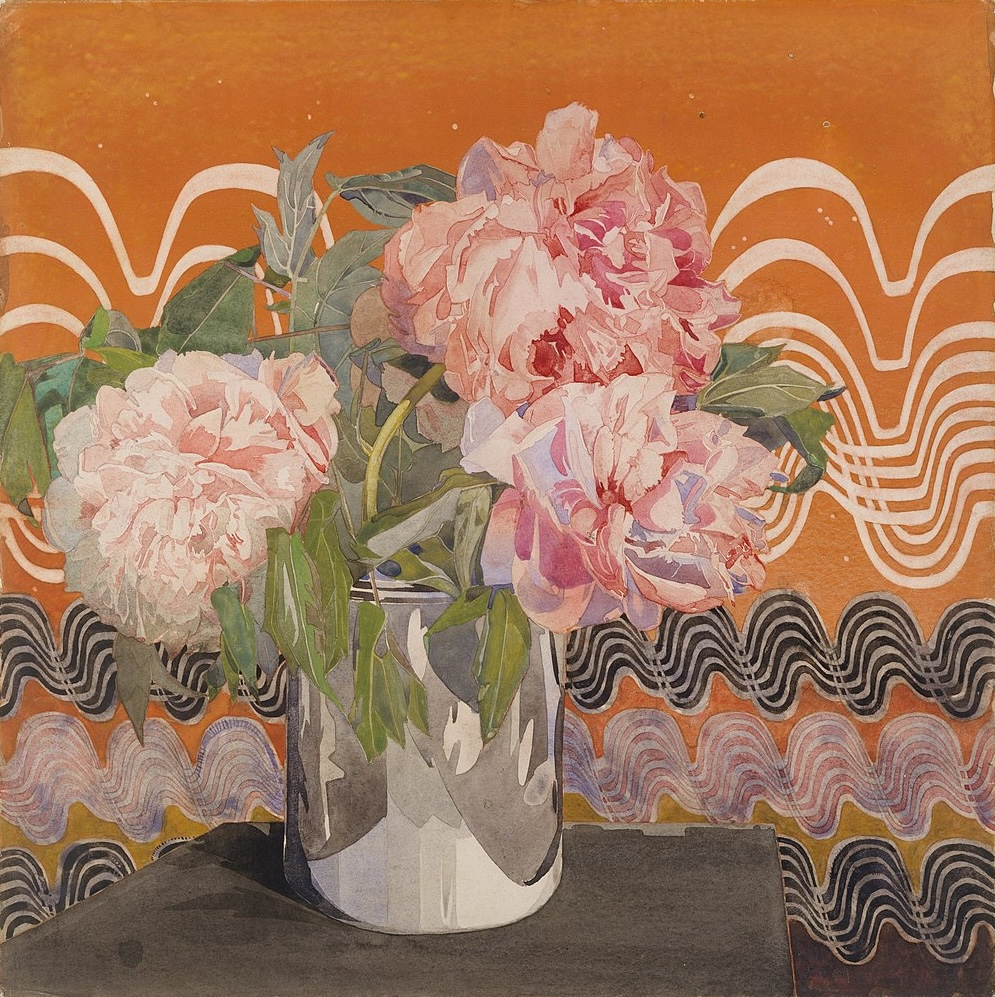



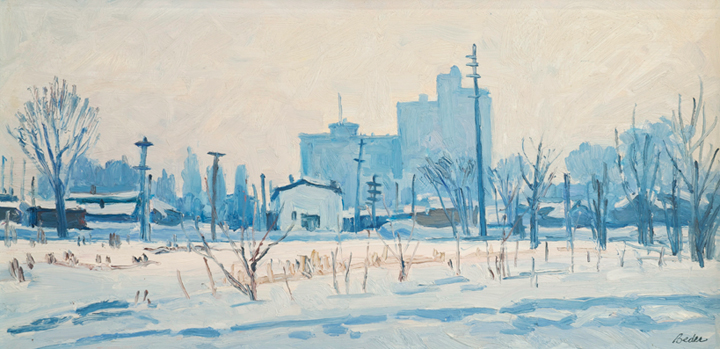

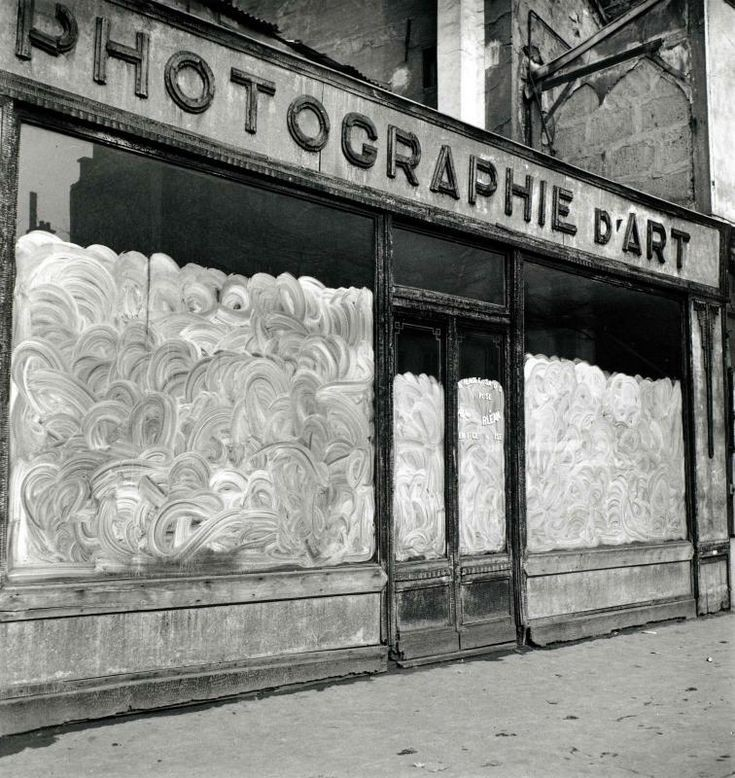






 Eiger, Mönch & Jungfrau