A Shelf of Promises: My Starter Library

A recent episode of The Mookse and the Gripes podcast got me thinking. Hosts Trevor and Paul were joined by John Williams of the Washington Post (mensches one and all). John had proposed a fascinating topic: starter libraries. The idea was to imagine your response to someone who asked you for ten titles they absolutely had to have in their collection. Probably this person is someone new to literature, a teenager or a student, but maybe they are someone who used to read more than they do now and are looking to get back to that part of their life. What would you recommend?

The important part of the assignment, as I understand it, is that the person is asking you. They know you well enough (parasocially or otherwise) to trust your taste. They respect you enough to be curious about anything you recommend. But they’re not asking for your ten favourite books. Presumably you like the titles on your list. But you’re not just offering them out of personal predilection. You think of them as representative for aspects of literature that matter to you.

Personal but not only personal, might be one way of putting it. Or, in the words of the episode’s subtitle, your choices could be thought of as a shelf full of promises.

Do listen to the episode, it’s terrific. Great lists, fascinating insights into the recommenders. And sure to get you thinking about your own answer. That’s what happened to me: I set aside the laundry I was folding and jotted some notes on my phone, which I’ve now expanded into this list, complete with categories (and alternate choices, because ten books is not many books).

Candida Höfer, Bibliothèque Nationale de France Paris XXI 1998

Books to grow into but also to love when you’re young:

George Eliot, Middlemarch

The only novel in English for adults, Virginia Woolf famously said. Not sure what she meant, but doesn’t it sound good? Having reread it recently, I think you need to be middle aged (and thus an adult… hmm well never mind) to get the most from this story of English provincial life around 1830. But having first read it in college, I can also attest that Middlemarch hits for young people. As with any rich text, what you pay attention to and who you sympathize with shifts each time you read it.

Eliot is known for moral seriousness (maybe that’s why as stylistically different a writer as D. H. Lawrence was a fan), but Middlemarch is also surprisingly funny. Mostly, it’s supremely moving. It covers so much of life, and asks the big questions. What makes a good life? How can we live with purpose? How can we think of ourselves in relation to everyone else? Where do we fit into the web of life?

[Alternate choice: Leo Tolstoy, War & Peace. Never read it until about five years ago, but feel confident it dazzles as much at 20 as at 50. You want novelistic sweep? This one’s as big as Russia… Freemasons and wolf hunts and returns from the dead and slow-burning love affairs lasting across the decades: everything, really.]

Books that master close third-person perspective

Nella Larsen, Passing

Set in Harlem and Chicago in the late 1920s among a set of well-to-do light-skinned Black women who can pass as white, Passing is a great novel of queer frenemies. It hews closely to the perspective of a single character, Irene, whose orderly life as the mother of two boys and wife to a (dissatisfied) doctor falls apart when she runs into a childhood friend, the brave and dangerous Clare. Unless we attend to how events are only offered through Irene’s perspective, we are likely to miss how much the book asks us to question the judgments it only seems to offer.

[Alternate choice: Henry James, What Maisie Knew. In book after book, James wrote about people behaving badly. Yet even among this vast canvas of cruelty, this novel stands out: the people doing the harm are parents who use their young child to hurt each other and, of course, the child. In the preface to the New York Edition James explained that he chose to narrate the book in third person but to limit the perspective to Maisie’s often baffled but also wondering sense of the world in order to offer readers the extra pathos of being able to understand what she could not. It’s quite a trick.]

Books about the Holocaust

Primo Levi, If This Is a Man

If someone is asking me what books they simply must own, they’re absolutely gonna get one about the Holocaust. Hell, I could make them a whole list. But knowing that not everyone shares my fascination, I’ll stick to one of the earliest and most famous instances of Holocaust literature. (Levi composed part of it already while in the camps.) Like all memoirs, If This is a Man (known in the US under the travesty title Survival in Auschwitz) details its author’s particular experience—which took the form it did by his having had “the great good fortune” to have been deported only in 1944, when the turning tide of the war and subsequent internal battle among top Nazis meant that more deportees were selected for slave labour. That phrasing gives you a sense of Levi’s matter-of-fact irony. But something that distinguishes If This Is a Man is Levi’s decision to use “we” even more than “I”: he aims to give a sense of the structure and meaning of the collective victim experience, at least within a subcamp of Auschwitz.

[Alternate choice: Ida Fink, A Scrap of Time and Other Stories. Too little known among English speakers, but, happily, available in a terrific translation by Madeline Levine and Francine Prose, Fink’s heartbreaking stories depict part of the Holocaust most people don’t know about: the mass murder performed by the Einsatzgruppen in Galicia in the summer and fall of 1941. Fink couldn’t find a publisher for these stories until the 1980s; they were deemed of no interest. Another devastating failure on the part of literary opinion. Fink has been called the Chekhov of the Holocaust. Grotesque as this sounds, it’s accurate. Quiet and heartbreaking.]

Members of YIVO New York examine crates of books rescued from the Vilna Ghetto

Books about how to read books:

Roland Barthes, S/Z

Barthes spent a year reading Balzac’s story “Sarrasine” with some students. (Oh to have been in that seminar!) That labour resulted in this extraordinary book, organized around line-by-line readings of the source text, not, as critics usually do, to figure out what it means, but rather how it means. To do so, Barthes offers five “codes”—fundamental elements of realist fiction, of which “Sarrasine” is considered only as a representative example—that readers unconsciously rely on (typically by having imbibed many examples of the genre) in making the text intelligible. The codes are things like references to historical events, people, and places, or attributes and actions that cohere into what we call characters and, in the case of realist literature, think of as if they were people. Barthes Intersperses his step-by-step redescription of the Balzac story with theoretical meditations on the operation of the codes, which readers can extrapolate to other texts.

S/Z is tough. I probably taught it five or six times before I felt I had a real handle on it. But as Barthes says, it’s valuable to be able to distinguish between real and superficial ideas of difference. We might think that the best way to know about books is to read a lot of them. But if we do so without thinking about what underlies their intelligibility (i.e. what we need to be able to read them), then we are mere consumers, doomed to reading the same thing over and over. Only by reading one text over and over can real difference, that is the difference within the text, show itself—which in turn will make our other reading more meaningful. All of which is to say, the effort of tackling Barthes’s analysis offers big rewards.

[No alternate choice. S/Z for everyone.]

Books with pictures:

Alison Bechdel, Fun Home

Comics, graphic novels, whatever you want to call them are important to me, and I think any reader needs at least one example in their library. Such a rich form, so many gorgeous and moving texts to choose from. As with my Holocaust choice, I resisted the temptation to go niche here. Bechdel’s memoir of her relationship with her closeted, self-destructive, talented father deserves its fame. Probably more than any book I regularly taught, Fun Home elicited the strongest positive reactions in the widest range of students. Family disfunction runs deep. A great book about how books can connect people who can’t otherwise open up to each other—and how they can further separate them too. Funny, ominous, bittersweet.

[Alternate choice: Nick Drnaso, Sabrina. Dark, powerful. Reading it gave me a bit of the ick. And yet its subject matter just seems more relevant. I guess this is about the manosphere, except no one was using that hideous term at the time.]

Books of ideas [fiction]

Thomas Mann, The Magic Mountain

Sometimes I want a book that dramatizes the back and forth of thinking. In The Magic Mountain, Mann literalizes this by surrounding his protagonist, the well-meaning, hearty Hans Castorp, with some of the most indefatigable talkers ever to appear in a novel. The whole intellectual landscape of pre-WWI Europe is here (liberal humanist, communist, militarist, hedonist, you name it), and everyone battles for Hans’s soul, even as the former engineer mostly wants to desire a woman from afar, a woman who reminds him of a boy from his schooldays…

The other great thing about this book is how well it depicts Davos and environs. I’m a sucker for mountains and mountains in books. Bring on the snow!

[Alternate choice: Proust. Honestly, if you can only put one book in your starter library, choose this one. I assume it’s already there, but if not then get stuck into this deeply philosophical book, which has so much to say about perception, time, cruelty, and control over others.]

Books of ideas [nonfiction]

W. E. B. DuBois, The Souls of Black Folk

Every American should read it. But non-Americans should too. The idea of double-consciousness—the way a minority must measure themselves by the tape of the majority, as DuBois so memorably puts it in his first pages—explains so much of our contemporary sense of identity.

In addition to its ideas, Souls is a fascinatingly hybrid book, presumably stranger in 1903 than today. Each chapter is prefaced by a bar of music, often from the sorrow songs. Most chapters are essayistic, but some are fictional. Each is written in resonant cadence. Hasn’t dated much. Alas.

[Alternate choice: Hannah Arendt’s The Origins of Totalitarianism. Explains how Nazism and Stalinism came to be so accepted and do so much harm. Especially interesting for (1) its “boomerang” theory of imperial violence, in which what the metropole does in the colony comes back to bite it at home, and (2) its argument that modern antisemitism arose from the waning of Empire and the rise of nationalism. Hasn’t dated much. Alas.]

Monomaniac books

The strand from writers like Kafka, Knut Hamsun, or Robert Walser to someone like Lydia Davis, via the high point of Thomas Bernhard, has been enormously influential in the Anglo-American sphere. At this point, annoyingly so. (And weird, too, given that none of the most important precursors wrote in English.) But I get it because literature excels at tracing the vagaries of a mind, especially one spinning through reversals, paradoxes, and hobby-horses. A starter library should have an example of this sort of thing, and Bernhard might be the best. When the only thing that stands between a psyche adrift or worse is the chance that someone might respond to its voice—that’s when you’re in Bernhard territory. I’ve chosen The Voice Imitator because the title says it all. Read these 104 short texts to get a sense of Bernhard’s bitter, misanthropic, and, oddly, funny vibe.

[Alternate choice: I just named like five other writers!]

Funny books

P. G. Wodehouse, The Code of the Woosters

As implied in what I said about Bernhard, voice-driven books don’t have to be grim. They can make us laugh, whether from the gap between what the narrator claims and what we know, or the sheer verve of their style. The fun only increases when those narrators get embroiled in elegant plots. Wodehouse is the master of this terrirtory and everyone’s library is the better for including him. (I feel like he’s fading a bit from memory? Sad.) You can jump in anywhere—my entry point was the distinctly not-famous-but oh-so-representatively-titled Eggs, Beans, and Crumpets which baffled and delighted me at age 12—but if you’re at a loss start with this wonderful episode in the Jeeves and Bertie series, which Tim Waltz would enjoy, since it’s an early example of the “I condemn the fascists by unflinchingly stating how weird they are” school of responding to authoritarianism. (As Bertie says, appalled by the realization that the Saviours of Britain are simply grown men marching in black shorts: “how perfectly foul!”)

[Alternate choice: for an American version of this phenomenon, reach for Charles Portis, especially the marvelous True Grit.]

Books about crime

Dolores Hitchens, Sleep with Strangers & Sleep with Slander

Since at least Oedipus Rex, literature has used crime to understand fundamental concerns like identity, political organization, and moral value. Crime fiction can be smart, is what I’m saying. And it can also carry us away by inciting our desire to have enigmas explained. (Interestingly, it often makes us realize how much more compelling it is to ask a question than to answer it.) Like any genre, then, crime fiction satisfies at both the intellectual and emotional level. Having stayed with well-known titles so far, I’m diving deep for this last category. Not enough readers, even lovers of crime fiction, have read the mid-century American writer Dolores Hitchens. She wrote a lot of books under a lot of names. But only two about a PI named Jim Spader. Which is sad—but also good because they’re even more special. These make for pretty despairing reading, even for noir. So be warned. But you won’t regret seeking them out.

[Alternate choice: Hundreds! Thousands! Sticking with mid-century American women writers, I’ll plump for Dorothy B. Hughes’s The Expendable Man. Don’t read anything about it beforehand!]
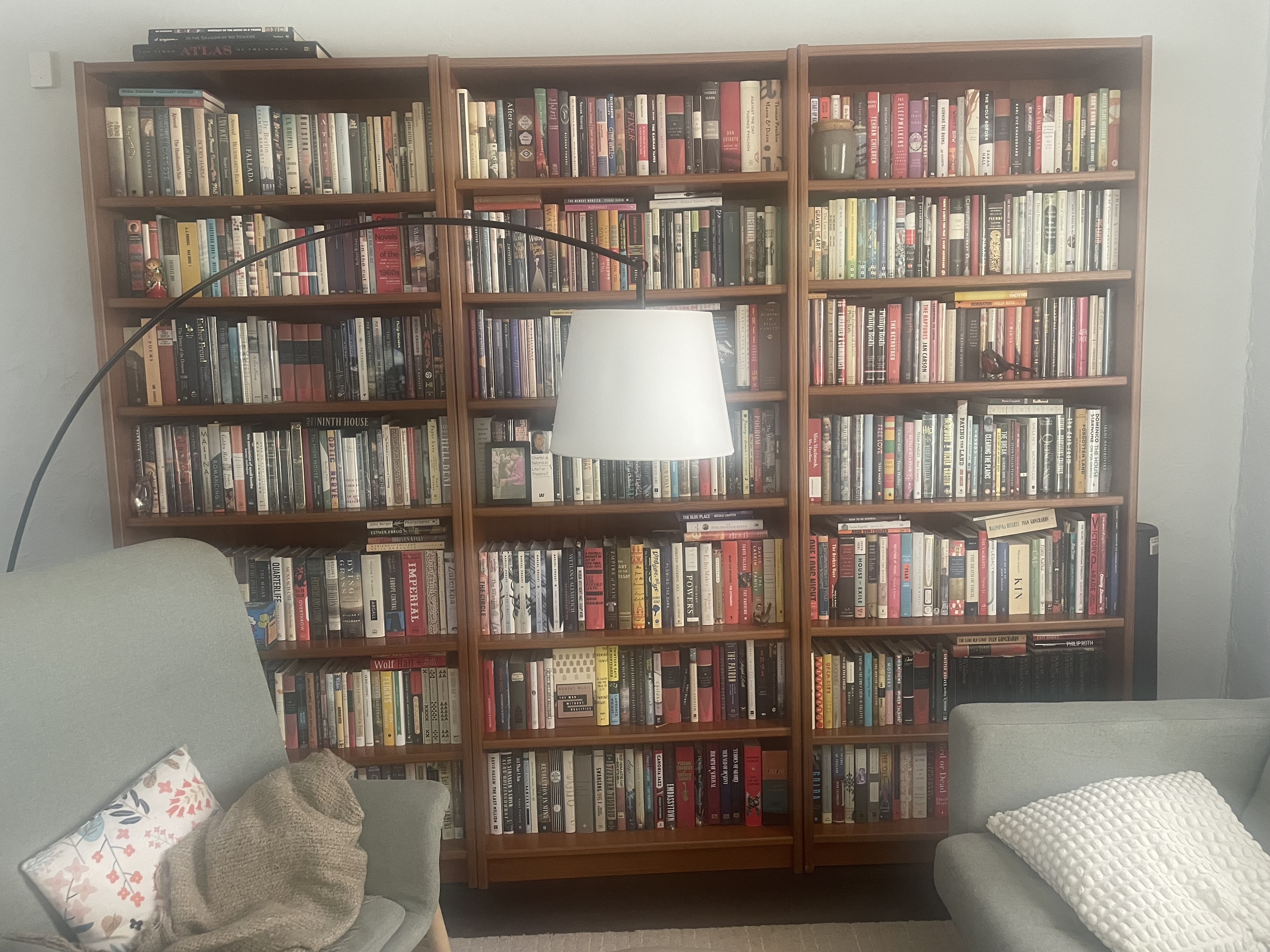
I tried not to think too long in coming up with my choices. Next month or next year I’d choose differently. And I’m aware of some big lapses. No poetry?? No plays?? No Torah?? (Everyone should read the Five Books of Moses.) But that’s ok. Gives you all the more room to think about how you’d create a starter library of your own. What would be on your shelf of promises?

My Year in Reading, 2024

If you’re reading this, you are faithful indeed. And I am grateful. Long silence here, I know. As my adopted country tumbles into authoritarianism, things have also been changing, though more positively, chez EMJ.

Igor Razdrogin, Book Bazar (1975)

My wife, daughter, and I are moving to St Louis in a month’s time! We’ve spent quite a bit of time there these past few years, and we like it a lot. We’ll have a little more space in our new home (which, combined with some collective efforts to tame my unruly library, might mean that our house will at least briefly not be overflowing with books), and, best of all, we’ll be living in a walkable neighbourhood with sidewalks, which is something we’ve been missing these past 18 years in Little Rock.

The other big transition concerns my career. I’m leaving my job at Hendrix, of course, but I’m also leaving academia in general. People keep asking how I’m feeling about this and I keep saying: Terrific! I was pretty burned out and starting to get a little Old Man Yells at Clouds about All the Changes that affected the classroom experience: the pervasiveness of AI and LLMs (something no one, as far as I know, ever asked for), and, more distressingly, the difficulty even the best-prepared students are having reading sustained works of literature, by which I mean, an entire book, no matter how straightforward the prose. This isn’t about their intelligence, or even their phones. It’s about the strictures placed on secondary school teachers. As instruction moves ever more toward preparing for testing centered on multiple choice reading comprehension questions about utterly decontextualized chunks of texts, teachers aren’t assigning much reading, which means students simply don’t have much practice at it.

(I also have a pet theory that for all its flaws Harry Potter (to be clear: it sucks) helped Millennials think of reading as both exciting and habitual, and Gen Z hasn’t had anything like that. The Harry Potter to Jane Austen to English Major pipeline kept our department afloat for a lot of years. These days, students dislike both Rowling and Austen…)

I still love many things about teaching, and it’s possible I’ll miss it so much that I’ll return to it in some fashion. (I’m never getting another job like this one, though. Those don’t exist anymore.) But for now, I feel relief, and curiosity—along with a lot of trepidation—about the chance to try something new. For now, it feels a bit unreal. Because the academic year is cyclical—summer is always a time of collapse and, if lucky, regeneration—I don’t yet feel as a though I’ve made much of a change. Talk to me in the fall, or next spring, or five years from now.

Luckily—and this is another reason for the silence around here—I’ve been working as a consultant for the Educator Programs arm of the William Levine Family Institute of Holocaust Education at the United States Holocaust Memorial Museum in DC. The people I work with are absolutely fabulous: smart, funny, kind, devoted to their work without having delusions of grandeur about it. It’s eye-opening—and fun—to work as part of a team, after decades of the isolation of academic life. I’ve helped them create resources for K – 12 English Language Arts classrooms, and have taken great satisfaction in the work.

I’ll need full-time work sooner rather than later, though, so if you have any ideas or leads, hit me up! Like, what are some jobs people do? What do y’all do all day? I need advice!

What I’m saying is, I had a lot going on these last months. But I did manage to keep reading. Maybe not as much as usual, but whenever I could make time. I get that it’s ridiculous to offer a 2024 reflection halfway through 2025, but FWIW here are the things that stuck with me last year.

Eight standouts

Francis Spufford, Cahokia Jazz (2023)

So much to love in this novel about an alternate 1920s in which a sizeable indigenous population thrives in a nation called Deseret centered on the bustling city of Cahokia. Spufford weaves his world-building throughout a procedural, in which our hero, a cop who moonlights as a jazz pianist, investigates a murder with vast political implications, to the point of threatening Deseret’s independence.

Cahokia Jazz is the most referenced title in the Year in 2024 Reading pieces I posted earlier this year, which means either that everybody loves this book, or that people like me love this book. Anyway, given my upcoming move to Missouri, it won’t surprise you to hear that the scene that most sticks in my mind is when Barrow pursues a lead in a village at the end of the Cahokia streetcar line, a fly-swept place he can’t wait to leave. Its name? St Louis…

I look forward to visiting the ruins of the actual Cahokia, once the biggest city north of Mexico City.

Katrina Carrasco, The Best Bad Things (2019)

Fabulous and underrated crime novel set in 1880s Port Townsend, where the most valuable commodity passing through the busy port is opium smuggled in from north of the border. Alma Rosales, who once worked for the now-shuttered Woman’s Bureau of the Pinkerton Detective Agency, has left San Francisco for Washington Territory to work for the seductive, brilliant, coolly calculating Delphine Beaumond, who runs most of the drug smuggling on the west coast.

When product goes missing, Delphine puts Alma on the case. Alma goes undercover as a dockworker—not a problem, because Alma is also Jack Camp, a slight yet wiry man who can hold their liquor and likes ladies and men equally. Did I mention that Alma and Delphine are lovers? Or that Jack starts a torrid affair with the man they’re investigating? Or that they’re also still working as a Pinkerton agent—in a desperate attempt to get their old job back?

Cue double-, triple-, even quadruple-crossing; witty repartee; and some pretty hot sex. Most crime novels are let down by their endings, but this one… let me tell you, friends, I literally gasped. A brilliant debut. I want everyone to read it.

Émile Zola, La Bête Humaine (1890, translated by Roger Pearson) and The Assommoir (1877) Trans Brian Nelson (2021)

Even by Zola’s lofty standards, these two are bangers. Push comes to shove, I guess I’d choose Bête over Assommoir, just because I love the crime story trappings, but the latter might be the more impressive accomplishment, especially if you could read it in French to see what Zola does with the argot of his lumpenprotelariat characters. They’re equally—which is to say, tremendously—depressing, but also viciously alive. Zola’s naturalist doom is regularly leavened by his prose, which zips from one brilliant set-piece to another. I’m talking about stuff like the bruising fight between two laundresses in front of an audience of delighted, shouting onlookers in the opening scene of The Assommoir, or the berserk vision of a driverless train, filled with drunk soldiers in full war frenzy heading to their doom at the hands of the Prussians, in the last pages of La Bête Humaine. Feels like a good time to study Zola’s fascinated descriptions of all things irrational.

Hernán Diaz, In the Distance (2017)

Quasi-Western in which the protagonist—a hulking, nearly mute Swede named Håkan whose only goal is to find the brother he was separated from on the voyage to the New World, and whose body and psyche seem to be able to take any amount of suffering—travels east, south, and north as much as west. This is a brainy book: Diaz riffs on Frankenstein, and probably a lot of other stuff I missed. But its allegories are always concrete. In this novel of a man stubbornly going against the westward direction of Manifest Destiny, I most remember the section in which, after suffering a terrible loss, Håkan literally burrows into the ground, eventually building a maze-like underground shelter where he lives in ambivalent isolation for years.

I read Diaz’s Trust last year too: also great. Probably not telling you anything you don’t know. But if like me you are late to Diaz, move him up your list. Smart guy and beautiful writer.

Leah Hagar Cohen, To & Fro (2024)

Last year I served as a judge for the US Republic of Consciousness Prize, which honors literature published by small presses. Yes, I tossed aside some duds and waded through many competent but unexceptional novels, but I also discovered some terrific stuff I wouldn’t have otherwise read. My favourite was this delightful and thoughtful literary experiment, a novel written in two halves that can be read in either order. You can start with “To” and flip the book over halfway through to read “Fro,” or do the reverse. You could call this a Jewish Alice in Wonderland (I love how deeply and unapologetically Jewish the book is: it takes such pleasure in asking questions), but that wouldn’t give you the sense of how the book is both realist and fantastic, a genre-bender that sometimes reads like a middle-grade book and sometimes like a historical “what if” novel, if those were written by someone whose lodestar was Maimonides. Magic!

Thanks to Lori Feathers, the genius behind this award, and to my fellow judges, who always brought it. Serving on this panel was time well spent.

Elizabeth Bowen, The House in Paris (1935)

A book of arrivals and departures, whether longed-for, dreaded, or uncertain. It feels both constricted and expansive: a neat trick. Bowen often gets called Jamesian. That is true not in style but only in a shared preoccupation with cruelty. Hard to say which fictional universe is meaner. Another thing I liked about The House in Paris is that it offers further evidence for my theory that British modernism is just another name for Gothic literature about children.  

Martin MacInnes, In Ascension (2023)

Here we have two sisters. One becomes a scientist who explores the depths of the ocean floor and the vastness of space (she develops nutrition-dense and fast-growing algae for interstellar travel); the other sets aside her career as an international lawyer to find out what happened to the first. I can’t remember everything that happened in the book, but I do remember being enthralled from start to finish. (This is another long book that never felt slow.) The final scene, set in the remotest place on earth, Ascension Island, foregrounds another kind of foreign place: our memories. “A family”, MacInnes writes, showcasing his epigrammatic mode, “is a group of strangers with a destructive desire for common nostalgia.” MacInnes’s big question, asked as much of a sibling relationship as of humanity’s ability to inhabit the stars, is whether the only way to get beyond the destructiveness of the human species is to destroy the individual self Beejay Silcox, one of my favourite critics, gets it right when she calls the book “a primer to marvel.”

Sally Michel Avery, Father and Daughter, 1963

Thoughts on the rest

Ones I keep thinking about: Manjula Martin’s The Last Fire Season (2024): I still haven’t prepped a go-bag—how foolish is that? Catherine Leroux’s The Future (2020, translated by Susan Ouriou): What if the French had never lost Detroit? What if climate change and resultant socioeconomic crises meant that most of the trappings of a functioning state had fallen away? And what if bands of roving children built hardscrabble lives in overgrown parks? Peter Heller’s The Last Ranger (2023): Conventional but satisfying novel about a ranger in Yellowstone, filled with scenes in which the hero drinks early morning coffee on the porch of his cabin: Heller knows the landscape and describes it beautifully. (Given what the chuckleheads at DOGE did, this title resonates differently now…) Jill Ciment’s Consent (2024): Revelatory memoir in which the author reassesses her decades-long marriage to her now deceased husband, with whom she took a painting class when she was 17 and he was 47. Can the relationship really have been good given that they met when she was a child?

Best study of xenophobia, told in an atmosphere of creeping dread: Georges Simenon’s The Little Man from Archangel (1956, translated by Sian Reynolds).

A Russian Jew, brought to rural France as a child, French in every way, has his life turned upside down because of a casual remark. Chilling. Best Simenon I’ve read.

Best study of deprogramming: Emily Tesh, Some Desperate Glory (2023).

Maybe useful these days.

Best case of “it’s not you, it’s me”: Nisi Shawl’s Everfair (2016)

Steampunk set in an alternate late 19th century in which the Fabians buy tracts of land from King Leopold to protect refugees fleeting the horrors of Belgium’s rule in the Congo. At first, this new nation—Everfair—prospers. European benefactors and missionaries work with Africans to create trade networks based on clean airship technology. They develop intelligence networks to navigate the region’s politics. They promote or at least allow social experiments concerning family structure, marriage, and sexual politics. But the internal tensions become too much, and the utopia falls apart. Even as I’m writing this I’m thinking, Honestly this sounds pretty good, maybe I’ve misjudged the book. And at the level of idea it’s intriguing. The execution, though: that’s the problem. The prose is leaden, the relation between action and exposition awkward. Maybe the book actually needed to be longer? A strange thing to say since I felt like it was never going to end. This book is a darling to many (Jo Walton loves it, for example). Probably just the wrong time for me. Can’t imagine giving it another try, though.

Best (and most) coffee: Mark Haber’s Lesser Ruins (2024).

Things are not going well for the narrator of this Bernhardian novel, ever since his wife died and he lost his job. That’s a tough spot. And he tries to do the right thing, sometimes. He reaches out to his son, whose passion for house music means he will dilate on the perfect set list for as long as his father will hold the phone near his ear. Like so many of us (me, anyway), he struggles to surmount the gap between idea and execution, endlessly trying to write something good. You’d think we might like the guy. But… He’s a terrible snob. He lambastes his students, neglecting his work to the point of installing an espresso machine under the desk in classroom. (That an instructor at a community college would have a dedicated classroom is the book’s only false note.) His unfinished, maybe unfinshable, book on Montaigne is probably not really going to be all that. So he ain’t easy to like.

All of this is beside the point, though, because this novel is about the way sentences can mimic the swerves and circles of a mind endlessly thinking. One of the things our narrator thinks about most is coffee. He drinks a lot of coffee. Long sections concern the various roasts, the preparation, the anticipation, the enjoyment. I’m not a coffee snob on his level, but I found nothing to ironize or criticize in the man’s love for the perfectly pulled shot. Lesser Ruins is great for other reasons, too (it’s Haber’s best IMO), but if you like coffee at all, you gotta read this.

Most ingenious conceit: Kenneth Fearing’s The Big Clock (1946)

A drudge at a magazine publisher modelled on Time-Life is tasked with finding—for purposes of eliminating—a witness to a crime. Only thing is, he is that witness…

Dark and boozy. This is the good stuff.

Best crime fiction: Carrasco, obviously. Also obviously, the latest Tana French. (At least I can say I was alive while Tana French was writing novels that will be read in a hundred years…) The latest Garry Disher, Sanctuary (2023), is a satisfying standalone about theft and friendship. I read a couple of Gary Phillips’s books about a Black Korean-war vet turned crime-scene photographer: good stuff. (I learned a lot about Watts.) Start with One-Shot Harry (2022). Years ago I devoured Scandinavian crime novels: seemed like the most exciting thing in the genre. Bloom’s been off that rose for a while, but Cristoffer Carlsson’s Blaze Me a Sun (2021, translated by Rachel Wilson-Broyles) took me back. Marcie R. Rendon’s Where They Last Saw Her (2024) is her first book set in the present, and much as I love the Cash Blackbear series, probably her best. How nice to read a book about an indigenous woman who has a good man in her life. I regularly think about the scenes of women jogging through the snowy Minnesota woods.

Best sff: In addition to MacInnes and Tesh, I most enjoyed Ann Leckie’s Ancillary Justice (2013), Shelley Parker-Chan’s She Who Became the Sun (2021), and various works by Guy Gavriel Kay, who continues to be a source of reliable pleasure, even if no one would call his books cutting edge. (So humane, though! I need that right now.) Alas, I am not yet a dedicated enough sff reader to have figured out how to overcome the “stalling out in a series because I didn’t get to the next one right away and then forgetting what happened” problem.

Best poetry: Louise Glück’s The Wild Iris (1992). Ok, the only poetry collection I read, but I liked it enough to assign it this past semester and the students loved it. Teaching it made me both appreciate it more and notice its limitations (it hoes rather a narrow furrow). I ought to read some of her later stuff: I bet it’s even better.

Best book of the kind I could imagine myself writing and yet am mostly allergic to reading: A tie between Jakuta Alikavazovic’s Like a Sky Inside (published 2021 and translated by Daniel Levin Becker) and Chris Bachelder & Jennifer Habel’s Dayswork (2023).

The whole quasi-essay, quasi-memoir with novelistic elements thrown in for good measure—mostly that stuff leaves me cold. But these two won my heart. Alikavozovic describes a night she spent in the Louvre, a place that she often visited with her father, a ne’er-do-well from the former Yugoslavia. After each excursion, her father would ask, How would you go about stealing the Mona Lisa? This question, and the reflections on her father’s life of petty crime and her own experience growing up in a culture and language that he never perfected, lies at the heart of this beautiful little book.

Bachelder and Habel have done something remarkable: written a book together, about themselves as a couple, that feels written in a single voice. The text centers on the Habel character’s fascination with Herman Melville: it’s about his life, and their lives, and what it means to write a life, with copious references to the man they call The Biographer, Herschel Parker, who seems to have been really something. And by that I mean kind of a dogged genius, but also a pain in the ass.

Best literary fiction:

Laurie Colwin’s Shine On, Bright and Dangerous Object (1975) is sad and delightful, filled with loving anger. A splendid beginning to a marvelous though much too short career. William Maxwell’s So Long, See You Tomorrow (1980) is famous for good reason. Audacious structure and play with time, heartbreaking story, even a section told from the point of view of a dog. Joan Chase’s During the Reign of the Queen of Persia (1983) deserves its resurrection thanks to the good people at NYRB. Another story of childhood in the American Heartland, at once bucolic and traumatic.

You can see I am deep into the “my favourite artworks are the ones created while I was a child and too young to experience at the time” years. I read new things too, though, and the best of these was Kaliane Bradley’s The Ministry of Time (2024), which I finished in a cabin at the Grand Canyon during a thunderstorm that had the rain pounding on the metal roof. The book is as memorable as the setting of my reading: an experiment in time travel, in which a 19th century Arctic explorer is brought to a near-future UK and given to a handler from the titular government agency whose background happens to be Cambodian. In addition to its speculative elements, and a terrific love story, the novel considers differing cultural responses to trauma. More Bradley soon, please!  

Henri Matisse, Woman Reading in a Violet Dress, 1898

Short story collection: Only read one, but it was a good one. I liked all the stories in Jamel Brinkley’s Witness (2023), but “At Barstow Station” is an all-timer. Even a class full of students who did not care much for reading agreed.

Most unexpected page-turner: Karl Ove Knausgaard’s The Morning Star (2020, translated by Martin Aitken) blends his signature interest in mundane middle-class life with some weird shit (a blazing star that no one can explain, a ritual murder, shenanigans at a mental institution). I raced through it and bee-lined for the bookstore to but the next one (in an expensive and gigantic hardcover edition), only to ignore it for the rest of the year. Honestly, the hardcover might be the problem. Most of the time I’m a “give me the paperback” guy. Anyway, will read the others in this series.

Most fun: The audiobook of Jesse Q. Sutanto’s Vera Wong’s Unsolicited Advice for Murderers (2023), read with obvious affection by Eunice Wong, made me laugh aloud. As I feared, the strains of keeping the conceit going already show in the second book, which I listened to a couple of months ago. But I’ll stick with Vera a while longer; she’s a treat.

Best sequel: Waubgeshig Rice’s Moon of the Turning Leaves (2023) is a big advance over its predecessor, Moon of the Crusted Snow. A rare case of a longer book being better. It’s ten years since the mysterious event down south that sent the grid down. The small indigenous community at the heart of the first book has been thriving, but its inhabitants realize they have reached the limit of the resources in their immediate area. After painful debate, they send a search party to find out if anyone else is out there—specifically, anyone indigenous. Exciting, well-drawn, and smart about the cost of giving up part of your identity to gain the benefits of joining something. (a community, a culture) larger.

Grimmest ending: Edith Wharton’s Summer (1917), really a hell of a book. Even if you haven’t read Wharton before you know things aren’t going to end well. But I at least did not anticipate them to end quite that dispiritingly. Thanks to Shawn Mooney and the rest of the Wharton gang for the invitation to read.

Hurts so good: Elliott Chaze, Black Wings Has My Angel (1953)

Liked at the time, but has now faded from memory:

Jean Giono’s Fragments of a Paradise (1944/48 and newly translated by Paul Éprile); Suzumi Suzuki’s Gifted (2022, translated by Allison Markham Powell); Ariane Koch’s Overstaying (2021, translated by Damion Searls);and Jón Kalman Stefansson’s Your Absence is Darkness (2020, translated by Philip Roughton). Don’t get me wrong: these are all good books (especially the Giono). I don’t regret reading any of them. Just not top-notch, for me.

Meh:

These did nothing for me, and even left me a little grumpy. Ari Richter’s Never Again Will I Visit Auschwitz: A Graphic Family Memoir of Trauma & Inheritance (2024): you’d think I’d be the perfect reader for this, but honestly I did not think this book was very smart. Dorothy West’s The Wedding (1995): I get it, she was old when she wrote this. Plus, the existence of a Black elite on Martha’s Vineyard was news to me: interesting stuff. But this felt wispy, and not in that good Belle and Sebastian way. Two crime novels by Arnaldur Indridason: sometimes you just want to turn pages and remember your Iceland vacation but at the same time you know you’ll never get these hours back.

Most ambivalent toward:

Tried to explain why I felt this way about Lily Tuck’s The Rest is Memory in The Washington Post.

It wouldn’t be an end-of-year list from me without some thoughts on Holocaust-related books, which I’ve divided into categories:

History: Dan Stone’s The Holocaust: An Unfinished History (2023). All due respect to Doris Bergen, this is the best single-volume history of the event I know, and it’s pretty short too. I went long on it for On the Seawall. Honorable mentions: Linda Kinstler’s Come to this Court and Cry: How the Holocaust Ends (2022), and Rebecca Donner’s All the Frequent Troubles of Our Days (2021). The latter admittedly not a Holocaust book, but rather a resistance to the Third Reich book. Pretty damn good tho.

Memoir: József Debreczeni’s Cold Crematorium: Reporting from the Land of Auschwitz (1950, translated by Paul Olchváry). If I could legislate that people had to read one Holocaust book, I’d choose this one. Indelible. You think the Holocaust was bad? You don’t know from. Honorable mention: Michael Frank’s One Hundred Saturdays: Stella Levi and the Search for a Lost World (2022), which I wrote about in 2023 but read again for a book group last fall. If anything, it was even better the second time. To read about Stella is to love her.

YA: Elana K. Arnold’s The Blood Years (2023). Gonna do what I can to see that this one gets more traction.

Comic: Emil Ferris’s My Favorite Thing is Monsters [Vol 1] (2017). What an accomplishment! Your heart will hurt but you won’t be able to stop turning the pages. Ten-year-old Karen Reyes lives in Chicago in the late 1960s. She adores her brother, who is sometimes a gentle artistic soul but sometimes a man pushed to violence by racism and poverty, almost as much as she loves monsters. (She draws herself as a werewolf.) She’s fallen in love with her best friend, Missy, who now shuns her at school while being drawn to her in private. Her mother is diagnosed with cancer, leaving the family’s fortunes ever more precarious. When Karen’s upstairs neighbour, Anka Silverberg, a married Holocaust survivor with whom her brother had been having an affair, is found dead under mysterious circumstances, Karen takes it upon herself to investigate. She stumbles on some cassette tapes, in which the woman tells her life story, a lurid and painful one: Anka was brought up in a brothel by her abusive mother, a sex worker, and then sold into a child prostitution ring from which she is “rescued” by a client who later abandons her when she gets too old for him. After the fall of the Weimar Republic and the rise to power of the Nazis, Anka is persecuted for her Jewishness and eventually deported to the camps. How she survived, how she made her way to America, and what led to her death—these questions are presumably answered in volume 2, which was released last fall. Volume 1 is 400 pages, with plenty of tiny lettering. It would be an effort to read it even without its distressing subject matter. But it’s damn good and deserves more attention than it’s got. Ferris uses dense cross-hatching to give her images texture: I don’t how else to say it other than the images seem tense. Amazingly the book is drawn almost entirely with Bic ballpoints. The whole story of its creation, which took six years, is remarkable, starting with Ferris’s partial paralysis after contracting West Nile disease.

Holocaust-adjacent text: Svetlana Alexievich”s Last Witnesses: An Oral History of the Children of World War II (1985, translated by Richard Peaver and Larissa Volokhonsky) impressed me with the pathos of its subject matter (children, many orphaned either permanently or temporarily when Germany invaded the USSR in 1941) and the success of its method (her now well-known quasi-anthropological style, in which witnesses speak for themselves, with seemingly little input or shaping from Alexievich herself, other than the ordering and structuring, not to mention the selecting of excerpts from what are presumably much longer testimonies: which is to say, thoroughly shaped…)

Book I Never Expected to Spend This Much Time With:

Lois Lowry’s Number the Stars (1989), the classic middle-grade novel about the (anomalous) experience of Danish Jews during the Holocaust. I created a lot of materials about this book for teachers. Yes, it has certain limitations, but I’m honestly impressed by how much richness I’ve found in this text. It seems to be fading a bit from the classroom—but not anymore, if I can help it!

Edouard Vuillard, Madame Losse Hessel in Vuillard’s Studio (1915)

There you have it. I don’t know what my life is going to look like going forward—but I hope at least in the short term to have more time for this poor little blog. Thanks as always for reading! I would love to hear your thoughts on anything I wrote about here.

Reading Willa Cather at the Social Security Office

Here is my introduction to Episode 35 of the podcast I co-host with Rebecca Hussey and Frances Evangelista, One Bright Book.

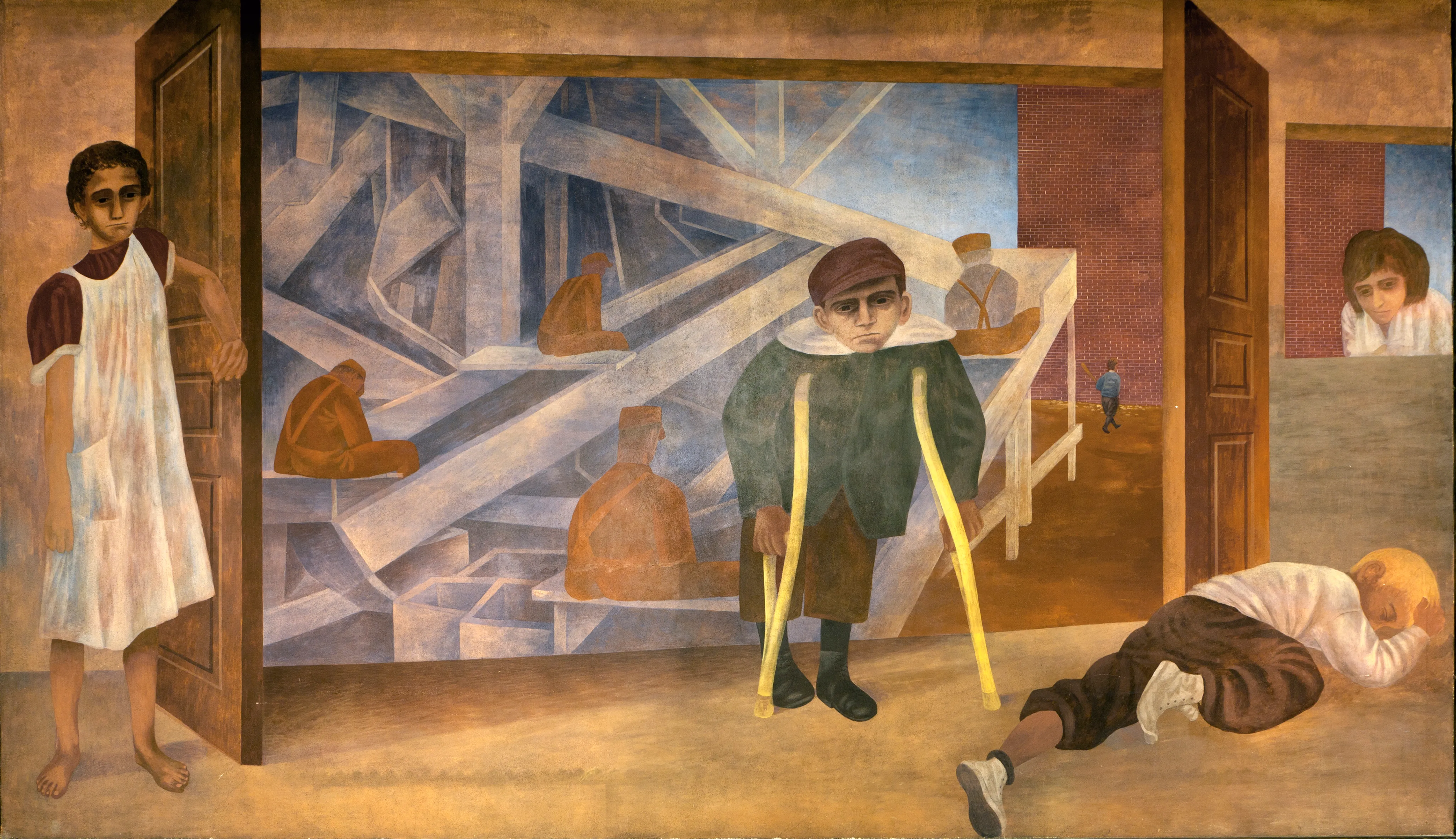
Ben Sahm, “Child Labor” 1940 – 42. Part of the four-part mural The Meaning of Social Security (1940 – 42) Cohen Federal Building, Washington, D.C.

Our book today is Willa Cather’s O Pioneers!, first published in 1913.

O Pioneers! was Cather’s second novel, and her first big success. It’s a short book, episodic in structure, centered on Alexandra Bergson, a Swedish immigrant who lives on a struggling farm in southern Nebraska with her ailing father, her stoic mother, and her three brothers. On his deathbed, the father entrusts the farm to Alexandra, not only as the eldest child, but also and more importantly as the only one likely to make a success of it. By blending confidence, daring, and hard work, Alexandra does just that, becoming a successful landowner and a linchpin of the community of European immigrants forging new lives around the town of Hanover. Many of these new Americans are Scandinavian—some of the old timers still only speak Swedish—but others are French or Czech.

The title comes from one of Walt Whitman’s hymns to the glory of the American experiment. As its plural noun suggests, the novel is something of a group portrait. The first half centers on economic struggle and the fantasy of bending landscape and climate to human wishes. The second half foregrounds two love stories: the muted relationship between Alexandra and a childhood friend, Carl, who has gone away to seek his fortune and returns to visit years later., and the passionate, doomed affair between Emil, Alexandra’s youngest brother, and Marie, a married woman who lives on the neighboring farm.

This ending is already prefigured in the beginning, when Cather writes: “The history of every country begins in the heart of a man or a woman.” I might not have paid much attention to that sentence were it not for the circumstances in which I came across it. I happened to read the early chapters of O Pioneers! in the Little Rock Social Security office, where I had business earlier this week.

It turns out all kinds of people come to the Social Security office. I sat alongside new immigrants and elderly couples, family members with their adult disabled children and new parents with babies in tow. The room we occupied had the slightly sterile quality of many bureaucratic offices, yet it felt more functional than alienating. Most everyone’s attention was fixed on a large board which told us supplicants which window to visit when our number flashed up. But that didn’t stop us from doing other things too. People chatted with the people sitting next to them, and with the security officers who, despite the sign declaring that they were not to be bothered with official questions, easily and casually dispensed advice. They played on their phones, shuffled nervously through their paperwork, shushed their children, even read 20th century American novels.

I wished that the people who believe government is evil, maybe people like our current President and Vice President, whose photos glared malevolently from the wall of the hallway outside the waiting room, could see the place in action. Is it somewhere you would want to spend a lot of time? Certainly not. But is it a demoralizing vortex of inefficiency aimed at squandering the hard-won gains of “real” Americans? Absolutely not. It’s a place filled with people doing their best, a place dedicated to helping others, no matter how tattered the American social net might be.

I wondered what Willa Cather would think of that room. I thought of the communal spirit expressed by the Nebraska farmers who populate the pages of O Pioneers!, most of them either first or second generation Americans. I thought of the marginalized characters Alexandra protects—a man named Ivar prone to fits and unwilling to wear shoes but good with horses who she keeps on to her brothers’ dismay, a Swedish widow who loves to visit Alexandra’s farm because the younger woman listens to her stories and doesn’t demand that the old woman speak English. Would Cather be willing to shift the onus of care from individual to collective? Would she agree that a dignified life belonged to all citizens regardless of their beliefs or abilities, and that this opportunity should be given by the people to each other through the government rather than through the mercy of an individual? I remembered a counter tendency to Alexandra’s charity and large-mindedness, namely a tendency to judge behaviors deemed deviant or non-normative, as when Alexandra scours her body in the bath after indulging in sexual fantasy or denounces Emil and Marie’s illicit relationship.

Most of all, I looked at the faces in the room, many, perhaps most of which, were not white. I thought about who counts among the pioneers of the title, and which kinds of Americans did not seem to be imagined by the book. (Having finished the book, I’m especially struck by its absolute silence about indigenous people, who are not even present as frightening tales from the time before the frontier was settled.)

I hoped, and this is fanciful I know, that, despite the changes between then and now, Willa Cather would enjoy sitting in that room, would view its goings on with interest, would be curious about if not necessarily approving of the America present among its plastic chairs and scuffed linoleum flooring.

Robert Adams, “North of Keota, Colorado”

I’ll never know, of course, but I will know what my co-hosts thought of it, which is something I am even more curious about.

Friends, what did you make of O Pioneers! ?

Listen to the episode for their answers: but feel free to chime in below. We’re all friends here.

Time Passes

A few months, when I was too busy to do anything about it, WordPress told me I’ve been writing this blog for ten years.

André Brasilier, Blue Cavalcade, 1981

I’ve not always been the most diligent blogger, sometimes falling silent for months at a time, but I’ve always returned to it, and that’s not nothing. In fact, since I started keeping monthly logs in January 2019 (halfway through the blog’s life, which bewilders me, since surely that was just a couple of years ago) I’ve written a little something about almost every book I’ve read.

(In case you are new, or forgot, or never bothered to think about it before now: a few words on why I gave this place its unlikely—and from a branding point of view utterly self-defeating—name.)

It is quite likely that some things will change in my life next year. Fear not, though, I’ve no plans to shutter the blog. I’ll probably be happy for the continuity. But I do wonder if there are other kinds of writing I might do here. Like many writers, I write best when I’m working on more than one project. I’m using part of my summer to craft a proposal for a book on teaching Holocaust literature at this moment in US history: I recently finished a course from the wonderful Anne Trubek of Belt Publishing that has given me a good start. (Agents and publishers, all my forms of communication are open lol.)

[My daughter says using lol is cringe. Sorry. But how else am I supposed to indicate “I know that is preposterous and I am kidding except that I would really love for it to happen”? Hahahahaha or something?]

I’ve been wondering how I might bring some of that writing variety to this space. When I first started EMJ, I wrote about one book at a time. No surprise to anyone who reads me, these posts were long. Often really long. They really helped me figure out what I thought of a book, though I’m not sure people wanted to read them as much as they did my still-long but shorter responses to a month’s worth of reading. I’m still fond of those early pieces, especially the first one, on a book I still think about a lot, Caleb Crain’s Necessary Errors. Here are a few more that hardly anyone read, but might be worth dusting off. On Irmgard Keun’s After Midnight. On Philip Marsden’s The Bronski House. And, way long, on A Little Life. There’s a ton more in the archives.

I have to admit, though, that the rhythm of the last five years has worked well. The monthly reviews offer a balance between breadth and depth, but would you prefer more pieces about just one book? And what about non-book topics? I’ve always shared writing created for other occasions (like becoming Jewish or reflecting to new students on old friendships). For a while I wrote regularly about my teaching, which I loved doing: I’m basing the book project on some of that stuff. Honestly, I don’t know how I wrote all that stuff, though. My daughter was young then and needed a lot more from me and my wife. Where did the time come from? I guess I was younger too. And that was all pre-covid. I think people overstate the changes between then and now (rather: they overstate the wrong things and ignore the main thing: we still live in a pandemic, we still don’t value the most important kinds of work, our way of life is killing us and the world). But I feel my working life has changed a lot. I don’t think I’m just being middle-aged when I say that it’s harder to be in a helping profession than it used to be. Anyway, I don’t know that I’ll have enough to say about teaching for me to write about it here and in the book. But who knows? Maybe writing about other kinds of art might be fun. The obvious example is film, which used to be a huge part of my life but fell away in the press of family life and career pressures. I’m returning to movies, though: slowly but ever more surely. I might write more about what I’ve been watching. (I think this is the only film-related post at the blog?) Another idea is to invite others to contribute. I’ve had many guests over the years, whether through readalongs (remember those?), shared reading projects, or year in review lists. I love hosting other views, voices, and perspectives. Maybe I could do more in that vein.

What else? Obviously, the look needs refreshing. And yet I am so lazy about that kind of thing. Is it actively off-putting? I admire M. A. Orthofer for many reasons, one being his indifference to graphic design. His site looks the way it looks, the content is what matters, and now it’s so iconic I for one would be crushed if he changed things. This place is no Literary Saloon, but maybe I am inching toward “so old-fashioned it’s actually cool” status. Thoughts?

As you can see, this post is a mixture of questions and ideas: what I wonder about and what I might do. But really what I’m writing here is both a plea for feedback and an expression of gratitude. What do you want to see here? More of the same? Something new? Like what? Whatever your answer, I want to thank you for reading. Blogs are so out of date; social media had made other kinds of communities, other forms of interaction; so many platforms share the thinking of so many smart readers and writers. That you’ve taken an interest in what I think means so much to me. As I’ve written before, I don’t know many passionate readers in real life; this community of readers around the world has meant the world to me. Thank you for everything you’ve taught me, the reading suggestions you’ve made, and the support you’ve offered. I’m filled with gratitude.

Onwards! Still many book mountains to climb.

Gabriele Münter, Ramsachkirchlein, 1928

The Joy of Teaching

This semester I’m part of a faculty learning cohort meeting regularly to “enhance courses in our teaching repertoire to better support and promote well-being in our students and in ourselves.” One of the first assignments was to write a short statement on what gives us joy in our teaching. Here’s what I turned in.

Walker Evans, Clean Hill Wooden Schoolhouse, Alabama, 1936

The psychanalyst Jacques Lacan—who never met a pun he didn’t like—said that teachers are people “who are supposed to know.” “Supposed” as in required—we’re supposed to know stuff, that’s our job. But also “supposed” as in imagined or projected—other people suppose that we know stuff and we build our identity on that belief. It’s the task of a lifetime to learn that what seems like a rule is in fact a fantasy, and a disabling one at that.

I like knowing things, and showing others that I know them, and helping them learn those things—yet “playing expert” is also the part of teaching that stresses me out the most.

How to push back against the idea of expertise as a kind of omnipotence?

Teaching is a way for me to be seen—which for reasons of temperament and family origin has always been a struggle. While teaching I feel, visible, viable, worthy. The joy of teaching thus inheres in the way that filling that role paradoxically allows me to perform myself. When I am at my best as a teacher I am my best self. I am funny and warm and generous: the joy of teaching is that it allows me to unabashedly affirm these values of care and concern toward others.

If I can’t be unabashed, if I feel constrained (if the students seem bored or hostile, or I imagine them that way) then I tighten up, I feel dried up and useless, a little mean even.

When I’m really teaching I’m sometimes expounding—being the expert makes me anxious but also fills me with a geeky thrill—but mostly I’m leading by example. If I can be loose and warm and curious and engaged then I can transmit those qualities to students, which matters to me because these qualities are the preconditions for critical learning.

So far I’ve had the classroom in mind. But everything I’ve said applies to less formal situations too: the conversation in the hall; the email exchange about a paper draft; the back-and-forth of a tutorial. These non-classroom situations make it clear to me that what I love about teaching is mentoring. The joy comes not so much explaining something, and definitely not from justifying my responses to student work, but in attending to another person and thereby allowing them to flourish. As the indigenous writer Robin Wall Kimmerer says, “all flourishing is mutual.” In such moments, there’s no supposing at all. That moment could be difficult or charged and might not be fun. But it is always a space of joy.

Old Friends

Yesterday I addressed Hendrix’s incoming Freshmen and their families, as part of a convocation welcoming them to the college. Here’s what I told them.

From Maus, vol 1

At the beginning of MAUS, his remarkable memoir in comic book form of growing up with parents who survived the Holocaust, Art Spiegelman tells a story about his ten-year-old self. On a summer’s day in the late 1950s, Spiegelman is rollerskating with friends in his neighbourhood in Queens when he falls and skins his knee. Tearfully he makes his way home, where his father, Vladek Spiegelman, is cutting a piece of siding in the driveway.

 “Why do you cry, Artie?”, Vladek asks, continuing with his work

“I – I fell, and my friends skated away without me,” Artie sobs.

Now Vladek pauses. He looks at his son and says:

 “FRIENDS? Your friends? If you lock them together in a room with no food for a week, THEN you could see what it is, friends.”

[This is where the platform party gets nervous about inviting the Holocaust guy to give the inspiring talk…]

In the several panels over which Vladek offers this pronouncement, Spiegelman pulls back the point of view: father and son get smaller; the tidy suburban neighbourhood gets bigger; Artie’s expression is unreadable. But only two pages into the book it’s already clear how much Vladek has been shaped—by which I mean, mis-shaped—by his experience of persecution, and how he inadvertently passes on that damage to his son.

Reading MAUS, with its dramatic incidents, terrible and miraculous outcomes, and shattered family dynamics, we can easily forget that the opening anecdote turns on the idea of friendship. What could friendship have to do with the Holocaust? After all, the Nazis were determined to destroy their victims as humans—to that end, they ensured that nothing like solidarity or common feeling or fellowship could exist among victims. The result, it has been said, was a situation in which selfishness was everything. As the doctor and antifascist fighter Ella Lingens-Reiner wrote about surviving Auschwitz: “My principle [was]: “I come first, second, and third. Then nothing, then again I; and then all the others.” [Pause] But reality was more complex. Yes, victims were often too hungry and afraid and sick to create any relationship approximating friendship. It was dangerous to care for others: the result was often punishment or torture, even death. And yet victim testimony is full of stories of connection, even among complete strangers. Care and friendship persisted throughout the ghettos, camps, and killing fields of Europe. (Lingens-Reiner, in fact, saved many people, both before her internment and during it, when she was pressed into service in the camp “hospital.”)

And despite what Vladek Spiegelman says to Artie—“If you lock them together in a room with no food for a week, THEN you could see what it is, friends”—his own story is full of comradeship, solidarity, care, and, yes, friendship. A Polish priest gave him, of all things, a lesson in Torah at one of his darkest moments. A Kapo (a prisoner in charge of other prisoners) agreed to pass letters from Vladek to his wife Anja when they were briefly interned in the same camp complex. And another prisoner agreed to share a clean, by which I mean a lice-free, shirt, which prisoners had to be able to show to get even the irregular rations on offer in the chaotic final days of the Third Reich.

[Pause]

I’m always struck by the presence of friendship in Holocaust testimony. Maybe that’s because friendship has always been so important in my own life. Being and having friends has always been central to my sense of self. Which is why I believe one of the most important things that will happen to you over the next few years will be making friends who help you flourish, by caring for you and allowing you to care for them. [Slight pause] I genuinely believe that many of the most important lessons you’ll take from Hendrix will come from things you learned in class, and I don’t just say that because I’m a professor. But when I reflect back to my own time in college—at a liberal arts campus in Halifax, Nova Scotia, Canada—I think above all of the friends I made there. And mostly I think of one friend, my bestie, Alan Hall.

Alan and I lived together for three years. When we moved into our apartment in downtown Halifax in the fall of our Sophomore year—in a crumbling former rooming house that had, it was said, put up Oscar Wilde on his speaking tour and Duke Ellington on his frequent sojourns north of the border—we didn’t know each other that well. Of course, I’d seen Alan around during my Freshman year, it was a small school, everybody knew everybody. But I wouldn’t have called him my friend. But when my Freshman roommate decided to transfer, I needed someone to split rent with. One morning in the caf, a guy with floppy hair and a necklace of wooden beads, smelling of Patchouli (I dunno what to tell you, it was the 90s) came up to me and said, “I hear you need a roommate. I have a great stereo.” Then he gave out the infectious high-pitched yelp-snort of a laugh that I would grow to love so much over the coming years.

That was our meet cute. We were an odd-couple: Alan so open, me so shy; Alan so outdoorsy, me so not; Alan so even-keeled, me so neurotic. I’m not sure what he saw in me, but I fell in love with the joy he took in the world. I was a child of immigrants and had the buttoned-up quality of one who has had to translate for his parents and is always anxious to fit in. Alan was from an Old Canadian family—the patriarch on his mother’s side had been a lumber baron; his great-grandfather had founded the CBC, the national radio service—and he had the confidence of belonging. One time we took the bus to the mall and on the way Alan started singing, like right there, out loud, in front of people he didn’t know! I was mortified, of course, but then I saw how others smiled, enjoying that little moment of serendipitous pleasure, and I realized, with amazement, “Huh, there are other ways to be.”

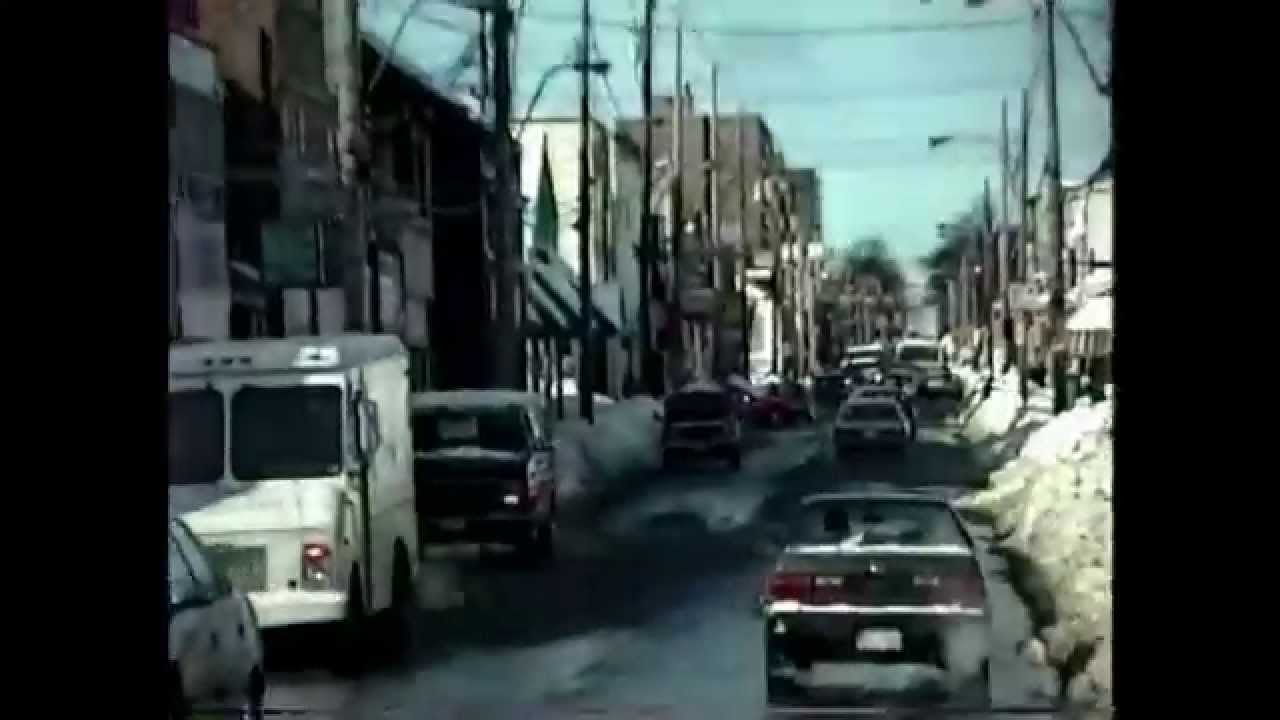
Halifax, early 90s. I remember those snowbanks.

You don’t know Alan. How could you? He’s not famous. He lives in Fredericton, New Brunswick. [5 bucks to anyone who can find that on a map.] He teaches part-time at a local college, and takes care of his three kids. He’s an all-around good guy, such a total delight, and the most important person in the world to me other than my wife and daughter. Now that we are middle-aged with all the ordinary disappointments and frustrations of that time of life, kids to schlep around, home repairs to ignore or contract out, we don’t have as much time for each other as we’d like. Plus, the trip from Little Rock to Fredericton is no picnic. But whenever we text or Zoom or, best of all, see each other in person, it’s like we never left off.

I know, I know, what do you care about these middle-aged Canadians? My point is this: find your Alan. [Slight pause] I’m not sure you can go looking for them, it just has to happen. But you can make yourself open to the possibility. Try new things this year: ask to sit next to someone in the caf; join a club, even if it makes you nervous; take someone up on their invitation to go the gym or a party or to the play they’re in. Put the word out that you’re looking for a roommate and when a guy comes up to you and says he has no furniture except a decent stereo (on which, you will learn, he only plays Joni Mitchell) maybe say, what the hell. Maybe you’ll meet the person who will stand up with you at your wedding, or give advice to your kids, or cheer you on when you write a book or take a new job or submit a photo to a contest or whatever it is you do later on that you’re proud of and want to be validated about.

Most of all, find someone to just hang out with. This feels like the moment in the speech where I humblebrag about the shenanigans Alan and I got up to. Alas we were too nerdy for shenanigans. But we cooked a lot of chickpeas together while listening to the CBC. [Is that a shenanigan? What’s that you say? No? Ok.] We wrote a humour column for the campus paper. We serenaded a girl outside her window one frigid night because she was roommates with a girl I really wanted to date and the girl I really wanted to date asked me to do it to cheer up her friend who was having a hard time and Alan agreed to come with me. [Now that’s a friend!]

And we talked about what we were reading. About this amazing book that blew our minds, a comic book, but about the Holocaust. The characters were half-animal, half-human, and the story was as much about what happened after the war as during it, and how the child of parents who survived the genocide indirectly suffered from their traumas. That book, of course, was MAUS. In the early 90s it wasn’t yet the classic it’s since become, taught in schools and colleges around the world. Though not in every school. You might have heard that a school board in Tennessee recently banned MAUS as being “too troubling.” As Spiegelman himself put it, partly incredulous and partly enraged, it was as if the board was saying “Why can’t they teach a nicer Holocaust?” I can picture Spiegelman’s expression when he said this, because I was lucky enough to spend a couple of days with him when he gave a lecture here at Hendrix about ten years ago. Spiegelman was kind and smart and wry, a real mensch, but also not one to suffer fools gladly. He reminded me, in fact, of Alan. Because Alan is sweet and gentle but he also doesn’t put up with any nonsense, especially with anyone who disparages people who are too often marginalized. I learned so much about my own prejudices, for example, when after we graduated Alan lived at a home for folks with Down’s Syndrome.

When you find your Alan, when you make the friendship that will last for decades, you’ll be finding someone to order late-night pizza with, yes, but also someone who will help you in the task of figuring out how to live, which is especially hard when you also realize, as you will in every class at Hendrix, that everything is complicated. The reason that scene at the beginning of MAUS is so painful is that Vladek wants, even needs, Artie to live the way he does. Which is understandable, maybe even well-intentioned—Vladek is convinced the next Holocaust is coming and he wants his son to be ready—but it’s also paranoid and paralyzing.

When you’re in college you’re figuring out how you want to live, and you need your friends to help you. Especially these days, when lots of people—a minority, maybe, but an increasingly vocal and vicious one—think that knowing how to live means dividing people into those who are worthy of protection and care, ultimately of being deemed a human being, and those who aren’t. It’s just that kind of thinking that destroyed Vladek Spiegelman along with so many other victims.

When you’re in search of your friends, of course you want to avoid people ruled by insecurity and fear and hate. They’ll be the ones judging and demonizing others. But, sadly, you must also approach someone like Vladek Spiegelman with care. Despite the friendships he made during his time of suffering, Vladek was too damaged not to replicate in his own life the divisive logic of his persecutors. (In an infamous scene in the book, Vladek launches a racist tirade when his son picks up an African-American hitchhiker.) Much better to find someone like Art Spiegelman, who, as far as I can tell, is an all-around good guy. He’d be a good friend, I bet. Problem is, geniuses aren’t always thick on the ground, even at Hendrix. So best of all to find someone like Alan Hall, who as I speak is probably going for a run before he has to pick his youngest up after school.

Thinking of home, no doubt

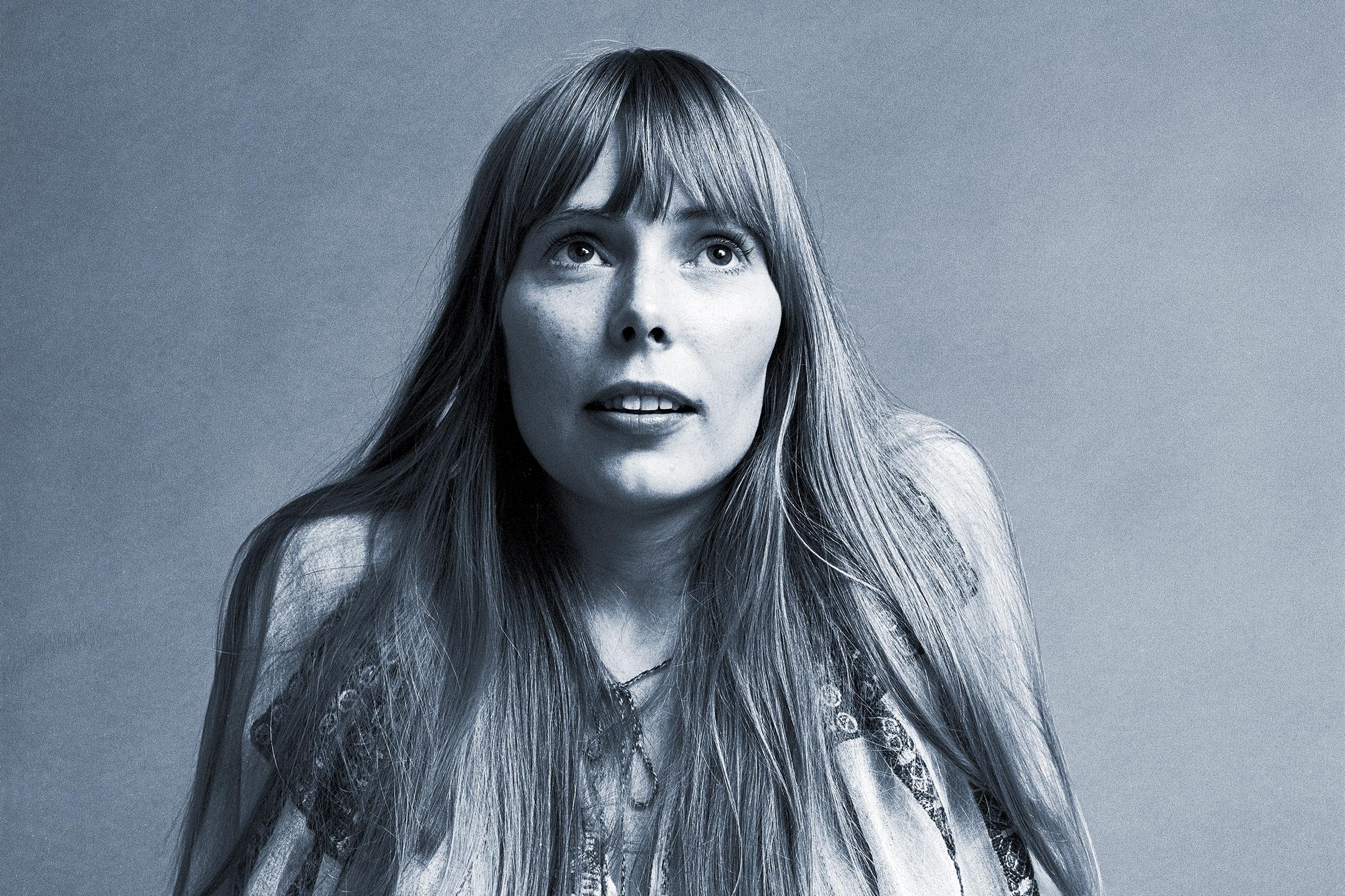
I can’t speak to what would happen if Alan and I were locked in a room for a week without food—god forbid any of us should learn what that’s like—but I know for sure that if I suffered any of life’s ordinary hurts, as of course I have, stuff like falling down while rollerskating, Alan wouldn’t—hasn’t—skated away. Which is funny because there’s a famous line in a song on Joni Mitchell’s album Blue (ask your parents about it). The line goes:  “I wish I had a river I could skate away on.” The speaker, someone like Mitchell herself, who was born in Alberta but sought her fortune in California, is living in the US and pining for Canada—relatable!—but she’s also running away after having hurt the person closest to her. Lucky for me, Alan confined all his skating away to the cds he played on what turned out to be a really great stereo. He’s never left me yet. I wish similar good fortune to you all.

Thank you and welcome to Hendrix.

What I Read, January 2022

January was a long time ago, I hardly remember it. The reading month started strong, buoyed by the carryover of a modern American classic from December. Things petered out a bit toward the end, but that’s only to be expected, given the start of the semester, which was a cluster from the get-go since we spent the first week online. (Remember when we still believed in covid?) In addition to the reading and teaching, I posted almost daily year end reading reflections from a talented group of readers and writers. Check those out if you haven’t already. Maybe I’ll still do one myself. In the meantime, here are my January reads:

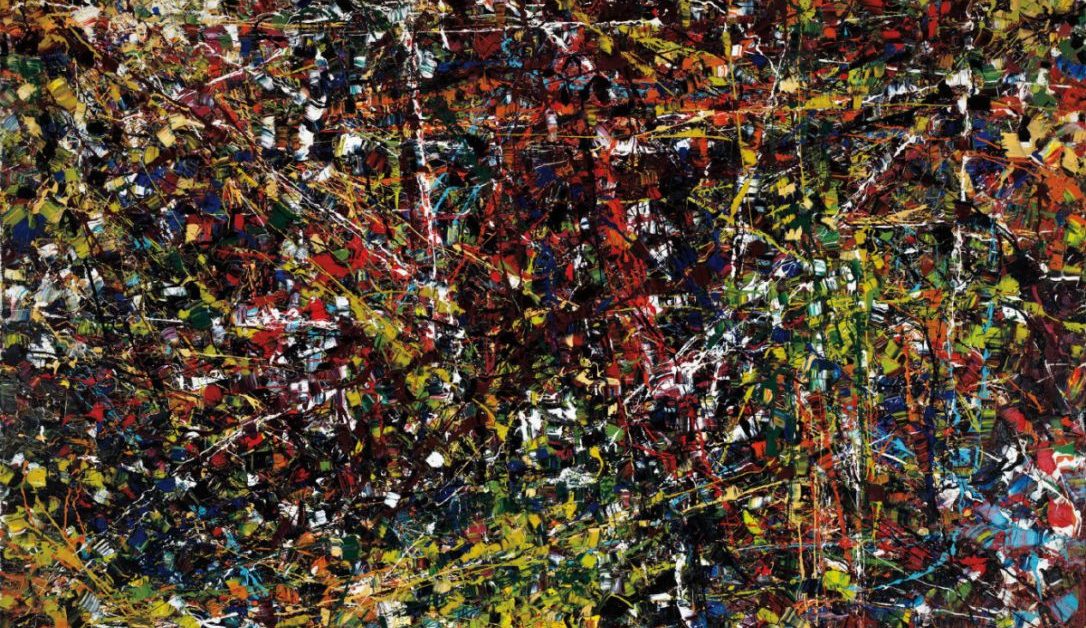
Jean-Paul Riopelle, Blue Night, 1953

Ralph Ellison, Invisible Man (1952)

What can I say that others haven’t? Titanic both in content and form, Invisible Man is a novel that doesn’t quite want to be a novel, or that wants to see to what limits novels can be pushed. Sometimes I admired the book more than I loved it; my literary preferences are more conservative than I might like to think. I was especially enthralled by the first third—I often like the childhood parts of books best, but this section has so many indelible scenes, especially one about a group of boys, including the unnamed narrator, who are brought to a southern town’s Whites Only Chamber of Commerce event to fight a cage match during which, stripped naked, they scramble to collect money thrown into the ring by the Pillars of the Community. From that electrifying (a word those who have read the book know I use advisedly) beginning, the narrator finds himself in the middle of the issues of the day, from his student days at an all-Black college which requires him to appease white benefactors (and the Black administrators who appease them) to his time in Harlem, where he joins The Brotherhood, an organization inspired by the ideals of Communism and challenged by white racism on the one hand and Black nationalism on the other. Throughout, the narrator remains enigmatic, refusing (or perhaps being refused, I can’t tell) the development we expect to find in a Bildungsroman.

When I said that Invisible Man was only uneasily a novel, I had in mind its essayistic elements, which are more pronounced in its second half. But as I think about it, where it chafes most against novelistic expectation is in its idea of what constitutes an event. It’s a book in which one character after another gives a speech. Whether in barroom yarns, sermons, or street preaching, Invisible Man is about rhetorical persuasion. What the novel itself wants to persuade us of is harder to say. I bet I could be more intelligent about this if I’d read Richard Wright, who Ellison seems to be arguing with throughout. (Is that right?) But one answer might be that the narrator speaks for many more Americans than just himself: “Who knows but that, on the lower frequencies, I speak for you?” Not that there is no difference between Black and white experience, but that the former knows more than the latter, since its intelligibility must be measured through the tape of the other. But maybe that’s to make Ellison into Du Bois. Help me out here, fam.

How silly to say “a must read”—it is, tho.

I’m grateful to Jules and Anja, who read this with me and kept me on track.

Arkady Martine, A Memory Called Empire (2019)

Brilliant sf novel—I think it’s a space opera, though I’m not really sure what that means—about the subaltern experience. Mahit Dzmare, ambassador from the remote Lsel Station to the Teixcalaani Empire, arrives in the metropole to investigate the death of her predecessor, Yskandr. Like all officials from her home, Mahit has an “imago machine” implanted in her brain, containing the memories and reflections of the person who most recently held their post. But the machine malfunctions almost as soon as Mahit arrives in Teizcalaani, which means she loses the benefit of Yskandr’s insight—as well as possible clues to his death. Mahit’s investigation, which turns out to hinge on much larger political events, is exciting enough. But what makes the book so terrific is its worldbuilding. The Empire is so compellingly constructed, its system of intricate poetry so lovingly—but not boringly—detailed, its differences from Lsel so thoughtfully fleshed out. Mahit is a devotee of Teixicalaani culture; like many colonized subjects she knows it better than the colonizers themselves. Yet she can never be accepted by the Empire, she will always be a barbarian, will always feel “the dumb longing of a noncitizen to be acknowledged as a citizen,” which is to say she lives in “a state of simultaneous gratitude and fury.”

Martine is the pen-name for a scholar of medieval Byzantine and Armenian history who is also a city planner and climate activist; some people really do seem to be able to do everything. Her erudition shows on every page of A Memory Called Empire, as she folds the problem of colonial identity into a meditation on how the technology of the imago machine challenges even more fundamental aspects of identity: lifespan, individuality, memory. Exhilarating.

Ross Gay, Be Holding (2020)

I’d never minded gym class in elementary school, it was fun and low-stakes, but then came junior high. Like everything else, gym class got worse. A lot worse. I’d never been bad at sports, but now I was terrible. The kid who loved school hated PE days. The kid who loved every teacher, was confronted by a new phenomenon: coaches. They were the worst—one was suspended for walking into the girls changing room, which I imagine took some doing back in the 80s—and they accordingly fostered a vicious and terrorizing atmosphere. I made it through but high school gym promised to be worse.

But the teacher my tenth-grade year (happily the last year PE was a required class) was Coach Bishop, who had been on the Canadian men’s basketball team. This was not a particularly big accomplishment back then, but he was genuinely athletic, unlike some of my previous PE teachers. Much more importantly, he was kind. He used the respect his accomplishments garnered him to keep the jocks from beating up on the nerds. (Nerd had yet to become a term of respect; it’s still weird to me that that happened.) Nerds still got picked last for teams, though; Coach Bishop was not enlightened enough to have done away with that practice. I don’t think I was ever the actually last one to be picked, but it was always a close thing. Until we came to the unit on basketball. This was a time when the rise of the NBA was permeating even solidly white western Canada—we had some kind of minor league team in Calgary called the 88s, after the Olympics, which my friends and I often went to see, tickets being practically free—and I often shot hoops on my own. I wouldn’t say I was good, but I wasn’t terrible.

Coach Bishop, unsurprisingly, was good at teaching basketball fundamentals. It was a long time before he let us even scrimmage. Because we’d spent so long working on layups, I knew what to do when, in our first game, I was able to pick off a lazy pass and go in all alone for an easy two points. This surprised everyone, me included, but not as much as what happened a few minutes later, when another kid—a jock!—passed me the ball. I stopped at the circle, jumped, and let loose a shot. Nothing but net. I still vividly remember Coach Bishop’s delighted cry: “He stops, he pops, it drops!” To have invested so much in this moment—to have needed that validation so badly—that I think of it thirty-five years later, oof, not awesome.

Next class the two alpha jocks, the captains, so surprise, were as usual in charge of picking teams. I went first. Me! I wasn’t great; not terrible, but now that kids were wise to me I had lost the element of surprise. Plus I always do better without any expectations. My moment passed. We moved on to some other sport and I went back to the end of the line. That was the end of my basketball career. When I think of that brief moment of success—when I look at myself as if watching a film—can I get past the shame I feel at how much that recognition from even people I did not respect (those jocks) meant to me? Can I avow the need to be seen? What life of privilege did I lead that the worst I can imagine happening to me when fixed by the gaze of the other is feeling ashamed?

Ross Gay’s long poem Be Holding is about basketball, sort of. It starts with a brilliant description of Dr. J’s baseline scoop in the 1980 NBA playoffs, a moment that readers, like Gay himself, who stays up too late at the mercy of the YouTube algorithm, will want to watch again and again. Gay is fascinated with how Irving holds the ball, in a swooping cradle that seemed to defy gravity. This is the first of the many instances of holding that comprise the book. Holding as stopping. Holding as enabling. Holding as comforting. What begins as an imperative—always be holding— turns into a warning. Be holding becomes beholding, a much more ambiguous proposition. Freezing the frame on a grainy sports video is one thing; looking intently at an image of suffering—a photo of a young African American boy falling from a burning tenement building, for example—is another. Can we look at others (behold) and care for them (hold)? How do African Americans, especially, traumatized by the middle passage, the rupture of a voyage in yet another hold, respond to this dilemma?

I’m not doing a good job with the details of Gay’s explosive, sinuous leaps and transitions. It’s been a while and I don’t have the book to hand. But I remember glorying in his close readings of images—the book’s a triumph of ekphrasis—and thrilling to his associative leaps, as bravura as Dr. J’s how-did-he-do-that scoop. So grateful to Rebecca for pointing me to this terrific book.

Seichō Matsumoto, Inspector Imanishi Investigates (1961) Trans. Beth Carey (1989)

Japanese crime novel, quite famous, I gather. Maybe a new translation could help me get why; this one is painfully stilted. Not sure even that would save the book, though: it’s way too long—dude investigates every fucking detail—and not a patch on Matsumoto’s A Quiet Place, which I read several years ago and still think of often. I only made it to the end because I was reading it aloud to my wife and we kept saying to each other, “Well, we’ve read this far…” We’re reading a book about sunk cost next.

Junichiro Tanizaki, The Makioka Sisters (1948) Trans. Edward G. Seidensticker (1957)

Tremendous novel about four sisters from an aristocratic Osaka family in the late 1930s. Filled with event—hard to know which set piece to single out: that extraordinary and terrifying flood, probably, which makes a similar scene in The Rainbow seem tame—but also leisurely, a little aimless, as if unwilling to commit to anything as definitive and perhaps crass as “action” or “plot.” Fittingly, the book repeatedly returns to the family’s attempt to marry off the third of the sisters, Yukiko, who is thirty and rapidly approaching irredeemable spinsterhood; she declines each laboriously contracted proposal, always finding some problem or other, most of which boil down to her almost Bartleby-like preferring not to.

I just couldn’t get enough of this book—it has all the feels, it considers a world at once accepting of and resistant to modernity, it has scope but is also modest. The last line is justly famous, and you should read Tom’s acute interpretation of it and its relation to Tanizaki’s depiction of violent and traumatic history. The guy wrote a lot of books; I should see what else he was up to. I’m guessing they are mostly not like this.

Last thing I’ll say: I’ve thought of The Makioka Sisters every day since reading it. That don’t happen too often.

Ruth Kluger, Still Alive: A Holocaust Girlhood Remembered (2000)

I’ve written about this book so many times. It’s still great, in fact, it just keeps getting greater. Every year the students love it more; Kluger’s take-no-prisoners manner gets them where they live. Before long I won’t need to read it any more to teach it, but I’ll probably keep doing so, it’s that good.

S. A. Cosby, Blacktop Wasteland (2020)

Top-shelf Southern Noir, with enough suspense in the first half alone to merit your attention. It’s long (Cosby is not a minimalist), and it doesn’t balance action with characterization as well as the more recent Razorblade Tears but from the opening scene—late-night drag racing on the back roads of Virginia—you know you’re in the hands of a talent.

Emma Seppälä, The Happiness Track: How to Apply the Science of Happiness to Accelerate Your Success (2016)

Not my usual thing, and I pretty much hate-read it. I’d joined a reading group set up by our Associate Provost for Teaching and Learning (a psychologist, natch) in which participating faculty discussed the book with a student of their choice before we all met together. The best part of the exercise was working with my student—she is my mentee in the First Generation program at my college and an absolute delight—because she too was annoyed that Seppälä overestimates willpower and underappreciates how much privilege is demanded by her rhetoric of self-care. (I’m all for self-care, I just hate when it’s used to make people feel guilty that they have not done the impossible and avoided systemic problems.) Anyway, I learned a few things. Like the way we often think we’re relaxing when in fact we’re doing something mentally taxing. Scrolling through our social media feeds, for example, demands concentration, and leaves us more rather than less tired. So when we “take a short break” from some other task to check Twitter we’re still working, as far as our brain is concerned. Talking with colleagues and students did nothing to accelerate my success—whatever that means, ugh, management speak—but it made for a fun and, yes, happy hour or two.

Norman Lewis, Alabama, 1960

Pretty good reading month, right? Tell me about books that are exactly like Makioka because that is what I want to read this summer. Which, now that I am caught up with these monthly posts, I might actually have time for…

Cutting Across Lines: Teaching Holocaust Literature in Arkansas

My personal essay on teaching Holocaust literature in the South has appeared in the Fall 2021 issue of The Oxford American.

Regular readers of this blog know how much I love Ruth Kluger’s memoir Still Alive: A Holocaust Girlhood Remembered. In the essay, I begin by describing how differently Kluger’s shocked response to segregation in 1950s Texas registered for me once I started teaching her work in a classroom filled with students from Texas and across the South.

Vienna, 1938

“Cutting across Lines,” as the essay is titled, is about belonging. I consider three times and places that have shaped me–the Canada of my childhood, the Eastern and Central Europe before, during, and immediately after the Holocaust, and the South today. I reflect on how each of these worlds shapes my understanding of the others. I worked hard on the essay, helped by stellar editing from the folks at the OA and my wife, who helped me see what the essay was really about.

You can read it here, but I encourage you to subscribe to support this valuable magazine.

Gordon Parks’ “Department Store, Mobile, Alabama” (1956). Credit for all images must say: Photograph by Gordon Parks, Copyright The Gordon Parks Foundation, Courtesy Jenkins Johnson Gallery.

On Being Absorbed & The Double Life of Véronique

What do we see when we’re not looking? We say we are “lost in a trance.” Could we in fact be finding our way? In a series of interlocking scenes from the middle of his 1991 film The Double Life of Véronique, Krzysztof Kieślowski repeatedly shows one of his two conjoined heroines lost in thought: at a puppet show held for the entertainment of the children at the school where she teaches; in her classroom, as she gazes out the window while her students play a new piece of music; in her car, at a traffic light, where she absent-mindedly puts a cigarette in her mouth the wrong way round.

At each moment, her reverie is connected to the same man, a puppeteer who masterminds the show she and her students are so taken by. In the auditorium she stares at his reflection, seeing him pulling the strings. In the classroom, she looks out distractedly at his van in the courtyard of the school. In the car, she eventually sees him pulled up next to her at the light. In the last case, he interrupts her absorption, honking at her as she is about to light the cigarette before motioning to her with a twist of the wrist that she needs to turn it around.

He has saved the day, it seems; the lesson is that you need to turn things around, look at them, not differently, but the right way; you need to be brought out of your absorption. But what if the man is not the hero but the villain? What if he has destroyed something? What if the scarf that in an earlier scene trails along behind the woman as she walks through the corridor of the cardiology unit in the hospital, test results clasped to her chest—suggesting a different reason for absorption than romantic infatuation—is a sign not of absent-mindedness, even carelessness, but of strength, elegance?

Several weeks ago, I sat in on a workshop for some of the students at the school where I teach who hope to apply for distinguished scholarships, like the Fulbright or Rhodes. The facilitator–who was teaching essayistic writing without naming it as such–showed part of The Double Life of Véronique and gave the students ten minutes or so to write about it. Because I loved this movie when I was in college, I decided to take up the prompt, too, and recently found what I wrote when I was cleaning off my desktop. I thought it was interesting enough to post here, in the hopes that those of you who know the movie better than I do–or who have thoughts about being absorbed–can tell me what to write next.

Spindle, Scissors, Thread

I wrote this essay for a Yom HaShoah (Holocaust Remembrance Day) ceremony organized by the Jewish Federation of Arkansas. For the past three years, a grant from Hendrix College has allowed me to train a small cohort of students as future Holocaust educators. As part of the commemorative programs, this year’s students and I read personal reflections about what we’ve learned studying and teaching the Holocaust.

Gerda Weissmann was 18 years old in 1942. That was the year when, having already suffered the German occupation of her hometown in southern Poland, she was deported to Bolkenhain, a subcamp in the Gross-Rosen concentration camp system. Bolkenhain was the site of a weaving mill; in a perverse way, Weissmann was lucky to end up there, as it was considered one of the best labour camps for women. Which didn’t mean it was easy or pleasant. Weissmann and her fellow internees were expected to run four looms at a time—”experts who had spent their lives weaving never handled more than three,” she later wrote, not without pride—and the work was grueling: the women were on their feet for hours, deafened by the noise of the machines, suffering from eye-strain that must have been exacerbated by the threat that any mistake would be punished as an act of sabotage.

Still, as Weissmann recounts in her memoir, All But My Life (1957, revised 1995) she came to enjoy the work: “the intricate process of weaving gave me a sense of satisfaction and accomplishment.” These were emotions she would need to hold close when, in August 1943, she was sent to another camp, the notorious Märzdorf. After she rejected a supervisor’s demand for sex, her life became a living hell. He ensured she was put on so-called flax detail, a chain of women who unloaded enormous bundles of flax from freight trains for hours at a time until their bodies were bloody from the prickly fibers.

Weissmann considered killing herself, so profound was her misery, but before she could put her head on the rails she was transferred to yet another camp where she made silk parachutes that would be used by the soldiers fighting to destroy her, her family, and her people. That was merely a brief stop, though, on the way to her penultimate destination, yet another textile mill repurposed as a camp. In the recent past, Grünberg had been a model factory, designed for the well-being of its workers. But in its terrible new incarnation, that care had become a mocking façade: “The camp was modern, well scrubbed, clean, and filled with suffering.” Most of the suffering took place in the Spinnerei, the spinning hall, where a giant machine shredded finished material into a kind of mash that was then spun into yarn. Some of the material had been donated by German civilians; but other material had been ripped from the backs of those who arrived at Auschwitz. The spinning room was a terrible place. The women who worked there were soon as destroyed as the old clothes they repurposed. Weissmann describes them as:

Living skeletons with yellowish-gray skin drawn tight over prominent cheekbones; there were gaping holes in their mouths where teeth had either been knocked out or rotted out. These girls ran to and from huge spinning machines, repairing broken threads with nimble fingers. Their tired eyes and sallow jaws seemed to belie the swiftly running feet and dexterous fingers.

This mixture of life and death horrified Weissmann—not least because it prefigured her own fate. Before long she too was a living skeleton, though not nearly to the extent she would become when, after nine months in the Spinnerei, in the freezing cold of late January 1945, she and 4,000 other prisoners were forced by the SS away from the advancing Red Army and deeper into Germany. (You can read more about the infamous Death March to Volary here.) For more than a hundred days she and the rapidly dwindling prisoners (many froze, starved, were shot by callous, anxious guards, or succumbed to illness) marched over 300 miles, eventually ending up in a town in Czechoslovakia where they were liberated by American troops on May 5, 1945. At the time, Weissmann weighed 68 pounds. Only 120 women survived the march.

*

Gerda Weissmann was just one of the millions of victims of Nazi persecution. We know some of their stories. We know little, almost nothing about many others’. Most Holocaust stories did not end as Weissmann’s did. Most ended in the mass graves of Belarus, Ukraine, and Russia; the steadily accumulating piles of corpses in the ghettos of Eastern Europe; or the gas chambers of the extermination camps. For the past 15 years I have made it my self-appointed task to read as many of these stories as I can, and to learn as much as I can about the conditions of the lives and deaths of those whose stories must go untold. I am often asked how I can spend so much time reading, thinking, and teaching about the Holocaust. Isn’t it depressing? How can you take it? Doesn’t it make you despair for humanity?

I understand these questions. In fact, a few times a year, without fail, I feel the same way. A great weariness comes over me, repugnance, sometimes even disgust. I’ll sink into depression, overwhelmed by the enormity of the event. I’ll say to myself: no more histories or novels or memoirs, not even ones as engaging and moving as Weissmann’s.

Over the years, I’ve noticed a pattern to my depression. I’ll feel it mildly in January and strongly in June. It took me a long time to realize what should have been obvious—those are the times after and between academic semesters. That, in turn, helped me realize that I seldom feel despair about the Holocaust when I’m teaching it. On the contrary, teaching the Holocaust energizes me. It’s even, and I know it is weird to say this, affirming. How can I say that? Because in doing that work I am not so different from Gerda Weissmann—my satisfaction and accomplishment comes from an analogous work of weaving, unweaving, and weaving again: placing one story next to another, juxtaposing, comparing, adding, measuring, bringing this fact together with that, paying out these threads to my students, who are themselves individual strands whose various abilities and experiences I braid into the accomplishment that is a successful class.

*

The work Gerda Weissmnan was forced to do was always dangerous, always backbreaking, destructive of her body and her spirit, but occasionally, and certainly contrary to the intentions of the perpetrators, satisfying. Remember what she said: “the intricate process of weaving gave me a sense of satisfaction and accomplishment.” That work also offers a metaphor for how we might think and teach about the Holocaust. Think about what Weissmnan did. She bound. She tied. She created. She spun yarn. She wove fabric. She brought different strands together to create something new. I’m not suggesting she should have been grateful for the work; I’m not transforming her slavery into something good. I’m suggesting that even in oppression there will be resistance, however slight or ultimately futile. And that making something new from diverse strands offers a model for such resistance, a model that we in our different time and place might emulate. “The intricate process of weaving gave me a sense of satisfaction and accomplishment.” What was true for her might be true for us.

Literary people like myself love to talk about weaving. From Homer onward, with the story of Penelope’s secret resistance to her importunate suitors, weaving has offered a powerful metaphor for creation and destruction. Literature is itself woven; in fact, the words “text” and “textile” have the same root. They both refer to tissues and webs, to the activity of tying strands together in order to make something greater than the sum of the parts. You make an essay like you make a carpet. You write a memoir like you shuttle a loom. You study the past like you stitch and unstitch and re-stitch a garment. And when you are a maker, even one persecuted by a terrible master, some Pharaoh, some Nazi, you have just the tiniest bit of control over your situation.

In the Classical tradition of Greece and Rome, in fact, the person who weaves—I should note that it is almost always a woman who weaves: I don’t have time to talk about it here but the study of the Holocaust has for decades been imbalanced when it comes to gender: that’s a story for another day—the woman who weaves is the greatest maker of all, has the greatest control of all. A similar idea struck the writer W. G. Sebald, who, at the end of his remarkable book The Emigrants (1992) recalls his time in Manchester, the city he moved to in the mid 1960s in an attempt to escape the stifling amnesia of postwar Germany, where he grew up, having been born in a village in the Alps in 1944, and which he couldn’t wait to leave. Manchester, of course, was for a long time one of the greatest manufacturing centers in the world. Mostly it manufactured fabric made from cotton and flax, which was mostly brought across the Atlantic as a result of the slave labour and indentured servitude of African Americans.

There were other manufacturing centers across Europe, of course. One was the Polish city of Lodz, which the Germans renamed Litzmannstadt when they occupied it in 1939, but which in earlier decades had been known affectionately as the Polish Manchester. That infrastructure was the reason that the Lodz ghetto—one of the most crowded places in human history, where 165,00 Jews and Roma lived in 1 1/2 square miles, a dense landscape of suffering, illness, despair, and death—became home to dozens of workshops, in which Jews made among other things uniforms for the German army.

The Lodz ghetto was a terrible, terrible place, but you wouldn’t know it from the most famous pictures of it that have come down to us. These were taken by a man named Walter Genewein, a Nazi accountant, sent to Lodz as financial manager of the German ghetto administration, and a passionate amateur photographer, perhaps as much as, across Europe, in an utterly different situation, a man named Otto Frank had been. Genewein’s ghetto photographs are tinted pale blue or green, which gives them an otherworldly air, as does the absence of crowds. His photos are staged, not state-sanctioned propaganda exactly but saturated in the Nazi worldview nonetheless. In the last lines of his book, Sebald describes a single photo taken by Genewein, one of many the accountant took of the metalwork shops, basket-weaving ateliers, and nail factories that constituted the futile hope of the Jews of Lodz that their essential labour would protect them from death. The photo Sebald fixates on is of a textile workshop. Three women, probably about 20 years old, the same age as Gerda Weissmann, sit behind a loom. Here’s how Sebald describes them, in a beautiful translation by the poet Michael Hulse:

The light falls on them from the window in the background, so I cannot make out their eyes clearly, but I sense that all three of them are looking across at me, since I am standing on the very spot where Genewein the accountant stood with his camera. The young woman in the middle is blonde and has the air of a bride about her. The weaver to her left has inclined her head a little to one side, whilst the woman on the right is looking at me with so steady and relentless a gaze that I cannot meet it for long. I wonder what the three women’s names were – Roza, Luisa and Lea, or Nona, Decuma and Morta, the daughters of the night, with spindle, scissors, and thread.

Nona, Decuma, and Morta: in Latin, the Parcae, in Greek, the Moiri, in English, the Fates, who spun the thread of life, measured its length, and cut it, thereby determining the length, time, and mode of a person’s death. Women who meted out life and death. Weavers, writers, creators. Like Gerda Weissmann, the unnamed women in the photo are victims of particular circumstances, and emblems of suffering more generally. But like Weissmann they take on at least some of the power of the Fates. They are helpless, determined, accomplished. Unknown yet not forgotten. In weaving their stories together with those of others—just as in pacing my classroom like Weissmann among her looms—just as in sending the students you heard from tonight out into the world as weavers themselves—I hope in some small way to do their example justice.