Here is my introduction to Episode 35 of the podcast I co-host with Rebecca Hussey and Frances Evangelista, One Bright Book.
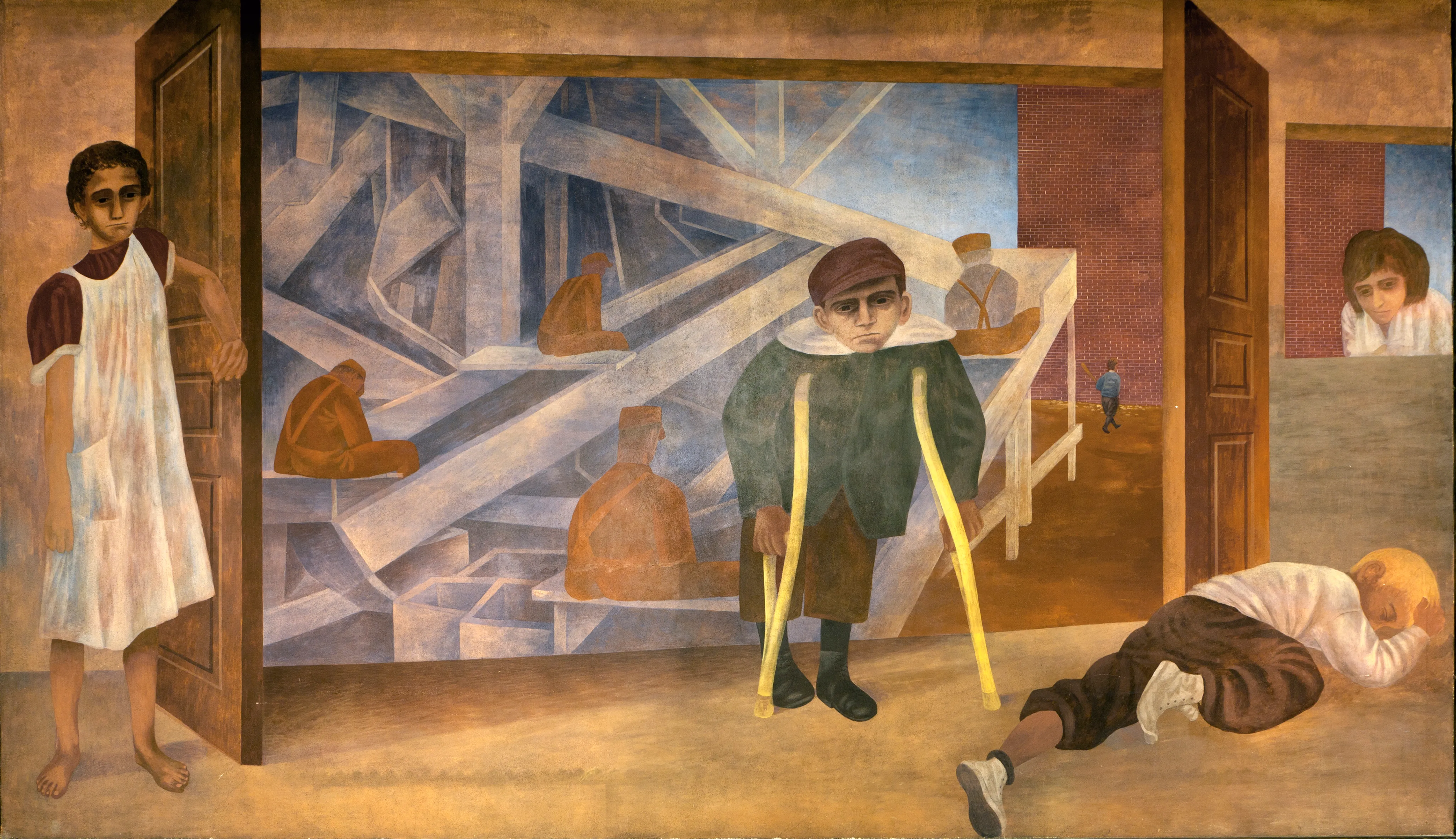
Our book today is Willa Cather’s O Pioneers!, first published in 1913.
O Pioneers! was Cather’s second novel, and her first big success. It’s a short book, episodic in structure, centered on Alexandra Bergson, a Swedish immigrant who lives on a struggling farm in southern Nebraska with her ailing father, her stoic mother, and her three brothers. On his deathbed, the father entrusts the farm to Alexandra, not only as the eldest child, but also and more importantly as the only one likely to make a success of it. By blending confidence, daring, and hard work, Alexandra does just that, becoming a successful landowner and a linchpin of the community of European immigrants forging new lives around the town of Hanover. Many of these new Americans are Scandinavian—some of the old timers still only speak Swedish—but others are French or Czech.
The title comes from one of Walt Whitman’s hymns to the glory of the American experiment. As its plural noun suggests, the novel is something of a group portrait. The first half centers on economic struggle and the fantasy of bending landscape and climate to human wishes. The second half foregrounds two love stories: the muted relationship between Alexandra and a childhood friend, Carl, who has gone away to seek his fortune and returns to visit years later., and the passionate, doomed affair between Emil, Alexandra’s youngest brother, and Marie, a married woman who lives on the neighboring farm.
This ending is already prefigured in the beginning, when Cather writes: “The history of every country begins in the heart of a man or a woman.” I might not have paid much attention to that sentence were it not for the circumstances in which I came across it. I happened to read the early chapters of O Pioneers! in the Little Rock Social Security office, where I had business earlier this week.
It turns out all kinds of people come to the Social Security office. I sat alongside new immigrants and elderly couples, family members with their adult disabled children and new parents with babies in tow. The room we occupied had the slightly sterile quality of many bureaucratic offices, yet it felt more functional than alienating. Most everyone’s attention was fixed on a large board which told us supplicants which window to visit when our number flashed up. But that didn’t stop us from doing other things too. People chatted with the people sitting next to them, and with the security officers who, despite the sign declaring that they were not to be bothered with official questions, easily and casually dispensed advice. They played on their phones, shuffled nervously through their paperwork, shushed their children, even read 20th century American novels.
I wished that the people who believe government is evil, maybe people like our current President and Vice President, whose photos glared malevolently from the wall of the hallway outside the waiting room, could see the place in action. Is it somewhere you would want to spend a lot of time? Certainly not. But is it a demoralizing vortex of inefficiency aimed at squandering the hard-won gains of “real” Americans? Absolutely not. It’s a place filled with people doing their best, a place dedicated to helping others, no matter how tattered the American social net might be.
I wondered what Willa Cather would think of that room. I thought of the communal spirit expressed by the Nebraska farmers who populate the pages of O Pioneers!, most of them either first or second generation Americans. I thought of the marginalized characters Alexandra protects—a man named Ivar prone to fits and unwilling to wear shoes but good with horses who she keeps on to her brothers’ dismay, a Swedish widow who loves to visit Alexandra’s farm because the younger woman listens to her stories and doesn’t demand that the old woman speak English. Would Cather be willing to shift the onus of care from individual to collective? Would she agree that a dignified life belonged to all citizens regardless of their beliefs or abilities, and that this opportunity should be given by the people to each other through the government rather than through the mercy of an individual? I remembered a counter tendency to Alexandra’s charity and large-mindedness, namely a tendency to judge behaviors deemed deviant or non-normative, as when Alexandra scours her body in the bath after indulging in sexual fantasy or denounces Emil and Marie’s illicit relationship.
Most of all, I looked at the faces in the room, many, perhaps most of which, were not white. I thought about who counts among the pioneers of the title, and which kinds of Americans did not seem to be imagined by the book. (Having finished the book, I’m especially struck by its absolute silence about indigenous people, who are not even present as frightening tales from the time before the frontier was settled.)
I hoped, and this is fanciful I know, that, despite the changes between then and now, Willa Cather would enjoy sitting in that room, would view its goings on with interest, would be curious about if not necessarily approving of the America present among its plastic chairs and scuffed linoleum flooring.

I’ll never know, of course, but I will know what my co-hosts thought of it, which is something I am even more curious about.
Friends, what did you make of O Pioneers! ?
Listen to the episode for their answers: but feel free to chime in below. We’re all friends here.
 Eiger, Mönch & Jungfrau
LOVE Cather. Need to start listening to your podcast, clearly!
I’d love to know what you think, Eleanor!
Just downloaded that episode—and noted with delight that your next one will be on Jewett’s The Country of the Pointed Firs, another favourite! Onwards.
So enjoyable to be able to read this. Thanks!
The art choice is inspired.
Thanks, Tom.
The whole time I was sitting there I thought of that Steve Earle line: “There’ll be no more FDRs”…