October 2021, the missing month! What can I say? I was busy, teaching all the things, making all the lunches, blah blah. But so many people appreciated my one-word review in the November post—I hate reading stuff too, I get it!—that I thought I would aim, not for single-word reviews (something to aspire to) but for single sentences. I’m such a wordy bastard that even that idea mostly failed (plus I had written a couple at the time, so those were already longer), but I herewith present what for me is a breezy summary of my month’s reading.
James Whistler, Nocturne in Grey and Gold: Chelsea Snow, 1876
Colson Whitehead, Harlem Shuffle (2021)
Are you a striver or a crook? That’s the question in Whitehead’s new novel, nominally a crime novel but in fact a novel about crime. “Strivers grasped for something better—maybe it existed, maybe it didn’t—and crooks schemed about how to manipulate the present system,” muses Ray Carney, the small businessman at the center of the novel. How can he, the owner of a furniture store in Harlem (Whitehead delights in midcentury furniture, and who can blame him), get that elusive better thing, in his case an apartment in a nice building on Riverside Drive, without manipulating the system? In a story told in three sections—set in 1959, 1961, and 1964, landmark years of the Civil Rights movement—Whitehead argues that strivers are just crooks in better suits, able to “give back” to the community. Ray begins by turning a blind eye to the origin of some of his merchandise and ends as a fence. But Whitehead, in this novel anyway, is no Malamud. Ray’s is not a tragic story—he hasn’t degenerated or sold his soul or become a moral bankrupt—unless you take capitalism as a tragedy. Which it is. But in Whitehead’s New York-centered vision, capitalism’s ability to turn all that is sold into air is presented as a form of irrepressible effervescence, most magnificently captured in a final set piece in which Ray visits the construction site of what will become the Twin Towers. Omari Weekes’s Bookforum review made me appreciate the book more than I first did. I’m not convinced, though, that Whitehead critiques Ray as much as Weekes thinks he does, or should. For the tone of Harlem Shuffle is as unsteady as the movement described in its title. Is Ray to be admired or condemned? The novel doesn’t seem sure. It sure loves late 50s, early 60s Harlem, though, presented with an energy and delight that undoes any sentimentalism, which is more than I can say of its soppy depiction of women and children.
Charlotte Wood, The Weekend (2019)
Three women, now in their seventies, friends for forty years, converge on a house on the Central Coast, an hour from Sydney. Jude, a former maître’d’, has been kept by a married man for decades, and lives for the moments she’s able to snatch from his life, a state of affairs she can share with no one. Wendy, an intellectual who became famous as a pioneering second-wave feminist (and apparently made plenty of money at it, the book’s one implausible note), ruminates over the germ of a new book though she spends most of her time dealing with her dog, old, deaf, shaken by some unspecified past trauma. Adele, an actor with a critically esteemed career, mostly in theater who hasn’t worked in a long time and who never made any money to begin with, has just been kicked out by her younger lover, a woman who had been supporting her. (The novel takes money seriously, which I appreciated. How do you live when you no longer want to work, or when no one any longer wants you to work?)
The weekend of the title falls over Christmas, but the women are not on holiday. They have a job to do: cleaning out the house that belonged to Sylvie, the fourth member of their little band, who died a year ago and seems to have been the glue that kept them together. (At first she’s an anodyne, if spectral, figure, but she turns out to have been as messy as the rest of them.) Now that they are three, the women find their old allegiances shifting rapidly. A novel about how things end, The Weekend implies that their friendship might be the final casualty.
In terms of novels about older women, friendship, and end of life, I liked The Weekend more than Nunez’s What Are You Going Through and less than Helen Garner’s The Spare Room, but I liked it quite a bit. A short book with heft that describes aging bodies (in all their frustrations and competencies) with, to me anyway, impressive, almost uncanny, awareness. (Wood is only in her 50s.)
Nechama Tec, Dry Tears: The Story of a Lost Childhood (1982, revised 1984)
Memoir of Tec’s childhood in wartime Poland, living at great risk to her safety, under an assumed non-Jewish identity. I’ve written about this book before: it’s a favourite of mine, and my students like it too, this year’s group being no exception. They are rightly fascinated by Tec’s guilt at the ease with which she sinks into her new identity. Tec is bewildered by the antisemitism espoused even by the Polish family who, for a lot of money, is hiding her, but she also finds herself laughing along to jokes made at her own expense. Her indictment of postwar Poland is [fire emoji], as the kids say. Reading it for the who-knows-how-many-times, I noticed that Tec’s Jewish identity is in fact identity with her nuclear family. Even before the war, she offers little sense of extended family or community. Not sure what to make of that (I said I noticed it, that’s all): could her guilt at passing have been amplified by detachment from an identity that persecution forced her to affirm? A rich, moving text, strongly recommended.
Walter Mosley, Devil in a Blue Dress (1990)
African-American PI novel, groundbreaking at the time and still pretty good. I prefer the end of the film, actually (in general, I am pro Denzel in a wifebeater), but the novel makes even more of Easy’s desire for a home of his own—a sign, I think we are meant to see, that his sacrifices in WWII weren’t in vain and that he does, in fact, belong to and in America.
Jacqueline Woodson, Another Brooklyn (2016)
Dreamy, evocative, does a lot with omission. Wouldn’t have minded if it were longer.
Benjamin Labatut, When We Cease to Understand the World (2020) Trans. Adrian Nathan West (2020)
Feels like everybody’s reading this (thanks, Obama), so you don’t need me to tell you about it. I’ll add to the chorus of praise, though: I loved these quasi-essays about scientists and the depredations they unleashed on the world and themselves. Apparently, each chapter includes at least one fictional element; it’s an indictment of my scientific education (which was not a bad one, I don’t think) that I wouldn’t have known this had Labutat not said so. I do agree with the person on Twitter—can’t remember who now, sorry—who said that the book validates a romantic idea of science as practiced by solitary, often mad or otherwise extreme geniuses, an idea completely at odds with the day-to-day practice of science, which, I’m told, is slow, often dull, and of necessity done with others. Many readers seem to dislike the last chapter, which is different in tone and subject matter. It’s also the only one set in Labutat’s native Chile. I felt differently—as brilliant as the rest of the book is, I already knew its early to mid-20th century European settings, characters, and preoccupations perfectly well—and I hope on the strength of the success of When We Cease to Understand the World his earlier books will be translated.
Miriam Toews, Fight Night (2021)
Shambling, likeable novel about three generations of women of Mennonite ancestry trying to keep it together in Toronto. It’s narrated by nine-year-old Swiv, precocious and scared and brave, ostensibly as a letter to her father, who’s run away in mysterious circumstances. Swiv’s mother, heavily pregnant, is a struggling actor (is there any other kind) who’s understandably exhausted, so the girl spends her days with her grandmother, Elvira, irrepressible lover of life and people and donuts and, above all, the Raptors. (I loved her use of basketball metaphors in teaching Swiv life lessons and her trash-talk at the tv during games.) Elvira is everything to Swiv even though she continually mortifies the girl by accosting strangers about their love lives, going about in public in her dressing gown, and forgetting her heart pills. Sound treacly? The novel isn’t, but it does have a bit of a “live, laugh, love” vibe that wasn’t working for me. I liked it okay, especially in parts—Swiv and Elvira take an impromptu trip to California to see the old woman’s cousins, and they are a hoot—but it’s not a patch on Women Talking, a book I still think about a lot. When it comes to recent novels about feisty old women who are sick and tired of being sick and tired, I prefer Bina.
Sigmund Freud, Dora: An Analysis of a Case of Hysteria (1905) Trans. James & Alix Strachey (1925)
Taught this for the nth time, and I’m still a fan, but each time Freud’s treatment of Dora is crueler and crueler.
Jonathan Petropoulos, Göring’s Man in Paris: The Story of a Nazi Art Plunderer and his World (2021)
Sordid. The art world, then and now, is sordid. Bruno Lohse, appointed by Göing to loot tens of thousands of art works from French Jews, many of which were siphoned to the personal collection of the commander-in-chief of the Luftwaffe, was really sordid. And Petropoulos’s own dealings with Lohse are, if not sordid (he seems too fundamentally decent for that, if a little nonchalant about his own privilege), then disquieting. The best chapter is about Petropoulos’s attempts to find out what happened to a Pissarro Lohse claimed for years he nothing about. Much of the book is plodding—Lohse’s life story, before and after his time in Paris, isn’t that interesting; I wish its dutiful prose and endless citations had been distilled into a crackerjack essay.
S. A. Cosby, Razorblade Tears (2021)
Violent, over the top, almost mawkish, tremendous fucking fun. Two men, one black, one white, investigate the deaths of their married sons, victims of a hate crime. Neither man had accepted his son’s sexuality; it’s too late to make good on those failures now, but they can tell themselves they can at least find justice. Smart and funny about racism, kinship, the toll of life in prison. It’s going to be a hell of a movie.
Val McDermid, 1979 (2021)
Glasgow, January 1979, snow and chilblains all around. Newspapers might rule the media landscape but it’s hard to be a female journalist, as the hero of this crime novel quickly learns. Non-professional investigators are tricky to pull off, especially in a series, which McDermid clearly has plans for this to be. (Next thing you know, you’re Jessica Fletcher, and there’s a murder in your little town every five minutes.) But McDermid, a former journalist, lived that world and her expertise shows (though I’m not sure Denise Mina’s Paddy Meehan novels, set in the same milieu in the same place at almost the same time, aren’t the better books). Can’t help but feel that the book was an excuse to riff on the music and movies of the time, though.
Wassily Kandinsky, Study for Sluice, 1901
That’s that. And what about you? Read any of these? Feel free to be as pithy—or as verbose—as you like!
Ah, November, we hardly knew ye. Wait—November?! What about October? Well spotted, eagle-eyed reader—I know you and many others have been refreshing this page daily in the hopes of getting your EMJ fix. Sorry to disappoint. Trust me, I feel bad about it. A two-year streak of monthly reading reviews broken, just like that. Still hope to catch up, but what can I say, October was a cluster. November was better, which is surprising since it’s usually one of the worst months of the academic calendar. This semester has been one of my lightest ever, though, a blessing since it’s allowed me to keep the rest of my life ticking along, just barely. I had a lot going on. My mother visited, the first time we’d seen each other in two years. There was Thanksgiving to celebrate. And leaves piled up steadily on our tree-lined corner lot, those things don’t rake themselves. But I read some stuff too.
Camille Pissarro, The Path at Basincourt, 1884
Sarah Hall, Burntcoat (2021)
Preordered this even though the idea of “pandemic novels” doesn’t appeal because I’m a Hall fan. Burntcoat is narrated by Edith Harkness, a sculptor—the resonant title is the name of her studio—who, after studying the Japanese art of shou sugi ban (charred or burned wood) has become one of the UK’s premier landscape artists. Some short flashbacks describe an apprenticeship in Japan, but these moments are underdeveloped, serving more as a metaphor—the technique is counterintuitive, “damaging wood to protect it”—than as detailed reality. There are many damaged people in the novel, mostly those infected by a virulent disease, much worse than a coronavirus, that either kills quickly or lies dormant for years after infection. But the most important damaged person in the novel, certainly one who has been protected by that harm, is Edith’s mother, a writer felled by a brain disease that transforms her personality and, for a time, makes her unable to speak or write. She recovers from the trauma to become an outsider artist, whose experimental works are underappreciated until after her death. Before that she had taken her young daughter, Edith, to live in the Cumbrian fells. As always, Hall is great with northern landscapes, but where Burntcoat really shines is in her other area of descriptive specialty. Hall writes great (cishet) sex scenes—exciting, never cringe-y, hot. Quite a feat. The sex in this novel is between Edith and her lover Halit, a migrant from Turkey who works as a chef in a middle eastern restaurant. Their relationship has no sooner begun, though, than the pandemic hits and Halit gets sick. Burntcoat is about making and healing, about losing and grieving, about the depredations and losses of time’s passing that can also become transformations and developments. It’s a good if not great novel, a bit suggestive, sometimes more a sketch of something than the thing itself. Curious how it will fit in her body of work twenty years on.
Nastassja Martin, In the Eye of the Wild (2019) Trans. Sophie R. Lewis (2021)
In 2015, Martin, a French anthropologist with deep knowledge of the indigenous people of Kamchatka, was mauled by a bear while conducting field work. After initial treatment in Russia, she is flown back to France, and suffers from further, supposedly superior, operations and treatments, one of which almost kills her. She suffers, physically and emotionally. Eventually she decides she must return to Siberia, to learn, as the jacket copy of the newly released English-language translation has it, “what it means to have become, as the Even people call it, medka, a person who is half human, half bear.”
From the time Magda first told me about this book, I’ve been psyched to read it, devoted fan that I am of another book about a woman and a bear. (In that one, incidentally, the main character, a librarian cataloguing the books in a great house in northern Ontario, learns that Kamchatkans use the sharpened shoulder blade of a bear as a scythe.) Nathan Goldman brings the two books together in his terrific essay on In the Eye of the Wild. Even more valuably, he points out the central tension in Martin’s memoir/essay: on the one hand, she resists attempts to explain or understand her experience, whether the lens be therapeutic, medical, or cultural (one of Martin’s Evenk friends, for example says the bear left her, the friend, a gift by keeping Martin alive); on the other, she writes in a language of abstraction that feels quintessentially French, especially that of post-Hegelian (i.e. post-Kojève) philosophy: structuralism, poststructuralism, deconstruction, etc., language that values nothing more than explanation and understanding, even if only to resist those very concepts. Take this passage for example:
To be the human who sees the bear (or to be the bear who sees the human) is to embody reversibility: it is to describe a face-to-face encounter in which a necessarily radical alterity is actually revealed as the greatest proximity.
Let’s just say I recognize several tics of my own writing in this sentence. (And, yes, Nathan quotes the same line, but I swear I marked it in my copy before reading his piece!) I was trained as a theorist in the 90s, and I still have a lot of time for its insights, if not always its language (though I’m mindful of what Barthes said: between jargon and platitude, take jargon every time). All of which is to say I think I’d have loved In the Eye of the Wild even more had I been able to read it twenty years ago. The whole books isn’t as abstract as that quote, but it’s pretty abstract. I kept waiting for a description of the attack—the encounter as she styles it—but it never happens, not even indirectly, Grizzly Man style.
Some of Martin’s resistance to explanation stems from her experience on the land: “In the heart of these frozen woods, you don’t ‘find’ answers: first you learn to suspend your reasoning and allow yourself to be caught up in the rhythms of an existence entirely organized around staying alive in a forest in winter.” Some of it comes from her anthropological training. Elaborating on her friend’s idea that the bear gave her a gift of Martin’s survival, Martin writes:
I know that this encounter was planned. I had marked out the path that would lead me into the bear’s mouth, to his kiss, long ago. I think: who knows, perhaps he had too.
That “kiss,” I dunno. Maybe I’m just irredeemably Canadian, and want my bear kisses to be literal, or, like Lou, the librarian in Bear, to realize that however necessary the fantasy has been, when bears get kissed things have gone too far. Kiss feels a little dramatic to me. (Lacan: the word kills the thing. Kills it?) I’ve been presenting In the Eye of the Wild and Bear as opposites, and in their representational strategies and general MO they are. But they agree, fundamentally, that, as Martin puts it, “a bear and a woman is too big an event.” The challenges posed by the female-ursine conjunction aren’t the same in each text—which after all were written in different circumstances and in different genres—but both Engel and Martin consider what it means to be a self, and whether one sealed off from the world is worth anything at all.
Dervla McTiernan, The Good Turn (2020)
The third book in Australian McTiernan’s Irish-based Cormac Reilly detective series is skillfully done—less engrossing as the first but absolutely engaging. (I spent a happy Saturday on the couch with it.) Yet the police procedural is a genre in crisis—books about heroic inspectors and their harried, money-conscious superiors just don’t cut it any more for readers faced with the violence and racism of the police-incarceration complex. McTiernan isn’t immune to this crisis. She circumvents it by placing the two investigations at the forefront of the book against the backdrop of a larger narrative arc concerning police corruption. But then a wise and trustworthy superintendent of police has to step in last minute to save the day, which keeps intact the myth of rogue agents within a sound system.
Charles Portis, The Dog of the South (1979)
Ray Midge leaves Little Rock, Arkansas for Mexico, on the trail of his wife, Norma, and her ex-husband, with whom she has taken up again. Before she split, Norma palmed Ray’s credit card. Using the receipts, he tracks the pair south of the border all the way to Belize, which at the time had only recently changed its name from British Honduras. (I’d no idea.) Along the way Ray meets Dr. Reo Symes, a hard-luck case/charlatan whose medical license has been revoked for fraud and who has since poured his energies into grandiose dreams of developing an island in the Mississippi owned by mother. All he needs is for her to give him the deed. To this end, he’s on his way to Belize, where the woman runs a Christian charity, but the old school bus he commandeered somewhere along the way has broken down, and Ray is his only hope for completing the journey. Classic odd couple stuff: unlike the disreputable and excitable conman Symes, Ray is a pedant with strong opinions about Civil War strategy and plenty of observations about human behaviour (“Most children are close with their money”); the men squabble about most everything, including, hilariously, who invented the clamp—a guy from Louisiana or the Sumerians? Finally they fetch up in Belize, where a lot of dramatic things happen quite suddenly before events trail off meekly, in the way of many foolhardy adventures.
The Dog of the South is not a long book, but maybe because the quest itself never feels urgent (we get little sense of Norma until the end, except that she is both long-suffering and careless—the Midges are anything but a match made in heaven) the book drags at times. The first third is comic gold, though, real laugh-out-loud stuff, including some loving disparagement of Little Rock. Plus, Portis’s way with bit characters is unbeatable. My favourite was Melba, a friend of Symes’s mother who helps run the orphanage. A real hoot, that Melba. An insufferable Canadian hippie in Mexico runs a close second.
I listened to the audio book narrated by Edward Lewis (which is different from the version on Audible, FYI), and his intonations and pacing were perfect. Really hits that strange note between smart aleck and stick-up-the-ass that characterizes Ray. I only wish Lewis’s accent were more Arkansan. He avoids generic Southern (it feels specific, though I can’t pin-point it) but that weird Arkansan combination of flatness and drawl escapes him.
Andrea Camilleri, The Cook of the Halcyon (2019) Trans. Stephen Sartarelli (2021)
Preposterous.
Grete Weil, Aftershocks (1992) Trans. John S. Barrett (2008)
Grete Weil née Dispeker was born to a privileged bourgeois intellectual household near Munich in 1906. Her father was a well-known lawyer, her elder brother a hero of the Great War; the family believed profoundly, tenaciously, unrequitedly in German-Jewish togetherness. As a Young Person, Grete palled around with Erika and Klaus Mann, Thomas Mann’s children, and climbed a lot of mountains. In 1932 she married the dramaturg Erich Weil; he was arrested shortly after the Nazi takeover and fled to Holland on his release to found a branch of his father’s chemical company. Grete followed in 1935: the couple settled in Amsterdam, where Grete opened a photography studio. Their circle included fellow émigrés Max Beckmann and Bruno Walter. After Holland was occupied, the Weils tried but failed to get to England. They turned their efforts to Cuba. The night before Edgar was to pick up their visas, he was arrested in a roundup and deported to KZ Mauthausen, where he was murdered in September 1941.
Weil was forced to give up her business—she lent her photography skills to the underground, helping to forge documents—and took a job in the Dutch Jewish Council, which helped her evade deportation. When her notice finally came, in summer 1943, she and her mother, who had been with all this time. went into hiding. For almost a year and half they lived on a mattress in a small space behind a bookshelf in a friend’s apartment. There Weil took up writing again—it had been one of the passions of her childhood. After the war, she felt comfortable neither in Holland nor in England, where her brother had settled. To the consternation of Klaus Mann, who tried to talk her out of it, she returned to Germany in 1946. She received her husband’s family’s pharmaceutical company as restitution (one of the only instances I know of in which that process actually did anyone any good) and devoted herself to writing, including opera libretti and translations from the English (including John Hawkes). She published various novels, collections of short prose, and memoirs in the years before her death in 1999.
Before coming across this book, I’d never heard of Weil, which surprises me, given my research and teaching interests, plus the fact that Godine published three of her books in the early 2000s. Aftershocks is the third, a collection of stories and memoiristic pieces about the long afterlife of the Shoah. I was not always gripped by the book, Weil does not seem the most graceful writer (that may be down to Barrett, the translator, not sure), but I admired her unwillingness to ingratiate herself with her audience. In this she reminded me of Ruth Kluger, a writer I also did not fall in love with straight away but who has since become a lodestar. I plan to keep reading Weil, not to mention (the ultimate test) teaching her, so look for a more informed opinion in several years.
Like Kluger, Weil was willing to think the Holocaust together with American state-sponsored racism. In a text called “The House in the Desert,” the narrator, a figure much like Weil herself, arrives in Los Angeles to visit an aunt and uncle who, having settled in America, are determined to laud the place as the land of milk and honey. Walking through the city—her first mistake—she thinks that if she were Black she would rather live in the desert. Even if the chances of getting away “if things really got bad” were slim, they would be better than in LA itself; the desert would be an easier place to run from. For she is an expert in running away. Even though the war’s been over for years she isn’t likely to ever forget:
As if you could simply put aside a habit that had gotten into your very fiber. Once a body’s picked up momentum, it doesn’t just stop suddenly. It doesn’t matter that there are no more Gestapo agents asking for your papers, that no trucks are driving through the streets to pick up people [her husband’s fate]; that no one’s ringing your doorbell at night, that the concentration camps have been turned into museums where cut-off hair and knocked-out teeth are displayed in glass cases, that there’s no reason to run away any more. The running away goes on. Running away from the name. when Auschwitz wasn’t yet a name, you didn’t need to run away, but who’s going to take the name back? Who’s going to tell me it’s not my hair, my teeth. They meant it for me.
She proceeds to eviscerate the white people, her relatives among them, who inform her, with useless regret, that “it’s not possible to solve the race problem from one day to the next.” Weil is nothing if not clearsighted, speculating, in a final text, almost an afterword, which is clearly about her own experiences, that “maybe I’ve remained alive simply because I didn’t witness enough. I witnessed the persecution, but not the deportations, really, let alone the horrors of the concentration camps.”
I’ve got another of Weil’s books here, and I’m on the lookout for her (as-yet-untranslated) autobiography.
Wallace Stegner, Crossing to Safety (1987)
Two couples arrive in 1930s Madison where the men, an aspiring poet from money and a newly-minted scholar from nowhere, have landed jobs at the university; the women meet and the four become lifelong friends. The framing action takes place in the 70s, when they gather in Vermont, as they regularly did for many years, to say farewell to one of their number, who is dying, furiously, of cancer, though that hasn’t stopped her from orchestrating their time together the way she always has. The narrator, Larry Morgan, the scholar, though he has left that behind and become a novelist, moves between the present and the past, unfolding the story of the couples’ lives together.
I read Crossing to Safety because Paul spoke of it so enticingly on The Mookse and Gripes podcast. I’m afraid I didn’t love it as much as he does (though I love how much he loves it) but I did appreciate a lot of things about it. The book really is about both couples, the women as important as the men (though I wanted more about Larry’s wife, Sally). Each marriage matters on its own, of course—maybe the most moving thing in the novel is the disconnect between what the poet’s wife wants for her husband and what he wants for himself, compounded by his deeply held wish not to disappoint anyone, her most importantly—but it’s really a novel about friendship: between two men, two women, and between two couples. As Larry notes (he talks to us, his readers, regularly), you’d expect a situation like this to get derailed by sexual desire: by someone falling in love with someone else, maybe an affair, a great smash of hurt and regret. But that’s not what happens: the book is much quieter, though there are plenty of things to grieve amid the joy they take in each other’s company. Stegner is good on the rituals of comfortable WASP American life. He’s even better on the natural world: though he is known as a writer of the West, he must have spent a lot of time in Vermont; he clearly loved the place. And he can do a fine dramatic set-piece: a difficult birth; a boat-ride in the Wisconsin winter that almost ends in tragedy; a last family bonfire, with delightedly screeching children sheering in packs through the summer night.
Why then, after offering such praise, do I say I didn’t love the novel? (I read it over a weekend, after all: it definitely kept my interest.) Not sure, but it might have something to do with the WASPs I mentioned earlier. Despite its insistence on maintaining connection and husbanding memory—the title comes from a Frost poem in which the speaker exults in protecting the things that “while the Customs slept/I have crossed to Safety with”—the novel felt remote. The characters tend to be arch and gay with each other—in this world, to be heartfelt is to be vulnerable, and being vulnerable for these characters is never good. I think it’s the complacent assumption of how life is supposed to work for (certain kinds of) Americans that grated on me, though this isn’t a Boomer novel, the characters are a generation older. And I definitely did not love the depiction of Jewishness (part and parcel of its chilliness IMO). There’s a disturbing scene early on where a striving Jewish husband and wife embarrass themselves at a faculty party—reflecting on how he and the others treated Marvin Ehrlich, Larry says, “Maybe we were all anti-Semitic in some sneaky residual way, but I don’t think so.” Well I do! Especially when he adds, “I think we simply felt that the Ehrlichs didn’t permit themselves to be part of the company.” I don’t see the novel putting much distance between itself and Larry here. Later there’s a Jewish son-in-law, a kind economist (natch) who stutters, literally tripping over himself to ingratiate himself into the family. Not crazy about any of that.
This was the second Stegner that left me ambivalent: he might just not be my guy. Haven’t tried Angle of Repose yet, though, which I gather is the masterpiece, so if I do go back to the Stegner well, that’ll be the one.
Garry Disher, Bitter Wash Road (2013)
Constable Paul Hirschhausen, known to all as Hirsch, has been demoted and sent to the middle of nowhere, three-hours’ drive from Adelaide, because he blew the whistle on some corrupt cops. No one likes him for having done this, himself included. Now he’s enduring the petty hazing of his new colleagues and keeping an eye on a mysterious person who is trying to frame him as bent. Then there’s a crime to solve, a murder made to look like a hit-and-run. That’s on top of the regular work he does: stopping desperate farmers from beating their wives and children, checking in on invalids, keeping the town quiet on football nights. Hirsch is a pleasingly ambivalent figure (he gets nicer toward the end: disappointing); Disher’s prose better than serviceable, with plenty of great Australianisms. He’s no Peter Temple, but who is? Recommended.
Natasha Brown, Assembly (2021)
The writer Olivia Sudjic bizarrely describes this debut novel as Mrs. Dalloway mixed with Citizen. The Rankine, yes, definitely (the poet is cited in the novel’s end notes—yes, you read that right). But the Woolf? Makes no sense. The action does not take place over a single day, various characters do not intersect by passing one another, the narration is not even in close third person (with the exception of a short initial section). Who cares about blurbs, I know, but my reaction to this description was like my reaction to the novel itself: I don’t get it. Bits of Assembly are really good: the descriptions of aggressions, some micro, some decidedly not, faced by people of colour will make you wince; the narrator’s boyfriend, able to be dedicated to a meaningful life thanks to great wealth, inherited wealth, wealth that comes in part from England’s colonization of places like Jamaica, which to the consternation even of immigrants the narrator is not from, knows only from family stories, is perfectly delineated: that foppish, well-meaning, smart-but-mustn’t-be-too-obviously-smart, knows-his-way-about-a-wine list insouciance that characterizes many English men of a certain class. The narrator, though, who works hard in finance, doing things with data, making a lot of money, more money than her boyfriend, he likes to joke—she is harder to pin down. She’s just been promoted, an event she has to share with another member of the firm, a white man, who is spiteful about it, muttering about “diversity.” Not even he can tarnish the good news completely, though, and she allows herself a moment to take a break from the endless climb up the ladder, a brief respite from the fear of having nothing beneath her. But only for a moment: even when she receives some lifechanging news, she can’t stop doing and worrying and putting her head down. Most immediately, there’s a party to attend, it’s not hers, though, she isn’t Clarissa, it’s a party being given by a Clarissa, her boyfriend’s parents, who are grudgingly tolerant in a way, I suppose, not dissimilar to the Peter Walshes and the Richard Dalloways.
Assembly is fine, interesting enough, but too short to make a real impression, not nearly as formally innovative as critics are making out.
Susanna Clarke, Piranesi (2020)
Most everybody loves this book, and most everybody is right. Or, I am like most everybody. My experience matches Rohan’s almost exactly: failed at reading Jonathan Norrell and Mr. Strange, donated it to the library sale, gave the new book a whirl, was captivated by it and convinced I should try her doorstopper again. As to Piranesi, I won’t say much about the plot, for that would ruin it, but I will say how much I loved the descriptions of the world inhabited by the narrator—called by The Other, the only other person he knows, Piranesi, a name he has adopted for himself, even though he is convinced it is not really his—a lonely place of sea and stone and shrieking seabirds that felt joyful and sustaining rather than bleak and damp (though it’s those things too).
In its unraveling of unraveled minds, Piranesi reminded me of Beckett’s Molloy but the better, if at first glance stranger, comparison might be to J. G. Ballard’s wonderful little story “The Autobiography of J.G.B.” (which you can read here if you can get the damn New Yorker site to work). Ballard’s text and Clarke’s novel are happy Robinson Crusoe stories, in which solitude is pleasurable and plenitude rules the day. Piranesi’s plenitude takes the form not of the physical things that wash ashore, as in Defoe, but of experiential connection: he speaks to his world and his world speaks to him. In the end, this communing is, indirectly, what does eventually bring loss into the story.
I’m not explaining this well, you really have to read the book for yourself. Piranesi lends itself to allegorizing, but it warns readers against doing so. It challenges the separation of human and world enacted by science qua knowing without romanticizing the numinous. It describes the life of those, like its author, who are shut off from the world (Clarke suffers from a chronic illness), yet who have gained something from that experience even if it doesn’t mitigate what they have lost. Mostly, though, it tells the story of a man who is alone but not lonely, a distinction it preserves even when the man’s life is, once again, turned inside-out.
Georges Simenon, My Friend Maigret (1949) Trans. Shaun Whiteside (2016)
Getting the hang of these Maigrets. The crime hardly matters, the outcome certainly doesn’t. Mostly Maigret just vibes. My Friend Maigret is pleasingly meta about this state of affairs. Maigret is tasked with showing an English colleague how he solves crimes, which incites some embarrassment on his part—he doesn’t actually want to conduct any interviews, or do any deducting, he just wants to hang out on the island in the Mediterranean he has escaped rainy and cold springtime Paris for on the flimsiest of rationales. For a while he does what he thinks the Scotland Yard inspector would want him to. But he quickly realizes that guy just wants to swim and drink and vibe too. It’s all very entertaining, and I am thankful to John Wilson for recommending it to me as an especially good installment in the series.
Charles Cumming, The Moroccan Girl (aka The Man Between) (2018)
Cumming takes on Eric Ambler’s favourite gambit—ordinary guy tumbles into espionage—and gives it a twist: his ordinary guy, C. K. (Kit) Carradine, is a successful spy novelist who is recruited to run an errand for the Service. All he has to do is pass an envelope to a woman while he attends a literary festival in Marrakesh. Of course, Kit gets more than he bargained for, and proves himself, in his naïve way, good at spying. Cumming has fun with the differences between espionage in fiction and in fact. At its best. The Moroccan Girl is pleasantly dizzying and self-referential while still offering the thrills and other pleasures of the genre. I’ve noted before that Cumming is great with tradecraft; I love how exciting his action scenes are without being flashy. (Every car chase takes place in a taxi.) Without being heavy-handed about it, Cumming makes us think about what we do when we read spy stories: Kit is never sure if what’s happening to him is ordinary or suspicious, whether an event is coincidental or conspiratorial. He’s an endless reader of events, just as spy novels ask us to be. Unfortunately, not everything succeeds in this stand-alone (though Cumming leaves himself the chance to write more if he chooses: this would be a mistake). The woman Cumming meets—and of course falls in love in, though at least that’s discreetly and non-cringingly handled—has been involved in an anarchist leftist Occupy-type group called Resurrection, which leads to a number of tedious scenes in which characters debate whether violence is ever necessary. In the end, the novel is ploddingly middle-of-the-road liberal, aghast at “excesses.”
Kiku Hughes, Displacement (2020)
YA comic about a teenager, Kiku, who travels back in time, finding herself interned in a camp in Utah. One of the other prisoners is her grandmother. Before this Kiku had known almost nothing about what her relatives had gone through—which means readers learn a lot, too: I now know where the expression “no-no boy/girl” comes from, for example. In the book’s most interesting development, Kiku tells her mother about her experience, expecting to be disbelieved, only to learn that the same thing happened to her. The mother calls them “displacements,” and thinks of them as a way to correct the shame and silence experienced by Japanese Americans in the decades after the war, responses displaced into the dive to become “a model minority.” (The book is good at explaining intergenerational trauma.) The comic is beautiful, evocatively illustrated—a cloud of cigarette smoke as enervated as the man who’s breathed it out; Kiku’s mother, eyes glued to the television as Trump stampedes to the Republican nomination, a study in disdain, all crossed arms and silent judgment. I must admit that even as I devoured Displacement I did say to myself, well this is all well and good but it’s no Kindred, only to be chagrined when I read Hughes’s hymn to Butler in her acknowledgements. Anyway, worth reading, even if you’re no longer a young adult.
Isaac Levitan, Autumn, 1899
Some perfectly good things this month, but not many standouts. Piranesi was the winner, I’d say. Here’s hoping for a more memorable December. I have several exciting things lined up, including some group reads. How about you? Did your November reading make an impression?
My personal essay on teaching Holocaust literature in the South has appeared in the Fall 2021 issue of The Oxford American.
Regular readers of this blog know how much I love Ruth Kluger’s memoir Still Alive: A Holocaust Girlhood Remembered. In the essay, I begin by describing how differently Kluger’s shocked response to segregation in 1950s Texas registered for me once I started teaching her work in a classroom filled with students from Texas and across the South.
Vienna, 1938
“Cutting across Lines,” as the essay is titled, is about belonging. I consider three times and places that have shaped me–the Canada of my childhood, the Eastern and Central Europe before, during, and immediately after the Holocaust, and the South today. I reflect on how each of these worlds shapes my understanding of the others. I worked hard on the essay, helped by stellar editing from the folks at the OA and my wife, who helped me see what the essay was really about.
You can read it here, but I encourage you to subscribe to support this valuable magazine.
Gordon Parks’ “Department Store, Mobile, Alabama” (1956). Credit for all images must say: Photograph by Gordon Parks, Copyright The Gordon Parks Foundation, Courtesy Jenkins Johnson Gallery.
September. Up north, a great month. In Arkansas, as sticky and hot as August but with brown leaves. Having been back at work for several weeks, and having given the matter much thought, I can now conclude: sabbatical life is better. Returning to teaching has not been easy—I almost never see my colleagues; I miss the chattering clumps of students as they wait outside our offices for meetings, all now diverted to the screen; and I’m struggling to meet the freshmen where they are, which, as a wise, soon-to-be graduating student said, is sixteen rather than eighteen. The pandemic took its toll on us all, but on their cohort especially. The students and I had a breakthrough at the end of the month, though; maybe better times are ahead.
In addition to all that there were Jewish holidays to celebrate/squeeze into the demands of the non-Jewish world, scholarship deadlines to navigate, and home fires to keep burning. What there was not was much time for reading. Here’s what I squeezed in.
Georges Seurat, Workers Driving Piles, ca. 1882
Georges Simenon, The Grand Banks Café (1931) Trans. David Coward (2014)
Short, even for Simenon, and vicious, even for Simenon. I think this is the first one in which Madame Maigret appears. She’s pretty long-suffering, isn’t she?
Tomasz Jedrowski, Swimming in the Dark (2020)
Moving novel about a gay love affair in early 80s Poland. Ludwik meets Janusz at a summer agricultural camp for university students—they are bused from the capital to help with the sugar beet harvest. Ludwik brings with him a copy of Baldwin’s Giovanni’s Room, which he glues into the pages of a less incendiary book, and the knowledge that he’s gay, which he has rarely acted upon. He’s immediately drawn to Janusz’s beauty—he comes across Janusz swimming after a hot, dusty day in the fields—but convinces himself his feelings could never be reciprocated. Still, mustering his courage and giving in to the other man’s teasing, he lends Janusz the forbidden Baldwin. Days later Janusz returns it, saying only that he liked it and could see why the authorities had banned it. Then he suggests they take a camping holiday after the season is over. The trip is an idyll, intoxicatingly depicted by Jedrowski, who has a fine feeling for the landscapes of late-Communist Poland, a place that despite its repression feels quiet and simple. But Jedroski cuts any hint of nostalgia short. Things get complicated when the lovers return to Warsaw: Ludwik struggles to have his dissertation topic approved by the requisite state functionaries, and Janusz turns evasive, unwilling to risk his career prospects in a country where the intelligence service regularly blackmailed gay men, even as he is torn between his feelings for Ludwik and his commitment to the ideology that had allowed him to escape his rural working-class background. I won’t reveal the ending; suffice it to say that the novel takes the form of an unsent letter from Ludwik’s exile in New York.
Swimming in the Dark is modest, less gorgeous at the sentence level than, say, Garth Greenwell’s What Belongs to You, but satisfying anyway. There’s nothing unusual about its style or structure—though I’m now keen to re-read Giovanni’s Room to see just how much how much Jedrowski plays with it—but its story of two young men, each blind in his own way, has a pleasing inevitability. (I learned some things, too, not least that Michel Foucault was caught in a honey-trap in 1960s Poland.) I look forward to seeing what Jedrowski, who has written what for him is a historical novel in what must be his second or third language (he was born in West Germany in 1985 to Polish parents and educated at Cambridge and the Université de Paris), will write next.
Sarah Perry, After Me Comes the Flood (2014)
A real tolle lege situation: browsing in my local indie while my daughter collected an armful of dragon books, I came across Perry’s first novel, which I did not think had been published in the US. (It was not, until recently.) I picked it up and read the opening paragraph:
I’m writing this in a stranger’s room on a broken chair and an old school desk. The chair creaks if I move, and so I must keep very still. The lid of the desk is scored with symbols that might well have been made by children or men, and at the bottom of the inkwell a beetle is lying on its back. Just now I thought I saw it move, but it’s as dry as a husk and must’ve died long before I came.
Part I Capture the Castle, part Molloy: I was hooked. I swallowed the book in a few short bursts, including the hot tired almost hallucinatory parts of Yom Kippur afternoon. A man, an antiquarian bookseller in London, is plagued by headache. It has not rained for more than a month. He must leave his cramped life, he sets out to stay with his brother on the coast of Norfolk. On the way, his car breaks down; when he ascends the steps of the first, solitary house he comes across, the door opens and he is greeted by name. He has been expected. It is all a mistake, but not one he finds himself willing to correct. So far, so satisfyingly Gothic—shades of Du Maurier’s masterly The Scapegoat. The house belongs to a solitary, ugly, motherly, sinister woman who has gathered a number of odd people around her: a former preacher who lost his faith; a pianist who practices endlessly in an adjoining room, breaking off only to berate herself; a young man convinced that only his nightly watch is keeping the adjoining reservoir from crumbling and flooding the property.
After Me Comes the Flood takes a surprising turn, though, in explaining its situation—how the household came to be, how the narrator could be mistaken for someone else—but in remaining no less puzzling and delightful. There’s an outing to the beach, a misunderstanding that leads to a crisis, and a final literal and metaphorical storm. And plenty of good writing—look again at that opening, with its fear and longing for movement, to the point of near-hallucination. And that strange line about symbols that might have been “made by children or men,” the addition of “children” making it unlikely that “men” means “human.” Do symbols made by women look different? Or are these scratchings of more unearthly origin?
Don’t sleep on this strange little book about interpretation.
Kristen Radtke, Seek You: A Journey Through American Loneliness (2021)
Radtke’s comic, drawn in shadowy, pained colours—even the reds and browns look green—is a hybrid essay/memoir about loneliness. A CQ call is what ham radio operators make when they are looking to see if anyone is listening. Radtke learns that her father, a forbidding, silent man she could never talk to, was obsessed with ham radio as a boy. Fitting, then, that his daughter would later experiment with the new technology of internet chat forums. Radtke describes a life spent looking for connection and fearing rejection, but her book is mostly not about her. The memoir elements are deftly handled—I especially liked a closing riff on the letters listeners would send to Casey Kasem’s Top 40 Countdown radio show in the 80s and 90s, in which they bared their souls about abandoned lovers, damaged friendships, family arguments, all of which they hoped to overcome by dedicating a song into the void—but they play second fiddle to her descriptions of a century’s worth of psychological and neurological research into loneliness. Radtke references the philosopher Hannah Arendt, the sociologist Robert Putnam (whose book Bowling Alone considers the drift away from civic engagement in late 20th early 21st century America), and the artist Yayoi Kusama, whose installations of mirrored balls respond to but perhaps also further human separation. She considers spinsters, cowboys, and so-called “lone gunmen.” She writes about how grief is processed on social media and how some nursing homes use robotic companions for lonely patients. But most fascinatingly she tells the story of Harry Harlow, a psychologist at the University of Wisconsin-Madison, near where Radtke grew up, whose research on rhesus monkeys challenged the early 20th century ideology that parents should be distant from their children lest they make them soft, weak, too easily attached.
But these humane conclusions stemmed from experiments that tortured his nonhuman animal subjects. Harlow separated infants from their mothers and reared them in isolation, offering them dummy substitute caregiver figures (the monkeys would cling to one made of cloth even though another one, which dispensed milk but was made of prickly wire, was their source of food). Later introduced into groups of ordinarily socialized monkeys, the formerly isolated subjects were shunned—the damage done to them was apparent—and abhorrent—to their fellows. In his most horrifying experiment, Harlow wanted to find out what would happen when the monkeys who had been so traumatically separated became parents. He strapped the females into a contraption he called a “rape rack” and let male monkeys loose on them. The mothers ignored their offspring, sometimes even attacking and killing them. Harlow—a depressive alcoholic who crushed the spirit of two brilliant wives—concluded that love is nothing but proximity. Touch and contact are central to primate flourishing. Perversely, the man who gave us these insights was unable to demonstrate closeness or kindness. Harlow’s life makes harrowing reading, but I won’t soon forget him—or Radtke’s telling in this smart and engaging work.
Walter Mosley, Charcoal Joe (2016)
My first Easy Rawlins PI novel—though I remember loving the movie version of Devil in a Blue Dress back in the day—and I see I’ve picked up the series deep into its baroque period. (The audio book was ready to hand at the library.) I struggled to get a handle on all the characters established earlier in the series, but the mystery occupied me and the character of Rawlins appealed. The book’s sexual politics are not great, though: both sentimental and a little prurient. And yet I enjoyed it enough—compelled by its portrait of the black counterculture of 1960s LA—to go back to the series’ beginning.
Cal Flyn, Islands of Abandonment: Nature Rebounding in the Post-Human Landscape (2021)
A forbidden area near Verdun where poisoned gas has been dumped into the soil. An abandoned research garden in Tanzania where the botanical specimens have invaded the surrounding forest. The green line running across the island of Cyprus. These are just some of the places Cal Flyn visits in her book about how nature reclaims and reinvents landscapes abandoned by people. There’s the zone of exclusion at Chernobyl, too, that’s almost a must for anyone thinking about this topic. But Fyn considers lesser-known places too, like the Scottish bings, mountains of stone chips—blaes, technically—formed from oil shale extraction perpetrated in the late 19th century. Or the abandoned fields of Estonia, where, since the collapse of the USSR, forests have sprung up, erasing the scars of collectivized agriculture. Or the Caribbean island of Montserrat, covered over by lava flows and ash in the mid 1990s. These are ruined but also vital places: despite having been harmed they contain much more biodiversity than the spaces humans inhabit. Flyn writes:
And yet everywhere I have looked, everywhere I have been—places bent and broken, despoiled and desolate, polluted and poisoned—I have found new life springing from the wreckage of the old, life all the stranger and more valuable for its resilience.
It seems that all the world needs is for people to get out of the way. Nature will do its thing, life will find a way. In this sense the book—written in accessible but not simple prose, Flyn writes a better sentence than most contemporary non-fiction writers—is a hymn to the possibilities of a world without us. But it rejects the consoling fantasy of human annihilation, rejecting terms like “pristine” or “untouched”—these are fantasy states, neither possible nor desirable. Flyn worries that her book is too sanguine, too suggestive of a future that will be good again despite our efforts to destroy the planet. She knows time is short if biological life as it currently exits is to persist. I can’t forget her description of the Salton Basin—a former lake created in the middle of California after the damning and diverting of the Colorado river, but which has evaporated leaving a desert of dust and toxic residue, now how to a population of loners, escapees, dropouts—as a denuded, yet not meaningless future. Flyn thinks of her book as a suggestion that all is not yet lost, and that if we can leave things alone, rather than always trying to intervene, the “natural world” will do what it does, namely, to persist, to adapt, to live.
I’d be curious what readers more familiar with what gets called nature writing today think, but I appreciated how Flyn consoled without flattering human self-satisfaction.
Denis Johnson, Train Dreams (2011)
As I wrote to reader, podcaster, and all-around good guy Paul Wilson, I had such a hard time leaving off the hilarious set-piece in which a man tells the story of how he was shot by his dog that I sat in the parking lot at school, in thrall to actor Will Patton’s delivery of Denis Johnson’s much-loved novella, until I was almost late for my first meeting. Which might make the book seem quirky, even feel-good—the misapprehension that this was some Coen Brothers-type mashup of violence and sentimentality had kept me from reading it sooner—but it is much stranger and lovelier than that. Robert Granier is a railroad labourer and logger in Idaho and Washington in the early part of the 20th century. His is a life of solitude, with the all-too brief exception of his marriage and fatherhood. It is an unexceptional but terribly dramatic life, which, despite extending into the era of television and Elvis Presley, is, as is true for most people, governed mostly by the mores and concerns of the horse-drawn years of his childhood and youth. Johnson structures his book around vivid scenes—a terrible forest fire, an encounter with wolves, a late explosion of almost overwhelming sexual desire—but the most vivid, the most terrible of them is the opening, in which Granier, for reasons he can never fathom, though racism and the instinct to join in with the actions of a group that the rest of his life is a reaction against are among them, helps some white workers throw a Chinese labourer accused of stealing from the company store of the Spokane International Railway off a railway bridge. The man gets away, but the specter of the violence and hatred unleashed in the scene colours the whole narrative. I feel like everyone loves this book—for once everyone is right.
Winslow Homer, The Veteran in a New Field, 1865
Not a lot of books this month, but not a lot of duds, either. The Simenon and the Mosley were the weakest; the Perry and the Johnson the strongest. How about you? What were you up to last month?
I know, I know, this thing is late. Here it is, almost October and me still going on about August. Had a lot going on, though. Back to full-time work after a year’s sabbatical (the Sunday night of all Sunday nights, let me tell you). Plus my wife moved temporarily to St. Louis to complete an MSW degree. So August was split between setting her up in her place there—St. Louis is so great!—and starting the new academic year, for me and our daughter (last year of elementary, how did that happen?). I fit reading in where I could—I go nuts if I don’t—but it wasn’t the top priority. Here’s how that shook down.
Childe Hassam, Clouds (also known as Rain Clouds over Oregon Desert), 1908
Dolores Hitchens, Sleep with Slander (1960)
When I wrote last month about the first Jim Sader PI novel, which I liked a lot, I alluded to its sequel, in my opinion a genuine masterpiece that anyone with even a passing interest in PI novels should read. In sleep with Slander, Sader is hired to find a kidnapped child. The boy’s grandfather has received an anonymous letter explaining that the child has been taken from the people the grandfather put him with (his daughter had the child out of wedlock) and is now being abused. Things get complicated fast, as Sader runs up against one closed door after another. Unlike in some detective stories, where the complexity becomes an end in its own right (Chandler, say, even Hammett), here the plot never obscures the hurt at the heart of the matter. The book feels urgent, even more so than in Ross Macdonald, whose Archer novels Sleep with Slander shares a preoccupation with, specifically, the way families pass along their hatreds. Hitchens contributes her share to the California rhapsodies sung by generations of crime writers—when Sader turns his car from the ocean at Laguna Beach and up into a canyon “the sea wind followed, funneling through the narrow cleft in the coastal hills”; here as elsewhere Sader is more pursued than pursuer, mocked even by the elements: “he heard it whistle against the window” (it’s like he’s being cat-called by the environment)—but Hitchens really shines with her deft character portraits, even in the most minor characters. I was especially struck by a real estate man whose habit of silently beating out hymns on his empty desk strikes a plaintive note of discord with the dreams of happiness his profession traffics in. Leaving the man after a revealing interview, Sader sees him, silent, alone, “sitting with fingers poised, ready to strike an opening chord on the rim of the desk.”
Hitchens never wrote another Sader novel, though given the melancholy perfection of the ending of Sleep with Slander it’s really no surprise.
Elizabeth Jane Howard, The Light Years (1990)
Howard’s novels about the Cazalet family have been on my radar for a while, enthused over by readers I trust. I was surprised to find they were published in the 90s; I’d vaguely assumed they were from the 50s. And they are a bit old fashioned, sort of soapy, though not, I’d say melodramatic. (Not that there’s anything wrong with melodrama!) The Cazalets have made their money importing wood from the colonies. In 1937, when The Light Years begins, the business is run by the two eldest sons, Hugh (a good soul, wounded both physically and emotionally in the Great War) and Edward (jolly, lover of the good things in life, bit of a cad), even though their father, known to all by a typically ridiculous upper-class British nickname, The Brig, remains nominally in charge. In practice, though, he spends his time at their seat in Sussex, where his increasing blindness don’t stop him from advancing many improvement schemes in the neighbourhood, which require a lot of work from everyone else, especially his unmarried (and possibly gay, though she seems unsure about that) daughter, Rachel. (His wife, the family matriarch, known as the Duchy, is both steely and vague—I could read a whole book about her but she floats around the edges of this one.) Hugh and Edward’s younger brother, Rupert, a schoolteacher and artist, is being pressured to join the firm. Zoë, Rupert’s young second wife—his first having died (I think in childbirth, but maybe I made that up and I’m too lazy to look it up)—is young, beautiful, rather out of her depth, though Howard deepens her portrait satisfyingly. She feels shut out by Sybil and Villy, Hugh and Edward’s wives, who are close, though not enough for Sybil to share her ambivalence at getting pregnant again or Villy to admit her fears (barely expressed even to herself) about her husband’s affairs, and her thwarted ambitions (she was once a ballet dancer).
As good as Howard is with these adults—and she’s very good—she really shines with the children, who range in age from about 5 – 15: Hugh and Sybil’s two, Polly and Simon; Edward and Villy’s three, Louise, Teddy, and Lydia; and Rupert’s two, Clary and Neville. (I won’t even get into their cousins, Villy’s sister’s children, but they’re important, too.) Each is wonderful, though I think I like Polly and Clary best. (Clary, the would-be writer, might be Howard’s younger self. She’s funny, too. When her aunt, tucking her into bed one night, asks if she’s warm enough, the girl looks surprised: “I don’t know. How do I feel?”)
Each summer, the clan gathers in Sussex; The Light Years describes the events of two summers, 1937 and 1938, the latter governed by the specter of war, relieved at the last moment by the events of Munich. The novel is leisurely, engrossing, delightful if you like an unflashy but pleasing style and incisive psychological insight. As a co-dependent, I’m particularly compelled by Hugh and Sybil’s marriage—a good one, but spoiled a little by each partner’s desire to please each the other so much that they end up doing things neither really likes, in the mistaken belief that they’re doing a kindness to their partner:
This duel of consideration for one another that they had conducted for the last sixteen years involved shifting the truth about between them or withholding it altogether and was called good manners or affection, supposed to smooth the humdrum or prickly path of everyday married life. Its tyranny was apparent to neither.
“This duel of consideration”! Ouch!
Anyway, I’m currently stuck into volume 2 and anticipating a fruitful autumn of Cazalets.
Naomi Hirahara, Clark and Division (2021)
Frustrating crime novel: fascinating premise, mediocre execution. In 1944, the narrator, Aki, and her parents arrive in Chicago after being interned in the Manzanar War Relocation Camp. There they plan to reunite with the family’s elder daughter, Rose, who, having been deemed a loyal Nisei, had been released the year before. But Rose fails to meet the train; soon they learn she is dead, hit by a subway train at the station that gives the book its name. The official verdict is suicide; Aki is convinced it was murder. As her parents retreat into grief, Aki sets out to find the truth of her sister’s death, following in Rose’s footsteps whenever possible, but also creating a new life for herself, with a job (at the Newberry Library) and love interest.
I wanted to like Clark and Division more than I did. I appreciated the history lesson and the attention to characters who don’t usually appear in crime fiction. But the plot is creaky and the writing wooden. The book reads like mediocre YA, filled with leaden lines and obvious questions: “Pages had been ripped out [of Rose’s diary] and I couldn’t help but wonder if they had held some secrets to why my sister was now dead”; “Was I, in fact, hurting my sister’s legacy by being consumed by it?” Yeah, yeah, we get it.
Gwendoline Riley, My Phantoms (2021)
Total banger. Ostensibly a story about a woman’s terrible parents—blustering, bullying father; needy, demanding mother—but actually about the woman’s own terribleness, her contempt and lack of interest in others, her mother especially. The way Riley uses the woman’s narration against herself (she reveals herself as unpleasant only slowly) is, as the kids say, chef’s kiss.
Mick Herron, London Rules (2018)
For a thing I wrote about the Slough House series, I read two Herron novels this month. I quite liked this one, maybe because I was paying more attention to Herron’s style, trying to get a handle on how he does what he does.
Esther Freud, I Couldn’t Love You More (2021)
Huge fan of Freud, starting with her brilliant debut, Hideous Kinky, which you should read immediately. (Terrific example of a non-treacly first-person child narrator—its protagonist is only five.) She hasn’t published a novel in quite a while, so when I heard about this one I ordered it from the UK so I could have a hardcover.
I spent a pleasant weekend with it, enjoying the feeling of being in Freud’s quiet, assured hands. The new novel is a bit different from the earlier ones, which fall into two camps: stories of children at the hands of hapless, almost but not quite neglectful adults (versions of her own childhood, perhaps), and stories of early 20th century Europe and its connections via exile, war, and displacement to England (versions of her family’s history: Sigmund Freud was her great-grandfather; the painter Lucien Freud her father—though as I read around a little online to write this blurb, I learned that the new book imagines what might have happened to her mother, Bernardine Coverley, born in Brixton to Irish Catholic parents, had her own teenage pregnancy led to unhappier results).
I Couldn’t Love You More shares with the latter books an interest in the aftereffects of the past on the present; the setting is Ireland and the UK between the late 1930s and the 90s. The story moves between three generations of women: Aoife, who, sitting at the bedside of her dying husband, remembers their life together; Rosaleen, who leaves Ireland for London in the 60s and gets involved with sculptor; Kate, who, stuck in 90s London with a small child and an alcoholic husband, sets out to uncover the identity of her birth mother, a journey that takes her to Ireland and the remains of the Magdalene Asylum system.
As I said, I liked the book plenty as I was reading it. But now, a month later, I realize I don’t remember much about that. Not that it’s bad—but certainly much less vivid than her others. The Kate storyline works best—Freud is brilliant with children, and the chaos and drudgery of living with them—but I’d rank this as minor work. Not the place to start if you’ve not read Freud before. I will say, though, that the title is pretty great: its double meaning (I love you as much as it is possible to love someone; I loved you no more than I was able) captures the painful ambivalence of all the story’s relationships.
Judith Hermann, Summerhouse, Later (1998) Trans. Margot Bettauer Dembo (2001)
I really flaked out when it came to Women in Translation month. Plucking Hermann off the shelf was my nod to that fine event; sadly, I chose poorly. When my wife and I spent a fair bit of time in Germany at the beginning of the century, Hermann was talked about as a big deal, a hip, young writer who was invigorating German literature with her Carver-esque prose and her descriptions of life after die Wende. Reading it twenty-five years after publication, I didn’t understand the fuss. It’s too dated to appeal to the current moment and not dated enough to become interesting again. The stories about Wessis taking over the East interested me the most, but that socio-political material is well in the background; the focus is on lives and listless love affairs of young, vaguely arty types. If I want that, I’ll dig out my Doris Dörrie collections. Anyone remember her?
John Darnielle, Universal Harvester (2017)
Darnielle fronts The Mountain Goats, and I’ve wondered whether his book deals came from that fame as opposed to his talent. But a trusted former student raves about him, so I finally gave him a chance. Thank God I did! Universal Harvester wowed me with its combination of menace and warmth. A young man working in a video store in small-town Iowa in the late 90s—among other things, the novel sings a low-key hymn to that time before the internet changed everything—gets complaints from customers: something is on the cassette they watched, like another bit of a movie, something weird. They can’t or won’t say more, act disturbed and uneasy. The man watches the movies—and becomes disturbed and uneasy himself. Someone has spliced footage—some innocuous (an empty barn), some frightening (a hooded figure tied to a chair)—into the disposable Hollywood products of the 80s and 90s. Reluctantly, the man is drawn into an investigation of sorts, propelled by two women (one owns the store, one is a customer). He gets involved with neither, just one way Darnielle subverts expectations. Another, more striking, is by breaking the storyline off to tell the story of a woman in 1960s eastern Iowa who joins a cult and the effect her decision has on her husband and daughter. A third storyline, closer in time to the present-say, links the two earlier ones.
Raving about the book on Twitter I learned, to my delight, how many of my mutuals love this book. Someone who was prompted to read it based on our praise later tweeted something like: “Not what I expected. Thought it would be Videodrome, but it turned out to have a lot more heart.” Perfect description. As much as I like Cronenberg—Long live the new flesh!—I agree that it is Darnielle’s kindness—modest, never sappy—mixed with his rueful self-awareness of the pleasures and limitations of midwestern politeness that really made the book work for me. Darnielle knows the Midwest; his descriptions chimed with what my wife has told me about her own childhood in Missouri.
Now that I have to commute again, I’m back to listening to audio books. (Alas, during the pandemic the local library system stopped buying CDs, which I totally get, but my car is old and not Bluetooth-enabled. So I’ll be making my way through their older stuff, hopefully before they get around to deaccessioning them all…) Darnielle reads Universal Harvester himself and he is wonderful (I mean, he is also a performer, singer, and musician so I shouldn’t be surprised). I loved his voice so much, he seems so kind and gentle. I just want to be his friend! He includes some cool music—which I assume he composed—between sections, too. I’m sure the book is wonderful on its own, but experiencing it in audio form made me love it even more.
Mick Herron, Joe Country (2019)
The Slow Horses briefly leave London for Wales, which to them is as exotic as Siberia. Ends with quite the cliff-hanger.
Tommy Orange, There There (2018)
Much-fêted novel by a young indigenous writer about twelve characters converging on a powwow in Oakland, CA. Each section is told from one of their viewpoints. In addition to this dozen first-person narrators, Orange includes a prologue and interlude told in first-person plural. I liked these two sections best, actually: their essayistic and choral mode suits Orange, who’s better at letting his intelligence and cultural references loose directly than at creating a character with a similar academic background to his own. (For those who’ve read the book: Dene Oxendene is the least interesting character, IMO.) Oakland is famously the place where there’s no there there; Orange gives Oxendene an admittedly good riff on how misunderstood this passage of Gertrude Stein’s is, and how the loss invoked by the phrase is also the story of Native Americans. Orange evokes the city with love mixed with anger at its gentrification. I agree with the many readers who’ve said that it’s bracing to read a book about urban Natives. As with Esther Freud’s latest, though, I enjoyed Orange’s novel more in the reading than in the reflection. Unlike, say, The Break, Katherena Vermette’s novel of indigenous Winnipeg (which similarly splits its narrative between a set of connected characters), a book I seldom go a week without thinking about, I’ve barely thought about There There since finishing it.
Georges Seurat, Alfalfa, St. Denis, 1885-86
Maybe I’d have remembered these books more if I’d been in a better head-space, but a person can’t always be at the top of their game. Besides, between the Hitchens, the Howard, the Riley, and the Darnielle it was still a pretty good reading month. I can tell you already, September will bring more of the reading-around-the-edges same… How about you? Was your August a good month?
July was for roadtripping, not reading. We made an epic 4000-mile trip to Montana, Wyoming, and South Dakota and back again, a trip filled with glorious landscapes, terrible meals (I do like fry bread, though, even if a little goes a long way), and irrefutable evidence of our changed climate: heat, drought, fire. Sobering isn’t the word. Our exhilaration at being together as a family outside in wonderful places was undermined by our anxiety about masks (that is, their almost total absence) and the low-level irritation at finding ways to eat outside to keep our unvaccinated daughter safe. Anyway, those Western States are amazing—go if you ever have the chance! Sitting in a car and hiking through national parks didn’t leave much time for books—though the book shopping (in Missoula, MT and Omaha, NE) was great. Here’s what I found time for.
Edward Burtynsky, Railcuts #1, Canadian National track, Skihist Provincial Park, British Columbia (1980s?)
Menachem Kaiser, Plunder: A Memoir of Family Property and Nazi Treasure (2021)
Regular readers know I’m critical of third-generation Holocaust memoirs. (Memoirs written by grandchildren of survivors.) When I heard about Plunder, in which Menachem Kaiser sets out to reclaim a family apartment building in Poland, I reacted the way I always do—with skepticism mingled with resignation (I knew I’d read it) and curiosity (I only know of one other book that’s similar, Rutu Modan’s The Property). It didn’t take long, though, before I recognized the special qualities of Kaiser’s book. It’s so smart and interesting! So self-reflective—which all 3G memoirs ought to be—and, even better, without being annoying about it. It’s even funny. As Kaiser plunges into his quixotic enterprise—his extended family doesn’t know what to make of it, after all his father’s father died eight years before Kaiser was born, who is he to take up this quest, what does he expect to get from it?—things gets complicated. Does the building even exist anymore? What would you do with the people who live in it now? How do you prove to Polish authorities that someone has died?
Throughout, Kaiser’s grandfather remains an enigma, but one of the man’s cousins turns out to have written a memoir of his time in the Gros-Rosen concentration camp complex, a book that has become legendary in a surprising and surprisingly large community of treasure seekers who live to ferret out the secrets of Silesian caves. (There’s supposed to be a train full of Nazi hidden somewhere.) Next thing you know, Kaiser’s squeezing into underground tunnels hacked out by slave labour in the waning days of the war, getting drunk with weekend treasure hunters, and learning first-hand how family histories are usually litanies of error.
Basically, Plunder is brilliant from the title on. Whether as noun or verb, plunder is the perfect term to encapsulate the connotations of avarice, need, and longing that accompany any attempt to grasp the past. It’s a fantastic book, which I’ll be assigning next spring for sure.
Wendy Lower, The Ravine: A Family, a Photograph, a Holocaust Massacre Revealed (2021)
Lower’s short book—well under 200 pages before notes—manages to be both highly specific and usefully wide ranging. The specific part concerns a photograph of an execution in the Ukraine in October 1941. There are not many visual representations of what’s come to be called “the Shoah by Bullets,” and almost none that show, like this one, a Jewish family being murdered together. Lower set out to learn everything she could about the photo. Who were the victims and who the perpetrators? Who took the picture? Could she find the location of the murder? Her aim, she writes, was:
to break the frame around the crime scene, which kept the victims frozen in that awful moment. The photograph captures an event locked in time, but I knew it was part of a fluid situation. What precede that moment of death, what followed, and what happened to each person visible there?
Lower diligently answers these questions—the photo is even more poignant and terrible than initial inspection suggests—but she also has a larger agenda. Not only does she explain how the genocide was implemented, especially by the Einsatzgruppen in their push east during the invasion of the Soviet Union, but she also usefully and expansively defines collaboration. Plus, she shows us how the past is excavated, by survivors, archaeologists, and historians. All of this in lucid, accessible prose. The Ravine isn’t a comprehensive Holocaust history by any means, but there are many worse places to start learning about it. I’ll be moderating a panel with Lower at this year’s Six Bridges Literary Festival; can’t wait to see her in action.
Fonda Lee, Jade City (2017)
Enjoyable fantasy novel about a world in which only people known as Green Bones are able to harness the power of magical jade, which heightens their warrior powers. An uneasy truce among rival clans, which has held since the end of a war of independence, collapses when one group begins to traffic in a synthetic jade substitute. Jade City, the first in a trilogy that will conclude this fall, is a Godfather / martial arts mashup with juicy characters, but more than anything it’s about cartels and gangs and bureaucrats. Even if, like me, you don’t read much fantasy, you might really like this.
Joanna Pocock, Surrender: The Call of the American West (2019)
I’m working—a little too desultorily, I’m afraid—on something about this book and my trip to the American West, so maybe I’ll have more to say later, but I do want you all to know how good this perfectly titled essay/memoir is. Pocock moved from the UK to Missoula, Montana, a place that entranced her—even having spent only three days there I totally understand why—and prompted her to explore various ways of living with others and the land. The West—where land feels present in a way I’ve never experienced elsewhere—will do that to you. Pocock meets ecosexuals, foragers on “the Hoop” (a circular route around the Western US, once followed by indigenous tribes from season to season), minutemen, mining company shills, and hunters keen to hunt wolves. Mostly—cliché, I know, but she finesses it—she meets herself. Approaching midlife, to what or whom does she want to surrender? I strongly recommend.
Gil Adamson, Ridgerunner (2020)
Took this book—kindly sent me by its American publicist—on vacation because I thought it was set in Montana. In fact, it takes place mostly in Alberta, specifically in what in 1917 was still called Rocky Mountains National Park (it was renamed Banff, after its main railway station, in 1930). As someone who grew up hiking its trails, I was amazed at how much I learned: Lake Louise was once called Laggan; interned POWs, known to the locals as Germans but mostly from Austro-Hungary, specifically Galicia, built much of the road that is now the Trans-Canada highway; the Stoney Nakoda and other indigenous people were forcibly removed from the park. Adamson handles this history deftly, using it to serve her story about Jack Boulton, a twelve-year-old whose mother dies, at the beginning of the book, of an illness that almost fells him too, leading his father to make a deal with the woman who nursed the boy back to health: he will leave him with her while he handles his grief by taking off. The man, William Moreland, is a former thief (his nickname gives the novel its title); he returns to his life of genteel crime, crisscrossing the Canadian/US border, stealing from abandoned ranger cabins and planting harmless explosions in mining towns (when everyone rushes to check out the noise, he slips into hotels and mine offices to purloin jewels and cash). Moreland has a plan—to gather enough money for the boy’s future before reclaiming him. The erstwhile nurse has another—to make Jack her own. Before long Jack legs it back to the family homestead, where he gets by with help from his nearest neighbour. (I picture their cabins somewhere between Carrot Creek and Dead Man’s Flats, if you know the area: that is, the very eastern edge of the park, some of the most beautiful country in the world.)
At first I was skeptical about Ridgerunner—I thought it might be overwritten and dutiful like so much Canadian literary fiction—but I was quickly won over. Yes, the plot skirts melodrama, especially at the end. It seems Adamson decided the book needed drama, which she sandwiched into the last fifty pages; I understand the reasoning without being convinced. After all, the best bits are about how Jack survives on the land (mostly) on his own; these descriptions are compelling without being self-consciously lyrical and I didn’t need anything more. The other weakness of the book’s construction is that the Jack and Moreland sections sit uneasily together. But Adamson has an elegant, loose style (like a less earnest Ondaatje), she can be funny, and she’s damn good on horses. Ridgerunner is a sequel to Adamson’s previous novel, The Outlander, which, I gather, tells how Mary Boulton and William Moreland met. (The Frank Slide features prominently.) It holds up just fine on its own, though. Feel like this has gone totally under the radar Stateside, and that’s a shame; it deserves a better fate.
Elly Griffiths, The Crossing Places (2009)
Home from holiday and at a loose reading end, I happened upon this in the neighbourhood Little Free Library (usually a wasteland of self-help and James Patterson). It was just what I needed, a no-fuss, competently written crime novel with an engaging Norfolk setting and the feel of a romance novel in its setting up of what I am guessing will be a slow-burning “will they or won’t they” relationship between its two leads, a professor of archaeology and a cop.
Norman Maclean, A River Runs Through It and Other Stories (1976)
It’ll make some folks sad, but I did not care for this book, which I bought in Missoula, because how could I not? (As children Maclean and his brother discover that—you can read this quote all over town—“the world… was full of bastards, the number increasing rapidly the farther one gets from Missoula, Montana.”) Reading the book during and after our trip, I enjoyed recognizing its landscapes, and I appreciated the author’s love of western Montana (all the while thinking how sad he’d be at its changed climate). But mostly I found it a slog. Its attitudes to women are old-fashioned and tiresome, its humour misfires, and its detailed descriptions made me less not more interested in fly-fishing: I couldn’t square his complicated instructions with the elegant arabesques I’d seen in men and women performing in swift-running rivers across Montana. Of the book’s three stories, I enjoyed “USFS 1919” the most, because it’s about being in the woods and hiking, which I can relate to, especially since I’d walked some of the very same trails just days earlier. Yet its plot, too, fell victim to the boyish/loutish hijinks I didn’t care for in the other two. It’s all very hearty and stoic and, friends, you know that’s just not me.
Dolores Hitchens, Sleep with Strangers (1955)
Library of America has done us all a favour by reissuing this seriously good California PI novel from a prolific midcentury writer. It’s got the elements we know from Hammett and Chandler but deploys them at an angle. Jim Sader is a good guy with demons (he is a mostly sober alcoholic, he gets involved with his clients in inappropriate ways); as such he’s is a familiar character, but less macho, less hard-bitten. The plot of Sleep with Strangers is appropriately complicated, but less preposterous than, say, The Big Sleep’s. Hitchens takes her female characters, especially their motivations, much more seriously than the canonical writers of American noir. Sader’s relationship to his younger partner is unexpectedly moving (an alternate universe version of the one between Spade and Archer in The Maltese Falcon). On the basis of this novel I’d say Hitchens is a more straightforward writer than Dorothy Hughes, but she’s definitely in the same league. And the second (and sadly final) Sader novel, which I finished just too late to include in this July list, is even better: a truly excellent example of the genre.
Elly Griffiths, The Janus Stone (2010)
How quickly things change. I ran out to buy the second in the Ruth Galloway series before I’d even finished the first. Alas, my initial enthusiasm might have been misguided. The archaeology bits didn’t interest me much (big liability in these books), and the ending was silly. Will Ruth have to be rescued in every book? Unsure if I’ll persist. Sophomore slump maybe?
Arnold Bennett, The Old Wives’ Tale (1908)
Rohan and I—along with valiant readers from around the world—read this novel over several weeks. You can read mypostshere, andhershere. The tl;dnr: a naturalist novel about sisters whose life paths at first seem different but ultimately aren’t. Thoughtful about the meaning of change, poignant about the frailty that afflicts us all as we age, interesting about technological and social change. It’s no Middlemarch, but Bennett didn’t deserve Woolf’s opprobrium. I’ll read more by him, even if it probably won’t be any time soon. Which ones do you recommend?
Dorothea Lange, TheRoad West, 1938
How about you? Did you read anything good last month? Hope you’re surviving whatever weather and political shenanigans are plaguing wherever you are. (I fervently wish they are better than this August in Arkansas.) As my sabbatical comes to its end, my reading time is about to plummet. In the meantime I’m trying to squeeze a few last titles in—more on that in a couple of weeks!
After an unexpected and busy vacation across parts of the American West in which reading time was in short supply I returned home to The Old Wives’ Tale. Took me a minute to get my groove back, but I eventually found myself unable to stop and read straight through to the end. I promise not to reference the final chapters so that Rohan can have her say. (I will note, though, that I might have enjoyed writing about the book more if we’d finished it first, but I also realize I wouldn’t have paid attention to the earlier parts as much had we done so.) Anyway, I have a long section to cover, and I’ll just scrape the surface, so please add to the conversation in the comments.
Jean Béraud, Paris Kiosk, ca. 1880 – 1884
As I read about Sophia’s life after Gerald—how good that she has a life after Gerald, and what an interesting one it is!—I found myself struck by one passage in particular. Not an exciting one: no hoarding of food stuffs, no balloon rides to escape a besieged city, no business or sexual propositions, nothing like that. But to me it got at a central concern. It comes after Sophia—now proprietress and landlady of a successful boarding-house catering to English tourists in Paris, known to her guests as Mrs. Frensham, after the previous owner—has been approached by Matthew Peel-Swynnerton, scion of a Five Towns family and friend to Sophia’s nephew, Cyril Povey. Sophia suspects that Matthew has recognized her as the woman who ran away from Bursley thirty years ago. In the time it takes for each to twig to the other, the routines of years are overturned. Sophia retires to bed early, leaving her second-in-command to deal with the thousand details that must be managed for an establishment like Frensham’s to keep ticking along. Alone in her room, Sophia wonders if the elegant young man could really be acquainted with her family. He’s too young to know her sister’s husband. More to the point, isn’t he far too wealthy, far too important, far too socially-prestigious to have anything to do with the likes of the Poveys? Even the illness of her beloved poodle, Fossette (the novel’s greatest character) takes second place to the thoughts whirling through her head:
Moreover – a detail of which she had at first unaccountably failed to mark the significance – this Peel-Swynnerton was a friend of the Mr. Povey as to whom he had inquired … In that case it could not be the same Povey. Impossible that the Peels should be on terms of friendship with Samuel Povey or his connexions! But supposing after all they were! Supposing something utterly unanticipated and revolutionary had happened in the Five Towns!
Copying this passage now I notice the awkward syntax of the first sentence—mimicking, perhaps, Sophia’s flustered state. I realize too how typical it is that I would seize on a moment that references significance, and the failure of a first reading: fits the struggle I’ve been having to know what matters most in this book, what kind of significance it aims at. But what snagged me at the time, and what, reading on, I returned to again and again as a way to make sense of the novel’s concerns, was the word “revolutionary.” My firstposts were preoccupied by the novel’s unstable tone, so I won’t belabor that topic here, but much hinges on how ironic we take that adjective to be.
The word choice could be a sign of Sophia’s irreducible Baines-ness, her provincialism, her lifelong alignment with the values of her childhood. When she returns to Staffordshire she herself broods over these concepts: both consciously kicking against the small-mindedness of a world that seems to her unchanged, and unconsciously manifesting similar traits by having lived in a small and unchanging Paris that has nothing to do with the elegance or cultural avant-gardism that intrigues someone like Doctor Stirling, whose love of Zola, for example, is not reciprocated by the woman who lived the events of his novels without really noticing them. On this reading, “revolutionary” would have to be ironic, the narrator poking fun at Sophia’s misguided sense of what counts as radical or extraordinary. We’d have to conclude that a social order in which Peels consort with Poveys would be a change, yes, but hardly a revolution.
And yet—for Peels to know Poveys is a big deal, even if the circumstance happened gradually, undramatically, such that one could never point to a single moment and say “then, that’s when this happened.” To demonstrate that change is inexorable—evolution in the strictly Darwinian sense, with no telos, no moral judgment: neither progress nor regression—becomes increasingly important to the novel as it comes to its conclusion. All of which is to say that I think we should take “revolutionary” straight: heartfelt on Sophia’s part and endorsed by the narrator.
As I thought more about it, I became convinced the word mattered a whole lot. The big question posed by Bennett in this novel is nothing less than: What is the meaning of revolution? A subset of related questions follows: Could the idea of a gradual revolution be anything other than an oxymoron? Is revolution a concept worth hanging on to, or should we discard it in favor of something else, perhaps simply change? What, in the end, changes in our lives? How much do we remain the people we always were? How much do we reinvent ourselves? How much do we slide into lives that our younger selves could never have imagined? It seems to me now that when Sophia, in that crucial encounter I wrote about earlier, drawing on the values of her upbringing and inflecting them with her own personality, first rejected and then accepted Gerald at the site of the old mine and the new railway (these standing as examples, and critiques, of progress), the novel was already staging a scene by which we could begin to ask such questions.
I snagged on the reference to revolution because I was surprised by the oblique, even casual way Bennett dealt with the Franco-Prussian War and the Commune. I had guessed these would feature as prominently as the execution of the criminal that Rohan wrote about last time. But I see now that it makes sense that this relatively minor event would be of larger importance to this novel than the big ones of public history. The execution matters less for questions of justice and more for Gerald’s rather pathetic response, for the final wedge it drives between him and Sophia, for her realization that no one will take care of her but herself. Thus the war with Prussia and the subsequent insurrection appear as the stuff of rumours, fantasies, and speculation—the latter in two senses of the term, since Sophia begins making her fortune by scrounging the shops in order to buy low and sell high. I wouldn’t say the novel is dismissive of these events—the material struggle, pain, and loss is real—but it’s convinced that for most people (or at least for Sophia and the world she operates in) their effects are muffled, reduced to the pressing but local questions of where to sleep and what to eat. At times, Bennett employs an almost Flaubertian irony in the bathos by which History appears. Sophia notes the end of the Second Empire, for example, only in the “mechanical” observation that it is a lot easier for women to sit in a carriage now that crinolines have gone out of fashion.
But Bennett doesn’t just give us the “ordinary person’s” perspective on momentous events. He gives us Sophia’s. Which is governed by her upbringing and the Baines values that she never shakes, even as she seems to build a life so different from anything her family can understand. She, unlike her husband or like Chirac when he clings to the false rumour that the French have scored a decisive victory over Pussian forces, has no truck with the idea of sudden reversals, coups de théâtre that reverse a bad situation (whether in politics or in household finances). For Sophia, such thinking could only be a fantasy (which contributes to my sense that the book is imagining alternate ideas of revolution). Sophia doesn’t flee Paris when the Prussians encircle the city—not from her love for her adopted home but from beliefs that come straight from Staffordshire:
She ardently wished to be independent, to utilize on her own behalf the gifts of organization, foresight, common sense, and tenacity which she knew she possessed and which had lain idle. And she hated the idea of flight.
Ironic, that last line, given her absconding with Gerald, but the point of this section of the novel is that she never flew from anything, really. She is happy during the siege because “she had a purpose in life and was depending upon herself.” That self-reliance, which kicks into overdrive after her collapse and illness—and it’s fascinating how much she struggles to recognize what she owes to the women who saved her, whose life choices she cannot respect and whom she ultimately displaces—is her greatest strength. She names it “pride”, and it is the most noted continuity with her sister, her upbringing, and the whole world of the first part of the novel. Yet it is also a weakness, in that it keeps her from life, prevents her from getting entangled with others, which is often to the good (hard to see what would be gained from agreeing to the advances of men like Niepce or Carlier, and life with Chirac might well have been a less awful but still subordinating version of life with Gerald) but ultimately makes her somewhat brittle and self-satisfied. I need to hold my tongue and wait until Rohan writes about the very end before commenting more on how we’re asked to evaluate Sophia, when all is said and done, but confining myself to what we’ve read so far, I think the New Year’s scene with Chirac was brilliantly handled, delicately describing the pleasant fug of sensual pleasure to which Sophia might have succumbed/given herself, and her ultimate inability to do so. The right thing to do, but still a missed opportunity, a complication we are more permitted to see than Sophia is herself. (So interesting, just as an aside, how few good/decent men there are in this book. Maybe only Povey? What do you all think?)
Rejecting Chirac allows Sophia to accept a new career. But running a pension, especially one as big as Frensham’s, means a life of endless labour. Like the domestic labour that it transposes to the business realm, the work of organizing the cleaning and cooking and managing of dozens of tourists involves constant running just to stay still. (Teaching, the career Sophia was set on and regrets the loss of, constitutes a similar treadmill, though it offers more gratification in the sense that teachers see pupils develop and move on to other things.) The end result of all the changes in Sophia’s life—escaping Gerald via her interregnum as a landlady to owning Frenshams—is an odd kind of stasis. Which brings me again to the idea of change, and what it means in this novel. I don’t want to foreclose the idea of revolution, but I think Bennett is pointing to an idiosyncratic, gradual meaning of the term, in which the gradual abrasions of daily life lead to changes we can see, let alone understand, only in retrospect. Could one reason Woolf had it out for him was that, like her modernist fellows, she believed in the more conventional sense of revolution: rupture, trauma, human nature changing on or about a certain date?
I’ll end with a point of continuity in the novel that surprised me—and that might also speak to my uncertainty of what change means or does in this novel. Elephants! That first one who comes to an untimely end at the Fair was not just a bizarre one-off. The landlord of the restaurant where Chirac and Sophia have their New Year’s feast proudly tells them of a friend, a butcher, “who has bought the three elephants of the Jardin des Planes for twenty-seven thousand francs.” (Two really were killed for their meat.) Seventy pages later, Sophia, returned to England and reunited with Constance, looks out the train window and is surprised to see “two camels and an elephant in a field close to the line,” which her sister tells her is the central depot of Barnum’s circus, a source of civic pride because the location, so close to Bursley, is in the very middle of England (and “there can be only one middle”). It is fanciful, but I think elephants will return one more time, a mere echo, to be sure, but a striking one, late in the novel (this is the only forward glance I’ll allow myself) when a shock to Sophia is described as a “crude, spectacular shame… that the gallant creature should be so maltreated by the bully, destiny.” Sounds to me like all the poor elephants in this novel. And that resonant phrase, “the bully, destiny,” returns us to the question of change. Will the end of the novel vitiate the very possibility? Or will it ask us to redefine what we mean by it? Stay tuned for the moving conclusion of The Old Wives’ Tale…
In June I realized my sabbatical is in fact coming to an end. (Technically, it ended last week, but I have a few weeks’ grace until the school years grinds into gear.) Soon I will be back among people all the time; this knowledge made me anxious. The weight I gained over the pandemic made me depressed. The discoveries at two of the many former Residential Schools in Canada shocked but did not surprise me. (Similar mass graves will be found at others in the coming months, I have no doubt.) The extreme heat and firestorms in the West, including my home province terrified me; ironically, the weather in Arkansas was cooler than usual. (This too a function of climate of change, of course.) Everything seemed ominous. I was working hard, too, mostly on an essay I’m excited to share with you all in August. My daughter and I started taking one of the dogs for a walk each morning: that was a good thing. As to reading, the month started strong, then tailed off. Here’s what I finished.
Georgia O’Keefe, Evening Star III, 1917
Madeleine Watts, The Inland Sea (2020)
Strong debut novel about a young woman, fresh out of university, who takes a job as an emergency dispatcher, eliciting from panicked callers where in Australia they are and which service to connect them to. Filled with wonderful place names and terrible events, The Inland Sea is a novel of emergencies: fires and petty crimes and surfing accidents, but also the narrator’s depression and despair, the violent settler colonialism of Australia’s past and present, and above all the changing climate. A wildfire from the early 90s, which the narrator’s family had to flee, is a primal moment the novel returns to again and again, presenting it as a harbinger of the terrible changes to come. The title refers to the 19th century settler belief that the continent’s rivers must have had a common source; the mythical inland sea stands in for all hubristic fantasies that aim to make reality fit ideology. (Patrick White, especially his novel Voss, about a megalomaniac explorer, is referenced repeatedly: the shittiest of the narrator’s shitty exes is writing a thesis about him.)
The Inland Sea captures the rage and despair that I’ve seen in younger people these past years, faced as they are with an increasingly uncertain future, and that I am myself enveloped in more every day. (It’s the same future; they just have, or should have, more of it.) Here the narrator reflects on her mother—whom she loves and is close to but can’t tell anything important to:
This was what my mother had never understood. The things she never would have done—moving out of the city, dropping out of the university system and into paid-by-the-hour work, reckless sex and drinking—they were not things I did because I didn’t know any better. I just didn’t think there was any point in trying to shelter myself. If working on the phones had taught me anything, it was that emergency could not be avoided. Emergency would come for you no matter what you did.
In this moment the dispatch center comes close to mere symbol. Fortunately it’s usually described more fully, though I wouldn’t have minded learning even more about it. (I loved the details, like the mid-morning lull when older women, mostly widows, call in with invariably false stories of burglaries or strange men in the back garden.)
The Inland Sea reminded me of some other recent novels—like Conversations with Friends, with its description of endometriosis—that present women’s bodies as a site of violence and harm, even when the women who live in those bodies try to take charge of them: here, a procedure to implant an IUD goes badly. As the narrator concludes, “My body could not be made to behave. It disdained all methods of prevention and protection.” Danger everywhere.
Last thought: I only know Australia from books, which means I know nothing, but I’ve always thought Melbourne was the cool place and Sydney beautiful but tedious, but Watts makes Sydney seem, not appealing, really, it’s mostly a terrifying landscape of drunk men lurching after women, but something other than the “world city” of the opera house and Bondi beach. The final image, of the narrator swimming in Gordon’s Bay, looking back at the “scum of waste… weeds and straws and band Aids and bottles” washed up after yet another 100-year storm, reminded me of the ambivalent swimming scene at the end of Cusk’s Kudos.
Doris Lessing would have liked this book.
Anakana Schofield, Bina (2019)
Bina—“Bye-na not Bee-na,” consider yourself warned—is 74. Who know how long she had left: she has a lot to say even if it’s not what you want to hear (“I’m here to warn you, not reassure you”), so she’s not going to waste any time. Empathy has been her undoing (interesting, given how empathetic this book is): it led her to invite a Bad Man into her home, who abused her and took advantage or her and whose return she daily fears; it got her involved in a secret organization that helps people end their lives which in turn led to her arrest. We let people into our lives, Bina says, it’s what we do. The trouble is getting them back out. Bina reminded me of Beckett’s Molloy, not just because it’s set in Ireland (though Schofield now lives in Canada) but because of its fascination with both the rhythms of spoken language and the frailty of the human body (there’s a relationship there I’m not able to articulate just now—or maybe I’m just following Bina’s quite Beckettian demand that “the explanation-hungry get over themselves”).
Bina is a fabulous character: self-aware (“I was a great woman for delivering the verdicts to others that I could neither conjure or conquer for myself”), wise (“I have noticed that it’s the decent people who are buried/While it’s the parasites and demolishers who endure”), scathing (“There are those reading and thinking, isn’t she daft, why didn’t she walk or why didn’t she do this or that. Well I am not worried about you, because maybe you’ve had the good fortune to be trained different and would not scupper yourself this way. And it’s it as well for you.”), and funny (women have to get up and pee at night because they are “widdling the confused strain of anger gathered up there all day”—why men have to pee at night is a mystery, “perhaps it’s God’s subtle way of tormenting them. He goes straight for the pipe does our Saviour”).
Schofield is a terrific writer (men like Eddy, the Bad Man, are “bullies in woolens”): I loved this book and can’t wait to read her others.
Bryan Washington, Lot (2019)
Many of the stories in this debut collection center feature versions of the same family: black father (sometimes absconded, sometimes just about to), Latina mother, daredevil older brother, sister looking to get the hell out, and at the center, the young gay narrator. Restaurant kitchens, johns, animals in the bayous—this isn’t the Houston of Rice, the Menil Collection, or even Minute Maid Park. That world is present only at the edges of the frame, mostly through the specter of gentrification. No surprise that a book called Lot is interested in real estate (not to mention one’s lot in life, having a lot to deal with and a lot to live for, and maybe even Lot of Genesis, who looked upon and fled Sodom). Much as I would miss Malamud’s The Magic Barrel, I’m thinking of replacing it with Lot as the centerpiece collection the next time I teach my course on the short story. My students—a good number of whom are from Houston, though rarely the parts described in the book—would like it, I suspect, and I’ll be able to decide if it’s as good as my first reading suggests.
Edith Wharton, The Age of Innocence (1920)
Fantastic. Read this in college, probably a year after the movie came out (I believe it was the first film I saw as a college student), and, I realize now, completely missed the point. Not only did the story seem slight, worse, I identified with Newland Archer, the ironic yet self-satisfied scion of a wealthy New York family in the 1860s whose imminent marriage to athletic, kind, incurious May is threatened by the return of her disgraced cousin, Ellen, on the run from a bad marriage to a Polish nobleman, with whom he falls in love. Wharton’s irony—her brilliant control of the narrative voice—passed me right by. I can’t think of a better advertisement for re-reading than my experience returning to this novel—though I now wonder how many other books I’ve misunderstood over the years.
Newland is such a carefully constructed character, his world-view so dominant, his criticisms of a world he loves and is much more enmeshed in than he ever realizes so easy to side with, that it is easy to miss that this is in fact a novel of two women, neither of whose interiority we ever access directly. Both May and Ellen are so much more interesting than Newland realizes. Ellen, in particular, fascinates as a figure who has suffered greatly from men, including from Archer, who is nowhere near as nice to her as he thinks he is, but who gains hard-won freedom—not least from us, the intrusive readers. (The bit players are wonderful too, from the titanic Mrs. Mingott to the ladies’ man Beaufort to the subdued Janey, Archer’s sister—I would have liked more of her.)
The novel is filled with rituals, rites, tutelary deities, and the like, the whole language of the ascendant anthropology of the 1920s. This motif is connected to Archer’s interest in the moeurs of New York society, which he studies as another scholar might the curious customs of some primitive tribe. He mostly has Ellen to thank for this—when he first visits her bohemian downtown apartment (unfashionable neighbourhood, artistic tchotchkes, and all), he decides the advice he wants to give her on how to behave in society is as useless in her bohemian world as warning someone bargaining in a Samarkand market about New York winters. Ellen, he thinks, has helped him see his native city clearly: “Viewed thus, as through the wrong end of a telescope, it looked disconcertingly small and distant; but then from Samarkand it would.” Archer fancies himself having transcended his world—now seeing it as curious as anywhere else—but you look foolish holding a telescope the wrong way ‘round, and Archer doesn’t have it in him to pursue the idea to its logical consequences. Maybe his privilege—his ability to imagine himself being rescued by Ellen from what no doubt feels genuinely and excruciatingly like a spiritual wasteland—isn’t as natural as he believes.
But before we get too comfortable at our own perspicaciousness in seeing through Archer, we might wonder at what we want from this novel. I read the new Penguin Classics edition (the cover of which was roundly pooh-poohed on Twitter, though I don’t mind it myself), and you should too, because the introduction by Sarah Blackwood is outstanding. (There’s also a Foreword by Elif Batuman—her name is on the cover—which is fine but nothing special.) Blackwood deftly summarizes the result of Wharton’s narrative decisions:
In keeping us in Archer’s perspective, Wharton allows us to experience the limited and impoverished viewpoint of a selfish young man, even as we are drawn to him and his desires, even as we relate to how deeply and ineffectually he wants.
[That’s what I missed as an undergraduate. I identified with his tragic position without seeing the harm it incited.]
Thus I read passages like this, in which Archer reflects on his mother and sister, as sympathetic:
Mother and daughter adored each other and revered their son and brother; and Archer loved them with a tenderness made compunctious [a word to warm the fussy heart of the lawyer in Melville’s “Bartleby, the Scrivener] and uncritical by the sense of their exaggerated admiration, and by his secret satisfaction in it. After all, he thought it a good thing for a man to have his authority respected in his own house, even if his sense of humour sometimes made him question the force of his mandate.
That it is anything but natural for him to have been granted such a mandate—and what it means for the organization of the world that he does—never intrudes on even his rueful thoughtfulness.
Blackwood continues by offering a startling and brilliant reading of what she rightly calls the novel’s “innovative’ ending:
By one metric, the fully realized novel [as opposed to drafts in which Wharton had Newland and Ellen get together, only to realize they had nothing in common] is a tragic story of two people trying to surmount the obstacles to their love. But in another… the published novel does have a happy ending. The Age of Innocence is one of the only stories Wharton ever wrote where everyone does, indeed, ‘get what [they] want.’ May gets to achieve the sentimental, sacrificial maternal and wifely status she desired. Newland gets to feel like an outsider while remaining an insider; he experiences no shortage of people to enlighten over the years. [Archer, Blackwood notes, is a preeminent mansplainer.] And Ellen? Well, Ellen gets to live a life that evades even our own prying eyes.
In this way, she finds a way to evade both the cruelty of impermanence—at the not-yet-fashionable Metropolitan Museum she regrets the way daily objects and implements, once so important to the people who made and used them, fade into obscurity until they are exhibited in a vitrine labelled “Use unknown”—and the cruelty of “the meanwhile,” of life as it is lived before time’s transience has done its work, a cruelty Archer fails to understand.
If you’re past your own age of innocence—though how can we ever know that we have reached this stage?—I urge you to read or reread this American masterpiece.
Mick Herron, Real Tigers (2016)
More adventures for the Slow Horses. Totally enjoyable. Not as good as the first, but better than the second. Since I love Standish the most, I both appreciated and was alarmed by the plot. Odd the way Herron frames these books with extended descriptions of Slough House from the perspective of a ghost or spirit stalking its floors, which I fancifully want to believe he has borrowed from the “Time Passes” section of To the Lighthouse.
Mick Herron, Spook Street (2017)
I mean, it’s a spy novel, but even so this one is a little preposterous. Still has its moments, but the bait-and-switch it pulls midway through annoyed me.
Judy Batalion, The Light of Days: The Untold Story of Women Resistance Fighters in Hitler’s Ghettos (2021)
Fascinating & detailed narrative history about female resistance fighters in Polish and Lithuanian ghettos. Smuggling information, living under false papers, shooting Nazis, stitching up partisans: these young women did exciting, dangerous, and important work. I have reservations about the book’s tone, structure, and narrativizing tendencies, but Light of Days is a valuable, accessible book that is well-sourced. So useful to have this experience brought to non-Yiddish speakers. Writing about it for another outlet, so more soon.
Jessica J. Lee, Two Trees Make a Forest (2020)
Memoir/nature writing by a Canadian writer of Taiwanese and British ancestry who now lives in Berlin (with all the other writers). The book tries to do a lot: relate walks and bike rides all over Taiwan, narrate the history of her mother’s family and their journey from mainland China to Canada via Taiwan, probe the family’s silences and antagonisms. All while giving us a potted history of the discovery of the island’s flora and fauna by mostly European scientist explorers. The weaving of these various strands isn’t always seamless. But each concerns the task of naming, defining, or fixing. Which explains Lee’s interest in mapmaking, language differences, and histories of classification. In each case these gaps—her difficulty, as a child in southern Ontario, in communicating with her Chinese Taiwanese grandparents, for example—prove to be both generative and debilitating, connecting even as they separate. That paradox leads to Lee’s final comparison, spurred by a trek through the Shanlinxi forest and its enormous cedars, of people to trees, connected through subterranean roots that make of these separate entities a forest. Language itself carries this affinity within it, Lee argues, noting that Carl Linneaus’s name is rendered in Chinese by characters meaning “someone related to the forest” or “someone who endures the forest” (the latter suggestion especially fraught and intriguing). To model human interrelatedness on the nonhuman natural world, Lee suggests, isn’t fanciful; it’s an expression of the truth of our own insignificance: “our fleeting human worlds are so easily swallowed up by nature, our fate fastened to its course. What we believe to be culture is only ever a fragment of natural world that we have sectioned off, enclosed, pearl-like, for posterity.”
I did not like Two Trees unreservedly—the writing is uneven: sometimes genuinely affecting, sometimes straining for lyricism—but I learned a lot. I recommend Nicie’s reflections on her own ambivalence.
Jeong You-Jeong, Seven Years of Darkness (2011) Trans. Kim Chi-Young (2020)
Compelling sort-of crime novel from Korea, a bit Gothic, a bit horror. Reminded me of Les Revenants (The Returned), that French show about ghosts—not least because both show and novel feature villages flooded by the construction of hydroelectric dams. If I knew more about Korean history I might suggest that Seven Years of Darkness is an allegory of the country’s rapid modernization. There’s that dam, of course, but also all kinds of sophisticated surveillance technologies A novel, then, about both 20th and 21st century technologies. Good stuff; I’ll definitely be reading more Jeong.
Sujata Massey, The Satapur Moonstone (2019)
Second in the Perveen Mistry books about a female solicitor in 1920s India. This time Perveen travels to a Himalayan princely state (once again to interview women in purdah). That world is interesting and compellingly presented. Perveen gains a possible love interest; that worked for me too. Massey is a plodding writer, though; suspense is not her forte. The third book has just been published but I’m not sure I’ll keep reading.
Hannah Arendt, The Human Condition (1958)
I enjoyed my online class with Samantha Rose Hill on The Origins of Totalitarianism so much that I signed up for one on Arendt’s follow-up, The Human Condition. Much shorter, but much more philosophical, harder to read. Sam is a great teacher, though, and the class was filled with smart people from literally all around the world. (Zoom doesn’t always suck.) Arendt and I don’t always see eye-to-eye, but the scope of her thinking and its anti-transcendence are inspiring.
We live, so Arendt, between the no-longer and the not-yet: there is no ideal society because there is no teleology to our lives or this universe. We have to rethink the human condition all the time based on experience, on what is. In her concern with what is, Arendt might seem like a materialist; she might seem, in other words, to be influenced by Marx. And indeed, the book began as a study of Marx, but became something else, especially as Arendt offers a (pretty idiosyncratic and, I am told, weak) reading of Marx. Marx believed labour to be the essence of human experience, Arendt argues, but he also wanted to liberate us from labour (and its alienation). Which would mean there would be no more human essence. Marx, Arendt continues, failed to distinguish between labour and work. Labour is necessary, but limited and limiting. It consumes itself because its task is consumption. Labour is endless, even circular: we need to feed and clothe ourselves, take care of our children and elders, etc. Almost all of the ways we spend our time and earn our living today are forms of labour. (Even the things we do in our spare time—our hobbies, which Arendt is hilariously scornful about—are just disguised labour.) Work, by contrast, is fabrication, it makes something that is durable, that is made of (some element of) the earth but exceeds the earth by the process of shaping and making. Work has dignity, though it barely exists anymore (says Arendt in the late 1950s), some scientists and, mostly, artists are the only ones lucky enough to work in this way.
In the process, Arendt, using Augustine’s concept of the love of the world, overturns the dualism present since Aristotle between the life of contemplation and the life of action. Philosophy has always valued the former and denigrated the second. Arendt flips this around. Because only in action can politics come into being. (Politics is when people come together to bring about a new beginning—always risky, always unstable, something like revolution; it is not the administration of the results of that action: that’s the political, bureaucracy, an all-around bad scene.) To love the world is to look at it for what it is, to face reality, to see all the good and evil in it. The Human Condition is a secular theodicy, a vindication of the world. We should not want to get outside ourselves—Arendt references Kafka’s parable of the man who found an Archimedean point but only because he was able to use it only against himself as a warning against the idea of transcendence—which explains why she is so fixated on the Sputnik rocket: it’s an image of science’s failed attempt to find that impossible place outside the world, impossible because what science has done with its Archimedean discovery is to use it against the human, to turn away from our experience in the world. We live in a world without much freedom (the world of consuming, of language deadened into cliché, of administrative rationality) but the possibility of freedom is always there. Things can always be different than they are. We know this because of what Arendt ominously/grandiosely calls “natality,” by which she simply means that we are born and we die. Every time someone is born something utterly new has come into the world. It is this principle of change—which is politics properly considered—that we must live by.
My summary surely misunderstands Arendt in some ways—please correct me. But it’s stirring stuff. I recommend Arendt, especially if you have someone to help you through it. I couldn’t help, however, but find her emphasis on the human overbearing and misguided in the time of the Anthropocene. I’m not sure the earth can take the world Arendt wants us to build. I so wish she were alive to help us think our current moment. But she’d probably tell me that’s for us to do…
Georgia O’Keefe, Sun Water Maine, 1922
Lots to recommend here, I hope you’ll find something you like the sound of and that you’ll share your favourites of the month. Above all, (re) read The Age of Innocence: it’s really something.
Here we are, halfway through The Old Wives’ Tale and I still have no idea what to make of this book, or even what kind of a book it is.
My very reading experience is odd. I seldom find myself gripped by any particular moment, but I’m delighted by how often the book surprises me. Like Rohan who wrote similarly in a comment to her last post, I expected neither Daniel’s significance nor Cyril’s development into an aesthete. Is “development” the right word? Time and again, the novel ignores or downplays process, jumping ahead or passing by in a single sentence events that other novels might linger over. Consider, for example, how offhandedly Mrs. Baines is dispatched in comparison to the heartrending death of Gertrude Morel, also of cancer, in Sons and Lovers. (The books, published only two years apart, depict a similar Edwardian world, poised between the rural and the industrial.) For a novel so interested in observing social and technological change (the coming railways, the rise of advertising, the shifts in fashion which, for example, deprive Constance of a waist), The Old Wives’ Tale doesn’t seem to think of character or personality as particularly developmental.
Take the example of Cyril. Perhaps retrospectively we can see the seeds of Cyril’s aestheticism in his infant interest (or, rather, the narrator’s interest in his interest) in perception. But I’m unconvinced Cyril’s current interests will be anything more than a fad, and I don’t know how to reconcile his dandyism with his placid robustness. (Think of his decidedly non-finicky interest in food.) Maybe the relationship between the boy’s past and present is meant to be ironic. Hard to say because we aren’t given much help in figuring out how the book feels about present-day Cyril. (Is Dandy Cyril a better Cyril? Worse? Neither?) Maybe Cyril is going to become one of England’s great artists. Or maybe he will lose interest in art and find a different path. Or maybe he won’t even be in the novel anymore. Who knows? That said, I suspect he will not become an artist-hero like Lawrence’s Paul Morel. I suppose what I’m grappling with is that The Old Wives’ Tale has elements of the Bildungsroman (whether its heroes are the sisters or the child or someone else) without actually seeming to be one.
There is, however, at least one topic towards which novel’s attitude is clearer: the relationship between generations. In my previous post I noted the surprisingly violent antagonism in the scenes between Mrs. Baines and her young daughters. By the time we reach Constance and Cyril, things have calmed down a bit, at least on Cyril’s side. But that might just be because we don’t often get inside his head. It’s true that Sophia was much more violent than Constance, who at first seems governed by a fitting placidity. But Constance too coolly struck a blow against her mother when she accepted Povey, and she certainly feels keenly the pain—it’s presented as a kind of anguish—of her child’s moving away and perhaps beyond her. What she doesn’t seem to see—but which we can, noting the patterns Bennett gives us, especially his way of structuring chapters and sections so that they end with dramatic changes that are seldom described in detail—is a pattern. What she did to her mother, her son is doing to her. I think the point is that such antagonism (the callousness of youth) is to be expected, as is the surprise when the former child now adult gets what they once dished out, as is the reality of the pain that accompanies it at least from the parent’s perspective. I was moved by the description of Constance returning home from seeing Cyril off to London, full of sorrow but perhaps also the lugubrious satisfaction of being able to declare one’s self useless, and looking into the boy’s room:
And through the desolating atmosphere of reaction after a terrific crisis, she marched directly upstairs, entered his plundered room, and beheld the disorder of the bed in which he had slept.
Typical Cyril, leaving the bed unmade on his last day at home. A bit of a thrown gauntlet, too. What is more immoral in the Baines/Povey household than “disorder”? What gets me most here, though, is that adjective “plundered,” which encapsulates her desolation. Cyril has stolen before, let’s not forget. Here’s he’s literally and metaphorically taken what he needs and lit out for the big city.
Yet change (a child leaving home, say) isn’t development, even if it sometimes is regular or predictable. So it’s still unclear to me where Bennett is going with this notion. Even when he offers us clear patterns and repetitions he’s hard to read. Take the juxtaposition of the chapters “Crime” and “Another Crime.” A joke, right? Surely Cyril’s petty theft isn’t comparable to Daniel’s murder. But they are similar in having a strong, though not identical, effect on Povey. Each challenges Povey’s complacent world-view, though in the first case he is able to smooth over the disorder, able through his will-power and action to restore the world to its satisfactory functioning, which he cannot do in the second.
The Daniel plot-line is fascinating. A whole Zola novel hiding in plain sight. I’m imagining how luridly and/or excitingly Daniel’s story could be told. Bennett instead chooses indirection, keeping the focus on Povey. What matters is how Samuel responds, not what Daniel feels. (Is it remorse? Resignation? Anger? I wanted to know! What do you think? Why doesn’t Bennett tell us? That is, how does his decision shape the novel we have? Does the novel’s utter indifference to the murdered woman–slatternly, disgraceful, and that’s the end of it–affect how we understand how it portrays Constance and Sophia?) Povey’s belief that the good people who make up the moral majority of the Five Towns can do no wrong is shattered when his respected and respectable cousin commits murder. The challenge is especially severe because it comes from the state. (It will be interesting to compare—as I suspect we will be asked to—how the French handle violent transgressions.) I had to laugh in appreciation of Bennett’s skill in describing how easily citizens will fall in line with the power of the law, even if it means contradicting themselves:
They [Samuel and others who believed in Daniel’s innocence] talked as if they had always foreseen [a guilty verdict], directly contradicting all that they had said on only the previous day. Without any sense of inconsistency or shame, they took up an absolutely new position. The structure of blind faith had once again crumbled at the assault of realities, and unhealthy, un-English truths, the statement of which would have meant ostracism twenty-four hours earlier, became suddenly the platitudes of the Square and the market-place.
Povey’s death, too clearly foreshadowed to stand as another instance of the unpredictability of human mortality (like, say, Aunt Hester or Mrs. Baines’s deaths), feels to me like a commentary on the man’s inability to reconcile the contradiction between his beliefs—Daniel did a bad thing, but he was provoked; he should be punished, but not to the fullest extent of the law—and the conclusions the authorities of the nation he also believes in come to. In this sense, Povey seems to die from being disabused of long-held beliefs. Is that tragic? Farcical? Again, I can’t say, partly of course because there’s still 300 pages to go, but partly because the novel’s take on events continues to be hard to interpret. I am all the more puzzled because it is at this moment that an unsuspected and hitherto unseen first-person voice appears:
A casual death, scarce noticed in the reaction after the great febrile demonstration! Besides, Samuel Povey never could impose himself on the burgesses. He lacked individuality. He was little. I have often laughed at Samuel Povey. But I liked and respected him. He was a very honest man. I have always been glad to think that, at the end of his life, destiny took hold of him and displayed, to the observant, the vein of greatness which runs through every soul without exception. He embraced a cause, lost it, and died of it.
If destiny takes hold of everyone, though presumably never quite the same way twice, then this is a backhanded appreciation of Povey, who is great only in the way that everyone is. (Although maybe no greater appreciation can be imagined?) I’m not so sure the narrator has done laughing at Samuel Povey. And who is this I? Someone like Bennett? If so, he would here appear in the guise of as one who can only record, never invent, the fates of the figures who appear in the text. Or is the I someone like us, as readers? I should say me, I suppose. I don’t know about you, but I felt a twinge of guilt as I recognized myself in that description: I have often laughed at Samuel Povey. But I do like him, yes, even, in his way, respect him. Maybe I should stop laughing. Maybe I should admire his fatal embrace of a lost cause. But I don’t, quite. I don’t trust the text not to be fooling me here, too…
PS: At some point we have to talk about old wives’ tales. Are there any in the book? Why is it called that?
Having so to speak thwarted—through no effort of her own since she had no knowledge of it—her mother’s plan to keep her away from Gerard Scales, a bounder if I ever saw one, Sophia Baines follows a plan of her own, as much to deceive herself as anyone else. She will visit her good friend Miss Chetwynd, a teacher who has seen promise in the young woman and offered her a different life, one she has rejected but, we are led to believe, from having read other novels and the not-so-subtle hints dropped in this one, will live to regret not taking.
She will arrive at Miss Chetwynd’s shortly after four, soon after school lets out, which, admittedly, is the time when her friend invariably takes a walk. Which means that when she calls she will be told Miss Chetwynd is not at home. She will be surprised by this mistake, having come all this way for naught. Perhaps she will walk a little more, on her own, already a daring thing to do. (Is it Miss Chetwynd’s age that allows her such freedom?) Sophia might take a right turn here, in fact she will, for she is not wandering, she has a destination, the one doubtless indicated in the note Scales passed to her in the shop that morning. Her heart is beating fast—she is having a “terrific adventure.” She tells herself she is “a wicked girl” and “a fool,” but the words don’t mean anything, or if they do they are no match for her actions. We are told she is motivated in part by vanity at Scales’s interest in her. But also by “an immense, naïve curiosity.” She is doing something nothing in her background has prepared her for or would ever license, and she wants to know what it feels like.
My questions about this second section of The Old Wives’ Tale are exemplified by that phrase “immense, naïve curiosity.” Is it earnest or ironic? What’s most interested me about the novel so far is its narrative voice. The secret meeting between Sophia and Scales—breathlessly called in the chapter title “escapade,” with neither definite nor indefinite article to qualify it—is a fine place to consider that voice. Besides, it’s such a vivid, exciting, and strange scene.
A few things caught my eye. First, the detail of the marl on Scales’s shoes, a hint that he is soiled in some way, though if so presumably she is too, since the clay-lime mixture gets on her shoes as well, eventually catching her out, but more interesting to me as an example of the way the oddest details sear themselves into our attention at heightened moments. Second, the description of the railway construction as violent both to the earth and the social order (the railway cutting is “a raw gash,” the busy workers confusingly both “like flies in a great wound”—I was obscurely reminded of the elephant corpse—and like “dangerous beasts of prey” who are scandalous, unspeakable, and virile (open shirts “revealing hairy chests”): as such the navies both disgust and entice Sophia and Scales. Third, the triangulation of desire through the combination of sex and class: the initial awkwardness between the soon-to-be couple disappears when the two literally look down on the workers and consider their own superior manners, although something about the men must be arousing, for even though Bennett tells us “No doubt they both thought how inconvenient it was that railways could not be brought into existence without the aid of such revolting and swinish animals” this peculiar description (it incites doubt rather than quelling it) is accompanied by “a united blush,” which I read less as embarrassment than excitement. And finally there’s the business with the old pit-shaft, which Scales, perhaps out of boyish shyness or, more likely, brute carelessness, must look down, even though Sophia really doesn’t want him to. (To be fair to him, he expresses “awe” at the presence of this old, terrible thing. Will future generations look on the railway line, perhaps itself one day abandoned, similarly?) Sophia’s vision of miners’ ghosts trapped underground amid “the secret terrors of the earth” surprised me. Where does this horror come from? It’s not that I didn’t believe it; it’s that I found it so intriguing. Her shrieks—which are either only in her mind, or else of no consequence to Scales: he doesn’t seem to hear them, only notices her transformed face when he comes down the wall around the shaft—indicate fear as intense and jarring as the language describing the navies. This might be an expression of Sophia’s guilt and fear at keeping the rendezvous, but the moment also felt somehow atavistic. (Just like the elephant was excessive in some fascinating way.) Not sure what I have in mind, exactly, but if someone falls into a pit or something later in this novel, I won’t be surprised.
The mismatch between how the abandoned mine—and perhaps the whole encounter—makes each of them feel leads to disagreement. At first, as Sophia stormed away, I thrilled to the possibility that she might leave Scales for good, but of course it’s not to be. (That wouldn’t happen even in Lawrence.) Sophia doesn’t know herself enough to know what she is feeling. Or does she? Help me understand the tone of this passage:
She kept on, the ridiculous child. But the agony she had suffered as he clung to the frail wall was not ridiculous, nor her tremendous indignation when, after disobeying her, he forgot she was a queen. To her the scene was sublimely tragic. Soon she had recrossed the bridge, but not the same she! So this was the end of the incredible adventure!
Here the narrative voice seems especially labile. The final sentence, probably the final two sentences, offer Sophia’s thoughts. Indignation, despair, even something like a fall into experience. (Though not one that will change her behaviour, as we soon learn. If she is changed, it is as someone who now knows what it is to have an adventure—you don’t get what you expect—not as someone who sees through the gaudy charms of a fancy man.) But what about the first half of the paragraph? That “ridiculous child”: does its judgment come from the narrator or from Scales? (Is this free indirect discourse, in other words.) The phrase would fit with Scales’s actions in this scene and elsewhere, but there’s no other indication here that we are inside his mind. Which must mean the narrator owns the description. In that case, does the second sentence qualify the first? It begins by seeming to acknowledge the authenticity of Sophia’s feelings. She really was in agony. But as it continues the sentence becomes less generous. That her indignation is “tremendous” already hints at something overstated, silly. The idea of disobedience seems rather strong too. It implies that the relationship is asymmetrical. As does the description of Sophia as a queen. These aren’t, as we might first have thought, the narrator’s conclusions, they’re the girl’s delusions. I think we’re meant to roll our eyes here, and say, “Yeah that’s what she thinks she is.”
That said, the adjective “frail” counters that reading. The initial description of the pit describes it as “a dilapidated low brick wall,” quite a contrast to Scales’s later claim that it is “as firm as a rock.” Sophia’s take is “right”—it accords with the objective reality of the world. And yet that first description might not be “objective”—there may be no such thing here, for it reads, in full, “Suddenly Mr Scales stopped at a dilapidated low brick wall, built in a circle, close to the side of the road.” To me, that “Mr” strongly implies Sophia’s perspective—and in fact she later calls him that: “‘I’ll thank you not to follow me, Mr Scales.’” Then again—nothing but zigzags here, sorry—flipping back through the text Scales seems always to be called Mr. So I don’t know what to think. I’m similarly puzzled by the next sentence in our passage: “To her the scene was sublimely tragic.” Is the narrator telling us how Sophia feels? Or is he continuing to present her thinking? If the latter, is the idea that Sophia has some sense of the partiality of her interpretation? If the former, does the narrator want us to respect her feeling or dismiss it? Sometimes I think the novel uses these narrative techniques or irony and ventriloquism to argue that people can’t understand each other. Other times I think the novel is itself an unwitting example of that failure.
Two more quick thoughts:
The stakes of generational conflict feel peculiarly strange in this novel. Parents and children alike think of it in terms of murder. I’m thinking of the commonly held belief that Sophia killed her father in her moment’s inattention. And of the way Sophia inwardly braces for her mother’s anger when she learns about the meeting with Scales, by repeating—so often that I have to conclude she really believes it to be a possibility—“She can’t kill me.”
The temporal compression at the end of Book I is impressive. So much happens so quickly. Do you think we have seen the last of Mrs. Baines?
Let me know what you think of the narrative voice—and about anything else that struck you this week!

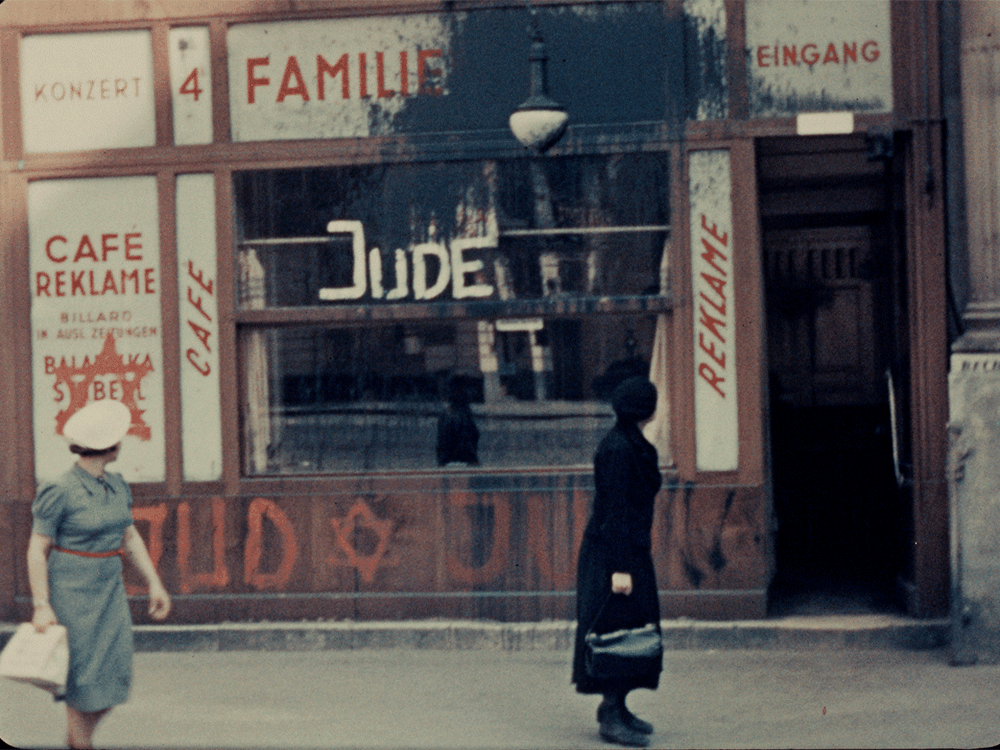
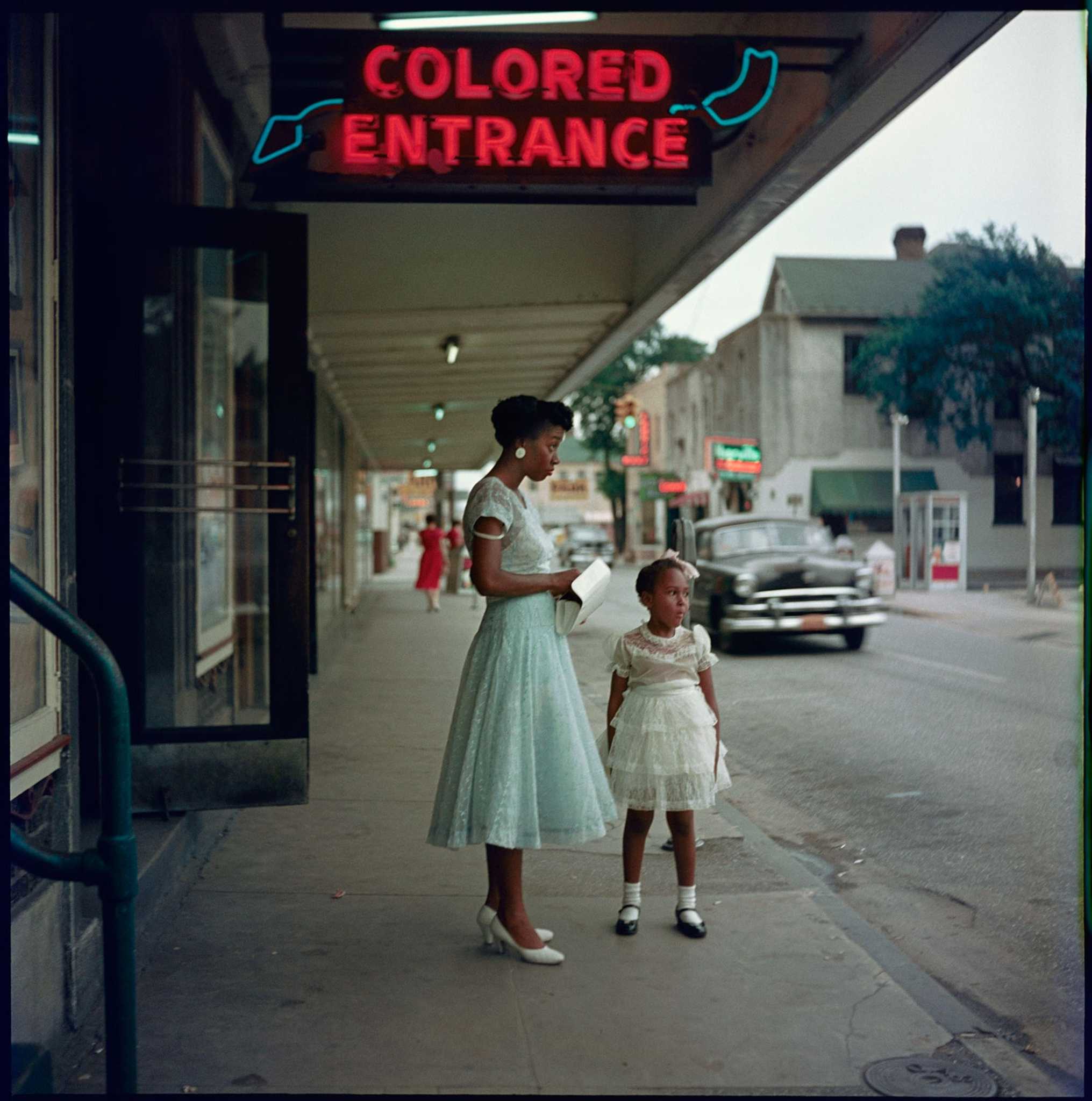


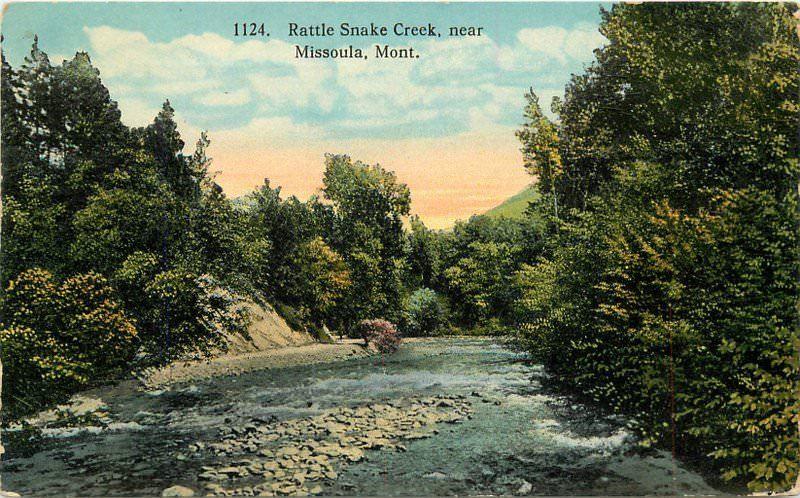
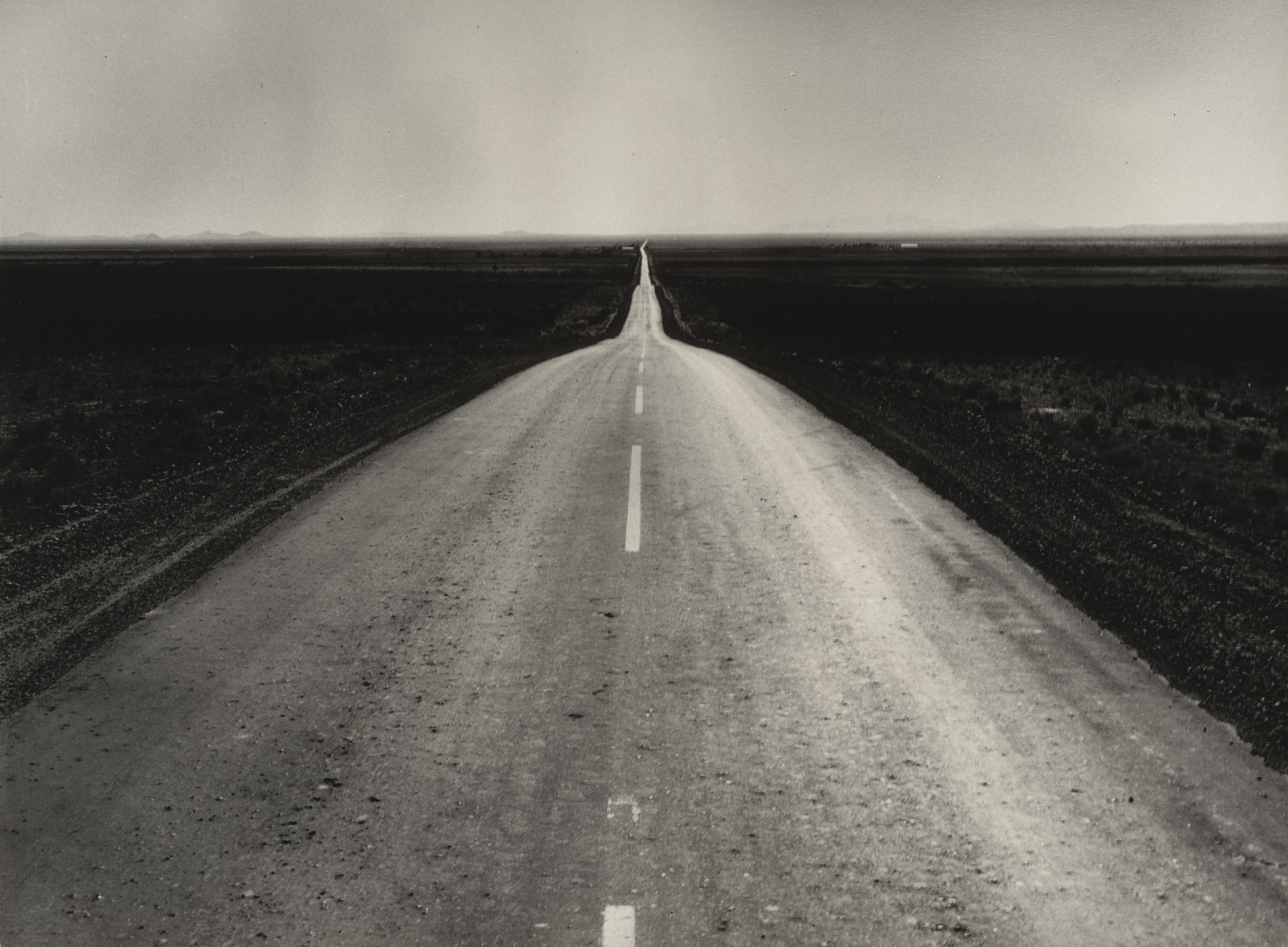



 Eiger, Mönch & Jungfrau