James Morrison’s Year in Reading, 2024

Pleased to once again present reading reviews from some of my favourite readers. Today’s installment, his fourth, is by that titanic reader, the one and only James Morrison. James lives and works in Adelaide, on unceded Kaurna territory.

John H. Glenn Jr., “Fireflies Outside Friendship 7; First Human-Taken Color Photograph from Space”, 1962

BEST BOOKS READ IN 2024: An Annotated Index of Limited Utility

Books—there’s never any end to them, despite my attempts to read them all. Of the 280-odd I read in 2024 (no, you get a life!), these are the best of those that were new to me. In order to make this as useful(?) as possible, in in the endless quest for cheap novelty, they are presented as annotation to an index of themes. [Ed. – Sorry, missed that last bit. Still thinking about the 280…] Four writers appear twice (Kate Kruimink, Joseph Roth, Percival Everett and Walter Kempowski) and for what I think is the first time, both parties in an extant marriage also make the list (Everett again, with Danzy Senna).

Age, Coming of: Gwendolyn Brooks, Maud Martha & Diane Josefowicz, L’Air du Temps

Two opposing approaches to stories of young girls growing up. Brooks’s 1953 novel is a collage of vignettes stretching over years, the growing up of a Black girl in Chicago, unlucky but resilient, dreaming of a high-class life in the face of her own limited opportunities, Josefowicz’s novella covers just a short period of time in the life of a 13-year-old girl, when the shooting of a neighbour proves to be the catalyst for the peeling back of various local secrets. Brooks was primarily a poet and Josefowicz is a historian, but both of them show themselves to be tremendous fiction writers.

Art, Making of and Prehistory of: Maylis de Kerangal, Painting Time (translated by Jessica Moore)

De Kerangal is a personal favourite, and her best books usually involve a deep dive into some fascinating technical process (organ transplants, restaurant-level cooking, infrastructure engineering, or, in this case, both ancient cave art and trompe-l’œil painting), balanced with beautifully judged explorations of its human pressures and consequences. A compressed, deeply involving history of visual trickery and the impulse to make art.

Art, Making of from Deceased Father’s House: Jen Craig, Wall

In 2023 Craig’s two earlier novels were among my most loved discoveries, and I wasn’t wrong in thinking her third book would also be fantastic. A woman who is and isn’t Craig herself returns home to Australia to empty out her dead father’s house, with an eye to making the contents into an art exhibition. Multiple levels of consciousness rooted in different frames of time, deftly handled so as to be both convincing and presented with clarity, Craig’s prose is a wonder. I was lucky enough to be able to speak with her about one of her earlier books as part of the Wafer-Thin Books discussion series I co-hosted with Brad Bigelow of Neglected Books (neglectedbooks.com) through 2024—video here.

Biracialism, Literature of, Now an Award-Winning TV Series: Danzy Senna, Colored Television

Breezier in style than most of the books here, but far from shallow, Senna’s book features a protagonist obsessed with her own mixed-race nature, author of an undisciplined manuscript that’s becoming “the mulatto War and Peace.” She makes the mistake of getting involved with the Hollywood “prestige TV” world, and complications, as they say, ensue. Race, art, theft, infidelity; it’s all in there, making the sort of book that’s likely to be a big commercial success. Except this time it’s actually a good book. And yes, it does pain me to have to keep spelling the title the (wrong, but in this case “correct”) American way. [Ed. – They’re wrong, the Americans. And they will never admit it, James.]

George Hendrik Breitner, “Marie Jordan Nude, Seen from the Back”, 1889

Black Hole, Haunted by in Silicon Valley: Sarah Rose Etter, Ripe

A Silicon Valley satire—no, wait, come back! It’s well worth your time, and not just because the main character is haunted by her own personal tiny black hole, a physical manifestation of her depression. Things are not improved by her getting pregnant, nor by her various other ill-conceived life choices. A downbeat comedy of unforced errors.

Blitz: Francis Cottam, The Fire Fighter

Look, I have a weakness for Blitz fiction—people trying to go about their ordinary lives each day while having their world hammered each night by bombs is something I’m apparently able to read about endlessly. [Ed. – Same!] Cottam’s 2001 novel about a man given the task of protecting five specific London buildings from firebombs, without knowing why these sites are so important, is vividly convincing about the textures of daily life at the time, as well as exploring duty and treachery under ludicrously extreme circumstances. I’ve not read any of Cottam’s other books, which mostly seem to be supernatural fiction, but if they’re as strong as this they will not disappoint. (For more Blitz fiction, see Norah Hoult under Brains, below)

Boxing, Junior, Internal Thought Processes During: Rita Bullwinkel, Headshot

I enjoyed but didn’t love Bullwinkel’s story collection Belly Up, so if I hadn’t already bought Headshot I might have given it a miss. Yet again, incontinent book purchasing saves the day! [Ed. – As is so often the case!] Basically a series of internal monologues (though in the third person), from each of the teenaged girl contestants in an ill-attended second-rate female boxing tournament in a dusty gym over the course of one weekend, it’s a marvel. Kicks your Hemingway-style boxing crap out the door.

Brains, Decaying: Norah Hoult, There Were No Windows (also Cocktail Bar)

One of the Persephone Books rediscoveries that I can no longer afford due to most British people being dickheads and causing Brexit, thus making it prohibitively expensive to have British books sent to Australia, this 1944 novel by an Irish writer was both depressing and very funny, in the way that you can laugh afterwards about an awful relative, though their physical presence makes you squirm. It’s a pitch-perfect rendering of a deluded snob, hit with encroaching dementia and lowered circumstances, as the German bombs fall on London and servants become scarce. [Ed. – Oof, this sounds like something that might be called “unflinching”!] It was so good I immediately bought her story collection Cocktail Bar, from 1950, and it was similarly full of great things.

British People, Fucking Up Overseas in the Face of Imminent Implied Arachnid Apocalypse: Olivia Manning, The Rain Forest

Olivia Manning, man, such a great writer. Why isn’t all her stuff in print, instead of mainly just the (admittedly brilliant) two Fortunes of War trilogies? The Rain Forest, from 1974, is an intriguing twist on her common theme of a not entirely well-matched married couple doing duty for Britain overseas, in this case in a thinly disguised Madagascar (there are lemurs). Well-meaning ineptness in the face of political intrigue shades into an unexpected hint of global catastrophe to come from humans encroaching into a reservoir of toxic biology deep in an unexplored forest. Wonderful stuff. [Ed. – Wow! Sounds amazing! I, for one, welcome our imminent arachnid overlords.]

Johann August Ephraim Goeze, “Little Water Bear”, 1773

Century, Twentieth, Horrors and Absurdity of: Patrik Ouředník, Europeana (translated by Gerald Turner)

When spellcheck can’t cope with the author name or the title, you’re doing something right. Europeana is a brief but rambling survey of the Twentieth Century in all its ghastliness, where every fact, major or minor, is given equal weight, like a lecture by the most brilliant autistic raconteur in the world. If, like me, you buy the Dalkey Archive Essentials edition, you can also enjoy the brutally trimmed pages that slice off the outer edges of the marginalia.

Convicts, Female, Transcontinental Aquatic Journey of: Kate Kruimink, Astraea

The first of two Kruiminks on this list (see Grief, below), and the inaugural winner of the Weatherglass Novella Prize, this is the entirely shipbound story of a group of women being transported to New South Wales (not Tasmania, as every single review incorrectly states) in the early 1800s, to be servants and breeding stock in the new colony. Plagued by overbearing and/or predatory men in the shape of ship’s captain, crew, and minister, and haunted by their own miseries and guilts, their story is nevertheless a darkly funny one, full of unexpected insights and, for the reader, delights. [Ed. – Yep, getting this one for sure.]

Displacement, Linguistic, Psychological Aftereffects of: Antigone Kefala, The Island

Antigone Kefala is a (deep breath) ethnically Greek Romanian cum Australian via post-WWII refugee resettlement camps, writing in English, her fourth language. This 1984 book, being reprinted in North America this year, is, inevitably, out of print in Australia. It’s a subtle, destabilising, discursive meditation on place and belonging and language; very hard to pin down and quite unusual. [Ed. – Yep, getting this one for sure.]

Domestic Life, Oppressive Atmosphere Within: Fumiko Enchi, The Waiting Years (translated by John Bester)

A wife forced to choose and manage her husband’s concubine, who is still effectively a girl and not an adult, is the core of this disturbing but unsensationalised brief novel from 1957. Enchi was a distinguished, prizewinning novelist, and one of the great female writers of Japan. It’s criminal how little of her work is translated into English. [Ed. – Yep, getting this one for sure.]

Ineko Arima in Tokyo Twilight (Tôkyô boshoku) (Yasujirô Ozu, 1957)

Epics, Tiny and Incomplete: Joseph Roth, Perlefter (translated by Richard Panchyk)

This was the year that, despite pacing myself carefully, I ran out of Joseph Roth fiction. He was one of the greats, a genius and an alcoholic of astonishing powers, and the supreme chronicler of the Habsburg Empire, its collapse, and the darkness that followed. Perlefter is an incomplete novella, found in his papers and published posthumously, yet still substantial enough to hold its own. A wealthy Austrian, observed by an orphaned relative, enthusiastically grapples with the technological and social developments of the early Twentieth Century, all observed with Roth’s characteristically subtle and quirky eye and voice. See also Napoleon, below.

Failure, Artistic, Afterlives of: A. Valliard, The City of Lost Intentions: A Guide for the Artistically Waylaid

I can guarantee you’ve not read anything like this: a consistently inventive tourists’ guide to a netherworld of endless artistic failure and pretension, packed with more ideas per square inch than most books could even dream of, and written with a style recalling the sarcastically decadent fin-de-siècle classics. You’ll probably see yourself in it, and not be happy about it.

Grief, All-Enveloping Nature and Absurdity of: Kate Kruimink, Heartsease

Kruimink’s other novel of 2024 was the longer Heartsease, set in modern Tasmania [Ed. – Sure you don’t mean New South Wales???], and spikily hilarious even though it’s all about loss and grief and neglect. Wryly, unsentimentally Australian in the best way, and including a fine joke about musk sticks. [Ed. – Probably lands better if you know what that is.]

Lesbians, Ancient and Fragmented: Sappho, If Not, Winter: Fragments of Sappho (translated by Anne Carson)

As when trying to describe Ulysses in a previous one of these round-ups, sometimes there’s not a lot you can usefully say about a great book; you just have to point at it and marvel. I’ve read other translations of Sappho before, and loved them, but this really must be the ultimate take in English.

Life, Viewed Askew, in Small Portions: Jessica Westhead, And Also Sharks & Percival Everett, Half an Inch of Water

Two wide-ranging short story collections from the back catalogues of writers I deeply admire. Westhead is Canadian and belongs more to the George Saunders school of fiction (though better and more inventive), while Everett is much harder to pin down—if there’s any American writer working today with a broader, less predictable bibliography then I’ll eat any number of hats. Both books are full of gems, and are frequently genuinely funny.

Nanotechnology, Inadvertent Consequences of treating Cancer with: Anton Hur, Toward Eternity

An industrious and talented translator into and out of Korean, Hur’s first novel is cheeringly excellent: a full-on literary science-fiction exploration of nanotechnology, identity, social collapse, cloning, warfare, and the possibility of a human future, no matter how altered that definition of ‘human’ might be. It’s really enjoyable to see someone so talented engage with the genre in such a serious, productive way, though the results are often pretty bleak. [Ed. – Now I’m mad I had to return it to the library before I could read it.]

Napoleon: Joseph Roth, The Hundred Days (translated by Richard Panchyk)

The second Joseph Roth in this list, and something of an outlier in his work, being a fictional patchwork view of Napoleon through minor figures in his orbit, rather than being set in the Austro-Hungarian Empire. Roth was always great, though, and stepping outside his usual area doesn’t dim his powers one bit. That I now have no fiction by him left unread is a cause of great psychological pain for me. Financial donations to ease my distress will be accepted. [Ed. – Please contribute to James’s GoFundMe. He asks so little.]

Nazis, Fleeing From in Company of Unreliable Man: Helen Wolff, Background for Love (translated by Tristram Wolff)

How did a book this good end up sitting for decades in a drawer, unpublished? Imagine a lost Jean Rhys novel, only with a female protagonist who has agency (alright, so it’s not an exact match) [Ed. – genuine lol], beginning with a couple fleeing to the Côte d’Azur one hot summer to get away from the growing Nazi power at home in Germany. Wolff wrote this book in 1932, but never tried to publish it, even though she later went on to found Pantheon Books in America with her husband. What other masterpieces like this are out there, sitting unpublished in a world where Haruki Murakami and Dan Browns’ every fart gets the hardcover treatment? Truly we live in a fallen world.

Nazis, Revenge on Collaborators with: Martha Albrand, Remembered Anger

In many ways this is ‘just’ an above-average crime/espionage novel, about an American man imprisoned by the Nazis who gets out at the war’s end and tries to find out who sold him out. But what lifts it above that is the fact it was written just as the events it was describing were happening, in the early months of 1945, as Paris wobbled back to the start of normality, by an author (born Heidi Huberta Freybe Loewengard) who was herself politically active against and then a refugee from the Fascists, and it beautifully captures the numerous little details of its time and place to give it a real kick of verisimilitude. [Yep, I’ll be getting this one, and actually reading it!]

Nazis, Rise and Collapse of: Walter Kempowski, All for Nothing (translated by Anthea Bell) & An Ordinary Youth (translated by Michael Lipkin)

A pair of stone-cold masterpieces, looking at Germans in World War II from opposite ends, geographically and temporally. Youth is about boyhood under growing Fascist power and then war, sneaking jazz records and trying to get out of the Nazi Youth, not for political reasons but because you don’t like enforced physical activity. Nothing, on the other hand, is the tale of the slow destruction of a German household on the Eastern Front as the Russians draw closer and closer. Both are wonderfully written, and attempt no form of exculpation of the author or the characters. These are people who didn’t like the Nazis because they were not their social class of person, not because of any ethical qualms. Youth is apparently part of a whole series of books Kempowski wrote in German, and we need all the rest translated NOW. [Ed. – Amen]

Palestine, Staging Hamlet in: Isabella Hammad, Enter Ghost

Even at the best of times trying to stage Hamlet in with an all-Palestinian cast under Israeli rule seems like a logistical nightmare, and these are not the best of times. A Palestinian-born, London-based actress returns to her birthplace and her sister, and almost involuntarily gets caught up in the theatrical project of a distant acquaintance, as well as attempting to reckon with her family and its history. It made me immediately buy Hammad’s first novel, The Parisian, though I haven’t read it yet because it’s huge. [Ed. – I just bought this too, and it’s so huge!]

Sanatorium, Satire of Male Attitudes Within: Olga Tokarczuk, The Empusium (translated by Antonia Lloyd-Jones)

I get the feeling not everyone loved Tokarczuk’s latest book translated into English, but it was very much my kind of thing. A bunch of guys, self-deluded and not as smart as they think they are, discussing the issues of the day and their philosophies, while living in a tuberculosis sanatorium? A strange, supernatural observer/narrator? Sign me up!

Slavery, Literature Of, Remixed: Percival Everett, James

On the other hand, pretty much everyone seems to have loved this, and rightly so. As I mentioned above, Everett is one of the least predictable writers alive, and his take on Huckleberry Finn from Jim’s code-switching point of view is a gripping, funny masterclass in rewriting a classic without redundancy. This is an angry, exciting and surprising book that doesn’t always match the original’s plot. I hope this gets the author the huge audience he deserves, though it’ll also be funny to see this bigger audience attempt to process some of his earlier books.
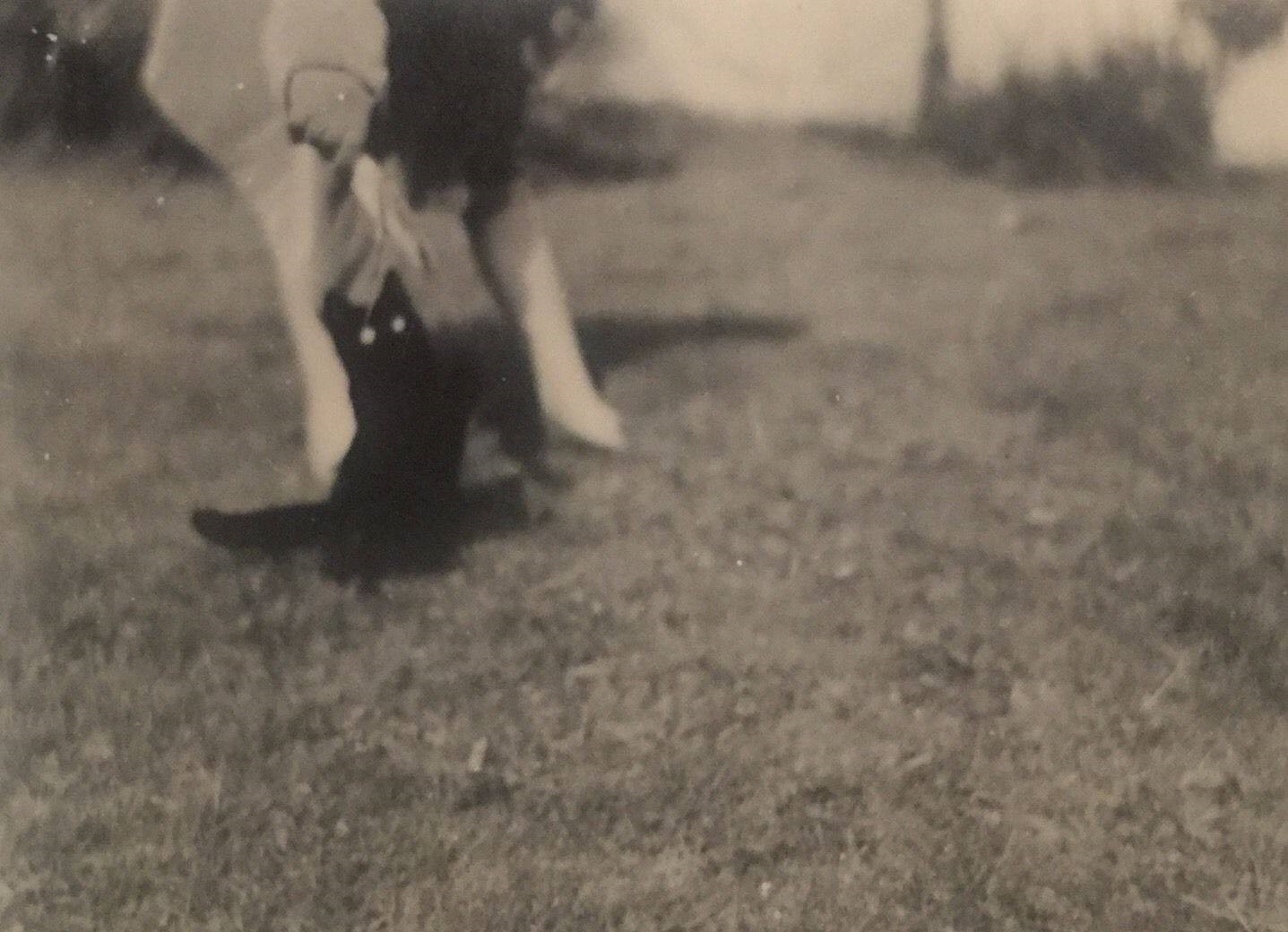
Unknown photographer, Cat, Year unknown [Ed. — Spooky-ass cat]

Smallpox, Alternative History of World Due to: Francis Spufford, Cahokia Jazz

You know those stories where what begins with a couple of beat cops investigating a crime scene ends up being a whole-of-society-spanning investigation of conspiracy and political intrigue? Well, imagine one of those, written with the perfect mix of style, insight and originality. And it’s set in a version of history where it was the less virulent form of smallpox that was brought to the Americas by Europeans, meaning what has become the United States has done so in the face of much vaster, stronger First Nations. And imagine it’s a huge amount of fun. That’s Cahokia Jazz, baby. [Ed. – Look for this on my year-end list too!]

Troubles, The, Childhood During: Jennifer Johnston, Shadows on Our Skin

Jennifer Johnston is a writer who I idiotically ignored for years because her current UK publisher cursed her with the sort of soft-focus-photo-of-a-woman-in-a-fancy-dress-turned-away-from-the-camera-with-her-head-cropped-off cover photos more commonly found on flimsy commercial fiction. [Ed. – I prefer house-lit-from-within-against-a-nighttime-sky myself.] But then I came across a copy of How Many Miles to Babylon? with a good cover, read it, and was hooked. She’s phenomenally good, a brilliant and unsentimental Irish writer whose particular interest is the way the British occupation of Ireland leaks into and impacts upon the lives of ordinary people. Shadows is one of her best, following the life of a young boy in Derry in the 1970s, half in love with a school teacher who in turn is half in love with the boy’s older brother, who has come back home from England with big ideas and a gun in his back pocket. [Ed. – Damn, I just looked her up and she has so many books!]

Wildfire, Californian: George R Stewart, Fire

A Californian wilderness on fire, with the fire itself as the main character, and telling the story of all the people arrayed against or caught by it. Stewart, who also wrote Earth Abides (a wonderful novel and now a terrible TV series), describes everything with a dispassionate but not cruel eye, and the result, published in 1948, is all too horribly relevant now.

[Ed. — Ladies and gentlemen, give it up for James Morrison, always all too horribly relevant! Seriously, thanks James, this was amazing and budget-busting, as usual.]
What I Read, January 2024

Chava Rosenfarb was born in Lodz in 1923 to parents enmeshed in the life of the Bund, a political and social justice movement that flourished in interwar Poland. In contrast to Zionists, Bundists believed that Europe could and should remain central to the future of Jewish life. Economically, they embraced socialism. (Bundism thrived in the highly Jewish, highly urbanized cities of Poland, especially Lodz, a center of textile manufacturing regularly compared to Manchester.) Linguistically, they championed Yiddish over Polish or the Hebrew that Zionists, aimed to resurrect. Spiritually, they turned Judaism’s emphasis on reparation (the messiah will not arrive until we have perfected the world) to social justice ends in their own community.

Like every other Jew her age in Poland, Rosenfarb’s education was interrupted when Germany invaded in September 1939. A few months later, she was interned with her family in Lodz’s sealed ghetto. Amazingly, she, her sister, and her parents remained together until the final liquidation of the ghetto in the late summer of 1944. Along with some friends, the family had prepared a hidden space in their apartment building; more than 20 people crammed into it in those final days. Although they escaped notice for more than three days, their luck eventually ran out and they were deported to Auschwitz. Rosenfarb’s father was separated from them at the ramp: they never saw him again; she would later learn that he died in an allied bombing raid in Germany in the last days of the war. The Rosenfarb women were sent to Sasel, a work site in a Hamburg suburb, where they rebuilt roads for several hard and cold months. Early in 1945 they were deported again, this time to Bergen-Belsen, where Rosenfarb, sick from the typhus infestation that swept that notoriously chaotic place (all camps were disaster zones in the last weeks of the war: the situation in Belsen was perhaps the most terrible of all), clung to life, more dead than alive, when the camp was liberated in April.

Remarkable experiences as a DP and an illegal alien in Belgium followed; by 1950 the Rosenfarbs, along with a man Chava had known in Lodz, reencountered in the ruins of postwar Germany, and later married, secured visas to Canada. (That man, Henry Morgenthaler would later champion the cause of legal abortion in Canada, becoming, in my 1980s childhood, a figure equally reviled and admired. My mind exploded when I learned this connection.) The refugees settled in Montreal, where Rosenfarb would spend most of the rest of her life. In this new world, along with caring for her mother and raising her children, Rosenfarb continued the writing she had begun in the Lodz ghetto. After poems came novels and short stories, her efforts culminating in her three-volume fictional chronicle of the Lodz Ghettto, The Tree of Life (1972, translated into English by her daughter, Goldie Morgenthaler).  

I learned all this and more in a wonderful course offered by the Yiddish Book Center, spurred by the publication of her collected short stories (excellent, especially the dramatic “Edgia’s Revenge,” which I immediately added to my syllabus). The Center offers courses and talks regularly; check them out if you have any interest in all things Yiddish.

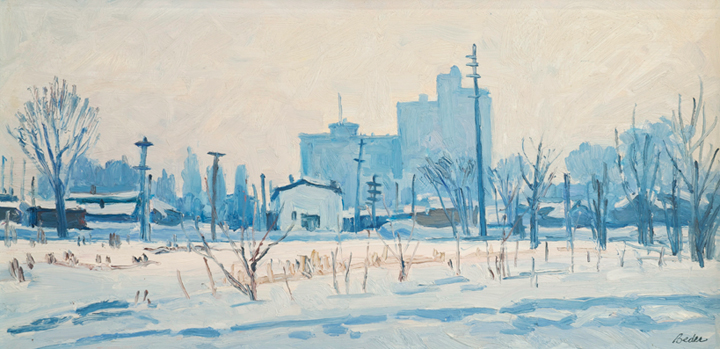
Jack Beder, Winter Morning, 1972

Rebecca Donner, All the Frequent Troubles of Our Days (2021)

Mildred Harnack née Fish grew up in Milwaukee to an intermittently employed father and a mother who was a stenographer. In the 1920s she attended the University of Wisconsin, where she met Arvid Harnack, an economist and jurist from Germany who could, unlike any man she had met before, match her as much in the seminar room as on the dance floor. By 1929 the young couple—they had married three years earlier—was living together in Berlin. Mildred would return home only a handful more times. Berlin was exciting, even for a poor couple like the Harnacks. All kinds of change seemed possible. But the rise of the Nazi party threatened all that. Mildred was fired from her position teaching American literature in 1932 because of her opposition to the party, even though it would not come to power until the following year. Needing to find work, Mildred took a job teaching working class students at night school. She loved her students, believed in their ability to transform their lives, and eventually recruited some of them as central figures in a resistance movement that she and her husband began building in the early years of the regime. The circle, as she called it, met to share ideas, often over book discussions, and distributed leaflets denouncing Nazi policies. It was loosely aligned with other resistance movements, including the one that included the pastor Dietrich Bonhoeffer, a cousin of Arvid’s, and the one led by Harro Schulze-Boysen and Libertas Haas-Heye, which eventually led Arvid to pass on military secrets he gained from his work in the Reich Ministry of Economics. Rebecca Donner, who happens to be Mildred’s great-great-nice, tells the story with flair and sympathy. 

I found it fascinating to compare Donner’s book to Norman Ohler’s Bohemians, in which Mildred is a bit player. Donner has much less sympathy with Haas-Heye than Ohler does—which makes sense since Haas-Heye ratted Harnack and the others in the so-called Red Chapel group out. It seems she was duped by a supposedly sympathetic secretary in the jail where she was held in custody—but duped rather easily, Donner implies.

Earlier in the 1930s, Mildred befriended Martha Dodd, daughter of the US ambassador. When Dodd was replaced, she became close to the wife of the new First Secretary, whose son, nine-year-old Don Heath, Jr., acted as a courier, carrying clips of paper in his backpack from his English lessons with Mildred (whom he adored) to his father. Typically, those messages consisted only of a time and place where Mildred or Arvid could meet with Heath to pass on information in person.

This work was dangerous, of course, and it some sense it was only a matter of time before she and Arvid were found out. Had the group’s Soviet handler not been so clumsy, they may have escaped detection. When they realized their cover had been blown in September 1942, the couple tried to get to Sweden, but they were arrested in East Prussia the day before they were to set sail. Mildred’s initial six-year prison sentence was overturned by Hitler himself. A new trial sentenced her to death; she was executed by guillotine in February 1943.

As its title implies, nothing is comforting about the subject matter of All the Frequent Troubles of Our Days. It’s a sad book. In her final days Harnack was miserable: eaten by lice, beaten by guards, almost unable to speak to the fellow prisoners who admired her. But grief and despair shadowed her long before her arrest; I was moved by the cost of Harnack’s convictions. Her commitment—compounded by her inability to say anything, lest it further endanger her—destroyed her relationships with almost everyone, especially her American family. By the end, Harnack has the remarkable but unenviable distance from the world of someone like Simone Weil. Donner admires her great-great-aunt, and makes us admire her, too. But she has the guts to admit that principled resistance to injustice can lead to the calcification of so much that is human. How painful to see the erosion of that Wisconsin college girl, wide-eyed and full of the desire to teach and to learn, in love with a man and the world. How loving and patient of Donner to have resurrected her.

[An aside: Donner relies heavily on William Shirer’s diaries. That surprised me: he seems so old-fashioned. Who reads The Rise and Fall of the Nazis anymore? But Donner knows what she’s doing: based these excerpts, he was a hell of a writer.]

Emily Tesh, Some Desperate Glory (2023)

The always reliable Adam Roberts tipped me on to this in his annual sff recap in The Guardian. Then Ian Mond praised it too. The Venn diagram of their tastes is close to being a circle, but everything in it is top-notch. Roberts calls Some Desperate Glory “a blend of space opera and military SF that refreshes both modes,” which sounds exactly right to me, even if I still don’t quite know what those terms mean.

Kyr has come of age on Gaea Station, the last redoubt of humanity after earth is destroyed by alien species who have decided that humans are irredeemably violent. (I mean, not wrong.) Her seventeen years have been marked by submission, dedication, and toughness, to others but above all to one’s self. Food is fuel; rest mandated so the machinery of the body and the station can keep going; families are split apart, the children, bred to emphasize traits necessary for survival, are raised in same-sex age cohorts after they leave the nursey.

Gaea, it becomes clear, is Sparta.

And Kyr loves it.

Along with her twin brother, she is the best of the best: fast, strong, smart, zealous, loyal to the cause. Yes, her “siblings” hate her—she’s always ratting them out and pushing them to exhausted, shameful tears—but such toughness is needed for humanity to enact its revenge. As the date of her cohort’s graduation approaches, Kyr can’t wait for her assignment. She knows she’ll be named to the warrior caste. And then she’ll be able to throw off her only black mark: a family history of treachery. Ten years earlier, her older sister fled the station with her infant child, probably for a planet where the aliens let humans live on sufferance, symbolically neutered, as pathetic as lap dogs. When Kyr’s assignment comes back all wrong—her shock compounded by the news that her brother has been selected for an even more prestigious, albeit suicidal mission—she hatches a plot to follow him. The journey will eventually revise her entire sense of the universe.

I admired Tesh’s accomplishment here: she lets us to read against Kyr (we know she’s more than insufferable: the perfect fascist, really) even as we can understand her zeal for her embattled mission. (I say “we” but a quick glance at Goodreads—I remembered why I never do that—shows me that Tesh’s skill with POV is lost on some readers…) In a brief afterword, Tesh lists some of the works she consulted in writing Some Desperate Glory: books on North Korea, Paxton’s classic study of fascism, and Lawrence’s Wright expose of the handful of people who have escaped scientology. All of which allows her to pull off her greatest trick: like Kyr, readers too are deprogrammed, the “facts” of the novel’s world cast into new light as we proceed. An unpredictable quest story follows, with plenty of plot twists and heart-in-mouth moments. (I was on the verge of tears by the end.) Queer love stories, found families, alternate realities: all the things contemporary sff is known for come into play. Good stuff.

Walter Kempowski, Marrow and Bone (1992) Trans. Charlotte Collins (2018)

I raved about this writer last month.

Marrow and Bone might be the least terrific of the three Kempowskis I’ve now read, but it’s still very good. (Don’t start here, though.) Jonathan Fabrizius is a freelance writer who, thanks to a small stipend from an uncle, lives in charming modesty in 1980s Hamburg, sharing one of those impossible German apartments (carved up willy-nilly from a grander space, bathrooms in the hall, no kitchen to speak of) with a girlfriend who has given up on him. Out of the blue, an invitation comes from, of all things, the organizers of a road rally across the former East Prussia: they want Jonathan to write about the sights attendees might enjoy as they follow the racers from east to west. Jonathan accepts with alacrity: he needs the money, but he also has ties to the region. His companions are a former racecar driver and a representative of the event organizers. Like all picaresques, Marrow and Bone shambles from one incident to another, most of which at first seem consequential, even dire, but prove to be irritants at worst, spurs to further discoveries at best. (When their car and luggage is stolen, for example, the company immediately sends another car, and the protagonists later find the luggage abandoned by the side of the road.) Jonathan, a bit of a schlemiel, need never worry about the consequences of his failures: in one moving scene, he promises to mail form the West some anxiety medication to the mother of a suffering young woman. Tragically, absurdly, he loses the address: he feels bad there’s no way to reach them, but he’s content to throw up his hands.

It’s clear that Kempowski is diagnosing the post-communist situation in this tale of the last days of divided Germany. How so and to what end are harder to say. Maybe that comes from the newness of the events (published only three years after the fall of the wall). Or maybe from Kempowski’s haziness, which can be hard to disentangle from Jonathan’s. Importantly, though, Kempowski does not think it would have been better had the Germans not lost East Prussia. He acknowledges that Poles have had opportunities and made a go of things—even if those things are sometimes muddled in the ordinary way of the world—that they might not have had under German hegemony. But he also laments a lost world—especially the mix of cultures that East Prussia, like all borderlands, once had. He’s similarly gentle with the 1980s leftist intellectual milieu to which Jonathan belongs. He pokes fun at their belief in the power of petitions and protests, but admires their conviction.

I guess I am writing myself into the position that it is not easy to tell what is mild (and therefore, possibly, generous) in the book and what is fuzzy (and therefore, possibly, lazy).

Oliver Burkeman, Four Thousand Weeks: Time Management for Mortals (2021)

If we’re lucky and live into our seventies, we spend about four thousand weeks in this life. To my numerically-hazy mind that seems lot, but it’s not. And when you’re in your 50s, you can’t help but conclude that you have hardly any weeks left at all. Burkeman’s self-help book for people who cringe at the idea of self-help gently asks us to recognize the fact that we all want to deny, the inescapable reality quantified in his title. Burkeman, a self-professed failed productivity expert, exhorts us to make those weeks count—but not by being more productive. (Some of the most amusing parts of the book concern the various productivity regimes to which he has pled fealty. As he wryly notes, work tends to beget work. Answering email is shit!) The point isn’t that we should spend our time only doing what we want—none of us have that freedom, especially those of us who aren’t independently wealthy. Rather, it’s simply that we should be intentional about our time. But what a huge “simply” that is! It means recognizing our mortality—something that I, for one, have had no interest in doing.

A short, well-written, often funny, and always accessible book (Burkeman makes even Heidegger intelligible), Four Thousand Weeks has kept its hold on me in the weeks since I read it. He demolishes the belief so many of us have that our real life will begin at some indefinite future time: as soon as I do x or figure out y, I’ll finally do z (clean the closets, commit to a relationship, write that book), when in fact our lives are nothing but the cluttered, half-hearted, scattered series of moments that we wrongly think of as garbage time before real meaning will arrive. He argues that our impatience, our “it would be funny if it weren’t so sad” drive to hurry through life, is really a sign of how strongly we deny our mortality. We feel time is wasted because we are reluctant to embrace discomfort and resistance. We don’t have to like traffic jams, checkout lines, or toddler games. But until we learn to experience them as time we will find them even more painful than they are.

Some of you might remember Emma Townsend from Twitter (I miss her). I raised an eye at her when she raved about Four Thousand Weeks; she gently encouraged me not to be so hasty. It took me a while to try the book for myself, but I’m so glad I did. Sorry for doubting you, Emma.

Rebecca West, Harriet Hume (1929)

A witchy book; I must confess, I am not much for witchy things.

West’s strange fantasia of a (non)-relationship over several decades is the subject of Episode 22 of One Bright Book—worth your time, in my opinion, especially if you want to hear smart readers wrestle with a book they don’t quite know what to make of. Fascinating for the contrast between West’s mode here and that of her gigantic Balkan travelogue, Black Lamb and Grey Falcon, which I spent some time with each day this month.

László Moholy-Nagy, 7 A.M. (New Year’s Morning) ca. 1930

I still have a few Rosenfarb stories to read, so I’ll save further comment on the collection for later other than to say how wonderful it is that these are now available in English. If I had more time—and, you know, didn’t spend my days teaching—I’d take classes like this one all the time.

And you? How did you spend January?

My Year in Reading, 2023

I wouldn’t say I had a great reading year. I was on my phone too much, I was being anguished or avoiding being anguished about the myriad injustices of the world, which I knew too much and could do too little about. I travelled—maybe not too much but an awful lot, for me—which was often energizing and enjoyable, but also got in the way of reading.

I felt, in other words, that I had frittered away my one wild and precious reading life. I bottomed out in the middle of the year, regularly tossing aside books unfinished after having spent more time with them than they deserved or that I could find patience for. A querulous reading year, you could say.

And yet some things stood out. Links to previous posts, if I managed to write about it.

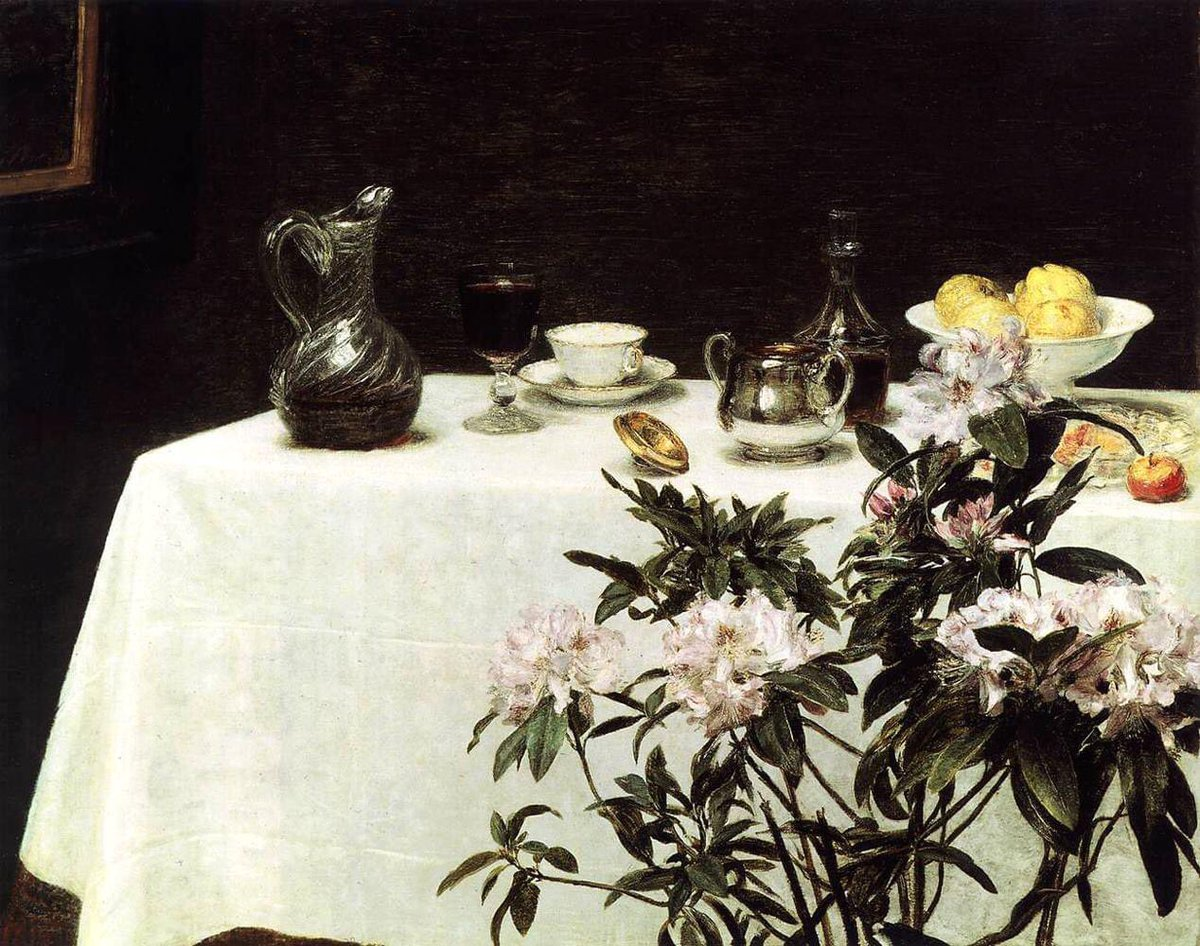
Henri Fantin-Latour, Le coin de la table (1872)

Dwyer Murphy, The Stolen Coast

A rare heist novel where the heist, though satisfying, isn’t the main attraction. I loved this stylish, smart, funny tale of a man who has put his Ivy League law degree to use in taking over the family business: giving new identities to guys on the run and getting them the hell over the border. A great book of off-season resort towns.

Simon Jimenez, The Vanished Birds

I’m still getting my bearing in contemporary sff so take these comments for what they’re worth, but it seems rare to me that a book takes as many swerves as this one: the narrative moves back and forward in time and all over the place, from a near-future nearly uninhabitable earth to a galaxy far-away in space and time. You get invested in a storyline and then it ends but sometimes it comes back. But even more than the structure I loved this book for its emotional seriousness: its many relationships are doomed to fail because of their constitutive circumstances. For example: a man ages fifteen years between each meeting with his beloved, while she, thanks to intricacies of stellar time travel, has only aged a few months. The emotions might be bigger than the ideas, but I was totally okay with that.

Two novels by Katherena Vermette

One of the greatest working Canadian writers. This year, fresh off the thrill of teaching The Break to smart, appreciative students, I read The Strangers and The Circle, a bleak and beautiful trilogy of indigenous life in the aftermath of the cultural trauma of the residential school system.

Four novels by Kent Haruf

It should tell you something that in early April, one of the worst times in the academic year, I read four novels by Kent Haruf in just over a week. I loved Plainsong the most but enjoyed Eventide, Benediction, and Ours Souls at Night almost as much. Easy reading, sure: plain syntax rising to gentle arias, nothing fancy, maybe a little sentimental. But these books are so warm and kind. Each is set in Holt, Colorado, out on the eastern plains, where the mountains are a smudge on the western horizon and it’s sometimes hot and sometimes cold but always dry. The people are ranchers and school teachers and social workers and hardware store owners and ne’er-do-wells and retirees. Everyone is white and no one thinks that’s worth noticing. The time is hard to pin down. Sometimes I thought the 70s or early 80s but we’re probably talking the 90s. Things were different before the internet. The characters’ lives are modest and they seem fine with that. They go about their business, do their work, make good choices and bad ones. People look out for each other, but they judge each other, too. Little kids get lost biking, but they come home again. It’s not all roses, though. High school boys bully girls into having sex, over in that abandoned house just down from where the math teacher lives. People get sick, go hungry, lose jobs. Some characters get what the preacher will call a good death, some die unreconciled to their kin, some without warning, too soon. Life just keeps happening, you know?

Some readers will call this hokum, but I ate it up. Haruf won my heart. I thought him especially good on second chances and unexpected turns of fate. Of all the stories that weave through these loosely connected novels, the best concerns two brothers, old bachelors, ranchers, who agree to take in a pregnant teenage girl and who, to everyone’s surprise, not least their own, form a new family with her. That scene where they take into the next town over to get things for the baby and insist on buying the best crib in the store? Magic.

Garth Greenwell, Cleanness

Smart, sexy, stylish books about how we relate to bodies privately and publically, and whether we can recast the narratives that have shaped aka deformed our understanding of what it is to live in those bodies. Greenwell’s Substack is worth subscribing too; he makes me curious about whatever he’s curious about. Can’t wait for the essay collection he’s writing.

Emeric Pressburger, The Glass Pearls

Yep, that Pressburger. Closer to Michael Powell’s Peeping Tom than any of the (indelible) films they made together. Karl Braun, a German émigré, arrives at a boarding house in Pimlico on a summer morning in 1965. A piano tuner who never misses a concert, a cultured man, a fine suitor for the English girl he meets through work. I’m not spoiling anything to say that Karl isn’t just quiet: he’s haunted—and hunted. For Karl Braun is really Otto Reitmüller, a former Nazi doctor who performed terrible experiments, a past he does not regret even as he mourns the death of his wife and child in the Hamburg air raids. Now the noose is tightening and Otto/Karl goes on the run… Suspenseful stuff; most interesting in this play with our sympathies. Not that we cheer for the man. But his present raises our blood pressure as much as his past.

Toni Morrison, A Mercy

A short book that covers as much ground as an epic; a historical novel that feels true to the differences of the past but that is clearly about the present; a classic modernist Morrison text, where the first page tells you everything that’s going to happen except that it makes no sense at the time and the rest of the reading experience clarifies, expands, revises. Such beauty and mystery in so few pages.

Roy Jacobsen’s Barrøy series (Translated by Don Bartlett and Don Shaw)

Cheating a bit since I read the first one in December 2022. I’m a huge fan of these novels about a family and the remote Norwegian island they call home from 1900 to 1950. I like books where people do things with their hands, maybe because I can’t do much with mine. The characters bring sheep into the upper field, fish with nets and line, salt cod, keep the stove burning all through the year, row through a storm, carry an unconscious man through sleet. It’s all a little nostalgic, a little sentimental, but not too much. Just how I like it.

Two Books by Walter Kempowski (Translated, respectively, by Michael Lipkin and Anthea Bell)

Fresh on my mind so it’s possible I’ve overvalued them but I don’t think so. All for Nothing, especially, is something special.

George Eliot, Middlemarch

Last read in college—under the expert tutelage of Rohan Maitzen, this can only be called one of the highlights of my undergraduate experience. This time I listened to Juliet Stevenson’s recording, which perfectly filled a semester’s commuting. True, Arkansas traffic is not the ideal venue for some of Eliot’s more complex formulations, but Stevenson (as much a genius as everyone says, she do the police in different voices, etc.) clarifies the novel’s elegant syntax and famous images. The book’s the same, but I’m not; a whole new experience this time around. Much funnier, especially its early sections. (Celia is a triumph.) More filled with surprising events: that whole Laure episode (a Wilkie Collins novel in miniature), it was as if I’d never read it. And more heartbreaking: in 1997, I hated Rosamond, and I admit I still felt for Lydgate this time around, but I had so much sympathy for her, a character I’d only been able to see as grasping and venal. Speaking of sympathy, one of the glories of English literature lies in watching Dorothea as she matures from excitable near-prig to wiser and sadder philanthropist. Amidst all this change, though, some things stayed the same. Mary Garth still won my heart; the suspense at the reading of Featherstone’s will gripped me just as much.

It’s good to read Middlemarch in college. It’s better to re-read Middlemarch in middle age. It’s best to read Middlemarch early and often.

Konstantin Paustovsky, The Story of a Life (translated by Douglas Smith)

Six-volume autobiography of Soviet writer and war correspondent Paustovsky, a Moscow-born, Ukrainian-raised enthusiast of the Revolution who somehow made it through Stalinism to become a feted figure of the 1960s. The new edition from NYRB Classics contains the first three volumes. I only read the first two, not because I didn’t enjoy them (I loved them) but because I set the book down to read something else and the next thing I knew it was a year later. Paustovsky had something of a charmed life. His childhood was largely downwardly mobile, and he lived through so much terror and upheaval. And yet he always seems to have landed on his feet. Maybe as a result—of maybe as a cause—he looks at the world with appreciation. He can sketch a memorable character in a few lines. He writes as well about ephemera (lilacs in bloom) as about terror (I won’t soon forget his time as an orderly on an undersupplied hospital train in WWI). He can do old-world extravagance (the opening scene is about a desperate carriage ride across a river raging in spate to the otherwise inaccessible island where his grandfather lies dying) and the brittle glamour of the modern (for a while he drives a tram in Moscow). Trevor Barrett, of Mookse & Gripes fame, said it best: Paustovsky is good company. I really ought to read that third book.

Félix Vallotton, Still Life with Flowers, 1925

A few other categories:

Didn’t quite make the top, but such pleasurable reading experiences: Adania Shibli, Minor Detail; Paulette Jiles, Chenneville; Abdulrazek Gurnah, By the Sea; Jamil Jan Kochai, The Haunting of Hajji Hotak and Other Stories (teaching “Return to Sender” was a revelation: fascinating how even students who had seemed immune to literature shook themselves awake for this one).

Read with dread and mounting desperation, don’t get me wrong it’s a banger, but couldn’t in good conscience call it a pleasure to read: Ann Petry, The Street. Barry Jenkins adaptation when?

Maybe not standouts, but totally enjoyable: Margaret Drabble, The Millstone; K Patrick, Mrs. S; Yiyun Li, The Vagrants; Elif Batuman, Either/Or

Best dip into the Can-con vaults: Margaret Laurence, The Stone Angel. Got more about of this now than I did in high school, lemme tell you.

Best book by a friend: James Morrison, Gibbons or One Bloody Thing After Another: Not damning by faint praise. It’s terrific!

Book the excellence of which is confirmed by having taught it: Bryan Washington, Lot. Maybe the great Houston book. I get that novels sell but I wish he’d write more stories.

Grim, do not recommend: Larry McMurtry, Horseman, Pass By; Girogio Bassani, The Heron

Not for me: Jenny Offill, Weather; Annie Ernaux, Happening; Yiyun Li, The Book of Goose

Planned on loving it, but couldn’t quite get there: Julia Armfield, Our Wives Under the Sea. Sold as metaphysical body horror, this novel about a woman who goes to pieces when her wife returns from an undersea voyage gone catastrophically wrong as a kind of sea creature didn’t give me enough of the metaphysics or the horror. I figured it would be perfect for my course Bodies in Trouble but I couldn’t find my way to assigning it. Possibly a mistake: teaching it might have revealed the things I’d missed. Gonna trust my instincts on this one, tho.

The year in crime (or adjacent) fiction:

Disappointments: new ones from Garry Disher, Walter Mosley, and S. A. Cosby (this last was decent, but not IMO the triumph so many others deemed it; he’s a force, but I prefer his earlier stuff).

Standouts: Celia Dale, A Helping Hand: evil and delightful, can’t wait to read more Dale; Lawrence Osborne, On Java Road: moody, underappreciated; Christine Mangan, The Continental Affair: moody, underappreciated; Allison Montclair, The Right Sort of Man: fun; Joseph Hansen: wonderful to have the Dave Brandsetter books back in print, hope to get to more in 2024; Richard Osman: as charming, funny, and moving as everyone says.

Maigrets: Of the six I read this year, I liked Maigret and the Tramp best. Unexpectedly humane.

Giants: Two Japanese crime novels towered above the rest this year. I didn’t write about volume 2 of Kaoru Takamura’s Lady Joker (translated by Marie Iida and Allison Markin Powell) but maybe my thoughts on volume 1 will give you a sense. Do you need a 1000+ page book in which a strip of tape on a telephone poll plays a key role? Yes, yes you do. (Also, it has one of the most satisfying endings of any crime novel I’ve ever read.) More on Hideo Yokoyama’s Six Four (translated by Jonathan Lloyd-Davies) here. Do you need an 800+ page book in which phone booths play a key role? Yes, yes you do.

The year in horror:

Victor LaValle, Lone Woman: horror Western with a Black female lead and not-so-metaphorical demon, enjoyable if a bit forgettable; Jessica Johns, Bad Cree: standout Indigenous tale, also with demons; Leigh Bardugo, Hell Bent: serious middle-volume-of-trilogy syndrome. Many demons, tho.

The year in sff:

In addition to Simon Jimenez, I liked Ann Leckie’s Translation State, Nick Harkaway’s Titanium Noir, and, above all, the three novels by Guy Gavriel Kay I read this summer, which gave me so much joy and which I still think about all the time.

The year in poetry:

Well, I read some, so that’s already a change. Only two collections, but both great: Wisława Szymborska’s Map: Collected and Last Poems (Translated by Clare Cavanaugh and Stanislaw Baranczak), filled with joy and sadness and wit, these poems made a big impression, and Ilya Kaminsky’s Deaf Republic (fortunate to have met him, a mensch; even more fortunate to have heard his indelible performance).

The year in German books: I read two, liked them both. Helga Schubert, Vom Aufstehen: Ein Leben in Geschichten (On Getting Up: A Life in Stories), vignettes by an octogenarian former East German psychotherapist who had fallen into oblivion until this book hit a nerve, most impressive for the depiction of her relationship to her mother, which reminded me of the one shared by Ruth Kluger in her memoir; Dana Vowinckel, Gewässer im Ziplock (Liquids go in a Ziplock Bag): buzzy novel from a young Jewish writer that flits between Berlin, Jerusalem, and Chicago. The American scenes failed to convince me, and the whole thing now feels like an artefact from another time, given November 7 and its aftermath. I gulped it down on the plan ride home, though. Could imagine it getting translated.

Everyone loved it; what’s wrong with me? (literary fiction edition):

Made it about 200 pages into Elsa Morante’s 800-page Lies and Sorcery, newly translated by Jenny McPhee. Some of those pages I read raptly. Others I pushed through exhaustedly. And then I just… stopped. The publisher says it’s a book “in the grand tradition of Stendhal, Tolstoy, and Proust,” and I love those writers. (Well, I’ve yet to read Stendahl, but based on my feelings for the other two I’m sure I’ll love him too.) Seemed like my social media feeds were filled with people losing it over this book. Increasingly, I see that—for me, no universal judgment here—such arias of praise do more harm than good; I experience them as exhortations, even demands that just make me feel bad or inadequate. Increasingly, too, I realize how little mental energy I have for even mildly demanding books during the semester. (A problem, since that’s ¾ of the year…) I might love this book in other circumstances —I plan to find out.

Everyone loved it; what’s wrong with me? (genre edition):

Billed as True Grit set on Mars in alternate version of the 1930s, Nathan Ballingrud’s The Strange indeed features a young female protagonist on a quest to avenge the destruction of her family, but Ballingrud is no Portis when it comes to voice. True, I was in the deepest, grumpiest depths of my slough of despondent reading when I gave this a try, so I wasn’t doing it any favours. But that’s a nope from me.

Other failures:

Mine, not the books. Once again, I read the first hundred or so pages of Anniversaries. It’s terrific. Why can’t I stick with it? I read even more hundreds of pages of Joseph and His Brothers, as part of a wonderful group of smart readers, most of whom made it to the end of Thomas Mann’s 1500-page tetralogy. I loved the beginning: fascinating to see Mann’s take on the stories of Genesis; interesting to speculate on why Mann would write about this subject at that time. (For me, Mann is in dialogue with Freud’s Moses and Monotheism, another oblique response to fascism through stories from Torah.) My friends tell me it got a lot more boring shortly after I left off (the end of volume 2), but that’s not why I gave up. Turns out, I don’t do well if I’m supposed to read something in regular, little bits. I need to tear into books—and I wasn’t willing to make the time for this chunkster. Sorry, guys.

Odds & Ends:

A few albums that stood out: Roy Brooks, Understanding (reissued in 2022, but I’m not over it: this quintet, man, unfuckingbelievable); Taylor Swift, Midnights (I love her, haters go away); Sitkovetsky Trio, Beethoven’s Piano Trios [volume 2] (a late addition, but pretty much listened to it nonstop in December and now January).

After a decade hiatus, I started watching movies again. Might do more of that this year!

I was lucky enough to travel to Germany in late spring with a wonderful set of students. While there, I met so many people from German Book Twitter who have become important to me, including the group chat that got me through covid and beyond. (Anja and Jules, y’all are the best.) All these folks were lovely and generous, but I want to give special thanks to Till Raether and his (extremely tolerant) family, who took me in and showed me around Hamburg. (Great town!) Have you ever met someone you hardly know only to realize they are in fact a soulmate? That’s Till for me. What a mensch. Cross fingers his books make it into English soon. In the meantime, follow him on the socials!

Reading plans for 2024? None! I need fewer plans. I can’t read that way, turns out, and maybe I’ll avoid disappointment by committing less. Gonna be plenty of other disappointments this year, I figure. No need to add any self-inflicted ones. At the end of last year, I joined a bunch of groups and readalongs, because I want to hang with all the cool kids, but I can already see I need to extricate myself from most of them. One good thing I did for myself in 2023, though, was to stop counting how many books I read. I was paying too much attention to that number. Fewer statistics in 2024!

Piet Mondrian, Oranges and Decorated Plate, 1900

Finally, to everyone who’s read the blog, left a comment or a like, and generally supported my little enterprise (which turns 10 in a week or two…), my heartfelt. I do not know many readers in real life. You all are a lifeline.

What I Read, December 2023

A great semester in the classroom; an even more irritating than usual semester for committee work. I am lucky to have a long winter break. Over the last years I’ve found that I either thrive in these short, dark weeks or succumb to bad anxiety. Happily, this was one of the good years. El Niño means colder weather in Arkansas, which makes me happy, not least because it’s so good for running. And for sitting on the couch reading.

Laurits Andersen Ring, Foggy Winter Day. To the Left a Yellow House. Deep Snow., 1910

Toni Morrison, A Mercy (2008)

An extraordinary book, maybe my favourite of the five or so by Morrison I’ve read. (Beloved is titanic, of course, but it’s been so long since I’ve read it that my memory of it has dimmed. Maybe I’ll redress that in 2024.) I chose A Mercy for One Bright Book; I thought we had a lot of interesting things to say. Fifteen years after its publication, the book only seems more pertinent to the task of understanding America. Which makes this review by Wyatt Mason, a critic I usually admire, feel badly dated.

Katherena Vermette, The Circle (2023)

Longtime readers will know of my love for Vermette. The Break is fast becoming canonical; I extolled its sequel, The Strangers, not long ago. And now we have a third volume featuring the same characters, with the addition of a few new ones, especially in the younger generation. My wife noted how much faster this book reads than the others. Partly that’s because of the knowledge we bring to the book (if you haven’t read Vermette yet, don’t start here): we’re mostly catching up, not getting to know. And partly it’s because of the short chapters that shift the point of view. But mostly, that sense of speed is a function of how much happens. Whereas The Break considered the repercussions of a single event (ripples from a stone sunk into a lake), and The Strangers thought about the pull of family (oceanic, seemingly inescapable, full of ebbs and flows), The Circle focuses on the pull to change, to get away, to break from the past (this book is a river, and one full of rapids at that.)

That compulsion sometimes—maybe even often—fails. But not always. Trauma never lets go, but change is possible. But always from collective bonds, not individual willpower. Yes, individuals make choices that affect their fate. But grit isn’t enough in the face of systemic inequalities and generations of abuse. Maybe that explains why Vermette has replaced the family trees of the earlier volumes with a diagram of overlapping circles, each with a character’s name. The closer the circles to each other, the closer the relationship. The bigger the circle, the more people that individual affects.

If Vermette decides she’s finished with these characters, she has ended her now-trilogy on a satisfying ambiguous, tentatively hopeful note. But I thought the endings of the previous volumes were just right, too. Who knows, maybe more is in store. I kind of feel like Vermette is as caught up by these characters as readers like me are.

Abdulrazek Gurnah, By the Sea (2001)

My third Gurnah: not a misfire yet. I’m a fan.

In his 60s, Omer Saleh leaves his world behind him and claims begrudgingly granted asylum in the UK. A harried lawyer assigned to his case tracks down the only person she can find who knows anything about Zanzibar, Saleh’s homeland. That man, now an academic who has himself made the journey to England, turns out to have known Saleh: he was a boy when the older man became entwined with his family, to complicated and in some ways ruinous ends.

Gurnah reminds me of Conrad not just because his novels also consider the relationship of England to parts of the world where people have “different complexion[s] and slightly flatter noses” but more so because they are similarly constructed through nested stories told at length in the quiet of evening between a teller and a silent audience. These stories concern all manner of things: the age-old trade routes between the Persian Gulf and the East African coast; the furniture business as practiced in a culture that prizes barter; the experience of African students during the Cold War in East Germany, where it turns out that not all communists were equal brothers; and the pain of incarceration at the whims of despotic regimes.

Of the latter, Saleh says:

I have taught myself not to speak of the years which followed, although I have forgotten little of them. The years were written in the language of the body, and it is not a language I can speak with words. Sometimes I see photographs of people in distress, and the image of their misery and pain echoes in my body and makes me ache with them. And the same image teaches me to suppress the memory of my oppression, because, after all, I am here and well while only God knows where some of them are.

The last line is the characteristic Gurnah touch: a passage that had been moving, even stately, if perhaps a little pat, turns more complex. We are so attuned to the suggestion that testimony is an unalloyed good, a force, even, for change, that we might be surprised to think of quiescence and repression as responses to past injustice and trauma.

By the Sea was longlisted for the Booker Prize. I’ve no beef with Peter Carey’s The True History of the Kelly Gang (haven’t read it), but it would have been nice to see Gurnah on the shortlist at least. No matter, he won another big prize and the novels are back in print and I still have five or six ahead of me, so it’s all good.

Roy Jacobsen, Eyes of the Rigel (2017) Trans. Don Bartlett and Don Shaw (2020)

Third in Jacobsen’s Barrøy series, which since the last part of the first has focused on Ingrid Barrøy, now the chatelaine of the Norwegian island that has given the family its name. Eyes of the Rigel follows hard on the events of its predecessor, The White Shadow, which I read in the spring but never wrote about. I like this summary from The Guardian:

The second installment, White Shadow, is set during the last year of the second world war: refugees from the northern province of Finnmark arrive, collaborators abuse their power, and Russian prisoner of war Alexander, having survived the sinking of the MS Rigel, lands on Barrøy. Ingrid falls in love with the young man and hides him from Nazis and collaborators until he is strong enough to embark on a trek to neutral Sweden. In Eyes of the Rigel Ingrid sets out across a postwar country in search of the father of her 10-month-old daughter. Ingrid’s only mementos of her lover are her daughter’s eyes, as black as Alexander’s, and a note in Russian, which a neighbour helps her decipher: it says, “I love you” nine times.

Ingrid’s epic quest—after hitching a boat ride up the coast, she makes the rest of the journey on foot with the world’s most saintly baby—is preposterous. Everyone she meets feels that way too. But with the determination and implacable work ethic that characterizes her family she follows a trail made fainter by the reluctance of many in the immediate postwar era to remember or cop to the events of the recent past.

Spoiler alert: her quest ends in frustration and heartbreak. She doesn’t find Alexander, and, maybe worse, she learns things about him she doesn’t want to. (In a brief passage, readers learn his tragic fate.) I wouldn’t say she’s happy to return home, but she does so with few regrets and no complaints. (Barrøyers don’t complain.) There’s that baby to raise, after all. And another fishing season to prepare for. And heaven knows what’s happened to the sheep over the summer.

I sensed Jacobsen enjoyed the wider canvas of this story (it’s not really any longer than the others, but it has much more narrative drive), but not as much as he enjoyed returning to the island in the final pages. That’s how I felt as a reader, anyway. As is characteristic of these books, we encounter much that is unhappy (a former Nazi concentration turned POW camp, for example). But much that is joyful, too, though always in a bittersweet way. I especially loved an idyll on a farm where Ingrid thinks about taking up with the owner, a member of the resistance, who had hidden Alexander for several months.

Ronán Hession thinks it’s the weakest of the series, but even though he wrote Leonard and Hungry Paul so definitely knows what’s what I can’t agree. Loved this one just as much as the others.

Roy Jacobsen, Just a Mother (2020) Trans. Don Bartlett and Don Shaw (2022)

I picked Jacobsen’s fourth Barrøy novel up the minute I finished the third. It feels as though the writer did the same: Ingrid’s story picks up where she left off, with her return home to the island. The novel covers the 1950s, and, as Tony puts it in his excellent post, it reworks some of the preoccupations and themes of The Unseen, the first book in the series. But Jacobsen isn’t treading the same ground. Yes, his characters continue to wrestle with the competing claims of isolation and community, but now they do so in the context of new technologies and ideologies. What happens when it’s not profitable to run the mail boat to the island? Would it be best to give up this almost laughably hand-to-mouth existence for life on the mainland? (Friends and family report on the pleasures and tribulations of life in centrally planned communities. It’s nice to have a machine to wash the linens, but of course you can only use it in your allocated hours.)

For Ingrid, Jacobsen’s main character, the matriarch of the island, the question of whether it will still be possible to live on Barrøy is practical, not abstract. Who will do all the work? Her great-aunt is aging. The girl she has brought up as her own daughter has grown up and moved away. The few menfolk who are left have bought a bigger boat so that their annual fishing expeditions take them away from the island longer than before. But new life arrives, in the form of a boy, the child of the skipper of the mail boat. The man asks Ingrid to watch his son while he goes on his weekly run, because his wife, the boy’s mother, has up and left. With foreboding in her heart, Ingrid accepts the charge; weeks pass, the skipper fails to return. Eventually his boat is found drifting aimlessly and unmanned. This trauma is met with resourcefulness and care, and the boy flourishes under the auspices of Ingrid and the other islanders, not least her daughter Kaja, the infant in the previous book, who is now five or six. The pair grow up as something more than siblings. Perhaps their relationship will be at the center of another book, should we be lucky enough to get one.

As always, Jacobsen pushes our emotional buttons, in the most satisfying way. One scene in particular hits like a blow. As Tony puts it, “One thing I can promise you is that anyone who has read the rest of the series will at some point feel the pain almost physically…”

Jim Thompson, A Hell of a Woman (1954)

Hadn’t read one of Thompson’s sordid, riveting noirs in a while. I’ll need to wait awhile before trying another, so dark was this one. Although it can’t top The Killer Inside Me (what can?), A Hell of a Woman also turns on the author’s masterly use of first-person narration. If you liked In a Lonely Place but found it a little decorous, this is the book for you.

Stephen Spotswood, Murder Crossed Her Mind (2023)

The latest Pentecost & Parker mystery ends on a dramatic note. (Cliffhanger alert!) Despite a solid enough mystery, the point of the book is to set up a longer narrative arc. I look forward to volume 5, and encourage you to read these books, but whatever you do, don’t start here.

Walter Kempowski, An Ordinary Youth (1971) Trans. Michael Lipkin (2023)

I once heard Parul Sehgal describe Svetlana Alexievich’s The Unwomanly Face of War as having “big first book energy,” which, she explained, is what happens when writers feel the need to stuff everything that matters to them into that first book, because who knows if there will ever be another. The result is undisciplined, maybe, but also exuberant and true.

I thought of Sehgal when reading An Ordinary Youth, the first book by Walter Kempowski, a phenomenon of (mostly West) German literature. (My friend Till Raether tells me he had something like a Warholian factory going to help him compose an epic series of collage texts, perhaps in the Dos Passos mode, I’m not sure, of German 20th century history; that’s in addition to his many novels.) The debut is patently autobiographical—its hero, Walter Kempowski, is nine years old when his family moves to a new apartment in the old Hanseatic port of Rostock in 1938. As the title suggests, he’s an ordinary kid who like movies and jazz music and this one girl in particular and school not so much. He gets used to bombing raids; he doesn’t mind that his father has been deployed (away from the front, luckily); he misses his older brother, Robert, who brought home all the good new records. As he becomes a teenager, Walter distinguishes himself mostly for being a bit of a badass: rowdy, impious, a petty troublemaker. He could seem to incarnate some of the worst attributes of his country at that time, but interestingly his natural nonconformity puts him at odds with the Party and all it stands for. He has little interest in the Hitler Youth, for example, ready to shirk its obligations as often as he can. (He forges a lot of sick notes.) But he’s no resister, no young version of that postwar chimera, “the good German.”

The genius of the book is the way it lets us read against Walter’s vision of the world, and indeed that of German society writ large. Here’s an example, which I chose by opening the book to one of the pages I’d dog-eared. The man Walter’s sister has married, a Dane, takes Walter’s side in an argument between the boy and his sister. Walter has said that in England people never open their windows and they drive on the left—something his friend has told him—which is all basically true and presented only as the mildest criticism. (An earlier conversation in which Walter’s mother has told her son-in-law to stop using English words feels much more freighted.) But Anna, Walter’s sister, takes offense at her younger sibling. Her husband, Sörenson, mildly objects. Germans, he says, forget that everyone should be able to express their own opinion:

And as an example of tolerance he mentioned modern music, the kind where the notes were all in a jumble, the kind we didn’t have any more in Germany. In Denmark, people did often laugh when they heard that kind of modern music, but they also clapped. He’d seen it happen many, many times.

We see conversation between adults presented through the view of the child protagonist, without judgment or comment or perhaps even full understanding of the stakes. But we learn more about the adults than the child here. For what kind of an example is this? Certainly not a full-throated defense of the art the Nazis deemed degenerate (those notes “all in a jumble”). His description of audiences laughing suggests his opinion is shared among his countrymen. But maybe laughing and clapping is the best kind of tolerance: amused, bemused, generous. Yet that last sentence, with its repeated, unnecessary, special pleading “many,” makes me question his attitude still further. Is he making it up? On every page, Kempowski plays tricks like this with tone.

An Ordinary Youth was a huge bestseller at the time. What were those first audiences responding to? It’s hard to imagine. Maybe it’s that Kempowski so straddles the line between nostalgia for and critique of the Nazi era that readers can take whatever they want from the book. My hunch is that many German readers responded to its depiction of the Volksgemeinschaft, that community “we” all shared and where we had some good old times, no matter what they want us to say now, a response that of course ignores the book’s challenge to that community, structured as it is around absences like the burned-out synagogue Walter passes on the way to school or that store old Herr so-and-so (I can’t find the reference) left behind when he disappeared. (It makes me wonder who lived in that new apartment before them.) The characters are basically uninterested in these absences—in this sense the novel accurately represents its time.

Kempowski’s debut has long been taken to be untranslatable. Its original title, Tadellöser & Wolff, refers to a Kempowski family saying, one of those weird family things, the kind of thing you repeat because everyone in the family says it and sometimes no one even knows why. In this case, Löser & Wolff is a cigar manufacturer (Aryanized by the regime in 1937, incidentally), a brand beloved of the father, who plays with the name. If something is tadellos it is perfect, without flaws, or blameless. (I’m reminded of an indelible moment in Vasily Grossman’s “The Hell of Treblinka” where he quotes an SS man who called the “grilling” system of the layering and burning of bodies in mass graves tadellos.) Walter takes up the phrase: on a visit to the country he trots it out to some country-bumpkin kids, blithely telling them that’s how everyone talks in the city.

The nonsensical phrase (which takes on a life of its own: Walter adapts other words so that they are also “löser & Wolff”ed) exists alongside dozens, even hundreds of lyrics interpolated into the text, almost all of them from popular songs or Lieder in the Schubert sense, and a few from poems. Translator Michael Lipkin has done something amazing in bringing the book into English. (I’m not sure I needed him to cite the source of every song lyric, though.) The publisher refers to this collage as the novel’s “echo chamber of voices,” without which Kempowski could not investigate the meaning of subjectivity in a mass popular society. I bet some smart folks have written about how An Ordinary Youth at once instantiates and challenges the very idea of the Bildungsroman.

Hats off to NYRB for making this translation happen. I hope more Kempowski is in their plans. (See below for more on the one they released first. They have a third title, which I have since read, too.)

Jenny Offill, Weather (2020)

Fragments from the life of an overeducated, underemployed New Yorker with the requisite terrific child and corresponding fears of climate change. A lot of it rang true—even the precious bits—but if I want to mourn the loss of the world as we know it in the company of a neurotic, bien pensant book lover, I’ll just have a little me time, you know?

Walter Kempowski, All for Nothing (2006) Trans. Anthea Bell (2015)

Some of my most memorable reading experiences have taken place in winter. Fallada’s Every Man Dies Alone, devoured over an unusually cold Arkansas Christmas just before our daughter was born. The never-to-be-matched-in-impact double-whammy of Absalom, Absalom and Barthes’s S/Z, in the snowiest Halifax January I can remember. And now, in another colder than average Arkansas winter (yes, it’s still climate change), Walter Kempowski’s magisterial late work, All for Nothing. Which is a bitterly cold book, in setting and to some extent tone. It’s late January 1945 in East Prussia and everyone knows the Russians are coming. But in a once-grand, now mostly shut-up manor house, life continues in a semblance of cultured normality. It’s like that scene with the French family in Indochina from the long cut of Apocalypse Now.

There’s the dreamy, beautiful woman of the house, who shuts herself in her quarters with tea and cigarettes and desultory reading, like a heroine from Turgenev; the absent husband, an officer in charge of requisitioning foodstuffs for the Reich, currently stationed in Italy; his aunt, who wishes she were still in the Silesia of her childhood but who keeps the place going and has no interest in taking down the portrait of Hitler in her room, despite suggestions from others that this might be wise; three Ostarbeiter, a Pole who tends the horses and does the heavy work, and two Ukrainian girls who cook and clean; and Peter, a mild, quiet, inquisitive boy whose regular illnesses keep him from Hitler Youth roughhousing, and who loves nothing more than examining bits of the world (a snowflake, a drop of blood, a crumb) under his new microscope, and who sometimes goes into the room that belonged to his younger sister, left as it was on the day she died of scarlet fever. Across from the manor is a working-class settlement built by the Party in the late 30s: its most officious inhabitant stares in grim resentment over at the manor house while he tends to his wife, lost in depression after their son was killed at the front.

To these wonderfully drawn characters come a series of visitors, all of them only too happy to share the warmth and food on offer in the manor house: a one-legged opportunist convinced that by buying up rare stamps on the cheap he is ensuring his future security; a young violinist, fanatically devoted to the Party; a Jew the woman of the house agrees to hide for an evening, seemingly for no other reason than her desire to have something happen.

The tone is quiet and anxious. How much can this episodic aimlessness last? (The question asked by characters and readers alike.) A convoy of refugees has been streaming west for days now. The carriage is packed, the horses fed and watered. But where are all those people going, this is their home, is there any need to leave now, just how close are those weapons booming now day and night? The family delays and then, abruptly, leaves. And the book becomes more eventful: the roving point of view centers on Peter, the tone becomes more muted, almost shell-shocked, a little naïve even as its events become extravagant and terrifying.

I kept waiting for the violence of the Red Army to erupt and overwhelm the characters. And, yes, this does happen. But so stealthily it’s hard to know how we got from the warmth of the manor house to overturned carts, dead animals, and bombed out refugees on the side of an icy road. Fascinatingly, the Soviets almost never appear in the book. (I was reminded of how seldom Germans factor in depictions of the camps, etc.) For me, All for Nothing is most brilliant in his suggestion that the apocalypse arrives gradually, almost banally.

I encourage you to read R. Nicht’s brilliant take on the book. (Just one clarification: although Kempowski often returns in his writing to the history of East Prussian, he did not grow up there (he was born in Hamburg and grew up in Rostock); All for Nothing is not strictly speaking autobiographical.)

The consensus seems to be that All for Nothing is Kempowski’s greatest work. (He wrote a ton, though, hardly any of it yet in English, so who knows.) Anthea Bell’s translation is gorgeous, somber and elegiac; I wonder how much of that is Kempowski’s “late style” and how much is Bell’s predilection. (I’m thinking of the way some of Sebald is more melancholy in English than in German.) It’s true though that the quotes in this book come mostly from Goethe and Schiller, unlike the pop music of An Ordinary Youth. It feels wise and resonant the way the classics do at their best. I once heard Edwin Frank, NYRB’s publisher, say he always read the last line of a novel first. (Insane!) I bet he nodded in satisfaction when he paged to the end of this book.

Tremendous stuff.

Margot Douaihy, Scorched Grace (2023)

Before Sister Holiday ran away to New Orleans and became a nun she played in an all-girl punk band, carried on a torrid, doomed affair with her married best friend (and bandmate), and made a bunch of other bad decisions. Now she’s teaching music to mostly disaffected kids in the Catholic school attached to her convent, covering her ink with gloves and a scarf, sparring with a sister who can’t stand her, and taking succor from the Mother Superior, the only woman in the country who would accept her when she came calling. But when a maintenance worker dies in a suspicious fire that also injures two of the students—and other fires follow thick on the first—Sister Holliday turns detective, (implausibly) tagging along with a painkiller-addicted fire investigator. Can you believe it—she solves the crime!!!

I heard about Scorched Grace from several UK readers, and I can see why the novel, heavy on atmospherics, might be popular with non-Americans. (As far as I can tell, the author isn’t from NOLA; to me it feels like she tries too hard to set the scene just so.) Just wait until it’s translated into German. They’re gonna eat this shit up. The subtitle (“A Sister Holiday Mystery”) implies Douaihy has plans for a series. More power to her, but I think this would have been better as a standalone.

Willem de Kooning, Door to the River, 1960

A find end to my reading year. Morrison, Vermette, Jacobsen, and, above all, Kempowski. See anything here to strike your fancy?

R. Nicht’s Year in Reading, 2021

Today’s reflection on a year in reading is by R. Nicht (@Sediziose_Voci). R. is a reader who lives in the southern U.S.

Look for more reflections from a wonderful assortment of readers every day this week. Remember, you can always add your thoughts to the mix. Just let me know, either in the comments or on Twitter (@ds228).

Girogio Morandi, Still Life, 1960

William Gardner Smith, The Stone Face

This terse novel of brutal images and elegant concision, as forceful as a punch in the face, depicts the effects of personal and collective racial trauma in the life of an African American journalist who takes refuge from the corrosive racism of American life in the bohemian expat culture of Paris in the days of the Algerian conflict. Smith casts a disapproving eye on this celebrated cultural milieu, which fostered such talents as James Baldwin, Richard Wright, and Miles Davis and whose creative ferment has been the subject of admiring studies by Tyler Stovall and others, depicting its members not as artistic mavericks but as an idle group of lotus-eaters who fritter their time away in futile creative projects and vaporous dreams of Pan-Africanism. Briefly tempted by the escape they offer from the crushing burdens and responsibilities of African American selfhood, the protagonist ultimately rejects it after befriending a group of Algerians and witnessing the events of the 1961 Paris Massacre, when French National Police violently attacked a pro-FLN demonstration, killing more than 100 protesters.

Paradoxically, the protagonist’s experience of cross-racial solidarity with another persecuted minority and his affair with a Holocaust survivor (perhaps the least convincing character in the book) propel him into a commitment to a harsh racial sectarianism at odds with the racial ecumenicism the novel seems to hold out as an alluring but ultimately unachievable dream. In another time, another place, perhaps, the author seems to suggest, such a vision of cross-racial struggle might be realizable, but in the exigent moment of armed conflict and brutal racial oppression the novel depicts, the only moral option for members of subaltern groups is dedication to their separate, geographically delimited battles: the Algerians to armed conflict against the French occupiers in Algeria, the narrator to a militant fight against racism in the U.S. It is a bleak vision, but one that Smith dramatizes with undeniable power.

Frances Stonor Saunders, The Cultural Cold War: The CIA and the World of Arts and Letters

A swashbuckling classic that documents the CIA’s tentacular reach into multiple areas of cultural production in the West during the “hot” period of the Cold War from the late 1940s to the 1960s. Charting the tortured ideological trajectory that left-leaning writers and intellectuals followed after they broke with communism in the late 1930s following the Molotov-Ribbentrop Pact and Stalinist show trials and became willing conscripts in a cultural struggle against the Soviet Union that relied as much on mendacity and ratfucking as the ruthless counteroffensive waged behind the Iron Curtain, Saunders’ book is an indictment not so much of the cultural crusade against Stalinism itself but of the brutal and reckless way it was waged. The hasty denazification of prominent cultural figures who would be “wins” for the West, the persecution of artists and writers with suspect communist pasts, the sidelining of dissenting voices unwilling to celebrate the new pax Americana, the sclerotic intellectual culture of the Cold War period that resulted—such things were neither necessary for victory nor inevitable, Saunders argues.

The book offers a useful intellectual genealogy of Cold War cultural liberalism, a force that still makes its presence felt—30 years after the fall of the Berlin Wall—in certain sectors of the American and British intelligentsia in the form of a disenchanted but loyal statism, a florid reverence for “democratic norms” and the elites who supposedly safeguard them, and a genteel form of literary and cultural criticism that floats free from all questions of political economy. Left-leaning intellectuals may have broken with the CIA and its anti-communist crusade during the Vietnam War, but the distinctive intellectual style they developed during the heady days of that alliance has had a long afterlife.  

Hazel Carby, Imperial Intimacies: A Tale of Two Islands

A worthy contribution to life writing about the Black Atlantic, this memoir breaks the conventions of the form to offer a sweeping account of colonialism, empire, capitalism, and the construction of racialized subjects that relies as heavily on archival evidence as it does on personal and familial memory. Roving from suburban London to Bristol and Kingston and back to Britain again, Carby’s narrative shows how both strands of her family—proletarianized Welsh farmers displaced from their lands and mixed-race Jamaicans who ended up on the wrong side of the line that divided “white” Carbys from “black” Carbys—were conscripted into the British Empire’s race-making project, some as slaves, some as working-class whites in Bristol who came to identify themselves as proud subjects and beneficiaries of empire even as it brutally extracted their labor.

The book is above all an eloquent elegy for Carby’s parents, a bookish, soft-spoken Jamaican and a white Englishwoman from a hardscrabble background whose lives were destroyed, Carby makes clear, when they crossed forbidden racial boundaries during a period of illusory wartime sexual freedom. That their half-caste daughter also paid a severe penalty for their transgression is made clear in Carby’s narrative of her own childhood, which was evidently so painful that she refers to herself in the book in the third person as “the girl,” and then only glancingly (she does not, however, spare the reader the details of her rape by a white neighbor). Imperial Intimacies concludes with a perfectly cadenced sentence of stinging irony that encapsulates the entire book and returns the reader to the beginning pages. [Ed. – Now of course I have to read this. Impressively effective, R.]

Igiaba Scego, Oltre Babilonia

In this fiercely exuberant novel, Scego, an Italian of Somali descent, throws the doors and windows of Italian fiction wide open to admit silenced voices from Italy’s horrific colonial past in East Africa and Argentina’s Dirty War. The stories of trauma and loss they tell cross boundaries of continents and language to enrich and trouble Italy’s multiracial present, personified most vividly in the novel by the irrepressibly candid Zuhra, a daughter of the African diaspora in Italy who speaks Romanesco but yearns to learn Arabic and whose own psychic and physical maladies can be traced directly to the silences and omissions of her immigrant family’s tormented history and to her own experience of childhood sexual abuse. The novel’s recuperation of long-suppressed family stories is a work not simply of therapeutic healing but of regeneration—the attempt to build a living present out of the scattered fragments of the past and fashion a self in which memory and bodily health, pleasure and sexuality, are fully integrated. The novel has recently been translated into English by Aaron Robertson with the title Beyond Babylon.

Marta Barone, Città Sommersa

A daughter’s efforts to fill in the lacunae in the life of her recently deceased father, an enigmatic, secretive man who served a prison term for giving medical assistance to a member of a terrorist group in the 1970s, broadens to become a forensic reconstruction of the Years of Lead (gli anni di piombo), a period of convulsive political violence on the right and the left in Italy and in Turin, the author’s home city, that has been explored in fiction and non-fiction alike by Nadia Terranova, Giovanni De Luna, and others but still remains imperfectly understood. De Luna has suggested that the very term “years of lead” has been used to erase the complexities of a decade that saw Autonomist labor militancy, peaceful protest, and violent attacks against jurists and journalists by members of the Red Brigades and Prima Linea, the last of which involved only a fraction of the many people who were caught up in the political ferment of the time. Offering a harrowing account of one man’s personal and political journey through those tumultuous years as well as a narrative of her own present-day reconnoitering of her father’s past, Barone brings light and a searching intelligence to an era whose intricacies and contradictions have been buried under that unilluminating epitaph.

What Barone seems less assured at providing is any real understanding of the impassioned commitments and ambitions of the political actors of those years, which are perhaps apt to seem outsized and extravagant (Vogliamo tutto!) to one brought up in a neoliberal era of technocratic governance and constricted horizons of political possibility. Yet it is the tension created by the irreducible distance between her own present and her father’s past—the sense that the past is, despite all her efforts to recover it, a foreign country, they do things differently there—that is part of the allure of Barone’s mysterious and elegiac book, which will appear in English under the title Sunken City this spring courtesy of Serpent’s Tail Press and translator Julia MacGibbon.      

Natalia Ginzburg, Tutti i Nostri Ieri

Sandra Petrignani, La Corsara: Ritratto di Natalia Ginzburg

Having recently reread Ginzburg’s substantial 1952 novel, which deals with, among other topics, teenage sexuality, abortion, suicide, war, bombings, displacement, fascism, the Nazi invasion after the armistice, and the violent deaths of several key characters, I found it a bit disconcerting to hear one of the author’s English translators seemingly reinforce the view in a recent podcast that Ginzburg is a writer of slight domestic fictions, all short in length. It made me wonder if there is a sneaking tendency or perhaps marketing strategy to present women writing in languages other than English, particularly those published during the recent translation boom (with a few notable exceptions), as practitioners of exiguous and rarified rarefied fictional forms—peripheral, approachable, decidedly minor. [Ed. – Intriguing. I want to know what Rebecca Hussey thinks.]

There is certainly nothing small-scale about this panoramic work, the only novel in Ginzburg’s oeuvre written in the third person; if it lacks the technical finesse and playfulness with form of Family Lexicon, for which it is many ways the fictional antecedent, it makes up for these qualities in its scope, its variegated plot and settings, and dramatic power. At the center of the novel, which deals with the wartime experiences of two families in an industrial northern city much like Turin, one bourgeois, one “respectable” but down at the heels, stands the charismatic, rumbustious figure of Cenzo Rena, who seems a composite of Leone Ginzburg and several other heroic figures of Ginzburg’s Torinese youth. The only character in the book who has the inner resources to resist the deadening influence of fascism and rise to the moral challenges of the war, he is at the same time—and this is one of the book’s painful ironies—part of a transient, dying world, belonging to Italy’s past, who will not live to see the defeat of the Axis powers or the advent of the shattered postwar world that the surviving characters, among them Anna, the novel’s protagonist, gropingly confront in the concluding pages.

Sandra Petrignani’s La Corsara, a freeform biographical portrait of Ginzburg, offers a welcome corrective to the view of Ginzburg in the English-speaking world as a minor, grandmotherly author of piquant domestic fictions (one must of course guard against the tendency to see “domestic fiction” as a minor genre), presenting her as a major writer of prodigious output in multiple genres over several decades. The book is also a liberating example of literary biographical writing that departs from the two forms that have come to dominate the genre in the Anglophone world: the exhaustively documented doorstop biography by a literary scholar and the brief memoir by a family member or fellow writer that confines itself to small-scale portraiture and personal anecdote. Combining standard chronological exposition of biographical facts with interviews, personal reflections, memories of her own meetings with Ginzburg, and even a charming digression on her astrological chart, Petrignani creates a complex, vivid portrait that is no less authoritative for having violated in significant respects the conventions of contemporary literary biography. The English-language literary biography, a tradition that did not always adhere to the rigidities of present-day practice (think of Gaskell’s biography of Charlotte Brontë, or De Quincey’s portraits of the Lake Poets), could benefit, it seems to me, from Petrignani’s example. Her book is currently being translated into English.

Walter Kempowski, All for Nothing; translated by Anthea Bell

One of the principal questions that Kempowski’s astonishing novel seems to ask is just how much sympathy the reader can allow herself to feel for its characters, comfortable Germans of the landed upper-middle classes living in a shrinking enclave of calm in East Prussia during the last days of World War II as the Soviet Army moves towards them. How much will the reader’s reflexive tendency to identify and empathize with characters be tempered by her desire to judge them, to adjudicate what measure of blame they deserve for their relative comfort amidst the horrors of wartime and their silent complicity with Hitler’s regime, with Auschwitz and Treblinka and the ruins of the Warsaw ghetto not far to the south of them? Do the characters “earn” the terrible fate that befalls most of them at the novel’s conclusion? Kempowski’s master stroke in the novel seems to me to understand that negotiating these complex questions—writing about characters whom the reader at some level opposes from the outset—is as much a technical as it is a moral problem, a problem of style and technique, as it were.

The technical approach Kempowski chooses is a sequence of brief scenes—quick sketches, brief dashing episodes and asides—and a tone that is playfully ironic, interrogative, sly, detached, almost harmonium-like, with the fictional “camera” pulled back at a chilly distance to expose the characters’ foibles and weaknesses (Katharina’s idleness and indolence, the aging schoolmaster’s homoerotic reveries of long-ago hiking expeditions). Kempowski makes no effort to excuse or condemn his characters. He lets the reader see that Katharina’s decision to shelter a fugitive Jewish musician in her house for one night springs more from ennui than from sympathy or principle. The coarse working-class Nazi in the housing development across the road is a harried, put-upon figure with a sick wife, but Kempowski makes no overt efforts to humanize him. Seduced by the astringent lightness of the narration, a complicitous partner in the author’s drily ironic observation, the reader imagines that she can watch with a certain pleasurable detachment as the characters are overtaken by the terrible events that surely await them and that they may even in some way “deserve.”

And yet the operations of sympathy and identification with characters begin their stealthy work inside the reader once Katharina’s young son, a peripheral character until the book’s midpoint, takes a central role. For it turns out that All for Nothing is, at least obliquely, an autobiographical novel, a chronicle of Kempowski’s own horrific childhood experience of the same historical events the novel describes, and the reader cannot resist the pull of emotion that slowly accumulates around the character that is his fictional surrogate. Entangled by these skeins of feeling, the reader finds herself unexpectedly invested in his fate and, through it, in the fates of all those on whom the boy’s safety and life depend, particularly when the novel’s setting shifts from the family’s manor house to apocalyptic scenes of devastation and carnage. The novel’s playfully ironic tone, it turns out, has been a lure and a trap. Summoned to watch what had initially seemed an interwar comedy of manners, the reader finds herself at the novel’s conclusion a witness to a human calamity on an overpowering scale—a calamity to which she can properly respond only with those emotions that an authentic artistic experience of catharsis can arouse: pity and fear. This novel shook me; I read the last 50 or so pages seemingly with one held breath.

Wolfgang Hilbig, The Interim; translated by Isabel Fargo Cole

This ribald, lacerating exploration of the psychological and territorial scissions of postwar Europe, which I read in Isabel Fargo Cole’s marvelously assured translation, seems to me the real deal: a major European novel of wild, idiosyncratic ambition that merits comparison with the works of Bernhard and Sebald. I would follow its wastrel writer protagonist—priapic one moment, impotent the next, a narcissist, a drunk, a philanderer, a genius, a failure, at home neither in the catastrophically failed “actually existing socialism” of the GDR nor in the vapid consumer society of the FRG—anywhere. Hilbig is a magisterial commander of both interior and exterior space, expertly guiding his narrative through multiple excursuses with the same efficiency as the trains that conduct the protagonist across the border to West Germany and back to the East, taking us through horrific flame-lit industrial landscapes and scenes of domestic squalor and in and out of nightmares and states of inner torment with equal ease. He does it all with grace and a perfectly tuned sense of fictional pacing: the restless narrative never stalls out in rhetorical excess even during the most lurid passages, and the reader somehow keeps her bearings through multiple flashbacks and digressions. The plot, such as it is, follows the wanderings and tergiversations of an East German writer in the throes of a full-blown artistic and sexual crisis, exacerbated by abject alcoholism, while overstaying his visa to West Germany. As the reader comes to understand, the narrator’s restless transits from East to West and his circuitous inner journeys of memory and imagination trace and retrace the contours of a European map set in place by a century of devastating war, partition, displacement, drawn and redrawn national boundaries, and genocide.  

Mary Fulbrook, The People’s State: East German Society from Hitler to Honecker

Fulbrook’s book was a useful companion during my reading of Hilbig. Departing from the “Stasicentric” (as Paul Betts has called it) totalitarian model of GDR scholarship, this revisionist social history of East Germany doesn’t excuse the regime’s many calamitous failures, but neither does it engage in pointless sermonizing. Rather, it attempts to explore the paradox that while East German society was undoubtedly repressive in the extreme (the GDR’s citizens were quite literally caged, subject to surveillance and numerous intrusions on their personal liberty), many former citizens recall living “perfectly ordinary lives” there, a sentiment that can’t be chalked up to simple Ostalgie or to a kind of false consciousness in reverse. Combing through archival evidence and interview transcripts, Fulbrook looks at women’s rights, labor, childcare, recreation and leisure, and other facets of life in East Germany and concludes that the GDR was not a monolithic tyranny in which citizens cowered, silent and passive, under despotic rule, but an evolving, changing, albeit extraordinarily repressive society in which ordinary people shaped the culture around them as much as they were shaped by it. What Fulbrook makes clear is that it was Honecker’s decision to attempt the beat the West on its own terms through a “consumer socialist” model that ultimately led to East Germany’s demise. Plausible perhaps in the early 1970s, when East Germany might be said to have been at its zenith, the regime’s aspiration to provide material plenty for its people in any way comparable to that enjoyed in the West became less and less viable in the 1980s, when shortages of food and other basic supplies, together with increasing repression by state security services and ongoing environmental collapse, sounded the death knell for the GDR.   

Alighiero Boëtti, Non parto non resto, ca. 1979

Other Favorites:

Noo Saro-Wiwa, Looking for Transwonderland

Enzo Traverso, The Origins of Nazi Violence

Edmund Morgan, American Slavery, American Freedom

Herman Melville, Redburn

Achille Mbembe, Critique of Black Reason

Christina Stead, Cotter’s England

Tsitsi Dangarembga, Nervous Conditions [Ed. — Fascinating book.]

Pier Paolo Pasolini, Scritti Corsari

Edward Said, Music at the Limits