I’m so pleased that my friend Nathaniel Leach has written a guest post to accompany the Bassani readalong Scott & I have been hosting this week. Nathaniel teaches at Cape Breton University in Nova Scotia, Canada. He’s a brilliant reader and an eloquent writer. (Plus he’s a lovely person.) Sadly for the rest of us, Nat doesn’t have his own blog, but he agreed to let me post his thoughts on the novel here.
I’m sure he’d be delighted to talk with you further in the comments, so please let him know what you think.
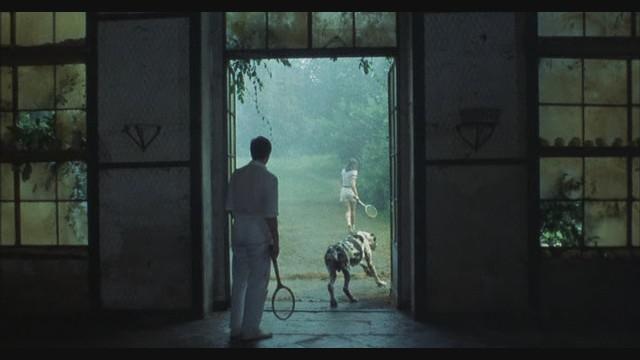
My initial interest in joining this group reading of The Garden of the Finzi-Continis came from having first seen the film many years ago and having a decidedly ambivalent reaction to it. It’s directed gorgeously by Vittorio De Sica, but it also rings some false notes for me, seeming just a bit too nostalgic and sentimental.
Bassani’s novel, however, seems to be doing something a bit more interesting than that; there is plenty of nostalgia here too, but it is much more self-aware and critical. Micol, for example, diagnoses both herself and the narrator: “the past counted more than the present, possession counted less than memory of it” and dismisses Perotti’s attempts to maintain the illusion created by the family carriage, which Micol calls a “pathetic relic.” She knows nostalgia is a problem even if she can’t avoid it.
While the narrator is less self-aware, the novel uses him to show the harmful effects of nostalgia, as he seeks to recreate a past moment that never was. Micol debunks his belief that if he had kissed her that moment in the carriage, she would have reciprocated his feelings, but he nevertheless attempts to kiss her every chance he gets, as if doing so would bring back that lost moment. If Dorian is right that we need to be suspicious of the narrator (and I think we do), we have to be suspicious of the aura of nostalgia that he casts over the whole novel.
There is a tension in both film and book between this nostalgic view of the Finzi-Continis and a more critical one. The first time I watched the film, I felt that the judgmental side was dominant, that the Finzi-Continis were being criticized for being themselves relics of the past, unable to adapt to the needs of the future by connecting with the community around them. And there is surely some of this in the book; the narrator’s father is the primary voice for this view, and in some ways he is clearly not wrong that they seem to think that the walls around them will protect them from every intrusion. This is proven false. But on the other hand, theirs is a more general fate; assimilated Jews (like the narrator’s father) were just as affected by racial laws and policies of extermination. Even Malnate, who is politically conscious and who does embrace the ideal future ends up just as dead as the Finzi-Continis. So, nostalgia is dangerous, but rejecting it is not necessarily helpful. Perhaps, then, there is no moral to the tale, and it is just to be taken as a memorial of those who are gone (but again, the narrator is the only one left to give his version of events).
What struck me upon watching the film a second time (after reading the novel) is how much De Sica in fact plays up the political angle. Virtually every incident pertaining to the racial laws is included in the film, and a few additional scenes are even added. When Giorgio (our poor nameless narrator gets a name in the film) visits his brother in Grenoble, one of Ernesto’s friends describes having been in Dachau, and the final 15 minutes of the film is devoted to an event that gets two sentences in Basssani’s Epilogue: the rounding up of the Finzi-Continis and the other Jews of Ferrara. De Sica puts the novel’s politics in the foreground in a way that gives the film a more pointed political message and a more elegiac tone than the book.
The film’s conclusion, then, is entirely different from the book; two more incidents bear further discussion (Spoiler alert for anyone who hasn’t seen the film). The film’s final lines are incredibly sentimental, and even more so for anyone who has read the novel; Micol and Giorgio’s father are being held in the same schoolroom; Micol asks with great concern about Giorgio and his father reassures her warmly that he left earlier that day and is hopefully on his way to safety. Although Micol has been separated from her own father, Giorgio’s father expresses the hope that they will at least keep all of the Jews of Ferrara together. De Sica deftly manipulates the complex emotional strands of the narrative into simplistic resolutions; Micol’s true affection for Giorgio is revealed, while the father’s resentment of the Finzi-Continis’ aloofness is resolved into a hope for community that we know is coming far too late.
But the most significant divergence between film and book comes in the final dramatic scene of the narrator/Giorgio approaching the Hutte. Dorian’s reading of Bassani’s version of this scene rightly questions the veracity of the narrator’s conclusion that Micol and Malnate are having a tryst in the Hutte. The narrator’s words, “What a fine novel” do seem to suggest his own awareness of the fiction he has constructed for himself (although they could, admittedly, also refer to his feeling of being himself a character within such a novel). However, in the film, this incident is presented in a thoroughly objective way. Alberto looks out the window to see Micol running across the garden before Giorgio arrives to look in the window. Micol even turns on the light to return Giorgio’s gaze. Again, De Sica’s treatment of Bassani’s material seems to simplify complex personal relationships in order to put the emphasis on the political implications of events.
It is futile to attempt to compare the merits of a book and its film adaptation, but putting them side by side in this way has at least enabled me to identify some of the sources of my discontent with the film, but also to some extent with the book. The frame that opens the novel seems to promise a historical awareness similar to that of the film, but this frame is never closed. The hasty glossing over of the fate of the Finzi-Continis clearly signals Bassani’s desire to tell a different story, but this means, in a way, leaving the story partially told.
Which returns me to the beginning of the book: the epigraph from Alessandro Manzoni’s I Promessi Sposi: “The heart, to be sure, always has something to say about what is to come, to him who heeds it. But what does the heart know? Only a little of what has already happened.” The importance of this epigraph is underlined by its frequent echoing in the text; the narrator asks “What can we know, of ourselves, and what lies ahead of us?” The final line of the novel also alludes to “what little the heart has been able to remember”.
In the context of The Garden of the Finzi-Continis, this again suggests the importance of recognizing the narrator’s limitations; what lies between these two expressions of the heart’s lack of knowledge is a purely subjective account from the point of view of a heart that does not have access to the whole story. The epigraph also seems to obliquely allude to the Holocaust; the characters clearly do not know what lies ahead of them, and even if, from the point of view of hindsight, it is easy enough to say that the signs of what was to come were already there within Italy’s racial laws, it is not reasonable to suggest that they should have been able to see it from their own limited viewpoints.
In the context of I Promessi Sposi, the good priest, Father Cristoforo, is helping the young lovers, Renzo and Lucia escape from the grasp of the wicked Don Rodrigo who wants Lucia for himself. In order to save them, they must all separate, but Father Cristoforo reassures them that “my heart tells me that we shall meet again soon.” The epigraph quoted is the narrator’s response to this statement. And indeed, the three must go through numerous hardships before they are indeed reunited, and Father Cristoforo’s intuition proves to be wrong. The line thus suggests the naïveté of even the idealized Father Cristoforo. We want to believe and hope and trust that everything will work out for the best, and this is an understandable human desire, but not something that we can ever really be sure of.
The epigraph, then, seems to encourage us not to pass judgment on the characters of the novel as their weaknesses and failings are inevitable human qualities and entirely understandable. But I can’t forebear to point out one additional reference to I Promessi Sposi; Alberto compares Professor Ermanno’s obedience towards the dictates of the authorities to that of Don Abbondio, who is the polar opposite of Father Cristoforo: the bad priest, cowardly and hypocritical, only interested in saving his own skin. This reference seems particularly harsh to me, as if the novel were indeed being highly critical of his (and others’) refusal to stand up to authorities.
So, perhaps Bassani is asking us to be tolerant of human weakness, but also to be aware of the real failings that it leads to. Ultimately, it seems to me that the real strength of the book lies precisely in its understanding of the human heart with all its warmth and vitality, but also its vicissitudes and bitterness. The epigraph is a call to recognize this complexity, as well as our own limitations in the face of it.
 Eiger, Mönch & Jungfrau