still hope to write up my reflections on my 2022 reading year. (Though look how well that worked last year…) In the meantime, I’ve solicited guest posts from friends and fellow book lovers about their own literary highlights. Today’s post is from Nat Leach, who used to be a specialist in 19th century literature, but now writes exclusively for this blog (exactly once a year). [Ed. – Exclusive content, y’all!] He lives and works in Peterborough, Ontario, and tweets sporadically about literature and film @GnatLeech
Look for more reflections from a wonderful assortment of readers in the days to come. And remember, you can always add your thoughts to the comments.

Regular readers of my yearly round-ups (if any such there be) [Ed. – hell yeah!] will recall that shortly after joining Twitter, my new year’s resolution in 2018 was to complete all the partially-read books on my shelves by proceeding through them in alphabetical order. At the time, I thought of this as a five-year plan, but exactly five years later, I find myself only about halfway through, as the plan has expanded to include a good many newly purchased books as well, though my original alphabetical progression continues. So my five-year plan is now a ten-year plan, but the main thing is that I’m still reading a lot of good books, and making headway through those books that have been staring reproachfully at me from the shelves for many long years. For those keeping score at home, I have now completed 158 of the 289 books currently on my list (but of course, the list keeps growing).
Despite the arbitrariness of my system, each year gives me something to reflect on regarding my reading tendencies. In this case, my most significant reflection is simply that, when it comes to reading, I am who I thought I was: a reader of classics and obscure older texts who frequently struggles to get on with more contemporary fiction. My most inspiring reading experiences of the year were re-reads of The Iliad, The Odyssey and Moby-Dick, while, under the influence of the many good people of Book Twitter, I experimented with more contemporary fiction that I usually do, with mixed results. There were a couple of big winners (Ishiguro’s Never Let Me Go and Kertész’s Fatelessness) but I found that many other highly-recommended late-twentieth/early-twenty-first century books just didn’t do much for me. So, it’s not exactly a revelation, and I’m not complaining; after all, it’s not entirely a bad thing to have one’s choice of lane confirmed, and it’s probably too late to change myself anyway. Even so, I don’t see myself shying away from contemporary literature altogether; I do value my Twitter interactions, as there are many wonderful authors I probably wouldn’t have found on my own, although I may now take a closer look before plunging into anything written within the last 50 years or so. [Ed. – Honestly, this seems wise…]
In terms of the bigger picture of my project, after two years of spending an entire year on a single letter (who knew that G and H would be so much work?), this year, I finished off H, flew through I and J (mercifully short shelves!) and got started on K. Here are synopses of what I read:
Hines, Barry – A Kestrel for a Knave (1968)
I picked up this book after watching Ken Loach’s film adaptation, Kes, for the fourth or fifth time and wondering why I had never read the source novel. I discovered, unsurprisingly, that the book is equally great, and that the film is quite a faithful adaptation. Both tell the story of Billy, a working-class Yorkshire youth with an abusive brother, an absentee father, and a neglectful mother, who captures and trains a young bird of prey. The one significant difference I would note between the novel and the film is that the protagonist has slightly more agency, resourcefulness, and expertise in the book than in the film. Loach’s intention seems to be to show that Billy’s victimization by the social structure—embodied especially in the bullying he suffers at school, both from other students and the teachers—is essentially an inescapable result of his class position, while Hines shows some very brief glimmers of hope for challenging the oppressions of the system. The book’s ending, which includes a somewhat surprising (given the gritty realism of the rest of the book) fantasy sequence, also differentiates it from the film.
Holcroft, Thomas – Hugh Trevor (1794-97)
I went on a bit about Holcroft last year, when I read his Anna St. Ives. Hugh Trevor is another didactic novel clearly intended to illustrate Holcroft’s theories about human perfectibility. The book is a bildungsroman that draws in parts on Holcroft’s own life and career, including his experience as a playwright and his imprisonment on charges of sedition. The protagonist goes through a series of adventures, incidentally touching on just about all the careers thought appropriate for a gentlemen at that time (the church, law, politics—only the military is missing, rejected from the start as too barbaric), each of which is exposed as corrupt. Trevor learns the necessity of controlling his passions and exerting his reason. One of the great scenes in the novel is a riff on the Gothic, as Trevor and his companion, wandering in a stormy night, believe themselves to have stumbled on a den of murderous bandits, only to discover they are very mistaken. Enjoyable for the most part, although Holcroft’s invention seems to fail him at times, as Trevor is coincidentally in the right place at the right time to come to the rescue of the heroine on three separate, but very similar occasions involving runaway horses and imperiled carriages.
Holtby, Winifred – Anderby Wold (1923)
Holtby’s first novel anticipates her posthumously published masterpiece, South Riding, in interesting ways. Most significantly, they are connected by her detached representations of social class; we see all her characters as rounded individuals, not as representatives of a particular class position. Mary Robson, the protagonist, is a farm-owner with a very maternal—and proprietary—attitude to the townsfolk, an attitude that some, like Michael O’Brien, whom she nursed in sickness, reciprocate with unthinking obedience, and others, like Coast, the schoolmaster, whose career growth she stunted, strongly resent. David Rossitur is a young socialist who strikes up a friendship with Mary but warns her that he will have to rouse the villagers against the values she represents, which he proceeds to do. Holtby invites us to like both characters, but also to see their flaws. Mary is dissatisfied at heart and using the love of the villagers as a crutch, while David is schooled in Marx, but lacks any concrete understanding of farming or the men whose minds he is trying to change. By the end of the novel, we get some hints of Holtby’s own sentiments, but we never feel that Holtby is didactically steering us towards a particular conclusion, which is perhaps why the book feels so satisfyingly ambiguous in the end. [Ed. – Well, this sounds good!]
Homer- The Iliad and The Odyssey (trans. Robert Fagles)
I hadn’t read Homer’s epics since I was a child, so I thought it was about time to revisit them. There’s not much I can add in terms of praise of The Iliad’s literary merits, classic as it is, but I sure did learn a great deal about the ancient arts of hand-to-hand combat, such as:
- If you defeat your opponent, just stop in the middle of the battlefield and strip his armour from him; sure, there’s a really good chance you’re going to get picked off by a spear or arrow while you’re doing it, but you can’t just let the shiny bronze breastplate go. [Ed. – I mean, that shit doesn’t just grow on trees.]
- Even if you’re carrying around powerful weapons specifically designed to optimize your attack on the enemy, sometimes you’ve just got to pick up a big honking boulder and throw it at someone. You wouldn’t think that would work very often, but apparently it does. [Ed. – BHB FTW!]
- Before engaging in hand-to-hand combat with your enemy, be sure to tell him your entire life story. There’s absolutely no way something bad could happen to you while you’re doing that. [Ed. – Reasonable.]
The Odyssey, of course, presents its violence in a very different way; by the time I reached the inevitable bloodbath at the end, I was rooting for it to happen. Much of that has to do with the narrative brilliance of the work. While reading Bernard Knox’s impressive introduction to my edition, which touches on so many of the important events and themes of the poem, my main thought was: “how on earth is Homer going to cram all of those many, many events into a book that is actually 100 pages shorter than the Iliad?” But somehow, it does not feel rushed, the narrative switches smoothly between the parallel narratives of Odysseus and Telemachus, with multiple time frames and stories within stories all driving towards the necessary conclusion that we know is coming but is still so thoroughly satisfying. It’s just sheer narrative pleasure.
Hornby, Nick – About a Boy (1998)
Having read High Fidelity last year, I had a pretty good idea of what I was getting into: another book about a male protagonist approaching middle age without a clue about how to maintain a stable relationship. There’s even a cheeky Hornby-verse cross-over towards the beginning of the book when this book’s protagonist, Will, meets a woman in Championship Vinyl, the record shop owned by Rob, the protagonist of High Fidelity. In the end, I’m not sure if I enjoyed this book quite as much as the previous one; for one thing, Will comes off as less redeemable than Rob—the book’s premise is that he invents an imaginary child to help him pick up women at a single parents’ support group—and for another, the book’s third person narration distances us from Will in a way that makes it harder to root for the redemption of his flawed masculinity in the same way that Rob’s first-person narration does in the earlier book. In the end, though, Hornby has a wonderful, sardonic sense of humour, especially apparent in the dialogue sequences between Will and Marcus, the awkward 12-year-old boy who challenges Will’s world view.
Hugo, Victor – Hernani (1830) Trans. Camila Crossland
According to the introduction of my edition, every play that Hugo wrote has been adapted into an opera. Reading Hernani, it’s not hard to see why; every plot development, every emotion, is huge, theatrical, and melodramatic. The plot revolves around three men—a king, an outlaw, and an aged nobleman—who love the same woman. The plot twists and turns are endless, and the circulation of debts of honour and their transference, deferral, and repayment, culminating in suitably excessive climax, is quite dizzying. In short, it is all a wonderfully grand spectacle; not, perhaps, for everyone, but bound to satisfy lovers of opera, melodrama, and spectacle.
Ibsen, Henrik – Peer Gynt (1867), The Wild Duck (1884), The Master Builder (1892) Trans. Rolf Fjelde
It may be banal to say that a work of literature changed one’s life, but the performance of Peer Gynt that I attended at Brock University when I was a teenager was certainly one of the most influential artistic experiences I have ever had. [Ed. – Same thing happened to me with Glass Menagerie, though it’s surely the lesser work.] Possibly, I was just the right age for it, but even re-reading it now, there is something enduringly powerful about Ibsen’s attack on the Romantic cult of selfhood. So, maybe it’s not a coincidence that I have spent my academic career studying theories that challenge conventional ideas about how the “self” is understood and represented.
As for the other plays, the rather random selection I dipped into suggests something about the development of Ibsen’s dominant themes from the early Peer Gynt through to the later period of The Master Builder. In the earlier play, Ibsen satirizes the Romantic ego through a parable that connects this obsession with “being oneself” with destructive (troll-like) masculinity which both supports and struggles with the strictures of a repressively moralistic society. As Ibsen moves from parable to realism, in The Wild Duck, these themes become embodied in the titular animal, a wild creature that is shot, but not killed, because of the failing eyesight of the flawed patriarch, and cared for by the young daughter of the man who has been married off to the patriarch’s former mistress. Within the realist context of the play, virtually every character is at some point likened to this multi-layered symbol: victim of patriarchy, survivor of misfortune, helpless dependent, enabler of fantasy, et cet. Finally, The Master Builder, while not devoid of this level of metaphor and fantasy (the trolls make a comeback!) reads as a much more complex exploration of the abnormal psychology of its characters. Hilda, the woman who comes to visit the master builder and his family, comes across as almost an analyst figure, bringing the neuroses of the family to the fore and precipitating the final crisis of the play. It feels like a very Freudian play, written just before the rise of Freudianism.
Imlay, Gilbert – The Emigrants (1793)
This one had been on my shelf for a long time—I remember picking it up the year of my first real teaching gig—and I’m sure I was mostly attracted by Imlay’s notoriety as the American who fathered a child with Mary Wollstonecraft [Ed. — !], then abandoned her [Ed. — !!], causing her to attempt suicide twice [Ed. — !!!]. This is an epistolary novel with a clear ideological point; England, the “old country,” is a place of corrupted values while the settlers of America embody a utopian opportunity to reconstruct relationships and communities. England’s backwardness is especially seen in the near impossibility for women to obtain a divorce, and the double standards that bind women to worthless men. [Ed. – Sounds like dude knew what he was talking about.] The plot provides numerous examples of the injustice of England’s laws, as opposed to the freedom of America. The problem, though, is that the book really isn’t very good; the plot events are perfunctory, related with very little sense of dramatic action, and the epistolary structure feels very contrived—to the point where one letter-writer tells his story not all at once, but in a series of letters… not unlike the chapters of a novel. Moreover, even Imlay’s attempt at some kind of early feminist point falls flat; the women of his novel are still prizes to be won and objects to be rescued. I’m sure Wollstonecraft was not impressed. Still, it was interesting to read during a tumultuous year for women’s rights in the U.S.A., especially with much rhetoric flying about what the founding fathers intended in creating the country’s Constitution. Imlay’s point in this novel is that America represents the potential for change and freedom, and freedom is defined as not being ruled by the outdated laws of the past (i.e. those of England). Ironic, then, that many Americans are citing the very people who rejected the idea that the past should be allowed to impose laws upon the present in order to justify doing precisely that.
Ionesco, Eugene – The Killer (1957)
I read this as a student and loved it. Revisiting it, I found that it has not lost any of its power. The plot—such as it is—revolves around Berenger (Ionesco’s perpetual everyman figure) visiting a “radiant district” in the city, a wonder of modern urban planning, only to discover that a killer has been luring its inhabitants to their deaths and drowning them in a fountain. The play is both absurdist and grim, leading towards a harrowing, existential conclusion. The dystopian world of this play feels as relevant as when it was written—if not more so.
Ishiguro, Kazuo – Never Let Me Go (2005)
Having never read Ishiguro before, I was uncertain what to make of the science-fiction sounding plot synopsis of this book, but by the end of the book, I realized what a clever ruse it is; you keep turning the pages in hopes of understanding the thing, the sci-fi concept that finally explains the truth behind the characters’ lives, only to run aground on an explanation that is anti-climactic (to the characters as well) and even slightly ludicrous (our very curious protagonists spend years in the outside world without learning some very basic information about themselves that appears to be generally well known to the public). In short, it’s a textbook example of what Hitchcock would call a “MacGuffin.” Because then you realize that none of that actually matters very much; even the moral questions characteristic of the science fiction genre, while pertinent, are not the point. Rather, what you get is a finely crafted narrative about the nuances of human relationships and a low-key reflection on the human condition and the inevitability of mortality. In the end, probably my favourite book of the year.
Henry James – The Tragic Muse (1890)
I originally picked up this book at a time when every book I was reading seemed to have some variety of “tragedy” or “tragic” in the title. I realize it’s one of the lesser-read James novels, but given my ongoing interest in 19th century theatre, it continued to hold an interest for me. Picking it up again, I struggled to figure out exactly why it has been so maligned over the years; the rap against it is that it is “un-Jamesian,” and I’m not sufficiently familiar with his oeuvre to be a great judge of that, but I also wonder whether its lack of popularity has something to do with the way it treats art. For one thing, 19th century theatre was largely seen as a form of popular culture rather than art, and its practitioners were considered socially “low” (a problem that the novel itself engages with, but still could have prejudiced many contemporary readers). For another, characters in the book debate questions of art directly and at length; James even includes a character—Gabriel Nash—who comes off as a stand-in for Oscar Wilde, and who makes the case for a thoroughly aesthetic view of life. But for the most part, the life/art debate is played out amongst the novel’s three main characters: Nick Dormer is torn between wanting to be a painter and to follow in his father’s political footsteps. His cousin, Peter Sherringham, is a diplomat with a love of the theatre. Miriam Rooth is an aspiring actress who attracts both of them, and becomes the subject of the titular portrait, posing for Nick as the “tragic muse”. Each character is pulled between their artistic aspirations and their worldly realities and duties in ways that are not always tragic, but certainly involve the necessity of finding an appropriate compromise between them. Meanwhile, the discussion of “art” is further nuanced by the differences between Nick’s painting—a solitary, peaceful, but largely unprofitable pursuit—and Miriam’s acting—a communal, chaotic, and very public process that nevertheless brings her fame and money.
Jansson, Tove – The Summer Book (1972) trans. Thomas Teal
Perhaps the most unanimous opinion I have ever seen expressed on Book Twitter is a love for this book (although outrage over Bob Dylan’s Nobel Prize might run a close second). Superlatives abound, with nary a dissenting voice, which almost made me feel guilty that I didn’t like it more than I did. Which isn’t to say that I didn’t like it—I really did—just that for me it didn’t quite live up to the high bar of praise that it was given. And maybe I’m missing the point; part of what is great about the book is how unassuming it is in its simple vignettes about a young girl and her grandmother living on a small Scandinavian island. [Ed – Totally!] This scenario could produce a book that is excessively sweet and idyllic (and frankly, these days, the prospect of living on a remote Scandinavian island sounds pretty darn idyllic) but, as Kathryn Davis points out in her astute introduction to the NYRB Classics edition, the crucial fact, easily neglected as it is only mentioned once in passing, is that the girl’s mother has died. The book is very quietly about the act of mourning and working through, with the grandmother and the island itself both supporting and frustrating those efforts. There is always a darker side to the relationships described. [Ed. – Ok, I thought we were heading for a smashup in our friendship, but all is well now.]
Jerome, Jerome K. – Three Men in a Boat (1889)
By contrast, this is one of the most divisive books I’ve ever seen discussed on Book Twitter; some declare it the funniest thing they’ve ever read, others are unable to get past the first few chapters, and still others declare that it is good, but the sequel (Three Men on the Bummel) is even better. After reading it, I can understand the extreme variance of points of view; while I did find it very funny, I can see how the “shaggy dog” style of narrative could frustrate some readers. For one thing, Jerome seems unable to tell a joke just once. To wit: the narrator says, “I like work; it fascinates me. I can sit and look at it for hours.” This pithy, almost Wildean epigraph made me laugh, but the narrator proceeds to riff for three paragraphs, saying things like “And I am careful of my work, too. Why some of the work that I have by me now has been in possession for years and years, and there isn’t a finger-mark on it.” Still funny, but by the law of diminishing returns, it loses some of its impact. Nevertheless, there are some wonderful comic bits; the story about the fish on the wall of an inn that every local who comes in claims to have caught, is my favourite. I should also add that the book works quite well as travel literature too; even though my edition of the book did not have a map (boo!), I found myself compelled to get one out and trace the journey taken by the three men (and a dog) up the Thames from Kingston to Oxford. [Ed. – ALL books should have maps. God, I love a map.]
Jin, Ha – Waiting (1999)
This is another book that came highly recommended but got a very mixed reaction from me. The premise is engaging; a doctor in China’s revolutionary army is married to one woman (a loveless marriage driven by family obligation) but in love with another. His attempts to get a divorce are continually deferred (hence the title). I had no trouble getting into the book, and I found the characters convincingly drawn for the most part, although the good-natured long-suffering wife felt like a stereotype. But the deeper I got into it, the less convincing it felt, and the end was hugely disappointing. It seemed to me that there was much potential for the book to develop this basic situation in many different directions; for example, the opposition between the traditional wife from the protagonist’s rural village and the urban modern woman he loves seemed to be setting up some kind of reflection on China’s changing cultural landscape, but the book didn’t explore the topic. More significantly, I expected the book to reflect on the nature of human desire; how does the protagonists’ relationship alter over this extensive period of waiting? While it does show the answer to this question, the conclusions it comes to feel over-simplistic and inconsistent with what has come before. The ending left me feeling grumpy, and as time has gone by, the grumpiness has increased rather than decreased, which I think is a telling sign.
Jones, Lewis – We Live (1939)
As a graduate student, I read Jones’ Cwmardy, a semi-autobiographical novel about a youth, Len Roberts, growing up in a mining town in south Wales in the early 20th century. I liked it a lot, and was inspired to seek out its sequel, which tells of Len’s involvement in the labour struggles of the 1920’s and 1930’s. The book interestingly traces out the ideological complexity of these times; Len joins the Communist Party, and clashes with Ezra Jones, his wife’s father, a long-time leader of the miners, who nevertheless adopts a more conciliatory attitude towards the mining company. Like its predecessor, We Live interweaves the lives of the people with their political struggles in a way that drives home the point that these are inseparable facets of the workers’ lives. I only wish that I hadn’t waited 20 years between reading the two books.
Jones, Lloyd – Mister Pip (2006)
Although this is the most recent book I read this year, having been written only 15 years ago, it did make me think about how values have changed even in that short time. In particular, I can’t help wondering whether a book by a white man with a black, teenaged girl as the narrator and protagonist would be heralded as much as this book was if it had been written today, although I would also hasten to add that the possibilities and limitations of such imaginative engagements with an “other” are precisely the theme of the book. The narrator, Matilda, lives on Bougainville Island in the South Pacific, and details her encounters with the only white man on the island, Mr. Watts. When the island is cut off from the outside world by civil war, Mr. Watts takes charge of the school, but, not being a teacher by trade, mostly just reads Great Expectations to the children. [Ed. – I mean, could be worse…] Matilda’s attempt to understand Mr. Watts now expands to include an attempt to understand the protagonist of that novel, Pip, and the world of Victorian London in which he lives. The beginning interestingly explores Matilda’s fascination with Mr. Watts and with Pip, even as her efforts meet with limited success and lead to increased complications for all the inhabitants of her village. To my mind, though, subsequent developments are much less interesting, as Pip ceases to be a challenge for Matilda, and simply becomes a model for her own life story, which is a much less satisfying, over-simplistic flattening out of cultural differences.
Jonson, Ben – The Alchemist (1610) and Bartholomew Fair (1614)
Comparisons between Jonson and Shakespeare are as unfair as they are inevitable. Both can be very funny in their comedic works, but their scope is entirely different, with Jonson’s plays largely set in the time and place in which the author lived—London in the early 17th century—while Shakespeare’s comedies mostly based on source material from the past and set in other European countries. Because of this, Shakespeare’s plays have been attributed a “universal” applicability (but that’s a debate too long for this space) while Jonson’s world has been considered narrow. While it is true that a great deal of Jonson’s humour in these two plays hinges on in-jokes (in particular, the Puritans do not come off well) [Ed. – Do they ever?], but part of Jonson’s genius is the detailed range of characters he is able to accommodate within this narrow space. Sure, he’s not as readable today as Shakespeare is, but he’s worth the effort.
Keane, Molly – The Rising Tide (1937)
I liked my first Molly Keane book, Young Entry, enough to cheat and add another one to my list (having read Young Entry under “F” as it was published under the pseudonym of M.J. Farrell). While Young Entry was one of Keane’s early books, The Rising Tide demonstrates a more mature style and carefully crafted structure. And yet, in the end, I liked it less; the energy, chaos, and irreverence that appealed to me in the earlier book are more subdued here. The scope is grander, essentially focusing on the changes in lives and fashion in an Irish house, Garonlea, from 1900 to the 1930s, as it passes from its ancestral mistress, Lady Charlotte French-McGrath, to her free-spirited daughter-in-law Cynthia, to Cynthia’s disapproving son, Simon. Keane outlines the decline of the aristocracy and the decadence of the nouveau riche, but largely ignores the bigger political issues of Ireland at this time. In the end, the book felt somewhat limited and restrained, in much the same way that its protagonists themselves are unable to escape their narrow perspectives of the world.
Kenneally, Thomas – Schindler’s List (Schindler’s Ark) (1982)
In my past life, I wrote a critique of Spielberg’s film, and have since felt the need to finish reading the book on which it is based. The book’s largely objective, journalistic account of Oskar Schindler’s rescue of Jews from Nazi concentration camps presumably inspired Spielberg’s imitation of documentary representational strategies and careful replication of historical detail in the film. But where Spielberg uses this illusion of documentary realism to manipulate emotional reactions in his audience, Keneally shows quite directly how the facts he reports disable simplistic emotional responses and moral judgments. To confine myself to one example, I wrote about a scene in the film where melodramatic tension is wrought around the rescue from Auschwitz of a group of women who are specifically important to Schindler—and therefore to the viewer—even as it is clear that others will suffer in their place. [Ed. – That scene, ughhhh…] The rescue of a few specific individuals creates an emotional reaction that overshadows the destruction of the many. In the book, by contrast, Keneally frames this, and other incidents with an acknowledgment of the limited scope possible for Schindler’s actions. For example, he is referred to as a “minor god of rescue” at one point when he manages to rescue 30 Jewish prisoners from a death march that started out with 10 000. The point here is not to minimize Schindler’s actions—which were indeed remarkable—but to understand them within a wider context that complicates the simplistic emotional responses encouraged by Spielberg’s film.
Kertész, Imre – Fatelessness (trans. Tim Wilkinson) (1975)
By contrast, Kertész’s novel takes an opposite, highly subjective approach, presenting the first-person account of György, a Jewish teenager from Hungary who is deported to Auschwitz and then Buchenwald. This narrative approach emphasizes the contingency and singularity of his experience, which is not contextualized by more objective historical information that could be used to minimize the details of the experience in the name of some larger explanation. This, it seems to me, is the point of the book’s title, which alludes to the fact that none of what happens to him necessarily had to happen; it is the product of choices made by many people, and of sheer arbitrariness, and therefore cannot be made to conform to the rationalizations and justifications that the narrator meets with upon his return home. [Ed. – Exactly!] This idea of “fatelessness,” emphasizes both that the events of the Holocaust were the responsibility of individuals—perpetrators and bystanders who did nothing—and did not simply “come about” (a phrase that György finds in common use upon his return, and the hypocrisy of which he objects to) and that individual lives could be lost or saved by the slightest of causes, not controlled by some overarching plan or structure. I initially picked up this book after reading Dorian’s post about teaching it, which addresses all this far better than I can, especially that very interesting final chapter. [Ed. – Thank you, good sir!] It is notable that Kertész extends the narrative beyond the end of the war, demonstrating that release from the camps is not the end, and challenging conventional notions of “survival” or “liberation.” As with Keneally, there are no simple answers.
Melville, Herman – Moby-Dick (1851)
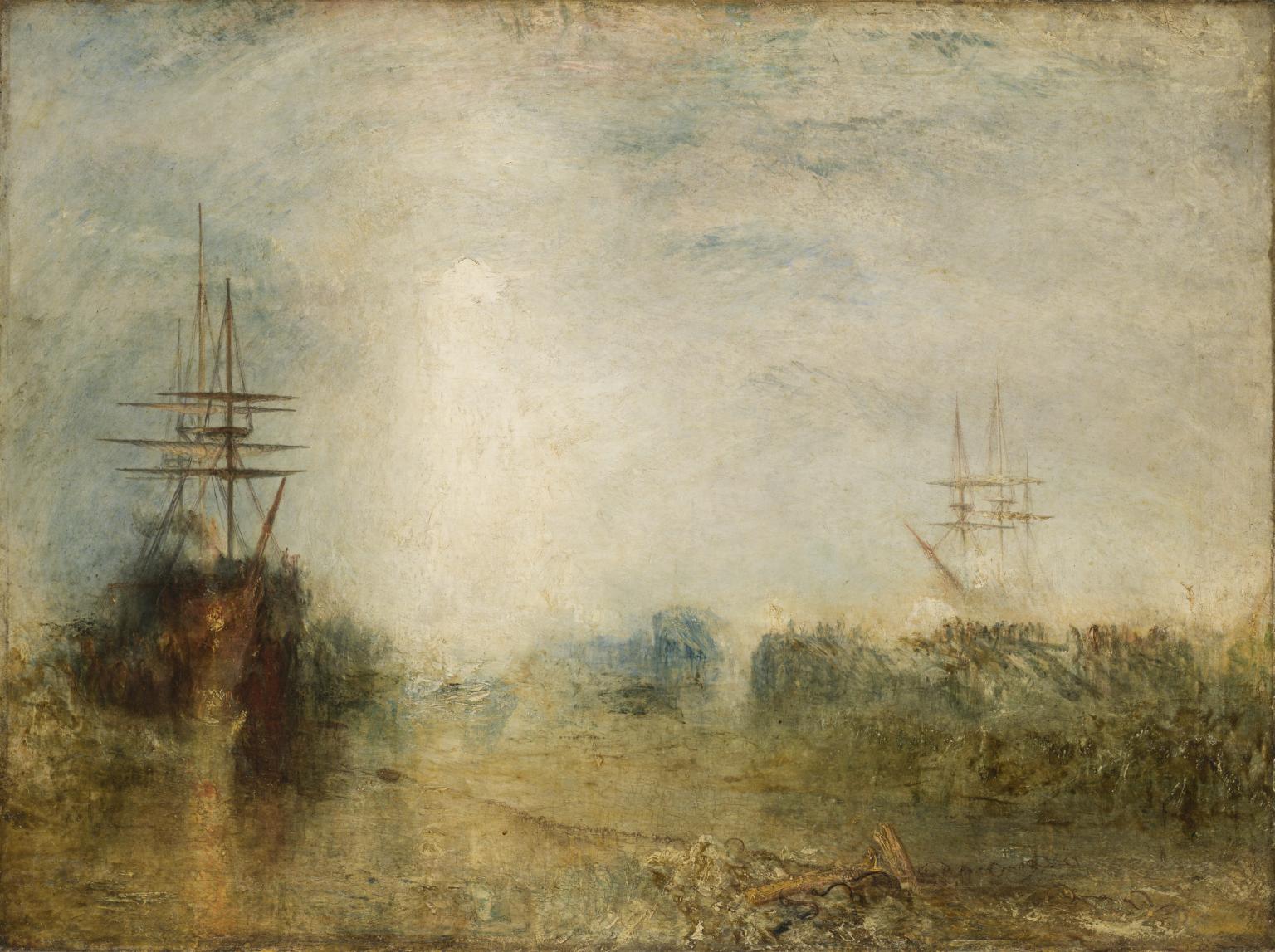
This was my one out-of-sequence read for the year, as I joined a Twitter group read of this book, which, like The Iliad and The Odyssey, I had not read since my precocious childhood. (I note also that, having read The Man Without Qualities, The Balkan Trilogy, and The Levant Trilogy in recent years, I have relieved some of the pressure that will inevitably brought to bear when I reach the M shelf.) I remembered the book as mostly the story of Ahab’s obsession with the white whale, but had forgotten that the book is a strange and wonderful mixture of psychological exploration of human nature, allegorical tale, shaggy dog story and detailed account of the workings and history of the whaling industry. The latter part, I must admit, I found strangely compelling; as abhorrent as the idea of the killing of whales may be, the intricacies of the process are quite astonishing, but no more so than the sheer scope of the book. As I said at the outset, I am a reader of the classics, but if the word “classic” has come to refer to a predictable and stable literary form, this book is a reminder that classics became classics not by following the rules, but by rewriting them. [Ed. – So well put! Thanks, Nat. Same place next year?]

 Eiger, Mönch & Jungfrau