In the next week or so I’ll be writing up my reflections on my 2021 reading year. In the meantime, I’ve solicited guest posts from friends and fellow book lovers about their own literary highlights. I’m always looking for contributors; let me know here or on Twitter (@ds228) if you have something you want to share.
First up is my old friend Keith Bresnahan (@designhist, follow him, he’s funny and awesome), who’s previously contributed severalterrificpieces on Zola. You can read his 2020 reflections here. Keith lives and works in Toronto.
2021, in a nutshell:
This year was strange, obviously. I was lucky, avoiding any serious effects of the pandemic: I kept my job, as did everyone in my family; no one I knew got seriously ill or passed away with Covid. But time and space felt flat. I didn’t go anywhere, and the repetitive sameness of days was best reflected in this popular image I kept seeing re-posted on Twitter. Perhaps this is why when Dorian initially nudged me to look back on my year of reading, I felt like I hadn’t read much at all: there was little to situate my reading in association with specific places or other things that were happening around me while I read them. As it happens, judging by my admittedly imperfect reconstruction (I have sworn to be better at keeping track this year!), I found I actually read 50-odd books for pleasure in 2021, not counting the 15 or so others I read for teaching and academic research. Not bad.
Here are a few of the more memorable ones.
Philip Marsden, The Summer Isles
I read this early in the year; details have faded, but my memory of reading it is of being carried along on gentle sea-waves; it’s that kind of book. A first-person travelogue of Marsden alone in a wooden boat, traversing waters up the west coast of Ireland toward the titular isles in northern Scotland, it also contains a good deal of reflection on historical lore, spiritual journeys, and local geographies. Much of the sailing-vocabulary was lost on me, but it didn’t seem to matter. Both learned and meditative, it was perhaps the most calming book I read this year. I passed it on to a good friend who owns a boat.
Enrique Vila-Matas, Never Any End to Paris (Trans. Anne McLean)
I found out about Vila-Matas this year, like most of the other authors I come across these days, from people I follow on “Book Twitter” (regular Twitter, just a nice corner of it populated by book-obsessed folks). A wry memoir of Vila-Matas’s youthful days in Paris as an aspiring writer and Ernest Hemingway wannabe. I loved it. He somehow rents a garret from Marguerite Duras, encounters Georges Perec and Roland Barthes, dates a woman who suggests he fling himself off the Eiffel Tower while on an acid trip, fends off parental intervention, and generally fails to write anything of substance. In a year where I couldn’t go anywhere, the descriptions of Paris were more than welcome. Looking forward to reading more by Vila-Matas soon, starting with Dublinesque, a kind of Joycean dream, apparently. Perfect for the centenary of Ulysses this year? (I’m also planning to give that one another shot)
Larry McMurtry, Lonesome Dove.
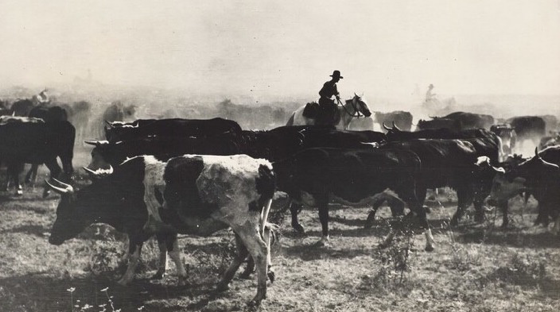
An 800-plus-page western. A western? Cowboys? A cattle drive? I left central Alberta for a reason, dude. But many folks who know better than me loved it, so I gave it a shot. Holy shit is this book great. An out-and-out masterpiece. At times it felt like magic realism – did the bull actually fight that bear? Was the cook actually back there banging the same bell with the same crowbar? Did Blue Duck fly? The book’s Indigenous characters are barely fleshed out (although McMurtry does show sympathy for their plight) — but then this is really the story of the others, the damaged settlers moving against a nascent American backcloth, seeking and grasping for any purchase with little to guide or protect them. At its heart is an emotionally blocked friendship between two former Texas rangers, and the women who speak truth to them (and whom they largely fail to understand). Plus an impressive cast of secondary characters, all memorable creations. Did I mention it’s more than 800 pages and somehow feels too short?
Marguerite Yourcenar, Memoirs of Hadrian (Trans. Grace Fick)
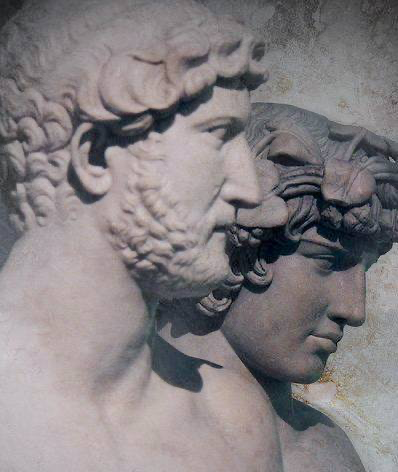
Another masterpiece. The best fictional evocation of the classical world I’ve ever read. Dreamlike and imagistic, with lessons on life and death to spare. I’m waiting to read more Yourcenar until the memory of this one’s brilliance fades a bit.
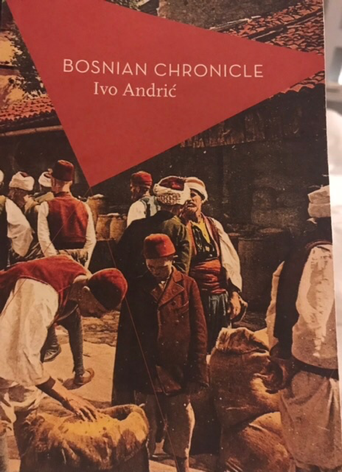
Ivo Andrić, Bosnian Chronicle(Trans. Celia Hawkesworth in collaboration with Bogdan Rakić)
A newish edition from Apollo Classics (Head of Zeus), this is a very long book, first published in 1945, about a French consul during the Napoleonic era living in a small Bosnian town on the extreme fringes of world events. Not much happens. I adored it.
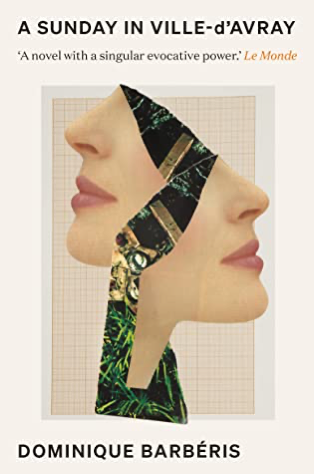
Dominique Barbéris, A Sunday in Ville-d’Avray (Trans. John Cullen)
This was great — a short, stylish account of two sisters, one recounting to the other a past entanglement with a strange man. Felt to me at times like watching a French film from the 1970s. Enigmatic, and atmospheric as all get-out.
Three books in the “how-did-I-not-know-about-these?” category:
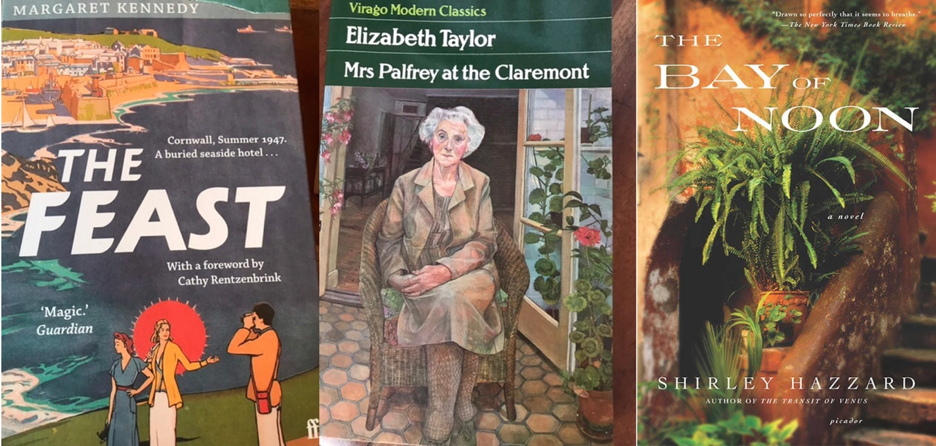
Margaret Kennedy, The Feast
A number of families cram into a seaside hotel in Cornwall for a week in the summer, their conflicts and idiosyncrasies build to a climax, then half of them are killed when a cliff falls on them. We know this part from the outset, though not who dies, so I’m not giving anything away. Apparently there’s a whole structure here about the 7 deadly sins, but I missed this while reading it, and it didn’t matter. Great fun. Made me want to read more Kennedy, and soon.
Elizabeth Taylor, Mrs. Palfrey at the Claremont
An older woman moves into a retirement hotel in London. The plot? Not much. But I found it utterly charming, even its descriptions of the depredations of old age, and very funny, too. Others, I’ve since learned, found it bleak. [Ed. – raises hand] Not me. Mrs. Palfrey is a plucky heroine, if a little self-deceiving (aren’t we all), and even the end, coming as it must, didn’t feel sad. I picked up a used Virago copy of this book on a whim, and then coincidentally read it the same week that it came out in a new NYRB classics edition. For once my finger was right on that pulse. More from Taylor in my near reading future.
Shirley Hazzard, The Bay of Noon
A young English woman in Naples in the 1950s falls in with a Neapolitan woman, Giaconda, and her Roman lover, Gianni. This was both evocative and restrained, with a powerful sense of the unspoken and unshown behind the minimal plot. Reminded me a bit of Antonioni, in a good way. Also made me long to revisit Naples (some strong compensatory travel-thrills in my readings this year!). My first Hazzard, won’t be my last.
Yasunari Kawabata, The Sound of the Mountain (Trans. Edward G. Seidensticker)
Junichiro Tanizaki, The Makioka Sisters (Trans. Edward G. Seidensticker)
Akimitsu Takagi, The Informer (Trans. Sadako Mizugushi)
Akimitsu Takagi, Honeymoon to Nowhere (Trans. Sadako Mizugushi)
Yuko Tsushima, Territory of Light (Trans. Geraldine Harcourt)
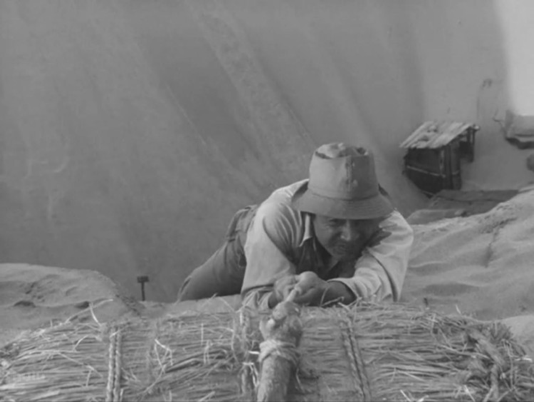
Kobo Abe, The Woman in the Dunes (Trans. E. Dale Saunders)
I enjoyed all the books translated from Japanese that I read this year, especially The Informer and Territory of Light. But it was Abe’s Woman in the Dunes that was the real revelation. A distressing, tense, fever-dream of a book, I’d put this existentialist fable of bizarre confinement, Sisyphean futility, and struggles of the will up against Camus any day of the week. I won’t be reading it again anytime soon, but I’m glad I did. Haven’t brought myself to watch the movie, but here’s an image from it anyway.
Raymond Chandler, The Big Sleep
Another existentialist hero, this time Philip Marlowe probing some family funny-business in sunny California. Noir perfection. I realized I’d previously conflated Chandler and Dashiell Hammett, whose hard-boiled shtick I could never really get past [Ed. – I am allowing this heresy on my blog, but I don’t like it], but this is glorious, witty stuff. The film, with Bogart and Bacall, is a deserved classic.
Muriel Spark, The Girls of Slender Means
My first Spark! I loved this small tale of young women living together and negotiating wartime, nascent loves, work, and rooftop escapes. A near-perfect short read.
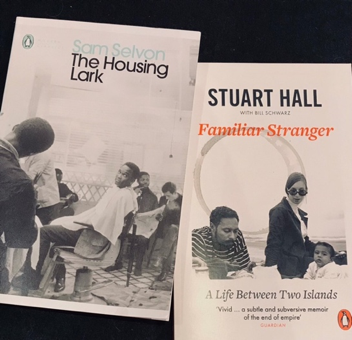
Sam Selvon, The Housing Lark
Stuart Hall, Familiar Stranger
Two takes on the West Indian experience in 1950s – 60s England. The Housing Lark, by the criminally under-appreciated Sam Selvon, is a sort of sequel to his better-known The Lonely Londoners; if anything, I liked this one better. Hall’s autobiography takes him from Jamaica to Oxford to the founding of cultural studies and the New Left in the 1960s—on the one hand, a world apart from Selvon’s hustling hardscrabble immigrants, and on the other not so different, negotiating displacements and identities among the so-called Windrush generation. Suggest watching Steve McQueen’s remarkable Small Axe series alongside.
Graham Greene, The Quiet American
Ryszard Kapusćiński, Nobody Leaves: Impressions of Poland (Trans. William Brand)
Sergio Pitol, The Journey (Trans. George Henson)
Vivian Gornick, The Romance of American Communism
Amor Towles, A Gentleman in Moscow
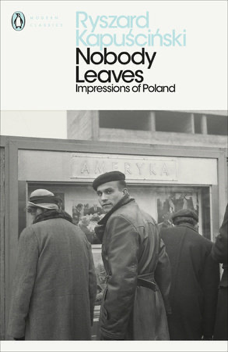
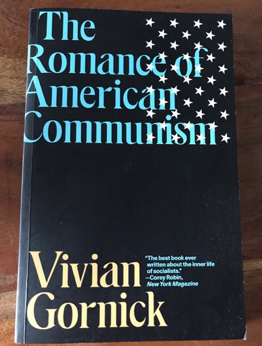
Purely by accident, I ended up reading a number of books this year highlighting historical communism and Cold War politics seen through individual lives. Graham Greene’s The Quiet American, a scathing indictment of Western intervention in Southeast Asia, with its shockingly amoral conclusion, was among the best books I read this year. Ryszard Kapusćiński’s Nobody Leaves, a collection of short journalistic pieces from his native Poland around 1960, is episodic, strange and beautiful, and generally short on hope. Sergio Pitol’s The Journey, has the Mexican writer traveling around literary circles in Moscow, Leningrad, and Tbilisi during two weeks in 1986, just as glasnost and perestroika were starting to peek through. It was a highly personable travelogue that makes me want to read more by him (I’ve already ordered Pitol’s The Love Parade, out in translation early this year). He writes a lot about Marina Tsvetaeva, which makes me think I should read her. In non-fiction, I was taken with Vivian Gornick’s The Romance of American Communism, recently republished by Verso. Originally from 1977, it’s an oral history of American communists from the 1920s through the 1950s and their breaks with the Party following the revelations of the 1950s. Gornick’s subjects are angry and wounded, prone to self-importance, self-deception, and self-critique, and her book is wonderful at conveying how people form passionate attachments to ideological movements, and what happens when that falls apart. Amor Towles’ A Gentleman in Moscow, a cream-puff fantasy of a hotel-bound aristocrat suffering minor inconveniences during the same decades of Soviet history, which I read at a cottage just after Gornick’s bracing book, felt too tidy and cute by half. I might have enjoyed it more at another time.
James Salter, Light Years
Probably my favourite book of 2021. A couple raises two kids in a country house not far from New York City. They have affairs, they divorce, their kids grow up, they meet artists, actors, go to parties, discuss the theatre, they remarry, get ill, die. It recalled the 1970s cinematic and literary middle-class dramas I was enthralled by as a child (this was what life was, or so I thought then). Now in my own middle age, I’m both less sanguine about this stuff than I used to be, and intuitively drawn to it. Nostalgia for that insular worldview? Dunno. Whatever it was, I found it perfectly, achingly beautiful, and sad. A book I know I’ll revisit. I also read Salter’s A Sport and a Pastime, which I liked but not nearly as much as this one.
In the last days of 2021, I read three quietly resonant books:
Paul Griffiths, The Tomb Guardians
I’m not sure how to classify this short book, which shifts constantly between two conversations: in the first, two figures discuss a series of three (real-life) paintings in a museum showing the sleeping guards charged with protecting Christ’s tomb; in the second, we hear the voices of the Roman guards themselves, having woken up to find one of their party missing and the stone from the tomb entrance moved. It’s clever and light, achieved with erudition and evident skill; as a professional art historian, I wish I’d written it myself.
Louise Glück, Winter Recipes from the Collective
Nobel winner of 2020. Quiet and studious poems. Felt snowy, and cold. Some folks are saying this book shows a diminution of Glück’s energies, which bodes well for her earlier work, I’d say. I’ve just bought her first four books of poems.
Aidan Higgins, Langrishe, Go Down
Another Apollo Classics reprint, first published in 1966. A woman on the cusp of middle age, living with her unmarried sisters in a declining Irish great house, has an ill-fated affair with a German scholar of no means. Just go read it already. One of my books of the year. There’s a film, too, with Jeremy Irons and Judi Dench.
One more, for Dorian:
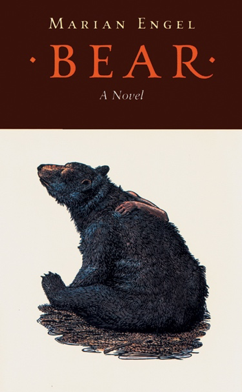
Marian Engel, Bear. Technically a re-read, since I first read this when I was 18. But that was some time ago, and I was 18, so let’s call it a new book for 2021. Is it the great Canadian novel? Sure. [Ed. — Hmm… this is not the expression of explosive joy I’d hoped for, but I’ll take it.]
Some predictions for 2022:
– Nature-books: I’ve got a bunch of these on the shelf, and this is the year! Birds, mountains, wild swimming, I’m your man.
– More 20th-century reprints, mostly from UK writers: I’ve gathered a small heap of books from Virago Modern Classics, Persephone, Apollo Classics and others, and am eager to dive in.
– Finishing the Penguin Maigret books. I’ve got 10 left to read in this 75-volume set, and the last one has just arrived by post.
– Following a prompt from a Twitter mutual, I’ve signed on to read all the extant plays of classical Greece. Ambitious, but they’re short, right?
Ah, November, we hardly knew ye. Wait—November?! What about October? Well spotted, eagle-eyed reader—I know you and many others have been refreshing this page daily in the hopes of getting your EMJ fix. Sorry to disappoint. Trust me, I feel bad about it. A two-year streak of monthly reading reviews broken, just like that. Still hope to catch up, but what can I say, October was a cluster. November was better, which is surprising since it’s usually one of the worst months of the academic calendar. This semester has been one of my lightest ever, though, a blessing since it’s allowed me to keep the rest of my life ticking along, just barely. I had a lot going on. My mother visited, the first time we’d seen each other in two years. There was Thanksgiving to celebrate. And leaves piled up steadily on our tree-lined corner lot, those things don’t rake themselves. But I read some stuff too.
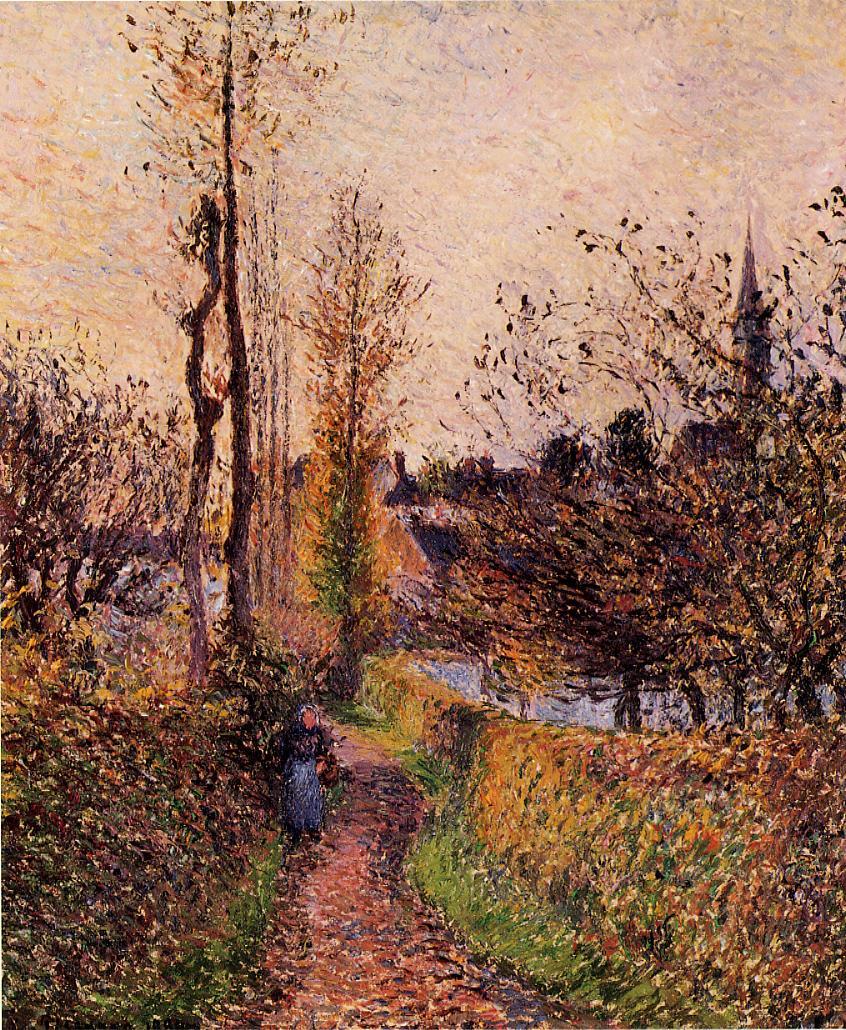
Camille Pissarro, The Path at Basincourt, 1884
Sarah Hall, Burntcoat (2021)
Preordered this even though the idea of “pandemic novels” doesn’t appeal because I’m a Hall fan. Burntcoat is narrated by Edith Harkness, a sculptor—the resonant title is the name of her studio—who, after studying the Japanese art of shou sugi ban (charred or burned wood) has become one of the UK’s premier landscape artists. Some short flashbacks describe an apprenticeship in Japan, but these moments are underdeveloped, serving more as a metaphor—the technique is counterintuitive, “damaging wood to protect it”—than as detailed reality. There are many damaged people in the novel, mostly those infected by a virulent disease, much worse than a coronavirus, that either kills quickly or lies dormant for years after infection. But the most important damaged person in the novel, certainly one who has been protected by that harm, is Edith’s mother, a writer felled by a brain disease that transforms her personality and, for a time, makes her unable to speak or write. She recovers from the trauma to become an outsider artist, whose experimental works are underappreciated until after her death. Before that she had taken her young daughter, Edith, to live in the Cumbrian fells. As always, Hall is great with northern landscapes, but where Burntcoat really shines is in her other area of descriptive specialty. Hall writes great (cishet) sex scenes—exciting, never cringe-y, hot. Quite a feat. The sex in this novel is between Edith and her lover Halit, a migrant from Turkey who works as a chef in a middle eastern restaurant. Their relationship has no sooner begun, though, than the pandemic hits and Halit gets sick. Burntcoat is about making and healing, about losing and grieving, about the depredations and losses of time’s passing that can also become transformations and developments. It’s a good if not great novel, a bit suggestive, sometimes more a sketch of something than the thing itself. Curious how it will fit in her body of work twenty years on.
Nastassja Martin, In the Eye of the Wild (2019) Trans. Sophie R. Lewis (2021)
In 2015, Martin, a French anthropologist with deep knowledge of the indigenous people of Kamchatka, was mauled by a bear while conducting field work. After initial treatment in Russia, she is flown back to France, and suffers from further, supposedly superior, operations and treatments, one of which almost kills her. She suffers, physically and emotionally. Eventually she decides she must return to Siberia, to learn, as the jacket copy of the newly released English-language translation has it, “what it means to have become, as the Even people call it, medka, a person who is half human, half bear.”
From the time Magda first told me about this book, I’ve been psyched to read it, devoted fan that I am of another book about a woman and a bear. (In that one, incidentally, the main character, a librarian cataloguing the books in a great house in northern Ontario, learns that Kamchatkans use the sharpened shoulder blade of a bear as a scythe.) Nathan Goldman brings the two books together in his terrific essay on In the Eye of the Wild. Even more valuably, he points out the central tension in Martin’s memoir/essay: on the one hand, she resists attempts to explain or understand her experience, whether the lens be therapeutic, medical, or cultural (one of Martin’s Evenk friends, for example says the bear left her, the friend, a gift by keeping Martin alive); on the other, she writes in a language of abstraction that feels quintessentially French, especially that of post-Hegelian (i.e. post-Kojève) philosophy: structuralism, poststructuralism, deconstruction, etc., language that values nothing more than explanation and understanding, even if only to resist those very concepts. Take this passage for example:
To be the human who sees the bear (or to be the bear who sees the human) is to embody reversibility: it is to describe a face-to-face encounter in which a necessarily radical alterity is actually revealed as the greatest proximity.
Let’s just say I recognize several tics of my own writing in this sentence. (And, yes, Nathan quotes the same line, but I swear I marked it in my copy before reading his piece!) I was trained as a theorist in the 90s, and I still have a lot of time for its insights, if not always its language (though I’m mindful of what Barthes said: between jargon and platitude, take jargon every time). All of which is to say I think I’d have loved In the Eye of the Wild even more had I been able to read it twenty years ago. The whole books isn’t as abstract as that quote, but it’s pretty abstract. I kept waiting for a description of the attack—the encounter as she styles it—but it never happens, not even indirectly, Grizzly Man style.
Some of Martin’s resistance to explanation stems from her experience on the land: “In the heart of these frozen woods, you don’t ‘find’ answers: first you learn to suspend your reasoning and allow yourself to be caught up in the rhythms of an existence entirely organized around staying alive in a forest in winter.” Some of it comes from her anthropological training. Elaborating on her friend’s idea that the bear gave her a gift of Martin’s survival, Martin writes:
I know that this encounter was planned. I had marked out the path that would lead me into the bear’s mouth, to his kiss, long ago. I think: who knows, perhaps he had too.
That “kiss,” I dunno. Maybe I’m just irredeemably Canadian, and want my bear kisses to be literal, or, like Lou, the librarian in Bear, to realize that however necessary the fantasy has been, when bears get kissed things have gone too far. Kiss feels a little dramatic to me. (Lacan: the word kills the thing. Kills it?) I’ve been presenting In the Eye of the Wild and Bear as opposites, and in their representational strategies and general MO they are. But they agree, fundamentally, that, as Martin puts it, “a bear and a woman is too big an event.” The challenges posed by the female-ursine conjunction aren’t the same in each text—which after all were written in different circumstances and in different genres—but both Engel and Martin consider what it means to be a self, and whether one sealed off from the world is worth anything at all.
Dervla McTiernan, The Good Turn (2020)
The third book in Australian McTiernan’s Irish-based Cormac Reilly detective series is skillfully done—less engrossing as the first but absolutely engaging. (I spent a happy Saturday on the couch with it.) Yet the police procedural is a genre in crisis—books about heroic inspectors and their harried, money-conscious superiors just don’t cut it any more for readers faced with the violence and racism of the police-incarceration complex. McTiernan isn’t immune to this crisis. She circumvents it by placing the two investigations at the forefront of the book against the backdrop of a larger narrative arc concerning police corruption. But then a wise and trustworthy superintendent of police has to step in last minute to save the day, which keeps intact the myth of rogue agents within a sound system.
Charles Portis, The Dog of the South (1979)
Ray Midge leaves Little Rock, Arkansas for Mexico, on the trail of his wife, Norma, and her ex-husband, with whom she has taken up again. Before she split, Norma palmed Ray’s credit card. Using the receipts, he tracks the pair south of the border all the way to Belize, which at the time had only recently changed its name from British Honduras. (I’d no idea.) Along the way Ray meets Dr. Reo Symes, a hard-luck case/charlatan whose medical license has been revoked for fraud and who has since poured his energies into grandiose dreams of developing an island in the Mississippi owned by mother. All he needs is for her to give him the deed. To this end, he’s on his way to Belize, where the woman runs a Christian charity, but the old school bus he commandeered somewhere along the way has broken down, and Ray is his only hope for completing the journey. Classic odd couple stuff: unlike the disreputable and excitable conman Symes, Ray is a pedant with strong opinions about Civil War strategy and plenty of observations about human behaviour (“Most children are close with their money”); the men squabble about most everything, including, hilariously, who invented the clamp—a guy from Louisiana or the Sumerians? Finally they fetch up in Belize, where a lot of dramatic things happen quite suddenly before events trail off meekly, in the way of many foolhardy adventures.
The Dog of the South is not a long book, but maybe because the quest itself never feels urgent (we get little sense of Norma until the end, except that she is both long-suffering and careless—the Midges are anything but a match made in heaven) the book drags at times. The first third is comic gold, though, real laugh-out-loud stuff, including some loving disparagement of Little Rock. Plus, Portis’s way with bit characters is unbeatable. My favourite was Melba, a friend of Symes’s mother who helps run the orphanage. A real hoot, that Melba. An insufferable Canadian hippie in Mexico runs a close second.
I listened to the audio book narrated by Edward Lewis (which is different from the version on Audible, FYI), and his intonations and pacing were perfect. Really hits that strange note between smart aleck and stick-up-the-ass that characterizes Ray. I only wish Lewis’s accent were more Arkansan. He avoids generic Southern (it feels specific, though I can’t pin-point it) but that weird Arkansan combination of flatness and drawl escapes him.
Andrea Camilleri, The Cook of the Halcyon (2019) Trans. Stephen Sartarelli (2021)
Preposterous.
Grete Weil, Aftershocks (1992) Trans. John S. Barrett (2008)
Grete Weil née Dispeker was born to a privileged bourgeois intellectual household near Munich in 1906. Her father was a well-known lawyer, her elder brother a hero of the Great War; the family believed profoundly, tenaciously, unrequitedly in German-Jewish togetherness. As a Young Person, Grete palled around with Erika and Klaus Mann, Thomas Mann’s children, and climbed a lot of mountains. In 1932 she married the dramaturg Erich Weil; he was arrested shortly after the Nazi takeover and fled to Holland on his release to found a branch of his father’s chemical company. Grete followed in 1935: the couple settled in Amsterdam, where Grete opened a photography studio. Their circle included fellow émigrés Max Beckmann and Bruno Walter. After Holland was occupied, the Weils tried but failed to get to England. They turned their efforts to Cuba. The night before Edgar was to pick up their visas, he was arrested in a roundup and deported to KZ Mauthausen, where he was murdered in September 1941.
Weil was forced to give up her business—she lent her photography skills to the underground, helping to forge documents—and took a job in the Dutch Jewish Council, which helped her evade deportation. When her notice finally came, in summer 1943, she and her mother, who had been with all this time. went into hiding. For almost a year and half they lived on a mattress in a small space behind a bookshelf in a friend’s apartment. There Weil took up writing again—it had been one of the passions of her childhood. After the war, she felt comfortable neither in Holland nor in England, where her brother had settled. To the consternation of Klaus Mann, who tried to talk her out of it, she returned to Germany in 1946. She received her husband’s family’s pharmaceutical company as restitution (one of the only instances I know of in which that process actually did anyone any good) and devoted herself to writing, including opera libretti and translations from the English (including John Hawkes). She published various novels, collections of short prose, and memoirs in the years before her death in 1999.
Before coming across this book, I’d never heard of Weil, which surprises me, given my research and teaching interests, plus the fact that Godine published three of her books in the early 2000s. Aftershocks is the third, a collection of stories and memoiristic pieces about the long afterlife of the Shoah. I was not always gripped by the book, Weil does not seem the most graceful writer (that may be down to Barrett, the translator, not sure), but I admired her unwillingness to ingratiate herself with her audience. In this she reminded me of Ruth Kluger, a writer I also did not fall in love with straight away but who has since become a lodestar. I plan to keep reading Weil, not to mention (the ultimate test) teaching her, so look for a more informed opinion in several years.
Like Kluger, Weil was willing to think the Holocaust together with American state-sponsored racism. In a text called “The House in the Desert,” the narrator, a figure much like Weil herself, arrives in Los Angeles to visit an aunt and uncle who, having settled in America, are determined to laud the place as the land of milk and honey. Walking through the city—her first mistake—she thinks that if she were Black she would rather live in the desert. Even if the chances of getting away “if things really got bad” were slim, they would be better than in LA itself; the desert would be an easier place to run from. For she is an expert in running away. Even though the war’s been over for years she isn’t likely to ever forget:
As if you could simply put aside a habit that had gotten into your very fiber. Once a body’s picked up momentum, it doesn’t just stop suddenly. It doesn’t matter that there are no more Gestapo agents asking for your papers, that no trucks are driving through the streets to pick up people [her husband’s fate]; that no one’s ringing your doorbell at night, that the concentration camps have been turned into museums where cut-off hair and knocked-out teeth are displayed in glass cases, that there’s no reason to run away any more. The running away goes on. Running away from the name. when Auschwitz wasn’t yet a name, you didn’t need to run away, but who’s going to take the name back? Who’s going to tell me it’s not my hair, my teeth. They meant it for me.
She proceeds to eviscerate the white people, her relatives among them, who inform her, with useless regret, that “it’s not possible to solve the race problem from one day to the next.” Weil is nothing if not clearsighted, speculating, in a final text, almost an afterword, which is clearly about her own experiences, that “maybe I’ve remained alive simply because I didn’t witness enough. I witnessed the persecution, but not the deportations, really, let alone the horrors of the concentration camps.”
I’ve got another of Weil’s books here, and I’m on the lookout for her (as-yet-untranslated) autobiography.
Wallace Stegner, Crossing to Safety (1987)
Two couples arrive in 1930s Madison where the men, an aspiring poet from money and a newly-minted scholar from nowhere, have landed jobs at the university; the women meet and the four become lifelong friends. The framing action takes place in the 70s, when they gather in Vermont, as they regularly did for many years, to say farewell to one of their number, who is dying, furiously, of cancer, though that hasn’t stopped her from orchestrating their time together the way she always has. The narrator, Larry Morgan, the scholar, though he has left that behind and become a novelist, moves between the present and the past, unfolding the story of the couples’ lives together.
I read Crossing to Safety because Paul spoke of it so enticingly on The Mookse and Gripes podcast. I’m afraid I didn’t love it as much as he does (though I love how much he loves it) but I did appreciate a lot of things about it. The book really is about both couples, the women as important as the men (though I wanted more about Larry’s wife, Sally). Each marriage matters on its own, of course—maybe the most moving thing in the novel is the disconnect between what the poet’s wife wants for her husband and what he wants for himself, compounded by his deeply held wish not to disappoint anyone, her most importantly—but it’s really a novel about friendship: between two men, two women, and between two couples. As Larry notes (he talks to us, his readers, regularly), you’d expect a situation like this to get derailed by sexual desire: by someone falling in love with someone else, maybe an affair, a great smash of hurt and regret. But that’s not what happens: the book is much quieter, though there are plenty of things to grieve amid the joy they take in each other’s company. Stegner is good on the rituals of comfortable WASP American life. He’s even better on the natural world: though he is known as a writer of the West, he must have spent a lot of time in Vermont; he clearly loved the place. And he can do a fine dramatic set-piece: a difficult birth; a boat-ride in the Wisconsin winter that almost ends in tragedy; a last family bonfire, with delightedly screeching children sheering in packs through the summer night.
Why then, after offering such praise, do I say I didn’t love the novel? (I read it over a weekend, after all: it definitely kept my interest.) Not sure, but it might have something to do with the WASPs I mentioned earlier. Despite its insistence on maintaining connection and husbanding memory—the title comes from a Frost poem in which the speaker exults in protecting the things that “while the Customs slept/I have crossed to Safety with”—the novel felt remote. The characters tend to be arch and gay with each other—in this world, to be heartfelt is to be vulnerable, and being vulnerable for these characters is never good. I think it’s the complacent assumption of how life is supposed to work for (certain kinds of) Americans that grated on me, though this isn’t a Boomer novel, the characters are a generation older. And I definitely did not love the depiction of Jewishness (part and parcel of its chilliness IMO). There’s a disturbing scene early on where a striving Jewish husband and wife embarrass themselves at a faculty party—reflecting on how he and the others treated Marvin Ehrlich, Larry says, “Maybe we were all anti-Semitic in some sneaky residual way, but I don’t think so.” Well I do! Especially when he adds, “I think we simply felt that the Ehrlichs didn’t permit themselves to be part of the company.” I don’t see the novel putting much distance between itself and Larry here. Later there’s a Jewish son-in-law, a kind economist (natch) who stutters, literally tripping over himself to ingratiate himself into the family. Not crazy about any of that.
This was the second Stegner that left me ambivalent: he might just not be my guy. Haven’t tried Angle of Repose yet, though, which I gather is the masterpiece, so if I do go back to the Stegner well, that’ll be the one.
Garry Disher, Bitter Wash Road (2013)
Constable Paul Hirschhausen, known to all as Hirsch, has been demoted and sent to the middle of nowhere, three-hours’ drive from Adelaide, because he blew the whistle on some corrupt cops. No one likes him for having done this, himself included. Now he’s enduring the petty hazing of his new colleagues and keeping an eye on a mysterious person who is trying to frame him as bent. Then there’s a crime to solve, a murder made to look like a hit-and-run. That’s on top of the regular work he does: stopping desperate farmers from beating their wives and children, checking in on invalids, keeping the town quiet on football nights. Hirsch is a pleasingly ambivalent figure (he gets nicer toward the end: disappointing); Disher’s prose better than serviceable, with plenty of great Australianisms. He’s no Peter Temple, but who is? Recommended.
Natasha Brown, Assembly (2021)
The writer Olivia Sudjic bizarrely describes this debut novel as Mrs. Dalloway mixed with Citizen. The Rankine, yes, definitely (the poet is cited in the novel’s end notes—yes, you read that right). But the Woolf? Makes no sense. The action does not take place over a single day, various characters do not intersect by passing one another, the narration is not even in close third person (with the exception of a short initial section). Who cares about blurbs, I know, but my reaction to this description was like my reaction to the novel itself: I don’t get it. Bits of Assembly are really good: the descriptions of aggressions, some micro, some decidedly not, faced by people of colour will make you wince; the narrator’s boyfriend, able to be dedicated to a meaningful life thanks to great wealth, inherited wealth, wealth that comes in part from England’s colonization of places like Jamaica, which to the consternation even of immigrants the narrator is not from, knows only from family stories, is perfectly delineated: that foppish, well-meaning, smart-but-mustn’t-be-too-obviously-smart, knows-his-way-about-a-wine list insouciance that characterizes many English men of a certain class. The narrator, though, who works hard in finance, doing things with data, making a lot of money, more money than her boyfriend, he likes to joke—she is harder to pin down. She’s just been promoted, an event she has to share with another member of the firm, a white man, who is spiteful about it, muttering about “diversity.” Not even he can tarnish the good news completely, though, and she allows herself a moment to take a break from the endless climb up the ladder, a brief respite from the fear of having nothing beneath her. But only for a moment: even when she receives some lifechanging news, she can’t stop doing and worrying and putting her head down. Most immediately, there’s a party to attend, it’s not hers, though, she isn’t Clarissa, it’s a party being given by a Clarissa, her boyfriend’s parents, who are grudgingly tolerant in a way, I suppose, not dissimilar to the Peter Walshes and the Richard Dalloways.
Assembly is fine, interesting enough, but too short to make a real impression, not nearly as formally innovative as critics are making out.
Susanna Clarke, Piranesi (2020)
Most everybody loves this book, and most everybody is right. Or, I am like most everybody. My experience matches Rohan’s almost exactly: failed at reading Jonathan Norrell and Mr. Strange, donated it to the library sale, gave the new book a whirl, was captivated by it and convinced I should try her doorstopper again. As to Piranesi, I won’t say much about the plot, for that would ruin it, but I will say how much I loved the descriptions of the world inhabited by the narrator—called by The Other, the only other person he knows, Piranesi, a name he has adopted for himself, even though he is convinced it is not really his—a lonely place of sea and stone and shrieking seabirds that felt joyful and sustaining rather than bleak and damp (though it’s those things too).
In its unraveling of unraveled minds, Piranesi reminded me of Beckett’s Molloy but the better, if at first glance stranger, comparison might be to J. G. Ballard’s wonderful little story “The Autobiography of J.G.B.” (which you can read here if you can get the damn New Yorker site to work). Ballard’s text and Clarke’s novel are happy Robinson Crusoe stories, in which solitude is pleasurable and plenitude rules the day. Piranesi’s plenitude takes the form not of the physical things that wash ashore, as in Defoe, but of experiential connection: he speaks to his world and his world speaks to him. In the end, this communing is, indirectly, what does eventually bring loss into the story.
I’m not explaining this well, you really have to read the book for yourself. Piranesi lends itself to allegorizing, but it warns readers against doing so. It challenges the separation of human and world enacted by science qua knowing without romanticizing the numinous. It describes the life of those, like its author, who are shut off from the world (Clarke suffers from a chronic illness), yet who have gained something from that experience even if it doesn’t mitigate what they have lost. Mostly, though, it tells the story of a man who is alone but not lonely, a distinction it preserves even when the man’s life is, once again, turned inside-out.
Georges Simenon, My Friend Maigret (1949) Trans. Shaun Whiteside (2016)
Getting the hang of these Maigrets. The crime hardly matters, the outcome certainly doesn’t. Mostly Maigret just vibes. My Friend Maigret is pleasingly meta about this state of affairs. Maigret is tasked with showing an English colleague how he solves crimes, which incites some embarrassment on his part—he doesn’t actually want to conduct any interviews, or do any deducting, he just wants to hang out on the island in the Mediterranean he has escaped rainy and cold springtime Paris for on the flimsiest of rationales. For a while he does what he thinks the Scotland Yard inspector would want him to. But he quickly realizes that guy just wants to swim and drink and vibe too. It’s all very entertaining, and I am thankful to John Wilson for recommending it to me as an especially good installment in the series.
Charles Cumming, The Moroccan Girl (aka The Man Between) (2018)
Cumming takes on Eric Ambler’s favourite gambit—ordinary guy tumbles into espionage—and gives it a twist: his ordinary guy, C. K. (Kit) Carradine, is a successful spy novelist who is recruited to run an errand for the Service. All he has to do is pass an envelope to a woman while he attends a literary festival in Marrakesh. Of course, Kit gets more than he bargained for, and proves himself, in his naïve way, good at spying. Cumming has fun with the differences between espionage in fiction and in fact. At its best. The Moroccan Girl is pleasantly dizzying and self-referential while still offering the thrills and other pleasures of the genre. I’ve noted before that Cumming is great with tradecraft; I love how exciting his action scenes are without being flashy. (Every car chase takes place in a taxi.) Without being heavy-handed about it, Cumming makes us think about what we do when we read spy stories: Kit is never sure if what’s happening to him is ordinary or suspicious, whether an event is coincidental or conspiratorial. He’s an endless reader of events, just as spy novels ask us to be. Unfortunately, not everything succeeds in this stand-alone (though Cumming leaves himself the chance to write more if he chooses: this would be a mistake). The woman Cumming meets—and of course falls in love in, though at least that’s discreetly and non-cringingly handled—has been involved in an anarchist leftist Occupy-type group called Resurrection, which leads to a number of tedious scenes in which characters debate whether violence is ever necessary. In the end, the novel is ploddingly middle-of-the-road liberal, aghast at “excesses.”
Kiku Hughes, Displacement (2020)
YA comic about a teenager, Kiku, who travels back in time, finding herself interned in a camp in Utah. One of the other prisoners is her grandmother. Before this Kiku had known almost nothing about what her relatives had gone through—which means readers learn a lot, too: I now know where the expression “no-no boy/girl” comes from, for example. In the book’s most interesting development, Kiku tells her mother about her experience, expecting to be disbelieved, only to learn that the same thing happened to her. The mother calls them “displacements,” and thinks of them as a way to correct the shame and silence experienced by Japanese Americans in the decades after the war, responses displaced into the dive to become “a model minority.” (The book is good at explaining intergenerational trauma.) The comic is beautiful, evocatively illustrated—a cloud of cigarette smoke as enervated as the man who’s breathed it out; Kiku’s mother, eyes glued to the television as Trump stampedes to the Republican nomination, a study in disdain, all crossed arms and silent judgment. I must admit that even as I devoured Displacement I did say to myself, well this is all well and good but it’s no Kindred, only to be chagrined when I read Hughes’s hymn to Butler in her acknowledgements. Anyway, worth reading, even if you’re no longer a young adult.
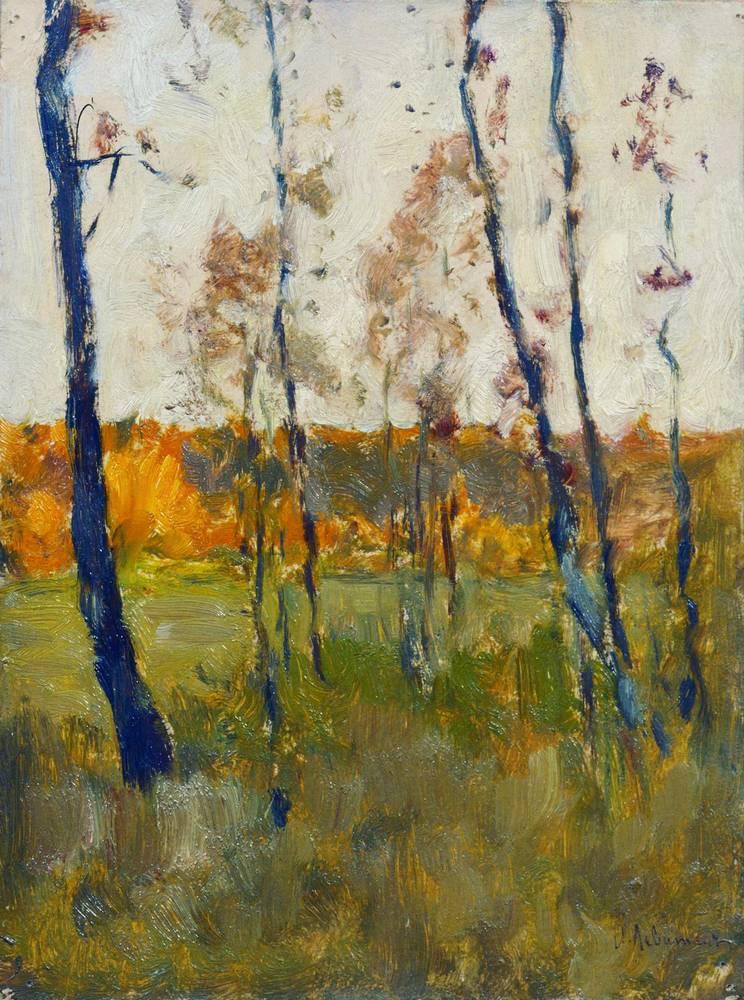
Isaac Levitan, Autumn, 1899
Some perfectly good things this month, but not many standouts. Piranesi was the winner, I’d say. Here’s hoping for a more memorable December. I have several exciting things lined up, including some group reads. How about you? Did your November reading make an impression?
Now as he came closer the man reached up to the collar of his slicker and opened it, letting it fall back to reveal his windburned face, which was partly hidden by a few weeks’ growth of beard. But even with the beard, even in the shadow cast by the low-brimmed hat, Mangan saw it clear. It was his face.
Now that’s some Daphne Du Maurier or Patricia Highsmith-level doubling right there. But this passage isn’t from either of those wonderful writers. Instead it’s from another underappreciated 20th century writer who, like those precursors, works primarily in the realist vein but flirts with its representational others: the fantastic, the Gothic and, especially, the uncanny. Brian Moore was born in Northern Ireland, came to Canada in the late 1940s, and eventually settled in California. He wrote 20 novels and, if The Mangan Inheritance (1979) is any indication, I have a lot of satisfying reading ahead of me.
The character who sees his own face in another man’s is James Mangan, a former poet, a former journalist, and the former husband of a famous actress. This encounter is in some respects the climax of the novel. It’s precipitated by a moment early in the text, in which Mangan, rummaging through some old family papers while visiting his father, finds a daguerreotype of a man who looks just like him. The image, dated 1849, has the initials J. M. penciled on the back. Mangan believes he is looking at the (actual, I was surprised to learn) 19th century poéte maudit James Clarence Mangan, and, moreover, that the man is his direct ancestor, even though most biographies claim he died childless.
Having suddenly come into a large fortune, and freed of all responsibilities, Mangan travels overseas in order to confirm his suspicion. It is January, and Ireland is cold and rainy and poor. Many of the people he meets are suspicious, even hostile. But he feels ever more alive on the trip, especially when he meets some previously unknown cousins. And always he carries the daguerreotype, carefully wrapped in plastic, in the inside pocket of his coat, for every time he looks at it he feels an electric spark. Some kind of force makes itself felt, convincing him he is connected to his lookalike.
Various misadventures on the wild coasts of southwestern Ireland lead him to the encounter described in that passage, which turns out to be with an uncle everyone thinks is dead. Which means there are three identical men. What connection binds them? Has a creative force, a virtuosic artistic talent, been mysteriously passed among them?
One of the things I like best about the book is how far Mangan and the novel have travelled to reach this point. The book begins with Mangan in his apartment in New York. The door bell rings. It’s the super, come to fix a leaking faucet. “You have bathroom trouble?” he asks. This trouble is easily fixed, but before long Mangan has plenty of other, less remediable troubles. (Impossible not to read that word without thinking of Ireland’s Troubles, not to mention the wonderful J. G. Farrell novel, also from the 1970s, of the same name.) In the end, the man Mangan discovers, the man who shares his face, has bathroom troubles of his own, albeit of a more disturbing, irreparable, and corporeal sort.
But the swerve away from the domestic (the simple business of replacing a washer) is characteristic of the book’s trajectory, which is to break away from all that seems familiar. (This seems to be a real preoccupation of 1970s English-language fiction: I’m thinking of some of my favourite novels: The Summer before the Dark, Desperate Characters, Bear. Make of that what you will.) The book keeps moving, ever onward, from New York to Montreal to the snowy Laurentians and on to Ireland, and, once there, from small towns to a shuttered and ominous Big House to a windswept headland and a man in a tumbled down Norman keep. Only in the last handful of pages is there a return of any sort, and even then it is only geographic. Mangan goes back to Montreal, his home town, but to greatly changed circumstances that will require him to live a different life, if he is willing to do so.
Mangan’s isolation is as much emotional as geographic. Just as he is led further and further off the beaten track so too do his connections to other people fray. His initial exultation at meeting his extended family doesn’t last; before long, Mangan finds himself increasingly adrift. The more he learns about the men who share his face, the less he wants to be like and with them.
That uneasiness appears in a scene in which Mangan, blundering in the dark through a house that once belonged to the family but has been sold to a foreigner, comes across a mirror. He’s led to an uncomfortable thought:
He stared in terror at the face: a narrow old mirror framed in a gold-scrolled leaf and in it, glaring at him, ghostly pale, eyes glittering with the steely hysteria of an insane person, the features frighteningly bruised, lip swollen, missing front tooth: himself. And in that moment he knew why the house resisted him. I am the ghost that haunts it. (Moore’s italics)
How about that first sentence? That second colon, unusual where we might expect a comma to complete the itself incomplete (since the verb is elided) clause “and in it himself,” has the effect of suggesting that he himself is essentially this bruised and swollen figure. (He’s been jumped in a bar—and in so doing becomes ever more like the 19th century poet, not only in his dissolute-ness but also in his physique: the daguerreotype shows him missing the same tooth.)
And how about that final sentence? I am the ghost that haunts it. Creepy! Yet here is where Moore diverges from writers like Du Maurier or Highsmith. Whereas those writers would ask us to take the haunting seriously, as a way to make a point about identity, say, Moore ends up rejecting it. Or, rather, his ghosts are more mundane, if no less scarring. The Mangan family isn’t the repository of creative vitality, the flip side of which would be demonic grandiosity. More upsettingly, the family is ordinary in its cruelty. Some dramatic and sordid things have happened to its members, but they result from common, though terrible, bad behaviour.
All of which is to say that the terror Mangan experiences in front of the mirror is as misguided as the exultation he feels later when, in a sample of the lovely description of landscapes that Moore almost offhandedly weaves into the text, he makes his way to the encounter that he thinks will change his life:
On the other side of the wall was a footpath, a narrow, little-used track in the long rush grasses, leading back up the headland to a white, two-story farmhouse overlooking the sea. It seemed to be about half a mile away, and as he settled down to the uphill walk, the intermittent rain through which he had driven all morning was hurried off by strong, gusty winds coming in from the sea. High cumulus clouds sailed over the blue dome of the sky. Below, to his left, the sea fielded a platoon of angry whitecaps to race on top of its blue-marine depths. The bare green headland, the white house, the azure sky, all of it reminded him of a painting harshly etched, lonely as a Hopper landscape. He felt alive with expectation, as though, like someone in an old tale, he at last approached the sacred place to meet the oracle who knew all secrets. He put his hand in his pocket and touched the daguerreotype as though it were a charm.
When he passes the farmhouse and toils to another slope to his final destination and encounters a man who looks just like him, as described in the passage I quoted at the beginning of this post, he feels “elated as though he had stumbled on a treasure.” But the vision of “a man amid his books in a ruined Norman tower, living liked a hermit writing his verse” quickly sours.
Indeed, the promise of his own artistic rejuvenation, passed from the 19the century poet through the hermit and his verses reverses itself: rather than passing down genius perhaps his doubles can offer him only sordidness. Mangan speculates that “his double, like some scabrous sufferer from a dread disease, signaled that his listener was also infected.”
In the end, this speculation is a fanciful as the one that led him there. No genius throbs in the Mangan blood, but neither does there lurk degeneracy. The Mangan Inheritance is ironic in its title, and indeed its disposition. It rejects genetics as an explanatory force. The inheritance of anything more than mere physical appearance proves to be a myth. There were and are no poetic geniuses in the family, but that’s okay since genius has been used to whitewash abuse. The book has no time for the idea of inherited traits. Nothing is passed down; rather, things are passed onward. Mere circulation matters more to the novel than any idea of fate or destiny. After all, the most important inheritance, the only one that has any actual force, is the one that comes to Mangan from his ex-wife. And that one, the Abbot Inheritance, wasn’t even earned by her, despite her fame.
Transmission in The Mangan Inheritance takes the form of capital, not genes: and capital doesn’t care who it belongs to or what right they think they have to it, what belief systems they’ve created to legitimize it. It just wants to be spent, like a virus blindly seeking out a new host. (A salutary lesson for our own era, which is as obsessed with genes as with capital, and, with every advertisement for genetics testing, binds them more tightly and ruinously together.)
James Clarence Mangan, looking suitably diabolical
The only thing I didn’t like about the book is its depiction of Kathleen, Mangan’s young, beautiful, and damaged cousin, with whom he quickly becomes obsessed. She is consistently objectified, and even though the book makes it clear that this is Mangan’s vision, and that he is taking advantage of her (even as it allows us the possibility that she might be doing the same to him), and that this is just one of many things that have gone wrong in the family—not because there’s some mysterious taint in their blood but because they behave badly to each other—I couldn’t get passed the feeling that the book also enjoyed the objectification. This is the only way in which the book felt dated.
But in general Moore’s use of description is compelling. I wouldn’t call it a lyrical book, but there are lots of lovely bits, whether arresting word choices (surprised by a visit from his ex-wife, Mangan feels “his heart hit”—the intransitive use of the verb is evocative in its amorphousness, capturing how lost he feels), memorable phrases (castigating himself for losing his wife to a rival, Mangan tells himself, “And if she ditches you, it’s because you’re a loser. A Canadian loser.” (Is there any other kind?)), meta-reflections on the nature of the narrative masquerading as reflections of the main character (“To sit here in the car while the priest administered extreme unction to a dying Irish woman seemed a dream which like all true dreams moved at its own mysterious pace, without logic, toward a purpose he did not understand”), and evocative descriptions. Here, for example, is Montreal in winter: “Mangan… saw the steaming exhausts of other cars, the high dirty slabs of shoveled snow, the cleared lanes of traffic racing in the smoking Arctic air: a landscape of death.” Yep, been there.
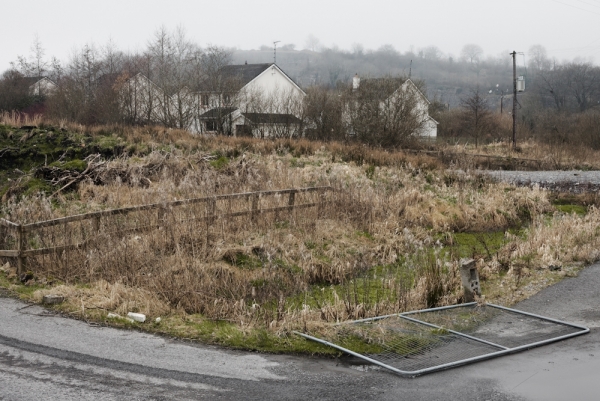
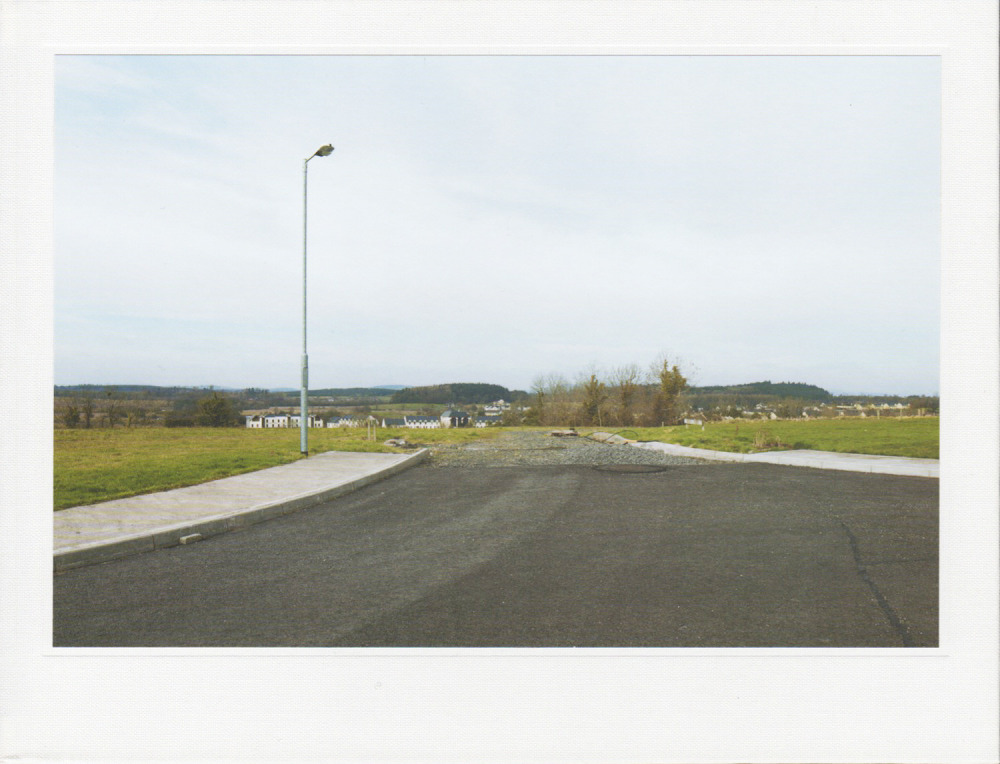
Like so many 20th century writers, Moore is stranger than he first appears. In this sense, his use of Gothic tropes is a ruse. For Freud, the uncanny, by virtue of its connotation in German of domesticity and coziness (das Unheimliche), is only truly evident when the familiar reveals itself as strange. Only the things we think we know can really spook us. That’s why there’s nothing as uncanny as a house. And The Mangan Inheritance has a haunted house, not to mention a ruined keep (as I was reading I kept thinking of the contemporary Irish version of this space, the housing estates left half-finished in the Crash of 2008, so brilliantly depicted by the Swiss-Irish photographer Valérie Anex). But the real uncanniness of the book lies in its prose. Take for example, the passage I cited at the beginning:
Now as he came closer the man reached up to the collar of his slicker and opened it, letting it fall back to reveal his windburned face, which was partly hidden by a few weeks’ growth of beard. But even with the beard, even in the shadow cast by the low-brimmed hat, Mangan saw it clear. It was his face.
I’m stuck on that “clear.” Yes, it’s not so strange to use an adjective in place of an adverb, especially to mimic speech. But although Moore’s dialogue is pitch-perfect, his narration hasn’t seemed interested in aping speech, and, anyway, Mangan is a pretty formal guy, who’s made his living wielding language, so it seems out of place as a representation of his speech/thought pattern. Instead I think Moore wants us to think not of seeing something (a face) clearly, but of seeing something clear. To see something clear might be to see it off, to pass beyond it. Fanciful, maybe, but this book is all about keeping things moving, and rejecting the past when it is taken as a hypostasized fantasy.
*
It’s thanks to Jacqui that I read this book. Her review of The Lonely Passion of Judith Hearne generated so much praise for Moore that I was inspired to finally get to him. Hearne sounded a bit relentless, but I also had Mangan on the shelf. I’ve now started Hearne (40 pp in and I can tell there’s going to be heartbreak, though not quite at Jean Rhys level, I hope) and checked out several other Moores from the library. Everyone agrees that the variety of his substantial output is one of his strengths. If I even find one or two more I like as much as Mangan I’ll be pleased. Do you have a favourite Moore? Or a suggested reading order? I’d love to hear about it.
A woman accepts an invitation to stay with friends at their hunting lodge in the Alps. The lodge is actually a two-story wooden villa with some outbuildings, including a hut for the gamekeeper and his dog. Her hosts are unusual—he, Hugo, heir to a saucepan fortune and something of a hypochondriac, has stockpiled food and supplies in the house; she, Luise, is a passionate hunter. The two don’t seem to have much in common, but almost as soon as they arrive, Luise convinces her husband to accompany her to the nearest village for a drink at the inn. Afternoon turns to evening; the couple doesn’t return. The woman is restless, but succumbs to fatigue: she makes herself something to eat and goes to bed without waiting up for her hosts. The next morning, there’s still no sign of them, and so, calling the dog, Lynx, to accompany her, the woman sets out to see what’s happened. The dog is running ahead, and suddenly he cries out in pain. He’s hurt, bleeding from the mouth, and whining in fear. The woman can’t see what could have caused the injury; she gently pushes the dog aside and continues down the path—and immediately bangs her head on something she can’t see. Apparently, an invisible barrier has been thrown up in front of her. No matter how carefully she moves her hands along it, she find no end to it; she can’t pass it. In a distant field she sees a farmhouse and the figure of a man. She calls out to him, but he doesn’t move and as she looks more closely she sees that he isn’t breathing; he’s frozen in place. Everything on the other side of the invisible barrier is as though turned to stone. The woman and the dog give up and return to the lodge. Soon she has to face facts: somehow, she and a few animals in the surrounding woods, meadows, and mountains are the only beings still alive.
So begins Marlen Haushofer’s The Wall, a sad, moving, and beautiful novel first published in Austria in 1962 and translated by Shaun Whiteside into English in 1990. Haushofer—about whom I know little: she was born in Upper Austria, went to school in Linz, university in Vienna and Graz, and spent most of her life in Steyr, where she married the same man twice and raised a family—had a short life (1920-1970) and didn’t write many books, but on the evidence of this one she was the real thing.
The Wall is filled with lovely low-key descriptions of the land from which the narrator struggles to rest a living. But these descriptions are always practical, always connected to the task of surviving; this narrator has no time for lyric effusions about the landscape. Here for example a storm is about to break:
It’s never entirely silent in the forest. You only imagine it’s silent, but there is always a whole host of noises. A woodpecker taps in the distance, a bird calls, the wind hisses through the grass in the forest, a big branch knocks against a tree-trunk, and the twigs rustle as little animals scurry around. Everything is alive, everything is working. But that evening it really almost was silent. The silencing of the many familiar noises frightened me. Even the splashing of the stream sounded restrained and muted, as if the water too was only moving lethargically and unwillingly. Lynx stood up, jumped miserably up on the bench beside me and nudged me gently, intimidated by the terrible silence.
Haushofer reminds me a bit of Lawrence. She shares his fondness for parataxis (though admittedly this is much more common and in fact grammatically sound in German than in English), as well as his willingness to repeat words and phrases, to the point of ungainliness. Also like Lawrence, she is brilliant on animals. The Wall is a great book about how much people need animals. (I realize people are animals; I mean non-human animals.) In addition to Lynx, probably my favourite character, the narrator becomes close to several cats and to her cow, lovely, patient, beautiful Bella, whose milk keeps all of them alive.
The Wall, then, is a book about living beings—about what it feels like to be alive, and what it takes to stay alive. Mostly it takes hard work. Here’s the narrator, having decided to take Bella and her calf to summer in an alpine meadow and painfully lugged everything she needs to keep herself whole up the mountain, clearing out the long-abandoned hut in which she will live:
The hut was thick with dirt, and that disturbed me a great deal. It was by now too late to start spring-cleaning. So I washed only the necessary pots with the wire brush and sand, and put a little pot of potatoes on the spirit stove. Then I dismantled the bed and carted the musty pallet to the meadow and beat it with a stick. A cloud of dust arose. I couldn’t do anything more for the time being, but resolved to lay the pallet outside to air on every fine day.
And here she is making hay for the winter (accompanied by Lynx, who, as always, is sharply attuned to her moods but not much help with the work):
The sun cast its full brilliance on the slope. The fresh-cut swathes of hay already lay wilted and dull. I stood up and began to turn them with the fork. The meadow was one great hum of startled insects. I worked slowly, almost drowsily, abandoning myself entirely to the buzzing, hot stillness. Lynx, who had checked that everything was all right with me, trotted to the stream and drank in long, lapping gulps, then lay down in the shade, his head on his paws, his mournfully wrinkled face entirely hidden by his long ears, and dozed away. I envied him.
Sometimes she gets something like rest, as when she discovers a stretch of raspberry bushes that have just ripened:
As I had no sugar and couldn’t make preserves, I had to eat the berries straight away. I went to the patch every other day. It was the purest joy; I was bathed in sweetness. The sun warmed the ripe berries, and a wild aroma of sun and maturing fruits enveloped and intoxicated me.
The edition of The Wall that I read comes with a blurb from Doris Lessing. It’s better than your average praise:
It is not often that you can say only a woman could have written this book, but women in particular will understand the heroine’s loving devotion to the details of making and keeping life, every day felt as a victory against everything that would like to undermine and destroy. It is as absorbing as Robinson Crusoe.
(I confess I have never read the Defoe, but I take it to be governed by a tendency to document and report, and The Wall has some of that, in its careful descriptions of how to chop wood and cut grass and never touch the seed potatoes, no matter how hungry you are.) Lessing is an important writer for me; I take her praise seriously. Indeed, reading it I was reminded of her near-contemporaneous Summer before the Dark (1973). Perhaps even closer in spirit to The Wall is a book even dearer to my heart, Marian Engel’s Bear (1976), a story about a woman sent to catalog a library in a fabulous house on a remote island in northern Ontario who finds a bear can make for good company.
Lessing and Engel’s books are stories of idylls. Is this one too? “A woman and her animals, alone at last.” Maybe. But if so, it’s a frightening idyll, one filled with hard work, and cold and hunger, the threat of death, and at the end of it all the realization that human beings might, with her, come to an end. Which isn’t to say that the narrator doesn’t experience something like positive transformation. But doing so requires that she shrug off her most human qualities. Loneliness, she writes, has led her, “in moments free of consciousness and memory, to see the brilliance of life again.” At Christmas time, depressed that in the forest it is nothing more than another snowy day, she consoles herself with the possibility of being able to forget the past: “something quite new lay waiting behind” the old ways of seeing. Imagining a real transformation means imagining something beyond herself:
One day I shall no longer exist, and no one will cut the meadow, the thickets will encroach upon it and later the forest will push as far as the wall and win back the land that man has stolen from it… The forest doesn’t want human beings to come back.
Here Haushofer reminds me of Woolf in the Time Passes section of To the Lighthouse. This passage could have come from the earlier novel:
I see the plants flourishing, green, well-fed and silent. And I hear the wind and all the noises from the dead cities; window-panes shattering on the pavement when their hinges have rusted through, the dripping of water from the burst pipes and the banging of thousands of doors in the wind. Sometimes, on stormy nights, a stone object that was once a human being tips from its chair at a desk and crashes with a boom to the parquet floor. For a while there must have been big fires as well. But they’re probably over now, and the plants are hurrying to cover up the remains. If I look at the ground behind the wall, I don’t see any ants, or beetles, not even the tiniest insects. But it won’t stay that way. With water from the streams life, tiny, simple life, will seep in and revivify the earth. I might have been quite indifferent to that, but strangely it fills me with secret satisfaction.
Given its interest in overcoming the human, it is less obvious in The Wall than in the other books I’ve referenced that the heroine’s self-discovery is a good thing. Plus—spoiler alert!—near the end something weird and terrible happens. A man comes out of nowhere and kills the bull and the dog before the narrator kills him. All of this happens so abruptly—here I was reminded of Beckett’s Molloy and its sudden, hallucinatory depictions of murder—that I’m not even sure whether it really happened. Actually, I think it does. But where this guy comes from and whether there are any more like him or if there are any repercussions or ripple-effects from this burst of violence are never explained.
That violence would seem to mitigate fully any notion of an idyll, and indeed ultimately there is no way out for the narrator. She runs out of paper, and simply ends her chronicle. Yet the book doesn’t feel hopeless. It ends on a note of what I can only call grace. Maybe today we would call it mindfulness. Over and over, the narrator is granted the peace of no longer having to think (prevented by exhaustion, by the need to keep on task, by the joy that comes from taking care of and being cared for by animals). But she doesn’t become wild. She doesn’t want to give up thought. She distinguishes herself from animals; despite the frailty of the human and the lure of its extinction, she accepts the tragedy of self-consciousness. For her, as for Leonard Cohen in his equally graceful “Famous Blue Raincoat,” that means she’s keeping some kind of record:
Over the last few days I have realized that I still hope someone will read this report. [Again, the language of documentation.] I don’t know why I wish that, it makes no difference, after all. But my heart beats faster when I imagine human eyes resting on these lines, and human hands turning the pages.
Where the book seems most feminist is in its depiction of the narrator as someone who, for whatever reason (though it is intimated that the reason is because she is a woman), needs to care for others: “There was something planted deep within me that made it impossible for me to abandon something that had been entrusted to me.” This despite the fact that care is always stymied. To love is to keep alive, but life is replaced by death, and so love is always tragic:
I often look forward to a time when there won’t be anything left to grow attached to. I’m tired of everything being taken away from me. Yet there’s no escape, for as long as there’s something for me to love in the forest, I shall love it; and if some day there is nothing, I shall stop living. If everyone had been like me, there wouldn’t have been a wall… but I understand why the others always had the upper hand. Loving and looking after another creature is a very troublesome business, and much harder than killing and destruction.
This is the most allegorical and “message-y” the book gets.
Apparently, Haushofer took a long time to write this book. Not only did she have a household to run, even as she suffered from poor health, especially debilitating headaches, but she also wanted to make sure she got it right: that her descriptions of animals and plants were accurate and that the life she described for her heroine was plausible. I wonder if she was helped in her search for accuracy by her background: she grew up in the foothills of upper Austria, where her father was a forester. In one sense, nothing happens in this book. Yet it’s utterly compelling, partly because it has relentless forward momentum even as the telling ranges back and forth in time (only ever within the years after the incident, though—she almost never says anything about her life before the wall). The book is propelled by the changing of the seasons, of weather and climate, of life and death. It’s all very elemental, but never portentous. (Haushofer is the anti-Cormac McCarthy.)
I’m speaking a lot about feelings here. Something about this novel incites reflection on our experiencing of reading it. I felt shame, too. How could I, with a doctorate in comparative literature with particular emphasis on English and German-language 20th century literature, have never heard of Haushofer before? How could I have taken all those classes, sat through all those colloquia, and never come across this remarkable author? Maybe things would be different if I were still in graduate school today: maybe Haushofer is having a resurgence, dozens of academic teaching her works and writing assiduously about her. (I gather a film adaptation came out a few years ago; that can’t hurt.) But my shame quickly turned into something more generative. I’m thrilled with the discovery, and reassured to realize, yet again, how much literature remains to explore. Haushofer is a writer for everyone: careful, matter-of-fact, gentle, joyful—but not sweet. She’s more like the cranberries the narrator strains and jars to keep her through the winter than she is like the raspberries on which she gorges to the point of surfeit.
I plucked The Wall from the bottom of a large stack of unread books in my study largely because I wanted to contribute to #WITMonth, the creation of Meytal Radzinski (@Biblibio), an event that has gratifyingly become a sensation in the book world. I like to think the sense of discovery that accompanied my reading of this remarkable book is in keeping with the spirit of this celebration of month-long event. Of course, now all I want to do is seek out Haushofer’s other books; every book read from the TBR pile only leads to two or three more…





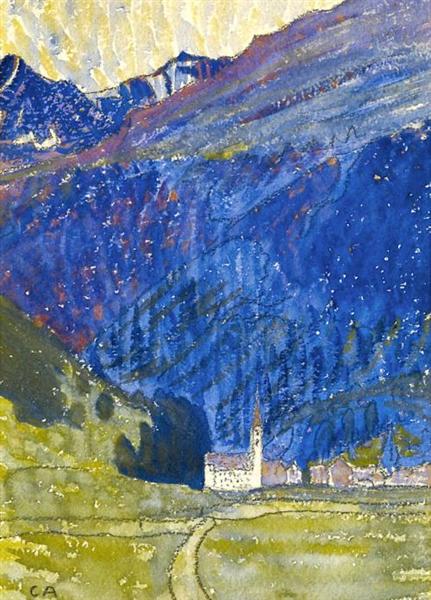
 Eiger, Mönch & Jungfrau