Ricardo Chavira’s Year in Reading, 2023

Excited to once again present reading reviews from some of my favourite readers. Today’s installment, his first, is by Ricardo Chavira (@waryenthusiast). Ricardo is a reader, not a writer, but he thinks writers are cool. When he’s not reading, running, cooking for friends and family, building even more bookcases, or making maple syrup, he makes his living in sunny CT. Having done graduate work in philosophy, he, naturally, works in IT.

Edvard Munch, Kragero in Spring, 1929

A few years ago, I started keeping track of my reading with a detailed list. I wanted a handy list I could consult (likely on my phone) if and when a friend would ask what I’d been reading lately. Too often, my mind would freeze and I’d maybe utter one title from 3 months ago, only later kicking myself for not recalling the wonderful books I’d just read in the last few weeks. [Ed. – Relieved to know I’m not the only one. “Uh… books… I read some books.”] What started as a mental crutch has evolved into a comprehensive spreadsheet, tracking title, author name & gender, genre (fiction, non-fiction, poetry), date I finished the book (which also gets written on the last page of the book), where I finished the book (city, but often on a plane or train), whether it was an audio book, library book, read by my book group, etc.

In my non-book-reading profession, there is an adage that “what gets measured gets improved.” [Ed. – Hmm.] Perhaps that applies here as well. In recent years, I’ve sought to diversify my reading palate, reading more books written by women and persons of color, reading more non-fiction (left to my devices, it’s overwhelmingly fiction), borrowing more books from my local library, reading more from “the backlist” (as I tend to get excited by recent releases). Being aware of what I’m reading allows me to be more deliberate about what I read. It’s also fun to run the numbers each January, look for trends, chastise myself (for not reading enough poetry), feel good about myself (for reading more works in translation), and make plans for the coming year (which are never followed through completely).

My other book tradition is the annual reshelving that takes place shortly after New Year’s. Every year, I put the books I read on their own shelf. Audiobooks, library books, and books on loan are not there, of course, but it’s fun to watch that empty shelf slowly fill up and, eventually, spill over to the next. [Ed. – Wait, what did you say?? I drifted away when you said “empty shelf.”] And after the new year, the year’s reads get shelved into the general mix of the library. It’s an opportunity to reflect again on these books, but really an excuse to muck around with my library. For whatever reason, it’s a very satisfying activity and one I’ve come to look forward to. [Ed. – What a lovely tradition!]

<insert obligatory comment about how awful the year was> Yes, 2023 was a dumpster fire of a year in so many ways, but not a bad year for books and reading. The year began with anticipated titles from many of my favorite contemporary writers*, some of which are mentioned below.

(*a partial list of authors with 2023 releases that had me worked up: Nana Kwame Adjei-Brenyah, Colson Whitehead, Rebecca Makkai, Luis Alberto Urrea, Hilary Leichter, Matthew Desmond, Rebecca Solnit, Zadie Smith, Lauren Groff, Emily Wilson (trans.), Jesmyn Ward, Jhumpa Lahiri – whew!)

So let’s get on with it. Herewith, some rambling thoughts on many of the books I read. Enjoy and happy reading.

Some highlights – Loved these books, here’s why.

  • Chain-gang All-Stars, by Nana Kwame Adjei-Brenyah

A highlight of the year for me was Adjei-Brenyah’s follow up to Friday Black, his fantastic debut of short stories. Chain-gang is set in a near future where prisoners are given the option of joining “chain gangs,” teams that fight in gladiatorial hand-to-hand combat in exchange for a shot at freedom. These so-called “hard sports” have corporate sponsors, stadiums full of shrieking fans, and lucrative online steaming shows. Despite all this, we’re somehow given a story of love and humanity amidst the chaos. Calling it satire or dystopia only hints at Adjei-Brenyah’s brilliance, as he approaches his set-up as more than just a sendup of current society and the role of the carceral state. At a public reading, I asked him how he threads the line between plausibility and seemingly improbable exaggeration (a televised reality show with prisoners fighting to the death? no, but I can kinda see that …). [Ed. – Alas, I can totally see it.] As I recall, he said the trick is not just coming up with a dramatic story, it’s having a twist that makes it work. He’s not just stepping on the gas, exaggerating the status quo. Rather, he takes something away or adds to make the story stick. Here, the conceit is not that prisoners are being violently exploited for public/private profit. The conceit of the novel is that it’s happening out in the open, and we not only don’t care, we consume it. As terrifying as that sounds, there’s an urgency to this novel that can’t be ignored.

  • Crook Manifesto, by Colson Whitehead

We’re living in the age of Colson Whitehead, in case you’re wondering. A follow up to Harlem Shuffle, we get to revisit Ray Carney, the furniture store owner and erstwhile fence of stolen goods. Unable to score Jackson 5 tickets for his daughter, Ray calls in a few favors and one thing leads to another… The depiction of Harlem in the 70s is spot on; and Whitehead has such an ear for the rhythms of speech, music, and street noise that do so much to convey the bygone era. Whitehead is deft as ever in exploring matters of race and society. Musing on a performance in which a young Michael Jackson wants to talk about the blues, “Carney chuckled – the kid was ten.” But after a moment’s reflection, “Carney shouldn’t have laughed. What ten-year-old black child didn’t know about the blues?” This is the second in a projected trilogy and my arrangement with Whitehead is simple – you keep writing them, I’ll keep reading them. [Ed. – Ha, love that! Loved Shuffle; look forward to this one; excited to hear about the third.]

  • Lucky Jim, by Kingsley Amis

I love the campus novel and this is one of the best. I recently came across a copy of the NYRB edition, so took it as a sign to revisit an old favorite. Happily, it mostly holds up. The old school misogyny felt tired and dated (as it should). Margaret may be a manipulative drama queen (says so right there in the margins of my old copy), but it hardly justifies her treatment. Still, Amis is such a good writer, tossing off lines such as: “It was from this very bottle that Welch had, the previous evening, poured Dixon the smallest drink he’d ever been seriously offered.” On the whole, the novel still works and neither characters nor readers emerge unscathed. Coda: Happily, I received another copy for Christmas, as Hatchard’s, the venerable London bookseller, has issued a gorgeous limited edition of Lucky Jim. Anyone want an old paperback copy? [Ed. – Good offer, friends!]

  • Milkman, by Anna Burns

I was excited to read this book when it came out and finally got around to it (only 6 years later). I knew it was going to be good, but it’s always a thrill when a book so wildly exceeds your expectations. The psychological depth, the suffocating closeness of the tight-knit community, the deadly gossip, and the rapid-fire language make for a heady combination. So many passages were chock full twists, descriptors, and fulsome lists that I feared she’d run out of words. But she never did. So grateful.

  • The Netanyahus, by Joshua Cohen

On one level it’s a campus novel (and you know how I love a good campus novel), but also an incisive depiction of antisemitism, and a scathing indictment of the powers that be. It’s also a riot. Cohen guides us with such a steady hand through the myriad offenses endured by our humble protagonist, Ruben Blum, the only Jewish professor on a small upstate New York campus. Describing a note from Blum’s obtuse department chair: “’Rube,’ it read, in his characteristic mélange of the casual and turgid.” [Ed. – Heh] But Cohen also doesn’t hold back in depicting the flaws and hubris of his characters. The Jewish professor, and titular patriarch, whom Blum is asked to host is none other than the father of the current Israeli prime minister. This book should be read and appreciated despite, and because of, its association with current affairs.

  • The Monsters of Templeton, by Lauren Groff
  • The Vaster Wilds, by Lauren Groff

This is also the age of Lauren Groff. This year I read her first and latest novels to achieve my Groff completist status. [Ed. – Ooh, did you get the button??] I love how varied her writing is; she never writes the same book twice. A grad student trying to make her way in the world and learning you can’t come home again (except when you do). A young woman fleeing an early American colonial settlement and trying to survive in the wilderness. As with Whitehead, I will read everything she writes. Keep em coming. She’s also opening a bookstore! [Ed. — !]

  • Phantoms, by Christian Kiefer

By all accounts (viz., a scroll through his Twitter feed), Kiefer is a busy man, juggling teaching, a large family, and crazy rock & ice climbing expeditions. [Ed. – No joke, that climbing stuff is insane.] He also manages to write some wonderful novels. Phantoms tells the story of Japanese and American families torn apart by WWII and the shameful internment camps. Years later, the story is refracted by the memory of a young writer who is slowly uncovering the truth, while dealing with his own trauma as a Vietnam veteran. A story of secrets, lies, bigotry, war, and other American values, Phantoms is truthful without being cynical, and just hopeful enough without giving in to sentimentality. And Kiefer gets bonus points for having joined our book group discussion via zoom!

Found in Translation – I don’t know why translated literature is such a hard sell in this country. It’s the literary equivalent of yelling at children “eat your vegetables, they’re good for you!” With publishers such as NYRB, Europa, Charco (and many other wonderful indie presses), it’s so easy to find good translated lit. Try it, you’ll like it.

  • Translating Myself and Others, by Jhumpa Lahiri

I just can’t say enough good things about Lahiri, she’s the bee’s knees, the cat’s pajamas. I get giddy thinking about her work. [Ed. – Paging @bibliopaul!] Long story short for those not keeping track at home: In recent years, Jhumpa Lahiri has been writing in Italian and translating (herself and others). Never fully at home in English (the language of her upbringing) or Bengali (the language of her parents), she learns Italian in college. Years later, she returns to it by packing up the family and moving to Rome (as one does), where she immerses herself in language study. Before long, she’s hanging out with Italian writers and translating their work. And she stops writing in English as her primary language. These essays are both critical (such an ear for how other writers work) and personal (artfully exploring her technique and motivations behind her writing and translations).

  • Roman Stories, by Jhumpa Lahiri, translated by Jhumpa Lahiri and Todd Portnowitz

New short stories from Lahiri (her best form, in my opinion) is cause for celebration. These don’t disappoint. Set in a contemporary Rome and populated by people who look and speak differently from the locals, these stories remind us the beauty and coarseness of the human condition. And yes, she wrote them in Italian and later translated (all but two of them) into English.

  • Ties, by Domenico Starnone, translated by Jhumpa Lahiri

Starnone is a luminary in the Italian literary scene and not known well enough here in the States. And is translated by Lahiri. And published by Europa. What’s not to like?

  • The Door, by Magda Szabó, translated by Len Rix

I often saw this book cited as a favorite NYRB, so was thrilled when I found a used copy. And even more thrilled when I began to read it. Szabó gives us Emerence, a housekeeper, street sweeper, and eminence grise of a small Hungarian community. At first, Emerence seems aloof, secretive, even arrogant. She’s all of these things, but also insecure and vulnerable, as slowly emerges from her complicated relationship with Magda, her employer (and enabler). The depth of the characters and complexity of their relationships carries on to the end, giving us a stunning portrayal of people at their best, worst, and most human. [Ed. – Incredible book, now I want to read it all over again.]

  • A Mountain to the North, a Lake to the South, Paths to the West, a River to the East, by László Krasznahorkai, translated by Ottilie Mulzet

Krasznahorkai is a wizard. It would be too easy to say this story is like a dream. But there is an ethereal quality to this book that evokes so much thought and feeling, and yet remains just out of one’s grasp. Long, wonderful discursive passages on weather, architecture, and math that evoke sheer longing. There’s a short chapter on the wind and air that has passed through this temple that’s just a joy to read. A great way to end the year for me.

  • Fantastic Night, by Stefan Zweig, translated by Anthea Bell

These stories of reversals, betrayals, misunderstandings, and moral discoveries are a delight. To contemporary readers, he has a certain Old World charm, and it’s not surprising he’s come back into vogue recently as both literary and pleasure reading. I’ve been told that with Zweig’s unique voice, you’re either in or you’re out. Count me in.

  • At Night All Blood is Black, by David Diop, translated by Anna Moschovakis

Diop does so much in this short novel. In the trenches of World War I, our protagonist takes revenge on enemy troops after his best friend is killed. A grisly descent into madness ensues that terrifies even his fellow soldiers, making him an outcast in every way. The narrative feels like something out of Camus, but darker, and stayed with this reader for a long time.

Good Genre – Another absurdity of the reading community which I cannot abide are the knee-jerk slights often directed towards so-called genre fiction. [Ed. – We do not allow that sort of thing here at EMJ.] Here are some standouts in fantasy, sci-fi, and crime fiction.

  • Hell Bent, by Leigh Bardugo

In Bardugo’s world, magic is real and practiced by students at Yale University’s secret societies, such as Skull and Bones. (Campus novel alert!) A sequel to her blockbuster Ninth House, Hell Bent picks right up where the action left off and doesn’t stop. I’ll admit to a local bias that adds to my enjoyment of these books as I studied there, live nearby, and my wife is friends with the author (read the acknowledgments!). [Ed. – What?!?!?!] But even without any extraneous connections, it’s great fun. Alex Stern is part of an organization that is supposed to keep the secret societies in check, but she has a way of making things worse and/or better and pretty soon things are literally going to hell. Along the way, Bardugo gives us more esoteric history (some it speculative) and plenty of her trademark creativity in the magic, spells, and monsters that populate this world (demons and vampires, yes, but not exactly like what you’ve seen before). I always love the second part of a trilogy (what can I say, I’m a middle child), but I am eager for the next installment.

  • Babel: Or the Necessity of Violence: An Arcane History of the Oxford Translators’ Revolution, by R. F. Kuang

Another Yalie (along with Bardugo), Kuang has written 5 novels, is working on a PhD (to complement her Oxford and Cambridge degrees), and hasn’t bothered to turn 30 yet. Wunderkind bio aside, Babel is a lot of fun. We’re at Oxford in the 1830s, but in this version, magic is real and harnessed by scholars at the Royal Institute of Translation who manipulate silver bars inscribed with translation. The effects of this magic power the British empire and are the source of its global domination. Not all sits well with a group of young students, most of whom are foreign-born and recruited for their language skills. Plenty of action, intrigue, and wrestling with moral and political dilemmas make for an engaging read. And did I mention it’s a campus novel? [Ed. – I’m gonna give this one another try. I abandoned ship, but I think I missed something good.]

  • Bloodchild and Other Stories, by Octavia E. Butler

Who knew Butler also wrote short stories? Not many (stories, that is), but those collected in this volume are bangers. [Ed. – Such bangers.] Part of the fun of short stories is delivering a punch, a great insight, or deep emotion in just a few pages. And sci-fi is great at creating alternate worlds where the rules are different and you get to decode those new norms. Doing both of those things well at the same time is no small feat. Happily, Butler doesn’t skimp on her trademark thought-provoking imagination. More than once I felt equal parts excited and unsettled as I figured out the premise of each story. “Ah, so that’s what’s going on. Yikes, that’s what’s going on.” [Ed. – Well put, R]

  • Lessons in Birdwatching, by Honey Watson

I hadn’t read a solid sci-fi novel in a while and this one really satisfied that itch. At first, I felt out of practice, trying to decipher which way was up in this new world. “That can’t be right, is that really happening? I often said to myself. And oh, yes, it was happening. Whether it’s right or not is up to you, dear reader, to decide. In the meantime, Watson has a ball with political intrigue, war, sex, drugs, violence, resurrecting an ancient god, and giving us some really manipulative characters you can’t help feel guilty rooting for. A sequel is necessary, as I have a feeling it’s going to get worse before it gets better. And I can’t wait.

  • Small Mercies, by Dennis Lehane

Solid storytelling, plenty of violence, salty characters, and local color keep the pages turning. Is this a screenplay masquerading as a novel? Given Lehane’s novels’ track record, the adaptation can’t be far behind.

A Family Affair – Few things in life are more satisfying than enjoying books with your family, especially children. Scratch that, there’s nothing better.

  • The Handmaid’s Tale, by Margaret Atwood

This was at the top of my wife’s Leigh Bardugo’s friend’s “books I love that I can’t believe you haven’t read” list. Feel lucky to have such a great reading partner. [Ed. – Aww, love this.]

  • Slaughterhouse Five, by Kurt Vonnegut, Ryan North, Albert Monteys (graphic novel)

As my son continues to develop his literary tastes, his current go-to list includes Steinbeck, Murakami, and Vonnegut. He recently acquired this lovely graphic novel version of Slaughterhouse Five, one of his favorites. It’s a wonderful version with fantastic artwork, remains true to the novel, and made for great conversation.

  • Afterparties, by Anthony Veasna So

So was a wonderful writer whose life sadly ended far too soon. My niece loved these interconnected short stories of Cambodian Americans in California and wouldn’t rest until I read them. Loved the book and love having such passionate and discerning readers in the family. [Ed. – Lucky man!]

Kinda wacky, but good! – A very ad hoc collection of books that were unconventional in form and/or content.

  • The Memory Police, by Yoko Ogawa, translated by Stephen Snyder

Ogawa gives us a world where words are gradually erased from society, forbidden from use, after which their referents disappear from the world and, eventually, from memory. Birds are erased from language, then trees, then collective memory. Gradually, more and more of the world is removed from experience and memory, making even the most modest forms of resistance heroic. Haunting and imaginative in its use of language, I couldn’t stop thinking about it when I was done. It brought to mind the parts I most loved about Orwell’s 1984. More frightening than an oppressive, totalitarian government is the devious control and manipulation of language. If someone controls the words people can use, they’ve already won. Excited to hear there’s a movie adaptation in the works!

  • Pure Colour, by Sheila Heti

Heti gives us a world that is just a first draft, in which Mira’s love for Annie and her father give her different experiences and perspectives on being in the world. When her father dies, his spirit goes into Mira and they live as a leaf on a tree, until Mira remembers her other modes of existence. None of that really explains the novel, but that doesn’t matter, because Heti is not encumbered by conventional expectations of what a novel should do or be about. That alone is reason enough to read it. [Ed. – Plus, she spells “colour” correctly.]

  • Gibbons, or One Bloody Thing After Another, by James Morrison

Morrison, that irascible voice of reason on #BookTwitter, has given us a splendid book that hops across centuries and generations of a family, giving us one bloody thing after another. Such is life. Each chapter is a separate short story, all loosely interconnected and featuring glass eyes, a fake mermaid, and culminates in a Sydney Opera House set aflame. [Ed. – Indeed. So good!]

  • Memoirs of a Polar Bear, by Yoko Tawada, translated by Susan Bernofsky

Three generations of polar bears who are heroes of the revolution, dissidents, expats, and celebrities. These are their stories. As original as it is improbable, it was fun to let go and go along for the ride.

Make Way For Poets – Never enough poetry, but here are two I enjoyed.

  • Her Whole Bright Life, by Courtney LeBlanc

LeBlanc brings joy, anger, sorrow, and love into her work in ways that make you want to read, reflect, and read again. That is to say, she’s a wonderful poet. When she curses North Dakota for the difficult life it inflicted on her hard-working, dying father, her rage is palpable and as beautiful and terrifying as anything the Greeks knew. But she’s equally adept giving us tenderness, as when she describes her husband rescuing an injured bird:

He carried it to a tree at the edge of our

property, gentled it onto a branch

Love the verb “gentled”!

  • Poems [For, About, Because] My Friends, by Hattie Hayes

Hayes’ first collection of poems is, as the title suggests, centered around her friendships and is a wonderful evocation of the time of life when friends serve as a chosen family and are deeply pivotal to one’s life. Hayes matches those emotions with some lovely turns of phrase:

You sign every letter “yours,” as though I needed a reminder

and

I have all this faith I’d never dream of cashing in

I’m also grateful to her for introducing me to Hilary Leichter. Will keep an eye on Hayes’s work to come.

Good, But Didn’t Change My Life – These books were fine, well-written, and loved my many. I enjoyed them, but I wasn’t as overwhelmed as I’d hope to be.

  • Hamnet, by Maggie O’Farrell

Love the subject, the writing was great, but I somehow didn’t connect with the story for much of the book. It seemed too distant and diffuse, somehow. But the ending had such beauty and moral clarity, it seemed to make up for it.

  • Nocturnes, by Kazuo Ishiguro

Am working my way through Ishiguro. I enjoyed these short stories, but they didn’t bowl me over, as much of his work has done. Bonus points for the interconnected short stories. Always love that.

  • I Have Some Questions for You, by Rebecca Makkai

I loved The Great Believers, so was ready for more Makkai. And while it was a pleasant and enjoyable read, it just didn’t have the same depth as her previous work. To be fair, not every novel can (or should) be The Great Believers, but I was left wanting more. And yes, bonus points are awarded for another campus novel.

Didn’t Quite Work For Me – Some books that left me cold and a bit disappointed; didn’t hate them, they just didn’t work for me. These are three great writers who will continue to do just fine without my approbation, so let’s not lose any sleep here.

  • Birnam Wood, by Eleanor Catton

Catton is a great writer and weaves a wonderful story setting up a conflict between a scrappy, left-wing, environmental collective and a billionaire tycoon with shifty motives. The dialogue is tight and snappy, with some great bits on the shortcomings of liberalism, failures of capitalism, and dismal state of the environment. Loved those passages. The problem (ok, my problem) is that the villain is so rich and powerful, with unlimited resources, weapons, and technology, and utterly devoid of scruples, that it makes for an uneven conflict. Wait, maybe that’s the way of the world! Even so, it makes for a lopsided novel, and ultimately detracts from its enjoyment.

  • The Heaven & Earth Grocery Store, by James McBride

Love McBride. And there’s much to love in this novel. But it feels like three different stories, which ultimately don’t come together as a cohesive whole. The many colorful characters, the fascinating slices of history, and the clever plot twists are fun, but they seem more anecdotal and don’t really add up. Much preferred Deacon King Kong.

  • The Gathering, by Anne Enright

I’ve enjoyed other Enright books (esp. Yesterday’s Weather), so was glad when our book group chose this. Unfortunately, this book never took off for me. We’re introduced to a large Irish family mourning the loss of their son/brother by suicide, mostly from the perspective of a close sister. It made me feel a bit churlish, but I kept waiting for something to happen. And when the revelations were disclosed, they were late in coming and seemed so predictable as to have lost some of their moral weight. But hey, it won the Booker, so what do I know.

Quick, Fun Reads – Because sometimes you just want an easy, fun read.

  • Daisy Jones and the Six, by Taylor Jenkins Reid

The rise and fall of a fictional band (Fleetwood Mac, basically) is told as a series of interviews years after they collapsed at the peak of their fame and success. It’s a good rock and roll story, with the requisite amount of sex and drugs. The story breezes through the haze of the 70s and makes you care about the main characters without getting too nostalgic. The tv adaptation was also good fun, but as always, read the book first.

  • The Wife of Willesden, by Zadie Smith

Zadie Smith taking on a modern adaption of Chaucer’s The Wife of Bath? Yes, please! A raunchy playfulness comes through (how could it not?) and you know Smith is having fun updating the material to modern sensibilities while keep true to the source material. And the account she gives in the introduction about haphazardly falling into the assignment of writing a play is equally hilarious.

  • The Fraud, by Zadie Smith

OK, not quick (pretty long, actually), but since we’re talking about Smith, it was fun to read her 19th Century novel (she also narrates the audiobook). Her take on a sensational trial and its ensuing wild publicity was enjoyable. And I know she’s also making some comments on the state of the novel, but I don’t have the energy right now to unpack all that, let alone be upset by it.

Glad I Finally Got Around to Reading Them – I had heard so much about how great these books were (especially from some very ardent fans of Light) that I finally caved in and read them. Glad I did.

  • All the Light We Cannot See, by Anthony Doerr
  • Cloud Cuckoo Land, by Anthony Doerr

OK, I see what the fuss is all about. Doerr is a wonderful storyteller, especially adept at slowly weaving together seemingly disparate strands across time and place. So much fun to see him work. Also, I stupidly avoided Cloud Cuckoo Land because of the goofy title. Joke’s on me, because a novel featuring a long lost Greek story name-checked by Aristophanes is right up my alley!

Edward Hopper, Barn and Silo, Vermont, 1929

So that’s what I got. Not everything I read and not everything there is to say about what I read. But enough for now. And you? [Ed. – Thanks, Ricardo! Quite a year.]

James Morrison’s Year in Reading, 2023

Excited to once again present reading reviews from some of my favourite readers. Kicking things off is the one and only James Morrison, back for his third installment. James lives and works in Adelaide, Australia, on unceded Kaurna Country. For many years he has written about book design as the Caustic Cover Critic. He has too many books. He’s online at @Unwise_Trousers (Twitter) or @causticcovercritic.bsky.social (Bluesky). His first novel, Gibbons, or One Bloody Thing After Another, was published in 2023 by Orbis Tertius Press.

‘Tonight too / does my woman’s pitch-black hair / trail upon the floor / where she sleeps without me?’
Masayuki Miyata

[We push through the crowded train station and step up into the carriage, compulsively checking you have your ticket several times in the process. You find a seat and open your mouth to speak, but I suddenly launch into a monologue.]

So, yes, it was a tremendously crappy year, both personally and globally, but at least I got some books read. Indeed, that’s pretty much all I did. I scythed through 296 books, and only a few of them were terrible, so that’s some sort of achievement right there. Right? Right??? [Ed. – Holy shit yes.]

DENSE SLICES OF TIME

Two of the most fascinating non-fiction books I read this year both took the same approach—densely researched group portraits of the lives of interconnected writers and artists over the period of a month or so—applied to two very different eras. Alethea Hayter’s A Sultry Month (1965) covers the world of literary London in June 1846, from Robert Browning and Elizabeth Barrett planning their elopement to Jane and Thomas Carlyle driving each other round the bend, all joined together by the last acts of now-forgotten artist Benjamin Robert Haydon as he prepares his suicide. Uwe Wittstock’s February 1933: The Winter of Literature, translated by Daniel Bowles (2021/23), uses the same close focus on the writers, filmmakers, dancers and actors of Germany in the first month of Hitler’s power, from Joseph Roth wisely fleeing, via Thomas Mann being unbelievably naïve, to Gottfried Benn enthusiastically Nazifying himself. It’s chilling and depressing in equal measures, what with [points helplessly at everything]. [Ed. – *nods glumly *]

As a pendant to the Wittstock, Lion Feuchtwanger’s The Oppermanns (1933), translated by James Cleugh, is hard to beat, detailing the rise of the Nazis through the story of a successful Jewish Berlin family. Written when the events it details were still ongoing, and with much worse to come, it is a perceptive and still timely book. [Ed. – Amen]

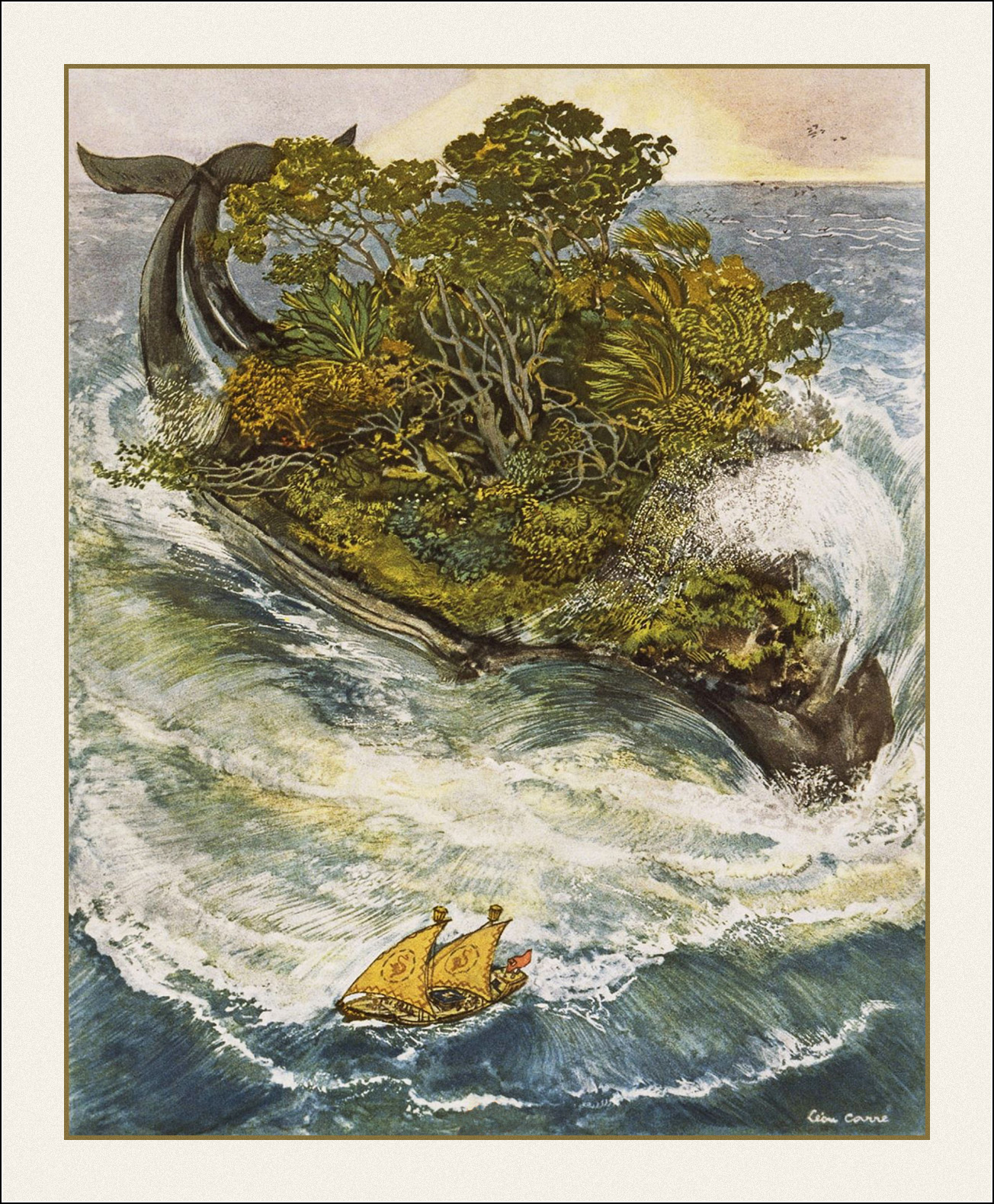
From ‘The adventures of Sindbad’
Leon Carre

AUSTRALIANS

It’s wonderful to have been one of the many readers who finally got hold of the books of Jen Craig this year, and fell in love with them. Intensely, almost claustrophobically, looping narratives of communication breakdowns, troublesome families, injuries, art, eating disorders, and the irritation of being named Jenny Craig when that’s the name of the country’s most famous dieting pyramid scheme. The experience of reading each book—Since the Accident (2013) and Panthers and the Museum of Fire (2015)—is something like peering closely at the back of an incredibly detailed tapestry, trying to guess at the structure, and then with the last few pages suddenly flipping it over to discover a masterpiece. I also read her third novel, Wall (2023), but that was earlier this month so just imagine me saying something similar in 12 months about that.

Susan McCreery’s All the Unloved (2023) is a wonderful novella about the inhabitants of a block of flats in 1990s beachside Sydney, centred on a teenaged girl’s coming of age. Amanda Lohrey’s Vertigo (2009) is another small gem, the story of a traumatised couple fleeing to a new home on the rural coast, and ending in bushfire and terror, told in an engagingly odd way. The two most recent collections of Greg Egan’s short stories, Instantiation (2020) and Sleep and the Soul (2023), demonstrate with impressive depth just why he is widely regarded as one of the world’s best science-fiction writers, especially at this length—story after story will use an amazing idea that a lesser writer would spend a 1200p trilogy on, and then move on to something else even more mind-boggling in just a couple of dozen pages.

Adam Ouston’s Waypoints (2022) is a splendid example of one of my favourite genres of book—an obsessive monologue by an unreliable narrator, in this case somewhat pinned to reality through the disappearance of airliner MH370 in 2014 and Harry Houdini’s attempts to be the first person to fly an airplane over Australia in 1910. Finally, Tommi Parrish’s newest graphic novel, Men I Trust (2023), is a drably beautiful exploration of parasitic friendship, and I really am trying to get over the fact that they mistakenly include a Walmart in an Australian setting. [Ed. – Oh I just picked this up—had no idea it was Australian!]

[The conductor passes down the corridor, bellowing in a monotone. “This train is about to depart, all visitors please leave! Ticketholders only!” A small, relieved smile passes over your face as I step down from the carriage onto the platform, still talking.]

HUNGARIANS

Anyone who has read one of my year-in-readings before knows how I go on about the Hungarians. And here I am doing it again. The best Hungarian literature I read this year was Magda Szabó’s The Fawn (1959/2023), translated by Len Rix, the story of the career and personal life of increasingly enraged actress through Hungary’s tumultuous mid-twentieth Century. Spadework for a Palace by László Krasznahorkai (2018/2022), translated by John Batki, is another tremendous example of the obsessive monologue/unreliable narrator mentioned above. And Ágota Kristóf’s Yesterday (1995/2019), translated by David Watson, was sadly the last book of hers I had left unread: an illegitimate small-town child flees his past by moving to the city, but the reappearance of his now-married childhood love throws everything into chaos.

‘Hare 2’
Jan Pypers

OUTER SPACE, INNER SPACE

Samantha Harvey’s Orbital was just my cup of tea, a quiet and thoughtful 24-hour slice of the lives of six people at work, where said work is in the International Space Station in its final days. In Ascension by Martin MacInnes goes further afield, from the ocean depths to the Oort Cloud, in search of First Contact, strange dreams, and the dawn of life. I loved it, but not unreservedly—there were occasional weird glitches, like MacInnes’s childlike idea that as you travel through the Solar System you pass the planets one by one in a neat line, the way they are drawn in a kids’ encyclopaedia. [Ed. – Wait, that’s not what they’re like???]

The This (2022) by the always interesting, and ludicrously underrated, Adam Roberts, is a hugely entertaining extrapolation from the near into the far future, taking us from the Next Big Thing in social media to humanity as a hive mind. And an end-of-year treat was the new collection Selected Nonfiction 1962-2007 (2023) by J. G. Ballard, a chunky and tremendously entertaining mix of reviews, articles, memoirs, lists and rants.

[The train begins to move, very slowly at first. I’m standing at your carriage window, still talking, and I begin to walk along the platform, keeping pace with the train. You glance at your fellow passengers, blushing.] [Ed. – Ugh shit like this is sooo embarrassing… What a weirdo right I don’t even know that guy!]

ENDS

There were lots of excellent cataclysms in this year’s reading. How I’d taken this long to read David Markson’s Wittgenstein’s Mistress is both mysterious and an indictment on me, but this beautiful book from the point of view of possibly the last woman on Earth is full of gorgeous writing and vivid images. [Ed. – Is she thrilled to be free of bros at long last?] I absolutely loved it. I also loved Oana Aristide’s Under the Blue, a particularly well-done plague-and-after novel, so I was very sad to get in a fight and end up blocking the author online because of her being an anti-trans bigot. Why are authors all so unpleasant?

Pink Slime (2020/2023) is an Uruguayan novel of toxic miasma and slow societal collapse by Fernanda Trías, translated by Heather Cleary, another weird case of a book being written pre-COVID that foreshadows and refracts the weirdness we all then went through. Rebecca Campbell’s Arboreality (2022) is a Canadian novel in stories that takes us further and further into our future of rising waters and collapsing ecosystems, offering no cheap false hope but still providing a glimpse of something worth being alive for. [Ed. – I keep hearing about this book. Gotta check that out.]

And turning from global to personal cataclysm, there was Lorrie Moore’s I Am Homeless If This Is Not My Home (2023), where one of the two main characters is very, very dead. But readers of Anagrams will know well that a character doesn’t have to exist for them to be vividly, hilariously rendered by Moore.

STORIES

There were so many resurrections and collections of great short story writers this year. Among the best were Rattlebone (1994) by Maxine Clair and Lover Man (1959) by Alston Anderson, both beautifully observed interconnected collections about Black American communities. No Love Lost (2023) collects the incredible novellas of Rachel Ingalls, and if there’s a richer, stranger book than this out there, send it to me now!

Jean Stafford’s Children Are Bored on Sunday (1945) is as brilliant as the title promises. [Ed. – Great fucking title.] I also read her novel The Mountain Lion (1947), and fucking hell could she write. Weird misfit children, unhappy loves, badly behaved artists. Have at it!

Tessa Yang’s The Runaway Restaurant (2022) and Madeline Cash’s Earth Angel (2023) were two of the best new story collections I came across this year. Both are peculiar and fizzing with ideas, completely happy to depart reality for the depths of weirdness at the drop of a hat, and very moving—imagine George Saunders if he was actually as good as everyone thinks he is. [Ed. – Heh, you’re not wrong, James…]

And then there was The Collected Works of Jo Ann Beard (2023), which was an absolute revelation. Stories, autofiction, memoir, reportage, not of it conventional, all of it astonishing in its quality and death-haunted eccentric brilliance.

[The train accelerates. You try to pretend the man running along at the window, now bellowing, has nothing to do with you. Not paying attention to where I’m going, I run full-tilt into a metal bin with a resounding clang.] [Ed. — *snort *]

‘Nature Takes Over’
Thomas Strogalski

RANDOM OTHERS

Some books you just can’t shoehorn awkwardly into a category, and there are still too many good ones left to mention. In brief:

Elspeth Barker’s O Caledonia (1991) pairs perfectly with The Mountain Lion, a black comedy about a strange and unloved daughter.

James Hannaham’s Didn’t Nobody Give a Shit What Happened to Carlotta (2022) is a delicious exercise in capturing a voice, in which a trans woman gets out of prison and tries to reconnect with her family and normal life.

Szilvia Molnar’s The Nursery (2023) is an unnerving and convincing novel of fear-of-everything from the point-of-view of a new mother.

Nigel Balchin’s Simple Life (1935) starts off like a mild comedy mocking get-back-to-the-land types, but quickly turns into a fascinating and alarming study of a fraught ménage à trois in a cottage in the middle of nowhere.

And finally, the complete Diaries of Franz Kafka, translated by Ross Benjamin (2023): a monolith of a book, a treasure trove, a heartbreaking testament.

From ‘L’Ange’
Patrick Bokanowski

[You glance back, caught between relief and embarrassment, as I leap to my feet and charge like a maniac after the repeating train, still yelling. Then I reach the end of the platform and plunge into the shrubbery, vanishing from sight. You exhale, and pull out your book to start reading in blessed peace.] [Ed. – Not true, I’d do almost anything to spend a train ride talking books with you, James!]

James Morrison’s Year in Reading, 2022

I still hope to write up my reflections on my 2022 reading year. (Though look how well that worked last year…) In the meantime, I’ve solicited guest posts from friends and fellow book lovers about their own literary highlights. First up is James Morrison, an Australian reader and editor (sadly, not of books) who tweets at @unwise_trousers and blogs (increasingly infrequently) at http://causticcovercritic.blogspot.com. His novel Gibbons, Or One Bloody Thing After Another will be published later this year by Orbis Tertius Press

Look for more reflections from a wonderful assortment of readers in the days to come. And remember, you can always add your thoughts to the comments.

Woman committing suicide by jumping off of a bridge – George Cruikshank [1848]

First, a bit of throat-clearing. When I started to try to work out what my favourite books that I had read in 2022 were, I had a list 84 books long, out of nearly 300 read. This is obviously insane, possibly even psychopathic, so I have winnowed it down a bit. Secondly, I have now learned that two of my favourite books were also on Barack Obama’s list, which means after this I presumably need to become a boring centrist and do some war crimes. In any case, I’ve tried to force things into various fairly elastic categories in order to give this article the illusion of clarity.

[Audience: Get on with it!]

THE BIG BASTARDS

I finally joined the people-who-have-read-James-Joyce’s-Ulysses club this year, something which was ridiculously overdue. And what can I usefully say about this astonishing, hilarious, brilliant, occasionally tedious (hello, ‘Oxen of the Sun’) and quietly heartbreaking book? “It’s great!” I could tell you, unhelpfully, but you already knew that. It’s also one of the most amazing evocations of being embodied, of living a human fleshy existence with all its joys and ills and excrescences, that has ever been written. I also read Terence Killeen’s Ulysses Unbound, and found it to be a hugely welcoming, informative, and wise companion.

Another massive tome was Jon Fosse’s Septology (translated by Damion Searls), which the publishers and many reviews will tell you is really seven short novels, which is, in turn, a lie (though one which makes tackling such a big book seem much more approachable). It’s more accurately described as seven periods of minutely annotated consciousness, from waking to prayerful drowsiness, full of repetitions and art and small acts of kindness and weirdly commingling parallel universes and a (frankly bonkers) girlfriend. I didn’t find it to be the transformative work of art that many others did, but I did enjoy it tremendously.

The third giant was Osebol: Voices from a Swedish Village, by Marit Kapla (translated by Peter Graves), a polyphonic oral history in prose-poem form of a dying Swedish village, drawn from interviews with every inhabitant. It’s a book that takes a simple idea that somehow has never been had before, and applies it perfectly.

GINZBURG & CO.

More than any other writer, Natalia Ginzburg was the one I kept returning to this year. She is just phenomenal, and I devoured a bunch of her shorter books like popcorn. The Road to the City (translated by Frances Frenaye), Voices in the Evening (translated by DM Low), Valentino and Sagittarius (both translated by Avril Bardoni) are all near-as-damnit perfect novellas, mostly about Italy during or just after World War II, full of frustrating families, political activism and romantic fuck-ups. 

Two other writers I read multiple books by were Maylis de Kerangal and Gwendoline Riley. De Kerangal’s Birth of a Bridge is something like an Arthur Hailey blockbuster condensed to 300 pages and written by a genius [Ed. – sold!]: an exploration of all the people and organisations and objects involved in the construction of a massive bridge project, while Eastbound is a compact novella about a fraught encounter between a Russian fleeing conscription and a French tourist on the Trans-Siberian Railway. Both these books were translated by Jessica Moore. Riley’s most recent novels, First Love and My Phantoms, are perfect, hilarious [Ed. – uh that is uh weird, James] examinations of the awfulness of families and relationships.

Self Portrait on Statue, Gouges – Polly Penrose [2020]

MY BODY BETRAYED ME

Anna Deforest’s A History of the Present Illness is a startling novel about grief and the terrible things that can happen to a human body, told from the point of view of a student doctor. Szilvia Molnar’s The Nursery (due this coming March) is a fine addition to the ‘new mothers who may be losing their minds’ library. What Are You Going Through by Sigrid Nunez is a brilliant, telegraphic novel about helping and failing to help a dying friend have a good death. Imogen Binnie’s Nevada is a simultaneously hilarious and dispiriting book about gender dysphoria and about being a well-meaning but really terrible wise elder trying to help someone else deal with their trans-ness. Abi Palmer’s Sanatorium is a fascinating diary/essay about her experiences dealing with physical rehab in both a Budapest thermal bath and a crappy inflatable pool in London

And then there’s Naben Ruthnum’s Helpmeet. If Edith Wharton had started one of her excellent wintry ghost stories, but then been overcome by the body-horror vibes of a time-travelling David Cronenberg without losing any of her prose style or piercing insights, this is the novella she might have written. [Ed. – Hell to the yeah!] Strange but true.

IMAGINED WORLDS, FUCKED-UP PHYSICS

Writing a high-concept science-fiction airport thriller is not something you expect a President of the Oulipo group to do, but that’s exactly what we have in The Anomaly by Hervé Le Tellier (translated by Adriana Hunter). And it’s really good! A passenger jet survives a storm and lands safely. Then, months later, the exact same jet (and all its passengers) lands safely again, introducing hundreds of duplicate people to the world. The weirdness spirals from there, but Le Tellier plays it dead straight.

Simon (or S. J.) Morden is a British science-fiction writer quietly producing a fascinating body of work. His newest novel, The Flight of the Aphrodite, is an excellent dark tale of an exploratory ship crew going to pieces in the face of the possibility of First Contact, and an older book, Bright Morning Star, is a moving novel about an autonomous alien AI drone landing in the middle of a Ukraine forest as Russians invade [Ed. — !].

I was predisposed to ignore the work of ‘qntm’ because, let’s face it, that pseudonym is extremely irritating. Annoyingly, I have to report that There Is No Antimemetics Division is kind of brilliant: a group of specialists are charged with stopping malignant alien antimemes, which are ideas and concepts and things which by their very nature cannot be communicated or remembered.

Julia Armfield’s Our Wives Under the Sea is a scary, absorbing story of loving someone who is going through a very horrible change after suffering an accident on an exploratory deep-sea dive. Humidly, damply intense. And finally, there’s Audrey Schulman’s The Dolphin House, which is fiction about science being done, rather than science-fiction, and both completely convincing and compelling.

THE TUMOUR AT THE HEART OF HUMAN HISTORY

The Investigation: Oratorio in Eleven Cantos by Peter Weiss (translated by Alexander Gross) is a play based on the testimony Weiss observed at the Frankfurt Auschwitz trials in the mid-1960s. Riveting and horrifying and an excellent one-book summary should you ever need to rustle up evidence for use in damning the entire human race. Ernst Weiss’s The Eyewitness (translated by Ella R. W. McKee) is a posthumous novel about a psychiatrist called in to treat a young Austrian ex-soldier, initials A.H., which seems to have been based on Hitler’s actual psychiatric reports, which Weiss had brief access to.

James Kestrel’s Five Decembers is, despite its pulpy cover, an unexpected and thoughtful crime novel about regret and missed opportunities, through the prism of the attacks by and on Japan during World War Two. Clouds Over Paris by Felix Hartlaub (translated by Simon Beattie) is perhaps the most self-effacing diary ever, as well as being beautifully written. Hartlaub was a reluctant and mildly embarrassed Nazi stationed in newly Occupied Paris. He was still a Nazi, though, despite the prose quality, so let’s shed no tears over his death and disappearance in 1945.

Lacertilia [Lizards] – Ernst Haeckel [1904]

[Audience: He does fucking go on, doesn’t he?]

GRAPHIC!

The fact that several of the best graphic novels I read this year were about adolescents having much more interesting times than I ever did should not be taken as an indicator that I am having a mid-life crisis or am extremely boring. [Ed. – Ah good that you said that, because I was thinking _exactly* that…] Skim by Gillian and Mariko Tamaki is about a Japanese-Canadian Goth failing to fit in at a Catholic School. Giulia Sagramola’s Summer Fires (translated by Brahm Revel) is about a group of teenagers connected to a pair of fractious sisters in a Spanish summer where the landscape keeps bursting into flames. And Andi Watson and Simon Gane’s Sunburn perfectly captures being old enough to be involved in adult’s relationship game-playing, but not old enough to know what the hell you’re doing.

Sara Del Giudice’s Behind the Curtain (translated by M.B. Valente) is a gorgeously rendered story, all pale colours and intricate fabric textures, about Jewish sisters in Paris as the Nazis take over, with a nasty kick in the guts at the end. And last of all there’s Ducks by Kate Beaton, her big, funny and moving memoir of working in the Canadian oil sands, with all the awful sexual pressure and violence that involved.

From ‘A.C.2020’ – Mirko Ilic [2020]

POEMS THAT MOSTLY DON’T RHYME

Verse novels, baby, that’s where it’s at with the cool kids these days! If you want to fit in at the top table, why not read Sickle by Ruth Lillegraven (translated by May-Brit Akerholt), a tiny family saga about inheritance, books and change set in nineteenth-century Norway. Or for something far more depressing [Ed. – pretty rich, given this list so far], let me recommend Greg McLaren’s Camping Underground, in which a former undercover political provocateur gives her fragmented testimony about the terrible things that have reduced a future Australia into a scavenger-economy wasteland. It has some really good jokes!

Lisa Robertson’s The Baudelaire Fractal is a prose-poem-novel-something about a woman who wakes up one day to find she’s the author of Baudelaire’s collected works. Body Braille by Beth Gylys is a beautiful collection about how bloody hard it is to live in a body, with sections for each of the senses.

And then there’s The Lascaux Notebooks, ostensibly by Jean-Luc Champerret and translated by Philip Terry, which claim to be a series of translations of Lascaux cave paintings into poetry. It’s mad and clever and fun and I fell for it for much longer than I should have.

TINY WEE HUNGARIANS [Ed. – That’s nice, isn’t it? They don’t get much, the wee Hungarians.]

The three best books from the literary wonderland that is Hungary that I read this year were all tiny. Agota Kristof’s The Illiterate (translated by Nina Bogin) is a compressed, bleak and reliably brilliant memoir of moving from Hungary to France and trying to learn a new and unrelated language. The Manhattan Project (translated by John Batki) is a slender but oversized thing of beauty, full of photos by Ornan Rotem, in which László Krasznahorkai meanders through the work and worlds of Melville, Lowry, and Lebbeus Woods. And In a Bucolic Land by Szilárd Borbély (translated by Ottilie Mulzet) is a brilliant and autobiographical posthumous collection of poems describing the author’s childhood as part of a despised family, being raised by parents who would later be violently murdered. 

MEDIUMN-SIZED JAPANESE

The book I was looking forward to most in 2022 was Woman Running in the Mountains by Yūko Tsushima (translated by Geraldine Harcourt), which takes the Tsushima constants (young single Japanese mother, awful mother, vanished father, deadbeat ex) and yet again spins them into gold. Her ability to get infinite artistic variety from the same initial ingredients remains amazing.

Mieko Kawakami continues her series of novels about Japanese misfits with All the Lovers in the Night (translated by Sam Bett and David Boyd), which manages the rare feat of making the story of a withdrawn person with an uneventful life absolutely compelling.

[Audience: Sweet fancy Moses, shut up!]

(REACHING DESPERATELY) UM, BOOKS WITH PLANES ON THE COVER [Ed. – Oh come on!]

Gertrude Trevelyan is one of those nearly lost writers I had never read before, but on the basis of Two Thousand Million Man-Power I am now seeking out the rest of her work: this novel is told in an experimental/modernist-yet-highly-readable voice, swooping from the frenetic global to the low-key personal, sometimes multiple times a sentence, with vertiginous ease. And Elleston Trevor’s Squadron Airborne is a quietly impressive and downbeat novel about the RAF in WW2, a spiritual forerunner to the work of the still-alive but still-neglected Derek Robinson. No Churchillian Imperialistic bullshit to be found here.

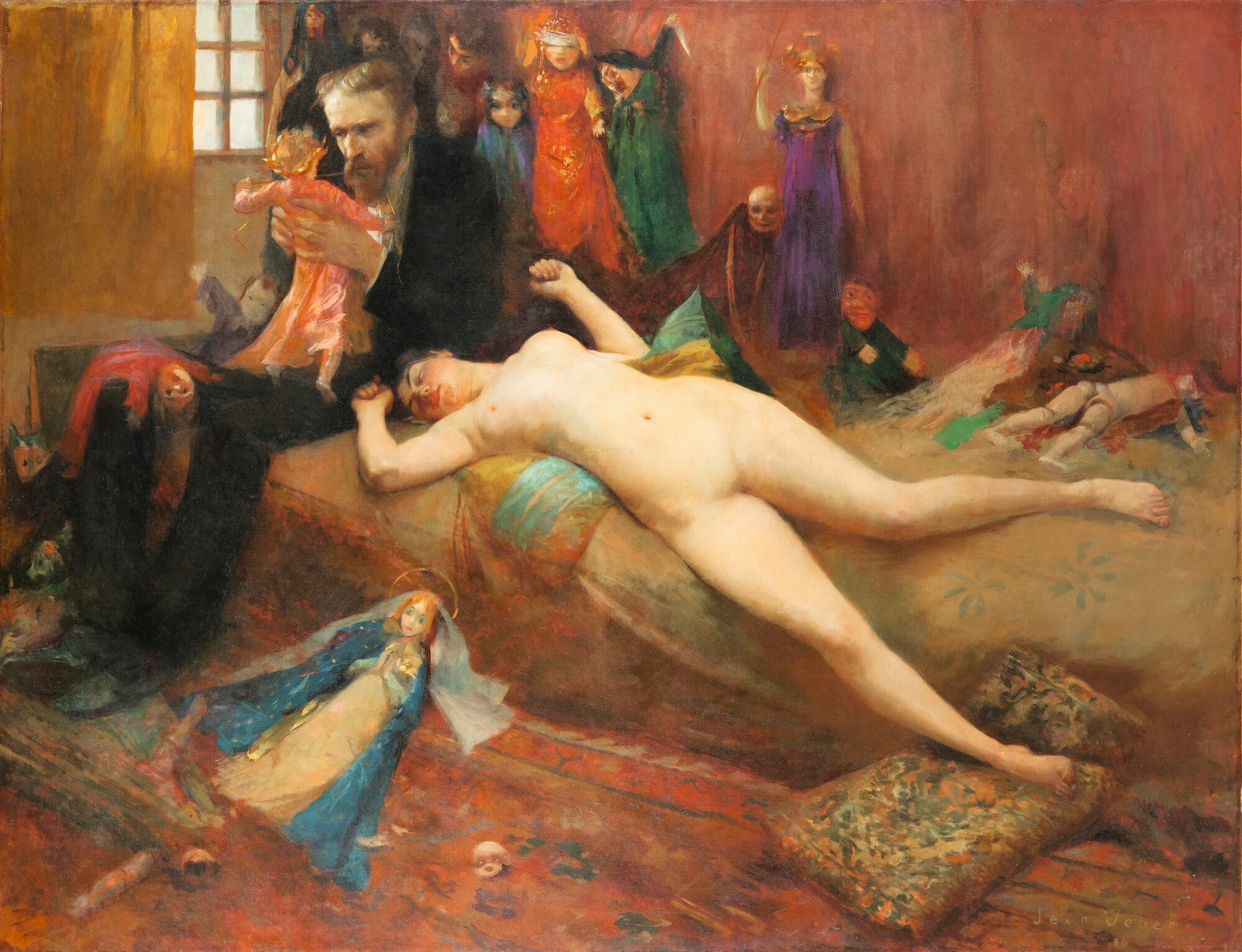
The Doll Man – Jean Veber [1896]

WON’T FIT INTO ANY ARBITRARY CATEGORY WITH EACH OTHER [Ed. – At least that’s honest.]

Squarely in the Olivia Manning/Elizabeth Jane Howard sweet spot is the Good Daughters trilogy by Mary Hocking (Good Daughters, Indifferent Heroes, Welcome Strangers), following three sisters from the 1930s to the years after WW2. They’re basically Platonic ideal books for people like me who reflexively buy the old green-spined Virago Modern Classics on sight.

The Friendly Young Ladies by Mary Renault was delightful: a wonderful 1930s summery sexy atmosphere, beautifully written, and nobody was punished by the plot for being gay. (In fact, someone wrecked their life by not being gay enough.) [Ed. — *nodding sagely * seen it happen many a time.]

Keith Ridgway’s A Shock is brilliant and sui generis; a sporadically sinister set of linked stories in multiple styles—a worthy follow-up to his Hawthorn & Child, though shooting out in completely different directions.

Awake by Harald Voetmann (translated by Johanne Sorgenfri Ottosen) is fragmented, which I have seen some people complain about, saying it doesn’t add up to a story. I guess that’s true, but I really didn’t care. A novel about Pliny the Elder, his nephew, and his slave, it’s great on the sentence level, and so interesting. And deeply, deeply horrible.

Hagar Olsson’s Chitambo (translated by Sarah Death) deserves to be much better known: a modernist Finnish masterpiece about a young girl whose life is wrecked by a father who is at first her ally in an imaginative world, and who then loses interest in her as he moves on to other, madder utopian schemes.

[Audience: GET HIM OFF! GET HIM OFF!]

The Trouble with Happiness is a collection of short stories by Tove Ditlevsen (translated by Michael Favala Goldman), and is as good as you’d hope from the author of the Copenhagen Trilogy. The Devastation of Silence by João Reis (translated by Adrian Minckley) is an exemplary example of one of my favourite genres of novel—the mildly unhinged monologue from a monomaniacal narrator, in this case a Portuguese POW in a German camp in WW1. Helen DeWitt’s The English Understand Wool is a really funny novella of subverted expectations. And Ed Yong’s An Immense World is a brilliantly and subtly written survey of the latest science in animal perception, including senses that humans cannot even begin to rival. OK, OK, I’m going, what is that thing, a crook, you do know they don’t actually use them to haul people off the stage anym–

[Ed. — Don’t tell James, but I could have read even more from him!]

Emmett Stinson’s Year in Reading, 2021

Today‘s reflection on a year in reading is by Emmett Stinson (@EmmettStinson). Emmett is a writer and literary critic who is taking up a position as a Lecturer in Literary Cultures at the University of Tasmania in 2022..

Look for more reflections from a wonderful assortment of readers every day this week. Remember, you can always add your thoughts to the mix. Just let me know, either in the comments or on Twitter (@ds228).

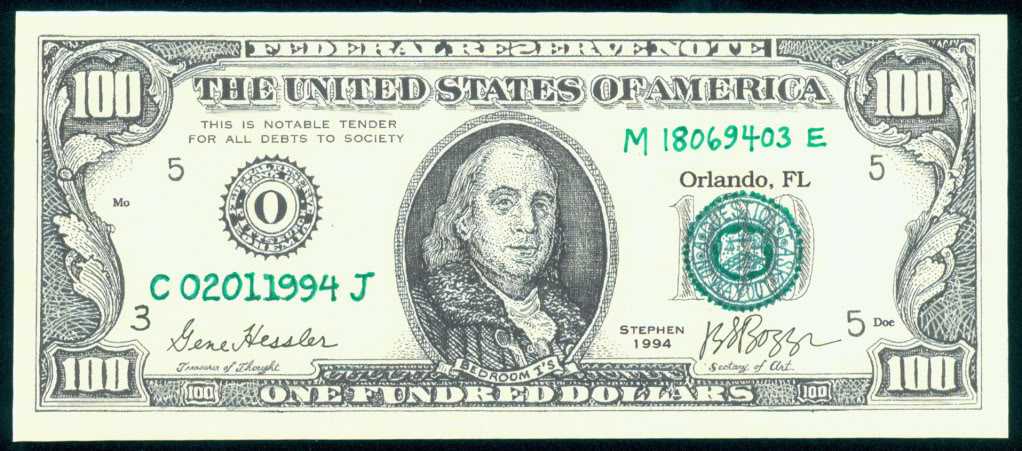
J. S. G. Boggs

I’ll be honest [Ed. – Hadn’t occurred to me you wouldn’t be–until now…]: I had to look at my Goodreads account to remember what books I read in 2022. Not because my memory is failing (I hope), but because it’s hard to separate 2021 from 2020: they feel like one long year spent mostly in my lounge, often working, often caring for children, sometimes briefly on furlough from those activities but still in the same room. My reading, as a fact, has been rarely undistracted: our small house has been full of sounds of children playing, blaring devices, zoom meetings, google meets for primary school, complaints about maths homework…probably no-one’s ideal conditions for a life of the mind, but I’d take it over a too-quiet library most of the time. [Ed. – Absolutely agree.] Finding a few quiet hours in the evening usually involves a trade-off between reading and sleep. I am not complaining—I wouldn’t have it any other way. But I think many people still think of reading as something that’s silent or solitary, and that’s often not my experience.

I enjoyed most of what I read last year, but most of the books I enjoyed most were not ‘new’ novels. My favourite was Christa Stead’s long House of All Nations(1938), which is about the goings-on in a Parisian bank that may or may not be a Ponzi scheme. It’s amazing to me that there wasn’t more interest in this book in the wake of the Global Financial Crisis. It’s a fascinating account of the way money manipulates markets (or tries to). It’s full of dryly satirical portraits of pretentious bankers and includes a massive cast of unusual characters. Stead is as technically accomplished a writer as the more famous modernists, but her writing is more restrained. When she does suddenly let loose with a perfect, rhetorically complex sentence, the effect is even more powerful. House of All Nations does have an often-compelling plot, but it is told in a serial way, and many of the details are highly technical (my favourite section is about the manipulation of the international wheat trade!). [Ed. – Neepery!] It’s an encyclopedic novel that should be more widely read, and the rare encyclopedic work that could probably be turned into a (inferior, obviously) modern television series.

I also loved Jen Craig’s out-of-print first novel, Since the Accident (2009). Her second novel, Panthers and the Museum of Fire, is a multivalent Bernhardian rant that has rightly attracted international attention, but the first book is impossible to find (it was sent to me by the author via her literary agent, Martin Shaw). It’s an exceptional work that anticipates Cusk’s Trilogy. The novel is narrated by an Australian woman just returned from Europe who visits her sister, Trude. Trude has partially recovered from a terrible car accident, but has recently decided to leave the man she was living with (Murray, who helped save her from the accident) and moves into a room in a run-down suburban Sydney pub. In order to explain this decision, Trude recounts a series of conversations between herself and other participants at an artist’s retreat she recently attended. The entire novel takes place during this conversation in the pub, which is a tense and sometimes menacing scene. Trude and her sister are estranged, and both dislike their controlling, manipulative mother, who has is responsible for the visit in the first place. It’s a layered, indirect work, technically accomplished, beautifully written, but also very human.

Two other Australian novels I really enjoyed were Michael Winkler’s Grimmish and Louis Armand’s The Combinations. I have already written about the self-published(!) Grimmish at length. It’s a hilariously funny novel that everyone should read. [Ed. – If they can get their hands on it!] Armand’s The Combinations is a bizarre baggy encyclopedic novel that is 888 pages long. Its structure is based on a chess board (an obvious nod to Perec), and the book is very much a novel about Prague, where Armand has lived since the 1990s, but it’s written in a recognizably Australian idiom. [Ed. — !]  It does have a plot involving the Voynich Manuscript and the provenance of its orphaned protagonist {Ed. — !!], but this is a maximalist book whose pleasures are to be found from page to page in its many jokes, complex sentences, and inventive textual strategies. It’s the kind of book that will cause some readers to run screaming (I mean this as a compliment?), but it’s an intense technical, conceptual, and literary achievement. As far as I can tell, it’s gone almost entirely undiscussed in Australia, which seems absolutely bonkers. More people should read and write about this novel. It’s too smart to go unread.

Most of the other books I read this year were from book twitter recommendations—and there have been very few misses in this regard. I loved Mauro Javier Cardenas’ Aphasia, which is certainly my favourite ‘new’ book I read in 2021. I read the massive recent Krasznahorkai (a lot of fun if you have enjoyed his other work), Enard’s enjoyably excessive Compass. I read Gass’s Middle C (a book that has stayed with me and which I hope to reread) and Theroux’s cult-favourite novel, Darconville’s Cat, which I found equally extraordinary and confounding. I loved the relentless accrual of that long sentence in Ducks, Newburyport up until its too-resolute ending.I particularly loved Pierre Senges’ The Major Refutation, a novel comprising a (fictional) historical treatise that refutes the existence of the new world after Columbus’ ‘discovery’ of it. It is a novel written as a joke that is carried too far and then goes for another hundred pages beyond that, and I loved every second of it. Tsypkin’s Summer in Baden-Baden is a novella about Dostoyevsky that is effectively a literary panic attack. [Ed. – Did someone say “panic attack”??] It’s brutal, painful, and funny in equal measure, but even thinking about the book makes me feel weirdly uneasy. I reread Clarice Lispector’s Collected Stories, which remains my favourite of her books. Domenico Starnone’s Truth is perhaps not quite as good as his recent Ties and Trick, but it is a fascinating account of an author who is worried about his reputation being destroyed by the revelation of a ruinous secret. Exactly the kind of book you’d probably not want to write if you were an author suspected of harboring a large and potentially career-ruining secret… [Ed. – Ha!]

I was also surprised to find myself beguiled by two better-known novels. I had just assumed that I was not the right reader for Patricia Highsmith’s The Talented Mr. Ripley. I was wrong: it’s funny and I loved the way that Highsmith makes Ripley both repugnant and compelling. I also like how it (correctly) portrays the intergenerationally wealthy upper-classes of the USA as basically boring and dim people whose only extraordinary quality is their wealth. I also laughed all the way through Rachel Cusk’s Second Place. I know some readers have complained that it’s too close to its source material, but it’s such a strange, comic novel that is full of awkward and mildly unpleasant humour (and which jokes in various ways about its own unoriginality). Give me more unoriginal books like this one!

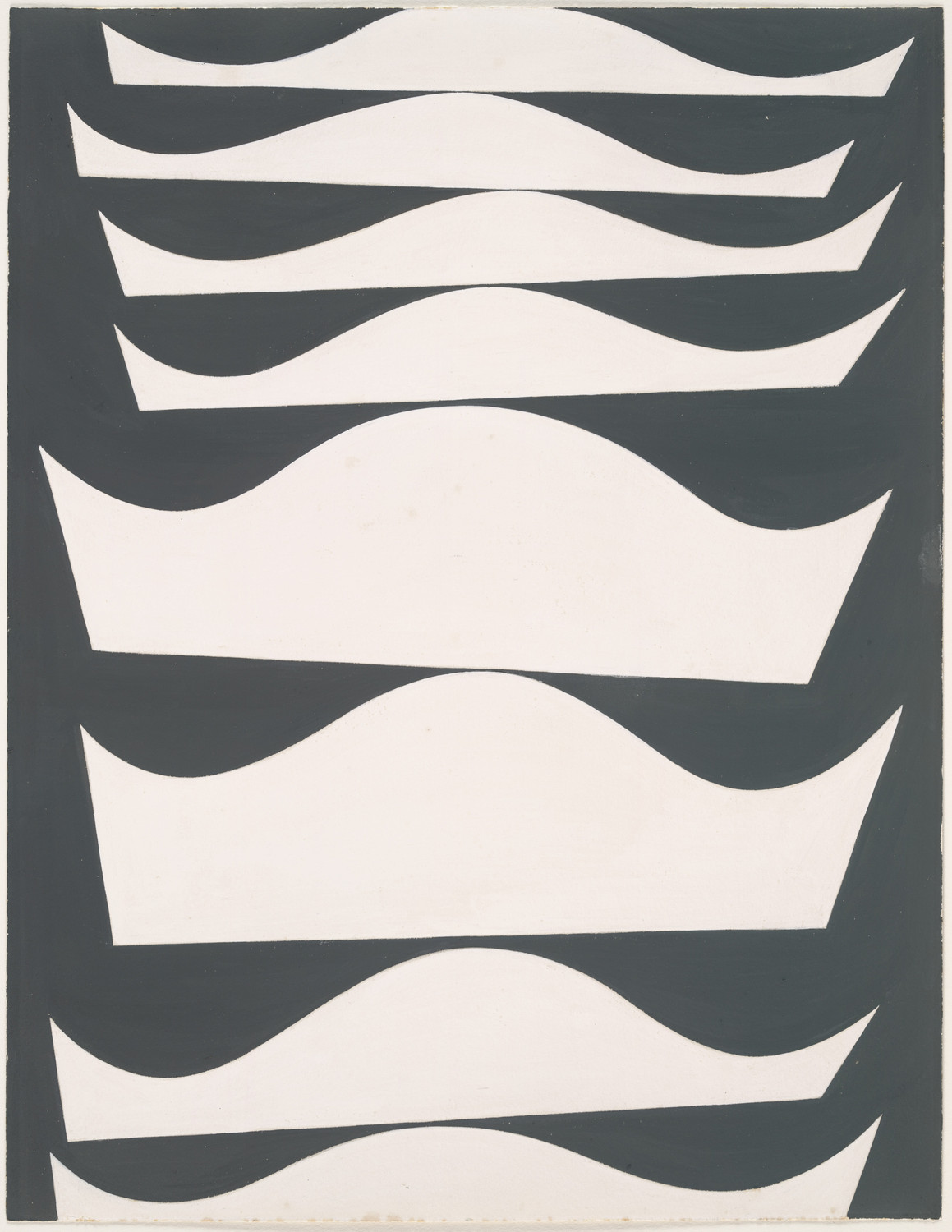
Sophie Taeuber-Arp, Échelonnement désaxé, 1934

I am currently packing all of my books in the process of moving from regional, mainland Australia (Ballarat) to the island state of Tasmania. [Ed. – Tasmania! What the devil?! I’m sorry, I don’t know what came over me…] As a result, my reading will be a bit more limited for the moment and largely digital. I am about 1/4 of the way through Marguerite Young’s sprawling, discursive Miss Macintosh, My Darling, which is being reprinted by Dalkey Archive Press in 2022, and I suspect this is likely to be one of my favourite novels of this year.

James Morrison’s Year in Reading, 2021

Today’s reflection on a year in reading is by James Morrison, an Australian reader and editor (sadly, not of books) who tweets at @unwise_trousers and blogs (increasingly infrequently) at http://causticcovercritic.blogspot.com.

Look for more reflections from a wonderful assortment of readers every day this week and into next. It’s a stellar lineup. Remember, you can always add your thoughts to the mix. Just let me know, either in the comments or on Twitter (@ds228).

Francesa Woodman, Untitled, Rome, Italy 1977 – 78

2021 was like much of the rest of my life: I didn’t accomplish much, but I did read a shitload of books. If you take as true the dubious proposition that literature makes us better people, then virtue must positively drip from my pores. Sadly, the behaviour of nearly every great writer shows instead that constant contact with great literature makes you absolutely repellent.

Reading a lot can mean that when you look back on what you’ve read over the course of a year there are a number of surprises. I read that this year? It feels like a lifetime ago. What book is that? I have no memory of it at all. I only gave that three stars on Goodreads? It’s really hung around in my brain, more so than some of the obvious winners.

Some people have reading plans they stick to. I have no plans, or at least none that last more than a day or two in the face of the constant deluge of new and old books that keep yelling out for attention. I’m also a sucker for pretty books—I will absolutely fall for a book with a clever or beautiful cover design, knowing nothing else about it. [Ed. – Hard same, I’ll often ignore a book with an ugly cover and then decide I have to have it if it’s released in a better design.] Despite this, I will pretend not to be shallow as I talk about some of the things I read last year, in loosely thematic clumps.

Magyars

One of my favourite literary sources is Hungary. Little Hungarian writing gets translated compared to that from most other European countries, but the main reason I like it is that the general quality of what does get translated into English is astonishingly high. Three books from Hungary particularly struck me this year.

Progressive Transylvanian aristocrat Count Miklós Bánffy is best remembered for his massive They Were Counted/Divided/Found Wanting trilogy, but was also excellent on a small scale; and two collections of his short stories came out at roughly the same time from two different publishers, with some overlap. Probably the better of the two is The Enchanted Night, translated by Len Rix, full of elusive stories that range from brutal military realism to strange and spooky Transylvanian folktales.

The selected short stories of Tibor Déry, who was imprisoned for political reasons both before and during the Communist regime, are collected in Love, translated by George Szirtes. Life in Budapest under the Nazis and the Stalinists is beautifully, if bleakly, rendered.

László Krasznahorkai is easily the best-known Hungarian writer on the world stage today, and his novella-with-music (each chapter has a QR code you can scan to summon the accompanying track) Chasing Homer is a compressed marvel of paranoia, pursuit and weapons-grade bile. Surely one day they’ll run out of overrated Sixties singers and lovers of war criminals and give him the Nobel. [Ed. – Could be a while though; spoilt for choice there.]

Egon Schiele, Seated Woman with Bent Knee, 1917

Poets

Speaking of the Nobel, I finally read Louise Glück for the first time, and her Averno is genuinely wonderful, so I suppose they don’t only give the prize to the undeserving. Even more marvellous and long-neglected by me was Inger Christensen’s Alphabet, translated from the Danish by Susanna Nied, a book in which the poetry really does attain the qualities of music, pure and wise and breathtaking.

Homecoming by Magda Isanos, translated from Romanian by Christina Tudor-Sideri, was another small revelation, full of the fog and ghosts and forests of interwar Central Europe. And then there was Notes on the Sonnets by Luke Kennard: if you’re not intrigued by a collection of funny/sad prose poems, each set at the same deranged house party and each taking as its launching point one of Shakespeare’s sonnets, then I can’t help you.

Novels in verse are one of my many obsessions, and there were two that stood out. Fighting Is Like a Wife by Eloisa Amezcua (due out in April) uses as raw material the life and marriage of a historical boxing champion and his wife in formally clever and emotionally moving ways. And then there is Deep Wheel Orcadia by Harry Josephine Giles. How a major publishing house was persuaded to take a gamble on a hard science-fiction verse novel written in the Scottish-Norse hybrid Orkney dialect is a mystery to me, but that it happened shows this is not yet an entirely fallen world.

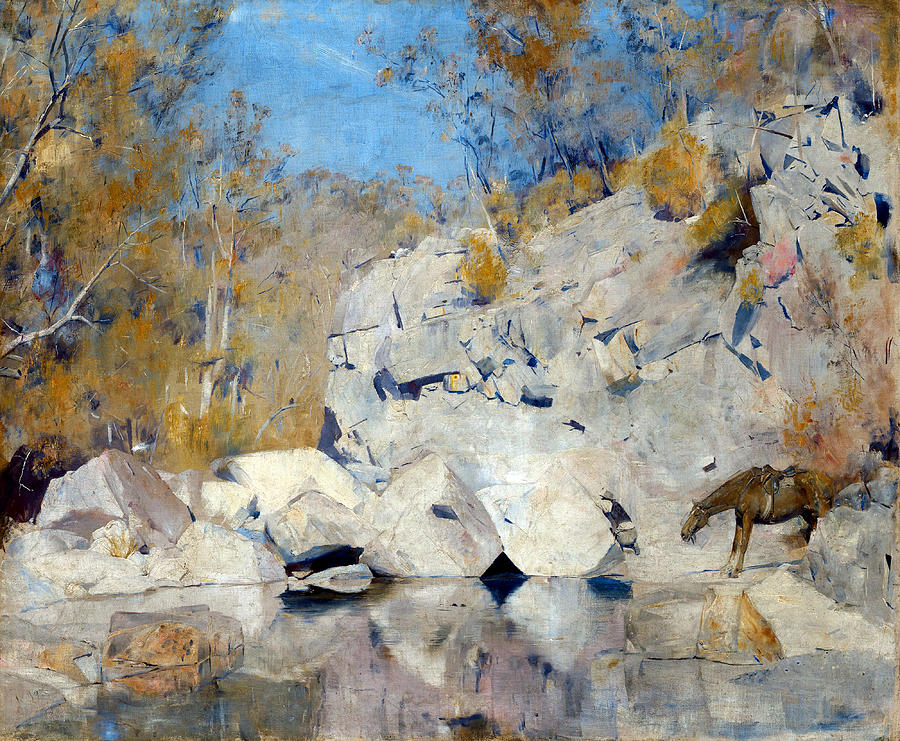
Tom Roberts, In a Corner on the Macintyre, 1895

Space

The host of this blog doesn’t give a shit about space [Ed. – correct], because he is Wrong [Ed. – possibly correct], but I’m going to talk about it a bit here anyway because Dorian made the mistake of giving me the microphone [Ed. – absolutely incorrect; no mistake was made]. Continuing the astro-poetry theme we have Ken Hunt’s The Lost Cosmonauts, a collection about the accidents and deaths of the Space Race, much of it constructed from the texts of official reports and radio transcripts. Then there’s Omon Ra by Victor Pelevin, a bleak black comedy about the Soviet space program.

Pushing further into the future was the story collection Terminal Boredom by Izumi Suzuki (multiple translators), a downbeat set of 1970s/1980s Japanese countercultural tales of sexual and pharmaceutical weirdness. Further still takes us to Olga Ravn’s The Employees, translated from Danish by Martin Aitken, a genuine little masterpiece of a “workplace novel” set on a Generation Starship.

Finally, the biggest thing I read in 2021 was XX by Rian Hughes, a 1000-page monster about first contact and artificial intelligence. It’s a beautifully designed book in which the spirit of the 19th Century talks in multi-typeface pamphlets and that of the 20th in Futurist broadsides, which includes an entire pulp SF novella serialised in magazines that never existed, and which is the first book I have ever seen with a reversible dustjacket designed to make it look like a shelf of the fictional publications contained within the text [Ed. — !].

World War Two

Dutch genius Willem Frederik Hermans is having something of a revival, and A Guardian Angel Recalls (translated by David Colmer) is a great book new to English: a public prosecutor, weak and lovelorn, races around Holland as the Nazis invade, wreaking inadvertent havoc as he tries to save himself, protected and frustrated in equal measure by his similarly flawed guardian angel.

The Passenger by Ulrich Alexander Boschwitz (translated from German by Philip Boehm) is from 1938: perhaps too late to be called prescient, but even years later people were denying its truths. Otto Silbermann is a Jewish German who fought for his country in World War One, too slow to realise that what is happening to other Jews will happen to him too. Finally he has to go on the run, trying to find a way to escape across the border to safety.

Marga Minco’s The Glass Bridge (translated by Stacey Knecht) is another Dutch novel, a tangential look at the Holocaust in fragments from the life of Stella, a Jewish artist hiding out under a dead woman’s name, moving from safe house to safe house, fending off the advances of a sexually predatory ‘protector’.

David Piper’s Trial by Battle (originally published in 1959 as by Peter Towry) is a deeply anti-triumphalist novel about Britain in Asia during World War Two, outclassed and outfought, living on a faltering diet of nationalistic smugness. Frances Faviell’s A Chelsea Concerto is a fascinating memoir of the first few months of the Blitz in London. Finally, Donald Henderson’s 1943 novel Mister Bowling Buys a Newspaper, despite its religiose ending, is a fine black comedy about a polite serial killer for people who have read all of Patrick Hamilton and now have a sad void in their lives.

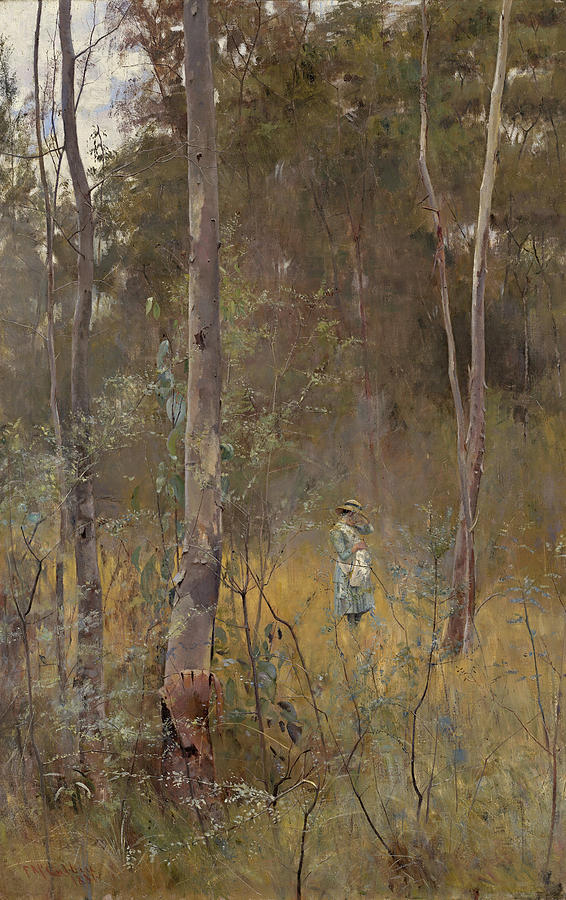
Frederick McCubbin, Lost, 1907

Random Others

Marian Engel’s Bear has no greater champion than the management of this blog, so I shall say nothing other than that Dorian is absolutely right about it in every way, despite the ludicrousness of the premise. [Ed. – THANK YOU! Another satisfied customer! You can watch James admit this truth to me here.] Another weirdly charged masterpiece is Denton Welch’s In Youth is Pleasure, a strange and astonishing novel about a boy helpless in the grip of his aesthetic and sensual needs.

I don’t even like boxing, yet Michael Winkler’s Grimmish is the second boxing novel on this list: a wonderful and weird book about masculinity and physical pain, full of great jokes which I have stolen: There are two types of people: those who can extrapolate from incomplete data. [Ed. – But that’s only one… ohhh…] Checkout 19 by Claire-Louise Bennett, which is sort of about the disparity between literature and life but also about everything else, is a genuine marvel. Minae Mizumura’s An I-Novel (translated by Juliet Winters Carpenter) is the story of two Japanese sisters transplanted to New York, a deep and rich and perceptive work enriched by numerous photographs. It’s not quite the equal of her A True Novel, but then what is?

Jeffrey Smart, Cahill Expressway, 1962

[DISTANT, MUFFLED NOISE]

The Surprise Party Complex by Ramona Stewart, criminally out of print for decades, is a beautiful and hilarious bit of work about a group of neglected and eccentric teenagers at a loose end in Hollywood. The deeply weird Mount Analogue: A Novel of Symbolically Authentic Non-Euclidean Adventures in Mountain Climbing by René Daumal (translated by Roger Shattuck) was never finished, but what we do have is a surrealist masterpiece. Flesh by Brigid Brophy is a near-as-damnit perfect novel about appetites, both sexual and gastronomic. And everybody who enjoys the atmosphere of a good grotty 1950s London boarding house needs to read Babel Itself by Sam Youd (better known as science-fiction writer John Christopher), another unjustly forgotten bit of comic brilliance about a group of lodgers running spiritualist experiments, having affairs and betraying each other.

[SOUND OF SECURITY FORCES BANGING ON DOOR, YELLS OF ‘YOUR TIME IS UP!’]

Then there’s the Patricia Lockwood’s No One is Talking About This, which really is as good as everyone says, and Jim Shepard’s Phase Six, an unfortunately timed global pandemic novel that’s also a splendidly moving look at female friendship, and Hilma Wolitzer’s career-summary story collection Today a Woman Went Mad in the Supermarket, and…

[DOOR BREAKS DOWN]

..and Nathalie Sarraute’s Tropisms, which I finally read years after everybody else, and Giorgio Bassani’s The Heron, the only book of his I’d never read, and…

[MUFFLED SHOUTING, SOUNDS OF SOMEONE BEING DRAGGED AWAY]