Keith Bresnahan’s Year in Reading, 2024

Pleased to once again present reading reviews from some of my favourite readers. Today’s installment, his third, is by my longtime friend Keith Bresnahan. He is a self-described harrumphing scrivener who lives and works in Toronto.

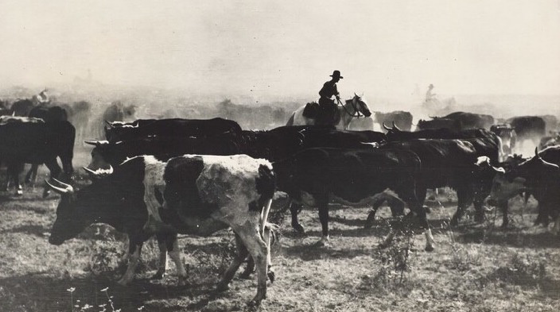
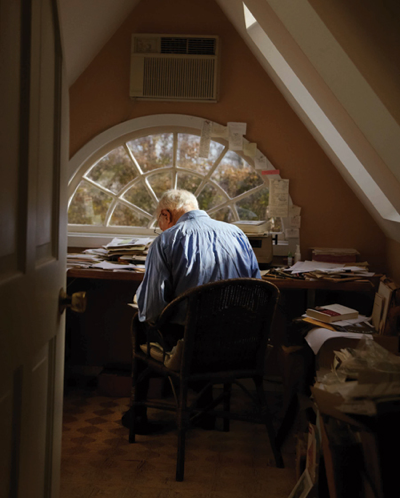
Roger Deakins, The Rail to Grants, New Mexico (2014)

2024 was a difficult year, marked by personal loss. In July, an old friend from graduate school, a brilliant and feisty scholar of the Horn of Africa, succumbed to the cancer that she had been living with on and off for the past decade. And then in October, another death. My oldest and closest friend, with whom I’d been friends since kindergarten, died of an aggressive cancer he’d been diagnosed with only 11 months earlier. I’d managed to get down to Atlanta, where he’d recently taken on a new academic position, a few times to see him—the last just weeks before his passing—but it still felt inadequate, and very sad.

Throughout all this, I was working on writing my own book, on architectural destruction and emotion in late-nineteenth century France. Despite spending the last half of the year on sabbatical from teaching, I didn’t manage to finish it, which was also difficult. But: I’m still here, and the work continues amid the usual teaching and service. I’m casting an envious eye on those colleagues leaving academia for greener or at least other pastures. But for now, this is where I’m at.

Apart from the reading I did for my own book project, which was substantial, my extracurricular reading this year was not insignificant: 65 books, if my list is correct.

I read a lot of mysteries, by French, Irish, English, Japanese authors. I read a lot of Georges Simenon, though not the Inspector Maigret series. (I read the last of these—75 novels and three short-story collections—a few years back. Would that there were more.) Unusually for me, I read quite a few Canadian authors, and a couple American ones, and one Sicilian. A bunch of French graphic novels/comics. And I finished my reading, begun many years ago, of Zola’s 20-voume Rougon-Macquart saga.

Here are the ones that stayed with me:

In the first days of 2024 (feels like a lifetime ago), I read Geoffrey Household’s Rogue Male, which was as great as everyone says. An Englishman, having attempted to assassinate an unnamed European dictator (Hitler, quite obviously) is now being pursued by agents across the continent. It’s a white-knuckle ride that in its second act switches pace to a two-person détente, in which our hero slowly plays out becoming-animal (the ‘rogue male’) in a kind of homemade burrow. Super-weird, I loved it. My only complaint is with the book’s end, which reveals a deeply personal rationale for the assassination attempt, practically undoing the whole perversely-unmotivated-action-begets-tragic-outcomes schema of all that had come before. Still, highly recommended.

Seicho Matsumoto, Point Zero. I had read his mystery A Quiet Place a couple years back and loved it. [Ed. – Agreed, so good.] Point Zero, like that one, is translated by Louise Heal Kawai for Bitter Lemon Press. As I progressed in the book, I started wondering: had I read this before? It all had a vaguely familiar ring. It turns out I had not; but I had watched Yoshitarō Nomura’s excellent 1961 film adaptation, Zero Focus. It’s an excellent, propulsive tale of a woman whose new husband has gone missing, and her search to find the truth. I figured out (or remembered?) who ‘did it’ about 2/3 of the way through, but it hardly mattered. Great, though A Quiet Place still has the edge for me. More Matsumoto in English, please!! [Ed. – I gather there’s a ton of him. Sort of like Simenon.]

Other Japanese books I read this year: Seishi Yokomizo, The Devil’s Flute Murders and The Little Sparrow Murders (fine, if workmanlike, mysteries); Jun’ichirō Tanizaki, Naomi (a striking tale of manic obsession and cuckoldry, but the main characters aggravated me to no end).

I also read Yoel Hoffmann’s edited anthology Japanese Death Poems, which I received as a tongue-in-cheek birthday gift (although they knew I’d also love it). It’s what it sounds like: a collection of short poems, mostly haiku, written over centuries by monks and poets and ordinary folks on the verge of death, or in anticipation of dying. Fascinating stuff. I read it in the fall, in the midst of grief. Good to meditate on, and dip in and out of.

Also in the mystery vein, I continued to work my way through Magdalen Nabb’s Marshal Guarnaccia books, set in Florence. I like every one of these I’ve read, and this year I went back to the beginning, to read (new to me) the first in the series, Death of an Englishman. Excellent and atmospheric, and I loved that Guarnaccia has the flu and only shows up at the very end for this first book in his own saga. [Ed. – Intriguing!]

My last read of the year was also a mystery (they really do seem to fit the winter holidays in a way I can’t explain): John Banville’s The Lock-Up. This is a late book in his Quirke series (originally published under the pseudonym ‘Benjamin Black’), but the first I’ve read. For whatever reason, I’ve never got on with Banville’s literary fiction (I know, shame on me). [Ed. – I dunno, I’m not sure he’s all that, actually.] But this hit the spot. Quirke, a weary alcoholic pathologist, investigates the murder of a young Jewish woman in 1950s Dublin. All sorts of side-narratives here: former Nazis escaping justice with the help of the Church, arms dealings in Israel, romantic entanglements, struggles with work colleagues. Yes, aspects of it are clichéd and feel dated, despite being published in 2023. What can I say? I liked it enough to immediately reserve four other books in the series at my local library branch, so watch this space for more in my 2025 round-up.

George Simenon: since finishing the Maigrets, I’ve been slowly working through some of his other output: these 300-odd standalone books are often gathered under the rubric of ‘romans durs’ (‘hard novels’). They’re hard looks at human nature, alright, though not always violent or murderous. I read 19 of these this year, including a bunch of the ones he wrote while living in the USA in the 1950s, and set there (for whatever reason these have never struck me with the same truth as his French-set novels). Some leitmotifs: voyeurism, small-town prejudice, frustrated men, philandering men, sensual women, penny-pinching women, family squabbles, and men who suddenly realize that their wives resemble their mothers. Nothing if not Freudian, this guy.

My favourites: The Krull House; The Venice Train; Account Unsettled; Striptease; The Little Saint; The Man with the Little Dog; The Little Man from Arcangel. For me, this last one was the best: A Russian-Jewish bookseller and philatelist, assimilated to France since arriving there as a young boy and living in a small town’s market district, marries a promiscuous younger woman from the town. She leaves one evening and does not return, and suspicion slowly falls on him. It’s a masterful study in the vicious closedness and rumor-mill of a community against a person they had superficially but never deeply accepted, driving to an inevitably sad conclusion. I’d put this up against any literary study of othering and alienation, any day of the week. [Ed. – 100: this one will be on my year in review list, too.]

I also read Pedigree, Simenon’s memoir of his life from birth to age 15 in Belgium (Liège, to be precise), focused mostly on his mother and her family. The basic elements of his other books seem to pretty much have their origins here, except the murders. A note about his mother, whom he felt never sufficiently loved him: from the 1930s to the early 1970s Simenon wrote fiction with compulsive mania, averaging 10-15 books a year. Then his mother died, and he never wrote another novel. Did I already mention Freud?

My Can-Lit year:

I like Canadian literature as much as the next guy, provided the next guy likes it but doesn’t make a habit of it. [Ed. – Handshake emoji.] But, I was a visiting fellow at Massey College at the University of Toronto this past year, where the spirit of Robertson Davies flows through the corridors, and where I had some interesting discussions of Canadian literature with my fellow fellows — including David Chariandy, whose very fine reflection on race and parenthood in Canada, I’ve Been Meaning to Tell You, I also read this year. All of which prompted me to pick up some books:

Helen Humphreys, Coventry: I really enjoyed this short novel set during the burning of Coventry Cathedral in November 1940, with intersecting stories of two women. Canadian author, if not Canadian content. Also a bit of a cheat, since I read it for another academic project on ruins. But everything counts!

Robertson Davies, The Deptford Trilogy. One of the landmarks of Can-Lit. I’d read Fifth Business (the first novel in the series) decades ago, but never the other two, The Manticore and World of Wonders. I read them all in quick succession in the depths of a Toronto winter. Fifth Business, set in small-town Ontario and then Toronto (with a side-swerve to WWI Europe) is seriously great. I would read it again right now. The Manticore: was I surprised that the next book in the series sees our hero undertaking Jungian analysis in Switzerland? Yes. Did I like it? Also yes, but decidedly less than the first book. The third, World of Wonders, picks up threads from the other two, and set in the world of circuses and magic. There is thus a lot here about stagecraft, circus life, and stage magicians, all of which are things that repel me, frankly. [Ed. – We are the same person, Keith.] So, not my bag. But still, a satisfying enough conclusion.

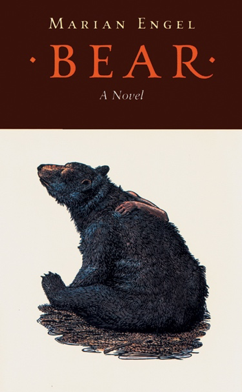
Marian Engel, The Tattooed Woman. Well, we know how we feel about a certain book by Engel, don’t we? [Ed. – We feel grrrrreat about it.] Bear has been featured here on occasion, including the last time I did one of these year-in-reviews. Here we have her last published work (from 1985), a collection of short stories featuring women at middle age, dealing with children and partners and aging. A mixed bag, with some standouts. Not a patch on Bear, but worth a look. [Ed. – Totally agree with this assessment.]

Helen Weinzweig, Basic Black with Pearls. Thanks to the folks at NYRB Classics for bringing this 1980 book back into print. [Ed. – Also available from the good folks at Anansi Press.] An unexpected treat. A woman, estranged from her husband and family, wanders through Toronto, maybe looking for her mysterious lover, who may be a spy (and who also may not exist) and then maybe goes home where another woman maybe now lives in her place. A psychological novel in the best sense. As a local, I loved the street-level view of my city. However, I feel compelled to add an editorial note: you can’t get to Dundas from Queen going south on McCaul, lady.

Following this, I read an earlier Weinzweig, her first: Passing Ceremony. An episodic, fragmentary exercise in which varied voices unfold in non-linear fashion a wedding and its reception. Everyone seems to have a past and beef with the bride, while the gay groom in it for the social beard pines for a lost love. Fine, but I liked it less.

Brian Moore, Catholics. A fine short novel of faith and orders and the world, set in a remote Irish abbey in the wake of Vatican II. The Abbot, no zealot, has in fact has lost his faith, serving as mere manager of a group of working monks. The interactions between him and the young American priest sent from Rome to compel him to conform to the changed rituals are excellent. It compelled me, let me tell you. And it didn’t stay a minute past its welcome. It was one of the last books I discussed with my very Catholic friend—himself a great reader—in his dying months. Again, there’s no mention of Canada in the book, though this was (Irish) Moore’s adopted country, so I’ll count it here.

Zola:

As I’ve mentioned, this was the year I finished in Zola’s monumental Rougon-Macquart series, following two branches of this family through the whole of Second Empire France (1852-1870; the novels themselves were written 1871–1893). The books themselves vary, but I would recommend these to anyone. One of the great reading experiences of my life. Look forward to revisiting it in, oh, 30 years or so. You in, Dorian? [Ed. – Your faith in my longevity is touching, Keith. I still need to finish my first go-round. But, yes, if I’m still here and able in my 80s, you got it.]

Here are the ones I read this year, in the order in which I read them.

Money. Took me a while to finish this: kept putting it down and then coming back to it. The rise and fall of a speculative bank in 1860s Paris and those who are brought up and laid low by it. Beneath it all, Zola’s usual interest in ambition, passion, crisis, and heredity.

Earth. More disagreeable people. Really disagreeable. Maybe the worst people in the whole series. Zola’s great novel of peasant life. The earth is the great character here (the title gives it away), but it’s often obscured by the endless wretched goings-on of these stingy and promiscuous bastards. Wears its King Lear heavily on its sleeve. There’s no redemption here, and I was glad to be done with its characters, but it’s undeniably impressive.

The Dream. An abrupt shift from Earth. [Ed. – Yeah, dreams and earth do not seem to go together, lately.] A childless couple engaged in the family business of embroidery in a northern cathedral town take in an abandoned young girl, eventually adopting her; she is prone to religious passions and flights of fantasy, which eventually coalesce in her idealized love for the rich son of a local lord (and bishop!). The religious background and hagiographic details, as well as the highly detailed particulars of embroidery (hey, you were the one who picked up a naturalist novel) made for an interesting contrast with all the recent scheming bastards. (R-M connection: Angélique, the girl, is the illegitimate daughter of Sidonie Rougon of La Curée, in a plot point not developed except to assert the link to the rest of the series). Brandon Taylor, in his much-discussed recent take on Les Rougon-Macquart, wrote that this was his least favourite, the one on which he got stuck. Not me.

That would be:

The Bright Side of Life. This took me forever, despite being relatively short. My least favorite R-M novel. Technically speaking, there’s nothing wrong with it! All the components of the series are there: the family drama, the scheming and obsession with money, the kind-hearted soul exploited by unscrupulous others, the hint of martyrdom, and the scientific explorations of the age. Lazare’s constant flitting from one new artistic or scientific enterprise to another made me think of Bouvard et Pécuchet. Pauline’s passivity drove me crazy. But overall, this tale of family and striving and love on the Normandy coast left me without a sense of life, bright or dark, that vitality that’s usually there in Zola even in the descriptions of weather or mechanical objects. (R-M connection: Pauline is the orphaned daughter of Lisa Quenu, née Macquart, in Belly of Paris—ironically maybe my favourite of all these books).

Germinal. The last of my years-long reading of the Rougon-Macquart. Did I save the best for last? Almost. I still prefer the Parisian masterpieces Belly of Paris and L’Assommoir, and even Au Bonheur des Dames, but for epic tragic scope you can’t match this tale of cruel life in a northern French mining town. Zola depicts the crushing poverty and squalid forms of barely-human life (there’s a lot of comparing people to animals here), of an uprising and strike and the inevitable(?) ‘retour à la normale’—albeit one that ends with a germ of revolutionary hope, rising from the soil, of a future world in which the workers have their day. Still waiting on that one. Anyway, it speeds the reader along with propulsive force, in which sense it reminded me more of La Bête humaine than its more obvious counterpart, Earth. Zola is at his best here. Déprimant, bien sûr; mais quelle grandeur!

I also read Zola’s standalone Therese Raquin. Enough with the miserableness, Émile! Just unrelenting, goddamn. It’s great, of course, but I would recommend reading it on a day when you can immediately go for a picnic in the sun and pet some kittens and eat a bag of marshmallows. [Ed. – Unrelenting is the word. Grim.]

Other things:

Kent Haruf, Benediction. My first Haruf. An elderly man in a small town dies from cancer. A moving read, especially in this year.

Frank Tuohy, The Ice Saints. Thank the gods for the Head of Apollo imprint: so many great forgotten books in this now-defunct series. In this one, a young English woman, Rose, visits communist Poland in 1964 to see her sister, her sister’s Polish husband, and their teenage son. Lots of sadness and disillusionment to go around, and some nice reflections on the outsider’s pitying gaze and well-meaning help being not without illusions of its own. Rose is not particularly likeable, but neither is anyone else. Highly recommended. [Ed. – Entirely new to me! I’m intrigued.]

Walker Percy, The Moviegoer. Folks online seem preoccupied with the fact that it, and not Catch-22, won the National Book Award in 1961. But I’ve never read Catch-22, and I have now read this, and I liked it a lot. [Ed. – Plus we know by now that the folks online don’t know shit.] A recommendation of my friend when I visited him in Atlanta last summer, I didn’t get around to reading it until after he’d died, but I thought of him the whole time I was in it. I read the Library of America edition, and I am a sucker for that series’ size, typesetting, and lovely thin pages, so perhaps I was already well-disposed to like it. [Ed. – I confess, that font size stresses me out.] At the same time, I was surprised by it. A man who does not feel a great deal of attachment to much, but is on some kind of secret undisclosed ‘quest’ that gives his life meaning, spends a week or so around Mardi Gras flirting with (and maybe sleeping with) women, arguing with his aunt, worrying over (and definitely sleeping with) his cousin-on-the-verge-of-a-breakdown, and spending time with his much younger step-siblings. There’s sex, death, driving, movies watched. And not much else, except that somewhere in there is also the whole of life. It reminded me strangely of memories of reading J.D. Salinger, but also less precious and more mature. Fragments of this one have returned to me often since finishing it.

Claire Keegan, Small Things Like These. An exceptional short read, but you all know that by now.

Henri Alain-Fournier, Le Grand Meaulnes. Finally got around to reading this, which I consumed in a single short burst. A magical fairy-tale of old France, caught just before the old ways gave way to automobiles and telephones. It’s all faintly ridiculous, but somehow also great?

Peter Matthiessen, Nine Headed Dragon River. I’ve had an on-again, mostly off-again, relationship to Zen Buddhism over the years, trying and failing to establish a regular meditation practice, but feeling a real connection to the culture and writings it has produced. I really enjoyed this memoir of the author’s engagements (and struggles) with Zen Buddhism in America, Nepal, and Japan from the late 1960s to the mid-1980s. Ymmv, but it spoke directly to some long-dormant yearnings in me.

Marguerite Duras, The Vice-Consul. A strange, enigmatic, hallucinatory book about foreigners in India. Who knows what is true? What happened in Lahore with the Vice-Consul? The whole thing here is about others’ stories being told by others, telling their own false stories, lies and fabulations replacing whatever might be conceived of as a ‘truth’ — ultimately inaccessible if it exists at all. Annoying, also somehow memorable? [Ed. – Sounds annoying, truth be told.]

Fran Ross, Oreo. First published in 1974 and recently rediscovered. Lots of clever wordplay in this recreation of Theseus’s journey through the eyes of a young Black Jewish woman. If Ulysses were a hip trip through 1970s Philly and NYC instead of 1904 Dublin, it might be something like this.

I read a bunch of French comics/bandes dessinées this year, both in translation and not. Among these, I recommend Riad Sattouf, Esther’s Notebooks. Folks might recall my love for his autobiographical series The Arab of the Future. Here, he follows a young girl, the daughter of his friends, through the vicissitudes of elementary and junior-high school. I laughed out loud, a lot, at a time when I especially needed it. Also recommended are Julie Delporte, This Woman’s Work and Portrait of a Body, autobiographical graphic memoirs of trauma, friendship, sexuality, Tove Jansson, Chantal Ackerman, and much besides. Her pencil-crayon drawings, both lush and hesitant, perfectly match the tone.

Maybe the best book I read this year, though, was a bonafide classic: Giuseppe Tomasi di Lampedusa, The Leopard. Holy shit. As good as everyone says. Better. Every word in this book is covered in a layer of dust. It evokes the overwhelming stillness of a class (the Sicilian aristocracy) in decline, while the world moves around them. The central characters here are as immobile as a daguerreotype or Walter Benjamin’s nineteenth-century inhabitants sunk into their own velvet compass-cases. Deserving of all the praise.

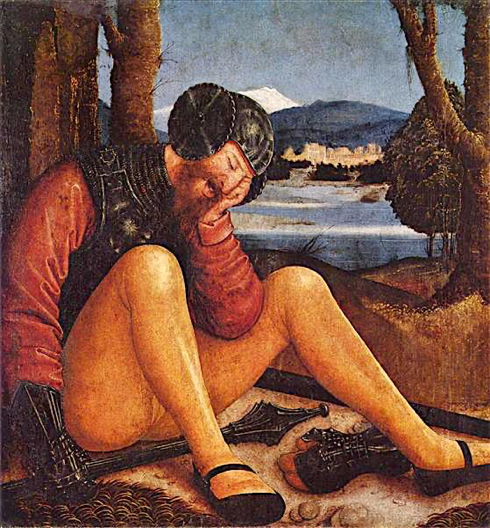
Edward Hopper, Yonkers (1916)

There were lots of other books I read this year: some fine, others bad, others I started but did not finish, that didn’t make this list. One can’t say everything.

Plans for next year: I’ve got an ambitious lineup of French literary classics to boost my woeful education: Flaubert, Stendhal, Hugo, Proust. I’d also like to read more works by 20th-century women writers: luckily, I’ve got a dozen or so Virago editions sitting on the shelf here. Others: Banine’s Parisian Days, Litvinoff’s The Lost Europeans, all those Charco Press books I bought years ago. Those Banville mysteries. More Simenon, probably. And whatever else provides intelligent fodder and distraction as our world continues its shockingly precipitous slide into fascism. [Ed. – We read, we resist, we read as resistance. Thank you, Keith!]
What I Read, January 2022

January was a long time ago, I hardly remember it. The reading month started strong, buoyed by the carryover of a modern American classic from December. Things petered out a bit toward the end, but that’s only to be expected, given the start of the semester, which was a cluster from the get-go since we spent the first week online. (Remember when we still believed in covid?) In addition to the reading and teaching, I posted almost daily year end reading reflections from a talented group of readers and writers. Check those out if you haven’t already. Maybe I’ll still do one myself. In the meantime, here are my January reads:

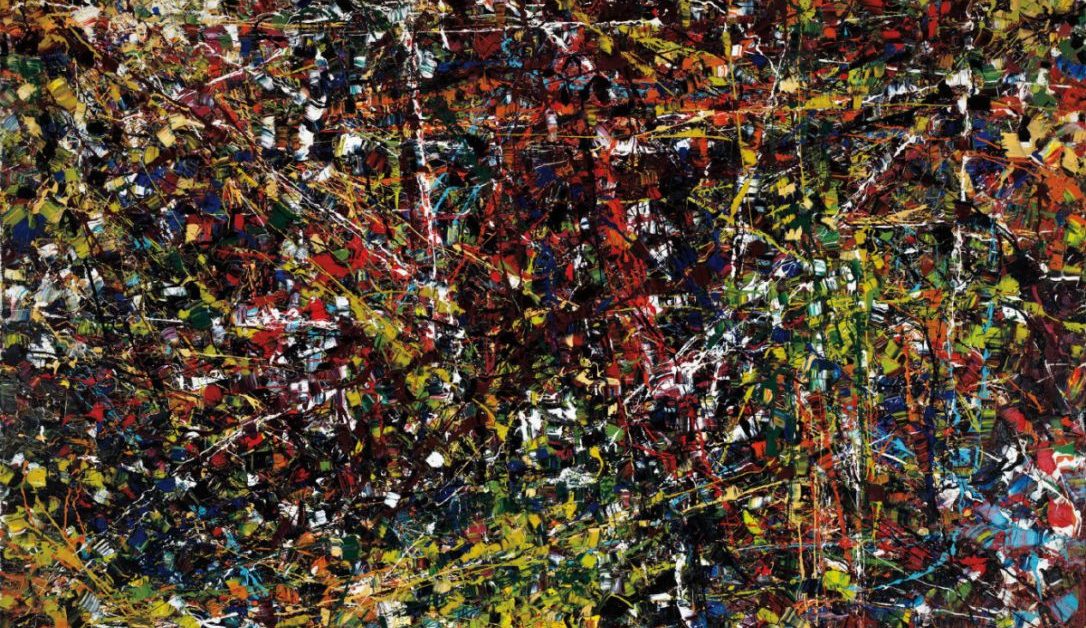
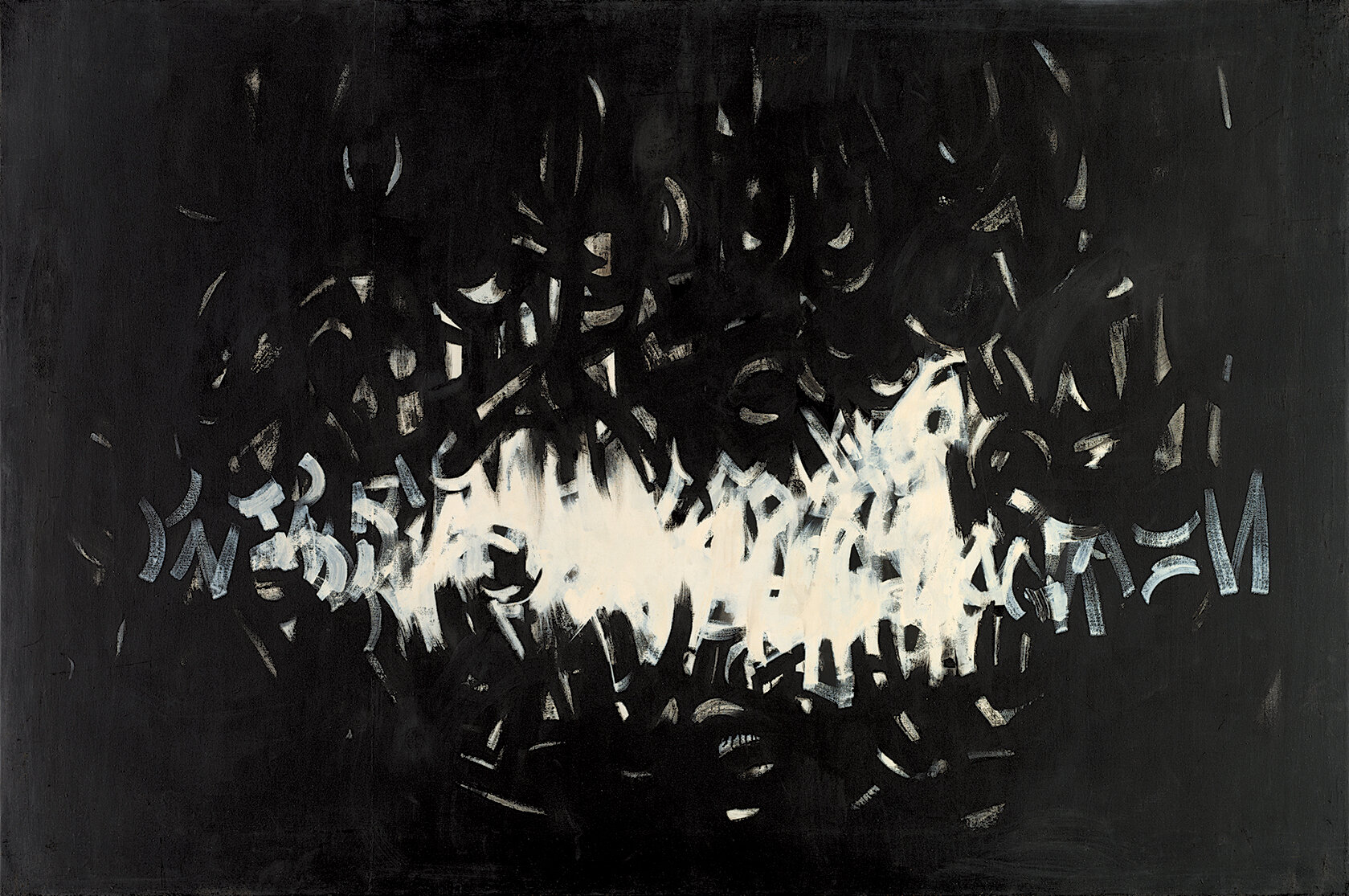
Jean-Paul Riopelle, Blue Night, 1953

Ralph Ellison, Invisible Man (1952)

What can I say that others haven’t? Titanic both in content and form, Invisible Man is a novel that doesn’t quite want to be a novel, or that wants to see to what limits novels can be pushed. Sometimes I admired the book more than I loved it; my literary preferences are more conservative than I might like to think. I was especially enthralled by the first third—I often like the childhood parts of books best, but this section has so many indelible scenes, especially one about a group of boys, including the unnamed narrator, who are brought to a southern town’s Whites Only Chamber of Commerce event to fight a cage match during which, stripped naked, they scramble to collect money thrown into the ring by the Pillars of the Community. From that electrifying (a word those who have read the book know I use advisedly) beginning, the narrator finds himself in the middle of the issues of the day, from his student days at an all-Black college which requires him to appease white benefactors (and the Black administrators who appease them) to his time in Harlem, where he joins The Brotherhood, an organization inspired by the ideals of Communism and challenged by white racism on the one hand and Black nationalism on the other. Throughout, the narrator remains enigmatic, refusing (or perhaps being refused, I can’t tell) the development we expect to find in a Bildungsroman.

When I said that Invisible Man was only uneasily a novel, I had in mind its essayistic elements, which are more pronounced in its second half. But as I think about it, where it chafes most against novelistic expectation is in its idea of what constitutes an event. It’s a book in which one character after another gives a speech. Whether in barroom yarns, sermons, or street preaching, Invisible Man is about rhetorical persuasion. What the novel itself wants to persuade us of is harder to say. I bet I could be more intelligent about this if I’d read Richard Wright, who Ellison seems to be arguing with throughout. (Is that right?) But one answer might be that the narrator speaks for many more Americans than just himself: “Who knows but that, on the lower frequencies, I speak for you?” Not that there is no difference between Black and white experience, but that the former knows more than the latter, since its intelligibility must be measured through the tape of the other. But maybe that’s to make Ellison into Du Bois. Help me out here, fam.

How silly to say “a must read”—it is, tho.

I’m grateful to Jules and Anja, who read this with me and kept me on track.

Arkady Martine, A Memory Called Empire (2019)

Brilliant sf novel—I think it’s a space opera, though I’m not really sure what that means—about the subaltern experience. Mahit Dzmare, ambassador from the remote Lsel Station to the Teixcalaani Empire, arrives in the metropole to investigate the death of her predecessor, Yskandr. Like all officials from her home, Mahit has an “imago machine” implanted in her brain, containing the memories and reflections of the person who most recently held their post. But the machine malfunctions almost as soon as Mahit arrives in Teizcalaani, which means she loses the benefit of Yskandr’s insight—as well as possible clues to his death. Mahit’s investigation, which turns out to hinge on much larger political events, is exciting enough. But what makes the book so terrific is its worldbuilding. The Empire is so compellingly constructed, its system of intricate poetry so lovingly—but not boringly—detailed, its differences from Lsel so thoughtfully fleshed out. Mahit is a devotee of Teixicalaani culture; like many colonized subjects she knows it better than the colonizers themselves. Yet she can never be accepted by the Empire, she will always be a barbarian, will always feel “the dumb longing of a noncitizen to be acknowledged as a citizen,” which is to say she lives in “a state of simultaneous gratitude and fury.”

Martine is the pen-name for a scholar of medieval Byzantine and Armenian history who is also a city planner and climate activist; some people really do seem to be able to do everything. Her erudition shows on every page of A Memory Called Empire, as she folds the problem of colonial identity into a meditation on how the technology of the imago machine challenges even more fundamental aspects of identity: lifespan, individuality, memory. Exhilarating.

Ross Gay, Be Holding (2020)

I’d never minded gym class in elementary school, it was fun and low-stakes, but then came junior high. Like everything else, gym class got worse. A lot worse. I’d never been bad at sports, but now I was terrible. The kid who loved school hated PE days. The kid who loved every teacher, was confronted by a new phenomenon: coaches. They were the worst—one was suspended for walking into the girls changing room, which I imagine took some doing back in the 80s—and they accordingly fostered a vicious and terrorizing atmosphere. I made it through but high school gym promised to be worse.

But the teacher my tenth-grade year (happily the last year PE was a required class) was Coach Bishop, who had been on the Canadian men’s basketball team. This was not a particularly big accomplishment back then, but he was genuinely athletic, unlike some of my previous PE teachers. Much more importantly, he was kind. He used the respect his accomplishments garnered him to keep the jocks from beating up on the nerds. (Nerd had yet to become a term of respect; it’s still weird to me that that happened.) Nerds still got picked last for teams, though; Coach Bishop was not enlightened enough to have done away with that practice. I don’t think I was ever the actually last one to be picked, but it was always a close thing. Until we came to the unit on basketball. This was a time when the rise of the NBA was permeating even solidly white western Canada—we had some kind of minor league team in Calgary called the 88s, after the Olympics, which my friends and I often went to see, tickets being practically free—and I often shot hoops on my own. I wouldn’t say I was good, but I wasn’t terrible.

Coach Bishop, unsurprisingly, was good at teaching basketball fundamentals. It was a long time before he let us even scrimmage. Because we’d spent so long working on layups, I knew what to do when, in our first game, I was able to pick off a lazy pass and go in all alone for an easy two points. This surprised everyone, me included, but not as much as what happened a few minutes later, when another kid—a jock!—passed me the ball. I stopped at the circle, jumped, and let loose a shot. Nothing but net. I still vividly remember Coach Bishop’s delighted cry: “He stops, he pops, it drops!” To have invested so much in this moment—to have needed that validation so badly—that I think of it thirty-five years later, oof, not awesome.

Next class the two alpha jocks, the captains, so surprise, were as usual in charge of picking teams. I went first. Me! I wasn’t great; not terrible, but now that kids were wise to me I had lost the element of surprise. Plus I always do better without any expectations. My moment passed. We moved on to some other sport and I went back to the end of the line. That was the end of my basketball career. When I think of that brief moment of success—when I look at myself as if watching a film—can I get past the shame I feel at how much that recognition from even people I did not respect (those jocks) meant to me? Can I avow the need to be seen? What life of privilege did I lead that the worst I can imagine happening to me when fixed by the gaze of the other is feeling ashamed?

Ross Gay’s long poem Be Holding is about basketball, sort of. It starts with a brilliant description of Dr. J’s baseline scoop in the 1980 NBA playoffs, a moment that readers, like Gay himself, who stays up too late at the mercy of the YouTube algorithm, will want to watch again and again. Gay is fascinated with how Irving holds the ball, in a swooping cradle that seemed to defy gravity. This is the first of the many instances of holding that comprise the book. Holding as stopping. Holding as enabling. Holding as comforting. What begins as an imperative—always be holding— turns into a warning. Be holding becomes beholding, a much more ambiguous proposition. Freezing the frame on a grainy sports video is one thing; looking intently at an image of suffering—a photo of a young African American boy falling from a burning tenement building, for example—is another. Can we look at others (behold) and care for them (hold)? How do African Americans, especially, traumatized by the middle passage, the rupture of a voyage in yet another hold, respond to this dilemma?

I’m not doing a good job with the details of Gay’s explosive, sinuous leaps and transitions. It’s been a while and I don’t have the book to hand. But I remember glorying in his close readings of images—the book’s a triumph of ekphrasis—and thrilling to his associative leaps, as bravura as Dr. J’s how-did-he-do-that scoop. So grateful to Rebecca for pointing me to this terrific book.

Seichō Matsumoto, Inspector Imanishi Investigates (1961) Trans. Beth Carey (1989)

Japanese crime novel, quite famous, I gather. Maybe a new translation could help me get why; this one is painfully stilted. Not sure even that would save the book, though: it’s way too long—dude investigates every fucking detail—and not a patch on Matsumoto’s A Quiet Place, which I read several years ago and still think of often. I only made it to the end because I was reading it aloud to my wife and we kept saying to each other, “Well, we’ve read this far…” We’re reading a book about sunk cost next.

Junichiro Tanizaki, The Makioka Sisters (1948) Trans. Edward G. Seidensticker (1957)

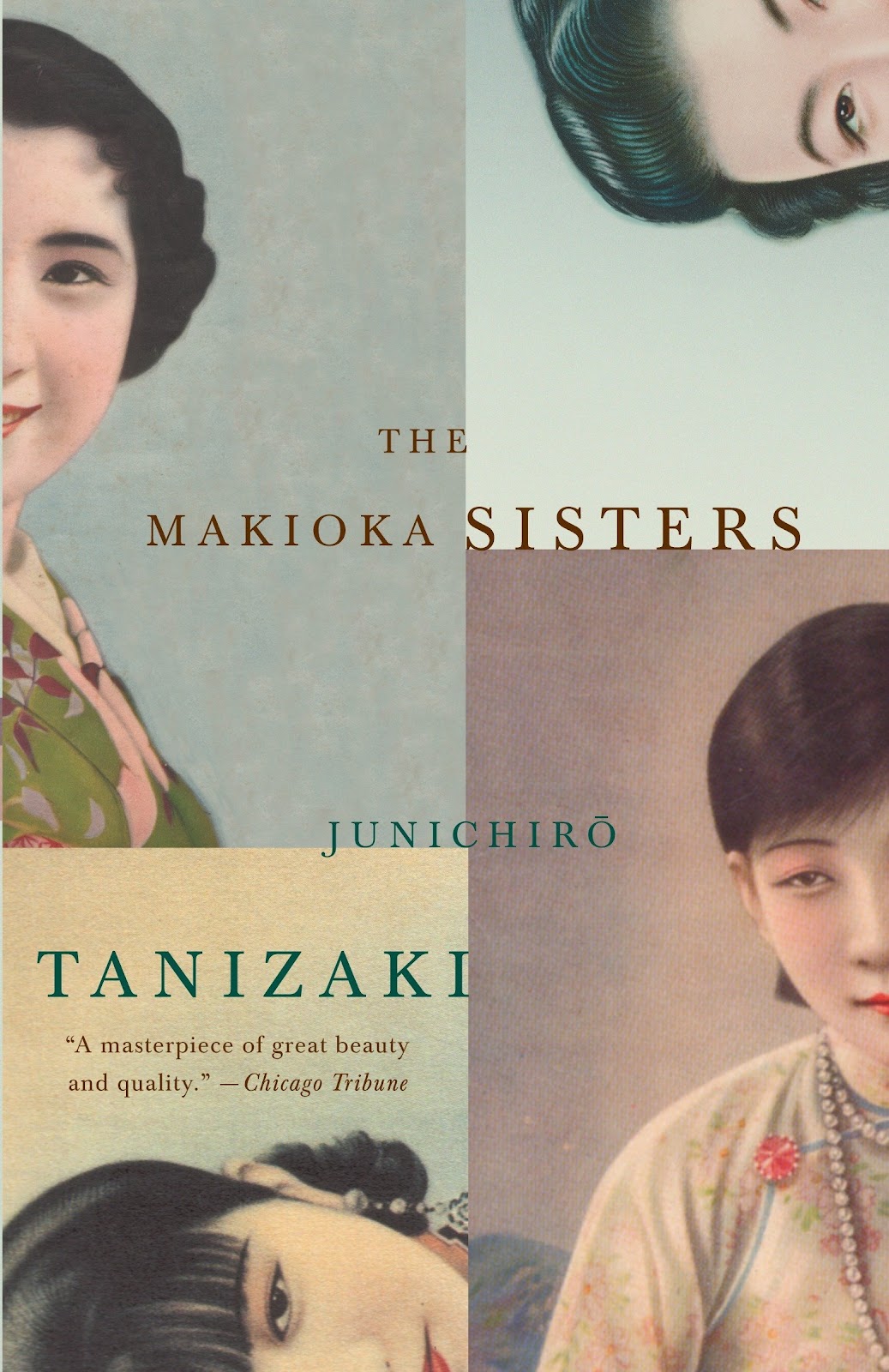
Tremendous novel about four sisters from an aristocratic Osaka family in the late 1930s. Filled with event—hard to know which set piece to single out: that extraordinary and terrifying flood, probably, which makes a similar scene in The Rainbow seem tame—but also leisurely, a little aimless, as if unwilling to commit to anything as definitive and perhaps crass as “action” or “plot.” Fittingly, the book repeatedly returns to the family’s attempt to marry off the third of the sisters, Yukiko, who is thirty and rapidly approaching irredeemable spinsterhood; she declines each laboriously contracted proposal, always finding some problem or other, most of which boil down to her almost Bartleby-like preferring not to.

I just couldn’t get enough of this book—it has all the feels, it considers a world at once accepting of and resistant to modernity, it has scope but is also modest. The last line is justly famous, and you should read Tom’s acute interpretation of it and its relation to Tanizaki’s depiction of violent and traumatic history. The guy wrote a lot of books; I should see what else he was up to. I’m guessing they are mostly not like this.

Last thing I’ll say: I’ve thought of The Makioka Sisters every day since reading it. That don’t happen too often.

Ruth Kluger, Still Alive: A Holocaust Girlhood Remembered (2000)

I’ve written about this book so many times. It’s still great, in fact, it just keeps getting greater. Every year the students love it more; Kluger’s take-no-prisoners manner gets them where they live. Before long I won’t need to read it any more to teach it, but I’ll probably keep doing so, it’s that good.

S. A. Cosby, Blacktop Wasteland (2020)

Top-shelf Southern Noir, with enough suspense in the first half alone to merit your attention. It’s long (Cosby is not a minimalist), and it doesn’t balance action with characterization as well as the more recent Razorblade Tears but from the opening scene—late-night drag racing on the back roads of Virginia—you know you’re in the hands of a talent.

Emma Seppälä, The Happiness Track: How to Apply the Science of Happiness to Accelerate Your Success (2016)

Not my usual thing, and I pretty much hate-read it. I’d joined a reading group set up by our Associate Provost for Teaching and Learning (a psychologist, natch) in which participating faculty discussed the book with a student of their choice before we all met together. The best part of the exercise was working with my student—she is my mentee in the First Generation program at my college and an absolute delight—because she too was annoyed that Seppälä overestimates willpower and underappreciates how much privilege is demanded by her rhetoric of self-care. (I’m all for self-care, I just hate when it’s used to make people feel guilty that they have not done the impossible and avoided systemic problems.) Anyway, I learned a few things. Like the way we often think we’re relaxing when in fact we’re doing something mentally taxing. Scrolling through our social media feeds, for example, demands concentration, and leaves us more rather than less tired. So when we “take a short break” from some other task to check Twitter we’re still working, as far as our brain is concerned. Talking with colleagues and students did nothing to accelerate my success—whatever that means, ugh, management speak—but it made for a fun and, yes, happy hour or two.

Norman Lewis, Alabama, 1960

Pretty good reading month, right? Tell me about books that are exactly like Makioka because that is what I want to read this summer. Which, now that I am caught up with these monthly posts, I might actually have time for…

Keith Bresnahan’s Year in Reading, 2021

In the next week or so I’ll be writing up my reflections on my 2021 reading year. In the meantime, I’ve solicited guest posts from friends and fellow book lovers about their own literary highlights. I’m always looking for contributors; let me know here or on Twitter (@ds228) if you have something you want to share.

First up is my old friend Keith Bresnahan (@designhist, follow him, he’s funny and awesome), who’s previously contributed several terrific pieces on Zola. You can read his 2020 reflections here. Keith lives and works in Toronto.

2021, in a nutshell:

This year was strange, obviously. I was lucky, avoiding any serious effects of the pandemic: I kept my job, as did everyone in my family; no one I knew got seriously ill or passed away with Covid. But time and space felt flat. I didn’t go anywhere, and the repetitive sameness of days was best reflected in this popular image I kept seeing re-posted on Twitter. Perhaps this is why when Dorian initially nudged me to look back on my year of reading, I felt like I hadn’t read much at all: there was little to situate my reading in association with specific places or other things that were happening around me while I read them. As it happens, judging by my admittedly imperfect reconstruction (I have sworn to be better at keeping track this year!), I found I actually read 50-odd books for pleasure in 2021, not counting the 15 or so others I read for teaching and academic research. Not bad.

Here are a few of the more memorable ones.

Philip Marsden, The Summer Isles

I read this early in the year; details have faded, but my memory of reading it is of being carried along on gentle sea-waves; it’s that kind of book. A first-person travelogue of Marsden alone in a wooden boat, traversing waters up the west coast of Ireland toward the titular isles in northern Scotland, it also contains a good deal of reflection on historical lore, spiritual journeys, and local geographies. Much of the sailing-vocabulary was lost on me, but it didn’t seem to matter. Both learned and meditative, it was perhaps the most calming book I read this year. I passed it on to a good friend who owns a boat. 

Enrique Vila-Matas, Never Any End to Paris (Trans. Anne McLean)

I found out about Vila-Matas this year, like most of the other authors I come across these days, from people I follow on “Book Twitter” (regular Twitter, just a nice corner of it populated by book-obsessed folks). A wry memoir of Vila-Matas’s youthful days in Paris as an aspiring writer and Ernest Hemingway wannabe. I loved it. He somehow rents a garret from Marguerite Duras, encounters Georges Perec and Roland Barthes, dates a woman who suggests he fling himself off the Eiffel Tower while on an acid trip, fends off parental intervention, and generally fails to write anything of substance. In a year where I couldn’t go anywhere, the descriptions of Paris were more than welcome. Looking forward to reading more by Vila-Matas soon, starting with Dublinesque, a kind of Joycean dream, apparently. Perfect for the centenary of Ulysses this year? (I’m also planning to give that one another shot)

Larry McMurtry, Lonesome Dove.

An 800-plus-page western. A western? Cowboys? A cattle drive? I left central Alberta for a reason, dude. But many folks who know better than me loved it, so I gave it a shot. Holy shit is this book great. An out-and-out masterpiece. At times it felt like magic realism – did the bull actually fight that bear? Was the cook actually back there banging the same bell with the same crowbar? Did Blue Duck fly? The book’s Indigenous characters are barely fleshed out (although McMurtry does show sympathy for their plight) — but then this is really the story of the others, the damaged settlers moving against a nascent American backcloth, seeking and grasping for any purchase with little to guide or protect them. At its heart is an emotionally blocked friendship between two former Texas rangers, and the women who speak truth to them (and whom they largely fail to understand). Plus an impressive cast of secondary characters, all memorable creations. Did I mention it’s more than 800 pages and somehow feels too short?

Marguerite Yourcenar, Memoirs of Hadrian (Trans. Grace Fick)

Another masterpiece. The best fictional evocation of the classical world I’ve ever read. Dreamlike and imagistic, with lessons on life and death to spare. I’m waiting to read more Yourcenar until the memory of this one’s brilliance fades a bit.

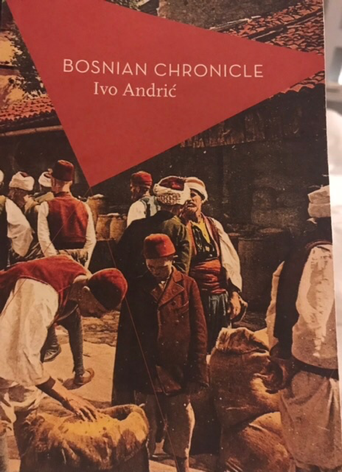
Ivo Andrić, Bosnian Chronicle (Trans. Celia Hawkesworth in collaboration with Bogdan Rakić)

A newish edition from Apollo Classics (Head of Zeus), this is a very long book, first published in 1945, about a French consul during the Napoleonic era living in a small Bosnian town on the extreme fringes of world events. Not much happens. I adored it.

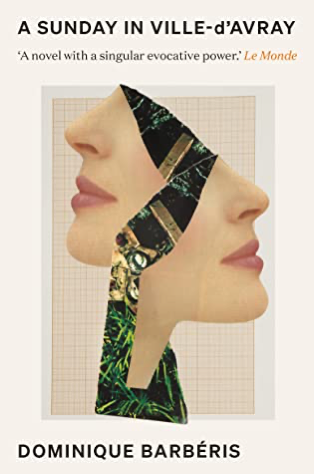
Dominique Barbéris, A Sunday in Ville-d’Avray (Trans. John Cullen)

This was great — a short, stylish account of two sisters, one recounting to the other a past entanglement with a strange man. Felt to me at times like watching a French film from the 1970s. Enigmatic, and atmospheric as all get-out.

Three books in the “how-did-I-not-know-about-these?” category:

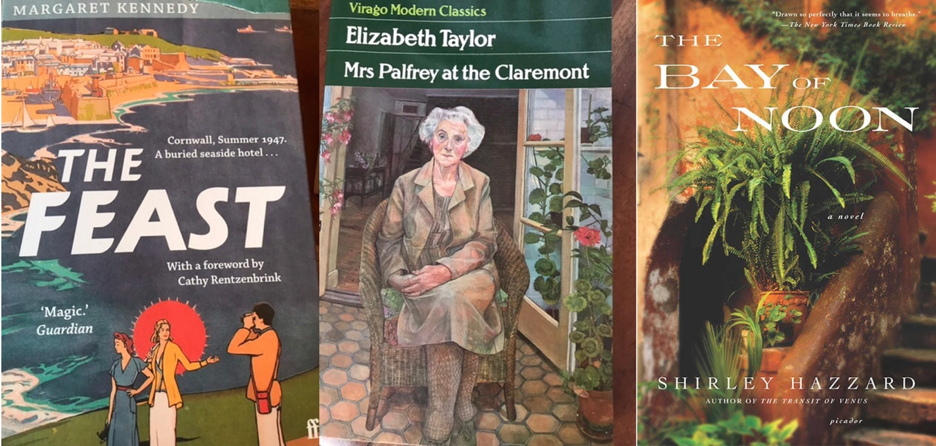
Margaret Kennedy, The Feast

A number of families cram into a seaside hotel in Cornwall for a week in the summer, their conflicts and idiosyncrasies build to a climax, then half of them are killed when a cliff falls on them. We know this part from the outset, though not who dies, so I’m not giving anything away. Apparently there’s a whole structure here about the 7 deadly sins, but I missed this while reading it, and it didn’t matter. Great fun. Made me want to read more Kennedy, and soon.

Elizabeth Taylor, Mrs. Palfrey at the Claremont

An older woman moves into a retirement hotel in London. The plot? Not much. But I found it utterly charming, even its descriptions of the depredations of old age, and very funny, too. Others, I’ve since learned, found it bleak. [Ed. – raises hand] Not me. Mrs. Palfrey is a plucky heroine, if a little self-deceiving (aren’t we all), and even the end, coming as it must, didn’t feel sad. I picked up a used Virago copy of this book on a whim, and then coincidentally read it the same week that it came out in a new NYRB classics edition. For once my finger was right on that pulse. More from Taylor in my near reading future.

Shirley Hazzard, The Bay of Noon

A young English woman in Naples in the 1950s falls in with a Neapolitan woman, Giaconda, and her Roman lover, Gianni. This was both evocative and restrained, with a powerful sense of the unspoken and unshown behind the minimal plot. Reminded me a bit of Antonioni, in a good way. Also made me long to revisit Naples (some strong compensatory travel-thrills in my readings this year!). My first Hazzard, won’t be my last.

Yasunari Kawabata, The Sound of the Mountain (Trans. Edward G. Seidensticker)

Junichiro Tanizaki, The Makioka Sisters (Trans. Edward G. Seidensticker)

Akimitsu Takagi, The Informer (Trans. Sadako Mizugushi)

Akimitsu Takagi, Honeymoon to Nowhere (Trans. Sadako Mizugushi)

Yuko Tsushima, Territory of Light (Trans. Geraldine Harcourt)

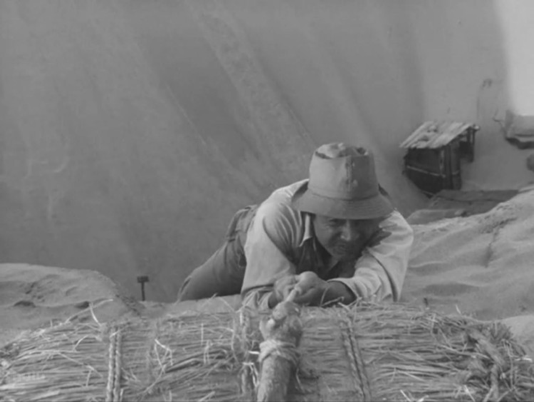
Kobo Abe, The Woman in the Dunes (Trans. E. Dale Saunders)

I enjoyed all the books translated from Japanese that I read this year, especially The Informer and Territory of Light. But it was Abe’s Woman in the Dunes that was the real revelation. A distressing, tense, fever-dream of a book, I’d put this existentialist fable of bizarre confinement, Sisyphean futility, and struggles of the will up against Camus any day of the week. I won’t be reading it again anytime soon, but I’m glad I did. Haven’t brought myself to watch the movie, but here’s an image from it anyway.

Raymond Chandler, The Big Sleep

Another existentialist hero, this time Philip Marlowe probing some family funny-business in sunny California. Noir perfection. I realized I’d previously conflated Chandler and Dashiell Hammett, whose hard-boiled shtick I could never really get past [Ed. – I am allowing this heresy on my blog, but I don’t like it], but this is glorious, witty stuff. The film, with Bogart and Bacall, is a deserved classic.

Muriel Spark, The Girls of Slender Means

My first Spark! I loved this small tale of young women living together and negotiating wartime, nascent loves, work, and rooftop escapes. A near-perfect short read.

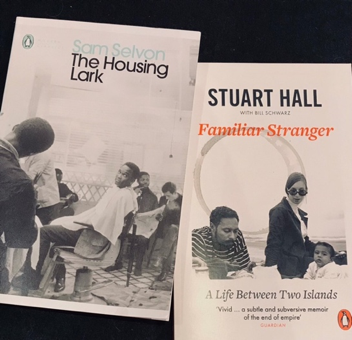
Sam Selvon, The Housing Lark

Stuart Hall, Familiar Stranger

Two takes on the West Indian experience in 1950s – 60s England. The Housing Lark, by the criminally under-appreciated Sam Selvon, is a sort of sequel to his better-known The Lonely Londoners; if anything, I liked this one better. Hall’s autobiography takes him from Jamaica to Oxford to the founding of cultural studies and the New Left in the 1960s—on the one hand, a world apart from Selvon’s hustling hardscrabble immigrants, and on the other not so different, negotiating displacements and identities among the so-called Windrush generation. Suggest watching Steve McQueen’s remarkable Small Axe series alongside.

Graham Greene, The Quiet American

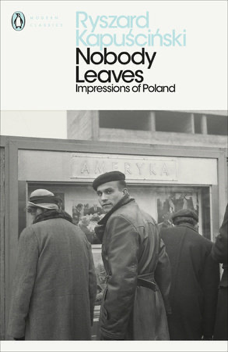
Ryszard Kapusćiński, Nobody Leaves: Impressions of Poland (Trans. William Brand)

Sergio Pitol, The Journey (Trans. George Henson)

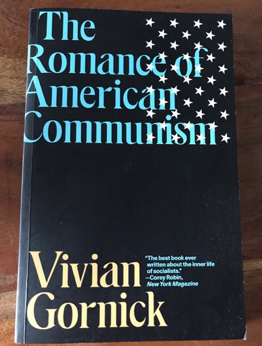
Vivian Gornick, The Romance of American Communism

Amor Towles, A Gentleman in Moscow

Purely by accident, I ended up reading a number of books this year highlighting historical communism and Cold War politics seen through individual lives. Graham Greene’s The Quiet American, a scathing indictment of Western intervention in Southeast Asia, with its shockingly amoral conclusion, was among the best books I read this year. Ryszard Kapusćiński’s Nobody Leaves, a collection of short journalistic pieces from his native Poland around 1960, is episodic, strange and beautiful, and generally short on hope. Sergio Pitol’s The Journey, has the Mexican writer traveling around literary circles in Moscow, Leningrad, and Tbilisi during two weeks in 1986, just as glasnost and perestroika were starting to peek through. It was a highly personable travelogue that makes me want to read more by him (I’ve already ordered Pitol’s The Love Parade, out in translation early this year). He writes a lot about Marina Tsvetaeva, which makes me think I should read her. In non-fiction, I was taken with Vivian Gornick’s The Romance of American Communism, recently republished by Verso. Originally from 1977, it’s an oral history of American communists from the 1920s through the 1950s and their breaks with the Party following the revelations of the 1950s. Gornick’s subjects are angry and wounded, prone to self-importance, self-deception, and self-critique, and her book is wonderful at conveying how people form passionate attachments to ideological movements, and what happens when that falls apart. Amor Towles’ A Gentleman in Moscow, a cream-puff fantasy of a hotel-bound aristocrat suffering minor inconveniences during the same decades of Soviet history, which I read at a cottage just after Gornick’s bracing book, felt too tidy and cute by half. I might have enjoyed it more at another time.

James Salter, Light Years

Probably my favourite book of 2021. A couple raises two kids in a country house not far from New York City. They have affairs, they divorce, their kids grow up, they meet artists, actors, go to parties, discuss the theatre, they remarry, get ill, die. It recalled the 1970s cinematic and literary middle-class dramas I was enthralled by as a child (this was what life was, or so I thought then). Now in my own middle age, I’m both less sanguine about this stuff than I used to be, and intuitively drawn to it. Nostalgia for that insular worldview? Dunno. Whatever it was, I found it perfectly, achingly beautiful, and sad. A book I know I’ll revisit. I also read Salter’s A Sport and a Pastime, which I liked but not nearly as much as this one.

In the last days of 2021, I read three quietly resonant books:

Paul Griffiths, The Tomb Guardians

I’m not sure how to classify this short book, which shifts constantly between two conversations: in the first, two figures discuss a series of three (real-life) paintings in a museum showing the sleeping guards charged with protecting Christ’s tomb; in the second, we hear the voices of the Roman guards themselves, having woken up to find one of their party missing and the stone from the tomb entrance moved. It’s clever and light, achieved with erudition and evident skill; as a professional art historian, I wish I’d written it myself.

Louise Glück, Winter Recipes from the Collective

Nobel winner of 2020. Quiet and studious poems. Felt snowy, and cold. Some folks are saying this book shows a diminution of Glück’s energies, which bodes well for her earlier work, I’d say. I’ve just bought her first four books of poems.

Aidan Higgins, Langrishe, Go Down

Another Apollo Classics reprint, first published in 1966. A woman on the cusp of middle age, living with her unmarried sisters in a declining Irish great house, has an ill-fated affair with a German scholar of no means. Just go read it already. One of my books of the year. There’s a film, too, with Jeremy Irons and Judi Dench.

One more, for Dorian:

Marian Engel, Bear. Technically a re-read, since I first read this when I was 18. But that was some time ago, and I was 18, so let’s call it a new book for 2021. Is it the great Canadian novel? Sure. [Ed. — Hmm… this is not the expression of explosive joy I’d hoped for, but I’ll take it.]

Some predictions for 2022:

– Nature-books: I’ve got a bunch of these on the shelf, and this is the year! Birds, mountains, wild swimming, I’m your man.

– More 20th-century reprints, mostly from UK writers: I’ve gathered a small heap of books from Virago Modern Classics, Persephone, Apollo Classics and others, and am eager to dive in.

– Finishing the Penguin Maigret books. I’ve got 10 left to read in this 75-volume set, and the last one has just arrived by post.

– Following a prompt from a Twitter mutual, I’ve signed on to read all the extant plays of classical Greece. Ambitious, but they’re short, right?

Catherine Eaton’s Year in Reading, 2020

I’ll soon be writing up my reflections on my 2020 reading year. In the meantime, I’ve solicited guest posts from friends and fellow book lovers about their own literary highlights. I’m always looking for new contributors; let me know here or on Twitter (@ds228) if you have something you want to share.

The ninth post is by Catherine Eaton (@sparrowpost), who blogs at sparrowpost.com. Catherine Eaton is a writer and editor living near Chicago with her partner, two cats, and six houseplants..

Even now in January of 2021, it’s hard to make sense of everything that happened in March when it was finally recognized that COVID was here. Life suddenly became much stranger and far more difficult. Grocery shopping had always been my time to linger over and admire fresh fruits and vegetables, pick out a few that looked good, and then head on over to the soup aisle. Suddenly and without any sort of mental preparation, that old slow life was gone. It became intensely draining and plain difficult to navigate the store. Everyone who shopped was afraid and they tried to soothe this fear by buying everything in sight.

Small, little pieces of the old life kept dissolving: I was glad when my library closed to protect the patrons but at the same time, it meant no library. I hadn’t realized how much I depended on them, not only books, but for a safe and quiet place to relax and read.

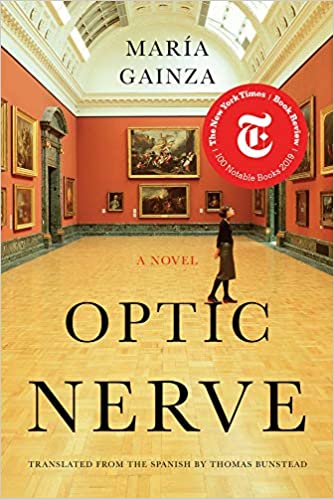
The library soon sent out an email, telling me not to return the books I had checked out, so I put them in a small stack in the living room. The three books became a symbol of life before the pandemic: The Wind in the Willows by Kenneth Grahame, Optic Nerve by María Gainza, and Isolde by Irina Odoevtseva. I read through the stack slowly and they became worlds where I could find space to breathe, places unaffected by the pandemic.

Books have always been a refuge for me, but in this last year my appreciation deepened. I read not just for entertainment but also to examine the craftsmanship in each book, and I was not let down. Studying story development, character arcs, and sentence structures became for me an act of sanity.

I read more books in 2020 than I have in other years; the list below includes some of my favorites.

I read The Wind in the Willows first. I had tried reading it a few times over the years without much luck but this time I reveled in it. My copy had the illustrations by Inga Moore, which are warm and homey. The story is set in the river and woods, and centers on three animals living there, Ratty, Mole, and Toad. They have adventures, get into messes, but everything works out in the end.

From that point on, I realized that reading children’s books let me find a small measure of peace during the pandemic. I joined a friend’s book club and we read The Secret Garden together. I had read it as a teenager, but now as an adult I was surprised to find how much I admired Frances Hodgson Burnett’s craft. She knew how to set a scene, weave an enticing mystery, and create bad-tempered yet sympathetic characters.

Later in the summer, I picked up another book I read as a teenager, Emily of New Moon by L.M. Montgomery. The novel chronicles the early life of Emily Murray, a budding author and fiercely independent soul. I highly recommend it and the next books that subsequently follow, Emily Climbs and Emily’s Quest. Emily’s fight to write and be true to herself has inspired many writers, including Carol Shields, Alice Munro, and Margaret Atwood.

The next library book I read was Optic Nerve by María Gainza, one of my favorite reads of the year. Each chapter is a complete story of its own and centers on a different painting. The narrator contemplates art and painters, her family and child, and the anxiety of living in the present day.

One of the great pleasures is how flawlessly Gainza weaves the narrator’s daily life with her contemplation on art. The moments set in art museums were especially poignant to me as the Art Institute in Chicago was closed and I was struggling with the deep desire to see artwork in-person, a source of delight and comfort that had suddenly been whisked away.

Another novel that struggles to make sense of an ever-changing world is Renee Gladman’s Event Factory. The narrator, a “linguist traveler,” visits city of Ravicka. She struggles to learn the local language and communicate with those around her. The city ebbs and flows around her, streets shifting while she walks, and a noxious yellow fog (that the citizens refuse to acknowledge) slowly envelops everything. Event Factory, bewildering yet familiar, felt like the diary of a fellow passenger during the early days of the pandemic. Another poignant similarity with the present is how Ravickan time does not move linearly which affects the art of narration:

To say that though—that I have not been on my own very long—would mean that I have been following a linear path…this linearity could only form if there had been no events in between. I am saying things have happened that have not been reported, and it is in virtue of those missing things that I was here. Had I spoken of them, at this point of the story, I would be elsewhere.

Czelaw Milosz’s autobiography, Native Realm, is another tale of rapidly shifting worlds, set during the first half of the 20th century. Beginning with his birth in present-day Lithuania, Milosz follows his family’s fortunes as they traveled through Russia, and then to Poland, arriving there shortly after WWI. He recounts learning Russian and Polish, the teachers and friends that influenced him as he came of age before WWII, and the writing endeavors that he undertook while somehow miraculously surviving WWII. His autobiography is not just a record of family, learning, and friends, but it is also a delicate tracing of the life of the mind and how he arrived to the ideas and thoughts that underpin his work.

I was unable to finish Native Realm before it was due back to the library, and after I returned it COVID hit. It wasn’t until months later that I was able to check it out again, and surprisingly enough, I hadn’t lost any of the threads. When I finished Native Realm and returned to Milosz’s poetry, his concepts shown clear and bright in a way they hadn’t before. I highly recommend this book to anyone who would like deeper insight into Milosz’s poetry and life.

The Book of Delights by Ross Gay was another library book I was separated from in the early days of the pandemic. Like Native Realm, I had read about half of it when it was due back. I returned it, COVID struck, and I did not see it again until June. I thought the long pause might affect my enjoyment of it but that wasn’t the case at all. The book is collection of essays on the small joys that Gay encounters over the course of a year, and when the book returned to me in the summer, I had a deeper appreciation of his insights into our difficult world.

In many ways, Gay’s deep belief in the beauty of a life well-observed became a touchstone during this last year. Watching a downy woodpecker climb the sugar maple outside my window became a way to enter the present when it was otherwise unendurable. Enjoying good food, connecting with friends, and reading excellent books became ways to go forward and with gratitude. Since then, I’ve been slowly reading Gay’s poetry in his Catalogue of Unabashed Gratitude and it feels like a continuation of the thoughts running through his essays. We are lucky to have Gay writing to us.

Another bright light in a grim year was Girl, Women, Other by Bernadine Evaristo. It won the Booker Prize back in 2019 and immediately sold out everywhere. I patiently waited until one day when my local bookstore had a stack of copies sitting on the front desk, and nabbed one. Looking back, I’m grateful I grabbed a copy before the pandemic hit because it was the read I needed later on. The novel concerns a large group of women, each section told from a different viewpoint. Their lives and years weave in and out of each other’s; each woman is splendidly alive and Evaristo’s playfulness with punctuation and sentence structure creates a vivacity and immediacy I hadn’t encountered before in a novel.

After Girl, Woman, Other, I picked up Three Summers by Margarita Liberaki. Set in Athens before WWII, it centers on three sisters’ lives over three summers. While their days seem quiet on the outside, the sisters live passionate and dramatic internal lives. They struggle to understand those around them (including animals and nature) and the direction their adult lives will take.

The lavender bloomed. It happened suddenly, one morning. The evening before we had stroked the buds, which were still green and hard. We had begged them to open that night, and the next day from the window we saw six bushy rows of purple playing with the sun and hundreds of white newborn butterflies fluttering around, chasing each other, making love, only to die the same night.

Maria began to cry. She went and embraced the stems, burying herself in their aroma.

The sisters find their way, each one in a way that suits only her. Some readers have struggled with this book, but I wish there were more novels like it. Liberaki’s lush descriptions of nature and the sisters’ inner lives left me wanting to read more of her work.

The True History of the First Mrs. Meredith and Other Lesser Lives by Diane Johnson is about a real woman who challenged her role in life and sought to carve out her own path as a British woman in the mid-1800’s. Mary Ellen Peacock Meredith was the first wife of the writer George Meredith; after eight years of marriage she left him for the painter Henry Wallis. Not much is known about her life (aside from Meredith’s massive grudge against her) but Johnson has taken what remains and woven it into a story, part factual and part fiction. Mary Ellen was a writer in her own right, an exhilarating conversationalist, and a gourmet cook. She was considered an outcast after fleeing her husband but of course she didn’t view herself that way. She had many plans for herself and her children but unfortunately died at age 40 from kidney disease. With sensitivity and sympathy, Johnson recreates her life and those that surrounded her; what emerges are living beings, forgotten by time but worthy of being considered. I first came across the book after listening to a delightful conversation between Diane Johnson and NYRB Classics editor Edwin Frank and I highly recommend their talk.

Isolde by Irina Odoyevtseva was the last library book from my small pre-pandemic stack. First published in 1929, I read the new Pushkin Press edition, translated by Brian Karentyck. At the heart of Isolde is the beautiful Liza, a young teenager and White émigré from Russia. She crosses path with Cromwell, a wealthy British boy, while vacationing in Biarritz. The pair might as well be protagonists from a F. Scott Fitzgerald novel as they race around in cars, bounce through dance halls, and swim out in the ocean. He names her Isolde after the doomed, legendary queen and from that moment on, there’s no doubt where the novel is headed.

Liza is a woman without a country and though she has a brother and mother, she is essentially abandoned due to their self-centeredness and desperation. As I read the book my sense of foreboding climbed higher and higher and when I finished the last page I heaved a heavy sigh. I won’t forget Isolde or Odoyevtseva for a long time. Odoyevtseva achieves a level of loneliness, separation, danger, and impending disaster that Fitzgerald’s writing aspired to.

A King Alone by Jean Giono will also stay with me for a while. I don’t want to give anything away but it’s one of the more shocking novels I’ve read in some time. The tale is set high up in the Alps and the opening description of a beech tree drew me in:

It’s on the side of the road, exactly at the hairpin bend. There’s a beech tree there; I’m sure there’s none more magnificent anywhere. It’s the Apollo Citharoedus of beech trees. There cannot possibly be another beech, anywhere at all, with skin so smooth and so beautiful a color, a more flawless build, more perfect proportions, with such nobility, grace, and eternal youth. Definitely ‘Apollo’ is what you say the instant you catch sight of it, and you say it again and again for as long as you look at it. What is extraordinary is that it’s both beautiful and so simple. No question about it: it knows itself and judges itself.

A series of puzzling and frightening disappearances occur in a nearby village, and a police captain is called in to sort out the mess. Langlois arrives in the dead of winter and begins the hunt. The narrative shifts between different viewpoints (though never Langlois’s) and the result is a tracking of Langlois himself as he travels through the mountain ranges, surrounding towns, and the village itself, searching for the abductor. Nature is a strong presence throughout, a main character watching and overshadowing the human dramas enacted within it. After reading A King Alone, I’m looking forward to reading more of Giono’s novels and discovering his poetics.

There’s no way I could go through my best reads of 2020 list without mentioning War and Peace. A Public Space announced their readalong of War and Peace in early March with Yiyun Li leading the daily discussion. I was drawn to the idea of reading an epic novel during an epic time and I picked up Anthony Briggs’s translation. I kept up with the daily readings for the first third of the novel but then fell behind. Tolstoy’s ruminations on the Napoleonic Wars and the causes of war in general slowed my speed but I was determined to see the book through. And I’m glad I did because while Tolstoy’s theories and beliefs about war have somewhat dimmed in my mind, the lives of Pierre, Natasha, and Andrei, along with a huge cast of family members and servants, have not. It’s a novel well worth reading during this time.

The final three books hold a special place in my heart: I read them in the fall and each created a sanctuary before and during the US elections (which was and is a terrifying time). It was hard to know which way my country would go and I needed the reassuring cadences of these master writers to help me through the nerve-wracking days.

The first is Maud Martha by Gwendolyn Brooks. I hadn’t known that Brooks wrote a novel until a friend mentioned it in a passing conversation and I knew I had to find this book. I ordered it from the library in early March before the pandemic struck and it eventually arrived in the fall. I was so happy to see it. It felt like the continuation of an earlier life.

The novel is broken into thirty-four vignettes, concerning the life of Maud Martha; they often read like prose poems. Each vignette follows Maud Martha as she deals with the difficulties of family, growing up, falling in love, contemplating beauty, raising a family, and racism.

One of my favorite chapters centers around her struggle over whether to kill a mouse that’s been invading her kitchen and taking off with morsels of food. She envisions the mouse’s huge family and its on-going struggle to feed so many children. In the end, she can’t set out poison and they go on living together. There is a special sweetness in the book that focuses on everyday joys despite the senseless cruelty of racism and other struggles in life. It’s a short read and I sighed deeply when I read the last page. I would have been happy to read more about Maud Martha’s daily life and her ongoing views of the world.

The Prime of Miss Jean Brodie by Muriel Spark came into my life a month before the election. A Public Space was doing another read along, this time on Spark’s book, and while I was reading through the book, I was working on a class assignment to map a novel. Since I was already half way through the novel and completely caught up in it, I decided to make a map of it. I was curious how Spark dealt with time, the revelation of mysteries, and different points of view.

While I was mapping, it became clear that Spark flashes forward in time only when she’s revealing important information. She divulges tragedies and betrayals early on but saves the “how” for the end. Her story centers on an Edinburgh schoolteacher, Miss Jean Brodie, and the student that eventually betrays her.

Spark in the New Yorker: “Well, suspense isn’t just holding it back from the reader. Suspense is created even more by telling people what’s going to happen. Because they want to know how. Wanting to know what happened is not so strong as wanting to know how.”

There’s a clean, crisp assertiveness to Sparks’ prose that I quickly became addicted to. It’s not surprising that she began her writing career as a poet. The New York Times critic Parul Seghal notes that, “[Spark] loves reminding us that every word—this phrase, that comma—was brought together by human hands, for your pleasure.”

During the election itself, I turned to The Makioka Sisters by Jun’ichirō Tanizaki. The four sisters are from a well-to-do Osaka family, but by the time the novel opens, the family’s heyday has passed and their fortunes are in slow decay.

The original Japanese title, Sasameyuki (細雪), means lightly falling snow and is a poetical allusion to lightly falling cherry blossoms in the spring. It contains the word “yuki,” which refers to the third sister, Yukiko, and suggests that she is the focus of the novel. Much of the story revolves around the family’s quest to find her a suitable husband.

The novel spans 1936 to 1941 and throughout there’s a heavy contemplation of past. This isn’t surprising, as the past (along with decline and decay) is among of Tanizaki’s great themes and permeates his work.

The past lingers in the Makiokas’ clothes, homes, thoughts, and traditions but it performs a balancing act with Western culture that continues to encroach on more traditional lifestyles. The sisters wear light Western clothes on the hottest days of the summer and resume wearing kimonos when the heat passes. They watch Greta Garbo in a film one night and attend the Kabuki theater to see a favorite performer on the next. They learn French, practice the koto and shamisen, visit the cherry trees blooming in Kyoto and Nara, and get their hair done every week at the salon. Amid family squabbles and health issues, they survey and survive everything the decade throws at them which includes a great flood, typhoon winds, and a world war.

Newspaper installations of The Makioka Sisters began appearing during the height of WWII, but the censor board pulled it, denouncing it for its “feminine character.” That didn’t stop Tanizaki from continuing his novel and in 1944, he published the first section and gave copies to friends. The complete novel came out after the war, was heralded as a great achievement, and has been read ever since.

While I haven’t lived through a war, the current pandemic has given me a more immediate understanding of what can happen when everyone’s lives are drastically and suddenly changed. Tanizaki’s fortitude in writing about four sisters throughout WWII, not even stopping when the government forbade his work from being published, speaks to me deeply.

A few honorable mentions:

Most people read Madame Bovary in high school but since I missed high school (long story), I missed the book as well. Despite knowing the storyline, the novel drew me along and by the end, there was no doubt in my mind that, had she had lived today, Emma would have been a wildly popular Instagram influencer.

Mathilda by Mary Shelley is a typical Romantic novel, full of long passages about feelings and nature. There’s also the usual shocking subject matter–in this case, incest and suicide. Shelley wrote this after Frankenstein and as a former Goth, I enjoyed every moment of it.

The Maytrees by Annie Dillard follows the lives of Toby and Lou Maytree, from courtship to old age. They live in Provincetown, MA, and the sea and its moods permeates their lives. As always, Dillard’s writing on nature is both beautiful and brutal.

It’s been an extremely difficult year, but books have helped make it a little more bearable. Here’s to another year of good book reading, discovering new and old authors, and taking care of one another. May this new year be better than the last.