Today’s reflection on a year in reading, her second for the blog, is by Anne Cohen (@aecnyc). Anne is a lifelong reader (preferably stretched out on couch or bed), retired lawyer, and former reporter. She lives in New York City with part of her family and two dogs, and continues to believe that the existence of Book Twitter saves her from homicidal and other anti-social behavior.
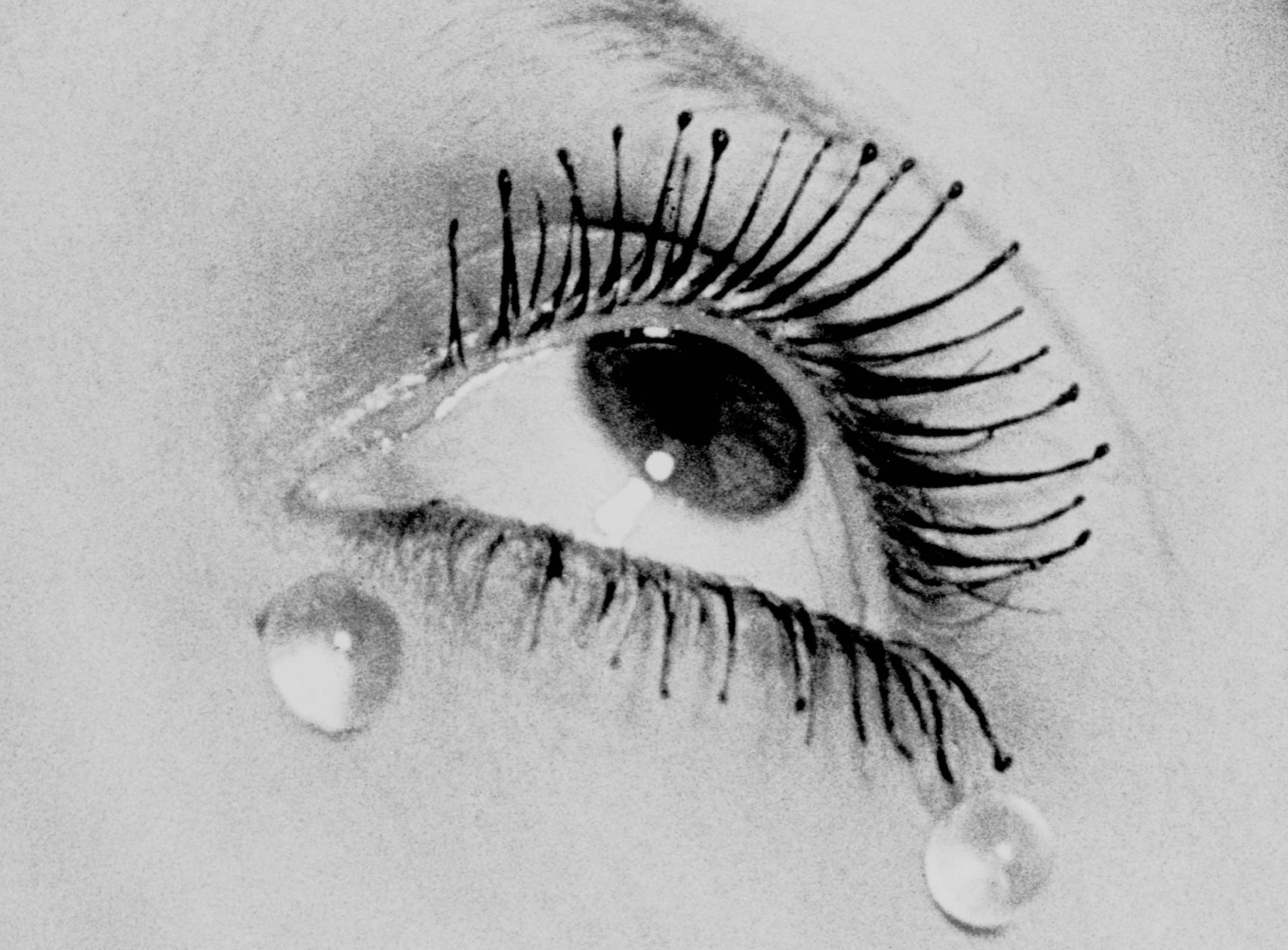
I first got my glasses in the second grade, at almost the beginning of my reading life, and for the next 60 years, couldn’t function without them. A year ago, after repeatedly misreading price tags and after having lost several years of ophthalmologist appointments to the pandemic, I had cataract surgery in March and April, followed by several months of significant light sensitivity.
So when I looked back at my reading, I shouldn’t have been surprised (but was) that 2022 was a year of audiobooks.
These included the Anthony Trollope Barsetshire books (except Framley Parsonage, yet to be started), as well as Can You Forgive Her? and The Eustace Diamonds from the Palliser series, all read by Timothy West; Olivia Manning’s Balkan Trilogy, read by Harriet Walter; Elizabeth Gaskell, Cranford; Anne Tyler, French Braid; Amy Bloom, In Love; Fintan O’Toole, We Don’t Know Ourselves; Ferdinand Mount, Kiss Myself Goodbye; and Richard Osman, The Bullet That Missed.
Barsetshire and Palliser. Loving the Trollope was perhaps the biggest surprise of my year (or second biggest, after the realization, right after the first cataract was removed, that the trim around my bathroom mirror was actually white and not a yellowy cream). I had slogged partway through Phineas Finn for a book group several years ago and was bored stiff and, worse, annoyed.
My experience of the Barsetshire novels was entirely different, and I would often find myself grabbing print versions when I couldn’t wait to get to the rest of a chapter (and even when I already knew what happened, I still wanted to find out now how Trollope got his characters there).
I had not expected the novels to be so wryly funny and spot on, even in apparently throwaway descriptions of barely-named characters, especially but not only members of the gentry and Parliament:
Sir Cosmo had a little party [i.e., a following] of his own in the House, consisting of four or five other respectable country gentlemen, who troubled themselves little with thinking, and who mostly had bald heads. [Ed. – The hair keeps the head warm enough to think, you see.]
Nor did I expect the characters to be so richly drawn, with even the least sympathetic of them humanly presented.
“It cannot be said that she was a bad woman, though she had in her time done an indescribable amount of evil,” Trollope writes of Mrs. Proudie, the bishop’s wife. Bad things happen in Trollope but not so much outright evil, and so his word choice here—not misfortune, or unhappiness, or even disaster—is meaningful.
But even as Trollope demonstrates this woman has been an engine of ruin in the lives of others, he also shows Mrs. Proudie’s realization that her own life is among the debris: “At the bottom of her heart she knew that she had been a bad wife. And yet she had meant to be a pattern wife! She had meant to be a good Christion; but she had so exercised her Christianity that not a soul in the world loved her, or would endure her presence if it could be avoided!”
The unapologetic havoc Mrs. Proudie causes may make her an outlier in Barsetshire, but at least so far as I’ve read all the novels are about characters coming to grips with their limitations—whether of birth (ancestry, gender, class, nationality, education, family dynamics); money (having, getting, losing, and the manner of doing either); and personal characteristics (intelligence, pride, diffidence, physical and mental health).
While I’m looking forward to finishing The Prime Minister and onward, I still find both Phineas Finn and Phineas Redux tedious and unfinishable, maybe because the books focus so completely on a single character, without the switches within a skein of stories that, for example, makes The Rev. Josiah Crawley’s continual self-abnegation in The Last Chronicle of Barset less tedious.
The Balkan and Levant Trilogies. Olivia Manning’s account of a young married-but-hardly-know-themselves-let-alone-each-other couple during World War II supposedly mirrors much of her own life, which makes one wonder about her marriage. [Ed. – She married Guy, no question.] Harriet Walter’s reading of the first trilogy (alas, she hasn’t recorded the second) is remarkable; thinking back, I had to remind myself that she voiced all the characters, who are richly drawn and deeply flawed. I enjoyed both trilogies, despite a deep desire to smack most of the characters upside the head; I even missed Prince Yakimov. [Ed. – Yaki! One of the great characters in 20th Century British literature!]
Other audiobooks. I’m a big Amy Bloom fan, especially her short stories, which I’ve always thought of as small jewels. In Love recounts her mid-life marriage to Brian Ameche, a terrific guy who develops early onset Alzheimer’s, and his determination to end his life while he’s still competent to make the decision to do so. Two points I keep turning back to—that Brian Ameche died at Dignitas in Switzerland on January 30, 2020, just before the world shut down, and that a relatively early Bloom short story is about a woman whose married lover has Parkinson’s and wants her to promise to help him die when the time comes. Bloom reads In Love herself, and it’s funny and angry and heartbreaking.
We Don’t Know Ourselves, although non-fiction, is great story-telling. Using his own life as a hook, O’Toole goes year-by-year through recent Irish history, starting in 1958. Highly recommend.
Cranford was non-superficial fun (and led me to order Mrs. Gaskell’s letters, which I’ve not yet started); French Braid was fine if not memorable; and The Thursday Murder Club books are made for audiobook (in a good way).
Some other novels. Miriam Toews, All My Puny Sorrows (another potential trip to Dignitas, but blackly funny all the same); Barbara Comyns, Who Was Changed and Who was Dead and The Vet’s Daughter; Margery Sharp, Harlequin House (always entertaining but I don’t remember a single detail); Georgette Heyer, The Grand Sophy; Rivka Galchen, Atmospheric Conditions; Herve Le Tellier, The Anomaly; Haldor Laxness, Fish Can Sing; Nina Stibbe, One Day I Shall Astonish the World (don’t bother—sorry Dorian) [Ed. – No worries]; Gwendoline Riley, My Phantoms (well-written but sterile and mean—sorry again, DS) [Ed. – Definitely mean. Not sterile, IMO, but I get where you’re coming from]; Willa Cather, The Lost Lady; and Kate Atkinson, Shrines of Gaiety (lacks the gut punch how-did-I-miss-that moment of her best, but her “not best” beats out the best of a lot of others).
And speaking of gut punches, the best single novel of my year was probably Beyond Black by Hilary Mantel, about an overweight psychic named Alison and her relationships with others, especially her non-psychic assistant, Collette, and nasty spirit guide, Morris. (Thank you again, Backlisted.)
There’s a lot going on here, as in much of Mantel’s work, about memory and the interplay of the living and the dead. Especially interesting were Alison’s musings about the connection of her physical size and her psychic work and whether they might echo the novelist’s sense of how her own body. “I try my best with the diets, she said to herself; but I have to house so many people. My flesh is so capacious; I am a settlement, a place of safety, a bombproof shelter.” Alison’s size is also a form of self-protection against Morris and his ilk. “What the doctors fail to realize is you need some beef, you need some heft, you need some solid substance to put up against the demons.”
This is one I’ll read again.
Mysteries. I’m always taken aback at how many mysteries I’ve read in a given year. (A lot.)
As I was finishing this, Dorian and his One Bright Book podcast colleagues were talking about how hard it sometimes can be to settle into a new novel; to become used to the rhythm of that specific universe. For me, a pleasure of mysteries, and mystery series in particular, is the absence of some of that acclimatization. [Ed. – Nicely put! Helps me see why genre fiction can be so comforting.] Mysteries are like sonnets—the typicality or transparency of their framework makes it fun to see how well a writer sets up character and plot; the bad or lazy writing can be howlingly obvious and the clever more enjoyable. [Ed. – Absolutely!]
This year, I read bunch of books by: Francis Vivian (Inspector Knollis); E. C. R. Lorac (always a treat); Margo Bennett; Brian Flynn (Anthony Bathhurst); John Dickson Carr (Gideon Fell—meh, am not a locked room person); Martin Walker (Bruno Courrèges, sadly not improving with age); Anthony Horowitz (Magpie Murders, not nearly as well-told as TV series); Christopher Bush (Ludovic Travers); Derek Miller (Sheldon Horowitz); and Rosalie Knecht (Vera Kelly). [Dorian, there’s one more, with a name a can’t remember about a gay guy in Scotland] [Ed. – Ann Cleves’s The Long Call?] [Ed. — We figured it out! Louise Welsh’s The Cutting Room!]
Two very different series stood out for me, both written from the 1930s through the 50’s: Nicholas Blake (pen name for Cecil Day-Lewis, former British Poet Laureate), featuring Oxford-educated Nigel Strangeways, and Stuart Palmer’s series featuring middle-aged school teacher “spinster” Hildegarde Withers, working with NYPD homicide Inspector Oscar Piper. The Blake books are arguably “better” written, but the Withers are more fun, and she gains in wisdom as the books progress.
Four Lost Ladies, published in 1949, could have been a standard bad-guy-preys-on-vulnerable women, but Palmer (in Hildegarde’s voice) imbues the story with a deeper meaning, about women who “haven’t importance enough to be missed, they haven’t any close friends or near relatives, so nothing is ever done about it.” Everything starts with a former neighbor from whom Hildegarde did not receive an annual Christmas card:
Miss Withers began absently to fold and refold her napkin. “Oscar, do you happen to know just how many lonely, middle-aged, unattached women disappear right here in this city every year?”
“Not nearly enough,” Piper answered promptly. [Ed. – Hiss, boo!]
She let that one go by. “More than three thousand, according to recent estimates by the YWCA and the Travelers Aid Society.” …
He put a breadstick in his mouth. . . .”Relax, Hildegarde. … [W]e don’t get three thousand unidentified female stiffs in the city morgues in the course of a year—no, nor a tenth that number. Almost all the ones we do get are victims of accident, disease, or suicide. No, you’re barking up the wrong tree again. Those women you’re so worried about, they probably just got bored with the big city and went home. Or else they wanted to skip out on a husband or boy-friend, or beat some bills.”
Hildegarde, no big spoiler alert necessary, of course is right. (Check out the movies made about Hildegarde and Oscar, which unfortunately don’t include Four Last Ladies; available on Internet Archive.)
Diaries, letters and memoirs. Sylvia Townsend Warner diaries and correspondence with David Garnett; James Lees-Milnes early diaries; Paul Theroux, Kingdom by The Sea; Natalia Ginzburg, Family Lexicon; and Dervla Murphy, Full Tilt, Wheels Within Wheels, and A Place Apart: Northern Ireland in 1970’s; and the first two volumes of Diary of A Wimpy Kid, which helped prepare me for my 50th high school reunion. [Ed. — !]
Diaries of Chips Channon. Last year, I wrote about the first two volumes of the interminable but somehow addictive Diaries of Chips Channon, a snobbish, American-born, royalty-and-luxury loving, anti-almost-everyone-else Member of Parliament, who was close to power in the late 1930s and early 1940s.
In addition to an antisemitism barely tempered by knowledge of the Holocaust (to say nothing of people of color, whom he doesn’t even begin to notice), the Channon diaries are filled with hateful invective towards ‘my enemies,’ who seem to be legion.
The third and last volume was released this year, and Chips is largely unchanged, except for more frankly (but still obliquely) writing about his sex life; homosexual activity was illegal in Britain until a decade after Channon’s death, and the diaries suggest a mixture of discretion and bravado in his public conduct.
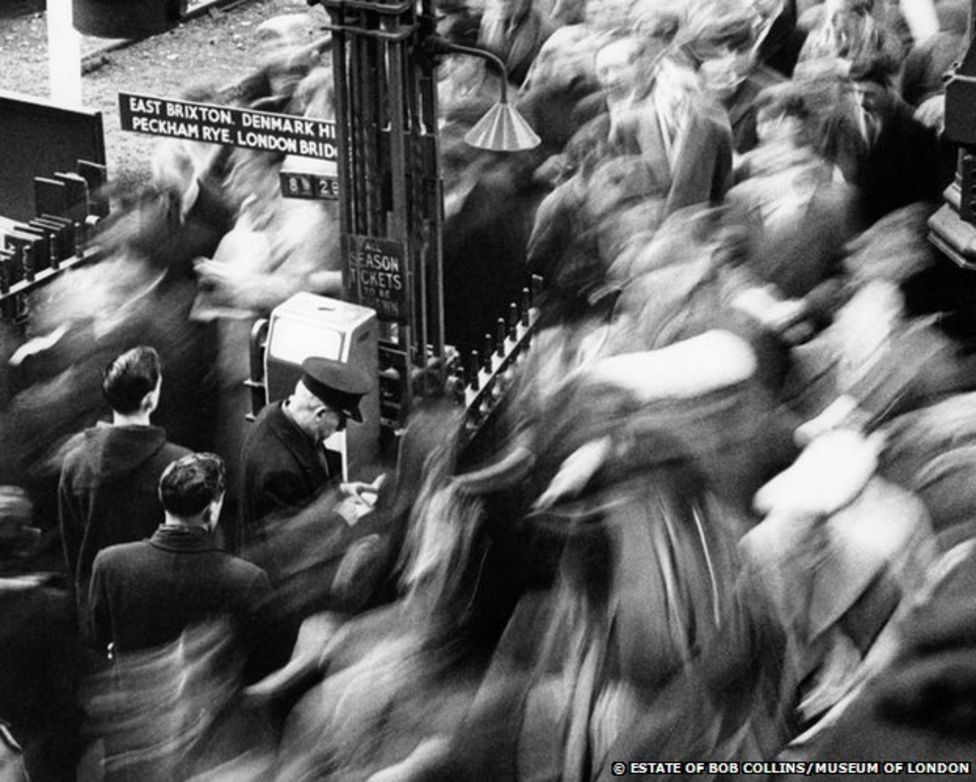
Nella Last’s War and The Diaries of Nella Last. Channon wrote for a posterity he assumed would be interested in the placement and menus at his dinner parties, the trinkets he gave to and received from royalty, and his conviction that Neville Chamberlain was right.
Nella Last, on the other hand, was a housewife from the northwest of England; her diary was created in response to a request for volunteers from Mass-Observation, the groundbreaking social research project which sought information about the lives of ‘ordinary’ Britons. She could not have known her submissions to M-O would have a life beyond the study’s archive.
Reading the two in tandem was disorienting. It’s hard to believe—except for a few references by Channon to scarcity of turkeys and competent household staff and an occasional trip by train rather than in his Rolls—that he and Nella Last lived through and wrote about the same war and post-conflict austerity.
Her journals are filled with descriptions of eking out a supply of eggs or cream and the most useful cuts of whatever meat was available, of making rag dolls to sell at the Women’s Voluntary Service shop to raise Red Cross funds or to donate to local hospitals, of being unable for years of fuel rationing to make simple Sunday drives to a nearby lake.
Beyond their historical value, the diaries record someone once plagued by depression and self-doubt (“the rather retiring woman who had such headaches and used to lie down so many afternoons”) blossoming with her wartime volunteer work and with the incentive to record not just her observations of the world around her but of the changes in herself and her relationships. “After all these peaceful years, I discover I’ve a militant suffragette streak in me” and “[I] peel off the layers of ‘patience,’ ‘tact,’ ‘cheerfulness and sweetness’ that smother me like layers of unwanted clothes.”
Nella’s tolerance for almost anything but hypocrites and bullies was particularly welcome after Channon’s spitefulness. She refused to shun unwed mothers, and while she’s not thrilled to see ‘conchies’ (conscientious objectors) on work teams who come to her volunteer canteen, she recognizes their humanity. Despite a single reference to “the ‘Jewish’ stamp’” of dresses gotten off-coupon while clothes were rationed, she describes her religion as “a mixture of wishful thinking and nature worship and a stern belief that God is Jewish” [Ed. — !] and is “astonished at the mistrust and real hatred of Jews, in quite ordinary men on the street.”
Nella was also aware of, and abashed by, what she recognized as her own biases. The local medical community includes several Africans, and she is surprised but pleased to see “chummy” interaction among the nurses of different backgrounds, “as if colour and race were one.” But after a pleasant chat on the street with one of the African nurses, who knows Nella from her hospital volunteer work, “my little happy feeling seemed to sour” at the sight of the white wife and biracial children of the local African eye doctor:
“Whatever the views I hold of ‘some day, one colour, one creed,’ the sight of half-caste children seems to strike at something deep down in me. I say I’ve no ‘colour bar,’ but wonder if I’ve a very deep rooted one. I could work with coloured people, enjoy their society, attend their wants in canteen, fully admit them to positions of trust and service, but know, finally, I’d have died before I could have married one, or borne coloured children. So perhaps I have a colour bar.” [Ed. – Oof, impressive attempt at self-knowledge; also, gross.]
I hope—wherever she is—that she’s not appalled at being read so intently; I would have liked the chance to know her better. [Ed. – A woman worth knowing. Just like you, Anne. Thanks!]
 Eiger, Mönch & Jungfrau