Here is my introduction to Episode 38 of the podcast I co-host with Rebecca Hussey and Frances Evangelista, One Bright Book.
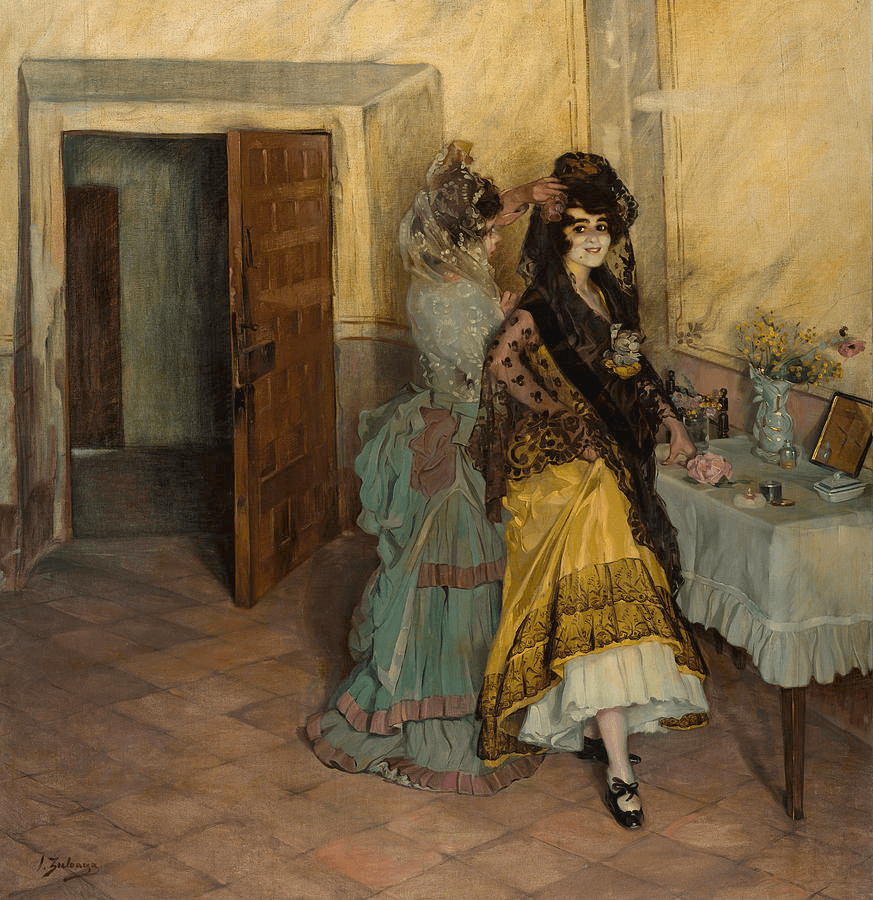
Our book today is Miaow, written in 1888 by the great Spanish 19th-century realist Benito Pérez Galdós and recently published by NYRB Classics in a lively new translation by Margaret Jull Costa.
Galdós, whose long and productive life lasted from 1843 – 1920, was born in the Canary Islands, which perhaps gave him an outsider’s perspective on the Madrid society he scrutinized in more than 80 novels.
Miaow has a cast of, well, maybe not thousands but a lot of characters. Ramón Villaamil has served the state his whole life, but he’s lost his job in the tax office due to changing political fortunes just two months short of qualifying for his pension. He solicits possible patrons and haunts his old office, not just to get a job but also to escape his household, where he lives in an uneasy truce with his wife, Doña Pura, their adult daughter, Abelarda, and his sister-in-law Milagros. Completing the ménage is Luis, the son of a second daughter who died young. Luis’s father is a man named Victor, a bad penny who has never been in the picture, indeed whose name is never spoken in the home. The novel kicks into gear when Victor turns up and inveigles his way into the household, eventually sowing great unhappiness. (Victor is a breathtakingly bad guy—I hope we’ll talk about this.)
These are all interesting characters—so why isn’t the book named after any of them? That would be the usual 19th-century thing. (Jane Eyre, Daniel Deronda, Eline Vere, Anna Karenina,l etc., etc.) Why does it have such an odd title? Who or what does “miaow” refer to, anyway? Well, lots of things. It’s the nickname given by the local wags to the women of the Villaamil household, after their supposedly feline features. I think it’s important, though, that the book isn’t called The Miaows. For the title also extends to Ramón, the paterfamilias—not because of how he looks but of what he believes. MIAOW is an acronym for his mantra that Spain can only be saved by Morality, Income Tax, Additional Import Tariffs, Overhaul of the National Debt, and Work. So already “miaow” references both physiognomy and economy. But there’s more. In addition to being a noun, miaow is also a verb, a sound, an onomatopoeia, and a sarcastic, acidic, or bitchy commentary, as when we call someone out for being catty: Mee-ow! It’s this last meaning I thought of most as I considered the harsh disdain so often expressed by the characters toward each other and the gentle satire of the narrative voice toward all of them.
Once we see that “miaow” is something like a mood or attitude or state of mind, we’re able to recognize how unusually Galdós uses characterization. In my description of the book a minute ago, I made it sound like a family story. But it’s not, quite. The critic Fredric Jameson, who really loved Galdós and thought his unfamiliarity in the English-reading world a real travesty, says that Galdós offers “a deterioration of protagonicity,” an admittedly unlovely phrase that he glosses as “the movement of the putative heroes and heroines to the background, whose foreground is increasingly dominated by minor or secondary characters.” As a Marxist, Jameson attributes this not just to Galdós’s predilection or “genius” but to his position as a person living in late 19th century Spain and its strangely non-modern political landscape following the failed “Glorious Revolution” of 1867 (they deposed the monarchy and then brought it back, sort of). To depict the social reality of his society, Galdós had to “strike[ ] an uneasy compromise between the atomized individualism of more fully bourgeois societies with their nuclear families, and the more archaic traces of the older feudal class and castes.” To me, this explains why Galdós feels like an uncanny version or simulacrum of canonical realists like Balzac or Zola, with whom Galdós shares an interest in recurring characters and the desire to explore an entire society. Miaow reminded me of Père Goriot or La Bête Humaine. But also not. Jameson notes that Galdós’s novels are not organized around families, even extended families, but rather around households, an ambiguous term that includes servants, neighbours, and other families who circulate in and out of the story. (In Miaow, Doña Pura is always hosting friends, acquaintances, people who may or may not respect or like; Ramón is always trying to hide from them.) The household thus includes the Mendizábals, a couple who live downstairs and take pity on the much-neglected Luis; the Cabreras, the sister and brother-in-law of that cad Victor, who want to adopt Luis; as well as a whole series of characters at Don Ramón’s former office, some of whom are, to me at least, hard to keep track of, but to whom the novel devotes so much attention, in their various sympathy to or ridicule of Don Ramón, that it doesn’t make sense to just call them “minor.”
All of which is to say that Miaow, though not especially long (it’s like 300 pages) is very busy. To that end I was struck by a word that appears in the first sentence and reappears near the end. Here’s how the novel begins: “At four o’clock in the afternoon, the kids from the school on Plazuela del Limón erupted out of the classroom, making the very devil of a racket.” 250 pages later, a disconsolate, embittered Don Ramón observes a flood of civil servants clattering out of the workplaces at the tax office on payday: “The stairs were almost overwhelmed by this human torrent, which made a tremendous racket as it flowed on down, the sound of heavy footsteps mingling with all the cheerful, sparkling, payday chatter.”
The repetition of racket reminds us that bureaucrats are just overgrown schoolboys. Here we see Galdós’s satirical side. (And by the way, surely the opening scene of the schoolchildren, who, as they pile into the streets, tease little Luis with the nickname of his aunts and grandmother, miaow, miaow, miaow, refers to the opening of Madame Bovary, where a different set of schoolboys taunt a nice enough if also hapless pupil.) But more importantly the repetition of racket speaks to its modus operandi., maybe what we’d now call its vibe. This book too makes a tremendous racket, in the best possible way, with clever dogs, opera singers, officious bureaucrats, raw army recruits, shopkeepers, and a score of others contributing their two cents. Mee-ow indeed.

Have any of you read this book? Or anything else by Galdós? What do you think?
 Eiger, Mönch & Jungfrau