Nat Leach’s Year in Reading, 2023

Excited to once again present reading reviews from some of my favourite readers. Today’s installment, his fifth, is by my longtime friend Nat Leach. Nat is a nineteenth-century scholar turned college administrator who has spent the last 6 years reading the books on his shelves in alphabetical order. He has recently doubled his social media presence by becoming mostly inactive on not one but two platforms, posting occasionally as @gnatleech on Twitter and @gnatleech.bsky.social on Blue Sky.

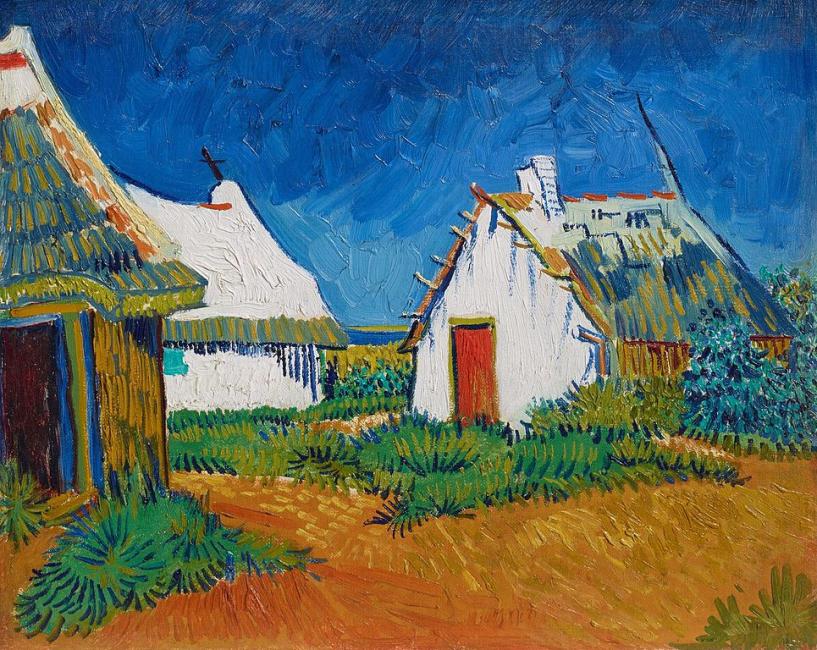
Berthe Morrisot, Hide and Seek, 1873

For reasons not worth going into, 2023 was actually a pretty rotten reading year for me. I read sporadically, finished only 20 books, and only progressed through one letter in my alphabetical reading project, finishing K, and making a brief start on L (so, after 6 years, I’m not even halfway through the alphabet; my 10-year plan, which was originally a 5-year plan, is looking like it will become a 15-year plan). [Ed. – Very Stalinist of you, Nat.] I wasn’t even able to write entries for each book as I went along, as I’ve done in the past, and was considering foregoing my annual post, but Dorian threatened to sue for breach of contract, so here we are. [Ed. – Look, a deal’s a deal. You want the glory, you gotta write the post.]

One meaningful reflection I was able to draw from my year’s reading is a better understanding of why I enjoy reading the way that I do, progressing alphabetically through my shelves rather than making conscious decisions about where my reading should take me. Thomas de Quincey, in a wonderful essay on “Sortilege and Astrology,” explains that he believes in astrology, but not in astrologers; there is indeed a pattern connecting all events in the world, but anyone who claims to know it is a charlatan. And yet, practices such as sortilege (the opening of a book at random and putting one’s finger on a passage as a means of divining the future) entail putting ourselves in the hands of this unknowable force of fate. [Ed. – Ah, finally I have a name for what my students do when I throw out a question in class.] My reading practice is then a kind of sortilege in which I trust that fate will put in my hands the right book at the right time. And very often, as I discovered this year, I’m able to trace out patterns and connections that I may not have been exposed to had I more rigorously organized my reading.

 I often found myself reading two books at the same time—books that offered unexpected congruences, and paths leading from one to the other. And thus, since I did not manage to write entries for individual books this year, I present my reading by category, which often means: by categories I would not always have chosen to adopt in advance, but discovered while reading.

Books Written in 1989 that Challenge Canonical Western Conventions of Storytelling: Thomas King – Medicine River and Maxine Hong Kingston – Tripmaster Monkey

A super-specific first category, but these are two very different books. For many years, my office was just around the corner from a poster with a quotation from Thomas King: “the truth about stories is that that’s all we are.” The narrative structure of Medicine River seems to be an illustration of that axiom. Each chapter cuts (in a way that feels very cinematic) between an action in the narrative present and one in the past. We thus gradually learn how the past of the protagonist, Will, shapes the person he’s become in the present. The book also suggests how this is true at a deeper cultural level, referring to significant events in Indigenous history such as the battle of Little Bighorn and the occupation of Wounded Knee, but for the most part the focus is personal and the tone is lightly comic, but also somewhat melancholic.

Kingston’s novel, on the other hand, is much more explicitly disruptive of literary expectations in its use of Chinese legends and stories to revise American literary and cultural norms. The novel’s protagonist is a Chinese-American hippie whose hybrid status is reflected in his name, Wittman Ah Sing (geddit?) and whose life in 1960s San Francisco is inflected with wild imaginings that superimpose figures of Chinese legend onto the American present, culminating with the performance of an extravagant play that ends with a chaotic collapse of the distinction between actor and audience. [Ed. — !] Like King’s novel, we see how stories create, and do not simply reflect, identities.

Kingston’s book segued nicely into the next book I read, Rudyard Kipling’s Kim. At one point, Kingston includes an extensive quotation from Kipling’s narrative of his visit to the United States. In that book, Kipling becomes a spokesperson for a racist past whose perspective persists in the present, a tendency that can certainly be seen in Kim, the story of a boy who gets caught up in the political intrigue of maintaining English power in the Indian sub-continent. It still works as an adventure story, though Kipling’s colonial perspective on India is consistent with the account of the Chinese inhabitants of San Francisco that Kingston critiques.

Holocaust Memoirs and Diaries: Gerda Weissman Klein – All But My Life, Victor Klemperer – I Will Bear Witness 1942-1945, Ruth Kluger – Still Alive

These were sitting next to each other on my alphabetically ordered shelves. I have much less experience with Holocaust texts than Dorian, so I will not pretend to any expertise here, but in the small teaching experience I have had, my approach has been to encourage students to notice differences—the atrocities of the Nazis took many forms, and were experienced differently based on a whole range of factors including location, age, gender et cet.—but also to notice significant similarities and patterns. [Ed. – Nat is too modest: I still use a terrific assignment he designed on the topic of Holocaust diarists.] Each of these texts describes some distinctive aspect of Nazi terror: Klein was part of one of the infamous “death marches,” which she describes more thoroughly than any account I had previously read [Ed. – absolutely agree], Klemperer describes the everyday psychological tortures endured by Jews living in Germany, as well as the horrors of the fire-bombing of Dresden, while Kluger’s account spans a range of locations and forms of violence from Vienna to Theresienstadt to Auschwitz. Looking for patterns, it is evident that each also benefits from a number of timely pieces of good fortune that contribute to their survival: for example, Klein was able to live through most of the war in the relatively protected confines of a weaving factory, Klemperer avoided deportation because his wife was Aryan, and the bombing of Dresden in fact provided him with an opportunity to remove the yellow star from his clothing and escape from the city, and Kluger benefited from timely advice to lie about her age at Auschwitz, and a well-timed decision to escape from a death march. A somewhat more curious parallel is that both Klemperer and Kluger fled to Bavaria, and both would have been in fairly close proximity when the war ended. [Ed. – Good point! A function of how the regime decided to compress this remaining pool of slave labour into a central, contiguous section of the Reich: the Sudetenland, x, y, and Bavaria.] In short, three very different books, with some similar lessons, including an awareness of the very narrow line between survival and destruction.

Classic postmodern novels from when it was still OK to use the word “postmodern”: Robert Kroetsch – The Words of My Roaring, Milan Kundera – The Unbearable Lightness of Being

Yeah, I know it’s cool to dump on the word “postmodern” in our enlightened 21st century, but I still find it a useful way to speak about texts that reflect on, and engage critically with, their own status as text. Both books use postmodern strategies to explore the construction of individual identity and that of a national past. Kroetsch’s book experiments with the genre of the folk tale, and is narrated by Johnny Backstrom, a political candidate in Alberta during the Depression who promises the voters—all farmers struggling with drought conditions—that it will rain. Kundera’s novel reflects more philosophically on the nature of chance and coincidence (coincidentally all the stuff I wrote about in my introduction) against the backdrop of Czechoslovakia in the Communist era. As with King and Kingston, these are books that think about how stories create identities.

Books set in the 1970’s (but written later): Hanif Kureishi- The Buddha of Suburbia and Rachel Kushner – The Flamethrowers

I was reading these at the same time, and all the ‘70s cultural references kept getting me confused as to which one I was reading. But the easy way to tell the difference was that one of these books harnesses that cultural anxiety/nostalgia in an interesting way, and the other… not so much. Kureishi’s book is great, exploring his familiar territory of cosmopolitan London and the racial and political tensions of the period. It moves deliberately from the idealism of the hippies to the backlash of punk, and ends with the election of “the new Prime Minister,” unnamed but obviously Thatcher, as represented in the striking images at the conclusion of the BBC miniseries. Things would never be the same again…

As for The Flamethrowers, if I were being charitable, I would say that the book wasn’t for me, as I simply didn’t find the subject matter interesting. If I were being uncharitable, I would say that the book cobbles together a whole bunch of supposedly “cool” images and events of the ‘70s just because they are cool, not because they serve any narrative logic. And the author’s Afterword kind of confirms that hypothesis in describing her process of starting with striking images.

Books set against the backdrop of 17th/18th century nationalist revolutions: Lady Caroline Lamb – Glenarvon and Giuseppe di Lampedusa – The Leopard

Again, a category that features one very good book, and one very bad book. Lamb’s novel was really written only as an attempt to avenge herself on Lord Byron, with whom she had a scandalous affair before he unceremoniously dumped her. The structure of the novel is bizarre, as the description of the affair between Glenarvon (Byron) and Calantha (Lamb) is sandwiched between a Gothic narrative that seems to make very little sense (the explanation provided at the end doesn’t seem to match with the beginning, but I have no desire to try to figure it all out). And, oh yeah, Glenarvon is made into an Irish patriot leader in the 1798 rebellion. For some reason. [Ed. – Very moody, the Irish. Just like Byron.]

The Leopard, on the other hand, is a fantastic book, often hailed as one of the great historical novels of the 20th century. What makes it great, I would argue, is that it represents a moment of critical historical change from a multivalent perspective that shows just how complex change is. Don Fabrizio is essentially the last in a long line of Sicilian nobility. His time is coming to an end, he knows that it is coming to an end, and he even recognizes that in some ways it is right that it is coming to an end. But we also see that good things are being lost along with the bad, and that a different form of badness is ascending. In short, Lampedusa shows historical change in all its ambivalence, as well as the conflicting emotions that it gives rise to. [Ed. – I gotta read this again: been far too long.]

Books read for Women in Translation month: Svenja Leiber- The Last Country and Clarice Lispector – Agua Viva

Well, in my case it was Women in Translation two and a half months, but that’s OK. I was hoping that the Leiber book would be the one to break me out of my slump of disliking 21st century novels, but it was not to be. It hooked me at first, but this is a book with an epic scope (the life of a musician through the vicissitudes of 20th century Germany) but an episodic structure, which I grew to find infuriating more than anything. The prose also felt very abstract—there were many moments when I honestly couldn’t tell whether a sentence was meant to be literal or metaphorical—but I’m not sure if this was a translation effect or inherent in the original. As for the Lispector, it was my first experience with her, and seemed to me an interesting cross between literary and theoretical prose; she reminded me of nobody more than Maurice Blanchot. Which, if you know me, is a compliment. [Ed. – He’s understating things. That’s like his highest compliment. Well, maybe if he’d said it reminded him of Levinas.]

Books read with the #NYRBWomen23 Group: Eleanor Perenyi – More Was Lost, Elizabeth Taylor – A View of the Harbour

I wish I’d had more time to participate in this wonderful series choreographed by @joiedevivre9 but these were the two that were on my shelves already (and hey, I’m going to get to “P” and “T” eventually, right?). Two very different books, Perenyi’s a non-fictional account of her life and marriage to a Hungarian nobleman before and during World War II, and Taylor’s an account of lives of quiet desperation in an English seaside town. Both excellent. [Ed. – So excellent]

A few classics: Honoré de Balzac – Le Père Goriot, Heinrich von Kleist – The Prince of Homburg, D. H. Lawrence – Sons and Lovers

Kleist’s play (like much of his work) is ahead of his time, a proto-Freudian reflection on dreams, reality, desire and death. This was a re-read for me, and confirmed its greatness.

OK, I haven’t actually finished the Lawrence yet (2 chapters left), but I figured mentioning it would score me points with Dorian. [Ed. – It does. You now have 7,967.] Lawrence’s prose is utterly compelling, and even though I find that most of the characters fall into the literary-critical category of “big idiots,” I am absolutely glued to the book. [Ed. – Ha! Accurate!] I’m also enamored of the fact that the book is set in the area of Derbyshire/Nottinghamshire that my grandparents used to live in, and I recognize many of the places mentioned from visits in my youth. When the characters go to Alfreton or Crich Tower, I internally cheer as if a rock band has just casually mentioned how great it is to be in <insert your city here>.

Saving the best for last, I started the Balzac shortly after joining Twitter some 6 years ago, and read it in French, which made it slow going for me. Appropriate then, that I finally finished it in 2023, the year of Twitter’s demise (or whatever you want to call the transformation it has undergone). In any case, this is such a wonderful book about the perils and temptations of society and money, and the challenges of maintaining a moral compass in the face of them. Apparently, I now have a whole lot of Balzac that I’m going to need to read. [Ed. – Hell yeah lfg!!!!!]

Felix Nussbaum, Shore at Rapallo, 1934

That’s about it. Will 2024 be a better year? Who knows how far I’ll get through the L shelf, and who knows how long it’ll take to get through that monstrously large stack of M’s (now is the time that joining those recent group reads of The Balkan Trilogy, The Levant Trilogy, Moby Dick, and The Man Without Qualities is really going to pay off!). But with Nella Larsen, Margaret Laurence and Ursula Le Guin among the next authors on my list, I am guaranteed some treats in the coming year. [Ed. – You sure are. Thanks as always, Nat.]
“The Old, Wild Blood”: Henri Bosco’s Malicroix

A while back I suggested a group reading of Henri Bosco’s 1948 novel Malicroix, admirably translated by Joyce Zonana and published by NYRB Classics. Quite a few readers took me up on the suggestion, and some of them wrote about their experiences, either on their blogs or on Twitter (#Malicroix2020). It was great to see so much interest. Here I’ll highlight some of their observations, and then add some of my own.

EahL4OTX0AMWkDa

At the centre of Malicroix is its narrator, Martial de Mégremut, a young man who comes into a mysterious inheritance from a great-uncle on his mother’s side, the last full-fledged member of the Malicroix line. As the man’s only heir, Martial now owns “some marshland, a few livestock, a tumbled down house” on an island in the Rhone, that is, he will if he manages to live there for three months without setting foot on the mainland. He’s not alone, as he has the company of old Malicroix’s servant Balandran, as competent as he is silent, and the latter’s Briard, Bréquillet. (Everyone loves that dog; NYRB should make t-shirts.) From time to time, Malicroix’s lawyer, the sinister Dromiols, and the lawyer’s dogsbody, the oddly named Uncle Rat, drop in to make ominous noises. The lawyer turns out to have a personal interest/vendetta in the matter, and wants Martial to leave; by contrast, Rat turns out to be a mole, helping instead of harming the young man. The first half of the book details Martial’s first months on the island, through autumn fogs and winter storms, but Malicroix is not really a tale of survival—Balandran sees to Martial’s modest needs. It’s more a tale of psychological endurance, in which doing must be replaced by being. After the initial three months, however, Martial learns of a codicil that requires him to perform one more task, to exorcise a past wrong, and the last half of the book describes how he manages it.

Our little band of readers liked Malicroix a lot. (Though people who didn’t might not have felt compelled to write about it, so my sample might be skewed.) My comrades repeatedly described themselves as captivated by the novel’s depiction of isolation. But this atmosphere also made them uneasy. A novel that at first seems to be a primer on mindfulness eventually reveals itself as ominous, even threatening. For Karen, it was “immersive,” “hypnotic,” and “hallucinogenic.” That immersion also resonated with Meredith, who described herself as “living with” the book, not just reading it. Trevor found it “enriching,” but also “inquisitive” (a nice distinction—as if it’s not just readers who are curious about what’s going to happen, but also the text itself). Guy similarly found the novel “mysterious” and “cryptic.” Grant said the book put him on “high-alert”; he admired its “foreboding” and “threat.”

I too was drawn to this solitude. Given the circumstances in which we read it—sheltered in our homes around the world—the topic appealed to me even more strongly than usual. (I’m a sucker for books about people who jump the tracks of their lives to spend time alone—something I always fantasize about but am too frightened and/or constitutionally disinclined to do.) To live alone in a little house on a little island in a great river, with a small but doughty fire to keep off the chill and simple meals of lentils and rough wine to keep one’s spirits up—this minimalist, faux-peasant fantasy appealed to me. (Though I was frankly horrified that Martial has no books with him. None at all! Books, however, would distract from the matter of existing. The Mégremuts might have recourse to books. Books are not for the Malicroix!) The novel even sometimes plays up this minimalist element, as when Martial describes the house as one in which “everything was so clearly reduced to the soberest utility.”

Reading late at night, during a semester unlike any other, I was calmed by this aspect of the novel. I wasn’t the only one to think about it as a nighttime book. Meredith notes how many of its important actions—even if those “actions” are rain, wind, storms—happen at night. As befits this attention to surroundings, Malicroix is a great book of weather. It is atmospheric in the literal sense. The daily changes of Martial’s immediate environment matter a lot. No wonder the philosopher Gaston Bachelard cited it at length in his The Poetics of Space (which is where translator Zonana first encountered it). Bruce—whose erudite thoughts you can read in a comment on my original post—thought of this darkness in both literal and figurative senses. Comparing Malicroix to Bosco’s other work (which, with luck, non-French readers will be able to read before too long), he concluded that Bosco’s primary concern is:

the symbolic power of a lamp or candelabra surrounded by vast darkness; the sanctity and shelter of a building that envelops and protects a human, and which has a spirit of its own; the presence of full-blooded animation in nature all around; and the inner conflicts of blood and family history.

(Note that Bruce has used the term “blood” twice—fittingly, as it is Bosco’s central term; I’ll return to this in a moment.) Like Meredith and Bruce, Trevor also picked up on the novel’s captivating physicality. He writes:

This is a book to read in the late hours, which is also when much of it takes place. There are winter wind storms that will make you pull up the covers no matter what the temperature is in your room. The fire place in Martial’s room will also bring you comfort. Bosco — and his skillful translator Joyce Zonana — helped me to feel the physical and mental strains and comforts with our poor protagonist. I was particularly swept up in Martial’s lonesome Christmas Eve. Normally, surrounded by the Mégremuts who pray and feel the presence of angels, Martial, no matter how skeptical the rest of the year, is lifted by angels himself; not so on this Christmas in the Camargue.

Nighttime can be comforting, if one is inside, by a small fire, especially after coming inside from the elements. Even better if you’ve a dog “sigh[ing] with well-being” by the fire, “long tremors [running] along his spine as he closed his eyes to savor the pleasures of a warm hearth.” But nighttime is also, as Meredith notes, a time of obscurity, and this obscurity can be unsettling, to character and reader alike. For me, the vivid descriptions of night are inversely related to the confusing references to what happens at night: the more I thrilled to those scenes, the less I knew what happened during them. What is the task that Martial is asked to take up on July 16th, the anniversary of a terrible event in the old man’s life? Who is the woman who appears one night to tend to him? Is she real? Is she a figment? How does Martial respond to Malicroix’s final demand? (I mean this literally: what the hell actually happens at the end?)

What I’m saying is that the longer I read, the more confusing I found the book. I was wrongfooted by the turn from plotlessness to plot, and then wrongfooted once again by my inability to comprehend that plot. I was as adrift as the book’s few characters risk becoming any time they venture near the river. But then I read Tom’s series of excellent posts, which helped me see that reading Malicroix as a hymn to the simple life misses the point:

My impression is that readers have been enjoying reading about solitude, watching the fire, and the weather, the wind and rain that keeps Martial from even going for a walk. This is certainly part of the novel. But the mysticism is central to what I take the novel to be, as is the quest story, which I am not seeing anybody mention.

Pulling together otherwise disconnected bits of the text (references to east and west, the appearance of a blind ferryman, the role of a white bull), Tom reads the novel through the lens of Mithraism, the Roman mystery religion. Not only is Tom’s reading textually convincing (he explained stuff in the novel that made no sense to me), it’s also psychologically consoling, at least for me. The reason I was so confused is that the novel is about confusion! Or, more accurately, about the esoteric. Its questions are: who is an initiate—and what is the secret knowledge into which they are being initiated? Its plot forms a quest, undertaken by a hero who completes it in his own spirit, in Tom’s words, “for redemption and rebirth, rather than revenge.”

In making his claim, Tom referenced Frazier’s The Golden Bough, that late 19th century study of comparative religion and mythology that exercised such outsized influence in modernist Europe. That was the clincher for me—it made total sense, and also explained why I liked the book less as it went along. I’ve always been allergic to that sort of key-to-all-mythologies mystical revelation stuff (The Frazier-inspired parts of “The Waste Land” are my least favourite, for example.) But Tom’s reading, as always attuned to the big literary historical picture, allows us to characterize Malicroix as a (late) modernist syncretic text.

Emphasizing Mithraism in particular also brings out the Mediterranean elements of the novel, which fits with Bosco’s own life experiences (he spent decades in Italy and North Africa, as well as southern France). To me, it makes a lot more sense to call Malicroix Mediterranean than French—its Frenchness is evident primarily in the repeated term “wild,” Zonana’s translation of sauvage, which I can’t help hearing as a reference to Rousseau (no idea if that’s accurate).

EZOqcbZXkAIArgV

But the cultural-mystical-philosophical sweep of the novel interested me less than the psychology of the narrator. Tom’s point, I think, is that the latter always leads in this novel to the former. But I was interested in a strange push-pull in Martial’s character. Sometimes he seems passive (he never quite decides to stay on the island; he just doesn’t leave; he is depicted as a child, as exemplified by his first night in the little house, when he awakes to find that someone—Balandran, of course, though he doesn’t know it yet—has pulled a blanket over him). But other times he is active, deliberate, as in his “solution” to the task imposed by the codicil. In this regard, I was drawn to a passage cited by Chris. When Martial stays on after initial difficult days, he tells us:

To stay was becoming my function. It was useless to try to explain my conduct: my arguments seemed laughable. You do not debate your hunger.

“Hunger” is such a fitting word here—in English, at least, it can be used as a synonym for “drive.” But it also refers to a sensation that merely arises, under the right conditions. You don’t say “I think I’ll have hunger now.” The word is both active and passive. It speaks of something that acts upon one. Fittingly, Chris interprets this quote by referring to blood:

[Martial’s] change of heart is related to the centrality of the metonymy of blood for breeding, lineage, and citizenship.

If Malicroix has a politics—as opposed to a mythology—it is centered on the idea of blood. And this is where the novel made me nervous. Even the merest amount of Malicroix blood, we learn, is enough to make Martial not just a satisfactory but in fact a fully-fledged member of the line. (Cue 19th/20th century discourses on race.) The novel believes in blood so insistently, as shown in the way all of its characters speak of it more or less constantly. Old Malicroix, Martial reflects, was “besotted with his blood.” But despite the implied criticism of that “besotted,” Martial is similarly obsessed. Even though he is superficially almost all Mégremut, when it counts he is pure Malicroix. The latter, he explains at the beginning of the book, is “hidden within the darkest part of myself,” but “seemed more alive than all the Mégremuts who inhabited me with such ease.”

Martial and his great-uncle aren’t the only ones taken with blood. The lawyer Dromiols—old Malicroix’s perhaps illegitimate son, the possessor of “a deep, spiteful spirit”—complains about the harshness of the region’s “untamable wildness,” despite having been “shaped by this blood and this land.” Dromiols’ subordinate, the surprising Uncle Rat, has a “passion for secret knowledge” in his blood. Dromiols later thunders on about “the blood that has transmitted the strength, the will, the courage.” Explaining how the mysterious Anne-Madeline (the woman I mentioned earlier, who at first seems imaginary, but then isn’t), Rat tells Martial in a “muted but passionate tone,” “she has the blood.” When Martial asks what blood, Rat replies, “There is only one blood.” Martial himself adds, “the true blood always speaks.” (These italics are all mine.) Maybe the apotheosis of the idea of blood as a force that only slumbers, never dies appears in old Malicroix’s codicil to his will:

For it is through this [the completion of the task Malicroix has set Martial] that you will enter into possession of the blood that is in you, but which most likely still slumbers. Have no fear, my child, it is a blood that always awakens.

Malicroix is steeped in blood. But not in gore. This blood isn’t corporeal; it’s essential, a synonym for value and meaning. Such references litter the novel’s pages. Just a few examples:

[F]or the first time in my life, [I] sensed a darker blood flowing into my peaceful heart, a bitter blood that warmed me.

And [Balandran] had seen in it the strong blood of that old, wild lineage. From that moment on, he was my man, for this is a blood that binds and commands, even in me, who usually would not know how to insist on anything nor how to give an order, so much am I a Mégremut. Yet, through my innate gentleness, Balandran had scented the old, wild blood.

And I have a great deal of Mégremut within me. At every moment their blood speaks to me; at the least emotion, it quickens and throbs. I can hear its gentle murmur at the very tips of my smallest veins. Never has good-natured, stay-at-home tenderness and nonchalance—the legacy of a blood opposed to action—shown such deep-rooted vigor, such overpowering strength. … I bathe in and breathe a Mégremut air. It is as a Mégremut that I drink, eat, sleep, love, think, act, dream. I would be them and not myself were it not for that tiny, entrenched, irreducible something—three drops of Malicroix blood. I had always felt them present, gliding through the Mégremut blood without mingling with it.

Even when we might expect another term, the novel prefers blood. Martial girds himself “to face—without any aid—the five enemies of my name and of my blood” (instead of, say, “my family” or “my people”). He worries, for the nth time, about whether “the gentle blood… would from now on be replaced by the dark, bitter blood I had also inherited” (instead of, say, “my gentleness would be replaced by bitterness”).

The metaphoricity is relentless. The only reference to physiological blood comes when Martial describes his body relaxing after the tension incited by a terrible storm:

My heart was unclenching, regaining a more natural rhythm—the slow, gentle pulse of my peaceful, easily dilated blood. My lungs swelled, and air entered in steady breaths without disturbing the thousands of sensitive veins through which my blood was patiently flowing.

Even here, Martial’s description shades into metaphor—his “peaceful” blood flows “patiently.” These terms have been used earlier to describe the Mégremuts. A later example uses blood as a synonym for body or vitality:

My convalescent blood, sweet with youth, rose from my life’s depths toward my soul, whose outline, taken up again by my body’s flesh, grew firmer.

I’d like readers who know more about Bosco to weigh in on the topic of blood. Because the more I read Bosco’s essentialism—the Mégremuts’ and Malicroix’ respective ways of being: these aren’t just habits and manners, or choices about how to live, or contingent differences based on a tangle of history and happenstance, but fixed essences—the more I thought about fascism. (It seemed fitting that the novel reminded Karen of Ernst Jünger’s On the Marble Cliffs.)

I was especially troubled by these repeated references to blood in a book published just three years after the end of WWII. What, I wondered, had Bosco been up to during the war? Was he a pétainiste? A fascist? An apologist? There doesn’t seem to be much about Bosco in English, but I did learn he was in Morocco from 1931 – 1955, where he taught classics and ran the Alliance Francaise. Born in 1888, Bosco was in his fifties during the war years, too old to fight. (He did serve in WWI, at the front in the former Yugoslavia.) The novel’s set in the early 19th century, well, probably anyway—a teasing prefatory note explains, “A reader who wanted to date this tale could set it during the first three decades of the nineteenth century”—and nothing in it lends itself to being read as an allegory of the French Occupation. In France, Bosco seems to be known as a writer of adventure, of nature (inasmuch as the French go in for that sort of thing, which, I gather, they don’t really), and of the region of the Camargue. All of this information suggests Bosco wasn’t fascist, maybe not even political. Of course, adventure stories can absolutely be political (think Haggard or, more interestingly, Kipling). So I’d love to hear from readers who know more.

3

Grant noted that the title poses the question of inheritance. Is Martial “deserving” of his great-uncle’s name? (It could be called Malicroix?) What is a Malicroix, and is Martial himself one? Again, I can’t help but read this insistence on inheritance, especially when it is insistently figured in terms of blood, as reminiscent of fascist rhetoric of authenticity and nativism. By the end of the book, when we see how the protagonist answers the demand of the codicil in his own particular way, we can see that the answers to these questions are complicated: Yes, he is a Malicroix, but in his own way. What the novel doesn’t answer satisfactorily, for me, is why he might want to be.

One answer comes fromNat, who suggests the novel refuses the oppositions it sets up. (Which is why the end, he writes, intimates “a new order.”) There’s Malicroix in every Mégremut. Extrapolating from those family essences, as they are given to us in the novel, Nat concludes that the novel shows how the rational is always troubled by the irrational. It might be worth adding that the novel inserts gender into this binary: conventionally, it is men who are associated with reason, but here the Mégremuts are the reasonable ones and they are associated with stereotypically female qualities of domesticity. Interesting, too, that Martial’s link to the Malicroix comes through his mother. (When I say “interesting” I mean I don’t know what that means.)

Nat refers to Levinas and Blanchot’s contemporaneous ideas of the power of radical weakness or passivity. Both thinkers are reacting to Heidegger in particular and the ideals, if I can put it that way, of fascism in general. This is a brilliant reading, but I’m left wondering: how abstract is the novel’s investigation of the power of the irrational? And why does it have to be figured in blood? Again, I find the novel’s Gnosticism—its fascination with secret truth that is available only to a selected few—uncomfortably close to the mysticism of fascism.

For me, Malicroix’s ending was unsatisfactory because I was unconvinced by its suggestion of what Grant describes as inheritance, Nat calls a new order, and Tom calls redemption. Ostensibly, the ending is triumphant, a liberal rejection of the atavism of grudges and vengeance. But in practice it feels like a let-down, because, deep down, that unrepentant, old, wild Malicroix blood continues to boil. Martial’s actions might calm the ferment, but I didn’t believe the novel wanted that calm. Who wants calm when you can have a storm, it seems to say—and not one to hide out from, one to exult in.


“Hidden Within the Darkest Part of Myself”: Malicroix, the Gothic, and the Experience of the Unknown by Nat Leach

As always, I’m delighted to post writing by my friend Nat Leach. Here Nat contextualizes Henri Bosco’s Malicroix (1948) twice over: by thinking about its uneasy relation to Gothic literature, and by comparing it to contemporary works by the theorists Maurice Blanchot and Emmanuel Levinas. The resulting essay made sense of much of the novel for me. Enjoy!

Peter-Doig-100-Years-Ago-2001-via-peterdoig.mbam_.qc-ca1-865x577

Literature can create an experience that, illusory or not, appears as a means of discovery and an effort not to express what one knows but to experience what one does not know.

—Maurice Blanchot, The Work of Fire, 1949, trans. Charlotte Mandell.

Reading Henri Bosco’s Malicroix (originally published in 1948, and recently re-published by NYRB in a new translation by Joyce Zonana) put me in mind of the work of some of his contemporary French writers of the late 40’s, such as Blanchot and Emmanuel Levinas, and the above passage from Blanchot resonated very much with my experience of reading the book. Not only does the protagonist, alone on a strange island, reflect on his own strange experience, but readers are confronted with an unknown world that does not entirely correspond either with their sense of the real world or with their expectations of fiction. While Bosco employs conventions from genres such as the adventure novel and the Gothic novel, he takes them in unfamiliar directions.

The plot itself appears straightforward: the protagonist, Martial de Mégremut, inherits his uncle’s property on the condition that he not leave the remote island on which his house is located for a period of three months, and that he accomplish an as yet unspecified action after that period has expired. The inheritance is not particularly lucrative, but Martial’s determination (which surprises even himself) to remain on the island creates conflict with his uncle’s notary, Dromiols, who tries to induce him to leave. While this is the stuff of adventure novels, it’s also significant that the most dramatic encounter with this antagonist takes place about 2/3 of the way through the book. This underscores that the book is much more about Martial’s internal struggles, of which he himself is sometimes only dimly aware.

Bosco establishes the dominant conflict within his protagonist in the first few pages of the book. Martial belongs to the “gentle and patient” Mégremut family, which is characterized by its amiable sociability, but his uncle Cornélius, from whom he inherits, was, conversely, the last of the line of the Malicroix, a passionate and prideful lineage. Cornélius himself was a wild and anti-social being, and we soon learn that these characteristics were the product of an unhappy past linked to these negative qualities of his line.

Many of the characters, Martial himself included, question whether he is a “true” Malicroix, possessing as he does the “blood” but not the “name” of Malicroix. From the beginning, Martial acknowledges the presence of the Malicroix blood “hidden within the darkest part of myself” and this hidden force often seems to dictate his actions throughout the book, as when his conscious mind decides to leave the island even as he unconsciously determines to stay. The structure of the book suggests that Martial’s journey is a progression from Mégremut (the title of the book’s first section) to Malicroix (the title of its final section), but the ending actually complicates this opposition, showing the Mégremuts to have an unexpected toughness, while Cornélius’ final request has an unexpectedly redemptive quality to it. One significant question raised by the ending, then, is whether Martial’s actions succeed in harmonizing these two dimensions of his character, or whether he remains fundamentally split between them.

Another way of framing this opposition is that the Mégremuts represent sociability and communicability, or the beautiful as opposed to the obscurity and secrecy of the Malicroix sublime. Martial notes of his family: “We are not given to unvoiced sorrow or silent reproach. Faces and gestures speak; voices confirm. In this gentle family we love each other too much not to confess everything, especially the reproaches, the sorrow, the deep roots of tenderness.” Martial moves from the family hearth where everything is expressed directly on the surface to the mysterious island where nothing is clear. His solitude and the force of the elements (powerful winds and blinding snow) produce insomniac reveries and, eventually, feverish dreams as he falls ill after collapsing in the snow. At the height of his solitary anxiety, he observes that “I suspected that because my situation was not reasonable, it concerned my whole self, not just my reason. It was up to my soul to speak, but my soul was silent.” This sums up much about the book; it takes us beyond a merely rational apprehension of events towards their deeper, hidden meanings, which nevertheless remain mysterious. In other words, it reveals the Malicroix at the heart of every Mégremut.

This lesson is also suggestive of the book’s associations with the Gothic genre. On the surface, it is a very Gothic book indeed, with its solitary, foreboding house, mysterious will, passionate, anti-social ancestor with a traumatic past and even a woman with a strange ghost-like quality. The troubling of the distinction between Mégremut and Malicroix is also typical of the Gothic’s tendency to blur boundaries between the rational and the irrational, the human and the inhuman, communal order and individual desire. Categories that, on the surface, appear to be opposites are shown in fact to be intricately implicated with one another at a deeper, unconscious or secret level.

The book also Gothically hints at the possibility of supernatural agency, but these hints are neither confirmed nor rationalized away, leaving it in the category designated by Tzvetan Todorov as “the fantastic,” which constitutes a “hesitation” between the real and the imaginary. The action of the book thus takes on a dreamlike quality, resistant to the faculty of reason and consequently to the limiting logic of genre. For example, when Martial is rescued by a mysterious woman (who later gives her name as Anne-Madeleine, while insisting that this is just her “name of this earth”), we are made to wonder whether she is a supernatural figure come to nurse him back to health, a femme fatale come to deceive him, or just an ordinary woman who lives nearby. She functions in the narrative, variously, as all of these things, but in the end, there is no definitive answer, and only the rational mind would insist on one; it is Martial’s often indistinct perceptions of her that are most significant in this book.

In fact, this is a book full of ambiguous and shifting characters, which seem to correspond to some dimension of Martial’s psyche rather than following their own internal logic. Like Anne-Madeleine, Dromiols’ clerk, “Uncle Rat,” and the old shepherd Balandran veer abruptly between appearing as threats or helpers; for example, Balandran’s initial surliness, coupled with the fact that he stands to inherit if Martial defaults on the conditions of the will, lead us to expect him to become a significant obstacle in the narrative. Instead, he quite suddenly transfers his loyalty to Martial. Only Bréquillet, Balandran’s dog, is consistent in his character, one of steadfast canine loyalty.

Even Bosco’s brief “Notice” to the reader at the beginning of the book frames it as a Gothic text, explaining that some 40 pages that “form a separate, private account” have been removed and that “only someone truly qualified for such revelations might one day break the seal”. This minor detail already suggests the major themes of the book: its secrecy and the notion that there is a single “proper” reader of the secret, just as Martial is the single proper reader of the codicil to Cornelius’ will.

But this centrality of Martial—which is undeniable, as everything is focalized through him—is troubled the fact that his own sense of identity is uncertain and shifting. For example, before his final confrontation with Dromiols, he observes the face of his adversary, unperceived:

Into this mask had flowed a massive thought whose immobility revealed savagery, stubbornness. It fascinated me. For this thought was me, and most likely Dromiols was actually seeing me, inside himself. Troubling impression of presence. I was there. I was solely there. Did I have a life, a will, outside that savage head whose slow meditation revolved around my weak figure? I obsessed him; I was his anxiety, what haunted him.

Bosco goes beyond the convention of the Gothic double in which the antagonist mirrors the protagonist and represents his darker impulses; rather, the distinction between the two characters seems to collapse completely as Martial describes Dromiols by describing his perception of himself within Dromiols, while simultaneously demonstrating Dromiols’ power over him, as they mutually “obsess” and “fascinate” one another.

The “troubling impression of presence” described here characterizes much of the book, and suggests a more troubling experience of the unknown than is typically conveyed in the Gothic. Martial speaks of himself as inhabiting some level of being that goes beyond his experience of his own identity. It is in this respect that the book particularly made me think of Levinas and Blanchot, whose works of the late ‘40s (and beyond) articulate a sense of a self that is not an autonomous master of the world, but is inescapably chained to it. Levinas, for example, writes about what he calls the “there is,” the inescapable fact of being that eludes the rational mind’s attempt to reduce all phenomena to objects of knowledge. Martial is plagued by this kind of anxiety-inducing awareness of the world around him. Compare, for example, Martial’s reflections:

The sharpness of these sensations soon grew so strong I began to suffer from a kind of pure insomnia. Not a normal state of wakefulness, in which confusion alternates with mental effort and is prolonged. I felt as if I had fallen prey to a dry lucidity. A hypervigilance refused to surrender any shadow to self-forgetfulness, and I remained painfully aware of everything.

to Levinas’s:

Insomnia is constituted by the consciousness that it will never finish—that is, that there is no longer any way of withdrawing from the vigilance to which one is held. Vigilance without end (Time and the Other, 1948, Trans. Richard A. Cohen)

This experience of the anonymous, unshakeable awareness of “being” seems to be something more than the anti-social “blood” of the Malicroix talking, a more profound experience of the unknown than that associated with the Gothic.

This contrasts with the book’s ending, which is active as opposed to passive, and describes an action that can only be completed by one person: Martial. One might therefore be tempted to read this as a progression from Martial’s initial state of undifferentiated being on the island to his specialized status as the last of the Malicroix, but again, this seems too simple; the final action is less a resolution than a gesture in the direction of some kind of new order. The book ends without dispelling its profoundly unsettling apprehension of something not just unknown, but perhaps unknowable, because, as Martial says, it is not simply rational but concerns the “whole” silent, irrational “self”.

The Example of Zannovich: Alfred Döblin’s Berlin Alexanderplatz (Guest Post by Nathaniel Leach)

Even if you got your fill of Döblin in my post, I urge you to read Nat’s shorter and smarter post on the same novel.

My excitement about Michael Hoffmann’s new translation of Alfred Döblin’s Berlin Alexanderplatz can be traced to my very first day of graduate school. In a course on the fundamentals of critical theory, we were shown one of the opening scenes of Fassbinder’s adaptation, in which the protagonist, Franz Biberkopf is lying on the ground, being told a story. It seemed like a strange choice for a course where we would be going on to read Kant, Hegel, Levinas and many other heavyweight philosophers, and I remember being puzzled about how this guy lying on the floor connected with the history of Western philosophy. It took some time for me to get over my bewilderment and realize that my resistances were coming from the excessive rationalism of my undergraduate self. In time, the professor of this course became my supervisor and mentor, and perhaps the most important lesson I learned from her was that the oblique, hidden, and seemingly chance connections between things are often more significant than relationships dictated by rationality and causality.

Not coincidentally, I’m sure, this is one of the lessons of Berlin Alexanderplatz too; although its main plot can be summed up fairly simply—Franz Biberkopf is released from prison, tries to go straight, but suffers a series of increasingly disastrous misfortunes—this narrative is continually interrupted by digressions that detail seemingly insignificant events taking place in Berlin at the same time, or that re-tell versions of biblical stories and other prominent narratives of Western culture. These narrative interpolations demand that we read Franz Biberkopf’s story within a very broad cultural context, but at the same time, the narrative mostly refrains from making any direct connections between the stories; we are never told exactly how we should read these digressions as bearing on Franz’s story, and they are in fact often highly ambiguous. For example, Döblin’s insertion of the story of Job invites us to think of Franz’s sufferings as being like those of Job, but we also can’t avoid reflecting on the fact that he is to some degree deserving of his sufferings, or that he completely lacks Job’s patience and religious perspective.

berlin-alexanderplatz-fifty-or-less

All of this is perhaps a long-winded way of explaining why, upon reading the book, I was inclined to attribute a particular significance to the story told to Franz in Chapter 1, even though I was also not surprised to find that it raised more questions than answers. Disoriented after his release from prison, Franz is helped by Eliser, a Jewish man who brings him into his house. Franz lapses into an almost catatonic state, and Eliser tells him the story of Stefan Zannovich, the son of an Albanian peddler, who launches an impressive career of social climbing by brazenly impersonating European nobility. Eliser concludes that “what you can learn from Stefan Zannovich is that he knew himself and he knew people”. This story thus seems to be a fable about autonomy, suggesting to Franz that he can control his own fate, and it is indeed instrumental in getting Franz back on his feet (literally, as he has been lying on the floor throughout).

It is not quite so simple, however; Eliser’s brother-in-law, Nahum, arrives during the telling of the story and insists that Eliser tell the end of the story, which is that Zannovich pushed his fraud too far, was found out, and eventually killed himself. For Nahum, the moral of the story is simply that “sometimes you can’t do everything you’d like to, sometimes things get fouled up”. Franz seems to hear Eliser’s message of hopeful autonomy and ignores Nahum’s warning, demonstrating both the power of stories and the danger of selective reading. But this is a highly ambiguous moment; it is not clear which of the brothers-in-law’s interpretations should be trusted, or indeed, if both are flawed. Nor is it clear whether Franz misreads Eliser’s intentions in telling him the story, or whether the story in fact has the desired effect. Nahum calls Eliser a “bad man” for telling the story, but Eliser’s intentions seem to be benevolent, even though Franz’s revival is somewhat questionable.

Ernst-Ludwig-Kirchner-Gelbes-Engelsufer-Berlin

While the meaning of the story of Zannovich is ambiguous, what does seem clear, however, is that Franz has failed to understand it fully, and that if he has learned anything from it, the lesson is painfully incomplete. The narrator continually reminds us that Franz has greater punishments in store for him, suggesting, at the very least, that this story has not fixed what was wrong with Franz. Moreover, while Franz is grateful for the help, he also diminishes its significance: “these Jews helped me, just by telling me stories. They talked to me, they were decent people who didn’t know me from Adam, and they told me about this Polack, and it was just a story, but it was very good just the same, and it was very instructive for me in my position. I thought: a glass of cognac might have set me to rights just as well”. Not only does he call it “just a story”, he judges it by its results, which he deems could have been achieved by other means anyway.

Ultimately, as Eliser’s interpretation suggests, the point of the story seems to be to signal that this book is about the knowledge (or lack thereof) of self and others. But what exactly does it mean to “know oneself and know others”? Are these two different things, or are they connected? Is such knowledge to be understood as a philosophical ideal or is it merely instrumental and pragmatic? Is it significant that “self” is listed first, before “others”? Zannovich “knows others” in the sense that he knows how to manipulate them, while Franz’s understanding of others is almost always superficial and naïve. After being revived, he falls back on an overweening belief in himself that either exploits others, as in his string of relationships with women, or fatally misunderstands them, as in his toxic friendship with the womanizer and petty crook, Reinhold.

This lack of knowledge is apparent in Franz’s decision, immediately after his revival, to sell nationalist newspapers, “not that he’s got anything against the Jews, but he is a supporter of order”. While the book is not highly political, aside from a few pointed sections, I found it hard not to read Franz’s lack of self-knowledge in conjunction with the rise of National Socialism. Döblin, writing in 1928, is diagnosing the ills of a society about to be swallowed up by fascism, and one of these ills is the ugly and violent form of self-reliance embodied by Franz Biberkopf, whose lack of political conviction belies his philosophical kinship to fascism at this point in the book.

This resonance was developed for me by one of those oblique connections I mentioned earlier; while reading this book, I happened also to be reading Victor Klemperer’s The Language of the Third Reich, in which Klemperer poignantly describes the increasing circumscription of his rights as a Jew living in Germany, and his increasing immersion in his academic work to avoid the reality of Nazism: “why should I sour my life still further by reading Nazi publications when it was already being ruined by what was happening around me? If by chance or mistake a Nazi book fell into my hands I would cast it aside after the first paragraph. If the voice of the Fuhrer or his Propaganda Minister was blaring out of a loudspeaker on the street I would give it a wide berth, and when reading the newspaper I desperately tried to fish out the naked facts- forlorn enough in their nakedness- from the repulsive morass of speeches, commentaries and articles”. While I identified strongly with this as a reader in 2018 trying to avoid depressing news without entirely burying my head in the sand, it also made me think of Franz Biberkopf; if Klemperer, one of the most sensitive observers of pre-WWII Germany, can reproach himself with allowing himself to become too self-involved and overwhelmed by the media, how much more does Biberkopf in Döblin’s chaotic world embody this flaw? The polar opposite of Klemperer, Franz does not question himself, and when he does dabble in politics, selling newspapers or, later, agitating with his anarchist friend, Willi, he believes he knows all the answers. He is by no means inherently fascist, but he embodies a lack of understanding or caring about others that is easily manipulated by the much more frightening Reinhold.

Klemperer-Victor-2015-1799

The “example of Zannovich” (as the section heading calls it), then, is a negative one, deceiving Franz into believing that he is at the centre of the world, and enabling him to subordinate otherness to his will with a fascistic autonomy. (This is also pretty much the history of Western philosophy according to Emmanuel Levinas, so maybe that grad course really was on to something). Questions still abound, of course; for one, why does Eliser tell the story? Is he deceitful, or does he (like the narrator) foresee the necessary process that Franz must go through? If the novel diagnoses the ills of its society, it does so in order to suggest a solution of sorts, one that revises Eliser’s formula and makes the understanding of self and others inextricably linked.