Victoria Stewart’s Year in Reading, 2021

Today‘s reflection on a year in reading is by Victoria Stewart (@verbivorial). Victoria is a university lecturer in English literature, with special interests in Holocaust writing and interwar detective fiction (she’s like me, only more successful), but this post focuses on some of what she read for pleasure in 2021.

Look for more reflections from a wonderful assortment of readers every day this week. Remember, you can always add your thoughts to the mix. Just let me know, either in the comments or on Twitter (@ds228).

Rachel Whiteread, Line Up, 2007-2008

Reading Maria Stepanova’s The Memory of Memory,translated by Sasha Dugdale, I wasn’t sure whether to be gratified or not to recognise myself as this ‘type of person’:

Notebooks are an essential daily activity for a certain type of person, loose-woven mesh on which they hang their clinging faith in reality and its continuing nature. Such texts have only one reader in mind, but this reader is utterly implicated. Break open a notebook at any point and be reminded of your own reality, because a notebook is a series of proofs that life had continuity and history and (this is most important) that any point in your own past is still within your reach.

In any case, my ‘reading notebook’ came in useful, or finally justified its existence, when Dorian kindly invited me to write this post. Looking through the list of what I read in 2021, I see that what might broadly be called ‘autofiction’ figured quite heavily. I’ve always been drawn to realist fiction, and the idea of writing a novel that could be mistaken for a factual text is one logical extension of that, I suppose. Whether The Memory of Memory, an exploration of Russian/Soviet family history, steps over the line from fiction into essay maybe only Stepanova herself can tell, though for me it demanded the kind of attention that I associate with reading nonfiction.

I started 2021 by re-reading Emmanual Carrère’s The Adversary, translated by Linda Coverdale, an account of an act of criminal deception that formed the basis for the 2002 film of the same name [Ed. – I believe it also inspired Laurent Cantet’s excellent Time Out (L’Emploi du Temps), 2001], but which, like many classic true-crime texts, weaves the story of the author’s ‘investigation’ into their account of the crime. I must have first read this soon after it was published in the early 2000s, and only belatedly realised that Carrère was the author of Limonov, translated by John Lambert, an experiment in biography that’s also intertwined with autofictional elements. I read for the first time Carrère’s nasty, brutish and short Class Trip, translated by Linda Coverdale, which, told from a child’s perspective, forms a sort of distorted mirror image of The Adversary. My Life as a Russian Novel, another Coverdale translation, is probably the one I’d be least inclined to return to. [Ed. – Of course that’s the one I own…] The story of Carrère’s quest to find out about his grandfather, who was (probably) executed at the end of the Second World War as a collaborator, gets submerged under other strands that, to me, were less engaging.

I’d resisted reading both Tove Ditlevsen’s trilogy, Childhood, Youth, Dependency, translated by Michael Favala Goldman, and Vigdis Hjorth’s Will and Testament, translated by Charlotte Barslund, as I’m not generally keen on texts dealing with traumatic childhoods or addiction, but I was glad that recommendations from other readers persuaded me to get over that resistance. The first two volumes of Ditlevsen have a black humour that I hadn’t expected, though I found Dependency much tougher, and Hjorth’s reflections on family dynamics and being a grown-up child struck a chord:

Sybille Bedford writes somewhere that when you’re young you don’t feel that you’re a part of the whole, of the fundamental premise for humanity, that when you’re young you try out lots of things because life is just a rehearsal, an exercise to be put right when the curtain finally goes up. And then one day you realise that the curtain was up all along. That it was the actual performance.

During the pandemic lockdown, which went on for an extended period in the part of the UK where I was living in 2020-21, I probably did more re-reading than I had previously: more time at home led me to scan the bookshelves and, in some cases, acknowledge that I could remember very little about volumes had been sitting on my shelves since being bought and read maybe twenty years ago. Sometimes that re-reading turned up forgotten gems (like Elke Schmitter’s creepy Mrs Sartoris, translated by Carol Brown Janeway). On other occasions, I didn’t get past the first page, and the local charity shops got the benefit when they eventually re-opened. I’m not sure what prompted me to start re-reading Alan Hollinghurst’s novels in 2021, but I’m glad I did. I went more or less in order of publication, and I particularly enjoyed the leaps in time that structure his later novels, especially The Stranger’s Child and The Sparsholt Affair, the brief disorientation that comes from figuring out how the protagonists in the current section relate to those of the previous one.

Another author I binged on, though I think with one or two exceptions I was reading his novels for the first time, was Brian Moore, whose centenary fell in 2021. [Ed. – So good!] Born in Belfast, Moore relocated first to Canada and then to the USA as an adult. I enjoyed the awful embarrassment of school-teacher Dev’s attempt at courtship in the Belfast-set The Feast of Lupercal. That novel was published in 1958, prior to the launch of the IRA campaign which forms the backdrop for Lies of Silence. Though the politics are much more explicit here, as in Lupercal matters of political choice can’t be separated from apparently more personal ethical and moral decisions. The Doctor’s Wife, about a married woman’s relationship with a younger man, has aged less well, andMoore’s non-fiction novel The Revolution Script didn’t quite work for me, though it did bring into focus a moment in Canadian history of which I knew very little, the ‘October Crisis’. [Ed. – That was a big deal, all right. Curious about this now.]

Several other novels I read this year also took the tropes of the thriller and gave them an interesting twist. Chris Power’s A Lonely Man places Robert, its Berlin-based author protagonist, in a moral dilemma after he becomes entangled with Jonathan, a ghostwriter. Ben, the narrator of Kevin Power’s White City (the two Powers aren’t related) has a voice that one reviewer found reminiscent of Martin Amis’s early work. Perhaps they were thinking of Ben’s reflections on abandoning his PhD on James Joyce:

Now I regarded my old underlined Penguin Popular Classics copy of A Portrait as a kind of embarrassing ex-girlfriend to whom I was still attracted but with whom things had not really worked out. [Ed. – Hmm…]

But the payoff is serious, and the switch in tone subtle. I heard about Katie Kitamura’s A Separation via reviews of her most recent novel Intimacies. Like Chris Power’s novel, A Separation uses a disappearance to open up to view a disintegrating relationship. The action of Kitamura’s novel takes place on a Greek island; Alison Moore’s The Retreat has an invented island off the coast of England as the setting for what becomes a nightmarish artists’ retreat, its interlocking narratives connecting in ways that reveal the whole narrative to be as carefully constructed as a piece of origami.

I don’t generally read much science fiction or speculative fiction, but Isabel Wohl’s Cold New Climate, goes stealthily in that direction. Lydia is shocked when, after what she intended as a temporary break from her older lover, she returns to find he is ending their relationship. Her reaction seems designed to be self-destructive and to inflict the maximum amount of pain on those around her, but the ending confronts the reader with destruction of a different kind. [Ed. – Anyone know if this is getting US release?] Rosa Rankin-Gee’s Dreamland was an all-too believable dystopia that conveyed the urgency of its political concerns without ever becoming shrill. M. John Harrison’s The Sunken Land begins to Rise Again intertwines the stories of former lovers Shaw and Victoria, moving between Shaw’s life in London and Victoria’s relocation to a house she’s inherited in Shropshire. Victoria’s new neighbours are not quite what they seem, and the watery theme manifests itself in ways that veer between the fairy tale and the horror story.

Where non-fiction is concerned, it was mainly artists’ biographies that caught my eye in 2021, maybe because visiting exhibitions was more challenging than usual. Andy Friend’s biography of John Nash was so beautifully illustrated it almost made up for not being able to get to the exhibition at Compton Verney in Warwickshire that prompted it. Friend’s handling of the death of Nash’s son was especially sensitive. I was lucky enough to see a small exhibition of John Craxton’s work at the Fitzwilliam in Cambridge in 2013, and Ian Collins’s biography was another gorgeous volume, benefitting from the author’s personal connection with the long-lived Craxton. And Jenny Uglow’s Sybil and Cyril was a dual biography of the unusual artistic partnership between Sybil Andrews and Cyril Power that gave a new slant on mid-twentieth century commercial art: among much else, they designed a number of posters for the London Underground.
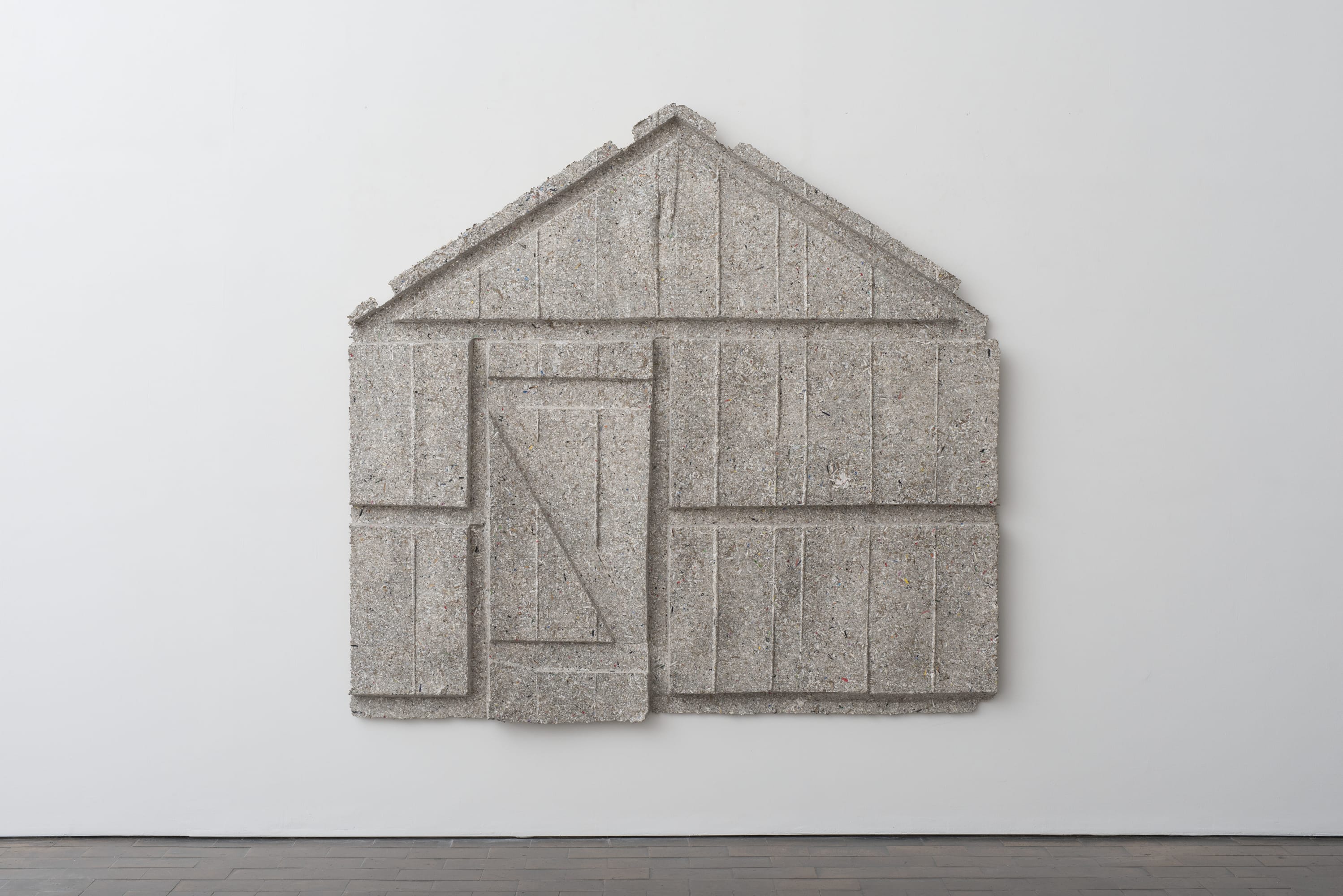
Rachel Whiteread, Wall (Door) 2017

Next up, I’m waiting for an excuse to treat myself to Alex Danchev’s biography of Rene Magritte, and Tessa Hadley’s new novel Free Love is high on my list for 2022. [Ed. – Just finished it this morning, and it is terrific.]
Scott Lambridis’s Year in Reading, 2021

Today‘s reflection on a year in reading is by Scott Lambridis (@slambridis). Scott’s story “Blind Sticks” is nominated for a 2021 Pushcart award. Before completing his MFA, he earned a degree in neurobiology, and co-founded Omnibucket.com, through which he co-hosts the Action Fiction! performance series. Read more at scottlambridis.com.

Look for more reflections from a wonderful assortment of readers every day this week. Remember, you can always add your thoughts to the mix. Just let me know, either in the comments or on Twitter (@ds228).

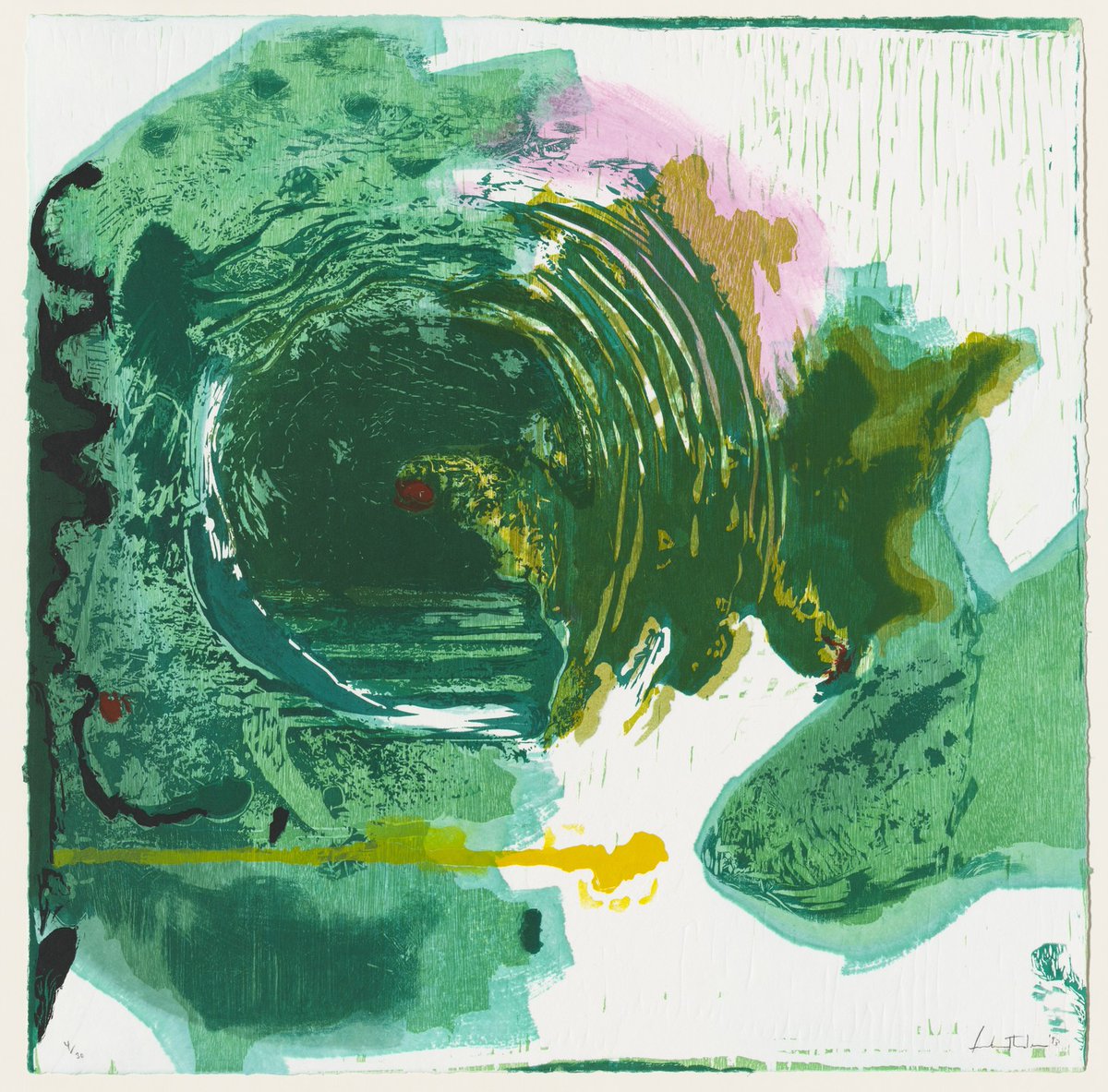
Helen Frankenthaler, Radius, 1993

Each year I have a goal of reading 52 books. In 2021, I read 87. Here are the top ten! 

The Organs of Sense by Adam Ehrlich Sachs

This book was on the top ten after the very first chapter. In 1666, the philosopher/mathematician Leibniz tracks down a blind astronomer who’s predicted an eclipse that will darken Europe for exactly 4 seconds. A blind astronomer? Naturally Leibniz attempts to decide whether he’s a brilliant soothsayer or just an absurd quack, and the astronomer indulges him in a long and meandering tale of how he came to his prediction while they wait for the eclipse itself to make the final determination. Along the way we hear of the astronomer’s life, arguments over the composition of art (one scene about a bunch of faces made up of fishes especially sticks in my mind), the utility of science, the way to gauge truth, all of which unveil the mysteries and absurdities of philosophical searches, while revealing the narrative’s own. The story keeps you guessing if it’s going to actually go anywhere, and then it does, beautifully and surprisingly. The true delight, though, the part that affixed it in the top ten immediately, is the tone. As my dear friend Ben put it, “It has something rare these days, and from this country: a terrific sense of play, a lightness as Italo Calvino would say [in his Memos for the New Millenium]. There’s always playfulness even in his most serious subjects.” Calvino would be proud, amused, and maybe a bit enlightened too. [Ed. – Sold!]

At Night all Blood is Black by David Diop (Translated by Anna Moschovakis)

This short novel from Senegal about a “chocolat” soldier fighting with the French in the trenches of WWI gripped me and wouldn’t let go. The narrator battles with the guilt of being unable to put his dying friend out of his misery, which transmutes into the hunt for forgiveness through atrocity: he becomes a “soul-eater” who hunts down Germans so that he can retain and collect their severed hands. Diop uses shocking violence and horror to unfold the narrator’s humanity, even as the character doubts it himself. The narration is a fever dream: at once intense, lyrical, dark, violent, tender, visceral, and poetic. That dream picks up in the second half in a hospital amidst delusions and confusions of identity. This half has less visceral presence, but the questions are still interesting, and the prose’s rhythm of repetition carries it forward to an ending both mysteriously dissonant and triumphant.

The End of the Alphabet by C. S. Richardson

This is the sweetest and saddest love story I’ve ever read, all wrapped up in under 100 pages. In his fiftieth year, a devoted husband finds out he has just a month to live, then whisks his wife off on a world tour of cities in alphabetical order, from Amsterdam to Zanzibar—but they never make it past F (I believe it’s F, but can’t be sure, since I don’t own the book anymore; you’ll see why). The prose is spare, the story sweet, the characters adorable and tragic, the ending heartbreaking and beautiful. It’s both straightforward in its telling and slippery in its tone, and I’ve been compelled to give it at least three times now to other friend-couples. How could it not make the top ten? 

Lifespan of a Fact by John D’Agata and Jim Ringal

This year was chock full of non-fiction books about the challenges of writing non-fiction (how to accurately tell the truth, how much the writer plays a part) and this was the crowning jewel, a totally metafictional narrative. On the surface, it’s a long-form article about a boy’s suicide in Las Vegas, and the socioeconomic factors of the city that contributed to and were revealed by that event. The portrait of Las Vegas is fascinating on its own, but the heart and delight is in the marginalia—the fact checker’s feedback to the editor and author about the draft article, and the author’s responses. What arises is a frustrated argument between the two over what counts as truth and where the journalist’s obligations lie in relation to capturing it. The personalities of both author and fact-checker are wonderfully revealed. You’ll never think of non-fiction as innocent again. 

The Old Woman and the River by Ismail Fahd Ismail (Translated by Sophia Vasalou)

Some books get to the top ten not by wowing me in the moment, but by sticking with me for months and months. [Ed. – Yep, and sometimes those are the best ones.] This short novel from Kuwait follows a feisty old lady and her faithful and equally feisty mule on a critical errand: to carry her husband’s unearthed bones back to his hometown for a proper burial. Unfortunately she arrives to find the town in a war zone (the Iran-Iraq War), governed by an outpost of soldiers who neither let her accomplish her errand nor leave. During her stay, she manages to sabotage a military operation by bombing a dam, and restoring fertility to barren lands on the fringes of the desert. It was an enjoyable read at the time, in particular the tough-but-tender old lady’s conversations with her mule, her husband’s ghost, and her captors, but the lingering effect of the old woman’s righteous persistence has persisted long enough to elevate it into the top ten. I just can’t stop thinking about it.

97,196 Words by Emannuel Carrèrre (Translated by John Lambert)

I love a good essay, no matter the subject, and this collection is as varied as they come; I loved every one. There are so many I can’t even recall them all. A lengthy, poignant study of an AIDS victim. An obscure but shocking suburban murderer of a man’s entire family (which referenced and later caused me to read Janet Malcolm’s fantastic The Journalist and the Murderer). A day on the town with the French president Macron. A visit to the secretive Davos conference. Russia’s anti-Putin youth. The enduring spell of H.P. Lovecraft. Tracking down the pseudonym of a subversive writer who popularized a chance-based way of living that became a cult lifestyle. Some obscure Russian writer. Sex columns Carrèrre was forced to write. Oh, and the homecoming of the last prisoner to be released from the Gulag, how could I forget that one? This is what happens. I start remembering one, and then they just pop back into place: Oh and that one, that was great, Oh, and that one, that was great too. Each is captivating, which probably hasn’t happened since I read Weinberger. Hence: top ten

Earth and Ashes by Atiq Rahimi (Translated by Erdag M. Göknar)

A fantastic novella from Afghanistan! After his village is bombed and most of his family killed, an old man goes on a journey to the remote mine where his son works to tell him the awful news. In tow is his grandson, who has been deafened by the bomb but is too young to understand yet what’s happened to him. [Ed. – Uh this is exactly what Ben said… not sure who’s paying homage to whom here, but, anyway…] Much of the book is spent sitting and waiting for a ride at a gas station in the middle of the desert where a bus will supposedly arrive, a waiting characterized by drifts in and out of time and place, fantasies into the mind of his grandson, and playing out versions of how he’ll share the terrible news with his son, all punctuated by the feisty but concerned station agent waking the old man to check on him. Taut and dreamy, concise and spare, heartbreaking and yet not without humor. But it’s really the final twenty pages that dazzle, the ultimate meeting of father and son and what follows. These pages are such a rollercoaster of heartbreaking twists and turns, dashed expectations and unfathomably complex emotions—they left me breathless.

Sapiens by Yuval Noah Harari

Sapiens is a fascinating reexamination of what makes humans tick, and how the major tides of history and society have been shaped and driven by our unique ability to organize ourselves through invented stories. Harari’s thesis is that there’s a pretty small limit (about a hundred or so if I recall) to how large a society can be based purely on cooperation within the material world; it’s the ability to create fictional entities and shared beliefs about them that allowed us to surge to great collective numbers. (And subsequently wreak the havoc we’ve wreaked, first on other human species, then on the world’s fauna, and ever since on each other). Religion, agriculture, currency, language, politics and government, social structures in general—shared agreements in invented fictions, all. Though the book is not that long, it took me nearly a full year to read because each chapter is so juicy and rich I needed a break after each. Rarely has non-narrative non-fiction left so strong an impression of the delightful flimsiness of all we take for granted in daily life. The interview with the author at the end also inspired me to start a daily practice of Vapassana meditation (he said he couldn’t have written the book without it). I’ve kept with the practice ever since (4-5 months). You never know what a book will bring to you! 

HhHH by Laurent Binet (Translated by Sam Taylor)

HhHH stands for “Himmlers Hirn heisst Heydrich,” or “Himmler’s brain is called Heydrich.” This gem of historical fiction tells the story of Reinhard Heydrich, the most ruthless Nazi you’ve never heard of, and of the two parachuting Czechs, Jozef Gabcík and Jan Kubiš, who assassinated him in broad daylight, in arguably the bravest and singularly practical act of the war. Who was Heydrich? Himmler’s right-hand man. The one who first recognized a young Eichmann as a “man of talents.” The man Hitler called “the perfect Nazi,” the man he feared and therefore valued most for his extensive information networks. The real brains behind the nuts and bolts of the Anschluss, the forming of the Czech protectorate, the subjugation of Prague, the meticulous architect of the Holocaust. [Ed. – That last statement overstates things, overlooks Himmler, etc.] Heydrich’s rise is fascinating and terrifying, paralleled with the tension of the two Czech parachutists planning and pulling off their secret mission, then going on the run, holding out for days against a battalion of hundreds of Gestapo in a church before finally meeting their brutal demise. It’s a riveting story, but what elevates the book is the meta-narrative struggle of the author to divine truth from his tale, to determine what to put in and how to stay focused, given all the astonishing horror he could include. This struggle adds an extra personality, an intellectual struggle beyond the body of an already striking historical account. It gave the book just enough extra oomph to edge out Èric Vuillard’s Order of the Day, another terrifying account of the rise of the Third Reich.  

Ice by Anna Kavan

An unnamed narrator chases a vaguely beautiful girl across crumbling apocalyptic landscapes of crumbling ice and snow, under the menacing shadow of her entitled protector. This strange novel made the list not for the actual enjoyment of the reading but for the totally mysterious and otherworldly atmosphere it creates. Moment to moment, the writing is so rich and tense and unique, and whenever the chapter changes it zooms out a bit to an even more unsettling sense of aimlessness, a glimpse into a wider eternity that saps it of momentum, round and round and never going anywhere. Ice can be frustrating. [Ed. – Indeed.] But it sticks with you. It’s absolutely chillingly gorgeous and perplexing. There’s nothing else like it, and I immediately purchased all her short stories. ‘Nuff said. [Ed. – My dissenting, admittedly minority, take is here.]

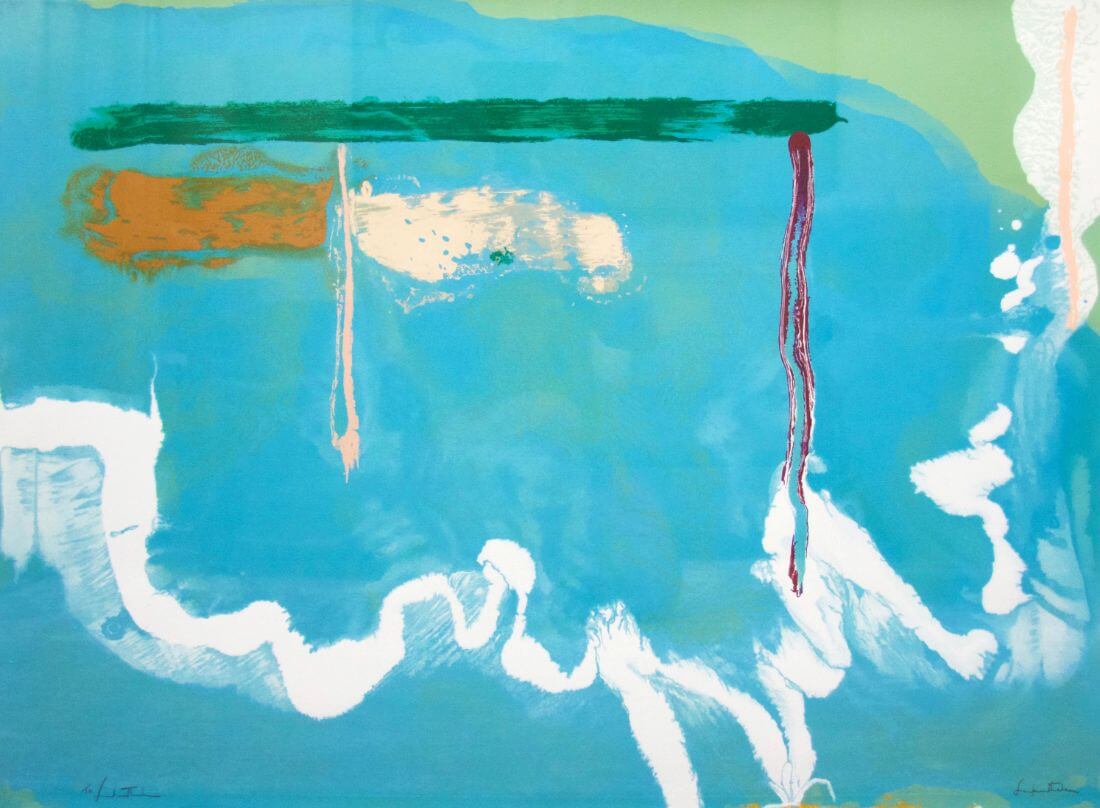
Helen Frankenthaler, Skywriting, 1996

Some honorable mentions. Great books that didn’t quite make the cut!

  • The Order of the Day, by Éric Vuillard
  • The Weight of Temptation, by Ana María Shua
  • H is for Hawk, by Helen Macdonald
  • Vano and Niko, by Erlom Akhvlediani
  • Ghost Soldiers, by James Tate
  • The Journalist and the Murderer, by Janet Malcolm