Here is my introduction to Episode 38 of the podcast I co-host with Rebecca Hussey and Frances Evangelista, One Bright Book.
Ignacio Zuloaga y Zabaleta, Preparation for a Bullfight (1903)
Our book today is Miaow, written in 1888 by the great Spanish 19th-century realist Benito Pérez Galdós and recently published by NYRB Classics in a lively new translation by Margaret Jull Costa.
Galdós, whose long and productive life lasted from 1843 – 1920, was born in the Canary Islands, which perhaps gave him an outsider’s perspective on the Madrid society he scrutinized in more than 80 novels.
Miaow has a cast of, well, maybe not thousands but a lot of characters. Ramón Villaamil has served the state his whole life, but he’s lost his job in the tax office due to changing political fortunes just two months short of qualifying for his pension. He solicits possible patrons and haunts his old office, not just to get a job but also to escape his household, where he lives in an uneasy truce with his wife, Doña Pura, their adult daughter, Abelarda, and his sister-in-law Milagros. Completing the ménage is Luis, the son of a second daughter who died young. Luis’s father is a man named Victor, a bad penny who has never been in the picture, indeed whose name is never spoken in the home. The novel kicks into gear when Victor turns up and inveigles his way into the household, eventually sowing great unhappiness. (Victor is a breathtakingly bad guy—I hope we’ll talk about this.)
These are all interesting characters—so why isn’t the book named after any of them? That would be the usual 19th-century thing. (Jane Eyre, Daniel Deronda, Eline Vere, Anna Karenina,l etc., etc.) Why does it have such an odd title? Who or what does “miaow” refer to, anyway? Well, lots of things. It’s the nickname given by the local wags to the women of the Villaamil household, after their supposedly feline features. I think it’s important, though, that the book isn’t called The Miaows. For the title also extends to Ramón, the paterfamilias—not because of how he looks but of what he believes. MIAOW is an acronym for his mantra that Spain can only be saved by Morality, Income Tax, Additional Import Tariffs, Overhaul of the National Debt, and Work. So already “miaow” references both physiognomy and economy. But there’s more. In addition to being a noun, miaow is also a verb, a sound, an onomatopoeia, and a sarcastic, acidic, or bitchy commentary, as when we call someone out for being catty: Mee-ow! It’s this last meaning I thought of most as I considered the harsh disdain so often expressed by the characters toward each other and the gentle satire of the narrative voice toward all of them.
Once we see that “miaow” is something like a mood or attitude or state of mind, we’re able to recognize how unusually Galdós uses characterization. In my description of the book a minute ago, I made it sound like a family story. But it’s not, quite. The critic Fredric Jameson, who really loved Galdós and thought his unfamiliarity in the English-reading world a real travesty, says that Galdós offers “a deterioration of protagonicity,” an admittedly unlovely phrase that he glosses as “the movement of the putative heroes and heroines to the background, whose foreground is increasingly dominated by minor or secondary characters.” As a Marxist, Jameson attributes this not just to Galdós’s predilection or “genius” but to his position as a person living in late 19th century Spain and its strangely non-modern political landscape following the failed “Glorious Revolution” of 1867 (they deposed the monarchy and then brought it back, sort of). To depict the social reality of his society, Galdós had to “strike[ ] an uneasy compromise between the atomized individualism of more fully bourgeois societies with their nuclear families, and the more archaic traces of the older feudal class and castes.” To me, this explains why Galdós feels like an uncanny version or simulacrum of canonical realists like Balzac or Zola, with whom Galdós shares an interest in recurring characters and the desire to explore an entire society. Miaow reminded me of Père Goriot or La Bête Humaine. But also not. Jameson notes that Galdós’s novels are not organized around families, even extended families, but rather around households, an ambiguous term that includes servants, neighbours, and other families who circulate in and out of the story. (In Miaow, Doña Pura is always hosting friends, acquaintances, people who may or may not respect or like; Ramón is always trying to hide from them.) The household thus includes the Mendizábals, a couple who live downstairs and take pity on the much-neglected Luis; the Cabreras, the sister and brother-in-law of that cad Victor, who want to adopt Luis; as well as a whole series of characters at Don Ramón’s former office, some of whom are, to me at least, hard to keep track of, but to whom the novel devotes so much attention, in their various sympathy to or ridicule of Don Ramón, that it doesn’t make sense to just call them “minor.”
All of which is to say that Miaow, though not especially long (it’s like 300 pages) is very busy. To that end I was struck by a word that appears in the first sentence and reappears near the end. Here’s how the novel begins: “At four o’clock in the afternoon, the kids from the school on Plazuela del Limón erupted out of the classroom, making the very devil of a racket.” 250 pages later, a disconsolate, embittered Don Ramón observes a flood of civil servants clattering out of the workplaces at the tax office on payday: “The stairs were almost overwhelmed by this human torrent, which made a tremendous racket as it flowed on down, the sound of heavy footsteps mingling with all the cheerful, sparkling, payday chatter.”
The repetition of racket reminds us that bureaucrats are just overgrown schoolboys. Here we see Galdós’s satirical side. (And by the way, surely the opening scene of the schoolchildren, who, as they pile into the streets, tease little Luis with the nickname of his aunts and grandmother, miaow, miaow, miaow, refers to the opening of Madame Bovary, where a different set of schoolboys taunt a nice enough if also hapless pupil.) But more importantly the repetition of racket speaks to its modus operandi., maybe what we’d now call its vibe. This book too makes a tremendous racket, in the best possible way, with clever dogs, opera singers, officious bureaucrats, raw army recruits, shopkeepers, and a score of others contributing their two cents. Mee-ow indeed.
Have any of you read this book? Or anything else by Galdós? What do you think?
If you’re reading this, you are faithful indeed. And I am grateful. Long silence here, I know. As my adopted country tumbles into authoritarianism, things have also been changing, though more positively, chez EMJ.
Igor Razdrogin, Book Bazar (1975)
My wife, daughter, and I are moving to St Louis in a month’s time! We’ve spent quite a bit of time there these past few years, and we like it a lot. We’ll have a little more space in our new home (which, combined with some collective efforts to tame my unruly library, might mean that our house will at least briefly not be overflowing with books), and, best of all, we’ll be living in a walkable neighbourhood with sidewalks, which is something we’ve been missing these past 18 years in Little Rock.
The other big transition concerns my career. I’m leaving my job at Hendrix, of course, but I’m also leaving academia in general. People keep asking how I’m feeling about this and I keep saying: Terrific! I was pretty burned out and starting to get a little Old Man Yells at Clouds about All the Changes that affected the classroom experience: the pervasiveness of AI and LLMs (something no one, as far as I know, ever asked for), and, more distressingly, the difficulty even the best-prepared students are having reading sustained works of literature, by which I mean, an entire book, no matter how straightforward the prose. This isn’t about their intelligence, or even their phones. It’s about the strictures placed on secondary school teachers. As instruction moves ever more toward preparing for testing centered on multiple choice reading comprehension questions about utterly decontextualized chunks of texts, teachers aren’t assigning much reading, which means students simply don’t have much practice at it.
(I also have a pet theory that for all its flaws Harry Potter (to be clear: it sucks) helped Millennials think of reading as both exciting and habitual, and Gen Z hasn’t had anything like that. The Harry Potter to Jane Austen to English Major pipeline kept our department afloat for a lot of years. These days, students dislike both Rowling and Austen…)
I still love many things about teaching, and it’s possible I’ll miss it so much that I’ll return to it in some fashion. (I’m never getting another job like this one, though. Those don’t exist anymore.) But for now, I feel relief, and curiosity—along with a lot of trepidation—about the chance to try something new. For now, it feels a bit unreal. Because the academic year is cyclical—summer is always a time of collapse and, if lucky, regeneration—I don’t yet feel as a though I’ve made much of a change. Talk to me in the fall, or next spring, or five years from now.
Luckily—and this is another reason for the silence around here—I’ve been working as a consultant for the Educator Programs arm of the William Levine Family Institute of Holocaust Education at the United States Holocaust Memorial Museum in DC. The people I work with are absolutely fabulous: smart, funny, kind, devoted to their work without having delusions of grandeur about it. It’s eye-opening—and fun—to work as part of a team, after decades of the isolation of academic life. I’ve helped them create resources for K – 12 English Language Arts classrooms, and have taken great satisfaction in the work.
I’ll need full-time work sooner rather than later, though, so if you have any ideas or leads, hit me up! Like, what are some jobs people do? What do y’all do all day? I need advice!
What I’m saying is, I had a lot going on these last months. But I did manage to keep reading. Maybe not as much as usual, but whenever I could make time. I get that it’s ridiculous to offer a 2024 reflection halfway through 2025, but FWIW here are the things that stuck with me last year.
So much to love in this novel about an alternate 1920s in which a sizeable indigenous population thrives in a nation called Deseret centered on the bustling city of Cahokia. Spufford weaves his world-building throughout a procedural, in which our hero, a cop who moonlights as a jazz pianist, investigates a murder with vast political implications, to the point of threatening Deseret’s independence.
Cahokia Jazz is the most referenced title in the Year in 2024 Reading pieces I posted earlier this year, which means either that everybody loves this book, or that people like me love this book. Anyway, given my upcoming move to Missouri, it won’t surprise you to hear that the scene that most sticks in my mind is when Barrow pursues a lead in a village at the end of the Cahokia streetcar line, a fly-swept place he can’t wait to leave. Its name? St Louis…
I look forward to visiting the ruins of the actual Cahokia, once the biggest city north of Mexico City.
Katrina Carrasco, The Best Bad Things (2019)
Fabulous and underrated crime novel set in 1880s Port Townsend, where the most valuable commodity passing through the busy port is opium smuggled in from north of the border. Alma Rosales, who once worked for the now-shuttered Woman’s Bureau of the Pinkerton Detective Agency, has left San Francisco for Washington Territory to work for the seductive, brilliant, coolly calculating Delphine Beaumond, who runs most of the drug smuggling on the west coast.
When product goes missing, Delphine puts Alma on the case. Alma goes undercover as a dockworker—not a problem, because Alma is also Jack Camp, a slight yet wiry man who can hold their liquor and likes ladies and men equally. Did I mention that Alma and Delphine are lovers? Or that Jack starts a torrid affair with the man they’re investigating? Or that they’re also still working as a Pinkerton agent—in a desperate attempt to get their old job back?
Cue double-, triple-, even quadruple-crossing; witty repartee; and some pretty hot sex. Most crime novels are let down by their endings, but this one… let me tell you, friends, I literally gasped. A brilliant debut. I want everyone to read it.
Émile Zola, La Bête Humaine (1890, translated by Roger Pearson) and The Assommoir (1877) Trans Brian Nelson (2021)
Even by Zola’s lofty standards, these two are bangers. Push comes to shove, I guess I’d choose Bête over Assommoir, just because I love the crime story trappings, but the latter might be the more impressive accomplishment, especially if you could read it in French to see what Zola does with the argot of his lumpenprotelariat characters. They’re equally—which is to say, tremendously—depressing, but also viciously alive. Zola’s naturalist doom is regularly leavened by his prose, which zips from one brilliant set-piece to another. I’m talking about stuff like the bruising fight between two laundresses in front of an audience of delighted, shouting onlookers in the opening scene of The Assommoir, or the berserk vision of a driverless train, filled with drunk soldiers in full war frenzy heading to their doom at the hands of the Prussians, in the last pages of La Bête Humaine. Feels like a good time to study Zola’s fascinated descriptions of all things irrational.
Hernán Diaz, In the Distance (2017)
Quasi-Western in which the protagonist—a hulking, nearly mute Swede named Håkan whose only goal is to find the brother he was separated from on the voyage to the New World, and whose body and psyche seem to be able to take any amount of suffering—travels east, south, and north as much as west. This is a brainy book: Diaz riffs on Frankenstein, and probably a lot of other stuff I missed. But its allegories are always concrete. In this novel of a man stubbornly going against the westward direction of Manifest Destiny, I most remember the section in which, after suffering a terrible loss, Håkan literally burrows into the ground, eventually building a maze-like underground shelter where he lives in ambivalent isolation for years.
I read Diaz’s Trust last year too: also great. Probably not telling you anything you don’t know. But if like me you are late to Diaz, move him up your list. Smart guy and beautiful writer.
Leah Hagar Cohen, To & Fro (2024)
Last year I served as a judge for the US Republic of Consciousness Prize, which honors literature published by small presses. Yes, I tossed aside some duds and waded through many competent but unexceptional novels, but I also discovered some terrific stuff I wouldn’t have otherwise read. My favourite was this delightful and thoughtful literary experiment, a novel written in two halves that can be read in either order. You can start with “To” and flip the book over halfway through to read “Fro,” or do the reverse. You could call this a Jewish Alice in Wonderland (I love how deeply and unapologetically Jewish the book is: it takes such pleasure in asking questions), but that wouldn’t give you the sense of how the book is both realist and fantastic, a genre-bender that sometimes reads like a middle-grade book and sometimes like a historical “what if” novel, if those were written by someone whose lodestar was Maimonides. Magic!
Thanks to Lori Feathers, the genius behind this award, and to my fellow judges, who always brought it. Serving on this panel was time well spent.
A book of arrivals and departures, whether longed-for, dreaded, or uncertain. It feels both constricted and expansive: a neat trick. Bowen often gets called Jamesian. That is true not in style but only in a shared preoccupation with cruelty. Hard to say which fictional universe is meaner. Another thing I liked about The House in Paris is that it offers further evidence for my theory that British modernism is just another name for Gothic literature about children.
Martin MacInnes, In Ascension (2023)
Here we have two sisters. One becomes a scientist who explores the depths of the ocean floor and the vastness of space (she develops nutrition-dense and fast-growing algae for interstellar travel); the other sets aside her career as an international lawyer to find out what happened to the first. I can’t remember everything that happened in the book, but I do remember being enthralled from start to finish. (This is another long book that never felt slow.) The final scene, set in the remotest place on earth, Ascension Island, foregrounds another kind of foreign place: our memories. “A family”, MacInnes writes, showcasing his epigrammatic mode, “is a group of strangers with a destructive desire for common nostalgia.” MacInnes’s big question, asked as much of a sibling relationship as of humanity’s ability to inhabit the stars, is whether the only way to get beyond the destructiveness of the human species is to destroy the individual self Beejay Silcox, one of my favourite critics, gets it right when she calls the book “a primer to marvel.”
Sally Michel Avery, Father and Daughter, 1963
Thoughts on the rest
Ones I keep thinking about: Manjula Martin’s The Last Fire Season (2024): I still haven’t prepped a go-bag—how foolish is that? Catherine Leroux’s The Future (2020, translated by Susan Ouriou): What if the French had never lost Detroit? What if climate change and resultant socioeconomic crises meant that most of the trappings of a functioning state had fallen away? And what if bands of roving children built hardscrabble lives in overgrown parks? Peter Heller’s The Last Ranger (2023): Conventional but satisfying novel about a ranger in Yellowstone, filled with scenes in which the hero drinks early morning coffee on the porch of his cabin: Heller knows the landscape and describes it beautifully. (Given what the chuckleheads at DOGE did, this title resonates differently now…) Jill Ciment’s Consent (2024): Revelatory memoir in which the author reassesses her decades-long marriage to her now deceased husband, with whom she took a painting class when she was 17 and he was 47. Can the relationship really have been good given that they met when she was a child?
Best study of xenophobia, told in an atmosphere of creeping dread: Georges Simenon’s The Little Man from Archangel (1956, translated by Sian Reynolds).
A Russian Jew, brought to rural France as a child, French in every way, has his life turned upside down because of a casual remark. Chilling. Best Simenon I’ve read.
Best case of “it’s not you, it’s me”: Nisi Shawl’s Everfair (2016)
Steampunk set in an alternate late 19th century in which the Fabians buy tracts of land from King Leopold to protect refugees fleeting the horrors of Belgium’s rule in the Congo. At first, this new nation—Everfair—prospers. European benefactors and missionaries work with Africans to create trade networks based on clean airship technology. They develop intelligence networks to navigate the region’s politics. They promote or at least allow social experiments concerning family structure, marriage, and sexual politics. But the internal tensions become too much, and the utopia falls apart. Even as I’m writing this I’m thinking, Honestly this sounds pretty good, maybe I’ve misjudged the book. And at the level of idea it’s intriguing. The execution, though: that’s the problem. The prose is leaden, the relation between action and exposition awkward. Maybe the book actually needed to be longer? A strange thing to say since I felt like it was never going to end. This book is a darling to many (Jo Walton loves it, for example). Probably just the wrong time for me. Can’t imagine giving it another try, though.
Best (and most) coffee: Mark Haber’s Lesser Ruins (2024).
Things are not going well for the narrator of this Bernhardian novel, ever since his wife died and he lost his job. That’s a tough spot. And he tries to do the right thing, sometimes. He reaches out to his son, whose passion for house music means he will dilate on the perfect set list for as long as his father will hold the phone near his ear. Like so many of us (me, anyway), he struggles to surmount the gap between idea and execution, endlessly trying to write something good. You’d think we might like the guy. But… He’s a terrible snob. He lambastes his students, neglecting his work to the point of installing an espresso machine under the desk in classroom. (That an instructor at a community college would have a dedicated classroom is the book’s only false note.) His unfinished, maybe unfinshable, book on Montaigne is probably not really going to be all that. So he ain’t easy to like.
All of this is beside the point, though, because this novel is about the way sentences can mimic the swerves and circles of a mind endlessly thinking. One of the things our narrator thinks about most is coffee. He drinks a lot of coffee. Long sections concern the various roasts, the preparation, the anticipation, the enjoyment. I’m not a coffee snob on his level, but I found nothing to ironize or criticize in the man’s love for the perfectly pulled shot. Lesser Ruins is great for other reasons, too (it’s Haber’s best IMO), but if you like coffee at all, you gotta read this.
Most ingenious conceit: Kenneth Fearing’s The Big Clock (1946)
A drudge at a magazine publisher modelled on Time-Life is tasked with finding—for purposes of eliminating—a witness to a crime. Only thing is, he is that witness…
Dark and boozy. This is the good stuff.
Best crime fiction: Carrasco, obviously. Also obviously, the latest Tana French. (At least I can say I was alive while Tana French was writing novels that will be read in a hundred years…) The latest Garry Disher, Sanctuary (2023), is a satisfying standalone about theft and friendship. I read a couple of Gary Phillips’s books about a Black Korean-war vet turned crime-scene photographer: good stuff. (I learned a lot about Watts.) Start with One-Shot Harry (2022). Years ago I devoured Scandinavian crime novels: seemed like the most exciting thing in the genre. Bloom’s been off that rose for a while, but Cristoffer Carlsson’s Blaze Me a Sun(2021, translated by Rachel Wilson-Broyles) took me back. Marcie R. Rendon’s Where They Last Saw Her (2024) is her first book set in the present, and much as I love the Cash Blackbear series, probably her best. How nice to read a book about an indigenous woman who has a good man in her life. I regularly think about the scenes of women jogging through the snowy Minnesota woods.
Best sff: In addition to MacInnes and Tesh, I most enjoyed Ann Leckie’s Ancillary Justice (2013), Shelley Parker-Chan’s She Who Became the Sun (2021), and various works by Guy Gavriel Kay, who continues to be a source of reliable pleasure, even if no one would call his books cutting edge. (So humane, though! I need that right now.) Alas, I am not yet a dedicated enough sff reader to have figured out how to overcome the “stalling out in a series because I didn’t get to the next one right away and then forgetting what happened” problem.
Best poetry: Louise Glück’s The Wild Iris (1992). Ok, the only poetry collection I read, but I liked it enough to assign it this past semester and the students loved it. Teaching it made me both appreciate it more and notice its limitations (it hoes rather a narrow furrow). I ought to read some of her later stuff: I bet it’s even better.
Best book of the kind I could imagine myself writing and yet am mostly allergic to reading: A tie between Jakuta Alikavazovic’s Like a Sky Inside (published 2021 and translated by Daniel Levin Becker) and Chris Bachelder & Jennifer Habel’s Dayswork (2023).
The whole quasi-essay, quasi-memoir with novelistic elements thrown in for good measure—mostly that stuff leaves me cold. But these two won my heart. Alikavozovic describes a night she spent in the Louvre, a place that she often visited with her father, a ne’er-do-well from the former Yugoslavia. After each excursion, her father would ask, How would you go about stealing the Mona Lisa? This question, and the reflections on her father’s life of petty crime and her own experience growing up in a culture and language that he never perfected, lies at the heart of this beautiful little book.
Bachelder and Habel have done something remarkable: written a book together, about themselves as a couple, that feels written in a single voice. The text centers on the Habel character’s fascination with Herman Melville: it’s about his life, and their lives, and what it means to write a life, with copious references to the man they call The Biographer, Herschel Parker, who seems to have been really something. And by that I mean kind of a dogged genius, but also a pain in the ass.
You can see I am deep into the “my favourite artworks are the ones created while I was a child and too young to experience at the time” years. I read new things too, though, and the best of these was Kaliane Bradley’s The Ministry of Time (2024), which I finished in a cabin at the Grand Canyon during a thunderstorm that had the rain pounding on the metal roof. The book is as memorable as the setting of my reading: an experiment in time travel, in which a 19th century Arctic explorer is brought to a near-future UK and given to a handler from the titular government agency whose background happens to be Cambodian. In addition to its speculative elements, and a terrific love story, the novel considers differing cultural responses to trauma. More Bradley soon, please!
Henri Matisse, Woman Reading in a Violet Dress, 1898
Short story collection: Only read one, but it was a good one. I liked all the stories in Jamel Brinkley’s Witness (2023), but “At Barstow Station” is an all-timer. Even a class full of students who did not care much for reading agreed.
Most unexpected page-turner: Karl Ove Knausgaard’s The Morning Star (2020, translated by Martin Aitken) blends his signature interest in mundane middle-class life with some weird shit (a blazing star that no one can explain, a ritual murder, shenanigans at a mental institution). I raced through it and bee-lined for the bookstore to but the next one (in an expensive and gigantic hardcover edition), only to ignore it for the rest of the year. Honestly, the hardcover might be the problem. Most of the time I’m a “give me the paperback” guy. Anyway, will read the others in this series.
Most fun: The audiobook of Jesse Q. Sutanto’s Vera Wong’s Unsolicited Advice for Murderers(2023), read with obvious affection by Eunice Wong, made me laugh aloud. As I feared, the strains of keeping the conceit going already show in the second book, which I listened to a couple of months ago. But I’ll stick with Vera a while longer; she’s a treat.
Best sequel: Waubgeshig Rice’s Moon of the Turning Leaves (2023) is a big advance over its predecessor, Moon of the Crusted Snow. A rare case of a longer book being better. It’s ten years since the mysterious event down south that sent the grid down. The small indigenous community at the heart of the first book has been thriving, but its inhabitants realize they have reached the limit of the resources in their immediate area. After painful debate, they send a search party to find out if anyone else is out there—specifically, anyone indigenous. Exciting, well-drawn, and smart about the cost of giving up part of your identity to gain the benefits of joining something. (a community, a culture) larger.
Grimmest ending: Edith Wharton’s Summer (1917), really a hell of a book. Even if you haven’t read Wharton before you know things aren’t going to end well. But I at least did not anticipate them to end quite that dispiritingly. Thanks to Shawn Mooney and the rest of the Wharton gang for the invitation to read.
Hurts so good: Elliott Chaze, Black Wings Has My Angel (1953)
Liked at the time, but has now faded from memory:
Jean Giono’s Fragments of a Paradise (1944/48 and newly translated by Paul Éprile); Suzumi Suzuki’s Gifted (2022, translated by Allison Markham Powell); Ariane Koch’s Overstaying (2021, translated by Damion Searls);and Jón Kalman Stefansson’s Your Absence is Darkness (2020, translated by Philip Roughton). Don’t get me wrong: these are all good books (especially the Giono). I don’t regret reading any of them. Just not top-notch, for me.
Meh:
These did nothing for me, and even left me a little grumpy. Ari Richter’s Never Again Will I Visit Auschwitz: A Graphic Family Memoir of Trauma & Inheritance (2024): you’d think I’d be the perfect reader for this, but honestly I did not think this book was very smart. Dorothy West’s The Wedding(1995): I get it, she was old when she wrote this. Plus, the existence of a Black elite on Martha’s Vineyard was news to me: interesting stuff. But this felt wispy, and not in that good Belle and Sebastian way. Two crime novels by Arnaldur Indridason: sometimes you just want to turn pages and remember your Iceland vacation but at the same time you know you’ll never get these hours back.
Most ambivalent toward:
Tried to explain why I felt this way about Lily Tuck’s The Rest is Memory in The Washington Post.
It wouldn’t be an end-of-year list from me without some thoughts on Holocaust-related books, which I’ve divided into categories:
History: Dan Stone’s The Holocaust: An Unfinished History (2023). All due respect to Doris Bergen, this is the best single-volume history of the event I know, and it’s pretty short too. I went long on it for On the Seawall. Honorable mentions: Linda Kinstler’s Come to this Court and Cry: How the Holocaust Ends(2022), and Rebecca Donner’s All the Frequent Troubles of Our Days (2021). The latter admittedly not a Holocaust book, but rather a resistance to the Third Reich book. Pretty damn good tho.
Comic: Emil Ferris’s My Favorite Thing is Monsters [Vol 1] (2017). What an accomplishment! Your heart will hurt but you won’t be able to stop turning the pages. Ten-year-old Karen Reyes lives in Chicago in the late 1960s. She adores her brother, who is sometimes a gentle artistic soul but sometimes a man pushed to violence by racism and poverty, almost as much as she loves monsters. (She draws herself as a werewolf.) She’s fallen in love with her best friend, Missy, who now shuns her at school while being drawn to her in private. Her mother is diagnosed with cancer, leaving the family’s fortunes ever more precarious. When Karen’s upstairs neighbour, Anka Silverberg, a married Holocaust survivor with whom her brother had been having an affair, is found dead under mysterious circumstances, Karen takes it upon herself to investigate. She stumbles on some cassette tapes, in which the woman tells her life story, a lurid and painful one: Anka was brought up in a brothel by her abusive mother, a sex worker, and then sold into a child prostitution ring from which she is “rescued” by a client who later abandons her when she gets too old for him. After the fall of the Weimar Republic and the rise to power of the Nazis, Anka is persecuted for her Jewishness and eventually deported to the camps. How she survived, how she made her way to America, and what led to her death—these questions are presumably answered in volume 2, which was released last fall. Volume 1 is 400 pages, with plenty of tiny lettering. It would be an effort to read it even without its distressing subject matter. But it’s damn good and deserves more attention than it’s got. Ferris uses dense cross-hatching to give her images texture: I don’t how else to say it other than the images seem tense. Amazingly the book is drawn almost entirely with Bic ballpoints. The whole story of its creation, which took six years, is remarkable, starting with Ferris’s partial paralysis after contracting West Nile disease.
Holocaust-adjacent text: Svetlana Alexievich”s Last Witnesses: An Oral History of the Children of World War II(1985, translated by Richard Peaver and Larissa Volokhonsky) impressed me with the pathos of its subject matter (children, many orphaned either permanently or temporarily when Germany invaded the USSR in 1941) and the success of its method (her now well-known quasi-anthropological style, in which witnesses speak for themselves, with seemingly little input or shaping from Alexievich herself, other than the ordering and structuring, not to mention the selecting of excerpts from what are presumably much longer testimonies: which is to say, thoroughly shaped…)
Book I Never Expected to Spend This Much Time With:
Lois Lowry’s Number the Stars (1989), the classic middle-grade novel about the (anomalous) experience of Danish Jews during the Holocaust. I created a lot of materials about this book for teachers. Yes, it has certain limitations, but I’m honestly impressed by how much richness I’ve found in this text. It seems to be fading a bit from the classroom—but not anymore, if I can help it!
Edouard Vuillard, Madame Losse Hessel in Vuillard’s Studio (1915)
There you have it. I don’t know what my life is going to look like going forward—but I hope at least in the short term to have more time for this poor little blog. Thanks as always for reading! I would love to hear your thoughts on anything I wrote about here.
Pleased to once again present reading reviews from some of my favourite readers. Today’s installment, his third, is bymy longtime friendKeith Bresnahan. He is a self-described harrumphing scrivener who lives and works in Toronto.
Roger Deakins, The Rail to Grants, New Mexico (2014)
2024 was a difficult year, marked by personal loss. In July, an old friend from graduate school, a brilliant and feisty scholar of the Horn of Africa, succumbed to the cancer that she had been living with on and off for the past decade. And then in October, another death. My oldest and closest friend, with whom I’d been friends since kindergarten, died of an aggressive cancer he’d been diagnosed with only 11 months earlier. I’d managed to get down to Atlanta, where he’d recently taken on a new academic position, a few times to see him—the last just weeks before his passing—but it still felt inadequate, and very sad.
Throughout all this, I was working on writing my own book, on architectural destruction and emotion in late-nineteenth century France. Despite spending the last half of the year on sabbatical from teaching, I didn’t manage to finish it, which was also difficult. But: I’m still here, and the work continues amid the usual teaching and service. I’m casting an envious eye on those colleagues leaving academia for greener or at least other pastures. But for now, this is where I’m at.
Apart from the reading I did for my own book project, which was substantial, my extracurricular reading this year was not insignificant: 65 books, if my list is correct.
I read a lot of mysteries, by French, Irish, English, Japanese authors. I read a lot of Georges Simenon, though not the Inspector Maigret series. (I read the last of these—75 novels and three short-story collections—a few years back. Would that there were more.) Unusually for me, I read quite a few Canadian authors, and a couple American ones, and one Sicilian. A bunch of French graphic novels/comics. And I finished my reading, begun many years ago, of Zola’s 20-voume Rougon-Macquart saga.
Here are the ones that stayed with me:
In the first days of 2024 (feels like a lifetime ago), I read Geoffrey Household’s Rogue Male, which was as great as everyone says. An Englishman, having attempted to assassinate an unnamed European dictator (Hitler, quite obviously) is now being pursued by agents across the continent. It’s a white-knuckle ride that in its second act switches pace to a two-person détente, in which our hero slowly plays out becoming-animal (the ‘rogue male’) in a kind of homemade burrow. Super-weird, I loved it. My only complaint is with the book’s end, which reveals a deeply personal rationale for the assassination attempt, practically undoing the whole perversely-unmotivated-action-begets-tragic-outcomes schema of all that had come before. Still, highly recommended.
Seicho Matsumoto, Point Zero. I had read his mystery A Quiet Place a couple years back and loved it. [Ed. – Agreed, so good.] Point Zero, like that one, is translated by Louise Heal Kawai for Bitter Lemon Press. As I progressed in the book, I started wondering: had I read this before? It all had a vaguely familiar ring. It turns out I had not; but I had watched Yoshitarō Nomura’s excellent 1961 film adaptation, Zero Focus. It’s an excellent, propulsive tale of a woman whose new husband has gone missing, and her search to find the truth. I figured out (or remembered?) who ‘did it’ about 2/3 of the way through, but it hardly mattered. Great, though A Quiet Place still has the edge for me. More Matsumoto in English, please!! [Ed. – I gather there’s a ton of him. Sort of like Simenon.]
Other Japanese books I read this year: Seishi Yokomizo, The Devil’s Flute Murders and The Little Sparrow Murders (fine, if workmanlike, mysteries); Jun’ichirō Tanizaki, Naomi (a striking tale of manic obsession and cuckoldry, but the main characters aggravated me to no end).
I also read Yoel Hoffmann’s edited anthology Japanese Death Poems, which I received as a tongue-in-cheek birthday gift (although they knew I’d also love it). It’s what it sounds like: a collection of short poems, mostly haiku, written over centuries by monks and poets and ordinary folks on the verge of death, or in anticipation of dying. Fascinating stuff. I read it in the fall, in the midst of grief. Good to meditate on, and dip in and out of.
Also in the mystery vein, I continued to work my way through Magdalen Nabb’s Marshal Guarnaccia books, set in Florence. I like every one of these I’ve read, and this year I went back to the beginning, to read (new to me) the first in the series, Death of an Englishman. Excellent and atmospheric, and I loved that Guarnaccia has the flu and only shows up at the very end for this first book in his own saga. [Ed. – Intriguing!]
My last read of the year was also a mystery (they really do seem to fit the winter holidays in a way I can’t explain): John Banville’s The Lock-Up. This is a late book in his Quirke series (originally published under the pseudonym ‘Benjamin Black’), but the first I’ve read. For whatever reason, I’ve never got on with Banville’s literary fiction (I know, shame on me). [Ed. – I dunno, I’m not sure he’s all that, actually.] But this hit the spot. Quirke, a weary alcoholic pathologist, investigates the murder of a young Jewish woman in 1950s Dublin. All sorts of side-narratives here: former Nazis escaping justice with the help of the Church, arms dealings in Israel, romantic entanglements, struggles with work colleagues. Yes, aspects of it are clichéd and feel dated, despite being published in 2023. What can I say? I liked it enough to immediately reserve four other books in the series at my local library branch, so watch this space for more in my 2025 round-up.
George Simenon: since finishing the Maigrets, I’ve been slowly working through some of his other output: these 300-odd standalone books are often gathered under the rubric of ‘romans durs’ (‘hard novels’). They’re hard looks at human nature, alright, though not always violent or murderous. I read 19 of these this year, including a bunch of the ones he wrote while living in the USA in the 1950s, and set there (for whatever reason these have never struck me with the same truth as his French-set novels). Some leitmotifs: voyeurism, small-town prejudice, frustrated men, philandering men, sensual women, penny-pinching women, family squabbles, and men who suddenly realize that their wives resemble their mothers. Nothing if not Freudian, this guy.
My favourites: The Krull House; The Venice Train; Account Unsettled; Striptease; The Little Saint; The Man with the Little Dog; The Little Man from Arcangel. For me, this last one was the best: A Russian-Jewish bookseller and philatelist, assimilated to France since arriving there as a young boy and living in a small town’s market district, marries a promiscuous younger woman from the town. She leaves one evening and does not return, and suspicion slowly falls on him. It’s a masterful study in the vicious closedness and rumor-mill of a community against a person they had superficially but never deeply accepted, driving to an inevitably sad conclusion. I’d put this up against any literary study of othering and alienation, any day of the week. [Ed. – 100: this one will be on my year in review list, too.]
I also read Pedigree, Simenon’s memoir of his life from birth to age 15 in Belgium (Liège, to be precise), focused mostly on his mother and her family. The basic elements of his other books seem to pretty much have their origins here, except the murders. A note about his mother, whom he felt never sufficiently loved him: from the 1930s to the early 1970s Simenon wrote fiction with compulsive mania, averaging 10-15 books a year. Then his mother died, and he never wrote another novel. Did I already mention Freud?
My Can-Lit year:
I like Canadian literature as much as the next guy, provided the next guy likes it but doesn’t make a habit of it. [Ed. – Handshake emoji.] But, I was a visiting fellow at Massey College at the University of Toronto this past year, where the spirit of Robertson Davies flows through the corridors, and where I had some interesting discussions of Canadian literature with my fellow fellows — including David Chariandy, whose very fine reflection on race and parenthood in Canada, I’ve Been Meaning to Tell You, I also read this year. All of which prompted me to pick up some books:
Helen Humphreys, Coventry: I really enjoyed this short novel set during the burning of Coventry Cathedral in November 1940, with intersecting stories of two women. Canadian author, if not Canadian content. Also a bit of a cheat, since I read it for another academic project on ruins. But everything counts!
Robertson Davies, The Deptford Trilogy. One of the landmarks of Can-Lit. I’d read Fifth Business (the first novel in the series) decades ago, but never the other two, The Manticore and World of Wonders. I read them all in quick succession in the depths of a Toronto winter. Fifth Business, set in small-town Ontario and then Toronto (with a side-swerve to WWI Europe) is seriously great. I would read it again right now. The Manticore: was I surprised that the next book in the series sees our hero undertaking Jungian analysis in Switzerland? Yes. Did I like it? Also yes, but decidedly less than the first book. The third, World of Wonders, picks up threads from the other two, and set in the world of circuses and magic. There is thus a lot here about stagecraft, circus life, and stage magicians, all of which are things that repel me, frankly. [Ed. – We are the same person, Keith.] So, not my bag. But still, a satisfying enough conclusion.
Marian Engel, The Tattooed Woman. Well, we know how we feel about a certain book by Engel, don’t we? [Ed. – We feel grrrrreat about it.] Bear has been featured here on occasion, including the last time I did one of these year-in-reviews. Here we have her last published work (from 1985), a collection of short stories featuring women at middle age, dealing with children and partners and aging. A mixed bag, with some standouts. Not a patch on Bear, but worth a look. [Ed. – Totally agree with this assessment.]
Helen Weinzweig, Basic Black with Pearls. Thanks to the folks at NYRB Classics for bringing this 1980 book back into print. [Ed. – Also available from the good folks at Anansi Press.] An unexpected treat. A woman, estranged from her husband and family, wanders through Toronto, maybe looking for her mysterious lover, who may be a spy (and who also may not exist) and then maybe goes home where another woman maybe now lives in her place. A psychological novel in the best sense. As a local, I loved the street-level view of my city. However, I feel compelled to add an editorial note: you can’t get to Dundas from Queen going south on McCaul, lady.
Following this, I read an earlier Weinzweig, her first: Passing Ceremony. An episodic, fragmentary exercise in which varied voices unfold in non-linear fashion a wedding and its reception. Everyone seems to have a past and beef with the bride, while the gay groom in it for the social beard pines for a lost love. Fine, but I liked it less.
Brian Moore, Catholics. A fine short novel of faith and orders and the world, set in a remote Irish abbey in the wake of Vatican II. The Abbot, no zealot, has in fact has lost his faith, serving as mere manager of a group of working monks. The interactions between him and the young American priest sent from Rome to compel him to conform to the changed rituals are excellent. It compelled me, let me tell you. And it didn’t stay a minute past its welcome. It was one of the last books I discussed with my very Catholic friend—himself a great reader—in his dying months. Again, there’s no mention of Canada in the book, though this was (Irish) Moore’s adopted country, so I’ll count it here.
Zola:
As I’ve mentioned, this was the year I finished in Zola’s monumental Rougon-Macquart series, following two branches of this family through the whole of Second Empire France (1852-1870; the novels themselves were written 1871–1893). The books themselves vary, but I would recommend these to anyone. One of the great reading experiences of my life. Look forward to revisiting it in, oh, 30 years or so. You in, Dorian? [Ed. – Your faith in my longevity is touching, Keith. I still need to finish my first go-round. But, yes, if I’m still here and able in my 80s, you got it.]
Here are the ones I read this year, in the order in which I read them.
Money. Took me a while to finish this: kept putting it down and then coming back to it. The rise and fall of a speculative bank in 1860s Paris and those who are brought up and laid low by it. Beneath it all, Zola’s usual interest in ambition, passion, crisis, and heredity.
Earth. More disagreeable people. Really disagreeable. Maybe the worst people in the whole series. Zola’s great novel of peasant life. The earth is the great character here (the title gives it away), but it’s often obscured by the endless wretched goings-on of these stingy and promiscuous bastards. Wears its King Lear heavily on its sleeve. There’s no redemption here, and I was glad to be done with its characters, but it’s undeniably impressive.
The Dream. An abrupt shift from Earth. [Ed. – Yeah, dreams and earth do not seem to go together, lately.] A childless couple engaged in the family business of embroidery in a northern cathedral town take in an abandoned young girl, eventually adopting her; she is prone to religious passions and flights of fantasy, which eventually coalesce in her idealized love for the rich son of a local lord (and bishop!). The religious background and hagiographic details, as well as the highly detailed particulars of embroidery (hey, you were the one who picked up a naturalist novel) made for an interesting contrast with all the recent scheming bastards. (R-M connection: Angélique, the girl, is the illegitimate daughter of Sidonie Rougon of La Curée, in a plot point not developed except to assert the link to the rest of the series). Brandon Taylor, in his much-discussed recent take on Les Rougon-Macquart, wrote that this was his least favourite, the one on which he got stuck. Not me.
That would be:
The Bright Side of Life. This took me forever, despite being relatively short. My least favorite R-M novel. Technically speaking, there’s nothing wrong with it! All the components of the series are there: the family drama, the scheming and obsession with money, the kind-hearted soul exploited by unscrupulous others, the hint of martyrdom, and the scientific explorations of the age. Lazare’s constant flitting from one new artistic or scientific enterprise to another made me think of Bouvard et Pécuchet. Pauline’s passivity drove me crazy. But overall, this tale of family and striving and love on the Normandy coast left me without a sense of life, bright or dark, that vitality that’s usually there in Zola even in the descriptions of weather or mechanical objects. (R-M connection: Pauline is the orphaned daughter of Lisa Quenu, née Macquart, in Belly of Paris—ironically maybe my favourite of all these books).
Germinal. The last of my years-long reading of the Rougon-Macquart. Did I save the best for last? Almost. I still prefer the Parisian masterpieces Belly of Paris and L’Assommoir, and even Au Bonheur des Dames, but for epic tragic scope you can’t match this tale of cruel life in a northern French mining town. Zola depicts the crushing poverty and squalid forms of barely-human life (there’s a lot of comparing people to animals here), of an uprising and strike and the inevitable(?) ‘retour à la normale’—albeit one that ends with a germ of revolutionary hope, rising from the soil, of a future world in which the workers have their day. Still waiting on that one. Anyway, it speeds the reader along with propulsive force, in which sense it reminded me more of La Bête humaine than its more obvious counterpart, Earth. Zola is at his best here. Déprimant, bien sûr; mais quelle grandeur!
I also read Zola’s standalone Therese Raquin. Enough with the miserableness, Émile! Just unrelenting, goddamn. It’s great, of course, but I would recommend reading it on a day when you can immediately go for a picnic in the sun and pet some kittens and eat a bag of marshmallows. [Ed. – Unrelenting is the word. Grim.]
Other things:
Kent Haruf, Benediction. My first Haruf. An elderly man in a small town dies from cancer. A moving read, especially in this year.
Frank Tuohy, The Ice Saints. Thank the gods for the Head of Apollo imprint: so many great forgotten books in this now-defunct series. In this one, a young English woman, Rose, visits communist Poland in 1964 to see her sister, her sister’s Polish husband, and their teenage son. Lots of sadness and disillusionment to go around, and some nice reflections on the outsider’s pitying gaze and well-meaning help being not without illusions of its own. Rose is not particularly likeable, but neither is anyone else. Highly recommended. [Ed. – Entirely new to me! I’m intrigued.]
Walker Percy, The Moviegoer. Folks online seem preoccupied with the fact that it, and not Catch-22, won the National Book Award in 1961. But I’ve never read Catch-22, and I have now read this, and I liked it a lot. [Ed. – Plus we know by now that the folks online don’t know shit.] A recommendation of my friend when I visited him in Atlanta last summer, I didn’t get around to reading it until after he’d died, but I thought of him the whole time I was in it. I read the Library of America edition, and I am a sucker for that series’ size, typesetting, and lovely thin pages, so perhaps I was already well-disposed to like it. [Ed. – I confess, that font size stresses me out.] At the same time, I was surprised by it. A man who does not feel a great deal of attachment to much, but is on some kind of secret undisclosed ‘quest’ that gives his life meaning, spends a week or so around Mardi Gras flirting with (and maybe sleeping with) women, arguing with his aunt, worrying over (and definitely sleeping with) his cousin-on-the-verge-of-a-breakdown, and spending time with his much younger step-siblings. There’s sex, death, driving, movies watched. And not much else, except that somewhere in there is also the whole of life. It reminded me strangely of memories of reading J.D. Salinger, but also less precious and more mature. Fragments of this one have returned to me often since finishing it.
Claire Keegan, Small Things Like These. An exceptional short read, but you all know that by now.
Henri Alain-Fournier, Le Grand Meaulnes. Finally got around to reading this, which I consumed in a single short burst. A magical fairy-tale of old France, caught just before the old ways gave way to automobiles and telephones. It’s all faintly ridiculous, but somehow also great?
Peter Matthiessen, Nine Headed Dragon River. I’ve had an on-again, mostly off-again, relationship to Zen Buddhism over the years, trying and failing to establish a regular meditation practice, but feeling a real connection to the culture and writings it has produced. I really enjoyed this memoir of the author’s engagements (and struggles) with Zen Buddhism in America, Nepal, and Japan from the late 1960s to the mid-1980s. Ymmv, but it spoke directly to some long-dormant yearnings in me.
Marguerite Duras, The Vice-Consul. A strange, enigmatic, hallucinatory book about foreigners in India. Who knows what is true? What happened in Lahore with the Vice-Consul? The whole thing here is about others’ stories being told by others, telling their own false stories, lies and fabulations replacing whatever might be conceived of as a ‘truth’ — ultimately inaccessible if it exists at all. Annoying, also somehow memorable? [Ed. – Sounds annoying, truth be told.]
Fran Ross, Oreo. First published in 1974 and recently rediscovered. Lots of clever wordplay in this recreation of Theseus’s journey through the eyes of a young Black Jewish woman. If Ulysses were a hip trip through 1970s Philly and NYC instead of 1904 Dublin, it might be something like this.
I read a bunch of French comics/bandes dessinées this year, both in translation and not. Among these, I recommend Riad Sattouf, Esther’s Notebooks. Folks might recall my love for his autobiographical series The Arab of the Future. Here, he follows a young girl, the daughter of his friends, through the vicissitudes of elementary and junior-high school. I laughed out loud, a lot, at a time when I especially needed it. Also recommended are Julie Delporte, This Woman’s Work and Portrait of a Body, autobiographical graphic memoirs of trauma, friendship, sexuality, Tove Jansson, Chantal Ackerman, and much besides. Her pencil-crayon drawings, both lush and hesitant, perfectly match the tone.
Maybe the best book I read this year, though, was a bonafide classic: Giuseppe Tomasi di Lampedusa, The Leopard. Holy shit. As good as everyone says. Better. Every word in this book is covered in a layer of dust. It evokes the overwhelming stillness of a class (the Sicilian aristocracy) in decline, while the world moves around them. The central characters here are as immobile as a daguerreotype or Walter Benjamin’s nineteenth-century inhabitants sunk into their own velvet compass-cases. Deserving of all the praise.
Edward Hopper, Yonkers (1916)
There were lots of other books I read this year: some fine, others bad, others I started but did not finish, that didn’t make this list. One can’t say everything.
Plans for next year: I’ve got an ambitious lineup of French literary classics to boost my woeful education: Flaubert, Stendhal, Hugo, Proust. I’d also like to read more works by 20th-century women writers: luckily, I’ve got a dozen or so Virago editions sitting on the shelf here. Others: Banine’s Parisian Days, Litvinoff’s The Lost Europeans, all those Charco Press books I bought years ago. Those Banville mysteries. More Simenon, probably. And whatever else provides intelligent fodder and distraction as our world continues its shockingly precipitous slide into fascism. [Ed. – We read, we resist, we read as resistance. Thank you, Keith!]
What a terrific month! Yes, the first ten days were busy: bringing the semester to a close; dealing with the fallout of the lousy previous months; celebrating with our graduates. But then the pace shifted entirely. Amazing how much better I feel when I exercise regularly, eat better, sleep well, and sit on the back deck with a fantasy novel for an hour just because.
It occurred to me recently that in my moaning about last month I forgot something amazing. The eclipse! Little Rock in the totality for something like two and a half minutes, and the experience was as incredible as everyone said it would be. How lucky to simply walk down the block to an open space for an incredible view of the thing. How amazing that people in our neighbourhood (who normally never have anything to say to each other) were out and about, portable lawn chairs and to go cups in hand. Strong school’s out for summer vibes. 10/10, absolutely recommend.
Here are the books I read:
Franz Marc, Two Women on the Hillside, 1906
Arnaldur Indridason, The Darkness Knows (2017) Trans. Victoria Cribb (2021)
In wintery Iceland, retired cop Konrad is pulled into an ongoing investigation that to his surprise helps him learn more about the mysterious death of his father.
Arnaldur Indridason, The Girl by the Bridge (2018) Trans. Philip Roughton (2023)
In summery Iceland, retired cop Konrad is pulled into an ongoing investigation that to his surprise helps him learn more about the mysterious death of his father.
Look, sometimes you need to read something as undemanding as possible.
Guy Gavriel Kay, Lord of Emperors (2000)
Longer and even more satisfying sequel to Sailing to Sarantium, which I read a few months ago. This will sound weird, but I get the same feeling reading Kay as I do watching David Simon shows: intense investment on my part in the characters, sighs of bittersweet pleasure when things come to a close. Like its predecessor, Lord of Emperors is modelled on Byzantium under Justinian and Theodora. The mosaicist hero of the first volume—summoned to Sarantium to tile a version of the Hagia Sophia—is joined in this book by a doctor from lands to the east. Political upheaval leads to changing religious and artistic standards; the eventual fall of the Empire is hinted at. (Kay develops this unthinkable outcome in his more recent books.) There’s an exciting chariot race, too.
Christine Lai, Landscapes (2023)
Matt Keeley calls this the Sebaldian country house novel you didn’t know you needed. Which is a good description. Set in England in the near-future in an isolated house among desiccated fields and dead woods, Landscapes centers on an art historian who is first brought to the house by one of a pair of wealthy brothers only to flee from his violence into the arms of the other. Lai’s world-building won’t win any awards—it’s clearly not what she’s most interested in, though her description of literal zones of climate-controlled safety around city centers and other wealthy enclaves feels all-too plausible—and her characterization is uneven. (The only vivid character is the empty, preening, vain cruel brother.) But the book had me thinking anew about the role of art in an era of climate catastrophe and the Benjaminian claim that every document of culture is also a document of barbarism.
Megan Abbott, Beware the Woman (2023)
My first Abbott, unaccountably. But not my last.
Thriller with a side of body horror about a pregnant woman who accompanies her husband to his family’s summer place in Michigan’s upper peninsula for the first time. Plenty of Gothic accoutrements: kindly father, a former doctor still grieving his wife’s death decades ago, who might not be what he seems; mysterious housekeeper; isolated home. Abbott excels at creating menace, unease, and doubt. A story about what men will do to control women’s bodies: very much of our time.
Perfect reading for the first hot Sunday of the summer.
Émile Zola, La Bête Humaine (1890) Trans. Roger Pearson (1996)
“Too many trains, too many murders,” an early critic wrote, preposterously, of this terrific late novel in Zola’s Rougon-Macquart cycle. As if a book could have too much of either!
Although I still have plenty of Zola ahead of me—I’ve read about half of the RMs now—I’m willing to say that this is the most Zola-esque Zola of all. The train system, with its switches, branches, tunnels, wheelhouses, and miles of track, is the perfect metaphor for the books’ obsession with the interconnected systems and institutions of Second Empire France, especially because it affords new expressions of crime, sexual desire, and violence.
Reading La Bête Humaine, I was reminded of the opening of Peter Brooks’s argument that sight is the realist sense par excellence; of the many descriptive set pieces in this novel, Zola’s favourites seem to be the ones depicting the railyards of the Gare St Lazare as seen from the balcony of an apartment building inhabited by railway workers. In the opening scene a railyard supervisor named Roubaud awaits the return of his wife, Séverine, in a borrowed apartment in that building. She’s been shopping while he’s been getting a dressing down from his superior, a pickle he escapes thanks to the influence of a man named Grandmorin, a former judge who is on the board of the railway and has taken Roubaud on as a protégé because of his fondness for/guilt toward Séverine, whom he knew as a child. What promises to be a cozy tête-à-tête between newlyweds turns ugly, when a change remark by Séverine’s reveals that the judge had sexually abused her for years. Roubaud sees red and after nearly throttling his wife immediately plots to kill the judge, forcing Séverine to send the man a note asking him to meet her in a private car on the evening train to Rouen. This violence unfolds against a backdrop of gaiety and hilarity rising from the apartment below, where two sisters run a non-stop party of singing, dancing, and drinking.
Over the course of four-hundred increasingly intense pages—filled with one sensational, over-the-top scene after another—Zola builds to an indelible ending in which the strains of violence, misogyny, wounded male pride, hilarity, and excess that are already present in the beginning return in reconfigured form: a runaway train, its driver and fireman thrown off after a terrible fight, filled with drunken, bawling recruits headed to the front of what will be the disastrous Franco-Prussian War, hurtles unchecked and to certain disaster under a full head of steam.
I couldn’t get enough of the novel’s proto-Freudian and phrenological-criminological-eugenicist ways of thinking about human behavior. The other main character—the connection to the Rougon-Mcquart family—is the train driver Jacques Lantier (whose mother and brothers appear in The Assommoir, The Masterpiece, and Germinal, respectively), who literally sees red when he is aroused by a woman, wanting only to dismember her. (A long time ago I saw the Renoir film—though I remembered almost nothing; it must be so different from the book—and I could only picture Lantier as Jean Gabin, which is unfortunate because he’s much more like Peter Lorre.) And lest I make it sound like this is a book about men, that’s only partly true. In addition to Séverine, there are two other terrific female characters. The one who broke my heart was Flore, an operator at an isolated railway crossing, and whose unrequited love for her cousin Lantier leads to a disastrous outcome.
I could say a lot more about this book. Check out our conversation at One Bright Book to hear more. And speaking of more, I feel compelled to read more Rougon-Maquart before long. Summer of Zola, anyone?
Karl Ove Knausgaard, The Morning Star (2020) Trans. Martin Aitken (2021)
The reason I so seldom follow through on reading plans like the one I just suggested is that I just cannot stop from being distracted by unexpected things that come my way. I’d been paying even more attention than usual to Brandon Taylor’s reading because he’s been championing Zola lately. So when he tweeted repeatedly about this latest series from Knausgaard, I thought maybe I should investigate. I hadn’t paid any attention to this, other than to vaguely note Jeez, that Norwegian guy has another set of books. If I expected anything it was that the books would be autofiction in the vein of My Struggle. (I read the first two of those with great pleasure a long time ago and then… just didn’t keep up: now I want to close that loop, too.) But The Morning Star is a proper novel, in the sense that it is composed of long sections narrated by different first-person narrators, most of whom link up in sometimes unexpected ways. The action takes place in a hot summer in and around Bergen, in something like 2016. There is plenty of the deep ordinariness of middle-class Norwegian life that I found compelling in My Struggle (cabins to close for the season, impromptu dinner parties to arrange, elderly parents to look after, marriages to keep on life-support). But there’s also a lot of weird stuff: a priest conducts a funeral for a man who turns out to look identical to the one who asked her an impertinent question in the airport the night before; a creature, whether human or not is unclear, roams the forest, possibly in connection to the disappearance of a man from a mental institution and a shocking satanic cult murder; and, most powerfully of all, a dazzlingly bright star suddenly appears in the sky.
The novel seems to be about the relation between the mundane and the extraordinary: I say seems because for me Knausgaard incites a delicious reading fugue state, where undistinguished sentences roll on into compelling blocks of text and the pages keep turning as if by themselves. As soon as I reached the end of its 600+ pages I ordered the 800+-page sequel…
Berthe Morisot, In England (Eugène Manet on the Isle of Wight), 1875
Honestly I enjoyed all these books, even those Indridasons. See anything you fancy here?
After an unexpected and busy vacation across parts of the American West in which reading time was in short supply I returned home to The Old Wives’ Tale. Took me a minute to get my groove back, but I eventually found myself unable to stop and read straight through to the end. I promise not to reference the final chapters so that Rohan can have her say. (I will note, though, that I might have enjoyed writing about the book more if we’d finished it first, but I also realize I wouldn’t have paid attention to the earlier parts as much had we done so.) Anyway, I have a long section to cover, and I’ll just scrape the surface, so please add to the conversation in the comments.
Jean Béraud, Paris Kiosk, ca. 1880 – 1884
As I read about Sophia’s life after Gerald—how good that she has a life after Gerald, and what an interesting one it is!—I found myself struck by one passage in particular. Not an exciting one: no hoarding of food stuffs, no balloon rides to escape a besieged city, no business or sexual propositions, nothing like that. But to me it got at a central concern. It comes after Sophia—now proprietress and landlady of a successful boarding-house catering to English tourists in Paris, known to her guests as Mrs. Frensham, after the previous owner—has been approached by Matthew Peel-Swynnerton, scion of a Five Towns family and friend to Sophia’s nephew, Cyril Povey. Sophia suspects that Matthew has recognized her as the woman who ran away from Bursley thirty years ago. In the time it takes for each to twig to the other, the routines of years are overturned. Sophia retires to bed early, leaving her second-in-command to deal with the thousand details that must be managed for an establishment like Frensham’s to keep ticking along. Alone in her room, Sophia wonders if the elegant young man could really be acquainted with her family. He’s too young to know her sister’s husband. More to the point, isn’t he far too wealthy, far too important, far too socially-prestigious to have anything to do with the likes of the Poveys? Even the illness of her beloved poodle, Fossette (the novel’s greatest character) takes second place to the thoughts whirling through her head:
Moreover – a detail of which she had at first unaccountably failed to mark the significance – this Peel-Swynnerton was a friend of the Mr. Povey as to whom he had inquired … In that case it could not be the same Povey. Impossible that the Peels should be on terms of friendship with Samuel Povey or his connexions! But supposing after all they were! Supposing something utterly unanticipated and revolutionary had happened in the Five Towns!
Copying this passage now I notice the awkward syntax of the first sentence—mimicking, perhaps, Sophia’s flustered state. I realize too how typical it is that I would seize on a moment that references significance, and the failure of a first reading: fits the struggle I’ve been having to know what matters most in this book, what kind of significance it aims at. But what snagged me at the time, and what, reading on, I returned to again and again as a way to make sense of the novel’s concerns, was the word “revolutionary.” My firstposts were preoccupied by the novel’s unstable tone, so I won’t belabor that topic here, but much hinges on how ironic we take that adjective to be.
The word choice could be a sign of Sophia’s irreducible Baines-ness, her provincialism, her lifelong alignment with the values of her childhood. When she returns to Staffordshire she herself broods over these concepts: both consciously kicking against the small-mindedness of a world that seems to her unchanged, and unconsciously manifesting similar traits by having lived in a small and unchanging Paris that has nothing to do with the elegance or cultural avant-gardism that intrigues someone like Doctor Stirling, whose love of Zola, for example, is not reciprocated by the woman who lived the events of his novels without really noticing them. On this reading, “revolutionary” would have to be ironic, the narrator poking fun at Sophia’s misguided sense of what counts as radical or extraordinary. We’d have to conclude that a social order in which Peels consort with Poveys would be a change, yes, but hardly a revolution.
And yet—for Peels to know Poveys is a big deal, even if the circumstance happened gradually, undramatically, such that one could never point to a single moment and say “then, that’s when this happened.” To demonstrate that change is inexorable—evolution in the strictly Darwinian sense, with no telos, no moral judgment: neither progress nor regression—becomes increasingly important to the novel as it comes to its conclusion. All of which is to say that I think we should take “revolutionary” straight: heartfelt on Sophia’s part and endorsed by the narrator.
As I thought more about it, I became convinced the word mattered a whole lot. The big question posed by Bennett in this novel is nothing less than: What is the meaning of revolution? A subset of related questions follows: Could the idea of a gradual revolution be anything other than an oxymoron? Is revolution a concept worth hanging on to, or should we discard it in favor of something else, perhaps simply change? What, in the end, changes in our lives? How much do we remain the people we always were? How much do we reinvent ourselves? How much do we slide into lives that our younger selves could never have imagined? It seems to me now that when Sophia, in that crucial encounter I wrote about earlier, drawing on the values of her upbringing and inflecting them with her own personality, first rejected and then accepted Gerald at the site of the old mine and the new railway (these standing as examples, and critiques, of progress), the novel was already staging a scene by which we could begin to ask such questions.
I snagged on the reference to revolution because I was surprised by the oblique, even casual way Bennett dealt with the Franco-Prussian War and the Commune. I had guessed these would feature as prominently as the execution of the criminal that Rohan wrote about last time. But I see now that it makes sense that this relatively minor event would be of larger importance to this novel than the big ones of public history. The execution matters less for questions of justice and more for Gerald’s rather pathetic response, for the final wedge it drives between him and Sophia, for her realization that no one will take care of her but herself. Thus the war with Prussia and the subsequent insurrection appear as the stuff of rumours, fantasies, and speculation—the latter in two senses of the term, since Sophia begins making her fortune by scrounging the shops in order to buy low and sell high. I wouldn’t say the novel is dismissive of these events—the material struggle, pain, and loss is real—but it’s convinced that for most people (or at least for Sophia and the world she operates in) their effects are muffled, reduced to the pressing but local questions of where to sleep and what to eat. At times, Bennett employs an almost Flaubertian irony in the bathos by which History appears. Sophia notes the end of the Second Empire, for example, only in the “mechanical” observation that it is a lot easier for women to sit in a carriage now that crinolines have gone out of fashion.
But Bennett doesn’t just give us the “ordinary person’s” perspective on momentous events. He gives us Sophia’s. Which is governed by her upbringing and the Baines values that she never shakes, even as she seems to build a life so different from anything her family can understand. She, unlike her husband or like Chirac when he clings to the false rumour that the French have scored a decisive victory over Pussian forces, has no truck with the idea of sudden reversals, coups de théâtre that reverse a bad situation (whether in politics or in household finances). For Sophia, such thinking could only be a fantasy (which contributes to my sense that the book is imagining alternate ideas of revolution). Sophia doesn’t flee Paris when the Prussians encircle the city—not from her love for her adopted home but from beliefs that come straight from Staffordshire:
She ardently wished to be independent, to utilize on her own behalf the gifts of organization, foresight, common sense, and tenacity which she knew she possessed and which had lain idle. And she hated the idea of flight.
Ironic, that last line, given her absconding with Gerald, but the point of this section of the novel is that she never flew from anything, really. She is happy during the siege because “she had a purpose in life and was depending upon herself.” That self-reliance, which kicks into overdrive after her collapse and illness—and it’s fascinating how much she struggles to recognize what she owes to the women who saved her, whose life choices she cannot respect and whom she ultimately displaces—is her greatest strength. She names it “pride”, and it is the most noted continuity with her sister, her upbringing, and the whole world of the first part of the novel. Yet it is also a weakness, in that it keeps her from life, prevents her from getting entangled with others, which is often to the good (hard to see what would be gained from agreeing to the advances of men like Niepce or Carlier, and life with Chirac might well have been a less awful but still subordinating version of life with Gerald) but ultimately makes her somewhat brittle and self-satisfied. I need to hold my tongue and wait until Rohan writes about the very end before commenting more on how we’re asked to evaluate Sophia, when all is said and done, but confining myself to what we’ve read so far, I think the New Year’s scene with Chirac was brilliantly handled, delicately describing the pleasant fug of sensual pleasure to which Sophia might have succumbed/given herself, and her ultimate inability to do so. The right thing to do, but still a missed opportunity, a complication we are more permitted to see than Sophia is herself. (So interesting, just as an aside, how few good/decent men there are in this book. Maybe only Povey? What do you all think?)
Rejecting Chirac allows Sophia to accept a new career. But running a pension, especially one as big as Frensham’s, means a life of endless labour. Like the domestic labour that it transposes to the business realm, the work of organizing the cleaning and cooking and managing of dozens of tourists involves constant running just to stay still. (Teaching, the career Sophia was set on and regrets the loss of, constitutes a similar treadmill, though it offers more gratification in the sense that teachers see pupils develop and move on to other things.) The end result of all the changes in Sophia’s life—escaping Gerald via her interregnum as a landlady to owning Frenshams—is an odd kind of stasis. Which brings me again to the idea of change, and what it means in this novel. I don’t want to foreclose the idea of revolution, but I think Bennett is pointing to an idiosyncratic, gradual meaning of the term, in which the gradual abrasions of daily life lead to changes we can see, let alone understand, only in retrospect. Could one reason Woolf had it out for him was that, like her modernist fellows, she believed in the more conventional sense of revolution: rupture, trauma, human nature changing on or about a certain date?
I’ll end with a point of continuity in the novel that surprised me—and that might also speak to my uncertainty of what change means or does in this novel. Elephants! That first one who comes to an untimely end at the Fair was not just a bizarre one-off. The landlord of the restaurant where Chirac and Sophia have their New Year’s feast proudly tells them of a friend, a butcher, “who has bought the three elephants of the Jardin des Planes for twenty-seven thousand francs.” (Two really were killed for their meat.) Seventy pages later, Sophia, returned to England and reunited with Constance, looks out the train window and is surprised to see “two camels and an elephant in a field close to the line,” which her sister tells her is the central depot of Barnum’s circus, a source of civic pride because the location, so close to Bursley, is in the very middle of England (and “there can be only one middle”). It is fanciful, but I think elephants will return one more time, a mere echo, to be sure, but a striking one, late in the novel (this is the only forward glance I’ll allow myself) when a shock to Sophia is described as a “crude, spectacular shame… that the gallant creature should be so maltreated by the bully, destiny.” Sounds to me like all the poor elephants in this novel. And that resonant phrase, “the bully, destiny,” returns us to the question of change. Will the end of the novel vitiate the very possibility? Or will it ask us to redefine what we mean by it? Stay tuned for the moving conclusion of The Old Wives’ Tale…
Here we are, halfway through The Old Wives’ Tale and I still have no idea what to make of this book, or even what kind of a book it is.
My very reading experience is odd. I seldom find myself gripped by any particular moment, but I’m delighted by how often the book surprises me. Like Rohan who wrote similarly in a comment to her last post, I expected neither Daniel’s significance nor Cyril’s development into an aesthete. Is “development” the right word? Time and again, the novel ignores or downplays process, jumping ahead or passing by in a single sentence events that other novels might linger over. Consider, for example, how offhandedly Mrs. Baines is dispatched in comparison to the heartrending death of Gertrude Morel, also of cancer, in Sons and Lovers. (The books, published only two years apart, depict a similar Edwardian world, poised between the rural and the industrial.) For a novel so interested in observing social and technological change (the coming railways, the rise of advertising, the shifts in fashion which, for example, deprive Constance of a waist), The Old Wives’ Tale doesn’t seem to think of character or personality as particularly developmental.
Take the example of Cyril. Perhaps retrospectively we can see the seeds of Cyril’s aestheticism in his infant interest (or, rather, the narrator’s interest in his interest) in perception. But I’m unconvinced Cyril’s current interests will be anything more than a fad, and I don’t know how to reconcile his dandyism with his placid robustness. (Think of his decidedly non-finicky interest in food.) Maybe the relationship between the boy’s past and present is meant to be ironic. Hard to say because we aren’t given much help in figuring out how the book feels about present-day Cyril. (Is Dandy Cyril a better Cyril? Worse? Neither?) Maybe Cyril is going to become one of England’s great artists. Or maybe he will lose interest in art and find a different path. Or maybe he won’t even be in the novel anymore. Who knows? That said, I suspect he will not become an artist-hero like Lawrence’s Paul Morel. I suppose what I’m grappling with is that The Old Wives’ Tale has elements of the Bildungsroman (whether its heroes are the sisters or the child or someone else) without actually seeming to be one.
There is, however, at least one topic towards which novel’s attitude is clearer: the relationship between generations. In my previous post I noted the surprisingly violent antagonism in the scenes between Mrs. Baines and her young daughters. By the time we reach Constance and Cyril, things have calmed down a bit, at least on Cyril’s side. But that might just be because we don’t often get inside his head. It’s true that Sophia was much more violent than Constance, who at first seems governed by a fitting placidity. But Constance too coolly struck a blow against her mother when she accepted Povey, and she certainly feels keenly the pain—it’s presented as a kind of anguish—of her child’s moving away and perhaps beyond her. What she doesn’t seem to see—but which we can, noting the patterns Bennett gives us, especially his way of structuring chapters and sections so that they end with dramatic changes that are seldom described in detail—is a pattern. What she did to her mother, her son is doing to her. I think the point is that such antagonism (the callousness of youth) is to be expected, as is the surprise when the former child now adult gets what they once dished out, as is the reality of the pain that accompanies it at least from the parent’s perspective. I was moved by the description of Constance returning home from seeing Cyril off to London, full of sorrow but perhaps also the lugubrious satisfaction of being able to declare one’s self useless, and looking into the boy’s room:
And through the desolating atmosphere of reaction after a terrific crisis, she marched directly upstairs, entered his plundered room, and beheld the disorder of the bed in which he had slept.
Typical Cyril, leaving the bed unmade on his last day at home. A bit of a thrown gauntlet, too. What is more immoral in the Baines/Povey household than “disorder”? What gets me most here, though, is that adjective “plundered,” which encapsulates her desolation. Cyril has stolen before, let’s not forget. Here’s he’s literally and metaphorically taken what he needs and lit out for the big city.
Yet change (a child leaving home, say) isn’t development, even if it sometimes is regular or predictable. So it’s still unclear to me where Bennett is going with this notion. Even when he offers us clear patterns and repetitions he’s hard to read. Take the juxtaposition of the chapters “Crime” and “Another Crime.” A joke, right? Surely Cyril’s petty theft isn’t comparable to Daniel’s murder. But they are similar in having a strong, though not identical, effect on Povey. Each challenges Povey’s complacent world-view, though in the first case he is able to smooth over the disorder, able through his will-power and action to restore the world to its satisfactory functioning, which he cannot do in the second.
The Daniel plot-line is fascinating. A whole Zola novel hiding in plain sight. I’m imagining how luridly and/or excitingly Daniel’s story could be told. Bennett instead chooses indirection, keeping the focus on Povey. What matters is how Samuel responds, not what Daniel feels. (Is it remorse? Resignation? Anger? I wanted to know! What do you think? Why doesn’t Bennett tell us? That is, how does his decision shape the novel we have? Does the novel’s utter indifference to the murdered woman–slatternly, disgraceful, and that’s the end of it–affect how we understand how it portrays Constance and Sophia?) Povey’s belief that the good people who make up the moral majority of the Five Towns can do no wrong is shattered when his respected and respectable cousin commits murder. The challenge is especially severe because it comes from the state. (It will be interesting to compare—as I suspect we will be asked to—how the French handle violent transgressions.) I had to laugh in appreciation of Bennett’s skill in describing how easily citizens will fall in line with the power of the law, even if it means contradicting themselves:
They [Samuel and others who believed in Daniel’s innocence] talked as if they had always foreseen [a guilty verdict], directly contradicting all that they had said on only the previous day. Without any sense of inconsistency or shame, they took up an absolutely new position. The structure of blind faith had once again crumbled at the assault of realities, and unhealthy, un-English truths, the statement of which would have meant ostracism twenty-four hours earlier, became suddenly the platitudes of the Square and the market-place.
Povey’s death, too clearly foreshadowed to stand as another instance of the unpredictability of human mortality (like, say, Aunt Hester or Mrs. Baines’s deaths), feels to me like a commentary on the man’s inability to reconcile the contradiction between his beliefs—Daniel did a bad thing, but he was provoked; he should be punished, but not to the fullest extent of the law—and the conclusions the authorities of the nation he also believes in come to. In this sense, Povey seems to die from being disabused of long-held beliefs. Is that tragic? Farcical? Again, I can’t say, partly of course because there’s still 300 pages to go, but partly because the novel’s take on events continues to be hard to interpret. I am all the more puzzled because it is at this moment that an unsuspected and hitherto unseen first-person voice appears:
A casual death, scarce noticed in the reaction after the great febrile demonstration! Besides, Samuel Povey never could impose himself on the burgesses. He lacked individuality. He was little. I have often laughed at Samuel Povey. But I liked and respected him. He was a very honest man. I have always been glad to think that, at the end of his life, destiny took hold of him and displayed, to the observant, the vein of greatness which runs through every soul without exception. He embraced a cause, lost it, and died of it.
If destiny takes hold of everyone, though presumably never quite the same way twice, then this is a backhanded appreciation of Povey, who is great only in the way that everyone is. (Although maybe no greater appreciation can be imagined?) I’m not so sure the narrator has done laughing at Samuel Povey. And who is this I? Someone like Bennett? If so, he would here appear in the guise of as one who can only record, never invent, the fates of the figures who appear in the text. Or is the I someone like us, as readers? I should say me, I suppose. I don’t know about you, but I felt a twinge of guilt as I recognized myself in that description: I have often laughed at Samuel Povey. But I do like him, yes, even, in his way, respect him. Maybe I should stop laughing. Maybe I should admire his fatal embrace of a lost cause. But I don’t, quite. I don’t trust the text not to be fooling me here, too…
PS: At some point we have to talk about old wives’ tales. Are there any in the book? Why is it called that?
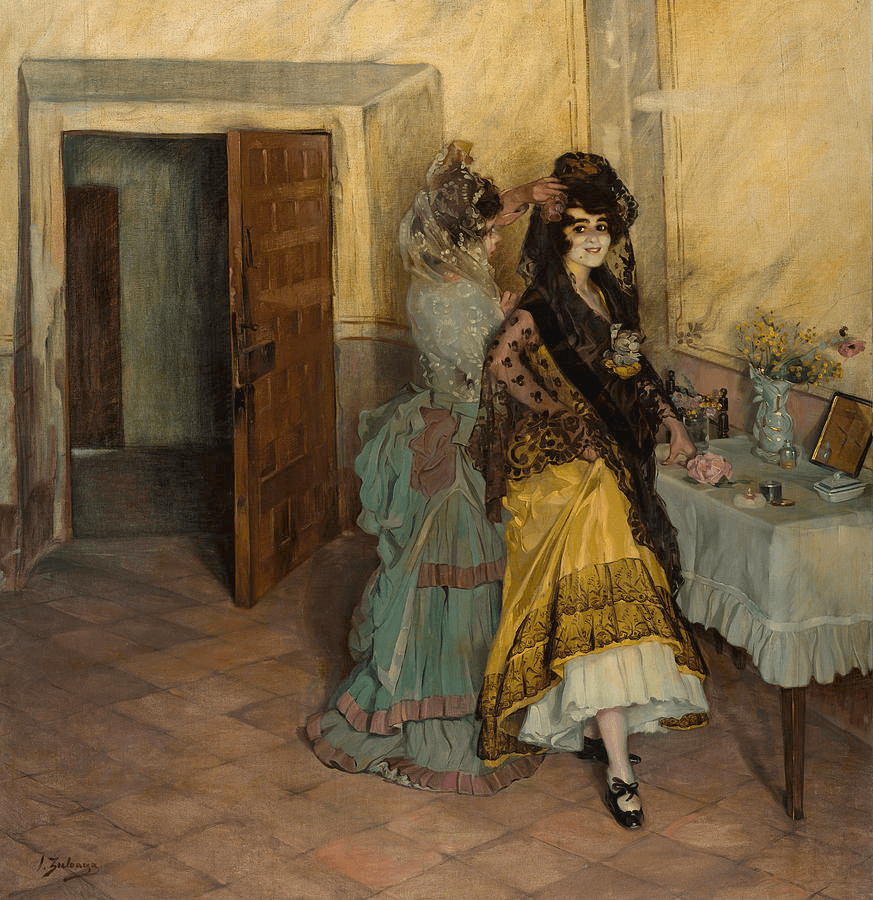


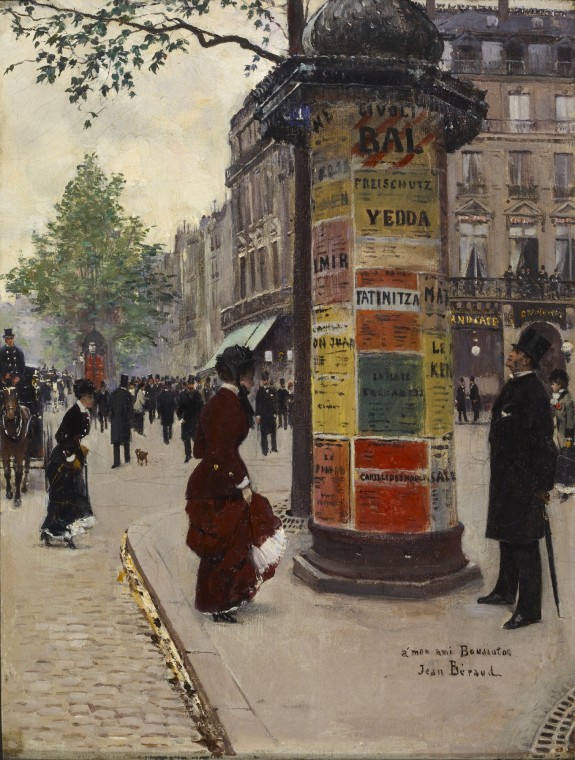
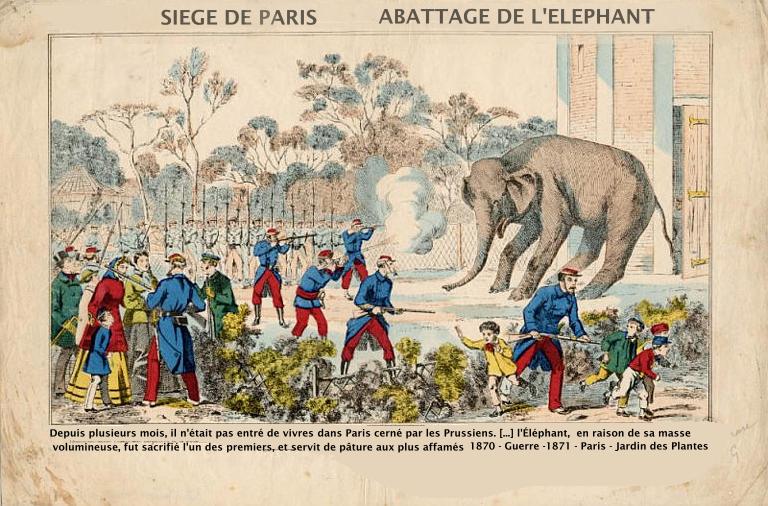

 Eiger, Mönch & Jungfrau