Here is my introduction to Episode 38 of the podcast I co-host with Rebecca Hussey and Frances Evangelista, One Bright Book.
Ignacio Zuloaga y Zabaleta, Preparation for a Bullfight (1903)
Our book today is Miaow, written in 1888 by the great Spanish 19th-century realist Benito Pérez Galdós and recently published by NYRB Classics in a lively new translation by Margaret Jull Costa.
Galdós, whose long and productive life lasted from 1843 – 1920, was born in the Canary Islands, which perhaps gave him an outsider’s perspective on the Madrid society he scrutinized in more than 80 novels.
Miaow has a cast of, well, maybe not thousands but a lot of characters. Ramón Villaamil has served the state his whole life, but he’s lost his job in the tax office due to changing political fortunes just two months short of qualifying for his pension. He solicits possible patrons and haunts his old office, not just to get a job but also to escape his household, where he lives in an uneasy truce with his wife, Doña Pura, their adult daughter, Abelarda, and his sister-in-law Milagros. Completing the ménage is Luis, the son of a second daughter who died young. Luis’s father is a man named Victor, a bad penny who has never been in the picture, indeed whose name is never spoken in the home. The novel kicks into gear when Victor turns up and inveigles his way into the household, eventually sowing great unhappiness. (Victor is a breathtakingly bad guy—I hope we’ll talk about this.)
These are all interesting characters—so why isn’t the book named after any of them? That would be the usual 19th-century thing. (Jane Eyre, Daniel Deronda, Eline Vere, Anna Karenina,l etc., etc.) Why does it have such an odd title? Who or what does “miaow” refer to, anyway? Well, lots of things. It’s the nickname given by the local wags to the women of the Villaamil household, after their supposedly feline features. I think it’s important, though, that the book isn’t called The Miaows. For the title also extends to Ramón, the paterfamilias—not because of how he looks but of what he believes. MIAOW is an acronym for his mantra that Spain can only be saved by Morality, Income Tax, Additional Import Tariffs, Overhaul of the National Debt, and Work. So already “miaow” references both physiognomy and economy. But there’s more. In addition to being a noun, miaow is also a verb, a sound, an onomatopoeia, and a sarcastic, acidic, or bitchy commentary, as when we call someone out for being catty: Mee-ow! It’s this last meaning I thought of most as I considered the harsh disdain so often expressed by the characters toward each other and the gentle satire of the narrative voice toward all of them.
Once we see that “miaow” is something like a mood or attitude or state of mind, we’re able to recognize how unusually Galdós uses characterization. In my description of the book a minute ago, I made it sound like a family story. But it’s not, quite. The critic Fredric Jameson, who really loved Galdós and thought his unfamiliarity in the English-reading world a real travesty, says that Galdós offers “a deterioration of protagonicity,” an admittedly unlovely phrase that he glosses as “the movement of the putative heroes and heroines to the background, whose foreground is increasingly dominated by minor or secondary characters.” As a Marxist, Jameson attributes this not just to Galdós’s predilection or “genius” but to his position as a person living in late 19th century Spain and its strangely non-modern political landscape following the failed “Glorious Revolution” of 1867 (they deposed the monarchy and then brought it back, sort of). To depict the social reality of his society, Galdós had to “strike[ ] an uneasy compromise between the atomized individualism of more fully bourgeois societies with their nuclear families, and the more archaic traces of the older feudal class and castes.” To me, this explains why Galdós feels like an uncanny version or simulacrum of canonical realists like Balzac or Zola, with whom Galdós shares an interest in recurring characters and the desire to explore an entire society. Miaow reminded me of Père Goriot or La Bête Humaine. But also not. Jameson notes that Galdós’s novels are not organized around families, even extended families, but rather around households, an ambiguous term that includes servants, neighbours, and other families who circulate in and out of the story. (In Miaow, Doña Pura is always hosting friends, acquaintances, people who may or may not respect or like; Ramón is always trying to hide from them.) The household thus includes the Mendizábals, a couple who live downstairs and take pity on the much-neglected Luis; the Cabreras, the sister and brother-in-law of that cad Victor, who want to adopt Luis; as well as a whole series of characters at Don Ramón’s former office, some of whom are, to me at least, hard to keep track of, but to whom the novel devotes so much attention, in their various sympathy to or ridicule of Don Ramón, that it doesn’t make sense to just call them “minor.”
All of which is to say that Miaow, though not especially long (it’s like 300 pages) is very busy. To that end I was struck by a word that appears in the first sentence and reappears near the end. Here’s how the novel begins: “At four o’clock in the afternoon, the kids from the school on Plazuela del Limón erupted out of the classroom, making the very devil of a racket.” 250 pages later, a disconsolate, embittered Don Ramón observes a flood of civil servants clattering out of the workplaces at the tax office on payday: “The stairs were almost overwhelmed by this human torrent, which made a tremendous racket as it flowed on down, the sound of heavy footsteps mingling with all the cheerful, sparkling, payday chatter.”
The repetition of racket reminds us that bureaucrats are just overgrown schoolboys. Here we see Galdós’s satirical side. (And by the way, surely the opening scene of the schoolchildren, who, as they pile into the streets, tease little Luis with the nickname of his aunts and grandmother, miaow, miaow, miaow, refers to the opening of Madame Bovary, where a different set of schoolboys taunt a nice enough if also hapless pupil.) But more importantly the repetition of racket speaks to its modus operandi., maybe what we’d now call its vibe. This book too makes a tremendous racket, in the best possible way, with clever dogs, opera singers, officious bureaucrats, raw army recruits, shopkeepers, and a score of others contributing their two cents. Mee-ow indeed.
Have any of you read this book? Or anything else by Galdós? What do you think?
Pleased to once again present reading reviews from some of my favourite readers. Today’s installment, his fourth, is byScott Walters. Scott launched the much-lamented blog seraillon in 2010, and expects to return to it one of these days. He largely follows Primo Levi’s model of “occasional and erratic reading, reading out of curiosity, impulse or vice, and not by profession.” He lives with his partner in San Francisco.
Barring surprises, here ends the 2024 edition of the EMJ Year in Reading series: except, I hope, for my own. (Gotta write that…) Thanks to everyone who contributed–and all who read these engaging lists.
Balthus, The Passage of Commerce Saint-Andre (1954)
Thank you, Dorian, for inviting me again to participate in The Year in Reading. [Ed. – Pleasure all mine, Scott!] Mine meandered mostly pleasurably through some 60 books. I abandoned others, was surprised to have read fewer Italian works than in previous years, and experienced a number of unpremeditated pairings, reading two works each by a dozen authors plus more thematic linkages. I’ll get straight to 2024’s highlights:
The Woman in White, Wilkie Collins (1860)
I nearly lost my head when I interrupted my spouse’s reading of the final pages of The Woman in White, but her abrupt “Ssh!” made total sense as I plunged into the book myself the next day. Abstracted, the “detective-ish” book’s nutty plot—starting with its mysterious woman in white and moving to family secrets, confused identities, unlikely coincidences, shady interlopers, and convoluted inheritances—would hardly seem encouraging. But over 650 pages Collins never lets drop any of the knots of intrigue he has in the air, a master class in plotting with the ending so neatly and satisfyingly resolving the novel’s myriad conflicts that the book should have come tied up with a pretty bow. I found equally impressive his crafting of splendid characters, including the flamboyantly louche and unforgettable Count Fosco and Marian Holcombe, the novel’s moral center, surely one of the great characters in English literature. [Ed. – Now read No Name!]
[Paired with Collins’s The Moonstone].
The Purple Cloud, M. P. Shiel (1901)
If The Woman in White stands at the peak of the Victorian era, Shiel’s The Purple Cloud levels the period to the ground: an apocalyptic horror story, to be sure, with a body count beyond reckoning, but also an existential tale that takes Jules Verne’s brand of adventure in the direction of Lovecraft (and maybe even Kafka and Beckett). Into the tale of the sole-surviving member of a polar expedition returning to find worldwide catastrophe, Shiel mixes dazzling epic catalogues with itinerant wanderings—by dogsled, boat, rail, and on foot—that make Odysseus seem nearly an armchair tourist. A magnificently macabre tour of England unfolds from the coasts to the moors to the mines to the vacant house of Arthur Machen (to pay a literary debt) before the novel’s agonist traverses the infernal hellscape as far as Tokyo and San Francisco. Adding to the panorama of ghastliness is the misogynistic unpleasantness of the narrator himself, though having a murderer inherit such a lonely place is certainly a twist on the “last man” genre. Shiel lightens his grotesqueries by upscaling his inventiveness and gallows humor, even taking a few swipes at the Empire’s Victorian sensibilities. His idiosyncratic, nimble writing prompted me to mark down passages, though left me wondering whether the “purple” in his title may have referenced florid elements infecting his sheer writing bravura. Half-way through I wondered why the book didn’t regularly appear on English literature reading lists. Two-thirds of the way through, an abrupt turn sent the tone spiraling from Brueghel’s Triumph of Death into the schmalz of W. H. Hudson’s Green Mansions, underscoring a built-in problem of last man narratives: how to bring things to a close, what with destruction being so easy and rebuilding such a struggle. Shiel regained his footing towards the end but stumbled again on his way out the door. Maybe some goody-two-shoes editor had stuck their nose in. Still, The Purple Cloud’s grandiose conception and relentlessly ghastly anti-pleasures made it a singular reading experience—and fitting B-side to Collins.
Bel-Ami, Guy de Maupassant (1885)
At age 4, my French goddaughter presented me with a paper “cootie-catcher” featuring appealing green designs on three sides and a frightening mess of scribbled red and black on the fourth. I inquired. “This is a flower, and this is a tree, and this is grass, and this is a vampire.” [Ed. – Reasonable.] Now that she’s 21 I’ve come to expect this kind of thing regularly, but when she insisted that I read Guy de Maupassant’s Bel-Ami, I fell right into her trap. The story of a down-on-his-luck former soldier, Georges Duroy, whose life is transformed by a chance meeting with a war buddy who helps get him into journalism, is a superb depiction of the writing life; an existential examination of class, morality and gender relations; and one of the most sordid narratives I’ve come across. Duroy is a terrific antagonist, an arriviste with attractive qualities tinged by inexperience and raw ambition, not above prevarication and cruelty when it suits him. Maupassant manages the story so skillfully that I naively believed it to be heading towards a treatment of the subject of friendship between men and women, the source of Duroy’s “Bel-Ami” nickname—an ironic one, I was soon to realize, as what Maupassant does with Duroy makes Zola’s take on human debauchery look like a Sunday school picnic. [Ed. — !] The novel contains great set pieces, including a drawn-out death scene where a post-mortem odor drifts off the page like something out of D’Annunzio, and a party in a mansion on the Champs-Elysée that contrasts with the grim lives of Duroy’s rentier parents rotting away in Rennes. Maupassant levels the world of journalism too, its appetite for influencing public opinion, its writers seeking short-cuts to fame—a subject altogether too relevant today. Duroy’s talent, which emerges bit by bit, takes flight in social situations, where during one visit with a group of women he extemporizes on the writing of the French Academy. Maupassant, of course, was writing against the Academy grain, and few writers have woven a French of such sublime beauty from a tissue of such splendid decadence. [Ed. – Well, damn!]
[Paired with Manon Lescaut (1731), by the Abbé de Prevost].
Dark Back of Time, Javier Marías (1998) (Esther Allen, translator)
It would be unjust to pigeonhole Dark Back of Time –“a book of digressions”—as a campus novel, and equally unjust to separate it from its co-joined twin, All Souls (1992). But taken together as a campus novel, these two works, set at Oxford, slay all comers. Someone once quipped that the campus novel was about settling scores. Dark Back of Time seems aimed at undoing any barbs present in All Souls and even any notion of that book’s having been a roman à clef (this too, of course, may be a fiction). While the first part of Dark Back of Time engages weighty questions about fictional representation of real people, the joyousness of the novel’s explorations often had me in stitches, including a scene in which an academic negotiates with the narrator/author how he will be represented in the new novel, and another in which the narrator/author, timidly attempting to clarify for owners of an Oxford bookshop that what he’d written in All Souls was not about them, finds that the couple revel in their fame and petition to be included as themselves in a film version. It seems fitting in these books that Marías, Spain’s late greatest novelist, has evoked echoes of the most iconic of Spanish fictions, for, like the first and second books of Don Quixote, the two novels form an essential unit in which one could read only the first volume and miss out dramatically on what the second volume does with the first. (I’d love one day to see All Souls and Dark Back of Time boxed as a set; Cervantes would approve.) I don’t think it’s an exaggeration to suggest that these volumes, taken together, may be the finest contemporary literary work to address the question, “What is fiction?” Two other elements to recommend the book: The first is Marías’s inclusion of the fascinating story of Redonda, the “literary” nation of which Marías served as most recent and presumably final King (M. P. Shiel had been the first). [Ed. – Wait, that dude you just wrote about?? Is this real? Am I being punked??] The second is that Dark Back of Time contains some of Marías’s most exhilarating writing; I think immediately of a moving passage about the dawn crepuscule and streetlights that persist for a time into the day. Time having ever been one of Marías’s great preoccupations, I also winced at his narrator imagining life at age 85—a full 15 years past the premature end of Marías’s own. Unconscionably, The New York Times left Marías off of its recent list of the 100 Best Books of the 21st Century to date, but it is certain that the lamp of Marías’s work will live on to see its day.
[Paired with Marías’s short travel book, Venice: An Interior (2016)].
The Charwoman’s Shadow, Lord Dunsany (1926)
Fantasy is not among my favorite genres, but I’ve been fond of everything I’ve read by Edward Morton John Dax Plunkett, a.k.a. Lord Dunsany. Dunsany’s stories seem more like a new model of fairy tales, exploring interstices between reality and the imagination and dealing with moral issues without being moralizing. The Charwoman’s Shadow features a young Spaniard sent by his family to learn alchemy from a woodland magician, and exhibits Dunsany qualities in abundance: a deep gratitude for the richness of life, where nothing can be taken for granted; a genial wit and wordplay; a careful attention to nuance. The centerpiece of the novel is the value of one’s own shadow, the disappearance of which, through a Faustian bargain, produces unexpectedly dire consequences. Another Dunsany treasure is the lyrical quality of his writing, for example when he takes on that most magical of hours, l’heure bleue:
bright over the lingering twilight the first star appeared. It was the hour when Earth has most reverence, the hour when her mystery reaches out and touches the hearts of her children at such a time if at all one might guess her strange old story; such a time she might choose at which to show herself, in the splendour that decked her then, to passing comet or spirit, or whatever stranger would travel across the paths of the planets.
And then there is the book’s splendid ending, which I will not spoil other than to say that with no apparent thought of producing endless sequels like some contemporary writers of fantasy fiction, Dunsany gently places his chief protagonist off stage and sweeps into a realm of wistfulness drenched in the glow of a glorious sun setting at the height of Spain’s Golden Age.
[Paired with Dunsany’s The King of Elfland’s Daughter (1924)].
At 163 pages, Aira’s Fulgentius straddles novella and novel, and not simply as matter of length. Aira’s intimate, vividly imagined tale of a Legate of the Roman Empire who also happens to be a playwright expands as it follows the aging Fulgentius and his 6,000 soldiers from Rome to reconquer Pannonia. Along the way, Fulgentius mounts performances of his sole work, a tragedy written when he was an adolescent, starring himself as tragic hero—and most important audience member. As Fulgentius has already written—or thinks he has already written—the tragic outcome of his own story, the plot tension is carried by a familiar Aira conceit around the entwining of fiction and reality. As a prime example one of Aira’s works that graft a fictional character onto history, Fulgentius offers a vivid sense of what such a march must have been like for the soldiers, the general, and the populations in their path. Deviating from the author’s more typical surrealist gymnastics, the language here takes on an unusually elegant lyrical register.
[Paired with Aira’s Alexandra Pizarnik (2001), an appreciation of the Argentine poet].
The Catherine Wheel, Jean Stafford (1952)
I found a copy of Jean Stafford’s The Catherine Wheel when I was 18. Had I read it then, I doubt I would have fully appreciated its adult nature—for it really is an adult book, dealing with adult things, things terrifying enough that I approached the novel’s final pages with a shudder of complete dread (completely vindicated). But in The Catherine Wheel Stafford also reckons with youth, entwining her two main characters, 38-year-old Katherine Congreve and her 12-year-old cousin Andrew Shipley. Devastated in love at an earlier age when Andrew’s father John married her sister Maeve, Katherine now occupies a position as the town’s most prominent unmarried curiosity, but also a magnet to John and Maeve’s children, left behind while the parents “summer” in Europe. Twin betrayals connected to this departure have set both cousins spinning: John’s surprise declaration of love for Katherine and determination to divorce Maeve while abroad, and the disappearance of Andrew’s playmate of previous summers, Victor, now entirely occupied with the post-war return of an older brother. Dually abandoned, the cousins shift focus to one another. Stafford thus sets up an unusual device in which youth attempts to divine the mysteries of adulthood while adulthood frets over the crises of youth, in a marriage story focused on impacts beyond the absent couple’s own strife. [Ed. – This feels like some Henry James-level melodrama!] A kind of third eye—that of the people of Hawthorne, who notice when Katherine’s light stays on into the wee hours—levies its own social pressure on the house’s inhabitants. Stafford’s densely poetic sentences frequently had me reading her aloud, relishing her words, marveling at the perfect limning of some little thing or creation of a resonance that rippled out towards subjects beyond the proximate ones. Though rooted in a realist, formalist literature that prioritized and exalted language, the novel still felt raw and new, bursting out of old molds, totally unsettling. Not a novel for the squeamish, but certainly one for any reader ready to appreciate some of the finest American writing of the period.
[Paired with Stafford’s The Mountain Lion (1947)].
whose names are unknown, Sanora Babb (1936/2004)
Sanora Babb’s novel has been highlighted in recent articles recounting editor Bennett Cerf’s decision that two Dust Bowl novels in a single year would not stand. The other, of course, was The Grapes of Wrath, allegedly constructed in part on notes Babb had collected concerning hardscrabble farmers in her native Oklahoma, and which Cerf provided to Steinbeck. Though Babb published other well-received works, her Dust Bowl novel languished unpublished for nearly 70 years. whose names are unknown borrows its title from an eviction notice served on a family of Oklahoma farmers. What the novel may lack compared to Steinbeck’s elegant structure and majestic sweep, it makes up for in granularity of detail and visceral impact relating the farmers’ desperation and poverty, with particular attention to the lives of women, whose interactions give the work some of its strongest scenes. Babb’s direct, declarative sentences come across as hard as the land worked by her characters. She describes the knife-edge on which her people live, where even small luxuries—such as butter for the biscuits—must be used sparingly “so that it will last until the next churning.” Where Steinbeck set his novel on the back of hope for a better life in California, Babb spends a long time in Oklahoma before heading west, zeroing in on the encroachment of the Dust Bowl, poor farming practices colliding with a change in climate and the shifts within and without people as they try to wrestle with such environmental change. Babb’s powerful novel deserves at least to be taught alongside Steinbeck’s, or rather, as the debt is all his, the other way around. [Ed. – Pretty telling/damning that I’d never heard of it.]
Écoute, Boris Razon (2018)
It’s clear from which chapter of French journalist Boris Razon’s novel Écoute (“Listen”) Jacques Audiard plucked the seed for his film Emilia Perez, but Écoute differs almost entirely from the film. As the book’s title suggests, Razon focuses here on listening, various forms of which coalesce the book’s entwined stories and capture the complex, fraught texture of contemporary communications. Set mostly on a single block near Place d’Italie in Paris (with detours to Mexico City and Lisbon), and with the November 2015 terror attacks continuing to resonate, the novel touches on the surveillance state by encompassing listener, the listened-to, privacy, and identity (here’s where Emilia Perez came in, but so, to my surprise, did Fernando Pessoa). In conveying the rapid-fire chatter and laconic banality of so many electronic communications, Razon employs a good deal of verlan, texts and texting abbreviations, and emoticons, prompting one character to muse on the absence of a dictionary adequate to capture today’s modes of information sharing. Running beneath this surface noise is a current of desire to disappear from a world in which privacy has all but vanished. The stunning first chapter presents a scene of the Paris street that surely ranks among the richest in that city’s literature, an “audioscape” as experienced from the inside of a police surveillance van by an officer quietly being undone by his job of attempting to cull signal from the noise and by the uncanny valley between electronic input and what he perceives with his own senses. [Not yet available in English translation, though that may well change should Emilia Perez win the Oscar for best film].
Edward Hopper, Solitary Figure in a Theater (1903)
Oak Flat: A Fight for Sacred Land (2020) and Thunder and Lightning: Weather Past, Present and Future (2015), Lauren Redniss
2024 was the year I came late to Lauren Redniss’s party, pairing her powerful Oak Flat with her larger format Thunder and Lightning. The former explores the fight around the proposed Resolution mine on tribal lands in Arizona, while the latter treats weather phenomena both straightforwardly (i.e. Rain, Heat, Wind) and in more abstract terms (i.e. Chaos, Dominion, Profit, War). Using an anecdotal approach, Redniss displays in both books a knack for ferreting out the most interesting possible interviewees and unearthing fascinating hidden tales. But what makes the work of this MacArthur award winner stand out is its exploration of text and image. Using full page illustrations, Redniss skillfully advances her story through images of such impact that I found myself gasping at turning a page and being confronted with an image perfectly tuned to the tone she had set. The large format of Thunder and Lightning lends itself particularly well to her subject. In Fog, the text crawls along the bottom of pages of vast gray. Redniss’s deliberateness in matching image to text and letting the image carry the narrative feels like a new form of text/image interaction. In a section about cloud seeding, she describes a proposal to use weather balloons to heft a pipe with multiple nozzles to spray chemicals that could help cool the planet. I could not help see this as a metaphor for the way her illustrations lift her text in air. These images, easily mistaken for colored pencil washes, are in fact mostly acid etchings in black and white that Redniss has hand-colored (Thunder and Lightning includes a description of her processes). I read Redness not long after finishing James Elkins’s novel, Weak in Comparison to Dreams, another work that relies heavily on images, by a leading theorist of text/image interaction, no less, and now find myself dreaming of a Redniss/Elkins collaboration. Come on, you two. Make it so. [Ed. – Either way, I’m tracking down these Redniss books!]
Moonlight Elk, Christie Green (2024)
I know Christie Green but was wholly unprepared for her first book. Each time I put Moonlight Elk aside, I could not waitto get back out into it. That awkward prepositional formulation feels apt, as Moonlight Elk, a book framed around Green’s experiences in across New Mexico hunting wild game, largely for sustenance, takes one to wild spaces in an intensely intimate manner. Exploring the borders between interiority and exteriority, animal and human, life and death, the book’s dozen interlocking pieces, indexed to a hand-drawn map of the state, might well be the New Mexico state book of the year (if such a thing exists). With solid research behind her narrative, Green leverages her experience as hunter, mother, landscape architect, land use expert, designer, naturalist, activist, and writer to traverse territory of essay, short story, meditation, and what one might call an anthropology of relationship. Memoir might also come to mind, but resistant to definability, Moonlight Elk seems more like an exorcism, a courageous self-interrogation in quest of a “free range” existence that refutes facile answers, upends convention, moves into spaces predominantly occupied by men, and attempts to rid the cultural body of a toxic detachment from nature. Hunting—particularly as a woman alone—foregrounds the narrative, but Green is after larger game. She inhabits the lives of animals, their cycles and patterns, how they move, what they sense, how they see her. The mysterious, miraculous complexity of bodies, not least Green’s own, forms the beating heart of the book: details of muscular structure and bone, of blood and feathers and sex, the quickness of eyes, the sharp sense of smell. Her hunts force self-reckoning, as when she discovers a fetus moving within the abdomen of a cow elk she has shot, or when she ends the suffering of another cow that comes to her after being gruesomely wounded by poachers. Green, who grew up in Alaska, integrates into her experiences a wealth of issues impacting the American West, from private vs. public land and water use to tribal and border concerns (in the boot heel of New Mexico, a quail hunt collides with Border Patrol conducting their own kind of hunting). Only at the narrative’s end did I grasp the extent of the subjects Green had covered. More personally affecting, as she moves through forest, desert and chapparal, shadowed by cliffs and trees, illuminated by dreams and the changes of the moon, she offers, with keen animal sense and without escapism, an orthogonal, conscientious response to received ideas, convenient consumerism, and mediated experience. Hyper-alert, alive, intuitively creating her path, Green renders wilderness almost otherworldly. I emerged from Moonlight Elk seeing this world anew, as though a physical alteration had taken place. [Ed. – Sold! Might pair well with Joanna Pocock’s Surrender.]
Gallery of Clouds, Rachel Eisendrath (2024)
The title: irresistible. The cover too, a fresco of clouds at sunrise or sunset from the ceiling of the Rose Main Reading Room in the New York Public Library. And the opening especially, the author recounting a dream of carrying her manuscript through heaven and meeting: Virginia Woolf. Both ostensibly and in fact, the subject of Gallery of Clouds is Sir Philip Sidney’s 16th century, 900-page pastoral romance, Arcadia, about which I knew nothing and which overwhelms even Eisendrath, a Sidney scholar: “I find that my memory of the plot has already started to dim, to blur…I can no longer keep track of the basics…” I say “ostensibly” because Eisendrath uses the obstacle, Arcadia serving here as a nexus to send her fertile mind wandering down winding paths, from observations on the genre of Romance to the use of images, Shakespeare to Little Nemo, Poussin to Walter Benjamin, Montaigne to manicules (!), the marriage of hunting with desire to the cat dozing on Eisendrath’s bed.
But these seemingly inexhaustible spin-offs never seem gratuitous. Eisendrath subtly constructs an Arcadia of our own era, her black & white photos echoing the pastoral romance’s means of advancing its airy infinities through “images in words,” her “clouds” of thought (which she pointedly distinguishes from mere fragments) paralleling the episodic nature of the romance, her grounding her observations on Sidney in a relatable contemporary manner underscoring the genre as a response to grim realities. At the same time, Eisendrath engages proliferating modes in contemporary writing, such as the use of the fragmentary, the merging of the academic and the personal, the punctuation of text with images, the grappling, through a need to say, with an unraveling world. Though she is writing about a 16th century romance, her small, enthralling, sui generis book has volumes to say about how we read and write. And in Eisendrath’s few references to her own teaching, Gallery of Clouds, more than anything I have read in decades, has me wanting to be a student again.
The Waves, Virginia Woolf (1931)
Rereading The Waves 40+ years after I first read it and in the same copy I’d used then, my margin notes served to measure the distance between that young reader and this old one. I experienced pride regarding the young stranger’s underlining of particular lines; I noted too that he’d missed a lot. Passages of time of this sort span The Waves, entwined temporal arcs that longitudinally capture Woolf’s six characters through alternating interior soliloquies as they move from childhood to university [ed. – well, some of them get to go to university…] to the workplace to middle age and beyond, while brief impressionistic pieces preface each chapter and, over the course of the novel, trace the sun’s path across the sky during a single day at the shore. Here as in many of her works, Woolf, the great writer of immediacy, obsesses over capturing sensations, gestures, glances, discreet moments, the wave at the point of breaking, of ebbing. Rafts of glorious sentences ride Woolf’s exquisite phrasing, as she simultaneously questions the inadequacies of language, frustration with these limits reaching a crescendo as mortality nears for her characters, and a voice longs for:
some little language such as lovers use, broken words, inarticulate words, like the shuffling of feet on the pavement. I begin to seek some design more in accordance with those moments of humiliation and triumph that come now and then undeniably. Lying in a ditch on a stormy day, when it has been raining, then enormous clouds come marching over the sky, tattered clouds, wisps of cloud. What delights me then is the confusion, the height, the indifference and the fury. Great clouds always changing, and movement; something sulphurous and sinister, bowled up, helter-skelter; towering, trailing, broken off, lost, and I forgotten, minute, in a ditch. Of story, of design I do not see a trace then.
[Ed. – Is this Bernard? Sounds like Bernard.] Woolf described The Waves as a “playpoem,” but its approach to polyphony is unusual. In the first chapter, she goes inside the heads of her characters as young children while at the same time supplying them a vocabulary beyond their years, a device through which they speak both as themselves and as the writer, the latter’s presence made manifest when the children catch a glimpse through a window of a woman writing. Throughout the novel, her six characters’ voices float like spheres governed by gravity, now apart, now coalescing, as waves gather force and crash, exploding in spray and froth. But her characters also serve to question the nature of identity: clearly creations of the writer and facets of her circle (the roman à clef aspects interested me little), they are also beings in whom a “self” is merged inextricably with other selves. For all of its prose-poeminess, The Waves stands as a remarkable and grounded philosophical inquiry into what constitutes a self—and whether it even makes sense to speak of a “self.” [Ed. – Yes, the latter especially!]
In my first reading, I scarcely noticed the centrality to the novel of the death of Percival, a “seventh” character never given a voice. But in Paris shortly after finishing The Waves, I caught director Elise Vigneron’s theatrical adaptation of the novel, an extraordinary work employing both live actors and corresponding marionettes made of ice, such that as the play progressed, these figures melted, with much of the later action occurring in a resulting pool center stage. [Ed. — !] The physical presence of these characters and their doubles rendered Percival’s invisible presence powerful, a black center in Woolf’s “six-sided flower; made of six lives.” As with the shell-shocked Septimus Smith in Mrs. Dalloway, Percival represents a generation of young people damaged or lost to conflict and war. The cumulative effect of Woolf’s meditation on loss, whether through ordinary aging or via the injustice of an early death—and a palpable sense of darkness again descending upon Europe—left me overwhelmed by emotion at the story’s close.
What attracted me to Woolf at age 18 held firm: her sumptuous sentences; the tension between a love of people and aloof solitariness; the desperation of time passing fused with the fever to glean something lasting from the fleeting and ineffable. Also: recognition at last of Woolf’s lament for life lost at an early age, for the unshakable impact on those left behind, pushing The Waves into a work far greater than I’d registered the first time around. I’ve been thrilled, moved, and humbled by revisiting this extraordinary novel while the sun sinks toward a darkening horizon, so many years after I first read it, when the sun still mounted the sky. [Ed. – Beautifully put, Scott.]
[Paired with Woolf’s final novel, Between the Acts (1941)].
Felix Edouard Vallotton,The Sunny Street (1922)
Others works I could have included: D. H. Lawrence’s powerful Sons and Lovers [Ed. – Ph hell yeah]; Italian critic Cristina Campo’s The Unforgiveable; the Strugatsky brothers’ The Snail on the Slope; Georges Simenon’s Arizona noir La Fond de la Bouteille; Shakespeare’s The Winter’s Tale; a pair of short books by Helen DeWitt (may she please complete her novel-in-progress set in Flin Flon, Manitoba) [Ed. – Wait what now]; Andrés Barba’s Two Small Hands and Andrés Neuman’s The Things We Don’t Do; poet Susan Nguyen’s second gen take on the American South in Dear Diaspora and other of her poems on-line; and, Most Unexpected Literary Object, the first volume of Ahmed Fāris Al-Shidyāq’s Leg Over Leg, a daring four-volume novel completed in 1885 with the modest ambition of catapulting the whole of Arabic language and literature into the modern age. In sum, a Year in Reading that elicited joy, snark, bon courage, resolve, humility, and defiance for challenging times ahead.
[Ed. – To which I can only summon both the raised fist and the thank you hand emojis: this is wonderful, Scott. May we draw on those good emotions in 2025!]
Pleased to once again present reading reviews from some of my favourite readers. Today’s installment, his third, is bymy longtime friendKeith Bresnahan. He is a self-described harrumphing scrivener who lives and works in Toronto.
Roger Deakins, The Rail to Grants, New Mexico (2014)
2024 was a difficult year, marked by personal loss. In July, an old friend from graduate school, a brilliant and feisty scholar of the Horn of Africa, succumbed to the cancer that she had been living with on and off for the past decade. And then in October, another death. My oldest and closest friend, with whom I’d been friends since kindergarten, died of an aggressive cancer he’d been diagnosed with only 11 months earlier. I’d managed to get down to Atlanta, where he’d recently taken on a new academic position, a few times to see him—the last just weeks before his passing—but it still felt inadequate, and very sad.
Throughout all this, I was working on writing my own book, on architectural destruction and emotion in late-nineteenth century France. Despite spending the last half of the year on sabbatical from teaching, I didn’t manage to finish it, which was also difficult. But: I’m still here, and the work continues amid the usual teaching and service. I’m casting an envious eye on those colleagues leaving academia for greener or at least other pastures. But for now, this is where I’m at.
Apart from the reading I did for my own book project, which was substantial, my extracurricular reading this year was not insignificant: 65 books, if my list is correct.
I read a lot of mysteries, by French, Irish, English, Japanese authors. I read a lot of Georges Simenon, though not the Inspector Maigret series. (I read the last of these—75 novels and three short-story collections—a few years back. Would that there were more.) Unusually for me, I read quite a few Canadian authors, and a couple American ones, and one Sicilian. A bunch of French graphic novels/comics. And I finished my reading, begun many years ago, of Zola’s 20-voume Rougon-Macquart saga.
Here are the ones that stayed with me:
In the first days of 2024 (feels like a lifetime ago), I read Geoffrey Household’s Rogue Male, which was as great as everyone says. An Englishman, having attempted to assassinate an unnamed European dictator (Hitler, quite obviously) is now being pursued by agents across the continent. It’s a white-knuckle ride that in its second act switches pace to a two-person détente, in which our hero slowly plays out becoming-animal (the ‘rogue male’) in a kind of homemade burrow. Super-weird, I loved it. My only complaint is with the book’s end, which reveals a deeply personal rationale for the assassination attempt, practically undoing the whole perversely-unmotivated-action-begets-tragic-outcomes schema of all that had come before. Still, highly recommended.
Seicho Matsumoto, Point Zero. I had read his mystery A Quiet Place a couple years back and loved it. [Ed. – Agreed, so good.] Point Zero, like that one, is translated by Louise Heal Kawai for Bitter Lemon Press. As I progressed in the book, I started wondering: had I read this before? It all had a vaguely familiar ring. It turns out I had not; but I had watched Yoshitarō Nomura’s excellent 1961 film adaptation, Zero Focus. It’s an excellent, propulsive tale of a woman whose new husband has gone missing, and her search to find the truth. I figured out (or remembered?) who ‘did it’ about 2/3 of the way through, but it hardly mattered. Great, though A Quiet Place still has the edge for me. More Matsumoto in English, please!! [Ed. – I gather there’s a ton of him. Sort of like Simenon.]
Other Japanese books I read this year: Seishi Yokomizo, The Devil’s Flute Murders and The Little Sparrow Murders (fine, if workmanlike, mysteries); Jun’ichirō Tanizaki, Naomi (a striking tale of manic obsession and cuckoldry, but the main characters aggravated me to no end).
I also read Yoel Hoffmann’s edited anthology Japanese Death Poems, which I received as a tongue-in-cheek birthday gift (although they knew I’d also love it). It’s what it sounds like: a collection of short poems, mostly haiku, written over centuries by monks and poets and ordinary folks on the verge of death, or in anticipation of dying. Fascinating stuff. I read it in the fall, in the midst of grief. Good to meditate on, and dip in and out of.
Also in the mystery vein, I continued to work my way through Magdalen Nabb’s Marshal Guarnaccia books, set in Florence. I like every one of these I’ve read, and this year I went back to the beginning, to read (new to me) the first in the series, Death of an Englishman. Excellent and atmospheric, and I loved that Guarnaccia has the flu and only shows up at the very end for this first book in his own saga. [Ed. – Intriguing!]
My last read of the year was also a mystery (they really do seem to fit the winter holidays in a way I can’t explain): John Banville’s The Lock-Up. This is a late book in his Quirke series (originally published under the pseudonym ‘Benjamin Black’), but the first I’ve read. For whatever reason, I’ve never got on with Banville’s literary fiction (I know, shame on me). [Ed. – I dunno, I’m not sure he’s all that, actually.] But this hit the spot. Quirke, a weary alcoholic pathologist, investigates the murder of a young Jewish woman in 1950s Dublin. All sorts of side-narratives here: former Nazis escaping justice with the help of the Church, arms dealings in Israel, romantic entanglements, struggles with work colleagues. Yes, aspects of it are clichéd and feel dated, despite being published in 2023. What can I say? I liked it enough to immediately reserve four other books in the series at my local library branch, so watch this space for more in my 2025 round-up.
George Simenon: since finishing the Maigrets, I’ve been slowly working through some of his other output: these 300-odd standalone books are often gathered under the rubric of ‘romans durs’ (‘hard novels’). They’re hard looks at human nature, alright, though not always violent or murderous. I read 19 of these this year, including a bunch of the ones he wrote while living in the USA in the 1950s, and set there (for whatever reason these have never struck me with the same truth as his French-set novels). Some leitmotifs: voyeurism, small-town prejudice, frustrated men, philandering men, sensual women, penny-pinching women, family squabbles, and men who suddenly realize that their wives resemble their mothers. Nothing if not Freudian, this guy.
My favourites: The Krull House; The Venice Train; Account Unsettled; Striptease; The Little Saint; The Man with the Little Dog; The Little Man from Arcangel. For me, this last one was the best: A Russian-Jewish bookseller and philatelist, assimilated to France since arriving there as a young boy and living in a small town’s market district, marries a promiscuous younger woman from the town. She leaves one evening and does not return, and suspicion slowly falls on him. It’s a masterful study in the vicious closedness and rumor-mill of a community against a person they had superficially but never deeply accepted, driving to an inevitably sad conclusion. I’d put this up against any literary study of othering and alienation, any day of the week. [Ed. – 100: this one will be on my year in review list, too.]
I also read Pedigree, Simenon’s memoir of his life from birth to age 15 in Belgium (Liège, to be precise), focused mostly on his mother and her family. The basic elements of his other books seem to pretty much have their origins here, except the murders. A note about his mother, whom he felt never sufficiently loved him: from the 1930s to the early 1970s Simenon wrote fiction with compulsive mania, averaging 10-15 books a year. Then his mother died, and he never wrote another novel. Did I already mention Freud?
My Can-Lit year:
I like Canadian literature as much as the next guy, provided the next guy likes it but doesn’t make a habit of it. [Ed. – Handshake emoji.] But, I was a visiting fellow at Massey College at the University of Toronto this past year, where the spirit of Robertson Davies flows through the corridors, and where I had some interesting discussions of Canadian literature with my fellow fellows — including David Chariandy, whose very fine reflection on race and parenthood in Canada, I’ve Been Meaning to Tell You, I also read this year. All of which prompted me to pick up some books:
Helen Humphreys, Coventry: I really enjoyed this short novel set during the burning of Coventry Cathedral in November 1940, with intersecting stories of two women. Canadian author, if not Canadian content. Also a bit of a cheat, since I read it for another academic project on ruins. But everything counts!
Robertson Davies, The Deptford Trilogy. One of the landmarks of Can-Lit. I’d read Fifth Business (the first novel in the series) decades ago, but never the other two, The Manticore and World of Wonders. I read them all in quick succession in the depths of a Toronto winter. Fifth Business, set in small-town Ontario and then Toronto (with a side-swerve to WWI Europe) is seriously great. I would read it again right now. The Manticore: was I surprised that the next book in the series sees our hero undertaking Jungian analysis in Switzerland? Yes. Did I like it? Also yes, but decidedly less than the first book. The third, World of Wonders, picks up threads from the other two, and set in the world of circuses and magic. There is thus a lot here about stagecraft, circus life, and stage magicians, all of which are things that repel me, frankly. [Ed. – We are the same person, Keith.] So, not my bag. But still, a satisfying enough conclusion.
Marian Engel, The Tattooed Woman. Well, we know how we feel about a certain book by Engel, don’t we? [Ed. – We feel grrrrreat about it.] Bear has been featured here on occasion, including the last time I did one of these year-in-reviews. Here we have her last published work (from 1985), a collection of short stories featuring women at middle age, dealing with children and partners and aging. A mixed bag, with some standouts. Not a patch on Bear, but worth a look. [Ed. – Totally agree with this assessment.]
Helen Weinzweig, Basic Black with Pearls. Thanks to the folks at NYRB Classics for bringing this 1980 book back into print. [Ed. – Also available from the good folks at Anansi Press.] An unexpected treat. A woman, estranged from her husband and family, wanders through Toronto, maybe looking for her mysterious lover, who may be a spy (and who also may not exist) and then maybe goes home where another woman maybe now lives in her place. A psychological novel in the best sense. As a local, I loved the street-level view of my city. However, I feel compelled to add an editorial note: you can’t get to Dundas from Queen going south on McCaul, lady.
Following this, I read an earlier Weinzweig, her first: Passing Ceremony. An episodic, fragmentary exercise in which varied voices unfold in non-linear fashion a wedding and its reception. Everyone seems to have a past and beef with the bride, while the gay groom in it for the social beard pines for a lost love. Fine, but I liked it less.
Brian Moore, Catholics. A fine short novel of faith and orders and the world, set in a remote Irish abbey in the wake of Vatican II. The Abbot, no zealot, has in fact has lost his faith, serving as mere manager of a group of working monks. The interactions between him and the young American priest sent from Rome to compel him to conform to the changed rituals are excellent. It compelled me, let me tell you. And it didn’t stay a minute past its welcome. It was one of the last books I discussed with my very Catholic friend—himself a great reader—in his dying months. Again, there’s no mention of Canada in the book, though this was (Irish) Moore’s adopted country, so I’ll count it here.
Zola:
As I’ve mentioned, this was the year I finished in Zola’s monumental Rougon-Macquart series, following two branches of this family through the whole of Second Empire France (1852-1870; the novels themselves were written 1871–1893). The books themselves vary, but I would recommend these to anyone. One of the great reading experiences of my life. Look forward to revisiting it in, oh, 30 years or so. You in, Dorian? [Ed. – Your faith in my longevity is touching, Keith. I still need to finish my first go-round. But, yes, if I’m still here and able in my 80s, you got it.]
Here are the ones I read this year, in the order in which I read them.
Money. Took me a while to finish this: kept putting it down and then coming back to it. The rise and fall of a speculative bank in 1860s Paris and those who are brought up and laid low by it. Beneath it all, Zola’s usual interest in ambition, passion, crisis, and heredity.
Earth. More disagreeable people. Really disagreeable. Maybe the worst people in the whole series. Zola’s great novel of peasant life. The earth is the great character here (the title gives it away), but it’s often obscured by the endless wretched goings-on of these stingy and promiscuous bastards. Wears its King Lear heavily on its sleeve. There’s no redemption here, and I was glad to be done with its characters, but it’s undeniably impressive.
The Dream. An abrupt shift from Earth. [Ed. – Yeah, dreams and earth do not seem to go together, lately.] A childless couple engaged in the family business of embroidery in a northern cathedral town take in an abandoned young girl, eventually adopting her; she is prone to religious passions and flights of fantasy, which eventually coalesce in her idealized love for the rich son of a local lord (and bishop!). The religious background and hagiographic details, as well as the highly detailed particulars of embroidery (hey, you were the one who picked up a naturalist novel) made for an interesting contrast with all the recent scheming bastards. (R-M connection: Angélique, the girl, is the illegitimate daughter of Sidonie Rougon of La Curée, in a plot point not developed except to assert the link to the rest of the series). Brandon Taylor, in his much-discussed recent take on Les Rougon-Macquart, wrote that this was his least favourite, the one on which he got stuck. Not me.
That would be:
The Bright Side of Life. This took me forever, despite being relatively short. My least favorite R-M novel. Technically speaking, there’s nothing wrong with it! All the components of the series are there: the family drama, the scheming and obsession with money, the kind-hearted soul exploited by unscrupulous others, the hint of martyrdom, and the scientific explorations of the age. Lazare’s constant flitting from one new artistic or scientific enterprise to another made me think of Bouvard et Pécuchet. Pauline’s passivity drove me crazy. But overall, this tale of family and striving and love on the Normandy coast left me without a sense of life, bright or dark, that vitality that’s usually there in Zola even in the descriptions of weather or mechanical objects. (R-M connection: Pauline is the orphaned daughter of Lisa Quenu, née Macquart, in Belly of Paris—ironically maybe my favourite of all these books).
Germinal. The last of my years-long reading of the Rougon-Macquart. Did I save the best for last? Almost. I still prefer the Parisian masterpieces Belly of Paris and L’Assommoir, and even Au Bonheur des Dames, but for epic tragic scope you can’t match this tale of cruel life in a northern French mining town. Zola depicts the crushing poverty and squalid forms of barely-human life (there’s a lot of comparing people to animals here), of an uprising and strike and the inevitable(?) ‘retour à la normale’—albeit one that ends with a germ of revolutionary hope, rising from the soil, of a future world in which the workers have their day. Still waiting on that one. Anyway, it speeds the reader along with propulsive force, in which sense it reminded me more of La Bête humaine than its more obvious counterpart, Earth. Zola is at his best here. Déprimant, bien sûr; mais quelle grandeur!
I also read Zola’s standalone Therese Raquin. Enough with the miserableness, Émile! Just unrelenting, goddamn. It’s great, of course, but I would recommend reading it on a day when you can immediately go for a picnic in the sun and pet some kittens and eat a bag of marshmallows. [Ed. – Unrelenting is the word. Grim.]
Other things:
Kent Haruf, Benediction. My first Haruf. An elderly man in a small town dies from cancer. A moving read, especially in this year.
Frank Tuohy, The Ice Saints. Thank the gods for the Head of Apollo imprint: so many great forgotten books in this now-defunct series. In this one, a young English woman, Rose, visits communist Poland in 1964 to see her sister, her sister’s Polish husband, and their teenage son. Lots of sadness and disillusionment to go around, and some nice reflections on the outsider’s pitying gaze and well-meaning help being not without illusions of its own. Rose is not particularly likeable, but neither is anyone else. Highly recommended. [Ed. – Entirely new to me! I’m intrigued.]
Walker Percy, The Moviegoer. Folks online seem preoccupied with the fact that it, and not Catch-22, won the National Book Award in 1961. But I’ve never read Catch-22, and I have now read this, and I liked it a lot. [Ed. – Plus we know by now that the folks online don’t know shit.] A recommendation of my friend when I visited him in Atlanta last summer, I didn’t get around to reading it until after he’d died, but I thought of him the whole time I was in it. I read the Library of America edition, and I am a sucker for that series’ size, typesetting, and lovely thin pages, so perhaps I was already well-disposed to like it. [Ed. – I confess, that font size stresses me out.] At the same time, I was surprised by it. A man who does not feel a great deal of attachment to much, but is on some kind of secret undisclosed ‘quest’ that gives his life meaning, spends a week or so around Mardi Gras flirting with (and maybe sleeping with) women, arguing with his aunt, worrying over (and definitely sleeping with) his cousin-on-the-verge-of-a-breakdown, and spending time with his much younger step-siblings. There’s sex, death, driving, movies watched. And not much else, except that somewhere in there is also the whole of life. It reminded me strangely of memories of reading J.D. Salinger, but also less precious and more mature. Fragments of this one have returned to me often since finishing it.
Claire Keegan, Small Things Like These. An exceptional short read, but you all know that by now.
Henri Alain-Fournier, Le Grand Meaulnes. Finally got around to reading this, which I consumed in a single short burst. A magical fairy-tale of old France, caught just before the old ways gave way to automobiles and telephones. It’s all faintly ridiculous, but somehow also great?
Peter Matthiessen, Nine Headed Dragon River. I’ve had an on-again, mostly off-again, relationship to Zen Buddhism over the years, trying and failing to establish a regular meditation practice, but feeling a real connection to the culture and writings it has produced. I really enjoyed this memoir of the author’s engagements (and struggles) with Zen Buddhism in America, Nepal, and Japan from the late 1960s to the mid-1980s. Ymmv, but it spoke directly to some long-dormant yearnings in me.
Marguerite Duras, The Vice-Consul. A strange, enigmatic, hallucinatory book about foreigners in India. Who knows what is true? What happened in Lahore with the Vice-Consul? The whole thing here is about others’ stories being told by others, telling their own false stories, lies and fabulations replacing whatever might be conceived of as a ‘truth’ — ultimately inaccessible if it exists at all. Annoying, also somehow memorable? [Ed. – Sounds annoying, truth be told.]
Fran Ross, Oreo. First published in 1974 and recently rediscovered. Lots of clever wordplay in this recreation of Theseus’s journey through the eyes of a young Black Jewish woman. If Ulysses were a hip trip through 1970s Philly and NYC instead of 1904 Dublin, it might be something like this.
I read a bunch of French comics/bandes dessinées this year, both in translation and not. Among these, I recommend Riad Sattouf, Esther’s Notebooks. Folks might recall my love for his autobiographical series The Arab of the Future. Here, he follows a young girl, the daughter of his friends, through the vicissitudes of elementary and junior-high school. I laughed out loud, a lot, at a time when I especially needed it. Also recommended are Julie Delporte, This Woman’s Work and Portrait of a Body, autobiographical graphic memoirs of trauma, friendship, sexuality, Tove Jansson, Chantal Ackerman, and much besides. Her pencil-crayon drawings, both lush and hesitant, perfectly match the tone.
Maybe the best book I read this year, though, was a bonafide classic: Giuseppe Tomasi di Lampedusa, The Leopard. Holy shit. As good as everyone says. Better. Every word in this book is covered in a layer of dust. It evokes the overwhelming stillness of a class (the Sicilian aristocracy) in decline, while the world moves around them. The central characters here are as immobile as a daguerreotype or Walter Benjamin’s nineteenth-century inhabitants sunk into their own velvet compass-cases. Deserving of all the praise.
Edward Hopper, Yonkers (1916)
There were lots of other books I read this year: some fine, others bad, others I started but did not finish, that didn’t make this list. One can’t say everything.
Plans for next year: I’ve got an ambitious lineup of French literary classics to boost my woeful education: Flaubert, Stendhal, Hugo, Proust. I’d also like to read more works by 20th-century women writers: luckily, I’ve got a dozen or so Virago editions sitting on the shelf here. Others: Banine’s Parisian Days, Litvinoff’s The Lost Europeans, all those Charco Press books I bought years ago. Those Banville mysteries. More Simenon, probably. And whatever else provides intelligent fodder and distraction as our world continues its shockingly precipitous slide into fascism. [Ed. – We read, we resist, we read as resistance. Thank you, Keith!]
After an unexpected and busy vacation across parts of the American West in which reading time was in short supply I returned home to The Old Wives’ Tale. Took me a minute to get my groove back, but I eventually found myself unable to stop and read straight through to the end. I promise not to reference the final chapters so that Rohan can have her say. (I will note, though, that I might have enjoyed writing about the book more if we’d finished it first, but I also realize I wouldn’t have paid attention to the earlier parts as much had we done so.) Anyway, I have a long section to cover, and I’ll just scrape the surface, so please add to the conversation in the comments.
Jean Béraud, Paris Kiosk, ca. 1880 – 1884
As I read about Sophia’s life after Gerald—how good that she has a life after Gerald, and what an interesting one it is!—I found myself struck by one passage in particular. Not an exciting one: no hoarding of food stuffs, no balloon rides to escape a besieged city, no business or sexual propositions, nothing like that. But to me it got at a central concern. It comes after Sophia—now proprietress and landlady of a successful boarding-house catering to English tourists in Paris, known to her guests as Mrs. Frensham, after the previous owner—has been approached by Matthew Peel-Swynnerton, scion of a Five Towns family and friend to Sophia’s nephew, Cyril Povey. Sophia suspects that Matthew has recognized her as the woman who ran away from Bursley thirty years ago. In the time it takes for each to twig to the other, the routines of years are overturned. Sophia retires to bed early, leaving her second-in-command to deal with the thousand details that must be managed for an establishment like Frensham’s to keep ticking along. Alone in her room, Sophia wonders if the elegant young man could really be acquainted with her family. He’s too young to know her sister’s husband. More to the point, isn’t he far too wealthy, far too important, far too socially-prestigious to have anything to do with the likes of the Poveys? Even the illness of her beloved poodle, Fossette (the novel’s greatest character) takes second place to the thoughts whirling through her head:
Moreover – a detail of which she had at first unaccountably failed to mark the significance – this Peel-Swynnerton was a friend of the Mr. Povey as to whom he had inquired … In that case it could not be the same Povey. Impossible that the Peels should be on terms of friendship with Samuel Povey or his connexions! But supposing after all they were! Supposing something utterly unanticipated and revolutionary had happened in the Five Towns!
Copying this passage now I notice the awkward syntax of the first sentence—mimicking, perhaps, Sophia’s flustered state. I realize too how typical it is that I would seize on a moment that references significance, and the failure of a first reading: fits the struggle I’ve been having to know what matters most in this book, what kind of significance it aims at. But what snagged me at the time, and what, reading on, I returned to again and again as a way to make sense of the novel’s concerns, was the word “revolutionary.” My firstposts were preoccupied by the novel’s unstable tone, so I won’t belabor that topic here, but much hinges on how ironic we take that adjective to be.
The word choice could be a sign of Sophia’s irreducible Baines-ness, her provincialism, her lifelong alignment with the values of her childhood. When she returns to Staffordshire she herself broods over these concepts: both consciously kicking against the small-mindedness of a world that seems to her unchanged, and unconsciously manifesting similar traits by having lived in a small and unchanging Paris that has nothing to do with the elegance or cultural avant-gardism that intrigues someone like Doctor Stirling, whose love of Zola, for example, is not reciprocated by the woman who lived the events of his novels without really noticing them. On this reading, “revolutionary” would have to be ironic, the narrator poking fun at Sophia’s misguided sense of what counts as radical or extraordinary. We’d have to conclude that a social order in which Peels consort with Poveys would be a change, yes, but hardly a revolution.
And yet—for Peels to know Poveys is a big deal, even if the circumstance happened gradually, undramatically, such that one could never point to a single moment and say “then, that’s when this happened.” To demonstrate that change is inexorable—evolution in the strictly Darwinian sense, with no telos, no moral judgment: neither progress nor regression—becomes increasingly important to the novel as it comes to its conclusion. All of which is to say that I think we should take “revolutionary” straight: heartfelt on Sophia’s part and endorsed by the narrator.
As I thought more about it, I became convinced the word mattered a whole lot. The big question posed by Bennett in this novel is nothing less than: What is the meaning of revolution? A subset of related questions follows: Could the idea of a gradual revolution be anything other than an oxymoron? Is revolution a concept worth hanging on to, or should we discard it in favor of something else, perhaps simply change? What, in the end, changes in our lives? How much do we remain the people we always were? How much do we reinvent ourselves? How much do we slide into lives that our younger selves could never have imagined? It seems to me now that when Sophia, in that crucial encounter I wrote about earlier, drawing on the values of her upbringing and inflecting them with her own personality, first rejected and then accepted Gerald at the site of the old mine and the new railway (these standing as examples, and critiques, of progress), the novel was already staging a scene by which we could begin to ask such questions.
I snagged on the reference to revolution because I was surprised by the oblique, even casual way Bennett dealt with the Franco-Prussian War and the Commune. I had guessed these would feature as prominently as the execution of the criminal that Rohan wrote about last time. But I see now that it makes sense that this relatively minor event would be of larger importance to this novel than the big ones of public history. The execution matters less for questions of justice and more for Gerald’s rather pathetic response, for the final wedge it drives between him and Sophia, for her realization that no one will take care of her but herself. Thus the war with Prussia and the subsequent insurrection appear as the stuff of rumours, fantasies, and speculation—the latter in two senses of the term, since Sophia begins making her fortune by scrounging the shops in order to buy low and sell high. I wouldn’t say the novel is dismissive of these events—the material struggle, pain, and loss is real—but it’s convinced that for most people (or at least for Sophia and the world she operates in) their effects are muffled, reduced to the pressing but local questions of where to sleep and what to eat. At times, Bennett employs an almost Flaubertian irony in the bathos by which History appears. Sophia notes the end of the Second Empire, for example, only in the “mechanical” observation that it is a lot easier for women to sit in a carriage now that crinolines have gone out of fashion.
But Bennett doesn’t just give us the “ordinary person’s” perspective on momentous events. He gives us Sophia’s. Which is governed by her upbringing and the Baines values that she never shakes, even as she seems to build a life so different from anything her family can understand. She, unlike her husband or like Chirac when he clings to the false rumour that the French have scored a decisive victory over Pussian forces, has no truck with the idea of sudden reversals, coups de théâtre that reverse a bad situation (whether in politics or in household finances). For Sophia, such thinking could only be a fantasy (which contributes to my sense that the book is imagining alternate ideas of revolution). Sophia doesn’t flee Paris when the Prussians encircle the city—not from her love for her adopted home but from beliefs that come straight from Staffordshire:
She ardently wished to be independent, to utilize on her own behalf the gifts of organization, foresight, common sense, and tenacity which she knew she possessed and which had lain idle. And she hated the idea of flight.
Ironic, that last line, given her absconding with Gerald, but the point of this section of the novel is that she never flew from anything, really. She is happy during the siege because “she had a purpose in life and was depending upon herself.” That self-reliance, which kicks into overdrive after her collapse and illness—and it’s fascinating how much she struggles to recognize what she owes to the women who saved her, whose life choices she cannot respect and whom she ultimately displaces—is her greatest strength. She names it “pride”, and it is the most noted continuity with her sister, her upbringing, and the whole world of the first part of the novel. Yet it is also a weakness, in that it keeps her from life, prevents her from getting entangled with others, which is often to the good (hard to see what would be gained from agreeing to the advances of men like Niepce or Carlier, and life with Chirac might well have been a less awful but still subordinating version of life with Gerald) but ultimately makes her somewhat brittle and self-satisfied. I need to hold my tongue and wait until Rohan writes about the very end before commenting more on how we’re asked to evaluate Sophia, when all is said and done, but confining myself to what we’ve read so far, I think the New Year’s scene with Chirac was brilliantly handled, delicately describing the pleasant fug of sensual pleasure to which Sophia might have succumbed/given herself, and her ultimate inability to do so. The right thing to do, but still a missed opportunity, a complication we are more permitted to see than Sophia is herself. (So interesting, just as an aside, how few good/decent men there are in this book. Maybe only Povey? What do you all think?)
Rejecting Chirac allows Sophia to accept a new career. But running a pension, especially one as big as Frensham’s, means a life of endless labour. Like the domestic labour that it transposes to the business realm, the work of organizing the cleaning and cooking and managing of dozens of tourists involves constant running just to stay still. (Teaching, the career Sophia was set on and regrets the loss of, constitutes a similar treadmill, though it offers more gratification in the sense that teachers see pupils develop and move on to other things.) The end result of all the changes in Sophia’s life—escaping Gerald via her interregnum as a landlady to owning Frenshams—is an odd kind of stasis. Which brings me again to the idea of change, and what it means in this novel. I don’t want to foreclose the idea of revolution, but I think Bennett is pointing to an idiosyncratic, gradual meaning of the term, in which the gradual abrasions of daily life lead to changes we can see, let alone understand, only in retrospect. Could one reason Woolf had it out for him was that, like her modernist fellows, she believed in the more conventional sense of revolution: rupture, trauma, human nature changing on or about a certain date?
I’ll end with a point of continuity in the novel that surprised me—and that might also speak to my uncertainty of what change means or does in this novel. Elephants! That first one who comes to an untimely end at the Fair was not just a bizarre one-off. The landlord of the restaurant where Chirac and Sophia have their New Year’s feast proudly tells them of a friend, a butcher, “who has bought the three elephants of the Jardin des Planes for twenty-seven thousand francs.” (Two really were killed for their meat.) Seventy pages later, Sophia, returned to England and reunited with Constance, looks out the train window and is surprised to see “two camels and an elephant in a field close to the line,” which her sister tells her is the central depot of Barnum’s circus, a source of civic pride because the location, so close to Bursley, is in the very middle of England (and “there can be only one middle”). It is fanciful, but I think elephants will return one more time, a mere echo, to be sure, but a striking one, late in the novel (this is the only forward glance I’ll allow myself) when a shock to Sophia is described as a “crude, spectacular shame… that the gallant creature should be so maltreated by the bully, destiny.” Sounds to me like all the poor elephants in this novel. And that resonant phrase, “the bully, destiny,” returns us to the question of change. Will the end of the novel vitiate the very possibility? Or will it ask us to redefine what we mean by it? Stay tuned for the moving conclusion of The Old Wives’ Tale…
Here we are, halfway through The Old Wives’ Tale and I still have no idea what to make of this book, or even what kind of a book it is.
My very reading experience is odd. I seldom find myself gripped by any particular moment, but I’m delighted by how often the book surprises me. Like Rohan who wrote similarly in a comment to her last post, I expected neither Daniel’s significance nor Cyril’s development into an aesthete. Is “development” the right word? Time and again, the novel ignores or downplays process, jumping ahead or passing by in a single sentence events that other novels might linger over. Consider, for example, how offhandedly Mrs. Baines is dispatched in comparison to the heartrending death of Gertrude Morel, also of cancer, in Sons and Lovers. (The books, published only two years apart, depict a similar Edwardian world, poised between the rural and the industrial.) For a novel so interested in observing social and technological change (the coming railways, the rise of advertising, the shifts in fashion which, for example, deprive Constance of a waist), The Old Wives’ Tale doesn’t seem to think of character or personality as particularly developmental.
Take the example of Cyril. Perhaps retrospectively we can see the seeds of Cyril’s aestheticism in his infant interest (or, rather, the narrator’s interest in his interest) in perception. But I’m unconvinced Cyril’s current interests will be anything more than a fad, and I don’t know how to reconcile his dandyism with his placid robustness. (Think of his decidedly non-finicky interest in food.) Maybe the relationship between the boy’s past and present is meant to be ironic. Hard to say because we aren’t given much help in figuring out how the book feels about present-day Cyril. (Is Dandy Cyril a better Cyril? Worse? Neither?) Maybe Cyril is going to become one of England’s great artists. Or maybe he will lose interest in art and find a different path. Or maybe he won’t even be in the novel anymore. Who knows? That said, I suspect he will not become an artist-hero like Lawrence’s Paul Morel. I suppose what I’m grappling with is that The Old Wives’ Tale has elements of the Bildungsroman (whether its heroes are the sisters or the child or someone else) without actually seeming to be one.
There is, however, at least one topic towards which novel’s attitude is clearer: the relationship between generations. In my previous post I noted the surprisingly violent antagonism in the scenes between Mrs. Baines and her young daughters. By the time we reach Constance and Cyril, things have calmed down a bit, at least on Cyril’s side. But that might just be because we don’t often get inside his head. It’s true that Sophia was much more violent than Constance, who at first seems governed by a fitting placidity. But Constance too coolly struck a blow against her mother when she accepted Povey, and she certainly feels keenly the pain—it’s presented as a kind of anguish—of her child’s moving away and perhaps beyond her. What she doesn’t seem to see—but which we can, noting the patterns Bennett gives us, especially his way of structuring chapters and sections so that they end with dramatic changes that are seldom described in detail—is a pattern. What she did to her mother, her son is doing to her. I think the point is that such antagonism (the callousness of youth) is to be expected, as is the surprise when the former child now adult gets what they once dished out, as is the reality of the pain that accompanies it at least from the parent’s perspective. I was moved by the description of Constance returning home from seeing Cyril off to London, full of sorrow but perhaps also the lugubrious satisfaction of being able to declare one’s self useless, and looking into the boy’s room:
And through the desolating atmosphere of reaction after a terrific crisis, she marched directly upstairs, entered his plundered room, and beheld the disorder of the bed in which he had slept.
Typical Cyril, leaving the bed unmade on his last day at home. A bit of a thrown gauntlet, too. What is more immoral in the Baines/Povey household than “disorder”? What gets me most here, though, is that adjective “plundered,” which encapsulates her desolation. Cyril has stolen before, let’s not forget. Here’s he’s literally and metaphorically taken what he needs and lit out for the big city.
Yet change (a child leaving home, say) isn’t development, even if it sometimes is regular or predictable. So it’s still unclear to me where Bennett is going with this notion. Even when he offers us clear patterns and repetitions he’s hard to read. Take the juxtaposition of the chapters “Crime” and “Another Crime.” A joke, right? Surely Cyril’s petty theft isn’t comparable to Daniel’s murder. But they are similar in having a strong, though not identical, effect on Povey. Each challenges Povey’s complacent world-view, though in the first case he is able to smooth over the disorder, able through his will-power and action to restore the world to its satisfactory functioning, which he cannot do in the second.
The Daniel plot-line is fascinating. A whole Zola novel hiding in plain sight. I’m imagining how luridly and/or excitingly Daniel’s story could be told. Bennett instead chooses indirection, keeping the focus on Povey. What matters is how Samuel responds, not what Daniel feels. (Is it remorse? Resignation? Anger? I wanted to know! What do you think? Why doesn’t Bennett tell us? That is, how does his decision shape the novel we have? Does the novel’s utter indifference to the murdered woman–slatternly, disgraceful, and that’s the end of it–affect how we understand how it portrays Constance and Sophia?) Povey’s belief that the good people who make up the moral majority of the Five Towns can do no wrong is shattered when his respected and respectable cousin commits murder. The challenge is especially severe because it comes from the state. (It will be interesting to compare—as I suspect we will be asked to—how the French handle violent transgressions.) I had to laugh in appreciation of Bennett’s skill in describing how easily citizens will fall in line with the power of the law, even if it means contradicting themselves:
They [Samuel and others who believed in Daniel’s innocence] talked as if they had always foreseen [a guilty verdict], directly contradicting all that they had said on only the previous day. Without any sense of inconsistency or shame, they took up an absolutely new position. The structure of blind faith had once again crumbled at the assault of realities, and unhealthy, un-English truths, the statement of which would have meant ostracism twenty-four hours earlier, became suddenly the platitudes of the Square and the market-place.
Povey’s death, too clearly foreshadowed to stand as another instance of the unpredictability of human mortality (like, say, Aunt Hester or Mrs. Baines’s deaths), feels to me like a commentary on the man’s inability to reconcile the contradiction between his beliefs—Daniel did a bad thing, but he was provoked; he should be punished, but not to the fullest extent of the law—and the conclusions the authorities of the nation he also believes in come to. In this sense, Povey seems to die from being disabused of long-held beliefs. Is that tragic? Farcical? Again, I can’t say, partly of course because there’s still 300 pages to go, but partly because the novel’s take on events continues to be hard to interpret. I am all the more puzzled because it is at this moment that an unsuspected and hitherto unseen first-person voice appears:
A casual death, scarce noticed in the reaction after the great febrile demonstration! Besides, Samuel Povey never could impose himself on the burgesses. He lacked individuality. He was little. I have often laughed at Samuel Povey. But I liked and respected him. He was a very honest man. I have always been glad to think that, at the end of his life, destiny took hold of him and displayed, to the observant, the vein of greatness which runs through every soul without exception. He embraced a cause, lost it, and died of it.
If destiny takes hold of everyone, though presumably never quite the same way twice, then this is a backhanded appreciation of Povey, who is great only in the way that everyone is. (Although maybe no greater appreciation can be imagined?) I’m not so sure the narrator has done laughing at Samuel Povey. And who is this I? Someone like Bennett? If so, he would here appear in the guise of as one who can only record, never invent, the fates of the figures who appear in the text. Or is the I someone like us, as readers? I should say me, I suppose. I don’t know about you, but I felt a twinge of guilt as I recognized myself in that description: I have often laughed at Samuel Povey. But I do like him, yes, even, in his way, respect him. Maybe I should stop laughing. Maybe I should admire his fatal embrace of a lost cause. But I don’t, quite. I don’t trust the text not to be fooling me here, too…
PS: At some point we have to talk about old wives’ tales. Are there any in the book? Why is it called that?
I posted my first review here at Eiger, Mönch & Jungfrau five years ago last week. A satisfying milestone, especially as more people visited last year than ever before. And surely not all of them are trying to plan a trip to Switzerland…
In preparing these comments, I looked back at last year’s anniversary post. Most of the things I said there remain true. Most of all I still wish I wrote more regularly. But I’m doing better about not beating myself up about it. And overall I’m feeling more optimistic about lit blogs in general. I know there was that recent piece about how book blogs are dead, and I know some smart bloggers wrote rebuttals. I’m grateful to my comrades for doing so, but I confess I didn’t read either the original take or the responses. Maybe some people think blogs are over, but that’s not the way it feels to me. There are still plenty of people out there, ploughing their various fields, and giving me all kinds of new things to think about and titles to hunt down. (I’ve said it before, but I swear to God the first thing I’m going to do this summer is add a blog roll.) Without exception, the people I’ve come to know through the online lit community have been smart, funny, warm, and generous. And best of all, they are real readers. Although I’ve been lucky enough to meet a few in person, most I know only in the spectral way of the internet. And yet I do feel I know them. At a time in my life when I don’t interact with many readers on a daily basis (which might surprise you, given that I’m an academic, but there you have it), I really cherish that community.
As for the coming year on the blog, I suspect it will be much like the last: a series of too occasional, too long meditations on stuff I’ve been reading. I plan to add a few things. For example, I’m writing monthly round-up posts. I’ve pledged to host a group reading of a long nineteenth-century Danish novel in May (please join!). And when the semester ends I will try, as I did last year, to write a few essayistic pieces.
Until I re-read the plans I made last year, I’d forgotten I suggested coordinating a celebration of Primo Levi’s centenary. (I’m puzzled that no one seems to be talking about this milestone.) Having committed to the Big Danish Novel in what is prime reading and writing time (just when the semester ends) I’m not sure when this going to happen, but I think it’s important to commemorate this wonderful writer, so I will devise some kind of plan, however modest. Let me know if you have suggestions. In fact, if you would like to help me (primarily by keeping me accountable) I would be ecstatic. Levi’s hardly forgotten, but his oeuvre is more varied than you might think. Plus, as a writer of witness, and as a person who found the worlds of science and literature mutually enlivening rather than entirely separate, he remains as relevant as ever.
And then there’s Uwe Johnson’s Anniversaries, which I have sadly neglected after such a strong start. I hope to get back to it. But I know the siren-song of another giant NYRB release will be calling my name come summer.
If I can get my act together, the long-suffering Keith and I will continue our slowtour through Zola’s Rougon-Macquart cycle. I’ve loved sharing Keith’s writing, as I have Nat’s. Reading Olivia Manning with Scott was typically satisfying. If you’re looking for a (very modest) platform for your bookish writing, let me know. I’d love to have more contributors here, either regularly or as a one-off.
Before I close, let me list a few highlights from the past year:
My review of Lisa Halliday’s Asymmetry has been surprisingly popular. I mean, it’s all relative, I’m still talking about small numbers, but it makes me wonder if I should write about more contemporary fiction. (Honestly, I probably won’t. I want tons of readers, but I’m not great at doing things to make that happen—starting with publishing regularly.)
At first, I thought my 2018 reading was good but not great. But then I looked over my list and I kept remembering books that had left an impression. Maybe not a lot of books for all time, but plenty of high-quality stuff.
I read 126 books in 2019 (and abandoned a lot of others). Of these, 67 were by women and 59 by men; 99 were originally written in English and 27 in translation. 17 were audio books; 14 were re-reads.
Some highlights:
Kapka Kassabova, Border. A book I keep coming back to, and if it weren’t for a certain gargantuan novel (more below) this would be my book of the year. Border, as I wrote for #BulgarianLitMonth, is “about the periphery, places where resistance to centralized authority often succeeds, though usually at the cost of poverty and marginalization.” Kassabova’s journeys through Thrace (the intersection of Bulgaria, Greece, and Turkey) is filled with indelible portraits; it is the rare travelogue that is more about the people the writer meets than the writer herself.
Phillip Marsden, The Bronski House: A Return to the Borderlands. Back in June I described this book as “a story about home and exile amid the violence of the 20th century. It is a meditation on the idea of return. And it is a portrait of a sweet and moving friendship that crosses generations, sexes, and cultures.”
Jon McGregor, Reservoir 13. I think about this book all the time, even though I listened to the (gorgeous) audio book way back in March. A novel about the passing of time as marked by the rhythms of the natural world. I’m considering adding it to my Experimental British Fiction class for its brilliant use of passive voice (except the last thing that class needs is another book by a white guy).
Laura Lippman, Sunburn. Brilliant noir that subverts the genre’s misogyny. (I think it’s a response to Double Indemnity.) At one point I made a few notes for an essay, abandoned for now, about what life was like before the Internet, when serendipity seemed to structure what we knew, and many things were hard to know. This book is set in the 90s, not just for the backdrop of the Clinton impeachment hearings, which it uses to good effect, but because not knowing, or barely knowing, or needing to find someone who knows what you need to know is central to the plot.
Alfred Döblin, Berlin Alexanderplatz. Michael Hofman’s translation is a triumph (his afterword is fascinating); he makes Döblin’s collage of idioms and styles live for English-language readers. Not a book to love, for me at least, but certainly one to admire. Even more fun than writing about it was reading what Nat had to say.
Nick Drnaso, Sabrina & Liana Finck, Passing for Human. My two favourite comics in a year of good ones. (Honourable mention to Jason Lutes, for his satisfying conclusion to the Berlin trilogy). At first glance, these books have nothing in common, but they’re both dark and troubling, and they use the form in such interesting ways. I wrote about Sabrinahere. You’ll hear more from me about Finck.
Helen Dunmore, Birdcage Walk. Even though this book felt a bit misshapen and truncated (it was her last and I’m sure her health was bad as she was completing it), it’s stayed with me much more than I expected. I wrote a bit about it here. I’ll read more Dunmore this year, starting with The Siege. If you have other favourites, let me know.
Lissa Evans, Old Baggage & Crooked Heart—One of this year’s many blogging regrets is that I never made time to write about these two novels. I read Old Baggage (2018) on the recommendation of various Twitter friends, and then tracked down Crooked Heart (2014) at my local library. This reverse order turned out just fine, as Baggage is a prequel to Crooked; knowing what has happened to get the child protagonist to the situation he’s in at the beginning of Crooked makes the earlier book even more poignant. If you’re allergic to poignancy, though, don’t worry. Evans is funny (in real life, too—follow her on Twitter) and anything but sanctimonious or sentimental. Which could have been a real risk: each of these books, set in England during the 1920s-40s, describes a boy’s relationship with two older women, ersatz parents. Even though each is in her own way a social misfit, the women have a lot to teach the child, whether it’s how to make a speech or how to pull a con. I loved both books, but preferred Baggage because the child plays second fiddle to the indelible Mattie Simpkin, a former Suffragette leader who, in her declining years, challenges herself to galvanize a generation of young women who are taking for granted the gains made by their elders. (As far as they’re concerned, Mattie and her ilk are just “old baggage.”) What happens, Evans asks, when the movement you’ve devoted your life to fades away? As great as Mattie is, she’s not even the best character: that would be her friend and sometime amanuensis, nicknamed The Flea, so kind, so loving, so long-suffering, so surprising. Old Baggage is a quick read, but it’s packed with things to think about and enjoy. You’ll have to get it from the UK but it’s worth it.
Jessie Greengrass, Sight. Smart novel/essay about the pleasures and pains of making the invisible visible.
Olivia Manning, The Levant Trilogy. Scott and I wrote about these wonderful books. Maybe not quite as amazing as their predecessors, The Balkan Trilogy, but there’s one scene in the first volume that is such a stunner.
Rachel Seiffert, A Boy in Winter. I hate almost all contemporary novels about the Holocaust. But Seiffert won me over, partly by emphasizing the Shoah by bullets (the murderous movement of the SS Einsatzgruppen across the Soviet Union in 1941-2), partly by focusing on victims, perpetrators, and bystanders alike, and complicating those seemingly separate categories, and partly by her thoughtfulness about the relationship between assimilation and survival. I even forgave the book for being written mostly in first person, a pet peeve of mine. (Long live the past perfect, I say.) I also read her first book, The Dark Room, also about the war years: also good, though not as light on its feet as Boy.
Brian Moore, The Mangan Inheritance. Seventies books are the best books.
Marlen Haushofer, The Wall, translated by Shaun Whiteside. This book is a wonder, so still and careful and joyous. It’s about a woman who survives some sort of apocalypse that leaves her trapped in a lovely, though also punishing alpine valley, with only various animals for companionship. I reveled in the details of the narrator’s survival and the suggestion that it might take a complete rupture for women to find their place in the world. John Self says the rest of Haushofer’s (small) body of work is good, too.
Émile Zola—Some of the year’s greatest reading moments came from the project Keith and I launched to make our way through the Rougon-Macquart cycle. We read three novels this year (at this rate, our kids are going to be in college before we’re done) and it was such a pleasure thinking about them with him. The Fortune of the Rougons was tough sledding, but The Bellyof Paris and TheKill were great. I’m obsessed with Zola’s use of description, and how that tendency threatens to derail the aims of the naturalist project (if we in fact take those aims seriously; Tom cautioned me not to) and even the idea of narrative itself. We’re committed to continuing with Zola in 2019—maybe I can get my act in gear to read and write a little faster.
And my reading experience of the year: Jonathan Littel, The Kindly Ones, translated (heroically) by Charlotte Mandell.
I’m sad I never made time to write about this, the longest (900+ pages) book I read in 2018. I read 20-50 pages each day in June, and as soon as I finished we left on our long Canada vacation and the moment for writing about it passed. But I have thoughts! This extraordinary novel of the Holocaust is narrated by Maximilian Aue, an SS officer who experiences most of the significant moments of the war and the Final Solution: he’s in Paris in the summer of 1940, and at Stalingrad two years later. He’s with the Einsatzgruppen as they extinguish Jewish life in the Ukraine (including a horrifying set piece describing the events at Babi Yar), he’s in the Caucasus, he’s in Vichy France, he’s in Pomerania as the Red Army overruns the Germans. It’s amazing how Littel makes Aue’s peregrinations seem plausible rather than a Forest Gump-like gimmick. Early on, I found the novel so grim and distasteful that I could only read 20 pages at a time—I asked Mandell, always so gracious on Twitter, how she could stand to translate it, and she told me it was hard, and even worse when she started to dreamed about it. Aue is not a nice man, but he’s smart and erudite and a compelling storyteller. He’s so much more reasonable, though I shudder to put it this way, in his extermination of Jews and other so-called undesirables than most of the men he works with, and he has the decency to make himself sick over what he’s done that occasionally we forget what the hell is really going on and even look on him kindly. Quite a trick how Littel pulls us towards accepting or at least understanding the intellectual underpinnings of fascism while never letting us forget what a failure it would be to really be seduced. There’s an utterly engrossing lengthy section in which Aue and various other officials discuss whether the Mountain Jews of the Caucuses (descendants of Persian Jews) are racially or “only” ritually Jewish; that is, whether they ought to be exterminated or not. The cold-bloodedness and ethnographic hairsplitting of the conversation offer a powerful example of how men can set notions of decency or morality aside.
The Kindly Ones is ultimately a flawed book: alongside the political/ideological explanations, Littel gives Aue another motivation for his actions—his incestuous love for his sister. (This is the strand that references the Orestia, the last volume of which gives the novel its name.) Littel never reconciles these political and personal strands, so that in the end all of his work at showing the all-too-human motivations for genocide is undone by the psychopathic aspects of this second strand. But the accomplishment here is tremendous. I don’t know if anyone less obsessed with the Holocaust than me could ever enjoy—well, let’s say value—such a book, but I was very taken with it, especially because the book wanted me to feel gross about feeling that way.
Some bests and worsts:
Best new (to me) series: Robert Galbraith (a.k.a J. K. Rowling)’s Cormoran Strike & Robin Ellacott books. A little bloated, but Galbraith knows how to tell a story. From the classic meet cute in the first pages of the first volume, Galbraith pushes my buttons and I don’t care. The plots are genuinely suspenseful, and the “will they/won’t they” storyline between the private detective and his temp-become-full-fledged assistant is catnip. I recommend the audio books.
Best Holocaust texts: Georges Didi-Huberman, Bark (beautiful essay on some photographs the author took on a visit to Auschwitz-Birkenau); Molly Applebaum, Buried Words: The Diary of Molly Applebaum (the story of how Applebaum survived the war is incredible, as is the cognitive dissonance between that text and her postwar memoir, also included in this volume); Nechama Tec, Dry Tears (I will be writing about this memoir soon).
Best book by Dorothy B. Hughes: I read four Hughes novels this year. The Expendable Man, her last, was my favourite, and I think it’s a genuinely great book because it implicates readers in its cultural criticism. I enjoyed the more famous In a Lonely Place, but I preferred the first half of the earlier The Blackbirder. Hughes isn’t a conventional suspense writer: plot isn’t her strength. What she’s brilliant at is describing how people deal with threats they know about but can’t escape. That skill is evident from the first page of The So Blue Marble, her first and mostly utterly preposterous novel. Even though Hughes’s protagonists aren’t always women, she writes from a position women know only too well: being victimized not by some unknown person, but by someone close to them—someone the rest of the world is slow to suspect. This accounts for the atmosphere of desperation and fear that characterizes her work. I’ll hunt down more Hughes in 2019.
Best essay about prison libraries hiding inside what pretends to be a crime novel: George Pelecanos’s The Man Who Came Uptown.
Best crime discovery (I): Anthony Horowitz, who I’ve in fact been enjoying for years as a longtime fan of (a.k.a. total suck for) Foyle’s War. The Word is Murder is pure genius: Horowitz puts himself in the story, uses the oldest odd-couple idea in the book, and still makes it work. Clever and fun. Afterwards, I read the earlier Magpie Murders, similarly clever and fun, though not quite as genius as Murder, which, I am delighted to see, looks like it will become a series.
Best crime discovery (II): Lou Berney, who lives just down Interstate 40 in Oklahoma City and isn’t afraid to write about it. The Long and Faraway Gone was good, but November Road is great, and I say that as someone allergic to anything to do with the Kennedy assassination.
Book I had to stay up all night to finish: Cherie Dimaline, The Marrow Thieves. Indigenous Canadian dystopian YA—will follow her career with interest.
Best thriller—Lionel Davidson’s Kolymsky Heights, by a mile. His first, The Night of Wenceslas, is weaker, but the guy can write a chase scene.
Best SF-alternate history-who knows what genre this is and who cares: Lavie Tidhar’s Unholy Land. Tidhar hasn’t always been to my taste, but he’s always worth thinking with, and here he delivers a compelling story that imagines a Jewish homeland in Africa. (Modelled of course on one of the many such plans in the late 19th and early 20th centuries.) A thoughtful book about borders, as sad as any book about that topic must be, and as such relevant to everyone.
Most vexing: P. G. Wodehouse, Thank you, Jeeves. It is delightful! But can it be delightful with a minstrelsy sub-plot?
Interesting, but I don’t quite get the fuss: Oyinkan Brathwaite, My Sister, the Serial Killer; Anna Kavan, Ice. I wrote about my struggle to teach the latter.
Books I liked at the time but have sunk without a trace: Sigrid Nunez’s The Friend is a good dog book and a book about a good dog. As I recall, it seems to be suggesting autofiction is intrinsically good at portraying grief, which is interesting. But although I enjoyed it a lot at the time, I never think of it now. I should be the target audience for Maybe Esther (Trans. Shelley Frisch), Katya Petrowskaya’s investigation into and speculation about the fate of her family in the Ukraine during WWII. And it really has its moments (there’s a great bit near the beginning about a ficus plant). But somehow it didn’t add up for me. I might like it a lot more on a re-read—do you ever feel that way about a book?
Disappointments: Claire Fuller, Bitter Orange (not terrible, and on the face of it the sort of thing I like best—Gothic country house, unreliable narrator—but underwhelming; maybe Our Endless Numbered Days was a one-off?); Ian Reid, Foe (fair bit of buzz about this quasi-SF, quasi-philosophical novel concerning humans and replicants, but I didn’t think it was as smart as it seemed to think it was).
Lousy: Leila Slimani, The Perfect Nanny (histrionic); Emma Viskic, Resurrection Bay (overwrought); Arnaldur Indridason, The Shadow Killer (losing his way, I fear).
Reliable pleasures: Tana French (Witch Elm deserves a better fate: it’s typically gorgeous and tricksy, but for the first time French concentrates on an individual rather than a relationship; I’ve read some grumbling about it, and I don’t get it); Jeanne Birdsall (Penderwicks 4eva!); John Harvey (the new book is his last and it is very sad); Ellis Peters (check out Levi Stahl’s lovely piece); Ian Rankin (came back to Rebus after many years away, and am catching up—sometimes the writing is bad, but he’s good at weaving subplots, and at knowing when a book is long enough); Phillip Kerr (making my way through the Bernie Guenther’s and they’re evocative, suspenseful, and damn funny: hard to pull off).
*
My big regret for 2018 is that I wrote almost nothing for publication. I was tired after a few very busy years. And I was scared to pitch new venues after some of the journals I’d been most associated with folded in 2017. I’m aiming to write more in 2019. Here on the blog, I would love to write more frequently and less longwindedly, but I’m coming to realize that over-long, close-reading analyses are what I do best (or what I do, anyway). I’m going to try something new, though, as a way to say a little something about more of the books I read: at the end of each month, I’ll write a round-up post, something like Elisa Gabbert’s magnificent year-end piece. I don’t have her lightness or ease, but I think it will be an exciting challenge.
As always, I’ve loved reading and writing with friends this past year. For the first time I even included a post about a book I’ve never even read (thanks, Nat!). I’d love to have more contributions from other readers and writers. If you want to suggest something to read with me, just let me know. And if you just want a place to share your thoughts about a book, say the word. I do have one concrete suggestion: join me and others to read a long Danish novel about canals and Jews! And I know I will be avidly reading Vasily Grossman’s Stalingrad when it comes out this summer. And I will make it back to Anniversaries, I promise. Other than that, I’ll probably keep reading as waywardly and haphazardly as always. Although a hedgehog in personality, I am a fox when it comes to reading.
Thanks to everyone for reading and commenting in 2018—I hope you’ll stick around for more in 2019. After all, the blog is turning 5 next month! And if you want to see my reflections on the last few years, you can read about 2014, 2015, 2016 & 2017.
Keith and I continue to make our way through Zola’s Rougon-Macquart series. You can find his take on The Kill here.
The Kill is a great book, light-years more compelling than its predecessor, The Fortune of the Rougons, which Keith and I wrote about not so long ago. You could absolutely read this without having read the earlier book. In fact, I think Kill is the perfect entry point into Zola’s work.
The book is at once a miniature and an epic. It’s short—well under 300 pages—with a small cast of major characters. It has thematic density and coherence: its three great subjects—financial speculation, urban modernization, and the equation of spectacle and desire—are different iterations of the same dynamic and destructive energy. And its style is similarly uniform: the book is composed mostly of fabulous blocks of descriptions that show how significant and yet destabilizing appearances can be. An early description of the Bois du Boulogne—the vast new park that is the setting of the opening and closing scenes—is larded with the language of artificiality: what seems natural is anything but (conversely, what seems contrived is, in the Paris of the 1850s, understood as quite natural): a grouping of evergreens is “theatrical,” its foliage “like the fringe of curtains”; the landscape is “like a newly painted piece of scenery” manifesting “an air of entrancing artificiality”; the walks that wend their way through the park are lined with iron hoops “in imitation of rustic woodwork.”
I’ve already written a little about Zola’s yes of description in my post on The Belly of Paris, but there’s still more to say, not least about his use of similes—are these another instance of the insatiable drive of a capitalist economy (which of course doesn’t spare the arts) to transmute one thing into another, to take something solid and turn it into air? Or are these similes the very method by which the controlling entity that is Zola’s narration reacts against, even acts as a check on, capitalism’s headlong and glib transformations? To say more, I feel the need to read Lukács’s famous essay on narration and description. As I understand it, he posits description as a reactionary force (because committed to keeping things the same, by telling how things are) opposed to the progressive potential of narration (which is about change). If that’s right, all I can say is that Lukács must not have read Zola. (Surely he did—but what on earth did he make of him?) The power of Zola’s description might not fall neatly into the progressive/reactionary distinction, but I can’t see how anyone could read Zola and think description was committed either to keeping things the same, or neutrally observing what exists.
If anyone has ideas about this, I want to hear them. I’ll keep thinking about the issue as we make our way through more of the cycle. For now, though, tempted as I am to simply cite long chunks of the novel, I want to consider some of the moments that ruffle the novel’s clarity. These moments often concern secondary characters. Although unimportant to the plot, and perhaps even to its themes, these characters are what give the novel a pleasingly unruly and capacious quality. They are hints of bagginess in an otherwise controlled exercise.
As its title suggests—and Keith gives a lovely explanation of the connotations of the original—this is a turbulent, even violent book. Often that violence concerns financial speculation and chicanery. In this regard, the book is only too relevant to our own gilded age. But the book’s violence is often less abstract and more corporeal. And invariably women are the ones who suffer from that violence. It’s as if the economic machinations—which are concerned with making something out of nothing (as when Saccard inflates the rents of his buildings in order to increase the payout when he is compensated for their expropriation)—need a physical analogue; the bodily version of making something from nothing is the ability to reproduce.
So we have Renée’s rape, resulting in her pregnancy, leading to her desperate marriage to Saccard. It tells us a lot about the cultural acceptability of rape that Saccard has no scruples about pretending to have perpetrated the act. In the end, she miscarries (an event uncannily predicted by Saccard’s sister, the mysterious and cutthroat Madame Sidonie, in a brisk and businesslike way that makes me wonder if she had some kind of hand in it). That might be for the best, given the fate of children (especially girls) in this novel. Saccard, for example, pawns his daughter from his first marriage off on his brother, Pascal (the doctor I discussed in my post on Fortune), although given what we’ve seen of the latter’s kindness, she might be better off with him. Throughout the novel, Zola compares Saccard and Maxime. Although they superficially seem quite different—the father a ruthless speculator, the son a languorous dandy—the end of the book intimates that the son might be ready to follow the father into a life of speculation rather than simply gliding along as he has. (In the novel’s memorable formulation, “he usually remained at the bottom of whatever pit he fell into.”) We oughtn’t be surprised by that possibility, though, because we’ve already seen that Maxime is more than ready to ape the father when it comes to women. In fact, he does something even worse than his father. Whereas Saccard didn’t actually rape Renée—he only pretends to have been the man who did it—Maxime has no such scruples with his stepmother’s first maid. As the narrator wryly puts it, describing the way Renée introduces Maxime to the world of female sexual display by asking him to accompany her to her dressmaker: “The excellent education Maxime received bore early fruit.” The consequences of that fruit are much more serious for the maid than for him:
At seventeen the young lad seduced his stepmother’s maid. The worst of the affair was that the maid had a baby. They had to send her to the country with the brat, and give her a small annuity.
Zola’s judgmental language—“the worst of the affair,” “the brat”—isn’t just a ventriloquism of Maxime’s perspective. It’s the whole family’s, even the whole society’s. Saccard doesn’t care; he just pays out. But Renée is furious, yet not because of his abuse of his power over the young woman, but because of the girl’s social standing: “That he, whom she wanted to turn into a gentlemen, should compromise herself with a girl like that!” But she gets over her anger quickly enough, when she considers what a delightful scandal it would have been had Maxime in fact taken her advice to “have started off with a lady.” What the maid makes of it all or what becomes of her life: the novel doesn’t know or care.
I suggested a moment ago that Maxime does what his father doesn’t—the son actually takes advantage of a woman, while the father only pretends to. But that’s only because the older man doesn’t have to. At two key moments in the book, Saccard is poised to hurt a woman, even kill her, but then something happens to stop him. One is an important scene Keith mentions, in which Saccard discovers Maxime and Renée’s affair, but is diverted from whatever emotional and physical outburst he is on the point of launching when he sees that his wife has signed over her property to him. (It is interesting that Renée is disappointed that nothing dramatic or drastic happens, as if the affair would only hold meaning if it did unleash trouble.)
The other is to my mind the most vivid scene in the novel. It describes the death of Saccard’s first wife, Angèle, whom he brought to Paris from Plassans. Angèle might be “an insipid, fair-haired person,” but she’s shrewd in her insight into the depth of Saccard’s desire to carve his fortune from the flesh of Paris, no matter what the cost. (There’s a great scene with them in a little restaurant overlooking the city, in which Saccard accurately predicts just where the new boulevards will slice through the city.) Saccard’s attitude to Angèle is deplorable; he thinks of her as “an inconvenient piece of furniture of which he was eager to rid himself.” And before long he gets his wish. She comes down with a lung inflammation that quickly worsens. It’s as the woman is dying in their cramped rooms—“death entered slowly into the hot, moist room, where the uneven breathing of the dying woman sounded like the spasmodic ticking of a clock running down”—that his sister comes to him with the proposal about marrying the disgraced Renée in exchange for money and property. Saccard is immediately tempted; he sends his sister to conclude the negotiations, leaving him to wrestle with whatever scruples he has:
Saccard went to the window and pressed his forehead against the icy panes. He forgot himself so far as to beat a tattoo with his fingers on the glass. But the night was so black, the darkness outside hung in such strange masses, that he began to feel uneasy and returned to the room where Angèle lay dying. He had forgotten her [!!!], and received a terrible shock on finding her half raised up on her pillows; her eyes wide open, a flush of life seemed to have returned to her cheeks and lips. Little Clotilde [the daughter who will soon be shipped south], still nursing her doll, was sitting on the edge of the bed; as soon as her father’s back was turned, she had quickly slipped into the room from which she had been removed and to which all her happy childish curiosity attracted her. Saccard, his head full of his sister’s proposal, saw his dream dashed. A hideous thought must have shone from his eyes. Angèle, terrified, tried to throw herself back in the bed, against the wall; but death was at hand, this awakening in agony was the last flicker of the lamp. The dying woman was unable to move; she sank back, keeping her eyes fixed on her husband, as if to watch his every movement. Saccard, who had dreaded a resurrection, a devil’s device of destiny to keep him in penury, was relieved to see that the wretched woman had not an hour to live [!!!]. He now felt nothing but deep anxiety. Angèle’s eyes told him she had overheard his conversation with Madame Sidonie, and that she was afraid he would strangle her if she did not die quickly enough. Her eyes also betrayed the terrified amazement of a sweet and inoffensive nature that discovers at the last moment the infamy of this world, and shudders at the thought of the many years spent living with a thief.
Jesus! This has to be one of the most cruel scenes in literature, up there with the end of Père Goriot and Brighton Rock. From the beginning the passage shows Saccard’s terrible selfishness: if we are expecting the first sentence to be an indication of his anxiety for his wife, or his guilt about what he is contemplating, we are immediately disabused: he’s pressing his forehead against the window not because he’s distraught but because he’s so excited by his future prospects that he beats a lively rhythm against the panes. (He’s practically about to burst into song.) Is Saccard ruthless enough to murder her? My sense is he’d really rather not but that if he had to, well, needs must. (His sister would do it in a second.) Think about how he describes the possibility that Angèle might recover: not as a blessed or fiercely-desired event, almost a miracle, but rather as “a devil’s device of destiny to keep him in penury.”
In the end, everything goes Saccard’s way. Angèle obligingly dies, and even gives mute signs of forgiveness. Clothide’s attitude here (and let’s not forget her doll: an important motif) is shown to be one of natural curiosity, a kind of childish fascination with death that could seem ghoulish but that the novel seems to present as innocent. But she’s paying attention to the wrong thing. The lesson here isn’t that bodies are mortal, but that men are bad, or, at least, that they are ready to use women for their advantage.
Throughout the novel, even in circumstances less grim than this one, women are trophies for men, pawns to be used to bolster their self image and to help them get ahead. There’s no difference between Saccard’s marrying Renèe for money and him giving her ostentatious jewelry that he requires her to wear at parties in front of his business associates. And there’s only a slight difference between these sets of exchanges and Saccard’s willingness to murder his first wife and Maxime’s casual seduction and abandonment of the maid.
So thoroughgoing is this attitude of violence to women that even scenes that could otherwise seem sweet become ominous. Late in the book there’s a vivid scene in which Saccard and some associates tour a building site. Renèe’s property, the one she in desperation signed over to her husband for pennies on the dollar, is to be torn down to make way for one of the new boulevards. As the men, dressed in their fine clothes, advance gingerly through a sea of mud, half-enviously, half-contemptuously observing the efforts of the myriad of workmen dismantling the site, they reminisce about the neighbourhood that was. One of the businessmen, who used to live there, sees his old rooms in a half-demolished building: “A breach in the wall showed it quite bare, already cut into on one side, with wallpaper with a pattern of big, yellow flowers, a broad strip of which fluttered in the wind.” The old man is overcome with emotion for his younger days, a time when he was poorer, perhaps more honest, and, it seems, a little happier, not least because, as his colleagues tease him, he was sowing his wild oats: “‘I still remember an ironing girl who lived opposite. The bed was on the right, near the window. Ah, my poor room, look what they’ve done to it.” Is the bed his or hers? Either way, they presumably slept in it. And what happened to the girl? The man doesn’t care, he’s on about his room. Hard not to read the description of the room’s violation as a hint at the fate of the woman.
Happily, not every woman in the novel is abused. The prime exception is Céleste, Renée’s maid (presumably hired after Maxime disgraced the previous one). For most of the novel she glides almost unnoticed in the background. The most we learn of her is that she is “always methodical,: and arranges her mistresses dresses according to their dates, labelling them and “introducing arithmetic into [Renée’s] blue and yellow caprices. She kept this closet as calm as a sacristy and as clean as a stable.” These qualities inhere in all aspects of her life, it turns out: at the end of the book, she abruptly leaves Renée’s employ, the very day when she has saved the five thousand francs she needs to return to her village and set up a little shop. Renée, who has deceived herself that nothing can shake the woman’s devotion to her—to the point when she mawkishly imagines Céleste closing the eyes on her corpse—is shocked to find that the maid cares nothing for her, indeed has contempt for her whole way of life. Céleste refuses Renée’s entreaties, her promises of money: “‘You could offer me all the gold in Peru,I wouldn’t stay a week longer. You really don’t know me. I’ve been with you for eight years, haven’t I?’ … ‘I’ll go back home; I’ll buy Lagache’s house, and I’ll live very happily’.”
Céleste is the only character in the novel who doesn’t care about Paris, who doesn’t want more than she can have, who gets what she wants, and who doesn’t hurt anybody to do it. (Well, she hurts Renée’s feelings, but that’s because Renée hasn’t a clue about her.) Its interesting to compare her to Saccard’s valet, Baptiste, a figure who shares some of Céleste’s contempt for the family they serve, and is characterized by extreme rectitude. But Saccard fires Baptiste, and Céleste finally tells Renée why: Baptiste has for years been seeking out the stable boys. In the end, Baptiste differs from Céleste in that he continues to inhabit the frenzied world of Parisian high society—after Saccard fires him (rather than prosecuting him, because that would be to risk too much fuss), Baptiste ends up in the employ of another wealthy family. In stereotypical fashion, Baptiste’s homosexuality is expressed primarily through his contempt for women. In this way, he might not be so different from the novel’s other men, though they themselves would no doubt dispute it strenuously.
Out of this landscape of ruined, violated, abused women—I didn’t even mention Louise, Maxime’s tubercular wife, who dies within six months of being married off to him; Henry James would have written a whole novel about her: she is hunch-backed, and witty, and unflappable, but her knowingness doesn’t stop her from being taken advantage of, for Maxime only marries her for her money—the woman who suffers the most is Renée. There’s the rape, of course, and the abuse Saccard and Maxime put her to. There’s her father’s coldness to and disdain for her. And there’s her self-abuse, almost a kind of masochism, expressed in her need to feel her relationship with her step-son in a sin, even a crime. (In this regard, the novel shares her feeling: Zola repeatedly describes their affair as “incest,” which isn’t quite accurate, as if he feels the need to insist that what their relationship is deplorable.)
Keith finds her the only sympathetic character in the novel: I’d put Angèle in that role first, and Céleste second, but I see what he means. It’s hard not to feel for her, especially when she thinks of herself as a broken doll: “she had come to that, to being a big doll from whose broken chest escaped a thin trickle of sawdust.” In the novel’s final scene, she returns to her childhood home and makes her way to the room on the top floor where she and her sister spent their happiest times. The room is sadly denuded, deserted, silent, a shell of its former self. Among other bits of junk she finds one of her old dolls, “all the bran had flowed out through a hole, and the porcelain head continued to smile with its enameled lips, above the wasted body which seemed as if exhausted by puppet follies.”
Exhausted by its own follies—even in this offhand description the novel casts judgment on women and the figurines that symbolize them, as if the bran (or sawdust, in the earlier image) had run out through the fault of their own dissipation. But it would be more accurate to say that this enervation is the result of their abuse at the hands of men. If everything has to change so that it can stay the same—so that the rich can get richer, and the poor poorer—then we need to consider the role women play in this rapacious stasis. Almost without exception they comprise the spoils that the masters of speculation tear into in what Zola calls—and now we can see this is a pleonasm—“an orgy of gold and women.”
Keith and I continue to make our way through Zola’s Rougon-Macquart series. Here is his take on the second volume, The Kill. Mine is here.
Toronto, where I live, was recently named the fifth-most expensive city in the world adjusted for income. The house my spouse and I bought a decade ago, for a sum that at the time stretched the upper limits of plausibility, is now, at least on paper, worth three times what we paid for it. Local media outlets frequently cover stories of families cashing in on the boom and moving out of the city, and of a younger generation priced out of home-ownership — along with an accompanying rental crisis, skyrocketing rents, and new condo developments crowding out the city’s waterfront. All this was on my mind this week as I read The Kill, Émile Zola’s 1872 novel of greed, sensuality, and corruption, set against the backdrop of real-estate speculation and urban renewal in 1850s Paris.
The Kill takes up the story of Aristide Rougon, son of Pierre and Félicité, who in The Fortune of the Rougons had abandoned his Republican ideals in the immediate aftermath of Louis-Napoléon’s coup d’état of 1851, to side with his parents’ Bonapartist politics.
One of the first things we learn here about Aristide, who has moved to Paris in the wake of the coup, is that he has changed his surname, to Saccard. This is at the request of his elder brother Eugène, a power-broker in the new Imperial government (so they don’t ‘get in each other’s way,’ Eugène says), though the choice of name is Aristide’s. A derivation of his first wife’s family name, Sicardot, this new moniker evokes money (sacs d’écus), and the sacking of cities (saccager), as translator Brian Nelson notes in his helpful introduction to this volume. For Saccard’s younger second wife, Renée, the ‘dry syllables’ of this name “reverberated in her ears like two rakes gathering up gold,” while Aristide himself reflects that “there’s money in that name; it sounds as if you’re counting five-franc pieces.” To which Eugène sardonically responds that it will either make Aristide a crook or a millionaire. Both, as it turns out.
In Fortune Aristide, in whom the “coarse, greedy” appetites of the Rougons had “matured too quickly,” was an indolent but greedy sensualist who dreams of becoming rich as rapidly as possible, “building castles in the air.” (Eugène, for his part, dreamt of “bending people to his will,” which I’m sure we’ll see more of when we get to His Excellency Eugène Rougon). In the present novel, Aristide sees these dreams realized, rising quickly through the city’s social ranks as he takes advantage of the opportunities afforded by the massive urban renewal of Paris to turn incredible profits on land speculation:
he knew that the shower of gold beating down upon the walls would fall more heavily every day. Smart people had merely to open their pockets. He had joined the clever ones by reading the future in the offices of the Hôtel de Ville. His duties had taught him what can be stolen in the buying and selling of houses and land…. he knew how you sell for a million what has cost you a hundred thousand francs; how you acquire the right to rifle the treasury of the state, which smiles and closes its eyes; how, when throwing a boulevard across the belly of an old neighbourhood, you juggle with six-storeyed houses to the unanimous applause of your dupes.
Aristide’s employment at city hall gives him insider knowledge of Baron Haussmann’s plans for the redevelopment of Paris, which he exploits by purchasing properties slated for future demolition, ‘renting’ them to fictitious tenants at inflated prices and thus artificially driving up their assumed value for the compensation monies given to landlords holding expropriated properties. It’s a lucrative game, though not without its risks — Aristide gains a fortune of millions, but finds himself both blackmailed and blackmailer of colleagues who could expose him, and anxiously teetering on the verge of financial ruin as projects threaten to fall through.
After our first two Zolas, the fantastic Belly of Paris and the so-so Fortune of the Rougons, I’m glad to say I found The Kill a great read, especially the second time through. In this second book of the series, Zola already seems to have found his voice, settling into the stylistic marks and themes that will characterize the other books. It’s also nice to be back in Paris; having already started on our next book, The Conquest of Plassans, it seems to me that there’s a marked difference between those novels set in the bustling capital and those set in that sleepy southern city — where the latter are suffused with the heavy slowness of summer days in a small town, the former, and this was true too of The Kill, seem to be impelled forward with the motive force of great cities. It’ll be interesting to see if this holds true through the rest of the novels, as we work through them.
Early on in The Kill, Aristide prophecies the future transformation of Paris, hints of which he has gleaned through attentively watching and listening at work. Eating dinner with his first wife Angèle on the Buttes Montmartre, looking out over the city laid out before them, they see a ray of sunlight illuminate the houses below, which “seemed to catch fire and melt like an ingot of gold in a crucible.” Saccard jokes that it’s raining twenty-franc pieces, while his wife comments that they are not easy to pick up. But Aristide is already off and running, demonstrating with outswept arms the great cuts that will be made in the city in the coming years:
a cut there, another further on, cuts everywhere, Paris slashed with sabre cuts, its veins opened, providing a living for a hundred thousand navvies and bricklayers, traversed by splendid military roads….
Angèle, frightened, sees Saccard himself as this knife, the movements of his hand mercilessly slicing up the city. When, later in the novel, Aristide glances at Haussmann’s famous map of Paris, he sees that the Prefect’s “blood-red pen-strokes cut even deeper gashes” than he had. It’s the bleeding of the city that will yield gold, for the man who knows how to play the system: “There lay his fortune, in the cuts that his hand had made in the heart of Paris, and he had resolved to keep his plans to himself, knowing very well that when the spoils were divided there would be enough crows hovering over the disembowelled city.”
This trope of hunting runs throughout the novel, and gives meaning to its title, which is a little misleading in English; the original French title, La curée, refers not to a ‘kill’ as such but to that part of the killed animal given to the hounds as a reward for running it to ground (the spoils, maybe?). There’s a great passage here where Zola has Aristide smelling out the traces of his prey:
[it was a] breath, vague as yet, that rose from the great city, the breath of the budding Empire, laden already with the odours of alcoves and financial deals, with the warm smell of sensuality. The faint traces that reached him told him that he was on the right scent, that the prey was scudding before him, that the great Imperial hunt, the hunt for adventure, women, and fortunes, was about to begin. His nostrils quivered, his instinct, the instinct of a starving animal, seized unerringly on the slightest indications of the division of the spoil of which the city was to be the arena.
Between 1853 and 1870, Haussmann cut vast swaths through Paris, displacing some 350,000 residents from the city center, most of them the urban poor, while building new apartments, parks, and boulevards that reconstituted central Paris as a leisure-ground for the bourgeoisie. We don’t see much of the actual demolition here, or the displaced poor (though I think we’ll see them soon enough in the series); Zola’s concern is rather with the speculators, city-planners and bureaucrats who profited from the opportunities provided by urban renewal on a grand scale. For these, it is a hunt: the city becomes a forest, filled with “the rush for spoils…with the yelping of hounds, the cracking of whips, the flaring of torches… The appetites let loose were satisfied at last, shamelessly, amid the sound of crumbling neighbourhoods and fortunes made in six months.”
It’s not only gold that is opened up in this orgy of speculation; vice, too, “flowed through the gutters, spread out over the ornamental waters, shot up in the fountains of the public gardens, and fell on the roofs as fine rain”:
At night, when people crossed the bridges, it seemed as if the Seine drew along with it, through the sleeping city, all the refuse of the streets, crumbs fallen from tables, bows of lace left on the couches, false hair forgotten in cabs, banknotes that had slipped out of bodices, everything thrown out of the window by the brutality of desire and the immediate satisfaction of appetites…the voluptuous nightmare of a city obsessed with gold and flesh.
This voluptuous nightmare is embodied in the novel by Saccard’s second wife Renée and his son Maxime (Renée’s stepson), who embark on an incestuous affair. Maxime and Renée adore the new Paris, riding through the Bois de Boulogne, strolling along its boulevards, admiring the uniform façades of the new apartments, the shops and cafés, then returning home to Saccard’s mansion near the Parc Monceau, “the flower-bed of this new Paris.”
The city is made for them, encouraging their crime. Renée too senses an exhaled message emanating from the city’s streets, but it is different from Saccard’s: “The shamefulness that had lingered there—momentary lust, whispered offers, prepaid nights of pleasure—was evaporating, floating in a heavy mist dissipated by the breath of morning. Leaning out into the darkness, she inhaled the quivering darkness, the alcove-like fragrance, as an assurance of shame shared and accepted by a complicitous city.”
Zola’s mania for description, which was largely absent from The Fortune of the Rougons, is given full rein here, particularly in pages filled with architectural detail — much of it provided by Saccard’s mansion, whose ornamental excesses satirize the eclectic and gaudy interiors of the nouveaux-riches of the Second Empire:
balconies shaped like baskets full of blossoms, and supported by tall, naked women with wide hips and jutting breasts…[and] escutcheons, clusters of fruit, roses, every flower it is possible for stone or marble to represent…Roses and dazzling garlands encircled the arch; fillets of gold, like threads of molten metal, ran round the walls, framing the panels, which were hung with red silk; festoons of roses, topped with tufts of full-blown blossoms, hung down along the sides of the mirrors. An Aubusson carpet spread its purple flowers over the polished floor. The furniture of red silk damask, the door-hangings and window-curtains of the same material, the huge ormolu clock on the mantel-piece, the porcelain vases standing on the consoles, the legs of the two long tables inlaid with Florentine mosaic, the very flower-stands placed in the window recesses, oozed and sweated with gold.
Here, the dominant note is struck by gold; in Renée’s private apartments, it is flesh and carnality that reign:
The bed seemed to stretch out till the whole room became one immense bed, with its carpets, its bearskin rugs, its padded seats, its stuffed hangings, which continued the softness of the floor along the walls and up to the ceiling. As in a bed, Renée left upon all these things the imprint, the warmth and perfume of her body… still warm and moist, where one found on the fine linen the adorable shape, the slumber, and the dreams of a thirty-year-old Parisian woman…. The pink bath, the pink slabs and basins, the muslin of the walls and ceiling, under which pink blood seemed to course, had the curves of flesh, the curves of shoulders and breasts; and, according to the time of day, one would have imagined the snowy skin of a child or the warm skin of a woman. It was redolent of nudity. When Renée emerged from it, her fair-skinned body added a little more pink to the pink flesh of the room.
These rooms also exert an influence on the characters, various décors leading Renée to assume a different aspect of sensuality: now ‘dainty and pretty,’ now ‘a capricious, carnal courtesan,’ now a ‘goddess’ assuming ‘chaste postures…revealing noble outlines of antique grace.” There’s another place, however, the bizarre, dark center of this affair, the mansion’s hothouse, where the idea for the affair first clearly comes to Renée, and to which she ‘drags’ Maxime “on bad days, when she needed a more acrid form of intoxication… It was there that they tasted incest.”
Zola calls Renée “the most complex of women,” which may be true; for me she was the only sympathetic character here: sad, manipulated by various men, while continually reverting to her memories of innocent childhood games. The daughter of a wealthy old bourgeois family, made pregnant at 19 by a rape and married off to Aristide, who saves her honor in return for a couple hundred thousand francs of start-up capital, she is world-weary at 30, pursuing an affair with her stepson without really knowing why — to experience “something different” but also following a path of vice she feels, since her violation, to be intrinsic to her being. Maxime, for his part, is a dissipated and effeminate child of the Second Empire, in whom vice is “a natural, external growth. It waved over his fair hair, smiled upon his lips, dressed him in his clothes,” and was reflected in his ‘whorish’ blue eyes that “were never lowered: they roamed in search of pleasure, a pleasure that comes without effort, that is summoned, then enjoyed.” He neither desires nor pursues the affair, but simply takes it as it comes, and is seemingly unperturbed by its end.
That end, when it comes, is crushing in its abandonment of Renée: Saccard discovers her in an embrace with Maxime (she is trying to convince him to run away with her) when his eyes fall on the long-sought deed to Renée’s property, which she has just signed. His anger immediately abates. He takes the deed in hand, amicably guiding Maxime downstairs, and leaving Renée alone in her apartments:
So the drama was ended! Her crime, the kisses on the great grey-and-pink bed, the wild nights in the hothouse, the forbidden love that had consumed her for months, had culminated in this cheap, banal ending. Her husband knew everything and did not even strike her. … She looked down, and when she saw herself in her tights, and in her light gauze blouse, she gazed at herself with lowered eyes and sudden blushes. Who had stripped her naked? What was she doing there, bare-breasted, like a prostitute displaying herself almost to the waist? She no longer knew…. She was ashamed of herself, and contempt for her body filled her with mute anger at those who had left her like this.
It is, of course, Saccard and Maxime who have stripped her, left her as a blank figure of exchangeability, her husband using her “like a stake, like an investment… an asset in [his] portfolio.” She is part of that ‘band of illustrious prostitutes,’ “creatures who let their lovers pay for their luxuries, and who were quoted in fashionable society as shares are quoted on the Bourse [stock-exchange].”
The novel ends as it began: with a ride in the Bois de Boulogne, where ‘tout Paris’ goes to see and be seen. In the first, Renée and Maxime are not yet lovers, dreaming of something to shake them from their lethargy, while in the second, at the novel’s end, Renée is alone. She has just spied a reconciled Aristide and Maxime, walking together on the side of the path — Aristide is encouraging his son to invest in his newest business venture — when, suddenly, the Emperor rides by: Aristide calls out a cry of support, and is briefly acknowledged with a glance. The cruel symmetry of these bookends, which highlights Renée’s suffering (what was it all for, in the end, if nothing changed?), also shows up the real point of all this activity, this frenzy of destruction and speculation: it is precisely to make sure that nothing changes, to safeguard the city as a pleasure-park for the wealthy, where all sins, even incest, can be waved away if there’s profit in it. Reading it, I heard an echo of another fictional depiction of 19th-century bourgeois revolution, Giuseppe Lampedusa’s The Leopard, with its cutting justification for Garibaldi’s unification of Italy: “everything must change, so that everything can stay the same.”
Keith & I are making our way through Zola’s Rougon-Macquart cycle. My take on the first book is here. Keith’s follows below:
Beginnings. They’re difficult. On the one hand, total freedom to establish characters, contexts, motivations; on the other — and particularly in the first of a projected series of works building on the same characters (or family) — there’s the burden of having to establish all these things, loading the origin with the necessary elements for everything yet to come. So, first installments can often feel weighed down by the historical heavy-lifting they have to do, establishing not just a particular context but a legacy framing the importance of the origin for future developments (if you don’t believe me, watch any of the recent spate of superhero films and see if you don’t agree).
For a project like Zola’s, which seeks “to discover and trace the thread that leads mathematically from one person to another,” to show the ‘laws’ of heredity that bind members of a family together through generations, this origin is especially important. Physiologically, Zola tells us in his famous Preface, the Rougon-Macquarts:
illustrate the gradual sequence of nervous and sanguine accidents that befall a race after a first organic lesion and, according to environment, determine in each individual member of the race those feeling, desires, and passions — in sum, all the natural and instinctive manifestations of humanity – whose outcomes are conventionally described in terms of ‘virtue’ or ‘vice’.
Moreover, these accidents will, over a series of 20 novels, tell the story of the Second Empire — that “strange period of human folly and shame,” in which the “ravenous appetites” of this family matches “the great upsurge of our age as it rushes to satisfy those appetites.”
In the Fortune of the Rougons (1871), the first novel in this monumental social and family saga, Zola takes on not one but two ‘tainted’ origins — that of the Rougon-Macquart family, and that of the Second Empire itself, in the coup d’état of Louis-Napoléon on 2 December 1851. Both the family and the historical era they embody are marked by this origin, and by the taint that follows them through decades. The action of the novel concerns the brief period following the coup, as it plays out among the members of this family in the fictional southern town of Plassans and its environs.
Pierre Rougon and his wife Félicité, frustrated and envious, take the opportunity provided by the coup to improve their social and economic standing in the town, while Pierre’s half-brother Antoine Macquart means to use the coup to get back at Pierre and Félicité for past slights against him. The matriarch Adélaïde Fouque, crippled and isolated by a nervous disorder, and pained by confused memories of the past, dies during these same few days, distraught at the fate of her grandson Silvère, who’s taken up arms (specifically, the gun owned by Adélaïde’s former lover Macquart) against the coup.
Like Dorian, I didn’t love this book, and found it difficult to write about, especially at a distance of a couple months. As Dorian notes, it’s got a convoluted plot, and is surprisingly staid for Zola — one really misses those intense descriptive passages that, in Dorian’s great phrase, “wriggle free” of authorial intent. I’d agree that if you’re thinking of getting into Zola, you should definitely not start with this one. The good news, is that things do get almost immediately better: The Kill, also next on our list, is an absorbing (if imperfect) book, and in just the next book in the series Zola gives it its first bona fide masterpiece: Belly of Paris, which we wrote about here and here.
Fortune would seem to have it all: family drama, insanity, young love, revolution, death. But I found it all a little too airless, insubstantial even. It never really felt dangerous, or surprising, as everything moved to its inexorable conclusions. The weird trajectories I look for in Zola, where the narrative escapes its bounds and gets twisted in its own descriptive convolutions, or characters are consumed by their inner compulsions, were never as weird or sustained as I wanted. They’re not totally absent – Dorian’s already noted Vuillet’s perverse diddling of the mail-bags, and the Rougons’ bloody dream. I just wanted more of them.
I want to try to address some of the very interesting points Dorian made in his post, about realism vs. naturalism. On the one hand, I think it’s true that the determinism Zola wants to assert here, i.e. the ways in which characters are conditioned by these dual forces of heredity and environment, doesn’t really work – those moments where he inserts observations about this inheritance feel pretty strained (he works this out in the later novels). As Dorian notes, Pierre and Félicité scheme, manipulate, and act, in ways that don’t seem particularly determined by either hereditary or environmental factors.
In some ways, it’s their self-directed activities that bring out most clearly where conditioning and determinism do and don’t reside in this book. At bottom, Zola asserts, “all the members of the family had the same brutish appetites” (all, perhaps, save Pascal Rougon, an oddity seemingly free of any genetic inheritance from either his mother or his father). The Rougons are greedy, frustrated, and envious, scheming to capitalize on opportunity; Macquart is indolent, alcoholic, envious, and greedy, with a self-serving sense of social injustice (It’s his descendants, via the fearsome Josephine ‘Fine’ Gavaudan – of whom we see all-too little here – who furnish the series with its best-known novels: Belly, Germinal, L’Assommoir, Nana, La bête humaine)
Ok, so if this is true, if these appetites are inherited and handed-out through all parts of this ‘wolf-litter’ of a family (the description is Adélaïde’s), then what’s surely important are the differences in how these appetites are worked out, the objects they take, and so on. And here, I would suggest, it’s class, not heredity, that makes the difference. Antoine, every bit the lumpenproletariat, seeks immediate satisfaction of his desires; Pierre, who is just as greedy, and more callous, wants to feel his appetites satisfied within a framework of cultivated taste and social respectability—which is to say, he is bourgeois. And even the objects of his desire are different: not wine, or sex, or even money as such, but a provincial government post: receiver of taxes. I guess my argument would be that these characters, and the narrative as a whole, are still naturalist, in that ways-in-which-people-are-conditioned-to-experience-things way, but that the powerful determinants of character and action here, rather than heredity and environment, are history and class.
Which brings us, I suppose, to Marx. After I first read Fortune a couple months ago, it occurred to me to go back to Marx’s well-known 1852 essay on the coup, The Eighteenth Brumaire of Louis-Napoléon (I granted Dorian a reprieve from this particular reading assignment!). I hadn’t looked at it since my grad-school days, and was hoping that it might give me a better purchase on the context of the coup as background to the novel; but I was surprised to see how much of it resonated with the rest of Fortune, as well.
(I don’t know whether Zola knew this text first-hand, or any Marx for that matter, despite an apparent acquaintance with his ideas – which this article from the Guardian gives some sense of.)
The title of Marx’s pamphlet already throws considerable shade on Louis-Napoléon; as every French schoolchild would know, the Eighteenth Brumaire was the date of the coup that brought the first Napoléon to power in November 1799— an event whose conjunction here with the name of his nephew’s less-than-heroic coup sets the slightly mocking tone. And introduces Marx’s great theme here: the 1851 coup d’état, and the Empire it ushers in, are so many reiterations of earlier historical events, which become farce in the replaying. Both Marx and Zola share a sense, I think, not only of the farcical aspect of this political power-play-cum-historical theatre, but also of the way that this moment is overdetermined by a particular relationship to history. As Marx writes at the outset of this text,
Men make their own history, but they do not make it just as they please; they do not make it under circumstances chosen by themselves, but under circumstances directly encountered, given, and transmitted from the past. The tradition of all the dead generations weighs like a nightmare on the brain of the living.
Louis-Napoléon is clearly no Napoléon I, but it’s his more famous uncle, and the dream of restoring the Empire, that conditions the fantasies and actions of the characters here — even as they also rehearse other by now well-established revolutionary roles. As Marx sees it, the old names, the old figures, the old dates, the old chronology, all the tropes of a ‘defunct epoch’ rise up again in the midst of revolutions, and it makes for bad theatre.
Fortune is similarly rife with images of history coming to haunt the present moment: there’s the old cemetery, where the young lovers Silvère and Miette meet, where bodies used to feed twisted and monstrous pear-trees, and today, though the skeletal remains have long-since been exhumed, the ‘warm breath’ of the dead continues to fuel their incipient passions (creepy!). “Nowadays, nobody thinks of the bodies that once lay there,” Zola says, but by the novel’s end there will be at least one more body stretched out on these stones: Silvère, executed for his part in the failed rebellion against the far-away coup.
Or consider the Napoleonic prints adorning the Rougon’s yellow drawing-room, center of the town’s Bonapartist reaction; it is the old dream of empire, of Napoléon I, which feeds its impoverished repetition in 1851. And when Pierre and his ramshackle troops spend a panicked night in a nobleman’s garden, on the lookout for rebel armies and their campfires across the landscape, we might hear echoes of the ‘Grande Peur’ of 1789, when rumor and panic of noble plots swept across France. But the most pointed similarities between Zola’s and Marx’s accounts come in the farcical repetitions of historical drama enacted by the figures of Louis-Napoléon and Pierre, his Plassans counterpart.
Marx’s concern, he explained, was to present the “circumstances and relationships that made it possible for a grotesque mediocrity [i.e., Louis-Napoléon] to play a hero’s part.” And here’s Zola, on the middle-aged olive-oil salesman Pierre Rougon: “this grotesque individual, this pale, portly bourgeois, [who] became, in one night, a fearsome gentleman whom nobody dared to ridicule anymore.” Pierre’s new status rests on his having saved the town of Plassans twice in as many days: first, during a minor skirmish with the peasant rebels crossing through the Var, during which he places his half-brother Macquart under house arrest, and then (to cement his reputation amid doubts about this first act of heroism) during a second attack on the town hall orchestrated and directed by Félicité and starring Macquart, whom she has freed and promised payment.
Pierre is no great leader, his ‘troops’ a “band of reactionaries” in whom “cowardice and brutality were mingled with stupidity.” His sought-after prize? A coveted small-town sinecure. Such are the origins of the family’s fortune – and they are also, as Marx and Zola both show us, the origins of the Second Empire. The coup, Zola tells us, “laid the foundations of the Rougons’ fortune. After being mixed up with various phases of the crisis, they rose to eminence on the ruins of liberty. Like bandits, they lay in wait to rob the Republic; as soon as its throat was cut, they helped to plunder it.” With a few modifications, this could be Marx, writing of Louis-Napoléon, and the clergy, nobility, and haute-bourgeois citizens who invest little hope in this Bonaparte — but whom, once the coup takes place, heartily accept him as the hero they’ve got, if not the one they wanted.
In the same vein, Zola gives us their counterparts in Plassans, gathered in the Rougons’ yellow drawing-room, happy to let the uninspiring Pierre suffer potential repercussions for being the face of opposition to the Republic:
The game was too risky. There was no one among the bourgeoisie of Plassans who would play it except the Rougons, whose unsatisfied appetites drove them to extreme measures.
When the game comes off, Zola makes sure we don’t miss the connection between this farcical small-town figure and that of his doppelgänger in Paris: alone in the mayor’s office the morning after the first skirmish, “leaning back in the mayor’s armchair, steeped in the atmosphere of officialdom that pervaded the room, he bowed to right and left, like a pretender to the throne whom a coup d’état is about to transform into an emperor.”
The Rougons are opportunists, taking any chance to move up in the world; this is not about political commitment, but about playing the game well, making the right moves, capitalizing on situations, even if a little fraud or subterfuge is required, and a few bodies pile up along the way. This is the story, for both Marx and Zola, of the Second Empire: it is a revolution made for capital and speculation, for bourgeois striving, for those who can take advantage, to do so. Félicité upbraids her son Pascal for his naïveté, his failure to capitalize on his opportunities, as a particular moral failing. It’s a lesson not needed for Aristide Rougon, who in The Kill embodies precisely the kind of ruthless opportunism encouraged by the Second Empire (when being cuckolded by one’s own son is just one more chance to make a deal). When a noble friend tells Félicité that ‘blood makes good manure’ for a family fortune, or an Empire, she shudders. But does not reject it. And, in her dreams, fueled by petty resentment and a desire to bring the entire town under her heel, blood becomes gold.
One of the things the novel does really well, I think, is depict the inertia of life in a small city, and the smallness of political ambition among its residents. Plassans may sleep while Paris fights, as Zola writes; but its intrigues take place in the drawing-rooms rather than the streets, and the point of all the revolt and counter-reaction here, which parallel the larger events playing out in the capital, ultimately only serve to secure the petty bourgeois ambitions of Pierre and Félicité for themselves and their sons. This doesn’t seem to make the Parisian events or their subsequent legacy grand history, though: for Zola, as for Marx, it’s farce—and tragedy—all the way down.
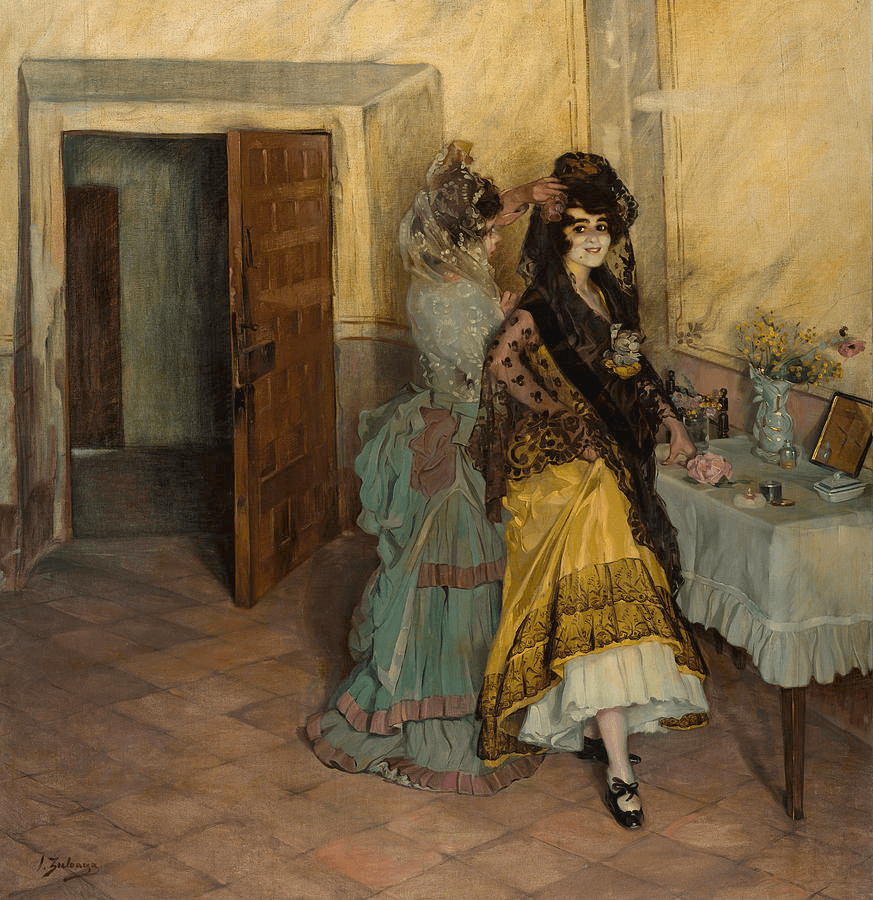


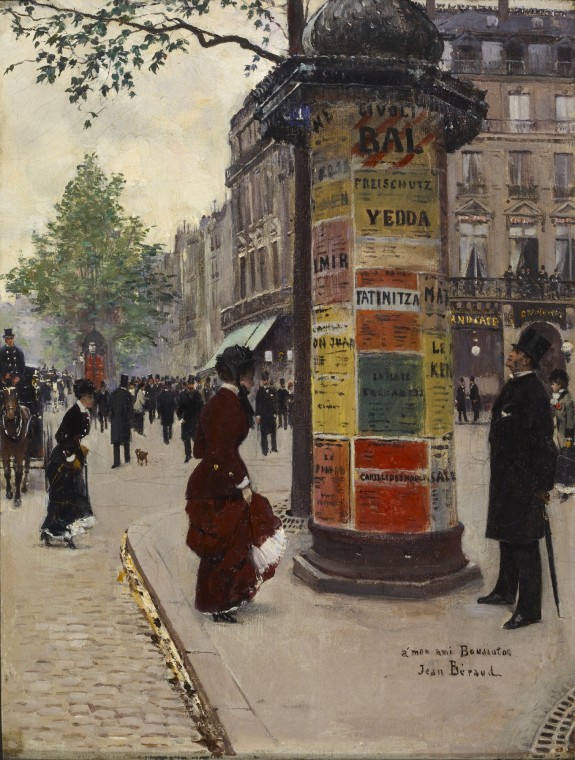
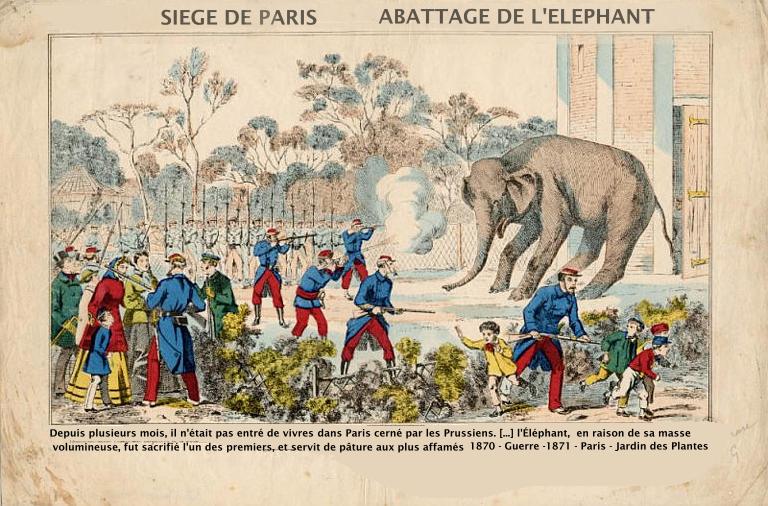


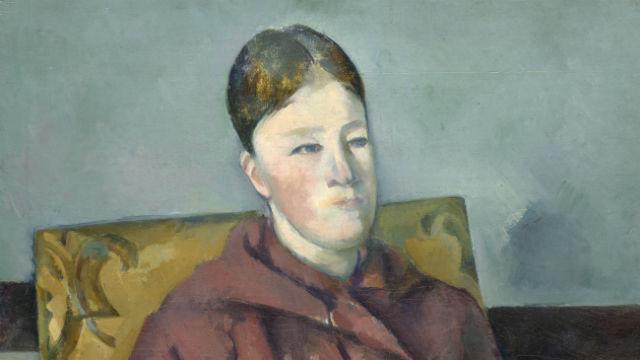
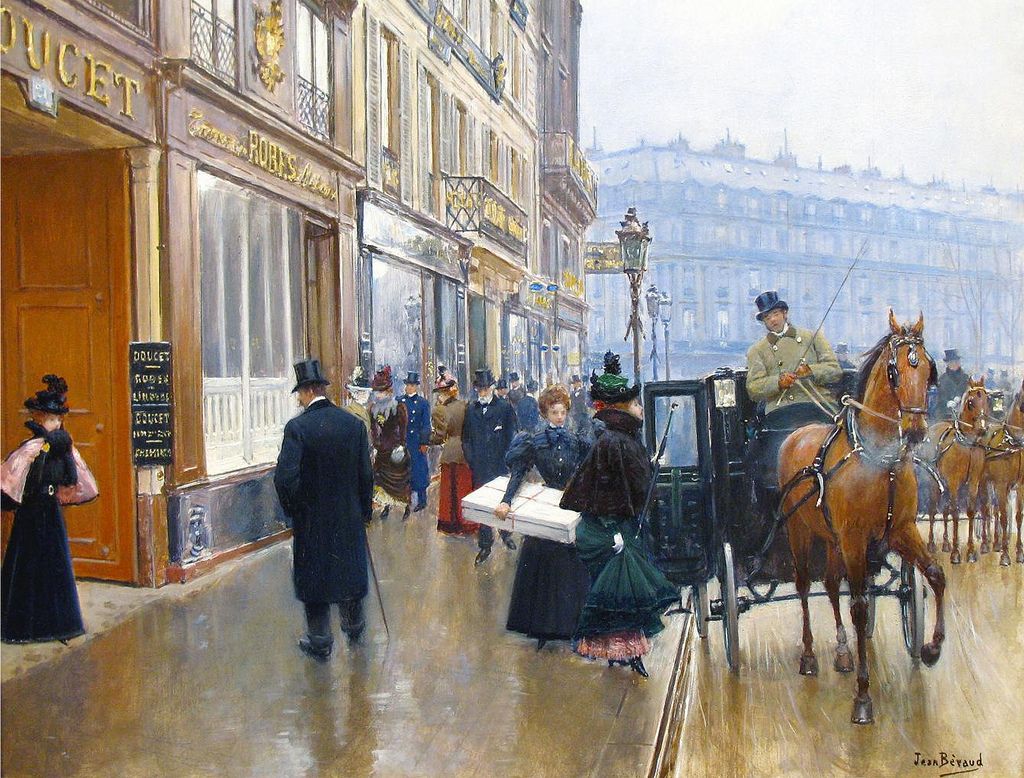
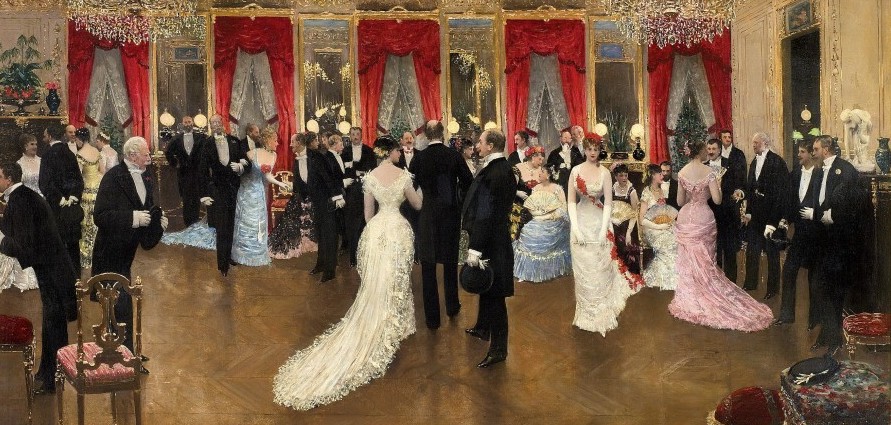
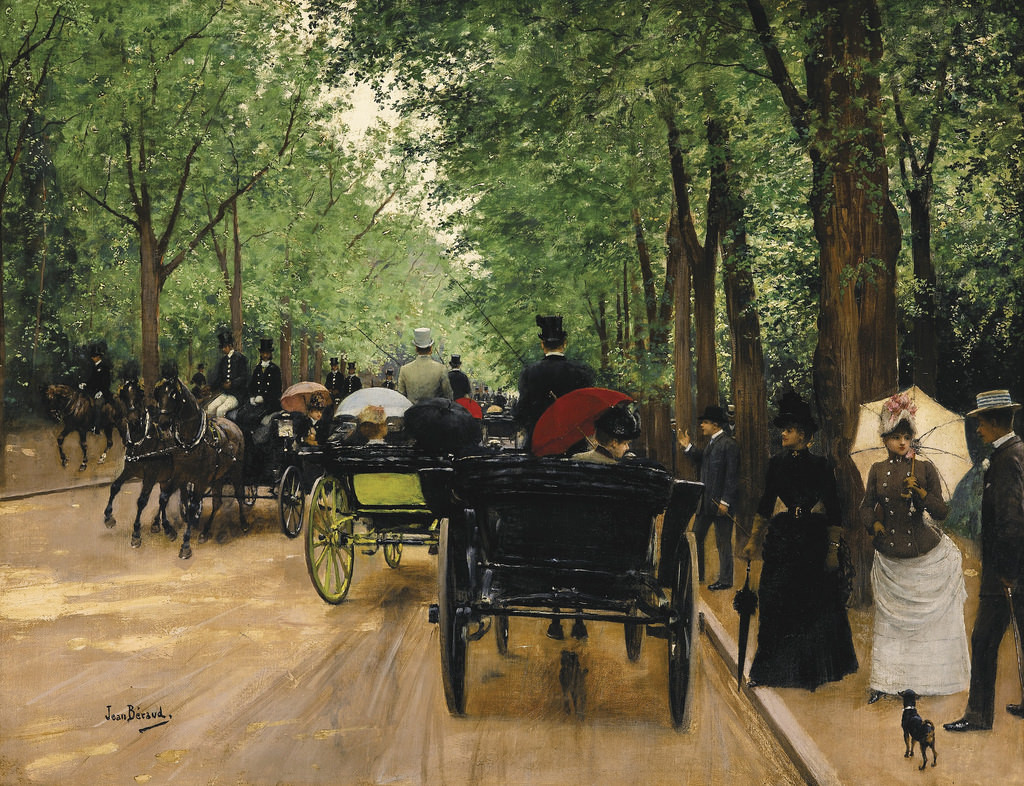


 Eiger, Mönch & Jungfrau