Anne Cohen’s Year in Reading, 2022

Today’s reflection on a year in reading, her second for the blog, is by Anne Cohen (@aecnyc). Anne is a lifelong reader (preferably stretched out on couch or bed), retired lawyer, and former reporter. She lives in New York City with part of her family and two dogs, and continues to believe that the existence of Book Twitter saves her from homicidal and other anti-social behavior.
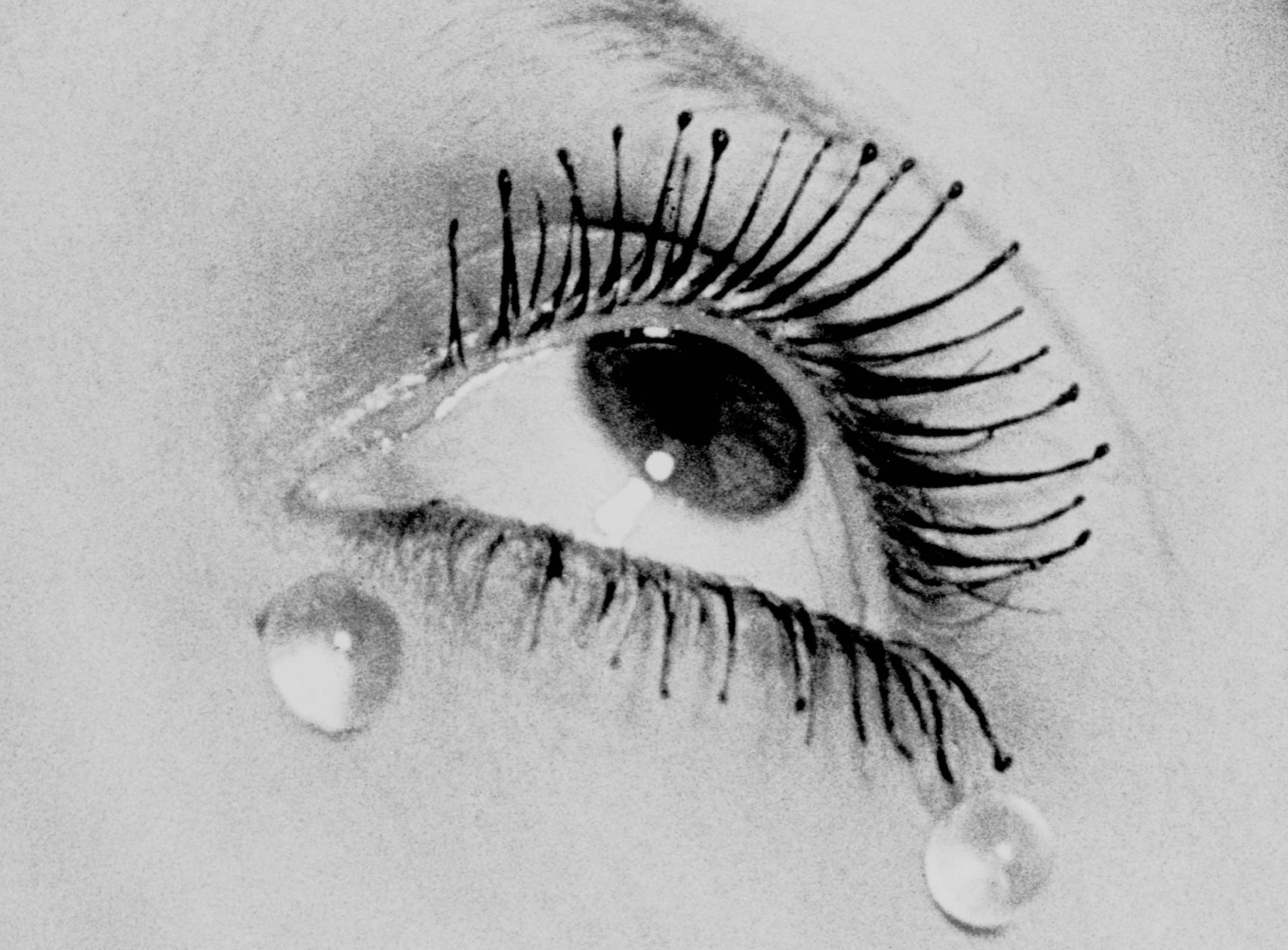
Man Ray, Glass Tears, 1932

I first got my glasses in the second grade, at almost the beginning of my reading life, and for the next 60 years, couldn’t function without them. A year ago, after repeatedly misreading price tags and after having lost several years of ophthalmologist appointments to the pandemic, I had cataract surgery in March and April, followed by several months of significant light sensitivity.

So when I looked back at my reading, I shouldn’t have been surprised (but was) that 2022 was a year of audiobooks.

These included the Anthony Trollope Barsetshire books (except Framley Parsonage, yet to be started), as well as Can You Forgive Her? and The Eustace Diamonds from the Palliser series, all read by Timothy West; Olivia Manning’s Balkan Trilogy, read by Harriet Walter; Elizabeth Gaskell, Cranford; Anne Tyler, French Braid; Amy Bloom, In Love; Fintan O’Toole, We Don’t Know Ourselves; Ferdinand Mount, Kiss Myself Goodbye; and Richard Osman, The Bullet That Missed.

Barsetshire and Palliser. Loving the Trollope was perhaps the biggest surprise of my year (or second biggest, after the realization, right after the first cataract was removed, that the trim around my bathroom mirror was actually white and not a yellowy cream). I had slogged partway through Phineas Finn for a book group several years ago and was bored stiff and, worse, annoyed.

My experience of the Barsetshire novels was entirely different, and I would often find myself grabbing print versions when I couldn’t wait to get to the rest of a chapter (and even when I already knew what happened, I still wanted to find out now how Trollope got his characters there).  

I had not expected the novels to be so wryly funny and spot on, even in apparently throwaway descriptions of barely-named characters, especially but not only members of the gentry and Parliament:

Sir Cosmo had a little party [i.e., a following] of his own in the House, consisting of four or five other respectable country gentlemen, who troubled themselves little with thinking, and who mostly had bald heads. [Ed. – The hair keeps the head warm enough to think, you see.]

Nor did I expect the characters to be so richly drawn, with even the least sympathetic of them humanly presented.

“It cannot be said that she was a bad woman, though she had in her time done an indescribable amount of evil,” Trollope writes of Mrs. Proudie, the bishop’s wife. Bad things happen in Trollope but not so much outright evil, and so his word choice here—not misfortune, or unhappiness, or even disaster—is meaningful.

But even as Trollope demonstrates this woman has been an engine of ruin in the lives of others, he also shows Mrs. Proudie’s realization that her own life is among the debris: “At the bottom of her heart she knew that she had been a bad wife. And yet she had meant to be a pattern wife! She had meant to be a good Christion; but she had so exercised her Christianity that not a soul in the world loved her, or would endure her presence if it could be avoided!”

The unapologetic havoc Mrs. Proudie causes may make her an outlier in Barsetshire, but at least so far as I’ve read all the novels are about characters coming to grips with their limitations—whether of birth (ancestry, gender, class, nationality, education, family dynamics); money (having, getting, losing, and the manner of doing either); and personal characteristics (intelligence, pride, diffidence, physical and mental health).

While I’m looking forward to finishing The Prime Minister and onward, I still find both Phineas Finn and Phineas Redux tedious and unfinishable, maybe because the books focus so completely on a single character, without the switches within a skein of stories that, for example, makes The Rev. Josiah Crawley’s continual self-abnegation in The Last Chronicle of Barset less tedious.

The Balkan and Levant Trilogies. Olivia Manning’s account of a young married-but-hardly-know-themselves-let-alone-each-other couple during World War II supposedly mirrors much of her own life, which makes one wonder about her marriage. [Ed. – She married Guy, no question.] Harriet Walter’s reading of the first trilogy (alas, she hasn’t recorded the second) is remarkable; thinking back, I had to remind myself that she voiced all the characters, who are richly drawn and deeply flawed. I enjoyed both trilogies, despite a deep desire to smack most of the characters upside the head; I even missed Prince Yakimov. [Ed. – Yaki! One of the great characters in 20th Century British literature!]

Other audiobooks. I’m a big Amy Bloom fan, especially her short stories, which I’ve always thought of as small jewels. In Love recounts her mid-life marriage to Brian Ameche, a terrific guy who develops early onset Alzheimer’s, and his determination to end his life while he’s still competent to make the decision to do so. Two points I keep turning back to—that Brian Ameche died at Dignitas in Switzerland on January 30, 2020, just before the world shut down, and that a relatively early Bloom short story is about a woman whose married lover has Parkinson’s and wants her to promise to help him die when the time comes. Bloom reads In Love herself, and it’s funny and angry and heartbreaking.

We Don’t Know Ourselves, although non-fiction, is great story-telling.  Using his own life as a hook, O’Toole goes year-by-year through recent Irish history, starting in 1958. Highly recommend.

Cranford was non-superficial fun (and led me to order Mrs. Gaskell’s letters, which I’ve not yet started); French Braid was fine if not memorable; and The Thursday Murder Club books are made for audiobook (in a good way).

Some other novels. Miriam Toews, All My Puny Sorrows (another potential trip to Dignitas, but blackly funny all the same); Barbara Comyns, Who Was Changed and Who was Dead and The Vet’s Daughter; Margery Sharp, Harlequin House (always entertaining but I don’t remember a single detail); Georgette Heyer, The Grand Sophy; Rivka Galchen, Atmospheric Conditions; Herve Le Tellier, The Anomaly; Haldor Laxness, Fish Can Sing; Nina Stibbe, One Day I Shall Astonish the World (don’t bother—sorry Dorian) [Ed. – No worries]; Gwendoline Riley, My Phantoms (well-written but sterile and mean—sorry again, DS) [Ed. – Definitely mean. Not sterile, IMO, but I get where you’re coming from]; Willa Cather, The Lost Lady; and Kate Atkinson, Shrines of Gaiety (lacks the gut punch how-did-I-miss-that moment of her best, but her “not best” beats out the best of a lot of others).

And speaking of gut punches, the best single novel of my year was probably Beyond Black by Hilary Mantel, about an overweight psychic named Alison and her relationships with others, especially her non-psychic assistant, Collette, and nasty spirit guide, Morris. (Thank you again, Backlisted.) 

There’s a lot going on here, as in much of Mantel’s work, about memory and the interplay of the living and the dead. Especially interesting were Alison’s musings about the connection of her physical size and her psychic work and whether they might echo the novelist’s sense of how her own body. “I try my best with the diets, she said to herself; but I have to house so many people. My flesh is so capacious; I am a settlement, a place of safety, a bombproof shelter.” Alison’s size is also a form of self-protection against Morris and his ilk. “What the doctors fail to realize is you need some beef, you need some heft, you need some solid substance to put up against the demons.”

This is one I’ll read again.

Mysteries. I’m always taken aback at how many mysteries I’ve read in a given year. (A lot.)

As I was finishing this, Dorian and his One Bright Book podcast colleagues were talking about how hard it sometimes can be to settle into a new novel; to become used to the rhythm of that specific universe. For me, a pleasure of mysteries, and mystery series in particular, is the absence of some of that acclimatization. [Ed. – Nicely put! Helps me see why genre fiction can be so comforting.] Mysteries are like sonnets—the typicality or transparency of their framework makes it fun to see how well a writer sets up character and plot; the bad or lazy writing can be howlingly obvious and the clever more enjoyable. [Ed. – Absolutely!]

This year, I read bunch of books by: Francis Vivian (Inspector Knollis); E. C. R. Lorac (always a treat); Margo Bennett; Brian Flynn (Anthony Bathhurst); John Dickson Carr (Gideon Fell—meh, am not a locked room person); Martin Walker (Bruno Courrèges, sadly not improving with age); Anthony Horowitz (Magpie Murders, not nearly as well-told as TV series); Christopher Bush (Ludovic Travers); Derek Miller (Sheldon Horowitz); and Rosalie Knecht (Vera Kelly). [Dorian, there’s one more, with a name a can’t remember about a gay guy in Scotland] [Ed. – Ann Cleves’s The Long Call?] [Ed. — We figured it out! Louise Welsh’s The Cutting Room!]

Two very different series stood out for me, both written from the 1930s through the 50’s: Nicholas Blake (pen name for Cecil Day-Lewis, former British Poet Laureate), featuring Oxford-educated Nigel Strangeways, and Stuart Palmer’s series featuring middle-aged school teacher “spinster” Hildegarde Withers, working with NYPD homicide Inspector Oscar Piper.  The Blake books are arguably “better” written, but the Withers are more fun, and she gains in wisdom as the books progress.  

Four Lost Ladies, published in 1949, could have been a standard bad-guy-preys-on-vulnerable women, but Palmer (in Hildegarde’s voice) imbues the story with a deeper meaning, about women who “haven’t importance enough to be missed, they haven’t any close friends or near relatives, so nothing is ever done about it.” Everything starts with a former neighbor from whom Hildegarde did not receive an annual Christmas card:

Miss Withers began absently to fold and refold her napkin. “Oscar, do you happen to know just how many lonely, middle-aged, unattached women disappear right here in this city every year?”

“Not nearly enough,” Piper answered promptly. [Ed. – Hiss, boo!]

She let that one go by. “More than three thousand, according to recent estimates by the YWCA and the Travelers Aid Society.” …

He put a breadstick in his mouth. . . .”Relax, Hildegarde. … [W]e don’t get three thousand unidentified female stiffs in the city morgues in the course of a year—no, nor a tenth that number. Almost all the ones we do get are victims of accident, disease, or suicide. No, you’re barking up the wrong tree again. Those women you’re so worried about, they probably just got bored with the big city and went home. Or else they wanted to skip out on a husband or boy-friend, or beat some bills.”

Hildegarde, no big spoiler alert necessary, of course is right. (Check out the movies made about Hildegarde and Oscar, which unfortunately don’t include Four Last Ladies; available on Internet Archive.)

Diaries, letters and memoirs. Sylvia Townsend Warner diaries and correspondence with David Garnett; James Lees-Milnes early diaries; Paul Theroux, Kingdom by The Sea; Natalia Ginzburg, Family Lexicon; and Dervla Murphy, Full Tilt, Wheels Within Wheels, and A Place Apart: Northern Ireland in 1970’s; and the first two volumes of Diary of A Wimpy Kid, which helped prepare me for my 50th high school reunion. [Ed. — !]

Diaries of Chips Channon.  Last year, I wrote about the first two volumes of the interminable but somehow addictive Diaries of Chips Channon, a snobbish, American-born, royalty-and-luxury loving, anti-almost-everyone-else Member of Parliament, who was close to power in the late 1930s and early 1940s.

In addition to an antisemitism barely tempered by knowledge of the Holocaust (to say nothing of people of color, whom he doesn’t even begin to notice), the Channon diaries are filled with hateful invective towards ‘my enemies,’ who seem to be legion.

The third and last volume was released this year, and Chips is largely unchanged, except for more frankly (but still obliquely) writing about his sex life; homosexual activity was illegal in Britain until a decade after Channon’s death, and the diaries suggest a mixture of discretion and bravado in his public conduct.
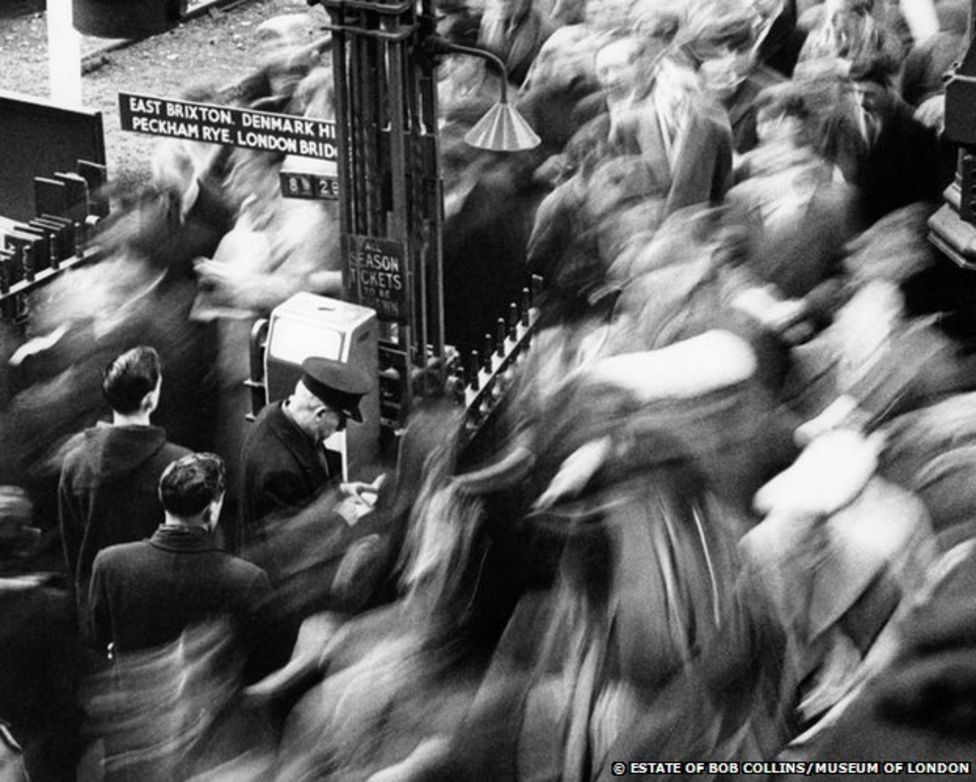
Bob Collins, The Morning Rush Hour, Victoria Station, 1960

Nella Last’s War and The Diaries of Nella Last.  Channon wrote for a posterity he assumed would be interested in the placement and menus at his dinner parties, the trinkets he gave to and received from royalty, and his conviction that Neville Chamberlain was right. 

Nella Last, on the other hand, was a housewife from the northwest of England; her diary was created in response to a request for volunteers from Mass-Observation, the groundbreaking social research project which sought information about the lives of ‘ordinary’ Britons. She could not have known her submissions to M-O would have a life beyond the study’s archive.

Reading the two in tandem was disorienting. It’s hard to believe—except for a few references by Channon to scarcity of turkeys and competent household staff and an occasional trip by train rather than in his Rolls—that he and Nella Last lived through and wrote about the same war and post-conflict austerity.

Her journals are filled with descriptions of eking out a supply of eggs or cream and the most useful cuts of whatever meat was available, of making rag dolls to sell at the Women’s Voluntary Service shop to raise Red Cross funds or to donate to local hospitals, of being unable for years of fuel rationing to make simple Sunday drives to a nearby lake.

Beyond their historical value, the diaries record someone once plagued by depression and self-doubt (“the rather retiring woman who had such headaches and used to lie down so many afternoons”) blossoming with her wartime volunteer work and with the incentive to record not just her observations of the world around her but of the changes in herself and her relationships. “After all these peaceful years, I discover I’ve a militant suffragette streak in me” and “[I] peel off the layers of ‘patience,’ ‘tact,’ ‘cheerfulness and sweetness’ that smother me like layers of unwanted clothes.” 

Nella’s tolerance for almost anything but hypocrites and bullies was particularly welcome after Channon’s spitefulness. She refused to shun unwed mothers, and while she’s not thrilled to see ‘conchies’ (conscientious objectors) on work teams who come to her volunteer canteen, she recognizes their humanity. Despite a single reference to “the ‘Jewish’ stamp’” of dresses gotten off-coupon while clothes were rationed, she describes her religion as “a mixture of wishful thinking and nature worship and a stern belief that God is Jewish” [Ed. — !]  and is “astonished at the mistrust and real hatred of Jews, in quite ordinary men on the street.” 

Nella was also aware of, and abashed by, what she recognized as her own biases. The local medical community includes several Africans, and she is surprised but pleased to see “chummy” interaction among the nurses of different backgrounds, “as if colour and race were one.” But after a pleasant chat on the street with one of the African nurses, who knows Nella from her hospital volunteer work, “my little happy feeling seemed to sour” at the sight of the white wife and biracial children of the local African eye doctor:

“Whatever the views I hold of ‘some day, one colour, one creed,’ the sight of half-caste children seems to strike at something deep down in me. I say I’ve no ‘colour bar,’ but wonder if I’ve a very deep rooted one. I could work with coloured people, enjoy their society, attend their wants in canteen, fully admit them to positions of trust and service, but know, finally, I’d have died before I could have married one, or borne coloured children. So perhaps I have a colour bar.” [Ed. – Oof, impressive attempt at self-knowledge; also, gross.]

I hope—wherever she is—that she’s not appalled at being read so intently; I would have liked the chance to know her better. [Ed. – A woman worth knowing. Just like you, Anne. Thanks!]
What I Read, November 2022

Did you miss me? Been far too long. Tough semester—they’re all tough, but any semester with extra administrative duties is especially gross—and I couldn’t make time for blogging. I hope to catch up; I’ll start with last month since I can still remember a few things about it. The whole family was laid up with a nasty virus (not that one, apparently) for the first couple of weeks; thank goodness Thanksgiving was even more restorative than usual. Here’s what I read, mostly in moments carved out from the press of things.

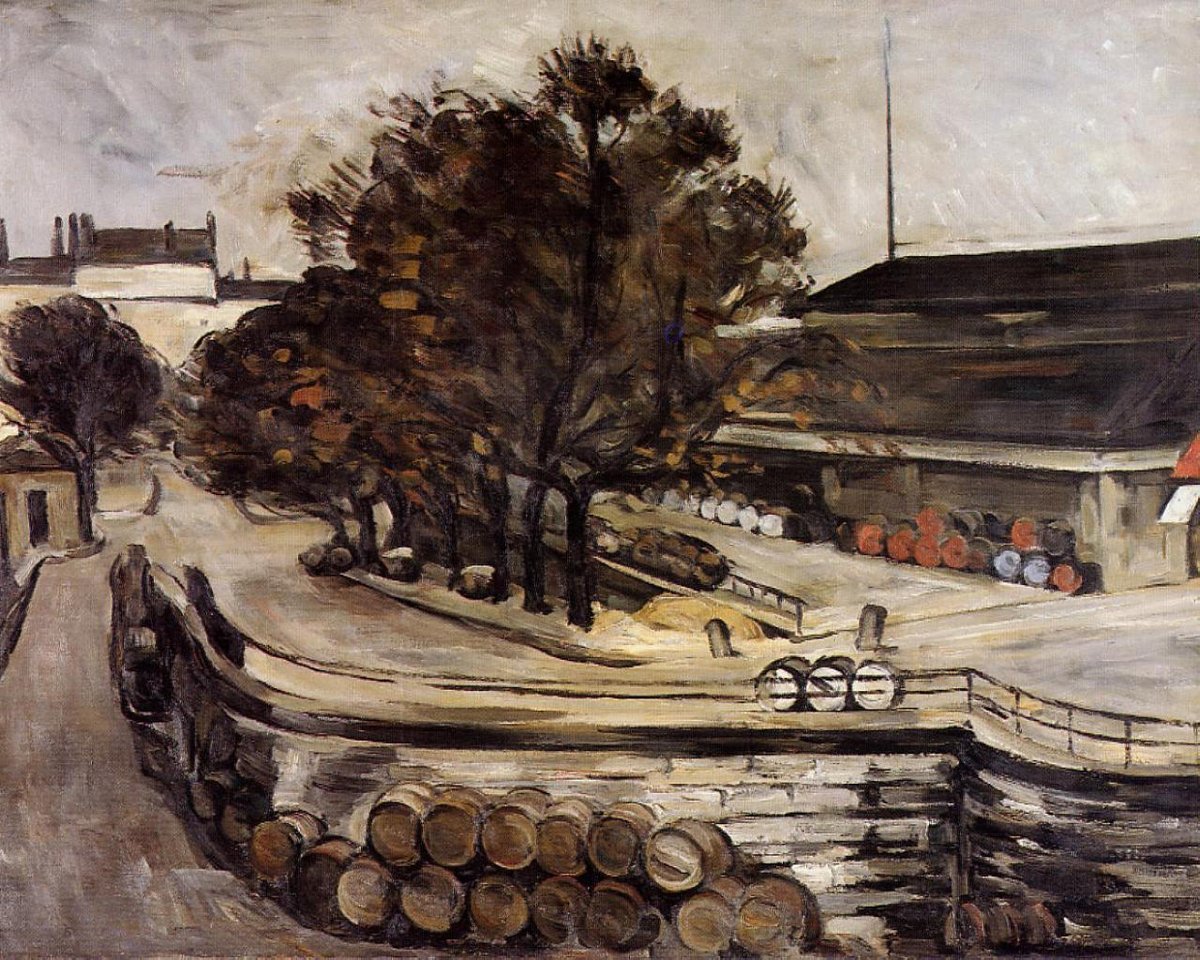
Paul Cézanne, The Wine Market at Jussieu, 1872

Louise Welsh, The Second Cut (2022)

Twenty years ago I chanced on Welsh’s first novel, The Cutting Room. Its hero Rilke (first name, last name, who knows) trawls Glasgow and environs, clearing out houses for an auction house, looking for gold among the dross. The gold in that book was a cache of old pornography, including photos that seemed to show a terrible crime. Half unwittingly, half enthralled (in this regard, a figure for all readers of crime fiction), Rilke plays detective and gets in over his head. He’s saved not only by his eye, but by his equanimity, which takes the form of coldness, as much to himself as others. (This thoughtful Guardian review calls him “alternately steely and compassionate.”)

The Cutting Room could have been the start of a series, but Welsh admirably moved on to other things. Her interest in genre has always been interestingly glancing. (I enjoyed her Plague Trilogy.) But she must have kept Rilke in mind, because here he is, twenty years older, hanging on to the fringes of a city that’s changed a lot (the aging trannies of the first book have been replaced by self-aware, if, to Rilke’s eyes, alarmingly naïve non-binary and trans kids). Unsurprisingly, he stumbles into another crime, pleasingly complicated, almost but not quite preposterous. The Second Cut is a sadder book than its predecessor, especially in its depiction of gay sex in the age of Grindr. Middle-aged, Rilke isn’t as desirable as he was. In one scene, he arrives at a man’s flat, only to be turned away after a moment’s inspection with the heartrending assessment: “No, I don’t think so.”

A sad book, yes, but a good one. I was damn sick the whole time I was reading this book, but that didn’t make a whit of difference. Loved it.

Elmore Leonard, Riding the Rap (1995)

Last month I decided it would be fun to listen to some Elmore Leonard, a writer I’ve somehow never read before. The library didn’t have much to choose from, so I went with Pronto, which concerns Harry Arno, a Miami bookie who decides to retire in Italy, home of his ancestors and site of his WWII service. When I say “decides” I don’t mean he’s settling into his sunset years after long reflection. I mean he has to get the hell out of town because his mobster boss has discovered he’s been skimming for decades. Complications ensure, natch, some of which are centered on US Marshall Raylan Givens, a seeming hayseed who is in fact damn competent, except when it comes to Harry, who gave him the slip twice before. Raylan is still sore about it, and decides he’ll follow Harry to Italy to bring him back, despite having no jurisdiction there. Pronto was enough fun that I continued with the second book, in which the two men, having reached détente, are brought together again when Harry is kidnapped by an addled former client.

Riding the Rap is weaker: misogynist and tonally unstable (the previous book was too, but there Leonard swerved between violence and comedy with flair). Haven’t felt compelled to listen to the last book in what is known as the Raylan Givens trilogy. Leonard fans, what are some actually good books of his?

Julietta Singh, The Breaks (2021)

Dreadful, eye-rolling stuff that I hate-read with grim, perverse satisfaction. Singh, a Canadian academic who came to the US to study Comparative Literature and now teaches in the American South (huh, who does that sound like?), has written one of those essayistic-memoir-hybrid-type things that are so big now, and that I often like, in fact even aspire to write, sort of. My response is at least in part a bad case of envy. Narcissism of small differences much? But Singh is so self-righteousness that she ruins what is objectively interesting material: she grew up a mixed-race brown kid in Winnipeg at a time when that was even harder to do than it is today; her parents were social justice warriors who cared more for others than for kin (not quite Mrs. Jellybelly-level, but you get the idea); and she’s formed a queer family with the father of her child, with whom she lives in a modified duplex, together apart. (The father is white; Singh wrestles with her own ambivalence: as a child she wanted to be white; she doesn’t want that wanting for her daughter, etc.) As I say, lots to think about here. But the child—to whom the book is addressed, in awkward second-person—is too precious, too loving and kind and special. Or maybe she is all of these things, I’m ready to believe it, most six-year-olds are pretty great, but Singh is precious about her. Get a load of her rhapsodizing over a Thanksgiving art project (the kid has sculpted a Powhatan village out of fruit):

The Powhatan people are represented by banana slices, and apple skins make up their shelters. Off to the side of the village, you have crafted colonial ships by slicing kiwis in half, gutting their insides, and attaching the skins to the little fruit boats to serve as sails. You have created rough waters out of banana peels, and a wall of carved-apple manatees that surrounds the kiwi ships on three sides.

Colonial ships? Just wait. After the description comes the analysis:

I am blown away to witness this art-making against the state, this anticolonial fruit installation that is also a fantasy of organically reversing history. What I love most is that in your historical revisioning, you move us beyond the subjugated histories of Indigenous resistance to colonial force. Instead, you turn your attention to the sea, letting it emerge as an actor in the opposition to the colonial mission. Your artwork veers me away from the anthropocentric position, carefully and imaginatively invoking what the earth might itself desire.

Seriously??? I think she is, though. I see no irony here, nor anywhere else in the book. I should have laughed at that last paragraph—sounds like comments on a particularly precious undergraduate thesis—but instead I was infuriated. And that’s on me. Anyway, hard pass.

Minae Mizumura, Inheritance from Mother (2012) Trans. Janet Winters Carpenter (2016)

At the beginning of this wonderful novel, Mitsuki Katsura’s mother, the stylish and dramatic, but irresponsible, even hatefu Noriko, is fading fast. After several falls leading to broken bones she agrees to go into a nursing home. But even so the burden of care falls on Mitsuki, even though her sister, Natsuki, could help, too. The latter, a musician, is kind enough but unwilling or unable to do more than the minimum. Given the book’s title, it won’t spoil much to say that before long Noriko dies, leaving a medium sized inheritance that means nothing to Natsuki, who married into money, but everything to Mitsuki—especially since she discovers her husband has been having an affair, and she needs to make some decisions.

Deciding what her future will be like entails a lot of looking back for Mitsuki. Inheritance is, unsurprisingly, as much metaphorical as literal in this book. There’s a lot of unfaithfulness in the family—it runs through the generations as if it were hereditary. Mitsuki’s grandfather left her grandmother for another woman; her mother, Noriko, fell in love with a man deemed unsuitable and from whom she was separated by her family, only to later separate her own family when she left her husband, Mitsuki’s father, for her dance instructor. To what extent is Mitsuki bound by the tendencies of her family? To what degree is she her own person? Mizumura pursues these big questions through her eventful but never cluttered plot.

The book was published serially, and was written, Mizumura explains in a note at the beginning, in homage to late 19th/early 20th serialized novels, especially Ozaki Koyo’s The Golden Demon (1893), which I do not know at all, other than what I glean from Mizumura’s references. No surprise that Noriko, an Emma Bovary type, identifies strongly with the book. Mitsuki, who had the chance to translate Flaubert’s novel, but was discouraged by her husband, loves novels in more removed fashion, as befits someone who translates for a living. Is being removed the same as being measured? This is another of the book’s questions.

I’ve said this to a few people now, but Inheritance seems to me an extremely middle-aged book. And I don’t mean that as a criticism. Its concerns—how to care for aging parents while recognizing one’s anger, guilt, sadness and fear; how to maintain a standard of living through life changes and dwindling employment opportunities; how to grasp second chances when they arise—are those of many middle-aged people. I might have liked this book twenty-five years ago, but now, well, now I felt seen by it, as they say.

Mizumura’s A True Novel was my favourite book of 2021. Inheritance from Mother might not top this year’s list, which is pretty much sewn up by an earlier Japanese novel, one referenced here, in fact, Tanizaki’s The Makioka Sisters, but it’s up there. Mizumura really does it for me, and I’m a bit sad that I’ve got so little of her left to read.

E. C. R. Lorac, These Names Make Clues (1937)

They like the zany house parties in these golden age crime novels, don’t they? Here a publisher brings together friends and luminaries, gives them false identities and a series of cryptic crossword-type puzzles, and sets them against each other. His coup is getting his friend Inspector MacDonald to attend, despite much grumbling: the idea is to see who is cleverer, the writers (most of whom are mystery novelists) or the policeman. MacDonald knows a set up when he sees it, but good thing he came along, because in the middle of the evening the power cuts out and next thing you know one of the guests is dead. (Gasp!) Turns out plenty of folks had a motive. (Shocking!) The solution is overly-ingenious in that Dorothy Sayers way, but this was still good if forgettable fun.

Alejandro Zambra, The Private Lives of Trees (2007) Trans. Megan McDowell (2010)

Took this off the shelf because I’ve been going through my books, looking to see what I can purge, and I figured it was short enough that if I read a few pages I’d have a pretty good idea if I wanted to keep it. And then I just kept going, forgetting the book even as I was reading it. A man waits for his wife to come home one evening. As the hour gets later he remembers meeting her, tries to ignore his fear that she might be deceiving him, and imagines what life would be like if he had to raise her daughter from her first marriage, whom he has tucked into bed earlier that evening. (The precious title comes from a long-running bedtime story.) The relationship between the man and the little girl is the nicest bit of the book, which otherwise fails to hit either the ominous or whimsical notes it unaccountably aims to swing between. Not for me.

Kate Beaton, Ducks: Two Years in the Oil Sands (2022)

I chose this graphic memoir of a young woman’s time in the oil fields of northern Alberta in the early 2000s for the November episode of One Bright Books. Check it out, because we had a lot of smart things to say about it. I even added a few thoughts about how it resonated for me personally, as an Albertan who spent formative years in Nova Scotia (the reverse trip to Beaton’s, though I’m ten years older). I’d like my family members and friends who work in the oil patch (mostly in corporate jobs, or adjacent fields) to read this book, though I doubt they will. Beaton is even-handed but damning: the work of extracting resources from the earth on industrial scale destroys people and land equally. Damaged people don’t always hurt others, but they often do. Beaton was certainly hurt. She tells this story with humour, warmth, and matter-of-fact conviction. (She is everything Singh is not.) Fittingly, her artwork is restrained, even sober, but not afraid of being lyrical. Amazing how gorgeous her drawings are despite the absence of colour. It’s on all the end-of-year lists for a reason.

Tabitha Lasley, Sea State (2021)

“Sea state” is the condition of an ocean’s surface (roiling, calm); it creates coastal weather conditions that can ground the men who work the North Sea drilling platforms onshore (or worse, offshore, eating into their leave) for days at a time. In Tabitha Lasley’s memoir, sea state additionally refers to the emotional whiplash those men feel when they come back to their lives, to responsibilities in homes they’re strangers to, to wives and children who barely recognize them. The book started, Lasley explains, as a portrait of these men and the dangerous work they do. She talked to more than a hundred workers, mostly in Aberdeen, where she moved after her life down south went up in flames. Bits of these interviews appear in the book. But mostly the book is about what happened to Lasley shortly after she started the project: she fell into an affair with one of the riggers, a man she calls Caden, a relationship as thrilling and pointless and dreary as all affairs. Reviewers use the world “reckless” to describe Lasley—and she does a lot of things that put her at risk. Yet that she should even be at risk is an indictment of the stunted, even vicious emotional economy of the oil industry, which is primed to create toxic masculinity in its workers.

I’d had Sea State sitting around the house for a while, but wasn’t prompted to read it until finishing Ducks. Beaton’s is the better book—clearer on the work itself, more self-aware of its creator’s feelings—but they pair so interestingly. Even more than the oil sands of Alberta, which at least are surrounded by vast boreal forest, the North Sea rigs are isolated and claustrophobic. As one of Lasley’s interviewees puts it:

A platform, he said, was like a pressure cooker. There were quantities of oil and gas on board, a cache you could never forger, since the fumes hung over the platform, got sucked into the HVAC and pumped into the cabins, so you woke up with a sore head and a churning stomach. The calm, flat days were the worst, since there was no breeze to carry them away.

More than that, the human element felt explosive. A hundred men of varying temperaments, trapped together in a steel box, miles from land … The cabins were small. The bunks were narrow. The rec room was twenty foot by twenty foot. Your quality of life was contingent on everyone observing a few tiny courtesies: wipe your spit off the taps when you clean your teeth; mop your piss off the toilet seat; rinse your stubble away, don’t leave it in a grimy ring around the sink; check with your cellmate whether he wants the late or early shower, then give him an hour alone afterward … Grievances that simmered over two weeks would come to a rolling boil, given three.

I like the parallelism of that sentence describing the courtesies these men must try to observe, pleasing in itself and for the way the man’s voice rises up into Lasley’s. Worth reading.

Georges Simenon, Maigret Goes to School (1954) Trans. Linda Coverdale (2017)

Good one. As in The Saint-Fiacre Affair, the case leads Maigret to recall his childhood, as he descends on a village near La Rochelle not so different from the one he grew up in. The former postmistress has been murdered; she was a piece of work, filled with hate and other people’s secrets. (Shades of Le Corbeau.) Maigret is caught up in the case when the prime suspect, the local school teacher, importantly not a local, flees to Paris and installs himself in Maigret’s office until the detective agrees, despite himself, to help the man avoid the worst. Everything hinges on a schoolboy’s testimony, and as always Maigret is good with the kids.

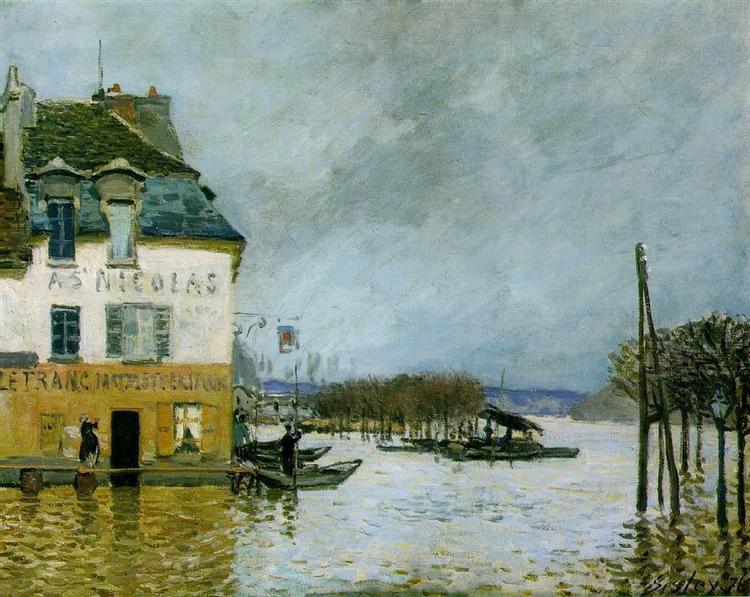
Alfred Sisley, The Flood at Port-Marley, 1878

There you have it. When I write about my December reading I can tell you about the big book I spent most of the last week of November reading. Guesses welcome below! More soon.

Anne Cohen’s Year in Reading, 2021

Today’s reflection on a year in reading is by Anne Cohen (@aecnyc). Anne is a lifelong reader (preferably stretched out on couch or bed), retired lawyer, and former reporter. She lives in New York City with part of her family and two dogs and is firmly convinced that Book Twitter saved her from homicidal behavior in 2021.

Look for more reflections from a wonderful assortment of readers every day this week. Remember, you can always add your thoughts to the mix. Just let me know, either in the comments or on Twitter (@ds228).

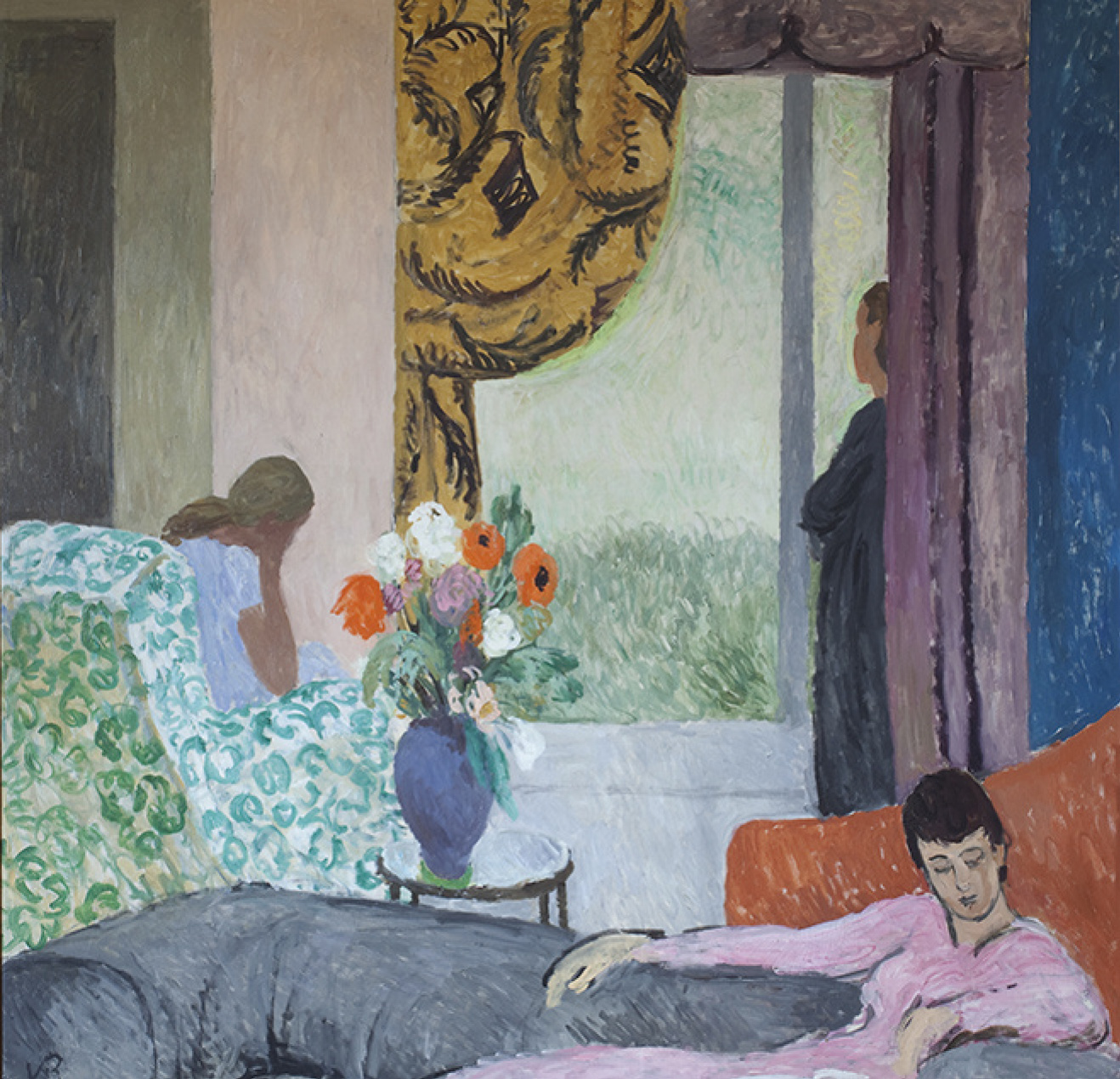
Vanessa Bell, In the Other Room (late 1930s)

Most beautifully-written book: Transit of Venus by Shirley Hazzard was the most exquisitely-written novel I read in 2021 but also one of the most frustrating. It was as if the plot and the characters were unworthy of the prose. 

Am trying avoid spoilers, but the coyness of the last page infuriated me and even drove me to the internet for clarification.  “WTF” endings don’t bother me; reader and narrator of The Sense of an Ending share the same information and deluded memories and are equally gobsmacked at the conclusion, and Kate Atkinson, whose A God in Ruins had a similarly tricksy ending, is a master of showing but not telling. Although the language was gorgeous, the last paragraph of Transit felt cheap.

(You still should read it.)

Second most beautifully-written book: Daddy’s Gone A’Hunting written by Penelope Mortimer and published in 1958 was also the most frightening book I read this year. Daddy is the story of Ruth, an upper-middle-class woman in her late 30’s trying to navigate the potential termination of her college-age daughter’s pregnancy (whose pre-marital conception was the impetus for Ruth’s own marriage).

The scary part was not just the ordinary shivers of recognition present in most good novels about families. Perhaps it is a function of my age and gender—Daddy and I were both born in the middle of the baby boom—but I was horrified by the sight of Ruth, already feeling old at 38!, being shamed as she searched for a physician who might be willing to terminate the pregnancy on behalf of her clueless and nasty daughter. 

This year, I also read Mortimer’s biography of the Queen Mother, which is not scary, and her first volume of memoirs, About Time, which has as a central character her impious cleric father. (Maybe read it as a double feature with Priestdaddy.)  I recently located a copy of her second volume, About Time Too, and it’s on my TBR stack.

Other wonderful fiction: Cathedral, by Ben Hopkins, hasn’t gotten as much attention as it deserves.  I can’t get into The Constant Nymph, but Margaret Kennedy’s The Feast was enormous fun, beautifully written, and (spoiler alert) the right people survive; I also enjoyed her contemporaneous account of the early days of World War II, Where Stands a Winged Sentry, a country companion of sorts to a similar book about London read last year, Chelsea Concerto, by Frances FlavellDaisy and The Six made me laugh when I was sick.

Lolly Willowes entranced me [Ed. – Paging Frances Evangelista!], as did both Scenes From Childhood, Sylvia Townsend Warner’s memoir and her collected letters. (Have not yet finished The Corner that Held Them or Summer Will Show.)

Also read and liked Cassandra at the Wedding by Dorothy Baker, The Tortoise and the Hare by Elizabeth Jenkins, A Month in the Country, by J.L. Carr and several pieces of fiction by Tove Jansson. I was thrilled by parts of Gerard Reve’s The Evenings and wondered when other sections would end, which may have been the sensation the author intended.   

Molly Keane’s Good Behaviour offered an instructive counterpoint to Transit: annoying characters, obsessive conduct, and an ending that made me want to go back to the beginning, but without feeling as if I’d been snookered along the way.

Not fiction but an elegant presentation of how an interesting woman’s actual life was commandeered by fiction and biography: The True History of the First Mrs. Meredith by Diane Johnson.

Biggest project of the year: Diaries and letters have always fascinated me and taken up significant space shelf. Their proportion in my reading diet has increased over the last 22 months, as I’m comforted by the notion that their authors didn’t know what was going to happen to them any more than we do now. [Ed. – Nicely put!]

Someone who was often wrong about the future was Henry “Chips” Channon, an American-born writer, pal of the rich, royal and merely titled from his late teens onward, member of the British Parliament, and from 1938 to 1941 a senior cabinet aide in the Foreign Office. The first two volumes (total 2000+ pages) of his unexpurgated diaries were published in 2021 and edited brilliantly by Simon Hefner, whose dazzling footnotes include some tart asides and everyone’s courtesy titles.

“Chips” knew everyone, and everyone appears in the diaries. He was a wrong-headed bigot, a sniveling acolyte of Neville Chamberlain, a toady to almost anyone with a royal title, and a nasty, insecure, self-important snob, who occasionally recognized his reputation as a well-connected lightweight. 

What makes the diaries worth £35 each plus postage to the States is the astonishing range of Channon’s access and the detail of his descriptions— his failing marriage to a rich and titled woman, who left him for a horse dealer; events, including his dinner for Edward VIII, and Mrs. Simpson a month before the abdication; his crushes on a series of other well-connected men and his schemes to marry them off to “suitable” women; changes in society during the war, including his mother-in-law (“the richest woman in England”) doing without a cook; and the perfidy of his enemies of the moment. [Ed. – Ok, that sounds really good.]

My fascination with these books is more than historical. As someone who annually orders but doesn’t always use a big Smythson daybook, I’m reluctantly moved by dogged if not heroic maintenance of a diary for decades and even more by the willingness to write down so much of one’s deepest and often foolish feelings in real time. 

A year for letters: Love From Nancy: The Letters of Nancy Mitford; The Letters of Nancy Mitford and Evelyn Waugh; Letters from Tove [Jansson]; Letters of Sylvia Townsend Warner; Letters of E.B. White; and A Whole World: Letters From James Merrill.

Not surprisingly, there were many connections among Channon, Mitford and Waugh, who lived in a small world they thought was the whole.  

But other connections were less expected—the Merrill letters were terrific, and not just because his frequently-mentioned mother and daughter Connecticut neighbors were novelist Grace Zaring Stone and Eleanor Stone Perenyi, author of both More Was Lost [Ed. – A long-time EMJ favourite!] and Green Thoughts: A Writer in The Garden, which I’d consulted only days before about dahlias.

The best connection came when I was alternating books—Hermione Lee’s biography of Willa Cather and the E. B. White letters—and suddenly realized the same “character” appeared in both: Cather’s good friend Elizabeth Sargent was also White’s sister-in-law Elsie, older sister of New Yorker editor and garden writer Katherine White. [Ed. — !]

Mysteries: Spine for spine, I probably read mysteries more than other category and can inhale a whole series of 10-15 books in a week. (Hey, I’m retired and read fast.) [Ed. – Goals!] This year, in addition to rereading half a dozen of Simenon’s Maigret books and the first few chapters of Busman’s Honeymoon, and adding to my list of books by E. C. R. Lorac, John Rhode, and Patricia Wentworth, I was introduced to Jane Haddam’s Gregor Demarkian, Craig Rice’s John Malone and pals, Delano Ames’s Jane and Dagobert Brown, and Elizabeth Daly’s Henry Gamadge.

Of these my favorite was probably the last, not for the quality of the story or the story-telling, but for the flavor of New York City in the early 1940s and the depiction of people for whom the world had changed since the turn of the century. Part of my attraction to mysteries, and especially those of the “Golden Age,” is the way they incidentally reflect the details of their time, whether clothes, food, manners, or relationships.  

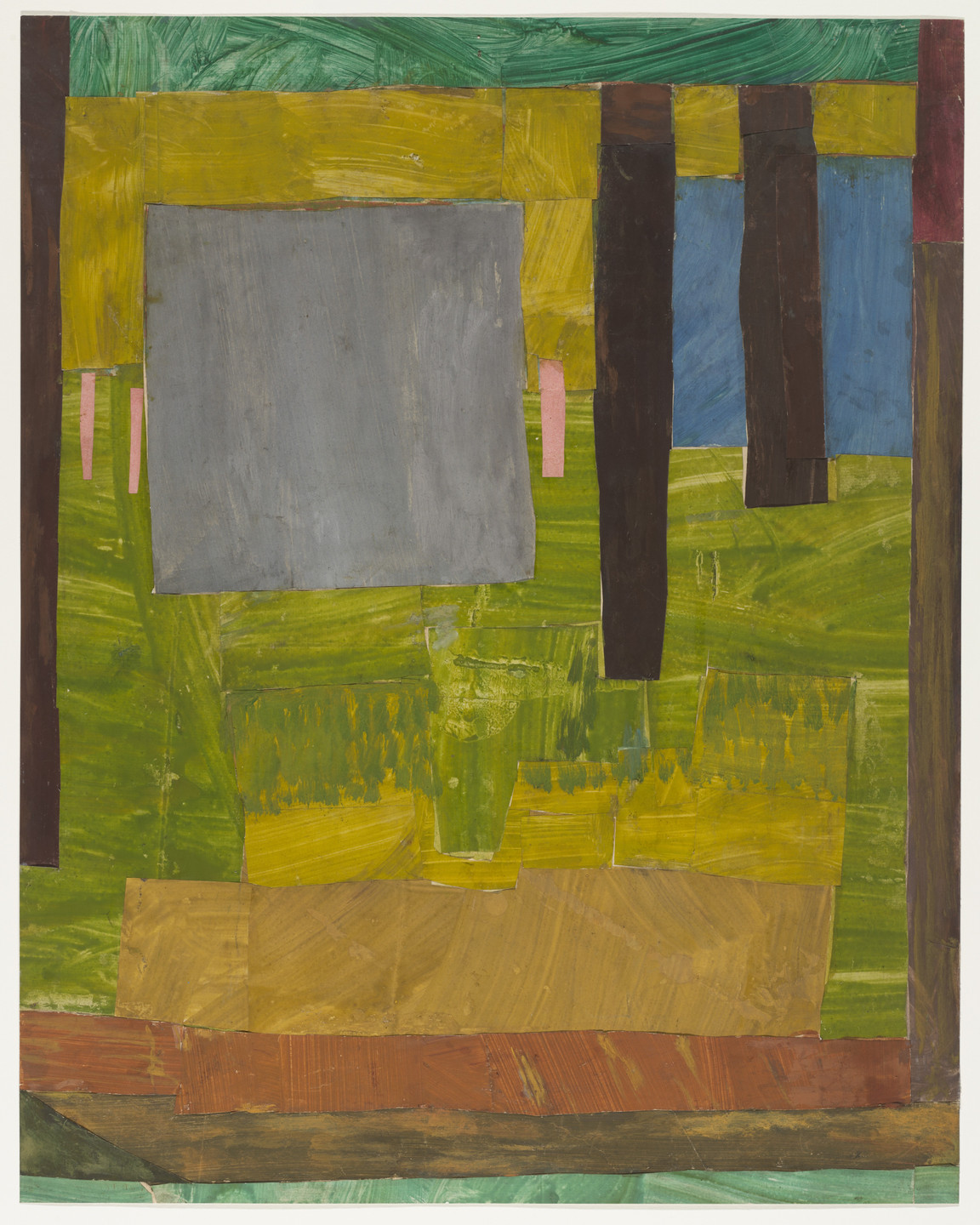
Vanessa Bell, Composition, ca. 1914

Audiobooks: I’m not snobbish about the idea of audiobooks but I’m picky about both the sound of the voice generally and the rightness of it for a specific work. These are obviously very subjective criteria; most people were probably thrilled by Patti Smith’s reading of Just Kids but I ripped off my headphones during the foreword. 

I read quickly, sometimes too quickly (see possible explanation for my reaction to Transit of Venus), and so have been fascinated by my reaction to hearing books I’ve previously read. Listening to The Age of Innocence made me much more aware of Wharton’s humor and devastating nuance.  

Some books—like The Thursday Murder Club—can be aural candy, perfect for walking the dogs; this is not a put down, at least from me. It’s also when I listen to the Backlisted podcast, whose fingerprints are all over this list. 

What I Didn’t/Haven’t Finished: There are mystery tropes I can’t abide (especially the protagonist as suspect), and if one of those sneaks by my “blurb” filter, I’ll let it go. [Ed. – Almost as bad as “investigator’s loved one in danger”…]  

Books not finished in 2021 but still open are Hamnet (and I loved I AM I AM I AM), as well as Klara and the Sun, Our Spoons Came From Woolworth’s, Shuggie Bain, and Mrs. Palfrey at the Claremont. I couldn’t get into Adam Thorpe’s 1921, which broke my heart, because his work is so varied and usually so very good. 

Best reading experience: Not the “best” book or the most interesting or important—but an almost out-of-body moment late one night propped up in bed with the five-book Percy Jackson series, which I’m reading along with an 11-year-old friend. 

The apartment was quiet. Maybe it was Percy’s adolescent demi-god angst, but for a sudden moment, I was in my childhood bedroom, trying not to wake up my sister and hearing my father’s voice at the door, telling me to go to sleep.  Sam died almost 25 years ago, and it was nice to have him back for that instant.

June 2019 in Review

Kid in day camp; working from home; weather more than tolerable for Little Rock summer: June was a pretty big reading month. Some work stuff, but a few other things too, including a satisfying run of Esther Freud novels.

D7uybHXW4AAs-if

Dorothy Sayers, Have his Carcase (1932) The opening line kills, and I loved seeing the development of Wimsey and Vane’s relationship, but I do find Sayers a bit frivolous. That’s the point, I get it, I’m just starting to think I’m not the right reader for these books. All the code-breaking stuff went right over my head. I guess I am more for suspense than puzzles. Better as a romance than a crime novel. Rohan’s review is unimprovable.

Peter Gay, My German Question: Growing Up in Nazi Berlin (1998) I owe this recommendation to Alok (@alokranj): a while ago, he wrote up a great thread on memoirs by German historians. Very glad I read this, even if I did find it a bit oh I don’t know withholding maybe. Born Peter Fröhlich in Berlin to assimilated Jewish parents, Gay (the name he took after emigrating to America: frölich means happy or cheerful) went on to become a prominent historian of 19th Century Europe and, in particular, psychoanalysis. I like psychoanalysis much more than the average person, but I wished Gay’s interpretations of his own behaviour wasn’t quite so orthodox. He’s much less interesting than Freud himself (which makes me wonder about his biography of Freud, generally, I believe, considered his masterpiece). Anyway, Gay’s is a fascinating story, and his eventual escape from Germany is hair-raising (the family made it out very late, in 1939, first to Cuba and then to America, thanks to the support of a paternal uncle who lived in Florida). They were booked on the infamous St. Louis (the ship that was not allowed to dock in Havana, that FDR refused to give sanctuary to, and that had to return to Europe), but his father had something like a premonition and found a way to get on an earlier ship. Gay spends a lot of time combating the accusation that German Jews of his milieu should have known better and left earlier (a ridiculous contention, and one that’s largely abated, but hasn’t completely vanished). Anyway, I’m not sure I’m in love with Gay as he presents himself (a little pompous), but I’d have enjoyed this even if I hadn’t been reading it for work.

Esther Freud, Summer at Gaglow (1997) The UK edition is called simply Gaglow, a weirder, better title. Gaglow is a house in Germany  . The first of Freud’s novels with a dual narrative, Gaglow switches between two generations of a family, one around the time of WWI and the other in contemporary London. The protagonist in the present is having her first baby; ostensibly she’s an actress, but she’s not especially committed to it. To make ends meet she sits for her father, a famous painter clearly modelled on Freud’s own father, Lucian. (Freud sat for him in her younger days.) Gaglow is the Bellgards beloved summer home. Or it was: as they are Jewish it was eventually taken from them; in the post-unification present, the house may return to the family. Freud’s themes of belonging and transience are evident here, explored on her widest canvas yet. Very satisfying.

Anthony Horowitz, The Sentence is Death (2018) Clever and amusing, but not as clever and amusing as The Word is Murder.

Esther Freud, The Wild (2000) We’re back in Hideous Kinky/Peerless Flats territory, with more children caught between absent fathers and overwhelmed mothers, with the added interest of complicated blended family dynamics and an amusing portrait of a 1970s Steiner school, where the only subject seems to be Norse mythology. Freud’s up to her classic “this is funny but also you will have your heart in your mouth because surely something terrible is about to happen” shtick. (That’s a compliment.) I don’t think this was ever published in the US, and that’s a damn shame.

David E. Fishman, The Book Smugglers: Partisans, Poets, and the Race to Save Jewish Treasures from the Nazis (2017) A study of the so-called Paper Brigade, a Jewish work commando tasked by the Nazis to sort through the precious manuscripts of Vilna, Lithuania, once known as “the Jerusalem of the North.” The Nazis wanted material for their planned museum of murdered Jewry; they pulped the rest. At great personal risk, members of the Brigade smuggled documents into hiding in the hopes they would survive the war; surprisingly, some did. One of the remarkable people conscripted into this heartbreaking work was Avrom Sutzkever, probably the greatest Yiddish poet of the 20th Century. Although Fishman’s style sometimes grates, the material is fascinating, and gave me some ideas about the comparison of people to written documents that I’ll try to work out in a future post.

María Gainza, Optic Nerve (2014) Trans. Thomas Bunstead (2019) What a pleasant surprise! I’ve wanted for some time to become better versed in the recent tidal wave of Spanish-language writing, especially from Central and South America, but haven’t really known where to start. I’ve no idea what Spanish-language literary traditions Gainza fits into, if any (she reminded me of Sebald/Berger/Bernard—autofiction-y writers who are smart about art), but I was completely taken with these quasi essayistic quasi fictional pieces, each of which centers on a painting or sculpture that the Gainza never shows us. A triumph of ekphrasis, then. (And there’s always Google.)

Smart, witty, engaging:

“Not for nothing did it say on my seventh grade report: ‘When she applies herself, she excels. Only she hardly ever applies herself.’”

“It is my view that any artist too dependent on either seeking or presenting new and astonishing experiences will cease to be effective once he or she succeeds in, as it were, apportioning that sense of discovery.”

“I listened in as the adults held forth. It was like the soothing sound of rain on windows, my favorite lullaby, reassuring confirmation that the world was still going on even as I turned away from it.”

“Anytime I believe I recognize a fellow renegade, something in me instinctively draws back.”

“I have also realized that being good with quotations means avoiding having to think for yourself.”

Translator Bunstead seems to have done a marvelous job. Highly recommended.

C. R. Lorac, Murder by Matchlight (1945) There are always several of these reissued British Crime Classics on the New Books shelves of my local library. I’ve read a few, but abandoned more. Turns out I’m more drawn to the covers than the content. A Blitz mystery ought to be up my street, but this didn’t engage me.

Philip Marsden, The Spirit-Wrestlers: A Russian Journey (1998) Loved it. You can read more here.

Isabella Leitner, Fragments of Isabella: A Memoir of Auschwitz (1978) That’s me, reading all the Holocaust memoirs so you don’t have to.

Reminds me in some ways of Night. Both are constructed in short fragments, emphasize the Death March, and focus on importance of family. Leitner and Wiesel both lived in the Hungarian countryside, and were deported about the same time (early 1944). Their tone is similar, too, and frankly it drives me nuts: portentous sacralizing. Like all survivor stories, Leitner’s is remarkable: she was able to stay with three of her sisters in Auschwitz, later a work camp called Birnbaumel (where they dug anti-tank traps against the coming Russian invasion), and finally on a death march to Bergen-Belsen, where one of the four sisters got separated from the others. Like Wiesel in Night, Leitner offers no context: works like these are responsible for the common understanding of the Holocaust as a terrible thing characterized by cattle cars, barbed wire, gas chambers, and the triumph of the human spirit. The most interesting aspects of her experience go unspoken—for example, Leitner’s father had left the family behind to go to America early in the war; after the war they were reunited. What was that like?

The afterword is the most interesting part of the book. It’s written by Irving Leitner, her husband, not because it is better written (though it’s more ordinarily competent, he having been a professional writer) but because of an anecdote about a visit to Paris in 1960 where the Leitners and their two teenage children are surrounded by tables of German tourists, retirees old enough to have participated in the war. Leitner has a panic attack: she writes the names of various camps on a piece of paper, intending to give it to them; later, her husband slips back into the café and delivers it to the table in the guise of the check. Lots of things going on there: panic, rage, revenge, none of which we see in the memoir itself.

Bart van Es, The Cut Out Girl (2018) Competent, compelling. But not “inside baseball” enough for me. My thoughts here.

Esther Freud, The Sea House (2003) Something of a companion to Gaglow, in that it’s also set in the present (2000: cell phones are still clunky and annoying and largely useless outside London—I miss those days) and the past (1953). Once again, Freud mines her remarkable family history: one of the characters, Klaus Lehmann, is an émigré architect closely modelled on her grandfather Ernst Freud (Sigmund’s fourth child). Lehmann appears mostly through the letters he wrote his wife during their various periods of separation in the 1930s. He is paired in the novel by a similarly absent Nick, an architect in the present, and the sometime boyfriend of Lilly Brennan. Lily has come to a village on the Suffolk coast to work on her dissertation on Lehmann in the town where he summered. Got all that? While she learns something about Lehmann, we learn more, because the “past” half of the novel is centered on Max Meyer, an émigré painter who mourns both his lost family home in Germany and his sister, who escaped the Nazis with him but who has just died after a long illness. (In this way, the novel is also an investigation on the difference between history and fiction.) Max is invited to Suffolk by a friend of the family, an analyst in the mode of Melanie Klein, who has plans to help the man work through his traumas, but whom he largely avoids in favour of an affair with Lehmann’s wife.

Probably the most plotty of Freud’s novels, but like the others its real power comes from its investigation of domestic space. Do homes center us or do they imprison us? Do we in the end prefer to mourn their passing? Can we appreciate the natural world if we don’t have a home to return to? Totally engrossing.

Esther Freud, Love Falls (2007) It’s the summer of 1982. As England prepares for Charles and Diana’s wedding, Lara is invited by her father—a figure straight from an Anita Brookner novel: European, Jewish, displaced, intellectual, vague, a bit ruthless—to holiday in Italy, specifically to visit an old friend of his who, it turns out, is dying. (The father, an historian, is apparently modelled on Lucien Freud.) Lara gets taken up by a louche expat set, falls in love, grows up a little, and is terribly hurt. (There’s a shocking scene that resonates even more today—at least for me, clueless cis male reader—than it would have ten years ago.) Probably the weakest of the Freuds I’ve read (a long set piece on the Palio involves some unusually clunky exposition), but it’s still pretty great. The title is the name of a dangerous waterfall and a description of what happens to all of us. Worth reading.

Judith Kerr, The Other Way Round (1975) The second of Kerr’s autobiographical trilogy. (I read When Hitler Stole Pink Rabbit last month.) Her stand-in Anna is 15 and living in London during the Phony War and then the Blitz. She’s desperate to help her family stay afloat and to gain some independence, and enrolls in a secretarial college, which leads to a suitably eccentric job in an organization that collects donated fabric to be made into new uniforms and, more somberly, donates the clothes of soldiers who have died to other young men. Anna begins to separate herself from her family, plunging with joy into night classes in painting and a love affair. But what does this ordinary teenage distance mean for an refugee family whose motto has been something like “Home is wherever we are when we’re together”?

Judith Kerr, A Small Person Far Away (1978) In the final volume of Kerr’s trilogy, we jump ahead to 1956. Anna is married to a coming screenwriter and starting herself to become a writer. But her efforts in this regard are interrupted by a phone call from Germany. Her mother’s lover, an official with a Jewish relief agency in Berlin, tells her that she has attempted suicide. Anna flies to her mother’s bedside—for most of the short novel she is in a coma—and grapples with her guilt over her own reluctance to be there, her mother’s long shadow over her life, the uneven responsibilities assigned to her and her brother, and, in addition to everything else, her mixed feelings about being back in Berlin, where things are at once familiar and unfamiliar, and it doesn’t take long for officially repressed anti-Semitism to reappear.

One reason the last two parts of the trilogy have fallen out of print, I suspect, is that they aren’t quite children’s books (without being anything like what we know as YA). But with the benefit of hindsight we can read the novel as a contribution to the burgeoning phenomenon at that time (70s/80s) of second-generation stories. A Small Person Far Away isn’t the same as, say, Maus, because Anna’s mother hasn’t experienced the Holocaust directly. But she is still traumatized by her wartime experiences as a refugee, and Anna, like Art Spiegelman, has to cope with the fallout. I probably should write an essay about this. Reprint these books dammit!

Cressida Connolly, After the Party (2018) Did you know many followers of Oswald Mosley (the leader of the British Union of Fascists) were held without charge in 1940 and eventually interned on the Isle of Man for much of the war? I didn’t, and one of the tricks of Connolly’s novel is the make us feel sympathy, almost outrage, at this suspension of habeas corpus and the rule of law. It helps, as it were, that her protagonist is a seemingly apolitical family woman who gets pulled into the Union through her sisters. (The family isn’t quite modelled on the Mitfords, but it’s that social set.) I enjoyed After the Party about as much as I found it distasteful. I think Connolly’s going for the Ishiguro Special: a protagonist whose cluelessness we are meant to read against, and find sinister in a way they cannot. But unlike his books, this one is (mostly) in third person. Which left me unsure if it’s Phyllis who misreads her own life, or whether it’s Connolly. I honestly couldn’t tell how much distance Connolly wants us to take from her protagonist. If anyone’s read it and has any ideas, do share.

So that was June. Esther Freud is great. Judith Kerr is great. But the book that won my heart this month was Marsden’s The Spirit-Wrestlers. I’ve got two weeks until the big annual Canada vacation. Before then I’m going to try to read this. My only vacation reading plans are to avoid everything Holocaust for a few weeks…