Scott Walters’s Year in Reading, 2023

Excited to once again present reading reviews from some of my favourite readers. Today’s installment, his third, is by Scott Walters. Scott launched a litblog, seraillon, in 2010, and expects to return to it one of these days. He largely follows Primo Levi’s model of “occasional and erratic reading, reading out of curiosity, impulse or vice, and not by profession.” He lives with his partner in San Francisco.

Barring a couple of possible late entries, here ends the 2023 edition of the EMJ Year in Reading series. Thanks to everyone who contributed–and all who read these engaging lists.
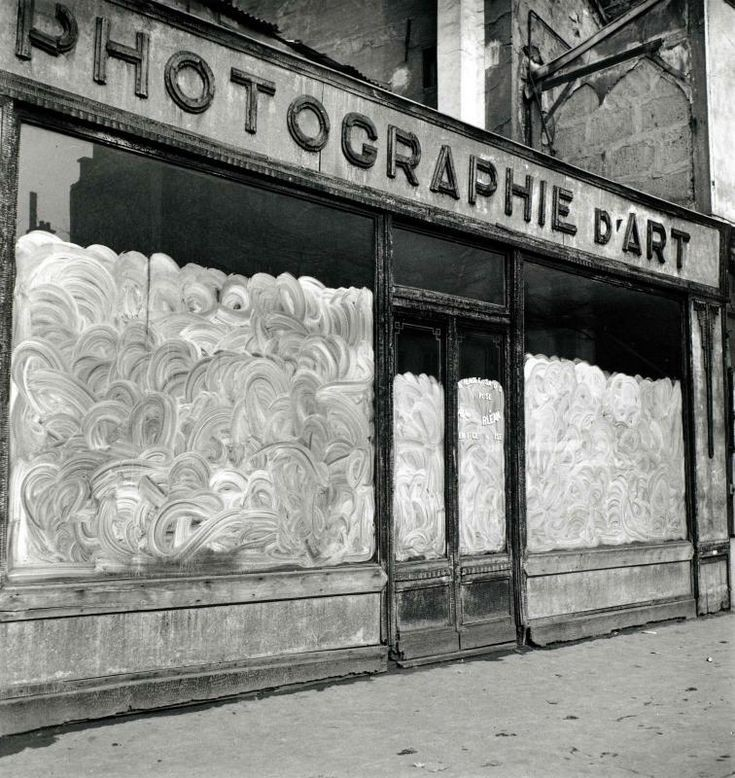
Édouard Boubat, Paris, 1949

Year in Reading 2023: 50 Books, Fat and Thin

Like several others who have already posted about 2023, I had a less than stellar reading year, finishing a little over half the number of books I did in 2022. On the other hand, several doubled as barbells for building up my muscles. On the third hand, some were slim. And on the fourth hand, some were slim pickings; I can’t recall ever reading so many works I didn’t especially like. I’m not sure to what to attribute that deflating phenomenon, but I hardly seem to be alone.

Best Quasi-Rereading

Michael Moore’s effervescent new translation marked my fourth time reading Alessandro Manzoni’s The Betrothed (1827/1842). As Moore explained at a reading I attended, he deliberately aimed his translation at an American audience lamentably unfamiliar with this 19th century masterpiece. An ingenious framing story cocoons this long tale of Renzo and Lucia, the affianced young couple whose wedding plans are dashed by the machinations of a lascivious warlord, forcing the couple to separate and flee into spiraling trials that challenge them (and several other characters) into becoming larger than themselves. Starting a beloved book in a new translation requires adjustment, but I was won over by Moore’s energetic, nimble, vivid and playful version, almost certainly the place to start for any American reader approaching this grand work for the first time. [Ed. – This book looks at me reproachfully from the shelf…]

Other Italian Explorations

Giovanni Boccaccio: The Decameron

G. W. McWilliams’ translation of Boccaccio’s 1353 classic accompanied me throughout the year as the perfect post-pandemic [Ed. – sic] companion. You know the framing story: five young women during the Florentine plague of 1348 abandon the city and invite along five male friends to an empty villa in the hills where, each day for ten days, each tells a story to entertain the others. The depiction of the plague in the book’s opening is terrific, and the 100 stories, splendidly diverse, are by turns tender, ribald, moving, pointed. So is the warm banter between the young people as they introduce their stories and encourage one another’s efforts, the whole serving as a kind of instruction manual on storytelling (and as a model for confronting calamity). Boccaccio has become a favorite; I also spent time this year with his Famous Women and Genealogy of the Pagan Gods, the latter especially highlighting Boccaccio’s talent as a great writer of prefaces. [Ed. – Ok, you sold me on this!]

Dominic Starnone: The House on the Via Gemita (2023)

The two short Starnone Neapolitan novels I’d read had impressed me, so I was excited to discover a fat new 500-page work also set in Naples. Starnone’s narrator recounts the history of his father, digging so thoroughly into strained father/son relationship that I can’t imagine The House on the Via Gemita not taking its place as a classic of the genre. To my surprise, the book also turned out to be an excellent novel about painting, in that the son must address both his father’s abusive personality and role as a peripheral figure in mid-century Italian art, a career layered on top of a day job as a railroad worker and the family responsibilities he largely leaves to others. Starnone gives us a brief history of postwar Italian art while exploring the qualities that make paintings great or mediocre and making personal an issue of our time: disentangling (or not) an artist from their art. I also noted the geographical precision employed by Starnone as a quality common to several contemporary Neapolitan novels; one can use a map to follow the narrative’s peregrinations around the city.

Maria Attanasio: Concetta et ses femmes

Concetta et ses femmes, written in 2021 when Attanasio was 80, sets out as a documentary rescue mission to obtain the story of Concetta la Ferla, organizer in the late 1960s, in Caltagirone, Sicily, of the first women’s branch of the Italian Communist Party (then the third largest in the world). Concetta’s grassroots project develops out of frustration with the municipality’s diversion of water to its wealthiest citizens, but runs into predictable obstacles in the form of chauvinistic attitudes in the city administration, in the Party, and at home. The story would be interesting enough simply as historical artifact. But Attanasio’s structuring of her novel, the first part narrated by Maria herself from the perspective of 20 years after the effort to preserve Concetta’s tale, and the second the tale itself in Concetta’s words, plays with questions of authorship and feminist solidarity, and emphasizes the continual nature of the struggle to gain legitimacy, to advance the advances of the past, to never go back.

Other Italian/Italy-related works included an Italian/French collection of short stories (Nouvelles italiennes contemporaines), with Tomas Landolfi, Massimo Bontempelli and especially Elisabetta Rasy’s contributions as standouts. Indian-American-now-Italian writer Jhumpa Lahiri’s Roman Stories (2023) revisits Alberto Moravia’s 1959 Roman Tales (Racconti Romani in the original Italian for both books), exchanging Moravia’s focus on Roman men in recognizable neighborhoods for immigrants, ex-pats, and tourists vaguely on the city’s periphery. Renato Serra’s Examination of Conscience of a Man of Letters (1915) presents a searing treatise on the relationship of literature and war, written three months before Serra perished in battle in World War I (read in French; while the essay has never gone out of print in Italy, it has not been translated into English). I devoured Janet Abramowicz’s monograph, Giorgio Morandi: The Art of Silence (1964), a deep appreciation of the Bolognese artist into whose family Abramowicz was essentially adopted. Despite this proximity, Abramowicz treats her former teacher judiciously and even unsparingly when it comes to Morandi’s blemishes, in particular his tacit involvement with fascism. German writer Esther Kinsky’s Rombo (2022), a polyphonic novel exploring the impact of a series of earthquakes on remote villages in the north of Italy, grew on me during my reading, with its Polaroid-like narrative approach in which the lives of the villagers gradually become more vivid and saturated. Finally, in Etruscan Places (posthumous publication 1932), D. H. Lawrence and a companion identified as “B” voyage through central Italy, exploring sites of the ancient Etruscan “12 cities.” Lawrence’s incisive, infectiously enthusiastic observations about Etruscan art and life turned me into a fan of this fascinating people whose culture was absorbed/obliterated by the Roman Empire. The narrative doubles as a travelogue through Mussolini’s Italy and, adding yet another layer, Lawrence’s views lay out an entire philosophy that has me determined to revisit his fiction this year. [Ed. – I support this plan!]

Stalingrad

I came away from Vasily Grossman’s Life and Fate convinced I’d encountered one of the essential literary documents of the 20th century’s experience of fascism. I did not know that the book was but a second volume in Grossman’s monumental effort to write the great World War II novel. The first, Stalingrad (1952), with still no definitive Russian edition, has only recently been translated into English by Robert and Elizabeth Chandler. As highly as I esteem Life and Fate, I believe Stalingrad may well be the superior novel [Ed. — !] in its immediacy and the sheer grandeur of its conception (but as the books were intended to form a whole, one need not set them against one another). Grossman, present at Stalingrad as a journalist, related some of his experiences in Life and Fate, but Stalingrad sets out to capture the whole story of the war’s most decisive battle, from August 23, 1942 to February 2, 1943. Grossman’s acute consciousness of his literary precursor, Leo Tolstoy, leads him to take his main character on two pilgrimages to Tolstoy’s house, Yasnya Polynka, and to muse on Tolstoy’s accomplishments: 

Krymov looked at the wounded who had fallen by the wayside, at their grim, tormented faces, and wondered if these men would ever enter the pages of books. This was not a sight for those who wanted to clothe the war in fine robes. He remembered a night-time conversation with an elderly soldier whose face he had been unable to see. They had been lying in a gully, with only a greatcoat to cover them. The writers of future books had better avoid listening to conversations like that. It was all very well for Tolstoy – he wrote his great and splendid books decades after 1812, when the pain felt in every heart had faded and only what was wise and bright was remembered.

With Life and Fate, Stalingrad now gives us one of the great documents of World War II – and one of the greatest works of fiction about war ever written.

An Essential Holocaust Novel

The Talmudic concept of the Lamed-Vov, the 36 righteous people on whom the continuity of the world depends, fascinated me when first I read about it. Only when I started André Schwarz-Bart’s 1956 Prix Goncourt-winning novel, The Last of the Just, did I realize that the Lamed-Vov were central to the book. Schwartz-Bart takes the reader though a thousand years of Lamed-Vov succession to arrive at Germany in the 1930s, where the narrative pace slows dramatically. His restrained, almost clinically factual language provides devastating testament as much as fiction. Some of its scenes are completely indelible, and Ernie Levy, Schwarz-Bart’s protagonist for this last half of the book, struck me one of the most remarkable characters I’ve encountered in a lifetime of reading. [Ed. – It feels like a professional failing that I have not read this book!]

José Revueltas: The Hole

A tiny but shockingly powerful novella, taut and tight with not a word out of place. [Ed. – Funny, that’s how people usually describe me!] The Mexican writer and activist Revueltas’s 1969 book, based on the author’s own 12-year experience as a political prisoner, resembles a Piranesi prison drawing in narrative form, an intensely concentrated exploration of incarceration. Everything in the narrative is compressed – time, space, hope, even the reader’s attention and the size of the book itself. An absolute masterpiece of prison literature.

Mariana Yampolsky, Estación Martell, 1988

Good King Xavier, Reino de Redonda

Spanish novelist Javier Marías died at age 70 on September 11, 2022. I encountered his work four times this past year, first in his final novel Tomás Nevinson (2022) which appeared last May in Margaret Jull Costa’s translation. I had come to anticipate each new Marías translation as nearly an annual tradition, so knowing that this his last novel made reading it deeply bittersweet. Tomás Nevinson follows up 2018’s Berta Isla, but also resurrects characters from Marías’s Your Face Tomorrow trilogy, most notably Bertram Tupra. Where Your Face Tomorrow engaged Spain’s experience of Franco and of the civil war, Tomás Nevinson takes as its starting point the Basque separatist terrorist attacks of the 1990s. As Nevinson is enlisted by Tupra to come out of retirement to track down a woman involved in the most heinous of these attacks, Marías uses the narrative to explore questions about our responsibility for seeking justice, how we deal with repentance and redemption, what justice seekers owe to their own loved ones, whether there may be some informal statute of limitations on bringing the guilty to account and how long justice should be sought – time being among the most prominent fixtures in Marías’s fiction. We are fortunate to have this novel; Marías’s time having run out seems completely unjust.

When I picked up Tomás Nevinson at Point Reyes Books, the literary mecca cultivated by Molly Parent and Stephen Sparks, Sparks asked if I’d read the new book about Redonda. I must have stared at him blankly, as, having not yet read Marías’s Oxford novels, I knew nothing. Thanks to Michael Hingston’s marvelously strange Try Not to Be Strange (2023), I now know quite a lot, including the fact that Marías had been, up until his untimely death, King Xavier I, monarch of this tiny nation, which, despite having no inhabitants, does have territory, a flag, its own currency and postage stamps, and a plethora of dukes and princesses, counts and ambassadors, and multitudes of other titles held by what seems a who’s-who of 20th century writers. This was by far my most fun book of the year, uncovering a great story, offering up a charming tale of obsession (including Hingston’s own), and digging a dizzying warren of rabbit holes for one to scurry down, which led to my filling quite a bit of empty shelf space with related works. [Ed. – Well, this all seems quite insane!]

One of those works, of course, was All Souls (1992), the Marías Oxford novel in which the author first mentions Redonda. I expect to have more to say about this book after I’ve read its sequel, Dark Back of Time, on deck for 2024.

Another addition, Cuentos únicos (1996), came from Reino de Redonda, Marías’s own Spanish-language imprint.This collection of 22 translated English language short stories selected by Marías presented a way to practice my poor Spanish and get to know some writers I didn’t know. Nugent Barker? Oswell Blakeston? Percival Landon? [Ed. – Are these imaginary???] My Spanish proved inadequate to the task, but I understood enough to have made the effort – to be continued this year – worthwhile.

The Ascent of Rum Doodle Mont Analogue

My next-to-most-fun book of the year, René Daumal’s Mont Analogue (1952), tells the story of Père Solgon’s organization of an expedition aboard the ship “Impossible” to find the rumored tallest peak on earth, mysteriously as yet undiscovered due to its isolation (guesstimated to be in the vast South Pacific) as well as certain tricks of light that keep it invisible except at a certain hour and from a certain approach. With a crew including such luminaries as an American painter of alpine scenes, one Judith Pancake, the voyage is half tongue-in-cheek, half mystical imponderables (Daumal had been a follower of Gurdjieff), half Jules Verne. Yes, I know that’s three halves, but that suggests the shape and character of this delightful novel, one of the rare “unfinished” works that actually ends mid-sent-….

(Note: for French readers: a lovely new hardcover illustrated edition of Mont Analogue comes with an introduction by musician Patti Smith).

Weak in Comparison to Dreams

I got to know art historian/theorist James Elkins’s work some 25 years ago while researching text and image for a conference paper. So it came as quite a shock to discover a 600-page novel by Elkins, especially as I’d recalled his having announced in an Amazon book review his intention to stop adding to an accretion of texts. Presumably Elkins only meant Amazon reviews, because Weak in Comparison to Dreams (2023) is a welcome contribution to contemporary literature and among the most unusual novels I’ve read in a long time.  In the book’s continuation of Elkins’s explorations of text/image interactions, I felt both that I was right back where I’d left off and in a whole new world. Incorporating scores of black and white images and increasingly nutty charts and graphs, the narrative follows its narrator, Samuel Emmer, a bacterial biologist for the city of Guelph, Ontario, on a series of visits to zoos around the world to evaluate mammalian behaviors and health protocols as Guelph plans its own zoo. [Ed. – The Guelph connection is… unexpected.] A dozen interchapters present Emmer’s dreams while on this mission, these too accompanied by images that suggest an intensifying fugue state. By turns sobering and hilarious, thematically touching on everything from animal welfare and incarceration to climate change and bureaucracy, from pseudo-science to contemporary experimental music, and playing in a space similar to that occupied by conceptual artist David Wilson’s Museum of Jurassic Technology, Elkins’s absorbing novel is… not at all what it seems. A 100-page final section entitled “Notes” delivers not so much “notes” as a surprising reframing of the first narrative, much in the way a caption might reframe an image. I can’t get the book out of my head, and shouldn’t, as Elkins has completed four other novels since 2008 that form a quintet of which Weak in Comparison to Dreams, though the first to be published, is volume three. I cannot wait to see what he does in the other four. [Ed. – How the hell do you find this stuff???]

The Queen of L.A. Noir

My familiarity with Dorothy Hughes’s In a Lonely Place (1947) had been limited to Nicholas Ray’s 1950 film starring Humphrey Bogart. Finally reading the novel left me incensed about the movie, a fairly egregious desecration of its source material. Fortunately, I felt no indignation in response to Hughes’s novel, which floored me as not just a masterpiece of Southern California noir, but perhaps the masterpiece of Southern California noir. I fell for it in the first pages, which captures the foggy, seeping chill of the California coast at night in a manner precise and true. She shies away from nothing in this penetrating psychological drama in which [Ed. – SPOILER INCOMING!] the narrator himself is the killer – presumably the quality that kept the studios from allowing Humphrey Bogart to be tarnished by such a role. Hughes covers the postwar L.A. noirscape exquisitely while managing to keep her narrator entirely human, a subtle literary feat that reads like one of Freud’s case studies. Raymond Chandler might be King of L.A. Noir, but if you asked me to pick a monarch, I’d go with Hughes on the basis of this novel alone.

Other mysteries included the marvelous Margaret Millar in Stranger in my Grave, a disappointing end to the Montalbano series in Andrea Camilleri’s Riccardino, and dismay as regards Mignon Eberhart, an author I’ve liked, whose Family Affair, in this year of too many books I did not like, marked the nadir.

Poetry

Aside from individual poems here and there, I read just three books of poetry. Reginald Dwayne Betts in Felon (2019) gives us a powerful collection of poems that go well beyond the experience of incarceration to address convict life beyond prison. I found Argentine poet Alexandra Piznarik’s Removing the Stone of Madness, Poems 1962-72 (Yvette Siegert, translator), relevatory. I did not know Piznarik, who, as the collection’s title suggests, fought a terrible battle with mental illness which she chronicled in short, sui generis poems as hard-edged and clean as crystals, powerful poem-objects one could almost hold in one’s hand. Finally, I loved Greg Hewitt’s intimate, resonant poems in Blindsight, structurally based on composer Olivier Messiaen’s prime-number system and which brought to mind Frank O’Hara’s personal poetic school of “Personism” (a mutual friend sent me Greg’s book).

Odds and Ends

The rest, an unorganized, mostly enjoyable mess, included Willa Cather, more Eve Babitz, Sándor Márai, Tatsuo Hori, Euripides, Chinua Achebe, Raphael Sánchez Ferlosio, more César Aira (an annual need), Daisy Hildyard and others. Larry McMurtry’s Lonesome Dove (1985) gave me exercise, as with Stalingrad in one hand, I built up my other bicep by hefting McMurtry’s 850-page narrative in late-night installments at approximately the same pace as the Texas border to northern Montana cattle drive the story depicts. I found it terrific fun, amplified by my subsequent reading of the story of a poor Texas legislator who made the mistake of trying to ban Texas’s national novel. No one should want to be that guy. A bit further south I ate up Charles Portis’s Gringos (1991), set in the Yucatan where rumpled ex-pat Americans are involved in archeological dealings and mis-dealings. Are all of Portis’s novels his best novel? I think so. I think so.  [Ed. – Well put!] Art historian Alexander Nemerov’s The Forest (2023), a collection of essays and corresponding plates, uses forests of the American frontier to cull idiosyncratic tales of 1830’s American art and culture, rescuing some fascinating figures from historical oblivion. I finally got around to reading Maggie Nelson, in Bluets (2009) and The Argonauts (2015) – respectively, musings on the color blue (with a towel snap at William Gass’s bare cheeks), and raw meditations on sex, gender and motherhood that I sent off to goddaughter pursuing gender studies. I’d been curious for some time about Michael McDowell six-volume Blackwater, and gorgeous and affordable new French paperback editions provided an opportunity to dive in. Blackwater 1: La Crue (1983) proved a Southern Gothic slow drip horror tale peeling away the veneer of Southern gentility. For the first time since high school, I revisited J. D. Salinger, in Raise High the Roof Beam, Carpenters (1955) and Seymour: An Introduction (1959). Salinger himself may not have aged well, but these two novels were far better than I expected them to be.  I found Tove Jansson’s The True Deceiver (1982) to be a stunningly good novella about truth, trust and deceit, not necessarily in that order, set in a fishing village on the Finnish coast. There seems to have been nothing Jansson couldn’t do right. While somewhat confined in a house in the mountains, I found appropriate companionship in Count Xavier de Maistre’s A Journey Round My Room (1795), a book born of boredom, a curious meditation on escaping it, created when, following a duel, de Maistre was put under house arrest for some six weeks. Alleviating boredom, Roy Lewis’s The Evolution Man, or How I Ate My Father (1960), though clearly dated, was still pretty damned funny as comedies about pre-history go. Finally, a couple of books with which I struggled still held enough of interest for me to get through them. Justin Torres’s Blackouts (2023) relies heavily on photographs, drawings, redacted text, dialogue as film script, and other novelties that I found a bit overcooked (in a way I did not with the Elkins novel). But the story Torres unearths of a 1942 study of homosexuality, and of the lesbian couple who helped drive the project and were betrayed by it, is remarkable. I had a tougher time with Gerald Reve’s The Evenings (1947) acclaimed by some as the great 20th century Dutch novel. A disaffected young man lives with his numbed parents in 1946 Amsterdam and battles his claustrophobic life with dark, acrid humor. I admired Reve’s allowing the war to drip into the narrative bit by bit, the horrors of the recent past seeping into normal life. But I couldn’t wait for the book to end.
Henri Cartier-Bresson, Naples, 1960

I’ll conclude with a dream. In a cluttered bookshop, I found a tattered but astounding volume amended with striking collages, vivid watercolor sketches, and dense margin notes. The (dream) author’s name seemed familiar, so upon waking I looked up James Gould Cozzens and plunged down a trail that led me to Dwight MacDonald’s 1958 review of Cozzens’ late novel, By Love Possessed.  I did not read Cozzens. I’m not sure I will ever read Cozzens. But I’m grateful to odd dreams for having pointed me to MacDonald’s review, which takes to task a generation of critics who, with log-rolling fealty and conformity to one another’s uncritical opinions, lavished praise on the novel. Eviscerating, illuminating, even necessary, his review models close textual analysis with an eye towards criticism’s larger role, relevant today when writer-critics blurb one another’s books and award prizes to mediocre works.  A pretty good way to end the reading year, and a better way to start off a new one which, I am happy to say, as far as books go, is off to a tremendous start. Thank you for reading. [Ed. –Thanks for writing, Scott! A delight as always.]

Ricardo Chavira’s Year in Reading, 2023

Excited to once again present reading reviews from some of my favourite readers. Today’s installment, his first, is by Ricardo Chavira (@waryenthusiast). Ricardo is a reader, not a writer, but he thinks writers are cool. When he’s not reading, running, cooking for friends and family, building even more bookcases, or making maple syrup, he makes his living in sunny CT. Having done graduate work in philosophy, he, naturally, works in IT.

Edvard Munch, Kragero in Spring, 1929

A few years ago, I started keeping track of my reading with a detailed list. I wanted a handy list I could consult (likely on my phone) if and when a friend would ask what I’d been reading lately. Too often, my mind would freeze and I’d maybe utter one title from 3 months ago, only later kicking myself for not recalling the wonderful books I’d just read in the last few weeks. [Ed. – Relieved to know I’m not the only one. “Uh… books… I read some books.”] What started as a mental crutch has evolved into a comprehensive spreadsheet, tracking title, author name & gender, genre (fiction, non-fiction, poetry), date I finished the book (which also gets written on the last page of the book), where I finished the book (city, but often on a plane or train), whether it was an audio book, library book, read by my book group, etc.

In my non-book-reading profession, there is an adage that “what gets measured gets improved.” [Ed. – Hmm.] Perhaps that applies here as well. In recent years, I’ve sought to diversify my reading palate, reading more books written by women and persons of color, reading more non-fiction (left to my devices, it’s overwhelmingly fiction), borrowing more books from my local library, reading more from “the backlist” (as I tend to get excited by recent releases). Being aware of what I’m reading allows me to be more deliberate about what I read. It’s also fun to run the numbers each January, look for trends, chastise myself (for not reading enough poetry), feel good about myself (for reading more works in translation), and make plans for the coming year (which are never followed through completely).

My other book tradition is the annual reshelving that takes place shortly after New Year’s. Every year, I put the books I read on their own shelf. Audiobooks, library books, and books on loan are not there, of course, but it’s fun to watch that empty shelf slowly fill up and, eventually, spill over to the next. [Ed. – Wait, what did you say?? I drifted away when you said “empty shelf.”] And after the new year, the year’s reads get shelved into the general mix of the library. It’s an opportunity to reflect again on these books, but really an excuse to muck around with my library. For whatever reason, it’s a very satisfying activity and one I’ve come to look forward to. [Ed. – What a lovely tradition!]

<insert obligatory comment about how awful the year was> Yes, 2023 was a dumpster fire of a year in so many ways, but not a bad year for books and reading. The year began with anticipated titles from many of my favorite contemporary writers*, some of which are mentioned below.

(*a partial list of authors with 2023 releases that had me worked up: Nana Kwame Adjei-Brenyah, Colson Whitehead, Rebecca Makkai, Luis Alberto Urrea, Hilary Leichter, Matthew Desmond, Rebecca Solnit, Zadie Smith, Lauren Groff, Emily Wilson (trans.), Jesmyn Ward, Jhumpa Lahiri – whew!)

So let’s get on with it. Herewith, some rambling thoughts on many of the books I read. Enjoy and happy reading.

Some highlights – Loved these books, here’s why.

  • Chain-gang All-Stars, by Nana Kwame Adjei-Brenyah

A highlight of the year for me was Adjei-Brenyah’s follow up to Friday Black, his fantastic debut of short stories. Chain-gang is set in a near future where prisoners are given the option of joining “chain gangs,” teams that fight in gladiatorial hand-to-hand combat in exchange for a shot at freedom. These so-called “hard sports” have corporate sponsors, stadiums full of shrieking fans, and lucrative online steaming shows. Despite all this, we’re somehow given a story of love and humanity amidst the chaos. Calling it satire or dystopia only hints at Adjei-Brenyah’s brilliance, as he approaches his set-up as more than just a sendup of current society and the role of the carceral state. At a public reading, I asked him how he threads the line between plausibility and seemingly improbable exaggeration (a televised reality show with prisoners fighting to the death? no, but I can kinda see that …). [Ed. – Alas, I can totally see it.] As I recall, he said the trick is not just coming up with a dramatic story, it’s having a twist that makes it work. He’s not just stepping on the gas, exaggerating the status quo. Rather, he takes something away or adds to make the story stick. Here, the conceit is not that prisoners are being violently exploited for public/private profit. The conceit of the novel is that it’s happening out in the open, and we not only don’t care, we consume it. As terrifying as that sounds, there’s an urgency to this novel that can’t be ignored.

  • Crook Manifesto, by Colson Whitehead

We’re living in the age of Colson Whitehead, in case you’re wondering. A follow up to Harlem Shuffle, we get to revisit Ray Carney, the furniture store owner and erstwhile fence of stolen goods. Unable to score Jackson 5 tickets for his daughter, Ray calls in a few favors and one thing leads to another… The depiction of Harlem in the 70s is spot on; and Whitehead has such an ear for the rhythms of speech, music, and street noise that do so much to convey the bygone era. Whitehead is deft as ever in exploring matters of race and society. Musing on a performance in which a young Michael Jackson wants to talk about the blues, “Carney chuckled – the kid was ten.” But after a moment’s reflection, “Carney shouldn’t have laughed. What ten-year-old black child didn’t know about the blues?” This is the second in a projected trilogy and my arrangement with Whitehead is simple – you keep writing them, I’ll keep reading them. [Ed. – Ha, love that! Loved Shuffle; look forward to this one; excited to hear about the third.]

  • Lucky Jim, by Kingsley Amis

I love the campus novel and this is one of the best. I recently came across a copy of the NYRB edition, so took it as a sign to revisit an old favorite. Happily, it mostly holds up. The old school misogyny felt tired and dated (as it should). Margaret may be a manipulative drama queen (says so right there in the margins of my old copy), but it hardly justifies her treatment. Still, Amis is such a good writer, tossing off lines such as: “It was from this very bottle that Welch had, the previous evening, poured Dixon the smallest drink he’d ever been seriously offered.” On the whole, the novel still works and neither characters nor readers emerge unscathed. Coda: Happily, I received another copy for Christmas, as Hatchard’s, the venerable London bookseller, has issued a gorgeous limited edition of Lucky Jim. Anyone want an old paperback copy? [Ed. – Good offer, friends!]

  • Milkman, by Anna Burns

I was excited to read this book when it came out and finally got around to it (only 6 years later). I knew it was going to be good, but it’s always a thrill when a book so wildly exceeds your expectations. The psychological depth, the suffocating closeness of the tight-knit community, the deadly gossip, and the rapid-fire language make for a heady combination. So many passages were chock full twists, descriptors, and fulsome lists that I feared she’d run out of words. But she never did. So grateful.

  • The Netanyahus, by Joshua Cohen

On one level it’s a campus novel (and you know how I love a good campus novel), but also an incisive depiction of antisemitism, and a scathing indictment of the powers that be. It’s also a riot. Cohen guides us with such a steady hand through the myriad offenses endured by our humble protagonist, Ruben Blum, the only Jewish professor on a small upstate New York campus. Describing a note from Blum’s obtuse department chair: “’Rube,’ it read, in his characteristic mélange of the casual and turgid.” [Ed. – Heh] But Cohen also doesn’t hold back in depicting the flaws and hubris of his characters. The Jewish professor, and titular patriarch, whom Blum is asked to host is none other than the father of the current Israeli prime minister. This book should be read and appreciated despite, and because of, its association with current affairs.

  • The Monsters of Templeton, by Lauren Groff
  • The Vaster Wilds, by Lauren Groff

This is also the age of Lauren Groff. This year I read her first and latest novels to achieve my Groff completist status. [Ed. – Ooh, did you get the button??] I love how varied her writing is; she never writes the same book twice. A grad student trying to make her way in the world and learning you can’t come home again (except when you do). A young woman fleeing an early American colonial settlement and trying to survive in the wilderness. As with Whitehead, I will read everything she writes. Keep em coming. She’s also opening a bookstore! [Ed. — !]

  • Phantoms, by Christian Kiefer

By all accounts (viz., a scroll through his Twitter feed), Kiefer is a busy man, juggling teaching, a large family, and crazy rock & ice climbing expeditions. [Ed. – No joke, that climbing stuff is insane.] He also manages to write some wonderful novels. Phantoms tells the story of Japanese and American families torn apart by WWII and the shameful internment camps. Years later, the story is refracted by the memory of a young writer who is slowly uncovering the truth, while dealing with his own trauma as a Vietnam veteran. A story of secrets, lies, bigotry, war, and other American values, Phantoms is truthful without being cynical, and just hopeful enough without giving in to sentimentality. And Kiefer gets bonus points for having joined our book group discussion via zoom!

Found in Translation – I don’t know why translated literature is such a hard sell in this country. It’s the literary equivalent of yelling at children “eat your vegetables, they’re good for you!” With publishers such as NYRB, Europa, Charco (and many other wonderful indie presses), it’s so easy to find good translated lit. Try it, you’ll like it.

  • Translating Myself and Others, by Jhumpa Lahiri

I just can’t say enough good things about Lahiri, she’s the bee’s knees, the cat’s pajamas. I get giddy thinking about her work. [Ed. – Paging @bibliopaul!] Long story short for those not keeping track at home: In recent years, Jhumpa Lahiri has been writing in Italian and translating (herself and others). Never fully at home in English (the language of her upbringing) or Bengali (the language of her parents), she learns Italian in college. Years later, she returns to it by packing up the family and moving to Rome (as one does), where she immerses herself in language study. Before long, she’s hanging out with Italian writers and translating their work. And she stops writing in English as her primary language. These essays are both critical (such an ear for how other writers work) and personal (artfully exploring her technique and motivations behind her writing and translations).

  • Roman Stories, by Jhumpa Lahiri, translated by Jhumpa Lahiri and Todd Portnowitz

New short stories from Lahiri (her best form, in my opinion) is cause for celebration. These don’t disappoint. Set in a contemporary Rome and populated by people who look and speak differently from the locals, these stories remind us the beauty and coarseness of the human condition. And yes, she wrote them in Italian and later translated (all but two of them) into English.

  • Ties, by Domenico Starnone, translated by Jhumpa Lahiri

Starnone is a luminary in the Italian literary scene and not known well enough here in the States. And is translated by Lahiri. And published by Europa. What’s not to like?

  • The Door, by Magda Szabó, translated by Len Rix

I often saw this book cited as a favorite NYRB, so was thrilled when I found a used copy. And even more thrilled when I began to read it. Szabó gives us Emerence, a housekeeper, street sweeper, and eminence grise of a small Hungarian community. At first, Emerence seems aloof, secretive, even arrogant. She’s all of these things, but also insecure and vulnerable, as slowly emerges from her complicated relationship with Magda, her employer (and enabler). The depth of the characters and complexity of their relationships carries on to the end, giving us a stunning portrayal of people at their best, worst, and most human. [Ed. – Incredible book, now I want to read it all over again.]

  • A Mountain to the North, a Lake to the South, Paths to the West, a River to the East, by László Krasznahorkai, translated by Ottilie Mulzet

Krasznahorkai is a wizard. It would be too easy to say this story is like a dream. But there is an ethereal quality to this book that evokes so much thought and feeling, and yet remains just out of one’s grasp. Long, wonderful discursive passages on weather, architecture, and math that evoke sheer longing. There’s a short chapter on the wind and air that has passed through this temple that’s just a joy to read. A great way to end the year for me.

  • Fantastic Night, by Stefan Zweig, translated by Anthea Bell

These stories of reversals, betrayals, misunderstandings, and moral discoveries are a delight. To contemporary readers, he has a certain Old World charm, and it’s not surprising he’s come back into vogue recently as both literary and pleasure reading. I’ve been told that with Zweig’s unique voice, you’re either in or you’re out. Count me in.

  • At Night All Blood is Black, by David Diop, translated by Anna Moschovakis

Diop does so much in this short novel. In the trenches of World War I, our protagonist takes revenge on enemy troops after his best friend is killed. A grisly descent into madness ensues that terrifies even his fellow soldiers, making him an outcast in every way. The narrative feels like something out of Camus, but darker, and stayed with this reader for a long time.

Good Genre – Another absurdity of the reading community which I cannot abide are the knee-jerk slights often directed towards so-called genre fiction. [Ed. – We do not allow that sort of thing here at EMJ.] Here are some standouts in fantasy, sci-fi, and crime fiction.

  • Hell Bent, by Leigh Bardugo

In Bardugo’s world, magic is real and practiced by students at Yale University’s secret societies, such as Skull and Bones. (Campus novel alert!) A sequel to her blockbuster Ninth House, Hell Bent picks right up where the action left off and doesn’t stop. I’ll admit to a local bias that adds to my enjoyment of these books as I studied there, live nearby, and my wife is friends with the author (read the acknowledgments!). [Ed. – What?!?!?!] But even without any extraneous connections, it’s great fun. Alex Stern is part of an organization that is supposed to keep the secret societies in check, but she has a way of making things worse and/or better and pretty soon things are literally going to hell. Along the way, Bardugo gives us more esoteric history (some it speculative) and plenty of her trademark creativity in the magic, spells, and monsters that populate this world (demons and vampires, yes, but not exactly like what you’ve seen before). I always love the second part of a trilogy (what can I say, I’m a middle child), but I am eager for the next installment.

  • Babel: Or the Necessity of Violence: An Arcane History of the Oxford Translators’ Revolution, by R. F. Kuang

Another Yalie (along with Bardugo), Kuang has written 5 novels, is working on a PhD (to complement her Oxford and Cambridge degrees), and hasn’t bothered to turn 30 yet. Wunderkind bio aside, Babel is a lot of fun. We’re at Oxford in the 1830s, but in this version, magic is real and harnessed by scholars at the Royal Institute of Translation who manipulate silver bars inscribed with translation. The effects of this magic power the British empire and are the source of its global domination. Not all sits well with a group of young students, most of whom are foreign-born and recruited for their language skills. Plenty of action, intrigue, and wrestling with moral and political dilemmas make for an engaging read. And did I mention it’s a campus novel? [Ed. – I’m gonna give this one another try. I abandoned ship, but I think I missed something good.]

  • Bloodchild and Other Stories, by Octavia E. Butler

Who knew Butler also wrote short stories? Not many (stories, that is), but those collected in this volume are bangers. [Ed. – Such bangers.] Part of the fun of short stories is delivering a punch, a great insight, or deep emotion in just a few pages. And sci-fi is great at creating alternate worlds where the rules are different and you get to decode those new norms. Doing both of those things well at the same time is no small feat. Happily, Butler doesn’t skimp on her trademark thought-provoking imagination. More than once I felt equal parts excited and unsettled as I figured out the premise of each story. “Ah, so that’s what’s going on. Yikes, that’s what’s going on.” [Ed. – Well put, R]

  • Lessons in Birdwatching, by Honey Watson

I hadn’t read a solid sci-fi novel in a while and this one really satisfied that itch. At first, I felt out of practice, trying to decipher which way was up in this new world. “That can’t be right, is that really happening? I often said to myself. And oh, yes, it was happening. Whether it’s right or not is up to you, dear reader, to decide. In the meantime, Watson has a ball with political intrigue, war, sex, drugs, violence, resurrecting an ancient god, and giving us some really manipulative characters you can’t help feel guilty rooting for. A sequel is necessary, as I have a feeling it’s going to get worse before it gets better. And I can’t wait.

  • Small Mercies, by Dennis Lehane

Solid storytelling, plenty of violence, salty characters, and local color keep the pages turning. Is this a screenplay masquerading as a novel? Given Lehane’s novels’ track record, the adaptation can’t be far behind.

A Family Affair – Few things in life are more satisfying than enjoying books with your family, especially children. Scratch that, there’s nothing better.

  • The Handmaid’s Tale, by Margaret Atwood

This was at the top of my wife’s Leigh Bardugo’s friend’s “books I love that I can’t believe you haven’t read” list. Feel lucky to have such a great reading partner. [Ed. – Aww, love this.]

  • Slaughterhouse Five, by Kurt Vonnegut, Ryan North, Albert Monteys (graphic novel)

As my son continues to develop his literary tastes, his current go-to list includes Steinbeck, Murakami, and Vonnegut. He recently acquired this lovely graphic novel version of Slaughterhouse Five, one of his favorites. It’s a wonderful version with fantastic artwork, remains true to the novel, and made for great conversation.

  • Afterparties, by Anthony Veasna So

So was a wonderful writer whose life sadly ended far too soon. My niece loved these interconnected short stories of Cambodian Americans in California and wouldn’t rest until I read them. Loved the book and love having such passionate and discerning readers in the family. [Ed. – Lucky man!]

Kinda wacky, but good! – A very ad hoc collection of books that were unconventional in form and/or content.

  • The Memory Police, by Yoko Ogawa, translated by Stephen Snyder

Ogawa gives us a world where words are gradually erased from society, forbidden from use, after which their referents disappear from the world and, eventually, from memory. Birds are erased from language, then trees, then collective memory. Gradually, more and more of the world is removed from experience and memory, making even the most modest forms of resistance heroic. Haunting and imaginative in its use of language, I couldn’t stop thinking about it when I was done. It brought to mind the parts I most loved about Orwell’s 1984. More frightening than an oppressive, totalitarian government is the devious control and manipulation of language. If someone controls the words people can use, they’ve already won. Excited to hear there’s a movie adaptation in the works!

  • Pure Colour, by Sheila Heti

Heti gives us a world that is just a first draft, in which Mira’s love for Annie and her father give her different experiences and perspectives on being in the world. When her father dies, his spirit goes into Mira and they live as a leaf on a tree, until Mira remembers her other modes of existence. None of that really explains the novel, but that doesn’t matter, because Heti is not encumbered by conventional expectations of what a novel should do or be about. That alone is reason enough to read it. [Ed. – Plus, she spells “colour” correctly.]

  • Gibbons, or One Bloody Thing After Another, by James Morrison

Morrison, that irascible voice of reason on #BookTwitter, has given us a splendid book that hops across centuries and generations of a family, giving us one bloody thing after another. Such is life. Each chapter is a separate short story, all loosely interconnected and featuring glass eyes, a fake mermaid, and culminates in a Sydney Opera House set aflame. [Ed. – Indeed. So good!]

  • Memoirs of a Polar Bear, by Yoko Tawada, translated by Susan Bernofsky

Three generations of polar bears who are heroes of the revolution, dissidents, expats, and celebrities. These are their stories. As original as it is improbable, it was fun to let go and go along for the ride.

Make Way For Poets – Never enough poetry, but here are two I enjoyed.

  • Her Whole Bright Life, by Courtney LeBlanc

LeBlanc brings joy, anger, sorrow, and love into her work in ways that make you want to read, reflect, and read again. That is to say, she’s a wonderful poet. When she curses North Dakota for the difficult life it inflicted on her hard-working, dying father, her rage is palpable and as beautiful and terrifying as anything the Greeks knew. But she’s equally adept giving us tenderness, as when she describes her husband rescuing an injured bird:

He carried it to a tree at the edge of our

property, gentled it onto a branch

Love the verb “gentled”!

  • Poems [For, About, Because] My Friends, by Hattie Hayes

Hayes’ first collection of poems is, as the title suggests, centered around her friendships and is a wonderful evocation of the time of life when friends serve as a chosen family and are deeply pivotal to one’s life. Hayes matches those emotions with some lovely turns of phrase:

You sign every letter “yours,” as though I needed a reminder

and

I have all this faith I’d never dream of cashing in

I’m also grateful to her for introducing me to Hilary Leichter. Will keep an eye on Hayes’s work to come.

Good, But Didn’t Change My Life – These books were fine, well-written, and loved my many. I enjoyed them, but I wasn’t as overwhelmed as I’d hope to be.

  • Hamnet, by Maggie O’Farrell

Love the subject, the writing was great, but I somehow didn’t connect with the story for much of the book. It seemed too distant and diffuse, somehow. But the ending had such beauty and moral clarity, it seemed to make up for it.

  • Nocturnes, by Kazuo Ishiguro

Am working my way through Ishiguro. I enjoyed these short stories, but they didn’t bowl me over, as much of his work has done. Bonus points for the interconnected short stories. Always love that.

  • I Have Some Questions for You, by Rebecca Makkai

I loved The Great Believers, so was ready for more Makkai. And while it was a pleasant and enjoyable read, it just didn’t have the same depth as her previous work. To be fair, not every novel can (or should) be The Great Believers, but I was left wanting more. And yes, bonus points are awarded for another campus novel.

Didn’t Quite Work For Me – Some books that left me cold and a bit disappointed; didn’t hate them, they just didn’t work for me. These are three great writers who will continue to do just fine without my approbation, so let’s not lose any sleep here.

  • Birnam Wood, by Eleanor Catton

Catton is a great writer and weaves a wonderful story setting up a conflict between a scrappy, left-wing, environmental collective and a billionaire tycoon with shifty motives. The dialogue is tight and snappy, with some great bits on the shortcomings of liberalism, failures of capitalism, and dismal state of the environment. Loved those passages. The problem (ok, my problem) is that the villain is so rich and powerful, with unlimited resources, weapons, and technology, and utterly devoid of scruples, that it makes for an uneven conflict. Wait, maybe that’s the way of the world! Even so, it makes for a lopsided novel, and ultimately detracts from its enjoyment.

  • The Heaven & Earth Grocery Store, by James McBride

Love McBride. And there’s much to love in this novel. But it feels like three different stories, which ultimately don’t come together as a cohesive whole. The many colorful characters, the fascinating slices of history, and the clever plot twists are fun, but they seem more anecdotal and don’t really add up. Much preferred Deacon King Kong.

  • The Gathering, by Anne Enright

I’ve enjoyed other Enright books (esp. Yesterday’s Weather), so was glad when our book group chose this. Unfortunately, this book never took off for me. We’re introduced to a large Irish family mourning the loss of their son/brother by suicide, mostly from the perspective of a close sister. It made me feel a bit churlish, but I kept waiting for something to happen. And when the revelations were disclosed, they were late in coming and seemed so predictable as to have lost some of their moral weight. But hey, it won the Booker, so what do I know.

Quick, Fun Reads – Because sometimes you just want an easy, fun read.

  • Daisy Jones and the Six, by Taylor Jenkins Reid

The rise and fall of a fictional band (Fleetwood Mac, basically) is told as a series of interviews years after they collapsed at the peak of their fame and success. It’s a good rock and roll story, with the requisite amount of sex and drugs. The story breezes through the haze of the 70s and makes you care about the main characters without getting too nostalgic. The tv adaptation was also good fun, but as always, read the book first.

  • The Wife of Willesden, by Zadie Smith

Zadie Smith taking on a modern adaption of Chaucer’s The Wife of Bath? Yes, please! A raunchy playfulness comes through (how could it not?) and you know Smith is having fun updating the material to modern sensibilities while keep true to the source material. And the account she gives in the introduction about haphazardly falling into the assignment of writing a play is equally hilarious.

  • The Fraud, by Zadie Smith

OK, not quick (pretty long, actually), but since we’re talking about Smith, it was fun to read her 19th Century novel (she also narrates the audiobook). Her take on a sensational trial and its ensuing wild publicity was enjoyable. And I know she’s also making some comments on the state of the novel, but I don’t have the energy right now to unpack all that, let alone be upset by it.

Glad I Finally Got Around to Reading Them – I had heard so much about how great these books were (especially from some very ardent fans of Light) that I finally caved in and read them. Glad I did.

  • All the Light We Cannot See, by Anthony Doerr
  • Cloud Cuckoo Land, by Anthony Doerr

OK, I see what the fuss is all about. Doerr is a wonderful storyteller, especially adept at slowly weaving together seemingly disparate strands across time and place. So much fun to see him work. Also, I stupidly avoided Cloud Cuckoo Land because of the goofy title. Joke’s on me, because a novel featuring a long lost Greek story name-checked by Aristophanes is right up my alley!

Edward Hopper, Barn and Silo, Vermont, 1929

So that’s what I got. Not everything I read and not everything there is to say about what I read. But enough for now. And you? [Ed. – Thanks, Ricardo! Quite a year.]

Scott Lambridis’s Year in Reading, 2022

Today‘s reflection on a year in reading, his second for the blog, is by Scott Lambridis (@slambridis). Scott’s story “Blind Sticks” was nominated for a 2021 Pushcart award. Before completing his MFA, he earned a degree in neurobiology, and co-founded Omnibucket.com, through which he co-hosts the Action Fiction! performance series. Read more at scottlambridis.com.

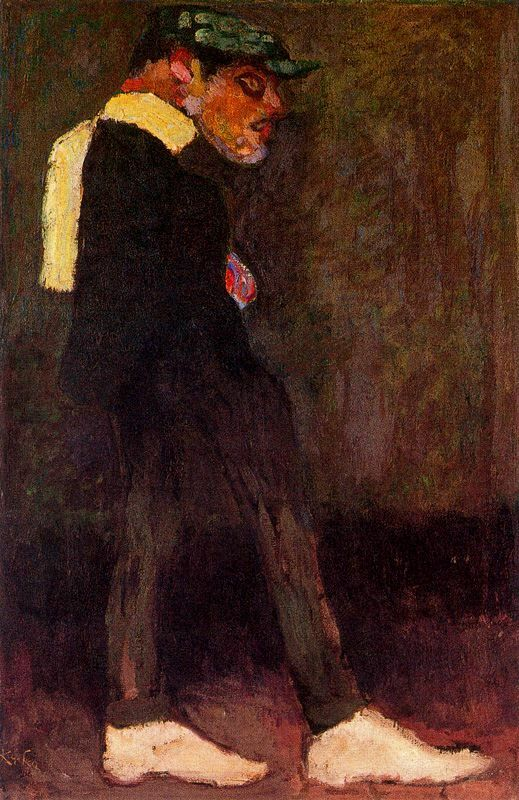
Fantišek Kupka, The Guy, 1910

Every year I have a goal of reading 52 books. This year I read 111. Here’s the top 10, in the order I finished them. 

1. Civilizations, by Laurent Binet (trans. Sam Taylor)

I finished Civilizations in the first week of 2022, on the heels of last year’s top 10 winner, HHhH, by the same author, wondering if his narrative magic would translate from a true story about an architect of the Holocaust to the boundlessness of invented history. Civilizations focuses on five key moments in Western civilization, and in particular the Spanish defeat of the Inca, and turns them on their heads. The Inca survive then defeat the Spanish, come to Europe, usurp the Holy Roman Empire and strip power from the Habsburgs, and became the dominant force of the Western world. The Incan leader Atahualpa worships Machiavelli, dismisses the Christian god as “not a serious being” (compared to the Incan sun god), bans the Inquisition, and leads Europe towards a more tolerant and agrarian society, only to be ultimately thwarted by the Aztec, who’ve made their way across the Atlantic too. In a coda tale, Quixote tilts at Aztec pyramids. 

My favorite falsely remembered (as usual) moment is the Inca rejecting Luther’s nailed treatises; the actual scene is of Thomas More and Erasmus exchanging letters about the nailing of the “Ninety-Five Theses of the Sun” to the wooden doors of a German Incan temple instead of Luther’s. In either case, the Reformation is canceled, and Henry’s VIII decides to become a sun worshipper. It’s hilarious, deadly serious, and riveting. There’s something special about a well-done historical reimagining, like watching your favorite books turned into films that match the artistry. There’s a joy enough in recognition; but a secondary joy in watching a new artwork created before your eyes from the pieces of the old. I’m not great at retaining history, so it was hard for me to tell what was based on fact and what was made up, but it didn’t matter. It’s on the list because, like a friend once said of the timeless Borges, Binet’s non-fiction reads like a great tale, while the more implausible the fiction the more true it seems.  

2. When We Cease To Understand the World, by Benjamín Labatut (trans. Adrian Nathan West)

In writing these reviews I discovered a theme: reimaginings! Lives, events, artworks reimagined, sometimes attempting to stick close to “fact,” sometimes not at all. When We Cease To Understand the World is the former (mostly), in which Labatut imagines critical scientific discoveries of the 20th century that had tragic effects on either society, or the discoverer. The opening essay/story (the line is blurry here) is the hook, a breakneck tracking of the invention of Prussian blue as a novel paint color prized by Van Gogh and a host of luminaries to the deaths wracked by industrialization of nitrogen-based fertilizers, and ultimately to the cyanide pills hoarded by Nazi soldiers. The remaining stories are more portraits than compressed timeline, but no less impressive, in particular the trials of Heisenberger (uncertainty!) and Schrödinger (the cat!), and the conflict of each’s mad grandeur at having faced, in their own way, the terrible ambiguity of the quantum lying at the void upon which all reality is said to stand. We stare, with these poor trifling geniuses, into the void not above, but within. There’s a Lovecraftian effect of the seers describing the indescribable horrors of mathematical infinity, but, as with W.G. Sebald, it is less these abstractions and more the nuts-and-bolts details of the mundane that captivate and disturb. Labatut takes his time to add flesh and blood to characters known principally through textbooks, and it doesn’t matter what is real or invented (as I’ve argued to my other book club members): truth remains. 

3. Parable of the Blind, by Gert Hofmann (trans. Chritopher Middleton)

Some books shine just by making you giggle from start to finish. Here Hofmann dramatizes the famous painting of the blind leading the blind, following a group of sightless paupers who must make their way to the site where a mysterious artist awaits to paint them in the act of tumbling, one after another, into a ditch. 

I read this on a ski trip with my dad and 7-year-old daughter, right at the point of maximum friction between my desire to make him proud of the daughter he rarely saw, and my desire to be free of needing his approval for how I was raising her. I welcomed Parable as pure absurdist comedy, which is all it would be in anyone’s else’s hands. In Hofmann’s hands though, our empathy is not so easily incited; we must wrestle, page after excruciating page, between pity and desire, with the question of whether we actually want this senseless gaggle to fulfill their humiliation, and only now do I see that it offered far more to me in those few days with my scowling father and crying child than simply escape—an exercise in compassion for all of us who walk the line between our pride and our shame. [Ed. – Nicely put!]

4. The Employees, by Olga Ravn (trans. Martin Aitken)

This, this is just what I want from science fiction—and yet it’s hard to explain why, or even what it is. Let’s list the facts. Novella-thin, tiny chapters, a collection of interviews, not necessarily in the correct order, with workers (both human and android) on a spaceship. Each chapter is such a strange jewel, it’s almost like a collection of connected flash fiction. The narrative thread that holds them together is as inscrutable as the objects the employees describe, those they’ve collected in their travels and are attempting to study. The objects are never described directly, only in relief, and mostly by their effects, creating a creeping unease as the objects begin to inspire profound emotional reactions. Everyone seems to slowly go mad, though why is unclear, particularly without even chronology to rely on. A lesser book would lose its way without clear trajectory, but The Employees creeps ever forward to existential disaster, held taut by the hope of uncovering the nature of its mysteries (objects, events, participants, interviewers). The sensation is of being an alien observer looking down through a microscope on a world we know we’ll never understand, without being able to look away. Is that enough to get you to read it? [Ed. – Yep.]

5. In the Time of the Butterflies, by Julia Álvarez

The first entry on this year’s list that’s part of my three-year literary globetrotting trek in which I’m reading a book by an author from every country of the world [Ed. – Hmm born in NY tho…], this dramatization of true events during Trujillo’s dictatorship in the Dominican Republic tells the story of the Mirabal Sisters, whose murders helped strengthen the resistance. The story is told through the Mirabals’ points of view: activist Minerva who joins the resistance, naive Maria Therese who follows without really knowing what she’s doing, tragically devout Patria who can’t escape her fate, and anxious homebody Dedé who ultimately carries the guilt of survival and the hollow responsibility of her prescience. Butterflies offers what I expected to find when setting off to read authors from countries whose voices I don’t usually hear: a glimpse into the mundane particulars of a culture’s life, and an authentic account of its myths and histories. What I should probably also have expected is that the literature beyond the US/European borders centers on the effects of colonialism, dictatorships, or both. Butterflies is no exception, but it is an exemplar. The narrative gives voice to each of the Mirabals as it advances across their lives, shifting deftly at moments of tension between their perspectives as they negotiate their obligations to survival, family, resistance, and each other. It is a rich telling of a heartbreaking story of a fascinating family suffering in the attempt to thrive under oppression: a story we seem to need to hear again and again. And the cherry on top is a film version with Salma Hayek and Edward James Olmos, which sticks to just one butterfly’s perspective, but is lovely and at least faithful enough to let you relive their story one more time. 

6. Temporary People, by Deepak Unnikrishnan

In the inscription I wrote on the inside flap of this book, a Christmas gift to my dad’s girlfriend Valerie, a Jewish French-Moroccan who first won me over years ago by giving me the gift of a t-shirt featuring Camus’s The Stranger, I described this collection of linked short stories as what Kafka might have written if he’d been a blue-collar immigrant in the United Arab Emirates, and had a bit more humor. [Ed. – More humour?!?]

Unnikrishnan’s temporary people are the gig workers of the Arabian peninsula, making up the majority of the UAE’s population, imported with oil wealth to build the infrastructure of nouveau royal white-collar civilization, though without any hope of citizenship or reprieve from the fear of deportation, and Unnikrishnan explores their temporariness in all its literal forms and magical transmogrifications. 

Observe: workers are literal tools tossed from construction sites when broken or unneeded or just by accident, while a young woman attempts to put what she can back together. A sultan harvests crops of perfect laborers, only to have them die off twelve years in. A tongue flees its body and verbs flee their sentences into lives of their own. There’s a sexually abusive elevator. My greedy dad must’ve stolen Valerie’s book since he texted me one night: “life of cockroaches, one decides 2 walk on 2 legs and talk… while boy sprays bug killer” and a string of ROTFLs. The invention never tapers: no clunkers here. Each story is a world of its own, full of sarcasm, playfulness, satire, anger, and love. 

7. An African in Greenland, by Tete-Michel Kpomassie (trans. James Kirkup)

In April we sold our 40-acre olive farm in California [Ed. — !] and spent the summer homeless and traveling in the US and Europe, finally landing further north in the PNW in September. I read this bizarre memoir at the start of those travels, snapping pics of passages highlighting the delightfully absurd but endearing travels of the first African to arrive in Greenland and experience Inuit culture. As a child in Togo, Kpomassie encounters in a library a book on Greenland, and the idea of such a stark icy landscape so fascinates him in contrast with the oppressive heat and dust of his native Africa that he begins a lifelong mission to travel there, no matter how long or by what means it takes, and after making his way, year by year, from Northern Africa to Scandinavia, one odd job at a time, he finally steps off the boat on its shores, much to the shock of the locals.  

What follows is not just a fascinating account of local culture, and history of (no surprise here) Arctic colonialism, or a collection of small town conflicts, hilariously endearing personalities, and environmental trials as Kpomassie floor-surfs from family to family while learning to ice fish, dogsled, navigate a featureless landscape, cook ice, survive on raw skin and fat, and avoid death by freezing in a much wider variety of forms than I expected (snapping a frozen spinal cord?!), but also a tense existential journey of an unlikely and joyful narrator absolutely in love with all of it and needing more, needing more cold (!!), even more cold, desiring nothing but to move ever northward, into deeper and deeper desolation, without any clear explanation of why. And all the while Kpomassie’s natural sense of rhythm and movement keeps the pages turning. 

I enjoyed this book so much that after I turned its last page and tucked it into my suitcase I felt a growing longing to return to it that grew stronger with each temporary destination—not necessarily to the hilarious little social hierarchies enacted by the Danes and native Greenlanders, or to the phantasmagoria of ice survival techniques—but perhaps just to get a little bit closer to that single-minded calling of where home is, so that it might rub off and guide me too.  

8. Saint Sebastian’s Abyss, by Mark Haber 

“My job as a critic was to lay waste to the work and when the work survived, when the work was resurrected despite my attacks, when the work prevailed despite my many attempts on its life, then I had succeeded as a critic.”

I loved this book the moment I received that text-messaged quote from my friend who always discovers books before me. Abyss is at the nexus of two of my favorite micro-genres—hate lit, in which characters unleash a torrent of lushly articulated venom; and art fictions, in which we’re thoroughly convinced of the merits (or lack) of artworks that don’t exist. 

The plot is simple: two academics are obsessed with a marginally famous painting, claiming it is the greatest artwork ever completed or conceived, only they differ—grossly—in their reasons why. What follows is a 200-page argument, tracking the divergence of their careers through an escalating rivalry, culminating in a deathbed scene that does everything you want it to, without offering even a little bit of what you wanted from it. [Ed. – Good way to put it.] The telling of it, though, is half the fun, a rhythmically hypnotic repetitive syntax that aids in the forgetting that this brilliantly divisive painting and its painter do not actually exist. It’s so convincing that I was fooled yet again when I started writing these reviews, thinking it was yet another historical reimagining, like the feuds in Janet Malcolm’s In the Freud Archives instead of a novel.  

Their feud’s finale is, like all great endings, unexpected but inevitable, mysterious but complete. Haber strips away all semblance of dramatic irony, leaving the reading wondering alongside the narrator what was actually true in the life of his rival, and more importantly, what that truth means for his own hate, his love, his career, his entire life. By the end we’re as spun as that tragic narrator, but at least we can close the book. And in my case at least, instigate an argument with my own literary rival [Ed. – You… have a literary rival??] about its greatest merits that continues to this day.  

Alla Horska, Taras Shevchenko, 1960

9. Trust, by Domenico Starnone (trans. Jhumpa Lahiri)

Trust tracks a pair of relationships: a couple make a pact to keep each other’s darkest secret, only to break up soon after; then he marries another, has a family, a career, etc., all while wondering if his secret has been kept and whether he should ask his ex-girlfriend about it. 

I didn’t think Trust would make the top ten. It was the last one in, edging past new books by two favorite authors, Samanta Schweblin and Werner Herzog. How? Why?! There’s no literary fireworks here, and it’s not particularly weird or even unique. Yes, I couldn’t stop reading it, gobbling it down in 3 days, and was sad to finish, and yes, there’s plenty of narrative tension in finding out what our protagonist’s terrible secret is (spoiler: you don’t), wondering if he’ll confront her and potentially cause their agreement to unravel, and sure, there are a couple interesting shifts of point of view towards the end, but that’s not it.  

It’s tempting to invoke relatability, that terrible term I try so hard to reject in fiction. I couldn’t help but recognize familiar patterns of dialogue, invocations and accusations that were eerily familiar in the long dark journey to reestablish harmony in my own marriage this past year, and I admit I wondered throughout whether I was only really enthralled because of how crisply he tracked the nuances of growing resentment in the relationships, and the erosion of, well, trust. It is not the relatability though, I promise (partially to myself), but the precision. Relatability is an excuse for liking something for the ease in which you can enter into the world. What’s rare and astonishing for books like Trust is how they unexpectedly linger in your mind, long after you finish them, and even enlarge. You can’t stop thinking about them because, as Peter Orner once described the best of fiction, these characters have so much flesh and blood it hurts to even call them characters, and when they’re gone it feels like something died. 

10. Death of Somoza, by Claribel Alegría (trans. Darwin J. Flakoll)

Native Nicaraguan Alegría does the unthinkable in this thin volume by connecting (via fav Cortazar!) with a group of real-life assassins in order to tell a behind-the-scenes account of political revolt. Through interviews with the anonymized assassins, we’re handed a vivid thriller about the year-long planning and executing of the murder of brutal Nicaraguan dictator Anastasio Somoza Debayle after he flees to Asunción, Paraguay in 1980. 

The group moves across South and Central American borders coordinating, training, supplying, surveilling, establishing temporary identities, and eventually, after bazooka-ing Somoza, escaping. It’s an insider view of the socio-political climate of the time, connecting the countries, dictatorships, revolutions and counter-revolutions, which also managed to enrich the effect of related South/Central American books on my around-the-world tour, adding context to all (special shout-out to the bizarrely accomplished Stroessner regime in Paraguay). 

Reading Death of Somoza feels taboo, as if the CIA is about to knock on your door for possessing a how-to on political assassination. During the opening pages, moral questions arise of what rights this group had to “bring Somoza to justice,” acting, as they did, as judge, jury, and executioner, but as commando members’ personalities emerge alongside their humanity, those questions become insignificant. Instead, you take your place alongside Ramón and the rest of his crew feeling the same inescapable need to wipe Somoza off the earth, and the terrible anxiety of responsibility—each burdened to care more for success than survival. 

Emmett Stinson’s Year in Reading, 2021

Today‘s reflection on a year in reading is by Emmett Stinson (@EmmettStinson). Emmett is a writer and literary critic who is taking up a position as a Lecturer in Literary Cultures at the University of Tasmania in 2022..

Look for more reflections from a wonderful assortment of readers every day this week. Remember, you can always add your thoughts to the mix. Just let me know, either in the comments or on Twitter (@ds228).

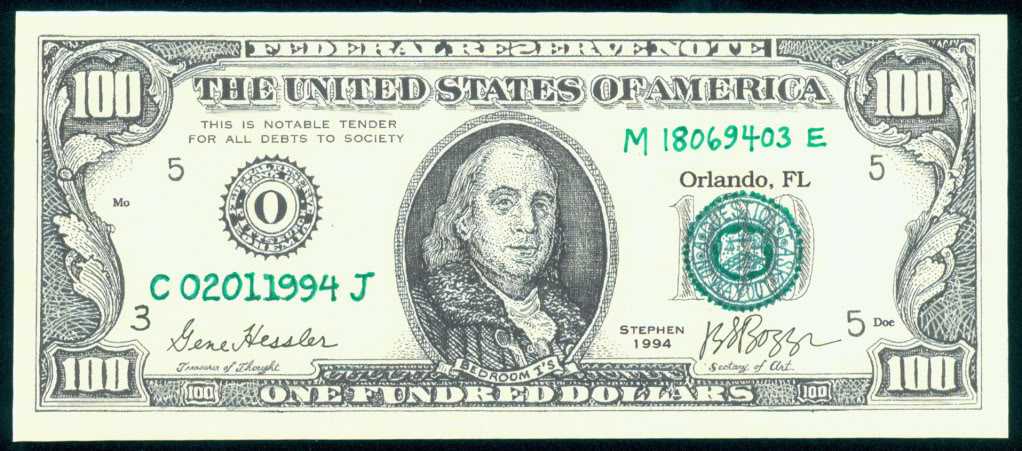
J. S. G. Boggs

I’ll be honest [Ed. – Hadn’t occurred to me you wouldn’t be–until now…]: I had to look at my Goodreads account to remember what books I read in 2022. Not because my memory is failing (I hope), but because it’s hard to separate 2021 from 2020: they feel like one long year spent mostly in my lounge, often working, often caring for children, sometimes briefly on furlough from those activities but still in the same room. My reading, as a fact, has been rarely undistracted: our small house has been full of sounds of children playing, blaring devices, zoom meetings, google meets for primary school, complaints about maths homework…probably no-one’s ideal conditions for a life of the mind, but I’d take it over a too-quiet library most of the time. [Ed. – Absolutely agree.] Finding a few quiet hours in the evening usually involves a trade-off between reading and sleep. I am not complaining—I wouldn’t have it any other way. But I think many people still think of reading as something that’s silent or solitary, and that’s often not my experience.

I enjoyed most of what I read last year, but most of the books I enjoyed most were not ‘new’ novels. My favourite was Christa Stead’s long House of All Nations(1938), which is about the goings-on in a Parisian bank that may or may not be a Ponzi scheme. It’s amazing to me that there wasn’t more interest in this book in the wake of the Global Financial Crisis. It’s a fascinating account of the way money manipulates markets (or tries to). It’s full of dryly satirical portraits of pretentious bankers and includes a massive cast of unusual characters. Stead is as technically accomplished a writer as the more famous modernists, but her writing is more restrained. When she does suddenly let loose with a perfect, rhetorically complex sentence, the effect is even more powerful. House of All Nations does have an often-compelling plot, but it is told in a serial way, and many of the details are highly technical (my favourite section is about the manipulation of the international wheat trade!). [Ed. – Neepery!] It’s an encyclopedic novel that should be more widely read, and the rare encyclopedic work that could probably be turned into a (inferior, obviously) modern television series.

I also loved Jen Craig’s out-of-print first novel, Since the Accident (2009). Her second novel, Panthers and the Museum of Fire, is a multivalent Bernhardian rant that has rightly attracted international attention, but the first book is impossible to find (it was sent to me by the author via her literary agent, Martin Shaw). It’s an exceptional work that anticipates Cusk’s Trilogy. The novel is narrated by an Australian woman just returned from Europe who visits her sister, Trude. Trude has partially recovered from a terrible car accident, but has recently decided to leave the man she was living with (Murray, who helped save her from the accident) and moves into a room in a run-down suburban Sydney pub. In order to explain this decision, Trude recounts a series of conversations between herself and other participants at an artist’s retreat she recently attended. The entire novel takes place during this conversation in the pub, which is a tense and sometimes menacing scene. Trude and her sister are estranged, and both dislike their controlling, manipulative mother, who has is responsible for the visit in the first place. It’s a layered, indirect work, technically accomplished, beautifully written, but also very human.

Two other Australian novels I really enjoyed were Michael Winkler’s Grimmish and Louis Armand’s The Combinations. I have already written about the self-published(!) Grimmish at length. It’s a hilariously funny novel that everyone should read. [Ed. – If they can get their hands on it!] Armand’s The Combinations is a bizarre baggy encyclopedic novel that is 888 pages long. Its structure is based on a chess board (an obvious nod to Perec), and the book is very much a novel about Prague, where Armand has lived since the 1990s, but it’s written in a recognizably Australian idiom. [Ed. — !]  It does have a plot involving the Voynich Manuscript and the provenance of its orphaned protagonist {Ed. — !!], but this is a maximalist book whose pleasures are to be found from page to page in its many jokes, complex sentences, and inventive textual strategies. It’s the kind of book that will cause some readers to run screaming (I mean this as a compliment?), but it’s an intense technical, conceptual, and literary achievement. As far as I can tell, it’s gone almost entirely undiscussed in Australia, which seems absolutely bonkers. More people should read and write about this novel. It’s too smart to go unread.

Most of the other books I read this year were from book twitter recommendations—and there have been very few misses in this regard. I loved Mauro Javier Cardenas’ Aphasia, which is certainly my favourite ‘new’ book I read in 2021. I read the massive recent Krasznahorkai (a lot of fun if you have enjoyed his other work), Enard’s enjoyably excessive Compass. I read Gass’s Middle C (a book that has stayed with me and which I hope to reread) and Theroux’s cult-favourite novel, Darconville’s Cat, which I found equally extraordinary and confounding. I loved the relentless accrual of that long sentence in Ducks, Newburyport up until its too-resolute ending.I particularly loved Pierre Senges’ The Major Refutation, a novel comprising a (fictional) historical treatise that refutes the existence of the new world after Columbus’ ‘discovery’ of it. It is a novel written as a joke that is carried too far and then goes for another hundred pages beyond that, and I loved every second of it. Tsypkin’s Summer in Baden-Baden is a novella about Dostoyevsky that is effectively a literary panic attack. [Ed. – Did someone say “panic attack”??] It’s brutal, painful, and funny in equal measure, but even thinking about the book makes me feel weirdly uneasy. I reread Clarice Lispector’s Collected Stories, which remains my favourite of her books. Domenico Starnone’s Truth is perhaps not quite as good as his recent Ties and Trick, but it is a fascinating account of an author who is worried about his reputation being destroyed by the revelation of a ruinous secret. Exactly the kind of book you’d probably not want to write if you were an author suspected of harboring a large and potentially career-ruining secret… [Ed. – Ha!]

I was also surprised to find myself beguiled by two better-known novels. I had just assumed that I was not the right reader for Patricia Highsmith’s The Talented Mr. Ripley. I was wrong: it’s funny and I loved the way that Highsmith makes Ripley both repugnant and compelling. I also like how it (correctly) portrays the intergenerationally wealthy upper-classes of the USA as basically boring and dim people whose only extraordinary quality is their wealth. I also laughed all the way through Rachel Cusk’s Second Place. I know some readers have complained that it’s too close to its source material, but it’s such a strange, comic novel that is full of awkward and mildly unpleasant humour (and which jokes in various ways about its own unoriginality). Give me more unoriginal books like this one!

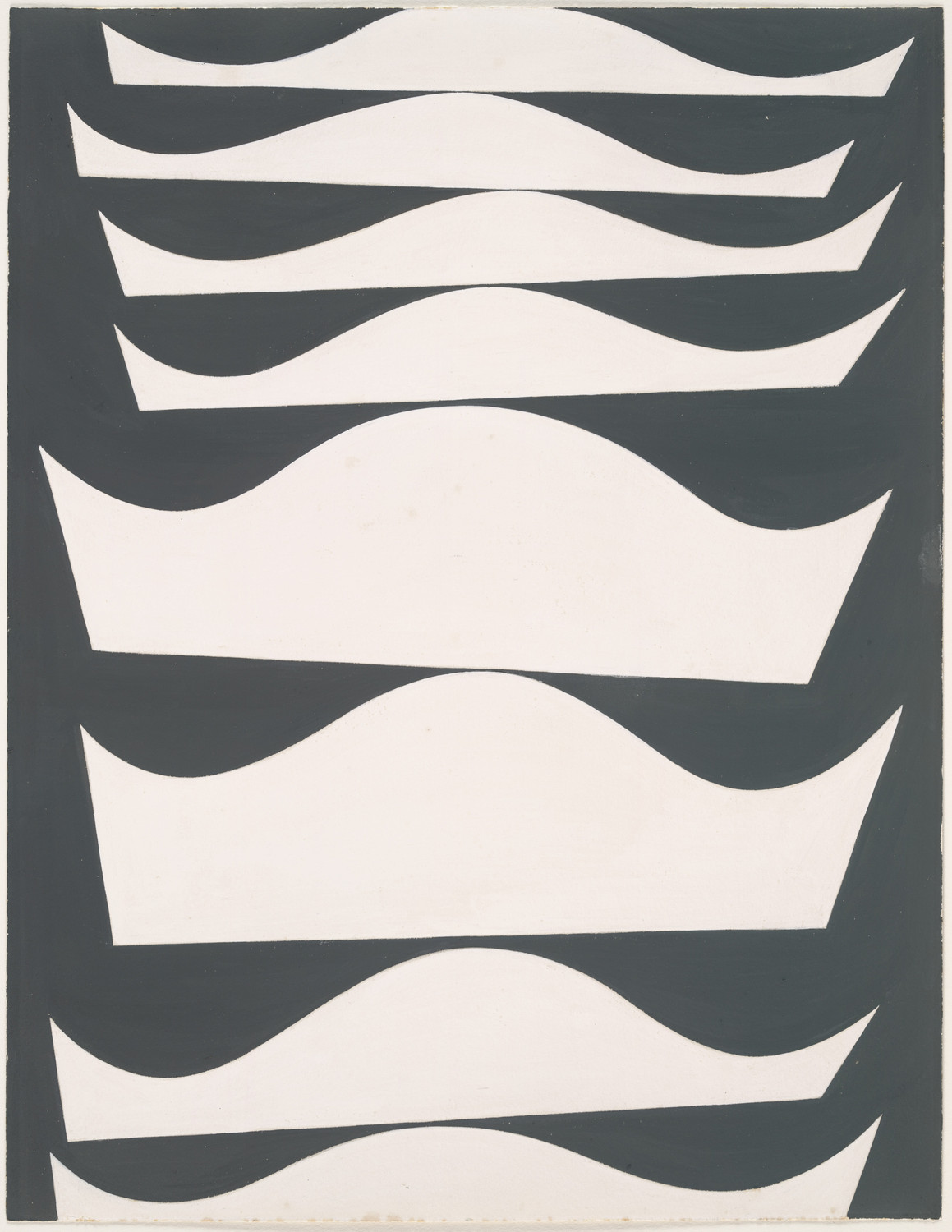
Sophie Taeuber-Arp, Échelonnement désaxé, 1934

I am currently packing all of my books in the process of moving from regional, mainland Australia (Ballarat) to the island state of Tasmania. [Ed. – Tasmania! What the devil?! I’m sorry, I don’t know what came over me…] As a result, my reading will be a bit more limited for the moment and largely digital. I am about 1/4 of the way through Marguerite Young’s sprawling, discursive Miss Macintosh, My Darling, which is being reprinted by Dalkey Archive Press in 2022, and I suspect this is likely to be one of my favourite novels of this year.