Ricardo Chavira’s Year in Reading, 2023

Excited to once again present reading reviews from some of my favourite readers. Today’s installment, his first, is by Ricardo Chavira (@waryenthusiast). Ricardo is a reader, not a writer, but he thinks writers are cool. When he’s not reading, running, cooking for friends and family, building even more bookcases, or making maple syrup, he makes his living in sunny CT. Having done graduate work in philosophy, he, naturally, works in IT.

Edvard Munch, Kragero in Spring, 1929

A few years ago, I started keeping track of my reading with a detailed list. I wanted a handy list I could consult (likely on my phone) if and when a friend would ask what I’d been reading lately. Too often, my mind would freeze and I’d maybe utter one title from 3 months ago, only later kicking myself for not recalling the wonderful books I’d just read in the last few weeks. [Ed. – Relieved to know I’m not the only one. “Uh… books… I read some books.”] What started as a mental crutch has evolved into a comprehensive spreadsheet, tracking title, author name & gender, genre (fiction, non-fiction, poetry), date I finished the book (which also gets written on the last page of the book), where I finished the book (city, but often on a plane or train), whether it was an audio book, library book, read by my book group, etc.

In my non-book-reading profession, there is an adage that “what gets measured gets improved.” [Ed. – Hmm.] Perhaps that applies here as well. In recent years, I’ve sought to diversify my reading palate, reading more books written by women and persons of color, reading more non-fiction (left to my devices, it’s overwhelmingly fiction), borrowing more books from my local library, reading more from “the backlist” (as I tend to get excited by recent releases). Being aware of what I’m reading allows me to be more deliberate about what I read. It’s also fun to run the numbers each January, look for trends, chastise myself (for not reading enough poetry), feel good about myself (for reading more works in translation), and make plans for the coming year (which are never followed through completely).

My other book tradition is the annual reshelving that takes place shortly after New Year’s. Every year, I put the books I read on their own shelf. Audiobooks, library books, and books on loan are not there, of course, but it’s fun to watch that empty shelf slowly fill up and, eventually, spill over to the next. [Ed. – Wait, what did you say?? I drifted away when you said “empty shelf.”] And after the new year, the year’s reads get shelved into the general mix of the library. It’s an opportunity to reflect again on these books, but really an excuse to muck around with my library. For whatever reason, it’s a very satisfying activity and one I’ve come to look forward to. [Ed. – What a lovely tradition!]

<insert obligatory comment about how awful the year was> Yes, 2023 was a dumpster fire of a year in so many ways, but not a bad year for books and reading. The year began with anticipated titles from many of my favorite contemporary writers*, some of which are mentioned below.

(*a partial list of authors with 2023 releases that had me worked up: Nana Kwame Adjei-Brenyah, Colson Whitehead, Rebecca Makkai, Luis Alberto Urrea, Hilary Leichter, Matthew Desmond, Rebecca Solnit, Zadie Smith, Lauren Groff, Emily Wilson (trans.), Jesmyn Ward, Jhumpa Lahiri – whew!)

So let’s get on with it. Herewith, some rambling thoughts on many of the books I read. Enjoy and happy reading.

Some highlights – Loved these books, here’s why.

  • Chain-gang All-Stars, by Nana Kwame Adjei-Brenyah

A highlight of the year for me was Adjei-Brenyah’s follow up to Friday Black, his fantastic debut of short stories. Chain-gang is set in a near future where prisoners are given the option of joining “chain gangs,” teams that fight in gladiatorial hand-to-hand combat in exchange for a shot at freedom. These so-called “hard sports” have corporate sponsors, stadiums full of shrieking fans, and lucrative online steaming shows. Despite all this, we’re somehow given a story of love and humanity amidst the chaos. Calling it satire or dystopia only hints at Adjei-Brenyah’s brilliance, as he approaches his set-up as more than just a sendup of current society and the role of the carceral state. At a public reading, I asked him how he threads the line between plausibility and seemingly improbable exaggeration (a televised reality show with prisoners fighting to the death? no, but I can kinda see that …). [Ed. – Alas, I can totally see it.] As I recall, he said the trick is not just coming up with a dramatic story, it’s having a twist that makes it work. He’s not just stepping on the gas, exaggerating the status quo. Rather, he takes something away or adds to make the story stick. Here, the conceit is not that prisoners are being violently exploited for public/private profit. The conceit of the novel is that it’s happening out in the open, and we not only don’t care, we consume it. As terrifying as that sounds, there’s an urgency to this novel that can’t be ignored.

  • Crook Manifesto, by Colson Whitehead

We’re living in the age of Colson Whitehead, in case you’re wondering. A follow up to Harlem Shuffle, we get to revisit Ray Carney, the furniture store owner and erstwhile fence of stolen goods. Unable to score Jackson 5 tickets for his daughter, Ray calls in a few favors and one thing leads to another… The depiction of Harlem in the 70s is spot on; and Whitehead has such an ear for the rhythms of speech, music, and street noise that do so much to convey the bygone era. Whitehead is deft as ever in exploring matters of race and society. Musing on a performance in which a young Michael Jackson wants to talk about the blues, “Carney chuckled – the kid was ten.” But after a moment’s reflection, “Carney shouldn’t have laughed. What ten-year-old black child didn’t know about the blues?” This is the second in a projected trilogy and my arrangement with Whitehead is simple – you keep writing them, I’ll keep reading them. [Ed. – Ha, love that! Loved Shuffle; look forward to this one; excited to hear about the third.]

  • Lucky Jim, by Kingsley Amis

I love the campus novel and this is one of the best. I recently came across a copy of the NYRB edition, so took it as a sign to revisit an old favorite. Happily, it mostly holds up. The old school misogyny felt tired and dated (as it should). Margaret may be a manipulative drama queen (says so right there in the margins of my old copy), but it hardly justifies her treatment. Still, Amis is such a good writer, tossing off lines such as: “It was from this very bottle that Welch had, the previous evening, poured Dixon the smallest drink he’d ever been seriously offered.” On the whole, the novel still works and neither characters nor readers emerge unscathed. Coda: Happily, I received another copy for Christmas, as Hatchard’s, the venerable London bookseller, has issued a gorgeous limited edition of Lucky Jim. Anyone want an old paperback copy? [Ed. – Good offer, friends!]

  • Milkman, by Anna Burns

I was excited to read this book when it came out and finally got around to it (only 6 years later). I knew it was going to be good, but it’s always a thrill when a book so wildly exceeds your expectations. The psychological depth, the suffocating closeness of the tight-knit community, the deadly gossip, and the rapid-fire language make for a heady combination. So many passages were chock full twists, descriptors, and fulsome lists that I feared she’d run out of words. But she never did. So grateful.

  • The Netanyahus, by Joshua Cohen

On one level it’s a campus novel (and you know how I love a good campus novel), but also an incisive depiction of antisemitism, and a scathing indictment of the powers that be. It’s also a riot. Cohen guides us with such a steady hand through the myriad offenses endured by our humble protagonist, Ruben Blum, the only Jewish professor on a small upstate New York campus. Describing a note from Blum’s obtuse department chair: “’Rube,’ it read, in his characteristic mélange of the casual and turgid.” [Ed. – Heh] But Cohen also doesn’t hold back in depicting the flaws and hubris of his characters. The Jewish professor, and titular patriarch, whom Blum is asked to host is none other than the father of the current Israeli prime minister. This book should be read and appreciated despite, and because of, its association with current affairs.

  • The Monsters of Templeton, by Lauren Groff
  • The Vaster Wilds, by Lauren Groff

This is also the age of Lauren Groff. This year I read her first and latest novels to achieve my Groff completist status. [Ed. – Ooh, did you get the button??] I love how varied her writing is; she never writes the same book twice. A grad student trying to make her way in the world and learning you can’t come home again (except when you do). A young woman fleeing an early American colonial settlement and trying to survive in the wilderness. As with Whitehead, I will read everything she writes. Keep em coming. She’s also opening a bookstore! [Ed. — !]

  • Phantoms, by Christian Kiefer

By all accounts (viz., a scroll through his Twitter feed), Kiefer is a busy man, juggling teaching, a large family, and crazy rock & ice climbing expeditions. [Ed. – No joke, that climbing stuff is insane.] He also manages to write some wonderful novels. Phantoms tells the story of Japanese and American families torn apart by WWII and the shameful internment camps. Years later, the story is refracted by the memory of a young writer who is slowly uncovering the truth, while dealing with his own trauma as a Vietnam veteran. A story of secrets, lies, bigotry, war, and other American values, Phantoms is truthful without being cynical, and just hopeful enough without giving in to sentimentality. And Kiefer gets bonus points for having joined our book group discussion via zoom!

Found in Translation – I don’t know why translated literature is such a hard sell in this country. It’s the literary equivalent of yelling at children “eat your vegetables, they’re good for you!” With publishers such as NYRB, Europa, Charco (and many other wonderful indie presses), it’s so easy to find good translated lit. Try it, you’ll like it.

  • Translating Myself and Others, by Jhumpa Lahiri

I just can’t say enough good things about Lahiri, she’s the bee’s knees, the cat’s pajamas. I get giddy thinking about her work. [Ed. – Paging @bibliopaul!] Long story short for those not keeping track at home: In recent years, Jhumpa Lahiri has been writing in Italian and translating (herself and others). Never fully at home in English (the language of her upbringing) or Bengali (the language of her parents), she learns Italian in college. Years later, she returns to it by packing up the family and moving to Rome (as one does), where she immerses herself in language study. Before long, she’s hanging out with Italian writers and translating their work. And she stops writing in English as her primary language. These essays are both critical (such an ear for how other writers work) and personal (artfully exploring her technique and motivations behind her writing and translations).

  • Roman Stories, by Jhumpa Lahiri, translated by Jhumpa Lahiri and Todd Portnowitz

New short stories from Lahiri (her best form, in my opinion) is cause for celebration. These don’t disappoint. Set in a contemporary Rome and populated by people who look and speak differently from the locals, these stories remind us the beauty and coarseness of the human condition. And yes, she wrote them in Italian and later translated (all but two of them) into English.

  • Ties, by Domenico Starnone, translated by Jhumpa Lahiri

Starnone is a luminary in the Italian literary scene and not known well enough here in the States. And is translated by Lahiri. And published by Europa. What’s not to like?

  • The Door, by Magda Szabó, translated by Len Rix

I often saw this book cited as a favorite NYRB, so was thrilled when I found a used copy. And even more thrilled when I began to read it. Szabó gives us Emerence, a housekeeper, street sweeper, and eminence grise of a small Hungarian community. At first, Emerence seems aloof, secretive, even arrogant. She’s all of these things, but also insecure and vulnerable, as slowly emerges from her complicated relationship with Magda, her employer (and enabler). The depth of the characters and complexity of their relationships carries on to the end, giving us a stunning portrayal of people at their best, worst, and most human. [Ed. – Incredible book, now I want to read it all over again.]

  • A Mountain to the North, a Lake to the South, Paths to the West, a River to the East, by László Krasznahorkai, translated by Ottilie Mulzet

Krasznahorkai is a wizard. It would be too easy to say this story is like a dream. But there is an ethereal quality to this book that evokes so much thought and feeling, and yet remains just out of one’s grasp. Long, wonderful discursive passages on weather, architecture, and math that evoke sheer longing. There’s a short chapter on the wind and air that has passed through this temple that’s just a joy to read. A great way to end the year for me.

  • Fantastic Night, by Stefan Zweig, translated by Anthea Bell

These stories of reversals, betrayals, misunderstandings, and moral discoveries are a delight. To contemporary readers, he has a certain Old World charm, and it’s not surprising he’s come back into vogue recently as both literary and pleasure reading. I’ve been told that with Zweig’s unique voice, you’re either in or you’re out. Count me in.

  • At Night All Blood is Black, by David Diop, translated by Anna Moschovakis

Diop does so much in this short novel. In the trenches of World War I, our protagonist takes revenge on enemy troops after his best friend is killed. A grisly descent into madness ensues that terrifies even his fellow soldiers, making him an outcast in every way. The narrative feels like something out of Camus, but darker, and stayed with this reader for a long time.

Good Genre – Another absurdity of the reading community which I cannot abide are the knee-jerk slights often directed towards so-called genre fiction. [Ed. – We do not allow that sort of thing here at EMJ.] Here are some standouts in fantasy, sci-fi, and crime fiction.

  • Hell Bent, by Leigh Bardugo

In Bardugo’s world, magic is real and practiced by students at Yale University’s secret societies, such as Skull and Bones. (Campus novel alert!) A sequel to her blockbuster Ninth House, Hell Bent picks right up where the action left off and doesn’t stop. I’ll admit to a local bias that adds to my enjoyment of these books as I studied there, live nearby, and my wife is friends with the author (read the acknowledgments!). [Ed. – What?!?!?!] But even without any extraneous connections, it’s great fun. Alex Stern is part of an organization that is supposed to keep the secret societies in check, but she has a way of making things worse and/or better and pretty soon things are literally going to hell. Along the way, Bardugo gives us more esoteric history (some it speculative) and plenty of her trademark creativity in the magic, spells, and monsters that populate this world (demons and vampires, yes, but not exactly like what you’ve seen before). I always love the second part of a trilogy (what can I say, I’m a middle child), but I am eager for the next installment.

  • Babel: Or the Necessity of Violence: An Arcane History of the Oxford Translators’ Revolution, by R. F. Kuang

Another Yalie (along with Bardugo), Kuang has written 5 novels, is working on a PhD (to complement her Oxford and Cambridge degrees), and hasn’t bothered to turn 30 yet. Wunderkind bio aside, Babel is a lot of fun. We’re at Oxford in the 1830s, but in this version, magic is real and harnessed by scholars at the Royal Institute of Translation who manipulate silver bars inscribed with translation. The effects of this magic power the British empire and are the source of its global domination. Not all sits well with a group of young students, most of whom are foreign-born and recruited for their language skills. Plenty of action, intrigue, and wrestling with moral and political dilemmas make for an engaging read. And did I mention it’s a campus novel? [Ed. – I’m gonna give this one another try. I abandoned ship, but I think I missed something good.]

  • Bloodchild and Other Stories, by Octavia E. Butler

Who knew Butler also wrote short stories? Not many (stories, that is), but those collected in this volume are bangers. [Ed. – Such bangers.] Part of the fun of short stories is delivering a punch, a great insight, or deep emotion in just a few pages. And sci-fi is great at creating alternate worlds where the rules are different and you get to decode those new norms. Doing both of those things well at the same time is no small feat. Happily, Butler doesn’t skimp on her trademark thought-provoking imagination. More than once I felt equal parts excited and unsettled as I figured out the premise of each story. “Ah, so that’s what’s going on. Yikes, that’s what’s going on.” [Ed. – Well put, R]

  • Lessons in Birdwatching, by Honey Watson

I hadn’t read a solid sci-fi novel in a while and this one really satisfied that itch. At first, I felt out of practice, trying to decipher which way was up in this new world. “That can’t be right, is that really happening? I often said to myself. And oh, yes, it was happening. Whether it’s right or not is up to you, dear reader, to decide. In the meantime, Watson has a ball with political intrigue, war, sex, drugs, violence, resurrecting an ancient god, and giving us some really manipulative characters you can’t help feel guilty rooting for. A sequel is necessary, as I have a feeling it’s going to get worse before it gets better. And I can’t wait.

  • Small Mercies, by Dennis Lehane

Solid storytelling, plenty of violence, salty characters, and local color keep the pages turning. Is this a screenplay masquerading as a novel? Given Lehane’s novels’ track record, the adaptation can’t be far behind.

A Family Affair – Few things in life are more satisfying than enjoying books with your family, especially children. Scratch that, there’s nothing better.

  • The Handmaid’s Tale, by Margaret Atwood

This was at the top of my wife’s Leigh Bardugo’s friend’s “books I love that I can’t believe you haven’t read” list. Feel lucky to have such a great reading partner. [Ed. – Aww, love this.]

  • Slaughterhouse Five, by Kurt Vonnegut, Ryan North, Albert Monteys (graphic novel)

As my son continues to develop his literary tastes, his current go-to list includes Steinbeck, Murakami, and Vonnegut. He recently acquired this lovely graphic novel version of Slaughterhouse Five, one of his favorites. It’s a wonderful version with fantastic artwork, remains true to the novel, and made for great conversation.

  • Afterparties, by Anthony Veasna So

So was a wonderful writer whose life sadly ended far too soon. My niece loved these interconnected short stories of Cambodian Americans in California and wouldn’t rest until I read them. Loved the book and love having such passionate and discerning readers in the family. [Ed. – Lucky man!]

Kinda wacky, but good! – A very ad hoc collection of books that were unconventional in form and/or content.

  • The Memory Police, by Yoko Ogawa, translated by Stephen Snyder

Ogawa gives us a world where words are gradually erased from society, forbidden from use, after which their referents disappear from the world and, eventually, from memory. Birds are erased from language, then trees, then collective memory. Gradually, more and more of the world is removed from experience and memory, making even the most modest forms of resistance heroic. Haunting and imaginative in its use of language, I couldn’t stop thinking about it when I was done. It brought to mind the parts I most loved about Orwell’s 1984. More frightening than an oppressive, totalitarian government is the devious control and manipulation of language. If someone controls the words people can use, they’ve already won. Excited to hear there’s a movie adaptation in the works!

  • Pure Colour, by Sheila Heti

Heti gives us a world that is just a first draft, in which Mira’s love for Annie and her father give her different experiences and perspectives on being in the world. When her father dies, his spirit goes into Mira and they live as a leaf on a tree, until Mira remembers her other modes of existence. None of that really explains the novel, but that doesn’t matter, because Heti is not encumbered by conventional expectations of what a novel should do or be about. That alone is reason enough to read it. [Ed. – Plus, she spells “colour” correctly.]

  • Gibbons, or One Bloody Thing After Another, by James Morrison

Morrison, that irascible voice of reason on #BookTwitter, has given us a splendid book that hops across centuries and generations of a family, giving us one bloody thing after another. Such is life. Each chapter is a separate short story, all loosely interconnected and featuring glass eyes, a fake mermaid, and culminates in a Sydney Opera House set aflame. [Ed. – Indeed. So good!]

  • Memoirs of a Polar Bear, by Yoko Tawada, translated by Susan Bernofsky

Three generations of polar bears who are heroes of the revolution, dissidents, expats, and celebrities. These are their stories. As original as it is improbable, it was fun to let go and go along for the ride.

Make Way For Poets – Never enough poetry, but here are two I enjoyed.

  • Her Whole Bright Life, by Courtney LeBlanc

LeBlanc brings joy, anger, sorrow, and love into her work in ways that make you want to read, reflect, and read again. That is to say, she’s a wonderful poet. When she curses North Dakota for the difficult life it inflicted on her hard-working, dying father, her rage is palpable and as beautiful and terrifying as anything the Greeks knew. But she’s equally adept giving us tenderness, as when she describes her husband rescuing an injured bird:

He carried it to a tree at the edge of our

property, gentled it onto a branch

Love the verb “gentled”!

  • Poems [For, About, Because] My Friends, by Hattie Hayes

Hayes’ first collection of poems is, as the title suggests, centered around her friendships and is a wonderful evocation of the time of life when friends serve as a chosen family and are deeply pivotal to one’s life. Hayes matches those emotions with some lovely turns of phrase:

You sign every letter “yours,” as though I needed a reminder

and

I have all this faith I’d never dream of cashing in

I’m also grateful to her for introducing me to Hilary Leichter. Will keep an eye on Hayes’s work to come.

Good, But Didn’t Change My Life – These books were fine, well-written, and loved my many. I enjoyed them, but I wasn’t as overwhelmed as I’d hope to be.

  • Hamnet, by Maggie O’Farrell

Love the subject, the writing was great, but I somehow didn’t connect with the story for much of the book. It seemed too distant and diffuse, somehow. But the ending had such beauty and moral clarity, it seemed to make up for it.

  • Nocturnes, by Kazuo Ishiguro

Am working my way through Ishiguro. I enjoyed these short stories, but they didn’t bowl me over, as much of his work has done. Bonus points for the interconnected short stories. Always love that.

  • I Have Some Questions for You, by Rebecca Makkai

I loved The Great Believers, so was ready for more Makkai. And while it was a pleasant and enjoyable read, it just didn’t have the same depth as her previous work. To be fair, not every novel can (or should) be The Great Believers, but I was left wanting more. And yes, bonus points are awarded for another campus novel.

Didn’t Quite Work For Me – Some books that left me cold and a bit disappointed; didn’t hate them, they just didn’t work for me. These are three great writers who will continue to do just fine without my approbation, so let’s not lose any sleep here.

  • Birnam Wood, by Eleanor Catton

Catton is a great writer and weaves a wonderful story setting up a conflict between a scrappy, left-wing, environmental collective and a billionaire tycoon with shifty motives. The dialogue is tight and snappy, with some great bits on the shortcomings of liberalism, failures of capitalism, and dismal state of the environment. Loved those passages. The problem (ok, my problem) is that the villain is so rich and powerful, with unlimited resources, weapons, and technology, and utterly devoid of scruples, that it makes for an uneven conflict. Wait, maybe that’s the way of the world! Even so, it makes for a lopsided novel, and ultimately detracts from its enjoyment.

  • The Heaven & Earth Grocery Store, by James McBride

Love McBride. And there’s much to love in this novel. But it feels like three different stories, which ultimately don’t come together as a cohesive whole. The many colorful characters, the fascinating slices of history, and the clever plot twists are fun, but they seem more anecdotal and don’t really add up. Much preferred Deacon King Kong.

  • The Gathering, by Anne Enright

I’ve enjoyed other Enright books (esp. Yesterday’s Weather), so was glad when our book group chose this. Unfortunately, this book never took off for me. We’re introduced to a large Irish family mourning the loss of their son/brother by suicide, mostly from the perspective of a close sister. It made me feel a bit churlish, but I kept waiting for something to happen. And when the revelations were disclosed, they were late in coming and seemed so predictable as to have lost some of their moral weight. But hey, it won the Booker, so what do I know.

Quick, Fun Reads – Because sometimes you just want an easy, fun read.

  • Daisy Jones and the Six, by Taylor Jenkins Reid

The rise and fall of a fictional band (Fleetwood Mac, basically) is told as a series of interviews years after they collapsed at the peak of their fame and success. It’s a good rock and roll story, with the requisite amount of sex and drugs. The story breezes through the haze of the 70s and makes you care about the main characters without getting too nostalgic. The tv adaptation was also good fun, but as always, read the book first.

  • The Wife of Willesden, by Zadie Smith

Zadie Smith taking on a modern adaption of Chaucer’s The Wife of Bath? Yes, please! A raunchy playfulness comes through (how could it not?) and you know Smith is having fun updating the material to modern sensibilities while keep true to the source material. And the account she gives in the introduction about haphazardly falling into the assignment of writing a play is equally hilarious.

  • The Fraud, by Zadie Smith

OK, not quick (pretty long, actually), but since we’re talking about Smith, it was fun to read her 19th Century novel (she also narrates the audiobook). Her take on a sensational trial and its ensuing wild publicity was enjoyable. And I know she’s also making some comments on the state of the novel, but I don’t have the energy right now to unpack all that, let alone be upset by it.

Glad I Finally Got Around to Reading Them – I had heard so much about how great these books were (especially from some very ardent fans of Light) that I finally caved in and read them. Glad I did.

  • All the Light We Cannot See, by Anthony Doerr
  • Cloud Cuckoo Land, by Anthony Doerr

OK, I see what the fuss is all about. Doerr is a wonderful storyteller, especially adept at slowly weaving together seemingly disparate strands across time and place. So much fun to see him work. Also, I stupidly avoided Cloud Cuckoo Land because of the goofy title. Joke’s on me, because a novel featuring a long lost Greek story name-checked by Aristophanes is right up my alley!

Edward Hopper, Barn and Silo, Vermont, 1929

So that’s what I got. Not everything I read and not everything there is to say about what I read. But enough for now. And you? [Ed. – Thanks, Ricardo! Quite a year.]

Martin Schneider’s Year in Reading, 2021

Today’s reflection on a year in reading is by Martin Schneider, a freelance copyeditor (of books!) who lives in Cleveland, tweets at @wovenstrap, and used to write for Dangerous Minds. He’s part-Austrian and can occasionally can be found in that country.

Look for more reflections from a wonderful assortment of readers every day this week and next. Remember, you can always add your thoughts to the mix. Just let me know, either in the comments or on Twitter (@ds228).

Charles E. Martin

The global pandemic has been very good for my reading life.

I’ve read novels my entire adult life but the raw totals in any given year might not have been very high, maybe 30 per year. When COVID-19 arrived, I had an empty work patch in my freelance schedule and I responded by attempting to read one novel per day for 30 days (!) as a way of distracting myself from the fact that I might have a hard time finding freelance work. I made it to Day 19 but some work came in, thank god, and I didn’t get to Day 30. That stretch sparked a period of high novel consumption: I read 72 novels in 2020 and 70 novels in 2021. Those are very high totals for me.

I’m grateful for the particular cluster on Twitter that orbits around Caustic Cover Critic and Damian Kelleher and of course Dorian for improving my general experience on Twitter as well as giving me inspiration for new books and a community of like-minded people, etc. I should also say a word about the Backlisted podcast as additional inspiration (obviously that also overlaps with Twitter in some ways). I appreciate the monthly bookstack photographs and other visual ephemera that Book Twitter is always providing me with.

I’m a volume whore, by which I mean I favor reading short novels so that the raw book count stays as high as possible and I don’t get stuck for a month reading Moby-Dick or whatever. [Ed. — Ah, but what a month it would be!] 275 pages already begins to seem a high total to me, my sweet spot is about 191. ABC, always be churning. [Ed. – Hahaha!]

It goes without saying that 2021 was a very good reading year for me, cycling through 70 books in a calendar year is pretty close to an ideal way for me to spend my free time.

OK, here are about 20 books I wanted to say something about, listed in chronological order except where books are joined.

Michaela Roessner, Vanishing Point

The first read of the year for me, and one of the year’s finest. Vanishing Point is hard to track down but this exemplar of heady, sinuous ’80s sci-fi is worthwhile for those who like that kind of thing. The setup has much in common with Tom Perrotta’s The Leftovers — it also came first — which most likely is what drew me to seek it out. I don’t want to divulge too much about it, but I greatly enjoyed this intelligent, immersive book, and I think about it often.

Josephine Tey, The Franchise Affair

I’ve never been much enamored of The Daughter of Time, which has always seemed implausible and overbaked. This left me unprepared for the astonishing authorial control of The Franchise Affair. I think you’d be hard-pressed to find a better representation of midcentury England than this book; the sheer exuberance of the jolly/obliging/diffident/snappish voices — literally, speaking voices — is tough to top. What’s the cricket equivalent of “a home run”? [Ed. – Knocked it out of the oval here, my friend: such a good book.]

Gilbert Adair, Love and Death on Long Island

Quite simply, my #1 read of 2021. I adore thinking about this book. Every page is a treat. I would urge those who like their fiction subtle and incisive to consume this immediately. Adair’s performance — and it is definitely a performance — feels thoroughly under-heralded. I had seen bits of the movie years ago and had always found the central predicament original and delicious and rich. Who can fail to relate to the sorrows/joys of being a bookish hideaway in a world that produces, almost unthinkingly, Hotpants College II?? [Ed. – Admittedly, not a patch on Hotpants I.] The ways Giles and Ronnie fail to comprehend each other are a wellspring of comedy that will never stop nourishing me. I never reread books but will likely return to this “jewel-like” 1930s-type book set in the age of the vulgar teenage sex farce (rented from the local video shop, natch); those 1980s details are decisively additive, at least for me. I sorely crave books like this but alas, strong comps are surely thin on the ground…… [Ed. – Ooh, a challenge: do your best, Team. Whatcha got for Martin?]

Colson Whitehead, The Underground Railroad

I am a fan of Whitehead’s, but I was disappointed by The Underground Railroad. It seems unusually weak for a Pulitzer winner (then again, there is The Goldfinch, oof). I appreciated the comparative tour of antebellum contexts, but the failure to develop the literalized choo-choos nagged at me. Does that metaphor explain anything to anybody? I can’t see how. It’s such a great idea but also a massive missed opportunity. This is the rare case of a book that needs another 200 pages, I think. I also worry that Whitehead has bought into the hype surrounding him. Give me another John Henry Days, man — please!

C.S. Forester, The African Queen

In 2020 I read The Good Shepherd and found it utterly compelling. Then dang if the same thing didn’t happen all over again with The African Queen. I am a little leery of the Hornblower books — I prefer the 20th century, thanks — but Forester’s way of imparting information really does it for me.

Patricia Lockwood, No One Is Talking About This

Jonathan Lethem, The Arrest

No One Is Talking About This is a relatively celebrated recent novel that I cluster together with the works of Jenny Offill and Rachel Khong, and not in a positive way. I think of all of these books as jammed with clever, postmodern witticisms/jokes that you could rearrange in any order and it wouldn’t make much difference to the narrative. That’s a little unfair to No One Is Talking About This, which Lockwood does take pains to instill with an Act I/Act II structure, but I still found it a complete failure in terms of ordinary novel-building. Meanwhile, Lethem is not much in fashion lately, especially after The Feral Detective, which did not work. I suspect there was scant interest in his stab at Post-Apocalypse, but I still found The Arrest as intelligent, engaging, and sharp as much of his stuff — I admire Chronic City particularly. His books don’t always hang together, but on the paragraph and thematic levels, Lethem seems to me the equal of anyone out there right now and, as such, under-appreciated.

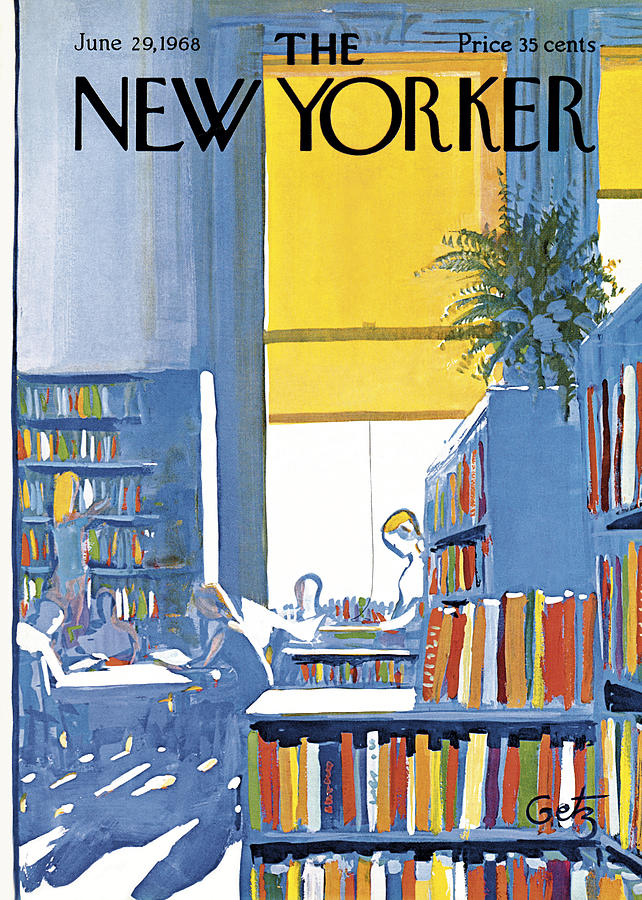
Arthur Getz

Margaret Drabble, The Millstone

Oh, boy. I was more than a little surprised how conventional and bourgeois (and therefore tiresome) I found this book, which in 1965 represented such a brave “new” perspective — or did it? From the perspective of 2021 it reads as so much more aligned to Drabble’s (presumably) hated predecessors than to us. To the reader of today, I submit, so many of Rosamund’s choices are unintelligible, particularly that of concealing the existence of her child from her parents. Rosamund’s whole setup (enormous apartment, rent-free) is so contrived and refuses to serve as the societal basis for anything (as I think was intended or at least was regarded). Jerusalem the Golden, a humble tale of growth about a woman from humble origins I read and esteemed decades ago, seems the antithesis of this. Drabble really leans into her privilege here, thus undoing the point. Next! [Ed. – *popcorn gif *]

Quentin Tarantino, Once Upon a Time in Hollywood

The last few years I have found myself increasingly disenchanted with the MFA-influenced “well-crafted” masterpieces that dominate (say) the Tournament of Books. The writing is frequently too tidy and pristine and there’s too much overlap/groupthink in the authors. In my mind, these books are not composed by individuals; too many of the nasty, idiosyncratic details have been sanded off. An antidote to this is Once Upon a Time in Hollywood, far from a great book but I found its termite-ish perambulations entirely refreshing and (am I crazy for believing this?) an explicit callback to the shaggy-dog ways of Dickens. I do suspect that Tarantino thought of this “novelization” (a favorite form of his) as an attack on all the bloodless hifalutin volumes that get adopted by reading groups. I’m ready to sign on to this agenda; modern fiction could surely stand to ingest the unkempt, untoward essence of this book.

Elena Ferrante, The Lost Daughter

I admire the guts it took to be so unflinching about the unvirtuous aspects of shirked motherhood. The Lost Daughter dares you to dislike its protagonist, which I did not — or not very much; Ferrante works in the class signifiers to make her readers side with her heroine over the swinish, unreaderly family that intrudes on her interlude — and then forces those same readers to think about that. It’s encouraging that a writer of Ferrante’s gifts has found such widespread success.

Susanna Clarke, Piranesi

Everybody’s favorite recent puzzle box, it seems. The first half of this book constituted one of the reading high points of the year for me. Nothing wrong with the second half, to be sure, but you just can’t top the sheer blazing WTF “where is this going?” quality of this book’s setup. [Ed. – Yeah, can’t argue with that.] As with Love and Death on Long Island, I desperately want to find books with this vibe, but I doubt that any are out there (I did think of David Mitchell’s Slade House, however).

Joseph Hansen, Fadeout

One of my top reads of 2021. I learn from the internet that Hansen was a pioneer of the gay detective novel. This book introduced Dave Brandstetter, Hansen’s recurring hero of a dozen or so mysteries. The gay angle functions as the lever that furnishes Hansen’s situation/solution with complexity, but it wasn’t just that; Hansen also had the ability and the interest to write textured, complex thrillers. That’s the kind of shit I live for! This was published in 1970, but I thought it stood up dazzlingly well today.

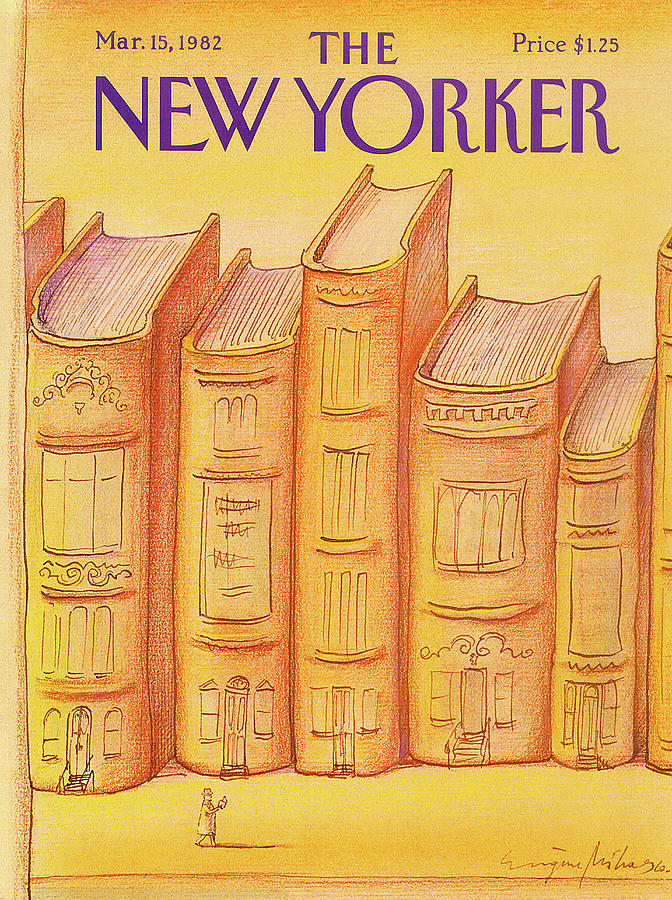
Eugene Mihaesco

Percival Everett, Cutting Lisa

This somehow pairs with The Lost Daughter in the author seeking out, nay, embracing unpleasantness to spectacular effect. This was on my shortlist of reading experiences for the year, a strikingly original work that forthrightly countenanced negativity while resisting the impulse to pin everything on a villain. Every character has corners; every situation is layered. My first Everett, Cutting Lisa has a chewiness I associate with the finest output of the 80s, and I can’t wait to read more by him.

William Maxwell, So Long, See You Tomorrow

Katherine Anne Porter, Noon Wine

So Long, See You Tomorrow is one of those “writerly” novellas that hit me entirely the wrong way. Maxwell was a smalltown escapee who later found tenure at The New Yorker and thereby invested himself of the power to imbue these “simple midwestern people” (yuck) with meaning. If ever a narrative should have dispensed with the pretentious framing device of the events filtered through the memories of a child, it’s this one. I guess I can see why people admire this book, but for me it was just a succession of false notes. [Ed. – Ooh, fighting words!] Noon Wine reveals the falsity of Maxwell’s methods; another short novel — Porter, it seems, detested the term novella — but in this case authentically empathetic towards its figures, in contrast to Maxwell’s self-serving projections/lies. Noon Wine has the guts to put real people on the page — and real stakes.

William Lindsay Gresham, Nightmare Alley

One of the much-mentioned texts of 2021, due to the Guillermo del Toro adaptation that landed late in the year. Later on, I found it significant that Gresham is not celebrated for any other work. This book is certainly adept and not devoid of virtues, but I found it labored and tiresome, every point underlined in every paragraph, nothing allowed to breathe, as a real novelist would do it. I resorted to a new strategy: just grind through 10 pages per day until done, just to get it behind me (while starting a different novel, I seldom double dip). I should go back and finish Geek Love as an antidote (not that Dunn let things breathe, either).

Louise Erdrich, The Sentence

Simply put, I cannot think of another novel as generous-minded as this.

Other books I enjoyed:

Powers of Attorney by Louis Auchincloss

Asylum by Patrick McGrath

Mrs. Caliban by Rachel Ingalls

Trustee from the Toolroom by Nevil Shute

The Mosquito Coast by Paul Theroux

Figures in a Landscape by Barry England

The Small Back Room by Nigel Balchin

The Blessing by Nancy Mitford

A Favourite of the Gods by Sybille Bedford

Excellent Women by Barbara Pym

After Leaving Mr. Mackenzie by Jean Rhys

Voyage in the Dark by Jean Rhys

The Easter Parade by Richard Yates

Two Serious Ladies by Jane Bowles

The Country Girls by Edna O’Brien

The Last Policeman by Ben H. Winters

Rose Under Glass by Elizabeth Berridge

The Quiet American by Graham Greene

On the Beach by Nevil Shute

An Unsuitable Job for a Woman by P.D. James

The Power of the Dog by Thomas Savage

Black Wings Has My Angel by Elliott Chaze

Amigo, Amigo by Francis Clifford

Something in Disguise by Elizabeth Jane Howard

Five Decembers by James Kestrel

A Disorder Peculiar to the Country by Ken Kalfus

Matt Keeley’s Year in Reading, 2021

Today’s reflection on a year in reading is by Matt Keeley, a marketer and freelance editor who reads too much. He lives in Massachusetts. You can find him on Twitter at @mattkeeley.

Look for more reflections from a wonderful assortment of readers every day this week and next. Remember, you can always add your thoughts to the mix. Just let me know, either in the comments or on Twitter (@ds228).

Vija Celmins, Night Sky #2, 1991

My favorite of all the books I read in 2021 was John Crowley’s Little, Big. Like my favorite book from 2020, Sylvia Townsend Warner’s chronicle of medieval life The Corner That Held Them, I believe it to be a masterpiece but hesitate to recommend it widely. Crowley’s 1981 novel follows the fortunes of the Drinkwater family through the twentieth century and into a bleakly imagined twenty-first. The family is connected, Somehow (Crowley always capitalizes this word), to the fairies and to a mysterious Tale (again, capitalized) that may encompass more worlds than ours. While no one, the author included, would deny that it’s a fantasy novel, it’s far different from and much superior to most everything published in the genre since Tolkien. It’s a long, beautiful, stately, and oblique novel; I look forward to returning to it.

Alan Garner’s Treacle Walker was a surprise and felt like a gift: When he published his memoir Where Shall We Run To? in 2018, Garner was already in his mid-eighties, and he’s a slow writer. Although I read it in just a few hours, Treacle Walker is precisely as long as it needs to be. I wouldn’t recommend it as an introduction to Garner, but it’s a fine (apparent) capstone to his six-decade career.

I read two books by Janet Malcolm in close succession early in the year; Two Lives is about Gertrude Stein and Alice B. Toklas: their lives, their love, their art, and the mystery of their survival as Jewish lesbians in occupied France. Malcolm’s précis of Stein’s The Making of Americans is particularly wonderful; I had no idea how strange, unmannered, and unedited that pseudo-novel is. I wouldn’t want to brave its nine hundred pages of dropped plots, failed experiments, and abandoned philosophical musings, but I’m glad to know what’s in there. The other Malcolm title was Iphigenia in Forest Hills, true crime about a murder, more sad than sordid, in Queens. I don’t think either book achieves the heights of The Journalist and the Murderer, but both titles are exemplary models of craft and sympathy.

Dorothy Dunnett’s The Spring of the Ram is the second novel in the House of Niccolò series. While her books, with their dense prose, unglossed allusions, and cunningly withheld character motivations, aren’t for everyone, I’m happy to reflect that I have a whole six more books in this series to read.

I went on a minor Philip Roth kick as the pre-scandal publicity around Blake Bailey’s biography kicked into gear. The Facts and The Dying Animal were minor, but Sabbath’s Theater is a masterpiece, the most exhausting, most dyspeptic, and most sinisterly compassionate novel I read this year.

Colson Whitehead’s The Colossus of New York comprises thirteen impressionistic essays about life in New York. Although it’s a distinctly minor work by a major writer, it was a balm for me at a moment when I was missing the city I’d made my home for six pre-pandemic years.

Rachel Eisendrath’s Gallery of Clouds is a book about, among other things, Sir Philip Sidney’s mostly forgotten sixteenth-century poetry, academic life, manuscripts, Walter Benjamin, and Virginia Woolf. I admit that I remember the book’s mood more than its matter — I had to consult the book’s publicity page to recall which writers feature in it. Perhaps that’s my failure as a reader. Or, if there really is something evanescent about Gallery of Clouds, maybe that’s only appropriate for a book of wisps and reverie and free association?

The Trial of Lady Chatterley’s Lover by Sybille Bedford is a brief account, just under a hundred pages long, of the 1960 British lawsuit against Penguin Books, which had published the unexpurgated version of D.H. Lawrence’s novel. Bedford attended the trial; sixty years on, her account remains witty and infuriating.

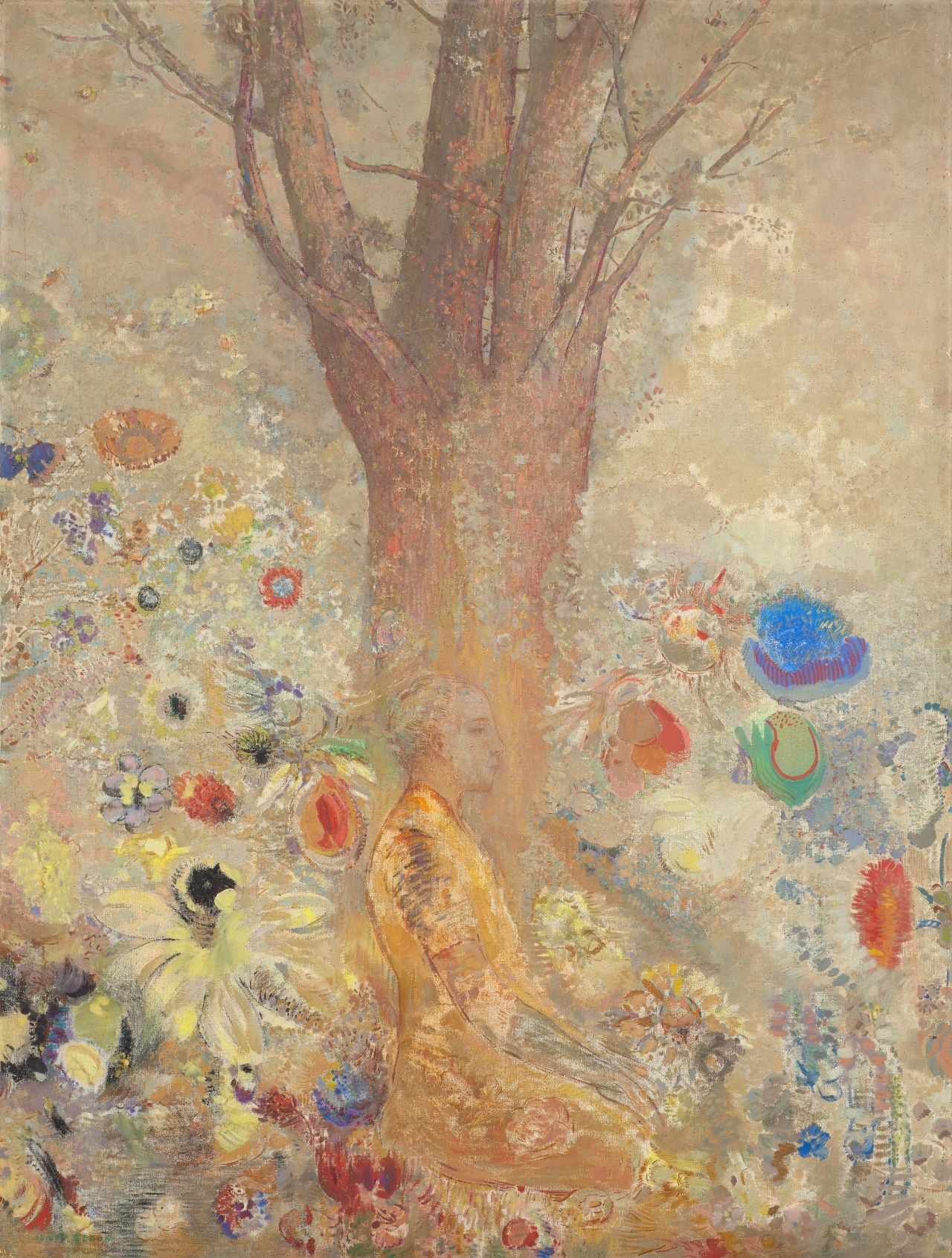
Odilon Redon, Buddha, 1904

Some final thoughts and suggestions:

I think Dorian told me about the Willem Frederik Hermans novella An Untouched House, which was as good as I’d been led to believe. [Ed. – Not me, sadly. It’s still on Mount TBR. Will Matt’s recommender please step forward?] I finally got around to reading Frank Herbert’s Dune, which I’d tried and failed to read when I was eleven or so.As someone who is occasionally paid to review science fiction, it’s a relief to finally cross this off my reading list. The prose isn’t great, but the novel is more than the sum of its parts. I don’t think that The Trees, Percival Everett’s comic guignol procedural about America’s history of racism, with bonus zombies,entirely succeeds, but I now have a whole stack of other Everett novels to read. Adam Mars-Jones’s Batlava Lake is extremely funny until, on the last page, it isn’t. Anthony Doerr’s Cloud-Cuckoo Land might be too commercial for some readers of this blog, but is absolutely enthralling. [Ed. –For some maybe, but the editor is willing to try all the things.] Small Things Like These by Claire Keegan lived up to the reviewers’ unanimous praise.

NancyKay Shapiro’s Year in Reading, 2021

Today’s reflection on her year in reading, her second annual contribution, is by NancyKay Shapiro (@NancyKayShapiro). NancyKay lives in New York, and reads a whole shit-ton.

Look for more reflections from a wonderful assortment of readers every day this week and into next. It’s a stellar lineup. Remember, you can always add your thoughts to the mix. Just let me know, either in the comments or on Twitter (@ds228).

Edward Hopper, New York Corner (Corner Saloon), 1913

The notorious year, the second of the Big Pandemic here in New York City, was, for me, the year I really settled into the idea of being retired from my freelance ad biz career (which I’d declared at the beginning of ’20 in a wishful fingers-crossed kind of way), found other things to do than work, got my elderly mom vaccinated twice, myself vaccinated three times, counted lots of blessings, lost said elderly mom at age 89 (not to Covid), and busied myself then grieving and dealing with her estate.

I read or listened to 84 books. Looking back over the list, I find that very little has stuck with me with especial vividness, probably because there was a flatness to my emotional life for most of the year, and then, when Mom passed in early September, the whole emotional tenor changed, and everything leading up to the day of her death seemed like a decade rather than a handful of days and weeks ago.

So, having said that, let’s see which books I want to recommend from those 84.

The first book I read in 2021 was The Last Samurai by Helen DeWitt, which I only picked up because of Book Twitter, and which I hated and kept telling Dorian I was going to chuck, because it seemed to be about an overly academically precocious child and an overly clever but useless-at-life mother. I thought I saw where it was going and that was to an ever-more annoying place. I would have chucked it if not for his encouragement, and I only appreciated it when I got to the last fourth or so of the text and could see what the whole thing was amounting to. [Ed. – Let this be a lesson to you all.] In the end I was glad I’d read it, breaking a habit I have of not persevering with books that, a hundred pages in, aren’t giving me much reading pleasure. The pleasure was retroactive.

Rob Sheffield, the music critic, wrote a book called Dreaming The Beatles: A Love Story of One Band and The Whole World. I’m a lifelong fan, but hadn’t thought about them much in recent years; this book delighted me because it wasn’t so much a band bio as a story of how the Beatles are perceived, and adored, across time, by their admirers. Lots of fun, gave me some new perspectives on these old favorites that sent me back to the music; a sprightly winter time read.

Quenching my desire to read dark books about grim and squalid Northern British things was Alma Cogan, a novel by Gordon Burn, in which he writes a fictional autobiography of Cogan, a singer popular in England in the 50s and early 60s, whose career was steamrollered by rock’n’roll, and who died young. In this novel she doesn’t die young, and she spills all the tea. Great and ghastly.

No One Is Talking About This by Patricia Lockwood really lit me up when I was reading it. It had an air of sui generis-icity about it that was exciting; its emotional roller-coaster effects were earned. Lockwood is very clever in the good ways of being clever, and this novel, which starts out being about online-ness, ends up being about emotions of great tenderness and subtlety. Full of surprise. A must. Just read it without reading anything about it first.

Over the summer I got into the way of wanting short stories by Anton Chekhov and William Trevor, and read great gobs of them, in the form of The Portable Chekhov and Trevor’s Collected Stories. I feel, looking back, as if I sat through hundreds of hand-wringing playlets, each story totally absorbing, a world in itself in a way that even the best novels are not, because you’re not reading them in a single sitting.

Also over the summer I had an urge to reread John O’Hara, and revisited Butterfield 8, Appointment in Samara, and 10 North Frederick. O’Hara’s merciless dissection of the manners and mores of upper-class Americans in the late 19th and 20th century is a genre unto itself for me. I can’t get enough of his snobs and tragically unself-aware nobs, all floating in cold martinis.

A wonderful discovery was the Chinese writer Eileen Chang, whose books are reprinted by the wonderful New York Review Books. I read Little Reunions for a class at the Center For Fiction, then went on to Love In A Fallen City. She writes about romance and family life in Hong Kong and Shanghai in the mid 20th century, with the political restrictions of these places hidden beneath the carefully articulated actions and thoughts of her heroines.

At the end of 2021 I listened to the audio of a new biography of poet Sylvia Plath, Red Comet: The Short Life and Blazing Art of Sylvia Plath by Heather Clark, an exhaustive but never exhausting account of the accomplishments and anxieties of Plath’s amazing life, which lasted just 30 years. I’m always fascinated by the lives of writers. Plath was, though a genius, also exemplary of all the things society puts in the way of young women—the pressures to be pretty, nice, quiet, maternal, agreeable, nurturing. This bio impressed me afresh with her struggle to be both a great artist and a successful woman, by the standards of mid-century America and Britain.

Finally, my least-liked—really, flat-out disliked, book of 2021: The Wind-Up Bird Chronicle by Haruki Murakami. The first novel by him I’ve read, and it’ll be the last. I only finished it because I’d been taught by The Last Samurai that things might turn around in the final third, but in this case, not so much. I know a few people who adore him and this book, but I can’t see it. [Ed. – I did not recommend this book, just FYI.]

Edward Hopper, Blackwell’s Island, 1928

Other stand-out books I read:

  1. Mayflies by Andrew O’Hagan
  2. Piranesi by Susannah Clarke
  3. Broken Greek: A Story of Chip Shops and Pop Songs by Pete Paphides
  4. Odd Girl Out by Elizabeth Jane Howard
  5. Harlem Shuffle by Colson Whitehead
  6. Alec by William DiCanzio
  7. How To Hide An Empire by Daniel Immerwahr
  8. Bosnian Chronicle by Ivo Andric
  9. Life of a Klansman: A Family History In White Supremacy by Edward Ball
  10. Box Hill by Adam Mars-Jones

Every book I’ve read since 2008: https://bit.ly/3njPjah

What I Read, October 2021

October 2021, the missing month! What can I say? I was busy, teaching all the things, making all the lunches, blah blah. But so many people appreciated my one-word review in the November post—I hate reading stuff too, I get it!—that I thought I would aim, not for single-word reviews (something to aspire to) but for single sentences. I’m such a wordy bastard that even that idea mostly failed (plus I had written a couple at the time, so those were already longer), but I herewith present what for me is a breezy summary of my month’s reading.

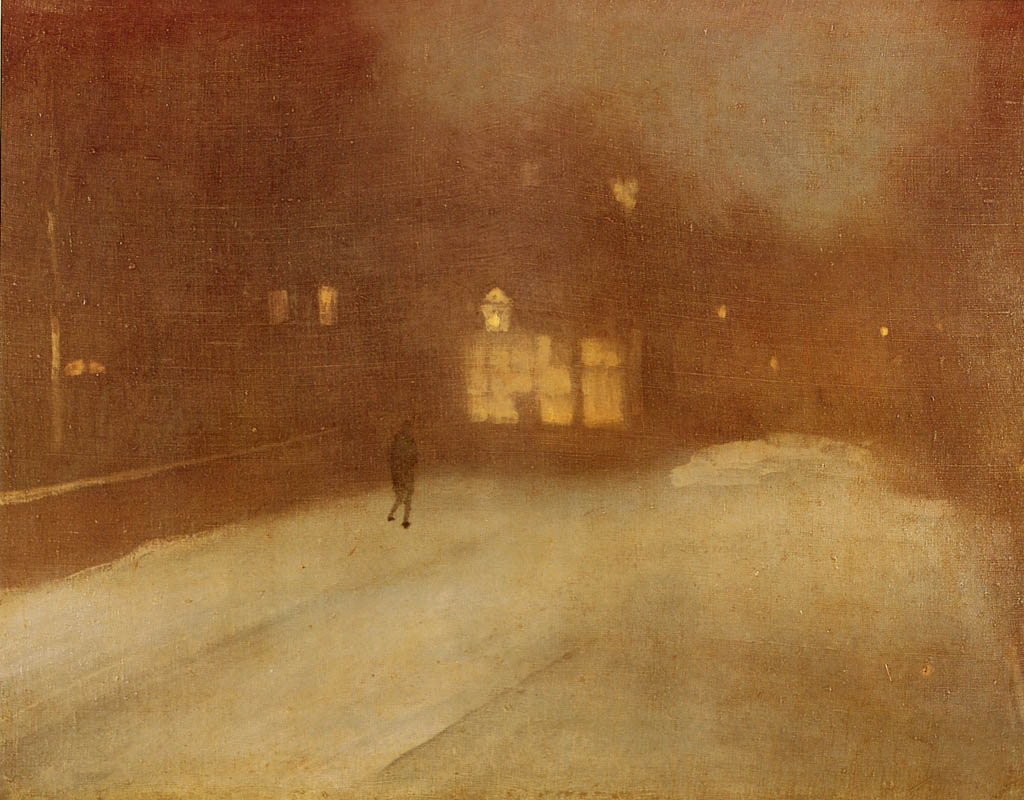
James Whistler, Nocturne in Grey and Gold: Chelsea Snow, 1876

Colson Whitehead, Harlem Shuffle (2021)

Are you a striver or a crook? That’s the question in Whitehead’s new novel, nominally a crime novel but in fact a novel about crime. “Strivers grasped for something better—maybe it existed, maybe it didn’t—and crooks schemed about how to manipulate the present system,” muses Ray Carney, the small businessman at the center of the novel. How can he, the owner of a furniture store in Harlem (Whitehead delights in midcentury furniture, and who can blame him), get that elusive better thing, in his case an apartment in a nice building on Riverside Drive, without manipulating the system? In a story told in three sections—set in 1959, 1961, and 1964, landmark years of the Civil Rights movement—Whitehead argues that strivers are just crooks in better suits, able to “give back” to the community. Ray begins by turning a blind eye to the origin of some of his merchandise and ends as a fence. But Whitehead, in this novel anyway, is no Malamud. Ray’s is not a tragic story—he hasn’t degenerated or sold his soul or become a moral bankrupt—unless you take capitalism as a tragedy. Which it is. But in Whitehead’s New York-centered vision, capitalism’s ability to turn all that is sold into air is presented as a form of irrepressible effervescence, most magnificently captured in a final set piece in which Ray visits the construction site of what will become the Twin Towers. Omari Weekes’s Bookforum review made me appreciate the book more than I first did. I’m not convinced, though, that Whitehead critiques Ray as much as Weekes thinks he does, or should. For the tone of Harlem Shuffle is as unsteady as the movement described in its title. Is Ray to be admired or condemned? The novel doesn’t seem sure. It sure loves late 50s, early 60s Harlem, though, presented with an energy and delight that undoes any sentimentalism, which is more than I can say of its soppy depiction of women and children.

Charlotte Wood, The Weekend (2019)

Three women, now in their seventies, friends for forty years, converge on a house on the Central Coast, an hour from Sydney. Jude, a former maître’d’, has been kept by a married man for decades, and lives for the moments she’s able to snatch from his life, a state of affairs she can share with no one. Wendy, an intellectual who became famous as a pioneering second-wave feminist (and apparently made plenty of money at it, the book’s one implausible note), ruminates over the germ of a new book though she spends most of her time dealing with her dog, old, deaf, shaken by some unspecified past trauma. Adele, an actor with a critically esteemed career, mostly in theater who hasn’t worked in a long time and who never made any money to begin with, has just been kicked out by her younger lover, a woman who had been supporting her. (The novel takes money seriously, which I appreciated. How do you live when you no longer want to work, or when no one any longer wants you to work?)

The weekend of the title falls over Christmas, but the women are not on holiday. They have a job to do: cleaning out the house that belonged to Sylvie, the fourth member of their little band, who died a year ago and seems to have been the glue that kept them together. (At first she’s an anodyne, if spectral, figure, but she turns out to have been as messy as the rest of them.) Now that they are three, the women find their old allegiances shifting rapidly. A novel about how things end, The Weekend implies that their friendship might be the final casualty.

In terms of novels about older women, friendship, and end of life, I liked The Weekend more than Nunez’s What Are You Going Through and less than Helen Garner’s The Spare Room, but I liked it quite a bit. A short book with heft that describes aging bodies (in all their frustrations and competencies) with, to me anyway, impressive, almost uncanny, awareness. (Wood is only in her 50s.)  

Nechama Tec, Dry Tears: The Story of a Lost Childhood (1982, revised 1984)

Memoir of Tec’s childhood in wartime Poland, living at great risk to her safety, under an assumed non-Jewish identity. I’ve written about this book before: it’s a favourite of mine, and my students like it too, this year’s group being no exception. They are rightly fascinated by Tec’s guilt at the ease with which she sinks into her new identity. Tec is bewildered by the antisemitism espoused even by the Polish family who, for a lot of money, is hiding her, but she also finds herself laughing along to jokes made at her own expense. Her indictment of postwar Poland is [fire emoji], as the kids say. Reading it for the who-knows-how-many-times, I noticed that Tec’s Jewish identity is in fact identity with her nuclear family. Even before the war, she offers little sense of extended family or community. Not sure what to make of that (I said I noticed it, that’s all): could her guilt at passing have been amplified by detachment from an identity that persecution forced her to affirm? A rich, moving text, strongly recommended.

Walter Mosley, Devil in a Blue Dress (1990)

African-American PI novel, groundbreaking at the time and still pretty good. I prefer the end of the film, actually (in general, I am pro Denzel in a wifebeater), but the novel makes even more of Easy’s desire for a home of his own—a sign, I think we are meant to see, that his sacrifices in WWII weren’t in vain and that he does, in fact, belong to and in America.

Jacqueline Woodson, Another Brooklyn (2016)

Dreamy, evocative, does a lot with omission. Wouldn’t have minded if it were longer.

Benjamin Labatut, When We Cease to Understand the World (2020) Trans. Adrian Nathan West (2020)

Feels like everybody’s reading this (thanks, Obama), so you don’t need me to tell you about it. I’ll add to the chorus of praise, though: I loved these quasi-essays about scientists and the depredations they unleashed on the world and themselves. Apparently, each chapter includes at least one fictional element; it’s an indictment of my scientific education (which was not a bad one, I don’t think) that I wouldn’t have known this had Labutat not said so. I do agree with the person on Twitter—can’t remember who now, sorry—who said that the book validates a romantic idea of science as practiced by solitary, often mad or otherwise extreme geniuses, an idea completely at odds with the day-to-day practice of science, which, I’m told, is slow, often dull, and of necessity done with others. Many readers seem to dislike the last chapter, which is different in tone and subject matter. It’s also the only one set in Labutat’s native Chile. I felt differently—as brilliant as the rest of the book is, I already knew its early to mid-20th century European settings, characters, and preoccupations perfectly well—and I hope on the strength of the success of When We Cease to Understand the World his earlier books will be translated.

Miriam Toews, Fight Night (2021)

Shambling, likeable novel about three generations of women of Mennonite ancestry trying to keep it together in Toronto. It’s narrated by nine-year-old Swiv, precocious and scared and brave, ostensibly as a letter to her father, who’s run away in mysterious circumstances. Swiv’s mother, heavily pregnant, is a struggling actor (is there any other kind) who’s understandably exhausted, so the girl spends her days with her grandmother, Elvira, irrepressible lover of life and people and donuts and, above all, the Raptors. (I loved her use of basketball metaphors in teaching Swiv life lessons and her trash-talk at the tv during games.) Elvira is everything to Swiv even though she continually mortifies the girl by accosting strangers about their love lives, going about in public in her dressing gown, and forgetting her heart pills. Sound treacly? The novel isn’t, but it does have a bit of a “live, laugh, love” vibe that wasn’t working for me. I liked it okay, especially in parts—Swiv and Elvira take an impromptu trip to California to see the old woman’s cousins, and they are a hoot—but it’s not a patch on Women Talking, a book I still think about a lot. When it comes to recent novels about feisty old women who are sick and tired of being sick and tired, I prefer Bina.

Sigmund Freud, Dora: An Analysis of a Case of Hysteria (1905) Trans. James & Alix Strachey (1925)

Taught this for the nth time, and I’m still a fan, but each time Freud’s treatment of Dora is crueler and crueler.

Jonathan Petropoulos, Göring’s Man in Paris: The Story of a Nazi Art Plunderer and his World (2021)

Sordid. The art world, then and now, is sordid. Bruno Lohse, appointed by Göing to loot tens of thousands of art works from French Jews, many of which were siphoned to the personal collection of the commander-in-chief of the Luftwaffe, was really sordid. And Petropoulos’s own dealings with Lohse are, if not sordid (he seems too fundamentally decent for that, if a little nonchalant about his own privilege), then disquieting. The best chapter is about Petropoulos’s attempts to find out what happened to a Pissarro Lohse claimed for years he nothing about. Much of the book is plodding—Lohse’s life story, before and after his time in Paris, isn’t that interesting; I wish its dutiful prose and endless citations had been distilled into a crackerjack essay.

S. A. Cosby, Razorblade Tears (2021)

Violent, over the top, almost mawkish, tremendous fucking fun. Two men, one black, one white, investigate the deaths of their married sons, victims of a hate crime. Neither man had accepted his son’s sexuality; it’s too late to make good on those failures now, but they can tell themselves they can at least find justice. Smart and funny about racism, kinship, the toll of life in prison. It’s going to be a hell of a movie.

Val McDermid, 1979 (2021)

Glasgow, January 1979, snow and chilblains all around. Newspapers might rule the media landscape but it’s hard to be a female journalist, as the hero of this crime novel quickly learns. Non-professional investigators are tricky to pull off, especially in a series, which McDermid clearly has plans for this to be. (Next thing you know, you’re Jessica Fletcher, and there’s a murder in your little town every five minutes.) But McDermid, a former journalist, lived that world and her expertise shows (though I’m not sure Denise Mina’s Paddy Meehan novels, set in the same milieu in the same place at almost the same time, aren’t the better books). Can’t help but feel that the book was an excuse to riff on the music and movies of the time, though.

Wassily Kandinsky, Study for Sluice, 1901

That’s that. And what about you? Read any of these? Feel free to be as pithy—or as verbose—as you like!