My Year in Reading, 2023

I wouldn’t say I had a great reading year. I was on my phone too much, I was being anguished or avoiding being anguished about the myriad injustices of the world, which I knew too much and could do too little about. I travelled—maybe not too much but an awful lot, for me—which was often energizing and enjoyable, but also got in the way of reading.

I felt, in other words, that I had frittered away my one wild and precious reading life. I bottomed out in the middle of the year, regularly tossing aside books unfinished after having spent more time with them than they deserved or that I could find patience for. A querulous reading year, you could say.

And yet some things stood out. Links to previous posts, if I managed to write about it.
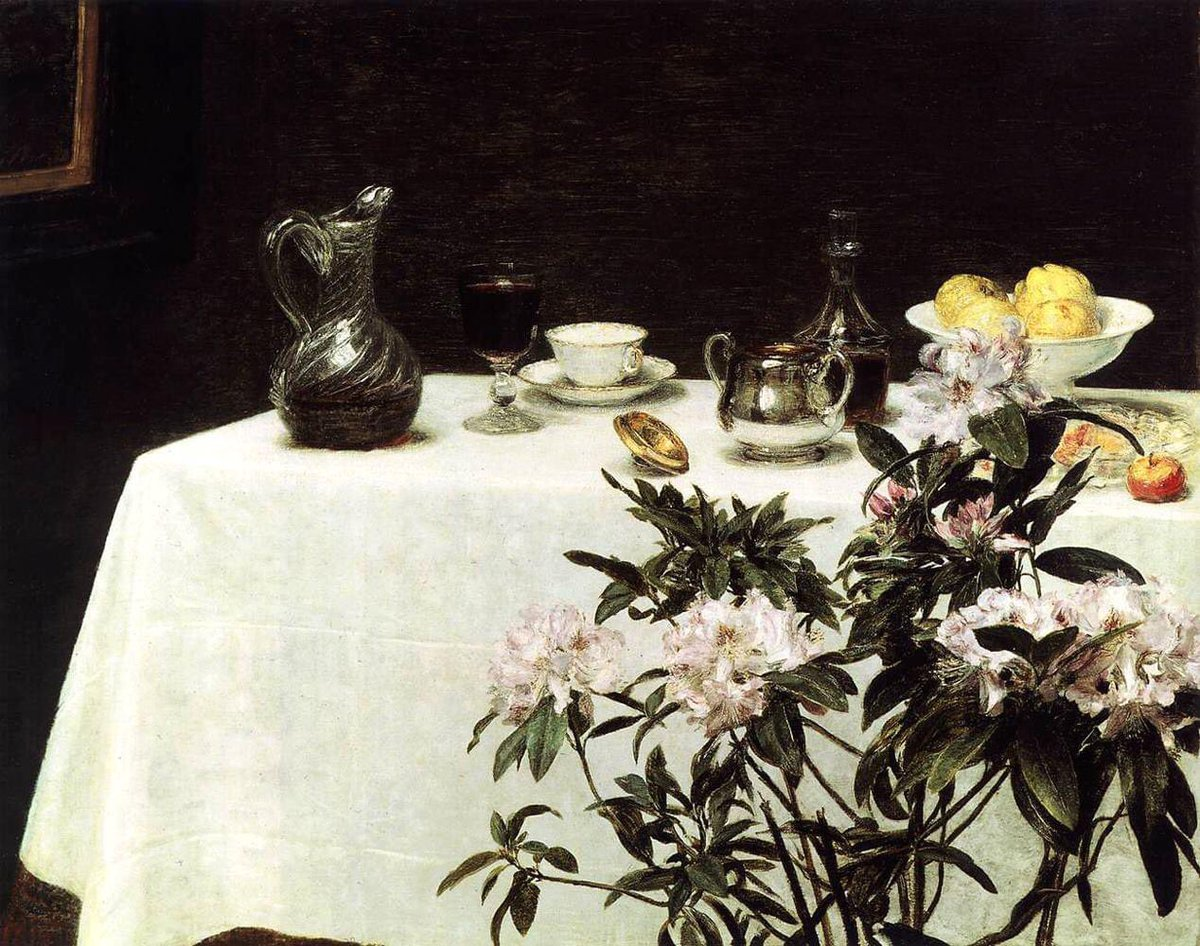
Henri Fantin-Latour, Le coin de la table (1872)

Dwyer Murphy, The Stolen Coast

A rare heist novel where the heist, though satisfying, isn’t the main attraction. I loved this stylish, smart, funny tale of a man who has put his Ivy League law degree to use in taking over the family business: giving new identities to guys on the run and getting them the hell over the border. A great book of off-season resort towns.

Simon Jimenez, The Vanished Birds

I’m still getting my bearing in contemporary sff so take these comments for what they’re worth, but it seems rare to me that a book takes as many swerves as this one: the narrative moves back and forward in time and all over the place, from a near-future nearly uninhabitable earth to a galaxy far-away in space and time. You get invested in a storyline and then it ends but sometimes it comes back. But even more than the structure I loved this book for its emotional seriousness: its many relationships are doomed to fail because of their constitutive circumstances. For example: a man ages fifteen years between each meeting with his beloved, while she, thanks to intricacies of stellar time travel, has only aged a few months. The emotions might be bigger than the ideas, but I was totally okay with that.

Two novels by Katherena Vermette

One of the greatest working Canadian writers. This year, fresh off the thrill of teaching The Break to smart, appreciative students, I read The Strangers and The Circle, a bleak and beautiful trilogy of indigenous life in the aftermath of the cultural trauma of the residential school system.

Four novels by Kent Haruf

It should tell you something that in early April, one of the worst times in the academic year, I read four novels by Kent Haruf in just over a week. I loved Plainsong the most but enjoyed Eventide, Benediction, and Ours Souls at Night almost as much. Easy reading, sure: plain syntax rising to gentle arias, nothing fancy, maybe a little sentimental. But these books are so warm and kind. Each is set in Holt, Colorado, out on the eastern plains, where the mountains are a smudge on the western horizon and it’s sometimes hot and sometimes cold but always dry. The people are ranchers and school teachers and social workers and hardware store owners and ne’er-do-wells and retirees. Everyone is white and no one thinks that’s worth noticing. The time is hard to pin down. Sometimes I thought the 70s or early 80s but we’re probably talking the 90s. Things were different before the internet. The characters’ lives are modest and they seem fine with that. They go about their business, do their work, make good choices and bad ones. People look out for each other, but they judge each other, too. Little kids get lost biking, but they come home again. It’s not all roses, though. High school boys bully girls into having sex, over in that abandoned house just down from where the math teacher lives. People get sick, go hungry, lose jobs. Some characters get what the preacher will call a good death, some die unreconciled to their kin, some without warning, too soon. Life just keeps happening, you know?

Some readers will call this hokum, but I ate it up. Haruf won my heart. I thought him especially good on second chances and unexpected turns of fate. Of all the stories that weave through these loosely connected novels, the best concerns two brothers, old bachelors, ranchers, who agree to take in a pregnant teenage girl and who, to everyone’s surprise, not least their own, form a new family with her. That scene where they take into the next town over to get things for the baby and insist on buying the best crib in the store? Magic.

Garth Greenwell, Cleanness

Smart, sexy, stylish books about how we relate to bodies privately and publically, and whether we can recast the narratives that have shaped aka deformed our understanding of what it is to live in those bodies. Greenwell’s Substack is worth subscribing too; he makes me curious about whatever he’s curious about. Can’t wait for the essay collection he’s writing.

Emeric Pressburger, The Glass Pearls

Yep, that Pressburger. Closer to Michael Powell’s Peeping Tom than any of the (indelible) films they made together. Karl Braun, a German émigré, arrives at a boarding house in Pimlico on a summer morning in 1965. A piano tuner who never misses a concert, a cultured man, a fine suitor for the English girl he meets through work. I’m not spoiling anything to say that Karl isn’t just quiet: he’s haunted—and hunted. For Karl Braun is really Otto Reitmüller, a former Nazi doctor who performed terrible experiments, a past he does not regret even as he mourns the death of his wife and child in the Hamburg air raids. Now the noose is tightening and Otto/Karl goes on the run… Suspenseful stuff; most interesting in this play with our sympathies. Not that we cheer for the man. But his present raises our blood pressure as much as his past.

Toni Morrison, A Mercy

A short book that covers as much ground as an epic; a historical novel that feels true to the differences of the past but that is clearly about the present; a classic modernist Morrison text, where the first page tells you everything that’s going to happen except that it makes no sense at the time and the rest of the reading experience clarifies, expands, revises. Such beauty and mystery in so few pages.

Roy Jacobsen’s Barrøy series (Translated by Don Bartlett and Don Shaw)

Cheating a bit since I read the first one in December 2022. I’m a huge fan of these novels about a family and the remote Norwegian island they call home from 1900 to 1950. I like books where people do things with their hands, maybe because I can’t do much with mine. The characters bring sheep into the upper field, fish with nets and line, salt cod, keep the stove burning all through the year, row through a storm, carry an unconscious man through sleet. It’s all a little nostalgic, a little sentimental, but not too much. Just how I like it.

Two Books by Walter Kempowski (Translated, respectively, by Michael Lipkin and Anthea Bell)

Fresh on my mind so it’s possible I’ve overvalued them but I don’t think so. All for Nothing, especially, is something special.

George Eliot, Middlemarch

Last read in college—under the expert tutelage of Rohan Maitzen, this can only be called one of the highlights of my undergraduate experience. This time I listened to Juliet Stevenson’s recording, which perfectly filled a semester’s commuting. True, Arkansas traffic is not the ideal venue for some of Eliot’s more complex formulations, but Stevenson (as much a genius as everyone says, she do the police in different voices, etc.) clarifies the novel’s elegant syntax and famous images. The book’s the same, but I’m not; a whole new experience this time around. Much funnier, especially its early sections. (Celia is a triumph.) More filled with surprising events: that whole Laure episode (a Wilkie Collins novel in miniature), it was as if I’d never read it. And more heartbreaking: in 1997, I hated Rosamond, and I admit I still felt for Lydgate this time around, but I had so much sympathy for her, a character I’d only been able to see as grasping and venal. Speaking of sympathy, one of the glories of English literature lies in watching Dorothea as she matures from excitable near-prig to wiser and sadder philanthropist. Amidst all this change, though, some things stayed the same. Mary Garth still won my heart; the suspense at the reading of Featherstone’s will gripped me just as much.

It’s good to read Middlemarch in college. It’s better to re-read Middlemarch in middle age. It’s best to read Middlemarch early and often.

Konstantin Paustovsky, The Story of a Life (translated by Douglas Smith)

Six-volume autobiography of Soviet writer and war correspondent Paustovsky, a Moscow-born, Ukrainian-raised enthusiast of the Revolution who somehow made it through Stalinism to become a feted figure of the 1960s. The new edition from NYRB Classics contains the first three volumes. I only read the first two, not because I didn’t enjoy them (I loved them) but because I set the book down to read something else and the next thing I knew it was a year later. Paustovsky had something of a charmed life. His childhood was largely downwardly mobile, and he lived through so much terror and upheaval. And yet he always seems to have landed on his feet. Maybe as a result—of maybe as a cause—he looks at the world with appreciation. He can sketch a memorable character in a few lines. He writes as well about ephemera (lilacs in bloom) as about terror (I won’t soon forget his time as an orderly on an undersupplied hospital train in WWI). He can do old-world extravagance (the opening scene is about a desperate carriage ride across a river raging in spate to the otherwise inaccessible island where his grandfather lies dying) and the brittle glamour of the modern (for a while he drives a tram in Moscow). Trevor Barrett, of Mookse & Gripes fame, said it best: Paustovsky is good company. I really ought to read that third book.

Félix Vallotton, Still Life with Flowers, 1925

A few other categories:

Didn’t quite make the top, but such pleasurable reading experiences: Adania Shibli, Minor Detail; Paulette Jiles, Chenneville; Abdulrazek Gurnah, By the Sea; Jamil Jan Kochai, The Haunting of Hajji Hotak and Other Stories (teaching “Return to Sender” was a revelation: fascinating how even students who had seemed immune to literature shook themselves awake for this one).

Read with dread and mounting desperation, don’t get me wrong it’s a banger, but couldn’t in good conscience call it a pleasure to read: Ann Petry, The Street. Barry Jenkins adaptation when?

Maybe not standouts, but totally enjoyable: Margaret Drabble, The Millstone; K Patrick, Mrs. S; Yiyun Li, The Vagrants; Elif Batuman, Either/Or

Best dip into the Can-con vaults: Margaret Laurence, The Stone Angel. Got more about of this now than I did in high school, lemme tell you.

Best book by a friend: James Morrison, Gibbons or One Bloody Thing After Another: Not damning by faint praise. It’s terrific!

Book the excellence of which is confirmed by having taught it: Bryan Washington, Lot. Maybe the great Houston book. I get that novels sell but I wish he’d write more stories.

Grim, do not recommend: Larry McMurtry, Horseman, Pass By; Girogio Bassani, The Heron

Not for me: Jenny Offill, Weather; Annie Ernaux, Happening; Yiyun Li, The Book of Goose

Planned on loving it, but couldn’t quite get there: Julia Armfield, Our Wives Under the Sea. Sold as metaphysical body horror, this novel about a woman who goes to pieces when her wife returns from an undersea voyage gone catastrophically wrong as a kind of sea creature didn’t give me enough of the metaphysics or the horror. I figured it would be perfect for my course Bodies in Trouble but I couldn’t find my way to assigning it. Possibly a mistake: teaching it might have revealed the things I’d missed. Gonna trust my instincts on this one, tho.

The year in crime (or adjacent) fiction:

Disappointments: new ones from Garry Disher, Walter Mosley, and S. A. Cosby (this last was decent, but not IMO the triumph so many others deemed it; he’s a force, but I prefer his earlier stuff).

Standouts: Celia Dale, A Helping Hand: evil and delightful, can’t wait to read more Dale; Lawrence Osborne, On Java Road: moody, underappreciated; Christine Mangan, The Continental Affair: moody, underappreciated; Allison Montclair, The Right Sort of Man: fun; Joseph Hansen: wonderful to have the Dave Brandsetter books back in print, hope to get to more in 2024; Richard Osman: as charming, funny, and moving as everyone says.

Maigrets: Of the six I read this year, I liked Maigret and the Tramp best. Unexpectedly humane.

Giants: Two Japanese crime novels towered above the rest this year. I didn’t write about volume 2 of Kaoru Takamura’s Lady Joker (translated by Marie Iida and Allison Markin Powell) but maybe my thoughts on volume 1 will give you a sense. Do you need a 1000+ page book in which a strip of tape on a telephone poll plays a key role? Yes, yes you do. (Also, it has one of the most satisfying endings of any crime novel I’ve ever read.) More on Hideo Yokoyama’s Six Four (translated by Jonathan Lloyd-Davies) here. Do you need an 800+ page book in which phone booths play a key role? Yes, yes you do.

The year in horror:

Victor LaValle, Lone Woman: horror Western with a Black female lead and not-so-metaphorical demon, enjoyable if a bit forgettable; Jessica Johns, Bad Cree: standout Indigenous tale, also with demons; Leigh Bardugo, Hell Bent: serious middle-volume-of-trilogy syndrome. Many demons, tho.

The year in sff:

In addition to Simon Jimenez, I liked Ann Leckie’s Translation State, Nick Harkaway’s Titanium Noir, and, above all, the three novels by Guy Gavriel Kay I read this summer, which gave me so much joy and which I still think about all the time.

The year in poetry:

Well, I read some, so that’s already a change. Only two collections, but both great: Wisława Szymborska’s Map: Collected and Last Poems (Translated by Clare Cavanaugh and Stanislaw Baranczak), filled with joy and sadness and wit, these poems made a big impression, and Ilya Kaminsky’s Deaf Republic (fortunate to have met him, a mensch; even more fortunate to have heard his indelible performance).

The year in German books: I read two, liked them both. Helga Schubert, Vom Aufstehen: Ein Leben in Geschichten (On Getting Up: A Life in Stories), vignettes by an octogenarian former East German psychotherapist who had fallen into oblivion until this book hit a nerve, most impressive for the depiction of her relationship to her mother, which reminded me of the one shared by Ruth Kluger in her memoir; Dana Vowinckel, Gewässer im Ziplock (Liquids go in a Ziplock Bag): buzzy novel from a young Jewish writer that flits between Berlin, Jerusalem, and Chicago. The American scenes failed to convince me, and the whole thing now feels like an artefact from another time, given November 7 and its aftermath. I gulped it down on the plan ride home, though. Could imagine it getting translated.

Everyone loved it; what’s wrong with me? (literary fiction edition):

Made it about 200 pages into Elsa Morante’s 800-page Lies and Sorcery, newly translated by Jenny McPhee. Some of those pages I read raptly. Others I pushed through exhaustedly. And then I just… stopped. The publisher says it’s a book “in the grand tradition of Stendhal, Tolstoy, and Proust,” and I love those writers. (Well, I’ve yet to read Stendahl, but based on my feelings for the other two I’m sure I’ll love him too.) Seemed like my social media feeds were filled with people losing it over this book. Increasingly, I see that—for me, no universal judgment here—such arias of praise do more harm than good; I experience them as exhortations, even demands that just make me feel bad or inadequate. Increasingly, too, I realize how little mental energy I have for even mildly demanding books during the semester. (A problem, since that’s ¾ of the year…) I might love this book in other circumstances —I plan to find out.

Everyone loved it; what’s wrong with me? (genre edition):

Billed as True Grit set on Mars in alternate version of the 1930s, Nathan Ballingrud’s The Strange indeed features a young female protagonist on a quest to avenge the destruction of her family, but Ballingrud is no Portis when it comes to voice. True, I was in the deepest, grumpiest depths of my slough of despondent reading when I gave this a try, so I wasn’t doing it any favours. But that’s a nope from me.

Other failures:

Mine, not the books. Once again, I read the first hundred or so pages of Anniversaries. It’s terrific. Why can’t I stick with it? I read even more hundreds of pages of Joseph and His Brothers, as part of a wonderful group of smart readers, most of whom made it to the end of Thomas Mann’s 1500-page tetralogy. I loved the beginning: fascinating to see Mann’s take on the stories of Genesis; interesting to speculate on why Mann would write about this subject at that time. (For me, Mann is in dialogue with Freud’s Moses and Monotheism, another oblique response to fascism through stories from Torah.) My friends tell me it got a lot more boring shortly after I left off (the end of volume 2), but that’s not why I gave up. Turns out, I don’t do well if I’m supposed to read something in regular, little bits. I need to tear into books—and I wasn’t willing to make the time for this chunkster. Sorry, guys.

Odds & Ends:

A few albums that stood out: Roy Brooks, Understanding (reissued in 2022, but I’m not over it: this quintet, man, unfuckingbelievable); Taylor Swift, Midnights (I love her, haters go away); Sitkovetsky Trio, Beethoven’s Piano Trios [volume 2] (a late addition, but pretty much listened to it nonstop in December and now January).

After a decade hiatus, I started watching movies again. Might do more of that this year!

I was lucky enough to travel to Germany in late spring with a wonderful set of students. While there, I met so many people from German Book Twitter who have become important to me, including the group chat that got me through covid and beyond. (Anja and Jules, y’all are the best.) All these folks were lovely and generous, but I want to give special thanks to Till Raether and his (extremely tolerant) family, who took me in and showed me around Hamburg. (Great town!) Have you ever met someone you hardly know only to realize they are in fact a soulmate? That’s Till for me. What a mensch. Cross fingers his books make it into English soon. In the meantime, follow him on the socials!

Reading plans for 2024? None! I need fewer plans. I can’t read that way, turns out, and maybe I’ll avoid disappointment by committing less. Gonna be plenty of other disappointments this year, I figure. No need to add any self-inflicted ones. At the end of last year, I joined a bunch of groups and readalongs, because I want to hang with all the cool kids, but I can already see I need to extricate myself from most of them. One good thing I did for myself in 2023, though, was to stop counting how many books I read. I was paying too much attention to that number. Fewer statistics in 2024!

Piet Mondrian, Oranges and Decorated Plate, 1900

Finally, to everyone who’s read the blog, left a comment or a like, and generally supported my little enterprise (which turns 10 in a week or two…), my heartfelt. I do not know many readers in real life. You all are a lifeline.
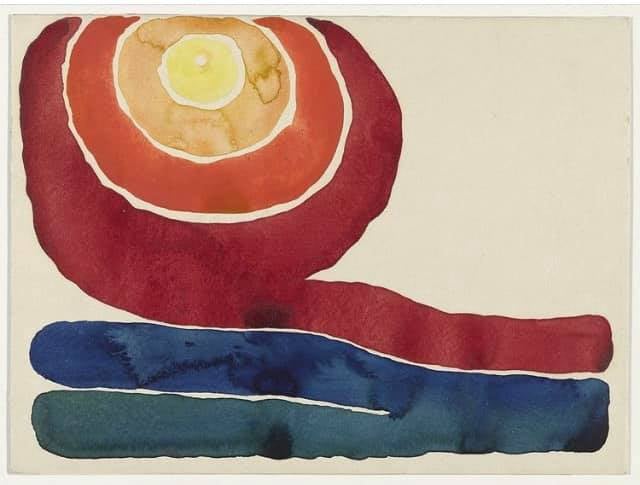

What I read, June 2021

In June I realized my sabbatical is in fact coming to an end. (Technically, it ended last week, but I have a few weeks’ grace until the school years grinds into gear.) Soon I will be back among people all the time; this knowledge made me anxious. The weight I gained over the pandemic made me depressed. The discoveries at two of the many former Residential Schools in Canada shocked but did not surprise me. (Similar mass graves will be found at others in the coming months, I have no doubt.) The extreme heat and firestorms in the West, including my home province terrified me; ironically, the weather in Arkansas was cooler than usual. (This too a function of climate of change, of course.) Everything seemed ominous. I was working hard, too, mostly on an essay I’m excited to share with you all in August. My daughter and I started taking one of the dogs for a walk each morning: that was a good thing. As to reading, the month started strong, then tailed off. Here’s what I finished.

Georgia O’Keefe, Evening Star III, 1917

Madeleine Watts, The Inland Sea (2020)

Strong debut novel about a young woman, fresh out of university, who takes a job as an emergency dispatcher, eliciting from panicked callers where in Australia they are and which service to connect them to. Filled with wonderful place names and terrible events, The Inland Sea is a novel of emergencies: fires and petty crimes and surfing accidents, but also the narrator’s depression and despair, the violent settler colonialism of Australia’s past and present, and above all the changing climate. A wildfire from the early 90s, which the narrator’s family had to flee, is a primal moment the novel returns to again and again, presenting it as a harbinger of the terrible changes to come. The title refers to the 19th century settler belief that the continent’s rivers must have had a common source; the mythical inland sea stands in for all hubristic fantasies that aim to make reality fit ideology. (Patrick White, especially his novel Voss, about a megalomaniac explorer, is referenced repeatedly: the shittiest of the narrator’s shitty exes is writing a thesis about him.)

The Inland Sea captures the rage and despair that I’ve seen in younger people these past years, faced as they are with an increasingly uncertain future, and that I am myself enveloped in more every day. (It’s the same future; they just have, or should have, more of it.) Here the narrator reflects on her mother—whom she loves and is close to but can’t tell anything important to:

This was what my mother had never understood. The things she never would have done—moving out of the city, dropping out of the university system and into paid-by-the-hour work, reckless sex and drinking—they were not things I did because I didn’t know any better. I just didn’t think there was any point in trying to shelter myself. If working on the phones had taught me anything, it was that emergency could not be avoided. Emergency would come for you no matter what you did.

In this moment the dispatch center comes close to mere symbol. Fortunately it’s usually described more fully, though I wouldn’t have minded learning even more about it. (I loved the details, like the mid-morning lull when older women, mostly widows, call in with invariably false stories of burglaries or strange men in the back garden.)

The Inland Sea reminded me of some other recent novels—like Conversations with Friends, with its description of endometriosis—that present women’s bodies as a site of violence and harm, even when the women who live in those bodies try to take charge of them: here, a procedure to implant an IUD goes badly. As the narrator concludes, “My body could not be made to behave. It disdained all methods of prevention and protection.” Danger everywhere.

Last thought: I only know Australia from books, which means I know nothing, but I’ve always thought Melbourne was the cool place and Sydney beautiful but tedious, but Watts makes Sydney seem, not appealing, really, it’s mostly a terrifying landscape of drunk men lurching after women, but something other than the “world city” of the opera house and Bondi beach. The final image, of the narrator swimming in Gordon’s Bay, looking back at the “scum of waste… weeds and straws and band Aids and bottles” washed up after yet another 100-year storm, reminded me of the ambivalent swimming scene at the end of Cusk’s Kudos.

Doris Lessing would have liked this book.

Anakana Schofield, Bina (2019)

Bina—“Bye-na not Bee-na,” consider yourself warned—is 74. Who know how long she had left: she has a lot to say even if it’s not what you want to hear (“I’m here to warn you, not reassure you”), so she’s not going to waste any time. Empathy has been her undoing (interesting, given how empathetic this book is): it led her to invite a Bad Man into her home, who abused her and took advantage or her and whose return she daily fears; it got her involved in a secret organization that helps people end their lives which in turn led to her arrest. We let people into our lives, Bina says, it’s what we do. The trouble is getting them back out. Bina reminded me of Beckett’s Molloy, not just because it’s set in Ireland (though Schofield now lives in Canada) but because of its fascination with both the rhythms of spoken language and the frailty of the human body (there’s a relationship there I’m not able to articulate just now—or maybe I’m just following Bina’s quite Beckettian demand that “the explanation-hungry get over themselves”).

Bina is a fabulous character: self-aware (“I was a great woman for delivering the verdicts to others that I could neither conjure or conquer for myself”), wise (“I have noticed that it’s the decent people who are buried/While it’s the parasites and demolishers who endure”), scathing (“There are those reading and thinking, isn’t she daft, why didn’t she walk or why didn’t she do this or that. Well I am not worried about you, because maybe you’ve had the good fortune to be trained different and would not scupper yourself this way. And it’s it as well for you.”), and funny (women have to get up and pee at night because they are “widdling the confused strain of anger gathered up there all day”—why men have to pee at night is a mystery, “perhaps it’s God’s subtle way of tormenting them. He goes straight for the pipe does our Saviour”).

Schofield is a terrific writer (men like Eddy, the Bad Man, are “bullies in woolens”): I loved this book and can’t wait to read her others.

Bryan Washington, Lot (2019)

Many of the stories in this debut collection center feature versions of the same family: black father (sometimes absconded, sometimes just about to), Latina mother, daredevil older brother, sister looking to get the hell out, and at the center, the young gay narrator. Restaurant kitchens, johns, animals in the bayous—this isn’t the Houston of Rice, the Menil Collection, or even Minute Maid Park. That world is present only at the edges of the frame, mostly through the specter of gentrification. No surprise that a book called Lot is interested in real estate (not to mention one’s lot in life, having a lot to deal with and a lot to live for, and maybe even Lot of Genesis, who looked upon and fled Sodom). Much as I would miss Malamud’s The Magic Barrel, I’m thinking of replacing it with Lot as the centerpiece collection the next time I teach my course on the short story. My students—a good number of whom are from Houston, though rarely the parts described in the book—would like it, I suspect, and I’ll be able to decide if it’s as good as my first reading suggests.

Edith Wharton, The Age of Innocence (1920)

Fantastic. Read this in college, probably a year after the movie came out (I believe it was the first film I saw as a college student), and, I realize now, completely missed the point. Not only did the story seem slight, worse, I identified with Newland Archer, the ironic yet self-satisfied scion of a wealthy New York family in the 1860s whose imminent marriage to athletic, kind, incurious May is threatened by the return of her disgraced cousin, Ellen, on the run from a bad marriage to a Polish nobleman, with whom he falls in love. Wharton’s irony—her brilliant control of the narrative voice—passed me right by. I can’t think of a better advertisement for re-reading than my experience returning to this novel—though I now wonder how many other books I’ve misunderstood over the years.

Newland is such a carefully constructed character, his world-view so dominant, his criticisms of a world he loves and is much more enmeshed in than he ever realizes so easy to side with, that it is easy to miss that this is in fact a novel of two women, neither of whose interiority we ever access directly. Both May and Ellen are so much more interesting than Newland realizes. Ellen, in particular, fascinates as a figure who has suffered greatly from men, including from Archer, who is nowhere near as nice to her as he thinks he is, but who gains hard-won freedom—not least from us, the intrusive readers. (The bit players are wonderful too, from the titanic Mrs. Mingott to the ladies’ man Beaufort to the subdued Janey, Archer’s sister—I would have liked more of her.)

The novel is filled with rituals, rites, tutelary deities, and the like, the whole language of the ascendant anthropology of the 1920s. This motif is connected to Archer’s interest in the moeurs of New York society, which he studies as another scholar might the curious customs of some primitive tribe. He mostly has Ellen to thank for this—when he first visits her bohemian downtown apartment (unfashionable neighbourhood, artistic tchotchkes, and all), he decides the advice he wants to give her on how to behave in society is as useless in her bohemian world as warning someone bargaining in a Samarkand market about New York winters. Ellen, he thinks, has helped him see his native city clearly: “Viewed thus, as through the wrong end of a telescope, it looked disconcertingly small and distant; but then from Samarkand it would.” Archer fancies himself having transcended his world—now seeing it as curious as anywhere else—but you look foolish holding a telescope the wrong way ‘round, and Archer doesn’t have it in him to pursue the idea to its logical consequences. Maybe his privilege—his ability to imagine himself being rescued by Ellen from what no doubt feels genuinely and excruciatingly like a spiritual wasteland—isn’t as natural as he believes.

But before we get too comfortable at our own perspicaciousness in seeing through Archer, we might wonder at what we want from this novel. I read the new Penguin Classics edition (the cover of which was roundly pooh-poohed on Twitter, though I don’t mind it myself), and you should too, because the introduction by Sarah Blackwood is outstanding. (There’s also a Foreword by Elif Batuman—her name is on the cover—which is fine but nothing special.) Blackwood deftly summarizes the result of Wharton’s narrative decisions:

In keeping us in Archer’s perspective, Wharton allows us to experience the limited and impoverished viewpoint of a selfish young man, even as we are drawn to him and his desires, even as we relate to how deeply and ineffectually he wants.

[That’s what I missed as an undergraduate. I identified with his tragic position without seeing the harm it incited.]

Thus I read passages like this, in which Archer reflects on his mother and sister, as sympathetic:

Mother and daughter adored each other and revered their son and brother; and Archer loved them with a tenderness made compunctious [a word to warm the fussy heart of the lawyer in Melville’s “Bartleby, the Scrivener] and uncritical by the sense of their exaggerated admiration, and by his secret satisfaction in it. After all, he thought it a good thing for a man to have his authority respected in his own house, even if his sense of humour sometimes made him question the force of his mandate.

That it is anything but natural for him to have been granted such a mandate—and what it means for the organization of the world that he does—never intrudes on even his rueful thoughtfulness.

Blackwood continues by offering a startling and brilliant reading of what she rightly calls the novel’s “innovative’ ending:

By one metric, the fully realized novel [as opposed to drafts in which Wharton had Newland and Ellen get together, only to realize they had nothing in common] is a tragic story of two people trying to surmount the obstacles to their love. But in another… the published novel does have a happy ending. The Age of Innocence is one of the only stories Wharton ever wrote where everyone does, indeed, ‘get what [they] want.’ May gets to achieve the sentimental, sacrificial maternal and wifely status she desired. Newland gets to feel like an outsider while remaining an insider; he experiences no shortage of people to enlighten over the years. [Archer, Blackwood notes, is a preeminent mansplainer.] And Ellen? Well, Ellen gets to live a life that evades even our own prying eyes.

In this way, she finds a way to evade both the cruelty of impermanence—at the not-yet-fashionable Metropolitan Museum she regrets the way daily objects and implements, once so important to the people who made and used them, fade into obscurity until they are exhibited in a vitrine labelled “Use unknown”—and the cruelty of “the meanwhile,” of life as it is lived before time’s transience has done its work, a cruelty Archer fails to understand.

If you’re past your own age of innocence—though how can we ever know that we have reached this stage?—I urge you to read or reread this American masterpiece.

Mick Herron, Real Tigers (2016)

More adventures for the Slow Horses. Totally enjoyable. Not as good as the first, but better than the second. Since I love Standish the most, I both appreciated and was alarmed by the plot. Odd the way Herron frames these books with extended descriptions of Slough House from the perspective of a ghost or spirit stalking its floors, which I fancifully want to believe he has borrowed from the “Time Passes” section of To the Lighthouse.

Mick Herron, Spook Street (2017)

I mean, it’s a spy novel, but even so this one is a little preposterous. Still has its moments, but the bait-and-switch it pulls midway through annoyed me.

Judy Batalion, The Light of Days: The Untold Story of Women Resistance Fighters in Hitler’s Ghettos (2021)

Fascinating & detailed narrative history about female resistance fighters in Polish and Lithuanian ghettos. Smuggling information, living under false papers, shooting Nazis, stitching up partisans: these young women did exciting, dangerous, and important work. I have reservations about the book’s tone, structure, and narrativizing tendencies, but Light of Days is a valuable, accessible book that is well-sourced. So useful to have this experience brought to non-Yiddish speakers. Writing about it for another outlet, so more soon.

Jessica J. Lee, Two Trees Make a Forest (2020)

Memoir/nature writing by a Canadian writer of Taiwanese and British ancestry who now lives in Berlin (with all the other writers). The book tries to do a lot: relate walks and bike rides all over Taiwan, narrate the history of her mother’s family and their journey from mainland China to Canada via Taiwan, probe the family’s silences and antagonisms. All while giving us a potted history of the discovery of the island’s flora and fauna by mostly European scientist explorers. The weaving of these various strands isn’t always seamless. But each concerns the task of naming, defining, or fixing. Which explains Lee’s interest in mapmaking, language differences, and histories of classification. In each case these gaps—her difficulty, as a child in southern Ontario, in communicating with her Chinese Taiwanese grandparents, for example—prove to be both generative and debilitating, connecting even as they separate. That paradox leads to Lee’s final comparison, spurred by a trek through the Shanlinxi forest and its enormous cedars, of people to trees, connected through subterranean roots that make of these separate entities a forest. Language itself carries this affinity within it, Lee argues, noting that Carl Linneaus’s name is rendered in Chinese by characters meaning “someone related to the forest” or “someone who endures the forest” (the latter suggestion especially fraught and intriguing). To model human interrelatedness on the nonhuman natural world, Lee suggests, isn’t fanciful; it’s an expression of the truth of our own insignificance: “our fleeting human worlds are so easily swallowed up by nature, our fate fastened to its course. What we believe to be culture is only ever a fragment of natural world that we have sectioned off, enclosed, pearl-like, for posterity.”

I did not like Two Trees unreservedly—the writing is uneven: sometimes genuinely affecting, sometimes straining for lyricism—but I learned a lot. I recommend Nicie’s reflections on her own ambivalence.

Jeong You-Jeong, Seven Years of Darkness (2011) Trans. Kim Chi-Young (2020)

Compelling sort-of crime novel from Korea, a bit Gothic, a bit horror. Reminded me of Les Revenants (The Returned), that French show about ghosts—not least because both show and novel feature villages flooded by the construction of hydroelectric dams. If I knew more about Korean history I might suggest that Seven Years of Darkness is an allegory of the country’s rapid modernization. There’s that dam, of course, but also all kinds of sophisticated surveillance technologies A novel, then, about both 20th and 21st century technologies. Good stuff; I’ll definitely be reading more Jeong.

Sujata Massey, The Satapur Moonstone (2019)

Second in the Perveen Mistry books about a female solicitor in 1920s India. This time Perveen travels to a Himalayan princely state (once again to interview women in purdah). That world is interesting and compellingly presented. Perveen gains a possible love interest; that worked for me too. Massey is a plodding writer, though; suspense is not her forte. The third book has just been published but I’m not sure I’ll keep reading.

Hannah Arendt, The Human Condition (1958)

I enjoyed my online class with Samantha Rose Hill on The Origins of Totalitarianism so much that I signed up for one on Arendt’s follow-up, The Human Condition. Much shorter, but much more philosophical, harder to read. Sam is a great teacher, though, and the class was filled with smart people from literally all around the world. (Zoom doesn’t always suck.) Arendt and I don’t always see eye-to-eye, but the scope of her thinking and its anti-transcendence are inspiring.

We live, so Arendt, between the no-longer and the not-yet: there is no ideal society because there is no teleology to our lives or this universe. We have to rethink the human condition all the time based on experience, on what is. In her concern with what is, Arendt might seem like a materialist; she might seem, in other words, to be influenced by Marx. And indeed, the book began as a study of Marx, but became something else, especially as Arendt offers a (pretty idiosyncratic and, I am told, weak) reading of Marx. Marx believed labour to be the essence of human experience, Arendt argues, but he also wanted to liberate us from labour (and its alienation). Which would mean there would be no more human essence. Marx, Arendt continues, failed to distinguish between labour and work. Labour is necessary, but limited and limiting. It consumes itself because its task is consumption. Labour is endless, even circular: we need to feed and clothe ourselves, take care of our children and elders, etc. Almost all of the ways we spend our time and earn our living today are forms of labour. (Even the things we do in our spare time—our hobbies, which Arendt is hilariously scornful about—are just disguised labour.) Work, by contrast, is fabrication, it makes something that is durable, that is made of (some element of) the earth but exceeds the earth by the process of shaping and making. Work has dignity, though it barely exists anymore (says Arendt in the late 1950s), some scientists and, mostly, artists are the only ones lucky enough to work in this way.

In the process, Arendt, using Augustine’s concept of the love of the world, overturns the dualism present since Aristotle between the life of contemplation and the life of action. Philosophy has always valued the former and denigrated the second. Arendt flips this around. Because only in action can politics come into being. (Politics is when people come together to bring about a new beginning—always risky, always unstable, something like revolution; it is not the administration of the results of that action: that’s the political, bureaucracy, an all-around bad scene.) To love the world is to look at it for what it is, to face reality, to see all the good and evil in it. The Human Condition is a secular theodicy, a vindication of the world. We should not want to get outside ourselves—Arendt references Kafka’s parable of the man who found an Archimedean point but only because he was able to use it only against himself as a warning against the idea of transcendence—which explains why she is so fixated on the Sputnik rocket: it’s an image of science’s failed attempt to find that impossible place outside the world, impossible because what science has done with its Archimedean discovery is to use it against the human, to turn away from our experience in the world. We live in a world without much freedom (the world of consuming, of language deadened into cliché, of administrative rationality) but the possibility of freedom is always there. Things can always be different than they are. We know this because of what Arendt ominously/grandiosely calls “natality,” by which she simply means that we are born and we die. Every time someone is born something utterly new has come into the world. It is this principle of change—which is politics properly considered—that we must live by.

My summary surely misunderstands Arendt in some ways—please correct me. But it’s stirring stuff. I recommend Arendt, especially if you have someone to help you through it. I couldn’t help, however, but find her emphasis on the human overbearing and misguided in the time of the Anthropocene. I’m not sure the earth can take the world Arendt wants us to build. I so wish she were alive to help us think our current moment. But she’d probably tell me that’s for us to do…

Georgia O’Keefe, Sun Water Maine, 1922

Lots to recommend here, I hope you’ll find something you like the sound of and that you’ll share your favourites of the month. Above all, (re) read The Age of Innocence: it’s really something.