On Miaow

Here is my introduction to Episode 38 of the podcast I co-host with Rebecca Hussey and Frances Evangelista, One Bright Book.
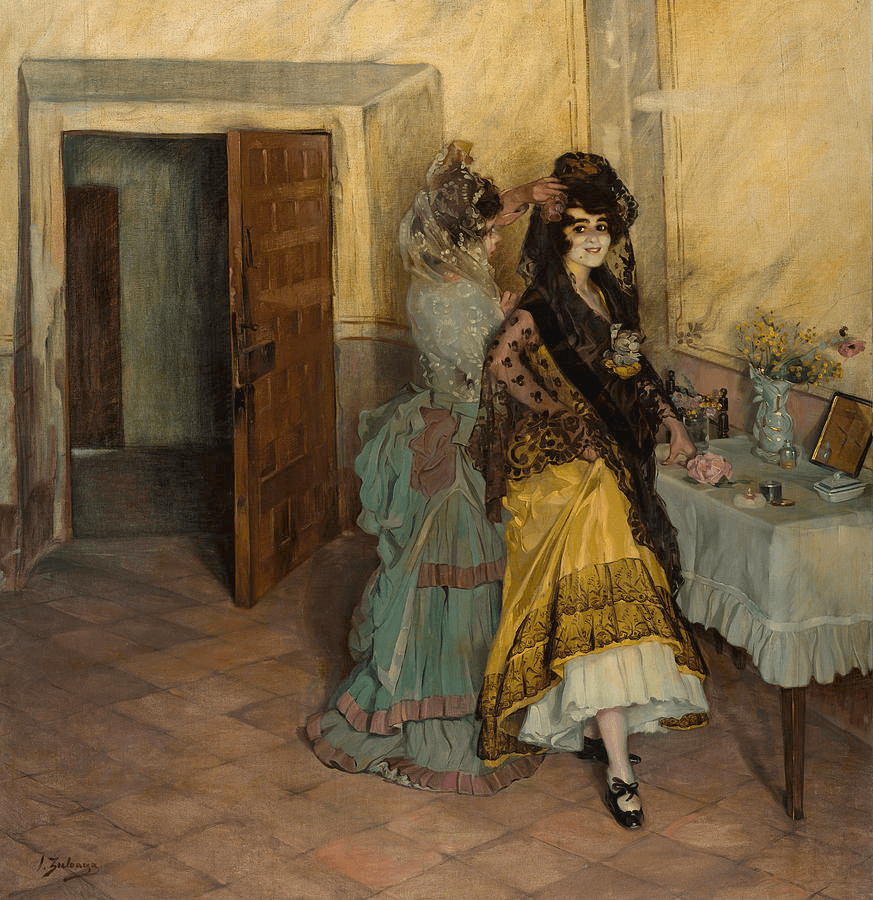
Ignacio Zuloaga y Zabaleta, Preparation for a Bullfight (1903)

Our book today is Miaow, written in 1888 by the great Spanish 19th-century realist Benito Pérez Galdós and recently published by NYRB Classics in a lively new translation by Margaret Jull Costa.

Galdós, whose long and productive life lasted from 1843 – 1920, was born in the Canary Islands, which perhaps gave him an outsider’s perspective on the Madrid society he scrutinized in more than 80 novels.

Miaow has a cast of, well, maybe not thousands but a lot of characters. Ramón Villaamil has served the state his whole life, but he’s lost his job in the tax office due to changing political fortunes just two months short of qualifying for his pension. He solicits possible patrons and haunts his old office, not just to get a job but also to escape his household, where he lives in an uneasy truce with his wife, Doña Pura, their adult daughter, Abelarda, and his sister-in-law Milagros. Completing the ménage is Luis, the son of a second daughter who died young. Luis’s father is a man named Victor, a bad penny who has never been in the picture, indeed whose name is never spoken in the home. The novel kicks into gear when Victor turns up and inveigles his way into the household, eventually sowing great unhappiness. (Victor is a breathtakingly bad guy—I hope we’ll talk about this.)

These are all interesting characters—so why isn’t the book named after any of them? That would be the usual 19th-century thing. (Jane Eyre, Daniel Deronda, Eline Vere, Anna Karenina,l etc., etc.) Why does it have such an odd title? Who or what does “miaow” refer to, anyway? Well, lots of things. It’s the nickname given by the local wags to the women of the Villaamil household, after their supposedly feline features. I think it’s important, though, that the book isn’t called The Miaows. For the title also extends to Ramón, the paterfamilias—not because of how he looks but of what he believes. MIAOW is an acronym for his mantra that Spain can only be saved by Morality, Income Tax, Additional Import Tariffs, Overhaul of the National Debt, and Work. So already “miaow” references both physiognomy and economy. But there’s more. In addition to being a noun, miaow is also a verb, a sound, an onomatopoeia, and a sarcastic, acidic, or bitchy commentary, as when we call someone out for being catty: Mee-ow! It’s this last meaning I thought of most as I considered the harsh disdain so often expressed by the characters toward each other and the gentle satire of the narrative voice toward all of them.

Once we see that “miaow” is something like a mood or attitude or state of mind, we’re able to recognize how unusually Galdós uses characterization. In my description of the book a minute ago, I made it sound like a family story. But it’s not, quite. The critic Fredric Jameson, who really loved Galdós and thought his unfamiliarity in the English-reading world a real travesty, says that Galdós offers “a deterioration of protagonicity,” an admittedly unlovely phrase that he glosses as “the movement of the putative heroes and heroines to the background, whose foreground is increasingly dominated by minor or secondary characters.” As a Marxist, Jameson attributes this not just to Galdós’s predilection or “genius” but to his position as a person living in late 19th century Spain and its strangely non-modern political landscape following the failed “Glorious Revolution” of 1867 (they deposed the monarchy and then brought it back, sort of). To depict the social reality of his society, Galdós had to “strike[ ] an uneasy compromise between the atomized individualism of more fully bourgeois societies with their nuclear families, and the more archaic traces of the older feudal class and castes.” To me, this explains why Galdós feels like an uncanny version or simulacrum of canonical realists like Balzac or Zola, with whom Galdós shares an interest in recurring characters and the desire to explore an entire society. Miaow reminded me of Père Goriot or La Bête Humaine. But also not. Jameson notes that Galdós’s novels are not organized around families, even extended families, but rather around households, an ambiguous term that includes servants, neighbours, and other families who circulate in and out of the story. (In Miaow, Doña Pura is always hosting friends, acquaintances, people who may or may not respect or like; Ramón is always trying to hide from them.) The household thus includes the Mendizábals, a couple who live downstairs and take pity on the much-neglected Luis; the Cabreras, the sister and brother-in-law of that cad Victor, who want to adopt Luis; as well as a whole series of characters at Don Ramón’s former office, some of whom are, to me at least, hard to keep track of, but to whom the novel devotes so much attention, in their various sympathy to or ridicule of Don Ramón, that it doesn’t make sense to just call them “minor.”

All of which is to say that Miaow, though not especially long (it’s like 300 pages) is very busy. To that end I was struck by a word that appears in the first sentence and reappears near the end. Here’s how the novel begins: “At four o’clock in the afternoon, the kids from the school on Plazuela del Limón erupted out of the classroom, making the very devil of a racket.” 250 pages later, a disconsolate, embittered Don Ramón observes a flood of civil servants clattering out of the workplaces at the tax office on payday: “The stairs were almost overwhelmed by this human torrent, which made a tremendous racket as it flowed on down, the sound of heavy footsteps mingling with all the cheerful, sparkling, payday chatter.”

The repetition of racket reminds us that bureaucrats are just overgrown schoolboys. Here we see Galdós’s satirical side. (And by the way, surely the opening scene of the schoolchildren, who, as they pile into the streets, tease little Luis with the nickname of his aunts and grandmother, miaow, miaow, miaow, refers to the opening of Madame Bovary, where a different set of schoolboys taunt a nice enough if also hapless pupil.) But more importantly the repetition of racket speaks to its modus operandi., maybe what we’d now call its vibe. This book too makes a tremendous racket, in the best possible way, with clever dogs, opera singers, officious bureaucrats, raw army recruits, shopkeepers, and a score of others contributing their two cents. Mee-ow indeed.

Have any of you read this book? Or anything else by Galdós? What do you think?
“Wonderful, Cheerful”: Marie Darrieussecq’s Life of Paula Modersohn-Becker

Now this is the kind of thing I like. The French novelist Marie Darrieussecq has written a wonderful short book, an essay really, on the early 20th-century painter Paula Modersohn-Becker. It’s not a volume of art criticism. It’s not a biography. (In principle, I should love biographies. I love the bits and pieces of people’s lives. But anything that starts with parents and grandparents, or, God forbid, a family tree, ugh I just can’t do it.) You’ll learn a lot about Modersohn-Becker from this book, and about the circle of painters and writers she lived among, including, most famously, the poet Rainer Maria Rilke, but you’ll learn it causally, almost offhandedly. Darrieussecq says she is not writing “Paula M. Becker’s life as she lived it, but my sense of it a century later. A trace.”

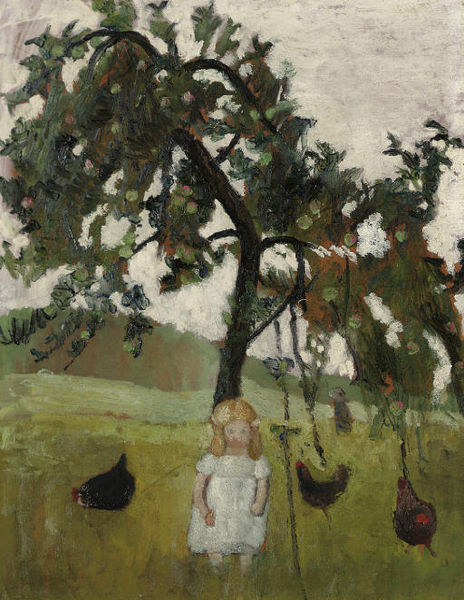
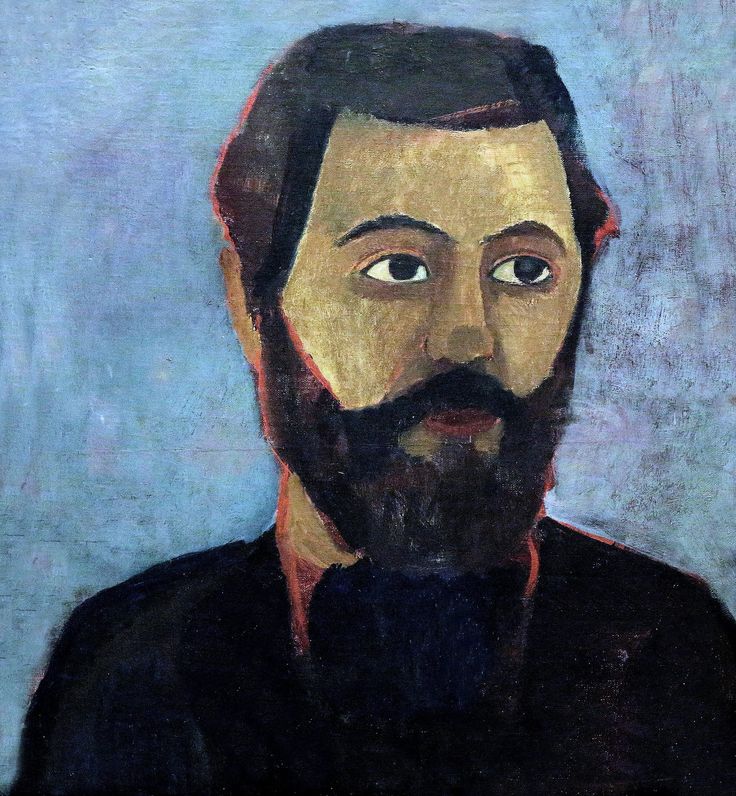
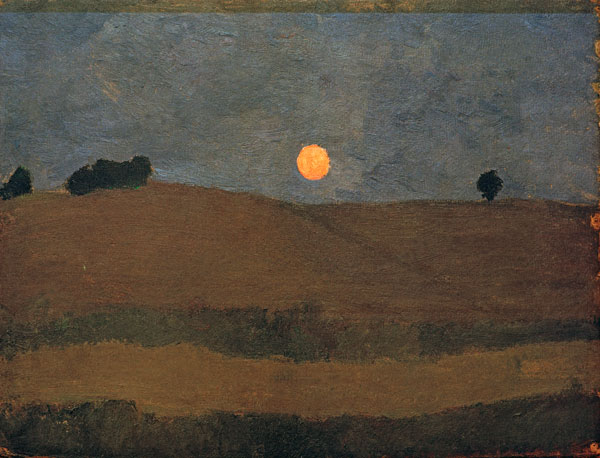
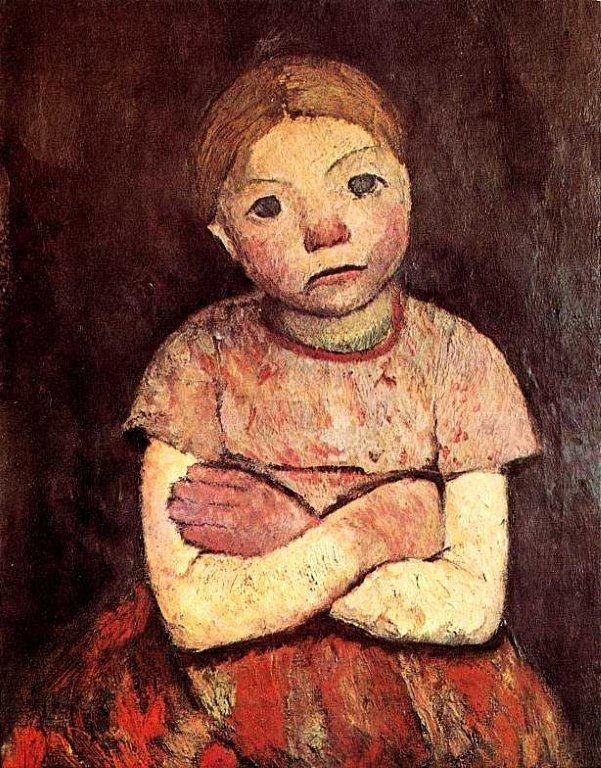
Before discovering Darrieussecq’s trace I knew nothing of Modersohn-Becker, and I can’t even remember how I came across this book, but I’m glad I did because both the artist and this book about her are wonderful. I’m tempted just to fill this post with examples of Modersohn-Becker’s work. Take a look at these:

46ea015b05585eec8b04d79d304c0cdfa55d15b3c3dd98b10c3c6285b4ee8357--paula-modersohn-becker-art-childrene63d72e1bc48c551426c7b9494f2c5ee62fc6134e3f09f6eb7556560fd64bf02--paula-modersohn-becker-school-portraits

A word about names: Darrieussecq calls Modersohn-Becker by her first name. Normally, I can’t stand that kind of thing in biographies, etc. The familiarity feels unearned, presumptuous. Darrieussecq has her reasons, though. She won’t call her Paula Becker, her maiden name. Nor Modersohn-Becker, the name she took after marrying the painter Otto Modersohn. Nor even Becker-Modersohn, as the museum of her work in Bremen has it. As Darrieussecq explains:

Women do not have a surname. They have a first name. Their surname is ephemeral, a temporary loan, an unreliable indicator. They find their bearings elsewhere and this is what determines their affirmation in the world, their “being there,” their creative work, their signature. They invent themselves in a man’s world, by breaking and entering.

I like this passage. It begins conventionally enough, almost doctrinaire. But Darrieussecq isn’t bemoaning women’s victimhood. Women do find their bearings, they affirm themselves in the world. But it’s not easy. And so then comes the passage’s sting, a lovely little image of how this self-invention happens in a patriarchal world: women break and enter. Not to steal but to make a place for themselves, a task that is creative (they “invent”). If they won’t be invited they will enter however they can.

So I’ll follow Darrieussecq’s lead and call her Paula. Does Paula break into a man’s world? I’m not actually sure she does. But she does something more important: she becomes the person she wants to be. Paula has a marvelous insistence. For example, in May 1900, she writes from Paris, where she has gone to study, to her acquaintances Otto and Hélène Modersohn back at home in the artist colony of Worpswede near Bremen, telling them what she is doing and seeing in Paris. They must both come to visit, she urges. But especially he must come:

Dear Frau Modersohn, I know you are not well, what with all these flus and colds this winter, but if you are not up to the trip, do send your husband. Of course, he will say no; he won’t want to leave without you, but be firm, don’t give in to him. A week will suffice. He will return to you full of vivid impressions.

Modersohn says he cannot come. Then he sends a telegram: he is coming. He arrives on June 10th. Four days later, he returns in haste to Worpswede. Hélène is dead. Paula returns too and gives up Paris. The next year she and Otto marry.

But it’s unclear that Paula set out to pursue Otto. And as it turns out, their marriage is not really a success. Otto’s painting is not as good as Paula’s. He is not as imaginative and sensitive as his friend, Rilke. Otto admires his wife’s painting, but Darrieussecq thinks he misunderstands it, praising it as naïve and simple when it is neither. In general Darrieussecq presents Otto as a problem for Paula, not so much an oppressive patriarch but rather something like an oaf who has the power of the patriarchy behind him. (Though, to be fair, he will take care of the two small girls he has been left by each wife; he will tend Paula’s legacy assiduously.) Eventually Paula leaves him. Later they reconcile, briefly. After years of not wanting a child she gets pregnant, probably by her husband. The birth is difficult, and Paula is sentenced to bed rest. When she gets up, eighteen days later, she immediately collapses and “dies of an embolism, from lying down too long. As she collapses, she says ‘Schade.’ Her last word. ‘A pity.’” It is November 1907. Paula is 31 years old.

Always, throughout this short life, Paula is insistent. She is driven to create. She writes to her mother that something in her cries for air, and won’t be silenced. Her soul “hungers for something profound,” she tells her husband. And she satisfies that hunger. She works hard, painting all day, almost every day. Striking, beautiful paintings.

Being Here is beautiful too, but it’s not especially elegant. The prose doesn’t feel as freighted, as poetic, as portentous as some of the great essayists I love even though that style can grate (John Berger, or Annie Dillard, say). I don’t mean that Darrieussecq is a bad writer. Far from it. But elegance isn’t what she’s after. Maybe that’s one reason she is so drawn to Paula, whose figures (especially their hands) are often misshapen or bent.

Darrieussecq has a way with pithy, paradoxical observations (she is French, after all): “There is no sounder basis for a relationship than misunderstanding.” She also writes sentences that don’t seem fancy or clever but that strike a chord: “She must love her mother to write her such wonderful, cheerful letters”; “A sitting takes a long time. ‘My bum has gone blind,’ one of her models, an old man, told her.”

The book is episodic, filled with fragments. About a holiday she takes in the summer of 1904 with Otto and some friends in a nearby village, Darrieussecq offers “two highlights”: “Paula’s bed collapses; Paula and Heinrich Vogeler have a violent argument. That’s all I know about it.” The abruptness of the prose and the jaggedness of the short sections the book is divided into create the sense of the past as foreign and unknowable.I found myself trusting Darrieussecq all the more because of the fragmentary and partial nature of her representation.

Despite having been surrounded by other artists, indeed of having spent most of her life in an artist colony, Paula is in Darrieussecq’s portrait fundamentally solitary. Darrieussecq describes her as “a woman who paints, alone, whose paintings are not seen.”

Those paintings aren’t seen in this book, at least not literally. (In all the most important ways, Darrieussecq absolutely sees her, and helps us to see her too.) It’s strange that the book contains no reproductions, a fact probably explained by cost and copyright and similar practical concerns. But I think it’s also a choice on Darrieussecq’s part. Late in the book she writes:

The paintings exist. They are sufficient unto themselves. She does not say much about them. She rarely speaks about her art. … And anyway: how do you write paintings? You can describe their features, their shapes, their contrasting colours. You can express an opinion, criticize them. You can provide an historical perspective and put them into context. But write them? There is a huge gap between the words and the images. Dreams and projections arise from the faultline.

(Typical Darrieussecq: she complicates her own claim in that last sentence. The gap between painting and writing isn’t just an absence. It describes possibility as much impossibility.)

Darrieussecq doesn’t say much about the features, shapes, or contrasting colours of the paintings. She gives us some context, but no grand historical overview. Instead as I’ve tried to show she gives us bits of Paula’s daily life.

But Darrieussecq does have something like an argument to make, especially when it comes to telling us how Paula paints the female body:

In Paula’s work there are real women. I want to say women who are naked at long last: stripped of the masculine gaze. Women who are not posing in front of a man, who are not seen through the lens of men’s desire, frustration, possessiveness, domination, aggravation.

These women aren’t coquettish or exotic or provocative or any of the other qualities that Darrieussecq, in a bravura passage, associates with one after another of the great male painters of the European tradition.

Mère+et+enfant,+1906-1907,+Paula+Modersohn-Becker

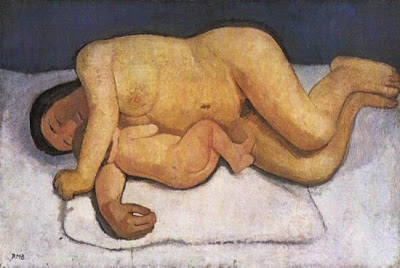
And her paintings don’t just feature real women: they show real babies, too. Darrieussecq is especially struck by a painting of a woman breastfeeding. It is “not sentimental, or pious, or erotic: another sort of sensuality. Boundless. Another sort of power.” Seeing this painting makes Darrieussecq wonder why she had never heard of Paula Modersohn-Becker before. And in that moment comes the impetus for the book: “I had to write the life of this artist and help to make her work known.”

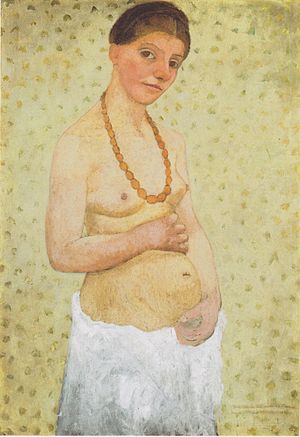
Paula doesn’t just paint other women. She paints herself too. The book’s cover reproduces one of the now famous self-portraits painted while she was pregnant. Thinking about Paula’s paintings of her pregnant body brings Darrieussecq to one of the few times she inserts herself and her own experience into the text. (I actually don’t mind that sort of thing, but books in which the writing “I” is at least as much a part of the work as whatever thing or place or artwork it’s observing have become so commonplace that Darrieussecq’s reticence is striking.) After reflecting on facticity of Paula’s pregnant self-portraits (they show the reality of what they show; they are not allegorical, like, for example, a contemporary painting by Klimt’s called “Hope”), Darrieussecq explains that the only photograph of her in her home is a portrait taken when she was six months pregnant:

At the time, I often offered it to journalists when they asked me for an author photo. It was rejected every time. The answer was always the same: ‘We’d like a normal photo.’

For Paula, pregnancy, like everything else that met her gaze, whether birch trees or chickens or old men, was normal. Ordinary not in the sense of unimportant but rather in the sense of being worthy of being recognized.

300px-Paula_Moderson-Becker_-_Selbstbildnis_am_6_Hochzeitstag_-_1906

When we think of modernist artists preoccupied by thing-ness or objectivity (and then with metaphorical or symbolist rejections of objectivity) we might think of Rilke. Another appealing thing about this book is that Rilke doesn’t steal the show. (Hard to avoid—he was pretty much a show-stealer, as best I can tell.) He is important—a phrase from The Duino Elegies, “Being here is wondrous,” gives Darrieussecq her title—but he’s not the star. Darrieussecq likes him more than Otto. I think she’s glad, impressed almost, that he and Paula never became romantically or sexually entangled. They were kindred spirits: the best artists of their circle; they respected each other. There was something like equality between them. Indeed, if anything Paula was the one person who could make him do things for her. (There’s a nice bit about some furniture left over from her Paris studio that she makes the eminently impractical Rilke dispose of. The whole business really flummoxes him.) But in the end Rilke fails Paula, saying of her to an interviewer in 1924: “The last time I saw Paula Modersohn was in Paris in 1906. I didn’t know her work very well at the time, or afterwards, and I still don’t know it.”

In the end, though, Rilke’s self-serving and disappointing dismissal of Paula doesn’t matter. Paula’s life was too short, but it was a good life. When Darrieussecq falls in love with Paula’s work she is struck by the feeling that she misses Paula. She regrets not only not having known her work before, but, more dramatically, not having been able to know her. The lovely thing about Being Here is the way it overcomes that gap, repairs that impossibility. It makes us feel Paula’s being; it allows us to be with her. It’s a happy book, it made me happy anyway. And can’t we all use more happiness these days?