April sucked shit. I’d had it with everything: the semester grind, how hard it’s become to teach these last few years, and a lot of my colleagues, especially the administrators of my place of employment. I didn’t sleep enough, saw the height of the Arkansas spring blooms only through windows, and drank too much coffee. Gotta make some changes in my life.
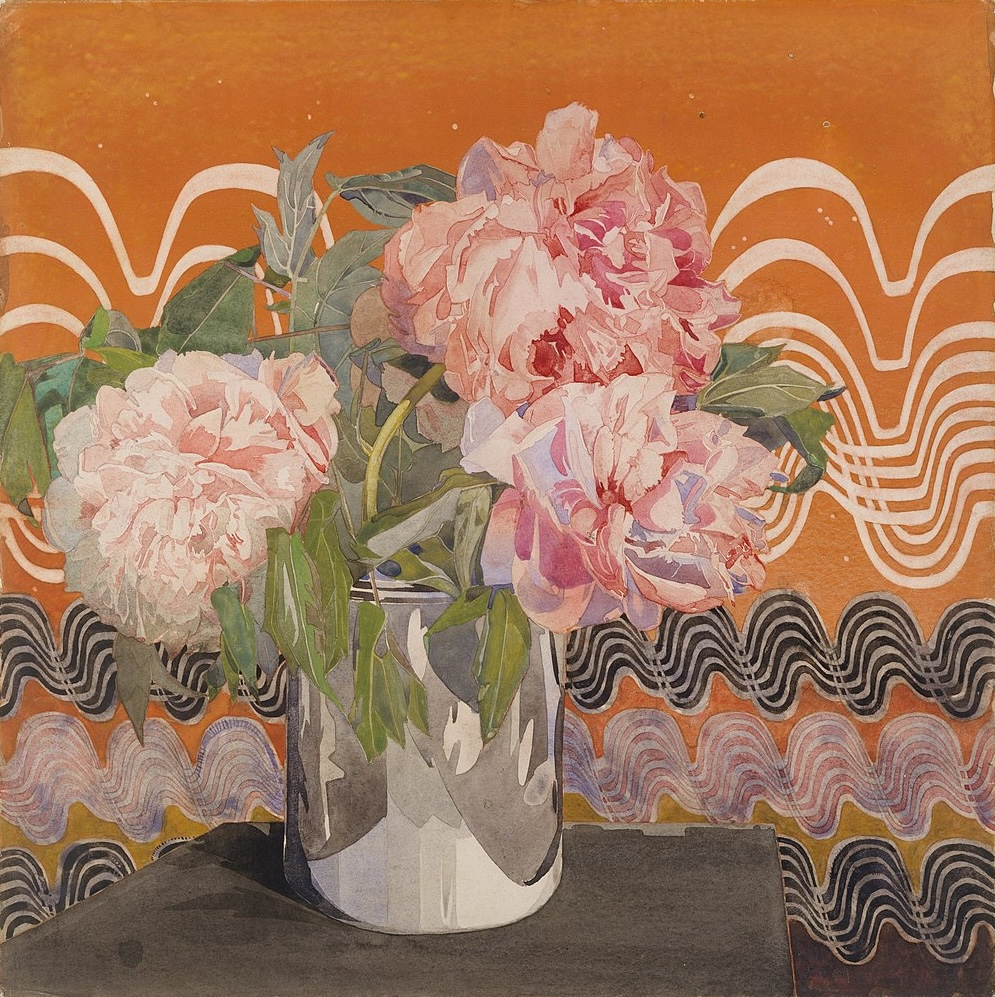
Edith Wharton, Summer (1917)
Wharton continues to be one of my happiest discoveries of the last few years. (A personal discovery: I know everybody else already knows her.) Shawn Mooney, host of the Shawn Breathes Books YouTube channel, asked a few of his many bookish friends to read this novella from the middle of Wharton’s career. What a terrific book! Charity Royall, the adopted daughter of a lawyer and his now-late wife, might be in the upper echelon of her New England village’s society, but that doesn’t mean much. She’s bored to death. When a young architect comes up from New York to summer with a relative—to sketch the local country houses, ostensibly, but mostly to loaf—Charity is smitten by the glimpse of another world he offers. And by him, too: the book is impressively sexually frank for its time. Before long, Charity and Lucius have made a love-nest out of an abandoned house halfway up a nearby mountain. When Charity gets pregnant, a lot of troubling and surprising things happen in a short time. I won’t spoil the ending, but oof what a gut punch. Recommended!
Folks who have read this novel (others, look away): do you think Royall might be Charity’s father? Am I crazy to think so??? The circumstances around Charity’s coming to the Royalls seem… murky.
Andrey Kurkov, The Silver Bone (2020) Trans. Boris Dralyuk (2024)
Kurkov, whose delightful Death and the Penguin I laboriously read in German way back in the day and whose subsequent many, many books I have failed to keep up with, has written the first of a series set in Kyiv in 1919. The Great War might be over, but peace is nowhere to be found in Ukraine. Various factions vie for control: unaffiliated war lords, the Bolsheviks, the Whites, and the embattled Ukrainian People’s Republic, one of the first nations in Eastern Europe to deem Jews a protected minority, which didn’t stop it from countenancing a wave of pogroms under its brief rule. (I’m slowly making my way through Jeffrey Veidlinger’s history of these events, In the Midst of Civilized Europe, which is retrospectively clearing up a lot of the context.)
On the novel’s first pages, Kurkov’s protagonist, Samson Kolechko, a would-be engineer, loses his ear in an attack by Cossacks. (His father, alas, is murdered.) Samson, an upside-down low-rent version of his biblical namesake, manages to keep the ear, which turns out to have fantastical powers, allowing him to hear things he otherwise couldn’t. This comes in handy when the two Red Army soldiers who have usurped his apartment plot to kill him. He goes to police to turn them in and in a pleasingly preposterous turn of events is taken on as a detective himself. Along the way, he relies on the help of a young woman employed by the newly-established department of statistics. Kurkov vividly evokes the danger, scarcity, and uncertainty of Kyiv in this period: atmosphere is the book’s strong suit.
As for the crime element, well, let’s say it’s on the shambolic side. Perhaps more generously: it’s about what it means to investigate crime in a place where the political situation is changing so fast that the law threatens to be even more nakedly a fig leaf for power than usual.
In Boris Dralyuk, Kurkov has found a translator who gets his goofy side—and, I suspect, has even improved the book a little. He tells me the second Samson novel will be out in English next year. Count me in.
József Debreczeni, Cold Crematorium: Reporting from the Land of Auschwitz (1950) Trans. Paul Olchváry (2023)
Extraordinary. I do read a fair few Holocaust memoirs, and even though I’m interested to see how similar they are, how much they trade in the same tropes, I’m usually caught short in horrified wonder by at least one scene or detail. Cold Crematorium—now translated into English for the first time, more than 70 years after its publication in communist Yugoslavia—gave me that feeling from start to finish.
Debreczeni, the penname of József Bruner, was born in Budapest but moved to the Vojvodina, the largely Hungarian-speaking part of what is now Serbia, after WWI, where he worked as a journalist and newspaper editor. Like most Hungarian Jews he was deported to Auschwitz in 1944. Having survived the initial selection, he volunteered to be transported further west in Silesia to a camp that was then under construction. Falkenberg, as the Germans named it, was part of the vast Gross-Rosen camp system. Conditions in that archipelago of suffering were so bad that far fewer victims survived its array of satellite camps than did Auschwitz; it is much less well known today than its role in the Holocaust would demand. (Menachem Kaiser’s excellent third-generation memoir Plunder also considers this lacunae.) From there he was sent to the work camp at Fürstenberg, and finally to Dörnhau, the “hospital” ward of which was known to inmates as the cold crematorium because so many died within its frigid walls. He was liberated in May 1945, barely alive. After a lengthy recuperation, he returned to Belgrade, where he lived and worked until his death in 1978.
Indulge me as I share some of this remarkable book with you. It is the most visceral, corporeal description of the Holocaust that I know:
Here’s a passage from Fürstenberg, where Debreczeni labored, under dire conditions, to build an underground tunnel system (the so-called Project Riese, the eventual purpose of which remains a source of debate among historians):
Dysentery takes hold me of me yet again. Swelling spreads frighteningly over my entire body. Over the course of these days I am lugging sacks of cement to the mixers, and I become hopelessly dirty. The cement dust swirling nonstop in the air forms a thick layer of sediment upon my clean-shaved head. It collects on my gums and seeps into my nose, my eyes, my ears. Not even Sani Róth [former mobster who takes Debreczeni under his wing] can get his hands on soap. I hang my rags on the nail above me. The pants and tunic are literally moving from the thousands of squirming lice. Destroying them is hopeless to begin with, so lately we haven’t even been trying.
Here’s one from the “hospital” unit at Dörnhau, where Debreczeni spent eight miserable months:
The November cold pours in through the broken windows, and yet the stench is unbearable all the same. A suffocating stink oozes from the walls. Rising between the rows of bunks, several centimeters high, is an odious yellow slurry of dung. Naked skeletons are sloshing through the putrid river.
At one point, that slurry was knee height (for the few who could still walk). I will never get that detail out of my mind. This is the kind of thing I mean when I say Cold Crematorium makes other Holocaust memoirs seem tame.
And here’s another one from Dörnhau, about a man named Miklós Nagy, who scrabbled to the position of chief functionary of the medics who “treated” the patients, some with good will and others with pure cynicism, in an environment completely lacking medical supplies that was also, as we have seen, utterly unhygienic.
I once saw this lightweight man jump up and down on a patient’s chest like a rubber ball, stomping on him with bloodshot eyes until he was worn out. The victim’s crime: he’d tried conniving his way to a second helping of soup.
Remember, Nagy was a prisoner of the Nazis, too. The pitiless depiction of camp functionaries is just one of the things that makes this book such a valuable testimonial document.
I am seriously thinking about assigning this book instead of Primo Levi in my intro Holocaust Lit course. (Shouldn’t be one or the other, but syllabi are zero-sum games…) If you think you have the fortitude, I urge you to read this book.
Joan Chase, During the Reign of the Queen of Persia (1983)
I chose this novel by the hitherto unknown-to-me Joan Chase for the April episode of One Bright Book simply because it was reissued by NYRB in 2014 and I’ve had it on my shelf ever since. (I’m trying to use the podcast to get to some of the hundreds of unread books around here…) Reading it was a happy surprise: it’s excellent, although, in my opinion, awfully sad. Somehow Chase tells the well-worn story of a vanished childhood—shot through with depictions of women’s limited lives in this time and place—in a way that feels new.
During the Reign of the Queen of Persia tells the story of three generations of the Krauss family, who mostly live on a farm near an unnamed county seat in northern Ohio probably modelled on Wooster, where Chase was born. The family is made up almost entirely of women: its matriarch, Lil, known as Gram (the titular Queen, so named as a joke about her similarity to a family pony who loves to run wild), has five daughters, two of whom have two daughters each. These girls, all born within two years of each other, and now in their mid to late teens, think of themselves as a collective: their responses to the vicissitudes that life throws the family’s way make up the core of the novel’s events.
Listen to the episode for more about this terrific book. For now, I’ll just say that if you’re intrigued by a first-person plural narrator that never feels gimmicky, and you like domestic fiction that also dabbles in the Gothic, you’re going to love this.
Amy Pease, Northwoods (2024)
(Not to be confused with Daniel Mason’s North Woods; that must have annoyed Pease and her publisher…)
Set in Shaky Lake, WI (which the internet suggests is a real place???), Pease’s debut crime novel concerns a former fish and wildlife investigator, Eli North, who returns from Afghanistan with PTSD and is taken on as a charity case by his mother, the local sheriff. Eli is at the end of his rope: drinking too much, losing contact with his son (his wife threw him out of the house), scared and ashamed most of the time. When a teenage boy is found dead and the girl he’s been seeing disappears, Eli fights for the right to take on the case and maybe regain his footing. The most interesting thing about this book is that Pease has chosen to put the exasperated, anguished, loving relation between Eli and his mother at its center. How things work out between them is ultimately more compelling than the whodunit.
All told, Northwoods is totally satisfactory debut; I’ll keep an eye on Pease. I listened to the audio, and I was excited each day to catch the next installment, sometimes even forsaking my hockey podcasts. So that tells you something.

All I can say is: IT’S SUMMER BITCHES. A fuller reading slate returns in May.


 Eiger, Mönch & Jungfrau