Matt Keeley’s Year in Reading, 2024

Friends, I am here to apologize to Matt Keeley, who wrote this great piece for me many months ago and has waited patiently (or maybe fumed silently) for me to publish it. I have no good excuse: I got busy and forgot. Terrible. Anyway, this really is a case of better late than never.

Matt is a freelance writer living in Boston.
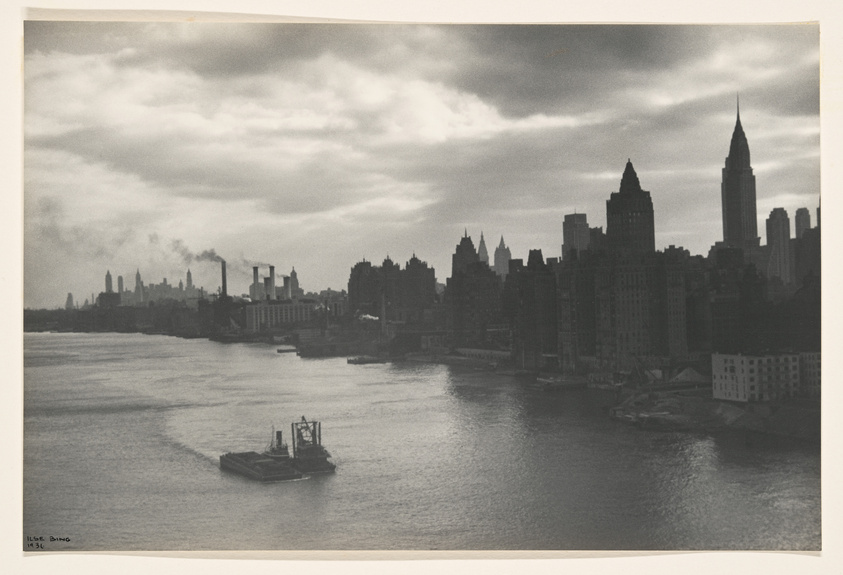
Ilse Bing, East River with Boat, New York (1936)

Being a reader and working with books can, oddly enough, feel like mutually exclusive propositions. I spent most of 2024 underemployed, but what work I had before starting a new full-time job in October was mainly book-related. I copyedited and wrote pitches for a Dutch literary agency; I did brief manuscript reports for a literary scouting firm; I did occasional reviews for Reactor, The Washington Post, and The Boston Globe. I spent so much time on “professional” reading, including dozens of titles that I would normally have no interest in, that my personal reading suffered.

E.L. Doctorow’s Ragtime was not the book I expected it to be: one somehow doesn’t expect a book this strange to sell a million copies, end up on movie screens, and inspire a Broadway musical. This is an almost essayistic historical novel, with an intrusive and opinionated narrator, major characters who go titled (Father, Mother, Younger Brother) but unnamed, and plot lines that don’t tangle so much as split. Henry Ford and JP Morgan discuss reincarnation in front a stolen Egyptian mummy; Emma Goldman befriends a notorious “kept woman;” in the epilogue, we learn that one character gets killed in the Mexican Civil War, that another sinks with the Lusitania, and that a third creates the Little Rascals franchise. It’s a deeply weird book. [Ed. – Colour me intrigued…]

The movie, incidentally, is quite good, with James Cagney’s final performance, an uncredited appearance by a young Samuel L. Jackson, and Norman Mailer as an ill-fated libidinous architect. I wonder how many New York literati of the 1980s especially enjoyed watching his death scene? [Ed. – Probably still satisfying today.]

Ruth Scurr’s John Aubrey: My Own Life is an unusual biography that repurposes the words of the great antiquarian and his contemporaries to create a sort of hypothetical autobiography. There’s much that remains unknown about Aubrey’s life, and Scurr would rather leave open a gap than speculate. That means, for example, that we get more about the stones of Avebury than we do about Aubrey’s romantic life, more tossed-off preference than deeply felt emotion. This is an eccentric book about an eccentric man; most readers won’t much like it, but a few, like me, will love it. [Ed. – In the immortal slogan of Halifax’s Alexander Keith’s brewery: “Those who like it, like it a lot.”]

Gone: The Last Days of The New Yorker is Renata Adler’s score-settling memoir about the departure of William Shawn, the arrival of Robert Gottlieb, and the eventual appearance of Tina Brown. At one point, Adler compares Adam Gopnik to Anthony Powell’s Widmerpool. If you recognize the names in the last few sentences, you’ll likely enjoy this book, even if you don’t entirely trust it. Otherwise, you’d best avoid.

Rejection by Tony Tulathimutte is the dirtiest book I’ve read in ages. [Ed. — !] It seemed to come out of nowhere: I’d never heard of book or author until an editor asked me to review it. I invoked Philip Roth in my review, and I stand by that comparison:

Its heights, or depths, of exuberant filth reminded me of Philip Roth in Portnoy’s Complaint or Sabbath’s Theater. Like Roth, Tulathimutte knows desire can be as ludicrous as it is urgent; like Roth, he likes a good dirty joke.

Other highlights of 2024’s reading include:

  • Peter Straub’s Koko, a serial killer story with fine writing, memorable characters, and all too much exoticizing of the mysterious Orient [Ed. – It’s so mysterious tho]
  • Six of Georges Simenon’s Maigret novels — I really need to get back to the romans durs soon, but there’s something comforting about Maigret even when the plots are, in fact, quite harrowing
  • Amit Chaudhuri’s A Strange and Sublime Address, his first novel, as elegantly written and absorbingly plotless as later books like Friend of My Youth and Sojourn [Ed. – Read this last year as well: good stuff]
  • Paolo Bacigalupi’s Navola, the sequel to which cannot come soon enough. (Dorian — There’s a strong Guy Gavriel Kay influence here. I think you’d like) [Ed. – I appreciated this tip enough to check it out of the library—it indeed looks quite my thing—but not, apparently, enough to read it yet…]
  • M.T. Anderson’s Nicked, a fantastical medieval heist novel and queer romance [Ed. – Octavian Nothing was fantastic.]
  • Adam Roberts’s Lake of Darkness, a science fiction novel about Satan, post-scarcity, and what happens when you let AI do all your thinking
  • Howard Norman’s My Darling Detective, a thoroughly charming tale hampered only by the author’s difficulties with continuity and his editor’s failing to notice the innumerable discrepancies and inconsistencies. Read for the vibes, not the details. [Ed. – Yikes!]

Two that got away

One sad effect of all my book work was that I struggled to finish long and complicated books. I got maybe eighty pages into Oakley Hall’s classic Western Warlock before I gave up. The prose so fine, the type so small, the pages so numerous: I enjoyed and admired the book, but it took two weeks to traverse less than a hundred pages. [Ed. – Ha! Nicely put! It’s not easy, that one. Took me a while to fall under its spell.] I felt myself losing the thread, and put the book back on the shelf for a less fraught day.

Something similar happened with Iris Murdoch’s The Black Prince, which I’ve had on my shelves since 2007. In a burst of optimism, I’d bought three Murdoch paperbacks when I was a college student studying abroad in Dublin. I quickly read A Severed Head and hated it, and so The Sea, the Sea and The Black Prince sat unread for more than a decade. I knew, however, the problem was more with Matt than with Murdoch, so every year I vainly promised myself I’d give Murdoch another shot. When I finally took the plunge last June, I was thrilled to find that The Black Prince was smart, funny, and satirical, bursting with memorable images and sparkling with ideas. Except, once again, I found myself losing the thread and regretfully set the book aside.

I ended up reading The Bell, another Murdoch, in January of 2025. Perhaps I’ll get through The Black Prince later this year? [Ed. – Because it took me so damn long to get this up, maybe he has!]

John Constable, Cloud Study

Last year’s books, this year

Finally, there are a few 2024 books that I bought and fully intended to read, but haven’t quite gotten around to. First is Percival Everett’s James, a novel which sold a million copies and made nearly as many end-of-year lists. I’ve enjoyed Everett’s past novels and I’m sure I’ll tear through this one when I get around to it. Incidentally: I wonder when Everett’s next book will be? He usually seems to write about a book a year; I wonder if they’re holding off publication until James sales begin to taper off?

Next is Cahokia Jazz by Francis Spufford. I pitched it for review, but the pitch was declined. [Ed. – Boo!] I’m reading it now and am impressed: It’s simultaneously a murder mystery, a literary novel, and an alternate history. Spufford dedicates the book to “Prof. Kroeber’s daughter;” I wonder if Prof. Kroeber makes an appearance in the book. The period is right, Kroeber was an anthropologist interested in Native Americans, and there are lots of Native American characters in the book. [Ed. – SO good!]

Last is Ed Park’s Same Bed Different Dreams, which looks to be a polyphonic metafictional conspiratorial genre bender. I’ll probably turn to this once I finish Cahokia Jazz. [Ed. – Also good, with plenty of hockey. Thanks, Matt! Sorry again for dropping the ball!]

Isaac Zisman’s Year in Reading, 2022

Today’s reflection on a year in reading, poetic and stormy, is by Isaac Zisman. Isaac is a writer and editor based in Oakland, CA. Find him on all socials @octopus_grigori and at http://isaaczisman.com.

Ori Sherman, from The Creation (1986)

I confess to having a reticent memory. I keep few records. I should be more organized. Twenty-twenty-two was a year of reading—haven’t they all been? as well as I can recall—and yet I’m not sure it was a year of overmuch finishing. The year began in an overheated apartment in Manhattan. It could’ve been storming. Maybe lightning struck the tall building that everyone knows, everyone sees, the most witnessed building in history, perhaps, but whose name I here elide. A website I’ve never come across before says it was 55 degrees and raining at noon. It says nothing about thunder. I had Covid then, which meant I was on the couch under an old blanket. My partner prepared a small bite of caviar on toast the night before and I remember it only as texture.

I type in “books” into my phone’s camera roll and 534 images pop up. I add “2022” and the number drops to 136. Tapping “see all” brings them up in chronological order and so I can see I began the year with a small stack, my hand gripping the three books together above the sloping parquet of the apartment’s floor.

The first is I am writing you from afar: a novel graphic, by moyna pam dick, a gift from my friend Jared Fagen, a writer and the publisher of Black Sun Lit, the press who released the novel. My favorite page was one of four artful squiggles that appear to have been drawn with a weak Bic pen. Next in my hand is the Pevear and Volokhonsky translation of The Brothers Karamazov by Dostoevsky. I don’t think I made it past Father Zosima this go around. My copy of Crime and Punishment, ibid. trans. etc., sits next to it on the shelf now and I recall that in high school I thought it was a minor victory to take to the cover with a sharpie in order to change FYODOR DOSTOEVSKY into ODOR TOE. [Ed. – Big D would have been proud.] Thank god I left the spine clean. The third book is Janet Malcolm’s In the Freud Archives, in which a post-it note roughly lodged suggests I didn’t progress very far at all. [Ed. – Shame, it’s terrific!] I have the faint impression of a war between critics for mantle of Freud’s inheritance. I remember laughing at that.

Scrolling forward, my phone offers up mostly domestic scenes in which books appear. My partner eating soup at our little table next to the bookcase; the dog sprawled out beneath the same, his toys arranged on top of him in what was probably my idea of a joke; a giant pile of nachos at a friend’s apartment next to an edition of the Hokusai Manga, the astonishing book of figuration, expression, and Edo period garments by the painter of “The Great Wave Off Kanagawa.” In the background, the Los Angeles Rams square off against the Cincinnati Bengals, projected to nearly life size on the far wall. [Ed. – Ah, sportsball!]

On Feburary 2nd, I took a photo of single page of Ulysses (p. 489 in the Gabler edition, I discover, pulling down the book now from a high shelf). I’ve highlighted a name: “Isaac Butt.” [Ed. – Heh.]

Two weeks later I took a picture of String of Beginnings, the memoir of Michael Hamburger, translator of Paul Celan and basis of the character Michael Hamburger in Sebald’s The Rings of Saturn—for no representation can claim more than resemblance. I strikes me that I could steal the title for this little essay.

In March, friends online directed me to Guy Davenport—I’m sure you know these friends, perhaps you can count yourself among them. I picked up a copy of the guy davenport reader, primarily for the story “The Aeroplanes at Bescia,” a glorious assemblage of the fictional lives of Franz Kafka, the brothers Otto and Max Brod, and an atmospherically distant Ludwig Wittgenstein. For some reason, my hardback copy came wrapped in four identical dust jackets. I read around in Questioning Minds, Davenport’s lifetime of correspondence with the critic Hugh Kenner. My used edition of Apples and Pears, purchased later,contains a clipping—the author’s obituary in the Washington Post.

Late May found me in a strange version of a doctor’s office, a sort of wellness situation that goes beyond the purview of this text that I am writing now. The walls are adorned in a garish wallpaper and in my hand is a copy of the Zohar, though I can’t read Hebrew beyond sounding out the letters. I remember we spoke of being and becoming and that the doctor gave an impression of someone coming to poetry for the first time, his mind rigid with math and chemistry suddenly loosened at the core by the concept of metaphor. He liked to imagine beneficent angels, he told me.

On June 5th I bought another bookcase and took the stacks off the floor.

On June 10th I received a copy of Gordon Lish’s Peru from a seller on eBay. It smelled so rank I couldn’t bear to open it.

On June 16th I took a photo of an epigraph. “The first memory is of memory itself” –GIORGIO AGAMBEN. I have no idea to which book this quote attends.

In late June, we spent a week at a rental, a house on the New York State historic registry as it was once the home of Lincoln Barnett, a science journalist and editor for Life Magazine and the first to write a popular account of Einstein’s relativity for an American audience. It is possible that the great man, Einstein himself may have sat in this house, I thought as I leaned, head in hands at the old desk with its view of Lake Champlain and the sweet mildew smell of old books. Next to me sat my stack of Romanians—Mihail Sebastian, Dumitru Tsepeneag, Norman Manea, translations by Philip Ó Ceallaigh, Alistair Ian Blyth, Linda Coverdale. I composed half a chapter of my own book, adrift down a Dâmbovița of the mind.

By August I was reading Fosse again, this time Morning and Evening, trans. Damion Searls. I could not yet return to the Septology, also via Searls, the first volume of which had been my companion in the first weeks of the pandemic. If for Merve Emre reading Jon Fosse’s Septology was “the closest I have come to feeling the presence of God here on earth,” for me it was something different. The particular had exploded into the particulate. I have only been able to open it again now, but that is a reflection for next year. I am reminded, too, of the great Jewish mystic painter Ori Sherman and his series The Creation which depicts the seven days of Genesis. The last image is of the verdancy of the world, fecundity in potentia. God is at rest and emerging from the algal depths, from the swirling mass of green and blue signifying life and growth and wildness and all that is to come, ascends a radiant sphere. But it is neither the sun, nor the light of the world, nor of God, nor the gnostic light of secret knowledge. It is a crowned sphere inchoate, a virus. [Ed. — !]

Finding myself one of the few remaining residents at the end of a writing conference later that month, I laid claim to a stack of books abandoned by the side of a path. One of the novels was The Hundred Year House by Rebecca Makkai, who taught at the conference. At that moment, I saw her boarding a van to the airport and rushed over to greet her. I asked for an inscription, something I’ve rarely done. “To Isaac,” she obliged, “who stole this book!”

I returned to Lincoln Barnett’s house on the lake where I read Samantha Hunt’s mysterious essay collection, The Unwritten Book: An Investigation. Two days later, a cyclone descended, its epicenter the little spit of rock and soil on which the house perches above the lake. The windows blew in off their frames. Trees fell. Power lines draped across the road. The event lasted less than a minute, but we were trapped for days. We played scrabble and drank whisky and ate grilled hot dogs, the dented Weber, which the storm had flung across the yard and tipped to the edge of the small cliff at the far edge of the property, being our only method for cooking. I read Amit Chaudhuri’s Sojurn and dreamed of Berlin.

September was spent reading apartment listings. The Covid deals were gone. Rents had doubled, tripled. Our building had sold and was to become condos. We left Manhattan under a brilliant sky and headed back to California. In my backpack came a copy of Javier Marías’s A Heart So White, trans. Margaret Jull Costa, and as we drove toward the west, the smell of wildfire and dry grass, terrible and familiar, returned.

We arrived back in Oakland at the beginning of October, to the place where we’d lived before moving to New York, to the plague house of the first of the Covid years, and, before that, to nearly a decade of our lives. I returned to Bolaño and he carried me through the fall.

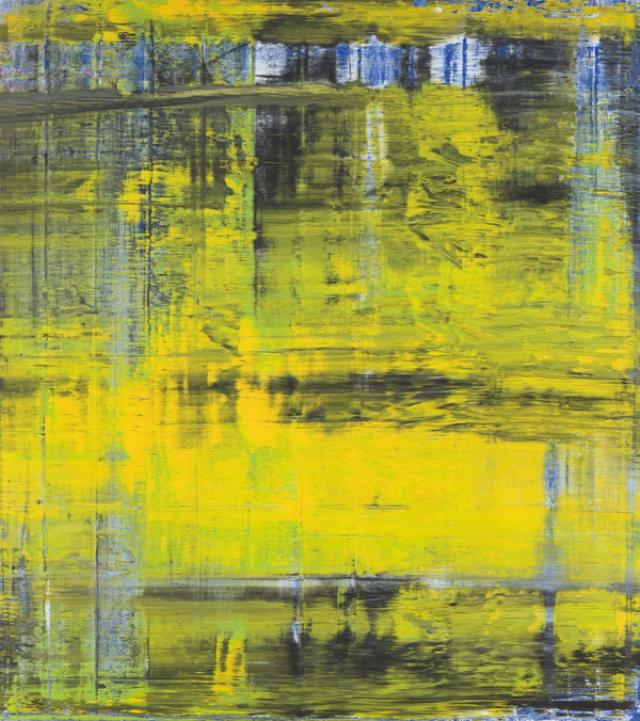
Gerhard Richter, Abstraktes Bild (1994)

There were other things read, I’m sure, though the question of when exactly eludes me. I know, for instance, that I loved Emily Hall’s The Longcut, Jessica Au’s Cold Enough for Snow, Sublunary Edition’s magisterial edition of Marguerite Young’s Collected Poems. That I reread swaths of Hans Magnus Enzenberger’s Tumult, trans. Mike Mitchell, after his passing. That I read a long-travelled copy of Grimmish by Michael Winkler, sat enthralled by Sergio Chejfec’s My Two Worlds, trans. Margaret B. Carson, inhaled December by Alexander Kluge and Gerhard Richter, translation by Martin Chalmers. That I read the fictions of friends, sworn to secrecy until their much deserving publication. That I read essays and poems, criticism, lists of albums, cookbooks, articles, manuals, comics, menus, books of photography, road signs. The work of my new, online companions—how good it feels to have such talented peers. [Ed. – heart emoji] I see the silvered spines of the New Directions Storybook editions on the shelf beside me, I see the bookmark wedged somewhere in the first third of Mircea Cărtărescu’s Solenoid, trans. Sean Cotter—the image of twine emerging from the narrator’s belly button producing a shudder once again. On my desk the piles begin to grow once more—the books I pulled off the shelf to remember, the two translations of Clarice Lispector’s The Hour of the Star, Giovanni Pontiero and Benjamin Moser, respectively, the copy of Annie Ernaux’s Happening, trans. Tanye Leslie, that I read breathless in a single sitting as December closed. And the Septology, arriving again to start anew. It was a messy year, but edifying. What emerges next, I’m not sure.