Melanie Nicholls’s Year in Readng, 2022

Today’s reflection on a year in reading is by Melanie (Mel) Nicholls. Mel is a bookseller at Barnes and Noble from Georgia. You can follow her on Twitter @nichollsm86 where she often tweets about…books!

Rineke Dijkstra, Self portrait, Marnixbad, Amsterdam, 1991

I was pleased when Dorian asked to do a write up of my 2022 reading, as I enjoyed reading the entries from last year. My reading in 2022 was mainly fiction in translation and short stories. When choosing what to read I mostly pick up books I think I’ll enjoy. And this past year I definitely succeeded! Here are some of the standouts.

January started strong with two books that are new favorites. The haunting Ganbare! Workshops on Dying is by Katarzyna Boni (tr. Mark Ordon). Boni reports on the March 11, 2011 earthquake and tsunami in the Tōhoku region of Japan and its aftermath. She offers accounts of the effects on survivors such as learning to scuba dive to help find bodies, a gripping account of the Fukushima nuclear disaster, and stories of other devastating earthquakes in Japan’s history. A heartbreaking and timely work. I followed this with the NYRB Classics edition of Edith Wharton’s ghost stories, unsettling and eerily quiet hauntings. A book I could read every year. The novel Written on the Body by Jeanette Winterson and the stories in Cars on Fire by Mónica Ramón Ríos (tr. Robin Myers), continued my excellent streak of reading for the first month of the year. 

In February I began the readalong of Dorothy Richardson’s thirteen book sequence Pilgrimage. I really started to click with Miriam’s journey with book three and my top reading goal in 2023 is to finish the sequence. Other highlights include the classic Passing by Nella Larsen [Ed. – GOAT!] and the absolute gem Byobu by Ida Vitale (tr. Sean Manning), two books I’m sure I’ll find new meaning in each time I read them. 

In March I read another top book of 2022, Blood Feast: The Complete Short Stories of Malika Moustadraf. These stories about gender and class in society are expertly translated by Alice Guthrie. The outstanding translator’s notes make this a book I hope to study more and highly recommend. April was another strong month with the beautiful novel When I Sing, Mountains Dance by Irene Solà (tr. Mara Faye Lethem) and the terrific History of a Disappearance: The Forgotten Story of a Polish Town by Filip Springer (tr. Sean Gasper Bye). I ended this month with the masterpiece Woman Running in the Mountains by Yūko Tsushima (tr. Geraldine Harcourt) which I often think of with Lolly Willowes by Sylvia Townsend Warner. Both novels portray a woman’s yearning for freedom and Dorian’s podcast One Bright Pod has superb episodes for both books. [Ed. – Thank you! Of course, Frances and Rebecca are the really important members of the team.]

May and June were the months of absolute banger short books: 

Yesterday by Juan Emar (tr. Megan McDowell)

They by Kay Dick

Cold Enough for Snow by Jessica Au

Spear by Nicola Griffith [Ed. – Curious to check this one out.]

An Ideal Presence by Eduardo Berti (tr. Daniel Levin Becker)

Permafrost by Eva Baltasar (tr. Julia Sanches)

Violets by Kyung-Sook Shin (tr. Anton Hur)

Pollak’s Arm by Hans von Trotha (tr. Elisabeth Lauffer)

The Employees: A Workplace Novel of the 22nd Century by Olga Ravn. (tr. Martin Aitken)

July’s standout is A Month in the Country by J.L. Carr, a perfect novel. [Ed. – Absolutely agree.] August is one I look forward to every year because it is Women in Translation month. I continued this year with four writers whose translated work I am slowly making my way through: Annie Ernaux, Yoko Tawada, Natalia Ginzburg, and Banana Yoshimoto. Another highlight was the collection Panics by Barbara Molinard (tr. Emma Ramada). Molinard was a close friend of Marguerite Duras and would destroy most of her writing. [Ed. – Thanks, uh, “friend”…] These bizarre and grotesque stories are a must read. Two books translated from Croatian, Call Me Esteban by Lejla Kalamujic (tr. Jennifer Zoble) and Divine Child by Tatjana Gromača (tr. Will Firth) from the new small press of translated fiction Sandorf Passage, were also excellent. 
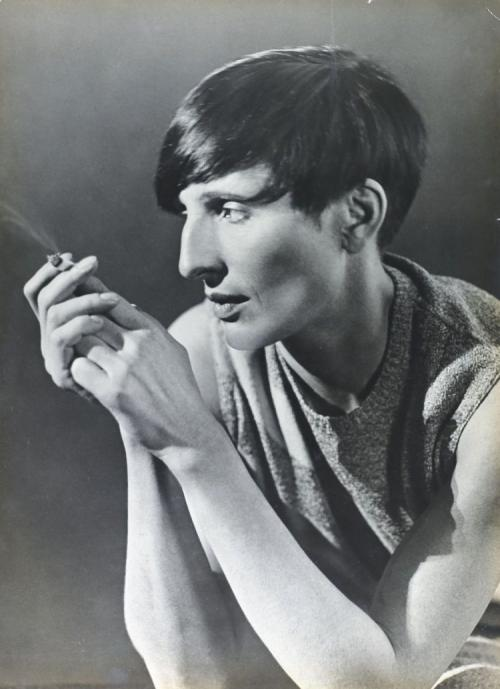
Gerty Simon, Renée Sintenis ca. 1929 – 32

The last few months of the year offered standouts in nonfiction. I love Elaine Castillo’s debut novel America is Not the Heart and she delivers again with the essays in How to Read Now. This book, along with A Ghost in the Throat by Doireann Ní Ghríofa, This Little Art by Kate Briggs, The Missing Pieces by Henri Lefebvre (tr. David L. Sweet), and Voice of the Fish by Lars Horn, left me with a new appreciation for reading, translation, writing, and art. All are books I will come back to often. Other wonders at the end of the year include some short-but-mighty translated novellas: Space Invaders by Nona Fernández (tr. Natasha Wilmer), Baron Bagge by Alexander Lernet-Holenia (trs. Richard and Clara Winston), A Woman’s Battles and Transformation by Édouard Louis (trs. Tash Aw) and Rogomelec by Leonor Fini (trs. William Kulik and Serena Shanken Skwersky). I’ll close with Nettleblack by Nat Reeves, a playful novel of queer awakening among strange crimes in a Victorian rural town.The most fun I had reading in a while, just a joy to read. [Ed. – Sounds great!] My reading has changed over the last couple of years as I have discovered more translated fiction, small press, and Book Twitter. I am excited to see where my 2023 reading will take me and to share the wonders. [Ed. – You’re welcome back next year, Mel!]
Daniel Syrovy’s Year in Reading, 2021

Today’s reflection on a year in reading is by Daniel Syrovy, his first for the blog. Daniel is Senior Lecturer in Comparative Literature at the University of Vienna, Austria; he tweets at @daniel_syrovy.

Look for more reflections from a wonderful assortment of readers every day this week and into next. Remember, you can always add your thoughts to the mix. Just let me know, either in the comments or on Twitter (@ds228).

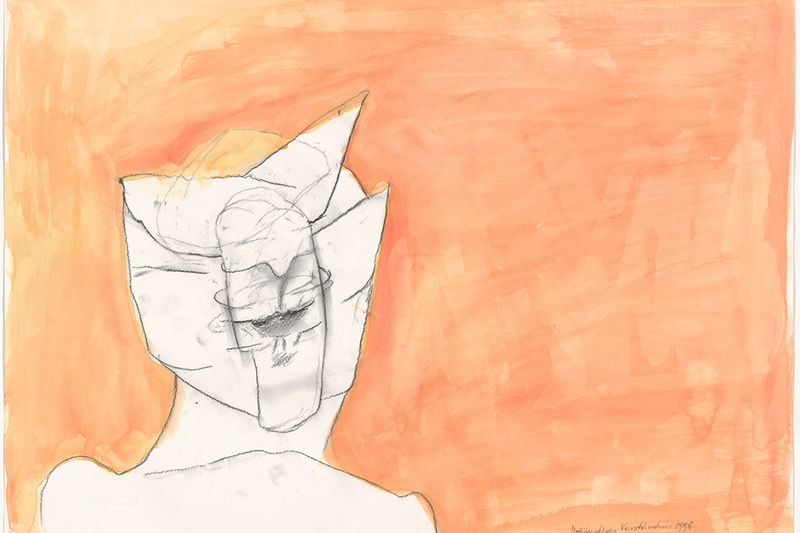
Maria Lassnig, Necessary Understanding, 1998

The last book I finished in 2021 was Milo Dor’s Tote auf Urlaub (called Dead Men on Leave in an out-of-print 1962 translation; some used copies can be found). Despite a number of reprints after 1952, it’s not a well-known novel. Set mostly in Belgrade and the surrounding countryside (and, eventually, in Vienna), it focuses on the Serbian Resistance to Nazi Germany between 1941 and 1945. Its ostensible protagonist, with hints of autobiography, is Mladen Raikow, but a character list included in the 500-page book lists forty characters in addition to “communists, Trotskyists, dreamers, cowards, traitors, real and false heroes, fallen angels, idiots, bootlickers, liars, drunkards, gluttons, whores, blackmailers, and torturers.”

This is not light reading, and despite a good pinch of gallows humor, the novel offers a rather bleak view of humanity. There is not much by way of a plot, but the novel is crammed with short scenes that depict small gestures of solidarity as well as acts of depravity. Dor must have been compelled to put everything into his manuscript, sparing no-one, and it is telling that even my 1992 edition quotes reviews that question whether this should properly be called a novel at all. Of course it’s a novel—but it must have been uncomfortably close to lived experience just after the war.

In fact, I first learned about it in Evelyne Polt-Heinzl’s reassessment of Austrian postwar literature, Die grauen Jahre (2018), which I re-read this past year for a work-related project. One of her central theses is that Austrians in the 1950s mostly rejected realistic texts about the war, but that such texts did exist. I had already spent a summer with a number of books unearthed by this indefatigable scholar, but it turned out there were quite a few interesting titles I had overlooked (including Dor’s collaborations with Reinhard Federmann: a series of crime novels from the 1950s; Federmann’s own novels Das Himmelreich der Lügner and Chronik einer Nacht; books by Hertha Pauli, Dorothea Zeemann, Hans Flesch-Brunningen, Hans Weigel). I’m going to stop naming names in a minute. [Ed. – I hope not!]

With me, such reading projects seem to crop up unexpectedly from time to time, and for the most part they are neither completely work-related (I am a literary scholar and I teach at university) nor exactly spare-time reading. But I do enjoy filling gaps in my knowledge of different literatures, so I follow loose reading lists, for instance on the Celtic Revival: several plays by Yeats, Lady Gregory, Synge, and related material occupied me this past summer. Austrian literature often figures large, too. In 2021, I reread some Thomas Bernhard, and was surprised at the intermittent tenderness of the first half of Correction (1975). I also read Friederike Mayröcker, Helmut Zenker, Alexander Lernet-Holenia and Leo Perutz. Yet, much of this reading follows rather obvious patterns like stepping stones. In preparing these notes, I kept asking myself whether I couldn’t come up with some more interesting observations. [Ed. – Yeah, enough of this boring stuff filled with enticing, new-to-me names.]

It turns out, I loved reading some new old books (a series of newly rediscovered and partly very funny Proust manuscripts published as Les soixante-quinze feuillets in March) and some brand new ones (especially Lisa McInerney’s brilliant third volume of her Cork-based crime trilogy, The Rules of Revelation, Emine Sevgi Özdamar’s autofictional Ein von Schatten begrenzter Raum, and Shida Bazyar’s mindblowing Drei Kameradinnen, reviewed in English here); I also enjoyed some classics – which I would mostly read in bed chapter by chapter over longer stretches of time (from Olivia Manning’s Balkan and Levant Trilogies to Middlemarch to Samuel Butler’s The Way of All Flesh). I took my cues from friends and Twitter-friends [Ed. – Wait, so we’re not like your real friends?], from the LRB, from other books. I was happy to break open volumes I already owned (Yoko Tawada’s Memoirs of a Polar Bear; Susanna Clarke’s Piranesi; Bely’s Petersburg) and to pick up new ones (Pola Oloixarac’s Mona; Percival Everett’s Erasure). Hopping between languages and centuries was always something of a comparatist’s credo with me [Ed. — Comparatists 4eva!]. But I hesitate to call this a noteworthy pattern.

It does not escape my attention that despite buying new books at a steady rate, I picked up stacks of books from the library as well, often going there twice a week. A reduced social life will do that sometimes. And perhaps it is true that during the pandemic I was a more restless reader than usual. Unsurprisingly, there are quite a few books I did not finish. Looking at my rather disparate and unsystematic notes (I have neither a Goodreads account nor physical lists), I can’t come to any definitive conclusions. I know that I listened to an incredible amount of Grateful Dead live shows in 2021, something I had never done before. But to relate all of my reading habits to the state of the world and my own preoccupations? To quote from a recent read, Anna Wood’s book of short stories Yes Yes More More, “I kn[o]w better than to think for too long about my internal organs after taking acid.”

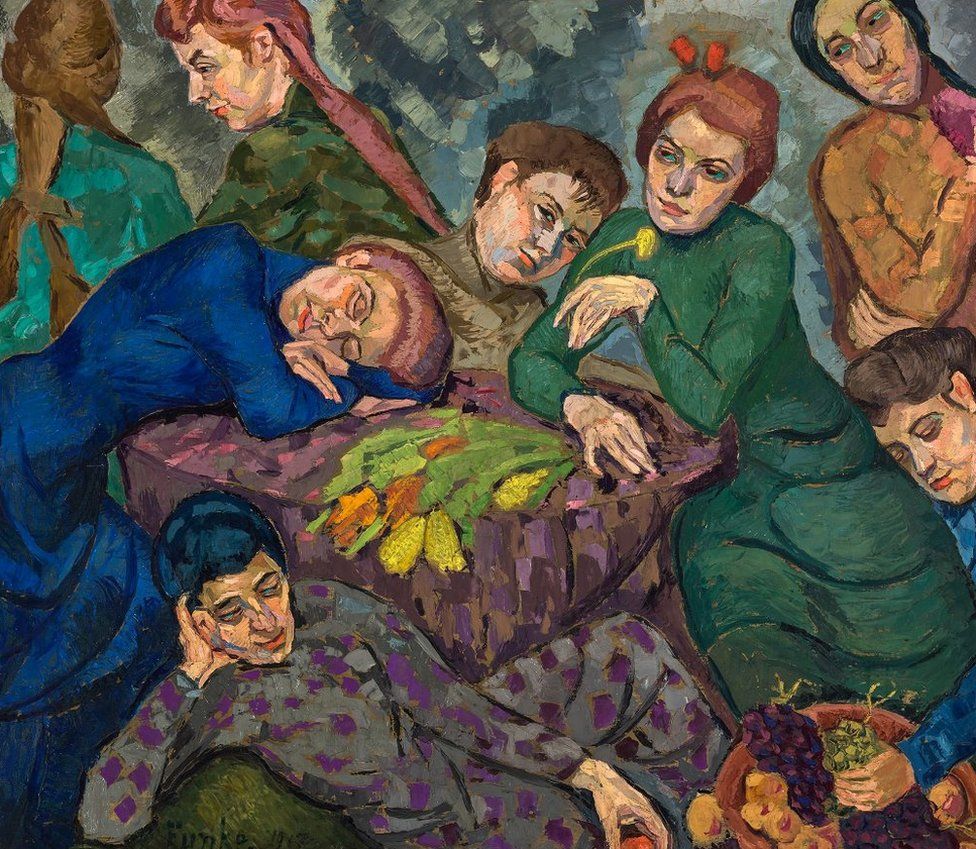
Helene Funke, Dreams, 1913

Maybe, one day such patterns will emerge more clearly, and I’ll be the wiser for it. In the meantime, I’d rather mention another discovery that is already turning into a reading project. I always liked concrete poetry (well-established in Austria with writers such as Ernst Jandl, seen here performing at the Royal Albert Hall in 1965), and between that interest and preparing an introductory lecture about poetry, I came across a recent volume by the Brooklyn-based publisher Primary Information, Women in Concrete Poetry 1959–1979. Since overlooked women writers are always a high priority, I couldn’t resist, and the volume doesn’t disappoint. It features 50 poets from all over the world (from Sonja Åkesson to Chima Sunada to Rosmarie Waldrop), with a selection that mostly follows a 1978 Venice Biennale exhibition curated by Mirella Bentivoglio. Accordingly, the volume looks very much like an exhibition catalogue, with thick glossy paper. The nature of the poetry lends itself to it, as well, written as it is in many languages, partly in color, with striking visual aspects and often presented as collages with repurposed images. Standing out for me were a few pages by the American Madeline Gins, in particular a page showing layers of text thickly typed over one another with a typewriter that I tweeted about in early December. The page ends with the lines “The body is composed 98% of water. This page contains every word in the book.” So I read on. The passage comes from Gins’s book Word Rain (1969) which is reproduced in full in the 2020 Madeline Gins Reader The Saddest Thing is That I Have Had To Use Words (Siglio Press; ed. Lucy Ives), which I have only skimmed so far. Some of this is not exactly concrete poetry, but it is very appealing, so who cares. And anyway, filling some gaps in my knowledge of the contemporary Austrian writer Ann Cotten (herself a poet, novelist, and translator of Rosmarie Waldrop), especially the wonderful lecture series Was geht (2018), I was alerted to Liesl Ujvary, a Viennese poet who started out with a very funny volume in 1977, Sicher & Gut,some of which would certainly be classified as concrete poetry. These converging patterns are what keep me going. Ideally, two or three of them at once.